Addressing Measurement Error in Dietary Pattern Studies: Methods, Impacts, and Solutions for Research Validity
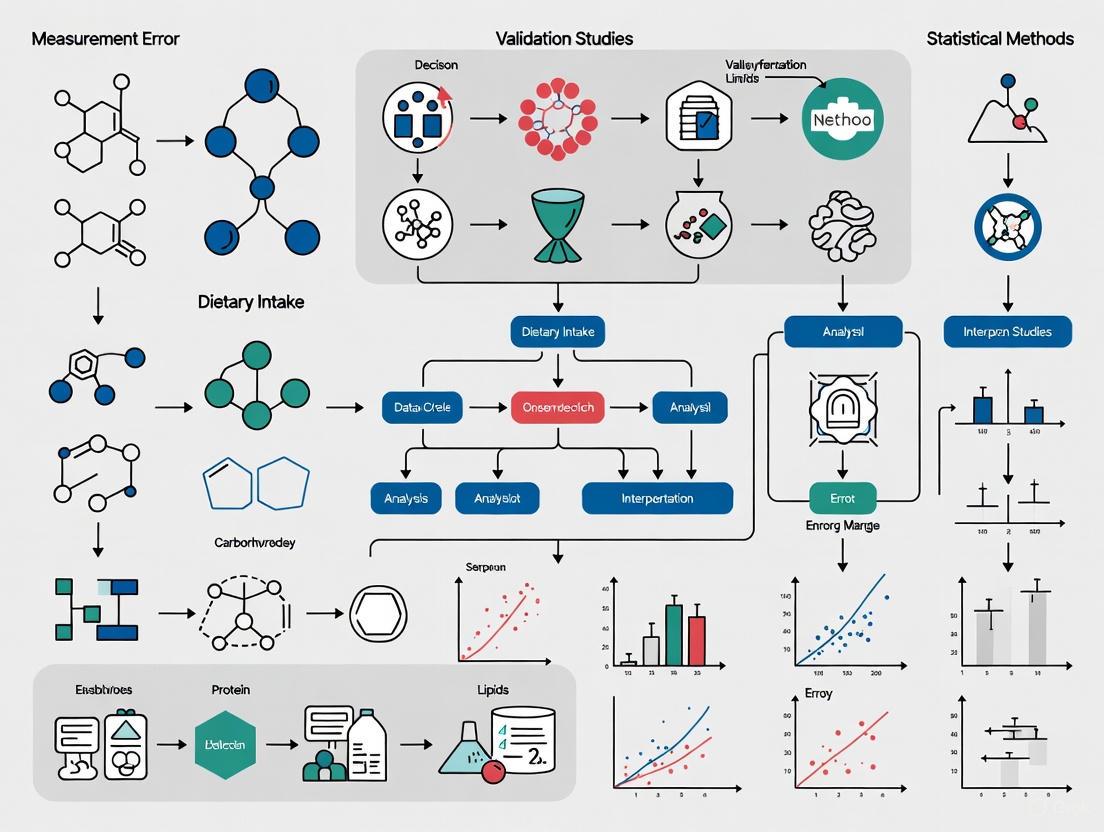
This article provides a comprehensive examination of measurement error in dietary pattern research, a critical methodological challenge that can distort dietary patterns and attenuate disease associations.
Addressing Measurement Error in Dietary Pattern Studies: Methods, Impacts, and Solutions for Research Validity
Abstract
This article provides a comprehensive examination of measurement error in dietary pattern research, a critical methodological challenge that can distort dietary patterns and attenuate disease associations. Covering foundational concepts through advanced applications, we explore the spectrum from classical measurement error models to innovative pattern recognition technologies and network analysis approaches. The content addresses practical strategies for minimizing error through study design, statistical adjustment methods, and validation protocols, with specific consideration for diverse populations and clinical contexts. Aimed at researchers, scientists, and drug development professionals, this resource synthesizes current evidence and methodologies to enhance the reliability and validity of nutritional epidemiology and its applications in biomedical research.
Understanding Measurement Error: Foundational Concepts and Impacts on Dietary Pattern Research
Frequently Asked Questions (FAQs)
FAQ 1: What are the fundamental types of measurement error in dietary assessment? Measurement error in dietary assessment is broadly categorized into two types: systematic error (bias) and within-person random error (day-to-day variation) [1]. Systematic error results in measurements that consistently depart from the true value in the same direction and cannot be reduced by taking repeated measures. It includes intake-related bias (e.g., the "flattened-slope" phenomenon where high-intake individuals under-report and low-intake individuals over-report) and person-specific bias (related to individual characteristics like social desirability) [1]. Within-person random error represents the difference between an individual's reported intake on a specific day and their long-term average intake, which can be addressed through statistical modeling with repeated measures [1].
FAQ 2: How does measurement error impact diet-disease association studies? Measurement error creates three primary problems in diet-disease association studies: (1) bias in estimated relative risks, typically attenuating them toward the null; (2) loss of statistical power to detect true diet-disease relationships; and (3) potential invalidity of conventional statistical tests, particularly in multivariable models [2]. The attenuation can be substantial - for example, a true relative risk of 2.0 might be estimated as 1.03-1.06 for energy intake and 1.10-1.12 for protein intake when using food frequency questionnaires [2]. To compensate for this power loss, sample sizes may need to be 5-100 times larger depending on the nutrient [2].
FAQ 3: What dietary assessment methods are available and how do their error profiles differ? Different dietary assessment methods have distinct error profiles and are suitable for different research contexts [3]:
Table: Comparison of Dietary Assessment Methods and Their Error Profiles
| Method | Time Frame | Primary Error Type | Key Advantages | Key Limitations |
|---|---|---|---|---|
| 24-Hour Recall | Short-term | Random error [3] | Low participant burden; does not require literacy; captures wide variety of foods | Relies on memory; requires multiple administrations to estimate usual intake |
| Food Record | Short-term | Random error [4] | Does not rely on memory; detailed data | High participant burden; reactivity (changing diet for recording) |
| Food Frequency Questionnaire (FFQ) | Long-term | Systematic error [2] [4] | Cost-effective for large samples; designed to capture usual intake | Limited food list; portion size estimation challenges; systematic biases by BMI, age |
FAQ 4: What statistical methods are available to correct for measurement error? Several statistical approaches can correct for measurement error effects [4] [5]:
- Regression calibration: Replaces the error-prone measurement with its expectation given the true exposure and other covariates
- Multiple imputation: Imputes multiple plausible values for the true exposure based on error-prone measurements and reference data
- Moment reconstruction: Creates a new variable with the same mean and variance as the true exposure Regression calibration is the most commonly used method, but it requires careful attention to its assumptions, particularly the classical measurement error model [4]. Multiple imputation and moment reconstruction can handle more complex error structures, including differential measurement error [4] [5].
FAQ 5: What reference instruments are available for assessing measurement error? Reference instruments for dietary assessment include [2] [5]:
- Recovery biomarkers: Objective measures with known quantitative relationships between intake and recovery (e.g., doubly labeled water for energy intake, 24-hour urinary nitrogen for protein intake)
- Alloyed gold standards: The best-performing practical instruments (e.g., multiple 24-hour recalls or food records)
- Concentration biomarkers: Measured concentrations in blood or tissues (e.g., serum carotenoids) Recovery biomarkers are considered the gold standard but exist for only a few nutrients (energy, protein, potassium) and are expensive to implement [2].
Troubleshooting Guides
Problem: Attenuated effect estimates in diet-disease associations Solution: Implement measurement error correction methods using validation study data [2] [4]:
- Conduct an internal validation study where a subset of participants completes both the main instrument (e.g., FFQ) and a reference instrument (e.g., multiple 24-hour recalls or biomarkers)
- Estimate the relationship between the main instrument and true intake using the validation data
- Apply regression calibration to adjust effect estimates in the main study
- Report both adjusted and unadjusted estimates with confidence intervals
Problem: Inadequate statistical power due to measurement error Solution: Increase sample size and optimize study design [2]:
- Calculate the necessary sample size inflation factor based on the attenuation factor (λ) for your specific nutrient: nadjusted = noriginal/λ
- Consider collaborative studies or meta-analyses to achieve sufficient sample size
- Use multiple dietary assessments per participant to reduce within-person random error
- Focus on energy-adjusted nutrients (densities or residuals) which typically have less attenuation than absolute intakes [2]
Problem: Differential measurement error in case-control studies Solution: Use methods robust to differential error [4] [5]:
- Consider moment reconstruction or multiple imputation approaches instead of regression calibration
- In prospective designs, collect dietary data before disease diagnosis to minimize differential recall
- For case-control studies, use biomarkers as objective reference measures when feasible
- Conduct sensitivity analyses to assess potential impact of differential error
Experimental Protocols
Protocol 1: Internal Validation Study Design Purpose: To collect data necessary for quantifying and correcting measurement error in the main study instrument [5].
Materials:
- Main dietary assessment instrument (e.g., FFQ)
- Reference instrument (e.g., multiple 24-hour recalls, food records, or biomarkers)
- Trained interviewers (if using interviewer-administered instruments)
- Data management system
Procedure:
- Randomly select a subset of participants from the main study cohort (typically 100-500 participants)
- Administer both the main instrument and reference instrument to these participants
- For reference instruments requiring multiple administrations (e.g., 24-hour recalls), schedule them on non-consecutive days covering different seasons and days of the week
- Ensure the time frame reference periods align between instruments (e.g., same previous year for FFQ and 24-hour recalls)
- Collect additional relevant covariates (age, BMI, sex, education) that may relate to measurement error
- Process and nutrient-code all dietary data using standardized procedures
- Estimate measurement error model parameters relating main instrument to reference instrument
- Apply calibration equations to the entire cohort for measurement error correction
Protocol 2: Biomarker-Based Validation Study Purpose: To validate self-report instruments using objective recovery biomarkers [2] [6].
Materials:
- Doubly labeled water for energy expenditure assessment
- Protocols for 24-hour urine collection for nitrogen (protein) and potassium
- Stable isotope analysis facilities
- Dietary self-report instruments
Procedure:
- Recruit weight-stable participants in energy balance
- Administer doubly labeled water and collect urine samples over 10-14 days for energy assessment
- Conduct multiple 24-hour urine collections for protein and potassium assessment
- Administer self-report dietary instruments concurrently
- Analyze biomarker data following established protocols
- Calculate intake from biomarkers: energy intake = energy expenditure (assuming weight stability), protein intake = 24h urinary nitrogen × 6.25
- Assess relationships between self-report and biomarker measures
- Develop calibration equations accounting for systematic biases by BMI, age, and other relevant factors
Table: Attenuation Factors for Common Nutrients from the OPEN Biomarker Study [2]
| Nutrient | Attenuation Factor (Men) | Attenuation Factor (Women) | True RR=2.0 Becomes |
|---|---|---|---|
| Energy | 0.08 | 0.04 | 1.03-1.06 |
| Protein | 0.16 | 0.14 | 1.10-1.12 |
| Potassium | 0.29 | 0.23 | 1.17-1.22 |
| Protein Density | 0.40 | 0.32 | 1.25-1.32 |
| Potassium Density | 0.49 | 0.57 | 1.40-1.48 |
Research Reagent Solutions
Table: Essential Research Materials for Measurement Error Studies
| Reagent/Instrument | Function | Key Features | Application Context |
|---|---|---|---|
| Doubly Labeled Water | Recovery biomarker for total energy expenditure | Objective measure; quantitative relationship with energy output | Validation against energy intake; requires specialized lab analysis |
| 24-Hour Urinary Nitrogen | Recovery biomarker for protein intake | Direct measure of protein metabolism | Protein intake validation; requires complete urine collection |
| Automated Multiple-Pass Method (AMPM) | Standardized 24-hour recall methodology | Structured interviewing technique to enhance completeness | Reference instrument in validation studies; used in NHANES |
| ASA24 (Automated Self-Administered 24-Hour Recall) | Self-administered 24-hour recall system | Automated multiple-pass method; reduces interviewer burden | Large-scale validation studies; cost-effective reference instrument |
| GloboDiet (formerly EPIC-SOFT) | Computer-assisted 24-hour recall method | Standardized across countries and cultures | International studies; standardized dietary assessment |
Measurement Error Classification and Impact
Measurement Error Correction Workflow
In scientific research, particularly in fields like nutritional epidemiology and environmental health, measurement error refers to the difference between the true value of a variable and its observed value [7]. These errors are ubiquitous across all types of studies and can significantly impact research findings, leading to biased conclusions, reduced statistical power, and distorted relationships between variables [8] [9]. Understanding the different types of measurement error is crucial for proper study design, analysis, and interpretation of results.
This guide provides researchers with a comprehensive troubleshooting framework for identifying, understanding, and addressing measurement error in their experiments, with special emphasis on dietary pattern studies.
Understanding Core Measurement Error Models
FAQ: What are the fundamental types of measurement error models I'm likely to encounter?
Answer: Researchers commonly encounter three primary measurement error models, each with distinct characteristics and implications for data analysis:
- Classical Error Model: Assumes the measured value varies randomly around the true value
- Linear Error Model: Extends the classical model to include both random error and systematic bias
- Berkson Error Model: Posits that the true value varies randomly around the measured value
Comparative Analysis of Error Models
Table 1: Characteristics of Core Measurement Error Models
| Model Type | Mathematical Formulation | Key Assumptions | Impact on Estimates | Common Applications |
|---|---|---|---|---|
| Classical | (X^* = X + e) | Error (e) has mean zero, independent of X | Attenuation (bias toward null); loss of power | Laboratory measurements; instrument imprecision [8] [9] |
| Linear | (X^* = \alpha0 + \alphaX X + e) | Error (e) has mean zero, independent of X | Can cause bias in varying directions | Self-reported data; dietary assessment [9] |
| Berkson | (X = X^* + e) | Error (e) has mean zero, independent of X* | Increased imprecision; unbiased effect estimates in linear models [10] | Environmental studies; aggregated exposure data [11] [12] |
Visual Guide to Measurement Error Models
Diagram 1: Structural relationships between true values, measured values, and error components in the three primary measurement error models.
Troubleshooting Guide: Identifying Measurement Error in Dietary Studies
FAQ: How does measurement error specifically impact dietary pattern research?
Answer: In dietary pattern studies, measurement errors can substantially distort the derived patterns and attenuate diet-disease associations. The impact varies depending on the dietary assessment method and the type of measurement error present [13].
Table 2: Impact of Measurement Error on Dietary Pattern Analysis
| Error Type | Impact on Principal Component Factor Analysis | Impact on K-means Cluster Analysis | Effect on Diet-Disease Associations |
|---|---|---|---|
| Systematic Error | Consistency rates: 67.5% to 100% | Consistency rates: 13.4% to 88.4% | Attenuation of coefficients; harmful associations (true coefficient: 0.5) observed as 0.295 to 0.449 |
| Random Error | Greater distortion with larger errors | Greater distortion with larger errors | Attenuation of coefficients; beneficial associations (true coefficient: -0.5) observed as -0.231 to -0.394 [13] |
Answer: Dietary intake data are affected by multiple sources of error arising from the complex cognitive process of reporting food consumption [7]:
- Recall bias: Participants may forget certain foods consumed (omissions) or report foods not actually consumed (intrusions)
- Social desirability bias: Systematic under-reporting of "unhealthy" foods and over-reporting of "healthy" foods
- Portion size estimation errors: Difficulty in accurately estimating and reporting amounts consumed
- Interviewer effects: Variations in how different interviewers probe for information
- Coding errors: Mistakes in converting reported foods to nutrient data
- Limitations in food composition databases: Incomplete or inaccurate nutrient data for specific foods [7] [3]
Methodological Protocols for Addressing Measurement Error
Experimental Protocol: Designing Validation Studies for Dietary Assessment Tools
Purpose: To quantify and characterize measurement error in dietary assessment instruments through comparison with objective biomarkers.
Materials and Reagents:
- 24-hour urinary sodium, potassium, and nitrogen as recovery biomarkers
- Automated Self-Administered 24-hour Dietary Assessment Tool (ASA24)
- Interviewer-administered Automated Multiple-Pass Method (AMPM) protocols
- Food composition database (e.g., USDA Standard Reference)
Procedure:
- Recruit participants representative of your target population
- Collect true intake data through 24-hour urine collections for sodium, potassium, and protein (nitrogen × 6.25)
- Administer self-reported dietary assessment tools (24-hour recalls, food frequency questionnaires, or food records)
- Code and process self-reported dietary data using standardized protocols
- Calculate nutrient intakes from self-reported data using appropriate food composition databases
- Statistically compare self-reported intake values with biomarker values to quantify measurement error structure
- Assess whether measurement error differs by time, treatment group, or participant characteristics [14]
Troubleshooting Tip: If implementing full biomarker collection is not feasible, consider a reproducibility study with repeated administrations of the dietary assessment tool to estimate random error components.
Experimental Protocol: Implementing Bias-Correction Methods
Purpose: To correct for the biasing effects of measurement error in statistical analyses.
Materials:
- Primary study data (exposure, outcome, covariates)
- Validation data or reliability data
- Statistical software with measurement error correction capabilities (R, SAS, Stata)
Procedure:
- Characterize the measurement error using validation data to estimate error model parameters
- Select appropriate correction method based on error type and study design:
- Regression calibration: Replace error-prone measurements with calibrated values
- Simulation-extrapolation (SIMEX): Simulate increasing error levels and extrapolate back to no error
- Multiple imputation for measurement error (MIME): Impute true values based on error model
- Implement correction method using appropriate software tools
- Assess sensitivity of results to different assumptions about the error structure [8]
Troubleshooting Tip: When external validation data are unavailable, conduct sensitivity analyses to evaluate how different magnitudes of measurement error might affect your conclusions.
Essential Research Reagent Solutions
Table 3: Key Methodological Tools for Addressing Measurement Error
| Tool Category | Specific Solution | Primary Function | Considerations for Use |
|---|---|---|---|
| Dietary Assessment Methods | 24-hour Recalls (ASA24, AMPM) | Capture short-term dietary intake | Multiple non-consecutive days needed to estimate usual intake; requires literacy for self-administered versions [3] |
| Dietary Assessment Methods | Food Frequency Questionnaires (FFQ) | Assess habitual dietary patterns over extended periods | Limited food lists; better for ranking individuals than estimating absolute intake [3] |
| Dietary Assessment Methods | Food Records | Comprehensive recording of all foods/beverages consumed | High participant burden; potential for reactivity (changing diet for ease of recording) [3] |
| Biomarkers | Recovery Biomarkers (doubly labeled water, urinary nitrogen) | Objective measures of energy and protein intake | Considered gold standard but expensive and burdensome [14] |
| Statistical Methods | Regression Calibration | Correct for bias in estimated associations | Requires validation data; assumes non-differential error [8] |
| Statistical Methods | Simulation-Extrapolation (SIMEX) | Correct for measurement error through simulation | Does not require full validation data; computationally intensive [8] |
Advanced Considerations for Specific Research Contexts
FAQ: How does measurement error differ in longitudinal intervention studies?
Answer: In longitudinal interventions, particularly those involving lifestyle changes, measurement error can become differential—changing over time and/or differing between treatment groups [15]. This creates unique challenges:
- Intervention group participants may alter reporting behavior to appear compliant with study recommendations
- Reporting accuracy may improve due to training or worsen due to participant fatigue
- Time-varying error structure can introduce complex biases in treatment effect estimates
- Sample size requirements often need to be increased to maintain statistical power [15]
Protocol Adjustment: For longitudinal studies, collect validation data at multiple time points across all treatment groups to characterize how measurement error changes throughout the study period [14].
FAQ: When should I be concerned about Berkson versus classical error?
Answer: The distinction becomes critical when selecting appropriate correction methods and interpreting results:
- Berkson error typically arises when group-level exposure assignments are applied to individuals (e.g., environmental exposure based on residential location) [11] [12]
- Classical error is more common with instrument imprecision and biological variability [8]
- Key differentiator: In linear models, Berkson error does not bias effect estimates (only increases imprecision), while classical error causes attenuation toward the null [10] [12]
Diagnostic Approach: Examine your measurement process—if individual measurements are assigned based on group averages, Berkson error likely predominates. If individual measurements are taken with imprecise instruments, classical error may be more relevant.
Decision Framework for Selecting Appropriate Methods
Diagram 2: Decision framework for selecting appropriate measurement error assessment and correction methods based on study design, resources, and error type.
How Measurement Error Distorts Dietary Patterns and Attenuates Disease Associations
Troubleshooting Guides and FAQs
Frequently Asked Questions
Q1: What are the primary types of measurement error in dietary assessment? Measurement error in nutritional epidemiology is typically categorized into two main types: systematic error (bias) and random error [14]. Systematic error refers to consistent, directional departures from true intake, such as constant over-reporting or under-reporting. Random error creates variability in measurements without a consistent pattern, reducing precision [14]. These errors can be further described using specific measurement error models: the classical model (purely random error), linear measurement error model (both systematic and random error), and Berkson error model (where true values vary around measured values) [9].
Q2: How does measurement error specifically distort identified dietary patterns? Measurement error causes significant distortion in derived dietary patterns, with the severity increasing with error magnitude. Simulation studies based on the China Multi-Ethnic Cohort demonstrate that consistency rates for dietary patterns derived via principal component factor analysis (PCFA) range from 67.5% to 100%, while consistency rates for K-means cluster analysis (KCA) range from 13.4% to 88.4% under measurement error conditions [16]. Patterns derived through PCFA with low discrepancy in factor loadings and patterns from KCA with small cluster sizes are particularly vulnerable to distortion [16].
Q3: Why do we observe attenuation in diet-disease association estimates? Measurement error in nutritional exposures attenuates estimated association coefficients toward the null, effectively diluting the observed strength of relationships between dietary patterns and health outcomes [16]. For a beneficial association with a true coefficient of -0.5, estimated coefficients under measurement error range from -0.287 to -0.450 for PCFA and from -0.231 to -0.394 for KCA [16]. Similarly, for harmful associations (true coefficient 0.5), estimates range from 0.295 to 0.449 for PCFA and from -0.003 to 0.373 for KCA [16].
Q4: Can measurement error structure change during longitudinal interventions? Yes, emerging evidence suggests measurement error can be differential in longitudinal randomized trials. In studies of sodium intake interventions, the relationship between self-reported intake and biomarker values varied by both time and treatment condition [14]. Participants in intervention groups may alter reporting behaviors due to increased nutritional awareness or social desirability bias, while all participants may experience reporting fatigue or improved accuracy with repeated assessments [14].
Q5: What advanced statistical methods can correct for measurement error in food substitution analysis? Compositional data analysis (CoDA) provides a promising framework for correcting measurement errors in food substitution studies [17]. This approach respects the inherent sum-to-one constraint in dietary data (where all components must sum to 100%) and can model multivariate nutrient intakes while correcting for both random and systematic errors [17]. Extension of these models to longitudinal data allows researchers to account for temporal changes in dietary patterns and measurement errors across multiple time points [17].
Quantitative Impact of Measurement Error on Dietary Pattern Analysis
Table 1: Impact of Measurement Error on Dietary Pattern Consistency Rates
| Analysis Method | Error Type | Consistency Rate Range | Most Vulnerable Patterns |
|---|---|---|---|
| Principal Component Factor Analysis (PCFA) | Systematic & Random | 67.5% - 100% | Patterns with factor loadings of low discrepancies |
| K-means Cluster Analysis (KCA) | Systematic & Random | 13.4% - 88.4% | Patterns with small cluster sample sizes |
Table 2: Attenuation of Diet-Disease Associations Under Measurement Error Conditions
| True Association Coefficient | Analysis Method | Estimated Coefficient Range | Degree of Attenuation |
|---|---|---|---|
| Beneficial (-0.5) | PCFA | -0.287 to -0.450 | 10% - 42.6% |
| Beneficial (-0.5) | KCA | -0.231 to -0.394 | 21.2% - 53.8% |
| Harmful (0.5) | PCFA | 0.295 to 0.449 | 10.2% - 41% |
| Harmful (0.5) | KCA | -0.003 to 0.373 | 25.4% - 100.6% |
Experimental Protocols for Measurement Error Characterization
Protocol 1: Longitudinal Measurement Error Assessment Using Biomarkers
Purpose: To characterize measurement error structure in self-reported dietary data across time and intervention groups using biomarker reference measurements [14].
Materials:
- 24-hour dietary recall instruments
- Biological sample collection kits (urine, blood, or other appropriate matrices)
- Nutrient analysis database (e.g., USDA Standard Reference)
- Laboratory equipment for biomarker quantification
Procedure:
- Collect parallel measurements of self-reported intake (24-hour recall) and biomarker reference (24-hour urine sodium) at baseline and follow-up time points (e.g., 6 and 18 months)
- For each participant and time point, calculate the difference between self-reported values and biomarker measurements
- Build mixed effects regression models with flexible variance-covariance structure
- Test interactions between time, treatment condition, and self-reported intake using backward selection approaches
- Determine whether measurement error differs significantly across time or treatment conditions
Validation: This protocol was successfully implemented in the Trials of Hypertension Prevention (TOHP) and PREMIER studies, demonstrating differential measurement error by time and treatment group [14].
Protocol 2: Triads Method for Measurement Error Correction Using Biomarkers
Purpose: To obtain unbiased estimates of the relationship between true intake and surrogate measurements using three different assessment methods [18].
Materials:
- Food frequency questionnaire (FFQ)
- Reference instrument (diet records or 24-hour recalls)
- Biomarker measurements (e.g., plasma vitamin C, urinary nitrogen)
- Statistical software capable of structural equation modeling
Procedure:
- Collect replicate measurements using FFQ (Q), reference instrument (R), and biomarker (M) on the same subjects at multiple time points
- Apply the model: Qij = μqj + αq + qi + βqTi + eQij; Rij = μrj + αr + ri + βrTi + eRij; Mij = μmj + Ti + eMij
- Estimate parameters accounting for shift-bias (α) and scale-bias (β) factors
- Calculate the regression coefficient of true intake (T) on surrogate measurement (Q) as λTQ = Cov(Qij, Ti)/Var(Qij)
- Use method of moments approaches to obtain unbiased estimates even with correlated systematic error
Validation: This approach has been applied in the EPIC-Norfolk study using FFQ, 7-day diet records, and plasma vitamin C measurements collected 4 years apart [18].
The Scientist's Toolkit: Research Reagent Solutions
Table 3: Essential Methodological Tools for Measurement Error Research
| Research Tool | Primary Function | Key Applications | Considerations |
|---|---|---|---|
| Food Frequency Questionnaire (FFQ) | Assess habitual dietary intake | Large epidemiological studies; Subject to both systematic and random error [18] | |
| 24-Hour Dietary Recall | Detailed intake assessment over previous day | Validation studies; Multiple recalls improve accuracy [14] | |
| Biomarkers (Urinary, Blood) | Objective intake measurement | Reference standard in validation studies [14] | Invasive and expensive |
| Compositional Data Analysis (CoDA) | Model dietary data with sum-to-one constraint | Food substitution analysis [17] | Respects multivariate nature of diet |
| Regression Calibration | Correct association estimates for measurement error | Primary analysis correction [9] | Requires validation data |
| Simulation Extrapolation (SIMEX) | Correct for measurement error via simulation | When error structure is known [14] | Computationally intensive |
Visualizing Measurement Error Concepts and Workflows
Measurement Error Sources in Dietary Assessment
Measurement Error Correction Workflow
The Challenge of Usual Exposure Assessment in Long-Term Dietary Studies
Accurate assessment of usual dietary intake is fundamental to nutritional epidemiology, yet it remains one of the field's most significant methodological challenges [19]. Measurement error—the difference between reported intake and true consumption—systematically distorts research findings, potentially obscuring genuine diet-disease relationships and compromising scientific evidence [7]. Understanding these errors is essential for researchers interpreting nutritional studies or designing investigations into dietary patterns and health outcomes.
Dietary measurement errors are broadly categorized into two types: systematic error (bias) and within-person random error [1]. Systematic error results in measurements that consistently depart from true values in the same direction and cannot be eliminated through repeated measures. Within-person random error represents day-to-day variation in an individual's diet and measurement inaccuracies that occur randomly [1].
Core Concepts & Definitions FAQ
Q1: What is "usual dietary intake" and why is it important in long-term studies? Usual intake refers to the long-term average consumption of foods or nutrients for an individual [9]. Since most chronic diseases develop over extended periods, usual intake rather than short-term consumption represents the relevant exposure for understanding diet-disease relationships [3].
Q2: What are the main types of measurement error in dietary assessment?
- Systematic Error (Bias): Consistent, non-random error where reported values systematically differ from true intake. This includes:
- Within-Person Random Error: Day-to-day variation in diet and random measurement errors that cause reported intake to fluctuate around the usual intake [1].
Q3: How does measurement error differ between FFQs and 24-hour recalls? Food Frequency Questionnaires (FFQs) are primarily affected by systematic error and rely on generic memory, while 24-hour recalls (24HRs) are mainly subject to within-person random error and rely on specific memory of recent intake [3]. This distinction significantly impacts how data from these instruments must be analyzed and interpreted.
Diagram: Classification of Dietary Measurement Error Types and Their Primary Associations with Common Assessment Instruments
Troubleshooting Common Experimental Problems
Problem 1: Attenuated Associations in Diet-Disease Relationships
Symptoms: Observed effect sizes are weaker than expected; relative risk estimates are biased toward null (closer to 1.0); difficulty detecting statistically significant associations even with large sample sizes.
Root Cause: Non-differential measurement error in dietary exposure variables causes attenuation (flattening) of true dose-response relationships [2]. The OPEN study demonstrated severe attenuation factors for nutrients assessed by FFQ: energy (0.04-0.08), protein (0.14-0.16), and potassium (0.23-0.29) [2]. This means a true relative risk of 2.0 could appear as 1.03-1.06 for energy, 1.10-1.12 for protein, and 1.17-1.22 for potassium.
Solutions:
- Use energy adjustment methods (density or residual approaches) to reduce attenuation [2].
- Implement regression calibration using validation study data to correct relative risk estimates [2].
- Increase sample size substantially—the OPEN study indicated needs for 5-100 times larger samples depending on the nutrient [2].
- Consider using dietary biomarkers where available to improve exposure assessment.
Table 1: Quantifying Attenuation in Diet-Disease Associations from the OPEN Study
| Dietary Component | Attenuation Factor (Men) | Attenuation Factor (Women) | Apparent RR if True RR=2.0 |
|---|---|---|---|
| Energy | 0.08 | 0.04 | 1.06-1.03 |
| Protein | 0.16 | 0.14 | 1.12-1.10 |
| Potassium | 0.29 | 0.23 | 1.22-1.17 |
| Protein Density | 0.40 | 0.32 | 1.40-1.32 |
| Potassium Density | 0.49 | 0.57 | 1.48-1.40 |
Problem 2: Inaccurate Estimation of Population Usual Intake
Symptoms: Inability to accurately rank individuals by consumption levels; distorted estimates of population percentiles; incorrect identification of groups exceeding or falling below dietary recommendations.
Root Cause: Within-person random variation (day-to-day diet changes) obscures true long-term usual intake when using short-term assessment methods like 24-hour recalls [1]. Single-day assessments particularly struggle to characterize intake of episodically consumed foods.
Solutions:
- Collect multiple non-consecutive days of dietary data (at least 2-3 days per participant) [3].
- Use statistical modeling (e.g., National Cancer Institute method) to remove within-person variation and estimate usual intake distributions [1].
- For episodically consumed foods, implement two-part models accounting for consumption probability and amount consumed.
Problem 3: Participant Misreporting Bias
Symptoms: Systematic under-reporting of energy intake, particularly for specific food categories; differential reporting by participant characteristics (e.g., BMI, gender); social desirability bias affecting reported consumption of "healthy" and "unhealthy" foods.
Root Cause: Cognitive and psychological factors including memory limitations, social desirability bias, and characteristics influencing self-presentation [7]. Heavier individuals and women tend to underreport intake more significantly [20].
Solutions:
- Use multiple-pass interview techniques with standardized prompts to enhance completeness [7].
- Incorporate biomarkers (doubly labeled water for energy, urinary nitrogen for protein) to identify and correct for misreporting [21].
- Consider using technology-assisted methods (digital food records) to reduce memory reliance.
- Account for participant characteristics known to affect reporting accuracy in analyses.
Research Reagent Solutions
Table 2: Essential Methodological Tools for Addressing Dietary Measurement Error
| Research Tool | Primary Function | Key Applications | Technical Considerations |
|---|---|---|---|
| Recovery Biomarkers (Doubly labeled water, Urinary nitrogen) | Provide objective, unbiased measures of intake for specific nutrients | FFQ validation; Calibration equations; Misreporting assessment | Limited to energy, protein, potassium; Expensive; Complex implementation [2] [21] |
| Concentration Biomarkers (Blood carotenoids, Adipose tissue fatty acids) | Correlate with dietary intake, though affected by metabolism | Ranking individuals by intake; Assessing associations with health outcomes | Influenced by individual metabolism and characteristics; Not measures of absolute intake [21] |
| Multiple 24-Hour Recalls | Capture short-term intake with less systematic bias than FFQs | Usual intake estimation; Surveillance studies; Reference method in validation | Requires multiple administrations (≥2); Statistical modeling needed for usual intake [19] [3] |
| Web-Based Assessment Tools (ASA24, Intake24) | Automated self-administered 24-hour recall systems | Large-scale studies; Reduced cost compared to interviewer-administered recalls | Requires literate population with computer access; May need adaptation for target population [7] |
| Statistical Modeling (Regression calibration, Measurement error models) | Correct for measurement error in diet-disease associations | Improving risk estimation; Accounting for instrument imperfection | Requires validation study data; Model assumptions must be verified [2] [9] |
Experimental Protocol Guide
Protocol 1: Designing an Internal Validation Study
Purpose: To collect data necessary for quantifying and correcting measurement error in your main dietary assessment instrument.
Methodology:
- Subsample Selection: Randomly select a representative subset (typically 100-500 participants) from your main cohort [9].
- Reference Instrument Administration:
- Temporal Sequencing: Administer reference instruments close in time to the main instrument (FFQ) but not so close that participants remember specific answers.
- Data Collection: Ensure identical nutrient database and processing methods for both main and reference instruments.
Analysis Approach:
- Calculate de-attenuation factors for nutrients of interest [2].
- Develop calibration equations to correct main study data [9].
- For multivariate models, use multivariate regression calibration [2].
Protocol 2: Implementing Multiple 24-Hour Recalls for Usual Intake Assessment
Purpose: To estimate population usual intake distributions while accounting for within-person variation.
Methodology:
- Study Design: Administer at least two non-consecutive 24-hour recalls per participant [3].
- Sampling Framework: Use random sampling of days (including weekends and weekdays) across different seasons if possible.
- Administration Method:
- Data Processing: Convert food consumption to nutrients using standardized food composition database.
Analysis Approach:
- Use the National Cancer Institute method or equivalent to estimate usual intake distributions [1].
- For episodically consumed foods, implement two-part models accounting for probability of consumption and consumption-day amount.
Diagram: Comprehensive Workflow for Dietary Studies with Integrated Measurement Error Addressing
Advanced Methodological FAQ
Q4: When should I use biomarkers versus self-report instruments in dietary pattern studies? Biomarkers and self-report instruments serve complementary roles. Recovery biomarkers (doubly labeled water, urinary nitrogen) are optimal for validating total energy and specific nutrient intake but are expensive and limited to few dietary components [21]. Concentration biomarkers (blood carotenoids, adipose tissue fatty acids) work well for ranking individuals by intake of related foods but don't measure absolute intake. Self-report instruments remain essential for capturing comprehensive dietary patterns, food combinations, and culturally meaningful eating behaviors [21]. The most robust studies combine both approaches.
Q5: How can I address measurement error when studying dietary patterns rather than single nutrients? Dietary pattern research introduces additional complexity because multiple correlated components are measured with error. In this situation:
- Use principle component analysis or similar methods that account for measurement error in multiple variables simultaneously.
- Consider using reduced rank regression which can incorporate biomarker data to identify patterns most predictive of biological intermediates.
- Apply multivariate regression calibration when correcting diet-disease associations [2].
- Acknowledge that patterns heavily weighted toward well-measured components (those with good biomarkers) will have better measurement characteristics.
Q6: What emerging technologies show promise for improving dietary assessment? Several innovative approaches are developing:
- Omics technologies: Metabolomics can identify novel intake biomarkers; genomics can use genetic variants as proxies for intake in Mendelian randomization [21].
- Mobile technology: Smartphone apps with image-based food records and natural language processing reduce participant burden and may improve accuracy [20].
- Integration approaches: Combining traditional methods with digital tools and biomarkers in adaptive designs [19].
- Standardized automated systems: Tools like ASA24, Intake24, and GloboDiet improve standardization across studies [7].
Addressing measurement error is not merely a statistical exercise but a fundamental requirement for generating valid evidence in nutritional epidemiology. The strategies outlined in this technical support guide—appropriate instrument selection, validation study implementation, statistical correction methods, and biomarker integration—provide researchers with practical approaches to mitigate these challenges. As methodological research continues to advance, incorporating these error-addressing strategies into study designs will remain essential for producing reliable evidence about diet-health relationships that can inform public health recommendations and clinical practice.
Frequently Asked Questions (FAQs)
Q1: What is the fundamental difference between differential and non-differential measurement error?
A1: The fundamental difference lies in whether the error is related to the study outcome or group assignment.
- Non-differential error occurs when the measurement inaccuracy is similar across all study groups. The error is unrelated to the disease status or intervention group. In statistical terms, the measured exposure (X^*) is conditionally independent of the outcome (Y) given the true exposure (X) and other covariates (Z) [9].
- Differential error occurs when the magnitude or direction of measurement error differs between study groups (e.g., between cases and controls, or between intervention and control groups). The error provides extra information about the outcome beyond the true exposure [22] [9].
Q2: How does each error type affect risk estimates in nutritional studies?
A2: The effects differ significantly between error types, as summarized in the table below.
| Error Type | Effect on Risk Estimate | Common Causes in Dietary Research |
|---|---|---|
| Non-differential | Generally biases estimates toward the null (attenuation); reduces statistical power [2]. | Random recall lapses; within-person variation; portion size estimation difficulties [7] [23]. |
| Differential | Unpredictable direction of bias; can create or mask apparent associations [22]. | Social desirability bias (systematic under-reporting in intervention group); recall bias in case-control studies [22] [7]. |
For example, in the OPEN study, non-differential error from food frequency questionnaires attenuated relative risks so severely that a true risk of 2.0 would be estimated as only 1.03-1.06 for energy intake and 1.10-1.12 for protein intake [2].
Q3: What study designs are most vulnerable to differential measurement error?
A3: Intervention studies and case-control studies face the highest risks.
- Lifestyle intervention trials: Participants may modify reporting to appear compliant, creating differential error between intervention and control groups [22]. Simulation studies show this can require 25-100% larger sample sizes to maintain statistical power [22] [2].
- Case-control studies: Recall bias occurs when cases remember or report exposures differently than controls [9].
- Longitudinal studies with repeated measures: Reporting accuracy may improve over time due to training or deteriorate due to respondent burden [22].
Q4: What methodologies can prevent or correct for measurement errors?
A4: Researchers have several tools available, ranging from study design to statistical analysis.
Prevention Strategies:
- Incorporate multiple dietary assessments (e.g., more than one 24-hour recall) to reduce random error [23]
- Use standardized assessment protocols with quality control procedures [23]
- Include memory aids and prompts in dietary recalls to reduce omissions [7]
- Consider technology-based assessments (e.g., Automated Self-Administered 24-hour recall) to standardize data collection [7]
Correction Methods:
- Conduct internal validation studies using recovery biomarkers (e.g., doubly labeled water) or detailed 24-hour recalls [2]
- Apply regression calibration to adjust risk estimates using validation study data [2]
- Use energy adjustment methods (densities or residuals) to reduce attenuation [2]
- Increase sample sizes to compensate for reduced statistical power [22]
Q5: How does measurement error specifically impact dietary pattern research?
A5: Measurement error presents unique challenges in dietary pattern analysis.
- Distortion of patterns: Both systematic and random errors can alter the identification of dietary patterns. Studies show consistency rates for pattern identification can drop to 67.5% with principal component factor analysis and as low as 13.4% with K-means cluster analysis under significant measurement error [16].
- Attenuation of associations: Larger measurement errors cause greater attenuation of diet-disease associations. For a true beneficial association (coefficient = -0.5), estimated coefficients ranged from -0.287 to -0.450 in factor analysis and -0.231 to -0.394 in cluster analysis [16].
- Pattern vulnerability: Dietary patterns derived with factor loadings of low discrepancies or with small cluster sample sizes are more vulnerable to measurement error [16].
Experimental Protocols for Characterizing Measurement Error
Protocol 1: Internal Validation Study Using Recovery Biomarkers
Objective: Quantify measurement error parameters for correction in main study analysis.
Materials: Food frequency questionnaires (FFQs), 24-hour recall protocols, doubly labeled water for energy expenditure measurement, 24-hour urine collection kits for nitrogen and potassium.
Procedure:
- Recruit a subsample (15-20%) from your main cohort study population [2]
- Administer the main dietary instrument (FFQ) to all participants
- Collect reference measurements within a comparable time frame:
- Estimate measurement error model parameters by regressing reference measurements on FFQ values
- Apply these parameters to correct relative risk estimates in main analysis using regression calibration [2]
Protocol 2: Assessing Differential Error in Intervention Trials
Objective: Detect and quantify differential measurement error between intervention and control groups.
Materials: Self-reported dietary data, recovery biomarkers, psychological measures of social desirability.
Procedure:
- Collect baseline dietary data using standardized methods before randomization [22]
- Implement intervention and control conditions
- Collect follow-up dietary data at predetermined intervals
- Include a biomarker subsudy comparing reported energy intake to energy expenditure measured by doubly labeled water in both groups [23]
- Test for differential reporting using analysis of covariance:
- Adjust sample size calculations to account for identified differential error [22]
The Scientist's Toolkit: Research Reagent Solutions
| Tool | Function | Application Context |
|---|---|---|
| Doubly Labeled Water (DLW) | Measures energy expenditure through isotope elimination; serves as objective recovery biomarker for energy intake validation [2]. | Gold standard for validating energy intake assessments in observational studies and trials. |
| 24-Hour Urinary Nitrogen | Recovers approximately 85% of dietary protein intake; objective biomarker for protein validation [2]. | Validation reference for protein intake measurements. |
| Automated Multiple-Pass 24-Hour Recall | Standardized interview method with multiple passes to enhance complete dietary reporting [7]. | Reference instrument in validation studies; primary dietary assessment in large surveys. |
| Social Desirability Scales | Assesses tendency to respond in socially acceptable manner; identifies participants likely to under-report certain foods [7]. | Understanding psychological sources of systematic measurement error. |
| Regression Calibration | Statistical method that uses validation study data to correct attenuated relative risks [2]. | Correcting measurement error in main study analyses when validation data available. |
Measurement Error Pathways and Impacts
Figure 1: Sources and Consequences of Dietary Measurement Error
Statistical Characterization of Error Types
Figure 2: Statistical Models for Measurement Error
Advanced Methods and Statistical Approaches for Error Mitigation in Dietary Assessment
Traditional Dietary Assessment Methods and Their Inherent Limitations
Troubleshooting Guides
Troubleshooting Guide: Addressing Underreporting in Food Frequency Questionnaires (FFQs)
Problem: Suspected systematic underreporting of energy and specific nutrients, particularly among individuals with higher Body Mass Index (BMI).
Explanation: Underreporting is not random; it is a systematic error where participants consistently report consuming less food than they actually do. This is often linked to social desirability bias (the desire to report "healthier" intake) and is more prevalent for foods perceived as unhealthy [24] [25]. This error attenuates diet-disease relationships, making true associations harder to detect [2] [25].
Solutions:
- Statistical Correction: Apply regression calibration using data from a validation sub-study where participants completed both the FFQ and a more accurate tool like multiple 24-hour recalls or a biomarker like doubly labeled water [2] [5].
- Machine Learning Adjustment: For specific underreported foods (e.g., high-fat items), use a predictive model. Train a random forest classifier on a "healthy" subpopulation with objective data (e.g., blood lipids, BMI) to predict accurate consumption levels, then adjust reports from the broader cohort accordingly [24].
- Use Biomarkers: Where possible, integrate recovery biomarkers (doubly labeled water for energy, urinary nitrogen for protein) to quantify and correct for the scale of underreporting at the group level [3] [5].
Troubleshooting Guide: Managing Day-to-Day Variation in 24-Hour Recalls
Problem: A single 24-hour recall provides a "snapshot" of intake that does not represent an individual's "usual" or long-term diet due to large within-person variation.
Explanation: Individuals do not eat the same foods every day. A single day of intake, especially for nutrients like cholesterol or vitamin A, can be highly variable and misleading for classifying an individual's habitual intake [3] [26]. This random error reduces the statistical power to detect true diet-disease associations.
Solutions:
- Multiple Recalls: Collect multiple non-consecutive 24-hour recalls per participant. The number needed depends on the nutrient of interest and study objectives, but often 2-3 recalls are a minimum, with more required for rarely consumed foods or highly variable nutrients [3] [26].
- Statistical Modeling: Use specialized methods like the National Cancer Institute (NCI) method or the Multiple Source Method (MSM) to estimate "usual intake" distributions from short-term recall data, accounting for within- and between-person variation [26] [27].
- Blended Approach: Combine a small number of 24-hour recalls with a Food Frequency Questionnaire (FFQ). The FFQ provides data on consumption frequency of rarely eaten foods, which improves the accuracy of the usual intake estimation derived from the recalls [27].
Troubleshooting Guide: Mitigating the "Flattened-Slope" Phenomenon
Problem: Regression dilution, where the observed association between a dietary exposure and a health outcome is biased toward the null (attenuated), making effects appear smaller than they truly are.
Explanation: This is a classic consequence of measurement error in exposures. In nutritional epidemiology, the error structure is often non-classical. Individuals with high true intake tend to underreport, while those with low true intake tend to overreport, "flattening" the observed dose-response relationship [2]. For example, an FFQ might attenuate a true relative risk of 2.0 down to an observed value of 1.1-1.2 for protein intake [2].
Solutions:
- Energy Adjustment: Analyze nutrients using densities (e.g., percent of energy from fat) or residuals, as these energy-adjusted intakes often have less severe attenuation than absolute intakes [2].
- Regression Calibration: Replace the error-prone exposure value in your statistical model with its expected value given the true (but unobserved) exposure, estimated from a calibration study. This requires validation data [2] [5].
- Increase Sample Size: To compensate for the loss of statistical power caused by attenuation, a larger sample size is needed. Studies using FFQs may require samples 5 to over 10 times larger than if intake were measured perfectly [2].
Frequently Asked Questions (FAQs)
FAQ: What is the single biggest limitation of self-reported dietary data? The most pervasive limitation is systematic misreporting, particularly the underreporting of energy intake. This error is not random; it is correlated with participant characteristics like BMI and is more severe for foods perceived as unhealthy. This bias threatens the validity of both absolute intake estimates and observed diet-disease relationships [25] [3] [2].
FAQ: When should I use an FFQ versus multiple 24-hour recalls? The choice depends on your research question and resources.
- Use an FFQ in large epidemiological studies (n > 1,000) where the goal is to rank individuals by their long-term habitual intake to investigate associations with disease, and when resource constraints preclude more intensive methods [3].
- Use multiple 24-hour recalls when you need a more accurate estimate of absolute intake for a group or individual, or for studies of smaller sample size where greater accuracy is required. The 24-hour recall is generally considered less biased for estimating current diet and energy intake at the group level [3] [26].
FAQ: How can I correct for measurement error if I don't have biomarker data? A robust method is regression calibration using a reference instrument within an internal validation sub-study. Have a subset of your participants (e.g., 100-500) complete both your main instrument (e.g., FFQ) and a more detailed reference method (e.g., multiple 24-hour recalls or food records). The data from this sub-study is used to model the relationship between the error-prone and more accurate measures, and this model is then applied to correct the data for the entire cohort [2] [5].
FAQ: Why are diet-disease associations from observational studies sometimes unreliable? Many reported associations are unreliable due to a combination of measurement error, residual confounding, and collinearity between nutrients.
- Measurement error attenuates relative risks toward the null.
- Residual confounding occurs when unmeasured or imperfectly measured factors (e.g., socioeconomic status, overall health consciousness) influence both reported diet and the disease outcome.
- Collinearity makes it difficult to disentangle the effect of a single nutrient from the complex food matrix and overall dietary pattern in which it is consumed [2] [28] [29].
Data Presentation: Comparison of Traditional Dietary Assessment Methods
Table 1: Key Characteristics and Limitations of Major Dietary Assessment Methods
| Method | Time Frame | Primary Use | Main Strengths | Inherent Limitations & Primary Error Type |
|---|---|---|---|---|
| Food Frequency Questionnaire (FFQ) | Long-term (months to years) | Habitual diet; ranking individuals in large studies | Low cost and participant burden for large samples; captures rare foods. | Systematic under-reporting (esp. energy, unhealthy foods); portion size estimation error; memory reliant [3] [2] [25]. |
| 24-Hour Dietary Recall (24HR) | Short-term (previous 24 hours) | Current diet; estimating group means with multiple recalls | Does not require literacy; less reactivity than records; multiple recalls improve accuracy. | Large within-person variation; relies on memory; single recall not representative of usual intake; requires multiple admin for habit estimation [3] [26]. |
| Food Record / Diary | Short-term (typically 3-7 days) | Current diet; detailed nutrient analysis | Does not rely on memory if filled concurrently; high detail for specific nutrients. | High participant burden and literacy required; reactivity (subjects change diet); recording fatigue reduces accuracy over days [3] [25]. |
| Screening / Brief Tool | Varies (often short-term) | Rapid assessment of specific food groups/nutrients | Very low burden; targeted to research question. | Limited scope; not for total diet assessment; must be validated for specific population [3]. |
Table 2: Impact and Mitigation of Different Types of Measurement Error
| Type of Error | Impact on Diet-Disease Association | Recommended Correction Strategies |
|---|---|---|
| Random Within-Person | Attenuates relative risks toward the null; reduces statistical power. | Collect repeated measurements (e.g., multiple 24HRs); use statistical models (e.g., NCI method) to estimate usual intake [26] [5]. |
| Systematic (e.g., Under-reporting) | Can cause attenuation or, in multi-variable models, unpredictable bias (e.g., residual confounding). | Use recovery biomarkers (e.g., doubly labeled water) for calibration; apply regression calibration or machine learning adjustment methods [2] [24] [5]. |
| Differential (e.g., Recall Bias) | Severe bias in any direction; most common in case-control studies. | Use prospective study designs where diet is reported before disease diagnosis [2] [9]. |
Experimental Protocols
Protocol 1: Machine Learning-Based Correction for Underreporting in an FFQ
Purpose: To correct for systematic underreporting of specific food items in an FFQ dataset using a supervised machine learning model and objectively measured physiological data [24].
Workflow:
Methodology:
- Input Data: Utilize an existing dataset containing FFQ responses and objective measures such as BMI, body fat percentage, blood lipids (LDL, total cholesterol), and fasting glucose [24].
- Data Splitting: Split the study population into two groups based on health risk criteria (e.g., body fat percentage, age, sex). The "healthy" group is assumed to report their dietary intake more accurately and is used as a training set [24].
- Model Training: Train a Random Forest (RF) classification model on the "healthy" group. The model uses the objective measures (BMI, lipids, etc.) as predictors to classify the frequency and quantity of consumption of the target food items (e.g., bacon, fried chicken) from the FFQ. Hyperparameters are tuned via cross-validation [24].
- Prediction and Adjustment: Apply the trained RF model to the "unhealthy" group. The model predicts the most probable consumption category for each individual. If the originally reported FFQ value for an unhealthy food is lower than the model's prediction, it is replaced with the predicted value to correct for underreporting [24].
Protocol 2: The Blended Approach for Usual Dietary Intake Estimation
Purpose: To estimate an individual's usual food intake by combining the strengths of repeated 24-Hour Food Lists (24HFLs) and a Food Frequency Questionnaire (FFQ), thereby mitigating the limitations of each instrument when used alone [27].
Workflow:
Methodology:
- Data Collection: Participants complete at least two non-consecutive 24HFLs, which are simplified, web-based checklists of foods consumed in the last 24 hours (without portion sizes). They also complete a traditional FFQ covering the past year [27].
- Two-Part Statistical Model:
- Part 1 - Consumption Probability: A logistic mixed model is applied to the 24HFL data to estimate the probability that an individual consumes a specific food on any given day. A key feature is the inclusion of the FFQ consumption frequency data as a covariate in this model, which improves the estimate, especially for irregularly consumed foods [27].
- Part 2 - Consumption Amount: The average amount of the food consumed on a "consumption day" is estimated. This can be derived from the same study if portion data is available, or it can be imported from a more detailed external reference population survey (e.g., a survey with weighed food records) [27].
- Calculate Usual Intake: The usual intake for each individual and food group is calculated by multiplying the estimated consumption probability (from Part 1) by the estimated consumption amount (from Part 2) [27].
The Scientist's Toolkit: Research Reagent Solutions
Table 3: Key Instruments and Biomarkers for Dietary Assessment and Validation
| Tool / Reagent | Function in Dietary Research | Key Utility and Notes |
|---|---|---|
| Doubly Labeled Water (DLW) | Recovery biomarker for measuring total energy expenditure. | Serves as an objective reference for validating self-reported energy intake. Considered a "gold standard" but is costly and technically complex [25] [5]. |
| 24-Hour Urinary Nitrogen | Recovery biomarker for protein intake. | Provides an objective measure of absolute protein intake over a 24-hour period for validating protein reports from FFQs or recalls [3] [5]. |
| Food Frequency Questionnaire (FFQ) | Primary instrument for assessing habitual diet in large cohorts. | The workhorse of nutritional epidemiology. Must be selected or developed for the specific population and nutrients of interest. Critical to understand its error structure via validation [3] [2]. |
| Automated Self-Administered 24-Hour Recall (ASA-24) | Web-based, automated 24-hour recall system. | Reduces cost and interviewer burden of 24-hour recalls. Allows for standardized collection of multiple recalls, facilitating usual intake estimation [3]. |
| Regression Calibration Software | Statistical programs to correct relative risk estimates for measurement error. | Essential for implementing methods like regression calibration. Software and guidance are available from sources like the National Cancer Institute's Dietary Assessment Primer [2] [9] [5]. |
| Multiple Source Method (MSM) Web Tool | Free, web-based tool for estimating usual food and nutrient intake. | A user-friendly implementation of the two-part statistical model. Allows researchers to combine 24-hour recall and FFQ data to derive usual intake distributions for their study population [27]. |
Technical Support Center: Troubleshooting & FAQs
This technical support center is designed for researchers and scientists working at the intersection of nutritional epidemiology and machine learning. It provides targeted troubleshooting for two innovative pattern recognition technologies—Diet ID and Deep Q-Networks (DQN)—within the critical context of mitigating measurement error in dietary pattern research.
Frequently Asked Questions (FAQs)
Q1: What are the primary sources of measurement error in dietary pattern analysis, and how do these technologies address them?
- A1: In traditional dietary assessment (e.g., questionnaires, 24-hour recalls), measurement errors can be systematic or random. These errors distort derived dietary patterns and attenuate diet-disease association coefficients [16] [13]. Diet ID addresses this by using a visual pattern recognition approach, which avoids the recall and logging burden associated with traditional methods, thereby reducing a major source of random error [30]. DQN systems, used in simulation environments, contend with error in their Q-value estimates. This is mitigated through techniques like target networks and Double Q-learning, which prevent feedback loops of overestimation error and lead to more stable and reliable policy learning [31].
Q2: During DQN training, my agent's performance degrades over time, or it gets stuck preferring a single action. What is the cause and solution?
- A2: This is a classic symptom of two common DQN failures.
- Cause 1: Moving Target. The Q-network is learning to match a target that it is simultaneously changing, leading to a destructive feedback cycle [31].
- Solution: Implement a slowly updating target network. Instead of using the latest Q-network weights to calculate the target, use an older copy. Update this target network periodically either by directly copying weights every N steps or, more smoothly, using an Exponentially Moving Average (EMA) of the main network's weights [31].
- Cause 2: Overly Optimistic Q-Values. The
maxoperation in the standard Q-learning update inherently leads to overestimation of Q-values, causing the agent to be overconfident in suboptimal actions [31]. - Solution: Implement Double DQN. Train two independent Q-networks and use the minimum of their estimates to compute the target Q-value. This simple change introduces pessimism, which counters the overestimation bias and leads to more stable training [31].
Q3: How does the Diet ID assessment ensure its dietary pattern images are scientifically valid and not a source of systematic error?
- A3: The diet patterns and images in Diet ID are not arbitrary. They are engineered from scientific research literature to capture the eating patterns of over 90% of the population. Each pattern is analyzed for over 150 nutrients and scored for quality using the Healthy Eating Index (HEI) 2015, a validated diet scoring system. The visuals are then created by a culinary cartography team to accurately represent these scientifically derived patterns [30]. This rigorous process minimizes systematic error in pattern classification.
Q4: What are the technical requirements for integrating the Diet ID assessment into a research workflow?
- A4:
- Browsers: Use Google Chrome, Safari, or Mozilla Firefox. Internet Explorer is not supported [30].
- Administrative Access: Researchers need to be set up as an "ADMIN" by Diet ID to access the dashboard and population data [30].
- Authentication: Login requires an email, password, and a 6-digit One-Time Password (OTP) sent via email [30].
- Data Collection: The assessment can be completed by participants via a custom link before a visit, or administered live via screen-sharing during a video call [30].
Troubleshooting Guides
Guide 1: Addressing DQN Training Instability
| Symptom | Likely Cause | Solution | Underlying Principle |
|---|---|---|---|
| Performance collapses after initial improvement; high loss values. | Moving target in Q-learning update. | Implement a target network updated via EMA. | Decouples the target prediction from the rapidly changing online network, stabilizing the learning signal [31]. |
| Agent persistently chooses one action; performance plateaus at a low level. | Overestimation bias from the max operator. |
Implement Double Q-learning. | Using the minimum Q-value from two networks reduces optimistic bias, leading to more accurate value estimates [31]. |
| Poor performance from the start; no learning. | Insufficient exploration or high learning rate. | Ensure epsilon-greedy strategy is used (e.g., start epsilon=1, decay slowly). Reduce the optimizer's learning rate (e.g., from 0.001 to 0.0001). | Ensures adequate state-action space exploration and prevents the network from overreacting to early, noisy updates [32]. |
Experimental Protocol for Stable DQN Training:
- Network Architecture: Use a simple multi-layer perceptron (e.g., 4→32→16→8→4→2 for CartPole) with ReLU activations [32].
- Experience Replay: Store experiences (state, action, reward, next_state) in a replay buffer. Sample small batches (e.g., 10) randomly for training to break correlated data [32].
- Target Network: Initialize a separate target network with identical architecture to the main Q-network. Update the target network's weights as an EMA of the main network's weights (e.g.,
beta=0.99) [31]. - Double Q-Learning: Modify the target calculation. For a batch of samples, use the main network to select the best action for the next state, but the target network to evaluate the Q-value for that action. This can be combined with taking the minimum across two networks for further stability [31].
- Hyperparameters: Use a discount factor (gamma) of 0.9, a learning rate of 0.001, and an epsilon decay schedule that covers a sufficient number of steps (e.g., 1000) [32].
Guide 2: Mitigating Measurement Error in Diet ID Implementation
| Symptom | Potential Source of Error | Solution | Impact on Research Data |
|---|---|---|---|
| Inconsistent dietary patterns across repeated assessments for the same participant. | Random error from participant misinterpretation of images or transient dietary changes. | Standardize administration: Provide clear, uniform instructions and conduct assessments in a consistent setting (e.g., before the visit, in a quiet room) [30]. | Reduces within-subject variability, enhancing the signal-to-noise ratio for detecting true changes in dietary patterns. |
| Derived dietary patterns do not align with patterns from other assessment tools (e.g., FFQs). | Systematic error in the visual pattern mapping or cohort misrepresentation. | Understand the tool's basis: Diet ID patterns are based on the HEI and Dietary Guidelines for Americans. Cross-validate with a brief food list in a subsample to calibrate [30]. | Helps characterize and account for systematic differences between tools, preventing misinterpretation of pattern labels. |
| Attenuated or non-significant diet-disease associations in analysis. | General measurement error, which biases association coefficients toward zero. | Acknowledge inherent limitation: Use statistical methods like regression calibration or simulation to quantify and correct for the potential attenuation effect [16] [13]. | Allows for a more accurate estimation of the true effect size between a dietary pattern and a health outcome. |
Experimental Protocol for Validating Diet ID in a Research Cohort:
- Cohort Setup: Recruit a sample representative of your study population. Obtain ADMIN access from Diet ID [30].
- Standardized Administration: Provide each participant with a custom assessment link via email and instruct them to complete it in a single session before their baseline visit [30].
- Data Collection: The system automatically collects data on diet pattern, HEI score, BMI (from entered height/weight), and health goals [30].
- Data Access & Export: Log into the Admin Dashboard using your credentials and OTP. Access individual reports or population summary stats. Export data via the shareable report URL or PDF [30].
- Validation Sub-Study: In a random subsample (e.g., 10-20%), administer a second dietary assessment method (e.g., 24-hour recall) closely following the Diet ID assessment. This allows for direct comparison and quantification of measurement error [16].
Table 1: Impact of Measurement Error on Dietary Pattern-Disease Associations [16] [13]
This table shows how increasing measurement error attenuates (weakens) the observed association between a dietary pattern and a disease outcome in statistical models.
| True Association Coefficient | Type of Measurement Error | Analysis Method | Resulting Estimated Coefficient (Range) | Attenuation Effect |
|---|---|---|---|---|
| -0.5 (Beneficial) | Systematic & Random | Principal Component Factor Analysis (PCFA) | -0.287 to -0.450 | 10% to 57.4% |
| -0.5 (Beneficial) | Systematic & Random | K-means Cluster Analysis (KCA) | -0.231 to -0.394 | 21.2% to 53.8% |
| 0.5 (Harmful) | Systematic & Random | Principal Component Factor Analysis (PCFA) | 0.295 to 0.449 | 10.2% to 41.0% |
| 0.5 (Harmful) | Systematic & Random | K-means Cluster Analysis (KCA) | -0.003 to 0.373 | 25.4% to 100.6%* |
*An estimated coefficient of -0.003 represents a complete reversal and attenuation of the harmful effect.
Table 2: DQN Troubleshooting Solutions & Their Technical Specifications
| Solution | Key Hyperparameter | Technical Function | Empirical Result |
|---|---|---|---|
| Target Network (EMA) | EMA beta (e.g., 0.99, 0.995) | Slowly blends target network weights with online weights, stabilizing the training target. | Prevents feedback loops and dramatic performance collapses during training [31]. |
| Double Q-Learning | (None - an algorithm change) | Uses two networks and takes the minimum Q-value estimate to compute the target, reducing overestimation. | Leads to more conservative and reliable value estimates, improving policy performance [31]. |
| Experience Replay | Replay Buffer Size (e.g., 100,000), Batch Size (e.g., 32, 64) | Breaks temporal correlation in data by sampling random batches from a memory store. | Smoothes and stabilizes the training process, improving data efficiency [32]. |
The Scientist's Toolkit: Research Reagent Solutions
Table 3: Essential Materials for Dietary Pattern & Reinforcement Learning Research
| Item / Solution | Function in Research | Application Context |
|---|---|---|
| Diet ID Platform | Provides a rapid, visual-based assessment of dietary patterns, outputting a diet quality score (HEI) and pattern classification to reduce measurement error [30]. | Nutritional Epidemiology, Cohort Studies, Clinical Trials. |
| Healthy Eating Index (HEI) 2015 | A validated metric to score diet quality based on adherence to the Dietary Guidelines for Americans; used by Diet ID to quantify pattern quality [30]. | Diet Pattern Validation, Public Health Monitoring. |
| Target Q-Network | A slowly updating copy of the main Q-network used to generate stable target values during DQN training, preventing divergence [31]. | Deep Reinforcement Learning, Agent-Based Simulation. |
| Double Q-Learning Algorithm | A modification to the DQN algorithm that reduces the overestimation of Q-values by decoupling action selection from evaluation [31]. | Stable RL Policy Optimization. |
| Experience Replay Buffer | A memory store of past agent experiences (state, action, reward, next state) that allows for batch sampling to decorrelate sequential data [32]. | Efficient DQN Training. |
Experimental Workflow Visualizations
Diet ID Assessment Workflow
Stable DQN Training with Error Mitigation
Frequently Asked Questions (FAQs)
What is a Gaussian Graphical Model (GGM) and how does it differ from traditional dietary pattern analysis methods?
GGM is a novel graphical method that shows the pairwise conditional correlation between food groups, independent of the effects of other food groups [33]. Unlike traditional methods like Principal Component Analysis (PCA) that create uncorrelated linear combinations, GGM identifies dietary networks representing the underlying structure of how food groups are consumed in relation to one another [33]. This approach reveals the conditional independence structure in the dataset without requiring prior knowledge of relationships between variables [33].
How does measurement error specifically impact GGM-derived dietary patterns?
Measurement errors can distort derived dietary patterns and attenuate dietary pattern-disease associations [16]. In simulation studies, larger measurement errors caused more serious distortion of dietary patterns, with consistency rates declining significantly [16]. Both systematic and random errors can affect the stability of identified patterns, with the impact varying depending on the derivation method and pattern characteristics [16].
What are the central food items typically identified in GGM dietary networks?
Research has consistently identified several central food items across different dietary networks [34] [33]:
- Healthy/Vegetable Network: Raw vegetables, cooked vegetables [34] [33]
- Grain Network: Various grains [34]
- Unhealthy Network: Processed meats [33]
- Saturated Fats Network: Butter, margarine [34] [33]
- Other Networks: Fresh fruits, snacks, red meat [34]
What statistical software can I use to implement GGM for dietary pattern analysis?
GGM analysis can be performed in R (version 3.4.3 or higher) using specific packages [33]:
glasso(graphical lasso) for estimating sparse inverse covariance matrices [33]linkcommfor detecting nested and overlapping communities in networks [33]
Troubleshooting Guides
Issue: Unstable or Poorly Defined Dietary Networks
Problem: The identified dietary networks lack clear structure, have weak connections, or vary significantly with small changes in the data.
Solution:
- Increase sample size: Ensure adequate statistical power. One study used 647 participants for similar analysis [34]
- Verify food group categorization: Ensure logical grouping of individual food items into meaningful food groups
- Check data distribution: GGM assumes multivariate normal distribution - transform variables if necessary [33]
- Adjust graphical lasso parameters: Tune the regularization parameter to balance sparsity and network connectivity
- Address measurement error: Implement correction methods if substantial measurement error is suspected [4]
Issue: Inconsistent Associations with Health Outcomes
Problem: Dietary network scores show unexpected or non-significant associations with metabolic parameters or disease outcomes.
Solution:
- Account for measurement error: Use methods like regression calibration, moment reconstruction, or multiple imputation when repeated exposure measurements are available [4]
- Adjust for key covariates: Ensure models properly control for age, sex, physical activity, smoking status, education, and energy intake [33]
- Verify outcome measurements: Confirm reliability of biochemical parameters (e.g., serum cholesterol, triglycerides, glucose) and anthropometric measurements [34]
- Check for effect modification: Test for interactions with demographic factors that might obscure associations [34]
Issue: Technical Challenges in GGM Implementation
Problem: Computational difficulties, convergence issues, or problems interpreting network output.
Solution:
- Standardize food intake variables: Convert all dietary intake to consistent units (e.g., grams/day) before analysis [33]
- Handle zero consumption: Apply appropriate transformations for food groups with many zero values
- Validate community detection: Use multiple methods to identify coherent food communities within networks [33]
- Visualize networks effectively: Employ appropriate graphing techniques to display nodes, edges, and communities clearly
Experimental Protocols & Methodologies
Standard Protocol for GGM Dietary Pattern Analysis
The following workflow outlines the key steps for conducting GGM analysis of dietary patterns:
Step 1: Dietary Data Collection
- Use validated Food Frequency Questionnaires (FFQs) - typically 168-item instruments [34] [33]
- Collect frequency (daily, weekly, monthly, yearly) and amount of each food item
- Convert consumption to standard units (grams/day) using household measures [33]
- Consider multiple 24-hour recalls or food records for validation subsamples [4]
Step 2: Food Group Categorization
- Group individual food items into 30-35 meaningful food groups [33]
- Maintain consistency with previous research for comparability
- Ensure groups capture major dietary sources and cultural eating patterns
Step 3: Statistical Preprocessing
- Adjust dietary data for total energy intake if appropriate
- Check for multivariate normality assumption
- Address outliers and extreme values
- Create correlation matrix of all food groups
Step 4: GGM Estimation
- Implement graphical lasso (glasso) for sparse inverse covariance estimation [33]
- Select appropriate regularization parameter to balance sparsity and connectivity
- Estimate partial correlation network representing conditional dependencies
Step 5: Network Analysis
- Identify communities/clusters within the network using algorithms like linkcomm [33]
- Calculate network metrics (centrality, betweenness, closeness) for nodes
- Determine central food items within each dietary network
Step 6: Validation & Interpretation
- Validate networks against known dietary patterns and health outcomes
- Interpret identified patterns in context of existing literature
- Generate dietary network scores for association studies
Measurement Error Assessment Protocol
Error Assessment Steps:
- Define the appropriate measurement error model based on your dietary assessment method [9]
- Collect additional data through repeated measures, recovery biomarkers, or validation subsamples [4]
- Estimate error parameters (variance, systematic bias components) from additional data [4]
- Implement correction methods such as regression calibration, moment reconstruction, or multiple imputation [4]
- Assess impact of correction on dietary pattern stability and diet-disease associations [16]
Research Reagent Solutions
Essential Materials for GGM Dietary Pattern Analysis
| Research Component | Specification / Function | Example Implementation |
|---|---|---|
| Dietary Assessment Tool | Validated Food Frequency Questionnaire (FFQ) | 168-item FFQ with portion size assessment [34] [33] |
| Statistical Software | R programming environment | Version 3.4.3 or higher with glasso and linkcomm packages [33] |
| Food Composition Database | Nutrient calculation resource | USDA database modified for local foods [33] |
| Anthropometric Equipment | Body composition measurement | Digital scales (Seca model 808), stadiometers, tape measures [33] |
| Biochemical Analysis | Metabolic parameter quantification | Enzymatic methods for lipids, glucose, insulin [34] |
| Validation Instruments | Additional dietary assessment | 24-hour recalls, food records, or biomarkers for measurement error assessment [4] |
GGM Dietary Networks and Health Outcomes
Table 1: Association between Dietary Networks and Metabolic Syndrome Components
| Dietary Network | Central Food Item | Significant Associations | Effect Size/OR (95% CI) |
|---|---|---|---|
| Vegetable Network | Raw vegetables | ↓ Total cholesterol, ↑ HDL-C | Significant in higher tertiles (P < 0.05) [34] |
| Grain Network | Various grains | ↓ SBP, DBP, TG, LDL-C, ↑ HDL-C | Significant in higher tertile (P < 0.05) [34] |
| Saturated Fats Network | Butter, margarine | ↑ Abdominal obesity | OR: 1.56 (1.08, 2.25) [33] |
| Unhealthy Network | Processed meats | ↑ Abdominal obesity | OR: 1.37 (0.94, 2.37) [33] |
Table 2: Impact of Measurement Error on Dietary Pattern Analysis
| Error Type | Analysis Method | Pattern Consistency | Association Attenuation |
|---|---|---|---|
| Systematic Error | Principal Component Factor Analysis | 67.5%-100% [16] | Coefficient: -0.287 to -0.450 (true: -0.5) [16] |
| Systematic Error | K-means Cluster Analysis | 13.4%-88.4% [16] | Coefficient: -0.231 to -0.394 (true: -0.5) [16] |
| Random Error | Principal Component Factor Analysis | Varies with error magnitude [16] | Coefficient: 0.295 to 0.449 (true: 0.5) [16] |
| Random Error | K-means Cluster Analysis | Varies with error magnitude [16] | Coefficient: -0.003 to 0.373 (true: 0.5) [16] |
In nutritional epidemiology, measurement error refers to the difference between a measured dietary intake value and the true, habitual intake. These errors are a significant challenge, as they can distort the derived dietary patterns and attenuate (weaken) the observed associations between diet and disease, potentially masking real relationships [7] [16] [2].
Measurement errors are generally classified as either random or systematic. Random errors are chance fluctuations that average out to zero over many repeated measurements. Systematic errors, or biases, do not average out and consistently push measurements in one direction [5]. A common framework for understanding these errors is through measurement error models:
- Classical Measurement Error Model: (X^* = X + e), where the measured exposure (X^*) equals the true exposure (X) plus random error (e) independent of (X). This model leads to attenuation of effect estimates towards the null [9] [5].
- Linear Measurement Error Model: (X^* = \alpha0 + \alphaX X + e), which extends the classical model to include systematic bias (both location bias (\alpha0) and scale bias (\alphaX)) in addition to random error [9].
- Berkson Error Model: (X = X^* + e), where the error is independent of the measured value. This often occurs in studies where individuals in a group are assigned the same exposure value, such as in occupational epidemiology [9].
The following table summarizes the impact of different error types on nutritional research:
Table 1: Types and Impacts of Measurement Error in Dietary Studies
| Error Type | Description | Primary Impact on Diet-Disease Associations |
|---|---|---|
| Non-Differential Error | Error in exposure is unrelated to the disease outcome [9]. | Attenuates effect estimates towards the null (e.g., a true relative risk of 2.0 may be estimated as 1.2), reducing statistical power [2]. |
| Differential Error | Error in exposure is related to the disease outcome (e.g., recall bias in case-control studies) [9]. | Can cause bias in either direction (away from or towards the null), making results difficult to interpret [9]. |
| Within-Person Random Error | Day-to-day variation in an individual's diet [5]. | Attenuates estimates and reduces power. Can be addressed with repeated short-term measurements like 24-hour recalls [5]. |
| Systematic Error | Consistent over- or under-reporting related to true intake or personal characteristics (e.g., BMI) [5] [2]. | Can cause attenuation or inflation of effect estimates. Prevalent in self-reported data like FFQs; requires a reference instrument for correction [5] [2]. |
Troubleshooting Guides & FAQs
FAQ 1: What are the most critical consequences of measurement error in my diet-disease analysis?
The consequences are threefold and severe:
- Bias in Effect Estimates: Uncorrected measurement error, particularly from Food Frequency Questionnaires (FFQs), leads to substantial attenuation of relative risks. Data from the OPEN study shows that for energy intake, the observed relative risk can be attenuated by over 90%, meaning a true relative risk of 2.0 could appear as 1.06 or less [2].
- Loss of Statistical Power: The signal attenuation dramatically reduces the ability to detect a true diet-disease relationship. To compensate, sample sizes may need to be increased by 5 to over 100 times, depending on the nutrient [2].
- Invalidity of Statistical Tests: In multivariable models (e.g., models adjusting for energy intake), measurement error in multiple correlated exposures can lead to residual confounding. This means conventional statistical tests become invalid, and effect estimates can be biased in any direction, even changing sign [2].
FAQ 2: My study only has a single FFQ for dietary assessment. What are my options for handling measurement error?
Relying on a single FFQ is highly problematic due to the substantial measurement error inherent in this instrument [2]. Your options are limited, but you can consider:
- Energy Adjustment: Use energy-adjusted intakes (e.g., nutrient densities or residuals) instead of absolute intakes. This somewhat reduces, but does not eliminate, attenuation [2].
- Acknowledge the Limitation: Explicitly state in your paper that your results are likely severely attenuated and that negative findings may be due to measurement error rather than the absence of a true association.
- Use External Calibration Parameters: If published data from a validation study in a similar population exists, you may use it to conduct a sensitivity analysis to correct your effect estimates. However, the transportability of error model parameters from one population to another is not guaranteed and should be done with caution [9].
For future studies, the gold standard is to collect additional data through a calibration study [5].
FAQ 3: How do I design a calibration study to correct for measurement errors in my main cohort?
A well-designed calibration study is nested within your main cohort and collects more detailed dietary data on a representative sub-sample. The workflow and key design considerations are as follows:
- Objective: To characterize the relationship between the error-prone measure (e.g., FFQ) and a more accurate reference instrument in your study population.
- Key Considerations:
- Sample Size: The sub-sample must be large enough to provide precise estimates of the calibration equation parameters, typically several hundred participants.
- Representativeness: The sub-sample must be randomly selected from the main cohort to ensure the error model is transportable.
- Reference Instrument: Choose the best available instrument. Multiple 24-hour recalls or food records are common choices. Biomarkers (e.g., doubly labeled water for energy, urinary nitrogen for protein) are considered "alloyed gold standards" but are available for only a few nutrients [5] [2].
FAQ 4: After collecting calibration data, what statistical methods can I use to correct my effect estimates?
The most common method is Regression Calibration. This method replaces the error-prone exposure value in the disease model with its expected value given the reference instrument and other covariates [5] [35].
Experimental Protocol: Regression Calibration
- In the Calibration Sub-study: Regress the reference instrument values (e.g., the average of multiple 24-hour recalls, denoted (T)) on the main instrument values (e.g., FFQ, denoted (Q)) and any relevant covariates ((V)).
- Model: (T = \beta0 + \beta1 Q + \beta_2 V + \epsilon)
- Estimate Calibration Equation: Use the fitted model to create a prediction equation for the "true" intake: (\hat{T} = \hat{\beta0} + \hat{\beta1} Q + \hat{\beta_2} V).
- Apply to Main Cohort: For every participant in the main cohort, calculate their calibrated intake (\hat{T}) using their (Q) and (V) values and the equation from step 2.
- Run Disease Model: Use the calibrated intake (\hat{T}) in place of the error-prone intake (Q) in your disease model (e.g., Cox regression for time-to-event data).
Important Note: This method requires that the error in the main instrument is non-differential and that the reference instrument is unbiased or has errors uncorrelated with those of the main instrument [5]. When using biomarkers developed from high-dimensional metabolomics data, advanced extensions of regression calibration are needed to account for Berkson-type errors introduced during the biomarker-building process [35].
The Scientist's Toolkit: Research Reagent Solutions
Table 2: Essential Dietary Assessment and Statistical Tools for Measurement Error Analysis
| Tool / Reagent | Type | Primary Function in Error Analysis |
|---|---|---|
| Food Frequency Questionnaire (FFQ) [2] | Dietary Assessment | The main, cost-effective instrument for assessing long-term diet in large cohorts. Serves as the error-prone exposure ((Q)) in measurement error models. |
| 24-Hour Dietary Recall [7] [36] [5] | Dietary Assessment | A short-term reference instrument. Multiple, non-consecutive 24-hour recalls per person are used in calibration studies to estimate usual intake and correct the FFQ. |
| Automated Multiple-Pass Method (AMPM) [7] [36] | Interview Method | A standardized interview technique (used in NHANES) designed to enhance memory and reduce recall bias in 24-hour recalls, improving their accuracy as a reference. |
| Recovery Biomarkers (e.g., Doubly Labeled Water, Urinary Nitrogen) [5] [2] | Objective Biomarker | The "alloyed gold standard" for specific nutrients. Provides an objective, unbiased measure of intake for validating self-report instruments and developing calibration equations. |
| Regression Calibration [5] [35] [2] | Statistical Method | The primary technique for correcting attenuation bias in diet-disease associations using data from a calibration study. |
| IBM SPSS Statistics [37] | Software | A commonly used statistical software package in nutrition and dietetics research for data management and analysis. |
| R Statistical Software [37] [35] | Software | A flexible, open-source environment essential for implementing advanced measurement error corrections, including high-dimensional regression and variable selection methods like LASSO [35]. |
Determining Minimum Days for Reliable Dietary Assessment Across Nutrients
### Frequently Asked Questions
What is the core challenge that necessitates finding a minimum number of dietary recording days? The primary challenge is the high day-to-day variability in an individual's food consumption. This daily fluctuation can obscure a person's true, usual intake. Collecting data over multiple days helps to average out this variability, leading to a more reliable estimate. Furthermore, longer assessment periods increase participant burden and cost, making it essential to find the minimum number of days needed for accurate measurement [38].
How does dietary measurement error affect my research findings? Measurement error in dietary data is a significant source of bias in nutritional epidemiology. It is often "nondifferential," meaning the error is not related to the disease outcome. This type of error typically attenuates relative risk estimates (biases them toward the null hypothesis of no effect) and reduces the statistical power to detect genuine diet-disease relationships. In practical terms, a true association between a nutrient and a disease may be underestimated or missed entirely [2].
Are some nutrients more susceptible to measurement error than others? Yes, measurement error varies by nutrient. Recovery biomarker studies, which provide the most objective measures, show that energy and protein intake from Food Frequency Questionnaires (FFQs) suffer from substantial attenuation. The use of density-based measurements (e.g., protein per 1000 kcal) can somewhat improve the accuracy [2]. Furthermore, nutrients with high day-to-day variability, such as certain vitamins and cholesterol, require more days of assessment to achieve a reliable estimate [3].
Why is it recommended to include weekend days in dietary assessment? Research consistently shows significant day-of-week effects on dietary patterns. For example, intakes of energy, carbohydrates, and alcohol are often higher on weekends, particularly among younger participants and those with a higher BMI. Therefore, collecting data only on weekdays may not provide a representative picture of usual intake. Studies have confirmed that including at least one weekend day in the assessment period increases the reliability of the estimates [38].
What are the main methods for assessing dietary intake, and how do they differ? The choice of method depends on the research question, study design, and sample size. The table below summarizes the key characteristics of the primary assessment tools [3].
| Method | 24-Hour Recall (24HR) | Food Record | Food Frequency Questionnaire (FFQ) |
|---|---|---|---|
| Time Frame | Short-term (previous 24 hours) | Short-term (current days) | Long-term (months to a year) |
| Primary Use | Capturing detailed recent intake | Comprehensive recording of current intake | Ranking individuals by habitual intake |
| Key Strengths | Does not require literacy; minimizes reactivity as food is recorded after consumption; can capture a wide variety of foods. | High precision for current diet when participants are trained. | Cost-effective for large samples; designed to measure habitual diet. |
| Key Limitations | Relies on memory; requires multiple administrations to account for day-to-day variation; can be expensive. | High participant burden; can be reactive (participants may change their diet). | Less precise for absolute intake; limits scope of foods queried; requires literacy. |
| Main Error Type | Random error [3] | Random error (and systematic error from reactivity) [3] | Systematic error [2] [3] |
### Key Experimental Protocols
Protocol 1: Determining Minimum Days of Dietary Assessment
This protocol is based on a 2025 study that analyzed data from a large digital cohort to determine the minimum number of days required for reliable dietary assessment [38].
- 1. Objective: To determine the minimum number of days required to obtain reliable estimates of usual intake for various nutrients and food groups.
- 2. Data Collection:
- Cohort: 958 participants from the "Food & You" study in Switzerland.
- Tool: The AI-assisted MyFoodRepo app, which allows food tracking via image, barcode scanning, or manual entry.
- Duration: Participants tracked their meals for 2-4 weeks, resulting in over 315,000 logged meals across 23,335 participant days.
- Data Preparation: The analysis focused on the longest sequence of at least 7 consecutive days per participant, excluding days with implausibly low energy intake (<1000 kcal).
- 3. Analytical Methods:
- Day-of-Week Analysis: Used Linear Mixed Models (LMMs) to assess the effect of the day of the week on nutritional intake, controlling for age, BMI, and sex.
- Coefficient of Variation (CV) Method: Calculated within- and between-subject variability to estimate the number of days needed to achieve a reliability coefficient of r > 0.8.
- Intraclass Correlation Coefficient (ICC) Analysis: Calculated ICCs across all possible day combinations to determine how different combinations of days (e.g., weekdays vs. weekends) affect reliability.
- 4. Key Findings: The results, summarized in the table below, indicate that the required number of days varies by nutrient and food group [38].
Protocol 2: Assessing Measurement Error Using Recovery Biomarkers
This protocol is based on the landmark Observing Protein and Energy Nutrition (OPEN) Study, which used objective biomarkers to quantify error in self-reported dietary data [2].
- 1. Objective: To quantify the attenuation factors for energy and nutrient intakes as measured by an FFQ.
- 2. Study Population: 484 adult volunteers (261 men, 223 women).
- 3. Data Collection:
- Main Instrument: Self-administered FFQ (completed twice).
- Reference Instruments:
- Doubly Labeled Water: A recovery biomarker for energy intake (assuming energy balance).
- 24-hour Urinary Nitrogen: A recovery biomarker for protein intake.
- 24-hour Urinary Potassium: A recovery biomarker for potassium intake.
- 24-hour Recalls: Completed twice.
- 4. Analytical Method: The attenuation factor (λ) was calculated. This is a multiplicative factor that indicates how much the true relative risk is biased toward the null due to measurement error. An attenuation factor of 0.1 indicates severe attenuation, while a value closer to 1.0 indicates minimal attenuation.
- 5. Key Findings: The study found severe attenuation for energy (λ = 0.04 for women, 0.08 for men) and protein (λ = 0.14 for women, 0.16 for men), highlighting the substantial measurement error inherent in FFQs [2].
### Research Reagents & Tools
The following table details key tools and methods used in advanced dietary assessment research.
| Research Tool | Function in Dietary Assessment |
|---|---|
| MyFoodRepo / FoodRepo | A digital food logging platform and database that uses image recognition and barcode scanning to identify foods and estimate portions [38]. |
| Recovery Biomarkers (Doubly Labeled Water, Urinary Nitrogen) | Objective, biological measurements used to validate self-reported dietary intake data for specific nutrients (energy, protein, potassium) without the bias of self-report [2]. |
| Automated Self-Administered 24-Hour Recall (ASA24) | A web-based tool that automates the 24-hour recall process, reducing interviewer burden and cost while standardizing data collection [7] [3]. |
| GloboDiet (formerly EPIC-SOFT) | Interviewer-administered software for conducting 24-hour recalls, designed to standardize probing questions and memory aids across different countries and cultures [7]. |
| Linear Mixed Models (LMM) | A statistical technique used to analyze repeated measures data (like daily diet records), accounting for both fixed effects (e.g., day of week) and random effects (e.g., individual participant variation) [38]. |
### Minimum Days for Reliable Assessment by Nutrient
The table below synthesizes quantitative findings on the number of recording days required to achieve reliable estimates (r > 0.8) for different dietary components [38].
| Dietary Component | Minimum Days Required | Notes on Reliability |
|---|---|---|
| Water, Coffee, Total Food Quantity | 1-2 days | Can be reliably estimated (r > 0.85) with the fewest days. |
| Macronutrients (Carbohydrates, Protein, Fat) | 2-3 days | Achieve good reliability within a few days. |
| Micronutrients | 3-4 days | Generally require more days than macronutrients. |
| Food Groups (e.g., Meat, Vegetables) | 3-4 days | Similar to micronutrients, requiring nearly a week of data. |
| General Recommendation | 3-4 days | Data should be non-consecutive and include at least one weekend day. |
### Workflow for Designing a Dietary Assessment Protocol
The following diagram outlines the logical workflow a researcher can follow to determine the appropriate dietary assessment strategy for their study.
Optimizing Study Design and Addressing Methodological Challenges in Diverse Populations
In nutritional epidemiology, the relationship between diet and health is often obscured by measurement error inherent in dietary assessment methods [7]. Food Frequency Questionnaires (FFQs), while practical for large studies, are particularly susceptible to errors including recall bias, social desirability bias, and misclassification [24]. Validation studies are therefore not merely supplementary; they are fundamental to ensuring that observed diet-disease relationships reflect true associations rather than methodological artifacts.
This guide establishes a technical support framework for implementing robust validation approaches, distinguishing between internal and external validation strategies. Proper design and execution of these studies enable researchers to quantify measurement error, adjust for its effects, and ultimately produce more reliable scientific evidence to support public health recommendations and clinical practice.
Core Concepts: Internal vs. External Validation
Fundamental Definitions
- Internal Validation: Validation performed using data collected from the same underlying study population from which the primary model or dietary assessment was derived [9]. Common techniques include resampling methods like train-test splits, cross-validation, or bootstrapping [39].
- External Validation: Validation performed on a completely new set of participants, typically collected at a different time (temporal validation) or from a different location or study (geographic validation) [39]. This assesses the model's transportability beyond its original development context.
Comparative Analysis: Internal vs. External Validation
The table below summarizes the key characteristics, advantages, and limitations of each validation approach.
| Characteristic | Internal Validation | External Validation |
|---|---|---|
| Primary Objective | Assess reproducibility and detect overfitting within the source population [39]. | Evaluate transportability and generalizability to new populations or settings [39]. |
| Data Source | Resampled from the original study population (e.g., hold-out set, bootstrap samples) [39]. | Independently collected cohort from a different time or location [39] [9]. |
| Key Strength | Efficient use of available data; directly informs model stability in the development context. | Provides a realistic assessment of real-world performance and robustness [39]. |
| Primary Limitation | Does not guarantee performance in different populations or over time [39]. | Requires significant resources to obtain new data; performance can be poorer and highly variable [39] [9]. |
| Control Over Data | High control over data quality and protocols from the primary study. | Limited control over data collection procedures in the external dataset. |
Decision Framework: Selecting the Appropriate Validation Strategy
Key Considerations for Study Design
Choosing between internal and external validation depends on the research goals, resources, and intended application of the findings. The following diagram outlines the key decision points.
Guidance for Application
- Use Internal Validation when the primary aim is to optimize a model for a specific, well-defined population (e.g., a particular cohort study) and to guard against overfitting during the development phase [39].
- Prioritize External Validation when the research goal is to apply a dietary pattern model or assessment method broadly across different clinical settings, geographic regions, or demographic groups. This is crucial for evidence intended to inform general public health guidelines [39].
- Employ a Combined Approach for the most rigorous validation. This involves using internal validation to refine the model and external validation to provide strong evidence of its generalizability, offering the most comprehensive evaluation of performance [9].
Frequently Asked Questions (FAQs) & Troubleshooting
Conceptual and Design Challenges
Q1: Our model performed well internally but poorly upon external validation. What are the likely causes? This is a common challenge and often stems from one of three issues:
- Population Heterogeneity: The external population may have different distributions of key characteristics (e.g., age, disease severity, culinary traditions) which affect the dietary patterns and their relationship with health outcomes [39]. For example, a pattern derived in a Finnish cohort may not transport well to an Italian cohort due to fundamental differences in food culture [40].
- Measurement Variability: Differences in how predictors or outcomes are measured can severely impact performance. This includes using different FFQ versions, assay kits, or equipment (e.g., scanner models for imaging), or subjective assessments with high inter-observer variability [39].
- Contextual Differences: Clinical practice patterns, including the timing and type of tests ordered, can vary between locations and introduce bias when models are applied in new settings [39].
Q2: When is an external validation study considered "successful"? A successful external validation does not necessarily mean performance metrics are identical to the development study. Instead, it means that the model's performance is sufficiently understood and fit-for-purpose in the new context [39]. Key aspects to evaluate are:
- Calibration: The agreement between predicted risks and observed outcomes. A model can be useful even with lower discrimination if it is well-calibrated [39].
- Clinical Utility: Does the model still support better decision-making than alternative methods in the new setting?
- Handling of Heterogeneity: The study should quantify and report heterogeneity in performance across different subgroups or settings, for instance using prediction intervals [39].
Q3: What is the difference between a reproducibility study and a validation study for a dietary assessment method?
- A Reproducibility Study (or reliability study) typically collects repeated measurements of the same error-prone method (e.g., two FFQs administered close in time) within individuals. It can only estimate the random error component of a method that is assumed to have classical measurement error [9].
- A Validation Study requires a comparison against a reference method that is considered superior (e.g., comparing FFQ results against multiple 24-hour recalls or food records) [24] [9]. This allows for the estimation of both random and systematic bias (e.g., under-reporting of unhealthy foods) [24] [9].
Practical and Methodological Issues
Q4: How can we adjust for measurement error identified in a validation study? Several statistical methods exist, with the choice depending on the study design and nature of the error:
- Regression Calibration: A common method that replaces the error-prone exposure measurement with the conditional expectation of the true intake given the measured intake and error-free covariates [24] [9]. This method relies on having a validation sub-study within your cohort that uses a superior reference method [9].
- Machine Learning Approaches: Emerging techniques use predictive models to correct for misreporting. For example, a random forest classifier can be trained on a "healthy" subgroup (assumed to report more accurately) to predict food intake based on objective biomarkers (e.g., blood lipids, BMI). This model can then be used to identify and correct for under-reporting in the rest of the dataset [24].
Q5: Our resources are limited. What is the minimum viable design for a validation study? The most efficient design is often an internal validation sub-study nested within your main cohort [9].
- Design: Select a random subset of your main study participants.
- Procedure: Administer both the practical dietary tool (e.g., the FFQ) and the more accurate, resource-intensive reference method (e.g., multiple 24-hour recalls or food records) to this subset [24] [9].
- Advantage: This allows you to quantify the specific measurement error structure (systematic and random) within your study population, which can then be used to statistically correct the associations in the entire cohort [9]. This is more reliable than relying on parameters from an external validation study, which may not be transportable to your population [9].
The Researcher's Toolkit: Essential Components for Validation Studies
A well-conducted validation study requires careful planning and the use of specific methodological tools. The table below details key components and their functions.
| Tool or Component | Function & Description |
|---|---|
| Reference Method | A superior dietary assessment method used as a benchmark to validate the practical tool. Examples include multiple 24-hour dietary recalls (24HR), diet records (DR), or recovery biomarkers (e.g., doubly labeled water for energy) [24] [9]. |
| Internal Validation Sub-study | A study where a subset of participants from the main cohort provides data using both the practical tool and the reference method. This is considered the gold standard for quantifying measurement error specific to the study population [9]. |
| Biomarkers & Objective Measures | Objective data (e.g., blood lipids, blood glucose, body fat percentage) that correlate with dietary intake. These can be used in machine learning models to identify and correct for systematic misreporting in FFQs [24]. |
| Statistical Correction Methods | Techniques like regression calibration or more advanced measurement error models used to adjust the observed diet-disease relationships for the bias introduced by dietary measurement error [24] [9]. |
| Transportability Analysis | An assessment of whether the measurement error model (e.g., the relationship between the FFQ and true intake) derived in one population is applicable to another. This is a critical, yet often overlooked, step when using external validation parameters [9]. |
Experimental Protocols for Validation Studies
Protocol A: Internal Validation Sub-study for an FFQ
Objective: To quantify the measurement error structure of a Food Frequency Questionnaire (FFQ) within a specific cohort and enable correction of diet-disease associations.
Methodology:
- Participant Selection: Randomly select a representative sub-sample (e.g., 5-10%) from your main cohort study population [9].
- Dietary Assessment:
- Administer the FFQ to all participants in the sub-study.
- Subsequently, administer the reference method to the same participants. The preferred reference is multiple (e.g., 2-3) non-consecutive 24-hour recalls or food records, spread over a period of time to account for day-to-day variation and capture usual intake [9].
- Data Analysis:
- Calculate correlation coefficients (e.g., de-attenuated Pearson or Spearman correlations) between nutrient/food intakes from the FFQ and the reference method. Correlation coefficients in validation studies typically range from modest to high [40].
- Use statistical methods (e.g., regression of the reference method on the FFQ) to estimate the parameters of the measurement error model [9]. These parameters are later used to correct relative risks in the full cohort analysis.
Protocol B: External Validation of a Dietary Pattern Model
Objective: To evaluate the performance and transportability of a pre-defined dietary pattern score or model in an independent population.
Methodology:
- Cohort Selection: Identify an independent cohort that is distinct from the development cohort in time, location, or demographic profile but is relevant to the research question [39].
- Data Application: Apply the original dietary pattern model's algorithm (e.g., the same factor loadings from a Principal Component Analysis) directly to the FFQ or dietary data from the new cohort to calculate pattern scores for each participant [40].
- Performance Evaluation:
- Discrimination: Assess how well the pattern predicts a relevant health outcome (e.g., cancer, CVD) in the new cohort using metrics like the C-statistic. Be prepared for a drop in performance compared to the development study [39].
- Calibration: Evaluate the agreement between predicted and observed outcomes. A key analysis is to assess the "calibration slope"; a slope less than 1 indicates that the model's risk estimates are too extreme in the new population [39].
- Report Heterogeneity: Quantify and report the variation in performance across different subgroups or settings, for example by providing prediction intervals for performance metrics [39].
Protocol C: Machine Learning Approach to Correct for Systematic Misreporting
Objective: To develop a model that identifies and corrects for under-reported or over-reported items in an FFQ.
Methodology:
- Data Preparation: Use a dataset containing both FFQ data and objective measures (e.g., LDL cholesterol, total cholesterol, blood glucose, body fat percentage, BMI) [24].
- Define a "Healthy" Subgroup: Identify participants assumed to report more accurately based on objective health risk classifications (e.g., cut-offs for body fat percentage, age, and sex) [24].
- Model Training: Train a Random Forest classifier on the "healthy" subgroup. The model learns to predict FFQ responses (e.g., frequency of eating bacon) based on the objective explanatory variables [24].
- Error Adjustment: Apply the trained model to the rest of the dataset. For participants in the "unhealthy" subgroup, if their self-reported intake of an unhealthy food is lower than the model's prediction, their response is replaced with the predicted value, thereby correcting for likely under-reporting. This method has been shown to achieve high model accuracies, potentially correcting most underreported entries [24].
This technical support center provides researchers and scientists with practical resources for addressing cultural relevance in dietary assessment and guideline adaptation. The content is framed within the critical context of mitigating measurement error in dietary pattern studies, which can be substantially amplified when methodologies are not appropriately adapted for diverse populations [7] [3]. The following guides and protocols will help you troubleshoot common pitfalls, implement robust experimental designs, and enhance the validity of your research findings across different ethnic and cultural groups.
Frequently Asked Questions (FAQs)
Q1: Why is cultural adaptation of dietary guidelines necessary in nutritional research?
Cultural adaptation is critical because mainstream dietary recommendations, such as the U.S. Dietary Guidelines for Americans (DGA), are often based on the intake patterns of the general population, which may underrepresent diverse racial/ethnic subgroups [41]. Adherence to non-adapted guidelines can require individuals to prioritize physical health over social and emotional health, which is often intertwined with cultural food practices [41]. Furthermore, measurement error is systematically introduced when assessment tools are not culturally appropriate, leading to inaccurate intake data and distorted diet-disease associations in research [7] [3].
Q2: What are the primary sources of measurement error when assessing diets in diverse populations?
Error originates from multiple sources [7]:
- Recall Bias: Individuals may omit culturally specific foods, condiments, or ingredients (e.g., vegetables in mixed dishes, specific spices) that are not prominently featured in standard assessment tool food lists [7].
- Systematic Error: Non-adapted tools (e.g., FFQs) may lack common cultural foods or misrepresent typical portion sizes, leading to systematic under- or over-reporting [41] [3].
- Cognitive Mismatch: The cognitive model of an assessment method may not align with how different cultural groups conceptualize meals, eating occasions, or food groups [7].
Q3: How can we validate that a culturally adapted dietary assessment method is accurate?
Validation should involve a multi-faceted approach [3]:
- Recovery Biomarkers: Where possible, use objective biomarkers (e.g., doubly labeled water for energy, urinary nitrogen for protein) to assess the accuracy of self-reported intakes and identify systematic bias [3].
- Concentration Biomarkers: Use biomarkers such as serum carotenoids or fatty acids to evaluate correlations with reported intake of specific food groups [42].
- Method Comparison: Compare the adapted tool against multiple, detailed 24-hour recalls or food records, with special attention to culturally important foods [3].
Troubleshooting Guides
Problem 1: High Under-Reporting of Energy Intake in a Specific Cultural Group
Symptoms:
- Reported mean energy intake is implausibly low compared to established basal metabolic rates.
- A high proportion of participants are identified as low-energy reporters.
- Nutrient intakes from recovery biomarkers (e.g., urinary nitrogen) consistently exceed reported intakes [3].
Investigation & Resolution:
Root Cause Analysis:
- When did the issue start? Was it upon first use of a new or non-adapted assessment tool?
- Does the tool include all commonly consumed foods? The food list may lack traditional staples, leading to omissions [41].
- Is there a social desirability bias? Participants may under-report foods perceived as "unhealthy" by mainstream guidelines [7].
Solutions:
- Add missing food items: Use data from focus groups and preliminary 24-hour recalls to expand the food list with culturally relevant items [41] [42].
- Revise instructions: Ensure prompts and examples are culturally appropriate to reduce cognitive burden and social desirability bias [7].
Problem 2: Inability to Detect a Meaningful Dietary Change in an Intervention Study
Symptoms:
- No statistically significant change in target nutrient or food group intake is observed post-intervention.
- High within-person variation (day-to-day intake fluctuation) masks the intervention effect.
- The data is riddled with non-differential misclassification, which biases results toward the null [7].
Investigation & Resolution:
Root Cause Analysis:
- How many dietary assessments were performed? A single 24-hour recall per participant is insufficient to estimate usual intake due to high day-to-day variation [3].
- Was the assessment tool appropriate for detecting change? A screening tool not designed to capture the specific dietary components targeted by the intervention may lack sensitivity [3].
- Was the tool culturally adapted? Without adaptation, the tool may not accurately capture changes in the consumption of traditional foods [42].
Solutions:
- Increase the number of short-term assessments: Collect multiple, non-consecutive 24-hour recalls (in-person, by phone, or via systems like ASA24 or Intake24) in both intervention and control groups to better estimate usual intake and increase statistical power [7] [3].
- Use a validated, culturally adapted FFQ: For large-scale studies, a well-adapted FFQ can better rank individuals by their long-term, habitual intake, which is often the target of interventions [3] [42].
Experimental Protocols & Methodologies
Protocol: Cultural Adaptation of a Food Frequency Questionnaire (FFQ)
Objective: To modify an existing FFQ to adequately capture the dietary intake of a specific cultural population, thereby reducing systematic measurement error.
Methodology:
- Formative Research:
- Conduct focus groups (6-8 participants per group) with members of the target population to identify culturally significant foods, typical preparation methods, and common eating patterns [42].
- Use open-ended 24-hour dietary recalls with a sub-sample to create a comprehensive list of consumed foods.
- Tool Modification:
- Add/Remove Food Items: Integrate traditional foods and dishes identified in the formative research. Remove items that are rarely consumed.
- Adapt Portion Sizes: Use photographs or household measures that reflect typical portion sizes in the target culture.
- Linguistic and Conceptual Translation: Translate and back-translate all text. Ensure that terms for meals, food preparation, and eating occasions are culturally appropriate [42].
- Validation Study:
- Administer the adapted FFQ to a sample of the population (n ≥ 100).
- Collect at least two non-consecutive 24-hour recalls (using a multiple-pass method like AMPM or ASA24) or a 3-4 day food record as a reference method [7] [3].
- If feasible, collect biomarker data (e.g., plasma folate for fruit/vegetable intake, red blood cell fatty acids for fish intake) for objective validation [3] [42].
- Statistical Analysis:
- Calculate correlation coefficients (de-attenuated for within-person variation) between nutrient intakes from the FFQ and the reference method.
- Assess the agreement using Bland-Altman plots and cross-classification analysis to determine how well the FFQ ranks individuals.
Protocol: Randomized Controlled Trial (RCT) Comparing Standard vs. Culturally Adapted Guidelines
Objective: To evaluate the efficacy of a culturally adapted dietary guideline versus the standard guideline on improving dietary intake and metabolic biomarkers.
Methodology (Based on COMIDAS-at-Home Pilot Study [42]):
- Participant Recruitment:
- Recruit first- or second-generation individuals from the target cultural background (e.g., women of Mexican descent).
- Key eligibility criteria: good general health, willingness to follow dietary guidance, and not pregnant or breastfeeding.
- Study Design:
- A two-arm, parallel-group, randomized controlled trial.
- Participants are randomly assigned to:
- Intervention Arm A: Receive instruction on the standard dietary guidelines (e.g., DGA).
- Intervention Arm B: Receive instruction on a culturally adapted version of the guidelines (e.g., emphasizing traditional Mexican foods and cultural practices).
- The intervention duration is typically 12 weeks, with follow-ups at 3 and 6 months.
- Data Collection:
- Dietary Intake: Assessed using an FFQ (translated and/or culturally adapted) at baseline and follow-up [42].
- Biomarkers: Collect blood samples at baseline and 3 months. Analyze a panel of metabolic biomarkers (e.g., serum lipids, free fatty acids, HbA1c, C-peptide) [42].
- Anthropometrics: Measure weight, height, and waist circumference.
- Acceptability: Use end-of-study surveys to assess participant satisfaction and perceived feasibility of the dietary guidance [42].
- Outcome Measures:
- Primary: Changes in targeted nutrient intake and specific biomarkers.
- Secondary: Changes in body weight, waist circumference, and intervention acceptability scores.
Research Reagents & Materials
The following table details key tools and methods used in dietary assessment and cultural adaptation research.
| Research Reagent / Tool | Function / Application |
|---|---|
| 24-Hour Dietary Recall (24HR) | A structured interview to quantify all foods/beverages consumed in the previous 24-hour period. Multiple non-consecutive recalls estimate usual intake [3]. |
| Food Frequency Questionnaire (FFQ) | A self-administered tool listing foods/beverages with frequency response options to assess habitual long-term dietary patterns. Requires cultural adaptation for validity [3]. |
| Automated Self-Administered 24HR (ASA24) | A web-based, self-administered 24-hour recall system based on the USDA's Automated Multiple-Pass Method (AMPM), reducing interviewer burden and cost [7]. |
| Recovery Biomarkers | Objective measures where intake is proportional to excretion (e.g., Doubly Labeled Water for energy, Urinary Nitrogen for protein). Used to validate self-reported intake and quantify measurement error [3]. |
| Concentration Biomarkers | Biochemical measures in blood or other tissues that reflect intake of specific nutrients or food groups (e.g., Serum Carotenoids for fruit/vegetables). Used for correlation with reported intake [42]. |
| GloboDiet (formerly EPIC-SOFT) | Interviewer-administered 24-hour recall software designed to standardize data collection across different cultures and languages, minimizing interviewer-induced error [7]. |
Handling Non-Normal Data and Sparse Dietary Patterns in Network Analysis
Troubleshooting Guides
FAQ 1: My dietary intake data is highly skewed and does not follow a normal distribution. Which network analysis method is more robust for deriving dietary patterns?
Answer: Sparse Latent Factor Models are more robust for handling non-normal dietary intake data compared to traditional Principal Components Analysis (PCA). They incorporate probabilistic frameworks that better accommodate the data's structure without relying on normality assumptions.
Comparison of Methods for Non-Normal Data:
| Feature | Principal Components Analysis (PCA) | Sparse Latent Factor Models |
|---|---|---|
| Data Distribution Assumptions | Explains total variance, sensitive to outliers and skewness [43] | Bayesian probabilistic approach; more flexible to different data distributions [43] |
| Handling Sparse Patterns | Requires post-hoc arbitrary decisions (e.g., rotation, loading truncation) [43] | Built-in sparsity; automatically forces weak food variable associations to zero [43] |
| Covariate Integration | Does not easily accommodate covariates; often requires stratified analysis [43] | Jointly models covariates (e.g., sex, ethnicity, BMI) during pattern estimation [43] |
| Interpretation Clarity | Patterns are linear combinations of all foods; can have significant cross-loadings [43] | Produces more interpretable patterns with fewer foods excluded from all patterns [43] |
Experimental Protocol: To implement a sparse latent factor analysis:
- Standardize Food Intakes: Standardize your food frequency questionnaire data (102 items in the TIGER study example) [43].
- Specify the Model: Express the observed food intake for an individual as a linear combination of latent factors (dietary patterns) plus noise. The model in its basic form is:
food_intake = factor_loadings * factor_scores + noise[43]. - Apply Sparsity Priors: Use Bayesian priors that force factor loadings of negligible importance to be exactly zero, ensuring each dietary pattern is described by a small subset of relevant foods [43].
- Incorporate Covariates: Jointly estimate the effects of covariates like sex, race, and BMI alongside the latent factors to isolate their influence from the dietary patterns [43].
FAQ 2: How can I visualize my dietary network patterns effectively while ensuring my graphics are accessible?
Answer: Effective and accessible visualizations use high-contrast color palettes and multiple visual cues beyond color to convey information.
Best Practices for Accessible Network Visualization:
| Practice | Description | Implementation Example |
|---|---|---|
| Sufficient Color Contrast | Ensure a minimum contrast ratio of 3:1 for graphical elements against adjacent colors [44]. | Use online checkers (e.g., WebAIM's Contrast Checker) to test color pairs before finalizing diagrams [45]. |
| Colorblind-Friendly Palettes | Avoid color combinations like red/green that are indistinguishable to common forms of color blindness [46]. | Use tools like Adobe Color to generate accessible palettes. Provide multiple color scheme options (e.g., colorblind-friendly mode) in your software [45] [46]. |
| Multi-Cue Encoding | Do not rely on color alone to encode information [46]. | Combine color with node shape, size, border style, or icons to differentiate dietary patterns or food groups [46]. |
| Text and Icon Clarity | Use sans-serif fonts and ensure text/icons are large enough to read, especially in zoomable graphs [46]. | Keep icons simple and universally understood, or pair them with text labels to avoid ambiguity [46]. |
Diagram: Analytical Workflow for Sparse Dietary Patterns
The Scientist's Toolkit: Key Research Reagent Solutions
Essential Materials for Sparse Latent Factor Modeling in Dietary Pattern Analysis
| Item/Reagent | Function in the Experiment |
|---|---|
| Block Food Frequency Questionnaire (FFQ) | A standardized tool to estimate habitual intake of numerous food items, providing the primary multivariate data input for the analysis [43]. |
| Bayesian Sparse Latent Factor Model | The core statistical "reagent" that derives dietary patterns by forcing less influential food variable loadings to zero, enhancing pattern interpretability [43]. |
| Covariate Data (Sex, Race/Ethnicity, BMI) | Crucial variables that are jointly modeled to account for non-dietary sources of variation in the data, leading to more accurate pattern identification [43]. |
| High-Performance Computing Software (R, Python) | Platforms used to implement the computationally intensive Bayesian sparse latent factor modeling, often using specialized libraries/packages [43]. |
| Accessible Color Palettes | Pre-designed, colorblind-friendly color sets (e.g., Dark2, Pastel1) applied to network maps to ensure visualizations are interpretable by all audiences [47] [46]. |
Diagram: Causal Diagram for Measurement Error
Strategies for Reducing Participant Burden and Improving Reporting Accuracy
Troubleshooting Guide: Common Data Collection Issues
Q: Why is my collected dietary data inconsistent and potentially inaccurate? A: Inconsistent data often stems from high participant burden, leading to fatigue and reporting errors like simplifications or recall bias [16] [13]. This is a form of measurement error that can severely distort the identified dietary patterns and attenuate their observed associations with health outcomes [16] [13].
Q: How can I reduce the burden on my study participants? A: Implement the following strategies:
- Combine Instruments: Use a brief food list (e.g., a food frequency questionnaire) to capture habitual intake, followed by a more detailed 24-hour dietary recall for a subset of days to improve granularity without overwhelming all participants [16].
- Leverage Technology: Utilize user-friendly mobile apps or online platforms for data entry. These can incorporate automated prompts, portion size images, and logical flows to reduce cognitive load and improve the user experience.
- Simplify Reporting: Design questionnaires with clear, closed-ended questions and visual aids. Avoid complex, open-ended questions that are taxing to complete.
Q: What are the concrete impacts if I fail to address these measurement errors? A: Simulation studies show that measurement errors can have severe consequences [16] [13]:
- Distortion of Dietary Patterns: Larger errors cause more serious distortion in patterns derived from Principal Component Factor Analysis (PCFA) and K-means Cluster Analysis (KCA), with consistency rates for KCA falling as low as 13.4% [16].
- Attenuation of Associations: Measurement errors weaken the observed links between dietary patterns and disease. For a true harmful association (coefficient of 0.5), estimated coefficients in KCA can be as low as -0.003, completely obscuring the real effect [16] [13].
Q: My derived dietary patterns are unstable across different statistical methods. Is this related? A: Yes. Dietary patterns derived by PCFA with low discrepancies in factor loadings and patterns derived by KCA with small cluster sizes are particularly vulnerable to distortion from measurement error [16]. Ensuring high data quality is paramount for stable, interpretable results.
Quantitative Impacts of Measurement Error
Table 1: Impact of Measurement Error on Dietary Pattern Consistency [16]
| Analysis Method | Type of Error | Consistency Rate Range |
|---|---|---|
| Principal Component Factor Analysis (PCFA) | Systematic & Random | 67.5% to 100% |
| K-means Cluster Analysis (KCA) | Systematic & Random | 13.4% to 88.4% |
Table 2: Attenuation of Diet-Disease Associations Due to Measurement Error (True Coefficient = 0.5) [16]
| Analysis Method | Type of Association | Estimated Coefficient Range |
|---|---|---|
| Principal Component Factor Analysis (PCFA) | Harmful | 0.295 to 0.449 |
| K-means Cluster Analysis (KCA) | Harmful | -0.003 to 0.373 |
Experimental Protocol: A Simulation-Based Assessment
This protocol allows researchers to quantify the potential impact of measurement error in their specific study context before primary data collection [16] [13].
Objective: To evaluate the robustness of intended dietary pattern analysis methods (PCFA and KCA) to anticipated measurement errors.
Methodology:
- Establish "True" Values: Use existing high-quality dietary data (e.g., multiple detailed 24-hour recalls) from a pilot study or a comparable cohort as a benchmark "true" dataset [16] [13].
- Introduce Measurement Error: Systematically add linear measurement errors to the intake values for each food group in the dataset. Simulate both:
- Systematic Error: Consistent over- or under-reporting biases for specific food groups (e.g., consistently under-reporting sugary snacks by 20%).
- Random Error: Unpredictable variations in reporting, modeled by adding random noise to the intake data [16].
- Derive Dietary Patterns: Apply both PCFA and KCA to both the original "true" dataset and the error-contaminated datasets.
- Compare and Quantify Impact:
- Pattern Consistency: Calculate the consistency between patterns derived from the true and error-contaminated data [16].
- Association Attenuation: Model a hypothetical disease association with the true dietary pattern. Then, re-estimate this association using the error-contaminated pattern scores and measure the attenuation (weakening) of the effect size [16] [13].
Experimental Workflow Diagram
The following diagram visualizes the simulation protocol for assessing measurement error impact.
The Scientist's Toolkit: Key Research Reagent Solutions
Table 3: Essential Reagents and Tools for Dietary Pattern Research
| Item | Function |
|---|---|
| Validated FFQ | A food frequency questionnaire validated for the target population is the core tool for efficiently capturing habitual dietary intake and minimizing initial measurement error. |
| 24-Hour Dietary Recall | A detailed, structured interview method considered a gold standard for short-term intake; used for calibration or in a subset to improve data quality. |
| Portion Size Aids | Standardized images, models, or household measures help participants estimate portion sizes more accurately, reducing a major source of random error. |
| Nutrient Analysis Database/Software | Software used to convert food consumption data from FFQs or recalls into nutrient intake values, which form the basis for dietary pattern analysis. |
| Statistical Software (R, Python, SAS) | Platforms equipped with libraries for performing PCFA, KCA, and simulation modeling to derive patterns and assess error impacts. |
Special Considerations for Clinical Populations and Eating Disorders
A primary challenge in nutrition research is that all self-reported dietary data contains measurement error, which can be systematic or random [3]. In studies involving clinical populations with eating disorders, these errors are compounded by the psychopathology of the illnesses themselves, such as secrecy around eating and intense shame [48]. This introduces significant bias that can distort the identification of dietary patterns and attenuate their observed associations with health outcomes [16].
FAQs: Dietary Assessment in Eating Disorder Research
Q1: What are the primary types of measurement error in dietary pattern studies?
- Random Error: Inconsistent mistakes that vary from one measurement to the next, reducing precision and statistical power. In dietary assessment, this can include day-to-day variation in what a person eats.
- Systematic Error: Consistent, directional bias that affects accuracy. In eating disorder populations, this is often under-reporting of energy intake, driven by factors like shame, secrecy, or desire to conceal the illness [48] [3].
Q2: How does eating disorder psychopathology specifically impact dietary data quality?
The core symptoms of eating disorders directly interfere with accurate dietary reporting [48]:
- Secrecy: Individuals may deliberately omit or alter reports of binge episodes or foods they consider "bad."
- Shame and Guilt: Intense negative emotions can lead to systematic under-reporting of food intake.
- Cognitive Distortions: Beliefs like "food dominates your life" or feeling "fat" when others say you are thin can distort self-perception and reporting [49].
Q3: What are the practical consequences of these measurement errors on my research findings?
Simulation studies show that measurement errors can [16]:
- Distort Derived Dietary Patterns: Larger errors cause more serious distortion in patterns from Principal Component Factor Analysis (PCFA) and K-means Cluster Analysis (KCA).
- Attenuate Association Coefficients: The measured strength of the relationship between a dietary pattern and a health outcome is weakened. For instance, a true harmful association (coefficient 0.5) could be estimated as low as -0.003 when using KCA with measurement error [16].
Q4: Which dietary assessment method is least biased for eating disorder research?
While no self-report method is perfect, 24-hour dietary recalls are considered the least biased estimator of energy intake at present, especially when multiple recalls are collected on non-consecutive days [3]. The 24-hour recall's structure, which asks about specific recent intake, can sometimes circumvent the generic memory problems of Food Frequency Questionnaires (FFQs).
Troubleshooting Guides
Problem: Suspected Systematic Under-Reporting of Energy Intake
Solution:
- Incorporate Biomarkers: Where possible, use recovery biomarkers (e.g., doubly labeled water for energy, urinary nitrogen for protein) to objectively measure intake and calibrate self-report data [3].
- Use Multiple Assessment Methods: Combine a method like 24-hour recalls (for detailed intake) with a screening tool to identify disordered eating behaviors that signal a high risk for under-reporting [49].
- Statistical Correction: Apply methods that use biomarker data to correct for systematic bias in the larger study population.
Problem: High Participant Burden Leading to Poor Data Quality
Solution:
- Choose the Right Tool: For large studies, consider a well-validated FFQ or screener, acknowledging its limitations in absolute intake measurement [3].
- Leverage Technology: Use automated, self-administered 24-hour recall systems (e.g., ASA-24) to reduce cost and interviewer burden, allowing for more recall days per participant [3].
- Prioritize Engagement: Ensure participants feel supported and understand the importance of the research, which can improve motivation and data quality.
Problem: Identifying Eating Disorder Cases in a Research Population
Solution:
- Implement Validated Screeners: Use short, validated screening tools as part of your intake process.
- The SCOFF Questionnaire: A widely used 5-question screener [49]:
- Do you make yourself Sick because you feel uncomfortably full?
- Do you worry you have lost Control over how much you eat?
- Have you recently lost more than One stone (14 lb) in a 3-month period?
- Do you believe yourself to be Fat when others say you are thin?
- Would you say that Food dominates your life? Interpretation: ≥2 abnormal responses suggests a likely eating disorder and warrants further clinical assessment. [49]
Experimental Protocols & Data Presentation
Table 1: Comparison of Common Dietary Assessment Methods
This table helps researchers select the most appropriate tool based on study design and an understanding of inherent error types.
| Method | Primary Use | Time Frame | Main Type of Error | Key Considerations for ED Populations |
|---|---|---|---|---|
| 24-Hour Recall [3] | Total diet | Short-term (previous 24 hours) | Random (requires multiple days) | Relies on specific memory; may be influenced by shame, but less so than FFQs. |
| Food Record [3] | Total diet | Short-term (current intake) | Systematic (High reactivity; participants may change their diet) | High burden; secrecy behaviors may lead to omission of foods. |
| Food Frequency Questionnaire (FFQ) [3] | Total diet or specific components | Long-term (habitual intake) | Systematic (Under-reporting of "unhealthy" foods) | Relies on generic memory; highly susceptible to cognitive distortions. |
| Screener [3] [49] | Specific components (e.g., fruit/veg) | Varies | Varies by tool | Quick, low burden; useful for identifying at-risk individuals for further evaluation. |
Table 2: Impact of Measurement Error on Dietary Pattern Analysis (Simulation Study Data)
Based on a simulation study, this table quantifies the potential impact of error on research findings. [16]
| Analysis Type | Measurement Error Size | Impact on Pattern Consistency | Impact on Association Coefficient (True = -0.5) |
|---|---|---|---|
| Principal Component Factor Analysis (PCFA) | Larger | Lower consistency (as low as 67.5%) | Attenuated (e.g., -0.287 to -0.450) |
| K-means Cluster Analysis (KCA) | Larger | Much lower consistency (as low as 13.4%) | Greatly attenuated (e.g., -0.231 to -0.394) |
The Scientist's Toolkit: Research Reagent Solutions
| Essential Material | Function in Dietary Pattern Research |
|---|---|
| Standardized 24HR Tool (e.g., ASA-24) | Provides a structured, automated method for collecting multiple dietary recalls, reducing interviewer bias and cost [3]. |
| Validated Screening Tool (e.g., SCOFF) | Enables efficient identification of individuals with probable eating disorders within a larger research cohort [49]. |
| Biomarker Assays (e.g., Doubly Labeled Water) | Serves as an objective, non-self-report measure of energy expenditure (a proxy for intake) to validate and correct self-report data [3]. |
| Data Processing Software (e.g., R, Python) | Facilitates the application of statistical methods to correct for measurement error and derive dietary patterns (e.g., PCFA, KCA). |
| Simulation Modeling Framework | Allows researchers to model the potential impact of different types and magnitudes of measurement error on their specific study outcomes [16]. |
Visualizing Workflows and Impacts
Dietary Pattern Research with Measurement Error
Researcher's Path for Error Mitigation
Validation Frameworks and Comparative Analysis of Dietary Assessment Methodologies
Comparative Validation of Novel vs. Traditional Dietary Assessment Tools
For researchers in nutritional epidemiology and clinical drug development, accurately measuring dietary intake is paramount, yet it is fraught with challenges. Measurement error is a significant concern that can distort derived dietary patterns and attenuate diet-disease associations, potentially leading to erroneous conclusions in clinical trials and observational studies [16] [7]. This technical support center is designed within the context of a broader thesis on addressing these measurement errors. It provides essential troubleshooting guides and FAQs to assist scientists in selecting, validating, and implementing dietary assessment tools effectively, ensuring data integrity for research on chronic disease prevention and healthy aging.
# FAQs: Core Concepts in Dietary Assessment
1. What are the primary sources of measurement error in self-reported dietary data? Measurement error refers to the difference between true and observed intake and can be random or systematic [7]. Key sources include:
- Recall Bias: Participants may omit foods (e.g., condiments, additions to main dishes), forget entire eating occasions, or incorrectly report details. Omissions are more common for foods like tomatoes, mustard, and peppers, even with automated tools [7].
- Social Desirability and Reactivity Bias: Participants may alter their reported intake to appear more compliant with perceived study goals or healthy eating guidelines. In intervention studies, this can become a differential error if reporting behavior changes differently over time between treatment and control groups [15].
- Portion Size Misestimation: Inaccurate conceptualization of portion sizes is a common challenge, even with the aid of images or models [50].
- Limitations of Food Composition Databases: Errors can be introduced if databases lack specific foods, brand-name items, or accurate nutrient profiles for the target population [7].
2. How does measurement error impact the analysis of dietary patterns and disease outcomes? Measurement errors can have serious consequences for study findings [16] [7]:
- Distortion of Dietary Patterns: Simulation studies show that larger measurement errors cause more serious distortion of patterns derived from methods like Principal Component Factor Analysis (PCFA) and K-means Cluster Analysis (KCA). Consistency rates for PCFA can drop to 67.5% and to as low as 13.4% for KCA with significant error [16] [13].
- Attenuation of Association Coefficients: Measurement error typically weakens (attenuates) the observed strength of associations between dietary patterns and health outcomes. For a true beneficial association (coefficient = -0.5), estimated coefficients might be attenuated to between -0.231 and -0.450, depending on the analysis method and error magnitude [16].
- Reduced Statistical Power: The additional variability introduced by error can reduce the power to detect true treatment effects or associations, potentially leading to false null findings [15].
3. What validation strategies are considered most robust for new dietary assessment tools? While traditional tools like Food Frequency Questionnaires (FFQs) and Food Records (FRs) are often used as comparators, the most robust validation employs objective, non-self-report measures:
- Doubly Labeled Water (DLW): This is considered a reference method for validating energy intake in weight-stable individuals, as it objectively measures total energy expenditure independent of self-report [50].
- Recovery Biomarkers: Certain nutrients have biomarkers (e.g., urinary nitrogen for protein, urinary sucrose/fructose for total sugar) that can provide an objective measure of intake for validation [51] [50].
- Direct Observation: In controlled settings, this can serve as a "true" measure for validation, though it is often not feasible for free-living studies [51].
# Troubleshooting Guides: Addressing Common Experimental Issues
Problem 1: Selecting an Appropriate Dietary Assessment Method for a Large-Scale Study
Symptoms: Concerns about scalability, participant burden, cost, and data accuracy for a study involving thousands of participants.
Solution: Evaluate modern digital tools that balance validity, speed, and scalability.
- Step 1: Define Primary Exposure Metrics. Determine if your study requires precise nutrient intake, overall diet quality, or general dietary patterns. This will guide tool selection.
- Step 2: Compare Tool Capabilities. The table below summarizes the performance and characteristics of several tools as reported in validation studies.
Table 1: Comparative Validation of Dietary Assessment Tools
| Tool Name | Method Type | Validation Comparison | Key Performance Metric | Completion Time | Key Advantages |
|---|---|---|---|---|---|
| Diet ID (DQPN) [52] | Pattern Recognition | vs. FFQ & FR (ASA24) | HEI-2015 Correlation: 0.58 (FFQ) & 0.56 (FR) [52] | 1-4 minutes | Very low participant burden, high scalability, ease-of-use. |
| ASA24 [52] [7] | Automated 24-hour Recall | Direct Observation | Identified omissions of additions/ingredients (e.g., tomatoes, cheese) [7] | 15-30 min/day | High detail, automated coding, based on validated USDA AMPM. |
| Foodbook24 [51] | Web-based 24-hour Recall | vs. 4-day Food Diary & Biomarkers | Nutrient correlations: r=0.32 to 0.75; good user acceptability [51] | Varies | Country-specific (Ireland), includes biomarker validation. |
| Traditional FFQ | Food Frequency Questionnaire | vs. DLW | Significant under-reporting common; more variable than 24hr recalls [50] | 30-60 minutes | Captures habitual intake, low cost for large samples. |
- Step 3: Pilot Test for Your Population. Before full-scale deployment, conduct a pilot test to assess feasibility, acceptability, and understand potential population-specific reporting biases [52].
Problem 2: Handling Suspected Differential Measurement Error in a Longitudinal Intervention Trial
Symptoms: A observed treatment effect is weaker than expected, or a null finding is suspected to be due to reporting behavior that differs between the intervention and control groups over time.
Solution: Proactively design studies and analyze data to account for differential error.
- Step 1: Recognize the Potential for Differential Error. Be aware that participants in a lifestyle intervention may, over time, become more likely to under-report intake of unhealthy foods or over-report intake of recommended foods to appear compliant, while the control group's reporting remains stable [15].
- Step 2: Increase Sample Size at the Design Stage. Simulation studies show that differential error inflates variability and attenuates effect sizes. To maintain statistical power, increase the planned sample size beyond what would be calculated for error-free data [15].
- Step 3: Incorporate an Internal Validation Sub-Study. If feasible, collect objective biomarker data (e.g., DLW, urinary nitrogen) on a random subsample of participants from both groups at baseline and follow-up. This data can be used to statistically correct for measurement error in the main analysis [15].
- Step 4: Interpret Results with Caution. In the absence of correction, explicitly acknowledge the likelihood of attenuated effect sizes in your discussion and the potential for reduced power to detect a true effect.
Problem 3: Validating a Tool in a Specialized Clinical Population (e.g., Eating Disorders)
Symptoms: Standard validation protocols may not be appropriate for populations with unique cognitive or behavioral challenges related to food.
Solution: Adapt validation methodologies and interpret results within the clinical context.
- Step 1: Select Appropriate Comparison Metrics. In populations where cognitive function may be impacted (e.g., anorexia nervosa), direct observation may not be feasible or ethical. Using nutritional biomarkers (e.g., serum iron, triglycerides) from routine clinical blood tests can provide an objective comparison [53].
- Step 2: Conduct Detailed, Targeted Questioning. A diet history administered by a trained clinician may be more suitable than fully automated tools. The interviewer should use targeted questions about specific behaviors relevant to the population, such as binge episodes, periods of restriction, missed meals, and use of dietary supplements or laxatives [53].
- Step 3: Analyze Data with Clinical Insight. Be aware that reporting accuracy may vary with intake level. For example, one pilot study found that agreement with biomarkers for protein and iron improved as reported intakes increased [53]. Always account for dietary supplement use in nutrient intake calculations.
# Experimental Protocols & Workflows
Standard Protocol for a Comparative Validation Study
This protocol outlines a methodology for comparing a novel dietary assessment tool against established methods.
1. Objective: To assess the relative validity and test-retest reliability of [Novel Tool X] in measuring diet quality, food group, and nutrient intake against a food frequency questionnaire (FFQ) and multiple-day food record (FR).
2. Study Population:
- Recruit a minimum of 60 participants to achieve 80% power to detect a correlation of 0.4 (alpha=0.05), accounting for potential attrition [52].
- Inclusion criteria: Adults able to commit to the study timeline.
- Exclusion criteria: Significant diet change in the past 12 months or following a specialized liquid/restrictive medical diet [52].
3. Study Design & Sequencing:
- Week 1: Administer the novel tool ([Tool X]) and a 3-day FR (e.g., via ASA24), including 2 weekdays and 1 weekend day on separate days [52].
- Week 2: Administer the FFQ (e.g., DHQ III) [52].
- Week 3: Administer [Tool X] a second time to assess test-retest reliability [52].
4. Data Analysis:
- Validity: Calculate Pearson correlations between diet quality scores (e.g., Healthy Eating Index), nutrient intakes, and food group intakes from [Tool X] and the traditional methods (FFQ, FR). Use energy-adjusted nutrients where appropriate [52] [51].
- Reliability: Calculate the Pearson correlation between the two administrations of [Tool X] for diet quality [52].
- Agreement: Use Bland-Altman analyses to visualize the limits of agreement between methods for key nutrients [53].
The following diagram illustrates the sequential workflow for this validation study.
Workflow for Investigating Measurement Error Impact
This workflow is designed for researchers using simulation to quantify the potential impact of measurement error on their specific study findings, based on the methods described in the search results [16] [15].
# The Scientist's Toolkit: Research Reagent Solutions
Table 2: Essential Resources for Dietary Assessment Validation Research
| Resource Category | Specific Examples | Function & Application |
|---|---|---|
| Established Traditional Tools | ASA24 (Automated Self-Administered 24-hr Recall) [52], DHQ III (Dietary History Questionnaire) [52] | Serve as widely used comparator methods in validation studies for relative validity assessment. |
| Novel & Digital Tools | Diet ID (Diet Quality Photo Navigation) [52], Foodbook24 [51] | Digital tools offering reduced participant burden and high scalability; subjects of validation. |
| Objective Validation Standards | Doubly Labeled Water (DLW) [50], Blood & Urinary Biomarkers (e.g., carotenoids, nitrogen) [51] [50] | Provide an objective, non-self-report reference method to validate the accuracy of energy and nutrient intake data. |
| Diet Quality Indices | Healthy Eating Index (HEI) [52], Alternative Healthy Eating Index (AHEI) [54] | Standardized metrics to summarize overall diet quality and compliance with guidelines; used as a key outcome in validation studies. |
| Statistical & Computational Tools | SAS, R, STATA | Used for correlation analysis (Pearson/Spearman), Bland-Altman plots, kappa statistics, and complex measurement error simulation studies [52] [16] [53]. |
Measurement error in self-reported dietary data is a significant challenge in nutritional epidemiology, often distorting findings on diet and health [16]. Biomarker correlation studies provide an objective method to validate these self-reported intakes, moving the field beyond traditional dietary questionnaires. This technical support guide outlines the core methodologies, troubleshooting tips, and essential tools for implementing these advanced techniques in your research on dietary patterns.
FAQs: Core Concepts in Dietary Biomarker Research
What are dietary biomarkers, and why are they crucial for validating self-reported intake?
Dietary biomarkers are objectively measured compounds in biological samples (like blood or urine) that reflect the intake of specific foods, nutrients, or overall dietary patterns [55] [56]. They are crucial because self-reported data from food frequency questionnaires or 24-hour recalls are subject to significant measurement errors, including both systematic and random errors [16]. These errors can distort the derived dietary patterns and attenuate observed associations between diet and disease, potentially leading to incorrect conclusions [16]. Biomarkers provide an independent, objective measure to improve the accuracy of dietary assessment.
What is the difference between a single biomarker and a poly-metabolite score?
A single biomarker typically reflects the intake of a specific nutrient or food item. In contrast, a poly-metabolite score is a newer, more powerful tool that uses patterns of multiple metabolites (often hundreds) identified in blood or urine through machine learning to assess overall dietary exposure, such as the consumption of ultra-processed foods [57]. This approach is better suited to capture the complexity of entire dietary patterns.
The primary sources of error in self-reported dietary data include:
- Systematic Errors: Consistent over- or under-reporting of intake, often influenced by factors like social desirability or body image.
- Random Errors: Day-to-day variations in diet or recall inaccuracies that are not consistent [16]. Larger measurement errors cause more serious distortion of dietary patterns and lead to greater attenuation (weakening) of association coefficients in diet-disease analyses [16].
What is the typical workflow for discovering and validating a dietary biomarker?
The process is multi-phase and rigorous, as outlined by the Dietary Biomarkers Development Consortium (DBDC) [56]:
- Phase 1: Discovery. Controlled feeding trials where participants consume specific test foods. Biospecimens are collected and profiled using metabolomics to identify candidate biomarker compounds.
- Phase 2: Evaluation. Controlled studies of various dietary patterns test the ability of candidate biomarkers to correctly identify consumers of the target foods.
- Phase 3: Validation. The performance of candidate biomarkers is evaluated in independent, free-living observational populations to confirm they predict habitual intake.
Troubleshooting Guides for Common Experimental Issues
Issue 1: High Variability in Biomarker Readings Within a Cohort
| Potential Cause | Diagnostic Steps | Recommended Solution |
|---|---|---|
| Unaccounted for pharmacokinetics | Review study design. Was there a standardized time for biospecimen collection after food intake? | In controlled studies, characterize the pharmacokinetic parameters of candidate biomarkers, including the time to peak concentration and clearance rate [56]. |
| Underlying population diversity | Check cohort demographics and health status. | Statistically adjust for factors known to influence metabolism (e.g., age, BMI, gut microbiome composition, kidney function) during data analysis. |
| True variation in dietary intake | Compare with self-reported data, if available. | A poly-metabolite score, which aggregates signals from multiple metabolites, may be more robust to individual variation than a single biomarker [57]. |
Issue 2: Biomarker Fails to Correlate with Self-Reported Intake in an Observational Study
| Potential Cause | Diagnostic Steps | Recommended Solution |
|---|---|---|
| Poor accuracy of self-report | This is the most common cause. Assess the dietary assessment tool used (e.g., FFQ vs. multiple 24HR). | Use the biomarker as the objective benchmark to quantify the measurement error in the self-reported data [16]. |
| Biomarker is not specific or sensitive enough | Re-evaluate the biomarker's performance metrics from earlier validation studies. | Return to controlled feeding studies (like the DBDC's Phase 2) to further refine the biomarker or identify a more robust panel of biomarkers [56]. |
| Mismatch in timeframes | Compare the biomarker's half-life with the recall period of the dietary questionnaire. | Ensure the biomarker reflects habitual intake (longer half-life) if validating an FFQ, or recent intake (shorter half-life) for a 24HR [56]. |
Issue 3: Difficulty Replicating a Published Biomarker Signature
| Potential Cause | Diagnostic Steps | Recommended Solution |
|---|---|---|
| Analytical platform differences | Verify that your metabolomics platform (LC-MS, etc.) and protocols match the original study. | Collaborate with the original lab to standardize methods or use standardized reference materials. |
| Cohort differences | Analyze differences in diet, genetics, or environment between your population and the original one. | Validate the biomarker signature in a population with similar characteristics before full deployment. The NIH study recommends replication in populations with different diets and age groups [57]. |
| Statistical model overfitting | Check if the original model was tested on an independent validation cohort. | Attempt to apply the exact published model before developing a new one. Use machine learning techniques with built-in cross-validation to prevent overfitting [57]. |
Experimental Protocols & Data Presentation
Key Protocol: Controlled Feeding Trial for Biomarker Discovery
This methodology is adapted from the NIH study and the DBDC framework [57] [56].
Objective: To identify candidate metabolite biomarkers associated with the consumption of a specific food or dietary pattern.
Materials:
- Participants: Healthy adult volunteers, often in a controlled setting like a clinical center.
- Diets:
- Intervention Diet: High in the target food or pattern (e.g., 80% of energy from ultra-processed foods).
- Control Diet: Devoid of the target food or pattern (e.g., 0% ultra-processed foods).
- Diets should be isocaloric and provided in random order to control for confounding.
- Biospecimen Collection: Kits for serial blood (e.g., plasma) and urine collection at baseline, during, and after each diet phase.
- Analytical Equipment: Liquid Chromatography-Mass Spectrometry (LC-MS) or similar for untargeted metabolomic profiling.
Procedure:
- Randomization & Washout: Randomly assign participants to start with either the intervention or control diet. Include a washout period between phases to clear biomarkers from the previous diet.
- Diet Administration: Provide all meals and snacks to participants for the duration of each diet phase (e.g., 2 weeks).
- Biospecimen Collection: Collect blood and urine samples at standardized times (e.g., fasting, postprandial) throughout the study.
- Metabolomic Analysis: Process samples using LC-MS to generate raw spectral data.
- Data Processing: Use bioinformatics software to align peaks, identify metabolites, and perform statistical analyses (e.g., ANOVA) to find metabolites that significantly differ between the two diet phases.
Quantitative Data from Key Studies
Table 1: Performance of a Novel Poly-Metabolite Score for Ultra-Processed Food Intake Data derived from an NIH-controlled trial and observational study [57].
| Study Type | Population | Key Metric | Performance / Outcome |
|---|---|---|---|
| Randomized Controlled Crossover Trial | 20 adults at NIH Clinical Center | Accuracy in differentiating high-UPF vs. no-UPF diet phases | The poly-metabolite score accurately differentiated between dietary phases [57]. |
| Observational Study | 718 older adults over 12 months | Number of metabolites correlated with UPF intake | Hundreds of metabolites in blood and urine were identified as correlating with the percentage of energy from UPFs [57]. |
Table 2: Impact of Measurement Error on Dietary Pattern-Disease Associations Data from a simulation study based on the China Multi-Ethnic Cohort [16].
| Type of Error | True Association Coefficient | Range of Estimated Coefficients (PCFA) | Range of Estimated Coefficients (KCA) |
|---|---|---|---|
| Systematic & Random Errors | -0.5 (Beneficial) | -0.287 to -0.450 | -0.231 to -0.394 |
| Systematic & Random Errors | 0.5 (Harmful) | 0.295 to 0.449 | -0.003 to 0.373 |
The Scientist's Toolkit: Essential Research Reagents & Materials
Table 3: Key Reagents and Materials for Dietary Biomarker Studies
| Item | Function in Research | Example Use Case |
|---|---|---|
| Liquid Chromatography-Mass Spectrometry (LC-MS) | Separates and identifies thousands of metabolite compounds in a biosample with high sensitivity. | Profiling plasma samples from a feeding trial to discover novel biomarkers for fruit and vegetable intake [56]. |
| Stable Isotope Tracers | Allows for precise tracking of the metabolic fate of specific nutrients or food compounds in the body. | Validating the specificity of a proposed biomarker by tracing its direct origin from a labeled food component [56]. |
| Automated Self-Administered 24-h Dietary Assessment Tool (ASA-24) | A self-reported dietary intake tool used as a comparator for biomarker validation in observational studies. | Collecting self-reported dietary data to correlate with biomarker levels in the DBDC's Phase 3 validation studies [56]. |
| Poly-Metabolite Score Algorithm | A machine learning model that combines multiple metabolite concentrations into a single, robust score for dietary intake. | Objectively assessing consumption of complex dietary patterns like ultra-processed foods in a large cohort study [57]. |
| Biospecimen Collection Kits | Standardized kits for the collection, processing, and storage of blood (serum/plasma) and urine. | Ensuring sample integrity and comparability in multi-center studies like the DBDC [57] [56]. |
Experimental Workflow Visualization
Biomarker Discovery and Validation Workflow
Impact of Measurement Error on Data
Test-Retest Reliability and Reproducibility in Dietary Pattern Assessment
## Troubleshooting Guide: Common Issues and Solutions
Q1: Our study found unexpectedly low test-retest reliability for a "Western" dietary pattern in male participants. What could explain this, and how can we address it?
A: Low reliability in specific demographic subgroups is a recognized challenge. A study assessing data-driven dietary patterns in Poles aged 15-65 years found that Tucker's congruence coefficient indicated fair-to-good similarity for most subgroups, except for males [58]. The Intraclass Correlation Coefficient (ICC) for the 'Western' pattern was also lowest in males (0.57) compared to other groups [58].
Solution:
- Stratified Analysis: Always plan to assess reproducibility within key demographic subgroups (sex, age, socioeconomic status) rather than relying solely on whole-population estimates [58].
- Tool Enhancement: For problematic subgroups, consider supplementing the dietary assessment tool with additional memory aids or probing techniques specific to commonly consumed foods. The KomPAN questionnaire, for instance, was found to have better reproducibility for data-driven patterns in females than males [58].
Q2: We are using a Food Frequency Questionnaire (FFQ) and want to know what level of test-retest correlation we should expect for overall diet quality scores.
A: For well-designed FFQs, you can expect moderate-to-high reproducibility for overall diet quality scores. A validation study of six common diet quality scores (including the Alternate Healthy Eating Index and Mediterranean Diet Score) derived from an FFQ found energy-adjusted intraclass correlation coefficients (ICCs) ranging from 0.61 to 0.84 over a one-year period [59]. This indicates good to excellent long-term reproducibility for ranking individuals by overall diet quality.
Q3: What is an acceptable time interval between test and retest administrations to minimize recall bias while ensuring true dietary habits are being measured?
A: The time interval is critical. Too short an interval risks "practice effects," where participants remember and repeat their previous answers. Too long an interval allows for genuine changes in diet [60].
- Recommended Range: Many scholars recommend a two-week to two-month time frame between test and retest administrations [60].
- Minimum Interval: One week is considered the minimum recommended interval to reduce the chance that participants simply recall and repeat their first answers, which would artificially inflate reliability estimates [61].
- Example in Practice: The myfood24 reproducibility study used a 4 ± 1 week interval between the first and second administration of 7-day weighed food records [61].
Q4: How do we interpret different correlation coefficients (like ICC) when assessing the reproducibility of our dietary assessment tool?
A: Use established thresholds to interpret your statistical results. The following table provides a standard guide for interpreting reliability coefficients [62]:
Table 1: Interpretation of Test-Retest Reliability Coefficients
| Correlation Coefficient Value | Interpretation |
|---|---|
| ≥ 0.9 | Excellent Reliability |
| ≥ 0.8 and < 0.9 | Good Reliability |
| ≥ 0.7 and < 0.8 | Acceptable Reliability |
| ≥ 0.6 and < 0.7 | Questionable Reliability |
| ≥ 0.5 and < 0.6 | Poor Reliability |
| < 0.5 | Unacceptable Reliability |
For example, in a study of the PERSIAN Cohort FFQ, reproducibility correlations for food groups ranged from 0.42 (Legumes) to 0.72 (Sugar and Sweetened Drinks), indicating moderate to good reproducibility across different food categories [63].
Q5: We are planning a validation study. What are the key biomarkers we can use to assess the validity of our dietary patterns beyond self-report comparisons?
A: While recovery biomarkers (which provide unbiased intake estimates) are limited to energy, protein, sodium, and potassium, several concentration biomarkers can be used to validate dietary patterns [3]. A study validating diet quality scores found expected correlations with plasma biomarkers, including [59]:
- Long-chain n-3 fatty acids (reflecting fish intake)
- Carotenoids (reflecting fruit and vegetable intake)
- Trans fatty acids (reflecting processed food intake)
- Folate (reflecting leafy green vegetable and legume intake)
- γ-Tocopherol
Correlations with these biomarkers (e.g., Spearman's ρ > 0.2) provide objective evidence that your dietary assessment tool is capturing biologically relevant exposures.
## Experimental Protocols
Standard Protocol for Test-Retest Reliability Assessment
Objective: To determine the consistency of a dietary assessment tool when administered to the same individuals under similar conditions at two different time points.
Materials:
- Dietary assessment tool (e.g., FFQ, 24HR)
- Standardized instructions for participants
- Data collection platform (paper-based or digital)
- Statistical software for analysis
Procedure:
- Administer Test (Time 1): Administer the dietary assessment tool to participants following standardized procedures.
- Set Time Interval: Choose a retest interval that minimizes recall bias while assuming dietary habits remain relatively stable (typically 2 weeks to 2 months) [60].
- Administer Retest (Time 2): Administer the identical tool to the same participants under the same conditions.
- Data Processing: Process both datasets identically, deriving the same dietary patterns or scores from each administration.
- Statistical Analysis:
- Calculate Intraclass Correlation Coefficients (ICC) for continuous measures (e.g., diet quality scores, pattern factor scores) [58] [59].
- Use Tucker's congruence coefficient to assess similarity of data-driven dietary patterns derived separately from test and retest data [58].
- For food groups, calculate Spearman rank correlation coefficients to assess consistency in ranking participants [63].
Interpretation: Refer to standard thresholds for reliability coefficients (Table 1) and report results separately for key demographic subgroups.
Protocol for Reproducibility Assessment with Biomarkers
Objective: To assess the consistency of dietary intake measurements and their relationship with objective biomarkers across multiple administrations.
Materials:
- Dietary assessment tool (e.g., 7-day weighed food records, 24HR)
- Biomarker collection kits (blood sample tubes, 24-hour urine collection containers)
- Equipment for biomarker analysis (e.g., indirect calorimetry for energy expenditure)
- Cold storage for samples
Procedure (based on myfood24 validation study) [61]:
- Baseline Visit (V1):
- Instruct participants to complete first 7-day dietary recording period.
- On the final day of recording, participants collect 24-hour urine sample.
- At visit, collect fasting blood samples, measure resting energy expenditure via indirect calorimetry, and record anthropometrics.
- Intervening Period: Maintain a standardized interval (e.g., 4 ± 1 weeks) where participants continue their usual habits.
- Follow-up Visit (V2):
- Participants complete second 7-day dietary recording period.
- Repeat biomarker collections and measurements as in V1.
- Data Analysis:
- Calculate correlations between test and retest nutrient estimates (e.g., Spearman's ρ).
- Assess correlations between reported nutrient intakes and biomarker concentrations (e.g., protein intake vs. urinary urea; potassium intake vs. urinary potassium; folate intake vs. serum folate) [61].
- Use the Goldberg cut-off to identify misreporters [61].
Interpretation: Strong correlations (e.g., ρ ≥ 0.50) across most nutrients indicate good reproducibility, while weaker correlations for specific nutrients (e.g., fish, vitamin D) highlight areas where the tool may be less reliable [61].
## Visual Workflow: Test-Retest Assessment in Dietary Research
## Research Reagent Solutions: Essential Materials for Dietary Reliability Studies
Table 2: Key Materials for Dietary Assessment Reliability Studies
| Item | Function/Application | Example from Literature |
|---|---|---|
| Validated FFQ | Assesses habitual intake over an extended period (months/year). Used to derive dietary patterns and scores. | PERSIAN Cohort FFQ (113 items) [63]; KomPAN Questionnaire (33 items) [58] |
| 24-Hour Recall Tool | Captures detailed recent intake. Multiple non-consecutive recalls can serve as a reference method. | Automated Self-Administered 24HR (ASA24); Interviewer-administered 24HR [3] |
| Weighed Food Record Protocol | Considered a more accurate method for short-term intake assessment when validation is needed. | 7-day weighed food records (7-day WFR) used in myfood24 validation [61] |
| Portion Size Aids | Standardizes the conversion of household measures to grams, improving estimation accuracy. | Portion size picture albums, food models, actual dishes/utensils [63] |
| Biomarker Collection Kits | Provides objective measures of intake for validation. | 24-hour urine collection kits (for nitrogen, potassium); blood sample tubes (for folate, carotenoids, fatty acids) [61] [59] |
| Energy Expenditure Measurement | Provides objective measure to evaluate energy intake under-reporting. | Indirect calorimetry (for REE); Doubly Labelled Water (for TEE) - the gold standard [61] [3] |
Performance Evaluation Across Different Dietary Patterns and Population Subgroups
Troubleshooting Guides
Guide 1: Addressing Common Dietary Assessment Errors
| Error Type | Description | Impact on Data | Solution |
|---|---|---|---|
| Recency Bias [64] | Over-weighting recent dietary intake over the entire assessment period. | Distorts habitual intake data; misrepresents long-term consumption patterns. | Collect multiple 24-hour recalls on non-consecutive, random days throughout the year to capture seasonal variation [3]. |
| Under-Reporting [3] | Systematic under-reporting of energy intake, especially for certain food groups. | Compromises validity of diet-disease associations; leads to biased nutrient estimates. | Use the 24-hour recall method, which is the least biased estimator for energy intake. Validate with recovery biomarkers (energy, protein) where possible [3]. |
| Halo Effect [64] | Letting one perceived "healthy" food choice influence the overall assessment of a diet. | Inflates diet quality scores; fails to identify deficiencies in other dietary components. | Assess dietary patterns against multiple, objective criteria (e.g., HEI-2015 components) rather than a single, global impression [65]. |
| Reactivity [3] | Participants changing their usual diet during the recording period. | Data reflects behavior under observation, not true habitual intake. | Utilize 24-hour dietary recalls, which are collected after consumption, to minimize the potential for participants to alter their diet [3]. |
| Within-Person Variation [3] | Large day-to-day fluctuations in intake for certain nutrients (e.g., Vitamin A, cholesterol). | A few days of intake data may not represent usual intake. | Apply statistical modeling (e.g., the National Cancer Institute method) to multiple short-term assessments to estimate habitual intake [3]. |
Guide 2: Troubleshooting Subgroup Analysis
| Problem | Root Cause | Corrective Action |
|---|---|---|
| Failing to Detect Performance Disparities | A model performs well on average but poorly for a rare or undefined patient subgroup [66]. | Implement a data-driven framework (e.g., AFISP) to algorithmically identify interpretable phenotypes (e.g., combinations of comorbidities) for which the model underperforms [66]. |
| Uninterpretable Subgroup Phenotypes | Subgroups are defined by complex, non-intuitive combinations of features. | Use rule-based classification algorithms (e.g., SIRUS) to generate simple, communicable subgroup definitions (e.g., "Anemia and nonspecific lung disease") [66]. |
| Low Statistical Power for Subgroups | Small sample sizes within specific demographic or clinical subgroups. | Plan for oversampling of underrepresented subgroups during study design. For existing data, use bootstrap confidence intervals to assess the stability of estimates [66]. |
| Cross-Population Comparison Failures | Assessment tools are not comparable across different cultural or ethnic contexts. | Use standardized methods like 24-hour recalls, which can be adapted and applied in different settings, allowing for more valid cross-cultural comparisons [3]. |
Frequently Asked Questions (FAQs)
Q1: What is the most accurate method for assessing individual dietary intake? No single method is perfect, but the 24-hour dietary recall is considered one of the least biased approaches for estimating energy intake at the group level [3]. Its accuracy is maximized when multiple recalls are collected on non-consecutive days, including weekends, and are administered by trained interviewers using probing questions [3].
Q2: How many days of dietary data are needed to estimate habitual intake? The required number of days varies significantly by nutrient. While macronutrient estimates may stabilize with a few days, nutrients with high day-to-day variability (e.g., cholesterol, Vitamin A) may require weeks of data [3]. Statistical adjustments can be applied to mitigate this within-person variation [3].
Q3: My dietary pattern score is intermediate. How should I interpret this? Intermediate scores on dietary quality indexes (e.g., HEI-2015) can be a limitation, as they may result from different combinations of food intakes and can be difficult to interpret specifically [65]. It is often more informative to analyze the scores of individual components (e.g., whole grains, vegetables) to identify specific areas of strength and weakness [65].
Q4: How can I evaluate my model's performance across unknown patient subgroups? You can use algorithmic frameworks like AFISP (Algorithmic Framework for Identifying Subgroups with Performance disparities). This method identifies the worst-performing subset of your evaluation data and then learns interpretable phenotypes (e.g., defined by comorbidities) characterizing these subgroups, revealing potential hidden failure modes [66].
Q5: What are the key differences between a FFQ and a 24-hour recall? This table summarizes the core distinctions:
| Feature | Food Frequency Questionnaire (FFQ) | 24-Hour Dietary Recall (24HR) |
|---|---|---|
| Time Frame | Assesses long-term, habitual intake (e.g., over the past year) [3]. | Captures short-term, recent intake (the previous 24 hours) [3]. |
| Primary Use | Ranking individuals by intake in large epidemiological studies; cost-effective for large samples [3]. | Obtaining more precise estimates of recent intake for groups or for use in statistical models of usual intake [3]. |
| Data Collection | Self-administered questionnaire; participants report frequency of consumption for a fixed food list [3]. | Typically interviewer-administered with detailed probing; can be automated (e.g., ASA-24) [3]. |
| Main Error Type | Systematic error due to the fixed food list and memory averaging [3]. | Random error from day-to-day variation; requires multiple recalls to describe usual intake [3]. |
Experimental Protocols
Protocol 1: Implementing Multiple 24-Hour Dietary Recalls
Purpose: To collect detailed dietary data that minimizes participant reactivity and allows for estimation of usual intake through statistical modeling [3].
Methodology:
- Recruitment & Training: Train interviewers extensively on standardized probing techniques for preparation methods, additions, and time of eating occasions [3].
- Data Collection: Collect recalls on multiple, non-consecutive days, including both weekdays and weekends. Use the USDA's Automated Multiple-Pass Method to enhance recall accuracy [67].
- Randomization: Administer recalls on random, unannounced days to prevent participants from altering their diet in anticipation [3].
- Technology Integration: Consider using automated self-administered tools like ASA-24 to reduce interviewer burden and cost [3].
- Data Processing: Code and process intake data using appropriate food composition databases. For analysis, use the mean of the multiple recalls for each participant.
Protocol 2: Applying the AFISP Framework for Subgroup Analysis
Purpose: To algorithmically identify patient subgroups for which a clinical or dietary prediction model has significantly lower performance [66].
Workflow:
Steps:
- Input: Provide the model to be evaluated, an evaluation dataset (e.g., 60,000+ patient encounters), and a set of user-specified features for defining subgroups (e.g., over 80 comorbidities, demographics) [66].
- Stability Analysis: Analyze how model performance (e.g., AUROC) decays as the evaluation data is shifted to contain an increasingly adverse subset of the data. This generates a performance stability curve [66].
- Subset Identification: Select a worst-performing data subset based on a pre-determined performance threshold (e.g., the performance of a baseline model) [66].
- Phenotype Learning: Apply a rule-based algorithm (e.g., SIRUS) to the worst-performing subset to derive simple, interpretable subgroup definitions (phenotypes) involving up to three features (e.g., "Anemia and nonspecific lung disease") [66].
- Output & Validation: The output is a list of subgroups, their phenotypes, and within-subgroup performance metrics. These subgroups should be documented and targeted for further investigation or model refinement [66].
| Item | Function | Example Application in Research |
|---|---|---|
| ASA-24 (Automated Self-Administered 24-hr Recall) | A free, web-based tool that automates the 24-hour dietary recall process, reducing interviewer burden [3]. | Collecting multiple dietary recalls in large-scale cohort studies where cost is a constraint [3]. |
| Healthy Eating Index (HEI-2015) | A dietary quality score that measures adherence to the Dietary Guidelines for Americans [65]. | Serving as the primary outcome variable (diet quality) in analyses investigating the relationship between eating patterns and health [68]. |
| NHANES Dietary Data | Publicly available, nationally representative dietary intake data collected using 24-hour recalls [67]. | Used as a benchmark dataset for developing new dietary pattern analysis methods or for conducting epidemiological research on diet and health [67] [68]. |
| Recovery Biomarkers | Objective biomarkers (for energy, protein, potassium, sodium) used to validate the accuracy of self-reported dietary data [3]. | Providing an unbiased measure to quantify the extent of under- or over-reporting in a study population [3]. |
| SIRUS Algorithm | A rule-based classification algorithm that produces simple, interpretable decision rules [66]. | Generating clear and communicable definitions for patient subgroups identified by the AFISP framework as having poor model performance [66]. |
Transportability of Measurement Error Models Across Different Study Populations
In nutritional epidemiology and diet-health relationship studies, researchers often rely on dietary assessment instruments like Food Frequency Questionnaires (FFQs) and 24-hour recalls (24HRs), which are known to contain measurement error. To correct for this error, statistical models are developed in validation studies to understand and quantify the relationship between error-prone measurements and true intake. A critical challenge arises when applying these correction models, developed in one population (the validation study), to a different population (the main study). This challenge is known as the transportability problem [9].
The core issue is that certain parameters of a measurement error model may be robust across different settings, while others may vary significantly. For instance, the variance of the random error component might be similar in two studies, but the variance of the true exposure can differ greatly. When the variance of true intake in the main study population differs from that in the validation study population, a calibration equation derived from the validation study becomes unsuitable for the main study, leading to biased corrections [9].
Frequently Asked Questions (FAQs)
Q1: What does "transportability" mean in the context of measurement error correction?
Transportability refers to the ability to apply a measurement error model, and its estimated parameters, from one study population (a validation study) to another distinct study population (a main epidemiological study) without introducing bias. It requires that the relationship between the true exposure and its error-prone measurement is consistent across the different populations [9].
Q2: Why is an internal validation study preferred over an external one?
An internal validation study is conducted on a subgroup of participants from the main study. Because the measurement error model is estimated from the same underlying population, issues of transportability are avoided. An external validation study is conducted on a separate group of individuals. The estimation of model parameters then relies on an "assumption of transportability" between the validation and main study groups, which may not hold true, making external studies less reliable for this purpose [9].
Q3: Can I use a reproducibility study to correct for systematic bias in my FFQ data?
No. A reproducibility study only collects repeated measurements of the same error-prone instrument (e.g., multiple FFQs). It can be used to estimate parameters only if the measurement error is of the classical type (random error). It cannot estimate the systematic bias (e.g., shift-bias or scale-bias) that is common in self-reported dietary data, as the same systematic bias will be present in every repeated measurement [9].
Q4: How does transportability affect modern machine learning models like neural networks?
The requirement for transportability also applies to machine learning models. If a predictive model is trained using error-prone surrogate measurements (e.g., FFQ data) from one population, its performance may degrade when applied to a new population if the measurement error models are not transportable. This means the errors in each population must be drawn from the same distribution for the modeling strategy to remain valid across populations [69].
Troubleshooting Guide: Diagnosing Transportability Failures
Problem: A measurement error correction, which worked well in a validation study, produces implausible results in my main study.
This is a classic symptom of a transportability failure. The underlying statistical relationship between your true exposure and its measured surrogate differs between the two study populations.
Diagnostic Steps and Solutions:
Step 1: Identify Differences in Population Characteristics Compare the distributions of key covariates (e.g., age, BMI, ethnicity, socioeconomic status) between your validation and main study populations. Systematic differences can indicate a potential for transportability issues.
Step 2: Compare the Variances As highlighted in the primer, a key driver of transportability failure is a difference in the variance of the true exposure ((X)) between populations [9]. If the main study population is more heterogeneous than the validation study population, the calibration slope derived from the validation study will be incorrect.
Step 3: Solutions and Mitigations
- Preferred Solution: Collect data for an internal validation study. This is the most robust way to eliminate transportability concerns.
- Alternative Approach: If an internal study is not feasible, seek an external validation study that is as demographically and clinically similar as possible to your main study population.
- Statistical Adjustment: Explore statistical methods that can adjust for known differences between the populations, though this requires strong assumptions.
Key Measurement Error Models and Their Transportability
The following table summarizes the common measurement error models, their structures, and key considerations regarding their transportability.
Table 1: Characteristics of Common Measurement Error Models
| Model Name | Mathematical Form | Description | Transportability Considerations |
|---|---|---|---|
| Classical Error | (X^* = X + e) | Assumes the measured value ((X^*)) equals the true value ((X)) plus random noise ((e)), with mean zero and independent of (X). | The error variance ((\text{var}(e))) may be transportable, but the calibration depends on (\text{var}(X)), which may differ between populations [9]. |
| Linear Measurement Error | (X^* = \alpha0 + \alphaX X + e) | Extends the classical model to include systematic bias: a shift ((\alpha0)) and a scale bias ((\alphaX)). | Both bias parameters ((\alpha0, \alphaX)) and the error variance must be transportable, which is a stronger assumption [9]. |
| Berkson Error | (X = X^* + e) | The true value ((X)) varies around an assigned measured value ((X^)) with error (e) independent of (X^). | Common in occupational studies where exposures are grouped. The error is unbiased at the population level, but the error variance must be transportable [9]. |
Experimental Protocol: Designing a Study to Ensure Transportability
Objective: To establish a measurement error model for FFQ-reported vitamin C intake and ensure it is transportable for use in a subsequent main cohort study.
Materials and Reagents:
Table 2: Essential Research Reagents and Instruments for Dietary Validation Studies
| Item | Function / Description |
|---|---|
| Food Frequency Questionnaire (FFQ) | A surrogate instrument to assess long-term dietary patterns. Prone to systematic and random error [18] [69]. |
| Diet Record (DR) | A reference instrument, often a 7-day diet record, considered an "alloyed gold standard" but which may also contain error [18]. |
| Biomarker (e.g., Plasma Vitamin C) | An objective biological measurement. An imperfect "recovery" biomarker that may have its own scale and shift biases relative to true intake [18]. |
| Instrumental Variable (V) | An additional variable correlated with true intake but not with the measurement errors in other instruments (e.g., genetic variants). Helps model identification [18]. |
Methodology:
- Study Design: Implement an internal validation study nested within your main prospective cohort. A longitudinal design with repeated measures is highly advantageous.
- Data Collection:
- Recruit a random subset of participants from your main cohort.
- At baseline and follow-up (e.g., 4 years apart), collect the following from each subject:
- FFQ ((Q{ij}))
- 7-day Diet Record ((R{ij}))
- Plasma vitamin C measurement ((M_{ij})) [18]
- Statistical Modeling:
- Specify a model that accounts for different types of error. For example, a model adapted from Spiegelman et al. (2005) [18]:
- (Q{ij} = \alphaq + qi + \betaq Ti + e{Qij})
- (R{ij} = ri + Ti + e{Rij})
- (M{ij} = \alpham + \betam Ti + e{Mij})
- Where:
- (Ti) is the usual (true) intake for subject (i).
- (qi, ri) are person-specific systematic errors for the FFQ and DR.
- (\alpha, \beta) are shift and scale bias parameters.
- (e) terms represent random errors.
- The replicate measures over time allow for the estimation of these parameters, including the correlation between systematic errors ((qi, ri)), which is often a source of transportability bias if ignored [18].
- Specify a model that accounts for different types of error. For example, a model adapted from Spiegelman et al. (2005) [18]:
- Parameter Estimation: Use methods of moments or structural equation modeling to fit the model and obtain estimates for all parameters, which are then used for measurement error correction in the entire main cohort.
Workflow Diagram: Assessing Transportability of a Measurement Error Model
The following diagram outlines the logical process a researcher should follow to assess whether an existing measurement error model can be reliably applied to a new study population.
Diagram 1: A logical workflow for assessing the transportability of a measurement error model from an external validation study to a new main study population.
Conclusion
Addressing measurement error is fundamental to advancing nutritional epidemiology and its applications in biomedical research. This synthesis demonstrates that methodological innovations—from pattern recognition technologies and network analysis to sophisticated statistical adjustments—offer powerful tools for mitigating error impacts. The evidence indicates that 3-4 days of dietary data collection, including weekend days, provides reliable estimates for most nutrients, while cultural adaptations enhance intervention effectiveness. Future research should prioritize developing standardized validation frameworks, expanding biomarker development, and improving transportability of error models across diverse populations. Embracing these approaches will strengthen diet-disease association studies, enhance clinical trial validity in drug development, and ultimately improve the evidence base for dietary recommendations and public health policy.
References
- 1. Types of Measurement Error [https://dietassessmentprimer.cancer.gov/concepts/error/error-types.html]
- 2. Dealing With Dietary Measurement Error in Nutritional ... [https://pmc.ncbi.nlm.nih.gov/articles/PMC3143422/]
- 3. Overview of Dietary Assessment Methods for Measuring ... [https://pmc.ncbi.nlm.nih.gov/articles/PMC8338737/]
- 4. A toolkit for measurement error correction, with a focus on ... [https://pmc.ncbi.nlm.nih.gov/articles/PMC4285313/]
- 5. Systematic review of statistical approaches to quantify, or ... [https://bmcmedresmethodol.biomedcentral.com/articles/10.1186/s12874-017-0421-6]
- 6. modeling and Measurement ... error nutritional epidemiology [https://pmc.ncbi.nlm.nih.gov/articles/PMC3630080/]
- 7. Measurement Error in Dietary assessment [https://nutritionalassessment.org/errors/]
- 8. The Measurement Error Elephant in the Room [https://pmc.ncbi.nlm.nih.gov/articles/PMC9005058/]
- 9. Impact on Nutrition Research and Adjustment for its Effects [https://prevention.cancer.gov/tools-resources/measurement-error-impact-nutrition-research-and-adjustment-its-effects]
- 10. Berkson error model [https://en.wikipedia.org/wiki/Berkson_error_model]
- 11. Berkson measurement error in designed repeated ... [https://www.sciencedirect.com/science/article/abs/pii/S0378375801001185]
- 12. Impact of exposure measurement error in air pollution ... [https://ehjournal.biomedcentral.com/articles/10.1186/1476-069X-10-61]
- 13. The impacts of measurement errors on a dietary pattern ... [https://pubmed.ncbi.nlm.nih.gov/35388875/]
- 14. Characterizing Measurement Error in Dietary Sodium ... [https://www.frontiersin.org/journals/nutrition/articles/10.3389/fnut.2020.581439/full]
- 15. Effects of differential measurement error in self-reported diet in ... [https://ijbnpa.biomedcentral.com/articles/10.1186/s12966-021-01184-x]
- 16. The impacts of measurement errors on a dietary pattern ... [https://www.sciencedirect.com/science/article/pii/S0002916522000569]
- 17. Measurement error correction in food substitution analysis [https://cdas.cancer.gov/approved-projects/5090/]
- 18. Measurement error correction for nutritional exposures with ... [https://pmc.ncbi.nlm.nih.gov/articles/PMC3038790/]
- 19. Challenges in Dietary Exposure Assessment in Epidemiology [https://pubmed.ncbi.nlm.nih.gov/26598878/]
- 20. What Makes Nutrition Research So Difficult to Conduct and ... [https://pmc.ncbi.nlm.nih.gov/articles/PMC7228817/]
- 21. Dietary assessment methods in epidemiological research [https://pmc.ncbi.nlm.nih.gov/articles/PMC5482335/]
- 22. Effects of differential measurement error in self-reported diet in ... [https://pmc.ncbi.nlm.nih.gov/articles/PMC8447716/]
- 23. Measurement Errors in Dietary Assessment Using Self- ... [https://www.sciencedirect.com/science/article/pii/S2161831322008274]
- 24. Mitigating underreported error in food frequency questionnaire ... [https://pmc.ncbi.nlm.nih.gov/articles/PMC10492312/]
- 25. Traditional Self-Reported Dietary Instruments Are Prone to ... [https://www.frontiersin.org/journals/nutrition/articles/10.3389/fnut.2020.00090/full]
- 26. Measurement Errors in Dietary Assessment Using Self- ... [https://pmc.ncbi.nlm.nih.gov/articles/PMC5683000/]
- 27. Usual Dietary Intake Estimation Based on a Combination of ... [https://www.frontiersin.org/journals/nutrition/articles/10.3389/fnut.2019.00145/full]
- 28. Common Limitations and Challenges of Dietary Clinical ... [https://pmc.ncbi.nlm.nih.gov/articles/PMC8453651/]
- 29. Limitations of Observational Evidence: Implications for ... [https://www.sciencedirect.com/science/article/pii/S216183132201167X]
- 30. Instructions for Existing Partners [https://www.dietid.com/instructions-for-partners]
- 31. Practical tips for training Deep Q Networks [https://www.anyscale.com/blog/practical-tips-for-training-deep-q-networks]
- 32. Why is my DQN (Deep Q Network) not learning? [https://discuss.pytorch.org/t/why-is-my-dqn-deep-q-network-not-learning/126336]
- 33. Dietary networks identified by Gaussian graphical model and ... [https://pmc.ncbi.nlm.nih.gov/articles/PMC8549238/]
- 34. Dietary patterns derived by Gaussian graphical models ... [https://www.nature.com/articles/s41598-025-92361-6]
- 35. Regression calibration utilizing biomarkers developed from ... [https://pmc.ncbi.nlm.nih.gov/articles/PMC10433218/]
- 36. NHANES Dietary Analyses Module [https://wwwn.cdc.gov/nchs/nhanes/tutorials/dietaryanalyses.aspx]
- 37. Statistical methods and software used in nutrition and dietetics ... [https://pmc.ncbi.nlm.nih.gov/articles/PMC8362035/]
- 38. Minimum days estimation for reliable dietary intake ... [https://www.nature.com/articles/s41430-025-01644-8]
- 39. There is no such thing as a validated prediction model [https://bmcmedicine.biomedcentral.com/articles/10.1186/s12916-023-02779-w]
- 40. Exploratory dietary patterns: a systematic review of methods ... [https://pmc.ncbi.nlm.nih.gov/articles/PMC6137382/]
- 41. Are recommended dietary patterns equitable? - PMC [https://pmc.ncbi.nlm.nih.gov/articles/PMC8883773/]
- 42. Implications for Dietary Guideline Policy of a Cultural ... [https://www.mdpi.com/2072-6643/17/22/3578]
- 43. Advanced Dietary Patterns Analysis Using Sparse Latent ... [https://pmc.ncbi.nlm.nih.gov/articles/PMC6280002/]
- 44. Understanding Success Criterion 1.4.11: Non-text Contrast [https://www.w3.org/WAI/WCAG21/Understanding/non-text-contrast.html]
- 45. UI Color Palette 2025: Best Practices, Tips, and Tricks for ... [https://www.interaction-design.org/literature/article/ui-color-palette?srsltid=AfmBOoqytvoqScIhc8KDyxkwOU71O4PkSR8RSOd3TGYHIBCFV-Btmb0U]
- 46. How to build accessible graph visualization tools [https://cambridge-intelligence.com/build-accessible-data-visualization-apps-with-keylines/]
- 47. Make Your Network Maps Shine with 16 New Analyzer ... [https://visiblenetworklabs.com/2025/03/06/make-your-network-maps-shine-with-16-new-analyzer-color-palettes/]
- 48. Expert Q&A: Eating Disorders [https://www.psychiatry.org/patients-families/eating-disorders/expert-q-and-a]
- 49. Four Simple Questions Can Help Screen for Eating Disorders [https://pmc.ncbi.nlm.nih.gov/articles/PMC1494802/]
- 50. Validity of Dietary Assessment Methods When Compared ... [https://www.frontiersin.org/journals/endocrinology/articles/10.3389/fendo.2019.00850/full]
- 51. A Web-Based Dietary Assessment Tool Developed ... [https://www.jmir.org/2017/5/e158/]
- 52. Dietary Assessment by Pattern Recognition: a Comparative ... [https://pmc.ncbi.nlm.nih.gov/articles/PMC10550800/]
- 53. a pilot comparative validation study exploring the diet history ... [https://jeatdisord.biomedcentral.com/articles/10.1186/s40337-025-01392-x]
- 54. Optimal dietary patterns for healthy aging | Nature Medicine [https://www.nature.com/articles/s41591-025-03570-5]
- 55. Biomarkers of dietary patterns: a systematic review ... [https://pubmed.ncbi.nlm.nih.gov/35211745/]
- 56. The Dietary Biomarkers Development Consortium: An ... [https://www.sciencedirect.com/science/article/pii/S2475299125028951]
- 57. Diets high in ultra-processed foods, which are ... [https://www.nih.gov/news-events/news-releases/nih-researchers-develop-biomarker-score-predicting-diets-high-ultra-processed-foods]
- 58. Data-Driven Dietary and Patterns Quality Scores... Diet [https://pubmed.ncbi.nlm.nih.gov/33255188/]
- 59. Reproducibility and validity of diet quality scores derived ... [https://www.sciencedirect.com/science/article/pii/S0002916522002015]
- 60. Understanding Test-Retest Reliability: What It Is and ... [https://www.voyagersopris.com/vsl/blog/understanding-test-retest-reliability-what-it-is-and-why-it-matters]
- 61. Validity and reproducibility of a web-based dietary ... [https://pmc.ncbi.nlm.nih.gov/articles/PMC12187487/]
- 62. Test-Retest Reliability / Repeatability [https://www.statisticshowto.com/test-retest-reliability/]
- 63. Validity and reproducibility of a food frequency ... [https://www.frontiersin.org/journals/nutrition/articles/10.3389/fnut.2023.1059870/full]
- 64. Most Common Mistakes and Errors Made in Performance ... [https://www.synergita.com/blog/most-common-mistakes-and-errors-made-in-performance-appraisals/]
- 65. A review of statistical methods for dietary pattern analysis [https://nutritionj.biomedcentral.com/articles/10.1186/s12937-021-00692-7]
- 66. A data-driven framework for identifying patient subgroups ... [https://pmc.ncbi.nlm.nih.gov/articles/PMC11582698/]
- 67. Healthy dietary patterns in relation to cognitive ... [https://pmc.ncbi.nlm.nih.gov/articles/PMC12183974/]
- 68. Evaluation of daily eating patterns on overall diet quality ... [https://www.sciencedirect.com/science/article/pii/S0002916524006476]
- 69. Challenges for Predictive Modeling With Neural Network Techniques Using Error‐Prone Dietary Intake Data - PMC [https://pmc.ncbi.nlm.nih.gov/articles/PMC11806516/]