Advanced Taste Masking Strategies for Fortified Ingredients: From Bitter Blockers to Patient Compliance
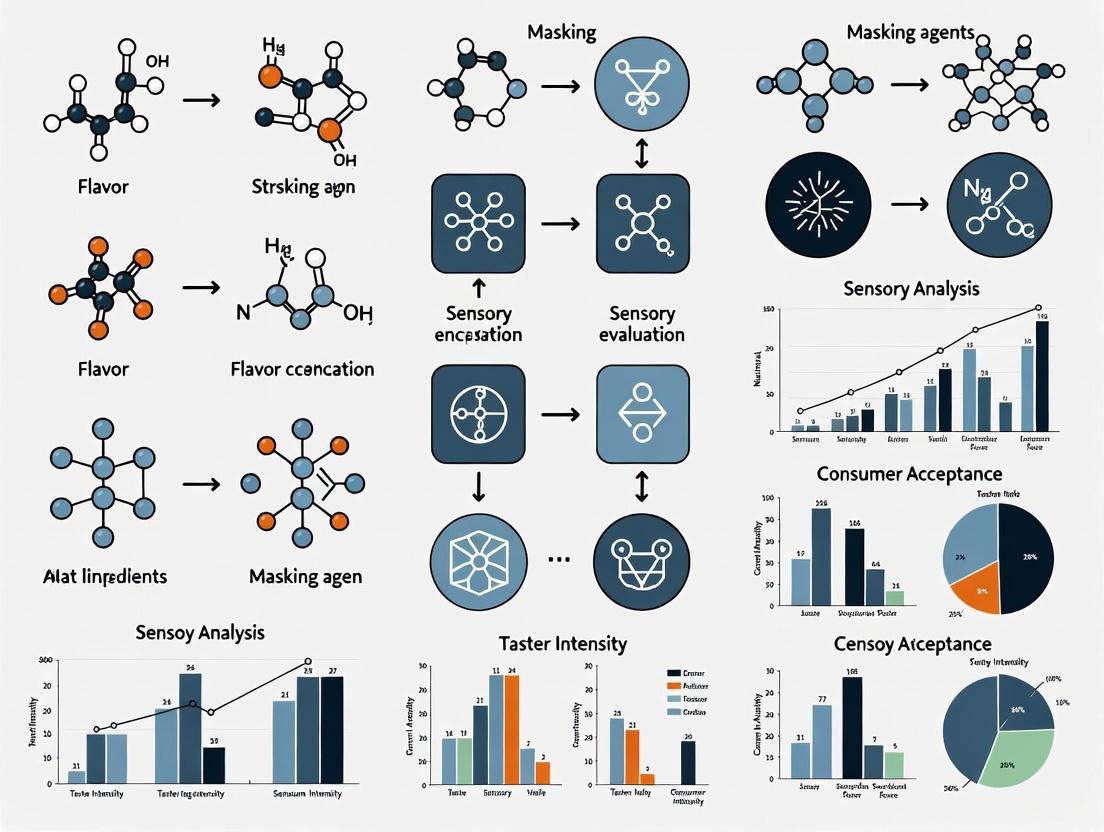
This article provides a comprehensive guide for researchers and drug development professionals on the scientific principles, methodologies, and validation techniques for masking off-flavors in fortified ingredients and pharmaceutical formulations.
Advanced Taste Masking Strategies for Fortified Ingredients: From Bitter Blockers to Patient Compliance
Abstract
This article provides a comprehensive guide for researchers and drug development professionals on the scientific principles, methodologies, and validation techniques for masking off-flavors in fortified ingredients and pharmaceutical formulations. It systematically explores the physiological foundations of taste perception, details cutting-edge physical and chemical masking technologies, offers solutions for common formulation challenges, and outlines robust sensory and analytical evaluation protocols. The content is designed to support the development of palatable, patient-centric products that improve medication adherence and therapeutic outcomes, with a focus on applications in pediatric and geriatric populations.
The Science of Unpleasant Tastes: Understanding Bitterness, Astringency, and Patient Challenges
Technical FAQs: Taste Physiology & Off-Flavor Research
Q1: What are the fundamental physiological mechanisms of taste perception that are relevant to off-flavor masking? The sense of taste, or gustation, begins when chemical substances in food interact with specialized taste receptor cells (TRCs) clustered within taste buds on the tongue [1]. These TRCs contain proteins that bind to specific taste molecules, initiating a transduction process that converts the chemical signal into an electrical nerve impulse [1]. This signal is then relayed to the brain via cranial nerves for interpretation [1]. From an off-flavor perspective, understanding this pathway is crucial because unpleasant tastes, often bitter, are detected by specific receptors (TAS2Rs) as an evolutionary warning system against potential toxins [1]. Effective masking must interfere with this signaling cascade, either at the receptor level or in subsequent neural processing.
Q2: How does the oral ecosystem influence the perception of off-flavors from fortified ingredients? The oral ecosystem (OE) is a critical interface where food components interact with host physiology to shape flavor perception [2]. Its role can be broken down into three key areas, all of which can modulate off-flavors:
- Oral Secretion: Saliva can dissolve and release flavor compounds, but it also contains enzymes that can modify these molecules, potentially amplifying or reducing off-flavors [2].
- Oral Microbiota: The community of microorganisms in the mouth can biotransform flavor compounds, changing their chemical structure and thus their perceived taste [2].
- Dynamic Feedback: A continuous loop exists between oral secretions and the oral microbiota, meaning that changes in one can dynamically alter the flavor profile of a food before the signal even reaches the taste receptors [2]. Precision modulation of the OE is an emerging strategy for off-flavor management.
Q3: What is the evidence for a "sixth" basic taste, and could it interact with off-flavors? Beyond the five well-established basic tastes (sweet, salty, sour, bitter, umami), research over the past two decades has demonstrated a sixth basic taste known as "oleogustus," or the taste of lipids (fats) [1]. Furthermore, researchers are investigating other potential basic tastes, including alkaline (opposite of sour) and metallic [3]. The confirmation of additional tastes is significant for off-flavor research, as it expands the palette of sensations that must be considered when designing masking protocols. Interactions between fat perception and common off-notes could be leveraged to create more effective flavor systems.
Q4: Our experimental masking agent works in vitro but fails in sensory trials. What could be happening in the physiological pathway? This common issue often points to a disconnect between simplified lab models and the complex reality of the human taste system. Key physiological factors to troubleshoot include:
- Signal Wiring Fidelity: Taste receptor cells have a short lifespan (about two weeks) and are constantly regenerated [4]. For the taste system to function reliably, new cells must re-establish correct connections with specific nerve fibers. This rewiring is guided by molecular signals like Semaphorin 3A (for bitter) and Semaphorin 7A (for sweet) [4]. If this process is imperfect, signal interpretation can be inconsistent.
- Multisensory Integration: Taste is not a standalone sense [3]. What we perceive as "flavor" is a combination of taste, smell (olfaction), texture, and temperature. A masking agent that blocks taste receptors might not address the olfactory component of an off-flavor, which is a major contributor. Always test under conditions that account for retronasal smell.
- Competitive Binding at Receptors: Some effective masking compounds, like certain aroma-active compounds in spices, do not merely cover up bad tastes. Instead, they compete with off-flavor molecules for binding sites on proteins in the food matrix or possibly on the taste receptors themselves, physically displacing them and preventing their perception [5].
Troubleshooting Common Experimental Challenges
| Challenge | Possible Cause | Solution / Experimental Check |
|---|---|---|
| Inconsistent taste panel data for the same sample. | High turnover of taste receptor cells leading to natural variation in individual sensitivity [4]. | Increase panel size (n) and use within-subject controlled study designs to account for biological variability. |
| Masking agent loses effectiveness over storage time. | Instability of the bioactive compound under storage conditions (e.g., pH, temperature, oxygen) [1]. | Conduct stability profiling of the masking compound using HPLC/MS and optimize formulation for encapsulation. |
| Successful bitter masking creates undesirable sweet aftertaste. | Cross-wiring or unintended activation of neighboring taste pathways (e.g., T1R sweet/umami receptors) [4]. | Perform dose-response profiling on all five basic tastes to identify and correct for collateral activation. |
| Off-flavor is reduced but not eliminated in a model food system. | Incomplete displacement of off-flavor compounds from food matrix proteins (e.g., myofibrillar proteins) [5]. | Use spectroscopic analysis (e.g., fluorescence quenching) and molecular dynamics simulation to study binding competition [5]. |
| Animal model taste response does not correlate with human panel data. | Species-specific differences in taste receptor expression or ligand specificity [1]. | Validate animal model data with in vitro assays using human taste receptors before proceeding to human trials. |
Experimental Protocols for Off-Flavor Research
Protocol 1: Assessing Competitive Binding Using Fluorescence Spectroscopy
This protocol tests if a candidate masking compound (CAAC) can displace an off-flavor compound (OFC) from a carrier protein.
Methodology:
- Protein Extraction: Extract myofibrillar proteins (MPs) from the target food matrix (e.g., chicken breast) using standard isolation buffers [5].
- Sample Preparation: Prepare three sets of samples:
- MPs + OFC (e.g., hexanal)
- MPs + CAAC (e.g., geraniol)
- MPs + OFC + CAAC
- Spectroscopy: Analyze samples using a fluorescence spectrometer. Record the fluorescence emission spectrum (e.g., 300-450 nm upon excitation at 280 nm) [5].
- Data Interpretation: A decrease (quenching) of the MP fluorescence signal upon addition of CAAC indicates interaction. If the fluorescence signal for the "MPs + OFC + CAAC" mixture resembles that of "MPs + CAAC," it suggests the CAAC has successfully displaced the OFC [5].
Protocol 2: In Vivo Validation of Bitter Masking in a Model Organism
This protocol uses a two-bottle preference test to quantify the effectiveness of a bitter maskant.
Methodology:
- Animal Model: Use adult mice (C57BL/6J strain is common). Ensure ethical approval from the institutional animal care and use committee (IACUC).
- Solution Preparation:
- Bottle A: Water + bitter compound (e.g., quinine sulfate).
- Bottle B: Water + bitter compound + masking agent.
- Testing: Present both bottles to mice for 48 hours. Switch bottle positions every 12 hours to control for side preference.
- Data Analysis: Measure the volume consumed from each bottle. A significant preference for Bottle B indicates successful masking of the bitter taste. Compare to a control group with water vs. bitter compound to confirm aversion [4].
Research Reagent Solutions
| Reagent / Material | Function in Experiment | Key Consideration |
|---|---|---|
| Taste Receptor Cell (TRC) Cultures | In vitro screening of compounds against human bitter (TAS2R) receptors. | Requires immortalized cell lines transfected with specific human taste receptors. |
| Semaphorin 3A / 7A | To study the neural rewiring of bitter and sweet taste pathways in vivo [4]. | Used in animal models (e.g., mice) to manipulate taste system connectivity. |
| Characteristic Aroma-Active Compounds (CAACs) | e.g., d-limonene, geraniol, acetophenone. Act as potential masking agents by competing for protein binding sites [5]. | Purity is critical; source from reputable suppliers (e.g., Sigma-Aldrich). |
| Myofibrillar Proteins (MPs) | A model food protein matrix to study the binding and release of off-flavor compounds [5]. | Extract fresh and use immediately or under standardized storage to prevent denaturation. |
| Micronutrient Fortificants | e.g., Iron salts, Vitamins. The source of metallic or bitter off-flavors to be masked [6] [7]. | Different chemical forms (e.g., ferrous sulfate vs. ferric pyrophosphate) have varying flavor profiles. |
Signaling Pathways and Experimental Workflows
Diagram 1: Taste Signal Transduction Pathway
Diagram 2: Competitive Binding for Off-Flavor Removal
Diagram 3: Experimental Workflow for Masking
FAQ: Understanding Taste Mechanisms and Challenges
What are the physiological mechanisms behind different unpleasant tastes?
Unpleasant tastes are perceived through distinct physiological processes. Bitterness is mediated by a family of about 25 G-protein-coupled receptors (TAS2Rs) on Type II taste receptor cells. When a bitter compound binds, it triggers an intracellular cascade involving phospholipase Cβ2 (PLCβ2), inositol triphosphate (IP3), and TRPM5 channel activation, leading to neurotransmitter release and signal transmission to the brain [8] [9]. In contrast, sour and salty tastes are detected through ion channel receptors that perceive H+ and Na+ ions, respectively [10]. Astringency is not a pure taste but rather a tactile sensation described as a dry, puckering mouthfeel caused by substances that denature salivary proteins, creating a rough, sandpapery sensation [11] [12]. Metallic perceptions are also largely sensations rather than tastes, often resulting from chemical reactions in the oral cavity [11].
Why is accurately quantifying unpleasant tastes crucial for research?
Accurate quantification is fundamental for developing effective masking strategies, as it provides objective data to guide formulation improvements and measure intervention efficacy [9] [12]. Quantitative evaluation helps researchers prioritize taste factors, identify their sources, implement targeted modifications, and establish standardized protocols for quality control and batch-to-batch consistency [12]. Without robust quantification, taste-masking efforts remain subjective and unreliable.
What are the key challenges in masking unpleasant tastes in fortified products?
Fortified products present unique challenges due to interactions between bioactives and the food matrix. For instance, research shows that milk proteins can interact with bioactives, hindering antioxidant functions and creating off-flavors through oxidation [13]. Iron binds with casein, which both prevents iron absorption in the body and creates off-flavors [13]. Additionally, some unpleasant tastes, like the metallic aftertaste from minerals such as iron and copper, or the chalkiness from certain calcium sources, are particularly difficult to mask [11]. The multiple taste and sensorial attributes of some active ingredients (e.g., bitter, metallic, and burning sensations) require combined masking approaches [14].
Troubleshooting Guides & Experimental Protocols
Guide 1: Troubleshooting Common Taste Masking Failures
| Problem | Possible Cause | Solution |
|---|---|---|
| Incomplete Bitterness Masking | Insufficient coating level; wrong polymer selection; inadequate taste assessment. | Increase barrier coating level; switch to reverse-enteric polymers; validate with human taste panel or e-tongue [14]. |
| Off-Flavor Development Post-Processing | Thermal degradation of flavors or actives; interactions between components. | Use encapsulated flavors; optimize processing conditions (time/temperature); employ microencapsulation for sensitive actives [13] [15]. |
| Grittiness or Chalky Mouthfeel | Large particle size of insoluble active ingredients (e.g., minerals). | Utilize nanoencapsulation; employ particle size reduction technologies; incorporate texturizing agents like gums or starches [11] [13]. |
| Lingering Metallic Aftertaste | Oxidation of metallic ions (e.g., iron, copper); lack of specific masking agent. | Use chelating agents like cyclodextrins; employ antioxidants in formulation; leverage bitter blockers specific to minerals [16] [11]. |
| Flavor Instability in Liquid Formulations | Continuous exposure of API to aqueous medium; degradation over shelf life. | Develop water-in-oil (W/O) emulsions; use micelle-forming surfactants; consider non-aqueous vehicles [14]. |
Guide 2: Quantitative Bitterness Assessment Method Selection
| Method | Principle | Applicability | Key Experimental Steps |
|---|---|---|---|
| Traditional Human Taste Panel (THTPM) | Direct sensory evaluation by trained human assessors [9]. | Considered the "gold standard" for final formulation assessment [9] [12]. | 1. Recruitment & Training: Recruit screened assessors; train with reference compounds. 2. Sample Prep: Prepare standardized solution/suspension. 3. Testing: Use sip-and-spit; randomized presentation. 4. Data Collection: Scale ratings (e.g., 0-5); record aftertaste. |
| Electronic Tongue (ETM) | Array of cross-selective sensors with pattern recognition for liquid analysis [9] [12]. | High-throughput screening; formulation optimization; stability testing [12]. | 1. System Calibration: Calibrate with standard solutions. 2. Measurement: Immerse sensors; measure potential. 3. Data Analysis: Use PCA/DA to model against human panel data. |
| Cell-Based Assays | Measures calcium flux in cells expressing human TAS2R receptors [9]. | Mechanism-specific screening; early-stage API bitterness prediction. | 1. Cell Culture: Grow cells expressing target TAS2Rs. 2. Loading: Load with fluorescent calcium-sensitive dye. 3. Stimulation & Reading: Add compound; measure fluorescence. |
Experimental Protocol 1: Evaluating Bitterness Masking Efficiency via E-Tongue
Objective: To evaluate the efficiency of a taste-masking formulation for a bitter active ingredient using an electronic tongue.
Materials:
- Electronic tongue system (e.g., Astree ISM)
- Reference standards (e.g., caffeine, quinine hydrochloride)
- Test formulations: Unmasked API, masked API (e.g., coated particles, complexed form)
- Solvent (e.g., deionized water, artificial saliva)
Procedure:
- System Start-up & Calibration: Power on the e-tongue and allow it to stabilize. Perform sensor calibration according to the manufacturer's protocol using standard solutions.
- Sample Preparation: Precisely weigh or measure each test formulation to achieve an equivalent API concentration. Dilute in the chosen solvent to a standard volume. Ensure all samples are at the same temperature.
- Measurement Cycle: For each sample, perform the measurement cycle:
- Rinse: Rinse the sensors thoroughly with purified water between samples to prevent carryover.
- Measurement: Immerse the sensor array into the sample solution and record the sensor response signals over the designated measurement time.
- Replicate: Perform a minimum of three replicate measurements for each sample to ensure data reproducibility.
- Data Analysis: Use the instrument's software to perform multivariate data analysis, such as Principal Component Analysis (PCA). A successful taste mask will show the masked API clustering closely with a non-bitter reference or placebo in the PCA plot, and far from the unmasked API cluster [9] [12].
Experimental Protocol 2: Sensory Evaluation of Mouthfeel Modifiers
Objective: To assess the effectiveness of texturizing agents in masking chalkiness or grittiness using a trained sensory panel.
Materials:
- Base product (e.g., model beverage or suspension) with the unpleasant mouthfeel
- Texturizing agents (e.g., pectin, xanthan gum, modified starches)
- Reference samples with known mouthfeel profiles
- Sensory evaluation booths and supplies
Procedure:
- Panel Training: Train panelists to recognize and scale specific mouthfeel attributes (e.g., chalkiness, grittiness, smoothness, viscosity) using reference standards.
- Sample Preparation: Prepare the base product incorporating different texturizing agents at varying concentrations. Include a control sample (base without modifier). Ensure all samples are blinded and coded with random 3-digit numbers.
- Evaluation: Present samples to panelists in a randomized order to avoid bias. Use a sip-and-spit protocol. Panelists should rate the intensity of each attribute on a structured scale (e.g., a 0-10 line scale).
- Data Collection & Analysis: Collect score sheets and perform statistical analysis (e.g., ANOVA) to identify significant differences between samples in terms of chalkiness reduction and smoothness enhancement. Research shows that increasing viscosity can delay the release of bitter compounds and improve overall mouthfeel [17] [10].
Key Signaling Pathways
Bitterness Perception Pathway
The following diagram illustrates the established signal transduction cascade that occurs when a bitter compound activates a taste receptor cell.
Experimental Workflow for Taste Masking
This workflow outlines a systematic approach for researchers to identify, evaluate, and solve problems related to unpleasant tastes in formulations.
The Scientist's Toolkit: Research Reagent Solutions
| Reagent / Material | Function & Application in Taste Research |
|---|---|
| Bitter Blockers (e.g., Homoeriodictyol) | Flavonoids that act as TAS2R antagonists, binding to bitter receptors to inhibit API activation [17] [12]. |
| Cyclodextrins (e.g., β-Cyclodextrin) | Oligosaccharides that form inclusion complexes with bitter molecules, trapping them and preventing interaction with taste receptors [12] [14]. |
| Reverse-Enteric Polymers | pH-dependent polymers (e.g., MMA-DEAEMA copolymer) that remain insoluble in the mouth (neutral pH) but dissolve in the stomach, preventing drug release in the oral cavity [14]. |
| Lipids (e.g., Stearic Acid, Glycerol Monostearate) | Used in melt-congealing microencapsulation to create a hydrophobic barrier around bitter or moisture-sensitive APIs [14]. |
| Ion Exchange Resins | Form non-soluble complexes with ionizable bitter drugs, releasing the API in the ionic environment of the GI tract [12]. |
| Sensates (e.g., Cooling Agents) | Substances that induce sensations like cooling or warming, providing a multisensory experience that diverts attention from unpleasant tastes [15]. |
| Electronic Tongue | Instrument with cross-selective sensor arrays and pattern recognition software for objective, high-throughput taste assessment of liquid formulations [9] [12]. |
| Texturizing Agents (e.g., Xanthan Gum, Pectin) | Increase viscosity and modify mouthfeel, which can delay the release of bitter compounds and mask chalkiness or grittiness [17] [10]. |
The Critical Impact of Palatability on Patient Compliance in Pediatric and Geriatric Populations
Technical Support Center: Troubleshooting Flavor-Masking in Medicated Formulations
This technical support center provides researchers and scientists with practical guidance for overcoming palatability challenges when developing medications for pediatric and geriatric populations. The following troubleshooting guides and FAQs address common issues encountered during flavor-masking experiments for fortified active pharmaceutical ingredients (APIs).
Troubleshooting Guides
Problem: Bitter Taste Leakage in Pediatric Suspensions
- Symptoms: Child patients consistently reject medication, evidenced by spitting, gagging, or refusal to open mouths. In vivo evaluations confirm unacceptable bitterness.
- Theory of Probable Cause: Incomplete or inconsistent coating of bitter API particles, potentially due to:
- Incorrect excipient-to-API ratio.
- Suboptimal coating process parameters (e.g., spray rate, temperature, fluidization).
- Inadequate coating thickness for the specific API load.
- Plan of Action & Verification:
- Confirm Coating Integrity: Use dissolution testing in simulated saliva (pH ~7.4) to check for premature API release.
- Re-evaluate Formulation: Increase the percentage of polymer-based taste-masking excipient (e.g., from 10% to 15-20% w/w) or incorporate a secondary barrier like a lipid carrier [18].
- Optimize Process: If using fluid-bed coating, reduce spray rate and increase inlet air temperature to improve coating efficiency and uniformity.
- Test Theory: Conduct a small-scale (bench-top) batch with the modified parameters and repeat the dissolution test and electronic tongue analysis [18].
- Solution: Implement the optimized formulation and process parameters. Validate with a human taste panel or a validated electronic tongue.
Problem: Low Patient Acceptability Despite High Masking Efficacy
- Symptoms: In-vitro tests (e.g., electronic tongue) show successful bitterness suppression, but sensory evaluations with target population (children or elderly) report low acceptability.
- Theory of Probable Cause: The overall sensory profile (smell, aftertaste, texture) is unpalatable, even if bitterness is masked. Common issues include chalky mouthfeel, unpleasant aroma, or metallic aftertaste.
- Plan of Action & Verification:
- Deconstruct Sensory Profile: Use a Check-All-That-Apply (CATA) sensory test with panelists to identify specific aversive attributes (e.g., "chalky," "slimy," "medicinal smell") [19].
- Modify Flavor System: Sweeteners (e.g., sucrose, sucralose) can mask sweetness gaps, while flavors like chocolate or fruit can counter residual off-notes. For the elderly, consider culturally familiar flavors (e.g., purple sweet potato was highly accepted in one study) [19].
- Adjust Texture/Mouthfeel: Incorporate functional excipients to improve texture. For liquids, xanthan gum can enhance viscosity and coating; for powders, mannitol can provide a cooling sensation and pleasant mouthfeel [19] [18].
- Solution: Reformulate the flavor system and adjust excipients to address the identified sensory gaps. Re-test with the target population using a 9-point hedonic scale [19].
Frequently Asked Questions (FAQs)
Q1: What is the documented evidence linking poor palatability to clinical outcomes? A1: Empirical evidence confirms that poor-tasting medicines directly impact patient acceptability and adherence. A 2025 scoping review of 225 studies found that 64% reported medicine rejection by children, necessitating strategies from positive reinforcement to physical restraint. Furthermore, 27% of the studies directly linked poor taste to medication non-adherence, which in a small number of studies was correlated with critical treatment outcomes such as viral suppression in HIV and seizure control in epilepsy [20] [21].
Q2: Which taste-masking technologies are gaining the most traction for pharmaceutical applications? A2: The global flavor masking agent market, valued at USD 249.26 Million in 2023, is growing at a CAGR of 7.45% [22]. Key technologies include:
- Microencapsulation: Trapping API within polymer or lipid walls to prevent contact with taste buds.
- Complexation: Using cyclodextrins to form inclusion complexes with bitter API molecules.
- Ion Exchange Resins: Binding API to resins to delay release in the mouth.
- Granulation & Coating: Creating a physical barrier around API particles using polymer coatings in processes like fluid-bed coating [18]. The trend is moving towards natural, clean-label masking agents and advanced techniques like nanotechnology for more reliable and effective masking [22] [18].
Q3: How can I objectively measure the success of my taste-masking formulation before costly human trials? A3: A tiered testing approach is recommended:
- In-Vitro Dissolution Testing: Assess API release in simulated oral conditions. A robust formulation should release less than 5-10% of the bitter API within the first 1-2 minutes.
- Electronic Tongue (E-Tongue): Use multisensor systems to analytically "taste" the formulation and predict bitterness intensity and masking efficiency. This provides a highly reproducible, quantitative analysis of taste, ideal for screening prototypes [20].
- In-Vivo Animal Models (e.g., Rodent Brief Access Taste Aversion - BATA): Can be used for preliminary behavioral assessment of palatability.
Experimental Protocols for Key Evaluations
Protocol 1: Electronic Tongue Analysis for Bitterness Masking
- Objective: To quantitatively evaluate the bitterness suppression efficacy of a taste-masking formulation.
- Methodology:
- Sample Preparation: Disperse the test formulation (e.g., coated granules, powder) in deionized water at a concentration representative of the in-mouth dose. Include an un-masked API solution as a positive control and deionized water as a negative control.
- Instrument Calibration: Calibrate the e-tongue sensors according to manufacturer's instructions using standard solutions.
- Measurement: Immerse the sensor array into the sample solution and record the sensor response over a typical measurement period (e.g., 120 seconds). Ensure consistent stirring.
- Data Analysis: Use multivariate data analysis (e.g., Principal Component Analysis - PCA) to compare the sensor response pattern of the test formulation to the controls. A formulation with good masking will have a sensor pattern closer to the negative control (water) and distant from the positive control (un-masked API) [20].
Protocol 2: Sensory Evaluation of Palatability in a Geriatric Population
- Objective: To assess the acceptability and sensory attributes of a texture-modified medicated food (TMF) in the target demographic.
- Methodology:
- Panel Recruitment: Recruit ~60-70 middle-aged and elderly participants, ensuring they represent the target consumer base. Obtain ethical approval and informed consent [19].
- Sample Presentation: Present formulations in a randomized, blind manner. Ensure samples comply with safety standards (e.g., IDDSI Level 3 for dysphagia) [19].
- Testing Procedure:
- Hedonic Scale: Ask participants to rate their overall liking of the product using a 9-point hedonic scale (1="dislike extremely" to 9="like extremely") [19].
- CATA Test: Present a list of sensory attributes (e.g., "gritty," "smooth," "too sweet," "bitter aftertaste," "pleasant aroma"). Participants check all terms they feel describe the product [19].
- Data Analysis:
- Calculate mean hedonic scores for each formulation. A score above 7 is generally considered acceptable.
- Use frequency counts and chi-square analysis for CATA data to identify which sensory attributes significantly drive liking or disliking.
Data Presentation
Table 1: Documented Impact of Poor Palatability in Pediatric Medicines (Scoping Review of 225 Studies) [20] [21]
| Impact Category | Key Findings | Percentage of Studies Reporting |
|---|---|---|
| Patient Acceptability | Medicine rejection, need for administration strategies (positive reinforcement to physical restraint), impact on prescribing practices (e.g., using non-first line alternatives). | 64% |
| Medication Adherence | A barrier to adherence in chronic diseases; correlated with incomplete dosing in acute conditions. | 27% |
| Treatment Outcomes | Linked to viral suppression in HIV and seizure control in epilepsy. | A small number of studies |
Table 2: Global Flavor Masking Agent Market Forecast (Key Application Sectors) [22]
| Application Sector | Market Drivers and Key Considerations for Formulators |
|---|---|
| Pharmaceuticals | Critical for improving compliance in pediatric and geriatric populations. Driven by aging global demographics. Technologies: polymer coatings, microencapsulation. |
| Nutraceuticals | High demand for masking potent bioactive compounds (vitamins, minerals, botanical extracts) with inherent bitterness or metallic tastes. |
| Food & Beverages | Essential for the plant-based protein revolution (masking bitter/earthy notes from pea, soy) and functional foods/beverages. Demand for natural, clean-label agents. |
The Scientist's Toolkit: Key Research Reagent Solutions
Table 3: Essential Materials for Taste-Masking Research
| Item | Function in Research | Example Application |
|---|---|---|
| Polymer Coating Systems | Forms a physical barrier to prevent API dissolution in saliva. | Eudragit E PO for immediate release and taste masking in orodispersible tablets. |
| Lipid-Based Carriers (e.g., Glyceryl Behenate) | Masks taste by lipidic encapsulation and melt granulation. | Taste-masking of highly bitter drugs like antibiotics in pediatric suspensions. |
| Ion Exchange Resins (e.g., Kyron T-114) | Binds ionizable APIs to form a non-bitter complex that releases API in the ionic environment of the stomach. | Formulating palatable liquid sustained-release formulations. |
| Sweeteners (e.g., Sucralose, Acesulfame K) | Potent sweeteners used to counter any residual bitterness and improve sweetness profile. | Used in almost all pediatric syrups and dispersible tablets. |
| Flavor Systems (e.g., Masking Flavors) | Complex flavor blends designed to specifically cover bitter, metallic, or medicinal off-notes. | "Bitter Masker" flavors from companies like Givaudan or Firmenich for herbal extracts. |
| Hydrocolloids (e.g., Xanthan Gum) | Modifies viscosity and mouthfeel, enhances suspension stability, and can aid in coating integrity. | Used in texture-modified foods and liquid medications for dysphagia patients [19]. |
Experimental Workflow and Impact Pathway Visualization
Taste-Masking Formulation Workflow
Impact of Palatability on Compliance
Frequently Asked Questions
Q1: What are the primary taste-masking challenges for high-drug-load formulations? High-drug-load formulations are particularly challenging because traditional barrier coatings require long processing times to adequately cover the large surface area of the API. This can be inefficient for fine drug substances with small particle sizes. Furthermore, achieving effective taste-masking without adversely impacting the drug's release profile and bioavailability is a critical concern [14].
Q2: How can I effectively mask multiple, complex off-notes in a liquid dosage form? Liquid formulations are especially difficult as they often rely on flavors and sweeteners, which can be ineffective against highly bitter or complex sensorial attributes like a metallic sensation. Barrier coatings may also lose effectiveness over the product's shelf life due to the API's continuous exposure to water. Promising new strategies include using micelle-forming surfactants or liposomes to entrap the drug, and water-in-oil (W/O) emulsions where the API is encapsulated within the water phase, preventing contact with taste buds [14].
Q3: What taste-masking strategies align with clean-label demands? Clean-label formulation involves removing ingredients perceived as synthetic or unfamiliar, often requiring minimalistic ingredient lists [23]. This can be a significant challenge for taste-masking, as highly functional ingredients are often targets for removal. Advances in this area include using more natural polymer alternatives and exploring the bitter-blocking abilities of certain zinc salts [14]. However, replacing highly processed stabilizers with natural alternatives can sometimes result in less desirable sensory characteristics or increased production costs [23].
Q4: What are "reverse-enteric polymers" and how do they work? Reverse-enteric polymers are a class of functional polymers that do not dissolve in the neutral pH environment of the mouth but dissolve rapidly in the acidic pH of the stomach. This pH-dependent solubility prevents drug release in the buccal cavity, effectively masking taste, while ensuring immediate release in the gastrointestinal tract. An example is a copolymer of methyl methacrylate (MMA) and diethylaminoethyl methacrylate (DEAEMA) [14].
Q5: Are there taste-masking approaches that don't use solvents? Yes, melt-granulation is a solvent-free process. During hot melt extrusion, hydrophobic polymers like stearic acid or glycerol monostearate can cover the drug substance and form a stable barrier layer upon cooling. This process is advantageous for moisture-sensitive drugs and typically has a shorter processing time compared to aqueous or organic solvent-based film coating [14].
Troubleshooting Guides
Problem: Ineffective taste-masking in Orally Disintegrating Tablets (ODTs).
- Potential Cause 1: The coating level of the taste-masking polymer (e.g., a reverse-enteric polymer) is insufficient to prevent API release during the typical buccal residence time (up to 30 seconds).
- Solution: Optimize the coating composition and level. This requires a careful balance to prevent drug release in the mouth without compromising pharmacokinetic performance. Clinical testing with healthy subjects for palatability assessment is often necessary to confirm effectiveness [14].
- Potential Cause 2: The coating process is inefficient for high-drug-load or fine-particle formulations.
- Solution: Consider a dual-granulation coating approach where the coating polymer also acts as a binder, creating larger granules for more efficient coating and improved compressibility [14].
Problem: Unstable taste-masking in liquid suspensions over shelf life.
- Potential Cause: Continuous exposure to water leads to the gradual breakdown of barrier coatings, causing the bitter API to leach out.
- Solution: Move beyond simple barrier coatings. Investigate encapsulation strategies such as:
- Lipid-based encapsulation: Dispersing the API in molten stearic acid and using a melt-congealing microencapsulation process.
- Water-in-Oil (W/O) Emulsions: Dissolving the water-soluble API in the aqueous phase, which is then dispersed within a continuous oil phase (e.g., Medium-Chain Triglycerides) using suitable emulsifiers. The oil phase acts as a barrier to the taste receptors [14].
Problem: Consumer or regulatory pushback due to "unclean" ingredient lists.
- Potential Cause: Use of synthetic or chemically-named stabilizers and polymers (e.g., some methacrylic copolymers) that are on retailer or consumer "blacklists" [23].
- Solution: Explore cleaner-label alternatives. This includes using polymers perceived as more natural, or investigating bitter blocker compounds that target taste receptors. Be aware that cleaner-label reformulation can increase production costs and may present challenges in maintaining desired sensory characteristics [14] [23].
Comparative Data on Taste-Masking Technologies
The table below summarizes key characteristics of different taste-masking approaches.
Table 1: Comparison of Taste-Masking Technologies for Challenging Formulations
| Technology | Best For | Key Advantage | Key Limitation | Clean-Label Consideration |
|---|---|---|---|---|
| Reverse-Enteric Polymers | ODTs, Suspensions | Prevents release in mouth, dissolves in stomach | Balancing coating to not impact PK performance is challenging [14] | Variable |
| Lipid Excipients (Melt-Congealing) | Highly bitter, moisture-sensitive APIs | Solvent-free process, effective moisture protection [14] | May alter drug release profile [14] | Moderate |
| Water-in-Oil Emulsions | Liquid formulations (solutions/suspensions) | Effectively "hides" API from taste buds [14] | Requires specific emulsifiers (e.g., Polyoxyl 40 hydrogenated castor oil) [14] | Moderate |
| Micelle-Forming Surfactants/ Liposomes | Liquid formulations, gummies | Forms transient inclusion complexes shielding the API [14] | Effectiveness may vary with API and formulation [14] | Variable |
| Flavors & Sweeteners | Mild to moderate bitterness | Simple, cost-effective | Often insufficient for highly bitter or complex off-notes [14] | High (if natural) |
Experimental Protocols for Key Methods
Protocol 1: Development of a Taste-Masked Suspension using W/O Emulsion
- Preparation of Aqueous Phase: Dissolve the water-soluble API in purified water.
- Preparation of Oil Phase: Mix Medium-Chain Triglycerides (MCTs) with emulsifiers. A recommended combination is a high-HLB emulsifier like Polyoxyl 40 hydrogenated castor oil (HLB ~14-16) and a low-HLB co-emulsifier like glycerol monostearate (HLB ~3.8).
- Emulsification: Slowly add the aqueous phase to the oil phase while under high-shear mixing to create a coarse pre-emulsion. Pass the pre-emulsion through a high-pressure homogenizer to form fine, stable water-in-oil emulsion droplets.
- In-Vitro Taste Release Testing: Use a dissolution apparatus with a simulated salivary fluid (pH ~7.0-7.4) for a short duration (e.g., 1-2 minutes) to verify minimal API release. Analyze the medium for API content using HPLC or UV-Vis spectroscopy.
- In-Vivo Gastrointestinal Release Testing: Transfer the emulsion to a simulated gastric fluid (pH ~1.2) to confirm complete and rapid drug release [14].
Protocol 2: Solvent-Free Taste-Masking via Melt Granulation
- Melting: Heat a lipid excipient (e.g., stearic acid or glycerol monostearate) above its melting point in a high-shear mixer.
- Dispersion: Disperse the bitter API into the molten lipid under continuous mixing to ensure uniform coating.
- Atomization and Congealing: Atomize the molten mixture into a chilled chamber (e.g., using cold air) to rapidly solidify the particles (melt-congealing microencapsulation).
- Characterization: Sieve the resulting granules to obtain a uniform particle size distribution. Perform dissolution testing in both simulated salivary and gastric fluids to assess taste-masking efficiency and drug release profile [14].
The Scientist's Toolkit: Key Research Reagent Solutions
Table 2: Essential Materials for Taste-Masking Research
| Reagent / Material | Function in Formulation | Key Consideration |
|---|---|---|
| Methyl Methacrylate (MMA) & Diethylaminoethyl Methacrylate (DEAEMA) Copolymer | Reverse-enteric polymer for ODTs and suspensions [14] | Lipophilic quality reduces required coating level [14] |
| Stearic Acid / Glycerol Monostearate | Lipid-based encapsulating agent for melt-granulation [14] | Provides moisture protection; may alter drug release [14] |
| Polyoxyl 40 Hydrogenated Castor Oil | High-HLB emulsifier for W/O emulsions [14] | Preferred for its more pleasant taste profile [14] |
| Medium-Chain Triglycerides (MCTs) | Continuous oil phase in W/O emulsions [14] | Chosen for an acceptable taste profile [14] |
| Zinc Salts | Potential bitter blocker compound [14] | Emerging research on efficacy for direct receptor modulation [14] |
| Polyvinyl Acetate (PVAc) & PVA-PEG Copolymer | Combination for tunable barrier coatings [14] | PVA-PEG acts as a pore former to control release without significant PK impact [14] |
Visualizing Workflows and Mechanisms
A Toolkit of Taste-Masking Techniques: From Encapsulation to Molecular Blockers
Core Mechanisms: How Physical Barriers Mask Off-Flavors
What is the fundamental principle behind using physical barriers for taste masking? Physical barrier methods work by preventing the direct interaction of the bitter or unpleasant-tasting active compound with the taste receptor cells on the tongue. By encapsulating the compound within a coating, microcapsule, or liposomal vesicle, the molecule is physically prevented from dissolving in saliva and reaching the taste buds, thereby preventing the perception of off-flavors [12] [24].
How do these methods fit into the broader thesis of masking off-flavors from fortified ingredients? Within the context of fortification research, these technologies are crucial for enhancing patient and consumer compliance. The goal is to deliver health-promoting bioactive compounds—such as vitamins, polyphenols, peptides, and omega-3 fatty acids—without compromising the sensory experience of the food or drug product [25] [26]. This makes physical barriers an enabling technology for the successful development of functional foods and palatable medicines.
The following diagram illustrates the core mechanism of action for these physical barrier methods.
Troubleshooting Common Experimental Issues
Microencapsulation
| Problem | Possible Cause | Solution |
|---|---|---|
| Low Encapsulation Efficiency | Rapid drug diffusion into the aqueous phase during preparation. | Optimize the wall-to-core material ratio [25]. Increase the viscosity of the encapsulation medium. |
| Premature Release of Core | Incomplete or porous coating formation; wall material degradation. | Select a wall material with better film-forming properties and lower solubility in the product matrix [25]. |
| Poor Shelf-life Stability | Permeability of the wall material to oxygen and moisture. | Use composite wall materials or incorporate antioxidants into the wall matrix itself [25]. |
Coating Technologies
| Problem | Possible Cause | Solution |
|---|---|---|
| Cracking or Incomplete Coating | Spray rate too high, causing overwetting; pan speed too low, causing poor mixing. | Optimize process parameters: reduce spray rate, increase inlet air temperature, and increase pan/fluid bed rotation speed [12]. |
| Poor Taste-Masking Efficacy | Coating thickness is insufficient to prevent drug release in the mouth. | Increase the coating weight gain (typically 20-30% may be required) and verify using an electronic tongue or in-vivo taste panel [12] [24]. |
| Long Dissolution Time | Coating is too resistant to gastrointestinal fluids, delaying drug release. | Incorporate pore-formers or use pH-dependent polymers (e.g., Eudragit) that dissolve in the stomach or intestine [12]. |
Liposomal Entrapment
| Problem | Possible Cause | Solution |
|---|---|---|
| Low Encapsulation Efficiency | Leakage of hydrophilic bioactives during preparation or storage. | For hydrophilic compounds, use active loading techniques or reverse-phase evaporation methods [26] [27]. |
| Short Shelf-life & Aggregation | Physical instability of phospholipid bilayers in aqueous dispersion. | Incorporate cholesterol to stabilize the bilayer. Convert the liposomal dispersion into a powder via freeze-drying using cryoprotectants like trehalose [26]. |
| Leakage of Encapsulated Compound | Bilayer disruption due to pH, temperature, or enzymatic degradation. | Create hybrid systems by embedding liposomes within a secondary matrix like hydrogels or biopolymer films for enhanced protection [26]. |
Essential Experimental Protocols
Protocol 1: Thin-Film Hydration for Liposome Preparation
This is a fundamental method for creating multilamellar vesicles (MLVs) suitable for encapsulating both hydrophilic and lipophilic compounds [26] [27].
Materials:
- Phospholipid (e.g., Soybean phosphatidylcholine)
- Cholesterol
- Organic solvent (e.g., chloroform or ethanol)
- Aqueous buffer (for hydration)
- Round-bottom flask
- Rotary evaporator
Step-by-Step Method:
- Dissolution: Dissolve the phospholipid and cholesterol in a molar ratio of 7:3 in a round-bottom flask containing chloroform.
- Film Formation: Attach the flask to a rotary evaporator. Evaporate the solvent under reduced pressure at a temperature above the lipid transition temperature (e.g., 40-45°C) to form a thin, dry lipid film on the inner wall of the flask.
- Hydration: Hydrate the dry lipid film with an aqueous buffer (e.g., phosphate-buffered saline, pH 7.4) containing the hydrophilic bioactive to be encapsulated. Rotate the flask manually or at low speed for 1-2 hours above the lipid transition temperature to allow the film to swell and form multilamellar vesicles (MLVs).
- Size Reduction: To produce small unilamellar vesicles (SUVs) of uniform size, subject the MLV suspension to probe sonication (on ice to prevent overheating) or extrude it through polycarbonate membranes of defined pore size (e.g., 100 nm) using a liposome extruder [26].
Protocol 2: Fluidized Bed Coating for Granules
This protocol is standard for applying a uniform polymer coat to drug-loaded particles or granules [12] [24].
Materials:
- Drug-loaded granules or inert cores
- Coating polymer solution (e.g., Eudragit E PO, HPMC)
- Plasticizer (e.g., Triethyl citrate)
- Fluidized bed coater with a Wurster insert
- Peristaltic pump and spray nozzle
Step-by-Step Method:
- Preparation: Load the uncoated granules into the fluidized bed chamber. Preheat the incoming air to the desired temperature (e.g., 35-40°C for acrylic polymers).
- Coating Solution: Prepare the coating solution by dissolving the polymer and plasticizer in an appropriate solvent (e.g., water/ethanol mixture).
- Coating Process: Initiate the fluidization of the granules. Set the peristaltic pump to a controlled spray rate (e.g., 1-3 mL/min) and the atomizing air pressure to achieve a fine mist. Continue the process until the target coating weight gain (e.g., 20-30%) is achieved.
- Curing: After coating, cure the samples in an oven at a moderate temperature (e.g., 40°C for 2 hours) to ensure complete film formation and polymer coalescence.
The Scientist's Toolkit: Key Research Reagents & Materials
Table: Essential Materials for Physical Barrier Taste-Masking Experiments
| Material / Reagent | Function & Explanation | Example Uses |
|---|---|---|
| Eudragit E PO | A cationic copolymer soluble at pH <5. It forms a robust film that is insoluble in saliva (pH ~6.8) but dissolves rapidly in gastric fluid, providing excellent taste masking [12]. | Coating for granules and pellets in orodispersible tablets. |
| Hydroxypropyl Methylcellulose (HPMC) | A water-soluble polymer used as a coating agent to create a physical barrier and as a binder in granulation processes [24]. | Primer sub-coat or a film former for immediate-release coatings. |
| Soybean Phosphatidylcholine | A natural, GRAS-status phospholipid that serves as the primary structural component of liposomal bilayers [26]. | Forming liposomes for encapsulating vitamins, polyphenols, or omega-3s. |
| Cholesterol | Incorporated into liposomal membranes to modify membrane fluidity and permeability, thereby enhancing stability and reducing leakage of encapsulated compounds [26] [27]. | A key additive (30-50 mol%) in liposome formulations to improve bilayer rigidity. |
| Trehalose | A non-reducing disaccharide that acts as a cryoprotectant. It protects liposomes and other delicate encapsulates from damage during freeze-drying by stabilizing the lipid bilayers [26]. | Lyophilization of liposomal dispersions to create stable powders. |
| Cyclodextrins (e.g., β-Cyclodextrin) | They form inclusion complexes with bitter molecules by trapping them in their hydrophobic cavity, physically shielding the compound from taste receptors [24]. | Molecular encapsulation of bitter drugs like ibuprofen or herbal extracts. |
Frequently Asked Questions (FAQs)
Q1: How do I choose between microencapsulation and coating for my solid dosage form? The choice often depends on the particle size of your active ingredient and the final application. Coating technologies are typically applied to pre-formed particles, granules, or tablets. Microencapsulation is often used to create the particles themselves, starting from a powder or solution of the active ingredient. If you are working with a fine powder that is difficult to coat directly, microencapsulation may be the preferable first step [25] [12].
Q2: What are the key analytical tools for evaluating the success of a taste-masking formulation? A multi-pronged approach is recommended:
- In-vitro Dissolution Testing: Use a two-stage protocol: first in simulated salivary fluid (pH 6.8) for 2-5 minutes to assess taste masking, then in simulated gastric fluid to ensure complete release [12].
- Electronic Tongue (E-tongue): This instrument with cross-sensitive sensors can distinguish between different taste profiles and is highly effective for quantitative, objective taste assessment without human panels [12] [24].
- Human Sensory Panels: The gold standard for final formulation assessment, though it requires ethical approval and is more subjective [12].
Q3: Why are my liposomes unstable in the liquid food matrix, and how can I improve their shelf life? Liposomes in aqueous form are susceptible to aggregation, oxidation, and hydrolysis. To enhance stability:
- Modify the Bilayer: Incorporate cholesterol (up to 50 mol%) to increase membrane rigidity [26].
- Create a Hybrid System: Embed the liposomes within a solid or semi-solid matrix, such as a hydrogel, electrospun nanofiber, or a powder produced by spray-drying or freeze-drying [26].
- Use Cryoprotectants: When freeze-drying, always include cryoprotectants like trehalose or sucrose at a 1:1 to 1:5 (lipid:sugar) mass ratio to preserve vesicle integrity upon rehydration [26].
For researchers developing palatable fortified foods and pharmaceuticals, off-flavors pose a significant barrier to consumer acceptance and patient compliance. This technical support center addresses two key strategies for masking these undesirable tastes: cyclodextrin complexation and ion exchange resins. The following guides and FAQs provide targeted troubleshooting and methodological support for scientists navigating the practical challenges of these techniques.
Frequently Asked Questions (FAQs)
1. How do cyclodextrins (CDs) functionally mask off-flavors at a molecular level? CDs are cyclic oligosaccharides with a hydrophilic exterior and a hydrophobic interior. This structure allows them to form inclusion complexes with hydrophobic, bitter-tasting compounds often found in fortified ingredients, such as the beany off-flavors in soy-based proteins (e.g., hexanal, 1-octen-3-ol). The bitter molecules are entrapped within the CD's cavity, which physically prevents them from interacting with taste receptors on the tongue, thereby neutralizing the unpleasant sensation [24] [28].
2. What are the primary advantages of using ion exchange resins (IERs) for taste masking? IERs are water-insoluble polymers with functional groups that can reversibly bind to ionized drug molecules. Their key advantages for taste masking include:
- Effective Bitterness Suppression: The drug-resin complex resists dissociation in the neutral pH of saliva, minimizing drug release and interaction with taste receptors [29].
- Amorphization: The complexation process often renders the bitter drug amorphous, which can further reduce solubility in the mouth [29].
- Simple and Cost-Effective Preparation: The ion exchange process is straightforward, solvent-free in many cases, and scalable [29].
3. My IER-complexed formulation has a gritty texture. What might be the cause? Grittiness can result from incomplete complexation where crystalline drug particles remain free, or from the particle size of the resin itself being too large. Ensure optimal drug loading conditions (e.g., sufficient stirring time, correct temperature, and drug-to-resin ratio). You may also consider post-processing steps like milling or sieving the final complex to achieve a uniform, smaller particle size [29].
4. Why is my CD-treated formulation still exhibiting bitterness after complexation? This is typically due to incomplete complexation. Possible reasons include:
- Insufficient CD Concentration: The ratio of CD to off-flavor compound is too low to encapsulate all bitter molecules.
- Incorrect Complexation Method: The method used (e.g., simple mixing, kneading, co-precipitation) may not be efficient for your specific molecule.
- Competition from Other Components: Other hydrophobic ingredients in your formulation may be competing for space within the CD cavity. Re-optimize your complexation protocol and ensure the CD is in excess [28] [30].
5. A common problem is the loss of iodine during the fortification of salt with iron and iodine. How can this be prevented? The reactivity between iron and iodine leads to iodine loss. A modern strategy is to use a protective carrier like metal-organic frameworks (MOFs). These frameworks can stably integrate both iron and iodine within a single structure, preventing their direct chemical reaction. This "molecular iodine anchoring" technique significantly reduces iodine evaporation and degradation during storage and cooking [31].
Troubleshooting Guides
Guide 1: Common Issues in Cyclodextrin Complexation
| Problem | Possible Causes | Recommended Solutions |
|---|---|---|
| Low Complexation Efficiency | Incorrect CD type (α-, β-, γ-); Insufficient complexation time/temperature; Drug:CD ratio is suboptimal. | Screen different CD types; Optimize reaction conditions (e.g., temperature, time); Use kneading or co-precipitation methods for better inclusion [28] [30]. |
| Unwanted Taste from CD Itself | Use of β-CD, which can have a slight bitter aftertaste. | Switch to γ-CD, which is larger and more palatable, or use taste-neutral α-CD [28]. |
| Formulation Instability | Complex dissociates over time during storage. | Ensure the complex is thoroughly dried; Characterize the solid complex with PXRD and DSC to confirm stable formation [30]. |
| Not Clean-Label Compliant | CD is listed as a food additive. | Use enzymatic generation of CD in-situ with Cyclodextrin Glucanotransferase (CGT). The enzyme is inactivated during cooking, meeting clean-label requirements [28]. |
Guide 2: Common Issues with Ion Exchange Resins
| Problem | Possible Causes | Recommended Solutions |
|---|---|---|
| Incomplete Drug Loading | Incorrect pH; Inadequate regeneration of resin; Drug-to-resin ratio is too high; Insufficient contact time. | Adjust pH to ensure drug is ionized; Pre-treat resin per manufacturer guidelines; Optimize loading ratio and stir for a longer duration (e.g., 2 hours at 50°C) [29]. |
| Leaching of Drug in Saliva | The drug-resin complex is not stable at neutral pH. | Select a resin with appropriate binding strength; Characterize the complex's dissolution profile in simulated saliva fluid (SSF, pH 6.8) to confirm stability [29]. |
| Resin Fouling or Contamination | Presence of organic matter, oils, or suspended solids in the drug solution coats the resin. | Pre-filter drug solutions; Implement regular backwashing and resin cleaning with compatible regenerants [32] [33]. |
| High Pressure Drop/Channeling | Resin bed compaction or fines blocking flow, causing uneven liquid distribution. | Maintain correct flow rates; perform adequate backwashing to remove fines and redistribute the resin bed [32] [33]. |
Table 1: Quantitative Outcomes of Taste-Masking Strategies
| Experiment Focus | Key Measurement | Result | Context & Citation |
|---|---|---|---|
| Cyclodextrin (CGT) in Plant-Based Patties | CD Concentration Produced | 17.1 g/L | CDs produced in-situ via enzymatic reaction effectively masked beany off-flavors [28]. |
| Trazodone-Ion Exchange Complex (TRCs 1:1) | Drug Loading (DL%) | ~32% (calculated) | Successful amorphization and taste masking of a bitter drug was achieved [29]. |
| Fenbufen/γ-CD Complex | Aqueous Solubility | No significant change reported | Highlights challenge with poorly soluble drugs; complexation may not always improve solubility [30]. |
| Fenbufen-Isonicotinamide Ionic Co-crystal | Aqueous Solubility | Significant enhancement | An alternative crystal engineering approach to solve poor solubility, a common cause of persistent taste [30]. |
Detailed Experimental Protocols
Protocol 1: Taste Masking via Ion Exchange Resin Complexation
This protocol outlines the static exchange method for preparing a palatable amorphous drug-resin complex, as demonstrated with Trazodone HCl (TRA) and Amberlite IRP88 [29].
- Objective: To form a stable drug-resin complex that minimizes drug release in the saliva, thereby masking bitterness.
Materials:
- Bitter drug (e.g., Trazodone HCl)
- Ion exchange resin (e.g., Amberlite IRP88, a weak acid cation-exchange resin)
- Purified water
- Magnetic stirrer with heating
- Vacuum filtration setup
- Oven for drying
Methodology:
- Drug Solution Preparation: Dissolve the drug in purified water to obtain a known concentration (e.g., 1.0 mg/mL).
- Complex Preparation: Slowly add the weighed resin to the drug solution. Use different drug-to-resin ratios (e.g., 1:2, 1:1, 2:1 w/w) for optimization.
- Ion Exchange: Maintain the suspension at a controlled temperature (e.g., 50°C) and stir at a constant speed (e.g., 500 rpm) for a set period (e.g., 2 hours) to allow for complete ion exchange.
- Isolation and Washing: Collect the complexes by vacuum filtration. Wash thoroughly with deionized water to remove any unbound drug and ions.
- Drying: Dry the complexes in an oven until a constant weight is achieved.
- Characterization:
- Drug Loading: Determine the amount of drug in the filtrate spectrophotometrically to calculate complexation efficiency and drug loading.
- Solid-State Analysis: Use Powder X-Ray Diffraction (PXRD) and Differential Scanning Calorimetry (DSC) to confirm the drug has converted to an amorphous state within the resin.
- Taste Assessment: Perform in-vivo taste studies or dissolution testing in Simulated Saliva Fluid (SSF, pH 6.8) to verify reduced drug release.
Protocol 2: Off-Flavor Masking in Foods via In-Situ Cyclodextrin Generation
This protocol describes an enzymatic method to generate cyclodextrins directly within a food matrix to mask off-flavors, meeting clean-label standards [28].
- Objective: To enzymatically produce CDs within a food product to complex with and mask beany off-flavors in soy-based meat analogs.
Materials:
- Textured Vegetable Protein (TVP) base
- Binder (e.g., Methylcellulose)
- Potato starch
- Food-grade Cyclodextrin Glucanotransferase (CGTase)
- High-Performance Liquid Chromatography (HPLC) system
- Headspace Solid-Phase Microextraction-Gas Chromatography/Mass Spectrometry (HS-SPME-GC/MS)
Methodology:
- Matrix Preparation: Hydrate the TVP. Mix with a binder, water, oil, and potato starch to form a uniform patty matrix.
- Enzyme Incorporation: Add a controlled amount of food-grade CGTase (e.g., 100 U per gram of starch) to the matrix and blend thoroughly.
- Incubation for CD Production: Mold the matrix and incubate at the optimal temperature for the enzyme (e.g., 60°C for 2 hours) to allow CGTase to catalyze the conversion of starch into CDs.
- Enzyme Inactivation: Cook the matrix (e.g., at 150°C for 15 min). This step denatures the enzyme, ensuring it is not an active additive in the final product.
- Analysis:
- CD Quantification: Extract CDs from the cooked patty and analyze concentration using HPLC.
- Off-Flavor Measurement: Use HS-SPME-GC/MS to measure the volatilization of key off-flavor compounds (e.g., hexanal) in treated vs. non-treated patties.
- Sensory Evaluation: Conduct palatability tests to confirm the reduction of undesirable tastes.
Research Reagent Solutions
Table 2: Essential Materials for Taste-Masking Research
| Reagent / Material | Function in Research | Example Use Case |
|---|---|---|
| γ-Cyclodextrin (γ-CD) | Host molecule for forming inclusion complexes with off-flavor compounds. | Masking beany flavors in soy-based protein isolates [28]. |
| Amberlite IRP88 Resin | Weakly acidic cation-exchange resin for forming amorphous drug complexes. | Taste masking of cationic bitter drugs like Trazodone HCl [29]. |
| Cyclodextrin Glucanotransferase (CGTase) | Enzyme that produces CDs from starch directly within a food matrix. | Clean-label off-flavor reduction in plant-based patties [28]. |
| Metal-Organic Framework (MOF) | Protective carrier for sensitive nutrients like iron and iodine in co-fortification. | Preventing reactivity and iodine loss in double-fortified salts [31]. |
| Isonicotinamide | A water-soluble coformer for creating pharmaceutical co-crystals. | Enhancing the solubility and bioavailability of poorly soluble drugs like Fenbufen [30]. |
Experimental Workflow Visualization
Diagram 1: Taste-Masking Strategy Selection Workflow
Diagram 2: Molecular Mechanism of Cyclodextrin Taste Masking
Technical FAQs
Q1: What molecular mechanisms are responsible for the bitter off-tastes in artificial sweeteners, and how can they be blocked?
Many high-potency sweeteners, such as saccharin and Acesulfame K (Ace-K), inadvertently activate one or more of the 25 human bitter taste receptors (TAS2Rs), leading to a characteristic bitter aftertaste [34]. For example, sucralose, Ace-K, and rebaudioside A have been shown to activate at least two TAS2Rs each [34]. The inhibition of these specific receptors can mitigate bitterness. Research has identified that natural compounds like spearmint-derived (R)-(–)-carvone can act as TAS2R antagonists, strongly inhibiting the TAS2R31 and TAS2R43 receptors activated by saccharin and Ace-K without imparting a strong minty flavor [35]. Furthermore, monosaccharides like glucose and fructose can reduce the activation of bitter receptors by these sweeteners [36].
Q2: How can I mask the chalkiness and astringency in high-protein dairy formulations?
Astringency and chalkiness are common off-notes in high-protein dairy products like yogurt and shakes. These can be addressed with targeted taste modulation solutions. For instance, an Astringency Masking solution developed by Synergy Flavors was designed specifically for this application [37]. In a blind sensory test, a high-protein vanilla yogurt with this solution was characterized by 87% of panelists as creamier, and 70% noted significantly reduced astringency and improved acidity levels [37]. These solutions work by smoothing out protein off-notes while preserving the authentic, creamy dairy flavor, and do not require an increase in fat content [37] [16].
Q3: What is the scientific basis for sweetness enhancement in binary sweetener blends?
The phenomenon of sweetness enhancement in binary mixtures is rooted in the allosteric effects on the sweet taste receptor (TAS1R2/TAS1R3). This receptor has multiple binding sites for different sweet-tasting compounds [34]. When two sweeteners that bind to distinct sites on the receptor are combined, they can produce a synergistic effect, resulting in a perceived sweetness intensity greater than the sum of their individual contributions [34]. For example, sensory and cellular studies have confirmed known synergies in blends like sucralose/Ace-K and rebaudioside A/erythritol, and have revealed new synergies such as neotame/D-allulose [34]. This synergy at the receptor level often correlates with a perceptual reduction in inherent bitterness in the mixture [36].
Q4: What is a key consideration when designing an experiment to test bitter blockers for sweeteners?
A critical factor is accounting for human genetic variation. Genetic differences in TAS2R receptors mean that the perception of bitterness and the efficacy of a bitter blocker can vary significantly across a consumer population [35]. An inhibitor that is highly effective for one individual may be less so for another. Therefore, experimental designs should include sensory validation with a panel of sufficient size and genetic diversity to account for these variations, rather than relying solely on in vitro receptor assays [35].
Troubleshooting Guides
Problem: Persistent Bitterness in a Sugar-Free Product
| Step | Action | Rationale & Additional Notes |
|---|---|---|
| 1 | Identify the Bitter Activator | Use cellular assays to determine which TAS2R(s) your primary sweetener activates. For example, Ace-K and saccharin activate TAS2R31 and TAS2R43 [35]. |
| 2 | Select a Bitter Blocker | Choose a targeted inhibitor for the identified receptor(s). Consider (R)-(–)-carvone for TAS2R31/43. Also, test monosaccharides like glucose or fructose, which can reduce bitter receptor activation [36] [35]. |
| 3 | Consider a Synergistic Blend | Reformulate using a binary sweetener blend with known sweetness synergy. The enhanced sweetness and reduced bitter receptor activation can diminish the overall perception of bitterness [36] [34]. |
| 4 | Validate with Sensory Panels | Confirm the efficacy of the solution with a human sensory panel that accounts for genetic variation in bitter taste perception [35]. |
Problem: Astringency and Dry Mouthfeel in a Fortified Beverage
| Step | Action | Rationale & Additional Notes |
|---|---|---|
| 1 | Pinpoint the Source | Determine if the off-notes originate from plant proteins, tannins, or specific minerals. Different sources may require slightly different modulation approaches. |
| 2 | Apply a Tailored Masking Solution | Incorporate a commercial taste modulator designed for astringency and off-note neutralization, such as those based on FLAVORFIT or similar technologies [37] [16]. |
| 3 | Analyze the Flavor Matrix | Ensure the masking solution does not dull desirable flavor notes. Use analytical techniques like GC-MS and GC-O to profile the aroma and taste compounds [37]. |
| 4 | Conduct Sensory Testing | Perform blind taste tests against a control sample to quantitatively measure improvements in creaminess, mouthfeel, and reduction of astringency [37]. |
Experimental Protocols
Protocol 1: Assessing Sweetener Synergy via Cellular Receptor Assay
Objective: To quantify the synergistic activation of the human sweet taste receptor (TAS1R2/TAS1R3) by a binary sweetener blend.
Materials:
- Cell Line: HEK-293 cells stably co-expressing human TAS1R2 and TAS1R3.
- Sweeteners: Compounds of interest (e.g., Ace-K, sucralose, D-allulose, erythritol).
- Buffer: Appropriate assay buffer (e.g., Hanks' Balanced Salt Solution).
- Detection Kit: Fluorescent or luminescent calcium-sensitive dye for measuring intracellular Ca²⁺ flux.
Methodology:
- Cell Preparation: Culture the TAS1R2/TAS1R3-HEK293 cells in standard conditions. Harvest and seed cells into poly-D-lysine coated 96-well microplates at a density optimal for fluorescence reading.
- Dye Loading: Incubate the cells with the calcium-sensitive dye according to the manufacturer's instructions.
- Stimulation:
- Prepare serial dilutions of each sweetener alone and of the binary mixture at a fixed ratio (e.g., 50:50).
- Apply the sweetener solutions to the cells and measure the real-time calcium response.
- Include a sucrose dose-response curve as a reference standard.
- Data Analysis:
- Calculate the half-maximal effective concentration (EC₅₀) for each sweetener alone and for the mixture.
- Analyze for synergy by comparing the observed EC₅₀ of the mixture to the expected EC₅₀ calculated based on the individual sweetener potencies [34].
Protocol 2: Evaluating Bitter Blocker Efficacy
Objective: To identify and validate compounds that inhibit bitter receptor (TAS2R) activation by a target sweetener.
Materials:
- Cell Line: HEK-293 cells expressing the target bitter receptor (e.g., TAS2R31).
- Agonist: Bitter-tasting sweetener (e.g., Ace-K).
- Putative Inhibitors: Test compounds (e.g., (R)-(–)-carvone, menthols).
- Detection Kit: Fluorescent or luminescent calcium-sensitive dye.
Methodology:
- Cell Preparation: Seed TAS2R31-HEK293 cells into 96-well plates as described in Protocol 1.
- Dye Loading: Load cells with the calcium-sensitive dye.
- Inhibition Assay:
- Pre-incubate cells with varying concentrations of the putative inhibitor for a short period (e.g., 5-10 minutes).
- Stimulate the cells with an EC₅₀-EC₇₀ concentration of the agonist (Ace-K) and measure the calcium response.
- Include controls: cells with agonist alone, inhibitor alone, and buffer alone.
- Data Analysis:
- Calculate the percentage inhibition of the bitter response caused by the agonist at each concentration of the inhibitor.
- Determine the half-maximal inhibitory concentration (IC₅₀) for effective blockers [35].
Data Presentation
Table 1: Quantitative Sensory Improvements from Taste Modulation
The following table summarizes key findings from a sensory evaluation of a taste modulation solution in high-protein yogurt [37].
| Product Variant | Percentage of Panel Noting Improved Creaminess | Percentage of Panel Noting Reduced Astringency |
|---|---|---|
| Control Yogurt (No modulator) | Baseline | Baseline |
| Yogurt with Astringency Masking Solution | 87% | 70% |
Table 2: Receptor-Based Profile of Selected Sweeteners and Blends
This table compiles data from cellular assays on sweetener and blend interactions with taste receptors [36] [34] [35].
| Compound / Blend | Sweet Receptor (TAS1R2/R3) Activity | Bitter Receptor (TAS2R) Activity | Key Observations |
|---|---|---|---|
| Acesulfame K (Ace-K) | Activates | Activates TAS2R31, TAS2R43 | Bitter off-taste limits use at high concentrations. |
| Saccharin | Activates | Activates TAS2R31, TAS2R43 | Known for metallic/bitter aftertaste. |
| Sucralose | Activates | Activates TAS2R1, TAS2R10, TAS2R31, TAS2R46 | Complex bitterness profile. |
| Rebaudioside A | Activates | Activates TAS2R4, TAS2R14 | Stevia-derived; often has bitter notes. |
| Binary Blend: Ace-K + Sucralose | Synergistic Effect | Data Not Specified | Known to enhance sweetness perceptually [34]. |
| Binary Blend: Ace-K + Fructose | Sweetness Enhancement | Reduced Bitter Activation | Monosaccharides can mitigate bitter receptor activity [36]. |
| Inhibitor: (R)-(–)-Carvone | No Activation | Blocks TAS2R31/43 | Spearmint-derived; effective bitter blocker for Ace-K/Saccharin [35]. |
Signaling Pathways and Experimental Workflows
Sweet and Bitter Taste Signaling Pathway
Experimental Workflow for Bitter Blocker Screening
The Scientist's Toolkit: Key Research Reagents
| Research Reagent | Function & Application in Sensory Modulation |
|---|---|
| TAS1R2/TAS1R3 Expressing Cell Line | An in vitro system (e.g., HEK-293 cells) for screening compounds for sweet taste and quantifying synergy in sweetener blends [34]. |
| TAS2R Expressing Cell Line | A panel of cell lines, each expressing one of the 25 human bitter receptors, used to identify which receptors are activated by a compound and to screen for bitter blockers [34] [35]. |
| Calcium-Sensitive Dyes | Fluorescent or luminescent probes (e.g., Fluo-4) that detect intracellular calcium flux, the primary downstream signal upon activation of taste receptors (TAS1Rs & TAS2Rs) [34]. |
| Gas Chromatography-Olfactometry (GC-O) | An analytical technique that separates volatile compounds from a food matrix and allows a human assessor to sniff and identify which components have a particular aroma, crucial for pinpointing off-notes [37]. |
| Binary Sweetener Blends | Pre-determined mixtures of two sweeteners known to exhibit synergistic sweetness, allowing for reduced usage levels and potentially lower off-tastes [36] [34]. |
| Natural Bitter Blockers (e.g., (R)-(–)-Carvone) | Receptor-specific compounds that antagonize bitter taste receptors, used to suppress the bitter aftertaste of sweeteners or other functional ingredients without adding strong flavor [35]. |
For researchers developing oral formulations, managing off-flavors from fortified ingredients is a significant hurdle that can directly impact patient compliance and therapeutic outcomes. Taste-masking is particularly critical for pediatric and geriatric populations, who often have difficulty swallowing tablets and are more sensitive to bitter tastes [24]. Among the various strategies available, reverse-enteric polymers have emerged as a highly efficient technology for preventing the dissolution of bitter active pharmaceutical ingredients (APIs) in the oral cavity while enabling rapid release in the gastric environment [38]. This technical support center addresses the key challenges and methodological questions faced by scientists working with these advanced material systems.
FAQs: Addressing Common Research Challenges
Q1: What is the fundamental mechanism by which reverse-enteric polymers achieve taste-masking?
Reverse-enteric polymers function through their pH-dependent solubility profile. Unlike traditional enteric coatings that dissolve in the higher pH of the intestines, reverse-enteric polymers remain insoluble in the neutral to slightly basic pH environment of the oral cavity (typically pH 5-7) but dissolve rapidly upon reaching the acidic environment of the stomach (pH < 5) [38] [39]. This creates a physical barrier that prevents the bitter API from interacting with taste buds during oral processing, effectively masking unpleasant tastes. The polymers achieve this through the incorporation of tertiary amine groups that remain unprotonated (insoluble) at salivary pH but become protonated (soluble) in gastric acid [14] [38].
Q2: Why might my current reverse-enteric coating require such high mass gains to achieve effective taste-masking?
High mass gain requirements (often 30-40% w/w) are a common limitation of some commercial reverse-enteric polymers, which can lead to delayed drug release in the gastric environment and processing inefficiencies [38]. This typically occurs due to the swelling and permeability characteristics of the polymer, which may not form a continuous, effective barrier at lower coating levels. Recent research has demonstrated that novel copolymer systems, such as poly[(2-vinylpyridine)-co-(butyl methacrylate)] at specific monomer ratios (e.g., 40:60 mol%), can achieve excellent taste-masking at significantly lower mass gains (5.2-6.5% w/w) while maintaining rapid gastric release properties [38] [39].
Q3: What alternative taste-masking technologies should I consider for highly bitter, moisture-sensitive APIs?
For extremely bitter and moisture-sensitive APIs, several alternative or complementary approaches may be considered:
- Lipid-based melt congealing: Dispersing the API in molten stearic acid or glycerol monostearate followed by atomization in a cold environment [14]
- Hot-melt extrusion (HME): A solvent-free process that embeds APIs in a polymer matrix using thermal and mechanical energy [40]
- Spray congealing: Similar to spray drying but using meltable materials without solvents [41]
- Water-in-oil (W/O) emulsions: For liquid formulations, where the API is encapsulated within water droplets surrounded by a continuous oil phase [14]
Q4: How can I efficiently screen and optimize taste-masking formulations during development?
Integrated development platforms that combine formulation manufacturing with clinical testing can significantly accelerate optimization. One approach involves manufacturing drug products and dosing them in healthy subjects within days, allowing composition optimization based on emerging clinical pharmacokinetic and palatability data (bitterness, mouthfeel, grittiness, aftertaste) [14]. In vitro, dissolution testing with multiple early time points (e.g., ≤5 minutes) in simulated salivary fluid (pH 6.8) can serve as a surrogate for taste-masking efficiency [41].
Troubleshooting Guides
Problem: Incomplete Taste Masking (Bitterness Detectable During Oral Processing)
Potential Causes and Solutions:
- Insufficient coating thickness: Increase polymer coating mass gain or optimize the coating process parameters.
- Coating defects or imperfections: Implement real-time process analytical technology (PAT) to monitor coating quality; optimize plasticizer type and concentration.
- Premature drug release due to polymer swelling: Evaluate alternative reverse-enteric polymers with different swelling characteristics; consider combination approaches with water-insoluble polymers.
- Drug-polymer incompatibility: Pre-screen compatibility using thermal (DSC) and spectroscopic (FTIR) methods during formulation development.
Problem: Delayed Drug Release in Gastric Environment
Potential Causes and Solutions:
- Excessive coating thickness: Reduce mass gain to the minimum required for effective taste-masking; novel copolymers can achieve this at lower coating levels [38].
- Inappropriate polymer selection: Switch to reverse-enteric polymers with more rapid dissolution characteristics at gastric pH; poly[(2-vinylpyridine)-co-(butyl methacrylate)] has demonstrated release in <10 minutes at pH 1.2 [39].
- Poor polymer dissolution in acidic media: Incorporate pore-forming agents (e.g., water-soluble polymers) in the coating to facilitate gastric fluid penetration and polymer dissolution.
Problem: Poor Processability During Fluidized-Bed Coating
Potential Causes and Solutions:
- Suboptimal polymer thermal properties: Select or design polymers with glass transition temperatures (Tg) appropriate for processing conditions; copolymers of 2-vinylpyridine and butyl methacrylate can be tuned to appropriate Tg values [38].
- Inadequate film formation: Adjust processing temperature above the minimum film-forming temperature (MFFT) of the polymer; optimize spraying parameters and plasticizer concentration.
- Particle aggregation: Implement appropriate anti-tackling agents; optimize fluidization airflow and product temperature.
Experimental Protocols & Data Analysis
Standard Protocol: Fluidized-Bed Coating for Taste-Masking Evaluation
Objective: To apply and evaluate reverse-enteric polymer coatings on API-loaded pellets for taste-masking efficiency.
Materials:
- Core substrate (e.g., sugar spheres, celpheres, or drug-loaded granules)
- Reverse-enteric polymer (e.g., Eudragit E PO, Kollicoat Smartseal, or novel P[(VP)-co-(BMA)] copolymers)
- Plasticizers (e.g., triethyl citrate, polyethylene glycol)
- Anti-tacking agents (e.g., talc, glyceryl monostearate)
- Solvent system (aqueous or organic based on polymer suitability)
Methodology:
- Preparation of coating dispersion: Dissolve or disperse polymer (10-15% w/w) in appropriate solvent with plasticizer (20-30% based on polymer weight) and anti-tacking agent (25-50% based on polymer weight) [38].
- Coating process: Load substrate into fluidized-bed coater (e.g., Wurster configuration). Set process parameters: inlet temperature (30-45°C), product temperature (25-35°C), atomization pressure (1-2 bar), spray rate (2-5 g/min) [38].
- Coating application: Apply coating dispersion until target mass gain achieved (5-40% w/w depending on polymer efficiency and drug bitterness).
- Curing: If required, subject coated particles to secondary thermal treatment (40°C for 2-24 hours) to enhance film formation.
Evaluation Methods:
- In vitro taste-masking assessment: Conduct dissolution testing in simulated salivary fluid (pH 6.8, 37°C) with sampling at critical early time points (2, 5, 10 minutes). Effective taste-masking typically shows <10% drug release at 10 minutes [38] [41].
- Gastric release performance: Conduct dissolution in simulated gastric fluid (pH 1.2, 37°C) with sampling up to 60 minutes. Target >85% release within 45 minutes for immediate-release formulations.
- Morphological characterization: Analyze coating integrity and thickness using scanning electron microscopy (SEM).
Quantitative Performance Comparison of Taste-Masking Polymers
Table 1: Performance Characteristics of Reverse-Enteric Polymers
| Polymer System | Minimum Effective Coating Mass Gain | Drug Release in Saliva (pH 6.8) | Gastric Release Time (pH 1.2) | Key Advantages |
|---|---|---|---|---|
| Eudragit E PO [38] | 25-40% w/w | ~3.3% at 2.5 min | <5 min | Commercial availability, established use |
| Kollicoat Smartseal 30D [38] | ~40% w/w | ≤5% at 5 min | ~90% in 45 min | Effective taste-masking |
| P[(VP)-co-(BMA)] (40:60) [38] [39] | 5.2-6.5% w/w | <5% at 72 hours | <10 min | Low coating requirement, rapid gastric release |
Table 2: Hot-Melt Extrusion Taste-Masking Applications for Specific APIs
| Bitter API | Polymer/Excipient System | Research Findings | Reference |
|---|---|---|---|
| Artemether | Kollicoat Smartseal 30D | Effective taste-masking in dispersible tablets; no release in saliva but complete release in gastric conditions | [40] |
| Azithromycin | Eudragit RL PO | Formation of amorphous dispersions improving both taste and solubility | [40] |
| Clarithromycin | Eudragit E100 | Conversion to amorphous form reduced bitterness; confirmed by e-tongue and DSC | [40] |
Technical Diagrams
Taste Transduction and Masking Mechanism
Experimental Workflow for Taste-Masking Formulation Development
The Scientist's Toolkit: Essential Research Reagents & Materials
Table 3: Key Research Reagents for Reverse-Enteric Formulation Development
| Category | Specific Materials | Function & Application Notes |
|---|---|---|
| Reverse-Enteric Polymers | Eudragit E PO, Eudragit E100, Kollicoat Smartseal 30D, poly[(2-vinylpyridine)-co-(butyl methacrylate)] copolymers | pH-responsive coating materials; selection depends on required coating efficiency, release profile, and process compatibility [14] [38] [39] |
| Plasticizers | Triethyl citrate, Polyethylene glycol (PEG), Dibutyl sebacate | Enhance polymer flexibility and film formation; typically used at 20-30% of polymer weight [38] |
| Anti-Tacking Agents | Talc, Glyceryl monostearate, Colloidal silicon dioxide | Prevent particle agglomeration during coating process; typically used at 25-50% of polymer weight [38] |
| Core Substrates | Sugar spheres (Suglets), Microcrystalline cellulose spheres (Celpheres), Drug-loaded granules | Provide foundation for coating; selection impacts drug loading and release characteristics [38] [41] |
| Process Equipment | Fluidized-bed coater (Wurster configuration), Hot-melt extruder (twin-screw), Spray dryer | Coating application systems; fluidized-bed most common for laboratory-scale prototyping [38] [40] |
| Analytical Tools | USP dissolution apparatus, Electronic tongue (e-tongue), Scanning Electron Microscope (SEM) | Critical for evaluating taste-masking efficiency and coating quality; dissolution in simulated salivary fluid is key in vitro test [41] [40] |
The incorporation of health-promoting functional ingredients, such as proteins, vitamins, minerals, and phytochemicals, frequently introduces undesirable off-notes, including bitterness, metallic sensations, and earthy or astringent profiles [42] [43] [8]. These aversive flavors pose a significant barrier to consumer acceptance, directly impacting medication adherence and the success of functional foods [8] [44]. Effective flavor masking is therefore not merely a cosmetic improvement but a critical component of product development, requiring a deep understanding of both the physiological basis of taste and application-specific formulation strategies. This guide provides targeted troubleshooting and methodologies for researchers developing fortified liquids, orally disintegrating tablets (ODTs), and functional foods.
Fundamental Mechanisms of Taste and Masking
The Physiology of Bitter Taste Perception
Bitterness is one of the five basic tastes, a protective mechanism evolved to detect potentially harmful compounds [8]. The process initiates when a non-volatile bitter tastant dissolves in the saliva and diffuses to the taste buds. Within the taste buds, specialized Type II (receptor) cells express G-protein-coupled receptors (GPCRs) known as TAS2Rs [8]. Humans possess approximately 25 different functional TAS2R genes, enabling the detection of a vast and structurally diverse array of bitter compounds [8]. Receptor activation triggers a neural signal that is transmitted via cranial nerves VII, IX, and X to the brainstem, and ultimately to higher brain regions like the orbitofrontal cortex, where the conscious perception of bitterness is formed [43] [8].
Primary Taste Masking Approaches
Taste masking strategies can be categorized into three main mechanistic approaches:
- Peripheral Receptor Interactions: Using compounds that act as antagonists to block the bitter taste receptors (TAS2Rs) themselves, physically preventing the bitter molecule from binding [45].
- Physical Encapsulation: Creating a physical barrier around the bitter active ingredient using polymers, lipids, or other materials. This prevents the compound from interacting with taste receptors in the mouth, but allows for release and absorption later in the digestive system [8]. Common techniques include microencapsulation, coating, and complexation with cyclodextrins [46] [47].
- Central Cognitive Masking: Leveraging taste-taste and taste-aroma interactions where a strong, pleasant flavor or aroma (e.g., sweet, sour, or mint) can reduce the perception of bitterness through central integration in the brain [8] [48]. This approach often involves sophisticated flavor systems.
The following diagram illustrates the logical decision pathway for selecting an appropriate masking strategy based on the formulation challenge.
Application-Specific Troubleshooting Guides
Orally Disintegrating Tablets (ODTs)
ODTs are designed to disintegrate rapidly in the mouth without water, presenting unique taste-masking and stability challenges [46].
Frequently Asked Questions (FAQs)
Q: How do ODTs compare to other dosage forms? A: ODTs offer four key advantages: 1) Rapid disintegration for quick drug release; 2) Ease of administration for patients with swallowing difficulties; 3) Effective taste masking capabilities; and 4) Portability, as they do not require water for administration [46].
Q: Are ODTs as effective as conventional tablets? A: ODTs can offer comparable or even increased bioavailability and faster absorption for some drugs. Their effectiveness is highly dependent on the drug's properties, therapeutic goals, and the quality of the formulation [46].
Q: Do ODTs have special storage requirements? A: Yes. ODTs are often sensitive to moisture and require storage in cool, dry conditions. Packaging must protect them from humidity, light, and extreme temperatures, with blister packs and cold-formed foil being preferred over bottles [46].
Troubleshooting Common ODT Formulation Issues
| Problem | Root Causes | Proposed Solutions |
|---|---|---|
| Poor Disintegration Time | Incorrect/disintegrant choice; Excessive compression force; High moisture content [47]. | Use superdisintegrants (e.g., croscarmellose sodium); Optimize compression force; Use moisture-resistant packaging and low-moisture excipients [47]. |
| Inadequate Taste Masking | Bitter API; Insufficient flavoring or sweeteners [47]. | Implement taste-masking techniques (microencapsulation, ion exchange resins); Use effective sweeteners (e.g., sucralose) and flavors; Consider cyclodextrin complexation [47]. |
| Low Mechanical Strength (Friability) | Insufficient binder; Excessive porosity [47]. | Optimize binders (e.g., PVP, HPMC, MCC); Adjust formulation to control porosity; Carefully increase compression force [47]. |
| Stability Issues | Moisture sensitivity of API/excipients; Chemical degradation [47]. | Select stable, low-hygroscopicity excipients; Use protective packaging (blister packs with desiccants); Incorporate stabilizers like antioxidants [47]. |
Liquid Formulations & Functional Foods
Liquid formulations and functional foods present a complex environment where multiple taste-active compounds interact, making selective bitterness suppression challenging [8].
Frequently Asked Questions (FAQs)
Q: What are the main sources of off-notes in functional foods? A: Common sources include: Plant proteins (earthy, beany notes from pea or soy); Sweeteners (bitter, metallic linger from stevia or sucralose); Minerals (metallic taste); Phytochemicals and alkaloids (inherent bitterness) [42] [45].
Q: Can natural masking ingredients meet clean-label demands? A: Yes. Yeast extracts are considered clean-label and can mask a wide range of off-notes by blocking bitter receptors or intensifying positive organoleptic properties [45]. Other natural flavors can also be certified for organic, non-GMO, and allergen-free claims [49].
Q: How does flavor masking impact consumer acceptance? A: Research shows that while taste and texture are the highest priorities, a positive perception of health benefits can increase willingness to buy. However, fortification that negatively impacts sensory properties is a major barrier to uptake, highlighting the critical need for effective masking [44].
Troubleshooting Off-Notes in Functional Foods and Beverages
| Problem | Root Causes | Proposed Solutions |
|---|---|---|
| Bitterness from Proteins/Phytochemicals | Specific bitter compounds (e.g., alkaloids, peptides) activating TAS2R receptors [42] [8]. | Use bitter-blocking yeast extracts (e.g., Springer Mask 101) [45]; Leverage flavor masking systems with umami or savory profiles; Apply physical encapsulation (emulsions, liposomes) [8]. |
| Metallic/ Astringent Aftertaste | Often associated with minerals, certain sweeteners, or botanical extracts [45]. | Employ yeast-based masking ingredients that target metallic off-notes [45]; Use flavor systems designed to cut aftertaste; Incorporate salivary-stimulating agents like organic acids [48]. |
| Off-notes from Sugar/Fat Reduction | Loss of mouthfeel and sweetness; Unpleasant tastes from non-nutritive sweeteners [42] [49]. | Use masking flavors that provide richness and mouthfeel [49]; Optimize sweetener blends (e.g., combine with a natural flavor that enables up to 25% sugar reduction) [42]. |
| Earthy/Beany Notes (Plant Proteins) | Volatile compounds inherent to plant protein sources like pea and soy [42] [45]. | Apply targeted yeast extracts (e.g., Springer Mask range) designed to mask earthy, beany, and cardboard off-notes [45]. |
Experimental Protocols for Masking Evaluation
Sensory Evaluation Protocol for Palatability Optimization
Quantitative sensory analysis is essential for developing palatable products. This protocol is adapted from methodologies used in ODF and functional food development [48] [44].
1. Objective: To quantitatively assess the initial flavor and aftertaste of prototype formulations to guide palatability optimization.
2. Materials:
- Test prototypes (e.g., ODFs, liquid formulations, or food samples).
- Reference commercial product (if available).
- Water for palate cleansing.
- Sensory evaluation ballots (paper or digital).
- Trained sensory panel (typically 8-12 members).
3. Methodology:
- Sample Presentation: Use a blind taste test design where samples are presented to panelists in a randomized order under controlled lighting and neutral conditions [44].
- Evaluation Procedure: Panelists evaluate the Initial Flavor Quality (amplitude, balance, and fullness) immediately upon tasting. After expectorating or swallowing, they evaluate the Aftertaste Flavor Quality after a defined period (e.g., 1-2 minutes), specifically rating the intensity of aversive attributes like bitterness and their "coverage" by pleasant flavors [48].
- Data Collection: Use structured scales (e.g., 0-15 point intensity scales) for attributes like sweetness, sourness, bitterness, metallic, and overall amplitude.
4. Data Analysis:
- FlavorMetrics-Style Profile: Map the results on a two-dimensional graph with "Initial Flavor Amplitude" on the Y-axis and "Aftertaste Bitterness Coverage" on the X-axis [48].
- Decision Boundaries: Establish zones to interpret results:
- Green Zone: High initial amplitude, high bitterness coverage = Palatable.
- Yellow Zone: Moderate scores = Sub-optimal, requires further optimization (e.g., adjusting sweetener system).
- Red Zone: Low initial amplitude, low bitterness coverage = Unpalatable, may require a new masking strategy [48].
The workflow for this sensory-driven formulation cycle is shown below.
Protocol for Assessing Binding Efficiency in Encapsulation
This protocol tests the core hypothesis of physical encapsulation: that reduced bitterness is directly correlated with reduced concentration of the free bitterant in the saliva [8].
1. Objective: To correlate the in-vitro release of a bitter active ingredient in simulated saliva with the in-vivo bitterness perception from human sensory trials.
2. Materials:
- Encapsulated and non-encapsulated (control) API.
- Simulated salivary fluid.
- Centrifuge and filtration equipment.
- Analytical method for quantifying the API (e.g., HPLC).
- Human sensory panel.
3. Methodology:
- In-Vitro Test: Incubate a known quantity of the encapsulated formulation in simulated salivary fluid under agitation for a time period simulating in-mouth residence (e.g., 30-60 seconds). Separate the undissolved particles (via centrifugation/filtration) and analyze the supernatant to quantify the amount of free API released [8].
- In-Vivo Sensory Test: Conduct human sensory trials with the same encapsulated formulation and a control, using a trained panel to rate bitterness intensity on a standardized scale.
4. Data Analysis:
- Correlate the percentage of free API measured in the in-vitro test with the average bitterness intensity score from the sensory test. A successful encapsulation will show a high degree of binding (low % free API) and a corresponding low bitterness score.
The Scientist's Toolkit: Key Research Reagent Solutions
The following table details critical materials and their functions for developing effective taste-masked formulations.
| Research Reagent / Technology | Primary Function & Mechanism | Example Applications |
|---|---|---|
| Superdisintegrants (e.g., Croscarmellose Sodium, Crospovidone) | Promotes rapid tablet disintegration by wicking water and swelling, minimizing oral residence time [47]. | Orally Disintegrating Tablets (ODTs) [47]. |
| Cyclodextrins | Forms inclusion complexes by trapping bitter API molecules within its hydrophobic cavity, physically shielding it from taste receptors [47]. | ODTs, liquid formulations [47]. |
| Bitter Blocking Yeast Extracts (e.g., Springer Mask 101) | Natural ingredients that act as bitter receptor (TAS2R) antagonists, preventing API binding [45]. | Functional beverages, plant-based proteins, fortified foods [45]. |
| Polymer Coatings (e.g., for microencapsulation) | Creates a physical barrier around bitter particles to prevent dissolution in the mouth; barrier dissolves in the GI tract [8] [47]. | ODTs, nutraceutical confections, powder drink mixes [42] [47]. |
| Advanced Flavor Systems | Combines high-intensity sweeteners, saliva-stimulating acids, and identifying aromatics to cognitively mask off-notes via taste-taste and taste-aroma interactions [48]. | Orodispersible Films (ODFs), pediatric syrups, functional foods [48]. |
| Microcrystalline Cellulose (MCC) | Binder and filler that provides mechanical strength to tablets without significantly compromising disintegration [47]. | ODTs [47]. |
Solving Real-World Formulation Problems: Balancing Efficacy, Stability, and Taste
### Troubleshooting Guide: Overcoming Common Flavor Masking Challenges
This guide addresses frequent challenges in masking off-flavors for fortified ingredients, drugs, and functional foods. The following table outlines the core issues, their causes, and initial corrective actions.
| Pitfall | Root Causes | Immediate Corrective Actions |
|---|---|---|
| Grittiness & Poor Mouthfeel [17] [14] | - Large particle size of API/ingredient [14]- Inefficient encapsulation- Lack of texturizing agents | - Reduce particle size via micronization [14]- Incorporate mouthfeel modifiers (e.g., gums, starches) [17] |
| Incomplete Masking [50] [51] [14] | - Insufficient barrier coating [14]- Ineffective flavor system- No bitter receptor blockade | - Optimize coating level/polymer [14]- Use bitter blockers (e.g., salts, flavonoids) [51] [17]- Rebalance sweetener/acid/aroma ratios [50] [51] |
| Flavor Fatigue [50] [17] | - Over-reliance on single sweetener/aroma- Unbalanced flavor profile- High flavor concentration | - Layer complementary flavors [17]- Introduce nuanced top-notes (e.g., citrus, herbal) [17]- Use flavor modulators (e.g., umami) [52] |
Advanced Solutions and Methodologies
For persistent issues, these advanced strategies and experimental protocols are recommended.
1. Eliminating Grittiness through Particle Engineering and Texture Modification Grittiness arises when suspended particles are detectable by the tongue, often above 20-50 microns. Beyond micronization, leverage texture to modify perception.
- Mouthfeel Modification: Ingredients like pectin, xanthan gum, or modified starches can increase viscosity, creating a smoother, creamier texture that physically impedes the release of gritty particles and can enhance the perception of sweetness [17].
- Experimental Protocol for Mouthfeel Optimization:
- Prepare Base Formulations: Create identical batches of your liquid or semi-solid product, varying only the type and concentration of the texturizing agent (e.g., 0.1%, 0.3%, 0.5% xanthan gum).
- Characterize Rheology: Use a viscometer to measure the viscosity of each sample at a standard shear rate.
- Sensory Panel Testing: Conduct a double-blind test with a trained panel. Use a 5-point scale (1=very gritty, 5=very smooth) to score mouthfeel and record perceptions of bitterness and sweetness.
- Analyze and Optimize: Correlate viscosity data with sensory scores to identify the optimal concentration that minimizes grittiness without making the product overly thick.
2. Solving Incomplete Masking with Multi-Mechanism Approaches A single method is often insufficient for highly bitter or complex off-notes. A layered strategy is required.
- Receptor-Level Blockade: Bitter blockers are compounds that bind to bitter taste receptors (TAS2Rs) as antagonists, preventing the bitter signal from being sent [17]. Natural options include flavonoids like homoeriodictyol and compounds from allspice [17].
- Advanced Physical Encapsulation:
- Lipid-Based Encapsulation: Dispersing a drug in molten stearic acid or glycerol monostearate via a melt-congealing process creates an effective taste-masking barrier without aqueous solvents [14].
- Water-in-Oil (W/O) Emulsions: For liquid formulations, encapsulating the bitter API within water droplets dispersed in a continuous oil phase prevents contact with taste buds. Medium-chain triglycerides (MCTs) and specific emulsifiers like polyoxyl 40 hydrogenated castor oil are effective [14].
- Experimental Protocol for Bitter Blocker Screening:
- Prepare Bitter Solution: Dissolve your target bitter compound (e.g., caffeine) in water.
- Create Blocker Solutions: Prepare serial dilutions of potential bitter blockers (e.g., salts, yeast extracts, specific flavonoids) [51] [45].
- In Vitro Receptor Assay: Utilize cell lines expressing human TAS2R receptors. Measure the calcium flux response upon exposure to the bitter solution with and without pre-treatment/inclusion of the blocker candidate [45].
- Validate with Sensory Panel: Confirm efficacy of the most promising blockers from the in vitro test using a human sensory panel, rating bitterness intensity on a standardized scale.
3. Preventing Flavor Fatigue through Profile Engineering Flavor fatigue occurs when the brain adapts to a one-dimensional, overpowering, or unbalanced flavor profile.
- Strategic Flavor Pairing: Move beyond simple sweetness. Use culinary principles to create complex profiles that distract from and complement off-notes [17]. For example, dark chocolate can mask bitter notes better than milk chocolate, and citrus or spicy notes (e.g., ginger, chili) can introduce a distracting, pleasant complexity [51] [17].
- Modulate the Foundation: Yeast extracts like Springer Mask 101 or OHLY FLAV-R-MAX can provide a savory, umami background that rounds out overall flavor and masks bitter, metallic, or beany off-notes without adding a dominant flavor of their own [52] [45].
- Experimental Protocol for Flavor Profile Optimization:
- Develop a Neutral Base: Use masking agents (e.g., bitter blockers, yeast extracts) to create the most neutral-tasting base formulation possible [51].
- Build Flavor Layers:
- Sequential Sensory Testing: Have a trained panel evaluate the product at multiple time points: initial taste, during consumption, and aftertaste. Identify which notes dominate at each stage and rebalance the formula to ensure a pleasant and evolving experience from start to finish.
### Frequently Asked Questions (FAQs)
Q1: How can I effectively mask the bitter and metallic off-notes from plant-based proteins and stevia in a clean-label product? A combination of natural masking agents is most effective. Yeast extracts (e.g., Springer Mask series, OHLY SAV-R-SEL) are excellent, label-friendly options that work by blocking bitter receptors and introducing a savory, umami richness that distracts from the unwanted notes [52] [45]. Furthermore, strategically pairing these with complementary flavors—such as chocolate or coffee for bitter notes, or citrus and berry for metallic notes—can create a more harmonious and acceptable profile [51].
Q2: Our taste-masked suspension has a short shelf-life before bitterness breaks through. What could be causing this? This is a common issue with barrier coatings in liquid formulations. Over time, continuous exposure to water can cause the coating to swell, dissolve, or become permeable, allowing the bitter API to leak out [14]. To address this, consider:
- Switching to a more robust, pH-dependent, reverse-enteric polymer that remains intact in the neutral pH of saliva and the suspension medium [14].
- Exploring alternative encapsulation technologies, such as water-in-oil (W/O) emulsions or lipid-based melt-congealing, which may offer superior stability in aqueous environments [14].
Q3: What are the latest technological advancements for masking high-potency, highly bitter drugs? The field is moving beyond traditional coatings. Key advancements include:
- Bitter Blockers: Targeted molecules that block bitterness at the TAS2R receptor level [17] [14].
- Advanced Encapsulation: Melt-congealing microencapsulation with lipids avoids water and effectively masks moisture-sensitive, bitter APIs [14].
- Reverse-Enteric Polymers: These polymers are insoluble at salivary pH but dissolve in the stomach, offering efficient taste masking with lower coating levels [14].
- Micelle-Based Systems: Surfactants and poloxamers that form micelles to entrap drug substances in liquid formulations, shielding them from taste buds [14].
### The Scientist's Toolkit: Key Research Reagents & Materials
The following table catalogues essential materials used in advanced taste-masking research.
| Reagent/Material | Function & Mechanism |
|---|---|
| Cyclodextrins [53] [12] | Forms inclusion complexes to trap bitter molecules within hydrophobic cavity. |
| Lipids (Stearic Acid, MCTs, GMS) [14] | Creates hydrophobic barrier via melt-congealing or as emulsion continuous phase. |
| Reverse-Enteric Polymers (MMA-DEAEMA) [14] | pH-dependent polymer insoluble in mouth (pH ~7), dissolves in stomach. |
| Bitter Blockers (Homoeriodictyol, TZDs) [17] | TAS2R receptor antagonist to block bitter signal transduction. |
| Yeast Extracts (Springer Mask, OHLY series) [52] [45] | Provides umami/ savory base, blocks receptors, masks metallic/bitter notes. |
| Texturizing Agents (Xanthan Gum, Pectin) [17] | Modifies viscosity & mouthfeel to delay release and improve creaminess. |
### Experimental Workflow for Taste-Masking Optimization
The diagram below outlines a systematic workflow for developing and optimizing a taste-masked formulation.
### Taste Perception & Masking Mechanisms
This diagram illustrates the physiological basis of bitter taste and the primary points of intervention for masking strategies.
This technical support center provides targeted guidance for researchers and scientists working on coating processes, with a specific focus on overcoming the challenges associated with fine particles and high-dose Active Pharmaceutical Ingredients (APIs). These challenges are particularly relevant in the context of a broader thesis on techniques to mask off-flavors from fortified ingredients, where effective coating is often the key to improving palatability and patient compliance [16] [54].
The primary hurdles in this field stem from fundamental particle interactions. As particle size decreases into the micronized range (1-5 µm), necessary for applications like inhalable powders or uniform thin coatings, the surface area and surface energy increase significantly. This leads to strong cohesive forces (between like particles) and adhesive forces (between unlike particles, or between particles and equipment surfaces) [55]. These forces are primarily van der Waals forces, though capillary and electrostatic forces also contribute. The result is poor flowability, particle agglomeration, and uneven coating, which can cause inconsistent taste masking and dose uniformity [55] [56]. For high-dose APIs, these issues are compounded, as the large quantity of active material exacerbates processing difficulties and increases the risk of incomplete or defective coating layers.
Troubleshooting Guide: Top Coating Process Errors
The following table summarizes common coating defects, their root causes, and specific remedial actions. This guide is adapted from industry-standard troubleshooting protocols [56].
Table 1: Troubleshooting Guide for Common Coating Defects
| Problem Observed | Primary Cause | Recommended Solution |
|---|---|---|
| Orange Peel / Rough Surface [56] | Incorrect nozzle parameters; Spray drying; High viscosity. | Optimize nozzle-to-bed distance; Reduce atomizing air pressure; Decrease coating suspension viscosity. |
| Logo Bridging [56] | Filling of tablet logos or break lines. | Decrease coating suspension viscosity; Increase plasticizer content; Adjust spray rate and atomizing pressure. |
| Twinning [56] | Tablets sticking together. | Reduce spray rate to avoid over-wetting; Increase drying capacity (air volume/temp); Optimize tablet shape to biconvex. |
| Sticking & Film Peeling [56] | Over-wetting; Low mechanical energy. | Increase pan speed; Increase inlet air temperature and volume; Reduce spray rate. |
| Capping [56] | Detachment of the film surface. | Apply a subcoat as a barrier layer; Optimize core formulation to reduce hygroscopicity. |
| Color Variation [56] | Insufficient coverage; Low weight gain; API-coating interaction. | Increase pigment opacity; Increase coating weight gain; Use a subcoat to prevent API migration. |
| Poor Powder Flow (Pre-coating) [57] [55] | High cohesion between fine API particles. | Implement particle engineering (e.g., Atomic Layer Coating) to apply a uniform, flow-enhancing nano-coating. |
Frequently Asked Questions (FAQs)
Q1: What are the fundamental forces that cause processing difficulties with fine, cohesive powders?
Fine powder processing is governed by a balance of interparticle forces. Van der Waals forces are the most significant for dry powders, leading to strong cohesion and adhesion [55]. Capillary forces become important in the presence of even small amounts of moisture, and electrostatic forces can also contribute. For micronized particles (1-5 µm), these attractive forces can be orders of magnitude greater than the force of gravity, resulting in poor flow, aggregation, and challenges in achieving a uniform coating [55].
Q2: How can we improve the flowability of a high-dose, micronized API before the coating process begins?
Advanced particle engineering techniques can modify the API surface to enhance flow. One promising method is Atomic Layer Coating (ALC), an ultra-thin and conformal coating technology adapted from the semiconductor industry. ALC applies a uniform nano-coating of metal oxides (e.g., alumina) directly onto API particles. This reduces surface energy and cohesion without altering the particle size distribution, significantly improving powder flowability as demonstrated in unit operations like screw feeding [57].
Q3: In the context of taste masking, what are the key coating properties to target?
The primary goal is to create a continuous, uniform, and robust film that acts as a barrier between the unpleasant-tasting API (e.g., bitter, metallic) and the taste buds. Key properties include:
- Complete Coverage: No defects or pores that allow the API to leach out.
- Adequate Thickness: Sufficient to prevent diffusion of the API during the short time in the mouth.
- Mechanical Strength: Resistance to chipping or cracking during handling or chewing.
- Stability: The coating should not dissolve or disintegrate in the saliva during the expected residence time in the mouth.
Q4: Our coating process is suffering from "orange peel" texture and logo bridging. Which parameters should we adjust first?
These defects are often linked to issues with the coating solution application and drying dynamics. Your first adjustments should focus on [56]:
- Nozzle Setup: Verify and optimize the nozzle-to-tablet-bed distance and spray angle.
- Spray Rate: Reduce the spray rate to prevent over-wetting, which can cause particles to stick and logos to fill.
- Drying Air: Increase the drying air capacity (volume and/or temperature) to ensure quicker solvent removal.
- Solution Viscosity: Reduce the solid content or change the formulation to lower the viscosity, which improves atomization.
Advanced Methodologies & Experimental Protocols
Protocol 1: Atomic Layer Coating (ALC) for API Processability Enhancement
This protocol outlines the methodology for applying ultra-thin, conformal coatings to enhance the flow and processability of cohesive APIs [57].
- Objective: To apply a uniform nano-scale metal oxide coating (e.g., Al2O3, TiO2) onto micronized API particles to reduce surface energy and improve powder flowability.
- Materials:
- Micronized API powder (e.g., particle size 1-10 µm).
- Precursor gases (e.g., Trimethylaluminum (TMA) for alumina, H2O vapor).
- Inert carrier gas (e.g., Nitrogen).
- ALC reactor vessel suitable for powder processing.
- Procedure:
- Loading: Place the API powder in the ALC reactor bed.
- Precursor Pulse: Introduce a pulse of the first precursor (e.g., TMA) into the reactor. The precursor molecules adsorb onto the API particle surfaces.
- Purge: Purge the reactor with an inert gas to remove any non-adsorbed precursor and reaction by-products.
- Reactive Pulse: Introduce a pulse of the second precursor (e.g., H2O vapor), which reacts with the adsorbed first precursor to form a single atomic layer of the desired metal oxide.
- Purge: Perform a second purge to remove any unreacted precursor and by-products.
- Cycle Repetition: Repeat steps 2-5 for the number of cycles required to achieve the desired coating thickness (typically 10-100 cycles for nano-coatings).
- Evaluation:
Protocol 2: Computational Optimization of Nanonization Processing Parameters
This protocol employs artificial intelligence to model and optimize key processes like supercritical fluid processing for drug nanoparticle production, which can be a precursor to coating [58].
- Objective: To model the solubility of a drug (e.g., Clobetasol Propionate) in a supercritical solvent (e.g., CO2) as a function of temperature and pressure to optimize nanoparticle formation conditions.
- Materials:
- Experimental dataset of drug solubility at various temperatures and pressures.
- Machine learning software (e.g., Python with Scikit-learn).
- Procedure:
- Data Pre-processing: Normalize the data and remove outliers using statistical methods (e.g., Cook's distance analysis) [58].
- Model Selection: Choose ensemble tree-based models such as Gradient Boosting Decision Trees (GBDT), Random Forest (RF), and Extremely Randomized Trees (ET) [58].
- Hyperparameter Tuning: Optimize model parameters using a metaheuristic algorithm like Ant Colony Optimization (ACO) [58].
- Model Training & Validation: Train the models on the dataset and validate their performance using metrics like R-squared (R²) and Root Mean Square Error (RMSE).
- Evaluation:
- The GBDT model is reported to achieve excellent predictive performance (R² > 0.98), allowing for accurate prediction of drug solubility under untested conditions, thereby reducing experimental workload and optimizing the nanonization process [58].
AI Modeling Workflow for Process Optimization
The Scientist's Toolkit: Key Research Reagents & Materials
Table 2: Essential Materials for Advanced Coating and Particle Engineering Research
| Material / Technology | Function in Research | Relevance to Challenges |
|---|---|---|
| Atomic Layer Coating (ALC) Precursors [57] | Provides vapor-phase molecules to build conformal nano-coatings. | Directly addresses poor flow of fine APIs by creating a uniform, flow-enhancing surface layer. |
| Supercritical Carbon Dioxide (scCO₂) [58] | Acts as a green solvent for nanoparticle production via rapid expansion. | Enables the reduction of API particle size to the micron range without using organic solvents, a common first step. |
| Natural Flavor Masking Agents [16] [54] | Neutralizes bitter, metallic, or other off-notes at the molecular level. | The end-goal application; used to validate the effectiveness of a coating process in taste-masking. |
| Polymer Coating Systems [56] | Forms the primary film for taste masking, controlled release, and protection. | The core material for creating the functional barrier; selection impacts viscosity, strength, and dissolution. |
| Plasticizers [56] | Increases flexibility and durability of polymer films to prevent cracking. | Critical for preventing coating defects like peeling and logo bridging, ensuring a continuous barrier. |
| Anti-adherents (e.g., Talc) [56] | Reduces sticking of particles to equipment surfaces during processing. | Mitigates adhesion forces, reducing twinning and improving process yield. |
| Pigments (e.g., TiO₂) [56] | Provides color and opacity to the coating layer. | Aids in visual uniformity assessment and can act as a physical barrier, but must be used carefully to avoid scuffing. |
Problem-Solution Framework for API Coating
Troubleshooting Common Taste Masking Challenges
This section addresses specific, high-priority problems you may encounter during the development of taste-masked formulations and provides targeted solutions to help you achieve both palatability and therapeutic efficacy.
FAQ 1: Despite applying a polymer coating, our orally disintegrating tablet (ODT) still tastes bitter. What could be the cause and how can we resolve it?
- Potential Causes: The issue likely stems from incomplete or inadequate coating coverage, which allows the bitter drug to dissolve in the saliva upon administration. This can be due to an insufficient coating thickness or the use of a coating polymer that is not optimal for the specific API and dosage form.
- Solutions:
- Optimize Coating Level and Composition: Increase the coating level to ensure a continuous, defect-free barrier. Consider using a mixture of water-insoluble polymers (e.g., ethyl cellulose) and water-soluble pore-formers (e.g., polyvinyl alcohol-polyethylene glycol copolymer) to create a more robust membrane that prevents release in the mouth but allows dissolution in the gut [14].
- Switch to a Reverse-Enteric Polymer: Implement a reverse-enteric polymer, such as a copolymer of methyl methacrylate (MMA) and diethylaminoethyl methacrylate (DEAEMA). These polymers are lipophilic and do not dissolve at neutral salivary pH, effectively locking the drug in during oral residence. They dissolve rapidly in the acidic pH of the stomach, ensuring drug release and bioavailability [14].
- Employ a Dual-Granulation Coating Approach: For high-drug-load formulations, use a process where the coating polymer acts both as a barrier and as a binder to form larger granules. This improves coating efficiency, enhances taste-masking, and can also improve the flowability of the final blend [14].
FAQ 2: Our taste-masked granules show excellent in vitro performance, but in vivo bioavailability is lower than expected. How can we reconcile this trade-off?
- Potential Causes: The taste-masking technology is likely too effective, creating a barrier that is not efficiently disrupted in the gastrointestinal (GI) tract, thereby delaying or reducing drug release and absorption. This is a classic over-masking scenario.
- Solutions:
- Conduct Biorelevant Dissolution Testing: Move beyond standard quality control dissolution tests. Use a tiered dissolution approach: a short test in a small volume of neutral pH medium to simulate oral residence (e.g., ≤ 30 seconds), followed by a full test in GI-relevant media (e.g., acidic pH followed by buffer) to ensure complete release [59] [24]. This helps fine-tune the coating to be strong enough for the mouth but weak enough for the gut.
- Leverage Lipids with a Melting Point Below Body Temperature: When using lipid-based melt granulation, select lipids like glyceryl distearate (Precirol ATO 5) which has a melting range of 50–60°C. The granules remain intact in the mouth but melt and disintegrate in the GI tract, facilitating drug release [59].
- Integrate Clinical Feedback Early: Use a development platform that combines formulation manufacturing with rapid clinical testing in healthy subjects. This allows you to optimize the composition based on emerging pharmacokinetic (PK) and palatability data simultaneously, ensuring the balance is correct for human use [14].
FAQ 3: Our taste-masked suspension loses its effectiveness over its shelf life. What factors should we investigate?
- Potential Causes: The taste-masked particles in a liquid vehicle are subject to continuous exposure to water, which can lead to swelling, osmotic pressure changes, or gradual dissolution of the coating or matrix, resulting in "leaching" of the bitter drug into the suspension.
- Solutions:
- Improve Coating Hydrophobicity and Stability: Ensure the coating is sufficiently hydrophobic. Lipid excipients like stearic acid or glycerol monostearate are particularly effective for suspensions as they have very low solubility in water [14].
- Change the Formulation Strategy: Instead of coated particles, consider a water-in-oil (W/O) emulsion. Here, the drug is dissolved in the internal water phase, which is surrounded by a continuous external oil phase (e.g., medium-chain triglycerides). This physically separates the drug from the taste buds during storage and administration. Emulsification and drug release occur only after swallowing [14].
- Utilize Micelle-Forming Surfactants: Use surfactants and poloxamers that form micelles in the aqueous suspension. These micelles can entrap the drug substance, forming transient inclusion complexes that shield it from the taste buds. This approach is also promising for other dosage forms like gummies [14].
Quantitative Analysis of Taste-Masking Technologies
The following table summarizes key performance data and characteristics of advanced taste-masking technologies to aid in the selection process. The "Drug Release Lag Time" is a critical parameter indicating how long the technology can prevent release in the oral cavity.
Table 1: Performance Comparison of Advanced Taste-Masking Technologies
| Technology | Mechanism of Action | Ideal for Dosage Forms | Key Performance Metric (In-Vitro) | Impact on Bioavailability |
|---|---|---|---|---|
| Reverse-Enteric Polymers [14] | pH-dependent solubility; insoluble at salivary pH, soluble in gastric pH. | ODTs, Suspensions, Chewables | Drug Release Lag Time at pH 6.8: > 1 minute (aiming for full protection during oral residence) | Low risk if polymer dissolves rapidly at gastric pH. |
| Lipid-Based Melt Granulation [59] | Matrix encapsulation; drug embedded in lipid matrix that melts in GI tract. | Granules, Powders for suspension | <10% API release in 5 minutes in simulated saliva [59]; Release rate inversely related to granule size. | Requires optimization to prevent slow release in GI tract; lipid selection is critical. |
| Muco-Adhesive Films (MucoStrip) [60] | Bypasses dissolution in saliva; drug absorbed through buccal/sublingual mucosa. | Oral Thin Films | Bypasses first-pass metabolism, enhancing bioavailability for suitable APIs. | High; can significantly reduce required dose. |
| Ion-Exchange Resins [24] | Drug-resin complexation; drug released in ionic environment of GI tract. | Liquids, Syrups, ODTs | Drug release is minimal in saliva and triggered by ions in the GI fluid. | Generally low risk if the exchange process is efficient in the gut. |
| Water-in-Oil (W/O) Emulsions [14] | Physical encapsulation in aqueous droplets within a continuous oil phase. | Liquid Suspensions | Prevents drug-taste bud contact; stability of the emulsion over shelf-life is key. | Release relies on GI tract emulsification; generally good. |
Experimental Protocols for Critical Tasks
Protocol 1: Small-Volume Dissolution for Taste-Masking Assessment
This protocol is designed to simulate the conditions in the oral cavity and provide a sensitive, discriminative method for evaluating the effectiveness of your taste-masking strategy [59].
- Objective: To measure the release profile of a bitter API from a taste-masked formulation in the first few minutes, simulating oral residence.
- Materials:
- Simulated saliva fluid (e.g., pH 6.8 phosphate buffer)
- Small-volume dissolution vessel (e.g., 50-100 mL)
- USP Apparatus 2 (paddles) or a small-scale magnetic stirrer
- UV-spectrophotometer or HPLC system with a continuous flow cell for real-time analysis
- Method:
- Place a single unit dose of the taste-masked formulation (e.g., one ODT, a quantity of granules equivalent to one dose) into the vessel containing 50 mL of simulated saliva medium, maintained at 37°C.
- Set the agitation speed to a low rate (e.g., 50-75 rpm) to mimic gentle movement in the mouth.
- Immediately begin continuous or very frequent (e.g., every 15 seconds) measurement of the API concentration in the medium for a total duration of 3 to 5 minutes.
- Plot the API release profile over time. A successful taste-masked formulation should show minimal API release (e.g., <10% in 5 minutes) [59].
- Troubleshooting Tip: If the method lacks discrimination, ensure the volume is small enough to detect meaningful concentration changes and that the sampling is frequent enough to capture a rapid release.
Protocol 2: Continuous Twin-Screw Melt Granulation (TSMG) for Taste-Masking
This protocol details a modern, continuous manufacturing process for creating taste-masked granules via lipid encapsulation [59].
- Objective: To produce taste-masked granules of a bitter API using a continuous TSMG process.
- Materials:
- API (e.g., Ibuprofen)
- Lipid binder (e.g., Glyceryl distearate - Precirol ATO 5)
- Twin-screw melt granulator (extruder)
- Method:
- Feed Preparation: Pre-blend the API and the powdered lipid binder in the desired ratio.
- Process Setup: Set the temperature zones of the twin-screw extruder to a profile that exceeds the melting point of the lipid (e.g., 50-60°C for Precirol) but remains below the degradation temperature of the API.
- Granulation: Feed the powder blend into the extruder. The screws convey, mix, and melt the blend. The molten mass is forced through a die, and the resulting strands are cooled and milled/sieved to form granules.
- Quality Control: Characterize the granules for particle size distribution and perform the small-volume dissolution test (Protocol 1) to confirm taste-masking. The drug release will be inversely related to the granule size [59].
The Scientist's Toolkit: Essential Research Reagents
Table 2: Key Excipients and Materials for Taste-Masked Formulation Development
| Reagent / Material | Function in Taste Masking | Key Considerations |
|---|---|---|
| Reverse-Enteric Polymers (e.g., MMA-DEAEMA copolymers) [14] | Forms a pH-responsive barrier that is insoluble in the mouth and soluble in the stomach. | Critical to balance coating level to prevent oral release without compromising GI dissolution. |
| Lipids (e.g., Glyceryl Distearate, Stearic Acid) [59] [14] | Acts as a meltable matrix for encapsulation via granulation; provides a hydrophobic barrier. | Melting point must be below API degradation temp. May alter drug release profile; requires bioavailability verification. |
| Polyvinyl Acetate (PVAc)-based polymers [14] | Water-insoluble polymer used in barrier coatings, often combined with pore-formers. | Tailoring the ratio with a water-soluble polymer (e.g., PVA-PEG) is key to controlling release. |
| Cyclodextrins [24] | Forms inclusion complexes with bitter API molecules, trapping them and preventing interaction with taste receptors. | Effective for small molecules; must confirm the complex does not negatively impact drug absorption. |
| Ion-Exchange Resins [24] | Binds ionizable drugs to form a non-bitter complex; drug is released in the ionic environment of the GI tract. | Suitable for liquid formulations; drug loading capacity and release kinetics need optimization. |
| Micelle-Forming Surfactants (e.g., Poloxamers) [14] | Entraps drug molecules in micelles, shielding them from taste buds in liquid formulations. | Useful for solutions and gummies; requires stability testing to ensure micelle integrity over shelf life. |
Visualizing the Bitter Taste Transduction Pathway
Understanding the biological mechanism of bitter taste perception is fundamental to developing effective masking strategies. The following diagram illustrates the signal transduction pathway triggered when a bitter molecule interacts with a taste receptor cell.
Diagram Title: Bitter Taste Signal Transduction Pathway
Troubleshooting Guides
Troubleshooting Guide: Addressing Common Masking Failures
Problem: Persistent bitterness in a high-protein plant-based shake.
- Potential Cause 1: Ineffective bitterness masking agent.
- Solution: Incorporate a receptor-level masking tool like ModulaSense, designed to target bitter receptors at the molecular level, rather than simply covering the taste [61].
- Potential Cause 2: Lack of complementary tastes to balance bitterness.
- Solution: Introduce sweetness, saltiness, or umami molecules (e.g., monosodium glutamate, yeast extract, or sodium chloride) to interact with and suppress bitter taste receptors [10].
Problem: A fortified food product has an earthy or "beany" off-flavor.
- Potential Cause 1: The chosen masker only addresses taste, not aroma.
- Solution: Use potent aromatic compounds (e.g., vanillin, menthol, or fruity flavors like raspberry and strawberry) to distract from the off-flavors perceived through retronasal olfaction [10].
- Potential Cause 2: The base formulation is not optimized.
- Solution: Prior to flavor addition, explore using fats, gums, starches, or fibres in the base recipe. These can coat the mouth and gradually release off-flavours from the food matrix [10].
Problem: Masker introduces its own undesirable flavor or creates a "flat" profile.
- Potential Cause: Overuse of a single masking flavor.
- Solution: Reduce the dosage of the masker, as its effectiveness is not linear. Consider using multiple, targeted maskers or switch to a flavor-pairing approach that complements the off-notes instead of covering them [10].
Experimental Protocol: Systematic Approach to Masking Off-Notes
Objective: Identify and mitigate bitter off-notes in a novel pea protein isolate.
Sensory Baseline Establishment:
Base Optimization:
- Experiment with adding small quantities of sweetness, saltiness, or umami to the base formulation to counteract bitterness via taste interaction [10].
- Evaluate the impact on off-notes and overall acceptability.
Psychochemical Masking Screening:
- Test receptor-based masking solutions (e.g., ModulaSense, Springer Mask 102) designed to block bitterness perception [61].
- Test aroma-based masking solutions (e.g., vanillin, tropical fruits) designed to cover undesirable smells [10].
- Use sensory evaluation to shortlist the most effective candidates.
Flavor Pairing Exploration:
Validation and Stability Testing:
Frequently Asked Questions (FAQs)
Q1: What is the fundamental difference between masking a bitter taste and an off-flavor? Bitter taste is perceived by taste receptor cells on the tongue, while off-flavors (e.g., earthy, beany) are primarily perceived by olfactory receptors in the nasal cavity. Consequently, they require different masking approaches. Bitterness is best countered by complimentary tastes (sweet, salty, umami), whereas off-flavors are masked by carefully selected aroma compounds that "distract" the brain [10].
Q2: Why is there no universal "one-size-fits-all" masking solution for plant proteins? Each product formulation has a unique flavor profile influenced by the protein's type, origin, terroir, and extraction process. Furthermore, other ingredients, processing conditions, and packaging all interact to create a distinct set of off-notes, necessitating a tailored masking solution [10].
Q3: Beyond flavor masks, what other techniques can improve the taste of my fortified product?
- Microencapsulation: Applying a protective coating to problematic ingredients (e.g., minerals, vitamins) to control their release and prevent immediate interaction with taste receptors [10].
- Flavor Pairing: Strategically using flavors that naturally complement and blend with the off-notes, rather than covering them up [10].
- Fermentation: Using yeast-based solutions (e.g., Maxarome Prime) to boost umami and create a savory backbone, or Springer Cocoon to enhance creaminess and "mouthfeel" [61].
Q4: How can I identify the root cause of an off-note in my formulation? Flavor houses use a combination of sensory evaluations (e.g., with trained panels) and advanced analytic methods to identify the specific chemical compounds responsible for driving dislike in each matrix. This creates a "cleaner canvas" to build upon [61].
Data Presentation
Table 1: Quantitative Analysis of Taste-Olfaction Mechanisms
| Characteristic | Taste (Gustation) | Smell (Olfaction) |
|---|---|---|
| Receptor Location | Taste buds on tongue, palate, throat [10] | Olfactory epithelium in nasal cavity [10] |
| Stimulus Pathway | Ion channels (sour, salty) or G-protein complexes (sweet, bitter, umami) [10] | Binding of aroma compounds to olfactory neurons [10] |
| Primary Masking Strategy | Introduction of complimentary tastes (e.g., sweetness for bitterness) [10] | Use of potent aromatic compounds (e.g., vanillin for earthy notes) [10] |
Table 2: Research Reagent Solutions for Off-Note Masking
| Research Reagent | Function & Application | Key Characteristic |
|---|---|---|
| ModulaSense (dsm-firmenich) [61] | Masking system targeting bitterness, floral notes, and astringency at the molecular receptor level. | Works at the receptor level to neutralize off-notes rather than covering them. |
| Springer Mask 102 (Biospringer) [61] | Yeast-based solution that directly reduces bitter off-flavors in high-protein applications like shakes. | Effective in high-protein matrices; clean-label positioning. |
| Maxarome Prime (Biospringer) [61] | Yeast-based flavor enhancer that boosts umami and savory notes, surviving processing and reheating. | Provides a stable savory backbone for soups, sauces, and frozen meals. |
| Umami Molecules (e.g., MSG) [10] | Enhances overall flavor and reduces the perception of bitterness through taste interaction. | Well-documented efficacy; can be derived from yeast extract, tomato, mushroom. |
| Psychochemical Aroma Maskers (e.g., Vanillin, Furanel) [10] | Potent aromas that distract the brain from detecting off-flavors like earthy, beany, or cardboard notes. | Targets the olfactory system to mask off-flavors, not off-tastes. |
Visualizations
Diagram 1: Flavor Perception & Masking Pathways
Diagram 2: Experimental Workflow for Masking
Scaling up a manufacturing process from the laboratory to a commercial scale is a critical and complex phase in product development, especially when working with fortified ingredients that may introduce challenging off-flavors. This technical support center provides targeted troubleshooting guides and FAQs to help researchers, scientists, and drug development professionals navigate this transition successfully. The content is framed within the context of a broader thesis on techniques to mask off-flavors from fortified ingredients research, focusing on practical solutions to common scale-up challenges.
FAQs: Addressing Common Scale-Up Concerns
Q1: What are the most common causes of flavor profile changes when scaling up a fortified product? Changes in flavor profile often stem from alterations in mixing efficiency, heat transfer dynamics, and reaction kinetics at larger volumes. Inefficient mixing can lead to uneven distribution of flavor masking agents, while increased thermal load during processing may degrade heat-sensitive aroma compounds or alter the release profile of encapsulated ingredients [62]. Furthermore, the increased surface area of fortified bioactive ingredients at scale can intensify undesirable tastes like bitterness if not properly masked [22].
Q2: How can we ensure our flavor-masking strategy remains effective at commercial scale? Incorporate Quality by Design (QbD) principles early in development to identify Critical Quality Attributes (CQAs) and Critical Process Parameters (CPPs) for flavor masking. Utilize pilot-scale testing to validate nanoencapsulation systems under conditions that mimic commercial production. Implement Process Analytical Technology (PAT) for real-time monitoring of key flavor-related parameters throughout scale-up [63].
Q3: What specific mixing-related issues affect flavor masking during scale-up? Mixing efficiency typically decreases with scale, impacting the uniform dispersion of flavor masking agents. Laboratory-scale reactions often benefit from nearly perfect mixing conditions that become increasingly difficult to maintain in large industrial reactors. This can create localized zones where off-flavors are not adequately masked, leading to inconsistent product quality [62]. Mass transfer limitations, negligible at small scale, can become process-controlling at commercial scale.
Q4: How do raw material variations at commercial scale impact flavor masking? Transitioning from laboratory-grade to industrial-grade materials introduces variability in particle size, purity, and flow properties of both active ingredients and masking agents. These variations can alter binding efficiency with off-flavor compounds and impact the sensory profile. Implement robust raw material qualification and consider natural, clean-label masking agents like fruit extracts or botanicals which may have inherent variability requiring tighter specifications [22].
Q5: What technological solutions support flavor masking during scale-up? Advanced solutions include nanoencapsulation of bioactive compounds to improve stability and controlled release, agentic AI systems for autonomous adjustment of process parameters to maintain quality, and digital twin technologies to virtually test process conditions before physical implementation [64] [65] [62]. These technologies help maintain masking effectiveness despite scale-related challenges.
Troubleshooting Common Scale-Up Challenges
Flavor Inconsistency Between Batches
- Problem: Variations in off-flavor intensity or masking effectiveness across production batches.
- Investigation & Resolution:
- Check mixing parameters: As vessel size increases, mixing time and shear rates may need optimization. Conduct mixing studies at pilot scale to establish new parameters.
- Analyze raw materials: Test new lots of fortified ingredients and masking agents for consistent particle size distribution and purity.
- Verify thermal history: Review heating and cooling profiles; larger volumes experience different thermal kinetics which can affect flavor compound stability.
- Implement PAT: Use in-line sensors to monitor Critical Process Parameters (CPPs) affecting flavor, such as pH, temperature, and viscosity, allowing for real-time adjustments [63].
Increased Perception of Off-Flavors Post-Scale-Up
- Problem: The scaled-up product has more pronounced bitterness, metallic notes, or astringency compared to lab-scale versions.
- Investigation & Resolution:
- Re-evaluate masking agent dosage: The increased surface area of bioactive ingredients at scale may require adjusting the ratio of masking agent to active compound.
- Assess nanoencapsulation integrity: Verify that encapsulation processes (e.g., nanoemulsions, liposomes) survive shear and thermal stresses of large-scale equipment. Techniques like nanoencapsulation protect bioactive compounds and can mask undesirable tastes by controlling release [65].
- Review process timing: Ensure masking agents are added at the optimal process step to prevent degradation or premature reaction.
- Consider advanced masking systems: Explore newer technologies like flavor-modulating nanoparticles or bitter-blocking compounds that may offer more robust performance at scale [66].
Inefficient Delivery of Bioactive Ingredients
- Problem: Despite effective flavor masking in lab samples, the bioavailability or release profile of the fortified ingredient is altered at commercial scale.
- Investigation & Resolution:
- Analyze nanocapsule stability: The nanoencapsulation systems designed to mask flavor and protect ingredients may be compromised by different shear forces or temperature profiles during scale-up.
- Conduct dissolution testing: Compare release profiles of lab and scaled-up batches using validated methods.
- Optimize carrier systems: Re-formulate with different lipid-based nanocarriers (LNCs) or polymeric nanoparticles that better withstand process conditions. Lipid-based nanocarriers, for example, are structured to protect encapsulated ingredients through manufacturing and storage [65].
Quantitative Scale-Up Parameters
The following table summarizes key parameters that often change during scale-up and their potential impact on flavor masking.
Table 1: Key Parameter Changes and Impact on Flavor Masking
| Parameter | Lab-Scale Characteristics | Commercial-Scale Challenges | Impact on Flavor Masking |
|---|---|---|---|
| Mixing Efficiency | High, nearly instantaneous | Decreased; potential for dead zones | Uneven distribution of masking agents; inconsistent flavor profile [62] |
| Heat Transfer | High surface area-to-volume ratio; efficient | Lower surface area-to-volume ratio; less efficient | Potential degradation of heat-sensitive masking agents or aroma compounds [62] |
| Process Time | Well-controlled, short durations | Longer heating/cooling/mixing times | Extended thermal exposure may break down encapsulation systems [63] |
| Raw Material Quality | High-purity, consistent batches | Industrial-grade, potential for variability | Inconsistent binding of masking agents to off-flavor compounds [62] |
Experimental Protocols for Scale-Up Validation
Protocol 1: Pilot-Scale Mixing Efficiency Study for Uniform Flavor Distribution
Objective: To determine the optimal mixing parameters (time, speed) at pilot scale that replicate the flavor masking homogeneity achieved in lab-scale batches.
- Preparation: Use a pilot-scale reactor (e.g., 50-100L) with variable speed agitation.
- Tracer Introduction: Incorporate a measurable tracer (e.g., salt or a UV-active, food-safe compound) alongside the flavor masking agent into the batch.
- Sampling: Draw samples from at least five strategic locations (top, middle, bottom, near wall, center) at set time intervals (e.g., 1, 3, 5, 10 minutes) after addition.
- Analysis: Quantify tracer concentration in each sample using conductivity or HPLC. Homogeneity is achieved when relative standard deviation (RSD) between locations is <5%.
- Data Interpretation: The mixing time required to achieve target homogeneity becomes a Critical Process Parameter (CPP) for commercial-scale transfer.
Protocol 2: Validation of Nanoencapsulation Integrity Post-Scale-Up
Objective: To confirm that nanoencapsulated flavor masks or fortified ingredients maintain their structural and functional integrity after exposure to scale-up process stresses.
- Sample Preparation: Collect samples of the nanoencapsulated ingredient from lab-scale (control) and after each key unit operation at pilot scale (e.g., post-homogenization, post-heating).
- Particle Size Analysis: Measure particle size distribution and zeta potential using Dynamic Light Scattering (DLS). Significant changes indicate potential damage to the encapsulation.
- Microscopy: Use Transmission Electron Microscopy (TEM) or Scanning Electron Microscopy (SEM) to visually inspect nanocapsule morphology for breaks or deformations.
- In-Vitro Release Study: Place samples in a simulated gastric/intestinal fluid and measure the release rate of the core material. A faster release profile in scaled-up samples suggests compromised encapsulation, which could lead to premature flavor release or reduced masking efficacy [65].
The Scientist's Toolkit: Essential Research Reagents & Materials
Table 2: Key Reagents for Flavor Masking and Scale-Up Research
| Reagent/Material | Function in Research & Development |
|---|---|
| Polymeric Nanoparticles (e.g., PLGA, Chitosan) | Serve as biodegradable carriers for the nanoencapsulation of bitter bioactive compounds, masking off-tastes and controlling release [65]. |
| Lipid-Based Nanocarriers (LNCs) (e.g., Nanoemulsions, Solid Lipid NPs) | Used to improve the solubility and bioavailability of hydrophobic fortificants while masking their flavor by encapsulating them in lipid matrices [65]. |
| Natural Flavor Masking Agents (e.g., Botanical Extracts, Peptides) | Provide a clean-label option to neutralize or block bitter tastes by interacting with taste receptors or off-flavor molecules [22]. |
| Process Analytical Technology (PAT) Tools (e.g., In-line NIR probes) | Enable real-time monitoring of Critical Process Parameters (CPPs) during scale-up, ensuring consistent product quality and flavor profile [63]. |
| Pilot-Scale Reactors & Mixing Systems | Allow for simulation of commercial-scale manufacturing conditions to identify and resolve scalability issues related to mixing and heat transfer before full-scale production [67] [62]. |
Scale-Up Workflow and Decision Pathway
The following diagram visualizes the methodical, multi-stage workflow for scaling up a manufacturing process, integrating key validation and decision points to mitigate risks, including those related to flavor masking.
Evaluating Success: Sensory Panels, E-Tongues, and Comparative Performance Metrics
FAQs and Troubleshooting Guides
Panel Design and Management
Q1: How do I select and screen potential panelists for a taste panel focused on bitter-masking compounds?
The selection process is critical for data quality. You should:
- Define Inclusion/Exclusion Criteria: Screen for specific sensitivities, such as the ability to detect propylthiouracil (PROP), which identifies "supertasters" often more sensitive to bitterness [68].
- Conduct Basic Taste Recognition: Use simple taste tests with solutions of basic tastes (sweet, sour, salty, bitter, umami) at varying intensities to ensure candidates can identify and differentiate them [69].
- Test with Target Off-Notes: Include a screening test using the specific fortified ingredient (e.g., a pea protein isolate or a vitamin premix) to select panelists who can consistently perceive the off-flavors you aim to mask [70].
Q2: What is the recommended way to train a descriptive analysis panel for characterizing off-notes and the efficacy of masking agents?
Training a descriptive panel is an intensive, methodical process:
- Lexicon Development: Collaboratively create a standardized vocabulary to describe all sensory attributes. For off-notes, this may include "earthy," "bitter," "metallic," "astringent," or "grassy" [70].
- Reference Scaling: Provide physical reference samples that exemplify each attribute at different intensities. For example, use caffeine solutions of varying concentrations as a reference for bitterness [71].
- Calibration and Validation: Repeatedly have panelists evaluate control samples to calibrate their scoring and ensure consistency and reproducibility across the panel before formal data collection begins.
Q3: Our panelists are experiencing sensory fatigue. How can we mitigate this?
Sensory fatigue leads to unreliable data. Implement these protocols:
- Limit Session Duration: Keep tasting sessions to under 30-60 minutes.
- Schedule Appropriately: Hold sessions in the late morning, when sensory acuity is typically highest, and avoid post-labyrinth slots.
- Use a Balanced Serving Order: Employ designs like William's Latin Square to balance carryover effects.
- Provide Adequate Breaks: Enforce mandatory breaks between samples. Palate cleansers (e.g., unsalted crackers, water, plain bread) should be provided and used consistently [71].
Method Selection and Execution
Q4: When should I use a discrimination test versus a descriptive test?
The choice depends on your research question.
- Use Discrimination Tests (e.g., Triangle Test, Duo-Trio Test) when your goal is to answer a simple question: "Did the addition of the masking agent cause a perceivable difference in the product?" This is common in early-stage screening of masking candidates [71].
- Use Descriptive Analysis when you need to know the nature and intensity of the differences. Questions like "How did the masking agent reduce the bitterness intensity, and did it introduce any new flavors?" require a trained panel and descriptive methods [71].
Q5: Which consumer test is most effective for predicting market success of a masked functional product?
No single method is perfect, but a combination is most effective.
- The 9-point Hedonic Scale is the industry standard for measuring overall liking in adult populations. It provides robust, interval-level data suitable for statistical analysis [68].
- Just-About-Right (JAR) Scales are crucial for diagnostics. They identify specific attributes that are "too strong" or "too weak," providing direct formulation guidance (e.g., "sweetness is too low to effectively mask the bitterness") [71].
- Check-All-That-Apply (CATA) is a rapid method where consumers select attributes from a list that describe the product. This efficiently links sensory properties to consumer perception and can identify drivers of liking or dislike [72] [68].
Q6: How can I adapt sensory tests for specific populations, like children or the elderly?
Standard methods require adaptation for these groups.
- For Children: Use simplified, nonverbal tools. The 3-point "smiley face" hedonic scale (happy, neutral, sad) or emoji-based assessments are highly effective. Facial expression decoding can also capture implicit reactions [68].
- For the Elderly: Account for age-related declines in taste and smell. Use rapid profiling methods like CATA, which are less cognitively demanding. Ensure sample sizes are manageable and texture-modified if needed to account for potential swallowing difficulties [68].
Data Analysis and Interpretation
Q7: Our results show a statistically significant difference, but we are unsure of its practical relevance. How should we interpret this?
Statistical significance does not always equate to practical importance.
- Determine the Effect Size: Calculate the magnitude of the difference, which is less dependent on sample size than p-values.
- Triangulate with Consumer Data: Correlate the analytical panel's data with consumer hedonic scores. If a small change in bitterness intensity does not lead to a significant change in overall liking, the difference may not be practically relevant for product success.
Q8: JAR data shows a large portion of consumers found an attribute "not JAR." What is the next step?
A "Penalty Analysis" is the standard procedure.
- Calculate Mean Drops: Calculate the overall liking scores for consumers who found the attribute "Too Little" or "Too Much" and compare them to the liking scores of those who found it "JAR." The drop in mean liking indicates the "penalty" for that attribute being out of balance.
- Prioritize Reformulation: Focus reformulation efforts on the attributes with the largest mean drops, as these have the biggest negative impact on overall acceptance [71].
Experimental Protocols for Key Methodologies
Protocol 1: Descriptive Analysis for Profiling Off-Notes and Masking Efficacy
1. Objective: To quantitatively profile the sensory characteristics of a fortified product and measure the impact of different masking formulations.
2. Materials:
- Test samples (e.g., base product, product with fortificant, product with fortificant + Masking Agent A, + Masking Agent B)
- Sensory booths with controlled lighting and ventilation
- Data collection software (e.g., Compusense, RedJade)
- Palate cleansers (unsalted crackers, filtered water)
- Reference standards for attributes (e.g., quinine solution for bitterness, ferrous sulfate for metallic)
3. Procedure:
- Step 1: Recruit and train a panel (typically 8-12 individuals) over 10-15 sessions to develop a lexicon and scale intensities.
- Step 2: Present samples to panelists in a randomized, balanced order to avoid bias.
- Step 3: Panelists evaluate each sample, rating the intensity of each attribute in the lexicon on a continuous scale (e.g., 0-15).
- Step 4: Replicate evaluations 2-3 times to assess panel reproducibility.
4. Data Analysis:
- Analysis of Variance (ANOVA) to identify significant differences between samples for each attribute.
- Principal Component Analysis (PCA) to create a sensory map visualizing the relationships between samples and attributes.
The following workflow summarizes the key steps of this descriptive analysis protocol:
Protocol 2: Consumer Acceptance Test with JAR Scaling
1. Objective: To determine overall liking and identify specific sensory attributes that need optimization in a masked, fortified product.
2. Materials:
- Coded samples (3-5 samples per test)
- Consumer questionnaire (digital or paper) featuring:
- 9-point Hedonic Scale for overall liking
- JAR scales for key attributes (e.g., sweetness, bitterness, overall flavor)
- Demographics and usage questions
- A central location test (CLT) facility or a controlled environment.
3. Procedure:
- Step 1: Recruit 75-150 consumers representing the target market.
- Step 2: Present samples in a monadic sequential order, following a balanced design.
- Step 3: Instruct consumers to taste each sample and complete the questionnaire for that sample before proceeding to the next.
- Step 4: Ensure adequate rinsing and rest between samples.
4. Data Analysis:
- ANOVA on hedonic scores to determine significant liking differences.
- Penalty Analysis on JAR data to identify attributes that negatively impact liking.
- Frequency Distributions for JAR scales to see the percentage of consumers rating each attribute as "Too Low," "JAR," or "Too High."
Research Reagent Solutions for Sensory Panels
The following table details key materials and their functions in sensory evaluation of masking technologies.
| Research Reagent / Material | Function in Sensory Analysis |
|---|---|
| Reference Compounds (e.g., Quinine, Caffeine) | Serves as a standard for training panelists to recognize and scale the intensity of specific off-notes like bitterness [53]. |
| Flavor Masking Agents | Custom systems (often proprietary) designed to target and suppress specific off-notes, e.g., bitter blockers, earthiness maskers, or metallic note neutralizers [70] [73]. |
| Basic Taste Solutions | Aqueous solutions of sucrose (sweet), citric acid (sour), sodium chloride (salty), etc. Used for panelist screening and calibration to ensure accurate basic taste perception [69]. |
| Palate Cleansers | Neutral foods like unsalted crackers, filtered water, or plain bread. Used to reset the palate between samples to prevent cross-over and sensory fatigue [71]. |
| Standardized Sensory Scales | Tools like the 9-point Hedonic Scale (for liking) or Line Scales (for intensity). Provide a consistent and quantitative framework for measuring human subjective responses [68] [71]. |
Visualizing the Off-Flavor Masking Assessment Workflow
The following diagram illustrates the logical progression of a comprehensive research program designed to assess the effectiveness of flavor-masking solutions, from initial problem identification to final application.
Frequently Asked Questions (FAQs) and Troubleshooting
Q1: Our E-Tongue cannot effectively discriminate between different taste-masking formulations. What could be the issue? This is often related to sensor array selection or data preprocessing. Ensure your sensor array includes sensors with cross-selectivity to capture a broad spectrum of taste attributes, rather than just highly specific sensors [74]. Problems can also arise from improper sensor calibration or drift. Regularly calibrate sensors according to manufacturer guidelines and use reference solutions to maintain signal stability. For data analysis, use multivariate statistical methods like Principal Component Analysis (PCA). A successful case study used PCA to clearly differentiate between well-masked and poorly masked formulations of the drug levetiracetam [75] [76].
Q2: How can we validate that our E-Tongue results are predictive of human taste perception? Validation against human sensory evaluation is crucial. Conduct a human gustatory sensation test with a panel and correlate the results with the E-Tongue's output. In one study, the E-Tongue's finding that a formulation with 2% sucralose and 0.5% spearmint effectively masked bitterness was confirmed by human testers, demonstrating a consistent trend [75] [76]. This confirms the E-Tongue's value as an objective and reproducible screening tool.
Q3: What are the advantages of using a biosensor-based taste-sensing system over traditional methods? Biosensors offer high biological relevance. They can incorporate actual taste receptors or whole cells, providing a mechanism of detection that closely mimics human biology [77]. For example, biosensors with human bitter taste receptors (T2R38) can selectively detect N-C=S-containing compounds, a common bitter group [77]. This contrasts with traditional sensory panels, which are subjective, or chemical tests like HPLC, which may not correlate directly with taste perception [77] [76].
Q4: Our taste-masking agent is causing inconsistent results in our final product matrix. How can we troubleshoot this? Leverage the E-Tongue for high-throughput screening of different masking agent concentrations and combinations within your specific product matrix (e.g., a high-protein beverage). The E-Tongue can objectively rank the efficacy of various formulations, helping you identify the optimal type and concentration of masking agents like sweeteners or bitter blockers to achieve a clean taste profile [16] [78].
Experimental Protocols for Taste-Masking Research
Protocol 1: Formulation Optimization Using an Electronic Tongue
This protocol outlines the use of an E-Tongue to design and optimize a taste-masked formulation for an instant-dissolving tablet, based on a published study [75] [76].
1. Objective: To identify the optimal combination of sucralose (sweetener) and spearmint (flavor) to mask the bitter taste of Levetiracetam in a 3D-printed instant-dissolving tablet.
2. Materials:
- API: Bitter active pharmaceutical ingredient (e.g., Levetiracetam).
- Taste-Masking Agents: Sucralose, spearmint flavor.
- Excipients: Microcrystalline cellulose (MCC PH101), Mannitol (Pearlitol 50C), Colloidal silicon dioxide (Aerosil 200).
- Equipment: ASTREE Electronic Tongue (or equivalent), binder-jet 3D printer, dissolution apparatus, texture analyzer, data analysis software with PCA capability.
3. Experimental Workflow: The following diagram illustrates the key steps in this formulation optimization protocol.
4. Procedure:
- Formulation Preparation: Create a series of powder mixtures with a fixed concentration of the API (e.g., 65%) and excipients, but with varying concentrations of sucralose (e.g., 0-2%) and spearmint flavor (e.g., 0-0.5%).
- Sample Preparation: Dissolve or disperse a fixed quantity of each powder formulation in a suitable solvent (e.g., deionized water) to simulate oral dissolution.
- E-Tongue Analysis: Use an automated sampler to present each sample solution to the E-Tongue's sensor array. The instrument records a multivariate signal (a "taste fingerprint") for each sample.
- Data Analysis: Subject the collected taste fingerprints to Principal Component Analysis (PCA). This statistical technique reduces the complex, multi-dimensional data into a 2D or 3D plot where samples with similar taste profiles cluster together.
- Interpretation: Identify the formulation whose data point clusters most closely with a non-bitter reference (e.g., a placebo without API) on the PCA plot. This formulation is predicted to have the best taste-masking efficiency.
- Validation: Confirm the E-Tongue results by conducting a human taste trial with the top-performing formulation(s).
Protocol 2: Bitterness Prediction and Screening with AI/Biosensors
This protocol describes a modern, data-driven approach to taste assessment, moving from empirical methods to AI-powered prediction [77].
1. Objective: To predict the bitterness of new molecular compounds in silico and screen for potential masking agents using artificial intelligence and biosensor data.
2. Materials:
- Data Set: Library of small molecules with known bitterness values.
- AI/ML Platform: Machine learning software (e.g., Python with scikit-learn, TensorFlow).
- Biosensor (Optional): Bioelectronic tongue incorporating taste receptors or cells [77].
3. Experimental Workflow: The flowchart below outlines the key stages in this AI-driven screening protocol.
4. Procedure:
- Model Training: Train a machine learning model (e.g., a Graph Neural Network) on a dataset of chemical compounds and their associated bitterness. Studies show such models can achieve over 90% accuracy in predicting bitterness [77].
- Prediction: Input the molecular structure of a new compound or functional ingredient into the trained model to predict its potential bitterness.
- Screening: Use AI to screen databases of compounds (e.g., sweeteners, bitter blockers) for their potential to mask the predicted bitterness.
- Validation: Test the most promising candidate masking agents identified in silico using an E-Tongue or a biosensor with relevant taste receptors for experimental validation.
Key Research Reagent Solutions
The table below details key materials used in electronic tongue and biosensor experiments for taste-masking research.
| Item | Function/Description | Example Use Case |
|---|---|---|
| Sensor Array (ChemFET) | Array of chemically sensitive field-effect transistor sensors with partial selectivity/cross-selectivity; detects a wide range of organic/inorganic compounds responsible for taste [78]. | Core component of instruments like the ASTREE E-Tongue for generating a liquid's "taste fingerprint" [78]. |
| Biosensors (Taste Receptors) | Sensors incorporating biological elements (e.g., human T2R38 bitter receptors); provide high biological relevance by mimicking human taste transduction [77]. | Selective detection of N-C=S-containing bitter compounds in a bioelectronic tongue [77]. |
| Sweeteners (e.g., Sucralose) | Taste-masking agent that activates sweet taste receptors to counteract or mask bitter perception [77] [76]. | Effectively masked bitterness of Levetiracetam in 3D-printed tablets at 2% concentration [75] [76]. |
| Flavors (e.g., Spearmint) | Flavoring agent used to provide a pleasant, dominant taste sensation that distracts from or covers up undesirable off-notes [75]. | Used at 0.5% with sucralose to successfully mask drug bitterness [75] [76]. |
| Microcrystalline Cellulose (MCC PH101) | Commonly used pharmaceutical excipient and filler; provides bulk and structural properties to solid dosage forms [75] [76]. | Used as a filler in the powder bed for 3D printing of instant-dissolving tablets [75] [76]. |
| Mannitol (Pearlitol 50C) | A sugar alcohol used as a filler and sweetening agent; provides a cool, sweet taste and good mouthfeel [75] [76]. | Acts as a filler and provides mild sweetness in 3D-printed tablet formulations [75] [76]. |
Performance Data and Specifications
The table below summarizes key quantitative data and performance characteristics for electronic tongue systems.
| Parameter / Attribute | Specification / Value | Context / Notes |
|---|---|---|
| Bitterness Prediction Accuracy | > 90% | Accuracy achieved by Graph Neural Network (GNN) models for predicting bitterness of small molecules [77]. |
| Analysis Throughput | ~ 3 minutes/sample | Time per sample analysis for the ASTREE electronic tongue with autosampler [78]. |
| Sensor Technology | ChemFET (Chemical Field-Effect Transistor) | Sensor type used in advanced E-Tongues like ASTREE; transduces membrane potential changes into electronic signals [78]. |
| Detection Principle | Potentiometric | Measurement of the potential difference between electrodes when ions/molecules interact with a sensor membrane [76]. |
| Key Data Analysis Method | Principal Component Analysis (PCA) | Multivariate statistical technique used to discriminate and classify samples based on their taste fingerprint [75] [76]. |
FAQs on Taste Assessment Correlations
FAQ 1: What is the fundamental principle behind correlating in-vitro taste data with clinical (in-vivo) acceptance? The core principle is to establish a predictive model where measurements from analytical instruments (like an electronic tongue) can be reliably correlated with human taste perception scores. This involves using statistical methods to find a relationship between the sensor outputs from the in-vitro tool and the subjective bitterness or palatability scores from human panel tests, thereby reducing the need for extensive clinical trials during formulation development [79].
FAQ 2: Which in-vitro tool is most recognized for taste assessment of bitter drugs, and what does it measure? The Electronic Tongue (e-Tongue) is a widely recognized tool. It uses an array of non-specific, cross-selective sensors that generate potentiometric signals in response to interactions with sample molecules. Different sensors are dedicated to specific taste perceptions, such as bitterness, sourness, astringency, and saltiness, providing a digital taste "fingerprint" for a formulation [80] [79].
FAQ 3: How is clinical taste acceptance typically measured in human panels? Clinical acceptance is often quantified using Visual Analogue Scales (VAS). Participants, who can be children or adults depending on the target population, taste a formulation and indicate their liking by marking a line (typically 100 mm long) between two extremes, for example, from "dislike very much" to "like very much." The score is the length in millimeters from the start of the line to the mark [80]. For bitterness, a categorical scale or a "bitterness score" may be used directly [79].
FAQ 4: What is a "Bitterness Index (BI)" and how is it used? The Bitterness Index (BI) is a term defined to quantitatively link in-vitro e-Tongue data with in-vivo human panel results. It is calculated based on the bitterness scores provided by human volunteers. A good correlation between the e-Tongue sensor response values and the BI confirms that the electronic tongue can effectively predict the human perception of bitterness for a given formulation [79].
FAQ 5: What are some key advantages of using an electronic tongue in formulation development?
- Ethical: Reduces the need for human taste testing in early development stages, which is particularly important for pediatric populations [80].
- Efficiency: Allows for high-throughput screening of multiple prototype formulations quickly and objectively [79].
- Cost-Effective: Less expensive and time-consuming than organizing full-scale human panel studies [80].
- Quantitative: Provides numerical, reproducible data that is not subject to human subjectivity and variability [79].
Troubleshooting Guide: Common Issues in Taste Correlation Studies
| Problem | Potential Cause | Solution |
|---|---|---|
| Poor In-Vitro/In-Vivo Correlation | The e-Tongue sensors may not be adequately mimicking human taste perception for the specific API or formulation. | Validate the e-Tongue method by establishing a correlation curve with human sensory data for a set of standard samples before testing new prototypes [79]. |
| High Variability in Human Panel Data | Small panel size, lack of training, or significant differences in age and taste sensitivity among participants. | Optimize the study design by using a cross-over approach and include a sufficient number of participants (e.g., 20 children as in one valaciclovir study). Use age-appropriate scales and consider using an electronic tongue to lower the number of children needed [80]. |
| Ineffective Taste Masking Despite Favorable In-Vitro Data | The formulation may disintegrate rapidly in the oral cavity, releasing the bitter drug before swallowing. | Ensure the disintegration time is optimized. A good in-vitro/in-vivo correlation for disintegration is crucial for the taste-masking effect to hold in clinical settings [79]. |
| Off-Flavors from Functional Ingredients | Use of plant-based proteins, vitamins, minerals, or high-intensity sweeteners that impart bitter, metallic, or astringent notes. | Employ a systematic masking process: first create the base, then neutralize off-notes (e.g., using salt or sweetness to counteract bitterness), and finally add desired flavorings. Consider using custom masking agents [50]. |
Experimental Protocols for Key Taste Assessment Experiments
Protocol 1: Electronic Tongue (e-Tongue) Measurement for Taste-Masking Efficiency
This protocol is adapted from studies on taste-masking donepezil and valaciclovir [79] [80].
- Instrument Setup: Use a taste sensing system (e.g., Insent SA402B or TS-5000Z).
- Sensor Selection: Equip the system with sensors dedicated to relevant tastes, such as:
- SB2AC0, SB2AN0, SB2BT0: For bitterness (cationic substances).
- SB2CA0: For sourness.
- SB2AE1: For astringency.
- Sample Preparation: Prepare the drug formulation and a control (placebo without API) in the same vehicle. Ensure samples are in a simple solution or suspension compatible with the instrument.
- Measurement Cycle:
- Reference Solution Measurement: Sensors are first immersed in a reference solution (e.g., potassium chloride and tartaric acid) to obtain a baseline potential (Vr).
- Sample Measurement: Sensors are then moved to the sample solution, and the potential (Vs) is measured. The relative sensor output is (Vs - Vr).
- Sensor Rinsing: After each sample, sensors are rinsed to prevent carryover.
- Repeat: The cycle is repeated to ensure a stable measurement.
- Data Analysis: Use multivariate data analysis (e.g., Principal Component Analysis - PCA) to distinguish the taste profiles of different formulations. A formulation with effective taste-masking will have a sensor response profile closer to the placebo control than to the pure drug solution [79].
Protocol 2: In-Vivo Palatability Assessment in a Human Panel
This protocol is based on a randomized, cross-over study for a pediatric valaciclovir formulation [80].
- Study Design: A randomized, two-period, cross-over study is recommended. Participants receive both the test and reference formulation in a randomized order with a washout period between administrations.
- Participants: Recruit participants from the target population (e.g., children for a pediatric drug) and obtain informed consent from parents/guardians. A sample size of ~20 participants can be sufficient to demonstrate non-inferiority [80].
- Dosing and Scoring:
- Participants taste the formulation (e.g., a volume equivalent to a single dose) without swallowing.
- Immediately after expectorating, they score the liking on a 100 mm Visual Analogue Scale (VAS). For children, age-appropriate explanations and scales are used.
- Parents may also score the formulation separately to provide additional data.
- Data Collection and Analysis:
- Record the VAS score in millimeters for each formulation and each participant.
- Perform statistical analysis (e.g., calculation of mean difference and 95% confidence interval between test and reference formulations).
- Non-inferiority is concluded if the lower bound of the confidence interval is above a pre-defined non-inferiority margin (e.g., -10 mm) [80].
The table below summarizes data from published studies that successfully established in-vitro and in-vivo correlations for taste.
Table 1: Summary of In-Vitro / In-Vivo Taste Correlation Studies
| API (Drug) | Formulation Type | Taste-Masking Technology | In-Vitro Method | In-Vivo Method | Key Correlation Finding | Reference |
|---|---|---|---|---|---|---|
| Donepezil HCl | Orally Disintegrating Tablet (ODT) | Ion Exchange Resin-Drug Complex (IRDC) | Electronic Tongue (Insent) | Human Bitterness Score & Bitterness Index (BI) | A good correlation was observed between in-vitro e-Tongue values and the in-vivo Bitterness Index. | [79] |
| Valaciclovir | Pediatric Oral Solution | Glycerol-based Vehicle | Electronic Tongue (Insent SA402B) | VAS in Children (n=20) and Parents (n=20) | The e-Tongue guided formulation development. The final formulation was statistically non-inferior to the reference in children. | [80] |
| Tadalafil | Pastille | Polyethylene Glycol (PEG) base with polymers | Not Specified (In-vitro release) | Brief Access Taste Aversion (BATA) model | The bitter taste was masked and confirmed by the in-vivo BATA model. | [81] |
Research Reagent Solutions for Taste Assessment
Table 2: Essential Materials and Reagents for Taste Correlation Experiments
| Item | Function / Application | Example from Literature |
|---|---|---|
| Electronic Tongue System | To provide a quantitative, instrumental assessment of a formulation's taste profile. | Insent Taste Sensing Systems (TS-5000Z, SA402B); Alpha MOS Astree [80] [79]. |
| Ion Exchange Resins | To form reversible complexes with bitter drugs, preventing interaction with taste buds in the mouth. | Amberlite IRP-64 (for cationic drugs like Donepezil) [79]. |
| Bitterness Inhibitors / Masking Agents | Complex blends of ingredients to cover undesirable flavors by providing other sensations or blocking receptor sites. | Commercial masking solutions (e.g., MaskWell) for proteins, vitamins, and bitter compounds [50]. |
| Superdisintegrants | To ensure rapid disintegration of ODTs in the oral cavity, which is critical for patient acceptance and is linked to taste perception. | Crospovidone, Croscarmellose Sodium, Sodium Starch Glycolate [79]. |
| Visual Analogue Scale (VAS) | A simple and effective tool to quantify subjective palatability and liking in human taste panels. | 100 mm line scale used in pediatric valaciclovir study [80]. |
Visualization of Workflows
Taste Correlation Pathway
Flavor Masking Process
For researchers developing fortified ingredients, undesirable tastes such as bitterness, pungency, astringency, and sourness present a major obstacle to product acceptability [12]. These off-flavors are particularly problematic in pediatric and geriatric populations, where taste sensitivity can lead to medication non-adherence and compromised therapeutic outcomes [12] [24]. The physiological basis of these unpleasant tastes involves specific interactions between drug molecules and taste receptors, primarily G-protein coupled receptors (GPCRs) for bitter, sweet, and umami tastes, and ion channels for salty and sour sensations [24]. Masking technologies work by preventing the interaction of active pharmaceutical ingredients (APIs) with these taste receptors through various physical, chemical, and biological approaches [12]. This technical resource center provides a comparative analysis of available masking strategies, along with practical troubleshooting guidance for researchers working to optimize fortified ingredient formulations.
Troubleshooting Guides and FAQs
Q1: Why is my taste-masked formulation still exhibiting bitterness despite polymer coating?
A: This common issue typically stems from incomplete coating coverage or inappropriate coating level selection.
- Cause 1: Insufficient coating thickness or incomplete surface coverage allows API interaction with taste buds.
- Solution: Increase polymer coating level incrementally (5-10%) and verify complete surface coverage using microscopy techniques.
- Cause 2: Premature drug release during oral residence time due to coating solubility issues.
- Solution: Utilize reverse-enteric polymers that remain insoluble at salivary pH (6.8-7.4) but dissolve rapidly in gastric pH [14].
- Cause 3: Particle size variability leading to inconsistent coating application.
- Solution: Implement granulation or drug layering on inert cores before coating to achieve more uniform particle size distribution [14].
Q2: How can I effectively mask taste in high-drug-load formulations without extended processing times?
A: High-drug-load formulations present particular challenges for traditional barrier coatings.
- Solution 1: Implement dual-granulation coating approaches where the coating polymer acts as both a barrier and binder, forming larger granules that reduce surface area requiring coverage [14].
- Solution 2: Utilize melt-granulation processes with lipid excipients (e.g., stearic acid, glycerol monostearate) that provide efficient taste-masking without aqueous or organic solvents, significantly reducing process time [14].
- Solution 3: Consider hydrophobic matrix systems using water-insoluble polymers that form stable barrier layers during extrusion, achieving taste-masking in a single continuous process [14].
Q3: What strategies are most effective for masking taste in liquid formulations where coatings may fail?
A: Liquid formulations present unique challenges as traditional coatings may lose effectiveness over shelf life.
- Solution 1: Implement water-in-oil (W/O) emulsion systems where the API is encapsulated within the water phase, surrounded by a continuous oil phase that prevents direct contact with taste buds [14]. Use medium-chain triglycerides as the oil phase and polyoxyl 40 hydrogenated castor oil as an emulsifier for optimal results.
- Solution 2: Utilize micelle-forming surfactants (e.g., poloxamers) or liposomes that entrap drug molecules, forming transient inclusion complexes that shield APIs from taste receptors [14].
- Solution 3: Employ cyclodextrin complexation which creates molecular inclusion complexes that physically prevent drug-taste receptor interaction [24].
Q4: How can I validate taste-masking effectiveness without human sensory panels during early development?
A: Several objective evaluation methods can supplement or replace human panels in early development.
- Method 1: Electronic tongue (e-tongue) systems utilizing sensor arrays and pattern recognition provide quantitative taste assessment data highly correlated with human perception [12].
- Method 2: In vitro dissolution testing at salivary pH (6.8) can predict API release in the oral cavity, with less than 10% drug release typically indicating effective masking [14].
- Method 3: Cell-based bioassays using engineered taste receptor cells can provide specific information on bitter receptor activation [12].
Quantitative Comparison of Masking Technologies
Table 1: Comparative Analysis of Physical Masking Technologies
| Technology | Mechanism | API Load Capacity | Process Complexity | Development Cost | Masking Effectiveness | Best Application |
|---|---|---|---|---|---|---|
| Polymer Coating | Forms physical barrier preventing dissolution in mouth | Medium to High | High | High | High (with optimal coating) | Solid dosage forms, multiparticulates |
| Lipid Encapsulation | Molten lipid solidification around API particles | Medium | Medium | Medium | Medium to High | Moisture-sensitive APIs, pediatric formulations |
| Spray Congealing | Atomization of API-polymer melt in cold environment | High | Medium | Medium | High | Heat-stable compounds, high-dose formulations |
| Extrusion Melt Granulation | Formation of hydrophobic polymer matrix | High | Low to Medium | Low to Medium | Medium to High | Continuous manufacturing, immediate release forms |
| Complex Coacervation | Phase separation of polymers to form microcapsules | Medium | High | High | High | Sensitive compounds, controlled release |
Table 2: Comparative Analysis of Chemical Masking Technologies
| Technology | Mechanism | API Load Capacity | Process Complexity | Development Cost | Masking Effectiveness | Best Application |
|---|---|---|---|---|---|---|
| Cyclodextrin Complexation | Molecular inclusion complex formation | Low to Medium | Low | Low to Medium | Medium (dose-dependent) | Low-dose bitter APIs, liquid formulations |
| Ion-Exchange Resins | Drug-resin complex formation via ionic bonding | Medium | Medium | Medium | High | Liquid formulations, sustained release |
| Prodrug Approach | Chemical modification of API structure | High | High | High | Very High | Extremely bitter compounds, long-acting forms |
| Salt Formation | Altered solubility and taste perception | High | Low | Low | Variable | Ionizable compounds, formulation simplification |
| Co-crystal Formation | Crystal engineering with co-formers | Medium | Medium | Medium | High | Solid forms with poor physicochemical properties |
Experimental Protocols for Masking Technology Evaluation
Protocol 1: Polymer Coating Optimization for Taste Masking
Objective: To develop and optimize a polymer coating formulation that effectively masks bitterness while maintaining appropriate drug release profiles.
Materials:
- Active Pharmaceutical Ingredient (API)
- Polymer system (e.g., reverse-enteric polymer, Eudragit E PO)
- Plasticizer (e.g., triethyl citrate, PEG 6000)
- Anti-tacking agent (e.g., talc, glyceryl monostearate)
- Fluid bed coater or pan coater
- Dissolution apparatus with pH adjustment capability
Methodology:
- Pre-formulation: Characterize API particle size distribution; optimize if necessary through granulation or layering on inert cores.
- Coating Formulation: Prepare coating suspension with polymer concentration 5-15% w/w in appropriate solvent system. Include plasticizer (20-30% based on polymer weight) and anti-tacking agent (25-50% based on polymer weight).
- Coating Process: Apply coating to API cores using fluid bed coater with following parameters:
- Inlet temperature: 30-40°C
- Spray rate: 1-3 mL/min
- Atomization pressure: 1-1.5 bar
- Coating level: 5-20% weight gain
- In Vitro Evaluation:
- Conduct dissolution testing in simulated salivary fluid (pH 6.8) for 5 minutes
- Analyze drug release by HPLC/UV spectroscopy
- Proceed to gastric pH dissolution (pH 1.2) to ensure complete drug release
- Optimization: Iteratively adjust coating level based on dissolution results, targeting <10% drug release at salivary pH and >80% at gastric pH within 30 minutes.
Troubleshooting Notes: If coating efficiency is poor, consider increasing plasticizer content or adding pore formers. If drug release in gastric media is insufficient, incorporate soluble polymers in the coating matrix [14].
Protocol 2: Development of Taste-Masked Liquid Formulation Using Emulsion Technology
Objective: To formulate a water-in-oil emulsion system for effective taste masking of highly soluble, bitter APIs in liquid dosage forms.
Materials:
- Water-soluble API
- Oil phase: Medium-chain triglycerides (MCT oil)
- Emulsifiers: Polyoxyl 40 hydrogenated castor oil (high HLB ~14-16), glycerol monostearate type II (low HLB ~3.8)
- Aqueous phase: Purified water with possible stabilizers
- High-shear mixer or homogenizer
Methodology:
- Internal Phase Preparation: Dissolve API in aqueous phase at target concentration.
- External Phase Preparation: Combine MCT oil with emulsifiers (total emulsifier concentration 3-7% w/w of total formula) with heating to 60-70°C if necessary.
- Emulsion Formation: Slowly add internal phase to external phase with moderate stirring initially, followed by high-shear homogenization at 8000-12000 rpm for 3-5 minutes.
- Emulsion Characterization:
- Determine droplet size distribution by laser diffraction
- Assess stability through centrifugation and freeze-thaw cycling
- Conduct in vitro taste assessment using e-tongue or dissolution at salivary pH
- Optimization: Adjust emulsifier ratio and concentration to achieve droplet size <10μm for physical stability and effective taste masking.
Troubleshooting Notes: If phase separation occurs, increase emulsifier concentration or incorporate viscosity modifiers. If bitterness is detected, increase oil phase fraction or implement multiple emulsion (W/O/W) system [14].
Visualization of Taste Mechanisms and Masking Strategies
Taste Transduction Pathway and Masking Intervention Points
Taste Pathway and Masking Interventions: This diagram illustrates the physiological taste transduction mechanism and key intervention points for masking technologies. Type II taste cells detect bitter compounds via GPCR receptors, initiating a signaling cascade involving PLCβ2, IP3, calcium release, and TRPM5 channel activation, ultimately leading to neurotransmitter release and brain perception. Type III cells detect sour tastes via ion channels. Masking technologies intervene at three critical points: (A) preventing API-receptor interaction through physical barriers, (B) interrupting intracellular signaling through chemical modification, and (C) modulating perception in the brain using flavor enhancers or bitter blockers [12] [24].
Technology Selection Algorithm for Masking Strategies
Masking Technology Selection Algorithm: This decision tree provides a systematic approach for researchers to select appropriate masking technologies based on API characteristics and formulation requirements. The algorithm considers critical factors including dose level, solubility profile, stability concerns, dosage form, and manufacturing constraints to guide technology selection, balancing complexity with expected effectiveness [14] [24].
The Scientist's Toolkit: Essential Research Reagents and Materials
Table 3: Key Reagents for Taste-Masking Research
| Category | Specific Materials | Function in Research | Application Notes |
|---|---|---|---|
| Polymer Systems | Eudragit E PO, Ethyl Cellulose, Shellac, Polyvinyl Acetate | Form physical barriers via coating; control drug release kinetics | Reverse-enteric polymers ideal for ODTs; insoluble at salivary pH but soluble in stomach [14] |
| Lipid Materials | Stearic acid, Glycerol monostearate, Carnauba wax, Medium-chain triglycerides | Create hydrophobic barriers via melt processes or emulsion systems | Particularly effective for moisture-sensitive APIs; enables solvent-free processing [14] |
| Complexation Agents | Cyclodextrins (α, β, γ), Ion-exchange resins | Form molecular inclusion complexes or ionic bonds preventing taste receptor interaction | Effectiveness is dose-dependent; may require optimization of drug:carrier ratio [24] |
| Emulsifiers & Surfactants | Polyoxyl 40 hydrogenated castor oil, Poloxamers, Lecithin | Stabilize emulsion systems; form micelles for drug encapsulation | Critical for liquid formulations; HLB value determines emulsion type (O/W vs W/O) [14] |
| Flavor Modulators | High-potency sweeteners (Acesulfame K, Sucralose), Flavor enhancers, Bitter blockers | Modulate taste perception at cognitive level; block specific bitter receptors | Often used in combination with physical masking technologies for synergistic effect [12] [24] |
| Evaluation Tools | Electronic tongue sensors, HPLC systems, Dissolution apparatus | Quantitatively assess masking effectiveness; monitor drug release profiles | E-tongues provide correlation with human panels; dissolution at salivary pH predicts in vivo performance [12] |
The field of taste masking continues to evolve with emerging technologies including nanoparticle-based delivery systems, advanced bitter blockers targeting specific taste receptors, and artificial intelligence-driven prediction models [12]. Future directions point toward more personalized approaches that account for genetic variations in taste perception and age-related sensitivity differences [12]. The integration of quality-by-design (QbD) principles in masking technology development, along with advanced process analytical technologies (PAT) for real-time monitoring, will further enhance the reliability and effectiveness of these approaches. By systematically applying the comparative frameworks, troubleshooting guides, and experimental protocols outlined in this technical resource, researchers can more efficiently develop optimized fortified ingredients with improved patient acceptability.
Establishing Palatability Benchmarks and Ensuring Batch-to-Batch Consistency
Frequently Asked Questions (FAQs)
Q1: What are the most common sources of off-flavors in fortified products that we need to benchmark? Many functional ingredients inherently contain chemical compounds that taste bitter, metallic, or astringent. The table below summarizes the common off-notes and their sources [51] [50] [82].
| Off-Flavor Descriptor | Common Sources in Fortified Ingredients |
|---|---|
| Bitterness | Amino acids (e.g., BCAAs), peptides, caffeine, minerals (e.g., iron, calcium), botanicals, certain vitamins [50] [82] [10]. |
| Metallic | Mineral blends (especially iron and zinc), some vitamin complexes [50] [16]. |
| Astringency | Plant-based proteins (pea, soy), polyphenols, high-intensity sweeteners (e.g., stevia), tea extracts [50] [82]. |
| Beany/Green | Soy protein, pea protein, and other plant-derived proteins [51] [50]. |
| Sour/Acidic | Acidulants (e.g., citric acid), certain vitamin forms (e.g., Vitamin C) [82] [10]. |
Q2: Beyond basic taste panels, what advanced analytical techniques can we use to establish quantitative palatability benchmarks? For rigorous and quantitative benchmarks, you should move beyond simple hedonic scores and integrate analytical chemistry with sensory data. A key method is Chromatographic Fingerprinting combined with Multivariate Statistical Analysis [83].
- Experimental Protocol: Chromatographic Fingerprinting for Benchmarking
- Sample Preparation: Prepare samples from your "golden batches" and all subsequent test batches using a standardized, validated protocol to ensure consistency [83].
- HPLC Analysis: Analyze samples using High-Performance Liquid Chromatography (HPLC). A typical setup includes:
- Data Matrix Construction: Construct a data matrix (X) where rows represent production batches (N) and columns represent the areas of characteristic chromatographic peaks (K) [83].
- Data Preprocessing & Weighting: Standardize the peak areas. To ensure all relevant compounds are considered, weight each peak according to its variability among historical "in-spec" batches, rather than just its absolute area [83].
- Multivariate Modeling: Use a Principal Component Analysis (PCA) model to reduce the dimensionality of the fingerprint data. This model, built from historical "golden batches," defines the common-cause variation of a high-quality product [83].
- Set Statistical Control Limits: Establish control limits for multivariate statistics like Hotelling's T² (monitoring variation within the model) and DModX (monitoring distance to the model) to objectively determine if a new batch's fingerprint is consistent with the benchmark [83].
This workflow transforms subjective taste into a data-driven, quantitative benchmark.
Quantitative Benchmarking Workflow
Q3: Our masking strategy for a bitter ingredient is not working. What is a systematic troubleshooting approach? A failed masking strategy often stems from treating it as a single-step "cover-up" rather than a multi-factorial process. Follow this systematic troubleshooting guide.
| Problem Area | Checkpoints & Corrective Actions |
|---|---|
| Base Formulation | Have you first optimized the base? A small amount of salt (NaCl) can inhibit bitterness at the receptor level [51] [10]. Sweeteners and umami compounds (e.g., MSG, yeast extract) can provide mixture suppression to counter bitterness [51] [82] [10]. Fats, gums, or fibers can coat the mouth and slow the release of bitter compounds [10]. |
| Masking Agent Selection | Are you using the right type of masker? Bitterness requires taste-based masking (sweet, salty, umami) [10]. Off-flavors (earthy, beany) require aroma-based masking (e.g., vanillin, menthol, fruit aromas) to "distract" the brain [10]. Have you considered a combination of masking agents? A single agent may not suffice and can introduce its own off-notes (e.g., excessive sweetness) [51]. |
| Flavor Pairing | Are you fighting the off-note or complementing it? For bitter ingredients, consider using inherently bitter-but-desirable flavors like dark chocolate, coffee, mocha, citrus, or tea to bridge the gap and turn a negative into a positive [51] [82] [10]. |
| Ingredient Quality & Form | Have you explored superior ingredient forms? Microencapsulation of problematic ingredients (e.g., vitamins, minerals) applies a physical barrier that regulates release, drastically reducing bitter taste and improving stability [51] [10]. |
Q4: How can we better control our manufacturing process to improve batch-to-batch consistency? Achieving consistency requires control from raw materials to finished product. Implement these key techniques:
- Experimental Protocol: Implementing Real-Time Process Control
- Raw Material Testing: Before production, test incoming ingredients for key attributes like purity, moisture content, and particle size distribution. This prevents variability from entering your process [84].
- In-Process Monitoring & Control: In real-time, monitor critical process variables including temperature, mixing speed, and pH [84]. Use automated systems to detect deviations immediately.
- Leverage AI and Predictive Modeling: Advanced approach: Use industrial AI to build a "Golden Batch" model. Machine learning algorithms analyze live sensor data and compare it to the optimal historical run, predicting deviations hours in advance. The system can then make dynamic recipe adjustments to key setpoints (e.g., catalyst dosing, temperature ramps) in real-time to keep the batch on track [85].
- Final Product Testing with Multivariate Stats: Use the chromatographic fingerprinting and multivariate control charts (Hotelling T², DModX) described in FAQ 2 as your final gatekeeper before product release [83].
Batch Consistency Control Loop
The Scientist's Toolkit: Key Research Reagent Solutions
The following table details essential materials and technologies used in modern palatability and consistency research.
| Tool / Reagent | Function & Explanation in Research |
|---|---|
| Chromatographic Fingerprinting | An analytical methodology used to characterize the complex chemical composition of a product. It is the foundation for quantitative, multivariate quality consistency evaluation [83]. |
| Multivariate Statistical Analysis (e.g., PCA) | A statistical tool applied to fingerprint data. It builds a model of "normal" batch variation, allowing for the objective detection of outliers and inconsistencies using metrics like Hotelling T² [83]. |
| Masking Agents (Taste-Targeted) | Specific molecules (e.g., salts, sweeteners, umami compounds) that suppress undesirable tastes like bitterness through receptor-level interactions or cognitive mixture suppression [51] [10]. |
| Masking Agents (Aroma-Targeted) | Potent aroma compounds (e.g., vanillin, furaneol, menthol) used to cover undesirable smells or "distract" from off-flavors by engaging olfactory receptors [82] [10]. |
| Microencapsulated Ingredients | Functional ingredients (vitamins, minerals) coated with a protective barrier. This technology physically masks bitter tastes, improves stability, and controls release in the mouth [51] [10]. |
| AI-Powered Process Optimization | Software that uses machine learning on process data to create a dynamic model of the "Golden Batch," enabling predictive quality control and real-time adjustments for superior consistency [85]. |
Conclusion
Effective taste masking is a critical, multi-faceted discipline that directly impacts patient compliance and clinical success, especially for vulnerable populations. A strategic approach that combines foundational science with advanced methodologies—from AI-enabled molecular design and novel polymers to robust validation—is essential for modern formulation challenges. Future progress will hinge on developing more predictive in-vitro models, creating natural and clean-label blocking agents, and advancing personalized taste solutions. For researchers, success lies in integrating taste assessment early in the development pipeline and adopting a holistic view that balances sophisticated masking with guaranteed therapeutic performance, ultimately leading to more acceptable and effective medicines.
References
- 1. Physiology, Taste - StatPearls - NCBI Bookshelf - NIH [https://www.ncbi.nlm.nih.gov/books/NBK557768/]
- 2. Decoding the Oral-Flavor Axis: From Fundamental ... [https://www.sciencedirect.com/science/article/pii/S2772566925003544]
- 3. In brief: How does our sense of taste work? - InformedHealth.org [https://www.ncbi.nlm.nih.gov/books/NBK279408/]
- 4. Rewired Taste System Reveals How Flavors Move ... [https://www.hhmi.org/news/rewired-taste-system-reveals-how-flavors-move-tongue-brain]
- 5. Exploring the off-flavour removal mechanism of d-limonene ... [https://www.sciencedirect.com/science/article/abs/pii/S0308814625011896]
- 6. Overview of Food Fortification in the United States and Canada [https://www.ncbi.nlm.nih.gov/books/NBK208880/]
- 7. Food fortification [https://www.who.int/health-topics/food-fortification]
- 8. Physical Approaches to Masking Bitter Taste - PubMed Central [https://pmc.ncbi.nlm.nih.gov/articles/PMC4898047/]
- 9. One of the major challenges of masking the bitter taste in ... [https://pmc.ncbi.nlm.nih.gov/articles/PMC11349634/]
- 10. Demystifying Flavour Masking [https://www.epicsi.co.uk/blog/Flavour-Masking]
- 11. Mitigating Off Flavors [https://www.supplysidesj.com/labeling/mitigating-off-flavors]
- 12. Review Evaluation, correction and masking methods for ... [https://www.sciencedirect.com/science/article/abs/pii/S0378517325008452]
- 13. What dairy manufacturers need to know about fortification [https://www.dairyreporter.com/Article/2025/07/08/what-dairy-manufacturers-need-to-know-about-fortification/]
- 14. Evolving Approaches to Taste Masking [https://www.pharmtech.com/view/evolving-approaches-to-taste-masking]
- 15. The Role of Flavoring Agents and Taste Modulation ... [https://www.pharmtech.com/view/the-role-of-flavoring-agents-and-taste-modulation-strategies-in-drug-development]
- 16. Taste Masking Solutions [https://www.iff.com/food-beverage/taste/flavorfit-taste-modulation/taste-masking-solutions/]
- 17. The Art and Science of Flavor Masking in Supplements [https://niemagazine.com/from-bitter-to-better-the-art-and-science-of-flavor-masking-in-supplements/]
- 18. How Taste Masking Excipient Works — In One Simple Flow ... [https://www.linkedin.com/pulse/how-taste-masking-excipient-works-one-simple-flow-2025-consumerflow-jqqpc]
- 19. Optimizing quality and palatability in texture-modified foods [https://www.sciencedirect.com/science/article/abs/pii/S0963996925017764]
- 20. Poor-tasting pediatric medicines: Part 1. A scoping review ... [https://www.frontiersin.org/journals/drug-delivery/articles/10.3389/fddev.2025.1553286/full]
- 21. Poor-tasting pediatric medicines: Part 1. A scoping review ... [https://pubmed.ncbi.nlm.nih.gov/40837710/]
- 22. Flavor Masking Agent (Bitter, Sweet, Salt, Fat, Other) ... [https://www.businesswire.com/news/home/20250109340560/en/Flavor-Masking-Agent-Bitter-Sweet-Salt-Fat-Other-Research-Report-2024-Market-Analysis-2020-2023-Estimates-for-2024-and-Forecasts-2025-2030---ResearchAndMarkets.com]
- 23. Clean Label Trade-Offs: A Case Study of Plain Yogurt [https://pmc.ncbi.nlm.nih.gov/articles/PMC8360858/]
- 24. Strategies for beating the bitter taste of pharmaceutical ... [https://pubs.rsc.org/en/content/articlehtml/2025/pm/d4pm00191e]
- 25. Recent applications of microencapsulation techniques for ... [https://www.sciencedirect.com/science/article/pii/S2772753X25000395]
- 26. Food-Grade Liposome-Loaded Delivery Systems [https://pmc.ncbi.nlm.nih.gov/articles/PMC12428440/]
- 27. Advancements in Liposomal Nanomedicines - PubMed Central [https://pmc.ncbi.nlm.nih.gov/articles/PMC11794392/]
- 28. Cyclodextrins produced by cyclodextrin glucanotransferase ... [https://pmc.ncbi.nlm.nih.gov/articles/PMC9165781/]
- 29. Development of Palatable Amorphous Trazodone ... [https://pmc.ncbi.nlm.nih.gov/articles/PMC12389288/]
- 30. Screening for Polymorphism, Cyclodextrin Complexation, and ... [https://pmc.ncbi.nlm.nih.gov/articles/PMC12297964/]
- 31. MIT scientists develop iron and iodine fortification toolbox ... [https://www.foodingredientsfirst.com/news/mit-fortification-iron-iodine-malnutrition.html]
- 32. Addressing Common Ion Resin Issues and Prevention Tips [https://ionexchangeglobal.com/common-ion-resin-issues-and-prevention-tips/]
- 33. Common Problems with Ion Exchange Resins and How to ... [https://samcotech.com/common-problems-ion-exchange-resins-avoid/]
- 34. A receptor-based assay to study the sweet and bitter tastes ... [https://pmc.ncbi.nlm.nih.gov/articles/PMC11631053/]
- 35. Artificial sweeteners still bitter? Natural fix shows promise [https://www.foodnavigator.com/Article/2025/08/26/artificial-sweeteners-still-bitter-natural-fix-shows-promise/]
- 36. Sweet–bitter taste interactions in binary mixtures of ... [https://www.sciencedirect.com/science/article/pii/S0308814624019939]
- 37. Synergy Flavors unveils taste modulation solution for high- ... [https://www.foodingredientsfirst.com/news/taste-modulation-high-protein-dairy-solution.html]
- 38. co-(butyl methacrylate)] Copolymers for Reverse Enteric ... [https://www.mdpi.com/1999-4923/15/2/454]
- 39. co-(butyl methacrylate)] Copolymers for Reverse Enteric ... [https://pubmed.ncbi.nlm.nih.gov/36839776/]
- 40. Hot Melt Extrusion Technology in Taste Masking [https://www.pharmaexcipients.com/news/hme-taste-masking/]
- 41. Pharmaceutical Taste-Masking Technologies [https://drug-dev.com/taste-masking-pharmaceutical-taste-masking-technologies/]
- 42. Flavor Masking Solutions for Functional Foods and Drinks [https://flavorsum.com/flavor-masking-solutions/]
- 43. Flavor and Well‐Being: A Comprehensive Review of Food ... [https://pmc.ncbi.nlm.nih.gov/articles/PMC12082435/]
- 44. Exploring consumer beliefs about novel fortified foods [https://www.sciencedirect.com/science/article/pii/S0195666323026016]
- 45. Off-Note Masking [https://na.biospringer.com/off-note-masking/]
- 46. FAQ: Orally Disintegrating Tablets Or ODTs [https://lgmpharma.com/blog/faq-orally-disintegrating-tablets-or-odts/]
- 47. Oral dispersible tablet formulation troubleshooting and ... [https://www.linkedin.com/pulse/oral-dispersible-tablet-formulation-troubleshooting-solutions-jallad-gvvqe]
- 48. Taste Masking of Orodispersible Films: A Case Study in ... [https://www.pharmaexcipients.com/news/orodispersible-films-taste-masking/]
- 49. Flavor Masking Solutions [https://www.edlong.com/flavors/masking-solutions/]
- 50. Flavor Masking Challenges and How to Solve Them [https://www.glanbianutritionals.com/en/nutri-knowledge-center/nutritional-resources/flavor-masking-challenges-and-how-solve-them]
- 51. The secret to masking flavors [https://www.supplysidesj.com/colors-flavors/secrets-of-masking-flavors]
- 52. Off-Note and Flavour Masking Solutions - Food [https://www.ohly.com/en/food/taste-improvement/off-note-masking/]
- 53. Flavor Masking: Techniques & Analysis [https://www.studysmarter.co.uk/explanations/nutrition-and-food-science/flavors-sensory-analysis/flavor-masking/]
- 54. Top 5 Uses of Flavour Masking Agents in 2025 | Integration [https://www.linkedin.com/pulse/flavour-masking-agent-real-world-5-uses-youll-actually-tixdf]
- 55. Advanced Manufacturing Methods for High-Dose Inhalable ... [https://pmc.ncbi.nlm.nih.gov/articles/PMC11946774/]
- 56. Troubleshooting Guide – TOP 10 Film Coating Errors [https://www.biogrund.com/top10-troubleshooting/?lang=en]
- 57. Improving the processability of pharmaceutical powders ... [https://www.sciencedirect.com/science/article/pii/S0032591023003091]
- 58. Computational intelligence modeling and optimization of ... [https://www.nature.com/articles/s41598-025-99776-1]
- 59. Continuous Melt Granulation for Taste-Masking of Ibuprofen [https://pmc.ncbi.nlm.nih.gov/articles/PMC8230814/]
- 60. Patient-Centric Drug Methods in Delivery | ZIM Labs 2025 [https://www.zimlab.in/blog-posts/patient-centric-drug-delivery-methods-innovations-driving-adherence-in-2025]
- 61. Plant-based flavors shift toward science-backed masking, ... [https://www.foodingredientsfirst.com/news/plant-based-flavor-innovation.html]
- 62. Process Scale-Up Projects: Bridging Lab to Commercial ... [https://www.linkedin.com/pulse/process-scale-up-projects-bridging-lab-commercial-pawan-kashyap-3hewf]
- 63. Overcoming Challenges in Scale-Up Production [https://www.worldpharmatoday.com/articles/overcoming-challenges-in-scale-up-production/]
- 64. 2026 Manufacturing Industry Outlook | Deloitte Insights [https://www.deloitte.com/us/en/insights/industry/manufacturing-industrial-products/manufacturing-industry-outlook.html]
- 65. Application of Nanoparticles in Human Nutrition: A Review [https://pmc.ncbi.nlm.nih.gov/articles/PMC10934945/]
- 66. Flavor, odor, and chemical quality perspectives in fish [https://www.sciencedirect.com/science/article/pii/S2772753X24001461]
- 67. Scaling Your Research from Concept to Commercialization [https://www.msesupplies.com/blogs/news/scaling-your-research-from-concept-to-commercialization?srsltid=AfmBOopdtJ5frcZl1RqeIDW4SDe5WOrtveZQtjvpCtTlfLvxGArF0NHZ]
- 68. Sensory evaluation methods for food products targeting ... [https://www.sciencedirect.com/science/article/abs/pii/S0963996925019465]
- 69. 全面指南:食品感官检测法的理论与实践 [https://blog.csdn.net/weixin_35649491/article/details/149056746]
- 70. Flavor Masking and Modulating: Engineering Clean ... [https://osagefood.com/flavor-masking-and-modulating-engineering-clean%E2%80%91tasting-nutrition/]
- 71. Ultimate Guide to Sensory Testing Methods [https://peekage.com/blog/sensory-testing]
- 72. Sensory Analysis and Consumer Research in New Product ... [https://pmc.ncbi.nlm.nih.gov/articles/PMC8001375/]
- 73. The Role of Masking Flavors in Functional Foods & ... [https://bellff.com/the-role-of-masking-flavors-in-functional-foods-and-beverages/]
- 74. Electronic Tongues and Noses: A General Overview [https://www.mdpi.com/2079-6374/14/4/190]
- 75. Taste Masking Study Based on an Electronic Tongue [https://www.pharmaexcipients.com/news/taste-masking-study-electronic-tongue/]
- 76. Taste Masking Study Based on an Electronic Tongue [https://pmc.ncbi.nlm.nih.gov/articles/PMC8178150/]
- 77. The role of artificial intelligence in pharmaceutical taste ... [https://www.sciencedirect.com/science/article/pii/S0939641125003121?dgcid=rss_sd_all]
- 78. Taste analysis - ASTREE Electronic Tongue [https://www.alpha-mos.com/taste-analysis-astree-electronic-tongue]
- 79. In vitro and in vivo correlation of disintegration and bitter ... [https://www.sciencedirect.com/science/article/abs/pii/S0378517313007084]
- 80. In vivo and in vitro palatability testing of a new paediatric ... [https://pmc.ncbi.nlm.nih.gov/articles/PMC5698570/]
- 81. Investigating in-vitro functionality and in-vivo taste ... [https://www.sciencedirect.com/science/article/pii/S2405844024055749]
- 82. Using Taste Modification Technology to Enhance ... [https://www.mccormickfona.com/articles/2019/08/using-taste-modification-technology-to-enhance-the-overall-taste-experience]
- 83. Batch-to-Batch Quality Consistency Evaluation of Botanical ... [https://pmc.ncbi.nlm.nih.gov/articles/PMC3665986/]
- 84. Quality Assurance Techniques for Batch-to- ... [https://tristarintermediates.org/blog/quality-assurance-batch-consistency/]
- 85. 7 AI Strategies That Improve Batch-to-Batch Consistency [https://imubit.com/article/batch-to-batch-consistency/]