AI-Driven Functional Food Formulation: Accelerating Discovery from Bioactive Compounds to Clinical Validation
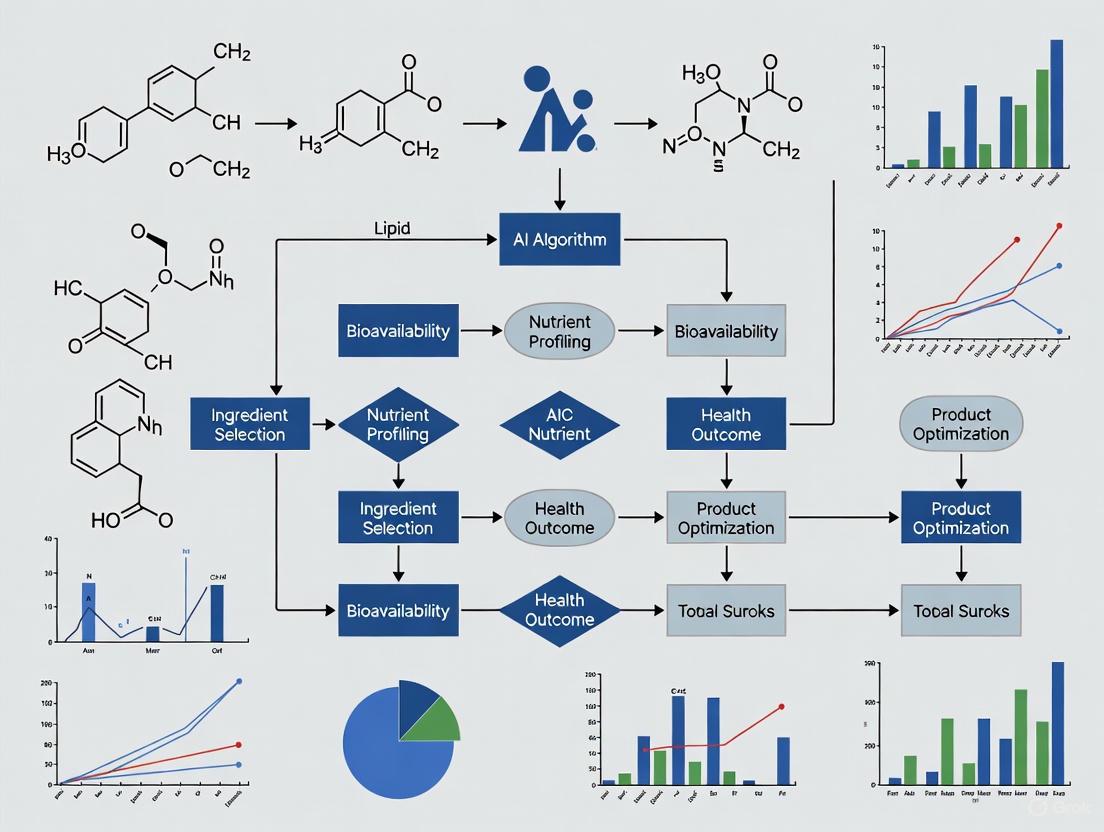
This article examines the transformative role of Artificial Intelligence (AI) in revolutionizing functional food development for a scientific audience.
AI-Driven Functional Food Formulation: Accelerating Discovery from Bioactive Compounds to Clinical Validation
Abstract
This article examines the transformative role of Artificial Intelligence (AI) in revolutionizing functional food development for a scientific audience. It explores the foundational shift from traditional, slow trial-and-error methods to data-driven, AI-accelerated approaches. The scope covers the application of machine learning, deep learning, and generative AI in optimizing ingredient selection, predicting efficacy, and personalizing formulations based on biomarkers and genetics. It further addresses critical challenges, including data limitations, model interpretability, and consumer trust, while underscoring the necessity of rigorous clinical trials and comparative analysis for validating health claims. The synthesis provides a roadmap for researchers and drug development professionals to harness AI in creating effective, evidence-based functional foods for preventive health and chronic disease management.
The AI Paradigm Shift: Re-engineering Functional Food Science
The global food industry faces unprecedented pressure from climate change, volatile supply chains, and increasingly personalized consumer health demands [1]. Traditional food formulation methodologies, predominantly reliant on sequential experimental approaches and expert intuition, are fundamentally inadequate to address these complex challenges. This document details the quantitative limitations of conventional practices and establishes rigorous, data-driven protocols for implementing artificial intelligence (AI) in functional food research and development (R&D). The transition to AI-driven approaches is not merely an efficiency gain but a strategic imperative for unlocking novel functional ingredients and achieving precision health outcomes.
Quantitative Analysis: Traditional vs. AI-Driven Formulation
The following tables summarize published data on the performance disparities between traditional and AI-accelerated food formulation processes.
Table 1: Comparative Performance Metrics in Food Formulation
| Performance Metric | Traditional Formulation | AI-Driven Formulation | Data Source / Case Study |
|---|---|---|---|
| R&D Cycle Time | 12 - 24 months | 2 - 6 months (Reductions of 60-90%) | Journey Foods (60% reduction) [1]; AKA Foods (12 months to a few cycles) [1] |
| Project Onboarding Cost | Baseline | ~90% reduction | AKA Foods case study [1] |
| Ingredient Combination Evaluation | Limited by physical trials | Over 1 billion combinations screened | Journey Foods platform [1] |
| Microbial Strain Development | ~18 months | <6 months | Ginkgo Bioworks platform [1] |
| Functional Protein Yield | Baseline | Up to 25% improvement | CureCraft collaborations [1] |
Table 2: Limitations of Traditional Formulation and AI Countermeasures
| Limitation of Traditional Approach | AI-Driven Solution & Technology | Outcome |
|---|---|---|
| Trial-and-error ingredient substitution | Predictive modeling of molecular interactions & functional equivalence [1] | Faster, successful development of allergen-free, low-sugar, or vegan products |
| Inability to predict complex sensory profiles | AI models analyzing chemical structures for flavor and texture prediction [1] | Accurate replication of animal-based products with plant-based ingredients |
| Slow discovery of bioactive compounds | AI-powered bioactivity mapping (e.g., Brightseed's Forager AI) [1] | Discovery timeline shortened from years to months |
| Dependence on human sensory panels for quality control | Quantitative texture analysis via instrumentation and AI [2] | Objective, reproducible, and high-throughput quality assessment |
Experimental Protocols for AI-Enhanced Food Research
Protocol: Quantitative Texture Analysis for Legume Quality Assessment
This validated protocol supports the development of high-quality, protein-rich functional foods by providing a standardized method for quantifying texture, a critical quality attribute [2].
- 1.0 Objective: To implement a standardized destructive method for quantifying texture differences in convex legume vegetables (e.g., edamame, lima beans, peas) following processing, using compression and puncture analyses.
- 2.0 Materials and Equipment:
- Texture Analyzer (e.g., from TA.XT Plus series)
- Compression Plate: Flat, cylindrical probe with diameter greater than the sample
- Puncture Probe: Cylindrical probe with diameter smaller than the sample (e.g., 2-3 mm)
- Standard Weight for instrument calibration
- Samples: Blanched and frozen legumes, thawed under refrigeration
- 3.0 Methodology:
- 3.1 Sample Preparation: Apply three distinct processing treatments to thawed legumes:
- BFT (Control): Blanch/Freeze/Thaw only.
- BFT+M: BFT followed by microwave heating (e.g., 50g batches for 40 seconds).
- BF+C: Blanch/Freeze followed by stove-top cooking in boiling water.
- 3.2 Compression Analysis (simulates molar compression):
- Mount the compression plate on the texture analyzer.
- Place a single legume on the base plate.
- Set the test to compression mode with a defined target deformation (e.g., 50% of sample height) and pre-test speed.
- Initiate the test. The force-deformation curve is recorded.
- Key Output: Maximum Force (N) required to rupture the sample.
- 3.3 Puncture Analysis (simulates incisor bite):
- Mount the puncture probe on the texture analyzer.
- Place a single legume on the base plate.
- Set the test to puncture mode with a defined target depth and pre-test speed.
- Initiate the test. The probe penetrates the sample surface.
- Key Output: Puncture Force (N) or Bioyield Point.
- 3.1 Sample Preparation: Apply three distinct processing treatments to thawed legumes:
- 4.0 Data Analysis: Perform Analysis of Variance (ANOVA) to determine significant differences in texture attributes between legume types and processing treatments. Compression analysis has been shown to be more sensitive in detecting texture changes in edamame and lima beans [2].
Protocol: In-silico Formulation Using Predictive AI Models
This protocol outlines the use of AI platforms for the virtual screening of ingredient combinations to accelerate the initial stages of functional food development [1] [3].
- 1.0 Objective: To utilize AI-powered predictive modeling for the high-throughput identification of optimal ingredient combinations that meet target nutritional, sensory, and cost parameters.
- 2.0 Materials and Equipment:
- Access to an AI formulation platform (e.g., Journey Foods, Hoow Foods' RE-GENESYS, AKA Foods' STIR engine).
- Defined input parameters (see below).
- Computational resources (typically cloud-based, e.g., Google Cloud Vertex AI).
- 3.0 Methodology:
- 3.1 Parameter Definition: Input the following constraints and targets into the platform:
- Nutritional Targets: Specific ranges for macronutrients, micronutrients, glycemic load, or targeted bioactive compounds.
- Sensory Targets: Target flavor profiles, texture attributes (informed by Protocol 3.1), and color.
- Constraints: Excluded allergens (e.g., gluten, nuts), dietary preferences (e.g., vegan, non-GMO), cost per kilogram, and approved ingredient lists.
- Sustainability Metrics: Carbon footprint or water usage targets, if applicable.
- 3.2 Model Execution: Run the predictive simulation. The AI evaluates billions of potential combinations against the defined parameters.
- 3.3 Output Analysis: The platform returns a ranked shortlist of top-performing formulations with predicted scores for taste parity, nutrient density, cost, and sustainability.
- 3.1 Parameter Definition: Input the following constraints and targets into the platform:
- 4.0 Validation: The top-ranked virtual formulations must proceed to small-scale physical prototyping and validation through instrumental analysis (e.g., Protocol 3.1) and human sensory evaluation to confirm predictive accuracy [3]. This hybrid approach ensures innovation while mitigating the risk of AI "hallucination" or reliance on outdated data [3].
Visualization of AI-Driven Formulation Workflow
The following diagram illustrates the integrated, data-centric workflow of AI-driven functional food formulation, highlighting the continuous feedback loop that traditional methods lack.
The Scientist's Toolkit: Research Reagent Solutions
Table 3: Essential Research Tools for AI-Enhanced Functional Food Formulation
| Item / Solution | Function in Research | Application Note |
|---|---|---|
| Texture Analyzer | Quantifies mechanical properties (firmness, hardness, elasticity) to objectively assess product quality and validate AI texture predictions [2]. | Critical for correlating consumer sensory perception with instrumental data. Use compression for convex legumes. |
| AI Formulation Platform (e.g., RE-GENESYS, STIR) | Acts as a predictive "digital twin" for the food matrix, enabling high-throughput in-silico screening of ingredient combinations against multi-faceted constraints [1]. | Inputs must be meticulously defined by R&D scientists. Outputs require physical validation. |
| Forager AI (Brightseed) | Maps plant-based bioactives to human health biomarkers (e.g., gut health), accelerating the discovery of functional ingredients [1]. | Bridges the gap between plant genomics and nutritional science for targeted health claims. |
| Cell Engineering Platform (Ginkgo Bioworks) | Uses predictive metabolic models to program microbes for the precision fermentation of proteins, enzymes, and flavor compounds [1]. | Enables sustainable production of high-value functional ingredients at scale. |
| Standardized Legume Texture Method (ASABE S368.4) | Provides a validated, destructive method for texture analysis of convex vegetables, ensuring consistent and comparable quality data [2]. | Implementation supports efficient production of high-quality plant-based protein ingredients. |
The field of functional food formulation is undergoing a profound transformation, driven by the integration of artificial intelligence (AI). Researchers and scientists are now leveraging a diverse toolkit of AI technologies to accelerate the discovery and development of foods with targeted health benefits. This toolkit can be broadly categorized into non-generative AI, which analyzes, improves, or infers data, and generative AI, which creates novel data, formulations, and ideas [4]. Non-generative applications include optimization, discovery, and prediction, while generative AI focuses on the creation of entirely new product concepts and ingredient combinations [4]. This article details the specific applications, protocols, and reagent solutions that define the modern, AI-driven approach to functional food research, providing a framework for scientists to integrate these tools into their development pipelines.
The Non-Generative AI Toolkit: Optimization, Discovery, and Prediction
Non-generative AI provides the foundational capabilities for enhancing existing research and development processes. Its power lies in processing massive, complex datasets to identify patterns, predict outcomes, and optimize parameters far beyond human capacity.
Key Applications and Methodologies
Optimization of Ingredient Combinations and Process Parameters: AI algorithms, particularly machine learning (ML) models, can fine-tune variables to achieve the best possible outcome under specific constraints [4]. This is crucial for achieving desired nutritional profiles, sensory attributes, and cost targets simultaneously.
- Protocol Example – Predictive Formulation Optimization:
- Objective: Optimize a plant-based protein formulation for maximum protein content, specific texture profile, and minimal cost.
- Data Curation: Compile a historical dataset containing ingredient ratios (e.g., pea, soy, wheat gluten), processing conditions (e.g., extrusion temperature, pressure), and corresponding outcomes (nutritional analysis, texture measurements, production cost).
- Model Selection & Training: Employ a multi-objective optimization algorithm, such as a genetic algorithm or Bayesian optimization, trained on the curated dataset.
- In-silico Experimentation: The AI model runs thousands of virtual experiments, exploring the parameter space to identify Pareto-optimal formulations—those where one objective cannot be improved without sacrificing another [1].
- Validation: The top candidate formulations identified by the AI are physically produced in a lab and subjected to standard analytical and sensory testing to validate the model's predictions [5].
- Protocol Example – Predictive Formulation Optimization:
Discovery of Bioactive Compounds: AI can rapidly scan vast biological and chemical datasets to identify novel functional ingredients.
- Protocol Example – AI-Driven Bioactive Discovery:
- Objective: Identify novel plant-derived compounds with prebiotic effects for gut health.
- Data Integration: The AI platform, such as Brightseed's Forager, is fed multi-omics data (genomics, proteomics, metabolomics) from thousands of plant species, alongside existing scientific literature on gut microbiology and health biomarkers [1] [5].
- Predictive Mapping: Deep learning models map the molecular structures of plant compounds to potential biological targets and mechanisms of action in the human gut [5].
- Prioritization & Validation: The platform generates a shortlist of high-probability candidate compounds and their plant sources. These candidates then proceed to in-vitro and eventually clinical validation, dramatically compressing a discovery process that traditionally took years into months [1] [5].
- Protocol Example – AI-Driven Bioactive Discovery:
Prediction of Consumer Acceptance and Shelf-Life: Predictive modeling forecasts outcomes or behaviors, such as how a target demographic will perceive a product's taste or how long a product will remain stable [4].
- Protocol Example – Developing a Digital Consumer Twin:
- Objective: Predict the liking score for a new functional beverage concept among health-conscious millennials before physical prototyping.
- Data Collection: Aggregate data from past consumer tests, sensory panel results, market trends, and demographic information.
- Model Training: Train a predictive ML model (e.g., a regression or classification model) to correlate product attributes (sweetness, acidity, flavor notes) with consumer preference scores for the target demographic.
- Simulation: The trained "digital twin" of the consumer segment is used to screen millions of virtual formulation variations, predicting acceptance and identifying the most promising profiles for physical testing [5].
- Protocol Example – Developing a Digital Consumer Twin:
Quantitative Data on Non-Generative AI Impact
The following table summarizes performance data and evidence for established non-generative AI applications in food research.
Table 1: Performance Data for Non-Generative AI Applications in Food Formulation
| AI Application | Reported Performance/Uptake | Key Companies/Platforms | Primary Data Sources |
|---|---|---|---|
| Optimization | Compressed concept-to-launch timelines by 4-5 fold; used in 70+ projects [5]. | Mondelez (in collaboration with Thoughtworks) [5]. | Historical formulation data, sensory data, cost data, nutritional guidelines. |
| Discovery | Reduced bioactive discovery timeline from years to months [1] [5]. | Brightseed (Forager AI) [1] [5]. | Multi-omics data, scientific literature, chemical databases. |
| Prediction | Cut time-to-concept by 30-50% via virtual consumer testing [5]. | Foodpairing (Digital Twins) [5]. | Sensory data, consumer test results, market data, flavor chemistry. |
Workflow Visualization: Non-Generative AI for Formulation
The following diagram illustrates a generalized workflow for employing non-generative AI in functional food formulation.
The Generative AI Toolkit: Creating Novelty
Generative AI represents a paradigm shift, moving beyond analysis to the creation of novel formulations, product concepts, and even processing methods. It leverages architectures like large language models (LLMs) and generative adversarial networks (GANs) to produce original outputs based on learned patterns.
Key Applications and Methodologies
Generative Formulation Design: AI can propose entirely new ingredient combinations to meet specific, multi-faceted goals.
- Protocol Example – Generative Plant-Based Product Development:
- Objective: Create a novel plant-based formulation that mimics the taste, texture, and nutritional profile of a specific animal product (e.g., beef burger).
- Problem Framing: The target product's sensory and nutritional specifications are defined as the input constraints for the AI.
- AI Generation: A generative AI platform, such as NotCo's Giuseppe, explores a near-infinite combinatorial space of plant ingredients. It uses deep learning models that understand the molecular and functional properties of plants to propose combinations that match the target [1] [5].
- Output and Iteration: The AI generates a shortlist of feasible formulations. These are then prototyped, and the results are fed back into the AI to iteratively refine its models and improve future outputs [5].
- Protocol Example – Generative Plant-Based Product Development:
Accelerated Front-End Innovation: Generative AI can mine consumer insights and rapidly generate and iterate product concepts.
- Protocol Example – AI-Powered Ideation:
- Objective: Generate novel functional beverage concepts targeting cognitive health for an aging population.
- Knowledge Grounding: Use a Retrieval-Augmented Generation (RAG) system. This architecture grounds the generative AI in trusted, domain-specific sources such as scientific journals, internal research documents, and regulatory guidelines [6].
- Prompting and Generation: Researchers query the system using natural language (e.g., "Generate 5 beverage concepts for cognitive support using ingredients compliant with FDA GRAS status"). The AI synthesizes the knowledge base to produce detailed concepts, including potential ingredient lists and health narratives [5] [6].
- Feasibility Screening: The generated concepts can be automatically screened against cost, sustainability, or manufacturability databases to prioritize the most viable ideas for further development [5].
- Protocol Example – AI-Powered Ideation:
Quantitative Data on Generative AI Impact
The table below summarizes evidence for the emerging impact of generative AI in food formulation research.
Table 2: Evidence for Generative AI Applications in Food Formulation
| AI Application | Reported Performance/Evidence | Key Companies/Platforms | Key Enabling Technology |
|---|---|---|---|
| Generative Formulation | Ability to search through 260 quintillion combinations to land on a 5-protein blend for a target product [5]. | NotCo (Giuseppe AI) [1] [5]. | Deep Learning, Knowledge Graphs. |
| Concept Generation & Ideation | Meaningful acceleration of ideation and concept screening; faster, more efficient generation and testing of ideas [5]. | Nestlé (NesGPT, proprietary tools) [5]. | Large Language Models (LLMs), Retrieval-Augmented Generation (RAG). |
| Sustainable Packaging | AI can propose novel, eco-friendly packaging materials, reducing R&D time from years to days [7]. | Nestlé & IBM Research [7]. | Generative AI for Material Science. |
Workflow Visualization: Generative AI for Novel Food Creation
The following diagram illustrates the iterative cycle of generative creation and refinement in functional food formulation.
The Scientist's Toolkit: Essential Research Reagent Solutions
The following table details key AI platforms and data solutions that function as essential "research reagents" in the modern functional food laboratory.
Table 3: Key AI Platform "Reagents" for Functional Food Research
| Platform / Solution | Function in Research | Typical Inputs | Typical Outputs |
|---|---|---|---|
| Brightseed Forager [1] [5] | AI for bioactive discovery; maps plant compounds to human biology. | Multi-omics data, scientific literature. | Shortlist of predicted bioactive compounds & their sources for validation. |
| NotCo Giuseppe [1] [5] | Generative AI for plant-based formulation; mimics animal products. | Target product specifications (taste, texture, nutrition). | Novel, feasible plant-based ingredient combinations & recipes. |
| Journey Foods Platform [1] | Predictive ingredient optimization for CPGs. | Nutrient density, allergenicity, cost, sustainability goals. | Reformulated product recipes optimized for multiple constraints. |
| Foodpairing Digital Twins [5] | Predictive modeling of consumer preference. | Sensory data, market trends, demographic info. | Virtual taste-test results and predicted liking scores for formulations. |
| RAG System [6] | Knowledge management and grounded ideation. | Internal R&D documents, scientific journals, regulatory info. | Scientifically-grounded product concepts and answers to research queries. |
The convergence of artificial intelligence (AI) and nutritional science is revolutionizing the development of functional foods. By 2050, feeding a global population of nearly 10 billion will require transformative changes to create nutritious, sustainable food systems, a challenge where traditional methods are too slow to drive innovation at scale [4]. AI technologies are now being leveraged to accelerate the discovery and optimization of key bioactive compounds, including probiotics, prebiotics, and plant-based bioactives. This paradigm shift enables researchers to move beyond traditional trial-and-error approaches, using machine learning (ML) and deep learning (DL) to analyze complex biological datasets and predict bioactivity with unprecedented speed and precision [8] [9]. The integration of AI across the functional food development pipeline—from strain selection and metabolite prediction to personalized formulation—represents a critical advancement in creating targeted health solutions that meet individual biological needs while promoting planetary health [10].
AI-Driven Probiotic Discovery and Optimization
Strain Screening and Functional Annotation
The application of AI has dramatically transformed the initial stages of probiotic research, particularly in strain screening and functional annotation. Where traditional methods relied on labor-intensive, low-throughput in vitro experiments, AI algorithms can now rapidly analyze genomic data to identify promising probiotic candidates with specific functional traits [9].
Table 1: AI Applications in Probiotic Strain Discovery
| AI Application | Traditional Approach | AI-Enhanced Approach | Reported Efficacy |
|---|---|---|---|
| Strain Screening | Time-consuming in vitro tests for acid/bile tolerance [11] | Genomic feature analysis using ML models [9] | >97% accuracy in bacterial identification [9] |
| Functional Annotation | Empirical selection and manual characterization [8] | Prediction of probiotic traits (e.g., AMP production, SCFA synthesis) via DL [8] | Identification of tRNA sequences as key genomic features [9] |
| Pathogen Discrimination | Phenotypic differentiation assays | ML analysis of genomic features distinguishing probiotics from pathogens [9] | tRNA identified as key discriminatory biomarker [9] |
Experimental Protocol: AI-Guided Probiotic Screening
Objective: To rapidly identify novel probiotic LAB strains with specific health-promoting properties using AI-driven genomic analysis.
Materials and Reagents:
- Genomic DNA Extraction Kit: For high-quality DNA isolation from bacterial samples
- Whole Genome Sequencing Platform: Illumina or Nanopore for genomic data generation
- AI/ML Software Environment: Python with scikit-learn, TensorFlow/PyTorch for DL
- Reference Databases: KEGG, GO, UniProt for functional annotation
- In vitro Validation Assays: MRS broth, gastric juice simulation solution, bile salts, cell culture models
Methodology:
- Genomic Data Acquisition: Perform whole-genome sequencing on candidate LAB isolates from diverse sources (fermented foods, human microbiota) [8].
- Feature Engineering: Extract genomic features including tRNA sequences, GC content, presence of virulence genes, and stress resistance markers using bioinformatics tools [9].
- Model Training: Implement supervised ML algorithms (Random Forest, SVM) trained on known probiotic and non-probiotic strains with labeled functional attributes [8] [12].
- Predictive Screening: Apply trained models to screen unknown isolates for probiotic potential, focusing on:
- Acid and bile tolerance: Predict survival under gastrointestinal conditions
- Antimicrobial peptide production: Identify genes encoding bacteriocins
- Host-microbe interaction potential: Predict adhesion and immunomodulatory properties [8]
- In vitro Validation: Confirm AI predictions through standard assays:
- Acid (pH 2.0, 3h) and bile salt (0.3%, 4h) tolerance tests
- Antimicrobial activity against pathogens via agar well diffusion
- Caco-2 cell adhesion assays [11]
AI-Guided Probiotic Screening Workflow
AI in Prebiotic and Plant-Based Bioactive Research
Metabolite Prediction and Bioactivity Assessment
AI technologies are revolutionizing the discovery of prebiotics and plant-based bioactives by enabling sophisticated metabolite prediction and bioactivity assessment. Through integration of multi-omics data, AI models can identify novel prebiotic compounds and predict their effects on human health, significantly accelerating the discovery pipeline [13].
Table 2: AI Applications in Prebiotic and Bioactive Discovery
| Bioactive Category | AI Application | Mechanism of Action | Validated Outcomes |
|---|---|---|---|
| Prebiotics (FOS, GOS, Inulin) | Prediction of SCFA production via metabolic modeling [13] | Selective stimulation of beneficial bacteria (Lactobacillus, Bifidobacterium) [13] | Increased acetate, propionate, and butyrate in in vitro fermentation [13] |
| Dietary Fibers | ML analysis of gut microbiota modulation [13] | Alteration of microbial SCFA profiles [13] | Anti-obesity and antidiabetic effects in murine models [13] |
| Plant-Based Bioactives | Molecular docking and bioactivity prediction [10] | Modulation of inflammation, oxidative stress, and metabolic pathways [10] | Identification of anti-cancer and neuroprotective properties [10] |
Experimental Protocol: AI-Driven Bioactive Compound Discovery
Objective: To identify and validate novel prebiotic compounds and plant-based bioactives using AI-powered analysis of multi-omics data.
Materials and Reagents:
- Plant Material/Sources: Diverse botanical extracts, agricultural by-products
- Analytical Equipment: LC-MS/MS for metabolomic profiling, HPLC for compound purification
- AI Platforms: Molecular docking software (AutoDock, SwissDock), deep learning frameworks
- In vitro Fermentation System: Anaerobic chamber, gut microbiome models
- Cell Culture Models: Caco-2, HT-29 for intestinal barrier function assessment
Methodology:
- Data Collection and Integration:
- Perform untargeted metabolomics on plant sources using LC-MS/MS
- Curate existing databases of bioactive compounds and their known health effects
- Integrate genomic data of gut microbiota strains for target identification [13]
Predictive Modeling:
- Train neural networks on structure-activity relationships to predict prebiotic potential
- Implement molecular docking simulations to identify compounds with high affinity for microbial enzymes or host receptors [10]
- Use clustering algorithms to group compounds with similar structural features and predicted bioactivities
In vitro Validation:
- Conduct anaerobic fermentation with human fecal inoculum to assess SCFA production
- Measure growth stimulation of specific beneficial bacterial strains (Bifidobacterium, Lactobacillus)
- Evaluate immunomodulatory effects on co-culture systems of intestinal epithelial and immune cells [13]
Dose-Response Studies:
- Establish effective concentration ranges for predicted bioactivities
- Assess potential cytotoxicity in human cell lines
- Evaluate synergistic effects between identified compounds [10]
Industrial Application and Personalized Nutrition
Fermentation Optimization and Formulation
AI-driven approaches are transforming industrial-scale production of probiotic and bioactive-containing products through optimized fermentation processes and personalized formulations. These technologies enable precise control over critical parameters that determine final product viability, functionality, and efficacy [8] [9].
Table 3: AI in Industrial-Scale Probiotic and Bioactive Production
| Industrial Process | AI Technology | Application | Impact |
|---|---|---|---|
| Fermentation Optimization | Hybrid modeling (ML + mechanistic) [8] | Predicts optimal temperature, pH, nutrient feed rates | Enhances biomass yield and bioactive metabolite production [8] |
| Formulation Stability | Predictive stability models [11] | Analyzes excipient interactions, predicts shelf-life | Improves probiotic viability during storage [11] |
| Personalized Nutrition | Reinforcement learning [14] | Generates individual-specific formulations based on microbiome data | Creates targeted solutions for specific health conditions [9] |
The Scientist's Toolkit: Essential Research Reagents and Platforms
Table 4: Key Research Reagent Solutions for AI-Driven Bioactive Compound Research
| Reagent/Platform | Function | Application Context |
|---|---|---|
| Multi-omics Data Generation Platforms | Generates genomic, metabolomic, and proteomic data for AI analysis | Strain characterization, bioactive compound discovery [8] [10] |
| AI/ML Software Environments | Provides algorithms for predictive modeling and data analysis | Strain screening, metabolite prediction, fermentation optimization [8] [14] |
| In vitro Gut Microbiome Models | Simulates human gut environment for functional validation | Prebiotic efficacy testing, host-microbe interaction studies [13] [12] |
| Encapsulation Technologies | Enhances stability and targeted delivery of bioactives | Improved probiotic viability, controlled release of compounds [13] |
| Biosensors and Monitoring Systems | Provides real-time data on process parameters and cell viability | Fermentation monitoring, storage stability assessment [11] |
AI-Driven Product Development Pipeline
The integration of AI into functional food research represents a paradigm shift in how we discover, develop, and deliver bioactive compounds. The protocols and applications outlined in this document demonstrate the transformative potential of AI technologies to accelerate the identification of novel probiotics, prebiotics, and plant-based bioactives while enabling personalized nutrition solutions tailored to individual microbiome profiles [8] [9] [14]. As these technologies continue to evolve, they promise to bridge the gap between human health and planetary sustainability by facilitating the development of targeted, evidence-based functional foods [10]. Future advancements will likely focus on improving model interpretability, integrating more diverse data sources, and establishing standardized validation frameworks to ensure the efficacy and safety of AI-discovered bioactive compounds. The convergence of AI and nutritional science marks the beginning of a new era in which data-driven approaches will fundamentally reshape our relationship with food and health.
This document provides detailed protocols for implementing artificial intelligence (AI) to advance functional food research from population-level guidance to dynamic, personalized nutrition. By integrating biomedical, behavioral, and food environment data, these AI-driven methodologies enable the formulation of functional foods tailored to individual physiological needs and the delivery of personalized dietary recommendations. These approaches address the documented limitations of traditional one-size-fits-all nutritional guidelines and slow, iterative food development processes, which are often inefficient and fail to account for individual variability in response to diet [4] [15]. The following sections present structured data, experimental protocols, and essential toolkits to facilitate the adoption of these techniques in research and development.
Quantitative Data on AI-Driven Personalization
Table 1: Performance of AI Models in Personalized Nutrition and Food Recommendation
| Model/Algorithm | Application Context | Key Performance Metric | Result | Citation |
|---|---|---|---|---|
| Deep Q-Network (DQN) | Food Recommendation (Population: "Foodies") | Improvement in Accumulated Reward vs. Random Recommender | +71.60% | [16] |
| Deep Q-Network (DQN) | Food Recommendation (Population: "Veggies") | Improvement in Accumulated Reward vs. Random Recommender | +65.02% | [16] |
| Deep Q-Network (DQN) | Food Recommendation (Population: "Spanish") | Improvement in Accumulated Reward vs. Random Recommender | +63.46% | [16] |
| Deep Q-Network (DQN) | Food Recommendation (Population: "Seniors") | Improvement in Accumulated Reward vs. Random Recommender | +8.89% | [16] |
| Reinforcement Learning | Glycemic Control | Reduction in Glycemic Excursions | Up to 40% | [17] |
| Diet Engine (YOLOv8) | Real-time Food Recognition | Classification Accuracy | 86% | [17] |
| CNN-based Models | Food Image Classification | Standard Dataset Accuracy | >85% | [17] |
| Transformer-based Models | Fine-grained Food Identification | Accuracy (e.g., on CNFOOD-241) | >90% | [17] |
| Symbolic Knowledge Extraction | Explainable Dietary Recommendations | Precision and Fidelity | 74% Precision, 80% Fidelity | [17] |
Table 2: Global Functional Food and Beverages Market Data (2022-2027)
| Market Segment | Projected Compound Annual Growth Rate (CAGR) | Market Size in 2022 | Projected Market Size by 2027 | Citation |
|---|---|---|---|---|
| Overall Functional Foods & Beverages | 8.4% | $216.4 billion | $324.4 billion | [18] |
| Functional Food Subcategories | ||||
| Bakery and Confectionery | 8.1% (for total segment) | $46.5 billion | $74.2 billion | [18] |
| Cereal and Flour | 8.1% (for total segment) | $46.5 billion | $74.2 billion | [18] |
| Dairy (non-drinkable) | 8.1% (for total segment) | $46.5 billion | $74.2 billion | [18] |
| Functional Beverage Subcategories | ||||
| Energy Drinks | 8.1% (for total segment) | $46.5 billion | $74.2 billion | [18] |
| Prebiotic and Probiotic Drinks | 8.1% (for total segment) | $46.5 billion | $74.2 billion | [18] |
Experimental Protocols
Protocol 1: Reinforcement Learning for Population-Specific Food Recommendation
This protocol outlines the procedure for developing and validating a reinforcement learning (RL) model to generate personalized meal recommendations for distinct demographic populations, thereby enhancing user satisfaction and supporting demand-driven supply chain management [16].
I. Materials and Equipment
- Computational hardware (GPU recommended for Deep RL models).
- Software environment for machine learning (e.g., Python with libraries such as TensorFlow, PyTorch, Stable-Baselines3).
- A database of dishes tagged with categories (e.g., rice, pasta, legumes, vegetables, white meat, red meat, fish, fried, egg, dairy, fruit) and attributes (e.g., traditional, innovative, vegetarian, vegan) [16].
II. Experimental Procedure
Step 1: Population Simulation using Fuzzy Logic
- Input: Collect or define demographic variables for user profiles: age, gender, geographical area, and city size [16].
- Fuzzification: Convert input values into fuzzy sets using membership functions. For example, age can be fuzzified into sets like "young," "middle-aged," and "senior" with overlapping boundaries [16].
- Rule Application & Defuzzification: Apply a set of predefined fuzzy rules (e.g., "IF age is senior AND location is coastal THEN preference for fish is high") to map demographic inputs to culinary preferences. Convert the fuzzy output sets into crisp values representing a user's preference score for different dish tags or types [16].
- Output: Generate multiple user profiles with associated preference vectors, aggregated into specific population groups (e.g., "Seniors," "Veggies," "Foodies") for testing.
Step 2: Algorithm Implementation and Training
- Selection: Choose one or more RL algorithms for comparison. Recommended algorithms include:
- State–Action–Reward–State–Action (SARSA): An on-policy temporal difference learning algorithm [16].
- Deep Q-Network (DQN): A value-based deep RL algorithm that uses a neural network to approximate the Q-function [16].
- Multi-Armed Bandit (MAB): A simpler approach that balances exploration and exploitation of menu options [16].
- Simulation Environment: Create a simulation where the agent (recommender system) interacts with the environment (simulated user from a specific population). The agent recommends a dish (action), and the environment returns a reward based on the user's predefined preferences.
- Training: Train each RL agent over multiple episodes. The agent's goal is to maximize the cumulative reward by learning a policy that maps user states (or contexts) to optimal dish recommendations.
Step 3: Model Evaluation and Validation
- Metric Calculation: For each population group, evaluate the performance of the trained models using the accumulated reward over a set number of interactions. Compare this against a baseline, such as a random recommender [16].
- Statistical Analysis: Perform statistical tests (e.g., t-tests) to determine if performance differences between algorithms and across populations are significant. Report p-values and effect sizes (e.g., Cliff's delta) [16].
- Validation: The model is considered validated for a target population when it shows a statistically significant (p < 0.05) improvement over the baseline recommender.
Protocol 2: AI-Driven Formulation of Personalized Functional Foods
This protocol describes a methodology for using AI to discover and optimize formulations for plant-based alternative protein products, accelerating the traditional R&D cycle [4].
I. Materials and Equipment
- Database of ingredients (e.g., protein sources: soy, pea, wheat gluten; fats: coconut oil, canola oil; binders: methylcellulose, starch; functional additives: carrageenan, lecithin) and their functional properties [4].
- Dataset of chemical, rheological, textural, and sensory properties correlated to formulations. (Note: The scarcity of such data is a current limitation [4]).
- AI platform capable of optimization and generative algorithms (e.g., KNIME Analytics Platform, custom Python scripts) [4] [19].
II. Experimental Procedure
Step 1: Problem Definition and Constraint Setting
- Define Target Product: Identify the specific animal product to mimic (e.g., beef burger, chicken sausage). Establish key target features: nutritional profile (e.g., high protein, low saturated fat), texture, flavor, and appearance [4].
- Set Constraints: Impose constraints on the formulation, which may include:
- Nutritional boundaries (e.g., minimum protein content, maximum sodium).
- Ingredient inclusion/exclusion (e.g., allergens, cost limits).
- Sustainability metrics (e.g., carbon footprint, water usage) [4].
Step 2: AI-Driven Formulation Generation and Optimization
- Model Selection: Employ a generative AI or optimization algorithm. Non-generative AI can be used for optimization (fine-tuning variables) and discovery (identifying patterns), while generative AI can create entirely new formulation combinations based on the constraints [4].
- Input Parameters: Encode the constraints and target properties from Step 1 as inputs to the AI model.
- Execution: Run the AI model to generate a set of candidate formulations. Each formulation is a list of ingredients with their respective ratios or weights [4].
- Prediction: Use predictive AI models (if validated data exists) to forecast the nutritional profile, estimated texture, and flavor of the candidate formulations [4].
Step 3: Validation and Iteration
- Prototyping: Produce physical prototypes based on the top AI-generated formulations.
- Laboratory Analysis: Conduct analytical tests to measure the nutritional composition, rheology (e.g., tensile, compression, shear strength), and sensory attributes of the prototypes [4].
- Consumer Testing: Perform blinded consumer surveys to assess acceptability, texture, and flavor preferences [4].
- Feedback Loop: Feed the laboratory and consumer data back into the AI model to refine its predictions and generate improved formulations in subsequent iterations. This闭环反馈 significantly reduces the number of trial-and-error cycles required compared to traditional methods [4].
Visualization of Workflows
AI-Personalized Nutrition System
Functional Food AI Formulation
The Scientist's Toolkit: Research Reagent Solutions
Table 3: Essential Materials for AI-Driven Personalized Nutrition Research
| Item | Function/Application | Example Specifications |
|---|---|---|
| Continuous Glucose Monitor (CGM) | Captures real-time, high-frequency interstitial glucose data to understand individual glycemic responses to food and provide dynamic feedback for AI models. | [20] [17] |
| Food Image Recognition Database | Used to train and validate computer vision models for automated dietary assessment via smartphone cameras. Requires large, labeled datasets. | e.g., CNFOOD-241; Accuracies >85-90% [17] |
| Fuzzy Logic Simulation Tool | Generates synthetic user populations with realistic culinary preferences based on demographic data for robust testing of recommender systems. | e.g., Python scikit-fuzzy library; Inputs: age, gender, geography [16] |
| Ingredient Property Database | A structured database containing chemical, functional, and sensory properties of ingredients, which is foundational for AI-driven formulation generation. | Includes protein sources, fats, binders, additives [4] |
| Reinforcement Learning Library | Provides pre-built algorithms (e.g., DQN, SARSA) for developing and training adaptive, personalized recommendation systems. | e.g., TensorFlow Agents, Stable-Baselines3 (Python) [16] |
| KNIME Analytics Platform | An open-source platform for data integration, processing, and analysis, enabling the creation of machine learning workflows without extensive coding, particularly useful for cheminformatics. | [19] |
| Tree Ensemble Regression Model | A powerful machine learning model for predicting continuous outcomes (e.g., shelf-life, glycemic response) from complex, multi-parameter input data. | e.g., Random Forest, Gradient Boosted Trees; High R² values [19] |
AI in Action: Machine Learning for Ingredient Discovery and Formulation Optimization
The formulation of effective functional foods represents a complex challenge, requiring the identification of bioactive ingredients and an understanding of their synergistic interactions. Food synergy—the concept that the health effects of a whole food or dietary pattern are greater than the sum of the effects of its individual nutrients—provides the necessary theoretical underpinning for this approach [21]. However, the vast, disparate, and unstructured nature of nutritional science literature and clinical data makes manual analysis impractical. Natural Language Processing (NLP) and Artificial Intelligence (AI) have emerged as transformative technologies for automating the extraction and analysis of this information, enabling data-driven ingredient selection and synergy discovery [22]. This document outlines protocols for applying NLP to mine scientific and clinical data, thereby accelerating AI-driven functional food formulation.
NLP and AI in Food Science: Core Concepts and Applications
The application of NLP in food science involves using computational techniques to parse, understand, and derive meaning from human language data found in scientific papers, clinical trial reports, patents, and food labels.
Key Application Areas
- Automated Food Categorization and Nutrient Profiling: NLP models can automatically classify food products into categories and predict their nutritional quality based on text from food labels. One study achieved an accuracy of 0.98 in predicting major food categories and an R² of 0.87 in predicting nutrition quality scores, significantly outperforming traditional methods [23].
- Linking Recipes to Nutrition and Sustainability: AI and NLP tools are critical for structuring recipe data and linking ingredients to nutritional databases and sustainability metrics, such as carbon footprint. This allows for the computational analysis of a recipe's health and environmental impact [22].
- Accelerating R&D and Identifying Synergies: AI is strengthening its grip on food R&D by accelerating product development, predicting trends, and uncovering novel ingredient combinations that promote synergistic health effects [24]. AI can identify patterns and relationships in the scientific literature that human researchers might miss.
Quantitative Performance of NLP in Food Analysis
Table 1: Performance of NLP and Machine Learning Models in Food Analysis Tasks [23]
| Task | Model/Method | Performance Metrics | Comparative Method & Performance |
|---|---|---|---|
| Food Categorization | Pretrained Language Model (XGBoost) | Accuracy: 0.98 (Major categories), 0.96 (Subcategories) | Outperformed Bag-of-Words methods |
| Nutrition Quality Prediction | Pretrained Language Model | R²: 0.87, MSE: 14.4 | Bag-of-Words (R²: 0.72-0.84; MSE: 30.3-17.6) |
| Nutrition Quality Prediction | Structured Nutrition Facts (Machine Learning) | R²: 0.98, MSE: 2.5 | Superior to text-based methods when data is available |
Experimental Protocols
Protocol 1: NLP-Driven Ingredient-Disease Association Mining
This protocol details the process of extracting potential functional ingredient-disease relationships from scientific literature.
1. Objective: To systematically identify and quantify relationships between specific food-derived bioactive compounds and health outcomes from a large corpus of scientific abstracts and full-text articles.
2. Materials and Reagents
- Data Sources: PubMed/MEDLINE, Scopus, Web of Science, Cochrane Library, Patents (USPTO, WIPO).
- Computing Environment: High-performance computing cluster or cloud instance with sufficient RAM (≥32 GB) for processing large datasets.
- Software & Libraries: Python 3.8+, Scikit-learn, SpaCy, NLTK, Transformers (Hugging Face), TensorFlow/PyTorch.
3. Methodology
1. Data Acquisition & Corpus Creation:
- Use APIs (e.g., PubMed E-utilities) to download abstracts and metadata using keyword strings (e.g., ("flavonoid" OR "polyphenol") AND ("CVD" OR "cardiovascular")).
- For full-text analysis, access open-access repositories (PubMed Central) or use publisher APIs where subscriptions exist.
- Store results in a structured database (e.g., SQLite, PostgreSQL) with fields for PMID, title, abstract, publication_date, journal, and authors.
2. Named Entity Recognition (NER):
- Implement a pre-trained biomedical NER model (e.g., en_core_sci_md from SciSpaCy) to identify and extract entities.
- Define entity types: BIOACTIVE_COMPOUND (e.g., curcumin, epigallocatechin gallate), DISEASE (e.g., metabolic syndrome, osteoporosis), GENE (e.g., TNF, IL6), and PHYSIOLOGICAL_PROCESS (e.g., inflammation, oxidative stress).
- Validate and fine-tune the NER model on a manually annotated gold-standard dataset of 500-1000 sentences for domain-specific accuracy.
3. Relationship Extraction:
- Apply a rule-based model to parse dependency trees and identify sentences where a BIOACTIVE_COMPOUND entity and a DISEASE entity are connected by a specific action verb (e.g., "reduces," "inhibits," "ameliorates," "prevents").
- Train a supervised relation classification model (e.g., based on BERT) using a dataset of labeled sentences (e.g., "Curcumin reduces inflammation in arthritis"). Use a 80/20 train-test split.
4. Knowledge Graph Construction:
- Create a network where nodes are entities (BIOACTIVE_COMPOUND, DISEASE, GENE) and edges are the extracted relationships.
- Use a graph database (e.g., Neo4j) for storage and querying. Weight edges based on the co-occurrence frequency and the confidence score from the relation classifier.
- Perform network analysis to identify hub nodes (key bioactives or conditions) and communities of closely related entities.
4. Data Analysis
- Calculate the Jaccard Index or Pointwise Mutual Information (PMI) to quantify the strength of association between a compound and a disease across the corpus.
- Use Centrality Algorithms (e.g., PageRank) on the knowledge graph to identify the most influential bioactive compounds based on their connections to multiple diseases and pathways.
Protocol 2: Predictive Modeling for Ingredient Synergy
This protocol leverages machine learning on structured clinical and omics data to predict synergistic interactions between functional ingredients.
1. Objective: To build a predictive model that identifies ingredient pairs or combinations with a high probability of exhibiting synergistic health effects, based on their compositional and target pathway profiles.
2. Materials and Reagents
- Data Sources: Clinical trial databases (ClinicalTrials.gov), food composition databases (USDA FoodData Central, Phenol-Explorer), bioactivity databases (CMAUP, TCMID), transcriptomic/proteomic data repositories (GEO, PRIDE).
- Software & Libraries: Python 3.8+, Pandas, NumPy, Scikit-learn, XGBoost, SHAP, Matplotlib.
3. Methodology
1. Data Compilation and Feature Engineering:
- Ingredient Profiling: For each ingredient, compile a feature vector including:
- Chemical Features: Concentrations of key bioactive compounds (from food composition DBs).
- Bioactivity Features: Target information from bioactivity DBs (e.g., pKi values for receptors, enzymes).
- Pathway Features: Binary vector indicating association with KEGG/GO pathways (e.g., NF-kB signaling, antioxidant activity).
- Synergy Labeling:
- Label ingredient pairs as "synergistic" (1) or "non-synergistic" (0) based on evidence from literature (e.g., systematic reviews) or pre-clinical experimental data (e.g., combination index <1 in cell assays).
2. Model Training and Validation:
- Use a tree-based ensemble model like XGBoost, which handles non-linear relationships well.
- Input features are the concatenated feature vectors of two ingredients.
- Perform an 80/20 stratified split for training and testing. Use 5-fold cross-validation on the training set for hyperparameter tuning (e.g., max_depth, learning_rate, n_estimators).
- Evaluate model performance on the held-out test set using Accuracy, Precision, Recall, F1-Score, and AUC-ROC.
3. Model Interpretation and Hypothesis Generation:
- Apply SHAP (SHapley Additive exPlanations) analysis to interpret the model's output and identify which chemical features, bioactivities, or pathway co-targeting are most predictive of synergy.
- The top predictions from the model form testable hypotheses for in vitro or clinical validation.
4. Data Analysis
- Calculate the Combination Index (CI) for validation experiments using the Chou-Talalay method, where CI < 1 indicates synergy, CI = 1 indicates additivity, and CI > 1 indicates antagonism.
Table 2: Example Feature Set for an Ingredient (e.g., Turmeric Extract)
| Feature Category | Feature Name | Value | Data Source |
|---|---|---|---|
| Chemical Composition | Curcuminoids (mg/g) | 950 | Phenol-Explorer, In-house QC |
| Volatile Oils (%) | 5 | ||
| Bioactivity Targets | NF-kB Inhibition (pIC50) | 6.2 | ChEMBL, CMAUP |
| COX-2 Inhibition (pIC50) | 5.8 | ||
| Antioxidant (ORAC μmol TE/g) | 12000 | ||
| Pathway Association | Inflammation | 1 (True) | KEGG, GO |
| Apoptosis | 1 (True) | ||
| Oxidative Stress | 1 (True) |
The Scientist's Toolkit: Research Reagent Solutions
Table 3: Essential Reagents and Resources for NLP-Driven Food Formulation Research
| Item/Tool Name | Function/Application | Specifications & Notes |
|---|---|---|
| SciSpaCy Python Package | Domain-specific NLP for biomedical text processing. | Includes pre-trained models for NER and entity linking on biomedical data. Prefer en_core_sci_md model. |
| Transformers Library (Hugging Face) | Access to state-of-the-art pretrained language models (e.g., BERT, BioBERT). | Use BioBERT for superior performance on biological text. Essential for relationship extraction. |
| USDA FoodData Central | Authoritative source for food composition data. | Provides quantitative data on nutrients and bioactive compounds for feature engineering. |
| KEGG PATHWAY Database | Repository of manually drawn pathway maps for metabolism and cellular processes. | Used to map ingredient bioactivities to biological pathways for synergy prediction. |
| Neo4j Graph Database | Native graph database for storing and querying knowledge graphs. | Enables complex queries across extracted ingredient-disease-pathway relationships. |
| SHAP (SHapley Additive exPlanations) | Game-theoretic approach to explain output of any machine learning model. | Critical for interpreting "black box" models and identifying drivers of predicted synergy. |
The integration of NLP and AI provides a powerful, data-driven foundation for advancing functional food research. The protocols outlined herein enable the systematic mining of scientific literature for ingredient-disease associations and the predictive modeling of ingredient synergy. This approach moves formulation beyond empirical tradition towards a precision science, capable of discovering novel, synergistic combinations that can be validated clinically. As these technologies mature, they promise to significantly shorten development cycles and enhance the efficacy of functional food products designed to improve public health.
Application Notes
Scientific Rationale and Background
The integration of artificial intelligence (AI) into functional food research represents a paradigm shift from traditional, population-based dietary approaches to precision nutrition. Predictive modeling leverages AI to analyze complex, multi-modal data, creating a foundational link between specific food formulations, dynamic biomarker responses, and ultimate health outcomes [25]. This approach is central to a new model of proactive health management, which aims to prevent disease onset or delay its progression by identifying early health risks and implementing targeted, nutritional interventions [25].
The efficacy of this methodology is driven by advancements in biomarker science. Contemporary detection platforms—such as single-cell sequencing, high-throughput proteomics, and metabolomics—generate comprehensive molecular profiles [25]. When these diverse data streams are fused using multi-modal data integration techniques, they create a robust foundation for predictive models that can capture complex, non-linear relationships often missed by traditional statistical methods [25]. For instance, the integration of multi-omics data has been shown to improve early diagnosis specificity for conditions like Alzheimer's disease by 32%, providing a crucial window for intervention [25].
Key Applications and Use Cases
Predictive modeling of biomarker responses to functional food formulations has transformative potential across several key health domains, including those targeted by leading commercial products [26].
Table: Primary Application Domains for Predictive Modeling in Functional Foods
| Application Domain | Target Biomarkers | Exemplary Functional Ingredients | Modeling Objective |
|---|---|---|---|
| Immunity Boosting [26] | Vitamin D serum levels, White blood cell counts, Inflammatory cytokines (e.g., IL-6) | Vitamins C & D, Zinc, Probiotics | To predict the modulation of immune cell activity and reduction of inflammation markers. |
| Digestive Health Support [26] | Gut microbiome diversity (e.g., 16S rRNA), Short-chain fatty acids (SCFAs), Intestinal permeability markers | Dietary fibers (e.g., Inulin), Probiotics (e.g., Lactobacillus, Bifidobacterium) | To forecast improvements in gut flora composition and reinforcement of gut barrier integrity. |
| Weight Management & Satiety [26] | Ghrelin, Leptin, Peptide YY (PYY), Blood glucose, Insulin | High-protein blends, Soluble fiber (e.g., Beta-glucan) | To model hormonal shifts that promote satiety and predict postprandial glycemic responses. |
| Cognitive Enhancement [26] | BDNF levels, Inflammatory markers (CRP), Functional MRI (fMRI) connectivity | Omega-3 fatty acids (DHA/EPA), Flavonoids, Phospholipids | To predict improvements in neuronal connectivity and reductions in neuroinflammation. |
Technical Framework and Workflow
The process of linking formulations to biomarker responses involves a structured, iterative pipeline that combines high-quality data acquisition, advanced computational modeling, and clinical validation. The core technical workflow can be visualized as a continuous cycle of data integration and model refinement.
The following diagram illustrates the core closed-loop workflow for developing and validating AI-driven predictive models, from initial data acquisition to final clinical application.
The Scientist's Toolkit: Research Reagent Solutions
The experimental protocols in this field rely on a suite of essential reagents and technologies for precise biomarker analysis and data generation.
Table: Essential Research Reagents and Platforms for Biomarker Analysis
| Reagent / Platform | Primary Function | Application Context |
|---|---|---|
| LC–MS/MS (Liquid Chromatography–Tandem Mass Spectrometry) [25] | High-sensitivity identification and quantification of small molecules and metabolites. | Targeted metabolomic profiling for nutritional intervention studies. |
| ELISA Kits (Enzyme-Linked Immunosorbent Assay) [25] | Quantify specific protein biomarkers (e.g., cytokines, hormones) in serum/plasma. | Measuring inflammatory markers or satiety hormones in response to a functional ingredient. |
| RNA-seq Reagents [25] | Profile global gene expression (transcriptome) from tissue or blood samples. | Assessing molecular-level impact of a formulation on biological pathways. |
| 16S rRNA Sequencing Kits [25] | Characterize bacterial community composition and diversity. | Evaluating the effect of prebiotics or probiotics on gut microbiome. |
| DNA Methylation Arrays [25] | Genome-wide analysis of epigenetic modifications. | Investigating how nutritional compounds influence gene regulation. |
| Wearable Device Data Streams (e.g., CGM) [25] | Continuous, real-time collection of physiological and behavioral data. | Providing dynamic, longitudinal data on glucose levels, activity, and sleep for model input. |
Experimental Protocols
Protocol Title
A Randomized, Controlled, Double-Blind Trial to Evaluate the Efficacy of a Novel Prebiotic-Probiotic Synbiotic Formulation on Gut Microbiome Diversity and Inflammatory Biomarkers in Adults with Metabolic Syndrome.
Study Design and Rationale
This protocol outlines a prospective, randomized, double-blind, placebo-controlled trial—the gold standard for generating high-quality clinical evidence [27]. The primary rationale is to systematically establish a causal link between a defined functional food formulation and a cascade of biomarker responses, thereby validating a predictive AI model for this intervention. The study is designed to be monocentric to ensure consistency in sample collection and analysis, though it can be scaled to a multicentric design in subsequent validation phases [27].
Primary and Secondary Objectives and Endpoints
All study variables and endpoints are selected for their relevance to the hypothesized mechanism of action and their suitability for integration into the predictive model.
Table: Study Objectives and Corresponding Endpoints
| Objective Type | Description | Endpoint / Measured Variable |
|---|---|---|
| Primary Objective | To assess the change in gut microbiome alpha-diversity from baseline to 12 weeks. | Shannon Index calculated from 16S rRNA sequencing data of stool samples. |
| Secondary Objective 1 | To evaluate the change in systemic inflammation. | High-sensitivity C-reactive Protein (hs-CRP) levels in serum, measured via ELISA. |
| Secondary Objective 2 | To assess the change in gut barrier function. | Serum Zonulin levels, measured via ELISA. |
| Secondary Objective 3 | To monitor changes in short-chain fatty acid (SCFA) production. | Fecal Acetate, Propionate, and Butyrate concentrations, measured via GC-MS. |
| Safety Objective | To monitor the incidence of adverse gastrointestinal events. | Subject-reported symptoms collected via structured daily diary. |
Visits and Examinations Schedule
The study timeline is structured to capture acute, intermediate, and longer-term biomarker dynamics, providing rich, longitudinal data for model training.
The following diagram maps the participant journey and key data collection points throughout the study, from initial screening to final follow-up.
Study Population and Sample Size
- Inclusion Criteria: Adults aged 30-65 years; diagnosis of Metabolic Syndrome as defined by the International Diabetes Federation criteria; stable weight (±5 kg in prior 3 months); willingness to maintain current diet and physical activity levels.
- Exclusion Criteria: Use of antibiotics or probiotics within 8 weeks of screening; history of inflammatory bowel disease; active autoimmune condition; use of immunosuppressant medications; pregnancy or lactation.
- Sample Size Justification: A sample size of 100 participants (50 per arm) is calculated to provide 90% power to detect a significant difference in the Shannon Index (primary endpoint) with an effect size of 0.8 and a two-sided alpha of 0.05, accounting for a 15% anticipated dropout rate.
Biomarker Data Acquisition and Analysis Methods
This section details the specific methodologies for all key experiments and biomarker assays cited in the endpoints table [27].
Stool Sample Collection and 16S rRNA Sequencing for Microbiome Analysis:
- Materials: Stool DNA extraction kit, 16S rRNA gene amplification primers (e.g., V3-V4 region), library preparation kit, high-throughput sequencer (e.g., Illumina MiSeq).
- Protocol: Stool samples will be collected by participants using home-collection kits and immediately frozen at -20°C before transport to the lab for storage at -80°C. DNA will be extracted using a standardized commercial kit. The hypervariable V3-V4 region of the 16S rRNA gene will be amplified via PCR, and libraries will be prepared and sequenced on the Illumina MiSeq platform to generate paired-end reads. Bioinformatic analysis (using QIIME2 or Mothur) will include quality filtering, denoising, chimera removal, amplicon sequence variant (ASV) calling, and taxonomic assignment against the SILVA database. The Shannon Index will be calculated to measure alpha-diversity.
Serum Inflammatory Biomarker Quantification via ELISA:
- Materials: Commercial human hs-CRP and Zonulin ELISA kits, microplate reader, precision pipettes.
- Protocol: Fasting blood samples will be collected in serum separator tubes, allowed to clot for 30 minutes, and centrifuged at 2,000 x g for 15 minutes. The separated serum will be aliquoted and stored at -80°C until batch analysis. All samples from a single participant will be analyzed on the same plate to minimize inter-assay variability. The manufacturer's instructions will be followed precisely. Standard curves will be generated for each plate, and sample concentrations will be interpolated from the curve. All samples will be run in duplicate.
Short-Chain Fatty Acid (SCFA) Analysis by Gas Chromatography-Mass Spectrometry (GC-MS):
- Materials: GC-MS system, capillary GC column, internal standards (e.g., deuterated SCFAs), organic solvents.
- Protocol: Fecal samples will be homogenized in a defined weight/volume ratio of acidified water. An internal standard will be added to correct for extraction efficiency. SCFAs will be extracted using diethyl ether. The ether extract will be injected into the GC-MS system. Separation will be achieved using a polar capillary column, and SCFAs will be quantified using selective ion monitoring (SIM) mode. Concentrations will be determined by comparing the peak areas of the samples to those of a calibrated standard curve.
Data Integration and Predictive Model Construction
The data from all assays will be integrated into a unified dataset for model development [25].
- Data Fusion: Clinical data, microbiome ASV tables, SCFA concentrations, and inflammatory biomarker levels will be merged using participant ID and time point as keys.
- AI Model Training: A machine learning pipeline will be implemented, starting with feature selection (e.g., using recursive feature elimination) to identify the most predictive biomarkers. Algorithms such as Random Forest, Gradient Boosting, or regularized regression (LASSO) will be trained on the baseline and longitudinal data from the active arm to predict endpoint outcomes (e.g., final hs-CRP level or change in Shannon Index).
- Model Interpretation: Feature importance scores from the model will be analyzed to identify which formulation-induced biomarker changes were most predictive of the positive health outcomes, thereby elucidating the potential mechanism of action and generating hypotheses for future research.
The global food system faces unprecedented challenges, including the need to feed a population projected to reach nearly 10 billion by 2050 while addressing environmental sustainability, health concerns, and shifting consumer preferences [4]. Traditional food product development relies on iterative, trial-and-error approaches that are time-consuming, expensive, and inefficient, often requiring dozens of cycles to develop formulations, probe texture, prepare samples, and survey consumers [4]. This slow pace of innovation is insufficient to meet urgent demands for transformative changes in our food systems.
Generative Artificial Intelligence (AI) represents a paradigm shift in food formulation, enabling the creation of novel recipes and product formulations directly from natural language prompts [4]. By leveraging advanced machine learning techniques, including transformer-based models, generative adversarial networks (GANs), and reinforcement learning, generative AI can efficiently screen massive multimodal parameter spaces to identify promising ingredient combinations that meet specific nutritional, sensory, and sustainability constraints [14] [4]. This approach is particularly valuable for developing functional foods—products designed to provide specific health benefits beyond basic nutrition—within the broader context of AI-driven food research.
The integration of generative AI in food formulation accelerates the innovation cycle and democratizes discovery by making advanced formulation capabilities accessible to researchers and food scientists without extensive computational backgrounds [4]. By simply describing desired product characteristics in natural language, scientists can generate potential formulations, predict their properties, and optimize them for specific functional properties, thereby bridging the gap between human creativity and data-driven computational power.
Current State of Generative AI in Food Formulation
Defining Generative AI in the Food Context
Generative AI represents a significant advancement over traditional non-generative AI approaches in food science. While non-generative AI focuses on optimization, discovery, and prediction based on existing data, generative AI creates entirely new formulations, textures, and flavor combinations that resemble but are not identical to training data [4]. This creative capacity distinguishes generative AI as a transformative technology for novel food formulation.
The fundamental architecture of generative AI systems for food formulation typically involves several core components: a natural language processing (NLP) interface to interpret researcher prompts, a knowledge base of food science principles and ingredient functionalities, and generative models that produce novel combinations based on learned patterns and constraints [1] [4]. These systems can generate output in various formats, including weighted ingredient lists, processing parameters, and predicted sensory profiles, providing researchers with comprehensive starting points for further development.
Comparative Analysis of AI Approaches in Food Science
Table 1: Comparison of AI Approaches in Food Formulation Research
| AI Approach | Primary Function | Common Algorithms | Food Science Applications | Limitations |
|---|---|---|---|---|
| Non-Generative AI | Optimization, discovery, and prediction | Random forests, XGBoost, CNNs | Ingredient selection, quality control, sensory prediction | Limited to analysis of existing data patterns |
| Generative AI | Creation of novel formulations | GANs, Transformers, RNNs | Novel recipe generation, ingredient substitution, flavor creation | Requires extensive training data, validation needed |
| Hybrid Systems | Combined analysis and generation | Reinforcement learning, federated learning | Personalized nutrition, adaptive formulation | Increased complexity, computational demands |
Technical Foundations of Generative AI for Formulation
Generative AI systems for food formulation leverage several sophisticated machine-learning architectures, each with distinct strengths and applications. Transformer-based models, stemming from the "Attention is All You Need" framework, excel at handling vast datasets and grasping context, which is essential for coherent recipe generation that balances multiple constraints [28]. These models can process natural language prompts and generate structured formulations while considering complex relationships between ingredients, processing methods, and final product properties.
Generative Adversarial Networks (GANs) employ a dual architecture comprising a generator that creates formulations and a discriminator that assesses their quality and feasibility [28]. This adversarial process enables the iterative refinement of generated formulations until they are indistinguishable from human-created recipes. GANs are particularly valuable for creating novel flavor combinations and texture profiles that meet specific functional criteria.
Recurrent Neural Networks (RNNs), particularly Long Short-Term Memory (LSTM) networks, process sequential data and utilize memory cells to remember past inputs, making them suitable for predicting recipe sequences and procedural steps [28]. These architectures are effective at capturing the temporal dependencies in food preparation processes and multi-step formulation development.
Methodology: Implementing Generative AI for Formulation Design
Data Requirements and Preparation
The development of effective generative AI models for food formulation requires comprehensive, high-quality datasets that capture the complex relationships between ingredients, processing methods, and final product properties. The performance of these models is directly correlated with the breadth, depth, and quality of the training data [4] [29].
Table 2: Essential Data Types for Training Generative AI Formulation Models
| Data Category | Specific Data Types | Source Examples | Importance for Model Performance |
|---|---|---|---|
| Ingredient Properties | Chemical composition, molecular structure, functional properties | USDA FoodData Central, FooDB | Enables prediction of ingredient interactions and compatibility |
| Sensory Profiles | Taste, odor, texture measurements | USDA Flavor Database, GNPS | Allows alignment of formulations with target sensory experiences |
| Nutritional Information | Macronutrient and micronutrient profiles, bioavailability | USDA SR Legacy, food labels | Ensures nutritional targets are met in generated formulations |
| Formulation Examples | Existing recipes, product formulations | proprietary industry data, scientific publications | Provides patterns for realistic and feasible formulations |
| Processing Parameters | Time, temperature, shear rates, extrusion parameters | scientific literature, patent databases | Encomes generation of feasible manufacturing instructions |
A critical challenge in this domain is the relative scarcity of data correlating formulations with rheology, texture, and flavor properties [4]. While nutritional profiles are relatively straightforward to predict from ingredient lists, sensory characteristics present greater complexity due to the nuanced interplay of chemical components and human perception. This limitation is particularly pronounced for texture prediction, which has seen comparatively less research interest than taste and odor [29].
Natural Language Processing for Prompt Interpretation
The interpretation of researcher prompts requires sophisticated natural language processing (NLP) capabilities that transform informal descriptions into structured formulation constraints. Effective prompt processing involves several key steps: entity recognition to identify relevant ingredients, processes, and product attributes; constraint extraction to determine nutritional, sensory, and compositional requirements; and intent classification to discern the researcher's primary objectives [30].
Advanced NLP models, particularly fine-tuned transformer architectures, can understand contextual relationships within prompts, such as the distinction between "high-protein, low-carb" and "low-protein, high-carb" formulations. This nuanced understanding enables the generation of formulations that accurately reflect researcher intent, even when expressed in informal or incomplete language [30] [28]. The integration of domain-specific knowledge graphs further enhances this capability by incorporating food science principles and ingredient compatibility rules.
Formulation Generation and Optimization Workflow
The core formulation generation process integrates multiple AI approaches to transform interpreted prompts into viable formulations. This workflow typically begins with constraint satisfaction algorithms that identify ingredient combinations meeting specified requirements, followed by generative models that propose novel formulations within the solution space [1] [4].
Following initial generation, optimization algorithms refine formulations against multiple objectives, including cost minimization, nutritional optimization, and environmental impact reduction. Multi-objective optimization approaches, such as Pareto front analysis, enable researchers to balance competing priorities and select formulations that represent optimal trade-offs between different criteria [14] [1]. This optimization process can incorporate predictive models for sensory properties, shelf stability, and consumer acceptance to ensure practical viability.
Experimental Protocols for Validation
In Silico Formulation Validation Protocol
Before proceeding to physical prototyping, generated formulations should undergo comprehensive computational validation to assess their feasibility and potential performance. This protocol outlines a systematic approach for in silico validation of AI-generated formulations.
Materials:
- Computational infrastructure capable of running predictive models
- Database of ingredient properties and interactions
- Predictive models for sensory attributes and physicochemical properties
Procedure:
- Ingredient Compatibility Analysis: Screen generated formulations for known incompatible ingredient combinations using rule-based systems trained on food science literature.
- Nutritional Profile Verification: Calculate predicted nutritional composition based on ingredient quantities and compare against target nutritional specifications.
- Sensory Property Prediction: Utilize trained machine learning models, such as graph neural networks for taste compounds or deep learning models for texture, to predict sensory characteristics [29].
- Stability Assessment: Apply physicochemical models to predict shelf stability, water activity, and potential degradation pathways.
- Process Feasibility Evaluation: Assess manufacturing feasibility by comparing required processes against available equipment capabilities.
Quality Control: Establish thresholds for acceptability across all validation metrics. Formulations failing to meet these thresholds should be returned for regeneration with additional constraints. Document all validation results for traceability and model improvement.
Physical Prototyping and Analysis Protocol
Following successful computational validation, selected formulations must undergo physical testing to verify predicted properties and identify unanticipated interactions. This protocol describes a standardized approach for translating digital formulations into physical prototypes.
Materials:
- Laboratory-scale food processing equipment
- Ingredients meeting specified quality standards
- Analytical instruments for physicochemical characterization
- Facilities for sensory evaluation
Procedure:
- Ingredient Preparation:
- Procure all ingredients specified in the formulation
- Prepare ingredients according to specified particle sizes, hydration levels, or other predefined parameters
Prototype Fabrication:
- Execute mixing and processing operations following AI-generated instructions
- Document any deviations from specified parameters
- Monitor process conditions throughout fabrication
Physicochemical Analysis:
- Measure pH, water activity, viscosity, and color parameters
- Conduct texture profile analysis using instrumental texture measurement
- Perform structural analysis using appropriate microscopic techniques
Nutritional Verification:
- Conduct proximate analysis to verify macronutrient composition
- Perform specific assays for target functional compounds
- Compare measured values against predicted nutritional profiles
Sensory Evaluation:
- Conduct descriptive analysis with trained panelists
- Perform consumer acceptance testing with target demographic
- Document sensory attributes and compare against predictions
Data Integration: Collect all experimental results and compare against AI model predictions. Use discrepancies to identify model weaknesses and refine training data or algorithm parameters for improved future performance.
Research Reagent Solutions for AI-Driven Formulation
Table 3: Essential Research Reagents and Platforms for AI-Driven Food Formulation
| Reagent Category | Specific Examples | Function in Research | Implementation Considerations |
|---|---|---|---|
| AI Formulation Platforms | Journey Foods Platform, NotCo's Giuseppe, Hoow Foods RE-GENESYS | Generates and optimizes formulations based on multiple constraints | Integration with existing R&D workflows, data compatibility |
| Ingredient Discovery Tools | Brightseed Forager AI, Basecamp Research Biodiversity Graph | Identifies novel functional ingredients from natural sources | Validation requirements, regulatory compliance |
| Sensory Prediction Models | Graph neural networks for taste, deep learning models for texture | Predicts sensory properties from chemical composition | Model accuracy, transfer learning capabilities |
| Process Optimization Systems | CureCraft Digital Twins, Ginkgo Bioworks Cell Programming | Optimizes manufacturing parameters for generated formulations | Equipment compatibility, scale-up considerations |
| Data Management Solutions | Structured databases for ingredient properties, sensory data | Provides training data for AI models and validation | Data standardization, interoperability |
Applications and Case Studies in Functional Food Formulation
Protein-Fortified Functional Foods
Generative AI has demonstrated particular efficacy in developing protein-fortified foods targeting specific health benefits and consumer preferences. Case studies from industry leaders illustrate the practical application of these technologies.
NotCo's Giuseppe Platform: NotCo's proprietary AI platform exemplifies the successful application of generative AI to plant-based product formulation. The platform analyzes molecular structures and sensory profiles to identify plant-based ingredients that can replicate animal-based products' functional and sensory properties [1]. By training on massive datasets combining molecular structures, ingredient matrices, and sensory profiles, Giuseppe can generate formulations that effectively mimic dairy and meat products while using exclusively plant-derived ingredients.
Hoow Foods' RE-GENESYS Platform: This platform specializes in reinventing high-calorie, nutrient-poor products into healthier alternatives without compromising taste or texture [1]. The system simulates ingredient interactions at the molecular level, applying algorithms that factor in flavor chemistry, nutrient bioavailability, glycemic load, and local consumer preferences. The platform represents a digital twin approach to food formulation, enabling predictive optimization of functional properties before physical prototyping.
Allergen-Free and Special Diet Formulations
Generative AI significantly accelerates the development of foods for specific dietary needs, including allergen-free, low-sodium, and diabetes-friendly formulations. By understanding ingredient functionalities at a fundamental level, AI systems can identify non-obvious substitution strategies that maintain desired sensory properties while meeting dietary restrictions.
Journey Foods Predictive Optimization: This platform exemplifies the application of generative AI to allergen-free and special diet formulation. The system evaluates over one billion ingredient combinations based on nutrient density, allergenicity, cost, and sustainability impact [1]. By applying predictive models to product reformulation, Journey Foods has helped brands cut R&D cycles by up to 60% while ensuring taste parity and addressing specific dietary requirements.
AKA Foods STIR Engine: This AI system models taste, texture, nutrition, and regulations in a unified "food syntax" to optimize plant-based product development [1]. In one documented case, the platform helped a global CPG company reduce R&D time for plant-based cheese from 12 months to a few cycles while identifying top-performing recipes that met specific dietary and sensory targets.
Future Directions and Implementation Challenges
Technical and Data Limitations
Despite significant advances, several technical challenges remain in fully realizing the potential of generative AI for food formulation. The most substantial limitation concerns data quality and accessibility. Many food companies maintain extensive but unstructured, siloed, or underutilized data assets [1]. This fragmentation impedes the development of comprehensive training datasets necessary for robust generative models.
A particularly significant data gap exists in correlating formulations with sensory properties, especially texture and complex flavor profiles [4] [29]. While nutritional composition is relatively straightforward to predict from ingredient lists, sensory characteristics emerge from complex physicochemical interactions that are not fully captured in current datasets. Addressing this limitation requires increased investment in standardized sensory evaluation protocols and computational models that can predict multi-modal sensory experiences from formulation data.
Model explainability presents another critical challenge. The "black box" nature of many advanced AI systems can hinder adoption in safety-conscious food applications where understanding failure modes is essential [14]. Developing interpretable AI approaches that provide insight into the reasoning behind formulation decisions will be crucial for building trust and facilitating adoption among food scientists.
Integration and Adoption Considerations
Successful implementation of generative AI in functional food research requires thoughtful attention to organizational and technical integration factors. Cross-functional collaboration between food scientists, data scientists, and process engineers is essential but challenging due to disciplinary differences in terminology, methodology, and evaluation criteria [31].
Legacy system integration presents another implementation hurdle. Many food companies operate with established R&D and manufacturing systems that were not designed with AI compatibility in mind. Bridging this technological gap requires middleware solutions and standardized data formats that enable seamless information exchange between generative AI systems and existing food development workflows.
Regulatory compliance represents an additional consideration, particularly for functional foods with health claims. Generative AI systems must incorporate regulatory constraints during the formulation process to ensure that generated products comply with relevant food standards and labeling requirements. This necessitates maintaining current knowledge bases of regulatory limitations across different jurisdictions and product categories.
Generative AI represents a transformative technology for novel food formulation, enabling the creation of customized functional foods from natural language prompts. By leveraging advanced machine learning architectures, including transformers, GANs, and reinforcement learning, these systems can efficiently explore vast formulation spaces to identify combinations that meet specific nutritional, sensory, and sustainability targets.
The implementation of generative AI in functional food research follows a structured workflow encompassing prompt interpretation, constraint analysis, formulation generation, and multi-objective optimization. Validation through both computational and physical prototyping ensures that generated formulations translate successfully from digital concepts to viable products. Current applications demonstrate significant reductions in development timelines—up to 60% in documented cases—while enabling more targeted approaches to addressing specific health concerns through functional food design.
Despite remaining challenges concerning data quality, model interpretability, and system integration, generative AI fundamentally accelerates and democratizes food innovation. As these technologies continue to mature, they promise to enhance researchers' capabilities to develop personalized, health-promoting foods that address pressing global challenges in nutrition security and sustainable food production.
The convergence of artificial intelligence (AI), sensory science, and food formulation is accelerating the development of functional foods tailored to consumer health and preference. Traditional product development relies on slow, iterative trial-and-error, which is often too slow to meet urgent needs for sustainable, nutritious foods [4]. AI-driven approaches, particularly generative AI and machine learning, now enable researchers to predict sensory outcomes, optimize textures, and personalize flavors with unprecedented speed and precision, thereby framing a new paradigm in functional food research [32] [4].
AI Framework for Sensory and Consumer Research
A structured framework is essential for integrating AI across the research lifecycle. The proposed conceptual framework organizes AI applications into three iterative phases: Concept, Design, and Testing [32].
- Concept Phase: Generative AI is utilized to generate initial research concepts, propose novel research questions, and formulate testable hypotheses regarding consumer preferences and functional food attributes [32].
- Design Phase: AI assists in formulating experimental designs and creating validated survey or experimental stimuli. This includes generating and optimizing product formulations and designing measurement scales for sensory evaluation [32].
- Testing Phase: AI evaluates research ideas using "silicon samples" and interactive surveys. A critical application is the analysis of unstructured text data from consumer feedback, offering more accurate and scalable analysis across different languages and cultures compared to traditional methods [32].
Table 1: AI Applications in Sensory and Consumer Research Framework
| Research Phase | Core AI Capability | Specific Application in Functional Food Research |
|---|---|---|
| Concept | Generative AI | Proposing novel functional ingredient combinations; generating hypotheses on drivers of consumer acceptance for plant-based proteins. |
| Design | Optimization & Prediction | Designing experimental protocols for texture analysis; formulating product variants to meet specific nutritional and sensory constraints. |
| Testing | Natural Language Processing & Simulation | Analyzing open-ended consumer feedback from sensory panels; predicting long-term consumer acceptance from initial launch data. |
AI-Driven Formulation Design and Optimization
A primary application of AI is the acceleration of food formulation, a process traditionally hampered by the complex interplay of ingredients and processing conditions.
From Traditional to AI-Accelerated Development
The conventional food development cycle for a product like a plant-based meat alternative involves defining the target product, selecting ingredients, developing the formulation, engineering the texture, and final optimization, a process involving dozens of iterative, time-consuming cycles [4]. AI can dramatically compress this timeline by efficiently screening the massive multimodal parameter space of ingredients and processes to identify optimal combinations [4]. AI applications in formulation can be categorized as:
- Non-generative AI: Used for optimization (fine-tuning variables for best outcomes), discovery (identifying new protein sources), and prediction (forecasting consumer preference) [4].
- Generative AI: Used for creation, such as generating entirely new formulations based on natural language prompts or desired functional properties [4].
Experimental Protocol: AI-Assisted Formulation Adjustment
The following protocol provides a detailed methodology for adjusting a baseline formulation to incorporate a new functional ingredient, a common task in functional food development. This integrates traditional best practices with AI-powered optimization [33].
Objective: To optimally incorporate a new functional ingredient (e.g., a fiber or protein source) into a baseline pancake formulation to achieve a target nutritional claim (e.g., "excellent source of fiber") while minimizing negative impacts on sensory properties.
Background: The key decision is whether to use an addition or substitution method. Addition simply includes the new ingredient, diluting others. Substitution replaces part of an existing ingredient with the new one, maintaining the total mass balance. The choice depends on the new ingredient's functionality relative to existing ingredients [33].
Materials:
- Baseline formulation ingredients.
- Target functional ingredient (e.g., 100% dietary fiber source).
- Food preparation and baking equipment.
- Texture Analyzer (e.g., TA.XTplus from Stable Micro Systems) [34].
- Weighing scales and data tracking system (e.g., Excel).
Procedure:
- Establish Baseline: Prepare the baseline formulation, converting all measurements to percent by weight for easier tracking and calculation. Record all observations on appearance, texture, and flavor [33].
- Define Target: Calculate the required amount of the functional ingredient to achieve the nutritional target (e.g., 5.1% by weight for a specific fiber claim) [33].
- Generate Formulation Variants: Use an AI optimization algorithm to generate two initial variant proposals: a. Variant A (Addition): Add the target amount of functional ingredient to the baseline, accepting the dilution of all other components. b. Variant B (Substitution): Substitute the target amount of functional ingredient for a similar-function ingredient in the baseline (e.g., replace part of the all-purpose flour with wheat bran) [33].
- Prepare and Evaluate Variants: Manufacture Variants A and B. Conduct instrumental texture analysis to measure key parameters (e.g., hardness, chewiness, springiness). Compare these results against the baseline and the AI's predictions [34].
- Iterate and Optimize: Based on the results, use the AI system's predictive models to suggest further adjustments. This may involve testing different levels of the functional ingredient or combinations with other minor ingredients (e.g., binders or hydrocolloids) to correct for any textural deficiencies identified by the instrument [4] [33].
- Validate with Sensory Analysis: Once instrumental optimization is complete, conduct a human sensory panel to validate that the AI-predicted optimal formulation is acceptable to consumers [32].
The following workflow diagram illustrates the AI-driven formulation process:
AI-Driven Formulation Workflow
Understanding and predicting consumer decision-making is critical for successful functional food products. AI models can decipher complex relationships between product attributes, marketing stimuli, and consumer psychology.
Modeling the Influence of AI Recommendations
Research based on the Stimulus-Organism-Response (S-O-R) framework reveals how AI recommendation characteristics influence purchase intention for functional foods [35]. Key findings include:
- AI Personalization (tailoring suggestions to individual health data) significantly enhances purchase intention both directly and indirectly through enhanced perceived value and packaging appeal [35].
- AI Transparency (explaining why a product is recommended) does not directly drive purchases but builds trust, which enhances perceived value and indirectly influences buying decisions [35].
- Perceived Health Benefits directly boost purchase intention, while Perceived Naturalness only exerts an indirect effect through perceived value [35].
Table 2: Impact of AI and Product Attributes on Consumer Purchase Intention
| Stimulus (S) | Mediating Organism (O) | Response (R) | Effect on Purchase Intention |
|---|---|---|---|
| AI Recommendation Personalization | → Perceived Packaging & Perceived Value | → Purchase Intention | Strong direct and indirect positive effect [35] |
| AI Recommendation Transparency | → Perceived Value (Trust) | → Purchase Intention | Indirect positive effect only [35] |
| Perceived Health Benefits | → Perceived Packaging & Perceived Value | → Purchase Intention | Strong direct and indirect positive effect [35] |
| Perceived Naturalness | → Perceived Value | → Purchase Intention | Indirect positive effect only [35] |
Experimental Protocol: Correlating Instrumental Texture with Sensory Perception
A foundational protocol for building predictive AI models is linking instrumental measurements to human sensory perception.
Objective: To develop a machine learning model that predicts consumer sensory ratings of "firmness" and "chewiness" based on instrumental texture analysis data.
Materials:
- Multiple product variants (e.g., 10-15 different protein bars with textural variations).
- Texture Analyser (e.g., TA.XTplus) equipped with appropriate probes (e.g., compression plate, multiple blade shear cell) [34].
- Trained sensory panel (e.g., 8-12 assessors).
- Consumer panel (e.g., 50+ participants representing target demographic).
- Data analysis software (e.g., Python with scikit-learn, R).
Procedure:
- Instrumental Testing: For each product variant, perform a minimum of 10 replicates on the Texture Analyser. Standardize testing conditions (e.g., room temperature, probe speed, compression distance). Extract key force-time curve parameters such as Hardness (peak force), Chewiness (Hardness × Cohesiveness × Springiness), Gumminess (Hardness × Cohesiveness), and Springiness (distance of recovery) [34].
- Descriptive Sensory Analysis: A trained panel evaluates the same product variants using a standardized lexicon to rate specific attributes (e.g., firmness, chewiness, cohesiveness of mass) on a continuous scale.
- Consumer Testing: A separate consumer panel rates overall liking and specific textural liking for the same products using a 9-point hedonic scale.
- Data Integration and Model Building: Create a dataset where each row is a product variant, and columns contain the instrumental parameters and the mean sensory/hedonic ratings.
- Use a supervised machine learning algorithm (e.g., Random Forest or Gradient Boosting regression) to train a model that predicts the sensory panel's "firmness" and "chewiness" scores using the instrumental data as input features.
- Train a separate model to predict consumer "overall liking" or "texture liking" based on both the instrumental data and the trained sensory panel scores.
- Model Validation: Validate the model's predictive accuracy using hold-out validation or k-fold cross-validation. A well-trained model can then predict consumer sensory preferences based solely on rapid instrumental tests of new prototypes [32] [34].
The following diagram visualizes this correlational research design:
Texture Preference Modeling
The Scientist's Toolkit: Essential Research Reagents and Solutions
This table details key instrumentation and computational tools essential for implementing AI-driven sensory and texture engineering research.
Table 3: Key Research Tools for AI-Driven Sensory and Texture Engineering
| Tool Category | Specific Tool / Technique | Function & Application in Research |
|---|---|---|
| Instrumental Analysis | Texture Analyser (e.g., TA.XTplus) [34] | Objectively measures physical/textural properties (hardness, chewiness, stickiness) by imitating chewing and other forces. Provides quantitative data for AI model training. |
| AI Modeling & Analytics | Machine Learning Algorithms (Random Forest, XGBoost, NLP) [32] [35] | Analyzes complex datasets to predict sensory outcomes from formulation data, segments consumers, and analyzes unstructured text feedback from sensory panels. |
| Generative AI Platforms | Generative AI for Formulation [4] | Creates novel ingredient combinations and formulations based on desired constraints (nutrition, texture, cost, sustainability). |
| Sensory Evaluation | Consumer Panels & "Silicon Samples" [32] | "Silicon samples" (AI-generated virtual prototypes) are used in interactive surveys to gather early consumer feedback before physical production, reducing R&D costs and time. |
| Data Integration | Structured Databases (e.g., SQL, Excel) [33] | Tracks formulation changes, experimental variables, and results. Critical for maintaining the high-quality, labeled datasets required for supervised AI learning. |
AI is fundamentally transforming sensory and texture engineering from an artisanal craft into a data-driven science. The frameworks, protocols, and tools outlined in these application notes provide a roadmap for researchers to leverage AI for predicting and mimicking consumer preferences with high accuracy. By integrating generative AI for formulation, machine learning for preference modeling, and robust instrumental-sensory correlation, the development of functional foods can become faster, more consumer-centric, and more successful in the marketplace. As these technologies mature, a focus on ethical implementation, data transparency, and interdisciplinary collaboration will be paramount to fully realizing their potential in advancing human health and nutrition.
Personalization engines represent a transformative paradigm in functional food formulation, leveraging artificial intelligence to integrate multi-omics data and lifestyle factors for tailored nutritional interventions. These systems analyze complex datasets from genomics, microbiome profiling, and digital biomarkers to generate dynamic, individual-specific nutritional recommendations. By incorporating machine learning algorithms, personalization engines can predict individual responses to dietary components, optimize ingredient combinations, and continuously refine formulations based on real-time feedback. This approach marks a significant departure from traditional "one-size-fits-all" nutrition, enabling precision interventions that account for the substantial inter-individual variability in dietary responses. The integration of these engines into functional food research accelerates product development cycles, enhances efficacy, and facilitates the creation of targeted nutritional solutions for specific metabolic phenotypes, gut microbiota configurations, and genetic profiles.
Personalization engines constitute sophisticated computational frameworks that synthesize heterogeneous data streams to generate individualized nutritional outputs. The architectural foundation rests on three interdependent data domains, each contributing unique insights into human physiological variability.
Genomic Data Integration enables the identification of genetic polymorphisms that influence nutrient metabolism, appetite regulation, and metabolic efficiency. Key genetic variants such as FTO and MC4R significantly affect individual responses to dietary fat, protein, and carbohydrate composition [36]. Engine algorithms process this information to mitigate genetic predispositions through macronutrient adjustments and specific bioactive compound recommendations.
Microbiome Profiling provides crucial insights into microbial community structure and function through 16S rRNA sequencing, metagenomics, and metabolomics [37] [38]. These data reveal inter-individual differences in microbial capacity for short-chain fatty acid production, bile acid metabolism, and bioactive compound activation, enabling targeted modulation through prebiotics, probiotics, and specific dietary fibers.
Lifestyle and Digital Phenotyping incorporates continuous data streams from wearable devices, mobile health applications, and dietary tracking tools [36]. These digital biomarkers capture physical activity, sleep patterns, glucose dynamics, and eating behaviors, providing real-time context for nutritional recommendations and enabling dynamic adjustment based on behavioral patterns and physiological responses.
Core Data Inputs and Analytical Approaches
Table 1: Multi-Omics Data Inputs for Personalization Engines
| Data Type | Specific Measurements | Analytical Methods | Nutritional Relevance |
|---|---|---|---|
| Genomics | FTO, MC4R, APOE, MTHFR polymorphisms | Whole-genome sequencing, SNP arrays | Carbohydrate/lipid sensitivity, methylaton capacity, antioxidant needs [36] |
| Microbiome | 16S rRNA, metagenomic sequences, SCFA ratios | NGS sequencing, metagenomic assembly, metabolomics | Fiber response, inflammatory potential, probiotic requirements [37] [38] |
| Metabolomics | Plasma/urine metabolites, lipid profiles | LC-MS, NMR spectroscopy | Metabolic phenotype, insulin sensitivity, oxidative stress [36] |
| Digital Biomarkers | Physical activity, sleep, glucose trends | IoT sensors, continuous monitoring | Energy requirements, meal timing, nutrient partitioning [36] |
Table 2: AI/ML Approaches in Nutritional Personalization
| Algorithm Type | Application | Output |
|---|---|---|
| Cluster Analysis | Segment users by metabolic phenotype | Targeted formulation strategies [39] |
| Predictive Modeling | Forecast response to dietary components | Optimal ingredient combinations [39] [1] |
| Recommendation Engines | Match ingredients to health goals | Personalized supplement protocols [39] |
| Neural Networks | Pattern recognition in complex omics data | Novel bioactive discovery [1] |
Experimental Protocols for Data Generation and Integration
Protocol: Multi-Omics Data Acquisition for Personalized Nutrition Studies
Objective: Generate comprehensive genetic, microbiome, and metabolomic profiles for input into personalization engines.
Materials:
- DNA collection kits (saliva or blood)
- Stool collection tubes with DNA stabilizer
- LC-MS/MS system for metabolomics
- Next-generation sequencing platform
Procedure:
- Participant Enrollment and Consent
- Obtain ethical approval and informed consent
- Collect baseline anthropometrics and health history
Genomic DNA Collection and Analysis
- Collect saliva samples in Oragene-DNA kits
- Extract DNA using automated purification systems
- Perform whole-genome sequencing at 30x coverage
- Identify relevant SNPs in nutrient-related genes (FTO, MC4R, MTHFR) using variant callers [36]
Microbiome Sampling and Sequencing
- Collect fecal samples in DNA/RNA Shield stabilizer tubes
- Extract microbial DNA using bead-beating protocols
- Amplify V4 region of 16S rRNA gene for bacterial identification
- Perform shotgun metagenomic sequencing on selected samples for functional profiling [37]
- Quantify short-chain fatty acids using GC-MS
Metabolomic Profiling
- Collect fasting plasma and urine samples
- Perform targeted LC-MS/MS analysis for nutrient metabolites
- Quantify fatty acids, amino acids, and organic acids
- Use NMR for lipoprotein subclass analysis [36]
Data Integration and Analysis
- Process raw sequencing data through QIIME2 for microbiome analysis
- Implement quality control pipelines for genetic variants
- Normalize metabolomic data and perform batch correction
- Apply multivariate statistics to identify omics signatures
Timeline: 4-6 weeks for complete data generation and processing
Protocol: AI-Driven Formulation Optimization for Personalized Functional Foods
Objective: Develop and validate personalized functional food formulations using machine learning approaches.
Materials:
- Bioactive compound database
- Food composition databases
- AI modeling platform (Python with scikit-learn, TensorFlow)
- High-throughput screening equipment
Procedure:
- Training Data Curation
- Compile clinical studies on ingredient-dose-response relationships
- Aggregate data on ingredient interactions and sensory properties
- Collect consumer preference data and acceptability thresholds [1]
Model Development
Formulation Generation
- Input individual omics profiles into trained models
- Generate candidate formulations with optimal ingredient combinations
- Apply constraints for cost, sensory properties, and regulatory compliance
- Rank formulations by predicted efficacy [1]
Validation and Iteration
- Conduct short-term human trials to assess biological responses
- Collect consumer feedback on acceptability and adherence
- Refine models using real-world outcome data
- Implement continuous learning from user feedback [39]
Timeline: 8-12 weeks for initial model development and validation
Visualization of System Workflows and Biological Pathways
Personalization Engine System Architecture
Gut-Brain Axis Signaling Pathways
The Scientist's Toolkit: Research Reagent Solutions
Table 3: Essential Research Reagents for Personalization Engine Development
| Reagent/Technology | Function | Application Notes |
|---|---|---|
| 16S rRNA Sequencing Kits | Bacterial community profiling | Provides genus-level resolution; cost-effective for large cohorts [37] |
| Shotgun Metagenomics Kits | Comprehensive microbial gene cataloging | Enables strain-level identification and functional potential assessment [37] |
| DNA Stabilization Tubes | Preserve microbial composition | Critical for accurate representation of microbial communities at collection [37] |
| LC-MS/MS Metabolomics Kits | Quantification of nutrient metabolites | Targeted panels available for fatty acids, bile acids, SCFAs [36] |
| SNP Genotyping Arrays | Genetic variant detection | Focus on nutritionally relevant genes (FTO, MC4R, MTHFR) [36] |
| AI Modeling Platforms | Predictive algorithm development | TensorFlow, PyTorch with custom nutritional layers [39] [1] |
| High-Throughput Screening Systems | Rapid ingredient efficacy testing | Enables validation of AI-predicted ingredient combinations [1] |
Implementation Framework and Validation Approaches
The implementation of personalization engines requires rigorous validation across multiple dimensions, including predictive accuracy, clinical efficacy, and user adherence. A phased approach ensures systematic evaluation and refinement.
Phase 1: Analytical Validation establishes the technical performance of omics assays and AI algorithms. This includes determining reproducibility of microbiome sequencing (e.g., intra-class correlation coefficients >0.9 for technical replicates), accuracy of genetic variant calling (>99% concordance with gold standard), and precision of metabolomic measurements (<15% CV for quantified metabolites). Algorithm performance must be evaluated using metrics including area under the receiver operating characteristic curve (AUC-ROC >0.8), precision-recall curves, and calibration plots for probabilistic predictions.
Phase 2: Clinical Validation demonstrates that engine-generated recommendations produce measurable improvements in health outcomes compared to standard approaches. Randomized controlled trials should implement stratified randomization based on key genetic variants (e.g., FTO genotype) and microbiome features (e.g., low vs. high microbial gene richness). Primary endpoints typically include improvements in target biomarkers (e.g., HbA1c, inflammatory markers), with secondary endpoints addressing adherence, satisfaction, and sustainability of interventions.
Phase 3: Real-World Implementation assesses effectiveness in diverse populations and various delivery models. This includes evaluation of digital delivery platforms, integration with healthcare systems, and assessment of long-term adherence patterns. Success metrics shift to implementation outcomes including acceptability, feasibility, and scalability across different demographic and socioeconomic groups.
Continuous validation loops incorporate real-world performance data to refine algorithms and improve prediction accuracy. This requires establishing infrastructure for secure data collection, processing feedback, and implementing model updates without disrupting user experience.
Navigating the Development Pipeline: Overcoming AI and Formulation Hurdles
Addressing Data Scarcity and Quality in Food Science
The application of artificial intelligence (AI) in functional food formulation research represents a paradigm shift, offering the potential to accelerate the discovery and development of novel foods with targeted health benefits. However, the efficacy of AI models is critically dependent on the availability of high-quality, large-scale datasets. The food science domain faces a significant challenge: data scarcity and heterogeneity. Unlike more established fields, food science lacks extensive, standardized datasets that correlate complex food compositions with their resulting nutritional profiles, sensory attributes, and health outcomes [4]. This data gap severely limits the predictive power and generalizability of AI models, hindering innovation in functional food development.
The traditional approach to food development is inherently slow, involving dozens of iterative cycles to adjust formulations, probe texture, prepare samples, and survey consumers [4]. This process generates fragmented and often proprietary data, which is rarely consolidated into reusable, structured formats. Furthermore, data quality is a multifaceted issue; it encompasses not only the accuracy of nutritional information but also the consistency of metadata describing processing conditions, ingredient sourcing, and analytical methodologies [17]. For AI-driven research aiming to establish precise relationships between a food's molecular structure and its functional properties, overcoming these data limitations is the primary obstacle to progress.
Quantitative Landscape of Food Data Challenges
The table below summarizes the core dimensions of the data scarcity and quality problem in food science, synthesizing insights from recent analyses.
Table 1: Core Dimensions of Data Scarcity and Quality in Food Science
| Dimension | Current Challenge | Impact on AI Model Development |
|---|---|---|
| Data Availability | "Data that correlate formulation to rheology, texture, and flavor are rare." [4] | Limits model training for predicting sensory attributes and consumer acceptance. |
| Data Labeling & Structure | "Labeled and structured data are often proprietary, as they require significant time, expertise, and resources to generate." [4] | Restricts the use of supervised learning, which relies on large, annotated datasets. |
| Biomolecular Complexity | Traditional nutrition facts (calories, macronutrients) fail to capture the full complexity of food composition [40]. | Models lack the resolution to connect specific food components to health outcomes. |
| Standardization | Inconsistencies in analytical methods and reporting across studies and labs [17]. | Reduces data interoperability and forces models to learn from noisy, non-standardized inputs. |
The financial and temporal costs associated with generating high-quality food data are substantial. For instance, the market for AI in food safety and quality control, which relies on such data, is projected to grow from $2.7 billion in 2024 to $13.7 billion by 2030, reflecting significant investment to overcome these very challenges [41].
Application Notes: Strategic Frameworks for Data Acquisition and Curation
This section outlines three strategic frameworks designed to address data scarcity and quality for AI-driven functional food research.
Leveraging Emerging Open-Access Data Initiatives
A promising approach to mitigating data scarcity is to leverage new, large-scale, open-access data initiatives. The Periodic Table of Food Initiative (PTFI) is a prime example, building a comprehensive global database that includes detailed molecular profiles of thousands of foods [40]. This initiative moves beyond basic macronutrients to capture the full biomolecular complexity of food, including information on how and where specific food products were grown.
Application Protocol:
- Data Access and Sourcing: Register for access to the PTFI database or similar open-data repositories. The PTFI, for instance, makes data available for challenges and research to foster innovation [40].
- Data Alignment: Map the available molecular profiles (e.g., specific polyphenols, fatty acids, protein sequences) to the target health outcomes of your functional food research (e.g., cognitive health, gut microbiome modulation).
- Metadata Integration: Extract and standardize critical metadata from the database, such as geo-location, cultivation practices, and processing methods, to use as additional features in AI models.
- Model Training: Use this rich, multi-dimensional dataset to train AI models for tasks such as predicting the health-potential of novel ingredient combinations or reverse-engineering formulations to achieve a desired molecular profile.
Implementing Federated Learning for Proprietary Data
A major bottleneck in AI for food science is that valuable data is often siloed within private companies due to competitive concerns. Federated Learning (FL) is a privacy-preserving AI technique that enables model training across multiple decentralized data sources without exchanging the raw data itself [17].
Application Protocol:
- Collaboration Framework: Establish a consortium of research partners (e.g., academic institutions, food manufacturers) with a common research goal but proprietary formulation and sensory data.
- Model Distribution: A central server distributes an initial AI model to all participating partners.
- Local Training: Each partner trains the model locally on their own private data (e.g., ingredient formulations paired with texture analysis results).
- Parameter Aggregation: Only the model updates (learned parameters), not the data, are sent back to the central server.
- Model Aggregation and Redistribution: The server aggregates these updates to create an improved global model, which is then redistributed. This cycle repeats, enriching the model with knowledge from all partners while keeping each dataset private [17]. This approach is particularly valuable for predicting complex properties like texture, where data is scarce but critical for success [4].
Advanced Data Generation and Augmentation Techniques
When existing data is insufficient, generating new data or intelligently augmenting available datasets is essential. Techniques from generative AI and computer vision can be deployed.
Application Protocol for Generative AI in Formulation:
- Problem Framing: Define the desired properties of the functional food (e.g., high protein, low saturated fat, specific vitamin content, target texture) as constraints for the AI model [4].
- Model Selection: Employ generative models, such as Generative Adversarial Networks (GANs) or transformer-based architectures, which can create entirely new formulations based on natural language prompts or learned patterns from existing data [4].
- Output Generation: The AI generates a set of novel formulations (a list of ingredients with respective fractions or weights) that theoretically meet the defined constraints [4].
- Validation Loop: These AI-proposed formulations are then synthesized in the lab, and their actual nutritional, sensory, and functional properties are measured. This new, high-quality data is fed back into the system to refine future AI-generated suggestions, creating a virtuous cycle of data generation and model improvement.
Application Protocol for Image-Based Dietary Assessment:
- Image Capture: Utilize mobile health tools with integrated deep learning models (e.g., Convolutional Neural Networks, Vision Transformers) for real-time food recognition [17].
- Data Processing: The AI system automatically classifies the food and estimates portion size from the image.
- Data Linkage: Link the identified food and portion data to detailed nutritional and molecular databases (e.g., the PTFI).
- Data Stream Creation: This creates a rich, real-world data stream connecting consumed foods with their detailed composition, which can be used to train models on dietary patterns and health outcomes at scale [17].
Experimental Protocols for Key Data Generation Experiments
Protocol: Correlating Formulation with Rheological Properties
Objective: To generate a high-quality dataset linking functional food formulations to their measurable rheological properties, addressing a key data gap [4].
Research Reagent Solutions:
Table 2: Key Research Reagents and Materials for Rheological Data Generation
| Item | Function/Explanation |
|---|---|
| Protein Isolates (e.g., Pea, Soy, Whey) | Serve as the primary structural macromolecules in plant-based or dairy-based functional food matrices. |
| Hydrocolloids (e.g., Methylcellulose, Gums) | Act as binders and texture modifiers to mimic specific mouthfeel and structural properties. |
| Fat/Oil Substitutes (e.g., Canola Oil, Shea Butter) | Critical for replicating juiciness and lubricity in the final product. |
| Texture Analyzer | Instrument that measures tensile, compression, and shear strength to quantitatively define texture. |
| Rheometer | Instrument that characterizes the flow and deformation behavior (viscosity, elasticity) of the food material. |
Methodology:
- Design of Experiments (DoE): Create a structured experimental design that varies key ingredient ratios (e.g., protein type and concentration, fat content, binder percentage) using a response surface methodology to minimize the number of required experiments while maximizing information gain.
- Sample Preparation: For each formulation in the DoE, process the ingredients using a standardized method (e.g., high-shear mixing, extrusion) to create a representative sample.
- Rheological Measurement: Using a rheometer, perform oscillatory tests to determine the viscoelastic moduli (G' and G'') and flow curves to establish viscosity profiles.
- Texture Profile Analysis (TPA): Using a texture analyzer, perform a double-compression test to obtain quantitative parameters for hardness, cohesiveness, springiness, and chewiness.
- Data Structuring: Compile all data into a structured table where each row is a unique formulation, columns represent ingredient quantities and process parameters, and target variables are the measured rheological and textural properties. This table becomes the training data for AI optimization models [4].
Protocol: Validating Health Claims for Functional Ingredients
Objective: To generate robust, quantitative data linking a functional ingredient to a specific health outcome, such as the effect of a probiotic strain on gut health markers.
Research Reagent Solutions:
Table 3: Key Research Reagents and Materials for Health Claim Validation
| Item | Function/Explanation |
|---|---|
| Specific Probiotic Strain (e.g., Lactobacillus spp.) | The active functional ingredient under investigation for its physiological effect. |
| In Vitro Gut Model (e.g., SHIME) | A simulated human gut system used to study microbial metabolism and interactions in a controlled environment. |
| qPCR Assays / 16S rRNA Sequencing Kits | Tools for quantifying specific bacterial populations and analyzing overall gut microbiota composition. |
| Short-Chain Fatty Acid (SCFA) Analysis Kit | For measuring beneficial microbial metabolites (e.g., acetate, propionate, butyrate) which are key health markers. |
| Cell Culture Model (e.g., Caco-2 cells) | A model of the human intestinal epithelium used to assess barrier function and immune response. |
Methodology:
- In Vitro Fermentation: Inoculate a standardized gut medium in a system like the SHIME with a human fecal sample. Introduce the specific probiotic strain to the test reactor while maintaining a control reactor.
- Sampling and Analysis: Regularly sample the reactor contents over a defined period.
- Use 16S rRNA sequencing to track changes in the overall microbial community structure.
- Use qPCR with strain-specific primers to quantify the abundance and persistence of the administered probiotic.
- Use GC-MS or a dedicated kit to quantify the production of SCFAs.
- Host Interaction Assay: Treat a monolayer of Caco-2 cells with metabolites or extracts from the test and control reactors. Measure markers of epithelial barrier integrity (e.g., transepithelial electrical resistance - TEER) and inflammatory response (e.g., cytokine secretion via ELISA).
- Data Integration: Create a unified dataset that links the dosage and identity of the probiotic input to the changes in microbial composition, SCFA output, and host cell response. This multi-layered dataset is essential for training AI models to predict the health effects of other functional ingredients.
Visualizing Workflows and Data Relationships
The following diagrams, generated using Graphviz, illustrate the core experimental and data management workflows described in this document.
Data Generation and AI Integration Workflow
Diagram 1: Integrated data generation and AI model refinement cycle for functional food formulation.
Federated Learning for Secure Data Collaboration
Diagram 2: Federated learning architecture enabling collaborative AI training without sharing raw data.
Ensuring Model Transparency and Explainability (XAI) for Regulatory Scrutiny
The integration of Artificial Intelligence (AI) into functional food ingredient (FFI) formulation represents a paradigm shift in nutritional science, enabling the systematic discovery and characterization of bioactive compounds that address specific health needs [42]. However, the "black box" nature of complex AI models, particularly deep learning systems, poses a significant challenge for regulatory adoption and scientific validation [43] [44]. Explainable AI (XAI) has emerged as a critical discipline that bridges this gap by providing insights into AI decision-making processes, thereby enhancing transparency, auditability, and trust in model predictions [45] [43].
For researchers and drug development professionals working in FFI discovery, regulatory scrutiny demands more than just predictive accuracy—it requires clear justification for decisions, especially when these decisions impact health claims, safety assessments, and compositional modifications [43] [46]. The European Union's proposed Artificial Intelligence Act explicitly mandates transparency and explainability for high-risk applications, establishing legal obligations for AI system providers to ensure their systems are interpretable by users and affected parties [43]. Similarly, emerging guidelines from healthcare regulators, including the Food and Drug Administration (FDA), emphasize the need for interpretable AI in applications where consumer safety is paramount [43].
This application note provides a comprehensive framework for implementing XAI methodologies in AI-driven functional food formulation research, with specific protocols designed to meet rigorous regulatory standards while accelerating ingredient discovery and characterization.
XAI Fundamentals: Terminology and Methodological Taxonomy
Core Definitions
- Interpretability: The ability to understand the internal logic and decision-making processes of a machine learning model without requiring external explanation techniques [43]. It addresses the question: "How does the model function internally?"
- Explainability: The capacity to provide post-hoc reasons for specific decisions made by a model after those decisions have been made [43]. It addresses the question: "Why did the model make a particular decision?"
- Model-Agnostic Methods: XAI techniques that can be applied to any machine learning model regardless of its underlying architecture, treating the model as a black box [43].
- Model-Specific Methods: Explanation techniques that exploit the internal structure of a specific model class (e.g., attention mechanisms in neural networks) [43].
Taxonomy of XAI Methods
Table 1: Classification of Explainable AI Techniques Relevant to Functional Food Research
| Classification | Technique | Mechanism | Best-Suited Model Types | Regulatory Advantages |
|---|---|---|---|---|
| Model-Agnostic | SHAP (Shapley Additive Explanations) | Computes feature importance using cooperative game theory | Any predictive model | Provides quantitative, consistent explanations; Measures feature contribution magnitude |
| Model-Agnostic | LIME (Local Interpretable Model-agnostic Explanations) | Approximates complex models with interpretable local models | Any black-box model | Creates locally faithful explanations; Intuitive for stakeholders |
| Model-Specific | Grad-CAM (Gradient-weighted Class Activation Mapping) | Uses gradients to highlight important regions in visual inputs | Convolutional Neural Networks (CNNs) | Provides visual explanations; Critical for image-based quality assessment |
| Model-Specific | Attention Mechanisms | Identifies important input segments for predictions | Transformers, LLMs | Reveals feature weighting in complex architectures |
| Global Explanation | Partial Dependence Plots (PDP) | Shows marginal effect of features on predictions | Any predictive model | Illustrates overall feature relationships; Regulatory-friendly visualization |
| Local Explanation | LRP (Layer-wise Relevance Propagation) | Distributes prediction backward through layers | Deep Neural Networks | Pinpoints contributing features for individual predictions |
Regulatory Framework and Compliance Requirements
Global regulatory bodies have established comprehensive requirements for AI interpretability, particularly for applications impacting health and safety. Understanding these frameworks is essential for designing compliant FFI research methodologies.
Table 2: Key Regulatory Requirements for XAI in Food and Health Applications
| Regulatory Body | Framework | XAI Requirements | Impact on FFI Research |
|---|---|---|---|
| European Union | Artificial Intelligence Act | Mandates transparency and explainability for high-risk AI systems | Requires clear documentation of AI decision-making in health claim substantiation |
| United States | FDA Guidance on AI/ML-based Medical Devices | Emphasizes need for interpretable AI in medical applications | Affects FFI research with disease prevention or treatment claims |
| United States | White House Blueprint for AI Bill of Rights (2022) | Establishes interpretability as a fundamental civil right | Requires notice and explanation for algorithmic systems affecting consumers |
| Canada | Artificial Intelligence and Data Act (AIDA) | Emphasizes risk-based governance with interpretability assessments | Mandates impact assessments during development phases |
| Financial Regulators | Basel III (Analogy for Food) | Expects interpretable AI-driven risk models | Parallels requirements for safety risk assessment in novel foods |
Implementation Guidelines for Regulatory Compliance
- Risk-Based Transparency: Implement stricter interpretability standards for higher-risk applications, such as FFIs targeting specific health conditions or vulnerable populations [43].
- Documentation Practices: Maintain comprehensive records of model decision processes, including feature importance analyses and validation against domain knowledge [43] [44].
- Human Oversight Mechanisms: Design systems with built-in capabilities for human expert review and intervention, particularly for novel ingredient safety assessments [43].
- Stakeholder-Specific Explanations: Develop tailored explanations for different audiences, including regulatory reviewers, scientific peers, and commercial partners [43].
Experimental Protocols for XAI Implementation in FFI Research
Protocol 1: SHAP Analysis for Bioactive Compound Prediction
Application: Explaining feature contributions in models predicting bioactivity of functional food ingredients.
Materials and Reagents:
- AI Model: Pre-trained neural network or ensemble model for bioactivity prediction
- Dataset: Chemical descriptors, structural properties, and bioactivity measurements
- Software: Python SHAP library (v0.44.0+)
- Computing Environment: Minimum 8GB RAM, multi-core processor
Experimental Workflow:
- Model Training: Train predictive model using standardized FFI characterization data (chemical properties, bioassay results, molecular descriptors) [42].
- SHAP Explainer Selection:
- For tree-based models: Use
TreeExplainer - For neural networks: Use
GradientExplainerorDeepExplainer - For model-agnostic applications: Use
KernelExplainer
- For tree-based models: Use
- Explanation Generation:
- Compute SHAP values for test set predictions
- Generate summary plots for global feature importance
- Create force plots for individual prediction explanations
- Regulatory Documentation:
- Record mean |SHAP values| for feature ranking
- Document directionality of feature effects (positive/negative correlation)
- Validate explanations against known biochemical relationships
Protocol 2: Grad-CAM for Food Image Analysis in Quality Assessment
Application: Visual explanation of quality classification in functional foods using hyperspectral or standard imaging.
Materials and Reagents:
- Imaging System: Hyperspectral camera (400-1000nm range) or high-resolution digital camera
- AI Model: Convolutional Neural Network (CNN) with convolutional layers
- Sample Preparation: Standardized lighting, background, and sample positioning
- Software: TensorFlow 2.0+ with GradientTape implementation
Experimental Workflow:
- Model Development:
- Train CNN on food quality image dataset (e.g., freshness, contamination, compositional analysis)
- Utilize transfer learning with fine-tuning for specific quality attributes [45]
- Grad-CAM Implementation:
- Select target convolutional layer (typically the final convolutional layer)
- Compute gradients of predicted class with respect to feature maps
- Generate heatmap visualization using weighted combination of feature maps
- Validation:
- Correlate heatmap regions with known quality indicators (e.g., spectral signatures of spoilage)
- Compare with human expert annotations for critical regions
- Quantify explanation accuracy using region importance metrics
Protocol 3: LIME for Ingredient Substitution Recommendations
Application: Explaining multidimensional substitution strategies in functional food formulation [46].
Materials and Reagents:
- Dataset: Multi-attribute ingredient database (flavor profiles, functional properties, nutritional composition)
- AI Model: Complex recommender system or graph neural network
- Software: LIME package (local explanation generation)
Experimental Workflow:
- Model Inference: Generate substitution recommendations for target ingredient
- Local Explanation:
- Perturb input data around the specific instance
- Train interpretable surrogate model (linear regression, decision tree) on perturbations
- Extract feature weights from surrogate model
- Multi-dimensional Analysis:
- Generate separate explanations for sensory, functional, and nutritional dimensions
- Identify trade-offs and synergies across dimensions
- Validate explanations against formulation science principles [46]
Table 3: Essential Research Reagents and Computational Tools for XAI Implementation
| Category | Tool/Resource | Specification | Application in FFI Research |
|---|---|---|---|
| Software Libraries | SHAP (Shapley Additive Explanations) | Python library v0.44.0+ | Quantitative feature importance for bioactivity models |
| Software Libraries | LIME (Local Interpretable Model-agnostic Explanations) | Python library v0.2.0.1+ | Local explanations for individual predictions |
| Software Libraries | Captum (PyTorch) | Library for model interpretability | Gradient-based attribution for deep learning models |
| Spectral Analysis | Hyperspectral Imaging System | 400-1000nm range, spatial resolution >5MP | Food quality assessment with explainable features [47] |
| Data Resources | Food Composition Databases | USDA FoodData Central, FooDB | Ground truth for nutritional profiling explanations |
| Data Resources | Flavor Compound Databases | Volatile Compounds in Food Database | Reference for sensory attribute explanations [46] |
| Validation Tools | Electronic Tongue/Nose | Multi-sensor array systems | Objective validation of sensory explanations [48] |
| Computational Infrastructure | High-Performance Computing | GPU acceleration (NVIDIA RTX 3000+) | Efficient processing of explanation algorithms |
Validation Framework: Evaluating XAI Effectiveness in FFI Context
Establishing robust validation methodologies is essential for regulatory acceptance of XAI systems. The following framework provides a structured approach to evaluating explanation quality and utility.
Table 4: XAI Validation Metrics for Functional Food Research Applications
| Validation Dimension | Metric | Measurement Approach | Target Threshold |
|---|---|---|---|
| Explanation Accuracy | Feature Importance Consistency | Correlation with ablation studies | r > 0.85 |
| Domain Relevance | Biochemical Plausibility Score | Expert evaluation against domain knowledge | >90% agreement |
| Stakeholder Utility | Explanation Satisfaction Score | User studies with domain experts | Mean rating >4.0/5.0 |
| Robustness | Explanation Stability | Variance in explanations for similar inputs | Coefficient of variation <0.15 |
| Compliance | Regulatory Checklist Completion | Adherence to framework requirements | 100% of critical items |
Implementation Protocol: XAI Validation Suite
Technical Validation:
- Perform sensitivity analysis by systematically perturbing inputs
- Conduct ablation studies to verify feature importance rankings
- Compare explanations across multiple XAI methods for consistency
Domain Validation:
- Convene expert panels to assess biochemical plausibility
- Compare explanations with established food science principles
- Validate against gold standard analytical measurements
Regulatory Validation:
- Audit explanation documentation for completeness
- Verify adherence to relevant regulatory frameworks
- Test explanation comprehensibility with non-technical stakeholders
The integration of robust XAI methodologies into functional food formulation research represents a critical pathway toward regulatory compliance and scientific advancement. By implementing the protocols and frameworks outlined in this application note, researchers can bridge the gap between predictive accuracy and interpretability, fostering greater trust among regulators, scientific peers, and consumers. The systematic application of SHAP, LIME, Grad-CAM, and other explainability techniques enables researchers to not only predict bioactive properties of food ingredients but also understand the underlying rationale, aligning with the core principles of scientific inquiry.
As regulatory frameworks for AI in food and health applications continue to evolve, a proactive approach to model transparency will position research institutions and industry partners at the forefront of responsible innovation. The validation methodologies presented provide a foundation for demonstrating both technical efficacy and regulatory compliance, essential for the successful translation of AI-driven discoveries into validated functional food ingredients with substantiated health benefits.
Balancing Efficacy with Sensory Appeal and Consumer Acceptance
Application Notes: An Integrated AI Framework for Functional Food Development
The development of successful functional foods requires a delicate balance between delivering proven health benefits and ensuring high consumer acceptability. Traditional approaches are often slow, relying on iterative cycles of gradual improvement that are time-consuming and expensive [4]. Artificial Intelligence (AI), particularly generative AI and machine learning, presents a transformative opportunity to systematically integrate efficacy, sensory appeal, and consumer acceptance from the initial concept phase [32].
An integrated AI framework operates across three core phases: Concept, Design, and Testing [32]. This allows researchers to rapidly generate and refine product concepts that are simultaneously optimized for nutritional function, sensory quality, and market potential. AI's capability to process massive multimodal datasets enables the identification of non-intuitive ingredient combinations and processing parameters that would be difficult to discover through conventional methods [4]. For functional ingredients such as dietary fibers, probiotics, prebiotics, polyphenols, and bioactive peptides, AI can model complex structure-activity relationships to predict bioactivity and bioavailability, which are critical for efficacy [13].
A key challenge is the AI's current limitation in predicting complex sensory properties like rheology, texture, and flavor, largely due to a lack of appropriate, high-quality data correlating formulations to these attributes [4]. Overcoming this requires the generation of structured, labeled datasets that combine analytical, sensory, and consumer data, enabling more accurate AI models for holistic product development.
Table 1: Nutritional Composition of Example AI-Optimized, Home-Based Therapeutic Food Formulations (per 100g edible portion) [49]
| Formulation ID | Protein (g) | Fat (g) | Energy (kcal) | Iron (mg) | Zinc (mg) | Calcium (mg) | Potassium (mg) |
|---|---|---|---|---|---|---|---|
| PCMOFSP1 | 10.03 | 28.06 | 498.31 | 8.39 | 5.01 | 100.47 | 544.15 |
| PCMOFSP4 | 13.91 | 34.62 | 529.81 | 11.34 | 6.74 | 115.51 | 661.54 |
| Target for MAM Management | >10.0 | 25-35 | ~500 | ~10 | ~6 | ~110 | ~660 |
Table 2: Association of Color Psychology in Food Marketing and Potential Application to Functional Food Consumer Acceptance [50]
| Color | Associated Consumer Perception | Potential Application in Functional Food Design |
|---|---|---|
| Red | Excitement, passion, appetite stimulation | Used to create urgency and stimulate appetite; suitable for energy-boosting or protein-fortified products. |
| Green | Health, freshness, nature, sustainability | Ideal for highlighting natural, organic, or sustainable credentials of functional products. |
| Yellow | Happiness, warmth, optimism | Effective for snacks and comfort foods with added functional benefits, promoting a positive mood. |
| Brown | Warmth, comfort, earthiness, homemade | Suitable for whole-grain, high-fiber, or artisanal functional products to convey naturalness and trust. |
| Blue | Calming, trust, reliability, freshness | Can be used for diet and weight loss products, or to suppress appetite; often used in water and beverage branding. |
Experimental Protocols
Protocol 1: AI-Driven Formulation Optimization and Sensory Validation
Objective: To develop a functional food product that meets target nutritional criteria while maximizing predicted and actual consumer acceptability.
I. AI-Assisted Formulation Design
- Define Input Constraints: Program the AI model with non-negotiable parameters, including:
- Target nutritional profile (e.g., macronutrients, specific bioactive compound levels) [13].
- Ingredient inclusion/exclusion lists (e.g., allergens, cost constraints, cultural preferences) [4].
- Target sensory properties (e.g., texture profile, color).
- Sustainability metrics (e.g., carbon footprint, water usage) [4].
- Generative Formulation: Use a generative AI model or a D-optimal mixture design to create an initial set of candidate formulations [4] [49]. The model will explore the parameter space to propose ingredient combinations and ratios that satisfy the input constraints.
- In Silico Prediction: Employ machine learning models (e.g., Random Forest, Support Vector Machine, ANN) to predict the following for each candidate formulation [51]:
- Nutritional composition.
- Physicochemical properties.
- Predicted consumer acceptability score (based on historical data).
II. Prototype Development and Analytical Validation
- Prototype Preparation: Select the top 3-5 AI-generated formulations for physical prototyping. Prepare samples using standardized processing conditions (e.g., extrusion, baking, mixing) [4].
- Efficacy and Quality Analysis: Perform laboratory analyses to verify:
III. Sensory and Consumer Acceptance Testing
- Trained Sensory Panel: Conduct descriptive analysis with a trained panel to generate a quantitative sensory profile for each prototype (e.g., sweetness, hardness, bitterness, umami) [32].
- Consumer Testing: Recruit a target consumer panel (n≥75), representative of the intended market.
- Use a 9-point hedonic scale to measure overall liking, appearance, flavor, texture, and aftertaste.
- Collect additional data via Just-About-Right (JAR) scales for key attributes.
- Data Integration and Model Refinement: Feed the analytical and sensory results back into the AI model to improve the accuracy of future predictions and identify the optimal formulation that balances efficacy with sensory appeal [32] [4].
Protocol 2: Protocol for Enhancing Bioavailability and Masking Off-Flavors
Objective: To implement technological solutions that improve the bioavailability of functional ingredients and mask undesirable sensory attributes (e.g., bitterness of polyphenols).
I. Ingredient Selection and Pre-processing
- Green Extraction: Utilize green extraction techniques for bioactive compounds (e.g., polyphenols, bioactive peptides) to maximize yield and purity while preserving bioactivity [13].
- Ingredient Compatibility Check: Use AI tools to screen for ingredient interactions that may enhance bioavailability (e.g., vitamin C to enhance iron absorption) or cause instability [13].
II. Encapsulation and Delivery System Design
- Encapsulation Method Selection: Based on the functional ingredient's properties, select an appropriate encapsulation technology:
- Spray Drying: For heat-stable compounds, using wall materials like maltodextrin, gum arabic.
- Liposome Encapsulation: For sensitive compounds like omega-3 fatty acids, to protect against oxidation and mask off-flavors [13].
- Complex Coacervation: For controlled release in the gastrointestinal tract.
- AI in Structure-Activity Modeling: Use AI models to predict the performance of different delivery systems based on the molecular structure of the bioactive and the encapsulant, optimizing for stability and targeted release [13].
III. Stability and In Vitro Bioaccessibility Testing
- Accelerated Stability Testing: Store the final product under accelerated conditions (e.g., 38°C, 70% RH) and monitor the retention of the bioactive compound over time.
- In Vitro Digestion Model: Subject the product to a simulated gastrointestinal digestion (INFOGEST protocol) to measure the bioaccessibility of the target bioactive compound [13].
Workflow and Pathway Visualizations
Diagram 1: AI-Driven Functional Food Development Workflow
Diagram 2: Efficacy & Sensory Balance Pathway
The Scientist's Toolkit: Research Reagent Solutions
Table 3: Essential Research Reagents and Materials for AI-Driven Functional Food Development
| Reagent / Material | Function in Research | Application Example |
|---|---|---|
| Folin-Ciocalteu Reagent | Quantification of total phenolic content in plant-based extracts and functional ingredients. | Assessing antioxidant capacity of a new polyphenol-rich formulation [49]. |
| 2,2-Diphenyl-1-picrylhydrazyl (DPPH) | Free radical scavenging assay to measure antioxidant activity of bioactive compounds. | Validating the efficacy of a functional ingredient predicted by AI to have high antioxidant value [49]. |
| In Vitro Digestion Model (e.g., INFOGEST) | Simulates human gastrointestinal conditions to assess bioaccessibility of bioactive compounds. | Determining the release and stability of a bioactive peptide from an AI-optimized encapsulated delivery system [13]. |
| Standardized Sensory Evaluation Kits (e.g., Reference Compounds) | Provides calibrated references for taste (sweet, bitter, umami, etc.) to trained sensory panels. | Objectively characterizing and quantifying off-flavors in prototypes to generate data for AI model refinement [32]. |
| Encapsulation Wall Materials (Maltodextrin, Gum Arabic, Chitosan) | Forms a protective matrix around sensitive bioactives to enhance stability and mask bitterness. | Developing a stable, palatable functional beverage with omega-3 fatty acids, as directed by AI formulation advice [13]. |
Optimizing for Stability, Bioavailability, and Scalable Manufacturing
The development of effective functional food ingredients (FFIs) faces a triple challenge: ensuring molecular stability during processing and storage, guaranteeing bioavailability to exert the intended health benefit in the body, and achieving scalable manufacturing for commercial viability. Traditional, serendipity-driven discovery and trial-and-error formulation are ill-suited to address these complex, interdependent challenges efficiently [42].
Artificial Intelligence (AI) is transforming this landscape by introducing predictive, data-driven approaches. AI and machine learning (ML) models can now forecast ingredient interactions, optimize production processes, and predict human physiological responses in silico, dramatically accelerating the innovation pipeline. This document provides application notes and detailed protocols for employing these AI-driven methodologies to optimize stability, bioavailability, and manufacturability in functional food research [1] [14].
The following tables summarize key quantitative data points and AI application sectors relevant to functional food formulation, highlighting the economic and technological momentum behind this shift.
Table 1: Economic and Innovation Impact of AI in Food and AgriFoodTech
| Metric | Value / Figure | Context / Sector |
|---|---|---|
| Global Annual Value Potential | Up to $500 billion | Estimated by McKinsey for AI across industries [1] |
| Projected Savings in Food Manufacturing | $127 million by 2030 | Through predictive analytics reducing waste and optimizing production [1] |
| Total Funding Raised (2024) | $1.887 Billion | Across 780+ AgriFoodTech companies leveraging AI & ML [1] |
| Sector with Most Companies | 354 companies | AgTech, followed by Food Safety & Traceability (94 companies) [1] |
| Reduction in R&D Cycles | Up to 60% | Reported by CPGs using predictive ingredient optimization platforms [1] |
Table 2: AI Performance in Specific Formulation and Production Tasks
| Task | AI/ML Technology | Reported Performance / Outcome |
|---|---|---|
| Food Image Classification | Convolutional Neural Networks (CNNs) | >85% to >90% accuracy for food identification and nutrient estimation [14] |
| Glycemic Control | Reinforcement Learning (RL) | Up to 40% reduction in glycemic excursions via personalized dietary feedback [14] |
| Protein Yield Improvement | Predictive Bioprocess Modeling | Up to 25% improvement in functional protein yield in fermentation [1] |
| Operational Efficiency | Predictive Analytics & Real-Time Monitoring | 10-20% efficiency gains and reduced downtime in manufacturing [52] |
Application Note 1: Predictive Bioavailability and Solubility Enhancement
Background and Principle
Between 70-90% of new chemical entities in drug development are poorly soluble, a challenge that directly translates to the realm of novel bioactive food compounds [53]. Poor solubility limits a compound's absorption and bioavailability, preventing it from reaching systemic circulation and target tissues in sufficient concentrations. AI-powered predictive modeling uses mathematical algorithms and computational simulations to analyze a compound's molecular structure and predict its behavior, enabling researchers to identify and address solubility and bioavailability issues early in the development process [53].
Experimental Protocol: In Silico Prediction and Formulation Optimization
Objective: To identify a novel bioactive peptide with high predicted solubility and bioavailability, and to computationally optimize a nanoemulsion formulation for its enhanced delivery.
Materials & Software:
- Compound Library: Digital library of candidate bioactive peptides (e.g., from barley spent grain [54]).
- AI Platform: A predictive modeling platform (e.g., Quadrant 2, LEAP, or equivalent in-house QSAR/QSPR models) [53] [54].
- Molecular Descriptors Software: Tools to calculate molecular properties (e.g., logP, molecular weight, hydrogen bond donors/acceptors, topological surface area).
- High-Performance Computing (HPC) Cluster: For running computationally intensive simulations.
Methodology:
Step 1: Virtual Screening of Bioactives
- Data Featurization: For each compound in the digital library, compute a comprehensive set of molecular descriptors.
- Model Application: Input the molecular descriptors into a pre-validated AI/ML model (e.g., Random Forest or Deep Neural Network) trained to predict key ADMET-like properties: aqueous solubility, Caco-2 cell permeability (as a proxy for intestinal absorption), and metabolic stability [53] [55].
- Hit Identification: Rank-order all compounds based on a composite score of predicted solubility and bioavailability. Select the top candidate for formulation design.
Step 2: AI-Guided Nanoemulsion Formulation
- Define Design Space: Identify critical formulation variables: oil type (e.g., medium-chain triglycerides), surfactant (e.g., polysorbate 80), co-surfactant (e.g., ethanol), and oil-to-surfactant ratio.
- Run In Silico Experiments: Use an optimization algorithm (e.g., Feedback System Control or Bayesian Optimization) to simulate thousands of virtual formulations within the defined design space [55]. The model will predict critical quality attributes (CQAs) for each formulation, such as:
- Encapsulation Efficiency: The percentage of the bioactive compound successfully loaded into the nanoemulsion droplet [55].
- Droplet Size & Zeta Potential: Predicting stability and cellular uptake potential.
- Release Kinetics: Simulating the release profile of the bioactive under gastrointestinal conditions [55].
- Identify Optimal Formulation: The AI algorithm will identify the formulation parameters that maximize encapsulation efficiency and achieve desired release kinetics while maintaining physical stability.
Visualization of Workflow
AI-Driven Bioavailability and Formulation Workflow
Application Note 2: Stabilizing Functional Ingredients via Predictive Reformulation
Background and Principle
Many bioactive compounds are sensitive to environmental factors like heat, pH, and oxygen, leading to degradation during processing or storage, which diminishes their health-promoting properties [42]. Furthermore, consumer demand for clean-label products necessitates replacing synthetic stabilizers with natural alternatives [42]. AI-powered predictive reformulation engines can analyze the molecular structure of a bioactive and the complex interactions within a food matrix to identify natural, functionally equivalent ingredient substitutes that protect the bioactive and maintain the product's sensory profile [1] [54].
Experimental Protocol: Predictive Ingredient Substitution for Stability
Objective: To reformulate a functional beverage containing a heat-sensitive polyphenol, replacing a synthetic antioxidant with a natural alternative while maintaining or improving the polyphenol's stability and the beverage's original taste.
Materials & Software:
- Proprietary Database: Containing molecular structures and functional properties of thousands of natural ingredients (e.g., plant extracts, fibers, proteins).
- Predictive Reformulation Platform: (e.g., Journey Foods' platform, Hoow Foods' RE-GENESYS, or PIPA's AI platforms) [1] [54].
- Sensory and Flavor Datasets: Historical data on consumer perception of ingredients.
Methodology:
- Define Constraints: Input the target parameters into the reformulation platform:
- Target Bioactive: Specify the identity of the heat-sensitive polyphenol.
- Remove: Specify the synthetic antioxidant to be replaced.
- Constraints: Define boundaries for cost, macronutrients, allergenicity, and caloric content.
- Key Metrics to Preserve: Set thresholds for shelf-life (predicted stability index), mouthfeel, and flavor profile.
- Run Predictive Simulation: The AI platform will evaluate billions of ingredient combinations. Using ML models trained on flavor chemistry and ingredient interaction data, it will:
- Identify natural ingredients with antioxidant properties that can protect the polyphenol.
- Predict the impact of new ingredient combinations on the final product's texture and taste.
- Simulate the stability of the polyphenol over time in the new matrix.
- Generate & Validate Formulations: The platform outputs a shortlist of 3-5 top-performing reformulated recipes, ranked by predicted stability and sensory match. These are then physically prototyped for validation in lab-scale stability tests.
Visualization of Workflow
Predictive Reformulation for Ingredient Stability
Application Note 3: Scaling Fermentation Processes with Predictive Modeling
Background and Principle
Precision fermentation is a key technology for producing next-generation proteins and bioactives. However, scaling from lab-scale bioreactors to industrial production is a major bottleneck, often leading to changes in yield, productivity, and product quality [1]. Predictive "digital twin" simulations create a virtual model of the fermentation process, allowing for in-silico optimization and de-risking of scale-up [1]. AI models can simulate microbial growth, nutrient consumption, and metabolite production under different conditions, identifying optimal scaling parameters before costly large-scale runs are initiated.
Experimental Protocol: Digital Twin for Fermentation Scale-Up
Objective: To use a bioprocess digital twin to optimize feeding strategies and process control parameters for scaling up a novel functional protein from a 5L to a 500L bioreactor.
Materials & Software:
- Bioreactor Sensors: For real-time data collection (pH, dissolved oxygen, temperature, biomass).
- AI Bioprocess Modeling Platform: (e.g., CureCraft, Ginkgo Bioworks' platform) [1].
- Historical Fermentation Data: Datasets from previous small-scale fermentation runs.
Methodology:
- Model Training and Calibration:
- Input historical data from 5L lab-scale fermentations into the AI platform.
- The platform uses ML (e.g., LSTM networks) to learn the complex, non-linear relationships between process inputs (e.g., nutrient feed rate, agitation, aeration) and outputs (e.g., protein titer, yield, productivity).
- Calibrate the digital twin model until its predictions for 5L runs match empirical data with >90% accuracy.
- In-Silico Scale-Up Simulation:
- Use the calibrated digital twin to simulate the fermentation process in a virtual 500L bioreactor.
- Run thousands of simulations to test different scale-up strategies, such as constant oxygen transfer rate (OTR) or gradient feeding profiles.
- The model predicts critical outcomes for each scenario: final protein titer, peak biomass, and the risk of by-product accumulation (e.g., acetate).
- Define Optimal Control Strategy:
- The AI platform identifies the set of process parameters that maximize protein yield and functional quality in the 500L simulation.
- Output a detailed, optimized feeding profile and aeration strategy for the industrial-scale run.
The Scientist's Toolkit: Research Reagent Solutions
Table 3: Essential Tools for AI-Driven Functional Food Research
| Tool / Reagent / Platform | Function / Application | Example Use-Case |
|---|---|---|
| Predictive Reformulation Platform (e.g., Journey Foods, Hoow Foods) | AI-powered ingredient substitution and optimization for stability, cost, and nutrition [1]. | Reducing sugar or replacing allergens in a product while maintaining taste and texture. |
| Bioactive Discovery AI (e.g., Brightseed's Forager, PIPA's LEAP) | Maps plant molecules to health effects, accelerating discovery of novel bioactives [1] [54]. | Identifying senolytic compounds in barley spent grain for healthy-aging products [54]. |
| Digital Twin for Bioprocessing (e.g., CureCraft, Ginkgo Bioworks) | Creates a virtual model of a fermentation process to de-risk and optimize scale-up [1]. | Predicting optimal feeding strategy for a novel protein when moving from pilot to production scale. |
| In Silico ADMET Prediction Tools | Predicts absorption, distribution, metabolism, excretion, and toxicity of bioactive compounds [53]. | High-throughput virtual screening of a peptide library to prioritize leads with high predicted bioavailability. |
| Computer Vision & Food Recognition AI | Classifies food images and estimates portion size and nutrient content automatically [14]. | Mobile dietary intake assessment for clinical trials on functional food efficacy. |
The integration of Artificial Intelligence (AI) into functional food formulation represents a paradigm shift in nutritional science, enabling the rapid discovery and optimization of novel ingredients and products. AI-driven approaches, particularly generative AI and deep learning, can accelerate the design of foods with targeted health benefits by optimizing ingredient combinations for nutritional profile, taste, and texture [4]. However, the deployment of these powerful technologies introduces significant ethical challenges concerning the privacy of sensitive research and consumer data, the potential for algorithmic bias to skew scientific outcomes and health benefits, and the high costs that may limit equitable access to these tools [56]. This document outlines specific application notes and experimental protocols to help researchers identify, manage, and mitigate these ethical risks within AI-driven functional food research and development.
Data Privacy in AI-Driven Food Research
Application Notes
In AI-driven functional food research, data privacy extends beyond personal consumer information to include proprietary formulation data, confidential sensory and clinical trial results, and sensitive biochemical information. The use of AI, especially cloud-based AI services and third-party data repositories, raises the risk of exposing this commercially valuable and regulated data [56]. Breaches can compromise intellectual property and violate data protection regulations such as GDPR and CPRA, which mandate strict controls over personal data [57]. A core challenge is the "black box" nature of many complex AI models, which can make it difficult to ascertain if sensitive input data might be inadvertently exposed in the model's output [58].
Experimental Protocol: Data Anonymization and Secure Model Training for Clinical and Formulation Data
This protocol provides a methodology for processing sensitive datasets to protect participant privacy and intellectual property before using them to train AI models for predictive or generative tasks.
2.2.1 Objective To securely anonymize a clinical dataset for training an AI model that predicts individual glycemic responses to novel functional food formulations, ensuring compliance with data privacy principles.
2.2.2 Materials and Reagents
- Research Reagent Solutions:
- Secure Data Server: A locally hosted or private cloud server with encrypted storage (e.g., using AES-256 encryption) for housing raw data [57].
- Data Anonymization Toolset: Software libraries for data manipulation (e.g., Python Pandas, Scikit-learn) and implementing k-anonymity or differential privacy.
- AI Training Platform: A machine learning framework (e.g., TensorFlow, PyTorch) installed on a secure, air-gapped or virtually private cloud (VPC) instance to prevent external data exfiltration [57].
2.2.3 Procedure
- Data Inventory and Classification:
- Catalog all data points within the raw dataset (e.g., participant age, sex, medical history, gut microbiome sequencing data, detailed dietary logs, blood biomarker measurements).
- Classify each data field according to sensitivity (e.g., "direct identifier," "quasi-identifier," "sensitive health information") [56].
- Direct Identifier Removal:
- Permanently remove all direct identifiers such as participant names, email addresses, and national insurance numbers from the training dataset.
- Quasi-Identifier Generalization:
- Apply generalization techniques to quasi-identifiers like age and location. For example, replace exact age with an age range (e.g., 30-39) and replace zip codes with a larger regional code.
- Implement k-anonymity to ensure that each combination of quasi-identifiers applies to at least k individuals in the dataset, making re-identification statistically improbable.
- Differential Privacy Injection:
- For highly sensitive continuous variables (e.g., specific biomarker levels), inject carefully calibrated statistical noise using a differential privacy mechanism. This protects individual records while preserving the aggregate dataset's utility for AI model training.
- Secure Model Training and Validation:
- Train the AI model (e.g., a transformer-based predictor) exclusively on the anonymized dataset within the secure AI training platform.
- Validate model performance using standard metrics (e.g., Mean Absolute Error for prediction accuracy) on a held-out test set that has undergone the same anonymization process.
2.2.4 Data Workflow Diagram The following diagram visualizes the secure data workflow from collection to model deployment, highlighting key privacy-preserving steps.
Algorithmic Bias in Functional Food Formulation
Application Notes
Algorithmic bias in functional food formulation can arise from unrepresentative training data and lead to products that are less effective or even unsafe for underrepresented demographic groups. For instance, an AI model trained predominantly on metabolic data from a specific ethnic group may generate formulations that are suboptimal or cause adverse reactions in other groups [56]. Bias can also be introduced through flawed feature selection, such as overemphasizing a single biomarker without considering co-morbidities. The problem is exacerbated by a lack of diversity in the data collected from clinical trials and the potential for AI to perpetuate existing biases present in historical scientific literature [56] [58]. Ensuring fairness is thus a prerequisite for the ethical and effective application of AI in nutrition.
Experimental Protocol: Auditing AI Models for Demographic Bias in Formulation Efficacy
This protocol describes a method to audit a generative AI model for demographic bias to ensure that the functional food formulations it designs are effective across diverse populations.
3.2.1 Objective To evaluate whether a generative AI model for designing protein-rich functional foods produces formulations with equitable predicted efficacy across different demographic groups.
3.2.2 Materials and Reagents
- Research Reagent Solutions:
- Benchmark Dataset: A large, multi-demographic dataset of protein digestibility and amino acid absorption profiles, ideally encompassing diversity in age, ethnicity, and gut microbiome types [4].
- Generative AI Model: A model (e.g., a Generative Adversarial Network or a transformer-based formulation generator) capable of proposing new functional food formulations.
- Predictive Efficacy Model: A separate, validated AI model (e.g., a deep learning regressor) that can predict the efficacy (e.g., protein absorption score) of a given formulation for a virtual individual.
- Bias Auditing Software: Libraries such as
AIF360(IBM's AI Fairness 360) orFairlearnthat contain standardized metrics for detecting algorithmic bias.
3.2.3 Procedure
- Dataset Stratification:
- Partition the benchmark dataset into distinct subgroups based on key demographic attributes (e.g., Subgroup A: Age 20-40, European ancestry; Subgroup B: Age 60+, Asian ancestry).
- Formulation Generation:
- Use the generative AI model to create a large set (e.g., N=10,000) of novel protein formulation candidates.
- Efficacy Prediction:
- For each generated formulation, use the predictive efficacy model to simulate an efficacy score for virtual representative profiles from each demographic subgroup.
- Bias Metric Calculation:
- For each subgroup, calculate the average predicted efficacy score for the entire set of generated formulations.
- Use bias auditing software to compute fairness metrics. A key metric is Disparate Impact:
(Mean Efficacy Score of Subgroup B) / (Mean Efficacy Score of Subgroup A). - A disparate impact ratio significantly below 0.8 (or above 1.25) typically indicates substantial bias against one group [56].
- Bias Mitigation and Iteration:
- If significant bias is detected, employ mitigation strategies such as re-sampling the training data to better represent underrepresented groups, adjusting the model's objective function to incorporate fairness constraints, or using adversarial debiasing techniques.
- Repeat the audit post-mitigation to verify improved fairness.
3.2.4 Bias Audit Workflow Diagram The following diagram illustrates the iterative process of generating formulations, predicting their efficacy across subgroups, and auditing for bias.
Cost of Entry and Equitable Access
Application Notes
The development and deployment of sophisticated AI for food formulation require significant financial investment, creating a barrier to entry for academic labs, small and medium-sized enterprises (SMEs), and researchers in developing economies [56]. The high cost is driven by the need for extensive computational resources (e.g., cloud computing for training large models), high-quality and often proprietary datasets, and the recruitment of specialized AI talent [57] [59]. This can lead to a concentration of innovation power within a few large corporations, potentially stifling diverse perspectives in functional food research and limiting the development of products tailored to the needs of marginalized communities [56]. Addressing this involves exploring cost-optimization strategies and advocating for the development of open-source tools and public datasets.
Table 1: Cost and Access Analysis of AI Development Components
| AI Development Component | High-Cost Barrier Scenario | Lower-Cost Access Strategy |
|---|---|---|
| Computational Resources | Use of dedicated, high-performance computing (HPC) clusters or extensive cloud GPU time for model training [57]. | Leveraging cloud computing credits for academia; using pre-trained models and fine-tuning them on specific tasks, which requires less compute [4]. |
| Software & AI Models | Licensing commercial AI platforms (e.g., integrated formulation and compliance tools) [60]. | Utilizing open-source AI frameworks (e.g., TensorFlow, PyTorch) and models shared on public repositories [56]. |
| Data Acquisition | Purchasing expensive, proprietary databases of ingredient properties or clinical trial data. | Participating in consortia and public-private partnerships for data sharing; utilizing public datasets from government and academic sources [56]. |
| Technical Expertise | Hiring a full-time, in-house team of AI specialists and data scientists [57] [59]. | Partnering with university research groups; outsourcing specific AI tasks to specialized firms; training existing R&D staff in foundational AI literacy [57]. |
Integrated Case Study Protocol
Protocol: Developing an AI-Driven, Bias-Aware Functional Food for Metabolic Health
This integrated protocol combines the considerations of data privacy, algorithmic bias, and cost into a single development workflow for a hypothetical functional food product.
5.1.1 Objective To develop and validate an AI-generated plant-based functional food formulation aimed at regulating postprandial blood glucose, while adhering to ethical principles of data privacy, algorithmic fairness, and cost-effective development.
5.1.2 Materials and Reagents
- Research Reagent Solutions:
- Public & Consortium Datasets: Accessible data from clinical studies on glycemic response (e.g., open-access research repositories).
- Federated Learning Framework: Software that enables model training across decentralized data sources without sharing raw data.
- Open-Source AI Tools: As outlined in Table 1.
- In silico Simulation Environment: A computational platform for predicting the metabolic impact of formulations before clinical testing.
5.1.3 Procedure
- Federated Data Sourcing and Model Pre-training:
- Instead of centralizing data, use a federated learning approach to pre-train a foundational model on glycemic response. Partnering institutions (e.g., universities, hospitals) train the model locally on their private data, and only model parameter updates (not the data itself) are shared and aggregated. This preserves data privacy [56].
- Cost-Effective Formulation Generation:
- Fine-tune the pre-trained model using open-source tools and a focused, in-house dataset. The model's objective will be to generate formulations that maximize glycemic control while minimizing the use of expensive, patented functional ingredients, thereby managing cost of goods.
- Rigorous In silico Bias Audit:
- Before proceeding to a clinical trial, subject the lead AI-generated formulations to the Experimental Protocol 3.2 for algorithmic bias. Use virtual patient profiles representing a diverse range of ages, BMIs, and ethnicities within the in silico simulation environment.
- Iteratively refine the formulation or the model until the predicted efficacy is equitable across key demographic subgroups.
- Ethics-Compliant Clinical Validation:
- Design a clinical trial for the final candidate formulation with a participant cohort that is explicitly recruited to reflect demographic diversity.
- Obtain informed consent that clearly explains how participant data will be anonymized and used, in compliance with GDPR/CPRA regulations [57].
- Conduct the trial and analyze results with subgroup analyses pre-specified in the statistical plan to confirm real-world efficacy and fairness.
5.1.5 Integrated Ethical AI Development Diagram This diagram summarizes the end-to-end, ethics-by-design process for developing a functional food.
From Algorithm to Evidence: Clinical Trials and Market Realities
Designing Rigorous Clinical Trials for AI-Formulated Functional Foods
The integration of artificial intelligence (AI) into nutritional science is transforming the development of functional foods. AI technologies, particularly machine learning (ML) and deep learning, are being employed to analyze complex datasets, identify synergistic ingredient combinations, and predict individual responses to nutritional interventions [61] [39]. This shift enables a move from generic products to personalized nutrition, where formulations are tailored to individual genetic, metabolic, and microbiome profiles [39]. However, the promise of these AI-driven approaches must be validated through rigorously designed clinical trials that provide credible, reproducible, and statistically sound evidence of efficacy and safety. This document outlines application notes and detailed protocols for designing such trials, ensuring that innovative AI-formulated functional foods meet the highest standards of scientific scrutiny required by researchers and regulatory bodies.
Core Trial Design Considerations
Randomization and Blinding
A robust randomization strategy is critical to prevent selection bias and ensure the validity of statistical inference. Simple randomization (SR) offers the highest randomness but can lead to significant treatment arm imbalances, especially in smaller trials. Restricted randomization designs, such as the Big Stick Design (BSD) and Chen's Biased Coin Design with Imbalance Tolerance (BCDWIT), provide a superior trade-off by maintaining allocation randomness while controlling for treatment imbalance [62]. The following table summarizes key performance metrics for various randomization designs, based on a sample size of 150 participants.
Table 1: Quantitative Comparison of Randomization Designs (Sample Size: 150)
| Randomization Design | Maximum Absolute Imbalance | Correct Guess (CG) Probability | Key Characteristic |
|---|---|---|---|
| Simple Randomization (SR) | High (Theoretical max: 75) | 0.50 | Highest randomness, poorest imbalance control. |
| Permuted Block Design (PBD) | Low (Determined by block size) | >0.50 (Lower with larger blocks) | Ensures balance within blocks; lower randomness with small blocks. |
| Efron's Biased Coin (BCD) | Moderate | ~0.67 | Favors assignment to the under-represented arm with a biased probability (e.g., 2/3). |
| Big Stick Design (BSD) | Low (Controlled by limit) | ~0.55 | Optimal balance; pure random assignment unless a pre-specified imbalance limit is reached. |
| Chen's BCDWIT | Low | ~0.56 | Combines biased coin with imbalance tolerance; performs well on both metrics. |
Blinding is equally crucial. Trials should be double-blinded, where both participants and investigators are unaware of treatment assignments. Functional foods can be matched for sensory properties like taste, color, and texture to protect the blind. Placebo or control products should be identical in appearance but lack the active functional ingredient combination.
Within-Individual Comparisons and Data Collection
For trials measuring the effect of an intervention over time, within-individual comparisons are a powerful design that increases statistical power by accounting for individual variability. In this model, each participant acts as their own control [63].
Key Data Collection Protocols:
- Baseline Measurements (T₀): Comprehensive profiling must be conducted before the intervention begins.
- Follow-up Measurements (T₁, T₂, ... Tₙ): Collected at pre-specified intervals during and after the intervention period.
- Data Points: The primary and secondary outcome measures should be recorded at each time point.
The fundamental numerical summary for this design is the mean difference (or mean change) for each outcome measure, calculated by first computing the within-individual differences (e.g., Post - Pre) and then averaging these differences across all participants [63]. The standard deviation of these differences is also a key metric, as it informs the variability of the response within the cohort.
Table 2: Numerical Summary Structure for Within-Individual Data
| Time Point / Metric | Mean | Standard Deviation | Sample Size |
|---|---|---|---|
| Baseline (T₀) | μ₀ | σ₀ | N |
| Post-Intervention (T₁) | μ₁ | σ₁ | N |
| Within-Individual Difference (T₁ - T₀) | μdiff | σdiff | N |
Visualization: Data should be visualized using case-profile plots, which show the change for each individual participant, connecting their baseline and post-intervention measurements. This effectively displays the individual response patterns and the overall trend. Histograms of the differences are also recommended to check the distribution of the treatment effect [63].
Diagram 1: Trial workflow showcasing the parallel design and key assessment timepoints (T₀, T₁) used to calculate within-individual differences.
Statistical Analysis Plan
Primary Efficacy Analysis
The primary analysis should test the hypothesis that the mean within-individual change in the primary outcome is greater in the intervention group compared to the control group.
- For a two-period crossover or a single-group pre-post design: A paired t-test is appropriate for normally distributed difference data. If the differences are not normal, the non-parametric Wilcoxon signed-rank test should be used.
- For a parallel-group design with baseline and post-intervention measurements: An Analysis of Covariance (ANCOVA) is the preferred and most powerful method. It analyzes the post-intervention value of the outcome while adjusting for the baseline value, which increases statistical power and precision.
Handling of Missing Data and Model Assumptions
Protocols must pre-specify methods for handling missing data. The Multiple Imputation (MI) approach is generally recommended over simple methods like last observation carried forward (LOCF) as it provides less biased estimates. All statistical models must be checked for their underlying assumptions (e.g., normality of residuals, homoscedasticity for ANCOVA), and violations should be addressed with transformations or alternative non-parametric methods.
AI-Specific Validation Protocols
Model Credibility and Performance
When an AI model is used to select the functional food formulation or to stratify patients, its credibility for that specific Context of Use (COU) must be established within the trial [64]. This mirrors the FDA's risk-based credibility assessment framework for AI in drug development [64].
Key Validation Experiments:
- Analytical Validation: Demonstrate that the AI model accurately performs its intended task (e.g., predicting a glycemic response) using a held-out test dataset not used for training.
- Clinical Validation: Establish that the AI model's output is associated with a meaningful clinical endpoint in the target population.
Table 3: AI Model Credibility Assessment Framework
| Assessment Dimension | Protocol / Methodology | Target Metric |
|---|---|---|
| Data Quality & Management | Audit of training data sources for representativeness and completeness; data pre-processing pipeline documentation. | Compliance with FAIR (Findable, Accessible, Interoperable, Reusable) principles. |
| Model Performance | Hold-out validation; k-fold cross-validation on independent cohort. | AUC-ROC >0.80; Precision/Recall >0.70 (targets depend on COU). |
| Bias & Fairness | Subgroup analysis across sex, ethnicity, age, and comorbidities. | Performance metrics should not significantly degrade in any protected subgroup. |
| Explainability & Interpretability | Application of SHAP (SHapley Additive exPlanations) or LIME (Local Interpretable Model-agnostic Explanations). | Qualitative assessment of feature importance aligned with biological plausibility. |
Monitoring for Model Drift
AI models can experience "drift," where their performance degrades over time due to changes in the underlying population or data collection methods [64]. Trials should include a plan for continuous performance monitoring to detect such drift.
The Scientist's Toolkit: Essential Research Reagents and Materials
Table 4: Key Reagent Solutions for Clinical Trials of Functional Foods
| Reagent / Material | Function / Application | Protocol Consideration |
|---|---|---|
| Biological Sample Collection Kits | Standardized collection of blood, saliva, stool, and urine for biomarker analysis, genomics, and microbiome profiling. | Ensure kits are consistent, ensure stable sample preservation (e.g., with RNAlater for transcriptomics), and specify freezing temperatures (-80°C) for long-term storage. |
| ELISA / Multiplex Immunoassay Kits | Quantification of specific protein biomarkers (e.g., inflammatory cytokines like IL-6, TNF-α; metabolic hormones like insulin, leptin). | Validate kits for the specific sample matrix (serum/plasma). Run samples in duplicate with appropriate internal controls to assess inter- and intra-assay variability. |
| Next-Generation Sequencing (NGS) Reagents | For gut microbiome analysis (16S rRNA sequencing) and host transcriptomic or epigenetic profiling. | Use the same reagent lots for all samples in a longitudinal study. Follow standardized DNA/RNA extraction and library preparation protocols (e.g., QIAGEN DNeasy PowerLyzer kit) to minimize batch effects. |
| Stable Isotope Tracers | To precisely measure nutrient kinetics, absorption, and metabolism in vivo (e.g., using 13C-labeled compounds). | Requires specialized mass spectrometry equipment (GC-MS, LC-MS). Protocol must detail tracer administration, sample collection timing, and calculation of enrichment. |
| AI-Formulated Functional Food & Matched Placebo | The investigational product and its control. | The placebo must be sensorially identical (taste, texture, smell) but lack the active functional ingredients. Certificates of Analysis (CoA) for both are mandatory for regulatory compliance. |
| Bioinformatic Analysis Pipelines | Software and algorithms for analyzing high-dimensional data from NGS, metabolomics, etc. | Pre-specify the pipeline (e.g., QIIME 2 for microbiome, LinReg for PCR data) and its parameters to ensure reproducibility. |
Diagram 2: AI-formulation workflow from multi-omic data generation to clinical trial validation.
Compliance and Ethical Protocols
Ethical oversight is paramount. The trial protocol must be approved by an Institutional Review Board (IRB) or Independent Ethics Committee (IEC). Informed consent must explicitly cover the use of AI in formulating the product and the collection and use of personal health data, including genomic data, in accordance with data privacy regulations like GDPR and HIPAA. Furthermore, all AI systems must be developed and validated in line with emerging Good Machine Learning Practice (GMLP) principles to ensure robustness, fairness, and transparency [64].
The development of functional food and nutraceutical products is undergoing a paradigm shift, moving from traditional, experience-based methods to data-driven approaches powered by artificial intelligence (AI). This transition is critical for addressing modern challenges in consumer health, sustainability, and market efficiency. Conventional product development often relies on sequential trial-and-error experimentation, which is time-consuming, resource-intensive, and limited in its ability to account for complex multivariate interactions. In contrast, AI-driven approaches leverage machine learning, predictive modeling, and generative algorithms to accelerate discovery, optimize formulations, and enable unprecedented personalization [4] [65]. This analysis provides a structured comparison of these two paradigms and offers detailed experimental protocols for their implementation in functional food formulation research.
Comparative Framework: Core Characteristics
The table below summarizes the fundamental differences between AI-driven and conventional product development across key dimensions of the research and development process.
Table 1: Comparative Analysis of Conventional vs. AI-Driven Development Approaches
| Characteristic | Conventional Development | AI-Driven Development |
|---|---|---|
| Formulation Basis | Relies on Recommended Dietary Allowances (RDA), generic consumer trends, and established food science principles [39]. | Based on personalized data, biometrics, and multi-omics profiles (genetic, metabolic, microbiome) [39] [66]. |
| Primary Methodology | Sequential, manual trial-and-error experimentation; iterative physical prototyping [4] [67]. | In-silico simulation, predictive modeling, and high-throughput virtual screening of formulations [4] [1]. |
| Data Utilization | Limited, often structured data from previous experiments and published literature. | Large-scale, multimodal data integration from clinical studies, sensory science, supply chain logistics, and real-world user feedback [39] [68]. |
| Experimental Design | One-Factor-at-a-Time (OFAT) experiments, which can miss complex interactions [4]. | AI-optimized Design of Experiments (DoE) that efficiently explores multi-factor parameter spaces [1]. |
| Speed & Efficiency | Slow; processes can take 2-5 years from concept to market, with high costs for physical prototypes [4] [1]. | Rapid; can reduce R&D cycles by up to 60%, compressing development timelines to months [1] [67]. |
| Personalization Capability | Low; limited to broad demographic segments (e.g., "prenatal vitamins," "senior formulas") [39]. | High; enables truly personalized nutraceuticals and diets based on an individual's unique biology and lifestyle [66] [14]. |
| Key Outputs | Static products with fixed formulations (e.g., capsules, tablets) [39]. | Dynamic, algorithm-updated blends and new product types (e.g., gels, strips, smart kits) [39]. |
Experimental Protocols
This section provides detailed, actionable protocols for implementing both conventional and AI-driven development workflows in a research setting.
Protocol for Conventional Product Development
This protocol outlines the established, sequential approach for developing a new functional food product, such as a plant-based meat analog.
Objective: To develop a plant-based burger patty with target sensory and nutritional properties through iterative lab experimentation.
Materials & Reagents:
- Protein Sources: Soy isolate, pea protein, wheat gluten.
- Fats & Oils: Coconut oil, canola oil, sunflower oil.
- Binders & Functional Additives: Methylcellulose, potato starch, carrageenan.
- Flavors & Colorants: Yeast extract, beet juice powder, paprika extract.
- Equipment: Analytical scales, mixers, texture analyzer (e.g., TA.XT Plus), rheometer, lab-scale extruder or shear cell, spectrophotometer, sensory evaluation booths.
Procedure:
Target Definition:
- Define the target product (e.g., beef burger patty) and its key attributes: specific cut, texture profile (hardness, chewiness, juiciness), flavor, appearance, and nutritional profile (e.g., high protein, low saturated fat) [4].
- Document consumer preferences and constraints, such as allergen-free requirements or sustainability goals.
Ingredient Selection:
- Select base ingredients based on literature and prior knowledge to deliver target structure and nutrition.
- Choose protein sources for muscle-like structure (e.g., soy, pea, gluten).
- Select fats/oils to mimic animal fat juiciness and mouthfeel (e.g., coconut oil for solid fat content).
- Incorporate binders (e.g., methylcellulose) and functional additives for texture and stability [4].
Formulation Development:
- Develop an initial baseline formulation using standard ingredient ratios.
- Optimize ratios of proteins, fats, binders, and water through iterative bench-top preparation.
- Address nutritional needs, potentially fortifying with vitamins (e.g., B12) or minerals (e.g., iron) [4].
Texture & Process Engineering:
- Use processing methods like extrusion or high-moisture shear cell to create fibrous, meat-like structures [4].
- Optimize process parameters (e.g., temperature, screw speed, shear rate) empirically.
- Measure rheological properties (e.g., tensile strength, compression) to mimic resistance to chewing.
Product Optimization & Sensory Analysis:
Protocol for AI-Driven Product Development
This protocol describes a modern, data-centric approach for the accelerated development of a personalized nutrition product.
Objective: To develop a personalized functional beverage for glycemic control using an AI-powered development cycle.
Materials & Reagents:
- Data Inputs: Publicly available food composition databases (e.g., USDA FoodData Central), chemical compound databases (e.g., PubChem), scientific literature corpora, biometric data from wearables or clinical trials.
- AI/ML Platforms: Access to machine learning environments (e.g., Python with Scikit-learn, TensorFlow, PyTorch), natural language processing (NLP) libraries (e.g., spaCy, Transformers), and potentially commercial AI formulation platforms (e.g., Journey Foods, NotCo's Giuseppe).
- Lab Validation: Ingredients identified by AI, biorelevant digestion models (e.g., TIM-1), HPLC for compound verification, equipment for pH, viscosity, and stability testing.
Procedure:
Problem Framing & Data Curation:
- Define the objective: e.g., "Generate a plant-based beverage formulation that minimizes post-prandial glycemic response."
- Assemble a multimodal dataset. This includes:
- Structured Data: Nutritional profiles (macros, micros, fiber) and physicochemical properties of thousands of ingredients from databases.
- Unstructured Data: Use NLP algorithms to mine thousands of clinical studies and patents for evidence on bioactive compounds (e.g., specific fibers, polyphenols) that modulate blood glucose [39] [66].
- Consumer & Sensory Data: Analyze consumer reviews and social media data for flavor preferences and product feedback related to healthy beverages [66].
Model Training & In-Silico Formulation:
- Train a machine learning model (e.g., Gradient Boosting like XGBoost) to predict a formulation's estimated glycemic index based on its weighted ingredient list and their chemical features [14].
- Use a generative algorithm or an optimization technique (e.g., Bayesian Optimization) to explore the formulation space. The model suggests novel ingredient combinations that satisfy multiple constraints: low predicted glycemic index, target protein content, cost, allergen-free status, and sustainability score [4] [1].
- Generate multiple top-performing candidate formulations in-silico.
Digital Twin Simulation (Optional but Advanced):
- For a highly personalized application, create a digital twin of an individual's metabolic system by integrating their genomic, microbiome, and lifestyle data [66].
- Simulate the metabolic response (e.g., glucose-insulin dynamics) to the AI-generated beverage formulation in this virtual model to predict personal efficacy before physical production [66].
Bench-Scale Validation & Iteration:
- Produce the top 3-5 AI-generated formulations at the bench scale.
- Conduct analytical tests: nutritional panel verification, pH, viscosity, and accelerated shelf-life testing.
- Perform in-vitro digestion models to measure the release of sugars and validate the predicted glycemic response.
- Feed the results from these physical tests back into the AI model to refine its predictions and improve the next iteration of formulations, creating a closed-loop learning system [65] [67].
Clinical Validation & Personalization:
- Validate the lead formulation in a short-term clinical trial or a large-scale n-of-1 study, using continuous glucose monitors (CGM) to measure actual postprandial responses [14].
- Use this real-world biomarker data to further refine the AI model, enabling dynamic personalization of the formulation for different user subgroups or even individuals.
Visualization of Workflows
The following diagrams illustrate the logical structure and key differences between the two development methodologies.
Diagram 1: A comparison of the sequential, iterative conventional workflow versus the integrated, feedback-driven AI development workflow.
The Scientist's Toolkit: Essential Research Reagents & Solutions
This table details key reagents, technologies, and platforms essential for conducting AI-driven functional food research.
Table 2: Key Research Reagent Solutions for AI-Driven Formulation
| Category | Item / Technology | Function & Application in Research |
|---|---|---|
| Data Resources | Public Molecular Databases (e.g., PubChem, ChEBI) | Provides chemical structures and properties for AI models to map structure-function relationships (e.g., flavor, bioactivity) [65]. |
| Food Composition Databases (e.g., USDA FoodData Central) | Essential structured data for training ML models to predict nutritional profiles from ingredient lists [14]. | |
| Scientific Literature Corpora | Unstructured text data mined using NLP to identify novel bioactive compounds and validate health claims from published studies [39] [66]. | |
| AI/ML Technologies | Machine Learning Models (e.g., XGBoost, Random Forest) | Used for predictive tasks like forecasting consumer acceptance, predicting shelf-life, or modeling metabolic responses to ingredients [66] [14]. |
| Natural Language Processing (NLP) Libraries (e.g., spaCy, Transformers) | Automate the extraction of insights from thousands of scientific papers, clinical trials, and consumer reviews to inform formulation [66]. | |
| Generative AI & Optimization Algorithms | Explores a vast combinatorial space of ingredients to generate novel, optimal formulations that meet multiple target constraints [4] [1]. | |
| Validation Tools | Digital Twin Technology | Creates a virtual metabolic replica of an individual or process for in-silico testing of supplement efficacy and nutrient absorption before physical production [66]. |
| Computer Vision (e.g., CNN models like YOLOv8) | Enables automated, high-throughput food classification and portion size estimation from images for dietary assessment and quality control [14]. | |
| Biosensors & Wearables (e.g., CGM) | Generate real-time, high-resolution physiological data (e.g., blood glucose) for validating AI predictions and personalizing nutritional interventions [66] [14]. |
For researchers developing AI-driven functional food formulations, navigating the global regulatory landscape for health claims is a critical step from laboratory concept to commercial product. Regulatory bodies establish stringent frameworks to ensure that claims about a food's health benefits are scientifically substantiated and not misleading to consumers. The European Food Safety Authority (EFSA) and the U.S. Food and Drug Administration (FDA) represent two of the most influential regulatory systems with distinct approaches to claim evaluation and authorization. Within AI-driven research pipelines, these regulatory requirements must be integrated as fixed parameters from the earliest stages of formulation development. This ensures that the novel ingredient combinations and health benefits generated by machine learning algorithms have a viable path to regulatory approval and market entry. Understanding these frameworks is therefore not merely a compliance exercise, but a fundamental component of efficient and targeted functional food innovation [69] [70].
Regulatory Frameworks and Quantitative Requirements
The evaluation criteria and procedural pathways for health claims differ significantly between major regulatory markets, impacting the AI-driven formulation strategy.
Table 1: Comparative Analysis of Health Claims Regulation in the EU and U.S.
| Feature | European Food Safety Authority (EFSA) | U.S. Food and Drug Administration (FDA) |
|---|---|---|
| Core Regulation | Regulation (EC) No 1924/2006 on nutrition and health claims [69] | FDA Food Labeling Guide; Final Rule for "Healthy" Claims (Effective 2025) [70] [71] |
| Claim Typology | - Article 13.1: General Function Claims- Article 13.5: New Proprietary Claims- Article 14: Disease Risk Reduction & Children's Health Claims [69] | - Nutrient Content Claims- Health Claims (Authorized & Structure/Function) [70] |
| Substantiation Standard | Scientific substantiation; Nutrient Profiling (required) [69] | "Healthy": Must contain a minimum food group equivalent and stay within limits for saturated fat, sodium, and added sugars [70] |
| "Healthy" Claim Criteria (Example) | Not defined as a specific claim category under the same nomenclature. | Individual Food: ≥1 food-group equivalent; ≤2g sat fat, ≤230mg sodium, ≤2.5g added sugar [70] |
| Evaluation Timeline | ~5 months for Article 13.5 and Article 14 claims after validation [69] | Voluntary claim; compliance deadline for new rules is February 28, 2028 [70] |
| Key AI Consideration | AI models must be trained on authorized EU claims and nutrient profiles. | AI formulation algorithms must integrate 2025 FDA "healthy" thresholds for sodium, added sugars, and saturated fat as optimization constraints. |
The European Food Safety Authority (EFSA) Framework
EFSA operates under a centralized, science-based pre-authorization system. A cornerstone of its framework is the requirement for nutrient profiles, which foods must meet to bear nutrition or health claims, preventing misleading claims for foods high in undesirable nutrients like salt, sugar, or fat [69]. EFSA evaluates distinct types of claims:
- Article 13.1 Claims: Pertain to the role of nutrients in growth, development, and body functions (e.g., "Calcium is needed for the maintenance of normal bones"). These are compiled into a positive Union list [69].
- Article 13.5 & Article 14 Claims: These involve applications for new, proprietary claims based on newly developed scientific evidence, or claims related to disease risk reduction and children's health. EFSA's role is to verify the scientific substantiation of these claims within a five-month window, providing a basis for the European Commission and Member States to make an authorization decision [69].
The U.S. Food and Drug Administration (FDA) Framework
The FDA's approach has recently been significantly updated with a revised definition of the "healthy" claim, effective from April 2025. This change aligns the claim with current nutrition science and the Dietary Guidelines for Americans [70] [71]. The new rule moves from rigid nutrient limits to a more holistic approach that emphasizes nutrient-dense foods. Key changes include:
- Included Foods: Previously excluded nutrient-dense foods like salmon, avocados, and olive oil now qualify due to their beneficial fat profiles [71].
- Excluded Foods: Products like fortified white bread and sugary yogurts that qualified under the old rules may no longer bear the "healthy" claim [70].
- Category-Specific Criteria: The rule establishes specific requirements for individual foods, mixed products, and meals/main dishes, defining minimum amounts of food groups (e.g., fruits, vegetables, dairy) and upper limits for saturated fat, sodium, and added sugars [70].
Integrated AI and Regulatory Workflow for Claim Substantiation
The process of developing a functional food and securing a health claim is methodical. Integrating AI into this workflow can dramatically accelerate early-stage development and de-risk the path to regulatory submission.
Figure 1: This workflow illustrates how AI integrates with traditional regulatory pathways, from initial discovery to market authorization.
Protocol for AI-Driven Preclinical Formulation (Steps 1-2)
Objective: To generate and optimize a functional food formulation that meets target health outcomes and pre-emptively complies with regional regulatory criteria.
Materials:
- AI/ML Platform: Access to a suitable platform (e.g., proprietary or commercial like Google Cloud Vertex AI).
- Data Sources: Structured databases of bioactive compounds, ingredient interactions, sensory data, and authorized health claims.
- Regulatory Rule Set: Digitized parameters of FDA nutrient limits (e.g., for sodium, added sugars) and EFSA nutrient profiles programmed as constraints.
Methodology:
- Hypothesis Generation: Train natural language processing (NLP) models on vast scientific literature to identify novel links between food compounds and health effects [4] [1]. For example, Brightseed's "Forager AI" scans plant molecules to discover bioactives with functional health benefits, accelerating ingredient discovery [1].
- Formulation Optimization: Use generative AI and predictive modeling to create formulations.
- Input the target health benefit, sensory profile, and regulatory constraints (e.g., "maximize protein content while keeping saturated fat below FDA's 'healthy' threshold").
- The AI engine, such as Journey Foods' platform which evaluates over a billion ingredient combinations, will output optimized candidate formulations based on cost, nutrition, and sustainability [1].
- Validate predicted physicochemical properties (e.g., texture, stability) via in silico simulations to shortlist the most viable prototypes [4] [1].
Protocol for Clinical Trial Design for Health Claim Substantiation (Step 4)
Objective: To execute a human clinical trial that generates robust scientific evidence required by regulators like EFSA and the FDA to support a specific health claim.
Materials:
- Investigational Product: The final AI-optimized functional food prototype and a matched placebo.
- Study Participants: A cohort of eligible subjects, defined by strict inclusion/exclusion criteria (e.g., age, health status).
- Primary Endpoint Assays: Validated biomarkers or clinical tools specific to the target health benefit (e.g., blood LDL-cholesterol for heart health, improved glucose tolerance for diabetes risk reduction) [72].
Methodology:
- Study Design: Implement a randomized, double-blind, placebo-controlled, parallel-group trial—the gold standard for minimizing bias [72].
- Intervention: Randomize participants into the intervention group (consumes functional food) or control group (consumes placebo). The product is consumed daily for a duration sufficient to detect a physiological change (typically 4-12 weeks).
- Data Collection: Measure primary and secondary endpoints at baseline, mid-point, and end-of-study. Use standardized dietary recalls to monitor and control for background diet, a major confounding variable in food trials [72].
- Statistical Analysis: Analyze data per protocol and intention-to-treat principles. The effect size must be statistically significant and biologically meaningful to meet regulatory thresholds for claim approval [72].
The Scientist's Toolkit: Research Reagent Solutions
Success in functional food research hinges on a suite of specialized tools and reagents. The following table details essential materials for developing and validating products for health claims.
Table 2: Key Research Reagents and Platforms for AI-Driven Functional Food Development
| Tool Category | Specific Examples & Functions | Application in Claim Substantiation |
|---|---|---|
| Bioactive Ingredient Libraries | Probiotic strains (e.g., Bifidobacterium, Lactobacillus), Prebiotics (e.g., Inulin, FOS), Omega-3 fatty acids, Polyphenol extracts [72]. | Serve as the active functional components in formulations. Strain-specific and dose-dependent efficacy must be proven for claims. |
| AI Formulation & Analytics Platforms | Brightseed's Forager AI (bioactive discovery), Journey Foods' platform (ingredient optimization), Hoow Foods' RE-GENESYS (predictive reformulation) [1]. | Accelerate R&D by predicting ingredient interactions and optimizing formulations for nutrition and regulatory compliance. |
| Encapsulation & Delivery Systems | Microencapsulation (e.g., using liposomes) to protect probiotics and bioactive compounds from gastric acid, enhancing viability and bioavailability [73] [72]. | Critical for ensuring the active ingredient reaches the target site of action (e.g., gut) in an effective dose, directly impacting clinical trial outcomes. |
| In Vitro Digestion Models | Simulated Gastric Fluid (SGF) and Simulated Intestinal Fluid (SIF) to study ingredient stability, bioaccessibility, and release profiles [72]. | Provides preliminary data on ingredient performance before costly clinical trials, helping refine the AI model's predictions. |
| Validated Biomarker Assay Kits | ELISA kits for inflammatory cytokines (e.g., IL-6, TNF-α), HPLC kits for SCFA analysis, kits for oxidative stress markers (e.g., MDA) [72]. | Essential for quantitatively measuring the physiological response to the functional food in clinical trials, providing the primary evidence for health claims. |
The global functional food market faces increasing pressure to accelerate innovation, driven by consumer demand for personalized nutrition and sustainable products. Traditional food development, reliant on iterative trial-and-error approaches, is too slow to meet these demands. Artificial Intelligence (AI) is emerging as a transformative solution, offering unprecedented capabilities to accelerate formulation and reduce time to market. This document benchmarks AI performance in functional food research, providing quantitative data analysis and detailed experimental protocols for researchers and scientists engaged in AI-driven formulation.
Quantitative Performance Benchmarking
The integration of AI into food manufacturing and formulation is demonstrating significant impacts on both the speed and efficiency of product development. The tables below consolidate key quantitative benchmarks from recent market analyses and industry case studies.
Table 1: Market Growth Benchmarks for AI in Food Manufacturing [74]
| Metric | Benchmark Value | Time Period/Notes |
|---|---|---|
| Global AI in Food Manufacturing Market Size | USD 9.51 Billion | 2025 (Estimated) |
| Projected Market Size | USD 90.84 Billion | 2034 (Estimated) |
| Compound Annual Growth Rate (CAGR) | 28.5% | 2025-2034 Forecast |
| North America Market Share | ~45% | 2024 Dominance |
| Asia Pacific CAGR | ~30% | 2025-2034 Forecast |
Table 2: AI Performance Benchmarks in Food Formulation and R&D [1]
| Performance Metric | Traditional Method | AI-Driven Method | Improvement/Notes |
|---|---|---|---|
| R&D Cycle Time | ~12 months | A few cycles | Case: Plant-based cheese development |
| Onboarding Cost Reduction | Baseline | ~90% | Case: Global CPG partner |
| Bioactive Discovery Timeline | Years | Months | Case: Brightseed's Forager AI |
| Strain Development Timeline | 18 months | <6 months | Case: Ginkgo Bioworks |
| Global Innovation Value Potential | - | $500 Billion/yr | McKinsey estimate |
Table 3: AI Adoption and Application Benchmarks (2024-2025) [74] [75]
| Category | Specific Segment | Adoption/Performance Metric |
|---|---|---|
| Primary Application | Quality Control & Inspection | ~40% market share (2024) |
| Fastest-growing Application | Process Optimization | ~28% CAGR (2025-2034) |
| Leading Technology | Machine Learning & Predictive Analytics | ~38% market share (2024) |
| Growth Technology | Robotics & Automation | ~30% CAGR (2025-2034) |
| Industry Adoption | Foodservice Distributors using AI | ~33% (2025, up from 12% in 2023) |
AI Formulation Workflow: Protocol and Visualization
The core of AI-driven functional food innovation lies in a structured workflow that integrates computational prediction with physical validation. This protocol outlines the key stages from objective definition to final product optimization.
Experimental Protocol: AI-Driven Formulation Pipeline
Objective: To accelerate the development of a novel functional food product (e.g., a plant-based analog with targeted bioactives) using a hybrid in silico and in vitro approach [4].
Step 1: Problem Definition and Data Curation
- Define Target Product Profile (TPP): Precisely specify desired attributes, including nutritional profile (e.g., protein content, micronutrient fortification), sensory properties (texture, flavor, appearance), and sustainability metrics (e.g., carbon footprint, water usage) [4] [1].
- Data Collection: Aggregate structured and unstructured data from diverse sources. Essential datasets include:
- Ingredient Databases: Molecular structures, nutritional composition, functional properties (e.g., viscosity, solubility), and cost.
- Sensory Panels: Historical data correlating formulations with human sensory feedback.
- Process Parameters: Data linking manufacturing conditions (e.g., extrusion temperature, mixing speed) to final product attributes.
Step 2: In Silico Modeling and Prediction
- Model Selection: Employ a combination of AI models:
- Generative AI: To create novel ingredient combinations and formulations based on natural language prompts or molecular constraints [4]. For example, using a model like GPT-4 or a specialized domain-specific Large Language Model (LLM) to propose novel formulations [1].
- Predictive Modeling (ML/Deep Learning): To forecast functional outcomes such as texture, flavor interaction, and bioactive efficacy from the proposed formulation [4] [1]. Neural networks are particularly effective for non-linear relationships in complex food matrices [76].
- Optimization Algorithms: To iteratively refine formulations against the TPP, balancing competing constraints like cost, taste, and nutrition [4].
- Virtual Screening: The AI platform screens thousands to millions of virtual formulations, ranking them based on their predicted performance against the TPP [1].
Step 3: Prototyping and Validation
- High-Priority Prototyping: The top-ranked virtual formulations (typically 5-10) are selected for lab-scale physical prototyping.
- Analytical Validation: Prototypes are subjected to rigorous testing:
- Physicochemical Analysis: Use Near-Infrared (NIR) spectroscopy and machine learning to determine key components like Soluble Solid Content (SSC) in fruits or moisture content [76].
- Texture and Rheology: Instrumental analysis (e.g., texture analyzers) to validate AI predictions of mechanical properties [4].
- Bioactivity Assays: In vitro tests to confirm predicted functional benefits, such as antioxidant capacity or anti-inflammatory effects of discovered bioactives [77].
Step 4: Feedback and Model Retraining
- Data Loop Closure: Analytical and sensory results from the prototypes are fed back into the AI model as new labeled data.
- Iterative Refinement: This feedback loop is crucial for continuous learning, improving the accuracy of future prediction cycles and reducing the number of physical iterations needed [4].
The following diagram illustrates this integrated workflow and the critical data feedback loop.
Case Study Protocol: Bioactive Discovery & Validation
This protocol details a specific application of AI for the discovery and characterization of novel functional ingredients, as demonstrated by industry leaders.
Experimental Protocol: AI-Driven Bioactive Ingredient Discovery
Objective: To rapidly identify and validate a novel plant-derived peptide with targeted health benefits (e.g., anti-inflammatory or antioxidant properties) for incorporation into a functional food product [1] [77].
Step 1: AI-Powered Compound Screening
- Platform: Utilize a dedicated AI discovery platform (e.g., Brightseed's Forager AI) [1].
- Process:
- The AI is trained on massive biological datasets, including genomic, proteomic, and metabolomic data from thousands of plant sources.
- It uses this knowledge to map the relationships between specific molecular structures and their predicted biological activities.
- The platform screens millions of known and unknown bioactive compounds, predicting their health effects and potential mechanisms of action.
Step 2: In Silico Bioactivity and Safety Profiling
- Predictive Modeling: Machine learning models predict the bioavailability, toxicity, and potential allergenicity of the top candidate molecules, prioritizing the safest and most effective leads for further testing [77].
- Molecular Docking Studies: Computational simulations model how the predicted bioactive peptide might interact with target human proteins (e.g., receptors or enzymes) to validate its proposed mechanism of action.
Step 3: Laboratory Validation
- Synthesis/Extraction: The lead candidate compound is either chemically synthesized or extracted from the source plant material.
- In Vitro Bioassay: The compound is tested in cell-based assays relevant to the predicted health benefit (e.g., an antioxidant assay like ORAC or a cellular inflammation model like TNF-α inhibition in macrophages).
- Analytical Chemistry: Techniques like Mass Spectrometry and NMR are used to confirm the compound's structure and purity.
Step 4: Formulation Integration
- Ingredient Functionality: The validated bioactive is evaluated for its performance in a food matrix, assessing impact on taste, texture, and stability.
- Final Product Testing: The finished functional food product undergoes sensory evaluation and stability testing to ensure consumer acceptability and shelf-life.
The workflow for this targeted discovery process is visualized below.
The Scientist's Toolkit: Key Research Reagent Solutions
Successful implementation of AI-driven functional food research relies on a suite of computational and analytical tools. The following table catalogues essential "research reagents" for this field.
Table 4: Essential Tools for AI-Driven Functional Food Research [76] [1]
| Tool Category | Specific Technology/Platform | Function in Research |
|---|---|---|
| AI Discovery Platforms | Brightseed's Forager AI, Basecamp Research's Biodiversity Graph AI | Discovers novel bioactive compounds from vast biological and biodiversity datasets by predicting structure-function relationships. |
| Formulation Optimization AI | Journey Foods Platform, Hoow Foods' RE-GENESYS, AKA Foods' STIR engine | Optimizes ingredient combinations for cost, nutrition, taste, and sustainability; acts as a predictive "digital twin" for formulation. |
| Synthetic Biology & Strain Eng. | Ginkgo Bioworks' Cell Programming Platform, CureCraft's Bioprocess Modeling | Engineers custom microbes for precision fermentation and optimizes bioprocess parameters in silico to accelerate scale-up. |
| Analytical & Sensing Tech. | Near-Infrared (NIR) Spectroscopy, Computer Vision, IoT Sensors | Provides high-quality, real-time data on food composition, quality, and safety for model training and validation. |
| Data Integration & Modeling | Generative AI (LLMs e.g., GPT-4), Predictive ML Models, Google Cloud Vertex AI | The core analytical engine for generating formulations, predicting outcomes, and integrating multimodal data. |
Challenges and Implementation Barriers
Despite its promise, the adoption of AI in functional food research faces several significant hurdles that must be addressed for successful implementation.
- Data Scarcity and Quality: The performance of AI models is heavily dependent on large, high-quality, and well-labeled datasets. The food industry often lacks such structured data, particularly for correlating formulations with complex sensory and functional outcomes [4] [78]. Data is often siloed and unstructured.
- High Implementation Costs & Talent Gap: Initial investment in AI technology and infrastructure is substantial. Furthermore, a significant talent gap exists, as AI experts command high salaries that often exceed typical pay scales in the food industry [78].
- Integration with Legacy Systems: Incorporating new AI tools into established R&D and manufacturing workflows presents technical and cultural challenges. Ensuring compatibility with existing equipment and data systems requires careful planning and cross-functional collaboration [1].
- Model Interpretability and Trust: The "black box" nature of some complex AI models can be a barrier to adoption among food scientists who require a clear understanding of why a specific formulation is recommended. Developing transparent and explainable AI is crucial for building trust [79].
The integration of artificial intelligence (AI) into the food industry represents a paradigm shift for research and development, particularly in the domain of functional food formulation. AI-driven approaches, encompassing machine learning (ML) and deep learning (DL), are accelerating the creation of products that are nutritious, sustainable, and tailored to consumer health needs [4]. However, the successful market adoption of these innovations is not solely dependent on their technical feasibility or health benefits. Consumer trust is a critical, yet complex, factor that can significantly influence the acceptance of AI-assisted functional foods [80]. This application note explores the current landscape of consumer trust and market adoption, providing researchers with structured data, experimental protocols, and analytical tools to navigate this evolving field.
Market and Consumer Landscape: Quantitative Data
A comprehensive understanding of the market trajectory and consumer perceptions is fundamental for directing research into AI-assisted functional foods. The following tables synthesize key quantitative data on market growth and the determinants of consumer trust.
Table 1: Global Market Size and Growth Projections for AI in Food Applications
| Market Segment | 2024/2025 Market Size | 2030/2034 Projected Market Size | CAGR | Primary Growth Drivers |
|---|---|---|---|---|
| AI in Food Safety & Quality Control | USD 2.7 Billion (2024) [81] | USD 13.7 Billion (2030) [81] | 30.9% [81] | Rising foodborne illnesses, complex supply chains, demand for transparency [81] |
| AI in Food Processing | USD 14.78 Billion (2025) [82] | USD 138.26 Billion (2034) [82] | 28.2% [82] | Automation, enhanced safety standards, quality control [82] |
Table 2: Determinants of Consumer Trust in AI-Assisted Food Technologies
| Factor | Impact on Trust & Adoption | Key Findings |
|---|---|---|
| Cultural Context | High | A comparative study found Indian consumers expressed higher trust across all technologies (GMOs, 3D-printed food, lab-grown meat, nanotechnology, functional foods) compared to Croatian consumers [80]. |
| Technology Transparency | Moderate to High | AI recommendation transparency does not directly drive purchases but fosters trust, which enhances perceived value and indirectly influences intention [35]. |
| Perceived Product Attributes | High | For functional foods, perceived health benefits directly increase purchase intention. Perceived naturalness has only an indirect effect, operating through perceived value [35]. |
| AI Recommendation Personalization | High | Personalization significantly enhances purchase intention both directly and indirectly through mediators like perceived value [35]. |
Experimental Protocols for Assessing Consumer Trust
To effectively gauge and interpret consumer perceptions, researchers can employ the following detailed protocols. These methodologies are designed to generate robust, actionable data.
Protocol 1: Cross-Cultural Survey on Technology Acceptance
Objective: To quantify and compare trust levels in AI-assisted food technologies across different demographic and cultural cohorts.
Workflow:
Methodology:
- Define Study Cohorts: Select participant groups based on key variables of interest (e.g., nationality, gender, urban vs. rural residence) [80].
- Hypothesis Formulation: Develop specific, testable hypotheses. Example: "Consumers in rapidly developing economies (e.g., India) will exhibit significantly higher trust in AI-formulated functional foods than consumers in the European Union (e.g., Croatia)."
- Survey Design:
- Construct a structured questionnaire using a multi-item Likert scale (e.g., 1=Strongly Disagree to 5=Strongly Agree).
- Stimuli: Present descriptions of AI technologies (e.g., "A functional food formulation developed by a machine learning algorithm to optimize your gut health based on your biometric data.").
- Measurements: Include items for cognitive trust (e.g., "I believe AI is competent in creating healthy foods"), affective trust (e.g., "I feel confident about using AI-recommended foods"), and behavioral intention (e.g., "I would purchase this product") [80].
- Data Collection: Distribute the survey to a statistically representative sample from each cohort. Utilize online panels or structured interviews.
- Statistical Analysis:
- Employ Multivariate Analysis of Variance (MANOVA) to test for overall differences in trust across countries and technologies [80].
- Use Analysis of Variance (ANOVA) to examine the effect of individual demographic factors (e.g., gender) on trust scores for specific technologies.
- Interpretation: Analyze the results to identify which technologies and which consumer segments are associated with the highest and lowest levels of trust, informing targeted research and communication strategies.
Protocol 2: Analyzing the Impact of AI Recommendation Characteristics
Objective: To delineate the psychological mechanisms through which AI recommendation features (personalization, transparency) influence purchase intention for functional foods.
Workflow:
Methodology:
- Theoretical Framework: Ground the study in the Stimulus-Organism-Response (S-O-R) framework [35]. External stimuli (AI characteristics) influence internal organism states (consumer perceptions), which in turn drive responses (purchase decisions).
- Experimental Design: Use a between-subjects design. Participants are randomly assigned to interact with different versions of an AI recommendation system for functional foods.
- Group 1 (High Personalization/High Transparency): Receives recommendations tailored to their health goals with clear explanations (e.g., "We suggest this probiotic yogurt for your stated gut health goals because it contains strains X and Y, which are clinically shown to support digestion.").
- Group 2 (High Personalization/Low Transparency): Receives tailored recommendations without detailed explanations.
- Group 3 (Low Personalization/High Transparency): Receives generic recommendations with explanations.
- Measurements: After exposure, administer a questionnaire to measure:
- Mediating Variables: Perceived value, perceived packaging credibility, and trust.
- Outcome Variable: Purchase intention.
- Data Analysis:
- Employ Structural Equation Modeling (SEM) to test the hypothesized relationships [35].
- The model should assess the direct paths from stimuli (personalization, transparency) to the response (purchase intention), and the indirect paths mediated by organism states (perceived value, trust).
- Interpretation: This analysis reveals whether personalization has a direct effect on purchasing, or if transparency works primarily by building trust and enhancing perceived value, allowing for precise optimization of AI systems.
The Scientist's Toolkit: Research Reagent Solutions
Table 3: Essential Analytical Tools for AI-Driven Food Formulation and Consumer Research
| Tool / Solution | Function in Research | Application Example |
|---|---|---|
| Graph Neural Networks (GNN) | Predicts interaction between molecules and taste/odor receptors [83]. | Identifying novel functional food compounds with desirable flavors (e.g., sweet, umami) and masking bitter-tasting bioactive ingredients [83]. |
| Computer Vision & Hyperspectral Imaging | Non-destructive, real-time analysis of food quality and safety indicators [81] [84]. | Automated inspection of functional food products for contaminants, defects, and texture analysis using machine learning models [82] [84]. |
| Machine Learning Classifiers (SVM, Random Forest) | Classifies and predicts sensory properties from chemical data [83] [85]. | Developing multi-objective taste classifiers to predict a compound's taste profile (sweet, bitter, umami) based on its molecular structure [83]. |
| Electronic Tongue/Nose Systems | Provides quantitative data on taste and aroma profiles through sensor arrays and ML [84]. | Objectively measuring and optimizing the flavor of a newly developed plant-based functional food product to match consumer preferences. |
| Natural Language Processing (NLP) | Analyzes unstructured text data from consumer reviews and social media [86]. | Tracking emerging consumer trends, preferences, and sensory perceptions related to AI-assisted food products at scale. |
The journey of AI-assisted functional foods from the lab to the consumer is paved with both immense technical potential and significant perceptual hurdles. Market data confirms rapid growth and investment in AI for food processing and safety. However, consumer trust is not a given; it is a complex construct shaped by cultural background, the transparency of the AI system, and the perceived attributes of the final product. By employing the structured protocols and advanced tools outlined in this document—ranging from cross-cultural surveys and S-O-R-based experiments to GNNs and computer vision—researchers can systematically decode mixed perceptions. This evidence-based approach is critical for designing AI-driven functional foods that are not only scientifically advanced but also widely trusted and adopted, ultimately fulfilling their promise of enhancing global health and nutrition.
Conclusion
The integration of AI into functional food formulation marks a pivotal advancement, moving the industry from generalized, slow development to a precise, rapid, and personalized paradigm. By leveraging AI for ingredient discovery, predictive modeling, and optimization, researchers can efficiently create targeted solutions for health promotion and chronic disease prevention. However, the journey from a promising algorithm to a trusted product necessitates overcoming significant hurdles in data quality, model interpretability, and clinical validation. Future success hinges on a collaborative, interdisciplinary approach where AI experts, nutritionists, and clinical researchers work in concert. The future of functional foods lies at the intersection of AI-driven innovation, robust clinical evidence, and personalized health, offering a powerful tool to reshape public health and biomedical research by providing scientifically-backed, dietary-based interventions.
References
- 1. The Predictive Recipe: AI-Powered Innovation in Food Formulation and Production | Forward Fooding [https://forwardfooding.com/blog/foodtech-trends-and-insights/ai-powered-innovation-in-food-formulation-and-production/]
- 2. Quantitative texture analysis comparison of three legumes [https://pmc.ncbi.nlm.nih.gov/articles/PMC10316706/]
- 3. The Role of AI in Food & Beverage Formulation - REPCO [https://repcoworld.com/2025/03/11/ai-in-food-and-beverage-formulation/]
- 4. AI for food: accelerating and democratizing discovery and ... [https://www.nature.com/articles/s41538-025-00441-8]
- 5. AI Changing How Foods Are Invented (Aug. 2025) [https://etcjournal.com/2025/08/16/ai-changing-how-foods-are-invented-aug-2025/]
- 6. How generative AI can speed product development [https://www.foodnavigator-usa.com/Article/2025/08/28/how-generative-ai-can-speed-product-development/]
- 7. AI Transforming Food & Beverage: 2025 Trends and 2026 ... [https://foodanddrinknetwork.co.uk/latest-news/news-appointments/ai-transforming-food-beverage-2025-trends-and-2026-outlook/]
- 8. Health promotion and optimization for industrial applications [https://www.sciencedirect.com/science/article/abs/pii/S0924224425004455]
- 9. Synergizing artificial intelligence and probiotics [https://www.sciencedirect.com/science/article/abs/pii/S0924224425000743]
- 10. Bioactive compounds for human and planetary health [https://www.frontiersin.org/journals/nutrition/articles/10.3389/fnut.2023.1193848/full]
- 11. Understanding the Functionality of Probiotics on the Edge ... [https://www.mdpi.com/2311-5637/11/5/259]
- 12. Smart Microbiomes: How AI Is Revolutionizing ... [https://pmc.ncbi.nlm.nih.gov/articles/PMC12466996/]
- 13. Functional Ingredients: From Molecule to Market—AI-Enabled ... [https://pmc.ncbi.nlm.nih.gov/articles/PMC12428546/]
- 14. Artificial intelligence in personalized nutrition and food ... [https://pmc.ncbi.nlm.nih.gov/articles/PMC12325300/]
- 15. Perspective: Guiding Principles for the Implementation of ... [https://pmc.ncbi.nlm.nih.gov/articles/PMC7442375/]
- 16. Population-Level Analysis of Personalized Food ... [https://www.mdpi.com/2304-8158/14/21/3770]
- 17. Artificial intelligence in personalized nutrition and food ... [https://www.frontiersin.org/journals/nutrition/articles/10.3389/fnut.2025.1636980/full]
- 18. Global Functional and Beverages Market Analysis Report Foods [https://www.bccresearch.com/market-research/food-and-beverage/functional-food-market.html]
- 19. Smart Formulation: AI-Driven Web Platform for Optimization ... [https://pmc.ncbi.nlm.nih.gov/articles/PMC12389346/]
- 20. Data in Personalized Nutrition: Bridging Biomedical ... [https://www.sciencedirect.com/science/article/pii/S2161831325000134]
- 21. Food synergy: an operational concept for understanding ... [https://pmc.ncbi.nlm.nih.gov/articles/PMC2731586/]
- 22. Using Natural Language Processing and Artificial Intelligence ... [https://pmc.ncbi.nlm.nih.gov/articles/PMC7940824/]
- 23. Natural language processing and machine learning ... [https://www.sciencedirect.com/science/article/pii/S0002916522105526]
- 24. Top food tech trends 2025 , GLP-1, AI functional foods [https://www.foodnavigator.com/Article/2024/11/19/Top-food-tech-trends-2025-AI-GLP-1-functional-foods/]
- 25. Applications and challenges of biomarker-based predictive ... [https://pmc.ncbi.nlm.nih.gov/articles/PMC12399543/]
- 26. Products in the Real World: 5 Uses You'll Actually... Functional Food [https://www.linkedin.com/pulse/functional-food-products-real-world-5-uses-youll-actually-uml8f]
- 27. How to Write a Research Protocol: Tips and Tricks - PMC [https://pmc.ncbi.nlm.nih.gov/articles/PMC6172884/]
- 28. Generative AI in Recipe Generation and Culinary Arts [https://www.analyticsvidhya.com/blog/2023/09/generative-ai-in-recipe-generation-and-culinary-arts/]
- 29. A systematic review of data and models for predicting food ... [https://www.sciencedirect.com/science/article/pii/S2665927125001583]
- 30. AI Recipe Generator Tools Work, And What Are Their ... [https://www.crossml.com/ai-recipe-generator-tools-work-and-benefits/]
- 31. Mapping the AI Landscape in Food Science and Engineering [https://pmc.ncbi.nlm.nih.gov/articles/PMC12494660/]
- 32. Generative AI framework for sensory and consumer research [https://www.sciencedirect.com/science/article/pii/S0950329325001752]
- 33. How to Set Up Experiments and Track Variables [https://iastate.pressbooks.pub/foodproductdevelopment/chapter/formulation-design-how-to-set-up-experiments-track-variables/]
- 34. Texture Analysis - A Beginner's Guide [https://www.stablemicrosystems.com/BeginnersGuideToTextureAnalysis.html]
- 35. Understanding Consumer Decision-Making - PubMed Central [https://pmc.ncbi.nlm.nih.gov/articles/PMC11940918/]
- 36. Integrating Precision Medicine and Digital Health in ... [https://www.mdpi.com/2072-6643/17/16/2695]
- 37. Microbiome at the Frontier of Personalized Medicine - PMC [https://pmc.ncbi.nlm.nih.gov/articles/PMC5730337/]
- 38. Personalized Microbiome-Based Therapies [https://communities.springernature.com/posts/personalized-microbiome-based-therapies]
- 39. AI and Data Science in Nutraceutical Product Development [https://www.pharmanow.live/ai-in-pharma/ai-nutraceutical-development]
- 40. New data challenge could reimagine future food and ... [https://newsroom.heart.org/news/new-data-challenge-could-reimagine-future-food-and-nutrition-facts]
- 41. How AI is Transforming Food Safety & Quality Control in 2025 [https://blog.bccresearch.com/how-ai-is-transforming-food-safety-quality-control-in-2025]
- 42. Artificial Intelligence in Functional Food Ingredient Discovery ... [https://pmc.ncbi.nlm.nih.gov/articles/PMC8640466/]
- 43. Transparent AI: The Case for Interpretability and ... [https://arxiv.org/html/2507.23535v1]
- 44. Explainable Artificial Intelligence for Deep Learning in Food [https://research.wur.nl/en/publications/explainable-artificial-intelligence-for-deep-learning-in-food]
- 45. Explainable Artificial Intelligence techniques for ... [https://arxiv.org/html/2504.10527v1]
- 46. Artificial Intelligence-Enabled Ingredient Substitution in ... [https://www.mdpi.com/2304-8158/14/22/3919]
- 47. The Role of Explainable AI in Agriculture [https://www.spectroscopyonline.com/view/the-role-of-explainable-ai-in-agriculture]
- 48. The transformative power of artificial intelligence-a review [https://pmc.ncbi.nlm.nih.gov/articles/PMC11488428/]
- 49. Nutrient Content and Sensory Acceptability of Home‐Based ... [https://pmc.ncbi.nlm.nih.gov/articles/PMC12058458/]
- 50. The Best Colors for Food Marketing: Attracting Customers and Driving... [https://adflex.io/blog/best-colors-for-food-marketing/]
- 51. Transforming Food Consumer Analysis: The Role of ... [https://www.sciencedirect.com/science/article/pii/S2772566925001454]
- 52. Top 9 Food Manufacturing Industry Trends To Watch in 2025 [https://foodtech.folio3.com/blog/latest-food-manufacturing-trends/]
- 53. Predictive modeling for solubility and bioavailability ... [https://www.patheon.com/us/en/insights-resources/blog/predictive-modeling-for-solubility-and-bioavailability-enhancement.html]
- 54. Nutrition AI | Case studies in Nutrition R&D and Innovation [https://pipacorp.com/nutrition-ai/]
- 55. Artificial Intelligence's Impact on Drug Discovery and ... [https://pmc.ncbi.nlm.nih.gov/articles/PMC10597591/]
- 56. Artificial intelligence in sustainable food design [https://www.sciencedirect.com/science/article/abs/pii/S0924224425002882]
- 57. Food Delivery App Development Cost in 2025 [https://foodtech.folio3.com/blog/food-delivery-app-development-cost/]
- 58. Advanced deep learning algorithms in food quality and ... [https://www.sciencedirect.com/science/article/abs/pii/S0165993625002420]
- 59. How Much Does It Cost to Develop a Food Delivery App in ... [https://www.linkedin.com/pulse/how-much-does-cost-develop-food-delivery-app-2025-rashi-goyal-ioqoc]
- 60. IFT First 2025 live: FoodChain ID highlights AI -powered formulation ... [https://www.foodingredientsfirst.com/video/ift-2025-foodchain-ai-formulation.html]
- 61. Artificial Intelligence in Nutrition and Dietetics - PubMed Central [https://pmc.ncbi.nlm.nih.gov/articles/PMC12563881/]
- 62. Quantitative comparison of randomization designs in ... [https://pmc.ncbi.nlm.nih.gov/articles/PMC3399213/]
- 63. 13 Comparing quantitative data within individuals [https://bookdown.org/pkaldunn/SRM-Textbook/SummariseWithin.html]
- 64. Regulating the Use of AI in Drug Development: Legal ... [https://www.fdli.org/2025/07/regulating-the-use-of-ai-in-drug-development-legal-challenges-and-compliance-strategies/]
- 65. AI for Sustainable Food Futures: From Data to Dinner [https://arxiv.org/html/2509.21556v1]
- 66. AI in Personalized Nutraceuticals 2025 [https://www.foodresearchlab.com/recent-technology/emerging-ai-technologies-personalized-nutrition/]
- 67. The AI ingredient transforming food innovation [https://www.foodbev.com/news/the-ai-ingredient-transforming-food-innovation]
- 68. Artificial intelligence in the food industry: innovations and ... [https://link.springer.com/article/10.1007/s44163-025-00296-8]
- 69. | Health | claims EFSA European Food Safety Authority [https://www.efsa.europa.eu/en/topics/topic/health-claims]
- 70. ’s New FDA : Labeling Rules & Compliance Healthy Claims Guide [https://www.freyrsolutions.com/blog/what-the-new-fda-healthy-claim-rule-means-for-food-labels-in-2025]
- 71. Make Food “ Healthy ” Again: FDA ’s Resolution for a Healthier 2025 [https://www.foley.com/insights/publications/2025/02/make-food-healthy-again-fda-resolution-healthier-2025/]
- 72. Functional Foods in Clinical Trials and Future Research ... [https://pmc.ncbi.nlm.nih.gov/articles/PMC12346611/]
- 73. Functional Food Market Size, Trends, Growth, Analysis, 2032 [https://www.fortunebusinessinsights.com/functional-foods-market-102269]
- 74. AI in Food Manufacturing Market Size, Growth, and Trends ... [https://www.towardsfnb.com/insights/ai-in-food-manufacturing-market]
- 75. IFDA Releases 2025 Technology Benchmarking Report ... [https://ifdaonline.org/ifda-releases-2025-technology-benchmarking-report-revealing-shifts-in-foodservice-distribution-tech-adoption/]
- 76. Applications of Artificial Intelligence in Food Industry - PMC [https://pmc.ncbi.nlm.nih.gov/articles/PMC11988745/]
- 77. AI and Functional Food Ingredient Discovery [https://niemagazine.com/ai-and-functional-food-ingredient-discovery/]
- 78. How AI Is Transforming Food Innovation for People and the ... [https://pipacorp.com/how-ai-is-transforming-food-innovation-for-people-and-the-planet/]
- 79. Harnessing Artificial Intelligence to Safeguard Food Quality ... [https://www.sciencedirect.com/science/article/pii/S0362028X25001735]
- 80. Consumer Trust in Emerging Food Technologies [https://www.mdpi.com/2071-1050/17/17/7993]
- 81. AI Revolutionizes Food Safety and Quality Control Market [https://www.bccresearch.com/pressroom/ift/ai-revolutionizes-food-safety-and-quality-control-market?srsltid=AfmBOoqu9CdB5u1bvT5ntrdXKnJ6714Nyejb7Xs1FjlmDhC92bFxhXo2]
- 82. AI in Food Processing Market Size to Reach USD 138.26 ... [https://finance.yahoo.com/news/ai-food-processing-market-size-124000147.html]
- 83. A systematic review of data and models for predicting food ... [https://pmc.ncbi.nlm.nih.gov/articles/PMC12274706/]
- 84. Recent advances of artificial intelligence in quantitative ... [https://www.sciencedirect.com/science/article/abs/pii/S0165993624004278]
- 85. Big data analytics in food industry: a state-of-the-art ... [https://www.nature.com/articles/s41538-025-00394-y]
- 86. How AI is revolutionizing restaurants [https://www.deloitte.com/us/en/insights/industry/retail-distribution/ai-in-restaurants.html]