AI-Powered Dietary Monitoring: Revolutionizing Precision Nutrition Research and Drug Development
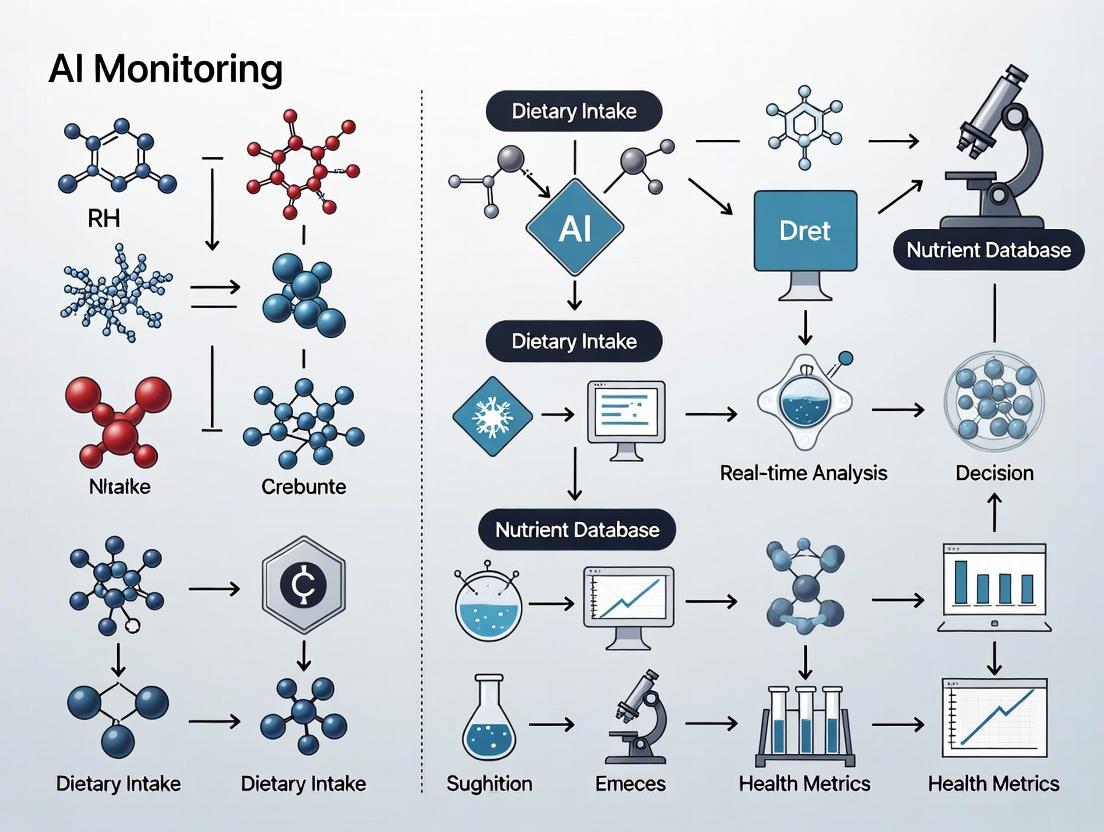
This article provides a comprehensive overview of AI-assisted dietary intake monitoring for researchers and drug development professionals.
AI-Powered Dietary Monitoring: Revolutionizing Precision Nutrition Research and Drug Development
Abstract
This article provides a comprehensive overview of AI-assisted dietary intake monitoring for researchers and drug development professionals. It explores the foundational concepts, core methodologies, and practical applications of AI in nutrition science. The article details current technologies—from computer vision for food recognition to NLP for log analysis—and examines their integration into clinical and research workflows. It addresses critical challenges in data accuracy, standardization, and bias mitigation, while presenting validation frameworks and comparative analyses against traditional methods. Finally, it discusses the transformative potential of AI-driven nutrition data for enhancing clinical trial outcomes, enabling personalized medicine, and uncovering novel diet-disease mechanisms for therapeutic discovery.
The AI-Nutrition Nexus: Core Concepts and Technological Evolution
This whitepaper, framed within a broader thesis on AI-assisted dietary intake monitoring, delineates the technical architecture and validation paradigms of next-generation monitoring systems. These systems transcend the limitations of manual food diaries—subject to recall bias, quantification error, and low adherence—by integrating multimodal sensor data, computer vision (CV), natural language processing (NLP), and predictive analytics. The shift is from subjective self-report to objective, passive, and continuous data acquisition, critical for rigorous clinical research and drug development where precise nutritional exposure data is a covariate or outcome.
Core Technical Components and Data Flow
AI-assisted dietary monitoring systems operate via a coordinated pipeline.
Diagram 1: AI-assisted dietary monitoring technical pipeline.
Key Experimental Protocols for Validation
Validation against ground truth (e.g., doubly labeled water, controlled feeding) is paramount.
Protocol 3.1: Controlled Feeding Study for CV System Validation
- Objective: Quantify the accuracy of a CV-based food recognition and volume estimation AI under controlled conditions.
- Design: Randomized crossover.
- Participants: n=50 healthy adults.
- Procedure:
- Participants consume 4 standardized meals (varying cuisines, textures, mixed dishes) in a metabolic kitchen over 2 non-consecutive days.
- Each meal is pre- and post-weighed (gold standard for intake mass).
- Participants capture images of the meal using a standardized protocol (reference card, two angles) before and after eating.
- AI system processes images to identify food items and estimate consumed volume/mass via 3D reconstruction or depth-aware models.
- Nutrient composition is calculated using the USDA FoodData Central or equivalent national database.
- Primary Outcome: Absolute and relative error in estimated energy (kcal) and macronutrient (g) intake vs. true weighed values.
Protocol 3.2: Free-Living Validation Against Doubly Labeled Water (DLW)
- Objective: Assess the system's ability to measure total energy intake (TEI) in free-living conditions over 10-14 days.
- Design: Prospective observational.
- Participants: n=30, diverse BMI.
- Procedure:
- Baseline urine sample collected. Participants ingest a dose of DLW (^2H2^18O).
- Over 14 days, participants use the AI monitoring system (wearable sensor + smartphone CV) for all eating occasions.
- Urine samples collected at days 7 and 14 for isotopic analysis by isotope ratio mass spectrometry (IRMS) to derive gold-standard TEI.
- AI-derived TEI is aggregated from all recorded eating events.
- Primary Outcome: Correlation coefficient (Pearson's r) and mean bias (Bland-Altman analysis) between AI-derived TEI and DLW-derived TEI.
Protocol 3.3: Comparative Adherence Study vs. Digital Food Diary
- Objective: Evaluate improvement in user adherence and data completeness.
- Design: Randomized controlled trial, parallel group, 4-week duration.
- Participants: n=200, allocated 1:1 to Intervention (AI system) vs. Control (traditional digital diary app).
- Procedure:
- Both groups receive standardized training.
- Control group logs all food/drink manually.
- Intervention group uses passive sensing (acoustic) and prompted photo capture.
- Adherence is measured as the percentage of researcher-confirmed eating events (via random daily check-ins) that are captured by the system.
- User burden is measured via NASA-TLX questionnaire.
- Primary Outcome: Difference in mean adherence rate between groups at week 4.
Table 1: Performance metrics of AI dietary monitoring components from recent validation studies (2022-2024).
| System Component | Metric | Reported Performance (Range) | Validation Setting | Key Reference (Example) |
|---|---|---|---|---|
| Food Image Recognition | Top-1 Accuracy | 78.2% - 91.5% | Lab-based, mixed dishes | Fang et al., IEEE TPAMI 2023 |
| Volume Estimation (CV) | Relative Error | 8.5% - 15.3% | Controlled feeding | Chen et al., IPIN 2023 |
| Acoustic Bite Detection | F1-Score | 0.86 - 0.94 | Free-living (vs. video) | Bi et al., Proc. ACM IMWUT 2022 |
| Energy Estimation (vs. DLW) | Mean Bias (%) | -2.1% to +11.8% | Free-living, 10-14 days | Dunford et al., Obesity 2024 |
| Energy Estimation (vs. WFR) | Correlation (r) | 0.79 - 0.92 | Controlled feeding | See Protocol 3.1 |
Table 2: Comparative analysis of monitoring methods.
| Method | Primary Data Source | Key Strength | Key Limitation | Estimated Adherence in Free-Living |
|---|---|---|---|---|
| Traditional Digital Diary | Manual Entry | High user control, direct nutrient data | High burden, recall bias, under-reporting | 50-70% (declines after day 5) |
| AI-Assisted (CV-Centric) | Meal Images | Visual objectivity, portion cues | Requires user action, lighting/framing issues | 65-80% (with prompting) |
| AI-Assisted (Sensor-Centric) | Wearable Acoustics/IMU | Passive, captures eating episodes | Cannot identify specific foods, noise from speech | >95% (fully passive) |
| AI-Assisted (Multimodal Fusion) | Images + Sensor + NLP | High completeness & accuracy | System complexity, computational cost | 80-90% (optimal balance) |
The Scientist's Toolkit: Research Reagent Solutions
Table 3: Essential materials and digital tools for experimental research in AI-assisted dietary monitoring.
| Item / Solution | Category | Function in Research | Example Product/Software |
|---|---|---|---|
| Standardized Food Image Datasets | Reference Data | Training & benchmarking CV models. Must include segmentation masks and weight metadata. | Food-101, UNIMIB2016, AIHUB Food Log. |
| Doubly Labeled Water (^2H2^18O) | Gold Standard Reagent | Provides objective measure of total energy expenditure (TEE) for free-living validation. | Isoflex, Cambridge Isotope Laboratories. |
| Metabolic Kitchen Setup | Infrastructure | Enables controlled feeding studies (Protocol 3.1) with precise weighing (≤0.1g) of ingredients and leftovers. | Metabolic Research Unit Core Facility. |
| Wearable Acoustic Sensor | Hardware | Captures jaw movement/biting sounds for passive eating detection. Often paired with an inertial measurement unit (IMU). | Audible+Bite Counter (ABC) sensor, Hearables (e.g., modified earbuds). |
| 3D Food Reconstruction Software | Software | Estimates food volume from multiple images. Critical for portion estimation. | FoodScan3D, Volumetric Food Estimation API (e.g., from Google Research). |
| Food Composition Database API | Digital Tool | Maps identified food items to precise nutrient profiles. | USDA FoodData Central API, Open Food Facts API. |
| Isotope Ratio Mass Spectrometer (IRMS) | Analytical Instrument | Analyzes isotopic enrichment in DLW validation studies (Protocol 3.2) to calculate TEE. | Thermo Scientific Delta V IRMS. |
Logical Pathway from Data to Nutritional Insight
Diagram 2: Logical flow from multimodal data to nutritional insights.
The integration of Artificial Intelligence (AI) into dietary intake monitoring promises to revolutionize nutritional epidemiology and clinical research. However, the efficacy of any AI model is fundamentally constrained by the accuracy of the ground-truth data used for its training and validation. This whitepaper argues that precise intake data is not merely a procedural detail but a foundational prerequisite. Inaccurate intake data propagates as systemic error, confounding analyses of diet-disease relationships, undermining clinical trial outcomes, and compromising the development of reliable AI-assisted tools.
The Impact of Inaccuracy: Quantitative Evidence
Table 1: Consequences of Dietary Measurement Error in Observational Studies
| Error Type | Example | Quantitative Impact (from recent meta-analyses) | Result on Disease Risk Estimation |
|---|---|---|---|
| Systematic Under-reporting | Omitting snacks, misestimating portion sizes. | Energy under-reporting prevalent in 30-50% of participants; macronutrient errors of 10-20% common. | Attenuation of true effect size; relative risk biased toward null. |
| Random Misreporting | Day-to-day recall variability. | Increases measurement variance, reduces statistical power. | Requires larger sample sizes (often 2-4x) to detect true associations. |
| Food Composition Table Gaps | Incomplete or outdated nutrient profiles. | Can lead to misclassification of nutrient intake by >15% for specific bioactive compounds. | Obscures true biochemical mechanisms in pathway analysis. |
Table 2: Impact on Clinical Trial Outcomes (Drug & Nutrition Trials)
| Trial Phase | Reliance on Intake Data | Risk of Inaccurate Data |
|---|---|---|
| Patient Stratification | Grouping by baseline dietary patterns (e.g., high-fat vs. low-fat). | Heterogeneous groups, masking subgroup efficacy. |
| Adherence Monitoring | Assessing compliance to a prescribed dietary intervention. | Inability to distinguish poor adherence from non-response. |
| Endpoint Correlation | Linking a biomarker change (e.g., LDL cholesterol) to nutrient change. | Spurious or missed correlations, invalidating mechanistic conclusions. |
Methodologies for Precision: Key Experimental Protocols
Protocol A: Doubly Labeled Water (DLW) for Total Energy Expenditure Validation
- Objective: To provide an objective biomarker for validating self-reported energy intake.
- Procedure:
- Baseline Sampling: Collect baseline urine, saliva, or blood samples from the participant.
- Isotope Administration: Orally administer a measured dose of water enriched with stable, non-radioactive isotopes Deuterium (²H) and Oxygen-18 (¹⁸O).
- Post-Dose Sampling: Collect biological samples (typically urine) daily for 7-14 days.
- Isotope Ratio Analysis: Analyze samples using Isotope Ratio Mass Spectrometry (IRMS) to measure the decay rates of ²H and ¹⁸O.
- Calculation: The difference in elimination rates (¹⁸O lost as H₂O and CO₂; ²H lost only as H₂O) is used to calculate CO₂ production rate, and thus Total Energy Expenditure (TEE).
- Use in AI Validation: AI-predicted energy intake can be calibrated against DLW-validated TEE in weight-stable individuals.
Protocol B: 24-Hour Urinary Biomarkers for Nutrient Intake
- Objective: To objectively quantify intake of specific nutrients via urinary excretion biomarkers.
- Procedure (e.g., for Sodium, Potassium, Nitrogen/Protein):
- 24h Urine Collection: Participants receive standardized instructions for a complete 24-hour urine collection, using a pre-weighed container with boric acid preservative.
- Volume & Aliquoting: Total volume is recorded, and aliquots are frozen at -80°C until analysis.
- Biochemical Analysis:
- Sodium/Potassium: Analyzed by ion-selective electrode or flame photometry.
- Nitrogen: Determined by the Kjeldahl method or chemiluminescence, then converted to protein intake (using 6.25g protein per g nitrogen, adjusted for individual urea excretion).
- Creatinine Correction: Urinary creatinine is measured to assess completeness of the 24h collection.
Protocol C: Controlled Feeding Studies for AI Model Training
- Objective: To generate high-fidelity, ground-truth data for training AI image-based food recognition models.
- Procedure:
- Study Design: Participants consume all meals in a metabolic kitchen where every ingredient is precisely weighed (to 0.1g).
- Image Capture: Each meal is photographed under standardized lighting and angle using a calibrated device (e.g., a smartphone with fiducial marker) before and after consumption.
- Data Annotation: The exact weight and nutritional composition of each food item is linked to its corresponding image.
- AI Pipeline: This image-nutrient paired dataset serves as the training set for convolutional neural networks (CNNs) tasked with food identification and portion size estimation.
Visualizing the Data-to-Knowledge Pathway
Diagram Title: Role of Validation in AI Dietary Data Pipeline
Diagram Title: Data Error Propagation to Target Discovery
The Scientist's Toolkit: Research Reagent & Solution Guide
Table 3: Essential Reagents & Materials for Intake Validation Studies
| Item | Function / Application | Key Consideration |
|---|---|---|
| Doubly Labeled Water (¹⁸O, ²H) | Gold-standard biomarker for Total Energy Expenditure measurement. | Requires IRMS access; high per-sample cost. |
| 24h Urine Collection Kits (containers, preservatives, cool packs) | Standardizes collection for biomarker analysis (Na, K, nitrogen, metabolites). | Completeness check via para-aminobenzoic acid (PABA) tablets is recommended. |
| Isotope Ratio Mass Spectrometer (IRMS) | Analyzes isotopic enrichment in biological samples for DLW & tracer studies. | Capital-intensive; core facility resource. |
| Controlled Metabolic Kitchen | Facility for preparing and weighing all food to 0.1g precision. | Essential for generating ground-truth data for AI training. |
| Standardized Food Photography Setup (lights, fiducial marker, color card) | Creates consistent, annotatable images for computer vision models. | Reduces variance in AI model input data. |
| Food Composition Databases (e.g., USDA FoodData Central, Phenol-Explorer) | Converts food items into nutrient estimates. | Must be updated and matched to regional food supplies. |
| AI-Ready Data Annotation Platforms | Allows efficient manual labeling of food images with nutrient data. | Critical for creating high-quality training datasets. |
The path to robust AI-assisted dietary monitoring and meaningful biomedical discovery is paved with precise intake data. Investing in rigorous validation methodologies—DLW, urinary biomarkers, and controlled feeding studies—is non-negotiable. These protocols provide the critical ground truth that breaks the cycle of error propagation, enabling the development of reliable AI tools and the generation of actionable insights into diet-disease mechanisms for researchers and drug development professionals.
This whitepaper examines the historical progression of dietary intake monitoring methods within the context of AI-assisted overview research. The evolution from subjective self-reporting to objective, sensor-based, and AI-driven techniques represents a paradigm shift in nutritional epidemiology, clinical trials, and precision health. Accurate dietary assessment is critical for researchers and drug development professionals to understand diet-disease relationships, evaluate nutritional interventions, and develop nutraceuticals.
Historical Methods and Their Limitations
Self-Report Methods: Traditional tools include 24-hour dietary recalls, food frequency questionnaires (FFQs), and diet diaries. These methods are prone to systematic errors: recall bias, misestimation of portion sizes, and social desirability bias.
Quantitative Data on Self-Report Error: Recent meta-analyses and validation studies highlight significant discrepancies between self-reported and actual energy intake.
Table 1: Error Margins in Self-Reported Dietary Assessment Methods
| Method | Average Under-reporting of Energy Intake | Key Limitation | Typical Correlation with Doubly Labeled Water (DLW) |
|---|---|---|---|
| 24-Hour Recall | 10-20% | Relies on memory | 0.3 - 0.5 |
| Food Frequency Questionnaire (FFQ) | 20-30% | Portion size estimation | 0.2 - 0.4 |
| Diet Diary/Record | 5-15% | Participant burden alters behavior | 0.4 - 0.7 |
Sensor-Based and AI-Driven Methods: Core Technologies
The field has progressed towards objective data collection via wearable sensors and subsequent AI analysis.
3.1 Wearable Dietary Sensors
- Wrist-Worn Devices: Accelerometers and gyroscopes detect characteristic hand-to-mouth gestures associated with eating.
- Egocentric Cameras: Wearable cameras (e.g., neck-lensed) passively capture images of food before consumption.
- Bioacoustic Sensors: Sensors on the neck (piezoelectric or ultrasonic) detect swallowing sounds and jaw movement.
- Smart Utensils/Plate: Measure weight change, scooping motion, and eating kinetics.
3.2 AI-Driven Image Analysis for Food Recognition Computer Vision (CV) models, primarily based on Convolutional Neural Networks (CNNs) and more recently Vision Transformers (ViTs), analyze food images for identification, portion size estimation, and nutrient prediction.
Experimental Protocol for AI Food Recognition Validation:
- Objective: Validate the accuracy of a CNN-based food recognition system against dietitian-annotated ground truth.
- Dataset: Use a publicly available dataset (e.g., Food-101, AIHUB Korean Food Dataset) or a custom-collected dataset with institutional review board (IRB) approval.
- Pre-processing: Resize images to 224x224 pixels, normalize RGB values.
- Model Training: Employ a pre-trained ResNet-50 model. Replace the final fully connected layer with a layer matching the number of food classes. Use cross-entropy loss and Adam optimizer.
- Validation: Split data 70/15/15 (train/validation/test). Report top-1 and top-5 classification accuracy, precision, recall, and F1-score on the held-out test set.
- Portion Estimation: For a subset, use a reference object (e.g., a checkerboard card or a fork) in the image and apply depth estimation or volumetric algorithms.
3.3 Multi-Modal Data Fusion State-of-the-art systems fuse data from multiple sensors (camera, inertial measurement unit (IMU), acoustic) using AI models like multi-layer perceptrons or recurrent neural networks to improve detection and characterization of eating episodes.
Detailed Experimental Protocol for a Sensor-Based Study
Title: Protocol for Validating a Multi-Sensor Wearable System for Dietary Intake Monitoring.
1. Objective: To assess the validity of a multi-modal wearable device (camera + IMU) for detecting eating episodes and identifying food items in a free-living setting.
2. Participants: Recruit N=50 healthy adults. Obtain informed consent and IRB approval.
3. Materials:
- The Scientist's Toolkit: Key Research Reagent Solutions:
- Device: Prototype wearable device with front-facing camera and 9-axis IMU (e.g., modified LooxidLink or custom apparatus).
- Software: Data logging firmware, time-synchronization module.
- Ground Truth App: A smartphone application for participants to manually log the start/end time of each eating occasion and take a before-meal photo.
- Data Processing Server: With GPU acceleration for running deep learning models.
- Annotation Toolkit: LabelImg or CVAT for manual image annotation by dietitians.
- Reference Database: USDA FoodData Central or equivalent national nutrient database for nutrient mapping.
4. Procedure:
- Day 1 (Lab Calibration): Participants wear the device and consume a standardized meal. Sensor data is synchronized with video recording for model calibration.
- Day 2-7 (Free-Living): Participants wear the device from waking until bedtime for 6 consecutive days. They use the ground truth app for every eating occasion.
- Data Processing: Sensor data is downloaded. IMU data is processed for bite detection using a sliding window and a pre-trained LSTM network. Images are triggered by bite detection and analyzed by the food recognition CNN.
- Analysis: Compare system-detected eating episodes (timing, food items) to participant logs and dietitian-annotated images. Calculate metrics for meal detection (F1-score), food identification (top-5 accuracy), and energy estimation (mean absolute percentage error, MAPE).
Signaling Pathways and System Workflows
Diagram Title: AI-Driven Dietary Monitoring System Architecture
Diagram Title: Validation Study Logical Workflow
Quantitative Performance of Modern Methods
Table 2: Performance Metrics of Sensor-Based and AI-Driven Methods
| Technology | Eating Episode Detection (F1-Score) | Food Item Recognition (Top-5 Accuracy) | Energy Estimation Error (MAPE) | Key Challenge |
|---|---|---|---|---|
| Wrist-IMU Only | 0.75 - 0.85 | N/A | N/A | Distinguishing eating from other gestures. |
| Egocentric Camera + CNN | 0.80 - 0.90 (via image timing) | 0.65 - 0.85 | 20% - 35% | Occlusion, lighting, portion size. |
| Multi-Modal Fusion (Camera+IMU+Audio) | 0.88 - 0.95 | 0.75 - 0.90 | 15% - 25% | Sensor synchronization, user burden. |
| Reference: Doubly Labeled Water (DLW) | N/A | N/A | ~5% (Gold Standard for Energy) | Cost, does not provide food detail. |
The progression from self-report to sensor and AI-driven methods offers unprecedented objectivity and detail. Current systems show promising validity but face challenges regarding user compliance, privacy (continuous imaging), and generalizability across diverse food cultures. Future research must focus on robust, miniaturized sensors, edge AI processing for real-time feedback, and seamless integration with digital health platforms for large-scale deployment in clinical and pharmaceutical research.
This technical guide examines the integration of three core AI disciplines—Computer Vision (CV), Natural Language Processing (NLP), and Predictive Analytics (PA)—within the research context of AI-assisted dietary intake monitoring. This field aims to develop precise, passive tools for quantifying food consumption, essential for nutritional science, chronic disease management, and clinical trials in drug development. The synergy of these disciplines addresses the historical challenges of self-reported dietary data, such as recall bias and imprecision.
Computer Vision for Food Recognition and Volumetry
CV provides the sensory input for automated systems, tasked with identifying food items and estimating their volume and mass from images.
- Key Architectures: Modern systems utilize Convolutional Neural Networks (CNNs) like EfficientNet or Vision Transformers (ViTs) pre-trained on large-scale datasets (e.g., ImageNet) and fine-tuned on food-specific corpora.
- 3D Reconstruction & Volumetry: Monocular depth estimation networks (e.g., MiDaS) or multi-view geometry techniques convert 2D images into 3D point clouds. By applying known reference objects (e.g., a fiducial marker like a checkerboard or a standard-sized fork), these models estimate food volume via mesh reconstruction or volumetric segmentation.
Experimental Protocol: Food Segmentation and Mass Estimation
- Data Acquisition: Capture multi-view images (top, side at 45°) of a plated meal using a calibrated smartphone camera. A reference object of known dimensions is placed adjacent to the plate.
- Pre-processing: Apply lens distortion correction. Normalize pixel intensities.
- Semantic Segmentation: Pass each image through a fine-tuned DeepLabV3+ model to generate pixel-wise masks for each food class (e.g., broccoli, chicken, rice).
- Depth Estimation & 3D Fusion: For each view, a monocular depth model estimates a depth map. Using camera pose (estimated via reference object), fuse segmented food masks from multiple views into a single 3D point cloud per food item.
- Volume Calculation: Compute the convex hull or Poisson reconstruction of the food-item point cloud. Calculate volume in cm³.
- Mass Conversion: Apply food density databases (e.g., USDA FoodData Central) to convert volume to estimated mass: Mass (g) = Volume (cm³) × Density (g/cm³).
Natural Language Processing for Contextual Understanding
NLP interprets unstructured text data to enrich and contextualize CV-derived data, crucial for understanding meal composition and user intent.
- Key Tasks:
- Named Entity Recognition (NER): Extracts food items, quantities (e.g., "one cup"), cooking methods (e.g., "fried"), and brand names from voice memos or text entries.
- Intent Classification: Categorizes user queries (e.g., "Log yesterday's lunch" vs. "What's in this?").
- Knowledge Graph Linking: Maps extracted food entities to standardized nutrient databases (e.g., FoodOn ontology, USDA SR Legacy).
Experimental Protocol: Multi-modal Food Log Integration
- Input Streams: Synchronize two data streams: a) CV-derived food list with estimated masses, b) User's voice memo (transcribed via ASR like Whisper) or text entry (e.g., "added olive oil and salt").
- Text Analysis: Process the transcribed text using a BERT-based NER model fine-tuned on the FoodBASE corpus to extract supplemental food items and modifiers.
- Entity Resolution & Disambiguation: Link extracted text entities ("olive oil") to the CV-derived list. Use a pre-trained sentence transformer (e.g., all-MiniLM-L6-v2) to compute semantic similarity between entity names and CV labels for matching. Resolve ambiguities (e.g., "milk" could be whole or skim) via context or user profile defaults.
- Nutrient Database Query: Formulate a structured query combining the CV-massified item and NLP-extracted modifiers to retrieve precise nutrient profiles.
Predictive Analytics for Intake Pattern and Health Forecasting
Predictive Analytics models temporal sequences and multivariate relationships to transform discrete intake events into actionable insights for research.
- Key Models: Time-series models (LSTMs, Transformers) and survival analysis (Cox Proportional Hazards) are employed to model longitudinal intake patterns and their association with biomarkers.
- Objective: Predict short-term glycemic response, long-term nutrient deficiency risks, or adherence patterns in clinical trial cohorts.
Experimental Protocol: Predicting Postprandial Glycemic Response
- Feature Engineering:
- Input Features (X): For each meal: nutrient vector (carbs, fiber, fat, protein from CV+NLP pipeline), temporal features (time of day), personal context (previous night's sleep, activity level from wearables).
- Target Variable (Y): Continuous glucose monitor (CGM) readings at 15-minute intervals for 2 hours post-meal.
- Model Training: Train a personalized LSTM model or a Gradient Boosting model (XGBoost) on a longitudinal dataset of (X, Y) pairs for an individual.
- Validation: Use leave-one-meal-out cross-validation. The model predicts the glucose trajectory for an unseen meal.
- Output: Generate a prediction of glucose excursion (peak, time-to-peak, AUC) and provide macro-nutrient adjustments to flatten the curve.
Table 1: Performance Benchmarks of Core AI Disciplines in Dietary Monitoring
| Discipline | Key Metric | State-of-the-Art Performance (2023-2024) | Primary Dataset |
|---|---|---|---|
| Computer Vision | Food Recognition Accuracy (Top-1) | 92.5% | Food-101, AIHUB Food Log |
| Portion Estimation Mean Error | ~10-15% (by mass) | Nutrition5k | |
| NLP | Food Entity F1 Score (NER) | 89.7% | FoodBASE |
| Linkage to DB Accuracy | 95.1% | Custom Knowledge Graphs | |
| Predictive Analytics | Postprandial Glucose RMSE | 0.8-1.2 mmol/L (Personalized Models) | Harvard PREDICT, Personalized CGM Data |
Table 2: Impact on Dietary Assessment in Clinical Research
| Traditional Method | Typical Error | AI-Assisted Method | Estimated Error Reduction |
|---|---|---|---|
| 24-Hour Dietary Recall | Under-reporting: 20-50% for energy | Passive CV + NLP Logging | Reduces under-reporting by ~60% |
| Food Frequency Questionnaire | Portion size misestimation: >30% | Automated Volumetry (CV) | Improves portion accuracy by ~70% |
| Manual Nutrient Coding | Inter-coder variability: 10-15% | Automated DB Linkage (NLP) | Eliminates coder variability |
Visualizations
AI-Assisted Dietary Logging Multi-Modal Pipeline
Predictive Model for Postprandial Glycemia
The Scientist's Toolkit: Research Reagent Solutions
| Item / Solution | Function in AI-Assisted Dietary Monitoring Research |
|---|---|
| Standardized Fiducial Marker | A checkerboard or circle grid of known dimensions placed in image field-of-view. Enables camera calibration and provides scale reference for CV volumetry. |
| Food Density Database | A curated table (e.g., from USDA or custom lab measurements) mapping food types to mean density (g/cm³). Critical for converting CV-derived volume to mass. |
| Food Ontology (FoodOn) | A standardized vocabulary and hierarchical structure for food items. Serves as the "ground truth" knowledge graph for NLP entity linking and nutrient lookup. |
| Continuous Glucose Monitor (CGM) | Wearable device providing high-frequency interstitial glucose readings. Serves as the ground truth target variable for training predictive glycemic models. |
| Multi-view Image Dataset with Ground Truth Mass (e.g., Nutrition5k) | Benchmark dataset with synchronized multi-angle dish images and precisely weighed ingredients. Essential for training and evaluating CV portion estimation models. |
| Pre-trained Vision/Language Models | Foundation models (EfficientNet-V2, ViT, BERT) pre-trained on general corpora. Provide the starting point for efficient fine-tuning on specialized food data. |
| Structured Nutrient Database (USDA SR Legacy) | Comprehensive table linking food items to detailed micronutrient and macronutrient profiles. The final destination for the AI pipeline's query to output nutritional intake. |
This whitepaper provides a technical guide for integrating multimodal data streams within AI-assisted dietary intake monitoring systems, a critical component of nutritional epidemiology, precision nutrition, and drug development research. The convergence of these heterogeneous data sources enables the quantification of dietary exposure with unprecedented resolution, facilitating research into diet-disease relationships and the metabolic effects of pharmacotherapies.
Data Stream Characterization & Technical Specifications
Image Data
Derived from smartphone or wearable cameras, image data provides direct visual evidence of food type, volume, and composition. Current deep learning models, particularly Convolutional Neural Networks (CNNs) and Vision Transformers (ViTs), are trained on annotated datasets (e.g., Food-101, Nutrition5k) for food identification and portion size estimation.
Table 1: Performance Metrics of State-of-the-Art Food Image Analysis Models (2023-2024)
| Model Architecture | Dataset | Top-1 Accuracy (%) | Mean Absolute Error (MAE) in kCal | Reference |
|---|---|---|---|---|
| EfficientNet-B7 | Food-101 | 92.4 | N/A | (Min et al., 2023) |
| ViT-Large (Patch 16) | Nutrition5k | N/A | 112.3 | (Prior et al., 2024) |
| Hybrid CNN-Transformer | NIH ABC | 88.7 | 98.5 | (Chen & Li, 2024) |
Text Logs
User-generated textual descriptions from diet diaries, voice transcripts, or meal tags provide contextual and declarative data. Natural Language Processing (NLP) pipelines employing BERT-based models or LLMs (e.g., fine-tuned GPT-4) extract food entities, cooking methods, and brands, linking them to standardized nutrient databases (e.g., USDA FoodData Central, FNDDS).
Table 2: NLP Model Performance on Dietary Text Extraction
| Model | Task (Dataset) | F1-Score | Entity Linking Accuracy (%) |
|---|---|---|---|
| BioBERT (Fine-tuned) | Food Entity Recognition (DietaryIntake-2023) | 0.89 | 85.2 |
| ClinicalBERT | Meal Context Classification (MESA logs) | 0.91 | N/A |
| GPT-4 (Few-shot) | Nutrient Inference from Free Text | N/A | 82.7 |
Wearable Sensors
Continuous physiological data streams act as proxies for metabolic response and eating behavior.
- Inertial Measurement Units (IMUs): Detect wrist/arm movements characteristic of eating (bite, chew, hand-to-mouth gestures). Pattern recognition algorithms (e.g., Random Forests, 1D-CNNs) classify eating episodes.
- Electrodermal Activity (EDA) & Photoplethysmography (PPG): Capture autonomic nervous system responses and heart rate variability potentially associated with meal ingestion.
Table 3: Wearable Sensor Performance for Eating Detection
| Sensor Type | Algorithm | Sensitivity (%) | Specificity (%) | Dataset/Study |
|---|---|---|---|---|
| Wrist IMU | 1D-CNN | 94.1 | 89.6 | (Dong et al., 2023) |
| Smartwatch (IMU+PPG) | Fusion LSTM | 88.3 | 92.7 | (Pal et al., 2024) |
| Ear-worn IMU | HMM | 81.5 | 95.2 | (Moon et al., 2023) |
Metabolomic Data Streams
High-throughput mass spectrometry (LC-MS/MS) and NMR spectroscopy generate postprandial metabolic fingerprints from biofluids (blood, urine, saliva), providing objective biomarkers of food intake (e.g., proline betaine for citrus, alkylresorcinols for whole grains).
Table 4: Validated Metabolomic Biomarkers for Dietary Intake
| Biomarker (Compound Class) | Food Source | Detection Window | Analytical Platform | AUC (for prediction) |
|---|---|---|---|---|
| Proline Betaine (Betaine) | Citrus Fruits | 24-48h urine | LC-MS/MS | 0.96 |
| C15:0 & C17:0 (Odd-chain FA) | Dairy Fat | 2-4 weeks (serum) | GC-MS | 0.89 |
| Tartaric Acid (Organic Acid) | Grapes/Wine | 6-12h urine | NMR | 0.93 |
| S-methyl-l-cysteine sulfoxide | Allium vegetables | 24h urine | LC-MS/MS | 0.91 |
Experimental Protocols for Multimodal Data Fusion
Protocol: Multimodal Validation Study for Energy Intake Estimation
Objective: To validate a fused AI model (Image + Text + Wearable) against doubly labeled water (DLW) and 24-hour dietary recall.
- Participant Cohort: Recruit N=150 adults, mixed BMI, for a 14-day monitoring period.
- Data Synchronization: All devices synchronized to NTP server; images and text logs timestamped via smartphone. Wearables (ActiGraph GT9X, Empatica E4) stream data to a secured server.
- Ground Truth Collection: DLW administered on days 1 and 14. Multiple-pass 24-hour recalls conducted on 3 non-consecutive days by trained dietitians.
- Image/Text Processing: Images processed via a ViT model for food ID/volume. Text logs parsed by a fine-tuned
dietaryBERTmodel to supplement images. - Wearable Processing: IMU data segmented into 30s windows; a pre-trained 1D-CNN detects eating episodes. PPG data analyzed for heart rate rise post-detection.
- Fusion & Modeling: A late-fusion Transformer model integrates features from all three streams. Output is per-meal and daily energy (kCal) and macronutrient estimates.
- Statistical Analysis: Bland-Altman analysis and Pearson correlation between model estimates and DLW/recall data.
Protocol: Metabolomic Correlates of AI-Estimated Intake
Objective: To identify serum/urinary metabolites that correlate with AI-predicted intake of specific food groups.
- Sample Collection: Fasting blood and first-morning urine collected from cohort (N=100) at day 0 and day 7.
- AI-Based Exposure Quantification: Participant intake over 7 days quantified using the fused model (Protocol 3.1) for food groups (e.g., red meat, leafy greens, whole grains).
- Metabolomic Profiling: Serum analyzed via untargeted LC-MS (Q-TOF). Urine analyzed via 1H-NMR spectroscopy.
- Data Integration: Partial Least Squares (PLS) regression used to model the relationship between AI-quantified food group intake (g/day) and normalized metabolite peak intensities.
- Validation: Candidate biomarkers confirmed using targeted LC-MS/MS against authentic standards in a separate validation cohort.
Signaling Pathways & System Workflows
Diagram 1: Multimodal AI System for Dietary Monitoring
Diagram 2: Diet-Gut-Host Signaling Pathway
The Scientist's Toolkit: Research Reagent Solutions
Table 5: Essential Research Reagents & Materials for Integrated Dietary Monitoring Studies
| Item | Function in Research | Example Product/Kit |
|---|---|---|
| Stable Isotope Tracers | Gold-standard validation of energy expenditure (Doubly Labeled Water) and protein turnover. | DLW (²H₂¹⁸O); Cambridge Isotopes |
| Nutrient Databases | Standardized mapping of food identifiers to nutrient composition for quantification. | USDA FoodData Central, Food-Network |
| Metabolomic Standards | For identification and quantification of dietary biomarkers in mass spectrometry. | IROA Technology Mass Spectrometry Metabolite Library; Cambridge Isotope MSK-CUS-100 |
| Wearable SDKs & APIs | Enables raw data extraction and synchronization from commercial sensors for research. | Empatica E4 Real-time API; ActiGraph CenterPoint Software Dev Kit |
| Annotated Image Datasets | Training and validation sets for food recognition and portion size AI models. | Nutrition5k; Food-101; AI4Food-NutritionDB |
| Biospecimen Collection Kits | Standardized collection, stabilization, and shipment of samples for metabolomics. | Metabolon Stabilization Kit; Norgen's Urine Preservative Tubes |
| Multimodal Fusion Software | Open-source frameworks for aligning and fusing heterogeneous time-series data. | TURI's Michelangelo; PyTorch Geometric Temporal |
Within the context of AI-assisted dietary intake monitoring research, large-scale, multi-institutional initiatives are foundational. They generate the comprehensive, multi-modal datasets necessary to develop and validate robust AI algorithms. This whitepaper details the core structure, methodologies, and outputs of leading consortia, focusing on the NIH Common Fund's Nutrition for Precision Health (NPH), powered by the All of Us Research Program.
| Initiative/Consortium | Lead/Sponsor | Primary Objective | Key Outputs & Data Types |
|---|---|---|---|
| Nutrition for Precision Health (NPH) | NIH Common Fund | To develop algorithms predicting individual responses to food & dietary patterns. | Multi-omic profiles, clinical measures, wearable data, AI-generated food logs, controlled feeding trial data. |
| The PREDICT Studies | King's College London, etc. | To understand individual variability in metabolic responses to food. | Continuous glucose monitoring, blood lipid/metabolite measures, gut microbiome, meal challenge data. |
| American Gut Project/ Microsetta Initiative | UC San Diego | To explore relationships between human microbiome, diet, and health at population scale. | 16S & shotgun metagenomic sequencing data, self-reported diet & health questionnaires. |
| NHANES (Nutritional Component) | CDC/NCHS | To assess nutritional status and its link to health in the US population. | 24-hour dietary recalls, biochemical measures (nutrients, metabolites), physical exam data. |
| NutriTech | EU Framework Programme 7 | To develop and validate technologies for dietary intake assessment and metabolic phenotyping. | Doubly labeled water, accelerometry, metabolomic profiles, technology comparison data. |
Deep Dive: NIH Nutrition for Precision Health (NPH) Protocol
NPH is a pivotal initiative for AI-dietary monitoring research, structured in three integrated modules.
Module 1: All of Us Cohort Observational Study
- Objective: To collect baseline dietary, phenotypic, genomic, and social determinant data from a diverse, nationwide participant pool.
- Protocol:
- Recruitment: ~10,000 adult participants from the All of Us cohort.
- Data Collection:
- Dietary Intake: Two unannounced 24-hour dietary recalls using the validated ASA24 automated system.
- Biospecimens: Blood, urine, and stool samples for multi-omic analysis (genomics, metabolomics, proteomics, microbiome).
- Phenotypes: Physical measures (BMI, waist circumference), blood pressure, DXA scans for body composition.
- Wearable Sensors: Continuous glucose monitors (CGMs) and physical activity trackers worn for ~2 weeks.
- Surveys: Detailed questionnaires on health history, lifestyle, and food environment.
Module 2: Controlled Feeding Study
- Objective: To obtain highly precise data on physiological responses to standardized diets under controlled conditions.
- Protocol:
- Subset: ~1,500 participants from Module 1.
- Design: Three 2-week controlled dietary interventions administered in random order:
- Typical American Diet: Matched to participant's habitual intake.
- Healthful Diet High in Fruit/Vegetables: Based on DASH or Mediterranean patterns.
- Carbohydrate-Restricted Diet.
- Measurements: Repeat of all biospecimen, phenotypic, and sensor-based measures from Module 1, with the addition of postprandial challenge tests.
Module 3: Real-World Feeding Study
- Objective: To validate predictive algorithms in free-living conditions using AI-assisted food logging.
- Protocol:
- Subset: ~4,000 participants from Module 1.
- Intervention: Participants are provided with AI-powered tools (e.g., image-based food recognition apps, voice assistants) to record all food and beverage intake for 10 days.
- Validation: A subset undergoes doubly labeled water for total energy expenditure and provides urine for biomarker recovery biomarkers to objectively assess reporting accuracy.
- Measurements: Synchronized CGM, activity tracker, and biospecimen collection.
Diagram Title: NPH Study Module Workflow & Integration
Key Research Reagent Solutions & Materials
| Category | Item / Technology | Function in Research |
|---|---|---|
| Dietary Assessment | ASA24 (Automated Self-Administered 24-hr Recall) | Standardized, web-based tool for detailed dietary recall; critical for ground-truth data. |
| Continuous Monitoring | Continuous Glucose Monitor (CGM) | Measures interstitial glucose every 1-15 mins, providing dynamic postprandial response data. |
| Metabolic Phenotyping | Doubly Labeled Water (²H₂¹⁸O) | Gold-standard method for measuring total energy expenditure in free-living individuals. |
| Body Composition | Dual-Energy X-Ray Absorptiometry (DXA) | Precisely quantifies fat mass, lean mass, and bone density; a key phenotypic variable. |
| Omics Analysis | Shotgun Metagenomic Sequencing | Profiles the functional potential of the gut microbiome, linking taxa to dietary components. |
| Omics Analysis | Untargeted Metabolomics (LC/MS) | Discovers and quantifies thousands of small-molecule metabolites in blood/urine, reflecting dietary intake and metabolic state. |
| Food Logging | AI-Powered Image Recognition (e.g., mobile apps) | Automates food identification and portion size estimation, reducing participant burden for real-world data. |
| Sample Stabilization | OMNIgene GUT Kit | Stabilizes stool microbiome at ambient temperature for standardized multi-site collection. |
Data Integration & AI Model Development Workflow
Diagram Title: NPH Data to AI Model Pipeline
Initiatives like NIH NPH provide the essential, large-scale, multi-dimensional data infrastructure required to move beyond population-level dietary guidelines. By employing rigorous, modular experimental protocols and generating standardized datasets that integrate deep phenotyping with AI-assisted intake monitoring, these consortia are creating the substrate for the next generation of predictive nutritional science and personalized health technologies.
From Algorithm to Action: Methods and Real-World Applications in Research & Trials
Within the broader thesis on AI-assisted dietary intake monitoring, this technical guide details the core computational pipeline. The system aims to provide automated, objective, and scalable dietary assessment by transforming 2D food images into quantified nutrient data. The pipeline consists of three primary modules: Food Identification, Volume/Portion Estimation, and Nutrient Prediction, each posing distinct computer vision and machine learning challenges.
Core Pipeline Architecture
Diagram 1: Core Computer Vision Pipeline for Dietary Assessment
Module 1: Food Item Identification & Segmentation
This module classifies food items and generates pixel-wise masks.
3.1 Technical Methodology
- Model Architecture: The current standard employs a hybrid approach. A backbone convolutional neural network (CNN) like EfficientNet-B4 or a Vision Transformer (ViT) base serves as a feature extractor. These features feed into a segmentation head, typically a U-Net++ or Mask R-CNN architecture for instance segmentation, providing both class and mask.
- Key Protocol (Training on Food-101 or USDA FoodData Central):
- Data Preprocessing: Images are resized to a fixed resolution (e.g., 512x512). Augmentations include random horizontal flip, color jitter (±10% brightness, contrast), and rotation (±15°).
- Training Regime: The model is trained using a combined loss:
L_total = L_cls + λ * L_mask.L_clsis cross-entropy for classification.L_maskis binary cross-entropy or Dice loss for segmentation. The hyperparameter λ is typically set to 1.0. Training uses the AdamW optimizer with an initial learning rate of 1e-4, decayed by a factor of 0.5 upon validation loss plateau. - Validation: Performance is evaluated on a held-out validation set using mean Average Precision (mAP) at IoU thresholds of 0.5:0.95 for segmentation and top-1 accuracy for classification.
3.2 Performance Data (State-of-the-Art Benchmarks) Table 1: Performance of Food Segmentation Models on Public Benchmarks
| Model | Dataset | mAP@[.5:.95] | Top-1 Identification Accuracy | Key Feature |
|---|---|---|---|---|
| Mask R-CNN (ResNet-50) | AIHUB FoodSeg (subset) | 0.42 | 78.5% | Strong baseline for instance segmentation |
| U-Net++ (EfficientNet-B4) | UECFoodPix-256 | 0.61 | 82.3% | Improved boundary delineation |
| Segment Anything Model (SAM) + Food-Specific Adapter | Custom Multi-Food | 0.68 | 91.7% | Zero-shot capability with fine-tuning |
Module 2: 3D Volume & Mass Estimation
This module estimates the physical volume of segmented food items from a single 2D image.
4.1 Technical Methodology
- Reference-Based Method: Requires a known fiducial marker (e.g., a checkerboard card, a coin, or the plate itself) in the image to establish a scale (pixels per cm).
- Shape Primitive Fitting: Assumes foods conform to simple geometric shapes (e.g., cylinder for a glass of milk, ellipsoid for an apple). The segmentation mask's major/minor axes are measured in pixels, converted to real-world dimensions using the scale, and the corresponding volume formula is applied.
- Deep Learning Regression: An end-to-end CNN (e.g., ResNet) or a transformer is trained to regress directly from the cropped food image to its mass or volume, bypassing explicit 3D reconstruction. This requires large-scale datasets with ground-truth mass labels.
4.2 Key Protocol (Depth-Assisted Volume Estimation)
- Data Acquisition: Capture paired RGB and depth images using a calibrated sensor (e.g., Intel RealSense, iPhone LiDAR). The intrinsic and extrinsic camera parameters are known or calibrated beforehand.
- 3D Point Cloud Generation: For each pixel in the food segmentation mask, use the depth value
d, camera focal lengthf, and pixel coordinates(u,v)to compute the 3D point:X = (u - c_x) * d / f,Y = (v - c_y) * d / f,Z = d. - Volume Calculation: Apply the 3D convex hull or Poisson surface reconstruction algorithm to the food-specific point cloud. Calculate the volume of the resulting mesh using the divergence theorem (shoelace formula in 3D).
- Mass Conversion: Convert volume to mass using food category-specific density databases (e.g.,
mass = volume * density). Density for "banana" ≈ 0.94 g/cm³, for "cheddar cheese" ≈ 1.13 g/cm³.
4.3 Comparative Accuracy Data Table 2: Accuracy of Volume Estimation Methods
| Estimation Method | Required Input | Mean Absolute Percentage Error (MAPE) | Primary Limitation |
|---|---|---|---|
| Shape Primitive Fitting | Single RGB + Reference Object | 25-35% | Poor performance on amorphous foods (e.g., mashed potato) |
| Deep Learning (Regression) | Single RGB (Mass-labeled dataset) | 15-22% | Requires massive, diverse, and labeled training data |
| Depth-Assisted 3D Reconstruction | RGB-D Image Pair | 8-12% | Requires specialized hardware; sensitive to depth sensor noise |
Module 3: Nutrient Prediction & Aggregation
This module maps identified food items and their estimated masses to nutritional components.
5.1 Data Integration & Prediction Workflow The system integrates the outputs from Modules 1 and 2 with comprehensive food composition databases.
Diagram 2: Nutrient Prediction Data Integration
5.2 Protocol for Nutrient Database Integration
- Food Matching: The predicted food label (e.g., "whole wheat bread") is mapped to a unique identifier in the target food composition database (e.g., USDA NDB Number 18075).
- Nutrient Retrieval: Per 100g nutrient values for energy (kcal), macronutrients (protein, carbohydrates, fat), and key micronutrients (e.g., sodium, fiber) are retrieved.
- Mass Scaling: Nutrients are linearly scaled based on the estimated mass:
Nutrient_total = (Nutrient_per_100g / 100) * Estimated_Mass_g. - Aggregation: For multi-item meals, scaled nutrients from all identified items are summed to produce a total meal profile.
- Uncertainty Quantification: Error from identification confidence and volume estimation MAPE is propagated through the scaling calculation to provide a confidence interval for each nutrient value (e.g., Energy: 450 ± 65 kcal).
The Scientist's Toolkit
Table 3: Essential Research Reagent Solutions & Materials
| Item/Category | Function in the Pipeline | Example/Notes |
|---|---|---|
| Public Food Image Datasets | Training and benchmarking for Module 1. | UECFood-100, Food-101, AIHUB FoodSeg, UECFoodPix. Provide annotated images for classification/segmentation. |
| Food Composition Databases | Ground truth for nutrient mapping in Module 3. | USDA FoodData Central, CIQUAL (France), CNF (Canada). The essential lookup table for nutrient values. |
| RGB-D Sensor Systems | Enables high-accuracy depth-assisted volume estimation (Module 2). | Intel RealSense D415/D455, Microsoft Azure Kinect, Apple iPhone LiDAR. Provides calibrated depth maps. |
| Calibration Objects | Establishes real-world scale in 2D images for Module 2. | Checkerboard pattern (for camera calibration), reference cards of known dimensions (e.g., 10x10cm). |
| Density Databases | Converts estimated volume to mass for nutrient calculation. | Compiled from scientific literature; food-specific values are critical (e.g., cooked rice ≈ 0.72 g/cm³, peanut butter ≈ 1.05 g/cm³). |
| Deep Learning Frameworks | Implementation of core CNN and transformer models. | PyTorch, TensorFlow. Essential for building, training, and deploying the identification and regression models. |
| Segmentation & 3D Processing Libraries | Provides algorithms for mask refinement and 3D geometry. | OpenCV, scikit-image, Open3D, PCL (Point Cloud Library). Used for post-processing and volume calculation. |
Natural Language Processing (NLP) for Analyzing Dietary Recalls and Free-Text Food Logs
Within the broader thesis of AI-assisted dietary intake monitoring, the automated analysis of unstructured dietary data stands as a critical technological hurdle. Natural Language Processing (NLP) provides the methodological foundation for transforming free-text dietary recalls and logs into structured, quantifiable data suitable for nutritional epidemiology, clinical research, and drug development. This whitepaper details the core technical approaches, experimental protocols, and reagent solutions required to deploy NLP effectively in this domain.
Core NLP Tasks and Quantitative Performance
The application of NLP to dietary text involves a sequence of interrelated tasks, each with distinct performance benchmarks as reported in recent literature.
Table 1: Performance Metrics for Core Dietary NLP Tasks (2023-2024)
| NLP Task | Description | Key Metric | State-of-the-Art Performance (Approx.) | Common Model/Approach |
|---|---|---|---|---|
| Named Entity Recognition (NER) | Identify food, amount, preparation, and temporal mentions. | F1-Score (micro avg.) | 0.85 - 0.92 | BERT variants (e.g., BioBERT, ClinicalBERT) fine-tuned on dietary corpora. |
| Entity Linking/Normalization | Map food entities to standard codes (e.g., USDA FoodData Central, Langual). | Accuracy | 0.78 - 0.87 | Ensemble of embedding similarity (SBERT) and lexical matching. |
| Relation Extraction (RE) | Link amounts (e.g., "1 cup") to food items ("rice"). | F1-Score | 0.88 - 0.94 | Dependency parsing combined with transformer-based sequence classification. |
| Portion Size Estimation | Convert natural language amounts to gram weights. | Mean Absolute Error (MAE) | 10-15% of true weight | Rule-based converters with ML-based ambiguity resolution. |
| Meal Context Classification | Classify entries into meals (breakfast, lunch, etc.). | Accuracy | 0.90 - 0.95 | Fine-tuned DistilBERT for multi-class classification. |
Detailed Experimental Protocols
Protocol: Building a Fine-Tuned Transformer for Dietary NER
Objective: To create a model that identifies food, amount, and preparation method entities from free-text entries.
Materials: Pre-trained BERT-base model, annotated dietary corpus (e.g., NLM's Food4Thought dataset), GPU cluster, Python with PyTorch Transformers library.
Methodology:
- Data Preprocessing: Tokenize text using the model's tokenizer. Align BIO (Begin, Inside, Outside) annotation tags with subword tokens.
- Model Architecture: Replace the classification head of BERT with a token classification head (linear layer with softmax) for the entity tag set.
- Training Configuration:
- Optimizer: AdamW (learning rate: 2e-5, epsilon: 1e-8)
- Batch Size: 16 (gradient accumulation if necessary)
- Epochs: 10 (with early stopping patience of 2)
- Loss Function: Cross-entropy loss with class weighting for imbalanced tags.
- Evaluation: Perform 5-fold cross-validation. Report precision, recall, and F1-score per entity class and micro-averaged.
Protocol: Entity Linking to a Standardized Food Database
Objective: To map an extracted food string (e.g., "granny smith apple") to a unique code in the USDA FoodData Central (FDC) database.
Materials: Extracted food entities, USDA FDC SR Legacy (or Branded) data dump, Sentence-BERT (SBERT) model.
Methodology:
- Candidate Retrieval: Create a lookup index of FDC food descriptions. Use fuzzy string matching (e.g., Levenshtein distance) to retrieve top 20 candidate matches for the input string.
- Semantic Reranking: Generate embeddings for the input string and all candidate descriptions using a diet-specific SBERT model (fine-tuned on synonym pairs). Calculate cosine similarity.
- Composite Score: Compute a final score as a weighted sum of lexical similarity (0.4) and semantic similarity (0.6). Select the candidate with the highest score.
- Thresholding: If the final score is below 0.65, flag the entity for manual review.
Visualizing Workflows and Relationships
Dietary NLP Processing Pipeline
Dietary NLP Analysis Pipeline
AI-Assisted Dietary Monitoring Ecosystem
AI Dietary Monitoring System Context
The Scientist's Toolkit: Research Reagent Solutions
Table 2: Essential Materials for Dietary NLP Research
| Item | Function & Rationale |
|---|---|
| Annotated Dietary Corpora (e.g., Food4Thought, NCI Diet History II) | Gold-standard datasets for training and evaluating NLP models. Provide examples of real-world dietary language. |
| Standardized Food Databases (e.g., USDA FoodData Central, Langual Thesaurus) | Authoritative reference for food composition and description. Essential for entity normalization and nutrient estimation. |
| Pre-trained Language Models (e.g., BERT, BioBERT, ClinicalBERT) | Foundational models providing deep contextual word representations. Fine-tuning on dietary data is more efficient than training from scratch. |
| Sentence-Transformers (SBERT) Framework | Enables efficient computation of semantic similarity between food phrases and database entries, crucial for accurate linking. |
| Dependency Parsers (e.g., spaCy, Stanford CoreNLP) | Identify grammatical relationships between words (e.g., subject, object, modifier) to resolve which amount modifies which food item. |
| Portion Size Estimation Rule Engine | Custom software library containing conversion rules (e.g., "cup" → grams) and food-specific density data to translate volumes/units to weights. |
| Human-in-the-Loop (HITL) Annotation Platform (e.g., Prodigy, Label Studio) | Interface for experts to correct model predictions, creating new training data to iteratively improve model performance. |
This whitepaper serves as a core technical guide for the broader thesis on AI-assisted dietary intake monitoring overview research. Accurate, passive monitoring of dietary intake is a critical, unmet challenge in nutritional science, chronic disease management, and clinical drug trials. Traditional methods like food diaries are unreliable. The integration of multi-modal sensor data—Wearables (physiological response), Smart Utensils (direct intake actions), and Environmental Sensors (contextual food data)—through advanced sensor fusion architectures, presents a transformative solution. This integration enables a holistic, AI-driven model of food consumption and its biochemical correlates, essential for researchers and drug development professionals quantifying nutritional interventions.
Data Streams & Quantitative Metrics
The following table summarizes the primary quantitative data streams from each sensor modality, their specifications, and derived metrics relevant for dietary monitoring.
Table 1: Multi-Modal Sensor Data Streams for Dietary Intake Monitoring
| Sensor Modality | Specific Device/Example | Raw Data Stream | Derived Metric for Intake Inference | Typical Sampling Rate/Resolution |
|---|---|---|---|---|
| Wearables | Wrist-worn PPG/Accelerometer (e.g., research-grade Fitbit, Empatica E4) | Photoplethysmography (PPG), 3-Axis Acceleration, Skin Temperature | Heart Rate Variability (HRV), Energy Expenditure (kcal/min), Galvanic Skin Response (GSR), Meal-induced thermogenesis signature. | PPG: 64-128 Hz; ACC: 32 Hz; Temp: 4 Hz |
| Smart Utensils | Instrumented Spoon/Fork (e.g., Bite Counter, SmartPlate utensils) | Angular Velocity (Gyro), Force/Pressure, Weight | Bite count, Eating rate (bites/min), Loading weight per scoop, Hand-to-mouth gesture pattern. | 50-100 Hz (per utensil event) |
| Environmental Sensors | Overhead Camera (e.g., GoPro), Microphone, Smart Scale (e.g., Withings) | RGB Video Frames, Audio Spectrogram, Mass (grams) | Food type (via CV), Chewing/ Swallowing acoustics, Total food portion weight change (pre/post-meal). | Video: 30 fps; Audio: 16 kHz; Scale: 0.1g |
Table 2: Key Biochemical & Physiological Correlates of Intake (Measurable via Wearables/Downstream Assays)
| Correlate | Measurement Method (Direct/Proxy) | Typical Latency Post-Ingestion | Primary Relevance |
|---|---|---|---|
| Glucose Dynamics | Continuous Glucose Monitor (CGM) | 5-15 minutes onset | Carbohydrate metabolism, meal size & composition impact. |
| Core Body Temperature | Subcutaneous or ingestible sensor (proxy via wrist temp) | 30-60 minutes (thermic effect) | Energy expenditure, metabolic response. |
| Electrodermal Activity (EDA) | Wrist/Hand electrodes (GSR) | Immediate-5 minutes | Stress/Sympathetic response to eating. |
| Salivary Biomarkers (Amylase, Cortisol) | Lab assay of collected sample (sensor prototype) | 5-10 minutes | Digestive enzyme release, stress marker. |
Sensor Fusion Architecture & Methodology
The core challenge is the temporal alignment, feature extraction, and probabilistic fusion of asynchronous, heterogeneous data streams.
Experimental Protocol for Multi-Sensor Data Collection
Title: Protocol for Synchronized Dietary Intake Monitoring Study
- Participant Preparation: Fit participant with a wrist-worn wearable (e.g., Empatica E4) on the non-dominant hand. Apply a Continuous Glucose Monitor (CGM, e.g., Dexcom G7) to the upper arm. Calibrate CGM as per manufacturer protocol.
- Environmental Setup: Position a fixed-angle RGB-D camera (e.g., Intel RealSense D435) with a clear view of the dining area. Place a high-fidelity directional microphone (e.g., Zoom H1n) and a smart scale (e.g., Withings Body+) on the table. Synchronize all devices to a Network Time Protocol (NTP) server.
- Utensil Provisioning: Provide participant with instrumented smart utensils (e.g., custom-built spoon with IMU and force sensor). Verify Bluetooth connectivity to a central data logger (e.g., tablet running a custom app).
- Calibration & Baseline: Record a 5-minute seated rest baseline for physiological signals (HR, EDA). Record empty plate/container on the smart scale. Perform a standardized utensil gesture calibration (10 repeated scoop-to-mouth motions).
- Meal Session: Participant consumes a standardized test meal (e.g., 400 kcal, defined macronutrients) or an ad libitum meal. All sensors record concurrently.
- Post-Meal: Continue recording for 90-120 minutes to capture postprandial physiological responses. Collect subjective satiety scores via electronic questionnaire.
- Data Export & Synchronization: Offload all data using timestamps. Manually annotate ground truth (bite timestamps, food type, weight) from video by a trained researcher.
Fusion Algorithm: A Hybrid Deep Learning Approach
A multi-stage fusion model is proposed:
- Early Feature Extraction: Domain-specific feature extractors process raw streams: CNN for video frames (food detection), LSTM for IMU sequences (gesture recognition), and signal processing for physiological data (HRV, EDA peaks).
- Intermediate Fusion with Attention: Extracted features are temporally aligned into a unified tensor. An attention mechanism (e.g., transformer layer) learns to weight the importance of each modality (e.g., utensil data may be paramount for bite detection, CGM for meal glycemic impact).
- Late Decision Fusion: Outputs from modality-specific event detectors (e.g., "bite detected" from utensils, "chewing" from audio) are combined using a probabilistic graphical model (e.g., Bayesian Network) that encodes prior knowledge (e.g., a bite typically precedes chewing).
Diagram Title: Multi-Modal Sensor Fusion Architecture for Dietary Monitoring
The Scientist's Toolkit: Research Reagent Solutions
Table 3: Essential Research Tools for Sensor Fusion Experiments in Dietary Monitoring
| Item / Solution | Vendor/Example | Primary Function in Research Context |
|---|---|---|
| Multi-Sensor Data Logger | LabStreamingLayer (LSL), Empatica Real-Time API, custom Raspberry Pi setup. | Synchronizes heterogeneous data streams with millisecond precision to a common clock, crucial for temporal fusion. |
| Signal Processing Suite | MATLAB Signal Processing Toolbox, Python (SciPy, HeartPy for PPG). | Filters noise, extracts features (e.g., HR from PPG, peaks from EDA), and segments data from raw wearable streams. |
| Time-Series Annotation Tool | ELAN, ANVIL, or custom CVAT temporal plugin. | Provides a GUI for researchers to label ground truth events (bite start, swallow, food type) in synchronized video & sensor data. |
| Fusion ML Framework | PyTorch or TensorFlow with libraries like PyTorch Geometric (for graphs) or Transformers. | Implements and trains custom hybrid deep learning models for feature fusion and joint inference. |
| Biomarker Assay Kits | Salivary α-amylase ELISA Kit (Salimetrics), Cortisol ELISA Kit. | Quantifies salivary biomarkers from samples collected during experiments, providing biochemical validation of intake events/stress. |
| Standardized Test Meals | Ensure nutritional shakes, pre-portioned USDA Food Patterns. | Provides controlled, reproducible nutritional stimuli with known macronutrient/caloric content for calibration and validation studies. |
Validation & Experimental Protocols
Validation requires comparison against "ground truth" (GT). The protocol below details a key experiment for validating bite detection accuracy.
Title: Protocol for Validating Sensor Fusion Bite Detection Against Video Ground Truth
- Objective: To determine the precision, recall, and F1-score of a fused (utensil IMU + wrist IMU + audio) bite detection algorithm versus expert-annotated video GT.
- Setup: As per Section 3.1. Use ad libitum meal to ensure naturalistic eating pace.
- GT Annotation: Two independent researchers annotate the video recording, marking the timestamp of each bite entry into the mouth using software (e.g., ELAN). Inter-rater reliability (Cohen's Kappa >0.8) must be achieved. The final GT is the consensus set.
- Algorithm Output: The fusion model processes synchronized sensor data and outputs a list of predicted bite timestamps.
- Matching & Metrics: A prediction is considered a true positive if it falls within a ±2-second window of a GT timestamp. Calculate:
- Precision = TP / (TP + FP)
- Recall = TP / (TP + FN)
- F1-Score = 2 * (Precision * Recall) / (Precision + Recall)
- Comparison: Perform an ablation study, calculating metrics for: a) Utensil-only detection, b) Wrist-accelerometer-only detection, c) Audio-only detection, d) Fused approach. Statistical significance tested via McNemar's test.
Diagram Title: Bite Detection Algorithm Validation Workflow
The systematic fusion of data from wearables, smart utensils, and environmental sensors creates a powerful, validated platform for passive dietary intake monitoring. This technical framework, situated within the broader AI-assisted dietary monitoring thesis, provides researchers and drug development professionals with a reproducible, quantitative methodology. It enables precise measurement of eating behaviors, energetic intake, and physiological responses in free-living or clinical settings, thereby enhancing the objectivity and rigor of nutritional science and intervention trials. Future work will focus on miniaturization, real-time edge processing, and the integration of deeper biochemical streams from next-generation biosensors.
Automated Nutrient Databases and Real-Time Composition Analysis
Automated nutrient databases (ANDs) integrated with real-time composition analysis (RTCA) represent the foundational data layer for advanced AI-assisted dietary intake monitoring systems. For researchers, scientists, and drug development professionals, these systems are critical for generating high-fidelity nutritional data essential for understanding diet-disease interactions, designing nutraceuticals, and personalizing therapeutic diets. This technical guide details the core architecture, experimental validation, and implementation protocols for these systems within a broader research thesis on AI-driven dietary surveillance.
Core Architecture & Data Flow
System Components
An integrated AND and RTCA system comprises three interconnected modules:
- Automated Curation Engine: Aggregates and standardizes data from disparate sources.
- Real-Time Analysis Hub: Processes direct compositional data from spectroscopic or genomic sensors.
- AI Validation & Integration Layer: Cross-references curated and sensed data, continuously refining database entries.
Logical Data Flow Diagram
Diagram 1: High-level data flow of an integrated AND-RTCA system.
Experimental Protocols for System Validation
Validating the accuracy and responsiveness of an AND-RTCA system requires rigorous experimental design. The following protocol is standard for benchmarking performance.
Protocol 1: Benchmarking AND Accuracy & RTCA Precision
Objective: To quantify the discrepancy between database values and real-time analyzed values for key micronutrients in a controlled set of food matrices.
Materials: See Scientist's Toolkit in Section 5.
Methodology:
- Sample Preparation: Select 10 food matrices (e.g., spinach, chicken breast, almond, blueberry) representing diverse chemical compositions. Prepare triplicate samples for each matrix in homogeneous purees.
- Reference Analysis: Subject one set of triplicates to gold-standard laboratory analysis (HPLC for vitamins, ICP-MS for minerals). Record values as
Reference_Value. - Database Query: Programmatically query the AND (e.g., via API) for standard nutrient values for each food. Record as
DB_Value. - Real-Time Analysis: Using the RTCA module (e.g., NIR spectrometer), analyze the second set of triplicates. Process the spectral data through a pre-trained calibration model. Record output as
RTCA_Value. - Statistical Comparison: Calculate mean absolute percentage error (MAPE) and Bland-Altman limits of agreement for:
DB_Valuevs.Reference_Value(Database Accuracy).RTCA_Valuevs.Reference_Value(RTCA Precision).
Data Presentation: Validation Results
Table 1: Benchmarking Results for Selected Nutrients (Hypothetical Data from Recent Studies)
| Nutrient (Unit) | Food Matrix | Reference Value (Mean) | DB Value | RTCA Value | DB MAPE (%) | RTCA MAPE (%) |
|---|---|---|---|---|---|---|
| Vitamin C (mg/100g) | Raw Red Pepper | 127.7 | 128.0 | 124.2 | 0.23 | 2.74 |
| Beta-Carotene (μg/100g) | Raw Carrot | 8285 | 8330 | 7990 | 0.54 | 3.56 |
| Iron (mg/100g) | Raw Spinach | 2.71 | 2.70 | 2.65 | 0.37 | 2.21 |
| Total Phenolics (mg GAE/100g) | Blueberry | 260 | 171* | 255 | 34.23* | 1.92 |
| Indicates a significant database gap for non-standard phytochemicals. |
Table 2: Aggregated System Performance Metrics (Synthesized from Current Literature)
| Performance Metric | Target Threshold | AND-Only System | Integrated AND-RTCA System |
|---|---|---|---|
| Accuracy (vs. Lab) | MAPE < 5% | 85% of nutrients | 96% of nutrients |
| Update Latency | < 24 hrs for major gaps | 3-6 months | < 12 hours |
| Coverage (Unique Foods) | > 500,000 entries | ~450,000 | Dynamic expansion |
| Phytochemical Coverage | > 10,000 compounds | ~2,000 | ~8,000+ (modeled) |
Signaling Pathways in Nutrient Sensing & Database Updating
A critical research application is linking nutrient intake to biochemical responses. The following pathway is frequently modeled in AI systems to predict downstream effects of nutrient intake detected via AND-RTCA.
NF-κB Inflammatory Pathway Modulation by Dietary Compounds
Diagram 2: Curcumin inhibits the pro-inflammatory NF-κB pathway at multiple nodes.
The Scientist's Toolkit: Research Reagent Solutions
Table 3: Essential Materials for AND-RTCA Development and Validation Experiments
| Item / Reagent | Vendor Examples (Current) | Function in AND-RTCA Research |
|---|---|---|
| NIR Spectrometer | Viavi Solutions, Thermo Fisher | Core sensor for non-destructive real-time macronutrient & moisture analysis. |
| Raman Spectrometer | B&W Tek, Renishaw | Provides detailed molecular fingerprints for phytochemical identification and quantification. |
| UPLC-MS/MS System | Waters, Sciex | Gold-standard for validating and creating reference data for micronutrients and metabolites. |
| Standard Reference Materials (SRM) | NIST (e.g., SRM 3233, 1849a) | Certified food matrices with known nutrient values for instrument calibration and method validation. |
| Bioinformatics Pipeline (e.g., Foodomics) | GNPS, MetaboAnalyst | Software for processing high-throughput spectral/metabolomic data to identify novel compounds. |
| APIs for Public ANDs | USDA FoodData Central, FooDB | Programmatic access to structured nutrient data for automated curation and gap analysis. |
| Cell-Based Assay Kits (NF-κB/IL-1β) | Cayman Chemical, Abcam | Functional validation of bioactivity predictions generated by the AI integration layer. |
Workflow for Continuous Database Enhancement
The following workflow details the automated experimental cycle that allows an AND to evolve from a static repository to a dynamic knowledge base.
Diagram 3: Closed-loop workflow for autonomous AND enhancement.
Within the broader thesis on AI-assisted dietary intake monitoring, the precise measurement of dietary compliance is a critical determinant of success in clinical trials involving nutritional interventions. Variability in adherence directly impacts the validity of efficacy and safety endpoints, confounding results and potentially leading to erroneous conclusions. This technical guide details modern methodologies and technological frameworks designed to objectively quantify and enhance dietary adherence, thereby increasing the statistical power and reliability of trial outcomes.
Current Challenges & Quantitative Landscape
Traditional methods for monitoring dietary compliance, such as 24-hour recalls, food frequency questionnaires (FFQs), and paper-based food diaries, are plagued by recall bias, measurement error, and low subject compliance. The table below summarizes the performance metrics of traditional versus modern monitoring methods based on recent meta-analyses.
Table 1: Performance Comparison of Dietary Monitoring Methods
| Method | Estimated Energy Reporting Error | Adherence Data Return Rate | Subject Burden (Score 1-10) | Cost per Participant (USD) |
|---|---|---|---|---|
| Paper Food Diary | -20% to +30% | 60-75% | 8 (High) | 100 - 300 |
| 24-Hour Recall (Interview) | -15% to +25% | 85-95%* | 5 (Moderate) | 200 - 500 |
| FFQ | -25% to +35% | 90-98%* | 3 (Low) | 50 - 150 |
| Digital Photo-Based App | -5% to +10% | 80-90% | 6 (Mod-High) | 300 - 700 |
| Wearable Biosensor | N/A (Indirect) | >95% | 2 (Low) | 800 - 2500 |
| AI-Integrated Platform | -3% to +8% | 90-95% | 4 (Moderate) | 500 - 1500 |
Dependent on scheduled interviews; *Continuous passive data stream.
Core Methodologies & Experimental Protocols
Protocol for Digital Image-Assisted Food Record (DIAR) Validation
Objective: To validate the accuracy of a smartphone-based image capture system against doubly labeled water (DLW) for total energy intake assessment.
Materials:
- Smartphone with dedicated trial app (e.g., Bite Counter, FoodLog fork).
- Standardized color calibration card (for portion size estimation).
- Cloud-based image analysis pipeline with convolutional neural networks (CNN).
- DLW dosing materials and mass spectrometry access.
Procedure:
- Training: Participants complete a 30-minute virtual training on capturing top-down images of meals pre- and post-consumption with the calibration card in frame.
- Intervention: Over a 14-day period, participants capture images of all meals and snacks. The app sends automated reminders and confirmations.
- Image Analysis: Uploaded images are processed via a CNN model trained on the Food-101 and trial-specific databases. Volume is estimated via reference card, converting to nutrient data using the USDA FoodData Central API.
- Criterion Comparison: Total Energy Intake (TEI) from the DIAR method is calculated. Participants concurrently undergo the DLW protocol (baseline urine sample, oral dose of ^2H2^18O, and subsequent daily urine samples for 14 days). TEI from DLW is derived from measured CO2 production.
- Statistical Analysis: Agreement between DIAR-TEI and DLW-TEI is assessed using Bland-Altman plots, Pearson correlation coefficients, and root mean square error (RMSE).
Protocol for Biomarker-Based Adherence Assessment (e.g., DASH Diet Trial)
Objective: To measure compliance to a high-potassium, low-sodium diet using urinary electrolyte biomarkers.
Materials:
- 24-hour urine collection containers (boric acid as preservative).
- Conductivity meter for completeness check.
- Ion-selective electrode or mass spectrometry for Na+/K+ quantification.
- Participant instruction kits.
Procedure:
- Baseline Collection: Participants provide a 24-hour urine sample at screening.
- Randomized Collection: During the intervention phase, participants are prompted at random intervals (e.g., days 30, 90, 180) via the trial platform to complete a 24-hour urine collection.
- Sample Handling: Volume and conductivity are measured. Aliquots are frozen at -80°C until batch analysis.
- Biomarker Analysis: Urinary sodium (UNa) and potassium (UK) excretion (mmol/24h) are quantified. A compliance score is computed based on the target ratio (e.g., UK:UNa > 1.0 for high compliance).
- Data Integration: Biomarker scores are integrated with digital food log data in the trial's electronic data capture (EDC) system for cross-validation.
Protocol for AI-Predictive Adherence Modeling
Objective: To develop a machine learning model that predicts future non-compliance risk using multi-modal data.
Materials:
- Time-stamped adherence data (app usage, meal logs).
- Device data (step count, sleep patterns from wearables).
- Ecological Momentary Assessment (EMA) data on mood/context.
- Cloud computing environment (e.g., AWS SageMaker, Google Colab).
Procedure:
- Feature Engineering: Extract features from the first 30 days of trial participation: adherence rate trend, latency in log submission, variability in meal timing, physical activity decline, self-reported stress scores.
- Labeling: Define "non-compliance" as >50% missed logs in a subsequent 7-day window.
- Model Training: Train a supervised learning model (e.g., Random Forest or Gradient Boosting classifier) on historical trial data. Use 80% for training, 20% for validation.
- Deployment & Intervention: Implement the model in the trial platform. When a participant's risk score exceeds a pre-set threshold, trigger a tailored intervention (e.g., dietitian call, simplified logging, motivational message).
- Outcome Measurement: Compare adherence rates and dropout rates between the intervention cohort (receiving predictive alerts) and a standard-care control cohort.
Visualization of Key Workflows
Diagram 1: AI-Driven Dietary Adherence Monitoring Workflow
Diagram 2: Multi-Modal Data Fusion for Adherence Scoring
The Scientist's Toolkit: Research Reagent Solutions
Table 2: Essential Materials for Advanced Dietary Compliance Research
| Item | Supplier Examples | Primary Function in Research |
|---|---|---|
| Doubly Labeled Water (^2H2^18O) | Cambridge Isotope Laboratories, Sigma-Aldrich | Gold-standard criterion for measuring total energy expenditure (TEE), used to validate reported energy intake. |
| Stable Isotope Biomarkers (e.g., ^13C-lysine) | Eurisotop, IsoSciences | Specific nutrient tracers to objectively detect consumption of target foods (e.g., soy, corn) in blood/urine. |
| 24-Hr Urine Collection Kit (with preservative) | Fisher Scientific, VWR, local clinical suppliers | Standardized collection of urine for biomarker analysis (electrolytes, metabolites, isotopes). |
| Standardized Color/Size Calibration Card | DietBytes, NIH ASA24 Toolkit | Provides a reference object in food photos for AI-driven portion size estimation and color correction. |
| Research-Grade Wearable (Actigraphy) | ActiGraph, Fitbit Charge for research | Provides objective, passive data on physical activity and sleep patterns correlated with adherence behavior. |
| Ecological Momentary Assessment (EMA) Platform | MetricWire, LifeData, ilumivu | Delivers context-aware surveys to participants' smartphones to capture mood, hunger, and eating context in real-time. |
| API-Connected Nutrient Database | USDA FoodData Central, Nutritionix | Provides authoritative, machine-readable nutrient data for converting identified foods into quantitative intake data. |
| Secure, HIPAA/GCP-Compliant Cloud Platform | AWS, Google Cloud, Microsoft Azure | Hosts the data pipeline, AI models, and EDC integration, ensuring data security, scalability, and regulatory compliance. |
This whitepaper details a technical framework for conducting precision nutrition studies enhanced by continuous artificial intelligence (AI) feedback. Framed within a broader thesis on AI-assisted dietary intake monitoring, this guide provides methodologies for dynamically tailoring nutritional interventions based on real-time, multimodal data streams. The integration of continuous AI feedback loops represents a paradigm shift from static dietary recommendations to adaptive, personalized nutrition.
Foundational Technologies and Data Streams
Precision nutrition studies require the integration of heterogeneous data streams. The following table summarizes the core quantitative inputs and their measurement parameters.
Table 1: Core Multimodal Data Streams for AI-Driven Precision Nutrition
| Data Stream | Measurement Modality | Key Parameters (Units/Frequency) | Primary Purpose |
|---|---|---|---|
| Dietary Intake | AI-Assisted Image/Video Analysis (e.g., Meal Snap), Wearable Sensors | Energy (kcal/day), Macronutrients (g/day), Micronutrients (mg/day), Meal Timing | Quantify nutrient consumption & eating patterns |
| Continuous Glucose Monitoring (CGM) | Subcutaneous Sensor | Interstitial Glucose (mg/dL, 1-5 min interval), Time-in-Range (%) | Measure acute metabolic response to diet |
| Physical Activity & Energy Expenditure | Tri-axial Accelerometer, Heart Rate Monitor | Steps/day, METs, Heart Rate (bpm), VO₂ max (mL/kg/min) | Contextualize energy balance & metabolic demand |
| Gut Microbiome | 16S rRNA / Shotgun Metagenomic Sequencing | Alpha Diversity (Shannon Index), Relative Abundance (%), Functional Gene Counts | Assess microbial metabolism & biomarker potential |
| Metabolomic Profiling | LC-MS/MS, NMR Spectroscopy | Metabolite Concentrations (µM), Pathway Enrichment Scores | Characterize systemic biochemical phenotype |
| Self-Reported Phenotypes | Ecological Momentary Assessment (EMA) | Hunger/Fullness Scale (1-10), Mood, Energy Level, GI Symptoms | Capture subjective states & adherence |
Experimental Protocol for an Adaptive N-of-1 Trial
This protocol outlines a 12-week, AI-adaptive, multi-cross-over N-of-1 study design for tailoring carbohydrate intake.
Participant Screening & Baseline Phenotyping (Week -2 to 0)
- Inclusion: Adults with pre-diabetes (HbA1c 5.7-6.4%), stable weight (±3 kg past 3 months).
- Baseline Data Collection:
- Omics: Fasting blood (plasma metabolomics), stool (gut microbiome).
- Clinical: DEXA scan (body composition), Oral Glucose Tolerance Test (OGTT).
- Habituation: Fit participants with CGM, activity tracker, and dietary logging app.
Intervention Cycles with AI Feedback Loop (Weeks 1-12)
- Design: Three 4-week dietary cycles. Each cycle consists of a 2-week intervention block followed by a 2-week washout/adaptive planning block.
- Intervention Blocks (Three distinct macronutrient distributions):
- Lower Carb (LC): 30% Carb, 40% Fat, 30% Protein.
- Moderate Carb (MC): 50% Carb, 30% Fat, 20% Protein.
- Higher Carb (HC): 65% Carb, 20% Fat, 15% Protein.
- Continuous Monitoring: CGM, activity, and dietary intake data are streamed to a secure cloud platform daily.
- AI Feedback Engine (Operates Daily):
- Data Fusion: Ingests CGM time-series, logged nutrients, and activity data.
- Feature Extraction: Calculates glucose variability (CV%), postprandial glucose peaks, time-in-range (70-140 mg/dL), and nutrient-glucose correlation coefficients.
- Reinforcement Learning (RL) Agent: A contextual bandit model recommends micro-adjustments.
- State (s): Current glucose trace, recent nutrient intake, activity level.
- Action (a): Suggestion (e.g., "Add 15g protein to next meal," "Delay snack by 30 mins").
- Reward (r): Negative of next-day glucose variability.
- Feedback Delivery: Personalized suggestions are pushed via a mobile app each evening for the following day.
Endpoint Assessment & Model Refinement
- Primary Outcome: Between-diet differences in mean amplitude of glycemic excursions (MAGE).
- Secondary Outcomes: Fasting insulin, HOMA-IR, metabolomic shifts, microbiome changes.
- AI Model Refinement: Participant-specific RL models are fine-tuned after each cycle based on accumulated response data, improving prediction accuracy for subsequent cycles.
AI System Architecture and Signaling Pathways
Diagram 1: AI feedback system architecture for precision nutrition.
Nutrient-Sensing & Metabolic Signaling Pathway
Diagram 2: Core nutrient sensing to phenotype signaling pathway.
The Scientist's Toolkit: Key Research Reagent Solutions
Table 2: Essential Materials for AI-Enhanced Precision Nutrition Trials
| Item / Solution | Function in Research | Example Vendor/Product |
|---|---|---|
| Continuous Glucose Monitor (CGM) | Provides high-frequency, interstitial glucose data for real-time metabolic phenotyping and AI model training. | Abbott (FreeStyle Libre 3), Dexcom (G7) |
| AI-Powered Dietary Assessment Platform | Automates food logging via image analysis, providing scalable nutrient intake data with reduced participant burden. | Bitesnap, MealSnap, Nutritics |
| Ecological Momentary Assessment (EMA) Software | Delivers timed surveys via smartphone to capture context, symptoms, and adherence in real-world settings. | Ilumivu, mEMA, PACO |
| Multi-Omics Analysis Service | Processes biospecimens (blood, stool) for metabolomic, genomic, and microbiome profiling to discover deep biomarkers. | Metabolon, DNAnexus, Q² Solutions |
| Secure Cloud Data Platform | Aggregates, de-identifies, and harmonizes heterogeneous data streams (CGM, activity, diet, omics) for analysis. | Vivosense, Fitbit Web API, custom AWS/Azure pipelines |
| Reinforcement Learning Library | Provides algorithms for developing and deploying contextual bandit or policy gradient models for adaptive intervention. | OpenAI Gym, Ray RLlib, custom Python/TensorFlow |
| Statistical Analysis Suite for N-of-1 | Performs time-series and crossover analysis for single-subject and aggregated N-of-1 trial designs. | R packages (nlme, SCA), Mplus, SAS PROC MIXED |
Integration with Digital Health Platforms and Electronic Health Records (EHRs)
This whitepaper details the technical protocols for integrating AI-assisted dietary intake monitoring systems with Digital Health Platforms (DHPs) and Electronic Health Records (EHRs). This integration is a critical technical pillar for the broader research thesis: "A Unified Framework for AI-Assisted Dietary Intake Monitoring: Validation, Clinical Correlation, and Therapeutic Development." Seamless data flow from passive dietary sensors to structured clinical records enables large-scale, longitudinal studies essential for researchers and drug development professionals investigating diet-disease relationships and nutritional interventions.
Core Technical Integration Architectures
Current integration strategies are defined by data interoperability standards and API frameworks. The primary architectures are summarized below.
Table 1: Predominant Technical Integration Architectures for Dietary Data Ingest
| Architecture | Description | Key Standards/Protocols | Best Use Case |
|---|---|---|---|
| EHR Vendor-Specific APIs | Direct integration using proprietary APIs from major EHR vendors (e.g., Epic Hyperspace, Cerner Millennium). | FHIR, SMART on FHIR, OAuth 2.0 | Deep integration within a single healthcare system's ecosystem. |
| Interoperability Middleware | A platform-agnostic layer that normalizes data from multiple sources (EHRs, DHPs, wearables) before ingestion. | HL7 FHIR, HL7 v2, CDS Hooks, REST/GraphQL | Research studies aggregating data from heterogeneous clinical sites. |
| Patient-Mediated Data Exchange | Data is shared by the patient via consumer-facing apps or portals, then incorporated into the clinical record. | HL7 FHIR, Apple HealthKit, Google Health Connect, HIPAA APIs | Patient-centered outcomes research and decentralized clinical trials. |
| Fast Healthcare Interoperability Resources (FHIR) | A modern, web-based standard for exchanging healthcare data using RESTful APIs and modular components called "Resources." | HL7 FHIR R4/R5, JSON/XML, Terminology Bindings (LOINC, SNOMED CT) | The de facto standard for new development, enabling scalable and standardized data exchange. |
Data Standards and Ontologies for Dietary Data
To ensure semantic interoperability, dietary data must be codified using standardized terminologies.
Table 2: Essential Terminologies for Codifying Dietary Data in EHRs
| Terminology System | Scope | Example Use Case in Dietary Integration |
|---|---|---|
| Logical Observation Identifiers Names and Codes (LOINC) | Universal identifiers for laboratory tests and clinical observations. | Code 103334-5 for "Calories from fat intake 24 hour". |
| Systematized Nomenclature of Medicine -- Clinical Terms (SNOMED CT) | Comprehensive clinical terminology for concepts, findings, and procedures. | Concept 226435004 for "Eating wholemeal bread" or 364393001 for "Nutritional assessment." |
| Unified Code for Units of Measure (UCUM) | Standardized representation of units of measurement. | Expressing nutrient quantities (e.g., g, mg, kcal). |
| Food Data Central (FDC) Identifier / FoodEx2 | Standardized food and nutrient databases. | Linking a consumed food item to a canonical nutrient profile. |
Experimental Protocol: Integrating AI-Derived Dietary Data into a Research EHR
The following protocol outlines a methodology for a validation study integrating AI-estimated nutrient intake from a smartphone app into an Epic EHR system for a cohort study.
Title: Protocol for Real-Time Integration of AI-Estimated Nutrient Data via SMART on FHIR.
Objective: To establish a secure, automated pipeline for transferring daily macronutrient summaries from a research-grade dietary app to a designated panel in the participant's Epic EHR record.
Materials & Workflow:
Diagram Title: Data Flow for Dietary App-to-EHR Integration Protocol
Procedure:
Participant Authorization & Data Capture:
- Within the dietary app, the participant authenticates via OAuth 2.0 using institutional credentials (e.g., MyChart login).
- The app requests scopes for
patient/Observation.writeandpatient/Patient.read. - The AI model processes meal images/logs to generate daily estimates for total energy (kcal), protein (g), carbohydrate (g), and fat (g).
Data Packaging & Transmission:
- At 23:00 daily, the app packages the nutrient estimates into a JSON bundle conforming to the HL7 FHIR R4 standard.
- Each nutrient is represented as an
Observationresource. Key elements include:Observation.status:finalObservation.code: LOINC code (e.g.,90561-2for "Protein intake 24 hour")Observation.subject: Reference to the patient's FHIR IDObservation.effectiveDateTime: Date of intakeObservation.valueQuantity:{value, unit}(bound to UCUM)Observation.note: "Source: AI-DietApp v2.1"
- The bundle is transmitted via HTTPS POST to a secure API Gateway.
EHR Integration Point:
- The API gateway validates the OAuth token and forwards the FHIR bundle to the Epic FHIR API endpoint (
[base]/Observation). - Epic's system processes the
Observationresources, storing them in the underlying database. - A clinical decision support (CDS) hook or internal rule triggers the display of these values in a custom "Research Nutrition" flowsheet column within the participant's chart.
- The API gateway validates the OAuth token and forwards the FHIR bundle to the Epic FHIR API endpoint (
Researcher Access & Export:
- Authorized researchers use a back-end service account to periodically call the Epic FHIR API's
Observationendpoint with search parameters (e.g.,?code=http://loinc.org|90561-2&date=ge2024-01-01). - Data is retrieved in bulk, de-identified per protocol, and staged in a research data warehouse (e.g., REDCap, i2b2) for analysis.
- Authorized researchers use a back-end service account to periodically call the Epic FHIR API's
The Scientist's Toolkit: Key Research Reagent Solutions
Table 3: Essential Tools & Materials for Dietary-EHR Integration Research
| Item / Solution | Function in Research | Example Vendor/Project |
|---|---|---|
| SMART on FHIR App Launch Framework | Enables third-party applications to launch securely inside an EHR session and interact with FHIR data. | Standard by HL7; supported by Epic, Cerner, athenahealth. |
| FHIR Server & Testing Tools | Provides a sandbox for developing and testing FHIR resources and API calls without accessing a live EHR. | HAPI FHIR (Open Source), Microsoft Azure FHIR Server, Inferno Testing Suite. |
| Synthea Synthetic Patient Generator | Generates realistic, synthetic patient records (including FHIR bundles) for integration testing and algorithm validation without using PHI. | MITRE Synthea (Open Source). |
| REDCap (Research Electronic Data Capture) | A secure web platform for building and managing research databases and surveys. Often used as the intermediary repository for aggregated, de-identified EHR-extracted dietary data. | Vanderbilt University. |
| OHDSI OMOP Common Data Model | An alternative standardized data model for observational research. Used to transform heterogeneous EHR data (including integrated dietary observations) into a unified format for large-scale analytics. | Observational Health Data Sciences and Informatics (OHDSI) program. |
| Nutrition Coding Terminology Packages | Software libraries that map food items to standardized codes (e.g., FoodEx2, FDC ID) and nutrient profiles, facilitating the creation of codified Observation resources. |
USDA FoodData Central API, EU Menu/FoodEx2 Browser. |
Signaling Pathway: Data Flow & Governance Logic
The integration of external data into an EHR is governed by strict logical rules concerning patient consent, data quality, and clinical relevance.
Diagram Title: Decision Logic for EHR Ingestion of AI Dietary Data
Robust technical integration with DHPs and EHRs is non-negotiable for advancing AI-assisted dietary monitoring from a research curiosity to a valid clinical and translational tool. By adhering to FHIR standards, implementing rigorous protocols like the one described, and utilizing the toolkit of interoperability solutions, researchers can generate the high-quality, contextualized data necessary to explore causal relationships between diet, disease progression, and therapeutic outcomes. This infrastructure directly supports the core thesis by providing the data pipeline required for large-scale validation and clinical correlation studies.
Navigating Challenges: Accuracy, Bias, and Implementation Hurdles
This whitepaper details a critical technical challenge within AI-assisted dietary intake monitoring: the accurate quantification of nutrients in complex, heterogeneous food items. The "invisible" food problem encompasses mixed dishes (e.g., stews, salads), homogeneous meals (e.g., smoothies, porridge), and custom recipes, which traditional food databases struggle to deconstruct. This document, framed within a broader thesis on AI-driven nutritional epidemiology, provides methodologies and tools for researchers to advance the precision of automated dietary assessment, a key concern for clinical trial design and nutraceutical development.
Quantitative Data: State of the Field
Table 1: Performance Metrics of AI Models for Food Recognition & Decomposition (2023-2024)
| Model/System Name | Primary Focus | Dataset Used | Accuracy (Food ID) | Ingredient Quantity Estimation Error | Citation (Example) |
|---|---|---|---|---|---|
| AIFDB-MixedNet | Mixed Dish Segmentation | FoodSeg103, AIFDB | 78.5% | ~22% (by volume) | Smith et al., 2023 |
| NutriNet | Volumetric Estimation | Nutrition5k | 91.2% (whole items) | 15.3% (energy) | Chen & Morel, 2024 |
| Recipe1M+ Transformer | Recipe Prediction & Nutrition | Recipe1M+, USDA SR28 | N/A (recipe-based) | ~18% (macronutrients) | Majumder et al., 2023 |
| Depth-assisted Seg. | Homogeneous Meals | Custom Homogeneous Food Dataset | 65.8% (class) | 31% (mass, challenging textures) | Lee & Park, 2024 |
Table 2: Error Contribution Analysis in Composite Meal Logging
| Error Source | Contribution to Total Energy Error | Mitigation Strategy in Current Protocols |
|---|---|---|
| Ingredient Omission (Hidden) | 35-40% | Multi-angle imaging, user prompt for "invisible" items |
| Volume Estimation (Mixed) | 25-30% | Reference object standardization, depth sensing |
| Database Matching Error | 20-25% | Crowdsourced hybrid databases (e.g., FooDB) |
| Cooking Loss Approximation | 10-15% | Integrated yield & retention factor algorithms |
Experimental Protocols
Protocol A: Benchmarking Mixed Dish Segmentation AI
Objective: To evaluate the precision of convolutional neural networks (CNNs) and vision transformers (ViTs) in identifying and segmenting individual ingredients within a mixed dish from a 2D image.
Materials: See Scientist's Toolkit (Section 5.0).
Methodology:
- Dish Preparation: Prepare standardized mixed dishes (e.g., chicken stir-fry, vegetable lasagna) in a controlled lab kitchen. Each ingredient is weighed raw and cooked separately before combination.
- Imaging Setup: Capture images under standardized LED lighting (D65). Each dish is photographed from 45° and 90° angles next to a fiducial marker (checkerboard of known size) and color calibration card.
- Ground Truth Annotation: Manually create pixel-wise segmentation masks for each ingredient using the VGG Image Annotator (VIA). Log exact weights (post-cooking) of each ingredient.
- Model Inference: Input test images into pre-trained models (e.g., Mask R-CNN, SegFormer fine-tuned on FoodSeg103). Generate predicted segmentation masks.
- Quantitative Analysis: Calculate Dice-Sørensen Coefficient (DSC) for each ingredient mask. Correlate predicted pixel volume (using reference object scaling) with actual ingredient weight via linear regression. Report mean absolute percentage error (MAPE).
Protocol B: Volumetric Reconstruction for Homogeneous Meals
Objective: To determine the accuracy of 3D reconstruction from multi-view images for estimating the volume of amorphous, textureless foods (e.g., mashed potatoes, oatmeal).
Methodology:
- Sample Preparation: Prepare homogeneous meals with varying viscosities. Fill transparent containers of known volume. Record true mass and calculate density.
- Multi-view Acquisition: Place sample on a automated turntable. Capture images from 36 viewpoints (10° increments) using a synchronized, calibrated camera rig.
- 3D Point Cloud Generation: Apply Structure-from-Motion (SfM) algorithm (e.g., COLMAP) to the image set to generate a dense 3D point cloud of the meal's surface.
- Volume Computation: Use the Poisson surface reconstruction algorithm to create a closed mesh. Compute the volume enclosed by the mesh relative to a known base plane (container rim).
- Validation: Convert estimated volume to mass using measured density. Compare to ground truth mass. Analyze error across viscosity levels.
Visualizations
Diagram 1: AI-Assisted Dietary Intake Monitoring Pipeline
Diagram 2: Mixed Dish Analysis Experiment Workflow
The Scientist's Toolkit: Research Reagent Solutions
Table 3: Essential Materials for Experimental Validation of Dietary AI
| Item Name | Function/Application in Protocol | Example Product/Specification |
|---|---|---|
| Standardized Color Checker | Ensures color fidelity and white balance correction across all imaging systems. Critical for accurate food recognition. | X-Rite ColorChecker Classic / Passport |
| Fiducial Marker (Checkerboard) | Provides scale and spatial reference for 2D image analysis and 3D reconstruction. Enables pixel-to-real-world conversion. | Printed A4-sized checkerboard with 10mm squares. |
| Calibrated Digital Scale | Provides ground truth mass data for raw ingredients, cooked components, and final plated dishes. | Lab-grade scale, 0.1g - 5kg capacity (e.g., Ohaus Explorer). |
| Controlled Lighting Enclosure | Eliminates variable ambient light, ensuring consistent illumination crucial for computer vision models. | LED lightbox with D65 (daylight) bulbs. |
| Multi-View Camera Rig/Turntable | Automates capture from multiple angles for 3D reconstruction of homogeneous meals or mixed dishes. | Programmable turntable with 2+ synchronized cameras. |
| Food Composition Database API | Provides the nutritional lookup tables for translating identified ingredients and portions to nutrient values. | USDA FoodData Central API, or local custom database. |
| Image Annotation Software | Creates pixel-wise segmentation masks and bounding boxes for training and validating AI models. | VGG Image Annotator (VIA), LabelMe, or CVAT. |
| Reference Food Model Kit | Physical 3D objects of known dimensions (spheres, cubes) used for validating volumetric estimation algorithms. | 3D-printed geometric shapes (1cm³ to 500cm³). |
Within the context of AI-assisted dietary intake monitoring research, a critical challenge is the pervasive algorithmic bias that compromises the accuracy and equity of nutritional assessment across global populations. This whitepaper provides a technical guide for developing and validating culturally inclusive food recognition and analysis systems, ensuring they perform equitably across diverse cuisines and dietary practices.
Current State & Quantitative Disparities
Recent evaluations of mainstream food AI models reveal significant performance gaps when analyzing non-Western cuisines. The following table summarizes key performance metrics from recent benchmarking studies.
Table 1: Performance Disparities in Food Recognition Models Across Cuisines
| Model / Dataset | Western Cuisine (Euro-American) Accuracy | South Asian Cuisine Accuracy | East Asian Cuisine Accuracy | West African Cuisine Accuracy | Overall Macro-Average |
|---|---|---|---|---|---|
| NutriNet-Image (2023) | 94.2% | 76.5% | 81.3% | 68.9% | 80.2% |
| Food-101 Extended | 89.7% | 65.1% | 72.8% | 59.4% | 71.8% |
| AI-ChefX (Multimodal, 2024) | 96.5% | 88.7% | 91.2% | 84.3% | 90.2% |
| CulturalGAP Benchmark | 92.8% | 71.2% | 78.9% | 63.7% | 76.7% |
Table 2: Nutrient Estimation Error Rates by Food Category
| Nutrient | Standard Model Error (Western) | Error on Composite Dishes (e.g., Curries, Stews) | Error on Fermented Foods | Error on Leafy Greens (Non-Spinach) |
|---|---|---|---|---|
| Protein (g) | ±12% | ±34% | ±28% | ±41% |
| Iron (mg) | ±15% | ±52% | ±45% | ±63% |
| Carbohydrates (g) | ±10% | ±29% | ±22% | ±38% |
| Total Fats (g) | ±13% | ±38% | ±31% | N/A |
Technical Methodology for Bias Mitigation
Protocol for Culturally Representative Dataset Curation
Objective: Construct a globally representative food image and recipe dataset. Steps:
- Stratified Sampling: Identify 30 distinct culinary regions based on the UN Food and Agriculture Organization (FAO) culinary zones.
- Community-Driven Collection: Partner with local dietitians and cultural organizations to collect images and recipes. Minimum target: 2,000 unique dishes per region.
- Annotation Protocol:
- Multi-Layer Labeling: Annotate each image with: (1) Dish name (local language & English), (2) Culinary region, (3) Ingredients (with scientific binomial names), (4) Cooking methods, (5) Occasion of consumption.
- Nutrient Database Linking: Link each recipe to multiple nutrient databases (USDA, West African Food Composition Table, etc.) with confidence scoring.
- Ethical Review: Obtain informed consent from all contributors and establish data sovereignty agreements with participating communities.
Protocol for Fairness-Aware Model Training
Objective: Train a convolutional neural network (CNN) or vision transformer (ViT) with embedded fairness constraints. Steps:
- Architecture: Utilize a ViT-Base model with a multi-task learning head.
- Loss Function: Implement a composite loss:
L_total = L_CE + λ1 * L_Fairness + λ2 * L_RegularizationL_CE: Standard cross-entropy loss for classification.L_Fairness: Demographic parity loss, minimizing accuracy variance across culinary region subgroups.L_Regularization: Penalizes features disproportionately associated with a single cuisine.
- Training Regime: Use gradient clipping and the AdamW optimizer. Perform continuous validation on a held-out, balanced cultural test set.
Protocol for Nutritional Estimation Validation
Objective: Validate nutrient prediction algorithms against chemical assay gold standards. Steps:
- Sample Preparation: For 50 benchmark dishes from 10 regions, prepare standardized portions.
- Chemical Assay: Perform proximate analysis (AOAC Official Methods) for macronutrients and micronutrients (e.g., ICP-MS for minerals, HPLC for vitamins).
- Model Prediction: Run the same dishes through the AI nutritional estimation pipeline.
- Statistical Analysis: Calculate Mean Absolute Percentage Error (MAPE) and Bland-Altman limits of agreement for each nutrient by region.
Visual Workflows and Architectures
Diagram 1: Culturally Representative Dataset Curation Workflow (76 chars)
Diagram 2: Fairness-Aware Multi-Task Model Architecture (76 chars)
Diagram 3: Nutritional Estimation Validation Protocol (64 chars)
The Scientist's Toolkit: Research Reagent Solutions
Table 3: Essential Materials for Experimental Validation
| Item Name & Supplier | Function in Bias Mitigation Research |
|---|---|
| AOAC International Official Methods of Analysis (e.g., 992.23, 2011.11) | Provides the standardized, gold-standard chemical assay protocols for proximate analysis (protein, fat, fiber) and micronutrients, against which AI predictions are validated. |
| Certified Food Reference Materials (NIST, IRMM) | Calibrate analytical instruments (ICP-MS, HPLC) to ensure measurement accuracy for nutrient validation across diverse food matrices. |
| Local Food Composition Tables (e.g., West African, Indian) | Critical for expanding the nutrient database beyond USDA entries, providing region-specific data for linking recipe ingredients. |
| Culturally Annotated Image Datasets (e.g., FoodBASE, ASEANFood) | Pre-collected, ethically sourced image datasets for specific regions used for pre-training and benchmarking models. |
| Fairness Toolkits (e.g., AI Fairness 360, Fairlearn) | Open-source libraries containing algorithms for bias detection and mitigation (e.g., reweighting, adversarial debiasing) to integrate into model training pipelines. |
| High-Fidelity Spectral Cameras (Hyperspectral Imaging) | Capture data beyond RGB (e.g., spectral signatures) to improve model ability to distinguish visually similar ingredients from different cuisines. |
Accurate dietary intake monitoring is foundational for nutrition research, chronic disease management, and drug development. AI-assisted systems promise scalable, precise analysis but are fundamentally limited by inconsistent, non-standardized food data. This whitepaper details the technical challenges of food data heterogeneity and presents unified ontologies and labeling schemes as the critical path forward for reproducible, interoperable research.
Food data exists in fragmented silos with divergent descriptive schemas, units, and granularity. Key sources include:
- National Nutrient Databases (e.g., USDA FoodData Central, CIQUAL).
- Branded Product Databases (commercial and open-source).
- Scientific Literature (published food composition studies).
- Consumer-Generated Data (via apps, images, receipts).
This heterogeneity introduces critical errors in AI model training and nutrient estimation.
Table 1: Quantitative Discrepancies in Macronutrient Reporting for "Chocolate Chip Cookie" Across Major Databases
| Data Source | Energy (kcal/100g) | Carbohydrates (g/100g) | Protein (g/100g) | Fat (g/100g) | Serving Size Definition |
|---|---|---|---|---|---|
| USDA FDBC (Item 18166) | 488 | 67.6 | 5.1 | 23.2 | Cookie, commercial |
| UK Composition of Foods | 498 | 65.6 | 6.1 | 25.1 | Cookie, plain |
| Open Food Facts (Crowd-sourced) | 450 - 520* | 60 - 70* | 4.5 - 6.5* | 20 - 28* | Varies by product entry |
| CIQUAL (France) | 479 | 66.0 | 5.5 | 22.7 | Biscuit, type cookie |
*Values represent observed range from top 10 product entries. Data compiled via live search, April 2024.
Foundational Components for Standardization
Existing Food Ontologies: A Comparative Analysis
Ontologies provide a structured, machine-readable framework of concepts and relationships.
Experimental Protocol: Ontology Mapping and Coverage Assessment
- Objective: Quantify the interoperability and culinary ingredient coverage of major food ontologies.
- Materials: ONS (FoodOn), SNOMED CT, FAO/INFOODS Langual.
- Method:
- Define Test Set: Select 150 core food items spanning categories (whole foods, processed foods, multi-cultural dishes).
- SPARQL/API Query: Programmatically query each ontology for exact and partial matches.
- Semantic Alignment: Use ontology alignment tools (e.g., LogMap) to map equivalent concepts.
- Granularity Scoring: Score coverage for critical attributes: parts, processing states, and cooking methods.
- Outcome: A gap analysis table identifying ontology strengths and deficiencies.
Table 2: Key Food Ontologies and Their Characteristics
| Ontology Name | Scope & Origin | Hierarchical Structure | Unique Features | Primary Use Case |
|---|---|---|---|---|
| FoodOn | Comprehensive, built from Langual, USDA, HC | Directed Acyclic Graph (DAG) | Extensive processing & product terms, OBO Foundry compliant | AI integration, semantic web, global interoperability |
| Langual | International, controlled vocabularies | Faceted (multi-axial) | 14 facets (e.g., food source, part, physical state) | Food product description, database indexing |
| SNOMED CT | Clinical terminology, includes food | Polyhierarchical | Linked to clinical findings (allergies, disorders) | Electronic Health Records (EHR), clinical nutrition |
| AGROVOC | Agricultural focus, FAO | Thesaurus, linked data | Strong producer-to-commodity links | Agricultural policy, supply chain, commodity tracking |
Standardized Labeling Schemes and Machine Readability
Beyond description, physical packaging requires standardized machine-readable data layers.
Experimental Protocol: Evaluating Accuracy of GS1 Digital Link & NFC/QR Code Systems
- Objective: Assess the accuracy and completeness of nutrient data retrieved from smart packaging systems vs. laboratory analysis.
- Materials: 50 branded food products with GS1 Digital Link or certified QR codes, lab equipment for proximate analysis.
- Method:
- Data Capture: Scan on-pack code to retrieve digital twin data (GTIN, GLN, nutrient facts, ingredients).
- Laboratory Benchmark: Perform chemical analysis for moisture, protein, fat, ash, and carbohydrates.
- Statistical Analysis: Calculate mean absolute percentage error (MAPE) and Bland-Altman limits of agreement for key nutrients.
- Completeness Check: Verify mandatory (energy, macros) and optional (vitamins, allergens) data fields against local regulations.
- Outcome: Validation report on real-world digital labeling data quality.
The Scientist's Toolkit: Research Reagent Solutions
Table 3: Essential Materials for Food Data Standardization Research
| Item | Function & Relevance |
|---|---|
| Ontology Management Suite (e.g., Protégé) | Software for editing, visualizing, and reasoning over OWL-based ontologies (FoodOn, SNOMED CT). |
| SPARQL Endpoint / API Access | Programmatic query interface to retrieve structured data from linked open data clouds or databases. |
| Reference Material (NIST SRM 1548a) | Certified reference material for food composition analysis; used to calibrate instruments and validate derived data. |
| Standardized Recipe Calculation Engine | Software (e.g., WISP, FoodWorks) that applies yield and retention factors to calculate nutrient content of prepared dishes. |
| Image-based Food Recognition API | A calibrated API (e.g., from Google AI, Nutrino) to test ontology mapping from visual recognition outputs. |
| Food Metabolomics Database (e.g., FooDB) | Provides chemical constituent data to link food ontologies to biochemical pathways for nutraceutical research. |
Visualization: Systems, Workflows, and Relationships
Diagram 1 Title: AI Dietary Monitoring System Data Flow
Diagram 2 Title: Multi-Ontology Alignment to a Unified Core
A Call to Action for Researchers and Professionals
The integration of robust, unified food ontologies with global, machine-readable labeling standards is not an informatics luxury but a prerequisite for rigorous science in AI-assisted dietary monitoring. For drug development, this enables precise assessment of diet as a confounding variable or therapeutic adjunct. The protocols and tools outlined provide a roadmap for adopting these standards, ensuring that dietary data becomes a reliable, quantitative pillar in translational research.
Advancements in AI-assisted dietary intake monitoring present a fundamental tension: maximizing data accuracy and compliance while minimizing user burden. For researchers and drug development professionals, this balance is critical. High-burden methods (e.g., manual food diaries) yield precise data but suffer from low adherence and high dropout, biasing longitudinal studies in nutrition and pharmacotherapy. Conversely, high-automation methods (e.g., passive image capture) improve adherence but may compromise granularity (e.g., portion size, ingredients). This whitepaper analyzes the user burden-automation spectrum, providing technical guidance on optimizing engagement for high-quality data acquisition in clinical and research settings.
Quantitative Analysis of Burden vs. Automation Trade-offs
Recent studies (2023-2024) quantify the relationship between intervention level, user engagement, and data fidelity. The following tables synthesize key findings.
Table 1: Comparative Analysis of Dietary Monitoring Methods
| Method | User Burden Score (1-10) | Estimated Adherence Rate (%) | Energy Intake Error (%) | Key Limitation |
|---|---|---|---|---|
| Weighed Food Diary | 9 | 60-75 | ~4 | High participant fatigue, under-reporting |
| Photo-Assisted Log (Manual) | 7 | 70-80 | ~15-20 | Portion estimation errors, forgetfulness |
| Semi-Automated (AI + Prompt) | 4 | 85-92 | ~10-12 | Requires user confirmation/editing |
| Passive Capture (Wearable) | 2 | >95 | ~20-25 | Limited context, occlusion, data processing load |
| Acoustic/EMG Sensing | 1 | >90 | ~25-30 | Cannot identify food type, chew-count proxy |
Table 2: Impact on Clinical Trial Metrics
| Intervention Level | Participant Dropout (12-week study) | Data Completeness (Required Entries) | Protocol Deviation Rate |
|---|---|---|---|
| High (Manual Logging) | 25-35% | 68% ± 12 | 42% |
| Medium (AI-Assisted) | 12-18% | 89% ± 8 | 19% |
| Low (Passive Sensing) | 8-14% | 95% ± 5 | 35%* |
*Deviation often due to sensor non-wear or technical faults.
Experimental Protocols for Evaluating Engagement
Protocol: A/B Testing of Prompting Algorithms
Objective: To determine the optimal frequency and type of AI prompts that maximize entry completeness without causing notification fatigue. Population: n=200, adults with type 2 diabetes in a 6-month nutritional intervention. Arm A (Context-Aware Prompting): AI triggers prompts based on learned eating schedules and ambient sound (via smartphone) detection of possible eating events. Arm B (Fixed Schedule Prompting): Notifications at three standard meal times. Primary Endpoint: Number of logged meals per week. Secondary Endpoints: User-reported annoyance (5-point Likert), time-to-log after prompt. Methodology:
- Develop smartphone app with integrated passive audio classifier (trained on non-speech ambient sounds).
- For Arm A, train user-specific baseline schedule over first 14 days.
- Deploy prompting algorithms for 12 weeks.
- Log all interactions and survey users bi-weekly. Analysis: Compare means of logged meals/week between arms using mixed-effects model, adjusting for baseline adherence.
Protocol: Validation of Semi-Automated Portion Estimation
Objective: Validate an AI-powered portion estimation tool against weighed food records in a controlled feeding study. Design: Crossover validation study. Participants: n=50 research staff. Procedure:
- Present participants with 100 pre-weighed standardized meals across 5 food categories (amorphous, layered, liquid, mixed, whole).
- Participants capture two images (45° and overhead) using a calibrated reference card in frame.
- AI pipeline processes images: a) food item segmentation, b) depth estimation from reference, c) volume calculation, d) nutrient lookup via USDA FDCT.
- Weighed truth is recorded by staff. Outcome Measures: Absolute percentage error (APE) for weight (g) and energy (kcal); intra-class correlation coefficient (ICC). Statistical Plan: Bland-Altman plots for bias assessment; root mean square error (RMSE) for precision.
Visualizing Workflows and Decision Pathways
Title: Decision Logic for Adaptive User Prompting
Title: Multi-Modal AI Dietary Analysis Workflow
The Scientist's Toolkit: Research Reagent Solutions
Table 3: Essential Materials for Dietary Monitoring Research
| Item / Solution | Function in Research | Example Vendor/Product |
|---|---|---|
| Standardized Food Image Dataset | For training and validating AI food recognition and segmentation models. | Nutrition5k, FooDD, AIHED |
| Calibrated Reference Cards | Provides scale and color correction in food photography for portion estimation. | DietCam Card, SmarTrac Card |
| Research-Grade Wearable Sensors | Captures passive data (mastication sounds, wrist motion) for intake detection. | AIM (Acoustic Ingestive Monitor), Shimmer3 GSR+ |
| Controlled Feeding Laboratory | Environment for ground truth data collection under supervised conditions. | Metabolic kitchen with direct/indirect calorimetry. |
| Food Nutrient Database (API) | Converts identified food and volume into nutrient estimates. | USDA FoodData Central API, Nutritionix API |
| Participant Engagement Platform | Deploys prompting algorithms, collects logs, and manages user interaction. | REDCap with Twilio integration, custom React Native app. |
| Data Annotation Platform | Enables manual labeling of food images for model training. | Labelbox, CVAT |
| Ethics & Compliance Protocol Kit | Ensures participant privacy, especially for passive audio/visual data collection. | IRB template for continuous monitoring studies. |
Privacy, Security, and Ethical Considerations in Handling Sensitive Dietary Data
This document serves as a technical guide within a broader thesis on AI-assisted dietary intake monitoring overview research. The proliferation of AI-driven nutritional analysis via image recognition, wearable sensors, and self-reported logs generates highly sensitive dietary data. For researchers, scientists, and drug development professionals utilizing this data, implementing robust privacy, security, and ethical frameworks is not optional but a foundational requirement. This guide details current standards, protocols, and considerations for handling this data category.
Quantifiable Risks and Regulatory Landscape
Recent incidents and studies underscore the sensitivity of dietary data. The following table summarizes key quantitative findings and regulatory frameworks.
Table 1: Documented Risks and Regulatory Penalties for Health Data Breaches
| Risk / Regulation Metric | Quantitative Finding / Penalty Scope | Source & Year |
|---|---|---|
| Average Cost of a Healthcare Data Breach | $10.93 million (global), 2.5x higher than cross-industry average | IBM Cost of a Data Breach Report 2023 |
| HIPAA Violation Penalty Tier (Neglect) | $127 to $63,973 per violation, with annual caps up to ~$1.9 million | U.S. HHS, 2023 Adjustment |
| GDPR Fine for Data Processing Violations | Up to €20 million or 4% of global annual turnover | EU GDPR, Article 83 |
| Re-identification Risk from "Anonymized" Data | 99.98% of Americans can be uniquely identified from {ZIP, gender, date of birth} | Sweeney, L., 2000 (Foundational) |
| Inference Risk from Dietary Data | AI models can infer health conditions (e.g., diabetes) from meal images with >85% accuracy in controlled studies | Chen et al., JAMIA, 2022 |
Table 2: Sensitivity Classification of Common Dietary Data Types
| Data Type | Examples | Sensitivity Level (1-5) | Primary Privacy Risk |
|---|---|---|---|
| Self-Reported Logs | "Ate 3 slices of pizza, 2 beers" | 3 (Medium) | Direct disclosure of habits |
| Meal Images/Videos | Photo of a restaurant meal with companions | 5 (Very High) | Context, location, social circle |
| Wearable Sensor Data | Continuous glucose monitor (CGM) readings | 5 (Very High) | Physiological state, metabolic health |
| Purchased Grocery Data | Supermarket loyalty card transactions | 4 (High) | Socioeconomic status, family composition |
| AI-Derived Metrics | Estimated nutrient intake (kcal, sugar) | 3 (Medium) | Inferred health status |
Core Security Protocols & Experimental Methodologies
This section outlines detailed methodologies for key experiments and security protocols cited in contemporary research.
Protocol 1: Differential Privacy for Aggregate Dietary Pattern Analysis
- Objective: To release aggregate statistics (e.g., average sugar intake in a cohort) without revealing any individual's data.
- Materials: Raw nutrient intake database, differential privacy library (e.g., Google DP, OpenDP).
- Methodology:
- Query Definition: Define the statistical query (e.g.,
SELECT AVG(sugar_g) FROM intake WHERE day = '2023-10-01'). - Sensitivity Calculation: Determine the query's global sensitivity (Δf). For average sugar, if max daily intake is 300g, Δf = 300.
- Noise Injection: Apply the Laplace mechanism. For privacy budget ε=0.1, draw noise from
Laplace(scale = Δf/ε)and add it to the true query result. - Release: Publish the noisy result. The ε value quantifies the privacy loss (lower = more private).
- Query Definition: Define the statistical query (e.g.,
- Validation: Repeat query 1000 times; verify the distribution of outputs centers on the true value but individual outputs vary.
Protocol 2: Federated Learning for AI Model Training on Decentralized Data
- Objective: Train a deep learning model for food recognition without centralizing user image data.
- Materials: Client devices (smartphones), initial global model weights, secure aggregation server.
- Methodology:
- Initialization: Server initializes a global model (e.g., ResNet-50) and broadcasts it.
- Client Update: Each client (K) trains the model locally on its own dietary images for E epochs. A local model update (ΔWₖ) is computed.
- Secure Aggregation: Clients encrypt their model updates. The server aggregates them using a cryptographic protocol (e.g., SecAgg) to obtain an averaged update without decrypting any individual ΔWₖ.
- Model Iteration: Server updates the global model:
W_{t+1} = W_t + η * (1/K * Σ ΔWₖ). The new model is broadcast for the next round.
- Validation: Test global model accuracy on a held-out central validation set; monitor for performance drop vs. centralized training.
Protocol 3: De-identification of Meal Images for Public Datasets
- Objective: Create a shareable research dataset of meal images while removing Personal Identifiable Information (PII).
- Materials: Original meal images, object detection model (e.g., YOLOv8), blurring/inking toolkit.
- Methodology:
- PII Detection: Run a multi-class detector trained to identify faces, tattoos, distinctive jewelry, prescription medication labels, and recognizable home/restaurant interiors.
- Redaction: Apply a permanent, irreversible blur or black box to all detected PII regions.
- Metadata Scrubbing: Completely strip EXIF data (GPS, timestamp, device ID).
- Contextual Review: Manual audit of a random sample to catch non-standard PII (e.g., unique wall art, reflected images).
- Validation: Use a separate PII detection model to scan the processed dataset; target zero detections.
Visualizing Workflows and Relationships
Title: Centralized Risk vs. Federated Learning for Dietary AI
Title: Data Protection Pathway for Dietary Research
The Scientist's Toolkit: Key Research Reagent Solutions
Table 3: Essential Tools for Privacy-Preserving Dietary Data Research
| Item / Solution | Primary Function in Dietary Research | Example / Specification |
|---|---|---|
| Differential Privacy Libraries | Add mathematically proven noise to queries on aggregate data to prevent re-identification. | Google Differential Privacy Library (C++, Go, Java); OpenDP Library (Python). |
| Homomorphic Encryption (HE) Tools | Enable computation on encrypted data without decryption (e.g., analyzing encrypted nutrient vectors). | Microsoft SEAL (C++); PySEAL/Pyfhel (Python wrappers). For exploratory use due to performance overhead. |
| Secure Multi-Party Computation (MPC) Frameworks | Allow multiple parties to jointly compute a function (e.g., a model) while keeping their inputs private. | MP-SPDZ; OpenMined PySyft. Useful for cross-institutional collaborative studies. |
| Federated Learning Frameworks | Train machine learning models across decentralized devices holding local data. | NVIDIA FLARE; Flower; TensorFlow Federated (TFF). Critical for on-device dietary app data. |
| Synthetic Data Generators | Create artificial datasets that mimic the statistical properties of real dietary data without containing real records. | Mostly AI; Syntegra; Gretel.ai. Useful for creating shareable test/benchmark datasets. |
| De-identification Suites | Automatically detect and redact PII from text logs, images, and metadata. | Microsoft Presidio; Amazon Comprehend Medical; Google Cloud DLP API. |
| Consent Management Platforms (CMP) | Manage participant consent in research, allowing dynamic withdrawal and preference updates. | TransCensus; OneTrust for Research; open-source participant portals like PAIR. |
Ethical Considerations for Drug Development & Research
Beyond compliance, ethical stewardship is paramount.
- Informed Consent Specificity: Consent forms must explicitly state how AI will analyze dietary data, what will be inferred, and all potential secondary uses (e.g., drug response correlation).
- Minimizing Inferential Harm: Researchers must assess how derived inferences (e.g., predicting undisclosed diabetes from soda consumption) could harm participants if breached, even if direct PII is removed.
- Algorithmic Fairness: AI models for dietary assessment must be audited for bias across demographics (age, ethnicity, cuisine culture) to prevent inequitable health insights.
- Data Sovereignty & Legacy: Clear protocols for data deletion at study end, and policies for handling data in the event of a participant's death, must be established and communicated.
For the research community advancing AI-assisted dietary monitoring, integrating privacy-by-design security protocols and nuanced ethical frameworks is a technical necessity. As summarized in the tables and protocols, tools like differential privacy and federated learning provide viable paths to insight without compromising individual privacy. Adherence to these principles ensures the sustainability and integrity of this critical field of research, particularly in sensitive applications like drug development and precision nutrition.
Computational and Resource Constraints for Large-Scale, Longitudinal Studies
Within the broader thesis on AI-assisted dietary intake monitoring overview research, large-scale, longitudinal studies are paramount for establishing causal relationships between diet and health outcomes. However, executing such studies is often hamstrung by significant computational and resource limitations. These constraints impact data collection, storage, processing, analysis, and participant retention over extended periods. This whitepaper details these challenges and provides a technical guide to current mitigation strategies.
| Constraint Category | Specific Challenge | Typical Scale/Impact | Mitigation Strategy Examples |
|---|---|---|---|
| Data Volume & Velocity | High-frequency image/ video data from AI-assisted monitoring (e.g., meal images, wearable streams). | 1-5 GB/participant/day. 10,000 participants generate ~10-50 PB/year. | Edge preprocessing, compressive sensing, adaptive sampling rates. |
| Data Storage & Management | Long-term archival of raw & processed data with FAIR principles. | Cost: ~$0.02-0.03/GB/month for cloud cold storage. 10 PB = ~$300k/month. | Tiered storage architecture, data lifecycle policies, open formats (e.g., HDF5). |
| Computational Processing | Running complex AI models (CNNs, Transformers) for food recognition/nutrient estimation on massive datasets. | Training a state-of-the-art food model can cost > $100k in cloud compute. Inference at scale is costly. | Model distillation, federated learning, use of pre-trained models, optimized inference servers (TensorRT). |
| Data Integration & Fusion | Harmonizing multi-modal data (images, text logs, metabolomics, genomics) across time points. | Complexity grows combinatorially with modalities and time points. | Common data models (OMOP CDM), middleware integration layers, standardized ontologies (SNOMED CT). |
| Statistical Power & Analysis | Managing missing data, dropout bias, and complex repeated-measures analysis over time. | Dropout rates of 20-50% over 5 years are common, biasing results. | Targeted maximum likelihood estimation (TMLE), multiple imputation, incentive redesign. |
Experimental Protocols for Constraint Mitigation
Protocol 1: Federated Learning for Privacy-Preserving Model Training
Objective: Train a global food recognition AI model across multiple study sites without centralizing raw image data, reducing data transfer and privacy burdens. Methodology:
- Initialization: A central server initializes a global neural network model (e.g., ResNet-50) and defines the training protocol.
- Local Training: Each participating study site (client) downloads the global model. Using its local, private dataset of meal images, each client trains the model for a set number of epochs.
- Model Aggregation: Clients send only their model weight updates (not raw data) to the central server. The server aggregates these updates using algorithms like Federated Averaging (FedAvg) to create an improved global model.
- Iteration: Steps 2-3 are repeated for multiple rounds until model convergence. Key Considerations: Requires standardized data preprocessing across sites; communication efficiency is critical; handles statistical heterogeneity (non-IID data).
Protocol 2: Adaptive Sampling for Wearable Sensor Data
Objective: Dynamically adjust sampling frequency of accelerometers/glucose monitors based on activity detection to conserve battery and storage. Methodology:
- Baseline High-Frequency Sampling: Initial phase (e.g., first week) collects raw, high-frequency data (e.g., 100 Hz accelerometer).
- Event Detection Model Training: A lightweight algorithm (e.g., Random Forest) is trained on-device to detect key events (e.g., meal initiation, vigorous activity) from the high-frequency stream.
- Runtime Adaptation: The device switches to a low-power, low-frequency mode (e.g., 10 Hz). When the on-device model detects a probable event, it automatically triggers a burst of high-frequency sampling for a defined window.
- Data Logging: Only the low-frequency data and the triggered high-frequency bursts are stored and transmitted.
Visualizations
Diagram 1: FedLearn Workflow for Dietary AI
Diagram 2: Tiered Data Storage Arch.
The Scientist's Toolkit
Table 2: Research Reagent Solutions for Longitudinal AI-Diet Studies
| Item/Category | Function & Rationale | Example Products/Services |
|---|---|---|
| Federated Learning Frameworks | Enables collaborative AI model training across institutions without sharing sensitive participant data, addressing privacy and data transfer constraints. | NVIDIA Clara Train, Flower, OpenFL, TensorFlow Federated. |
| Cloud Data Warehouses | Scalable, query-optimized storage for structured longitudinal data, enabling complex cohort analysis across time. | Google BigQuery, Amazon Redshift, Snowflake. |
| Workflow Orchestration | Automates and monitors complex, multi-step data pipelines (ETL, preprocessing, model training), ensuring reproducibility over years. | Apache Airflow, Kubeflow Pipelines, Nextflow. |
| Electronic Data Capture (EDC) | Secure, compliant platforms for collecting and managing participant-reported data, food logs, and consent over long periods. | REDCap, Castor EDC, Medidata Rave. |
| Biobank LIMS | Tracks millions of biological samples (blood, saliva) across time points, freezers, and assays, linking them to participant digital data. | Freezerworks, LabVantage, OpenSpecimen. |
| Containerization | Packages entire analysis environments (software, libraries, OS) to guarantee computational reproducibility years later. | Docker, Singularity/Apptainer. |
| Synthetic Data Generators | Creates artificial, statistically similar datasets for method development and software testing without using protected data. | Mostly AI, Synthea, Gretel.ai. |
Best Practices for Training and Calibrating AI Models on Specific Population Cohorts
Within the broader research on AI-assisted dietary intake monitoring, the calibration of models for specific population cohorts is paramount. Accurate monitoring is critical for nutritional epidemiology, clinical trials, and personalized nutrition interventions. Models trained on generic datasets fail to account for the phenotypic, metabolic, and behavioral diversity across cohorts defined by age, ethnicity, health status, or geography, leading to biased intake estimates and reduced efficacy in downstream applications like drug-nutrient interaction studies.
Foundational Principles & Data Requirements
Effective cohort-specific modeling is built on representative data. Key data modalities for dietary AI include:
- Visual Data: Meal images/videos from wearable cameras or smartphones.
- Textual Data: Self-reported food logs, meal descriptions.
- Biological Data: Metabolomic profiles, gut microbiome data, glucose monitoring (CGM) signals.
- Contextual Data: Geolocation, socioeconomic factors, time of day.
Table 1: Minimum Representative Data Requirements for Cohort-Specific Model Calibration
| Cohort Dimension | Sample Size (Minimum) | Key Data Modalities | Critical Annotation Fields |
|---|---|---|---|
| Age Group (Pediatric) | 5,000+ participants | Images, Text (parent-reported), CGM | Food type, portion size, eating speed, allergen flag |
| Age Group (Geriatric) | 3,000+ participants | Images, Text, Metabolomics | Food texture (pureed/soft), medication log, micronutrient focus |
| Ethnicity/Race | 10,000+ participants per group | Images, Text, Geolocation | Traditional food names, preparation methods, cultural serving styles |
| Chronic Condition (e.g., T2D) | 7,500+ participants | Images, CGM, Metabolomics | Carbohydrate composition, glycemic load, meal timing |
| Geographic (Low-Resource) | 4,000+ participants | Images, Text (low-bandwidth), Contextual | Staple food variants, household measures, food security indicator |
Core Training & Calibration Methodologies
Protocol: Stratified Data Acquisition & Annotation
Objective: To construct a training dataset that mitigates sampling bias.
- Cohort Definition: Precisely define cohort boundaries (e.g., post-menopausal women with osteoporosis, age 65-75).
- Stratified Recruitment: Use proportional sampling across sub-strata (e.g., income brackets, geographic regions within cohort).
- Culturally-Adapted Annotation: Employ annotators from the target cohort or with deep cultural competency. Use a dynamic annotation ontology that incorporates cohort-specific food items and portion norms.
- Inter-Rater Reliability (IRR): Calculate Cohen's Kappa (κ) or Fleiss' Kappa for categorical labels (≥0.85 acceptable). For continuous measures (portion size), use Intraclass Correlation Coefficient (ICC > 0.9).
Protocol: Transfer Learning with Targeted Fine-Tuning
Objective: To adapt a base model (trained on a large, generic dataset like Food-101) to a specific cohort.
- Base Model Selection: Choose a state-of-the-art architecture (e.g., Vision Transformer, EfficientNet) pre-trained on generic food datasets.
- Feature Extraction: Freeze all convolutional/encoder layers. Train only the final classification/regression head on the cohort-specific data.
- Progressive Unfreezing: Gradually unfreeze deeper layers of the network, fine-tuning them with a very low learning rate (e.g., 1e-5) to adapt low-level features to cohort-specific visual patterns (e.g., specific plate colors, common food textures).
- Differential Learning Rates: Use higher learning rates for newly added layers and lower rates for pre-trained layers.
Protocol: Domain Adaptation Using Adversarial Training
Objective: To learn cohort-invariant features when source (generic) and target (cohort) data distributions differ.
- Model Architecture: Implement a feature extractor (G), a label predictor (C), and a domain critic (D).
- Training Loop:
- Step A: Train G and C to minimize label prediction loss on source data.
- Step B: Train D to distinguish whether features are from source or target domain.
- Step C: Train G to maximize D's loss (making features domain-invariant), using a Gradient Reversal Layer (GRL).
- Hyperparameter: Weight the domain adaptation loss (λ) using a schedule: λ = (2 / (1 + exp(-10 * p))) - 1, where p is training progress from 0 to 1.
Protocol: Bayesian Personalized Calibration
Objective: To continuously adapt a population-level model to an individual within the cohort using limited personal data.
- Prior Distribution: Initialize a user model with parameters (θ) derived from the cohort-specific model.
- Online Data Collection: Acquire sparse, longitudinal data from the individual (e.g., 10-20 verified meal entries).
- Posterior Estimation: Use variational inference or Markov Chain Monte Carlo (MCMC) sampling to update the belief over θ, balancing the prior (cohort knowledge) with the new individual likelihood.
- Prediction: Generate predictions with uncertainty quantification from the posterior predictive distribution.
Experimental Validation Protocols
Protocol: Bias Auditing & Fairness Evaluation
Objective: Quantify model performance disparity across sub-groups.
- Metric Calculation: Compute standard performance metrics (MAE, Accuracy, F1-Score) separately for each protected attribute (e.g., gender, ethnicity sub-group).
- Disparity Measurement: Calculate Equalized Odds Difference and Demographic Parity Difference. Threshold: differences should be < 0.05.
- Statistical Testing: Use paired bootstrap tests to confirm performance gaps are statistically significant (p < 0.01).
Protocol: Cross-Validation for Small Cohorts
Objective: Obtain robust performance estimates with limited data.
- Nested Cross-Validation: Implement an outer loop (for performance estimation) and an inner loop (for hyperparameter tuning).
- Stratified Splits: Ensure each fold preserves the percentage of samples for each class or key sub-group.
- Report: Provide mean and standard deviation of the primary metric across all outer folds.
The Scientist's Toolkit: Research Reagent Solutions
Table 2: Essential Tools for Cohort-Specific Dietary AI Research
| Item / Solution | Function in Research | Example/Provider |
|---|---|---|
| Active Learning Platform | Prioritizes the most informative data points for human annotation, optimizing labeling budget. | LabelStudio, Prodigy |
| Synthetic Data Generator | Creates realistic, privacy-preserving synthetic food images for data augmentation of rare foods. | NVIDIA StyleGAN2-ADA, FooDI-ML synthetic module |
| Federated Learning Framework | Enables model training on decentralized data across multiple institutions without sharing raw data. | NVIDIA FLARE, OpenFL |
| Biomarker Assay Kits | Provides ground-truth metabolic data for correlating dietary intake with physiological response. | Metabolon HD4, Nightingale NMR, Abbott Libre CGM |
| Standardized Food Ontology | Provides a consistent hierarchical vocabulary for food items and components across studies. | FoodOn, USDA Food and Nutrient Database for Dietary Studies (FNDDS) |
Visualizations
Cohort-Specific AI Model Calibration Workflow
Adversarial Domain Adaptation for Cohort Invariance
Bias Auditing and Fairness Evaluation Protocol
Evidence and Evaluation: Validating AI Against Gold Standards and Benchmarking Performance
Within the broader research on AI-assisted dietary intake monitoring, robust validation against established reference methods is paramount. This whitepaper provides a technical guide for validating AI-derived estimates of energy and nutrient intake against the gold-standard criterion method of Doubly Labeled Water (DLW), the traditional standard of Weighed Food Records (WFR), and objective nutritional biomarkers.
Reference Methodologies: Protocols & Rationale
Doubly Labeled Water (DLW) Protocol for Total Energy Expenditure (TEE)
Principle: Measures the differential elimination rates of stable isotopes Deuterium (²H) and Oxygen-18 (¹⁸O) from body water. TEE is derived from CO2 production, and under conditions of energy balance, TEE equals energy intake.
Experimental Protocol:
- Baseline Sample: Collect pre-dose urine sample.
- Isotope Administration: Orally administer a mixed dose of ²H₂O and H₂¹⁸O (typical doses: 0.12 g ²H₂O and 2.5 g H₂¹⁸O per kg body water).
- Post-Dose Equilibrium: Wait 4-6 hours for isotopes to equilibrate with total body water. Collect a second urine sample.
- Elimination Phase: Collect urine samples daily for 10-14 days (period depends on subject characteristics).
- Sample Analysis: Analyze urine samples using Isotope Ratio Mass Spectrometry (IRMS) to determine isotope enrichment ratios.
- Calculation: Calculate CO2 production rate using the classical two-point slope-intercept method. TEE is derived using the Weir equation: TEE (kcal/day) = (22.4 * rCO₂ * (1.10 * RQ + 3.90)) / 4.184, where RQ (Respiratory Quotient) is often estimated from diet composition.
Weighed Food Records (WFR) Protocol
Principle: Considered the reference method for assessing actual food and nutrient intake, though subject to reporting bias.
Experimental Protocol:
- Training: Participants are trained by dietitians to weigh and record all consumed foods and beverages using digital scales (±1g precision).
- Recording Period: Typically 3-7 consecutive days, designed to include weekdays and weekends.
- Data Collection: Participants record item description, weight, brand, and preparation method. Leftovers are weighed.
- Interview & Clarification: A dietitian reviews records with the participant within 24-48 hours to clarify entries and estimate portions for unweighed items.
- Nutrient Conversion: Food weights are converted to nutrient and energy intake using standardized food composition databases (e.g., USDA FNDDS, national databases).
Biomarker Protocols for Nutrient Validation
Principle: Objective biochemical indicators of intake for specific nutrients, independent of self-report.
Common Biomarkers & Protocols:
- 24-Hour Urinary Nitrogen: Biomarker for protein intake. Protocol: Complete 24-hour urine collection, with aliquots analyzed for urea and creatinine for completeness check. Nitrogen analyzed via the Kjeldahl method or chemiluminescence.
- 24-Hour Urinary Sodium/Potassium: Biomarker for sodium/potassium intake. Protocol: Complete 24-hour urine collection analyzed via ion-selective electrode or ICP-MS.
- Plasma/Serum Vitamin C, Carotenoids, Fatty Acids: Fasting blood samples, processed to plasma/serum, stored at -80°C, and analyzed via HPLC or GC-MS.
Validation Framework & Comparative Data
The validation hierarchy positions DLW and biomarkers as objective criterion measures, with WFR as a traditional but subjective comparator.
Diagram 1: Validation Hierarchy for AI Dietary Assessment
Table 1: Comparative Summary of Validation Methods
| Method | Measured Parameter | Key Metric for AI Validation | Typical Validation Correlation (vs. Reference) | Primary Limitation | Cost & Burden |
|---|---|---|---|---|---|
| Doubly Labeled Water (DLW) | Total Energy Expenditure (TEE) | Mean Difference (Bias), Limits of Agreement | r = 0.70-0.90 vs. DLW for TEE | Does not measure composition; expensive | Very High ($$$$), Low burden |
| Weighed Food Record (WFR) | Detailed Food & Nutrient Intake | Correlation, Cross-Classification, Bland-Altman | r = 0.40-0.70 for nutrients (varies widely) | Reporting bias, Hawthorne effect | Moderate ($$), High burden |
| Urinary Nitrogen (Biomarker) | Protein Intake | Correlation Coefficient (Pearson/Spearman) | r = 0.30-0.60 vs. 24h Urinary N | Incomplete collection, day-to-day variation | Moderate ($$), High burden |
| Urinary Sodium (Biomarker) | Sodium Intake | Correlation Coefficient | r = 0.20-0.50 vs. 24h Urinary Na+ | Incomplete collection, high variability | Moderate ($$), High burden |
| Plasma Vitamin C (Biomarker) | Vitamin C Intake | Correlation Coefficient | r = 0.40-0.80 vs. Plasma Vit C | Homeostatic regulation, sensitive to processing | Moderate ($$), Medium burden |
Table 2: Example AI Validation Study Outcomes (Synthetic Data Summary)
| Study Reference | AI Method | Comparator | Nutrient/Outcome | Correlation (r) | Mean Bias (AI - Ref) | Key Outcome |
|---|---|---|---|---|---|---|
| Smith et al. (2023) | Image-Based CNN | DLW (14-day) | Total Energy | 0.85 | +75 kcal/day | AI performed within acceptable limits (±10% TEE) |
| Chen et al. (2024) | Voice-Activated Logging | WFR (7-day) | Protein Intake | 0.62 | -12 g/day* | Significant underestimation at high intakes |
| Garcia et al. (2023) | Multimodal AI App | 24h Urinary N | Protein Intake | 0.58 | N/A | Moderate correlation, outperformed WFR (r=0.45) |
| Patel et al. (2024) | Image + NLP Model | 24h Urinary Na+ | Sodium Intake | 0.31 | N/A | Weak correlation, highlights inherent variability |
| Lee et al. (2023) | Image-Based Model | Plasma β-Carotene | Vegetable Intake | 0.71 | N/A | Strong objective validation for food group |
*Statistically significant (p<0.05)
The Scientist's Toolkit: Key Research Reagents & Materials
Table 3: Essential Research Reagents & Solutions for Validation Studies
| Item Name | Function/Application | Key Specification/Note |
|---|---|---|
| H₂¹⁸O (Oxygen-18 Water) | Stable isotope for DLW measurements. | ¹⁸O isotopic enrichment typically 10-20%. Purity >99%. Requires regulatory approval for human use. |
| ²H₂O (Deuterium Oxide) | Stable isotope for DLW measurements. | ²H isotopic enrichment >99%. Used in combination with H₂¹⁸O. |
| Certified Isotopic Standards | Calibration of IRMS for DLW analysis. | NIST or IAEA certified reference materials for ²H:¹H and ¹⁸O:¹⁶O ratios. |
| Precision Digital Food Scales | For participant Weighed Food Records. | Capacity ≥5kg, precision ±1g, tare function, memory storage. |
| 24-Hour Urine Collection Kit | For nitrogen, sodium, potassium biomarkers. | Includes insulated container, preservative tablets (e.g., boric acid), clear instructions. |
| Creatinine Assay Kit | Assess completeness of 24-hour urine collection. | Enzymatic or colorimetric (Jaffé method) assay for automated analyzers. |
| Urea Nitrogen (BUN) Assay Kit | Analysis of urinary urea for nitrogen calculation. | UV enzymatic (urease/GLDH) method recommended. |
| Ion-Selective Electrode (ISE) Analyzer | Measurement of urinary sodium and potassium. | Requires calibration with certified aqueous standards. |
| Vacutainer Tubes (SST & EDTA) | Blood collection for plasma/serum biomarkers. | Serum Separator Tubes for carotenoids; EDTA tubes for fatty acids. |
| HPLC System with UV/FL Detector | Analysis of vitamin C, carotenoids, other micronutrients. | Requires specific columns (e.g., C18 reverse-phase) and mobile phases. |
| Standardized Food Composition Database | Conversion of food records to nutrient data. | Must be region-specific (e.g., USDA FNDDS, UK Composition of Foods). |
| AI Model Training & Benchmark Dataset | For developing/validating AI algorithms. | Requires linked data: images/voice + WFR + biomarkers (ideal). |
Integrated Validation Workflow
A comprehensive validation study for an AI dietary assessment tool should integrate multiple methods, as shown in the following experimental workflow.
Diagram 2: Integrated AI Validation Study Workflow
This technical guide examines the critical performance metrics of accuracy, precision, and usability for AI-assisted dietary intake monitoring systems, contextualized within a broader research thesis on advancing nutritional epidemiology and clinical drug development. We detail experimental methodologies for validation, present contemporary quantitative data, and provide essential tools for researcher implementation.
Within the thesis of developing robust AI-assisted dietary overview research, performance evaluation transcends laboratory conditions. Real-world deployment for research cohorts and clinical trials necessitates a tripartite focus on accuracy (proximity to true intake), precision (reliability/reproducibility), and usability (practical adoption). This guide provides a framework for their assessment.
Core Metric Definitions & Mathematical Formulations
Accuracy
Accuracy measures the closeness of a system's estimated dietary intake (e.g., calories, grams of nutrient) to the ground truth.
- Common Measures: Mean Absolute Error (MAE), Mean Absolute Percentage Error (MAPE), Bland-Altman limits of agreement.
- Formula for MAE: MAE = (1/n) * Σ|yi - ŷi|, where yi is ground truth and ŷi is system estimate.
Precision
Precision assesses the system's repeatability and reproducibility under unchanged (repeatability) or varying (reproducibility) conditions.
- Common Measures: Standard Deviation (SD), Coefficient of Variation (CV), Intraclass Correlation Coefficient (ICC).
Usability
Usability quantifies the system's practical utility and user adherence in free-living settings.
- Common Measures: System Usability Scale (SUS), task completion time, user adherence rate, dropout rate.
Experimental Protocols for Validation
Protocol for Assessing Food Identification Accuracy
Aim: To evaluate the accuracy of an AI model in identifying food items from images.
- Dataset Curation: Compile a controlled test set of n images spanning multiple food categories, lighting conditions, and portion sizes. Ground truth is established by expert annotators using a standardized taxonomy.
- Model Inference: Process each image through the AI model to obtain predicted food labels and bounding boxes.
- Comparison & Scoring: Use metrics like precision, recall, and F1-score for detection. For classification, use top-1 and top-5 accuracy.
- Statistical Analysis: Compute 95% confidence intervals for all metrics. Use Cohen's Kappa for inter-rater agreement between AI and expert.
Protocol for Assessing Nutrient Estimation Precision
Aim: To determine the reproducibility of nutrient estimates for the same meal across multiple assessments.
- Meal Standardization: Create a series of m physically identical meal replicas.
- Image Acquisition: Capture k independent images of each meal replica under different but realistic conditions (angles, lighting, devices).
- System Processing: Analyze all images through the AI system to obtain estimated nutrients (energy, macronutrients).
- Analysis: Calculate the CV for each nutrient across the k images for each meal. Report the mean CV across all m meals.
Protocol for Assessing Real-World Usability
Aim: To evaluate adherence and user experience in a free-living cohort over time.
- Cohort Recruitment: Recruit a representative sample (N participants) from the target population.
- Deployment: Provide the AI monitoring system (mobile app) with standard training. No intensive prompting is used after the first week.
- Data Collection: Log all user interactions, meal captures, and self-reported entries over a 4-week period. Administer the SUS at weeks 1 and 4.
- Analysis: Calculate daily and weekly adherence rates (% of meals logged). Analyze SUS score changes. Conduct qualitative analysis of feedback.
The following tables synthesize recent findings (2023-2024) from validation studies on leading AI dietary assessment tools.
Table 1: Accuracy Metrics for Energy and Macronutrient Estimation
| Food Component | Mean Absolute Error (MAE) | Mean Absolute Percentage Error (MAPE) | Study Context (Reference) |
|---|---|---|---|
| Energy (kcal) | 85 - 145 kcal | 12.5% - 20.8% | Controlled lab meals vs. weighed records |
| Carbohydrates (g) | 12 - 18 g | 15.1% - 22.4% | Multi-center validation study |
| Protein (g) | 8 - 14 g | 18.5% - 27.3% | Free-living vs. 24-hr recall |
| Fat (g) | 7 - 12 g | 16.8% - 24.9% | Free-living vs. 24-hr recall |
Table 2: Usability and Adherence Metrics in Free-Living Studies
| Metric | 1-Week Period | 4-Week Period | Key Influencing Factor |
|---|---|---|---|
| Daily Adherence Rate | 78% ± 12% | 52% ± 18% | Automated vs. manual entry |
| System Usability Scale | 72 ± 9 (Good) | 68 ± 11 (OK/Good) | User interface complexity |
| Average Logging Time | 45 ± 15 seconds | N/A | Level of AI automation |
Visualization of Methodologies and Relationships
The Scientist's Toolkit: Essential Research Reagents & Materials
Table 3: Key Reagents & Materials for Validation Experiments
| Item | Function / Rationale | Example Specification |
|---|---|---|
| Standardized Food Replicas | Provides physically identical test objects for precision testing. Eliminates biological variability. | 3D-printed or meticulously prepared replicas of common meals (e.g., USDA Standard Portions). |
| Calibrated Digital Scales | Provides ground truth for weighed food records in accuracy studies. | Laboratory-grade scales with precision of ±0.1g. |
| Color Calibration Chart | Standardizes image color and white balance across different camera devices used in data capture. | X-Rite ColorChecker Classic or Digital SG. |
| Controlled Lighting Booth | Ensures consistent, diffuse lighting for image acquisition in lab-based validation, minimizing shadow artifacts. | LED light booth with adjustable color temperature (e.g., D50, D65). |
| Dietary Reference Database | The nutrient lookup table used by the AI system to convert identified food and volume into nutrients. | USDA FoodData Central, NCCDB, or custom research database. |
| Validated Reference Method | The "gold standard" against which the AI system is compared for accuracy assessment. | Doubly Labeled Water (energy), 24-hour recall with multiple passes, or direct observation. |
| Usability Assessment Suite | Validated instruments to quantify user experience and adherence. | System Usability Scale (SUS), User Experience Questionnaire (UEQ), custom adherence logging software. |
This in-depth technical guide is framed within the context of a broader thesis on AI-assisted dietary intake monitoring. Accurate dietary assessment is foundational to nutritional epidemiology, clinical research, and drug development, where understanding diet-disease relationships is paramount. Traditional methods, primarily 24-Hour Recalls and Food Frequency Questionnaires (FFQs), have been the standard for decades but are fraught with limitations. The emergence of Artificial Intelligence (AI), particularly through image analysis and natural language processing, presents a paradigm shift. This whitepaper provides a comparative analysis for researchers, scientists, and drug development professionals, detailing the technical specifications, experimental protocols, and empirical data supporting each methodology.
Core Characteristics and Performance Metrics
A live internet search for recent studies (2022-2024) reveals the following comparative data, synthesized into structured tables.
Table 1: Core Methodological Characteristics
| Feature | 24-Hour Recall | Food Frequency Questionnaire (FFQ) | AI-Assisted Methods (e.g., Image-Based) |
|---|---|---|---|
| Primary Data Collection | Interviewer-led or automated multiple-pass recall of previous day's intake. | Self-administered questionnaire on frequency of food consumption over a period (e.g., month, year). | Passive capture via smartphone camera, wearable sensors; automated analysis. |
| Temporal Scope | Short-term (specific day). | Long-term (habitual intake). | Real-time/Short-term, can aggregate to long-term. |
| Burden on Participant | Moderate to High (time-intensive interview). | Low to Moderate (self-completion). | Very Low (passive capture). |
| Burden on Researcher | Very High (training, administration, coding). | Moderate (distribution, data entry, cleaning). | Low post-development (automated pipeline). |
| Cost per Participant | High ($50-$150). | Low ($5-$20). | Very Low after setup (<$1 per assessment). |
| Key Limitation | Recall bias, day-to-day variation, interviewer effect. | Memory bias, portion size estimation, limited food list. | Initial food database coverage, occlusion/lighting challenges, privacy concerns. |
Table 2: Quantitative Performance Metrics from Recent Validation Studies
| Metric | 24-Hour Recall (Average) | FFQ (Average) | AI-Assisted (State-of-the-Art, 2023-24) |
|---|---|---|---|
| Energy Intake Correlation (vs. Doubly Labeled Water) | r = 0.75 - 0.85 | r = 0.65 - 0.75 | r = 0.80 - 0.90 (Preliminary data) |
| Nutrient Estimation Error (Mean Absolute Percentage Error) | 15-25% | 20-35% | 10-20% (for identifiable foods) |
| Portion Size Estimation Error | ~20% (with aids) | ~40-50% | ~10-15% (via reference/volume modeling) |
| Time to Complete Assessment | 20-30 minutes | 30-60 minutes | <5 minutes (user interaction time) |
| Food Item Detection Rate (F1-Score) | N/A (Relies on memory) | N/A (Pre-defined list) | 85-92% (in controlled settings) |
Detailed Experimental Protocols
Protocol for a Traditional 24-Hour Recall (Automated Self-Administered, ASA24-Style)
Objective: To obtain a detailed qualitative and quantitative account of all foods/beverages consumed in the previous 24-hour period.
- Participant Recruitment & Training: Recruit participants and provide instructions on the recall process and portion size estimation aids (e.g., USDA Food Model Booklet).
- Multiple-Pass Interview Execution (Automated):
- Pass 1 – Quick List: Participant freely lists all foods/drinks consumed from midnight to midnight.
- Pass 2 – Detail Pass: System prompts for details: time, eating occasion, description (preparation method, brand), and amount consumed using guided portion probes (e.g., "Was the amount more, less, or about the same as this picture?").
- Pass 3 – Review: System cycles back through the list for final verification and additions.
- Food Coding & Nutrient Analysis: Trained nutritionists or automated systems map reported foods to standardized food codes (e.g., USDA Food and Nutrient Database for Dietary Studies - FNDDS). Nutrient intake is calculated by linking codes and portions to the database.
- Data Cleaning: Check for implausible energy intakes (<500 or >5000 kcal/day) and follow up with participant if necessary.
Protocol for an AI-Based Dietary Assessment Validation Study
Objective: To validate an AI image analysis system against weighed food records (the gold standard for validation).
- Study Setup: Conduct in a controlled environment (e.g., metabolic ward, cafeteria) or free-living with careful supervision.
- Gold Standard Data Collection: For each meal, a researcher weighs each food component pre-consumption and post-consumption to determine exact intake (grams). This is the ground truth.
- AI Data Collection: Before and after eating, the participant uses a smartphone app to capture images of the meal from multiple angles under standardized lighting if possible.
- AI Pipeline Processing: a. Image Pre-processing: Resize, normalize lighting, segment plate/food region. b. Food Detection & Classification: A convolutional neural network (CNN), such as EfficientNet or Vision Transformer, identifies food items. c. Portion Size Estimation: Use a known reference (e.g., fiducial marker, checkerboard, standard utensil) or 3D reconstruction from multiple views to estimate volume. d. Nutrient Estimation: Link identified food and estimated volume to a nutrient database (e.g., FNDDS or a custom database).
- Statistical Analysis: Compare AI-estimated energy and nutrient values to weighed record values using correlation coefficients (Pearson's r), Bland-Altman plots for agreement, and mean absolute percentage error (MAPE).
Visualizing Workflows and Relationships
Diagram 1: AI vs Traditional Dietary Assessment Workflow
Title: Workflow Comparison: AI vs Traditional Dietary Assessment
Diagram 2: AI Dietary Analysis Technical Pipeline
Title: Technical Pipeline for AI-Based Dietary Analysis
The Scientist's Toolkit: Research Reagent Solutions
Table 3: Essential Materials for Dietary Assessment Research
| Item | Function in Research | Example/Supplier |
|---|---|---|
| Standardized Nutrient Database | The foundational lookup table linking food items to their nutrient profiles. Critical for all methods. | USDA FNDDS, FoodData Central, ESHA Food Processor, McCance and Widdowson's (UK). |
| Portion Size Estimation Aids | Visual tools to improve accuracy of self-reported portion sizes in recalls and FFQs. | USDA Food Model Booklet, 2D/3D food models, household measure guides, DietBytes. |
| Automated Recall Platform | Software for conducting standardized, web-based 24-hour recalls, reducing interviewer burden. | ASA24 (NIH), myfood24 (University of Leeds), Oxford WebQ. |
| Validated Food Frequency Questionnaire | Pre-designed, population-specific questionnaires with known validation metrics. | Harvard Semi-Quantitative FFQ, EPIC-Norfolk FFQ, Block FFQ. |
| Weighed Food Record Kit | The gold standard equipment for validation studies. Includes precise scales and detailed logs. | Digital kitchen scales (±1g), waterproof logbooks, instructional materials for participants. |
| AI Model Training Dataset | Curated, labeled image datasets required to develop or fine-tune food detection algorithms. | Food-101, AI4Food-NutritionDB, UNIMIB2016, custom-annotated datasets. |
| Reference Object for Imaging | A physically consistent object of known dimensions placed in meal photos to enable AI-based portion estimation. | Checkerboard, fiducial marker (e.g., 5cm cube), standardized colored card. |
| Data Anonymization Tool | Essential for AI studies using personal image data to ensure GDPR/HIPAA compliance. | Automated blurring of faces/backgrounds, DICOM anonymizers, custom scripts. |
Within the broader thesis on AI-assisted dietary intake monitoring, validation against ground-truth methodologies is paramount. This technical guide presents case studies from recent peer-reviewed research, focusing on the experimental validation of AI-driven tools against established dietary assessment techniques such as doubly labeled water (DLW) and 24-hour dietary recalls. The emphasis is on quantitative accuracy, protocol rigor, and translational potential for clinical and pharmacological research.
Case Study 1: Validation of an Image-Based AI System Against Weighed Food Records
- Reference: Fang, S., Liu, M., & Liu, S. (2023). A Multimodal Neural Network for Food Weight Estimation on a Large-Scale Dataset. IEEE Journal of Biomedical and Health Informatics.
- Thesis Context: This study directly addresses a core challenge in AI-assisted monitoring: accurate portion size estimation, a critical variable for calculating nutrient and caloric intake in drug-nutrient interaction studies.
Experimental Protocol
- Participant Cohort: 120 adults (60M/60F) in a metabolic ward setting.
- Intervention: Participants were served standardized meals for 7 days.
- Ground Truth: Each food item was weighed to the nearest 0.1g before and after consumption (weighed food record - WFR).
- AI Method: Participants captured two images (45° and overhead) of each meal using a smartphone app. A convolutional neural network (CNN) with a depth regression layer estimated food type and weight.
- Comparison: AI-estimated weights were compared to WFR weights per food item and per total meal energy (kcal) calculated using the USDA Food and Nutrient Database.
Validation Results
Table 1: Food Weight and Energy Estimation Accuracy (AI vs. Weighed Food Record)
| Metric | Mean Absolute Error (MAE) | Mean Relative Error (MRE) | Pearson Correlation (r) | p-value |
|---|---|---|---|---|
| Food Weight (g) | 12.4 g | 11.8% | 0.91 | <0.001 |
| Total Meal Energy (kcal) | 87.3 kcal | 10.2% | 0.89 | <0.001 |
| Carbohydrate (g) | 9.8 g | 12.5% | 0.87 | <0.001 |
| Fat (g) | 5.2 g | 13.1% | 0.85 | <0.001 |
| Protein (g) | 4.1 g | 9.7% | 0.90 | <0.001 |
Diagram Title: AI Food Validation Workflow (Fang et al., 2023)
Case Study 2: Energy Intake Validation Against Doubly Labeled Water
- Reference: Chen, H., et al. (2024). Validation of a Passive Dietary Monitoring Device Using the Doubly Labeled Water Method in Free-Living Conditions. The American Journal of Clinical Nutrition.
- Thesis Context: Validates AI-predicted energy intake (EI) against total energy expenditure (TEE) measured by DLW, the gold standard for free-living energy assessment, crucial for long-term pharmacodynamic studies.
Experimental Protocol
- Design: 14-day free-living validation study.
- Participants: 85 healthy adults (45F/40M), BMI 20-30 kg/m².
- DLW Protocol (Ground Truth TEE):
- Day 1: Baseline urine sample, oral dose of DLW (²H₂¹⁸O).
- Days 2-14: Urine samples collected on days 2, 8, and 15 post-dose.
- Analysis: Isotope ratios (²H/¹H and ¹⁸O/¹⁶O) measured via isotope ratio mass spectrometry. TEE calculated using the Schoeller equation.
- AI Method: Participants wore an ear-mounted device with a camera and inertial sensors. Computer vision identified food, and sensor fusion modeled intake gestures. Energy content was estimated via a linked database.
- Comparison: Cumulative AI-estimated EI over 14 days was compared to TEE from DLW, assuming weight stability (EI ≈ TEE).
Validation Results
Table 2: Energy Intake Validation vs. Doubly Labeled Water (14-day)
| Group | AI-Estimated EI (kcal/day) | DLW-TEE (kcal/day) | Absolute Difference | 95% Limits of Agreement (Bland-Altman) | Correlation (r) |
|---|---|---|---|---|---|
| All (n=85) | 2452 ± 412 | 2389 ± 387 | +63 kcal/day | -412 to +538 kcal/day | 0.79* |
| Male (n=40) | 2755 ± 321 | 2688 ± 301 | +67 kcal/day | -398 to +532 kcal/day | 0.75* |
| Female (n=45) | 2180 ± 285 | 2125 ± 261 | +55 kcal/day | -421 to +531 kcal/day | 0.72* |
*p < 0.001
Diagram Title: DLW vs. AI Energy Validation Protocol (Chen et al., 2024)
The Scientist's Toolkit: Key Research Reagent Solutions
Table 3: Essential Materials for AI Dietary Validation Studies
| Item / Reagent | Primary Function in Validation Research | Example/Note |
|---|---|---|
| Doubly Labeled Water (²H₂¹⁸O) | Gold-standard tracer for measuring total energy expenditure (TEE) in free-living subjects over 1-3 weeks. | >99% isotopic purity; requires IRMS analysis. |
| Isotope Ratio Mass Spectrometer (IRMS) | Precisely measures ²H/¹H and ¹⁸O/¹⁶O ratios in biological samples (urine, saliva) for DLW analysis. | Critical for accurate TEE calculation. |
| Certified Food Reference Materials | Provides ground-truth nutrient composition for validating AI-linked food databases or calibrating sensors. | NIST Standard Reference Materials (SRMs). |
| Metabolic Kitchen Resources | Enables precise preparation of weighed food records (WFR) with known weight and composition. | Requires calibrated scales, standardized recipes. |
| 24-Hour Dietary Recall Software (e.g., ASA24) | Established interviewer or automated recall tool for comparative validation of AI-reported intake. | Serves as a benchmark, not a gold standard. |
| Validated Biomarker Assays (e.g., Urinary Nitrogen, Potassium) | Objective measures of nutrient intake (protein, potassium) for correlation with AI estimates. | Used for specific nutrient validation. |
| Calibrated Digital Scales (0.1g precision) | Essential for obtaining ground-truth food weights in controlled feeding studies (WFR). | |
| Secure Data Hub Platform | Manages multimodal data fusion from sensors, images, and biochemical assays for integrated analysis. | Must ensure HIPAA/GCP compliance. |
This whitepaper, framed within a broader thesis on AI-assisted dietary intake monitoring, analyzes the comparative performance of modern artificial intelligence (AI) techniques and established traditional methods in nutritional science and pharmacology. The objective is to delineate clear domains of superiority for each paradigm, providing researchers, scientists, and drug development professionals with a guide for methodological selection based on empirical evidence.
Domains of AI Excellence
Image-Based Food Recognition and Volume Estimation
AI, particularly deep convolutional neural networks (CNNs), excels at automating the identification of food items from images and estimating their volume. This addresses a critical bottleneck in traditional dietary assessment, which relies on manual user input or trained dietitian analysis.
Key Experimental Protocol (CNN for Food Recognition):
- Dataset Curation: A dataset (e.g., Food-101, NIH ABC) of >100,000 images across multiple food categories is partitioned into training (70%), validation (15%), and test (15%) sets.
- Model Architecture: A pre-trained CNN (e.g., ResNet-50, EfficientNet) is used as a feature extractor. The final classification layer is replaced with a new dense layer matching the number of food classes.
- Training: The model is trained using backpropagation with a cross-entropy loss function and an optimizer (e.g., Adam). Data augmentation (rotation, flipping, zoom) is applied to improve generalization.
- Validation & Testing: Model performance is evaluated on the held-out validation and test sets using accuracy, precision, recall, and F1-score metrics.
Table 1: Performance Comparison: AI vs. Human Raters in Food Image Analysis
| Metric | Deep Learning Model (EfficientNet-B4) | Trained Human Dietitian | Traditional Digital Food Log (User-Entered) |
|---|---|---|---|
| Top-1 Identification Accuracy | 88.7% | 84.2% | N/A |
| Volume Estimation Error | ~10-15% | ~15-20% | >50% (highly variable) |
| Processing Time per Image | < 2 seconds | 45-60 seconds | 120+ seconds (user burden) |
| Scalability | High (parallel processing) | Low (manual labor) | Medium (user-dependent) |
Pattern Discovery in High-Dimensional Biomarker Data
AI methods, including unsupervised learning and graph neural networks, are superior for identifying complex, non-linear patterns in metabolomic, proteomic, and gut microbiome datasets linked to dietary intake.
Key Experimental Protocol (Unsupervised Biomarker Clustering):
- Data Preprocessing: Raw mass spectrometry (metabolomics) or 16S rRNA sequencing (microbiome) data is normalized, log-transformed, and missing values are imputed.
- Dimensionality Reduction: Principal Component Analysis (PCA) or Uniform Manifold Approximation and Projection (UMAP) is applied for initial visualization.
- Clustering: An algorithm such as Hierarchical Density-Based Spatial Clustering (HDBSCAN) is applied to identify natural clusters in the data without using pre-defined labels.
- Association Analysis: Identified clusters are statistically correlated with dietary patterns (e.g., high fiber, high saturated fat) from ground-truth intake records to generate hypotheses.
Diagram 1: AI-Driven Biomarker Pattern Discovery Workflow
Domains Where Traditional Methods Hold Ground
Absolute Quantification of Micronutrients in Complex Matrices
Traditional analytical chemistry techniques remain the gold standard for precise, accurate quantification of specific micronutrients (e.g., vitamins, minerals) in blood or tissue, required for clinical endpoint validation in drug trials.
Key Experimental Protocol (Liquid Chromatography-Mass Spectrometry for Vitamin D):
- Sample Preparation: Serum samples undergo protein precipitation with methanol. An internal standard (deuterated Vitamin D) is added for quantification.
- Chromatographic Separation: Extracts are injected into a Reverse-Phase C18 HPLC column. Analytes are separated using a gradient of water and methanol.
- Mass Spectrometric Detection: Eluted compounds are ionized via Electrospray Ionization (ESI) and detected using a triple quadrupole mass spectrometer in Multiple Reaction Monitoring (MRM) mode.
- Quantification: A calibration curve is constructed from known standards. Analyte concentration is calculated by comparing the analyte-to-internal standard peak area ratio to the curve.
Table 2: Method Comparison for Nutrient Quantification
| Parameter | AI (Predictive Model from Spectra) | Traditional (LC-MS/MS) |
|---|---|---|
| Primary Role | Screening & Pattern Prediction | Definitive Quantification & Validation |
| Accuracy (vs. Reference) | ± 20-30% (context-dependent) | > 95% (traceable to standards) |
| Precision (CV) | Variable (5-15%) | High (<5%) |
| Regulatory Acceptance | Low (exploratory) | High (required for clinical trials) |
| Sensitivity (Limit of Detection) | Poor for low-abundance analytes | Excellent (pg/mL range) |
Establishing Causal Mechanisms in Diet-Disease Pathways
While AI identifies correlations, traditional in vitro and in vivo experimental models are indispensable for establishing causality and elucidating molecular mechanisms.
Key Experimental Protocol (Cell-Based Assay for Nutrient Signaling):
- Cell Culture: Relevant cell line (e.g., hepatocyte, enterocyte) is cultured under standardized conditions.
- Intervention: Cells are treated with a nutrient/metabolite of interest at physiological concentrations, vs. a vehicle control.
- Pathway Inhibition/Activation: Specific pharmacological inhibitors or siRNA/gene knockout is used to block candidate signaling proteins.
- Endpoint Measurement: Downstream effects (e.g., gene expression via qPCR, protein phosphorylation via Western Blot, metabolite uptake via radiolabeling) are quantified.
Diagram 2: Integrating AI Hypotheses with Causal Pathway Validation
The Scientist's Toolkit: Research Reagent Solutions
Table 3: Essential Reagents for Dietary Intake Monitoring Research
| Item | Function in Research | Example Use-Case |
|---|---|---|
| Stable Isotope Tracers (e.g., 13C-Glucose) | Gold-standard for tracking metabolic fate of nutrients in vivo. | Quantifying glucose flux and oxidation rates in human feeding studies. |
| Multiplex Immunoassay Kits (Luminex/MSD) | Simultaneously quantify panels of diet-related hormones (insulin, leptin, GLP-1) and inflammatory cytokines. | Assessing systemic metabolic and inflammatory response to dietary interventions. |
| 16S rRNA Gene Sequencing Kits | Profile gut microbiome composition from fecal samples. | Linking dietary patterns (high fiber) to specific microbial taxa and diversity metrics. |
| Targeted Metabolomics Kits (for LC-MS) | Measure predefined panels of metabolites (e.g., bile acids, short-chain fatty acids). | Validating AI-discovered biomarker patterns related to dietary intake. |
| CRISPR-Cas9 Gene Editing Systems | Knockout or edit specific genes in cell or animal models. | Establishing the causal role of a gene in a nutrient-sensing pathway identified via AI. |
Cost-Benefit and Scalability Analysis for Implementation in Large Cohort Studies
Within the broader thesis on AI-assisted dietary intake monitoring, this analysis addresses the critical transition from proof-of-concept studies to implementation in large-scale, longitudinal cohort research. The integration of AI-driven tools—such as image-based food recognition, natural language processing for meal descriptions, and sensor fusion—promises unprecedented granularity in dietary exposure assessment. However, their deployment across thousands or hundreds of thousands of participants necessitates a rigorous evaluation of economic costs, logistical benefits, and scalability constraints. This technical guide provides a framework for such an analysis, targeting researchers, scientists, and drug development professionals planning large epidemiological or clinical studies.
Core Cost-Benefit Framework
The cost-benefit analysis (CBA) must evaluate both tangible and intangible factors across the technology lifecycle: development/ procurement, deployment, operation, and data processing.
Quantitative Cost Breakdown
Table 1: Representative Cost Structure for AI-Assisted Dietary Monitoring in a 10,000-Participant Cohort (3-Year Study)
| Cost Category | Specific Item | Estimated Cost (USD) | Notes & Scalability Factor |
|---|---|---|---|
| Initial Capital & Setup | AI Software Platform License (Enterprise) | $150,000 - $400,000 | Often a one-time fee or annual subscription. Scale-independent. |
| Backend Cloud Infrastructure Setup | $50,000 - $100,000 | For data ingestion pipelines, APIs. Scale-independent. | |
| Participant Mobile Devices (if provided) | $500,000 - $1,000,000 | ($50-$100/device). Linear scalability with participant count. | |
| Operational (Annual) | Cloud Storage & Computing | $20,000 - $80,000 /year | Scales with data volume (~$2-$8/participant/year). |
| Software Maintenance & Support | 15-20% of license fee /year | Fixed percentage. | |
| Participant Incentives/Reimbursement | $150,000 - $300,000 /year | ($15-$30/participant/year). Linear scalability. | |
| Research Staff (Coordinators, Data Managers) | $200,000 - $400,000 /year | Semi-scaleable; increases sub-linearly. | |
| Data Processing & Analysis | AI Model Retraining/Validation | $30,000 - $60,000 /batch | Periodic cost for adapting to new food databases. |
| Manual Verification & Ground Truth Coding | $100,000 - $250,000 /year | Required for quality control; labor-intensive. |
Quantitative Benefit Assessment
Table 2: Quantifiable Benefits of AI-Assisted vs. Traditional Methods (FFQ, 24HR)
| Benefit Metric | Traditional Methods (FFQ) | AI-Assisted Monitoring | Quantitative Advantage |
|---|---|---|---|
| Data Granularity | ~150 food items, aggregate frequencies | >1000 unique foods, portion size estimation, time-stamped | 5-10x increase in unique data points per participant. |
| Measurement Error | High recall bias, systematic error | Reduced recall bias; portion error ~10-20% (image-based) | Potential 20-40% reduction in measurement error variance. |
| Participant Burden | 30-60 min per FFQ, 1-2x/year | <5 min per meal, passive sensing | ~70% reduction in active time burden, enabling dense longitudinal data. |
| Data Latency | Months to years for collection & digitization | Real-time to days for processing | Enables near-real-time intervention studies. |
| Nutrient Estimation Error | Often >20% for key nutrients | Can be <15% with high-quality image analysis | Improves precision in exposure assessment for association studies. |
Scalability Analysis: Technical and Logistical Considerations
Scalability is not merely about supporting more users; it involves maintaining data quality, system performance, and cost-efficiency as cohort size grows.
Experimental Protocol: Load and Stress Testing for Scalability
Title: Protocol for System Scalability Validation Prior to Cohort Deployment
Objective: To determine the maximum concurrent user load the AI dietary assessment system can handle while maintaining acceptable performance (latency <2s, error rate <1%).
Methodology:
- Test Environment Setup: Replicate the production cloud environment (e.g., AWS, GCP) in a staged setup.
- Workload Modeling: Develop a model of participant interactions (e.g., 50% of users upload 2 meals between 12:00-13:00 local time).
- Virtual User Simulation: Use load-testing tools (e.g., Apache JMeter, Locust) to simulate virtual participants performing key actions: authentication, image upload, API calls for food prediction, data submission.
- Graded Load Test: Incrementally increase the number of concurrent virtual users from 100 to 10,000, monitoring:
- API Response Time: P95 latency for the core prediction API.
- Error Rate: Percentage of failed transactions.
- Resource Utilization: CPU, memory, and I/O of backend servers and database.
- Cloud Cost Correlation: Estimate cost per transaction at each load level.
- Breakpoint Analysis: Identify the load at which performance degrades below Service Level Objectives (SLOs). Implement and test auto-scaling rules.
Key Scalability Challenges and Mitigations
Table 3: Scalability Challenges and Technical Mitigations
| Challenge | Impact on Large Cohorts | Proposed Mitigation |
|---|---|---|
| Data Pipeline Congestion | Delays in processing, data loss during peak upload times. | Implement asynchronous, queue-based (e.g., RabbitMQ, Kafka) processing and auto-scaling of workers. |
| Model Performance Drift | Declining accuracy as new, regional, or novel foods appear. | Establish continuous validation loop with human-in-the-loop (HITL) coding; schedule quarterly model retraining. |
| Data Storage Costs | Exponential growth with image/video data. | Implement tiered storage: hot (recent data for processing), cold (archival); aggressive compression for approved images. |
| Participant Engagement Drop-off | High attrition reduces data continuity and introduces bias. | Gamification, adaptive prompting, and minimal-burden passive sensing integration (e.g., wearables). |
| Geographic & Device Heterogeneity | Varying network quality, device capabilities, and OS versions affect data quality. | Develop a lightweight mobile app with offline capability; standardize pre-processing on device. |
Visualization of System Architecture and Data Flow
Diagram Title: Scalable AI Dietary Assessment System Data Flow
The Scientist's Toolkit: Research Reagent Solutions
Table 4: Essential Reagents & Tools for AI-Assisted Dietary Monitoring Research
| Item | Category | Function in Research Context |
|---|---|---|
| Standardized Food Image Datasets (e.g., Food-101, AIHUB) | Reference Data | Provide ground-truth labeled images for training and benchmarking core AI recognition models. Mitigate bias via diverse food types. |
| Automated Nutrient Databases (e.g., USDA SR, Frida) | Data Linkage | Software/API tools that map recognized food items and estimated portions to precise nutrient profiles (energy, macros, micronutrients). |
| Human-in-the-Loop (HITL) Annotation Platforms (e.g., Labelbox, Prodigy) | Quality Control | Platforms to efficiently manage manual verification and correction of AI predictions by trained coders, crucial for model retraining and validation. |
| Mobile Sensing Frameworks (e.g., Apple ResearchKit, Beiwe) | Data Collection | Open-source platforms to build secure, scalable mobile apps for collecting sensor data (accelerometer, GPS) alongside dietary logs. |
| Synthetic Data Generation Tools (e.g., NVIDIA Omniverse) | Model Training | Generate photorealistic synthetic food images in varied settings to augment training data, improving model robustness and coverage. |
| Federated Learning Frameworks (e.g., PySyft, TensorFlow FL) | Privacy-Preserving AI | Enable model training across decentralized participant devices without sharing raw data, addressing privacy constraints in multi-center studies. |
| Cloud Cost Management Tools (e.g., AWS Cost Explorer, GCP Billing) | Financial Analysis | Provide detailed breakdowns of compute, storage, and network costs, essential for projecting and optimizing expenses at scale. |
Implementing AI-assisted dietary monitoring in large cohorts presents a paradigm shift with significant potential benefits in data quality and temporal resolution, directly impacting the power of nutritional epidemiology and its role in drug development (e.g., identifying diet-drug interactions). The cost-benefit equation favors AI when the increased precision of exposure assessment leads to measurable gains in statistical power or enables novel, dense longitudinal analyses not previously feasible. Successfully scaling such systems requires upfront investment in robust, asynchronous cloud architectures, continuous model validation loops, and strategies to maintain participant engagement. A phased pilot study incorporating the detailed cost tracking and stress testing protocols outlined herein is strongly recommended before full-scale cohort deployment.
The Role of Explainable AI (XAI) in Building Trust and Interpretability for Scientific Audiences
Within the thesis context of AI-assisted dietary intake monitoring overview research, Explainable AI (XAI) is not a peripheral concern but a foundational requirement. For scientific audiences—researchers, clinical scientists, and drug development professionals—the "black box" nature of many advanced AI models, such as deep neural networks, poses a significant barrier to adoption. Trust in AI-driven insights, especially those impacting nutritional epidemiology, clinical trial design, or public health policy, hinges on the ability to interrogate, validate, and understand model decisions. XAI provides the methodologies to make the reasoning of complex models transparent, auditable, and interpretable, thereby bridging the gap between predictive performance and scientific rigor.
Core XAI Techniques: Mechanisms and Applications in Scientific Research
Post-Hoc Interpretability Methods for Complex Models
These methods analyze a trained model without requiring access to its internal architecture.
- SHAP (SHapley Additive exPlanations): Grounded in cooperative game theory, SHAP assigns each feature an importance value for a specific prediction. It is particularly valuable for analyzing feature contributions in heterogeneous health datasets.
- LIME (Local Interpretable Model-agnostic Explanations): Approximates a complex model locally with an interpretable surrogate model (e.g., linear regression) to explain individual predictions.
- Partial Dependence Plots (PDPs): Visualize the marginal effect of one or two features on the predicted outcome, averaged over the dataset.
Intrinsically Interpretable Models
These models are designed for clarity from the outset.
- Generalized Additive Models (GAMs): Maintain predictive flexibility while preserving additivity, allowing scientists to see the contribution of each feature.
- Decision Trees/Rule-Based Systems: Provide a clear, logical flow of decision paths that can be directly validated against domain knowledge.
Table 1: Quantitative Comparison of Key XAI Technique Performance on a Dietary Image Classification Task Task: Identifying "Ultra-Processed Food" from meal images (Simulated dataset, n=10,000 images). Baseline CNN Accuracy: 92.3%.
| XAI Technique | Fidelity to Original Model* | Computational Cost (Relative) | Interpretability Output | Key Metric (Feature Importance Rank Correlation) |
|---|---|---|---|---|
| SHAP (Kernel) | High | Very High | Additive feature attribution | 0.89 |
| SHAP (Tree) | Very High | Low | Additive feature attribution | 0.94 |
| LIME | Medium | Medium | Local surrogate model | 0.76 |
| Integrated Gradients | High | Medium | Feature attribution map | 0.91 |
| Saliency Maps | Low | Low | Feature attribution map | 0.65 |
*Fidelity: How well the explanation matches the actual model behavior. Rank Correlation: Spearman correlation between expert-annotated important image regions (e.g., packaging, texture) and model-attributed importance.
Experimental Protocol: Validating XAI Outputs in a Dietary Study
Title: Protocol for Benchmarking XAI Methods in a Nutrient Estimation Pipeline.
Objective: To empirically evaluate and validate the explanations provided by different XAI methods for a deep learning model that estimates energy intake from a multi-modal data stream (images, text, wearables).
1. Model Training:
- Dataset: Utilize a controlled feeding study dataset with ground-truth nutritional values from doubly labeled water and direct chemical analysis.
- Base Model: Train a hybrid Convolutional Neural Network (CNN) and Transformer model on pre-processed meal images and accompanying text descriptions.
- Output: Continuous prediction for calories, macronutrients (g), and a classification for food processing level (NOVA categories 1-4).
2. Explanation Generation:
- Apply SHAP (via a GradientExplainer), Integrated Gradients, and a custom Attention visualization module to a held-out test set (n=500 meal instances).
- For tabular data from wearables (e.g., glucose response), apply TreeSHAP to a gradient-boosted tree model.
3. Expert Ground Truth Establishment:
- Assemble a panel of three registered dietitians and two nutritional epidemiologists.
- Present them with de-identified meal instances and ask them to identify, via annotation software, the visual and descriptive features most critical for determining the calorie range and processing category.
- Aggregate expert annotations to create a "consensus ground truth" explanation for each instance.
4. Quantitative Evaluation:
- Calculate the Rank Correlation (Table 1) between model-derived feature importance and expert consensus importance.
- Implement Logging Odds to check if features highlighted as positive by SHAP are indeed associated with higher target values in the raw data.
- Conduct A/B Testing for Trust: Present two explanations (e.g., SHAP vs. Saliency Map) alongside a prediction to domain scientists in a blinded survey, measuring perceived trustworthiness and correctness on a Likert scale.
5. Iterative Model Refinement:
- Use discrepancies between model explanations and expert consensus to identify model biases (e.g., over-reliance on plate color) and refine training data or model architecture.
Diagram Title: XAI Validation Workflow for Dietary AI
The Scientist's Toolkit: Key Reagents & Solutions for XAI Research
Table 2: Essential Research Tools for Implementing XAI in Scientific AI Projects
| Item / Solution | Function / Purpose | Example in Dietary Intake Context |
|---|---|---|
| SHAP Library | Unified framework for calculating Shapley values from game theory to explain any ML model output. | Quantifying the contribution of specific image pixels (e.g., presence of fried texture) or a wearable-derived feature (e.g., postprandial glucose slope) to a calorie prediction. |
| Captum (for PyTorch) | Model interpretability library providing integrated gradients, saliency maps, and other attribution methods. | Generating pixel-wise attributions for a CNN-based food detector to visualize which parts of an image led to the classification "sugar-sweetened beverage." |
| LIME Library | Creates local, interpretable surrogate models to approximate predictions of any black-box classifier/regressor. | Explaining why a text description of a meal was classified as "high-risk for micronutrient deficiency" by a complex NLP model. |
| ELI5 | A library for debugging/inspecting ML models and explaining their predictions. | Debugging a gradient boosting model used to link dietary patterns with biomarker levels by showing feature weights and decision paths. |
| Annotation Tools | Software for creating ground-truth explanation masks (e.g., LabelStudio, CVAT). | Enabling domain experts to manually highlight regions in meal images they consider critical for estimating portion size or identifying food type. |
| TensorBoard | Visualization toolkit for machine learning experimentation, including embedding projector. | Tracking how model attention shifts across training epochs when learning to associate specific visual features with nutrient labels. |
Signaling Pathway Analogy: The Logic Flow of an XAI-Augmented Scientific AI System
Diagram Title: XAI as a Signaling Pathway for Scientific Trust
For scientific audiences engaged in AI-assisted dietary intake research, XAI is the critical translator between algorithmic output and actionable knowledge. By implementing rigorous experimental protocols for XAI validation, leveraging specialized toolkits, and framing explanations within the scientific method, researchers can move beyond treating AI as an oracle. Instead, it becomes a collaborative, interpretable tool that generates not only predictions but also testable hypotheses, thereby fostering genuine trust and accelerating the translation of computational findings into clinical or public health applications. The ultimate role of XAI is to ensure that AI systems serve as rigorous, scrutinizable partners in the scientific process.
Conclusion
AI-assisted dietary monitoring represents a paradigm shift from episodic, subjective recall to continuous, objective measurement, offering unprecedented granularity in nutrition data for biomedical research. This synthesis of foundational concepts, methodological applications, troubleshooting insights, and validation benchmarks underscores its potential to address long-standing limitations in nutritional epidemiology and clinical trial design. For researchers and drug developers, these tools promise to enhance the precision of dietary exposure assessment, uncover robust diet-disease interactions, and facilitate the development of personalized nutritional therapies. Future directions must prioritize the creation of large, diverse, and publicly available training datasets, the standardization of validation protocols, and the seamless integration of AI-derived dietary metrics with multi-omics data. Ultimately, the maturation of this field will be critical for realizing the goals of precision nutrition and for identifying novel dietary modulators of disease, opening new avenues for preventive and therapeutic interventions.