Automating Eating Detection: Sensor Technologies and AI for Real-World Clinical and Research Applications
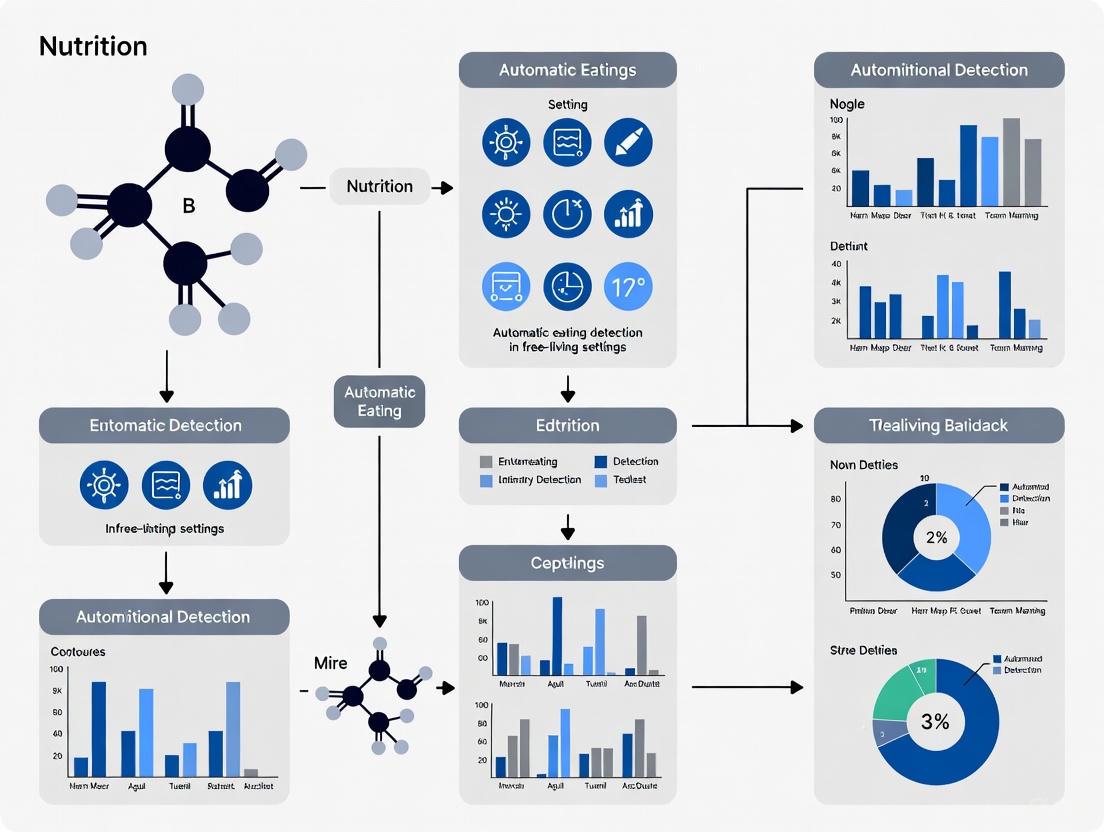
This article provides a comprehensive overview of the current state of automatic eating detection in free-living settings, a field poised to revolutionize nutritional epidemiology, chronic disease management, and behavioral health...
Automating Eating Detection: Sensor Technologies and AI for Real-World Clinical and Research Applications
Abstract
This article provides a comprehensive overview of the current state of automatic eating detection in free-living settings, a field poised to revolutionize nutritional epidemiology, chronic disease management, and behavioral health research. We explore the foundational principles driving the shift from error-prone self-reporting to objective, sensor-based measures. The review details the wide array of methodological approaches, from wearable motion sensors and acoustic devices to computer vision and AI-driven analysis. We critically examine the key challenges in troubleshooting these systems for real-world deployment, including confounding behaviors and data variability. Finally, we assess the validation metrics and comparative performance of existing technologies, highlighting their readiness for integration into clinical trials and public health interventions. This synthesis is tailored for researchers, scientists, and drug development professionals seeking to implement these tools in their work.
The Paradigm Shift: Why Free-Living Eating Detection is Transforming Public Health Research
Traditional self-report methods, such as 24-hour dietary recalls, food frequency questionnaires (FFQs), and food records, have long been the cornerstone of dietary assessment in both research and clinical practice [1] [2]. These tools are widely used to understand the relationships between diet, health, and disease. However, when the research objective is to accurately detect eating episodes in free-living settings—a critical aim for applications in chronic disease management and drug development—the fundamental limitations of these methods become major impediments to scientific progress. This technical guide details how recall bias, significant participant burden, and substantial measurement error inherent in self-reports necessitate a paradigm shift towards automated, sensor-based detection technologies.
Core Limitations of Self-Report Methods
The use of self-report for assessing dietary intake is fraught with challenges that affect the validity and reliability of the collected data. The table below summarizes the primary limitations and their impacts on dietary data.
Table 1: Core Limitations of Traditional Self-Report Dietary Assessment Methods
| Limitation | Underlying Causes | Impact on Data Quality |
|---|---|---|
| Recall Bias [3] | Reliance on memory; length of recall period; characteristics of the disease or event being recalled. | Leads to systematic misreporting (under- or over-estimation); distorts observed associations between diet and health outcomes. |
| Participant Burden [4] [2] | High cognitive effort to remember intake; time-consuming nature of detailed logging; complexity of portion size estimation. | Leads to reduced participant compliance, task aversion, and premature study dropout, potentially biasing the study sample. |
| Measurement Error [5] [3] | Social desirability bias; imprecise portion size estimation; use of generic food composition databases; limitations of the instrument itself. | Introduces non-random noise; obscures true diet-disease relationships; reduces statistical power to detect significant effects. |
| Lack of Temporal Resolution [4] | Methods like FFQs assess long-term intake; 24-hour recalls and records are often aggregated to daily totals. | Fails to capture micro-level eating patterns (e.g., eating rate, meal duration) crucial for understanding behavioral phenotypes. |
Recall Bias
Recall bias is a form of information bias originating from participants' inaccurate recollection of their past dietary intake [3]. Its effects are particularly pronounced in case-control studies, where participants with a disease (cases) may recall their past diet differently than healthy controls [3].
- Mechanisms: The accuracy of recall is influenced by the length of the recall period, with longer periods leading to greater error [3]. The nature of the health outcome can also affect memory; individuals may scrutinize their past habits more closely after a diagnosis.
- Quantitative Evidence: A systematic review comparing self-reported and direct measures of physical activity found correlations were generally low-to-moderate, ranging from -0.71 to 0.96 [5]. This wide range highlights the unpredictable and often poor validity of self-reported data. In dietary assessment, a recall error can result in underestimates of the association between a dietary factor and disease risk [3].
Participant Burden
Participant burden refers to the demands placed on individuals by the data collection process, which can negatively impact compliance and data quality.
- Cognitive and Time Demands: The multiple-pass 24-hour recall, while designed to aid memory, requires a trained interviewer and can take 20-30 minutes to administer [2]. Weighed food records, often considered the most detailed self-report method, are exceptionally burdensome, leading to participant fatigue and reduced accuracy over time [1].
- Impact on Compliance: High-burden methods are poorly suited for long-term monitoring, which is essential for understanding habitual intake in free-living conditions. This burden is a key driver for developing passive monitoring technologies that minimize user interaction [4] [6].
Measurement Error
Measurement error, or misclassification, is a pervasive issue where the reported intake systematically deviates from the true intake.
- Social Desirability Bias: Participants may report what they believe is socially acceptable rather than what they actually consumed. For example, intake of foods perceived as unhealthy is often under-reported, while intake of healthy foods may be over-reported [3].
- Portion Size Estimation: A significant source of error is the difficulty individuals face in estimating portion sizes, even with the aid of photographs or household measures [2].
- Instrument Limitations: Self-report measures are often unable to capture the absolute level of physical activity or dietary intake, and they are wrought with issues of recall and response bias [5].
The following diagram illustrates how these limitations are interconnected and collectively degrade data quality in free-living research.
The Imperative for Automated Eating Detection
The limitations of self-report are not merely theoretical but have tangible consequences for research validity, particularly in studies requiring precise detection of eating episodes in free-living environments.
The Gold Standard Problem
A fundamental challenge in dietary assessment is the lack of a practical "gold standard" for validating self-report in free-living conditions [5]. While methods like doubly labeled water exist for energy expenditure, they do not provide information on meal timing or composition. This makes it difficult to quantify the exact degree of error in self-reported dietary data [5] [7].
Consequences for Free-Living Research
In the context of automatic eating detection, reliance on self-report for ground truth is problematic. Studies using food diaries as a reference standard are inherently compromised by the same biases they seek to validate against [8] [4]. This can lead to misleading estimates of an automated system's performance. Furthermore, self-reports lack the temporal resolution to capture micro-level eating activities, such as chewing frequency and eating rate, which are emerging as important behavioral markers for conditions like obesity and diabetes [4].
Sensor-Based Approaches: Mitigating Traditional Limitations
Technological advancements offer a pathway to overcome the constraints of self-report. Wearable sensors and integrated systems can passively and objectively monitor eating behavior, thereby minimizing recall bias, reducing participant burden, and improving measurement accuracy.
Table 2: Comparison of Traditional vs. Sensor-Based Dietary Assessment Methods in Free-Living Settings
| Characteristic | Traditional Self-Report | Sensor-Based Automated Detection |
|---|---|---|
| Recall Bias | High - Relies on memory [3] | Minimal - Passive data collection [6] |
| Participant Burden | High - Requires active user engagement [1] [2] | Low - Minimal user interaction required [4] [6] |
| Measurement Error | High - Social desirability, portion estimation [3] | Lower - Objective data from sensors (e.g., motion, acoustics) [8] [9] |
| Temporal Resolution | Low (Hourly/Daily) [4] | High (Continuous, near real-time) [4] |
| Suitability for Long-Term Free-Living Monitoring | Poor due to high burden and poor compliance [4] | Good - Designed for continuous use [8] [6] |
| Contextual Data (e.g., food type) | Can be detailed but relies on user description [2] | Possible via image capture or sensor fusion, but privacy concerns exist [9] |
Experimental Protocols for Validation
To validate these novel sensor-based systems, researchers have developed rigorous protocols that often combine multiple data streams to establish a more reliable ground truth.
- Protocol for Wearable Sensor Validation (JMir, 2022): A study utilizing Apple Watches collected accelerometer and gyroscope data from participants in a free-living environment [8]. Ground truth was established via a digital food diary implemented on the watch itself, which participants used to log eating events with a simple tap. This design allowed for the collection of 3,828 hours of data. The study developed both population-wide and personalized deep learning models, with the latter achieving an Area Under the Curve (AUC) of 0.872 for eating detection, demonstrating the high potential of this approach [8].
- Protocol for Multi-Sensor Fusion (Scientific Reports, 2024): This study employed the Automatic Ingestion Monitor v2 (AIM-2), a wearable device that includes a camera and a 3D accelerometer [9]. During pseudo-free-living days, participants used a foot pedal to mark the precise moment of food ingestion, providing a high-temporal-resolution ground truth. In free-living days, images captured by the device were manually reviewed to annotate eating episodes. By integrating confidence scores from both image-based food recognition and accelerometer-based chewing detection, the system achieved a 94.59% sensitivity and an 80.77% F1-score, significantly outperforming either method used in isolation [9].
The Scientist's Toolkit: Research Reagent Solutions
The transition to automated eating detection relies on a new set of research tools and reagents. The following table details key components used in cutting-edge research.
Table 3: Key Research Tools for Automated Eating Detection
| Tool / Reagent | Type/Model | Primary Function in Research |
|---|---|---|
| Inertial Measurement Unit (IMU) | Accelerometer & Gyroscope (e.g., in Apple Watch Series 4 [8]) | Captures hand-to-mouth gestures and other distinctive motion patterns associated with eating to detect intake events passively. |
| Egocentric Camera | Camera in AIM-2 system [9] | Automatically captures images from the user's point of view for visual food recognition and context validation, reducing reliance on memory. |
| Acoustic Sensor | Microphone [4] [6] | Captures chewing and swallowing sounds as proxies for eating events; often used in multi-sensor systems to improve accuracy. |
| Data Streaming & Logging Platform | Custom iOS/WatchOS App [8], AIM-2 SD Card [9] | Enables passive collection of sensor data and user-triggered event logs (diary), facilitating large-scale, free-living data collection for model training. |
| Deep Learning Model | Convolutional Neural Networks (CNN) [9], Personalized Models [8] | Classifies sensor data (images, motion signals) to detect eating episodes; personalization adapts to individual patterns, boosting performance (AUC up to 0.872 [8]). |
The workflow for developing and validating an automated eating detection system integrates these tools into a multi-stage process, as visualized below.
The limitations of traditional self-report methods—recall bias, participant burden, and measurement error—pose significant challenges to advancing research in automatic eating detection within free-living environments. These biases systematically distort data, impairing our ability to establish valid relationships between dietary behaviors and health outcomes. For researchers and drug development professionals, this represents a critical methodological bottleneck. The emergence of wearable sensor technologies and sophisticated machine learning models offers a compelling alternative, enabling objective, passive, and continuous monitoring of eating behavior. While challenges remain in standardizing outcomes and ensuring user privacy, the integration of multi-sensor data represents the future of dietary assessment, promising to unlock novel insights into diet and health that were previously obscured by the limitations of self-report.
Passive data collection technologies are revolutionizing research in automatic eating detection within free-living settings. These methodologies leverage wearable sensors and mobile devices to capture objective, high-fidelity data on eating behaviors, overcoming the profound limitations of traditional self-reporting tools. The integration of this passively gathered data with active reporting methods like Ecological Momentary Assessment (EMA), and its subsequent analysis through advanced machine learning models, enables the identification of nuanced behavioral phenotypes and paves the way for personalized, adaptive interventions. This technical guide details the core components, methodologies, and applications of these systems, providing researchers and drug development professionals with a framework for their implementation.
Research into eating behaviors has historically relied on self-reporting tools such as food diaries, 24-hour recalls, and food frequency questionnaires. Despite their widespread use, these methods are plagued by significant limitations, including participant burden, recall bias, and under- or over-reporting, which can skew research findings and limit their validity [4]. The emergence of passive data collection technologies offers a transformative alternative, enabling the continuous, objective measurement of behavior in a participant's natural, or "free-living," environment [10] [11].
This paradigm is particularly powerful when passive sensing is combined with active data collection. In this model, passive sensing (e.g., using accelerometers to detect bites) continuously collects objective data without requiring user engagement, while active sensing (e.g., EMA) involves participant-initiated reports, often serving as subjective ground-truth labels [10]. The confluence of these data streams creates rich, multimodal datasets that machine learning (ML) models can use to learn complex patterns, with the ultimate goal of using passive data alone to predict health outcomes and reduce participant burden [10].
Core Technologies and Research Reagents
The implementation of a passive sensing system for automatic eating detection requires a suite of hardware and software components. The table below catalogs the essential "Research Reagent Solutions" and their functions in this field.
Table 1: Essential Research Reagents for Passive Eating Detection Research
| Reagent Category | Specific Examples | Primary Function in Research |
|---|---|---|
| Wearable Sensors | Wrist-worn accelerometers (e.g., in smartwatches), wearable cameras, acoustic sensors | To passively capture micromovements (bites, chews) and visual context of eating episodes in a free-living environment [4] [12]. |
| Mobile Data Collection Platforms | Smartphone applications with embedded sensors (microphone, accelerometer) | To serve as a hub for collecting passive data, administering EMAs, and providing a user interface for participants [10]. |
| Active Data Collection Tools | Ecological Momentary Assessment (EMA) via mobile apps, dietitian-administered 24-hour dietary recalls | To collect subjective, self-reported ground-truth data on eating events, context, and psychological state (e.g., hunger, cravings) [10] [12]. |
| Data Processing & Machine Learning Algorithms | Signal processing algorithms for feature extraction (e.g., chew rate, bite count); Supervised (XGBoost, SVM) and semi-supervised ML models | To process raw sensor data into meaningful features and build predictive models for eating detection and phenotype classification [12]. |
Technical Challenges and Mitigation Strategies
Deploying these systems in free-living settings presents significant logistical and technical hurdles. A scoping review of mobile health sensing identified key challenges in both active and passive data collection [10].
Table 2: Key Data Collection Challenges and Corresponding Mitigation Strategies
| Data Collection Type | Primary Challenges | Evidence-Based Mitigation Strategies |
|---|---|---|
| Active Data Collection | Participant compliance and burden, leading to lower data volume and potential bias [10]. | Use ML to optimize prompt timing and minimize frequency; deploy simplified interfaces (e.g., smartwatch prompts); auto-fill responses where possible [10]. |
| Passive Data Collection | Data consistency (e.g., incomplete sessions), rapid battery drain, and operating system-level authorization issues [10]. | Optimize sensor recording times to preserve battery life; employ motivational techniques to encourage proper device use; select cross-platform development tools [10]. |
A prominent challenge across studies is the heterogeneity of outcome measures and evaluation metrics, which complicates the comparison of different sensors and multi-sensor systems [4]. There is a clear need for standardized reporting to foster comparability and multidisciplinary collaboration.
Experimental Protocols and Workflows
A robust experimental protocol for automatic eating detection integrates multiple data streams. The following workflow, exemplified by studies like the SenseWhy project, provides a template for in-field research [12].
Detailed Methodology from the SenseWhy Study
The SenseWhy study provides a concrete example of a comprehensive experimental protocol for identifying overeating patterns [12].
- Participant Cohort: The study monitored 65 individuals with obesity in free-living conditions, resulting in 2,302 meal-level observations (an average of 48 per participant) after accounting for dropouts and data quality checks [12].
- Technology Stack: The system utilized an activity-oriented wearable camera, a companion mobile application, and dietitian-administered 24-hour dietary recalls to establish ground truth [12].
- Data Annotation: From 6,343 hours of video footage spanning 657 days, researchers manually labeled micromovements such as bites and chews, creating a high-quality dataset for model training [12].
- Contextual Data Integration: Psychological and contextual data were gathered immediately before and after meals through EMAs delivered via the mobile app, capturing factors like biological hunger, cravings, and meal context [12].
Data Analysis and Model Performance
The analysis of collected data typically involves a two-stage process: supervised detection of target events (like overeating) followed by unsupervised or semi-supervised discovery of behavioral phenotypes.
Supervised Detection of Overeating
In the SenseWhy study, researchers compared model performance using different feature sets, with XGBoost emerging as the most effective algorithm [12].
Table 3: Model Performance in Predicting Overeating Episodes (SenseWhy Study)
| Feature Set | Best Model | AUROC (SD) | AUPRC (SD) | Brier Score Loss (SD) | Top Predictive Features |
|---|---|---|---|---|---|
| EMA-only | XGBoost | 0.83 (0.02) | 0.81 (0.02) | 0.13 (0.01) | Light refreshment (-), Pre-meal hunger (+), Perceived overeating (+) [12] |
| Passive Sensing-only | XGBoost | 0.69 (0.04) | 0.69 (0.05) | 0.18 (0.02) | Number of chews (+), Chew interval (-), Chew-bite ratio (-) [12] |
| Feature-complete (Combined) | XGBoost | 0.86 (0.04) | 0.84 (0.04) | 0.11 (0.02) | Perceived overeating (+), Number of chews (+), Light refreshment (-) [12] |
The superior performance of the feature-complete model underscores the synergistic value of integrating subjective contextual data from EMAs with objective behavioral data from passive sensing.
Phenotype Discovery via Semi-Supervised Clustering
Following detection, semi-supervised learning can be applied to discover distinct behavioral phenotypes. The SenseWhy study analyzed 2,246 meals, identifying 369 (16.4%) as overeating episodes. The pipeline, applied to the entire dataset, identified five distinct overeating phenotypes with a cluster purity of 81.4% and a silhouette score of 0.59, confirming their coherence and distinctiveness [12].
The following diagram illustrates the logical relationship between data inputs, the analytical process, and the resulting phenotypes.
Application in Clinical Trials and Drug Development
The emergence of digital endpoints—health measures derived from sensor-generated data collected outside clinical settings—is of paramount importance to drug development professionals [11]. These endpoints offer a more authentic assessment of a patient's daily experience and can reveal the direct impact of a therapeutic intervention on function and quality of life.
For instance, in conditions like obesity and its related comorbidities, traditional endpoints (e.g., weight, BMI) provide only a coarse snapshot. Passive data collection can generate digital endpoints that capture nuanced changes in eating behavior microstructure, such as reduced bite count or slower eating rate, which may serve as early indicators of a drug's efficacy [11] [12]. This continuous, objective measurement in a patient's free-living environment can significantly improve the sensitivity of clinical trials, potentially reducing costs and time by providing more efficient and accurate analyses of a treatment's effect [11].
Regulatory bodies recognize this potential. The FDA and European regulators have established guidance for the use of real-world data, which includes data from mobile devices and wearables, facilitating the incorporation of these novel endpoints into clinical trial design [11].
The automatic detection of eating behaviors in free-living settings represents a paradigm shift in nutritional science, obesity research, and therapeutic development. Traditional assessment methods like 24-hour recalls and food diaries are plagued by inaccuracies due to reliance on memory and susceptibility to reporting biases [4]. The emergence of sophisticated sensor technologies and computational methods now enables researchers to objectively capture the dynamic process of eating, from microscopic bite-level actions to the broader contextual landscape in which consumption occurs. This technical guide provides a comprehensive framework for understanding key eating behaviors and metrics, with particular emphasis on their relevance to developing and validating automated detection systems for use in real-world environments.
The study of eating behavior operates across two interconnected domains: meal microstructure and contextual cues. Meal microstructure refers to the precise temporal patterns of eating within a single bout, including metrics like bite rate and chewing duration [13]. Contextual cues encompass the environmental and behavioral circumstances surrounding eating episodes, such as location, social setting, and concurrent activities [14]. Together, these domains provide a holistic understanding of dietary patterns that can inform interventions for conditions ranging from obesity to eating disorders.
Foundational Concepts: Meal Microstructure
The term "meal microstructure" originated from animal studies investigating the behavioral and physiological mechanisms of food intake control [13]. In humans, it encompasses the detailed characterization of eating dynamics through specific, quantifiable behaviors. Research has consistently revealed that particular microstructural patterns correlate with consumption volume and obesity risk, forming what has been termed an 'obesogenic' eating style [13].
Core Microstructure Metrics
Table 1: Core Meal Microstructure Metrics and Definitions
| Metric | Technical Definition | Measurement Unit | Relevance to Free-Living Detection |
|---|---|---|---|
| Bite Count | Discrete instance of food entering the mouth [13] | Count per episode | Primary target for automated detection; can be inferred from jaw motion, hand gestures, or visual analysis [15] [9] |
| Bite Rate | Speed of biting activity | Bites per minute | Indicator of eating pace; linked to obesity risk; derivable from bite count and meal duration [15] [13] |
| Chewing Cycles | Number of masticatory sequences per food bolus | Count per bite | Proxied by jaw motion (accelerometers) or acoustic signals; relates to food texture and satiation [9] |
| Swallowing | The action of conveying food from the mouth to the esophagus | Count per minute | Detectable via throat microphone (acoustic) or strain sensors; marks intake completion [9] |
| Meal Duration | Total time from first to last bite | Minutes | Easily derived from detected eating episode start and end times [14] [13] |
| Eating Rate | Amount of food consumed per unit time | Grams or kcal per minute | Requires combined sensing (intake detection + portion estimation) [13] |
Behavioral Definitions and Coding Challenges
A significant challenge in the field is the lack of standardization in defining microstructure behaviors. For instance, a "bite" has been variably defined as any food touching the mouth versus food that is chewed and swallowed [13]. These definitional inconsistencies complicate the comparison of findings across studies and highlight the need for precise, algorithm-friendly definitions in automated detection research. Furthermore, certain behaviors like chews and swallows can be difficult to distinguish in video data but may be more readily discernible through inertial or acoustic sensors [9]. The gold standard for training and validating automated systems remains manual observational coding of video-recorded meals, which achieves high accuracy but is prohibitively time-consuming and labor-intensive for large-scale studies [15].
Technological Modalities for Automated Detection
Automated eating detection systems leverage a variety of wearable and ambient sensors to capture meal microstructure and contextual data. The following diagram illustrates the primary sensor modalities and the specific behaviors they detect.
Comparative Analysis of Detection Technologies
Table 2: Sensor Technologies for Automated Eating Detection in Free-Living Conditions
| Technology | Primary Sensing Modality | Detected Behaviors/Metrics | Strengths | Limitations |
|---|---|---|---|---|
| Inertial Sensors [14] [16] | Wrist-worn accelerometer/gyroscope | Hand-to-mouth gestures, coarse chewing | High user compliance, comfortable, long battery life | Prone to false positives from non-eating gestures (e.g., talking, face-touching) |
| Acoustic Sensors [9] [16] | Microphone (neck- or ear-worn) | Chewing and swallowing sounds | High accuracy for solid food intake | Background noise interference, privacy concerns, ineffective for soft foods |
| Image-Based Systems [15] [9] | First-person (egocentric) camera | Bite count, food type, portion size (pre-/post-meal) | Provides rich contextual and food identity data | Major privacy issues, high computational load for analysis, limited by field of view |
| Strain Sensors [9] | Jaw- or throat-mounted strain gauge | Chewing and swallowing | High accuracy for specific behaviors | Intrusive, low user acceptance for long-term free-living use |
| Multi-Sensor Systems (AIM-2) [9] | Accelerometer + Camera | Fused data for chewing, bites, and food presence | Reduces false positives via sensor fusion; higher overall accuracy [9] | More complex system design and data integration |
The Role of Multi-Sensor Fusion
Integrating multiple sensing modalities is a powerful strategy to overcome the limitations of individual sensors. For example, the Automatic Ingestion Monitor v2 (AIM-2) combines an accelerometer for detecting chewing motions with a camera that captures egocentric images periodically [9]. A hierarchical classifier can then fuse confidence scores from both sensor streams. This approach has demonstrated a significant improvement in performance, achieving 94.59% sensitivity, 70.47% precision, and an 80.77% F1-score in free-living conditions, which is approximately 8% higher in sensitivity than using either method alone [9]. This fusion effectively reduces false positives by, for instance, disregarding chewing motions (e.g., from gum) that are not accompanied by the visual presence of food in the images.
Capturing Contextual Cues in Free-Living Settings
Beyond the microstructure of how people eat, understanding why they eat requires capturing the context of eating episodes. Contextual cues are critical for interpreting dietary patterns and designing effective, context-aware interventions.
Key Contextual Dimensions
Social Context: This refers to whether an individual is eating alone or with others. Research has shown that social eating can influence both the amount and type of food consumed [14]. In a deployment of a smartwatch-based detection system among college students, over half (54.01%) of detected meals were consumed alone [14].
Location and Activity: The environment (e.g., home, workplace, car) and concurrent activities (e.g., watching TV, working) are significant influencers. The same study found that over 99% of meals were consumed with distractions, a behavior associated with overeating and uncontrolled weight gain [14].
Temporal Patterns: The time of day and regularity of eating episodes are important metabolic cues. Automated detection allows for the unobtrusive monitoring of meal timing and frequency across extended periods [4] [14].
Ecological Momentary Assessment (EMA) for Context Capture
A powerful method for capturing subjective contextual data is Ecological Momentary Assessment (EMA). EMA involves prompting users with short questionnaires on their mobile devices at specific moments—ideally, triggered automatically by a passive eating detection system [14]. When an eating episode is detected, a system can prompt the user to report contextual information such as mood, social company, and perceived healthfulness of the food. This method minimizes recall bias by collecting data in real-time and provides rich, ground-truthed contextual data that can be linked to the objectively sensed microstructure metrics.
Experimental Protocols and Validation Frameworks
Rigorous experimental protocols are essential for developing and validating automated eating detection systems. The transition from controlled lab settings to free-living conditions presents unique challenges and requirements.
Protocol Design for Algorithm Development
Data Collection Paradigms:
- Laboratory Meals: Controlled studies where participants consume pre-defined meals in a lab setting. This allows for precise ground truth collection using methods like video recording and manual annotation [15]. The ByteTrack study, for instance, used 242 lab meal videos from 94 children for initial model training [15].
- Pseudo-Free-Living: Participants wear sensors and consume prescribed meals in a lab but are otherwise unrestricted during the day. This serves as an intermediate step for algorithm tuning [9].
- Free-Living Validation: The ultimate test where participants go about their normal lives while wearing sensors. Ground truth is typically collected via a combination of EMAs, self-reported food logs, and periodic image review [4] [14] [9].
Ground Truth Annotation: For video data, manual coding by trained annotators using specialized software is the gold standard. Behaviors are annotated frame-by-frame or event-by-event to create labels for supervised machine learning [15] [13]. For sensor data in free-living studies, ground truth can be established using user-activated markers (e.g., a button press) or through intensive self-reporting tools like time-activated EMAs [14] [9].
Performance Metrics and Validation
The performance of detection systems is evaluated using standard classification metrics computed at the episode or gesture level:
- Precision: The proportion of detected eating episodes that are true meals (minimizing false positives).
- Recall (Sensitivity): The proportion of actual meals that are correctly detected (minimizing false negatives).
- F1-Score: The harmonic mean of precision and recall, providing a single metric for overall performance [15] [14] [9].
Agreement with ground truth is also frequently assessed using the Intraclass Correlation Coefficient (ICC) for continuous measures like bite count or meal duration [15].
Table 3: Essential Research Reagents and Solutions for Automated Eating Detection Studies
| Item | Function/Description | Example in Research Use |
|---|---|---|
| Wearable Sensor Platform | A device to capture raw sensor data (e.g., acceleration, sound, images). | Automatic Ingestion Monitor v2 (AIM-2) [9], Commercial smartwatches [14], Axis network cameras [15] |
| Annotation Software | Software for manually labeling and timestamping eating behaviors in video or sensor data. | MATLAB Image Labeler [9], ELAN, Noldus Observer XT |
| Ground Truth Logging Tool | A method for participants to mark eating events or provide context in free-living studies. | Smartphone-based EMA apps [14], Foot pedal data logger [9] |
| Pre-Annotated Datasets | Publicly available datasets of sensor data with corresponding eating behavior labels for algorithm training. | Wild-7 dataset (accelerometer data for eating/not-eating) [14] |
| Machine Learning Libraries | Software libraries (e.g., Python's scikit-learn, TensorFlow, PyTorch) for building and deploying detection models. | Used to implement models like Random Forests, CNNs, and LSTMs for bite classification [15] [14] |
The automated detection of key eating behaviors and contextual cues is a rapidly advancing field poised to transform nutritional science and clinical practice. The convergence of sophisticated sensing technologies, robust machine learning algorithms, and rigorous experimental protocols enables the objective, high-resolution measurement of meal microstructure and eating context in naturalistic environments. Current systems demonstrate promising performance, with multi-sensor fusion approaches effectively reducing false positives.
Future work must focus on several key areas: improving the robustness of algorithms to handle the vast diversity of eating styles and food types across different populations; enhancing user comfort and social acceptability of sensors to facilitate long-term deployment; and developing standardized evaluation frameworks and public datasets to enable direct comparison of different methodologies. As these technologies mature, they will unlock unprecedented opportunities for large-scale, longitudinal studies of eating behavior, paving the way for highly personalized, just-in-time interventions for obesity and related chronic diseases.
The accurate monitoring of dietary intake is a cornerstone in understanding and managing chronic diseases such as type 2 diabetes, cardiovascular disease, and obesity [17] [18]. Despite this critical need, traditional assessment methods like 24-hour recalls and food diaries are plagued by significant limitations, including substantial participant burden and pervasive recall bias, which lead to under- or over-reporting of energy intake [17]. These inaccuracies obstruct effective clinical management and high-quality research.
The field is now transitioning toward objective, technology-driven solutions. Research is increasingly framed within the context of developing automatic eating detection in free-living settings, aiming to passively capture eating behavior with minimal user interaction [17]. The integration of wearable sensors and artificial intelligence presents a transformative opportunity to improve chronic disease care. These technologies enable the continuous, objective collection of data on dietary intake, facilitating personalized interventions and providing previously unattainable insights into eating behaviors [6] [18]. This whitepaper explores the current state of these technologies, their validation, and their practical application for researchers and drug development professionals.
Technological Foundations of Automatic Eating Detection
Automatic eating detection systems primarily rely on two data sources: wearable motion sensors and optical sensing. These systems detect proxies of eating activity, such as chewing, swallowing, and hand-to-mouth gestures, or directly identify food via images.
Wearable Sensor Modalities
Wearable sensors offer a passive and unobtrusive method for monitoring eating episodes. A scoping review highlighted that 65% of studies used multi-sensor systems, with accelerometers being the most prevalent sensor type (62.5%) [17]. The table below summarizes the primary sensor types and their applications.
Table 1: Wearable Sensor Modalities for Eating Detection
| Sensor Type | Measured Proxy | Common Form Factor | Key Strengths |
|---|---|---|---|
| Accelerometer/Gyroscope | Hand-to-mouth gestures, head movement [9] [8] | Wristwatch (e.g., Apple Watch), eyeglasses [8] | High user compliance; convenient to use [9] |
| Acoustic Sensor | Chewing and swallowing sounds [15] [9] | Neck-mounted pendant [15] | Direct detection of ingestion-related sounds |
| Piezoelectric Strain Sensor | Jaw movement during chewing [19] | Patch on the temple or jaw [19] | High accuracy for solid food detection [19] |
| Image Sensor (Camera) | Direct visual identification of food and beverages [9] | Egocentric camera on eyeglasses (e.g., AIM-2) [9] | Provides contextual data on food type |
The Role of Artificial Intelligence and Computer Vision
Machine learning, particularly deep learning, is the cornerstone of modern eating detection systems. These models learn complex patterns from sensor data to distinguish eating from other activities.
- Sensor Data Analysis: Deep learning models analyze motion sensor data to infer eating behavior. One large-scale study using Apple Watches achieved an Area Under the Curve (AUC) of 0.951 for detecting entire meal events by aggregating data over time [8]. The same study showed that personalized models, fine-tuned to an individual's data, can boost performance to an AUC of 0.872, highlighting the value of individual-specific adaptation [8].
- Computer Vision for Video Analysis: In controlled settings, deep learning models can automate the analysis of meal videos. The ByteTrack system, which uses a hybrid Faster R-CNN and YOLOv7 pipeline for face detection followed by a convolutional and recurrent neural network for bite classification, achieved an F1-score of 70.6% for detecting bites in children [15]. This demonstrates feasibility but also the challenge of occlusions and high movement.
- Data Fusion: The most robust systems integrate multiple data streams. A study using the AIM-2 device fused image-based food recognition with accelerometer-based chewing detection, achieving a 94.59% sensitivity and 80.77% F1-score in a free-living environment. This integrated approach significantly reduced false positives compared to either method alone [9].
Experimental Protocols and Validation in Free-Living Conditions
Validating that these systems perform reliably in real-world settings is a critical step for their adoption in clinical research and care.
Core Methodological Components
Several key components are consistent across rigorous validation studies:
- Ground Truth Annotation: Establishing a reliable benchmark is essential. Video observation is often used as a ground truth, but requires assessing inter-rater reliability. One study reported an average kappa of 0.74 for activity annotation and 0.82 for food intake annotation across trained human raters [19]. Participant-activated foot pedals are also used to mark the start and end of bites in lab settings [9].
- Data Collection Protocols: Studies often progress from controlled to free-living conditions.
- Performance Metrics: A range of metrics are used to evaluate performance, including Accuracy, Sensitivity (Recall), Precision, F1-score, and Area Under the Curve (AUC) [17] [8]. The choice of metric depends on the clinical or research application.
Protocol Example: Integrated Image and Sensor Validation
A 2019 study detailed a protocol for validating the AIM-2 sensor in an unconstrained environment [19].
- Facility: A 4-bedroom, 3-bathroom apartment with six HD cameras installed in common areas.
- Participants: 40 participants were monitored in small groups over three non-consecutive days.
- Procedure: Participants self-applied the jaw sensor and wore the AIM-2 system. The kitchen was stocked with a wide variety of foods (189 items). Participants could move freely and socialize, but were asked to only eat in camera-monitored rooms. This setup allowed for the simultaneous collection of sensor data and multi-angle video ground truth.
- Outcome: The AIM-2 sensor data matched human video-annotated food intake with a kappa of 0.77-0.78, demonstrating accuracy comparable to video observation itself [19].
Diagram 1: Experimental validation workflow for integrated detection systems.
Performance Data and Application in Chronic Diseases
The performance of automatic detection systems has reached a level where deployment in clinical research and management is feasible.
Table 2: Performance of Selected Automatic Eating Detection Systems
| Technology / System | Study Setting | Key Performance Metrics | Relevance to Chronic Disease |
|---|---|---|---|
| Wrist-worn Accelerometer (Apple Watch) | Free-living, 3828 hours [8] | AUC: 0.951 (meal-level) | Diabetes management (passive meal detection for insulin dosing) [8] |
| Integrated Sensor (AIM-2) | Free-living, 30 participants [9] | Sensitivity: 94.59%, F1-score: 80.77% | Obesity research (reduced false positives for accurate intake monitoring) [9] |
| Video Analysis (ByteTrack) | Laboratory meals, 94 children [15] | F1-score: 70.6% (bite-level) | Pediatric obesity (analysis of meal microstructure) [15] |
| Neck-Worn Sensor (AIM v1.0) | Pseudo-free-living, 40 participants [19] | Kappa vs. Video: 0.77 | General dietary assessment for cardiometabolic health [19] |
Application in Specific Disease Contexts
- Diabetes Management: Passive monitoring of eating episodes can be integrated into a connected care ecosystem. For patients on insulin, detecting the start and duration of a meal can inform closed-loop insulin delivery systems or prompt for carbohydrate logging, addressing the issue of insulin omission [8].
- Obesity and Heart Disease: These technologies enable the objective measurement of eating patterns and behaviors linked to overconsumption, such as eating rate and meal duration. This data is vital for behavioral interventions and for evaluating the efficacy of new pharmaceuticals or medical devices aimed at modifying eating behavior [17] [18]. Furthermore, comprehensive telehealth interventions that include dietary monitoring have been shown to improve dietary outcomes, such as fruit and vegetable intake and sodium reduction, which are critical for managing hypertension and cardiovascular disease [20].
The Scientist's Toolkit: Research Reagent Solutions
For researchers embarking on studies in this field, the following table outlines essential tools and their functions as derived from the cited literature.
Table 3: Essential Research Tools for Automatic Eating Detection Studies
| Tool / Solution | Function in Research | Exemplar from Literature |
|---|---|---|
| Wrist-Worn Motion Sensor | Captures accelerometer and gyroscope data for detecting eating-related gestures and movements [8]. | Apple Watch Series 4 [8] |
| Multi-Sensor Wearable Platform | Integrates multiple sensing modalities (e.g., camera, accelerometer) for a holistic view of eating activity [9]. | Automatic Ingestion Monitor v2 (AIM-2) [9] |
| Piezoelectric Strain Sensor | Precisely monitors jaw movement (chewing) by detecting strain on the skin [19]. | LDT0-028K sensor (Measurement Specialties) [19] |
| Egocentric Camera | Automatically captures images from the user's point of view for food identification and context [9]. | Axis M3004-V network camera [15] / AIM-2 camera [9] |
| Multi-Angle Video Recording System | Provides comprehensive ground truth for algorithm training and validation in semi-naturalistic environments [19]. | GW-2061IP HD cameras [19] |
| Deep Learning Frameworks | Provides the architecture for developing and training custom models for bite detection, food recognition, and activity inference [15] [8]. | Convolutional Neural Networks (CNN), Long Short-Term Memory (LSTM) networks [15] |
| Pre-Annotated Image Datasets | Serves as a benchmark for training and validating computer vision models for food detection and classification [21]. | University of Toronto Food Label Information and Price (FLIP) database [21] |
Diagram 2: Data pipeline from raw inputs to research outputs.
The Technology Toolkit: Sensors, Algorithms, and Systems for Real-World Deployment
The automatic detection of eating behavior in free-living settings is a critical challenge in health research, with implications for managing obesity, diabetes, and other chronic conditions. Wearable sensor technologies have emerged as powerful tools to overcome the limitations of self-reporting methods, which are prone to inaccuracies due to recall bias and participant burden [22] [23]. These sensors enable the passive, objective monitoring of eating episodes and the detailed capture of in-meal microstructures—such as chewing, swallowing, and bite timing—that were previously difficult to measure outside laboratory environments [22] [24]. The selection of appropriate sensor modalities is therefore fundamental to developing effective dietary monitoring systems that can function reliably in real-world conditions.
This technical guide provides an in-depth analysis of four primary wearable sensor modalities used in eating behavior research: Inertial Measurement Units (IMUs), Acoustic sensors, Piezoelectric sensors, and Optical sensors. Each modality offers distinct mechanisms for capturing physiological and behavioral signals associated with eating, with varying strengths and limitations for deployment in free-living studies. By examining the operating principles, implementation considerations, and performance characteristics of these sensors, researchers can make informed decisions when designing studies or developing interventions for automatic eating detection.
Sensor Modality Analysis: Technical Principles and Implementation
Inertial Measurement Units (IMUs)
Technical Principles and Sensing Mechanism: Inertial Measurement Units (IMUs) are microelectromechanical systems that typically combine accelerometers and gyroscopes to measure linear acceleration and angular velocity, respectively. In eating detection research, IMUs capture body movements associated with eating activities, most notably hand-to-mouth gestures during food intake [23] [25]. These sensors operate by detecting changes in capacitance between microscopic structures that move in response to external acceleration or rotation. When deployed in wrist-worn devices like smartwatches, IMUs can identify characteristic motion patterns that occur when individuals bring food or utensils to their mouths [23]. Additional movements such as head tilts during swallowing or forward leans during eating episodes can also be detected when sensors are positioned on the head or torso [9] [26].
Implementation Considerations:
- Sampling Rates: Typical sampling rates range from 15-128 Hz depending on the specific eating behavior being monitored [9] [25].
- Data Processing: Raw IMU signals require preprocessing including filtering to remove noise unrelated to eating movements, segmentation to identify potential eating gestures, and feature extraction for classification.
- Sensor Placement: Optimal placement includes the wrist (for hand-to-mouth gestures), head (for jaw movements and chewing detection), and chest (for body posture during eating) [9] [26].
Table 1: Performance Characteristics of IMU-Based Eating Detection Systems
| Study Reference | Sensor Placement | Primary Detection Target | Reported Performance | Study Environment |
|---|---|---|---|---|
| Kong et al. [23] | Wrist (smartwatch) | Eating episodes | High precision and recall | Free-living |
| AIM-2 System [9] | Head (glasses) | Chewing and head movement | Significant detection improvement | Free-living |
| Dénes-Fazakas et al. [25] | Wrist (IMU) | Carbohydrate intake gestures | F1-score: 0.99 | Controlled lab |
Acoustic Sensors
Technical Principles and Sensing Mechanism: Acoustic sensors, typically implemented as microphones, capture sound waves generated during the eating process. The primary acoustic signatures of eating include chewing sounds produced by food crushing between teeth, swallowing sounds, and even biting sounds [22] [23]. These sensors convert mechanical sound waves into electrical signals through changes in capacitance or piezoelectric effects. The resulting audio signals contain characteristic frequency and temporal patterns that can distinguish eating sounds from speech or environmental noise. When positioned near the mouth (e.g., in earbuds or neck-worn devices), these sensors can capture high-fidelity audio signatures of mastication and swallowing with minimal interference from external noise [23].
Implementation Considerations:
- Signal Acquisition: Requires careful gain setting and filtering to capture relevant frequencies (typically 100-4000 Hz for chewing sounds) while minimizing environmental noise.
- Privacy Protection: Essential to implement processing techniques that filter out speech and other non-eating sounds to address privacy concerns [22].
- Sensor Placement: Optimal placement includes in-ear microphones, neck-mounted sensors, or submandibular positions to capture swallowing sounds [23].
Table 2: Performance Characteristics of Acoustic-Based Eating Detection Systems
| Study Reference | Sensor Placement | Primary Detection Target | Key Performance Metrics | Study Environment |
|---|---|---|---|---|
| Kyritsis et al. [23] | In-ear microphone | Chewing sounds | High accuracy for chew detection | Free-living |
| AIM-2 System [9] | Not specified | Eating episodes | 94.59% sensitivity, 70.47% precision | Free-living |
| Amft et al. [22] | Neck-worn | Chewing and swallowing | Differentiation of food types | Laboratory |
Piezoelectric Sensors
Technical Principles and Sensing Mechanism: Piezoelectric sensors generate an electrical charge in response to mechanical stress or vibration. In eating detection applications, these sensors are typically positioned on the neck or jaw to capture vibrations from swallowing, chewing, and laryngeal movements [26]. The piezoelectric effect occurs due to the displacement of dipoles within crystalline materials when subjected to mechanical deformation. This property makes them exceptionally sensitive to the high-frequency vibrations generated during food consumption while being relatively insensitive to slower body movements. When embedded in necklaces or patches that maintain snug contact with the skin, piezoelectric sensors can detect even subtle swallowing vibrations and differentiate between solids and liquids based on vibration patterns [26].
Implementation Considerations:
- Contact Requirements: Require consistent skin contact for optimal signal acquisition, which can present challenges during long-term wear.
- Environmental Sensitivity: Susceptible to motion artifacts and temperature variations that may require compensation algorithms.
- Placement Specificity: Optimal positioning over the larynx for swallowing detection or on the jawline for chewing monitoring [26].
Optical Sensors
Technical Principles and Sensing Mechanism: Optical sensing modalities for eating detection encompass two primary approaches: camera-based food recognition and optomyography for muscle movement detection. Camera systems capture images of food for type and volume estimation, while optomyography sensors (e.g., OCO sensors) measure skin surface movements resulting from underlying muscle activity during chewing [27] [28]. These optical surface tracking sensors use light patterns to detect minute skin displacements in the X and Y dimensions caused by activation of temporalis and masseter muscles during mastication [28]. Unlike traditional cameras that raise privacy concerns, optomyography sensors capture only movement patterns without identifiable visual information, making them more suitable for continuous monitoring in free-living conditions [28].
Implementation Considerations:
- Skin Contact: Non-contact operation within 4-30mm range without requiring direct skin contact [28].
- Sensor Configuration: Multiple sensors typically positioned on glasses frames to monitor temple (temporalis muscle) and cheek (masseter muscle) regions [27] [28].
- Signal Processing: Requires sophisticated algorithms to distinguish chewing from confounding facial movements like speaking, smiling, or teeth clenching [28].
Table 3: Performance Characteristics of Optical Sensor-Based Eating Detection Systems
| Study Reference | Sensor Type | Primary Detection Target | Key Performance Metrics | Study Environment |
|---|---|---|---|---|
| OCOsense Validation [27] | Optical muscle sensing | Chewing behavior | Strong agreement with video (r=0.955) | Laboratory |
| Stankoski et al. [28] | OCO optical sensors | Chewing segments | F1-score: 0.91 (lab), 95% precision (free-living) | Lab and free-living |
| AIM-2 System [29] | Camera + sensor fusion | Eating episodes and environment | Comprehensive environment classification | Free-living |
Experimental Design and Methodologies
Data Collection Protocols
Robust experimental protocols are essential for validating eating detection systems across different sensor modalities. Laboratory studies typically involve controlled feeding sessions where participants consume standardized meals while researchers collect sensor data alongside ground truth measurements through video recording, manual annotation, or participant-initiated event markers [27] [26]. These controlled environments enable precise algorithm development and initial validation. For example, in the OCOsense glasses validation study, 47 adults participated in a lab-based breakfast session where chewing behavior was simultaneously recorded by the sensors and manually annotated from video recordings by trained researchers [27].
Free-living studies introduce additional complexity but provide greater ecological validity. In these deployments, participants wear sensors during their normal daily activities while ground truth is collected through complementary methods such as wearable cameras, food diaries, or ecological momentary assessments [9] [29]. The AIM-2 system study employed a comprehensive approach where 30 participants wore the device for two days (one pseudo-free-living and one free-living), with ground truth collected via foot pedal markers during lab meals and manual image review during free-living periods [9]. This multi-method ground truth approach enables robust validation across different environmental contexts.
Signal Processing and Machine Learning Approaches
The raw signals from eating detection sensors require sophisticated processing pipelines to accurately identify eating behaviors. A typical processing workflow includes:
- Preprocessing: Filtering to remove noise, normalization to account for inter-participant differences, and segmentation to isolate potential eating events.
- Feature Extraction: Calculation of time-domain (e.g., mean, variance, zero-crossing rate) and frequency-domain (e.g., spectral entropy, band power) features from sensor signals.
- Classification: Application of machine learning models to distinguish eating from non-eating activities.
Multiple algorithmic approaches have demonstrated effectiveness for eating detection, ranging from traditional machine learning (Linear Discriminant Analysis, Support Vector Machines) to deep learning models (Convolutional Neural Networks, Recurrent Neural Networks) [9] [25] [28]. For complex temporal patterns in eating behavior, hybrid architectures like Convolutional Long Short-Term Memory networks have emerged as particularly effective [28]. Sensor fusion techniques that combine multiple modalities (e.g., inertial and acoustic) have shown improved performance over single-modality approaches by providing complementary information about eating events [9].
Research Reagents and Experimental Tools
Table 4: Essential Research Tools for Wearable Eating Detection Studies
| Tool/Platform | Type | Primary Function | Example Use Case |
|---|---|---|---|
| AIM-2 (Automatic Ingestion Monitor v2) | Multi-sensor wearable device | Combines camera and accelerometer for eating detection | Free-living eating environment classification [9] [29] |
| OCOsense Smart Glasses | Optical sensor platform | Monitors facial muscle activations via optomyography | Chewing detection and counting in lab and free-living [27] [28] |
| Custom Necklace Platform | Piezoelectric sensor system | Detects swallowing vibrations via piezoelectric sensors | Swallowing detection for solid vs. liquid differentiation [26] |
| Commercial Smartwatches | IMU-based platform | Captures hand-to-mouth gestures via accelerometer/gyroscope | Eating episode detection in free-living conditions [23] [25] |
| In-Ear Microphones | Acoustic sensor platform | Captures chewing sounds in ear canal | Chewing detection and characterization [23] |
Implementation Challenges and Future Directions
Despite significant advances in wearable sensor technologies for eating detection, several challenges remain for widespread deployment in free-living settings. Sensor placement and wearability present practical obstacles, as devices must balance detection accuracy with user comfort and social acceptability for long-term use [26]. Power consumption and battery life are critical constraints for continuous monitoring, particularly for computation-intensive sensors like cameras. Privacy concerns are especially relevant for audio and video-based modalities, necessitating the development of privacy-preserving approaches such as on-device processing and filtering of non-food-related sounds or images [22].
Future research directions focus on addressing these limitations through several promising avenues. Multi-modal sensor fusion combines complementary strengths of different modalities to improve overall system accuracy and robustness in diverse free-living conditions [9]. Personalized algorithm adaptation tailors detection models to individual chewing patterns and eating styles to enhance performance across diverse populations [25]. The development of less obtrusive form factors that integrate sensing into everyday objects like standard eyeglasses or jewelry aims to improve user compliance and social acceptability [27] [28]. Finally, real-time feedback systems represent a growing frontier, where sensor data not only monitors but also modulates eating behavior through just-in-time interventions, creating closed-loop systems for health management [24].
Wearable sensor modalities offer diverse and complementary approaches for automatic eating detection in free-living settings. IMUs excel at capturing macroscopic eating gestures, acoustic sensors provide detailed information on chewing and swallowing sounds, piezoelectric sensors detect throat vibrations with high sensitivity, and optical sensors enable visual food recognition and muscle movement monitoring. The optimal sensor selection depends on specific research objectives, target behaviors, and practical constraints related to user acceptance and battery life. Future advancements will likely focus on multi-modal approaches that combine complementary sensing technologies while addressing challenges related to power optimization, privacy preservation, and seamless integration into everyday life. As these technologies mature, they hold significant promise for transforming dietary assessment in both research and clinical applications.
The accurate detection of eating episodes in free-living conditions is a cornerstone for advancing research in nutrition, obesity, and chronic disease management. Traditional methods, such as food diaries and 24-hour recalls, are hampered by user burden and significant recall bias [23]. The emergence of automated dietary monitoring (ADM) systems promises to overcome these limitations by providing objective, passive, and granular data on eating behavior. The effectiveness of any ADM system is profoundly influenced by a critical design choice: the form factor and placement of the sensing device. This whitepaper provides an in-depth technical examination of the primary wearable form factors—neck-worn, wrist-worn, eyeglass-based, and in-ear systems—framed within the context of free-living research. We synthesize performance data, detail experimental methodologies, and analyze the trade-offs between obtrusiveness and signal fidelity that researchers must navigate to select the optimal platform for their specific investigative goals.
Comparative Analysis of Form Factors
The selection of a device form factor involves balancing sensor modality, user comfort, battery life, and performance across diverse populations. The table below summarizes the key characteristics and performance metrics of the four primary form factors as established in recent literature.
Table 1: Performance and Characteristics of Eating Detection Form Factors
| Form Factor | Primary Sensor Modalities | Target Signal / Activity | Reported Performance (F1-Score/Accuracy) | Key Advantages | Key Limitations |
|---|---|---|---|---|---|
| Neck-worn [30] | Proximity, IMU, Ambient Light | Chin proximity (chewing), Lean Forward Angle | 81.6% (episode detection, semi-free-living) | Validated on diverse BMI populations; long battery life (15.8 hrs) | May be perceived as obtrusive; potential stigma |
| Eyeglass-based [31] [28] | Optical Myography (OCO), IMU | Facial muscle activation (temporalis, zygomaticus) | 89-91% (event detection, free-living) [31] | High granularity (chew-level); non-invasive sensing | Limited to glasses-wearers; privacy concerns with cameras |
| In-Ear [32] [23] | Inertial, Acoustic | Jaw motion, Chewing sounds | 80.1% (chewing detection, free-living) [32] | Discreet form factor; leverages commercial earbuds | Acoustic sensitive to ambient noise; ear canal fit issues |
| Wrist-worn [25] [23] | IMU (Accelerometer, Gyroscope) | Hand-to-mouth gestures | >90% (gesture detection, personalized models) [25] | High user acceptance; leverages commercial smartwatches | Cannot detect chewing directly; confounded by similar gestures |
Detailed Experimental Protocols and Methodologies
Neck-worn Systems (NeckSense)
The NeckSense platform exemplifies a multi-sensor, necklace-based approach designed for all-day monitoring in free-living conditions [30].
- Hardware Configuration: The custom-built necklace integrates a proximity sensor to measure the distance to the chin for jaw movement detection, an Inertial Measurement Unit (IMU) to capture the "Lean Forward Angle" and body movement, and an ambient light sensor to provide contextual information.
- Signal Processing and Feature Extraction:
- Proximity Signal: A longest periodic subsequence algorithm is applied to identify rhythmic chewing sequences from the jaw movements.
- Sensor Fusion: Features from the proximity, IMU, and ambient light sensors are fused. The IMU's lean-forward angle helps distinguish eating postures, while ambient light aids in identifying environmental context.
- Classification and Clustering: A classifier first identifies individual chewing sequences at a fine-grained (per-second) level. These sequences are then clustered temporally to define distinct eating episodes.
- Validation Protocol: The system was tested in two studies: an exploratory semi-free-living study and a full free-living study. Over 470 hours of data were collected from 20 participants, including individuals with and without obesity. Ground truth was established using video footage and clinical standard labeling, allowing for the calculation of per-second and per-episode F1-scores [30].
Eyeglass-based Systems (OCOsense)
The OCOsense smart glasses utilize a novel optical sensing technology to monitor eating through facial muscle activations [31] [28].
- Hardware Configuration: The glasses are equipped with optical tracking (OCO) sensors based on optomyography. These are non-contact sensors that measure 2D skin surface movements. Key sensors are positioned at the temple (to monitor the temporalis muscle for jaw movement) and the cheek (to monitor the zygomaticus muscles activated during chewing).
- Signal Processing and Workflow:
- The OCO sensors capture skin displacement data in the X and Y planes resulting from underlying myogenic activity.
- A Convolutional Long Short-Term Memory (ConvLSTM) deep learning model analyzes the temporal patterns from the sensor data to distinguish chewing from other facial activities like speaking, clenching, or smiling.
- A Hidden Markov Model (HMM) is often integrated as a post-processing step to model the temporal dependencies between consecutive chewing events, refining the output of the deep learning model.
- Validation Protocol: A three-week home-based study was conducted with 23 participants. Week one established a baseline, week two involved participant annotation of eating events and food photography for detection accuracy validation, and week three introduced real-time haptic feedback for behavior modification. Performance was evaluated based on the F1-score for eating event detection against the self-reported and photographed ground truth [31].
In-Ear Systems (EarBit)
The EarBit platform is an "earable" system that leverages the ear's proximity to the jaw and mouth for sensing [32].
- Hardware Configuration: As an experimental platform, EarBit incorporated multiple sensing modalities: an inertial sensor placed behind the ear to capture jaw motion, an acoustic sensor (microphone) to capture chewing sounds, and an optical sensor. The inertial sensor behind the ear proved most effective and comfortable.
- Signal Processing and Classification:
- The inertial sensor data (accelerometer/gyroscope) from the behind-the-ear unit is processed to isolate the characteristic periodic signals of chewing.
- Machine learning models (e.g., Support Vector Machines, Random Forests) are trained on features extracted from this inertial data to classify one-second intervals as "chewing" or "not chewing."
- These fine-grained chewing inferences are then aggregated over time to detect the start and end of full eating episodes.
- Validation Protocol: A key aspect of EarBit's development was its two-stage validation. Models were first trained on data collected in a semi-controlled "home-like" lab environment. These models were then tested on a completely new dataset collected from 10 participants in a fully unconstrained "outside-the-lab" setting, with ground truth provided by video recordings. This protocol rigorously tests generalizability to real-world conditions [32].
Wrist-worn Systems
Wrist-worn systems, typically using commercial smartwatches, take an indirect approach to eating detection by monitoring arm movements [25] [23].
- Hardware Configuration: These systems utilize the built-in IMU of a smartwatch, which includes a tri-axial accelerometer and gyroscope.
- Signal Processing and Workflow:
- The core principle is to detect characteristic hand-to-mouth gestures that serve as a proxy for bites.
- Time-series data from the accelerometer and gyroscope are segmented into windows.
- Deep learning models, such as Long Short-Term Memory (LSTM) networks, are trained to learn the unique pattern of these feeding gestures. Research shows that personalized models, trained on data from a specific individual, can achieve very high accuracy (>90%), significantly outperforming generalized models [25].
- Validation Protocol: Studies often involve participants wearing a smartwatch while eating in laboratory or semi-controlled settings. Video recordings are used to annotate the exact timing of each bite or eating episode, providing the ground truth for training and evaluating the gesture detection algorithms. Some studies also conduct free-living trials to assess real-world viability [23].
Visualizing Sensor Data Processing Workflows
The following diagrams illustrate the typical data processing and decision pathways for two distinct form factors.
Multi-Sensor Fusion in a Neck-worn System
Optical Sensing and Deep Learning in Smart Glasses
The Researcher's Toolkit: Essential Research Reagents
This section details the key hardware and software components, or "research reagents," essential for developing and testing eating detection systems across different form factors.
Table 2: Essential Research Reagents for Eating Detection Studies
| Reagent / Tool | Primary Function | Example Implementation in Research |
|---|---|---|
| Inertial Measurement Unit (IMU) | Captures motion and orientation data. | Used in neck-worn (posture), wrist-worn (gestures), and in-ear (jaw motion) systems [30] [32] [25]. |
| Optical Myography (OMG) Sensor | Measures skin surface movement from muscle activity. | The core sensor in OCOsense smart glasses for detecting temporalis and cheek muscle activations [28]. |
| Proximity Sensor | Measures distance to a target. | Used in neck-worn NeckSense to track chin movement for chewing cycle detection [30]. |
| Acoustic Sensor (Microphone) | Captures audio signals of chewing and swallowing. | Deployed in in-ear systems and custom earbuds for analyzing chewing sounds [32] [23]. |
| Bio-impedance Sensor | Measures electrical impedance across body tissues. | Used in systems like iEat to detect circuit variations formed during hand-mouth-food interactions [33]. |
| Convolutional LSTM Network | A deep learning model for spatiotemporal pattern recognition. | Effectively used to classify time-series data from optical and inertial sensors in eyeglass-based systems [28]. |
| Hidden Markov Model (HMM) | A statistical model for representing temporal sequences of states. | Used as a post-processing step to model the sequence of chewing events and improve detection robustness [28]. |
| Video Recording System | Provides ground truth data for algorithm training and validation. | A critical tool in all cited studies for manually annotating the timing of eating episodes, bites, and chews [30] [32]. |
The choice of device form factor and placement is a fundamental determinant in the success of automatic eating detection research in free-living settings. Each platform presents a unique set of trade-offs. Neck-worn systems offer robust, multi-sensor fusion validated across diverse populations. Eyeglass-based approaches provide unparalleled granularity at the level of individual chews using non-invasive optical sensing. In-ear devices balance discretion with direct access to jaw-motion signals, while wrist-worn smartwatches leverage high user acceptance and commercial availability, albeit with less direct sensing of ingestion. There is no universally optimal solution; the selection must be guided by the specific research question, target population, and required granularity of data. Future research directions will likely involve the fusion of data from multiple, complementary form factors and a stronger emphasis on personalized, adaptive algorithms to further enhance detection accuracy and clinical utility in the complex, unstructured environments of real life.
The increasing global prevalence of obesity and diet-related chronic diseases has intensified the need for accurate dietary assessment methods. Traditional approaches, such as food diaries and 24-hour recalls, are hampered by significant limitations including recall bias, participant burden, and substantial under- or over-reporting [34] [4] [35]. Research conducted in free-living settings is particularly vulnerable to these inaccuracies, as eating behaviors are influenced by complex, dynamic contextual factors that are difficult to capture retrospectively.
Artificial intelligence (AI), particularly machine learning (ML) and deep learning (DL), presents a paradigm shift for objectively inferring eating behaviors in naturalistic environments. These technologies enable the development of systems that can automatically detect eating activities, recognize consumed foods, and characterize contextual eating patterns with minimal user interaction [34] [4]. This technical guide examines the core AI methodologies advancing the field of automatic eating detection, focusing on their operational principles, implementation protocols, and performance metrics relevant to researchers and scientists working in free-living research contexts.
Core AI Applications in Eating Behavior Inference
AI applications for eating behavior inference can be categorized into three primary domains based on their function and technological approach. The table below summarizes the key paradigms, their data sources, and primary outputs.
Table 1: Core AI Paradigms in Eating Behavior Inference
| AI Application Domain | Data Sources | Primary Outputs | Key Strengths |
|---|---|---|---|
| Machine Perception for Activity Detection [34] [4] [35] | Wearable sensors (accelerometers, gyroscopes), acoustic sensors, physiological sensors | Detection of eating episodes, chewing sequences, swallows, hand-to-mouth gestures | Passive, continuous monitoring; captures micro-level eating metrics |
| Image-Based Food Recognition [36] [37] [38] | Smartphone cameras, wearable cameras, passive imaging systems | Food type identification, portion size estimation, calorie content prediction | Direct identification of food items; rich visual data |
| Predictive Analytics for Context & Lapse [34] [39] | Contextual sensor data, self-reported EMA, historical behavior patterns | Prediction of dietary lapses, emotional eating episodes, overall diet quality | Moves beyond detection to prediction; enables proactive interventions |
Machine Perception for Eating Activity Detection
Machine perception systems use data from wearable sensors to detect the physical acts of eating. A 2021 scoping review identified this as the most prevalent AI application in weight loss, focusing on recognizing food items, eating behaviors, and physical activities [34].
Common Sensing Modalities:
- Inertial Measurement Units (IMUs): Wrist-worn accelerometers are widely used to detect hand-to-mouth gestures as a proxy for bites. A real-time system using a smartwatch accelerometer achieved a precision of 80%, recall of 96%, and an F1-score of 87.3% in detecting meal episodes [40].
- Acoustic Sensors: Sensors placed on the neck capture chewing and swallowing sounds. These signals are processed to identify characteristic audio frequencies and patterns associated with food consumption [35].
- Multi-Sensor Systems: Combining multiple sensors (e.g., accelerometer and gyroscope) often improves accuracy by providing complementary data streams [4].
Image-Based Food Recognition and Dietary Assessment
Deep learning, particularly Convolutional Neural Networks (CNNs), has dramatically advanced automated food recognition. These systems analyze food images to identify items, estimate volume, and calculate nutritional content [37].
Performance Metrics: A 2025 study utilizing the EfficientNetB7 model with the Lion optimizer demonstrated the state of the art, achieving 100% accuracy in identifying 16 food classes and 99% accuracy for 32 food classes, with a mean absolute error (MAE) of 0.0079 [36]. In applied settings, an automatic image recognition (AIR) app correctly identified 86% of dishes in a multi-dish meal, significantly outperforming voice-input methods [38].
Predictive Analytics for Behavioral Context and Lapses
Beyond detection, ML models predict future eating behaviors by analyzing contextual factors. These models identify complex, non-linear relationships between environment, person-level traits, and eating outcomes [34] [39].
Key Predictive Factors: A 2025 study using gradient boost decision trees predicted food consumption at eating occasions with high accuracy (MAE below half a serving for most food groups). For overall daily diet quality, the model's predictions deviated by 11.86 points from the actual Dietary Guideline Index score. The most influential factors for diet quality included cooking confidence, self-efficacy, food availability, perceived time scarcity, and activity during consumption [39].
Detailed Experimental Protocols and Methodologies
Protocol for Wearable Sensor-Based Eating Detection
The following protocol outlines the methodology for developing an ML pipeline for eating detection from wrist-worn accelerometer data, as used in prior research [40].
1. Data Collection:
- Equipment: Commercial smartwatches (e.g., Pebble, Samsung Galaxy Watch) or research-grade accelerometers.
- Sensor Placement: Dominant wrist.
- Data Parameters: Tri-axial acceleration at 20-50 Hz sampling rate.
- Ground Truth Annotation: Participants self-report eating episodes via ecological momentary assessment (EMA) or annotated video recording in lab settings.
2. Data Preprocessing:
- Signal Filtering: Apply a low-pass filter to remove high-frequency noise.
- Segmentation: Use a sliding window (e.g., 6 seconds with 50% overlap) to segment continuous data into analyzable units.
- Feature Extraction: Calculate statistical features for each axis per window:
- Time-domain: Mean, variance, skewness, kurtosis, root mean square.
- Frequency-domain: Spectral entropy, dominant frequency.
3. Model Training and Validation:
- Algorithm Selection: Common classifiers include Random Forests, Support Vector Machines, and more recently, 1D-Convolutional Neural Networks.
- Validation: Use participant-independent split (leave-one-subject-out cross-validation) to ensure generalizability and avoid overfitting.
4. Real-Time Deployment:
- Episode Detection: Implement a threshold-based heuristic (e.g., 20 eating gestures within 15 minutes) to trigger meal episode confirmation.
- EMA Triggering: Upon detection, prompt the user with short EMA questions to gather contextual information (e.g., location, social context, food type) [40].
Protocol for Image-Based Food Recognition
This protocol details the development of a DL model for food recognition, based on state-of-the-art research [36].
1. Dataset Construction:
- Image Acquisition: Capture images and videos of food during consumption from multiple angles, under varying lighting conditions, and with diverse backgrounds to ensure robustness.
- Class Definition: Define a comprehensive set of food classes relevant to the target population and cuisine.
- Data Augmentation: Artificially expand the dataset using transformations including rotation (10-15 degrees), translation, shearing, zooming, and contrast/brightness adjustment. A study increased its dataset from 24,000 to 120,000 images via augmentation [36].
2. Model Selection and Training:
- Architecture Choice: Select a deep CNN architecture such as ResNet50, EfficientNetB5, B6, or B7. EfficientNetB7 has shown superior performance in recent studies [36].
- Hyperparameter Tuning: Optimize key parameters:
- Image size: Adjust based on model architecture (e.g., 600x600 for EfficientNetB7).
- Batch size: Dependent on available GPU memory.
- Learning rate: 0.001 is a common starting point.
- Optimizer: Adam or Lion optimizer.
- Transfer Learning: Initialize model with weights pre-trained on large-scale image datasets (e.g., ImageNet).
3. System Integration and Testing:
- Deployment: Integrate the trained model into a mobile application framework.
- User Interface: Allow users to capture a single meal image, which is then processed by the AI model on a remote server.
- Interaction Flow: The app displays recognition results (with confidence scores) and allows users to correct misidentified items via voice or touch input [38].
- Performance Evaluation: Measure accuracy, mean absolute error (MAE), and time efficiency under authentic dining conditions.
Workflow Visualization
The following diagram illustrates the integrated workflow for a comprehensive eating behavior inference system that combines sensor data and contextual analysis.
Performance Metrics and Comparative Analysis
The evaluation of AI systems for eating behavior inference requires multiple metrics to adequately capture performance across different tasks. The tables below summarize key quantitative findings from recent studies.
Table 2: Performance Metrics for Eating Activity Detection Systems
| Sensing Modality | Detection Target | Algorithm | Accuracy | Precision/Recall/F1-Score | Citation |
|---|---|---|---|---|---|
| Wrist Accelerometer | Meal Episodes | Feature-based ML | N/R | Precision: 80%, Recall: 96%, F1: 87.3% | [40] |
| Multi-Sensor Systems | Eating Events | Various ML | Varies (reported in 12 studies) | F1-score (reported in 10 studies) | [4] |
| Acoustic Sensors | Chewing/Swallowing | Various ML | Varies across studies | Sensitivity, Specificity reported | [35] |
Table 3: Performance Metrics for Image-Based Food Recognition Systems
| Model Architecture | Dataset/Classes | Top-1 Accuracy | Other Metrics (MAE/MSE) | Citation |
|---|---|---|---|---|
| EfficientNetB7 + Lion | 16 Food Classes | 100% | N/A | [36] |
| EfficientNetB7 + Lion | 32 Food Classes | 99% | MAE: 0.0079, MSE: 0.035 | [36] |
| Automatic Image Recognition (AIR) App | 17 Dishes (Real-World) | 86% (Dish Identification) | Significantly outperformed voice input (68%) | [38] |
Table 4: Performance Metrics for Predictive Analytics of Food Consumption
| Prediction Target | Algorithm | Performance Metric | Value | Citation |
|---|---|---|---|---|
| Vegetable Consumption | Gradient Boost Decision Tree | Mean Absolute Error (servings/EO) | 0.3 servings | [39] |
| Fruit Consumption | Gradient Boost Decision Tree | Mean Absolute Error (servings/EO) | 0.75 servings | [39] |
| Discretionary Foods | Gradient Boost Decision Tree | Mean Absolute Error (servings/EO) | 0.68 servings | [39] |
| Overall Diet Quality | Gradient Boost Decision Tree | Mean Absolute Error (DGI points) | 11.86 points | [39] |
N/R = Not Reported; EO = Eating Occasion; DGI = Dietary Guideline Index
The Scientist's Toolkit: Essential Research Reagents and Materials
Implementing AI-driven eating behavior inference systems requires specific hardware, software, and datasets. The following table catalogues key resources for researchers.
Table 5: Essential Research Tools for AI-Based Eating Behavior Inference
| Tool Category | Specific Examples | Function/Purpose | Key Considerations |
|---|---|---|---|
| Wearable Sensors | Wrist-worn accelerometers (Pebble, Samsung smartwatches), acoustic sensors (contact microphones) | Capture movement and audio signals associated with eating activities | Sampling rate, battery life, wearability comfort, data transmission method [4] [40] |
| Imaging Systems | Smartphone cameras (Samsung S23, Huawei P50), Canon/Nikon 4K cameras | Capture food images for recognition and volume estimation | Resolution, frame rate, portability, lighting conditions [36] |
| Food Image Datasets | Food-101, UEC-Food256, Turkish-Foods-15, MEALS Study Dataset | Train and validate food recognition algorithms | Number of classes, image quality, cultural/regional food representation [39] [37] |
| ML/DL Frameworks | TensorFlow, PyTorch, Scikit-learn | Implement, train, and deploy machine learning models | Learning curve, community support, compatibility with hardware [36] |
| Annotation Tools | Custom video annotation software, Ecological Momentary Assessment (EMA) apps | Create ground truth labels for model training and validation | Inter-rater reliability, participant burden, real-time prompting capability [40] |
Artificial intelligence, through machine learning and deep learning, is fundamentally transforming the capacity to infer eating behaviors in free-living settings. The integration of multimodal sensor data with sophisticated algorithms enables researchers to move beyond traditional self-report methods toward objective, granular, and continuous monitoring of dietary intake and eating patterns. While challenges remain in standardization, validation across diverse populations, and privacy preservation, the current state of research demonstrates robust capabilities in eating activity detection, food recognition, and behavioral prediction. These technological advances provide scientists and drug development professionals with powerful new tools to understand the complex interplay between diet, behavior, and health outcomes in real-world contexts, ultimately supporting the development of more effective, personalized interventions for weight-related chronic diseases.
Multi-sensor data fusion represents a paradigm shift in automated dietary monitoring, directly tackling the core challenge of reliably detecting eating episodes in free-living environments. By strategically combining complementary data streams, fusion methodologies enhance system robustness, mitigate uncertainties inherent in single-sensor approaches, and enable a more comprehensive analysis of ingestive behavior. This whitepaper delineates the core architectural models of data fusion, provides a detailed examination of their application in eating detection through key experimental case studies, and presents a synthesized analysis of performance outcomes. The integration of these techniques is pivotal for the development of objective, reliable tools that can meet the rigorous demands of large-scale public health research and clinical intervention studies [41] [17].
Accurate, objective detection of eating activity is a cornerstone for advancing research into obesity, eating disorders, and metabolic diseases. Traditional self-report methods, such as food diaries and 24-hour recalls, are notoriously prone to bias and under-reporting, limiting their validity for scientific and clinical applications [30] [17]. The research community has consequently turned to wearable sensors to automate dietary monitoring. However, a fundamental challenge persists: activities that confound eating detection, such as talking, gum chewing, or other gestural similarities, are numerous and cannot all be replicated in controlled laboratory settings for algorithm training [17].
Single-sensor systems often struggle with this complexity, leading to false positives and limited generalization. Multi-sensor data fusion emerges as a critical solution to this problem. The underlying principle is that by integrating diverse, complementary sensor data—such as jaw movement, hand gestures, and contextual information—the resulting system becomes more robust and accurate than any of its individual components. This synergistic approach allows researchers to move beyond laboratory validations and into the complex, unstructured environments of free-living studies, which is essential for generating ecologically valid data [41] [42]. The subsequent sections dissect the technical frameworks that make this possible.
Core Data Fusion Architectures
Data fusion strategies are systematically classified based on the stage at which information from multiple sensors is integrated. The most prevalent models in wearable health monitoring are data-level, feature-level, and decision-level fusion, each offering distinct advantages and complexities as defined by established frameworks like Dasarathy's model [41] [42].
Table 1: Classification of Data Fusion Architectures Based on Dasarathy's Model
| Fusion Level | Input | Output | Description | Advantages | Challenges |
|---|---|---|---|---|---|
| Data (or Signal) Level | Raw data | Raw data | Combines raw data streams from multiple homogeneous sensors before feature extraction. | Maximizes information retention; potential for high precision. | High computational cost; requires precise sensor synchronization and calibration. |
| Feature Level | Raw data | Feature vector | Extracts features from each sensor independently, then concatenates them into a single, high-dimensional feature vector for classification. | Preserves salient information from each sensor; more robust to individual sensor failure than data-level. | "Curse of dimensionality"; requires feature selection/normalization. |
| Decision Level | Feature vector | Decision | Each sensor's data is processed by its own or a shared classifier to produce a local decision (e.g., "eating" or "non-eating"), which are then combined via a fusion rule. | Modular and flexible; can use heterogeneous models; robust to sensor failure. | Loss of information correlation between sensors early in the process. |
These architectures are not mutually exclusive, and hybrid models are often deployed. Furthermore, recent advances in deep learning introduce models that can perform end-to-end fusion, automatically learning optimal ways to combine sensor inputs, thereby blurring the lines between these traditional categories [43] [41].
Diagram 1: A conceptual workflow illustrating the three primary data fusion architectures as applied to a multi-sensor eating detection system.
Experimental Protocols in Eating Detection
The theoretical robustness of multi-sensor fusion is validated through rigorous experimental protocols. The following case studies exemplify the application of different fusion models in real-world systems.
Case Study 1: The NeckSense Platform (Feature-Level Fusion)
The NeckSense platform is a necklace-style wearable designed for all-day monitoring. Its methodology is a prime example of feature-level fusion [30].
- Objective: To automatically detect eating episodes across an entire waking day in a naturalistic setting for individuals with diverse Body Mass Index (BMI) profiles.
- Sensors and Data Acquisition: The device integrated a proximity sensor (to capture chin movement during chewing), an ambient light sensor (to detect feeding gestures), and an Inertial Measurement Unit (IMU) (to calculate the Lean Forward Angle). Data was collected from 20 participants across two studies, amassing over 470 hours of data in semi-free-living and free-living environments [30].
- Fusion and Classification Workflow:
- Feature Extraction: From the raw sensor streams, features related to chewing sequences—such as periodicity from the proximity sensor, gesture-related signals from ambient light, and postural information from the IMU—were extracted.
- Feature Concatenation: These disparate features were combined into a unified feature vector representing the multi-modal signature of eating.
- Classification and Clustering: A classifier identified individual chewing sequences, which were subsequently clustered in time to determine distinct eating episodes.
- Performance Outcome: The fusion-based system achieved an F1-score of 81.6% for eating episode detection in a semi-free-living setting, an 8% improvement over using the proximity sensor alone. Performance remained high (77.1% F1-score) in a completely free-living setting, demonstrating robust generalization [30].
Case Study 2: The Automatic Ingestion Monitor (AIM) Platform (Decision-Level Fusion)
The Automatic Ingestion Monitor (AIM) represents a sophisticated implementation of decision-level fusion, wirelessly integrating three distinct sensor modalities [44].
- Objective: To objectively detect ingestive behavior in free-living individuals over a 24-hour period without subject self-report.
- Sensors and Data Acquisition: The system comprised a jaw motion sensor (piezoelectric film below the earlobe to capture chewing), a hand-to-mouth gesture sensor (RF proximity sensor on the wrist), and a 3-axis accelerometer (on a lanyard to capture body motion). Data from 12 subjects was collected over 24-hour free-living periods [44].
- Fusion and Classification Workflow:
- Local Processing: Signals from each sensor modality were pre-processed independently.
- Local Decision Making: An Artificial Neural Network (ANN) was designed to fuse the sensor information. While the exact architecture implies a deep fusion, the principle aligns with decision-level fusion by having the network learn to weigh the evidence from each sensor stream (jaw motion, hand gesture, body acceleration) to produce a single, robust decision.
- Final Output: The ANN's output was a subject-independent classification of food intake.
- Performance Outcome: This multi-sensor fusion approach achieved an average food intake detection accuracy of 89.8% over 24 hours of unrestricted free-living [44].
Case Study 3: Integrated Image and Sensor Fusion (Hybrid Fusion)
A 2024 study explicitly addressed the problem of false positives by integrating a wearable camera with a chewing motion sensor, demonstrating a hybrid fusion approach [9].
- Objective: To reduce false positives in eating episode detection by combining image-based food recognition with sensor-based chewing detection.
- Sensors and Data Acquisition: The Automatic Ingestion Monitor v2 (AIM-2) was used, which includes a 3D accelerometer (as a chewing sensor) and a camera that captures egocentric images every 15 seconds. Data from 30 participants over two days (pseudo-free-living and free-living) was collected [9].
- Fusion and Classification Workflow:
- Independent Confidence Scoring: A deep learning model recognized solid foods and beverages in the images, producing a confidence score. Simultaneously, a separate classifier recognized chewing from the accelerometer data, producing its own confidence score.
- Hierarchical Fusion: A hierarchical classifier then combined the confidence scores from the image and sensor-based classifiers. This fusion at the "confidence" or "decision" level allowed the system to leverage the strengths of both modalities—direct visual evidence of food and the physical action of chewing.
- Performance Outcome: The integrated method achieved a sensitivity of 94.59% and an F1-score of 80.77% in a free-living environment, which was significantly better (8% higher sensitivity) than either method used in isolation [9].
Diagram 2: A generalized experimental workflow for developing a multi-sensor fusion model for eating detection, common to the cited case studies.
Performance Analysis and Research Reagents
Synthesizing the results from various studies allows for a comparative analysis of the performance gains afforded by multi-sensor fusion.
Table 2: Comparative Performance of Multi-Sensor Fusion in Eating Detection
| Study / System | Sensors Fused | Fusion Level | Key Performance Metric | Reported Outcome | Context |
|---|---|---|---|---|---|
| NeckSense [30] | Proximity, Ambient Light, IMU | Feature-Level | Episode Detection F1-Score | 81.6% (Semi-free-living) | 8% improvement over single sensor |
| AIM [44] | Jaw Motion, Hand Gesture, Accelerometer | Decision-Level (ANN) | Food Intake Detection Accuracy | 89.8% | 24-hour free-living |
| Image & Sensor Fusion [9] | Camera, Accelerometer | Decision-Level (Hierarchical) | Sensitivity / F1-Score | 94.59% / 80.77% | Free-living; 8% sensitivity boost |
| Multi-Sensor for Drinking [45] | Wrist IMU, Container IMU, In-ear Microphone | Feature-Level | Drinking Event F1-Score | 96.5% (SVM, Event-based) | Superior to single-modal |
For researchers seeking to implement or build upon these systems, the following table catalogues essential "research reagents"—the core sensor modalities and their functions in the context of eating detection.
Table 3: Research Reagent Solutions for Eating Detection Systems
| Research Reagent | Technical Function | Role in Eating Detection |
|---|---|---|
| Inertial Measurement Unit (IMU) | Measures linear acceleration (accelerometer) and angular velocity (gyroscope). | Detects jaw motion during chewing, head tilt, hand-to-mouth gestures, and body posture [30] [44] [45]. |
| Proximity Sensor | Measures the distance to a nearby object without physical contact. | Monitors the opening and closing of the jaw by sensing the proximity of the chin [30]. |
| Piezoelectric Film Sensor | Generates an electric charge in response to mechanical stress. | Placed below the earlobe to capture fine-grained jaw movements and vibrations associated with chewing [44]. |
| Acoustic Sensor (Microphone) | Captures sound waves. | Placed in-the-ear or on the throat to detect swallowing sounds and characteristic chewing acoustics [45] [9]. |
| Egocentric Camera | Captures images from a first-person perspective. | Provides visual confirmation of food presence and type, used to validate and reduce false positives from other sensors [9]. |
| Ambient Light Sensor | Measures the intensity of environmental light. | Infers feeding gestures (hand moving towards mouth) by detecting occlusions that cause changes in light intensity [30]. |
| RF Proximity System | Uses radio frequency to detect the proximity between a transmitter and receiver. | A transmitter on the wrist and receiver on the chest can detect characteristic hand-to-mouth drinking or eating gestures [44]. |
The evidence from both seminal and recent studies unequivocally demonstrates that multi-sensor data fusion is a critical enabler for robust automatic eating detection in free-living settings. By moving beyond the limitations of single-sensor systems, fusion architectures—whether at the feature, decision, or hybrid level—significantly enhance accuracy, reduce false positives, and improve generalization across diverse populations and real-world conditions. As the field progresses, the integration of more advanced deep learning models for end-to-end fusion, coupled with a focus on energy-efficient and user-acceptable wearable designs, will be paramount. The standardization of evaluation metrics and the public availability of datasets, as championed by several research groups, will further accelerate innovation. For the research and clinical communities, these technologically sophisticated tools promise to unlock a deeper, more objective understanding of dietary behaviors, thereby informing effective public health strategies and personalized interventions for chronic diseases.
The automatic detection of eating episodes is a foundational element of automated dietary monitoring (ADM) in free-living settings. Within this framework, passive image capture and food recognition technologies represent a critical technological frontier. These methods aim to objectively identify food intake without relying on user-initiated actions, thereby overcoming significant limitations of traditional self-reporting methods such as recall bias and participant burden [9] [29]. The evolution of wearable cameras and advanced computer vision models has enabled the continuous capture and analysis of egocentric images, providing an unprecedented window into spontaneous eating behaviors. This technical guide explores the core methodologies, performance metrics, and implementation protocols that define the current state of camera-based and computer vision approaches for food recognition in free-living research.
Core Architectures and Performance Benchmarks
Deep Learning Models for Food Recognition
Contemporary food recognition systems predominantly utilize deep learning architectures, particularly Convolutional Neural Networks (CNNs) and, more recently, Vision-Language Models (VLMs). These models are trained to classify food items, often within a fine-grained visual classification (FGVC) paradigm, which is complicated by high intra-class variance and the deformable nature of most food items [46].
Convolutional Neural Networks (CNNs): CNNs consist of convolutional, combined, and fully connected layers designed for image classification [36]. Their application has marked a significant milestone in food recognition.
- ResNet50: This architecture has been successfully refined for food recognition. One study expanded its dataset from 12,000 to 66,000 images through augmentation and performed hyperparameter tuning (e.g., Adam optimizer, initial learning rate of 10⁻³, batch size of 4, image size 340×640). This optimized ResNet50 model achieved 97.25% accuracy for recognizing 16 food categories, with a training time of 5.30 hours and a response time of 1.2 seconds [47].
- EfficientNet B-Series: Research categorizing food into 32 classes identified EfficientNetB5, B6, and B7 as among the most effective architectures. The EfficientNetB7 model, when paired with the Lion optimizer, demonstrated remarkable performance, achieving 100% accuracy on a 16-class dataset and 99% accuracy on a more complex 32-class dataset. The mean absolute error (MAE), mean squared error (MSE), and root mean squared error (RMSE) for the 32-class case were 0.0079, 0.035, and 0.18, respectively [36].
Vision-Language Models (VLMs): Foundational models like CLIP and instruction-tuned VLMs (e.g., LLaVA, InstructBLIP) represent a paradigm shift from single-task classifiers to versatile, zero-shot analytical tools. However, their generalist training may lack nuanced, domain-specific knowledge [46]. Specialized models fine-tuned for food analysis have shown superior performance. For instance, the january/food-vision-v1 model established a strong baseline with an Overall Score of 86.2 on the January Food Benchmark (JFB), a 12.1-point improvement over the strongest general-purpose VLM (GPT-4o) [46].
Quantitative Performance of Integrated Systems
Integrated systems that combine passive image capture with other sensors demonstrate the practical application of these recognition algorithms in free-living conditions. The following table summarizes the performance of key systems as reported in the literature.
Table 1: Performance Metrics of Integrated Food Intake Detection Systems
| System / Study | Sensing Modality | Primary Metric | Reported Performance | Test Environment |
|---|---|---|---|---|
| AIM-2 with Hierarchical Classification [9] | Image + Accelerometer (Chewing) | Sensitivity (Recall)PrecisionF1-Score | 94.59%70.47%80.77% | Free-Living |
| AIM-2 (Sensor-Only) [48] | Accelerometer + Flex Sensor | F1-Score (Epoch) | 81.8% ± 10.1% | Pseudo-Free-Living |
| AIM-2 (Image-Only) [9] | Egocentric Camera | Food Intake Detection Accuracy | 86.4% | Free-Living |
| Neck-worn System [26] | Piezoelectric Sensor | Solid Swallow Detection (F1-Score)Liquid Swallow Detection (F1-Score) | 86.4%83.7% | In-Lab |
| Wrist-worn System [49] | Accelerometer + Gyroscope | Meal-level Detection (AUC) | 0.951 (Discovery)0.941 (Validation) | Free-Living |
The integration of image and sensor data is particularly effective. As shown in Table 1, the hierarchical classification method used with the AIM-2 device achieved an 8% higher sensitivity than either image-based or sensor-based methods alone, successfully reducing false positives in a free-living environment [9].
Experimental Protocols and Methodologies
Data Collection and Imaging Systems
A critical first step in developing a robust food recognition system is the creation of a comprehensive and diverse dataset. The following protocols are derived from recent studies.
Imaging System Configuration: Research into consumed food products utilized a camera mounted on a monopod, attached to the individual's body. The camera was positioned on the left side with an angle of approximately 160° relative to the person, a configuration designed to capture the field of view during eating. The system used various mobile phones (e.g., Samsung S23 series, Huawei P series) and dedicated cameras with 4K resolution. Lighting conditions were varied to include both natural and artificial sources (e.g., LED lamps) [36].
Dataset Curation and Augmentation: To effectively train deep learning models, datasets must be large and varied. One established protocol involves:
- Initial Collection: Capture videos of food consumption across various situations (angles, backgrounds, lighting).
- Frame Extraction: Extract images from videos at set intervals (e.g., every half-second) using Python.
- Data Augmentation: Artificially expand the dataset by applying transformations to the original images. A standard protocol includes:
- Rotation (10-15 degrees)
- Translation (shifting images left and right)
- Shearing (to create new angles)
- Zooming (in and out to train on different scales)
- Contrast and brightness adjustments (for varying lighting) [36]
This process can significantly expand a dataset; for example, a base set of 24,000 images for 32 food classes was augmented to 120,000 images [36]. For benchmarking, the January Food Benchmark (JFB) provides a publicly available dataset of 1,000 real-world food images with human-validated annotations for meal names, ingredients, and macronutrients, designed to evaluate model performance on complex meals [46].
Integrated Detection Workflow
The most robust systems for free-living environments combine passive image capture with other sensors to trigger capture or refine detection. The workflow for the AIM-2 device exemplifies this integrated approach.
Diagram 1: Integrated detection workflow.
As illustrated in Diagram 1, the process begins with continuous data collection from on-body sensors, such as an accelerometer monitoring head movement for chewing motions [48] [9]. When a potential eating event is detected, the system triggers a wearable camera to capture a sequence of egocentric images. These images are then processed by a food recognition model (CNN or VLM). Finally, a hierarchical classifier combines the confidence scores from both the sensor data and the image analysis to make a final, more accurate determination of an eating episode, reducing false positives from either modality alone [9].
The Scientist's Toolkit: Research Reagent Solutions
Implementing passive image capture and food recognition requires a suite of hardware and software components. The following table details key materials and their functions as used in featured experiments.
Table 2: Essential Research Materials for Passive Food Recognition Systems
| Category | Item / Reagent | Specification / Example | Primary Function in Research |
|---|---|---|---|
| Wearable Hardware | AIM-2 Sensor System [48] [9] | 3D Accelerometer (ADXL362), Flex Sensor, 5MP Gaze-Aligned Camera | Integrates chewing detection (via muscle & motion) with passive image capture. |
| Smartwatch [49] | Apple Watch Series 4 (Accelerometer, Gyroscope) | Captures wrist motion data (hand-to-mouth gestures) for eating detection. | |
| Neck-worn Sensor [26] | Piezoelectric Sensor, Inertial Measurement Unit (IMU) | Detects swallowing vibrations and feeding gestures. | |
| Computing & Software | Deep Learning Models | ResNet50, EfficientNetB7 [36] [47] | Performs core image classification and food recognition tasks. |
| Vision-Language Models (VLMs) | january/food-vision-v1, GPT-4o [46] | Zero-shot analysis of food images for meal identification and ingredient recognition. | |
| Benchmark Datasets | January Food Benchmark (JFB) [46] | Provides a standardized, validated dataset for model training and evaluation. | |
| Implementation Platform | Google Colab / Cloud [36] | Python 3.12, TensorFlow/PyTorch | Provides the necessary high-performance computing for training deep learning models. |
Critical Analysis and Future Directions
Technical and Practical Challenges
Despite significant progress, several formidable challenges persist in the deployment of these systems.
- Privacy Concerns: Continuous image capture raises significant privacy issues for users and those around them, capturing sensitive non-food images [48]. One study quantified this, finding user concern was 5.0 ± 1.6 (on a 1-7 scale) for continuous capture, but dropped to 1.9 ± 1.7 when images were captured only during automatically detected eating episodes [48].
- Confounding Behaviors: Systems can be fooled by non-eating hand-to-mouth gestures (e.g., smoking, answering a phone) or the presence of food that is not consumed [26] [9]. Compositional detection, which requires multiple proxies (bites, chews, swallows, gestures) to occur in temporal proximity, is one strategy to combat this [26].
- Real-World Performance Gaps: Models trained in controlled lab environments often fail to generalize to free-living conditions due to the vast diversity of eating environments, lighting, camera angles, and food presentation [26] [29]. Documenting the full spectrum of eating environments is crucial for developing robust models.
The Path Forward: Multimodal Integration and Benchmarking
The future of passive food recognition lies in the sophisticated integration of multiple data streams and the establishment of rigorous evaluation standards. Combining sensor-based eating detection with image-based food recognition creates a synergistic system that mitigates the weaknesses of each approach alone, as demonstrated by the hierarchical classification method achieving an 80.77% F1-score [9]. Furthermore, the development and adoption of public benchmarks like the January Food Benchmark (JFB) are essential for the field to standardize evaluation, reproducibly measure progress, and quantitatively compare the performance of general-purpose VLMs against specialized models [46]. Continued research into minimizing user burden and privacy invasion while maximizing detection accuracy and nutritional output detail will be key to translating these technologies from research tools to clinical and commercial applications.
Navigating Real-World Complexity: Confounders, Usability, and Data Integrity
Automatic detection of eating behaviors in free-living conditions is a critical frontier in public health research, offering the potential to overcome the limitations of self-reported data, such as recall bias and participant burden [17]. However, a significant challenge in developing robust automated detection systems is the presence of confounding behaviors—activities that produce sensor signals similar to those of eating. Among the most prevalent confounders are smoking and talking, which involve repetitive hand-to-mouth gestures that can be easily misclassified as eating episodes by sensing systems [50] [51].
This technical guide examines the core challenge of distinguishing eating from confounding gestures within the broader thesis of automatic eating detection research. We explore the sensor modalities, data processing methodologies, and machine learning models designed to differentiate these behaviors, with a focus on performance in free-living settings. The ability to accurately isolate eating events is paramount for generating reliable data on dietary intake, which in turn is essential for understanding the etiology of chronic diseases and evaluating the efficacy of nutritional interventions and pharmacotherapies in development.
The Challenge of Confounding Gestures in Free-Living Detection
The core technical problem is that many activities of daily living involve bringing the hand to the head, creating similar motion signatures for fundamentally different behaviors. These hand-to-mouth (HMG) gestures are central to eating, smoking, and drinking, but also occur during activities like talking on the phone, yawning, applying chapstick, or brushing hair [50] [51].
The following table summarizes common confounding gestures and their impact on detection systems:
Table 1: Common Confounding Gestures and Their Characteristics
| Confounding Gesture | Frequency in Daily Life | Primary Sensor Interference | Typical Impact on Detection Systems |
|---|---|---|---|
| Smoking | High (among smokers) | Inertial sensors, proximity sensors | High false positives for eating; distinct inhalation pattern can be a key differentiator [50] [52] |
| Drinking | High | Inertial sensors, acoustic sensors | High false positives; bottle/glass mass can alter kinematic profile [50] |
| Talking (with gestures) | Very High | Inertial sensors, cameras | Moderate false positives; often shorter duration and different trajectory [51] |
| Yawning | Medium | Inertial sensors | Moderate false positives; similar arc but typically no object in hand [50] |
| Applying Chapstick/Lipstick | Low | Inertial sensors, proximity sensors | Low false positives; distinct hand formation and duration [50] |
From a data perspective, these confounders create significant noise in training datasets. Models trained without sufficient confounding data tend to learn the general "hand-to-mouth" motion rather than the nuanced signatures of specific activities, leading to poor generalization in real-world deployments [50] [17]. This is compounded by the fact that behavioral patterns, including the context and frequency of these gestures, can vary significantly across different populations, such as people living with HIV or those with obesity [50] [53].
Sensing Modalities and Technical Approaches
Multiple sensing modalities have been investigated to capture the unique features of eating and confounding activities. The most promising systems often employ a multi-modal approach to fuse complementary data streams.
Inertial Sensing with Machine Learning
Inertial Measurement Units (IMUs), containing accelerometers and gyroscopes, are the most widely used sensors for gesture recognition, typically deployed in wrist-worn devices like smartwatches.
- Feature Extraction: Raw accelerometer and gyroscope data are processed using a sliding window approach. Standard features include time-domain statistics (mean, variance, skewness, kurtosis, root mean square) and frequency-domain features [14].
- Model Training: Classifiers like Support Vector Machines (SVM) and Random Forests are trained on labeled datasets of eating, smoking, and other confounding gestures. The
Sense2Quitsystem developed a Confounding Resilient Smoking (CRS) model that explicitly incorporated data from 15 other daily hand-to-mouth activities during training. This model achieved an F1-score of 97.52% for smoking detection, significantly outperforming models not trained on confounders [50] [54]. - Performance in Free-Living: A system using an IMU and a smart lighter (PACT2.0) achieved 84.9% agreement with self-reported cigarettes in free-living conditions over 24 hours, demonstrating the practical viability of this approach [52].
Proximity and Radio Frequency (RF) Sensing
RF-based sensors detect the relative distance and orientation between two points on the body, typically the wrist and the chest.
- Operating Principle: A small RF transmitter on the wrist and a receiver on the chest work as a proximity sensor. The signal strength at the receiver is a function of both the distance and the relative orientation of the antennas [51].
- Discriminatory Power: This orientation-dependence is a key feature. The co-axial, parallel alignment of antennas during a smoking gesture produces a stronger signal than the angled orientation common during eating with utensils, allowing for differentiation [51].
- Performance: One study reported that an RF proximity sensor could capture smoking-related HMGs with high sensitivity (0.90) while rejecting up to 68% of artifact gestures from non-smoking activities [51].
Multi-Modal and Vision-Based Approaches
To overcome the limitations of single-modality systems, researchers are developing multi-modal platforms.
- HabitSense: This open-source, neck-worn platform combines RGB, thermal, and IMU sensors. It uses a smart activation algorithm (SECURE) to trigger power-intensive RGB recording only when a low-power thermal sensor or IMU detects preliminary hand-to-mouth gestures. This approach reduced data storage needs by 48% and increased battery life by 30%, while achieving a 92% F1-score for hand-to-mouth gesture recognition [55].
- Low-Resolution Cameras: Systems using low-resolution RGB and infrared sensors have been developed to detect eating and social presence while preserving privacy. The addition of IR data significantly improved social presence detection F1-scores by 44% compared to using RGB data alone [56].
Table 2: Comparison of Primary Sensing Modalities for Mitigating Confounders
| Sensing Modality | Key Differentiating Features | Strengths | Limitations | Reported Performance (F1-Score) |
|---|---|---|---|---|
| Wrist-Worn IMU | Kinematic patterns, jerk, angular velocity | Ubiquitous (smartwatches), low-cost, passive | Struggles with fine-grained differentiation of similar gestures | Smoking: 97.52% (CRS Model) [50] |
| RF Proximity | Antenna orientation, exact distance | Effective for orientation-based rejection of confounders | Requires two body-worn components, setup complexity | Rejected 68% of non-smoking gestures [51] |
| Multi-Modal (IMU + Instrumented Lighter) | Combines gesture (IMU) with lighting event | High specificity for smoking events | Only applicable to smoking detection | Smoking Event Detection: 97% (Lab) [52] |
| Wearable Camera (RGB-T) | Visual confirmation of object and context | High accuracy, provides rich contextual data | High power consumption, significant privacy concerns | Hand-to-Mouth Gesture: 92% [55] |
Experimental Protocols for Validation
Robust validation is essential to demonstrate the real-world efficacy of any detection system. The following protocols are standard in the field.
Data Collection and Annotation
- Participant Recruitment: Studies typically recruit participants from the target population (e.g., people who smoke, people with obesity). Sample sizes in recent studies range from 15 to 35 participants for laboratory and free-living validations [50] [52] [55].
- Laboratory Protocol: In controlled settings, participants are asked to perform a scripted series of activities while wearing sensors. This includes:
- Target Activities: Eating a meal, smoking a cigarette.
- Confounding Activities: Drinking water, talking on the phone, yawning, applying chapstick, eating with hands, using a laptop [50] [51].
- Each activity is performed for a set duration (e.g., 5 seconds per gesture) and meticulously annotated by researchers to create ground-truth labels [50].
- Free-Living Protocol: Participants wear the sensing system for an extended period (e.g., 24 hours to several days) in their natural environment. Ground truth is established through:
- Ecological Momentary Assessment (EMA): Self-reports triggered by the system or at random intervals [14].
- Self-Report Diaries: Logs of all eating and smoking episodes.
- Instrumented Lighters: For smoking studies, lighters that record the time of each lighting event provide objective ground truth [52].
Model Training and Evaluation
- Leave-One-Subject-Out (LOSO) Cross-Validation: This is a critical evaluation method where the model is trained on data from all participants except one, and then tested on the left-out participant. It provides a realistic estimate of how a model will perform on new, unseen individuals and is considered the gold standard for assessing generalizability [50] [52].
- Performance Metrics: Standard classification metrics are used:
- F1-Score: The harmonic mean of precision and recall; the primary metric for reporting overall model performance.
- Precision: The proportion of detected events that are correct (minimizes false positives).
- Recall (Sensitivity): The proportion of true events that are successfully detected (minimizes false negatives) [50] [14] [17].
The following diagram illustrates a typical workflow for developing and validating a confounding-resilient detection system.
The Scientist's Toolkit: Research Reagents and Materials
This table details key hardware, software, and methodological "reagents" essential for research in this domain.
Table 3: Essential Research Toolkit for Confounding Behavior Detection
| Tool / Reagent | Type | Primary Function | Example in Research |
|---|---|---|---|
| Wrist-Worn IMU (Accelerometer/Gyroscope) | Hardware | Captures kinematic data of hand/arm movements | 6-axis IMU (LSM6DS3) used in PACT2.0 to capture hand gestures [52]. |
| RF Proximity Sensor | Hardware | Measures distance/orientation between wrist and chest to detect specific HMGs. | Transmitter on wrist, receiver on chest to detect cigarette-to-mouth gestures with high sensitivity [51]. |
| Instrumented Lighter | Hardware | Provides objective ground truth for the start of a smoking episode. | PACT2.0 lighter used to define smoking event boundaries and validate detected gestures [52]. |
| Wearable Camera (RGB-T) | Hardware | Provides visual confirmation of behavior and context for ground truth labeling. | HabitSense neck-worn platform using RGB and thermal sensors for privacy-sensitive recording [55]. |
| Confounding Gesture Dataset | Data | A labeled dataset containing target and confounding activities for model training. | Sense2Quit's dataset with 15 confounding activities used to train the CRS model [50]. |
| Leave-One-Subject-Out (LOSO) Validation | Methodology | Tests model generalizability across new individuals, preventing overfitting. | Used extensively to validate the CRS model and IMU-based smoking detection systems [50] [52]. |
| Ecological Momentary Assessment (EMA) | Methodology | Captures self-reported, in-the-moment ground truth during free-living studies. | Used to validate a real-time eating detection system and capture eating context [14]. |
Accurately distinguishing eating from confounding behaviors like smoking and talking is a complex but surmountable challenge in automatic eating detection research. The key to success lies in the deliberate inclusion of confounding gesture data throughout the development pipeline—from dataset creation and feature selection to model training and validation. As sensing technologies advance and multi-modal, privacy-aware systems become more sophisticated, the vision of obtaining objective, granular, and accurate dietary intake data in free-living settings is increasingly within reach. This capability will profoundly impact public health research and the development of targeted interventions for chronic diseases.
The accurate detection of eating behaviors in free-living settings is a cornerstone of modern nutritional science, chronic disease prevention, and weight management interventions. However, the development of robust automatic detection systems faces a fundamental challenge: significant inter-individual variability in physiological characteristics, eating styles, and behavioral patterns. Traditional one-size-fits-all approaches often fail when deployed across diverse populations, resulting in reduced accuracy and reliability. This technical guide examines the primary sources of this variability—body shape, eating microstructure, and contextual factors—and details methodological frameworks for addressing them within automatic eating detection research. By synthesizing current literature and emerging methodologies, this whitepaper provides researchers with validated approaches for enhancing the ecological validity and performance of dietary monitoring systems across heterogeneous populations.
The Challenge of Inter-Individual Variability in Eating Detection
Automatic eating detection aims to objectively capture dietary intake and eating behaviors without relying on error-prone self-report methods. While laboratory studies have demonstrated promising results, performance frequently declines in free-living environments due to numerous sources of inter-individual variation. These include differences in body morphology affecting sensor placement and signal acquisition, variations in eating microstructure (chewing, biting, and swallowing patterns), and diverse contextual factors influencing eating behaviors. The failure to account for these variations limits the generalizability of research findings and the effectiveness of subsequent interventions.
Evidence from recent systematic reviews highlights this persistent challenge. Sensor-based methods for measuring eating behavior demonstrate markedly different performance characteristics across population subgroups, with factors such as age, body mass index (BMI), and cultural background significantly impacting detection accuracy [35]. Furthermore, wearable sensor technologies for dietary monitoring show substantial heterogeneity in optimal sensor placement and performance metrics across individuals, complicating the development of universal solutions [6]. The recognition of these limitations has catalyzed a paradigm shift toward personalized, adaptive approaches that can accommodate human diversity rather than attempting to overcome it through standardized protocols.
Body Shape and Sensor Placement
The interaction between human anatomy and sensor performance represents a critical dimension of inter-individual variability. Body shape differences, including neck circumference, wrist size, and facial structure, directly impact sensor-skin contact, signal quality, and ultimately, detection accuracy.
Table 1: Sensor Placements and Body Shape Considerations
| Sensor Location | Body Shape Variants | Impact on Signal Acquisition | Adaptation Strategies |
|---|---|---|---|
| Wrist (Accelerometer) | Wrist circumference, arm length | Altered gesture kinematics, sensor orientation | Dynamic time warping, personalized thresholds [35] |
| Neck (Acoustic) | Neck circumference, jawline structure | Varying distance to sound source (chewing, swallowing) | Adjustable form factors, contact microphones [33] |
| Head (Temporalis) | Head size, jaw muscle definition | Differential muscle activation patterns | Individual calibration sessions, EMG normalization [29] |
| Wrist (Bio-impedance) | Arm length, body composition | Variations in baseline impedance | Auto-baseline correction, adaptive filtering [33] |
Research on the iEat system, which utilizes bio-impedance sensing between wrists, demonstrates how body geometry creates unique circuit paths during eating activities. The system must account for variations in arm impedance (Zar, Zal) and body impedance (Zb) across individuals, which affect the baseline measurements and signal patterns during food interactions [33]. Similarly, studies using the Automatic Ingestion Monitor (AIM-2), mounted on eyeglasses, note that differences in head and jaw anatomy require personalized calibration to accurately detect temporalis muscle activation associated with chewing [29].
Eating Styles and Microstructure Variation
Eating microstructure—the temporal pattern of bites, chews, and swallows—exhibits remarkable diversity across individuals and significantly influences detection system performance.
Table 2: Eating Microstructure Variability and Detection Challenges
| Microstructure Metric | Range of Inter-Individual Variability | Impact on Detection | Measurement Approach |
|---|---|---|---|
| Chewing Rate | 0.8-2.2 chews/second [12] | Affects acoustic & EMG pattern recognition | NeckSense, AIM-2 sensor [57] [29] |
| Bite Rate | 10-35 bites/minute across meals [12] | Challenges gesture-based detection | Wrist inertial sensors, bio-impedance [33] |
| Chew-Bite Ratio | 1.5-4 chews/bite [12] | Alters duration of eating episodes | Manual video annotation, integrated sensing [12] |
| Meal Duration | 12-45 minutes for comparable calories [29] | Affects episode segmentation | Continuous monitoring, change point detection |
The SenseWhy study revealed that these microstructural differences are not random but form coherent patterns linked to overeating phenotypes. For instance, "Uncontrolled Pleasure Eating" is characterized by a high number of chews and bites, while "Stress-driven Evening Nibbling" exhibits irregular chew intervals and lower chew-bite ratios [12]. These findings underscore the necessity of moving beyond universal detection thresholds toward models that incorporate individual behavioral signatures.
Contextual and Environmental Influences
Eating environments and social contexts introduce additional layers of variability that profoundly influence eating behaviors and, consequently, detection system performance. The Spectrum of Eating Environments study documented extensive variation in eating locations, social contexts, and concurrent activities across individuals [29].
Research using the AIM-2 device found that screen use during meals was prevalent across all eating occasions (42-55% of meals), which associates with altered eating rates and detection challenges [29]. Social context also significantly modulates behavior, with individuals exhibiting different eating patterns when alone (74-89% of meals) versus in social settings [29]. These contextual factors can be leveraged to improve detection accuracy by providing auxiliary information for interpreting sensor data.
Methodological Approaches for Addressing Variability
Multi-Sensor Fusion Architectures
Multi-sensor systems represent the most promising approach for mitigating inter-individual variability by capturing complementary aspects of eating behavior. The fundamental principle involves combining heterogeneous sensor modalities to create a more robust representation that remains effective despite individual differences.
Multi-Sensor Fusion Architecture for Addressing Inter-Individual Variability
The Northwestern University study utilizing three synchronized sensors—necklace (NeckSense), wristband, and body camera (HabitSense)—demonstrates this approach effectively. This configuration captures complementary data streams: hand-to-mouth movements (wrist), chewing sounds (neck), and visual context (camera), creating a system where weaknesses in one modality due to individual differences can be compensated by others [57]. Research shows that such multi-sensor systems achieve superior performance compared to single-modality approaches, with the feature-complete model (combining EMA and passive sensing) achieving an AUROC of 0.86 versus 0.69 for passive sensing alone [12].
Personalization Through Machine Learning
Personalized machine learning models adapt to individual patterns through various methodological approaches, significantly improving detection accuracy across diverse populations.
Machine Learning Personalization Approaches
The SenseWhy study implemented semi-supervised learning to identify five distinct overeating phenotypes, demonstrating that cluster-based personalization significantly improves detection accuracy. These phenotypes—"Take-out Feasting," "Evening Restaurant Reveling," "Evening Craving," "Uncontrolled Pleasure Eating," and "Stress-driven Evening Nibbling"—exhibit unique sensor signatures that require tailored detection approaches [12]. Similarly, the iEat system employs a user-independent neural network model that learns generalized patterns while maintaining flexibility for individual variations in food interaction behaviors [33].
Experimental Protocols for Free-Living Validation
Rigorous validation protocols are essential for characterizing and addressing inter-individual variability in real-world settings. The following experimental methodologies have demonstrated particular effectiveness:
The SenseWhy Protocol:
- Duration: Longitudinal monitoring over multiple weeks
- Sensors: NeckSense, wrist inertial sensor, HabitSense body camera
- Ground Truth: Manual video annotation (6,343 hours), dietitian-administered 24-hour recalls
- Contextual Data: Ecological Momentary Assessment (EMA) for psychological and contextual factors
- Participants: 48 adults with obesity, diverse demographics
- Analysis: Supervised learning for overeating detection, semi-supervised clustering for phenotypes [12]
M2FED Family Study Protocol:
- Duration: 2-week observational study
- Sensors: Wrist-worn smartwatches with inertial sensors
- Ground Truth: Event-triggered and time-triggered EMA
- Context: Family-based eating dynamics, Bluetooth proximity beacons
- Participants: 20 families (58 participants)
- Compliance: 89.26% overall EMA compliance rate [58]
iEat Bio-Impedance Validation:
- Setting: Realistic dining environment
- Sessions: 40 meals across 10 volunteers
- Sensors: Wrist-worn impedance sensors (two-electrode configuration)
- Activities: Cutting, drinking, eating with hand, eating with fork
- Food Types: Seven food type classifications
- Performance: 86.4% F1 score for activities, 64.2% for food types [33]
Implementation Framework
The Researcher's Toolkit: Technical Solutions
Table 3: Research Reagent Solutions for Addressing Variability
| Solution Category | Specific Technologies | Function | Variability Addressed |
|---|---|---|---|
| Wearable Sensors | NeckSense [57], AIM-2 [29], iEat [33] | Capture eating-related signals | Body shape, eating microstructure |
| Ground Truth Tools | HabitSense Camera [57], EMA [58], 24-hour Recall [12] | Provide validation data | Contextual, behavioral variability |
| Analytical Frameworks | XGBoost [12], Semi-supervised Clustering [12], Neural Networks [33] | Model personalization | Multi-dimensional variability |
| Validation Metrics | AUROC, AUPRC, F1-Score, Brier Score [12] | Quantify performance across subgroups | System reliability assessment |
Technical Implementation Considerations
Implementing effective eating detection systems requires careful attention to several technical considerations exacerbated by inter-individual variability:
Sensor Placement Optimization: The AIM-2 system's placement on eyeglasses leverages the temporalis muscle for chewing detection but requires consideration of anatomical differences [29]. Similarly, the iEat system's wrist-worn electrodes must maintain consistent skin contact despite variations in wrist morphology [33]. Prototype iterations should include testing across diverse body types to identify optimal placement strategies.
Signal Processing for Variability: Techniques such as dynamic time warping for gesture recognition, adaptive filtering for bio-impedance signals, and personalized threshold adjustment have proven effective for normalizing inter-individual differences [35] [33]. The M2FED study implemented sophisticated processing pipelines to account for variations in eating gestures across age groups and family roles [58].
Computational Efficiency: Personalized models increase computational demands, creating tension between performance and practicality for free-living deployment. The iEat system addresses this through lightweight neural network architectures that balance accuracy with power consumption constraints [33]. Similarly, the SenseWhy implementation employs efficient feature extraction to enable sustained monitoring [12].
Future Research Directions
While significant progress has been made in addressing inter-individual variability, several challenging frontiers remain. Multi-modal fusion algorithms represent a promising direction, particularly late fusion techniques that can weight sensor contributions based on individual signal quality. Transfer learning approaches that leverage large heterogeneous datasets to bootstrap personalization for new users offer potential for reducing calibration burdens. Explainable AI techniques can illuminate the relationship between individual characteristics and model adaptations, building trust and facilitating clinical translation.
The integration of physiological sensing with behavioral monitoring presents another compelling direction. Combining eating detection with continuous glucose monitoring, energy expenditure tracking, and other biomarkers could create more holistic personalization frameworks. Finally, longitudinal adaptation algorithms that continuously refine models based on evolving patterns represent the frontier of personalization, moving beyond static models to dynamic systems that mature with user interaction.
Inter-individual variability presents both a formidable challenge and a transformative opportunity for automatic eating detection research. By embracing rather than ignoring human diversity, researchers can develop more robust, equitable, and effective systems. The methodologies outlined in this whitepaper—multi-sensor fusion, personalized machine learning, and rigorous free-living validation—provide a roadmap for addressing variability across its multiple dimensions. As the field advances, the continued refinement of these approaches will be essential for translating technological promise into meaningful health outcomes across diverse populations. The future of automatic eating detection lies not in finding universal solutions, but in building adaptable systems that respect and respond to human individuality.
In the field of automatic eating detection in free-living settings, the accuracy of the data collected is fundamentally dependent on the willingness and ability of participants to wear and use the monitoring technology as intended. User compliance and comfort are not secondary considerations but primary factors that determine the success of dietary monitoring studies. While significant advancements have been made in sensor technology and machine learning algorithms for detecting eating behaviors, these innovations are rendered useless if the device's form factor leads to poor adoption or frequent removal by the user. This guide examines the critical role of device design in research efficacy, providing a scientific and methodological framework for selecting and evaluating wearable intake monitors to maximize compliance and data quality in free-living studies.
The challenge of traditional dietary assessment methods, such as 24-hour recalls and food diaries, is their susceptibility to memory bias and significant participant burden [4] [16]. Wearable sensors offer a solution by passively collecting data in naturalistic environments, thereby enabling the capture of rich, objective information on eating timing, duration, and context without relying on self-report [29] [14]. However, the performance of these devices in the field is often lower than in lab settings, and a key reason is the practical challenge of ensuring consistent and correct device wear [4] [59]. Consequently, a device's form factor and usability become inextricably linked to the validity of the collected data.
The Critical Link Between Device Design and Research Outcomes
Quantifying the Impact of Design on Compliance
The physical characteristics of a wearable device directly influence how consistently and for how long a user is willing to wear it, which in turn dictates the quantity and quality of data available for analysis. Research has demonstrated that form factor is a decisive factor in participant adherence to study protocols.
A study utilizing the AIM-2 (Automatic Ingestion Monitor v2), a device mounted on eyeglasses, reported compliant wear based on a minimum of 8 hours of wear time and at least two eating episodes per day. From an analysis of 116 days of data across 25 participants, the study demonstrated the feasibility of this form factor for capturing a wide spectrum of eating environments [29]. In a different approach, the M2FED study employed wrist-worn smartwatches to detect eating behaviors in a family-based setting. This form factor contributed to a high overall compliance rate of 89.26% across 20 family deployments, with participants responding to most ecological momentary assessment (EMA) prompts [59]. This suggests that common wearable form factors, like smartwatches, can achieve high acceptance.
Table 1: Compliance Metrics Across Different Wearable Form Factors
| Form Factor | Study/Device | Defined Compliance Criteria | Reported Compliance/Feasibility |
|---|---|---|---|
| Eyeglass-mounted | AIM-2 [29] | Minimum of 8 hours of wear time and at least two eating episodes per day. | 116 compliant days from 25 participants analyzed. |
| Wrist-worn | M2FED Study [59] | Response to ecological momentary assessments (EMAs). | 89.26% overall compliance to EMAs (3723/4171). |
| Wrist-worn | Smartwatch-based System [14] | Participant response to EMA triggers during detected meals. | System captured 96.48% (1259/1305) of meals consumed. |
How Form Factor Influences Data Quality
Beyond simple compliance, the design and placement of a sensor directly affect the type and accuracy of the physiological and behavioral signals it can capture. Different form factors are suited to detecting different proxies of eating behavior.
Head-Mounted Sensors (e.g., AIM-2): Devices mounted on eyeglasses are optimally positioned to capture jaw movements and chewing via accelerometers monitoring the temporalis muscle [29] [9]. They also provide an egocentric field of view for cameras, enabling passive capture of images of the food being consumed and the immediate eating environment [29]. This allows for the codification of contextual data, such as location and social setting, which is difficult to obtain via self-report.
Wrist-Worn Sensors (e.g., Smartwatches): Sensors on the dominant wrist excel at detecting hand-to-mouth gestures through inertial measurement units (IMUs) containing accelerometers and gyroscopes [14] [25]. This form factor is less obtrusive and leverages a widely accepted everyday device, potentially boosting long-term wearability [59]. However, it may be less accurate for directly measuring chewing cycles compared to head-mounted sensors.
Other Form Factors: Research has also explored acoustic sensors (microphones) for detecting chewing and swallowing sounds, and strain sensors for capturing jaw or throat movement [9] [16]. However, these often require direct skin contact and can be more socially obtrusive, presenting greater challenges for comfort and social acceptance in free-living conditions [9].
Experimental Protocols for Evaluating Usability and Compliance
To move beyond assumptions and rigorously assess how device design impacts user behavior, researchers should implement structured experimental protocols. These methodologies provide quantitative and qualitative data on the real-world performance of wearable monitoring systems.
Defining and Measuring Compliance
A foundational step is to establish clear, objective criteria for what constitutes compliant device wear. This varies by study design but should be explicitly defined a priori.
- Protocol from AIM-2 Research: In one study, compliance was algorithmically assessed. A day was considered compliant if the participant wore the AIM-2 device for a minimum of 12 hours during waking hours and for at least seven consecutive days. Only days meeting these criteria were included in the final analysis [29].
- Protocol from M2FED Research: This study used a combination of sensor data and user interaction. Compliance was measured through participant responses to Ecological Momentary Assessments (EMAs) delivered via smartphone. The compliance rate was calculated as the number of answered EMAs divided by the total number of EMAs delivered [59].
Feasibility Assessments in Family and Free-Living Settings
Testing devices in realistic, complex environments is crucial for uncovering usability challenges that would not appear in lab settings.
- Family-Based Deployment (M2FED): This study deployed wrist-worn smartwatches across 20 families (58 participants) for a two-week observational period. The protocol involved not just passive sensing but also time-triggered and eating event-triggered EMAs. The study analyzed predictors of compliance, finding that factors like time of day and deployment day significantly influenced response rates, offering insights for optimizing study design [59].
- Free-Living Validation: A key validation step is to compare the device's automatic detections against a ground truth. In one smartwatch study, the system's detected eating events triggered EMA prompts asking the user to confirm if they were actually eating. This allowed researchers to calculate the precision (0.77) of the detection algorithm in a real-world context [59]. Another study combined sensor data with manual review of continuous images to establish ground truth for eating episodes in free-living conditions [9].
The following diagram illustrates a generalized experimental workflow for evaluating a wearable eating detection device, integrating elements from the cited research.
The Scientist's Toolkit: Research Reagent Solutions for Eating Detection
Selecting the appropriate tools is critical for designing a robust study in automatic eating detection. The table below details key technologies and their functions as identified in recent literature.
Table 2: Essential Materials and Technologies for Automated Eating Detection Research
| Tool/Technology | Function in Research | Key Characteristics & Considerations |
|---|---|---|
| AIM-2 (Automatic Ingestion Monitor v2) | A wearable device that passively captures images and sensor data for food intake detection [29] [9]. | Eyeglass-mounted; contains camera and accelerometer; detects chewing via temporalis muscle movement; enables contextual analysis of eating environment. |
| Wrist-worn Smartwatch (with IMU) | A common wearable form factor used to detect eating based on hand-to-mouth gestures [14] [59]. | Contains accelerometer and gyroscope; high social acceptability; leverages commercial devices; suitable for long-term, free-living studies. |
| Ecological Momentary Assessment (EMA) | A data collection method using short, in-the-moment questionnaires on a mobile device [14] [59]. | Reduces recall bias; used to collect ground truth (e.g., meal confirmation) and contextual data (e.g., mood, company); can be time- or event-triggered. |
| Foot Pedal Logger | A tool used in controlled or pseudo-free-living settings to create precise ground truth for intake timing [9]. | User presses pedal to mark start and end of each bite; provides high-temporal-resolution validation for sensor-based intake detection models. |
| Hierarchical Classification Algorithm | A data fusion method to combine confidence scores from multiple detection modalities (e.g., images and sensors) [9]. | Improves detection accuracy by reducing false positives; integrates, for example, image-based food recognition with sensor-based chewing detection. |
The path to valid and reliable automatic eating detection in free-living conditions runs directly through user-centered device design. As the research demonstrates, a device's form factor, comfort, and social acceptability are not peripheral concerns but are central to achieving the high compliance rates necessary for meaningful data collection. The choice between a head-mounted device like the AIM-2, which offers rich contextual and physiological data, and a wrist-worn smartwatch, which promises higher user acceptance, represents a core trade-off that researchers must navigate based on their specific research questions.
Future progress in the field hinges on the continued integration of technical and human-factors engineering. Developers must create increasingly unobtrusive, miniaturized, and power-efficient sensors that can be embedded into commonly worn accessories. Furthermore, the development of standardized and transparent protocols for assessing and reporting compliance, as exemplified by the studies cited here, is essential for comparing the performance of different technologies and building a cumulative science of dietary monitoring. By prioritizing user compliance and comfort as fundamental design requirements, researchers can unlock the full potential of wearable technology to understand eating behavior in its natural context.
The deployment of artificial intelligence (AI) for automatic eating detection in free-living settings represents a paradigm shift in dietary monitoring for clinical research and therapeutic development. However, the transition from controlled laboratory conditions to diverse, real-world environments presents a significant challenge to algorithmic reliability. Algorithmic robustness refers to a model's ability to maintain performance despite variability in data sources, while generalization extends this capability to perform effectively on entirely new, unseen datasets [60]. In the context of eating detection, these variations manifest as differences in wearable sensor types, user demographics, eating behaviors, cultural food practices, and environmental contexts [17] [8]. Without robust models, even minor changes in these factors can result substantial detection errors, compromising data integrity for clinical trials and drug development research [60] [6].
The clinical imperative for robust eating detection is clear. Passive monitoring of eating behaviors is central to the care of many conditions including diabetes, eating disorders, obesity, and dementia [8]. For pharmaceutical researchers, objective dietary biomarkers can provide crucial endpoints for evaluating therapeutic efficacy in metabolic diseases, neurological disorders, and nutritional interventions. Nevertheless, models that perform exceptionally in controlled settings often fail when confronted with the rich diversity of real-world eating scenarios, leading to inaccurate assessments of nutritional intake and meal patterns [17] [6]. This whitepaper provides technical strategies to enhance algorithmic robustness and generalization specifically for eating detection systems, enabling more reliable deployment across diverse populations and environments.
Technical Foundations of Robustness and Generalization
Defining Robustness in Eating Detection Systems
In wearable-based eating monitoring, robustness specifically encompasses a model's resilience to several technical variabilities. Sensor heterogeneity across different wearable devices (e.g., Apple Watch, Fitbit, specialized sensors) introduces measurement inconsistencies due to differing accelerometer and gyroscope specifications, sampling rates, and sensor placements [8]. Behavioral variability includes differences in eating styles, hand dominance, utensil use (forks, chopsticks, hands), and food textures that affect movement patterns [17]. Environmental factors such as motion artifacts during walking, talking while eating, and varying ambient conditions further challenge detection accuracy [6]. A robust eating detection algorithm must maintain performance across these variations without requiring retraining or recalibration.
The Generalization Imperative for Population-Level Studies
Generalization extends beyond robustness to ensure models perform effectively across diverse demographic groups, geographical regions, and cultural contexts. This property is particularly crucial for multi-center clinical trials and global health studies where eating behaviors exhibit significant cultural variation [6]. Models lacking generalizability often fail to capture universally relevant eating signatures, instead learning spurious correlations specific to their training data. This limitation fundamentally constrains their utility in large-scale pharmaceutical research and public health interventions [60]. The generalization challenge is compounded by the "long tail" of rare but clinically important eating behaviors that may be underrepresented in training datasets yet critical for specific therapeutic areas.
Technical Strategies for Enhanced Robustness and Generalization
Data-Centric Approaches
Data Augmentation techniques artificially expand training datasets by applying controlled transformations that simulate real-world variations encountered in free-living environments. For inertial measurement unit (IMU) data from wrist-worn sensors, effective augmentation strategies include:
- Geometric transformations: rotation, flipping, and scaling of sensor signal patterns to accommodate different device orientations and wearing positions [60]
- Temporal manipulations: time-warping, cropping, and scaling to address variations in eating speed and duration [8]
- Noise injection: adding controlled Gaussian noise or motion artifacts to improve resilience to sensor noise and environmental interference [60]
- Signal-level transformations: adjusting amplitude, frequency components, and signal-to-noise ratios to simulate different device qualities and wearing conditions [60]
Multi-Sensor Fusion approaches enhance robustness by combining complementary data streams. As research indicates, most effective eating detection systems (65%) implement multi-sensor architectures rather than relying on a single data modality [17]. Accelerometers capture hand-to-mouth gestures, gyroscopes detect wrist rotation during food manipulation, and acoustic sensors can identify chewing and swallowing sounds when available [6].
Model-Centric Approaches
Transfer Learning leverages pre-training on large-scale datasets followed by domain-specific fine-tuning. This approach is particularly valuable for eating detection given the scarcity of large, annotated free-living datasets [60]. Strategies include:
- Pre-training on laboratory data: Using controlled eating episodes as a foundation before fine-tuning on limited free-living data
- Cross-modal transfer: Leveraging models pre-trained on related activity recognition tasks with abundant data
- Personalized fine-tuning: Adapting general models to individual users through limited calibration data, achieving performance improvements from AUC 0.825 to 0.872 in validation studies [8]
Regularization Techniques prevent overfitting to specific populations or environments by introducing constraints during training:
- L1/L2 Regularization: Applying penalty terms to discourage complex models that may memorize dataset-specific patterns [60]
- Dropout: Randomly deactivating neurons during training to prevent over-reliance on specific features [60]
- Batch Normalization: Stabilizing training by normalizing layer inputs, reducing sensitivity to internal covariate shifts [60]
Ensemble Methods combine multiple models to create more robust predictive systems:
- Bagging: Training multiple models on different data subsets and aggregating predictions [60]
- Boosting: Sequentially training models that focus on correcting errors of predecessors [60]
- Stacking: Using predictions from multiple models as inputs to a meta-model that produces final outputs [60]
Table 1: Quantitative Comparison of Robustness Strategies in Eating Detection Studies
| Strategy | Implementation | Reported Performance Improvement | Study Context |
|---|---|---|---|
| Personalized Modeling | User-specific fine-tuning | AUC increased from 0.825 to 0.872 [8] | Free-living (3828 hours) |
| Multi-Sensor Fusion | Accelerometer + gyroscope | Achieved meal-level AUC of 0.951 [8] | Free-living validation |
| Data Augmentation | Spatial and temporal transformations | Enabled effective model training [8] | Limited dataset conditions |
| Ensemble Learning | Multiple model combination | Improved robustness to individual failures [60] | Laboratory and free-living |
Architecture-Centric Approaches
Modern deep learning architectures offer inherent advantages for robust eating detection. Temporal Convolutional Networks (TCNs) with dilated convolutions effectively capture long-range dependencies in eating episodes while being more stable to train than recurrent architectures. Attention Mechanisms and Transformer-based architectures learn to weight the most salient temporal segments of sensor data, improving resilience to irrelevant background activities [61]. Structured State Space Models show particular promise for handling long sequences of sensor data while maintaining stable gradients, recently demonstrating non-vacuous generalization bounds in theoretical analyses [62].
Experimental Protocols for Robustness Validation
Cross-Domain Validation Framework
Robust eating detection models require rigorous validation methodologies that explicitly test performance across relevant dimensions of diversity:
Cross-Device Validation: Training on data from one wearable sensor (e.g., Apple Watch) and testing on another (e.g., Fitbit or specialized IMU) to assess hardware independence [8] [6].
Cross-Population Validation: Evaluating model performance across diverse demographic groups (age, gender, BMI) and cultural backgrounds to identify algorithmic bias [6].
Cross-Environment Validation: Testing model transferability between laboratory, semi-controlled, and fully free-living environments to ensure real-world applicability [17].
Temporal Validation: Assessing performance stability across different seasons, days of the week, and mealtimes to capture behavioral periodicities [8].
Table 2: Essential Metrics for Evaluating Eating Detection Robustness
| Metric Category | Specific Metrics | Robustness Interpretation |
|---|---|---|
| Overall Performance | AUC-ROC, Accuracy, F1-Score | Baseline performance across test conditions |
| Class-Specific Performance | Precision, Recall/Sensitivity, Specificity | Performance on minority classes and edge cases |
| Cross-Domain Performance | Performance degradation across domains | Generalization to new populations/environments |
| Calibration Metrics | Expected Calibration Error (ECE) | Reliability of confidence estimates across groups |
| Fairness Metrics | Demographic parity, Equality of opportunity | Equitable performance across demographic groups |
Uncertainty Estimation for Deployment Safety
Quantifying predictive uncertainty is crucial for clinical applications where false positives or negatives carry significant consequences. Bayesian Deep Learning approaches approximate model uncertainty through Monte Carlo dropout or ensemble methods [60]. Conformal Prediction frameworks provide statistically valid confidence intervals for model predictions, enabling risk-controlled deployment in diverse populations [60]. These methods allow systems to flag low-confidence predictions for human review, improving reliability in critical applications.
Diagram 1: Experimental workflow for developing robust eating detection systems
Implementation Toolkit for Researchers
Research Reagent Solutions
Table 3: Essential Research Tools for Robust Eating Detection Development
| Tool Category | Specific Examples | Research Function |
|---|---|---|
| Wearable Platforms | Apple Watch ResearchKit, Fitbit SDK, Empatica E4 | Standardized sensor data acquisition |
| Annotation Tools | CARLA Studio, ANVIL, ELAN | Ground truth labeling of eating episodes |
| Data Augmentation Libraries | SigAug, TSaug, Audiomentations | Synthetic expansion of training datasets |
| Robustness Benchmarks | Nutrition-FREE benchmark, DEAP dataset | Standardized evaluation across populations |
| Uncertainty Quantification | Pyro, TensorFlow Probability, Uncertainty Baselines | Model confidence estimation |
Computational Framework for Robust Eating Detection
Diagram 2: Computational pipeline for robust eating detection
Achieving robust generalization in automated eating detection requires a systematic approach addressing data diversity, model architecture, and validation methodologies. The strategies outlined in this whitepaper—from data augmentation and multi-sensor fusion to personalized modeling and rigorous cross-domain validation—provide a pathway toward reliable deployment across diverse populations and environments. For pharmaceutical researchers and clinical scientists, these approaches enable more trustworthy digital biomarkers for therapeutic development in metabolic diseases, eating disorders, and nutrition-related conditions.
Future research directions should focus on self-supervised learning approaches that reduce annotation requirements, federated learning frameworks that preserve privacy while learning from diverse populations, and causal representation learning that identifies invariant eating signatures across environments. Additionally, the development of standardized benchmarks specifically designed to stress-test eating detection algorithms across demographic and clinical populations will accelerate progress in the field.
As wearable sensors become increasingly ubiquitous in clinical research, the implementation of these robustness strategies will be essential for generating regulatory-grade digital endpoints for drug development. Through continued methodological innovation and cross-disciplinary collaboration, the vision of reliable, automated eating detection in free-living settings is increasingly within reach, promising new insights into dietary behaviors and their relationship to health outcomes.
The advancement of automatic eating detection in free-living settings presents a fundamental challenge: how to capture the rich, granular data necessary for meaningful research while rigorously protecting participant privacy. Traditional dietary assessment methods like 24-hour recalls and food diaries are plagued by inaccuracies due to recall bias and under-reporting [22] [17] [16]. Wearable sensors and passive monitoring technologies offer a solution to these limitations by enabling objective, continuous measurement of eating behavior microstructure—including chewing, swallowing, bite rate, and eating duration [22] [9] [17]. However, these technologies, particularly cameras and microphones, raise significant privacy concerns that can hinder user adoption, compliance, and ultimately, the ecological validity of studies [14] [9] [16]. This technical guide examines the core privacy-preserving techniques available to researchers, providing a framework for balancing data richness with ethical obligations within the context of automatic eating detection research.
Sensor Technologies and Their Privacy Implications
A wide array of sensor modalities is employed in automatic eating detection, each with distinct capabilities and privacy ramifications. The table below summarizes these technologies, their applications in eating behavior research, and their associated privacy risk levels.
Table 1: Sensor Modalities in Eating Detection and Privacy Considerations
| Sensor Modality | Measured Eating Metrics | Privacy Risk Level | Key Privacy Concerns |
|---|---|---|---|
| Camera (Wearable) | Food type, portion size, eating environment [22] [9] | High | Captures identifiable images of the user, bystanders, and sensitive locations [9] [16]. |
| Acoustic | Chewing, swallowing, biting sounds [22] [63] | High | Can record private conversations and ambient sounds beyond eating [22]. |
| Inertial (Accelerometer/Gyroscope) | Hand-to-mouth gestures, jaw movements, head tilt [22] [14] [17] | Low to Medium | Infers activity without directly capturing identifiable visual or audio data. |
| Strain/Piezoelectric | Jaw movement, swallowing [22] [9] | Low | Measures specific physiological movements; limited context capture. |
| Proximity | Hand-to-mouth gestures [22] | Low | Infers action based on distance; minimal extraneous data collection. |
As evidenced, cameras and microphones offer high data richness but pose the greatest threat to privacy. Inertial and other motion sensors provide a more privacy-sensitive alternative, often acting as a proxy for detecting eating episodes based on movement patterns rather than direct capture of the personal environment [14] [16].
Technical Approaches to Privacy Preservation
Several technical strategies can be implemented to mitigate privacy risks while preserving the scientific value of the collected data.
This approach involves processing raw sensor data to filter out non-essential information or abstract it to a higher, less invasive level of representation.
- Image Filtering: For camera-based systems, a key method is the automated filtering of non-food-related images. This can be achieved using computer vision algorithms (e.g., Convolutional Neural Networks) that are trained to classify images as containing food or not, discarding negative samples immediately upon capture or on the device [22] [9]. This ensures that only images relevant to the dietary assessment are retained for analysis.
- Audio Event Detection: Instead of recording and storing continuous audio, systems can process acoustic signals locally on the device to detect only specific target events, such as chewing and swallowing sounds. The raw audio is then discarded, and only the classified event and its timestamp are logged [22] [63]. This prevents the recording of private conversations.
On-Device Processing and Edge Computing
A paradigm shift from cloud-based processing to on-device computation is critical for privacy. In this model, the raw data from sensors (images, audio, accelerometer) is processed locally on the wearable device or companion smartphone. The device runs machine learning models to extract relevant features (e.g., number of chews, bite count) and then discards the raw data, transmitting only the abstracted metrics to the researcher's server [14]. This minimizes the risk of sensitive data being intercepted during transmission or stored on central servers.
Sensor Fusion for Contextual Validation
Combining data streams from multiple, less invasive sensors can reduce reliance on any single high-risk sensor. For instance, a system might use a low-privacy-risk inertial sensor on the wrist to detect potential eating episodes based on hand-to-mouth gestures. This detection can then be used to trigger a higher-fidelity sensor, like a camera, only during these specific, short time windows [9]. This approach, known as hierarchical classification, was shown to significantly reduce false positives and the total number of images captured, thereby enhancing privacy [9]. The workflow for this integrated, privacy-aware system is illustrated below.
Architectural and Procedural Safeguards
Technical measures must be supported by robust data governance.
- End-to-End Encryption: All data, whether raw or abstracted, should be encrypted during transmission and while at rest.
- Data Anonymization and Minimization: Personally identifiable information should be stripped from datasets as early as possible. Researchers should collect only the data that is strictly necessary to answer the research question.
- User Control and Transparency: Participants should have clear interfaces to view what data is being collected and the ability to manually pause monitoring or delete specific data points [14].
Experimental Protocols for Validating Privacy-Preserving Systems
Validating a privacy-preserving eating detection system requires evaluating both its technical performance and its privacy efficacy. The following protocol outlines a comprehensive validation approach suitable for a free-living study.
Table 2: Key Reagents and Materials for Experimental Validation
| Item Category | Specific Examples | Function in Research |
|---|---|---|
| Wearable Sensor Platforms | Automatic Ingestion Monitor (AIM-2) [9], Commercial Smartwatches (e.g., Pebble) [14] | Data acquisition platform for inertial, image, and other sensor data. |
| Ground Truth Tools | Foot Pedal Logger [9], Ecological Momentary Assessment (EMA) [14] | Provides objective or self-reported validation for eating episode timing and content. |
| Computing Hardware/Software | Smartphone (Android/iOS), Laptop/Workstation with GPU | For on-device processing, data storage, and offline model training/validation. |
| Machine Learning Libraries | Python Scikit-learn, TensorFlow, PyTorch | For porting and running classification models (e.g., Random Forest) on mobile platforms. |
Protocol: Integrated Validation of Detection Accuracy and Privacy
Objective: To evaluate the performance and privacy of a sensor-fusion-based eating detection system in a pseudo-free-living environment.
Materials: Refer to Table 2 for required reagents and solutions.
Procedure:
Participant Recruitment and Setup:
- Recruit a cohort of participants (e.g., n=30, as in [9]).
- Equip each participant with the sensor system, which includes at least one low-risk sensor (e.g., a smartwatch with an accelerometer on the dominant wrist) and one high-risk sensor (e.g., a wearable egocentric camera or microphone). The camera should be configured to capture images at a low frequency (e.g., once every 15 seconds [9]).
Data Collection and Ground Truth Annotation:
- Ground Truth for Eating Episodes: During lab-based meals, use a wired foot pedal connected to a data logger. Participants press and hold the pedal for the duration of each bite, from food entry to swallow [9]. In free-living phases, use EMAs triggered by the system's own detection to validate meals and log context [14].
- Ground Truth for Privacy: Manually review and label all images captured by the wearable camera. Categorize them as "Food-Related," "Non-Food but Privacy-Sensitive" (e.g., people's faces, documents, private locations), or "Neutral" [9].
Algorithm Training and Implementation:
- Gesture Classifier: Train a machine learning model (e.g., Random Forest) on the accelerometer data to detect eating-related gestures (e.g., hand-to-mouth movements) using features like mean, variance, and kurtosis from sliding windows of data [14].
- Image Classifier: Train a Convolutional Neural Network (CNN) to identify food and beverage objects in the egocentric images [9].
- Sensor Fusion Logic: Implement a hierarchical classifier on the companion smartphone. The system is only considered to have detected an eating episode if a predetermined number of eating gestures are detected by the accelerometer model within a time window (e.g., 20 gestures in 15 minutes [14]), and the image classifier concurrently confirms the presence of food with high confidence.
Performance and Privacy Metrics Calculation:
- Detection Performance: Calculate standard metrics against the ground truth:
- Sensitivity (Recall): Proportion of actual meals that were correctly detected.
- Precision: Proportion of detected meals that were actual meals.
- F1-Score: The harmonic mean of precision and sensitivity.
- Privacy Performance: Calculate against the image ground truth:
- Percentage of Captured Images Discarded: The proportion of total captured images that are classified as non-food and discarded.
- Reduction in Privacy-Sensitive Images: The number of images categorized as "Non-Food but Privacy-Sensitive" that were never stored or transmitted due to on-device filtering.
- Detection Performance: Calculate standard metrics against the ground truth:
Expected Outcome: As demonstrated in [9], such an integrated approach can achieve high detection accuracy (e.g., F1-score >80%) while significantly reducing the storage and transmission of private, non-food-related images, thus concretely balancing data richness with privacy.
Ethical Considerations and Future Directions
Beyond technical solutions, ethical frameworks are essential. The use of AI in nutrition and eating disorders introduces risks of bias, "dehumanization" of care, and potential harm if systems malfunction, such as chatbots giving inappropriate dietary advice [64] [65]. Multidisciplinary teams—including clinicians, researchers, ethicists, and individuals with lived experience—are crucial for developing responsible AI [64]. Future research must focus on creating more robust and transparent on-device algorithms, standardized evaluation metrics for both performance and privacy [17], and ethical guidelines that keep pace with technological innovation. The fusion of IoT, robotics, and blockchain with AI promises more automated and transparent systems, but their implementation must be guided by a core commitment to user safety and privacy [66].
Benchmarking Performance: Validation Frameworks, Metrics, and Comparative Analysis
In the development of automated eating detection systems for free-living settings, the establishment of robust ground truth data represents a fundamental challenge. Without accurate reference data, algorithm validation becomes unreliable, potentially compromising clinical and research applications. The rapid evolution of wearable sensors—including motion detectors, acoustic sensors, and cameras—has outpaced the standardization of validation methodologies, creating a critical gap in nutritional science [6] [17]. This technical guide examines established and emerging approaches for ground truth establishment, analyzing their implementation protocols, performance characteristics, and applicability across different research contexts.
Ground truth methodologies exist on a spectrum from traditional self-reporting to advanced multi-sensor systems, each with distinct trade-offs between accuracy, participant burden, and scalability. The selection of an appropriate ground truth strategy directly influences the reliability of eating detection algorithms and their eventual utility in public health research and clinical practice, particularly in chronic disease management where dietary monitoring is essential [8]. This document provides researchers with a comprehensive framework for selecting, implementing, and validating ground truth methods tailored to specific research objectives and constraints.
Ground Truth Methodologies: Technical Specifications and Implementation
Traditional Self-Report Methods
Self-report methods constitute the historical foundation for dietary assessment in free-living studies. While subject to well-documented limitations, they remain widely employed due to their relatively low implementation cost and ease of deployment at scale.
24-Hour Dietary Recall (24HR): This structured interview protocol requires participants to recall all food and beverages consumed during the previous 24-hour period. Trained dietitians typically conduct these interviews using standardized probing techniques to enhance recall accuracy. In validation studies against objective measures, 24HR has demonstrated a Mean Absolute Percentage Error (MAPE) of 32.5% for portion size estimation [67]. The method is particularly susceptible to recall bias for snacking episodes and foods consumed without a structured meal pattern.
Food Diaries and Digital Applications: These real-time recording approaches require participants to document all consumption events contemporaneously, typically including details such as food type, estimated portion size, and timing. Digital implementations (e.g., MyFitnessPal) can incorporate nutritional databases to automate nutrient calculations but still rely on user consistency and estimation accuracy [28]. Participant burden remains a significant limitation, with compliance decreasing substantially beyond 3-4 days of continuous use [17].
Table 1: Performance Characteristics of Self-Report Ground Truth Methods
| Method | Reported Error Rates | Primary Limitations | Optimal Use Case |
|---|---|---|---|
| 24-Hour Dietary Recall | MAPE: 32.5% (portion size) [67] | Recall bias, under-reporting | Large-scale epidemiological studies |
| Food Diaries | Varies by implementation | Participant burden, estimation error | Short-term intervention studies |
| Digital Food Applications | Dependent on user compliance | Selective reporting, technical barriers | Tech-literate populations, weight management |
Wearable Camera Systems
Wearable cameras provide a passive, image-based approach to ground truth establishment, capturing dietary behaviors through first-person perspective imaging with minimal participant intervention.
Device Specifications and Configurations: Research-grade systems include the Automatic Ingestion Monitor (AIM-2), which features a gaze-aligned wide-angle lens camera attached to eyeglass temples, and the eButton, a chest-pinned device with a 180-degree field of view [67]. These systems typically capture images at predetermined intervals (e.g., every 15 seconds) and store data locally on SD cards with capacities for up to three weeks of continuous recording [9].
Image Analysis Protocols: Manual annotation by trained nutritionists represents the traditional approach but requires approximately 10 minutes per recorded hour, creating scalability challenges [68]. Emerging automated systems like EgoDiet employ convolutional neural networks (Mask R-CNN) for food item segmentation and container recognition, achieving a MAPE of 28.0% for portion size estimation—significantly outperforming 24HR (32.5% MAPE) in direct comparisons [67].
Implementation Considerations: Camera-based methods introduce significant privacy concerns that require robust ethical frameworks, including participant consent protocols for image review and data encryption standards [68]. Practical limitations include reduced performance in low-light conditions and the resource-intensive nature of image processing, particularly for long-duration studies.
Controlled Laboratory Validation
Laboratory studies provide the highest precision ground truth through environmental control and direct observation, serving as the foundation for initial algorithm validation.
Protocol Design: Standardized protocols involve participants consuming predefined meals in controlled settings while researchers document intake timing, food type, and quantity through direct observation [28]. The use of weighted food containers (±1g precision) before and after consumption enables precise intake quantification.
Supplementary Instrumentation: Laboratory configurations often incorporate complementary sensors to capture specific eating components. Foot pedals connected to USB data loggers allow participants to self-mark ingestion moments by pressing and holding the pedal from food entry to swallowing [9]. This approach provides precise temporal alignment between sensor data and eating events.
Limitations and Generalizability: While laboratory studies provide optimal conditions for initial validation, their controlled nature limits extrapolation to free-living environments. Studies have demonstrated significant differences in eating metrics (e.g., meal duration, bite count) between laboratory and free-living conditions using identical monitoring systems [17].
Multi-Modal Sensor Systems
Integrated sensor systems combine multiple data streams to create comprehensive ground truth through complementary detection modalities.
Neck-Worn Sensor Platforms: Research systems incorporating piezoelectric sensors, proximity sensors, and inertial measurement units (IMUs) have been deployed across multiple studies involving 130 participants in both laboratory and free-living settings [26]. These systems detect swallowing through throat vibrations (piezoelectric sensors) and feeding gestures through motion patterns (IMUs), with laboratory validation demonstrating 87.0% accuracy for swallow detection [26].
Smart Glass Platforms: Devices like the OCOsense smart glasses integrate optical tracking sensors (measuring skin movement in X-Y dimensions), inertial measurement units, and proximity sensors to detect facial muscle activations associated with chewing [28]. These systems have achieved F1-scores of 0.91 for chewing detection in controlled settings and precision of 0.95 for eating segment detection in real-life scenarios [28].
Table 2: Technical Performance of Sensor-Based Ground Truth Systems
| Sensor Platform | Primary Sensors | Detection Target | Performance Metrics |
|---|---|---|---|
| Neck-Worn System [26] | Piezoelectric, IMU, Proximity | Swallowing, feeding gestures | 87.0% accuracy (swallow detection) |
| AIM-2 [9] | Camera, accelerometer | Chewing, food images | 80.77% F1-score (combined method) |
| OCOsense Smart Glasses [28] | Optical tracking, IMU | Chewing, facial movements | 0.91 F1-score (chewing detection) |
| Wrist-Worn System [8] | Accelerometer, gyroscope | Hand-to-mouth gestures | 0.951 AUC (meal detection) |
Integrated Experimental Protocols
Free-Living Study Design
Implementing ground truth protocols in free-living conditions requires balancing methodological rigor with practical constraints to ensure ecological validity while maintaining data quality.
Participant Recruitment and Screening: Successful deployment requires careful participant selection criteria, including age, technological proficiency, and health status. Exclusion criteria should address potential confounding factors such as hand tremors, smoking behavior, and concurrent participation in conflicting studies [8]. Ethical review boards must approve comprehensive protocols covering data privacy, retention, and usage.
Device Deployment and Training: Standardized procedures should include device fitting, basic operation training, and troubleshooting resources. For multi-day studies, charging protocols and data integrity verification processes are essential. Research indicates that participant compliance decreases significantly when wearing comfort is compromised, highlighting the importance of ergonomic design [26].
Multi-Modal Ground Truth Collection: Advanced studies implement complementary ground truth methods to compensate for individual limitations. A typical configuration might combine a wearable camera (passive image capture), a wrist-worn sensor (motion data), and a simplified digital diary (meal event marking) [9]. This layered approach creates redundancy that improves overall reliability.
Data Integration and Annotation Frameworks
The transformation of raw sensor data and images into usable ground truth requires structured annotation protocols and quality control measures.
Temporal Alignment Procedures: Successful multi-modal data integration depends on precise time synchronization across all devices. Implementation should include automated timestamp verification at deployment and regular synchronization checks throughout the study period. The consistent use of coordinated universal time (UTC) across systems prevents misalignment issues during analysis.
Hierarchical Annotation Schemes: Comprehensive eating episode documentation should capture multiple dimensions including:
- Temporal boundaries (start/end times)
- Food and beverage identification
- Consumption method (utensil use, hand feeding)
- Meal context (location, social environment)
- Portion size estimates (weight or volume when possible)
Quality Assurance Protocols: Annotation consistency should be verified through inter-rater reliability assessments, particularly when multiple annotators are involved. Establishing clear annotation guidelines with decision trees for ambiguous cases improves consistency. For large datasets, automated pre-processing filters can prioritize likely eating episodes for manual review, significantly reducing annotation workload [9].
The Researcher's Toolkit: Essential Research Reagents and Systems
Table 3: Research Reagent Solutions for Eating Detection Studies
| Tool/Category | Specific Examples | Primary Function | Technical Specifications |
|---|---|---|---|
| Wearable Cameras | AIM-2, eButton, SenseCam | Passive image capture for dietary documentation | AIM-2: Glasses-mounted, 15-sec capture interval; eButton: Chest-pinned, 180° FOV [67] [68] |
| Motion Sensors | Apple Watch, Custom IMU platforms | Detection of hand-to-mouth gestures and eating-associated movements | Accelerometer (≥100Hz), gyroscope; Consumer wearables can achieve 0.951 AUC for meal detection [8] |
| Biometric Sensors | Piezoelectric sensors, EMG, Optical tracking (OCO) | Capture of chewing, swallowing, and facial muscle activity | OCO sensors: Measure skin movement in X-Y dimensions, 4-30mm range without direct contact [28] |
| Annotation Software | MATLAB Image Labeler, Custom deep learning pipelines | Image annotation and automated food recognition | Mask R-CNN for food segmentation; achieves 28.0% MAPE for portion size vs. 32.5% with 24HR [67] |
| Data Logging Systems | Foot pedals, Mobile apps | Participant-initiated event marking for temporal alignment | USB data loggers with pedal input; mobile apps with one-touch meal logging [8] [9] |
Comparative Analysis and Methodological Selection Framework
Performance Metrics Across Methodologies
The selection of appropriate ground truth methodologies requires careful consideration of performance characteristics across multiple dimensions. Wearable camera systems, when combined with advanced computer vision algorithms, demonstrate superior accuracy for food type identification and portion size estimation compared to traditional self-report methods, reducing mean absolute percentage error from 32.5% to 28.0% in direct comparisons [67]. Multi-sensor systems that integrate complementary detection modalities (e.g., combining motion data with images) achieve significantly higher precision than single-modality approaches, with one study demonstrating an 8% improvement in sensitivity when integrating image- and sensor-based detection methods [9].
Temporal resolution varies substantially across approaches, from continuous sensor data streams (≥128Hz sampling rates) to intermittent image capture (15-second to 2-minute intervals). This variation directly influences the detection granularity for micro-level eating behaviors such as chewing cycles and swallowing events. Participant burden follows an inverse relationship with data richness, with passive methods (sensors, cameras) generally enabling longer study durations than active methods (food diaries, 24HR recalls) [17].
Implementation Decision Framework
Methodological selection should be guided by specific research objectives, resource constraints, and target populations:
Algorithm Validation Studies: For initial eating detection algorithm development, laboratory studies with direct observation and instrumented feeding protocols provide the highest precision ground truth. Multi-sensor systems with synchronized data capture (motion, acoustic, image) enable comprehensive validation against known ingestion events [28] [9].
Free-Living Validation: Naturalistic studies require a balanced approach that minimizes participant burden while maintaining sufficient data quality. Integrated systems combining wearable cameras (passive capture) with simplified participant annotation (meal event marking) provide an optimal balance, creating redundant data streams for validation [8].
Large-Scale Deployment: Studies prioritizing scalability over granularity may employ consumer-grade wearables (smartwatches) with automated eating detection, validated against periodic 24-hour recalls or food diaries. This approach supports larger sample sizes while providing sufficient ground truth for population-level analyses [17] [8].
The establishment of reliable ground truth for automated eating detection in free-living settings remains a multidimensional challenge without universal solutions. The evolving landscape of wearable sensors and computer vision technologies continues to enable increasingly sophisticated validation approaches that balance precision, practicality, and ecological validity. Future methodology development should prioritize standardized performance metrics, enhanced privacy preservation techniques, and improved participant acceptability to support the next generation of nutritional monitoring systems. As these technologies mature, they promise to unlock novel research capabilities for understanding dietary behaviors and their relationship to health outcomes across diverse populations.
In the rapidly evolving field of automated eating detection in free-living settings, performance metrics provide the fundamental framework for evaluating algorithmic efficacy, comparing research findings, and translating technological advancements into clinically useful tools. The development of sensor-based methods for monitoring eating behavior represents a significant paradigm shift from traditional self-reporting methods, which often suffer from inaccuracies due to recall bias and an inability to capture the subconscious nature of repetitive eating actions [35]. As researchers and drug development professionals increasingly seek objective digital biomarkers for dietary monitoring, a precise understanding of key performance metrics becomes essential for driving innovation in obesity research and chronic disease management.
The global health significance of this field is substantial. As of 2022, over 890 million adults were classified as having obesity, creating an urgent need for more effective monitoring and intervention strategies [69]. Traditional behavioral weight loss interventions often fail to provide long-term results, with many individuals experiencing weight regain within 12 months post-intervention [69]. Automated eating detection systems, employing sensors such as acoustic, motion, strain, distance, physiological, and camera-based technologies, offer a promising approach to understanding the complex behavioral patterns associated with overeating [35]. Within this context, performance metrics serve as the critical bridge between raw sensor data and clinically actionable insights, enabling the identification of distinct overeating phenotypes such as "Take-out Feasting," "Evening Restaurant Reveling," and "Stress-driven Evening Nibbling" [69].
Core Metric Definitions and Mathematical Formulations
The Confusion Matrix: Foundation of Classification Metrics
The confusion matrix is an N x N table that provides a comprehensive visualization of a classification algorithm's performance, where N represents the number of target classes [70]. For binary classification problems common in eating detection (e.g., "eating" vs. "not eating"), this takes the form of a 2 x 2 matrix containing the four fundamental prediction outcomes [71]:
- True Positive (TP): The model correctly predicts the positive class (e.g., correctly identifies an eating episode).
- True Negative (TN): The model correctly predicts the negative class (e.g., correctly identifies a non-eating period).
- False Positive (FP): The model incorrectly predicts the positive class (e.g., misclassifies a non-eating activity as eating - also known as a Type I error).
- False Negative (FN): The model incorrectly predicts the negative class (e.g., fails to detect an actual eating episode - also known as a Type II error) [71] [70].
These four outcomes form the foundational building blocks for all subsequent classification metrics, each emphasizing different aspects of model performance relevant to specific research or clinical applications.
Key Metrics Derived from the Confusion Matrix
Accuracy measures the proportion of all correct predictions (both positive and negative) among the total number of cases examined [72] [71]. It is mathematically defined as:
Accuracy = (TP + TN) / (TP + TN + FP + FN) [72] [71]
While accuracy provides an intuitive overall measure of performance, it can be misleading with imbalanced datasets, where one class appears much more frequently than the other [72] [73]. For example, in a dataset where 95% of samples are negative (non-eating) and only 5% are positive (eating), a model that always predicts negative would achieve 95% accuracy despite being useless for detecting eating episodes [71].
Precision (also called Positive Predictive Value) measures the proportion of true positive predictions among all positive predictions made by the model [72] [71]. It answers the question: "When the model predicts an eating episode, how often is it correct?"
Precision = TP / (TP + FP) [72] [71]
Precision is particularly important when the cost of false positives is high. For example, in an eating detection system that triggers just-in-time interventions, low precision would mean frequently interrupting users with interventions when they are not actually eating, potentially reducing user engagement [72].
Recall (also known as Sensitivity or True Positive Rate) measures the proportion of actual positive cases that were correctly identified [72] [71]. It answers the question: "Of all the actual eating episodes, what proportion did the model successfully detect?"
Recall (Sensitivity) = TP / (TP + FN) [72] [71]
Recall is critical when false negatives have serious consequences. In medical screening applications, for instance, high recall ensures that most actual events of interest are captured, even at the cost of some false alarms [72].
Specificity (True Negative Rate) measures the proportion of actual negative cases that were correctly identified [71] [74]. It answers the question: "Of all the actual non-eating periods, what proportion did the model correctly identify as negative?"
Specificity = TN / (TN + FP) [71]
F1-Score represents the harmonic mean of precision and recall, providing a single metric that balances both concerns [71] [73] [70]. The harmonic mean, rather than the arithmetic mean, punishes extreme values more significantly, ensuring that both precision and recall must be reasonably high to achieve a good F1-score [70].
F1-Score = 2 × (Precision × Recall) / (Precision + Recall) [71] [73] [70]
The F1-score is particularly valuable for evaluating performance on imbalanced datasets where the positive class (eating episodes) occurs less frequently than the negative class [70]. The F-beta score generalizes this concept, allowing researchers to assign relative weights to precision versus recall based on the specific application requirements [71].
Table 1: Summary of Key Classification Metrics
| Metric | Formula | Interpretation | Use Case Emphasis |
|---|---|---|---|
| Accuracy | (TP + TN) / (TP + TN + FP + FN) | Overall correctness of predictions | Balanced classes, general model quality |
| Precision | TP / (TP + FP) | Accuracy when predicting positive | Minimizing false alarms (FP) |
| Recall (Sensitivity) | TP / (TP + FN) | Coverage of actual positive cases | Ensuring detection of true events (minimizing FN) |
| Specificity | TN / (TN + FP) | Ability to identify negative cases | Correctly excluding non-events |
| F1-Score | 2 × (Precision × Recall) / (Precision + Recall) | Balance between precision and recall | Imbalanced datasets, single metric summary |
Comprehensive Metric Interpretation in Eating Behavior Research
Contextualizing Metric Selection for Eating Detection
In automated eating detection research, the choice of evaluation metrics must align with the specific clinical or research objectives. For example, the SenseWhy study, which monitored 65 individuals with obesity in free-living settings, achieved an AUROC of 0.86 using a combination of ecological momentary assessment (EMA) and passive sensing data for detecting overeating episodes [69]. This performance level indicates good discriminatory power according to established guidelines for AUC interpretation [74].
Different eating detection applications warrant emphasis on different metrics. A system designed for real-time intervention might prioritize precision to avoid unnecessary interruptions, while a comprehensive behavioral assessment tool for research purposes might emphasize recall to ensure complete capture of all eating episodes. This principle was demonstrated in a study comparing automatic image-based reporting (AIR) against voice input reporting (VIR) for dietary assessment, where the AIR group achieved 86% correct dish identification compared to 68% for the VIR group, representing a significant improvement in accuracy for this specific application [38].
The AUC-ROC Curve: Interpretation and Clinical Utility
The Receiver Operating Characteristic (ROC) curve is a comprehensive graphical plot that illustrates the diagnostic ability of a binary classification system across all possible classification thresholds [75] [74]. It plots the True Positive Rate (sensitivity) against the False Positive Rate (1-specificity) at various threshold settings [75] [74].
The Area Under the ROC Curve (AUC-ROC, or simply AUC) provides a single scalar value summarizing the overall performance across all thresholds [75] [74]. The AUC value represents the probability that the model will rank a randomly chosen positive instance higher than a randomly chosen negative instance [73]. AUC values range from 0.5 to 1.0, where 0.5 indicates performance equivalent to random guessing, and 1.0 represents perfect discrimination [74].
Table 2: Clinical Interpretation Guide for AUC Values
| AUC Value Range | Discrimination Ability | Clinical Utility |
|---|---|---|
| 0.90 - 1.00 | Excellent | High |
| 0.80 - 0.90 | Good | Acceptable to Good |
| 0.70 - 0.80 | Fair | Limited |
| 0.60 - 0.70 | Poor | Poor |
| 0.50 - 0.60 | Fail | None |
Adapted from emergency medicine diagnostic accuracy studies [74]
Recent research has clarified that the ROC-AUC is robust to class imbalance, contrary to some previous beliefs [76]. The AUC value remains invariant to changes in the proportion of responders in the dataset, making it particularly valuable for comparing models across different study populations with varying prevalence of eating behaviors [76] [70].
Precision-Recall AUC for Imbalanced Datasets
While ROC-AUC is robust to class imbalance, the Precision-Recall AUC (PR-AUC) provides an alternative perspective that may be more informative for heavily imbalanced datasets where the positive class is rare [76]. The PR curve plots precision against recall at different classification thresholds, focusing exclusively on the model's performance regarding the positive class without considering true negatives [76].
Unlike ROC-AUC, PR-AUC is highly sensitive to class imbalance and changes dramatically with different class distributions [76]. This sensitivity makes PR-AUC particularly valuable for eating detection applications where eating episodes represent a small minority of the total monitored time, but their accurate detection is the primary research objective.
Experimental Protocols and Performance Benchmarking
Methodological Framework for Eating Detection Studies
The SenseWhy study provides an exemplary methodological framework for evaluating eating detection algorithms in free-living conditions [69]. This study monitored 65 individuals with obesity, collecting 2,302 meal-level observations using an activity-oriented wearable camera, a mobile app, and dietitian-administered 24-hour dietary recalls. The study manually labeled micromovements (bites, chews) from 6,343 hours of footage spanning 657 days, while collecting psychological and contextual information through Ecological Momentary Assessments (EMAs) before and after meals [69].
The machine learning protocol employed XGBoost as the best-performing model after comparison with SVM and Naïve Bayes, with performance evaluated through three distinct analyses [69]:
- EMA-only analysis: Utilized ecological momentary assessment features alone, achieving AUROC = 0.83 and AUPRC = 0.81
- Passive sensing-only analysis: Used wearable sensor data (e.g., bites, chews) alone, achieving AUROC = 0.69 and AUPRC = 0.69
- Feature-complete analysis: Combined EMA and passive sensing data, achieving the best performance with AUROC = 0.86 and AUPRC = 0.84 [69]
This hierarchical evaluation approach provides insights into the relative contribution of different data modalities while establishing comprehensive performance benchmarks for the field.
Performance Expectations in Current Literature
Current literature demonstrates a range of performance levels across different eating detection approaches. In the systematic review of sensor-based methods for measuring eating behavior, acoustic, motion, and camera-based sensors showed varying accuracy levels for detecting different eating metrics [35]. The best-performing models typically combine multiple sensor modalities and contextual information.
In automated image recognition for meal reporting, a randomized controlled trial demonstrated 86% identification accuracy for dishes using automatic image recognition compared to 68% accuracy with voice input reporting [38]. The image-based approach also required significantly less time to complete food reporting, highlighting the trade-offs between accuracy, usability, and practical implementation that must be considered when evaluating these systems [38].
Visualizing Metric Relationships and Experimental Workflows
Relationship Between Classification Metrics
Diagram 1: Relationship between confusion matrix components and derived metrics. The confusion matrix serves as the foundation from which all primary classification metrics are calculated, with each metric emphasizing different aspects of model performance.
Experimental Workflow for Eating Detection Validation
Diagram 2: Generalized experimental workflow for eating detection system development and validation. The process begins with multimodal data collection, progresses through feature extraction and model training, includes critical threshold selection based on application requirements, and culminates in comprehensive performance validation before research or clinical deployment.
The Researcher's Toolkit: Essential Methods and Materials
Table 3: Research Reagent Solutions for Eating Detection Studies
| Category | Specific Components | Research Function | Example Implementation |
|---|---|---|---|
| Wearable Sensors | Acoustic sensors (microphones), Motion sensors (accelerometers), Strain sensors, Camera systems | Passive detection of eating-related micromovements (bites, chews, swallows) | SenseWhy study: 6,343 hours of footage with labeled micromovements [69] |
| Mobile Applications | Ecological Momentary Assessment (EMA), Voice input reporting, Automatic image recognition | Collection of contextual, psychological, and dietary information | Randomized trial: AIR (86% accuracy) vs. VIR (68% accuracy) for dish identification [38] |
| Reference Standards | 24-hour dietary recall, Direct observation, Food diaries, Weighed food records | Gold-standard validation of automated detection methods | Dietitian-administered 24-hour recalls for ground truth establishment [69] |
| Computational Frameworks | XGBoost, SVM, Naïve Bayes, Deep Learning architectures | Model training and classification of eating episodes | XGBoost as best-performing model (AUROC=0.86) for overeating detection [69] |
| Evaluation Tools | Scikit-learn, ROC analysis software, Statistical comparison methods | Performance assessment and model comparison | De Long test for statistical comparison of AUC values [74] |
The selection and interpretation of performance metrics must be guided by the specific research questions and clinical applications in automated eating detection. Accuracy provides a general overview but can be misleading with imbalanced data. Precision and recall offer complementary perspectives on error types, with their harmonic mean (F1-score) providing a balanced view. The AUC-ROC delivers a comprehensive assessment of model discrimination ability across all thresholds and is robust to class imbalance.
As the field advances toward more sophisticated multimodal sensing and analysis approaches, these metrics will continue to enable rigorous evaluation and comparison of eating detection systems. Future work should focus on establishing standardized benchmarking protocols and validating performance across diverse populations and real-world conditions to ensure that these technologies can fulfill their potential to address significant public health challenges related to eating behaviors and obesity.
The accurate detection of eating episodes is a cornerstone of dietary monitoring, crucial for understanding and managing conditions like obesity, diabetes, and metabolic disorders [9] [35] [6]. Traditional self-reporting methods, such as food diaries and 24-hour recalls, are prone to inaccuracies due to misreporting and forgetfulness, creating a significant barrier to reliable nutritional assessment [9] [30]. The emergence of wearable sensor technology offers a promising avenue for objective, continuous monitoring of eating behavior in free-living settings, moving beyond the limitations of laboratory-constrained studies [26] [6].
The central challenge in automated dietary monitoring lies in the complexity of eating itself, which comprises a sequence of interrelated actions including hand-to-mouth gestures, chewing, and swallowing [26] [35]. Early research efforts often focused on single-modality sensors, such as accelerometers to capture wrist motion or acoustic sensors to detect chewing sounds [45] [43]. While these approaches demonstrated feasibility, they frequently resulted in false positives when confronted with confounding activities like gum chewing, talking, or other non-eating hand-to-mouth gestures [9] [26].
To overcome these limitations, the field has increasingly moved towards multi-sensor fusion, which integrates complementary data streams from multiple sensors to create a more robust and accurate representation of eating activity [9] [43] [30]. This whitepaper provides a comparative analysis of single-modality and multi-sensor fusion approaches within the context of automatic eating detection. It evaluates their performance, details experimental methodologies, and discusses the implications of these technological advancements for researchers and clinicians engaged in nutritional science and chronic disease management.
Performance Metrics: A Quantitative Comparison
The superiority of multi-sensor fusion is evidenced by key performance metrics across multiple studies. The table below summarizes the quantitative performance of single-modality versus multi-sensor fusion approaches as reported in recent research.
Table 1: Performance Comparison of Single-Modality vs. Multi-Sensor Fusion Approaches
| Study & System | Sensor Modalities | Fusion Method | Key Performance Metric | Reported Performance |
|---|---|---|---|---|
| AIM-2 (Free-Living) [9] | Camera (Image), Accelerometer (Chewing) | Hierarchical Classification | Sensitivity (Recall)PrecisionF1-Score | 94.59%70.47%80.77% |
| Image-Based (Single) | - | Sensitivity (Recall) | 86.4% | |
| Sensor-Based (Single) | - | Sensitivity (Recall) | ~86% | |
| NeckSense (Semi-Free-Living) [30] | Proximity, Ambient Light, IMU | Feature-Level Fusion & Clustering | Episode F1-Score (Fine-grained)Episode F1-Score (Coarse-grained) | 76.2%81.6% |
| Proximity Only (Single) | - | Episode F1-Score (Coarse-grained) | ~73% | |
| Multi-Sensor Drinking Identification [45] | Worn IMUs, Container IMU, In-ear Microphone | Feature-Level Fusion (SVM, XGBoost) | Event F1-Score (Sample-based)Event F1-Score (Event-based) | 83.9%96.5% |
| Worn IMUs (Single) | - | Event F1-Score | Lower than Fusion | |
| In-ear Microphone (Single) | - | Event F1-Score | Lower than Fusion |
The data consistently demonstrates that multi-sensor fusion not only achieves high performance but also effectively addresses the high false-positive rates common in single-modality systems. For instance, the fusion of image and accelerometer data in the AIM-2 system significantly boosted sensitivity for eating episode detection by 8% compared to either method alone [9]. Similarly, the NeckSense system showed an 8% absolute improvement in coarse-grained episode detection F1-score when augmenting a proximity sensor with ambient light and an inertial measurement unit (IMU) [30].
Experimental Protocols and Methodologies
Data Collection and Ground Truth Annotation
Robust experimentation in free-living settings requires meticulous data collection and reliable ground truth annotation. Typical protocols involve:
- Participant Recruitment: Studies recruit participants across diverse demographics, including varying Body Mass Index (BMI), to ensure model generalizability [9] [30]. For example, one study involved 30 participants (20 male, 10 female) with a mean age of 23.5 years [9].
- Study Design: Many employ a mixed-methods approach, starting with pseudo-free-living (lab-based meals with otherwise free activity) and progressing to full free-living studies over 24-48 hours [9] [30].
- Ground Truth Tools: In lab settings, tools like a USB-connected foot pedal are used to mark the start and end of each bite or sip [9]. In free-living conditions, ground truth is often established by manual annotation of continuous video recordings or egocentric images captured by the wearable device itself [9] [30]. This results in datasets comprising hundreds of hours of sensor data and tens of thousands of images for algorithm development and validation [9].
Sensor Modalities and Their Functions
Research utilizes a variety of sensors, each capturing a different proxy of eating behavior. The table below catalogues key research reagents used in this field.
Table 2: Key Research Reagents and Sensor Modalities in Eating Detection
| Sensor / Technology | Primary Function in Eating Detection | Common Form Factor & Placement |
|---|---|---|
| Inertial Measurement Unit (IMU) | Detects hand-to-mouth gestures (via wrist motion), head movement, and leaning forward posture. | Wrist-worn, neck-worn, or mounted on eyeglasses. |
| Accelerometer | A core component of an IMU; measures head movement and jaw motion (chewing) through vibration. | Often part of a multi-sensor device (e.g., AIM-2 on glasses, NeckSense on necklace). |
| Acoustic Sensor (Microphone) | Captures sounds associated with chewing and swallowing. | Necklace, in-ear, or throat-mounted. |
| Proximity Sensor | Detects the periodic motion of the jaw during chewing by measuring the distance to the chin. | Necklace. |
| Camera (Egocentric) | Captures images for visual confirmation of food intake, food type recognition, and scene context. | Worn on eyeglasses frame (e.g., AIM-2). |
| Piezoelectric Sensor | Detects vibrations from swallowing and jaw movement through deformation of the sensor material. | Embedded in a tight-fitting necklace. |
| Ambient Light Sensor | Provides contextual information to help distinguish eating from other activities that involve jaw movement (e.g., talking). | Necklace. |
Multi-Sensor Fusion Architectures
The fusion of data from the sensors listed above can be implemented at different levels of the processing pipeline, each with distinct advantages:
- Feature-Level Fusion: This method involves extracting features from the raw signals of each sensor and then concatenating them into a single, high-dimensional feature vector, which is used to train a classifier [45] [30]. For example, a system might fuse features from wrist IMU data (capturing gesture movement) and in-ear microphone data (capturing swallowing sounds) to identify drinking activities [45].
- Decision-Level (Late) Fusion: Here, separate classifiers are trained on the data from each sensor modality (or on features extracted from each modality). The final decision is made by combining the confidence scores or outputs from these individual classifiers using methods like weighted averaging or a meta-classifier [9] [77]. The hierarchical classification used by the AIM-2 system, which combines confidence scores from image-based and accelerometer-based classifiers, is an example of this approach [9].
- Deep Learning-Based Fusion: Advanced methods use deep learning models to automatically learn the optimal way to combine multi-modal data. One technique transforms multi-sensor time-series data into a 2D covariance representation, which captures the statistical dependencies between different sensors. This 2D image is then fed into a convolutional neural network (CNN) for classification [43].
The following diagram illustrates a generic experimental workflow integrating these components, from data acquisition to fusion and classification.
Figure 1: Generalized Workflow for Eating Detection Studies.
Discussion and Implications for Research
Interpretation of Performance Gains
The performance gains observed in multi-sensor fusion are primarily due to the compositional approach to behavior recognition [26]. A single behavior like "eating" is decomposed into constituent elements (bites, chews, swallows, gestures, postures), each of which can be optimally detected by a different sensor modality. Fusion allows the system to require a confluence of these signals, thereby rejecting confounding activities that might trigger only one sensor. For example, gum chewing will activate a chewing sensor but not a food-image sensor, while seeing food on television might trigger the camera but not the chewing sensor [9]. A fused system can dismiss both as non-eating episodes, significantly reducing false positives.
Technical and Practical Challenges
Despite its advantages, multi-sensor fusion introduces several challenges:
- Computational Complexity and Energy Consumption: Processing multiple streams of data, especially images and audio, is computationally intensive and can drain battery life quickly, affecting the device's viability for long-term, free-living use [43] [30]. Research into low-power sensors and efficient fusion algorithms, like the 2D covariance method [43], is critical.
- User Burden and Privacy: Systems that are obtrusive, uncomfortable, or raise privacy concerns (e.g., continuous audio/video recording) suffer from low user compliance [26] [30]. There is a trade-off between the richness of data and user acceptability. Future systems must prioritize privacy-preserving techniques, such as on-device processing that discards raw audio/video and only stores derived features.
- Generalizability Across Populations: Models trained on a specific demographic (e.g., university students) often perform poorly when deployed on a different population (e.g., individuals with obesity) [26] [30]. It is essential to recruit diverse participant cohorts during the development and validation phases to build robust and equitable systems.
The following diagram contrasts the fundamental logical difference between single-sensor and fusion-based approaches.
Figure 2: Conceptual Workflow: Single-Sensor vs. Fusion.
The evidence from recent research compellingly demonstrates that multi-sensor fusion significantly outperforms single-modality approaches in the automatic detection of eating episodes in free-living conditions. By integrating complementary data streams—such as motion, sound, and images—fusion systems achieve higher sensitivity, precision, and overall F1-scores, primarily by effectively reducing false positives that plague single-sensor systems [9] [45] [30].
For researchers and clinicians, this advancement paves the way for more reliable, objective dietary assessment tools that can be deployed in real-world settings. These tools hold immense potential for enhancing nutritional research, informing clinical practice for chronic disease management, and enabling just-in-time adaptive interventions for behaviors like problematic eating [26] [30]. Future work in this field should focus on overcoming the remaining challenges of computational efficiency, user-centric design, and model generalizability to fully realize the promise of wearable sensors in revolutionizing dietary monitoring.
The validation of automated eating detection technologies in longitudinal free-living settings represents a critical paradigm shift in nutritional science, behavioral research, and therapeutic development. Traditional laboratory studies, while controlled, suffer from limited ecological validity and fail to capture the complex interplay of behavioral, psychological, and contextual factors that influence eating behavior in natural environments [69]. Free-living validation studies address this gap by employing wearable sensors and mobile technology to passively and continuously monitor participants in their daily lives, generating rich, fine-grained datasets that reflect real-world eating patterns [69] [49]. This transition is essential for developing personalized, adaptive interventions for conditions such as obesity, diabetes, and eating disorders, moving beyond the limitations of one-size-fits-all approaches that have demonstrated limited long-term efficacy [69].
Core Methodological Frameworks for Free-Living Studies
Study Design and Participant Considerations
Longitudinal free-living studies require meticulous design to balance data collection rigor with participant burden. Key design elements include:
- Duration and Timing: Studies range from short-term (e.g., 7-10 days) to longer longitudinal assessments (e.g., multiple years). The SenseWhy study, for instance, collected data from participants across multiple days in free-living settings [69], while the Longitudinal Aging Study Amsterdam (LASA) has followed participants for over 30 years [78].
- Participant Recruitment: Studies typically enroll specific populations based on research objectives. For example, the CGMacros study recruited 45 participants (15 healthy, 16 pre-diabetes, 14 type 2 diabetes) to examine metabolic responses to food [79], while studies focused on obesity have specifically enrolled individuals with overweight or obesity [69] [29].
- Ethical and Privacy Considerations: Studies must implement robust privacy protections, particularly when using cameras or other continuous monitoring sensors. Participants should provide informed consent, with procedures for managing privacy-sensitive situations (e.g., bathroom use) [80] [81].
Ground Truth Annotation in Free-Living Conditions
Establishing reliable ground truth for model training and validation remains a central challenge. Multiple approaches have been developed:
- Ecological Momentary Assessment (EMA): Participants report behaviors, experiences, and moods in real-time through mobile applications, though this method can suffer from recall bias and reporting inaccuracies [69].
- Wearable Cameras: Devices like the Automatic Ingestion Monitor (AIM-2) capture egocentric images at regular intervals (e.g., every 15 seconds), which are subsequently manually reviewed to identify eating episodes and contextual factors [80] [9] [29].
- Food Diaries and Mobile Apps: Participants self-report food intake through digital platforms, though these methods impose participant burden and potential reporting errors [79] [8].
- Foot Pedal Loggers: In laboratory or pseudo-free-living settings, participants may use foot pedals to precisely mark the beginning and end of eating episodes, providing precise temporal data for model training [9].
Sensor Modalities and Technology Infrastructure
Wearable Sensor Platforms
Multiple wearable sensor platforms have been developed specifically for eating detection:
Table 1: Comparison of Primary Wearable Sensor Platforms for Eating Detection
| Platform | Sensor Modalities | Body Placement | Key Capabilities | Example Studies |
|---|---|---|---|---|
| AIM-2 [80] [9] [29] | Camera, 3-axis accelerometer, chewing sensor | Eyeglasses | Captures images (1/15s), accelerometer (128Hz), detects chewing and head movement | Free-living eating environment analysis [29], integrated image and sensor detection [9] |
| Wrist-worn Devices (Apple Watch, Fitbit) [49] [79] [8] | Accelerometer, gyroscope, heart rate | Wrist | Detects hand-to-mouth gestures, eating through motion patterns | Eating detection in free-living [49] [8], activity and meal logging [79] |
| DietGlance [82] | IMU, audio, camera | Eyeglasses | Multimodal sensing, food identification, nutritional analysis | Personalized dietary analysis [82] |
Data Processing and Computational Infrastructure
Free-living studies generate massive datasets requiring sophisticated processing pipelines:
- Data Streaming and Storage: Systems must reliably stream data from wearable sensors to mobile devices and cloud platforms for storage and analysis. Custom applications are often developed for this purpose [49] [8].
- Signal Processing: Raw sensor data (accelerometer, gyroscope) undergoes preprocessing, including filtering, segmentation, and feature extraction to identify patterns associated with eating [49] [8].
- Machine Learning Approaches: Both general and personalized models are employed. For example, one study achieved an AUC of 0.825 with a general population model, which improved to 0.872 with personalized modeling [8]. Ensemble methods like XGBoost have demonstrated strong performance for overeating prediction (AUROC=0.86) [69].
Performance Metrics and Validation Outcomes
Detection Accuracy Across Methodologies
Table 2: Performance Comparison of Eating Detection Methodologies in Free-Living Conditions
| Detection Method | Study | Participants | Key Performance Metrics | Context |
|---|---|---|---|---|
| Wrist-worn Sensors (Accelerometer/Gyroscope) | Guan et al. [49] [8] | 34 | Meal-level AUC: 0.951, Validation cohort: 0.941 | Free-living, aggregated to meal level |
| Multimodal Fusion (Image + Accelerometer) | Rahman et al. [9] | 30 | Sensitivity: 94.59%, Precision: 70.47%, F1-score: 80.77% | Free-living, AIM-2 device |
| EMA + Passive Sensing (Overeating Prediction) | SenseWhy [69] | 48 | AUROC: 0.86, AUPRC: 0.84 | Free-living, meal-level observations |
| Image-Based Only | Rahman et al. [9] | 30 | Sensitivity: 86.4%, High false positives | Free-living, AIM-2 device |
| Sensor-Based Only | Rahman et al. [9] | 30 | Variable accuracy, 9-30% false detection | Free-living, AIM-2 device |
Behavioral Phenotyping and Pattern Recognition
Beyond mere detection, free-living studies enable identification of meaningful behavioral patterns:
- Overeating Phenotypes: The SenseWhy study identified five distinct overeating phenotypes using semi-supervised learning: "Take-out Feasting," "Evening Restaurant Reveling," "Evening Craving," "Uncontrolled Pleasure Eating," and "Stress-driven Evening Nibbling" [69].
- Eating Environments: Analysis of AIM-2 data revealed that most eating occurs at home with screen use present (48.1% of breakfasts, 42.2% of lunches, 50% of dinners, 55% of snacks), predominantly alone (75.9% of breakfasts, 89.2% of lunches) [29].
- Temporal Patterns: Eating episodes follow predictable diurnal patterns, with specific phenotypes associated with evening eating [69].
The Researcher's Toolkit: Essential Methodological Components
Research Reagent Solutions
Table 3: Essential Research Tools for Free-Living Eating Detection Studies
| Tool Category | Specific Examples | Function & Application |
|---|---|---|
| Wearable Sensors | AIM-2 [80] [9], Apple Watch [49] [8], Fitbit [79] | Capture motion data, images, and physiological signals during eating episodes |
| Mobile Applications | Custom data streaming apps [49] [8], MyFitnessPal [79], DietGlance [82] | Facilitate data collection, participant logging, and ecological momentary assessment |
| Ground Truth Annotation Tools | Foot pedal loggers [9], Image labeling software [9], Manual video review protocols [80] | Establish reliable ground truth for model training and validation |
| Algorithmic Frameworks | XGBoost [69], Deep learning models [49] [8], Hierarchical classification [9] | Detect eating episodes from sensor data, classify eating behaviors |
| Data Processing Platforms | Cloud computing infrastructure [49] [8], Signal processing pipelines [9] | Manage, process, and analyze large-scale sensor data |
Methodological Workflow Integration
Challenges and Future Directions
Methodological Limitations and Solutions
Despite significant advances, free-living eating detection research faces several persistent challenges:
- Wear Compliance: Participants often remove sensors during privacy-sensitive activities or due to discomfort. One study reported average compliant wear time of approximately 9 hours (70.96% of total on-time) [80]. Solutions include improved sensor design, comfort optimization, and clear wear-time instructions.
- Privacy Concerns: Continuous monitoring, particularly with cameras, raises significant privacy issues. Technical approaches include privacy-preserving imaging and selective data capture [9] [82].
- Ground Truth Verification: Obtaining accurate ground truth without influencing natural behavior remains difficult. Multimodal approaches that combine complementary data sources can help address this challenge [9].
- Generalizability: Models trained on specific populations may not generalize well to others. Personalized models that adapt to individual patterns show promise in addressing this limitation [49] [8].
Emerging Opportunities
Future research directions include:
- Advanced Multimodal Fusion: Integrating data from continuous glucose monitors, physical activity trackers, and eating sensors to provide comprehensive nutritional and behavioral insights [79].
- Real-Time Intervention Systems: Closed-loop systems that detect eating episodes and deliver just-in-time behavioral interventions [82].
- Longitudinal Phenotyping: Tracking eating behavior trajectories over extended periods to understand disease progression and intervention effects, particularly in aging populations [78] [81].
- AI-Enhanced Analysis: Leveraging large language models and computer vision for improved food identification, portion estimation, and nutritional analysis [82].
Longitudinal free-living validation represents the frontier of eating behavior research, enabling unprecedented insights into real-world dietary patterns beyond artificial laboratory constraints. The integration of multimodal sensors, advanced machine learning, and robust methodological frameworks has demonstrated compelling performance in eating detection and characterization. While challenges remain in wear compliance, privacy protection, and generalizability, the field is rapidly advancing toward clinically meaningful applications in personalized nutrition, chronic disease management, and behavioral health. As technologies continue to evolve, free-living validation will be essential for translating automated eating detection from research curiosities to practical tools that improve human health and well-being.
The field of automatic eating detection is poised to revolutionize public health research and clinical care for conditions like obesity, diabetes, and eating disorders. By leveraging wearable sensors and artificial intelligence, researchers can now passively monitor dietary intake in free-living settings, overcoming the notorious limitations of self-reported methods like recall bias and participant burden [17] [16]. However, this rapid technological innovation has outpaced the development of consensus standards, creating a critical barrier to scientific progress and clinical translation. The absence of uniform reporting metrics and high-quality, publicly available benchmark datasets hampers the ability to compare findings across studies, validate algorithms against reliable ground truth, and replicate research outcomes [17] [46]. This whitepaper examines the current standardization challenges within automatic eating detection research, documents the consequential variability in the field, highlights initial benchmarking efforts, and provides a practical framework for researchers and drug development professionals to advance the field through improved methodological rigor.
The Problem of Inconsistent Performance Metrics
A fundamental challenge in automatic eating detection is the widespread inconsistency in how model performance is evaluated and reported. Without standardized metrics, the literature presents a fragmented picture of technological capabilities, making it difficult to assess the true readiness of any given system for real-world application.
Documented Variability in Reporting Practices
A comprehensive scoping review of wearable-based eating detection approaches highlighted this issue explicitly, finding that evaluation metrics varied significantly across the literature, with the most frequently reported being Accuracy (12 studies) and F1-score (10 studies) [17]. This diversity persists even among contemporary studies employing similar sensor modalities:
Table 1: Variability in Performance Metrics Across Selected Studies
| Study Reference | Sensor Modality | Primary Metric(s) | Reported Performance | Evaluation Context |
|---|---|---|---|---|
| JMIR (2022) [8] | Wrist-worn accelerometer/gyroscope | AUC (Area Under the Curve) | 0.825 (5-min chunks), 0.951 (meal-level) | Free-living |
| SenseWhy (2025) [12] | Wearable camera + EMA | AUROC, AUPRC, Brier Score | AUROC: 0.86 (combined model) | Free-living, overeating detection |
| Diet Engine [83] | Smartphone Camera (CNN) | Classification Accuracy | 86% | Food classification |
This metric heterogeneity means that a model celebrated for its high accuracy might simultaneously suffer from poor precision or recall—flaws that could be obscured by selective reporting. For instance, a system designed to trigger just-in-time dietary interventions would require high precision to avoid alert fatigue, whereas a system for population-level dietary assessment might prioritize high recall to capture all eating episodes [16]. The current lack of mandatory, comprehensive reporting for a common set of metrics prevents such nuanced evaluation.
The Critical Lack of Benchmark Datasets
Beyond performance metrics, the development of robust, generalizable models is severely constrained by the scarcity of high-quality, publicly available benchmark datasets. Such benchmarks are the bedrock of progress in other AI domains, providing a common ground for comparing algorithms and tracking field-wide advancement.
Current Limitations in Dietary Datasets
As noted in the search results, the problem of automated dietary assessment is "critically hampered by the lack of standardized evaluation methodologies and high-quality, real-world benchmark datasets" [46]. Many existing food image datasets, such as Food-101 and Recipe1M+, are insufficient for holistic nutritional analysis because they lack fully validated, meal-level annotations for ingredients and macronutrients [46]. Data collected from web sources or social media is often biased toward aesthetically pleasing meals, which do not represent typical dietary intake [84]. Furthermore, datasets for wearable sensor data are often small and collected in controlled laboratory settings, which do not translate well to the complexities of free-living conditions [17] [8].
Emerging Solutions and Benchmarking Efforts
In response to this gap, several groups have initiated efforts to create standardized benchmarks:
Table 2: Emerging Benchmark Datasets for Food Analysis
| Dataset Name | Data Modality | Key Features | Annotations | Limitations |
|---|---|---|---|---|
| January Food Benchmark (JFB) [46] | Food Images | 1,000 real-world images; rigorous human validation | Meal name, ingredients, macronutrients | Smaller scale than web-scraped datasets |
| MyFoodRepo [84] | Food Images | 24,119 images; 39,325 segmented polygons; 273 classes | Pixel-wise segmentation, food categories | Focused on Swiss food items |
| SenseWhy Dataset [12] | Wearable Camera + EMA | 2,302 meal-level observations; 6,343 hours of video | Bites, chews, EMA context (e.g., location, emotion) | Not yet publicly available |
The introduction of the January Food Benchmark (JFB) is particularly noteworthy, as it is released with a comprehensive evaluation framework that includes an application-oriented "Overall Score" to holistically assess model performance on meal identification, ingredient recognition, and nutritional estimation [46]. These efforts underscore a growing recognition that high-quality, publicly available data is a prerequisite for the next generation of dietary monitoring tools.
Experimental Protocols in Free-Living Detection
Validating eating detection systems in free-living conditions presents the unique challenge of obtaining reliable ground truth without disrupting natural behavior. The following protocols from key studies illustrate current methodological approaches.
Wearable Sensor-Based Detection Protocol
A 2022 study published in JMIR detailed a protocol for using consumer-grade smartwatches (Apple Watch Series 4) to detect eating in free-living conditions [8].
- Sensor Data Collection: A custom app was programmed to stream accelerometer and gyroscope data at high frequency from the watch to a paired iPhone, and then to a cloud computing platform.
- Ground Truth Labeling: Participants used a simple tap interface on the smartwatch to manually log the start and end of every eating event (meals and snacks). This method was designed to minimize participant burden and improve the accuracy of self-reported timing compared to delayed recalls.
- Data Processing and Modeling: The data was segmented into 5-minute windows. Deep learning models were trained on this motion sensor data to classify each window as "eating" or "non-eating." The model was validated at two levels: for every 5-minute chunk (AUC=0.825) and for aggregated whole meals (AUC=0.951) [8].
Multi-Modal Overeating Detection Protocol
The SenseWhy study (2025) employed a multi-modal approach to understand the context of overeating [12].
- Data Collection: Participants were equipped with a wearable camera to passively capture eating episodes. Micromovements like bites and chews were then manually labeled from over 6,300 hours of video footage.
- Contextual Ground Truth: Ecological Momentary Assessment (EMA) was delivered via a mobile app to collect psychological and contextual data (e.g., location, hunger, emotions) directly before and after meals. Additionally, dietitian-administered 24-hour dietary recalls provided objective measures of food intake.
- Model Training and Clustering: A machine learning model (XGBoost) was trained to predict overeating episodes using features derived from both the passive sensing (e.g., number of chews, bite rate) and the EMA data. A semi-supervised learning pipeline was then applied to the EMA-derived features to identify distinct phenotypic clusters of overeating behavior [12].
The workflow for establishing a benchmark and validating a detection model synthesizes these key steps, as shown in the diagram below.
Figure 1. Benchmarking and Validation Workflow. This diagram outlines the key stages for creating a benchmark dataset and validating an automatic eating detection model, incorporating multi-modal data sources, ground-truth methods, and core evaluation metrics.
The Scientist's Toolkit: Key Research Reagents
To facilitate rigorous and reproducible research, the table below catalogues essential "research reagents"—datasets, algorithms, and sensor platforms—that are foundational to the field.
Table 3: Essential Research Reagents for Automatic Eating Detection
| Reagent / Resource | Type | Primary Function | Key Features & Considerations |
|---|---|---|---|
| January Food Benchmark (JFB) [46] | Benchmark Dataset | Provides a public, human-validated ground truth for evaluating food recognition and nutrition analysis models. | Includes 1,000 real-world images with meal names, ingredients, and macronutrients. |
| MyFoodRepo Dataset [84] | Benchmark Dataset | Serves as an open benchmark for food image recognition and segmentation tasks. | Contains 24,119 crowdsourced images with 39,325 segmented food polygons across 273 classes. |
| XGBoost Algorithm [12] | Machine Learning Model | A powerful, tree-based ensemble algorithm for structured data classification and regression (e.g., predicting overeating from EMA/sensor features). | Effective at capturing complex non-linear relationships; frequently a top performer in data science competitions. |
| Convolutional Neural Networks (CNNs) [83] [85] | Deep Learning Model | The standard architecture for image-based tasks like food classification, detection, and segmentation from photos. | Can be pre-trained on large datasets (e.g., ImageNet) and fine-tuned for specialized food recognition. |
| YOLO (You Only Look Once) [83] | Object Detection Model | Enables real-time detection and localization of multiple food items within a single image. | Balances speed and accuracy, suitable for mobile and real-time applications. |
| Mask R-CNN [84] | Instance Segmentation Model | Performs pixel-level segmentation of food items, which is crucial for accurate volume estimation. | More computationally intensive than object detection, but provides finer-grained output. |
| Apple Watch / Smartwatch [8] | Sensor Platform | A commercially available, wrist-worn device to capture motion data (accelerometer, gyroscope) for detecting eating gestures. | High user acceptability; data can be collected using research kits or custom apps. |
| Wearable Camera [12] | Sensor Platform | Captures first-person-view video for detailed, objective annotation of eating episodes and micromovements (bites, chews). | Raises privacy concerns; typically requires manual annotation, which is labor-intensive. |
The maturation of automatic eating detection from a promising research concept to a reliable tool for public health and clinical trials hinges on confronting its standardization crisis. The documented variability in performance metrics and the scarcity of high-quality, publicly available benchmarks are not merely academic concerns; they are tangible obstacles to developing validated, commercially viable, and clinically useful products. For researchers and drug development professionals, adhering to emerging best practices—such as using public benchmarks like JFB, reporting a comprehensive suite of performance metrics, and transparently detailing data collection protocols—is no longer optional but essential. By collectively prioritizing standardization, the field can accelerate the development of robust digital biomarkers for dietary intake, ultimately enabling more effective, personalized interventions for chronic diseases.
Conclusion
Automatic eating detection in free-living settings has matured from a conceptual possibility to a viable technological approach with immense potential for biomedical research and clinical application. The convergence of diverse wearable sensors with sophisticated AI algorithms now enables the passive, objective, and granular measurement of eating behavior that was previously inaccessible through self-report. While significant challenges remain—including standardization of validation, management of confounding behaviors, and ensuring real-world robustness—the field is rapidly advancing. Future directions should focus on the development of robust, generalizable algorithms, large-scale longitudinal studies in diverse populations, and the seamless integration of these tools into clinical workflows for conditions like diabetes and obesity. For drug development professionals, these technologies offer a novel endpoint for clinical trials, providing deep, objective insights into patient behavior and intervention efficacy. The ongoing refinement of these systems promises to unlock a new era of data-driven precision nutrition and personalized health interventions.
References
- 1. Mastering Dietary Assessment Methods [https://www.numberanalytics.com/blog/ultimate-guide-dietary-assessment-research-methods-nutrition]
- 2. Toolkit - 24-hour dietary Measurement recalls [https://www.measurement-toolkit.org/diet/subjective-methods/24-hour-dietary-recall]
- 3. Information bias in health research: definition, pitfalls, and adjustment... [https://pmc.ncbi.nlm.nih.gov/articles/PMC4862344/]
- 4. Automatic, wearable-based, in-field eating detection ... [https://pmc.ncbi.nlm.nih.gov/articles/PMC7069988/]
- 5. A comparison of direct versus self-report measures for ... [https://pmc.ncbi.nlm.nih.gov/articles/PMC2588639/]
- 6. Wearable sensing in eating episode monitoring - PMC - NIH [https://pmc.ncbi.nlm.nih.gov/articles/PMC12207139/]
- 7. Is it possible to assess free-living physical activity and ... [https://www.sciencedirect.com/science/article/pii/S0002916523237594]
- 8. Enabling Eating Detection in a Free-living Environment [https://www.jmir.org/2022/3/e27934/]
- 9. Integrated image and sensor-based food intake detection ... [https://www.nature.com/articles/s41598-024-51687-3]
- 10. Current challenges and opportunities in active and passive ... [https://pmc.ncbi.nlm.nih.gov/articles/PMC12274063/]
- 11. Digital Endpoints: Definition, Benefits, and Current Barriers ... [https://pmc.ncbi.nlm.nih.gov/articles/PMC8490914/]
- 12. Unveiling overeating patterns within digital longitudinal ... [https://www.nature.com/articles/s41746-025-01698-9]
- 13. Child Meal Microstructure and Eating Behaviors [https://pmc.ncbi.nlm.nih.gov/articles/PMC8671353/]
- 14. A Real-Time Eating Detection System for Capturing ... [https://pmc.ncbi.nlm.nih.gov/articles/PMC7775824/]
- 15. ByteTrack: a deep learning approach for bite count and ... [https://www.frontiersin.org/journals/nutrition/articles/10.3389/fnut.2025.1610363/full]
- 16. Technology to Automatically Record Eating Behavior in ... [https://www.mdpi.com/1424-8220/23/18/7757]
- 17. Automatic, wearable-based, in-field eating detection ... [https://www.nature.com/articles/s41746-020-0246-2]
- 18. The transformative power of mHealth apps: empowering ... [https://pmc.ncbi.nlm.nih.gov/articles/PMC11771836/]
- 19. Validation of Sensor-Based Food Intake Detection by ... [https://pmc.ncbi.nlm.nih.gov/articles/PMC6472006/]
- 20. Telehealth Interventions to Improve Chronic Disease [https://www.cdc.gov/cardiovascular-resources/php/data-research/telehealth.html]
- 21. Using artificial intelligence and computer vision to detect ... [https://pmc.ncbi.nlm.nih.gov/articles/PMC12513061/]
- 22. A Systematic Review of Sensor-Based Methods for ... [https://pmc.ncbi.nlm.nih.gov/articles/PMC12114971/]
- 23. Intake monitoring in free-living conditions: Overview and ... [https://www.sciencedirect.com/science/article/abs/pii/S0195666322001878]
- 24. A biomechatronic system for the real- time monitoring and ... [https://www.frontiersin.org/journals/mechanical-engineering/articles/10.3389/fmech.2025.1619366/full]
- 25. Personalized food consumption detection with deep ... [https://www.sciencedirect.com/science/article/pii/S0010482524012526]
- 26. Barriers and Opportunities of Wearables for Eating Research [https://pmc.ncbi.nlm.nih.gov/articles/PMC11864365/]
- 27. Validation of OCOsense glasses to detect chewing behaviour [https://www.sciencedirect.com/science/article/abs/pii/S0950329325003611]
- 28. Controlled and Real-Life Investigation of Optical Tracking ... [https://mhealth.jmir.org/2024/1/e59469]
- 29. The spectrum of eating environments encountered in free ... [https://www.frontiersin.org/journals/nutrition/articles/10.3389/fnut.2023.1119542/full]
- 30. NeckSense: A Multi-Sensor Necklace for Detecting Eating ... [https://pmc.ncbi.nlm.nih.gov/articles/PMC8248934/]
- 31. Validating OCOsense Smart Glasses in a Three-Week ... [https://pubmed.ncbi.nlm.nih.gov/41241227/]
- 32. EarBit: Using Wearable Sensors to Detect Eating Episodes ... [https://pmc.ncbi.nlm.nih.gov/articles/PMC6101257/]
- 33. iEat: automatic wearable dietary monitoring with bio- ... [https://www.nature.com/articles/s41598-024-67765-5]
- 34. The potential of artificial intelligence in enhancing adult weight ... [https://pmc.ncbi.nlm.nih.gov/articles/PMC8145469/]
- 35. A Systematic Review of Sensor-Based Methods for ... [https://www.mdpi.com/1424-8220/25/10/2966]
- 36. A deep learning model with machine vision system for ... [https://www.nature.com/articles/s41598-025-15755-6]
- 37. Image-based food monitoring and dietary management for ... [https://www.frontiersin.org/journals/nutrition/articles/10.3389/fnut.2025.1501946/full]
- 38. Automatic Image Recognition Meal Reporting Among Young ... [https://mhealth.jmir.org/2025/1/e60070]
- 39. Predicting diet quality and food consumption at eating ... [https://ijbnpa.biomedcentral.com/articles/10.1186/s12966-025-01818-4]
- 40. A Real-Time Eating Detection System for Capturing Eating ... [https://mhealth.jmir.org/2020/12/e20625/]
- 41. Data fusion and multiple classifier systems for human ... [https://www.sciencedirect.com/science/article/abs/pii/S1566253518304135]
- 42. A Review on Multisensor Data Fusion for Wearable Health ... [https://arxiv.org/html/2412.05895v1]
- 43. Deep Learning–Based Multimodal Data Fusion: Case Study in ... [https://mhealth.jmir.org/2021/1/e21926/]
- 44. Automatic Ingestion Monitor: A Novel Wearable Device for ... [https://pmc.ncbi.nlm.nih.gov/articles/PMC4161033/]
- 45. Multi-Sensor Fusion Approach to Drinking Activity ... [https://www.mdpi.com/2076-3417/14/11/4480]
- 46. January Food Benchmark (JFB) [https://arxiv.org/html/2508.09966v1]
- 47. Improved food recognition using a refined ResNet50 ... [https://www.sciencedirect.com/science/article/pii/S266592712500036X]
- 48. “Automatic Ingestion Monitor Version 2” – A Novel Wearable Device for Automatic Food Intake Detection and Passive Capture of Food Images - PMC [https://pmc.ncbi.nlm.nih.gov/articles/PMC7938421/]
- 49. Enabling Eating Detection in a Free-living Environment [https://pmc.ncbi.nlm.nih.gov/articles/PMC8924783/]
- 50. A Robust Cross-Platform Solution With the Sense2Quit ... [https://pmc.ncbi.nlm.nih.gov/articles/PMC12134699/]
- 51. Detection of Hand-to-Mouth Gestures Using a RF Operated ... [https://pmc.ncbi.nlm.nih.gov/articles/PMC3664461/]
- 52. Cigarette Smoking Detection with An Inertial Sensor and A ... [https://www.mdpi.com/1424-8220/19/3/570]
- 53. Smoking-related gestures and anxiety: a preliminary study ... [https://www.frontiersin.org/journals/public-health/articles/10.3389/fpubh.2025.1665612/full]
- 54. A Robust Cross-Platform Solution With the Sense2Quit ... [https://scholars.duke.edu/publication/1675642]
- 55. HabitSense: A Privacy-Aware, AI-Enhanced Multimodal ... [https://pmc.ncbi.nlm.nih.gov/articles/PMC11879279/]
- 56. Detecting Eating and Social Presence with All Day Wearable ... [https://pmc.ncbi.nlm.nih.gov/articles/PMC11864367/]
- 57. Wearable sensors could reshape obesity treatment [https://news.northwestern.edu/stories/2025/09/three-sensor-overeating-detection-could-reshape-obesity-treatment]
- 58. Validity and Feasibility of the Monitoring and Modeling Family ... [https://pmc.ncbi.nlm.nih.gov/articles/PMC8900902/]
- 59. Validity and Feasibility of the Monitoring and Modeling Family ... [https://mhealth.jmir.org/2022/2/e30211]
- 60. Strategies to Improve the Robustness and Generalizability ... [https://pmc.ncbi.nlm.nih.gov/articles/PMC12014193/]
- 61. Algorithms, Volume 18, Issue 6 (June 2025) – 75 articles [https://www.mdpi.com/1999-4893/18/6]
- 62. Gentle Local Robustness implies Generalization [https://arxiv.org/abs/2412.06381]
- 63. Challenges and Opportunities in Automated Detection of ... [https://openreview.net/forum?id=ag1r2xqR4m]
- 64. Ethical Challenges in AI Approaches to Eating Disorders [https://pmc.ncbi.nlm.nih.gov/articles/PMC10463082/]
- 65. Review Artificial intelligence, nutrition, and ethical issues [https://www.sciencedirect.com/science/article/pii/S2667268523000311]
- 66. How AI is Transforming Food Safety & Quality Control in 2025 [https://blog.bccresearch.com/how-ai-is-transforming-food-safety-quality-control-in-2025]
- 67. AI-enabled wearable cameras for assisting dietary ... [https://www.nature.com/articles/s41746-024-01346-8]
- 68. Wearable Cameras in Health: The State of the Art and ... [https://www.sciencedirect.com/science/article/abs/pii/S0749379712008665]
- 69. Unveiling overeating patterns within digital longitudinal data ... [https://pmc.ncbi.nlm.nih.gov/articles/PMC12443995/]
- 70. 12 Important Model Evaluation Metrics for Machine ... [https://www.analyticsvidhya.com/blog/2019/08/11-important-model-evaluation-error-metrics/]
- 71. Evaluating Classification Models Using Accuracy, Precision ... [https://frankcorso.me/classification-machine-learning-metrics]
- 72. Classification: Accuracy, recall, precision, and related metrics [https://developers.google.com/machine-learning/crash-course/classification/accuracy-precision-recall]
- 73. Understanding F1 Score, Accuracy, ROC-AUC & PR- ... [https://www.deepchecks.com/f1-score-accuracy-roc-auc-and-pr-auc-metrics-for-models/]
- 74. A guide to interpreting the area under the curve value [https://turkjemergmed.com/full-text/851]
- 75. Receiver Operating Characteristic (ROC) Curve Analysis for ... [https://pmc.ncbi.nlm.nih.gov/articles/PMC3755824/]
- 76. The receiver operating characteristic curve accurately ... [https://www.sciencedirect.com/science/article/pii/S2666389924001090]
- 77. Fusion vs. Isolation: Evaluating the Performance of Multi ... [https://pmc.ncbi.nlm.nih.gov/articles/PMC12071527/]
- 78. The Longitudinal Aging Study Amsterdam: design and ... [https://pmc.ncbi.nlm.nih.gov/articles/PMC12263719/]
- 79. a pilot scientific dataset for personalized nutrition and diet ... [https://www.nature.com/articles/s41597-025-05851-7]
- 80. Detection of Food Intake Sensor's Wear Compliance in ... [https://pmc.ncbi.nlm.nih.gov/articles/PMC9268495/]
- 81. Longitudinal study of care needs and behavioural changes ... [https://www.nature.com/articles/s43856-024-00724-3]
- 82. DietGlance: Dietary Monitoring and Personalized Analysis ... [https://arxiv.org/html/2502.01317v2]
- 83. Diet Engine: A real-time food nutrition assistant system for ... [https://www.sciencedirect.com/science/article/pii/S2772753X25000942]
- 84. The Food Recognition Benchmark: Using Deep Learning ... [https://pmc.ncbi.nlm.nih.gov/articles/PMC9121091/]
- 85. Image-based food monitoring and dietary management for ... [https://pmc.ncbi.nlm.nih.gov/articles/PMC11983398/]