Beyond Antioxidants: Unveiling the Multifaceted Mechanisms of Polyphenols in Functional Foods for Health and Disease Prevention
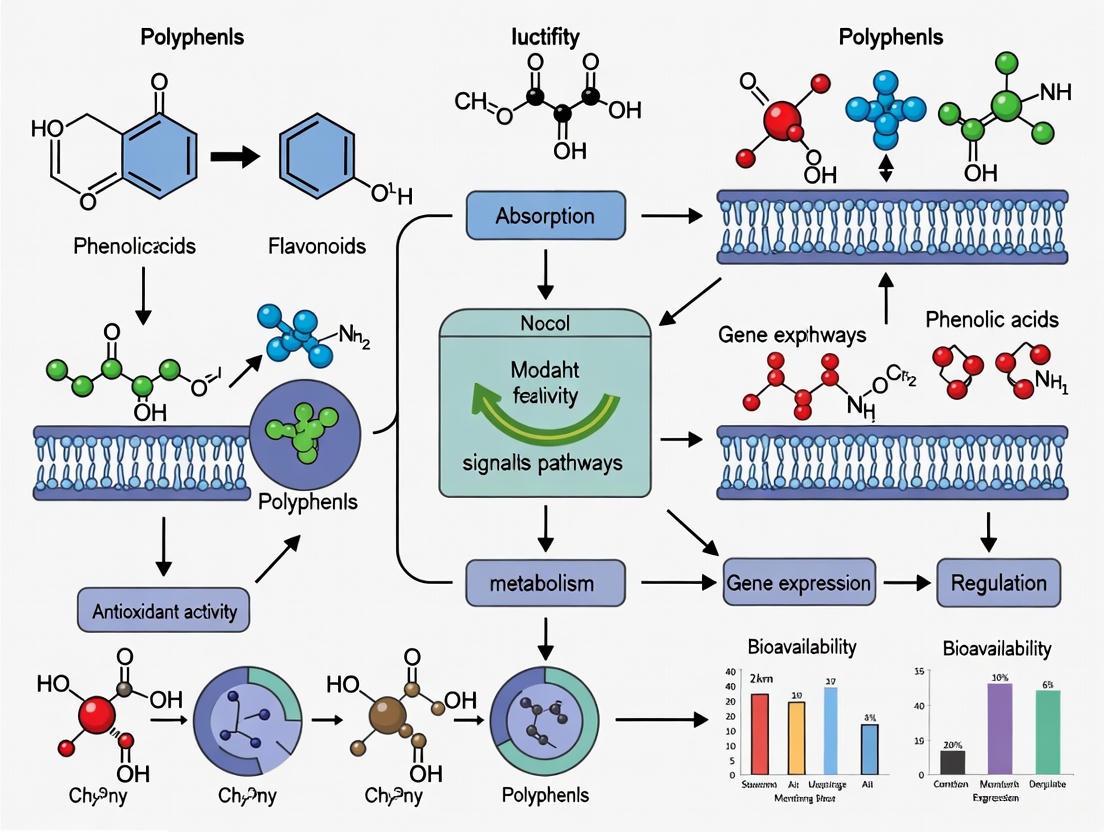
This article provides a comprehensive analysis of the complex mechanisms of action of dietary polyphenols in functional foods, tailored for researchers, scientists, and drug development professionals.
Beyond Antioxidants: Unveiling the Multifaceted Mechanisms of Polyphenols in Functional Foods for Health and Disease Prevention
Abstract
This article provides a comprehensive analysis of the complex mechanisms of action of dietary polyphenols in functional foods, tailored for researchers, scientists, and drug development professionals. Moving beyond the traditional antioxidant paradigm, we explore foundational molecular pathways, including interactions with gut microbiota, modulation of inflammatory signaling (NF-κB, MAPK), and enzyme inhibition (e.g., xanthine oxidase). The review delves into methodological advances in extraction and stabilization, such as encapsulation, to enhance bioaccessibility. It further addresses critical challenges in bioavailability and compound stability, evaluating evidence from preclinical, clinical, and in silico studies. The synthesis of this information aims to bridge the gap between mechanistic understanding and the rational development of effective, evidence-based functional foods and therapeutic candidates.
Deconstructing the Molecular Machinery: Core Mechanisms of Polyphenol Bioactivity
Polyphenols represent one of the most abundant and widely distributed classes of bioactive compounds in the plant kingdom, serving as crucial secondary metabolites with diverse physiological functions. As the most common antioxidants in the human diet, these compounds have garnered significant scientific interest for their potential role in preventing and managing chronic diseases through multiple biological mechanisms [1] [2]. In the context of functional foods research, understanding the classification, dietary sources, and structural characteristics of polyphenols is fundamental to elucidating their mechanisms of action and developing targeted nutritional interventions [3] [4].
These compounds exhibit tremendous structural diversity, with over 8,000 identified polyphenolic structures possessing varying biological activities [5] [6]. The bioavailability, bioaccessibility, and ultimate physiological effects of dietary polyphenols are intrinsically linked to their chemical structures and the food matrices in which they are incorporated [3] [2]. This complex relationship between structure, source, and function presents both challenges and opportunities for their application in functional food development and disease prevention strategies aimed at researchers, scientists, and drug development professionals.
Classification and Structural Characteristics of Polyphenols
Polyphenols are systematically classified based on the number and arrangement of their phenolic rings and the structural elements that connect these rings. The major classes include flavonoids, phenolic acids, stilbenes, and lignans, each with distinct chemical characteristics that influence their biological activity and functional properties in food systems [5] [6] [7].
Flavonoids
Flavonoids constitute the largest and most extensively studied class of polyphenols, characterized by a fundamental C6-C3-C6 skeleton consisting of two aromatic rings (A and B) connected by a three-carbon heterocyclic ring (C) [6] [7] [8]. This basic structure undergoes various modifications, including hydroxylation, methylation, glycosylation, and methoxylation, resulting in several important subclasses:
- Flavonols: Feature a 3-hydroxyflavone backbone (e.g., quercetin, kaempferol) and are particularly abundant in onions, kale, and berries [5] [2].
- Flavones: Characterized by a 2,3-unsaturated carbonyl group (e.g., apigenin, luteolin) and found in parsley, celery, and herbs [2].
- Flavanones: Possess a saturated heterocyclic C ring (e.g., naringenin, hesperetin) predominantly present in citrus fruits [2].
- Flavanols: Also known as flavan-3-ols, include monomeric catechins and polymeric proanthocyanidins (e.g., epicatechin, epigallocatechin gallate) abundant in tea, cocoa, and apples [5] [2].
- Anthocyanidins: Provide pigmentation to flowers and fruits (e.g., cyanidin, delphinidin) and are found in berries, grapes, and red cabbage [5].
- Isoflavones: Feature a B-ring connected at the C3 position (e.g., genistein, daidzein) primarily present in legumes, especially soy [2].
Non-Flavonoid Polyphenols
The major non-flavonoid polyphenol classes include:
- Phenolic Acids: Divided into hydroxybenzoic acids (C6-C1 structure) and hydroxycinnamic acids (C6-C3 structure), with caffeic acid and ferulic acid being prominent examples found in coffee, whole grains, and berries [5] [8].
- Stilbenes: Characterized by a C6-C2-C6 structure consisting of two benzene rings connected by an ethylene bridge, with resveratrol from grapes and red wine being the most extensively researched [6] [8].
- Lignans: Composed of two phenylpropane units (C6-C3)2 linked by a β-β′ bond, with secoisolariciresinol and matairesinol as primary examples found in flaxseeds, sesame seeds, and whole grains [6] [2].
- Tannins: High-molecular-weight compounds divided into hydrolyzable tannins (gallotannins, ellagitannins) and condensed tannins (proanthocyanidins) [6].
Table 1: Classification and Structural Characteristics of Major Polyphenol Classes
| Polyphenol Class | Basic Structure | Subclasses | Key Structural Features |
|---|---|---|---|
| Flavonoids | C6-C3-C6 | Flavonols, Flavones, Flavanones, Flavanols, Anthocyanidins, Isoflavones | Two aromatic rings connected by a heterocyclic ring; variations in hydroxylation, conjugation, and degree of saturation |
| Phenolic Acids | C6-C1 or C6-C3 | Hydroxybenzoic acids, Hydroxycinnamic acids | Single phenolic ring with one carboxylic acid group and one or more hydroxyl groups |
| Stilbenes | C6-C2-C6 | Resveratrol, Pterostilbene | Two aromatic rings connected by an ethylene bridge |
| Lignans | (C6-C3)2 | Secoisolariciresinol, Matairesinol | Two phenylpropane units linked by a β-β′ bond |
Dietary polyphenols are ubiquitously distributed in plant-based foods, with significant variation in concentration and composition across different food groups. The quantitative content of specific polyphenol subclasses varies considerably between dietary sources, influencing their potential contribution to health benefits and their application in functional food development [2].
Berries represent particularly rich sources of diverse polyphenols, with black elderberry containing high concentrations of anthocyanidins (1,316.65 mg/100 g) and black chokeberry providing substantial amounts of anthocyanidins (878.12 mg/100 g) and proanthocyanidins [2]. Citrus fruits are notable for their flavanone content, primarily hesperidin and naringenin, while apples contribute significantly to dietary flavonol intake, particularly quercetin derivatives [5] [2].
Vegetables show considerable diversity in their polyphenol profiles. Onions, particularly red onions, are rich sources of flavonols (128.51 mg/100 g raw), while spinach provides significant amounts of flavonols (119.27 mg/100 g raw) and phenolic acids [2]. Celery seeds contain exceptionally high concentrations of flavones (2,094 mg/100 g), and dried herbs such as Mexican oregano are rich sources of multiple polyphenol classes, including flavones (733.77 mg/100 g) and flavanones (1,049.67 mg/100 g) [2].
Tea, especially green tea, is particularly rich in flavanols (71.17 mg/100 g infusion), primarily catechins such as epigallocatechin gallate [2]. Coffee serves as a major dietary source of phenolic acids, with chlorogenic acid comprising 6-12% of green Robusta coffee beans, potentially contributing over 1 g of chlorogenic acid daily for regular consumers [2]. Red wine provides stilbenes, notably resveratrol, along with anthocyanidins and flavonols [6] [2].
Cocoa powder contains high concentrations of flavanols (511.62 mg/100 g), with dark chocolate also contributing significantly to flavanol intake (212.36 mg/100 g) [2]. Whole grains, particularly cereals, provide phenolic acids, with ferulic acid comprising up to 98% of the total phenolic acids in cereals, primarily located in the aleurone layer and pericarp [5]. Legumes, especially soy-based products, are rich sources of isoflavones, with soy flour containing 466.99 mg/100 g of these phytoestrogenic compounds [2].
Table 2: Quantitative Content of Major Polyphenol Classes in Dietary Sources
| Dietary Source | Predominant Polyphenol Class | Specific Compounds | Representative Content |
|---|---|---|---|
| Black elderberry | Anthocyanidins | Cyanidin derivatives | 1,316.65 mg/100 g [2] |
| Cocoa powder | Flavanols | Catechins, Procyanidins | 511.62 mg/100 g [2] |
| Soy flour | Isoflavones | Genistein, Daidzein | 466.99 mg/100 g [2] |
| Green tea | Flavanols | Epigallocatechin gallate, Epicatechin | 71.17 mg/100 g infusion [2] |
| Red onion | Flavonols | Quercetin glycosides | 128.51 mg/100 g [2] |
| Coffee beans | Phenolic acids | Chlorogenic acids | 6-12% of dry weight [5] |
| Flaxseeds | Lignans | Secoisolariciresinol | 0.3-3.0 mg/g [6] |
Molecular Mechanisms of Action in Functional Foods
The health-promoting effects of dietary polyphenols are mediated through multiple interconnected biological mechanisms that contribute to their therapeutic potential in chronic disease prevention and management. Understanding these mechanisms is crucial for optimizing their application in functional food development.
Antioxidant Activities
Polyphenols exert potent antioxidant effects through two primary mechanisms: direct free radical scavenging and induction of endogenous antioxidant defense systems. The antioxidant capacity is largely determined by the number and arrangement of hydroxyl groups on the phenolic rings, which facilitate hydrogen atom transfer and single electron transfer processes that neutralize reactive oxygen species (ROS) [6] [8]. Certain polyphenols can also activate the Nrf2 signaling pathway, leading to increased expression of antioxidant enzymes including superoxide dismutase, catalase, and glutathione peroxidase, providing an indirect antioxidant effect [8].
Anti-inflammatory Mechanisms
Polyphenols modulate inflammatory responses primarily through inhibition of key transcription factors and enzymatic pathways. Many flavonoids and phenolic acids suppress NF-κB activation, reducing the expression of pro-inflammatory cytokines such as TNF-α, IL-1β, and IL-6 [1] [6]. Additionally, polyphenols inhibit cyclooxygenase (COX) and lipoxygenase (LOX) enzymes, decreasing the production of prostaglandins and leukotrienes that mediate inflammatory processes [5] [8]. These anti-inflammatory activities contribute to the protective effects against chronic inflammatory conditions, including cardiovascular disease, metabolic syndrome, and neurodegenerative disorders.
Enzyme Inhibition and Modulation
Polyphenols interact with numerous enzymatic systems, influencing critical physiological processes. They inhibit digestive enzymes including α-amylase and α-glucosidase, modulating postprandial glycemic responses, which is particularly relevant for diabetes management [2]. Certain flavonoids act as acetylcholinesterase inhibitors, potentially benefiting cognitive function in neurodegenerative conditions [5]. Polyphenols also modulate phase I and phase II biotransformation enzymes, influencing xenobiotic metabolism and detoxification processes [5].
Gut Microbiota Interactions
The reciprocal interaction between dietary polyphenols and gut microbiota represents a significant mechanism underlying their health benefits. Polyphenols shape gut microbial composition, promoting the growth of beneficial bacteria while inhibiting pathogenic species [6]. Gut microbiota extensively metabolize polyphenols into bioavailable metabolites with enhanced biological activity, such as equol from daidzein and urolithins from ellagitannins [6]. These microbial metabolites often exhibit superior bioavailability and bioactivity compared to their parent compounds, contributing to systemic health effects.
Diagram 1: Molecular Mechanisms of Polyphenol Bioactivity. This diagram illustrates the primary molecular mechanisms through which dietary polyphenols exert their biological effects, including antioxidant activities, anti-inflammatory actions, enzyme modulation, gut microbiota interactions, and signaling pathway regulation.
Methodological Approaches in Polyphenol Research
Extraction and Characterization Methods
The complex nature of polyphenols necessitates sophisticated extraction and characterization methodologies to accurately identify and quantify these compounds in food matrices and biological samples.
Extraction Techniques:
- Ultrasound-Assisted Extraction (UAE): Utilizes acoustic cavitation (frequencies >20 kHz) to disrupt plant cell walls, enhancing solvent penetration and reducing extraction time and solvent consumption [6]. Optimal parameters include controlled temperature (30-60°C), solvent selection (methanol, ethanol, acetone/water mixtures), and extraction duration (10-60 minutes) [6].
- Enzyme-Assisted Extraction: Employ specific enzymes (cellulase, pectinase) to break down plant cell walls and release bound polyphenols, particularly effective for phenolic acids [6].
- Supercritical Fluid Extraction: Uses supercritical CO₂, often with modifiers like ethanol, for efficient extraction of non-polar to moderately polar polyphenols with minimal degradation [6].
Characterization Methods:
- High-Performance Liquid Chromatography (HPLC): Coupled with diode array detection (DAD) or mass spectrometry (MS) for separation, identification, and quantification of individual polyphenols [6].
- Mass Spectrometry: Provides structural information through fragmentation patterns, enabling identification of unknown polyphenols and their metabolites [6].
- Nuclear Magnetic Resonance (NMR) Spectroscopy: Offers detailed structural information, particularly for elucidating novel polyphenol structures and stereochemistry [6].
Bioavailability Assessment Protocols
Evaluating the bioavailability of polyphenols is crucial for understanding their potential health benefits and optimizing delivery systems.
In Vitro Digestion Models:
- Simulate gastrointestinal conditions using sequential incubation with simulated gastric fluid (pH 2.0, pepsin, 37°C, 1-2 hours) followed by simulated intestinal fluid (pH 7.5, pancreatin, bile salts, 37°C, 2-4 hours) [5] [6].
- Measure bioaccessibility (percentage of compound released from food matrix) and transformation during digestion.
Cell Culture Models:
- Utilize Caco-2 human intestinal epithelial cell monolayers to assess intestinal absorption and transport mechanisms [5].
- Measure transepithelial electrical resistance (TEER) and transport efficiency across the intestinal barrier.
In Vivo Pharmacokinetic Studies:
- Administer standardized polyphenol extracts to animal models or human subjects and collect serial blood, urine, and tissue samples [5] [6].
- Quantify parent compounds and metabolites using LC-MS/MS to determine pharmacokinetic parameters (Cₘₐₓ, Tₘₐₓ, AUC, half-life).
Table 3: Research Reagent Solutions for Polyphenol Analysis
| Research Reagent | Application | Function | Examples/Notes |
|---|---|---|---|
| Folin-Ciocalteu Reagent | Total phenolic content assay | Oxidizing agent for phenolic compounds | Measures reducing capacity; results expressed as gallic acid equivalents |
| DPPH (2,2-diphenyl-1-picrylhydrazyl) | Antioxidant activity assay | Stable free radical for scavenging capacity | Measures hydrogen donation ability; absorbance decrease at 517 nm |
| ABTS⁺ (2,2'-azino-bis(3-ethylbenzothiazoline-6-sulfonic acid)) | Antioxidant activity assay | Pre-formed radical cation | Measures electron transfer ability; absorbance decrease at 734 nm |
| Simulated Gastric/Intestinal Fluids | Bioaccessibility studies | Mimic physiological digestion conditions | Contain pepsin (gastric) or pancreatin/bile salts (intestinal) |
| Caco-2 Cell Line | Intestinal absorption studies | Model human intestinal epithelium | Measure transport across intestinal barrier; assess bioavailability |
| LC-MS/MS Systems | Identification and quantification | Separation and detection of polyphenols | High sensitivity and specificity; enables metabolite profiling |
Advanced Delivery Systems for Enhanced Bioavailability
The clinical application of polyphenols is often limited by challenges such as poor aqueous solubility, chemical instability, and extensive first-pass metabolism, resulting in low oral bioavailability [6] [9]. Advanced delivery systems have been developed to address these limitations and enhance the efficacy of polyphenols in functional food applications.
Nanoencapsulation Technologies
Nanoencapsulation techniques significantly improve the stability, solubility, and targeted delivery of polyphenols:
- Liposomal Systems: Phospholipid-based vesicles that encapsulate polyphenols within their lipid bilayers, protecting them from degradation and enhancing absorption through biomimetic fusion with cellular membranes [6]. Liposomal formulations have demonstrated improved bioavailability for epigallocatechin gallate (EGCG), resveratrol, and curcumin in preclinical models [6].
- Polymeric Nanoparticles: Biodegradable polymers such as PLGA (poly(lactic-co-glycolic acid)) and chitosan that provide controlled release profiles and protection from enzymatic degradation [9]. These systems can be engineered for specific targeting through surface modification with ligands that recognize receptors on target cells [9].
- Solid Lipid Nanoparticles (SLNs): Composed of physiological lipids that remain solid at room and body temperature, offering improved stability compared to liposomes while maintaining high encapsulation efficiency for lipophilic polyphenols [9].
Protein-Polyphenol Complexation
The strategic complexation of proteins with polyphenols represents a promising approach to modulate functional properties and enhance bioavailability:
- Non-covalent Complexes: Driven by hydrophobic interactions, hydrogen bonding, and van der Waals forces between polyphenols and proteins [10]. These interactions can improve the solubility and stability of hydrophobic polyphenols in aqueous food matrices [10].
- Covalent Conjugates: Formed through enzyme-mediated (e.g., laccase, tyrosinase) or chemical oxidation (alkaline conditions) approaches, resulting in stable protein-polyphenol conjugates with enhanced functional properties [10]. Covalent conjugates of whey protein with catechins have demonstrated superior antioxidant activity and physical stability in emulsion systems [10].
Polysaccharide-Polyphenol Interactions
Polysaccharides interact with polyphenols through both covalent and non-covalent mechanisms, influencing their bioaccessibility and physiological effects:
- Dietary Fiber Interactions: Plant cell wall polysaccharides can bind polyphenols, potentially reducing their immediate bioaccessibility but enabling controlled release during colonic fermentation [7].
- Encapsulation Matrices: Polysaccharides such as pectin, chitosan, and cyclodextrins can form complexes with polyphenols, protecting them from degradation in the gastrointestinal tract and modulating their release profile [7].
Diagram 2: Advanced Delivery Systems for Polyphenol Bioavailability Enhancement. This diagram outlines strategies to overcome the bioavailability challenges of polyphenols, including nanoencapsulation technologies, protein-polyphenol complexation, and polysaccharide-polyphenol interactions, which enhance solubility, stability, absorption, and targeted delivery.
The comprehensive classification and systematic analysis of dietary sources of major polyphenol classes provide a crucial foundation for understanding their potential applications in functional food development and chronic disease prevention. The structural diversity of polyphenols directly influences their biological activities, bioavailability, and ultimate physiological effects, highlighting the importance of considering specific polyphenol classes and their food matrix interactions when designing functional food products.
Future research directions should focus on optimizing delivery systems to enhance polyphenol bioavailability, conducting well-designed human intervention studies to establish dose-response relationships, and exploring the synergistic effects of polyphenol combinations in complex food matrices. The integration of advanced technologies such as nanoencapsulation, combined with a deeper understanding of polyphenol-gut microbiota interactions, will further advance the application of these bioactive compounds in targeted nutritional strategies for health promotion and disease prevention. As the field evolves, the precise characterization of polyphenol sources and mechanisms will continue to inform the development of evidence-based functional foods capable of modulating specific physiological pathways to improve human health.
The traditional view of dietary polyphenols as simple direct antioxidants that scavenge reactive oxygen species (ROS) represents an oversimplification of their complex bioactivity. While the scavenger theory—which posits that polyphenols neutralize free radicals through hydrogen atom or electron donation—explains some of their protective effects, a more nuanced understanding has emerged from recent research [11] [12]. Polyphenols exhibit a dualistic nature in biological systems, functioning as antioxidants under certain conditions while acting as pro-oxidants in others, ultimately influencing cellular fate through the modulation of redox signaling pathways [8] [12]. This mechanistic duality is particularly relevant in the context of functional foods research, where understanding the precise molecular interplay is crucial for developing evidence-based nutritional interventions. The progression from simple scavenger theory to the recognition of sophisticated redox signaling represents a paradigm shift in nutritional biochemistry, moving the field beyond chemical antioxidant assays toward a more physiological understanding of polyphenol bioactivity [13] [14].
This technical review examines the core mechanisms governing polyphenol bioactivity, focusing on the chemical basis of antioxidant and pro-oxidant effects, their integration into cellular signaling networks, and the experimental methodologies essential for advancing functional foods research.
The Scavenger Theory: Foundations and Mechanisms
The scavenger theory constitutes the foundational framework for understanding polyphenol antioxidant activity. This mechanism is primarily governed by the direct chemical capacity of polyphenols to donate hydrogen atoms or electrons to neutralize reactive oxygen and nitrogen species [11] [15].
Structural Basis for Free Radical Scavenging
The antioxidant potency of polyphenolic compounds is intrinsically linked to their molecular structure, specifically the arrangement of hydroxyl groups on aromatic rings, which dictates their ability to stabilize unpaired electrons after radical quenching [12].
- Electron Delocalization: The resonant electron system of the polyphenolic aromatic ring enables the stabilization of the resulting phenoxyl radical through electron delocalization across the conjugated system [12]. For example, in the flavonoid luteolin, radicals formed at both the C-7 and C-4' positions are resonance-stabilized due to conjugation with ketone groups or double bonds [12].
- Hydroxyl Group Positioning: The number and position of hydroxyl groups significantly influence antioxidant potential. The catechol group (ortho-dihydroxy benzene) in compounds like hydroxytyrosol and the B-ring of luteolin provides superior radical stabilization compared to single hydroxyl groups [12]. In luteolin, hydroxyl groups at the 7 and 4' positions demonstrate greater antioxidant activity due to enhanced electron delocalization capabilities [12].
- Metal Chelation: Beyond direct scavenging, polyphenols can chelate transition metals such as iron and copper, reducing their availability for participation in Fenton reactions that generate highly reactive hydroxyl radicals [12].
Table 1: Structural Features Governing Antioxidant Efficacy in Selected Polyphenols
| Polyphenol | Class | Key Structural Features | Resultant Antioxidant Properties |
|---|---|---|---|
| Luteolin | Flavonoid | Catechol group in B-ring; C-7 and C-4' OH groups | Extensive radical delocalization; high number of resonant forms |
| Hydroxytyrosol | Phenolic alcohol | Catechol group in aromatic ring | Electron delocalization across benzene nucleus |
| Resveratrol | Stilbene | Phenolic OH groups in B-ring; resorcinol in A-rings | Delocalization through C=C double bond between rings |
Direct Antioxidant Mechanisms
Polyphenols employ multiple parallel mechanisms to exert their antioxidant effects in biological systems:
- Radical Neutralization: Polyphenols donate a proton (H+) from their hydroxyl groups to free radicals (•X), including hydroxyl, peroxyl, superoxide, or peroxynitrous acid radicals, converting them to less reactive species while forming stabilized phenoxyl radicals [12].
- Enzyme Modulation: Polyphenols inhibit pro-oxidant enzymes such as lipoxygenase (LO), cyclooxygenase (COX), myeloperoxidase (MPO), NADPH oxidase (NOx), and xanthine oxidase (XO), thereby preventing ROS generation at the source [12]. Concurrently, they stimulate antioxidant enzymes including catalase (CAT) and superoxide dismutase (SOD) [12].
- Synergistic Regeneration: The reducing environment within cells, maintained by ascorbate and glutathione, can regenerate oxidized polyphenols, allowing for continued antioxidant protection [12].
The Pro-Oxidant Paradox and Redox Signaling
The pro-oxidant capacity of polyphenols, once viewed as an undesirable side effect, is now recognized as an essential component of their bioactivity, particularly in the context of redox signaling and chemoprevention [14] [8].
Pro-Oxidant Mechanisms and Conditions
Polyphenols can generate reactive oxygen species under specific conditions, primarily through two mechanisms:
- Autoxidation and Quinone Formation: In the presence of molecular oxygen and transition metals, polyphenols can autoxidize, forming semiquinone radicals and superoxide anions, which subsequently dismutate to hydrogen peroxide [14] [12]. The initial phenoxyl radical can undergo further oxidation to form quinones, which are resonance-stabilized electrophiles [12].
- Metal Reduction: Polyphenols can reduce transition metal ions (e.g., Cu²⁺ to Cu⁺, Fe³⁺ to Fe²⁺), which can then participate in Fenton chemistry to generate highly reactive hydroxyl radicals [8].
The balance between antioxidant and pro-oxidant behavior depends on concentration, cellular microenvironment, redox state, and the presence of transition metals [8]. At high concentrations, particularly in the presence of copper ions, polyphenols like naringin, gallic acid, and genistein demonstrate pro-oxidant activity that suppresses cancer cell proliferation and triggers apoptosis [16].
Redox Signaling and Cellular Adaptation
The pro-oxidant activity of polyphenols is not merely a toxicological concern but represents a crucial mechanism for activating adaptive cellular responses:
- Nrf2 Pathway Activation: H₂O₂ generated from extracellular polyphenol autoxidation can diffuse into cells through aquaporin (AQP) channels [14]. This H₂O₂ flux can trigger the oxidation of the Keap1-Nrf2 complex, leading to Nrf2 dissociation and translocation to the nucleus, where it activates the Antioxidant Response Element (ARE), driving the expression of endogenous antioxidant enzymes [14].
- AQP-Mediated Regulation: Aquaporins (particularly AQP3, AQP8, and AQP9) in intestinal epithelia function as gatekeepers for H₂O₂ transport, regulating intracellular concentrations and ensuring homeostatic signaling rather than oxidative damage [14]. This mechanism links dietary polyphenol intake with intracellular defense systems.
- Hormetic Response: Mild pro-oxidant challenges from polyphenols can induce a hormetic effect, upregulating endogenous antioxidant capacity and enhancing cellular resilience to subsequent oxidative insults [14] [12].
Experimental Approaches for Assessing Antioxidant and Pro-Oxidant Activities
Evaluating the dual antioxidant/pro-oxidant character of polyphenols requires a multi-faceted experimental approach spanning chemical, cellular, and in vivo models.
Chemical Antioxidant Assays
Chemical assays provide rapid screening methods for determining antioxidant potential but have limitations in biological relevance [13].
- DPPH (2,2-diphenyl-1-picrylhydrazyl) Assay: Measures hydrogen-donating capacity to stable radical in ethanol or methanol solutions [13].
- ABTS (2,2'-azinobis-(3-ethylbenzothiazoline-6-sulfonic acid) Assay: Determines radical cation scavenging activity in aqueous or organic phases [13].
- FRAP (Ferric Reducing/Antioxidant Power): Assesses reduction of ferric-tripyridyltriazine complex to colored ferrous form [13].
- ORAC (Oxygen Radical Absorbance Capacity): Quantifies peroxyl radical scavenging through fluorescence monitoring [13].
- PSC (Peroxyl Radical Scavenging Capacity): Measures protection against peroxyl radical-induced oxidation [13].
Table 2: Methodologies for Assessing Polyphenol Redox Activities
| Method Category | Specific Assays/Models | Key Measured Parameters | Advantages | Limitations |
|---|---|---|---|---|
| Chemical Assays | DPPH, ABTS, FRAP, ORAC, PSC | Radical scavenging, reducing power | Simple, rapid, high-throughput | Poor physiological correlation; static measurements |
| Cell-Based Assays | Caco-2, HT-29 cells; fluorescent probes (DCFH-DA) | Intracellular ROS; gene expression; cell viability | Closer to biological environment; pathway analysis | Doesn't account for bioavailability; culture artifacts |
| In Vivo Models | Caenorhabditis elegans; rodent models | Biomarkers (MDA, 8-oxoG); enzyme activities; gene expression | Whole-organism complexity; absorption and metabolism | Complex, time-consuming, ethical considerations |
| Biosensors | Laccase/tyrosinase-based electrochemical sensors | Real-time H₂O₂, dopamine, catechin | Dynamic monitoring; high sensitivity | Enzyme instability; matrix interference |
Advanced Methodologies for Redox Signaling Research
- Cell-Based Antioxidant Assays: Utilizing cell lines (e.g., Caco-2 intestinal models) with fluorescent probes like DCFH-DA to monitor intracellular ROS formation and scavenging [13]. These systems allow investigation of polyphenol effects on cellular signaling pathways under more physiologically relevant conditions.
- In Vivo Models: Employing Caenorhabditis elegans or rodent models to assess oxidative damage biomarkers including malondialdehyde (MDA) for lipid peroxidation and 8-oxoguanosine (8-oxoG) for DNA oxidation [13]. These models provide critical information on bioavailability, metabolism, and systemic effects.
- Electrochemical Biosensors: Functionalized with polyphenol oxidases (laccase, tyrosinase) and enhanced with nanomaterials (gold nanoparticles, carbon nanotubes) for real-time monitoring of oxidative stress biomarkers [17]. These systems achieve detection limits as low as 0.08 μM for dopamine with linear ranges of 0.25–76.81 μM [17].
The Scientist's Toolkit: Essential Research Reagents and Materials
Table 3: Key Research Reagents for Polyphenol Redox Studies
| Reagent/Category | Specific Examples | Research Application | Technical Function |
|---|---|---|---|
| Chemical Antioxidant Assays | DPPH, ABTS, TPTZ (for FRAP) | Initial antioxidant capacity screening | Radical source; oxidation-reduction indicators |
| Cell Culture Models | Caco-2, HT-29 intestinal cells | Intestinal absorption and bioavailability studies | Human-relevant in vitro model for transport and metabolism |
| Fluorescent Probes | DCFH-DA, DHE | Intracellular ROS measurement | ROS-sensitive fluorophores for flow cytometry or microscopy |
| Enzymatic Biosensors | Laccase, tyrosinase | Real-time oxidation monitoring | Biocatalytic element for analyte detection |
| Nanomaterial Enhancers | Gold nanoparticles, carbon nanotubes | Biosensor signal amplification | Increased surface area and electron transfer capacity |
| Oxidative Biomarkers | Anti-MDA, anti-8-oxoG antibodies | Lipid and DNA oxidation assessment | Target recognition in ELISA or immunohistochemistry |
| Animal Models | C. elegans, rodent models | In vivo bioactivity validation | Whole-organism response and toxicity assessment |
The biological activity of polyphenols extends far beyond simple radical scavenging, encompassing a sophisticated interplay between antioxidant and pro-oxidant activities that modulates cellular redox signaling pathways. The scavenger theory explains the direct free radical neutralizing capacity of these compounds, while the pro-oxidant effects—particularly the generation of H₂O₂ and quinone formation—activate adaptive cellular responses through the Nrf2 pathway and other redox-sensitive transcription factors [14] [12]. This dualistic behavior is highly dependent on concentration, microenvironment, and cellular context, presenting both challenges and opportunities for functional foods research.
Advancing our understanding of these mechanisms requires integrated methodological approaches combining chemical assays with cell-based systems, advanced biosensors, and physiologically relevant animal models [17] [13]. Future research should focus on elucidating the precise relationships between polyphenol structures and their redox signaling activities, optimizing delivery systems to enhance bioavailability, and validating these mechanisms in human clinical trials. Such efforts will ultimately enable the rational design of functional foods with targeted health benefits mediated through defined molecular pathways.
Inflammation, a complex biological response, is primarily mediated by the NF-κB and MAPK signaling pathways. These pathways regulate the production of pro-inflammatory cytokines, chemokines, and enzymes, and their dysregulation is implicated in numerous chronic diseases. Polyphenols, a diverse class of bioactive compounds found in functional foods, have emerged as potent modulators of these pathways. This whitepaper provides an in-depth technical analysis of the mechanisms by which polyphenols target NF-κB and MAPK signaling, summarizing key quantitative data and detailing essential experimental methodologies. It is designed to serve as a resource for researchers and drug development professionals exploring the mechanistic basis of polyphenols in functional food research.
Inflammation is a fundamental immune response triggered by various danger signals, including pathogen-associated molecular patterns (PAMPs) and damage-associated molecular patterns (DAMPs) [18]. These signals are sensed by pattern recognition receptors (PPRs), such as Toll-like receptors (TLRs), which subsequently activate key intracellular signaling cascades. Among these, the Nuclear Factor Kappa-B (NF-κB) and Mitogen-Activated Protein Kinase (MAPK) pathways are central regulators of the inflammatory response, controlling the expression of genes encoding pro-inflammatory cytokines (e.g., TNF-α, IL-1β, IL-6), chemokines, adhesion molecules, and inflammatory enzymes like COX-2 and iNOS [18] [19]. The chronic activation of these pathways is a hallmark of many neurological disorders, metabolic syndromes, and other age-related diseases [20] [21]. Consequently, targeting NF-κB and MAPK signaling presents a strategic approach for therapeutic intervention. Polyphenols from dietary sources have demonstrated significant potential to modulate these pathways, thereby exerting anti-inflammatory effects and contributing to the mechanism of action underlying functional foods [20] [18] [22].
Biology of the NF-κB and MAPK Pathways
The NF-κB Signaling Pathway
NF-κB is a ubiquitously expressed transcription factor that exists in the cytoplasm as an inactive heterodimer, typically composed of p50 and p65 (RelA) subunits, bound to its inhibitory protein, IκBα [19]. Activation occurs via two primary routes: the canonical (classical) and non-canonical (alternative) pathways [20].
- Canonical Pathway: This pathway is activated by a wide range of stimuli, including LPS, IL-1, and TNF-α [20]. Ligand binding to receptors like TLRs initiates a signaling cascade that involves adapter proteins such as MyD88, leading to the activation of the IκB kinase (IKK) complex. The IKK complex, comprising IKKα, IKKβ, and NEMO (IKKγ), phosphorylates IκBα, targeting it for ubiquitination and proteasomal degradation [20] [19]. This degradation liberates the NF-κB dimer, allowing its translocation to the nucleus, where it binds to specific DNA sequences and promotes the transcription of pro-inflammatory genes [20].
- Non-Canonical Pathway: This pathway is activated by specific ligands like CD40L and BAFF. It involves the activation of NF-κB-inducing kinase (NIK), which phosphorylates IKKα. This leads to the processing of p100 to p52 and the subsequent formation of a p52/RelB dimer that translocates to the nucleus to regulate target gene expression [20].
In the central nervous system, NF-κB is involved in physiological processes such as neurogenesis, synaptic plasticity, and memory formation. However, its dysregulation is linked to the pathogenesis of neurodegenerative diseases like Alzheimer's and Parkinson's [20].
The MAPK Signaling Pathway
The MAPK pathway is another critical signaling cascade that translates external inflammatory signals into cellular responses. It primarily consists of three key subfamilies: p38, JNK (c-Jun N-terminal kinase), and ERK (extracellular signal-regulated kinase) [23]. Upon activation by stimuli such as LPS or oxidative stress, a kinase cascade is triggered, leading to the phosphorylation and activation of these MAPKs. Activated p38 and JNK, in particular, are strongly associated with stress and inflammatory responses. They phosphorylate various transcription factors, including AP-1, which cooperate with NF-κB to drive the expression of inflammatory mediators [18] [23]. The MAPK and NF-κB pathways often act in concert, creating a robust and integrated inflammatory signaling network.
The following diagram illustrates the core components and interactions within these pathways, highlighting key points of intervention by polyphenols.
Figure 1: NF-κB and MAPK Signaling Pathways and Polyphenol Modulation. The diagram illustrates how inflammatory stimuli (e.g., LPS) activate cell membrane receptors, triggering both NF-κB and MAPK pathways. Key steps include IKK complex activation leading to IκB degradation and NF-κB nuclear translocation, and MAPK activation leading to AP-1 activation. Polyphenols (green) exert inhibitory effects at multiple points, including kinase activation, IKK phosphorylation, and MAPK phosphorylation [20] [18] [19].
Mechanistic Actions of Polyphenols on NF-κB and MAPK
Polyphenols interfere with inflammatory signaling through multiple mechanisms, primarily by inhibiting the activation and nuclear translocation of key transcription factors. The following table summarizes the effects of specific polyphenols on these pathways and their downstream outputs.
Table 1: Effects of Select Polyphenols on NF-κB and MAPK Pathways and Inflammatory Outputs
| Polyphenol | Source | Molecular Target / Effect | Impact on Inflammatory Mediators | Experimental Model |
|---|---|---|---|---|
| Curcumin | Turmeric | Inhibits IKK phosphorylation and IκB degradation; prevents NF-κB nuclear translocation [20] [19]. | ↓ TNF-α, IL-6, IL-1β, COX-2 [20] | Preclinical models of neurological disorders [20]. |
| Resveratrol | Grapes, Red Wine | Suppresses TLR4, NF-κB, and MAPK signaling; reduces cytokine secretion [18]. | ↓ TNF-α, IL-6, IL-1β; ↓ plasma pro-inflammatory markers in AD subjects [18] | Human neuroblastoma cells; LPS-induced mouse models; human subjects with Alzheimer's disease (AD) [18]. |
| Quercetin | Apples, Onions | ↓ TLR2/4 expression and NF-κB activation [18]. | ↓ Activity of inflammatory enzymes [18] | Human neuroblastoma SH-SY5Y cells; human PBMC [18]. |
| Anthocyanins | Berries | Inhibits NF-κB nuclear translocation; reduces ROS production [18]. | ↓ NO, PGE2, TNF-α, IL-1β; ↓ iNOS & COX-2 expression [18] | Mouse BV2 microglial cells; rat models of cerebral ischemia [18]. |
| Epigallocatechin Gallate (EGCG) | Green Tea | ↓ TLR4 signaling [18]. | Improves impaired hippocampal neurogenesis | LPS-induced mouse models [18]. |
| Blueberry Extract | Blueberries | Inhibits NF-κB nuclear translocation [18]. | ↓ NO & TNF-α release; ↓ iNOS & COX-2 expression [18] | Mouse BV2 microglial cells (LPS-induced) [18]. |
The anti-inflammatory activity of polyphenols is largely attributed to their ability to disrupt the phosphorylation and ubiquitination processes that are crucial for signal propagation. For instance, they can inhibit IKK activity, thereby preventing the degradation of IκB and the subsequent release of NF-κB [20] [19]. Additionally, polyphenols like quercetin and resveratrol have been shown to downregulate the expression of TLRs, the initial sensors of inflammatory stimuli [18]. By acting at these upstream points, polyphenols effectively dampen the entire inflammatory cascade, reducing the production of a wide array of pro-inflammatory cytokines and mediators.
Experimental Models and Methodologies
In Vitro Models for Investigating Neuroinflammation
In vitro models provide a controlled system for elucidating the specific molecular mechanisms of polyphenol action. Commonly used models include:
- Cell Lines: Immortalized cell lines like mouse BV2 microglial cells and human neuroblastoma SH-SY5Y cells are widely used due to their reproducibility and ease of culture.
- Induction of Inflammation: Inflammation is typically induced using Lipopolysaccharide (LPS), a component of the gram-negative bacterial cell wall that is a potent agonist of TLR4 [18] [24]. Common concentrations range from 100 ng/mL to 1 µg/mL, depending on the cell type and desired intensity of the inflammatory response.
- Treatment Protocol: Cells are typically pre-treated with the polyphenol of interest for a period (e.g., 1-2 hours) prior to LPS challenge. The co-incubation of polyphenol and LPS then continues for a defined period, often 6-24 hours, after which cells and supernatants are collected for analysis [18].
- Key Assays:
- Cell Viability: Measured using assays like the Cell Counting Kit-8 (CCK-8) to ensure that anti-inflammatory effects are not due to cytotoxicity [23].
- Gene Expression: mRNA levels of cytokines (IL-6, IL-8, TNF-α) are quantified using quantitative real-time PCR (qRT-PCR). The 2−ΔΔCT method is used for analysis, with GAPDH or β-actin as housekeeping genes [23].
- Protein Analysis: Protein expression and phosphorylation (e.g., p38, JNK, p65, IκBα) are analyzed by western blotting. Nuclear and cytoplasmic fractionation can be used to assess NF-κB translocation [18] [23].
- Cytokine Secretion: Levels of secreted cytokines (e.g., TNF-α, IL-6) in cell culture supernatants are measured using enzyme-linked immunosorbent assays (ELISA) [23].
In Vivo Models and Human Challenge Studies
In vivo models are essential for validating findings from cell-based studies within a complex physiological context.
- LPS-Induced Neuroinflammation Models: Mice or rats are administered LPS systemically (intraperitoneally or intravenously) or directly into the brain (intracerebroventricularly) [24]. Doses vary widely, from low doses (0.5-2 mg/kg) for systemic inflammation to higher doses for robust neuroinflammation. Polyphenols are administered orally or via injection prior to or following LPS challenge.
- Measured Outcomes: These include behavioral tests (e.g., for sickness behavior, memory), analysis of brain tissue for cytokine levels and microglial activation, and assessment of signaling pathway molecules via immunohistochemistry or western blot [18] [24].
- Human LPS Challenge Studies: These controlled clinical studies involve administering very low doses of LPS (e.g., 0.5 - 2 ng/kg) intravenously to healthy volunteers to induce a transient inflammatory response [25]. Biomarkers like TNF-α, IL-6, IL-8, and CRP are measured longitudinally. Mathematical models have been developed to characterize the dynamics and inter-individual variability of these inflammatory biomarkers, providing a quantitative framework for translating preclinical findings to humans [25].
The following diagram outlines a typical experimental workflow from in vitro validation to in vivo and clinical investigation.
Figure 2: Experimental Workflow for Investigating Polyphenol Effects. A typical research pipeline begins with in vitro models to establish mechanism, proceeds to in vivo animal models for physiological validation, and can extend to controlled human challenge studies for clinical translation and quantitative modeling of biomarker dynamics [18] [23] [25].
The Scientist's Toolkit: Key Research Reagents and Materials
This section details essential reagents, inhibitors, and models used in research targeting NF-κB and MAPK pathways.
Table 2: Key Research Reagent Solutions for NF-κB and MAPK Pathway Analysis
| Reagent / Model | Function / Purpose | Example Use Case |
|---|---|---|
| Lipopolysaccharide (LPS) | A potent TLR4 agonist used to induce robust inflammatory signaling in both in vitro and in vivo models [18] [24]. | Inducing cytokine production in microglial cell cultures; modeling systemic inflammation or neuroinflammation in rodents [18]. |
| IKK/NF-κB Pathway Inhibitors (e.g., BAY 11-7082) | A selective pharmacological inhibitor of IKK that prevents IκBα phosphorylation and subsequent NF-κB activation [23]. | Used as a positive control to confirm NF-κB-dependent effects in experiments. Validates polyphenol mechanisms targeting the IKK complex [23]. |
| MAPK Pathway Inhibitors (e.g., SB202190 for p38, PD98059 for JNK) | Selective inhibitors that block the activity of specific MAPK pathways (p38 and JNK, respectively) [23]. | Used to dissect the contribution of specific MAPK branches to the overall inflammatory response and to compare with polyphenol effects [23]. |
| Mouse BV2 Microglial Cell Line | An immortalized cell line that retains many characteristics of primary microglia. A standard model for studying neuroinflammation [18]. | Screening the anti-inflammatory effects of polyphenols in a relevant neural cell type following LPS challenge [18]. |
| IPEC-1 (Intestinal Porcine Epithelial Cells) | A non-transformed intestinal epithelial cell line used to study gut barrier integrity and inflammation [23]. | Modeling oxidative stress-induced intestinal inflammation (e.g., with H₂O₂) and testing protective effects of polyphenols [23]. |
| Enzyme-Linked Immunosorbent Assay (ELISA) Kits | Immunoassays for the quantitative detection of specific proteins (e.g., cytokines like TNF-α, IL-6) in cell supernatants, serum, or tissue homogenates. | Measuring the output of NF-κB/MAPK pathway activation and the efficacy of polyphenol intervention [23]. |
| Human LPS Challenge Model | A controlled clinical model where healthy volunteers receive a low, safe dose of IV LPS to trigger a transient, measurable inflammatory response [25]. | Translating preclinical findings; studying the dynamics of human inflammatory biomarkers and testing the efficacy of polyphenol-rich interventions [25]. |
The NF-κB and MAPK signaling pathways represent central hubs in the regulation of the inflammatory response. Polyphenols, as naturally occurring bioactive compounds, exhibit multifaceted mechanisms to modulate these pathways, primarily by inhibiting key kinase activities and preventing the nuclear translocation of transcription factors. The evidence derived from robust in vitro and in vivo models, supplemented by emerging data from human challenge studies, solidifies the rationale for incorporating these compounds into functional food strategies aimed at mitigating chronic inflammation. Future research should focus on optimizing the bioavailability of polyphenols, understanding their synergistic effects, and validating their long-term efficacy through well-designed clinical trials, thereby fully unlocking their potential as targeted modulators of inflammation in human health and disease.
The human gastrointestinal tract hosts a complex and dynamic ecosystem of microorganisms, collectively known as the gut microbiota, which functions as a critical metabolic interface between dietary intake and host physiology [26]. Comprising primarily the phyla Firmicutes, Bacteroidota, Actinobacteria, Proteobacteria, and Verrucomicrobia, this microbial consortium expands the host's metabolic capabilities through an immense enzymatic repertoire [27]. Among the various dietary components processed by this system, polyphenols—a large group of secondary plant metabolites—have garnered significant scientific interest for their limited bioavailability and consequent extensive interaction with gut microbes [26] [28]. Approximately 90-95% of ingested polyphenols resist absorption in the upper gastrointestinal tract and reach the colon, where they undergo substantial microbial biotransformation [28]. This process not only liberates bioactive metabolites but also exerts prebiotic-like effects by selectively modulating microbial composition, positioning the gut microbiota as a central metabolic hub in mediating the health benefits of polyphenol-rich functional foods [29] [30] [27]. This review examines the mechanisms of this interplay within the context of functional foods research, detailing the biotransformation pathways, resultant microbial shifts, and methodologies for their investigation.
Polyphenols are a heterogeneous group of phytochemicals characterized by the presence of phenolic rings and hydroxyl groups. Their structural diversity underpins their classification, bioavailability, and ultimate bioactivity [31]. The following table summarizes the primary classes, their subcategories, dietary sources, and key features relevant to gut microbiota interactions.
Table 1: Classification, Sources, and Features of Major Dietary Polyphenols
| Class | Subclass | Key Examples | Major Dietary Sources | Bioavailability Notes |
|---|---|---|---|---|
| Flavonoids | Flavonols | Quercetin, Kaempferol | Onions, tea, lettuce, broccoli, apples [26] | Variable; extensive microbial metabolism [31] |
| Flavanols | Catechins, Gallocatechin | Tea, red wine, chocolate [26] | Low bioavailability [31] | |
| Flavanones | Naringenin, Hesperetin | Oranges, grapefruits [26] | ||
| Anthocyanins | Pelargonidin, Delphinidin | Blackcurrant, strawberries, red wine [26] | Low bioavailability [31] | |
| Isoflavones | Genistein, Daidzein | Soybeans, legumes [26] | Highest bioavailability among polyphenols [31] | |
| Flavones | Apigenin, Luteolin | Parsley, celery, red pepper [26] | ||
| Phenolic Acids | Hydroxybenzoic acids | Gallic acid, Vanillic acid | Raspberries, blackberries, onions [26] | |
| Hydroxycinnamic acids | Caffeic acid, Ferulic acid | Cereals, fruits [26] | ||
| Stilbenes | Resveratrol | Red wine, grapes, peanuts [26] | ||
| Lignans | Pinoresinol, Secoisolariciresinol | Flaxseed, sesame seed, whole grains [26] [31] | Require microbial activation to enterolignans [29] |
The bioavailability of these compounds is a critical determinant of their bioactivity. It is influenced by factors such as chemical structure, degree of polymerization, and food processing methods [31]. Notably, polyphenols with higher molecular weight and greater complexity, such as proanthocyanidins and ellagitannins, are poorly absorbed and thus predominantly metabolized in the colon [28].
Microbial Biotransformation of Polyphenols
Upon reaching the colon, dietary polyphenols undergo extensive enzymatic modification by the gut microbiota, a process that converts them into absorbable, low-molecular-weight phenolic metabolites with altered—and often enhanced—biological activities [28].
Key Metabolic Pathways and Bacterial Actors
The biotransformation processes are diverse and include reactions such as hydrolysis, ring cleavage, decarboxylation, dehydroxylation, and hydrogenation [29]. These reactions are catalyzed by specific bacterial enzymes, sometimes termed PAZymes ((Poly)phenol-Associated Enzymes) [27].
The following diagram illustrates the general journey of polyphenols through the gastrointestinal tract and their subsequent biotransformation by gut microbiota.
Specific bacterial genera and species are crucial for metabolizing particular polyphenols, leading to the production of characteristic metabolites [29]:
- Isoflavones (e.g., Daidzein): Certain gut bacteria, including strains from the phyla Firmicutes, Actinobacteria, Proteobacteria, and Bacteroidetes, metabolize daidzein into equol or O-desmethylangolensin (ODMA) [29]. Individuals are classified as equol producers (EP) or non-producers (ENP) based on this metabolic capacity.
- Ellagitannins and Ellagic Acid: These compounds, found in pomegranates and berries, are hydrolyzed to ellagic acid, which is further transformed by bacteria from the genera Gordonibacter, Ellagibacter, and Enterocloster into urolithins (e.g., Urolithin A and B) [29] [32]. This gives rise to urolithin metabotypes (UMA, UMB, UM0).
- Lignans: Plant lignans like secoisolariciresinol are converted to enterolignans (enterodiol and enterolactone) by species such as Lactonifactor longoviformis and Ruminococcus spp. [29].
These microbial metabolites often exhibit enhanced bioavailability and possess potent anti-inflammatory, antioxidant, and neuroprotective activities compared to their parent compounds [28]. They are key mediators of the systemic health benefits associated with polyphenol consumption.
Prebiotic-like Effects and Modulation of the Microbiota
The interaction between polyphenols and the gut microbiota is bidirectional. While microbiota metabolize polyphenols, the polyphenols, in turn, act as prebiotic-like compounds, selectively modulating the composition and function of the microbial community [26] [29] [27]. According to the current definition, a prebiotic is "a substrate that is selectively utilized by host microorganisms conferring a health benefit" [26]. Polyphenols fit this definition through a dual mode of action, potentially classified as a "duplibiotic" effect: stimulating beneficial bacteria while inhibiting pathogenic ones [27].
Selective Modulation of Bacterial Populations
Numerous preclinical and clinical studies demonstrate that polyphenol consumption leads to significant shifts in gut microbiota profiles. The table below summarizes the effects of specific polyphenols on key bacterial taxa.
Table 2: Effects of Dietary Polyphenols on Gut Microbiota Composition
| Polyphenol / Source | Key Microbial Changes | Context of Evidence | Reference |
|---|---|---|---|
| Catechins, Anthocyanins, Proanthocyanidins | ↑ Lactobacillus, Bifidobacterium, Akkermansia, Roseburia, Faecalibacterium spp. | Preclinical (Animal) Studies | [30] |
| Pomegranate (Ellagitannins) | ↑ Lactobacillus, Enterococcus | RCT (Overweight/Obesity) | [29] |
| Cocoa Flavan-3-ols | ↑ Faecalibacterium prausnitzii, Ruthenibacterium lactatiformans, Flavonifractor plautii | RCT (Athletes) | [29] |
| General Flavonoids & Lignans | ↑ Lactobacillus, Sutterella | Cohort Study (High vs. Low Consumers) | [29] |
| Ellagic Acid | ↑ Lactobacillus acidophilus, Bifidobacterium, Faecalibacterium spp.; Antimicrobial vs. E. coli | Clinical Trials & In Vitro | [29] [30] |
The stimulation of beneficial bacteria is often accompanied by an increase in the production of short-chain fatty acids (SCFAs), particularly butyrate, which is crucial for colonic health and systemic anti-inflammatory effects [30]. Concurrently, polyphenols can exert antimicrobial effects against potential pathogens, helping to maintain a healthy microbial equilibrium [29] [27].
Experimental Protocols for Investigating Polyphenol-Microbiota Interactions
Elucidating the complex relationship between polyphenols and the gut microbiota requires a multi-faceted approach. Below is a detailed methodology for a comprehensive investigation, integrating in vitro and in vivo models with modern omics technologies.
In Vitro Fermentation Models
- Purpose: To simulate the human colon environment for studying polyphenol metabolism and acute microbial responses under controlled conditions.
- Protocol:
- Inoculum Preparation: Collect fresh fecal samples from healthy human donors. Homogenize in anaerobic phosphate buffer (0.1 M, pH 7.0) under a constant stream of CO₂.
- Fermentation System: Use a bioreactor containing a defined culture medium (e.g., YCFA) and the fecal inoculum. Maintain strict anaerobic conditions at 37°C with continuous pH control.
- Intervention: Introduce the polyphenol of interest (e.g., purified compound or plant extract) at a physiologically relevant concentration (e.g., 50-200 µg/mL) to the test reactor. A control reactor receives no polyphenols.
- Sampling: Collect samples at multiple time points (e.g., 0, 6, 12, 24, 48 hours) for subsequent analysis.
- Downstream Analysis:
- Microbiota Composition: 16S rRNA gene sequencing (e.g., V3-V4 region) on the collected samples.
- Metabolite Profiling: Liquid Chromatography-Mass Spectrometry (LC-MS) to identify and quantify polyphenol-derived metabolites (e.g., urolithins, equol) and SCFAs (acetate, propionate, butyrate).
- Functional Metagenomics: Shotgun sequencing of metagenomic DNA to assess changes in the microbial gene content, particularly pathways involved in polyphenol metabolism [29] [28].
In Vivo Animal Studies
- Purpose: To assess the physiological impact of polyphenol consumption on the gut microbiota and host health within a whole-organism context.
- Protocol:
- Animal Model: Use specific pathogen-free C57BL/6J mice (or a relevant disease model, e.g., high-fat diet-induced obesity).
- Study Design: Randomize mice into control and treatment groups (n=8-12). The treatment group receives a defined diet supplemented with the polyphenol (e.g., 0.5% w/w grape seed proanthocyanidins), while the control group receives an isocaloric diet.
- Intervention Duration: A minimum of 8-12 weeks.
- Sample Collection: At sacrifice, collect cecal content, fecal pellets, blood, and tissue samples (e.g., liver, muscle, colon).
- Analysis:
- Gut Microbiota: 16S rRNA sequencing of cecal/fecal content.
- Metabolomics: LC-MS/MS analysis of plasma and cecal content for phenolic metabolites.
- Host Phenotype: Measure body weight, fat mass, glucose tolerance (IPGTT), insulin sensitivity. Analyze tissues for markers of inflammation (e.g., TNF-α, IL-6), intestinal barrier function (e.g., zonulin-1, occludin), and metabolic pathways [28] [32].
Human Clinical Trials
- Purpose: To validate findings from pre-clinical models in humans and account for inter-individual variability (e.g., metabotypes).
- Protocol (Randomized Controlled Trial):
- Participant Recruitment: Enroll overweight or obese adults (e.g., BMI 28-35 kg/m²). Exclude individuals with recent antibiotic/probiotic use or chronic GI diseases.
- Study Design: Double-blind, placebo-controlled, parallel-arm trial. Participants are randomized to receive either a polyphenol-rich intervention (e.g., 500 mg/day of a specific polyphenol extract) or an identical placebo for 8-12 weeks.
- Dietary Control: Implement a run-in period with controlled, low-polyphenol diet. Maintain dietary records throughout the study.
- Sample Collection: Collect fasting blood and stool samples at baseline and post-intervention.
- Analysis:
- Microbiome: Shotgun metagenomics on stool DNA for high-resolution taxonomic and functional profiling.
- Metabolomics: Untargeted and targeted metabolomics on plasma and urine to profile microbial and host metabolites.
- Health Markers: Measure clinical endpoints like LDL-cholesterol, HOMA-IR, inflammatory markers (e.g., CRP, LPS-binding protein) [29] [30].
- Metabotyping: Stratify participants based on their capacity to produce specific metabolites (e.g., equol or urolithin producers vs. non-producers) for sub-group analysis [29].
The workflow for integrating these methodologies is summarized in the following diagram.
The Scientist's Toolkit: Key Research Reagents and Materials
Research in this field relies on a suite of specialized reagents, biological materials, and analytical platforms. The following table outlines essential components of the research toolkit.
Table 3: Essential Reagents and Materials for Investigating Polyphenol-Microbiota Interactions
| Category | Item | Specific Example / Model | Primary Function in Research |
|---|---|---|---|
| Polyphenol Reagents | Standardized Extracts | Grape seed proanthocyanidins, Green tea catechins | Provide a defined, reproducible polyphenol source for interventions. |
| Purified Compounds | Resveratrol, Quercetin, Genistein | Allow for precise mechanistic studies of single compounds. | |
| Biological Models | In Vitro Model | SHIME (Simulator of Human Intestinal Microbial Ecosystem) | Simulates different regions of the human GI tract for dynamic fermentation studies. |
| Animal Model | C57BL/6J mouse (wild-type or specific disease model) | Provides a whole-organism system to study host-microbe interactions. | |
| Bacterial Strains | Lactiplantibacillus plantarum, Akkermansia muciniphila, Gordonibacter spp. | Used for in vitro co-culture or metabolism studies to define specific pathways. | |
| Analytical Tools | Metagenomics Kits | DNeasy PowerSoil Pro Kit (QIAGEN) | High-quality DNA extraction from complex fecal/cecal samples for sequencing. |
| Metabolomics Platform | UHPLC-Q-TOF-MS (Ultra-High-Performance Liquid Chromatography coupled to Quadrupole Time-of-Flight Mass Spectrometry) | Identifies and quantifies a broad range of polyphenol metabolites and microbial products. | |
| SCFA Analysis | GC-FID (Gas Chromatography with Flame Ionization Detection) | Quantifies short-chain fatty acids (acetate, propionate, butyrate) from fermentation samples. | |
| Software & Databases | Bioinformatics Tool | QIIME 2, HUMAnN 2 | Processes 16S rRNA and shotgun metagenomic sequencing data for taxonomic and functional analysis. |
| Metabolomics Database | HMDB (Human Metabolome Database), Metlin | Aids in the identification of microbial and host metabolites. |
The gut microbiota unequivocally functions as a critical metabolic hub that extensively biotransforms dietary polyphenols, giving rise to a spectrum of bioactive metabolites with systemic health effects. Simultaneously, polyphenols exert prebiotic-like effects, selectively modulating the microbial ecosystem towards a more beneficial composition. This intricate, bidirectional interaction is a fundamental mechanism underlying the efficacy of polyphenol-rich functional foods. Future research must prioritize standardized methodologies, long-term human studies, and a deeper molecular understanding of the involved bacterial enzymes and pathways. Furthermore, accounting for inter-individual variability in gut microbiota composition—through concepts like metabotyping—will be essential for developing personalized nutritional strategies that fully leverage the potential of polyphenols to promote human health.
Within the framework of functional foods research, dietary polyphenols have emerged as a major class of bioactive compounds with significant potential for managing metabolic and neurological disorders. Their ability to modulate the activity of key enzymes is a fundamental mechanism of action. This whitepaper provides an in-depth technical analysis of the inhibition mechanisms of polyphenols against three critical enzymatic targets: xanthine oxidase (XO)—central to purine metabolism and hyperuricemia; digestive enzymes (α-amylase, α-glucosidase, lipase)—crucial for managing postprandial glycemia and obesity; and acetylcholinesterase (AChE)—a key target in Alzheimer’s disease therapy. The discussion is framed by structure-activity relationships (SAR), detailed experimental methodologies for characterizing these interactions, and the implications for developing targeted functional foods and natural therapeutic strategies.
Xanthine Oxidase Inhibition and Hyperuricemia Management
Xanthine oxidoreductase (XOR) is a molybdenum-containing flavoprotein that catalyzes the final two steps in purine catabolism: the oxidation of hypoxanthine to xanthine and xanthine to uric acid. Hyperuricemia, a condition characterized by elevated serum uric acid levels, is a key risk factor for gout and is associated with chronic kidney disease, hypertension, and cardiovascular diseases [33]. XO is a primary therapeutic target for this condition.
Structural Basis of XO Inhibition by Polyphenols
XOR exists as a homodimer, with each subunit containing three redox cofactor domains: a 20 kDa N-terminal iron-sulfur cluster (2Fe/S), a 40 kDa flavin adenine dinucleotide (FAD) domain, and an 85 kDa C-terminal molybdopterin cofactor (MOC) domain where substrate oxidation occurs [33]. The MOC active site is hydrophobic and lined with key residues that facilitate inhibitor binding.
- Key Residue Interactions: Polyphenols, particularly flavonoids, bind within the MOC active site. Crystallographic studies of the quercetin/XOR complex reveal that the planar flavonoid structure interacts with Phe914 and Phe1009 via π-π stacking forces. Furthermore, van der Waals forces form with hydrophobic residues Leu873, Leu1014, Leu648, Val1011, and Phe1013 [33]. Critical hydrogen bonds are often established between the hydroxyl groups of the flavonoid and catalytic residues Glu802 and Arg880, which are essential for substrate orientation and the final protonation and release of uric acid [33]. The binding of inhibitors can induce conformational changes that tighten the "pocket portion" of the active site, involving residues like Thr1010, further impairing substrate access [33].
- Structure-Activity Relationship (SAR) of Flavonoids:
- Hydroxylation: The presence and position of hydroxyl groups are critical. Hydroxylation at the C5 and C7 positions of the A-ring consistently enhances XO inhibitory activity [33]. The effect of B-ring hydroxylation (e.g., at C3' and C4') is less pronounced, as similar activities are observed for kaempferol (4'-OH), quercetin (3',4'-OH), and myricetin (3',4',5'-OH) [33].
- Glycosylation: The attachment of sugar moieties to the flavonoid aglycone (glycosylation) dramatically reduces XO inhibitory activity compared to their aglycone counterparts [33].
- Methylation: Methoxy groups can enhance inhibitory effects, likely by increasing hydrophobicity and facilitating better penetration into the enzyme's active site [33].
- Planar Structure: A coplanar configuration between the A and C rings stabilizes binding within the planar active site through enhanced π-π interactions [33].
Table 1: Inhibitory Activity (IC50) of Selected Polyphenols and Drugs against Xanthine Oxidase
| Compound Class / Name | IC50 Value | Reference Compound & IC50 |
|---|---|---|
| Chalcone derivative (Compound 2) | 0.064 µM | Febuxostat: 0.028 µM [34] |
| Benzaldehyde thiosemicarbazone (Compound 3) | 0.0437 µM | Allopurinol: 7.56 µM [34] |
| Myricetin | Information missing from search results | Allopurinol: 0.2-50 µM [34] |
| Quercetin | Information missing from search results | Allopurinol: 0.2-50 µM [34] |
| Allopurinol (Drug) | 0.2 - 50 µM | - [34] |
| Febuxostat (Drug) | 0.028 µM | - [34] |
Experimental Protocol for XO Inhibition Kinetics
Objective: To determine the inhibitory potency (IC50) and mechanism of a polyphenol compound against xanthine oxidase.
Reagents:
- Xanthine oxidase (from bovine milk)
- Xanthine substrate
- Test polyphenol compound (dissolved in DMSO or buffer)
- Phosphate buffer (pH 7.5)
- Allopurinol or Febuxostat (positive control)
Method:
- Enzyme Activity Assay: The assay monitors uric acid production at 295 nm spectrophotometrically. Reaction mixtures contain phosphate buffer, various concentrations of xanthine substrate, and XO enzyme, with or without the inhibitor [33] [34].
- IC50 Determination: The enzyme activity is measured in the presence of a range of inhibitor concentrations. The IC50 value (concentration causing 50% inhibition) is calculated by plotting inhibition percentage versus inhibitor concentration.
- Kinetic Mechanism Analysis: Initial reaction rates are measured at varying substrate (xanthine) concentrations and several fixed inhibitor concentrations. The data are plotted as Lineweaver-Burk (double-reciprocal) plots.
- Competitive Inhibition: Lines intersect on the y-axis.
- Non-competitive Inhibition: Lines intersect on the x-axis.
- Mixed-type Inhibition: Lines intersect in the second quadrant [34].
- Molecular Docking: Computational docking simulations (e.g., using AutoDock Vina) are performed to visualize the binding pose of the polyphenol within the XO active site (e.g., PDB ID: 1FIQ). Key interactions (H-bonds, π-π stacking, van der Waals) with residues like Glu802, Arg880, and Phe914 are identified [33] [34].
Diagram 1: XO inhibition kinetics and analysis workflow.
Inhibition of Digestive Enzymes for Metabolic Health
The inhibition of carbohydrate- and lipid-digesting enzymes is a primary mechanism by which polyphenols exert anti-obesity and anti-diabetic effects. This reduces postprandial hyperglycemia and hyperlipidemia by decreasing the absorption of glucose and fatty acids [35] [36].
Targets and SAR of Digestive Enzyme Inhibition
- α-Amylase & α-Glucosidase: These enzymes break down complex carbohydrates into absorbable sugars.
- Inhibition Mechanism: Polyphenols act primarily through non-covalent binding—van der Waals forces, hydrogen bonding, and hydrophobic interactions—often leading to non-competitive or mixed-type inhibition [35]. They can bind to the active site or other regions, inducing conformational changes.
- SAR: Molecular weight, the number and position of hydroxyl groups, and glycosylation status influence potency. Generally, larger polymeric polyphenols (e.g., tannins) are more effective inhibitors than monomeric forms. For flavonoids, hydroxyl groups on the A and C rings are important [35].
- Lipase: This enzyme hydrolyzes dietary triglycerides into fatty acids and monoglycerides.
- Inhibition Mechanism: Polyphenols bind to lipase, often at the enzyme's surface or near the active site, preventing it from accessing its lipid substrate at the oil-water interface [35].
- SAR: Hydrophobic interactions are key. Compounds with higher hydrophobicity can more effectively disrupt the enzyme's interaction with lipid droplets.
Table 2: Inhibitory Activity (IC50) of Selected Polyphenols against Digestive Enzymes
| Enzyme | Compound Class / Name | IC50 Value | Inhibition Type |
|---|---|---|---|
| α-Amylase | Tannic Acid | Information missing from search results | Competitive [36] |
| α-Amylase | Caffeic Acid | Information missing from search results | Competitive [36] |
| α-Glucosidase | Acarbose (Drug) | Information missing from search results | Competitive [37] |
| Lipase | Orlistat (Drug) | Information missing from search results | Information missing from search results |
Ternary Interactions: Polyphenols, Dietary Fiber, and Digestive Enzymes
In whole foods, polyphenols do not act in isolation. A critical phenomenon is their interaction with dietary fiber, which can modulate bioactivity [36].
- Fiber-Polyphenol Complexes: During processing or digestion, polyphenols can form complexes with insoluble dietary fiber (e.g., cellulose) via non-covalent interactions (hydrogen bonding, hydrophobic) [36].
- Impact on Inhibition: These complexes can have distinct inhibitory effects on digestive enzymes. A fiber-polyphenol conjugate may inhibit α-amylase more effectively than the polyphenol or fiber alone, due to the combined molecular barrier effect of the fiber and the specific enzyme-binding ability of the polyphenol [36]. This highlights the importance of the food matrix in determining functional outcomes.
Experimental Protocol for Digestive Enzyme Inhibition
Objective: To assess the inhibitory activity of a polyphenol extract on α-amylase and pancreatic lipase.
Reagents for α-Amylase Assay:
- Pancreatic α-amylase
- Starch solution
- DNS reagent (3,5-dinitrosalicylic acid)
- Phosphate buffer (pH 6.9)
- Acarbose (positive control)
Method for α-Amylase:
- The reaction mixture containing buffer, α-amylase, and the test polyphenol is pre-incubated.
- Starch solution is added to initiate the reaction, which is stopped after a fixed time using DNS reagent.
- The mixture is heated, and the reduction of DNS to 3-amino-5-nitrosalicylic acid is measured at 540 nm, corresponding to the amount of maltose released. Reduced absorbance indicates enzyme inhibition [35].
Reagents for Lipase Assay:
- Pancreatic lipase
- p-Nitrophenyl palmitate (pNPP) or triolein emulsion
- Tris-HCl buffer (pH 8.2)
- Orlistat (positive control)
Method for Lipase (using pNPP):
- Lipase is incubated with the test polyphenol in buffer.
- The substrate pNPP is added. Upon hydrolysis by lipase, it releases yellow-colored p-nitrophenol.
- The increase in absorbance at 405-410 nm is monitored. A lower rate of increase indicates lipase inhibition [35].
Acetylcholinesterase Inhibition for Neurodegenerative Diseases
Alzheimer's disease (AD) is characterized by a cholinergic deficit, where a decrease in the neurotransmitter acetylcholine (ACh) leads to cognitive decline. Inhibiting acetylcholinesterase (AChE), the enzyme that hydrolyzes ACh, is a primary therapeutic strategy [38] [39].
Structural Mechanism and Synergistic Effects
AChE has a deep active-site gorge with two primary ligand-binding sites: the Catalytic Anionic Site (CAS) at the bottom and the Peripheral Anionic Site (PAS) near the rim.
- Key Residue Interactions: Polyphenols can bind to either or both sites.
- Inhibition Mechanism: Binding occurs via hydrogen bonds, hydrophobic interactions, and π-π stacking with aromatic residues like Trp84 [38]. Multiple hydroxyl groups on the polyphenol enhance binding affinity and inhibitory potency [38].
- Synergistic Inhibition: Combinations of different polyphenols can produce enhanced effects. A study on Phyllanthus emblica Linn. fruit polyphenols showed that a combination of myricetin, quercetin, fisetin, and gallic acid exhibited a synergistic inhibition of AChE in a mixed-type manner, which was more effective than the sum of their individual effects [39].
Table 3: Inhibitory Activity (IC50) of Selected Polyphenols against Acetylcholinesterase (AChE)
| Compound Name | IC50 Value | Source |
|---|---|---|
| Myricetin | 0.1974 ± 0.0047 mM | Phyllanthus emblica Linn. [39] |
| Quercetin | 0.2589 ± 0.0131 mM | Phyllanthus emblica Linn. [39] |
| Fisetin | 1.0905 ± 0.0598 mM | Phyllanthus emblica Linn. [39] |
| Gallic Acid | 1.503 ± 0.0728 mM | Phyllanthus emblica Linn. [39] |
| Resveratrol | 1.66 µmol/L | Vitis amurensis [38] |
| Curcumin | 19.67 µmol/L | Purified form [38] |
Experimental Protocol for AChE Inhibition and Interaction Studies
Objective: To determine the IC50, inhibition kinetics, and binding parameters of a polyphenol with AChE.
Reagents:
- Acetylcholinesterase (e.g., from electric eel)
- Acetylthiocholine iodide (ATCh) or Acetylcholine (ACh)
- 5,5'-Dithiobis-(2-nitrobenzoic acid) (DTNB, Ellman's reagent)
- Phosphate buffer (pH 8.0)
- Donepezil or Galantamine (positive control)
Method:
- Ellman's Assay: The reaction mixture contains buffer, DTNB, AChE, and the test compound. The reaction is initiated with ATCh. AChE hydrolyzes ATCh to thiocholine, which reacts with DTNB to produce 2-nitro-5-thiobenzoate (TNB), a yellow anion measured at 412 nm. Inhibitor activity reduces the rate of color development [39].
- IC50 and Kinetic Analysis: Performed similarly to the XO protocol, using varying ATCh and inhibitor concentrations with Lineweaver-Burk analysis to determine the inhibition modality (e.g., competitive for myricetin, non-competitive for gallic acid) [39].
- Fluorescence Quenching Spectroscopy: The intrinsic fluorescence of AChE (mainly from tryptophan residues) is measured (excitation ~280 nm, emission ~300-400 nm) with increasing concentrations of the polyphenol. A decrease in fluorescence intensity indicates binding. The data are analyzed using the Stern-Volmer equation to determine the quenching constant (Ksv) and deduce a static (complex formation) or dynamic (collisional) quenching mechanism [39].
- Circular Dichroism (CD) Spectroscopy: Far-UV CD spectra (190-260 nm) of AChE are recorded with and without the polyphenol. Changes in the spectra (e.g., increase in α-helix, decrease in β-sheet) indicate conformational alterations in the enzyme's secondary structure induced by polyphenol binding [39].
Diagram 2: AChE active site gorge and polyphenol binding mechanisms.
The Scientist's Toolkit: Essential Research Reagents
Table 4: Key Reagents for Enzyme Inhibition Studies
| Reagent / Assay Kit | Function in Research | Example Application |
|---|---|---|
| Recombinant Xanthine Oxidase | Target enzyme for inhibition studies related to hyperuricemia and gout. | Determining IC₅₀ of flavonoid compounds [33] [34]. |
| Porcine Pancreatic α-Amylase | Model digestive enzyme for anti-diabetic screening. | Assessing starch digestion inhibition by phenolic extracts [35] [36]. |
| p-NPP Lipase Assay Kit | Colorimetric assay for rapid screening of lipase inhibitors. | High-throughput screening of anti-obesity compounds [35]. |
| Electric Eel AChE & Ellman's Reagent | Standard enzyme and assay system for neuroactive compound screening. | Kinetic and IC₅₀ studies for Alzheimer's disease drug discovery [39]. |
| Molecular Docking Software (AutoDock Vina) | Computational prediction of ligand-enzyme binding modes and affinities. | Visualizing polyphenol interactions with XO or AChE active site residues [33] [39]. |
The enzyme inhibitory actions of polyphenols—against XO, digestive enzymes, and AChE—are a cornerstone of their therapeutic potential in functional foods. These effects are governed by well-defined SAR and sophisticated molecular interactions, including hydrogen bonding, hydrophobic, and π-π stacking forces. Critical to advancing this field is the application of robust experimental protocols for kinetic analysis and binding studies, complemented by computational docking. Future research must further elucidate the synergistic effects of polyphenol combinations and the impact of the food matrix on their bioavailability and efficacy. This knowledge is essential for rationally designing targeted functional foods and natural therapeutics for managing metabolic and neurodegenerative disorders.
Bitter taste receptors (TAS2Rs or T2Rs), classically considered solely as mediators of oral bitterness perception, are now recognized as widespread chemosensors with significant extraoral functions. These receptors, belonging to the G protein-coupled receptor (GPCR) superfamily, are expressed in numerous tissues beyond the tongue, including the respiratory, gastrointestinal, and nervous systems, where they detect bitter compounds and initiate specialized physiological responses [40] [41]. The emerging role of T2Rs in mediating the effects of dietary polyphenols—bitter-tasting bioactive compounds abundant in plant-based functional foods—represents a novel mechanism of action that bridges nutritional science with neurobiology. This whitepaper delineates the pathways through which T2R activation engages the nervous system, providing a mechanistic framework for understanding how polyphenols in functional foods exert their systemic physiological effects.
T2R Biology and Signaling Fundamentals
Genomic and Structural Characteristics
The human genome encodes 25 functional T2Rs (hTAS2Rs), which are characterized by a short extracellular N-terminus and seven transmembrane α-helical domains (TM1–TM7) connected by three extracellular (ECL1–ECL3) and three intracellular loops (ICL1–ICL3) [41]. T2R genes are clustered on chromosomes 5p15, 12p13, and 7q31-7q35 [41]. Recent advances in structural biology, particularly through AI-based prediction tools like AlphaFold3, have enabled more accurate modeling of T2R ligand-binding pockets and interaction interfaces, revealing significant structural variations in the extracellular region critical for recognizing diverse bitter compounds [42].
Canonical and Divergent Signaling Cascades
The canonical T2R signal transduction cascade, as detailed in Table 1, shares core signaling molecules with sweet and umami receptors. Upon agonist binding, the heterotrimeric G protein (composed of α-gustducin [Gnat3], Gβ3, and Gγ13) dissociates. The Gβγ subunits then activate phospholipase C β2 (PLCβ2), leading to the production of inositol trisphosphate (IP3), which triggers calcium release from intracellular stores via IP3 receptors (InsP3R). This calcium surge activates transient receptor potential cation channel M5 (TRPM5), resulting in membrane depolarization and ATP release through calcium homeostasis modulator 1 (CALHM1) channels [40].
Table 1: Core Components of the Canonical T2R Signaling Pathway
| Signaling Component | Role in T2R Cascade | Key Functions |
|---|---|---|
| G Protein α-gustducin (Gnat3) | GTPase activity initiates cascade | Dissociates upon receptor activation, enables Gβγ signaling |
| G Protein βγ subunits | PLCβ2 activation | Bitter signal amplification |
| Phospholipase C β2 (PLCβ2) | PIP₂ hydrolysis | Generates IP₃ and DAG |
| Inositol Trisphosphate (IP₃) | Second messenger | Binds InsP₃R, mediates ER Ca²⁺ release |
| Transient Receptor Potential Cation Channel M5 (TRPM5) | Na⁺ influx channel | Membrane depolarization, neurotransmitter release |
| CALHM1 Channel | ATP release channel | Facilitates paracrine communication |
In extraoral tissues, T2Rs utilize at least three specialized signaling mechanisms that diverge from this canonical pathway after the initial calcium increase, enabling tissue-specific physiological responses:
- Cell-autonomous regulation: In human airway epithelia, T2R activation increases intracellular calcium ([Ca²⁺]i), augmenting ciliary beat frequency to enhance pathogen clearance [40].
- Paracrine regulation: Solitary chemosensory cells (SCCs) and tuft cells release neurotransmitters (e.g., acetylcholine) or peptides that activate neighboring nerves or cells, initiating protective reflexes [40].
- Endocrine regulation: Enteroendocrine cells (EECs) in the gut release hormones like glucagon-like peptide-1 (GLP-1) in response to T2R activation, influencing systemic metabolism and potentially brain function [40] [43].
Figure 1: Core T2R Signaling Cascade and Divergent Pathways. The diagram illustrates the common initial signaling steps and the three primary mechanistic pathways for nervous system engagement.
T2R-Mediated Nervous System Engagement Pathways
Gut-Brain Axis Signaling
The gastrointestinal tract represents a major site for T2R-mediated gut-brain communication. Enteroendocrine cells (EECs) expressing T2Rs, particularly L-cells, release key neuroendocrine peptides such as glucagon-like peptide-1 (GLP-1) and cholecystokinin (CCK) upon stimulation by bitter compounds [40] [43]. GLP-1 enters circulation and can influence central nervous system functions related to satiety and metabolism, while CCK can activate vagal sensory fibers directly, transmitting signals to the brainstem [40]. Recent human genetic evidence from the UK Biobank study demonstrates that individuals with functional TAS2R38 haplotypes (PAV/PAV) have significantly lower postprandial glucose levels, supporting the role of this receptor in GLP-1 mediated metabolic regulation [43].
Respiratory and Nasal Reflex Pathways
Solitary chemosensory cells (SCCs) in the nasal and tracheal epithelia express T2Rs that detect bitter compounds, including bacterial quorum-sensing molecules [40] [41]. Upon activation, these cells release acetylcholine, which stimulates nearby sensory nerve fibers, initiating protective reflexes such as decreased breathing rate, apnea, or neurogenic inflammation [40]. This neural circuit represents a rapid, innate immune defense mechanism that leverages the nervous system to expel or neutralize inhaled pathogens and irritants.
Direct Neuroprotective Effects
Emerging evidence suggests that T2Rs expressed directly on neural and glial cells may mediate neuroprotective effects. While the exact mechanisms are still being elucidated, T2R activation on these cells may modulate inflammatory responses and cellular survival pathways [44] [45]. This direct pathway represents a promising frontier for understanding how bitter compounds, including polyphenols, might exert immediate effects on neural tissue.
Polyphenols as T2R Ligands in Functional Foods
Polyphenol Classes and Bitter Properties
Dietary polyphenols, a diverse group of bioactive compounds found in plant-based foods, are naturally bitter and represent a major class of T2R ligands encountered in functional foods. Table 2 summarizes key polyphenol classes, their dietary sources, and their documented interactions with T2Rs and nervous system outcomes.
Table 2: Polyphenol Classes as T2R Ligands and Neuroactive Compounds
| Polyphenol Class/Example | Dietary Sources | T2R Interactions | Documented Nervous System Effects |
|---|---|---|---|
| Flavonoids (Quercetin, EGCG) | Berries, tea, cocoa, citrus fruits | Multiple T2R activation [41] | Anti-neuroinflammatory, reduced microglial activation, modulation of NF-κB and MAPK pathways [44] [45] |
| Phenolic Acids (Caffeic acid, Ferulic acid) | Coffee, whole grains, berries | Not fully characterized | Enhanced blood-brain barrier permeability, antioxidant protection against oxidative stress [44] |
| Stilbenes (Resveratrol) | Grapes, red wine, peanuts | Potential T2R activation | Sirtuin pathway activation, neuroprotection, cognitive enhancement [44] |
| Lignans (Secoisolariciresinol) | Flaxseeds, sesame seeds, whole grains | Not fully characterized | Reduced neuroinflammation and oxidative stress [44] |
Molecular Mechanisms of Neuroprotection
Polyphenols exert neuroprotective effects through multiple T2R-dependent and independent mechanisms. As illustrated in Figure 2, these compounds can modulate critical cellular signaling pathways involved in neuronal survival, inflammation, and oxidative stress response. Key mechanisms include:
- Anti-inflammatory Effects: Suppression of pro-inflammatory cytokines (TNF-α, IL-1β, IL-6) and inhibition of NF-κB signaling pathway [45]
- Antioxidant Activity: Scavenging of reactive oxygen species (ROS) and enhancement of endogenous antioxidant enzymes (SOD, GPx) [44] [45]
- Modulation of Neurotrophic Factors: Regulation of pathways supporting neuronal survival and synaptic plasticity [44]
Figure 2: Polyphenol-Mediated Neuroprotection via T2R and Parallel Signaling. The diagram illustrates key molecular pathways through which polyphenols exert neuroprotective effects, including both T2R-dependent and independent mechanisms.
Experimental Approaches for Investigating T2R-Nervous System Pathways
Research Reagent Solutions
Table 3: Essential Research Reagents for T2R-Neural Pathway Investigation
| Reagent/Category | Specific Examples | Research Application | Functional Role |
|---|---|---|---|
| T2R Agonists | Denatonium, 6-n-propyl-2-thiouracil (PROP), Quinine, Diphenidol [41] [46] | Receptor activation studies, calcium imaging, physiological response assays | Tool compounds for selective T2R activation; concentration-dependent responses |
| Genetic Models | T2R-knockout mice, TAS2R38 transgenic animals [46] [43] | In vivo functional validation, isolation of specific T2R contributions | Enable causal inference between receptor function and physiological outcomes |
| Cell Lines | STC-1 enteroendocrine, Human airway epithelial, Recombinant systems (HEK293) [40] [41] | In vitro signaling studies, high-throughput screening, pathway analysis | Model systems for dissecting cell-type specific T2R signaling mechanisms |
| Calcium Indicators | Fura-2, Fluo-4, GCaMP [40] [41] | Live-cell calcium imaging, kinetic studies of T2R activation | Measure direct downstream signaling events following receptor activation |
| G Protein Tools | Anti-gustducin antibodies, Gα siRNA/knockout models [40] [46] | Signal transduction mechanism studies | Essential for validating canonical T2R signaling pathway components |
Methodological Workflow for T2R-Neural Pathway Analysis
A comprehensive approach to investigating T2R-mediated neural engagement requires integrated methodologies:
Receptor Expression Profiling: Utilize PCR, RNA sequencing, and immunohistochemistry to map T2R expression patterns in neural-relevant tissues (gut epithelium, respiratory tract, brain regions) [40] [41].
Calcium Imaging and Signaling Kinetics: Employ fluorescent calcium indicators (e.g., Fura-2) in live-cell imaging to quantify T2R activation and signaling dynamics in response to polyphenol treatment [40] [41].
Neuroendocrine Secretion Assays: Measure GLP-1, CCK, and other neuroendocrine peptide release from enteroendocrine cell models or ex vivo intestinal preparations using ELISA or RIA following T2R stimulation [40] [43].
Neural Recording and Functional Outputs:
Genetic and Pharmacological Validation:
Behavioral and Cognitive Assessment:
- In models of neurodegenerative disease, evaluate cognitive performance (e.g., Morris water maze, novel object recognition) following chronic administration of T2R-activating polyphenols [44] [45].
- Assess metabolic outcomes (glucose tolerance, insulin sensitivity) in relation to T2R-mediated gut-brain signaling [43].
Figure 3: Experimental Workflow for T2R-Neural Pathway Analysis. The diagram outlines a systematic approach for investigating T2R-mediated nervous system engagement, from molecular profiling to integrated functional assessment.
The emerging understanding of extraoral bitter taste receptors as mediators of polyphenol effects represents a paradigm shift in functional food science. The T2R-mediated pathways that engage the nervous system—through gut-brain signaling, respiratory reflexes, and potential direct neuroprotection—provide a mechanistic foundation for explaining how bitter phytochemicals in the diet influence physiology beyond taste perception. The convergence of evidence from genetic studies, cell-based assays, and physiological measurements supports T2Rs as legitimate molecular targets for developing therapeutic functional foods.
Future research directions should prioritize:
- Clinical Translation: Moving from preclinical models to human studies verifying T2R-mediated polyphenol effects on neurological outcomes [44] [45]
- Structural Biology Applications: Leveraging AlphaFold3-predicted T2R structures for rational design of optimized polyphenol ligands [42]
- Personalized Nutrition Strategies: Incorporating T2R genetic polymorphism data (e.g., TAS2R38 haplotypes) to tailor functional food recommendations [43]
- Bioavailability Solutions: Developing novel delivery systems (nanoencapsulation, liposomal technologies) to overcome the poor bioavailability of polyphenols and enhance their access to extraoral T2Rs [3] [47]
This mechanistic understanding of T2R activation and nervous system engagement provides a sophisticated framework for developing targeted nutritional interventions with defined neuroactive and neuroprotective properties, bridging the gap between food composition and physiological outcome in the burgeoning field of functional food research.
From Bench to Food Product: Extraction, Stabilization, and Functional Food Design
The efficacy of functional foods hinges on the efficient extraction and bioavailability of their bioactive compounds, particularly polyphenols. These compounds exhibit a wide range of therapeutic effects, including antioxidant, anti-inflammatory, and enzyme inhibitory activities, which are central to their mechanism of action in promoting health and preventing chronic diseases [3]. Conventional extraction methods often involve prolonged processing times, high energy consumption, and large volumes of solvents, which can degrade thermolabile polyphenols and reduce their bioactivity [48]. Consequently, advanced extraction technologies have emerged as sustainable alternatives that enhance extraction efficiency while preserving the structural integrity and functional properties of polyphenols.
This technical guide provides an in-depth examination of three prominent advanced extraction technologies—Ultrasound-Assisted Extraction (UAE), Microwave-Assisted Extraction (MAE), and Supercritical Fluid Extraction (SFE)—within the context of functional food research. By elucidating their fundamental mechanisms, optimized parameters, and applications for polyphenol recovery from various bio-wastes, this review serves as a resource for researchers and scientists aiming to leverage these technologies for developing efficacious functional foods. The integration of these green techniques aligns with the principles of circular economy, enabling the transformation of agri-food waste into valuable health-promoting ingredients [49] [50].
Core Extraction Technologies: Principles and Mechanisms
Ultrasound-Assisted Extraction (UAE)
Ultrasound-Assisted Extraction utilizes high-frequency sound waves (typically above 20 kHz) to disrupt plant tissues and enhance the release of intracellular compounds. The primary mechanism of action involves acoustic cavitation, where the formation, growth, and violent collapse of microbubbles in the solvent medium generate localized regions of extreme temperature and pressure [51] [52]. This phenomenon results in several mechanical and chemical effects:
- Cell Disruption: The implosion of cavitation bubbles near cell walls creates microjets and shear forces that fracture the structural integrity of plant matrices, facilitating solvent penetration and compound diffusion [51].
- Enhanced Mass Transfer: Cavitation-induced turbulence reduces the boundary layer thickness around particles, accelerating the transport of polyphenols from the solid matrix into the solvent [52].
- Sonoporation: The formation of micropores in cell membranes further improves the release of bound polyphenols, as demonstrated in studies on pitahaya peel and propolis [53] [52].
The efficiency of UAE is governed by multiple parameters, including ultrasonic amplitude (power), duration, temperature, and solid-to-liquid ratio. For instance, optimal polyphenol extraction from crude pollen was achieved at 100% amplitude, 30 g/L solid-liquid ratio, 40.85°C, and 14.30 minutes, yielding 366.1 mg GAE/L of total phenolic content (TPC) and 592.2 mg QE/g of total flavones content (TFC) [51]. Similarly, ultrasound-alkaline combined extraction has been shown to effectively release bound polyphenols from pitahaya peel by disrupting cell wall structures, as confirmed by scanning electron microscopy [53].
Microwave-Assisted Extraction (MAE)
Microwave-Assisted Extraction employs electromagnetic radiation in the frequency range of 300 MHz to 300 GHz to heat solvents and plant tissues directly. The transfer of microwave energy to materials occurs through two principal mechanisms: dipole rotation and ionic conduction [48]. Dipole rotation involves the rapid realignment of polar molecules (e.g., water or ethanol) with the oscillating electric field, generating frictional heat. Ionic conduction, on the other hand, refers to the migration of dissolved ions in the solvent, which collide with neighboring molecules and convert kinetic energy into heat [54] [48].
Key advantages of MAE include:
- Volumetric Heating: Unlike conventional conduction heating, microwaves penetrate materials and generate heat uniformly throughout the volume, reducing thermal gradients and processing time [48].
- Selective Heating: Components with high dielectric constants (e.g., water in plant cells) absorb microwave energy more efficiently, leading to rapid temperature increase and vaporization. This internal pressure buildup causes cell wall rupture and enhances the liberation of polyphenols [54].
- Reduced Solvent Consumption: MAE often requires less solvent than conventional methods due to improved extraction kinetics [55] [48].
MAE has been successfully optimized for recovering polyphenols from hawthorn leaves and flowers, with optimal conditions identified as a solvent-to-plant ratio of 20.4 mL/g, temperature of 65°C, and ethanol concentration of 60%, yielding a TPC of 116.23 ± 2.85 mg GAE/g DM [54]. Another study on chestnut shells demonstrated that MAE using water as a solvent achieved an extraction yield of 25% and a phenolic content of 344 ± 27 mg-GAE/g under optimized conditions (5 min, 50 mL/g, 107°C) [55].
Supercritical Fluid Extraction (SFE)
Supercritical Fluid Extraction utilizes solvents at temperatures and pressures above their critical points, where they exhibit unique physicochemical properties intermediate between gases and liquids. Supercritical carbon dioxide (scCO₂) is the most widely used solvent due to its moderate critical parameters (31.1°C, 73.8 bar), non-toxicity, and low cost [50] [48]. The mechanism of SFE involves:
- Enhanced Transport Properties: Supercritical fluids possess low viscosity and high diffusivity compared to liquid solvents, enabling deeper penetration into plant matrices and faster mass transfer of polyphenols [50].
- Tunable Solvation Power: The density and solvating strength of scCO₂ can be precisely controlled by adjusting temperature and pressure, allowing selective extraction of target compounds [48].
- Minimal Residual Solvent: CO₂ reverts to a gaseous state upon depressurization, leaving virtually no solvent residues in the extract and eliminating the need for post-processing purification [50].
While SFE is particularly effective for extracting lipophilic compounds, the addition of polar modifiers like ethanol or water can improve the recovery of more hydrophilic polyphenols. This technique is considered one of the greenest extraction methods, aligning with the principles of sustainable chemistry [50].
Table 1: Comparative Analysis of Advanced Extraction Technologies
| Parameter | Ultrasound-Assisted Extraction (UAE) | Microwave-Assisted Extraction (MAE) | Supercritical Fluid Extraction (SFE) |
|---|---|---|---|
| Energy Input Mechanism | Acoustic cavitation [51] | Electromagnetic radiation (dipole rotation, ionic conduction) [48] | Supercritical fluid solvation [50] |
| Typical Frequency | 20–100 kHz [52] | 2.45 GHz [48] | Not applicable |
| Operating Temperature | 35–65°C [51] | 50–107°C [54] [55] | 31–80°C [50] |
| Operating Pressure | Ambient | Ambient or pressurized [48] | 73–500 bar [50] |
| Extraction Time | 10–30 min [51] | 5–20 min [54] [55] | 30–120 min [50] |
| Solvent Consumption | Moderate | Low [48] | Low (with CO₂ recycling) [50] |
| Selectivity | Moderate | Moderate to high [48] | High (tunable) [50] |
| Capital Cost | Low to moderate | Moderate | High [50] |
| Environmental Impact | Low (reduced solvent) [51] | Low (reduced solvent and energy) [48] | Very low (uses CO₂) [50] |
Experimental Protocols and Optimization Strategies
Standardized UAE Protocol for Polyphenol Extraction
The following protocol, adapted from studies on pollen and propolis, outlines a standardized approach for ultrasound-assisted extraction of polyphenols [51] [52]:
Sample Preparation:
- Reduce raw plant material or food waste (e.g., pollen, propolis, fruit peels) to a fine powder using a grinder.
- Sieve the powder to achieve a uniform particle size (e.g., <160 μm, 160–500 μm) to ensure consistent extraction.
- For matrices high in lipids, perform prior defatting using a Soxhlet apparatus with hexane [51].
Extraction Setup:
- Weigh a precise amount of sample (e.g., 0.5–1.0 g) and place it in an extraction vessel.
- Add an appropriate solvent (e.g., 80% aqueous methanol or ethanol) at a predetermined solid-to-liquid ratio (e.g., 10–30 g/L) [51] [52].
- Immerse an ultrasonic probe (e.g., 6 mm diameter) into the mixture at a specified depth (e.g., 2 cm).
- Maintain temperature using a circulating water bath (e.g., 40°C) to prevent thermal degradation [52].
Sonication Parameters:
- Set ultrasonic amplitude to 20–100% (e.g., 135 W for propolis) [52].
- Adjust extraction time from 10 to 30 minutes, depending on the matrix.
- For temperature-sensitive compounds, employ pulsed sonication (e.g., 5 s on, 2 s off) to control heat generation.
Post-Extraction Processing:
- Centrifuge the mixture at 8800 rpm for 10 minutes to separate solid residues.
- Collect the supernatant and store at 4°C for 12 hours to precipitate waxes (if present).
- Re-centrifuge and filter the final extract through a 0.45 μm membrane for analysis [52].
Optimization of UAE typically involves response surface methodology (RSM) to model the effects of amplitude, time, temperature, and solid-liquid ratio on extraction yield, TPC, and TFC. For instance, a Box-Behnken design identified optimal conditions for pollen extraction as 100% amplitude, 30 g/L solid-liquid ratio, 40.85°C, and 14.30 minutes [51].
Standardized MAE Protocol for Polyphenol Extraction
The following protocol, derived from studies on hawthorn and chestnut shells, provides a framework for microwave-assisted extraction [54] [55]:
Sample Preparation:
- Dry and grind plant material to a specific particle size (e.g., <160 μm, 160–500 μm).
- Adjust moisture content if necessary, as water content influences dielectric heating.
Extraction Setup:
- Accurately weigh plant material (e.g., 0.5–1.0 g) and transfer to microwave-compatible vessels.
- Add solvent (e.g., 50–75% aqueous ethanol) at a defined solvent-to-plant ratio (e.g., 20–50 mL/g) [54] [55].
- For closed-vessel systems, seal containers to prevent solvent loss and enable pressure control.
Microwave Parameters:
- Set extraction temperature (e.g., 60–107°C) and time (e.g., 5–20 minutes) based on the thermal stability of target polyphenols.
- Apply microwave power in the range of 15–35 W, with continuous stirring at 900 rpm to ensure uniform heating [54].
- In open-vessel systems, maintain temperature slightly below the solvent boiling point.
Post-Extraction Processing:
- Cool extracts immediately after irradiation to terminate thermal degradation.
- Centrifuge at 5000 rpm for 10 minutes to separate insoluble residues.
- Collect the supernatant and analyze for TPC, antioxidant activity, and individual phenolics using HPLC [54].
Factorial designs are commonly employed to optimize MAE conditions. A 2³ full factorial design successfully identified optimal parameters for hawthorn leaves and flowers, maximizing TPC and antioxidant activity [54].
Analytical Techniques for Polyphenol Quantification
Standardized methods for assessing extraction efficiency and polyphenol quality include:
- Total Phenolic Content (TPC): Measured using the Folin-Ciocalteu assay, with results expressed as mg gallic acid equivalents (GAE) per gram of dry matter or liter of extract [51] [54].
- Total Flavonoid Content (TFC): Determined via aluminum chloride colorimetric assay, with results expressed as mg quercetin equivalents (QE) per gram or liter [51] [52].
- Antioxidant Activity: Evaluated using DPPH (2,2-diphenyl-1-picrylhydrazyl) and ABTS (2,2'-azino-bis(3-ethylbenzothiazoline-6-sulfonic acid)) radical scavenging assays, or FRAP (ferric reducing antioxidant power) [53] [52].
- Individual Phenolic Composition: Analyzed by high-performance liquid chromatography coupled with diode array detection (HPLC-DAD) or mass spectrometry (HPLC-MS) [51] [54]. For instance, a study on propolis identified galangin, chrysin, pinocembrin, and pinobanksin as major flavonoids using HPLC-Q-TOF-MS/MS [52].
Table 2: Key Research Reagent Solutions for Polyphenol Extraction and Analysis
| Reagent/Material | Function/Application | Example Use in Protocols |
|---|---|---|
| Methanol/Ethanol (80%) | Extraction solvent for polyphenols [51] [52] | Primary solvent in UAE and MAE for pollen, propolis, and hawthorn [51] [54] [52] |
| Folin-Ciocalteu Reagent | Oxidation reagent for TPC determination [51] [54] | Mixed with extract and sodium carbonate for colorimetric assay at 765 nm [51] |
| Aluminum Chloride (AlCl₃) | Complexation agent for TFC analysis [51] | Added to extract in methanol for flavonoid quantification at 425 nm [51] |
| Gallic Acid | Standard for TPC calibration curve [51] [54] | Used to prepare standard solutions for expressing results as mg GAE/L or mg GAE/g [51] |
| Quercetin | Standard for TFC calibration curve [51] | Reference compound for flavonoid quantification as mg QE/L or mg QE/g [51] |
| Sodium Carbonate | Alkalinizing agent in TPC assay [51] | Added after Folin-Ciocalteu reagent to develop color [51] |
| Supercritical CO₂ | Green solvent for SFE [50] | Used with or without polar modifiers (e.g., ethanol) for selective polyphenol extraction [50] |
| Hexane | Non-polar solvent for defatting [51] | Used in Soxhlet apparatus to remove lipid fraction prior to polyphenol extraction [51] |
Technological Workflows and Pathway Mapping
The following diagrams illustrate the generalized workflows for the three advanced extraction technologies, highlighting key steps, parameters, and outcomes.
Ultrasound-Assisted Extraction Workflow
Microwave-Assisted Extraction Workflow
Hybrid Extraction Technology Integration
Advanced extraction technologies represent a paradigm shift in the recovery of polyphenols for functional food applications. UAE, MAE, and SFE offer distinct advantages over conventional methods, including higher efficiency, reduced environmental impact, and preservation of bioactive compound integrity. The integration of these technologies—either individually or in hybrid systems—enables researchers to maximize polyphenol yield and functionality from diverse biomass sources, including agricultural by-products and food waste.
As the global polyphenol market continues to grow, driven by consumer demand for natural health products [56], the optimization and scale-up of these extraction techniques will be crucial for developing evidence-based functional foods. Future research should focus on standardizing protocols, enhancing the selectivity for target polyphenols, and demonstrating the in vivo efficacy of extracts in clinical trials. By bridging the gap between green technology and nutritional science, these advanced extraction methods pave the way for innovative functional foods that leverage the full therapeutic potential of dietary polyphenols.
Encapsulation and Microencapsulation Strategies for Enhanced Stability and Bioaccessibility
Encapsulation and microencapsulation represent transformative technological approaches in functional foods research, specifically designed to overcome the significant challenges associated with the delivery of bioactive polyphenols. Polyphenols, a diverse group of plant-derived compounds, exhibit a wide spectrum of biological activities, including antioxidant, anti-inflammatory, anticancer, and cardioprotective effects [57] [58]. However, their application in health promotion is substantially limited by intrinsic molecular instability and poor absorption characteristics [59] [60].
The core challenge addressed by encapsulation technology lies in the substantial discrepancy between the high bioactivity observed in vitro and the low in vivo efficacy of polyphenols. This is primarily due to their susceptibility to degradation during food processing and storage when exposed to factors such as light, temperature, oxygen, and pH changes [57]. Furthermore, during gastrointestinal transit, polyphenols face additional barriers, including enzymatic activity, alkaline conditions, and extensive metabolism by gut microbiota, which collectively reduce their bioaccessibility and subsequent bioavailability [59] [61]. Encapsulation functions as a protective strategy by entrapping polyphenolic compounds within a carrier matrix, or wall material, creating microscopic particles that shield the core material from destructive environmental and physiological conditions [59] [57] [58]. This review provides a comprehensive technical examination of encapsulation methodologies, material sciences, and experimental protocols, contextualized within the mechanistic action of polyphenols in functional foods, to equip researchers and drug development professionals with the necessary knowledge to advance this promising field.
The Bioavailability Challenge for Polyphenols
Bioavailability is defined as the fraction of an ingested compound that is absorbed, metabolized, and ultimately reaches systemic circulation for distribution to target tissues [58]. For polyphenols, this value is notoriously low, with estimates suggesting that only 1–2% of ingested anthocyanins, for instance, reach cellular targets to exert bioactivity [59]. The journey of a dietary polyphenol from ingestion to absorption is fraught with obstacles, which are graphically summarized in the following bioavailability pathway.
This pathway illustrates the primary sites of absorption and transformation for polyphenols of different molecular weights, highlighting key barriers. The bioavailability challenge is multi-faceted. Chemically, most polyphenols are unstable across the pH spectrum of the gastrointestinal tract. In the acidic environment of the stomach, they may transform (e.g., anthocyanins predominantly exist as flavylium cations), while in the alkaline intestine, they convert to carbinol forms with reduced absorption potential [59]. Physiologically, their often large molecular size and hydrophilic nature impede passive diffusion across intestinal epithelial cells [59]. A substantial portion of ingested polyphenols passes into the colon, where the gut microbiota catalyzes extensive biotransformation, producing metabolites like phenolic acids and aldehydes [59] [61]. While this microbial metabolism can generate bioactive compounds, it also represents a metabolic sink for the parent compounds. Finally, absorbed polyphenols undergo Phase II metabolism (glucuronidation, sulfation, methylation) in the intestine and liver, further altering their chemical structure and potential bioactivity [59] [58]. Encapsulation strategies are engineered to intervene at these critical points, providing protection and enabling targeted release.
Encapsulation Techniques and Material Sciences
Core Encapsulation Methodologies
Encapsulation techniques are broadly classified based on the mechanism of particle formation and the required energy input. The selection of an appropriate method is critical and depends on the physicochemical properties of the core polyphenol, the desired particle characteristics, and the intended application.
Table 1: Classification and Characteristics of Major Encapsulation Techniques
| Technique Category | Specific Method | Core Principle | Particle Size Range | Key Advantages | Key Limitations |
|---|---|---|---|---|---|
| Physical/Physico-mechanical | Spray Drying | Atomization of a polyphenol-wall material solution into a hot drying chamber. | Micrometers (10-400 µm) | Rapid, continuous, scalable, low cost. | High temperatures may degrade heat-sensitive polyphenols. |
| Freeze Drying | Sublimation of ice from a frozen matrix under vacuum. | Micrometers | Suitable for heat-sensitive compounds, high retention. | Energy-intensive, slow, high cost. | |
| Chemical | Coacervation | Phase separation of a wall material solution, depositing the polymer around the core. | Micrometers | High encapsulation efficiency, controlled release. | Complex process, sensitive to conditions. |
| Physico-chemical | Ionic Gelation | Extrusion of a polymer-polyphenol solution into a gelling bath. | Micrometers to Nanometers | Mild conditions, simple equipment. | Optimization of gelling parameters required. |
| Nano-techniques | Nanoemulsification | Creation of oil-in-water (O/W) or water-in-oil (W/O) nanodroplets using emulsifiers. | Nanometers (20-500 nm) | Enhanced bioavailability, optical clarity. | Requires stabilizers, potential for Ostwald ripening. |
| Ultrasound-assisted Nanoemulsification | Using acoustic cavitation to generate intense shear forces for droplet fragmentation. | Nanometers (e.g., ~350 nm [62]) | Low energy consumption, high efficiency, small droplet size. | Parameters (power, time) require optimization. |
Spray drying is the most industrially prevalent method due to its scalability and cost-effectiveness [63]. A typical protocol involves dissolving or dispersing the polyphenol extract (core) into an aqueous solution of the wall material (e.g., maltodextrin, gum arabic). This mixture is then atomized into a hot air chamber (e.g., inlet temperature of 130°C, outlet temperature of 100°C [63]), where instantaneous evaporation of water leads to the formation of dry, encapsulated powder particles.
More advanced techniques like ultrasound-assisted nanoemulsification have demonstrated significant promise for creating highly efficient delivery systems. For instance, one study optimized a system using oat protein (8%) and sodium alginate with an ultrasonic power of 400W, resulting in nanoemulsions with a particle size of 353.4 nm, a zeta potential of -26.2 mV, and an encapsulation efficiency of 96.2% for maqui residue polyphenols [62]. The ultrasound-induced cavitation provides the mechanical energy needed to disrupt larger droplets into nanodroplets, creating a stable, kinetically trapped system.
Wall Materials and Research Reagents
The choice of wall material is as crucial as the encapsulation technique itself. Ideal wall materials are food-grade, biodegradable, and capable of forming a continuous, dense matrix around the core.
Table 2: Essential Research Reagent Solutions for Encapsulation
| Reagent Category | Specific Examples | Core Function & Mechanism | Key Considerations |
|---|---|---|---|
| Polysaccharides | Maltodextrin, Gum Arabic, Starch (e.g., high-amylose maize starch), Sodium Alginate | Act as matrix formers and stabilizers. Provide a physical barrier against oxygen and other reactants. Often have good emulsifying properties (Gum Arabic) or can form gels (Alginate). | Maltodextrin is inexpensive but offers limited protection against oxidation. Gum Arabic has excellent emulsifying properties but is costly. Alginates are ideal for ionic gelation. |
| Proteins | Zein (maize protein), Oat Protein (OP), Whey Protein | Serve as emulsifiers and film-formers. Adsorb at oil-water interfaces, reducing surface tension and forming protective layers around droplets. Can interact with polyphenols. | Plant proteins (e.g., OP) are sustainable alternatives. Interactions (e.g., Zein-polyphenol [59]) can enhance stability. Protein-polysaccharide complexes can improve functionality. |
| Lipids | Canola oil, Coconut oil, Phospholipids (for liposomes) | Form the core of lipid-based nanoparticles or the dispersed phase in emulsions. Solubilize lipophilic polyphenols. Protect against hydrolysis in the stomach. | The type of lipid influences the crystallization behavior and release profile. Phospholipids form bilayers in liposomes, encapsulating both hydrophilic and hydrophobic compounds. |
| Gelling Agents | Calcium Chloride (CaCl₂) | Used in ionic gelation to cross-link alginate polymers, forming a stable hydrogel bead that entraps the polyphenol. | Concentration and immersion time determine gel density and release kinetics. |
| Equipment & Tools | Ultrasonic Homogenizer, Spray Dryer, Freeze Dryer | Ultrasonic Homogenizer: Applies high-intensity sound waves to create nanoemulsions. Spray Dryer: Converts liquid feed into dry powder. Freeze Dryer: Removes water by sublimation for heat-sensitive compounds. | Ultrasonic power (200-600W [62]) and time must be optimized. Spray drying parameters (inlet/outlet temperature, feed rate) critically affect product quality. |
The trend in material science is moving towards the use of complex biopolymer systems. For example, the synergistic combination of oat protein and sodium alginate in nanoemulsions demonstrates how proteins can provide emulsifying activity while polysaccharides enhance steric and electrostatic stability, creating a robust delivery vehicle [62]. Furthermore, the use of underutilized agricultural by-products as wall material sources is an emerging, sustainable practice [59].
Experimental Protocols for In Vitro Assessment
Robust in vitro models are indispensable for the development and initial evaluation of encapsulated formulations. They provide a cost-effective and ethical means to simulate the human digestive process and assess key parameters like bioaccessibility and release kinetics.
Simulated Gastrointestinal Digestion (SGID) Protocol
A standardized static in vitro digestion model is widely used to predict the fate of encapsulated polyphenols. The following workflow and protocol detail this critical experiment.
Protocol Steps:
- Oral Phase: The encapsulated sample is mixed with Simulated Salivary Fluid (SSF) containing electrolytes and α-amylase (e.g., 75 U/mL). The mixture is incubated for 2-5 minutes at 37°C with constant agitation [58].
- Gastric Phase: Simulated Gastric Fluid (SGF) containing pepsin (e.g., 2000 U/mL) is added to the oral bolus. The pH is adjusted to 3.0 using HCl, and the mixture is incubated for 1-2 hours at 37°C [58].
- Intestinal Phase: The gastric chyme is then introduced to Simulated Intestinal Fluid (SIF) containing pancreatin (e.g., based on trypsin activity of 100 U/mL) and bile extracts (e.g., 10 mM). The pH is raised to 7.0 using NaOH, followed by incubation for 2 hours at 37°C [62] [58].
- Determination of Bioaccessibility: After the intestinal phase, the digest is centrifuged (e.g., at 10,000 x g for 60 minutes at 4°C). The supernatant (aqueous fraction) contains the bioaccessible compounds, i.e., those released from the food matrix and potentially available for intestinal absorption. The concentration of polyphenols in this fraction is quantified via HPLC-MS or spectrophotometric methods (e.g., Folin-Ciocalteu for total phenolics). Bioaccessibility is calculated as:
(Amount in supernatant / Total initial amount) * 100[62] [58].
Key Analytical Assessments
- Encapsulation Efficiency (EE): This is a critical metric for evaluating the success of the encapsulation process. It is determined by measuring the surface (free) polyphenols and the total polyphenols.
- Protocol: A sample of the encapsulated powder is washed with a solvent (e.g., ethanol) that dissolves only the surface polyphenols without disrupting the microcapsules. The washed powder is then dissolved or disrupted in a different solvent to release the encapsulated polyphenols. Both fractions are analyzed, and EE is calculated as:
EE% = [(Total polyphenols - Free surface polyphenols) / Total polyphenols] * 100[62]. Efficiencies above 90% are achievable with optimized systems, such as the oat protein-alginate nanoemulsions [62] or spray-dried zein particles [59].
- Protocol: A sample of the encapsulated powder is washed with a solvent (e.g., ethanol) that dissolves only the surface polyphenols without disrupting the microcapsules. The washed powder is then dissolved or disrupted in a different solvent to release the encapsulated polyphenols. Both fractions are analyzed, and EE is calculated as:
Evidence of Efficacy: From In Vitro to Clinical Trials
The ultimate validation of an encapsulation strategy lies in its ability to enhance bioavailability in humans. While in vitro models are valuable for screening, human clinical trials provide the most compelling evidence.
Table 3: Clinical Evidence for the Efficacy of Encapsulated Polyphenols
| Polyphenol Source | Encapsulation Method / Delivery System | Study Design | Key Bioavailability Outcomes | Ref. |
|---|---|---|---|---|
| Grape Pomace Extract | Nanoencapsulation in zein (maize protein) nanoparticles with a basic amino acid, via spray-drying. Incorporated into dealcoholized red wine. | Randomized, controlled, crossover trial (n=12). | Slight but significant increase in urinary excretion of malvidin-3-O-glucoside (0.14 vs 0.08 µmol/24h for non-encapsulated). No consistent effect for most other polyphenols. | [59] |
| Curcumin | Micellization | Various clinical trials. | Encapsulation by micellization has shown promising results in significantly improving the bioavailability of curcumin in a nutraceutical context. | [59] |
| Hesperidin, Fisetin | Not specified (review of clinical trials). | Review of human studies. | Encapsulation was an effective technique in improving the bioavailability of these individual polyphenols. | [59] |
| Cocoa Polyphenols | Partial microencapsulation with high-amylose maize starch via spray-drying. Incorporated into cocoa-nut cream. | Single-blind, randomized, cross-over trial (n=12). | The effect of encapsulation on the bioavailability of groups of polyphenols (phenolic acids, flavanols) was not consistent. | [59] |
The clinical data reveals a crucial insight: encapsulation has been more consistently effective in improving the bioavailability of individual polyphenols (e.g., curcumin, hesperidin, fisetin) compared to complex polyphenol mixtures (e.g., from bilberry or cocoa) [59]. This suggests that the interaction between different polyphenols and their competition for absorption or binding sites within the delivery system may complicate the outcome for extracts. Furthermore, techniques like micellization have proven particularly successful for highly lipophilic compounds like curcumin, dramatically increasing their solubility in the aqueous environment of the gut [59].
Encapsulation and microencapsulation strategies represent a powerful toolkit for bridging the gap between the promising bioactivity of polyphenols observed in vitro and their tangible health benefits in vivo. By protecting these sensitive compounds through processing, storage, and gastrointestinal transit, encapsulation technologies enhance their stability and bioaccessibility, thereby increasing the likelihood that a sufficient quantity of the active compound will reach its target site of action.
Future research should focus on several key areas to advance the field. There is a pressing need for more comprehensive human clinical trials that move beyond bioavailability metrics to directly link the consumption of encapsulated polyphenols with specific, relevant health outcomes in target populations, such as improved glycemic control in diabetics or reduced inflammatory markers [59] [60]. The development of smart, responsive delivery systems that release their payload in response to specific physiological triggers (e.g., pH, enzymes present in the colon) holds great potential for targeted therapy [9] [58]. Finally, the exploration of sustainable and novel wall materials, particularly from agro-industrial by-products, aligns with the global push for a circular economy and can reduce the overall cost and environmental impact of these technologies [59] [62].
In conclusion, when integrated thoughtfully within a mechanistic framework of polyphenol action, encapsulation is not merely a processing step but a fundamental component of functional food design. It enables the precise delivery of bioactive constituents, thereby unlocking their full potential to improve human health and prevent chronic disease.
Polyphenols, as crucial bioactive compounds, have transcended their traditional role in human health to become multi-functional agents in food science and technology. Within the broader thesis on their mechanism of action in functional foods research, this whitepaper delineates their direct application in food matrices. The mechanisms underpinning polyphenol functionality—primarily their antioxidant, antimicrobial, and molecular interaction properties—are leveraged for three core application domains: food enrichment, shelf-life extension, and the valorization of agro-food by-products. This guide provides a technical overview for researchers and scientists, summarizing current evidence, detailing experimental methodologies, and presenting essential tools for advancing development in this field.
Food Enrichment: Mechanisms and Bioavailability
Enriching food matrices with polyphenols aims to enhance their nutritional and health-promoting value, creating functional foods that offer benefits beyond basic nutrition [3] [4]. The efficacy of enrichment is governed by the polyphenol's stability, bioavailability, and interaction with the food matrix.
Mechanisms of Action in Enriched Matrices
Upon ingestion, the health benefits of polyphenols are mediated through several key mechanisms:
- Antioxidant Activity: Polyphenols neutralize reactive oxygen species (ROS) and free radicals through electron transfer, mitigating oxidative stress linked to chronic diseases [64].
- Anti-inflammatory Effects: They modulate inflammatory pathways, reducing the production of pro-inflammatory cytokines [3] [65].
- Gut Microbiota Modulation: Many polyphenols act as prebiotics, promoting the growth of beneficial gut bacteria, which in turn metabolize them into more bioavailable active metabolites [3] [4].
- Enzyme Inhibition: Certain polyphenols can inhibit digestive enzymes like α-amylase and α-glucosidase, modulating starch digestion and postprandial blood glucose levels [66].
Experimental Protocols for Bioavailability and Digestibility Assessment
A critical step in developing enriched foods is evaluating the bioaccessibility and bioactivity of polyphenols after processing and during digestion.
In Vitro Digestion Models: Simulated gastrointestinal digestion protocols are used to predict polyphenol release and transformation.
- Oral Phase: The food sample is mixed with simulated salivary fluid and amylase (if relevant) for a short duration (e.g., 2-5 minutes) at pH 6.8-7.0.
- Gastric Phase: Simulated gastric fluid (SGF) containing pepsin is added, and the pH is adjusted to 2.0-3.0. The mixture is incubated for 1-2 hours at 37°C.
- Intestinal Phase: The gastric chyme is neutralized, and simulated intestinal fluid (SIF) with pancreatin and bile salts is added. The mixture is incubated for a further 2 hours at 37°C.
- Analysis: The bioaccessible fraction (the portion available for absorption) is obtained by centrifuging the final digest to separate the aqueous phase. Polyphenol content and antioxidant capacity in this fraction are quantified using HPLC and assays like DPPH/FRAP, respectively [67].
In Vitro Starch Hydrolysis Assay: To assess the impact of polyphenols on carbohydrate digestion, as demonstrated in gluten-free flatbreads [66].
- The food sample is ground and subjected to a simulated digestion process involving enzymes like α-amylase and pancreatin.
- Aliquots are taken at specific time points (e.g., 0, 30, 90, 180 minutes).
- The glucose released at each interval is quantified using a colorimetric method (e.g., DNS method or glucose oxidase kit).
- Key parameters are calculated, including the Hydrolysis Index (HI) and Predicted Glycemic Index (pGI). A reduction in HI/pGI indicates inhibited starch hydrolysis.
Technical Data on Enrichment
Table 1: Quantifiable Health Effects of Polyphenols from Human Studies and Meta-Analyses
| Health Area | Observed Effect | Dosage & Context | Significance/ Evidence Level |
|---|---|---|---|
| Cardiometabolic Health | Significant reduction in major cardiovascular events, heart attacks, and cardiovascular death [3]. | Omega-3 supplementation (0.8–1.2 g/day) in patients with coronary heart disease. | Supported by meta-analysis. |
| Muscle Mass (Sarcopenia) | Significant improvement in muscle mass [3]. | Polyphenol supplementation in sarcopenic individuals. | Supported by meta-analytic evidence. |
| Glycemic Control | Reduced starch hydrolysis and predicted glycemic index [66]. | Incorporation of lemon/artichoke powder (10 g/100 g) in gluten-free flatbreads. | In vitro evidence. |
| Gut Health | Therapeutic and preventive benefits for IBS, allergic rhinitis, and pediatric atopic dermatitis [3]. | Probiotic supplementation. | Supported by meta-analyses. |
Table 2: Polyphenol Enrichment in Food Matrices: Examples and Outcomes
| Food Matrix | Polyphenol Source | Enrichment Level | Key Findings | Reference |
|---|---|---|---|---|
| Gluten-Free Flatbread | Lemon Powder | 10 g/100 g | Lowest starch hydrolysis; linked to acidic pH and polyphenols (eriocitrin, hesperidin). | [66] |
| Gluten-Free Flatbread | Artichoke Powder | 10 g/100 g | Inhibited starch hydrolysis; associated with apigenin-7-O-glucoside, luteolin derivatives. | [66] |
| Black Tea | Dried Blueberries | Varying concentrations | Nutritional enhancement; degradation of some bioactives during drying. | [67] |
| Functional Beverages | Fortified Extracts | N/A | Targeted health benefits; requires careful formulation for stability and palatability. | [3] |
Shelf-Life Extension: Antioxidant and Antimicrobial Mechanisms
The application of polyphenols for shelf-life extension leverages their inherent chemical properties to retard food spoilage caused by oxidation and microbial growth [64] [68].
Primary Mechanisms of Action
- Antioxidant Action in Foods: Polyphenols donate hydrogen atoms to free radicals (e.g., lipid peroxyl radicals, LOO•), interrupting the chain reaction of lipid autoxidation that leads to rancidity and off-flavors [64]. The reaction can be summarized as:
Polyphenol (PH) + LOO• → Polyphenol radical (P•) + LOOH (non-radical) - Antimicrobial Activity: Polyphenols can disrupt microbial cell membranes, inactivate enzymes, and alter microbial metabolism, effectively inhibiting the growth of a broad range of foodborne bacteria and fungi [68].
Advanced Applications: Active and Intelligent Packaging
Polyphenols are incorporated into packaging materials to create active systems that interact with the food or its environment, and intelligent systems that monitor food condition [68].
- Active Packaging: Films or pads are functionalized with polyphenols to provide continuous antioxidant and/or antimicrobial protection to the packaged food, thereby extending its shelf life.
- Intelligent Packaging: Polyphenols can be used in sensors that respond to pH changes or the presence of spoilage metabolites (e.g., ammonia), providing visible signals (e.g., color changes) about the food's freshness [68].
Experimental Protocol: Monitoring Oxidation Kinetics in Beverages
A spectrophotometric method for rationally selecting polyphenol extracts for wine preservation involves tracking oxidation kinetics [69].
- Preparation of Model System: A wine simulant (e.g., a tartrate buffer/ethanol solution at wine-like pH) is prepared.
- Addition of Extracts: The simulant is fortified with various natural polyphenol extracts (e.g., oak, chestnut, grape seed).
- Accelerated Oxidation: The samples are subjected to controlled oxidative conditions (e.g., elevated temperature, oxygen exposure).
- Spectrophotometric Analysis: UV-Vis spectra (e.g., 280 nm for phenolic content, 420 nm for browning) are measured at regular intervals over a defined period (e.g., 30 days).
- Data Analysis: Kinetics of hue change and formation of oxidized species are modeled. Multivariate analysis (e.g., Principal Component Analysis - PCA) can differentiate the protective efficacy of different extracts, allowing for a rational choice of the best performer for a specific application [69].
By-Product Valorization: Sustainable Sourcing of Polyphenols
A paradigm shift towards a circular economy has positioned agro-food by-products as a sustainable and valuable source of polyphenols [70] [71]. Valorization aligns with the United Nations Sustainable Development Goals (SDG 12.3) by reducing waste and creating high-value products [70].
Significant sources of polyphenols include fruit and vegetable peels, seeds, stems, pulp, and other processing leftovers [71]. For instance, edible fungi (mushrooms) have also been identified as a source of bioactive polyphenols with antioxidant, anti-inflammatory, and anticancer potential [65].
Extraction Techniques
The efficiency of polyphenol recovery is critical. While conventional methods like solvent maceration are used, advanced, greener techniques offer higher yields and lower environmental impact [71].
Table 3: Comparison of Bioactive Compound Extraction Techniques from Food By-Products
| Extraction Technique | Principle | Advantages | Example Efficacy |
|---|---|---|---|
| Supercritical Fluid Extraction (SFE) | Uses supercritical CO₂ as a tunable solvent. | Non-toxic, preserves heat-sensitive compounds, high selectivity. | High selectivity for volatile compounds. |
| Subcritical Water Extraction (SWE) | Uses water at high temp/pressure to alter dielectric constant. | Solvent-free, rapid, high yields for polar compounds. | Yielded 31.70 mg GAE/g from defatted orange peel vs. 7.75 mg GAE/g from Soxhlet. |
| Ultrasound-Assisted Extraction (UAE) | Ultrasonic waves disrupt cell walls via cavitation. | Faster, reduced solvent use, improved mass transfer. | Higher efficiency compared to classical maceration. |
| Microwave-Assisted Extraction (MAE) | Microwave energy rapidly heats solvent and matrix. | Significantly reduced extraction time and energy consumption. | High efficiency and speed. |
| Natural Deep Eutectic Solvents (NADES) | Uses eco-friendly solvent mixtures from natural compounds. | Biodegradable, low toxicity, high extraction capacity for various polyphenols. | Superior to conventional solvents for blueberries' phenolic/flavonoid/anthocyanin content. |
The Scientist's Toolkit: Essential Research Reagents and Materials
Table 4: Key Research Reagent Solutions for Polyphenol Application Studies
| Reagent / Material | Function / Application | Experimental Context |
|---|---|---|
| DPPH (2,2-Diphenyl-1-picrylhydrazyl) | Stable free radical used to assess antioxidant activity via spectrophotometry (517 nm absorbance decrease). | Standard assay for evaluating antioxidant capacity of extracts or enriched foods [67]. |
| ABTS (2,2'-Azino-bis(3-ethylbenzothiazoline-6-sulfonic acid)) | Generates a radical cation to measure antioxidant scavenging capacity (734 nm absorbance). | Common assay for total antioxidant activity [68]. |
| FRAP (Ferric Reducing Antioxidant Power) | Measures reduction of Fe³⁺ to Fe²⁺ in the presence of antioxidants, producing a colored complex. | Assay for assessing reducing power of polyphenols [68]. |
| α-Amylase & Pancreatin | Digestive enzymes used in in vitro starch hydrolysis assays. | Critical for simulating carbohydrate digestion and calculating glycemic index [66]. |
| Simulated Gastrointestinal Fluids (SGF, SIF) | Standardized solutions of enzymes and salts to mimic human digestion. | Used in in vitro digestion models to study bioaccessibility [67]. |
| Oak & Chestnut Wood Extracts | Natural polyphenol-rich extracts with high antioxidant activity. | Used in studies on shelf-life extension of wines and other beverages [69]. |
| Encapsulating Agents (Maltodextrin, Gum Arabic) | Wall materials for microencapsulation via spray-drying or freeze-drying. | Used to improve stability and bioaccessibility of sensitive polyphenols [67]. |
| Pectin, Chitosan, Biopolymers | Base materials for creating active/edible packaging films. | Used to develop polyphenol-functionalized films for food preservation [68]. |
Visualization of Workflows and Mechanisms
Polyphenol Mechanism of Action in Functional Foods
This diagram illustrates the multi-faceted mechanisms through which polyphenols from enriched foods or active packaging exert their effects, from the food matrix to physiological outcomes.
Experimental Workflow for By-Product Valorization
This diagram outlines the key stages in the sustainable valorization of agro-food by-products for developing polyphenol-enriched functional foods and active packaging.
Dose-Response Relationships and Saturation Effects in Product Formulation
The efficacy of polyphenols in functional foods and nutraceuticals is not a simple linear function of dosage but is governed by complex dose-response relationships and saturation thresholds. These phenomena are critical in product formulation, determining the optimal dosage for maximal therapeutic benefit while avoiding unnecessary compound usage. This whitepaper provides a technical examination of these principles, detailing the molecular mechanisms of polyphenol activity, quantitative saturation data for key compounds, and advanced methodologies for characterizing these relationships. Framed within the broader thesis on the mechanism of action of polyphenols, this guide equips researchers with the tools to design efficacious, scientifically-grounded functional food products.
Polyphenols are a large class of over 8,000 plant-derived bioactive compounds, primarily categorized into flavonoids, phenolic acids, stilbenes, and lignans [6] [7]. Their mechanisms of action within functional foods are mediated through antioxidant activity, anti-inflammatory responses, modulation of gut microbiota, and enzyme inhibition [3]. However, a fundamental challenge in harnessing these benefits is their inherently poor bioavailability, which is influenced by limited solubility, rapid metabolism, and extensive pre-systemic elimination [6] [72]. This poor bioavailability directly shapes the non-linear dose-response curves and the early onset of saturation effects for many polyphenols.
The relationship between the administered dose of a polyphenol and its resulting physiological effect is foundational to effective formulation. The objective is to identify the minimum effective dose and the saturation point beyond which no additional benefit is obtained. Exceeding this saturation point is economically inefficient and may potentially lead to undesirable effects or nutrient interactions. Understanding these parameters is therefore not merely a technical exercise but a crucial requirement for developing scientifically valid and commercially viable functional food products [3] [73].
Molecular Mechanisms of Action and Saturation Points
The therapeutic effects of polyphenols are manifested through specific molecular interactions, each with inherent capacity limits that dictate saturation.
Primary Mechanisms and Their Limits
- Reactive Oxygen Species (ROS) Scavenging: The antioxidant capacity of polyphenols, conferred by their phenolic hydroxyl groups, involves donating electrons to neutralize free radicals [6]. This capacity is finite and can be exhausted, leading to a saturation of effect where additional polyphenol molecules cannot contribute further to radical quenching [21].
- Enzyme and Receptor Binding: Many polyphenols exert effects by modulating signaling pathways, such as TGF-β/SMAD, PI3K/Akt, NF-κB, and NLRP3 [72]. For instance, luteolin modulates the TGF-β/SMAD pathway in pulmonary fibrosis, and quercetin influences inflammatory cytokines like IL-6 and TNF-α [72]. These interactions follow the principles of receptor kinetics, where binding sites are limited. Once all available targets are occupied, the biological response plateaus, establishing a clear saturation point for the pathway in question [6] [72].
- Gut Microbiota Modulation: A significant portion of dietary polyphenols escapes absorption in the small intestine and reaches the colon, where they are metabolized by the gut microbiota into bioactive compounds [21]. This process can enhance systemic health effects. However, the capacity of specific microbial populations to metabolize these compounds is finite. Excessive doses may alter microbial community structure or overwhelm metabolic pathways, leading to unpredictable outcomes and saturation of prebiotic effects [3] [21].
The Role of Bioavailability and Advanced Delivery Systems
The low water solubility and extensive metabolism of polyphenols like luteolin and resveratrol create a bioavailability barrier, often causing saturation to occur at very low systemic concentrations regardless of oral intake [6] [72]. To overcome this, advanced delivery systems are employed:
- Nano-encapsulation: Using lipid nanoparticles or polymeric nanocapsules to protect polyphenols from degradation and enhance cellular uptake [6] [72].
- Liposomal Systems: Encapsulation in lipid bilayers improves solubility, stability, and absorption, significantly shifting the dose-response curve upward and allowing for higher efficacy at lower doses [6].
- Edible Coatings and Microencapsulation: Technologies like whey protein isolate-based coatings or pea protein encapsulation are used to preserve polyphenol integrity during storage and digestion, thereby improving bioaccessibility [73] [74].
These systems do not eliminate saturation but raise the effective ceiling, allowing for a more favorable and efficient dose-response relationship in final product formulations.
Quantitative Dose-Response and Saturation Data
Establishing quantitative thresholds is critical for evidence-based formulation. The following table consolidates data on key polyphenols, detailing their dietary intake levels and pharmacological doses where saturation and maximal efficacy are observed.
Table 1: Dose-Response and Saturation Data for Key Polyphenols
| Bioactive Compound | Examples | Typical Daily Intake (mg/day) | Pharmacological / Saturation Dose (mg/day) | Key Observed Saturation Effects | References |
|---|---|---|---|---|---|
| Flavonoids | Quercetin, Catechins | 300–600 | 500–1000 | Plateau in cardiovascular protection and anti-inflammatory effects. | [3] |
| Phenolic Acids | Caffeic acid, Ferulic acid | 200–500 | 100–250 | Saturation of neuroprotective and antioxidant activity in vivo. | [3] |
| Lignans | Secoisolariciresinol | ~1 | 50–600 | Maximal hormone regulation and gut microbiota benefits achieved. | [3] |
| Stilbenes | Resveratrol, Pterostilbene | ~1 | 150–500 | Anti-aging and cognitive health benefits reach maximum effect. | [3] |
| Beta-Carotene | Provitamin A | 2–7 | 15–30 | Immune function and vision support saturate; excess is stored or cleared. | [3] |
| Luteolin | Flavonoid | Varies with diet | ~10–50 (in studies) | Anti-fibrotic and anti-inflammatory effects in pulmonary fibrosis models plateau. | [72] |
Experimental Evidence of Dose-Dependent Effects
In vivo studies provide clear evidence of these saturation dynamics. A study on raspberry polyphenols demonstrated that while both low and high doses positively influenced lipid metabolism in rats, a high dose was required to observe significant health-promoting effects on inflammation and cecal microbiota activity [73]. Similarly, a dose-response study with blueberry polyphenols in rats showed that different polyphenol metabolites (e.g., cinnamic acid, hippuric acid) reached saturation points in the colon at varying intake levels, indicating that the benefits of complex polyphenol mixtures are governed by multiple, compound-specific saturation curves [73].
Methodologies for Characterizing Dose-Response Relationships
Accurately establishing dose-response curves and saturation points requires a combination of in vitro, in vivo, and advanced analytical techniques.
In Vitro Digestion and Bioaccessibility Models
Simulated gastrointestinal models are used to predict the release of polyphenols from the food matrix. The following diagram outlines a standard workflow for these experiments.
Diagram 1: In Vitro Bioaccessibility Workflow. This protocol determines the fraction of polyphenols released from the food matrix during digestion, which is a prerequisite for absorption and bioactivity.
Analysis of Polyphenol-Macromolecule Interactions
Isothermal Titration Calorimetry (ITC) and Surface Plasmon Resonance (SPR) are powerful techniques for quantifying the binding affinity (Kd) and stoichiometry of polyphenol interactions with proteins or other macromolecules, providing direct data on molecular-level saturation [7].
In Vivo Pharmacokinetic Studies
These studies in animal models or humans are essential for determining the ultimate fate of polyphenols in a living system. Key parameters measured include:
- C~max~: The maximum plasma concentration, indicating the absorption saturation point.
- AUC: Area Under the Curve, representing total systemic exposure.
- T~max~: Time to reach C~max~, indicating absorption rate.
The results from these studies are used to construct classical dose-response curves, identifying the dose at which the response plateaus.
The Scientist's Toolkit: Key Research Reagents and Materials
The following table details essential reagents and materials for conducting research on polyphenol dose-response and formulation.
Table 2: Research Reagent Solutions for Polyphenol Formulation Studies
| Reagent / Material | Function and Application | Example Use-Case |
|---|---|---|
| Natural Deep Eutectic Solvents (NADES) | Green, high-efficiency solvents for polyphenol extraction. | Outperformed conventional solvents in extracting total phenolic content and anthocyanins from blueberries [73]. |
| Acetylated Chitin Nanocrystals (a-ChNCs) | Stabilizer for Pickering emulsions in active packaging. | Used to create oregano essential oil emulsions in gelatin films for active packaging, enhancing stability [74]. |
| Whey Protein Isolate (WPI) | Biopolymer for creating edible coatings and encapsulation. | Developed as an edible coating to maintain strawberry quality and extend shelf life [74]. |
| Liposomal Formulation Kits | Create lipid bilayer vesicles to encapsulate polyphenols. | Crucial for enhancing the bioavailability of polyphenols by improving solubility and protecting from metabolism [6]. |
| Pepsin, Pancreatin, Bile Salts | Key enzymes and salts for simulating gastrointestinal digestion in vitro. | Standard components of simulated gastric and intestinal fluids in bioaccessibility studies [73]. |
| UPLC-MS/MS | Ultra-Performance Liquid Chromatography-Tandem Mass Spectrometry for sensitive quantification. | Used to reveal significant differences in polyphenol profiles of wines fermented in different vessels [74]. |
The successful formulation of polyphenol-enriched functional foods hinges on a deep understanding of dose-response relationships and the saturation effects inherent to their molecular mechanisms. Ignoring these principles leads to inefficient products that fail to deliver promised health benefits. Future work must focus on integrating personalized nutrition approaches, acknowledging that factors like an individual's gut microbiota composition can shift saturation points. Furthermore, continued innovation in advanced delivery systems like nanoparticles and emulsions is critical to overcoming bioavailability barriers and maximizing the therapeutic potential of polyphenols within their effective dose range. By anchoring product development in rigorous dose-response characterization, researchers can ensure the creation of functional foods that are both efficacious and scientifically credible.
In functional foods research, particularly concerning polyphenols, in vitro models are indispensable for the initial high-throughput screening of bioactivity prior to more complex and costly in vivo studies. Polyphenols, a large group of phytochemicals with over 8,000 structural variants, are widely studied for their potential health benefits [75] [76]. Assessing their antioxidant, antimicrobial, and anti-inflammatory properties through reliable in vitro methods is crucial for elucidating their mechanism of action and developing evidence-based functional foods. This guide provides a technical overview of the key assays, their underlying principles, and standardized protocols, serving as a toolkit for researchers and drug development professionals.
In Vitro Models for Assessing Antioxidant Activity
Antioxidant activity is a fundamental property of polyphenols, primarily attributed to their ability to donate hydrogen atoms or electrons to neutralize free radicals, thereby mitigating oxidative stress—a key factor in chronic diseases and food deterioration [77] [78]. The antioxidant capacity is influenced by the polyphenol's structure, stability, bioavailability, and the food matrix [13].
Table 1: Common In Vitro Chemical Antioxidant Assays
| Assay Name | Mechanism | Key Readout | Key Reagents | Advantages | Limitations |
|---|---|---|---|---|---|
| DPPH (2,2-Diphenyl-1-picrylhydrazyl) | Single electron transfer (SET) and Hydrogen atom transfer (HAT) [13] | Decrease in absorbance at 517 nm [68] | DPPH• radical, solvent (methanol/ethanol) | Simple, rapid, and requires only a spectrophotometer [13] | Does not reflect the body environment [13] |
| ABTS (2,2'-Azinobis-(3-ethylbenzothiazoline-6-sulfonic acid)) | Single electron transfer (SET) [13] | Decrease in absorbance at 734 nm [68] | ABTS, potassium persulfate, phosphate buffered saline (PBS) | Fast, can be used for both hydrophilic and lipophilic compounds [13] | Reaction mechanism differs from in vivo reactions [13] |
| FRAP (Ferric Reducing Antioxidant Power) | Single electron transfer (SET) [13] | Increase in absorbance at 593 nm [68] | TPTZ (2,4,6-Tripyridyl-s-Triazine), FeCl₃, acetate buffer | Simple and rapid [13] | Non-physiological conditions; does not measure radical scavenging [13] |
| ORAC (Oxygen Radical Absorbance Capacity) | Hydrogen atom transfer (HAT) [13] | Fluorescence decay (Ex ~540 nm, Em ~565 nm) | Fluorescein, AAPH [2,2'-Azobis(2-amidinopropane) dihydrochloride] | Biologically relevant radical source; composite action measurement [13] | More time-consuming and requires a fluorescence detector [13] |
Experimental Protocol: DPPH Radical Scavenging Assay
The DPPH assay is a widely used method for rapidly assessing the free radical-scavenging ability of polyphenols [68] [13].
- Reagent Preparation: Prepare a 0.1 mM DPPH• solution in methanol or ethanol. The solution should be freshly prepared and stored in the dark.
- Sample Preparation: Prepare serial dilutions of the polyphenol extract in the same solvent used for the DPPH solution.
- Reaction Mixture: Combine 2 mL of the DPPH solution with 1 mL of the sample solution. Vortex the mixture thoroughly.
- Incubation: Allow the reaction mixture to incubate in the dark at room temperature for 30 minutes.
- Absorbance Measurement: Measure the absorbance of the mixture against a blank (solvent only) at 517 nm using a spectrophotometer.
- Calculation: Calculate the percentage of DPPH radical scavenging activity using the formula:
- Scavenging Activity (%) = [(Acontrol - Asample) / Acontrol] × 100 where Acontrol is the absorbance of the DPPH solution mixed with solvent, and A_sample is the absorbance of the DPPH solution mixed with the test sample. The results are often expressed as IC₅₀ (the concentration required to scavenge 50% of DPPH radicals).
In Vitro Models for Assessing Antimicrobial Activity
The antimicrobial effectiveness of polyphenols is linked to their hydroxyl groups and electron delocalization, which enable interactions with microbial cell membranes, proteins, and organelles [79] [80]. These interactions can damage the cell membrane, impair metabolic pathways, and harm proteins and nucleic acids of foodborne bacteria [79].
Table 2: Core In Vitro Antimicrobial Assays for Polyphenols
| Assay Type | Mechanism / Purpose | Key Outputs | Key Reagents & Materials |
|---|---|---|---|
| Broth Dilution | Determine the minimum concentration that inhibits visible growth (MIC) or kills bacteria (MBC) [79] | Minimum Inhibitory Concentration (MIC), Minimum Bactericidal Concentration (MBC) | Mueller-Hinton Broth, bacterial inoculum, sterile 96-well plates |
| Agar Diffusion | Qualitative screening of antimicrobial activity by measuring the zone of inhibition [79] | Zone of Inhibition (diameter in mm) | Mueller-Hinton Agar, sterile paper discs or wells |
| Time-Kill Assay | Evaluate the rate and extent of bactericidal activity over time [79] | Log reduction in CFU/mL over time | Liquid growth medium, bacterial inoculum, viable count plates |
Experimental Protocol: Broth Microdilution for MIC Determination
This method is a standardized quantitative technique for determining the Minimum Inhibitory Concentration (MIC) of polyphenolic extracts [79].
- Preparation of Inoculum: Adjust the turbidity of a fresh bacterial culture (e.g., Staphylococcus aureus or Escherichia coli) to a 0.5 McFarland standard, which corresponds to approximately 1-2 x 10⁸ CFU/mL. Further dilute this suspension in a suitable broth (e.g., Mueller-Hinton Broth) to achieve a final inoculum of about 5 x 10⁵ CFU/mL in the test well.
- Sample Dilution: Prepare a two-fold serial dilution of the polyphenol extract in the broth across a sterile 96-well microtiter plate.
- Inoculation: Add the prepared bacterial inoculum to each well containing the diluted sample. Include growth control (broth + inoculum) and sterility control (broth only) wells.
- Incubation: Seal the plate and incubate at 37°C for 16-20 hours.
- Determination of MIC: The MIC is identified as the lowest concentration of the polyphenol extract that completely inhibits visible bacterial growth. To determine the Minimum Bactericidal Concentration (MBC), subculture broth from wells showing no visible growth onto agar plates. The MBC is the lowest concentration that results in ≥99.9% kill of the initial inoculum.
In Vitro Models for Assessing Anti-inflammatory Activity
Polyphenols mitigate inflammation by modulating immune cell regulation, proinflammatory cytokine synthesis, and gene expression [18] [76]. Key molecular mechanisms include the inactivation of the NF-κB signaling pathway, modulation of mitogen-activated protein kinase (MAPK), and inhibition of enzymes like cyclooxygenase (COX) and lipoxygenase (LOX) [18] [76].
Diagram 1: Polyphenol Inhibition of the NF-κB Inflammatory Pathway
Experimental Protocol: Measuring Cytokine Inhibition in Macrophage Cell Lines
This protocol uses lipopolysaccharide (LPS)-stimulated macrophages (e.g., RAW 264.7 cell line) to evaluate the anti-inflammatory potential of polyphenols by quantifying the suppression of pro-inflammatory cytokines [18].
- Cell Culture: Maintain RAW 264.7 macrophages in Dulbecco's Modified Eagle Medium (DMEM) supplemented with 10% fetal bovine serum (FBS) and 1% penicillin-streptomycin at 37°C in a 5% CO₂ incubator.
- Cell Seeding and Pre-treatment: Seed cells in a 24-well plate at a density of 2.5 x 10⁵ cells per well and allow to adhere overnight. Pre-treat the cells with various non-cytotoxic concentrations of the polyphenol extract for a predetermined time (e.g., 2-4 hours).
- Inflammation Induction: Stimulate the cells with LPS (e.g., 100 ng/mL) to induce an inflammatory response. Include controls (untreated cells, LPS-only stimulated cells).
- Sample Collection: After an appropriate incubation period (e.g., 18-24 hours), collect the cell culture supernatant by centrifugation.
- Cytokine Quantification: Quantify the levels of pro-inflammatory cytokines, such as TNF-α, IL-6, and IL-1β, in the supernatant using commercially available Enzyme-Linked Immunosorbent Assay (ELISA) kits, following the manufacturer's instructions.
- Data Analysis: Express the cytokine levels relative to the LPS-only control to determine the percentage inhibition conferred by the polyphenol treatment.
The Scientist's Toolkit: Key Research Reagent Solutions
Table 3: Essential Reagents and Kits for Bioactivity Assessment
| Reagent / Kit | Function / Application | Specific Examples |
|---|---|---|
| Free Radicals & Probes | Act as oxidizing agents or fluorescent probes in antioxidant assays [68] [13] | DPPH•, ABTS•⁺, AAPH, Fluorescein |
| Cell Culture Assay Kits | Measure global antioxidant activity in a cellular context [13] | Cell-based ROS kits (e.g., DCFH-DA) |
| Enzyme Assay Kits | Evaluate the inhibition of key inflammatory enzymes [76] | COX-2 & LOX Inhibitor Screening Assay Kits |
| Cytokine ELISA Kits | Quantify specific protein biomarkers of inflammation from cell supernatants [18] | Mouse/Rat TNF-α, IL-6, IL-1β ELISA Kits |
| Cell-Based Reporter Assays | Investigate modulation of specific inflammatory signaling pathways [76] | NF-κB Luciferase Reporter Gene Assay Kits |
| Culture Media & Supplements | Maintain and propagate cell lines for anti-inflammatory and cell-based antioxidant assays [18] | DMEM, RPMI-1640, Fetal Bovine Serum (FBS), Penicillin-Streptomycin |
| Reference Compounds | Serve as positive controls in assays to validate experimental outcomes [68] | Trolox (antioxidant assays), Quercetin, Ascorbic Acid, Indomethacin (anti-inflammatory assays) |
In vitro models provide a powerful and efficient first line of investigation for characterizing the antioxidant, antimicrobial, and anti-inflammatory properties of polyphenols. While each assay offers unique insights, a combination of these methods is essential to build a robust and mechanistically understood bioactivity profile. Researchers must be cognizant of the limitations of in vitro systems, particularly their inability to fully replicate the complexity of an entire organism, including bioavailability, metabolism, and systemic effects. Consequently, data from these models should be interpreted as a crucial foundational step that guides and informs subsequent, more physiologically relevant in vivo and clinical studies in functional foods research.
Navigating Bioavailability and Efficacy Challenges in Polyphenol Applications
Dietary polyphenols, a large group of bioactive compounds ubiquitous in plant-based foods, demonstrate significant health benefits in epidemiological and clinical studies, including cardioprotective, neuroprotective, and anticancer effects. This presents a scientific paradox: despite their well-documented poor systemic bioavailability due to limited absorption, rapid metabolism, and swift elimination, they exert substantial physiological influence. This whitepaper elucidates the mechanisms resolving this paradox, focusing on interactions with the gut microbiota, the production of bioactive metabolites, and advanced delivery systems. Framed within functional foods research, we detail experimental protocols for studying polyphenol metabolism and provide visualizations of key pathways to guide future research and product development.
Polyphenols are naturally occurring, water-soluble compounds derived from plants, with over 8,000 identified structures categorized into flavonoids, phenolic acids, stilbenes, lignans, and tannins [6]. They exhibit a broad spectrum of biological activities, including antioxidant, anti-inflammatory, antimicrobial, anti-diabetic, and anti-cancer effects [6]. Consequently, they show great potential for managing various chronic diseases [6].
The "Bioavailability Paradox" refers to the apparent contradiction between the low systemic concentration of most intact, parent polyphenols following ingestion and the consistent observation of their significant health benefits in scientific studies. Bioavailability—defined as the proportion of an ingested nutrient that is absorbed, metabolized, and reaches systemic circulation for physiological action—is inherently low for most polyphenols [81] [82]. This low bioavailability is primarily attributed to:
- Poor aqueous solubility and chemical instability in physiological conditions [82] [83].
- Rapid and extensive metabolism in the small intestine and liver (phase I/II metabolism) involving glucuronidation, sulfation, and methylation [81].
- Limited absorption through the intestinal epithelium due to large molecular size and glycosylation [81].
- Efflux back into the intestinal lumen by transporters like P-glycoprotein [81].
Despite these barriers, a substantial body of evidence links polyphenol consumption to positive health outcomes. This whitepaper explores the mechanisms that resolve this paradox, positioning the discussion within the development of effective polyphenol-based functional foods.
Mechanisms Resolving the Paradox
The Gut Microbiota: A Bioactivation Factory
A primary resolution to the paradox lies in the symbiotic relationship between dietary polyphenols and the gut microbiota. A significant proportion of ingested polyphenols, particularly large and glycosylated forms that resist small intestinal absorption, reach the colon where they are metabolized by the resident microbiota into simpler, more bioavailable phenolic acids and other metabolites [84].
- Microbial Metabolism: Colonic bacteria produce enzymes (e.g., glucosidases, esterases, demethylases, decarboxylases) that catabolize complex polyphenols. For instance, flavan-3-ols from tea and cocoa can be converted into γ-valerolactones, and ellagitannins from pomegranate and berries are metabolized into urolithins [84].
- Production of Bioactive Metabolites: These microbial metabolites often possess enhanced bioavailability and bioactivity compared to their parent compounds. They can be absorbed into systemic circulation or act locally within the gastrointestinal tract [84].
- Prebiotic Effect: Polyphenols positively modulate the bacterial composition, selectively promoting the growth of beneficial species (e.g., Lactobacillus and Bifidobacterium) involved in protecting the intestinal barrier, while inhibiting pathogens (e.g., Clostridium and Fusobacterium) [84]. This bifidogenic effect contributes to maintaining gut eubiosis, which is crucial for overall health.
The following diagram illustrates this key pathway of microbial activation and its systemic effects.
Enhanced Delivery Systems to Overcome Absorption Barriers
To directly address the challenges of low solubility and stability, advanced delivery systems have been developed. These technologies are central to modern functional food science, aiming to enhance the bioavailability and efficacy of polyphenols [6] [9] [82].
- Liposomal Systems: Liposomes encapsulate polyphenols in lipid bilayers, protecting them from degradation in the gastrointestinal tract, improving solubility, and facilitating enhanced absorption through biological membranes [6].
- Nano-encapsulation: Nanoparticles made from biodegradable polymers, lipids, or proteins can significantly enhance the solubility, stability, and cellular uptake of polyphenols. Systems like phytosomes and SMEDDS (Self-Microemulsifying Drug Delivery Systems) have shown promise in improving brain bioavailability for neuroprotection [82].
- Micro-encapsulation: This technique protects polyphenols from environmental stressors (heat, light, pH) during food processing and storage, and can enable targeted release in the gut [84].
The following table summarizes key delivery systems and their mechanisms of action.
Table 1: Advanced Delivery Systems for Enhancing Polyphenol Bioavailability
| Delivery System | Composition & Structure | Primary Mechanism of Action | Key Applications & Benefits |
|---|---|---|---|
| Liposomes [6] | Phospholipid bilayers forming vesicles. | Encapsulation in lipid membranes protects from degradation, enhances solubility and absorption. | Improved systemic availability; controlled release. |
| Polymeric Nanoparticles [82] | Biodegradable polymers (e.g., PLGA, chitosan). | Enhances solubility; provides controlled/sustained release; can be engineered for tissue targeting. | Neuroprotection; targeted cancer therapy. |
| Nanoemulsions (SMEDDS) [82] | Oil, surfactant, co-surfactant mixtures forming fine droplets. | Increases surface area for absorption; improves permeability. | Enhanced oral absorption of lipophilic compounds. |
| Microencapsulation [84] | Various wall materials (e.g., polysaccharides, proteins). | Protects polyphenols from processing and storage conditions; masks off-flavors. | Incorporation into functional food matrices (beverages, snacks). |
Experimental Protocols for Assessing Bioavailability and Bioactivity
To investigate the bioavailability paradox, robust and multi-faceted experimental approaches are required. Below are detailed methodologies for key assays.
In Vitro Bioavailability and Bioaccessibility Assay
This protocol simulates human digestion to estimate the fraction of a compound that is released from the food matrix and becomes available for absorption (bioaccessibility) [84].
- Oral Phase: Mix the polyphenol-rich sample (e.g., fruit extract, functional food homogenate) with simulated salivary fluid (SSF) containing α-amylase. Incubate for 2 minutes at 37°C with constant agitation.
- Gastric Phase: Adjust the pH to 3.0 with HCl. Add simulated gastric fluid (SGF) containing pepsin. Incubate for 2 hours at 37°C with agitation.
- Intestinal Phase: Adjust the pH to 7.0 with NaHCO₃. Add simulated intestinal fluid (SIF) containing pancreatin and bile salts. Incubate for 2 hours at 37°C with agitation.
- Bioaccessibility Analysis: Centrifuge the final digest at high speed (e.g., 10,000 × g, 30 min, 4°C). Collect the aqueous supernatant (bioaccessible fraction). Analyze the polyphenol content in the original sample and the supernatant using HPLC-DAD or LC-MS/MS. Calculate bioaccessibility as: (Polyphenol content in supernatant / Polyphenol content in original sample) × 100.
Microbial Fermentation and Metabolite Profiling
This protocol assesses the catabolism of polyphenols by gut microbiota and the generation of bioactive metabolites [84].
- Inoculum Preparation: Prepare an anaerobic medium suitable for gut microbiota growth. Inoculate with fresh fecal slurry from human donors (or a defined consortium of gut bacteria like Lactobacillus, Bifidobacterium, Bacteroides) under strict anaerobic conditions (e.g., in an anaerobic chamber with N₂/CO₂/H₂ atmosphere).
- Fermentation: Add the polyphenol substrate (or the bioaccessible fraction from Protocol 3.1) to the inoculated medium. Incubate at 37°C for 0-48 hours. Include a control without the polyphenol substrate.
- Sampling and Metabolite Extraction: Collect samples at various time points (e.g., 0, 6, 12, 24, 48 h). Centrifuge to remove bacterial cells. Acidify the supernatant and extract metabolites using solid-phase extraction (SPE) with cartridges like Oasis HLB.
- Metabolite Analysis: Analyze the extracts using UPLC or HPLC coupled with high-resolution mass spectrometry (HRMS). Identify and quantify microbial metabolites (e.g., urolithins, hydroxyphenylacetic acids) by comparing retention times and mass spectra with authentic standards.
Encapsulation Efficiency and Release Kinetics
This protocol evaluates the performance of delivery systems for polyphenols [82].
Determination of Encapsulation Efficiency (EE)
- Total Polyphenol Content: Dissolve a known amount of the nano-/micro-formulation in a suitable solvent (e.g., methanol/water) and sonicate to disrupt the carrier. Measure the total polyphenol content via spectrophotometry (Folin-Ciocalteu method) or HPLC.
- Free (Unencapsulated) Polyphenol Content: Dissolve the same amount of formulation in water or buffer. Centrifuge at high speed (e.g., 15,000 × g, 30 min) using an ultrafiltration tube (MWCO 10 kDa) to separate the free polyphenols in the filtrate. Analyze the filtrate.
- Calculation: EE (%) = [(Total content - Free content) / Total content] × 100.
In Vitro Release Kinetics
- Place a known amount of the polyphenol-loaded formulation in a dialysis tube (MWCO 12-14 kDa).
- Immerse the tube in a release medium (e.g., PBS at pH 7.4 for systemic circulation, or SIF at pH 6.8 for intestinal release) at 37°C with gentle shaking.
- Collect samples from the external release medium at predetermined time intervals and replace with fresh medium to maintain sink conditions.
- Analyze the polyphenol concentration in the samples using HPLC. Plot the cumulative release percentage over time to model release kinetics (e.g., zero-order, first-order, Higuchi).
The Scientist's Toolkit: Research Reagent Solutions
Table 2: Essential Reagents and Materials for Polyphenol Bioavailability Research
| Reagent / Material | Function & Application | Specific Examples & Notes |
|---|---|---|
| Simulated Digestive Fluids [84] | To mimic human gastrointestinal conditions in vitro for bioaccessibility studies. | Includes Simulated Salivary Fluid (SSF), Gastric Fluid (SGF), and Intestinal Fluid (SIF); must contain relevant enzymes (amylase, pepsin, pancreatin). |
| Anaerobic Chamber & Growth Media [84] | To create and maintain an oxygen-free environment for culturing gut microbiota. | Media like YCFA (Yeast Extract-Casein Hydrolysate-Fatty Acids) or GAM (General Anaerobic Medium); essential for microbial fermentation studies. |
| UPLC/HPLC-HRMS | For high-resolution separation, identification, and quantification of polyphenols and their complex metabolites. | Critical for detecting low-abundance microbial metabolites; provides accurate mass data for structural elucidation. |
| Liposomal & Nano-Encapsulation Kits [6] [82] | Pre-formulated kits for creating delivery systems, ensuring reproducibility in formulation development. | Commercially available phospholipids (e.g., Phosphatidylcholine) and polymers (e.g., PLGA) for constructing carriers. |
| Caco-2 Cell Line | A human colon adenocarcinoma cell line used as a model of the human intestinal epithelium for absorption studies. | Grown on transwell inserts to form a differentiated monolayer for permeability and transport assays. |
| Authentic Metabolite Standards [84] | Chemical reference standards for validating the identity and quantifying specific microbial metabolites. | e.g., Urolithin A & B, 5-(3',4'-Dihydroxyphenyl)-γ-valerolactone; necessary for accurate LC-MS quantification. |
The "Bioavailability Paradox" of dietary polyphenols is effectively resolved by recognizing that their health effects are not solely mediated by the parent compounds absorbed in the small intestine. Instead, a more complex model emerges, involving bioactivation by the gut microbiota into highly bioactive metabolites, local actions within the gastrointestinal tract (e.g., modulation of microbiota and immune system), and the strategic use of advanced delivery systems to overcome physicochemical barriers.
For researchers and drug development professionals, this implies that future work must extend beyond measuring intact polyphenols in plasma. The focus should shift towards:
- Characterizing the full spectrum of microbial metabolites and their individual and synergistic bioactivities.
- Optimizing targeted delivery systems that can enhance absorption or specifically deliver polyphenols to the colon for maximal microbial fermentation.
- Developing standardized protocols for in vitro and in vivo models that accurately reflect these complex mechanisms.
Integrating these insights is paramount for the rational design of next-generation functional foods and nutraceuticals, ultimately translating the promise of dietary polyphenols into tangible health benefits.
Polyphenols, characterized by their aromatic rings with hydroxyl groups, are widely recognized for their diverse health-promoting effects, including antioxidant, anti-inflammatory, and cardioprotective properties [10] [85]. In functional foods research, understanding their mechanism of action is fundamentally linked to their chemical integrity from processing to consumption. However, the polyhydroxy structure of polyphenols makes them particularly susceptible to degradation and transformation under various environmental and processing conditions [85]. This instability can profoundly alter their bioactivity, making it a critical area of investigation for developing efficacious functional foods. The integrity of polyphenols is not a static property but a dynamic state influenced by a complex interplay of factors, primarily pH, thermal and non-thermal processing, and storage environments. These factors can induce epimerization, oxidation, and degradation, leading to changes in bioavailability and biological activity that may diverge significantly from the effects observed with the native compounds [85]. A nuanced understanding of these impacts is therefore essential for accurately assessing the real health value of polyphenol-rich functional foods and for designing processing and formulation strategies that maximize the retention of beneficial properties. This review synthesizes current scientific knowledge on the molecular mechanisms behind polyphenol instability, providing a technical guide for researchers and scientists aimed at preserving polyphenol integrity throughout the food product lifecycle.
Core Instability Factors and Their Mechanisms
The stability of polyphenols is governed by a complex interplay of intrinsic molecular structure and extrinsic environmental factors. Key among these are pH, temperature, and the presence of oxygen, light, and enzymes, each capable of inducing specific degradation pathways.
The Critical Role of pH
The pH of the surrounding medium is a primary determinant of polyphenol stability, influencing both their chemical structure and reactivity. Density Functional Theory (DFT) studies have revealed that there is a fine line between the antioxidant and prooxidant character of polyphenols, with increasing pH values promoting the latter [86]. Under alkaline conditions, the phenolic hydroxyl groups undergo deprotonation, increasing the compounds' hydrophilicity and water solubility but also making them more susceptible to oxidation [87]. This deprotonation can trigger the auto-oxidation of polyphenols, leading to the formation of highly reactive quinone or semiquinone structures [85] [88]. These quinones are electrophilic and can undergo further irreversible reactions, such as covalent binding with nucleophilic amino acid residues in proteins (e.g., lysine, cysteine), which, while useful in some applications, represents a degradation of the native polyphenol structure [88]. Conversely, anthocyanins, a class of flavonoids responsible for red, blue, and purple pigmentation in plants, demonstrate unique pH-dependent behavior, with their color and stability drastically changing with pH shifts [85]. The degradation of specific polyphenols like quercetin, which possesses an unstable 3-hydroxyflavone backbone, is particularly accelerated under alkaline conditions, posing a significant challenge during processing [87].
Impact of Thermal Processing
Thermal processing is indispensable for food safety and shelf-life but poses a major threat to polyphenol integrity. The mechanism of thermal degradation is complex. Heat can break down insoluble lignin-phenolic acid bonds in the plant matrix, potentially increasing extractable phenolic content at moderate temperatures [89]. However, at higher temperatures, irreversible thermal degradation dominates, leading to the loss of bioactive compounds [85]. The sensitivity to heat varies significantly among polyphenol subclasses. Flavonoids, particularly anthocyanins, are among the most heat-sensitive. Studies show a sharp decrease in anthocyanin content at temperatures above 45°C, while total phenolic content might continue to increase due to the liberation of other compounds [89]. Flavanols like catechin and epicatechin begin to degrade at temperatures above 150°C [89]. Beyond direct degradation, thermal processing can facilitate the participation of polyphenols in Maillard reactions, leading to their consumption as reactants and the formation of new compounds with potential prooxidant properties [90].
Table 1: Impact of Common Thermal Processing Methods on Polyphenol Content
| Processing Method | Typical Conditions | Observed Effect on Polyphenols | Proposed Mechanism |
|---|---|---|---|
| Boiling | 100°C, 5-30 min in water | Significant decrease in Total Phenolic Content (TPC) and Total Flavonoid Content (TFC) (e.g., -27% in tatsoi) [90]. | Leaching into water, thermal degradation, breakdown of tannin-starch interactions, participation in Maillard reactions [90]. |
| Steaming | ~100°C, steam environment | Generally higher retention of TPC and antioxidant activity compared to boiling [90]. | Minimal leaching, partial hydrolysis of bound phenolics, and thermal degradation [90]. |
| Microwaving | 2450 MHz, 560-700 W | Variable effects, species-dependent; can preserve or enhance TPC in some plants (e.g., Japanese honeysuckle) [90]. | Rapid internal heating, cell rupture releasing bound phenolics, and short processing time minimizing degradation [90]. |
| Subcritical Water Extraction (SWE) | 100-200°C, high pressure | Increase in TPC and antioxidant activity with temperature up to 180-200°C [89]. | Breakdown of lignin and lignin-phenolic acid bonds, liberation of bound phenolics, and potential formation of Maillard reaction products [89]. |
Non-Thermal Processing and Storage Conditions
Non-thermal technologies and storage conditions also significantly influence polyphenol stability.
- High-Pressure Processing (HPP): As a non-thermal preservation method, HPP generally results in higher retention of polyphenols compared to thermal treatments. It inactivates microorganisms and enzymes like polyphenol oxidase (PPO) with minimal impact on the small molecular structure of most polyphenols, thereby preserving the fresh-like characteristics of the product [85].
- Ultrasound: This processing technique utilizes cavitation to break down plant cell walls, enhancing the extraction and solubility of polyphenols. However, the cavitation effect also generates hydroxyl radicals, which can promote the oxidation of polyphenols and facilitate their covalent interaction with proteins, altering their native state [88].
- Enzymatic Action: Endogenous enzymes, particularly polyphenol oxidase (PPO) and peroxidase (POD), are major catalysts of polyphenol degradation in the presence of oxygen. PPO catalyzes the oxidation of o-diphenols to o-quinones, which are highly reactive and can polymerize, leading to browning and a loss of bioactive compounds [85] [88].
- Storage: Long-term storage leads to progressive polyphenol degradation, with the rate being influenced by temperature, light, and oxygen. Anthocyanins are the most affected group during storage, while proanthocyanidins are relatively more stable [91]. For instance, in strawberry puree, storage conditions had a stronger impact on phenolic levels than the initial processing technique, whereas in apple puree, the processing technique was more influential [91]. Lower storage temperatures (e.g., -20°C or 4°C) consistently better preserve polyphenol content compared to ambient temperature (24°C) [91].
Table 2: Stability of Polyphenol Classes During Storage in Fruit Purees [91]
| Polyphenol Class | Representative Compounds | Relative Stability During Storage | Key Findings |
|---|---|---|---|
| Anthocyanins | Cyanidin-based glycosides | Low | The group most affected by both processing and storage; significant degradation occurs over 12 months, especially at higher temperatures. |
| Proanthocyanidins | Polymerized flavan-3-ols | High | The major phenolic group and the most stable during storage; shows minimal losses over time. |
| Flavonols & Dihydrochalcones | Quercetin derivatives, Phloridzin | Moderate (Apple) | Apple flavonols and dihydrochalcones are quite stable during storage. |
| Ellagitannins | Castalagin, Vescalagin | Low (Strawberry) | Strawberry ellagitannins suffer higher degradations during storage. |
Consequences of Instability on Bioactivity and Bioavailability
The degradation and transformation of polyphenols during processing and storage directly impact their biological efficacy, which is a core consideration in functional foods research.
altered Antioxidant and Prooxidant Capacity
The antioxidant activity of polyphenols is closely tied to their chemical structure, particularly the number and arrangement of hydroxyl groups. Processing-induced degradation often, but not always, reduces this activity. For example, boiling has been shown to reduce the antioxidant activity of onions and other vegetables, as measured by DPPH, FRAP, and ABTS assays [90]. More critically, the balance between antioxidant and prooxidant behavior can be shifted. DFT studies confirm that alkaline conditions, which can be encountered during processing, promote the prooxidant potential of polyphenols, often via the oxidation of transition state metals that subsequently amplify radical production [86]. This prooxidant activity can sometimes be responsible for cytotoxic effects or unintended oxidative reactions in food matrices.
Bioaccessibility and Bioavailability
The journey of polyphenols through the gastrointestinal tract is a critical determinant of their mechanism of action. The stability of polyphenols during digestion varies dramatically based on their form. Purified polyphenolic extracts (IPE) demonstrate superior digestive stability and bioavailability compared to fruit matrix extracts (FME), despite often having a lower initial polyphenol content [92]. This is attributed to the removal of interfering matrix components like fibers, proteins, and pectins in IPEs, which can bind polyphenols and reduce their release and solubility [92]. In a study on black chokeberry, simulated digestion resulted in a 20-126% increase in polyphenol content during gastric and intestinal stages for IPE, followed by ~60% degradation post-absorption. In contrast, FME showed a devastating 49-98% loss throughout digestion [92]. Consequently, IPE showed 3–11 times higher bioaccessibility and bioavailability indices, as well as enhanced antioxidant and anti-inflammatory potential in the absorbable fraction [92]. This highlights that the food matrix and processing-induced interactions (e.g., with proteins) are crucial factors controlling the real bioactive dose delivered to the body.
Advanced Strategies for Stabilizing Polyphenols
To counteract instability, advanced processing and formulation strategies have been developed.
The Improved pH-Driven Method
The pH-driven method is a promising technique for encapsulating lipophilic polyphenols. It leverages the pH-dependent solubility of polyphenols: they are deprotonated and hydrophilic under alkaline conditions, allowing them to be dissolved in water, and then protonated and precipitated upon neutralization, facilitating incorporation into colloidal delivery systems [87]. Conventional methods, however, fail with highly pH-sensitive polyphenols like quercetin. An improved post-pH-driven (PPD) method has been developed to address this, featuring:
- Operation in a confined container to limit oxygen and light exposure.
- Drastically reduced time under highly alkaline conditions via rapid dissolution and pH adjustment. This PPD method achieved an encapsulation efficiency exceeding 95% for pH-sensitive quercetin and was successfully applied to upcycle polyphenols from peanut skin, resulting in nanoemulsions with 3.7 and 2.8 times higher DPPH and ABTS radical scavenging activities, respectively, compared to a conventional water-based method [87]. This method can be integrated to simultaneously extract and encapsulate polyphenols from raw materials, enhancing efficiency.
Protein-Polyphenol Interactions for Stabilization
Intentional creation of covalent complexes between proteins and polyphenols is a highly effective stabilization strategy. These covalent bonds, stronger than non-covalent ones, are typically formed when polyphenols are oxidized to quinones, which then react with nucleophilic amino acid residues (e.g., lysine, cysteine, tryptophan) in proteins via Michael addition or Schiff base reactions [88]. These conjugates offer multiple benefits:
- Enhanced Antioxidant Activity: A synergistic effect often occurs, where the complex shows superior antioxidant activity compared to the individual components [10].
- Protected Bioactivity: The protein coat can shield polyphenols from degradation during processing and storage, and also protect them from premature degradation in the gastrointestinal tract, enabling targeted release in the intestine [10].
- Improved Functional Properties: The conjugates often exhibit enhanced emulsifying and foaming properties, making them ideal for creating stable functional food matrices [10] [88]. Such conjugates have been successfully formed using various processing methods, including enzymatic cross-linking, ultrasound-assisted free radical grafting, and alkaline treatment [88].
The Scientist's Toolkit: Key Reagents and Methods
Table 3: Essential Research Reagents and Methodologies for Polyphenol Stability Research
| Reagent / Method | Function / Purpose | Application Example |
|---|---|---|
| Folin-Ciocâlteu Reagent | Spectrophotometric quantification of total phenolic content (TPC) based on redox reaction. | Measuring overall polyphenol content in extracts before and after processing; can overestimate TPC if reducing sugars/other agents are present [89]. |
| DPPH/ABTS/FRAP Assays | Standardized methods to evaluate the antioxidant capacity of samples through radical scavenging or reducing power. | Assessing functional consequences of processing on polyphenol bioactivity [90] [87]. |
| UPLC/HPLC-PDA-MS/MS | Gold-standard for separation, identification, and quantification of individual polyphenolic compounds in a complex mixture. | Tracking degradation of specific polyphenols (e.g., anthocyanins) and identifying newly formed transformation products [91] [92]. |
| In Vitro Simulated Gastrointestinal Digestion Model | Controlled, reproducible system to mimic human digestion (gastric, intestinal, absorptive phases). | Evaluating bioaccessibility and stability of polyphenols under digestive conditions, crucial for predicting bioavailability [92]. |
| Sodium Caseinate / Whey Proteins | Common food-grade proteins used to form covalent conjugates with polyphenols for stabilization. | Creating delivery systems that enhance oxidative stability and control release of encapsulated bioactives [10] [87]. |
| Polyphenol Oxidase (PPO) | Enzyme used to catalyze the oxidation of polyphenols to quinones for enzymatic grafting to proteins. | Producing covalent protein-polyphenol conjugates with reduced allergenicity and improved functionality [88]. |
Experimental Protocols for Key Analyses
This protocol is critical for evaluating the stability and bioaccessibility of polyphenols under simulated physiological conditions.
- Sample Preparation: Use purified polyphenol extract (IPE) or fruit matrix extract (FME). Lyophilize and homogenize samples into a fine powder.
- Gastric Digestion (GD): Suspend the sample in a simulated gastric fluid (e.g., containing pepsin, adjusted to pH 2.0-3.0 with HCl). Incubate at 37°C for a defined period (e.g., 30-120 minutes) with constant agitation.
- Intestinal Digestion (GID): Adjust the gastric chyme to pH 7.0-7.5 using NaHCO₃. Add simulated intestinal fluid containing pancreatin and bile salts. Incubate at 37°C for a further period (e.g., 2 hours) with constant agitation.
- Absorptive Phase (AD) Simulation: Halt enzymatic activity (e.g., by heating or inhibitor addition). The supernatant represents the bioaccessible fraction.
- Analysis: Centrifuge digests at high speed (e.g., 20,000×g) to separate soluble (bioaccessible) compounds. Extract and quantify polyphenol content and antioxidant activity in the bioaccessible fraction using UPLC-MS/MS and standard assays (FRAP, ABTS). Calculate bioaccessibility and bioavailability indices.
This protocol describes a method to encapsulate pH-sensitive polyphenols with high efficiency.
- Alkaline Dissolution: Dissolve the sensitive polyphenol (e.g., quercetin) and a carrier (e.g., sodium caseinate) in a NaOH solution (e.g., pH 12) in a confined, oxygen-limited container. Use rapid mixing to minimize the time under alkaline conditions (target: seconds to a few minutes).
- Emulsion Preparation: Pre-form an oil-in-water nanoemulsion using a high-pressure homogenizer. The oil phase can be a food-grade lipid.
- Polyphenol Loading: Rapidly mix the alkaline polyphenol-protein solution with the pre-formed nanoemulsion.
- Neutralization and Encapsulation: Immediately lower the pH of the mixture to neutral (e.g., pH 7) using a mild acid (e.g., HCl). This causes the polyphenol to become hydrophobic and partition into the hydrophobic core or interface of the nanoemulsion droplets.
- Purification and Analysis: Purify the nanoemulsion via centrifugation or dialysis. Determine encapsulation efficiency by measuring unencapsulated (free) polyphenol in the aqueous phase using HPLC.
The integrity of polyphenols is a cornerstone for realizing their purported mechanisms of action in functional foods. This review has detailed the profound and multifaceted impacts of pH, processing, and storage, which can induce chemical transformations that fundamentally alter polyphenol bioactivity and bioavailability. The evidence underscores that the health benefits of a polyphenol-rich functional food are not guaranteed by its initial composition but are contingent upon the preservation of these labile compounds through the entire product lifecycle. The field is moving beyond simple extraction and toward sophisticated stabilization strategies. The development of improved pH-driven encapsulation techniques and the intentional fabrication of covalent protein-polyphenol complexes represent promising avenues for creating next-generation functional ingredients. These approaches can shield polyphenols from degradation, enhance their dispersion in food matrices, and potentially guide their release within the gastrointestinal tract. For researchers and drug development professionals, a deep understanding of these instability mechanisms is not merely an academic exercise but a practical necessity. It enables the rational design of processing protocols, the selection of appropriate storage conditions, and the accurate interpretation of in vitro and in vivo bioactivity data. Future research should continue to bridge the gap between fundamental mechanistic studies and applied food development, ensuring that the health-promising potential of polyphenols is fully delivered from the farm to the consumer's body.
Diagram: Polyphenol Instability and Stabilization Pathways
Overcoming Low Blood-Brain Barrier Permeability for Neuroprotective Applications
The blood-brain barrier (BBB) represents a significant challenge for developing neuroprotective agents. This dynamic interface, composed of endothelial cells, pericytes, and astrocyte foot processes, strictly regulates molecular exchange between blood and brain tissue to maintain CNS homeostasis [93]. While this protective function is essential, it significantly impedes the delivery of therapeutic compounds for neurodegenerative diseases.
Within functional foods research, dietary polyphenols have emerged as promising multi-target neuroprotective agents. These naturally occurring compounds, found in fruits, vegetables, herbs, and beverages, demonstrate potent antioxidant and anti-inflammatory properties, modulating critical signaling pathways associated with neurodegeneration, including NF-κB, MAPK, and Nrf2 [44] [94]. However, their therapeutic potential is often limited by poor bioavailability and inefficient BBB penetration [44] [95]. This whitepaper examines current strategies to overcome these limitations, focusing on molecular mechanisms, predictive modeling, experimental assessment, and advanced delivery systems to enhance polyphenol bioavailability for neuroprotective applications.
Molecular Mechanisms and Neuroprotective Actions of Polyphenols
Classification and Bioactive Forms
Polyphenols are broadly classified into flavonoids and non-flavonoids, with further subdivision into multiple subgroups [44] [94]. Following consumption, native polyphenols undergo extensive metabolism during digestion, hepatic processing, and microbial fermentation in the colon [96]. The resulting low-molecular-weight (LMW) phenolic metabolites—including sulfated, glucuronidated, and methylated derivatives—represent the primary bioavailable forms circulating in the bloodstream, often at concentrations in the low micromolar range [96] [95]. These metabolites, rather than their parent compounds, are now recognized as key mediators of the neuroprotective effects associated with polyphenol-rich diets.
Table 1: Major Classes of Dietary Polyphenols and Their Neuroprotective Mechanisms
| Class | Subclass | Representative Compounds | Primary Neuroprotective Mechanisms | Key Signaling Pathways Modulated |
|---|---|---|---|---|
| Flavonoids | Flavonols | Quercetin, Kaempferol | Antioxidant, reduce neuroinflammation, modulate microglial activation | NF-κB, Nrf2/ARE [44] [97] |
| Flavanols | Catechin, Epicatechin, EGCG | Enhance neuronal survival, support neurogenesis, inhibit protein aggregation | mTOR, Unfolded Protein Response [98] [94] | |
| Anthocyanidins | Cyanidin, Malvidin | Activate cellular stress response, improve synaptic signaling | Sirtuin-FoxO, NF-κB [94] | |
| Non-Flavonoids | Phenolic Acids | Caffeic acid, Ferulic acid | Antioxidant, protect brain cells from oxidative damage, enhance BBB permeability | Nrf2, MAPK [44] [99] |
| Stilbenes | Resveratrol | Activate longevity pathways, reduce microglia-induced inflammation | Sirtuin, NF-κB [44] [97] | |
| Lignans | Secoisolariciresinol | Reduce neuroinflammation and oxidative stress | NF-κB, Nrf2 [44] |
Direct and Indirect Neuroprotective Actions
Polyphenols and their metabolites exert neuroprotection through both direct and indirect mechanisms:
- Direct Actions: Certain LMW metabolites can cross the BBB at physiologically relevant concentrations. Once in the brain, they can modulate microglial activation, suppress pro-inflammatory cytokine release (e.g., via NF-κB pathway inhibition), and mitigate oxidative stress, thereby improving neuronal fitness against various injuries [96] [95].
- Indirect Actions: Even metabolites with limited BBB permeation can exert significant benefits by acting at the BBB interface itself. They can strengthen intestinal and BBB integrity, re-model gut microbiota composition (impacting the gut-brain axis), and reduce peripheral inflammation, which in turn decreases neuroinflammation [99] [95].
Predictive Modeling for BBB Permeability
Predicting a compound's ability to cross the BBB is a critical first step in neuroprotective agent development. Computational models offer high-throughput, cost-effective screening tools.
The Solubility-Diffusion Model and PAMPA-BBB
The passive permeability of molecules across the BBB can be effectively predicted using the Solubility-Diffusion Model (SDM). This model treats the BBB as a lipid membrane, where intrinsic passive permeability (P0,BBB) is a function of the molecule's partition coefficient between water and a hydrophobic phase (like hexadecane) and its diffusion coefficient [100]. Research demonstrates that SDM predictions show satisfactory performance, particularly for small molecules (MW < 500 g/mol), with no evidence for an absolute molecular size cutoff [100].
The Parallel Artificial Membrane Permeability Assay for the BBB (PAMPA-BBB) is an in vitro high-throughput method that experimentally implements this principle. It uses a filter plate coated with porcine brain lipids to create an artificial membrane barrier [101]. A predictive model based on PAMPA-BBB data for 106 compounds achieved a promising R² of 0.71 between measured and predicted permeabilities, demonstrating its utility for screening [101].
Table 2: Key Properties and Predictive Models for BBB Permeability
| Property / Model | Description | Role in Predicting BBB Permeability | Experimental/Computational Correlation |
|---|---|---|---|
| Lipophilicity (log P) | Partition coefficient between octanol and water. | Optimal range is critical; too low (poor permeation), too high (strong plasma protein binding). | Predicts passive diffusion; core parameter in SDM [100]. |
| Molecular Weight (MW) | Size of the molecule. | Generally, smaller molecules (<500 Da) diffuse more readily, but no strict cutoff exists [100]. | Incorporated into LSER methods and other predictive models. |
| Hydrogen Bonding | Number of hydrogen bond donors and acceptors. | Fewer H-bonds generally favor greater BBB permeability. | Key descriptor in QikProp and other in silico tools [96]. |
| Polar Surface Area (PSA) | Surface area associated with polar atoms. | PSA < 90 Ų is generally favorable for passive diffusion across the BBB [96]. | Used in QikProp predictions; inversely correlated with permeability. |
| Solubility-Diffusion Model (SDM) | Predicts permeability based on hexadecane/water partitioning. | Directly estimates intrinsic passive BBB permeability (P₀,BBB). | RMSE of 1.32-1.93 for small molecules vs. experimental data [100]. |
| PAMPA-BBB Model | In vitro assay using a porcine brain lipid membrane. | High-throughput experimental measurement of effective permeability (Pe). | R² = 0.71 for measured vs. predicted Pe [101]. |
Experimental Assessment of BBB Permeability
While predictive models are valuable, experimental validation using in vitro BBB models is essential. These models provide a more physiologically relevant environment while maintaining controllability and reproducibility.
In Vitro BBB Models and Permeability Quantification
The most common in vitro models involve cultivating brain microvascular endothelial cells on a porous Transwell filter membrane, either as a monolayer or in co-culture with glial cells like astrocytes to enhance barrier properties [93]. The immortalized human brain microvascular endothelial cell (HBMEC) line is a frequently used model for these studies [96].
The permeability of a compound across this cellular barrier is quantified by measuring its flux from the apical (blood) compartment to the basolateral (brain) compartment over time. Key permeability metrics include the solute permeability coefficient (P), which describes diffusive permeability, and the trans-endothelial electrical resistance (TER), which measures the "tightness" of the cellular barrier based on its resistance to ion flow [93].
Detailed Protocol: Transport Study Across a HBMEC Monolayer
Objective: To determine the transport percentage and apparent permeability (Papp) of a polyphenol metabolite across an in vitro BBB model.
Materials:
- Research Reagent Solutions:
- HBMEC cells: Immortalized human brain microvascular endothelial cells to model the BBB [96].
- Transwell filter system: A multi-well plate with permeable filter inserts (e.g., 0.4 µm pore size) to support cell growth and separate apical and basolateral compartments [93].
- Mammalian Ringer's solution (with 1% BSA): Isotonic physiological buffer supplemented with bovine serum albumin to simulate oncotic pressure and prevent compound adhesion [93].
- Test compound: Polyphenol metabolite (e.g., synthesized phenolic sulfate), typically tested at physiologically relevant concentrations (1-10 µM) [96].
- LC-MS/MS system: For sensitive and specific quantification of the compound and its potential metabolites in the sampling solutions [96].
Method:
- Cell Culture: Seed HBMECs on the collagen-coated filter membranes of the Transwell inserts. Culture the cells until they form a confluent, differentiated monolayer, typically for 5-7 days. Validate barrier integrity by measuring TER before the experiment [96] [93].
- Experiment Setup: On the day of the experiment, replace the culture medium in both compartments with pre-warmed Ringer's solution. Add the test compound dissolved in Ringer's solution to the apical (donor) compartment.
- Sampling: At time zero and at predetermined intervals (e.g., 30, 60, 120 minutes), take aliquots (e.g., 100 µL) from the basolateral (receiver) compartment. Replace the removed volume with fresh pre-warmed Ringer's solution to maintain a constant hydrostatic pressure [96] [93].
- Analysis: Quantify the concentration of the test compound in the collected samples using a validated LC-MS/MS method. A standard curve of known concentrations is essential for accurate quantification.
- Data Calculation:
- Transport Percentage: (Concentrationbasolateral × Volumebasolateral) / (Concentrationapical, initial × Volumeapical, initial) × 100%.
- Apparent Permeability (Papp): Calculate using the formula: Papp = (dQ/dt) / (A × C0), where dQ/dt is the steady-state flux of the compound (mol/s), A is the surface area of the filter membrane (cm²), and C0 is the initial concentration in the donor compartment (mol/mL) [93].
Strategies to Enhance Bioavailability and BBB Penetration
The inherently low bioavailability of many polyphenols necessitates strategic interventions to enhance their delivery to the brain.
Formulation and Delivery Strategies
Encapsulation and Food-Grade Delivery Systems: A primary strategy involves using food-grade delivery platforms to enhance stability, solubility, and absorption. Encapsulation of polyphenols in biopolymer-based nanoparticles, liposomes, or emulsions can protect them from degradation in the gastrointestinal tract and increase their absorption [99]. These systems can be designed for targeted release or to facilitate transport across biological barriers.
Prodrug and Metabolite Utilization: Leveraging the body's natural metabolic processes is another promising approach. Instead of focusing on the parent polyphenols, which are often poorly absorbed, research is targeting their bioavailable metabolites (e.g., phenolic sulfates). These LMW metabolites have been shown to be transported across the BBB at physiologically relevant concentrations and exert neuroprotective effects [96] [95]. Pre-conditioning with these metabolites can improve cellular responses to oxidative and inflammatory injuries.
Microbiota-Targeted Delivery: Since the gut microbiota plays a crucial role in metabolizing polyphenols into more bioavailable forms, microbiota-targeted systems can be used to shape the microbial community to enhance the production of beneficial neuroprotective metabolites [99]. This approach leverages the gut-brain axis to indirectly mediate neuroprotection.
Synergistic Actions at the BBB
An important paradigm shift is recognizing that a compound does not need to cross the BBB in large quantities to be effective. Many polyphenol metabolites can exert protective effects on the BBB itself. They can improve the integrity of tight and adherens junction proteins, reduce BBB leakage, and decrease the secretion of pro-inflammatory cytokines at the vascular level, thereby improving the overall brain microenvironment and resilience to neurodegenerative insults [95]. This indirect mechanism is a key component of the neuroprotective role of a polyphenol-rich diet.
Overcoming the challenge of low BBB permeability is fundamental to realizing the potential of polyphenols in neuroprotective applications. A multi-faceted approach is required, combining the use of predictive models like SDM and PAMPA-BBB for rational compound selection, robust in vitro BBB models for experimental validation, and advanced formulation strategies like encapsulation to enhance bioavailability. Critically, the framework for evaluating efficacy must expand beyond the requirement for significant brain concentration. The direct neuroprotection offered by some BBB-permeant metabolites, combined with the indirect benefits of vascular protection and gut-brain axis modulation by others, creates a powerful, multi-targeted mechanism of action. Future research should focus on optimizing delivery formulations, understanding the synergistic effects of polyphenol mixtures, and conducting translational studies to validate these strategies in humans, ultimately harnessing the full potential of dietary polyphenols for brain health.
The incorporation of polyphenols into functional foods represents a promising strategy for chronic disease prevention, leveraging their well-documented antioxidant, anti-inflammatory, and chemopreventive properties [11] [73]. However, a comprehensive understanding of their mechanism of action must extend beyond beneficial effects to include potentially adverse activities that may manifest under specific conditions [102] [103]. The very chemical properties that enable polyphenols to function as potent antioxidants—their ability to donate electrons and chelate transition metals—also predispose them to act as pro-oxidants under certain cellular conditions [103] [104]. This duality represents a critical consideration for researchers developing polyphenol-enriched functional foods, particularly regarding nutrient interactions and context-dependent pro-oxidant effects that may impact product safety and efficacy [102] [105]. This technical review examines these underappreciated aspects of polyphenol biology within the context of functional foods research, providing methodologies for risk assessment and mitigation strategies for formulation scientists.
Pro-Oxidant Mechanisms: Context-Dependent Redox Behavior
Chemical Basis of Pro-Oxidant Activity
The pro-oxidant activity of polyphenols primarily occurs through two interconnected mechanisms: transition metal chelation followed by redox cycling, and interaction with specific cellular microenvironments [103] [104]. The phenolic hydroxyl groups in these compounds can reduce transition metals such as copper (Cu²⁺ to Cu⁺) and iron (Fe³⁺ to Fe²⁺), while simultaneously generating reactive oxygen species (ROS) through Fenton-like reactions [104]. This pro-oxidant capacity is not merely an experimental artifact but represents a physiologically relevant mechanism that may contribute to both therapeutic and toxic outcomes depending on context [103] [106].
Table 1: Factors Influencing the Pro-Oxidant/Antioxidant Balance of Polyphenols
| Factor | Pro-Oxidant Preference | Antioxidant Preference | Molecular Basis |
|---|---|---|---|
| Concentration | High doses (>100 μM in cellular models) [102] | Physiological dietary levels | Concentration-dependent electron transfer kinetics |
| Cellular Microenvironment | Elevated copper levels (malignant cells) [104] | Normal redox-buffered environments | Selective redox cycling in malignant cells with elevated copper |
| pH Conditions | Alkaline conditions [103] | Physiological pH | Enhanced metal reduction capacity at higher pH |
| Oxygen Tension | High oxygen tension [103] | Normoxic conditions | Increased ROS generation through auto-oxidation |
| Polyphenol Structure | Ortho-dihydroxy catechol structure [104] | Mono-hydroxy phenolic rings | Enhanced metal chelation capacity with specific substitution patterns |
The structural features that enhance antioxidant capacity—particularly the ortho-dihydroxy (catechol) structure in flavonoids—paradoxically also enhance pro-oxidant potential by facilitating more efficient metal chelation and subsequent redox cycling [104]. This structure-activity relationship necessitates careful consideration during the selection of polyphenol sources for functional food development.
Copper-Mediated Pro-Oxidant Effects in Malignant Cells
A particularly significant mechanism involves the selective pro-oxidant effect of polyphenols in malignant cells, which exhibit elevated intracellular copper levels (approximately 2-3 times higher than normal cells) [104]. This copper elevation occurs across various cancer types and appears fundamental to malignant progression, creating a unique cellular microenvironment where polyphenols exhibit preferentially pro-oxidant behavior.
The following diagram illustrates the copper-mediated pro-oxidant mechanism of polyphenols in malignant cells:
This copper-dependent pro-oxidant mechanism represents both a potential therapeutic opportunity for selective cancer cell cytotoxicity and a safety consideration for functional foods targeting populations with undiagnosed malignancies or premalignant conditions [104]. The differential effect between normal and malignant cells highlights the critical importance of cellular context in determining polyphenol bioactivity.
Nutrient and Drug Interactions: Bioavailability Implications
Inhibition of Non-Heme Iron Absorption
Perhaps the most clinically significant nutrient interaction of dietary polyphenols is their dose-dependent inhibition of non-heme iron absorption [102] [105]. The chelation of iron by polyphenols in the gastrointestinal lumen forms insoluble complexes that reduce iron bioavailability, potentially leading to compromised iron status in vulnerable populations [102]. This interaction poses particular concern for functional foods fortified with both iron and polyphenols, or when polyphenol-enriched foods are consumed concurrently with iron-rich plant-based meals.
Table 2: Polyphenol-Iron Interaction Parameters and Mitigation Strategies
| Polyphenol Source | Iron Absorption Reduction | Affected Population | Formulation Mitigation Strategies |
|---|---|---|---|
| Tea Polyphenols | 26-70% depending on brewing strength [102] | Individuals with marginal iron stores | Temporal separation of consumption (≥1 hour between iron and polyphenol intake) |
| Black Tea | ~50% reduction when consumed with meal [105] | Women of reproductive age, children | Addition of iron absorption enhancers (ascorbic acid) |
| Coffee | ~39% reduction when consumed with meal [105] | Vegetarians and vegans | Use of heme iron sources in fortified products |
| Soy Protein | Significant reduction demonstrated [102] | Individuals with increased iron requirements | Microencapsulation of polyphenols to control release kinetics |
| Cocoa | Dose-dependent inhibition [102] | Populations with high polyphenol intake | Formulation with iron in separate compartments |
The iron-polyphenol interaction exhibits dose-dependency, with greater inhibition occurring at higher polyphenol concentrations [102]. The formation of iron-polyphenol complexes depends on both the specific polyphenol structure and the meal composition, with the presence of vitamin C potentially partially counteracting this inhibitory effect.
Enzyme Inhibition and Drug Interactions
Beyond mineral interactions, polyphenols can modulate the activity of various enzymatic systems, potentially leading to clinically significant drug interactions [102]. Certain polyphenols inhibit digestive enzymes such as pancreatic lipase, which may be beneficial for weight management but could potentially interfere with fat-soluble vitamin absorption [102]. More significantly, many polyphenols interact with phase I and II drug metabolism enzymes, particularly cytochrome P450 isoforms, and drug transporters such as P-glycoprotein [102].
The following experimental workflow outlines a comprehensive approach to assess polyphenol-drug interactions:
These interactions are particularly relevant for functional foods containing high concentrations of specific polyphenols such as naringenin (grapefruit), EGCG (green tea), or quercetin (onions, apples), which may alter the pharmacokinetics of concurrently administered medications [102] [107]. Formulation scientists must consider these potential interactions when designing polyphenol-enriched products, particularly those intended for chronic consumption or targeted at populations likely to be taking medications.
Experimental Approaches for Risk Assessment
Methodologies for Pro-Oxidant Activity Evaluation
Comprehensive assessment of pro-oxidant potential should employ multiple complementary assays to evaluate different aspects of redox behavior under physiologically relevant conditions.
Copper-Dependent DNA Damage Assay This protocol evaluates the pro-oxidant capacity of polyphenols through their ability to mediate copper-dependent DNA damage [104].
- Reaction Setup: Prepare reaction mixture containing 0.5 mM CuCl₂, 20 μg plasmid DNA (pBR322 or similar), and varying concentrations of test polyphenol (0-200 μM) in 10 mM phosphate buffer (pH 7.4).
- Incubation: Incubate at 37°C for 1-3 hours.
- Analysis: Separate DNA via agarose gel electrophoresis (0.8% agarose). Visualize using ethidium bromide staining.
- Interpretation: DNA strand breaks convert supercoiled Form I to open circular Form II and linear Form III. Quantify forms by densitometry to calculate % DNA damage.
Cellular ROS Detection in Normal vs. Malignant Cells This comparative approach assesses cell-type specific pro-oxidant effects [106] [104].
- Cell Culture: Maintain paired normal and malignant cell lines relevant to target tissue (e.g., HEKa keratinocytes and A431 epidermoid carcinoma cells).
- Treatment: Seed cells at 1×10⁴ cells/well in 96-well plates. Treat with polyphenol concentrations spanning anticipated physiological range (0-100 μM) for 2-24 hours.
- ROS Detection: Load cells with 10 μM DCFH-DA for 30 minutes. Wash and measure fluorescence (Ex/Em: 485/535 nm).
- Copper Modulation: Include conditions with copper chelators (neocuproine, 100 μM) to confirm copper dependence of observed effects.
Iron Absorption Inhibition Assessment
Evaluation of polyphenol effects on iron bioavailability employs both in vitro and clinical methodologies.
In Vitro Iron Bioaccessibility Assay This simulated digestion protocol provides preliminary screening data [102].
- Simulated Gastric Phase: Mix food sample with pepsin solution (0.2 g/L in 0.1 M HCl), adjust to pH 2.0, incubate 1 hour at 37°C with shaking.
- Simulated Intestinal Phase: Adjust to pH 7.0 with NaHCO₃, add pancreatin (0.2 g/L) and bile salts (1.2 g/L), incubate 2 hours at 37°C.
- Iron Measurement: Centrifuge at 3000×g for 30 minutes. Filter supernatant (0.22 μm) and measure iron content via atomic absorption spectroscopy or ICP-MS.
- Calculation: Compare bioaccessible iron with/without polyphenol addition to determine % inhibition.
Clinical Iron Absorption Studies Definitive assessment requires human studies using stable isotope techniques [102] [105].
- Study Design: Randomized, crossover design with washout periods ≥2 weeks.
- Test Meals: Standardized meals with known iron content, with/without test polyphenol source.
- Iron Tracers: Administer ⁵⁷Fe or ⁵⁸Fe isotopes orally with test meals.
- Absorption Measurement: Determine iron incorporation into erythrocytes 14 days post-administration via mass spectrometry.
The Researcher's Toolkit: Essential Reagents and Methodologies
Table 3: Essential Research Tools for Assessing Polyphenol Adverse Effects
| Category | Specific Reagents/Assays | Research Application | Technical Considerations |
|---|---|---|---|
| Pro-Oxidant Assessment | DCFH-DA, DHE, H2DCFDA fluorescence probes | Cellular ROS measurement | Potential auto-oxidation artifacts; include appropriate controls |
| Metal Chelation Studies | Neocuproine, bathocuproine, deferoxamine | Copper/iron chelation control experiments | Use membrane-permeable and impermeable variants to distinguish sites of action |
| DNA Damage Detection | Comet assay, γ-H2AX immunofluorescence, plasmid relaxation assay | Genotoxicity assessment | Distinguish direct DNA intercalation from oxidative damage |
| Iron Bioavailability | Caco-2 cell iron uptake model, in vitro digestion simulation | Mineral absorption interaction studies | Validate with clinical stable isotope studies for regulatory approval |
| Enzyme Inhibition | CYP450 inhibition screening kits, pancreatic lipase activity assay | Drug and nutrient interaction potential | Consider both reversible and mechanism-based inhibition kinetics |
| Cell Culture Models | Paired normal/cancer cell lines (HEKa/A431, MCF-10A/MCF-7) | Cell-type specific effects | Maintain physiological relevance in culture conditions |
Mitigation Strategies for Functional Food Development
Formulation Approaches to Minimize Adverse Effects
Strategic formulation can significantly reduce the potential for adverse nutrient interactions and context-dependent pro-oxidant effects while maintaining bioactive efficacy.
Bioavailability Modulation Techniques
- Encapsulation Technologies: Utilize liposomal systems, nanoemulsions, or polysaccharide-based microcapsules to control polyphenol release kinetics and site of absorption [73] [47]. This approach can minimize direct nutrient-polyphenol interactions in the gastrointestinal lumen while enhancing targeted delivery.
- Temporal Release Formulations: Develop multilayer capsules or coated delivery systems that release polyphenols in colon rather than upper GI tract, reducing interaction with mineral absorption sites [73].
- Combination with Absorption Enhancers: Co-formulate with compounds that compete for polyphenol binding sites (e.g., specific amino acids) or enhance mineral solubility (e.g., ascorbic acid) to mitigate iron absorption inhibition [102].
Dose-Response Optimization
- Physiological Dosing: Base fortification levels on established no-observed-adverse-effect levels (NOAEL) from preclinical studies rather than maximal antioxidant efficacy [102] [105].
- Exposure Timing Considerations: Provide consumption timing recommendations to minimize drug interactions, particularly for CYP3A4 substrates with narrow therapeutic windows [102].
Population-Specific Recommendations
Risk-benefit assessment must consider specific subpopulations with potentially increased susceptibility to adverse effects [102] [105]:
- Individuals with Marginal Iron Status: Women of reproductive age, children, and vegetarians may require specialized formulations with reduced polyphenol-iron interaction potential.
- Patients with Undiagnosed Malignancies: The copper-dependent pro-oxidant effects warrant careful consideration of dosing in age groups with higher cancer prevalence.
- Polymorphisms in Drug Metabolism: Consider genetic variations in CYP450 enzymes that may increase susceptibility to drug interactions.
A comprehensive mechanistic understanding of polyphenols in functional foods must acknowledge and address their potential adverse effects, particularly regarding nutrient interactions and context-dependent pro-oxidant activities. The dual nature of these compounds—functioning as both antioxidants and pro-oxidants depending on dosage, cellular microenvironment, and individual characteristics—requires sophisticated formulation strategies and thorough safety assessment. By integrating these considerations into the development process, researchers can create polyphenol-enriched functional foods that maximize health benefits while minimizing potential risks, ultimately advancing the field of precision nutrition and targeted dietary interventions. Future research should focus on establishing quantitative structure-activity relationships for adverse effect prediction, developing advanced delivery systems for spatial and temporal control of bioavailability, and validating population-specific safety thresholds through well-designed clinical studies.
In functional foods research, the health-promoting potential of dietary polyphenols is well-established, with mechanisms including antioxidant activity, modulation of metabolic homeostasis, and regulation of gene expression through epigenetic modifications [108]. However, the translation of these benefits into reliable health outcomes is significantly limited by challenges in bioavailability. Polyphenols exhibit poor water solubility, instability under physiological conditions, and low gastrointestinal absorption, which restricts their efficacy [109]. Nanoparticle and liposome delivery systems present a transformative approach to overcoming these barriers. By optimizing the design of these nanocarriers, researchers can enhance the stability, targeted delivery, and bioavailability of polyphenols, thereby amplifying their biological mechanisms of action and unlocking their full potential in preventive health and disease management [109].
Core Principles of Nanocarrier Design
The effectiveness of liposomes and nanoparticles as drug delivery vehicles hinges on the precise optimization of their fundamental properties. These parameters directly influence the interaction of the nanocarrier with the biological environment, dictating its fate from circulation to cellular uptake.
Liposomes are spherical, closed phospholipid bilayers with an aqueous interior, capable of encapsulating both hydrophilic (in the core) and hydrophobic (within the lipid bilayer) compounds [110]. Their self-assembly is a critical process, and their structure can be categorized by lamellarity—uni- or multilamellar—and size, which ranges from small (20-100 nm) to large (100-1000 nm) vesicles [110].
Polymeric Nanoparticles are typically formulated using natural or synthetic polymers. A common method for their production is the solvent displacement method, where a polymer dissolved in an organic solvent precipitates into nanoparticles upon addition to an aqueous phase, leading to self-assembly [111].
Table 1: Key Design Parameters for Nanocarrier Optimization
| Parameter | Impact on Performance | Optimization Goal |
|---|---|---|
| Particle Size [110] [109] | Influences circulation time, cellular uptake via endocytosis, and biodistribution. | Typically aim for <200 nm for enhanced permeability and retention effect. |
| Surface Charge (Zeta Potential) [110] | Affects stability, interaction with cell membranes, and protein corona formation. | Near-neutral or slightly negative to reduce non-specific clearance. |
| Lipid/Polymetric Composition [110] | Determines bilayer fluidity, stability, drug release kinetics, and biocompatibility. | Select based on drug properties (hydrophilic/lipophilic) and desired release profile. |
| Drug Loading Capacity [112] | Defines the amount of active cargo carried, impacting dosage and administration frequency. | Maximize loading to improve efficacy and reduce carrier material needed. |
| Surface Functionalization [112] | Enables active targeting to specific tissues or cells and modulates immune interaction. | Introduce targeting ligands (e.g., peptides, antibodies) for precise delivery. |
Optimization Strategies for Enhanced Performance
Improving Biocompatibility and Circulation Time
A primary barrier to nanocarrier efficacy is rapid clearance by the Mononuclear Phagocyte System (MPS). Several formulation strategies have been developed to enhance biocompatibility and prolong circulation.
Liposomal Formulations: The use of lipids that are natural components of cell membranes, such as phospholipids and cholesterol, inherently improves biocompatibility. Cholesterol is particularly crucial as it integrates into the lipid bilayer to "fill in gaps," increasing membrane rigidity and stability in vivo [110]. A key advancement is the development of "stealth" liposomes by modifying their surface with hydrophilic polymers like polyethylene glycol (PEG). This PEGylation creates a protective layer that reduces opsonization (the binding of blood proteins that mark the particle for clearance), thereby helping the liposomes evade the MPS and extending their circulation half-life [112] [113].
Cell Membrane Camouflage: A biomimetic top-down approach involves coating synthetic nanoparticles with natural cell membranes derived from red blood cells, immune cells, or platelets. This coating grants the nanoparticle the surface properties of the source cell, such as the long circulation of red blood cells or the inflammatory site targeting of immune cells, significantly enhancing biocompatibility and imparting novel biological functions [112].
Cubosomes: These are lipid-based nanoparticles that self-assemble into a complex, porous cubic structure with a larger hydrophobic volume than liposomes. This structure provides high drug loading efficiency, especially for poorly water-soluble drugs, and exhibits high viscosity, making them more robust and stable against rupture [112].
Enhancing Targeting Efficiency
Preferential accumulation at the disease site is critical for improving therapeutic efficacy and reducing off-target effects.
Active Targeting: This strategy involves conjugating targeting ligands to the surface of nanocarriers to recognize and bind specific receptors overexpressed on target cells. Commonly used ligands include peptides (e.g., RGD for brain delivery), antibodies (e.g., anti-HER2 for breast cancer), and other biomacromolecules [112]. This approach is highly relevant for delivering polyphenols to specific tissues, such as the brain in neurodegenerative diseases.
Stimuli-Responsive Release: To further enhance specificity, nanocarriers can be engineered to release their cargo in response to specific stimuli at the disease site. For example, cubosomes have been designed to efficiently load adriamycin and release it only in an acidic microenvironment, which is characteristic of tumor cells, thereby killing tumor cells while reducing side effects on normal cells [112].
Increasing Drug Loading Capacity
The level of drug loading determines administration frequency and is vital for clinical translation.
Carrier-Based Systems: Traditional nanocarriers, including liposomes and polymeric nanoparticles, encapsulate drugs within their core or matrix. While versatile, their drug-carrying capacity is often limited, typically below 10% by weight for many systems [112].
Carrier-Free Systems: To overcome this limitation, carrier-free nano-drug delivery systems have been developed. These are typically formed by the self-assembly of the pure drug itself, sometimes in combination with a minimal amount of stabilizer. This approach can achieve remarkably high drug loading, often greater than 80% by weight, which maximizes the delivery of the active ingredient [112].
Experimental Approaches for Studying Polyphenol-Nanocarrier Interactions
Method for Measuring Polyphenol Incorporation into Lipid Bilayers
Understanding the affinity of polyphenols for lipid membranes is fundamental to designing effective liposomal delivery systems. The following protocol, adapted from research on tea catechins, provides a robust method for quantification [114].
Protocol: Liposome Incorporation Assay using Dense Liposomes
Principle: Liposomes are prepared with a dense internal aqueous phase, allowing them to be easily separated from the surrounding incubation medium by centrifugation. The amount of polyphenol incorporated into the pelleted liposomes is then measured quantitatively.
Research Reagent Solutions:
- Phospholipids (e.g., DMPC, DPPC): Form the structural lipid bilayer of the liposome.
- Dense Medium (e.g., high-concentration sucrose or Ficoll solution): Creates a high-density internal aqueous core for centrifugation separation.
- Test Polyphenol Solution: The compound of interest (e.g., EGCG, curcumin, quercetin) dissolved in a suitable buffer.
- Buffer (e.g., PBS, Tris-HCl): Provides a stable physiological pH for the experiment.
Procedure:
- Liposome Preparation: Prepare small unilamellar vesicles (SUVs) using a method like thin-film hydration followed by extrusion. The hydration step is performed using a dense medium (e.g., 1.5 M sucrose).
- Incubation: Incubate the prepared dense liposomes with the test polyphenol in a buffer solution for a predetermined time at a controlled temperature (e.g., 37°C).
- Separation: Subject the incubation mixture to ultracentrifugation at high speed (e.g., 200,000 x g for 30 minutes). The dense liposomes will form a tight pellet.
- Analysis: Carefully separate the supernatant. The polyphenol incorporated into the liposomes is in the pellet. The pellet can be lysed with a detergent (e.g., Triton X-100) and the polyphenol content quantified using a suitable analytical method, such as HPLC-UV/Vis or spectrophotometry.
Application: This method has been used to demonstrate that the affinity of tea catechins for lipid bilayers is enhanced by the presence of a galloyl group and more hydroxyl groups on the B-ring, explaining the higher biological activity of epigallocatechin gallate (EGCG) compared to epicatechin (EC) [114].
The Role of Design of Experiments (DoE) in Systematic Optimization
The development of an optimal nanoparticle formulation involves tuning many interdependent variables. The traditional "one-variable-at-a-time" approach is inefficient and fails to capture interaction effects. Design of Experiments (DoE) is a powerful statistical methodology that overcomes these limitations by systematically varying multiple factors simultaneously to find the optimal configuration with minimal experimental runs [111].
The following diagram illustrates the core DoE workflow for nanocarrier optimization.
DoE Workflow for Nanoparticle Optimization
Key Steps in a DoE Workflow [111]:
- Define Critical Quality Attributes (CQAs): These are the output responses you aim to optimize. For polyphenol-loaded nanocarriers, key CQAs include particle size, polydispersity index (PDI), zeta potential, drug loading efficiency, and encapsulation efficiency.
- Select Critical Process Parameters (CPPs): These are the input variables you can control. Common CPPs include the type and concentration of lipids/polymers, the drug-to-carrier ratio, organic solvent concentration, homogenization speed, and sonication time.
- Choose an Experimental Design: Select a statistical design (e.g., Full/Fractional Factorial for screening, Central Composite Design for optimization) that fits your goals.
- Execute Runs and Analyze Data: Perform the experiments as per the design matrix. Use statistical software to analyze the data, build a mathematical model, and identify the significant factors and their interactions.
- Validate the Model: Confirm the predictive power of the model by preparing a new batch under the predicted optimal conditions and verifying that the CQAs match the predictions.
Applications in Polyphenol Delivery and Functional Foods
The application of optimized nanocarriers for polyphenol delivery has shown significant promise in improving the bioavailability and efficacy of these bioactive compounds.
Table 2: Examples of Nano-Delivery Systems for Improved Polyphenol Bioavailability
| Polyphenol | Nano-Delivery System | Key Finding | Mechanistic Insight |
|---|---|---|---|
| Curcumin [109] | Caseinate/zein-polysaccharide complex nanoparticles | Improved water solubility and stability. | The biopolymer complex protects curcumin from degradation in the GI tract. |
| Green Tea Catechins (e.g., EGCG) [109] [114] | Chitosan nanoparticles; Liposomes | Enhanced intestinal absorption and plasma exposure. | Nanoparticles facilitate cellular uptake via endocytosis; Catechins interact with and incorporate into lipid bilayers. |
| Quercetin [109] | Solid Lipid Nanoparticles (SLN); Rice bran protein nanoemulsion | Solved limitations of poor water solubility and improved stability. | The lipid matrix effectively solubilizes the hydrophobic quercetin. |
| Resveratrol [109] | Bovine Serum Albumin (BSA) nanoparticles | Enhanced antioxidant activity. | Protein-based carrier provides a stable, biocompatible environment for resveratrol. |
| Olive Polyphenols [115] | Not specified (research on mechanisms) | Modulated amyloid aggregation relevant to neurodegenerative diseases. | Polyphenols directly interact with amyloidogenic proteins, inhibiting their misfolding and aggregation. |
The biological benefits of polyphenols, such as their hormesis effect (where low doses induce adaptive stress responses that improve cellular resilience) and their role in maintaining redox homeostasis and protein homeostasis (proteostasis) via autophagy, are well-documented [108]. The primary value of nano-delivery systems is their ability to ensure that sufficient quantities of these fragile polyphenols reach their target sites of action in the body to exert these effects. For instance, by enhancing the bioavailability of EGCG, nanocarriers can amplify its documented ability to activate Nrf2, a key transcription factor for antioxidant enzymes, and to induce autophagy by regulating the AMPK/mTORC1 pathway [108]. Furthermore, optimizing delivery is crucial for leveraging the anti-amyloidogenic properties of polyphenols like those from olive oil, which are promising for preventing protein misfolding in diseases like Alzheimer's but require protection during transit to the brain [115].
The Scientist's Toolkit: Essential Research Reagents
Table 3: Key Reagents for Developing Polyphenol-Loaded Nanocarriers
| Reagent Category | Specific Examples | Function in Research & Development |
|---|---|---|
| Lipids for Liposomes/LCNPs | Phosphatidylcholine (PC), Cholesterol, Monoolein (MO), Phytantriol (PHY) | Form the core structure of lipid-based nanocarriers. MO and PHY are used to form cubic liquid crystal nanoparticles (cubosomes) [112] [116]. |
| Polymers for Nanoparticles | Zein, Caseinate, Chitosan, PLGA | Form the matrix of polymeric nanoparticles, providing encapsulation and controlled release [109] [111]. |
| Surfactants & Stabilizers | Pluronic F-127, Tween 80, Sodium cholate | Stabilize nano-emulsions and prevent nanoparticle aggregation during and after formation [116]. |
| Targeting Ligands | RGD peptide, anti-HER2 antibody, Folic acid | Conjugated to the nanocarrier surface to enable active targeting to specific cells or tissues [112]. |
| Characterization Tools | Dynamic Light Scattering (DLS), HPLC-UV/Vis, Transmission Electron Microscopy (TEM) | Used to measure particle size/zeta potential (DLS), quantify drug loading/encapsulation efficiency (HPLC), and visualize morphology (TEM) [116]. |
The strategic optimization of nanoparticle and liposome-based delivery systems represents a paradigm shift in functional foods research. By systematically engineering nanocarriers for enhanced biocompatibility, targeted delivery, and high loading capacity, scientists can overcome the intrinsic pharmacokinetic limitations of dietary polyphenols. This approach directly amplifies their fundamental mechanisms of action, from inducing hormetic stress responses and regulating redox balance to modulating epigenetic markers and inhibiting pathogenic protein aggregation. The integration of robust experimental methods, such as liposome incorporation assays and statistical Design of Experiments, provides a rigorous foundation for developing the next generation of advanced, polyphenol-enriched functional foods and nutraceuticals with proven efficacy and targeted health benefits.
Evidence and Efficacy: Validating Mechanisms through Preclinical, Clinical, and Computational Models
Within the broader investigation into the mechanism of action of polyphenols in functional foods research, in silico validation has emerged as a powerful paradigm for elucidating complex molecular interactions at an atomic level. Molecular docking and dynamics simulations provide a computational framework to predict how bioactive polyphenolic compounds interact with key protein targets, guiding the rational design of functional foods and nutraceuticals. This whitepaper details the application of these computational techniques, focusing on BACE1 (β-site amyloid precursor protein cleaving enzyme 1), a prime therapeutic target in Alzheimer's disease (AD) research, due to its pivotal role in the amyloidogenic pathway [117] [118]. While the search results provided extensive data on BACE1, information on Xanthine Oxidase (XOD) was not available in the gathered sources; therefore, this guide will focus exclusively on establishing rigorous methodologies for BACE1. The integration of these in silico methods allows researchers to rapidly screen and identify promising natural compounds from functional foods, thereby streamlining the experimental pipeline and providing deeper mechanistic insights before committing to costly and time-consuming in vitro and in vivo studies [119] [120].
BACE1 as a Therapeutic Target in Polyphenol Research
Beta-secretase 1 (BACE1) is an aspartic protease that catalyzes the rate-limiting step in the production of amyloid-beta (Aβ) peptides, which aggregate to form the senile plaques that are a pathological hallmark of Alzheimer's Disease [118] [120]. The inhibition of BACE1 is considered a promising therapeutic strategy for AD, as it potentially reduces the production of neurotoxic Aβ peptides [117]. Numerous plant-derived polyphenols, such as those found in functional foods and dietary supplements, have demonstrated inhibitory potential against BACE1 [119] [118]. For instance, epigallocatechin gallate (EGCG) from green tea and quercetin, a ubiquitous flavonoid, have been identified as potent BACE1 inhibitors, providing a scientific basis for the neuroprotective benefits attributed to certain diets [118]. The following table summarizes the inhibitory activity of several well-studied phenolic compounds.
Table 1: Experimentally Determined BACE1 Inhibitory Activity of Selected Phenolic Compounds
| Compound | Natural Source | IC₅₀ Value (μM) | Reference |
|---|---|---|---|
| Convolidine | Convolvulus pleuricaulis | 0.49 ± N/A | [117] |
| EGCG | Green Tea | 1.62 ± 0.12 | [118] |
| Quercetin | Capes, onions, berries | 3.16 ± 0.30 | [118] |
| Rosmarinic Acid | Rosemary, sage, mint | 4.06 ± 0.68 | [118] |
| Oleuropein | Olive oil | 9.87 ± 1.01 | [118] |
Computational Methodologies for In Silico Validation
Molecular Docking for Binding Affinity and Pose Prediction
Molecular docking is a fundamental computational technique used to predict the preferred orientation and binding affinity of a small molecule (ligand) when bound to a target protein (receptor). The following workflow outlines a standard protocol for docking studies aimed at identifying BACE1 inhibitors [121] [120].
Table 2: Key Research Reagent Solutions for BACE1 In Silico Analysis
| Research Reagent | Specification / Function | Example / Application |
|---|---|---|
| Protein Structure | 3D atomic coordinates of the target. | BACE1 X-ray structure (e.g., PDB IDs: 2ZHV, 4LXM, 2WJO) [121] [120]. |
| Ligand Library | Collection of small molecules for screening. | Natural compounds from ZINC database, specific polyphenols (e.g., EGCG, quercetin) [121] [118]. |
| Protein Preparation Software | Tool for refining protein structures for simulation. | Schrodinger's Protein Preparation Wizard (adds hydrogens, fixes side chains, minimizes energy) [121]. |
| Ligand Preparation Software | Tool for generating accurate 3D ligand structures. | Schrodinger's LigPrep (generates low-energy 3D conformations, corrects ionization states) [121]. |
| Molecular Docking Software | Algorithm for predicting ligand-binding pose and affinity. | AutoDock 4.0, Schrodinger's Glide (HTVS, SP, XP modes) [121] [120]. |
| Simulation & Analysis Software | Suite for running and analyzing molecular dynamics. | Desmond for MD simulations [121]; OPLS3e or CHARMM for force fields [121]. |
Experimental Protocol for Molecular Docking [121] [120]:
Protein Preparation:
- Retrieval: Obtain the three-dimensional crystal structure of BACE1 from the Protein Data Bank (PDB). A commonly used structure is PDB ID: 2ZHV (resolution 1.85 Å) or 4LXM.
- Pre-processing: Using a software suite like Schrodinger's Protein Preparation Wizard, remove co-crystallized water molecules and any extraneous ligands. Add hydrogen atoms to the protein structure to correct for ionization and tautomeric states at physiological pH (e.g., 7.0 ± 0.5).
- Energy Minimization: Perform a constrained energy minimization to relieve atomic clashes and geometric strain introduced during the preparation process, using a forcefield such as OPLS3e until the root-mean-square deviation (RMSD) of the heavy atoms reaches a convergence threshold, typically 0.3 Å.
Ligand Preparation:
- Source: Select polyphenolic compounds from natural product databases like ZINC or draw their structures chemically.
- Optimization: Use a tool like Schrodinger's LigPrep to generate plausible 3D conformations. Assign correct protonation states at the target pH and generate possible stereoisomers.
Receptor Grid Generation:
- Define Active Site: The active site of BACE1 is characterized by the catalytic aspartic acid residues D32 and D228. Generate a grid box centered on the centroid of a co-crystallized ligand or these key residues.
- Box Parameters: Set a grid box size of 10 Å x 10 Å x 10 Å or larger to encompass the entire binding pocket. The default inner box (ligand diameter) is typically 10 Å.
Docking Execution:
- Screening: Perform High-Throughput Virtual Screening (HTVS) using Glide to rapidly filter large compound libraries.
- Refinement: Re-dock the top hits from HTVS using more computationally intensive Standard Precision (SP) and Extra Precision (XP) modes. XP docking provides a more rigorous scoring function and is better at eliminating false positives.
Molecular Dynamics for Assessing Binding Stability
Molecular dynamics (MD) simulations model the time-dependent behavior of the protein-ligand complex, providing insights into the stability and dynamics of the interaction that are not accessible through static docking alone [117] [120].
Experimental Protocol for Molecular Dynamics [117] [121]:
System Setup:
- Use the best-docked pose from the molecular docking study as the starting structure for the MD simulation.
- Solvate the protein-ligand complex in an orthorhombic water box (e.g., TIP3P water model) with a buffer distance of at least 10 Å between the protein and the box edge.
- Add counterions (e.g., Na⁺ or Cl⁻) to neutralize the system's charge.
Simulation Parameters:
- Employ a suitable force field (e.g., OPLS-AA, CHARMM27) for the protein and ligands.
- Maintain constant temperature (300 K) and pressure (1 bar) using coupling algorithms like Berendsen or Nosé-Hoover.
- Use a timestep of 2 femtoseconds (fs) and simulate the system for a duration of 100-200 nanoseconds (ns). Longer simulations may be required for complex conformational changes.
Trajectory Analysis:
- Root Mean Square Deviation (RMSD): Calculate the RMSD of the protein backbone and the ligand heavy atoms to assess the overall stability of the complex. A stable or converged RMSD profile indicates a stable binding pose.
- Root Mean Square Fluctuation (RMSF): Analyze RMSF to determine the flexibility of individual protein residues. This can identify which regions become more rigid or flexible upon ligand binding.
- Hydrogen Bond Analysis: Quantify the number and persistence of hydrogen bonds between the ligand and key catalytic residues (e.g., D32, D228, G230, T232) throughout the simulation. Stable hydrogen bonds are critical for inhibitory activity.
The diagram below illustrates the integrated workflow for in silico validation of polyphenols against BACE1.
Case Study: BACE1 Inhibition by Convolidine and Other Polyphenols
A recent integrated study on the natural compound convolidine serves as an exemplary case of applying the above methodology [117]. The study began with in-silico screening of natural compounds, where convolidine emerged as a top candidate based on its docking score, binding energy, and favorable drug-likeness and ADMET properties. Subsequent molecular dynamics simulations demonstrated that the BACE1-convolidine complex remained stable throughout a 200 ns simulation period. Post-dynamic analyses, including MM/GBSA for binding free energy calculation and protein-protein docking, suggested that convolidine binding reduced BACE1's affinity for its natural substrate, APP. This comprehensive computational evidence was then validated in vitro using a FRET-based BACE1 activity assay, which confirmed convolidine's potent inhibitory activity with an IC₅₀ value of 0.49 µM [117]. This successful pipeline from in silico prediction to experimental confirmation underscores the power of computational methods in functional food research.
Other studies have similarly validated the binding of polyphenols like EGCG and rosmarinic acid to BACE1's catalytic site. For example, molecular docking revealed that EGCG forms six hydrogen bonds with key residues, including a critical bond with the catalytic aspartic residue D228, and participates in π-π interactions with F108 [118]. The stability of such interactions, confirmed by MD simulations, directly correlates with the potent inhibitory activity observed in vitro.
The integration of molecular docking and dynamics simulations provides an indispensable toolkit for validating the mechanism of action of polyphenols against protein targets like BACE1 within functional foods research. These in silico methods facilitate the efficient screening and prioritization of bioactive compounds, offer deep mechanistic insights into protein-ligand interactions, and significantly de-risk the subsequent experimental pipeline. As computational power and algorithms continue to advance, the role of in silico validation will only grow, solidifying its status as a cornerstone of modern, mechanism-driven research in functional foods and nutraceuticals.
The investigation of polyphenols, a large group of naturally occurring bioactive compounds found in plants, has become a cornerstone of modern functional foods research. Within the framework of "food as medicine," these compounds are recognized for their potential to confer physiological benefits that extend beyond basic nutrition, playing a role in the prevention and management of chronic non-communicable diseases [4]. This whitepaper synthesizes preclinical evidence from animal models, focusing on three key chronic disease areas: neurodegeneration, cardiovascular disease (CVD), and hyperuricemia. The objective is to provide a rigorous, technical overview of the mechanistic insights and experimental protocols that form the foundation for translating polyphenol research from animal models to human applications, ultimately informing drug development and functional food innovation.
Polyphenols in Animal Models of Hyperuricemia
Hyperuricemia, characterized by elevated serum uric acid (SUA) levels, is a significant risk factor for gout and renal damage. Current pharmacological treatments often have side effects, driving the search for natural alternatives [122]. Animal models are crucial for elucidating the urate-lowering potential of polyphenols.
Quantitative Evidence from Meta-Analyses
A recent systematic review and meta-analysis (2025) integrated data from 49 animal studies to evaluate the effects of five specific polyphenolic compounds on uric acid levels [123] [124] [125]. The findings provide robust, quantitative evidence for their efficacy.
Table 1: Urate-Lowering Effects of Polyphenols in Animal Models (Meta-Analysis Results)
| Polyphenolic Compound | Serum Uric Acid Reduction (SMD, 95% CI) | Key Mechanistic Insights |
|---|---|---|
| Resveratrol (RES) | -1.86 [-2.28, -1.45] | Dual inhibition: suppresses xanthine oxidase (XO) activity and renal URAT1 transporter expression [124]. |
| Chlorogenic Acid (CGA) | -2.31 [-2.89, -1.73] | Gut-kidney synergistic regulation; inhibits hepatic XO and promotes excretion via OAT1 transporter [124]. |
| Ferulic Acid (FA) | -2.82 [-4.46, -1.19] | Inhibits XO activity; activates Nrf2/ARE pathway to enhance antioxidant defenses [124]. |
| Punicalagin (PU) | -3.87 [-5.99, -1.75] | Regulates renal glucose metabolism and remodels gut microbiota to promote uric acid catabolism [124]. |
| Bergenin (BER) | -8.51 [-10.30, -6.73] | Significant dual (renal and intestinal) uric acid excretion effect; promotes macrophage polarization [124]. |
| Overall Effect | -2.33 [-2.73, -1.93] | Significant reduction in SUA across various animal models [123]. |
The meta-analysis also found that these polyphenols significantly increased urinary uric acid (UUA) levels (SMD = 2.53, 95% CI [1.38, 3.69]), indicating enhanced renal excretion is a key mechanism [123]. It is critical to interpret these findings with caution due to the high heterogeneity and methodological constraints of the included studies [125].
Experimental Protocol: Hyperuricemia Mouse Model
The following protocol is representative of studies investigating apple polyphenols (AP) [122].
- Animal Model: Hyperuricemia mouse model.
- Disease Induction:
- Method: Mice are administered potassium oxonate and adenine for 21 days.
- Mechanism: Potassium oxonate is a uricase inhibitor, which blocks uric acid degradation, thereby elevating SUA levels. Adenine contributes to renal impairment, mimicking hyperuricemic nephropathy.
- Intervention:
- Test Group: Administration of Apple Polyphenols (AP) via oral gavage.
- Control Groups: Vehicle control and positive drug control (e.g., allopurinol).
- Endpoint Measurements:
- Serum Uric Acid (SUA): Measured from blood samples.
- Urinary Uric Acid (UUA): Collected from metabolic cages.
- Xanthine Oxidase (XO) Activity: Assessed in liver tissue homogenates.
- Protein Expression: Renal uric acid transporters (URAT1, GLUT9) analyzed via Western blot or immunohistochemistry.
- Histopathology: Kidney and liver tissues examined for damage and crystal deposition.
This model effectively demonstrates the dual regulatory effect of AP, which reduces uric acid production by inhibiting XO activity and expression, and promotes its excretion by downregulating renal transporters [122].
Diagram 1: Polyphenol Mechanisms in Hyperuricemia. This diagram illustrates the dual action of polyphenols, inhibiting uric acid production and promoting its renal excretion.
Polyphenols in Animal Models of Cardiovascular Disease (CVD)
Cardiovascular diseases remain a leading cause of mortality globally. Polyphenols demonstrate significant potential in modulating key pathological processes underlying CVD, such as oxidative stress, inflammation, and metabolic dysregulation.
Key Mechanisms and Evidence
- Ferulic Acid (FA): In hypertensive rat models, FA has been shown to improve cardiovascular and kidney structure and function. Its mechanisms include robust antioxidant activity and activation of the Nrf2/ARE pathway, which upregulates the synthesis of endogenous antioxidant enzymes like glutathione reductase and quinone oxidoreductase (NQO1) [124].
- Omega-3 Fatty Acids & Polyphenol Synergy: While not polyphenols themselves, omega-3 fatty acids are often studied alongside them in the context of functional foods. Meta-analytic evidence indicates that omega-3 supplementation (0.8–1.2 g/day) significantly reduces the risk of major cardiovascular events [3]. The interplay between polyphenols and other bioactive compounds like omega-3s in complex food matrices is an area of active investigation, with protein/peptide-polyphenol interactions shown to enhance the stability and bioavailability of these sensitive compounds [10].
- Gut Microbiota Modulation: The cardioprotective effects of certain polyphenols, such as punicalagin from pomegranate, are linked to their ability to remodel the gut microbiota. This modulation can lead to improved metabolic parameters and reduced systemic inflammation, a key driver of atherosclerosis [124].
Table 2: Research Reagent Solutions for Polyphenol Studies
| Reagent / Material | Function / Application | Technical Notes |
|---|---|---|
| Potassium Oxonate | Induces hyperuricemia in rodents by inhibiting uricase. | Used in combination with adenine to create a robust model of hyperuricemia and renal injury [122]. |
| SYRCLE's Risk of Bias Tool | Assesses methodological quality of animal studies. | Critical for ensuring the validity and reliability of preclinical evidence in systematic reviews [123]. |
| Protein-Polyphenol Conjugates | Enhance stability and bioavailability in functional food matrices. | Formed via covalent or non-covalent interactions; improve emulsification, antioxidant activity, and nutrient delivery [10]. |
| Plant-Derived Exosome-like Nanoparticles (PDENs) | Natural nanocarriers for bioactive compounds. | Protect polyphenols from degradation, enhance intestinal absorption, and exhibit inherent anti-inflammatory effects [126]. |
Polyphenols in Animal Models of Neurodegeneration
The role of polyphenols in mitigating neurodegenerative processes is closely tied to their ability to modulate autophagy, a critical cellular clearance pathway, and reduce oxidative stress and neuroinflammation.
Autophagy Regulation as a Core Mechanism
Autophagy is a conserved cellular process for degrading and recycling damaged organelles and proteins. Its dysregulation is a hallmark of neurodegenerative diseases like Alzheimer's and Parkinson's [127]. Polyphenols can efficiently modulate key autophagic pathways.
- Resveratrol: This stilbene, found in red grapes, activates sirtuin 1 (SIRT1), which deacetylates and regulates transcription factors like FOXO, promoting autophagic flux. In animal models of Alzheimer's disease (e.g., 5xFAD mice), activation of pathways involving SIRT1 has been shown to reduce amyloid-beta pathology and improve cognitive function [127].
- Quercetin and Curcumin: These polyphenols are recognized for their autophagy-inducing properties, often through the AMPK/mTOR pathway. AMPK activation inhibits mTORC1, a key suppressor of autophagy, thereby initiating the autophagic process [127]. This is particularly relevant in models of cognitive decline and brain aging.
- Synergy with Exercise: Physical activity is a potent physiological inducer of autophagy, activating pathways such as AMPK via mechanotransduction and myokine signaling (e.g., Irisin) [127]. Preclinical evidence suggests that the combination of polyphenol supplementation and exercise can have synergistic effects, enhancing autophagic flux more effectively than either intervention alone. This synergy holds promise for strategies aimed at improving healthspan and managing neurodegenerative conditions.
Diagram 2: Autophagy Regulation by Polyphenols & Exercise. This diagram shows key molecular pathways through which polyphenols and exercise synergistically induce autophagy, a key process in neuroprotection.
Preclinical evidence from animal models robustly supports the therapeutic potential of polyphenols in chronic diseases. The efficacy is demonstrated through quantifiable reductions in pathological biomarkers, such as serum uric acid in hyperuricemia models, and via detailed mechanistic insights involving enzyme inhibition, transporter regulation, and activation of cytoprotective pathways like AMPK/SIRT1-mediated autophagy and Nrf2-driven antioxidant responses. The emerging paradigm extends beyond isolated compounds, highlighting the importance of molecular interactions (e.g., with proteins and polysaccharides) in enhancing the stability and bioavailability of polyphenols in functional food matrices [10] [7]. Furthermore, the synergy between polyphenol intake and physiological stimuli like exercise presents a compelling, multi-targeted approach for disease prevention and healthspan extension [127]. For researchers and drug development professionals, this body of evidence underscores the necessity of integrating rigorous animal models with advanced analytical techniques to validate mechanisms and optimize delivery systems, thereby accelerating the translation of polyphenol research into effective functional foods and targeted therapies.
The investigation into the health benefits of dietary polyphenols represents a critical frontier in nutritional science and preventive medicine. Within this field, the COcoa Supplement and Multivitamin Outcomes Study (COSMOS) stands as a landmark randomized clinical trial that has provided substantial insights into the effects of cocoa flavanols, a specific subclass of polyphenols, on cardiovascular health, cognitive function, and inflammation. As part of a broader exploration into the mechanisms of action of polyphenols in functional foods research, this review examines the methodological frameworks, key findings, and implications derived from COSMOS and related human trials. The convergence of data from these studies helps elucidate the complex bioactive compound interactions that underpin the therapeutic potential of polyphenol-rich interventions, bridging the gap between molecular mechanisms and clinical outcomes in aging populations.
COSMOS Trial Design and Methodological Framework
Core Trial Architecture
COSMOS was a randomized, double-blind, placebo-controlled, 2×2 factorial trial designed to evaluate the effects of cocoa extract supplementation and a multivitamin on cardiovascular disease and cancer incidence among older adults [128] [129]. The trial enrolled 21,442 U.S. participants, including 12,666 women aged ≥65 years and 8,776 men aged ≥60 years, who were free of major cardiovascular disease and recently diagnosed cancer at baseline [128]. This large-scale design provided sufficient statistical power to detect modest but clinically meaningful effects of the interventions on primary endpoints.
The intervention phase extended from June 2015 through December 2020, with a median follow-up of 3.6 years [128]. Participants were randomly assigned to one of four groups: (1) cocoa extract supplement plus multivitamin, (2) cocoa extract supplement plus multivitamin placebo, (3) multivitamin plus cocoa extract placebo, or (4) both placebos. The cocoa extract supplement contained 500 mg/d flavanols, including 80 mg (-)-epicatechin, a key bioactive compound believed to mediate many of cocoa's vascular effects [128] [129]. The selection of this specific dose was informed by prior smaller trials that demonstrated favorable effects on vascular function.
Table 1: COSMOS Trial Design Overview
| Aspect | Specification |
|---|---|
| Study Design | Randomized, double-blind, placebo-controlled, 2×2 factorial |
| Participants | 21,442 U.S. adults (12,666 women ≥65, 8,776 men ≥60) |
| Interventions | Cocoa extract (500 mg/d flavanols) and/or multivitamin |
| Primary Outcomes | Total cardiovascular events (cocoa arm); invasive cancer (multivitamin arm) |
| Follow-up Duration | Median 3.6 years |
| Key Secondary Outcomes | Cognitive function, cancer incidence, all-cause mortality |
Participant Recruitment and Baseline Characteristics
COSMOS employed a pragmatic, hybrid design that leveraged existing cohort infrastructures to enhance recruitment efficiency [129]. The trial integrated participants from the Women's Health Initiative (WHI) Extension Study and individuals contacted for but not randomized into the VITamin D and OmegA-3 TriaL (VITAL). This approach allowed for cost-effective enrollment of a geographically diverse participant population across the United States.
All participants completed a placebo run-in period of at least two months prior to randomization to identify and exclude poor compliers, thereby enhancing adherence during the main trial phase [129]. Eligibility criteria excluded individuals with a history of myocardial infarction or stroke, recent cancer diagnosis (within past 2 years, excluding non-melanoma skin cancer), and other serious illnesses that would preclude participation. Randomization successfully distributed baseline demographic, clinical, behavioral, and dietary characteristics across treatment groups, ensuring comparability for valid outcome assessment [129].
Key Findings from COSMOS and Ancillary Studies
Cardiovascular Outcomes
The primary analysis of cocoa extract supplementation for cardiovascular disease prevention yielded nuanced findings. While the trial did not demonstrate a statistically significant reduction in the composite endpoint of total cardiovascular events (hazard ratio [HR]: 0.90; 95% CI: 0.78, 1.02; P = 0.11), several important secondary outcomes proved significant [128]. Most notably, cocoa extract supplementation reduced cardiovascular disease death by 27% (HR: 0.73; 95% CI: 0.54, 0.98) compared to placebo.
Additional analyses provided further insights into potential cardiovascular benefits. Per-protocol analyses, which censored follow-up at the time of nonadherence, supported a lower risk of total cardiovascular events (HR: 0.85; 95% CI: 0.72, 0.99) [128]. This suggests that adherence to the intervention may be important for realizing cardiovascular benefits. The effects on other individual cardiovascular endpoints, including myocardial infarction (HR: 0.87; 95% CI: 0.66, 1.16) and stroke (HR: 0.91; 95% CI: 0.70, 1.17), did not reach statistical significance individually but generally trended toward benefit [128].
Table 2: Key Cardiovascular and Cognitive Findings from COSMOS
| Outcome Measure | Hazard Ratio/Risk Estimate | 95% Confidence Interval | P-value |
|---|---|---|---|
| Total Cardiovascular Events | 0.90 | 0.78, 1.02 | 0.11 |
| Cardiovascular Death | 0.73 | 0.54, 0.98 | 0.04 |
| Myocardial Infarction | 0.87 | 0.66, 1.16 | 0.35 |
| Stroke | 0.91 | 0.70, 1.17 | 0.47 |
| All-Cause Mortality | 0.89 | 0.77, 1.03 | 0.12 |
| Global Cognition (2-y change) | -0.01 SU | -0.08, 0.05 SU | >0.05 |
Cognitive Function Outcomes
COSMOS included multiple ancillary studies to assess cognitive outcomes using different assessment methodologies. The COSMOS-Clinic sub-study employed detailed, in-person neuropsychological assessments in 573 participants at baseline and 2-year follow-up [130]. This comprehensive assessment battery evaluated global cognition, episodic memory, and executive function/attention.
The results demonstrated that daily supplementation with cocoa extract, compared with placebo, had no significant effect on 2-year change in global cognition (mean difference: -0.01 standard deviation units; 95% CI: -0.08, 0.05) [130]. Similarly, no significant effects were observed on secondary outcomes of episodic memory (mean difference: -0.01 SU; 95% CI: -0.13, 0.10) or executive function/attention (mean difference: 0.003 SU; 95% CI: -0.07, 0.08). However, subgroup analyses uncorrected for multiple testing suggested potential cognitive benefits of cocoa extract supplementation among participants with poorer baseline diet quality, indicating a potential modifier effect that warrants further investigation [130].
Inflammatory Biomarkers and Mechanistic Insights
Recent findings from COSMOS investigations have provided insights into potential mechanisms underlying cocoa flavanols' physiological effects. An analysis of inflammaging biomarkers in 598 COSMOS participants revealed that cocoa extract supplementation significantly reduced levels of high-sensitivity C-reactive protein (hsCRP), an inflammatory marker strongly associated with cardiovascular disease risk [131]. Specifically, hsCRP levels decreased by 8.4% each year compared with placebo, suggesting an anti-inflammatory effect that may partially explain the observed cardiovascular mortality reduction.
The study examined multiple inflammatory biomarkers, including pro-inflammatory proteins (hsCRP, IL-6, and TNF-α), an anti-inflammatory protein (IL-10), and an immune-mediating protein (IFN-γ) [131]. While the other biomarkers remained relatively consistent or increased modestly, the specific reduction in hsCRP points to a potentially selective anti-inflammatory mechanism. Interestingly, researchers also observed an increase in interferon-γ, an immune-related cytokine, opening new questions for future research on cocoa flavanols' immunomodulatory effects [131].
Mechanisms of Action: Polyphenol Bioactivity in Human Physiology
Molecular Pathways and Physiological Effects
Cocoa flavanols, particularly (-)-epicatechin, exert multiple physiological effects through diverse molecular mechanisms. These compounds have been shown to influence neurovascular coupling and cerebral perfusion through interactions with intracellular signaling pathways that mediate neuroinflammation and neurodegeneration [130]. The diagram below illustrates key mechanistic pathways through which cocoa flavanols influence cardiovascular and neurological health:
Inflammaging and Epigenetic Modulation
The concept of "inflammaging" - chronic low-grade inflammation associated with aging - provides an important framework for understanding how cocoa flavanols might influence age-related disease risk. The reduction in hsCRP observed in COSMOS participants suggests that cocoa flavanols may specifically target this inflammatory aging process [131]. Beyond inflammation, polyphenols have demonstrated effects on epigenetic mechanisms relevant to aging, including DNA methylation patterns that influence age-related gene expression [132].
Emerging evidence suggests that dietary polyphenols can modulate multiple hallmarks of aging, including mitochondrial function, DNA repair, autophagy, and cellular damage prevention [132]. Many of these effects appear dependent on microbial activation in the gut, highlighting the importance of the gut microbiota in mediating the bioactivity of polyphenols [132]. This intersection between polyphenol metabolism and the gut microbiome represents a promising area for future research on personalized nutrition approaches.
Experimental Protocols and Research Methodologies
Standardized Assessment Protocols in COSMOS
The COSMOS trial implemented rigorous, standardized protocols for outcome assessment across its various ancillary studies. The cognitive assessment protocol in COSMOS-Clinic included a comprehensive battery of neuropsychological tests administered by trained personnel [130]. The primary outcome of global cognition was derived by averaging z-scores across 11 different tests, including the Modified Mini-Mental State (3MS), tests from the Consortium to Establish a Registry for Alzheimer's Disease (CERAD) battery, East Boston Memory Test, category fluency tests, Trail Making Test Parts A and B, and Digit Span Backward test [130].
For cardiovascular outcomes, endpoints were confirmed through rigorous adjudication processes using standardized criteria [128]. The primary composite cardiovascular endpoint included myocardial infarction, stroke, coronary revascularization, cardiovascular death, carotid artery disease, peripheral artery surgery, and unstable angina. Inflammatory biomarkers were measured from blood samples collected at baseline, 1-year, and 2-year follow-up visits using standardized laboratory methods [131].
Polyphenol Intake Assessment Methodologies
Beyond COSMOS, research on polyphenols in human trials has employed various methodologies for assessing intake and bioavailability. These include the use of the Phenol Explorer database, liquid chromatography studies of specific foods, measurement of urinary polyphenol excretion, proxy biomarkers such as serum or skin carotenoids, and food frequency questionnaires specifically designed to capture polyphenol-dense foods [132].
The development of standardized assessment methods for polyphenol intake remains an important challenge in the field. Studies have estimated wide variations in background polyphenol intake across different populations, ranging from 664 to 1905 mg/d in European populations [132]. Dose-dependent benefits have been observed in several cohorts, with some studies suggesting that higher intake levels (approximately 1200-2900 mg/d) may be associated with more significant effects on outcomes like epigenetic age attenuation [132].
The Scientist's Toolkit: Essential Research Reagents and Materials
Table 3: Key Research Reagents and Materials for Polyphenol Clinical Trials
| Reagent/Material | Specification | Function in Research |
|---|---|---|
| Standardized Cocoa Extract | 500 mg/d flavanols, including 80 mg (-)-epicatechin (COSMOS dose) [128] | Provides consistent, quantifiable flavanol delivery for intervention studies |
| Placebo Matching | Inert capsules identical in appearance to active intervention | Ensures blinding and controls for placebo effects in clinical trials |
| Biomarker Assay Kits | hsCRP, IL-6, TNF-α, IL-10, IFN-γ [131] | Quantifies inflammatory biomarkers to assess mechanistic pathways |
| Neuropsychological Test Batteries | CERAD, 3MS, Trail Making Test, Digit Span Backwards [130] | Assesses cognitive function across multiple domains |
| Biospecimen Collection Materials | Blood collection tubes, urine containers, storage at -80°C | Enables biomarker analysis and biobanking for future studies |
| Dietary Assessment Tools | Food frequency questionnaires, 24-hour recalls, polyphenol-specific databases [132] | Evaluates background diet and polyphenol intake from foods |
The COSMOS trial and related human studies have significantly advanced our understanding of how cocoa flavanols and other polyphenols influence human health. While the primary findings on cardiovascular events were not statistically significant, the 27% reduction in cardiovascular death and the observed anti-inflammatory effects provide compelling evidence for continued investigation into cocoa flavanols as a potential preventive strategy. The neutral findings on cognitive outcomes in the overall population, coupled with suggestive benefits in subgroups with poorer baseline diet quality, highlight the importance of considering individual variability in response to polyphenol interventions.
These findings from large-scale human trials contribute essential pieces to the broader puzzle of polyphenol mechanisms in functional foods research. The integration of clinical outcomes with biomarker data and mechanistic insights helps build a more comprehensive understanding of how these bioactive compounds influence physiological processes relevant to aging and chronic disease risk. Future research should build upon these foundations to explore personalized nutrition approaches, optimal dosing strategies, and potential synergies between different polyphenol sources within diverse dietary patterns.
Functional foods, which provide health benefits beyond basic nutrition, have gained significant attention for their role in preventing chronic diseases. Central to this premise are bioactive compounds, with polyphenols representing one of the most therapeutically promising classes [3]. These plant-derived secondary metabolites exhibit a wide range of biological activities, including antioxidant, anti-inflammatory, and modulation of cell-signaling pathways [133]. Among the vast array of polyphenols, resveratrol, curcumin, epigallocatechin gallate (EGCG), and anthocyanins have emerged as major candidates for inclusion in functional foods due to their potent health-promoting properties [134] [135]. This review provides a comparative analysis of these four prominent polyphenols, focusing on their dietary sources, molecular mechanisms of action, and the experimental methodologies central to their investigation within functional foods research. By framing this analysis within the context of mechanistic action, we aim to provide researchers and drug development professionals with a foundational reference for developing targeted nutritional interventions.
Polyphenols are characterized by the presence of one or more aromatic rings bearing hydroxyl groups. They are produced in plants via the phenylpropanoid pathway and are classified into several subclasses based on their chemical structure [135]. The following section details the profiles and sources of the four polyphenols under review.
Table 1: Dietary Sources and Chemical Characteristics of Major Polyphenols
| Polyphenol | Chemical Class | Primary Dietary Sources | Bioavailability Challenges |
|---|---|---|---|
| Resveratrol | Stilbene | Red grapes, red wine, peanuts, berries [136] [135] | Very low oral bioavailability (<1%) due to extensive intestinal and liver metabolism [134] |
| Curcumin | Curcuminoid | Turmeric (Curcuma longa), curry powder [135] | Poor absorption, rapid metabolism, and systemic elimination [134] |
| EGCG | Flavan-3-ol (Flavonoid) | Green tea, cocoa-based products [134] [135] | Relatively low stability and bioavailability; sensitive to factors like pH [134] |
| Anthocyanins | Flavonoid (Anthocyanidin) | Berries, cherries, red grapes, purple sweet potatoes, red cabbage [3] | Stability influenced by pH; metabolized by gut microbiota [3] |
Molecular Mechanisms of Action
The therapeutic potential of these polyphenols is mediated through their interaction with multiple cellular signaling pathways. The following diagrams and text summarize the key molecular mechanisms for each compound.
Resveratrol
Resveratrol exerts its effects through multiple pathways, with a significant emphasis on activating sirtuins and modulating inflammatory responses.
Diagram 1: Resveratrol's core mechanisms involve activating SIRT1, which promotes longevity and delays cellular senescence [136]. It also inhibits the NF-κB pathway, reducing inflammation, and activates the Nrf2 pathway, boosting antioxidant enzyme expression [136] [134]. Additionally, it can induce apoptosis in cancer cells [134].
Curcumin
Curcumin's primary mechanisms are strongly linked to the suppression of pro-inflammatory pathways and induction of cell death in malignant cells.
Diagram 2: Curcumin is a potent anti-inflammatory and anticancer agent. It inhibits key pro-inflammatory and oncogenic signaling molecules like NF-κB, STAT3, and COX-2 [134]. A central mechanism of its anti-cancer action is the induction of apoptotic cell death [134].
EGCG
EGCG's mechanisms are multifaceted, ranging from direct antioxidant activity to complex modulation of autophagy and apoptosis.
Diagram 3: EGCG acts through several interconnected mechanisms. It directly scavenges free radicals and upregulates sirtuins [136]. It also modulates autophagy and induces apoptosis, contributing to delayed cellular senescence and cancer cell death, partly through inhibition of the mTOR pathway [136] [134].
Anthocyanins
The activity of anthocyanins is largely mediated through their potent antioxidant capacity and interactions with the gut microbiome.
Diagram 4: Anthocyanins are powerful antioxidants [3]. A key aspect of their bioactivity involves the gut microbiota, which metabolizes them into bioactive metabolites that exert systemic anti-inflammatory effects [21]. The microbiota itself is modulated by anthocyanins, leading to increased production of health-promoting short-chain fatty acids (SCFAs) [21].
Table 2: Key Molecular Targets and Health Implications of Major Polyphenols
| Polyphenol | Primary Molecular Targets | Key Health Implications | Evidence Level |
|---|---|---|---|
| Resveratrol | SIRT1, NF-κB, Nrf2 [136] [134] | Cardiovascular protection, anti-aging, potential neuroprotection [136] [137] | Strong in vitro and animal data; growing clinical evidence |
| Curcumin | NF-κB, STAT3, COX-2, Apoptotic pathways [134] | Anti-inflammatory, anti-cancer, potential use in metabolic syndrome [134] | Extensive in vitro and animal data; clinical trials show promise but limited by bioavailability |
| EGCG | mTOR, Sirtuins, Apoptotic pathways, Nrf2 [136] [134] | Cancer chemoprevention, cognitive support, metabolic health [134] [135] | Strong epidemiological and in vitro data; clinical evidence supported by traditional consumption (green tea) |
| Anthocyanins | Nrf2, Gut microbiota composition, Inflammatory mediators [3] [21] | Antioxidant support, cardiovascular health, cognitive benefits [3] | Strong epidemiological data; mechanistic insights from in vitro and microbial metabolism studies |
Experimental Protocols for Mechanistic Investigation
To elucidate the mechanisms outlined above, researchers employ a suite of standardized experimental protocols. This section details key methodologies used in the field.
In Vitro Assessment of Antioxidant Capacity
The antioxidant activity of polyphenols is fundamental to their bioactivity and is routinely quantified using the following assays. These are often the first steps in characterizing a compound's bioactivity [136].
DPPH (2,2-Diphenyl-1-picrylhydrazyl) Assay
- Principle: Measures the ability of the compound to donate a hydrogen atom, reducing the stable purple DPPH radical to a yellow-colored diphenylpicrylhydrazine.
- Protocol:
- Prepare a 0.1 mM DPPH solution in methanol or ethanol.
- Mix 1 mL of the polyphenol sample at various concentrations with 1 mL of the DPPH solution.
- Incubate the mixture in the dark at room temperature for 30 minutes.
- Measure the absorbance at 517 nm using a spectrophotometer.
- Calculate the percentage of radical scavenging activity:
% Inhibition = [(A_control - A_sample) / A_control] * 100.
ORAC (Oxygen Radical Absorbance Capacity) Assay
- Principle: Measures the ability of a compound to protect a fluorescent probe (e.g., fluorescein) from peroxyl radical-induced oxidation, generated by azo-compounds like AAPH.
- Protocol:
- In a black-walled 96-well plate, add 20 μL of polyphenol sample or standard (Trolox) and 120 μL of fluorescein working solution.
- Incubate at 37°C for 10 minutes.
- Rapidly add 60 μL of AAPH solution to initiate the reaction.
- Immediately place the plate in a fluorescence plate reader (Ex: 485 nm, Em: 520 nm) and take readings every minute for 60-90 minutes.
- Calculate the area under the fluorescence decay curve (AUC) and express results as Trolox equivalents.
Analysis of Anti-Inflammatory Effects
A common method to evaluate the anti-inflammatory potential of polyphenols involves assessing their ability to inhibit the production of pro-inflammatory mediators in cell cultures.
- Protocol: Inhibition of LPS-induced Nitric Oxide (NO) in Macrophages
- Cell Culture: Use a murine macrophage cell line (e.g., RAW 264.7). Culture cells in DMEM supplemented with 10% FBS and 1% penicillin/streptomycin at 37°C in a 5% CO₂ incubator.
- Cell Treatment: Seed cells in a 96-well plate. Once adherent, pre-treat cells with a range of non-cytotoxic concentrations of the polyphenol for 1-2 hours.
- Inflammation Induction: Stimulate the cells with LPS (e.g., 100 ng/mL) to induce inflammation and NO production. Include controls (untreated, LPS-only).
- NO Measurement: After 18-24 hours, collect the cell culture supernatant. Mix 50 μL of supernatant with 50 μL of Griess reagent (1% sulfanilamide, 0.1% NEDD in 2.5% phosphoric acid) in a new plate.
- Quantification: Incubate for 10 minutes at room temperature and measure absorbance at 540 nm. Determine NO concentration using a sodium nitrite standard curve. The percentage inhibition is calculated relative to the LPS-only control.
Investigating Apoptotic Cell Death
A hallmark of many anti-cancer polyphenols is their ability to induce programmed cell death. Flow cytometry is a powerful tool for quantifying apoptosis.
- Protocol: Annexin V/Propidium Iodide (PI) Staining for Flow Cytometry
- Cell Treatment: Treat cancer cells (e.g., HT-29 colon carcinoma, MCF-7 breast cancer) with the polyphenol of interest for 24-48 hours.
- Cell Harvesting: Collect both floating and adherent cells (using gentle trypsinization) and wash twice with cold PBS.
- Staining: Resuspend the cell pellet (~1x10⁶ cells) in 100 μL of 1X Binding Buffer. Add 5 μL of Annexin V-FITC and 5 μL of Propidium Iodide (PI).
- Incubation: Incubate the cells for 15 minutes at room temperature in the dark.
- Analysis: Add 400 μL of 1X Binding Buffer to each tube and analyze by flow cytometry within 1 hour.
- Quadrant Interpretation: Annexin V-/PI- (viable), Annexin V+/PI- (early apoptotic), Annexin V+/PI+ (late apoptotic), Annexin V-/PI+ (necrotic).
The Scientist's Toolkit: Key Research Reagent Solutions
Table 3: Essential Reagents and Kits for Polyphenol Mechanism Research
| Reagent / Kit Name | Function in Research | Specific Application Example |
|---|---|---|
| DPPH Radical | Quantifies free radical scavenging ability of compounds [136]. | Standardized measurement of direct antioxidant capacity for comparative analysis between polyphenols. |
| Griess Reagent Kit | Measures nitrite concentration as a surrogate for Nitric Oxide (NO) production [134]. | Evaluating the anti-inflammatory effect of curcumin by measuring its inhibition of LPS-induced NO in macrophages. |
| Annexin V-FITC Apoptosis Detection Kit | Distinguishes and quantifies apoptotic vs. necrotic cell populations via flow cytometry [134]. | Determining the pro-apoptotic potential of EGCG in various cancer cell lines. |
| Lipopolysaccharides (LPS) | A potent inflammogen used to induce a robust inflammatory response in cell models [134]. | Standardized in vitro induction of inflammation to test the efficacy of anti-inflammatory polyphenols like resveratrol. |
| Cell Viability/Cytotoxicity Kits (e.g., MTT, MTS) | Assesses the metabolic activity of cells as a proxy for cell viability and proliferation. | Establishing non-cytotoxic concentrations of anthocyanin extracts for subsequent mechanistic studies to ensure effects are not due to cell death. |
| SIRT1 Activity Assay Kit | Measures the deacetylase activity of Sirtuin 1 using a fluorescent or luminescent substrate. | Directly verifying resveratrol's purported mechanism of action as a SIRT1 activator in a cell-free or cellular system. |
The comparative analysis of resveratrol, curcumin, EGCG, and anthocyanins reveals a complex landscape of unique and overlapping molecular mechanisms. While all exhibit potent antioxidant and anti-inflammatory activities, their specific molecular targets and predominant health implications differ. A significant challenge transcending all four compounds is their inherent bioavailability limitation, which drives innovation in delivery systems such as nanoencapsulation and structural modification to enhance their efficacy in functional food applications [134] [137] [9]. Future research should focus on human clinical trials that incorporate these advanced delivery systems, explore synergistic effects between different polyphenols, and leverage AI-driven approaches for predictive formulation and personalized nutrition [3] [133] [21]. By deepening our understanding of these mechanisms and overcoming delivery challenges, the potential of these polyphenols to be developed into effective, evidence-based functional foods for preventing chronic diseases and promoting healthy aging is substantial.
The translation of research on polyphenols from controlled laboratory settings to human applications presents a significant challenge in functional foods research. While in vitro and animal studies consistently demonstrate potent biological activities for these compounds, human clinical trials often yield inconsistent and muted results. This whitepaper examines the critical factors underlying these discrepancies, focusing on bioavailability constraints, metabolic transformation, and experimental design limitations. By synthesizing current evidence across the research continuum, we provide a framework for enhancing predictive validity in polyphenol research and bridging the gap between mechanistic findings and human health outcomes.
Polyphenols, a diverse class of plant-derived bioactive compounds, have garnered substantial scientific interest for their potential role in preventing and managing chronic diseases. Epidemiological evidence consistently associates polyphenol-rich diets with reduced incidence of cardiovascular disease, diabetes, cancer, and neurodegenerative disorders [138] [139]. This correlation has stimulated extensive investigation into the underlying molecular mechanisms of action, primarily through in vitro systems and animal models.
The structural diversity of polyphenols—encompassing flavonoids, phenolic acids, stilbenes, and lignans—confers a wide spectrum of biological activities observed in laboratory settings [140] [138]. These include potent antioxidant effects, modulation of inflammatory pathways, regulation of cell survival and proliferation, and influence on epigenetic mechanisms [138] [141]. However, the therapeutic potential suggested by these preclinical findings has proven difficult to replicate in human interventions.
The central challenge lies in the complex journey of polyphenols from ingestion to physiological action. This pathway involves liberation from the food matrix, chemical transformations in the gastrointestinal tract, absorption, extensive metabolism, distribution to tissues, and finally interaction with cellular targets [140] [142] [143]. Each stage introduces variables that differ fundamentally between controlled laboratory environments and human biological systems, creating a translational gap that this review seeks to address.
Bioavailability: The Fundamental Disconnect
Absorption and Metabolism Across Biological Systems
The term "bioavailability" encompasses the fraction of an ingested compound that reaches systemic circulation and is delivered to target sites for biological activity [142]. For polyphenols, this parameter varies dramatically across experimental models, creating the primary disconnect between preclinical and human findings.
In in vitro systems, investigators typically apply polyphenols in their pure, parent forms, often at concentrations ranging from 1-100 μM, directly to cell cultures. This bypasses crucial physiological barriers including intestinal absorption, hepatic metabolism, and microbial transformation [140] [143]. Consequently, cells are exposed to forms and concentrations that may not reflect biological reality.
Animal models offer a more complete physiological context but introduce species-specific differences in metabolism, gut microbiota composition, and pharmacokinetics [143]. For instance, rodents exhibit faster metabolic rates and differences in biliary excretion compared to humans, potentially altering polyphenol bioavailability and tissue distribution [142].
In humans, polyphenol bioavailability is notoriously low and highly variable. Following ingestion of 10-100 mg of a single phenolic compound, plasma concentrations rarely exceed 1 μM [140]. Several factors contribute to this limitation:
- Chemical structure: Polyphenols in their free form (aglycones) demonstrate better absorption due to lipophilic properties, while glycosylated forms require enzymatic hydrolysis [140].
- Food matrix effects: The presence of fat, fiber, or other dietary components significantly influences liberation and absorption [142].
- Gastrointestinal transformations: Gastric pH can degrade some polyphenols while liberating others, and intestinal enzymes extensively modify structures before absorption [140].
- Microbial metabolism: The colonic microbiome transforms non-absorbed polyphenols into various metabolites with altered bioactivities [140] [143].
Table 1: Comparative Bioavailability Parameters Across Experimental Models
| Parameter | In Vitro Models | Animal Models | Human Systems |
|---|---|---|---|
| Typical tested concentrations | 1-100 μM (parent compounds) | Variable, often high doses | Rarely >1 μM in plasma (metabolites) |
| Compound forms tested | Primarily parent aglycones or glycosides | Parent compounds; some metabolism | Complex metabolite profiles |
| Absorption barriers | None | Species-specific intestinal transport | Complex intestinal transport & efflux |
| Metabolic modification | Minimal | Species-specific Phase I/II metabolism | Extensive hepatic & microbial metabolism |
| Interindividual variability | None | Controlled genetics | High (genetics, microbiome, diet) |
The Microbial Dimension
A critical factor often overlooked in in vitro studies is the extensive modification of polyphenols by the gut microbiota. An estimated 90-95% of dietary polyphenols escape absorption in the small intestine and reach the colon, where they encounter immense catalytic potential from microbial communities exceeding 10¹² organisms/cm³ [140] [21].
These microorganisms possess diverse enzymes including α-rhamnosidases, β-glucosidases, and tannases that hydrolyze polyphenol glycosides and complex polymers into smaller absorbable metabolites [140] [143]. For example, the flavonoid quercetin-3-O-rhamnoglucoside cannot be hydrolyzed by human enzymes but is efficiently degraded by Bacteroides species to release aglycones [140]. Similarly, ellagitannins from pomegranate are transformed by Gordonibacter species into urolithins with distinct biological activities [143].
This microbial metabolism produces a complex profile of bioactive metabolites that differ structurally from the parent compounds typically tested in vitro. These metabolites often have modified biological activities and reach tissues in forms rarely examined in preliminary screening studies [21] [143]. The composition of an individual's gut microbiota—influenced by genetics, diet, age, and environment—adds another layer of variability that complicates translation from controlled laboratory systems to human populations.
Methodological Disconnects in Experimental Design
Concentration and Metabolite Disparities
A fundamental methodological disconnect concerns the concentrations and chemical forms tested across experimental models. In vitro studies frequently utilize concentrations (10-100 μM) that far exceed those achievable through dietary consumption in humans, where plasma concentrations of most polyphenols rarely surpass 1 μM [140] [142]. This "concentration gap" raises questions about the physiological relevance of observed effects.
Furthermore, in vitro systems predominantly test parent polyphenol compounds, whereas human biological activities are more likely mediated by Phase II metabolites (glucuronidated, sulfated, methylated forms) or microbial transformation products [143]. These metabolites often exhibit different biological properties including reduced antioxidant capacity but potentially enhanced specific receptor interactions [142] [143].
Table 2: Methodological Disconnects in Polyphenol Research
| Experimental Factor | Preclinical Models | Human Studies | Impact on Translation |
|---|---|---|---|
| Test compounds | Parent polyphenols | Metabolites (glucuronides, sulfates) | Different molecular entities with distinct activities |
| Exposure duration | Acute/short-term (hours-days) | Chronic/long-term (weeks-months) | Adaptive responses not captured in short-term studies |
| Dose levels | Often high/supraphysiological | Dietary-relevant, low micronolar | Dose-response relationships may not scale linearly |
| System complexity | Reduced systems (single cell types) | Whole organism with multiple interactions | Compensatory mechanisms and tissue crosstalk absent |
| Endpoint selection | Molecular mechanisms, biomarkers | Clinical outcomes, disease incidence | Mechanistic findings may not translate to clinical benefit |
Experimental Protocols for Addressing Bioavailability Gaps
In Vitro Bioavailability Screening Protocol
To enhance translational predictive value, researchers should incorporate bioavailability screening early in polyphenol research:
Solubility and stability assessment: Evaluate test compounds in simulated gastric (pH 1.2-2.0) and intestinal (pH 6.5-7.5) fluids over relevant timeframes (1-4 hours) [140].
Intestinal permeability screening: Utilize Caco-2 cell monolayers or artificial membrane systems (PAMPA) to model intestinal absorption:
- Culture Caco-2 cells for 21 days to ensure full differentiation
- Apply polyphenols to apical compartment in fasted state simulated intestinal fluid (FaSSIF)
- Sample basolateral compartment at 0, 30, 60, 120, and 240 minutes
- Analyze samples using HPLC-MS for parent compounds and potential metabolites [142]
Hepatic metabolism assessment: Incubate test compounds with human liver microsomes or hepatocytes:
- Prepare microsomal fraction (0.5-1 mg protein/mL) in potassium phosphate buffer
- Add NADPH-regenerating system and polyphenol (10 μM)
- Incubate at 37°C for 0-120 minutes
- Terminate reactions with ice-cold acetonitrile
- Analyze metabolite formation using LC-MS/MS [143]
Microbial Metabolite Generation Protocol
To account for microbial transformation:
- Fecal fermentation model:
- Collect fresh fecal samples from healthy donors (multiple donors recommended)
- Prepare anaerobic phosphate buffer (pH 7.0) with reducing agents
- Homogenize feces (10% w/v) and filter through cheesecloth
- Add polyphenol substrate (0.5-1 mM) and incubate anaerobically at 37°C for 0-48 hours
- Monitor metabolite formation over time via HPLC-MS
- Pool metabolites from multiple timepoints for biological testing [140] [143]
Mechanistic Insights Versus Clinical Outcomes
Signaling Pathway Modulation Across Models
Polyphenols demonstrate compelling effects on evolutionarily conserved signaling pathways in in vitro and animal models, influencing fundamental cellular processes relevant to healthspan and disease prevention. However, the translation of these mechanistic findings to human outcomes remains inconsistent.
NF-κB Pathway
The NF-κB pathway, a central regulator of inflammation, demonstrates differential modulation across experimental models:
Figure 1: NF-κB Pathway Modulation Across Experimental Models
In cell cultures, polyphenols like curcumin, resveratrol, and epigallocatechin-3-gallate (EGCG) directly inhibit IκB kinase (IKK), prevent NF-κB nuclear translocation, and reduce pro-inflammatory cytokine secretion (e.g., TNF-α, IL-6) at concentrations of 5-20 μM [138]. In animal models of inflammation, these effects translate to measurable reductions in tissue inflammation markers at doses of 10-50 mg/kg body weight [138]. However, in human trials, outcomes are markedly more variable, with some studies showing modest reductions in inflammatory biomarkers (e.g., CRP, IL-6) while others show no significant effects [139] [21].
Nrf2-Keap1 Pathway
The Nrf2 pathway, which regulates cellular antioxidant defenses, shows similar translational challenges:
Figure 2: Nrf2-Keap1 Pathway Activation Across Experimental Models
In hepatocyte cultures, polyphenols including sulforaphane and quercetin activate Nrf2 nuclear translocation at 5-10 μM concentrations, leading to increased expression of antioxidant response element (ARE)-driven genes like glutathione S-transferases and NAD(P)H quinone dehydrogenase [138] [141]. In animal studies, this translates to protection against chemical-induced oxidative stress in liver and other tissues. However, in humans, evidence for systemic Nrf2 activation by dietary polyphenols remains limited, with most studies relying on plasma antioxidant capacity measurements rather than tissue-specific Nrf2 activation [21].
Methodological Limitations in Mechanistic Studies
Several methodological factors contribute to the gap between observed mechanisms and clinical outcomes:
Single compound versus mixture effects: Most mechanistic studies investigate isolated polyphenols, while human consumption involves complex mixtures that may produce synergistic or antagonistic interactions [139] [3].
Acute versus chronic exposure: Laboratory studies often employ acute exposures, while human health effects likely result from chronic, low-level consumption over years or decades [142].
Endpoint selection disparity: In vitro studies frequently measure molecular endpoints (e.g., protein phosphorylation, gene expression) that may not predict complex clinical outcomes like reduced disease incidence or slowed aging [141] [21].
The Scientist's Toolkit: Research Reagent Solutions
Table 3: Essential Research Reagents for Polyphenol Mechanistic Studies
| Reagent/Category | Function/Application | Considerations for Translation |
|---|---|---|
| Caco-2 cell line | Model of human intestinal absorption | Predicts absorption but lacks mucus layer and microbial components |
| Primary hepatocytes | Study of hepatic metabolism (Phase I/II) | Maintain physiological enzyme expression but donor variability exists |
| Gut microbiome models | Simulation of microbial metabolism | SHIME system or fecal fermentation models provide more realistic metabolite profiles |
| Polyphenol metabolites | Biologically relevant test compounds | Commercially available or custom-synthesized Phase II conjugates |
| Physiological media | Simulates gastrointestinal conditions | Including fed/fasted state simulated intestinal fluids (FaSSIF/FeSSIF) |
| LC-MS/MS systems | Quantification of polyphenols & metabolites | Essential for pharmacokinetic studies and metabolite identification |
| 3D tissue models | Enhanced physiological relevance | Organoids and spheroids better mimic tissue architecture and responses |
| Isometric food variants | Controlled dietary interventions | Plant varieties differing only in specific polyphenol content [142] |
Integrated Experimental Workflow
To bridge the translational gap in polyphenol research, we propose an integrated workflow that incorporates critical bioavailability considerations at each stage:
Figure 3: Integrated Workflow for Translational Polyphenol Research
This iterative workflow emphasizes:
- Dietary relevance in compound selection
- Early bioavailability screening to prioritize promising candidates
- Metabolite-focused mechanistic studies using physiologically achievable concentrations
- Biomarker-informed human trials with appropriate dosing regimens
- Systems biology approaches to capture complex network effects
The disconnect between preclinical findings and human outcomes in polyphenol research stems from fundamental differences in bioavailability, metabolic processing, and experimental design across investigation levels. Addressing this gap requires a more integrated approach that acknowledges the complex journey of polyphenols from ingestion to biological activity.
Future research should prioritize:
- Metabolite-focused studies that investigate the biological activities of Phase II and microbial metabolites rather than solely parent compounds
- Physiologically relevant dosing in mechanistic studies, informed by comprehensive pharmacokinetic data
- Complex mixture approaches that better reflect dietary consumption patterns
- Personalized nutrition considerations that account for interindividual variability in metabolism and microbiome composition
- Advanced model systems including gut-on-a-chip technology and humanized animal models that better recapitulate human physiology
By adopting these strategies, researchers can enhance the predictive validity of preclinical models and accelerate the translation of polyphenol research into meaningful human health benefits. The future of polyphenol research lies not in abandoning reductionist approaches but in complementing them with more physiologically informed models that acknowledge the complexity of diet-host interactions.
Conclusion
The mechanistic actions of polyphenols in functional foods extend far beyond simple antioxidant activity, encompassing a sophisticated network of interactions with cellular signaling pathways, gut microbiota, and sensory receptors. A comprehensive understanding of these multifaceted mechanisms—from molecular initiation to systemic effects—is paramount for the scientific community to design next-generation functional foods and nutraceuticals. Future progress hinges on overcoming the critical challenge of bioavailability through advanced delivery systems, supported by robust validation that integrates in silico predictions with targeted clinical trials. The convergence of omics technologies, personalized nutrition, and a deepened mechanistic understanding will ultimately unlock the full therapeutic potential of polyphenols, paving the way for their validated application in preventing and managing chronic diseases.
References
- 1. Research progress on classification, sources and functions ... [https://www.sciencedirect.com/science/article/pii/S2772566923000198]
- 2. Polyphenols: Food Sources and Health Benefits [https://www.intechopen.com/chapters/55271]
- 3. Functional Foods Enriched With Bioactive Compounds [https://pmc.ncbi.nlm.nih.gov/articles/PMC12501769/]
- 4. Functional Foods in Modern Nutrition Science [https://www.mdpi.com/2072-6643/17/13/2153]
- 5. Polyphenols: From Classification to Therapeutic Potential ... [https://www.mdpi.com/2304-8158/13/24/4131]
- 6. Dietary polyphenols and human health: sources, biological ... [https://pmc.ncbi.nlm.nih.gov/articles/PMC12620276/]
- 7. Polyphenol-polysaccharide interactions: molecular ... [https://fppn.biomedcentral.com/articles/10.1186/s43014-025-00322-3]
- 8. A review on exploring the health benefits and antioxidant ... [https://link.springer.com/article/10.1007/s44187-025-00637-7]
- 9. Advancements in delivery systems for dietary polyphenols ... [https://www.nature.com/articles/s41538-025-00419-6]
- 10. Protein/Peptide-Polyphenol Interactions: Molecular ... [https://www.sciencedirect.com/science/article/abs/pii/S0924224425003309]
- 11. Dietary Polyphenols and Their Role in Oxidative Stress ... [https://pmc.ncbi.nlm.nih.gov/articles/PMC8882865/]
- 12. Polyphenols as Antioxidant/Pro-Oxidant Compounds and ... [https://www.mdpi.com/2227-9717/11/9/2771]
- 13. Classification and antioxidant assays of polyphenols [https://www.sciencedirect.com/science/article/pii/S2772566923000605]
- 14. Intestinal polyphenol antioxidant activity involves redox ... [https://pmc.ncbi.nlm.nih.gov/articles/PMC10643476/]
- 15. Dietary Polyphenols and Their Role in Oxidative Stress ... [https://www.frontiersin.org/journals/pharmacology/articles/10.3389/fphar.2022.806470/full]
- 16. Current Understanding of Polyphenols to Enhance ... [https://pmc.ncbi.nlm.nih.gov/articles/PMC10377558/]
- 17. Polyphenol-functionalized biosensors for real-time ... [https://www.sciencedirect.com/science/article/pii/S092666902501204X]
- 18. Interaction of Polyphenols as Antioxidant and Anti ... [https://pmc.ncbi.nlm.nih.gov/articles/PMC7465954/]
- 19. Plant polyphenols as inhibitors of NF-κB induced cytokine ... [https://www.frontiersin.org/journals/molecular-neuroscience/articles/10.3389/fnmol.2015.00024/full]
- 20. Polyphenols Targeting NF-κB Pathway in Neurological ... [https://pmc.ncbi.nlm.nih.gov/articles/PMC10878147/]
- 21. Polyphenols, aging, and health: What can we expect from ... [https://www.frontiersin.org/journals/medicine/articles/10.3389/fmed.2025.1671886/full]
- 22. Phenolic metabolites as therapeutic in inflammation and ... [https://www.sciencedirect.com/science/article/pii/S1043661823001688]
- 23. Activation of the NF-κB and MAPK Signaling Pathways ... [https://pmc.ncbi.nlm.nih.gov/articles/PMC7204152/]
- 24. "Lipopolysaccharide-induced animal models for ... [https://www.sciencedirect.com/science/article/pii/S016557282300259X]
- 25. Modelling inflammatory biomarker dynamics in a human ... [https://pmc.ncbi.nlm.nih.gov/articles/PMC9804664/]
- 26. Polyphenols—Gut Microbiota Interrelationship: A Transition to ... [https://pmc.ncbi.nlm.nih.gov/articles/PMC8747136/]
- 27. Polyphenol-Mediated Gut Microbiota Modulation [https://www.frontiersin.org/journals/nutrition/articles/10.3389/fnut.2021.689456/full]
- 28. Natural polyphenols-gut microbiota interactions and effects ... [https://www.sciencedirect.com/science/article/abs/pii/S0924224423002868]
- 29. (Poly)phenol-gut microbiota interactions and their impact ... [https://pmc.ncbi.nlm.nih.gov/articles/PMC12147749/]
- 30. Prebiotic effect of dietary polyphenols: A systematic review [https://www.sciencedirect.com/science/article/pii/S1756464620303935]
- 31. Dietary Polyphenols, Food Processing and Gut Microbiome [https://www.mdpi.com/2076-3921/13/10/1220]
- 32. Accounting Gut Microbiota as the Mediator of Beneficial ... [https://www.mdpi.com/2072-6643/15/10/2367]
- 33. Structure–Activity Relationships and Changes in the ... [https://pmc.ncbi.nlm.nih.gov/articles/PMC11312107/]
- 34. Advances in Xanthine Oxidase Inhibition: A Review of ... [https://pmc.ncbi.nlm.nih.gov/articles/PMC12369460/]
- 35. Polyphenolic Compounds and Digestive Enzymes: In Vitro ... [https://pmc.ncbi.nlm.nih.gov/articles/PMC6154557/]
- 36. Understanding the interplay between dietary fiber, ... [https://www.sciencedirect.com/science/article/abs/pii/S0268005X2500270X]
- 37. Mechanisms, Functions, Research Methods and ... [https://www.mdpi.com/2304-8158/14/18/3219]
- 38. Cholinesterase targeting by polyphenols: A therapeutic ... [https://pmc.ncbi.nlm.nih.gov/articles/PMC6489761/]
- 39. The inhibition mechanism of polyphenols from Phyllanthus ... [https://www.sciencedirect.com/science/article/pii/S0963996922005555]
- 40. Extraoral bitter taste receptors in health and disease - PMC [https://pmc.ncbi.nlm.nih.gov/articles/PMC5299619/]
- 41. An update on extra-oral bitter taste receptors | Journal of Translational Medicine | Full Text [https://translational-medicine.biomedcentral.com/articles/10.1186/s12967-021-03067-y]
- 42. The three-dimensional structure prediction of human bitter ... [https://www.sciencedirect.com/science/article/pii/S2665927125001777]
- 43. Genetic Variants Increasing TAS2R38 Bitter Taste ... [https://pmc.ncbi.nlm.nih.gov/articles/PMC12645167/]
- 44. implications for cognitive function [https://pubmed.ncbi.nlm.nih.gov/41078565/]
- 45. Targeting natural antioxidant polyphenols to protect ... [https://www.frontiersin.org/journals/pharmacology/articles/10.3389/fphar.2025.1492517/full]
- 46. Article T2Rs Function as Bitter Taste Receptors [https://www.sciencedirect.com/science/article/pii/S0092867400807060]
- 47. Dietary polyphenols and human health: sources, biological ... [https://www.frontiersin.org/journals/immunology/articles/10.3389/fimmu.2025.1653378/full]
- 48. Microwave-assisted extraction of functional compounds from ... [https://bioresources.cnr.ncsu.edu/resources/microwave-assisted-extraction-of-functional-compounds-from-plants-a-review/]
- 49. Green technologies for extracting plant waste functional ingredients... [https://pmc.ncbi.nlm.nih.gov/articles/PMC11673534/]
- 50. Current developments and trends in hybrid extraction ... [https://www.sciencedirect.com/science/article/abs/pii/S1570023225000959]
- 51. Ultrasound-Assisted Extraction of Polyphenols from Crude ... [https://pmc.ncbi.nlm.nih.gov/articles/PMC7222378/]
- 52. Ultrasound-assisted extraction of polyphenols from ... [https://www.frontiersin.org/journals/sustainable-food-systems/articles/10.3389/fsufs.2023.1131959/full]
- 53. Ultrasound-alkaline combined extraction improves the ... [https://www.sciencedirect.com/science/article/pii/S1350417722003091]
- 54. Optimization of Microwave-Assisted Extraction ... [https://pmc.ncbi.nlm.nih.gov/articles/PMC11939473/]
- 55. Optimization of microwave-assisted extraction of phenolic ... [https://www.sciencedirect.com/science/article/pii/S0959652623006108]
- 56. Polyphenol Market Size, Trends, Share & Forecast, 2025- ... [https://www.coherentmarketinsights.com/market-insight/polyphenol-market-5299]
- 57. Microencapsulation of Polyphenols and Their Application ... [https://www.mdpi.com/2076-3417/14/24/11954]
- 58. Role of the Encapsulation in Bioavailability of Phenolic ... [https://pmc.ncbi.nlm.nih.gov/articles/PMC7601682/]
- 59. Does Encapsulation Improve the Bioavailability of ... [https://pmc.ncbi.nlm.nih.gov/articles/PMC11547751/]
- 60. The Potential of Polyphenols as an Antidiabetic Therapy [https://www.mdpi.com/2218-0532/93/4/55]
- 61. How to increase dietary polyphenol bioavailability [https://www.sciencedirect.com/science/article/abs/pii/S2949824425001065]
- 62. Enhancement of polyphenol bio-accessibility from maqui ... [https://www.sciencedirect.com/science/article/abs/pii/S2212429225014166]
- 63. Encapsulated material based on polyphenols for ... [https://www.sciencedirect.com/science/article/abs/pii/S2214785319341434]
- 64. Polyphenols as Antioxidants for Extending Food Shelf-Life ... [https://www.mdpi.com/2227-9059/9/12/1909]
- 65. Recent research on the bioactivity of polyphenols derived ... [https://www.sciencedirect.com/science/article/pii/S1756464624006303]
- 66. Examining the role of polyphenols in the in vitro starch ... [https://www.sciencedirect.com/science/article/pii/S0308814625017078]
- 67. Polyphenols in Foods and Their Use in the Food Industry [https://pmc.ncbi.nlm.nih.gov/articles/PMC12193215/]
- 68. Natural polyphenols for sustainable active, smart, and ... [https://www.frontiersin.org/journals/food-science-and-technology/articles/10.3389/frfst.2025.1604816/full]
- 69. Toward a rational approach for polyphenol usage in the ... [https://www.sciencedirect.com/science/article/pii/S3050475924000083]
- 70. Valorization of agro-food by-products [https://www.sciencedirect.com/science/article/pii/S2212429224016249]
- 71. Valorization of Food Waste: Extracting Bioactive ... [https://www.mdpi.com/2076-3921/14/6/714]
- 72. Luteolin as a multi-targeted polyphenol in pulmonary fibrosis [https://bjbas.springeropen.com/articles/10.1186/s43088-025-00684-0]
- 73. Polyphenols in Foods and Their Use in the Food Industry [https://www.mdpi.com/1422-0067/26/12/5803]
- 74. Foods, Volume 14, Issue 22 (November-2 2025) [https://www.mdpi.com/2304-8158/14/22]
- 75. The Role of Polyphenols in Human Health and Food Systems [https://pmc.ncbi.nlm.nih.gov/articles/PMC6160559/]
- 76. The Immunomodulatory and Anti-Inflammatory Role of ... [https://www.mdpi.com/2072-6643/10/11/1618]
- 77. How to assess antioxidant activity? Advances, limitations, and applications of in vitro, in vivo, and ex vivo approaches - PMC [https://pmc.ncbi.nlm.nih.gov/articles/PMC12572074/]
- 78. Dietary polyphenols, oxidative stress and antioxidant and ... [https://www.sciencedirect.com/science/article/abs/pii/S2214799316300133]
- 79. Antimicrobial Potential of Polyphenols: Mechanisms ... [https://www.mdpi.com/2076-3921/14/2/200]
- 80. Antimicrobial Potential of Polyphenols: Mechanisms ... [https://pubmed.ncbi.nlm.nih.gov/40002386/]
- 81. Polyphenols: food sources and bioavailability [https://www.sciencedirect.com/science/article/pii/S0002916522039144]
- 82. Drug delivery systems for enhanced neuroprotective effects ... [https://www.sciencedirect.com/science/article/abs/pii/S1773224725011700]
- 83. Dietary polyphenols for tumor therapy: bioactivities, nano ... [https://pubs.rsc.org/en/content/articlehtml/2025/fo/d4fo04715j]
- 84. Bioaccessibility and Bioavailability of Diet Polyphenols and ... [https://www.mdpi.com/1422-0067/24/4/3813]
- 85. Stability of polyphenols in food processing [https://www.sciencedirect.com/science/article/abs/pii/S1043452622000158]
- 86. The mechanistic insights into the role of pH and solvent on ... [https://www.sciencedirect.com/science/article/pii/S0308814622026395]
- 87. An Improved pH-Driven Method for Upcycling Polyphenols ... [https://pmc.ncbi.nlm.nih.gov/articles/PMC11641025/]
- 88. Covalent polyphenols-proteins interactions in food ... [https://www.frontiersin.org/journals/nutrition/articles/10.3389/fnut.2024.1371401/full]
- 89. Effect of Temperatures on Polyphenols during Extraction [https://www.mdpi.com/2076-3417/12/4/2107]
- 90. Impact of thermal processing on polyphenols, carotenoids ... [https://pmc.ncbi.nlm.nih.gov/articles/PMC11605278/]
- 91. Effect of Storage Conditions on the Stability of Polyphenols ... [https://pmc.ncbi.nlm.nih.gov/articles/PMC9912326/]
- 92. Comparative assessment of polyphenol stability, bioactivity ... [https://www.nature.com/articles/s41598-025-13104-1]
- 93. Quantification of In Vitro Blood-Brain Barrier Permeability - PMC [https://pmc.ncbi.nlm.nih.gov/articles/PMC12208173/]
- 94. Dietary Polyphenols as Modulators of Brain Functions [https://pmc.ncbi.nlm.nih.gov/articles/PMC3372091/]
- 95. Unlocking the potential of low-molecular-weight (Poly) ... [https://www.sciencedirect.com/science/article/pii/S0197018624001633]
- 96. Polyphenols journey through blood-brain barrier towards ... [https://www.nature.com/articles/s41598-017-11512-6]
- 97. Polyphenols from Food and Natural Products: Neuroprotection ... [https://pmc.ncbi.nlm.nih.gov/articles/PMC7022568/]
- 98. Blood-brain barrier transport and neuroprotective potential ... [https://pubmed.ncbi.nlm.nih.gov/29151137/]
- 99. Dietary polyphenols and gut–brain axis modulation [https://www.sciencedirect.com/science/article/pii/S1756464625004335]
- 100. Blood-brain barrier permeability revisited: Predicting ... [https://www.sciencedirect.com/science/article/pii/S0928098725003513]
- 101. Developing a predictive model for blood-brain-barrier ... [https://www.frontiersin.org/journals/toxicology/articles/10.3389/ftox.2025.1535112/full]
- 102. Possible Side Effects of Polyphenols and Their Interactions ... [https://pmc.ncbi.nlm.nih.gov/articles/PMC10058246/]
- 103. Anti- and pro-oxidant properties of polyphenols and their ... [https://www.sciencedirect.com/science/article/pii/S2667137924000067]
- 104. Understanding the Prooxidant Action of Plant Polyphenols ... [https://www.frontiersin.org/journals/pharmacology/articles/10.3389/fphar.2022.929853/full]
- 105. Risks and safety of polyphenol consumption [https://www.sciencedirect.com/science/article/pii/S0002916523275322]
- 106. Antioxidant and Pro-Oxidant Capacities as Mechanisms of ... [https://pmc.ncbi.nlm.nih.gov/articles/PMC8068360/]
- 107. Polyphenols: Sources, benefits, and risks [https://www.medicalnewstoday.com/articles/319728]
- 108. Molecular Mechanism Promoting... | Preprints.org of Polyphenols [https://www.preprints.org/manuscript/202505.2462/v2]
- 109. Advances in research on interactions between polyphenols ... [https://www.sciencedirect.com/science/article/abs/pii/S0924224421004969]
- 110. and Extracellular Vesicles as Drug Liposomes ... Delivery Systems [https://pmc.ncbi.nlm.nih.gov/articles/PMC11468589/]
- 111. Design of experiments in the optimization of nanoparticle- ... [https://www.sciencedirect.com/science/article/pii/S0168365923003073]
- 112. Optimization of Nanoparticles for Smart Drug Delivery: A Review [https://pmc.ncbi.nlm.nih.gov/articles/PMC8622036/]
- 113. Liposomal Delivery Systems: Design Optimization and ... [https://pubmed.ncbi.nlm.nih.gov/28049940/]
- 114. Chapter 4: Interaction of Plant Polyphenols with Liposomes [https://www.sciencedirect.com/science/article/abs/pii/S155445160604004X]
- 115. Olive polyphenols as modulators of amyloid aggregation... [https://pubs.rsc.org/en/content/articlelanding/2025/fo/d5fo03331d]
- 116. Lipid-based nanocarriers for enhanced gentamicin delivery ... [https://link.springer.com/article/10.1007/s13346-025-01890-0]
- 117. Convolidine as potent BACE1 inhibitor for Alzheimer's ... [https://pubmed.ncbi.nlm.nih.gov/40208466/]
- 118. Evaluation of Selected Plant Phenolics via Beta-Secretase- ... [https://www.mdpi.com/1424-8247/17/11/1441]
- 119. Polyphenols and Alzheimer's Disease: A Review on Molecular ... [https://pmc.ncbi.nlm.nih.gov/articles/PMC12391731/]
- 120. BACE1 Inhibition Utilizing Organic Compounds Holds ... [https://pmc.ncbi.nlm.nih.gov/articles/PMC10904208/]
- 121. An in-silico approach for the identification of natural ... [https://japsonline.com/abstract.php?article_id=4385&sts=2]
- 122. Apple polyphenols alleviate hyperuricemia by inhibiting ... [https://www.sciencedirect.com/science/article/pii/S1756464625003949]
- 123. Urate-lowering effects of polyphenolic compounds in ... [https://pmc.ncbi.nlm.nih.gov/articles/PMC12352422/]
- 124. Urate-lowering effects of polyphenolic compounds in ... [https://peerj.com/articles/19731/]
- 125. Urate-lowering effects of polyphenolic compounds in ... [https://pubmed.ncbi.nlm.nih.gov/40821993/]
- 126. Advancing functional foods: a systematic analysis of plant- ... [https://www.frontiersin.org/journals/nutrition/articles/10.3389/fnut.2025.1544746/full]
- 127. Polyphenols and exercise in autophagy regulation [https://www.frontiersin.org/journals/nutrition/articles/10.3389/fnut.2025.1618813/full]
- 128. Effect of cocoa flavanol supplementation for the prevention ... [https://www.sciencedirect.com/science/article/pii/S0002916522002751]
- 129. Design and baseline characteristics of participants in the ... [https://pmc.ncbi.nlm.nih.gov/articles/PMC9133193/]
- 130. Effect of cocoa extract supplementation on cognitive function [https://pmc.ncbi.nlm.nih.gov/articles/PMC11347806/]
- 131. Study Finds Cocoa Extract Supplement Reduced Key ... [https://www.massgeneralbrigham.org/en/about/newsroom/press-releases/cocoa-extract-reduces-inflammation-aging]
- 132. Dietary polyphenol assessment for aging research [https://www.aging-us.com/article/206252/text]
- 133. Innovations in Harnessing Phytochemicals for Functional Foods [https://pmc.ncbi.nlm.nih.gov/articles/PMC12454685/]
- 134. Resveratrol, Epigallocatechin Gallate and Curcumin for ... [https://pmc.ncbi.nlm.nih.gov/articles/PMC9962739/]
- 135. Quercetin, Epigallocatechin Gallate, Curcumin, and ... [https://www.mdpi.com/1420-3049/25/1/63]
- 136. Targeting aging pathways with natural compounds: a review ... [https://pmc.ncbi.nlm.nih.gov/articles/PMC12225039/]
- 137. Natural polyphenols as novel interventions for aging and ... [https://www.sciencedirect.com/science/article/pii/S1674638424000820]
- 138. The Functional Role of Polyphenols Across the Human Lifespan [https://pmc.ncbi.nlm.nih.gov/articles/PMC12652335/]
- 139. Polyphenol-rich dietary patterns linked to lower ... [https://www.news-medical.net/news/20251127/Polyphenol-rich-dietary-patterns-linked-to-lower-cardiovascular-disease-risk.aspx]
- 140. Pharmacological Properties of Polyphenols: Bioavailability ... [https://pmc.ncbi.nlm.nih.gov/articles/PMC8392236/]
- 141. Dietary polyphenols as geroprotective compounds [https://www.sciencedirect.com/science/article/pii/S1568163725000790]
- 142. Bioavailability of the Polyphenols: Status and Controversies [https://pmc.ncbi.nlm.nih.gov/articles/PMC2871118/]
- 143. Polyphenols: Bioavailability, Microbiome Interactions and ... [https://www.mdpi.com/2076-0817/11/7/770]