Beyond Nutrients: Integrating Nutri-Score and NOVA for a Comprehensive Food Assessment in Biomedical Research
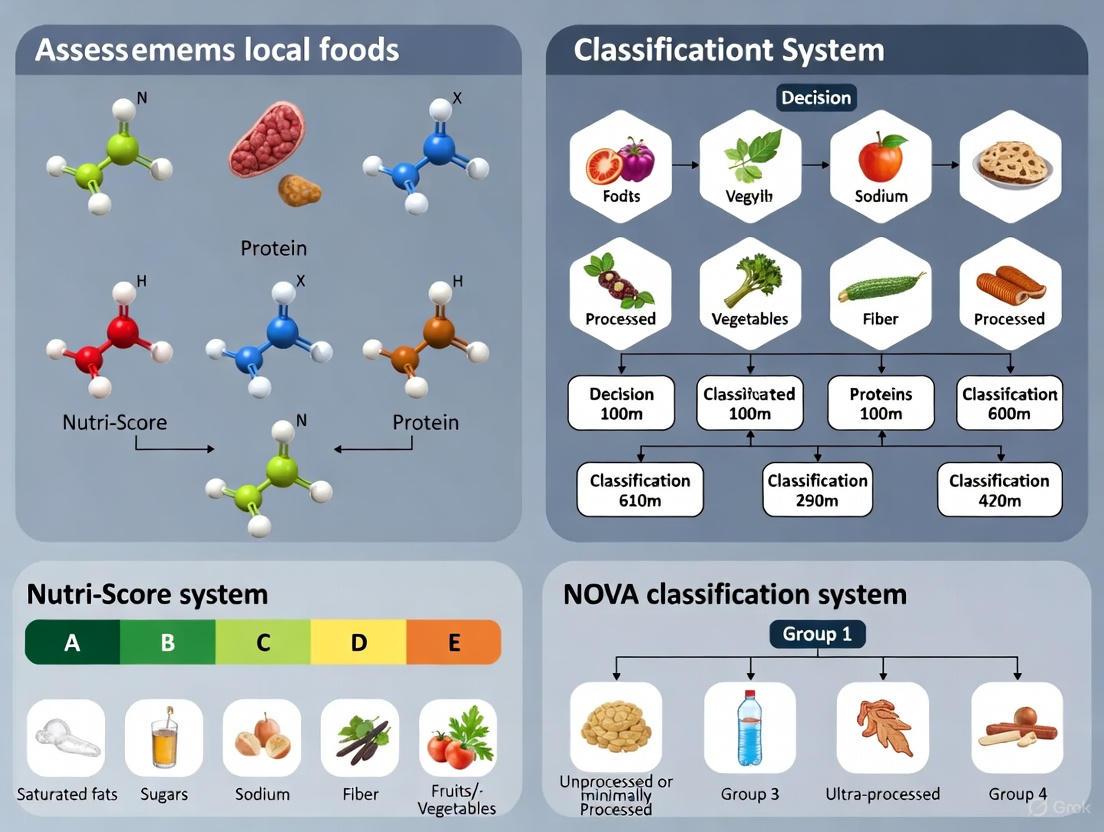
This article provides a critical analysis for researchers and drug development professionals on the synergistic application of the Nutri-Score and NOVA food classification systems.
Beyond Nutrients: Integrating Nutri-Score and NOVA for a Comprehensive Food Assessment in Biomedical Research
Abstract
This article provides a critical analysis for researchers and drug development professionals on the synergistic application of the Nutri-Score and NOVA food classification systems. It explores the foundational principles of both frameworks, where Nutri-Score evaluates nutritional composition and NOVA assesses the degree of industrial processing. The content details methodological approaches for integrated food assessment, addresses prevalent classification challenges and limitations, and examines the growing body of evidence validating each system's association with health outcomes. By synthesizing these two dimensions, this resource aims to equip scientists with a more nuanced toolkit for dietary exposure assessment in clinical and public health nutrition research, ultimately informing the development of targeted nutritional interventions and therapies.
Decoding the Frameworks: Foundational Principles of Nutri-Score and NOVA Classification
The escalating global burden of diet-related chronic diseases represents one of the most significant public health challenges of the 21st century [1]. Non-communicable diseases including obesity, cardiovascular diseases, type 2 diabetes, and cancer have become leading causes of premature mortality worldwide, responsible for approximately 80% of premature deaths from non-communicable diseases [1]. The economic costs are equally staggering, with the social cost of overweight and obesity alone estimated at approximately €20 billion (1% of GDP) in France [1]. Nutrition serves as a key modifiable determinant underlying this crisis, creating a powerful lever for public health intervention [1]. This application note provides researchers with validated methodologies for assessing the nutritional quality and processing characteristics of foods using the Nutri-Score and NOVA classification systems within local food assessment research contexts.
Comparative Analysis of Assessment Frameworks
Nutri-Score: Nutrient-Based Profiling System
The Nutri-Score is a simplified, front-of-pack nutrition label that characterizes the overall nutritional quality of foods using a five-point color-coded scale from dark green (A) to dark orange (E) [1]. Developed by independent academic researchers and officially adopted in France in 2017, this system aims to allow consumers to quickly compare nutritional quality at point of purchase while encouraging manufacturers to improve product formulations through reformulation [1].
The underlying algorithm calculates a score based on both favorable components (fruit, vegetables, nuts, fiber, protein) and unfavorable components (energy, sugars, saturated fat, sodium) per 100g of product [1]. The scientific basis originates from the British Food Standards Agency nutrient profiling model, validated by extensive research on its association with health outcomes [1]. Recent studies demonstrate its effectiveness in guiding institutional food procurements, with research in Norwegian high schools showing that Nutri-Score aligned well with national school meal guidelines and could serve as a complementary tool for evaluating food purchases [2].
NOVA: Food Processing Classification System
The NOVA system classifies foods based on the nature, extent, and purpose of industrial processing rather than nutritional composition [3]. Developed by researchers at the University of São Paulo, Brazil, NOVA categorizes foods into four distinct groups:
- Group 1: Unprocessed or minimally processed foods (fresh fruits, vegetables, eggs, meat, milk) [4]
- Group 2: Processed culinary ingredients (oils, butter, sugar, salt) [4]
- Group 3: Processed foods (canned vegetables, cheeses, fresh bread) [4]
- Group 4: Ultra-processed foods (soft drinks, sweetened breakfast cereals, reconstituted meat products) [4]
Ultra-processed foods are industrial formulations typically containing multiple ingredients, including additives not used in home cooking, designed to be hyper-palatable and convenient [3]. The system addresses limitations of conventional food classifications that often group nutritionally dissimilar foods together (e.g., whole grains with sugary cereals) [3].
Table 1: Key Characteristics of Food Assessment Frameworks
| Feature | Nutri-Score | NOVA Classification |
|---|---|---|
| Primary Focus | Nutrient composition | Degree and purpose of processing |
| Classification Basis | Algorithm balancing favorable/unfavorable nutrients | Industrial processing methods and ingredients |
| Output Format | 5-point scale (A-E with color codes) | 4-category classification |
| Key Strengths | Validated against health outcomes; Consumer-friendly design | Captures non-nutrient aspects of food quality; Addresses food system impacts |
| Key Limitations | Does not account for processing degree or additives | Does not directly address nutrient profile; Classification challenges for complex products |
Experimental Protocols for Local Food Assessment
Protocol for Nutri-Score Calculation and Application
Objective: To calculate Nutri-Score values for food products and assess their distribution within a local food environment.
Materials:
- Food composition data (per 100g/100ml) for energy, sugars, saturated fat, sodium, protein, fiber, fruits/vegetables/nuts
- Nutri-Score calculation algorithm
- Database management software (e.g., Excel, R, Python)
Procedure:
- Data Collection: Compile nutritional information for target food products from nutrition labels, manufacturer specifications, or chemical analysis.
- Point Allocation:
- Calculate points (0-10) for unfavorable components: energy (kJ), sugars (g), saturated fatty acids (g), and sodium (mg)
- Calculate points (0-5) for favorable components: percentage of fruits/vegetables/nuts/rapeseed/walnut/olive oils (%); and dietary fiber (g) and protein (g)
- Final Score Computation:
- Compute final score: Points (unfavorable components) - Points (favorable components)
- Apply specific adjustments for certain food categories (beverages, added fats, cheeses)
- Classification:
- Translate final scores to Nutri-Score categories: A (≤-1), B (0 to 2), C (3 to 10), D (11 to 18), E (≥19) for solid foods; different thresholds apply for beverages, added fats, and cheeses
- Validation:
- Cross-reference calculations with established databases where available
- Conduct sensitivity analysis for borderline cases
Implementation Notes:
- For mixed dishes, calculate based on overall composition per 100g
- For dried products (e.g., soups), consider preparation state unless specified otherwise
- The 2023 updated algorithm provides modified thresholds for specific food categories including beverages, added fats, and cheeses [1]
Protocol for NOVA Classification of Packaged Foods
Objective: To classify food products according to NOVA categories with particular focus on identifying ultra-processed foods.
Materials:
- Food products with complete ingredient lists
- Reference guide for food additives and industrial processes
- Standardized classification template
Procedure:
- Ingredient Analysis:
- Obtain complete ingredient lists for all target products
- Identify industrial ingredients (e.g., high-fructose corn syrup, hydrogenated oils, protein isolates)
- Flag food substances not commonly used in home kitchens (e.g., maltodextrin, carrageenan, artificial sweeteners)
- Process Evaluation:
- Assess processing methods described or implied by ingredient list and product form
- Identify processing techniques uncommon in home kitchens (e.g., extrusion, pre-frying for stability)
- Categorization:
- Apply NOVA classification criteria systematically:
- Group 1: Unprocessed or minimally processed (fresh, frozen, dried foods without additives)
- Group 2: Processed culinary ingredients (substances used to prepare Group 1 foods)
- Group 3: Processed foods (simple products with added salt, sugar, or oil)
- Group 4: Ultra-processed foods (industrial formulations with multiple ingredients including additives)
- Apply NOVA classification criteria systematically:
- Validation:
- Conduct independent dual classification with resolution of discrepancies through panel discussion
- Consult reference classifications for ambiguous products
- Document reasoning for borderline cases
Implementation Notes:
- For complex products, consider the primary purpose and nature of processing rather than simply counting ingredients
- Recognize that some traditional processed foods (cheeses, breads) may belong to Group 3 rather than Group 4
- A new tool, WISEcode, has been developed to provide a more nuanced classification of processed foods, addressing limitations of the NOVA system which may over-categorize foods as ultra-processed [5]
Protocol for Integrated Assessment combining Nutri-Score and NOVA
Objective: To evaluate foods using both nutrient profiling and processing dimensions for comprehensive characterization.
Materials:
- Completed Nutri-Score calculations
- NOVA classifications
- Integrated assessment framework
Procedure:
- Data Integration:
- Create a matrix with both classification results for each product
- Identify patterns and discrepancies between systems
- Analysis:
- Calculate proportion of products with concordant classifications (e.g., Nutri-Score D/E and NOVA 4)
- Identify discordant products (e.g., Nutri-Score A/B but NOVA 4, or Nutri-Score D/E but NOVA 1-3)
- Statistically analyze relationships between classifications using appropriate tests (chi-square, correlation)
- Interpretation:
- Contextualize findings within local dietary patterns and public health priorities
- Identify categories where processing or nutrient quality dominates health considerations
Data Analysis and Visualization Framework
Logical Relationship Between Assessment Systems
The following diagram illustrates the conceptual relationship and complementary nature of the Nutri-Score and NOVA classification systems in public health nutrition research:
Comparative Validation Data
Recent research validates the complementary application of these systems. A 2025 study of child-targeted foods in Türkiye found that 92.7% of products were ultra-processed (NOVA 4), and 70% received Nutri-Score D or E ratings, demonstrating significant concordance between poor nutritional quality and high processing levels [6]. The integrated analysis revealed that ultra-processed foods had significantly lower nutritional quality (p < 0.001) according to Nutri-Score [6].
Table 2: Comparative Performance of Assessment Systems in Recent Studies
| Study Context | Nutri-Score Findings | NOVA Findings | Integrated Insights |
|---|---|---|---|
| Child-Targeted Foods in Türkiye (n=775 products) [6] | 70% of products classified as D or E | 92.7% classified as ultra-processed | Significant association between NOVA 4 and lower Nutri-Score ratings (p<0.001) |
| Greek Adult Population (n=220) [7] | Not assessed | GR-UPFAST tool showed negative correlation with Mediterranean diet (rho=-0.162, p=0.016) | UPF consumption positively correlated with body weight (rho=0.140, p=0.039) |
| Food Pantry Intervention (n=187 clients) [8] | Not primary focus | 41.1-43.5% of energy from UPFs across conditions | Behavioral economics intervention showed no significant reduction in UPF selection |
| Norwegian School Food Procurement [2] | Good agreement with national school meal guidelines; effective for evaluation | Not assessed | Proposed target: ≥65% expenditure on Nutri-Score A/B foods; ≤15% on E-rated foods |
Research Reagent Solutions and Essential Materials
Table 3: Essential Research Tools for Food Assessment Studies
| Tool/Resource | Function | Application Notes |
|---|---|---|
| Nutrition Data System for Research (NDSR) | Standardized nutrient analysis and dietary assessment | Provides detailed nutritional information and food subgroup categorization; requires manual coding for NOVA classification [8] |
| GR-UPFAST (Greek Ultra Processed Food intake Assessment Tool) | Assess UPF consumption frequency | Validated tool (Cronbach's α=0.766) with 28 items; useful for Mediterranean populations [7] |
| Food Compass 2.0 | Comprehensive nutrient profiling system | Updated system (2024) incorporating processing and ingredients; validated against health outcomes [9] |
| WISEcode Classification System | Nuanced evaluation of processed foods | Addresses NOVA limitations with weighted scoring of ingredients and health concerns [5] |
| Open Food Facts Database | Crowdsourced product information | Provides ingredient lists and nutritional data for classification; useful for manual verification [8] |
The complementary application of Nutri-Score and NOVA classification systems provides researchers with a robust methodological framework for addressing the public health burden of diet-related chronic diseases through local food assessment. While Nutri-Score effectively evaluates nutritional composition and aligns with health outcome data, NOVA captures important dimensions related to food processing and industrial formulation. The experimental protocols outlined in this application note enable standardized assessment across diverse food environments, facilitating evidence-based public health interventions and policies aimed at creating healthier food systems.
The Nutri-Score is a five-color nutrition label and nutritional rating system designed to provide consumers with simplified, at-a-glance information about the overall nutritional value of food products [10]. Developed by independent academic researchers specializing in nutrition and public health, this front-of-pack labeling system was officially adopted by France in 2017 and has since been implemented in several European countries including Belgium, Germany, Luxembourg, the Netherlands, and Switzerland [1] [11]. The system assigns products a rating letter from A (dark green) to E (dark orange), with associated colors from green to red, creating a visual gradient that enables rapid comparison of similar food products [10] [11].
The fundamental public health objective of the Nutri-Score is to combat the growing burden of diet-related chronic diseases by empowering consumers to make more informed nutritional choices without requiring specialized nutritional knowledge [1] [11]. This system emerged in response to the recognition that traditional back-of-package nutrition tables, consisting primarily of numerical data, were rarely used by consumers due to their complexity and difficulty of interpretation [1]. By translating complex nutritional information into a simple, color-coded visual format, the Nutri-Score aims to guide consumers toward products with more favorable nutritional compositions while simultaneously encouraging food manufacturers to improve their products through reformulation [1].
Algorithm and Nutrient Profiling Model
Core Calculation Methodology
The Nutri-Score algorithm is derived from the United Kingdom Food Standards Agency (FSA) nutrient profiling system, initially developed at Oxford University [1] [10]. This scientifically validated algorithm operates on a balancing principle between detrimental and beneficial nutritional components, calculating a final score that determines the letter grade and color displayed on packaging [10].
The calculation process follows a structured three-step approach:
- Negative points (N) are calculated based on the content of nutrients considered problematic when consumed in excess: energy density (kcal/100g), sugar content (g/100g), saturated fatty acids (g/100g), and sodium/salt content (mg/100g) [10].
- Positive points (P) are calculated based on the content of nutrients and food components considered beneficial: fruits, vegetables, nuts, legumes, fiber (g/100g), and protein (g/100g) [10].
- The total score is computed by subtracting the positive points from the negative points, with special adjustments for certain food categories [10].
Table 1: Nutri-Score Negative Points Calculation Matrix
| Points | Energy (kcal/100g) | Sugars (g/100g) | Saturated Fat (g/100g) | Sodium (mg/100g) |
|---|---|---|---|---|
| 0 | ≤ 80 | ≤ 4.5 | ≤ 1.0 | ≤ 90 |
| 1 | 81-160 | > 4.5 | > 1.0 | > 90 |
| 2 | 161-240 | > 9.0 | > 2.0 | > 180 |
| 3 | 241-320 | > 13.5 | > 3.0 | > 270 |
| 4 | 321-400 | > 18.0 | > 4.0 | > 360 |
| 5 | 401-480 | > 22.5 | > 5.0 | > 450 |
| 6 | 481-560 | > 27.0 | > 6.0 | > 540 |
| 7 | 561-640 | > 31.0 | > 7.0 | > 630 |
| 8 | 641-720 | > 36.0 | > 8.0 | > 720 |
| 9 | 721-800 | > 40.0 | > 9.0 | > 810 |
| 10 | > 800 | > 45.0 | > 10.0 | > 900 |
Table 2: Nutri-Score Positive Points Calculation Matrix
| Points | Fruits, Vegetables, Nuts, Legumes (%) | Fibre (g/100g) | Protein (g/100g) |
|---|---|---|---|
| 0 | < 40% | < 0.7 | < 1.6 |
| 1 | ≥ 40% | ≥ 0.7 | ≥ 1.6 |
| 2 | ≥ 60% | ≥ 1.4 | ≥ 3.2 |
| 3 | - | ≥ 2.1 | ≥ 4.8 |
| 4 | - | ≥ 2.8 | ≥ 6.4 |
| 5 | ≥ 80% | ≥ 3.5 | ≥ 8.0 |
Food Category Modifications
The standard Nutri-Score algorithm incorporates specific modifications for particular food categories to better align with public health recommendations and nutritional science:
- Cheese: The protein content is always considered in the calculation, regardless of the total negative score [10].
- Added fats (e.g., vegetable oils, butter): The ratio of saturated fats to total fat content is considered instead of the absolute saturated fat amount, and only energy from saturated fats is counted rather than total energy content [10].
- Beverages: Different calculation parameters apply, with stricter thresholds for negative components [10].
Classification Thresholds
The final Nutri-Score classification is determined by the total points calculated from the algorithm, with the following thresholds defining the letter grades:
Table 3: Nutri-Score Classification Thresholds
| Nutri-Score | Color | Point Range |
|---|---|---|
| A | Dark Green | -15 to -1 |
| B | Light Green | 0 to 2 |
| C | Yellow | 3 to 10 |
| D | Orange | 11 to 18 |
| E | Red | 19 to 40 |
Algorithm Updates for 2023-2025
The Nutri-Score algorithm has undergone scientific revisions to improve its alignment with current nutritional evidence and public health guidelines. Key updates include:
- Modified scoring for sugars, using a point allocation scale aligned with 3.75% of the 90g reference value [10].
- Revised salt component scoring, aligned with 3.75% of the 6g reference value [10].
- Adjusted fiber and protein components using scales aligned with nutrient claim regulations [10].
- Removal of nuts and specific oils (rapeseed, walnut, olive) from the "Fruit, Vegetables, Legumes" component [10].
- Simplification of the final computation by removing the protein cap exemption for products with high fruit and vegetable content [10].
These updates have demonstrated improved correlation with healthy fat sources (fish, seafood, vegetable oils, plain nuts) and whole-grain products in validation studies [12].
Experimental Protocols for Nutri-Score Application and Validation
Protocol 1: Calculating Nutri-Score for Food Products
Purpose: To determine the correct Nutri-Score classification for a specific food product using its nutritional composition data.
Materials and Equipment:
- Complete nutritional composition data per 100g or 100ml of product
- Nutri-Score calculation tables or algorithm
- Excel spreadsheet or specialized software for automated calculation
Procedure:
- Compile Nutritional Data: Gather precise measurements for energy (kcal), sugars (g), saturated fatty acids (g), sodium (mg), fiber (g), protein (g), and percentage of fruits, vegetables, nuts, and legumes.
- Calculate Negative Points (N): Using Table 1, determine points for energy density, sugars, saturated fat, and sodium. Sum these for total negative points.
- Calculate Positive Points (P): Using Table 2, determine points for fruits/vegetables/nuts/legumes content, fiber, and protein. Sum these for total positive points.
- Compute Final Score: Subtract positive points (P) from negative points (N): Final Score = N - P.
- Assign Nutri-Score Classification: Using Table 3, match the final score to the corresponding Nutri-Score letter (A-E).
- Category-Specific Adjustments: Apply modifications for cheese, added fats, or beverages if applicable.
Validation: Verify calculation using multiple methods (manual, automated tool) and cross-reference with similar products for consistency.
Protocol 2: Validating Nutri-Score Against Population Dietary Data
Purpose: To assess how well the Nutri-Score discriminates dietary quality at a population level, as performed in the ESTEBAN study [12].
Materials and Equipment:
- 24-hour dietary recall data from a representative population sample
- Food composition database
- Statistical analysis software (R, SAS, or SPSS)
- Nutri-Score calculation algorithm
Procedure:
- Data Collection: Collect detailed dietary intake data through repeated 24-hour dietary recalls from a representative sample population.
- Compute Individual Dietary Index: For each participant, calculate a dietary index as the average of Nutri-Score values of all foods consumed, weighted by their energy contributions.
- Categorize Participants: Group participants into quartiles based on their dietary index scores.
- Analyze Nutrient Intakes: Compare intakes of key nutrients (proteins, fibers, vitamins, minerals, saturated fats, added sugars) across quartiles using ANOVA and linear contrasts.
- Examine Food Consumption Patterns: Assess consumption frequencies of different food groups (fish, vegetable oils, whole grains, etc.) across score quartiles.
- Correlate with Biomarkers: Where available, analyze associations with blood concentrations of relevant nutrients (β-carotene, vitamin B9, etc.).
- Statistical Comparison: Use Spearman correlations to evaluate the continuous relationship between the dietary index and nutritional outcomes.
Validation: Compare discriminatory power of different Nutri-Score algorithm versions and establish consistency with expected dietary patterns.
Protocol 3: Assessing Nutri-Score Impact on Food Purchases
Purpose: To evaluate how Nutri-Score labeling influences consumer purchasing behavior and nutritional quality of food baskets.
Materials and Equipment:
- Retail sales data (value and volume)
- Loyalty card or digital shopping basket data
- Nutritional composition database
- Statistical modeling software
Procedure:
- Baseline Data Collection: Collect pre-implementation sales data for product categories carrying Nutri-Score labeling.
- Post-Implementation Monitoring: Track sales data after Nutri-Score introduction, noting changes in market share for different score categories.
- Calculate Basket Nutritional Quality: Develop a nutritional quality score for entire shopping baskets using the Grocery Basket Score (GBS) methodology [13].
- Longitudinal Analysis: Compare nutritional quality of purchases before and after Nutri-Score implementation using paired statistical tests.
- Control Group Analysis: Compare results with regions or stores without Nutri-Score implementation where possible.
- Reformulation Assessment: Monitor product reformulations by manufacturers seeking to improve their Nutri-Score.
Validation: Use control groups, interrupted time series analysis, and multivariate regression to account for confounding factors.
Comparative Analysis with NOVA Food Classification System
NOVA System Framework
The NOVA classification system, developed by researchers at the University of São Paulo, categorizes foods based on the nature, extent, and purpose of industrial processing rather than nutritional composition [4] [3]. This system divides foods into four distinct groups:
- Group 1: Unprocessed or Minimally Processed Foods - Naturally occurring foods with no added salt, sugar, oils, or fats; includes fresh fruits and vegetables, milk, eggs, meat, poultry, fish, plain yogurt, grains, and pasta [4].
- Group 2: Processed Culinary Ingredients - Substances derived from Group 1 foods or from nature through processes like pressing, refining, grinding, or milling; includes vegetable oils, butter, salt, sugar, and honey [4].
- Group 3: Processed Foods - Simple products made by adding sugar, oil, salt, or other Group 2 ingredients to Group 1 foods; includes canned vegetables, fruits in syrup, salted nuts, cheeses, and freshly made breads [4].
- Group 4: Ultra-Processed Foods - Industrial formulations created with multiple ingredients, including additives not typically used in home cooking; includes soft drinks, sweet or savory packaged snacks, mass-produced breads, cookies, ready-to-heat meals, and various reconstituted meat products [4] [3].
Conceptual and Methodological Differences
The fundamental distinction between Nutri-Score and NOVA lies in their assessment frameworks: Nutri-Score evaluates nutritional composition, while NOVA categorizes based on processing level. This leads to significant divergences in how specific foods are classified:
Table 4: Comparative Classification of Select Foods by Nutri-Score and NOVA
| Food Product | Typical Nutri-Score | NOVA Group | Classification Alignment |
|---|---|---|---|
| Sugar-sweetened soda | E | Group 4 (Ultra-processed) | Consistent |
| Plain unsweetened yogurt | A/B | Group 1 (Unprocessed) | Divergent |
| Whole-grain breakfast cereal | B/C | Group 4 (Ultra-processed) | Divergent |
| Canned vegetables with salt | C/D | Group 3 (Processed) | Partial |
| Vegetable oil | C/D | Group 2 (Culinary ingredients) | Partial |
| Hummus with stabilizers | Variable | Group 4 (Ultra-processed) | Context-dependent |
The NOVA system has been particularly influential in highlighting the health implications of ultra-processed foods, with prospective studies linking higher consumption to increased risks of obesity, cardiovascular disease, type 2 diabetes, and all-cause mortality [3]. However, critics note that NOVA's exclusive focus on processing level may overlook the nutritional value of some ultra-processed foods, such as whole-grain breads, fortified breakfast cereals, and yogurts, which can contribute beneficial nutrients despite their processed nature [4].
Integration Potential for Research
For comprehensive food assessment research, integrating both systems provides complementary insights:
- Use Nutri-Score to evaluate nutritional quality within specific food categories
- Apply NOVA to understand the role of food processing in dietary patterns
- Combine both systems to identify products that are both highly processed and nutritionally poor versus those that may be processed but nutritionally adequate
The National Cancer Institute provides standardized methods for applying the NOVA classification system to dietary data collected through tools like ASA24 and NHANES, enabling researchers to systematically analyze food processing levels in population studies [14].
Research Reagent Solutions and Essential Materials
Table 5: Essential Research Tools for Nutritional Assessment Studies
| Research Tool | Function | Application Context |
|---|---|---|
| Nutrition Data System for Research (NDSR) | Standardized dietary analysis software with food composition database | Coding and analyzing dietary intake data from recalls or records |
| Automated Self-Administered 24-hour (ASA24) Dietary Assessment Tool | Self-administered web-based tool for collecting dietary intake data | Large-scale population studies of food consumption patterns |
| Food and Nutrient Database for Dietary Studies (FNDDS) | Comprehensive database of food compositions used by NHANES | Linking food intake data to nutritional composition for analysis |
| NHANES Dietary Data | Nationally representative survey data with detailed dietary components | Epidemiological studies linking diet to health outcomes |
| NOVA Classification Framework | Standardized protocol for categorizing foods by processing level | Assessing impact of food processing on health independent of nutrition |
| Healthy Eating Index (HEI) | Diet quality measure assessing alignment with Dietary Guidelines | Validating other nutrition metrics against established standards |
| Grocery Basket Score (GBS) | Nutrient profiling model for entire shopping baskets | Evaluating nutritional quality of food purchases at retail level |
Visualizations
Nutri-Score Calculation Workflow
Nutri-Score and NOVA Conceptual Relationship
The Nutri-Score system represents a significant advancement in public health nutrition by translating complex nutritional information into an accessible, visually intuitive format. Its scientifically validated algorithm balances both detrimental and beneficial nutritional components, enabling consumers to make rapid comparisons between similar products. The ongoing refinement of the algorithm, including the 2023-2025 updates, demonstrates the system's capacity to incorporate emerging nutritional science and maintain alignment with public health guidelines.
For research applications, particularly in local food assessment studies, combining Nutri-Score with the NOVA classification system provides complementary perspectives on food quality—evaluating both nutritional composition and processing level. The experimental protocols outlined in this document provide researchers with standardized methodologies for applying, validating, and assessing the impact of these systems in various contexts. As front-of-pack nutritional labeling continues to evolve globally, the Nutri-Score remains at the forefront of evidence-based approaches to combating diet-related chronic diseases through consumer empowerment and food product reformulation.
The NOVA classification system is a framework for grouping edible substances based on the extent and purpose of food processing applied to them. Developed by researchers at the University of São Paulo, Brazil, and first proposed in 2009, NOVA has become a significant tool in nutrition and public health research worldwide [15]. The system's name means "new" in Portuguese and originates from the title of the original scientific article, "A new classification of foods" [15]. NOVA operates on the central thesis that the nature, extent, and purpose of food processing—rather than just nutrient content—explain the modern relationship between food, nutrition, and health [3].
This system was created in response to significant limitations in conventional food classifications, which often group foods based on botanical origin or animal species and according to nutrient content, thereby combining foods with vastly different health effects [3]. For instance, traditional classifications might group whole grains with sugared breakfast cereals or fresh chicken with chicken nuggets, sidelining the crucial dimension of food processing [3]. The NOVA framework addresses this gap by focusing on processing characteristics, making it particularly relevant for understanding contemporary dietary patterns and their health implications.
The Four NOVA Categories
The NOVA system classifies all foods and food substances into four distinct groups based on the nature, extent, and purpose of the industrial processing they undergo [15]. These groups range from unprocessed foods to formulations designed specifically for convenience and hyper-palatability.
Group 1: Unprocessed or Minimally Processed Foods
Definition: Unprocessed foods are the edible parts of plants (such as seeds, fruits, leaves, stems, roots) or of animals (muscles, offal, eggs, milk), and also fungi, algae and water, after separation from nature [15]. Minimally processed foods are natural foods altered by processes that include removal of inedible or unwanted parts, drying, crushing, grinding, fractioning, filtering, roasting, boiling, pasteurization, refrigeration, freezing, placing in containers, vacuum packaging, or non-alcoholic fermentation [15]. None of these processes adds substances such as salt, sugar, oils or fats to the original food [4].
Key Features:
- Preserve the integrity and nutritional composition of the original food
- No addition of salt, sugar, oils, fats, or other culinary ingredients
- Typically free of food additives [15]
- Processes used are primarily to extend shelf life, facilitate preparation, or make foods safer or more enjoyable to eat
Examples: Fresh, squeezed, chilled, frozen, or dried fruits and leafy vegetables; grains such as brown rice, corn kernel, wheat berry; legumes such as beans, lentils; starchy roots and tubers such as potatoes, cassava; eggs; fresh or frozen meat, poultry and fish; fresh or pasteurized milk; plain yogurt with no added sugar; mushrooms; fungi; algae; spices; herbs; plain tea, coffee, drinking water [15] [4].
Group 2: Processed Culinary Ingredients
Definition: Processed culinary ingredients are substances derived from Group 1 foods or from nature by processes such as pressing, refining, grinding, milling, and drying [15]. These ingredients are typically not consumed alone but used in home and restaurant kitchens to prepare, season, and cook Group 1 foods [4].
Key Features:
- Extracted and purified from whole foods or natural sources
- Used in combination with Group 1 foods for meal preparation
- Generally free of additives, though some may include added vitamins or minerals (e.g., iodized salt) [15]
- Often require industrial processes for extraction and purification
Examples: Vegetable oils (olive, corn, sunflower); butter; lard; sugar and molasses from cane or beet; honey extracted from combs; syrup from maple trees; salt mined from earth or sea; starches extracted from corn and other plants [15] [4].
Group 3: Processed Foods
Definition: Processed foods are relatively simple products made by adding processed culinary ingredients (Group 2) such as salt, sugar, or oil to unprocessed or minimally processed foods (Group 1) [15]. They are typically made through processes that include baking, boiling, canning, bottling, and non-alcoholic fermentation [15].
Key Features:
- Usually contain two or three ingredients
- Processes aim to extend the durability of Group 1 foods or modify their sensory qualities
- May include additives to preserve original properties or prevent microbial growth
- Recognizably modified versions of Group 1 foods
Examples: Canned vegetables, fruits, and legumes; salted or sugared nuts and seeds; salted, cured, or smoked meats; canned fish; fruits in syrup; cheeses; freshly made breads [15] [4]. Breads, pastries, cakes, biscuits, snacks, and some meat products fall into this group when they are made predominantly from Group 1 foods with the addition of Group 2 ingredients [15].
Group 4: Ultra-Processed Foods
Definition: Ultra-processed foods (UPF) are industrial formulations manufactured from substances derived from foods or synthesized from other organic sources [3]. They typically contain little or no whole foods, are ready-to-consume or heat up, and are made with multiple ingredients, including additives whose purpose is to make the final product palatable or hyper-palatable [3] [15].
Key Features:
- Industrial formulations typically containing five or more ingredients [16]
- Often include ingredients of no culinary use (e.g., protein isolates, hydrogenated oils, maltodextrin, high-fructose corn syrup) [15]
- Contain cosmetic additives (flavors, colors, emulsifiers) to imitate sensory properties of Group 1 foods or disguise undesirable qualities [15]
- Designed to be profitable (low-cost ingredients), convenient (ready-to-consume), and hyper-palatable [15]
- Typically branded aggressively and marketed intensely
Examples: Soft drinks; sweet or savory packaged snacks; ice cream; candies (confectionery); mass-produced packaged breads and buns; margarines and other spreads; cookies (biscuits); pastries; cakes; cake mixes; breakfast cereals; cereal and energy bars; milk drinks; cocoa drinks; meat and chicken extracts; infant formulas; health and slimming products; ready-to-heat products such as pizzas, pies, pasta and chicken nuggets; and powder and instant soups [3] [15].
Table 1: Summary of NOVA Food Classification Groups
| NOVA Group | Description | Primary Purpose | Typical Ingredients | Examples |
|---|---|---|---|---|
| Group 1: Unprocessed or Minimally Processed Foods | Edible parts of plants, animals, fungi, algae, water with minimal alteration | Preservation, safety, preparation ease | Single whole foods; no added substances | Fresh/frozen fruits/vegetables, grains, legumes, eggs, fresh meat/fish, milk, plain yogurt [15] [4] |
| Group 2: Processed Culinary Ingredients | Substances derived from Group 1 foods or nature | Use in cooking and seasoning Group 1 foods | Extracted/purified components; rarely contain additives | Oils, butter, sugar, salt, honey, starches, vinegar [15] [4] |
| Group 3: Processed Foods | Simple products made by adding Group 2 ingredients to Group 1 foods | Extend shelf life, enhance sensory qualities | Group 1 foods + Group 2 ingredients; may include preservatives | Canned vegetables/fish, salted nuts, cheese, fresh bread, fruits in syrup [15] [4] |
| Group 4: Ultra-Processed Foods | Industrial formulations with multiple ingredients | Create profitable, convenient, hyper-palatable products | Little/no whole foods; industrial ingredients; cosmetic additives | Soft drinks, sweet/savory snacks, mass-produced breads, cookies, ready-to-heat products [3] [15] |
Methodological Protocols for NOVA Classification
General Classification Workflow
Applying the NOVA classification system in research settings requires a systematic approach to accurately categorize food items. The classification process should follow a defined hierarchy of information sources to ensure consistency and reproducibility across studies.
Primary Data Collection Protocol:
- Product Identification: Record product name, brand, weight, and exact count for all food items [8] [17].
- Nutritional Information: Document all available nutritional information from packaging, including energy density, sugars, saturated fats, sodium, fiber, and protein content per 100g or 100mL [8] [17].
- Ingredient Analysis: Obtain complete ingredient lists, prioritizing branded product information from manufacturer websites or standardized databases [8] [17].
Hierarchical Classification Protocol: When assigning NOVA categories, researchers should follow this decision hierarchy:
- First: Use detailed product descriptions from standardized nutritional databases (e.g., Nutrition Data System for Research) [8] [17].
- Second: Consult raw data files that include specific brand information [8] [17].
- Third: Obtain ingredient lists from brand websites, USDA FoodData Central Branded Foods Database, or Open Food Facts [8] [17].
- Fourth: Apply standardized classification protocols for specific food types when brand information is unavailable (e.g., unsweetened applesauce categorized as Nova 1; applesauce sweetened with natural sweeteners categorized accordingly) [17].
Specific Decision Rules:
- For mixed categories like "fruit juices and drinks," further classification is required: 100% juices are classified as Nova 1, while flavored or sweetened fruit drinks are classified as Nova 4 [8].
- Plain, unsweetened yogurt is classified as Group 1, while sweetened or flavored yogurt typically falls into Group 4 [4].
- Freshly made bread using minimal ingredients (flour, water, salt, yeast) is Group 3, while mass-produced bread with emulsifiers, preservatives, or other additives is Group 4 [15].
Figure 1: NOVA Classification Decision Workflow
Quantitative Assessment Protocol
For research studies analyzing dietary patterns, the following protocol enables quantitative assessment of NOVA category consumption:
Energy Share Calculation Method:
- Categorization: Classify all food items selected or consumed according to NOVA categories [8] [17].
- Caloric Assessment: Calculate the total caloric content of foods within each NOVA category [8] [17].
- Percentage Calculation: Determine the energy share (% of total calories) represented by each NOVA food category using the formula: Energy Share (%) = (Calories from NOVA Category / Total Calories) × 100 [8] [17].
Statistical Analysis Framework:
- Use adjusted mixed linear models to test differences in energy share of NOVA categories between intervention conditions or population groups [8] [17].
- Control for potential confounding variables including demographics, food pantry usage, and cardiovascular health metrics where applicable [8] [17].
- Report mean values and standard deviations for energy shares across NOVA categories to enable cross-study comparisons [8] [17].
Research Reagents and Materials for NOVA-Based Studies
Table 2: Essential Research Materials for NOVA Classification Studies
| Research Tool | Function in NOVA Research | Key Features | Application Examples |
|---|---|---|---|
| Nutrition Data System for Research (NDSR) | Standardized nutritional analysis | Provides product descriptions and detailed nutritional information; designates food subgroups | Primary nutritional analysis in food pantry intervention studies [8] [17] |
| USDA FoodData Central Branded Foods Database | Brand-specific product information | Contains comprehensive ingredient and nutrient data for branded products | Verifying ingredient lists for accurate NOVA classification [8] [17] |
| Open Food Facts | Crowdsourced product database | Provides ingredient lists, nutritional information, and NOVA classifications | Supplementary source for product-specific classification [8] |
| Healthy Eating Index (HEI) | Diet quality assessment | Measures alignment with Dietary Guidelines for Americans | Parallel assessment of diet quality alongside NOVA analysis [8] [4] |
Relationship Between NOVA and Nutri-Score
Complementary Food Assessment Frameworks
The NOVA classification system and the Nutri-Score represent two distinct but potentially complementary approaches to evaluating foods. While NOVA focuses exclusively on food processing dimensions, Nutri-Score is a nutrient profiling system that assesses the nutritional quality of foods based on their composition [10] [1].
Nutri-Score Algorithm Overview: Nutri-Score calculates a score based on both negative and positive nutritional components:
- Negative points (N): Based on energy density, sugar, saturated fatty acids, and salt content per 100g [10].
- Positive points (P): Based on content of fruits, vegetables, nuts, legumes, fiber, and protein [10].
- Final Score: Calculated as N - P, with resulting scores from -15 to +40 corresponding to letter grades from A (best) to E (worst) [10].
Conceptual Integration: The two systems can be integrated to provide a more comprehensive food assessment, as they evaluate different dimensions of food quality [15]. NOVA addresses processing characteristics while Nutri-Score evaluates nutritional composition, together providing insights into both the processing methods and nutrient profile of foods.
Figure 2: Integrated Food Assessment Framework Combining NOVA and Nutri-Score
Comparative Analysis in Research Settings
Studies comparing these classification systems have demonstrated their distinct perspectives on food quality:
Areas of Divergence:
- Some foods classified as ultra-processed by NOVA may receive favorable Nutri-Score ratings due to their nutrient profile (e.g., whole-grain breakfast cereals, flavored yogurts, industrially produced whole-grain breads) [4].
- Conversely, some minimally processed foods traditional to certain cuisines may receive poor Nutri-Score ratings despite their minimal processing (e.g., cheeses, certain meats, added fats) [18].
Research Implications:
- The systems should be viewed as complementary rather than competing frameworks [15].
- Combined use provides a more holistic assessment of food quality, addressing both processing techniques and nutritional composition [4].
- Recent developments in nutrient profiling systems like Food Compass 2.0 attempt to integrate both processing and nutritional dimensions into a single score [9].
Applications in Public Health and Nutritional Epidemiology
Health Outcomes Associations
The NOVA classification system has been increasingly used to evaluate relationships between food processing and health outcomes. Epidemiological studies employing NOVA have identified significant associations between ultra-processed food consumption and various health conditions.
Table 3: Documented Health Outcomes Associated with Ultra-Processed Food Consumption
| Health Outcome | Association Strength | Key Research Findings |
|---|---|---|
| Obesity | Strong positive association | UPF consumption linked to increased BMI and risk of overweight/obesity in prospective studies [15] [4] |
| Cardiovascular Disease | Significant association | Prospective cohort studies show increased CVD risk with higher UPF consumption [15] [4] |
| Type 2 Diabetes | Significant association | Large prospective cohort studies demonstrate increased risk with higher UPF intake, though some UPF subgroups show protective effects [4] |
| All-Cause Mortality | Dose-response relationship | Systematic review found 15% increased all-cause mortality with every 10% increase in daily UPF caloric consumption [8] |
| Metabolic Syndrome | Significant association | Studies link UPF consumption with increased prevalence of metabolic syndrome [15] |
| Certain Cancers | Moderate association | Research indicates associations between UPF consumption and various cancer types [15] |
Global Public Health Implementation
The NOVA framework has informed food and nutrition policies internationally:
- Brazil: The Ministry of Health incorporated NOVA principles into its dietary guidelines, recommending that citizens "always prefer natural or minimally processed foods and freshly made dishes and meals to ultra-processed foods" [15].
- Pan American Health Organization (PAHO): Has adopted the NOVA classification in its dietary guidelines and reports [15].
- United Nations: Recognized the relevance of food processing in addressing malnutrition as part of the UN Decade of Nutrition (2016-2025) [3].
The system's emphasis on social and economic aspects of food processing has made it particularly valuable for addressing sustainability concerns in addition to health impacts [15].
Limitations and Critical Perspectives
While the NOVA system has gained significant traction in public health nutrition, it has also received critical appraisal from food science and nutritional perspectives:
Classification Challenges:
- Ambiguity in Categorization: Some foods do not fit neatly into NOVA categories, requiring subjective decisions by researchers [16]. For example, breads can fall into Group 3 or Group 4 depending on specific ingredients and production methods [15].
- Ingredient Counting: The system's tendency to classify foods with more than five ingredients as ultra-processed has been criticized as arbitrary, as many traditional recipes and artisanal products contain multiple ingredients [16].
- Neglect of Nutritional Quality: NOVA does not directly address the nutritional content of foods, potentially categorizing nutrient-dense formulated foods together with nutrient-poor products [4] [16].
Scientific Critiques:
- Oversimplification of Processing: Some food scientists argue that NOVA does not accurately categorize foods by processing level and instead focuses primarily on the number of ingredients [16].
- Negative Connotations: The term "ultra-processed" has been criticized for its pejorative connotations toward industrially manufactured foods, regardless of their nutritional value [16].
- Limited Validation: Some researchers have questioned whether NOVA is suitable for scientific control, noting that healthiness does not have a direct correlation with the number of ingredients or processing intensity [16].
These limitations highlight the importance of using NOVA in conjunction with other assessment tools like Nutri-Score to provide a more comprehensive evaluation of food quality [4].
The contemporary landscape of nutritional science is characterized by two predominant frameworks for evaluating food quality: one focusing on nutrient composition and the other on the degree and purpose of industrial processing. The Nutri-Score system operates primarily on the former principle, using a scientific algorithm to classify foods based on their content of both favorable and unfavorable nutrients [1]. In contrast, the NOVA food classification system categorizes foods based on the nature, extent, and purpose of industrial processing, with particular emphasis on identifying ultra-processed foods (UPF) [3]. This application note provides researchers with structured methodologies to quantitatively assess and compare these frameworks for local food assessment research, detailing specific protocols, analytical procedures, and visualization tools to elucidate the distinct insights each approach provides.
Theoretical Framework and Classification Systems
The Nutri-Score System: A Nutrient-Based Approach
The Nutri-Score algorithm translates complex nutritional information into a simple, color-coded label ranging from A (dark green) to E (dark orange). This system is grounded in a nutrient profiling model that assigns points based on the content of specific nutrients per 100g of food or beverage [1].
Calculation Algorithm: The model balances "negative" components (calories, saturated fats, sugars, and sodium) against "positive" components (protein, fiber, and percentages of fruits, vegetables, nuts, and legumes). The final score determines the letter classification, allowing consumers to compare products within the same category or across different brands of the same product type [1].
Scientific Validation: The algorithm underlying Nutri-Score has been validated through numerous studies examining its association with food consumption patterns, nutrient intake, nutritional status biomarkers, and health outcomes in prospective studies [1].
The NOVA System: A Processing-Based Approach
The NOVA system classifies all foods into one of four groups based on the nature, extent, and purpose of industrial processing:
- Group 1: Unprocessed or Minimally Processed Foods (e.g., fresh fruits, vegetables, eggs, milk, grains, meat) [3]
- Group 2: Processed Culinary Ingredients (e.g., oils, butter, sugar, salt) [3]
- Group 3: Processed Foods (e.g., canned vegetables, salted meats, fresh bread, cheese) [3]
- Group 4: Ultra-Processed Foods - industrial formulations typically containing five or more ingredients, including substances not commonly used in home cooking such as flavors, colors, emulsifiers, and other cosmetic additives [3]
The NOVA system posits that ultra-processing represents a fundamental shift in food systems, creating products designed to be hyper-palatable, convenient, and profitable, often at the expense of nutritional quality [3].
Conceptual Relationship Between Classification Systems
The diagram below illustrates the conceptual relationship between the degree of food processing and typical nutritional quality, while acknowledging the significant variation within categories.
Quantitative Data Comparison
Nutritional Composition Across Processing Categories
Table 1: Comparative Nutritional Profiles by NOVA Category (per 100g)
| NOVA Category | Energy (kcal) | Saturated Fat (g) | Total Sugar (g) | Sodium (mg) | Dietary Fiber (g) |
|---|---|---|---|---|---|
| Unprocessed/Minimally Processed | Variable | Variable | Variable | Variable | Variable |
| Processed Foods | Higher than Group 1 | Higher than Group 1 | Higher than Group 1 | Significantly Higher | Lower than Group 1 |
| Ultra-Processed Foods | Highest | Highest | Highest | Highest | Lowest |
Source: Adapted from [19] [20]
Research demonstrates that highly processed food purchases dominate US household purchasing patterns, supplying more than three-fourths of energy intake, with highly processed (61.0%) and moderately processed (15.9%) categories contributing the majority [19]. These categories consistently show higher saturated fat, sugar, and sodium content compared to less-processed foods [19].
A study of children's foods in Portugal found that of 244 products analyzed, 56.1% were classified as ultra-processed, 33.6% as minimally processed, and 10.2% as processed [20]. The ultra-processed category presented higher amounts of energy, sugars, saturated fat, and salt than unprocessed/minimally processed products [20].
Diet Quality and Health Outcomes
Table 2: Association Between Ultra-Processed Food Consumption and Diet Quality Metrics
| Population Group | UPF Consumption Level | Healthy Eating Index (HEI) Score | AHA Diet Score | Key Nutrient Deficiencies |
|---|---|---|---|---|
| US Children (2-19 years) | Highest Quintile (>79.0% energy) | -9.96 points lower | -6.22 points lower | Higher in saturated fat, sugar, sodium; lower in fiber, protein, micronutrients |
| US Adults (≥20 years) | Highest Quintile (>70.7% energy) | Significantly lower | -12.6 points lower | Similar pattern to children, more pronounced |
Source: Adapted from [21]
Analyses of NHANES data (2015-2018) reveal that higher consumption of ultra-processed foods is strongly correlated with poorer diet quality scores in both children and adults [21]. Households purchasing the most ultra-processed foods (>67.9% energy) scored 10.7 points lower on the HEI-2015 than those purchasing the least (<48.4% energy) and showed greater deviation from Dietary Guidelines for Americans recommendations across multiple food components [21].
Experimental Protocols
Protocol 1: Food Product Classification Using NOVA System
Purpose: To systematically classify food products according to the NOVA system based on the nature, extent, and purpose of processing.
Materials:
- Food products with complete ingredient lists and nutritional information
- NOVA classification guidelines [3]
- Data collection form (digital or paper-based)
Procedure:
Product Identification: Record product name, brand, barcode, and manufacturer details.
Ingredient Analysis: Examine the complete ingredient list for characteristics indicative of processing level:
- Group 1 (Unprocessed/Minimally Processed): Single whole foods with no or minimal additives
- Group 2 (Culinary Ingredients): Substances derived from Group 1 foods or from nature
- Group 3 (Processed Foods): Group 1 foods with added Group 2 ingredients
- Group 4 (Ultra-Processed Foods): Formulations with multiple ingredients, including cosmetic additives and substances not commonly used in home cooking [3]
Classification Decision: Assign to appropriate NOVA category based on predetermined criteria.
Quality Control: Have a second researcher independently classify a random subset (≥10%) of products to ensure inter-rater reliability.
Applications: This protocol was implemented in a study of food pantry selections, which found that ultra-processed foods represented 41.1-43.5% of foods selected by clients, with no significant difference between intervention and control groups [8] [22].
Protocol 2: Nutritional Quality Assessment Using Nutri-Score Algorithm
Purpose: To calculate and assign Nutri-Score classifications to food products based on nutritional composition.
Materials:
- Nutritional information for food products (per 100g or 100ml)
- Nutri-Score calculation algorithm [1]
- Data collection spreadsheet
Procedure:
Data Collection: Record the following nutritional data per 100g/ml of product:
- Energy (kJ)
- Sugars (g)
- Saturated fatty acids (g)
- Sodium (mg)
- Protein (g)
- Fiber (g)
- Percentage of fruits, vegetables, nuts, and legumes
Points Calculation:
- Calculate points A (0-10) for "negative" nutrients: energy, sugars, saturated fat, sodium
- Calculate points C (0-5) for "positive" components: protein, fiber, fruits/vegetables/nuts/legumes percentage
- Compute final score: Points A - Points C
Classification Assignment:
- A: Score ≤ -1
- B: Score 0 to 2
- C: Score 3 to 10
- D: Score 11 to 18
- E: Score ≥ 19
Validation: Cross-verify algorithm calculations with established databases where available.
Protocol 3: Integrated Assessment of Processing and Nutrition
Purpose: To simultaneously evaluate food products using both NOVA and Nutri-Score systems and analyze their concordance and discordance.
Materials:
- Food products with complete ingredient and nutrition information
- Both classification systems' guidelines
- Statistical analysis software
Procedure:
Dual Classification: Classify each product using both NOVA and Nutri-Score systems following Protocols 1 and 2.
Data Analysis:
- Create cross-tabulation of NOVA categories against Nutri-Score classes
- Calculate concordance rates (percentage of products where classifications align)
- Identify discordant cases (e.g., ultra-processed products with favorable Nutri-Scores)
Statistical Analysis:
- Use chi-square tests to examine associations between classification systems
- Calculate Cohen's kappa to measure agreement beyond chance
- Conduct regression analysis to identify nutritional predictors of discordance
Interpretation: Analyze patterns of agreement and disagreement to understand complementary insights provided by each system.
Research Toolkit
Essential Research Reagents and Materials
Table 3: Key Research Materials for Food Classification Studies
| Item | Function | Application Example |
|---|---|---|
| Nutrition Data System for Research (NDSR) | Standardized nutrient analysis | Food pantry study analysis [8] |
| Mintel Global New Products Database | Product-specific nutrition and ingredient data | Homescan Panel study product classification [19] |
| USDA FoodData Central Branded Foods | Brand-specific nutritional information | Manual classification verification [8] |
| OpenFood Facts Database | Crowdsourced product information | Ingredient list sourcing [8] |
| Nielsen Homescan Panel | Household purchase data with barcode linkage | National purchasing pattern analysis [19] |
Data Analysis and Visualization Toolkit
The following workflow diagram outlines the integrated methodological approach for comparative assessment of food classification systems:
Discussion and Research Implications
The distinction between nutritional composition and degree of processing represents a fundamental dichotomy in contemporary nutritional science. While these frameworks are often presented as competing approaches, evidence suggests they provide complementary insights for understanding diet quality and health outcomes.
Integration Frameworks
Research indicates that ultra-processed foods tend to have less favorable nutritional profiles, characterized by higher energy density and increased content of saturated fats, sugars, and sodium [19] [23]. However, significant variation exists within processing categories, suggesting that both classification systems provide valuable information. As noted in one study, "wide variation in nutrient content suggests food choices within categories may be important" [19].
Some researchers argue that "nutrient content [may be] more important than degree of processing" [21], pointing to studies showing that the association between UPF intake and adverse health outcomes may result from poor diet quality rather than processing per se. This perspective emphasizes evaluating foods like soy-based meat and dairy alternatives based on their nutritional merits rather than their processing classification [21].
Methodological Considerations
Researchers employing these classification systems should be aware of several methodological challenges:
Classification Ambiguity: Some products resist straightforward NOVA classification, requiring detailed ingredient analysis and expert judgment [8]
Algorithm Limitations: Nutri-Score's focus on specific nutrients may overlook other potentially beneficial or harmful food components [1]
Contextual Factors: The impact of processing may vary based on food matrix, preparation methods, and overall dietary patterns
Technological Evolution: Emerging processing technologies may challenge traditional classification systems, requiring ongoing methodological refinement
Future Research Directions
Priority areas for further investigation include:
- Longitudinal studies examining how reformulation affects both processing classification and nutritional profile
- Research on the biological mechanisms through which processing affects health, beyond nutrient composition
- Development of integrated classification systems that consider both processing and nutritional dimensions
- Investigation of how food processing affects sustainability metrics alongside nutritional quality
The core distinction between nutritional composition and degree of processing represents more than a methodological disagreement; it reflects fundamentally different perspectives on what constitutes a "healthy" food. The Nutri-Score system offers a practical, nutrient-based approach that enables consumers to make comparative choices at point of purchase, while the NOVA system addresses broader concerns about the transformation of food systems and the potential health implications of industrial food formulations.
For researchers engaged in local food assessment, employing both frameworks provides a more comprehensive understanding of food environments than either approach alone. The protocols and methodologies outlined in this application note provide a foundation for rigorous, comparable research that can advance our understanding of how both processing methods and nutrient composition collectively influence dietary quality and health outcomes.
From Theory to Practice: Methodological Approaches for Integrated Food Assessment
Front-of-pack nutrition labels have emerged as crucial public health tools for communicating nutritional information to consumers. The Nutri-Score system, adopted by several European countries, provides a simplified, color-coded assessment of the nutritional quality of food products [10]. This protocol details the operationalization of the Nutri-Score algorithm, which is derived from the United Kingdom Food Standards Agency (FSA) nutrient profiling model, often referred to as "model WXYfm" [24] [10]. Understanding this algorithm is essential for researchers conducting local food assessment studies, particularly those examining the relationship between nutritional quality (as measured by Nutri-Score) and degree of food processing (as classified by the NOVA system).
Nutri-Score Algorithm Fundamentals
Core Calculation Principle
The Nutri-Score algorithm calculates a composite score based on the presence of both unfavorable components (N) that should be limited in the diet and favorable components (P) that should be promoted. The final score is determined by the equation: Nutri-Score = N points - P points [25] [10]. This score falls on a scale from -15 (most favorable) to +40 (least favorable), which corresponds to the letter grades A through E [10].
Food Categorization
The algorithm applies distinct calculation methods based on product category. Researchers must correctly classify foods into one of these categories before applying the algorithm [25]:
- General Foods (includes red meat and cheese)
- Added Fats/Oils/Nuts/Seeds
- Beverages (including milk and plant-based drinks)
Table 1: Nutri-Score Category Definitions and Examples
| Category | Definition | Examples | Special Calculation Rules |
|---|---|---|---|
| General Foods | All foods not belonging to other categories | Pasta, soups, most prepared foods | Standard algorithm applied |
| Red Meat | Foods with red meat as main ingredient (≥20% meat content) | Beef, pork, lamb, sausages, edible offal | Calculated using red meat algorithm within general foods |
| Cheese | Cheese, processed cheese, and cheese specialties | Cheddar, brie, processed cheese | Protein content always considered |
| Added Fats/Oils/Nuts/Seeds | Fats meant as ingredients | Vegetable oils, butter, nuts, seeds | Ratio of saturated fats to total fat considered |
| Beverages | All drinks, including milk and plant-based alternatives | Soft drinks, juice, plant milks, flavored waters | Distinct point allocation system |
Detailed Calculation Protocol
Unfavorable Components (N Points)
The unfavorable components are calculated based on energy density, sugar content, saturated fatty acids, and sodium/salt content per 100g or 100ml of product [24] [10].
Table 2: Point Allocation for Unfavorable Components (General Foods)
| Points | Energy (kJ/100g) | Sugars (g/100g) | Saturated Fat (g/100g) | Sodium (mg/100g) | Salt (g/100g) |
|---|---|---|---|---|---|
| 0 | ≤335 | ≤4.5 | ≤1 | ≤90 | ≤0.225 |
| 1 | >335 | >4.5 | >1 | >90 | >0.225 |
| 2 | >670 | >9.0 | >2 | >180 | >0.45 |
| 3 | >1005 | >13.5 | >3 | >270 | >0.675 |
| 4 | >1340 | >18.0 | >4 | >360 | >0.9 |
| 5 | >1675 | >22.5 | >5 | >450 | >1.125 |
| 6 | >2010 | >27.0 | >6 | >540 | >1.35 |
| 7 | >2345 | >31.0 | >7 | >630 | >1.575 |
| 8 | >2680 | >36.0 | >8 | >720 | >1.8 |
| 9 | >3015 | >40.0 | >9 | >810 | >2.025 |
| 10 | >3350 | >45.0 | >10 | >900 | >2.25 |
Favorable Components (P Points)
The favorable components include fruits, vegetables, legumes, nuts, fiber, and protein content [24] [10].
Table 3: Point Allocation for Favorable Components (General Foods)
| Points | Fruits, Vegetables, Legumes, Nuts (%) | Fibre (g/100g) | Protein (g/100g) |
|---|---|---|---|
| 0 | ≤40 | ≤0.7 | ≤1.6 |
| 1 | >40 | >0.7 | >1.6 |
| 2 | >60 | >1.4 | >3.2 |
| 3 | - | >2.1 | >4.8 |
| 4 | - | >2.8 | >6.4 |
| 5 | >80 | >3.5 | >8.0 |
Special Cases in Algorithm Application
The standard algorithm (N points - P points) applies when negative points are less than 11. For products with negative points ≥11, special rules apply [24]:
- If points for fruits, vegetables, legumes, and nuts = 5: FSA-score = negative points - positive points
- If points for fruits, vegetables, legumes, and nuts <5: FSA-score = negative points - (points FVLN + points fiber)
Experimental Protocol for Local Food Assessment
Data Collection Methodology
Materials Required:
- Food product samples with complete nutrition facts panels
- Access to product ingredient lists
- Standardized data extraction form
- Nutritional analysis software/tools (if verifying nutritional composition)
Procedure:
- Product Identification: Collect food products representative of the local food supply
- Data Extraction: Record nutritional values per 100g/ml for:
- Energy (kJ/kcal)
- Total sugars (g)
- Saturated fatty acids (g)
- Sodium (mg) or salt (g)
- Dietary fiber (g)
- Protein (g)
- Percentage of fruits, vegetables, legumes, nuts (%)
- Category Assignment: Classify each product into the appropriate Nutri-Score category (General Food, Beverage, etc.)
- Point Calculation: Apply the appropriate algorithm based on product category
- Score Assignment: Convert final score to letter grade (A-E)
Workflow Visualization
Category Assignment Logic
Integration with NOVA Classification in Research
Complementary Assessment Framework
While Nutri-Score evaluates nutritional composition, the NOVA system classifies foods based on processing extent and purpose [26]. For comprehensive food assessment, researchers should apply both systems in parallel:
NOVA Classification Groups:
- Group 1: Unprocessed or minimally processed foods
- Group 2: Processed culinary ingredients
- Group 3: Processed foods
- Group 4: Ultra-processed foods (UPFs) [4]
Research Implementation Protocol
- Independent Classification: Apply Nutri-Score and NOVA classifications separately to each food product
- Data Correlation: Analyze relationships between nutritional quality and processing level
- Identify Discrepancies: Note products with favorable Nutri-Score but high processing level (UPF), and vice versa
- Contextual Interpretation: Consider both dimensions when evaluating food healthfulness
Table 4: Nutri-Score and NOVA Classification Integration Matrix (Sample Data from Open Food Facts Database)
| Nutri-Score Grade | NOVA 1 (%) | NOVA 2 (%) | NOVA 3 (%) | NOVA 4 (Ultra-Processed) (%) |
|---|---|---|---|---|
| A (Best) | 40.34 | 0.06 | 33.52 | 26.08 |
| B | 13.67 | 0.00 | 34.85 | 51.48 |
| C | 6.21 | 2.07 | 32.63 | 59.09 |
| D | 2.34 | 0.73 | 29.54 | 67.39 |
| E (Worst) | 1.23 | 1.26 | 13.82 | 83.69 |
Algorithm Updates and Considerations
2023 Algorithm Revision
The Nutri-Score algorithm was updated in 2023 to address several classification issues [25] [27]. Key improvements include:
- Enhanced distinction between whole grain and white bread products
- Better classification of vegetable oils based on fatty acid profile
- Improved scoring for red meat versus poultry
- Modified beverage categorization, including consideration of sweeteners
- Better differentiation of milk products based on saturated fat content
Impact on Ultra-Processed Food Classification
Research comparing the updated Nutri-Score with NOVA classification demonstrates improved coherence between the systems [27] [28]. The algorithm update resulted in:
- 9.8 percentage point reduction in UPFs receiving A or B ratings
- 7.8 percentage point increase in UPFs receiving D or E ratings
- Stronger alignment between poor nutritional quality and high processing level
Research Reagent Solutions and Materials
Table 5: Essential Research Tools for Nutri-Score Implementation
| Tool/Resource | Function | Application Notes |
|---|---|---|
| Open Food Facts Database | Collaborative food product database with nutritional information | Contains Nutri-Score and NOVA classifications for thousands of products; useful for validation [26] [28] |
| National Nutrient Databases | Country-specific nutritional composition data | Essential for analyzing foods without packaging or nutrition labels |
| Codex Alimentarius | International food standards and classifications | Reference for food additive identification and classification [29] [30] |
| Nutrition Analysis Software | Tools for calculating nutritional composition | Necessary for verifying or calculating nutritional values for complex recipes |
| Standardized Data Extraction Forms | Structured templates for consistent data collection | Ensure reproducible methodology across research teams |
| Dietary Fiber Analysis Methods | AOAC methods for fiber quantification | Critical for accurate P points calculation; fiber content significantly impacts scores [25] |
This protocol provides researchers with comprehensive methodological guidance for implementing the Nutri-Score algorithm in local food assessment studies. The systematic approach to data collection, categorization, and calculation ensures consistent application across research settings. When combined with the NOVA classification system, Nutri-Score offers a multidimensional perspective on food quality that incorporates both nutritional composition and processing extent. The 2023 algorithm updates have strengthened the coherence between these systems, enabling more robust assessment of local food environments and their impact on public health.
The NOVA framework is a pioneering food classification system that categorizes edible substances based on the nature, extent, and purpose of industrial processing applied to them, rather than their nutritional composition alone [31] [15]. Developed by researchers at the University of São Paulo, Brazil, under the leadership of Carlos Augusto Monteiro, NOVA has emerged as a crucial tool for nutritional epidemiology and public health policy [3] [15]. The system identifies four distinct food groups, with its most significant contribution being the conceptualization and definition of ultra-processed foods (UPF) as a unique category with specific characteristics and health implications [3].
The fundamental thesis of NOVA is that "the most important factor now, when considering food, nutrition and public health, is not nutrients, and is not foods, so much as what is done to foodstuffs and the nutrients originally contained in them, before they are purchased and consumed" [3]. This perspective represents a paradigm shift from traditional nutrient-based approaches to one that acknowledges processing as a primary determinant of dietary quality and health outcomes. The system has been validated through numerous epidemiological studies linking UPF consumption with adverse health effects including obesity, cardiovascular disease, hypertension, metabolic syndrome, depression, and various cancers [31] [15].
The Four NOVA Categories
The NOVA system organizes all foods and food products into four groups based on the extent and purpose of processing they undergo.
Table 1: The Four NOVA Food Classification Groups
| Group | Category Name | Description | Examples |
|---|---|---|---|
| 1 | Unprocessed or Minimally Processed Foods | Edible parts of plants/animals with minimal industrial processing that doesn't add substances | Fresh/frozen fruits/vegetables, grains, legumes, meat, eggs, milk, natural yogurt without additives [31] [15] |
| 2 | Processed Culinary Ingredients | Substances derived from Group 1 or nature, used to prepare/cook Group 1 foods | Oils, butter, sugar, salt, honey, starches, vinegar [31] [15] |
| 3 | Processed Foods | Simple products made by adding Group 2 ingredients to Group 1 foods to enhance durability/palatability | Canned vegetables/fish, salted nuts, cured meats, cheeses, freshly baked breads [31] [15] |
| 4 | Ultra-Processed Foods | Industrial formulations with 5+ ingredients, including substances not used in culinary preparations | Mass-produced packaged snacks, sugary cereals, carbonated drinks, instant noodles, reconstituted meat products [31] [15] |
Defining Characteristics of Ultra-Processed Foods
Ultra-processed foods (UPF), classified as NOVA Group 4, are characterized by several distinctive features that differentiate them from other food categories. These products are industrial formulations typically containing five or more ingredients, often including substances not commonly used in culinary preparation [31] [15]. Formulations frequently include additives with cosmetic functions such as flavors, colorants, non-sugar sweeteners, and emulsifiers designed to imitate sensory properties of minimally processed foods or disguise undesirable qualities [31] [32].
UPFs typically contain little to no intact Group 1 foods and often include substances of no or rare culinary use, such as high-fructose corn syrup, hydrogenated oils, modified starches, and protein isolates [15]. The processes employed in their creation include industrial techniques like extrusion, molding, and pre-frying [15]. These products are designed to be highly profitable (utilizing low-cost ingredients, having long shelf-life), convenient (ready-to-consume), and hyper-palatable [31] [15]. They are often aggressively marketed and presented in attractive packaging, frequently targeting children [31].
Operational Protocol for Classifying Ultra-Processed Foods
Step-by-Step Classification Methodology
The classification of food products according to NOVA requires systematic analysis of ingredients, processing methods, and product characteristics. The following protocol provides a standardized approach for researchers.
NOVA Food Classification Decision Pathway This diagram outlines the systematic decision process for categorizing foods according to the NOVA framework.
Step 1: Ingredient List Analysis
- Obtain complete ingredient list from product packaging or manufacturer specifications
- Count the total number of ingredients present
- Identify ingredients that qualify as "substances of no or rare culinary use" including:
- High-fructose corn syrup, maltodextrin, dextrose, lactose
- Hydrogenated or interesterified oils
- Modified starches
- Protein isolates (soy, whey, casein)
- Mechanically separated meat
- Identify cosmetic additives including:
- Flavors and flavor enhancers
- Colors
- Emulsifiers and emulsifying salts
- Non-sugar sweeteners
- Thickeners, anti-foaming, bulking, carbonating, foaming, gelling, and glazing agents
Step 2: Processing Assessment
- Determine if industrial processing techniques beyond conventional culinary methods have been employed
- Identify use of specialized industrial processes including:
- Extrusion
- Molding and reshaping
- Pre-frying for stabilization
- Hydrolysis and hydrogenation
Step 3: Product Characteristic Evaluation
- Assess product positioning and marketing claims
- Evaluate convenience attributes (ready-to-consume, requiring minimal preparation)
- Analyze packaging sophistication and marketing approach
- Determine if product is designed to displace freshly prepared dishes
Step 4: Classification Determination
- Apply the decision pathway illustrated in Figure 1
- Classify as Group 4 (ultra-processed) if the product contains multiple ingredients including both cosmetic additives AND substances of no culinary use
- Document rationale for classification decision
Special Classification Cases and Ambiguities
Certain food categories present particular challenges for NOVA classification and require special consideration:
Bread Products: Traditional breads made from flour, water, salt, and yeast are classified as processed foods (Group 3), while industrial breads containing emulsifiers, flavors, or other cosmetic additives are classified as ultra-processed (Group 4) [31].
Dairy Products: Plain milk and yogurt without additives are Group 1, while flavored yogurts with sweeteners or cosmetic additives typically qualify as Group 4 [31].
Meat Products: Fresh meats are Group 1, cured meats with salt are Group 3, while reconstituted meat products with additives like hot dogs and chicken nuggets are Group 4 [31] [33].
Alcoholic Beverages: Beer and wine are typically Group 3, while distilled spirits are classified as Group 4 [31].
Integration with Nutri-Score for Comprehensive Food Assessment
Comparative Analysis of Classification Systems
The NOVA system and Nutri-Score represent complementary approaches to food classification with distinct methodologies and objectives. While NOVA focuses on processing extent, Nutri-Score evaluates nutritional quality based on nutrient profiling [10] [26].
Table 2: Comparison of NOVA and Nutri-Score Classification Systems
| Characteristic | NOVA | Nutri-Score |
|---|---|---|
| Classification Basis | Degree and purpose of food processing | Nutrient composition per 100g |
| Scope | All foods and beverages | Foods with mandatory nutrition labeling (excludes fruits, vegetables, spices) |
| Categories | 4 groups (unprocessed to ultra-processed) | 5 letters (A to E) with color coding |
| Key Components | Ingredients list, processing methods, additives | Energy, sugars, saturated fat, sodium (negative); fruits/vegetables, fiber, protein (positive) |
| Health Correlation | Linked to chronic disease risk independent of nutrient content | Associated with nutrient adequacy and disease risk |
| Primary Application | Public health policy, dietary guidelines | Front-of-pack labeling, consumer guidance |
Research Evidence on NOVA and Nutri-Score Alignment
Empirical research demonstrates a complex relationship between processing level and nutritional quality. A 2021 study analyzing 9,931 foods in the Spanish market found that ultra-processed foods (NOVA 4) were present across all Nutri-Score categories [26]:
- 26.08% of foods with Nutri-Score A (healthiest) were ultra-processed
- 83.69% of foods with Nutri-Score E (least healthy) were ultra-processed
- 75.50% of all ultra-processed foods were classified as medium-low nutritional quality (Nutri-Score C, D, or E)
These findings indicate that while there is significant overlap between the two systems, particularly at the extremes of nutritional quality, a substantial number of ultra-processed foods receive favorable Nutri-Score ratings, highlighting the importance of considering both processing and nutritional composition in food assessment [26].
Research Reagents and Materials for Food Classification Studies
Table 3: Essential Research Materials for NOVA Classification Studies
| Research Tool | Specifications | Application in NOVA Research |
|---|---|---|
| Food Composition Databases | USDA FNDDS, FPED, Open Food Facts | Source of nutritional information and ingredient lists for classification [26] [34] |
| Classification Guidelines | Official NOVA definitions from FAO/PAHO publications | Reference standards for consistent application of classification criteria [3] [15] |
| Dietary Assessment Tools | 24-hour recalls, food frequency questionnaires, food records | Data collection on food consumption patterns [34] |
| Statistical Analysis Software | SAS, R, SPSS with appropriate packages | Analysis of associations between UPF consumption and health outcomes [26] |
| Additive Reference Lists | Codex Alimentarius, EU food additive database | Identification of cosmetic additives and substances of no culinary use [31] [15] |
Methodological Protocols for NOVA-Based Research
Protocol 1: Population-Based Dietary Assessment
Objective: To quantify ultra-processed food consumption in population studies and examine associations with health outcomes.
Materials:
- Validated dietary assessment instruments (24-hour recalls preferred)
- Food composition databases with ingredient information
- NOVA classification protocol
- Statistical analysis software
Procedure:
- Collect dietary intake data using standardized methods
- Match consumed foods to database items with complete ingredient information
- Apply NOVA classification to each food item following the decision pathway in Figure 1
- Calculate the proportion of total energy intake from each NOVA group
- Analyze associations between UPF consumption (% energy) and health outcomes using appropriate statistical models, adjusting for potential confounders
Validation Measures:
- Inter-rater reliability testing for NOVA classification
- Sensitivity analyses using different classification thresholds
- Comparison with biomarker data where available
Protocol 2: Food Supply Analysis
Objective: To assess the penetration of ultra-processed foods in the retail food environment.
Materials:
- Comprehensive food product database (e.g., Open Food Facts, commercial scanner data)
- NOVA classification protocol
- Nutrition composition data
Procedure:
- Assemble representative sample of food products available in retail environment
- Collect ingredient lists and nutrition information for each product
- Apply NOVA classification to each product
- Stratify analysis by food category, manufacturer, and store type
- Examine trends over time where longitudinal data available
Analytical Outputs:
- Percentage of products classified as ultra-processed by category
- Nutritional composition comparison across NOVA categories
- Market share analysis of ultra-processed products
Limitations and Methodological Considerations
While the NOVA system provides a valuable framework for classifying foods by processing level, researchers should acknowledge several methodological considerations:
Classification Consistency: Some studies have noted variations in the definition and examples of ultra-processed foods over time, requiring researchers to use the most current definitions and maintain consistency within studies [32].
Borderline Cases: Certain products present classification challenges (e.g., whole-grain breakfast cereals, plant-based meat alternatives, fortified foods) and require clear decision rules [34].
Quantitative Refinements: Emerging systems like WISEcode aim to provide more granular, quantitative approaches to processing classification, which may complement the NOVA framework [5].
Cultural Context: Some traditional foods with minimal ingredients may undergo processes that resemble ultra-processing (e.g., fermented foods), requiring consideration of cultural context and purpose of processing [15].
The NOVA classification system represents a significant advancement in understanding the relationship between food processing and health outcomes. When applied systematically using the protocols outlined herein, it provides researchers with a powerful tool for investigating how modern food processing influences dietary patterns and health. Integration with nutrient profiling systems like Nutri-Score offers a more comprehensive approach to food assessment that acknowledges both composition and processing dimensions of the food supply.
The global burden of diet-related chronic diseases has accelerated the development of nutritional assessment tools to guide consumers and inform public health policies [1]. Two prominent systems have emerged with distinct but complementary approaches: Nutri-Score, which evaluates the nutritional composition of foods, and the NOVA classification, which categorizes foods based on the extent and purpose of industrial processing [1] [3]. While each system provides valuable insights independently, research increasingly demonstrates that their integration offers a more comprehensive assessment of food quality and health impact [35] [26] [27].
Nutri-Score employs a science-based algorithm that calculates positive points for favorable components (fruits, vegetables, fiber, protein, healthy oils) and negative points for components to limit (energy, saturated fat, sugars, salt), resulting in a simple A (best) to E (worst) rating system [1] [10]. In contrast, the NOVA system classifies foods into four groups based on processing extent: unprocessed/minimally processed foods, processed culinary ingredients, processed foods, and ultra-processed foods (UPF) [4] [3]. The limitations of each system when used in isolation have driven research into their synergistic application, as nutritional composition and processing levels represent distinct but interconnected dimensions of food quality [26] [27].
This application note provides researchers with structured methodologies and protocols for implementing combined Nutri-Score and NOVA assessment models, supported by case studies, experimental protocols, and visualization tools to enhance local food assessment research.
Quantitative Comparison of Classification Systems
Distribution of NOVA Categories Across Nutri-Score Classes
Table 1: Percentage of Ultra-Processed Foods (NOVA 4) Within Each Nutri-Score Category Based on Analysis of 9,931 Food Products from the Spanish Market [26]
| Nutri-Score Category | Percentage of Ultra-Processed Foods (NOVA 4) |
|---|---|
| A (Best) | 26.08% |
| B | 51.48% |
| C | 59.09% |
| D | 67.39% |
| E (Worst) | 83.69% |
The data reveals a clear positive relationship between less favorable Nutri-Score ratings and higher prevalence of ultra-processed foods. However, the significant presence of UPFs (26.08%) in the top-rated Nutri-Score category A demonstrates that processing level and nutritional composition, while related, represent distinct dimensions of food quality [26].
Impact of Nutri-Score Algorithm Update on NOVA Alignment
Table 2: Effect of Nutri-Score Algorithm Update on Classification of 129,950 Food Products [27]
| NOVA Category | Change in A/B Ratings (Percentage Points) | Change in D/E Ratings (Percentage Points) |
|---|---|---|
| Unprocessed Foods | -3.8 (-5.2%) | +1.3 (+12.9%) |
| Ultra-Processed Foods | -9.8 (-43.4%) | +7.8 (+14.1%) |
The updated Nutri-Score algorithm demonstrated improved coherence with NOVA classification, particularly for ultra-processed foods, which saw the most substantial decrease in favorable A/B ratings and increase in unfavorable D/E ratings [27]. This algorithmic refinement better captures the nutritional limitations of certain UPF categories, including artificially-sweetened beverages, sweetened plant-based drinks, and specific bread products [27].
Conceptual Framework for Combined Assessment
Complementary Food Assessment Dimensions
The conceptual framework illustrates how Nutri-Score and NOVA evaluate complementary dimensions of food quality. While Nutri-Score focuses exclusively on nutritional composition, NOVA assesses processing characteristics that may influence food matrix effects, additive exposure, and eating patterns [35] [26]. The synergistic combination provides a more comprehensive assessment than either system alone.
Experimental Protocols for Combined Assessment
Protocol 1: Food Database Analysis and Classification
Objective: To systematically classify food products using both Nutri-Score and NOVA systems and analyze their concordance and discordance patterns.
Materials and Reagents:
- Open Food Facts Database: Collaborative database containing nutritional information and ingredient lists for thousands of products worldwide [26] [27].
- Nutrition Data System for Research (NDSR): Comprehensive database providing detailed nutritional information and product descriptions [8] [17].
- USDA FoodData Central: Branded Foods Database for verifying ingredient lists and nutritional composition [8] [17].
- Nutri-Score Calculator: Official calculation tool implementing the current algorithm, including 2022 updates [1] [10].
- NOVA Classification Guide: Standardized reference materials for consistent processing level assessment [4] [3].
Methodology:
- Data Collection and Preparation:
- Export product data including nutritional values per 100g/ml, ingredient lists, and product categories from selected database.
- Remove duplicates and standardize measurement units across all products.
- Verify incomplete records using manufacturer websites or direct product examination.
Nutri-Score Calculation:
- Calculate negative points (0-40) for energy, sugars, saturated fat, and sodium content according to established thresholds [10].
- Calculate positive points (0-15) for fruits/vegetables/nuts/legumes, fiber, and protein content [1] [10].
- Compute final score: Negative points - Positive points.
- Assign Nutri-Score category (A to E) based on established thresholds [10].
NOVA Classification:
- Classify each product into one of four NOVA categories using standardized definitions [4] [3]:
- NOVA 1: Unprocessed or minimally processed foods
- NOVA 2: Processed culinary ingredients
- NOVA 3: Processed foods
- NOVA 4: Ultra-processed foods
- For borderline cases, use ingredient list analysis with emphasis on industrial formulation indicators (additives, modified substances, flavor enhancers).
- Classify each product into one of four NOVA categories using standardized definitions [4] [3]:
Data Analysis:
- Create contingency tables cross-tabulating Nutri-Score categories against NOVA groups.
- Calculate percentage distributions and identify discordant classifications.
- Perform correspondence analysis to visualize relationship between the two systems.
Validation Measures:
- Inter-coder reliability testing for NOVA classification (target: >90% agreement).
- Algorithm verification for Nutri-Score calculation using reference products.
- Sensitivity analysis for borderline cases in both classification systems.
Protocol 2: Dietary Pattern Assessment Study
Objective: To assess the relationship between consumption patterns and health outcomes using combined Nutri-Score and NOVA evaluation.
Materials and Reagents:
- Food Frequency Questionnaires (FFQ): Validated instruments for capturing habitual dietary intake.
- 24-Hour Dietary Recalls: Detailed assessment tools for recent food consumption.
- Food Composition Tables: Comprehensive databases linking foods to nutritional composition.
- Health Outcome Measures: Clinical biomarkers, anthropometric measurements, or disease incidence data.
- Statistical Analysis Software: R, SAS, or SPSS with appropriate packages for nutritional epidemiology.
Methodology:
- Dietary Data Collection:
- Administer validated FFQ or conduct multiple 24-hour dietary recalls.
- Collect detailed information on food types, preparation methods, and brands.
Food Item Classification:
- Classify each reported food item using both Nutri-Score and NOVA systems.
- Calculate overall dietary indices:
- Proportion of calories from A/B rated foods
- Proportion of calories from NOVA 4 (ultra-processed) foods
- Combined metric: Proportion of A/B rated non-UPF foods
Statistical Analysis:
- Conduct multivariate analyses adjusting for potential confounders.
- Examine independent and joint associations of Nutri-Score and NOVA with health outcomes.
- Test for interaction effects between processing level and nutritional quality.
Application Example: A study analyzing three large prospective cohorts found that while overall UPF consumption increased type 2 diabetes risk, certain UPF subgroups (breakfast cereals, whole-grain breads, yogurt) demonstrated protective effects, highlighting the importance of considering both processing and nutritional quality [4].
Experimental Workflow for Combined Assessment
Integrated Food Assessment Workflow
The experimental workflow demonstrates the parallel assessment of nutritional quality and processing level, culminating in a combined classification that enables more nuanced food categorization than either system alone. This integrated approach helps identify categories such as "high nutrition/high process" foods that may include fortified products or foods with beneficial nutrients despite industrial processing [4].
Table 3: Essential Research Reagents and Resources for Combined Assessment Studies
| Resource | Function/Application | Key Features |
|---|---|---|
| Open Food Facts Database | Collaborative database of food products worldwide | Contains nutritional values, ingredient lists, and pre-classified products using both systems; open-data license [26] [27] |
| Nutrition Data System for Research (NDSR) | Dietary intake analysis and nutrient calculation | Standardized food coding system; facilitates Nova classification through subgroup assignments [8] [17] |
| Nutri-Score Calculator | Algorithm implementation for nutritional scoring | Official tool with updated algorithm; handles special categories (cheese, beverages, added fats) [1] [10] |
| NOVA Classification Guide | Reference materials for processing level assessment | Standardized definitions and examples for consistent classification across studies [4] [3] |
| USDA FoodData Central | Verification of ingredient and nutrient data | Branded foods database for confirming product composition when package data unavailable [8] [17] |
Case Study Applications
Food Pantry Intervention Study
A study applying the NOVA classification to assess a behavioral economics intervention in 11 Minnesota food pantries found that ultra-processed foods represented 41.1-43.5% of selected foods, with no significant difference between intervention and control groups [8] [17]. This demonstrates the persistent challenge of reducing UPF reliance in resource-limited settings and highlights the potential value of adding nutritional quality assessment (Nutri-Score) to identify the "best of class" within UPF categories when complete avoidance is not feasible.
National Policy Development
The OECD has recognized Nutri-Score as a best-practice intervention, estimating its implementation could gain 138,432 life years and prevent 204,851 disability-adjusted life years by 2050 in France alone [36]. However, integrating NOVA classification could enhance this impact by addressing processing-related health effects beyond nutritional composition, supporting more comprehensive food policies.
The synergistic combination of Nutri-Score and NOVA classification systems provides researchers with a more comprehensive framework for food assessment than either system alone. The protocols and methodologies outlined in this application note enable systematic evaluation of both nutritional quality and processing dimensions, supporting advanced research into the complex relationships between food characteristics, dietary patterns, and health outcomes. As both systems continue to evolve – with Nutri-Score's algorithm updates improving its alignment with NOVA classification – their integrated application promises to enhance public health nutrition research and policy development [27].
The globalization of food systems has led to the widespread application of universal dietary assessment tools. However, their applicability diminishes when confronted with diverse local food cultures and market-specific products. This challenge is central to research on the Nutri-Score and NOVA classification systems, which require careful localization to maintain scientific validity. The recent development of the GR-UPFAST (GReek Ultra-Processed Food intake ASsessment Tool) demonstrates a systematic methodology for adapting global classification principles to local dietary contexts, offering a replicable protocol for researchers [7]. This adaptation is crucial not only for nutritional epidemiology but also for developing targeted public health interventions and understanding the complex relationship between food processing, nutritional quality, and health outcomes in specific populations.
Quantitative Comparison of Food Classification Systems
Table 1: Key Characteristics of Major Food Classification and Profiling Systems
| System Name | Primary Focus | Classification Basis | Output/Score | Local Adaptability |
|---|---|---|---|---|
| NOVA | Level of food processing | Nature, extent, and purpose of processing [3] | Four categories (Unprocessed to Ultra-Processed) | Requires manual reclassification of local products [7] |
| Nutri-Score | Nutritional quality | Nutrient composition per 100g [1] | 5-point scale (A to E) with color code | Algorithm adjustments for regional products [37] |
| Food Compass 2.0 | Holistic healthfulness | 9 domains including nutrients, ingredients, processing [9] | 1-100 score | Limited evidence on localization |
| GR-UPFAST | UPF consumption frequency | Adapted NOVA principles for Greek market [7] | 0-70 frequency score | Specifically designed for Greek context |
Table 2: Validation Metrics of the GR-UPFAST Tool from a Cross-Sectional Study (n=220) [7]
| Validation Parameter | Result | Interpretation |
|---|---|---|
| Cronbach's α (Internal Consistency) | 0.766 | Good internal reliability |
| Confirmatory Factor Analysis (Model Fit) | x²/df = 0.61 | Very good model fit |
| Correlation with MedDietScore | rho = -0.162 (p=0.016) | Significant negative correlation as expected |
| Correlation with Body Weight | rho = 0.140 (p=0.039) | Significant positive correlation as expected |
Experimental Protocols for Tool Adaptation and Validation
Phase I: Tool Development and Cultural Adaptation
Objective: To develop a food assessment tool appropriate for the local dietary context.
Materials:
- Comprehensive food composition databases
- Market surveillance protocols
- Nutritional analysis software
- Expert panel (minimum 4 nutritionists)
Methodology:
- Literature Review: Conduct systematic review of existing classification systems and their applications in similar dietary contexts [7].
- Market Surveillance: Perform field visits to diverse local food retail environments to document available processed products [7].
- Food Categorization: Systematically categorize products based on:
- Degree of deviation from natural form of main ingredient
- Additive content and type
- Sweeteners and processing techniques
- Alignment with existing local dietary assessment tools [7]
- Content Validation: Convene expert panel to assess:
- Face validity (appropriateness for target population)
- Content validity (comprehensiveness of food categories)
- Cultural relevance of assessment approach [7]
Quality Control: Document all classification decisions with rationale. Maintain inter-rater reliability statistics during categorization.
Phase II: Tool Validation and Psychometric Testing
Objective: To establish reliability and validity of the adapted tool.
Materials:
- Validated dietary assessment tools (e.g., FFQ, MedDietScore)
- Anthropometric measurement equipment
- Demographic and health questionnaires
Participant Recruitment:
- Sample size: ≥200 participants [7]
- Inclusion criteria: Adults aged 18-30, both sexes, non-nutrition professionals [7]
- Exclusion criteria: Dietary background professionals, outside age range [7]
Methodology:
- Internal Consistency: Calculate Cronbach's α for the overall scale and with items deleted [7].
- Construct Validity: Perform confirmatory factor analysis to test unidimensional structure [7].
- Criterion Validity: Assess correlations with:
- Test-Retest Reliability: Administer tool to subset of participants after 2-4 weeks.
Statistical Analysis: Use Spearman's correlations for non-parametric data. Employ structural equation modeling for factor analysis.
Integration with Nutri-Score and NOVA Classification Research
Complementary System Alignment
The GR-UPFAST development provides critical insights for reconciling the distinct dimensions measured by Nutri-Score (nutritional composition) and NOVA (processing level). Research indicates that the updated Nutri-Score algorithm shows improved alignment with NOVA classification, with 87.5% of ultra-processed products receiving medium to poor Nutri-Score ratings [37]. This synergy suggests that localized tools can leverage both systems for more comprehensive dietary assessment.
Experimental Protocol for System Comparison
Objective: To evaluate concordance between Nutri-Score, NOVA, and localized assessment tools.
Methodology:
- Apply all three systems to identical food product databases.
- Calculate cross-tabulations between:
- Nutri-Score categories (A-E)
- NOVA groups (1-4)
- Localized tool categories
- Assess discordant classifications to identify:
- Nutritionally favorable UPFs (e.g., whole-grain breads, yogurts) [4]
- Minimally processed foods with unfavorable nutrient profiles
Analysis: Use Cohen's κ for inter-system agreement. Document systematic patterns in discordant classifications to inform tool refinement.
The Scientist's Toolkit: Research Reagent Solutions
Table 3: Essential Research Materials for Food Assessment Tool Development
| Research Reagent | Specifications | Application in Protocol |
|---|---|---|
| Food Composition Database | Country-specific, branded product inclusion | Nutrient profiling, ingredient analysis [7] |
| Dietary Assessment Platform | Digital, mobile-compatible, multi-language support | Tool administration, data collection [7] |
| Statistical Analysis Package | CFA capabilities, reliability analysis | Psychometric validation, model testing [7] |
| Anthropometric Equipment | Calibrated scales, standardized protocols | Health outcome correlation [7] |
| Market Surveillance Protocol | Systematic store sampling, product documentation | Local food environment assessment [7] |
| Expert Panel Guidelines | Defined expertise criteria, validation rubrics | Content and face validity assessment [7] |
Implementation Framework for Local Food Supply Assessment
The GR-UPFAST tool demonstrates a validated methodology for adapting global food classification systems to local contexts, with direct applications for research on Nutri-Score and NOVA classification. The structured protocols outlined herein enable researchers to develop culturally appropriate assessment tools that account for local food supplies while maintaining scientific rigor. This approach facilitates more accurate monitoring of UPF consumption in diverse populations and strengthens the evidence base linking food processing, nutritional quality, and health outcomes. Future research should focus on expanding this methodology to other cultural contexts and refining the integration of processing and nutrient-based classification systems.
Navigating Complexity: Troubleshooting Classification Conflicts and Limitations
In the context of local food assessment research, two prominent classification systems have emerged to guide the evaluation of food products: the Nutri-Score, which assesses nutritional quality, and the NOVA classification, which categorizes foods based on their degree of processing [26]. While both systems aim to support public health objectives, they operate on fundamentally different dimensions, leading to instances of classification discordance that present significant challenges for researchers, policymakers, and food developers.
This discordance is particularly evident when products with favorable nutritional profiles (as indicated by a positive Nutri-Score) are simultaneously classified as ultra-processed foods (UPFs) under the NOVA system [26] [38]. Understanding the nature, extent, and implications of this discordance is essential for developing coherent food assessment frameworks and evidence-based dietary guidance. This document provides detailed application notes and experimental protocols to systematically address this classification discordance in food research settings.
Quantitative Analysis of Classification Discordance
Cross-Classification Prevalence
Table 1: Distribution of Ultra-Processed Foods (NOVA 4) Across Nutri-Score Categories
| Nutri-Score Category | Percentage of UPFs (NOVA 4) | Data Source | Sample Size |
|---|---|---|---|
| A (Green) | 26.1% | Spanish Market [26] | 2,101 products |
| B (Light Green) | 51.5% | Spanish Market [26] | 1,595 products |
| C (Yellow) | 59.1% | Spanish Market [26] | 2,286 products |
| D (Orange) | 67.4% | Spanish Market [26] | 2,579 products |
| E (Red) | 83.7% | Spanish Market [26] | 1,374 products |
| C, D, and E | 73.7% | Portuguese Market [38] | 2,682 products |
Analysis of food products across multiple markets reveals a consistent pattern: ultra-processed foods are present across all Nutri-Score categories, including those indicating higher nutritional quality [26] [38]. The updated Nutri-Score algorithm (2022-2023) has strengthened the alignment between the two systems, reducing the proportion of UPFs receiving favorable Nutri-Score ratings from 22.1% to 12.5% [28] [37]. Despite this improvement, a significant discordance remains, particularly for product categories such as artificially sweetened beverages, sweetened plant-based drinks, and certain bread products [28].
Impact of Algorithm Updates on Classification Alignment
Table 2: Effect of Nutri-Score Algorithm Update on NOVA Category Alignment
| NOVA Category | Reduction in A/B Ratings | Increase in D/E Ratings | Impact Level |
|---|---|---|---|
| Unprocessed (NOVA 1) | -3.8 percentage points (-5.2%) | +1.3 percentage points (+12.9%) | Least Impacted |
| Ultra-Processed (NOVA 4) | -9.8 percentage points (-43.4%) | +7.8 percentage points (+14.1%) | Most Impacted |
The algorithm update demonstrates a purposeful effort to increase coherence between nutritional quality and processing dimensions, with ultra-processed foods being most significantly impacted by the revised scoring [28]. This reflects growing recognition of the need to address both dimensions in food assessment frameworks.
Experimental Protocols for Classification Analysis
Protocol 1: Cross-Classification Assessment of Food Products
Purpose and Scope
This protocol provides a standardized methodology for assessing the alignment between Nutri-Score and NOVA classifications within a specific food product dataset. It is particularly valuable for local food assessment research aiming to characterize the food environment and identify products with conflicting classification signals.
Materials and Equipment
- Food product sample set (minimum n=100 recommended for statistical power)
- Nutritional composition data for each product (per 100g/100mL)
- Complete ingredient lists for each product
- Access to Nutri-Score calculation algorithm
- NOVA classification guidelines [3] [26]
Procedure
- Data Collection: Compile nutritional information (energy, sugars, saturated fat, sodium, protein, fiber, fruit/vegetable/nut/legume content) and complete ingredient lists for each product.
- Nutri-Score Calculation:
- Calculate FSAm-NPS score using the standard algorithm: points for energy, sugars, saturated fat, sodium (negative) versus points for protein, fiber, and fruits/vegetables/nuts/legumes (positive) [1] [26].
- Apply thresholds to assign Nutri-Score categories (A-E).
- For updated algorithm (2022-2023): apply modified criteria for beverages, cheeses, fats, and other adjusted categories [28] [37].
- NOVA Classification:
- Classify each product into one of four NOVA categories:
- For borderline cases, use the definitive criteria: ability to prepare in home kitchen, presence of cosmetic additives, and industrial production methods.
- Cross-Tabulation Analysis:
- Create contingency table crossing Nutri-Score categories (A-E) with NOVA categories (1-4).
- Calculate percentages of products in each combined category.
- Identify discordant classifications (e.g., NOVA 4 products in Nutri-Score A/B).
Data Analysis and Interpretation
- Calculate correlation coefficients (e.g., Spearman's ρ) between Nutri-Score (ordinal) and NOVA (ordinal) [38].
- Perform correspondence analysis to visualize relationship between classification systems [26] [28].
- Document specific product categories exhibiting frequent discordance.
Protocol 2: Nutritional Composition Profiling of Discordant Products
Purpose and Scope
This protocol enables detailed nutritional analysis of products with discordant classifications to identify potential nutritional patterns that may explain the classification differences.
Materials and Equipment
- Nutritional data for discordant product categories
- Multiple Traffic Light (MTL) criteria for fat, saturated fat, sugars, and salt [38]
- Statistical analysis software (e.g., SAS, R, Python)
Procedure
- Identify Discordant Product Groups: Select products with conflicting classifications (e.g., UPFs with favorable Nutri-Score).
- Nutritional Component Analysis:
- Record values for key nutrients: total fat, saturated fat, sugars, salt per 100g.
- Apply MTL criteria to classify each nutrient as low (green), medium (amber), or high (red).
- Additive Documentation:
- Record presence and type of food additives for UPFs.
- Categorize additives by function (sweeteners, emulsifiers, preservatives, etc.).
- Comparative Analysis:
- Compare nutritional profiles of discordant products with concordant products.
- Analyze ingredient lists for patterns in additive use or processing techniques.
The experimental workflow below illustrates the key decision points in this classification analysis:
The Researcher's Toolkit: Essential Materials and Reagents
Table 3: Essential Research Tools for Classification Analysis
| Tool/Resource | Function | Application Notes |
|---|---|---|
| Open Food Facts Database | Provides nutritional data and ingredient lists for commercial products | Collaborative database; contains pre-calculated Nutri-Score and NOVA for some products [26] [28] |
| FSAm-NPS Algorithm | Calculates Nutri-Score base value | Available from public health authorities; updated version accounts for new categories [1] [28] |
| NOVA Classification Guidelines | Categorizes foods by processing level | Use latest definitions from original developers; borderline cases require expert judgment [3] [26] |
| Statistical Analysis Software | Performs correlation and correspondence analysis | SAS, R, or Python with appropriate statistical packages [26] [38] |
| Multiple Traffic Light Criteria | Evaluates individual nutrient levels | Complementary assessment tool for fat, saturated fat, sugars, salt [38] |
Interpretation Framework and Research Implications
Conceptualizing the Complementary Dimensions
The relationship between Nutri-Score and NOVA can be visualized as complementary dimensions of food assessment:
Research Applications and Decision Framework
For local food assessment research, classification discordance should be interpreted not as a failure of either system but as an opportunity for nuanced understanding of food products. Research applications include:
- Product Reformulation Guidance: Identify specific processing techniques or additives that trigger UPF classification despite favorable nutritional profiles.
- Consumer Communication Strategies: Develop layered messaging that addresses both nutritional quality and processing aspects.
- Policy Development: Inform complementary labelling approaches that incorporate both dimensions for more comprehensive food guidance [26] [28] [37].
The following decision framework guides researchers in addressing discordant classifications:
- UPF with Favorable Nutri-Score: Investigate specific additives, processing methods, and potential nutrient absorption implications.
- Minimally Processed with Unfavorable Nutri-Score: Examine traditional food preservation methods and inherent nutritional limitations.
- Contextual Factors: Consider cultural traditions, food accessibility, and environmental impacts in final assessment.
Classification discordance between Nutri-Score and NOVA represents a significant challenge and opportunity in food assessment research. The protocols and frameworks provided herein enable systematic investigation of this discordance, supporting more nuanced food evaluation that acknowledges both nutritional composition and processing dimensions. As research continues to elucidate the health implications of food processing, these approaches will facilitate the development of more comprehensive food assessment models that integrate both nutritional and processing dimensions for improved public health outcomes.
The NOVA food classification system has emerged as a valuable tool in nutritional epidemiology and public health research, categorizing foods based on the nature, extent, and purpose of industrial processing [3]. Unlike nutrient-based profiling systems, NOVA classifies all foods and food products into four groups: unprocessed or minimally processed foods (Group 1), processed culinary ingredients (Group 2), processed foods (Group 3), and ultra-processed foods (Group 4) [4]. While this system has gained prominence in investigating the relationship between food processing and health outcomes, its application in research settings presents significant methodological challenges concerning subjectivity and inter-rater reliability.
The classification process often suffers from inconsistent interpretation, even among trained researchers, potentially compromising data quality and cross-study comparability [37]. This application note examines the specific pitfalls associated with NOVA classification consistency and provides evidence-based protocols to enhance methodological rigor in local food assessment research, particularly within studies comparing NOVA with nutrient-based systems like Nutri-Score.
Quantifying Classification Challenges
Empirical Evidence of Variability in NOVA Application
Research demonstrates substantial variability in how trained coders apply NOVA classifications to identical food items. This inconsistency stems from inherent ambiguities in classification criteria and differing interpretations of processing boundaries.
Table 1: Documented Challenges in NOVA Classification Consistency
| Challenge Category | Specific Example | Impact on Classification | Empirical Evidence |
|---|---|---|---|
| Ambiguous Product Boundaries | Distinguishing processed (Nova 3) from ultra-processed (Nova 4) foods | Classification discrepancies for products like breads, cheeses, and plant-based alternatives | Studies show food scientists disagree significantly on categorizations even when provided with ingredients lists [37] |
| Ingredient-Based Ambiguities | Classifying products with minimal additives or simple ingredient lists | Inconsistent classification of extruded products without preservatives | Disagreement on where to "draw the line" due to enormous definition scope [37] |
| Methodological Limitations | Reliance on limited product information without brand-level data | Potential misclassification without access to full ingredient specifications | Studies requiring manual coding using brand websites, USDA FoodData Central, and OpenFood Facts when database subgroups don't align with NOVA categories [8] |
Quantitative Data from Classification Studies
Implementation data reveals the practical challenges researchers face when applying NOVA classification in nutritional studies.
Table 2: Classification Outcomes from NOVA Application Studies
| Study Context | Sample Size | Key Classification Findings | Reliability Measures |
|---|---|---|---|
| Food Pantry Intervention [8] | 187 client carts | Ultra-processed foods: 41.1-43.5% of energy share; Unprocessed/minimally processed foods: 33.8-34.6% of energy share | No significant difference in NOVA categories between intervention and control groups, suggesting measurement limitations |
| Food Product Analysis [37] | 129,950 products | 77.9% of ultra-processed foods received medium to low Nutri-Score ratings with initial algorithm; 87.5% with updated algorithm | Updated Nutri-Score algorithm showed greater coherence with NOVA classification, though measuring different dimensions |
| Career Taxonomy Development [39] | 800+ records | Progressive refinement of guidance documents improved inter-rater reliability across all three tiers of taxonomy | Continued discordance in specific classifications despite iterative refinements and coder training |
Experimental Protocols for Enhancing Reliability
Protocol 1: Structured NOVA Classification Procedure
Objective: To establish a consistent, multi-step methodology for classifying foods according to the NOVA system with minimal subjectivity.
Materials:
- Complete product information (ingredient lists, nutritional facts, processing descriptions)
- Standardized NOVA classification guidelines [4]
- Access to reference databases (USDA FoodData Central, OpenFood Facts)
- Decision documentation template
Procedure:
- Product Information Collection: Gather complete product information, including:
- Full ingredient list (descending order of proportion)
- Processing methods described on packaging
- Brand and manufacturer information Note: When complete information is unavailable, consult manufacturer websites or standardized databases [8]
Initial Classification Using Standardized Definitions:
- Group 1: Classify as unprocessed/minimally processed if the product contains no added ingredients or has undergone simple processes (e.g., drying, crushing, pasteurization, freezing) without adding substances.
- Group 2: Classify as processed culinary ingredients if the product is derived from Group 1 foods but processed into ingredients for culinary use (oils, butter, sugar, salt).
- Group 3: Classify as processed foods if the product contains added salt, sugar, or other Group 2 substances to Group 1 foods, using preservation methods like canning, bottling, or non-alcoholic fermentation.
- Group 4: Classify as ultra-processed if the product contains multiple ingredients, including food additives not used in home cooking, and is designed for ready-to-consume formats.
Ambiguity Resolution: For products with classification ambiguity:
- Consult reference classification examples from authoritative sources
- Document the specific ambiguity and resolution rationale
- Flag for independent verification by secondary coder
Documentation: Record final classification with supporting justification referencing specific product characteristics and NOVA criteria.
Protocol 2: Inter-Rater Reliability Assessment
Objective: To quantify and improve consistency among multiple researchers applying NOVA classification.
Materials:
- Set of diverse food products for classification (minimum 50 items)
- Standardized coding manual with detailed guidance
- IRR statistical analysis software (SPSS, R, or equivalent)
- Data collection template
Procedure:
- Coder Training:
- Conduct standardized training session using explicit guidance document
- Review classification examples and edge cases
- Establish procedure for documenting uncertain classifications
Initial Independent Coding:
- Each coder independently classifies the same set of products
- Coders document classification decisions and uncertainty levels
IRR Calculation:
- Calculate Fleiss' Kappa for multiple coders or Cohen's Kappa for two coders
- Analyze disagreements by NOVA category and product type Note: Kappa values <0.4 indicate poor agreement; 0.4-0.6 moderate; 0.6-0.8 substantial; >0.8 almost perfect [39]
Consensus Building:
- Conduct meeting to discuss discrepancies and refine classification rules
- Update guidance document based on resolution of disagreements
- Re-classify disputed items until consensus reached
Final Reliability Assessment:
- Repeat independent coding with refined guidance
- Calculate final IRR metrics to document achieved reliability
The Researcher's Toolkit
Table 3: Research Reagents and Resources for NOVA Application
| Resource Category | Specific Tool/Resource | Application in NOVA Research | Implementation Considerations |
|---|---|---|---|
| Reference Databases | USDA FoodData Central Branded Foods Database | Verification of ingredient lists and nutritional composition | Essential for accurate classification when packaging information is incomplete [8] |
| Classification Tools | OpenFood Facts database | Access to crowd-sourced product information and ingredients | Useful for comparing similar products and verifying classifications [8] |
| Statistical Software | R, SPSS, or equivalent with IRR packages | Calculation of inter-rater reliability metrics (Kappa statistics) | Required for quantifying and reporting classification consistency [39] |
| Guidance Documentation | Standardized NOVA classification guidelines with examples | Reference for resolving ambiguous classifications | Should be iteratively refined based on coder disagreements [39] |
Integration with Nutri-Score in Local Food Assessment
The methodological rigor in NOVA application is particularly crucial when comparing food processing classifications with nutrient profiling systems like Nutri-Score. Research indicates these systems measure complementary but distinct dimensions of food healthfulness [37]. Recent studies of 129,950 food products found that the updated Nutri-Score algorithm shows greater coherence with NOVA classification, with 87.5% of ultra-processed products receiving medium to poor Nutri-Score ratings compared to 77.9% with the initial algorithm [37].
This relationship underscores the importance of consistent NOVA application when investigating the intersection of food processing and nutritional quality. Local food assessment research should implement the reliability protocols outlined herein to ensure valid comparisons between these systems and generate meaningful insights for public health nutrition policies.
Subjectivity and inter-rater reliability present significant methodological challenges in NOVA classification that can compromise research validity and cross-study comparability. The protocols and resources detailed in this application note provide a framework for enhancing methodological rigor through standardized procedures, comprehensive documentation, and systematic reliability assessment. Implementation of these evidence-based approaches will strengthen the scientific evidence base regarding the relationship between food processing, nutritional quality, and health outcomes, particularly in research examining both NOVA and Nutri-Score classification systems.
The Nutri-Score algorithm represents a significant public health initiative designed to translate complex nutritional information into an accessible front-of-pack label (FOPL). This simplified, color-coded system classifies foods into five categories (A to E, dark green to dark orange) based on their overall nutritional quality per 100 g or 100 mL [1] [24]. The algorithm underlying the Nutri-Score was derived from the Food Standards Agency (FSA) nutrient profiling system, originally developed in the United Kingdom to regulate food marketing to children [24]. It operates by calculating a score that balances unfavorable components (energy, saturated fatty acids, total sugars, and sodium) against favorable components (protein, fiber, and the percentage of fruits, vegetables, legumes, nuts, and specific oils) [40] [24].
While the Nutri-Score serves as a valuable tool for consumer guidance and industry reformulation, it possesses inherent limitations in its scope. As a nutrient-based profiling system, it intentionally excludes several important dimensions of food quality and health impact. This application note systematically details these limitations, providing researchers with the methodological context necessary to appropriately apply, interpret, and supplement the Nutri-Score within comprehensive food assessment frameworks, particularly those incorporating food processing dimensions such as the NOVA classification.
Excluded Dimensions in the Nutri-Score Algorithm
The Nutri-Score algorithm focuses exclusively on a limited set of nutrients and does not incorporate other significant health-related food characteristics. The table below summarizes the key dimensions excluded from its calculation.
Table 1: Key Health Dimensions Excluded from the Nutri-Score Algorithm
| Excluded Dimension | Description of Omission | Potential Research Impact |
|---|---|---|
| Degree of Food Processing | Does not consider industrial processing levels or use the NOVA classification system [40] [41]. | Limits ability to assess processing-related health risks independently associated with ultra-processed foods [40]. |
| Additives and Sweeteners | Does not account for presence of food additives, artificial flavors, colors, preservatives, or non-nutritive sweeteners [40] [42]. | Fails to capture potential health effects of additives, which are common markers of ultra-processing. |
| Vitamin and Mineral Content | Does not include most vitamins, minerals, or trace elements in its scoring [1] [42]. | May undervalue nutrient-dense foods that are high in favorable micronutrients but not in the algorithm's selected favorable components. |
| Food Structure and Matrix | Does not consider physical food structure (e.g., whole fruit vs. purée) which can impact nutrient absorption and satiety [1]. | Oversimplifies the health impact of foods with similar nutrient profiles but different physical forms. |
| Portion Size Considerations | Provides information per 100g/100mL, not per typical consumption occasion or portion size [1]. | May mislead consumers when typical portion sizes for different products vary significantly. |
| Type of Fatty Acids | Does not differentiate between types of saturated fats or specifically reward unsaturated fats (except in the updated algorithm for oils) [1] [24]. | May not align with dietary guidelines promoting replacement of saturated fats with unsaturated fats. |
Limitations in Nutrient Scope
The Nutri-Score algorithm utilizes a specific, fixed set of nutrients in its calculation, which means it cannot provide a complete picture of a food's nutritional value.
Table 2: Nutrients and Food Components Not Accounted for in the Nutri-Score Algorithm
| Unconsidered Nutrients/Food Aspects | Examples | Consequence for Food Assessment |
|---|---|---|
| Vitamins | Vitamin D, Vitamin B12, Vitamin C, etc. | A fortified food with added vitamins may receive a poor score despite addressing specific nutrient deficiencies. |
| Minerals and Trace Elements | Iron, Zinc, Calcium, Selenium, etc. | Foods rich in these micronutrients receive no additional credit, potentially undervaluing their nutritional contribution. |
| Polyphenols and Phytochemicals | Flavonoids, antioxidants found in tea, coffee, dark chocolate, etc. | Health-promoting components associated with reduced chronic disease risk are not captured by the algorithm. |
| Free vs. Naturally Occurring Sugars | Does not distinguish between added sugars and sugars intrinsic to whole foods like fruits and vegetables. | This can penalize products containing naturally sweet whole foods, unlike systems that target added sugars specifically. |
| Complete Fatty Acid Profile | In its initial form, did not distinguish between sources of saturated fats; updated algorithm improved scoring for certain oils [1]. | The health benefits of diets rich in monounsaturated and polyunsaturated fats are not fully integrated. |
Methodological Framework: Analyzing the Nutri-Score and NOVA Classification
For researchers investigating the relationship between nutritional quality and food processing, combining the Nutri-Score with the NOVA system is a valuable approach. The following workflow outlines a standard methodology for this type of analysis.
Experimental Protocol: Comparative Analysis of Nutri-Score and NOVA
Objective: To assess the complementarity and divergence between the Nutri-Score (nutritional quality) and NOVA (processing level) classification systems across a food supply dataset.
Materials and Reagents:
- Primary Data Source: Database of food products with complete nutritional composition and ingredient lists (e.g., Open Food Facts, national branded food databases) [40].
- Software: Statistical analysis software (e.g., R, Python, SPSS).
- Reference Documents:
- Official Nutri-Score calculation guide (Santé Publique France).
- NOVA classification guidelines (Monteiro et al.).
Procedure:
- Data Acquisition and Curation:
- Obtain a representative sample of the food supply from your chosen database. For a comprehensive analysis, a sample size of over 100,000 products is recommended [40].
- Clean the data by excluding products not eligible for Nutri-Score labeling (e.g., alcoholic beverages, infant formula) and products with missing mandatory nutrient values.
- Impute missing values for positive components (e.g., fiber, % fruits/vegetables) as zero if justified by the food category, otherwise exclude the product [40].
Variable Calculation and Assignment:
- Nutri-Score Calculation: For each product, calculate the FSAm-NPS score (the continuous score underlying the Nutri-Score) based on the content per 100g of energy, saturated fat, sugars, sodium (negative points), and protein, fiber, and % fruits/vegetables/nuts/legumes (positive points). Convert the final score into the 5-class Nutri-Score (A-E) using the established thresholds [40] [24].
- NOVA Classification: For each product, assign a NOVA group (1 to 4) based on the nature, extent, and purpose of the industrial processes applied, using the ingredient list as the primary source of information. Adhere strictly to the published NOVA guidelines to ensure consistency. It is critical to perform manual checks and corrections of the NOVA classification using food categories, product names, and ingredient lists to address misclassification, particularly for products that may be outliers (e.g., prepared dishes in NOVA 1 or 100% fruit juices in NOVA 4) [40] [41].
Data Analysis:
- Contingency Tables: Construct a cross-tabulation (contingency table) displaying the frequency of products across all combinations of Nutri-Score classes (A-E) and NOVA groups (1-4).
- Correspondence Analysis (CA): Perform a correspondence analysis on the contingency table to visualize the association between the two classification systems in a low-dimensional space [40].
- Statistical Testing: Use Chi-squared tests to evaluate the independence of the two classification systems.
Interpretation:
- Identify clusters of products where the two systems agree (e.g., NOVA 1 unprocessed foods frequently having a favorable Nutri-Score A or B; NOVA 4 ultra-processed foods frequently having an unfavorable Nutri-Score D or E).
- Critically analyze areas of divergence. Document examples of products classified as NOVA 4 (ultra-processed) that receive a favorable Nutri-Score (A or B), such as artificially sweetened beverages, certain meat substitutes, or sweetened plant-based drinks [40]. Conversely, note products classified as NOVA 1 or 3 that receive an unfavorable Nutri-Score (D or E), such as 100% fruit juice or certain cheeses [40].
The Scientist's Toolkit: Key Reagents and Materials
Table 3: Essential Research Materials for Food Classification Studies
| Item Name | Specifications | Primary Function in Research |
|---|---|---|
| Branded Food Composition Database (BFCD) | HelTH (Greece), Open Food Facts (International), national databases. Must contain nutritional data and ingredient lists. | Serves as the primary data source for calculating nutritional scores and assessing ingredient-based classifications. |
| Nutri-Score Calculation Algorithm | Official algorithm (2015 & 2023 updated versions). Requires inputs: energy, SFA, sugars, sodium, protein, fiber, F/V/N/L %. [40] [24] | Standardized tool for assigning a nutritional quality score to each food product in a dataset. |
| NOVA Classification Guidelines | Original reference material from Monteiro et al. defining Groups 1-4. | Provides the definitive criteria for manually assigning a food processing level to each product based on its ingredient list. |
| Statistical Software Suite | R (with packages for correspondence analysis), Python (Pandas, Scikit-learn), SAS, or SPSS. | Enables data management, statistical analysis, and visualization of results, including the creation of contingency tables and correspondence analysis plots. |
The Nutri-Score algorithm is a powerful but intentionally limited tool. Its primary strength lies in its ability to simplify complex nutritional information for quick consumer comparisons based on a defined set of nutrients. However, for researchers conducting comprehensive local food assessments, it is crucial to recognize that the algorithm does not account for the degree of food processing, the presence of additives, the full spectrum of micronutrients, or food structure.
Therefore, the Nutri-Score should not be used in isolation as a sole measure of a food's healthfulness. Within a thesis investigating both nutritional quality and processing, the Nutri-Score and NOVA classification should be treated as complementary, yet distinct, assessment systems. The methodological framework provided herein allows for the systematic identification of products where these systems converge and diverge, offering a more nuanced and complete evidence base for public health nutrition research and policy development.
Front-of-pack (FOP) nutrition labelling represents a key public health strategy to combat diet-related chronic diseases by empowering consumers to make informed choices. The Nutri-Score, a five-tier colour-coded nutrition label, has been implemented across several European countries since its launch in France in 2017 [1]. By translating complex nutritional information into an accessible scale from A (dark green) to E (dark orange), it aims to guide consumers toward products with higher nutritional quality [43] [10]. Mounting evidence linking ultra-processed food (UPF) consumption to adverse health outcomes, independently of nutrient composition, has highlighted the need for labels to address both nutritional quality and processing degree [44] [37]. This has driven the development of Nutri-Score v2.0, which incorporates a dual-dimensional approach through an updated algorithm and a proposed processing indicator [44] [45].
Nutri-Score v2.0: Algorithmic Refinements for Enhanced Discrimination
The Nutri-Score v2.0 algorithm introduces significant modifications to better align with public health recommendations, affecting an estimated 30-40% of food products on the market [43]. These changes enhance the system's ability to discriminate within food categories.
Key Modifications to the Calculation Algorithm
Table 1: Key Algorithm Modifications in Nutri-Score v2.0
| Component | Specific Change | Impact on Food Classification |
|---|---|---|
| Sugars | Stricter points allocation scale [46] | Products high in sugar receive lower scores (e.g., some breakfast cereals shift from B to C/D) [47]. |
| Salt | Modified points allocation scale [10] | Enhanced differentiation based on salt content. |
| Fruits, Vegetables, Legumes | Removal of nuts and certain oils from this positive component [10] [46] | Nuts and seeds are now assessed within the "fats, oils, nuts and seeds" algorithm. |
| Fibre & Protein | Modified points allocation scales for both components [10] | Improved recognition of foods rich in fibre and protein. |
| Fats | Extended scale for saturated fat; revised algorithm for "added fats" [47] [46] | Better differentiation between cheeses and creams; plant-based oils with favourable fat quality are rewarded. |
| Fish | Removal of the protein cap for fish products [47] | Better scores for fatty fish, aligning with dietary guidelines to promote fish consumption. |
| Beverages | Lowered classification for beverages with non-nutritive sweeteners; only water can achieve an "A" [37] | Artificially sweetened beverages are more strongly discouraged. |
Impact on Food Product Classification
The updated algorithm's impact is evident across multiple food categories. For cereal products, it improves discrimination between whole grain and refined options, with many refined pasta and flours shifting from A to B or C, while most whole grain pasta retains an A score [47]. For ultra-processed foods (UPFs), the revision reinforces coherence with the NOVA classification; one study found the proportion of UPFs receiving a favourable Nutri-Score (A or B) decreased from 22.1% with the initial algorithm to 12.5% with the updated version [37].
Integrating the Processing Dimension: The Ultra-Processed Banner
While the algorithmic update indirectly addresses some concerns about processing, a more direct approach has been proposed: a graphical modification to the label itself.
Rationale for a Dual-Dimensional Label
Nutritional composition and ultra-processing are two correlated yet distinct dimensions that can independently affect health [44] [26]. For instance, a diet soda may have a medium Nutri-Score due to low sugar but is ultra-processed, while 100% fruit juice is not ultra-processed but may have a low Nutri-Score due to high sugar content [44] [37]. Informing consumers about both dimensions provides a more holistic view of a product's health profile [45].
Proposed Graphical Modification and Experimental Validation
The proposed Nutri-Score v2.0 incorporates a black banner with the text "ultra-processed" positioned directly above the standard A-E logo, which is itself enclosed within a black border. This design is applied when the product meets the NOVA group 4 criteria [44] [45].
The effectiveness of this combined label was tested in a large-scale randomized controlled trial within the NutriNet-Santé web-cohort [44]. Participants were presented with product sets and asked to rank them by nutritional quality and identify UPFs.
Table 2: Key Outcomes from the RCT on Nutri-Score v2.0 with UPF Banner
| Outcome Measure | Result | Interpretation |
|---|---|---|
| Objective Understanding (Nutrient Profile) | OR (highest vs. lowest score) = 29.0 (23.4–35.9), p<0.001 [44] | The label significantly improved the ability to correctly rank foods by nutritional quality. |
| Objective Understanding (Ultra-Processing) | OR = 174.3 (151.4–200.5), p<0.001 [44] | The label dramatically improved the ability to correctly identify ultra-processed foods. |
| Purchasing Intentions & Perceived Healthiness | Positive effect observed [44] | The label influenced intended behaviour and perceptions toward healthier options. |
Experimental Protocols for Validation and Application
Researchers validating the Nutri-Score v2.0 or applying it in local food assessment studies can adhere to the following detailed protocols.
Protocol 1: Calculating the Nutri-Score v2.0
This protocol outlines the steps to determine the Nutri-Score for a food product using the updated algorithm.
- Data Collection: Obtain precise nutritional composition data per 100 g or 100 mL of the product, including: energy (kJ/kcal), sugars (g), saturated fatty acids (g), sodium (mg), dietary fibre (g), and protein (g). Determine the percentage (%) of fruits, vegetables, legumes, nuts, and rapeseed, walnut, and olive oils.
- Algorithm Selection: Select the correct algorithm based on product category:
- Main Algorithm: For most solid foods.
- Algorithm for Fats, Oils, Nuts & Seeds: For vegetable oils, butter, margarine, and nuts.
- Beverage Algorithm: For all drinks.
- Point Assignment (Negative Points, N): Assign points for "negative" components based on standard tables [10]:
- Energy (A): 0-10 points.
- Sugars (B): 0-15 points.
- Saturated Fat (C): 0-10 points.
- Sodium (D): 0-20 points.
- Total N = A + B + C + D
- Point Assignment (Positive Points, P): Assign points for "positive" components:
- Fruits, Vegetables, Legumes (E): 0-10 points (nuts and specific oils are excluded in v2.0).
- Fibre (F): 0-5 points.
- Protein (G): 0-7 points.
- Total P = E + F + G
- Final Score Calculation: Compute the final score: Total Score = N - P.
- Grade Assignment: Convert the final score to a letter and colour [10]:
- A: -1 and below
- B: 0 to 2
- C: 3 to 10
- D: 11 to 18
- E: 19 and above
Protocol 2: Classifying Foods via the NOVA System
This protocol details the application of the NOVA classification to determine eligibility for the "ultra-processed" banner.
- Ingredient List Analysis: Obtain the complete and accurate ingredient list from the product packaging.
- NOVA Group Determination: Classify the product into one of four NOVA groups based on the nature and purpose of its ingredients and processes [37] [26]:
- Group 1: Unprocessed or minimally processed foods (e.g., fresh fruits, vegetables, meat, milk).
- Group 2: Processed culinary ingredients (e.g., salt, sugar, oils, butter).
- Group 3: Processed foods (e.g., canned vegetables, simple breads, cheeses).
- Group 4: Ultra-processed foods (UPF).
- UPF Identification (Group 4): Identify products as UPF if they contain ingredients and result from processes characteristic of industrial formulation, including:
- Cosmetic Additives: Flavourings, colourings, emulsifiers, and sweeteners that enhance sensory properties.
- Industrial Formulations: Substances not typically used in home cooking (e.g., hydrolysed proteins, modified starches, hydrogenated oils).
- Common UPF Examples: Mass-produced packaged breads, sweetened breakfast cereals, reconstituted meat products, sweetened yogurts, instant noodles, and soft drinks [37].
- Banner Application: Apply the "ultra-processed" black banner and border to the Nutri-Score label only if the product is conclusively classified as NOVA Group 4.
Research Reagent Solutions
Table 3: Essential Materials and Tools for Nutri-Score and NOVA Research
| Research Reagent / Tool | Function & Application | Example / Source |
|---|---|---|
| Nutritional Composition Database | Provides standardized data per 100g for Nutri-Score algorithm calculation. | National nutrient databases, product-specific lab analysis, manufacturer data. |
| Official Nutri-Score Algorithm Tables | Reference documents for point assignment to negative and positive components. | Scientific Committee of the Nutri-Score publications [10] [46]. |
| NOVA Classification Guidelines | Definitive criteria for categorizing foods by level of processing. | Monteiro et al. (2019) [37] [26]. |
| Open Food Facts Database | A collaborative, open-source database containing product-specific Nutri-Score and NOVA data for large-scale analysis. | https://world.openfoodfacts.org/ [37] [26] |
| Statistical Analysis Software | To analyze correlations between Nutri-Score, NOVA, and other dietary data. | SAS, R, SPSS, Python. |
Implementation and Research Workflow
The following diagram illustrates the logical workflow for researchers assessing a food product using the integrated Nutri-Score v2.0 system, from data collection to final label generation.
Diagram 1: Integrated Workflow for Nutri-Score v2.0 Label Determination (Width: 760px)
Nutri-Score v2.0 represents a significant evolution in front-of-pack labelling, moving from a single-nutrient dimension to a more holistic assessment incorporating both nutritional quality and processing degree. The algorithmic refinements improve alignment with dietary guidelines, while the proposed "ultra-processed" banner directly addresses a key, independent dimension of food healthfulness validated by a robust RCT [44]. For the research community, this integrated system offers a powerful, standardized tool for local food assessment.
Future research should focus on refining the NOVA classification's operational definitions for improved consistency and investigating the potential for a single, unified health-risk indicator that seamlessly integrates nutrient profile, processing, and other dimensions, such as the presence of pesticide residues or food additives [47] [45]. As the European Commission considers a harmonized FOP label, the evidence-based developments of Nutri-Score v2.0 provide a strong scientific foundation for future public health policy.
Evidence and Efficacy: Validating and Comparing Health Impacts and Consumer Understanding
Within public health nutrition, two complementary frameworks have emerged to characterize the health value of foods: the Nutri-Score, which assesses nutritional composition, and the NOVA classification, which categorizes foods by their degree of industrial processing. For researchers investigating local food environments and chronic disease risk, understanding the prospective cohort evidence linking these systems to hard health endpoints is fundamental. This protocol outlines the methodologies for analyzing these relationships, synthesizes key quantitative findings from major cohort studies, and provides visual frameworks for integrating these complementary assessment tools.
Table 1: Key Prospective Cohort Studies on Nutri-Score, NOVA, and Health Outcomes
| Health Outcome | Dietary Metric | Cohort (Population, n) | Key Finding (Adjusted Hazard Ratio & 95% CI) | Citation |
|---|---|---|---|---|
| Cardiovascular Diseases (Total) | uNS-NPS DI (per 1 SD increase) | EPIC (7 European countries, n=345,533) | HR: 1.03 (1.01 - 1.05) | [48] [49] |
| Myocardial Infarction | uNS-NPS DI (per 1 SD increase) | EPIC (7 European countries, n=345,533) | HR: 1.03 (1.01 - 1.07) | [48] [49] |
| Stroke | uNS-NPS DI (per 1 SD increase) | EPIC (7 European countries, n=345,533) | HR: 1.04 (1.01 - 1.07) | [48] [49] |
| Type 2 Diabetes Mellitus | UPF consumption (energy ratio) | KORA FF4 (Germany, n=1,460) | Positive association (Overall population) | [50] |
| Type 2 Diabetes Mellitus | UPF consumption (energy ratio) | KORA FF4 - Most Unfavorable Metabotype | OR: 1.92 (1.35 - 2.73) | [50] |
| Type 2 Diabetes Mellitus | FSAm-NPS DI (per unit increase) | KORA FF4 (Germany, n=1,460) | Positive association with T2DM and prediabetes | [50] |
| Coronary Heart Disease | hPDI-UnPF (Highest vs. Lowest Adherence) | NutriNet-Santé (France, n=63,835) | HR: 0.56 (0.42 - 0.75) | [51] |
| Cardiovascular Diseases | hPDI-UnPF (Highest vs. Lowest Adherence) | NutriNet-Santé (France, n=63,835) | HR: 0.68 (0.53 - 0.88) | [51] |
| Coronary Heart Disease | uPDI-UPF (Highest vs. Lowest Adherence) | NutriNet-Santé (France, n=63,835) | HR: 1.46 (1.11 - 1.93) | [51] |
| Cardiovascular Diseases | uPDI-UPF (Highest vs. Lowest Adherence) | NutriNet-Santé (France, n=63,835) | HR: 1.38 (1.09 - 1.76) | [51] |
Table 2: Cross-Classification of Foods by Nutri-Score and NOVA (Open Food Facts Database, Spain)
| Nutri-Score Grade | NOVA 1: Unprocessed (%) | NOVA 3: Processed (%) | NOVA 4: Ultra-Processed (%) |
|---|---|---|---|
| A (Healthiest) | 40.34% | 33.52% | 26.08% |
| B | 13.67% | 34.85% | 51.48% |
| C | 6.21% | 32.63% | 59.09% |
| D | 2.34% | 29.54% | 67.39% |
| E (Least Healthy) | 1.23% | 13.82% | 83.69% |
Source: Adapted from [26]. Demonstrates that ultra-processed foods (NOVA 4) are present across all Nutri-Score categories.
Detailed Experimental Protocols
Protocol A: Assessing Diet Quality via the Nutri-Score Dietary Index (uNS-NPS DI)
This protocol details the methodology for calculating a dietary index based on the updated Nutri-Score algorithm (uNS-NPS), as applied in large cohorts like the European Prospective Investigation into Cancer and Nutrition (EPIC) [48].
Objective
To compute an individual-level dietary index that reflects the overall nutritional quality of the total diet based on the nutrient profiling system underlying the Nutri-Score.
Materials and Reagents
- Country-Specific Dietary Assessment Tool: Validated Food Frequency Questionnaire (FFQ) or dietary history questionnaire.
- Food Composition Database: A comprehensive database (e.g., EPIC Nutrient Database) containing nutritional composition per 100g for all food items.
- Data Processing Software: Statistical software (e.g., SAS, R, Python) for data management and calculation.
Step-by-Step Procedure
Food Item Scoring:
- For each food and beverage item in the composition database, calculate its uNS-NPS score.
- Assign "A Points" (0-10) for components to limit: energy (kJ), saturated fatty acids (g), total sugars (g), and sodium (mg) per 100g.
- Assign "C Points" (0-5) for components to favor: dietary fibre (g), protein (g), and the percentage of fruits, vegetables, pulses, nuts, and rapeseed, walnut, and olive oils per 100g.
- Compute the final score:
uNS-NPS Score = A Points - C Points. - Note: Specific thresholds and calculation grids differ for beverages, added fats, and cheeses. Refer to the official 2023 update for details [1].
Individual Dietary Index Calculation:
- For each participant, extract their usual daily intake (in grams) for all consumed foods from the FFQ.
- Calculate the total daily energy intake (kcal or kJ) from all foods.
- Compute the uNS-NPS Dietary Index (uNS-NPS DI) for each participant using the energy-weighted mean:
uNS-NPS DI = Σ (uNS-NPS Score_i × Energy_i) / Total Daily Energy IntakewhereEnergy_iis the energy contribution from foodi.
Data Analysis:
- The uNS-NPS DI is a continuous variable where a higher score indicates a lower overall nutritional quality of the diet.
- In statistical models (e.g., Cox regression for health outcomes), the index can be used as a continuous variable (per 1-standard deviation increment) or categorized into quantiles.
Protocol B: Quantifying Ultra-Processed Food (UPF) Consumption via NOVA
This protocol describes the method for estimating the proportion of ultra-processed foods in an individual's diet using the NOVA classification, as implemented in studies like the KORA FF4 study [50].
Objective
To determine the relative contribution of ultra-processed foods (NOVA Group 4) to an individual's total diet by energy and weight.
Materials and Reagents
- Dietary Intake Data: Detailed consumption data from 24-hour dietary recalls, food diaries, or a FFQ that allows for the identification of individual food items and their quantities.
- NOVA Classification Guide: Reference material for categorizing foods into the four NOVA groups [26] [50].
- Food Matching System: A procedure to link consumed foods to their corresponding NOVA category, often requiring a trained nutritionist.
Step-by-Step Procedure
Food Categorization:
- For each food item reported by a participant, classify it into one of the four NOVA groups:
- NOVA 1: Unprocessed or minimally processed foods (e.g., fresh fruits, meat, milk).
- NOVA 2: Processed culinary ingredients (e.g., oils, butter, sugar).
- NOVA 3: Processed foods (e.g., canned fish, simple cheeses, unpackaged bread).
- NOVA 4: Ultra-processed foods (e.g., sugar-sweetened beverages, processed meat, packaged snacks). These are industrial formulations typically with five or more ingredients, including additives not used in home cooking.
- For each food item reported by a participant, classify it into one of the four NOVA groups:
Intake Aggregation:
- Sum the daily intake for all foods within each NOVA group. This can be done based on weight (g/d) or energy (kcal/d).
UPF Consumption Ratio Calculation:
- Calculate the proportion of UPF in the total diet using both energy and weight ratios.
- UPF Energy Ratio (%) =
(Total daily energy from NOVA 4 foods / Total daily energy from all foods) × 100 - UPF Weight Ratio (%) =
(Total daily weight from NOVA 4 foods / Total daily weight from all foods) × 100
Data Analysis:
- The UPF ratio is a continuous variable (percentage) representing the dietary share of ultra-processed foods.
- It can be analyzed as a continuous variable or categorized (e.g., quartiles or quintiles) in association models.
Protocol C: Integrated Analysis with Metabolic Phenotyping
This advanced protocol, based on the KORA FF4 study, outlines how to investigate effect modification by metabolic subtypes (metabotypes) in the diet-disease relationship [50].
Objective
To examine whether the association between dietary scores (uNS-NPS DI or UPF ratio) and type 2 diabetes risk is modified by an individual's underlying metabolic profile.
Additional Materials and Reagents
- Biological Samples: Fasting blood samples for biomarker analysis.
- Clinical Measurement Tools: For anthropometry (weight, height, waist circumference) and blood pressure.
- Biochemical Assays: Kits for measuring biomarkers such as fasting glucose, HbA1c, lipids (cholesterol, triglycerides), and inflammatory markers.
Step-by-Step Procedure
Metabotyping:
- Collect data on a panel of clinical and biochemical biomarkers (e.g., BMI, blood pressure, cholesterol, triglycerides, glucose).
- Use unsupervised clustering methods (e.g., k-means) on these biomarkers to partition the study population into distinct metabotypes, aiming for metabolic homogeneity within clusters.
- Typically, three clusters are identified, ranging from a metabolically favorable to a metabolically unfavorable profile [50].
Stratified Analysis:
- Perform the association analysis between the dietary indices (uNS-NPS DI or UPF ratio) and T2DM incidence separately within each metabotype subgroup using logistic or Cox regression models.
Interpretation:
- Compare the effect sizes (Odds Ratios or Hazard Ratios) across the different metabotypes. A strengthened association in a particular metabotype (e.g., the most unfavorable one) suggests effect modification.
Visual Workflows for Research Integration
Dietary Data Processing and Health Outcome Analysis
This diagram illustrates the sequential workflow from dietary data collection to health outcome analysis, integrating both Nutri-Score and NOVA frameworks.
Integrated Diet-CVD Risk Relationship Logic
This diagram summarizes the core findings and logical relationships between combined dietary patterns and cardiovascular disease risk, as revealed by cohort studies.
The Scientist's Toolkit: Essential Research Reagents & Materials
Table 3: Key Reagents and Materials for Nutritional Cohort Research
| Item | Function/Application | Example Use Case |
|---|---|---|
| Validated Food Frequency Questionnaire (FFQ) | Assesses long-term habitual dietary intake by querying frequency and portion size of food items. | Core tool for calculating uNS-NPS DI and UPF ratio at the individual level in large cohorts [48]. |
| 24-Hour Dietary Recall (24HFL) | Captures detailed intake over the previous day, providing precise data for food categorization. | Used in the KORA study for precise NOVA classification and UPF ratio calculation [50]. |
| Food Composition Database | Provides standardized nutritional data (per 100g) for foods, essential for calculating Nutri-Score. | The EPIC database links consumption data to nutrients for uNS-NPS scoring [48]. |
| NOVA Classification Guide | Reference material with criteria for categorizing foods by level of industrial processing. | Essential for manually or automatically assigning foods to NOVA groups 1-4 [26] [50]. |
| Biomarker Assay Kits | Quantify clinical biomarkers (e.g., HbA1c, lipids, CRP) from blood/plasma samples. | Used for metabotyping and validating health outcomes like T2DM and CVD risk [50]. |
| Statistical Software (SAS, R) | Data management, calculation of dietary indices, and execution of complex statistical models. | Used for all cited studies to run Cox proportional hazards models and other analyses [26] [50] [48]. |
Food classification systems are pivotal in translating nutritional science into actionable public health guidance. The Nutri-Score and NOVA classification represent two dominant, yet fundamentally distinct, frameworks for evaluating foods. The Nutri-Sore system assesses the nutritional composition of foods based on their content of nutrients to limit and encourage [1]. In contrast, the NOVA system classifies foods based exclusively on the extent and purpose of industrial processing [52] [53]. This application note provides a detailed protocol for researchers conducting local food assessment research, framing the synergy and divergence between these systems within a broader thesis context. It integrates quantitative data, experimental protocols for comparative analysis, and visualization tools to standardize methodology across research settings.
Theoretical Framework and System Specifications
The following specifications outline the core principles of each classification system.
Table 1: Core Characteristics of the Nutri-Score and NOVA Systems
| Feature | Nutri-Score | NOVA Classification |
|---|---|---|
| Primary Dimension | Nutritional Quality (Nutrient-based) [1] | Degree of Industrial Processing (Process-based) [52] [53] |
| Classification Basis | Algorithm scoring negative (energy, sugars, SFA, sodium) and positive (fruits, vegetables, protein, fiber, nuts) points [1] [26] | Categorization based on the nature, extent, and purpose of industrial processes [52] |
| Output Format | 5-tiered scale from A (green, best) to E (orange, worst) [1] [26] | 4-group system: 1. Unprocessed/Minimally Processed; 2. Processed Culinary Ingredients; 3. Processed Foods; 4. Ultra-Processed Foods (UPF) [52] [53] |
| Underlying Philosophy | Guides consumers toward healthier choices based on nutrient content; incentivizes product reformulation [1] | Critiques the role of corporate-driven ultra-processing in food systems and links it to health outcomes [54] [53] |
Key Divergences and Conceptual Tensions
A primary divergence lies in the classification of certain food categories. For instance, many plant-based meat and dairy alternatives are classified as ultra-processed (UPF) by NOVA due to the use of protein isolates and additives [54]. However, from a nutrient-profile perspective, clinical studies suggest these products can have beneficial effects relative to their animal-based counterparts and represent a viable approach for increasing plant protein intake [54]. This highlights a key critique of NOVA: it "paints with too broad a brush" and may distract from the importance of nutrient content [54]. Conversely, Nutri-Score's focus on nutrients does not inherently capture the potential health implications of industrial processing, such as the effect on food matrix integrity and satiety [54].
Quantitative Analysis of Overlap and Divergence
Empirical analysis of food product databases reveals the relationship between these two systems. The following protocol and data are based on studies utilizing the Open Food Facts database.
Experimental Protocol: Database Co-Analysis
Objective: To systematically compare the categorization of a large set of food products using both the Nutri-Score and NOVA systems to quantify their overlap and divergence.
Materials and Reagents:
- Open Food Facts Database: A collaborative, open-source database containing nutritional information, ingredients, and classification data for hundreds of thousands of food products globally [26]. This is the primary source for product data.
- Nutri-Score Calculation Algorithm: The official, updated algorithm for calculating the Nutri-Score, which assigns a score from -15 (healthiest) to +40 (least healthy), segmented into letters A to E [1] [26] [28].
- NOVA Classification Guide: The definitive guide developed by Monteiro et al. used to assign foods to one of four groups based on processing criteria [26] [52] [53].
- Statistical Analysis Software: Software such as SAS, R, or Python for performing descriptive statistics and correspondence analysis.
Methodology:
- Data Acquisition and Curation: Download a dataset of food products from the Open Food Facts database, ensuring it includes necessary fields: nutritional values per 100g (energy, sugars, saturated fat, sodium, fiber, protein), percentage of fruits/vegetables/nuts/legumes, and a detailed ingredient list [26] [28].
- Product Deduplication: Remove duplicate entries or different package sizes of the same product to ensure each unique product is counted only once [26].
- Nutri-Score Assignment: Apply the Nutri-Score algorithm to each product to compute its score and assign the corresponding letter grade (A-E) [26] [28].
- NOVA Classification: Have trained raters (e.g., nutrition professionals) classify each product into a NOVA group (1-4) based on its ingredient list and the nature of its processing, following the standard NOVA guidelines. High inter-rater reliability is crucial [26] [55].
- Data Cross-Tabulation: Create a contingency table cross-referencing the Nutri-Score categories (A-E) with the NOVA groups (1-4).
- Statistical Analysis: Perform descriptive statistics to determine the percentage of products in each Nutri-Score category that are classified as UPF (NOVA 4). A correspondence analysis can be used to visualize the relationship between the two classification systems in a low-dimensional space [26].
The workflow for this protocol is summarized in the following diagram:
Key Quantitative Findings
Application of the above protocol to a dataset of 9,931 products in Spain yielded the following results, illustrating the complex relationship between the two systems [26].
Table 2: Distribution of Ultra-Processed Foods (NOVA 4) Across Nutri-Score Categories (Sample Data: n=9,931)
| Nutri-Score Category | Total Products in Category | Products classified as NOVA 4 (UPF) | % of Category that is UPF |
|---|---|---|---|
| A (Best) | 2,097 | 547 | 26.08% |
| B | 1,595 | 821 | 51.48% |
| C | 2,287 | 1,351 | 59.09% |
| D | 2,578 | 1,738 | 67.39% |
| E (Worst) | 1,374 | 1,150 | 83.69% |
Data adapted from [26].
This table demonstrates two critical insights:
- Significant Overlap: There is a strong positive relationship between poor nutritional quality (lower Nutri-Score) and a higher likelihood of being ultra-processed. Over 80% of products rated E were UPFs [26].
- Critical Divergence: A substantial proportion of products with favorable Nutri-Scores (A and B) are still classified as UPFs (26.1% and 51.5%, respectively) [26]. This group includes items like artificially sweetened beverages, certain plant-based milks, and some breads and breakfast cereals, which may have an optimized nutrient profile but are still industrially formulated [54] [27] [28].
A more recent study of 129,950 products following the update of the Nutri-Score algorithm confirmed and strengthened this relationship. The algorithm update further reduced the number of UPFs receiving A or B scores (-9.8 percentage points) and increased those receiving D or E scores (+7.8 percentage points), indicating enhanced coherence between the two systems while still measuring distinct dimensions [27] [28]. The conceptual relationship between the two frameworks is multi-faceted, as shown below:
The Scientist's Toolkit: Research Reagent Solutions
Table 3: Essential Materials for Food Categorization Research
| Item | Function/Application in Research |
|---|---|
| Open Food Facts Database | Provides a large-scale, open-source dataset of commercial food products for analysis, essential for population-level assessments [26] [28]. |
| Standardized NOVA Classification Guide | Ensures consistent and reliable manual classification of products into processing groups, maintaining inter-rater reliability [26] [52]. |
| Nutri-Score Algorithm (Official) | The validated calculation method for assigning the nutritional quality score; the updated 2024/2025 algorithm should be used for new studies [1] [56] [28]. |
| Statistical Software (e.g., SAS, R) | Used for data cleaning, cross-tabulation, correspondence analysis, and other statistical tests to quantify the relationship between classification systems [26]. |
Emerging and Alternative Frameworks
Recognizing the limitations of existing systems, researchers are developing new classification models. The CHIPS (Combining Health, Intuition, Processing and Science) framework aims to build on NOVA's strengths while addressing its inconsistencies [55]. CHIPS uses a three-layered approach:
- Baseline placement by processing level.
- Adjustment based on evidence of health benefit or harm.
- An "intuition check" to ensure pragmatic classification [55].
This framework, for example, may place wholegrain breads and yogurts in a lower processing category than NOVA does, based on positive health evidence, thereby resolving a key point of divergence with nutrient-based systems [55].
For thesis research focused on local food environments, this analysis underscores that Nutri-Score and NOVA are complementary, not interchangeable. A comprehensive assessment protocol should incorporate both. Nutri-Score effectively identifies products with poorer nutrient profiles, while NOVA flags high levels of industrial processing, which is independently associated with adverse health outcomes [26] [53]. Researchers should:
- Apply both systems to their local food product datasets.
- Pay particular attention to "divergent" products (e.g., Nutri-Score A/B but NOVA 4), as these represent a critical interface for interpreting public health guidance.
- Acknowledge that the updated Nutri-Score algorithm has increased coherence with NOVA, yet fundamental distinctions remain [27] [28].
Utilizing the provided protocols and visualizations will enable robust, comparable research on the complex landscape of food categorization, ultimately contributing to more nuanced dietary guidance and policy.
Front-of-pack (FoP) nutrition labels have emerged as pivotal public health tools to combat diet-related chronic diseases by guiding consumers toward healthier food choices. This application note focuses on two prominent systems: the Nutri-Score, which assesses the nutritional quality of foods, and the NOVA classification, which categorizes foods based on their level of industrial processing. While Nutri-Score is backed by solid scientific validation and is deployed across several European countries, the NOVA system addresses growing concerns about the health impacts of ultra-processed foods, despite ongoing debates about its classification robustness. Research indicates that these labeling systems significantly influence purchasing behaviors, both at the individual and population levels, making them critical components of public health strategies aimed at improving dietary patterns. This document provides researchers and healthcare professionals with a structured framework and detailed protocols for investigating the behavioral impact of these systems on consumer and patient choices.
Systematic Comparison of Nutri-Score and NOVA Classification
The following section delineates the foundational principles, operational mechanisms, and comparative strengths and limitations of the Nutri-Score and NOVA systems.
Definition and Operational Principles
Nutri-Score is a five-tiered, color-coded nutrition label (A/green to E/red) designed to summarize the overall nutritional quality of food products. Its algorithm, based on the Food Standards Agency Nutrient Profiling System modified for the French context (FSAm-NPS), assigns points based on the content of specific nutrients per 100g of product. Negative points are allocated for energy, sugars, saturated fatty acids, and sodium, while positive points are awarded for the content of fruits, vegetables, nuts, legumes, fibers, and proteins. The final score determines the letter and color rating, enabling consumers to compare products within the same category [1] [10].
NOVA Classification is a system that categorizes foods into four groups based on the nature, extent, and purpose of industrial processing, rather than their nutritional composition:
- Group 1: Unprocessed or minimally processed foods (e.g., fresh fruits, meat, milk, grains).
- Group 2: Processed culinary ingredients (e.g., oils, butter, salt, sugar).
- Group 3: Processed foods (e.g., canned vegetables, cheeses, freshly made breads).
- Group 4: Ultra-processed foods (UPF), defined as industrial formulations typically containing five or more ingredients, often including substances not commonly used in home cooking, such as hydrolyzed proteins, maltodextrin, and cosmetic additives [4] [3].
Table 1: Core Characteristics of Nutri-Score and NOVA Classification Systems
| Feature | Nutri-Score | NOVA Classification |
|---|---|---|
| Primary Focus | Nutritional quality based on nutrient profiling | Degree and purpose of industrial food processing |
| Classification Basis | Algorithm calculating content of specific nutrients/components | Descriptive criteria on processing nature and extent |
| Output Format | 5-level scale (A to E, dark green to dark orange) | 4-group categorical system (Group 1 to 4) |
| Key Considered Elements | Energy, sugars, SFA, sodium (negative); fiber, protein, F/V/L/N (positive) | Number of ingredients, presence of industrial substances, food additives, processing techniques |
| Primary Goal for Consumers | Compare nutritional quality within food categories | Identify and potentially limit ultra-processed food intake |
Quantitative Interrelation Between Systems
Evidence suggests a complex relationship between a food's nutritional quality, as rated by Nutri-Score, and its degree of processing, as classified by NOVA. An analysis of the Open Food Facts database in Spain revealed that ultra-processed foods (NOVA 4) are present across all Nutri-Score categories, though their prevalence increases in less favorable nutritional categories [26].
Table 2: Distribution of Ultra-Processed Foods (NOVA 4) Across Nutri-Score Categories (n=9,931 products)
| Nutri-Score Category | Percentage of Ultra-Processed Foods (NOVA 4) |
|---|---|
| A (Best Nutritional Quality) | 26.08% |
| B | 51.48% |
| C | 59.09% |
| D | 67.39% |
| E (Worst Nutritional Quality) | 83.69% |
This data indicates that while there is a correlation between poor nutritional quality and ultra-processing, a significant proportion of foods with favorable Nutri-Scores (A and B) are still classified as ultra-processed. This highlights that the two systems capture different dimensions of food quality and that a food's processing level is not perfectly predicted by its nutrient profile alone [26].
Comparative Strengths and Limitations
Nutri-Score Strengths and Limitations: Its key strength lies in a validated, quantitative algorithm that effectively discriminates nutritional quality within food categories, encouraging consumer choice shifts and industry reformulation. However, its primary limitation is that it does not consider the degree of food processing, food additives, or the degradation of the food matrix, potentially awarding positive scores to ultra-processed foods that are reformulated to improve their nutrient profile [26] [1].
NOVA Classification Strengths and Limitations: Its main strength is raising awareness of the potential health implications of industrial food processing beyond nutrient content. A prospective cohort study in Italy found that high UPF consumption was associated with increased all-cause and cardiovascular mortality, a relationship not entirely explained by the poor nutritional quality of these foods [57]. However, a significant limitation is its questionable robustness and consistency in classifying foods. A study with food and nutrition specialists found low inter-evaluator consistency (Fleiss' κ ~0.33), even when ingredient information was provided, suggesting the descriptive criteria are open to interpretation [58].
Experimental Evidence on Behavioral Impact
Controlled studies provide evidence on how these labels directly influence consumer behavior and choices.
Impact on Purchasing Intentions and Shopping Cart Composition
A series of three randomized controlled trials (RCTs) investigated the effect of Nutri-Score on the purchasing intentions of various populations (students, low-income individuals, and those with cardiometabolic diseases). The results demonstrated that the shopping carts of participants exposed to Nutri-Score contained a significantly higher proportion of unpacked products—such as raw fruits and meats—compared to control groups with no label or the Reference Intakes (RI) label. This shift was partly explained by reduced purchases of pre-packed processed and ultra-processed products, suggesting that the label helps consumers redirect their choices towards less processed options, aligning with broader public health recommendations [59].
The presence of a Nutri-Score label significantly orients consumers' monetary preferences. An incentivized non-hypothetical experiment with Italian consumers revealed that the Nutri-Score elicits favorable responses for products with positive scores (e.g., A) and unfavorable reactions for those with negative scores (e.g., D). The label generally reduced the price premium consumers were willing to pay for Geographical Indication (GI) products, unless the GI was very well-known, in which case its positive value offset the negative effect of a poor Nutri-Score. This underscores the label's power to influence perceived healthiness and economic value, though its effectiveness can be modulated by pre-existing product recognition [60].
Research Protocols for Behavioral Assessment
This section provides detailed methodologies for evaluating the behavioral impact of FoP labels in controlled experimental settings.
Protocol for Randomized Controlled Trials in an Online Experimental Supermarket
This protocol is adapted from a published study investigating the impact of Nutri-Score on purchasing intentions [59].
Objective: To assess the effect of a Front-of-Pack Label (FoPL) on the nutritional quality, processing degree, and composition of simulated food purchases.
Population: Target specific subgroups (e.g., students, low-income individuals, patients with chronic diseases) to assess effect heterogeneity. Sample size should be calculated based on expected effect size; the cited study aimed for ~652 participants per arm for 90% power.
Randomization and Blinding:
- Utilize a random block method to allocate participants to one of three arms:
- Intervention Arm: FoPL (e.g., Nutri-Score) displayed on all pre-packed foods.
- Control Arm 1: Other label (e.g., Reference Intakes).
- Control Arm 2: No FoPL.
- Blinding participants to the study's primary hypothesis is challenging but outcome assessors can be blinded.
Experimental Online Supermarket Setup:
- Develop an online interface mimicking a real e-commerce platform.
- Populate it with a wide range of products (
N > 700is ideal), including:- Unpacked foods (e.g., fresh fruits, vegetables, butcher meat, fish) with no FoPL.
- Pre-packed foods from various categories.
- For each product, provide: name, image, price, nutritional composition (per 100g and per serving), and ingredient list.
Primary and Secondary Outcomes:
- Primary: Overall nutritional quality of the total shopping cart, calculated using a scoring system like the FSAm-NPS.
- Secondary:
- Proportion of unpacked vs. pre-packed products.
- Distribution of products by NOVA group.
- Mean Nutri-Score of selected products.
- Expenditure.
Data Collection and Analysis:
- Collect baseline sociodemographic and dietary data.
- Instruct participants to simulate a regular shopping trip for their household.
- Analyze differences in outcomes between trial arms using multivariate analyses of covariance (ANCOVA), adjusting for potential confounders.
Online Shopping Experiment Workflow
Protocol for Non-Hypothetical Experimental Auctions on Willingness-to-Pay (WTP)
This protocol is based on a study examining the impact of Nutri-Score on consumers' monetary preferences for Geographical Indication products [60].
Objective: To measure the causal effect of FoPL on consumers' willingness-to-pay for specific food products.
Population: Recruit a convenience sample of consumers (n ~ 200). Stratification is not mandatory but can be used to ensure diversity.
Experimental Design:
- A within-subject or between-subject design can be employed.
- Select target products that represent different levels of the FoPL (e.g., Nutri-Score A and D) and include products with differentiating features like Geographical Indications.
Experimental Procedure:
- Introduction: Explain the auction mechanism (e.g., Vickrey auction) where the highest bidder wins but pays the second-highest price, incentivizing truthful bidding.
- Product Presentation: Present each target product physically or via detailed information sheets. In the treatment condition, include the FoPL on the product presentation.
- Bidding: Ask participants to place a monetary bid for each product. The order of product presentation should be randomized.
- Incentivization: At the end of the session, randomly select one product and one participant. The selected participant purchases the product at their bid price, making the decision financially consequential.
Data Analysis:
- Calculate the mean WTP for each product in each experimental condition (with vs. without FoPL).
- Use paired t-tests (within-subject) or ANCOVA (between-subject) to assess the statistical significance of WTP differences attributed to the FoPL.
- Employ regression models to analyze how WTP is influenced by the FoPL, controlling for consumer characteristics (e.g., age, income, health motivation).
The Scientist's Toolkit: Essential Research Reagents and Materials
Table 3: Key Reagents and Materials for Behavioral Research on Food Labels
| Item | Function/Description | Example Application |
|---|---|---|
| Validated Food Composition Database (e.g., CIQUAL, OQALI) | Provides detailed nutritional data (energy, macros, micronutrients, additives) for foods. Essential for calculating Nutri-Score and other indices. | Classifying foods in an experimental supermarket; calculating dietary index scores in cohort studies [57] [58]. |
| Standardized NOVA Classification Guide | Reference material with definitions and examples for all four NOVA groups. Aims to improve consistency in food assignment, though challenges remain. | Training researchers to classify study foods according to the NOVA system [4] [3]. |
| FSAm-NPS/Nutri-Score Calculation Algorithm | The official, step-by-step mathematical formula for computing a food's Nutri-Score. Critical for determining the label a product would receive. | Assigning Nutri-Score labels to products in an intervention; computing an individual's dietary index for observational studies [1] [10]. |
| Experimental Online Supermarket Platform | A web-based software platform designed to mimic a real online grocery store. Allows for controlled manipulation of product information and collection of precise behavioral data. | Conducting RCTs on purchasing intentions with different FoPLs [59]. |
| 24-Hour Dietary Recall (24HDR) or FFQ | Structured tools for collecting individual-level dietary intake data. A 24HDR provides detailed short-term data, while an FFQ assesses habitual intake over a longer period. | Assessing baseline dietary habits in cohort studies; evaluating changes in consumption of NOVA groups or Nutri-Score rated foods [57]. |
| Validated Consumer Surveys | Questionnaires assessing constructs like label understanding, perceived healthiness, trust in labels, and demographic/psychographic characteristics. | Measuring cognitive and attitudinal mediators of the FoPL's behavioral impact [60] [1]. |
Nutri-Score and the NOVA classification represent two distinct, yet potentially complementary, dimensions for assessing food quality and guiding consumer behavior. The experimental protocols and tools outlined in this document provide a robust foundation for researchers to systematically investigate the behavioral impact of these labels. Evidence confirms that FoP labels, particularly Nutri-Score, can effectively shift purchasing intentions towards nutritionally better and less processed options. Future research should focus on long-term real-world studies, the combined effect of dual labeling (nutritional quality and processing degree), and the differential impact on vulnerable patient populations. This will be crucial for refining public health policies and maximizing the potential of food labeling to improve dietary patterns and health outcomes.
In the field of nutritional epidemiology, the validity of assessment tools is paramount for generating reliable scientific evidence. Research on front-of-pack labels and food classification systems requires rigorous validation to ensure these tools accurately measure what they purport to measure. Within the specific context of evaluating Nutri-Score and NOVA classification for local food assessment, validation protocols establish the scientific credibility necessary for informing public health policy. This article outlines comprehensive methodologies for establishing reliability and predictive validity of dietary assessment tools, providing researchers with standardized protocols for validating instruments in nutritional epidemiology.
The Nutri-Score system classifies foods into five nutritional quality categories (A to E) based on a validated algorithm that considers both favorable and unfavorable nutritional components [1] [61]. Concurrently, the NOVA system categorizes foods into four groups based on processing extent, with particular focus on ultra-processed foods (NOVA Group 4) and their health implications [26] [14]. Each system captures distinct yet complementary dimensions of food quality, necessitating specific validation approaches that address their unique characteristics and applications in research settings.
Core Principles of Tool Validation
Tool validation in nutritional research encompasses multiple dimensions that collectively establish the instrument's scientific robustness. Reliability refers to the consistency of measurements across repeated applications, while validity concerns the accuracy of what the tool actually measures. For dietary assessment tools targeting Nutri-Score and NOVA classifications, validation must demonstrate that the instrument consistently categorizes foods appropriately and predicts meaningful health outcomes.
The validation process operates through a structured framework of sequential steps:
- Content Validity: Expert assessment of how well tool items represent the construct being measured
- Face Validity: Subjective evaluation of whether the tool appears effective to end-users
- Criterion Validity: Comparison against an established reference standard
- Predictive Validity: Demonstration that tool outputs correlate with future health outcomes
- Construct Validity: Comprehensive evaluation of how well the tool measures theoretical constructs
- Internal Consistency: Statistical assessment of how closely related items measure the same construct
Each validation dimension requires specific methodological approaches and statistical analyses, which are detailed in the subsequent experimental protocols.
Experimental Protocols for Validation
Protocol for Content and Face Validity Assessment
Objective: To establish that the food assessment tool adequately covers relevant food categories and is user-friendly for the target population.
Materials:
- Preliminary assessment tool
- Panel of content experts
- Target end-user group
- Structured evaluation forms
Methodology:
- Expert Panel Assembly: Convene a multidisciplinary panel of nutritionists, food scientists, and epidemiologists
- Content Evaluation: Experts independently evaluate item relevance using a 4-point scale
- Content Validity Index Calculation: Compute both item-level and scale-level content validity indices
- Face Validity Assessment: Administer the tool to a representative sample of target users
- User Feedback Collection: Collect qualitative feedback on clarity, comprehensibility, and usability
Data Analysis:
- Calculate Content Validity Index with acceptable threshold ≥0.78
- Thematically analyze qualitative feedback
- Modify tool based on expert and user input
The GR-UPFAST development exemplifies this protocol, where four experienced nutritionists established content validity before field testing [7].
Protocol for Criterion Validity Testing
Objective: To determine how well the tool correlates with established reference measures.
Materials:
- Dietary assessment tool
- Reference method
- Study participants
- Data collection instruments
Methodology:
- Participant Recruitment: Enroll representative sample
- Parallel Administration: Administer both tool and reference method
- Data Collection: Ensure blinded assessment where applicable
- Statistical Analysis: Calculate correlation coefficients
Data Analysis:
- For continuous outcomes: Pearson or Spearman correlation coefficients
- For categorical outcomes: Cohen's kappa coefficient
- Bland-Altman plots for agreement assessment
Criterion validation of Nutri-Score demonstrates this approach, where the system showed substantial evidence for predicting cardiovascular disease, cancer, and all-cause mortality [62].
Protocol for Predictive Validity Establishment
Objective: To demonstrate that tool measurements predict future health outcomes.
Materials:
- Validated dietary assessment tool
- Prospective cohort population
- Health outcome measurement tools
- Covariate assessment instruments
Methodology:
- Baseline Assessment: Administer dietary assessment tool
- Follow-up Period: Track participants for health outcomes
- Outcome Ascertainment: Implement standardized outcome measurement
- Covariate Measurement: Document potential confounders
Data Analysis:
- Cox proportional hazards models for time-to-event data
- Linear mixed models for continuous outcomes
- Adjustment for relevant covariates
The Nutri-Score validation exemplifies this protocol, with prospective cohorts demonstrating associations between score and chronic disease risk [61].
Protocol for Reliability and Internal Consistency
Objective: To establish measurement stability and internal coherence of the assessment tool.
Materials:
- Finalized assessment tool
- Test-retest participant sample
- Statistical analysis software
Methodology:
- Test-Retest Administration: Administer tool twice within appropriate interval
- Internal Consistency Assessment: Ensure comprehensive domain coverage
- Inter-rater Reliability: Multiple raters assess same subjects
Data Analysis:
- Intraclass correlation coefficients for test-retest reliability
- Cronbach's alpha for internal consistency
- Fleiss' kappa for inter-rater reliability
The GR-UPFAST validation demonstrated good internal consistency with Cronbach's α value of 0.766 [7], while NOVA classification showed limitations with Fleiss' κ of 0.32-0.34, indicating inconsistent assignments between evaluators [41].
Data Presentation and Analysis
Quantitative Validation Metrics from Research Studies
Table 1: Validation Metrics from Nutritional Assessment Tool Studies
| Tool/System | Validation Type | Metric | Value | Reference |
|---|---|---|---|---|
| GR-UPFAST | Internal Consistency | Cronbach's α | 0.766 | [7] |
| GR-UPFAST | Predictive Validity | Correlation with Body Weight | rho = 0.140, p = 0.039 | [7] |
| GR-UPFAST | Criterion Validity | Correlation with MedDietScore | rho = -0.162, p = 0.016 | [7] |
| Nutri-Score | Predictive Validity | Cardiovascular Disease Risk | HR: 0.74 (95% CI: 0.59, 0.93) | [62] |
| Nutri-Score | Predictive Validity | Cancer Risk | HR: 0.75 (95% CI: 0.59, 0.94) | [62] |
| Nutri-Score | Predictive Validity | All-Cause Mortality | HR: 0.74 (95% CI: 0.59, 0.91) | [62] |
| NOVA System | Inter-rater Reliability | Fleiss' κ (with ingredients) | 0.32 | [41] |
| NOVA System | Inter-rater Reliability | Fleiss' κ (generic foods) | 0.34 | [41] |
Table 2: Alignment Between Nutri-Score and NOVA Classifications
| Nutri-Score Category | Percentage of Ultra-Processed Foods (NOVA 4) | Sample Characteristics |
|---|---|---|
| A | 26.08% | Initial algorithm [26] |
| B | 51.48% | Initial algorithm [26] |
| C | 59.09% | Initial algorithm [26] |
| D | 67.39% | Initial algorithm [26] |
| E | 83.69% | Initial algorithm [26] |
| A/B (Updated Algorithm) | -9.8 percentage points for ultra-processed foods | Increased stringency [40] |
| D/E (Updated Algorithm) | +7.8 percentage points for ultra-processed foods | Increased stringency [40] |
Experimental Workflow Visualization
Tool Validation Workflow Sequence
Research Reagent Solutions
Table 3: Essential Research Materials for Nutritional Assessment Validation
| Item | Function | Application Example | Specifications |
|---|---|---|---|
| Open Food Facts Database | Provides nutritional composition and ingredient data | Comparison of Nutri-Score and NOVA classifications [26] [40] | Crowdsourced database with >129,000 products; includes NOVA classification |
| Automated Self-Administered 24-hour (ASA24) | Dietary assessment tool | NOVA classification implementation in cohort studies [14] | Web-based tool developed by National Cancer Institute |
| USDA Food and Nutrient Database | Standardized food composition data | Nutrient profiling system validation [14] | Foundation for ASA24 and NHANES dietary assessment |
| Validation Participant Pool | Target population for tool testing | GR-UPFAST validation in young adults [7] | Representative sample of target demographic |
| Statistical Analysis Software | Data processing and validation metrics calculation | Cronbach's α, correlation coefficients, hazard ratios [7] [62] | SAS, R, or equivalent with specialized statistical packages |
| Expert Panel | Content validity assessment | NOVA classification consistency evaluation [41] | Multidisciplinary specialists in nutrition and food science |
Discussion and Implementation Considerations
Tool validation for Nutri-Score and NOVA classification systems presents unique methodological challenges. The complementary nature of these systems necessitates validation approaches that acknowledge their distinct dimensions of food quality assessment. Recent research demonstrates that while these systems capture different aspects of food quality, they show increasing alignment, particularly after Nutri-Score algorithm updates that increased stringency for ultra-processed products [40].
The validation timeline for comprehensive tool development typically spans multiple months to years, depending on the complexity of validation required. Predictive validity establishment particularly requires extended timeframes for prospective outcome assessment. Researchers should allocate appropriate resources for each validation stage, with particular attention to participant recruitment and retention strategies for longitudinal components.
Implementation challenges in nutritional tool validation include inconsistent NOVA classification assignments between evaluators [41], cultural adaptation requirements for local food contexts [7], and the dynamic nature of food supplies necessitating periodic tool updates. The GR-UPFAST development exemplifies successful cultural adaptation through field visits to Greek markets and incorporation of local dietary patterns [7].
Future directions in nutritional assessment validation include integration of digital technologies for real-time dietary assessment, refinement of classification algorithms through machine learning approaches, and development of standardized validation protocols for cross-cultural applications. The established validation frameworks presented provide foundational methodologies that can be adapted to evolving research needs in nutritional epidemiology and public health.
Conclusion
The Nutri-Score and NOVA classification systems offer complementary, not competing, lenses for food assessment, each capturing distinct dimensions critical to modern public health. While Nutri-Score provides a validated metric of nutritional density, NOVA addresses the potential health implications of industrial processing. For researchers and drug development professionals, a dual-axis approach that incorporates both nutritional quality and processing level is paramount for refining dietary exposure variables in epidemiological studies, designing robust nutritional interventions, and understanding the multifaceted drivers of diet-related chronic diseases. Future research should prioritize the development of standardized, integrated assessment tools, explore the biological mechanisms through which ultra-processing impacts health beyond its nutritional composition, and investigate the application of these frameworks in clinical trial design for nutritional therapies and preventative medicine.
References
- 1. The Nutri-Score nutrition label : justifications, scientific basis ... [https://nutriscore.blog/2025/10/31/the-nutri-score-nutrition-label-justifications-scientific-basis-user-guide-benefits-limitations-deployment-and-update/]
- 2. The performance of Nutri-Score as a tool in guiding ... [https://foodandnutritionresearch.net/index.php/fnr/article/view/11483]
- 3. The UN Decade of Nutrition, the NOVA food classification and ... [https://pmc.ncbi.nlm.nih.gov/articles/PMC10261019/]
- 4. Examining the Nova Food Classification System and ... [https://www.eatrightpro.org/news-center/practice-trends/examining-the-nova-food-classification-system-and-healthfulness-of-ultra-processed-foods]
- 5. New classification system offers 'clear method' for ... [https://www.healio.com/news/primary-care/20250612/new-classification-system-offers-clear-method-for-assessing-ultraprocessed-foods]
- 6. Nutrient profiling and degree of food processing of child ... [https://journals.plos.org/plosone/article?id=10.1371/journal.pone.0330687]
- 7. Development and Validation of a New Tool for Assessing the ... [https://pmc.ncbi.nlm.nih.gov/articles/PMC12621074/]
- 8. Nutritional quality of foods according to the Nova food ... [https://www.frontiersin.org/journals/public-health/articles/10.3389/fpubh.2025.1613200/full]
- 9. Food Compass 2.0 is an improved nutrient profiling system ... [https://www.nature.com/articles/s43016-024-01053-3]
- 10. Nutri-Score [https://en.wikipedia.org/wiki/Nutri-Score]
- 11. Nutri-Score - Food labelling [https://www.bmleh.de/EN/topics/food-and-nutrition/food-labelling/extended-nutritional-labelling-system-nutri-score.html]
- 12. Impact of the 2023 revision of the nutrient profiling system ... [https://pubmed.ncbi.nlm.nih.gov/40481832/]
- 13. Development and Validation of a Nutrient Profiling Model ... [https://www.medrxiv.org/content/10.1101/2025.01.03.25319947v3.full-text]
- 14. Using Nova with ASA24 & NHANES | EGRP/DCCPS/NCI/NIH [https://epi.grants.cancer.gov/nova/]
- 15. Nova classification [https://en.wikipedia.org/wiki/Nova_classification]
- 16. The NOVA classification system: A critical perspective in ... [https://www.sciencedirect.com/science/article/abs/pii/S0924224421004970]
- 17. Nutritional quality of foods according to the Nova food ... [https://pmc.ncbi.nlm.nih.gov/articles/PMC12403370/]
- 18. Food Front-of-Pack Labelling and the Nutri-Score Nutrition ... [https://pmc.ncbi.nlm.nih.gov/articles/PMC10297025/]
- 19. Is the degree of food processing and convenience linked ... [https://pmc.ncbi.nlm.nih.gov/articles/PMC4441809/]
- 20. Degree of processing and nutritional value of children's ... [https://pmc.ncbi.nlm.nih.gov/articles/PMC11096954/]
- 21. Nutrient content more important than degree of processing [https://sniglobal.org/nutrient-content-more-important-than-degree-of-processing/]
- 22. Nutritional quality of foods according to the Nova ... [https://pubmed.ncbi.nlm.nih.gov/40904930/]
- 23. Food processing and nutrition [https://www.betterhealth.vic.gov.au/health/healthyliving/food-processing-and-nutrition]
- 24. The Nutri-Score algorithm: Evaluation of its validation ... [https://pmc.ncbi.nlm.nih.gov/articles/PMC9421047/]
- 25. The Nutri-Score 2023 - all important facts [https://www.eurofins.de/food-analysis/other-services/nutri-score/]
- 26. Two Dimensions of Nutritional Value: Nutri-Score and NOVA [https://pmc.ncbi.nlm.nih.gov/articles/PMC8399905/]
- 27. A new study on the complementarity between the ... - nutri-score [https://nutriscore.blog/2024/02/02/a-new-study-on-the-complementarity-between-the-updated-version-of-the-nutri-score-nutritional-composition-and-the-nova-classification-degree-of-transformation/]
- 28. Complementarity between the updated version of the front- ... [https://pubmed.ncbi.nlm.nih.gov/38297466/]
- 29. Applying the Nova food classification to food product ... [https://www.frontiersin.org/journals/public-health/articles/10.3389/fpubh.2025.1575136/full]
- 30. Applying the Nova food classification to food product ... [https://pmc.ncbi.nlm.nih.gov/articles/PMC12259438/]
- 31. The NOVA Method of Food Classification [https://www.news-medical.net/health/The-NOVA-Method-of-Food-Classification.aspx]
- 32. Ultra-Processed Foods: Definitions and Policy Issues - PMC [https://pmc.ncbi.nlm.nih.gov/articles/PMC6389637/]
- 33. What are ultra-processed foods? [https://www.mdanderson.org/cancerwise/what-are-ultra-processed-foods.h00-159538167.html]
- 34. What Is “Healthy” Food? A Cross-Sectional Evaluation of ... [https://www.sciencedirect.com/science/article/pii/S000291652500680X]
- 35. Fifteen Years of NOVA Food-Processing Classification [https://pmc.ncbi.nlm.nih.gov/articles/PMC11894255/]
- 36. A case-study of Nutri-Score in the OECD report [https://nutriscore.blog/2023/08/15/a-case-study-of-nutri-score-in-the-ocde-report-healthy-eating-and-active-lifestyles-best-practices-in-public-health/]
- 37. Can links be drawn between Nutri-Score and ultra ... [https://www.foodnavigator.com/Article/2024/02/19/nutri-score-and-nova-linking-nutritional-composition-to-ultra-processing/]
- 38. Cross-Classification Analysis of Food Products Based on ... [https://www.mdpi.com/2072-6643/15/14/3117]
- 39. Applying inter-rater reliability to improve consistency in ... [https://pmc.ncbi.nlm.nih.gov/articles/PMC7014580/]
- 40. Complementarity between the updated version of the front- ... [https://pmc.ncbi.nlm.nih.gov/articles/PMC10897572/]
- 41. Ultra-processed foods: how functional is the NOVA system? [https://www.nature.com/articles/s41430-022-01099-1]
- 42. Understanding the Nutri-Score: An analysis of consumer ... [https://link.springer.com/article/10.1007/s10389-025-02504-2]
- 43. Nutri-Score 2025: What's changing for brands and ... [https://equadis.com/en/nutri-score-2025-whats-changing-for-brands-and-manufacturers/]
- 44. Effect of a new graphically modified Nutri-Score on the ... [https://pmc.ncbi.nlm.nih.gov/articles/PMC10359533/]
- 45. Updated Nutri-Score Label Indicates Whether Food Is ... [https://www.oliveoiltimes.com/world/updated-nutri-score-label-indicates-whether-food-is-processed-organic/102507]
- 46. Nutri-Score 2.0? Algorithm update recommended by ... [https://www.foodnavigator.com/Article/2022/08/03/nutri-score-2.0-algorithm-update-recommended-by-european-scientific-committee/]
- 47. Improvements to the Nutri-Score to address challenges ... [https://pmc.ncbi.nlm.nih.gov/articles/PMC11836775/]
- 48. Nutritional quality of diet characterized by the Nutri-Score ... [https://pmc.ncbi.nlm.nih.gov/articles/PMC11551499/]
- 49. Nutritional quality of diet characterized by the Nutri-Score ... [https://www.sciencedirect.com/science/article/pii/S266677622400173X]
- 50. Differential association of dietary scores with the risk of type 2 ... [https://pmc.ncbi.nlm.nih.gov/articles/PMC11377363/]
- 51. Cardiovascular disease risk and the balance between ... [https://www.sciencedirect.com/science/article/pii/S2666776225002625]
- 52. What Is NOVA Food Classification? Understanding ... [https://www.winssolutions.org/nova-food-classification-guide/]
- 53. Ultra-Processed Foods and All-Cause Mortality [https://www.nycfoodpolicy.org/ultra-processed-foods-and-all-cause-mortality-understanding-the-nova-classification/]
- 54. Nova fails to appreciate the value of plant‐based meat and ... [https://pmc.ncbi.nlm.nih.gov/articles/PMC11810565/]
- 55. Beyond NOVA: Reimagining Food Processing ... [https://www.preprints.org/manuscript/202509.2556]
- 56. Nutri-Score mandatory: what the news changes for ... - Blog [https://blog.yeswelab.fr/en/agri-food/nutri-score-mandatory-laboratory/]
- 57. Joint association of food nutritional profile by Nutri-Score front ... [https://pmc.ncbi.nlm.nih.gov/articles/PMC9430377/]
- 58. Ultra-processed foods: how functional is the NOVA system? [https://pmc.ncbi.nlm.nih.gov/articles/PMC9436773/]
- 59. The impact of the Nutri-Score front-of-pack nutrition label on ... [https://ijbnpa.biomedcentral.com/articles/10.1186/s12966-021-01108-9]
- 60. The impact of nutri-score on consumers' preferences for ... [https://www.sciencedirect.com/science/article/pii/S0195666324002034]
- 61. The Nutri-Score nutritional label: a comprehensive review [https://www.foodtimes.eu/consumers-and-health/nutri-score-comprehensive-scientific-review-2025/]
- 62. Criterion validation of nutrient profiling systems [https://www.sciencedirect.com/science/article/pii/S0002916523661878]