Beyond the Capsule: Advancing Omega-3 Fatty Acid Bioavailability through Innovative Delivery Systems
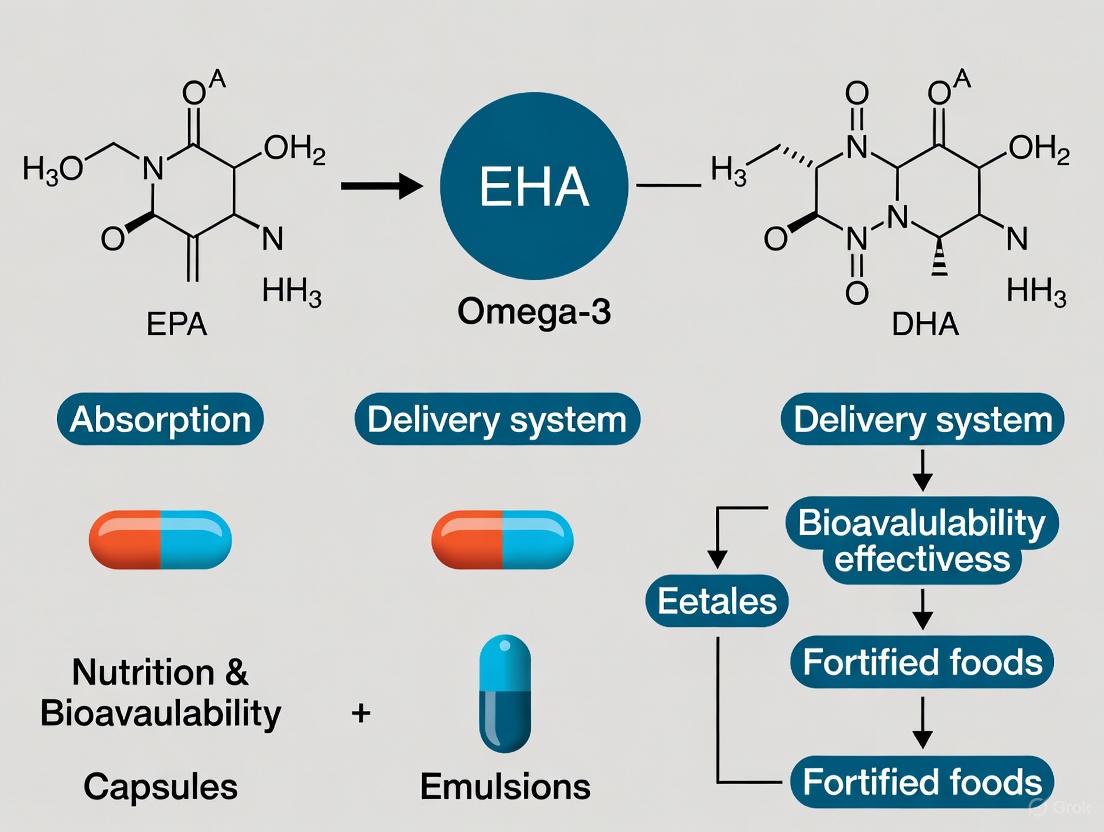
The therapeutic efficacy of omega-3 fatty acids (EPA and DHA) is critically dependent on their bioavailability, which is often compromised by poor water solubility, rapid oxidation, and low absorption efficiency.
Beyond the Capsule: Advancing Omega-3 Fatty Acid Bioavailability through Innovative Delivery Systems
Abstract
The therapeutic efficacy of omega-3 fatty acids (EPA and DHA) is critically dependent on their bioavailability, which is often compromised by poor water solubility, rapid oxidation, and low absorption efficiency. This article provides a comprehensive analysis for researchers and drug development professionals on the evolution of delivery systems designed to overcome these barriers. We explore the foundational science of omega-3 absorption, evaluate cutting-edge methodological approaches including self-emulsifying systems and nanoparticle encapsulation, and address key troubleshooting challenges in stability and consumer compliance. The content further provides a framework for the validation and comparative assessment of these technologies, synthesizing clinical data on bioavailability enhancement and its implications for achieving target health outcomes in cardiovascular, neurological, and inflammatory disorders.
The Bioavailability Challenge: Foundational Barriers to Omega-3 Efficacy
Omega-3 polyunsaturated fatty acids (PUFAs), primarily eicosapentaenoic acid (EPA) and docosahexaenoic acid (DHA), are essential nutrients with well-documented health benefits across multiple physiological systems, including cardiovascular, neurological, and inflammatory responses [1] [2]. Despite their recognized therapeutic potential, the efficacy of omega-3 fatty acids in clinical and nutraceutical applications is significantly compromised by two fundamental physicochemical challenges: intrinsically low water solubility and extreme susceptibility to oxidative degradation [3] [4]. These inherent limitations restrict bioavailability, reduce shelf life, and ultimately diminish the therapeutic potential of omega-3 formulations.
The high degree of unsaturation in EPA and DHA molecules, while crucial for their biological activity, creates electron-rich centers that are vulnerable to radical attack, leading to rapid oxidation upon exposure to oxygen, light, and heat [4]. This oxidation generates secondary volatile products that compromise sensory properties, nutritional value, and safety. Simultaneously, their hydrophobic nature results in poor aqueous solubility, creating significant barriers to efficient absorption in the gastrointestinal tract [3] [5]. This review systematically compares advanced delivery systems designed to overcome these interconnected hurdles, providing researchers and formulation scientists with experimental data and methodological insights to guide the development of next-generation omega-3 formulations.
Oxidation Mechanisms and Solubility Challenges
The Molecular Basis of Instability
The oxidative instability of omega-3 fatty acids stems directly from their chemical structure. These long-chain PUFAs contain multiple double bonds separated by methylene groups (-CH₂-) that possess particularly weak C-H bonds [4]. The bis-allylic hydrogen atoms in these positions are easily abstracted by reactive oxygen species, initiating a destructive autocatalytic chain reaction of lipid peroxidation. DHA, with its six double bonds, contains five bis-allylic positions, making it even more susceptible to oxidation than EPA, which contains four double bonds and three bis-allylic positions [4].
The oxidation process proceeds through well-characterized stages: initially forming primary oxidation products (hydroperoxides), which then decompose into secondary oxidation products including aldehydes, ketones, and alcohols that are responsible for rancid odors and flavors [6] [4]. Factors accelerating this process include pro-oxidants (especially transition metals like Fe²⁺), heat, light, and large oil-prooxidant interfacial areas in emulsion systems [7].
Solubility and Bioavailability Implications
The pronounced hydrophobicity of omega-3 fatty acids severely limits their miscibility with aqueous biological fluids, presenting a fundamental barrier to absorption. In their native form, omega-3 PUFAs exhibit extremely low water solubility, which restricts their liberation from dosage forms, dissolution in gastrointestinal fluids, and subsequent transport to enterocytes for absorption [3] [5]. This solubility-limited absorption is compounded by extensive first-pass metabolism, collectively resulting in low systemic bioavailability that restricts their therapeutic efficacy [3] [1].
Comparative Analysis of Delivery Systems
Advanced delivery technologies have been developed to simultaneously address both oxidative stability and solubility challenges. The following sections provide a comparative analysis of the most promising systems, with experimental data highlighting their relative performance.
Table 1: Comparative Performance of Omega-3 Delivery Technologies
| Delivery System | Encapsulation Efficiency (%) | Oxidation Protection | Bioavailability Enhancement | Key Advantages | Technical Limitations |
|---|---|---|---|---|---|
| Spray-Drying | >84 [6] | High (when emulsified) [6] | Moderate [3] | High throughput, established scale-up | High temperature exposure, broad size distribution [6] |
| Monoaxial Electrospraying | <72 [6] | Moderate (oxidation during emulsification) [6] | High (submicron size) [6] | Monodisperse particles, ambient temperature processing | Requires pre-emulsification, lower EE [6] |
| Coaxial Electrospraying | 53-59 [6] | Low to moderate (depends on shell thickness) [6] | Potential for high bioavailability | No emulsification needed, core-shell structure | Technically challenging, lowest EE [6] |
| Double Emulsions (O1/W/O2) | Not applicable | High (low PV <7 and p-anisidine <7 during storage) [7] | Not tested | Excellent oxidative stability, compatibility with lipid matrices | Complex manufacturing, physical instability at elevated temperatures [7] |
| Alpha-Tocopheryl Phosphate (TPM) Vesicles | Not applicable | Not explicitly tested | 50-90% increase in plasma DHA [5] | Self-assembling vesicles, enhances solubilization | Requires compatibility testing with actives [5] |
Table 2: Bioavailability Enhancement with Advanced Formulations
| Formulation Type | Dose (mg/kg) | Enhancement System | Cmax Increase vs Control | AUC Increase vs Control | Experimental Model |
|---|---|---|---|---|---|
| TPM + DHA [5] | 88.6 (DHA) | TPM 1:0.5 w/w | 50% (p<0.05) at 4h | 1560.60 vs 1396.60 (low TPM) | Rat (Sprague Dawley) |
| Emulsified Preparation [5] | Not specified | Emulsification | High absorption efficiency | Not quantified | Human clinical studies |
| Whey Protein Hydrolysate Emulsion [7] | Not applicable | Double emulsion with WPH | Not tested | Not tested | In vitro stability |
Microencapsulation Technologies
Spray-drying represents the industry standard for omega-3 encapsulation, utilizing low molecular weight carbohydrates (glucose syrup, maltodextrin) as encapsulating agents to achieve high encapsulation efficiency (>84%) and significant oxidative protection through the formation of a physical barrier against prooxidants [6]. The process involves emulsifying fish oil in an aqueous solution of encapsulating agents followed by atomization and drying at elevated temperatures (160-200°C). Although effective, this thermal exposure can induce initial lipid oxidation [6].
Electrospraying has emerged as an alternative encapsulation technology that operates at ambient temperatures, eliminating thermal degradation risks. The process applies a high-voltage electrostatic field to produce monodisperse particles with narrow size distribution [6]. In monoaxial configuration, the requirement for pre-emulsification introduces oxidative stress during processing. Coaxial electrospraying eliminates this need by simultaneously electrospraying the core (fish oil) and shell (encapsulating agent) materials, potentially centralizing oil distribution within a protective polymer wall [6]. However, current coaxial systems show notably lower encapsulation efficiency (53-59%) compared to spray-drying, though oxidative stability can be improved by increasing shell thickness through higher pullulan content [6].
Emulsion-Based Delivery Systems
Double emulsions (O1/W/O2) represent sophisticated systems where a primary fish oil-in-water emulsion is dispersed within a secondary olive oil phase, creating multiple protective interfaces. When stabilized with whey protein hydrolysate (demonstrating both emulsifying and antioxidant activities) in the inner interface and polyglycerol polyricinoleate (PGPR) in the outer interface, these systems exhibit exceptional oxidative stability during storage [7]. The dual interface system effectively retards the propagation of oxidation reactions, maintaining low peroxide values (<7 meq O₂/kg oil) and p-anisidine values (<7) even in the presence of prooxidants like Fe²⁺ and at elevated storage temperatures [7].
Emulsified preparations generally enhance the bioavailability of omega-3 fatty acids compared to conventional capsular forms. The emulsification process increases the surface area for lipase activity and facilitates the formation of mixed micelles necessary for intestinal absorption [5]. Clinical studies confirm that emulsified fish oil preparations demonstrate superior absorption efficiency compared to capsular supplements, though the choice of emulsifiers must carefully balance oxidative protection and physical stability [5].
Bioavailability-Enhancing Excipients
Alpha-tocopheryl phosphate mixture (TPM), a safe lipidic material comprising phosphorylated forms of vitamin E, spontaneously forms vesicles that encapsulate and solubilize lipophilic compounds [5]. In vivo studies demonstrate that TPM significantly enhances the oral bioavailability of DHA in a dose-dependent manner, with high TPM formulations (1:0.5 w/w DHA:TPM) increasing plasma DHA concentrations by 50% (p<0.05) at 4 hours post-administration compared to control [5]. The mechanism involves improved solubilization during dispersion and lipid digestion, facilitating transfer into the aqueous colloidal phase preceding absorption.
Experimental Protocols for Key Studies
Objective: To formulate physically and oxidatively stable fish oil-in-water-in-olive oil double emulsions (O1/W/O2) using whey protein hydrolysate as an emulsifier with antioxidant properties.
Materials:
- Refined fish oil (BASF Omega Oil 1812 TG Gold)
- Whey protein hydrolysate (pre-hydrolyzed to DH 10% with Alcalase 2.4 L)
- Polyglycerol polyricinoleate (PGPR)
- Olive oil
- Fe²⁺ solution (as prooxidant when required)
Methodology:
- Primary Emulsion: Prepare 20 wt% fish oil-in-water emulsion stabilized with WPH (oil:protein ratio 5:2 w/w). Pre-homogenize for 3 min at 15,000 rpm using Ultraturrax T-25 homogenizer, then high-pressure homogenize at 450/75 bar with 3 passes.
- Double Emulsion: Disperse the primary emulsion in olive oil containing 4 wt% PGPR using Ultraturrax T-25 homogenizer at 18,000 rpm for 3 min (primary emulsion:olive oil ratio 25:75 w/w).
- Storage Studies: Store emulsions in brown bottles at 8°C and 25°C for 6 weeks with/without Fe²⁺ prooxidants.
- Analysis:
- Physical Stability: Turbiscan Stability Index (TSI), particle size distribution (D4,3)
- Oxidative Stability: Peroxide value (PV), p-anisidine value
- Microstructure: Confocal microscopy
Key Findings: Double emulsions demonstrated excellent physical (TSI <4) and oxidative stability during storage, with PV <7 meq O₂/kg oil and p-anisidine <7, unaffected by temperature or prooxidants [7].
Objective: To evaluate the effect of alpha-tocopheryl phosphate mixture (TPM) on the oral bioavailability of omega-3 (DHA) in a rat model.
Materials:
- Omega-3 oil (Incromega DHA 500TG: DHA 500 mg/g, EPA 50 mg/g)
- TPM (Phosphagenics Ltd.)
- Canola oil vehicle
Methodology:
- Formulation Preparation:
- Dissolve TPM powder in canola oil with mixing at 40°C
- Mix omega-3 oil with TPM-canola oil preparation to achieve DHA:TPM ratios of 1:0.1 (low TPM) and 1:0.5 (high TPM) w/w
- Prepare control formulations without TPM diluted with canola oil
- Animal Study:
- Male Sprague Dawley rats (200-300 g), n=10 per group
- Administer via oral gavage at low (88.6 mg/kg) and high (265.7 mg/kg) DHA doses
- Collect plasma samples over 24 hours
- Bioanalysis: Quantify DHA plasma concentrations using validated analytical methods
Key Findings: TPM produced a dose-dependent increase in DHA bioavailability, with high TPM formulation increasing plasma DHA by 50% (p<0.05) at 4 hours and nearly doubling (90%) the baseline-corrected plasma DHA compared to control [5].
Pathway Diagram: Oxidation and Stabilization Mechanisms
Oxidation Pathway and Stabilization Mechanisms: This diagram illustrates the autocatalytic cycle of lipid oxidation in omega-3 fatty acids and the targeted intervention points of stabilization technologies. The pathway initiates with abstraction of bis-allylic hydrogen atoms, generating lipid radicals that propagate through oxygen incorporation. Stabilization strategies (green) interrupt this cycle at critical points: encapsulation creates physical barriers to oxygen; antioxidants scavenge peroxyl radicals; chelators inactivate prooxidant metals; and engineered emulsifiers strengthen interfacial membranes against oxidation initiation [4] [7].
Experimental Workflow: Emulsion Development
Double Emulsion Development Workflow: This experimental workflow outlines the systematic approach for developing and characterizing stable double emulsion delivery systems for omega-3 fatty acids. The process begins with preparation of bioactive whey protein hydrolysate through controlled enzymatic hydrolysis, followed by sequential emulsion formation stages. Critical processing parameters including homogenization conditions and emulsifier concentrations directly determine the final physicochemical stability assessed through comprehensive physical and oxidative stability testing [7].
The Scientist's Toolkit: Essential Research Reagents
Table 3: Key Reagents for Omega-3 Delivery System Research
| Reagent/Chemical | Function in Research | Example Application | Key Characteristics |
|---|---|---|---|
| Whey Protein Hydrolysate (WPH) | Emulsifier with antioxidant properties | Stabilizing O/W interfaces in emulsions [7] | Metal chelating ability, radical scavenging, DH 10% optimal |
| Polyglycerol Polyricinoleate (PGPR) | Hydrophobic emulsifier for W/O interfaces | Stabilizing outer interface in double emulsions [7] | Low HLB, effective water droplet stabilization |
| Alpha-Tocopheryl Phosphate (TPM) | Bioavailability enhancer | Forming vesicles for solubilizing DHA [5] | Self-assembling, phosphorylated vitamin E derivative |
| Pullulan | Film-forming encapsulating agent | Shell material in electrosprayed capsules [6] | Controllable shell thickness, oxygen barrier properties |
| Glucose Syrup/Maltodextrin | Carbohydrate encapsulating agents | Wall materials in spray-drying [6] | Low molecular weight, high encapsulation efficiency |
| Alcalase 2.4L | Proteolytic enzyme | Controlled hydrolysis of whey proteins [7] | Specific cleavage patterns, food-grade |
The inherent physicochemical challenges of omega-3 fatty acids - particularly their susceptibility to oxidation and limited water solubility - represent significant hurdles that advanced delivery systems must simultaneously address. Current evidence demonstrates that no single technology offers a perfect solution, with each approach presenting distinct advantages and limitations. Emulsion-based systems, particularly double emulsions stabilized with multifunctional emulsifiers like whey protein hydrolysate, provide exceptional oxidative protection, while bioavailability-enhancing excipients such as TPM offer promising pathways to improved absorption. The optimal selection of delivery technology depends on the specific application requirements, processing constraints, and target product profile. Future research directions should focus on hybrid approaches that combine the strengths of multiple technologies, development of novel materials with inherent antioxidant properties, and translation of laboratory-scale successes to commercially viable processes that maintain efficacy at scale.
The therapeutic efficacy of long-chain omega-3 polyunsaturated fatty acids (PUFAs), primarily eicosapentaenoic acid (EPA) and docosahexaenoic acid (DHA), is fundamentally constrained by their oral bioavailability. Despite widespread use in supplements and pharmaceuticals, conventional delivery systems often fail to ensure optimal systemic exposure, limiting their potential health benefits. The digestion and absorption pathway for these lipid compounds presents multiple physiological barriers where traditional formulations underperform. Recent research indicates that bioavailability varies significantly across different chemical forms and delivery systems, with conventional softgel capsules, ethyl esters, and even some enteric-coated formulations frequently failing to overcome critical obstacles in the gastrointestinal tract [8] [9].
The absorption of omega-3 fatty acids is controlled by complex kinetics of lipid digestion in the GI tract, presenting a significant formulation challenge for achieving therapeutic systemic levels [8]. Even with chronic supplementation, differences observed in acute bioavailability studies often fail to translate into long-term impacts, raising questions about the clinical relevance of many conventional formulations [9]. This comprehensive analysis examines the specific failure points of conventional omega-3 delivery systems along the digestion-absorption pathway and compares their performance against emerging advanced delivery technologies.
Physiological Barriers to Omega-3 Absorption
The journey of omega-3 fatty acids from oral ingestion to systemic circulation involves navigating a series of formidable physiological barriers where conventional formulations frequently encounter limitations.
Gastric Stability and Delayed Release
The acidic environment of the stomach presents the initial challenge to omega-3 stability. While enteric-coated capsules were developed to prevent gastric degradation and reduce fishy aftertaste by resisting dissolution until reaching the small intestine, their performance benefits remain questionable. A double-blinded crossover trial with 12 healthy subjects revealed no significant differences in EPA+DHA bioavailability between enteric-coated and uncoated softgel capsules, as measured by area under the curve values in plasma phospholipids [10]. This suggests that merely bypassing gastric release offers little advantage for absorption efficiency, representing one failure point of conventional formulation approaches.
Lipid Digestion and Emulsification Limitations
In the small intestine, successful absorption depends on efficient emulsification of lipid droplets and their enzymatic processing by pancreatic lipase. Conventional triglyceride-based fish oils require complete hydrolysis into free fatty acids before absorption, a process often incomplete with standard formulations. The efficiency of this digestion process is governed by colloidal and interfacial formulation properties that dictate PUFA pharmacokinetics [8]. Formulations that cannot form fine lipid droplets with sufficient surface area for enzymatic action result in insufficient hydrolysis, leading to reduced absorption and wasted potential.
Epithelial Uptake and Lymphatic Transport
Following digestion, the absorption of liberated free fatty acids and monoglycerides into intestinal enterocytes represents another critical barrier. Long-chain PUFAs must then be re-esterified into triglycerides and incorporated into chylomicrons for transport via the lymphatic system. Conventional formulations often fail to promote efficient mucosal cell uptake, particularly when pancreatic lipase activity is suboptimal or when the chemical form (such as ethyl esters) requires additional processing steps. The bioavailability hierarchy for isolated chemical forms typically follows: NEFA (non-esterified fatty acids) > PL (phospholipids) > rTAG (re-esterified triacylglycerols) > unmodified TAG > EE (ethyl esters) [9], highlighting the limitations of several conventional delivery approaches.
Comparative Performance of Delivery Systems
Quantitative Bioavailability Assessment
Table 1: Acute Bioavailability Performance of Omega-3 Formulations
| Formulation Type | Chemical Form | Relative Bioavailability | Key Advantages | Key Limitations |
|---|---|---|---|---|
| Ethyl Esters (EE) | Ethyl ester | Low (baseline) | Cost-effective production; High concentration potential | Requires pancreatic esterase hydrolysis; Poor absorption without co-ingested fats |
| Natural Triglycerides (TG) | Triglyceride | Moderate | Natural form found in fish; Good absorption with meals | Variable digestion efficiency; Dependent on pancreatic function |
| Re-esterified Triglycerides (rTAG) | Triglyceride | Moderate-High | Engineered for better absorption than natural TG | Higher production costs; Limited clinical evidence for superiority |
| Phospholipids (PL) | Phospholipid | High | Enhanced cellular incorporation; Bypass some digestive steps | Lower EPA/DHA content by weight; Typically more expensive |
| Free Fatty Acids (NEFA) | Free acid | Highest | Rapid absorption; Minimal enzymatic processing required | Stability and oxidation challenges; Formulation difficulties |
| Self-Emulsifying Systems | Varies (often TG) | High | Enhanced emulsification; Less dependent on physiological factors | Complex formulation; Potential excipient interactions |
| Micellar Systems | Triglyceride | Very High | Superior absorption even at lower doses | Advanced technology; Patent restrictions may limit access |
Table 2: Experimental Formulation Performance Data from Clinical Studies
| Formulation | Dose (mg) | AUC₀–₂₄ (ng/mL·h) | Cmax (ng/mL) | Key Metabolites Enhanced | Study Details |
|---|---|---|---|---|---|
| Standard Softgel (STD) | 600 (400 EPA/200 DHA) | 1498.9 ± 443.0 (iAUC) | Baseline | Reference levels | Conventional triglyceride form [11] |
| Enteric-Coated (ENT) | 600 (400 EPA/200 DHA) | Not significant vs. STD | Not significant vs. STD | Similar to STD | No significant bioavailability improvement despite gastric protection [11] [10] |
| Micellar (LMF) | 374 (200 EPA/133 DHA) | 16,150.0 ± 5454.0 (iAUC) | Significantly higher | 12-HEPE, 9-HEPE, RvD1 | 11× higher iAUC despite 38% lower dose [11] |
| Krill Oil (Phospholipid) | Varies | ~1.5-2× higher than TG | Elevated | Not specified | Phospholipid form enhances cellular incorporation [12] |
| SEDDS | Varies | Significantly enhanced | Faster absorption | Broader metabolite profile | Standout formulation strategy for enhancing pharmacokinetics [8] |
Failure Analysis of Conventional Systems
Conventional delivery systems fail at multiple points along the absorption pathway. Ethyl esters, used in many concentrated formulations, require an extra hydrolysis step by pancreatic esterases and exhibit significantly lower absorption efficiency compared to triglyceride forms, especially in the fasting state [9]. Even standard triglyceride-based softgels demonstrate variable absorption due to dependence on dietary fat for stimulation of bile secretion and pancreatic lipase activity.
Enteric-coated capsules, while potentially reducing gastric side effects, show no significant bioavailability improvement in clinical studies. Research indicates that delayed release until intestinal pH may actually compromise the synchrony with bile salt and pancreatic enzyme secretion, potentially reducing absorption efficiency [10]. This represents a significant formulation failure, as the theoretical advantages of gastric protection do not translate into enhanced pharmacokinetic performance.
Advanced Delivery Technologies: Mechanisms of Success
Self-Emulsifying Drug Delivery Systems (SEDDS)
Self-emulsifying formulations represent a significant advancement over conventional delivery systems by pre-solving the emulsification challenge. These systems form fine oil-in-water emulsions with minimal agitation upon contact with gastrointestinal fluids, creating optimal conditions for pancreatic lipase action. The microscopic lipid droplets provide substantial surface area for enzymatic attachment and hydrolysis, dramatically improving absorption kinetics [8]. SEDDS have emerged as a standout PUFA formulation strategy for enhancing pharmacokinetics by controlling lipid digestion kinetics in the GI tract [8].
Phospholipid-Bound Omega-3 Systems
Krill oil and phospholipid-formulated delivery systems leverage the natural affinity of phospholipids for cellular membranes. Unlike conventional triglycerides that require complex processing before incorporation into chylomicrons, phospholipid-bound omega-3s integrate more directly into mucosal cells and demonstrate enhanced bioavailability despite lower absolute EPA and DHA content [12]. The phospholipid structure allows seamless integration into cell membranes, facilitating more efficient cellular uptake and potentially directing omega-3s toward tissue incorporation rather than merely increasing plasma concentrations.
Micellar and Nanoemulsion Systems
Recent advances in micellar delivery technology demonstrate remarkable efficacy improvements. A 2024 clinical study comparing a novel micellar formulation (LipoMicel) against standard and enteric-coated softgels revealed dramatically enhanced absorption despite a 38% lower dose [11]. The micellar system produced an 11-fold increase in incremental area under the curve (iAUC) for total omega-3s and significantly elevated levels of bioactive metabolites including 12-HEPE, 9-HEPE, and resolvin D1 [11].
These systems create molecular arrangements that mimic natural micelles formed during lipid digestion, presenting omega-3 fatty acids in a readily absorbable form that bypasses several rate-limiting steps in conventional absorption pathways. The pre-formed micelles allow direct incorporation into the intestinal mucosa without requiring the complex emulsification and hydrolysis processes needed for standard triglyceride formulations.
Experimental Models for Assessing Formulation Performance
In Vitro Digestion Models
Table 3: Research Reagent Solutions for Omega-3 Bioavailability Studies
| Research Reagent | Function in Experimental Protocols | Application Context |
|---|---|---|
| M-SHIME (Mucosal Simulator of Human Intestinal Microbial Ecosystem) | Replicates luminal and mucus-associated microbiota of different gut regions | Advanced gut model assessing region- and niche-dependent formulation effects [13] |
| Phosphatidylcholine | Forms phospholipid-based delivery systems; Enhances cellular incorporation | Krill oil formulations; Artificial micelle systems [12] |
| Trizma maleate buffer | Maintains pH during in vitro digestion experiments | Simulating gastric and intestinal pH conditions |
| Pancreatic lipase | Triggers triglyceride hydrolysis in simulated intestinal conditions | Standard in vitro digestion models assessing lipid formulation performance |
| Bile salts | Enables emulsification of lipid formulations in small intestine | Critical component for evaluating formulation dispersion and digestion |
| Mucin-coated beads | Mimics the outer mucus layer for adhesion studies | Assessing microbiota-formulation interactions in specific gut niches [13] |
| Caco-2 cell lines | Human epithelial colorectal adenocarcinoma cells | In vitro model of intestinal permeability and absorption |
| Nuclear Magnetic Resonance (NMR) | Analyzes lipid composition and formulation integrity | Product characterization and quality assessment |
The M-SHIME Model for Gut Microbiota Interactions
The Mucosal Simulator of the Human Intestinal Microbial Ecosystem (M-SHIME) represents a sophisticated experimental platform for investigating how omega-3 formulations interact with different gut regions and microbial niches. This model simulates the ileum, ascending, transverse, and descending colon regions, incorporating both luminal and outer mucus-associated microbiota [13]. Research using this system has demonstrated that omega-3 supplementation modulates microbiota in a gut region- and niche-dependent fashion, with the outer mucus-associated microbiota displaying higher resilience than luminal communities [13].
The M-SHIME model revealed that omega-3 PUFAs induce a remarkable blooming of Akkermansia muciniphila while decreasing Firmicutes mucolytic bacteria in the outer mucus layer [13]. These findings highlight how advanced delivery systems might be optimized to target specific gut niches for enhanced efficacy, moving beyond the limitations of conventional formulations that fail to consider regional variations in absorption and microbiota interactions.
Clinical Pharmacokinetic Protocols
Robust clinical assessment of omega-3 formulations requires standardized protocols that many conventional studies lack. Key methodological considerations include:
- Appropriate biomarkers: Plasma phospholipid levels versus whole plasma measurements
- Sampling windows: Extended monitoring to capture absorption and distribution phases
- Dosing conditions: Standardization of fed versus fasted state administration
- Product characterization: Comprehensive analysis of chemical composition and stability
Recent research emphasizes that chronic supplementation studies with appropriate biomarkers are crucial to assess clinical relevance, as acute bioavailability differences often do not persist with long-term use [9]. This highlights a critical limitation in evaluating conventional formulations based solely on single-dose pharmacokinetics without considering long-term incorporation into tissues and membranes.
Conventional omega-3 formulations fail at multiple points along the digestion and absorption pathway, with gastric instability, inefficient emulsification, incomplete hydrolysis, and suboptimal epithelial uptake representing key limitations. Experimental evidence demonstrates that advanced delivery systems including self-emulsifying formulations, phospholipid-bound omega-3s, and micellar technologies overcome these barriers through enhanced biopharmaceutical design.
The future of omega-3 delivery lies in systematic formulation approaches that consider the complex interplay between physiological factors and delivery system properties. Emerging technologies that enhance absorption efficiency while protecting omega-3 integrity throughout the gastrointestinal transit represent promising alternatives to failing conventional systems. For researchers and drug development professionals, prioritizing bioavailability-optimized delivery systems over conventional formulations is essential for maximizing the therapeutic potential of omega-3 fatty acids in clinical practice.
The therapeutic efficacy of omega-3 fatty acids, specifically eicosapentaenoic acid (EPA) and docosahexaenoic acid (DHA), is fundamentally constrained by their bioavailability. Bioavailability determines the extent and rate at which these active compounds reach systemic circulation and subsequently their sites of action, thereby directly influencing clinical outcomes [14] [15]. Suboptimal bioavailability can lead to a failure to achieve target tissue concentrations necessary for therapeutic effects, undermining potential benefits in cardiovascular, neurological, and inflammatory disorders [16] [17] [18]. This guide objectively compares the performance of various omega-3 delivery forms and formulations, linking their delivery characteristics to documented therapeutic consequences. It is situated within a broader thesis on delivery system efficacy, providing researchers and drug development professionals with a synthesis of current experimental data and methodologies critical for optimizing omega-3-based interventions.
Bioavailability and Clinical Outcome: Comparative Evidence
The formulation and delivery system of omega-3 fatty acids significantly influence their incorporation into the body and their ultimate clinical effectiveness. The following sections compare key performance indicators across different delivery strategies.
Formulation Type and Cardiovascular Risk Reduction
Evidence from major cardiovascular outcomes trials reveals that the type of omega-3 formulation is a critical determinant of clinical success. The table below summarizes findings from pivotal trials, highlighting the stark contrast between different formulations.
Table 1: Cardiovascular Outcomes by Omega-3 Formulation in Major Trials
| Trial Name | Formulation | Daily Dose | Placebo | Primary Outcome Result | Key Secondary Outcomes |
|---|---|---|---|---|---|
| REDUCE-IT [16] | Purified EPA (Icosapent Ethyl) | 4 g | Mineral Oil | Significant reduction in major CV events | --- |
| STRENGTH [16] | EPA & DHA Combination | 4 g | Corn Oil | No significant benefit | --- |
| OMEMI [16] | EPA & DHA Combination | 1.8 g | Corn Oil | No significant benefit | --- |
| JELIS [16] | Purified EPA | 1.8 g | Not Mineral Oil | Significant reduction in major coronary events | --- |
| RESPECT-EPA [16] | Purified EPA | 1.8 g | Not Mineral Oil | Modest, non-significant reduction in primary endpoint | ~25% relative risk reduction in coronary disease |
The consistent benefit observed with purified EPA across REDUCE-IT, JELIS, and RESPECT-EPA, compared to the neutral results from trials using EPA+DHA combinations (STRENGTH, OMEMI), suggests that the therapeutic action may be highly specific to the EPA molecule and/or that DHA may potentially counter certain benefits of EPA [16]. Furthermore, the choice of placebo (mineral oil vs. corn oil) has been a point of controversy, as mineral oil may adversely affect lipid levels and inflammation, potentially exaggerating treatment benefits [16].
Bioavailability Status and Physiological Adaptations
The Omega-3 Index (O3I), a measure of EPA and DHA incorporation into red blood cell membranes, is a robust biomarker of bioavailability and long-term status. Its correlation with physiological responses is evident in exercise science.
Table 2: Physiological Changes Linked to Omega-3 Bioavailability in Exercise
| Study Design | Supplementation Protocol | Change in Omega-3 Index | Key Physiological Changes Post-Supplementation | Performance Outcome |
|---|---|---|---|---|
| 6-week RCT in endurance-trained males [19] | 3 g/day EPA-rich oil or DHA-rich oil | Significant increase | - ↓ Submaximal exercising HR (EPA: ∆=-4; DHA: ∆=-9)- ↓ Rating of Perceived Exertion (RPE)- ↑ Respiratory Exchange Ratio (RER) with EPA-only | No significant difference in 24 km time trial performance |
| 12-week supplementation study [20] | ~700 mg/day DHA (from fish or algae) | Increased to near-optimal (>8%) levels by week 8 | Plateau in O3I after week 8 | No meaningful change in body composition |
The inverse correlation between the change in O3I and changes in submaximal heart rate (RHO = -0.43) and perceived exertion (RHO = -0.40) demonstrates a direct, quantitative link between improved bioavailability and enhanced physiological efficiency [19]. This underscores the importance of measuring O3I in clinical trials to validate absorption and interpret outcomes.
Experimental Protocols for Assessing Bioavailability and Efficacy
To generate comparative data as shown above, standardized yet advanced experimental protocols are employed. The following details a representative methodology from the search results.
Detailed Protocol: Evaluating Combined Supplementation and Training
A 2025 study investigated the multi-systemic effects of combining omega-3 supplementation with resistance training, providing a robust protocol for assessing bioavailability and functional outcomes [21].
Objective: To comprehensively investigate the physiological effects of omega-3 fatty acid supplementation combined with resistance training on lipid profiles, inflammatory and antioxidant responses, neuro-biomarkers, and physical performance.
Design: A randomized, double-blind, controlled trial with a parallel-group design.
Participants:
- 30 physically healthy male volunteers (aged 18-30).
- Consistently engaged in resistance training for ≥3 years, training ≥3 days/week.
- Excluded: users of ergogenic aids/anti-inflammatory drugs within 6 months, chronic illnesses, smokers.
Intervention:
- Experimental Group (n=15): Received 3150 mg/day of omega-3 fatty acids (EPA and DHA) while performing a standardized resistance training program 3 times/week for 8 weeks.
- Control Group (n=15): Performed the identical resistance training program without supplementation.
Methodology and Assessments:
- Supplementation Compliance: Monitored throughout the 8-week period.
- Dietary Standardization: Individualized nutritional plans (30% protein, 50% carbohydrates, 20% fats) supervised by a certified dietitian.
- Blood Biomarker Analysis (Pre- and Post-Intervention):
- Lipid Profile: LDL, HDL, Triglycerides.
- Inflammatory Markers: IL-6, TNF-α, CRP.
- Antioxidant Status: Glutathione (GSH), Malondialdehyde (MDA).
- Neuro-Biomarkers: Brain-Derived Neurotrophic Factor (BDNF), Dopamine, Serotonin.
- Physical Performance Tests (Pre- and Post-Intervention):
- Muscular Strength: 1-Repetition Maximum (1RM).
- Power: Countermovement Jump (CMJ).
- Speed and Agility: 10m sprint, Illinois agility test.
- Reactive Strength: Reactive Strength Index (RSI).
Key Findings: The experimental group showed significantly greater improvements in the lipid profile, inflammatory cytokines, antioxidant status, neuro-biomarkers, and all physical performance tests compared to the control group, demonstrating a synergistic effect [21].
Molecular Mechanisms Linking Bioavailability to Clinical Effects
The clinical consequences of omega-3 supplementation are governed by their bioavailability and subsequent engagement with specific molecular pathways. The following diagram visualizes the key mechanisms elucidated in the search results, connecting cellular integration to physiological and clinical outcomes.
The Scientist's Toolkit: Key Research Reagent Solutions
To execute the protocols and investigate the mechanisms outlined, specific research reagents and tools are essential. The following table catalogues critical solutions for the field.
Table 3: Essential Research Reagents for Omega-3 Delivery and Efficacy Studies
| Research Reagent / Tool | Function / Application | Representative Use in Context |
|---|---|---|
| Purified EPA Formulation (e.g., Icosapent Ethyl) | Pharmaceutical-grade intervention to isolate EPA-specific effects in cardiovascular outcomes trials. | Used in REDUCE-IT and RESPECT-EPA trials to demonstrate CV risk reduction [16]. |
| Supercritical Fluid Fractionation (SCFF) | Advanced purification technology for producing high-purity, concentrated, and customizable EPA/DHA ratios. | Enables engineering of specific EPA:DHA profiles for targeted health benefits (e.g., cardio vs. cognitive) [14]. |
| Algal-Derived Triglyceride Oils | Sustainable, plant-based source of DHA/EPA for vegan formulations and source-comparison studies. | Used in clinical trials to increase Omega-3 Index, proving bioequivalence to fish-oil DHA [20]. |
| Omega-3 Index (O3I) Blood Test | Biomarker for quantifying long-term bioavailability and status via RBC membrane incorporation. | Correlated with improvements in submaximal exercise heart rate and perceived exertion [19]. |
| Coconut Oil Placebo | A true placebo devoid of omega-3 or omega-6 fatty acids, preventing metabolic interference in control groups. | Used as an inert comparator in exercise physiology studies to isolate supplement effects [19]. |
| Enzyme Immunoassay (EIA) Kits | Quantification of inflammatory cytokines (IL-6, TNF-α, CRP) and neuro-biomarkers (BDNF). | Essential for measuring anti-inflammatory and neuroprotective effects in intervention studies [21]. |
| Dual-Energy X-ray Absorptiometry (DEXA) | Gold-standard method for precise measurement of body composition (lean vs. fat mass). | Used to assess the impact of omega-3 supplementation on body composition changes [20]. |
In the realm of nutritional science and pharmaceutical development, the efficacy of omega-3 fatty acids is fundamentally governed by two critical concepts: bioavailability and the Omega-3 Index. Bioavailability comprehensively refers to the proportion of a nutrient that is digested, absorbed, and metabolized through normal pathways, ultimately becoming available for physiological functions or storage [9] [22]. For omega-3 fatty acids, specifically eicosapentaenoic acid (EPA) and docosahexaenoic acid (DHA), this encompasses the entire journey from ingestion to incorporation into tissues and cell membranes.
The Omega-3 Index (O3i) is a specifically defined biomarker, expressed as the percentage of EPA + DHA of total fatty acids in red blood cell (RBC) membranes [23]. This metric is widely regarded as the preferred indicator for assessing long-term omega-3 nutritional status in both clinical practice and research because it reflects tissue incorporation over the preceding 1-3 months, providing a stable and clinically relevant measure [23] [19]. An Omega-3 Index of ≥8% is associated with the lowest risk for cardiovascular deaths, whereas levels ≤4% represent a higher risk [24]. Understanding the interplay between the bioavailability of various delivery systems and their ultimate impact on the Omega-3 Index is paramount for researchers and drug development professionals aiming to optimize therapeutic outcomes.
Key Metrics for Assessing Omega-3 Bioavailability
Evaluating the bioavailability of different omega-3 formulations requires a multi-faceted approach, employing both acute and chronic study designs and a suite of pharmacokinetic and tissue incorporation metrics.
Acute vs. Chronic Study Paradigms
Bioavailability assessments depend significantly on study design. Acute studies typically involve a single dose, with blood measurements taken over a short period (1 to 24 hours) to capture the initial absorption profile [9] [22]. These studies are useful for measuring the rapid pharmacokinetics of a formulation. In contrast, chronic studies involve daily supplementation over several weeks or months, with blood measurements taken before and after the intervention period [9] [22]. Chronic studies are essential for determining a formulation's ability to elevate long-term omega-3 status, as measured by the Omega-3 Index. Notably, significant differences observed in acute bioavailability often do not persist in chronic supplementation studies, raising questions about the clinical relevance of single-dose findings [9].
Essential Pharmacokinetic and Status Biomarkers
The following table summarizes the key metrics used in bioavailability research.
Table 1: Key Metrics for Assessing Omega-3 Bioavailability and Status
| Metric | Description | Interpretation & Clinical Relevance |
|---|---|---|
| Omega-3 Index (O3i) | Percentage of EPA + DHA in red blood cell membranes [23]. | Gold-standard biomarker of long-term status; target ≥8% for cardiovascular risk reduction [24] [19]. |
| Area Under the Curve (AUC) | Total plasma concentration of EPA/DHA over a specific time period after a single dose [23]. | Reflects total systemic exposure and absorption efficiency; a higher AUC indicates greater bioavailability. |
| Cmax | Maximum plasma concentration of EPA/DHA achieved after a single dose [23]. | Indicates the peak absorption rate and potential for immediate effects. |
| Tmax | Time taken to reach the maximum plasma concentration (Cmax) after a single dose [23]. | Measures the speed of absorption; a shorter Tmax indicates faster absorption. |
| Plasma Phospholipids (PL) | EPA/DHA concentration in the plasma phospholipid fraction [9]. | A common biomarker in chronic studies, reflecting medium-term incorporation into circulating lipids. |
Comparative Bioavailability of Omega-3 Delivery Systems
The chemical form of EPA and DHA significantly influences their gastrointestinal uptake, with a clear hierarchy of bioavailability emerging from the literature.
Hierarchy of Chemical Forms
A comprehensive review of human studies concludes that the bioavailability of isolated chemical forms follows this order: Non-Esterified Fatty Acids (NEFA) > Phospholipids (PL) > Re-Esterified Triacylglycerols (rTAG) > Unmodified Triacylglycerols (TAG) > Ethyl Esters (EE) [9]. This hierarchy is influenced by the digestive requirements of each form; for instance, the EE form requires an additional enzymatic step (pancreatic carboxyl ester lipase) for de-esterification before absorption, which can be inefficient without a high-fat meal [24] [22].
Quantitative Comparison of Formulations
Recent meta-analyses and clinical trials provide quantitative data on the performance of various delivery systems. The following table synthesizes key findings from these studies, offering a direct comparison for researchers.
Table 2: Comparative Bioavailability of Select Omega-3 Delivery Systems
| Delivery System / Source | Key Findings from Experimental Data | Study Type |
|---|---|---|
| Monoacylglycerol (MAG) | Plasma EPA and DHA peaked at 3 and 2.5 times higher, respectively, compared to ethyl ester (EE). Plasma concentration during absorption was 3–5 times higher than EE [24]. | Randomized controlled trial (RCT) |
| Krill Oil (Phospholipid/FFA) | Showed the highest AUC values among compared forms. At lower dosages (<2000 mg), krill oil demonstrates superior Omega-3 absorption compared to fish oil [23]. | Network Meta-Analysis |
| Fish Oil Emulsions (FO-EM) | More effective in increasing Cmax (peak concentration) than other fish oil formulations [23]. | Network Meta-Analysis |
| Fish Oil Ethyl Ester (FO-EE) | At doses of 2000–2900 mg, may be the most effective for reducing Tmax (speeding absorption), though this finding requires cautious interpretation [23]. | Network Meta-Analysis |
| Fish Oil (rTAG & EE) | Doses above 3000 mg, and specific forms (rTAG or EE) at 100–2900 mg, significantly enhanced the Omega-3 Index [23]. | Network Meta-Analysis |
Experimental Protocols for Bioavailability Assessment
To ensure the reliability and comparability of bioavailability data, standardized experimental protocols are crucial. The following workflow outlines a robust methodology for a randomized controlled crossover trial, a common and powerful design in this field.
Diagram: Experimental Workflow for Omega-3 Bioavailability Assessment. This diagram illustrates a combined acute and chronic RCT design.
Detailed Methodological Components
- Participant Screening: Recruit healthy adults or a target population. Key exclusion criteria typically include regular consumption of omega-3 supplements, fish allergies, smoking, and conditions affecting fat absorption (e.g., pancreatic insufficiency, inflammatory bowel disease) [24].
- Standardized Dosing and Meals: In acute studies, supplements are administered as a single dose with a standardized meal. A moderate-to-high-fat breakfast is often used to stimulate biliary and pancreatic secretion, ensuring consistent digestive conditions across participants [24] [22].
- Blood Collection and Processing: For pharmacokinetic profiles, serial blood samples are collected (e.g., at 0, 1, 2, 4, 5, 6, 8, 9, 10, 12, and 24 hours post-dose). Samples are centrifuged, and plasma is separated and stored at -80°C. For the Omega-3 Index, red blood cells are isolated and processed [24].
- Laboratory Analysis:
- Fatty Acid Analysis: Total lipids are extracted from plasma or RBCs using methods like Folch extraction. Fatty acids are then transesterified into fatty acid methyl esters (FAMEs) and analyzed by gas chromatography (GC) with flame ionization detection (FID) [24] [19].
- Data Calculation: The Omega-3 Index is calculated as (EPA + DHA) / total identified fatty acids in RBCs × 100%. Pharmacokinetic parameters (AUC, Cmax, Tmax) are calculated from plasma EPA+DHA concentration-time curves [23] [24].
Molecular Pathways and Mechanisms of Absorption
The differential bioavailability of omega-3 forms is rooted in their distinct pathways of digestion and absorption. The following diagram and text detail these critical mechanisms.
Diagram: Digestive Pathways of Omega-3 Fatty Acid Forms. MAG/FFA forms require minimal hydrolysis for uptake.
- Digestion: Triglycerides (TG) are hydrolyzed by pancreatic lipase to two free fatty acids (FFA) and one monoacylglycerol (MAG). Phospholipids (PL) are broken down by phospholipase A2 to one FFA and one lysophospholipid. Ethyl esters (EE) require carboxyl ester lipase for de-esterification into FFA and ethanol, a process that is less efficient and highly dependent on co-ingested dietary fat [9] [22].
- Uptake: The hydrolytic products (FFA, MAG, lysophospholipids) are absorbed by enterocytes via passive diffusion and protein-mediated transporters such as CD36 and SR-B2 [9].
- Re-synthesis and Transport: Inside the enterocyte, long-chain fatty acids like EPA and DHA are re-esterified into new triglycerides and phospholipids. These are then packaged into chylomicrons and secreted into the lymphatic system and subsequently into the bloodstream for delivery to tissues, including incorporation into red blood cell membranes, which is reflected in the Omega-3 Index [22].
Essential Research Reagent Solutions
For researchers designing bioavailability studies, the following toolkit outlines critical reagents and materials, along with their specific functions in the experimental workflow.
Table 3: Research Reagent Solutions for Bioavailability Studies
| Research Reagent / Material | Function & Application in Bioavailability Research |
|---|---|
| Standardized Omega-3 Formulations | Test articles for intervention (e.g., MAG-omega-3, EE-omega-3, Krill Oil PL, rTAG, Emulsions). Must be well-characterized for fatty acid profile and concentration [23] [24]. |
| Internal Standards for GC | Pure chemical standards (e.g., Triheptadecanoin - C17:0 TG) added to biological samples before lipid extraction to enable accurate quantification of fatty acids via gas chromatography [24]. |
| Folch Reagent | Standard chloroform:methanol (2:1 v/v) solution for total lipid extraction from plasma, RBC, or other tissues, a critical step prior to fatty acid analysis [24]. |
| Fatty Acid Methyl Ester (FAME) Standards | Certified FAME mixtures used to calibrate the gas chromatograph and identify fatty acid peaks in experimental samples based on retention times. |
| Red Blood Cell Lysis Buffer | A solution used to isolate and wash red blood cells from whole blood for the specific analysis of the Omega-3 Index, separating them from plasma components [19]. |
Innovative Delivery Platforms: From Lipid-Based Systems to Nanocarriers
Self-Emulsifying Drug Delivery Systems (SEDDS) are defined as isotropic mixtures of oils, surfactants, and sometimes co-surfactants or co-solvents that form fine oil-in-water emulsions upon gentle agitation in the aqueous environment of the gastrointestinal (GI) tract [25]. Unlike pre-formed emulsions, SEDDS are physically stable as concentrates and emulsify spontaneously just prior to administration, circumventing the dissolution step that often limits the absorption of poorly soluble compounds [25] [26]. The primary goal of these lipid-based systems is to maintain lipophilic drugs in a solubilized state throughout the GI tract, thereby enhancing their oral bioavailability [25].
The oral delivery of omega-3 polyunsaturated fatty acids (PUFAs), specifically eicosapentaenoic acid (EPA) and docosahexaenoic acid (DHA), presents a significant dosing challenge. Although they offer widespread health benefits for the cardiovascular, neurological, and inflammatory systems, achieving therapeutic levels in systemic circulation is complicated by their high lipophilicity and a complex interaction of physiological factors [8] [15]. The absorption of omega-3 fatty acids is highly sensitive to diet, with the lowest absorption occurring when taken on an empty stomach and the highest when co-consumed with a fatty meal [27]. This variability, coupled with their susceptibility to oxidative degradation, makes advanced delivery systems like SEDDS a critical strategy for ensuring efficient and consistent oral absorption [8] [28].
The Core Mechanism of Action of SEDDS
The enhanced absorption facilitated by SEDDS is not attributable to a single mechanism but rather a series of interconnected processes that begin upon entry into the GI tract.
Spontaneous Emulsification and Solubilization
Upon contact with GI fluids and under gentle agitation, SEDDS spontaneously form a fine emulsion, presenting the lipophilic payload in a pre-dissolved state. This process bypasses the rate-limiting dissolution step that hampers the absorption of solid dosage forms of lipophilic compounds [25]. The formation of micro- or nano-sized emulsion droplets drastically increases the interfacial surface area for interaction with digestive enzymes and absorption pathways [29].
Interaction with Lipid Digestion and Absorption
The oil phase of the SEDDS is typically composed of digestible lipids, such as medium- or long-chain triglycerides. These lipids stimulate the secretion of bile and pancreatic juices [25]. The ensuing lipolysis of triglycerides by pancreatic lipase generates monoacylglycerols and free fatty acids, which combine with bile salts to form mixed micelles [25] [8]. These mixed micelles are highly efficient at solubilizing lipophilic molecules, including omega-3 fatty acids, and transporting them to the enterocyte surface for absorption.
Promotion of Lymphatic Transport
A significant advantage of lipid-based systems like SEDDS is their potential to promote intestinal lymphatic transport of drugs [25] [26]. Following absorption, long-chain fatty acids and other lipophilic molecules are re-esterified into triglycerides within the enterocyte, assembled into chylomicrons, and secreted into the mesenteric lymphatics. This pathway circumvents first-pass hepatic metabolism, allowing a greater proportion of the absorbed drug to reach the systemic circulation intact [25].
The following diagram illustrates this multi-step mechanism:
Comparative Efficacy: SEDDS vs. Conventional Omega-3 Formulations
Clinical and preclinical studies provide quantitative evidence of the superiority of SEDDS over conventional omega-3 delivery forms, such as ethyl esters and simple triglycerides. The key metrics for comparison include bioavailability, maximum plasma concentration (C~max~), and the area under the plasma concentration-time curve (AUC).
Table 1: Clinical Pharmacokinetic Comparison of SEDDS vs. Standard Omega-3 Formulations
| Study Formulation | Dose (EPA+DHA) | Key Finding | Reported Fold-Increase (vs. Control) | Citation |
|---|---|---|---|---|
| PhytoMarineCelle (SEDDS-Ethyl Ester) | 300 mg | No significant difference in AUC | 1.6x (AUC, NS) | [27] |
| PhytoMarineCelle (SEDDS-Ethyl Ester) | 500 mg | Significantly greater AUC and C~max~ | 3.1x (AUC), ~2x (C~max~) | [27] |
| PhytoMarineCelle (SEDDS-Ethyl Ester) | 1000 mg | Significantly greater AUC | 3.2x (AUC), ~2x (C~max~) | [27] |
| SEDDS (Triglyceride Form) | 1000 mg (DHA) | Significantly greater iAUC and C~max~ for DHA | 1.4x (iAUC~DHA~), Higher C~max~ | [30] |
Table 2: Preclinical Efficacy of SEDDS for Other Poorly Soluble Drugs
| Drug (Model) | Formulation Type | Key Advantage | Outcome vs. Commercial Product | Citation |
|---|---|---|---|---|
| Progesterone (Mouse) | Hybrid MCT/LCT SEDDS | Ultra-small droplet size (~21 nm) | 3.82x higher bioavailability | [31] |
| Quetiapine Fumarate (In Vitro) | Optimized SEDDS | Improved dissolution & permeability | Significant enhancement in dissolution profile | [26] |
| Vildagliptin (In Vitro) | SNEDDS vs. SEDDS | Nano-droplets (<100 nm) vs. micro-droplets | Superior dissolution & stability for SNEDDS | [29] |
The data reveals two critical trends. First, the absorption-enhancing effect of SEDDS becomes more pronounced at higher doses, as seen with the PhytoMarineCelle formulation where the bioavailability advantage increased from 1.6-fold at 300 mg to over 3-fold at 500 mg and 1000 mg doses [27]. Second, SEDDS technology is effective for both ethyl ester and triglyceride forms of omega-3s, as well as for a wide range of other poorly water-soluble drugs, demonstrating its versatility [31] [30].
Key Experimental Protocols for SEDDS Development and Evaluation
The development of an effective SEDDS involves a series of critical experiments, from initial formulation screening to in vivo pharmacokinetic studies.
Formulation Optimization and Ternary Phase Diagram Construction
Objective: To delineate the precise concentration ranges of oil, surfactant, and co-surfactant/co-solvent that result in spontaneous emulsification.
- Procedure: A series of isotropic mixtures are prepared with varying percentages of each component, summing to 100% [26]. For each mixture, a small amount (e.g., 50 µL) is introduced into a larger volume of aqueous medium (e.g., 50 mL of distilled water) under gentle stirring at 37°C. The resulting mixtures are visually classified based on the ease of emulsification and the resulting emulsion's stability (e.g., "good," "moderate," "poor") [26]. The transparent and stable formulations are then characterized for droplet size and polydispersity index (PDI). The results are mapped onto a ternary phase diagram to identify the optimal self-emulsifying region [26].
Characterization of Emulsion Droplet Properties
Objective: To quantify the critical quality attributes of the emulsion formed by the SEDDS.
- Droplet Size and PDI Analysis: The emulsion is diluted and analyzed using dynamic light scattering (DLS) with a Nanosizer instrument. Droplet size directly influences drug release and absorption, while PDI indicates the homogeneity of the droplet population [26] [31].
- Zeta Potential Measurement: The surface charge of the emulsion droplets is determined using a Zetasizer. A high zeta potential (typically > |±30 mV|) indicates good electrostatic stability against droplet aggregation [26].
- Transmittance: The transparency of the diluted emulsion is measured using UV-Visible spectrophotometry at 650 nm, which is an indicator of a fine, micro- or nano-emulsion [26].
In Vivo Pharmacokinetic Study in Human Subjects
Objective: To compare the oral bioavailability of an active ingredient delivered via SEDDS against a standard formulation.
- Protocol (Randomized, Double-Blind, Crossover): Healthy participants are recruited and randomized to receive either the SEDDS formulation or the control formulation after an overnight fast [27] [30]. Blood samples are collected at pre-dosing (baseline) and at multiple time points post-dosing (e.g., 2, 4, 6, 8, 10, 12, and 24 hours). Plasma is separated and analyzed for drug (e.g., EPA and DHA) concentration using validated analytical methods.
- Data Analysis: The plasma concentration-time data is used to calculate key pharmacokinetic parameters, including the maximum concentration (C~max~) and the area under the curve (AUC), which reflects the total systemic exposure. Statistical analysis is performed to determine significant differences between the formulations [27].
The workflow for developing and evaluating a SEDDS formulation is summarized below:
The Scientist's Toolkit: Essential Reagents and Materials
The composition of a SEDDS is critical to its performance. The table below catalogs key functional excipients used in SEDDS development for omega-3s and other lipophilic drugs.
Table 3: Key Research Reagent Solutions for SEDDS Formulation
| Excipient Category & Examples | Function in SEDDS | Rationale for Selection |
|---|---|---|
| Oils/Lipids• Medium-Chain Triglycerides (MCT)• Long-Chain Triglycerides (LCT)• Maisine CC, Peceol | Solubilizes the lipophilic drug; forms the core of the emulsion droplet; stimulates lymphatic transport. | MCTs aid in smaller droplet formation, while LCTs better resist drug precipitation. Hybrid MCT/LCT systems can optimize performance [25] [31]. |
| Surfactants• Tween 20/80• Labrasol• Polyglycerol esters | Lowers interfacial tension, facilitating spontaneous emulsification and stabilizing the resulting droplets. | HLB value is a key selection criterion. High surfactant loading can reduce droplet size but may increase GI toxicity risk [25] [31]. |
| Co-surfactants/Co-solvents• Transcutol HP• PEG 400• Ethanol | Further increases drug solubility in the preconcentrate and improves emulsification by fluidizing the surfactant film. | Allows for formulation flexibility and can prevent drug precipitation upon dilution in the GI fluids [26] [31]. |
| Antioxidants• Mixed d-Tocopherols | Protects oxidation-prone active ingredients (e.g., Omega-3 PUFAs) from oxidative degradation. | Essential for maintaining the chemical stability and shelf-life of unsaturated oils [27] [28]. |
Within the broader thesis on the efficacy of delivery systems for omega-3 fatty acids, SEDDS emerge as a standout, clinically validated strategy. The technology's ability to enhance bioavailability through a multi-faceted mechanism—combining spontaneous emulsification, improved solubilization, and potential lymphatic transport—is supported by robust experimental and clinical data. When directly compared to conventional formulations like ethyl esters or simple triglycerides, SEDDS consistently demonstrate superior pharmacokinetic profiles, leading to higher and more reliable systemic exposure. While challenges in formulation stability and scalability persist, the continued innovation in SEDDS, including the transition to solid dosage forms and the precise engineering of hybrid lipid systems, solidifies its role as a cornerstone technology for overcoming the persistent challenge of oral delivery for lipophilic compounds like omega-3 fatty acids.
The efficacy of omega-3 polyunsaturated fatty acids (PUFAs), notably eicosapentaenoic acid (EPA) and docosahexaenoic acid (DHA), is well-established for supporting cardiovascular, neurological, and anti-inflammatory health [3] [32]. However, their inherent physicochemical properties—including low solubility in aqueous media, high susceptibility to oxidation, and limited absorption in the gastrointestinal tract—severely restrict their therapeutic potential by leading to low systemic bioavailability [3] [8]. Advanced delivery systems based on nanotechnology have emerged as powerful strategies to overcome these challenges. This guide provides a comparative analysis of three leading nanocarriers—liposomes, nanoemulsions, and nanostructured lipid carriers (NLCs)—focusing on their performance in enhancing the stability, bioavailability, and therapeutic efficacy of omega-3 fatty acids for drug development applications.
Comparative Performance of Nano-Delivery Systems
The table below summarizes key performance metrics and characteristics of the three primary lipid-based nanocarriers for omega-3 fatty acids.
Table 1: Comparative analysis of nano-delivery systems for omega-3 fatty acids
| Characteristic | Liposomes | Nanoemulsions | Nanostructured Lipid Carriers (NLCs) |
|---|---|---|---|
| Typical Size Range | 20 nm - several micrometers; commonly 100-500 nm [33] | ~100-300 nm [34] [35] | Below 200 nm [36] |
| Encapsulation Efficiency (EE) | Varies with method; ~40-70% for PUFAs [37] | High for lipophilic compounds | High (e.g., 88.5% for lutein) [36] |
| Bioavailability Enhancement | Improves solubility and protection | Significant (e.g., 4.7 to 13.2-fold increase in rats) [34] | Improves absorption of poorly soluble bioactives [36] |
| Drug Release Profile | Can be modulated; sustained release possible | Rapid release (e.g., >96% within 10 hours) [35] | Slower, sustained release compared to nanoemulsions [36] |
| Stability | Poor stability in aqueous form; prone to oxidation/aggregation [33] | Improved stability against oxidation | Solid matrix provides greater physical stability |
| Key Advantage | Biocompatibility; co-delivery of hydrophilic/lipophilic compounds [33] | High bioavailability and simple production | High stability and controlled release [36] |
| Primary Challenge | Low encapsulation efficiency for some compounds; stability issues | May require multiple excipients (surfactants/co-surfactants) | Potential for imperfect crystal structure |
Experimental Protocols and Methodologies
Liposome Preparation by Thin-Film Hydration and Extrusion
This is a conventional and widely used method for producing multilamellar and unilamellar vesicles suitable for encapsulating omega-3 fatty acids [33] [37].
- Step 1: Lipid Film Formation. Dissolve phospholipids (e.g., DPPC or HSPC) and any lipophilic active compounds in a volatile organic solvent mixture, such as chloroform and methanol (2:1 ratio). Deposit a thin lipid film on the inner wall of a round-bottom flask by rotary evaporation under reduced pressure at a temperature above the lipid's phase transition temperature (e.g., 50°C for DPPC). Remove final solvent traces with a nitrogen stream [37].
- Step 2: Hydration. Hydrate the dried lipid film with an aqueous buffer (e.g., 0.05 M phosphate buffer, pH 7.4) for approximately 2 hours at a temperature maintained above the lipid's phase transition temperature, with mild agitation. This results in the formation of multilamellar vesicles (MLVs) [37].
- Step 3: Size Reduction. To obtain small, unilamellar vesicles with a uniform size distribution, the MLV suspension must be downsized. Extrusion is a common technique where the suspension is passed through polycarbonate membranes with defined pore sizes (e.g., pre-filtered through 0.2 µm, then extruded through 100 nm pores) under moderate pressure (e.g., 200 psi) [37].
- Step 4: Active Loading. Omega-3 fatty acids can be incorporated during film formation or loaded into pre-formed liposomes. For the latter, dissolve EPA and DHA in ethanol, add to the liposome suspension, and incubate at ambient temperature for 2 hours to allow for incorporation into the lipid bilayer [37].
Nanoemulsion Preparation via High-Energy Emulsification
Nanoemulsions are kinetically stable colloidal dispersions that can significantly enhance the bioavailability of fish oil [34] [35].
- Step 1: Oil Phase Preparation. Mix the oil phase, typically fish oil, with a surfactant mixture. An optimized ratio of Tween 80 to Span 80 (4:1) is often used to achieve a suitable Hydrophile-Lipophile Balance (HLB) for oil-in-water nanoemulsions. Add a co-surfactant like PEG 400 to the mixture and stir until homogeneous [35].
- Step 2: Emulsification. Add the aqueous phase (e.g., deionized water) dropwise to the oil phase under continuous vigorous stirring (e.g., using a magnetic stirrer) for 15 minutes to form a coarse emulsion. For smaller droplet sizes, the coarse emulsion can be further processed using a high-energy method like probe sonication (e.g., at 20 kHz for 10 min with pulsed duty cycles) or high-pressure homogenization [35].
- Step 3: Gelation (for Nanoemulsion Gels). To create a thermoreversible gel, poloxamers (e.g., Pluronic F-127 and F-68) can be added as gelling agents. Use the "cold method": add the poloxamer mixture to the nanoemulsion on ice with vigorous stirring. The solution will form a gel upon warming to body temperature [35].
Nanostructured Lipid Carrier (NLC) Formulation
NLCs are produced from a blend of solid and liquid lipids, creating an imperfect matrix with high loading capacity [36].
- Step 1: Lipid Phase Preparation. Melt the solid lipid (e.g., a specific hard fat) and mix it with the liquid lipid (e.g., fish oil enriched in omega-3). The fish oil acts as both an active compound and a liquid lipid component, enhancing the solubilization of other lipophilic bioactives like lutein [36].
- Step 2: Hot Melt Emulsification. Heat the aqueous surfactant solution (e.g., containing Tween 80 and lecithin) to the same temperature as the molten lipid phase. Then, mix the two phases under high-shear stirring to form a coarse pre-emulsion.
- Step 3: High-Pressure Homogenization. Process the hot pre-emulsion using a high-pressure homogenizer (e.g., 3 cycles at 500 bar) to form nanoparticles. The hot emulsion is then cooled to room temperature, allowing the solid lipid to recrystallize and form the solid matrix of the NLCs, entrapping the bioactive compounds [36].
Visualization of Strategic Selection and Mechanism
The following diagram illustrates the decision-making workflow for selecting an appropriate nano-delivery system based on research objectives.
Figure 1: A workflow for selecting a nano-delivery system based on research priorities.
The mechanism by which certain nanocarriers can enhance the efficacy of co-delivered drugs is an active area of research. The diagram below details a proposed mechanism where empty omega-3 liposomes (Omega-L) interact with drug-loaded liposomes to boost drug release.
Figure 2: Mechanism of Omega-3-containing liposomes (Omega-L) triggering drug release from anticancer liposomes [38].
The Scientist's Toolkit: Essential Research Reagents
Table 2: Key reagents and materials for formulating omega-3 nanocarriers
| Reagent/Material | Typical Function | Example Uses |
|---|---|---|
| DPPC (Dipalmitoylphosphatidylcholine) | Primary phospholipid for bilayer formation | Creating rigid, stable liposomal membranes [37] |
| Soybean Lecithin | Natural phospholipid source; emulsifier | Food-grade liposomes; component in NLCs [36] [33] |
| Pluronic F-127 / F-68 | Synthetic triblock copolymer surfactant | Stabilizing nanoemulsions; forming thermoreversible gels [35] |
| Tween 80 & Span 80 | Non-ionic surfactant mixture | Achieving optimal HLB for stable nanoemulsions [34] [35] |
| DHA-PC / MonoDHA-PC | Phospholipid with integrated omega-3 fatty acid | Forming "Omega-L" liposomes to trigger drug release [38] |
| Fish Oil (EPA/DHA) | Active pharmaceutical ingredient (API) & liquid lipid | API in all systems; liquid lipid component in NLCs [36] |
| Cholesterol | Membrane stabilizer | Incorporated into liposomes to improve bilayer rigidity and stability [38] |
| Sephadex G-50 | Size-exclusion chromatography medium | Separating encapsulated from free fatty acids to determine EE [37] |
Marine vs. Algal Source Considerations in Delivery System Design
The efficacy of omega-3 fatty acid supplementation is profoundly influenced by both the biological source of the lipids—marine or algal—and the design of the delivery system. Eicosapentaenoic acid (EPA) and docosahexaenoic acid (DHA) are essential long-chain polyunsaturated fatty acids with well-documented roles in cardiovascular, neurological, and visual health [39] [40]. While fish oil has traditionally dominated the supplement market, algae-based omega-3 presents a sustainable and contaminant-free alternative that is gaining significant traction [41] [42].
The bioavailability of these fatty acids is not merely a function of their dose but is critically dependent on their chemical form (e.g., triglycerides, phospholipids, ethyl esters) and the delivery technology employed (e.g., emulsification, microencapsulation) [9]. This creates a complex design landscape for pharmaceutical scientists and nutraceutical developers. This guide provides a comparative analysis of marine (fish oil) and algal sources, focusing on their implications for delivery system efficacy, supported by experimental data and structured for a research and development audience.
Source Comparison: Fundamental Characteristics
The origin of omega-3 fatty acids introduces fundamental differences in composition, sustainability, and purity, all of which are critical upstream considerations in delivery system design.
Origin and Compositional Differences
- Algal Oil: Serves as the primary producer of EPA and DHA in the marine food web. Microalgae species such as Schizochytrium sp., Nannochloropsis spp., and Phaeodactylum spp. are cultivated in controlled tanks or fermentation systems [39] [43] [44]. This controlled cultivation allows for the manipulation of growth conditions (temperature, oxygen, UV light) to enhance omega-3 yield [41]. Algal oil typically contains omega-3s in their natural triglyceride form but often has a higher inherent proportion of DHA compared to EPA [45].
- Fish Oil: A secondary source of omega-3s, as fish accumulate EPA and DHA by consuming algae or other algae-eating organisms [41] [43]. The oil is extracted from the tissues of oily fish like anchovies and sardines. The fatty acid profile, specifically the EPA to DHA ratio, can vary significantly based on fish species, season, and diet [39]. While natural fish oil is in the triglyceride form, many concentrated supplements undergo processing that converts the fatty acids into ethyl esters (EE), which have demonstrated lower bioavailability than triglycerides [41] [9].
Sustainability and Purity Profile
- Sustainability: Algal oil is considered highly sustainable. Its cultivation in closed systems does not contribute to overfishing, relieves pressure on marine ecosystems, and can be designed for high resource efficiency [42] [45]. In contrast, fish oil production is a significant driver of overfishing, with approximately 35.5% of global fishery stocks currently overfished, threatening marine biodiversity [42] [44].
- Purity and Contaminants: Algal oil, grown in controlled environments, is inherently free from marine pollutants such as mercury, PCBs, and dioxins, which are a recognized concern in fish oil [39] [42]. While high-quality fish oils are purified and tested to contain negligible contaminant levels, the requirement for this purification step is an essential differentiator [39] [46].
Table 1: Comparative Analysis of Omega-3 Source Fundamentals
| Characteristic | Algal Oil | Fish Oil |
|---|---|---|
| Origin | Primary source (Microalgae) | Secondary source (Marine fish) |
| Cultivation/Extraction | Grown in controlled tanks/fermenters | Extracted from wild-caught or farmed fish |
| Typical EPA:DHA Ratio | Often higher in DHA [45] | Variable, often higher in EPA (e.g., 1.5:1) [39] |
| Common Chemical Form | Triglycerides [47] | Triglycerides, Ethyl Esters (in concentrates) [39] |
| Sustainability | High (Low environmental impact) [42] [44] | Lower (Contributes to overfishing) [42] [46] |
| Contaminant Risk | Inherently low [42] | Requires purification to mitigate risk [39] [46] |
Bioavailability and Delivery System Efficacy
The clinical success of an omega-3 product is contingent on the bioavailability of its active ingredients. Bioavailability is influenced by a triad of factors: the source, the chemical form of the fatty acids, and the delivery technology.
Bioavailability Across Chemical Forms
A comprehensive review of bioavailability establishes a clear hierarchy among isolated chemical forms. The order of bioavailability is: Non-esterified Fatty Acids (NEFA) > Phospholipids (PL) > Re-esterified Triglycerides (rTAG) > native Triglycerides (TAG) > Ethyl Esters (EE) [9]. It is critical to note, however, that differences observed in single-dose (acute) bioavailability studies do not always translate into significant long-term differences in omega-3 status during chronic supplementation [9].
Direct Comparative Evidence: Algal vs. Fish Oil
Recent head-to-head clinical trials provide the most relevant data for delivery system design. A 2025 randomized double-blind placebo-controlled study directly compared the bioavailability of a microalgal oil (from Schizochytrium sp., with a DHA:EPA ratio of ~3:1) against a standard fish oil supplement.
- Methodology: The study involved 74 adult subjects with elevated triglycerides who consumed either microalgal oil, fish oil, or a placebo for 14 weeks. Plasma phospholipid levels of DHA and EPA were measured at 6 and 14 weeks as a key biomarker of bioavailability and tissue incorporation [47].
- Findings: The study concluded that the bioavailability of DHA and EPA from the microalgal oil was statistically non-inferior to that of fish oil, despite differences in the production process and oil composition. This demonstrates that algal oil is a reliable and bioavailable source for delivery systems [47].
Table 2: Summary of Key Bioavailability Findings from Comparative Clinical Study [47]
| Parameter | Algal Oil Group | Fish Oil Group | Statistical Outcome |
|---|---|---|---|
| Study Design | Randomized, Double-Blind, Placebo-Controlled, Parallel-Group | ||
| Duration | 14 weeks | ||
| Primary Biomarker | Plasma Phospholipid DHA & EPA levels | ||
| Bioavailability | Significant increase from baseline | Significant increase from baseline | Non-inferior to fish oil |
| Tolerability | No serious adverse events; frequency of adverse events not significantly different from other groups. |
The Role of Delivery Technologies
Beyond the source oil, advanced delivery systems can be engineered to enhance bioavailability.
- Emulsification and Self-Emulsifying Systems: These technologies create microemulsions that enhance the surface area of the oil for more efficient lipase action and absorption in the gastrointestinal tract [9].
- Microencapsulation: This technique is used to protect the sensitive polyunsaturated fats from oxidation (rancidity) during storage, thereby maintaining product freshness and efficacy. It is also widely used for the fortification of foods and beverages with omega-3s [39] [44].
Diagram: Factors Governing Omega-3 Bioavailability and Efficacy. The chemical form of the fatty acid and delivery technologies are key design levers that directly influence the ultimate bioavailability and clinical efficacy of an omega-3 product.
Experimental Protocols for Efficacy Assessment
For researchers designing studies to evaluate omega-3 delivery systems, the following protocols provide a framework based on cited methodologies.
Protocol: Chronic Bioavailability Assessment in Humans
This protocol is adapted from a 2025 clinical trial that established the non-inferiority of algal oil [47].
- 1. Objective: To evaluate the long-term bioavailability and incorporation of DHA and EPA from a novel delivery system (e.g., a new algal oil formulation) compared to a standard fish oil.
- 2. Study Design: Randomized, double-blind, placebo-controlled, parallel-group trial.
- 3. Subjects:
- Number: ~75-100 adults.
- Health Status: Can be healthy or target a specific population (e.g., hypertriglyceridemic).
- Exclusion: Consumption of omega-3 supplements or significant amounts of oily fish within 2 weeks prior to screening.
- 4. Intervention:
- Test Group: Novel algal oil delivery system (e.g., providing ~1-2 g/day DHA+EPA).
- Control Group 1: Standard fish oil supplement (matched dose).
- Control Group 2: Placebo (e.g., corn or olive oil).
- 5. Key Measurements & Biomarkers:
- Primary Endpoint: Change in Omega-3 Index (RBC EPA+DHA) or plasma/serum phospholipid EPA+DHA from baseline to study end.
- Secondary Endpoints: Plasma/serum triacylglycerol levels, LDL/HDL cholesterol, inflammatory markers (e.g., CRP).
- Compliance: Monitored via capsule count and confirmed with blood fatty acid analysis.
- 6. Timeline: 8 to 14 weeks of supplementation, with blood draws at baseline, mid-point, and end.
Protocol: In Vitro Oxidative Stability Assessment
Oxidative stability is a critical quality attribute that impacts shelf-life, sensory properties, and biological activity [39].
- 1. Objective: To determine the susceptibility of different oil sources (e.g., algal vs. fish oil) and delivery forms (e.g., liquid vs. microencapsulated powder) to oxidation.
- 2. Accelerated Stability Testing:
- Samples: Aliquots of each test formulation.
- Conditions: Incubation in controlled stability chambers at elevated temperatures (e.g., 40°C ± 2°C, 75% relative humidity).
- Duration: 0, 1, 2, and 3 months.
- 3. Analytical Methods:
- Peroxide Value (PV): Measures primary oxidation products (hydroperoxides).
- p-Anisidine Value (AV): Measures secondary oxidation products (aldehydes).
- TOTOX Value: Calculated as 2PV + AV, providing an overall oxidation score.
- 4. Outcome: Formulations with lower increases in PV, AV, and TOTOX over time are considered more stable.
Diagram: Workflow for a Clinical Bioavailability Trial. RCT: Randomized Controlled Trial; PLs: Phospholipids; FA: Fatty Acids.
The Scientist's Toolkit: Essential Research Reagents and Materials
Table 3: Key Reagents and Materials for Omega-3 Delivery System Research
| Reagent / Material | Function in Research | Example Application |
|---|---|---|
| Schizochytrium sp. Algal Oil | A key vegan source of both DHA and EPA for testing novel vegan delivery systems. | Used as the active ingredient in bioavailability and stability studies of plant-based formulations [47]. |
| Ethyl Ester (EE) Concentrates | A highly concentrated, purified form of omega-3s used to create high-potency supplements. Serves as a benchmark for studying the bioavailability of different chemical forms. | Comparing the absorption kinetics of EE vs. triglyceride (TG) forms in acute dosing studies [9]. |
| Phospholipid-Rich Sources (Krill Oil) | Provides omega-3s in phospholipid form, which is hypothesized to have different absorption pathways and bioavailability than TG or EE. | Investigating alternative absorption mechanisms and potential cognitive health benefits [9] [46]. |
| Triglyceride-Form Fish Oil | The natural form of omega-3s in fish; serves as the gold-standard control in many comparative bioavailability trials. | Used as the active comparator in clinical trials evaluating new algal or krill oil formulations [47]. |
| Placebo Oil (e.g., Olive, Corn) | An isocaloric, omega-3-free oil used to create a control supplement, blinding the clinical trial and accounting for placebo effects. | Administered to the control group in randomized controlled trials to establish the specific effect of omega-3 supplementation [47]. |
| Accelerated Stability Chambers | Equipment that provides controlled high-temperature and humidity environments to rapidly assess the oxidative stability and shelf-life of formulations. | Conducting forced oxidation studies to compare the protective efficacy of different antioxidant blends or delivery systems (e.g., microencapsulation) [39]. |
The choice between marine and algal omega-3 sources is a foundational decision in delivery system design, with implications that extend beyond mere composition to encompass sustainability, purity, and public perception. The evidence demonstrates that algal oil is a bioequivalent alternative to fish oil, effectively raising plasma DHA and EPA levels [47]. Its role as the primary producer in the aquatic food chain and its controlled cultivation give it distinct advantages in sustainability and contaminant avoidance [41] [42].
For researchers and formulators, the key to optimizing efficacy lies in a holistic approach that considers the chemical form of the fatty acids and the application of advanced delivery technologies like emulsification and microencapsulation. These technologies can enhance the bioavailability of lower-bioavailability forms like ethyl esters and protect the fragile lipids from oxidation [9]. Future innovation will likely be driven by the continued growth of the algae-based omega-3 production market—projected to grow at a CAGR of 18.2% to USD 20.2 billion by 2034—and the integration of AI and circular economy principles to create more efficient and sustainable production and delivery systems [44].
Specialized Pro-Resolving Mediators (SPMs) are a class of endogenous lipid-derived molecules that actively orchestrate the resolution phase of inflammation, a process once considered passive. Biosynthesized from omega-3 polyunsaturated fatty acids, including eicosapentaenoic acid (EPA) and docosahexaenoic acid (DHA), as well as certain omega-6 fatty acids, SPMs represent a fundamental shift in therapeutic approach—from broadly suppressing inflammation to actively promoting physiological resolution and tissue homeostasis [48] [49]. This family of mediators includes resolvins, protectins, maresins, and lipoxins, with over 40 distinct SPMs identified to date [48]. Unlike conventional anti-inflammatory drugs that can impair host defense, SPMs do not suppress immune function; instead, they enhance the clearance of inflammatory mediators and cellular debris, promote macrophage polarization towards a reparative phenotype, and facilitate tissue repair [49].
The therapeutic potential of SPMs spans a remarkable range of conditions, particularly those characterized by chronic inflammation and pain. Emerging research demonstrates their efficacy in diverse pain models, including neuropathic, inflammatory, cancer-induced, postoperative, and spontaneous pain [48]. Furthermore, their critical role in resolving inflammation has been demonstrated in conditions such as osteoarthritis, where SPMs like Maresin 1 (MaR1) and Resolvin D1 (RvD1) significantly reduce inflammation and cartilage breakdown [50]. However, a significant translational challenge lies in their physicochemical properties: SPMs are thermolabile, rapidly metabolized into inactive products, and exert biological effects at picogram to nanogram concentrations, making conventional dosing strategies ineffective [51]. This review comprehensively examines SPM therapeutics, comparing their efficacy, detailing experimental methodologies, and analyzing advanced delivery strategies designed to overcome these pharmacological hurdles.
SPMs in Action: Comparative Efficacy Across Disease Models
Quantitative Analysis of Key SPMs and Their Therapeutic Effects
Table 1: Comparative Efficacy of Specialized Pro-Resolving Mediators in Preclinical Models
| SPM Molecule | Precursor | Primary Receptors | Experimental Model | Observed Effects | Effective Dose Range |
|---|---|---|---|---|---|
| Resolvin D1 (RvD1) | DHA | DRV1/GPR32, ALX/FPR2 [48] | Neuropathic pain, Osteoarthritis (bOC explants) [50] [48] | Reduces inflammatory and neuropathic pain; lowers CTX-II (cartilage degradation marker) [50] [48] | Picogram to nanogram [51] |
| Resolvin E1 (RvE1) | EPA | ChemR23, BLT1 [48] | Neuropathic pain, Inflammatory pain [48] | Suppresses pain; modulates cytokine production; enhances antibody production [48] [49] | Picogram to nanogram [51] |
| Maresin 1 (MaR1) | DHA | GPR37L1, LGR6 [48] | Osteoarthritis (bOC explants) [50] | Reduces IL-6 and CTX-II; demonstrates potent anti-inflammatory and cartilage-protective effects [50] | 100 nM (in vitro) [50] |
| Protectin D1 (PD1) | DHA | GPR37 [48] | Neuropathic pain [48] | Exhibits anti-nociceptive effects in neuropathic pain models [48] | Picogram to nanogram [51] |
The data in Table 1 underscores the potent bioactivity of various SPMs at exceptionally low concentrations. For instance, in a proof-of-concept study using a bovine osteochondral (bOC) explant model of post-traumatic osteoarthritis, purified MaR1 significantly reduced levels of the inflammatory cytokine IL-6 and the cartilage degradation marker CTX-II. Similarly, RvD1 demonstrated a pronounced ability to reduce CTX-II, highlighting the cartilage-protective potential of SPMs [50]. The effective dose for SPMs to activate their target receptors varies from picogram to nanogram, and larger bolus doses do not enhance their biological effect but are rather metabolized and inactivated [51]. This potency, while therapeutically advantageous, presents significant delivery challenges.
SPMs in Human Studies and Platelet-Rich Plasma
Recent clinical investigations have begun to validate preclinical findings. Research into platelet-rich plasma (PRP), a common therapeutic injection for osteoarthritis, has revealed that its efficacy may be partly mediated by SPMs. Analysis of PRP from 40 patients detected variable concentrations of MaR1 (667.5 ± 241.2 pg/ml) and RvD1 (139.5 ± 84.2 pg/ml) [50]. A critical finding was that MaR1 levels correlated with platelet count, suggesting platelets as a source of these mediators. When PRP samples with high SPM concentrations (PRP/SPM-high) were applied to IL-1β-stimulated human chondrocytes, they induced stronger anti-inflammatory activity and significantly reduced the expression of degradative genes (MMP-13) and cartilage breakdown products (CTX-II) compared to PRP with low SPM levels [50]. This provides direct human evidence that SPM concentrations correlate with functional therapeutic outcomes.
Advanced Delivery Systems for SPM Therapeutics
The inherent pharmacological challenges of SPMs—extreme potency, rapid metabolism, and thermolability—have spurred the development of sophisticated drug delivery systems (DDS) to preserve their bioactivity and prolong their therapeutic effects.
Table 2: Comparison of Drug Delivery Systems for Specialized Pro-Resolving Mediators
| Delivery System Type | Key Characteristics | Proposed/ Demonstrated Advantages | Potential Therapeutic Applications |
|---|---|---|---|
| Nanoparticles | Synthetic or natural-based nanocarriers; can be engineered for targeted delivery. | Protects SPMs from rapid inactivation; can prolong residence time at the target site; may allow for controlled release. [51] | Chronic inflammatory conditions, targeted pain therapy. |
| Scaffolds | Three-dimensional, often biodegradable, matrices. | Provides a sustained release platform at the site of injury; supports tissue integration and repair. [51] | Cartilage repair, wound healing, post-surgical recovery. |
| Cell-Membrane Derived Nanocarriers | Vesicles derived from natural cell membranes. | Offers inherent biocompatibility and targeting capabilities; can mimic natural cellular processes. [51] | Complex inflammatory disorders, infections. |
Over the last 15 years, a growing body of research has explored these DDS as a strategic solution to the delivery challenges of SPMs [51]. The primary goal of these systems is not merely to deliver a larger payload, but to maintain SPM concentrations within their narrow therapeutic window for a prolonged duration, thereby mimicking the body's natural resolution physiology. By protecting SPMs from quick inactivation and preserving their structure, these advanced delivery platforms aim to unlock the full clinical potential of resolution pharmacology.
Experimental Protocols: Evaluating SPM Bioactivity
To ensure reproducibility and validate the efficacy of SPMs and their delivery systems, researchers employ standardized experimental protocols. Below is a detailed methodology for a key in vitro model used to assess SPMs in an osteoarthritis context.
Detailed Protocol: Bovine Osteochondral (bOC) Explant Model
This protocol, adapted from a published study, is used to evaluate the effects of purified SPMs on inflammation and cartilage breakdown [50].
1. Explant Harvesting and Preparation:
- Source: Obtain bovine forelimb joints (shoulder, elbow, carpal) from young (2-3 week old) calves shortly after death to minimize preexisting joint degeneration.
- Aseptic Technique: Harvest osteochondral plugs (6 mm diameter, 10 mm depth) from humeral heads using an Autograft OATS set under sterile conditions.
- Washing: Thoroughly wash plugs in Dulbecco's Phosphate Buffered Saline (DPBS). Remove bone marrow elements by gently flushing with a syringe and a 22-gauge needle.
2. Equilibration and Inflammation Induction:
- Culture: Culture explants in Dulbecco's Modified Eagle Medium/Ham's F12 nutrient mixture (DMEM/F12), supplemented with penicillin (100 U/mL) and streptomycin (100 µg/mL), for 24 hours at 37°C and 5% CO₂ for equilibration.
- Stimulation: After equilibration, transfer explants to untreated 12-well plates (one explant/well) containing 3 ml of fresh DMEM/F12 media supplemented with 10 ng/ml of recombinant IL-1β. This concentration reliably induces a robust inflammatory response in explants.
- Incubation: Incubate the IL-1β-stimulated explants for 24 hours.
3. SPM Treatment and Analysis:
- Treatment: Randomly assign stimulated explants to receive a single dose of either:
- MaR1 (100 nM)
- RvD1 (100 nM)
- Vehicle control (e.g., 0.05% ethanol in DPBS)
- Post-Treatment Incubation: Maintain cultures for an additional 48 hours at 37°C.
- Sample Collection: Collect supernatant and store frozen at -80°C for subsequent analysis.
- Outcome Measures:
- Inflammation: Quantify IL-6 levels in the supernatant using a commercially available ELISA kit.
- Cartilage Degradation: Quantify CTX-II levels, a marker of type II collagen breakdown, using a specific ELISA (e.g., Cartilaps).
Protocol: Assessing SPM Effects in Human Chondrocytes
This protocol evaluates how SPM concentrations in complex biologics like PRP influence human cell responses [50].
- Chondrocyte Isolation: Obtain non-arthritic human articular cartilage from surgical remnants (e.g., osteochondral allografts). Mince cartilage to <1mm³ pieces and digest using collagenase II (0.2% in HBSS) for 18-20 hours at 37°C and 5% CO₂.
- Cell Culture: Filter the digested suspension, wash, and resuspend the cell pellet (chondrocytes) in DMEM/F12 with 10% Fetal Bovine Serum (FBS) and 1% penicillin/streptomycin. Seed cells in flasks and culture until 90% confluence.
- Experimental Setup: Plate chondrocytes in a 48-well plate and stimulate with IL-1β to create an inflammatory environment.
- PRP Treatment: Treat the stimulated chondrocytes with prepared PRP samples, categorized as either "SPM-high" or "SPM-low" based on prior MaR1 and RvD1 measurements.
- Analysis: Assess anti-inflammatory and anti-degradative effects by measuring:
- Gene Expression: Use RT-qPCR for inflammatory (IL-6) and degradative (MMP-13, COL2A1) genes.
- Protein Release: Use ELISA to quantify CTX-II levels in the supernatant.
Signaling Pathways and Molecular Mechanisms
SPMs exert their potent anti-nociceptive and pro-resolving effects by targeting specific receptors within the nervous system and on immune cells. The following diagram illustrates the key signaling pathways and mechanisms through which major SPMs like RvD1, RvE1, and MaR1 resolve inflammation and alleviate pain.
Figure 1: SPM Signaling Pathways and Mechanisms of Action. SPMs, derived from omega-3 fatty acids, bind to specific GPCRs on immune and neuronal cells to actively promote the resolution of inflammation and provide analgesia. [48] [49]
The molecular interactions depicted in Figure 1 are receptor-specific. For instance, RvD1 signals through DRV1/GPR32 and ALX/FPR2 receptors, while MaR1 acts via GPR37L1 and LGR6 [48]. These interactions trigger a cascade of cellular events, including the suppression of pro-inflammatory cytokine production (e.g., IL-6, TNF-α), enhancement of macrophage phagocytosis of cellular debris and microbes, and modulation of transient receptor potential (TRP) channels on sensory neurons to reduce pain signaling [48] [49]. This multi-faceted mechanism allows SPMs to control inflammation without being immunosuppressive and to provide long-lasting analgesic effects.
The Scientist's Toolkit: Essential Reagents and Materials
Successful research into SPMs requires specific, high-quality biological materials, analytical tools, and reagents. The following table details essential components of the research toolkit for this field.
Table 3: Key Research Reagent Solutions for SPM Investigations
| Item / Reagent | Function / Application | Examples / Notes |
|---|---|---|
| Purified SPM Standards | Used as treatment compounds in in vitro and in vivo models; essential for analytical calibration. | MaR1, RvD1, RvE1, PD1 (e.g., from Cayman Chemical) [50]. |
| SPM Enzyme Immunoassay (EIA) Kits | Quantitative measurement of specific SPM levels in biological samples (e.g., PRP, serum, supernatant). | Commercial EIA kits for MaR1, RvD1, etc. [50]. |
| Cell Culture Media & Supplements | Maintenance and growth of cell lines and primary cells used in SPM research. | DMEM/F12, Fetal Bovine Serum (FBS), Penicillin/Streptomycin [50]. |
| Recombinant Inflammatory Cytokines | To stimulate inflammatory pathways in cellular and explant models, creating a disease-like state. | Recombinant IL-1β, TNF-α [50]. |
| ELISA Kits for Biomarkers | Quantification of inflammatory mediators and tissue damage markers to assess SPM effects. | Kits for IL-6, CTX-II, MMP-13, etc. [50]. |
| Primary Antibodies for SPM Receptors | Detection and localization of SPM receptor expression in tissues or cells via immunohistochemistry/flow cytometry. | Antibodies against GPR32, ALX, ChemR23, etc. |
| Materials for Drug Delivery Systems | Components for formulating nanocarriers, scaffolds, or other delivery platforms for SPMs. | Biodegradable polymers (PLGA), lipids for liposomes, materials for hydrogels [51]. |
The selection of appropriate tools is critical. For example, using young bovine joints for explant studies helps ensure the absence of pre-existing degeneration, thereby providing a cleaner model for studying inflammation-induced damage [50]. Furthermore, the extreme potency of SPMs necessitates the use of highly sensitive analytical techniques, such as enzyme immunoassays, capable of detecting concentrations in the picogram per milliliter range [50] [51].
Specialized Pro-Resolving Mediators represent a paradigm shift in the therapeutic management of chronic inflammatory and pain conditions. Moving beyond mere suppression of symptoms, SPMs offer a mechanism-based strategy to actively restore tissue homeostasis. Robust preclinical data across various disease models confirms their potent efficacy at minute doses. However, the successful translation of SPMs into mainstream clinical practice is intrinsically linked to overcoming their inherent pharmacological instability. The ongoing development of sophisticated drug delivery systems—including nanoparticles, scaffolds, and biomimetic nanocarriers—is therefore not merely an adjunct but a cornerstone of SPM therapeutics. As research progresses, the combination of potent SPM molecules with advanced engineering delivery platforms holds the promise of unlocking a new class of safe and effective, non-opioid, pro-resolving treatments for millions of patients suffering from chronic inflammatory diseases.
Solving Real-World Problems: Stability, Compliance, and Scalability
Mitigating Oxidation and Ensuring Product Shelf-Life
The high therapeutic potential of omega-3 fatty acids, particularly eicosapentaenoic acid (EPA) and docosahexaenoic acid (DHA), is well-documented in research spanning cardiovascular, neurological, and anti-inflammatory applications [52] [15]. However, the efficacy of these bioactive compounds is critically dependent on their stability throughout a product's shelf life. The numerous double bonds that confer their biological benefits also render them highly susceptible to chemical degradation via oxidation, leading to loss of potency, formation of harmful compounds, and undesirable sensory properties [4]. For researchers and drug development professionals, selecting an appropriate delivery system is paramount to maintaining product integrity and ensuring consistent experimental and therapeutic outcomes. This guide provides an objective comparison of contemporary stabilization strategies, supported by experimental data and methodologies relevant to the development of effective omega-3 formulations.
Oxidation Challenges and Stabilization Mechanisms
The Oxidation Pathway of Omega-3 Oils
The oxidative degradation of omega-3 oils is a radical-chain process primarily initiated by exposure to oxygen, light, and heat. The presence of bis-allylic hydrogen atoms in their long-chain polyunsaturated fatty acid (PUFA) structures creates points of low activation energy, making these hydrogens highly susceptible to abstraction. This initiates a propagation cycle leading to the formation of primary oxidation products (hydroperoxides) and subsequently, secondary oxidation products like aldehydes, ketones, and alcohols, which are responsible for rancid odors and flavors [4]. This degradation not only compromises the sensory quality and nutritional value of the oil but can also generate potentially toxic compounds.
Fundamental Stabilization Approaches
Stabilization technologies target one or more factors in the oxidation pathway. Traditional methods focus on:
- Oxygen Exclusion: Using airtight containers flushed with inert gases (e.g., nitrogen) for storage [4].
- Catalyst Removal: Eliminating pro-oxidant metal ions through processing [4].
- Antioxidant Addition: Incorporating compounds that donate hydrogen atoms to break the radical chain reaction [4].
Newly-developed approaches offer more advanced solutions:
- Structural Modifications: Creating omega-3 phenolipids through enzymatic or chemical processes that integrate antioxidant moieties directly into the lipid structure [4].
- Emulsion and Encapsulation: Physically isolating the omega-3 oil from the environment using barrier matrices, a area significantly advanced by micro- and nano-technologies [53] [4].
The logical relationship between the oxidation challenge and the stabilization strategies is summarized in the diagram below.
Comparative Analysis of Stabilization Technologies
The following tables provide a structured comparison of the key performance characteristics, experimental data, and methodological details for the primary stabilization technologies used in omega-3 delivery systems.
Table 1: Performance Comparison of Stabilization Technologies
| Technology | Key Mechanism | Typical Oxidative Stability Improvement | Key Advantages | Major Limitations |
|---|---|---|---|---|
| Encapsulation [53] [4] | Physical barrier matrix isolating oil from environment. | >9 months shelf-life extension under ambient conditions reported [54]. | Controlled release; improved bioavailability; masks odor/flavor. | Higher processing cost; potential for low efficiency in large-scale production [4]. |
| Structural Modification [4] | Covalent attachment of antioxidant groups (e.g., phenolipids). | Under investigation; demonstrates significant antioxidant activity in vitro. | Creates novel antioxidants; inherent stability. | Low conversion rates; requires extensive safety evaluation for new compounds [4]. |
| Supercritical Fluid Fractionation (SCFF) [14] | Uses supercritical CO₂ for purification and concentration. | Improved organoleptic profile (cleaner taste/odor) [14]. | High purity; superior sensory qualities; sustainable (no solvent residues). | High initial capital investment; primarily a purification process. |
| Antioxidant Addition [4] | Radical scavenging to terminate oxidation chain reactions. | Varies widely by antioxidant type, concentration, and oil matrix. | Simple; cost-effective; well-established. | Potential for synergistic effects to be studied further; possible negative sensory impact. |
Table 2: Experimental Data and Protocols for Key Technologies
| Technology / Study | Experimental Protocol Summary | Key Quantitative Findings & Oxidation Metrics |
|---|---|---|
| Microencapsulation [53] [54] | Protocol: Omega-3 oils are emulsified and spray-dried using wall materials (e.g., proteins, polysaccharides). Stability tested via accelerated aging at 40°C with periodic sampling. | Finding: Microencapsulated powders enabled fortification of beverages and dairy, extending shelf life by 9 months under ambient conditions [54]. |
| Multi-layer Encapsulation [53] | Protocol: Sequential layer-by-layer deposition of oppositely charged biopolymers around an oil droplet. Oxidation measured by peroxide value (PV) and p-anisidine value (AV). | Finding: Multi-layer interfaces provided superior protection against hydroperoxide formation compared to single-layer systems. |
| Stabilization via Phenolipids [4] | Protocol: Enzyme-catalyzed (e.g., lipase) esterification of EPA/DHA with phenolic acids. Antioxidant efficacy measured via DPPH/ABTS radical scavenging assays. | Finding: Newly synthesized omega-3 phenolipids exhibited potent antioxidant activity, providing a dual-functionality approach. |
| Supercritical Fluid Fractionation (SCFF) [14] | Protocol: Omega-3 concentrates are processed using supercritical CO₂ at controlled pressures and temperatures to separate and purify EPA/DHA. | Finding: SCFF technology resulted in products with superior organoleptic characteristics (cleaner taste and odor), indicating lower levels of volatile oxidation products [14]. |
The Scientist's Toolkit: Essential Research Reagents and Materials
Successful experimentation in omega-3 stabilization requires a suite of specialized reagents and analytical tools. The following table details key materials and their functions in this field.
Table 3: Essential Reagents and Materials for Omega-3 Stabilization Research
| Reagent / Material | Function in Research | Key Considerations |
|---|---|---|
| Algal or Fish Oil Concentrates [39] [54] | The core substrate for stabilization studies. Algal oil is a sustainable, contaminant-free source favored for vegan formulations [39] [54]. | Varying EPA:DHA ratios (e.g., algal oils can yield up to 800 mg/g DHA [14]) allow for targeted research. |
| Wall Materials (Maltodextrin, Gum Arabic, Whey Protein) [53] | Biopolymers used as matrices for microencapsulation. They form a physical barrier around the oil droplet. | The selection impacts encapsulation efficiency, stability, and release properties. |
| Antioxidants (e.g., Tocopherols, Ascorbyl Palmitate) [4] | Free radical scavengers added to oils or encapsulation matrices to inhibit oxidation. | Studied for synergistic effects when used in combination with other stabilization methods. |
| Analytical Standards (e.g., EPA ethyl ester, DHA ethyl ester) | Used for calibration in chromatographic analysis (e.g., GC-FID, GC-MS) to quantify fatty acid content and profile. | Critical for ensuring accuracy in measuring EPA and DHA concentrations before and after stability tests. |
| Oxygen Scavengers / Inert Gases (N₂) [4] | Used in packaging or storage experiments to create an oxygen-depleted environment. | A standard control in stability studies to benchmark the performance of other advanced technologies. |
The experimental workflow for developing and testing a stabilized omega-3 delivery system typically follows a sequence of formulation, characterization, and stability assessment, as outlined below.
The mitigation of oxidation is a central challenge that dictates the real-world efficacy of omega-3 fatty acid delivery systems. While traditional methods like antioxidant addition and oxygen exclusion remain foundational, advanced technologies like microencapsulation and structural modification offer more robust and sophisticated solutions for protecting these sensitive bioactive compounds. The choice of technology must be aligned with the specific application—whether for a dietary supplement, a functional food, or a pharmaceutical product—taking into account factors such as required shelf life, cost, regulatory pathways, and desired release profile. For researchers, the ongoing innovation in stabilization protocols, particularly in encapsulation and the creation of novel molecular structures, continues to expand the possibilities for delivering omega-3 fatty acids in a stable, bioavailable, and therapeutically effective form. Future work should focus on improving the cost-efficiency of advanced micro- and nano-encapsulation for large-scale production and conducting thorough safety evaluations of newly developed compounds like omega-3 phenolipids [4].
Eliminating 'Fishy Reflux' and Improving Patient Compliance
Omega-3 fatty acids, particularly eicosapentaenoic acid (EPA) and docosahexaenoic acid (DHA), are recognized for their therapeutic potential across cardiovascular, neurological, and inflammatory conditions [15]. However, patient compliance is frequently compromised by gastrointestinal side effects, most notably 'fishy reflux' - a persistent aftertaste or regurgitation of fish oil [55]. This compliance challenge presents a significant barrier to realizing the clinical benefits of omega-3 supplementation. The issue extends beyond patient discomfort; fish oil supplements may oxidize and become rancid before their expiration dates, potentially exacerbating tolerability issues and reducing efficacy [56]. This comprehensive analysis examines the efficacy of various delivery systems designed to mitigate these adverse effects while optimizing bioavailability, providing researchers and formulation scientists with evidence-based strategies to enhance therapeutic outcomes.
Conventional Mitigation Strategies and Limitations
Established Dietary and Formulation Approaches
Several conventional strategies exist to reduce fishy aftertaste and reflux, though with varying degrees of effectiveness. The most common recommendations include:
- Taking with Food: Consumption of fish oil capsules with meals is widely recommended to reduce gastrointestinal side effects, though evidence for its efficacy is mixed [55].
- Freezing Capsules: Refrigerating or freezing fish oil capsules slows the breakdown of the gelatin shell, potentially reducing fishy reflux by delaying dissolution until the capsule is farther along the digestive tract [56] [57].
- Divided Dosing: Splitting the total daily dose into smaller, more frequent administrations may decrease the gastrointestinal burden at any single time point [56] [55].
Limitations of Conventional Approaches
While these approaches provide some relief for mild cases, they offer incomplete solutions for many patients. The freezing technique may compromise capsule integrity in some formulations, and divided dosing requires increased patient adherence to multiple daily administrations [57]. Perhaps most importantly, these methods do not fundamentally address the core issues of gastric release and oxidative stability that underlie tolerability problems.
Advanced Delivery System Technologies
Enteric-Coated Formulations
Enteric coating represents a technological advancement over conventional softgels by preventing capsule dissolution in the stomach. These capsules are coated with a pH-sensitive material that remains intact in the acidic gastric environment but dissolves upon reaching the higher pH of the small intestine [56] [55]. This physical barrier prevents the release of omega-3 fatty acids in the stomach, effectively eliminating contact with gastric receptors and minimizing reflux and aftertaste. Commercial examples include brands such as Kirkland Signature and Nature's Way, which specifically market this technology for its tolerability benefits [56].
Self-Emulsifying Delivery (SED) Systems
Self-emulsifying delivery (SED) systems represent a sophisticated formulation approach that enhances both tolerability and bioavailability. These systems typically consist of omega-3 fatty acids, surfactants, and co-surfactants that spontaneously form microemulsions (300-800 nm particle size) upon contact with gastrointestinal fluids under gentle agitation [58]. The incorporation of lecithin as a multifunctional excipient is particularly noteworthy, as it acts as a solubilizer, wetting agent, and emulsifier while potentially enhancing absorption through the formation of colloidal particles [58].
Table 1: Composition and Characteristics of Omega-3 SED Formulations
| Component | Function | Example | Concentration |
|---|---|---|---|
| Omega-3 rTG | Active pharmaceutical ingredient | KD-PURA600 TG | 60-85% |
| Lecithin | Emulsifier, bioavailability enhancer | Emulpur-IP | 1-10% |
| Additional surfactants | Stabilization of microemulsion | Various pharmaceutical grades | 5-15% |
| Oil phase | Solubilization medium | Medium-chain triglycerides | 10-30% |
The mechanistic advantage of SED systems lies in their ability to maintain omega-3 fatty acids in a solubilized state, mimicking the natural emulsification action of bile salts and creating optimal conditions for absorption [58]. This pre-solubilization before administration reduces the reliance on the patient's digestive capacity, particularly beneficial for those with compromised gastrointestinal function or when supplements are taken under fasting conditions.
- Algal Oils: Derived from microalgae, these plant-based sources provide DHA and sometimes EPA without the marine-derived triggers for fishy reflux [56] [57]. Algal oils represent the fastest-growing segment in the omega-3 market with a CAGR of 13.36%, reflecting both consumer preference for sustainable options and their improved tolerability profile [59].
- Phospholipid-Bound Omega-3s: Krill oil and other phospholipid-based formulations offer a different chemical structure that may improve tolerability. Bioavailability studies suggest a potential advantage for phospholipid forms over triglycerides in acute settings, though differences may diminish with chronic administration [9].
Comparative Efficacy Analysis of Delivery Systems
Bioavailability Assessment
The critical question for any delivery system intended to improve compliance is whether it maintains or enhances bioavailability while reducing side effects. Research indicates that bioavailability varies significantly across different chemical forms and delivery technologies.
Table 2: Bioavailability Comparison of Omega-3 Formulations and Delivery Systems
| Formulation Type | Relative Bioavailability | Tolerability Profile | Key Evidence |
|---|---|---|---|
| Ethyl Esters (Standard) | Baseline | High incidence of fishy reflux | Conventional formulation with known tolerability issues |
| Enteric-Coated | Comparable to standard | Significantly reduced reflux | Prevents gastric release, clinical observation [56] [55] |
| Re-esterified Triglycerides (rTG) | High (superior to EE) | Moderate tolerability issues | Enhanced absorption due to natural triglyceride structure [9] |
| SED with Lecithin | 1.27-1.29-fold AUC increase | Excellent (no gastric release) | Rat pharmacokinetic study [58] |
| Phospholipid Forms | Potentially high for acute dose | Good | Complex absorption pathway, varies by individual [9] |
The hierarchy of bioavailability for isolated chemical forms generally follows this order: non-esterified fatty acids (NEFA) > phospholipids (PL) > re-esterified triglycerides (rTAG) > unmodified triglycerides (TAG) > ethyl esters (EE) [9]. However, it is important to note that significant differences observed in acute bioavailability studies often do not persist in chronic supplementation scenarios, raising questions about the clinical relevance of single-dose pharmacokinetic findings [9].
Experimental Evidence for SED System Efficacy
A 2022 study provides compelling experimental data on the performance of a self-emulsifying delivery system incorporating lecithin. The research employed rigorous in vitro and in vivo methodologies:
Experimental Protocol Summary:
- Formulation Preparation: Omega-3 re-esterified triglycerides (rTG) were mixed with lecithin at concentrations of 1%, 5%, and 10% (w/w) using homogenization at 3000 rpm [58].
- Dispersion Testing: Conducted in distilled water at 37±0.5°C using paddle method at 50 rpm, with particle size distribution and zeta potential measurements via dynamic light scattering [58].
- In Vitro Release: Dissolution testing in pH 1.2 media with paddle apparatus at 100 rpm, with samples analyzed by UV/Vis spectrophotometry [58].
- In Vivo Pharmacokinetics: Twenty male Sprague-Dawley rats received single oral doses of SED formulation versus commercial control, with serial blood sampling over 48 hours and LC-MS/MS analysis of EPA and DHA levels [58].
The results demonstrated that the optimized SED formulation containing lecithin significantly enhanced bioavailability, with Cmax values of DHA and EPA approximately 1.38-1.40-fold higher than the control group (p<0.01). Similarly, the mean AUC0-48 values for DHA and EPA in the SED group were 1.27-1.29-fold higher than in the control group (p<0.05) [58]. This enhanced absorption profile, combined with the elimination of gastric release, represents a significant advancement in addressing both efficacy and tolerability concerns.
Diagram 1: Mechanism of self-emulsifying delivery (SED) systems for enhancing bioavailability while preventing fishy reflux.
Research Reagents and Methodological Considerations
Essential Research Reagents
Table 3: Key Research Reagents for Omega-3 Delivery System Development
| Reagent/Chemical | Research Function | Experimental Notes |
|---|---|---|
| Lecithin (e.g., Emulpur-IP) | Bioavailability enhancer, emulsifier | Multifunctional excipient; critical for SED systems at 1-10% concentration [58] |
| Omega-3 rTG (e.g., KD-PURA600 TG) | High-purity active compound | Superior bioavailability compared to ethyl esters; preferred for advanced formulations [58] [9] |
| Enteric Coating Polymers | Gastric protection | pH-sensitive polymers that dissolve in intestinal environment; prevents gastric release [56] [55] |
| Molecularly Distilled Fish Oil | Odor reduction | Deodorization process minimizes fishy odor and potential for reflux [57] |
| Algal Oil | Plant-based alternative | Sustainable source of DHA/EPA; eliminates fish-derived triggers for reflux [59] [56] |
Analytical Methodologies for Assessment
Robust assessment of delivery system performance requires comprehensive analytical approaches:
- Particle Size Analysis: Dynamic light scattering (DLS) for characterizing emulsion droplet size (critical for SED systems) [58].
- Zeta Potential Measurements: Particle electrophoresis to determine emulsion stability and behavior in gastrointestinal environments [58].
- In Vitro Release Studies: Dissolution testing using USP apparatus with media simulating gastric and intestinal conditions [58].
- Bioavailability Assessment: LC-MS/MS analysis of EPA and DHA in plasma following supplementation, with calculation of AUC, Cmax, and Tmax [58] [9].
- Oxidative Stability Tests: Peroxide value and anisidine value measurements to ensure product quality and minimize rancidity-related tolerability issues [56].
The development of advanced delivery systems for omega-3 fatty acids represents a critical intersection of pharmaceutical technology and clinical need. While conventional approaches like enteric coating provide partial solutions to fishy reflux, emerging technologies—particularly self-emulsifying delivery systems incorporating lecithin—demonstrate dual benefits of significantly enhanced bioavailability and elimination of gastrointestinal adverse effects. The experimental evidence indicates that optimized SED formulations can increase the relative bioavailability of EPA and DHA by 1.27-1.40-fold compared to conventional formulations while preventing gastric release that triggers reflux [58].
For researchers and formulation scientists, these findings highlight the importance of moving beyond simple encapsulation toward engineered systems that control release characteristics and enhance absorption. The integration of bioavailability-enhancing excipients like lecithin, combined with spontaneous emulsion technology, addresses fundamental physiological barriers to both tolerability and efficacy. Future research directions should focus on long-term chronic studies to validate the maintained advantage of these systems, standardization of assessment methodologies, and exploration of how individual patient factors (such as digestive capacity and dietary patterns) influence delivery system performance. Through continued innovation in delivery technology, the significant clinical benefits of omega-3 supplementation can be realized without compromise to patient compliance.
The therapeutic efficacy of omega-3 polyunsaturated fatty acids (PUFAs), specifically eicosapentaenoic acid (EPA) and docosahexaenoic acid (DHA), is fundamentally constrained by a significant pharmacokinetic challenge: their poor oral bioavailability and extensive dependence on high-fat meals for absorption, a phenomenon known as the "food effect." [8] Achieving consistent therapeutic plasma levels remains a major dosing hurdle, complicated by the intricate interplay between physiological processes in the gastrointestinal tract and the chemical properties of these lipid molecules. [8] For researchers and drug development professionals, overcoming this barrier is paramount to unlocking the full clinical potential of omega-3 fatty acids, which have demonstrated benefits in areas ranging from cardiovascular health [60] [61] and neuroprotection [62] [17] to modulating adipose tissue metabolism. [63]
The absorption of PUFAs is primarily controlled by the kinetics of lipid digestion in the GI tract. [8] Without co-administration with dietary fats, the endogenous stimulation of bile salts and pancreatic lipases is insufficient, leading to suboptimal emulsification, hydrolysis, and subsequent formation of mixed micelles necessary for enterocyte uptake. This variability introduces substantial uncertainty in dosing regimens and compromises the reliability of clinical outcomes. Consequently, significant research efforts are directed toward designing advanced "bio-accessible" formulations that can ensure high and consistent absorption independent of dietary fat intake. [8] This review objectively compares the performance of various delivery systems, supported by experimental data, to provide a scientific framework for developing next-generation omega-3 therapeutics.
Formulation Technologies: A Comparative Analysis of Performance
Advanced formulation strategies aim to create a pre-emulsified or readily digestible lipid state that can efficiently traverse the aqueous environment of the GI tract and promote absorption. The table below summarizes the key formulation approaches, their mechanisms of action, and their relative performance in enhancing bioavailability.
Table 1: Comparison of Omega-3 Delivery Systems for Overcoming the Food Effect
| Formulation Technology | Key Mechanism of Action | Composition & Characteristics | Reported Bioavailability Performance | Key Challenges |
|---|---|---|---|---|
| Self-Emulsifying Drug Delivery Systems (SEDDS) [8] | Forms fine oil-in-water emulsions (typically < 5 µm) spontaneously upon aqueous dilution with gentle agitation. | Pre-concentrate of oils, surfactants, and co-surfactants. | Standout strategy; significantly enhances pharmacokinetics by pre-solubilizing lipids for digestion. [8] | Susceptibility to drug precipitation; excipient toxicity concerns; requires precise composition optimization. |
| Microemulsions & Nanoemulsions [8] | Forms thermodynamically stable (micro) or kinetically stable (nano) dispersions with very small droplet size (< 200 nm). | Oil, water, and surfactant blends; often require high surfactant loads. | Increased surface area improves access to digestive enzymes, potentially boosting absorption. [8] | Long-term stability issues (Ostwald ripening); high surfactant concentration can cause GI irritation. |
| Microencapsulation [15] [8] | Physically entraps omega-3 oils within a protective shell (e.g., polysaccharides, proteins) to mask taste and reduce oxidation. | Spray-dried or freeze-dried powders; wall materials like starch, gelatin, or gums. | Protects PUFA from oxidation; bioavailability is highly variable and often low without specific design for release. [15] | Thick wall materials can impede digestion and lipid release, potentially worsening the food effect. |
| Chewable Gels [8] | Presents lipids in a solid, palatable format that is chewed before swallowing, initiating dispersion in the mouth. | Gelled matrix containing oils, gelling agents (e.g., gelatin), and flavors. | Patient-friendly format; bioavailability data is limited and its efficacy for overcoming food effect is not well-established. [8] | May not provide sufficient dispersion or protection against the full GI environment. |
| Next-Gen: Solid Lipid Nanoparticles (SLNs) & Nanostructured Lipid Carriers (NLCs) [8] | Utilizes solid or solid/liquid lipid blends to create submicron particles that control release and protect the payload. | Solid lipid matrix (e.g., triglycerides) stabilizing the omega-3 oil. | Emerging promise for enhanced stability and controlled release; requires more in vivo validation for omega-3 delivery. [8] | Potential for unpredictable gelation and low payload capacity; complex manufacturing. |
Experimental Protocols for Assessing Formulation Efficacy
Evaluating the performance of these advanced formulations requires a combination of in vitro models that simulate human digestion and robust in vivo clinical trials. The following protocols detail the standard methodologies cited in key studies.
1In VitroLipid Digestion and Bioaccessibility Models
A critical first step in screening formulations is the use of simulated gastrointestinal fluids to predict in vivo performance. [8] The workflow below outlines this standard protocol.
Title: *In Vitro Bioaccessibility Assessment Workflow
Detailed Protocol:
- Gastric Phase: The formulation (e.g., SEDDS pre-concentrate) is introduced to Simulated Gastric Fluid (SGF), often containing pepsin, and adjusted to pH 2.0-3.0. The mixture is incubated at 37°C for approximately 1 hour with constant agitation to simulate stomach motility. [8]
- Intestinal Phase: The gastric digest is then neutralized and transferred to a solution of Simulated Intestinal Fluid (SIF) containing pancreatin (a source of digestive enzymes) and a physiological concentration of bile salts. The pH is maintained at 7.0-7.5, and the mixture is incubated at 37°C for up to 2 hours. [8]
- Separation and Analysis: The final digest is ultracentrifuged (e.g., at 40,000 rpm) to separate the aqueous phase containing mixed micelles (with incorporated omega-3s) from undigested lipids and other precipitates. [8] The omega-3 content (EPA and DHA) in the aqueous micellar phase is quantified using techniques like gas chromatography (GC). Bioaccessibility is calculated as the percentage of the initial omega-3 dose found in the micellar phase. [8]
2In VivoPharmacokinetic Studies in Animal Models
Preclinical models are essential for validating in vitro findings. The study on adipose tissue provides a template for a well-controlled animal experiment. [63]
Detailed Protocol:
- Animal Model: Male C57BL/6 mice (a standard model for diet-induced obesity), initiated at 4 weeks of age post-weaning. [63]
- Study Design: After acclimation, mice are randomly divided into experimental groups. A typical design includes:
- Control group fed a standard diet (CD).
- Groups fed a high-fat diet (HFD) without omega-3 enrichment.
- Experimental groups fed a HFD enriched with specific percentages (e.g., 1.2% or 2.4%) of omega-3 FAs from sources like menhaden oil. [63]
- Dosing and Diet: Diets and formulations are provided ad libitum for a defined period, typically 12 weeks. Feed intake and body weight are monitored regularly. [63]
- Sample Collection and Analysis: At the end of the intervention, blood is collected (e.g., via intracardiac puncture under anesthesia) for serum analysis. Key pharmacokinetic and efficacy parameters measured include:
- Serum Lipid Profiles: Analysis of triglycerides, LDL-C, HDL-C, and total cholesterol. [63] [61]
- Omega-3 Plasma Levels: Quantification of EPA and DHA levels over time to establish absorption profiles and calculate PK parameters like AUC (Area Under the Curve), C~max~, and T~max~. [8]
- Additional Biomarkers: Insulin, leptin, adiponectin levels, and results from glucose and insulin tolerance tests. [63]
Clinical Evaluation in Human Cohorts
Human trials provide the ultimate evidence for a formulation's ability to mitigate the food effect. A retrospective analysis of obese adults with hyperlipidemia offers a model for clinical assessment. [61]
Detailed Protocol:
- Study Population: Recruit a large, well-characterized cohort (e.g., n=3,350 obese adults with BMI ≥ 28 kg/m² and comorbid hyperlipidemia/hypertension). [61]
- Intervention and Adherence: Participants are categorized based on their adherence to interventions, such as:
- Outcome Measures: Primary outcomes are changes in lipid profiles (LDL-C, HDL-C, triglycerides) and blood pressure. [61] For bioavailability studies, the primary endpoint is the change in plasma EPA and DHA levels under fasting conditions versus with a high-fat meal, with the goal of demonstrating non-inferiority for the advanced formulation in the fasted state.
Molecular Mechanisms of Omega-3 Absorption and Activity
Understanding the journey of omega-3 fatty acids from ingestion to cellular action is crucial for rational formulation design. The following diagram and explanation detail the key pathways.
Title: Omega-3 Absorption Pathway and Mechanism of Action
The molecular activities of EPA and DHA, which underlie their therapeutic effects, are contingent upon successful absorption. Once incorporated into systemic circulation and delivered to tissues, omega-3 PUFAs exert their effects through multiple interconnected mechanisms: [60] [15]
- Gene Regulation: They activate transcription factors like Peroxisome Proliferator-Activated Receptors (PPARs), altering gene expression involved in energy homeostasis, and inhibit Sterol Regulatory Element-Binding Protein 1c (SREBP-1c), which suppresses the expression of lipogenic genes. [60] [15]
- Lipid Metabolism: Omega-3s lower triglycerides by increasing the rate of beta-oxidation (via actions on carnitine acetyltransferase 1 and acetyl-CoA carboxylase) and by increasing the expression of lipoprotein lipase (LPL), which clears triglycerides from the blood. [60]
- Anti-inflammatory Signaling: They act as ligands for the G protein-coupled receptor 120 (GPR120), triggering potent anti-inflammatory effects. Furthermore, they serve as substrates for the synthesis of specialized pro-resolving mediators (SPMs) like resolvins and protectins, which actively resolve inflammation. [60] [62]
The Scientist's Toolkit: Essential Research Reagents and Materials
The following table catalogs key reagents and materials essential for conducting research on omega-3 bioavailability and formulation development.
Table 2: Essential Research Reagents for Omega-3 Formulation Studies
| Reagent / Material | Function & Application in Research | Exemplary Use Case |
|---|---|---|
| Menhaden Oil / Fish Oil Concentrates [63] | A natural source of EPA and DHA used as the active pharmaceutical ingredient (API) in diet preparation and formulation studies. | Providing a defined mix of long-chain omega-3 FAs in animal feeding studies (e.g., at 1.2% or 2.4% of dietary energy). [63] |
| SEDDS Excipients (e.g., Labrasol, Peceol, Tween 80) [8] | Surfactants and co-surfactants used to create self-emulsifying formulations that enhance dispersion and absorption. | Formulating omega-3 pre-concentrates that spontaneously emulsify in the GI tract, mitigating the food effect. [8] |
| Pancreatin & Bile Salts (e.g., Sodium Taurocholate) [8] | Critical components of Simulated Intestinal Fluid (SIF) for in vitro digestion models to mimic enzymatic hydrolysis and micelle formation. | Assessing the digestibility and bioaccessibility of different omega-3 formulations in a controlled, predictive in vitro environment. [8] |
| Gas Chromatography (GC) System with FID | The gold-standard analytical tool for precise quantification of individual fatty acids (EPA, DHA) in plasma, tissues, and in vitro samples. | Measuring pharmacokinetic parameters (AUC, C~max~) and bioaccessibility percentages in bioavailability studies. |
| C57BL/6 Mouse Model [63] | A widely used, genetically uniform rodent model for studying diet-induced obesity, metabolic syndrome, and lipid metabolism. | Evaluating the in vivo efficacy and absorption of new omega-3 formulations in a controlled preclinical setting. [63] |
| Validated Food Frequency Questionnaires (FFQs) [61] | Standardized tools for assessing dietary intake and adherence to nutritional interventions in clinical and cohort studies. | Quantifying participants' baseline diet and compliance in clinical trials investigating omega-3 interventions. [61] |
The pursuit of omega-3 formulations that overcome the food effect is a critical frontier in nutritional pharmacology and drug development. Evidence indicates that lipid-based delivery systems, particularly SEDDS, stand out as a promising strategy for enhancing bioavailability and ensuring consistent absorption without the need for high-fat meals. [8] The systematic approach—combining predictive in vitro digestion models, robust in vivo validation, and well-controlled clinical trials—provides a reliable framework for evaluating and advancing these technologies.
Future progress hinges on the development of more sophisticated in vitro and in vivo models that can better predict human absorption and on the rational design of next-generation formulations like NLCs and targeted delivery systems. [8] By leveraging these advanced tools and a deep understanding of the underlying mechanisms, researchers can develop effective omega-3 therapeutics with reliable pharmacokinetics, ultimately maximizing their clinical impact across a spectrum of diseases.
Balancing Efficacy with Scalability and Cost in Manufacturing
The manufacturing of omega-3 fatty acids, particularly eicosapentaenoic acid (EPA) and docosahexaenoic acid (DHA), represents a critical nexus where therapeutic efficacy must be balanced against industrial scalability and production economics. For researchers and drug development professionals, understanding these trade-offs is essential for selecting appropriate delivery systems that maintain bioactivity while remaining commercially viable. The global omega-3 market, valued at approximately USD 3.2-3.35 billion in 2024, reflects this balance, with projected growth to USD 4.8-5.2 billion by 2029-2034 driven by increasing demand for evidence-based therapeutic formulations [59] [64].
Current manufacturing approaches span traditional molecular distillation to emerging technologies like supercritical fluid fractionation, each offering distinct profiles of purity, concentration capability, and production efficiency. The growing clinical evidence supporting cardiovascular risk reduction with purified EPA, as demonstrated in the REDUCE-IT trial, further intensifies the need for manufacturing methods that can deliver precise molecular profiles with consistent therapeutic performance [16]. This analysis systematically compares contemporary omega-3 manufacturing technologies through the critical lenses of efficacy, scalability, and cost to inform research and development decisions.
Comparative Analysis of Manufacturing Technologies
Performance Metrics of Primary Manufacturing Methods
Table 1: Comparative Analysis of Omega-3 Manufacturing Technologies
| Technology | Max Concentration Achievable | Relative Cost Structure | Scalability Potential | Key Advantages | Key Limitations |
|---|---|---|---|---|---|
| Molecular Distillation | ~70% total EPA+DHA [65] | Moderate capital investment [65] | Established industrial scale | Proven technology, regulatory familiarity | Limited fractionation precision, thermal stress potential |
| Supercritical Fluid Fractionation (SCFF) | Up to 80% DHA from algal sources [14] | High initial capital cost | Emerging commercial deployment | Superior fractionation, minimal thermal degradation | Technical complexity, operational expertise required |
| Enzymatic Concentration | Varies by enzyme specificity | High reagent costs | Moderate to high with immobilized enzyme systems | High specificity, mild processing conditions | Enzyme cost and stability concerns |
| Multi-Stage Oil Extraction | Clinically validated concentrations [64] | Moderate to high | Commercially validated for krill oil | Preserves phospholipid structures | Source-specific applications |
Quantitative Processing Parameters
Table 2: Technical Specifications and Output Parameters
| Technology Parameter | Molecular Distillation | Supercritical Fluid Fractionation | Enzymatic Concentration |
|---|---|---|---|
| Typical Operating Temperature | Moderate to high (risk of thermal degradation) [65] | Low temperature preservation [14] | Ambient to mild conditions |
| Process Flexibility | Limited EPA/DHA selectivity | High precision in EPA/DHA ratio control [14] | Moderate specificity |
| Purity & Contaminant Removal | Effective with multiple passes | Superior organoleptic properties [14] | Selective contaminant removal |
| Production Cycle Time | Standard industrial processing | Continuous cycle operation [14] | Batch or continuous depending on system |
| Oxidation Control | Requires antioxidant protection | Inert CO₂ environment reduces oxidation [14] | Controlled aqueous environment |
Experimental Protocols for Technology Validation
Protocol 1: Efficacy Assessment of Concentrated Fractions
Objective: To quantitatively compare the concentration efficiency and fatty acid profile precision of molecular distillation versus supercritical fluid fractionation technologies.
Materials:
- Raw fish oil feedstock (anchovy or sardine origin, 18-25% EPA+DHA)
- Supercritical fluid extraction system with CO₂ conditioning capability
- Short-path molecular distillation unit
- Gas chromatography-mass spectrometry (GC-MS) system
- Antioxidant stabilization reagents (mixed tocopherols)
Methodology:
- Feedstock Preparation: Standardize raw oil through preliminary purification and antioxidant addition (0.05% mixed tocopherols)
- Molecular Distillation Processing:
- Set evaporation temperature to 180-220°C under high vacuum (<0.001 mbar)
- Collect three fraction cuts with varying molecular weights
- Repeat distillation on primary concentrate for higher purity
- Supercritical Fluid Processing:
- Set CO₂ to supercritical conditions (90 bar, 50°C)
- Adjust pressure and temperature to achieve sequential fractionation
- Utilize reflux ratios to enhance separation precision
- Analytical Assessment:
- Quantify EPA and DHA concentrations via GC-MS
- Measure oxidation parameters (peroxide value, anisidine value)
- Calculate recovery yield and concentration factor for each method
Validation Metrics: Concentration efficiency, EPA:DHA ratio control, oxidative stability markers, and process throughput.
Protocol 2: Scalability and Economic Assessment
Objective: To evaluate the production scalability and cost structure of different manufacturing technologies.
Materials:
- Pilot-scale production equipment for each technology
- Raw material consumption tracking systems
- Energy monitoring equipment
- Product quality assessment instrumentation
Methodology:
- Bench-scale Optimization: Establish optimal parameters for each technology at laboratory scale (0.5-1 kg batches)
- Pilot-scale Validation: Scale processes to pilot level (10-50 kg batches) documenting:
- Batch processing time and throughput
- Utility consumption (energy, water, solvents)
- Labor requirements and operational complexity
- Yield efficiency and concentration consistency
- Economic Modeling:
- Calculate capital expenditure for each technology at commercial scale
- Determine operational expenses (raw materials, utilities, labor)
- Model cost per kilogram of concentrated omega-3 output
- Assess return on investment under different production scenarios
Validation Metrics: Capital and operational expenditures, production throughput, cost per unit of concentrated output, and return on investment timelines.
Technological Workflows and Decision Pathways
Omega-3 Manufacturing Technology Workflow
Clinical Application Decision Pathway
Research Reagent Solutions for Omega-3 Manufacturing Research
Table 3: Essential Research Reagents and Materials for Omega-3 Manufacturing Studies
| Reagent/Material | Function in Research | Application Context |
|---|---|---|
| Supercritical CO₂ Fluid | Solvent for fractionation and extraction | SCFF technology for precise separation of EPA/DHA [14] |
| Immobilized Lipase Enzymes | Selective hydrolysis and reconstitution | Enzymatic concentration and triglyceride re-esterification [65] |
| Molecular Distillation Units | Thermal separation under vacuum | Conventional concentration and purification [65] |
| GC-MS Analytical Systems | Quantitative fatty acid profiling | Quality control and concentration verification across technologies |
| Oxidation Stability Instruments | Peroxide and anisidine value measurement | Oxidative stability assessment during processing and storage |
| Algal Oil Feedstocks | Plant-based omega-3 source | Vegan-formulation development and sustainable sourcing [59] [66] |
| Antioxidant Mixtures | Oxidation prevention during processing | Stability preservation across manufacturing workflows |
The convergence of therapeutic evidence and manufacturing innovation presents researchers and drug development professionals with both challenges and opportunities in omega-3 delivery system design. The emerging clinical data supporting differential effects of EPA versus DHA necessitates manufacturing technologies capable of precise molecular control, with supercritical fluid fractionation offering distinct advantages for targeted applications [16] [14]. Meanwhile, regulatory compliance and quality assurance remain fundamental considerations that favor established technologies like molecular distillation for certain applications [65].
The future landscape of omega-3 manufacturing will likely be characterized by technology hybridization, where multiple methods are combined to leverage their respective strengths while mitigating limitations. The growing emphasis on sustainability and plant-based alternatives further supports the integration of algal oil processing with advanced concentration technologies [59] [66]. For research and development professionals, the optimal balance of efficacy, scalability, and cost will depend on specific therapeutic objectives, target product profiles, and commercial considerations—a decision matrix that requires ongoing evaluation as both manufacturing technologies and clinical evidence continue to evolve.
Data-Driven Decisions: Validating and Comparing Delivery Technologies
The therapeutic efficacy of omega-3 fatty acids, specifically eicosapentaenoic acid (EPA) and docosahexaenoic acid (DHA), is fundamentally constrained by their absorption efficiency after oral administration [67] [68]. Bioavailability—the proportion and rate at which a substance enters systemic circulation to exert an active effect—varies dramatically based on the chemical form and delivery system used [69]. This guide objectively compares the pharmacokinetic performance of various omega-3 formulations, presenting critical clinical data on technologies that claim to significantly enhance bioavailability, including instances of up to sixfold absorption improvement. For researchers and drug development professionals, understanding these differences is paramount for designing effective nutraceuticals and pharmaceutical formulations.
Comparative Bioavailability of Omega-3 Formulations
The chemical structure of omega-3 fatty acids directly influences their digestibility, absorption, and incorporation into plasma lipids. Conventional formulations face challenges such as reliance on pancreatic enzymes, susceptibility to oxidation, and gastrointestinal discomfort, which can limit patient compliance and efficacy [70] [71]. Consequently, advanced delivery systems designed to overcome these limitations have been developed.
Table 1: Key Pharmacokinetic Findings from Comparative Clinical Studies
| Formulation Type | Study Design | Key Pharmacokinetic Outcomes | Reported Absorption Enhancement | Citation |
|---|---|---|---|---|
| Self-Emulsifying Delivery System (AquaCelle) | Single-dose, bioavailability study in healthy adults | Significantly increased EPA and DHA bioavailability in blood plasma; eliminated the "food effect" | 6x higher absorption compared to standard ethyl ester | [71] |
| Monoacylglycerides (MAG) | Randomized, double-blind, crossover clinical trial (n=20) | Plasma EPA and DHA peaks 3x and 2.5x higher, respectively; plasma concentration 3-5x higher during absorption phase vs. Ethyl Ester | 3-5x higher plasma concentration during absorption | [70] |
| Re-esterified Triglycerides (rTG) | Randomized, open-label, cross-over study (n=35) | Highest increase in whole blood EPA + DHA levels; most effective at reducing cardiovascular risk ratios | Statistically superior to EE, PL, and TG forms at similar doses | [69] |
| Phospholipids (PL from Krill) | Randomized, open-label, cross-over study (n=35) | Increased EPA and DHA, though lower absolute incorporation compared to rTG and EE forms at the doses tested | Lower total incorporation than rTG and EE in one study; other studies suggest good bioavailability | [69] |
| Ethyl Esters (EE) | Randomized, open-label, cross-over study (n=35) | Effective at raising blood levels, but generally requires enzymatic processing for absorption | Considered the baseline for many comparisons; less bioavailable than TG and MAG forms | [70] [69] |
Detailed Experimental Protocols and Methodologies
To critically evaluate the evidence for bioavailability enhancement, it is essential to understand the experimental designs from which these data are derived.
Protocol for Self-Emulsifying Delivery Systems
The claim of a sixfold absorption increase is supported by a specific clinical study investigating a self-emulsifying omega-3 ethyl ester formulation (AquaCelle) [71].
- Objective: To evaluate the relative bioavailability of EPA and DHA from the self-emulsifying formulation compared to a standard ethyl ester preparation and to assess the impact of food.
- Design: A study involving healthy adult participants.
- Intervention: Participants received the self-emulsifying formulation both under fasted and fed conditions, and the standard formulation under fed conditions.
- Pharmacokinetic Analysis: Multiple blood samples were collected over a set period post-dose. Plasma was analyzed for EPA and DHA content using gas chromatography to determine the area under the curve (AUC), a primary marker of total absorption.
- Key Finding: The bioavailability of EPA and DHA from the self-emulsifying formulation was approximately six times greater than that from the standard ethyl ester formulation taken with food. Furthermore, the self-emulsifying system eliminated the "food effect," meaning absorption was equally high in both fasted and fed states [71].
Protocol for Monoacylglyceride (MAG) vs. Ethyl Ester (EE)
A randomized, double-blind, crossover, controlled clinical trial provides a direct comparison between MAG and EE forms [70].
- Objective: To test and compare the pharmacokinetics of n-3 FAs esterified in MAG with the EE form.
- Participants: Ten men and ten women aged 18-60, refrained from n-3 FA consumption for 6 months prior.
- Intervention: After a 12-hour fast, participants received a single oral dose of 3 g of n-3 FA (1800 mg EPA / 1200 mg DHA) esterified in either EE or MAG, with a washout period between treatments.
- Blood Collection: Eleven blood samples were collected over 24 hours post-dose (at 0, 1, 2, 4, 5, 6, 8, 9, 10, 12, and 24 hours).
- Analysis: Plasma total lipids were extracted, methylated, and analyzed using gas chromatography to determine EPA and DHA concentrations.
- Key Finding: The peak plasma concentrations (Cmax) of EPA and DHA were 3 and 2.5 times higher, respectively, with the MAG form compared to the EE form. The plasma concentration during the absorption phase was 3–5 times higher with MAG [70].
Protocol for Multi-Formulation Comparison
An open-label, randomized, cross-over study compared four common supplement types at their manufacturer-recommended doses [69].
- Objective: To compare increases in blood levels of omega-3 FAs after consumption of four different supplements and assess changes in cardiovascular disease risk.
- Participants: Thirty-five healthy subjects.
- Interventions: Each subject consumed one of four products for 28 days, followed by a 4-week washout, cycling through all products:
- Concentrated Triglyceride (rTG) fish oil: 650 mg EPA, 450 mg DHA
- Ethyl Ester (EE) fish oil: 756 mg EPA, 228 mg DHA
- Phospholipid (PL) krill oil: 150 mg EPA, 90 mg DHA
- Triglyceride (TG) salmon oil: 180 mg EPA, 220 mg DHA
- Analysis: Blood samples were taken before and after each 28-day supplementation period. Whole blood was analyzed for fatty acid composition via gas chromatography.
- Key Finding: The statistical ranking for increasing whole blood EPA+DHA levels was rTG > EE > TG > PL. The rTG form produced a significantly greater increase in omega-3 levels and a greater reduction in the AA:EPA ratio, a key cardiovascular risk marker, than the other products [69].
Mechanisms of Enhanced Absorption: Pathways and Workflows
The differential bioavailability across formulations can be understood by examining their metabolic pathways. The following diagram illustrates the absorption and processing of various omega-3 forms, highlighting where enhanced delivery systems act.
Diagram 1: Absorption Pathways of Different Omega-3 Formulations. Enhanced systems like MAG and self-emulsifying delivery systems bypass rate-limiting hydrolysis steps, leading to faster and more efficient absorption.
The underlying molecular mechanisms by which omega-3 fatty acids, once absorbed, exert their physiological effects are complex and involve multiple signaling pathways and receptors, as summarized below.
Diagram 2: Key Molecular Mechanisms of Action of Bioavailable Omega-3s. Enhanced bioavailability increases the incorporation of EPA/DHA into cellular membranes, amplifying these downstream physiological effects.
The Scientist's Toolkit: Essential Research Reagents and Materials
To replicate or build upon the cited pharmacokinetic studies, researchers require specific reagents and methodologies. The following table details key materials used in the featured experiments.
Table 2: Essential Research Reagents and Materials for Omega-3 Bioavailability Studies
| Reagent / Material | Function / Role in Research | Example from Search Results |
|---|---|---|
| Standardized Omega-3 Formulations | Serve as the active intervention in comparative studies. Critical for ensuring consistent dosing of EPA/DHA across study arms. | Concentrated rTG oil, EE fish oil, MAG-rich oil (MaxSimil), PL krill oil, TG salmon oil [70] [69]. |
| Gas Chromatography (GC) System with Flame Ionization Detector (FID) | The gold-standard analytical method for quantifying specific fatty acid concentrations (e.g., EPA, DHA, AA) in biological samples like plasma, serum, or whole blood. | Used in all cited clinical trials to measure plasma or whole blood fatty acid levels pre- and post-supplementation [70] [69]. |
| Stable Isotope-Labeled Tracers (e.g., ¹³C-EPA/DHA) | Allow for precise tracking of the metabolic fate of administered omega-3s, distinguishing them from endogenous stores and studying kinetics, distribution, and metabolism. | Referenced in studies on n-3 PUFA metabolism and retroconversion [67]. |
| Lipid Extraction Solvents | Used to isolate total lipids from complex biological matrices (e.g., plasma, tissues) prior to methylation and GC analysis. Common methods use chloroform-methanol mixtures. | A prerequisite step in the described GC analysis protocols [70]. |
| In Vitro Digestion Models (e.g., TIM-1) | Simulate human gastrointestinal conditions (pH, enzymes, bile salts) to study the digestibility and bioaccessibility of different omega-3 formulations prior to costly clinical trials. | Not explicitly mentioned but is a logical precursor to clinical bioavailability testing. |
Clinical pharmacokinetic evidence unequivocally demonstrates that the formulation and delivery system of omega-3 fatty acids are critical determinants of their bioavailability. While traditional ethyl esters serve as a common baseline, advanced forms like re-esterified triglycerides (rTG), monoacylglycerides (MAG), and particularly innovative self-emulsifying delivery systems can achieve significantly superior absorption profiles—with clinical data supporting enhancements of up to threefold, fivefold, and even sixfold. For researchers and product developers, this data underscores that selecting a high-bioavailability formulation is not merely a technical detail but a fundamental factor in maximizing the efficacy, consistency, and potential therapeutic impact of omega-3 based interventions.
The therapeutic efficacy of omega-3 fatty acids, specifically eicosapentaenoic acid (EPA) and docosahexaenoic acid (DHA), is fundamentally constrained by their oral bioavailability, presenting a significant formulation challenge for pharmaceutical and nutraceutical applications [8]. Bioavailability determines the fraction of the administered dose that reaches systemic circulation and is subsequently available at the site of action, thereby directly influencing clinical outcomes [9]. This comparative analysis examines three prominent delivery strategies—Self-Emulsifying Drug Delivery Systems (SEDDS), traditional triglycerides, and phospholipid forms—evaluating their performance through rigorous experimental data and mechanistic insights. The physiological journey of omega-3 fatty acids involves complex processes of lipid digestion, emulsification, micellarization, and intestinal absorption, each stage offering opportunities for formulation optimization [8] [9]. Understanding the distinct pharmacokinetic profiles and absorption pathways of these delivery systems is paramount for researchers and drug development professionals seeking to maximize the therapeutic potential of omega-3 interventions.
Quantitative Bioavailability Comparison of Delivery Systems
Direct comparison of pharmacokinetic parameters reveals significant differences in the absorption efficiency of various omega-3 formulations. The data summarized in the table below consolidate findings from clinical and preclinical studies to provide a quantitative basis for formulation selection.
Table 1: Pharmacokinetic Parameters of Omega-3 Formulations from Clinical and Preclinical Studies
| Formulation Type | Study Model | Key Pharmacokinetic Parameters (vs. Control) | Significance | Source |
|---|---|---|---|---|
| SEDDS (Triglyceride) | Human RCT (n=15) | DHA iAUC: ↑1.4-fold (147.9 vs 106.4 µg·h/mL); DHA Cmax: Significant increase (P=0.019) | Superior DHA absorption under fasting conditions | [72] |
| SEDDS (with Lecithin) | Rat Study (n=20) | DHA Cmax: ↑1.4-fold (217.0 vs 154.9 µg/mL); DHA AUC0-48: ↑1.29-fold | Enhanced bioavailability via improved emulsification | [58] |
| Phospholipid (PL) | Comprehensive Review | Bioavailability ranked between NEFA & rTAG | Alternative absorption pathway via PLB hydrolysis | [9] |
| Re-esterified TAG (rTAG) | Comprehensive Review | Bioavailability ranked between PL & unmodified TAG | Pre-hydrolyzed form for more efficient absorption | [9] |
| Ethyl Ester (EE) | Comprehensive Review | Lowest bioavailability without fat-containing meals | Requires bile salts for hydrolysis (fasting impairment) | [9] |
The overall rank order of bioavailability established in the literature is: Non-esterified Fatty Acids (NEFA) > Phospholipids (PL) > Re-esterified Triglycerides (rTAG) > Unmodified Triglycerides (TAG) > Ethyl Esters (EE) [9] [39]. This hierarchy reflects the differential hydrolysis rates and absorption pathways utilized by each chemical form. It is crucial to note that while acute single-dose studies reveal significant bioavailability differences, these disparities often diminish in chronic supplementation studies, raising questions about the long-term clinical relevance of acute pharmacokinetic advantages [9].
Experimental Protocols for Assessing Omega-3 Bioavailability
Clinical Pharmacokinetic Study Design
A randomized, double-blind, crossover study provides the gold standard for comparing omega-3 formulations in humans. The protocol from a seminal SEDDS clinical trial exemplifies this approach [72]:
- Participants: Healthy adults (n=15, age 20-65, BMI 18.5-25 kg/m²) in a fasting state.
- Intervention: Single dose of 920 mg DHA + 80 mg EPA delivered in SEDDS soft capsules versus non-emulsifying soft capsules (control).
- Blood Sampling: Serial sampling at 0, 1.5, 3, 5, 7, and 9 hours post-dosing.
- Primary Outcome: Baseline-adjusted incremental area under the curve (iAUC) for plasma DHA concentrations.
- Analytical Method: LC-MS/MS for precise quantification of DHA and EPA plasma levels.
- Statistical Analysis: Paired t-tests or non-parametric equivalents for iAUC, Cmax, and Tmax comparisons.
This methodology effectively controls for inter-individual variability through its crossover design and eliminates food effects by conducting the study under fasting conditions, thereby providing a clear assessment of formulation performance.
In Vitro Dispersion and Release Testing
In vitro models provide high-throughput screening for formulation development. The following protocol evaluates the self-emulsification properties and drug release characteristics [58]:
- Dispersion Test: Add 1g of formulation dropwise to 500 mL distilled water at 37±0.5°C with paddle stirring at 50 rpm.
- Particle Characterization: After 30 minutes, analyze particle size distribution via dynamic light scattering (DLS) and zeta potential via particle electrophoresis.
- Morphological Analysis: Observe emulsion morphology using optical microscopy at 400x magnification.
- Dissolution Testing: Use USP Apparatus 2 (paddle method) with 500 mL pH 1.2 media at 100 rpm and 37±0.5°C.
- Sampling and Analysis: Withdraw samples at 10, 15, 25, 35, 45, and 60 minutes, filter through 0.45 μm membrane, and analyze omega-3 content using UV-Vis spectrophotometry or HPLC.
This integrated approach connects formulation characteristics with functional performance, enabling researchers to predict in vivo behavior based on in vitro parameters.
Mechanistic Pathways of Absorption and Cellular Uptake
The absorption pathways of omega-3 fatty acids vary significantly between delivery systems, influencing their overall bioavailability. The following diagram illustrates the distinct mechanistic routes for SEDDS, triglyceride, and phospholipid forms.
Diagram 1: Omega-3 Absorption Pathways by Formulation
SEDDS Absorption Mechanism
SEDDS formulations enhance bioavailability through spontaneous emulsification, forming fine oil droplets (typically 300-800 nm) in the gastrointestinal tract without the need for digestive agitation [8] [58]. This dramatically increases the surface area available for pancreatic lipase action, significantly accelerating the hydrolysis of triglycerides into 2-monoacylglycerols (2-MAG) and free fatty acids (FFAs) [8]. The resulting hydrolysis products are efficiently incorporated into mixed micelles with bile salts, facilitating aqueous diffusion across the unstirred water layer to the enterocyte surface [8]. SEDDS formulations may also include excipients like lecithin that further enhance solubilization and permeability [58].
Triglyceride Digestion Pathway
Traditional triglyceride forms rely on physiological emulsification processes that begin with gastric mixing, producing coarse emulsions with larger droplet sizes than SEDDS [9]. This results in slower and less complete lipolysis by pancreatic lipase, which acts at the oil-water interface to produce FFAs and 2-MAG [9]. The efficiency of this process is highly dependent on meal composition and biliary function, creating greater inter-individual variability in absorption compared to SEDDS [9]. Ethyl ester forms face additional challenges, requiring hydrolysis by carboxyl ester lipase (bile salt-dependent) and showing particularly poor absorption under fasting conditions [58] [9].
Phospholipid Absorption Route
Phospholipid-bound omega-3s, typically sourced from krill or marine phospholipids, undergo hydrolysis by phospholipase B (PLB) in the intestine, releasing FFAs and lysophospholipids [9]. These hydrolysis products possess excellent emulsifying properties and can be directly incorporated into mixed micelles or possibly absorbed intact [9]. Some research suggests that the lysophospholipid complex may facilitate direct cellular uptake through membrane fusion mechanisms, potentially bypassing the micellarization step required for other forms [9]. This alternative absorption pathway may contribute to the relatively high bioavailability of phospholipid forms despite their larger molecular size.
The Scientist's Toolkit: Essential Research Reagents and Materials
Table 2: Key Research Reagents for Omega-3 Formulation Development
| Reagent/Material | Function/Application | Specific Examples |
|---|---|---|
| Re-esterified Triglycerides (rTG) | High-potency omega-3 source for formulations | KD-PURA 600 TG [58]; Life's Omega 60 055–0100 [58] |
| Lecithin/Phospholipids | Bioavailability-enhancing emulsifier and solubilizer | Emulpur-IP [58] |
| Pancreatic Lipase | In vitro digestion model enzyme | Porcine pancreatic lipase extracts [8] |
| SEDDS Components | Self-emulsifying drug delivery system | Oil, surfactant, co-surfactant blends [8] [72] |
| Simulated GI Fluids | In vitro release and dispersion testing | FaSSGF, FaSSIF (fasted state simulated fluids) [8] |
| LC-MS/MS | Quantitative analysis of EPA/DHA in plasma | Multiple reaction monitoring (MRM) for specific fatty acids [72] |
| Dynamic Light Scattering | Particle size and zeta potential analysis | Malvern Zetasizer series [58] |
| USP Dissolution Apparatus | In vitro drug release profiling | Paddle method (Apparatus 2) with sinkers [58] |
This toolkit represents essential materials and methodologies for comprehensive omega-3 formulation research, from initial development through in vitro and in vivo evaluation. Proper selection and characterization of these reagents are critical for generating reproducible, clinically relevant data on formulation performance.
This systematic comparison demonstrates that delivery system design significantly influences omega-3 bioavailability through distinct mechanistic pathways. SEDDS technology emerges as a particularly promising approach, offering superior absorption kinetics for triglyceride-based formulations, especially under fasting conditions [72] [58]. Phospholipid forms provide an effective alternative with a different absorption mechanism that may offer formulation advantages in specific applications [9]. The experimental protocols and analytical methods detailed herein provide researchers with standardized approaches for rigorous head-to-head formulation comparisons. Future research directions should focus on chronic studies to determine whether acute bioavailability advantages translate to long-term tissue incorporation and clinical efficacy, particularly for specific patient populations with compromised digestive function [9]. Additionally, exploration of next-generation delivery systems, including solid lipid nanoparticles and nanostructured lipid carriers, may further advance the field of omega-3 therapeutics [8].
The Omega-3 Index (O3I), defined as the percentage of eicosapentaenoic acid (EPA) and docosahexaenoic acid (DHA) in red blood cell membranes, has emerged as a standardized biomarker for assessing an individual's omega-3 status and cardiovascular risk [73]. This biomarker categorizes status as desirable (>8%), moderate (6-8%), low (4-6%), or very low (≤4%) for coronary heart disease risk [73]. While initially developed for cardiovascular health, research has expanded to explore its relevance to neurological and psychiatric conditions, establishing it as a crucial intermediary biomarker in validating health claims associated with omega-3 supplementation.
The central thesis of this review posits that the efficacy of omega-3 interventions in reaching clinically meaningful endpoints is fundamentally linked to their bioavailability, which is governed by their chemical formulation and delivery system. This analysis provides a comparative evaluation of omega-3 delivery formats, supported by experimental data on their capacity to elevate the O3I and translate this increase into improved clinical outcomes across various health domains.
Bioavailability and Delivery System Efficacy
The absorption and incorporation of EPA and DHA into tissues are influenced by their molecular forms in supplements. The primary delivery formats include triglycerides (TG), ethyl esters (EE), phospholipids (PL), and free fatty acids (FFA).
Comparative Bioavailability of Delivery Formats
Table 1: Bioavailability Profiles of Omega-3 Delivery Formats Based on Network Meta-Analysis [74]
| Delivery Format | Key Bioavailability Findings | Effective Dosage Range (EPA+DHA/day) | Pharmacokinetic Advantages |
|---|---|---|---|
| Krill Oil (PL) | Superior absorption at lower doses; highest AUC for PL/FFA form [74]. | 100–1900 mg | High AUC, efficient incorporation. |
| Fish Oil (EE) | Effective in increasing O3I; may reduce Tmax (time to max concentration) [74]. | 100–2900 mg | Faster absorption rate. |
| Fish Oil (rTG) | Significantly enhances O3I [74]. | 100–2900 mg | Good balance of absorption and capacity for high doses. |
| Fish Oil (Emulsion) | Effectively increases Cmax (maximum concentration) [74]. | Under 2000 mg | Rapid peak concentration. |
| Fish Oil (TG) | The natural form found in fish; baseline for comparison. | Varies | Standard bioavailability. |
Abbreviations: AUC: Area Under the Curve (measure of total absorption); Cmax: Maximum Concentration; Tmax: Time to Cmax; rTG: re-esterified Triglycerides; EE: Ethyl Esters; PL: Phospholipids.
Experimental Protocols for Assessing Bioavailability
The data in Table 1 derives from a network meta-analysis (NMA) of 26 high-quality studies published between 2003 and 2023 [74]. The standard methodology for such investigations involves:
- Study Design: Randomized controlled trials, often crossover designs, comparing different omega-3 formulations.
- Dosing: Administration of specific, quantified doses of EPA and DHA in various forms (e.g., FO-EE, FO-rTG, KO-PL) to study participants over a defined period.
- Blood Sampling: Serial blood draws (e.g., at 0, 2, 4, 6, 8, 24 hours) post-supplementation to track the plasma kinetics of EPA and DHA.
- O3I Measurement: Analysis of the fatty acid composition in red blood cell membranes using gas chromatography, with results expressed as a percentage of total fatty acids [75].
- Kinetic Analysis: Calculation of key pharmacokinetic parameters: Cmax, Tmax, and AUC for plasma, with the O3I serving as a long-term tissue incorporation marker.
- Statistical Synthesis: Advanced statistical models in software like R are used to compare the efficacy of different formulations across multiple studies indirectly and directly.
From Biomarker to Health Endpoints: Clinical Validation
Elevating the O3I is a primary pharmacokinetic goal, but its ultimate validation lies in correlating this increase with positive clinical outcomes.
Cardiovascular Disease Endpoints
Cardiovascular disease (CVD) represents the most extensively researched area for omega-3 efficacy.
- Mechanisms of Action: EPA and DHA exert cardioprotective effects through multiple biological pathways, including modulating lipid metabolism (notably reducing triglycerides by ~15%), exerting anti-inflammatory effects via specialized pro-resolving mediators (SPMs), improving endothelial function, and possessing anti-arrhythmic properties [73].
- Clinical Trial Evidence: A 2020 review of 86 studies concluded that increasing EPA and DHA slightly reduces the risk of coronary events and coronary death [40]. Subsequent analyses confirm that marine omega-3 supplementation lowers the risk of myocardial infarction and coronary heart disease death [40] [73].
- The O3I Link: The O3I was specifically proposed as a risk factor for death from coronary disease, with risk decreasing by about 90% as the O3I increases from 4% to over 8% [73] [75].
- Risk-Benefit Consideration: Recent evidence indicates that while moderate intake is protective, high-dose supplementation (≥3 grams/day) may be associated with an increased risk of atrial fibrillation (AF) in high-risk individuals, highlighting the importance of dose-dependent effects [73].
Figure 1: Pathways from Omega-3 Intake to Cardiovascular Clinical Endpoints. SPM: Specialized Pro-Resolving Mediators; MI: Myocardial Infarction; CHD: Coronary Heart Disease.
Neurological and Psychiatric Health Endpoints
The O3I is also a promising biomarker for brain health, with compelling evidence linking low levels to increased risk for certain psychiatric disorders [75].
- Proposed Risk Thresholds: A 2023 review proposed disease-specific O3I risk thresholds: 4-5% for major depression and dementia, 5% for postpartum depression, and 4% for psychosis transition [75].
- Major Depressive Disorder (MDD): Inverse relationships between O3I and depression severity are well-documented [75]. Research suggests that high-dose EPA (e.g., 4 grams/day) may be particularly effective for subsets of patients with MDD and high inflammation, improving both depressive symptoms and cognitive function [76].
- Cognitive Decline and Dementia: Observational data indicate that dietary and supplemental omega-3s may protect against cognitive decline in healthy individuals, though evidence is weaker for treating established Alzheimer's disease [40]. DHA appears to exert a protective effect against amyloid-beta pathology [75].
Table 2: Omega-3 Index as a Risk Factor and Intervention Target in Mental Health [75]
| Condition | Proposed O3I Risk Threshold | Evidence Strength for O3I Link | Noted Effective Form/Patient Subtype |
|---|---|---|---|
| Major Depression | < 4-5% | Compelling; inverse correlation with severity. | High-dose EPA in patients with high inflammation [76]. |
| Postpartum Depression | < 5% | Well-supported. | |
| Psychosis Transition | < 4% | Supported. | |
| Dementia | < 4-5% | Supported for protective effect. | DHA for protective effect against amyloid-beta [75]. |
| Bipolar Disorder | Evidence is present but less conclusive. | Inconsistent. | |
| ADHD (Youth) | Not firmly established. | Limited and conflicting. |
The Scientist's Toolkit: Essential Research Reagents and Materials
To conduct rigorous research on omega-3 efficacy, the following tools and reagents are fundamental.
Table 3: Key Research Reagents and Methodologies for Omega-3 Clinical Research
| Reagent / Material / Method | Critical Function in Research | Experimental Context & Notes |
|---|---|---|
| Gas Chromatography (GC) | The gold-standard method for precise quantification of fatty acid profiles in RBC, plasma, and tissues. | Used to calculate the Omega-3 Index. Requires standardized protocols [75]. |
| Red Blood Cells (RBC) | The biological matrix for determining the O3I, reflecting long-term (2-3 month) status. | Must be separated from plasma and analyzed for fatty acid composition [73] [75]. |
| Placebo Controls | Critical for blinding RCTs. Common placebos include oils like olive, corn, or oleic/linoleic acid mixtures. | The composition should mimic the active supplement without providing EPA/DHA [77]. |
| Standardized O3I Assay | Provides a consistent, validated methodology for measuring EPA+DHA in RBC membranes. | Enables cross-study comparisons and population-level status mapping [73]. |
| Inflammatory Marker Kits | To measure biomarkers like hs-CRP, IL-6, TNF-α, linking O3I changes to anti-inflammatory mechanisms. | Used to identify patient subgroups (e.g., high-inflammation depression) [76]. |
| Pharmaceutical-Grade Omega-3s | Highly concentrated and purified EPA and/or DHA in EE or TG forms for dosing precision. | Used in major trials like REDUCE-IT; composition differs from some dietary supplements [40] [73]. |
The validation of health claims for omega-3 fatty acids follows a logical pathway from the bioavailability of the delivery format to a quantifiable increase in the Omega-3 Index, and finally to the achievement of improved clinical endpoints. The evidence strongly supports the O3I as a valid biomarker for cardiovascular risk and a promising one for mental health.
The efficacy of any omega-3 intervention is fundamentally governed by its delivery system, which determines bioavailability and dosing efficiency. Krill oil phospholipids and fish oil emulsions show superior performance at lower doses, while re-esterified triglycerides and ethyl esters are effective for high-dose regimens. Future research, particularly head-to-head trials of different formulations measuring both O3I and clinical outcomes, will be essential to further refine therapeutic applications. For researchers and drug developers, the selection of a delivery system must be strategically aligned with the target O3I, the specific clinical endpoint, and the patient population.
In the pursuit of optimizing omega-3 fatty acid research, the omega-6 to omega-3 (O6:O3) ratio has emerged as a critical, future-forward metric that transcends simple nutrient status assessment. Unlike isolated measurements of eicosapentaenoic acid (EPA) or docosahexaenoic acid (DHA), the O6:O3 ratio represents a functional biomarker that captures the dynamic balance between pro-inflammatory and anti-inflammatory lipid mediators [78]. This balance fundamentally influences cellular environments, affecting processes from inflammatory resolution to cell membrane functionality [78]. For researchers and drug development professionals, incorporating this ratio into study designs provides a more nuanced understanding of therapeutic efficacy, particularly when comparing various delivery systems for omega-3 fatty acids.
The modern Western diet has shifted dramatically toward an overconsumption of omega-6 fats, creating ratios estimated at 20:1, far from the optimal range of 1:1 to 5:1 suggested for health [78] [79]. This imbalance drives chronic low-grade inflammation and impairs cellular function, contributing to the rising prevalence of metabolic and inflammatory diseases [78]. Consequently, clinical trials investigating omega-3 interventions must account for this baseline imbalance to accurately interpret outcomes and reconcile disparate findings in the literature.
The Biological Rationale and Clinical Significance of the O6:O3 Ratio
Underlying Molecular Mechanisms
The clinical relevance of the O6:O3 ratio stems from its direct influence on eicosanoid production and inflammatory signaling pathways. Omega-6 fatty acids, particularly arachidonic acid (AA), serve as precursors to pro-inflammatory mediators including series-2 prostaglandins and series-4 leukotrienes. In contrast, omega-3 fatty acids (EPA and DHA) give rise to less inflammatory or pro-resolving mediators such as series-3 prostaglandins, series-5 leukotrienes, and specialized pro-resolving mediators (SPMs) like resolvins and protectins [78]. The competition between these pathways for the same enzymatic machinery means that the relative abundance of omega-6 versus omega-3 fatty acids directly shapes the inflammatory milieu and subsequent physiological responses.
This biochemical competition extends to cellular membranes, where the O6:O3 ratio influences membrane fluidity, receptor function, and signal transduction [78]. At low dietary omega-3 levels, membrane composition becomes particularly vulnerable to dietary fluctuations, potentially disrupting cell signaling and gene expression patterns that contribute to metabolic dysfunction [78].
Clinical Validation and Mortality Associations
Recent large-scale epidemiological studies have provided compelling evidence supporting the O6:O3 ratio as a predictor of clinical outcomes. A comprehensive study of 85,425 participants from the UK Biobank with over 13 years of follow-up revealed striking associations between the plasma O6:O3 ratio and mortality risk [79]. The findings demonstrated that individuals in the highest quintile of O6:O3 ratio had a 26% higher all-cause mortality, a 31% higher cardiovascular mortality, and a 14% higher cancer mortality compared to those in the lowest quintile [79].
Furthermore, research has established that incorporating the O6:O3 ratio into cardiovascular risk assessment models provides incremental predictive value. When added to the SCORE2 algorithm, the O6:O3 ratio significantly improved risk prediction for major adverse cardiovascular events (MACE), with a statistically significant increase in the C-index from 0.742 to 0.747 and an 8.4% net reclassification improvement [80]. This enhancement was particularly pronounced in men, highlighting the ratio's potential for refining personalized risk assessment.
Table 1: Mortality Risk Associated with Omega-6/Omega-3 Ratio Quintiles (UK Biobank Study)
| Mortality Outcome | Hazard Ratio (Highest vs. Lowest Quintile) | 95% Confidence Interval | P-trend |
|---|---|---|---|
| All-Cause Mortality | 1.26 | 1.15 - 1.38 | <0.05 |
| Cardiovascular Mortality | 1.31 | 1.10 - 1.55 | <0.05 |
| Cancer Mortality | 1.14 | 1.00 - 1.31 | <0.05 |
Comparative Analysis of Omega-3 Delivery Systems
Source Considerations: Fish Oil versus Algae-Based Supplements
The selection of omega-3 source material represents a fundamental decision in research design, with implications for sustainability, contaminant profiles, and suitability for specific populations. Traditional fish oil dominates the market but faces challenges regarding sustainability, oceanic pollutants, and sensory characteristics [39]. In contrast, algae-based omega-3 supplements offer a plant-based alternative that inherently avoids marine contaminants and provides a sustainable production platform [39].
Technological advances have made algal cultivation increasingly efficient, with species like Schizochytrium and Crypthecodinium cohnii producing high levels of DHA, and others like Nannochloropsis producing both EPA and DHA [39]. Algal sources are particularly valuable for vegan populations, individuals with fish allergies, and products targeting infant formula where control over contaminant levels is paramount [54] [39].
Table 2: Comparative Analysis of Omega-3 Source Materials
| Parameter | Fish Oil | Algae Oil | Krill Oil |
|---|---|---|---|
| Primary Form | Triglycerides (TG) or Ethyl Esters (EE) | Mainly Triglycerides | Phospholipids |
| Sustainability | Concerns about overfishing | Sustainable, controlled production | Intermediate sustainability |
| Contaminant Risk | Requires purification | inherently low | Low, but requires monitoring |
| DHA Content | Variable (depends on fish species) | Consistently high (237.8-423.5 mg/g) [39] | Lower than fish or algae |
| EPA Content | Variable (depends on fish species) | Lower than DHA (7.7-151.1 mg/g) [39] | Moderate |
| Allergenic Potential | Higher (fish allergen) | Lower (allergen-free) | Higher (shellfish allergen) |
Bioavailability and Absorption Kinetics
The bioavailability of omega-3 fatty acids varies significantly depending on their chemical form and delivery system. Acute bioavailability studies generally show the following hierarchy: non-esterified fatty acids (NEFA) > phospholipids (PL) > re-esterified triglycerides (rTAG) > unmodified triglycerides (TAG) > ethyl esters (EE) [39]. However, these acute differences do not always translate to long-term outcomes, highlighting the importance of study duration in research design [39].
Innovative delivery systems including microencapsulation, nanoemulsions, and phospholipid complexes have emerged to enhance stability, mask flavors, and improve bioavailability [81]. Microencapsulation technology has been particularly valuable for fortifying food and beverage products while protecting omega-3s from oxidation, extending shelf life by up to 9 months under ambient conditions [54].
Market Trends and Formulation Innovations
The global omega-3 ingredients market is projected to grow from USD 8,088.2 million in 2024 to USD 22,555.3 million by 2034, registering a compound annual growth rate (CAGR) of 10.8% [81]. This expansion is driven by increasing consumer awareness, technological innovations, and expanding applications across dietary supplements, functional foods, pharmaceuticals, and infant nutrition.
Regional growth patterns reveal important geographic variations, with China leading at 8.8% CAGR, followed by India at 8.1%, Germany at 7.5%, and the United States at 5.5% [54] [81]. These disparities reflect differing market maturity, regulatory environments, and consumer awareness levels that must be considered in global study designs.
Product formulation trends show a pronounced shift toward high-concentrate preparations (70%+ EPA), with demand increasing by 19% in 2025 [54]. Simultaneously, algae-based omega-3 sales rose 27% year-over-year in 2025, reflecting growing consumer preference for sustainable, plant-based, and allergen-free options [54].
Methodological Considerations for O6:O3 Ratio Assessment
Analytical Techniques and Standardization
Accurate measurement of the O6:O3 ratio requires sophisticated analytical approaches with appropriate quality control measures. Nuclear Magnetic Resonance (NMR) spectroscopy has emerged as a high-throughput method capable of quantifying the ratio with high reproducibility (coefficient of variation <5%) [80]. This technique was successfully implemented in the UK Biobank study, analyzing over 200,000 samples with rigorous quality control procedures including internal calibration standards and blinded duplicate samples [80].
Dried Blood Spot (DBS) analysis offers a practical alternative for large-scale studies, providing a cost-effective, minimally invasive method that correlates well with red blood cell measures like the omega-3 index [78]. Whole-blood measurements from DBS include contributions from both plasma and red blood cells, offering a comprehensive representation of fatty acid status that correlates with tissue levels and health outcomes [78].
Experimental Design Considerations
The inconsistent results from randomized controlled trials (RCTs) with omega-3 supplements highlight the critical importance of proper study design. A scoping review of 78 RCTs examining omega-3 supplementation and cognitive outcomes found that only 43.6% reported positive cognitive outcomes, with the highest success rate (66.7%) observed in studies focusing on adults with mild cognitive impairment (MCI) [82]. This suggests that baseline participant characteristics significantly influence intervention outcomes.
The dosage and duration of supplementation vary considerably across studies, ranging from 79 mg/day to 5200 mg/day of EPA+DHA [82]. For studies measuring incorporation into red blood cells, a minimum supplementation period of 120 days is recommended to account for the lifespan of erythrocytes [78]. Additionally, the selection of appropriate cognitive assessment tools is crucial, with substantial variation existing across studies in the specific tests employed [82].
Table 3: Key Methodological Parameters for Omega-6/Omega-3 Ratio Studies
| Parameter | Recommendations | Rationale |
|---|---|---|
| Sample Type | Plasma (NMR), Dried Blood Spots, or Red Blood Cells (Omega-3 Index) | Different matrices reflect different timeframes of exposure and incorporation |
| Analytical Method | NMR spectroscopy or GC-MS with appropriate quality controls | Ensures reproducibility and accuracy across batches |
| Supplementation Duration | Minimum 120 days for RBC incorporation studies | Accounts for complete turnover of red blood cells |
| Baseline Stratification | Stratify by baseline O6:O3 ratio or omega-3 status | Participants with low baseline status may show greater improvement |
| Dosage Range | Consider both low-dose (≤1 g/d) and high-dose (>1 g/d) EPA+DHA | Different mechanisms may operate at different dosage levels |
| Population Targeting | Consider focusing on specific populations (e.g., MCI, high CVD risk) | Enhanced likelihood of detecting clinically meaningful effects |
The Scientist's Toolkit: Essential Research Reagents and Materials
Table 4: Essential Research Reagents for Omega-6/Omega-3 Ratio Studies
| Reagent/Material | Function/Application | Key Considerations |
|---|---|---|
| NMR Spectroscopy Platform | High-throughput quantification of O6:O3 ratio and other metabolic biomarkers | Nightingale Health platform used in UK Biobank; provides high reproducibility (CV<5%) [80] |
| Dried Blood Spot (DBS) Cards | Minimally invasive sample collection for large-scale population studies | Correlates well with RBC measures; enables cost-effective global sampling [78] |
| Standardized Reference Materials | Quality control and calibration of fatty acid measurements | Essential for cross-laboratory comparability and longitudinal monitoring |
| Algal Oil Standards | Plant-based omega-3 source for vegan formulations and contaminant-controlled studies | DHA-rich profiles (e.g., from Schizochytrium); useful for allergen-free formulations [39] |
| High-Concentrate EPA/DHA Formulations | Pharmaceutical-grade interventions for high-dose studies | 70%+ concentrates with low oxidation levels (<5 meq/kg) for targeted interventions [54] |
| Encapsulation Materials | Microencapsulation or nanoemulsion for improved stability and bioavailability | Protects against oxidation; enhances incorporation into functional foods [81] |
| Oxidation Markers | Thiobarbituric acid reactive substances (TBARS), peroxide value, anisidine value | Monitors product freshness and prevents rancidity during storage [39] |
The omega-6/omega-3 ratio represents a sophisticated, physiologically relevant metric that should be integrated into future study designs evaluating omega-3 delivery systems. As both a modifiable risk factor and functional biomarker, it provides critical insights beyond isolated nutrient measurements, reflecting the dynamic balance between inflammatory and anti-inflammatory pathways. The compelling association between the O6:O3 ratio and mortality outcomes underscores its clinical relevance, while its ability to improve cardiovascular risk prediction models demonstrates its practical utility [80] [79].
Future research should prioritize the standardization of ratio assessment methodologies, establish population-specific reference ranges, and clarify optimal target ratios for different health outcomes. Additionally, studies comparing novel delivery systems should directly measure the impact on the O6:O3 ratio alongside clinical endpoints to fully characterize intervention efficacy. By adopting this comprehensive approach, researchers and drug development professionals can advance the field of omega-3 therapeutics and contribute to more effective, personalized nutritional strategies.
Conclusion
The advancement of omega-3 delivery systems represents a paradigm shift from merely supplying nutrients to ensuring their effective delivery to target tissues. The evidence confirms that innovative platforms, particularly SEDDS and nanocarriers, can dramatically enhance bioavailability, eliminate key compliance issues, and provide a more reliable path to achieving therapeutic Omega-3 Index levels. For biomedical and clinical research, the future lies in designing studies that not only measure plasma levels but also correlate specific delivery technologies with hard clinical outcomes in areas like cardiovascular risk reduction and cognitive health. Furthermore, standardization in monitoring biomarkers like the Omega-6/Omega-3 ratio will be crucial for interpreting study results. The next frontier involves the intelligent design of delivery systems that not only improve absorption but also actively target specific tissues and release their payload in a controlled manner, ultimately unlocking the full clinical potential of omega-3 fatty acids.
References
- 1. Unraveling the Omega-3 Puzzle: Navigating Challenges ... [https://pmc.ncbi.nlm.nih.gov/articles/PMC11509197/]
- 2. Unraveling the Omega-3 Puzzle: Navigating Challenges ... [https://www.mdpi.com/1660-3397/22/10/446]
- 3. Advances in Oral Drug Delivery Systems for Natural ... [https://pmc.ncbi.nlm.nih.gov/articles/PMC12655038/]
- 4. Stability and stabilization of omega-3 oils: A review [https://www.sciencedirect.com/science/article/abs/pii/S0924224421005422]
- 5. Changes in Bioavailability of Omega-3 (DHA) through ... [https://www.mdpi.com/2072-6643/9/9/1042]
- 6. Comparative Study on the Oxidative Stability of Encapsulated ... [https://pmc.ncbi.nlm.nih.gov/articles/PMC9952345/]
- 7. Evaluation of the Physical and Oxidative Stabilities of Fish ... [https://www.mdpi.com/2076-3921/12/3/762]
- 8. The impact of formulation design on the oral bioavailability ... [https://www.sciencedirect.com/science/article/pii/S0963996925005083]
- 9. Bioavailability of EPA and DHA in humans [https://www.sciencedirect.com/science/article/pii/S0163782724000511]
- 10. Effect of gastric acid resistant coating of fish oil capsules on ... [https://www.sciencedirect.com/science/article/abs/pii/S1756464611000132]
- 11. Evaluation of the Metabolite Profile of Fish Oil Omega-3 ... [https://pmc.ncbi.nlm.nih.gov/articles/PMC11123365/]
- 12. Phospholipids In Krill Meat: Enhancing Omega-3 Absorption [https://krillarcticfoods.com/blog/phospholipids-in-krill-meat/]
- 13. Short-term supplementation with ω-3 polyunsaturated fatty ... [https://pmc.ncbi.nlm.nih.gov/articles/PMC9481098/]
- 14. A new era: Delivering omega-3s with targeted precision [https://www.supplysidesj.com/supplements/a-new-era-delivering-omega-3s-with-targeted-precision-article]
- 15. Omega-3 fatty acids: a comprehensive scientific review of their ... [https://fjps.springeropen.com/articles/10.1186/s43094-024-00667-5]
- 16. NLA 2025: Exploring the Evidence Behind Omega-3 Fatty ... [https://www.pharmacytimes.com/view/nla-2025-exploring-the-evidence-behind-omega-3-fatty-acids-for-cardiovascular-risk]
- 17. A systematic review and dose response meta analysis of ... [https://www.nature.com/articles/s41598-025-16129-8]
- 18. Effects of omega-3 fatty acids on chronic pain [https://www.frontiersin.org/journals/medicine/articles/10.3389/fmed.2025.1654661/full]
- 19. Six weeks of either EPA-rich or DHA-rich Omega-3 ... [https://www.frontiersin.org/journals/nutrition/articles/10.3389/fnut.2025.1588421/full]
- 20. Supplementing fish or algal DHA may achieve optimal ... [https://www.nutraingredients.com/Article/2025/06/26/dha-supplementation-may-produce-optimal-omega-3-levels-within-eight-weeks/]
- 21. The Effects of Omega-3 Supplementation Combined with ... [https://pmc.ncbi.nlm.nih.gov/articles/PMC12251297/]
- 22. Comparing Omega-3 Bioavailability [https://www.nutritionaloutlook.com/view/comparing-omega-3-bioavailability]
- 23. Comparison of Omega-3 polyunsaturated fatty acids ... [https://pmc.ncbi.nlm.nih.gov/articles/PMC11838114/]
- 24. Comparison of pharmacokinetics of omega-3 fatty acid ... [https://www.nature.com/articles/s41430-020-00767-4]
- 25. Self-Emulsifying Drug Delivery Systems (SEDDS) [https://www.mdpi.com/1999-4923/17/1/63]
- 26. Self-emulsifying Drug Delivery System for Improved ... [https://brieflands.com/journals/ijpr/articles/124315]
- 27. A randomized double-blind trial to measure the absorption ... [https://link.springer.com/article/10.1007/s10068-023-01466-z]
- 28. Encapsulation and Protection of Omega-3-Rich Fish Oils ... [https://www.mdpi.com/2304-8158/10/7/1566]
- 29. Comparative Study of Snedds and Sedds for Enhancing ... [https://www.orientjchem.org/vol41no4/comparative-study-of-snedds-and-sedds-for-enhancing-oral-delivery-of-vildagliptin/]
- 30. Pharmacokinetics of a Single Intake of a Self-Emulsifying ... [https://pubmed.ncbi.nlm.nih.gov/36110101/]
- 31. Droplet Size Reduction of Self-Emulsifying Drug Delivery ... [https://pmc.ncbi.nlm.nih.gov/articles/PMC12299120/]
- 32. Advances in Oral Drug Delivery Systems for Natural ... [https://www.mdpi.com/1999-4923/17/11/1377]
- 33. Food-Grade Liposome-Loaded Delivery Systems [https://pmc.ncbi.nlm.nih.gov/articles/PMC12428440/]
- 34. Liposome-like encapsulation of fish oil-based self-nano ... [https://www.sciencedirect.com/science/article/pii/S2772502225000551]
- 35. Development of a fish oil–nanoemulsion gel as a drug ... [https://www.nature.com/articles/s41598-024-81122-6]
- 36. Lipid nanoparticles based on omega-3 fatty acids as ... [https://www.sciencedirect.com/science/article/abs/pii/S1756464613001175]
- 37. IJ Pharmaceutical Research [https://brieflands.com/journals/ijpr/articles/125551]
- 38. Pre-mixing of omega-3 fatty acid-containing liposomes ... [https://www.sciencedirect.com/science/article/abs/pii/S0168365923008337]
- 39. Comparative Analysis of Fish Oil and Algae-Based Omega- ... [https://globalrph.com/2025/07/comparative-analysis-of-fish-oil-and-algae-based-omega-3-supplements/]
- 40. Omega-3 Supplements: What You Need To Know | NCCIH [https://www.nccih.nih.gov/health/omega3-supplements-what-you-need-to-know]
- 41. Algae Oil vs. Fish Oil: What's the difference? [https://www.vivolife.com/blogs/news/algae-oil-vs-fish-oil-what-s-the-difference?srsltid=AfmBOooPTh5oEbyci3Q3hwHpiJDWP28vkccLC3GL7cacJLWpybrGW4qs]
- 42. Why algae omega 3 is better than fish oil - dr.vegan [https://www.drvegan.com/blogs/articles/why-algae-omega-3-is-better-than-fish-oil-1]
- 43. Algae Oil vs. Fish Oil: What's the Difference? [https://www.lifeextension.com/wellness/superfoods/algae-oil-vs-fish-oil?srsltid=AfmBOoqk2T7dXEpHS9--Bc3IFhJbA_MrGXwxcdQdb6WTzg7rb534zzDb]
- 44. Algae-Based Omega-3 Production Systems Market Size [https://www.gminsights.com/industry-analysis/algae-based-omega-3-production-systems-market]
- 45. Omega-3: Fish Oil or Algae Oil – Which Is Better? Read more! [https://formmed.com/wissen/mikronaehrstoffwissen/omega-3/omega-3-fish-oil-or-algae-oil-which-is-better]
- 46. Algae, Cod Liver, Krill Oil vs. Fish Oil [https://www.barebiology.com/pages/krill-oil-vs-fish-oil-vs-cod-liver-oil-vs-algae-oil]
- 47. Comparative Bioavailability of DHA and EPA from ... [https://www.mdpi.com/1422-0067/26/19/9343]
- 48. The mechanisms of specialized pro-resolving mediators in ... [https://pmc.ncbi.nlm.nih.gov/articles/PMC12611715/]
- 49. Powerful Immune Influencers: Omega-3 Fats and Specialized ... [https://www.metagenicsinstitute.com/blogs/powerful-immune-influencers-spms/]
- 50. Specialized pro-resolving mediators alleviate inflammation ... [https://www.nature.com/articles/s41598-025-18933-8]
- 51. Delivery systems for incorporation of specialized pro- ... [https://www.sciencedirect.com/science/article/abs/pii/S0022354925005039]
- 52. N-3 Fatty Acids (EPA and DHA) and Cardiovascular Health [https://link.springer.com/article/10.1007/s11883-025-01363-2]
- 53. A Comprehensive Review on Nutritional Traits, Extraction ... [https://pmc.ncbi.nlm.nih.gov/articles/PMC12477334/]
- 54. Epa Dha Omega 3 Ingredients Market [https://www.futuremarketinsights.com/reports/epa-dha-omega-3-ingredients-market]
- 55. How to Avoid Acid Reflux From Fish Oil and Omega-3 ... [https://www.everydayhealth.com/gerd/how-to-avoid-acid-reflux-with-fish-oil-and-omega-3-capsules/]
- 56. Stop the Fish Oil Aftertaste [https://www.arthritis.org/health-wellness/treatment/complementary-therapies/supplements-and-vitamins/stop-fish-oil-aftertaste]
- 57. Supplement tip: reducing fish oil burps [https://examine.com/articles/supplement-tip-reducing-fish-oil-burps/?srsltid=AfmBOoogA2t_2vfKLS7THghwQ0Flgriok_KQ6kCCzSmrqSxJu-h1TysM]
- 58. A self-emulsifying omega-3 fatty acids delivery system for ... [https://pmc.ncbi.nlm.nih.gov/articles/PMC9596634/]
- 59. Omega-3 Fatty Acids Market Size, Growth Outlook 2025-2034 [https://www.gminsights.com/industry-analysis/omega-3-fatty-acids-market]
- 60. Omega-3 Fatty Acids - StatPearls - NCBI Bookshelf [https://www.ncbi.nlm.nih.gov/books/NBK564314/]
- 61. Retrospective analysis of omega-3 fatty acids and the ... [https://www.frontiersin.org/journals/nutrition/articles/10.3389/fnut.2025.1704552/full]
- 62. Omega-3 Fatty Acids as Druggable Therapeutics for ... [https://pmc.ncbi.nlm.nih.gov/articles/PMC7204890/]
- 63. Effect of omega-3 fatty acids on adipose tissue [https://www.nature.com/articles/s41598-025-22396-2]
- 64. Omega 3 Market Forecast Report 2025-2034 | Growth [https://www.thebusinessresearchcompany.com/report/omega-3-global-market-report]
- 65. Fish Oil Omega Plant Report: Setup & 3 Manufacturing Cost [https://www.imarcgroup.com/omega-3-fish-oil-manufacturing-plant-project-report]
- 66. Omega-3 Market Outlook 2025–2030: Key Trends, ... [https://www.marketsandmarkets.com/blog/FB/omega-3-market-outlook]
- 67. and Safety Profile of Pharmacokinetics - Omega Polyunsaturated... 3 [https://link.springer.com/chapter/10.1007/978-3-319-40458-5_39]
- 68. Omega 3-metabolism, absorption, bioavailability and ... [https://www.sciencedirect.com/science/article/abs/pii/S221343441930088X]
- 69. A randomized clinical trial to determine the efficacy of manufacturers... [https://lipidworld.biomedcentral.com/articles/10.1186/1476-511X-13-99]
- 70. of Comparison of pharmacokinetics - omega ... 3 fatty acid [https://pmc.ncbi.nlm.nih.gov/articles/PMC8035073/]
- 71. Research demonstrates technology overcoming ... [https://nutraceuticalbusinessreview.com/research-demonstrates-technology-overcoming-challenges-in-omega-3-segment-204792]
- 72. Pharmacokinetics of a Single Intake of a Self-Emulsifying ... [https://www.sciencedirect.com/science/article/pii/S2475299123120695]
- 73. N-3 Fatty Acids (EPA and DHA) and Cardiovascular Health [https://pmc.ncbi.nlm.nih.gov/articles/PMC12628397/]
- 74. Comparison of Omega-3 polyunsaturated fatty acids ... [https://www.sciencedirect.com/science/article/pii/S2590157524007685]
- 75. Frontiers | Omega - 3 as risk factor in psychiatric diseases... index [https://www.frontiersin.org/journals/psychiatry/articles/10.3389/fpsyt.2023.1200403/full]
- 76. New Study Will Explore the Antidepressant and Anti- ... [https://mghpsychnews.org/antidepressant-and-anti-inflammatory-effects-of-omega-3-fatty-acids/]
- 77. - Omega Fatty Acid Plasma Levels Before and After Supplementation... 3 [https://pmc.ncbi.nlm.nih.gov/articles/PMC5397211/]
- 78. Global variations in omega-3 fatty acid status and omega-6 ... [https://lipidworld.biomedcentral.com/articles/10.1186/s12944-025-02676-6]
- 79. Higher ratio of plasma omega-6/omega-3 fatty acids is ... [https://elifesciences.org/articles/90132]
- 80. The NMR-measured omega-6/omega-3 fatty acid ratio ... [https://pmc.ncbi.nlm.nih.gov/articles/PMC12605120/]
- 81. Omega 3 Ingredients Market Size, Growth & Trends 2024- ... [https://www.futuremarketinsights.com/reports/omega-3-ingredients-market]
- 82. New perspectives on randomized controlled trials with ... [https://www.sciencedirect.com/science/article/pii/S156816372200277X]