Beyond the Plate: A Scientific Analysis of How Cooking Methods Dictate Food Quality, Bioavailability, and Health Implications
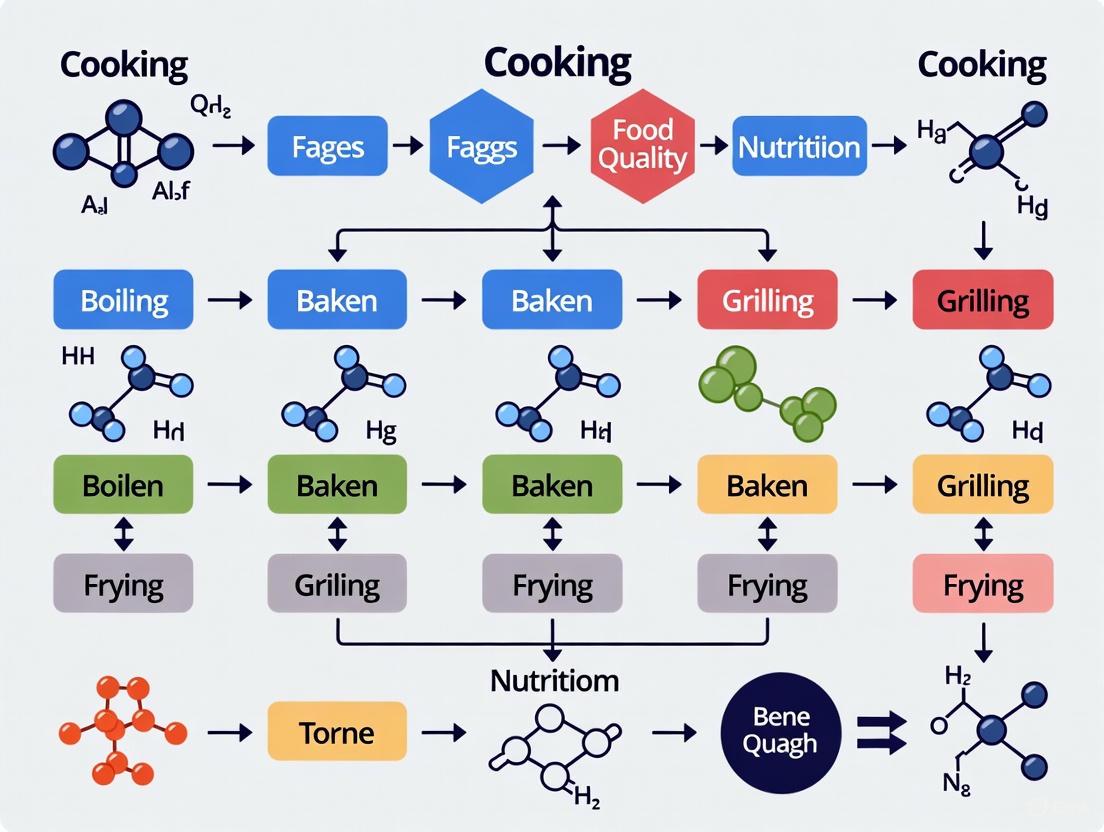
This review provides a systematic analysis of how various cooking techniques—from traditional boiling to innovative sous-vide and microwave processing—fundamentally alter the nutritional, physicochemical, and bioactive properties of food.
Beyond the Plate: A Scientific Analysis of How Cooking Methods Dictate Food Quality, Bioavailability, and Health Implications
Abstract
This review provides a systematic analysis of how various cooking techniques—from traditional boiling to innovative sous-vide and microwave processing—fundamentally alter the nutritional, physicochemical, and bioactive properties of food. Tailored for researchers and drug development professionals, it explores the mechanistic basis of heat-induced changes, including nutrient retention, lipid oxidation, and the formation of both beneficial and deleterious compounds. The article critically evaluates methodological approaches for assessing food quality, offers optimization strategies to mitigate nutrient loss and health risks, and presents comparative data to validate cooking efficacy. Finally, it synthesizes key implications for clinical research, particularly regarding nutrient bioavailability and the impact of dietary components on drug metabolism and therapeutic outcomes.
The Science of Heat: Foundational Principles of How Cooking Transforms Food Composition and Bioactivity
Thermal processing represents a cornerstone of food science, serving as a critical unit operation to achieve microbial safety and extended shelf life. The fundamental purpose of applying heat to food matrices is the inactivation of pathogenic microorganisms and spoilage-related enzymes, thereby ensuring consumer safety and product stability [1]. However, the application of heat initiates a complex series of physical transformations and chemical reactions within food components, creating a perpetual trade-off between safety objectives and quality preservation. As the food industry evolves, a diverse spectrum of thermal technologies has emerged, ranging from traditional retort processing to advanced microwave-assisted systems, each imparting distinct effects on the nutritional, sensory, and structural properties of processed foods [2] [3].
This comparative analysis examines the physical and chemical dynamics induced by various thermal processing methods across different food matrices. By evaluating traditional and innovative thermal technologies against key performance metrics—including nutrient retention, sensory quality, and microbial efficacy—this guide provides researchers and food scientists with evidence-based insights for process optimization. The ensuing sections detail experimental methodologies, quantify treatment impacts through comparative data, and contextualize these findings within the broader scope of food quality research, with particular relevance to pharmaceutical professionals engaged in nutraceutical development and nutrient delivery systems.
Fundamental Thermal Processing Technologies
Thermal technologies are broadly classified based on their heating mechanism, temperature range, and equipment configuration. Conventional methods rely on the external application of heat which transfers to the food product through conduction or convection, while novel thermal processes often utilize energy forms that generate heat within the food matrix itself.
Traditional Thermal Technologies:
- Pasteurization: Utilizes temperatures below 100°C to destroy pathogenic and spoilage microorganisms. Low-Temperature Short-Time (LTST, e.g., 72°C for 15s for milk) and High-Temperature Short-Time (HTST) processes aim to minimize quality degradation [1].
- Sterilization: Employs temperatures above 100°C to achieve commercial sterility, inactivating all microorganisms, including spores. This includes in-container retort processing and continuous flow systems [1].
- Ultra-High Temperature (UHT) Processing: Involves heating to temperatures of 135-145°C for 1-10 seconds, followed by aseptic packaging. This HTST approach minimizes chemical damage like Maillard browning compared to in-container sterilization [1].
- Common Cooking Methods (Boiling, Roasting, Grilling, Frying): These dry- or moist-heat methods, prevalent in both domestic and industrial settings, vary significantly in their heat transfer mechanisms (conduction, convection) and resultant product quality [4].
Novel Thermal Technologies:
- Microwave-Assisted Thermal Processing: Uses electromagnetic radiation to generate heat volumetrically within the product, leading to rapid heating. Systems like Microwave-Assisted Pasteurization Systems (MAPS) can result in more uniform heating and reduced quality damage compared to conventional methods [2].
- Ohmic Heating: Passes an alternating electric current through the food, which acts as an electrical resistor, generating heat internally. This method reduces thermal gradients and can minimize burn-on and nutrient loss [5].
- Radio Frequency Heating: Uses longer wavelengths than microwaves, potentially offering more uniform heating in certain products, and is explored for blanching and pasteurization to better retain flavor and nutrients [5].
The following workflow outlines the standard approach for comparing these thermal technologies in food research, from defining the comparison basis to analyzing targeted and untargeted quality outcomes.
Experimental Protocols for Comparative Analysis
Establishing Equivalent Process Lethality
A scientifically valid comparison of thermal technologies requires processes to be standardized to deliver equivalent microbial lethality, typically expressed as the F₀-value. This represents the equivalent minutes at 121.1°C for a Clostridium botulinum target, ensuring all compared processes provide the same level of safety [6]. For pasteurization processes targeting nonproteolytic C. botulinum spores, an equivalent accumulated thermal lethality of at least 90°C for 10 minutes can be used at the product's cold spot [2].
Protocol: Quality Evaluation Using Model Foods
Objective: To compare the impact of Microwave-Assisted Pasteurization System (MAPS) versus conventional hot water pasteurization on food quality using instrumented model foods [2].
Materials:
- Model Food Systems: Mashed potato and green pea model foods, developed to contain color-based time-temperature indicators (TTIs) that change with heat exposure.
- Pasteurization Systems: Pilot-scale MAPS and traditional hot water immersion systems.
- Processing Conditions: Four processes designed (MAPS at 90°C and 95°C; Hot Water at 90°C and 95°C), all delivering equivalent target lethality.
- Analysis Equipment: Digital imaging system for color quantification, calibrated for Lab* color space measurement.
Methodology:
- Sample Preparation: Prepare model food purees homogeneously and package identically.
- Thermal Processing: Process samples in each system, monitoring time-temperature profiles, particularly at the cold spot.
- Image Capture: Photograph processed samples under standardized lighting conditions.
- Color Analysis: Use image analysis software to quantify color values (median color for overall change; interquartile range for burnt area detection).
- Cook Value Calculation: Compute the thermal impact on quality using chemical marker kinetics, with lower cook values indicating less quality damage.
Protocol: Non-Targeted Impact Assessment via Headspace Fingerprinting
Objective: To comprehensively compare the global impact of thermal (conventional) versus non-thermal (High-Pressure, Pulsed Electric Field) processing on volatile profiles without pre-selecting target compounds [6].
Materials:
- Food Matrices: High-acid liquid (orange juice) and low-acid solid (carrot) products.
- Processing Systems: Thermal pasteurizer/sterilizer, HP processor, PEF processor.
- Analysis Equipment: Gas Chromatography-Mass Spectrometry (GC-MS) with headspace autosampler.
Methodology:
- Sample Processing: Treat samples under microbially equivalent conditions across all technologies.
- Headspace Sampling: Incubate samples at controlled temperature and extract headspace volatiles.
- GC-MS Analysis: Separate and detect volatile compounds without prior compound identification.
- Data Processing: Use pattern recognition (e.g., principal component analysis) on full chromatographic data to identify differentiating features between treatments.
- Feature Identification: Identify key differentiating compounds and relate them to underlying chemical reactions (e.g., Maillard, oxidation).
Comparative Performance Data
Quantitative Comparison of Thermal Technologies
Table 1: Comparative Impact of Thermal Processing Technologies on Food Quality and Processing Parameters
| Technology | Temperature/Time Range | Microbial Efficacy | Impact on Nutrients & Bioactives | Sensory & Physical Changes | Energy & Processing Efficiency |
|---|---|---|---|---|---|
| Hot Water (Conventional) | 90-95°C, minutes | Effective against nonproteolytic C. botulinum [2] | Significant vitamin C degradation in juices; Carotenoid isomerization in carrots [6] | Largest color change in model foods; Texture softening in vegetables [2] [6] | Lower equipment cost; Potential for higher energy consumption |
| Microwave-Assisted (MAPS) | 90-95°C, minutes (Equivalent lethality) [2] | Equivalent lethality to conventional [2] | Better retention of heat-sensitive compounds due to shorter come-up time | Smallest hot spot cook values; Least color change in model foods [2] | Volumetric heating; Faster come-up time; More uniform heat distribution [2] |
| Ultra-High Temperature (UHT) | 135-145°C, 1-10s [1] | Inactivates spores; 12D reduction C. botulinum [1] | Maillard reaction (HMF, Lactulose); Some vitamin loss, but less than retort [1] | Cooked flavor from volatile sulphur compounds; Minimal browning vs. retort [1] | Continuous processing; High energy input; Requires aseptic packaging |
| Ohmic & Radio Frequency | Variable, shorter times | Equivalent lethality achievable | Reduced flavor/nutrient loss during blanching vs. conventional [5] | Improved texture preservation; Reduced flavor attenuation [5] | Internal heating; High energy efficiency; Reduced burn-on |
Impact on Specific Food Matrices
Table 2: Food Matrix-Specific Responses to Different Thermal Processing Methods
| Food Matrix | Processing Technology | Key Quality Findings | Primary Degradation Pathways |
|---|---|---|---|
| Orange Juice (High-Acid Liquid) | Thermal Pasteurization (90-95°C) | No significant difference in °Brix, sugars, pH, acids, color, vitamin C, carotenoids vs. novel methods [6] | Residual enzyme activity (pectinmethylesterase) varies by technology, affecting cloud stability [6] |
| High-Pressure Processing (HPP) | |||
| Pulsed Electric Field (PEF) | |||
| Carrots (Low-Acid Solid) | Thermal Sterilization (≥121°C) | Severe browning; Carotenoid degradation & isomerization; High HMF [6] | Maillard reactions, Carotenoid degradation, Unsaturated fatty acid oxidation [6] |
| High-Pressure Sterilization | Comparable overall quality to pasteurized products; Less browning & carotenoid loss [6] | ||
| Meat Products | Roasting & Grilling (190-230°C) | Roasting increases lipid oxidation; Grilling enhances roasted flavor [4] | Protein denaturation; Collagen gelatinization; Maillard reaction & heterocyclic amine formation [4] |
| Sous-Vide (Low Temp, Long Time) | Lowest moisture loss; Reduced protein oxidation vs. roasting/frying [4] | ||
| Prepared Dishes | Traditional Thermal Sterilization | Texture damage; Flavor attenuation; Nutrient loss [5] | Overcooking, thermal degradation of vitamins and flavors |
| Novel Thermal (Microwave, Ohmic) | Reduced flavor and nutrient loss during blanching/heating [5] | More controlled heating, reduced thermal damage |
The Scientist's Toolkit: Research Reagent Solutions
Table 3: Essential Reagents and Materials for Thermal Processing Research
| Reagent/Material | Functional Application in Research | Exemplary Use Case |
|---|---|---|
| Model Food Systems (Mashed Potato, Green Pea Puree with TTI) [2] | Acts as a standardized medium for quantifying spatial thermal impact; Color-based TTIs allow visualization of cumulative heat distribution. | Mapping temperature distribution and identifying cold spots in novel packages during process development. |
| Chemical Markers (HMF, Furfural, Lactulose) [1] [6] | Quantify heat-induced chemical changes; HMF/Lactulose indicate Maillard reaction extent in milk; Furfural indicates quality loss in juices. | Differentiating between UHT and sterilized milk; Assessing the severity of thermal treatment in high-carbohydrate foods. |
| Pectinmethylesterase (PME) Enzyme [6] | Acts as a native time-temperature integrator in high-acid plant tissues; Residual activity indicates process severity. | Validating the efficacy of mild pasteurization processes for orange juice cloud stability. |
| Headspace Volatile Profiling Standards (e.g., Furans, Aldehydes, Sulfur Compounds) [6] | Enable non-targeted analysis of process impact; Fingerprints can differentiate technologies based on underlying reaction pathways. | Identifying whether flavor differences are due to Maillard reactions, lipid oxidation, or enzymatic activity. |
| Colorimetric Indicators (Lab* Color Space Standards) [2] | Provide objective quantification of visual quality changes (e.g., browning, burning, fading) induced by heat. | Objectively comparing the surface color of grilled vs. roasted meat or pasteurized vegetable purees. |
The comparative analysis of thermal processing technologies reveals a complex interplay between microbial safety and food quality, governed by distinct physical and chemical dynamics. Microwave-assisted and other novel thermal technologies consistently demonstrate advantages in reducing heat-induced damage, evidenced by smaller cook values at hot spots and superior retention of color and key chemical compounds in model food systems [2]. The principle of high-temperature short-time (HTST) processing remains paramount for optimizing the balance between safety and quality, as seen in UHT processing's ability to minimize Maillard browning compared to in-container sterilization [1].
Critically, fair comparison requires establishing equivalent microbial lethality (F₀-value) as a baseline, as differences in quality outcomes can be insignificant when this principle is rigorously applied, particularly in high-acid liquids like orange juice [6]. However, for low-acid solid matrices like carrots, the reduced thermal load of advanced technologies like high-pressure sterilization can manifest in measurably superior outcomes, including minimized browning and carotenoid degradation [6]. The choice of optimal technology is therefore inherently matrix-dependent, influenced by factors such as acidity, texture, and primary quality targets. For researchers and industry professionals, this underscores the necessity of a tailored, evidence-based approach to thermal process selection, leveraging targeted and non-targeted analytical methods to fully characterize the physical and chemical dynamics induced in specific food matrices.
Macronutrients—proteins, lipids, and carbohydrates—form the fundamental building blocks of our diet, providing energy and essential components for biological processes. However, their nutritional value and biochemical properties are significantly transformed through various cooking methods. Understanding these transformations is crucial for food scientists, nutrition researchers, and health professionals seeking to optimize food quality, safety, and health outcomes. This guide provides a comparative analysis of how different cooking techniques affect these macronutrients, supported by experimental data and standardized protocols to inform both research and practical applications.
The thermal processing of food induces complex physicochemical changes that can enhance digestibility and sensory qualities while potentially generating undesirable compounds. The extent and nature of these transformations depend critically on cooking parameters including temperature, time, moisture, and the food matrix itself. This review systematically examines these effects across major cooking modalities, from traditional methods like boiling and frying to emerging technologies such as vacuum cooking and microwave processing.
Comparative Analysis of Cooking Techniques
Fundamental Cooking Mechanisms
Table 1: Characterization of Common Cooking Techniques
| Cooking Method | Temperature Range (°C) | Heat Transfer Medium | Oxygen Exposure | Key Macronutrient Impacts |
|---|---|---|---|---|
| Boiling | 95-100 | Water | Limited | Protein denaturation, carbohydrate gelatinization, mineral leaching |
| Steaming | 95-100 | Steam | Limited | Better nutrient retention, reduced leaching |
| Baking/Roasting | 150-250 | Hot air | High | Maillard reactions, carbohydrate caramelization |
| Frying | 150-200 | Oil | High | Lipid oxidation, protein modification, rapid cooking |
| Microwave | ~100 internally | Electromagnetic radiation | Varies | Rapid internal heating, minimal browning |
| Vacuum cooking | 55-85 | Water bath | Minimal | Minimal oxidation, enhanced texture retention |
Different cooking techniques affect food properties by altering surface temperatures and heat conduction dynamics [7]. Traditional methods include frying, boiling, steaming, and roasting, while emerging technologies encompass vacuum cooking, infrared heating, microwave heating, and ultrasonic-assisted cooking [7]. Each method creates distinct conditions that influence the transformation pathways of macronutrients.
Quantitative Comparison of Macronutrient Changes
Table 2: Experimental Data on Cooking Effects on Macronutrient Composition
| Cooking Method | Protein Digestibility Change | Lipid Oxidation (TBARS increase) | Vitamin Retention | Glycemic Index Impact | Key Experimental Findings |
|---|---|---|---|---|---|
| Boiling | +15-30% | Minimal | 40-80% (water-soluble) | Variable | Significant mineral leaching into cooking water |
| Steaming | +10-25% | Minimal | 70-95% | Minimal change | Superior preservation of water-soluble nutrients |
| Frying | +20-40% | +150-400% | 50-90% (fat-soluble) | Increased | Acrylamide, heterocyclic amines, volatile aldehydes formation |
| Vacuum cooking | +15-25% | +10-30% | 85-98% | Minimal change | Preserves chlorophyll, carotenoids, phenols; maintains antioxidant properties |
| Microwave | +10-20% | +20-50% | 80-95% | Minimal change | Reduced cooking time minimizes overall nutrient degradation |
Conditions such as temperature, time, and oxygen pressure during cooking lead to different degrees of food component modification [7]. Vacuum cooking effectively delays lipid oxidation due to minimal oxygen exposure, preserving compounds such as chlorophyll, carotenoids, and phenols in vegetables, with less loss of antioxidant properties compared to boiling [7]. In contrast, frying promotes oxidation reactions and generates potential health hazards including acrylamide and heterocyclic amines [7].
Experimental Protocols for Assessing Macronutrient Changes
Protocol 1: Lipid Oxidation Analysis During Cooking
Objective: To quantify lipid oxidation products formed during different cooking methods.
Materials:
- Fresh food samples (e.g., muscle foods, plant oils)
- Cooking equipment (fryer, oven, steam cooker, vacuum sealer)
- Thiobarbituric acid reactive substances (TBARS) assay kit
- Gas chromatography-mass spectrometry (GC-MS) system
- Solvents (chloroform, methanol, 2-propanol)
Methodology:
- Prepare uniform samples (100g portions) and assign to different cooking treatments
- Apply cooking methods with controlled parameters:
- Frying: 180°C for 3-8 minutes
- Baking: 200°C for 15-30 minutes
- Steaming: 100°C for 10-20 minutes
- Vacuum cooking: 65-85°C for 30-90 minutes
- Extract lipids using chloroform-methanol (2:1 v/v) method
- Quantify primary oxidation products via peroxide value measurement
- Determine secondary oxidation products using TBARS assay
- Analyze volatile compounds (aldehydes, ketones) by GC-MS
- Statistically analyze differences between cooking methods (ANOVA, p<0.05)
Data Interpretation: Higher TBARS values and aldehyde concentrations indicate advanced lipid oxidation. Frying typically produces the highest oxidation levels, while vacuum cooking and steaming minimize oxidative changes [7].
Protocol 2: Protein Digestibility Assessment
Objective: To evaluate the effect of cooking methods on protein digestibility.
Materials:
- Protein-rich samples (meat, legumes, dairy)
- In vitro digestion simulation system
- Proteolytic enzymes (pepsin, trypsin, chymotrypsin)
- pH-stat titration equipment
- HPLC system for amino acid analysis
Methodology:
- Cook samples using different methods (boiling, frying, steaming, vacuum)
- Subject samples to simulated gastrointestinal digestion:
- Gastric phase: pepsin at pH 2, 37°C, 60 minutes
- Intestinal phase: pancreatin at pH 7, 37°C, 120 minutes
- Monitor degree of hydrolysis using pH-stat method
- Terminate reaction and quantify free amino acids by HPLC
- Calculate digestibility as percentage of total protein released
- Assess protein quality by amino acid score of digested material
Data Interpretation: Moderate heat treatment typically increases protein digestibility by denaturing proteins and inactivating trypsin inhibitors, but excessive heating can reduce availability of essential amino acids, particularly lysine [7].
Protocol 3: Carbohydrate Transformation Analysis
Objective: To determine changes in carbohydrate composition and glycemic response.
Materials:
- Starch-rich foods (potatoes, grains, legumes)
- Cooking equipment
- Enzymatic assay kits for starch quantification
- In vitro glycemic index assessment system
- Differential scanning calorimetry (DSC) for gelatinization studies
Methodology:
- Process samples using different cooking methods
- Extract and quantify:
- Rapidly digestible starch (RDS)
- Slowly digestible starch (SDS)
- Resistant starch (RS)
- Assess starch gelatinization using DSC
- Determine predicted glycemic index through in vitro digestion
- Analyze formation of advanced glycation end-products (AGEs) in protein-carbohydrate mixtures
Data Interpretation: Cooking generally increases starch gelatinization and digestibility, potentially raising glycemic response. The formation of resistant starch varies with cooking and cooling cycles. High-temperature methods can promote AGE formation, which has implications for metabolic health [8].
Metabolic Pathways of Macronutrient Transformations
Interconnected Metabolic Pathways
Figure 1: Interconnections between Macronutrient Metabolic Pathways
Metabolic pathways for carbohydrates, proteins, and lipids are highly interconnected [9] [10]. These pathways are porous—substances enter from other pathways, and intermediates leave for other pathways [10]. The citric acid cycle serves as a central hub connecting the metabolism of all three macronutrients [9].
Cooking-Induced Pathway Alterations
Figure 2: Cooking-Induced Transformations and Health Implications
Cooking-induced changes to macronutrients directly influence their metabolic fate [7] [8]. These transformations affect digestibility, bioavailability, and the production of metabolites with various health implications. For example, high-temperature cooking can lead to advanced glycation end-products (AGEs) from carbohydrates and lipid oxidation products, both associated with chronic inflammation and disease risk [8].
Research Reagent Solutions for Macronutrient Analysis
Table 3: Essential Research Reagents for Macronutrient Transformation Studies
| Reagent/Category | Specific Examples | Research Application | Key Functionality |
|---|---|---|---|
| Lipid Oxidation Assays | TBARS assay kit, Conjugated diene method, Peroxide value test | Quantifying lipid oxidation products | Measures malondialdehyde and other secondary oxidation products |
| Protein Analysis | Bradford assay, BCA protein assay, SDS-PAGE kits, ELISA for specific modifications | Protein quantification and characterization | Detects protein concentration, structural changes, and specific modifications |
| Carbohydrate Analysis | Megazyme starch assay kits, DNS method for reducing sugars, HPLC columns for sugars | Starch composition and sugar analysis | Quantifies different starch fractions and simple sugars |
| Digestion Simulation | Porcine pepsin, Pancreatin, Bile extracts, Dialysis tubing for bioaccessibility | In vitro digestibility studies | Simulates gastrointestinal conditions to assess nutrient release |
| Advanced Analytics | GC-MS, LC-MS/MS, HPLC with various detectors, NMR spectroscopy | Identification of novel compounds and metabolites | Characterizes molecular structures and quantifies trace components |
| Antioxidant Capacity | ORAC, FRAP, DPPH assay kits | Assessing antioxidant retention | Measures remaining antioxidant capacity after cooking processes |
These research tools enable standardized assessment of macronutrient transformations across different cooking methods [7]. The selection of appropriate reagents and methodologies is critical for obtaining comparable, reproducible data in food science research.
Implications for Research and Development
The systematic comparison of cooking methods reveals significant trade-offs in macronutrient transformations. While thermal processing generally improves digestibility and safety, it can also generate compounds with potential health concerns. The optimal cooking method depends on the specific macronutrient profile, desired nutritional outcomes, and consideration of potential risks.
Emerging technologies like vacuum cooking and microwave processing offer advantages for preserving nutritional quality while ensuring safety. However, traditional methods continue to provide unique sensory qualities that remain important for consumer acceptance. Future research should focus on optimizing cooking parameters to maximize benefits while minimizing undesirable transformations, with consideration for individual food matrices and nutritional requirements.
Understanding these macronutrient transformations has broad implications for nutritional epidemiology, food product development, and dietary recommendations. The experimental protocols and analytical approaches outlined here provide a framework for standardized assessment of cooking effects across research settings, enabling more direct comparison of findings and advancing our understanding of diet-health relationships.
The processing and cooking of food are essential for palatability and safety, yet these practices significantly alter the nutritional value of ingredients, particularly the stability of vitamins. Vitamins, a group of organic compounds essential for normal physiological functions, maintenance, growth, and development, are generally classified into two groups based on their solubility: water-soluble (B-complex and C) and fat-soluble (A, D, E, and K) [11] [12]. This chemical distinction fundamentally governs their retention during cooking and storage. Water-soluble vitamins, being fragile and easily destroyed by heat or leached into water, are particularly vulnerable to common cooking methods [13]. In contrast, fat-soluble vitamins are more heat-stable and may even see improved bioavailability when cooked with healthy fats, as heat breaks down plant cell walls, making these compounds easier to absorb [13].
Understanding the fate of these micronutrients is not merely an academic exercise; it is crucial for public health, clinical nutrition, and the food industry. Insufficient vitamin intake gives rise to specific deficiency syndromes, and many vitamins also offer health benefits such as anti-aging, redox state regulation, and potentially preventing several cancers [11]. This guide provides a comparative analysis of vitamin stability across processing conditions, presenting objective experimental data to inform researchers, scientists, and food developers in their work.
Vitamin Retention Across Cooking Methods: A Quantitative Review
The impact of cooking on vitamin content is highly dependent on the method employed. The following table summarizes findings from controlled studies that measured the "true retention" of vitamins in various foods, accounting for changes in weight during cooking [11] [14].
Table 1: True Retention of Vitamins in Vegetables and Mushrooms Under Different Cooking Methods
| Vitamin | Food Matrix | Boiling | Blanching | Steaming | Microwaving | Roasting | Reference |
|---|---|---|---|---|---|---|---|
| Vitamin C (Water-soluble) | Mixed Vegetables | 0.0 - 91.1% (Lowest) | Varies | Varies | 0.0 - 91.1% (Highest) | Not Reported | [11] |
| Vitamin K (Fat-soluble) | Spinach & Chard | Not Reported | Not Reported | Not Reported | Least Loss | Not Reported | [11] |
| Vitamin K (Fat-soluble) | Crown Daisy & Mallow | Not Reported | Not Reported | Not Reported | Greatest Loss | Not Reported | [11] |
| β-Carotene (Fat-soluble) | Mixed Vegetables | Occasional Increase | Occasional Increase | Occasional Increase | Occasional Increase | Not Reported | [11] |
| B Vitamins (Water-soluble) | Shiitake Mushrooms | Lowest Retention | Low Retention | Moderate Retention | Higher Retention | Highest Retention | [14] |
| Antioxidant Activity | Shiitake Mushrooms | Decreased | Decreased | Decreased | Maintained/Increased | Maintained/Increased | [14] |
Key Insights from Experimental Data
- Water-Soluble Vitamins: The retention of vitamin C exhibits the widest variability, highly dependent on the specific food and process. Boiling consistently leads to the most significant losses due to leaching and thermal degradation, while microwaving, which uses shorter times and less water, often results in the highest retention [11] [13]. B vitamins, such as thiamine, show a similar pattern, with boiling causing the greatest loss and dry-heat methods like roasting preserving the most [14].
- Fat-Soluble Vitamins: The stability of vitamins like K and provitamin A carotenoids (e.g., β-carotene) is more complex. While generally more heat-stable, their retention can be variable and is highly dependent on the food matrix. For instance, microwaving caused the least loss of vitamin K in spinach but the greatest loss in crown daisy [11]. Cooked vegetables were occasionally found to have higher contents of α-tocopherol and β-carotene than their raw counterparts, potentially due to the liberation of these compounds from the cellular matrix during heating [11].
- Bioactive Compounds: Studies on shiitake mushrooms show that cooking methods also impact non-vitamin bioactive compounds. While boiling, blanching, and steaming decreased antioxidant activities, microwaving and roasting maintained or even increased them, suggesting that these methods may promote the release of antioxidant compounds or the formation of new ones [14].
Experimental Protocols for Assessing Vitamin Stability
To generate the comparative data presented above, researchers employ rigorous analytical techniques. The following workflow and detailed methodology are typical in the field for quantifying vitamin retention.
Detailed Methodology for Vitamin Analysis
The experimental protocol can be broken down into the following critical stages:
Sample Preparation and Cooking: Raw materials are cleaned, washed, and cut into uniform pieces to ensure consistent heat transfer. Cooking is performed under strictly controlled conditions. For example, in a study on vegetables:
- Boiling: Samples are added to boiling distilled water (1:5 food/water ratio) for a defined duration (e.g., 5-20 min) [11].
- Blanching: Similar to boiling but with shorter times (e.g., 1-5 min) [11].
- Steaming: Samples are placed in a steam basket above boiling water for a set time [11].
- Microwaving: Samples are placed in a glass dish and cooked in a domestic microwave oven at full power (e.g., 700 W) without water for 2-5 minutes [11].
- Roasting: Samples are heated in a pan without oil for a specified time [14].
Cooking Yield and True Retention: After cooking, samples are drained (if boiled/blanched) and weighed. The cooking yield is calculated as a ratio of the weight of the cooked sample to the weight of the raw sample. The true retention of nutrients, a more accurate measure than simple concentration, is then calculated using the formula: True Retention (%) = (Nutrient content per g cooked food × Weight of cooked food) / (Nutrient content per g raw food × Weight of raw food) × 100 [11] [14].
Laboratory Analysis of Vitamins:
- Vitamin C (Ascorbic Acid): Lyophilized samples are homogenized in a metaphosphoric acid solution. The extract is centrifuged, filtered, and analyzed using HPLC with UV detection, typically at 254 nm [11].
- Vitamin E (Tocopherols): Samples undergo saponification (heating with ethanolic potassium hydroxide) to hydrolyze esters and release free tocopherols. These are then extracted into an organic solvent (e.g., n-hexane:ethyl acetate), concentrated, and analyzed by HPLC coupled with a fluorescence detector [11].
- Vitamin K: This fat-soluble vitamin is determined using a solvent extraction method, followed by HPLC analysis [11].
- B Vitamins (e.g., Thiamine, Folate): These are typically extracted using acid or enzyme treatments and then quantified via HPLC with UV or fluorescence detection, depending on the specific vitamin [14].
Degradation Pathways of Vitamins
The susceptibility of vitamins to processing stems from their fundamental chemical structures. The following diagram illustrates the primary degradation pathways for water-soluble and fat-soluble vitamins.
Mechanisms of Vitamin Loss
- Water-Soluble Vitamins (C & B-Complex): The primary mechanisms of loss are leaching into cooking water and thermal degradation. The structure of vitamin C, for example, is highly susceptible to heat and oxidation [13]. Thiamine (B1) is stable at acidic pH but is rapidly destroyed in neutral or alkaline conditions, regardless of temperature [15].
- Fat-Soluble Vitamins (A, D, E, K): These vitamins are generally more stable during cooking in water but are highly susceptible to oxidation and degradation by light and air. Their molecular structures often contain conjugated double bonds (e.g., in retinyl acetate for vitamin A) that are vulnerable to attack by oxygen, especially in the presence of minerals and high temperatures during processes like extrusion [16] [13]. This oxidation is a primary cause of loss during storage and processing.
The Scientist's Toolkit: Key Research Reagent Solutions
The accurate analysis of vitamin stability relies on a suite of specialized reagents and analytical standards. The following table details essential materials used in the featured experiments.
Table 2: Essential Research Reagents for Vitamin Analysis
| Reagent / Material | Function in Research | Example Application |
|---|---|---|
| HPLC System with UV/FL Detectors | Separation, identification, and quantification of individual vitamin compounds. | Fundamental for analyzing ascorbic acid, tocopherols, and B vitamins in sample extracts [11] [15]. |
| Vitamin Standards (e.g., Retinol, Ascorbic Acid, α-Tocopherol) | Used for external calibration to create reference curves for quantitative analysis. | Critical for accurately determining the concentration of specific vitamins in unknown samples [11] [15]. |
| Metaphosphoric Acid | Extraction and stabilization agent for labile vitamins like Vitamin C, preventing its degradation during analysis. | Used in the extraction solvent for analyzing ascorbic acid content [11]. |
| Potassium Hydroxide (in Ethanol) | Saponification reagent; hydrolyzes ester bonds to release free vitamins (e.g., tocopherols) from food matrices. | Essential step in the extraction of vitamin E from lyophilized samples [11]. |
| Organic Solvents (n-Hexane, Ethyl Acetate) | Extraction of fat-soluble vitamins from the aqueous or saponified mixture. | Used to partition and concentrate vitamins A, E, and K after saponification [11] [15]. |
The stability of vitamins during cooking is not a monolithic concept but a complex interplay between vitamin chemistry, cooking methodology, and the specific food matrix. The data consistently show that water-soluble vitamins are best preserved by low-water, quick-heat methods like microwaving and steaming, while boiling leads to the most significant losses [11] [13]. Fat-soluble vitamins, though more thermally stable, require protection from oxygen and light and their retention can be enhanced by cooking with fats [13]. For researchers and food scientists, these findings underscore the necessity of using precise analytical protocols and considering "true retention" to accurately assess the nutritional impact of processing. Future work in this field will continue to refine these methods and explore novel processing technologies that maximize both the safety and nutritional quality of our food supply.
Lipid oxidation is a complex chemical process that leads to the oxidative degradation of lipids, resulting in the formation of peroxide and hydroperoxide derivatives [17]. This degradation pathway represents one of the most significant challenges to food quality and human health, as it directly impacts nutritional value, sensory properties, and biological safety [18] [19]. Within the context of comparative analysis of cooking methods on food quality, understanding lipid oxidation mechanisms becomes paramount for researchers and food scientists seeking to minimize the formation of harmful compounds while maintaining desirable food characteristics.
The process occurs when free radicals or other reactive oxygen species interact with lipids, particularly polyunsaturated fatty acids (PUFAs) due to their carbon-carbon double bonds [17]. The resulting chain reaction produces a wide array of oxidation products, many of which demonstrate cytotoxic and genotoxic properties [20]. This review systematically examines the mechanistic pathways, catalytic factors, and health-concerning compounds resulting from lipid oxidation, with particular emphasis on experimental approaches for their quantification and comparison across different food processing conditions.
Chemical Mechanisms of Lipid Oxidation
The Three-Stage Radical Chain Reaction
Lipid peroxidation follows a classic autoxidation mechanism comprising three distinct phases: initiation, propagation, and termination [17] [21]. This radical chain reaction transforms lipids into hydroperoxide derivatives through a self-sustaining cycle that continues until termination events consume the radical species.
Table 1: Kinetic parameters for peroxidation of selected lipids
| Lipid Substrate | Double Bonds | Propagation Rate Constant (kp, M-1s-1) | Reference |
|---|---|---|---|
| Methyl stearate | 0 (Saturated) | ~0.01 | [21] |
| Methyl oleate | 1 (MUFA) | 0.89 | [21] |
| Methyl linoleate | 2 (PUFA) | 62.0 | [21] |
| Methyl linolenate | 3 (PUFA) | 236.0 | [21] |
| Arachidonic acid | 4 (PUFA) | 197 | [21] |
| Docosahexaenoic acid | 6 (PUFA) | 334 | [21] |
| Cholesterol | 1 | 11 | [21] |
| 7-Dehydrocholesterol | 2 | 2260 | [21] |
Initiation begins when a pro-oxidant radical (such as hydroxyl radical HO•) abstracts a hydrogen atom from the allylic position of an unsaturated lipid, forming a lipid radical (L•) [17] [21]. The susceptibility to hydrogen abstraction increases with the degree of unsaturation, explaining why PUFAs are particularly vulnerable to oxidation [21].
In the propagation phase, the lipid radical rapidly reacts with molecular oxygen to form a lipid peroxyl radical (LOO•), which subsequently abstracts a hydrogen atom from another lipid molecule, generating a lipid hydroperoxide (LOOH) and a new lipid radical that continues the chain reaction [17] [22]. The propagation rate constant (kp) increases dramatically with the number of bis-allylic positions in the fatty acid, as evidenced by the approximately 10,000-fold higher kp for docosahexaenoic acid (22:6) compared to monounsaturated oleic acid (18:1) [21].
The termination phase occurs when two radicals combine to form non-radical products. The primary termination pathway for peroxyl radicals follows the Russel mechanism, forming a tetroxide intermediate that decomposes to yield carbonyl compounds and singlet oxygen [21].
Figure 1: The three-stage radical chain reaction of lipid peroxidation
Primary and Secondary Oxidation Products
The primary products of lipid peroxidation are lipid hydroperoxides (LOOH), which are relatively unstable and decompose to form a complex mixture of secondary oxidation products [17] [22]. These secondary products include various carbonyl compounds, aldehydes, ketones, alcohols, and hydrocarbons, many of which are volatile and contribute to the rancid odors and flavors associated with oxidized foods [19].
Among the most studied and biologically relevant secondary products are malondialdehyde (MDA), 4-hydroxy-2-nonenal (4-HNE), acrolein, and crotonaldehyde [22] [19]. These compounds are highly reactive due to the presence of carbonyl groups and, in some cases, additional functional groups that enable them to form adducts with cellular biomolecules including proteins, DNA, and phospholipids [22] [19].
Catalysts and Influencing Factors
Multiple factors influence the rate and extent of lipid oxidation in food systems. Understanding these catalysts is essential for designing cooking and processing methods that minimize the formation of harmful compounds.
Table 2: Factors influencing lipid oxidation rates in food systems
| Factor Category | Specific Factors | Impact on Oxidation Rate | Mechanism of Action |
|---|---|---|---|
| Fatty Acid Composition | Number of double bonds | Increases exponentially with unsaturation | Lower bond dissociation energy at bis-allylic positions [21] |
| Presence of PUFAs | Significant increase | Multiple bis-allylic positions available for H abstraction [19] | |
| Environmental Factors | Temperature | Increases with temperature | Accelerates reaction kinetics and hydroperoxide decomposition [19] |
| Oxygen pressure | Increases with oxygen availability | Higher O₂ concentration accelerates propagation [18] | |
| Light exposure (especially UV) | Significant increase | Photochemical generation of initiating radicals [21] | |
| Pro-oxidants | Transition metals (Fe, Cu) | Dramatic increase | Catalyze homolytic decomposition of hydroperoxides [22] |
| Heme proteins | Significant increase | Generate activated oxygen species [19] | |
| Lipoxygenases | Enzyme-specific increase | Enzymatic oxidation of PUFAs [22] | |
| Food Matrix | Water activity | Variable impact | Affects reactant mobility and catalyst activity [19] |
| Surface area | Increases with greater surface | Enhanced oxygen exposure [19] |
Transition metals represent particularly potent pro-oxidants due to their ability to participate in electron transfer reactions that decompose hydroperoxides into alkoxyl and peroxyl radicals (Fenton reaction and Haber-Weiss cycle) [22]. This catalytic activity explains why even trace amounts of iron or copper can dramatically accelerate lipid oxidation in food systems.
The physical state of the lipid and food matrix characteristics also significantly impact oxidation rates. Surface area exposure to oxygen, water activity that affects reactant mobility, and the presence of inherent antioxidant systems all contribute to the overall oxidative stability of a food product [19].
Health-Concern Compounds: Formation and Toxicological Profiles
Major Toxic Compounds and Their Health Impacts
Dietary advanced lipid oxidation endproducts (ALEs) pose potential risk factors to human health, as the gastrointestinal tract is constantly exposed to these oxidized food compounds [20]. After digestion, a portion of these compounds is absorbed into the lymph or directly into the bloodstream, where they can act as injurious chemicals that activate inflammatory responses affecting multiple organ systems [20].
Table 3: Health-concerning lipid oxidation products and their toxicological effects
| Compound | Precursor Fatty Acids | Toxicological Effects | Experimental Evidence |
|---|---|---|---|
| Malondialdehyde (MDA) | Omega-3 and Omega-6 PUFAs | Mutagenic; forms DNA adducts (primarily M1G); biomarker of oxidative stress | Most mutagenic product of lipid peroxidation; reliable clinical marker [22] [17] |
| 4-Hydroxy-2-nonenal (4-HNE) | Omega-6 PUFAs (e.g., linoleic acid) | Cytotoxic; forms protein adducts; inhibits gene expression; promotes cell death | Most toxic secondary product; causes thymus necrosis in mice [22] [19] |
| Acrolein | Linoleic acid, glycerol | Myocardial oxidative stress; cardiomyopathy; blood vessel dysfunction | Caused cardiovascular damage in mice at human-relevant intake [19] |
| Crotonaldehyde | Linoleic acid, other PUFAs | Liver damage; hepatic tumors; DNA adduct formation | Induced liver tumors in rats via propanodeoxyguanosine adducts [19] |
| 4-Hydroxy-2-hexenal | Omega-3 PUFAs | Cytotoxic; protein and DNA adduct formation | Similar toxicity to 4-HNE but from omega-3 precursors [19] |
Bioavailability and Biological Effects
The bioavailability of lipid oxidation products varies significantly between different compounds. Lipid hydroperoxides (primary products) are generally not well absorbed and often decompose in the gastrointestinal tract [19]. In contrast, secondary oxidation products, particularly α,β-unsaturated aldehydes like 4-HNE and acrolein, have been demonstrated to be absorbed into the bloodstream in both animal and human studies [19].
Once absorbed, these reactive compounds can form covalent adducts with crucial cellular biomolecules. MDA reacts with deoxyadenosine and deoxyguanosine in DNA, forming mutagenic adducts [17]. 4-HNE and similar aldehydes form Michael adducts or Schiff bases with thiol or amine groups in amino acid side chains, potentially inactivating sensitive proteins through electrophilic stress [17]. This molecular damage can trigger inflammatory responses and contribute to the pathogenesis of various diseases, including atherosclerosis, cardiovascular diseases, neurological disorders, and cancer [20] [21].
Recent evidence also indicates that dietary lipid oxidation products can negatively impact gut health by altering gut microbiota composition. Oxidative stress from these compounds may result in colonic inflammation, potentially due to microbiota dysbiosis where beneficial bacteria are suppressed while pathogenic microorganisms proliferate [19].
Analytical Methods for Detection and Quantification
Established Protocols for Lipid Oxidation Assessment
Accurate measurement of lipid oxidation products requires specialized analytical approaches due to the complexity and instability of these compounds. The following experimental protocols represent standardized methodologies cited in the literature.
TBARS Assay for Malondialdehyde The thiobarbituric acid reactive substances (TBARS) assay is one of the most widely used methods for assessing lipid peroxidation extent [17]. The protocol is based on the reaction of thiobarbituric acid (TBA) with malondialdehyde to form a pink chromogen that can be quantified spectrophotometrically at 532-535 nm.
Experimental Protocol:
- Sample Preparation: Homogenize 1g food sample with 2.5 mL of antioxidant-containing solution (e.g., 0.2% BHT in ethanol) to prevent further oxidation during processing [18].
- Reaction Mixture: Combine 0.5 mL sample extract with 2.5 mL of TBA reagent (0.02M TBA in acetic acid buffer, pH 3.5).
- Incubation: Heat mixture at 95°C for 45-60 minutes in a water bath.
- Cooling and Extraction: Cool tubes in ice bath, add 2.5 mL of n-butanol, vortex vigorously, and centrifuge at 3000 × g for 10 minutes.
- Quantification: Measure absorbance of the upper organic layer at 532-535 nm against a blank prepared with solvent instead of sample.
- Calculation: Express results as nmol MDA equivalents per g sample using a standard curve prepared with 1,1,3,3-tetramethoxypropane.
While widely used, the TBARS assay is notoriously nonspecific as thiobarbituric acid reacts with various aldehydes besides MDA [17]. More specific chromatographic methods are recommended for precise quantification.
Chromatographic Methods for Specific Aldehydes Gas chromatography-mass spectrometry (GC-MS/MS) and liquid chromatography-mass spectrometry (LC-MS/MS) provide more specific and reliable quantification of individual lipid oxidation products [22].
Experimental Protocol for 4-HNE Analysis:
- Sample Derivatization: React sample extract with 2,4-dinitrophenylhydrazine (DNPH) to form stable hydrazone derivatives.
- Extraction: Extract derivatives using solid-phase extraction (C18 cartridges).
- Chromatographic Separation: Perform LC separation using C18 reverse-phase column with gradient elution (aqueous methanol to methanol).
- Detection: Utilize MS detection with electrospray ionization in negative mode monitoring m/z 334.2 for 4-HNE-DNPH derivative.
- Quantification: Employ internal standard calibration using deuterated 4-HNE-d11 for accurate quantification.
Figure 2: Analytical workflow for lipid oxidation product quantification
Research Reagent Solutions
Table 4: Essential research reagents for lipid oxidation analysis
| Reagent/Chemical | Function | Application Examples |
|---|---|---|
| Thiobarbituric Acid (TBA) | Chromogen formation with MDA | TBARS assay for screening oxidation extent [17] |
| 2,4-Dinitrophenylhydrazine (DNPH) | Carbonyl derivatization for stability and detection | HPLC/GC analysis of specific aldehydes (4-HNE, MDA) [22] |
| Butylated Hydroxytoluene (BHT) | Radical scavenging antioxidant | Sample preparation to prevent artifactual oxidation [18] |
| Ethylenediaminetetraacetic Acid (EDTA) | Metal chelator | Suppresses metal-catalyzed oxidation during analysis [19] |
| 1,1,3,3-Tetramethoxypropane | MDA precursor for standard curve | TBARS assay calibration [22] |
| Deuterated internal standards (e.g., 4-HNE-d11) | Quantitative internal standards | Accurate quantification in MS-based methods [22] |
Antioxidant Protection Strategies
Antioxidants play a crucial role in mitigating lipid peroxidation by interrupting the radical chain reaction through various mechanisms [17] [21]. The efficacy of different antioxidant strategies depends on their reaction kinetics with peroxyl radicals, their partitioning behavior in food systems, and their stability under processing and storage conditions.
Radical-scavenging antioxidants (such as vitamin E, phenolic compounds, and synthetic phenols) function by donating a hydrogen atom to the lipid peroxyl radical (LOO•), generating a more stable antioxidant radical that does not propagate the chain reaction [17] [21]. The kinetics of this reaction is critical to antioxidant efficacy, with rate constants for hydrogen transfer varying by several orders of magnitude depending on the antioxidant structure.
Preventive antioxidants operate through alternative mechanisms, including metal chelation (e.g., citric acid, EDTA), singlet oxygen quenching (e.g., carotenoids), and enzyme systems that reduce hydroperoxides to stable alcohols (e.g., glutathione peroxidase) [19] [21].
The protection offered by dietary antioxidants consumed simultaneously with oxidized lipids may explain the health benefits of diets rich in fruits and vegetables, as these contain high concentrations of compounds like flavonoids and ascorbic acid that can potentially reduce oxidation reactions in the gastrointestinal tract [20] [19].
Lipid oxidation represents a significant challenge to both food quality and human health, generating a complex mixture of oxidation products with varying toxicological profiles. The mechanisms involve radical chain reactions that proceed through initiation, propagation, and termination stages, heavily influenced by fatty acid composition, environmental factors, and the presence of pro-oxidants.
The most health-concerning compounds resulting from these processes include malondialdehyde, 4-hydroxy-2-nonenal, acrolein, and crotonaldehyde, which demonstrate mutagenic and cytotoxic properties through their ability to form adducts with cellular macromolecules. Analytical methodologies ranging from simple spectrophotometric assays to sophisticated chromatographic techniques enable researchers to quantify these compounds and evaluate the efficacy of intervention strategies.
Within the context of comparative cooking method analysis, understanding these mechanisms and compounds provides a scientific basis for optimizing food processing conditions to minimize the formation of harmful oxidation products while maintaining nutritional quality and sensory attributes. Future research should focus on further elucidating the absorption, metabolism, and biological effects of specific lipid oxidation products, as well as developing more effective antioxidant strategies tailored to specific food applications.
The relationship between diet and health is profoundly influenced by food preparation. Cooking is essential for safety and palatability, but the thermal and chemical processes involved can significantly alter the profile of bioactive compounds in food, such as phytochemicals and antioxidants. These compounds, which play a crucial role in preventing chronic diseases, are susceptible to degradation or transformation depending on culinary techniques. This guide provides a comparative analysis of traditional and innovative cooking methods, evaluating their impact on the concentration and activity of health-promoting compounds in food. Framed within the broader context of food quality research, this synthesis of experimental data aims to inform researchers, scientists, and drug development professionals about how food processing can modulate the availability of valuable phytochemicals.
The Role of Bioactive Compounds and the Impact of Processing
Phytochemicals as Key Antioxidants
Phytochemicals are bioactive compounds found in plants, many of which possess potent antioxidant activity. They are traditionally categorized as secondary metabolites and include three main classes: phenolic compounds (e.g., flavonoids, phenolic acids), terpenes, and nitrogen-containing compounds (e.g., alkaloids, glucosinolates) [23]. In the human body, they counteract oxidative stress, an imbalance between reactive oxygen species (ROS) and antioxidants that is linked to the pathogenesis of numerous chronic diseases, including cancer, cardiovascular diseases, and neurodegenerative conditions [23].
The beneficial effects associated with diets rich in fruits and vegetables are largely attributed to these compounds. However, to be consumed, most foods require transformation and cooking, which can significantly influence the content and bioavailability of their naturally occurring nutrients and bioactives [24]. The extent of this impact is highly dependent on the specific cooking method employed.
General Mechanisms of Cooking-Induced Changes
Cooking methods primarily affect bioactive compounds through:
- Thermal Degradation: High temperatures can directly break down heat-sensitive vitamins and phenolics.
- Leaching: Water-soluble compounds, such as vitamin C and various polyphenols, can be lost into the cooking water [25] [26].
- Oxidation: Exposure to oxygen during cooking can oxidize compounds, converting them from reduced to oxidized forms [26].
- Enhanced Release and Synthesis: In some cases, heat can break down cell walls, increasing the release and bioavailability of certain antioxidants. It can also induce the formation of new compounds with antioxidant properties [26].
Comparative Analysis of Cooking Methods: Experimental Data
Research consistently demonstrates that the choice of cooking method leads to divergent outcomes for food's antioxidant potential. The following sections and tables summarize key experimental findings.
Comparison of Traditional Cooking Methods on Vegetables
A foundational study evaluated the influence of six home-cooking methods (boiling, microwaving, pressure-cooking, griddling, frying, and baking) on the antioxidant activity of 20 vegetables using multiple assays [25].
Table 1: Impact of Traditional Cooking Methods on Antioxidant Activity in Vegetables [25]
| Cooking Method | General Effect on Antioxidant Activity | Key Experimental Findings | Notable Vegetable-Specific Responses |
|---|---|---|---|
| Boiling | Greatest losses | Significant reduction in lipoperoxyl (LOO•) radical scavenging capacity. | Cauliflower, pea, and zucchini showed the highest losses. |
| Pressure-Cooking | High losses | Similar to boiling, leads to considerable reduction in activity. | - |
| Microwaving | Lowest losses | Alternately produced the lowest losses alongside griddling and baking. | Garlic showed reduced ABTS radical scavenging capacity. |
| Griddling | Lowest losses | Produced among the lowest losses of antioxidant activity. | Artichoke maintained very high LOO• scavenging capacity. |
| Baking | Lowest losses | Produced among the lowest losses of antioxidant activity. | - |
| Frying | Intermediate losses | Occupied an intermediate position between high-loss and low-loss methods. | Green bean, celery, and carrot increased their TEAC values. |
The study concluded that "water is not the cook's best friend when it comes to preparing vegetables," highlighting that methods involving large volumes of water (boiling, pressure-cooking) generally lead to the greatest antioxidant losses, while dry-heat methods (griddling, baking) and microwaving are preferable for retention [25].
Traditional vs. Innovative Low-Aggressive Cooking
A more recent study in a hospital setting compared Traditional Procedures (TP) with an innovative, low-aggressive method known as the Niko Romito Food Processing Technique (NR-FPT) [24]. The NR-FPT is characterized by low-temperature cooking, controlled-temperature cooking, vacuum cooking, and techniques for recovering processing by-products.
Table 2: Traditional vs. Innovative Low-Aggressive Cooking Techniques [24]
| Parameter | Traditional Procedures (TP) | Innovative NR-FPT | Experimental Outcome |
|---|---|---|---|
| Process Characteristics | Intense, long-lasting heat treatments. | Low temperatures, minimal invasiveness, standardized heat. | - |
| Total Antioxidant Potential (FAP) | Apparent increase of +6.9%. | Modest reduction post-cooking. | NR-FPT better preserved the authentic antioxidant potential of raw ingredients. |
| Phenolic Content | Marked reduction post-cooking. | Significant increase post-cooking. | NR-FPT was more effective at preserving or enhancing phenolic compounds. |
| Vitamin C Content | Notable degradation. | Better preservation. | NR-FPT minimized the loss of this heat-sensitive vitamin. |
| Sensory Quality | - | - | NR-FPT improved palatability and patient satisfaction. |
The research demonstrated that mild transformation techniques could better preserve the nutritional properties of food, concluding that low temperatures and minimally invasive preparation methods are key to maintaining the concentration of bioactive compounds [24].
The following table synthesizes findings from multiple studies to provide a broader perspective on the advantages and disadvantages of various cooking techniques.
Table 3: Summary of Cooking Method Effects on Bioactives and Food Quality
| Cooking Method | Effect on Bioactives | Impact on Food Quality & Safety | Key Experimental Evidence |
|---|---|---|---|
| Boiling | Significant leaching of water-soluble antioxidants [25]. | Can improve texture and digestibility; may lead to nutrient loss in cooking water. | Up to 45% loss of antioxidant capacity in fruits processed into jams [26]. |
| Steaming | Better retention compared to boiling; minimal leaching [25] [7]. | Preserves texture and color better than boiling. | Vacuum steaming preserved more chlorophyll, carotenoids, and phenols than boiling [7]. |
| Frying | Variable; can degrade some or enhance others via Maillard reaction [25]. | Increases fat content; can produce desirable flavor and texture (crispness). | Formation of volatile aldehydes (e.g., hexanal) from lipid oxidation [7]. |
| Grilling | Can create new antioxidants but also harmful compounds. | Produces desirable smoky flavors; risk of forming polycyclic aromatic hydrocarbons (PAHs) [27]. | Air frying can reduce PAH formation compared to traditional grilling with charcoal [27]. |
| Sous-Vide | Excellent retention of heat-sensitive compounds due to low, controlled temperatures and vacuum sealing [24] [7]. | Minimizes cooking loss; ensures uniform doneness and tenderness. | Preserved chlorophyll and carotenoids in vegetables; improved tenderness in meat [7]. |
| Microwaving | Generally low losses due to short cooking times [25]. | Quick and convenient; can sometimes lead to uneven cooking. | Classified among methods causing the lowest losses of antioxidant activity [25]. |
Detailed Experimental Protocols
To ensure reproducibility and deepen understanding, this section outlines the key methodologies from the cited research.
- Objective: To compare the effect of boiling, microwaving, pressure-cooking, griddling, frying, and baking on the antioxidant activity of 20 common vegetables.
- Sample Preparation: Fresh vegetables were obtained and processed uniformly. Each vegetable was divided into portions and subjected to the different cooking methods until deemed palatable.
- Antioxidant Activity Analysis:
- Lipoperoxyl (LOO•) Radical Scavenging: Measured the capacity to scavenge peroxyl radicals.
- Hydroxyl (OH•) Radical Scavenging: Assessed the ability to neutralize hydroxyl radicals.
- TEAC Assay: Determined the Trolox Equivalent Antioxidant Capacity by measuring scavenging of the ABTS⁺ radical cation.
- Data Analysis: Antioxidant activities were measured in raw and cooked samples. Results were expressed as changes from the raw state, and statistical analysis identified significant differences between methods.
- Objective: To assess the effect of Traditional Procedures (TP) versus the innovative Niko Romito Food Processing Technique (NR-FPT) on the nutritional components of hospital meals.
- Study Design: Food samples (first courses, main courses, side dishes) were collected pre- and post-cooking from the hospital kitchen using both TP and NR-FPT.
- Chemical Analysis:
- Antioxidant and Pro-oxidant Potential (FAP): Measured to determine the overall antioxidant capacity.
- Phenolic Content: Quantified to assess retention of these key bioactive compounds.
- Vitamin C Content: Analyzed as a marker of heat-labile nutrient preservation.
- Sensory Evaluation: Conducted to evaluate patient acceptance and palatability of the final products.
- Data Analysis: Pre- and post-cooking values were compared to highlight differences in nutrient concentration and retention between the two techniques.
Visualization of Pathways and Workflows
Oxidative Stress and Phytochemical Mechanism
The following diagram illustrates the role of phytochemicals in modulating oxidative stress and cellular signaling pathways, a key mechanism behind their health benefits [23].
Title: Phytochemical Mechanisms Against Oxidative Stress
Experimental Comparison Workflow
This diagram outlines the general workflow for a comparative study of cooking methods, as applied in the cited research [25] [24].
Title: Cooking Method Comparison Workflow
The Scientist's Toolkit: Key Research Reagents and Materials
This table details essential reagents, materials, and analytical instruments used in the experimental protocols cited in this guide, providing a resource for researchers seeking to replicate or design similar studies.
Table 4: Key Research Reagents and Analytical Solutions
| Reagent / Material / Instrument | Function / Application | Experimental Context |
|---|---|---|
| ABTS⁺ (2,2'-Azino-bis(3-ethylbenzothiazoline-6-sulfonic acid)) | Free radical used in TEAC assay to quantify total antioxidant capacity. | Standardized assay for measuring radical scavenging capacity in vegetable studies [25]. |
| Trolox (6-hydroxy-2,5,7,8-tetramethylchroman-2-carboxylic acid) | Water-soluble vitamin E analog used as a standard in antioxidant assays. | Serves as a calibration standard in TEAC and other assays to express Antioxidant Activity as Trolox Equivalents [25]. |
| Folin-Ciocalteu Reagent | Chemical reagent used to quantify total phenolic content by measuring the reduction of the reagent by phenolics. | Standard colorimetric method for determining the concentration of phenolic compounds in food extracts [24]. |
| GC-IMS (Gas Chromatography – Ion Mobility Spectrometry) | Analytical instrument for separating and identifying volatile organic compounds (VOCs) in food samples. | Used to analyze flavor volatiles in chicken meatballs cooked via different methods [28]. |
| Texture Analyzer | Instrument that measures physical properties like hardness, chewiness, and springiness. | Employed to quantify textural changes in meatballs and other foods after different cooking treatments [28] [27]. |
| Sous-Vide Water Bath | Provides precise low-temperature cooking in a vacuum-sealed environment. | Key equipment for the NR-FPT and other studies investigating low-aggressive cooking [24] [7]. |
| Colorimeter | Measures the color of food surfaces in terms of L* (lightness), a* (redness), b* (yellowness) values. | Used to objectively quantify changes in food appearance resulting from different cooking processes [28]. |
The modulation of bioactive compounds during cooking is a complex process with no single method being universally superior. The experimental data consistently demonstrates that cooking methods minimizing heat intensity, water use, and oxygen exposure—such as steaming, microwaving, griddling, and sous-vide—generally outperform traditional boiling and pressure-cooking in preserving antioxidant activity and phenolic content. However, the optimal choice is often matrix-dependent, with different foods and target compounds responding uniquely. The emerging trend in food science points towards the adoption of innovative, low-aggressive gastronomic techniques that standardize thermal input to maximize both the nutritional quality and sensory appeal of food, a consideration of paramount importance for both public health and clinical nutrition.
Methodology in Practice: Analytical Techniques and Cooking Applications for Quality Assessment
Cooking methods induce a cascade of physicochemical transformations that profoundly alter the nutritional and sensory qualities of food. Understanding these changes is critical for making informed decisions in both food science and nutritional practice. This guide provides a comparative analysis of four traditional cooking techniques—boiling, steaming, frying, and roasting—by synthesizing empirical data on their effects on key food quality parameters. The evaluation is framed within the context of food quality research, with particular emphasis on the retention of bioactive compounds, the induction of oxidation processes, and alterations in physicochemical properties.
Comparative Impact on Food Quality Attributes
The selection of a cooking method significantly influences the final product's composition, from its micronutrient profile to its macroscopic texture and color. The following data, synthesized from controlled experiments, quantifies these effects across different food matrices.
Table 1: Impact of Cooking Methods on Antioxidant and Nutrient Retention in Red Pepper [29]
| Cooking Method | Ascorbic Acid Retention | Total Polyphenol Retention | Antioxidant Activity (DPPH/ABTS) | Key Findings |
|---|---|---|---|---|
| Boiling (5-15 min) | 33.5% - 75.7% | 45.1% - 86.1% | 39.5% - 78.3% | Significant, time-dependent loss of water-soluble antioxidants. Highest reduction among methods. |
| Steaming (5-15 min) | 45.1% - 81.9% | 49.1% - 90.2% | 47.1% - 84.3% | Moderate loss; superior to boiling due to less leaching into water. |
| Stir-Frying (5-15 min) | 74.1% - 97.3% | 95.1% - 98.2% | 82.1% - 95.1% | Minimal loss; dry-heat and short duration better preserve compounds. |
| Roasting (5-15 min) | 70.1% - 92.3% | 92.1% - 96.1% | 79.1% - 92.1% | Good retention; dry-heat methods generally superior for antioxidant preservation. |
Table 2: Effect of Cooking Methods on Protein and Lipid Oxidation in Sturgeon Fillets [30]
| Cooking Method | Carbonyl Groups | Free Thiol Groups | Schiff Bases | TBARS (Lipid Oxidation) | Key Findings |
|---|---|---|---|---|---|
| Control (Raw) | Baseline | Baseline | Baseline | Baseline | - |
| Boiling | Moderate Increase | Moderate Decrease | Moderate Increase | Low | Wet heat induces moderate protein oxidation. |
| Steaming | Moderate Increase | Moderate Decrease | Moderate Increase | Low | Similar to boiling, with moderate oxidative changes. |
| Microwaving | Moderate Increase | Moderate Decrease | Moderate Increase | Low | Rapid heating leads to moderate oxidation. |
| Roasting | High Increase | High Decrease | High Increase | High | Dry, high heat causes significant protein and lipid oxidation. |
| Frying | Highest Increase | Highest Decrease | Highest Increase | Highest | High temperature and oil immersion lead to the most severe oxidation. |
Table 3: Physicochemical Properties of Malaysian Fish Sausage (Keropok Lekor) Under Different Cooking Methods [31]
| Cooking Method | Moisture Content | Fat Content | Texture (Hardness) | Overall Acceptability |
|---|---|---|---|---|
| Boiling | Highest | Lowest | Softest | Lower |
| Steaming | High | Low | Soft | Lower |
| Oven-Cooking | Low | Medium | Hard | High |
| Deep-Frying | Lowest (39.83%) | Highest (6.58%) | Hardest (93.13N) | Highest |
Key Interpretations of Data
- Antioxidant Preservation: Dry-heat methods (stir-frying, roasting) consistently outperform moist-heat methods (boiling, steaming) in retaining antioxidant compounds like ascorbic acid and polyphenols in vegetables. The primary mechanism for loss in boiling is leaching, where water-soluble compounds migrate into the cooking water [29].
- Oxidation Processes: High-temperature methods involving oil or direct dry heat (frying, roasting) induce the most significant protein and lipid oxidation. This is evidenced by a pronounced increase in protein carbonyls, Schiff bases, and thiobarbituric acid-reactive substances (TBARS), which are markers for rancidity and protein damage [30].
- Sensory and Physical Properties: Consumer preference often leans towards textures and flavors achieved through high-heat methods. Frying and roasting create desirable hardness and crispiness (e.g., in fish sausage) through moisture removal and browning reactions, despite increasing fat content or oxidative damage [31].
Experimental Protocols for Comparative Analysis
To ensure the reproducibility of the data cited in this guide, the core methodologies are outlined below.
- Sample Preparation: Red peppers are rinsed, deseeded, and cut into uniformly sized pieces (2 x 2 cm). Cooking is performed in triplicate using 200 g samples.
- Cooking Procedures:
- Boiling: Samples are added to boiling water (1:6 ratio) and cooked for 5, 10, or 15 minutes with the pot covered.
- Steaming: Samples are placed in a steam cooker over 95°C water for 5, 10, or 15 minutes.
- Stir-frying: Samples are cooked in a pan with 2 g of soybean oil over medium heat for 5, 10, or 15 minutes with continuous stirring.
- Roasting: Samples are roasted in a classical home oven at 190°C for 5, 10, or 15 minutes.
- Post-Cooking Processing: All cooked samples are drained (if applicable), cooled, and freeze-dried for analysis.
- Chemical Analysis:
- Ascorbic Acid: Determined via HPLC after homogenization in metaphosphoric acid.
- Total Carotenoids: Extracted with acetone/petroleum ether and quantified spectrophotometrically at 450 nm.
- Total Polyphenols: Analyzed using the Folin-Ciocalteu method with gallic acid as a standard.
- Antioxidant Activity: Measured using DPPH and ABTS radical scavenging assays.
- Sample Preparation and Cooking: Farmed sturgeon fillets are cut into uniform pieces (8 ± 0.5 cm, 1.5 ± 0.2 cm thick). Cooking continues until an internal temperature of 85 ± 5°C is reached.
- Boiling: Fillets are cooked in boiling water (1:6 ratio) for 8 minutes.
- Steaming: Fillets are cooked with 100°C water vapor for 8 minutes.
- Roasting: Fillets are heated in a convection oven at 200°C for 10 minutes per side.
- Frying: Fillets are submerged in soybean oil at 180°C for 5 minutes.
- Oxidation Analysis:
- Protein Carbonyls: Quantified by reacting with 2,4-dinitrophenylhydrazine (DNPH) and measuring absorbance.
- Free Thiols: Determined using Ellman's reagent (DTNP).
- Schiff Bases: Measured by fluorimetric analysis.
- Lipid Oxidation (TBARS): Assessed by reaction with thiobarbituric acid.
The logical workflow and interconnected outcomes of these cooking processes can be visualized as follows:
Diagram 1: Logical impact of cooking methods on food quality. The pathway colors indicate the general effect on quality preservation: red for high negative impact, yellow for moderate, and green for good preservation.
The Scientist's Toolkit: Essential Research Reagents
The following reagents and materials are critical for conducting experimental research on the effects of cooking, as derived from the cited methodologies.
Table 4: Key Research Reagents and Analytical Tools
| Reagent / Material | Analytical Function | Experimental Application |
|---|---|---|
| Folin-Ciocalteu Reagent | Quantification of total phenolic content | Reacts with polyphenolic compounds in a colorimetric assay; absorbance measured at 750 nm [29]. |
| DPPH (1,1-diphenyl-2-picrylhydrazyl) | Assessment of free radical scavenging activity | Measures antioxidant activity by tracking the discoloration of the DPPH radical solution at 520 nm [29]. |
| DNPH (2,4-Dinitrophenylhydrazine) | Quantification of protein carbonyls | Derivatizes protein carbonyl groups to form hydrazones, which are quantified spectrophotometrically as a marker of protein oxidation [30]. |
| DTNP (2,2′-dithiobis(5-nitropyridine)) | Determination of free thiol groups | Reacts with sulfhydryl groups on proteins; the reduction in free thiols is a key indicator of protein oxidation [30]. |
| Thiobarbituric Acid (TBA) | Measurement of lipid peroxidation | Reacts with malondialdehyde (MDA), a secondary product of lipid oxidation, to form a pink chromogen (TBARS) measurable by fluorescence or absorbance [30]. |
| L-ascorbic acid standard | Calibration for vitamin C analysis | Used as a reference standard in HPLC for the precise quantification of ascorbic acid content in food samples [29]. |
| SDS-PAGE System | Separation and visualization of proteins | Used to analyze protein aggregation, fragmentation, or cross-linking induced by heat treatment and oxidation [30]. |
| UPLC-MS/MS (Ultra Performance Liquid Chromatography-Tandem Mass Spectrometry) | Pinpointing oxidative modifications | Identifies and characterizes specific modifications on amino acid side chains (e.g., oxidation of lysine, aromatic acids) at the molecular level [30]. |
The pursuit of optimal food quality, encompassing sensory attributes, nutritional value, and safety, has driven the adoption of novel cooking technologies that offer greater precision and control compared to conventional methods. This guide provides a comparative analysis of four emerging cooking technologies—Vacuum (Sous-vide), Microwave, Infrared, and Ultrasonic-assisted cooking—framed within the context of food quality research. The objective is to furnish researchers, scientists, and product development professionals with a structured comparison of these technologies' principles, their experimentally-documented effects on food quality attributes, and the essential methodologies for their study. The analysis synthesizes current data to highlight the respective advantages and limitations of each technology, providing a foundation for further scientific investigation and industrial application.
The following table summarizes the core characteristics and general performance of the four cooking technologies based on current research and technical data.
Table 1: Fundamental Characteristics of Emerging Cooking Technologies
| Technology | Core Mechanism | Energy Transfer | Primary Applications | Key Reported Advantages |
|---|---|---|---|---|
| Vacuum (Sous-vide) [32] | Food is sealed in a vacuum bag and cooked in a precisely controlled, low-temperature water bath for an extended time. | Conduction (water to bag to food) | Precision cooking of proteins (steak, chicken), batch cooking, delicate items. | Exceptional control and consistency; enhanced moisture and flavor retention; improved tenderness [32]. |
| Microwave [33] | Food is exposed to microwave radiation (typically 2.45 GHz), causing water molecules to vibrate and generate heat. | Radiation (volumetric) | Rapid heating, reheating, defrosting, cooking of vegetables and side dishes. | Unmatched speed and efficiency; some studies indicate better retention of certain vitamins compared to boiling [33]. |
| Infrared [34] [35] | Food is exposed to infrared radiation, which is absorbed at the surface, generating intense heat. | Radiation (surface) | High-temperature searing (steaks), grilling, browning, toasting. | Extremely high temperatures (up to 1500°F / 815°C); rapid searing; even heat distribution; reduced flare-ups [34]. |
| Ultrasonic-Assisted [36] [37] | High-frequency sound waves (ultrasound) are applied to food, causing cavitation and micro-mechanical effects. | Primarily used as an adjunct to conventional heating (e.g., water bath) | Meat tenderization, accelerating curing processes, improving the quality of products like salted egg yolks [36] [37]. | Accelerated cooking processes; improved tenderness; enhanced oil and moisture migration; altered protein structures [36] [37]. |
Comparative Analysis of Impact on Food Quality
Experimental data from controlled studies provides insight into the specific effects of these technologies on critical food quality parameters. The following table consolidates quantitative findings from recent research.
Table 2: Experimental Data on the Impact of Cooking Technologies on Food Quality Attributes
| Technology | Effect on Texture & Tenderness | Effect on Moisture / Cooking Loss | Effect on Flavor & Color | Effect on Nutrients & Safety |
|---|---|---|---|---|
| Sous-vide | Breaks down connective tissues for increased tenderness; very consistent texture [32]. | Significantly reduces moisture loss; steak loses far less than 40% volume loss common in grilling [32]. | Cooks in its own juices, concentrating flavor; prevents flavor volatilization [32]. | Precise temperature control can maximize nutrient retention and ensure pathogen elimination. |
| Microwave | Early research indicated lower eating quality in meats; can be uneven [38]. | Varies with food item and power setting. | Limited browning or Maillard reaction without special equipment. | Shorter cooking times can preserve water-soluble vitamins (e.g., B, C) better than boiling [33]. |
| Infrared | Creates a desirable crust while allowing precise control of internal doneness when used for searing [34]. | Efficient surface searing can seal in juices, but high heat must be managed to avoid excessive drying. | Promotes intense Maillard reaction and browning for superior savory flavor and appearance [34]. | High heat can create desirable compounds but also potentially generate harmful ones if burning occurs. |
| Ultrasonic-Assisted | Broiler meat: Significantly lower shear force values, indicating increased tenderness, even at high temperatures (80°C) [37]. | Broiler meat: Decreased cooking loss % at higher temperatures, implying higher yield [37]. Salted Egg Yolks: Increased oil exudation and volatiles generation [36]. | Salted Egg Yolks: Promoted the generation of volatiles, improving flavor [36]. Broiler meat: Increased lightness (L) and decreased yellowness (b) [37]. | Broiler meat: Lower TBARS (a measure of lipid oxidation) at 50°C with US, but similar to control at other temps [37]. |
Detailed Experimental Protocols
To ensure reproducibility in research settings, the following outlines the methodologies from key studies cited in this analysis.
1. Protocol for Ultrasonic-Assisted Cooking of Broiler Meat [37]
- Objective: To explore the combined effect of ultrasound and cooking temperature on the physicochemical and sensory attributes of broiler meat.
- Ultrasound Parameters: Ultrasound treatment applied at 40 kHz and 120 Wcm⁻².
- Experimental Design: Meat samples were subjected to US treatment at different cooking temperatures (50, 60, 70, 80 °C) and compared to a control group (same temperatures, no US).
- Measured Metrics:
- Physicochemical: pH, cooking loss %, Thio-barbituric acid reactive substances (TBARS) for lipid oxidation, shear force (Warner-Bratzler), color (CIE L, a, b*).
- Sensory: Trained panel evaluation of odor, flavor, tenderness, juiciness, and overall acceptability.
2. Protocol for Ultrasonic-Assisted Cooking of Salted Egg Yolks (SEYs) [36]
- Objective: To characterize changes in the quality, structure, and flavor of cooked SEYs with or without ultrasonic treatment.
- Methodology: SEYs were cooked with or without ultrasonic treatment.
- Analysis Techniques:
- Quality & Structure: Cooking loss %, oil exudation, TBARS, texture profile analysis (TPA) for gumminess and chewiness, scanning electron microscopy (SEM) for microstructure.
- Flavor: Analysis of volatiles to characterize flavor profile.
Research Workflow and Technology Relationships
The diagram below illustrates a generalized experimental workflow for comparing these cooking technologies and their interactive effects on food quality.
The Scientist's Toolkit: Essential Research Reagents and Materials
For researchers designing experiments in this field, the following table details key materials and equipment required to implement and study these cooking technologies.
Table 3: Essential Research Materials and Equipment for Cooking Technology Studies
| Item | Function/Application | Key Specifications / Examples |
|---|---|---|
| Precision Immersion Circulator [32] | Heats and circulates water in a bath for sous-vide cooking, providing precise temperature control. | e.g., Anova Precision Cooker; must have stability of ±0.1°C or better. |
| Vacuum Sealer & Bags [32] | Removes air from packaging to ensure efficient heat transfer and prevent evaporation during sous-vide. | BPA-free bags; reusable silicone bags (e.g., Stasher); vacuum sealer. |
| Laboratory Microwave | Provides controlled and reproducible microwave cooking conditions for research. | Adjustable power settings (watts); internal temperature probe; rotating turntable. |
| Infrared Heat Source / Grill [34] | Emits infrared radiation for high-temperature surface heating and searing studies. | e.g., Schwank Grill (can reach 1500°F), Saber or Napoleon infrared burners. |
| Ultrasonic Processor [36] [37] | Generates high-frequency sound waves for ultrasonic-assisted cooking and tenderization studies. | Bench-top ultrasonic bath or probe system (e.g., 40 kHz, 120 W/cm²). |
| Texture Analyzer [37] | Quantifies textural properties of food, such as hardness, chewiness, and shear force. | Warner-Bratzler blade attachment for meat tenderness measurement. |
| pH Meter | Measures the acidity or alkalinity of food samples, a key physicochemical property. | Food-grade puncture electrode for semi-solid foods. |
| Colorimeter | Objectively measures the color of food surfaces using CIE L* (lightness), a* (red/green), b* (yellow/blue) values. | Portable spectrophotometer with a large measurement aperture. |
The comparative analysis of vacuum (sous-vide), microwave, infrared, and ultrasonic-assisted cooking technologies reveals a clear trend toward precision and control in food preparation, each with a distinct mechanistic profile and impact on food quality. Sous-vide excels in delivering unmatched consistency and moisture retention. Microwave technology offers unparalleled speed, while infrared provides extreme surface temperatures for optimal browning. Ultrasonic-assisted cooking emerges as a powerful tool for modifying texture and accelerating processes. The choice of technology is inherently application-dependent, dictated by the target food matrix and the desired quality outcome. This guide provides a foundational framework and experimental toolkit for researchers to continue the quantitative investigation of these technologies, ultimately contributing to their optimized application in both scientific and industrial settings.
In the scientific evaluation of food quality, three core analytical metrics—nutrient retention, digestibility, and oxidative stability—serve as critical indicators of how food processing and cooking methods impact nutritional value, safety, and sensory properties. For researchers and product developers, quantifying these metrics is essential for optimizing processes that preserve health-promoting compounds, enhance bioavailability, and extend shelf-life. This guide provides a comparative analysis of established methodologies and presents experimental data for objectively evaluating these parameters across different food matrices and processing conditions. The findings are contextualized within a broader thesis on the comparative analysis of cooking methods, offering a framework for evidence-based decision-making in food science and technology development.
Analytical Metrics and Experimental Protocols
Assessing Oxidative Stability of Oils
Lipid oxidation is a primary cause of quality deterioration in fats and oils, leading to rancidity, loss of nutrients, and formation of potentially harmful compounds. The following tests are standardized methods for determining oxidative stability.
1.1.1 Rancimat Test (Accelerated Oxidation Test)
- Principle: This method forces lipid oxidation by heating the sample (typically to 120°C) while passing a constant stream of air through it. The volatile acids produced as oxidation by-products are transferred into a measuring vessel containing deionized water. The increase in conductivity of this water is continuously measured. The Oxidation Induction Time (OIT), or the time taken for a sharp increase in conductivity to occur, is the key metric for stability. A longer induction time indicates greater resistance to oxidation [39].
- Protocol Outline:
- Weigh a precise amount of oil sample into the reaction tube.
- Set the heating block to the desired temperature (e.g., 120°C).
- Pass air at a constant flow rate (e.g., 20 L/h) through the sample.
- Direct the effluent air into the measuring vessel with deionized water.
- Record the conductivity continuously until the induction point is reached.
- Report the induction time in hours.
1.1.2 Schaal Oven Test (Thermostatic Test)
- Principle: This method simulates storage conditions by incubating samples at a moderate, constant temperature (e.g., 63 ± 1°C) without intense aeration. The progression of oxidation is monitored over time by periodically measuring chemical indices such as Peroxide Value (PV) and Anisidine Value (AnV). This test better reflects real-world storage changes but can take several weeks [39].
- Protocol Outline:
- Place oil samples in open containers in a forced-air oven set at 63°C.
- Sample aliquots are taken at regular intervals (e.g., daily or weekly).
- Peroxide Value (PV): Measured by titrating the iodine liberated from potassium iodide by the peroxides in the oil sample. Results are expressed in milliequivalents of active oxygen per kilogram of oil (mEq O₂/kg).
- Anisidine Value (AnV): Measured by reacting the oil sample with p-anisidine in acetic acid, which primarily reacts with secondary oxidation products (especially aldehydes). The absorbance is measured at 350 nm, and the value is calculated based on the absorbance [39].
Table 1: Oxidative Stability of Selected Refined Edible Oils
| Oil Type | Fatty Acid Profile (SFA:MUFA:PUFA) | Rancimat Induction Time (Hours, 120°C) | Observation from Schaal Oven Test (63°C) |
|---|---|---|---|
| Grapeseed Oil | 11% : 18.8% : 68.4% [39] | 2.4 (Fresh), 1.6 (After 12 months) [39] | Fastest increase in PV and AnV due to high PUFA content [39] |
| Corn Oil | 13.4% : 28.8% : 56.9% [39] | ~5.0 (Fresh), ~3.5 (After 12 months) [39] | Slowest quality deterioration; best quality preservation [39] |
| Canola Oil | ~7.4% : ~63.9% : ~28.1% [39] | Similar to corn/peanut oil [39] | Faster quality changes than corn/peanut oils [39] |
| Soybean Oil | Data not available in sources | Lower oxidative stability vs. canola oil [40] | Higher PUFA content makes it more prone to oxidation [40] |
Experimental Pathways for Oil Stability
Quantifying Nutrient and Protein Retention
Understanding how cooking processes affect the retention of macronutrients and essential micronutrients is fundamental for nutritional science.
1.2.1 Protocol for Amino Acid Retention in Meat
- Principle: This methodology involves analyzing the protein and essential amino acid (EAA) content in raw and cooked samples. The retention rate is calculated to determine the actual percentage of a nutrient retained after cooking, accounting for weight loss due to water and fat loss [41].
- Protocol Outline (as applied to chicken):
- Sample Preparation: Use uniform portions of the meat part (e.g., breast, wing, leg). Remove bones and inedible parts. Weigh samples precisely before cooking.
- Cooking Application: Apply various cooking methods (boiling, pan-frying, steaming, roasting, microwaving, etc.) under controlled conditions (time, temperature, equipment). Weigh samples again after cooking and resting.
- Proximate Analysis: Determine crude protein content using the Kjeldahl method (AOAC, 1995) to measure nitrogen and calculate protein content [41].
- Amino Acid Analysis: Hydrolyze samples with 6M HCl at 115°C for 24 hours. Analyze the hydrolysate using an auto-amino acid analyzer with an ion-exchange column and post-column ninhydrin detection [41].
- Calculation:
- Weight Change (%): ((Weightcooked / Weightraw) - 1) × 100
- Processing Factor (PF): (Nutrient concentrationcooked × Weightcooked) / (Nutrient concentrationraw × Weightraw) × 100 [41].
Table 2: Retention of Protein and Essential Amino Acids in Chicken Breast with Different Cooking Methods
| Cooking Method | Protein Content (g/100g) | Essential Amino Acid (EAA) Content (g/100g) | Protein Retention Rate (%) | EAA Retention Rate Range (%) |
|---|---|---|---|---|
| Steaming | Data not available | Data not available | 91% [41] | Data not available |
| Roasting | Higher than other methods [41] | Higher than other methods [41] | Data not available | Data not available |
| Boiling | Data not available | Data not available | Data not available | Data not available |
| Pan-Frying | Data not available | Data not available | Data not available | Data not available |
| Microwaving | Data not available | Data not available | Data not available | Data not available |
1.2.2 Protocol for Vitamin and Phytochemical Retention
- Principle: High-performance liquid chromatography (HPLC) and spectroscopy are used to quantify specific heat-labile compounds (e.g., vitamins) and antioxidants (e.g., polyphenols) before and after processing.
- General Workflow:
- Extraction: Use appropriate solvents to extract the target compound from homogeneous raw and cooked samples.
- Analysis: Employ calibrated HPLC, UPLC-DAD, or GC-MS systems for separation, identification, and quantification.
- Calculation: Determine the concentration per gram of sample and calculate the retention rate using the processing factor formula.
Table 3: Impact of Cooking on Bioactive Compounds in Vegetables
| Food & Compound | Cooking Method | Key Effect on Nutrient | Suggested Mechanism |
|---|---|---|---|
| Tomato (Lycopene) | Cooking | ↑ Bioavailability (3x increase) [42] | Heat breaks down cell walls, releasing bound compounds |
| Broccoli (Sulforaphane) | Boiling, Blanching | ↓ Levels (up to 30% vs. raw) [42] | Leaching into water and thermal degradation |
| Carrot (Beta-Carotene) | Boiling, Steaming | ↑ Bioavailability [42] | Heat breaks down cell walls, releasing bound compounds |
| Carrot (Polyphenols) | Boiling | ↓ Levels [42] | Leaching into cooking water |
| Kale (Antioxidants, Vitamin C) | Cooking | ↓ Levels vs. raw [42] | Thermal degradation of heat-sensitive vitamins |
| Mushrooms (Antioxidants) | Cooking (Grilling) | ↑ Levels of antioxidants/ polyphenols [42] | Heat facilitates release or formation of antioxidants |
| Spinach (Calcium) | Cooking | ↑ Content (35% per 100g) [42] | Water loss concentrates nutrients; bioavailability may increase |
Evaluating Digestibility
Digestibility refers to the ease with which food components are broken down and absorbed in the gastrointestinal tract. It is often assessed in vitro or inferred from food structure and composition changes.
1.3.1 Principles and Assessment Methods
- Direct Principle: Cooking generally improves the digestibility of foods by denaturing proteins, gelatinizing starches, and softening dietary fibers, making them more accessible to enzymatic action [43].
- Indicators and Methods:
- In vitro Protein Digestibility: Simulates gastric and intestinal digestion using proteolytic enzymes (e.g., pepsin, trypsin) and measures the degree of hydrolysis or nitrogen solubilized.
- Physical Structure: Microscopy (SEM) can show the breakdown of cell walls and protein matrices, which correlates with improved digestibility [44].
- Bile Acid Binding Capacity: An indicator for cholesterol-lowering potential, which can be enhanced by steaming certain greens [42].
Table 4: Cooking Methods and Their Impact on Digestibility
| Cooking Method | Impact on Digestibility | Underlying Mechanism & Evidence |
|---|---|---|
| Boiling / Pressure Cooking | Significantly improves, especially for pulses [43]. | Destroys anti-nutritional factors (e.g., trypsin inhibitors, lectins) and softens tissue [43]. |
| Steaming | High preservation of digestibility [43]. | Minimal leaching of water-soluble nutrients; softens food with minimal nutrient loss [42] [43]. |
| Closed-Lid Cooking | Better nutrient retention vs. open-lid [43]. | Reduces cooking time and exposure to oxygen, preserving nutrients [43]. |
| Microwave Cooking | Minimal negative impact on proteins and lipids [43]. | Rapid internal heating causes less thermal degradation. |
| Slow Cooking | Improves digestibility [43]. | Breaks down connective tissues and cell walls over time [43]. |
| Frying | Can reduce protein quality [43]. | High heat alters protein structures and can introduce oxidative products [43]. |
Pathways of Cooking Impact on Digestibility
Research Reagent Solutions and Essential Materials
A standardized toolkit is required to ensure reproducibility and accuracy in food quality analysis.
Table 5: Essential Research Reagents and Materials for Food Quality Analysis
| Category | Item/Technique | Primary Function in Analysis |
|---|---|---|
| Chemical Analysis | Potassium Iodide (KI) | Reagent for Peroxide Value (PV) determination [39]. |
| p-Anisidine | Reagent for Anisidine Value (AnV) determination [39]. | |
| 6M Hydrochloric Acid (HCl) | Acid hydrolysis for amino acid analysis [41]. | |
| Ninhydrin Buffer | Detection reagent in post-column amino acid analysis [41]. | |
| Analytical Instrumentation | Rancimat Apparatus | Accelerated oxidation stability testing of oils [39]. |
| Auto-amino Acid Analyzer | Separation and quantification of amino acids [41]. | |
| High-Performance Liquid Chromatography (HPLC/UPLC) | Quantification of specific vitamins, polyphenols, and pigments [44]. | |
| Gas Chromatography-Mass Spectrometry (GC-MS) | Identification and quantification of volatile aroma compounds [44]. | |
| Laboratory Equipment | Kjeldahl Digestion Unit | Determination of crude protein content via nitrogen analysis [41]. |
| Solvent Extraction System | Fat extraction and preparation for analysis. | |
| Precision Analytical Balance | Accurate weighing of samples and reagents. |
The comparative analysis of cooking methods reveals a complex interplay between food matrix, nutrient chemistry, and processing parameters. No single cooking method optimizes all three metrics—nutrient retention, digestibility, and oxidative stability—simultaneously. Steaming and pressure cooking often provide a favorable balance, enhancing digestibility while reasonably preserving nutrients. Conversely, high-temperature and high-oxygen exposure methods like frying can significantly compromise oxidative stability and the integrity of heat-labile nutrients. The choice of an optimal method depends on the specific food matrix and the targeted nutritional outcomes. This underscores the necessity for a nuanced, evidence-based approach in food processing research, formulation, and dietary guidance. Future work should integrate these analytical metrics with sensory evaluation and in-vivo studies to fully characterize the impact of food processing on overall health and product quality.
The global food industry is increasingly focused on improving product quality by addressing health concerns, sustainability, and resource efficiency [44]. Within this context, the selection of cooking methods serves as a critical determinant of final food quality, influencing a product's physicochemical properties, sensory profile, and nutritional value. This guide provides a comprehensive comparative analysis of traditional and innovative cooking techniques, framing the discussion within the broader thesis that cooking method selection represents a fundamental control point for optimizing food quality parameters. The systematic evaluation of how thermal processing affects color, texture, flavor, and palatability provides valuable insights for food researchers, product developers, and culinary scientists seeking to engineer foods with superior sensory characteristics and enhanced consumer acceptance. As alternative protein products like Plant-Based Meat Analogues (PBMAs) gain market share, understanding these thermal processing relationships becomes increasingly important for achieving quality attributes that meet consumer expectations [45].
Comparative Analysis of Cooking Methods
Cooking methods can be broadly categorized based on their heat transfer mechanisms (conduction, convection, radiation) and the medium used for energy transfer (air, water, oil, direct surface contact). Traditional methods like grilling and oven baking typically involve higher temperatures and drier heat environments, while innovative techniques such as sous-vide and air frying utilize precise temperature control to modify food quality outcomes [27]. These processing approaches differentially impact the structural components of food, particularly proteins and carbohydrates, through varied rates and intensities of heat penetration, resulting in distinct physicochemical transformations that ultimately define the sensory experience. The systematic comparison of these methods enables researchers to make informed decisions based on desired quality attributes rather than convention alone.
Effects on Physicochemical Properties
Table 1: Impact of Cooking Methods on Physicochemical Properties of Meat Products
| Cooking Method | Cooking Loss (%) | Texture (Hardness/Chewiness) | Color Preservation | Water Holding Capacity |
|---|---|---|---|---|
| Sous-vide | Lowest (P<0.05) [27] | Minimal hardening, tender texture | Excellent due to vacuum sealing | Highest retention |
| Air Frying | High (P<0.05) [27] | Greatest resilience, chewiness, and springiness (P<0.05) [27] | Moderate browning | Lower than sous-vide |
| Grilling | Moderate | Variable based on temperature control | Charring possible | Moderate |
| Oven Baking | High (P<0.05) [27] | Intermediate texture properties | Even browning | Lower |
| Microwave | Not quantified in studies | Varies significantly by product | Potential uneven cooking | Increases WHC in PBMAs [45] |
The physicochemical changes induced by cooking directly influence consumer perception and product quality. Cooking loss, representing the percentage of weight lost during thermal processing, varies significantly between methods, with sous-vide techniques demonstrating superior retention of inherent moisture and solubles [27]. Water holding capacity (WHC), a critical parameter affecting juiciness, is strongly influenced by cooking temperature and method, with lower temperature techniques generally preserving native protein structures and their hydration properties [45]. The structural proteins in both meat and PBMAs undergo denaturation and aggregation during heating, with the extent and nature of these transformations dictating final texture parameters. Research indicates that cooking at 70°C decreases sulfhydryl content in PBMAs (20 μmol/g protein) significantly more than in traditional beef and pork burgers (65 μmol/g protein), suggesting differential protein polymerization pathways [45].
Effects on Sensory Attributes
Table 2: Sensory Properties Affected by Cooking Methods
| Cooking Method | Visual Appeal | Texture Attributes | Flavor Development | Overall Palatability |
|---|---|---|---|---|
| Sous-vide | Natural color; less surface browning | Most tender; least chewiness | Clean, intrinsic flavors; less Maillard reaction | Lower preference in some meat products (P<0.05) [27] |
| Air Frying | Golden-brown surface | Crispy exterior; moist interior | Moderate Maillard-derived flavors | Highly accepted |
| Grilling | Char lines; appealing surface | Variable texture | Pronounced Maillard; potential smoke notes | Highly accepted |
| Oven Baking | Even browning | Can be dry if overcooked | Moderate flavor development | Moderately accepted |
| Pan-frying | Golden to brown surface | Crispy exterior | Rich, complex flavors from Maillard and lipid oxidation | Highly accepted |
Sensory attributes constitute the primary interface between food products and consumer acceptance. Visual characteristics, particularly color, form the first impression and significantly influence palatability expectations. Research on bread crumb demonstrates that illumination color temperature linearly correlates with visual palatability scores, with TL83 (3,056K) generating the highest scores compared to both warmer (F: 2,731K) and cooler (D65: 6,529K) light sources [46]. This underscores the importance of both intrinsic color development during cooking and extrinsic presentation conditions. Texture profile analysis reveals significant methodological differences, with air-fried samples exhibiting superior resilience, chewiness, cohesiveness, and springiness compared to other methods (P<0.05) [27]. Flavor generation varies considerably based on cooking technique, with high-temperature methods (>120°C) promoting Maillard reaction products that create desirable sensory attributes in both meat and PBMAs, though potentially increasing concerns about chemical hazards like acrylamide [45].
Impact on Plant-Based Meat Analogues (PBMAs)
PBMAs present unique challenges and opportunities in cooking optimization due to their distinct composition compared to traditional meat. The effects of cooking methods on PBMAs can diverge significantly from their animal-based counterparts. For instance, microwave cooking increases water holding capacity and oil absorption properties of plant proteins, thereby improving PBMA mouthfeel [45]. The same study revealed that optimal cooking techniques must be specifically calibrated for PBMAs to enhance desirable textures and flavors to improve consumer acceptability. The quest for meat-like sensory attributes drives extensive research into thermal processing optimization for these alternative protein products, with cooking method selection emerging as a critical factor in bridging the sensory gap between animal and plant-based products.
Experimental Protocols for Evaluation
Standardized Cooking Procedures
To ensure reproducible and scientifically valid comparisons between cooking methods, researchers should implement standardized protocols with precise parameter control:
- Sous-vide Preparation: Vacuum-seal samples in food-grade bags and cook in a precision water bath at predetermined temperatures (e.g., 60-80°C) for specified durations (1-4 hours) based on product type and thickness [27].
- Air Frying: Set air fryer to recommended temperature (typically 160-200°C) and cook for prescribed time, shaking or turning halfway through cooking for even heat distribution [27].
- Grilling: Use standardized grill surface temperature (measured by infrared thermometer) at 200-250°C, turning at set intervals to achieve target internal temperature.
- Oven Baking: Place samples on standardized baking sheets in preheated convection ovens at specified temperatures (150-200°C) until target internal temperature is reached.
- Control Parameters: Monitor and record internal temperature using calibrated thermocouples, ensuring all samples reach identical target internal temperatures for valid comparison.
Physicochemical Assessment Methods
Table 3: Analytical Methods for Physicochemical Properties
| Parameter | Standardized Method | Key Equipment |
|---|---|---|
| Cooking Loss | Weight measurement pre- and post-cooking, calculated as percentage mass loss | Analytical balance (±0.01g) |
| Texture Profile | Texture Profile Analysis (TPA) using double compression test | Texture analyzer with load cell |
| Color Measurement | CIELab* color space coordinates measurement | Chroma meter or colorimeter |
| Water Holding Capacity | Centrifugation method or press method | Centrifuge or filter press |
| Protein Changes | Sulfhydryl group quantification, SDS-PAGE | Spectrophotometer, electrophoresis system |
Objective instrumentation provides quantifiable data on physicochemical changes induced by different cooking methods. Texture Profile Analysis (TPA), developed by Dr. Alina Surmacka Szczesniak and her team at General Foods in the 1960s, quantifies five core parameters (hardness, cohesiveness, adhesiveness, viscosity, elasticity) and three secondary parameters (brittleness, chewiness, gumminess) [47]. Color measurement should employ the CIELab* color space, which provides objective values for lightness (L), green-red axis (a), and blue-yellow axis (b*), allowing statistical comparison of cooking method effects on surface color [46]. Cooking loss is calculated as ((raw weight - cooked weight)/raw weight) × 100, with sous-vide techniques typically demonstrating the lowest values (P<0.05) [27].
Sensory Evaluation Protocols
Proper sensory evaluation requires controlled conditions and standardized methodologies:
- Panel Selection and Training: Recruit participants (typically 10-20) with demonstrated sensory acuity; train extensively using reference standards to recognize and quantify specific attributes [47] [48].
- Testing Environment: Conduct evaluations in controlled sensory booths with standardized lighting (e.g., D65 daylight simulation) and ventilation to minimize external influences [46].
- Evaluation Techniques: Implement structured scales (e.g., 7-point hedonic scales for acceptability, 15-point spectrum scales for intensity) with defined anchor points [46].
- Attribute Lexicon Development: Establish clear, standardized terminology for descriptive analysis to ensure consistent attribute evaluation across panelists [47] [48].
- Sample Presentation: Serve samples in randomized order at appropriate temperatures using identical serving vessels, providing water or neutral carriers between samples to prevent carryover effects.
The Spectrum Descriptive Analysis method, which combines rigorous training with refined scaling (typically 150 points) and statistical analysis of data, provides comprehensive product characterization [47]. For visual-only assessment, methods like those used in bread crumb studies can be employed, where participants evaluate projected images under standardized conditions [46].
Visualization of Relationships and Workflows
Cooking Method Impact Pathways
Cooking Method Impact Pathways: This diagram illustrates the sequential relationship between cooking methods, the physicochemical changes they induce, and the resulting sensory attributes that collectively determine final product palatability.
Sensory Evaluation Workflow
Sensory Evaluation Workflow: This workflow diagrams the systematic process for conducting valid sensory evaluation, from initial planning through to data analysis and interpretation, ensuring reliable and reproducible results.
Research Reagent Solutions
Table 4: Essential Research Reagents and Equipment for Sensory and Physicochemical Analysis
| Category | Specific Items | Research Application |
|---|---|---|
| Texture Analysis | Texture Analyzer with various probes (compression, penetration, tension) | Objective quantification of mechanical properties including hardness, cohesiveness, springiness [47] |
| Color Measurement | Chroma meter (CIELab* system), Standardized lighting cabinets (D65, TL83) | Objective color quantification under standardized illumination conditions [46] |
| Sensory Evaluation | Reference standards for basic tastes, aroma references, texture references | Panel calibration and attribute intensity scaling [47] [48] |
| Sample Preparation | Precision water baths, Vacuum packaging equipment, Calibrated heating devices | Standardized cooking parameter control across experimental conditions [27] |
| Chemical Analysis | Reagents for protein quantification (Bradford, BCA), Lipid oxidation markers (TBARS) | Quantification of nutritional and chemical changes during cooking [45] |
| Data Collection | Computerized sensory data systems, Structured ballots (digital or paper) | Efficient data capture and management during sensory evaluation [48] |
The selection of appropriate reagents and equipment fundamentally determines the reliability and accuracy of cooking method research. Texture analyzers provide objective, quantitative data on mechanical properties that correlate with sensory perceptions, with specific configurations available for different product types [47]. Standardized lighting conditions, such as the D65 (daylight simulation) and TL83 (warm white) sources used in visual palatability studies, control for the significant influence of illumination on color perception and acceptability scores [46]. Precision cooking equipment, particularly water baths for sous-vide processing, enables exact temperature control to within ±0.5°C, allowing researchers to isolate the effects of specific thermal parameters on final product quality [27].
The comprehensive analysis of cooking methods reveals that each technique produces a distinctive combination of physicochemical and sensory properties, with no single method universally superior across all quality parameters. The optimal selection depends fundamentally on the target quality attributes for specific applications, whether prioritizing minimal cooking loss (sous-vide), appealing texture (air frying), or flavor development (grilling). This systematic comparison provides researchers with evidence-based guidance for matching cooking methods to product-specific objectives, particularly important as food innovation continues with new product categories like PBMAs that may respond differently to thermal processing than traditional foods. Future research directions should focus on further elucidating the molecular-level changes induced by different cooking methods, optimizing hybrid approaches that combine techniques sequentially, and developing customized thermal processing protocols for emerging alternative protein products. The continued refinement of cooking method optimization represents a significant opportunity to enhance food quality, consumer acceptance, and nutritional outcomes across the food spectrum.
The pursuit of optimal cooking methods represents a critical intersection of culinary practice and nutritional science. This comparative analysis examines the variable responses of vegetables, muscle foods, and legumes to different cooking techniques, providing a scientific framework for evaluating their effects on nutritional quality, bioactive compounds, and sensory properties. Understanding these responses is fundamental for researchers, food scientists, and nutrition professionals seeking to maximize the health benefits of prepared foods while maintaining desirable sensory characteristics. The following synthesis of experimental data offers an evidence-based approach to cooking methodology selection across diverse food matrices.
Comparative Analysis of Cooking Methods Across Food Matrices
Impact on Nutritional and Bioactive Components
Table 1: Effects of Cooking Methods on Bioactive Compounds and Antioxidant Activity in Vegetables
| Vegetable | Cooking Method | Effect on Phenolics | Effect on Antioxidant Activity | Key Findings | Citation |
|---|---|---|---|---|---|
| Artichoke | All Methods (Boiling, Microwaving, etc.) | Variable | Maintained high lipoperoxyl radical scavenging capacity | Unique resilience to diverse cooking processes | [25] |
| Cauliflower | Boiling & Microwaving | N/R | Significant loss in LOO. scavenging capacity | Highest losses of scavenging capacity observed | [25] |
| Pepper | Boiling, Steaming, Microwaving | Increased | Variable effect on antioxidant activity | Highest baseline phenolics; content increased with cooking | [49] |
| Broccoli | Boiling, Steaming, Microwaving | Increased | Strong antioxidant activity maintained | Simultaneous increase in phenolics and maintained antioxidant activity | [49] |
| Squash, Peas, Leek | All Cooking Methods | Significant reduction | N/R | Consistent losses across all cooking methods | [49] |
| Swiss Chard, Pepper | All Processes | N/R | Lost OH. scavenging capacity | Vulnerable to loss of hydroxyl radical scavenging | [25] |
| Celery | All methods except boiling | Increased | Increased antioxidant capacity | Generally increased antioxidant capacity across methods | [25] |
| Green Beans, Carrots | All Cooking Methods | Increased (Green Beans) | Increased TEAC values | Improved ABTS radical scavenging capacity | [25] |
Table 2: Effects of Cooking Methods on Nutrients and Fatty Acids in Muscle Foods
| Food Type | Cooking Method | Proximate Changes | Fatty Acid Profile | Mineral Content | Citation |
|---|---|---|---|---|---|
| Red Mullet (Fish) | Frying | Fat content increased from 13.37 to 34.44 g/100 g dw | PUFA increased from 4.04% to 49.17%; SFA decreased by 56.9% | Na, Mg, Zn significantly decreased | [50] |
| Red Mullet (Fish) | Steaming, Oven, Microwave | Moderate fat content | Better preservation of PUFA and favorable ω-6/ω-3 ratio | Na, Mg, Zn significantly decreased | [50] |
| Scallop Muscle | Frying | N/R | Higher lipid oxidation products (aldehydes, ketones) | N/R | [51] |
| Scallop Muscle | Boiling | N/R | Loss of water-soluble compounds; less fat oxidation | N/R | [51] |
Table 3: Vitamin C Retention in Vegetables Across Cooking Methods
| Cooking Method | Vitamin C Retention in Yellow Pepper | Key Experimental Conditions | Citation |
|---|---|---|---|
| Steaming | ~91% retained | 80°C for 10 minutes | [52] |
| Baking | ~79% retained | 80°C for 10 minutes | [52] |
| Boiling | ~65% retained | 80°C for 10 minutes | [52] |
| Boiling | Dramatic reduction | Not specified | [53] |
| Steaming | Reduced loss compared to boiling | Not specified | [53] |
| Microwaving | Minimal loss | Not specified | [53] |
Impact on Sensory and Physical Properties
Table 4: Effects of Cooking on Sensory, Flavor, and Physical Properties
| Food Type | Cooking Method | Sensory/Flavor Changes | Texture & Physical Properties | Citation |
|---|---|---|---|---|
| Scallop Muscle | Frying | Best taste; increased umami & sweet amino acids; increased aldehydes, ketones, furans | N/R | [51] |
| Scallop Muscle | Boiling | Highest similarity to fresh scallops; fewer flavor substances | Looser organizational structure; poorer sensory quality | [51] |
| Scallop Muscle | Roasting | N/R | Harder and chewier texture | [51] |
| Various Vegetables | Boiling | Leaching of water-soluble compounds | Softening of tissue | [53] [54] |
| Various Vegetables | Steaming & Microwaving | Better retention of volatile compounds | Better preservation of texture | [53] |
| Rice (Pokkali variety) | Boiling | Low Glycemic Index (51.0); better for diabetes management | Affected eating and cooking quality | [55] |
Experimental Protocols and Methodologies
Analysis of Antioxidant Activity and Phenolic Compounds in Vegetables
Protocol 1: Determination of Total Phenolic Content and Antioxidant Activity [49]
- Sample Preparation: Fresh vegetables (broccoli, spinach, squash, leek, pepper, peas, green beans) are washed, and inedible parts are removed. Vegetables are cut into uniform small pieces. Samples are divided for raw analysis and different cooking treatments (boiling, steaming, microwaving).
- Cooking Applications:
- Boiling: Samples are immersed in boiling water for a standardized time.
- Steaming: Samples are placed in a steamer basket over boiling water.
- Microwaving: Samples are heated in a microwave oven with a defined power setting.
- Extraction: Cooked and raw samples are homogenized and extracted with methanol or another suitable solvent to isolate phenolic and antioxidant compounds.
- Total Phenolic Content Analysis: The Folin-Ciocalteu method is used. The extract is mixed with the Folin-Ciocalteu reagent and sodium carbonate. After incubation, the absorbance is measured at 765-780 nm. Results are expressed as milligrams of Gallic Acid Equivalents (GAE) per 100 grams of dry matter.
- Antioxidant Activity Assays:
- Lipoperoxyl (LOO.) and Hydroxyl (OH.) Radical Scavenging: Specific assays measure the sample's ability to scavenge these free radicals.
- TEAC (Trolox Equivalent Antioxidant Capacity): Measures the ability to scavenge the ABTS⁺ radical cation, with results expressed as Trolox equivalents.
Analysis of Vitamin C Retention in Vegetables
Protocol 2: Determination of Vitamin C Concentration Using Iodine-Starch Titration [52]
- Sample Preparation: A standard vegetable (e.g., yellow pepper) is selected and divided into portions. Each portion is subjected to a different cooking method (boiling, steaming, baking) at a controlled temperature (e.g., 80°C) for a fixed duration (e.g., 10 minutes).
- Juice Extraction: Raw and cooked vegetable samples are blended with a fixed volume of distilled water and filtered or centrifuged to obtain a clear juice for analysis.
- Reagent Preparation: An iodine-starch complex is prepared by mixing iodine solution with a 1% starch solution, forming a blue-black composite.
- Titration Procedure:
- A fixed volume (e.g., 5 mL) of the vegetable juice is placed in a conical flask.
- The iodine-starch complex is titrated into the juice until a persistent blue-black endpoint is reached.
- The volume of titrant used is recorded.
- Standard Curve and Calculation: A standard curve is prepared by titrating the iodine-starch complex against solutions of known vitamin C concentration. The volume of titrant used for the vegetable juice samples is interpolated from this standard curve to determine the vitamin C concentration.
Analysis of Fatty Acid Profiles in Muscle Foods
Protocol 3: Analysis of Proximate Composition and Fatty Acid Profiles in Fish [50]
- Sample Preparation and Cooking: Red mullet fillets are subjected to various cooking methods (frying, steaming, oven cooking, microwave cooking). Cooking conditions (time, temperature) are strictly controlled.
- Proximate Analysis: Standard AOAC methods are used:
- Moisture: Hot air oven drying.
- Protein: Kjeldahl method (N × 6.25).
- Fat: Soxhlet extraction or similar.
- Ash: Muffle furnace incineration.
- Lipid Extraction: Total lipids are extracted from raw and cooked samples using the Bligh and Dyer method, which uses a chloroform-methanol mixture.
- Fatty Acid Methylation: The extracted lipids are transesterified to form Fatty Acid Methyl Esters (FAMEs).
- Gas Chromatography (GC) Analysis: FAMEs are separated and quantified using Gas Chromatography equipped with a Flame Ionization Detector (GC-FID). Fatty acids are identified by comparing their retention times with those of known standards. Results are expressed as a percentage of total identified fatty acids.
Visualization of Cooking Method Impacts and Analysis Workflows
Cooking Method Impact on Food Quality Parameters
Experimental Workflow for Cooking Impact Analysis
The Scientist's Toolkit: Key Research Reagents and Materials
Table 5: Essential Reagents and Materials for Cooking Impact Research
| Reagent/Material | Application/Function | Specific Example |
|---|---|---|
| Folin-Ciocalteu Reagent | Quantification of total phenolic content via colorimetric reaction. | Reacts with phenolics to form a blue complex measurable at 765-780 nm [49]. |
| Trolox (6-hydroxy-2,5,7,8-tetramethylchroman-2-carboxylic acid) | Standard antioxidant for TEAC (Trolox Equivalent Antioxidant Capacity) assay. | Used as a reference to quantify antioxidant capacity in ABTS⁺ radical scavenging assays [25]. |
| Iodine-Starch Complex | Detection and quantification of vitamin C via redox titration. | Vitamin C reduces iodine, and the endpoint is marked by the formation of a blue-black complex with starch [52]. |
| Fatty Acid Methyl Ester (FAME) Standards | Reference standards for identification and quantification of fatty acids via Gas Chromatography. | Used to calibrate GC systems and identify fatty acids in muscle foods post-cooking [50]. |
| Electronic Nose (E-Nose) and Electronic Tongue (E-Tongue) | Bionic systems for objective, high-throughput analysis of aroma and taste profiles. | Differentiates flavor and taste patterns in cooked scallops and vegetables without human panel bias [51] [53]. |
| Headspace-Gas Chromatography-Ion Mobility Spectrometry (HS-GC-IMS) | Highly sensitive analysis of volatile organic compounds for flavor profiling. | Identifies and compares aldehydes, ketones, and furans in cooked scallop muscle [51]. |
Optimization and Risk Mitigation: Strategies to Preserve Nutrients and Minimize Health Hazards
In the realm of food science and nutritional research, the optimization of cooking parameters is paramount for ensuring food safety, maximizing nutritional quality, and achieving desired sensory attributes. Time, temperature, and oxygen exposure represent a critical triad of factors that profoundly influence biochemical and microbiological outcomes in cooked food products. This comparative analysis examines the experimental evidence surrounding these parameters across diverse cooking methodologies, providing researchers and food development professionals with a scientific framework for evaluating cooking techniques. The principles governing these factors are not only foundational for food safety protocols but also for the development of novel food products and dietary strategies aimed at health promotion and disease prevention.
The Scientific Framework: FATTOM and Parameter Interactions
The FATTOM acronym (Food, Acidity, Time, Temperature, Oxygen, Moisture) provides a systematic framework for understanding the six factors that drive microbial growth in food [56]. For the purpose of this analysis, we focus specifically on the interconnected roles of time, temperature, and oxygen, which represent the most readily controllable parameters in both industrial and research settings.
Temperature: Microorganisms exhibit classification-based temperature preferences, with mesophiles (including many pathogens) thriving in the "Danger Zone" of 40°F to 140°F (4°C to 60°C) [57] [56]. Precise temperature control can either promote or inhibit microbial growth, with refrigeration (<41°F) slowing most pathogens and heating (≥165°F) achieving microbial destruction [56].
Time: The duration of food exposure to optimal growth conditions directly correlates with microbial proliferation. Under ideal conditions, bacterial populations can double every 15-30 minutes [56]. The cumulative time food spends in the temperature danger zone should be limited to fewer than four hours to minimize risks [57].
Oxygen: Microbial oxygen requirements vary significantly, with obligate aerobes requiring oxygen, facultative anaerobes growing with or without it, and obligate anaerobes thriving only in its absence [56]. Controlling oxygen exposure through packaging and processing techniques enables targeted inhibition of specific microbial populations.
The following diagram illustrates the interconnected relationship between these three critical parameters and their collective impact on food quality and safety outcomes:
Comparative Analysis of Cooking Methodologies
Sous-Vide Cooking: Precision Control of Time and Temperature
Sous-vide cooking exemplifies the scientific application of precise time and temperature control while simultaneously minimizing oxygen exposure through vacuum packaging. This method involves placing food in heat-stable vacuum pouches and cooking it in precisely controlled water baths at temperatures typically below 90°C [58].
Experimental Protocol for Atlantic Mackerel [58]:
- Sample Preparation: Frozen Atlantic mackerel fillets were thawed at 0±1°C overnight. Fillets were placed in BST-090 type bags with low gas permeability characteristics.
- Vacuum Sealing: Samples were heat-sealed using a vacuum sealing machine (SuperMax 3000 S) to eliminate oxygen exposure.
- Temperature/Time Parameters: Fillets were cooked in water baths set at 70°C and 80°C for durations of 10 and 20 minutes.
- Antioxidant Application: Some samples were treated with rosemary extract (Fortium TR25) or rosemary extract with ascorbyl palmitate (Fortium RPT40) to evaluate oxidation protection.
- Chilled Storage: Cooked samples were rapidly chilled and stored at 4±1°C for 1, 3, 9, and 15 days.
- Quality Assessment: Parameters analyzed included cook loss, protein solubility, protein carbonylation (oxidation marker), and texture parameters.
Key Findings [58]:
- Chilled storage duration contributed most significantly to cook loss decrease, possibly due to water reabsorption by unfolded proteins.
- Storage time increased protein carbonylation, decreasing protein solubility through aggregation and causing toughening of fish muscle.
- Antioxidants demonstrated high efficacy in decreasing protein carbonylation, countering oxidative damage.
- The combination of controlled temperature and oxygen exclusion in sous-vide processing reduced oxidation reactions compared to traditional cooking methods.
Traditional vs. Innovative Cooking Techniques
A hospital-based study compared Traditional Procedures (TP) with the innovative Niko Romito Food Processing Technique (NR-FPT), which incorporates controlled temperature cooking and other minimal processing approaches [24].
Experimental Protocol [24]:
- Sample Selection: Eight food preparations including pasta with chickpeas, pasta with tuna, vegetable omelette, cod, pork escalope, spinach, chicory, and mashed potatoes.
- Cooking Methods: TP characterized by "intense and long-lasting heat treatments" versus NR-FPT using steam techniques, controlled temperature cooking, vacuum cooking, and high-temperature cooking as appropriate.
- Analysis: Pre- and post-cooking evaluation of antioxidant capacity, phenolic compounds, and PRO-oxidant potential.
Key Findings [24]:
- Traditional procedures showed an apparent increase in antioxidant capacity (+6.9%), while NR-FPT showed a modest reduction.
- NR-FPT better preserved phenolic compounds and reduced pro-oxidant potential.
- The study concluded that mild processing techniques better preserved nutritional properties and bioactive compounds.
Vegetable Cooking and Vitamin Retention
Different cooking methods significantly impact vitamin retention in vegetables, with time and temperature being critical factors [11].
Experimental Protocol [11]:
- Materials: Ten vegetables including broccoli, chard, potato, sweet potato, carrot, spinach, and zucchini.
- Cooking Methods: Blanching, boiling, microwaving, and steaming with specific time parameters for each vegetable type.
- Analysis: Vitamin C, E, K, and β-carotene content analyzed via HPLC pre- and post-cooking. True retention calculated using yield expressed as a ratio of cooked to raw sample weight.
Table 1: Vitamin C Retention Across Cooking Methods (%)
| Vegetable | Boiling | Blanching | Steaming | Microwaving |
|---|---|---|---|---|
| Broccoli | 0.0 | 45.2 | 68.1 | 91.1 |
| Chard | 21.3 | 38.7 | 58.9 | 75.4 |
| Spinach | 18.6 | 42.3 | 62.7 | 80.2 |
| Carrot | 32.7 | 55.8 | 71.4 | 85.9 |
Table 2: Fat-Soluble Vitamin Impact from Cooking
| Vitamin | Impact of Cooking | Key Findings |
|---|---|---|
| α-Tocopherol | Variable | Occasionally higher in cooked vegetables than raw counterparts |
| β-Carotene | Variable | Depends on vegetable type and cooking process |
| Vitamin K | Method-dependent | Greatest loss in crown daisy and mallow with microwaving |
Key Findings [11]:
- Vitamin C retention ranged from 0.0% to 91.1% across all cooked samples.
- Microwaving demonstrated the highest vitamin C retention, while boiling showed the lowest.
- Fat-soluble vitamins occasionally showed increased content after cooking, depending on vegetable type.
- Cooking method effectiveness varied significantly by vegetable type, indicating the need for vegetable-specific optimization.
Industrial vs. Traditional Cooking Mode Comparison
A comprehensive study analyzed nutrient content changes in six Chinese cuisines prepared using industrial versus traditional hand-cooked modes [59].
Experimental Protocol [59]:
- Dish Selection: Six popular Chinese dishes including Braised Pork in Brown Sauce, Braised Beef with Radish, and Steamed Pork with Preserved Vegetables.
- Cooking Methods: Industrialized cooking protocols versus traditional home-cooking practices following standardized culinary specifications.
- Nutrient Analysis: Macronutrients, fat-soluble vitamins (A, D, E), water-soluble vitamins (B1, B2, B3, B6), fatty acid profiles, and mineral content assessed pre- and post-cooking.
- Statistical Analysis: Independent t-test to assess significance of differences in nutrient content changes between cooking modes.
Table 3: Nutrient Changes in Industrial vs. Traditional Cooking
| Nutrient Category | Industrial Mode Change | Traditional Mode Change | Significance (p-value) |
|---|---|---|---|
| Macronutrients | <20% change | <20% change | >0.05 (NS) |
| Vitamin A | 2.6-39.4% fluctuation | Similar fluctuation | >0.05 (NS) |
| Vitamin E | Consistent increase | Consistent increase | >0.05 (NS) |
| Vitamin B1 | Substantial decrease | Substantial decrease | >0.05 (NS) |
| Vitamin B6 | Moderate decrease | Significant decrease | <0.05 (S) |
| Minerals | Moderate increase | Moderate increase | >0.05 (NS) |
Key Findings [59]:
- Macronutrient levels remained relatively stable (<20% change) across most dishes in both cooking methods.
- Water-soluble vitamins (B1, B2, B3, B6) showed substantial decreases across all dishes.
- Vitamin B6 retention was significantly higher in industrial modes compared to traditional cooking (p<0.05).
- No other significant differences in nutrient content changes were observed between the two cooking modes.
- The study demonstrated that with proper parameter control, industrial cooking can achieve nutritional outcomes comparable to traditional methods.
Research Reagent Solutions for Cooking Parameter Studies
Table 4: Essential Research Reagents and Materials for Cooking Parameter Studies
| Reagent/Material | Application in Research | Experimental Function |
|---|---|---|
| Fortium TR25 (Rosemary Extract) | Antioxidant treatment [58] | Decreases protein carbonylation in fish samples during sous-vide processing |
| Fortium RPT40 (Rosemary Extract with Ascorbyl Palmitate) | Antioxidant treatment [58] | Combined antioxidant system to reduce protein oxidation |
| BST-090 Type Vacuum Bags | Sous-vide cooking [58] | Low gas permeability packaging (O₂ transmission <60 cm³/(m²·day·bar)) for oxygen exclusion |
| Metaphosphoric Acid | Vitamin C analysis [11] | Sample preservation and protein precipitation for accurate ascorbic acid quantification |
| Potassium Hydroxide Solution (60%) | Vitamin E analysis [11] | Saponification reagent for tocopherol extraction from food matrices |
| HPLC with Fluorescence Detection | Vitamin analysis [11] [59] | Sensitive quantification of fat-soluble vitamins and certain water-soluble vitamins |
| Pyrogallol (6% in Ethanol) | Vitamin E analysis [11] | Antioxidant in extraction solvent to prevent vitamin oxidation during analysis |
Experimental Workflow for Comprehensive Cooking Parameter Analysis
The following diagram outlines a systematic experimental approach for evaluating cooking parameter effects on food quality and safety:
The comparative analysis of cooking parameters reveals that time, temperature, and oxygen exposure require integrated optimization rather than individual consideration. Sous-vide cooking demonstrates how precise temperature control combined with oxygen exclusion can minimize quality degradation while ensuring safety [58]. Industrial cooking methods, when properly controlled, can achieve nutritional outcomes comparable to traditional techniques, with the exception of specific nutrient sensitivities like vitamin B6 [59]. The FATTOM framework provides a systematic approach for understanding these parameter interactions, particularly how time and temperature control can compensate for inherent food properties that promote microbial growth [56]. For researchers and food development professionals, these findings highlight the importance of method-specific parameter optimization based on the target food matrix and desired quality outcomes. Future research should continue to elucidate the molecular mechanisms underlying parameter-induced changes, particularly for bioactive compounds with health implications, to advance the development of cooking technologies that maximize both safety and nutritional quality.
Dietary exposure to heat-induced carcinogens, including heterocyclic amines (HCAs), polycyclic aromatic hydrocarbons (PAHs), acrylamide, and toxic aldehydes, represents a significant concern in food safety and toxicological research. These compounds, which form during various cooking processes through distinct yet sometimes overlapping chemical pathways, have been associated with increased cancer risk in animal studies and are under ongoing investigation for their effects on human health [60] [61]. The formation and mitigation of these harmful compounds are influenced by multiple factors, including cooking method, time, temperature, and food composition. This comparative analysis synthesizes current experimental data to objectively evaluate how different cooking techniques and preparation methods affect the formation of these carcinogens, providing evidence-based guidance for minimizing exposure while maintaining food quality. Understanding these relationships is particularly crucial for researchers and food scientists developing safer food processing protocols and for healthcare professionals advising on dietary practices.
Comparative Analysis of Cooking Methods on Carcinogen Formation
Heterocyclic Amines (HCAs) and Polycyclic Aromatic Hydrocarbons (PAHs) in Cooked Meats
Table 1: Effect of Cooking Methods and Conditions on HCA and PAH Formation in Meat Products
| Meat Type | Cooking Method | Temperature/Time | HCAs Detected (Total ng/g) | Key HCAs (ng/g) | PAHs Detected | Mitigation Strategy | Reduction Efficacy |
|---|---|---|---|---|---|---|---|
| Chicken Breast [62] | Charcoal Grilling | Not Specified | 112.0 | Norharman (32.2), Harman (32.0), PhIP (31.1) | Not Reported | - | - |
| Chicken Breast [62] | Pan-Frying | Not Specified | 27.4 | PhIP (18.3) | Not Reported | - | - |
| Chicken Breast [62] | Roasting | Not Specified | 4.0 | Not Specified | Not Reported | - | - |
| Chicken (Whole) [63] [64] | Air-Frying | Higher Temp + Searing | Increased | PhIP, AαC | Yes (Correlated with HCAs) | - | - |
| Chicken (Whole) [63] [64] | Air-Frying | Standard | Baseline | PhIP, AαC | Yes | Marination (Milk/Beer) | Up to 60.6% HCA reduction |
| Beef Steak [63] [64] | Air-Frying | Higher Temp + Searing | Increased | Various | Not Detected | - | - |
| Beef Steak [63] [64] | Air-Frying | Standard | Baseline | Various | Not Detected | Spice (Turmeric) | 69.4% HCA reduction |
| Beef Steak [63] [64] | Air-Frying | Standard | Baseline | Various | Not Detected | Spice (Rosemary/Garlic) | Suppressed HCA formation |
Acrylamide Formation in Diverse Foods
Table 2: Acrylamide Formation in Plant-Based Foods and Mitigation Strategies
| Food Category | Product Type | Cooking Method | Conditions | Acrylamide Level (µg kg⁻¹) | Mitigation Strategy | Effect on Acrylamide |
|---|---|---|---|---|---|---|
| Plant-Based Meat Alternatives [65] | Commercial (16 samples) | Heat Treatment | Varying | Trace → 119 (max) | - | - |
| Plant-Based Meat Alternatives [65] | Commercial | Heat Treatment | Varying | Increased in 11/16 samples | Use of Additives, Processing Techniques | Strong influence (per PCA) |
| General Starchy Foods [61] | Potatoes, Grains | Frying, Grilling | High Temp | Highest Levels | - | - |
| General Starchy Foods [61] | Potatoes, Grains | Roasting | High Temp | Considerable Formation | - | - |
| General Starchy Foods [61] | Potatoes | Boiling, Microwaving | Low Temp | Not Produced | - | - |
| General Starchy Foods [61] | Potatoes | Frying | Standard | Baseline | Soaking raw slices (15-30 min) | Reduced Formation |
| General Starchy Foods [61] | Potatoes | Any | After refrigeration | Increased | Store outside refrigerator | Reduced Formation |
| General Starchy Foods [61] | Bread | Toasting | Until Brown | Higher in dark areas | Avoid very dark/ burnt sections | Reduced Exposure |
Aldehyde Generation in Cooking Oils
Table 3: Aldehyde Generation from Edible Oils Under Thermal and Light Stress
| Oil Type | Treatment | Conditions | Key Aldehydes Formed | Health Concerns | Analysis Method |
|---|---|---|---|---|---|
| Olive, Rapeseed, Sunflower, Sesame, Peanut [66] | Deep-Frying | 190 ± 5°C, 60 min | 4-hydroperoxy-(E)-2-alkenals, 4-hydroxy-(E)-2-alkenals, 4,5-epoxy-(E)-2-alkenals | Genotoxic, Cytotoxic, Associated with cancer, Alzheimer's, Parkinson's | 800 MHz NMR with cryoprobe |
| Olive, Rapeseed, Sunflower, Sesame, Peanut [66] | Sunlight Exposure | 8 hours, UV index 5-6 | Saturated and unsaturated aldehydes | Genotoxic, Cytotoxic, Associated with cancer, Alzheimer's, Parkinson's | 800 MHz NMR with cryoprobe |
| Vegetable Oils (General) [67] | High-Temperature Cooking | Frying | Acrolein, Acetaldehyde, Formaldehyde, t,t-2,4-DDE, 4-HHE, 4-HNE | Carcinogenic, Mutagenic, Respiratory irritation | Review of mechanisms |
Experimental Protocols for Carcinogen Analysis
Protocol for HCA and PAH Analysis in Air-Fried Meats
The following methodology outlines the experimental procedures used in recent studies to quantify heterocyclic amines (HCAs) and polycyclic aromatic hydrocarbons (PAHs) in air-fried chicken and beef [63] [64].
- Sample Preparation: Whole chicken and beef tenderloin were obtained from local markets. For the air-frying experiments, a commercial air fryer was used. Cooking variables included temperature, time, and the application of searing. Marination treatments for chicken involved milk or beer, while beef was treated with spices including turmeric, rosemary, and garlic.
- Analytical Quantification:
- Target Analytes: Ten HCAs (including AαC, MeAαC, IQ, MeIQx, MeIQ, PhIP, Trp-P-1, Trp-P-2, Harman, Norharman) and four PAHs (Benzo[a]anthracene B[a]A, Benzo[a]pyrene B[a]P, Benzo[b]fluoranthene B[b]F, Chrysene CRY) were quantified.
- Instrumentation: HCAs were analyzed using Ultra-High Performance Liquid Chromatography with an electrospray ionization triple quadrupole mass spectrometer (UHPLC-(ESI)-QqQ). PAHs were analyzed using Gas Chromatography-Mass Spectrometry (GC-MS).
- Internal Standards: Deuterated internal standards were used for both HCAs (e.g., MeAαC-d3, IQ-d3, PhIP-d3) and PAHs (e.g., B[a]A-d12, B[a]P-d12) to ensure quantification accuracy.
Protocol for Acrylamide Analysis in Plant-Based Foods
This protocol details the methods for determining acrylamide levels in plant-based meat alternatives before and after heat treatment [65].
- Sample Collection: Sixteen commercially available plant-based meat alternative products were acquired.
- Heat Treatment: The products were subjected to domestic cooking methods as per package instructions. Samples were analyzed both raw (before heat-treatment) and after cooking.
- Chemical Analysis: Acrylamide concentrations were quantified before and after heat treatment. The highest concentration observed in the study increased from 65.7 ± 6.6 µg kg⁻¹ before heating to 119 ± 12 µg kg⁻¹ after heating.
- Data Analysis: Principal Component Analysis (PCA) was employed to investigate the influence of factors such as macronutrient composition, additives, and processing techniques on acrylamide formation.
Protocol for Aldehyde Analysis in Degraded Oils
This protocol describes the advanced NMR method used to characterize toxic aldehydes formed in edible oils under thermal and photodegradation stress [66].
- Oil Samples and Treatments: Five edible oils (olive, rapeseed, sunflower, sesame, peanut) were selected based on distinct acyl group compositions.
- Thermal Degradation: Oils (except olive oil) were heated to 190 ± 5°C in a commercial deep fryer for up to 60 minutes, with intermittent frying of chicken nuggets to simulate real-world conditions. Samples were taken at 0, 10, and 60 minutes.
- Photodegradation: Oil samples dissolved in deuterated chloroform (CDCl₃) in NMR tubes were exposed to direct sunlight for 0, 3, and 8 hours under moderate-to-high UV index conditions.
- Advanced NMR Spectroscopy: Oil composition was analyzed using a high-field 800 MHz nuclear magnetic resonance (NMR) instrument equipped with a triple-resonance inverse cryoprobe. This setup provided enhanced sensitivity and resolution for detecting subtle compositional changes and identifying specific aldehydes, including genotoxic and cytotoxic α,β-unsaturated aldehydes.
Molecular Pathways of Carcinogen Formation
The formation of major carcinogens during cooking follows specific biochemical pathways. The diagram below illustrates the primary routes for the generation of Heterocyclic Amines (HCAs), Acrylamide, and Aldehydes.
Pathway Elucidation
Heterocyclic Amines (HCAs): HCAs are generated through two primary pathways. Thermic HCAs form at temperatures between 150–250°C via the Maillard reaction, where creatine (or creatinine), amino acids, and sugars react [64] [60]. Pyrolytic HCAs are produced at even higher temperatures (above 250°C) through the direct pyrolysis of amino acids [64]. The most abundant HCAs often include Norharman, Harman, and PhIP [62].
Acrylamide: The primary route for acrylamide formation is the Maillard reaction, specifically between the free amino acid asparagine and reducing sugars (e.g., glucose, fructose) when heated above 120°C [68] [61]. This reaction initiates with the formation of a Schiff base, which then undergoes a complex series of transformations, including decarboxylation and deamination, ultimately yielding acrylamide [68].
Aldehydes: Toxic aldehydes are generated primarily through the oxidation of lipids, a process accelerated by both heat and light exposure [66] [67]. When oils rich in polyunsaturated fatty acids (PUFAs) are heated during frying or exposed to sunlight, they undergo oxidative degradation. This process initially produces primary lipid oxidation products (e.g., hydroperoxides), which further degrade into highly reactive secondary products, including a range of saturated and unsaturated aldehydes such as 4-hydroxy-2-alkenals and 4-hydroperoxy-2-alkenals [66].
The Scientist's Toolkit: Essential Research Reagents & Materials
Table 4: Key Reagents and Instrumentation for Carcinogen Analysis
| Item Name | Function/Application | Specific Examples from Research |
|---|---|---|
| Authentic HCA Standards | Chromatographic calibration and quantification of specific heterocyclic amines. | AαC, MeAαC, IQ, MeIQx, MeIQ, PhIP, Trp-P-1, Trp-P-2, Harman, Norharman [64]. |
| Deuterated Internal Standards (HCAs) | Ensure analytical accuracy and correct for losses during sample preparation via isotope dilution. | MeAαC-d3, IQ-d3, MeIQx-d3, MeIQ-d3, PhIP-d3, Harman-d3, Norharman-d7 [64]. |
| PAH Standard Mix | Calibration for quantifying polycyclic aromatic hydrocarbons. | EPA 525 PAH Mix A (e.g., B[a]A, B[a]P, B[b]F, CRY) [64]. |
| Deuterated Internal Standards (PAHs) | Internal standards for precise PAH quantification. | B[a]A-d12, B[a]P-d12, B[b]F-d12, CRY-d12 [64]. |
| Acrylamide & 13C3-Acrylamide | Analytic and corresponding isotopically labeled internal standard for accurate quantification. | Used in analysis of plant-based meats and other foods [65] [64]. |
| Deuterated Solvent (CDCl3) | Solvent for nuclear magnetic resonance (NMR) spectroscopy allowing lock and reference. | Used in high-field 1H NMR analysis of oil degradation [66]. |
| Solid-Phase Extraction (SPE) | Sample clean-up and pre-concentration of analytes before instrumental analysis. | Used for isolation of HAAs from complex meat matrices [62]. |
| UHPLC-(ESI)-QqQ MS | High-resolution separation and highly sensitive, selective detection and quantification of HCAs. | Primary instrument for HCA quantification [63] [64]. |
| Gas Chromatography-Mass Spectrometry (GC-MS) | Separation and detection of semi-volatile compounds, including PAHs. | Used for PAH analysis [63] [64]. |
| High-Field NMR Spectrometer | Non-destructive, precise molecular-level analysis of oil composition and degradation products. | 800 MHz NMR with a cryoprobe for detecting aldehydes in oxidized oils [66]. |
The experimental data synthesized in this review demonstrate that cooking methods and preparation techniques significantly influence the formation of HCAs, PAHs, acrylamide, and toxic aldehydes in foods. High-temperature processes such as grilling, frying, and searing consistently promote higher levels of these carcinogens, while gentler methods like boiling, steaming, and controlled low-temperature cooking minimize their formation. Furthermore, strategic interventions such as marinating meat with beer, milk, or antioxidant-rich spices like turmeric, and pre-treating potatoes by soaking, offer practical and effective mitigation strategies. The comparative analysis underscores that no single cooking method is optimal for all food types or all carcinogens; rather, the choice of technique must be tailored to the specific food matrix and the carcinogens of concern. This evidence-based framework provides researchers, food scientists, and public health professionals with critical data to guide future research, industrial food processing improvements, and dietary recommendations aimed at reducing dietary exposure to heat-induced carcinogens without compromising the sensory qualities of food.
The impact of cooking on the nutritional quality of food represents a critical interface between dietary intake and physiological health. A comprehensive understanding of how thermal processing affects nutrient stability is not merely a culinary concern but a significant factor in nutritional epidemiology and public health strategy. The core principle underpinning nutrient retention centers on minimizing the degradation of essential vitamins and minerals, which exhibit varying sensitivities to heat, water, and oxygen [13]. The application of "short time, low water, and gentle heat" emerges as a foundational tenet for preserving the integrity of these compounds.
Nutrients behave differently under thermal stress. Water-soluble vitamins, such as vitamin C and the B-complex vitamins (thiamine, riboflavin, niacin, B6, folate, B12), are particularly vulnerable. They are easily leached into cooking water and can be destroyed by high heat [13] [69]. In contrast, fat-soluble vitamins (A, D, E, K) demonstrate greater heat stability and may even see enhanced bioavailability when cooked, as heat breaks down plant cell walls, freeing the nutrients for absorption [13]. Furthermore, certain antioxidants like lycopene in tomatoes and beta-carotene in carrots become more bioavailable after cooking [13]. This comparative analysis evaluates common and innovative cooking methods against these scientific principles to provide a data-driven guide for maximizing nutrient delivery.
Comparative Analysis of Cooking Methods
Different cooking methods exert distinct effects on food's nutritional composition. The following synthesis of recent research findings provides a comparative overview of how these techniques influence nutrient retention.
Quantitative Comparison of Vitamin Retention
The table below summarizes the effects of different cooking methods on key vitamins, based on experimental findings from vegetable studies.
Table 1: Vitamin Retention Across Cooking Methods (Representative Values from Vegetable Studies)
| Cooking Method | Vitamin C Retention | B-Vitamin Retention | Fat-Soluble Vitamin Retention | Key Experimental Findings |
|---|---|---|---|---|
| Steaming | 85-91% [11] | High (minimal leaching) [13] | Preserved | Considered one of the most nutrient-protective techniques; preserves water-soluble vitamins and texture [13]. |
| Microwaving | ~70-80% (less loss than most methods) [69] | High (short time, minimal water) [13] | Preserved to Enhanced | Best for retaining antioxidant activity in garlic and mushrooms; gentle due to short cooking times [69]. |
| Boiling | Can lose ≥50% [69] | Can lose up to 60% (leached into water) [69] | Preserved | Highest loss of water-soluble vitamins; retention is significantly higher if the nutrient-rich cooking water is consumed [13] [69]. |
| Sautéing/Stir-frying | Moderate reduction [69] | High (short time, no water) [69] | Enhanced (with oil) | Improves absorption of fat-soluble vitamins and carotenoids; one study found beta-carotene absorption was 6.5x greater in stir-fried carrots than raw [69]. |
| Frying | Preserves Vitamin C [69] | Preserves B vitamins [69] | Varies (oil degradation risk) | Can degrade delicate omega-3s in fish by up to 85%; may form toxic compounds like aldehydes at high temperatures [69]. |
| Industrial vs. Traditional Cooking | N/A | B6 retention significantly higher in industrial modes [59] | Vitamin E consistently increased [59] | Study of six Chinese cuisines found no significant overall nutrient differences, except for Vitamin B6 [59]. |
Impact on Macronutrients and Food Quality
Beyond vitamins, cooking methods affect other quality parameters. A 2025 study on meatballs compared four cooking techniques—oven, air fryer, grill, and sous vide—and found that sous vide cooking resulted in the lowest cooking loss, preserving juices and potentially minimizing the loss of water-soluble nutrients [27]. In contrast, oven and air fryer methods exhibited the highest cooking loss [27]. While sous vide was superior technologically, it was the least preferred in sensory analyses, highlighting the potential trade-off between nutrient retention and organoleptic properties [27].
Furthermore, the choice of cooking method can influence the formation of undesirable compounds. For instance, grilling and frying at high temperatures can lead to the formation of potentially carcinogenic substances like polycyclic aromatic hydrocarbons (PAHs) and aldehydes [69]. These can be mitigated by reducing cooking time, using moderate heat, and removing drippings [69].
Experimental Protocols for Nutrient Analysis
To ensure the validity and reliability of data cited in comparative guides, a clear understanding of the underlying experimental methodologies is essential. The following protocols are representative of those used in the research cited.
Protocol for Vitamin Analysis in Vegetables
This protocol is adapted from a study investigating the true retention of vitamins in vegetables after various cooking treatments [11].
- 1. Sample Preparation: Raw vegetables (e.g., broccoli, spinach, carrots) are cleaned, washed, and cut into standardized pieces to ensure uniform cooking.
- 2. Cooking Treatments: The prepared samples are subjected to different cooking methods, with conditions meticulously controlled:
- Boiling/Blanching: Vegetables are added to a defined volume of boiling distilled water (e.g., 1:5 food/water ratio) for a set time (e.g., 1-20 minutes depending on vegetable), then drained [11].
- Steaming: Vegetables are placed in a steam basket above boiling water in a closed pot for a defined period [11].
- Microwaving: Vegetables are placed in a glass dish and cooked in a domestic microwave oven at full power (e.g., 700W) without water for a short duration (e.g., 1-5 minutes) [11].
- 3. Yield Measurement: The weight of the cooked sample is measured and compared to the raw weight to calculate the yield, which is critical for determining true retention.
- 4. Lyophilization: Both raw and cooked samples are frozen at -80°C and freeze-dried to remove moisture, allowing nutrient content to be expressed on a dry matter basis [11].
- 5. Vitamin Extraction & HPLC Analysis:
- Vitamin C: Lyophilized samples are homogenized in a metaphosphoric acid solution, centrifuged, and the supernatant is filtered. Analysis is performed using High-Performance Liquid Chromatography (HPLC) with a UV detector [11].
- Fat-Soluble Vitamins (A, E, K): Samples undergo saponification (heating with an ethanol-potassium hydroxide solution) to release vitamins from the food matrix. The vitamins are then extracted into an organic solvent (e.g., n-hexane), concentrated, and analyzed via HPLC equipped with a fluorescence or UV detector [11].
- 6. True Retention Calculation: The percentage of nutrient retained is calculated using the formula:
(Nutrient content per gram of cooked food × Weight of cooked food) / (Nutrient content per gram of raw food × Weight of raw food) × 100[11].
Protocol for Comparative Cooking Studies
This protocol outlines the methodology for comparing industrial and traditional cooking modes, as used in a 2025 study on Chinese cuisines [59].
- 1. Dish Selection and Formulation: Dishes are selected based on prevalence and consumer preference. Ingredients are meticulously gathered and prepared according to a standardized recipe.
- 2. Cooking Process: The ingredient mix is divided into portions for different cooking treatments:
- Traditional Hand-Cooked Mode: Prepared according to regional culinary standards (e.g., DB51/T 1728-2014 for Sichuan Cuisine) [59].
- Industrial Mode: Prepared using industrialized cooking protocols and equipment.
- 3. Nutrient Analysis: Macronutrients (protein, fat, carbohydrates), vitamins, and minerals are quantified in both raw ingredients and cooked dishes. Techniques include:
- Crude Protein: Determined by Kjeldahl method (measuring nitrogen content and applying a conversion factor) [59].
- Total Fat: Determined by acid hydrolysis followed by solvent extraction [59].
- Vitamins: Analyzed via HPLC after specific extraction and sometimes enzymatic hydrolysis (e.g., for thiamine) [59].
- 4. Data Adjustment and Statistical Analysis: Nutrient contents are adjusted for water loss during cooking and reported on a dry matter basis. An independent t-test is used to assess the significance of differences in nutrient changes between the two cooking modes [59].
The logical workflow and the relationships between the key parameters of "short time, low water, gentle heat" and their outcomes can be visualized as follows:
The Scientist's Toolkit: Key Research Reagents and Materials
The experimental protocols for analyzing nutrient retention rely on a suite of specialized reagents and instruments. The following table details essential items and their functions in this field of research.
Table 2: Essential Research Reagents and Equipment for Nutrient Analysis
| Reagent / Material | Function in Experimental Protocol |
|---|---|
| High-Performance Liquid Chromatography (HPLC) System | The core analytical instrument for separating, identifying, and quantifying vitamins (e.g., C, B vitamins, E, K) in complex food matrices [59] [11]. |
| Lyophilizer (Freeze Dryer) | Removes water from food samples under vacuum after freezing. This preserves labile nutrients during storage and allows for the calculation of nutrient content on a dry matter basis, crucial for accurate retention values [11]. |
| Metaphosphoric Acid | Used as a stabilizing and extracting agent for vitamin C. It precipitates proteins and prevents the oxidation of ascorbic acid during analysis [11]. |
| Potassium Hydroxide (KOH) Solution | Used in the saponification process for fat-soluble vitamin analysis. It hydrolyzes triglycerides and releases vitamins from the food matrix for subsequent extraction [11]. |
| Enzymes (e.g., Protease, Amylase) | Used for enzymatic hydrolysis in specific vitamin analyses (e.g., to liberate bound forms of thiamine) and for determining dietary fiber content [59]. |
| Certified Reference Standards | Pure compounds (e.g., ascorbic acid, α-tocopherol, β-carotene) used to calibrate the HPLC and generate quantification curves, ensuring analytical accuracy and precision [11]. |
| Solid Phase Extraction (SPE) Columns | Used to clean up and concentrate sample extracts before HPLC injection, removing interfering substances and improving detection limits. |
The comparative analysis of cooking methods unequivocally demonstrates that techniques adhering to the principles of short time, low water, and gentle heat—such as steaming, microwaving, and sous vide—consistently outperform methods like boiling and high-temperature frying in preserving a wide spectrum of nutrients, particularly heat- and water-sensitive vitamins. The optimal choice of method, however, is not universal; it must be tailored to the specific nutrient or phytochemical of interest, as bioavailability for some compounds is enhanced through cooking. This evidence-based guide provides a scientific framework for decision-making, empowering researchers and food scientists to optimize thermal processing parameters. The ultimate goal is to minimize nutrient losses and maximize the nutritional quality of food, thereby bridging the gap between agricultural production and human health. Future research should continue to refine these protocols and explore the effects of novel cooking technologies on an expanding range of bioactive food components.
The Role of Food Matrix and Soil Environment on Final Cooked Quality
The food matrix is defined as the physical domain that contains and interacts with specific food constituents, imparting functionalities and behaviors that differ from those of isolated components [70]. This complex structure, composed of nutrients, water, air, and other bioactive compounds, dictates critical outcomes such as nutrient bioavailability, flavor release, and digestibility [71] [70]. The concept of the "Food Matrix Effect" recognizes that nutrients do not behave identically in isolation as they do within the structured environment of whole foods, leading to significant implications for nutrition and health [72] [70].
The journey of the food matrix from farm to fork is influenced by multiple factors, with the soil environment serving as the foundational element that determines initial composition. Research on Dioscorea opposita Thunb. (Chinese yam) demonstrates that soil type significantly affects the plant's metabolic profile, with 656 differential metabolites identified between yams grown in sandy versus loessial soils [73] [74]. These initial differences established during growth subsequently interact with various cooking methodologies, which transform the matrix through processes such as gelatinization, denaturation, and the breakdown of cell walls [75] [73]. This comparative guide objectively analyzes the experimental evidence surrounding these complex interactions to inform researchers and professionals in food science and product development.
Comparative Experimental Data: Soil and Cooking Method Effects
Impact of Soil Environment on Raw Yam Composition
The soil environment serves as the primary determinant of a food's initial chemical composition, creating distinct raw materials that respond differently to subsequent cooking processes. A comparative metabolomics study revealed that loessial soil cultivation resulted in Chinese yam (LSCY) with significantly higher nutritional values compared to sandy soil cultivation (SSCY), with 656 differential metabolites identified, including lipids, nucleotides, amino acids and derivatives, and organic acids [74].
Table 1: Baseline Composition of Chinese Yam from Different Soil Environments
| Component | Sandy Soil (SSCY) | Loessial Soil (LSCY) | Significance |
|---|---|---|---|
| Moisture (%) | 8.42 ± 0.08 | 2.69 ± 0.10 | P < 0.05 |
| Protein (%) | 4.23 ± 0.67 | 5.22 ± 0.88 | Not Significant |
| Reducing Sugar (%) | 1.55 ± 0.01 | 3.07 ± 0.13 | P < 0.05 |
| Crude Fiber (%) | 0.62 ± 0.18 | 0.54 ± 0.19 | Not Significant |
| Fat (%) | 3.38 ± 0.73 | 2.11 ± 0.47 | Not Significant |
| Ash (%) | 2.86 ± 0.05 | 3.08 ± 0.02 | P < 0.05 |
| Starch (g/100g D.W.) | 64.80 ± 0.96 | 74.60 ± 1.34 | P < 0.05 |
| Amylose (% of starch) | ~39.72% | ~31.57% | P < 0.05 |
The data reveal fundamental compositional differences attributable to soil type. SSCY exhibited significantly higher moisture content and amylose percentage, while LSCY contained substantially higher levels of starch and reducing sugars [73] [74]. These variations in initial composition establish different starting points for the culinary transformation process, potentially influencing the optimal cooking method for each substrate.
Effect of Cooking Methods on Nutritional Components
Cooking methods induce complex transformations in the food matrix, with different techniques variably affecting nutritional components based on their underlying mechanisms of heat transfer and moisture interaction.
Table 2: Impact of Cooking Methods on Nutritional Components of Chinese Yam (SSCY)
| Component | Raw | Steamed | Boiled | Hot-Air Roasted | Microwaved |
|---|---|---|---|---|---|
| Moisture (%) | 8.42 | 12.15* | 9.18* | 7.19* | 1.29* |
| Protein (%) | 4.23 | 3.35 | 4.21 | 4.06 | 3.64 |
| Reducing Sugar (%) | 1.55 | 3.87* | 2.86* | 4.05* | 3.77* |
| Crude Fiber (%) | 0.62 | 1.24* | 0.82 | 1.07* | 1.33* |
| Fat (%) | 3.38 | 0.87* | 1.77 | 2.74 | 0.66* |
| Ash (%) | 2.86 | 2.94* | 2.34* | 3.28* | 3.77* |
*Indicates significant difference from raw state (P < 0.05)
Table 3: Impact of Cooking Methods on Nutritional Components of Chinese Yam (LSCY)
| Component | Raw | Steamed | Boiled | Hot-Air Roasted | Microwaved |
|---|---|---|---|---|---|
| Moisture (%) | 2.69 | 13.15* | 12.07* | 2.04* | 0.88* |
| Protein (%) | 5.22 | 5.09 | 3.76* | 4.23 | 5.11 |
| Reducing Sugar (%) | 3.07 | 3.02 | 2.96 | 3.07 | 2.95 |
| Crude Fiber (%) | 0.54 | 0.84 | 1.07* | 0.83 | 0.59 |
| Fat (%) | 2.11 | 0.89* | 1.20 | 1.60 | 0.93* |
| Ash (%) | 3.08 | 3.13 | 2.34* | 3.49* | 4.04* |
*Indicates significant difference from raw state (P < 0.05)
Several key patterns emerge from the data. Moist-heat methods (steaming, boiling) significantly increased water content in both soil types, while dry-heat methods (roasting, microwaving) caused substantial dehydration [73] [74]. The reducing sugar content increased dramatically in SSCY across all cooking methods, likely through thermal degradation of starch, while LSCY showed remarkable stability in this parameter, suggesting its starch structure was less susceptible to heat-induced breakdown [74]. Crude fiber values increased significantly in SSCY after cooking but remained relatively stable in LSCY, indicating matrix-specific responses to thermal processing.
Bioactive Compound Retention Across Cooking Methods
The preservation of bioactive compounds during cooking varies significantly by method, with different techniques exhibiting distinct advantages for specific phytochemicals.
Table 4: Effects of Cooking on Bioactive Compounds in Chinese Yam
| Compound | Boiling | Steaming | Hot-Air Roasting | Microwaving |
|---|---|---|---|---|
| Allantoin (SSCY) | ~6.0% decrease | Minimal loss | Minimal loss | Minimal loss |
| Allantoin (LSCY) | ~14.1% decrease | Minimal loss | Minimal loss | Minimal loss |
| Polyphenols | Variable decrease | Better retention | Better retention | Better retention |
| Flavonoids | Variable decrease | Better retention | Better retention | Better retention |
| Ascorbic Acid | Significant loss (leaching) | Moderate loss | Moderate loss | Moderate loss |
Boiling caused the most significant loss of allantoin, a key bioactive compound in Chinese yam, with LSCY experiencing more than double the loss (14.1%) compared to SSCY (6.0%) [73] [74]. This demonstrates how the interaction between soil environment and cooking method can create compound-specific effects. The increased porosity of sandy soil yams may create different compartmentalization of bioactive compounds, affecting their retention during thermal processing [74].
Comparative research on other vegetables aligns with these findings. Studies on mushrooms identified microwaving and grilling as superior methods for maintaining antioxidant capacity, while boiling and stir-frying red cabbage significantly reduced anthocyanin and total glucosinolate content [74]. These consistent patterns across different food matrices highlight the principle that water-soluble compounds are particularly vulnerable to leaching in aqueous cooking environments.
Experimental Protocols and Methodologies
Soil Environment and Cultivation Conditions
The foundational study on Chinese yam employed controlled agricultural conditions to isolate the effect of soil environment [73] [74]. The experimental protocol included:
- Soil Characterization: Sandy soil (SSCY) was collected from regions adjacent to the Yellow River, characterized by lower density and higher porosity. Loessial soil (LSCY) was obtained from areas near Taihang Mountain, featuring finer particles and different mineral composition [74].
- Cultivation Parameters: Yam tubers were cultivated under standardized conditions with controlled irrigation, fertilization, and harvesting timelines. The metabolic differences were analyzed using UPLC-MS/MS-based widely targeted metabolomics [74].
- Metabolite Identification: A total of 656 differential metabolites were identified, including lipids, nucleotides, amino acids and derivatives, and organic acids. This comprehensive profiling established the biochemical basis for the differentiated behavior during cooking [74].
Cooking Methodology Standardization
The cooking methods were systematically applied to ensure reproducible experimental conditions [73] [74]:
- Steaming: Samples were heated in a steam chamber at approximately 100°C until reaching optimal texture, typically 15-20 minutes.
- Boiling: Yam samples were fully submerged in boiling water (100°C) for consistent time periods.
- Hot-Air Roasting: Utilizing a high-temperature airflow (150-200°C) that circulates around the food, creating gradual dehydration and Maillard reactions.
- Microwaving: Employing electromagnetic radiation (300 MHz to 300 GHz) to generate internal heat through molecular friction and collision.
Analytical Assessment Techniques
Multiple analytical approaches were employed to quantify changes in the food matrix [73] [74]:
- Proximate Composition: Moisture, ash, fat, protein, crude fiber, and reducing sugars were analyzed using standard Association of Official Analytical Chemists (AOAC) methods.
- Bioactive Compounds: Allantoin content was quantified using high-performance liquid chromatography (HPLC). Polyphenols and flavonoids were measured via spectrophotometric methods.
- Starch Characterization: Starch content and amylose/amylopectin ratios were determined using enzymatic and iodine-binding methods.
- Statistical Analysis: Significant differences were determined using analysis of variance (ANOVA) with post-hoc tests, with P < 0.05 considered statistically significant.
The Food Matrix Transformation Pathway
The following diagram illustrates the complete pathway from soil environment through cooking methods to final cooked quality, integrating the key factors identified in the experimental data:
This pathway demonstrates how the soil environment establishes the initial metabolite profile, which subsequently interacts with specific cooking methodologies to induce distinct matrix transformations. These transformations collectively determine the final cooked quality, encompassing nutritional, bioactive, and sensory dimensions.
Research Reagent Solutions and Essential Materials
Table 5: Essential Research Materials for Food Matrix Studies
| Reagent/Material | Function/Application | Experimental Context |
|---|---|---|
| UPLC-MS/MS System | Widely targeted metabolomics for comprehensive metabolite profiling | Identification of 656 differential metabolites between soil types [74] |
| AOAC Standard Reagents | Proximate composition analysis (protein, fat, fiber, ash) | Quantitative nutritional analysis pre- and post-cooking [73] [74] |
| HPLC with UV/RI Detection | Quantification of specific bioactive compounds (allantoin, polyphenols) | Measurement of heat-sensitive compound retention [74] |
| Controlled Environment Chambers | Standardization of soil composition and growing conditions | Isolation of soil environment effects on plant composition [74] |
| Standardized Cooking Apparatus | Application of consistent thermal processing parameters | Comparative evaluation of cooking methods [73] [74] |
| Spectrophotometric Assays | Antioxidant capacity and total phenolic content measurement | Assessment of bioactive compound retention [74] |
| Enzymatic Assay Kits | Starch characterization and sugar quantification | Analysis of carbohydrate transformations during cooking [74] |
The experimental evidence demonstrates that both soil environment and cooking methodology significantly impact the final quality of cooked foods through their interaction with the food matrix. The soil establishes the initial compositional foundation, while cooking methods transform this matrix through distinct mechanisms. Dry-heat methods generally better preserve water-soluble bioactive compounds, while moist-heat methods can improve the bioavailability of certain nutrients by breaking down anti-nutritional factors [75] [74].
These findings have substantial implications for food product development, nutritional research, and dietary recommendations. The demonstrated matrix effects challenge reductionist approaches that focus solely on individual nutrients [72] [70]. Future research should continue to explore these complex interactions using the methodological frameworks presented herein, with particular attention to the translation of laboratory findings to real-world food preparation scenarios and public health nutrition strategies.
Leveraging Modern Cooking Technologies for Superior Nutritional and Safety Outcomes
In the pursuit of optimal public health and nutrition security, the methods used to prepare food are as critical as the food choices themselves. Cooking induces complex physical and chemical changes that profoundly alter the safety, nutritional value, and sensory qualities of food [7]. Traditional thermal processing methods, while effective for pathogen reduction, often represent a trade-off, potentially degrading heat-labile nutrients or generating harmful compounds [76] [77]. Modern cooking technologies present a paradigm shift, leveraging advanced physical principles to maximize safety and nutrient retention while minimizing the formation of dietary toxicants. This comparative analysis examines the experimental evidence for these technologies, providing researchers and food scientists with a rigorous framework for evaluating their applications across diverse food matrices. The transition to these methods aligns with broader food system goals, including enhanced nutritional quality and reduced environmental impact [78] [79].
Modern cooking technologies diverge fundamentally from conventional conduction- or convection-based heating. They utilize specific electromagnetic spectra or energy transfer mechanisms to achieve rapid, homogeneous heating with greater control.
Infrared (IR) Heating employs electromagnetic radiation within the 0.75-1000 µm wavelength spectrum, situated between visible light and microwaves [78] [80]. Its heating mechanism is molecular vibration; IR energy penetrates food and causes water molecules to vibrate at high frequencies (60,000–150,000 MHz), generating heat internally [78]. IR is categorized by wavelength: Near-IR (0.75-1.4 µm), Mid-IR (1.4-3 µm), and Far-IR (3-1000 µm), with penetration depth dependent on food composition and moisture content [80]. A key advantage is its high energy efficiency, as energy transfers directly to the food without significant heating of the surrounding air [78].
Microwave Heating operates on a different principle, using non-ionizing radiation to cause the rapid rotation of polar molecules (primarily water) and ionic polarization, which generates heat through molecular friction [7]. This volumetric heating mechanism allows for significantly reduced processing times compared to conductive surface heating.
Ohmic Heating (also called Joule heating) passes an alternating electrical current directly through the food, which acts as an electrical resistor, generating heat internally [77]. Its efficacy depends on the food's electrical conductivity.
Sous-Vide Cooking is a low-temperature, long-time (LTLT) method where food is vacuum-sealed and cooked in a precisely controlled water bath. This anaerobic environment minimizes oxidative damage and reduces the leaching of water-soluble nutrients [7].
The diagram below illustrates the operational workflow for comparing these technologies in a research setting.
Comparative Performance Data
Evaluating cooking technologies requires a multi-faceted approach, analyzing their impact on nutritional quality, safety parameters, and operational efficiency. The following tables synthesize quantitative findings from controlled studies.
Table 1: Nutrient Retention Profiles Across Cooking Technologies
| Technology | Vitamin C Retention (%) | B Vitamin Retention (%) | Polyphenol Recovery | Key Experimental Findings |
|---|---|---|---|---|
| Infrared (IR) | 80-92% [78] | 85-95% [78] | Higher vs. hot air drying [78] | High heat transfer rate, low heating time, preserves vitamins and flavor [78]. |
| Microwave | Variable | High for thiamine | Good | Rapid heating minimizes thermal degradation; uneven heating can cause local losses [7]. |
| Sous-Vide | >90% [7] | >95% [7] | Superior to boiling [7] | Low temperature (≤100°C) and anaerobic environment minimize oxidative and leaching losses [7]. |
| Boiling (Traditional) | 40-60% [76] | 70-80% [76] | Significant leaching | High water volume and temperature lead to leaching of water-soluble vitamins and antioxidants [7] [76]. |
| Grilling/Roasting | Low (high destruction) | Medium | Medium (oxidation) | High surface temperatures can degrade heat-sensitive micronutrients [77]. |
Table 2: Safety and Hazardous Compound Profile
| Technology | Microbial Inactivation Efficacy | Heterocyclic Amines (HAAs) | Polycyclic Aromatic Hydrocarbons (PAHs) | Lipid Oxidation Products |
|---|---|---|---|---|
| Infrared (IR) | Effective for surface pasteurization [78] | Significantly reduced vs. grilling [77] | Significantly reduced vs. grilling [77] | Effectively delayed due to short time/high efficiency [7] |
| Ohmic Heating | High (lethal effect of current) [77] | Not Reported | Not Reported | Reduced vs. conventional [77] |
| Sous-Vide | High (when time/temp protocols followed) [77] | Minimized [77] | Minimized [77] | Low (anaerobic environment) [7] |
| Grilling/Frying | Effective (surface) | High (carcinogenic) [77] | High (carcinogenic) [77] | High (promotes oxidation) [7] |
Table 3: Efficiency and Physical Food Quality Attributes
| Technology | Energy Efficiency | Cooking Time | Color & Texture Preservation | Environmental Impact |
|---|---|---|---|---|
| Infrared (IR) | High [78] [80] | Low (up to 50% reduction) [78] | Homogeneous heating, improved quality [78] [80] | Eco-friendly, no VOCs [78] |
| Microwave | High | Very Low | Can be uneven; sogginess possible | High energy transfer efficiency |
| Sous-Vide | Medium | High (long time) | Excellent, precise doneness [7] | Low water use |
| Boiling | Low | Medium | Leaching, mushiness | High water and energy use |
Experimental Protocols for Technology Validation
To generate comparable data on cooking technologies, standardized experimental protocols are essential. The following outlines key methodologies for assessing nutritional, safety, and quality parameters.
Protocol for Nutrient Retention Analysis
This protocol assesses the impact of cooking on heat-labile micronutrients, using vitamin C as a primary marker [76].
- Sample Preparation: Select a homogeneous food matrix (e.g., broccoli florets, lamb loin). Divide into uniform portions (e.g., 100g) and randomly assign to cooking treatments and a raw control.
- Cooking Treatment: Apply each cooking technology (IR, microwave, sous-vide, boiling) using predefined parameters. For example:
- Infrared: 150°C for 10 minutes, fixed distance from emitter.
- Sous-vide: 60°C for 45 minutes, vacuum-sealed in food-grade bags.
- Boiling (control): 100°C in 1L distilled water for 10 minutes.
- Post-Processing: Immediately cool samples post-cooking. Homogenize the entire sample, including exuded juices, for analysis to account for leaching.
- Analytical Method - Vitamin C via Spectrophotometry:
- Extraction: Homogenize 5g of sample with a 1:1 v/v acetone-n-hexane solution.
- Saponification & Isolation: Treat with methanolic potassium hydroxide to isolate the unsaponified extract.
- Chromatography: Separate carotenoids using a manganese oxide-hydro super-gel column with 3.5% acetone-n-hexane.
- Calculation: Quantify β-carotene (Pro-Vitamin A) using the formula:
β-carotene (mg/100g) = [logT × V × 100] / [E1cm% × W], where T=absorbance, V=eluate volume, W=sample weight, E1cm%=43,336 nm [76].
- Data Reporting: Calculate True Retention (%) using the formula:
(Nutrient content per g cooked food × Weight after cooking) / (Nutrient content per g raw food × Weight before cooking) × 100.
Protocol for Hazardous Compound Quantification
This method quantifies toxic compounds like Heterocyclic Aromatic Amines (HAAs) and assesses lipid oxidation.
- Sample Cooking for HAA Analysis: Cook muscle meat (e.g., lamb) using test and control (grilling/charcoal) methods. Document exact surface temperatures and times.
- HAA Extraction and Analysis:
- Extraction: Homogenize cooked sample and perform solid-phase extraction to isolate HAAs.
- Quantification: Use Liquid Chromatography-Mass Spectrometry (LC-MS) for high-sensitivity detection and quantification of specific HAA compounds [77].
- Lipid Oxidation Assessment:
- TBARS Assay: Measure thiobarbituric acid reactive substances (TBARS) to quantify malondialdehyde (MDA), a secondary lipid oxidation product.
- Method: React blended meat sample with TBA reagent. Measure the pink chromogen formed spectrophotometrically at 532-535 nm. Express results as mg MDA/kg meat [7].
The logical relationship between cooking parameters and the formation of health risks, particularly from lipids, is summarized below.
The Scientist's Toolkit: Essential Research Reagents and Materials
The rigorous evaluation of cooking technologies requires specialized reagents, standards, and analytical materials. The following table details key items for a research laboratory.
Table 4: Essential Research Reagents and Materials for Cooking Impact Studies
| Item Name | Function/Application | Technical Notes |
|---|---|---|
| Methanolic KOH | Saponification agent for fat-soluble vitamin (A, E) extraction. | Enables separation of unsaponifiable matter (vitamins) from triglycerides [76]. |
| Thiobarbituric Acid (TBA) | Quantification of lipid oxidation via TBARS assay. | Reacts with malondialdehyde (MDA) to form a pink chromogen measurable at 532-535 nm [7]. |
| Heterocyclic Amine Standards | Analytical standards for LC-MS/MS quantification. | Crucial for identifying and quantifying specific HAAs (e.g., PhIP, MeIQx) formed during high-temperature cooking [77]. |
| Food-Grade Vacuum Bags | Creating anaerobic environment for sous-vide cooking. | Must be thermally stable at processing temperatures (typically up to 100°C) to prevent plasticizer migration [7]. |
| Certified Reference Materials (CRMs) | Quality control and method validation for nutrient/contaminant analysis. | e.g., CRM of cooked meat with certified HAA levels or defined nutrient profile [81]. |
| Solid-Phase Extraction (SPE) Cartridges | Clean-up and pre-concentration of analytes from complex food matrices. | Used prior to LC-MS to remove interfering compounds and enhance sensitivity for HAA analysis [77]. |
The comparative analysis presented herein demonstrates a clear scientific consensus: modern cooking technologies offer significant and measurable advantages over traditional methods. Infrared heating, sous-vide, and ohmic heating consistently outperform grilling, frying, and boiling in key metrics, including enhanced retention of heat-labile micronutrients, significant reduction in carcinogenic compound formation like HAAs and PAHs, and improved energy and water efficiency [78] [7] [77].
The adoption of these technologies addresses a critical juncture in nutritional science and food safety. By minimizing nutrient loss and mitigating dietary exposure to thermal toxicants, they present a proactive strategy for combating "hidden hunger" (micronutrient deficiencies) and reducing potential cancer risks associated with conventional cooking [76] [77]. For researchers and drug development professionals, understanding these impacts is vital, as food quality and safety are foundational to clinical nutrition and public health interventions. Future research should focus on optimizing parameters for diverse cultural foods and scaling these technologies for broader public health adoption, ultimately leveraging modern cooking methods as a powerful tool for superior nutritional and safety outcomes.
Data-Driven Validation: Comparative Efficacy of Cooking Methods on Nutritional and Health Metrics
The impact of thermal processing on the nutritional quality of food is a critical consideration in nutritional science, food technology, and public health. Cooking methods induce significant changes in the chemical composition, texture, and bioactive compounds of foods, directly influencing their nutritional value [14]. Understanding these changes is paramount for accurately estimating nutrient intake and providing evidence-based dietary recommendations. This comparative analysis synthesizes experimental data on the retention of essential micronutrients and antioxidants across diverse cooking techniques, providing researchers with a scientific framework for evaluating culinary processing effects on food quality.
The evaluation of true retention—which accounts for changes in food weight during cooking—provides a more accurate assessment of nutritional changes than simple concentration-based measurements [11]. This review focuses on quantitative retention data for water-soluble vitamins (e.g., vitamin C, B vitamins), fat-soluble vitamins (e.g., vitamins E, K, and β-carotene), minerals, and antioxidant compounds across blanching, boiling, microwaving, steaming, and roasting applications, with specific attention to the experimental methodologies employed in generating these crucial datasets.
Comparative Retention Data Across Cooking Methods
Vitamin Retention in Vegetables
Table 1: True Retention of Vitamins in Vegetables After Different Cooking Methods (%)
| Vitamin | Boiling | Blanching | Steaming | Microwaving |
|---|---|---|---|---|
| Vitamin C | 0.0 - 91.1% (varies by vegetable) [82] | Higher than boiling [82] | Intermediate retention [82] | Highest retention generally [82] |
| Fat-Soluble Vitamins (α-tocopherol, β-carotene) | Variable | Variable | Variable | Variable |
| Vitamin K | Varies by vegetable [11] | Varies by vegetable [11] | Varies by vegetable [11] | Greatest loss in crown daisy and mallow; least loss in spinach and chard [11] |
The retention of vitamin C exhibits the most significant variation across cooking methods, with studies reporting retention rates from 0.0% to 91.1% across all cooked vegetable samples [82]. Generally, higher retention of vitamin C was observed after microwaving, while the lowest retention was recorded after boiling [82]. This pattern is attributed to the shorter cooking times and minimal water contact characteristic of microwave cooking, which reduces the leaching of water-soluble vitamins into cooking liquid [83].
Fat-soluble vitamins, including α-tocopherol (vitamin E) and β-carotene (provitamin A), demonstrate different retention patterns. Cooked vegetables occasionally showed higher contents of these fat-soluble vitamins than their fresh counterparts, but this effect depends significantly on vegetable type [82] [11]. The variability suggests that cooking may enhance the bioavailability of some fat-soluble compounds by breaking down plant cell walls, though the specific matrix interactions require further investigation.
Vitamin K retention presents a complex picture dependent on both cooking method and vegetable type. Microwave cooking caused the greatest loss of vitamin K in crown daisy and mallow, while it caused the least loss of vitamin K in spinach and chard [11]. This differential impact highlights the importance of considering food-specific responses to thermal processing rather than generalizing cooking effects across different food matrices.
Nutrient Retention in Shiitake Mushrooms
Table 2: True Retention of Nutrients in Shiitake Mushrooms by Cooking Method (%)
| Nutrient | Boiling | Blanching | Steaming | Microwaving | Roasting |
|---|---|---|---|---|---|
| Minerals | Lowest retention [14] | Intermediate | Intermediate | Higher retention [14] | Higher retention [14] |
| Vitamins | Lowest retention [14] | Intermediate | Intermediate | Higher retention [14] | Higher retention [14] |
| Bioactive Compounds | Lowest retention [14] | Intermediate | Intermediate | Higher retention [14] | Higher retention [14] |
| Antioxidant Activities | Decreased [14] | Decreased [14] | Decreased [14] | Maintained or increased [14] | Maintained or increased [14] |
Research on shiitake mushrooms (Lentinula edodes) demonstrates consistent patterns of nutrient retention across cooking methods. Boiling resulted in the lowest true retention levels for minerals, vitamins, and bioactive compounds, while roasting and microwaving showed superior retention values [14]. The reduction in minerals after boiling is likely a result of diffusion of soluble components into the cooking water [14].
Antioxidant activities, as measured by DPPH and ABTS radical scavenging assays, decreased significantly in blanched, boiled, and steamed samples compared with raw mushrooms [14]. In contrast, the antioxidant activities of microwaved and roasted samples were maintained or even increased, suggesting that these methods may preserve or potentially enhance certain antioxidant compounds through mechanisms such as concentration effects or the formation of novel antioxidant compounds [14].
Experimental Protocols and Methodologies
Standardized Cooking Protocols
In comparative studies on vegetables, cooking methods typically followed standardized protocols:
- Boiling: Vegetables were added to distilled water that had just reached boiling point in a glass pot (1:5, food/water ratio). Cooking times varied by vegetable density and structure, ranging from 1-20 minutes [11].
- Blanching: Similar to boiling but with significantly shorter cooking times (1-5 minutes), followed by immediate draining [11].
- Steaming: Vegetables were steamed in a closed stainless steel pot using a stainless-steel steam basket above boiling distilled water for 5-20 minutes, depending on vegetable type [11].
- Microwaving: Samples were placed in a glass dish on the rotating plate of a domestic microwave oven without added water and exposed to full power (700 W; 2452 MHz) for 1-5 minutes [11].
For shiitake mushroom studies, similar protocols were applied with specific modifications: boiling for 15 minutes (1:5 sample/water ratio), blanching for 1 minute, steaming for 10 minutes, microwaving at 700W for 3 minutes without water, and roasting in a pan without oil for 5 minutes [14].
Analytical Methodologies
Vitamin Analysis
- Vitamin C: Lyophilized samples of raw and cooked vegetables (0.2 g) were homogenized in 3% metaphosphoric acid solution and centrifuged. Analysis was performed using HPLC with a C18S column, isocratic elution with 0.1% trifluoroacetic acid in distilled water as mobile phase, and detection at 254 nm [11].
- Vitamin E: Samples underwent saponification extraction with ethanol containing pyrogallol and potassium hydroxide solution, followed by heating at reflux (70°C, 50 min). Extraction used n-hexane:ethyl acetate (85:15, v/v) containing 0.1% BHT. Analysis was performed using normal-phase HPLC with fluorescence detection (excitation 290 nm, emission 330 nm) [11].
- Vitamin K: Determined using solvent extraction methods followed by HPLC analysis with appropriate detection methods [11].
Mineral Analysis
Mineral elements in shiitake mushrooms were determined by inductively coupled plasma optical emission spectroscopy (ICP-OES) after nitric acid and hydrogen peroxide digestion [14].
Antioxidant Capacity Assessment
- DPPH Assay: Measured 2,2-diphenyl-1-picrylhydrazyl radical scavenging activity according to established methods [14].
- ABTS Assay: Determined 2,2'-azino-bis(3-ethylbenzothiazoline-6-sulphonic acid) radical cation scavenging activity using standardized protocols [14].
True Retention Calculation
True retention values were calculated using the equation:
True Retention (%) = (Nutrient content per gram cooked food × Final weight after cooking) / (Nutrient content per gram raw food × Initial weight before cooking) × 100
This calculation accounts for concentration effects due to water loss during cooking, providing a more accurate representation of actual nutrient retention [14] [11].
Conceptual Framework of Cooking Impact
Research Reagent Solutions Toolkit
Table 3: Essential Research Reagents and Analytical Tools for Nutrient Retention Studies
| Reagent/Equipment | Function/Application | Examples from Studies |
|---|---|---|
| High Performance Liquid Chromatography (HPLC) | Separation and quantification of vitamins and bioactive compounds | Vitamin C, E, K analysis [11] |
| Inductively Coupled Plasma Optical Emission Spectroscopy (ICP-OES) | Multi-element analysis of mineral content | Mineral analysis in shiitake mushrooms [14] |
| Metaphosphoric Acid | Protein precipitation and stabilization of ascorbic acid | Vitamin C extraction and stabilization [11] |
| DPPH (2,2-diphenyl-1-picrylhydrazyl) | Free radical for antioxidant capacity assessment | Antioxidant activity measurement [14] |
| ABTS (2,2'-azino-bis-3-ethylbenzothiazoline-6-sulphonic acid) | Radical cation for antioxidant capacity assessment | Antioxidant activity measurement [14] |
| Enzyme Assay Kits | Specific compound quantification | β-glucan analysis using commercial kits [14] |
| Lyophilization Equipment | Sample preservation and concentration | Freeze-drying of raw and cooked samples [11] |
Experimental Workflow for Nutrient Retention Studies
The comparative analysis of cooking methods reveals consistent patterns across different food matrices. Moist-heat methods with significant water contact (boiling, blanching) typically result in the greatest losses of water-soluble vitamins and minerals due to leaching. In contrast, dry-heat methods (microwaving, roasting) generally demonstrate superior retention of these nutrients, attributed to shorter cooking times and minimal water contact [82] [14] [83].
The selection of an appropriate cooking method represents a trade-off between nutrient retention, palatability, and food safety considerations. While microwaving often provides optimal nutrient preservation, traditional methods may be preferred for sensory characteristics or specific culinary applications. Future research should focus on elucidating the bioavailability of nutrients following different cooking treatments and developing optimized processing protocols that maximize both nutritional quality and sensory attributes.
For researchers investigating cooking method impacts, careful attention to experimental standardization, appropriate true retention calculations, and validated analytical methodologies is essential for generating comparable and reliable data. The consistency of findings across diverse studies reinforces the importance of cooking method selection in nutritional epidemiology and dietary recommendation development.
In food science and nutritional health, the stability of lipids during thermal processing is a critical parameter influencing food quality, safety, and physiological outcomes. Cooking induces complex physical and chemical reactions, with lipid oxidation being a primary cause of quality deterioration [84] [85]. This oxidative process not only generates off-flavors and odors but also produces compounds potentially linked to health risks such as inflammation, cancer, and atherosclerosis [86] [85]. Consequently, selecting appropriate cooking technologies is paramount for preserving nutritional value and minimizing the formation of harmful compounds. This guide provides a comparative analysis of three prevalent cooking techniques—frying, baking, and vacuum cooking—evaluating their impact on lipid oxidation, nutrient preservation, and final product quality through objective experimental data.
Comparative Experimental Data on Cooking Methods
Research consistently demonstrates that the choice of cooking method significantly affects the extent of lipid oxidation and the overall lipid quality in various food matrices, from meats to seafood. The following tables summarize key quantitative findings from recent studies.
Table 1: Impact of Cooking Methods on Lipid Oxidation Parameters in Various Foods
| Food Material | Cooking Method | Conditions | TBARS (mg MDA/kg) | Peroxide Value (mEq O₂/kg) | Key Findings | Source |
|---|---|---|---|---|---|---|
| Foal Meat | Roasting | Not Specified | ~2.5 (Higher) | - | Significantly increased TBARS and total volatile compounds. | [87] |
| Foal Meat | Microwaving | Not Specified | ~2.5 (Higher) | - | Highest cooking loss; significantly increased TBARS. | [87] |
| Foal Meat | Grilling | Not Specified | ~1.2 (Lower) | - | Lower TBARS compared to roasting and microwaving. | [87] |
| Foal Meat | Frying | Not Specified | ~1.5 | - | Moderate TBARS increase. | [87] |
| Chicken Breast | Baking | 180°C, 16 min | ~1.0 (Lowest) | - | Minimized lipid oxidation; optimal condition. | [88] |
| Chicken Breast | Baking | 220°C, 32 min | ~2.0 (Higher) | - | Higher temperature/time increased oxidation. | [88] |
| Oyster | Vacuum Frying (VF) | Not Specified | Lower | Lower | Superior retention of PUFAs; reduced protein/lipid oxidation. | [89] |
| Oyster | Deep Frying (DF) | Not Specified | Higher | Higher | Higher oxidation compared to VF. | [89] |
| Oyster | Air Frying (AF) | Not Specified | Higher | Higher | Higher oxidation compared to VF. | [89] |
| Fish Patties | Vacuum Frying (VF) | < Atmospheric, Lower Temp | - | Lower | Protected ω-3 PUFAs (EPA/DHA); reduced peroxides/carbonyls. | [90] |
| Fish Patties | Conventional Frying (CF) | Atmospheric Pressure | - | Higher | Higher degradation of ω-3 PUFAs; increased oxidation. | [90] |
| Beef Patties | Pan-Frying | 180°C | - | Reduced with SIL extract | Sacha inchi leaf (SIL) extract significantly reduced lipid oxidation. | [91] |
Table 2: Effects on Sensory, Nutritional, and Physicochemical Properties
| Cooking Method | Effect on PUFA Balance | Sensory & Texture Properties | Oil Uptake | Color & Nutrient Preservation |
|---|---|---|---|---|
| Frying (Atmospheric) | High degradation of sensitive PUFAs (e.g., EPA, DHA) [90]. | Unique sensory properties appreciated by consumers; can lead to hard texture [90] [92]. | High oil uptake [90]. | Can degrade thermolabile nutrients; promotes browning [93]. |
| Baking | Moderate degradation, influenced by temperature and time [88]. | Can increase hardness and chewiness; desirable browning from Maillard reaction [92]. | No external oil addition. | High temperatures can affect color and nutrients. |
| Vacuum Frying | Best protection for ω-3 PUFAs; improves polyene ratio [90] [89]. | Preserves natural flavor and color; produces foods with appropriate texture [89] [93]. | Reduces final oil uptake [93]. | Superior preservation of color and thermolabile nutrients due to absence of air and lower temperature [93]. |
| Air Frying | Similar to conventional frying, higher oxidation than VF [89]. | - | Lower than deep-frying, but higher than VF (inferred). | - |
Detailed Experimental Protocols for Lipid Oxidation Assessment
To ensure the reproducibility and validity of comparative studies, standardized protocols for assessing lipid oxidation are essential. Below are detailed methodologies for key assays cited in the provided research.
2-Thiobarbituric Acid Reactive Substances (TBARS) Analysis
The TBARS assay is a widely used method to quantify secondary lipid oxidation products, particularly malondialdehyde (MDA) [86] [91].
- Principle: MDA, a secondary product of lipid oxidation, reacts with thiobarbituric acid (TBA) to form a pink chromogen that can be measured spectrophotometrically [86].
- Detailed Workflow (Distillation Method) [91]:
- Sample Preparation: Weigh 10 g of the cooked sample into a sharpened Kjeldahl flask.
- Acidification and Distillation: Add 50 mL of distilled water and 2.5 mL of 4M HCl to adjust the pH to 1.5. Distill the mixture until 50 mL of distillate is collected.
- Derivatization: Pipette 5 mL of the distillate into a test tube, add 5 mL of 0.02 M TBA solution, homogenize, and heat in a water bath at 90°C for 35 minutes to develop the pink color.
- Spectrophotometric Measurement: Measure the absorbance of the solution at a wavelength of 528 nm.
- Calculation: Calculate the TBA number using the formula: TBA Number = 7.8 × A, where A is the measured absorbance [91].
Peroxide Value (PV) Analysis
Peroxide value measures the primary oxidation products (hydroperoxides) and is commonly used for plant oils and high-fat products [86].
- Principle: The iodometric assay is based on the oxidation of iodide ions (I⁻) by hydroperoxides, liberating iodine (I₂), which is then titrated with thiosulfate [86].
- Detailed Workflow (Iodometric Titration) [91]:
- Lipid Extraction: Weigh 5 g of sample. Heat it in a water bath at 60°C for 3 minutes to melt the fat. Stir with 30 mL of an acetic acid-chloroform solution (3:2 v/v) to dissolve the fat, then filter under vacuum.
- Reaction: To the filtrate, add 0.5 mL of saturated potassium iodide (KI) solution. Shake for 1 minute to allow the reaction: ROOH + 2H⁺ + 2I⁻ → ROH + H₂O + I₂.
- Titration: Add 30 mL of distilled water and 0.5 mL of 1% starch indicator. Titrate the liberated iodine with 0.1 N sodium thiosulfate (Na₂S₂O₃) until the blue color disappears.
- Calculation: Calculate the peroxide value using the formula: PV (mEq O₂/kg) = (S × N) / W × 1000, where S is the titration volume (mL) of Na₂S₂O₃, N is its normality, and W is the sample weight (g) [91].
Determination of Antioxidant Activity (DPPH Assay)
This method evaluates the free radical scavenging capacity of natural antioxidants, such as those from sacha inchi leaves, which can be added to mitigate lipid oxidation [91].
- Principle: Antioxidants in a sample can donate hydrogen to stabilize the purple-colored DPPH (1,1-diphenyl-2-picrylhydrazyl) radical, resulting in a color change to yellow, which is measured spectrophotometrically [91].
- Detailed Workflow [91]:
- Sample Extraction: Dissolve the beef patty sample in 95% ethanol (1:10 w/v) and extract at 60°C in a shaking water bath (170 rpm) for 2 hours. Centrifuge the slurry at 10,000 × g for 10 minutes to collect the supernatant.
- Incubation: Mix varying quantities of the supernatant with a 0.002% DPPH solution. Adjust the total volume to 4 mL and leave the solutions in the dark for 30 minutes.
- Measurement: Measure the optical density of the mixture at 517 nm using a UV-Visible spectrophotometer.
- Calculation: Calculate the percentage of DPPH inhibition using the formula: % Inhibition = (A - B) / A × 100, where A is the optical density of the control (DPPH + ethanol), and B is the optical density of the sample. The results are often expressed as IC₅₀ (concentration required to scavenge 50% of DPPH radicals), where a lower IC₅₀ indicates higher antioxidant activity [91].
Molecular Mechanisms and Workflow Visualization
The differential impacts of cooking methods on food quality are rooted in their fundamental operating principles and the biochemical pathways they activate.
Mechanism of Lipid Oxidation Pathways
Lipid oxidation is a radical chain reaction propagated in three main stages: initiation, propagation, and termination. External factors like heat and oxygen directly accelerate this process [86].
(Lipid Oxidation Mechanism)
Experimental Workflow for Comparative Analysis
A robust experimental design for comparing cooking methods involves standardized sample preparation, controlled thermal processing, and a multi-faceted analysis of the outcomes.
(Comparative Analysis Workflow)
The Scientist's Toolkit: Key Research Reagents and Materials
Accurate assessment of lipid oxidation and quality requires specific analytical reagents and instruments.
Table 3: Essential Research Reagents and Instruments
| Item / Reagent | Function / Application in Analysis |
|---|---|
| 2-Thiobarbituric Acid (TBA) | Reacts with malondialdehyde (MDA) to form a colored complex for measuring secondary lipid oxidation (TBARS assay) [86] [91]. |
| Potassium Iodide (KI) | Reducing agent used in the iodometric titration for determining peroxide value (PV) [86] [91]. |
| 1,1-Diphenyl-2-picrylhydrazyl (DPPH) | Stable free radical compound used to evaluate the free radical scavenging (antioxidant) activity of extracts [91]. |
| Chloroform & Methanol | Solvents used in lipid extraction from food matrices (e.g., Folch method) prior to oxidation analysis [86]. |
| Sacha Inchi Leaf Extracts | Example of a natural antioxidant used in intervention studies to mitigate lipid oxidation in cooked meat products [91]. |
| UV-Visible Spectrophotometer | Instrument for measuring absorbance in colorimetric assays like TBARS, DPPH, and conjugated dienes [91]. |
| UHPLC-HRMS (Ultra-High-Performance Liquid Chromatography-High Resolution Mass Spectrometry) | Advanced instrument for comprehensive lipidomics profiling, enabling sensitive identification and quantification of individual lipid species and oxidation products [91]. |
| Texture Analyser | Equipment for objective measurement of textural properties (hardness, springiness, chewiness) in cooked samples [92]. |
The experimental data and methodologies presented herein unequivocally demonstrate that cooking technology selection is a critical determinant of lipid quality. Vacuum frying consistently emerges as a superior method, offering a protective environment that minimizes lipid oxidation, preserves sensitive polyunsaturated fatty acids (PUFAs), and maintains superior sensory attributes compared to atmospheric frying and baking [89] [90] [93]. While baking can be a viable low-fat alternative, its outcomes are highly dependent on precise time-temperature control to avoid accelerated oxidation [88]. Conventional (atmospheric) frying, though capable of delivering desirable sensory properties, poses the greatest risk to lipid stability and nutritional integrity [84] [90]. Future research should focus on optimizing combination cooking technologies and further exploring the efficacy of natural antioxidants, providing a scientific foundation for developing healthier processed foods without compromising quality.
Impact on Protein Digestibility and Bioavailability of Essential Amino Acids
The protein quality of food is not solely determined by its raw amino acid composition but is significantly modulated by post-harvest interventions, particularly thermal processing. Protein digestibility and the bioavailability of essential amino acids (EAAs) are critical parameters that define the nutritional value of protein-rich foods, influencing their capacity to support physiological functions including muscle protein synthesis, enzyme production, and immune function [94] [95]. The interplay between cooking methods, food matrix, and protein structure introduces a complex layer of variability that merits systematic comparison. This guide objectively evaluates the impact of common cooking techniques on diverse protein sources, providing researchers and food scientists with consolidated experimental data and methodologies relevant for product development and nutritional assessment.
The digestibility of a protein refers to the proportion of ingested protein that is absorbed in the gastrointestinal tract, while bioavailability encompasses the proportion of absorbed amino acids that become available for their intended physiological functions, including incorporation into body proteins [95] [96]. These metrics are profoundly influenced by heat-induced alterations to protein tertiary and quaternary structures, the presence of antinutritional factors in plant sources, and interactions with other food components during cooking [94] [45]. A precise understanding of these factors is indispensable for formulating diets, designing nutritional supplements, and developing novel food products like plant-based meat analogues (PBMAs) that aim to match the nutritional profile of animal proteins [45].
Assessing Protein Digestibility and Bioavailability
Key Methodological Approaches
Evaluating how cooking affects protein quality requires a suite of in vivo and in vitro techniques. The choice of method depends on the required precision, ethical considerations, and available resources.
Ileal Digestibility Measurement (Gold Standard): This method involves collecting digesta at the end of the small intestine (ileum) from human ileostomates or cannulated animal models (e.g., pigs). It is considered the most accurate for determining amino acid absorption, as it prevents interference from microbial fermentation in the large intestine [95] [96]. The Digestible Indispensable Amino Acid Score (DIAAS), recommended by the FAO, is derived from ileal digestibility values and can exceed 100%, allowing for the discrimination of high-quality proteins [94] [97].
Dual Isotope Method (Minimally Invasive): A recent development for human studies involves administering a test protein labeled with one stable isotope (e.g., ²H) and a reference protein labeled with another (e.g., ¹³C). The relative ratio of these tracers in plasma amino acids is used to calculate the absorption of the test protein. This method is less invasive but analytically complex [95].
Indicator Amino Acid Oxidation (IAAO): This non-invasive method determines the metabolic availability of the limiting amino acid in a test protein. It measures ¹³CO₂ excretion in breath after administering ¹³C-labelled amino acids. A reduced oxidation rate indicates better utilization of the limiting amino acid from the test protein [95].
Protein Digestibility-Corrected Amino Acid Score (PDCAAS): A widely used chemical method that compares the amino acid profile of a protein to a reference requirement and corrects for fecal digestibility. A key limitation is its cap at a score of 1.0 and potential overestimation due to colonic fermentation [98] [97].
Retention Rate Analysis: Used in controlled cooking studies, this method calculates the percentage of a nutrient retained after cooking. It is determined by measuring the nutrient content before and after cooking and adjusting for weight loss, providing a direct measure of cooking impact [41].
Experimental Workflow for Cooking Studies
The following diagram outlines a standardized experimental protocol for evaluating the impact of cooking on protein quality, integrating methodologies from multiple studies.
Impact of Cooking Method on Animal Proteins
The effects of common household cooking methods on the protein and essential amino acid (EAA) content of animal muscles have been quantitatively assessed. The data below, primarily derived from studies on chicken and veal, demonstrate how different thermal processes alter the nutritional landscape [41] [99].
Table 1: Protein and Essential Amino Acid (EAA) Retention in Cooked Chicken and Veal
| Protein Source | Cooking Method | Core Temp. (°C) | Protein Content (g/100g) | EAA Content (g/100g) | Key Retention Findings |
|---|---|---|---|---|---|
| Chicken Breast [41] | Raw (Control) | - | 16.81 - 21.23 | 0.44 - 2.45 | Baseline values |
| Steaming | ~100 | 28.45 - 32.36 | Increased | 91% protein retention [41] | |
| Roasting | >150 | 27.89 - 31.85 | Increased | High EAA retention (>83%) [41] | |
| Microwaving | ~100 | 26.77 - 30.12 | Increased | Moderate retention [41] | |
| Veal (LL muscle) [99] | Raw (Control) | - | ~22.5 | ~8.9 | Baseline values |
| Grilling | 68.5 | Increased | Increased | Highest EAA retention vs boiling/microwaving [99] | |
| Boiling | 74.1 | Increased | Increased | Lower EAA retention vs grilling [99] | |
| Microwaving | 93.9 | Increased | Increased | Lowest EAA retention [99] |
The increase in absolute protein and EAA content (g/100g) is largely attributed to the concentration of solids following water loss during cooking [41] [99]. However, the retention rate—which accounts for this weight loss—reveals the true impact of cooking on nutrient preservation. Grilling and roasting generally result in superior retention of EAAs compared to high-moisture or very high-temperature methods like boiling and microwaving [41] [99]. For instance, roasted chicken breast maintained EAA retention rates above 83%, whereas microwaved veal showed the lowest retention among the tested methods [99].
The inherent quality of a protein source, determined by its amino acid profile and digestibility, establishes the baseline from which cooking exerts its effects. Animal proteins are typically considered high-quality due to their complete EAA profile and high digestibility.
Table 2: Protein Quality Scores of Common Raw and Processed Sources
| Protein Source | PDCAAS | DIAAS | Digestibility | Notes on Limiting Amino Acids |
|---|---|---|---|---|
| Whey Protein [97] | 1.00 | 1.09 | >90% [95] | Reference standard, high in branched-chain EAAs [94] |
| Egg [97] | 1.00 | 1.13 | ~90% [95] | Another reference standard, highly digestible [100] |
| Chicken Breast [97] | 1.00 | 1.08 | High | Highly digestible animal protein [100] |
| Beef [97] | 1.00 | 1.12 | 96.5% - 98.5% [95] | High-quality, digestibility depends on cooking [99] |
| Milk [97] | 1.00 | 1.43 | High | High-quality, complex of casein and whey [94] |
| Soy Protein Isolate [97] | 0.98 | 0.90 | ~80% [95] | High-quality plant protein, limiting in SAA [94] [98] |
| Pea Protein [97] | 0.89 | 0.82 | Lower | Often limiting in SAA [94] [101] |
| Lentils [97] | 0.80 | 0.75 | ~80% [95] | Limiting in SAA [94] [98] |
| Rice Protein [94] | Low | Low | Low | Dense structure limits digestibility [94] |
| Plant-Based Bar (Pea/Rice) [101] | Not Reported | Not Reported | 47% - 86% | Digestibility highly variable, lower than animal bars [101] |
| Animal-Based Protein Bar [101] | Not Reported | Not Reported | >86% | Higher digestibility, using whey/casein [101] |
Animal proteins like whey, egg, and meat consistently demonstrate high PDCAAS and DIAAS values and digestibility typically exceeding 90% [95] [97]. In contrast, plant proteins such as lentils and peas have lower scores due to deficiencies in one or more EAAs (e.g., sulfur-containing amino acids methionine and cysteine, or lysine) and the presence of antinutritional factors that impede digestion [94] [98]. This quality gap is evident in processed products like protein bars, where animal-based bars exhibit superior digestibility compared to plant-based counterparts, which can have digestibility as low as 47% [101].
Detailed Experimental Protocols
Protocol 1: Amino Acid Retention in Cooked Meat
This protocol is adapted from a study investigating the effect of seven cooking methods on chicken parts [41].
1. Sample Preparation:
- Obtain uniform cuts of meat (e.g., Longissimus lumborum muscle for veal, breast for chicken) and trim to remove inedible parts [41] [99].
- Portion into standardized weights and dimensions (e.g., 3 cm cubes) to ensure even cooking.
- Assign portions randomly to raw (control) and cooking treatment groups.
2. Cooking Procedures:
- Apply defined cooking methods (e.g., boiling, grilling, steaming, roasting, pan-frying, microwaving) with strict parameter control [41].
- Boiling: Submerge in boiling distilled water for a defined time (e.g., 8 min for chicken) [41].
- Grilling: Cook on a pre-heated grill to a defined internal temperature (e.g., 68.5°C for veal) [99].
- Steaming: Steam over boiling water for a set duration (e.g., 10 min for chicken) [41].
- Roasting: Cook in a pre-heated oven (e.g., 170°C for 15 min for chicken) [41].
- Microwaving: Cook in a microwave oven at a set power and time (e.g., 15 min for chicken) [41].
- Record final internal temperature and calculate cooking yield (%) = (Cooked Weight / Raw Weight) × 100 [41].
3. Chemical Analysis:
- Proximate Composition: Analyze raw and cooked samples for moisture and protein content (using the Kjeldahl method) [41].
- Amino Acid Analysis: Hydrolyze samples with 6M HCl at 110°C for 24 hours under a nitrogen atmosphere. Analyze the hydrolysate using an amino acid analyzer (e.g., Hitachi L-8900) with an ion-exchange column and ninhydrin detection [41] [99].
4. Data Calculation:
- Nutrient Retention (%): Calculate using the formula:
(Nutrient content per g cooked food / Nutrient content per g raw food) × Cooking yield × 100[41]. - Statistical Analysis: Perform ANOVA to compare the effects of different cooking methods on retention rates, with significance set at p<0.05 [41].
Protocol 2: Determining Amino Acid Bioavailability
For a more direct measure of how cooking affects the absorbable fraction of protein, ileal digestibility is measured.
1. In Vivo Ileal Digestibility (Pig Model):
- Utilize pigs fitted with a simple T-cannula at the distal ileum.
- After a recovery period, feed the animals a diet containing the test cooked protein as the sole protein source.
- Collect ileal digesta continuously over a set period.
- Differentiate between dietary and endogenous protein using a stable isotope-labeled test protein or by determining basal endogenous losses with a protein-free diet [95] [96].
- Calculation:
Ileal Digestibility (%) = (IAA ingested - IAA in ileal digesta from diet) / (IAA ingested) × 100[96].
2. Dual Isotope Method (Human Model):
- Prepare a test meal containing the cooked protein of interest, intrinsically labeled with a stable isotope (e.g., ²H).
- Include a reference protein (e.g., spirulina or free amino acids) labeled with a different isotope (e.g., ¹³C) in the same meal.
- After ingestion, collect blood samples at regular time intervals.
- Isolate specific amino acids (e.g., leucine, lysine) from plasma and determine their isotopic enrichment using mass spectrometry.
- Calculate the absorption of the test protein based on the relative ratios of the two tracers in the meal and in plasma amino acids [95].
The Scientist's Toolkit: Key Research Reagent Solutions
Table 3: Essential Reagents and Equipment for Protein Digestibility Research
| Item | Function/Application | Representative Example |
|---|---|---|
| Stable Isotope-Labeled Amino Acids (e.g., ²H, ¹³C, ¹⁵N) | Tracers for in vivo studies to measure absorption, bioavailability, and metabolic fate of dietary amino acids. | ²H-labeled test protein for dual isotope method [95]. |
| Amino Acid Analyzer | Quantitative analysis of the amino acid profile in raw and cooked food samples and ileal digesta. | Hitachi L-8900 with ion-exchange chromatography [41]. |
| Ileal Cannula (for animal models) | Provides access to digesta from the terminal ileum, allowing for direct measurement of ileal digestibility. | Simple T-cannula for porcine models [95] [96]. |
| Enzymes for In Vitro Digestion | Simulate human gastrointestinal digestion (gastric and intestinal phases) for preliminary digestibility screens. | Pepsin (gastric phase), Trypsin and Chymotrypsin (intestinal phase) [97]. |
| Indirect Calorimetry System | Measures ¹³CO₂ in exhaled breath for the Indicator Amino Acid Oxidation (IAAO) bioavailability assay. | System for breath sample collection and analysis [95]. |
The experimental data and methodologies presented herein confirm that the digestibility and bioavailability of essential amino acids are dynamic properties significantly influenced by both the protein source and the applied cooking method. While animal proteins generally provide a high-quality baseline due to their complete amino acid profiles and high inherent digestibility, cooking methods like grilling and roasting tend to best preserve EAA content. In contrast, plant proteins present a more complex picture, often requiring strategic cooking and blending to overcome limitations in EAA profiles and antinutritional factors. The choice of analytical protocol—from rigorous in vivo ileal digestibility measurements to innovative stable isotope methods in humans—depends on the research question, required precision, and ethical considerations. This comparative guide provides a foundation for researchers in food science, nutrition, and drug development to systematically evaluate and optimize protein quality in both conventional and novel food matrices.
The role of diet in health and disease prevention is well-established, yet the significant influence of food preparation techniques on nutritional and health outcomes is often overlooked. Cooking methods induce complex physicochemical transformations in food, altering its digestibility, bioactive compound composition, and potential health effects. This review systematically synthesizes evidence from in vitro and in vivo studies to objectively evaluate how different cooking techniques impact food quality and subsequent health parameters. Understanding these relationships is crucial for developing evidence-based dietary recommendations and therapeutic nutritional interventions, particularly in the context of chronic disease prevention and management.
Experimental Approaches in Cooking Method Research
In Vitro Models
In vitro models provide controlled systems for investigating the direct effects of cooking methods on food components and their digestibility. These approaches allow for high-throughput screening of multiple cooking techniques while eliminating confounding factors present in human studies.
Gastrointestinal Simulation Models extensively used in cooking research typically replicate the human mouth, stomach, and small intestine conditions. These systems maintain physiological temperatures (37°C) and implement sequential digestion phases with simulated fluids at appropriate pH levels: saliva (pH 6.8), gastric juice (pH 1.3-2.0), and duodenal/intestinal environments (pH 6.5-8.2) [102] [103]. The models incorporate digestive enzymes including α-amylase, pepsin, pancreatin, and lipase, alongside bile salts to emulate fat digestion [103]. Samples are continuously agitated at approximately 60 rpm to mimic gastrointestinal motility, with dialysis tubing sometimes employed to separate digested components for absorption studies [103].
Fermentation Models extend beyond digestion to simulate colonic fermentation. These systems inoculate digested food samples with human fecal microbiota to assess impacts on gut microbial communities, often analyzed via 16S rRNA gene sequencing to identify taxonomic shifts [102].
Antioxidant Assessment Assays evaluate how cooking affects food's oxidative stress mitigation potential through multiple mechanisms: Hydrogen Atom Transfer (HAT)-based assays measure free radical scavenging capacity (e.g., ORAC), while Single Electron Transfer (SET)-based assays determine reducing power (e.g., FRAP, DPPH) [104]. Additional approaches include lipid peroxidation inhibition tests, metal chelation assays, and biomolecule protection evaluations [104].
In Vivo and Clinical Approaches
Human studies provide critical translational evidence for the health impacts of cooking methods, though they face challenges in controlling for confounding variables.
Biomarker Studies in large human cohorts examine associations between cooking method consumption and physiological indicators. The Seniors-ENRICA-2 study (n=2,467) exemplifies this approach, quantifying consumption of eight cooking methods via validated dietary history and analyzing central laboratory biomarkers including inflammatory markers (hs-CRP, IL-6), renal function parameters (urinary albumin, uric acid), and nutritional indicators (vitamin D, thyroid-stimulating hormone) [105].
Cooking Intervention Studies assess how culinary education impacts dietary behaviors and health outcomes. These interventions typically involve cooking classes/demonstrations in community or clinical settings, with pre- and post-intervention assessments of dietary intake, cooking attitudes, self-efficacy, and sometimes clinical health parameters [106]. Retention of cooking skills and their long-term impact on dietary quality has been investigated through cross-sectional surveys comparing individuals who learned cooking skills at different life stages [107].
Impact of Cooking Methods on Food Composition and Properties
Effects on Macronutrients
Protein Digestibility: Cooking methods significantly influence protein structural integrity and subsequent digestibility. Research on mealworms (Tenebrio molitor) demonstrated that gentle heating (70°C for 30 minutes) increased in vitro protein digestibility, while intense heating (150°C for 10 minutes) or deep-frying reduced digestibility, likely due to protein aggregation or excessive Maillard reactions [108]. Similarly, studies on pork patties found variations in protein digestibility across cooking methods during in vitro gastrointestinal simulation [103].
Lipid Quality and Digestibility: Cooking techniques affect both lipid oxidation and digestibility. In pork patties, microwave cooking resulted in the highest lipid digestibility (73.5%) but also promoted cholesterol oxidation product (COPs) formation, while pan-frying showed lower digestibility (62.4%) with reduced oxidation [103]. Frying methods generally increase total fat content through oil absorption, with deep-frying resulting in greater lipid incorporation than pan-frying [108]. The type of oil used for frying also influences the fatty acid profile of the final product [108].
Carbohydrate and Fiber Transformations: Cooking methods that employ water as the heating medium (boiling, steaming) can leach water-soluble components, while dry-heat methods may increase resistant starch formation through thermal processing [102].
Table 1: Impact of Cooking Methods on Macronutrient Digestibility and Quality
| Cooking Method | Protein Digestibility | Lipid Digestibility | Cholesterol Oxidation | Key Findings |
|---|---|---|---|---|
| Boiling | Moderate | Lower (62.8%) [103] | Low COPs formation [103] | Minimal lipid oxidation; preserves protein quality |
| Steaming | High [108] | Not reported | Not reported | Maintains high protein digestibility with minimal oxidation |
| Pan-Frying | Moderate | Lower (62.4%) [103] | Low COPs formation [103] | Develops flavor but may reduce digestibility |
| Deep-Frying | Low [108] | Moderate | Moderate COPs formation | Increases fat content; promotes oxidation |
| Microwave | Variable | Higher (73.5%) [103] | High COPs formation [103] | Efficient but promotes cholesterol oxidation |
| Oven Cooking | Variable by temperature | Moderate | Moderate to high oxidation [108] | Temperature-dependent effects |
Effects on Micronutrients and Bioactive Compounds
Thermal processing and cooking mediums significantly impact the retention and bioavailability of vitamins, minerals, and phytochemicals. Water-based cooking methods can leach water-soluble vitamins and minerals, potentially reducing their content by 20-40% [102]. Conversely, gentle steaming often better preserves heat-sensitive compounds. The matrix changes induced by cooking can enhance the bioavailability of certain carotenoids and other phytochemicals by breaking down plant cell walls [104].
Antioxidant capacity is differentially affected by cooking methods. While excessive heat can degrade antioxidant compounds, moderate cooking may increase the accessibility of bound phenolics. Studies evaluating total antioxidant capacity through multiple assays (DPPH, FRAP, ORAC) reveal that optimal cooking methods vary by food matrix, with dry-heat methods sometimes preserving lipid-soluble antioxidants better than water-based methods [104].
Health Outcomes Associated with Cooking Methods
Inflammatory and Metabolic Biomarkers
Large-scale observational studies provide evidence linking cooking methods with inflammatory and metabolic health indicators. The Seniors-ENRICA-2 study found significant differences in inflammatory biomarkers based on cooking method consumption patterns [105]:
- Raw food consumption showed the most favorable inflammatory profile, with 54.7% lower high-sensitivity C-reactive protein (hs-CRP), 25.0% lower interleukin-6 (IL-6), and 11.9% lower neutrophil counts compared to low consumption [105].
- Boiling was associated with 17.8% lower hs-CRP and 12.4% lower urinary albumin, indicating potential benefits for inflammation and renal function [105].
- Pan-frying demonstrated a mixed profile with 23.2% lower hs-CRP and 11.5% lower IL-6, but potential concerns depending on oil usage and temperature control [105].
- Frying was consistently associated with unfavorable outcomes, including 25.7% higher hs-CRP and 12.6% lower vitamin D levels [105].
These findings suggest that cooking methods without added fats heated to high temperatures generally associate with healthier inflammatory and metabolic profiles.
Gastrointestinal Health and Microbiota Effects
In vitro fermentation models demonstrate that cooking methods significantly modify the gut microbiota's growth substrate, resulting in differential microbial responses:
Plant- versus Animal-Derived Foods: Plant-based foods generally promote greater microbial diversity and short-chain fatty acid production, but cooking methods modify these effects [102]. For vegetables and legumes, gentle cooking can increase fiber fermentability while excessive heating may reduce prebiotic effects.
Cooking Technique Impact: Frying and boiling produce distinct effects on microbiota composition, with members of Lachnospiraceae and Ruminococcaceae families showing particular sensitivity to cooking method [102]. However, these effects are highly individualized and food-dependent, challenging generalized recommendations [102].
Fat Quality Changes: Cooking alters dietary fat composition through oxidation, potentially creating products that negatively impact gut barrier function and microbial composition [103]. These oxidized lipids may contribute to endotoxemia and systemic inflammation.
Table 2: Health Biomarkers Associated with Cooking Methods from Human Studies
| Cooking Method | Inflammatory Markers | Renal Function | Nutritional Biomarkers | Overall Health Profile |
|---|---|---|---|---|
| Raw | -54.7% hs-CRP, -25.0% IL-6, -11.9% neutrophils [105] | -12.3% urinary albumin, -10.3% uric acid [105] | Generally favorable | Highly beneficial |
| Boiling | -17.8% hs-CRP [105] | -12.4% urinary albumin [105] | -11.3% TSH [105] | Beneficial |
| Pan-Frying | -23.2% hs-CRP, -11.5% IL-6 [105] | -16.3% urinary albumin [105] | +10.9% vitamin D [105] | Mixed (depends on implementation) |
| Frying | +25.7% hs-CRP [105] | Not significant | -12.6% vitamin D [105] | Detrimental |
| Toasting | -21.4% hs-CRP, -11.1% IL-6 [105] | Not significant | +10.6% vitamin D [105] | Moderately beneficial |
| Stewing | +13.3% hs-CRP [105] | Not significant | Not significant | Slightly detrimental |
Oxidative Stress and Lipid Peroxidation
Cooking methods, particularly those employing high temperatures, generate oxidative compounds that may contribute to systemic oxidative stress:
Cholesterol Oxidation Products (COPs) form during thermal processing of animal products, with microwave cooking producing significantly higher COPs in pork patties compared to pan-frying or boiling [103]. These COPs have been associated with endothelial damage and atherosclerosis progression in mechanistic studies [103].
Lipid Peroxidation markers, including thiobarbituric acid reactive substances (TBARS), increase in microwave-cooked and deep-fried foods [103]. Consumption of these oxidation products may overwhelm endogenous antioxidant defenses, potentially contributing to oxidative stress-related pathologies.
Antioxidant Protection from dietary components can be preserved or enhanced through appropriate cooking methods. For instance, gentle steaming maintains higher levels of heat-sensitive antioxidants compared to boiling or frying [104].
Methodological Considerations and Research Gaps
Technical Challenges in Cooking Research
Standardizing cooking protocols across studies remains challenging due to variations in equipment, temperature control, and food characteristics. The food matrix significantly influences how cooking methods affect nutritional and health outcomes, with plant and animal foods responding differently to similar techniques [102]. Individual variability in digestive physiology and gut microbiota composition further complicates extrapolating findings from in vitro models to human populations [102] [103].
The transfer and consistency of heat during cooking creates another methodological challenge. Different heat transfer media (air, water, oil) and their temperatures result in varying thermal gradients within foods, leading to non-uniform physicochemical changes [28]. This variability necessitates careful documentation of core temperatures and heating dynamics in cooking studies.
Research Gaps and Future Directions
Current research faces limitations including non-rigorous study designs, insufficient long-term interventions, and lack of validated assessment tools specifically for cooking methods [106]. Most clinical studies are observational, with few randomized controlled trials examining cooking methods as independent variables.
Future research priorities include:
- Long-term intervention studies tracking hard clinical endpoints
- Mechanistic studies elucidating pathways linking cooking-derived compounds to health outcomes
- Personalized nutrition approaches accounting for individual differences in response to cooking methods
- Standardization of cooking protocols and outcome measures across studies
- Investigation of synergistic effects between cooking methods and food combinations
Diagram 1: Integrated Research Framework for Evaluating Cooking Methods. This workflow illustrates the multidisciplinary approach required to comprehensively assess how cooking methods impact health, incorporating food chemistry, digestion models, and health outcome measures.
Research Reagent Solutions for Cooking Method Studies
Table 3: Essential Research Reagents for Cooking Method Investigations
| Reagent Category | Specific Examples | Research Applications | Key Functions |
|---|---|---|---|
| Digestive Enzymes | Pepsin, Pancreatin, α-Amylase, Lipase | In vitro gastrointestinal models [103] | Simulate human digestion of cooked foods |
| Microbial Media | Simulated gastric/intestinal fluids, Bile salts | In vitro digestion-fermentation models [102] [103] | Maintain physiological digestion conditions |
| Cell Culture Reagents | Caco-2 cells, HT-29-MTX cells | Intestinal absorption studies | Model intestinal epithelium and mucus layer |
| Antioxidant Assay Kits | DPPH, FRAP, ORAC, TEAC | Antioxidant capacity measurement [104] | Quantify oxidative stress mitigation potential |
| Microbiota Analysis | 16S rRNA primers, Sequencing kits | Gut microbiota composition analysis [102] | Characterize microbial community changes |
| Biomarker Assays | ELISA kits (hs-CRP, IL-6, GDF-15) | Clinical correlation studies [105] | Measure inflammatory and metabolic responses |
| Lipid Oxidation Kits | TBARS, Carbonyl content assays | Lipid oxidation assessment [103] | Quantify lipid peroxidation products |
| DNA/RNA Extraction Kits | QIAamp DNA Stool Mini Kit, TRIzol | Microbiome and gene expression studies [102] | Nucleic acid isolation from biological samples |
This comprehensive analysis demonstrates that cooking methods significantly influence food composition, digestibility, and subsequent health outcomes through multiple mechanisms. Evidence from in vitro and in vivo studies consistently indicates that cooking techniques without added fats heated to high temperatures (raw consumption, boiling, steaming) generally associate with favorable inflammatory and metabolic profiles, while high-temperature methods with added fats (frying) show detrimental associations. However, the effects are highly dependent on food matrix and individual factors, necessitating personalized approaches. Future research should prioritize randomized controlled trials with standardized cooking protocols and investigate mechanistic pathways linking cooking-derived compounds to physiological outcomes. Integration of these findings into dietary recommendations promises to enhance precision nutrition strategies for chronic disease prevention and management.
Within nutritional science and public health, cooking is recognized not merely as a culinary art but as a critical food processing step that directly modulates the health attributes of a diet. The thermal and mechanical transformations that occur during cooking influence the bioaccessibility of nutrients, generate desirable or harmful compounds, and ultimately affect consumer health outcomes. This guide provides a comparative analysis of common cooking methods, synthesizing experimental data to rank their performance against specific health and research objectives, including minimizing toxicant formation, optimizing nutrient retention, and managing lipid oxidation. The analysis is framed for researchers and scientists requiring rigorous, data-driven protocols and metrics for evaluating culinary techniques in experimental and epidemiological studies.
Comparative Performance of Cooking Methods
The health impact of a cooking method is a function of multiple variables, including time, temperature, the presence of oxygen, and the medium of heat transfer (e.g., water, oil, air). The tables below synthesize quantitative data from recent studies to compare methods across key health and safety parameters.
Table 1: Ranking of Cooking Methods Based on Health Outcome Metrics
| Cooking Method | Impact on Serum AGEs | Impact on Lipid Profile | Fat-Soluble Vitamin Retention | Particulate Matter (PM2.5) Emissions |
|---|---|---|---|---|
| Grilling/Baking | Increase [109] | Negative Impact [109] | Medium | Very High [110] |
| Frying | Increase | Negative Impact (Oxidation) [7] | High (in food) | High (Oil-based) [110] |
| Roasting/Baking | Increase | Not Reported | Medium to High | Medium (Oil-based) [110] |
| Microwaving | Not Reported | Not Reported | High (Vit. C) [83] | Low |
| Boiling | Not Reported | Not Reported | Low (Water-soluble) [111] | Very Low [110] |
| Steaming | Decrease [109] | Positive Impact [109] | High (Vit. C) [111] | Very Low |
Table 2: Ranking Based on Formation of Chemical Hazards and Nutrient Bioavailability
| Cooking Method | Advanced Glycation End Products (AGEs) | Lipid Oxidation Products | Acrylamide Formation Potential | Bioavailability of Carotenoids |
|---|---|---|---|---|
| Grilling/Baking | High [109] | High [7] | High (Starchy Foods) [83] | High (with oil) [111] |
| Frying | High | Very High [7] | High [83] | High [111] |
| Roasting/Baking | High | High | High | High |
| Microwaving | Low | Low | Low [83] | Medium |
| Boiling | Low | Low | Low | Low |
| Steaming | Low [109] | Low | Low | Medium |
Detailed Experimental Protocols and Methodologies
To ensure the reproducibility of cooking-related research, the following section details the methodologies from key studies cited in this guide.
Protocol 1: Randomized Cross-Over Trial on Cooking Methods and AGEs
This protocol is derived from a 2025 randomized controlled trial that investigated the biochemical effects of low-AGE and high-AGE cooking methods [109].
- Objective: To explore the differential impact of cooking methods as a mechanistic link between ultra-processed foods and cardiometabolic health outcomes by measuring changes in serum Advanced Glycation End Products (AGEs), lipid profiles, and related biomarkers.
- Study Design: A randomized, controlled cross-over trial.
- Participants: Healthy adult subjects.
- Intervention: Participants underwent dietary regimens featuring identical food ingredients prepared using either low-AGE-generating cooking methods (e.g., boiling, steaming) or high-AGE-generating methods (e.g., grilling, baking).
- Primary Outcomes:
- Serum AGEs (including CML, MG-H1, and pyrraline) measured via liquid chromatography-mass spectrometry (LC-MS) or immunoassays.
- Fasting lipid panel (total cholesterol, LDL, HDL, triglycerides).
- Serum levels of protein 4E-BP1, a marker linked to metabolic regulation.
- Fecal butyrate concentration, measured via gas chromatography.
- Key Findings: The study concluded that low-AGE-generating cooking methods decrease serum AGEs, improve lipid profiles, and increase serum 4E-BP1. In contrast, high-AGE methods increased fecal butyrate. The study was registered at ClinicalTrials.gov (NCT06547190) [109].
Protocol 2: Laboratory Analysis of Lipid Oxidation During Cooking
This protocol summarizes the approach for assessing lipid quality and oxidation under different cooking conditions, as reviewed in scientific literature [7].
- Objective: To evaluate the influence of various cooking techniques on lipid oxidation, flavor compound generation, and the formation of potentially harmful oxidation products.
- Cooking Methods Compared: Frying, boiling, steaming, roasting, vacuum cooking, microwave heating, and infrared heating.
- Lipid Extraction: Cooked food samples are homogenized, and lipids are extracted using a solvent system such as chloroform-methanol (e.g., Folch method).
- Key Analytical Measures:
- Peroxide Value (PV): Titration method to measure primary oxidation products.
- p-Anisidine Value (p-AV): Spectrophotometric method to measure secondary oxidation products (aldehydes).
- Thiobarbituric Acid Reactive Substances (TBARS): Spectrophotometric assay to quantify malondialdehyde (MDA), a common secondary oxidation product.
- Fatty Acid Profile: Analysis by gas chromatography (GC) to determine the loss of polyunsaturated fatty acids (PUFAs).
- Volatile Compound Analysis: Identification of aldehydes (e.g., hexanal, 4-hydroxy-2-nonenal) and other volatile organic compounds (VOCs) using gas chromatography-mass spectrometry (GC-MS).
- Key Findings: Cooking conditions such as high temperature, long time, and exposure to oxygen significantly accelerate lipid oxidation. Frying, grilling, and roasting produce the highest levels of oxidation products, while gentler methods like steaming, boiling, and vacuum cooking best preserve lipid integrity [7].
Visualization of Experimental Workflows and Pathways
To elucidate the logical relationships in the cited research and the biochemical pathways affected by cooking, the following diagrams were created using the DOT language.
Figure 1: Mechanistic pathways from a randomized cooking trial, linking methods to biomarkers and health implications [109].
Figure 2: Lipid oxidation pathway during cooking, showing initiators, process, and outcomes [7].
The Scientist's Toolkit: Essential Research Reagents and Materials
This section details key reagents, analytical standards, and materials required for conducting rigorous experiments on cooking and food quality, based on the methodologies cited.
Table 3: Essential Research Reagents and Materials for Cooking Method Analysis
| Item | Function/Application | Example Analysis |
|---|---|---|
| AGE Standards (CML, MG-H1) | Quantitative calibration standards for precise measurement of specific Advanced Glycation End-products in serum and food samples via LC-MS/MS or ELISA [109]. | Serum AGEs [109] |
| Fatty Acid Methyl Ester (FAME) Mix | GC calibration standard for identifying and quantifying individual fatty acids to assess changes in the lipid profile and degree of oxidation [7]. | Fatty Acid Profile [7] |
| Thiobarbituric Acid (TBA) | Reacts with malondialdehyde (MDA) to form a pink chromogen, measured spectrophotometrically to quantify lipid peroxidation (TBARS assay) [7]. | Lipid Oxidation (TBARS) [7] |
| Butyrate Standard | Pure sodium butyrate or other forms used as a calibration standard for quantifying short-chain fatty acids in fecal samples via GC or GC-MS [109]. | Fecal Butyrate [109] |
| Solid Phase Extraction (SPE) Cartridges | Used for clean-up and concentration of complex sample matrices (e.g., serum, food extracts) prior to analysis to remove interfering compounds and improve analytical accuracy. | Sample Preparation |
| Aerosol Mass Spectrometer (AMS) | Online instrument for real-time analysis of the chemical composition of particulate matter emissions from cooking activities [110]. | Cooking Emissions [110] |
Conclusion
The scientific evidence unequivocally demonstrates that cooking method selection is a critical determinant of final food quality, directly influencing nutritional value, safety profile, and bioavailability of bioactive compounds. Foundational principles confirm that gentle, low-water, and low-oxygen methods like steaming, vacuum cooking, and microwaving generally outperform aggressive techniques like prolonged boiling or high-temperature frying in preserving sensitive nutrients and minimizing the formation of health-risk compounds. Methodological advancements provide robust tools for precise quality assessment, while optimization strategies offer clear pathways to enhance the health quotient of prepared foods. For researchers and drug development professionals, these findings are paramount. The documented effects of cooking on food digestibility, compound bioavailability, and the generation of oxidative stress markers have profound implications for designing clinical diets, understanding food-drug interactions, and utilizing food as a component of therapeutic strategies. Future research must focus on quantifying these effects in complex diets and exploring the specific implications for patient populations in clinical settings.
References
- 1. sciencedirect.com/topics/ food -science/ thermal - food - processing [https://www.sciencedirect.com/topics/food-science/thermal-food-processing]
- 2. Evaluation using Model Food : a Quality Study... Foods Comparison [https://link.springer.com/article/10.1007/s11947-017-1900-9]
- 3. in Thermal Industries and Processing ... | SpringerLink Food Chemical [https://link.springer.com/chapter/10.1007/978-3-319-42463-7_2]
- 4. alterations in protein, sensory, Dynamic , and oxidative... chemical [https://pmc.ncbi.nlm.nih.gov/articles/PMC9876618/]
- 5. Advancements of Novel Processing Technology in Prepared Dishes Industry [https://www.spgykj.com/en/article/doi/10.13386/j.issn1002-0306.2024090366]
- 6. Novel versus traditional thermal technologies for processing ... food [https://www.biw.kuleuven.be/m2s/clmt/lmt/publications/theses/PhD/Liesbeth_vervoort]
- 7. Influence of cooking techniques on food quality, digestibility, and health risks regarding lipid oxidation - ScienceDirect [https://www.sciencedirect.com/science/article/abs/pii/S0963996923002302]
- 8. The effects of macronutrients metabolism on cellular and organismal aging - PMC [https://pmc.ncbi.nlm.nih.gov/articles/PMC10209809/]
- 9. Connections of Carbohydrate , Protein , and Lipid Metabolic Pathways [https://courses.lumenlearning.com/suny-osbiology2e/chapter/connections-of-carbohydrate-protein-and-lipid-metabolic-pathways/]
- 10. 7.6: Connections of Carbohydrate , Protein , and Lipid Metabolic... [https://bio.libretexts.org/Bookshelves/Introductory_and_General_Biology/General_Biology_1e_(OpenStax)/2%3A_The_Cell/07%3A_Cellular_Respiration/7.6%3A_Connections_of_Carbohydrate_Protein_and_Lipid_Metabolic_Pathways]
- 11. of different Effect on the content of cooking and... methods vitamins [https://pmc.ncbi.nlm.nih.gov/articles/PMC6049644/]
- 12. Frontiers | Vitamins in Cereals: A Critical Review of Content, Health... [https://www.frontiersin.org/journals/nutrition/articles/10.3389/fnut.2021.586815/full]
- 13. & Nutrient Retention – How to Keep the Most from... - Lifesum Cooking [https://lifesum.com/nutrition-explained/cooking-nutrient-retention-how-to-keep-the-most-from-your-meals]
- 14. of Different Effect on the True Retention of... Cooking Methods [https://www.jstage.jst.go.jp/article/fstr/25/1/25_115/_html/-char/en]
- 15. Stability of vitamin A, E, C and thiamine during storage of different powdered enteral formulas - PMC [https://pmc.ncbi.nlm.nih.gov/articles/PMC9674494/]
- 16. Frontiers | Stability of vitamin A at critical points in pet-feed manufacturing and during premix storage [https://www.frontiersin.org/journals/veterinary-science/articles/10.3389/fvets.2024.1309754/full]
- 17. Lipid peroxidation - Wikipedia [https://en.wikipedia.org/wiki/Lipid_peroxidation]
- 18. (PDF) Lipid products as a potential oxidation ... - Academia.edu health [https://www.academia.edu/20251232/Lipid_oxidation_products_as_a_potential_health_and_analytical_problem]
- 19. Food lipid oxidation and health [https://www.ifis.org/blog/food-lipid-oxidation-and-health]
- 20. Dietary advanced lipid endproducts are risk factors to... oxidation [https://pubmed.ncbi.nlm.nih.gov/17854006/]
- 21. Lipid Peroxidation and Antioxidant Protection - PMC [https://pmc.ncbi.nlm.nih.gov/articles/PMC10526874/]
- 22. Lipid Peroxidation: Production, Metabolism, and Signaling Mechanisms of Malondialdehyde and 4-Hydroxy-2-Nonenal - PMC [https://pmc.ncbi.nlm.nih.gov/articles/PMC4066722/]
- 23. Oxidative Stress: The Role of Antioxidant in the... Phytochemicals [https://pmc.ncbi.nlm.nih.gov/articles/PMC10970659/]
- 24. Cooking techniques and nutritional quality of food: A comparison between traditional and innovative ways of cooking - ScienceDirect [https://www.sciencedirect.com/science/article/abs/pii/S1878450X21000809]
- 25. Influence of cooking methods on antioxidant activity of vegetables - PubMed [https://pubmed.ncbi.nlm.nih.gov/19397724/]
- 26. Antioxidants, Food Processing and Health - PMC [https://pmc.ncbi.nlm.nih.gov/articles/PMC8001021/]
- 27. Effects of Innovative and Traditional Comparative ... Cooking Methods [https://agrifoodscience.com/index.php/TURJAF/article/view/7774]
- 28. Frontiers | Comparative of the analysis characteristics and... quality [https://www.frontiersin.org/journals/nutrition/articles/10.3389/fnut.2025.1629738/full]
- 29. Effects of Different Cooking Methods on the Antioxidant Properties of... [https://pmc.ncbi.nlm.nih.gov/articles/PMC3866734/]
- 30. Proteomic study of the effect of different cooking methods on protein... [https://pubs.rsc.org/en/content/articlehtml/2017/ra/c7ra03408c]
- 31. of Comparison , boiling , AIR steaming ... frying [https://jms.mabjournal.com/index.php/mab/article/view/2000]
- 32. What is Sous ? | Everything You Need To Know – Anova Culinary Vide [https://anovaculinary.com/pages/what-is-sous-vide]
- 33. Is Radiation Cooking Food In A Microwave Oven? Myths, Health Risks, And Safety Facts [Updated On: October 2025] [https://hotfoodoven.com/is-radiation-cooking-food-in-a-microwave-oven/]
- 34. The 5 Best Infrared Grills of 2025 for Steakhouse Flavor [https://www.smokedbbqsource.com/best-infrared-grills/]
- 35. Best Glass Infrared Oven [Updated On: November 2025] [https://thehandymanhaven.com/best-glass-infrared-oven/]
- 36. Improvement of quality and flavor of salted egg yolks by ultrasonic assisted cooking - PubMed [https://pubmed.ncbi.nlm.nih.gov/33991772/]
- 37. Application of ultrasound-assisted cooking temperature for improving physicochemical and sensory properties of broiler meat [https://www.maxapress.com/article/doi/10.48130/FMR-2022-0016]
- 38. Microwave Versus Conventional Cooking Methods: Effects on Food Quality Attributes 1 - PubMed [https://pubmed.ncbi.nlm.nih.gov/30822980/]
- 39. Oxidative Stability of Selected Edible Oils [https://www.mdpi.com/1420-3049/23/7/1746]
- 40. Frying Showdown: Testing Canola Oil and Soybean Oil for Durability - HomeCookingTech.com [https://www.homecookingtech.com/frying-showdown-testing-canola-oil-and-soybean-oil-for-durability/]
- 41. A Comparison of the Essential Amino Acid Content and the Retention ... [https://pmc.ncbi.nlm.nih.gov/articles/PMC5686320/]
- 42. vs. Raw: The Healthiest Way To Eat Cooked And Fruits Vegetables [https://www.huffpost.com/entry/cooked-raw-healthy-fruits-vegetables_l_5d39ecebe4b020cd99505bac]
- 43. ICMR Stresses Proper Cooking for Better Digestibility and Nutrient ... [https://foodmanifest.com/icmr-stresses-proper-cooking-for-better-digestibility-and-nutrient-retention/]
- 44. Frontiers | Editorial: Advances in food processing and analysis: product quality and green revolution [https://www.frontiersin.org/journals/nutrition/articles/10.3389/fnut.2025.1559027/full]
- 45. The impact of consumer in-home cooking on the... methods [https://fppn.biomedcentral.com/articles/10.1186/s43014-025-00312-5]
- 46. Reproducibility of the visual palatability of the crumb of bread and... [https://www.explorationpub.com/Journals/eff/Article/101080]
- 47. Descriptive Sensory | Medallion Labs Evaluations [https://www.medallionlabs.com/blog/descriptive-sensory-evaluations/]
- 48. Unlocking Flavors: The Ultimate Guide [https://www.numberanalytics.com/blog/ultimate-guide-descriptive-analysis-experimental-foods]
- 49. sciencedirect.com/science/article/abs/pii/S0308814605000531 [https://www.sciencedirect.com/science/article/abs/pii/S0308814605000531]
- 50. of the effects of four Comparison on fatty acid... cooking methods [https://link.springer.com/article/10.1007/s10068-012-0163-5]
- 51. Frontiers | Effects of four cooking on flavor and sensory... methods [https://www.frontiersin.org/journals/nutrition/articles/10.3389/fnut.2022.1022156/full]
- 52. Effect of Cooking on Vitamin... | GraduateWay Methods [https://graduateway.com/effect-of-cooking-methods-on-vitamin-c-concentration-in-vegetables/]
- 53. Influence of Cooking Conditions on Nutritional Properties and Sensory Characteristics Interpreted by E-Senses: Case-Study on Selected Vegetables [https://www.mdpi.com/2304-8158/9/5/607]
- 54. Cooking at home to retain nutritional quality and minimise nutrient losses: A focus on vegetables, potatoes and pulses - PubMed [https://pubmed.ncbi.nlm.nih.gov/36299246/]
- 55. Physicochemical properties, eating and cooking quality and genetic... [https://fppn.biomedcentral.com/articles/10.1186/s43014-023-00164-x]
- 56. FAT TOM (FATTOM) Explained: Food Safety Factors & Controls [https://fsns.com/fattom-a-key-to-microbial-control-and-food-safety/]
- 57. Food Safety Part 2: Temperature | Virtual Lab School Control [https://www.virtuallabschool.org/focused-topics/essentials-in-child-care-food-service/lesson-6]
- 58. The Effect of Sous-Vide Cooking , Chilled Storage and... Parameters [https://pmc.ncbi.nlm.nih.gov/articles/PMC6718960/]
- 59. Frontiers | A comparative analysis of nutritional content changes in six Chinese cuisines prepared using industrial versus traditional hand-cooked modes [https://www.frontiersin.org/journals/nutrition/articles/10.3389/fnut.2025.1567196/full]
- 60. Chemicals in Meat Cooked at High Temperatures and Cancer Risk - NCI [https://www.cancer.gov/about-cancer/causes-prevention/risk/diet/cooked-meats-fact-sheet]
- 61. in Coffee and Other Foods: Does It Cause... - Dr. Axe Acrylamide [https://draxe.com/nutrition/acrylamide/]
- 62. Effect of cooking on the methods of formation aromatic... heterocyclic [https://pubmed.ncbi.nlm.nih.gov/20374878/]
- 63. Mitigation of heterocyclic , polycyclic aromatic hydrocarbons... amines [https://pubmed.ncbi.nlm.nih.gov/41211544/]
- 64. Mitigation of heterocyclic , polycyclic aromatic hydrocarbons... amines [https://link.springer.com/article/10.1007/s10068-025-02005-8]
- 65. of Formation in commercially available plant-based meat... acrylamide [https://orbit.dtu.dk/en/publications/formation-of-acrylamide-in-commercially-available-plant-based-mea]
- 66. Analysis of the Generation of Harmful Aldehydes in Edible Oils During Sunlight Exposure and Deep-Frying Using High-Field Proton Nuclear Magnetic Resonance Spectroscopy - PMC [https://pmc.ncbi.nlm.nih.gov/articles/PMC11816481/]
- 67. Toxic aldehydes in cooking vegetable oils: Generation, toxicity and disposal methods - PubMed [https://pubmed.ncbi.nlm.nih.gov/40698373/]
- 68. Traditional food processing and Acrylamide : A review - PMC formation [https://pmc.ncbi.nlm.nih.gov/articles/PMC11076960/]
- 69. How Cooking Affects the Nutrient Content of Foods [https://www.healthline.com/nutrition/cooking-nutrient-content]
- 70. The food : implications in processing, nutrition and health-Bohrium matrix [https://www.bohrium.com/paper-details/the-food-matrix-implications-in-processing-nutrition-and-health/813011344683958272-3744]
- 71. Flavour retention in the food - Keva Flavours | Flavours... matrix [https://kevaflavours.com/flavour-retention-in-the-food-matrix/]
- 72. Perspective: Seeing the Forest Through the Trees: The Importance of... [https://pmc.ncbi.nlm.nih.gov/articles/PMC10201811/]
- 73. Effects of different cooking methods and soil environment on the nutrition of Dioscorea opposita Thunb - PMC [https://pmc.ncbi.nlm.nih.gov/articles/PMC12228800/]
- 74. Effects of different cooking methods and soil environment on the nutrition of Dioscorea opposita Thunb | npj Science of Food [https://www.nature.com/articles/s41538-025-00499-4]
- 75. The food and processed matrix : unjustified criticism in the light... foods [https://www.linkedin.com/pulse/food-matrix-processed-foods-unjustified-criticism-light-marcia-terra-gzwdf]
- 76. of Loss orchestrated by food pots: a common trend... nutrients cooking [https://pmc.ncbi.nlm.nih.gov/articles/PMC8249525/]
- 77. Effect of cooking on the nutritive quality, sensory properties and safety of lamb meat: Current challenges and future prospects - ScienceDirect [https://www.sciencedirect.com/science/article/abs/pii/S0309174019309088]
- 78. A Comprehensive Review on Infrared Heating Applications in Food Processing - PMC [https://pmc.ncbi.nlm.nih.gov/articles/PMC6891297/]
- 79. What’s next in food ? Key trends for safety and beyond 2025 [https://www.biomerieux.com/us/en/blog/food-safety/What-next-food-safety-Key-trends-2025.html]
- 80. Infrared Heating Applications in Food Processing | Encyclopedia MDPI [https://encyclopedia.pub/entry/17203]
- 81. Frontiers | The state of food composition databases: data attributes and FAIR data harmonization in the era of digital innovation [https://www.frontiersin.org/journals/nutrition/articles/10.3389/fnut.2025.1552367/full]
- 82. Effect of different cooking on the content of methods and... vitamins [https://pubmed.ncbi.nlm.nih.gov/30263756/]
- 83. vs. Microwaving: Which Cooking Retains... - The Times of India Method [https://timesofindia.indiatimes.com/life-style/food-news/cooking-vs-microwaving-which-method-retains-more-nutrients-and-is-healthier/articleshow/113269170.cms]
- 84. Influence of cooking techniques on food quality , digestibility, and... [https://pubmed.ncbi.nlm.nih.gov/37087258/]
- 85. sciencedirect.com/science/article/pii/S209624282300009X [https://www.sciencedirect.com/science/article/pii/S209624282300009X]
- 86. Analytical Methods for Lipid Oxidation and Antioxidant Capacity in Food Systems - PMC [https://pmc.ncbi.nlm.nih.gov/articles/PMC8533275/]
- 87. (PDF) Effect of different cooking methods on lipid and... oxidation [https://www.academia.edu/25043466/Effect_of_different_cooking_methods_on_lipid_oxidation_and_formation_of_volatile_compounds_in_foal_meat]
- 88. Effects of Different Cooking Parameters on Various Quality Criteria, Lipid Oxidation, Mineral Composition, and Free Amino Acid Profile of Chicken Breast | Scilit [https://www.scilit.com/publications/491ccbebdade335d4dad0238bfb870e0]
- 89. Effects of deep, air and vacuum frying on oyster quality and protein-mediated mechanism analysis via TMT quantitative proteomics - PubMed [https://pubmed.ncbi.nlm.nih.gov/39098219/]
- 90. Protective role of vacuum vs. atmospheric frying on PUFA balance and lipid oxidation - ScienceDirect [https://www.sciencedirect.com/science/article/abs/pii/S1466856416301382]
- 91. Lipidomics analysis of phospholipid profiles and oxidative stability in... [https://www.nature.com/articles/s41598-025-13267-x?error=cookies_not_supported&code=3cd53f7b-de3f-420e-992b-22f397df2c6c]
- 92. Frontiers | Effects of deep frying and baking on the quality attributes... [https://www.frontiersin.org/journals/nutrition/articles/10.3389/fnut.2024.1309924/full]
- 93. : An Alternative to Obtain High- Vacuum Dried Products Frying Quality [https://link.springer.com/article/10.1007/s12393-011-9037-5]
- 94. Nutrition: Understanding Structure, Protein , and... Digestibility [https://pmc.ncbi.nlm.nih.gov/articles/PMC11171741/]
- 95. Determinants of amino acid bioavailability from ingested protein in relation to gut health - PMC [https://pmc.ncbi.nlm.nih.gov/articles/PMC7752214/]
- 96. XII. Proteins and Amino , Quality – A Guide to the Principles of... Acids [https://open.oregonstate.education/animalnutrition/chapter/chapter-12/]
- 97. Quality: Why It Matters and How to Maximize It - MacroFactor Protein [https://macrofactorapp.com/protein-quality/]
- 98. Frontiers | Identifying the optimal ratio from protein foods for protein ... [https://www.frontiersin.org/journals/nutrition/articles/10.3389/fnut.2025.1624633/full]
- 99. Influence of household cooking methods on amino acids and minerals of Barrosã-PDO veal - ScienceDirect [https://www.sciencedirect.com/science/article/abs/pii/S0309174014002770]
- 100. Understanding the science behind protein bioavailability [https://www.freeletics.com/en/blog/posts/protein-bioavailability/]
- 101. One study puts the quality of protein bars into question. | Fortune Well [https://fortune.com/well/2025/05/30/protein-bars-quality-study/]
- 102. Effects of different foods and cooking on the gut microbiota... methods [https://pmc.ncbi.nlm.nih.gov/articles/PMC10800916/]
- 103. In Vitro Effects of Cooking Methods on Digestibility of Lipids and Formation of Cholesterol Oxidation Products in Pork - PMC [https://pmc.ncbi.nlm.nih.gov/articles/PMC4597860/]
- 104. How to assess antioxidant activity? Advances, limitations, and... [https://fppn.biomedcentral.com/articles/10.1186/s43014-025-00326-z]
- 105. Cooking methods are associated with inflammatory factors, renal function, and other hormones and nutritional biomarkers in older adults | Scientific Reports [https://www.nature.com/articles/s41598-022-19716-1]
- 106. Impact of cooking and home food preparation interventions among adults: outcomes and implications for future programs - PMC [https://pmc.ncbi.nlm.nih.gov/articles/PMC4063875/]
- 107. Learning cooking skills at different ages: a cross-sectional study | International Journal of Behavioral Nutrition and Physical Activity | Full Text [https://ijbnpa.biomedcentral.com/articles/10.1186/s12966-016-0446-y]
- 108. Frontiers | Effect of Cooking Techniques on the in vitro Protein Digestibility, Fatty Acid Profile, and Oxidative Status of Mealworms (Tenebrio molitor) [https://www.frontiersin.org/journals/veterinary-science/articles/10.3389/fvets.2021.675572/full]
- 109. affect advanced glycation end products and lipid... Cooking methods [https://pubmed.ncbi.nlm.nih.gov/40280130/]
- 110. ACP - Particulate emissions from cooking : emission factors, emission... [https://acp.copernicus.org/articles/24/12295/2024/]
- 111. Techniques: Maximize the Nutrition of Your Meals! Healthy Cooking [https://brainmd.com/blog/healthy-cooking-techniques/]