Biofortification Approaches for Nutrient-Enhanced Crops: Strategies, Efficacy, and Future Directions
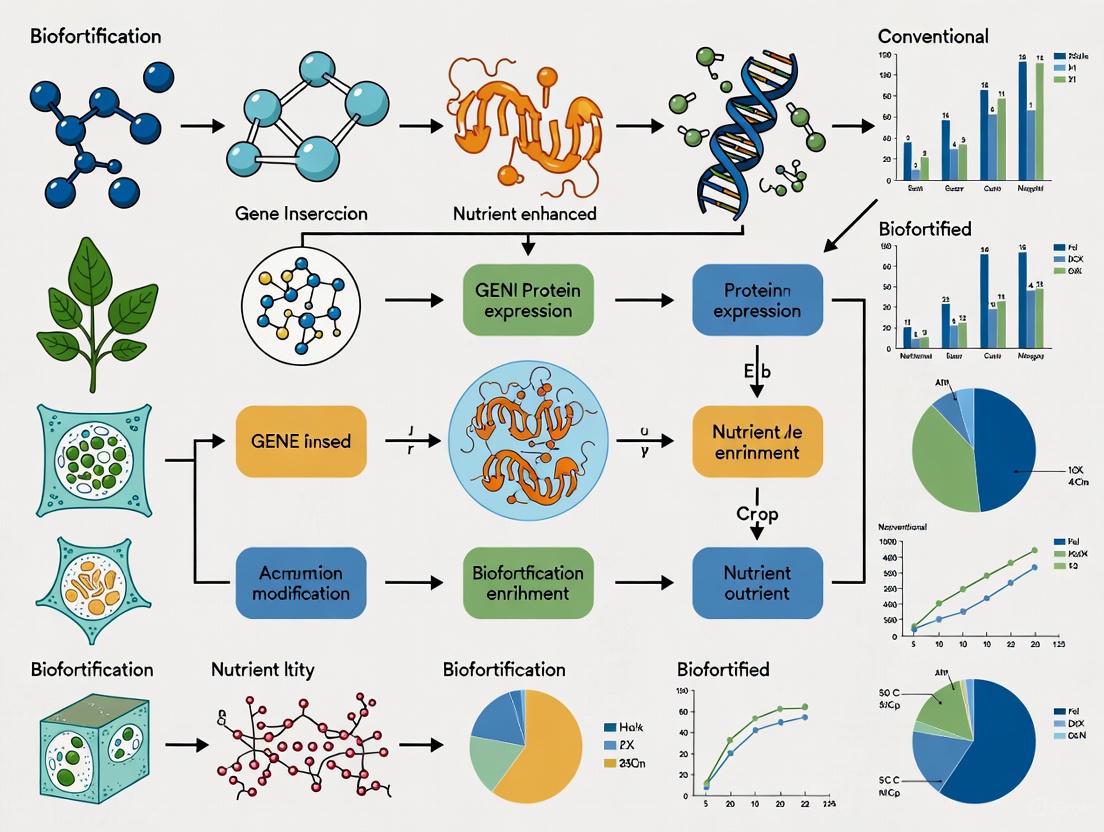
This article provides a comprehensive analysis of biofortification as a sustainable strategy to combat micronutrient deficiencies.
Biofortification Approaches for Nutrient-Enhanced Crops: Strategies, Efficacy, and Future Directions
Abstract
This article provides a comprehensive analysis of biofortification as a sustainable strategy to combat micronutrient deficiencies. Tailored for researchers and scientists in biomedical and agricultural fields, it systematically examines the scientific foundations, methodological applications, and real-world efficacy of diverse biofortification techniques. The review covers conventional breeding, agronomic practices, and advanced genetic engineering—including CRISPR-Cas9 and omics technologies—while addressing scalability challenges and comparative cost-effectiveness. By synthesizing recent evidence from efficacy trials and implementation studies, this work aims to inform research priorities and policy frameworks for integrating biofortified crops into global nutrition security and public health initiatives.
The Scientific Basis of Biofortification: Addressing the Global Challenge of Hidden Hunger
Micronutrient deficiencies, commonly termed "hidden hunger," represent a widespread global health crisis characterized by a chronic lack of essential vitamins and minerals in the diet [1]. Unlike energy-protein undernutrition, hidden hunger often presents with no visible clinical signs, making it a silent threat to health, development, and economic productivity [2]. This condition arises not from a lack of food quantity, but from insufficient dietary diversity, poor access to nutritious foods, and the consumption of staple crops with low micronutrient density [1] [3]. The insidious nature of hidden hunger means that its severe health consequences often go unrecognized until they result in irreversible conditions such as cognitive impairment, blindness, and increased susceptibility to infectious diseases [1].
The global burden of hidden hunger is staggering, affecting billions worldwide. A landmark 2024 study published in The Lancet Global Health revealed that more than half of the global population consumes inadequate levels of several essential micronutrients, with particularly high inadequacy rates for iodine (68% of the global population), vitamin E (67%), calcium (66%), and iron (65%) [3]. This pervasive form of malnutrition disproportionately impacts vulnerable groups, including infants, children, adolescent girls, women of reproductive age, and pregnant women [1] [4], creating intergenerational cycles of poor health and diminished potential.
Global Prevalence and Health Impacts
The following table summarizes the global prevalence and primary health impacts of key micronutrient deficiencies, synthesizing data from recent studies:
Table 1: Global Prevalence and Health Impacts of Major Micronutrient Deficiencies
| Micronutrient | Global Population with Inadequate Intake | Key Health Impacts | Most Vulnerable Populations |
|---|---|---|---|
| Iodine | 68% [3] | Brain damage, stillbirth, congenital anomalies, mental impairment, reduced intellectual capacity [1] | Pregnant women, children [1] |
| Vitamin E | 67% [3] | Reduced protection against oxidative cell damage [3] | General population [3] |
| Calcium | 66% [3] | Weakened bones, impaired growth [3] | Children, adolescents, young adults (10-30 years) [3] |
| Iron | 65% [3] | Anaemia (fatigue, weakness, breathlessness), negative pregnancy outcomes, impaired cognitive development [1] | Women & children: ~40% of pregnant women & ~42% of children <5 are anaemic globally [1] |
| Vitamin A | Data not specified in search | Leading cause of preventable childhood blindness, increased risk of severe infections (diarrhoea, measles) [1] | Children, pregnant women (third trimester) [1] |
| Zinc | Data not specified in search | Weakened immune function, increased risk of infections, stunted growth [2] | Children, pregnant women [2] |
Beyond the specific deficiencies listed, hidden hunger has profound societal and economic consequences. Deficiencies can lead to "less clinically notable reductions in energy level, mental clarity and overall capacity," which translates to reduced educational outcomes, diminished work productivity, and increased vulnerability to other diseases [1]. The burden is not equally shared; low- and middle-income countries bear disproportionate impacts, though inadequacies affect populations in all nations [1] [3]. Recent genetic evidence suggests that micronutrient deficiencies have been a persistent enough challenge to have potentially shaped local human adaptation throughout history, highlighting their deep and enduring impact on human populations [5].
Biofortification as a Strategic Intervention
Biofortification is a plant breeding strategy designed to increase the density of essential vitamins and minerals in staple food crops through agronomic practices, conventional plant breeding, or genetic engineering [6]. It is recognized as a cost-effective, sustainable, and food-based approach to tackling hidden hunger, particularly in rural areas where diverse diets and commercial fortification may be less accessible [6] [2]. The strategy effectively "piggybacks" on the existing food system by improving the nutritional quality of crops that low-income populations already grow and consume [6].
The core objective of biofortification is to develop nutrient-dense crop varieties that are agronomically superior—high-yielding and resistant to pests and diseases—ensuring farmer adoption [6]. After 20 years of investment, biofortified staple food crops are now being cultivated by farmers in over 40 countries and are consumed by hundreds of millions of people [6]. Published nutrition trials have demonstrated the efficacy of these nutrient-rich crops in improving micronutrient status [6]. Success stories include:
- Golden Rice: Genetically modified to produce beta-carotene (provitamin A), with levels increased from 1.6 to 3.7 µg g⁻¹ [2].
- High-Iron Cassava: Engineered by overexpressing a vacuolar iron transporter gene, resulting in a 37-fold higher iron content in storage roots [2].
- Zinc-Biofortified Wheat: Developed through conventional breeding and genome-editing techniques to enhance zinc concentration [2].
Experimental Protocols for Biofortification Research
Protocol: High-Throughput Micronutrient Analysis in Biofortified Crops
Objective: To accurately quantify the concentration of target micronutrients (e.g., Iron, Zinc, Vitamin A) in biofortified crop tissues.
Workflow Overview:
Detailed Methodology:
Sample Preparation
- Tissue Collection & Homogenization: Harvest edible plant parts (e.g., grains, tubers). Flash-freeze in liquid nitrogen and homogenize to a fine powder using a cryogenic mill [2].
- Microwave-Assisted Acid Digestion (for Mineral Analysis): Weigh 0.5 g of homogenized powder into digestion vessels. Add 5 mL of concentrated trace metal-grade HNO₃. Digest using a certified microwave digestion system (e.g., CEM MARS 6) following a stepped temperature program (ramp to 180°C over 15 min, hold for 10 min). Cool and dilute to 50 mL with ultra-pure water (18 MΩ·cm) [2].
- Extraction (for Vitamin Analysis): For Vitamin A, weigh 1 g of powder and saponify with ethanolic KOH. Extract with hexane. For folate, extract using a tri-enzyme (α-amylase, protease, conjugase) treatment followed by purification on solid-phase extraction (SPE) cartridges [2].
Instrumental Analysis
- Inductively Coupled Plasma Mass Spectrometry (ICP-MS) for Minerals:
- Instrument: Agilent 7900 ICP-MS.
- Parameters: RF Power: 1550 W; Carrier Gas: Argon, 1.05 L/min; Reaction Gas (for interference removal): Helium (4.5 mL/min).
- Analysis: Introduce digested samples via autosampler. Monitor isotopes: ⁵⁶Fe, ⁶⁶Zn, ⁸²Se. Use external calibration with a multi-element standard curve (0.5, 10, 50, 100, 500 µg/L). Include internal standards (⁷²Ge, ¹¹⁵In, ¹⁹³Ir) online to correct for signal drift [2].
- High-Performance Liquid Chromatography (HPLC) for Vitamins:
- For Vitamin A (retinol): Use a C18 reverse-phase column (e.g., Waters Symmetry, 4.6 x 150 mm, 5 µm). Mobile Phase: Methanol:Water (95:5, v/v). Flow Rate: 1.2 mL/min. Detection: Fluorescence (Ex: 325 nm, Em: 475 nm) or DAD (325 nm) [2].
- For Folate: Use a C18 column with a mobile phase of potassium phosphate buffer (pH 2.3) and methanol in a gradient elution. Detect with fluorescence (Ex: 290 nm, Em: 356 nm) [2].
- Inductively Coupled Plasma Mass Spectrometry (ICP-MS) for Minerals:
Data Processing & Validation
- Quantification: Calculate concentrations based on peak areas/ intensities compared to the standard curve.
- Quality Control:
- Certified Reference Material (CRM): Analyze a suitable plant-based CRM (e.g., NIST SRM 1547 Peach Leaves) with each batch of samples. Recovery should be within 85-115%.
- Spike Recovery: Spike duplicate samples with a known concentration of the analyte before digestion/extraction. Acceptable recovery: 90-110%.
- Blanks: Include method blanks to monitor contamination.
Protocol: In Vitro Bioavailability Assay ( dialyzability )
Objective: To simulate human gastrointestinal digestion and estimate the potential bioavailability of micronutrients from biofortified crops.
Workflow Overview:
Detailed Methodology:
- Sample Preparation: Cook the biofortified crop as typically consumed (e.g., boil, mill). Homogenize the final product.
- Gastric Digestion: Weigh 5 g of homogenate into a flask. Add 50 mL of simulated gastric juice (0.15 M NaCl, pH adjusted to 2.0 with HCl) containing 2 g/L pepsin. Incubate in a shaking water bath at 37°C for 1 hour.
- Intestinal Digestion: Raise the pH of the gastric chyme to 6.5-7.0 using a saturated NaHCO₃ solution. Add simulated intestinal juice (0.15 M NaCl with 4 g/L pancreatin and 25 g/L bile salts). Transfer the mixture into a dialysis tube (molecular weight cut-off 10-14 kDa). Place the tube in a flask containing a pre-warmed (37°C) saline solution (0.15 M NaCl, pH 7.0) to simulate blood uptake.
- Dialysis: Incubate the system for 2 hours at 37°C under constant shaking.
- Analysis & Calculation: After incubation, carefully retrieve the dialysate (the fluid outside the tube). Analyze the dialysate and the final digest (content inside the tube) for the target micronutrient using the methods described in Protocol 4.1.
- Bioaccessibility (%) = (Amount of micronutrient in the dialysate / Total amount of micronutrient in the final digest) × 100.
The Scientist's Toolkit: Research Reagent Solutions
Table 2: Essential Research Reagents and Materials for Biofortification Studies
| Research Reagent / Material | Function / Application | Specific Examples / Notes |
|---|---|---|
| CRISPR/Cas9 System | Genome editing tool for precise enhancement of nutrient pathways in crops. | Used to develop zinc-biofortified wheat and beta-carotene-enriched rice [2]. More precise and adaptable than older methods like TALENs and ZFNs [2]. |
| ICP-MS (Inductively Coupled Plasma Mass Spectrometry) | Highly sensitive quantification of mineral elements (e.g., Fe, Zn, Se) in plant tissues and digests. | Instrument example: Agilent 7900 ICP-MS. Requires high-purity argon gas and multi-element standard solutions for calibration [2]. |
| HPLC (High-Performance Liquid Chromatography) | Separation and quantification of vitamins and organic compounds (e.g., Vitamin A, folate) in crop samples. | Can be coupled with various detectors (DAD, Fluorescence). Requires specific columns (e.g., C18) and HPLC-grade solvents [2]. |
| Omics Technologies (Genomics, Metabolomics) | Integrated analysis to identify genes and metabolic pathways involved in nutrient uptake and accumulation. | Genomic data combined with metabolomic profiles helps identify genetic markers for Marker-Assisted Selection (MAS) [2]. |
| Simulated Gastrointestinal Fluids | For in vitro bioavailability assays to estimate the fraction of a nutrient released from food matrix (bioaccessibility). | Includes pepsin (for gastric phase) and pancreatin & bile salts (for intestinal phase) in pH-adjusted saline solutions [2]. |
| Certified Reference Materials (CRMs) | Quality control for analytical methods to ensure accuracy and precision of nutrient concentration data. | Example: NIST SRM 1547 (Peach Leaves). Used to validate methods for mineral analysis [2]. |
| Plant Growth-Promoting Microbes | Soil bacteria and fungi that can enhance plant nutrient uptake from the soil. | Fluorescent pseudomonas (increases iron uptake); Mycorrhizal fungi and rhizobacteria (improve nutrient uptake) [2]. |
Biofortification has evolved from a niche plant breeding concept into a recognized mainstream nutrition intervention, demonstrating significant progress in combating global micronutrient deficiencies. This transformation, largely catalyzed by the strategic efforts of HarvestPlus and its partners, has shifted biofortification from a research-based initiative to a scalable, sustainable solution embedded in food systems across over 40 countries. This application note documents this evolutionary pathway, detailing the evidence base, delivery strategies, and assessment methodologies that have enabled biofortification to reach hundreds of millions of people. We provide researchers and development professionals with standardized protocols for implementing and evaluating biofortification programs, emphasizing context-specific approaches across diverse agricultural systems.
Micronutrient deficiencies, known as "hidden hunger," affect over two billion people globally, contributing substantially to the global burden of disease through impaired cognitive development, increased susceptibility to infectious diseases, and poor physical growth [7] [8]. The biofortification approach—increasing the micronutrient content of staple food crops through plant breeding, agronomic practices, or genetic engineering—emerged as a cost-effective and sustainable strategy to address these deficiencies, particularly in low- and middle-income countries where populations rely heavily on staple crops for nourishment [6].
When HarvestPlus was initiated in 2003 to implement the biofortification strategy through the CGIAR centers, it represented a novel approach to connecting agricultural production with nutritional outcomes [6]. After two decades of investment, biofortified staple food crops are now being produced by farmers in over 40 countries and consumed by hundreds of millions of people, demonstrating the remarkable journey from a conceptual framework to a mainstream nutrition intervention [6].
Historical Trajectory and Evidence Base
Key Milestones in Biofortification Development
Table 1: Evolution of Biofortification from Research to Mainstream Intervention
| Time Period | Development Phase | Key Achievements | Evidence Generated |
|---|---|---|---|
| Pre-2003 | Conceptual Foundation | Initial research on micronutrient density in staples; proof-of-concept studies | Agronomic feasibility studies; nutrient retention data |
| 2003-2010 | Program Initiation | Establishment of HarvestPlus; breeding pipeline development; first crop releases | Breeding feasibility; nutrient target setting; efficacy trial design |
| 2011-2015 | Efficacy Testing | Controlled nutrition trials demonstrating bioefficacy | Impact on vitamin A, iron, and zinc status; bioavailability studies |
| 2016-2020 | Scale-Up & Delivery | Release of 242+ varieties in 30 countries; reach to 8.5M farm households [9] | Effectiveness data; adoption studies; cost-effectiveness analyses |
| 2021-Present | Mainstream Integration | Anchoring in food systems; policy integration; advanced breeding techniques | Multi-dimensional impact assessments; climate resilience data |
Evidence Generation for Mainstream Acceptance
The transition to mainstream acceptance required rigorous evidence generation across multiple dimensions:
Nutritional Efficacy: Multiple peer-reviewed efficacy and effectiveness studies have demonstrated that biofortified foods measurably improve micronutrient intake, nutritional status, and health outcomes when consumed as a regular dietary component [9]. Specifically, provitamin A-biofortified maize significantly improved pupillary responsiveness, while provitamin A orange sweet potato reduced the prevalence and duration of diarrhea episodes [9]. Iron-biofortified beans and pearl millet have shown significant improvements in cognitive function, and zinc-biofortified wheat significantly reduced reported maternal and child morbidity [9].
Cost-Effectiveness: Economic analyses have demonstrated biofortification as a highly cost-effective investment for health, with every US$1 invested generating as much as US$17 in health and livelihood benefits [9]. This cost-effectiveness stems from the strategy's ability to piggyback on existing agricultural research systems and the self-replicating nature of biofortified planting materials once initial breeding investments are made [6].
HarvestPlus follows a three-stage pathway to discover, develop, and deliver biofortified crops, with the delivery phase focusing on introducing biofortified crops to farmers, scaling up operations to achieve significant market share, and ultimately anchoring biofortification in local food systems to ensure long-term sustainability [9]. This framework operates across four interconnected value chain segments:
- Seed/Cutting Multiplication: Released varieties are licensed to seed companies or multipliers for quality planting material production.
- Transfer to Farmers: Farmers acquire seeds or vine/stem cuttings through purchase, demonstration packs, or diffusion from fellow farmers.
- Crop Production: Farmers grow biofortified crops and allocate harvest to various uses.
- Utilization: Biofortified crops are consumed by farm households or processed by enterprises for sale to broader consumers [9].
Context-Specific Delivery Models
Table 2: Adaptive Delivery Approaches Across Country Contexts
| Country/Crop | Key Delivery Challenges | Adaptive Strategy | Outcomes Achieved |
|---|---|---|---|
| India (Iron Pearl Millet) | Strong existing breeding programs; commercial seed sector | Partnership with public & private seed companies; rapid commercialization | 9 hybrid varieties + 1 OPV released; rapid farmer adoption [9] |
| Nigeria (Vitamin A Cassava) | Need for awareness creation; processing requirements | "Crowding in" delivery partners; innovative promotion; intermediate raw material development | Increased awareness; market development; product diversification [9] |
| Uganda (Orange Sweet Potato) | Subsistence crop; lack of formal seed systems | Community-based NGO partnerships; vine multiplier networks | Sustainable local dissemination; improved household nutrition [9] |
| Rwanda (Iron Beans & OFSP) | Need for coverage assessment; visibility challenges | Development of coverage indicators; household surveys | Identification of awareness & availability as key bottlenecks [10] |
Assessment Protocols for Biofortification Coverage
Coverage Indicator Framework
A critical component of mainstreaming biofortification has been the development of standardized assessment tools to measure population coverage. Building on approaches used for large-scale food fortification programs, five key indicators of household coverage have been developed and validated [10]:
- Consumption of the Food: Percentage of households that consume the target staple food (e.g., beans, sweet potatoes) at home.
- Awareness of the Biofortified Food: Percentage of households that have heard of or seen the specific biofortified food.
- Availability of the Biofortified Food: Percentage of households that know where to buy or obtain the biofortified food.
- Consumption of the Biofortified Food (Ever): Percentage of households that have ever bought, grown, or received the biofortified food for eating.
- Consumption of the Biofortified Food (Current): Percentage of households that currently consume the biofortified food, verified through visual confirmation (for visible traits) or sample testing (for non-visible traits) [10].
Protocol for Household Coverage Assessment
Application: This protocol provides a standardized method for assessing the coverage of biofortified foods in population surveys, enabling identification of bottlenecks in the program impact pathway.
Materials and Equipment:
- Electronic data collection devices (tablets/smartphones) with Open Data Kit software
- Visual aids (photographs of biofortified and non-biofortified varieties)
- Sample collection materials (for non-visible trait verification)
- Household listing from recent census or sampling frame
Procedure:
Survey Design:
- Employ a two-stage cluster sampling approach with probability proportional to size.
- Select enumeration areas (villages/communities) through simple random sampling.
- Randomly select households from up-to-date household lists within each enumeration area.
Questionnaire Administration:
- Target the household member most knowledgeable about food purchasing and preparation.
- Translate instruments into local languages with consistent terminology.
- Include modules on: household demographics, food consumption patterns, awareness and knowledge of biofortified foods, availability and access, consumption frequency, and storage/preparation practices.
Data Collection:
- For visible traits (e.g., orange-fleshed sweet potato): Use visual confirmation of available household foods or picture-based identification.
- For non-visible traits (e.g., iron beans): Collect physical samples for expert verification when possible.
- Conduct daily data quality checks and uploads to password-protected servers.
Data Analysis:
- Calculate the five coverage indicators as proportions of the surveyed population.
- Generate a household wealth index based on ownership of durable goods and livestock.
- Analyze coverage disparities across socioeconomic, geographic, and demographic segments.
Bottleneck Identification:
- Construct coverage cascades to identify critical drop-off points.
- Prioritize interventions based on the largest gaps between sequential coverage stages.
Validation Notes: This methodology was field-tested in Musanze District, Rwanda, demonstrating utility in identifying awareness (65.7% for iron beans) and availability (23.6% for iron beans) as critical bottlenecks despite high consumption of the staple foods (99.2% for beans) [10].
Research Reagent Solutions for Biofortification Research
Table 3: Essential Research Materials and Applications
| Reagent/Material | Specifications | Research Application | Example Use Case |
|---|---|---|---|
| Stable Isotopes | Deuterium-labeled compounds; ^13C, ^57Fe, ^67Zn | Study bioconversion & bioefficacy of micronutrients | Quantifying β-carotene to vitamin A conversion in Golden Rice [11] [8] |
| Molecular Markers | SNP arrays; SSR markers; functional markers | Marker-assisted selection; trait introgression | Accelerating breeding of high-iron pearl millet varieties [11] [9] |
| Soil Micronutrient Kits | DTPA, EDTA extraction solutions; colorimetric detection | Assessing plant-available micronutrients in soils | Identifying zinc-deficient regions for target deployment [7] |
| Portable Spectrophotometers | NIRS devices; HPLC systems with UV/Vis detection | Rapid nutrient profiling in breeding trials | High-throughput screening for provitamin A in cassava [11] |
| CRISPR-Cas9 Systems | Plant-codon optimized Cas9; gRNA constructs | Gene editing for enhanced nutrient density | Manipulating metal transporter genes in maize [12] [7] |
| Phytase Enzymes | Microbial or plant-derived; thermostable variants | Improving mineral bioavailability | Enhancing iron absorption in high-phytate cereals [8] |
Future Directions: Advanced Biofortification Technologies
The next evolution of biofortification involves moving beyond single-nutrient approaches to multi-nutrient density combined with climate-resilient traits. Advanced breeding techniques, particularly CRISPR-Cas9 mediated genome editing, offer precision tools for enhancing nutrient content without incorporating transgenic modifications [6] [12]. These approaches can target multiple traits simultaneously and may face fewer regulatory hurdles than first-generation GM approaches [12] [8].
Integration of biofortification into sustainable food systems requires addressing emerging challenges such as climate change, which threatens to reduce the nutrient density of staple crops through CO2 elevation and altered soil micronutrient availability [7]. Next-generation biofortification must therefore combine enhanced nutrient content with climate resilience traits to ensure sustained impact under changing environmental conditions.
Biofortification has completed its transition from an emerging technology to a recognized mainstream nutrition intervention, with a robust evidence base demonstrating its efficacy, cost-effectiveness, and scalability. The evolution chronicled herein—from initial HarvestPlus initiatives to diverse, context-specific delivery models—provides a roadmap for researchers and development professionals seeking to implement biofortification programs. The standardized protocols and assessment frameworks presented enable rigorous evaluation and optimization of biofortification interventions across diverse agricultural contexts. As biofortification continues to evolve, advanced breeding technologies and climate-resilient approaches will further enhance its potential to reduce the global burden of micronutrient deficiencies sustainably.
Biofortification, the process of increasing the density of essential vitamins and minerals in staple food crops, represents a strategic and sustainable intervention to combat micronutrient malnutrition, often termed "hidden hunger" [13]. This condition, affecting over two billion people globally, primarily involves deficiencies in iron (Fe), zinc (Zn), and vitamin A [14] [15]. In regions dependent on cereal-based diets, staple crops often provide adequate calories but insufficient levels of these critical micronutrients, leading to severe health consequences including impaired cognitive development, reduced immune function, and increased mortality [13] [15]. This application note details the physiological roles of these three key micronutrients and provides standardized experimental protocols for their analysis within the context of biofortification research, framing them as essential components in the development of nutrient-enhanced crop varieties.
Physiological Roles and Biofortification Targets
Understanding the distinct physiological functions of each micronutrient is paramount for defining the objectives of biofortification programs. The table below summarizes their primary roles, consequences of deficiency, and the corresponding biofortification aims.
Table 1: Key Micronutrients: Physiological Roles and Biofortification Targets
| Micronutrient | Key Physiological Roles | Impact of Deficiency | Biofortification Target |
|---|---|---|---|
| Iron (Fe) | Oxygen transport (hemoglobin), cognitive development, energy metabolism [15]. | Iron deficiency anemia, fatigue, impaired learning, increased maternal mortality [15]. | Increase Fe concentration and enhance bioavailability in edible parts (e.g., grains, beans) [15] [16]. |
| Zinc (Zn) | Immune function, protein synthesis, DNA synthesis, wound healing, growth and development [17] [18]. | Compromised immunity, stunted growth, hair loss, diarrhea [17]. | Increase Zn content and reduce anti-nutrients like phytic acid to improve bioavailability [17] [13]. |
| Vitamin A | Vision, immune system integrity, cell growth and differentiation, reproduction [19]. | Night blindness, xerophthalmia, increased severity of infections, childhood mortality [19]. | Enhance levels of provitamin A carotenoids (e.g., beta-carotene) in staple crops [14] [19]. |
Experimental Protocols for Agronomic Biofortification
Agronomic biofortification involves applying micronutrient fertilizers to the soil or foliage to increase their concentration in the harvested crop. The following protocol outlines a standardized methodology for zinc and iron biofortification in grain crops, synthesizing best practices from recent research.
Protocol: Agronomic Biofortification of Soybean with Zinc
This protocol is adapted from a field study on soybean in the North Eastern Himalayas of India, which demonstrated significant improvements in seed zinc concentration and yield using combined soil and foliar applications [17].
Materials and Reagents
- Soybean seeds (Recommended varieties: JS-335 for high Zn content, JS-97-52 for high yield) [17].
- Zinc Sulphate Heptahydrate (ZnSO₄·7H₂O): Contains 21% Zn, used for both soil and foliar application [17].
- Zinc Oxide (ZnO): Contains 80% Zn, an alternative source for soil application [17].
- Standard NPK fertilizers (e.g., Urea, Single Super Phosphate (SSP), Muriate of Potash (MOP)) [17].
- Farmyard Manure (FYM) [17].
- Field equipment: Plot markers, sprayers, soil auger, pH meter, leaf area meter, spectrophotometer.
Procedure
Experimental Design and Site Preparation:
Basal Fertilization and Sowing:
Zinc Application Treatments:
- Soil Application (SA): Apply ZnSO₄ as a basal dose at the time of sowing, based on soil test recommendations [17].
- Foliar Application (FA): At critical growth stages (e.g., flowering and pod development), apply a foliar spray of 0.5% ZnSO₄·7H₂O solution [17].
- Combined Application (SA + FA): A combination of basal soil application and foliar sprays has been shown to be most effective, significantly increasing seed yield, Zn content, and reducing the phytic acid-to-zinc ratio [17].
Data Collection and Analysis:
- Yield: At harvest, determine seed and stover yield from a defined sampling area (e.g., 9.0 m²) [17].
- Zinc Content: Analyze Zn concentration in seeds using analytical techniques like Atomic Absorption Spectrophotometry (AAS) [17].
- Bioavailability Assessment: Measure phytic acid (PA) content and calculate the PA:Zn molar ratio, a key indicator of Zn bioavailability [17].
The workflow for this protocol is summarized in the following diagram:
Molecular Breeding and Genetic Engineering Protocols
Genetic biofortification utilizes plant breeding and biotechnology to develop crop varieties with inherently higher micronutrient levels.
Protocol: Development of Iron-Biofortified Rice using CRISPR-Cas9
This protocol is based on the successful development of iron-rich rice by researchers at Vietnam National University, who used CRISPR-Cas9 to overexpress a key iron transporter gene [16].
Materials and Reagents
- Plant Material: Seeds of the target rice cultivar (e.g., TBR225) [16].
- CRISPR-Cas9 System: Plasmid vectors for expressing Cas9 nuclease and guide RNA (gRNA).
- gRNA Design: Target sequence for the iron transporter gene promoter (e.g., OsNRAMP7) to create an overexpression construct [16].
- Agrobacterium tumefaciens Strain: For transformation of rice calli.
- Culture Media: Callus induction, co-cultivation, selection, and regeneration media.
- Molecular Biology Kits: For genomic DNA extraction, PCR, and sequencing.
Procedure
Vector Construction:
- Design a gRNA to target a site in the promoter region of the OsNRAMP7 gene to facilitate its overexpression.
- Clone the gRNA sequence into a CRISPR-Cas9 plant transformation vector.
Rice Transformation:
- Induce embryogenic calli from mature rice seeds on callus induction medium.
- Transform the calli via Agrobacterium-mediated co-cultivation with the constructed vector.
- Select transformed calli on media containing the appropriate antibiotic (e.g., Hygromycin).
Regeneration and Molecular Analysis:
Phenotypic and Biochemical Evaluation:
- Grow confirmed transgenic lines under controlled greenhouse conditions.
- Assess agronomic traits (plant height, yield) to ensure no negative impacts.
- Quantify iron accumulation in polished and unpolished grains using Inductively Coupled Plasma Mass Spectrometry (ICP-MS). The study confirmed significantly increased iron in edited lines without affecting the uptake of other metals [16].
The workflow for this protocol is summarized in the following diagram:
The Scientist's Toolkit: Research Reagent Solutions
Table 2: Essential Research Reagents for Biofortification Studies
| Reagent / Material | Function / Application | Example in Context |
|---|---|---|
| Zinc Sulphate (ZnSO₄·7H₂O) | A highly soluble zinc source for both soil and foliar application in agronomic biofortification. | Used as a 0.5% foliar spray to enhance Zn content in soybean grains [17]. |
| CRISPR-Cas9 System | A genome editing tool for precise modification of genes to enhance nutrient accumulation in crops. | Used to overexpress the OsNRAMP7 iron transporter gene in rice, increasing grain iron content [16]. |
| Atomic Absorption Spectrophotometer (AAS) | An analytical instrument for quantifying the concentration of specific metal elements (e.g., Fe, Zn) in plant and soil samples. | Used to measure the zinc concentration in biofortified soybean seeds [17]. |
| DTPA Extractant | A chemical solution used to assess the bioavailability of micronutrients like zinc in soil samples. | Employed to measure DTPA-extractable Zn in soil, indicating available Zn for plant uptake [17]. |
| Phytic Acid Assay Kit | Used to quantify phytic acid content in grains, a key anti-nutrient that affects mineral bioavailability. | Critical for calculating the Phytic Acid:Zinc molar ratio to estimate the true nutritional value of biofortified crops [17]. |
The protocols and data presented herein provide a foundational framework for research aimed at enhancing the levels of iron, zinc, and vitamin A in staple crops. A multi-pronged approach—combining optimized agronomic practices with advanced genetic strategies—holds the greatest promise for developing nutrient-enhanced varieties that can significantly impact public health. As the field evolves, the integration of these biofortification techniques into national agricultural and nutrition policies will be crucial for achieving widespread adoption and combating hidden hunger on a global scale [14] [13].
Micronutrient deficiency, often termed "hidden hunger," represents a critical global health challenge affecting over 2 billion people worldwide, with a disproportionate burden falling on Low- and Middle-Income Countries (LMICs) [20] [1]. This condition occurs when populations consume adequate calories but lack essential vitamins and minerals in their diets, leading to severe health consequences including impaired cognitive development, increased susceptibility to infectious diseases, and reduced work productivity [1] [21]. The agricultural-nutrition nexus describes the complex relationship between farming systems, food production, and nutritional outcomes, with staple crops serving as both a solution and a contributor to this problem.
In many LMICs, staple crops such as rice, wheat, and maize constitute the primary caloric source for vulnerable populations, sometimes providing the bulk of daily nutrition [22]. The Green Revolution, while successfully increasing global food production through high-yielding varieties (HYVs), inadvertently contributed to hidden hunger by prioritizing yield quantity over nutritional quality [20]. Modern varieties of staple crops typically contain lower concentrations of essential micronutrients like iron, zinc, and vitamins compared to their traditional counterparts [20]. This review examines how staple crops influence micronutrient intakes in LMICs and presents biofortification as a promising strategy to address these deficiencies through agricultural interventions.
The Burden of Micronutrient Deficiencies in LMICs
Epidemiological Profile
The Global Burden of Disease Study 2019 reveals that nutritional deficiencies remain widespread in LMICs despite global progress [21]. The proportion of the global nutritional deficiency incidence occurring in LMICs has increased significantly from 1990 to 2019, rising from 55.2% to 70.1% in females and from 59.3% to 73.2% in males [21]. More than 80% of global disability-adjusted life years (DALYs) caused by nutritional deficiencies now occur in LMICs [21].
Table 1: Key Micronutrient Deficiencies and Their Health Impacts
| Micronutrient | Prevalence/Scope | Primary Health Impacts |
|---|---|---|
| Iron | Approximately 1.62 billion people affected globally; 42% of children under 5 and 40% of pregnant women anemic [20] [1] | Anemia, fatigue, weakened immune function, impaired cognitive development, maternal mortality [20] [1] |
| Vitamin A | 890 million children with VAD in LMICs; approximately one-third of children under 5 affected [23] | Leading cause of preventable childhood blindness, increased susceptibility to infections, growth issues, increased mortality [1] [23] |
| Zinc | Affects approximately 30% of global population [22] | Impaired growth and development, compromised immune function, increased infection risk [22] |
| Iodine | 66% of global households have access to iodized salt [1] | Brain damage, stillbirths, spontaneous abortion, congenital anomalies, mental impairment [1] |
Demographic and Socioeconomic Patterns
Research indicates significant sex disparities in nutritional deficiencies across LMICs, driven by a combination of biological and social factors [21]. Countries with lower Gender Development Index (GDI) scores generally exhibit greater disparities in nutritional status between males and females [21]. Age is another critical factor, with children under five years and women of reproductive age being particularly vulnerable to deficiencies of iron, vitamin A, and zinc [1] [21].
The economic impact of micronutrient deficiencies is substantial, affecting national growth and economic stability through reduced productivity, increased healthcare costs, and impaired cognitive function that diminishes educational outcomes [21]. The COVID-19 pandemic has further exacerbated these challenges, as deficiencies in nutrients like zinc and vitamin A have been associated with increased infection risks [21].
Staple Crops as Determinants of Micronutrient Intakes
The Green Revolution Legacy
The Green Revolution dramatically increased global food production through high-yielding varieties (HYVs) of staple crops, synthetic fertilizers, and irrigation infrastructure [20]. While this agricultural transformation successfully averted famines and reduced caloric hunger, it had unintended consequences for nutritional quality:
- Declining Nutrient Density: Modern wheat varieties contain 19-28% lower concentrations of minerals including zinc, iron, and magnesium compared to older varieties [20]. Similar reductions have been observed in rice, maize, and other staples [20].
- Reduced Agricultural Biodiversity: The focus on a few major cereal crops led to the neglect of traditional, nutrient-rich crops, resulting in dietary monoculture [20].
- Environmental Impacts: Intensive use of synthetic fertilizers contributed to soil degradation and water pollution, further affecting crop nutritional quality [20].
Current Consumption Patterns
In many LMICs, cereal-based diets provide sufficient calories but lack essential phytochemicals (minerals, vitamins, antioxidants, and fiber) [22]. For approximately half the world's population, rice serves as the staple crop, and for some communities, it constitutes the sole dietary component, providing primarily carbohydrates with limited micronutrient content [23]. This heavy reliance on starch-based staples creates a fundamental challenge for addressing hidden hunger, as these foods dominate plate space that might otherwise be filled with more nutrient-dense options.
Biofortification as a Strategic Response
Conceptual Framework and Definition
Biofortification represents a sustainable food-based approach to increasing the density of essential vitamins and minerals in staple crops [22] [24]. The process involves enhancing the bioavailable concentration of nutrients in the edible portions of food crops through biological means [22]. Unlike conventional fortification, which adds nutrients during food processing, biofortification enhances nutrient levels during plant growth, making it particularly suitable for reaching rural populations with limited access to commercially processed foods [24].
The strategic advantage of biofortification lies in its potential to provide a cost-effective, sustainable solution to micronutrient malnutrition at the population level [22]. Once developed, biofortified crops can be replicated through seeds with minimal recurrent costs, requiring only a one-time investment compared to ongoing expenses for supplementation programs [22] [23].
Technical Approaches to Biofortification
Table 2: Biofortification Approaches and Their Characteristics
| Approach | Methodology | Timeframe | Examples | Advantages/Limitations |
|---|---|---|---|---|
| Agronomic | Application of micronutrient-containing fertilizers through soil or foliar methods [22] | Short-term solution | Iron sulfate applications to rice, wheat, pulses; zinc fertilizers [22] | Rapid implementation but effects are temporary and variable depending on soil conditions [22] |
| Conventional Breeding | Selective crossing of plants to develop varieties with higher nutrient content [22] | Medium to long-term (3-7 years) | Orange sweet potato, high-iron beans, vitamin A maize [25] | Sustainable but requires significant time; limited to natural genetic variation [22] |
| Transgenic | Genetic engineering to introduce traits not present in natural varieties [23] | Long-term (10+ years) | Golden Rice (beta-carotene), multi-nutrient rice varieties [23] | Can achieve significant nutrient enhancements but faces regulatory hurdles and public acceptance challenges [23] |
Multi-Nutrient Biofortification
An emerging innovation in this field is combinatorial biofortification, which aims to create crops containing a balanced array of various essential vitamins and minerals [22]. This approach addresses the reality that micronutrient deficiencies often occur in clusters rather than in isolation [22]. By combining different nutrients in single crops, researchers can maximize bioavailability and health benefits while encouraging dietary diversity through staple foods [22]. This strategy also offers cost efficiencies in development and distribution while preventing market competition between numerous single-nutrient biofortified varieties [22].
Experimental Protocols for Biofortification Research
Agronomic Biofortification Protocol
Objective: To increase micronutrient concentrations in edible crop portions through fertilizer applications.
Materials:
- Water-soluble fertilizers: Highly soluble nutrient sources for rapid plant uptake
- Chelated fertilizers: Organic compounds that bind minerals, improving availability
- Nano-fertilizers: Engineered nanoparticles with enhanced bioavailability
- Foliar application equipment: Sprayers for leaf-surface nutrient delivery
Methodology:
Soil Application:
- Incorporate micronutrient fertilizers (e.g., FeSO₄, ZnSO₄) during soil preparation
- Apply at rates of 10-50 kg/ha depending on soil deficiency levels
- Ensure proper soil pH (6.0-7.0 for optimal nutrient availability)
Foliar Application:
- Prepare nutrient solutions at appropriate concentrations (e.g., 0.5-3.0% FeSO₄)
- Apply during critical growth stages (e.g., panicle initiation in cereals, pre-flowering in pulses)
- Perform multiple applications at 10-15 day intervals for maximum efficacy
- Conduct during cooler parts of the day to minimize leaf burn
Seed Treatment:
- Soak seeds in nutrient solutions (e.g., 0.05 M Fe-EDTA) for 12-24 hours
- Air-dry before sowing to ensure uniform germination
Evaluation:
- Measure nutrient concentrations in edible plant parts using atomic absorption spectroscopy
- Assess bioavailability through in vitro digestion models
- Evaluate yield parameters to ensure no trade-offs with productivity
Genetic Biofortification Screening Protocol
Objective: To identify and develop crop varieties with enhanced micronutrient content.
Materials:
- Germplasm collections: Diverse genetic resources including traditional landraces and wild relatives
- Molecular markers: DNA markers linked to nutrient accumulation traits
- Analytical equipment: ICP-MS for mineral analysis, HPLC for vitamin quantification
Methodology:
Germplasm Evaluation:
- Screen diverse genetic materials for natural variation in nutrient content
- Identify high-nutrient donor parents for breeding programs
- Assess genotype × environment interactions through multi-location trials
Breeding Pipeline:
- Cross high-nutrient donors with adapted elite varieties
- Evaluate segregating populations for nutrient content and agronomic traits
- Conduct marker-assisted selection for efficiency in early generations
- Perform stability analysis across target environments
Bioavailability Assessment:
- Conduct in vitro digestion simulations to estimate nutrient absorption
- Perform animal feeding trials to validate bioavailability
- Implement human efficacy studies where appropriate
Data Collection:
- Document mineral concentrations in grains/edible parts
- Record agronomic performance (yield, disease resistance, maturity)
- Assess sensory qualities and consumer acceptability
Research Reagent Solutions for Biofortification Studies
Table 3: Essential Research Reagents for Biofortification Experiments
| Reagent Category | Specific Examples | Research Applications | Function |
|---|---|---|---|
| Fertilizers | FeSO₄·7H₂O, Zn-EDTA, Selenate, Potassium Iodide | Agronomic biofortification trials [22] | Direct nutrient sources for plant uptake and accumulation |
| Nano-fertilizers | Fe₃O₄ nanoparticles, ZnO nanoparticles | Enhanced efficiency nutrient delivery [22] | Improved nutrient uptake and translocation due to small particle size |
| Molecular Markers | SSR, SNP markers linked to nutrient QTLs | Marker-assisted breeding [22] | Selection of desirable alleles without phenotypic evaluation |
| Analytical Standards | ICP-MS standards for minerals, Vitamin reference standards | Nutrient quantification [22] | Accurate measurement of nutrient concentrations in plant tissues |
| Cell Culture Media | Caco-2 cell lines, in vitro digestion solutions | Bioavailability studies [25] | Simulation of human digestion and nutrient absorption |
Implementation Framework and Adoption Considerations
Adoption Determinants
Research on biofortification implementation has identified key facilitators and barriers to adoption [25]. A systematic review of 41 studies revealed that crop production benefits and nutritional advantages significantly facilitated adoption, particularly when farmers were aware of these relative advantages compared to traditional varieties [25]. Sensory acceptability—including appearance, taste, and cooking qualities—emerged as a critical factor for consumer adoption [25].
Barriers to adoption included production challenges related to local growing conditions, storage and processing issues, and insufficient information about cultivation practices [25]. The research emphasized that individual characteristics such as capability, opportunity, and motivation influenced adoption decisions alongside broader implementation processes [25].
Integrated Implementation Strategy
Successful biofortification programs require a multi-sectoral approach that integrates agricultural, nutritional, and policy perspectives [20]. Key implementation strategies include:
Farm-Level Integration:
- Provide quality seeds of biofortified varieties through established seed systems
- Develop cultivation protocols specific to biofortified crops
- Implement demonstration plots to showcase production benefits
Market and Value Chain Development:
- Establish quality premium mechanisms to incentivize production
- Develop processing and branding strategies for biofortified products
- Create consumer awareness campaigns highlighting nutritional benefits
Policy Integration:
- Incorporate biofortification into national agricultural research priorities
- Align biofortification with public food procurement programs
- Include biofortified crops in social safety net programs
Visualization Framework
Biofortification Development Pipeline
Agricultural-Nutrition Nexus Pathways
The agricultural-nutrition nexus presents both challenges and opportunities for addressing micronutrient deficiencies in LMICs. Staple crops, while contributing to hidden hunger through their nutritional limitations, also offer a sustainable pathway for improvement through targeted biofortification strategies. The evidence demonstrates that biofortification can effectively increase micronutrient intakes among vulnerable populations when integrated within comprehensive agricultural and nutrition policies.
Future research should focus on combinatorial approaches that address multiple nutrient deficiencies simultaneously, while implementation efforts must prioritize context-specific adoption strategies that consider local agronomic conditions, food preferences, and market systems. As climate change and other environmental challenges threaten to further reduce the nutrient density of food supplies, biofortification represents a climate-resilient strategy for maintaining and enhancing nutritional quality in staple crops. Through continued innovation and collaborative implementation, biofortified staple crops can play a transformative role in achieving global nutrition security and fulfilling the promise of "Zero Hunger" as outlined in the Sustainable Development Goals.
Application Note: Economic and Comparative Advantages of Biofortification
Core Economic Principles and Cost-Effectiveness
Biofortification represents a sustainable, economically rational strategy for combating micronutrient deficiencies, particularly in low- and middle-income countries (LMICs). Its economic rationale centers on high initial investment in plant breeding followed by minimal recurrent costs, creating a cost-effective intervention that piggybacks on existing agricultural research systems [6]. Unlike ongoing supplementation programs, biofortification requires upfront development costs, after which the improved planting material can be disseminated through standard seed distribution channels with virtually zero marginal cost for the nutritional trait [26].
Quantitative economic assessments demonstrate compelling evidence for biofortification's cost-effectiveness. The approach has been recognized by the Copenhagen Consensus as among the highest value-for-money investments for economic development, with benefit-cost ratios as high as $17 of benefits for every $1 invested [26]. Furthermore, ex-post cost-effectiveness data for orange sweet potato in Uganda demonstrated costs of US$15–$20 per Disability Adjusted Life Year (DALY) saved, which the World Bank classifies as "highly cost-effective" [26].
Table 1: Economic Metrics of Biofortification Versus Traditional Interventions
| Intervention Type | Cost per DALY Saved (USD) | Benefit-Cost Ratio | Recurrent Costs | Primary Target Population |
|---|---|---|---|---|
| Biofortification | $15-$20 (Orange Sweet Potato) | Up to 17:1 | Low | Rural, agricultural households |
| Supplementation | Varies by program | Not specified | High | General population, often through health systems |
| Commercial Fortification | Varies by program | Not specified | High | Urban consumers, market-dependent |
| Dietary Diversification | Not quantified | Not specified | Moderate to High | Varies |
Comparative Advantages Over Traditional Interventions
Biofortification offers distinct comparative advantages that position it as a complementary approach to traditional nutrition interventions:
Reach to Underserved Populations: Biofortification effectively reaches rural populations who often have limited access to diverse diets or formal healthcare systems where supplementation and commercial fortification programs are typically distributed [26]. By embedding nutrition in staple crops consumed daily, biofortification automatically targets low-income households that depend heavily on these staples [27].
Sustainability and Integration: Once biofortified varieties are developed and adopted, they become self-sustaining through farmer seed saving and informal seed systems [26]. The technology is embedded in the seed itself, requiring no behavioral change beyond initial adoption and no continued public expenditure for the nutritional improvement [6].
Synergy with Agricultural Development: Biofortification capitalizes on ongoing agricultural research by integrating nutritional traits into high-yielding, climate-resilient, and disease-resistant crop varieties [6]. This creates a dual benefit of improved productivity and enhanced nutrition without trade-offs [27].
Experimental Protocols for Economic and Efficacy Research
Protocol: Cost-Effectiveness Analysis Framework for Biofortification Interventions
Objective: To systematically evaluate the economic efficiency of biofortification programs compared to alternative nutritional interventions.
Materials and Reagents:
- Primary data from implementation programs
- DALY calculation templates
- Cost accounting software (e.g., Excel with specialized templates)
- Demographic and consumption pattern data
Procedure:
- Cost Assessment Phase:
- Document all research and development costs for biofortified varieties, including breeding program expenses, laboratory analyses, and field testing [6].
- Compile delivery costs: seed multiplication, distribution, farmer training, and monitoring systems [26].
- Calculate recurrent costs for maintenance breeding and program administration.
Effectiveness Quantification Phase:
- Determine the burden of disease attributable to target micronutrient deficiencies in the population.
- Calculate Disability-Adjusted Life Years (DALYs) from deficiency-related health outcomes.
- Estimate effectiveness of biofortification from efficacy trials: measure improvements in micronutrient status and functional health outcomes in target populations [26].
Comparative Analysis Phase:
- Compute cost-effectiveness ratios (cost per DALY saved) for biofortification.
- Compare with alternative interventions using standardized metrics.
- Conduct sensitivity analyses to account for variability in adoption rates, consumption patterns, and delivery efficiency [26].
Benefit-Cost Analysis Phase:
- Estimate economic benefits from improved health, cognitive function, and productivity.
- Calculate benefit-cost ratios using standardized economic valuation methods.
- Compare with World Bank thresholds for cost-effectiveness of health interventions [26].
Data Analysis:
- Use standardized WHO methods for DALY calculations
- Apply discount rates of 3% for future costs and benefits (standard in health economics)
- Conduct probabilistic sensitivity analyses to account for uncertainty
Protocol: Nutritional Efficacy Testing for Biofortified Crops
Objective: To determine the bioavailability and efficacy of micronutrients in biofortified crops in improving human nutritional status.
Materials and Reagents:
- Biofortified crops and conventional controls
- Laboratory equipment for nutrient analysis (HPLC for carotenoids, AAS for minerals)
- Clinical assessment tools for nutritional status
- Food processing equipment typical for local preparation methods
Procedure:
- Retention Studies:
- Process and cook biofortified crops using traditional methods.
- Analyze micronutrient content before and after processing to determine retention rates [26].
- Compare with conventional varieties processed identically.
Bioavailability Assessment:
- Conduct initial absorption studies using in vitro digestion models.
- Perform human absorption studies with stable isotopes where ethically approved.
- Measure compounds that inhibit or enhance micronutrient bioavailability (e.g., phytate, polyphenols) [26].
Efficacy Trials:
- Design randomized controlled trials with target populations consuming biofortified versus conventional crops.
- Duration: Typically 4-6 months for iron, 3-6 months for vitamin A.
- Include biochemical, functional, and clinical outcomes relevant to the specific micronutrient [26].
Outcome Measurements:
- For iron: hemoglobin, serum ferritin, total body iron, physical activity, cognitive tests.
- For vitamin A: serum retinol, retinol binding protein, dark adaptation, clinical deficiency signs.
- For zinc: plasma zinc concentration, growth velocity in children, infection incidence.
Statistical Analysis:
- Power calculations to determine sample size based on expected effect sizes
- Intention-to-treat analysis for efficacy trials
- Adjustment for confounding factors (baseline status, inflammation biomarkers)
Table 2: Key Efficacy Evidence for Biofortified Crops
| Crop | Micronutrient | Study Population | Key Efficacy Findings | Citation |
|---|---|---|---|---|
| Iron Bean | Iron | University women, Rwanda | Significant increase in hemoglobin and total body iron after 4.5 months | [26] |
| Iron Pearl Millet | Iron | School children, India | Significant improvement in serum ferritin and total body iron; 64% more likely to resolve iron deficiency | [26] |
| Orange Sweet Potato | Vitamin A | Children & women, Uganda & Mozambique | Decreased prevalence of low serum retinol by 9 percentage points in children | [26] |
| Vitamin A Maize | Vitamin A | Children 5-7 years, Zambia | Significantly increased total body vitamin A stores; improved visual function | [26] |
The Scientist's Toolkit: Research Reagent Solutions
Table 3: Essential Research Materials for Biofortification Studies
| Research Reagent/Equipment | Application in Biofortification Research | Specific Function | Examples from Literature |
|---|---|---|---|
| HPLC Systems | Carotenoid analysis in vitamin A crops | Quantification of provitamin A carotenoids in crop samples | Analysis of β-carotene in golden rice and orange maize [28] |
| Atomic Absorption Spectrometers | Mineral analysis in crops | Measurement of iron, zinc concentrations in grains | Assessment of zinc density in high-zinc wheat and maize [27] |
| CRISPR-Cas9 Systems | Genetic biofortification | Precise genome editing to enhance nutrient pathways | Development of crops with reduced phytate for improved mineral bioavailability [28] |
| Genetic Markers (SNPs) | Marker-assisted selection | Tracking of high-nutrient alleles in breeding programs | Accelerated development of high-iron beans and pearl millet [26] |
| Stable Isotopes | Bioavailability studies | Tracing mineral absorption and metabolism in humans | Zinc and iron absorption studies from biofortified crops [26] |
| ELISA Kits | Nutritional status assessment | Measurement of micronutrient status biomarkers | Assessment of serum retinol, ferritin in efficacy trials [26] |
| Soil and Plant Analysis Kits | Agronomic biofortification | Monitoring nutrient levels in soil and plant tissues | Optimization of fertilizer formulations for micronutrient enrichment [29] |
Research Workflow and Integration Framework
Discussion: Strategic Implementation and Future Directions
The economic rationale for biofortification is strengthened by its potential for sustainable integration into food systems. Current evidence demonstrates that biofortification represents one of the most cost-effective nutrition interventions available, particularly for reaching rural populations in LMICs [6] [26]. Future directions should focus on mainstreaming biofortified traits into core breeding programs of international and national agricultural research systems to leverage existing infrastructure and investments [6].
Advanced techniques including genetic engineering and metabolic engineering offer opportunities to enhance the impact and cost-effectiveness of biofortification by stacking multiple nutrients and climate-resilient traits in single varieties [6] [28]. The development of multi-nutrient crops addressing several micronutrient deficiencies simultaneously could further improve the economic returns on investment [28].
For optimal impact, biofortification should be implemented as part of an integrated nutrition strategy that includes supplementation, commercial fortification, and dietary diversification, with each approach targeting populations where it offers the greatest comparative advantage [26] [27]. Future research should focus on refining delivery models, enhancing nutrient levels through advanced breeding technologies, and demonstrating health and economic impacts at scale.
Biofortification Techniques: From Conventional Breeding to Cutting-Edge Genetic Engineering
Conventional plant breeding represents a foundational strategy in the global effort to combat micronutrient deficiencies, a widespread health challenge often termed "hidden hunger" [2]. This approach utilizes the existing genetic diversity within crop species to develop nutrient-enhanced varieties, primarily through selective crossing and trait-based selection [2]. By identifying and crossbreeding parent plants with naturally high nutrient levels, breeders can develop new, biofortified varieties that offer a sustainable and cost-effective solution to improve nutritional security, especially in low- and middle-income countries [6] [2]. The success of this strategy piggybacks on the development of high-yielding, agronomically superior varieties, ensuring farmer adoption and ultimately allowing consumers to increase their mineral and vitamin intakes at no additional cost [6]. This Application Note provides a detailed framework for researchers, outlining protocols, data management practices, and essential tools for the effective implementation of conventional breeding programs aimed at nutrient enhancement.
Core Principles and Key Workflow
Conventional breeding for nutrient enhancement relies on several core principles. It is dependent on the presence of sufficient natural genetic variation for the target nutrient within the available gene pool [2]. The process involves the careful selection of parent lines with complementary desirable traits and the systematic evaluation of progeny over multiple generations and environments to identify superior genotypes [30]. A key advantage of this method is its cost-effectiveness and the high level of consumer acceptance, as it does not involve genetic engineering [6] [2]. However, a primary limitation is that it can be a labour-intensive and time-consuming process, often requiring a decade or more to develop a new variety [2] [30]. Furthermore, its efficacy is constrained by the natural genetic diversity available; for crops like rice and bananas where this diversity is limited for certain nutrients, conventional breeding may be insufficient without the infusion of novel traits from wild relatives [2].
The following workflow diagrams the generalized, multi-cycle process of a conventional breeding program for nutrient enhancement.
Figure 1: Generalized workflow for a conventional plant breeding program aimed at nutrient enhancement, illustrating the multi-season process from objective setting to variety release.
The breeding pipeline is an iterative cycle of crossing, selection, and testing. After several generations of phenotypic selection for agronomic and nutritional traits, the most promising lines are evaluated in multi-location trials. This critical step assesses genotype-by-environment interaction (G×E), a key determinant of variety stability and adaptation [31]. The following diagram details the data-driven activities within the multi-location trial phase.
Figure 2: Data-driven evaluation cycle for candidate varieties in multi-location trials, focusing on stability and performance assessment.
Quantitative Data and Analysis
Effective breeding decisions rely on the rigorous analysis of quantitative data collected from field trials and laboratory analyses.
Table 1: Key Agronomic and Nutrient Traits for Selection in a Biofortified Crop (e.g., Zinc Wheat)
| Trait Category | Specific Trait | Measurement Unit | Target Threshold | Data Collection Method |
|---|---|---|---|---|
| Yield | Grain Yield | t/ha | > Local Check | Mechanized harvesting & weighing |
| Nutrient Content | Grain Zinc Concentration | mg/kg | > 40 mg/kg | ICP-MS (Inductively Coupled Plasma Mass Spectrometry) |
| Grain Iron Concentration | mg/kg | > 40 mg/kg | ICP-MS | |
| Agronomic | Days to Maturity | Days | Adapted to region | Visual observation |
| Plant Height | cm | Optimal for lodging resistance | Physical measurement | |
| Thousand Grain Weight | g | > Local Check | Automated seed counter & scale | |
| Adaptation | Disease Resistance Score | 1-9 Scale | < 4 (Resistant) | Visual scoring against disease scales |
| Drought Tolerance Index | Unitless | > 1.0 | Calculated from yield under stress vs. non-stress |
The interpretation of multi-environment trial data is greatly enhanced by advanced data visualization, which allows breeders to identify patterns and make informed selection decisions [31]. Tools like RStudio are particularly powerful for this purpose, enabling the creation of publication-quality plots [31].
Table 2: Essential Data Visualizations for Breeding Program Analysis
| Visualization Type | Purpose in Breeding | Key Insights Generated | Recommended Tool in R |
|---|---|---|---|
| GGE Biplot | Analyze G×E interaction | Identifies mega-environments and stable, high-yielding genotypes. | metan |
| Correlation Heatmap | Understand trait relationships | Reveals correlations between nutrients and agronomic traits for indirect selection. | corrplot, ggplot2 |
| Box Plot | Compare genotype performance | Shows distribution and stability of a trait (e.g., zinc content) across genotypes. | ggplot2 |
| Bar Plot (BLUPs) | Rank genotypes | Ranks genotypes based on Best Linear Unbiased Predictors for selection decisions. | ggplot2, ggpubr |
| Scatter Plot | Relationship between two traits | Illustrates trade-offs or synergies (e.g., yield vs. nutrient density). | ggplot2 |
Detailed Experimental Protocols
Protocol 1: Germplasm Screening for High Nutrient Content
Objective: To identify parent lines with naturally high levels of target micronutrients from a diverse germplasm collection.
Materials:
- Diverse seed stock from gene banks (e.g., CGIAR centers, national repositories).
- Field space with uniform soil fertility.
- Laboratory equipment for nutrient analysis (ICP-MS or Atomic Absorption Spectrometer).
- RStudio with
tidyverseandggplot2packages for data analysis [31].
Procedure:
- Experimental Design: Plant the germplasm collection in an augmented design with repeated check varieties to control for field variability.
- Crop Management: Grow crops under standard agronomic practices, ensuring optimal plant health to minimize environmental impact on nutrient expression.
- Seed Harvesting: Harvest seeds at physiological maturity from each accession. Clean and dry seeds to a uniform moisture level.
- Laboratory Analysis:
- Sample Milling: Grind seed samples to a fine, homogeneous powder using a cyclone mill.
- Digestion: Digest a precise weight (e.g., 0.5g) of powdered sample in concentrated nitric acid using a microwave digester.
- Quantification: Analyze the digested solution using ICP-MS to quantify the concentration of target minerals (e.g., Iron, Zinc).
- Data Analysis:
- Import data into RStudio. Calculate summary statistics (mean, range, variance) for each nutrient.
- Use
ggplot2to create frequency distribution histograms to visualize the natural variation for each nutrient in the population. - Identify accessions falling in the top 10th percentile for the target nutrient as potential donor parents.
Protocol 2: Pedigree Selection for Nutrient Traits
Objective: To select progeny with combined high nutrient content and desirable agronomic traits over multiple generations.
Materials:
- Selected parental lines (from Protocol 1).
- Field notebook or electronic data capture device.
- Tags for plant identification.
Procedure:
- Crossing: Make controlled crosses between high-nutrient donors and elite, adapted varieties with superior agronomy.
- F1 Generation: Grow the F1 hybrid seeds. Confirm hybridity visually. Harvest seeds from each F1 plant individually.
- F2 Generation (Segregating Population):
- Plant seeds from individual F1 plants in progeny rows.
- At harvest, select individual F2 plants based on visual agronomic desirability (e.g., plant architecture, disease tolerance, maturity).
- Take a single seed from each selected F2 plant for nutrient analysis via portable XRF (if available) or retain for later laboratory analysis.
- F3 to F5 Generations:
- Continue the pedigree method, planting seeds from selected plants in the previous generation.
- Shift selection focus from individual plants to plant rows (families).
- Begin visual selection for uniformity and consolidate promising lines.
- Conduct preliminary nutrient analysis on bulk seeds from the best F5 families to confirm nutrient retention.
- Data Management: Maintain meticulous pedigree records for each line. Use RStudio to track selection intensity and genetic gain across cycles [31].
The Scientist's Toolkit: Research Reagent Solutions
Table 3: Essential Research Reagents and Materials for Conventional Breeding
| Item Category | Specific Item | Function / Application |
|---|---|---|
| Molecular Markers | SSR (Simple Sequence Repeat) or SNP (Single Nucleotide Polymorphism) Markers | For Marker-Assisted Selection (MAS) to introgress major nutrient-related genes (e.g., VIT1 for iron transport [2]), enhancing the precision and speed of conventional breeding. |
| Laboratory Kits | ICP-MS Sample Digestion Kits | For standardized and high-throughput preparation of plant tissue samples for precise mineral nutrient quantification. |
| Bioinformatics Tools | R Statistical Software with metan, ggplot2 packages [31] |
For comprehensive data analysis, including stability analysis (AMMI/GGE), calculation of BLUPs, and generation of publication-quality visualizations. |
| High-Throughput Phenotyping | Portable X-Ray Fluorescence (XRF) Analyzer | For rapid, non-destructive estimation of seed mineral concentration in the field, enabling high-volume screening. |
| Germplasm Resources | Diversity Panels and Wild Relatives | Sources of natural genetic variation for nutrient density, which are fundamental for discovering new alleles and traits for breeding programs [2]. |
Agronomic biofortification is defined as the strategy of enhancing the nutrient density of edible crop parts through the application of soil and foliar fertilizers [32]. This approach represents a critical, immediately deployable tactic within a broader biofortification framework that also includes conventional breeding and genetic engineering [2]. It functions by directly manipulating the rhizosphere and foliar absorption processes to increase the bioavailability and translocation of essential micronutrients—primarily iron, zinc, and iodine—from the soil and atmosphere into the harvested grain, tuber, or fruit [32] [33].
The physiological basis for this enhancement lies in overcoming the inherent limitations of nutrient acquisition in crops. Soil applications aim to increase the pool of bioavailable nutrients in the rhizosphere, thereby improving root uptake. Foliar applications, by contrast, bypass soil constraints—such as fixation, precipitation, or immobilization—by delivering nutrients directly to the leaf surface, where they are absorbed and translocated to storage organs [34]. When strategically implemented, agronomic biofortification has been demonstrated to significantly increase the concentration of target minerals in staple crops, with research indicating potential increases of 5–57% for iron and 10–95% for zinc in grains [32]. This approach offers a rapid intervention to combat "hidden hunger" (micronutrient deficiencies) while longer-term breeding programs are developed [33].
Quantitative Efficacy of Agronomic Biofortification
The effectiveness of soil and foliar fertilization varies considerably based on the target nutrient, crop species, application method, and environmental conditions. The following tables synthesize key efficacy data and application parameters from current research and practice.
Table 1: Documented Efficacy of Agronomic Biofortification in Increasing Grain Nutrient Content
| Target Nutrient | Application Method | Crop Examples | Documented Efficacy Increase | Key Factors Influencing Efficacy |
|---|---|---|---|---|
| Zinc (Zn) | Soil Application | Cereals (Wheat, Rice, Maize) | 10-30% [32] | Soil organic matter, pH, root architecture [35] |
| Foliar Application | Cereals, Pulses | 20-95% [32] | Application timing, use of adjuvants, leaf surface characteristics [36] [34] | |
| Iron (Fe) | Soil Application | Beans, Pearl Millet | 5-20% [32] | High soil pH renders Fe unavailable; chelated forms are more effective [32] |
| Foliar Application | Beans, Cowpea | 15-57% [32] | Form of Fe (e.g., chelated vs. sulphate), crop stage, droplet retention [36] | |
| Nitrogen (N) | Foliar Application | Winter Wheat, Corn | Variable; high efficiency but risk of leaf scorch [34] | Salt concentration in spray, humidity, plant N-demand status [34] |
| Phosphorus (P) | Foliar Application | Various | High nutrient use efficiency potential [34] | Rapid drying reduces uptake; adjuvants can prolong wetness [34] |
Table 2: Recommended Foliar Fertilizer Formulations and Concentrations
| Fertilizer Type | Recommended Concentration | Application Notes & Best Practices |
|---|---|---|
| Chelated Zinc (e.g., Zn-EDTA) | 0.1% - 0.2% [36] | Promotes growth and flower bud formation; ensure complete solubility [36]. |
| Mono Potassium Phosphate (KH₂PO₄) | 0.3% [36] | Dissolve 300g per 100L of water; mix thoroughly to avoid precipitation [36]. |
| Chelated Manganese (Mn-EDTA) | 0.05% - 0.1% [36] | Ideal for correcting deficiency in alkaline soils [36]. |
| High Nitrogen Water-Soluble | 1.0% - 2.0% [36] | Avoid products containing more than 1% biuret to prevent phytotoxicity [36]. |
| Calcium-Boron with Polyols | 0.2% - 0.3% [36] | Effective for combined calcium and boron deficiency [36]. |
Detailed Experimental Protocols
This section provides standardized protocols for implementing and validating soil and foliar biofortification strategies under experimental conditions.
Protocol: Soil Fertilization for Zinc Biofortification of Cereals
- Objective: To increase the zinc concentration in cereal grains (e.g., wheat, rice) through targeted soil amendment.
- Principle: Zinc sulfate applied to soil increases the plant-available Zn pool, facilitating root uptake and translocation to the grain [32]. The efficiency is modulated by the Soil Fertility Clock concept, which emphasizes maintaining non-limiting levels of all nutrients to maximize the uptake and utilization of the target micronutrient [35].
- Materials:
- Zinc sulfate heptahydrate (ZnSO₄·7H₂O)
- Calibrated fertilizer spreader
- Soil sampling auger
- pH and EC meter
- Procedure:
- Baseline Soil Analysis: Prior to treatment, collect composite soil samples (0-15 cm depth) from the experimental site. Analyze for baseline Zn, macronutrient (N, P, K) status, pH, and organic matter content [35].
- Treatment Application:
- Calculate the required amount of ZnSO₄·7H₂O to deliver a dose of 5-10 kg Zn per hectare [32].
- Ensure the field is uniformly prepared. Apply the zinc fertilizer using a calibrated spreader, preferably during the final land preparation or at sowing, and incorporate lightly into the topsoil.
- Agronomic Management: Irrigate appropriately post-application to facilitate dissolution and mobility of Zn in the root zone. Maintain optimal levels of other nutrients, particularly nitrogen and phosphorus, as their deficiency can severely constrain Zinc Use Efficiency (ZUE) [35].
- Sampling and Data Collection:
- At maturity, harvest grain samples from control and treated plots.
- Process grain samples (oven-dry, mill) and analyze for zinc concentration using standardized methods like ICP-MS or AAS.
- Data Analysis: Compare grain Zn concentration (mg/kg) between treated and control groups. Calculate the agronomic efficiency and apparent recovery efficiency of the applied zinc.
Protocol: Foliar Fertilization for Rapid Iron Correction in Legumes
- Objective: To correct iron deficiency and enhance iron concentration in the seeds of leguminous crops (e.g., beans, cowpea) via foliar application.
- Principle: Foliar-applied iron bypasses soil chemical immobilization (common in high-pH soils) and is absorbed directly through the leaf cuticle and stomata, leading to efficient translocation to developing seeds [32] [34].
- Materials:
- Chelated iron fertilizer (e.g., Fe-EDTA or Fe-EDDHA)
- Backpack sprayer with a fine mist nozzle
- Non-ionic surfactant (adjuvant)
- Digital balance and measuring cylinders
- Procedure:
- Solution Preparation:
- Application Timing and Method:
- Critical Growth Stage: Apply at the flowering stage and again during early pod development, as this is when nutrient remobilization to the seed is most active [36] [34].
- Environmental Conditions: Spray during periods of high atmospheric humidity, ideally in the early morning (before 9 AM) or late afternoon (after 4 PM), to prevent rapid evaporation of droplets and minimize leaf scorch risk [36] [37].
- Spray Technique: Use a fine mist nozzle to ensure uniform coverage of both the upper and lower leaf surfaces. Apply until the leaves are fully wetted but not to the point of run-off.
- Experimental Controls: Include an untreated control (water only) and a control with surfactant only to account for any effects of the adjuvant.
- Tissue Sampling: Collect leaf samples 7-10 days after application to monitor the correction of deficiency symptoms. At physiological maturity, harvest seed samples for iron concentration analysis (e.g., via ICP-MS).
- Data Analysis: Quantify the percentage increase in seed iron concentration relative to the untreated control. Correlate foliar application with yield parameters to check for any phytotoxic effects.
Strategic Workflow and Pathway Visualization
The following diagram synthesizes the logical decision-making process for selecting and implementing agronomic biofortification strategies, integrating soil and plant diagnostics with targeted interventions.
Diagram 1: Decision workflow for agronomic biofortification, integrating diagnostic steps with intervention selection to maximize nutrient content in harvestable produce.
The Scientist's Toolkit: Research Reagent Solutions
Table 3: Essential Research Reagents and Materials for Agronomic Biofortification Studies
| Item | Function/Application in Research | Rationale & Key Considerations |
|---|---|---|
| Chelated Micronutrients (e.g., Zn-EDTA, Fe-EDDHA) | Standardized source for foliar and soil application studies. | Chelation prevents nutrient precipitation in spray tanks and soil solution, enhancing plant availability and uptake efficiency [36] [34]. |
| Non-Ionic Surfactants | Adjuvant added to foliar sprays. | Reduces surface tension of droplets, improving leaf coverage, retention, and cuticular penetration [34] [37]. |
| Inductively Coupled Plasma Mass Spectrometry (ICP-MS) | Analytical instrument for precise quantification of micronutrients in plant tissues and soils. | Provides high sensitivity and multi-element analysis capabilities, essential for accurately measuring small changes in nutrient concentration (e.g., µg/g) in biofortified crops [32]. |
| pH/EC Meter | For monitoring the pH and electrical conductivity of foliar spray solutions and soil samples. | Solution pH (optimal 5.0-8.0) critically affects nutrient solubility and foliar absorption [36]. Soil pH is a master variable for nutrient availability. |
| Soil Sampling Augers & Core Kits | For collecting representative, depth-specific soil samples for baseline nutrient analysis. | Ensures accurate assessment of the native soil nutrient status, which is fundamental for calculating appropriate fertilizer doses and interpreting trial results [35]. |
| High-Precision Sprayer (e.g., backpack sprayer with calibrated nozzles) | For experimental application of foliar treatments. | Ensures uniform and reproducible application of treatment solutions, minimizing experimental error in field trials [34]. |
Agronomic biofortification through soil and foliar fertilization presents a scientifically valid and rapidly deployable approach to alleviating micronutrient deficiencies. The protocols and data presented herein provide a framework for researchers to design and implement robust experiments. Success hinges on a diagnostic-driven strategy that integrates soil health, precise fertilizer formulation, and meticulous attention to application timing and method. While challenges such as nutrient retention post-harvest and environmental variability remain, the integration of agronomic biofortification with ongoing breeding programs for nutrient-enhanced varieties promises a multi-faceted solution to the global challenge of hidden hunger.
Transgenic approaches for biofortification represent a precise strategy to combat micronutrient malnutrition by directly modifying a plant's genetic makeup to enhance its nutrient content [2]. This method is particularly crucial for addressing "hidden hunger"—the widespread deficiency of essential vitamins and minerals that affects over two billion people globally, despite adequate caloric intake [38]. Unlike conventional breeding, which is limited by existing genetic variation within species, metabolic engineering enables researchers to introduce novel genetic material from any biological source, allowing for significant enhancements in nutrient concentrations within edible crop parts [2]. This approach facilitates the stacking of multiple nutrient traits, enabling the development of crops fortified with several essential micronutrients simultaneously, a challenging feat through traditional methods [38]. The precision of transgenic technologies allows for targeted modifications to metabolic pathways controlling the synthesis, transport, and storage of specific nutrients, leading to the creation of high-density nutrient crops that can deliver substantial portions of daily nutritional requirements [39] [38].
Table 1: Key Global Micronutrient Deficiencies and Target Nutrients for Biofortification
| Micronutrient | Health Impacts of Deficiency | Global Burden | Primary Biofortified Crops |
|---|---|---|---|
| Vitamin A | Blindness, impaired immunity, increased child mortality | ~190 million preschool children affected [38] | Golden Rice, Maize, Cassava, Sweet Potato |
| Zinc (Zn) | Weakened immune system, stunting, higher mortality | ~1.2 billion people at risk [38] | Wheat, Rice, Maize |
| Iron (Fe) | Iron-deficiency anemia, impaired cognitive function | ~1.5 billion people affected [38] | Beans, Pearl Millet, Lentils |
| Folate (Vitamin B9) | Neural tube defects, megaloblastic anemia | ~300,000 annual births affected [38] | Rice, Maize |
Transgenic Strategies for Metabolic Engineering
Pathway Engineering and Gene Stacking
A fundamental transgenic strategy involves the reconstruction of complete metabolic pathways in edible parts of plants where they do not naturally occur. This is achieved by introducing multiple genes encoding enzymes for sequential biochemical reactions. The most prominent example is Golden Rice, developed by introducing the phytoene synthase (psy) and carotene desaturase (crtI) genes into the rice endosperm, enabling the production of β-carotene (provitamin A) [2]. This multi-gene stacking approach has resulted in provitamin A levels reaching 3.7 µg/g in rice grains [2]. Similarly, researchers have successfully engineered the folate biosynthetic pathway in rice and tomatoes by overexpressing genes like GTP cyclohydrolase I and aminodeoxychorismate synthase, significantly enhancing folate levels [39]. The strategic combination of conventional breeding with metabolic engineering is advocated as the most efficient path forward, enabling the rapid integration of multiple nutrient traits into high-yielding, locally adapted varieties [38].
Transport and Localization Engineering
An advanced strategy focuses on manipulating the transport and sequestration of minerals within the plant. This involves engineering genes that control the movement of nutrients from soil to plant, within plant tissues, and ultimately to edible portions. For instance, overexpression of the Arabidopsis thaliana vacuolar iron transporter VIT1 in cassava resulted in a 37-fold increase in iron content within the storage roots [2]. Similar approaches have been applied to enhance zinc accumulation by modifying metal transporter genes and chelator proteins. This strategy ensures that the enhanced nutrients are not only absorbed by the plant but are efficiently directed to and stored in the consumable parts, thereby maximizing the nutritional benefit for humans.
Antinutrient Reduction and Bioavailability
Increasing nutrient concentrations is insufficient if the nutrients are not bioavailable for human absorption. Many plants contain antinutrients, such as phytate, which binds to minerals like iron and zinc, preventing their absorption in the human gut [2]. Transgenic approaches can reduce these antinutrients or enhance the expression of promoter substances. For example, genes from bacteria and Aspergillus fungi have been utilized to alter phytate content in wheat and rice, thereby improving the bioavailability of the accumulated iron and zinc [2]. This comprehensive approach ensures that the enhanced nutrients in biofortified crops are effectively absorbed upon consumption.
Application Notes & Experimental Protocols
Protocol: Multi-Gene Stacking for Provitamin A Enhancement in Rice
Objective: To engineer the β-carotene biosynthetic pathway in the rice endosperm using a transgenic multi-gene stacking approach.
Principle: The rice endosperm naturally produces the precursor geranylgeranyl diphosphate (GGPP) but lacks the enzymes to convert it to β-carotene. This protocol introduces two key bacterial genes to complete the pathway [2].
Table 2: Key Research Reagents for Provitamin A Engineering
| Research Reagent | Function/Description | Application in Protocol |
|---|---|---|
| Phytoene Synthase (PSY) Gene | Enzyme that condenses two GGPP molecules to form phytoene, the first committed step in carotenogenesis. | Derived from maize or daffodil for optimal activity in endosperm; cloned under endosperm-specific promoter. |
| Carotene Desaturase (CRTI) Gene | Bacterial enzyme that catalyzes the conversion of phytoene to lycopene via multiple desaturation steps. | Preferred over plant desaturases for higher efficiency; cloned under endosperm-specific promoter. |
| Endosperm-Specific Promoter | DNA sequence that drives gene expression specifically in the rice endosperm. | Ensures transgenes are expressed only in the edible grain, avoiding pleiotropic effects in other tissues. |
| Agrobacterium tumefaciens Strain | A disarmed soil bacterium used as a vector to transfer T-DNA containing the transgenes into the plant genome. | EHA105 or LBA4404 strains are commonly used for rice transformation. |
| Selectable Marker (e.g., hpt) | A gene conferring resistance to an antibiotic or herbicide, allowing selection of transformed plant cells. | Hygromycin resistance is commonly used for rice; allows growth of only successfully transformed tissues. |
Methodology:
Gene Construct Assembly:
- Isolate or synthesize coding sequences for the
psyandcrtIgenes. - Clone each gene into a plant transformation vector, placing them under the control of endosperm-specific promoters (e.g., glutelin or zein promoters).
- Include a selectable marker gene (e.g., hygromycin phosphotransferase,
hpt) within the T-DNA region of the vector.
- Isolate or synthesize coding sequences for the
Rice Transformation:
- Utilize mature seed-derived embryogenic calli of an elite rice variety (e.g., Oryza sativa ssp. japonica cv. Nipponbare).
- Co-cultivate the calli with Agrobacterium tumefaciens harboring the assembled transformation vector.
- Transfer the co-cultivated calli to selection media containing hygromycin to eliminate non-transformed tissues.
- Regenerate transgenic plantlets from resistant calli on media containing appropriate plant growth regulators.
Molecular and Biochemical Analysis:
- Perform PCR and Southern blot analysis on regenerated plants (T0 generation) to confirm stable integration of the transgenes.
- Use reverse transcription PCR (RT-PCR) to verify gene expression in developing seeds.
- Quantify carotenoid accumulation (phytoene, lycopene, β-carotene) in T1 seeds using High-Performance Liquid Chromatography (HPLC). Grind dehusked seeds to a fine powder, extract pigments with acetone or hexane, and analyze against standard curves of known carotenoids [2].
Protocol: Enhancing Iron Accumulation via Vacuolar Transport Engineering
Objective: To significantly increase iron content in cassava storage roots by overexpressing a vacuolar iron transporter.
Principle: Overexpression of the Arabidopsis VIT1 gene in cassava roots sequesters more iron into the root vacuoles, acting as a sink and dramatically increasing total iron storage [2].
Methodology:
Vector Construction:
- Clone the Arabidopsis VIT1 gene cDNA under the control of a root-specific or constitutive promoter like CaMV 35S.
- Assemble the construct in a binary vector with a kanamycin resistance (
nptII) selectable marker.
Cassava Transformation:
- Use Agrobacterium-mediated transformation of friable embryogenic callus (FEC) derived from cassava cotyledons.
- After co-cultivation, select transformed tissues on media with kanamycin.
- Regenerate somatic embryos and subsequently whole plants.
Phenotypic and Nutritional Analysis:
- Grow transgenic plants in controlled greenhouse conditions and harvest storage roots at maturity.
- Analyze iron content in dried root tissue using Inductively Coupled Plasma Mass Spectrometry (ICP-MS). Digest dried root samples in nitric acid and peroxide, then analyze the digest to quantify iron and other minerals (e.g., zinc) [2].
- Compare iron levels in transgenic lines to wild-type controls. Successful engineering is indicated by a dramatic increase, as demonstrated by the reported 37-fold enhancement [2].
Visualization of Metabolic Pathways and Workflows
β-Carotene Biosynthetic Pathway in Golden Rice
Transgenic Biofortification Workflow
Table 3: Quantitative Outcomes of Selected Transgenic Biofortification Projects
| Crop | Target Nutrient | Transgenic Approach | Achieved Enhancement | Reference |
|---|---|---|---|---|
| Golden Rice | Provitamin A (β-carotene) | Introduced psy and crtI genes |
1.6 to 3.7 µg/g in endosperm [2] | [2] |
| Cassava | Iron (Fe) | Overexpression of Arabidopsis VIT1 transporter | 37-fold increase in storage roots [2] | [2] |
| Conventional Breeding (Avg.) | Zinc (Zn) | Selective crossing of high-Zinc varieties | ~25% addition to EAR [38] | [38] |
| Conventional Breeding (Avg.) | Iron (Fe) | Selective crossing of high-Iron varieties | ~35% addition to EAR [38] | [38] |
| Conventional Breeding (Avg.) | Provitamin A | Selective crossing of high-Provitamin A varieties | >85% addition to EAR [38] | [38] |
Transgenic approaches provide a powerful and precise toolkit for engineering metabolic pathways to tackle hidden hunger. The ability to stack multiple micronutrient traits, enhance bioavailability, and tailor interventions to specific crops and nutritional needs makes metabolic engineering an indispensable component of future biofortification strategies [39] [38]. Future directions will involve greater integration of omics technologies (genomics, transcriptomics, metabolomics) and AI-driven systems biology to identify new metabolic targets and optimize pathway engineering [39] [2]. As these technologies mature and regulatory pathways become clearer, transgenic biofortification is poised to make substantial contributions to achieving global nutrition security and fulfilling the UN Sustainable Development Goal of Zero Hunger [38].
Application Notes
CRISPR-Cas9 technology has revolutionized crop biofortification by enabling precise modifications to nutritional pathways without introducing foreign DNA. This approach allows researchers to enhance essential vitamin, mineral, and amino acid content in staple crops while maintaining agronomic yield and stability. Unlike conventional breeding methods that require decades to stack multiple traits, CRISPR-Cas9 facilitates rapid, targeted modifications to metabolic pathways controlling nutrient accumulation and bioavailability. Recent advances demonstrate successful application across diverse crops including quinoa, rice, and maize, achieving significant nutrient enhancements without growth penalties through sophisticated editing strategies.
Key Principles for Yield-Penalty-Free Editing
Successful biofortification without yield penalty relies on several core principles: precise targeting of specific metabolic pathway regulators rather than pleiotropic genes; utilization of knockout, knock-in, and base editing approaches tailored to specific nutrient enhancement goals; implementation of multiplexed editing systems for simultaneous modification of multiple pathway components; and thorough agronomic assessment to verify that modifications do not disrupt essential physiological processes. The integration of transcriptomic analysis further ensures that unintended consequences on global gene expression are minimized.
Quantitative Data on CRISPR-Mediated Biofortification
Table 1: Nutrient Enhancement Outcomes in CRISPR-Edited Crops
| Crop Species | Target Genes | Editing Strategy | Nutrient Enhancement | Yield Impact | Citation |
|---|---|---|---|---|---|
| Quinoa (Chenopodium quinoa) | CqAAP1, CqIPK1, CqGGP, CqHPT | Multiplexed knockout & HDR knock-in | Lysine (+35%), Zinc (+43%), Vitamin C (+114%), Vitamin E (+45%) | No yield or growth penalties | [40] |
| Rice | β-carotene pathway genes | CRISPR-Cas9 knockout | Sixfold increase in β-carotene | Not specified | [41] |
| Banana | β-carotene pathway genes | CRISPR-Cas9 knockout | Sixfold increase in β-carotene | Not specified | [41] |
| Tomato | GABA pathway genes | CRISPR-Cas9 modification | 15-fold increase in GABA content | Not specified | [41] |
Table 2: Performance Metrics of CRISPR Editing Systems in Plants
| Editing System | Editing Efficiency | Multiplexing Capacity | Key Applications | Notable Advantages | |
|---|---|---|---|---|---|
| CRISPR-Cas9 | 16.7%-100% (varies by species) | 3-5 genes simultaneously | Gene knockout, HDR-mediated knock-in | High efficiency, well-established | [42] [40] |
| CRISPR-Cas12i2Max | Up to 68.6% in stable rice lines | Compatible with multiplexing | Gene editing, transcriptional activation/repression | Compact size (~1,000 aa) | [43] |
| TwinPE Prime Editing | 44.2% in rice | 2 pegRNAs with complementary RTTs | Precise sequence insertion/restoration | Higher precision, reduced off-target effects | [42] |
| Base Editing (SsdA) | Effective editing in rice, barley | Compatible with multiplexing | C-to-T conversions | Reduced toxicity, compact size | [42] |
Experimental Protocols
Protocol 1: Multiplexed CRISPR-Cas9 for Nutrient Stacking in Quinoa
Experimental Workflow
Materials and Reagents
- Plant Material: Quinoa (Chenopodium quinoa Willd.) seeds or explant tissue
- CRISPR Components: Cas9 expression vector, sgRNA scaffold sequences, promoter elements (e.g., U6, U3)
- Transformation Reagents: Agrobacterium tumefaciens strain, acetosyringone, antibiotics for selection
- Culture Media: Callus induction medium, regeneration medium, rooting medium with appropriate plant growth regulators
- Analytical Tools: PCR reagents, Sanger sequencing capabilities, RNA-Seq library preparation kits, LC-MS/MS for nutrient analysis
Step-by-Step Methodology
Target Selection and sgRNA Design: Identify key genes in nutrient biosynthesis, transport, or storage pathways. For quinoa biofortification, target genes included CqAAP1 (lysine transport), CqIPK1 (phytic acid biosynthesis), CqGGP (vitamin C biosynthesis), and CqHPT (vitamin E biosynthesis). Design 20-nt sgRNA sequences with high on-target activity scores using prediction tools like CRISPRon or DeepSpCas9 [44].
Multiplex Vector Construction: Clone individual sgRNA expression cassettes into a single binary vector using Golden Gate assembly or similar methodology. Include Cas9 under a plant-optimized promoter and plant selection markers (e.g., hygromycin or kanamycin resistance).
Plant Transformation and Regeneration: Transform quinoa explants using Agrobacterium-mediated transformation. Transfer infected explants to selection media and regenerate whole plants through somatic embryogenesis. Maintain controlled environmental conditions (25°C, 16/8 photoperiod).
Molecular Characterization: Extract genomic DNA from regenerated plants and amplify target regions by PCR. Confirm editing efficiency via Sanger sequencing and track indels through decomposition analysis. Validate homozygous mutants in T1 generation.
Nutrient Profiling and Phenotypic Assessment: Quantify target nutrients in seeds using appropriate methods: amino acid analysis for lysine, ICP-MS for zinc, HPLC for vitamins C and E. Conduct comprehensive agronomic assessment including seed weight, germination rate, and plant growth parameters under controlled and field conditions.
Transcriptomic Analysis: Perform RNA sequencing of edited and wild-type lines. Identify differentially expressed genes (FDR < 0.05) and conduct pathway enrichment analysis (GO, KEGG) to understand systemic effects of genetic modifications.
Protocol 2: miRNA-Mediated Spatiotemporal Gene Suppression for Biofortification
Experimental Workflow
Materials and Reagents
- miRNA Sequences: Validated plant miRNA sequences (e.g., miR156a, miR396c, miR528)
- HDR Donor Templates: DNA fragments containing miRNA target sites flanked by homology arms
- Plant Material: Rice embryogenic calli or other target species
- Delivery System: Agrobacterium strains or viral vectors (e.g., dWDV) optimized for HDR
Step-by-Step Methodology
miRNA Selection and Validation: Identify endogenous miRNAs with desired spatiotemporal expression patterns. Validate expression specificity through existing transcriptome datasets or miRNA expression analysis.
HDR Donor Design and Construction: Design donor DNA containing miRNA target sequences with 30-40 bp homology arms corresponding to the 3' UTR of the target gene. Clone into appropriate binary vectors.
CRISPR-Cas9-Mediated Knock-in: Co-deliver Cas9-sgRNA ribonucleoprotein complexes targeting the 3' UTR along with HDR donor templates using Agrobacterium-mediated transformation or viral delivery systems.
Screening and Validation: Screen for successful knock-in events using PCR-based genotyping. Confirm precise integration through sequencing and evaluate suppression efficiency via qRT-PCR and Western blotting.
Phenotypic and Nutritional Analysis: Assess nutrient profiles in different tissues and developmental stages. Evaluate agronomic performance under controlled and field conditions to confirm absence of yield penalty.
The Scientist's Toolkit: Research Reagent Solutions
Table 3: Essential Research Reagents for CRISPR Biofortification
| Reagent Category | Specific Products/Systems | Function and Application | Key Considerations |
|---|---|---|---|
| CRISPR Nucleases | SpCas9, Cas12i2Max, hfCas12Max, eSpOT-ON | DNA cleavage for gene knockout; engineered variants reduce off-target effects | Size constraints for delivery; PAM specificity; editing efficiency [45] [43] |
| Editing Modalities | Base editors, Prime editors, TwinPE | Precise nucleotide changes without double-strand breaks; insertion of specific sequences | Lower efficiency than Cas9 nuclease; need for optimized pegRNA design [44] [42] |
| Delivery Systems | Agrobacterium tumefaciens, dWDV viral replicons, lipid nanoparticles (LNPs), mRNA-protein complexes | Transport of editing components into plant cells | Species-dependent efficiency; regeneration compatibility; transgene-free editing capability [43] [42] |
| Vector Systems | Multiplex gRNA constructs, Polycistronic tRNA-gRNA arrays, Self-eliminating marker systems (T-SAFE) | Simultaneous targeting of multiple genes; marker removal after editing | Increased complexity of vector construction; potential for rearrangements [42] |
| Analytical Tools | RNA-Seq transcriptomics, LC-MS/MS nutrient profiling, ICP-MS mineral analysis | Comprehensive characterization of editing outcomes and nutritional enhancements | Data integration challenges; statistical power for nutrient quantification [40] |
Pathway Engineering for Enhanced Nutrient Biosynthesis
Metabolic Pathway Modification Strategy
Discussion and Technical Considerations
Optimization Strategies for Enhanced Efficiency
The success of CRISPR-mediated biofortification relies on several critical optimization parameters. Editing efficiency varies significantly across plant species and target tissues, ranging from 16.7% in some dicot species to nearly 100% in optimized systems like Liriodendron tulipifera [42]. Efficiency can be enhanced through codon optimization of Cas9, utilization of plant-specific promoters with strong expression in target tissues, and careful sgRNA design to minimize off-target effects. The development of self-eliminating systems (T-SAFE) further addresses regulatory concerns by enabling the removal of selection markers after editing [42].
Mitigation of Yield Penalties
A primary concern in biofortification is the potential trade-off between nutrient enhancement and agricultural yield. The successful demonstration in quinoa of multi-nutrient enhancement without yield penalty provides a model for future applications [40]. Key strategies include targeting non-pleiotropic regulators of metabolic pathways, implementing spatiotemporal control of gene expression using tissue-specific promoters or miRNA-mediated regulation, conducting comprehensive phenotyping across multiple generations and environments, and stacking complementary traits that work synergistically rather than antagonistically.
CRISPR-Cas9 technology has demonstrated transformative potential for precise biofortification of staple crops without yield penalties. The protocols and data presented herein provide researchers with robust methodologies for implementing these approaches across diverse crop species. Future directions will likely focus on the development of more sophisticated editing tools with expanded targeting scope, integration of AI-driven design tools for enhanced precision [44], and implementation of these technologies in resource-limited agricultural systems where nutrient deficiencies are most prevalent. As regulatory frameworks evolve, CRISPR-biofortified crops offer promising solutions to global challenges of hidden hunger and food security.
Biofortification, the process of increasing the nutrient density of food crops, represents a crucial strategy for combating global micronutrient deficiencies. The integration of multi-omics technologies—genomics, proteomics, and metabolomics—has revolutionized this field by enabling precise discovery and manipulation of nutritional traits. This approach allows researchers to move beyond traditional phenotypic selection to targeted genetic interventions that enhance the nutritional profiles of staple crops without compromising agronomic performance [46] [33]. Omics-driven biofortification provides a comprehensive framework for understanding the complex biochemical pathways governing nutrient uptake, transport, and accumulation in edible plant tissues [47]. By systematically analyzing the interconnected layers of biological information, scientists can now accelerate the development of nutrient-enhanced crop varieties that address specific human health needs while maintaining yield and farmer-preferred characteristics [2].
Multi-Omics Data Integration Strategies
The robust interpretation of experimental results measuring discreet biological domains remains a significant challenge due to complex biochemical regulation processes spanning organismal, tissue, and cellular metabolism, epigenetics, and protein post-translational modifications [47]. Integration of analyses across multiple omics platforms has emerged as a powerful approach to address these challenges through several methodological frameworks.
Table 1: Multi-Omics Data Integration Approaches for Biofortification
| Approach Type | Key Features | Applications in Biofortification | Tools/Platforms |
|---|---|---|---|
| Biochemical Pathway-Based | Maps omics data onto known metabolic pathways | Identifying rate-limiting steps in nutrient biosynthesis | MetaboAnalyst, PlantCyc |
| Ontology-Based | Uses controlled vocabularies and hierarchical relationships | Functional annotation of nutrient-related genes | Plant Ontology, GO |
| Network-Based | Constructs interaction networks between biological molecules | Discovering novel regulators of nutrient transport | pwOmics, MetaMapR |
| Empirical Correlation-Based | Identifies statistical associations across omics layers | Linking genetic markers to metabolic phenotypes | SAMNetWeb, R packages |
The pathway-based method leverages existing knowledge of biochemical pathways to interpret multi-omics data in the context of nutrient metabolism, allowing researchers to identify bottlenecks in nutrient biosynthesis pathways that can be targeted for intervention [47]. Network-based approaches construct molecular interaction networks that reveal unexpected relationships between genes, proteins, and metabolites, potentially uncovering novel regulatory mechanisms controlling nutrient accumulation [47] [2]. The integration of metabolomic with genomic and proteomic data has been particularly valuable for dissecting the molecular mechanisms underlying key agronomic traits related to nutritional quality [47].
Figure 1: Multi-Omics Integration Workflow for Biofortification. This framework illustrates the systematic approach from sample collection through data generation, integration, and biological validation in omics-driven biofortification research.
Experimental Protocols for Omics-Driven Biofortification
Genomic and Metabolomic Association Mapping Protocol
Purpose: To identify genetic loci controlling the accumulation of specific nutrients in crop tissues by integrating genomic and metabolomic data.
Materials and Reagents:
- Plant populations (RILs, association panels, or natural accessions)
- DNA extraction kits (e.g., CTAB method)
- LC-MS/GС-MS systems for metabolite profiling
- Genotyping platforms (SNP arrays or sequencing platforms)
- Bioinformatics software for GWAS and mGWAS
Procedure:
- Population Establishment: Develop or select a genetically diverse population of 200-500 individuals representing the genetic diversity of the target crop species [46].
- Phenotypic Characterization: Grow plants under controlled conditions with randomized complete block design. Harvest edible tissues (seeds, fruits, tubers) at physiological maturity.
- Metabolite Profiling:
- Extract metabolites using methanol:water:chloroform (2:1:1) solution
- Analyze using LC-MS systems with C18 reverse-phase columns
- Quantify nutrient compounds (vitamins, minerals, amino acids) against authentic standards
- Normalize data using internal standards and quality control samples
- Genotyping:
- Extract high-quality DNA from young leaf tissue
- Perform whole-genome sequencing at 10-15x coverage or genotype using high-density SNP arrays
- Call variants using standard bioinformatics pipelines (e.g., GATK)
- Integrated Association Analysis:
- Perform metabolite Genome-Wide Association Study (mGWAS) using mixed linear models accounting for population structure
- Annotate significant SNPs (±50 kb) to identify candidate genes
- Validate candidate genes through expression analysis (qRT-PCR) and haplotype analysis
Applications: This protocol has been successfully applied in maize to identify 297 QTLs for amino acids, TCA cycle intermediates, and carbohydrates [46], and in Arabidopsis to identify 123 mQTLs and 70 candidate genes for various metabolic traits [46].
Omics-Guided Gene Editing Protocol for Biofortification
Purpose: To precisely engineer nutrient enhancement traits in crops using CRISPR/Cas9 based on omics-prioritized targets.
Materials and Reagents:
- CRISPR/Cas9 system components (Cas9 nuclease, sgRNA expression cassettes)
- Plant transformation vectors (e.g., pCAMBIA series)
- Agrobacterium tumefaciens strains (e.g., EHA105, GV3101)
- Plant tissue culture media and selection agents
- Regeneration media with appropriate growth regulators
Procedure:
- Target Identification:
- Analyze multi-omics data to identify key genes limiting nutrient accumulation
- Select candidate genes involved in nutrient transport, storage, or biosynthesis
- Prioritize genes with natural allelic variation associated with nutrient content
- sgRNA Design and Vector Construction:
- Design 2-3 sgRNAs targeting conserved domains of the selected gene
- Clone sgRNA expression cassettes into CRISPR/Cas9 binary vectors
- Verify constructs by sequencing and restriction digestion
- Plant Transformation:
- Introduce constructs into Agrobacterium via electroporation or freeze-thaw method
- Transform explants (immature embryos, meristems) following established protocols
- Culture on selection media to regenerate transgenic events
- Molecular Characterization:
- Extract genomic DNA from putative transformants
- Confirm gene edits by PCR amplification and sequencing of target regions
- Analyze mutation types (insertions, deletions, substitutions)
- Phenotypic Validation:
- Quantify target nutrient levels in T1 generation using HPLC, ICP-MS, or LC-MS
- Evaluate agronomic performance (yield, disease resistance) under field conditions
- Assess nutrient bioavailability through in vitro or animal feeding studies
Applications: This approach has been used to develop zinc-biofortified wheat and β-carotene-enriched rice [2], as well as maize with enhanced folate content through targeting the glutamate formiminotransferase gene [48].
Table 2: Key Research Reagent Solutions for Omics-Driven Biofortification
| Reagent Category | Specific Products/Systems | Application in Biofortification Research |
|---|---|---|
| Sequencing Platforms | Illumina NovaSeq, PacBio Sequel, Oxford Nanopore | Whole-genome sequencing, variant discovery, transcriptome assembly |
| Metabolomics Instruments | LC-MS (Q-TOF), GC-MS, ICP-MS | Quantification of vitamins, minerals, amino acids, and other nutrients |
| Genome Editing Tools | CRISPR/Cas9 systems, TALENs, ZFNs | Precise modification of nutrient-related genes |
| Bioinformatics Software | MetaboAnalyst, pwOmics, SAMNetWeb | Multi-omics data integration, pathway analysis, network construction |
| Transformation Vectors | pCAMBIA, pGreen, Gateway systems | Delivery of genetic constructs for crop transformation |
| Molecular Markers | SNP arrays, SSR markers, KASP assays | Marker-assisted selection, QTL mapping, genomic selection |
Case Study: Folate Biofortification in Maize
A recent breakthrough demonstrates the power of integrated omics approaches for nutrient enhancement in staple crops. Researchers identified an allele of glutamate formiminotransferase that triggers 5-methyl-tetrahydrofolate-to-MeFox conversion and facilitates folate biofortification in maize [48]. This discovery emerged from the systematic application of multi-omics techniques.
Experimental Workflow:
- Genomic Analysis: Conducted GWAS on diverse maize inbred lines to identify genomic regions associated with natural variation in folate content.
- Metabolomic Profiling: Quantified folate derivatives and related metabolites in developing kernels using LC-MS/MS.
- Proteomic Validation: Confirmed protein abundance differences of glutamate formiminotransferase between high- and low-folate genotypes.
- Gene Editing: Used CRISPR/Cas9 to create precise mutations in the target gene, validating its role in folate metabolism.
- Field Evaluation: Assessed the agronomic performance and folate stability of edited lines across multiple environments.
This integrated approach resulted in the development of maize genotypes with significantly enhanced folate content, demonstrating the practical application of omics-driven biofortification for addressing micronutrient deficiencies [48].
Figure 2: Omics-Driven Folate Biofortification Pathway in Maize. This diagram outlines the key steps from multi-omics data generation to the development of folate-biofortified maize varieties through targeted gene editing.
Data Analysis and Interpretation Framework
The integration of multi-omics data requires sophisticated analytical approaches to extract biologically meaningful insights. Machine learning and artificial intelligence algorithms have emerged as powerful tools for predicting plant behavior in response to nutrient management and for identifying optimal breeding targets [2]. These technologies can analyze complex, high-dimensional datasets to uncover patterns that would be difficult to detect through traditional statistical methods.
The application of artificial intelligence in analyzing omics data enables researchers to:
- Predict nutrient accumulation patterns based on genetic markers
- Identify optimal gene editing targets for multiplex editing approaches
- Model the effects of environmental factors on nutrient stability
- Optimize breeding schemes for stacking multiple nutrient traits
These computational approaches are particularly valuable for understanding metabolic plasticity and its role in climate-adapted breeding and production, as demonstrated in studies leveraging phenotypic plasticity in seed oil content [48].
Validation and Commercialization Pathways
Nutritional Efficacy Assessment:
- Conduct human feeding trials to validate nutrient bioavailability
- Perform biochemical analysis of nutrient retention after processing and cooking
- Assess the impact on functional health indicators in target populations
Agronomic Performance Evaluation:
- Multi-location field trials to evaluate yield stability and environmental adaptation
- Assessment of resistance to biotic and abiotic stresses
- Evaluation of farmer-preferred traits to ensure adoption
Regulatory Compliance:
- Molecular characterization of biofortified lines for regulatory approval
- Compositional analysis to demonstrate substantial equivalence
- Environmental risk assessment following national biosafety guidelines
The successful development and deployment of biofortified crops requires close collaboration between plant breeders, nutritionists, and agricultural extension services to ensure that the developed varieties meet both farmer and consumer needs [33]. Evidence from implementation programs has demonstrated that biofortified crops can significantly improve nutritional status when adopted by target populations [33].
Omics-driven biofortification represents a paradigm shift in nutritional enhancement of staple crops, moving from traditional phenotypic selection to targeted genetic interventions based on comprehensive biological understanding. The integration of genomics, proteomics, and metabolomics provides unprecedented insights into the complex networks controlling nutrient accumulation in edible tissues. As these technologies continue to advance, they will enable the precise design of crop varieties with optimized nutritional profiles to address specific micronutrient deficiencies in target populations. The future of biofortification lies in the intelligent integration of multi-omics data with advanced gene editing technologies and predictive analytics, ultimately contributing to sustainable food systems and global food and nutrition security.
Biofortification represents a sustainable, food-based approach to combating micronutrient deficiencies by enhancing the nutritional value of staple crops through breeding, genetic engineering, and agronomic practices. This strategy directly targets populations with limited dietary diversity, leveraging existing food systems to deliver essential vitamins and minerals. The following application notes detail protocols and outcomes for four prominent biofortified crops—orange sweet potato, zinc wheat, iron beans, and Golden Rice—that have demonstrated significant potential to improve human nutrition. Framed within a broader thesis on nutrient-enhanced varieties research, this document provides researchers and product development professionals with standardized methodologies, efficacy data, and implementation frameworks to guide future biofortification initiatives.
Orange-Fleshed Sweet Potato (OFSP) for Vitamin A
Application Notes
Orange-fleshed sweet potato (OFSP) serves as a leading biofortification success for addressing vitamin A deficiency (VAD), which affects over 140 million preschool children globally and is a leading cause of preventable childhood blindness [49]. OFSP varieties are rich in beta-carotene, which the human body converts to vitamin A. As a plant-based source, OFSP offers advantages including farmer familiarity with sweet potato cultivation, relatively short growing seasons, and high energy output per hectare [50]. Biomedical research confirms that just 100-125 grams of most OFSP varieties can meet the daily vitamin A requirements of a young child (400 Retinol Activity Equivalents) [50] [49]. The retention of over 80% of beta-carotene after boiling makes it an exceptionally efficient delivery vehicle for this essential micronutrient [50].
Protocol: Integrated Agriculture-Nutrition Implementation
Objective: To establish OFSP in farmer cropping systems and ensure household consumption for nutritional impact.
Materials:
- Virus-free vine cuttings of locally adapted OFSP varieties
- Demonstration plot materials (fertilizer, irrigation equipment)
- Nutrition education materials (recipe cards, visual aids)
- Post-harvest processing equipment (for puree, drying)
Methodology:
- Variety Selection and Seed System Strengthening: Identify OFSP varieties bred for local agro-ecology and consumer preferences. Implement the "Triple-S" (Sand, Storage, Sprouting) method for preserving sweet potato roots during dry seasons to produce vines for planting with seasonal rains [49].
- Vine Multiplication and Distribution: Establish decentralized vine multiplication sites to ensure smallholder farmers have affordable, timely access to quality planting material.
- Agronomic Training with Gender Focus: Conduct field-based training for farmers (predominantly women in East Africa) on OFSP cultivation, pest management, and soil conservation practices.
- Nutrition Education and Behavior Change Communication: Integrate with health programs to deliver messages to caregivers about OFSP benefits, incorporating cooking demonstrations to showcase preparation methods and complementary feeding for young children [50].
- Market Linkages for Sustainability: Develop value chains for OFSP-derived products (e.g., puree for bakery items) to create demand and incentivize production. In Kenya, supermarket chains use OFSP puree in baked goods, generating annual sales exceeding $1 million [49].
Key Performance Metrics: Household adoption rate, vitamin A intake in women and children, area under OFSP cultivation, and market sales of OFSP products.
Table 1: Impact Metrics of Orange-Fleshed Sweetpotato Biofortification
| Metric | Pre-Intervention Baseline | Post-Intervention Result | Source |
|---|---|---|---|
| Provitamin A Content | Negligible in white-fleshed varieties | 100g meets daily child Vitamin A needs | [50] |
| Beta-carotene Retention (boiled) | - | >80% | [50] |
| Households Reached | - | >6.8 million in Africa & South Asia | [49] |
| Commercial Puree Demand (Kenya, SA) | - | Potential $5 million annually | [49] |
Research Reagent Solutions
Table 2: Key Research Reagents for OFSP Analysis
| Reagent / Material | Function / Application |
|---|---|
| Beta-carotene standards | HPLC quantification and calibration |
| Retinol Activity Equivalents (RAE) conversion factor | Nutritional impact assessment |
| Virus-free vine cuttings | Ensuring healthy planting material and high yield |
| Nutrition education toolkits | Measuring behavior change and adoption |
Zinc Wheat for Mitigating Zinc Malnutrition
Application Notes
Zinc deficiency affects an estimated 2 billion people globally, impairing immune function, growth, and cognitive development [51]. Biofortified zinc wheat addresses this deficiency through both genetic breeding and agronomic practices. Biofortified varieties like PBW 1 Zn (India) and Zincol-2016 (Pakistan) are bred for higher zinc accumulation in grains [52]. Research demonstrates that synergistic application of genetic and agronomic biofortification (soil + foliar zinc application) maximizes grain zinc concentration and bioavailability by reducing the phytic acid content, an inhibitor of zinc absorption [52]. With over 50% of global wheat-growing soils being zinc-deficient, this integrated approach is critical for productivity and nutritional quality [52].
Protocol: Agronomic Biofortification of Wheat
Objective: To enhance zinc concentration and bioavailability in wheat grains through optimized fertilizer application.
Materials:
- Biofortified (e.g., PBW 1 Zn) and non-biofortified (e.g., HD 2967) wheat seeds
- Zinc sulfate heptahydrate (ZnSO₄·7H₂O)
- Field sprayer for foliar application
- Soil sampling auger and ICP-OES for zinc analysis
Methodology:
- Experimental Design: Set up a field trial with a split-plot design, with varieties as main plots and zinc application methods as sub-plots. Replicate each treatment at least three times.
- Zinc Application Treatments:
- Control: No zinc application.
- Soil Application: Apply 25 kg ZnSO₄·7H₂O per hectare at the time of sowing.
- Foliar Application: Apply 0.5% ZnSO₄·7H₂O solution (500 L/ha) at the flowering and milk stages.
- Soil + Foliar Application: Combine soil and foliar applications as above.
- Soil and Plant Analysis: Pre-sowing, analyze soil for pH, organic carbon, and DTPA-extractable zinc. Post-harvest, determine grain and straw yield.
- Grain Quality Analysis:
- Zinc Concentration: Analyze ground grain samples using ICP-OES.
- Phytic Acid Content: Determine using spectrophotometric methods.
- Bioavailability Assessment: Calculate the Phytic Acid (PA) to Zinc (Zn) molar ratio. A ratio below 18 indicates improved zinc bioavailability [52].
- Data Analysis: Perform ANOVA to determine the significance of variety, zinc treatment, and their interaction effects on yield and nutritional parameters.
Key Findings: The biofortified variety PBW 1 Zn showed a 25% higher grain zinc concentration (50 mg/kg) under zinc fertilization. The combined soil + foliar application increased grain zinc concentration by 47% and decreased the PA/Zn molar ratio by 47%, significantly enhancing bioavailability [52].
Table 3: Efficacy of Zinc Fertilization Strategies in Wheat Biofortification
| Treatment | Grain Yield Increase | Grain Zn Concentration Increase | PA/Zn Molar Ratio (Bioavailability Indicator) | Source |
|---|---|---|---|---|
| Control (No Zn) | Baseline | Baseline | High (~35) | [52] |
| Soil Application | +7% | +37% | Reduced | [52] |
| Foliar Application | +12% | +42% | Reduced | [52] |
| Soil + Foliar | +14% | +47% | Lowest (~18) | [52] |
Protocol: Bioactive Nutrient Fortified Fertilizer (BNFF)
Objective: To improve zinc use efficiency and grain zinc content using a hybrid biological-chemical fertilizer.
Materials: Zabardast Urea (ZU) or similar BNFF product containing urea, 1% bioactive Zn (organically encapsulated), and a consortium of Zn-solubilizing bacteria (ZSB) [51].
Methodology:
- Application: Apply the BNFF product like conventional urea as a basal dose or top-dressing according to local nitrogen recommendations for wheat.
- Mechanism: The ZSB in the coating solubilizes fixed soil zinc and the organically encapsulated zinc, maintaining its availability in the root zone. This synergistic effect enhances zinc uptake and remobilization to the grain [51].
- Assessment: A study across 119 farmer fields demonstrated that BNFF-treated wheat produced grains with 57 μg/g zinc, a level sufficient to meet a major portion of the recommended dietary allowance, while also boosting yield by 12% [51].
Research Reagent Solutions
Table 4: Key Research Reagents for Zinc Wheat Analysis
| Reagent / Material | Function / Application |
|---|---|
| Zn Solubilizing Bacteria (ZSB) consortium | Enhances Zn bioavailability in the rhizosphere |
| Bioactive Nutrient Fortified Fertilizer (BNFF) | Co-formulation of Zn and ZSB on urea for efficient delivery |
| ICP-OES / AAS | Accurate quantification of Zn in soil and plant tissue |
| Phytic Acid (PA) standards | For spectrophotometric determination of PA content |
| DTPA extractant | Standard solution for assessing plant-available Zn in soil |
Diagram 1: Pathways for Zinc Biofortification in Wheat. This workflow illustrates the synergistic integration of agronomic, genetic, and microbial approaches to enhance zinc concentration and bioavailability in wheat grain.
Iron Beans for Combating Iron Deficiency
Application Notes
Iron deficiency anemia is a global health burden, particularly affecting women and children. Common beans (Phaseolus vulgaris L.), a staple in many regions, are a traditional target for iron biofortification. Two biofortified varieties, BIO-101 and BIO-107, released in Colombia, contain approximately 8.8 and 8.2 mg/100 g of iron, respectively, compared to an average of 5.0 mg/100 g in conventional varieties [53]. A critical review of the breeding approach, however, indicates that simply increasing iron concentration may not suffice. Recent evidence suggests that the average iron concentration in East African beans is ~71 μg/g, higher than the previously assumed 50 μg/g baseline, meaning some "biofortified" releases offer no incremental iron [54]. Furthermore, higher iron concentration does not always correlate with increased absorption due to the presence of inhibitors like phytic acid [54]. This underscores the need for a redefined approach focusing on iron bioavailability.
Protocol: Sensory Acceptability for Consumer Adoption
Objective: To evaluate the sensory acceptability of biofortified beans compared to local varieties to ensure consumer adoption.
Materials:
- Biofortified bean varieties (e.g., BIO-101, BIO-107) and local control varieties
- Standardized kitchen facilities for bulk cooking
- 5-point Likert scale scorecards for sensory evaluation
Methodology:
- Participant Recruitment: Obtain ethical approval and informed consent. Recruit target consumers (e.g., schoolchildren within a school feeding program) from different geographical locations to capture varying taste preferences [53].
- Sample Preparation: Soak 3 kg of each bean variety in 12 L of water for 16 hours. Rinse and cook in 16 L of water until a softened texture is achieved (typically 2-2.5 hours) [53].
- Sensory Evaluation: Serve the cooked beans to participants in a randomized order. Ask them to rate each sample on a 5-point Likert scale for attributes like color, smell, taste, texture, and overall acceptability.
- Data Analysis: Use statistical tests (e.g., ANOVA) to compare mean scores between biofortified and local varieties.
Key Findings: A study in Colombia found no significant overall differences in acceptability between biofortified and local beans, with mean scores of 3.88 ± 0.64 for BIO-101, 3.79 ± 0.74 for BIO-107, and 3.81 ± 0.76 for local varieties [53]. This high sensory acceptability is a crucial facilitator for adoption.
Research Reagent Solutions
Table 5: Key Research Reagents for Iron Bean Analysis
| Reagent / Material | Function / Application |
|---|---|
| In Vitro Digestion Model (e.g., Caco-2 cells) | Assessment of iron bioavailability |
| Phytic Acid standards | Quantification of a major iron absorption inhibitor |
| Polyphenol standards | Quantification of potential iron absorption modulators |
| 5-point Likert scale scorecards | Standardized tool for sensory acceptability testing |
Golden Rice for Vitamin A Deficiency
Application Notes
Golden Rice (GR) is a genetically engineered rice variety designed to produce beta-carotene in the endosperm. It was developed as a humanitarian intervention to combat VAD in populations dependent on rice as a staple food [55]. The second generation Golden Rice (GR2E) event, chosen for public breeding programs, can accumulate 20-30 μg of total carotenoids per gram of milled rice at harvest, with beta-carotene comprising 80-90% of the total [56]. Despite significant postharvest losses, the retained beta-carotene (estimated at 4-6 μg/g at consumption) has the potential to substantially reduce VAD. Modeling studies suggest GR could reduce vitamin A inadequacy by 35% in Bangladesh and 20-25% in the Philippines and Indonesia [56].
Protocol: Molecular Development and Nutritional Impact Assessment
Objective: To develop GR and evaluate its efficacy in improving vitamin A status.
Materials:
- Rice cultivar for transformation
- Transgenes: psy (phytoene synthase) and crtI (phytoene desaturase)
- Agrobacterium-mediated transformation system
- HPLC for carotenoid profiling
Methodology (Development):
- Genetic Transformation: Use Agrobacterium-mediated transformation to introduce the psy and crtI genes into the rice genome. The GR2E event uses a maize psy gene (Zmpsy1) for higher carotenoid accumulation [56].
- Backcrossing and Breeding: Backcross the successful transformation event into locally adapted, high-yielding rice varieties to develop GR versions of popular cultivars.
- Carotenoid Analysis: Use HPLC to quantify beta-carotene and total carotenoid levels in milled rice at harvest and after storage to determine retention rates [56].
Methodology (Nutritional Impact):
- Human Efficacy Trials: Conduct randomized controlled trials (RCTs) where the intervention group consumes GR and the control group consumes conventional rice.
- Biomarker Analysis: Measure blood retinol levels or other biomarkers of vitamin A status (e.g., retinol-binding protein) before and after the intervention period.
- Impact Modeling: Use dietary intake surveys and bioconversion factors (μg of beta-carotene to 1 μg retinol) to model the potential population-level reduction in VAD prevalence [56].
Key Challenges: GR has faced significant regulatory delays and opposition from anti-GMO groups, which have hindered its deployment and large-scale efficacy testing. In 2024, the Court of Appeals in the Philippines revoked its biosafety permit for commercial propagation, stalling its potential impact [55] [56].
Research Reagent Solutions
Table 6: Key Research Reagents for Golden Rice Analysis
| Reagent / Material | Function / Application |
|---|---|
| psy and crtI transgenes | Key constructs for beta-carotene biosynthesis pathway |
| HPLC with photodiode array | Separation and quantification of carotenoids |
| Retinol / RBP assay kits | Blood-based analysis of vitamin A status in efficacy trials |
Diagram 2: Golden Rice R&D to Impact Pathway. The pathway from concept to public health impact for Golden Rice, highlighting key development stages and the significant barrier of regulatory and opposition challenges.
The case studies presented herein demonstrate that biofortification is a viable, multi-faceted strategy for enhancing the nutritional quality of staple crops. Success hinges on a deep understanding of local contexts, including soil chemistry, consumer preferences, and market systems. Key lessons emerge:
- Synergy is Critical: The combination of genetic breeding and optimized agronomic practices (e.g., zinc fertilization) yields the greatest gains in nutrient concentration and bioavailability [52].
- Consumer Acceptance is Paramount: Biofortified crops must be acceptable to farmers and consumers in terms of taste, yield, and cost, as demonstrated by the sensory testing of iron beans [53] and the adoption of OFSP.
- Beyond Concentration: For minerals like iron, simply increasing concentration is insufficient; a greater focus on bioavailability is required to ensure nutritional impact [54].
- Enabling Environment is Key: As evidenced by the challenges facing Golden Rice, scientific success alone is not enough. Supportive policies, efficient seed systems, and public acceptance are essential for scaling [56] [25].
Future research should prioritize under-studied crops and regions, refine bioavailability-focused breeding, and develop robust implementation strategies that integrate biofortified crops effectively into food systems to maximize their potential in eradicating hidden hunger.
Overcoming Implementation Barriers: Technical, Regulatory and Adoption Challenges
Nutrient bioavailability, defined as the proportion of an ingested nutrient that is absorbed and utilized for normal physiological functions, is a critical determinant of nutritional status [57]. The efficacy of biofortified crops—staple foods bred for enhanced micronutrient content—can be severely compromised by the presence of antinutritional factors, primarily phytic acid (PA) or inositol hexaphosphate (IP6) [58] [59]. Phytic acid, the principal storage form of phosphorus in cereals, legumes, oilseeds, and nuts, is a potent chelating agent [58]. It forms insoluble complexes with essential bivalent cationic minerals such as iron (Fe), zinc (Zn), and calcium (Ca) in the digestive tract, significantly reducing their absorption in monogastric animals and humans, who lack sufficient endogenous phytase enzymes to degrade it [58] [60] [61]. Consequently, despite the successful development of nutrient-dense varieties, the problem of "hidden hunger" or micronutrient malnutrition may persist if bioavailability is not concurrently addressed [62].
This document provides application notes and detailed experimental protocols for researchers and scientists focused on mitigating the impact of antinutrients and enhancing the absorption of fortified nutrients. Framed within biofortification research, the content aims to bridge the gap between nutrient content and nutrient availability, ensuring that biofortification delivers its full intended health benefits.
Quantitative Data on Antinutrient-Mineral Interactions
A key quantitative metric for predicting mineral bioavailability is the phytic acid-to-mineral molar ratio [59]. Research has established critical thresholds for these ratios, beyond which mineral absorption is significantly compromised.
Table 1: Critical Phytic Acid (PA) to Mineral Molar Ratios for Mineral Bioavailability
| Mineral | Critical PA:Mineral Molar Ratio | Impact on Absorption | Reference Context |
|---|---|---|---|
| Zinc (Zn) | > 15 | Zn absorption is substantially reduced. | [59] |
| Iron (Fe) | > 1 | A ratio of 1 can reduce Fe uptake by ~56%. | [59] |
| > 0.24 | A lower threshold used in some studies to predict poor iron bioavailability. | [61] |
The following table provides the phytic acid content of common staple crops, illustrating the potential magnitude of the antinutrient challenge in biofortification programs.
Table 2: Phytic Acid Content in Common Staple Crops and Their Components
| Food Source | Component | Phytic Acid Content (g/100g dry weight) | Reference |
|---|---|---|---|
| Maize | Germ | 6.39 | [58] |
| Wheat | Bran | 2.1 - 7.3 | [58] |
| Rice | Bran | 2.56 - 8.7 | [58] |
| Soybeans | Whole Seed | 1.0 - 2.22 | [58] |
| Lentils | Whole Seed | 0.27 - 1.51 | [58] |
Experimental Protocols for Assessing and Enhancing Bioavailability
Protocol 1: In Vitro Determination of Mineral Bioaccessibility with Absorption Modeling
This protocol upgrades the standardized INFOGEST static digestion model by integrating an intestinal absorption barrier, providing a more physiologically relevant assessment of nutrient bioavailability for screening biofortified lines [57].
Application Note: This method is ideal for high-throughput screening of biofortified cultivars and evaluating the efficacy of dephytinization processing techniques prior to costly human trials.
Workflow Overview:
Materials:
- Simulated Digestive Fluids: Prepare according to the INFOGEST 3.0 protocol (simulated salivary, gastric, and intestinal fluids) [57].
- Enzymes: α-Amylase, pepsin, pancreatin.
- Bile salts.
- Transwell Inserts (for Caco-2 model): Polycarbonate membranes (0.4 µm pore size).
- Caco-2 cell line: Human colorectal adenocarcinoma cells.
- Instrumentation: CO₂ incubator, centrifuge, pH meter, inductively coupled plasma mass spectrometry (ICP-MS) for mineral analysis.
Procedure:
- In Vitro Digestion: Subject a standardized quantity (e.g., 1 g) of the test food material to the sequential oral, gastric, and small intestinal phases of digestion as described in the standardized INFOGEST protocol [63].
- Centrifugation: Following intestinal digestion, centrifuge the digestate at high speed (e.g., 10,000 × g, 30 minutes, 4°C) to separate the soluble fraction (containing bioaccessible nutrients) from the insoluble pellet.
- Absorption Modeling: a. Caco-2 Cell Model: Culture Caco-2 cells on Transwell inserts until they differentiate into a confluent monolayer exhibiting enterocyte-like properties (typically 21 days). Validate monolayer integrity by measuring transepithelial electrical resistance (TEER). b. Apply the bioaccessible fraction from Step 2 to the apical (upper) compartment of the Transwell system. c. Incubate for a predetermined period (e.g., 2-4 hours) under physiological conditions (37°C, 5% CO₂). d. Collect the media from the basolateral (lower) compartment.
- Analysis: Quantify the mineral content (e.g., Fe, Zn) in the basolateral media using ICP-MS. This fraction represents the bioavailable portion that has been transported across the intestinal epithelium.
Protocol 2: Dephytinization of Plant-Based Matrices via Exogenous Phytase Treatment
This protocol describes the application of exogenous phytase to hydrolyze phytic acid in food matrices, thereby releasing bound minerals and enhancing their bioavailability [58] [61].
Application Note: This enzymatic treatment is highly effective for processing cereal-based complementary foods and weaning mixtures targeted at infants and young children, a group particularly vulnerable to mineral deficiencies.
Workflow Overview:
Materials:
- Exogenous Phytase: Commercially available phytase from Aspergillus niger (EC 3.1.3.8) [61].
- Substrate: Finely ground flour from biofortified crops (e.g., maize, wheat, rice).
- Buffer: 0.1 M citrate buffer or 0.2 M acetate buffer for pH adjustment.
- Water bath or incubator with shaking capability.
- Phytic Acid (IP6) Assay Kit (e.g., from Megazyme).
- ICP-MS for mineral analysis.
Procedure:
- Slurry Preparation: Suspend the flour in a buffer (e.g., 1:5 w/v ratio). The choice of buffer should achieve the optimal pH for the specific phytase enzyme (typically pH 5.5 for fungal phytases).
- Enzyme Treatment: Add phytase to the slurry at a dosage of 500 to 1000 FTU (Phytase Units) per kg of flour [61]. Mix thoroughly.
- Incubation: Incubate the slurry with constant agitation at the enzyme's optimal temperature (e.g., 55°C for 60-120 minutes) [58].
- Enzyme Inactivation: After incubation, heat the slurry to 95°C for 10 minutes to denature and inactivate the phytase enzyme, halting the reaction.
- Analysis: Determine the phytic acid content in the treated and untreated (control) samples using a standardized method (e.g., the Megazyme assay kit). Analyze the soluble mineral content to confirm the release of minerals from the phytate complex.
The Scientist's Toolkit: Research Reagent Solutions
Table 3: Essential Research Reagents for Nutrient Bioavailability Studies
| Research Reagent / Material | Function and Application in Bioavailability Research |
|---|---|
| Aspergillus niger Phytase | Exogenous enzyme used in dephytinization protocols to hydrolyze phytic acid (IP6) into lower inositol phosphates, thereby releasing chelated minerals [61]. |
| Caco-2 Cell Line | A human colon adenocarcinoma cell line that, upon differentiation, forms a polarized monolayer with small intestine-like enterocyte properties. It is the gold standard in vitro model for studying active and passive transport of nutrients [57]. |
| Transwell Insert Systems | Permeable supports used for culturing cell monolayers (e.g., Caco-2). They allow for the separation of apical and basolateral compartments, enabling the measurement of nutrient transport across the epithelial barrier [57]. |
| Simulated Digestive Fluids (INFOGEST) | Standardized mixtures of salts, enzymes, and bile salts that mimic the composition of human salivary, gastric, and intestinal juices. They are crucial for reproducible in vitro digestion studies [57]. |
| ICP-MS (Inductively Coupled Plasma Mass Spectrometry) | An analytical technique with exceptional sensitivity and specificity for the quantification of trace elements (e.g., Fe, Zn) in complex biological and food matrices, essential for measuring mineral absorption [59]. |
| Phytic Acid (IP6) Assay Kit | A commercial kit (e.g., based on enzymatic or chromatographic methods) for the accurate and precise quantification of phytic acid content in raw and processed food materials [58] [59]. |
| Low Phytic Acid (lpa) Mutant Seeds | Genetically identified maize, rice, or barley mutants with naturally reduced phytic acid content. They serve as critical genetic tools for studying phytase pathways and developing biofortified cultivars with enhanced mineral bioavailability [60]. |
Enhancing the bioavailability of nutrients in biofortified crops is as crucial as increasing their concentration. The protocols and data presented herein provide a roadmap for researchers to systematically address the challenge posed by antinutrients like phytic acid. By integrating dephytinization strategies, robust in vitro absorption models, and leveraging genetic tools such as low-phytic acid mutants and high-phytase cultivars, the research community can ensure that biofortification fulfills its promise of delivering truly bioavailable nutrients to combat hidden hunger effectively. Future work must focus on translating these protocols into scalable agricultural and food processing practices to achieve meaningful public health outcomes.
Biofortification is a sustainable strategy to combat micronutrient deficiencies by increasing the nutrient density of staple food crops [33]. A fundamental principle governing its success is that biofortified varieties must be agronomically equivalent or superior to the conventional varieties farmers already cultivate [6] [33] [64]. If a nutritionally enhanced variety imposes a yield penalty, is less climate-resilient, or is more susceptible to pests and diseases, its adoption by farmers will be limited, thereby nullifying its potential public health benefits [64]. This document outlines application notes and protocols for researchers to evaluate and ensure the agronomic performance of biofortified lines, framing this work within the critical need to balance nutritional enhancement with productivity.
Core Principles and Key Evidence
The rationale for prioritizing agronomic performance is supported by empirical evidence from successful biofortification programs. The primary driver for farmer adoption is not the nutrient content but the package of agronomic advantages a new variety offers [33].
Table 1: Documented Agronomic Performance of Select Biofortified Crops
| Crop & Trait | Location | Key Agronomic Performance Results | Source/Reference |
|---|---|---|---|
| Iron-biofortified Beans | Rwanda | Yields were 23% higher for bush beans and 20% higher for climbing beans compared to non-biofortified local varieties. [64] | HarvestPlus Impact Survey |
| Zinc-biofortified Wheat (Akbar 19) | Pakistan | Became one of the most widely grown varieties due to superior yield and heat stress tolerance, accounting for ~50% of national wheat production. [64] | National Agricultural Research |
| Provitamin A Maize & Cassava | Nigeria | Widespread adoption by millions of farm households, demonstrating that color change is not a barrier when agronomic performance is strong. [64] | HarvestPlus Deployment |
The following workflow diagram outlines the integrated strategy for developing high-yielding, nutrient-dense varieties.
Experimental Protocols for Assessing Agronomic Performance
A rigorous, multi-stage testing protocol is essential to identify the best-performing biofortified lines under diverse field conditions.
Protocol: Multi-Location Agronomic Trial (MLAT)
Objective: To evaluate the yield, adaptability, and stability of advanced biofortified breeding lines across target agro-ecologies.
Materials:
- Seeds of biofortified candidate lines and local check varieties.
- Trial sites in minimum of 3-4 key agro-ecological zones.
- Standard agronomic equipment (planters, harvesters, scales, etc.).
- Data collection forms (digital or physical).
Methodology:
- Experimental Design: Use an Alpha Lattice or Randomized Complete Block Design (RCBD) with a minimum of three replications to control for field variability.
- Cultural Practices: Plant and manage all plots (fertilization, irrigation, pest control) according to local recommended practices for the crop, applied uniformly across the experiment.
- Data Collection: Collect data on the following key parameters throughout the crop cycle:
- Germination Rate (%): Assess at 14 days after planting.
- Days to 50% Flowering: Record to monitor phenology.
- Incidence and Severity of Major Pests & Diseases: Use standard scales.
- Plant Height (cm) and Lodging Score: Assessed at physiological maturity.
- Yield (kg/ha): Harvest the entire plot, thresh, clean, and weigh grain at standard moisture content.
- Harvest Index (%): Ratio of grain yield to total above-ground biomass.
- Data Analysis:
- Perform Analysis of Variance (ANOVA) to determine the significance of genotype, environment, and GxE interaction effects on yield.
- Calculate Finlay-Wilkinson Regression Coefficients or GGE Biplot analysis to assess genotype stability across environments.
Protocol: On-Farm Participatory Variety Selection (PVS)
Objective: To incorporate farmer preferences and validate performance under real-world management conditions before release.
Methodology:
- Site and Farmer Selection: Identify 30-50 representative farmer-cooperators across the target region.
- Trial Establishment: Provide each farmer with a small packet of 3-5 top-performing biofortified lines plus one local check. Train them on simple side-by-side comparison planting.
- Data Collection: During key growth stages and at harvest, facilitate group discussions and use structured questionnaires to capture farmer ratings on:
- Preferred Traits: Yield, early maturity, drought tolerance, disease resistance, taste, cooking time, etc.
- Willingness to Adopt: Scale of 1-5.
- Analysis: Rank varieties based on a composite score of farmer preferences and measured yield data. This feedback is crucial for demand creation and final release decisions [64].
The Scientist's Toolkit: Key Research Reagents and Materials
Table 2: Essential Research Reagents and Resources for Biofortification R&D
| Item/Category | Function/Application in Research |
|---|---|
| Germplasm Bank Accessions | Source of natural genetic variation for high nutrient density and agronomic traits for conventional breeding. [6] [64] |
| Molecular Markers & Kits | Enable Marker-Assisted Selection (MAS) to efficiently track and introgress genes for nutrients (e.g., crtRB1 for provitamin A in maize) and disease resistance, speeding up breeding. |
| Inductively Coupled Plasma (ICP) Spectrometer | Precisely quantifies mineral concentrations (e.g., Iron, Zinc) in grain and plant tissue samples for phenotyping. |
| High-Performance Liquid Chromatography (HPLC) | Measures concentration of vitamins and carotenoids (e.g., β-carotene) in biofortified crops. |
| CRISPR-Cas9 Gene Editing System | Allows for precise genetic modifications to enhance nutrient content without introducing foreign transgenes, potentially simplifying regulatory approval. [2] |
| Omics Technologies (Genomics, Metabolomics) | Provides a systems-level understanding of genes, proteins, and metabolites involved in nutrient uptake and transport, identifying new targets for breeding. [2] |
Integrating rigorous agronomic evaluation into every stage of the biofortification pipeline is non-negotiable for achieving impact. By employing structured experimental protocols, such as multi-location trials and participatory selection, and leveraging modern tools like molecular markers and omics technologies, researchers can ensure that nutrient-dense varieties also meet the productivity and resilience demands of farmers. This synergy between nutrition and agronomy is the cornerstone for the sustainable scale-up of biofortification, ultimately contributing to global nutrition security.
Biofortification is a vital strategy for combating global micronutrient deficiencies by enhancing the nutritional content of staple food crops [65]. However, the success of this intervention is contingent not only on nutritional efficacy but also on its widespread adoption by farmers and acceptance by consumers [33]. A significant challenge emerges when biofortification alters sensory properties, particularly color, or other key trait preferences. For instance, provitamin A carotenoids impart a yellow or orange hue to crops traditionally consumed in white forms, such as maize, cassava, and sweet potato, which can conflict with consumer expectations [14] [33]. Similarly, for biofortified crops without visible traits, such as iron-enhanced beans, demonstrating their value to farmers and consumers presents a different set of challenges [10]. This document provides detailed application notes and experimental protocols to guide researchers in systematically identifying, measuring, and overcoming these preference barriers, thereby facilitating the successful integration of nutrient-enhanced varieties into food systems.
Quantitative Evidence of Acceptance Challenges
Understanding the scale of the challenge is the first step in addressing it. The following table summarizes key bottlenecks in the coverage pathway for biofortified foods, as identified through empirical research.
Table 1: Coverage Cascade for Biofortified Foods in a Surveyed Region [10]
| Coverage Stage | Iron-Biofortified Beans (%) | Orange-Fleshed Sweet Potato (%) |
|---|---|---|
| Consumption of the staple food (any variety) | 99.2 | 96.3 |
| Awareness of the biofortified food | 65.7 | 48.8 |
| Availability of the biofortified food | 23.6 | 10.7 |
| Ever consumed the biofortified food | 15.3 | 10.7 |
| Current consumption of the biofortified food | 10.4 | 2.1 |
This data clearly identifies awareness and availability as the major bottlenecks limiting the final consumption of biofortified foods. For crops with visible traits like Orange-Fleshed Sweet Potato (OFSP), the drop-off between awareness and availability is particularly pronounced, underscoring the unique challenges of market integration for visibly altered crops.
Conceptual Framework for Overcoming Preference Barriers
The path to consumer and farmer acceptance is multi-faceted. The diagram below illustrates the interconnected strategies that form the core conceptual framework for this research area.
Detailed Experimental Protocols
Protocol: Measuring the Consumer Acceptance Coverage Cascade
This protocol outlines a method to quantitatively assess bottlenecks in the adoption of a biofortified crop, based on a validated household survey approach [10].
1.0 Objective: To identify and measure key bottlenecks—including awareness, availability, and consumption—limiting the coverage of a biofortified food in a target population.
2.0 Experimental Workflow:
3.0 Procedures:
- 3.1 Survey Design & Sampling:
- 3.1.1 Questionnaire Development: Develop a household survey module with core questions to calculate the five key coverage indicators [10]:
- Consumption of the staple food: "Does your household consume [staple food] at home?"
- Awareness of the biofortified food: "Have you ever heard of or seen [biofortified food]?"
- Availability of the biofortified food: "Do you know where to buy/obtain [biofortified food]?"
- Consumption (ever): "Have you ever bought/grown/received [biofortified food] for eating?"
- Consumption (current): For visible traits, use visual confirmation or picture-assisted recall. For non-visible traits, collect samples for expert verification where possible.
- 3.1.2 Formative Research: Conduct focus group discussions and market visits to inform local terminologies, purchasing patterns, and preparation practices.
- 3.1.3 Sampling: Employ a two-stage cluster sampling design. First, randomly select enumeration areas (EAs/villages). Second, randomly select households from updated household lists within each EA, using probability proportional to size sampling.
- 3.1.1 Questionnaire Development: Develop a household survey module with core questions to calculate the five key coverage indicators [10]:
3.2 Household Data Collection:
- Train enumerators extensively, including classroom instruction and field pilot testing.
- Administer the survey electronically (e.g., using Open Data Kit software) to the household member most knowledgeable about food purchasing and preparation.
- For visible-trait crops, use high-quality picture aids or physical samples to assist with identification.
3.3 Data Management & Analysis:
- Upload data daily to a secure server and perform consistency checks.
- Clean the data and remove personal identifiers.
- Calculate the percentage of households at each stage of the coverage cascade (see Table 1 for an example).
3.4 Bottleneck Identification:
- Analyze the data to identify the stage at which the most significant drop-off occurs (e.g., between awareness and availability). This identifies the primary bottleneck to target with interventions.
Protocol: Assessing Sensory Acceptance and Willingness-to-Pay
This protocol details a method to evaluate the sensory appeal and economic value consumers place on a biofortified crop, which is critical for forecasting adoption [66].
1.0 Objective: To evaluate consumer preferences for biofortified foods compared to conventional varieties based on sensory attributes and to determine their willingness-to-pay (WTP).
2.0 Procedures:
- 2.1 Study Design:
- A controlled, blind sensory evaluation is recommended, often followed by an revealed preference test with or without information.
- 2.2 Participant Recruitment:
- Recruit a representative sample of consumers from the target population (e.g., n=150+), typically the primary food preparers.
- 2.3 Food Preparation:
- Prepare the biofortified and conventional control crops in a common local form (e.g., boiled sweet potato, bread from biofortified wheat).
- Use standardized recipes and preparation methods across all sessions.
- 2.4 Sensory Evaluation:
- Blind Testing: Present samples labeled with random codes. Ask participants to rate acceptability on a 9-point hedonic scale for attributes like appearance, color, taste, texture, and overall liking.
- Informed Testing: In a subsequent round, provide information about the nutritional benefits of the biofortified crop and re-assess acceptability and WTP.
- 2.5 Willingness-to-Pay Elicitation:
- Use experimental auction mechanisms (e.g., Becker-DeGroot-Marschak method) or survey-based questions to determine the premium, if any, participants are willing to pay for the biofortified variety.
- 2.6 Data Analysis:
- Use paired t-tests or ANOVA to compare sensory scores between biofortified and conventional samples.
- Analyze WTP data to calculate the average premium and identify demographic factors influencing WTP using regression analysis.
Strategy-Specific Application Notes
For Crops with Visible Traits (e.g., Vitamin A Maize, Cassava, OFSP)
- Participatory Varietal Selection (PVS): Engage farmers and consumers early in the breeding process to select for varieties that balance high nutrient content with preferred color, taste, and cooking qualities [33]. This ensures that released varieties are not only nutritious but also align with market demands.
- Strategic Messaging and Branding: Develop marketing campaigns that directly address the color change, framing it as a positive marker of health and nutrition. Using evocative names (e.g., "Golden Maize") can create a positive identity [14]. Providing information on health benefits has been shown to significantly improve consumer acceptability [33].
- Product Demonstration and Taste Tests: Conduct cooking demonstrations and taste tests in communities and markets to allow consumers to experience the taste and quality of the biofortified product, dispelling myths about inferior palatability. Studies in Kenya showed that children particularly liked the taste and color of yellow cassava [33].
For Crops with Non-Visible Traits (e.g., Iron Beans, Zinc Wheat)
- Certification and Labeling: Establish a recognizable brand or label (e.g., a seal or logo) that helps consumers easily identify the biofortified product in the market, building trust in its nutritional claim [66].
- Value Proposition for Farmers: Promote the agronomic benefits of biofortified varieties, such as high yield, disease resistance, and drought tolerance, which are primary drivers of farmer adoption [6] [33]. Emphasize that these varieties sell for the same price as conventional ones, offering a "free" nutritional upgrade [14].
- Awareness Campaigns: Since the nutrient boost is invisible, concerted efforts are needed to raise awareness among both farmers and consumers about the existence and benefits of these "hidden nutrient" crops, addressing the major bottleneck identified in coverage surveys [10].
The Researcher's Toolkit: Key Reagent Solutions
Table 2: Essential Research Materials and Tools for Acceptance Studies
| Research Reagent / Tool | Function / Application in Acceptance Research |
|---|---|
| Validated Household Survey Module | A standardized questionnaire to reliably measure the five key coverage indicators (consumption, awareness, availability, ever/current consumption) across different populations and crops [10]. |
| Sensory Evaluation Kits | Comprising standardized food preparation equipment, sample presentation containers, and 9-point hedonic scale score sheets for controlled sensory testing of biofortified foods under blind and informed conditions [66]. |
| Visual Aids & Sample Kits | High-resolution photographs and physical samples of biofortified and conventional crops for use during surveys and focus groups to aid in accurate identification, particularly for visible-trait crops [10]. |
| Willingness-to-Pay Elicitation Tools | Materials for experimental auctions (e.g., bidding sheets, tokens) or structured survey questions designed to quantify the economic premium consumers assign to biofortified attributes [66]. |
| Focus Group Discussion Guides | Semi-structured questionnaires to facilitate formative qualitative research, exploring deep-seated perceptions, barriers, and motivators related to biofortified crops in the local cultural context [10]. |
Regulatory Hurdles and Public Perception of Genetically Modified Biofortified Crops
Genetically modified (GM) biofortified crops represent a promising frontier in addressing global malnutrition and food security challenges. These crops are engineered to enhance nutritional profiles, with examples including Golden Rice with elevated beta-carotene and iron-fortified beans [67]. Despite their potential, two significant parallel challenges constrain their development and deployment: complex, heterogeneous regulatory landscapes and diverse public perceptions that influence market and policy acceptance. This document provides application notes and experimental protocols to guide researchers and product developers in systematically navigating these intertwined hurdles. The framework supports the broader thesis that successful biofortification requires integrating scientific innovation with rigorous safety demonstration and proactive public engagement.
Regulatory Hurdles: Frameworks and Navigation Strategies
Global Regulatory Landscape and Data Requirements
Regulatory frameworks for GM crops vary significantly across regions, impacting the pathway to market for biofortified varieties. A primary challenge lies in the discrepancy between data requirements and approval timelines in different jurisdictions.
- United States: The regulatory process involves three agencies. The Food and Drug Administration (FDA) confirms food safety, the United States Department of Agriculture (USDA) assesses plant pest risk, and the Environmental Protection Agency (EPA) evaluates environmental safety [68]. The overall research, development, and regulatory approval process for a new GM product averages 16.5 years at a cost of approximately $115 million, with the regulatory phase alone taking 5-7 years [68].
- European Union: The EU's regulatory framework is characterized by a pre-market assessment for import authorization that is "lengthy, costly and unpredictable" [69]. The Commission Implementing Regulation (EU) No 503/2013 mandates legally binding data requirements, which can include mandatory animal testing, and applications are subject to a rigorous completeness check by the European Food Safety Authority (EFSA) [69].
- Other Key Regions: Countries like Argentina have established progressive frameworks that may regulate certain gene-edited crops as conventional plants, while Brazil has expanded GM crop acreage under a supportive regulatory environment [70]. In contrast, China has approved new GM corn and soybean varieties to enhance food security, whereas India's approach is marked by regulatory caution and public scrutiny, as seen in the contentious approval of GM rice [70].
Table 1: Comparative Regulatory Requirements for GM Biofortified Crops in Major Markets
| Region | Key Regulatory Bodies | Core Focus of Assessment | Typical Approval Timeline | Unique Challenges for Biofortified Crops |
|---|---|---|---|---|
| United States | FDA, USDA, EPA [68] | Food safety, environmental impact, plant pest risk [68] | 5-7 years (regulatory phase) [68] | Demonstrating nutritional efficacy and bioavailability in target populations. |
| European Union | European Food Safety Authority (EFSA), Member States [69] | Food & feed safety, environmental impact, "precautionary principle" [69] | Unpredictable, often >7 years [69] | Meeting stringent, legally binding data requirements and compositional analyses [69]. |
| China | Ministry of Agriculture and Rural Affairs (MARA) [70] | Food security, safety | Evolving, government-driven | Aligning with national food security goals and policy shifts. |
| Argentina | National Agrobiotecnology Commission | Environmental safety, product characterization | Progressive, streamlined for some gene-edited products | Classifying products derived from newer breeding techniques like gene editing. |
Application Notes: Preparing a Regulatory Submission for the EU
Navigating the EU's regulatory system requires meticulous preparation. The following protocol outlines key steps for compiling an application for the import and use of a GM biofortified crop.
Protocol 1: Compiling an EFSA Application Dossier for a GM Biofortified Crop
Objective: To assemble a complete application package for the authorization of a GM biofortified crop for food and feed uses in the European Union, in compliance with Commission Implementing Regulation (EU) No 503/2013 [69].
Materials and Reagents:
- Test and Control Material: Seed and processed fractions from the GM biofortified crop and its near-isogenic conventional counterpart.
- Reference Materials: Internationally recognized reference standards for the novel nutrient (e.g., beta-carotene in Golden Rice).
- Analytical Equipment: LC-MS/MS, GC-MS, HPLC for compositional analysis.
Experimental Workflow:
- Pre-submission Meeting: Request a technical meeting with EFSA to discuss the scope of the application and specific data requirements for the biofortified trait [69].
- Compositional Analysis: a. Sample Preparation: Grow the GM crop and its conventional counterpart in multiple geographically diverse locations to account for environmental variation. b. Analysis: Quantify key constituents: proteins, fats, carbohydrates, fiber, amino acids, ash, vitamins, minerals, and anti-nutrients. For the biofortified trait, precisely measure the novel nutrient levels. c. Statistical Comparison: Perform statistical analysis to demonstrate that the values for the GM crop fall within the natural range of variation observed in conventional counterparts.
- Agronomic and Phenotypic Characterization: a. Conduct field trials across different agro-ecological zones. b. Record data on key agronomic characteristics (e.g., yield, plant height, disease susceptibility) to confirm the crop is unchanged except for the introduced trait.
- Nutritional Assessment: a. In vitro Studies: Assess the bioavailability of the novel nutrient using simulated digestive models. b. Animal Feeding Studies: Perform 90-day rodent feeding studies as required by EFSA, comparing the health of animals fed the GM crop to those fed the conventional control and an appropriate reference diet [69].
- Allergenicity and Toxicity Assessment: a. Bioinformatics: Compare the amino acid sequence of the newly expressed protein to known allergens and toxins using established databases. b. In vitro Protein Stability: Assess the stability of the novel protein in simulated gastric and intestinal fluids.
- Dossier Assembly and Submission: Compile all data into a single, searchable electronic dossier according to EFSA administrative guidance [69]. Submit to the EFSA and the designated national Competent Authority.
The logical sequence and data dependencies for this regulatory submission process are visualized below.
Public Perception: Analysis and Engagement
Quantitative Analysis of Global Sentiment
Public perception is a critical determinant of the success or failure of GM biofortified crops. Quantitative data reveals a complex and often skeptical global landscape.
- Social Media Sentiment: A 2023 analysis of over 2 million English-language social media mentions from 2019-2021 found that 54% of mentions were neutral, 32% were negative, and only 14% were positive [71]. Emotional analysis of these posts revealed that 31% expressed disgust, 28% joy, 18% sadness, and 16% anger [71].
- National Survey Data: A nationwide survey in China showed that only 11.9% of respondents supported GM food, while 41.4% were neutral and 46.7% held negative views [72]. Trust in scientists and the government on this issue was low, at 23.2% and 11.7%, respectively [72]. In the United States, a Pew Research study found that 39% of Americans believe GM foods are worse for health, while 48% see no difference [73]. Demographically, younger adults and frequent organic food consumers were more likely to perceive GM foods as a health risk [73].
Table 2: Global Public Sentiment and Perception Data on GM Foods
| Region/Platform | Positive Sentiment | Negative Sentiment | Neutral/Unsure | Key Influencing Factors |
|---|---|---|---|---|
| Social Media (Global) | 14% [71] | 32% [71] | 54% [71] | Dominant emotions: Disgust (31%), Joy (28%) [71]; Twitter primary platform (62%) [71]. |
| China | 11.9% [72] | 46.7% [72] | 41.4% [72] | Low trust in government and scientists; negative media coverage [72]. |
| United States | 10% [73] | 39% [73] | 48% (no difference) [73] | Age (younger more negative), consumption of organic food [73]. |
| European Union | Context: Highly complex regulations reflect historical public skepticism and the "precautionary principle" [69]. | Historical food crises, trust in governance [69]. |
Experimental Protocol: Mapping Public Sentiment and Knowledge
To design effective communication strategies, researchers must first quantitatively assess public perceptions. This protocol details a method for conducting a sentiment and knowledge analysis.
Protocol 2: Web-Crawling and Sentiment Analysis of Public Discourse on GM Biofortified Crops
Objective: To collect and analyze real-time public sentiment and knowledge levels regarding GM biofortified crops from digital platforms to inform targeted communication and engagement strategies.
Materials and Software:
- Commercial Web-Crawling Tool: Software such as Brandwatch [71] capable of scraping and analyzing data from social media, news sites, blogs, and forums.
- Natural Language Processing (NLP) Algorithms: Integrated sentiment and emotion analysis tools within the software [71].
- Data Visualization Platform: Tools like Tableau or Python libraries (Matplotlib, Seaborn) for visualizing results.
Experimental Workflow:
- Boolean Query Design:
a. Develop a comprehensive search string to capture relevant mentions. Example:
(GMO OR GMOS OR "genetically modified" OR "biofortified" OR "Golden Rice" OR "Vitamin A" OR "iron bean") NOT (vaccine OR mosquitos)[71]. b. Refine the query iteratively to minimize false positives. - Data Collection: a. Configure the web-crawler to collect data from specified sources (e.g., Twitter, Reddit, news outlets, forums) over a defined period. b. Collect metadata including source, author, date, and country if available.
- Automated Sentiment and Emotion Analysis: a. Process the collected dataset using the software's built-in NLP models. b. Categorize each mention as having Positive, Negative, or Neutral sentiment [71]. c. Perform emotional analysis to classify posts expressing Disgust, Joy, Sadness, Anger, Fear, or Surprise [71].
- Thematic and Knowledge Analysis: a. Perform topic modeling to identify recurring themes (e.g., "health concerns," "corporate control," "environmental benefits," "food security"). b. Manually code a representative sample of posts to assess the accuracy of scientific claims and identify prevalent knowledge gaps or misinformation.
- Data Synthesis and Reporting: a. Generate quantitative reports on sentiment and emotion distribution over time. b. Correlate sentiment spikes with specific real-world events (e.g., policy announcements, media reports). c. Create visualizations (e.g., heat maps, trend lines) to communicate findings effectively.
The integrated framework below illustrates how regulatory strategy and public perception analysis inform the overall development and communication plan for a biofortified crop.
The Scientist's Toolkit: Key Reagents and Materials
The following table details essential reagents and materials for conducting the core experiments required for regulatory compliance and product characterization.
Table 3: Research Reagent Solutions for GM Biofortified Crop Development and Analysis
| Reagent/Material | Function/Application | Example Use in Protocol |
|---|---|---|
| Near-Isogenic Conventional Counterpart | Serves as the baseline control for comparative safety assessment (substantial equivalence). | Compositional analysis, agronomic characterization, animal feeding studies [68]. |
| Reference Standards (e.g., Beta-Carotene, Iron, Zinc) | Enables accurate quantification and calibration for analytical instruments to measure nutrient levels. | Precise measurement of the biofortified nutrient in the GM crop during compositional analysis. |
| Simulated Gastric & Intestinal Fluids | Used for in vitro digestibility studies to assess the stability of the novel protein. | Allergenicity assessment protocol to evaluate protein degradation in a simulated human digestive system [68]. |
| ELISA Kits / LC-MS/MS | Detection and quantification of the novel protein expressed in the GM plant. | Protein expression level analysis in different plant tissues and across generations. |
| Bioinformatic Databases (AllergenOnline, NCBI) | Tools for bioinformatics analysis to compare novel protein sequences against known allergens and toxins. | Allergenicity assessment protocol (Step 5a) [68]. |
| Rodent Feed Formulations | Used in mandatory animal feeding studies to assess potential health impacts over 90-day periods. | Nutritional assessment and sub-chronic toxicity studies as part of regulatory dossiers for EFSA [69]. |
Seed Systems and Supply Chain Development for Widespread Dissemination
Application Notes: Foundational Concepts for Seed Systems in Biofortification
Seed System Typologies and Pathways
Seed systems form the critical delivery mechanism for disseminating biofortified crops, bridging the gap between agricultural research and nutritional impact. These systems can be conceptualized through three primary pathways that operate in parallel [74]:
- Formal Seed Systems: Characterized by structured breeding programs, certified seed production, and commercial distribution networks. This pathway follows a linear sequence: Breeding → Seed Companies → Agro-dealers → Farmers [74].
- Informal Seed Systems: Dominated by farmer-saved seed, local exchanges, and traditional knowledge transfer. This system maintains significant importance in many regions, particularly for preserving agrobiodiversity [75].
- Community-Based Seed Systems: Incorporate elements of both formal and informal systems through research/extension support, seed banks, cooperatives, and farmer groups [74].
The integration of these pathways creates a pluralistic approach that enhances system resilience. Recent research demonstrates that countries develop distinct configurations based on local contexts—exemplified by pluralism in Ethiopia, dualism in Malawi, and pragmatism in Tanzania [76].
Key Challenges in Biofortified Seed Dissemination
Multiple systemic barriers impede the effective dissemination of nutrient-enhanced varieties, with particular significance for vulnerable groups. Women farmers face disproportionate constraints including limited access to quality seeds, financial limitations, and reduced technical training [74]. Additional challenges include:
- Physical Accessibility: Seed sale points are often geographically distant from production areas, creating significant barriers for smallholder farmers, especially women [74].
- Financial Barriers: Limited financial resources at critical sowing periods prevent farmers from purchasing improved seeds despite market availability [74].
- Market Integration: Weak linkages between seed systems and value-added processing constrain the transformation of biofortified crops into consumer products [74].
- Information Gaps: Limited technical knowledge and domestic constraints restrict women's participation in seed production and distribution networks [74].
Table 1: Varietal Distribution in Women-Led Seed Systems in Mali
| Crop Type | Improved Varieties Cultivated | Local Landraces | Women Cultivating Improved Varieties |
|---|---|---|---|
| Sorghum | Pablo (Hybrid), Sewa (Hybrid), Fadda (Hybrid), Soumba (OPV), Tiebile (OPV), Bobodje (OPV) | Seguetana, Niobleni, Bandoga | 7.47% |
| Millet | Guéfoué 16 (OPV), Sanioteli (OPV), Toroniou (OPV), Djiguifa (OPV) | Souna, Sanioba | 7.28% |
Source: Adapted from ICRISAT Gender Program data [74]
Experimental Protocols
Protocol: Seed Nutri-Priming for Enhanced Micronutrient Content
Objective: To enrich microgreens with zinc through seed nutri-priming techniques for rapid production of nutrient-dense food sources [77].
Materials:
- Seeds of target species (e.g., peas, sunflower)
- Zinc sources: ZnSO₄·H₂O, Zn-EDTA, ZnO nanoparticles
- Deionized water
- Hydroponic air pumps
- Growth trays or containers
- Growth medium
Procedure:
- Seed Selection: Acquire high-germination seeds (>90% germination rate) [77].
- Solution Preparation: Prepare Zn solutions at concentrations of 0 (control), 25, 50, 100, and 200 ppm using deionized water [77].
- Seed Soaking: Immerse seeds in their respective Zn solutions for 12 hours with continuous aeration using hydroponic air pumps [77].
- Planting and Growth: Sow primed seeds in appropriate growth medium and maintain under controlled conditions until microgreen harvest stage [77].
- Analysis: Harvest microgreens and analyze for Zn concentration, phytochemical constituents, and antinutrient factors [77].
Applications: This protocol enables rapid production of zinc-biofortified microgreens, representing a sustainable approach to addressing micronutrient deficiencies. The method is particularly valuable for vulnerable populations in both low-income and developed countries [77].
Protocol: Implementing Inclusive Seed Distribution Campaigns
Objective: To establish gender-responsive seed distribution systems that enhance access to biofortified varieties for vulnerable farmer groups [74].
Materials:
- Certified seeds of biofortified varieties
- Training materials in local languages
- Monitoring and evaluation frameworks
- Mobile technology for extension services
- Financial support mechanisms (vouchers, subsidies)
Procedure:
- Participant Selection: Identify vulnerable women farmers based on criteria including land ownership, voluntary commitment, farming experience, and capacity for independent crop management [74].
- Variety Selection: Distribute early and medium-maturing climate-resilient varieties suited to local growing conditions and consumption preferences [74].
- Seed Allocation: Provide measured seed quantities (200-500g millet, 400-5000g sorghum per farmer) based on farm size and capacity [74].
- Capacity Building: Implement targeted training programs on seed production, quality control, and business management [74].
- Market Linkages: Establish connections between seed producers and processing/marketing opportunities for biofortified crops [74].
Applications: This protocol facilitates the integration of marginalized groups into formal seed value chains, simultaneously addressing nutritional deficiencies and economic empowerment. The approach has demonstrated success in Malian contexts where women's participation in formal seed production increased significantly following implementation [74].
Table 2: Nutritional Composition of Biofortified Oat Varieties
| Variety | Oil Content (%) | Protein Content (%) | PUFA (%) | MUFA (%) | SFA (%) |
|---|---|---|---|---|---|
| JHO 99-2 | 5.91 | 10.24 | 38.47 | 33.06 | 25.42 |
| JHO-851 | 4.02 | 11.21 | 40.08 | 37.58 | 17.27 |
| JHO-2004 | 3.45 | 12.62 | 36.50 | 35.14 | 19.88 |
| JHO-2012-2 | 3.12 | 12.53 | 37.25 | 36.22 | 18.27 |
| Kent | 5.02 | 9.45 | 39.15 | 34.12 | 20.15 |
Source: Adapted from oat varietal study data [78]
Visualization of Seed System Architecture
The Scientist's Toolkit: Research Reagent Solutions
Table 3: Essential Research Reagents for Seed System Development
| Reagent/Resource | Function/Application | Specification Guidelines |
|---|---|---|
| Zinc Biofortification Compounds | Seed nutri-priming for enhanced micronutrient content | ZnSO₄, Zn-EDTA, ZnO nanoparticles; concentrations 25-200 ppm [77] |
| Genetic Markers | Trait selection in breeding programs | Molecular markers for nutrient density traits; genome-wide association studies [79] |
| Quality Testing Kits | Seed viability and purity assessment | Germination test materials, genetic purity verification tools [74] |
| Phytochemical Analysis Kits | Nutritional quality verification | Total phenol, antioxidant activity, vitamin content assays [78] [77] |
| Soil and Plant Tissue Testing Kits | Nutrient uptake efficiency monitoring | Portable soil test kits, plant tissue analysis materials [77] |
| Climate Resilience Assessment Tools | Variety performance under stress | Drought simulation, heat stress monitoring equipment [74] |
Implementation Framework for Resilient Seed Systems
Inclusivity Components Across Seed Pathways
Effective dissemination of biofortified varieties requires integrating cross-cutting components that address systemic barriers [74]:
- Access Enhancement: Implement targeted training for women farmers and recognize traditional seed-keeping roles to preserve indigenous knowledge [74].
- Affordability Mechanisms: Develop subsidy programs, micro-credit options, and community savings groups to overcome financial constraints [74].
- Physical Accessibility: Establish localized distribution networks, reduce travel burdens, and create women-led seed outlets to improve proximity [74].
- Participation Infrastructure: Ensure women's representation in governance of seed banks, cooperatives, and agricultural decision-making bodies [74].
Monitoring and Evaluation Parameters
Robust M&E frameworks should track both quantitative and qualitative indicators across the seed value chain:
- Adoption Metrics: Variety-specific adoption rates disaggregated by gender, socioeconomic status, and geographic location [74].
- Nutritional Impact: Pre- and post-intervention assessments of micronutrient status in target populations [33].
- System Resilience: Diversity of seed sources accessed by farmers, redundancy in supply channels, and adaptive capacity during disruptions [75].
- Economic Indicators: Income generation from seed production and value-added activities, particularly for women entrepreneurs [74].
The integration of these components creates a comprehensive framework for disseminating biofortified varieties through resilient, inclusive seed systems that simultaneously address production constraints and nutritional deficiencies. This approach recognizes that technological innovations in biofortification must be coupled with social innovations in delivery systems to achieve meaningful impact at scale.
Biofortification, the process of increasing the micronutrient content of staple food crops through plant breeding and genetic strategies, has emerged as a key intervention to reduce the burden of micronutrient deficiencies in low- and middle-income countries (LMICs) [6]. Despite significant achievements over the past two decades, with biofortified crops now produced in over 40 countries and consumed by hundreds of millions of people, the scaling of this intervention faces substantial governance challenges [6]. This application note examines three critical barriers to biofortification scaling—market failures, information asymmetry, and technical scaling constraints—within the context of nutrient-enhanced varieties research. We provide analytical frameworks, experimental protocols, and strategic solutions to guide researchers, scientists, and development professionals in overcoming these challenges.
Quantitative Assessment of Biofortification Coverage and Bottlenecks
Recent empirical studies have quantified specific bottlenecks in the biofortification scaling pipeline. A household-based cluster survey in Rwanda's Musanze District demonstrated a systematic framework for assessing coverage of iron-biofortified beans (IBs) and orange-fleshed sweet potatoes (OFSPs), revealing critical attenuation points in the impact pathway [10].
Table 1: Coverage Cascade for Biofortified Foods in Musanze District, Rwanda [10]
| Coverage Indicator | Iron-Biofortified Beans (%) | Orange-Fleshed Sweet Potatoes (%) |
|---|---|---|
| Consumption of the food (any variety) | 99.2 | 96.3 |
| Awareness of the biofortified variety | 65.7 | 48.8 |
| Availability of the biofortified variety | 23.6 | 10.7 |
| Ever consumed the biofortified variety | 15.3 | 10.7 |
| Current consumption of the biofortified variety | 10.4 | 2.1 |
The data reveals a dramatic coverage attenuation, with awareness and availability representing the most significant bottlenecks. For invisible traits like iron content in beans, awareness is particularly challenging as the biofortified products are barely distinguishable from conventional counterparts [10].
Table 2: Key Scaling Constraints for Different Biofortified Crop Types
| Constraint Type | Crops with Visible Traits (e.g., OFSP) | Crops with Non-Visible Traits (e.g., Iron Beans) |
|---|---|---|
| Information Asymmetry | Moderate (visible color differentiation) | Severe (no visual differentiation) |
| Farmer Adoption | Higher (distinct product) | Lower (requires verification systems) |
| Consumer Acceptance | Variable (may require taste adaptation) | Higher (familiar appearance) |
| Premium Price Realization | Possible with branding | Difficult without certification |
Analytical Framework and Experimental Protocols
Protocol for Assessing Information Asymmetry in Biofortified Crop Markets
Objective: Quantify information asymmetry levels and their impact on market prices and adoption of biofortified crops.
Materials and Reagents:
- Sample sets of biofortified and conventional varieties (grains, tubers, or other edible parts)
- Portable nutrient testing kits (e.g., XRF analyzers for mineral content)
- Survey instruments (digital data collection platforms recommended)
- Visual aids for respondent identification (photographs, sample specimens)
Procedure:
- Market Sampling: Select representative market sites across target regions (minimum 10 sites recommended)
- Trader Surveys: Administer structured questionnaires to assess:
- Awareness of biofortified crop varieties
- Ability to visually distinguish biofortified from conventional varieties
- Knowledge of nutritional differences
- Price differentials between varieties
- Laboratory Verification: Collect samples from surveyed traders for laboratory nutrient analysis
- Consumer Interviews: Conduct intercept surveys with consumers (minimum 150 respondents) to assess:
- Willingness to pay for verified biofortified products
- Importance of nutritional content in purchasing decisions
- Data Analysis: Calculate information asymmetry indices using price premium differentials between verified and unverified products
Analysis Metrics:
- Information asymmetry index = (Price premium with verification - Price premium without verification) / Price premium with verification
- Awareness-to-adoption ratio = Percentage ever consumed / Percentage aware
- Market failure quotient = (Theoretical uptake - Actual uptake) / Theoretical uptake
Protocol for Evaluating Scaling Constraints in Biofortification Programs
Objective: Identify and quantify technical, institutional, and market-based constraints to biofortification scaling.
Materials:
- GIS mapping tools for production cluster analysis
- Stakeholder network mapping templates
- Policy and regulatory framework assessment checklist
- Supply chain mapping instruments
Procedure:
- Production System Analysis:
- Map current and potential production geographies for biofortified crops
- Identify agronomic constraints (yield gaps, input requirements)
- Assess varietal replacement rates and seed systems efficiency
Value Chain Assessment:
- Document the flow of biofortified products from farmers to consumers
- Identify value chain bottlenecks using the Tanahashi coverage framework [10]
- Calculate attrition rates at each value chain stage
Policy Environment Evaluation:
- Assess integration of biofortification into national agricultural and nutrition policies
- Evaluate regulatory frameworks for crop approval and certification
- Analyze public procurement policies for biofortified crops
Stakeholder Network Analysis:
- Map key actors in biofortification ecosystem
- Assess coordination mechanisms and institutional arrangements
- Identify capacity gaps across sectors
Scoring System: Each constraint category should be scored on a 0-10 scale for severity and tractability. Overall scaling potential can be calculated as: Scaling Index = (10 - Mean Severity Score) × (Mean Tractability Score / 10)
Visualization Frameworks
Biofortification Impact Pathway
Information Asymmetry in Biofortification Markets
Research Reagent Solutions for Biofortification Governance Studies
Table 3: Essential Research Tools for Biofortification Governance Analysis
| Research Tool | Function | Application Context |
|---|---|---|
| Coverage Cascade Framework | Measures progressive attrition in biofortified food reach | Assessing program performance; identifying bottlenecks [10] |
| Information Asymmetry Index | Quantifies knowledge gaps between market actors | Evaluating market efficiency; designing certification systems |
| Molecular Markers for Nutrient Traits | Verifies biofortified crop identity | Quality control; preventing fraud in seed systems [2] |
| Household Coverage Survey Toolkit | Standardized instruments for population-level assessment | Monitoring and evaluation; impact assessment [10] |
| Policy Integration Assessment Rubric | Evaluates biofortification in national policies | Advocacy planning; institutional alignment |
| Value Chain Mapping Protocol | Documents product flow and value addition | Identifying inefficiencies; targeting interventions |
Strategic Solutions and Implementation Framework
Addressing Information Asymmetry
For crops without visible traits (e.g., iron beans, zinc wheat), implement verification and certification systems using:
- Rapid diagnostic technologies for nutrient content verification
- Digital traceability systems with blockchain or QR codes
- Brand differentiation strategies with clear labeling and marketing
- Third-party certification protocols to build consumer trust
Overcoming Market Failures
Develop targeted public-private partnerships to address specific market gaps:
- Initial seed multiplication subsidies to overcome high startup costs
- Market aggregation systems to ensure sufficient volumes for processing
- Consumer awareness campaigns to stimulate demand
- Strategic food industry engagement for commercial product development
Mitigating Scaling Constraints
Implement integrated scaling strategies that address multiple constraints simultaneously:
- Bundling agronomic superiority with nutritional traits to ensure farmer adoption [6]
- Leveraging existing seed systems and distribution networks to reduce costs
- Combining multiple nutrient densities with climate-smart traits using advanced breeding techniques [6]
- Developing regional breeding hubs to adapt varieties to local conditions
Governance challenges present significant but surmountable barriers to biofortification scaling. The protocols, frameworks, and solutions presented here provide researchers and implementers with evidence-based tools to address market failures, information asymmetry, and scaling constraints systematically. By applying these structured approaches and learning from empirical evidence, the biofortification community can accelerate progress toward reducing micronutrient deficiencies through nutrient-enhanced crop varieties. Future research should focus on validating these protocols across diverse contexts and developing increasingly sophisticated tools for biofortification governance analysis.
Efficacy and Impact Assessment: Evidence from Nutritional and Economic Perspectives
Nutritional efficacy trials are fundamental for validating the impact of biofortified crops on human health. These controlled studies provide the critical evidence needed to determine whether consuming nutrient-enhanced staple foods leads to measurable improvements in micronutrient status and functional health outcomes in target populations [6] [80]. Framed within the broader context of biofortification research, these trials bridge the gap between agricultural development and public health nutrition, demonstrating how plant breeding and genetic strategies can sustainably alleviate micronutrient deficiencies [22] [2]. This document outlines standardized protocols and methodological considerations for conducting rigorous nutritional efficacy trials on biofortified crops, with a specific focus on iron-rich interventions.
Quantitative Evidence from Efficacy Trials
Systematic reviews and meta-analyses of randomized efficacy trials provide compelling evidence for the nutritional impact of biofortified crops. The following table summarizes key findings from iron-biofortified staple food crops on iron status and functional outcomes [80].
Table 1: Documented Impacts of Iron-Biofortified Crops from Efficacy Trials
| Biofortified Crop | Study Location | Target Population | Primary Outcomes | Key Findings |
|---|---|---|---|---|
| Iron-biofortified Beans | Rwanda | Individuals at risk for iron deficiency | Iron Status; Cognitive Performance | Significant improvements in iron status; Enhanced attention and memory domains [80]. |
| Iron-biofortified Pearl Millet | India | School children & Women of reproductive age | Iron Status; Cognitive Performance | Increased iron status, particularly in iron-deficient individuals; Improved cognitive performance [80]. |
| Iron-biofortified Rice | Philippines | Women & Children | Iron Status | Positive trends in iron status indicators observed [80]. |
The consistency of these findings across different geographical contexts and staple crops underscores the potential of biofortification as a viable public health intervention. Evidence confirms that iron-biofortified crops are not only efficacious in improving biochemical markers of iron status but also translate into meaningful improvements in cognitive function [80].
Experimental Protocols for Nutritional Efficacy Trials
Core Study Design and Participant Recruitment
Objective: To evaluate the efficacy of a biofortified crop in improving micronutrient status and health outcomes compared to a conventional control crop under controlled conditions.
Methodology:
- Design: Randomized Controlled Trial (RCT) is the gold standard. A double-blind design is essential to minimize bias [80].
- Participants: Recruit from populations with a high prevalence of the target micronutrient deficiency (e.g., iron deficiency). Focus on at-risk groups such as children, adolescents, and women of reproductive age [80].
- Sample Size: Calculate statistically to ensure sufficient power to detect a clinically meaningful difference in the primary outcome (e.g., plasma ferritin or body iron).
- Inclusion/Exclusion Criteria: Clearly define based on health status, habitual diet, and baseline micronutrient status. Exclude individuals with chronic diseases, severe anemia from other causes, or those taking micronutrient supplements.
- Randomization: Assign eligible participants randomly to either the intervention (biofortified food) or control (conventional, isocaloric food) group. Ensure groups are balanced at baseline for key characteristics.
Intervention Protocol and Dietary Control
Objective: To ensure the delivery of a standardized, safe, and acceptable dietary intervention for the trial duration.
Methodology:
- Intervention Group: Receives a staple food prepared from the biofortified crop (e.g., iron-biofortified beans, pearl millet, rice).
- Control Group: Receives an identical food product prepared from a near-isogenic conventional crop that is lower in the target nutrient.
- Blinding: The intervention and control products must be visually similar and have comparable sensory profiles (taste, texture, aroma) to maintain blinding. Conduct formal sensory acceptability tests prior to the trial [80].
- Dietary Compliance: Provide prepared meals at a central location (e.g., study feeding center) for maximum control. In community settings, provide pre-weighed portions for home preparation and monitor compliance through daily logs, returned leftovers, and biomarker tracking.
- Duration: Trials typically run for 6-12 months to allow detection of changes in stored micronutrients and functional outcomes [80].
- Adjunct Interventions: Prohibit the use of micronutrient supplements and fortified foods by participants for the study duration.
Outcome Assessment and Laboratory Methods
Objective: To accurately measure changes in micronutrient status and relevant functional health outcomes.
Methodology:
- Primary Outcome (Micronutrient Status):
- For Iron: Measure plasma ferritin (adjusted for inflammation via C-reactive protein or alpha-1-acid glycoprotein), serum transferrin receptor (sTfR), and calculate total body iron. Hemoglobin to assess anemia [80].
- Specimen Collection: Fasting venous blood samples at baseline, mid-point, and endline.
- Analysis: Use standardized, quality-controlled laboratory methods (e.g., ELISA, immunoturbidimetry).
- Secondary Outcomes (Functional Outcomes):
- Cognitive Performance: Assess using standardized tests for specific domains such as memory, attention, and executive function [80].
- Physical Performance: Evaluate using tests like the Harvard Step Test or measures of endurance and productivity.
- Additional Measures:
- Anthropometry: Height, weight, BMI.
- Dietary Intake: Use 24-hour recalls or food frequency questionnaires to monitor overall diet.
- Socio-demographic and Health Data: Collected via questionnaires.
The workflow for the trial protocol is detailed in the diagram below.
Biofortification Pathways and Nutrient Metabolism
Biofortification enhances the nutritional value of crops through multiple scientific pathways. The diagram below illustrates the journey from crop development to its physiological impact in the human body.
The Scientist's Toolkit: Research Reagent Solutions
Table 2: Essential Reagents and Materials for Nutritional Efficacy Trials
| Item/Category | Function/Application in Efficacy Trials |
|---|---|
| ELISA Kits | Quantification of specific biomarkers in serum/plasma (e.g., Ferritin, Transferrin Receptor, C-reactive Protein) to assess micronutrient status and adjust for inflammation [80]. |
| Certified Reference Materials | Calibration and quality control of laboratory equipment (e.g., ICP-MS, HPLC) for precise and accurate measurement of micronutrients in food and biological samples. |
| Venous Blood Collection Tubes | Collection, processing, and preservation of blood samples for subsequent biochemical analysis (e.g., EDTA tubes for hematology, serum separator tubes). |
| Cell Culture Models (e.g., Caco-2) | In vitro assessment of micronutrient bioaccessibility and bioavailability from digested food samples, simulating human intestinal absorption [80]. |
| Stable Isotope Tracers | Gold-standard method for directly measuring the absorption and utilization of specific micronutrients (e.g., Iron, Zinc) in human studies. |
| Standardized Cognitive Test Batteries | Validated tools to assess functional outcomes, specifically domains of cognitive performance such as memory, attention, and executive function [80]. |
| Dietary Assessment Software | Analysis of dietary intake data from 24-hour recalls or food frequency questionnaires to monitor nutritional intake and compliance. |
Comparative Analysis of Biofortification Versus Supplementation and Commercial Fortification
Micronutrient deficiencies, or "hidden hunger," affect over two billion people globally, impairing cognitive and physical development and imposing significant public health burdens [81] [82]. While strategies like supplementation and commercial food fortification have been mainstays in addressing these deficiencies, biofortification has emerged as a sustainable, agriculture-based intervention. This analysis provides a comparative assessment of these three strategies—biofortification, supplementation, and commercial fortification—framed within the context of developing nutrient-enhanced crop varieties. It synthesizes current evidence, quantitative impacts, and experimental protocols to guide researchers and scientists in the field of nutritional agriculture and public health.
Background and Strategic Rationale
Defining the Interventions
- Biofortification is the process of increasing the nutrient density of food crops through conventional plant breeding, agronomic practices, or modern biotechnology [33]. It focuses on enhancing staple crops like maize, rice, wheat, and cassava with iron, zinc, or vitamin A, targeting rural, agricultural communities [64] [83].
- Supplementation involves providing specific micronutrients, often in pharmaceutical forms such as capsules or syrups, to at-risk populations in high doses for rapid correction of deficiencies, such as vitamin A capsules for children [64].
- Commercial Fortification is the post-harvest addition of essential micronutrients to widely consumed, industrially processed foods (e.g., fortifying wheat flour with iron or salt with iodine) during processing [81] [84] [85].
Conceptual Framework and Logical Workflow
The following diagram illustrates the decision-making workflow for selecting and implementing these micronutrient interventions, highlighting their complementary roles.
Quantitative Comparative Analysis
The strategic choice among these interventions depends on contextual factors such as target population, infrastructure, and the specific deficiency being addressed. Biofortification is particularly effective in rural, agricultural communities where populations are dependent on staple foods, while supplementation is critical for rapid response in high-risk groups, and commercial fortification reaches wider populations through centralized food processing [64] [81] [85].
Key Performance Indicators
Table 1: Comparative Analysis of Key Performance Indicators
| Performance Indicator | Biofortification | Supplementation | Commercial Fortification |
|---|---|---|---|
| Target Population | Rural, farming-based communities [64] [83] | Specific at-risk groups (e.g., children, pregnant women) [64] | General population, particularly urban/peri-urban [81] [85] |
| Reach (Estimated) | ~330 million people globally [64] | Varies by program; often targeted | Wide population coverage via staple foods [84] |
| Cost-Effectiveness | High (low recurrent cost) [64] | Lower (high recurrent costs) [64] [81] | High [81] [82] [84] |
| Implementation Lead Time | Long (R&D, breeding cycles) [64] [81] | Short | Short to Medium [81] |
| Sustainability | High (integrated into food system) [64] [83] | Low (dependent on ongoing funding/delivery) [64] | Medium (dependent on industry/regulation) [81] |
| Key Challenges | Long development time, farmer/consumer acceptance [64] [81] [86] | Recurrent costs, logistics, coverage [64] [85] | Risk of over/under-fortification, industrial constraints, monitoring [81] [82] |
Efficacy and Health Impact Data
Table 2: Documented Efficacy and Health Impacts from Intervention Studies
| Intervention Type | Specific Example | Documented Efficacy / Health Impact |
|---|---|---|
| Biofortification | Iron-biofortified beans and pearl millet | Improved iron stores in women in Rwanda; improved cognitive performance and physical work efficiency in children and students [83] [33]. |
| Biofortification | Vitamin A Orange Sweet Potato (OSP) | Reduced vitamin A deficiency and increased serum retinol concentrations in children in Mozambique and Uganda [64] [33]. |
| Biofortification | Zinc-biofortified wheat (Zincol) | Decreased common infections in women and children in India; improved linear growth in Bangladeshi children [83]. |
| Commercial Fortification | Zinc Fortification of Staples | Modelling shows mandatory Large-Scale Food Fortification (LSFF) could reduce the global prevalence of inadequate zinc intake by up to 50% [84]. |
| Commercial Fortification | Salt Iodization | Dramatically reduced global prevalence of iodine deficiency disorders [85]. |
| Commercial Fortification | Flour Fortification with Iron | Significant reductions in anaemia prevalence in countries with mass fortification programs [85]. |
Experimental Protocols for Efficacy Evaluation
This section details standardized protocols for evaluating the efficacy of biofortified crops, which can be adapted for comparison with other interventions.
Protocol: Randomized Controlled Feeding Trial for Iron-Biofortified Beans
1. Objective: To determine the efficacy of iron-biofortified beans in improving iron status in a target population.
2. Materials and Reagents:
- Biofortified Test Crop: Iron-biofortified bean varieties (e.g., high-iron climbing beans).
- Control Crop: Standard, commercially available bean varieties with lower iron content.
- Reagents for Blood Analysis: Equipment for Hemoglobin (Hb) analysis, ELISA kits for serum ferritin (SF), and C-reactive protein (CRP) to adjust for inflammation.
3. Methodology:
- Study Design: Randomized, controlled, double-blind trial.
- Participant Recruitment: Recruit non-anemic or mildly anemic women of reproductive age from the target community. Obtain informed consent.
- Intervention Phase:
- Randomly assign participants to either the Biofortified Group (receives iron-biofortified beans) or the Control Group (receives conventional beans).
- Provide participants with a pre-weighed, daily portion of cooked beans for a defined period (e.g., 128 days) [33].
- Monitor and ensure compliance through regular household visits and meal observations.
- Sample Collection and Analysis:
- Collect venous blood samples at baseline and endline.
- Analyze samples for Hb, SF, and CRP.
- Calculate body iron stores (mg/kg) using the equations from the Cook et al. method based on SF and CRP values.
4. Data Analysis:
- Compare changes in Hb, SF, and body iron stores from baseline to endline between the Biofortified and Control groups using appropriate statistical tests (e.g., ANCOVA, adjusting for baseline values).
Protocol: Household and Market Analysis for Adoption and Acceptance
1. Objective: To identify barriers and enablers for the adoption and acceptance of biofortified crops.
2. Materials and Reagents:
- Data collection tools (e.g., structured questionnaires, interview guides).
- Voice recorders and transcription services for qualitative data.
3. Methodology:
- Study Design: Qualitative cross-sectional analysis [86].
- Data Collection:
- Household Study: Conduct in-depth interviews and focus group discussions with consumers from farming households to gauge knowledge, perceptions, and willingness to pay for biofortified crops.
- Market Study: Interview key stakeholders along the value chain, including farmers, seed suppliers, millers, merchants, and retailers. Assess awareness, production challenges, and market dynamics.
- Data Analysis:
- Transcribe and translate interviews.
- Employ thematic analysis using software (e.g., NVivo) to code data and identify emerging themes related to adoption barriers (e.g., lack of awareness, perceived yield penalty, color preferences) and enablers (e.g., agronomic superiority, health information).
The Scientist's Toolkit: Research Reagent Solutions
Table 3: Essential Research Reagents and Materials for Biofortification Research
| Research Reagent / Material | Function / Application | Example in Context |
|---|---|---|
| Nutrient-Dense Germplasm | Serves as the genetic source for breeding programs to develop varieties with high micronutrient content. | Using core collections from CGIAR germplasm banks to find trait variations for high iron or zinc [64] [83]. |
| Fortificant Premixes | Used in efficacy trials for comparative analysis or in commercial fortification programs. | Micronutrient premixes containing iron, zinc, and B-vitamins for fortifying wheat flour in milling facilities [86] [85]. |
| Analytical Kits (HPLC, ICP-MS) | For precise quantification of micronutrient levels in crops, foods, and biological samples. | Using High-Performance Liquid Chromatography (HPLC) to measure β-carotene in orange sweet potato or Inductively Coupled Plasma Mass Spectrometry (ICP-MS) for mineral analysis [33]. |
| Biomarker Assay Kits | To measure nutritional and functional health outcomes in efficacy trials. | ELISA kits for analyzing serum ferritin, retinol, or zinc protoporphyrin in blood samples from trial participants [33] [85]. |
| Stable Isotopes | Used to track the absorption and metabolism of specific nutrients from the diet. | Using isotopically labeled iron or zinc to study bioavailability from biofortified versus conventional crops [33]. |
Implementation Pathway for Biofortification
The journey from laboratory research to widespread impact for a biofortified crop involves multiple, interconnected stages, as shown in the following implementation pathway.
Biofortification, supplementation, and commercial fortification are not mutually exclusive strategies but are highly complementary. Biofortification offers a sustainable, cost-effective solution for integrating essential nutrients into the food system, particularly for rural, agricultural populations. Supplementation remains critical for addressing acute deficiencies in targeted groups, while commercial fortification effectively reaches urban populations through processed food staples. The collective evidence indicates that a coordinated, context-specific application of all three strategies, supported by robust scientific research, effective policy, and market engagement, is essential for mitigating the global burden of hidden hunger and achieving nutrition security. Future research should continue to optimize breeding techniques, enhance nutrient bioavailability, and develop integrated delivery models that leverage the unique strengths of each intervention.
Biofortification, the process of increasing the nutrient density of staple food crops through plant breeding or agronomic practices, has emerged as a sustainable strategy to combat micronutrient deficiencies, particularly in low- and middle-income countries (LMICs) [6] [87]. This approach is designed to integrate nutritional objectives into agricultural systems, thereby directly addressing household nutrition security and diet affordability. By enhancing the inherent nutritional quality of staple crops that form the base of diets in vulnerable populations, biofortification "lets the plants do the work," avoiding recurrent costs associated with supplementation and commercial fortification [64]. The strategy targets minerals and vitamins—including iron, zinc, and vitamin A—deficiencies of which constitute a form of "hidden hunger" affecting over two billion people globally [87]. The socioeconomic impact of biofortification is realized through its cost-effectiveness, its ability to piggyback on existing seed systems and farmer preferences for high-yielding varieties, and its potential to improve the nutrient intake of low-income households without requiring significant changes in consumer behavior or food preparation practices [6] [64].
Key Quantitative Data on Adoption and Impact
Data on the reach and efficacy of biofortified crops provide critical evidence of their socioeconomic impact on nutrition security and affordability.
Table 1: Global Reach and Consumer Adoption of Biofortified Crops (2003-2023)
| Metric | Value | Source/Context |
|---|---|---|
| Number of people consuming biofortified foods | Over 330 million | As of 2023, based on the HarvestPlus Global Households Reached Projections Model [64]. |
| Number of countries with released biofortified varieties | 41 countries | An additional 22 countries were testing varieties for release as of 2024 [64]. |
| Number of biofortified varieties released | Nearly 450 varieties | Across 12 different staple crops [64]. |
| Primary Impact Regions | 13 countries in Africa and Asia | Focused scale-up activities since 2010 [64]. |
Table 2: Documented Agronomic and Nutritional Efficacy of Select Biofortified Crops
| Crop (Nutrient) | Agronomic & Adoption Evidence | Nutritional & Health Impact |
|---|---|---|
| Iron Beans (Rwanda) | Yields 20-23% higher than non-biofortified varieties [64]. | Significant improvements in iron status for women and children [64]. |
| Zinc Wheat (Pakistan) | 'Akbar 19' variety accounts for ~50% of national wheat production due to superior yield and heat tolerance [64]. | Serves over 100 million consumers; improves zinc intake [64]. |
| Vitamin A Cassava & Maize (Nigeria) | Adopted by millions of farm households despite color change [64]. | Provitamin A to vitamin A equivalency ratio of 4:1 for cassava [64]. |
| General Iron-biofortified Crops | N/A | Bioavailability of iron ranges from 5% to 9.2%, countering prior concerns [64]. |
Protocols for Assessing Socioeconomic Impact
To rigorously evaluate the effects of biofortification on household nutrition security and diet affordability, researchers should implement the following structured protocols.
Protocol: Cost-Effectiveness and Diet Affordability Analysis
Objective: To quantify the economic advantage of biofortification and its role in making nutritious diets more affordable for low-income households.
Methodology:
- Benefit-Cost Analysis: Model the long-term economic benefits of biofortification against the initial research and development investments. This analysis is built on the premise of avoiding the recurrent annual costs of supplementation and commercial fortification [64].
- Diet Cost Modeling: Analyze household expenditure surveys to compare the cost of achieving nutrient adequacy in diets with and without biofortified staples. This leverages the concept that consumers can increase mineral and vitamin intakes at no additional cost by substituting biofortified staples 1-for-1 for non-biofortified varieties [6] [64].
- Staple Food Consumption Pattern Analysis: Collect and analyze intra-household food intake data, particularly from mothers and pre-school children, to confirm that the quantity of staple foods consumed remains constant across income groups in the target region. This validates the assumption that biofortification will reach all socioeconomic strata within a staple-food-consuming population [64].
Key Metrics: Benefit-cost ratio, cost per Disability-Adjusted Life Year (DALY) saved, percentage of household income required to meet nutrient requirements.
Protocol: Household-Level Adoption and Nutrition Security Assessment
Objective: To measure the uptake of biofortified crops by farming households and the subsequent impact on dietary nutrient intake and nutrition security.
Methodology:
- Adoption Surveys: Conduct nationally representative surveys of farm households growing the biofortified crop. Data should include:
- Cultivated area of biofortified versus conventional varieties.
- Agronomic performance (yield, stress tolerance).
- Drivers of adoption (e.g., yield, market price, nutrition knowledge) [64].
- Dietary Intake Assessment: Use quantitative 24-hour dietary recalls or food frequency questionnaires to assess the consumption of biofortified foods and their contribution to the total intake of target nutrients (iron, zinc, vitamin A). This should be paired with:
- Nutrient Balance Sheet (NBS) Analysis: Calculate the contribution of food staples to total mineral and vitamin intakes in the study region (e.g., staples can provide >50% of iron, zinc, and several B vitamins in Africa and Asia) [64].
- Nutrition Security Indicators: Monitor changes in household-level food consumption scores and dietary diversity scores following the introduction of biofortified crops.
Key Metrics: Adoption rate, yield differential, percentage of target nutrient requirement met by biofortified staple, mean probability of nutrient adequacy.
Protocol: Efficacy and Effectiveness Trials for Socioeconomic Validation
Objective: To demonstrate causal links between consumption of biofortified crops and improvements in nutritional status and functional health outcomes under controlled (efficacy) and real-world (effectiveness) conditions.
Methodology:
- Study Design: Implement randomized controlled trials (RCTs) or quasi-experimental designs. Key populations include women of reproductive age, adolescents, and children [64].
- Biochemical and Functional Outcomes:
- Collect blood samples to measure changes in micronutrient status (e.g., plasma ferritin for iron, plasma zinc concentration (PZC) for zinc, serum retinol for vitamin A).
- Assess functional health outcomes such as reduction in anaemia prevalence, improvements in cognitive function, or enhanced immune response [64].
- Socioeconomic Covariates: Collect data on household income, asset ownership, and education to analyze how socioeconomic status modifies the impact of the intervention.
Key Metrics: Effect size on micronutrient status biomarkers, change in prevalence of deficiency, improvement in functional health outcomes.
Data Visualization and Workflow Diagrams
The following diagrams illustrate the logical framework and experimental workflows for assessing the socioeconomic impact of biofortification.
Socioeconomic Impact Assessment Logic
Research Workflow for Impact Evaluation
The Scientist's Toolkit: Key Research Reagent Solutions
Table 3: Essential Materials and Tools for Socioeconomic and Nutritional Impact Research
| Research Tool / Reagent | Function / Application | Example Use Case |
|---|---|---|
| Global Households Reached Projections Model | Statistical model to project and monitor the uptake of biofortified crops and the number of people consuming them. | HarvestPlus uses this model to estimate that over 330 million people are eating biofortified foods [64]. |
| Nutrient Balance Sheets (NBS) | Data set used to calculate the contribution of food staples to the total intake of specific minerals and vitamins in a population. | Used to show that staples provide >50% of iron and zinc intake in many African and Asian populations, justifying crop targeting [64]. |
| VOSviewer Software | Software tool for constructing and visualizing bibliometric networks of scientific literature. | Used to analyze and create visual overviews of research landscapes, such as literature on "micronutrients and global public health" [87]. |
| 24-Hour Dietary Recall Questionnaire | A structured method to quantitatively assess an individual's food and nutrient intake over the previous 24 hours. | Employed in efficacy trials and household surveys to measure the consumption of biofortified foods and calculate nutrient intake [64]. |
| Biomarker Assay Kits | Commercial kits for analyzing micronutrient status biomarkers from blood samples (e.g., ferritin, serum retinol, plasma zinc). | Used in RCTs to demonstrate the efficacy of biofortified crops in improving the micronutrient status of target populations [64]. |
| Structured Household Survey Instruments | Questionnaires designed to collect data on farm characteristics, crop production, adoption drivers, and socioeconomic status. | Used in nationally representative surveys, e.g., for iron beans in Rwanda, to document adoption rates and agronomic performance [64]. |
Biofortification has evolved from an unproven concept into a mainstream public health intervention, demonstrating significant global reach and measurable impact. As of 2023, over 330 million people worldwide consume biofortified foods, cultivated across more than 40 countries through nearly 450 officially released varieties of 12 staple crops [64]. This adoption is driven by compelling evidence of cost-effectiveness, with every dollar invested generating approximately $17 in health benefits [88]. The global biofortification market, valued between $127.24 million and $166.1 million in 2024-2025, is projected to grow at a compound annual growth rate (CAGR) of 7.7% to 9.8%, potentially reaching $249-348.8 million by 2030-2035 [88] [89] [90]. Asia-Pacific currently dominates market share, while Africa demonstrates rapid expansion, fueled by coordinated efforts between public, private, and non-governmental sectors.
Global Adoption Statistics: Current Landscape
Regional Adoption Patterns and Key Crops
Table: Global Biofortification Adoption Metrics by Region
| Region | Key Adopting Countries | Leading Biofortified Crops | Estimated Reach (Million Consumers) | Primary Implementing Bodies |
|---|---|---|---|---|
| Africa | Rwanda, Nigeria, Uganda, Zambia, Mozambique | Iron-rich beans, Vitamin A cassava & maize, Vitamin A orange sweet potato | Not specified (Significant farmer adoption) | National agricultural programs, HarvestPlus, NGOs |
| Asia-Pacific | India, Bangladesh, Pakistan, Vietnam, China | Zinc rice & wheat, Iron pearl millet, Zinc maize | ~100+ (Pakistan zinc wheat alone reaches >100 million) | Government feeding programs, National research systems |
| South America | Brazil, Argentina, Peru, Colombia | Iron-rich beans, Zinc-enriched soybean, Iron-enhanced maize | Not specified (Growing institutional procurement) | National agricultural research systems, Private seed companies |
| North America | United States, Canada | High-iron wheat, Zinc-enriched cereals | Not specified (Driven by commercial retail demand) | Private sector R&D, Commercial food manufacturers |
| Europe | Germany, United Kingdom, France | Biofortified cereals for functional foods | Not specified (Driven by health-conscious consumers) | Academic research partnerships, Agri-tech firms |
Supporting Data and Context:
- Rwanda: A nationally representative survey demonstrated that biofortified iron beans achieved 23% higher yields for bush beans and 20% higher yields for climbing beans compared to conventional varieties [64].
- Pakistan: The zinc wheat variety 'Akbar 19' now accounts for approximately 50% of national wheat production, serving over 100 million consumers due to its superior yield and heat stress tolerance [64].
- India: The 2024 regulatory approval of genome-edited rice marks a significant policy advancement, accelerating commercial adoption [88].
- Bangladesh: The national school feeding program incorporates zinc-rich rice, reaching 14 million students annually [88].
- Peru: Government programs provide iron-rich beans to 3.9 million children through public nutrition initiatives [88].
Crop-Specific and Nutrient-Specific Adoption
Table: Biofortified Crop Varieties and Nutritional Focus
| Crop Category | Specific Crops with Released Varieties | Primary Target Nutrients | Number of Released Varieties (Global) | Notable Regional Impact |
|---|---|---|---|---|
| Cereals | Rice, Wheat, Maize, Pearl Millet | Zinc, Iron, Provitamin A | 200+ (46% market share) | Zinc wheat in Pakistan & India; Zinc rice in Bangladesh & Vietnam |
| Legumes & Pulses | Beans, Cowpea, Lentils | Iron, Zinc | Not specified | Iron beans in Rwanda & other African nations |
| Roots & Tubers | Sweet Potato, Cassava | Provitamin A | Not specified | Vitamin A cassava & orange sweet potato in Sub-Saharan Africa |
| Other Crops | Oilseeds, Fruits, Vegetables | Various micronutrients | Not specified | Emerging segment with future potential |
Supporting Data and Context:
- Cereals dominate the biofortification market, holding 46% of global share in 2024, reflecting their staple food status across Asia and Africa [88].
- The pulses and legumes segment is growing at a 10.8% CAGR, valued for their combined protein and micronutrient benefits [88].
- Provitamin A-enriched crops maintain the dominant nutrient position with 38% of global market share, largely due to successful orange sweet potato programs reaching 10 million households [88].
- Zinc-enriched crops represent the fastest-growing nutrient segment with an 11.9% CAGR, driven by medical research linking zinc deficiency to compromised immunity and cognitive development [88].
Experimental Protocols for Biofortification Research
Protocol: Agronomic Biofortification of Wheat with Zinc
Objective: To significantly increase zinc concentration in wheat grains through optimized fertilizer application methods to address human zinc deficiency.
Background: Zinc deficiency affects approximately 17% of the global population, particularly in regions relying heavily on cereal-based diets [91]. Native wheat grain zinc concentrations average 28-30 mg kg⁻¹, below the 40-60 mg kg⁻¹ threshold required for human nutrition [91].
Table: Zinc Application Methods and Efficacy for Wheat Biofortification
| Application Method | Recommended Protocol | Efficacy (Average Increase in Zn Concentration) | Proportion Reaching Target (40 mg kg⁻¹) | Key Influencing Factors |
|---|---|---|---|---|
| Soil Application | Apply ZnSO₄ (superior to ZnO) at 5-10 kg ha⁻¹ before sowing | 29.1% (5.1 mg kg⁻¹) | 16.5% | Soil pH, CaCO₃ content, organic matter, phosphorus levels |
| Foliar Application | Spray 0.9-1.1 g L⁻¹ Zn solution (as ZnSO₄) at 3.2 kg ha⁻¹ during late growth stages | 55.2% (16.2 mg kg⁻¹) | 67.3% | Timing (late-stage superior), spray concentration, frequency |
| Combined Soil+Foliar | Soil application before sowing + foliar spray during late growth stages | 62.3% (15.9 mg kg⁻¹) | 66.0% | Initial grain Zn status, synergistic effects |
Methodological Details:
- Experimental Design: Conduct multi-site field trials across at least 2-3 growing seasons to account for environmental variability.
- Soil Analysis: Prior to experimentation, characterize soils for pH, CaCO₃, available phosphorus, organic matter, and initial Zn status.
- Foliar Application Timing: Late-stage application (post-flowering) demonstrates superior efficacy compared to early-stage application due to more efficient zinc remobilization to grains [91].
- Compatibility: Foliar Zn solutions can be combined with common pesticides (e.g., acetamiprid, imidacloprid) to reduce application costs without compromising efficacy [91].
- Grain Analysis: Measure Zn concentration in wholegrain flour using validated methods (e.g., ICP-MS) and assess bioavailability considerations (phytate content).
Interpretation Guidelines:
- For wheat with baseline grain Zn <30 mg kg⁻¹, implement combined soil+foliar application.
- For wheat with baseline grain Zn >30 mg kg⁻¹, foliar application alone is sufficient.
- Calculate the Zn agronomic biofortification index to quantify improvement efficiency.
Protocol: Efficacy Testing of Biofortified Crops in Human Nutrition
Objective: To evaluate the impact of biofortified crops on improving micronutrient status and functional health outcomes in target populations.
Background: Evidence demonstrates that biofortified crops significantly improve micronutrient status. Iron-biofortified beans improved iron stores in Rwandan women [33], while orange sweet potato reduced vitamin A deficiency in children in Mozambique and Uganda [33].
Methodology:
- Study Design: Randomized controlled trials (preferred) or quasi-experimental designs with control groups.
- Participant Selection: Target populations with documented micronutrient deficiencies or high risk (e.g., women of reproductive age, children).
- Intervention Duration: Minimum 4-6 months to detect meaningful changes in nutrient status.
- Dietary Control: Where possible, provide biofortified staples to intervention group and conventional varieties to control group.
- Compliance Monitoring: Use food records, household visits, and biomarker monitoring.
Table: Key Nutritional Biomarkers for Biofortification Efficacy Studies
| Target Nutrient | Primary Biomarkers | Secondary Biomarkers | Functional Health Indicators |
|---|---|---|---|
| Iron | Serum ferritin, Hemoglobin | Soluble transferrin receptor, Total body iron | Physical endurance, Cognitive function |
| Zinc | Plasma zinc concentration | Zinc-dependent enzymes (alkaline phosphatase) | Immune function (infection rates), Growth velocity in children |
| Vitamin A | Serum retinol, Retinol binding protein | Modified relative dose-response (MRDR) test | Night vision, Visual adaptation time |
Bioavailability Considerations:
- Iron: Bioavailability in biofortified crops ranges from 5% to 9.2%, significantly higher than the 1-2% previously assumed for plant-based iron [64].
- Provitamin A: Demonstrated superior conversion efficiency with provitamin A to vitamin A equivalency ratios of 4:1 for cassava and 3:1 to 7:1 for maize, compared to 10:1 to 80:1 for vegetables [64].
- Zinc: Absorption enhancements of up to 30-40% documented from biofortified wheat compared to conventional varieties [33].
Statistical Analysis:
- Calculate between-group differences in biomarker changes from baseline to endpoint.
- Adjust for potential confounding factors (inflammation for iron status biomarkers).
- Employ intention-to-treat analysis to maintain randomization benefits.
Research Reagent Solutions for Biofortification Studies
Table: Essential Research Reagents and Materials for Biofortification Research
| Reagent/Material Category | Specific Examples | Research Application | Technical Considerations |
|---|---|---|---|
| Molecular Breeding Tools | SNP markers, CRISPR/Cas9 systems, Marker-assisted selection kits | Precise introduction or selection of nutrient-enhancement traits | Regulatory compliance, Off-target effects (for gene editing) |
| Analytical Standards | Certified reference materials for minerals (Zn, Fe), Vitamin standards (A, E), HPLC standards for carotenoids | Nutrient quantification and method validation | Stability during storage, Matrix-matched calibration |
| Soil & Plant Analysis Kits | DTPA-Zn extraction kits, Soil pH testers, Portable XRF analyzers | Field assessment of nutrient availability and uptake | Correlation with reference methods, Detection limits |
| Biomarker Assays | ELISA kits for ferritin, C-reactive protein, Retinol-binding protein, Zinc protoporphyrin | Nutritional status assessment in efficacy trials | Standardization across sites, Minimizing matrix effects |
| Cell Culture Bioassays | Caco-2 cell lines, In vitro digestion models | Preliminary bioavailability screening | Correlation with human absorption studies |
Future Projections and Research Directions
Market and Adoption Projections
Table: Biofortification Market Forecast by Region (2025-2030)
| Region | 2025 Market Size (USD Million) | Projected 2030 Market Size (USD Million) | CAGR (%) | Key Growth Drivers |
|---|---|---|---|---|
| Asia-Pacific | Not specified | Not specified | 9.8% | Government mandates, Large-scale feeding programs, Rising consumer awareness |
| Africa | Not specified | Not specified | 8.9% | Donor-funded programs, High micronutrient deficiency rates, NGO initiatives |
| South America | Not specified | Not specified | 8.5% | Brazil's bioinput market expansion, Argentina's revised royalty structures |
| North America | Not specified | Not specified | 7.2% | Consumer demand for functional foods, ESG-linked financing |
| Europe | Not specified | Not specified | 6.4% | Clean-label trends, Retailer demand for nutrient logos |
| Global Total | 156-166.1 | 249-348.8 | 7.7-9.8% | Composite of all regional drivers |
Supporting Data and Context:
- The biofortification market shows consistent growth patterns across multiple independent analyses, with the global market size estimated at $156-166.1 million in 2025 and projected to reach $249-348.8 million by 2030-2035 [88] [89] [90].
- Country-specific growth projections highlight particularly rapid expansion in China (10.4% CAGR) and India (9.6% CAGR), driven by state-sponsored programs and integration into food security policies [89].
- Technology segments show divergent growth trajectories, with genetic engineering growing at 12.3% CAGR compared to conventional breeding's dominance in current market share [88].
Emerging Research Priorities and Implementation Challenges
Key Research Priorities:
- Multi-nutrient stacking: Moving beyond single-nutrient enhancement to address multiple micronutrient deficiencies simultaneously [6].
- Climate resilience integration: Developing biofortified varieties with enhanced tolerance to climate stressors while maintaining nutritional quality [88].
- Bioavailability optimization: Focusing on both increasing nutrient concentrations and improving their absorption through reduction of anti-nutrients [92].
- Advanced breeding techniques: Accelerating development cycles through CRISPR/Cas9 and marker-assisted selection to reduce variety development time [92].
Implementation Challenges:
- Funding coordination: Transition from centrally coordinated funding to fragmented donor-specific initiatives creates coordination challenges [64].
- Regulatory barriers: Lengthy and variable approval processes for genetically engineered crops, particularly impacting transgenic varieties [88].
- Seed systems development: Ensuring last-mile delivery of biofortified seeds, especially in regions with dominant informal seed networks [88].
- Consumer acceptance: Addressing skepticism, particularly regarding genetically modified crops, through education and transparent communication [33].
The future trajectory of biofortification will depend on successfully addressing these challenges while leveraging technological advancements to enhance both the nutritional impact and scalability of biofortified crops across diverse agricultural and food systems.
Integration into National Policies and International Nutrition Frameworks
The integration of biofortification into national and international frameworks is a critical strategy for combating micronutrient deficiencies, affecting over 2 billion people globally and contributing to substantial economic losses, estimated at up to 4-5% of Gross Domestic Product in affected nations [93] [94]. Biofortification, defined as the process of increasing the nutrient content of staple food crops through plant breeding, agronomic practices, or genetic engineering, offers a sustainable and cost-effective approach to improving nutritional security [6] [95]. Its alignment with the United Nations Sustainable Development Goal 2 (SDG 2), which aims to end hunger and all forms of malnutrition by 2030, positions it as a key intervention within global food and nutrition policy [96] [95]. Current reports indicate that the world is not on track to achieve SDG 2, with an estimated 638 to 720 million people facing hunger in 2024, underscoring the urgent need for scalable nutrition-sensitive interventions like biofortification [97].
The policy rationale for biofortification rests on its unique ability to piggyback on existing food systems. By integrating nutritional traits into high-yielding, farmer-preferred crop varieties, biofortification ensures that nutritional improvements are sustainable, economically efficient, and accessible to rural and low-income populations [6]. This document provides detailed application notes and experimental protocols to guide researchers, policymakers, and implementing agencies in embedding biofortified crops into national agriculture and nutrition strategies, thereby systematically addressing hidden hunger.
Quantitative Evidence Base for Policy Formulation
The case for integrating biofortification is supported by a robust and growing body of evidence demonstrating its efficacy, reach, and cost-effectiveness. The data in the table below summarizes key quantitative indicators essential for informing policy decisions.
Table 1: Global Status and Impact of Biofortification and Food Fortification
| Indicator | Global / Regional Statistic | Source / Citation |
|---|---|---|
| People Affected by Micronutrient Deficiencies | Over 2 billion people globally | World Food Programme [93] |
| Global Hunger (2024 Estimate) | 638 - 720 million people | SOFI Report [97] |
| Country-Level Adoption of Biofortified Crops | Produced in over 40 countries | Scientific Research [6] |
| Scale of Fortified Food Distribution (2021) | 1,478,081 metric tons distributed | World Food Programme [93] |
| National Fortification Programmes with WFP Support | 60 countries | World Food Programme [93] |
| Economic Impact of Micronutrient Deficiencies | Loss of 4-5% of GDP | World Food Programme [93] |
| Annual Economic Loss in India (Example) | Estimated USD 12 billion | Research Review [94] |
These figures provide a compelling justification for policy action. Furthermore, nutrition trials have consistently proven biofortified crops to be efficacious in improving micronutrient status [6]. The strategy is recognized by the international nutrition community as a core intervention to reduce micronutrient deficiencies, particularly in Low- and Middle-Income Countries (LMICs) where access to diverse diets is often limited [6] [95].
National Policy Integration Framework
Integrating biofortification into national policies requires a multi-sectoral approach involving agriculture, health, and finance ministries. The following framework outlines the core components and a practical protocol for implementation.
Core Components of National Integration
- Establishing Mandatory Fortification Standards: National governments must develop and enforce standards for the biofortification of key staple crops. This involves defining allowable biofortification methods and setting minimum nutrient levels in biofortified seeds and food products. The Ethiopia government's commitment to enforce mandatory standards for wheat flour, edible oil, and iodized salt serves as a model [98].
- Mainstreaming into Agricultural Research and Extension: National agricultural research systems should prioritize developing and releasing biofortified crop varieties. This requires integrating nutritional traits as key breeding objectives and ensuring the inclusion of these varieties in government-sponsored seed multiplication and distribution programs [6].
- Linking to Social Protection Programs: Biofortified foods should be incorporated into social safety nets, such as school feeding programs and food assistance for vulnerable groups. The successful scale-up of fortified rice in Bangladesh's social assistance programs, reaching over 13 million people, demonstrates the impact of this approach [93].
- Creating Enabling Market Environments: Policies should incentivize private sector involvement through market linkages, support for premix suppliers, and allowing appropriate labeling with national fortification logos to stimulate consumer demand [98].
- Implementing Robust Data and Monitoring Systems: A centralized data system is essential for tracking the production, distribution, and compliance of biofortified products. This enables evidence-based program adjustments and accountability [98].
Protocol for National Policy Implementation
Objective: To guide national governments in the systematic development, adoption, and monitoring of a multi-stakeholder biofortification policy.
Materials and Stakeholders:
- Government Ministries (Health, Agriculture, Finance)
- National Agricultural Research Systems (NARS)
- Regulatory bodies (Standards Agencies)
- Private Sector (Seed companies, food processors, retailers)
- Academia and Research Institutions
- Civil Society Organizations
- International Development Partners (e.g., WHO, WFP, FAO)
Procedure:
Situation Analysis and Baseline Data Collection (Months 0-6)
- Action: Conduct a comprehensive analysis of the burden of micronutrient deficiencies, current staple food consumption patterns, and the capacity of the national agricultural and food processing sectors.
- Output: A national report identifying priority micronutrients and candidate staple crops for biofortification.
Stakeholder Engagement and Coalition Building (Months 3-9)
- Action: Establish a multi-stakeholder National Fortification Alliance (NFA) to provide strategic direction and ensure coordination across sectors.
- Output: A formalized NFA with a clear terms of reference and representation from all key stakeholder groups.
Policy and Standard Development (Months 6-15)
- Action: Based on the situation analysis, draft national policy guidelines and mandatory technical standards for biofortified crops and food products.
- Output: Officially gazetted national biofortification policy and standards.
Capacity Building and Resource Mobilization (Months 12-24)
- Action: Conduct training for regulatory institutions, industries, and farmers. Secure dedicated government and donor funding for program implementation, including premix procurement and equipment.
- Output: Trained human resources, a funded national action plan, and a functional supply chain for inputs.
Program Roll-out and Monitoring (Months 18-60+)
- Action: Initiate large-scale production by seed companies, integrate biofortified commodities into public procurement programs (e.g., school meals), and launch public awareness campaigns.
- Output: Biofortified foods available in markets and social programs. Regular monitoring reports from a centralized data system to track progress against targets.
The logical flow and stakeholder interactions for this framework are visualized below.
Diagram 1: National Policy Implementation Workflow
Alignment with International Frameworks and Protocols
Biofortification gains significant traction and support when explicitly aligned with global nutrition and health agendas. Researchers and policymakers should strategically position biofortification within these frameworks to leverage technical and financial resources.
Key International Alignment Protocols
Protocol 4.1: Aligning with WHO Guidelines on Food Fortification
- Objective: To ensure national biofortification policies are consistent with and reinforced by global health standards set by the World Health Organization (WHO).
- Background: WHO develops evidence-informed guidelines on food fortification, such as the recent guideline on fortifying edible oils and fats with Vitamins A and D [99]. These guidelines provide a foundation of scientific legitimacy.
- Procedure:
- Guideline Mapping: National technical committees should map the nutrient targets of their national biofortification programs against relevant WHO guidelines.
- Adaptation: Use WHO recommendations as a benchmark for setting national standards for nutrient levels, ensuring safety and efficacy.
- Implementation Integration: Incorporate WHO's implementation considerations, such as aligning with healthy diet recommendations, into national communication and training materials [99].
Protocol 4.2: Embedding within SDG 2 Monitoring Mechanisms
- Objective: To integrate biofortification indicators into the official monitoring and reporting systems for the Sustainable Development Goals, specifically SDG 2 (Zero Hunger).
- Background: The annual State of Food Security and Nutrition in the World (SOFI) report monitors progress on SDG 2 [96] [100]. It provides a platform for highlighting the contribution of interventions like biofortification.
- Procedure:
- Indicator Development: Define clear, measurable national indicators for biofortification (e.g., "% of farmers adopting biofortified seeds," "% of food assistance comprising biofortified commodities").
- Data Reporting: Include progress on these indicators in national voluntary reviews and reports submitted to agencies compiling the SOFI report (FAO, IFAD, UNICEF, WFP, WHO) [96].
- Policy Advocacy: Use SOFI data on the negative impact of food price inflation on healthy diets [97] to advocate for biofortification as a resilience-building strategy that can improve diet quality without significant cost increases for consumers [6].
Protocol 4.3: Contributing to Global Nutrition Targets (e.g., Nutrition for Growth)
- Objective: To secure political commitments and funding for biofortification through international initiatives like the Nutrition for Growth (N4G) summits.
- Background: The N4G process brings together stakeholders to make financial and policy commitments to end malnutrition. The Ethiopia government's fortification commitment, tracked by the Global Nutrition Report, is an example of a SMART (Specific, Measurable, Achievable, Relevant, Time-bound) pledge made in this context [98].
- Procedure:
- Stakeholder Consultation: Convene national partners to develop a SMART commitment for scaling up biofortification, using the Ethiopia model as a template [98].
- Formal Submission: Present this commitment at a major international summit, such as an N4G or UN Food Systems Summit.
- Independent Tracking: Register the commitment with independent trackers like the Global Nutrition Report to ensure public accountability and monitor progress against targets.
The strategic relationship between national programs and these international frameworks is a critical pathway to impact.
Diagram 2: International Framework Alignment
The Scientist's Toolkit: Research Reagent Solutions
Advancing biofortification research and ensuring the quality control of biofortified products require a specific set of reagents and materials. The following table details key solutions used in the field.
Table 2: Essential Research Reagents for Biofortification R&D
| Research Reagent / Material | Function / Application | Example in Context |
|---|---|---|
| Mineral Chelates (e.g., ZnEDTA) | Enhances plant uptake of micronutrients through foliar application or fertigation; used in agronomic biofortification. | Foliar spray of 1.5% ZnEDTA used to increase zinc content in pear [94]. |
| Inorganic Salt Solutions (e.g., ZnSO₄, FeSO₄) | Direct source of micronutrients for plants in agronomic biofortification studies. | Injection of ZnSO₄ in banana pseudostem and foliar application of FeSO₄ on mango to boost zinc and iron levels [94]. |
| Gene Vectors (e.g., CRISPR/Cas9 systems) | Precision tools for genetic engineering and genome editing to enhance nutrient biosynthesis pathways in plants. | Used to develop zinc-enriched wheat and β-carotene-rich Golden Rice by modifying target genes [2]. |
| Molecular Markers (SSR, SNP) | Enables marker-assisted selection in conventional breeding by identifying plants with high-nutrient trait genes. | Key for breeding programs to efficiently select for genotypes with elevated iron, zinc, or provitamin A [95] [2]. |
| Omics Profiling Kits (Genomics, Metabolomics) | Allows system-level analysis to identify genes, proteins, and metabolites involved in nutrient accumulation. | Used in tomato, finger millet, and wheat to study metabolic pathways for nutrient uptake and transport [2]. |
| Reference Standards for HPLC/ICP-MS | Enables precise quantification of micronutrients and vitamins in biofortified crops for nutritional analysis. | Essential for verifying nutrient concentrations in biofortified crops like β-carotene in Golden Rice [2] and iron in beans [95]. |
Climate change presents a dual challenge to global food security, threatening not only the quantity of food production but also its nutritional quality. Rising atmospheric CO₂ levels, increasing temperatures, and altered precipitation patterns are scientifically documented to reduce the concentration of essential micronutrients in staple food crops [101]. This phenomenon directly exacerbates "hidden hunger" or micronutrient deficiencies, which already affect over two billion people globally [102]. Biofortification—the process of enhancing the nutrient density of food crops through breeding, agronomic practices, or biotechnology—represents a promising strategy to counter these climate-induced nutritional declines. By developing nutrient-enhanced crop varieties that maintain high nutritional value under changing climate conditions, biofortification serves as a critical adaptation strategy within a broader research framework on nutrient-enhanced varieties [65].
Evidence indicates that elevated CO₂ levels can reduce iron (Fe) and zinc (Zn) content in food crops by 10-20%, disproportionately affecting populations in low- and middle-income countries [101] [103]. For instance, heat stress has been shown to reduce iron and zinc content in wheat grains by approximately 32% and 6%, respectively [101]. Biofortification addresses this challenge through multiple approaches: conventional breeding, agronomic practices, and advanced biotechnological methods including genetic engineering and genome editing [95] [2]. These strategies aim to create climate-resilient, nutrient-dense staple crops that can maintain high nutritional quality while withstanding abiotic stresses, thereby ensuring nutritional security in a changing climate [104].
Table 1: Climate Change Impacts on Crop Nutritional Quality
| Climate Factor | Impact on Nutritional Quality | Affected Nutrients | Magnitude of Impact |
|---|---|---|---|
| Elevated CO₂ | Reduced mineral concentration | Iron, Zinc | 10-20% decrease [101] [103] |
| Increased Temperature | Disrupted nutrient translocation | Iron, Zinc, Proteins | Zinc reduction by 6% in wheat [101] |
| Drought Stress | Impaired nutrient uptake | Iron, Zinc | Varies by crop and stress intensity |
| Heat Stress | Altered grain filling processes | Iron, Zinc | Iron reduction by 32% in wheat [101] |
Biofortification Methodologies and Experimental Protocols
Molecular Breeding and Genomic Approaches
Molecular breeding leverages genetic diversity to develop nutrient-enhanced varieties with climate resilience traits. The protocol begins with germplasm screening of genetic resources, including wild relatives and landraces, to identify donors with high micronutrient content and stress tolerance [105]. For iron and zinc biofortification in rice, key genes include OsFRO1 and OsIRT1 for iron uptake, and OsZIP11 for zinc translocation [105]. Marker-assisted selection (MAS) utilizes functional markers linked to these genes to introgress favorable alleles into elite genetic backgrounds while maintaining yield and agronomic performance under stress conditions.
The standard protocol involves: (1) Phenotypic screening of germplasm collections for micronutrient concentration using X-ray fluorescence (XRF) or inductively coupled plasma (ICP) spectrometry; (2) Genotypic profiling with SNP arrays or whole-genome resequencing to identify marker-trait associations; (3) Crossing schemes to combine nutrient density with climate resilience traits; (4) Multilocation testing of advanced breeding lines under different climate scenarios to evaluate genotype × environment interactions; and (5) Bioavailability assessment using in vitro digestion models or animal studies [105]. The HarvestPlus program has successfully used this approach to develop biofortified crops now grown in over 40 countries [104].
Transgenic and Genome Editing Approaches
Genetic engineering enables precise enhancement of nutrient pathways, particularly when natural genetic variation is limited. The transgenic approach involves introducing genes that enhance nutrient uptake, transport, storage, or bioavailability. For example, in the development of Golden Rice, genes for phytoene synthase and carotene desaturase were introduced to enable β-carotene accumulation in rice endosperm [2]. Similarly, overexpression of the Arabidopsis vacuolar iron transporter (VIT1) in cassava resulted in a 37-fold increase in iron content in storage roots [2].
The CRISPR-Cas9 genome editing protocol for biofortification includes: (1) Target identification of genes involved in nutrient metabolism or anti-nutrient factors; (2) Guide RNA design for precise gene editing; (3) Vector construction using appropriate CRISPR systems; (4) Plant transformation via Agrobacterium or biolistics; (5) Molecular characterization of edited lines through sequencing and protein analysis; and (6) Nutritional profiling of edited lines for enhanced nutrient content [2]. This approach has been successfully applied to reduce phytic acid (a major inhibitor of mineral absorption) in cereals, thereby increasing iron and zinc bioavailability [105].
Agronomic Biofortification Protocols
Agronomic biofortification enhances nutrient content through tailored fertilizer applications, providing an immediate strategy to counter soil nutrient depletion exacerbated by climate change. The methodology involves soil or foliar application of micronutrient-enriched fertilizers timed to critical crop growth stages. For zinc biofortification in cereals, the standard protocol includes: (1) Soil analysis to determine baseline micronutrient status; (2) Fertilizer formulation with chelated nutrients for better plant uptake; (3) Application timing aligned with maximum nutrient translocation to edible parts; and (4) Efficiency optimization through soil amendments to improve nutrient availability [95].
For climate-resilient agronomic biofortification, specific adaptations include: (1) Enhanced efficiency fertilizers with polymer coatings to reduce nutrient leaching under heavy rainfall; (2) Foliar applications during drought periods when soil nutrient uptake is limited; (3) Micronutrient-nanoparticles for improved penetration and utilization; and (4) Soil microbiome management with mycorrhizal fungi and plant growth-promoting rhizobacteria to enhance nutrient acquisition under stress conditions [101]. Field trials with zinc-enriched fertilizers have demonstrated 20-30% increases in grain zinc concentration while improving drought tolerance through enhanced root development [103].
Table 2: Efficacy of Biofortification Approaches for Climate Resilience
| Biofortification Method | Target Nutrients | Key Crops | Climate Resilience Traits | Implementation Timeline |
|---|---|---|---|---|
| Conventional Breeding | Iron, Zinc, Provitamin A | Rice, Wheat, Maize, Cassava | Drought tolerance, Heat resistance | 5-7 years [104] |
| Genetic Engineering | Provitamin A, Iron, Zinc | Rice, Cassava, Banana | Enhanced nutrient stability under stress | 8-10 years [2] |
| Genome Editing | Iron, Zinc, Low phytate | Rice, Wheat, Maize | Precision editing without yield penalty | 4-6 years [2] |
| Agronomic Practices | Zinc, Selenium, Iron | Cereals, Vegetables | Rapid response to soil deficiencies | 1-2 seasons [95] |
| Microbial Inoculation | Zinc, Iron, Phosphorus | Legumes, Cereals | Improved nutrient uptake under drought | 2-3 seasons [101] |
Climate Resilience Integration in Biofortification Programs
Breeding for Climate-Resilient Nutrient Profiles
Integrating climate resilience requires systematic screening of germplasm under controlled stress conditions. The standard protocol involves: (1) Multilocation trials across diverse agroecological zones to assess genotype × environment interactions; (2) Controlled environment studies with elevated CO₂ (550-750 ppm) and increased temperature (+2-4°C) to simulate future climate scenarios; (3) Phenotyping for nutrient retention under abiotic stresses; and (4) Molecular analysis of stress-responsive genes that regulate nutrient homeostasis [101]. For example, Semilla Nueva's climate-resilient biofortified maize demonstrates 65% better storm resistance and 30% reduced rot incidence compared to conventional varieties while providing 19% more iron and 39% more zinc [103].
High-throughput phenotyping platforms enable efficient selection for climate-resilient nutrition traits. Key parameters include: (1) Nutrient flux under drought stress using isotope tracing; (2) Canopy temperature as an indicator of water use efficiency; (3) Spectral reflectance to estimate chlorophyll and carotenoid content; and (4) Root architecture analysis for improved nutrient foraging under stress [105]. These approaches allow breeders to identify genotypes that maintain high nutrient density while withstanding climate-induced stresses, ensuring consistent nutritional quality in variable environments.
Omics Technologies for Enhanced Biofortification
Integrated omics approaches accelerate development of climate-resilient biofortified crops by providing comprehensive understanding of molecular mechanisms. The workflow incorporates: (1) Genomics for identification of QTLs and genes associated with nutrient accumulation under stress; (2) Transcriptomics to elucidate expression patterns of nutrient transporters and stress-responsive genes; (3) Proteomics to characterize proteins involved in nutrient storage and mobilization; (4) Metabolomics to profile nutrient metabolites and antioxidant compounds; and (5) Ionomics to analyze elemental composition under different environmental conditions [2].
The application protocol for omics-driven biofortification includes: (1) Experimental design with appropriate stress treatments and controls; (2) Sample collection at critical developmental stages; (3) Multi-omics data generation using sequencing, mass spectrometry, and elemental analysis; (4) Data integration to construct regulatory networks; and (5) Marker development for breeding programs [105]. This systems biology approach has identified key transcription factors like OsNAS3 in rice that enhance iron and zinc accumulation while improving drought tolerance, demonstrating the synergy between nutrient density and climate resilience [105].
Research Reagent Solutions for Biofortification Studies
Table 3: Essential Research Reagents for Biofortification and Climate Resilience Studies
| Reagent/Category | Specific Examples | Research Application | Key Function in Biofortification |
|---|---|---|---|
| Molecular Markers | SNP arrays, SSR markers, KASP assays | Marker-assisted selection | Tracking nutrient QTLs and stress tolerance genes [105] |
| Gene Editing Tools | CRISPR-Cas9 systems, TALENs, ZFNs | Targeted mutagenesis | Precise modification of nutrient and stress response genes [2] |
| Transformation Vectors | pCAMBIA, pGreen, Gateway vectors | Plant transformation | Delivering nutrient enhancement constructs [2] |
| Nutrient Analysis Kits | ICP-MS standards, HPLC columns, XRF calibrators | Nutrient quantification | Accurate measurement of micronutrients in plant tissues [95] |
| Cell Culture Media | MS medium, B5 medium, callus induction media | Plant tissue culture | Regeneration of transformed plants [2] |
| Antibiotics & Selection Agents | Hygromycin, Kanamycin, Phosphinothricin | Selection of transformants | Identifying successfully transformed plant material [2] |
| Antibodies | Anti-GFP, Anti-His tag, epitope-specific antibodies | Protein detection | Verifying transgene expression and protein localization [105] |
| Staining Reagents | DAB, NBT, X-Gluc | Histochemical analysis | Visualizing gene expression and stress responses [105] |
| ELISA Kits | Phytic acid, β-carotene, ferritin quantification | Nutritional analysis | Measuring antinutrients and storage compounds [33] |
| RNA/DNA Extraction Kits | CTAB method, commercial kits | Nucleic acid isolation | Preparing samples for omics analyses [105] |
Validation and Efficacy Testing Protocols
Nutritional Assessment Under Climate Stress
Validating nutrient retention under climate stress requires controlled environment studies coupled with field evaluations. The standard protocol includes: (1) Growth chamber experiments with precise control of CO₂ (450-750 ppm), temperature (+2-5°C above ambient), and water availability; (2) Nutrient analysis of edible parts using ICP-MS for minerals and HPLC for vitamins; (3) Bioaccessibility assessment using in vitro simulated gastrointestinal digestion; (4) Bioavailability evaluation through animal models or Caco-2 cell models; and (5) Clinical efficacy trials in human populations to measure improvements in nutritional status [33].
For climate-specific validation, key parameters include: (1) Nutrient stability across different growing seasons with variable climate conditions; (2) Genotype × environment interaction analysis to identify stable performers; (3) Stress response monitoring including antioxidant capacity and phytochemical composition; and (4) Sensory evaluation to ensure consumer acceptance under different production environments [103]. Studies with iron-biofortified pearl millet have demonstrated improved iron stores in school children in India even under drought-prone conditions, confirming the efficacy of this approach in challenging environments [33].
Field Testing and Adoption Metrics
Multilocation testing networks provide critical data on the performance of biofortified varieties under real-world climate variability. The protocol involves: (1) Participatory variety selection involving farmers in evaluating preferred traits; (2) On-farm trials across representative agroecological zones; (3) Soil-plant-atmosphere continuum monitoring to correlate environmental variables with nutrient content; (4) Yield and nutritional quality assessment under different management practices; and (5) Economic analysis of the cost-effectiveness compared to other interventions [104].
Monitoring adoption and impact includes tracking: (1) Farmer adoption rates and preferences; (2) Dietary intake assessments in consuming households; (3) Nutritional status improvements in target populations; (4) Economic benefits from improved health and productivity; and (5) Climate resilience outcomes through reduced crop loss and stabilized nutritional quality [103]. Current data indicates that over 4.6 million households cultivate zinc-rich rice and wheat, while approximately 3 million households in sub-Saharan Africa and Latin America benefit from iron-rich beans, demonstrating significant scaling potential [101].
Conclusion
Biofortification represents a scientifically validated, cost-effective, and sustainable approach to reducing the global burden of micronutrient deficiencies. Evidence demonstrates that multiple strategies—from conventional breeding to advanced genetic engineering—can successfully enhance the nutrient density of staple crops without compromising agronomic performance. The integration of omics technologies and genome editing holds particular promise for developing next-generation biofortified crops with enhanced nutrient profiles and climate resilience. For biomedical and clinical research, future directions include investigating the long-term health impacts of biofortified crop consumption, understanding nutrient-gene interactions, and exploring synergistic effects between multiple micronutrients. Successful scaling will require strengthened multi-sectoral collaboration, supportive policy environments, and continued investment in research and development to realize biofortification's full potential in achieving global nutrition security and public health objectives.
References
- 1. Micronutrients [https://www.who.int/health-topics/micronutrients]
- 2. Biofortification strategies for enhancing crop nutritional value [https://link.springer.com/article/10.1007/s44372-025-00276-3]
- 3. Billions worldwide consume inadequate levels ... [https://hsph.harvard.edu/news/billions-worldwide-consume-inadequate-levels-of-micronutrients-critical-to-human-health/]
- 4. About Micronutrients | Nutrition [https://www.cdc.gov/nutrition/php/micronutrients/index.html]
- 5. Global impact of micronutrients in modern human evolution [https://pubmed.ncbi.nlm.nih.gov/40934922/]
- 6. Biofortification: Future Challenges for a Newly Emerging ... [https://www.sciencedirect.com/science/article/pii/S2475299124024120]
- 7. Assessment of Biofortification Approaches Used to Improve ... [https://pmc.ncbi.nlm.nih.gov/articles/PMC8567986/]
- 8. Nutritionally Enhanced Food Crops; Progress and ... [https://pmc.ncbi.nlm.nih.gov/articles/PMC4346933/]
- 9. Scaling Up Delivery of Biofortified Staple Food Crops ... [https://pmc.ncbi.nlm.nih.gov/articles/PMC8060734/]
- 10. Assessing the Coverage of Biofortified Foods [https://pmc.ncbi.nlm.nih.gov/articles/PMC7382634/]
- 11. Research [https://www.harvestplus.org/biofortification-hub/research/]
- 12. Genetically engineered crops for sustainably enhanced food ... [https://pmc.ncbi.nlm.nih.gov/articles/PMC9680014/]
- 13. the role of biofortification in achieving the SDGs [https://link.springer.com/article/10.1007/s42398-025-00361-z]
- 14. Biofortification: Future Challenges for a Newly Emerging ... [https://pmc.ncbi.nlm.nih.gov/articles/PMC11635736/]
- 15. A Review of Rice and Bean Production Systems in Brazil [https://www.mdpi.com/2624-7402/7/7/214]
- 16. Iron-biofortified Rice Developed to Help Combat ... [https://www.isaaa.org/kc/cropbiotechupdate/article/default.asp?ID=21273]
- 17. Zinc-based agronomic bio-fortification strategies for ... [https://www.nature.com/articles/s41598-025-17007-z]
- 18. Zinc-regulated growth, chlorophyll, and antioxidant activity ... [https://pubmed.ncbi.nlm.nih.gov/41233634/?utm_source=FeedFetcher&utm_medium=rss&utm_campaign=None&utm_content=14_xQ7JEOWXKupr5M7dtPXHY7ZktNkYxcSPIiG_LVlE7Ve19ke&fc=None&ff=20251114030212&v=2.18.0.post22+67771e2]
- 19. Transgenic Pro-Vitamin A Biofortified Crops for Improving ... [https://openagriculturejournal.com/VOLUME/11/PAGE/11/FULLTEXT/]
- 20. Hidden Hunger in the Age of Abundance: The Nutritional ... [https://pmc.ncbi.nlm.nih.gov/articles/PMC11788495/]
- 21. Evolving Patterns of Nutritional Deficiencies Burden in Low [https://www.mdpi.com/2072-6643/14/5/931]
- 22. Biofortification: an approach to eradicate micronutrient ... [https://pmc.ncbi.nlm.nih.gov/articles/PMC10543656/]
- 23. Sustainable Nutritional Strategies for Micronutrient Deficiency [https://esmed.org/sustainable-nutritional-strategies-for-micronutrient-deficiency/]
- 24. Biofortification of staple crops [https://www.who.int/tools/elena/interventions/biofortification]
- 25. Research boosts potential of biofortification on nutrition policy ... [https://news.cornell.edu/stories/2024/11/research-boosts-potential-biofortification-nutrition-policy-intervention]
- 26. Improving nutrition through biofortification: A review of ... [https://pmc.ncbi.nlm.nih.gov/articles/PMC5439484/]
- 27. Improving Nutrition through Biofortification [https://www.cerealsgrains.org/publications/cfw/2019/May-June/Pages/CFW-64-3-0025.aspx]
- 28. Biofortification as a solution for addressing nutrient ... - PMC [https://pmc.ncbi.nlm.nih.gov/articles/PMC11079288/]
- 29. Designing on-farm trials: an example with interventions to ... [https://www.nature.com/articles/s44264-025-00101-0]
- 30. AI in Plant Breeding: 7 Powerful Advancements for 2025 [https://farmonaut.com/blogs/ai-in-plant-breeding-7-powerful-advancements-for-2025]
- 31. Importance of Quality Data Visualization in Plant Breeding ... [https://www.linkedin.com/pulse/importance-quality-data-visualization-plant-breeding-using-narkhede-nhxgc]
- 32. Agronomic biofortification with micronutrients: An efficient ... [https://www.sciencedirect.com/science/article/pii/S2666154325008361]
- 33. Biofortification of crops with minerals and vitamins [https://www.who.int/tools/elena/bbc/biofortification]
- 34. Foliar nitrogen and phosphorus fertilization [https://www.sciencedirect.com/science/article/abs/pii/S0065211324000634]
- 35. Improving Fertilizer Use Efficiency—Methods and ... [https://pmc.ncbi.nlm.nih.gov/articles/PMC10610152/]
- 36. Guide to Foliar Fertilization: Best Practices, Dosages, and ... [https://wellyoutech.com/guide-to-foliar-fertilization-best-practices-dosages-and-benefits/]
- 37. Principles and Practices of Foliar Fertilization [https://www.agry.purdue.edu/cca/2007/DerrickOosterhuis.html]
- 38. Multiplying the efficiency and impact of biofortification through ... [https://pmc.ncbi.nlm.nih.gov/articles/PMC7567076/]
- 39. Synthetic metabolic engineering of functional crops [https://www.sciencedirect.com/science/article/pii/S2214514125001527]
- 40. CRISPR-Cas and RNA sequencing reveal nutrient ... [https://pubmed.ncbi.nlm.nih.gov/40516718/]
- 41. CRISPR-Cas9 Application in Crop Biotechnology [https://nhsjs.com/2025/crispr-cas9-application-in-crop-biotechnology-a-decade-of-research-2014-to-2024-toward-food-security-in-developing-countries/]
- 42. CARBON Newsletter (25 February 2025) - Your Latest ... [https://crisprmedicinenews.com/news/carbon-newsletter-25-february-2025-your-latest-news-about-crispr-in-agrobio/]
- 43. CARBON Newsletter (27 May 2025) - Your Latest ... [https://crisprmedicinenews.com/news/carbon-newsletter-27-may-2025-your-latest-news-about-crispr-in-agrobio/]
- 44. Revolutionizing CRISPR technology with artificial intelligence [https://www.nature.com/articles/s12276-025-01462-9]
- 45. Alternatives to CRISPR-Cas9: Nucleases for Next-Gen ... [https://www.synthego.com/blog/alternatives-to-crispr-cas9-nucleases-for-next-gen-therapy/]
- 46. Understanding Omics Driven Plant Improvement and de novo ... [https://pmc.ncbi.nlm.nih.gov/articles/PMC8055929/]
- 47. 基因组学、蛋白质组学和代谢组学数据整合策略。 [https://suppr.wilddata.cn/browses/detail/pubmed/26396492]
- 48. Maize Group-Publication [http://www.maizego.org/Publication.html]
- 49. Biofortified orange-fleshed sweetpotato [https://www.cgiar.org/innovations/biofortified-orange-fleshed-sweetpotato/]
- 50. Tackling vitamin A deficiency with biofortified sweetpotato in ... [https://pmc.ncbi.nlm.nih.gov/articles/PMC5614018/]
- 51. Bioactive Nutrient Fortified Fertilizer: A Novel Hybrid Approach ... [https://pmc.ncbi.nlm.nih.gov/articles/PMC8733721/]
- 52. Soil and foliar application of Zn enhances its biofortification ... [https://www.sciencedirect.com/science/article/abs/pii/S0889157523005653]
- 53. Scaling‐up biofortified beans high in iron and zinc through the ... [https://pmc.ncbi.nlm.nih.gov/articles/PMC6021705/]
- 54. Redefining Bean Iron Biofortification: A Review of the ... [https://www.frontiersin.org/journals/sustainable-food-systems/articles/10.3389/fsufs.2021.682130/full]
- 55. The Golden Rice Project [https://www.goldenrice.org/]
- 56. Quarter Century of Golden Rice: Innovation and Impact in ... [https://www.isaaa.org/blog/entry/default.asp?BlogDate=8/13/2025]
- 57. Upgrading In Vitro Digestion Protocols with Absorption ... [https://www.mdpi.com/2076-3417/14/18/8320]
- 58. Reduction of phytic acid and enhancement of bioavailable ... [https://pmc.ncbi.nlm.nih.gov/articles/PMC4325021/]
- 59. Enhancing micronutrient absorption through simultaneous ... [https://pmc.ncbi.nlm.nih.gov/articles/PMC10290024/]
- 60. Unveiling the functionality of phytase activity in maize for ... [https://www.sciencedirect.com/science/article/abs/pii/S0733521025001195]
- 61. Dietary Phytic Acid, Dephytinization, and Phytase ... [https://www.mdpi.com/2072-6643/16/23/4069]
- 62. Current Status and Potential of Biofortification to Enhance ... [https://www.mdpi.com/2071-1050/14/6/3301]
- 63. Enhancing food digestion and nutrient absorption through ... [https://www.sciopen.com/article/10.26599/FMH.2025.9420069]
- 64. Biofortification: Future Challenges to Improve Nutrition ... [https://farmingfirst.org/2025/03/biofortification-future-challenges-to-improve-nutrition-security/]
- 65. Biofortification as a solution for addressing nutrient ... [https://www.sciencedirect.com/science/article/pii/S240584402406626X]
- 66. Biofortified Crops Enjoy Consumer Acceptance [https://www.harvestplus.org/biofortified-crops-enjoy-consumer-acceptance/]
- 67. 3 Benefits Of GMOs In Agriculture For 2025 [https://farmonaut.com/blogs/3-benefits-of-gmos-in-agriculture-for-2025]
- 68. GM Crop Regulatory Process [https://www.bayer.com/en/agriculture/article/regulatory-process-gm-crops]
- 69. Challenges and opportunities in the regulatory landscape ... [https://pmc.ncbi.nlm.nih.gov/articles/PMC12605140/]
- 70. Genetically Modified Crops Market Size & Forecast, 2025- ... [https://www.coherentmarketinsights.com/market-insight/genetically-modified-crops-market-3495]
- 71. Analyzing public sentiment toward GMOs via social media ... [https://pmc.ncbi.nlm.nih.gov/articles/PMC10038016/]
- 72. Public perception of genetically-modified (GM) food [https://www.nature.com/articles/s41538-018-0018-4]
- 73. Public opinion about genetically modified foods and trust in ... [https://www.pewresearch.org/internet/2016/12/01/public-opinion-about-genetically-modified-foods-and-trust-in-scientists-connected-with-these-foods/]
- 74. Inclusive seed systems for better nutrition and sustainable ... [https://pmc.ncbi.nlm.nih.gov/articles/PMC12529966/]
- 75. Enhancing resilience through seed system plurality and diversity [https://pmc.ncbi.nlm.nih.gov/articles/PMC10150673/]
- 76. Seed systems development to navigate multiple ... [https://www.sciencedirect.com/science/article/pii/S2772655X23000502]
- 77. Zinc biofortification through seed nutri-priming using ... [https://pmc.ncbi.nlm.nih.gov/articles/PMC10150129/]
- 78. Comparative evaluation of quantitative, and qualitative ... [https://link.springer.com/article/10.1007/s44372-025-00106-6]
- 79. Enhancing nutritional quality in vegetables through ... [https://www.sciencedirect.com/science/article/pii/S0304423824010665]
- 80. Spotlight: Biofortification [https://www.cpnh.cornell.edu/last-mile-biofortification-1]
- 81. Vitamin A fortification: key factors and considerations for ... [https://pmc.ncbi.nlm.nih.gov/articles/PMC11996766/]
- 82. Food fortification as a sustainable global strategy to ... [https://link.springer.com/article/10.1007/s44187-025-00512-5]
- 83. Twenty Years of Enriching Diets with Biofortification [https://www.harvestplus.org/twenty-years-of-enriching-diets-with-biofortification/]
- 84. Mandatory large-scale food fortification programmes can ... [https://www.nature.com/articles/s43016-024-00997-w]
- 85. Fortification or biofortification: complimentary strategies or ... [https://www.cambridge.org/core/journals/proceedings-of-the-nutrition-society/article/fortification-or-biofortification-complimentary-strategies-or-duplication-of-effort/0695E77EDFA487FC0C7996018BCDC0B5]
- 86. Biofortification and fortification of wheat flour: Qualitative ... [https://journals.plos.org/globalpublichealth/article?id=10.1371/journal.pgph.0003619]
- 87. Biofortification as a sustainable solution to combat ... [https://link.springer.com/article/10.1007/s44187-025-00381-y]
- 88. Biofortification Market Size, Share & 2030 Trends Report [https://www.mordorintelligence.com/industry-reports/biofortification]
- 89. Biofortification Market | Global Market Analysis Report - 2035 [https://www.futuremarketinsights.com/reports/biofortification-market]
- 90. Global Biofortification Market Size worth USD 249 million ... [https://finance.yahoo.com/news/global-biofortification-market-size-worth-103000922.html]
- 91. Zinc agronomic biofortification in wheat and its drivers [https://www.nature.com/articles/s41467-025-58397-y]
- 92. Gene Editing for Biofortification: Innovations and Applications [https://www.frontiersin.org/research-topics/70136/gene-editing-for-biofortification-innovations-and-applications]
- 93. Food fortification | World Food Programme [https://www.wfp.org/food-fortification]
- 94. Empowering vital fruit crops with enhanced nutritional contents [https://pmc.ncbi.nlm.nih.gov/articles/PMC11891250/]
- 95. Improving nutrition through biofortification–A systematic review [https://pmc.ncbi.nlm.nih.gov/articles/PMC9784929/]
- 96. The State of Food Security and Nutrition in the World 2025 [https://www.who.int/publications/m/item/the-state-of-food-security-and-nutrition-in-the-world-2025]
- 97. The State of Food Security and Nutrition in the World (SOFI ... [https://www.wfp.org/publications/state-food-security-and-nutrition-world-sofi-report]
- 98. Increase food fortification [https://globalnutritionreport.org/resources/naf/commitment-tracker/ministry-of-health-2/increase-food-fortification/]
- 99. Launch of WHO guideline on fortification of edible oils and ... [https://www.who.int/news-room/events/detail/2025/11/17/default-calendar/launch-of-who-guideline-on-fortification-of-edible-oils-and-fats-with-vitamins-a-and-d-for-public-health]
- 100. The State of Food Security and Nutrition in the World [https://www.fao.org/publications/fao-flagship-publications/the-state-of-food-security-and-nutrition-in-the-world/en]
- 101. Biofortification to avoid malnutrition in humans in a changing ... [https://pmc.ncbi.nlm.nih.gov/articles/PMC9923027/]
- 102. Biofortification—Present Scenario, Possibilities and ... [https://www.mdpi.com/2071-1050/14/18/11632]
- 103. Climate Resilient Biofortified Maize [https://solve.mit.edu/challenges/sustainable-food-systems/solutions/27478]
- 104. Biofortification: Future challenges for a newly emerging ... [https://www.cgiar.org/research/publication/biofortification-future-challenges-newly-emerging-technology-improve-nutrition-security-sustainably/]
- 105. Next Generation Nutrition: Genomic and Molecular ... [https://www.sciencedirect.com/science/article/pii/S1672630824000416]