Biomarkers of Habitual Food Intake: From Discovery to Application in Precision Nutrition and Biomedical Research
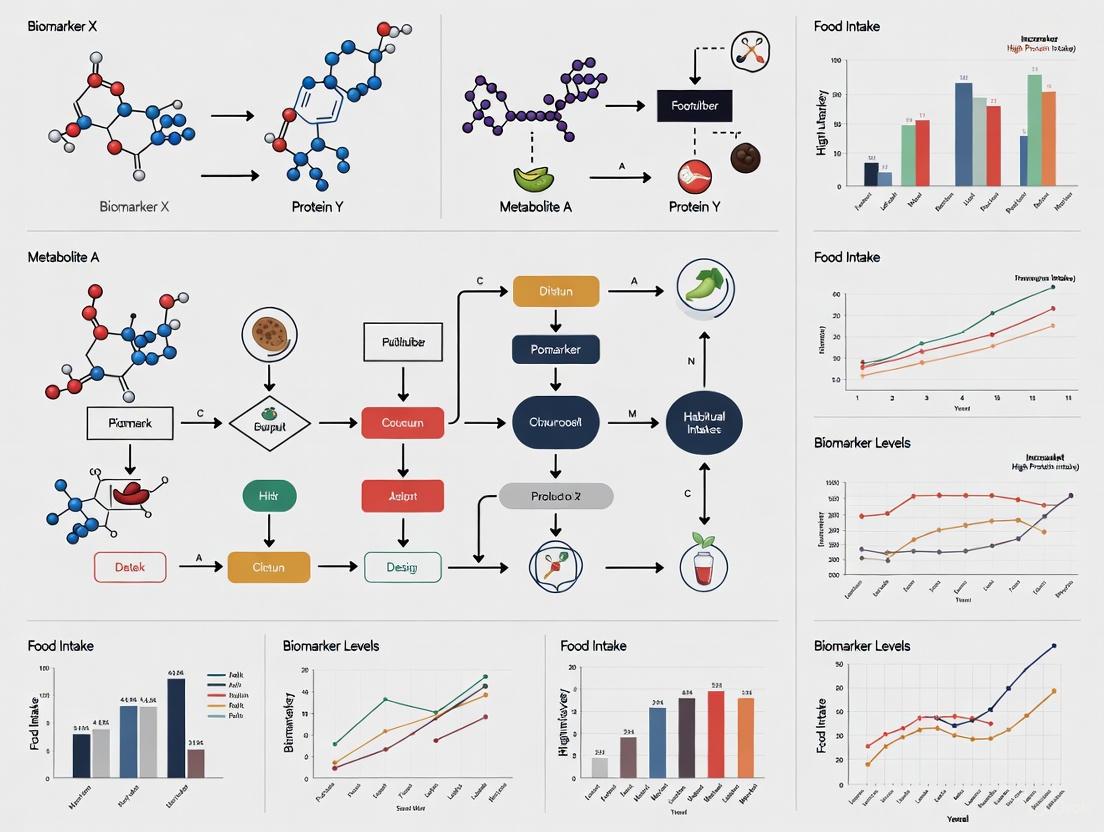
This article provides a comprehensive overview of the current landscape and future directions of dietary intake biomarkers for researchers and drug development professionals.
Biomarkers of Habitual Food Intake: From Discovery to Application in Precision Nutrition and Biomedical Research
Abstract
This article provides a comprehensive overview of the current landscape and future directions of dietary intake biomarkers for researchers and drug development professionals. It explores the foundational need for objective biomarkers to overcome the limitations of self-reported dietary data, detailing advanced methodological approaches like multi-biomarker panels and controlled feeding studies. The content addresses key challenges in biomarker validation, including specificity, dose-response relationships, and inter-individual variability, while also examining comparative applications for calibrating self-report instruments and monitoring dietary adherence in clinical trials. Synthesizing insights from major initiatives like the Dietary Biomarkers Development Consortium, this resource aims to equip scientists with the knowledge to leverage these robust tools for strengthening diet-disease association studies and advancing precision nutrition.
The Critical Need for Objective Dietary Biomarkers: Moving Beyond Self-Report in Nutritional Science
Accurate dietary assessment is a cornerstone of nutritional epidemiology, essential for understanding the relationships between diet, health, and disease. Self-reported instruments, including 24-hour recalls, food frequency questionnaires (FFQs), and dietary records, have served as the primary methods for capturing dietary intake in large-scale studies. However, when evaluated against objective biomarkers of intake, these methods demonstrate systematic measurement errors that substantially distort diet-disease relationships and compromise the validity of research findings [1] [2].
The persistent finding across validation studies is that self-reported dietary data are characterized by both random errors that reduce precision and systematic biases that compromise accuracy. These errors are not merely statistical nuisances; they have profound implications for public health recommendations, clinical guidelines, and nutritional policy. This analysis examines the nature, magnitude, and consequences of these measurement limitations within the context of biomarker-validated research, providing researchers with a critical framework for interpreting dietary data and designing robust nutritional studies.
Classification of Measurement Errors
Measurement error in dietary assessment can be categorized according to its nature and direction of bias. The table below summarizes the primary types of errors affecting self-reported instruments.
Table 1: Classification of Measurement Errors in Dietary Assessment
| Error Type | Definition | Primary Impact | Common Examples |
|---|---|---|---|
| Systematic Error (Bias) | Non-random error that deviates in a consistent direction from true intake | Reduces accuracy; creates directional bias in estimates | Energy underreporting; social desirability bias |
| Random Error | Unpredictable, non-directional fluctuations around true values | Reduces precision; attenuates correlation coefficients | Day-to-day intake variation; temporary memory lapses |
| Differential Error | Measurement error that differs based on outcome or participant characteristics | Biases effect estimates in unpredictable directions | Recall bias in case-control studies |
| Non-Differential Error | Measurement error unrelated to outcome status | Typically attenuates relationships toward null | General underreporting across a cohort |
The process of reporting dietary intake involves complex cognitive steps, each vulnerable to distinct error mechanisms [3]. Respondents must first encode consumption events into memory, then retain this information over time, retrieve it when completing an assessment, and finally estimate and report quantities and details. Failures can occur at each stage:
- Recall Bias: Imperfect memory leads to omissions of consumed items (errors of omission) or inclusion of items not consumed (errors of commission or intrusions) [4] [3]. Foods that constitute the main components of meals are better remembered than additions such as condiments, dressings, and ingredients in mixed dishes [3].
- Social Desirability Bias: Respondents frequently alter their reports to align with perceived social norms or researcher expectations [1]. This often manifests as underreporting of foods deemed "unhealthy" and overreporting of "healthy" options.
- Reactivity: The act of monitoring and recording intake can itself alter normal eating patterns, a phenomenon particularly relevant to food records [3].
- Portion Size Misestimation: Individuals struggle to accurately estimate and convert consumed amounts into quantifiable units, with both under- and overestimation occurring across different food groups [4].
Quantitative Evidence: Biomarker Comparisons Reveal Substantial Misreporting
Magnitude of Energy and Nutrient Underreporting
The development of objective biomarker methods, particularly the doubly labeled water (DLW) technique for measuring energy expenditure and urinary nitrogen for protein intake, has enabled rigorous quantification of reporting error. The evidence consistently reveals substantial underreporting across all major self-reported instruments.
Table 2: Biomarker-Based Validation of Self-Reported Dietary Instruments (Adapted from [2])
| Assessment Method | Energy Underreporting (%) | Protein Underreporting (%) | Potassium Underreporting (%) | Sodium Underreporting (%) |
|---|---|---|---|---|
| Automated 24-Hour Recalls (ASA24) | 15-17% | Lower than energy | Lower than energy | Lower than energy |
| 4-Day Food Records | 18-21% | Lower than energy | Lower than energy | Lower than energy |
| Food Frequency Questionnaires (FFQ) | 29-34% | Lower than energy | Overestimation (density-based) | Lower than energy |
The Interactive Diet and Activity Tracking in AARP (IDATA) study, which included 530 men and 545 women aged 50-74 years, provided direct comparison of multiple assessment tools against recovery biomarkers [2]. Participants completed six Automated Self-Administered 24-h recalls (ASA24s), two unweighed 4-day food records (4DFRs), two FFQs, two 24-hour urine collections, and one doubly labeled water administration. The findings demonstrated that absolute intakes of energy, protein, potassium, and sodium from all self-reported instruments were systematically lower than biomarker values, with underreporting most pronounced for energy.
Differential Misreporting Across Population Subgroups
The extent of misreporting is not uniform across populations. Research consistently identifies that underreporting increases with body mass index (BMI) [1]. Early studies using doubly labeled water found that obese women underreported energy intake by approximately 34% compared to no significant difference in lean women [1]. This pattern suggests that weight-related concerns, rather than weight status itself, drive systematic underreporting.
Additional factors influencing misreporting patterns include:
- Age and sex with systematic differences in reporting patterns across demographic groups [5]
- Educational attainment and socioeconomic status
- Day of the week with higher energy, carbohydrate, and alcohol intake reported on weekends [5]
- Specific food groups with vegetables (2-85% omission) and condiments (1-80% omission) omitted more frequently than beverages (0-32% omission) [4]
Methodological Implications for Research Design
Impact on Diet-Disease Relationships
Measurement error in dietary exposure data has profound consequences for epidemiological research:
- Attenuation of Effect Estimates: Non-differential misclassification of exposure typically biases correlation and relative risk estimates toward the null, potentially obscuring genuine diet-disease relationships [6].
- Reduced Statistical Power: Random error in exposure measurement increases variance, diminishing the ability to detect significant associations even when they exist [6].
- Distorted Ranking Ability: While self-report instruments may inadequately capture absolute intake, some (particularly multiple 24-hour recalls) retain utility for ranking individuals by intake, which is valuable in cohort studies focused on relative comparisons [7].
Optimizing Assessment Protocols
Research has identified several strategies to mitigate measurement error:
- Multiple Dietary Assessments: Collecting multiple 24-hour recalls or food records reduces the impact of day-to-day variation. Recent evidence suggests 3-4 days of dietary data collection, ideally non-consecutive and including at least one weekend day, are sufficient for reliable estimation of most nutrients [5].
- Biomarker Substudies: Incorporating objective biomarkers in validation subsamples enables quantification and correction for measurement error [6].
- Standardized Methodology: Using automated multiple-pass methods with standardized probing questions (e.g., USDA's Automated Multiple-Pass Method) reduces omissions and improves portion estimation [3].
The following diagram illustrates the decision pathway for selecting appropriate dietary assessment methods based on research objectives and resources:
Essential Research Reagents and Tools for Dietary Validation
Table 3: Key Research Reagents for Biomarker-Validated Dietary Assessment
| Reagent/Tool | Primary Function | Application Context | Key References |
|---|---|---|---|
| Doubly Labeled Water (DLW) | Objective measure of total energy expenditure through isotope elimination kinetics | Criterion method for validating energy intake assessment | [1] [2] |
| 24-Hour Urinary Nitrogen | Recovery biomarker for protein intake quantification | Validation of protein intake estimates from self-report | [7] [2] |
| 24-Hour Urinary Potassium | Recovery biomarker for potassium intake assessment | Validation of fruit and vegetable intake estimates | [7] [2] |
| Serum/Plasma Folate | Concentration biomarker for folate status | Validation of fruit and vegetable intake, especially leafy greens | [7] |
| Automated Self-Administered 24-h Recall (ASA24) | Web-based system for collecting multiple 24-hour dietary recalls | Reduced interviewer bias; standardized data collection | [3] [2] |
| Myfood24 | Fully automated online dietary assessment tool with nutrient database | Self- and interviewer-administered dietary assessment across populations | [7] |
| GloboDiet (formerly EPIC-SOFT) | Computer-assisted 24-hour recall method with standardized probing | International standardization of dietary recall methodology | [3] |
The evidence from biomarker validation studies unequivocally demonstrates that self-reported dietary assessment methods are plagued by substantial systematic errors, particularly underreporting of energy intake that varies by participant characteristics and instrument type. These limitations necessitate cautious interpretation of dietary data in research and policy contexts.
Future directions for strengthening nutritional epidemiology include:
- Routine incorporation of biomarker validation in dietary studies to quantify and correct for measurement error
- Development of integrated assessment systems that combine self-report with emerging technologies like image-assisted methods and barcode scanning
- Standardized reporting of measurement error parameters to facilitate appropriate interpretation and cross-study comparison
- Methodological research to better understand the cognitive processes underlying dietary reporting and develop improved assessment strategies
While self-reported dietary instruments remain necessary tools for large-scale nutritional research, acknowledging their limitations and implementing strategies to mitigate systematic error is essential for advancing our understanding of diet-health relationships.
Within nutritional science, accurately measuring what people eat remains a fundamental challenge. Self-reported dietary data, from tools like food frequency questionnaires and 24-hour recalls, are hampered by limitations including under-reporting, recall errors, and poor estimation of portion sizes [8]. Dietary biomarkers, as objective indicators of food intake, are critical for advancing the field. This guide compares three key classes of biomarkers—recovery, concentration, and predictive biomarkers—within the context of establishing a correlation with habitual food intake, a core objective for researchers and drug development professionals.
Biomarker Classes at a Glance
The following table defines and compares the primary classes of dietary biomarkers.
| Biomarker Class | Core Definition & Function | Key Characteristics | Relationship to Habitual Intake |
|---|---|---|---|
| Recovery Biomarkers | Compounds quantitatively excreted in urine, allowing intake to be calculated based on excretion levels [8]. | Considered the "gold standard" for objective intake measurement; often based on 24-hour urine collections [8]. | A single 24-hour urine sample reflects short-term intake. Multiple samples over time (e.g., 3 non-consecutive days within 2-6 weeks) are needed to estimate habitual intake [8]. |
| Concentration Biomarkers | Food-derived compounds measured in blood, urine, or other biofluids, whose levels correlate with consumption [8]. | Reflect short-term intake; levels are influenced by pharmacokinetics (absorption, distribution, metabolism, excretion) [9] [8]. | Like recovery biomarkers, repeated measures from multiple biological samples over a timeframe are essential to assess habitual dietary patterns [8]. |
| Predictive Biomarkers | A single compound or a multi-metabolite signature (poly-metabolite score) identified via metabolomics and machine learning to predict intake [10] [11]. | Can objectively classify individuals based on dietary patterns (e.g., high vs. low consumption) with no reliance on self-reported data [10] [8]. | Poly-metabolite scores derived from blood or urine show high potential for classifying individuals based on their level of consumption of specific food types, such as ultra-processed foods [10] [11]. |
Experimental Protocols in Biomarker Research
The discovery and validation of dietary biomarkers rely on rigorous, complementary study designs.
Controlled Feeding Trials for Biomarker Discovery
This is the preferred approach for identifying candidate biomarkers [8]. A common protocol involves:
- Study Design: Participants are administered a specific test food or diet in a prespecified amount [9].
- Sample Collection: Blood and urine specimens are collected at multiple time points post-consumption, sometimes up to 24-48 hours, to characterize pharmacokinetic parameters and the half-life of candidate compounds [9] [8].
- Metabolomic Profiling: Biospecimens are analyzed using techniques like liquid chromatography-mass spectrometry (LC-MS) to identify compounds that change in response to the test food [9].
- Control Arm: The study includes a control arm where participants consume a similar diet without the test food to ensure identified biomarkers are specific [8].
Validation Studies
After discovery, candidate biomarkers must be validated [8]. The Dietary Biomarkers Development Consortium (DBDC) employs a multi-phase approach:
- Phase 1: Implement controlled feeding trials to identify candidate compounds and their pharmacokinetics [9].
- Phase 2: Evaluate the ability of candidate biomarkers to identify individuals consuming the associated foods using controlled studies of various dietary patterns [9].
- Phase 3: Validate the candidate biomarkers' ability to predict recent and habitual consumption in independent observational settings [9].
Development of Predictive Poly-Metabolite Scores
This methodology was used to develop a biomarker for ultra-processed food (UPF) intake [10] [11].
- Observational Data: Researchers used data from 718 older adults who provided biospecimens and detailed dietary information over 12 months [10] [11].
- Experimental Data: A domiciled feeding study was conducted with 20 adults at the NIH Clinical Center. Participants consumed a diet high in UPF (80% of energy) and a diet with no UPF (0% of energy) for two weeks each in random order [10] [11].
- Metabolite Identification & Machine Learning: Hundreds of metabolites correlated with UPF intake were identified. Machine learning was then used to identify patterns of metabolites in blood and urine predictive of high UPF intake, which were used to calculate poly-metabolite scores [10] [11].
- Validation: The scores were tested and shown to accurately differentiate within trial subjects between the highly processed and unprocessed diet phases [10] [11].
Visualizing the Biomarker Validation Pathway
The journey from biomarker discovery to application involves a rigorous, multi-stage process, as visualized below.
Biomarker Validation Workflow: This diagram outlines the key stages for validating a dietary biomarker, from initial discovery to real-world application.
The Researcher's Toolkit: Essential Reagents & Materials
Successful biomarker research requires specific reagents, databases, and analytical tools.
| Tool / Reagent | Function in Biomarker Research |
|---|---|
| Liquid Chromatography-Mass Spectrometry (LC-MS) | The primary analytical platform for metabolomic profiling of blood and urine to discover and quantify food-derived metabolites [9]. |
| Stable Isotope-Labeled Standards | Internal standards used in mass spectrometry to ensure accurate quantification of biomarkers by accounting for analytical variability [8]. |
| Food Composition Databases | Databases that link foods to their chemical components, crucial for identifying the origin of putative biomarkers. A current challenge is the lack of comprehensive databases for food-derived metabolites [8]. |
| 24-Hour Urine Collection Kits | Standardized kits for the complete collection of urine over 24 hours, which is essential for the validation and use of recovery biomarkers [8]. |
| Biobanked Samples from Cohort Studies | Archived biospecimens from large observational studies, used for the validation of candidate biomarkers in phase 3 studies and for developing predictive models [9] [10]. |
The evolution from traditional recovery biomarkers to sophisticated predictive poly-metabolite scores marks a significant advancement toward objectively measuring habitual food intake. While recovery biomarkers remain the gold standard for specific nutrients, the future lies in the discovery and rigorous validation of concentration and predictive biomarkers for a wide range of foods. These tools are indispensable for refining our understanding of the links between diet and health, calibrating self-reported data in large studies, and ultimately strengthening the evidence base for nutritional recommendations and therapeutic development.
The food metabolome, defined as the portion of the human metabolome directly derived from the digestion and biotransformation of foods and their constituents, represents a complex yet powerful resource for understanding dietary exposure [12] [13]. Comprising over 25,000 distinct compounds found in various foods, the food metabolome varies dramatically according to dietary intake and provides a detailed, objective snapshot of an individual's nutritional status [12]. For researchers and drug development professionals, this biological reflection of dietary intake offers a promising alternative to traditional self-reporting methods, which are often plagued by recall bias and inaccuracies [11]. The systematic exploration of the food metabolome has gained significant momentum with advances in analytical technologies, particularly mass spectrometry and nuclear magnetic resonance (NMR) spectroscopy, enabling more comprehensive detection and quantification of dietary biomarkers [14].
Understanding the relationship between habitual food intake and metabolic profiles is crucial for developing objective measures of dietary exposure. This field moves beyond hypothesis-driven approaches to embrace agnostic, data-rich investigations that can uncover novel biomarkers and bioactive molecules associated with health and disease [12]. The implications extend across nutritional science, therapeutic development, and public health, offering new avenues for understanding how diet influences metabolic pathways and disease risk [15]. This guide examines current methodologies, key findings, and emerging applications in food metabolome research, with particular emphasis on the correlation between biomarkers and habitual intake.
Analytical Approaches in Food Metabolomics
Core Analytical Technologies
Metabolomics employs several complementary analytical platforms to characterize the food metabolome, each with distinct strengths and applications. Mass spectrometry (MS) coupled with separation techniques like liquid chromatography (LC-MS) or gas chromatography (GC-MS) offers high sensitivity and the ability to detect metabolites at very low concentrations [14]. These platforms are particularly valuable for comprehensive profiling of complex biological samples. Nuclear magnetic resonance (NMR) spectroscopy, while generally less sensitive than MS, provides highly reproducible results with minimal sample preparation and non-destructive analysis [14]. NMR is especially useful for structural elucidation and quantifying known metabolites. Recent technological advances have enhanced the capabilities of these platforms, including ultra-performance liquid chromatography (UPLC) for improved separation efficiency, cryogenically-cooled probes for increased NMR sensitivity, and hybrid systems like LC-SPE-NMR for complex sample analysis [14].
Targeted vs. Untargeted Strategies
Food metabolomics approaches generally fall into two categories: targeted and untargeted analyses. Targeted metabolomics focuses on the precise identification and quantification of a predefined set of metabolites, typically those involved in specific metabolic pathways or known to be associated with certain food intakes [14]. This hypothesis-driven approach provides highly accurate quantitative data for validating potential biomarkers. In contrast, untargeted metabolomics aims to comprehensively profile all measurable metabolites in a sample without prior selection, making it ideal for discovery-phase research [14]. Untargeted approaches can be further divided into fingerprinting (rapid classification of samples based on spectral patterns) and profiling (more detailed analysis with some metabolite identification) [16]. The choice between these strategies depends on research goals, with many studies now incorporating both approaches in a complementary manner.
Table 1: Comparison of Major Analytical Platforms in Food Metabolomics
| Analytical Platform | Key Strengths | Common Applications | Sample Types |
|---|---|---|---|
| LC-MS/MS | High sensitivity, broad dynamic range, quantitative capability | Biomarker discovery and validation, pathway analysis | Plasma, urine, tissue, food extracts |
| GC-MS | Excellent separation efficiency, robust compound libraries | Volatile compounds, metabolic profiling | Serum, plant materials, fermented foods |
| NMR Spectroscopy | Non-destructive, highly reproducible, minimal sample prep | Structural elucidation, quality control, metabolic phenotyping | Intact tissues, biofluids, food products |
| CE-MS | High resolution for polar/ionic compounds | Amino acid analysis, nucleotide profiling | Cellular extracts, biofluids |
Key Experimental Findings on Biomarkers and Habitual Intake
Challenges in Reflecting Habitual Intake
The relationship between habitual food intake and metabolic profiles presents significant methodological challenges. A 2022 cohort study exploring associations between habitual food intake and metabolomes in adolescents and young adults revealed a limited reflection of habitual food group intake by single metabolites [17]. The researchers employed both orthogonal projection to latent structures (oPLS) and random forests analyses on data from 228 participants with yearly repeated 3-day food records. Surprisingly, they found only six metabolites in urine that showed consistent associations across both statistical methods, and no associations in blood that met their criteria for agreement [17]. These findings suggest that single biomarkers may have limited utility for assessing long-term dietary patterns, necessitating more complex multi-biomarker approaches.
Advancements in Multi-Metabolite Biomarker Panels
Recent large-scale studies have demonstrated the superior performance of multi-metabolite panels over single biomarkers. A 2025 study of 8,391 multi-ethnic Asian individuals analyzed 1,055 plasma metabolites and their associations with 169 foods and beverages [15]. Using machine learning approaches, the researchers developed multi-biomarker panels and composite scores for key dietary components and overall diet quality. These comprehensive biomarker panels explained variances in intake prediction models better than single biomarkers and showed reproducible associations over time [15]. Importantly, these objective measures improved prediction of clinical outcomes including insulin resistance, diabetes, BMI, and hypertension compared to self-reported dietary data [15].
Similar advances were reported in research on ultra-processed food consumption, where researchers identified patterns of hundreds of metabolites in blood and urine that correlated with the percentage of energy from ultra-processed foods [11]. Through machine learning, they developed poly-metabolite scores that could accurately differentiate between highly processed and unprocessed diet conditions in a controlled feeding study [11]. This approach demonstrates how metabolomic signatures can provide more nuanced and objective measures of dietary patterns than traditional assessment methods.
Table 2: Key Food-Metabolite Associations from Recent Studies
| Food Category | Associated Metabolites | Biological Sample | Study Population |
|---|---|---|---|
| Processed/Other Meat | Vanillylmandelate | Urine | European adolescents/young adults [17] |
| Eggs | Indole-3-acetamide, N6-methyladenosine | Urine | European adolescents/young adults [17] |
| Vegetables | Hippurate, citraconate/glutaconate, X-12111 | Urine | European adolescents/young adults [17] |
| Ultra-processed Foods | Poly-metabolite scores (multiple compounds) | Blood and Urine | IDATA Study & NIH Clinical Center [11] |
| Multi-ethnic Asian Diet | 1,055 metabolites analyzed, multi-biomarker panels | Plasma | 8,391 Asian participants [15] |
Experimental Protocols for Diet-Metabolite Association Studies
Well-designed experimental protocols are essential for robust diet-metabolite association research. The 2022 cohort study on adolescents and young adults provides an exemplary methodology [17]. The research employed yearly repeated 3-day food records to establish habitual intake patterns across 23 food groups during adolescence. The analytical approach included untargeted metabolomics that quantified 2,638 metabolites in plasma and 1,407 metabolites in urine. To ensure rigorous statistical analysis, researchers applied two complementary methods: orthogonal projection to latent structures (oPLS) and random forests, with findings considered significant only when both methods agreed [17]. This stringent approach minimized false discoveries and highlighted the most robust associations.
Controlled feeding studies represent another powerful methodological approach, as demonstrated in ultra-processed food research [11]. The experimental design included both observational data from 718 participants in the IDATA study and a domiciled feeding study with 20 subjects admitted to the NIH Clinical Center. In the controlled feeding component, participants were randomized to either a diet high in ultra-processed foods (80% of calories) or a diet with zero ultra-processed foods for two weeks, immediately followed by the alternate diet [11]. This crossover design allowed for within-subject comparisons under highly controlled conditions, strengthening the causal inference between dietary exposure and metabolic changes.
Essential Research Tools and Reagents
The advancement of food metabolome research relies on specialized reagents, databases, and analytical tools. Key resources include comprehensive metabolite databases such as the Human Metabolome Database (HMDB) and nutrition-specific databases like the Nutritional Phenotype Database (dbNP) [12]. For sample preparation, extraction kits designed for different sample types (plasma, urine, tissues) are essential, with protocols often optimized for either polar or non-polar metabolites. Chemical libraries for the food metabolome containing standard compounds are crucial for accurate metabolite identification and quantification [12].
Commercial platforms have emerged to support food metabolomics research, offering standardized databases and analytical packages. For instance, GC/MS databases such as the Smart Metabolites Database include hundreds of registered compounds including organic acids, fatty acids, amino acids, and sugars, with methods for both scan and MRM (Multiple Reaction Monitoring) analysis [18]. Similarly, LC/MS/MS Method Packages provide targeted analysis for metabolites in major metabolic pathways, with specific methods optimized for different column chemistries [18]. These standardized approaches facilitate reproducibility across laboratories and enable more efficient biomarker validation.
Table 3: Essential Research Reagent Solutions for Food Metabolomics
| Research Tool | Function/Application | Example Specifications |
|---|---|---|
| GC-MS/MS with Database | Quantitative analysis of primary metabolites | Smart Metabolites Database: 568 compounds registered for scan, 475 for MRM [18] |
| LC-MS/MS Method Packages | Targeted analysis of key metabolic pathways | Method Package Ver. 2: 55 metabolites with ion pair reagent, 97 with PFPP columns [18] |
| CE-MS & LC-MS Platforms | Measurement of polar metabolites in food networks | Quantification of 100+ polar metabolites with calibration; good separation of structural isomers [19] |
| NMR Solvent Systems | Metabolic profiling of diverse food samples | Optimization for different food matrices (juice, pulp, dry powder) and compound classes [14] |
| Protein Assay Kits | Sample preparation and quantification | BCA protein assay for proteomic workflows [20] |
Methodological Workflows and Metabolic Pathways
The experimental workflow in food metabolomics involves multiple stages, from study design through data interpretation. The following diagram illustrates the key steps in a comprehensive diet-metabolite association study:
Diagram 1: Experimental Workflow in Diet-Metabolite Association Studies
The relationship between dietary exposure and biological response involves complex metabolic pathways that transform food components into measurable metabolites. The following diagram illustrates key metabolic processes linking diet to the food metabolome:
Diagram 2: Metabolic Pathways Linking Diet to Measurable Metabolites
Applications in Nutritional Research and Drug Development
The food metabolome has significant applications across multiple research domains. In nutritional epidemiology, metabolomic approaches enhance dietary assessment accuracy by providing objective biomarkers that complement traditional questionnaires [15]. This is particularly valuable for studying diet-disease relationships, where recall bias can substantially impact findings. In functional food development, metabolomics facilitates the identification of bioactive compounds and assessment of their physiological effects [14] [19]. For instance, researchers have used metabolomic profiling to analyze metabolic changes after ingestion of specific foods or to explore components that improve gut health [19].
For drug development professionals, understanding food metabolome interactions is crucial for several reasons. First, dietary factors can significantly influence metabolic pathways targeted by pharmaceuticals, potentially modifying drug efficacy or toxicity profiles [20]. Second, the food metabolome can reveal important interactions between nutrition and drug metabolism, informing clinical trial design and personalized medicine approaches. Finally, the identification of dietary patterns associated with disease risk through metabolomic profiling can reveal novel therapeutic targets for preventive interventions [15].
Food metabolomics also plays an increasingly important role in food quality and safety assessment. Proteomic and metabolomic analyses help monitor meat quality, detect adulteration, and evaluate processing effects [16]. For example, LC-MS/MS technologies have identified species-specific heat-stable peptide markers in processed meat products, enabling accurate authentication and quality control [16]. Similarly, NMR-based approaches have been used to determine the geographical origin of honey, characterize metabolites in different wine varieties, and evaluate the quality of green tea and ginseng products [14].
The food metabolome represents a rich source of biological information that reflects habitual dietary intake with unprecedented detail. While early research focused on identifying single biomarkers for specific foods, recent studies demonstrate that multi-metabolite panels and machine learning approaches provide more accurate assessment of dietary patterns [15] [11]. These advances address fundamental limitations of self-reported dietary data and offer new opportunities for objective exposure assessment in nutritional research and drug development.
Future progress in this field requires coordinated efforts to address several challenges. There remains a need for larger, more diverse population studies to identify culturally-specific biomarkers and understand ethnic variations in diet-metabolite relationships [15]. Development of standardized protocols and shared repositories for metabolomic data will enhance reproducibility and facilitate meta-analyses [12]. Additionally, the integration of food metabolome data with other omics technologies (proteomics, genomics) will provide more comprehensive understanding of how diet influences health at the systems biology level.
For researchers and drug development professionals, the rapidly evolving science of the food metabolome offers powerful tools to elucidate complex relationships between diet, metabolism, and health outcomes. As analytical technologies continue to advance and computational methods become more sophisticated, the food metabolome will undoubtedly play an increasingly central role in personalized nutrition, preventive medicine, and therapeutic development.
Accurately measuring dietary intake is a fundamental challenge in nutritional epidemiology. For decades, research has relied heavily on self-reported methods such as food frequency questionnaires and 24-hour recalls, which are susceptible to systematic and random measurement errors [21] [22]. These limitations have spurred international efforts to discover and validate objective biomarkers of food intake. Among the most prominent initiatives are the Dietary Biomarkers Development Consortium (DBDC) in the United States and the Food Biomarker Alliance (FoodBAll) in Europe. These consortia aim to identify metabolomic signatures in biofluids like blood and urine that can provide a more reliable, objective measure of habitual food consumption, thereby strengthening research on the links between diet and chronic diseases [22] [21].
The DBDC and FoodBAll share a common goal but differ in their organizational structure and regional focus.
Dietary Biomarkers Development Consortium (DBDC)
The DBDC was established in 2021 following a call from the National Institute of Diabetes and Digestive and Kidney Diseases (NIDDK) and the USDA National Institute of Food and Agriculture (USDA-NIFA) [22]. It represents the first major U.S. effort to systematically discover and validate biomarkers for foods commonly consumed in the American diet. Its stated mission is to "discover objective measures, biomarkers, that can inform individual dietary patterns and advance nutritional epidemiology" [23]. The consortium is structured around three primary study centers at leading U.S. institutions: Harvard University (in collaboration with the Broad Institute of MIT and Harvard), the Fred Hutchinson Cancer Center (in collaboration with the University of Washington), and the University of California Davis (in collaboration with the USDA Agricultural Research Service) [22]. A Data Coordinating Center at Duke University manages administrative activities, data quality control, and will eventually submit data to public repositories like the NIDDK Central Repository and the Metabolomics Workbench [22].
Food Biomarker Alliance (FoodBAll)
FoodBAll was a European consortium that explored markers of food intake across different populations in Europe [22]. While the search results provide less specific structural detail for FoodBAll compared to the DBDC, it is noted as a systematic and concerted effort that contributed significantly to the field of dietary biomarker discovery. Its work helped establish foundational criteria for validating food intake biomarkers, including plausibility, dose-response, time-response, and robustness in free-living populations [22].
Table 1: Structural and Regional Comparison of the DBDC and FoodBAll
| Feature | Dietary Biomarkers Development Consortium (DBDC) | Food Biomarker Alliance (FoodBAll) |
|---|---|---|
| Primary Region | United States [22] | Europe [22] |
| Leading Agencies | National Institutes of Health (NIDDK), USDA-NIFA [22] | Information not specified in search results |
| Organizational Structure | Three study centers, a Data Coordinating Center, and governing committees (Steering, Executive) [22] | Information not specified in search results |
| Public Data Access | Data will be archived in NIDDK Repository and Metabolomics Workbench [22] | Information not specified in search results |
| Key Dietary Focus | Foods commonly consumed in the U.S. diet, guided by USDA MyPlate [22] [24] | Exploration across different European populations [22] |
Experimental Protocols and Methodologies
Both consortia employ controlled feeding studies and advanced metabolomics to identify candidate biomarkers, with the DBDC implementing a highly structured, multi-phase protocol.
The DBDC's Three-Phase Approach
The DBDC has implemented a rigorous, multi-phase strategy to move biomarkers from discovery to validation [22]:
- Phase 1: Candidate Biomarker Identification. This initial phase involves controlled feeding trials where healthy participants consume pre-specified amounts of test foods. Blood and urine specimens are collected at multiple time points and subjected to extensive metabolomic profiling. This design allows researchers to characterize the pharmacokinetic parameters of candidate biomarkers, such as their appearance and clearance rates in the body [22].
- Phase 2: Evaluation in Varied Dietary Patterns. In this phase, the ability of the candidate biomarkers to identify individuals consuming the associated foods is tested within the context of different controlled dietary patterns. This helps determine the specificity and robustness of the biomarkers [22].
- Phase 3: Validation in Observational Settings. The final validation step assesses the performance of the candidate biomarkers in independent, free-living populations. This tests whether the biomarkers can predict recent and habitual consumption of specific foods in a real-world setting, outside the controlled environment of a feeding study [22].
Analytical and Statistical Methods
The core analytical methodology for the DBDC relies on metabolomic profiling using mass spectrometry. Specific techniques include liquid chromatography-mass spectrometry (LC-MS) and hydrophilic-interaction liquid chromatography (HILIC) to measure a wide array of small molecules in blood and urine [22]. The data analysis is complex, given the expected high inter-individual variability due to genetics, gut microbiome, and other factors. Statistical approaches range from generalized linear models (GLMs) to Bayesian regression, all aimed at ranking compounds for their ability to discriminate between food groups and identify optimal sample collection times [24].
The following diagram illustrates the sequential workflow of the DBDC's three-phase biomarker development pipeline.
Key Research Outputs and Applications
The research conducted by these consortia is generating tangible outputs and demonstrating practical applications for dietary biomarkers in public health and clinical research.
Expansion of the Biomarker Repository
A primary output of these initiatives is the significant expansion of the library of validated intake biomarkers. The DBDC, for instance, is systematically working to add biomarkers for specific foods and food groups, moving beyond the traditional handful of biomarkers for total energy or protein [21]. For example, the UC Davis center is specifically focused on discovering biomarkers linked to the consumption of fruits and vegetables, while other centers are investigating biomarkers for proteins, carbohydrates, and dairy [25]. This expansion is crucial for building a more complete objective picture of dietary patterns.
Application in Nutritional Epidemiology
Intake biomarkers are increasingly being applied to correct for measurement errors in dietary studies. In the Women's Health Initiative (WHI) cohorts, for example, the use of the doubly labeled water (DLW) method as an objective biomarker for total energy expenditure revealed substantial underestimation of energy intake in self-reported data, particularly among overweight and obese participants [21]. This objective data was then used to "calibrate" self-reported intake, which dramatically altered the observed associations between energy intake and major disease outcomes like cancer and cardiovascular disease [21].
Development of Complex Biomarker Signatures
Beyond biomarkers for single foods, research is advancing towards poly-metabolite scores that reflect complex dietary patterns. A notable example is the development of a metabolite signature to measure consumption of ultra-processed foods (UPF). One study used machine learning on metabolomic data from both observational and controlled feeding studies to identify patterns of metabolites in blood and urine that could accurately differentiate individuals with high versus zero intake of ultra-processed foods [11]. This type of score represents a powerful new tool for objectively studying the health impacts of complex modern diets.
Table 2: Examples of Dietary Biomarkers and Their Research Applications
| Biomarker Type | Specific Example(s) | Research Application and Finding |
|---|---|---|
| Energy Intake | Doubly Labeled Water (DLW) as a biomarker for total energy expenditure [21] | Revealed 30-40% energy intake underestimation in overweight/obese postmenopausal women using FFQs; calibrated intake showed strong positive associations with disease risk [21]. |
| Food Group | Biomarkers for fruits and vegetables (under development) [24] [25] | Aims to provide objective verification of consumption for these key food groups, moving beyond error-prone self-report [24]. |
| Dietary Pattern | Poly-metabolite score for Ultra-Processed Foods (UPF) [11] | Machine learning identified metabolite patterns that could accurately differentiate between high- and zero-UPF diets in a controlled feeding study [11]. |
The Scientist's Toolkit: Essential Reagents and Technologies
The experimental work of dietary biomarker discovery and validation relies on a suite of sophisticated reagents, technologies, and methodologies.
Table 3: Essential Research Reagents and Solutions for Dietary Biomarker Studies
| Tool / Reagent | Function and Application | Specific Examples from Research |
|---|---|---|
| Controlled Test Meals | Administered in precise amounts during feeding trials to create a known dietary exposure for identifying candidate biomarkers. | DBDC studies use test meals with varying servings of fruits and vegetables according to USDA MyPlate guidelines [22] [24]. |
| Liquid Chromatography-Mass Spectrometry (LC-MS) | Primary analytical platform for untargeted and targeted metabolomic profiling of biofluids to detect and quantify small molecule metabolites. | Used by all DBDC sites for analyzing plasma and urine specimens; often coupled with HILIC for better separation of polar compounds [22] [24]. |
| Immunoassays | Used for targeted, quantitative measurement of specific protein biomarkers in biofluids. | Used in other biomarker fields (e.g., traumatic brain injury) to measure proteins like GFAP and UCH-L1 in sweat [26]; analogous to targeted nutrient biomarkers. |
| Doubly Labeled Water (DLW) | An objective biomarker for total energy expenditure, used as a reference method to validate self-reported energy intake. | Used in the Women's Health Initiative to reveal systematic bias in self-reported energy data and to calibrate intake for disease association studies [21]. |
| Stable Isotope-Labeled Standards | Added to samples during mass spectrometry analysis for precise quantification of metabolites, correcting for analytical variability. | Implied in high-resolution MS/MS methods for identifying and quantifying unknown food-associated compounds [24]. |
| Biofluid Collection Kits | Standardized collection and preservation of biological specimens (e.g., blood, urine, sweat) for consistent metabolomic analysis. | DBDC harmonizes protocols for urine and blood collection; other studies use specialized sweat patches for non-invasive biomarker sampling [22] [26]. |
The concerted efforts of the DBDC and FoodBAll are fundamentally advancing the science of nutritional assessment. By moving from error-prone self-report to objective biomarkers based on metabolomic signatures, these consortia are addressing a long-standing critical limitation in nutritional epidemiology. The DBDC's structured, multi-phase approach in the U.S. complements the foundational work of FoodBAll in Europe. Their collective output—a growing repository of validated biomarkers, sophisticated poly-metabolite scores, and methodologies for error correction—is providing the scientific community with powerful new tools. These tools are crucial for more precisely defining the correlations between habitual food intake and health, ultimately leading to more reliable dietary guidelines and public health interventions.
Key Gaps in Current Biomarker Research for Habitual Intake Assessment
Accurate assessment of habitual dietary intake represents a fundamental challenge in nutritional science, epidemiology, and public health. Traditional reliance on self-reported methods such as food frequency questionnaires, 24-hour recalls, and food diaries is plagued by well-documented limitations including under-reporting, poor estimation of portion sizes, recall errors, and intentional misreporting [27] [28] [29]. Biomarkers of food intake (BFIs) offer a promising alternative as objective indicators of dietary exposure that can bypass the biases inherent in self-reported data. These biomarkers are typically food-derived metabolites present in biological samples that distinguish themselves from endogenous metabolites [30] [8]. Despite significant advances in the field, critical gaps persist in our ability to use biomarkers for reliable assessment of long-term, habitual intake patterns. This review systematically examines these research gaps, compares biomarker performance across studies, and outlines methodological frameworks for advancing the field toward more accurate dietary assessment.
Current Limitations in Biomarker Reproducibility and Variability
Poor Long-Term Reproducibility
A fundamental limitation in using biomarkers for habitual intake assessment is their questionable reproducibility over extended timeframes. A recent large-scale study examining urinary biomarkers in European children and adolescents revealed poor to moderate reproducibility over 2- to 4-year periods. The study reported median intraclass correlation coefficients (ICCs) of just 0.27 (range: 0.11-0.54) and 0.28 (range: 0.15-0.51) over 2- and 4-year intervals, respectively [31]. These low values indicate substantial variability in biomarker measurements over time, raising questions about their reliability for assessing long-term dietary patterns.
The same investigation sought to identify factors explaining biomarker variance, with country of residence explaining the largest proportion (median: 5% for 2-year interval, 4.5% for 4-year interval). Surprisingly, actual dietary intake explained only minimal variation—0.7% and 0.6% for the 2- and 4-year intervals, respectively [31]. This suggests that non-dietary factors account for the majority of biomarker variability, complicating their interpretation as straightforward indicators of food consumption.
Table 1: Sources of Variation in Urinary Biomarkers of Food Intake
| Source of Variation | Proportion of Variance Explained (2-year interval) | Proportion of Variance Explained (4-year interval) |
|---|---|---|
| Country of residence | 5.0% (median) | 4.5% (median) |
| Dietary intake | 0.7% (range: 0.0-1.5) | 0.6% (range: 0.0-1.1) |
| Other factors (cumulative) | 17.0% (median) | 14.6% (median) |
Critical Research Gaps in Biomarker Validation
Insufficient Validation Against Established Criteria
The validation of proposed biomarkers has significantly lagged behind their discovery. While metabolomic approaches have identified numerous putative biomarkers, most lack comprehensive validation against established criteria [30] [8]. The European FoodBall project proposed a validation framework encompassing eight key criteria: plausibility, dose-response, time-response, robustness, reliability, stability, analytical performance, and inter-laboratory reproducibility [32] [8]. A recent assessment of these criteria revealed that many foods still lack well-validated biomarkers, with only a limited number (e.g., proline betaine for citrus intake) having undergone extensive validation [8].
Incomplete Understanding of Biomarker Kinetics
Many candidate biomarkers lack characterization of their pharmacokinetic parameters, including absorption, distribution, metabolism, and excretion patterns. Without understanding the time-response relationship and half-life of biomarkers, it is difficult to determine the appropriate sampling frequency needed to capture habitual intake [32] [8]. The emerging Dietary Biomarkers Development Consortium (DBDC) has recognized this gap and is implementing controlled feeding trials to characterize pharmacokinetic parameters of candidate biomarkers [9].
Table 2: Validation Status of Selected Dietary Biomarkers
| Biomarker Category | Example Biomarker | Validation Level | Key Gaps |
|---|---|---|---|
| Citrus fruits | Proline betaine | High (extensively validated) | Limited data on inter-individual variability |
| Whole grains | Alkylresorcinols | Moderate | Dose-response in diverse populations |
| Cruciferous vegetables | Sulfur-containing metabolites | Moderate | Effect of cooking methods |
| Red meat | Unknown | Low | Specific biomarkers lacking |
| Soy foods | Isoflavones | Moderate | Impact of food processing |
Methodological and Analytical Challenges
Complex Nature of Food and Dietary Patterns
Nutrition interventions fundamentally differ from pharmaceutical trials in their complexity. Foods consist of heterogeneous mixtures of nutrients and bioactive components that interact in synergistic or antagonistic ways [33]. This complexity creates challenges for identifying specific biomarkers and establishing clear dose-response relationships. Additionally, high collinearity between dietary components—where consumption of one food often correlates with consumption of others—makes it difficult to isolate biomarkers specific to individual foods [33].
Impact of Food Processing and Preparation
Food processing, cooking methods, and storage conditions can significantly alter the chemical composition of foods and their resulting metabolites [34] [33]. For example, different cooking methods for meat or processing techniques for grains may generate different metabolite profiles, potentially confounding biomarker measurements [34]. The MAIN Study specifically addressed this challenge by testing biomarker performance with different food formulations and processing methods involving meat, wholegrain, fruits, and vegetables [34].
Interindividual Variability in Biomarker Response
Multiple factors contribute to substantial interindividual variability in biomarker response, including genetic polymorphisms, gut microbiota composition, lifestyle factors, and physiological states [32] [33]. This variability reduces the robustness of biomarkers across diverse population groups. A validation framework has recently been expanded to include assessment of intra- and inter-individual variability in biomarker levels as an additional criterion [8].
Experimental Approaches and Methodological Frameworks
Controlled Feeding Studies for Biomarker Discovery
The preferred approach for identifying biomarkers of food intake involves human intervention studies with controlled feeding. These typically include participants consuming specific foods with collection of biological samples in the postprandial state [8]. The MAIN Study implemented an innovative design using free-living individuals preparing meals at home, thus bridging the gap between highly controlled laboratory studies and real-world conditions [34]. This approach allowed researchers to test methodology in an environment that mimicked annual eating patterns using commonly consumed foods.
Analytical Considerations for Biomarker Measurement
The analytical workflow for biomarker discovery and validation requires careful consideration of multiple factors. The MAIN Study demonstrated that spot urine samples, normalized by refractive index to account for differences in fluid intake, could be effectively used for dietary exposure monitoring in large epidemiological studies [34]. This approach offers practical advantages over more burdensome 24-hour urine collections.
Table 3: Essential Research Reagents and Analytical Tools
| Research Tool | Function/Purpose | Examples/Alternatives |
|---|---|---|
| LC-MS (Liquid Chromatography-Mass Spectrometry) | Metabolite separation and identification | UHPLC-MS, HPLC-MS |
| GC-MS (Gas Chromatography-Mass Spectrometry) | Volatile compound analysis | GC-IRMS for stable isotopes |
| NMR (Nuclear Magnetic Resonance) | Metabolic fingerprinting | 1H-NMR, 13C-NMR |
| Stable isotope analyzers | Detection of 13C isotopes for added sugars | CF-SIRMS, NA-SIMS |
| Biobanking systems | Long-term sample storage | -80°C freezers, LN2 storage |
| Normalization methods | Accounting for fluid intake variations | Creatinine, refractive index |
Future Directions and Research Priorities
Expanding Biomarker Coverage and Specificity
Current biomarker panels cover only a limited range of commonly consumed foods. Systematic reviews have identified biomarkers for categories including fruits, vegetables, aromatics, grains, dairy, soy, coffee, tea, cocoa, alcohol, meat, proteins, nuts, seeds, and sweeteners [29]. However, many specific foods within these categories lack robust biomarkers. Plant-based foods are often represented by polyphenols, while others are distinguishable by innate food composition, such as sulfurous compounds in cruciferous vegetables or galactose derivatives in dairy [29]. Future research should prioritize foods of high public health relevance that are currently underrepresented in biomarker panels.
Integrating Multiple Biomarkers and Statistical Approaches
Single biomarkers rarely capture the complexity of food intake. Future approaches should focus on developing multi-metabolite biomarker panels that may provide more reliable estimation of dietary exposure than single-biomarker approaches [34]. Additionally, new statistical methods are needed to handle multiple biomarkers for single foods and to account for the complex covariance structure of dietary intake [30] [8].
Addressing Real-World Complexity
For biomarkers to have significant utility in public health, their performance must be demonstrated in real-world environments where foods are consumed as part of complex meals rather than in isolation [34]. Future studies should explore shorter time intervals between measurements and investigate other sources of variation, including the influence of the gut microbiome and genetic factors [31].
Significant gaps remain in the development and application of biomarkers for habitual dietary intake assessment. The poor long-term reproducibility of current biomarkers, incomplete validation against established criteria, and insufficient understanding of the factors contributing to biomarker variability represent the most pressing challenges. Future research should prioritize comprehensive validation of candidate biomarkers against the eight established criteria, expansion of biomarker coverage to include foods of high public health relevance, and development of statistical approaches to integrate multiple biomarkers into panels that better reflect the complexity of dietary intake. Addressing these gaps will require collaborative efforts, such as those undertaken by the Dietary Biomarkers Development Consortium, and methodological innovations that bridge the divide between highly controlled feeding studies and real-world dietary patterns. Only through such comprehensive approaches can biomarkers fulfill their potential as objective tools for assessing habitual dietary intake in nutrition research and public health monitoring.
Methodological Approaches for Biomarker Discovery and Application in Research Settings
In nutritional science, establishing a reliable correlation between biomarker levels and habitual food intake is fundamental for developing objective dietary assessment tools. Unlike traditional self-report methods, which are prone to significant measurement error and bias, dietary biomarkers offer a more accurate means of linking dietary patterns to health outcomes. The discovery and validation of these biomarkers rely on two primary research approaches: controlled feeding trials and observational studies. This guide examines the methodological frameworks, applications, and comparative strengths of these designs, providing researchers with a structured overview for planning biomarker discovery research.
Table 1: Key Characteristics of Discovery Study Designs
| Feature | Controlled Feeding Trials | Observational Studies |
|---|---|---|
| Primary Objective | Identify candidate biomarkers and establish causal intake-biomarker relationships [9] [35] | Validate biomarkers in free-living populations and assess habitual intake [9] [21] |
| Study Environment | Highly controlled (e.g., metabolic ward, provided diets) [36] [35] | Free-living, real-world settings [37] |
| Dietary Control | Complete control; diets are known and provided [35] | No direct control; relies on self-report (FFQ, 24-h recall) [21] [38] |
| Key Strengths | Controls for confounding; establishes pharmacokinetics; high internal validity [9] [39] | Assesses generalizability; suitable for long-term intake; high external validity [9] [21] |
| Main Limitations | High cost and participant burden; short duration; limited generalizability [39] [35] | Cannot prove causality; residual confounding; self-report dietary errors [21] [38] |
| Ideal Use Case | Initial biomarker discovery and dose-response characterization [9] [37] | Biomarker validation and application in epidemiological cohorts [9] [38] |
Experimental Protocols and Workflows
Controlled Feeding Trials
These studies are the gold standard for the initial discovery phase of biomarker development.
- Protocol Design: Participants are provided with all meals and snacks for a defined period, typically ranging from two weeks to several months [36] [35]. Diets can be designed to test a single specific food, a nutrient, or a complex dietary pattern.
- Diet Formulation: Two common approaches exist: 1) Standardized menus, where all participants consume the same diet to reduce variability [36], and 2) Personalized menus, which are formulated to approximate each participant's habitual diet based on pre-study food records, thereby preserving real-world variation in nutrient intake for biomarker evaluation [35].
- Biospecimen Collection: Blood and urine samples are collected at precise time points before, during, and after the intervention. This allows researchers to characterize the pharmacokinetic profile of candidate biomarkers, including their appearance, peak concentration, and clearance [9] [37].
- Analytical Methods: Metabolomic profiling of biospecimens is performed primarily using liquid chromatography-mass spectrometry (LC-MS) or nuclear magnetic resonance (NMR) to identify food-specific metabolites [21] [39] [40].
The following diagram illustrates a typical workflow for a controlled feeding trial.
Observational Studies
This design is critical for validating the performance of candidate biomarkers in larger, free-living populations.
- Protocol Design: Researchers recruit a cohort of participants who consume their habitual, self-selected diets. Dietary intake is assessed using tools like Food Frequency Questionnaires (FFQs), 24-hour recalls, or food diaries [21] [38].
- Biospecimen Collection: Participants typically provide one or more biospecimens (e.g., blood, urine) at a single time point or longitudinally. A key challenge is ensuring that a single sample can reflect habitual intake [21] [40].
- Data Analysis: Statistical models, primarily linear regression, are used to correlate the concentrations of candidate biomarkers in biospecimens with self-reported dietary intake data. This assesses how well the biomarker predicts reported consumption [21] [38].
- Advanced Applications: Machine learning techniques are increasingly used to develop poly-metabolite scores—predictive models based on multiple metabolites. For example, NIH researchers have developed such scores to objectively measure consumption of ultra-processed foods [10] [11].
The workflow below outlines the key stages of an observational study for biomarker validation.
Integrated Frameworks for Biomarker Development
Leading research initiatives now recognize that a sequential, multi-phase approach integrating both trial and observational designs is the most robust path from biomarker discovery to application. The Dietary Biomarkers Development Consortium (DBDC), for instance, employs a structured three-phase framework [9]:
- Phase 1: Discovery. Controlled feeding trials are used to identify candidate biomarkers and characterize their pharmacokinetics.
- Phase 2: Evaluation. Controlled studies with varied dietary patterns test the ability of candidate biomarkers to classify individuals based on their intake of target foods.
- Phase 3: Validation. Independent observational studies evaluate the performance of biomarkers in predicting food intake in free-living populations.
This integrated framework ensures that biomarkers are not only biologically sound but also practically useful in epidemiological research.
Table 2: Key Reagent Solutions for Biomarker Research
| Research Reagent | Function & Application in Biomarker Studies |
|---|---|
| Doubly Labeled Water (DLW) | Objective biomarker for total energy expenditure; used as a reference to validate self-reported energy intake and calibrate other biomarkers [21] [35]. |
| 24-hour Urinary Nitrogen | Recovery biomarker for protein intake; serves as a high-quality objective measure for calibrating self-reported protein data [21] [38] [35]. |
| Liquid Chromatography-Mass Spectrometry (LC-MS) | Primary analytical platform for targeted and untargeted metabolomics; identifies and quantifies food-derived metabolites in blood and urine [9] [39] [40]. |
| Stable Isotope Labels | Used in controlled trials to track the metabolic fate of specific food components, helping to distinguish dietary origins of metabolites [39]. |
| Automated Dietary Assessment Tools (e.g., ASA-24) | Self-report tools used in observational cohorts to collect dietary data for correlation with biomarker levels; subject to measurement error but necessary for scale [9] [38]. |
| Biobanked Serum/Plasma & Urine Samples | Archived samples from large cohorts used in validation phases; enable testing of candidate biomarkers against health outcomes in nested case-control studies [21] [40]. |
Controlled feeding trials and observational studies serve distinct yet complementary roles in the lifecycle of a dietary biomarker. Feeding trials provide the causal evidence and pharmacokinetic precision necessary for initial discovery, while observational studies offer the real-world validation and generalizability required for application in public health and epidemiology. The most successful biomarker development pipelines, such as that employed by the DBDC, strategically integrate both methodologies. As the field advances with technologies like machine learning and complex poly-metabolite scores, this synergistic use of rigorous controlled experiments and large-scale observational data will continue to be the cornerstone of objective dietary assessment.
Objective assessment of habitual food intake remains a significant challenge in nutritional epidemiology. Traditional methods, such as food diaries and frequency questionnaires, are prone to recall bias and measurement error, limiting their reliability for establishing precise diet-disease relationships [41] [42]. Dietary biomarkers, objectively measured from biological samples, offer a promising alternative by providing a more accurate representation of actual food consumption and metabolic response [39]. The discovery and validation of these biomarkers depend heavily on advanced analytical platforms capable of detecting and quantifying thousands of metabolites simultaneously.
Metabolomic profiling has emerged as a powerful approach for identifying biomarker patterns reflective of dietary intake. Among the various technologies available, Liquid Chromatography-Mass Spectrometry (LC-MS), often coupled with Hydrophilic Interaction Liquid Chromatography (HILIC), and Nuclear Magnetic Resonance (NMR) spectroscopy represent the most widely used platforms in nutritional metabolomics [42] [43]. Each platform offers distinct advantages and limitations in coverage, sensitivity, reproducibility, and throughput, making them complementary rather than competitive for comprehensive biomarker research. This guide provides an objective comparison of these analytical platforms, supported by experimental data and methodological protocols relevant to habitual food intake studies.
The selection of an appropriate analytical platform depends heavily on the specific research objectives, required sensitivity, metabolite coverage, and available resources. The table below summarizes the key technical characteristics and performance metrics of LC-MS, HILIC-LC-MS, and NMR platforms based on recent applications in nutritional metabolomics.
Table 1: Performance Comparison of Major Analytical Platforms in Metabolomic Profiling
| Platform Characteristic | LC-MS (Reversed-Phase) | HILIC-LC-MS | NMR Spectroscopy |
|---|---|---|---|
| Analytical Principle | Separation by hydrophobicity; mass-based detection | Separation by polarity; mass-based detection | Magnetic properties of atomic nuclei |
| Optimal Metabolite Coverage | Mid-to non-polar metabolites (lipids, acyl carnitines) [44] | Polar metabolites (amino acids, sugars, organic acids) [45] [46] | Abundant, mainly polar metabolites (lipoproteins, organic acids) [42] |
| Typical Sensitivity | fmol-µmol (high sensitivity) [47] [46] | fmol-µmol (high sensitivity) [47] [46] | µmol-mmol (lower sensitivity) [48] |
| Analytical Repeatability (CV) | Excellent (<20% for most features) [45] | Excellent (median CV ~5%) [45] | High (dependent on metabolite concentration) |
| Sample Throughput | Medium | Medium | High (rapid, minimal preparation) [42] |
| Quantitative Capability | Excellent (wide dynamic range) [46] | Excellent (wide dynamic range) [47] [46] | Good (directly proportional) |
| Structural Information | Moderate (fragmentation patterns) | Moderate (fragmentation patterns) | High (definitive structural elucidation) |
| Sample Preparation | Moderate complexity | Moderate complexity | Minimal preparation |
| Destructive Analysis | Yes | Yes | No |
| Key Applications in Food Intake Research | Lipid-soluble vitamins, meat biomarkers (carnosine) [41], UPF signature lipids [43] | Plant food biomarkers (alkylresorcinols, flavonoids) [41], amino acids, bile acids [45] | Habitual intake associations (proline betaine, hippurate) [42], lipoprotein profiling [43] |
The data reveals a clear complementarity between platforms. HILIC-LC-MS excels where reversed-phase LC-MS falls short: in the retention and sensitive analysis of highly polar metabolites central to energy metabolism, such as amino acids and sugars [45] [46]. A direct performance comparison of narrow-bore versus capillary HILIC systems demonstrated that capillary systems (CapHILIC) can increase signal areas for polar metabolites by up to 18-fold in tissue extracts and 80-fold in bile acid standards, albeit with a less broad metabolite spectrum [45]. Conversely, NMR provides a less sensitive but highly reproducible and non-destructive platform suitable for high-throughput analysis and absolute quantification without the need for compound-specific calibration, making it ideal for large-scale epidemiological studies like the MEIA study, which investigated associations between habitual diet and urinary metabolites in nearly 500 participants [42].
Experimental Protocols for Platform Evaluation
HILIC-LC-MS/MS for Simultaneous Quantification of Dietary Metabolites
Objective: To develop a precise, efficient HILIC-LC-MS/MS method for simultaneously quantifying 28 diet-related metabolites in human serum, including acylcarnitines, amino acids, ceramides, and lysophosphatidylcholines, which are potential biomarkers for multiple myeloma and nutritional status [46].
Sample Preparation:
- Extraction: 50 µL of serum is mixed with 200 µL of ice-cold isopropanol containing 0.1% acetic acid and a mixture of isotopically labeled internal standards.
- Protein Precipitation: The mixture is vortexed vigorously and centrifuged at 13,000 × g for 10 minutes at 4°C.
- Supernatant Collection: The clear supernatant is transferred to a new vial for LC-MS/MS analysis [46].
LC Conditions:
- Column: HILIC column (e.g., 2.1 × 100 mm, 1.7 µm).
- Mobile Phase: A) 10 mM ammonium acetate in water (pH 9.0), B) 10 mM ammonium acetate in 90% acetonitrile/10% water.
- Gradient: Linear gradient from 90% B to 50% B over 10 minutes, followed by re-equilibration.
- Flow Rate: 0.4 mL/min.
- Column Temperature: 40°C.
- Injection Volume: 5 µL [46].
MS Conditions:
- Instrument: Triple quadrupole mass spectrometer.
- Ionization: Positive electrospray ionization (ESI+).
- Detection Mode: Multiple Reaction Monitoring (MRM).
- Data Acquisition: Full separation and quantification of 28 metabolites achieved within 15 minutes [46].
Performance Metrics:
- Linearity: Correlation coefficients (R²) > 0.9984 for all analytes.
- Precision: Intra-run CVs: 1.1–5.9%; Total CVs: 2.0–9.6%.
- Accuracy: Analytical recoveries ranged from 91.3% to 106.3% (average 99.5%) [46].
NMR Metabolomics for Habitual Dietary Intake Assessment
Objective: To identify associations between habitual dietary intake and urinary metabolite profiles in a large, population-based cohort (MEIA study, n=496) [42].
Study Design:
- Participants: 496 adults from the general population.
- Dietary Assessment: Multiple 24-hour dietary recalls using the myfood24 online tool, capturing habitual intake as a weighted mean over weekdays and weekends.
- Sample Collection: Fasting spot urine samples collected and stored at -80°C until analysis [42].
NMR Analysis:
- Platform: High-throughput NMR spectroscopy (Nightingale Health platform).
- Sample Preparation: Centrifugation and aliquoting of urine samples.
- Analysis: Quantification of 49 urinary metabolites.
- Data Processing: Metabolite concentrations expressed relative to creatinine (mmol/L) and scaled by 100 [42].
Statistical Analysis:
- Association Testing: Linear and median regression models examined diet-metabolite associations, adjusted for age, sex, BMI, physical activity, smoking, and alcohol consumption.
- Clustering: K-means clustering identified urinary metabolite clusters, with multinomial regression used to analyze associations with food intake [42].
Key Findings:
- Replicated known associations (e.g., citrus intake with proline betaine, fiber with hippurate).
- Identified novel associations (e.g., poultry intake with taurine, indoxyl sulfate, and TMAO).
- Demonstrated the utility of NMR-based metabolomics for objective dietary assessment in free-living populations [42].
Cross-Platform Comparison for Biomarker Discovery
Objective: To compare the performance of UHPLC-High-Resolution MS (HRMS) and Fourier Transform Infrared (FTIR) spectroscopy for serum metabolome analysis and prediction of clinical outcomes in critically ill patients [48].
Experimental Design:
- Cohorts: Three patient groups (n=8 each) with different clinical outcomes.
- Sample Analysis: Same serum samples analyzed by both UHPLC-HRMS and FTIR spectroscopy.
Platform Performance:
- UHPLC-HRMS: Showed 8-17% higher accuracies (≥83%) when comparing homogeneous patient groups, enabling more robust prediction models and better understanding of metabolic mechanisms.
- FTIR Spectroscopy: More suitable for unbalanced populations, with advantages in simplicity, speed, cost-effectiveness, and high-throughput operation.
Conclusion: UHPLC-HRMS is superior for detailed mechanistic studies, while FTIR offers practical advantages for large-scale screening and clinical translation in complex populations [48].
Workflow Visualization for Analytical Platforms
The following diagram illustrates the generalized experimental workflow for metabolomic profiling in dietary biomarker research, highlighting the parallel and complementary paths for LC-MS/HILIC and NMR platforms.
Diagram 1: Experimental workflow for dietary biomarker discovery using LC-MS/HILIC and NMR platforms. The workflow begins with study population recruitment and dietary assessment, followed by biospecimen collection. Platform selection determines the sample preparation and analysis path, with data streams converging for integrated statistical analysis and biomarker validation.
The Scientist's Toolkit: Essential Research Reagents and Materials
Successful implementation of metabolomic platforms requires specific reagents, standards, and materials optimized for each analytical approach. The following table details essential components for dietary biomarker research.
Table 2: Essential Research Reagents and Materials for Dietary Metabolomics
| Item | Function/Application | Platform | Specific Examples from Literature |
|---|---|---|---|
| HILIC Columns | Separation of polar metabolites | HILIC-LC-MS | Alkaline HILIC for central carbon metabolites [47]; HILIC separation of amino acids, AcyCNs, ceramides, LPCs [46] |
| Isotopically Labeled Standards | Internal standards for quantification | LC-MS/HILIC-MS | Deuterated amino acids (Val-D8, Leu-D2), carnitines, and lipids for precise quantification [46] |
| Biocrates AbsoluteIDQ p180 Kit | Targeted metabolomics profiling | LC-MS | Quantification of 186 metabolites including acylcarnitines, amino acids, biogenic amines, and lipids [44] |
| NMR Buffer Solutions | Standardized pH for reproducible spectroscopy | NMR | Standardized buffer systems used in high-throughput NMR platforms (e.g., Nightingale Health) [42] |
| Protein Precipitation Solvents | Metabolite extraction and protein removal | LC-MS/HILIC-MS | Ice-cold isopropanol with 0.1% acetic acid for serum metabolite extraction [46] |
| Quality Control Materials | Monitoring analytical performance | LC-MS/NMR | Pooled quality control samples analyzed throughout batch sequences to assess reproducibility |
The objective comparison of LC-MS, HILIC-LC-MS, and NMR platforms reveals a clear case for platform complementarity in dietary biomarker research. LC-MS and HILIC-LC-MS offer superior sensitivity and coverage for targeted analysis of specific food biomarkers, with HILIC extending capabilities to polar metabolites that are poorly retained in reversed-phase chromatography [45] [46]. NMR spectroscopy provides robust, high-throughput analysis suitable for large-scale epidemiological studies investigating habitual dietary patterns [42].
The future of dietary assessment lies in the integrated use of these platforms, leveraging their respective strengths to develop comprehensive biomarker panels that accurately reflect habitual food intake. Ongoing initiatives like the Dietary Biomarkers Development Consortium (DBDC) are systematically working to expand the list of validated biomarkers through controlled feeding studies and multi-platform metabolomic analysis [9]. This work is critical for advancing precision nutrition and understanding the complex relationships between diet, metabolic response, and human health.
In nutritional epidemiology, accurately measuring what people eat remains a fundamental challenge. Traditional methods, which rely on self-reported data from food frequency questionnaires, dietary recalls, and food diaries, are plagued by well-documented limitations including recall bias, systematic measurement error, and an inability to account for the complex interactions between dietary components [49]. The inherent subjectivity of these tools has driven the search for more objective measures of dietary intake.
Dietary biomarkers—measurable biological indicators of dietary intake or nutritional status—offer a promising alternative. While single biomarkers have proven valuable for assessing specific nutrients or individual foods, they often lack the specificity needed to capture the complexity of whole dietary patterns, where numerous foods and nutrients interact synergistically or antagonistically [49]. This limitation has catalyzed the development of multi-biomarker panels, which combine several biomarkers into a single score or signature. These panels are designed to provide a more comprehensive and objective assessment of exposure to complex dietary exposures, from specific food groups to overall dietary patterns [50] [49].
This article examines how multi-biomarker panels are enhancing the specificity of dietary assessment, their performance against traditional methods, and the experimental approaches driving their discovery and validation.
The Multi-Biomarker Approach: From Single Metabolites to Composite Scores
A single biomarker is often insufficient to distinguish the intake of a specific food or dietary pattern because many metabolites originate from multiple sources or are influenced by individual metabolic variation. Multi-biomarker panels address this by combining several correlated biomarkers into a more specific and robust signature.
The Foundational Concept
The core premise is that a panel of multiple biomarkers can capture different facets of a dietary exposure, thereby increasing both sensitivity and specificity. As one systematic review noted, "a dietary biomarker panel consisting of multiple biomarkers is almost certainly necessary to capture the complexity of dietary patterns" [49]. This approach moves beyond the traditional "single-nutrient" focus to better reflect real-world eating patterns.
Key Applications and Examples
Total Fruit Intake: Researchers developed a multi-biomarker panel for total fruit intake comprising three urinary biomarkers: Proline betaine (a marker of citrus intake), Hippurate, and Xylose. By combining these biomarkers into a single score and establishing specific cut-off values, they could classify individuals into categories of fruit consumption (≤100 g, 101–160 g, >160 g) with excellent agreement with self-reported intake data [50].
Ultra-Processed Foods: In a landmark 2025 study, NIH researchers identified hundreds of metabolites correlated with the percentage of energy from ultra-processed foods (UPF). Using machine learning, they developed poly-metabolite scores based on patterns of metabolites in blood and urine. These scores accurately differentiated, within the same individuals, between periods of consuming a diet high in ultra-processed foods (80% of calories) and a diet with zero ultra-processed foods [11] [10].
Dietary Patterns: Multi-biomarker panels have also been used to classify adherence to broader dietary patterns. For instance, one study demonstrated that a biomarker panel could discriminate between high and low quintiles of adherence to several established diet scores, including the alternate Mediterranean diet (aMED), the Alternate Healthy Eating Index (AHEI), and the Dietary Approaches to Stop Hypertension (DASH) diet [50].
Table 1: Representative Multi-Biomarker Panels for Dietary Assessment
| Dietary Target | Component Biomarkers | Biospecimen | Performance |
|---|---|---|---|
| Total Fruit Intake [50] | Proline betaine, Hippurate, Xylose | Urine | Excellent agreement with self-reported intake categories |
| Ultra-Processed Foods [11] [10] | Machine-learned pattern of hundreds of metabolites | Blood and Urine | Accurately differentiated high-UPF (80% energy) and zero-UPF diets in a clinical trial |
| Beer Consumption [50] | Ethyl glucuronide, Tartrate | Urine | 90.7% ROC AUC for predicting recent beer consumption |
| Wine Consumption [50] | Ethyl glucuronide, Tartrate | Urine | 90.7% ROC AUC (panel) vs. 86.3% (single biomarker) |
Performance Comparison: Multi-Biomarker Panels vs. Traditional Assessment
The advancement of multi-biomarker panels provides a new tool to complement, and in some contexts potentially replace, traditional dietary assessment methods.
Advantages Over Single Biomarkers
The fundamental advantage of multi-biomarker panels is their enhanced specificity and robustness. For example, in the case of wine intake, a panel of two biomarkers (ethyl glucuronide and tartrate) achieved a 90.7% area under the receiver operating characteristics curve (AUC), outperforming either biomarker used alone (ethyl glucuronide: 86.3% AUC; tartrate: 85.7% AUC) [50]. This demonstrates that combining biomarkers can yield a more accurate prediction of intake than any single marker.
Comparison with Self-Reported Data
Multi-biomarker panels serve as an objective counterpart to self-reported data. In the case of ultra-processed food intake, the poly-metabolite score provided what researchers described as "an objective measure of ultra-processed food intake," which is not subject to the recall biases or reporting inaccuracies of dietary questionnaires [11]. This objective measure is crucial for large population studies seeking to quantify the true health effects of dietary exposures.
Table 2: Comparison of Dietary Assessment Methods
| Assessment Method | Key Strengths | Key Limitations |
|---|---|---|
| Food Frequency Questionnaires | Practical for large studies; captures habitual intake | Prone to recall and social desirability bias; less accurate for specific nutrients |
| 24-Hour Dietary Recalls | Detailed, potentially more accurate for recent intake | High participant burden; intra-individual variability; relies on memory |
| Single Biomarkers | Objective; not subject to self-report bias | Often lack specificity; may reflect metabolism rather than intake |
| Multi-Biomarker Panels | Objective; higher specificity; can reflect complex dietary patterns | Emerging technology; validation ongoing; can be costly and complex to analyze |
Experimental Protocols: Discovering and Validating Biomarker Panels
The development of a validated multi-biomarker panel requires a rigorous, multi-stage experimental process that integrates controlled feeding studies with advanced analytical techniques.
Discovery and Validation Workflow
The Dietary Biomarkers Development Consortium (DBDC), a major initiative supported by the National Institutes of Health, has outlined a systematic 3-phase approach for biomarker discovery and validation [9] [22]:
- Phase 1 (Identification): Controlled feeding trials are conducted where participants consume prespecified amounts of test foods. Metabolomic profiling of blood and urine specimens collected during these trials is used to identify candidate biomarker compounds and characterize their pharmacokinetic parameters.
- Phase 2 (Evaluation): The ability of candidate biomarkers to identify individuals consuming the biomarker-associated foods is evaluated using controlled feeding studies of various dietary patterns.
- Phase 3 (Validation): The validity of candidate biomarkers to predict recent and habitual consumption is evaluated in independent, free-living observational populations.
This phased approach ensures that candidate biomarkers are tested under both highly controlled conditions and real-world scenarios, strengthening the evidence for their utility.
Key Methodologies and Technologies
- Controlled Feeding Studies: The UPF biomarker study, for example, used a domiciled feeding study at the NIH Clinical Center where 20 participants were randomized to consume either a diet high in UPF (80% of calories) or a diet with zero UPF for two weeks, followed by the alternate diet [11]. This crossover design allowed for intra-individual comparison, strengthening the ability to identify diet-specific metabolites.
- Metabolomic Profiling: Advanced metabolomic techniques, primarily using liquid chromatography-mass spectrometry (LC-MS), are employed to profile hundreds to thousands of metabolites simultaneously in biospecimens [9] [22].
- Machine Learning and Bioinformatics: After metabolite profiling, machine learning algorithms are applied to identify the most predictive patterns of metabolites. In the UPF study, researchers used machine learning to identify metabolic patterns and calculate the final poly-metabolite scores [11] [10].
Diagram 1: Biomarker Discovery and Validation Workflow. This three-phase approach, as implemented by the Dietary Biomarkers Development Consortium, ensures rigorous identification and validation of multi-biomarker panels [9] [22].
Implementing multi-biomarker research requires a specific set of reagents, analytical platforms, and computational tools.
Table 3: Key Research Reagent Solutions for Multi-Biomarker Studies
| Tool / Reagent | Function / Application | Example Use Case |
|---|---|---|
| Liquid Chromatography-Mass Spectrometry (LC-MS) | High-throughput identification and quantification of metabolites in biospecimens | Profiling hundreds to thousands of metabolites in plasma and urine for biomarker discovery [9] [22] |
| Streck Cell-Free DNA BCT Tubes | Stabilization of blood samples for cell-free DNA and metabolomic analysis | Preserving blood samples for liquid biopsy-based multi-omics studies [51] |
| Support Vector Machine (SVM) Algorithm | Machine learning method for classifying samples based on high-dimensional data | Building a methylation-based cancer detection model; also applicable to dietary biomarker panels [51] |
| Cohort Management Platforms (REDCap) | Secure data collection and management for longitudinal studies | Harmonizing data collection across multiple clinical sites in consortium studies [49] |
| Metabolomic Databases (e.g., Metabolomics Workbench) | Public repositories of metabolite data for comparison and annotation | Depositing and accessing metabolomic data for biomarker validation [22] |
Multi-biomarker panels represent a significant advancement in nutritional epidemiology, offering the specificity and objectivity needed to move beyond the limitations of both self-reported data and single biomarkers. As the field continues to evolve, driven by consortia like the DBDC and technological advances in metabolomics and machine learning, these panels are poised to become an indispensable tool for understanding the complex relationships between diet and health. Future research will focus on expanding the range of validated panels, improving their accessibility, and further demonstrating their utility in predicting health outcomes across diverse populations.
The objective assessment of dietary intake is a cornerstone of nutritional science and precision medicine, crucial for unraveling the complex relationships between diet and chronic diseases. Accurate exposure assessment is vital, as traditional self-reporting tools like food frequency questionnaires (FFQs) are often compromised by measurement error and misreporting biases [52] [53]. The use of biomarkers present in various biofluids provides an objective alternative for quantifying dietary exposure. Among the most commonly used biofluids are urine, plasma, and serum, each with distinct advantages and limitations. Selecting the optimal biofluid is therefore critical for developing informative and practical clinical or research assays [54]. This guide provides a comparative analysis of urine, plasma, and serum specimens, focusing on their utility in habitual food intake research, to assist researchers and drug development professionals in making evidence-based selection decisions.
Comparative Analysis of Biofluid Performance
The performance of urine, plasma, and serum varies significantly depending on the research context, target analyte, and practical constraints. The table below summarizes key comparative data based on recent research.
Table 1: Direct Comparison of Biomarker Performance in Different Biofluids
| Disease/Application Context | Superior Performing Biofluid | Key Biomarkers(s) / Findings | Experimental Basis (Citation) |
|---|---|---|---|
| Acute Kidney Injury (AKI) | Plasma | Plasma NGAL (AUC 0.83), Cystatin C (AUC 0.76) outperformed urine biomarkers. Urine biomarker performance improved with creatinine normalization. | Schley et al., 2015 [55] |
| Ovarian Cancer Diagnosis | Urine (for specific biomarkers) | Urine sVCAM-1 and HE4 outperformed their serum counterparts. A panel of urine HE4, CEA, and CYFRA 21-1 was optimal. | ScienceDirect, 2023 [56] |
| COVID-19 Severity Assessment | Serum | Joint detection of anti-APOA1, -XPNPEP2, -ORP150, -CUBN, -HCII, and -CREB3L3 in serum achieved an accuracy of 0.833, superior to urine. | Frontiers in Medicine, 2024 [57] |
| Dietary Pattern Assessment (Vegetarian vs. Non-vegetarian) | Multi-Matrix | Vegans showed higher plasma carotenoids; urinary isoflavones and enterolactone; and distinct adipose tissue fatty acid profiles. | Journal of Nutrition, 2022 [58] |
| General Diagnostic Utility | Context-Dependent | Urine biomarkers can outperform serum in certain diseases due to specific tubule-produced biomarkers and non-invasive nature. | URINE Journal, 2023 [59] |
Key Advantages and Challenges by Biofluid
Table 2: Inherent Characteristics of Urine, Plasma, and Serum Specimens
| Characteristic | Urine | Plasma | Serum |
|---|---|---|---|
| Collection Method | Non-invasive | Invasive (venipuncture) | Invasive (venipuncture) |
| Collection Volume | Large volumes possible | Limited | Limited |
| Sample Stability | High stability at room temperature; less complex matrix [56] | Requires anticoagulant; complex matrix | Subject to enzymatic changes during clotting [56] |
| Major Advantage | Suitable for repeated sampling; systemic biofluid [56] | Represents real-time circulating content | Lacks anticoagulant additives |
| Major Challenge | Variable concentration requires normalization (e.g., to creatinine) [56] [55] | Invasive collection; high protein complexity interferes with assays [56] | Clotting process can cleave proteins of interest [56] |
| Inherent Workflow | Often does not require depletion of highly abundant proteins [54] | May require depletion of highly abundant proteins | May require depletion of highly abundant proteins |
Experimental Protocols for Cross-Biofluid Comparison
A standardized, harmonized workflow is essential for a fair and quantitative comparison of biomarkers across different biofluids. The following protocol, derived from a mass spectrometry-based approach, enables direct comparison.
Harmonized Workflow for Parallel Biofluid Analysis
Objective: To create harmonized, biofluid-specific peptide libraries enabling cross-fluid normalization and quantitative comparison of protein biomarkers [54].
Materials:
- Paired biofluid samples (urine, plasma, serum) from the same individuals.
- Standard proteomic reagents: tetraethylammonium bromide (TEAB), digestion enzymes (e.g., trypsin).
- Mass spectrometer (e.g., LC-MS/MS with parallel reaction monitoring capability).
- Reference Dataset: CATalog, a reference dataset of protein relative abundances, can inform biofluid selection [54] [60].
Procedure:
- Parallel Sample Processing: Collect and process paired urine, plasma, and serum samples simultaneously and under identical conditions to minimize technical variation [54].
- Protein Digestion: Isolate and digest proteins from each biofluid to generate peptides.
- Mass Spectrometric Analysis: Analyze the peptides using Data-Independent Acquisition (DIA) or Parallel Reaction Monitoring (PRM) to create comprehensive, biofluid-specific peptide libraries.
- Library Harmonization: Integrate the data from the separate libraries by aligning consistent peptides and transitions. This creates a harmonized dataset that allows for cross-fluid normalization.
- Quantitative Comparison: Use the harmonized libraries to monitor and compare the relative abundance and performance of target biomarkers (e.g., dietary intake markers) across urine, plasma, and serum [54].
The following diagram illustrates this integrated workflow:
Protocol for Validating Food Intake Biomarkers
Objective: To identify and validate panels of urinary metabolites as biomarkers of food intake (BFIs) for assessing habitual diet in free-living populations [53].
Materials:
- First Morning Void urine samples (shown to be suitable for BFI measurement) [53].
- Triple quadrupole mass spectrometer coupled with liquid chromatography (LC-MS/MS).
- A panel of target BFIs (e.g., 54+ metabolites for foods like citrus, crucifers, wholegrains, etc.) [53].
- Dietary assessment control: Food Frequency Questionnaires (FFQs) or controlled feeding trials.
Procedure:
- Study Design:
- Conduct an observational study in a free-living population or a food intervention study with menus emulating normal eating patterns [53].
- Collect urine samples (First Morning Void is recommended) and corresponding dietary data.
- Sample Analysis:
- Use LC-MS/MS to simultaneously quantify a wide panel of chemically diverse potential BFIs.
- Data Analysis:
- Employ statistical models (e.g., partial-least-square regression) to identify significant relationships between urinary metabolite concentrations and reported intake of specific foods or food groups [52] [61].
- Evaluate the panel's ability to discriminate between different eating patterns and establish quantitative dose-response relationships [53].
Visualizing Biomarker Discovery and Application
The process from dietary exposure to the validation and application of food intake biomarkers involves a complex but logical pathway. The diagram below outlines the key stages from food consumption to the final application of the data in research and clinical settings.
The Scientist's Toolkit: Essential Research Reagents and Materials
Successful biomarker research requires specific tools and reagents. The following table details key solutions for conducting the experiments described in this guide.
Table 3: Essential Research Reagents and Solutions for Biomarker Studies
| Research Reagent / Solution | Function / Application | Example in Context |
|---|---|---|
| CATalog Reference Dataset | A reference dataset of protein relative intensities to inform selection of the most appropriate biofluid (urine, plasma, serum) for developing biomarker assays. | Provides pre-compiled data on protein abundance across biofluids in healthy subjects, guiding initial experimental design [54] [60]. |
| Harmonized Peptide Libraries | Biofluid-specific spectral libraries that are aligned to enable consistent monitoring of peptides and transitions across urine, plasma, and serum. | Enables direct quantitative comparison and cross-fluid normalization of biomarker levels [54]. |
| Liquid Chromatography-Tandem Mass Spectrometry (LC-MS/MS) | Analytical platform for the sensitive, simultaneous identification and quantification of a wide panel of metabolites or proteins in complex biofluid samples. | Used to measure panels of >50 potential food intake biomarkers (BFIs) in urine [53] or charged metabolites in plasma [61]. |
| Capillary Electrophoresis-Mass Spectrometry (CE-MS) | An analytical technology optimized for measuring charged, low-molecular-weight compounds with high speed and resolution. | Ideal for non-targeted discovery of polar plasma metabolites associated with habitual food intake [61]. |
| Biomarker Panels (Multi-Metabolite) | A defined set of multiple biomarkers measured simultaneously to provide a more reliable estimate of dietary exposure or disease state than a single biomarker. | Panels for foods (e.g., proline betaine for fruit) or disease (e.g., HE4/CEA/CYFRA21-1 for ovarian cancer) improve diagnostic accuracy [53] [56]. |
| Creatinine Standard | A reference compound used to normalize the concentration of biomarkers in urine to account for variations in hydration and urine dilution. | Critical for improving the discriminative power of urinary biomarker measurements [55]. |
The selection of an optimal biofluid—urine, plasma, or serum—is a strategic decision that profoundly impacts the success of biomarker development, particularly in the field of habitual food intake research. Evidence indicates that no single biofluid is universally superior; each possesses distinct strengths. Urine offers a non-invasive alternative that can sometimes represent blood-based proteins and is excellent for capturing recent dietary exposure through specific metabolites [54] [52]. Plasma and serum provide a snapshot of systemic circulation but involve more complex, invasive collection. The emerging best practice is to leverage harmonized workflows, like parallel mass spectrometry-based library generation, to enable direct, quantitative comparisons across biofluids [54]. Furthermore, the use of multi-matrix biomarker panels and standardized reference datasets like CATalog provides a powerful approach to overcome the limitations of individual biofluids and self-reported dietary data, paving the way for more objective and reliable precision nutrition research.
Valid measurement of intervention adherence is a cornerstone of reliable research and effective clinical care. In both nutritional epidemiology and pharmacotherapy, self-reported data on adherence—whether to a diet or a medication regimen—is indispensable due to its low cost and practicality, but it is inherently susceptible to reporting biases, memory errors, and social desirability effects [62] [63]. Consequently, the scientific community increasingly relies on objective biomarkers to calibrate these self-reports, transforming subjective data into more reliable metrics. This guide explores the application of biomarkers for calibrating self-reported food intake and monitoring medication adherence, providing researchers and drug development professionals with a comparative analysis of methods, protocols, and tools essential for robust adherence assessment.
Framed within the broader thesis on the correlation between biomarker and habitual intake research, this article details how biomarker-guided calibration can correct for measurement errors in dietary questionnaires and how self-report tools are validated against objective measures in medication adherence. The integration of these approaches allows for more accurate estimations of true exposure and adherence, which is critical for drawing valid conclusions about intervention efficacy and disease risk.
Calibrating Dietary Self-Reports with Biomarkers
The Biomarker Advantage in Dietary Assessment
Self-reported dietary data from tools like Food Frequency Questionnaires (FFQs) and 24-hour recalls are plagued by subjective errors [64]. Objective biomarkers of dietary intake—measurable biological indicators—help overcome these limitations. They are used for two primary purposes: validation (assessing the accuracy of self-report tools) and calibration (correcting measurement errors in regression analyses to obtain more accurate estimates of disease risk) [64] [39].
A key statistical method is biomarker-guided regression calibration. This approach uses two carefully selected biomarkers, whose errors are independent of each other and of the self-report errors, to approximate true intake (T) and correct the regression coefficient between the self-report (Q) and a health outcome [64]. For instance, when studying the association between saturated fat intake and log(BMI), using adipose saturated fatty acids (M) and blood β-carotene (P) for calibration changed the uncorrected coefficient from 1.53 to 3.55 units, closely aligning with the true value of 3.62 [64]. This demonstrates the profound impact calibration can have on research findings.
Key Biomarkers and Experimental Evidence
Table 1: Selected Biomarkers of Dietary Intake and Their Correlation with Self-Reports
| Dietary Component | Biomarker | Correlation with Recalls (De-attenuated) | Notes / Population |
|---|---|---|---|
| Non-Fish Meats | Urinary 1-methyl-histidine | 0.69 | High correlation [64] |
| Linoleic Acid (ω-6) | Adipose Tissue 18:2 ω-6 | 0.72 | High correlation in Black subjects [64] |
| General Fruit | Serum Carotenoids | 0.50 (Non-Black), 0.30-0.49 (Black) | Moderate to high correlation [64] |
| Ultra-Processed Foods | Poly-metabolite Score (Blood/Urine) | Effective differentiation in trial | Machine learning-derived score [10] |
| Cruciferous Vegetables | Urinary Isoflavones | 0.30-0.49 | Moderate correlation [64] |
| Vitamin B-12 | Serum Vitamin B-12 | 0.50 (Non-Black) | High correlation [64] |
Recent advances have expanded the biomarker repertoire. The NIH-led study developed a poly-metabolite score for ultra-processed food intake using machine learning on metabolomic data from blood and urine [10]. In a controlled feeding trial, this score accurately differentiated individuals consuming a diet of 80% energy from ultra-processed foods from those consuming a 0% ultra-processed diet [10]. This showcases the power of high-throughput MS and metabolomics to create objective measures for complex dietary patterns.
Experimental Protocol: Biomarker Validation in a Cohort Calibration Substudy
The following workflow, based on the Adventist Health Study-2 (AHS-2) methodology, outlines a robust protocol for collecting data to validate dietary biomarkers and calibrate self-reported intake [64].
Key Steps in the Protocol:
- Cohort and Substudy Design: A large parent cohort (e.g., n=96,335 in AHS-2) completes a baseline FFQ. A representative calibration subsample (e.g., n=909 in AHS-2) is randomly selected for more intensive data collection [64].
- Dietary Assessment: The subsample provides repeated 24-hour dietary recalls (e.g., two sets of three recalls covering weekdays and weekends) and a second FFQ to estimate usual intake with greater precision [64].
- Biospecimen Collection: Fasting blood, overnight urine, and adipose tissue (collected via the squeeze technique from the buttock) are obtained from subsample participants in field clinics [64].
- Laboratory Analysis: Biospecimens are analyzed using techniques like mass spectrometry-based metabolomics, gas chromatography for fatty acids, and HPLC for carotenoids [64] [39].
- Data Analysis: Correlations between biomarker concentrations and reported intakes are calculated and de-attenuated for within-person variability. These correlations are used to develop calibration equations that can be applied to the entire cohort [64].
Monitoring Medication Adherence with Self-Reports and Objective Measures
The Landscape of Self-Report Adherence Measures
In clinical research and practice, self-report is the most common method for assessing medication adherence behavior due to its low cost, ease of administration, and ability to distinguish between intentional and unintentional non-adherence [62] [63]. However, it tends to overestimate adherence due to social desirability bias and is subject to ceiling effects [62] [63].
Numerous self-report tools have been developed, varying widely in question phrasing, recall period, and response format (e.g., count-based, estimation, visual analog scale) [62] [65]. A systematic review identified 58 self-reported adherence measures, with only 17 meeting criteria for primary care feasibility and strong validity [65]. The data available suggest that patients find it easier to estimate general adherence than to report a specific number of doses missed [63].
Table 2: Comparison of Selected Self-Report Medication Adherence Tools
| Tool Name / Type | Key Features | Validation & Performance | Clinical Feasibility |
|---|---|---|---|
| Morisky Scale & Variations | Multi-item; often assesses reasons for non-adherence. | Widely validated; shows moderate correlation with clinical outcomes [62]. | Brief; easy to administer. |
| Visual Analog Scale (VAS) | Patients mark their adherence on a line from 0% to 100%. | Good correlation with other measures; patients find it easy [63]. | Not suitable for telephone administration [63]. |
| Adult AIDS Clinical Trials Group (ACTG) | Count-based recall of missed doses. | Predicts clinical outcomes like viral load in HIV [62]. | Can be administered by interview. |
| Brief Single-Item Questions | e.g., "How many doses did you miss in the past week?" | Overestimates adherence but can predict clinical outcomes [62] [63]. | Very low burden, fast. |
Validity and Correlation with Objective Measures
Research shows a low-to-moderate correspondence between self-report adherence measures and other objective measures (like electronic drug monitors or pharmacy refills) and clinical outcomes [62]. In specific disease areas, the predictive validity can be strong. For example, in HIV/AIDS patients, those self-reporting nonadherence were 2.31 times more likely to have a detectable viral load, with correlations between self-report and viral load ranging from 0.30 to 0.60 [62].
A systematic review concluded that while self-reports are practical for clinical use, there is considerable variation in the objective measures used for validation and "wide ranges of correlation" between self-reported and objective measures, with several tools having "relatively low to moderate criterion validities" [65].
Experimental Protocol: Validating a Self-Report Adherence Tool
The following workflow outlines a standard methodology for validating a self-reported medication adherence measure against objective criteria.
Key Steps in the Protocol:
- Study Population: Recruit a patient population with a specific chronic illness requiring ongoing medication (e.g., HIV, hypertension, diabetes) [62].
- Administer Self-Report Tool: The self-report tool (e.g., a VAS or a multi-item questionnaire) is administered to participants. The mode of administration (interview, paper, electronic) should be standardized [65] [63].
- Collect Objective Measures: Concurrently, objective measures of adherence are collected. These can include:
- Electronic Drug Monitors (EDM): Often considered a reference standard for drug-taking behavior, though they measure container opening, not ingestion [62] [63].
- Pharmacy Refill Records: Provides a measure of persistence and coverage over time [62].
- Clinical Outcomes: Biological endpoints like viral load in HIV or blood pressure in hypertension serve as criterion validators, as they are the ultimate consequence of adherence [62].
- Statistical Analysis: Analyze the correlation between the self-report score and the objective measures (convergent validity) and the tool's ability to predict the clinical outcome (criterion validity). Sensitivity, specificity, and area under the ROC curve are commonly reported metrics [62] [65].
The Scientist's Toolkit: Essential Reagents and Materials
Table 3: Key Research Reagent Solutions for Adherence and Calibration Studies
| Item / Reagent | Function / Application |
|---|---|
| Liquid Chromatography-Mass Spectrometry (LC-MS) | Workhorse platform for high-throughput metabolomics analysis of blood and urine to discover and quantify dietary biomarkers [39]. |
| Gas Chromatography (GC) | Used for precise measurement of specific biomarkers, particularly fatty acid composition in adipose tissue or serum [64]. |
| Electronic Drug Monitoring Systems (e.g., MEMS) | Provides an objective, time-stamped record of medication container openings, used as a reference standard for validating self-report adherence measures [63]. |
| Validated Self-Report Questionnaires (e.g., AHS-2 FFQ) | Comprehensive, population-specific instruments to capture habitual dietary intake or medication-taking behavior for correlation with biomarker data [64] [65]. |
| Stable Isotope-Labeled Internal Standards | Added to biospecimens during metabolomic analysis to correct for variability in sample preparation and instrument response, ensuring quantitative accuracy [39]. |
| Biobanked Biospecimens (Serum, Plasma, Urine, Adipose) | Archived samples from cohort studies, enabling nested validation studies and the discovery of new biomarkers for dietary components or medication exposure [64] [39]. |
Addressing Key Challenges in Biomarker Development and Implementation
In nutritional epidemiology, the relationship between diet and health has predominantly been assessed using subjective self-report instruments such as food frequency questionnaires, dietary recalls, and food diaries. These methods are notoriously prone to measurement error, recall bias, and misreporting, substantially limiting their reliability for establishing robust associations between dietary intake and health outcomes [66] [37]. The field has increasingly recognized that objective biomarkers of food intake (BFIs) offer a promising alternative for limiting this misclassification in nutrition research [66]. However, a fundamental challenge persists: distinguishing the intake of specific individual foods within the complex, mixed diets that characterize habitual human consumption.
This article examines the current state of biomarker research in addressing the dual challenges of specificity and confounding in dietary assessment. We explore the technical approaches, experimental models, and analytical frameworks being developed to isolate signals from individual foods amidst the biochemical noise of complex diets, with particular focus on implications for research and drug development.
Biomarker Classification and Specificity Challenges
Biomarkers of food intake can be categorized based on their specificity and the dietary components they aim to measure. The table below summarizes the primary classes of dietary biomarkers and their characteristics relevant to specificity and confounding.
Table 1: Classification of Dietary Biomarkers and Specificity Considerations
| Biomarker Category | Target of Measurement | Level of Specificity | Key Challenges |
|---|---|---|---|
| Food-Specific Biomarkers | Single foods or food components (e.g., almonds, citrus) | High in controlled settings; often compromised in free-living populations | Confounding by related foods, food preparation methods, and inter-individual metabolic variation |
| Food Group Biomarkers | Categories of related foods (e.g., fruits, meats, grains) | Moderate, targeting shared components within food groups | Distinguishing between individual foods within the same group; overlapping metabolite profiles |
| Dietary Pattern Biomarkers | Overall dietary habits (e.g., Mediterranean diet, Western diet) | Broad, capturing composite dietary exposures | Disentangling contributions of individual dietary components to the overall pattern |
| Ultra-Processed Food Biomarkers | Degree of food processing (NOVA classification system) | Emerging category with moderate specificity | Correlating metabolite patterns with processing techniques rather than specific foods |
The specificity challenge is particularly pronounced for biomarkers aimed at individual foods. As noted in consensus guidelines, ideal food-specific biomarkers should demonstrate plausibility (having a chemical or metabolic explanation linking them to the target food), dose-response relationships, and appropriate time-response characteristics [66]. However, in practice, many candidate biomarkers lack sufficient specificity because the same metabolites may be derived from multiple dietary sources or influenced by an individual's gut microbiota, genetic background, or health status.
Methodological Approaches to Enhance Specificity
Metabolomics and Multi-Marker Strategies
Metabolomics, the comprehensive analysis of small molecule metabolites, has emerged as the primary technological platform for dietary biomarker discovery. Recent research has shifted from seeking single definitive biomarkers to developing poly-metabolite scores that combine multiple metabolites into a composite signature of intake.
A landmark 2025 NIH study demonstrated this approach for ultra-processed food (UPF) intake, identifying hundreds of metabolites in serum and urine that correlated with the percentage of energy from ultra-processed foods [10] [11] [67]. Using machine learning techniques, specifically Least Absolute Shrinkage and Selection Operator (LASSO) regression, researchers developed poly-metabolite scores from 28 serum and 33 urine metabolites that could accurately differentiate between high-UPF and low-UPF diets [67]. This multi-marker strategy inherently addresses confounding by capturing a more comprehensive metabolic signature that is less likely to be influenced by single interfering foods.
Table 2: Key Metabolites Identified in UPF Poly-Metabolite Score Development
| Metabolite | Biospecimen | Correlation with UPF Intake | Potential Dietary Origins |
|---|---|---|---|
| (S)C(S)S-S-Methylcysteine sulfoxide | Serum & Urine | Negative (rs = -0.23, -0.19) | Cruciferous vegetables, alliums |
| N2,N5-diacetylornithine | Serum & Urine | Negative (rs = -0.27, -0.26) | Whole grains, legumes |
| Pentoic acid | Serum & Urine | Negative (rs = -0.30, -0.32) | Fruit, whole grains |
| N6-carboxymethyllysine | Serum & Urine | Positive (rs = 0.15, 0.20) | High-temperature processed foods |
Network Analysis for Dietary Pattern Deconstruction
Beyond traditional statistical methods, network analysis approaches are being applied to model the complex relationships between multiple dietary components and their associated metabolites. Methods such as Gaussian graphical models (GGMs), mutual information networks, and mixed graphical models enable researchers to visualize and analyze conditional dependencies between foods and metabolites, potentially helping to distinguish direct associations from confounding relationships [68].
These approaches explicitly model the web of interactions within dietary data, moving beyond methods that reduce diet to composite scores or groups. For example, GGMs use partial correlations to identify conditional independence between variables, revealing whether the relationship between two foods is direct or merely a byproduct of consuming other related foods [68]. This methodology is particularly valuable for identifying and controlling for confounding factors in dietary biomarker research.
Experimental Models for Biomarker Validation
Controlled Feeding Studies
Rigorous validation of candidate biomarkers requires controlled feeding studies that systematically examine specificity and confounding. The 2025 NIH study on UPF biomarkers employed a randomized, controlled, crossover-feeding trial in which 20 participants consumed ad libitum diets that were either 80% or 0% energy from UPF for two weeks, immediately followed by the alternate diet [67]. This design allowed researchers to test whether the poly-metabolite scores could differentiate, within the same individual, between the two extreme dietary conditions, thereby establishing that the biomarkers were specifically responsive to the level of food processing rather than other individual characteristics.
The MAIN (Metabolomics at Aberystwyth, Imperial and Newcastle) Study implemented another sophisticated approach, using menus that delivered a wide range of foods in meals that emulated conventional UK eating patterns [37]. This "whole diet" approach allowed for testing biomarker specificity within a more realistic dietary context, examining how candidate biomarkers for specific foods performed when those foods were consumed as part of complex mixed meals alongside many other potentially confounding dietary components.
Validation Criteria and Frameworks
The FoodBAll consortium has proposed a systematic validation framework incorporating eight key criteria for assessing biomarker validity [66]. This framework provides a structured approach to evaluating specificity and confounding:
Table 3: Validation Criteria for Biomarkers of Food Intake
| Validation Criterion | Assessment of Specificity & Confounding |
|---|---|
| Plausibility | Biochemical pathway linking biomarker to specific food |
| Dose-response | Relationship between food intake amount and biomarker level |
| Time-response | Kinetic profile after food consumption |
| Robustness | Performance across different populations and diets |
| Reliability | Comparison with reference assessment methods |
| Stability | Consistency during sample storage and processing |
| Analytical Performance | Precision, accuracy, and detection limits |
| Inter-laboratory Reproducibility | Consistency across different research settings |
This comprehensive framework emphasizes that specificity is not a binary characteristic but rather exists on a spectrum, with biomarkers requiring validation across multiple dimensions to establish their utility for different research contexts.
The Researcher's Toolkit: Essential Reagents and Methods
Table 4: Essential Research Reagents and Platforms for Dietary Biomarker Studies
| Reagent/Platform | Function in Biomarker Research | Specificity Considerations |
|---|---|---|
| Ultra-high performance liquid chromatography with tandem mass spectrometry (UHPLC-MS/MS) | Metabolite separation, detection, and quantification | Enables detection of thousands of metabolites simultaneously, facilitating pattern recognition |
| Food metabolome databases (e.g., FoodB, Phenol-Explorer) | Reference for food-specific metabolites | Provides basis for candidate biomarker selection; limited by coverage of less-studied foods |
| Stable isotope-labeled compounds | Tracing metabolic fate of food components | Allows direct tracking of specific food components through metabolic pathways |
| Standard reference materials | Quality control and method validation | Ensures analytical consistency across studies and laboratories |
| Graphical LASSO regularization | Statistical variable selection in high-dimensional data | Helps identify the most informative metabolites while reducing overfitting |
| Cross-over study designs | Within-subject comparison of dietary interventions | Controls for inter-individual variation in metabolism |
Biomarker Discovery and Validation Pathway
The following diagram illustrates the comprehensive pathway for discovering and validating dietary biomarkers with adequate specificity, integrating both observational and experimental approaches:
Analytical Frameworks for Addressing Confounding
Compositional Data Analysis (CODA)
Nutritional data are inherently compositional—the intake of one food necessarily affects the intake of others due to the constant total intake constraint. Compositional data analysis (CODA) addresses this fundamental characteristic by transforming dietary intake data into log-ratios, properly accounting for the relative nature of dietary proportions [69]. This approach helps mitigate confounding that arises from the interdependent nature of dietary components, providing a more valid statistical framework for identifying true associations between specific foods and their biomarker signatures.
Complex Systems Approaches
Agent-based models (ABMs) and system dynamics models (SDMs) represent another innovative approach to understanding dietary patterns and their biomarker correlates. These complex systems methods can simulate how multilevel influences—from individual food choices to environmental factors—interact to generate population-level dietary patterns [70]. By explicitly modeling feedback loops, heterogeneity, and non-linear effects, these approaches help researchers understand how confounding factors operate within the complex system of diet and metabolism, potentially informing more sophisticated biomarker development strategies.
The challenge of distinguishing individual foods within complex diets remains a significant frontier in nutritional biomarker research. While recent advances in metabolomics, machine learning, and experimental design have produced promising tools such as poly-metabolite scores for ultra-processed foods, fundamental limitations persist. No single biomarker provides perfect specificity for individual foods consumed in free-living populations, and confounding from dietary complexity remains an inherent challenge.
Future progress will likely come from several complementary directions: expanded validation studies across diverse populations with varying dietary patterns; integration of omics technologies beyond metabolomics (including genomics, proteomics, and microbiomics) to capture multi-dimensional signatures of food intake; and development of dynamic models that account for temporal patterns in food consumption and metabolite kinetics. Furthermore, the field would benefit from standardized reporting frameworks, such as the proposed Minimal Reporting Standard for Dietary Networks (MRS-DN), to enhance comparability across studies [68].
For researchers and drug development professionals, these advances in dietary biomarker technology offer the potential for more objective assessment of dietary exposures in clinical trials and observational studies, ultimately strengthening our understanding of diet-health relationships and supporting the development of more targeted nutritional interventions and therapeutics.
In the evolving field of nutritional science and therapeutic development, biomarkers serve as crucial objective indicators for measuring dietary exposure, treatment efficacy, and disease progression. The utility of these biomarkers is fundamentally governed by their pharmacokinetic properties—specifically their time-response characteristics and elimination half-life. These parameters determine whether a biomarker can accurately reflect recent intake, habitual consumption, or sustained biological response. Within nutritional research, understanding these pharmacokinetic principles is essential for establishing a valid correlation between biomarker levels and habitual food intake, moving beyond the limitations of self-reported dietary data [22] [8]. Similarly, in drug development, pharmacokinetic profiles of biomarkers inform dosing strategies and therapeutic monitoring [71]. This guide examines the experimental approaches and comparative data essential for evaluating these critical pharmacokinetic parameters across different biomarker classes and applications.
Core Pharmacokinetic Principles for Biomarker Evaluation
Defining Time-Response and Half-Life
The time-response relationship describes how the concentration of a biomarker changes in biological fluids (e.g., blood, urine) over time following exposure to a food, nutrient, or drug. This profile encompasses the absorption, distribution, metabolism, and excretion (ADME) processes [8]. A biomarker's half-life is the time required for its concentration to reduce by half in the body, determining its window of detection and suitability for assessing recent versus habitual intake [8].
Key validation criteria for biomarkers, as proposed by international consortia, include:
- Plausibility: Specificity to the food or exposure of interest.
- Dose-response: Relationship between intake amount and biomarker concentration.
- Time-response: Kinetic profile and detection window.
- Robustness: Performance across different populations and diets.
- Reliability: Consistency with other assessment methods [8].
Implications for Habitual Intake Assessment
For habitual intake assessment, biomarkers with very short half-lives may only reflect recent consumption, requiring repeated sampling to estimate usual intake. Research indicates that three 24-hour urine samples or multiple spot urine samples collected over several weeks can effectively capture long-term intake patterns for many food biomarkers [8].
Experimental Approaches for Pharmacokinetic Characterization
Controlled Feeding Studies for Dietary Biomarkers
The Dietary Biomarkers Development Consortium (DBDC) employs a rigorous, multi-phase approach to identify and validate food intake biomarkers using controlled feeding studies [22].
Phase 1: Candidate Biomarker Identification
- Design: Administer test foods in prespecified amounts to healthy participants.
- Methodology: Collect serial blood and urine specimens for metabolomic profiling.
- Analysis: Characterize pharmacokinetic parameters of candidate biomarkers, including absorption peaks and elimination half-lives [22].
Phase 2: Evaluation in Complex Dietary Patterns
- Design: Implement controlled feeding studies with various dietary patterns.
- Objective: Assess the ability of candidate biomarkers to identify consumption of specific foods within mixed diets [22].
Phase 3: Validation in Observational Settings
- Design: Independent observational studies in free-living populations.
- Objective: Validate candidate biomarkers for predicting recent and habitual consumption [22].
Table 1: Standardized Data Collection in DBDC Feeding Trials
| Parameter | Specification | Biological Samples |
|---|---|---|
| Participant Characteristics | Standardized inclusion/exclusion criteria | Baseline demographics |
| Specimen Collection | 24-hour pharmacokinetic data collection points | Blood, urine, stool |
| Analytical Methods | Refractive index targets for urine screening | LC-MS, HILIC protocols |
| Food Analysis | USDA food specimen processing protocols | Food composition data |
| Data Harmonization | Common data elements across studies | Centralized repository |
Biomarker Assay Validation Methodologies
The 2025 FDA guidance on biomarker method validation emphasizes a fit-for-purpose approach tailored to the biomarker's specific context of use [72]. This differs from traditional pharmacokinetic assay validation due to the substantial differences between biomarker and drug assays.
Key methodological considerations include:
- Analytical Performance: Documentation of precision, accuracy, detection limits, and inter-/intra-batch variation [8].
- Chemical Stability: Assessment of biomarker stability in the biofluid used for analysis [8].
- Reproducibility: Demonstration of consistent performance across different laboratories [8].
Comparative Analysis of Biomarker Pharmacokinetics
Dietary Biomarker Pharmacokinetics
Research has identified varying pharmacokinetic profiles across different food biomarkers:
Table 2: Pharmacokinetic Properties of Selected Dietary Biomarkers
| Biomarker/Food | Matrix | Half-Life | Time to Peak | Key Characteristics |
|---|---|---|---|---|
| Proline Betaine (Citrus) | Urine | Not specified | Not specified | Distinguishes low/medium/high consumers; validated across labs [8] |
| Polyphenol Metabolites | Urine | Varies by compound | Not specified | Multiple samples needed; 3 collections achieve Reliability Index of 0.8 [8] |
| Ultra-Processed Food Metabolites | Blood, Urine | Not specified | Not specified | Poly-metabolite score differentiates high vs. zero UPF intake [11] |
| General Food Intake Biomarkers | Urine | Short (hours) | Post-prandial | Spot samples effective; repeated measures needed for habitual intake [8] |
Therapeutic Biomarker Pharmacokinetics
In pharmaceutical development, biomarker pharmacokinetics directly inform dosing strategies:
Table 3: Pharmacokinetic Comparison of Therapeutic Biomarkers
| Biomarker/Agent | Context | Half-Life | Dosing Implications | Clinical Application |
|---|---|---|---|---|
| APG777 (Anti-IL-13) | Atopic Dermatitis | ~75 days | Every 3-6 months maintenance dosing | 3-5x longer than approved treatments [71] |
| pSTAT6 Inhibition | IL-13 Pathway | Sustained to 9 months | Correlates with dosing interval | Near-complete inhibition post-single dose [71] |
| TARC Inhibition | Inflammation Marker | Sustained to 9 months | Predictive of clinical response | Deep, sustained inhibition [71] |
| PSMA-targeting Radiopharmaceuticals | Prostate Cancer | Varies by patient | Personalized dosing based on Teff | Machine learning predicts effective half-life [73] |
Methodologies for Half-Life Determination
Traditional Multiple-Time-Point Approach
The multiple-time-point (MTP) method represents the conventional standard for half-life determination:
- Procedure: Serial biospecimen collection at predetermined intervals post-exposure
- Analysis: Measurement of biomarker concentrations at each time point
- Calculation: Determination of elimination kinetics and half-life [73]
This method is particularly valuable for establishing the time-response relationship critical for biomarker validation, as it characterizes complete pharmacokinetic profiles [8].
Emerging Single-Time-Point Methodologies
Recent advancements aim to simplify half-life determination through single-time-point (STP) approaches:
- Principle: Relate single measurement to full pharmacokinetic profile
- Challenge: Dependence on optimal timing for accurate estimation [73]
- Innovation: Instant STP (iSTP) using machine learning with pre-therapy data
- Application: Effective for organs including kidneys, liver, and spleen [73]
Research Reagent Solutions for Biomarker Pharmacokinetic Studies
Table 4: Essential Research Tools for Biomarker Pharmacokinetic Analysis
| Reagent/Technology | Primary Function | Application Examples |
|---|---|---|
| Liquid Chromatography-Mass Spectrometry (LC-MS) | Metabolomic profiling and quantification | Identification of food intake biomarkers; broad metabolite coverage [22] |
| Hydrophilic-Interaction Liquid Chromatography (HILIC) | Separation of polar compounds | Complementary to LC-MS for comprehensive metabolomic coverage [22] |
| Latex-Enhanced Immunoturbidimetric Assay | Quantitative protein biomarker measurement | Serum amyloid A (SAA) quantification in clinical samples [74] |
| Machine Learning Algorithms | Prediction of pharmacokinetic parameters | Effective half-life (Teff) prediction from limited time points [73] |
| Pretherapy PET/CT Imaging | Baseline anatomical and functional data | Prediction of radiopharmaceutical biodistribution and kinetics [73] |
Signaling Pathways and Experimental Workflows
Biomarker Discovery and Validation Workflow
Biomarker Validation Criteria Framework
The time-response characteristics and half-life of biomarkers are fundamental properties that determine their utility in both nutritional epidemiology and therapeutic development. For dietary biomarkers, understanding these pharmacokinetic parameters is essential for establishing a valid correlation with habitual food intake, enabling researchers to move beyond the limitations of self-reported data. The rigorous methodologies being developed by consortia like the DBDC, coupled with fit-for-purpose validation approaches, are expanding the list of robust biomarkers suitable for different research contexts [22] [8].
Emerging technologies, including advanced metabolomic platforms and machine learning algorithms, are enhancing our ability to characterize biomarker pharmacokinetics more efficiently. These advancements promise to accelerate the development of objectively measured biomarkers that can reliably reflect dietary patterns, monitor therapeutic responses, and ultimately strengthen our understanding of the relationship between diet, health, and disease.
Inter-individual variability represents a fundamental challenge and opportunity in nutritional science, pharmacology, and disease prevention. This phenomenon explains why individuals respond differently to identical dietary patterns, pharmaceutical interventions, or environmental exposures. The complex interplay between host genetics, metabolic processes, and gut microbiota composition creates a unique biological signature for each individual that determines their response to external stimuli. Understanding these determinants is crucial for developing personalized nutrition strategies and targeted therapeutic interventions [75] [76].
Research within the context of biomarker and habitual food intake has revealed that objective biomarkers can provide more reliable measures of dietary exposure than traditional self-reporting methods, which contain inherent systematic and random errors [21] [77]. The plasma metabolome serves as a functional readout of metabolic activities across different organs and tissues, with specific metabolite levels reflecting the presence of diseases or susceptibility to complex metabolic disorders [78]. By characterizing the factors that explain inter-individual variation in the plasma metabolome, researchers can design innovative approaches to modulate diet or reshape the gut microbiome toward a healthier metabolic profile [78].
Quantitative Comparison of Variability Factors
Relative Contribution of Genetics, Diet, and Microbiome to Metabolic Variance
Large-scale cohort studies have systematically quantified the proportional contribution of different factors to inter-individual variation in the human plasma metabolome. By assessing 1,183 plasma metabolites in 1,368 extensively phenotyped individuals, researchers have demonstrated that these factors explain different magnitudes of metabolic variance [78].
Table 1: Proportion of Inter-individual Variation in Plasma Metabolome Explained by Different Factors
| Factor | Percentage of Variance Explained | Number of Metabolites Dominantly Associated | Key Metabolite Categories |
|---|---|---|---|
| Diet | 9.3% | 610 | Food components, polyphenols, nutrients |
| Gut Microbiome | 12.8% | 85 | Uremic toxins, microbially-produced compounds |
| Genetics | 3.3% | 38 | Lipids, amino acids, enzymatic products |
| Intrinsic Factors (age, sex, BMI) | 4.9% | - | Hormones, inflammatory markers |
| Combined Total | 25.1% | - | Comprehensive metabolic profile |
The dominance of specific factors varies considerably across metabolite classes. Of the 769 metabolites significantly associated with at least one factor, 610 were classified as diet-dominant, 85 as microbiome-dominant, and 38 as genetics-dominant [78]. This distribution highlights the particularly strong influence of dietary habits and gut microbial composition on systemic metabolism, with genetics playing a more modest but still important role in specific metabolic pathways.
Inter-individual Variability in Response to Dietary Patterns
Controlled studies in genetically diverse mouse models have revealed striking inter-individual variability in metabolic responses to different dietary patterns, underscoring the importance of host genetics as an effect modifier.
Table 2: Inter-individual Variability in Metabolic Responses to Dietary Patterns Across Mouse Strains
| Dietary Pattern | Metabolic Response | Strain-Specific Variations |
|---|---|---|
| Western Diet (WD) | Increased adiposity in all strains | Significantly more pronounced in C57BL/6J vs. other strains |
| Ketogenic Diet (KD) | Prevented increased adiposity | Effective in C57BL/6J and A/J mice; no effect in FVB/NJ or NOD/ShiLtJ |
| Japanese Diet (JD) | Improved glucose tolerance | Effective in C57BL/6J and FVB/NJ; no effect in other strains |
| Mediterranean Diet (MeD) | Improved glucose tolerance | Observed specifically in C57BL/6J mice |
These findings demonstrate that the same dietary pattern can produce markedly different metabolic effects depending on the host's genetic background [75]. The study also revealed that food intake measurements alone were poorly correlated with fat gain across all diets, emphasizing the need to integrate gut microbiota and host genetics to fully understand dietary effects on metabolic health [75].
Experimental Protocols for Studying Inter-individual Variability
Cohort Studies with Multi-omics Integration
The most comprehensive insights into inter-individual variability have emerged from large cohort studies integrating multiple data modalities. The protocol from the Lifelines DEEP and Genome of the Netherlands cohorts exemplifies this approach [78]:
Participant Recruitment and Sampling:
- Enroll 1,368 participants from population-based cohorts with extensive phenotyping
- Collect fasting plasma samples for untargeted metabolomics profiling using flow-injection time-of-flight mass spectrometry (FI-MS)
- Quantify 1,183 metabolites covering lipids, organic acids, phenylpropanoids, and benzenoids
- Validate metabolite identification and quantification through comparison with LC-MS/MS and NMR data
Data Collection:
- Gather detailed dietary habit information through food frequency questionnaires (78 dietary variables)
- Perform genotyping using microarray technology (5.3 million genetic variants)
- Sequence gut microbiome (156 species and 343 MetaCyc pathways)
- Collect covariate data (age, sex, BMI, smoking status)
Statistical Analysis:
- Calculate proportion of variance explained by different factors using distance matrix-based variance estimation
- Test pairwise associations between metabolites and dietary variables, genetic variants, and microbial taxa
- Perform interaction analysis to assess diet-microbiome, genetics-microbiome, and diet-genetics interactions
- Apply Mendelian randomization and mediation analyses to infer causal relationships
This protocol successfully identified 2,854 associations with dietary habits, 48 associations with genetic variants (mQTLs), and 1,373 associations with gut bacterial species, providing a comprehensive map of factors influencing the plasma metabolome [78].
Controlled Feeding Studies in Model Organisms
To address limitations of observational studies, controlled feeding experiments in genetically defined mouse strains offer a powerful complementary approach [75]:
Animal Model Selection:
- Utilize four widely used metabolically diverse inbred mouse strains (A/J, C57BL/6J, FVB/NJ, and NOD/ShiLtJ)
- Select strains representing different metabolic susceptibility profiles
- House mice under controlled conditions (12-h light-dark cycle, 22°C)
Dietary Interventions:
- Design four human-relevant diet patterns: Mediterranean (MeD), Japanese (JD), Ketogenic (KD), and Western (WD)
- Formulate diets to match human macronutrient ratios, fiber content, and fatty acid composition
- Include control mouse chow as reference
- Maintain mice on experimental diets from 6 to 30 weeks of age
Outcome Measurements:
- Monitor body weight, food intake, and body composition regularly
- Perform glucose tolerance tests at predetermined intervals
- Collect fecal samples for 16S rRNA gene amplicon sequencing
- Analyze gut microbiota composition, α-diversity, and β-diversity
This protocol demonstrated that diet-induced alteration of gut microbiota is significantly modified by host genetics, with specific bacterial taxa including Bifidobacterium, Ruminococcus, Turicibacter, Faecalibaculum, and Akkermansia showing strain-dependent responses to dietary patterns [75].
Assessing Inter-individual Variability in Polyphenol Response
Specialized protocols have been developed to investigate inter-individual variability in response to specific bioactive food components like polyphenols [76]:
Participant Stratification:
- Conduct baseline assessments of genetic polymorphisms in phase-2 conjugative enzymes (UGT1A1, SULT1A1, COMT)
- Characterize gut microbiota composition through metagenomic sequencing
- Determine metabotypes through challenge tests with polyphenol supplements
Intervention Design:
- Implement stratified randomization to balance key metabolic determinants across study arms
- Utilize crossover designs to minimize between-subject variability
- Incorporate N-of-1 trials for highly personalized response assessment
- Apply adaptive designs for real-time protocol modifications
Response Monitoring:
- Employ mass spectrometry-based metabolomic profiling of biological fluids
- Measure cardiometabolic outcomes (blood pressure, endothelial function, insulin response)
- Correlate metabolic profiles with physiological responses
This approach has revealed that inter-individual variability in polyphenol response stems from differences in ADME processes (absorption, distribution, metabolism, excretion) and varied responsiveness of cellular and molecular targets, with gut microbiota playing a central role in converting food-derived phenolics into bioactive metabolites [76].
Signaling Pathways and Biological Mechanisms
The complex interactions between genetics, metabolism, and gut microbiota in generating inter-individual variability can be visualized through the following pathway diagram:
Pathway Title: Biological Mechanisms Underlying Inter-individual Variability
This diagram illustrates how host genetics, dietary patterns, and gut microbiota interact through multiple biological pathways to generate inter-individual variability in metabolic responses and health outcomes. Key mechanisms include:
Genetic Modulation: Host genetics influences enzyme activity for metabolite processing (e.g., polymorphisms in UGT1A1, SULT1A1, COMT affect polyphenol metabolism) and differential gene expression in metabolic pathways [76].
Microbial Metabolism: Gut microbiota converts dietary components into bioactive metabolites including short-chain fatty acids (SCFAs) through fiber fermentation, secondary bile acids, and polyphenol metabolites that influence host signaling pathways [79] [76].
Dietary Substrate Availability: Dietary patterns determine substrate availability for both host and microbial metabolic pathways, influencing the production of key metabolites that circulate in plasma and regulate cellular functions [78] [79].
Feedback Mechanisms: Signaling pathways and health outcomes create feedback loops that further modify gut microbiota composition and dietary behaviors, creating a dynamic system that perpetuates inter-individual differences [75].
These interacting pathways explain why the same dietary intervention can produce markedly different effects between individuals and highlight potential targets for personalized nutritional approaches.
The Scientist's Toolkit: Essential Research Reagents and Solutions
Investigating inter-individual variability requires specialized reagents and methodologies across multiple domains. The following toolkit outlines essential resources for conducting rigorous research in this field.
Table 3: Essential Research Reagents and Methodologies for Studying Inter-individual Variability
| Category | Specific Tools/Reagents | Research Application | Key Considerations |
|---|---|---|---|
| Metabolomic Profiling | Flow-injection time-of-flight mass spectrometry (FI-MS); Liquid chromatography with tandem mass spectrometry (LC-MS/MS) | Untargeted and targeted analysis of plasma metabolites; Validation of metabolite identification | Covers 1,183+ metabolites; Enables quantification of lipids, organic acids, phenylpropanoids [78] |
| Genomic Analysis | Microarray genotyping; Whole-genome sequencing; PCR-based genotyping of specific polymorphisms (UGT1A1, SULT1A1, COMT) | Identification of metabolite quantitative trait loci (mQTLs); Analysis of genetic polymorphisms affecting metabolic capacity | Enables Mendelian randomization for causal inference; Identifies 48 genetic variant-metabolite associations [78] [76] |
| Microbiome Characterization | 16S rRNA gene amplicon sequencing; Shotgun metagenomics; Bacterial culture collections | Assessment of gut microbiota composition (156 species); Functional potential analysis (343 MetaCyc pathways) | Reveals strain-dependent responses to diets; Identifies key taxa (Bifidobacterium, Akkermansia) [78] [75] |
| Dietary Assessment | Food frequency questionnaires (FFQ); 24-hour dietary recalls; Doubly labeled water (DLW) for energy expenditure | Quantification of dietary intake; Objective measurement of energy intake; Assessment of 78 dietary habits | Validates self-report data; Identifies systematic reporting biases [78] [21] |
| Statistical & Computational Tools | Multivariate Analysis of Conditional Covariance Analysis (MANOCCA); Least absolute shrinkage and selection operator (lasso); Cross-correlation function analysis | Analysis of taxa co-abundance networks; Estimation of variance explained; Assessment of directionality in relationships | MANOCCA reveals associations missed by abundance-based models; Handles continuous and categorical predictors [80] |
This comprehensive toolkit enables researchers to capture the multi-faceted nature of inter-individual variability through integrated analysis of genetic, metabolic, and microbial factors. The combination of these methodologies has revealed that co-abundance variability in the gut microbiome is concentrated in a limited number of families, with cross-family interactions predominating over within-family links [80]. Furthermore, covariance-based prediction models significantly outperform standard abundance-based models for predicting host characteristics such as age, sex, and BMI, demonstrating the importance of analyzing microbial interactions rather than just individual taxon abundances [80].
The investigation of inter-individual variability has transcended from merely documenting differences to understanding their underlying mechanisms and leveraging this knowledge for personalized health interventions. The integrated analysis of genetics, metabolism, and gut microbiota has revealed that each factor explains distinct but overlapping portions of metabolic variance, with diet and microbiome dominating for most metabolites while genetics plays a crucial role for specific metabolic pathways [78].
The implications for biomarker and habitual food intake research are profound. Rather than relying solely on self-reported dietary data, which contains substantial systematic errors particularly for energy intake assessment in overweight and obese individuals [21], the field is moving toward objective biomarker-based approaches. The development of validated biomarkers of food intake (BFIs) provides powerful tools for compliance monitoring and accurate dietary assessment in nutrition and health science [77].
Future research directions should prioritize the validation of candidate BFIs through standardized methodologies [77], the implementation of advanced trial designs including stratified randomization and N-of-1 trials [76], and the development of predictive models that integrate multi-omics data to forecast individual responses to dietary interventions. As these approaches mature, they will enable truly personalized nutrition strategies that optimize health outcomes based on an individual's unique genetic, metabolic, and microbial profile.
In the field of nutritional epidemiology and drug development, biomarkers provide an objective measure of dietary intake and biological exposure, offering a crucial window into the relationship between diet and health outcomes [21]. However, the reliability of any biomarker measurement is fundamentally contingent upon its stability throughout the preanalytical and analytical phases. Biomarker stability represents a cornerstone of analytical validity, without which even the most sophisticated measurement technologies yield unreliable data that can compromise scientific conclusions and regulatory decisions [81]. The integration of biomarker data into habitual food intake research creates a particularly sensitive scenario where instability can distort the observed correlation between measured biomarker levels and long-term dietary patterns.
The preanalytical phase—encompassing sample collection, processing, storage, and handling—introduces numerous variables that can alter biomarker integrity before analysis even begins [81]. Recognizing this challenge, recent regulatory science has evolved to provide more nuanced guidance, with the 2025 FDA Bioanalytical Method Validation for Biomarkers guidance explicitly acknowledging that biomarker assays require different validation approaches than pharmacokinetic assays, advocating for a fit-for-purpose approach that considers the unique stability characteristics of each biomarker [82]. This perspective article explores the analytical and chemical considerations for ensuring biomarker stability, with particular emphasis on implications for dietary intake research.
Fundamental Principles of Biomarker Stability
Defining Stability in the Context of Biomarker Measurement
Biomarker stability refers to the maintenance of a biomarker's molecular integrity and concentration in a biological sample from the moment of collection until final analysis. This stability is not absolute but exists on a spectrum influenced by time, temperature, processing conditions, and matrix interactions [81]. The stability time point for a specific biomarker represents the maximum acceptable duration under defined conditions before significant degradation occurs, a concept particularly crucial for nutritional biomarkers that may exist at low concentrations in complex matrices [81].
The stability of a biomarker must be understood in relation to its intended context of use [82]. For instance, a biomarker intended to support critical regulatory decisions regarding drug safety or efficacy demands more stringent stability evidence than one used for early exploratory research. This fit-for-purpose approach recognizes that stability requirements should be commensurate with the consequences of analytical uncertainty [82].
Key Factors Influencing Biomarker Stability
Multiple interconnected factors determine biomarker stability, each requiring careful consideration during method development and validation:
- Temporal factors: The duration between sample collection and processing, and between processing and analysis, directly impacts stability. Delays in centrifugation and freezing introduce preanalytical variation that can irreversibly compromise sample quality [81].
- Temperature conditions: Storage temperature consistency is critical, with fluctuations potentially accelerating degradation processes. The stability characteristics during refrigerated storage, frozen storage, and freeze-thaw cycles must each be empirically determined [81].
- Matrix effects: The biological matrix (plasma, serum, urine, adipose tissue) influences stability through enzymatic activities, pH variations, and oxidative processes. For nutritional biomarkers, the matrix composition may itself be influenced by dietary patterns, creating complex interactions [81] [64].
- Molecular susceptibility: Different biomarker classes exhibit distinct vulnerability patterns. Proteins may undergo denaturation or proteolysis, metabolites may be chemically unstable or enzymatically modified, while RNA biomarkers are particularly susceptible to ribonuclease degradation [83].
Experimental Assessment of Biomarker Stability
Methodologies for Stability Testing
Rigorous stability assessment follows structured experimental protocols designed to simulate real-world preanalytical conditions while generating quantifiable stability data. The following diagram illustrates a generalized workflow for conducting comprehensive biomarker stability studies:
Stability Testing Protocol
A comprehensive biomarker stability assessment incorporates multiple experimental conditions:
- Bench-top stability: Samples are maintained at room temperature (typically 20-25°C) for varying durations (0, 2, 6, 24, and 48 hours) to simulate processing delays [81].
- Processed sample stability: Samples are stored at refrigerated conditions (4°C) for extended periods (24-72 hours) to assess stability after processing but before analysis or freezing.
- Freeze-thaw stability: Samples undergo multiple freeze-thaw cycles (typically 1-5 cycles) between storage temperature and room temperature to simulate typical handling conditions.
- Long-term frozen stability: Samples are stored at recommended storage temperatures (-20°C or -80°C) for extended periods (3-12 months) with periodic analysis to establish expiration timelines.
For each condition, biomarkers are quantified using validated analytical methods, with stability demonstrated when concentration changes remain within pre-defined acceptance criteria (typically ±15-20% of baseline values) [82].
Quantitative Stability Data for Nutritional Biomarkers
The table below summarizes stability characteristics for selected nutritional biomarkers, illustrating the variability across biomarker classes:
Table 1: Stability Profiles of Selected Nutritional Biomarkers
| Biomarker Class | Specific Biomarkers | Matrix | Key Stability Findings | Optimal Storage Conditions |
|---|---|---|---|---|
| Carotenoids | β-carotene, lycopene, lutein | Serum/Plasma | Moderate light sensitivity; stable for 24h at room temp; 1 year at -80°C | -80°C; protect from light |
| Fatty Acids | 18:2 ω-6, very long chain ω-3 | Adipose/Serum | Generally stable; correlation of 0.72 with dietary intake [64] | -80°C for long-term storage |
| Metabolites | 1-methyl-histidine (meat intake) | Urine | High correlation with meat consumption (r=0.69) [64]; stable in frozen urine | -80°C; avoid repeated freeze-thaw |
| Vitamins | Vitamin B-12, Vitamin E | Serum/Plasma | Vitamin B-12 stable at 4°C for 72h; Vitamin E sensitive to oxidation | -80°C; antioxidant protection |
| Isoflavones | Daidzein, genistein | Urine/Serum | Moderate stability; correlation with intake 0.30-0.49 [64] | -80°C with antioxidant |
The varying stability profiles highlighted in Table 1 underscore the necessity of class-specific handling protocols, particularly for nutritional biomarkers that must maintain integrity to accurately reflect habitual intake [64].
The Impact of Preanalytical Variations on Biomarker Integrity
Preanalytical variability introduces uncontrolled factors that can systematically alter biomarker measurements, potentially creating artifactual correlations or obscuring true relationships with dietary intake. The PRIMA Panel study systematically evaluated how delays in centrifugation and freezing affect metabolite concentrations in blood samples, establishing stability time points for specific metabolites and creating predictive models for acceptable processing delays [81]. These findings have particular significance for nutritional epidemiology studies where samples are often collected in field settings with variable access to immediate processing equipment.
The diagram below illustrates how preanalytical factors introduce variability throughout the sample lifecycle:
Mitigation Strategies for Preanalytical Variability
Implementing standardized protocols is essential for minimizing preanalytical variability in multi-center studies investigating diet-disease relationships:
- Standardized collection kits: Uniform collection tubes, stabilizers, and processing protocols across study sites ensure consistency.
- Stabilization additives: Enzyme inhibitors, antioxidants, and chelating agents can preserve specific biomarker classes during processing delays.
- Temperature monitoring: Electronic temperature monitoring systems during storage and transport provide documentation of consistent conditions.
- Centralized processing: When feasible, centralized processing laboratories reduce inter-site technical variability.
The implementation of minimum information requirements for human biomonitoring (MIR-HBM) represents an important step toward harmonizing practices and improving the interpretability and regulatory utility of biomarker data [84].
Analytical Techniques for Biomarker Quantification and Their Stability Implications
Technology Platforms and Their Stability Requirements
The selection of analytical technology significantly influences stability considerations, as different platforms exhibit varying sensitivity to preanalytical variations:
Table 2: Analytical Platforms for Biomarker Measurement and Stability Considerations
| Analytical Platform | Common Biomarker Applications | Key Stability Considerations | Sample Processing Requirements |
|---|---|---|---|
| Liquid Chromatography-Mass Spectrometry (LC-MS) | Metabolites, lipids, peptides | Matrix effects; ionization suppression; metabolite degradation | Protein precipitation; stable isotope internal standards |
| Ligand Binding Assays (ELISA) | Proteins, cytokines | Epitope stability; cross-reactivity with degraded fragments | Maintain consistent matrix composition |
| Multiplexed Aptamer Arrays (SOMAscan) | Proteomic profiles | Protein conformation sensitivity; aggregation issues | Rapid processing; minimal freeze-thaw cycles |
| Stable Isotope Ratio Mass Spectrometry | Doubly labeled water (energy expenditure) | Minimal sample stability concerns; natural abundance variations | Specialized collection vessels to prevent evaporation |
| Gas Chromatography-MS | Fatty acids, organic acids | Derivitization stability; oxidative protection | Antioxidant addition; controlled derivatization |
The transition from biomarker discovery using omics platforms to validated assays illustrates how stability requirements evolve with analytical implementation. Discovery platforms like untargeted metabolomics may tolerate certain instabilities when identifying candidate biomarkers, while focused assays for specific nutritional biomarkers require rigorous stability characterization [83].
The Scientist's Toolkit: Essential Reagents and Materials
Successful biomarker stability management requires specialized reagents and materials throughout the analytical workflow:
Table 3: Research Reagent Solutions for Biomarker Stability
| Reagent/Material | Function in Stability Management | Application Examples |
|---|---|---|
| Protease Inhibitor Cocktails | Inhibit proteolytic degradation | Protein biomarkers in serum/plasma |
| RNase Inhibitors | Preserve RNA integrity | microRNA biomarkers in liquid biopsies |
| Antioxidants (e.g., BHT, ascorbic acid) | Prevent oxidative degradation | Carotenoids, unsaturated lipids |
| Stable Isotope-Labeled Internal Standards | Correct for processing losses | LC-MS quantification of metabolites |
| Specialized Collection Tubes (e.g., PAXgene, Tempus) | Stabilize specific analytes at collection | RNA, labile metabolites |
| Matrix-Matched Calibrators | Account for matrix effects in quantification | Ligand binding assays |
Implications for Dietary Intake and Habitual Exposure Assessment
Connecting Biomarker Stability to Dietary Pattern Research
The stability of nutritional biomarkers directly impacts their utility for estimating habitual food intake. Biomarkers with poor stability may systematically underestimate true intake due to degradation, potentially distorting observed correlations with health outcomes [21]. For example, the correlation between adipose tissue fatty acids and dietary intake demonstrates how stable biomarkers (r=0.72 for 18:2 ω-6) provide more reliable intake estimates than less stable alternatives [64].
The stability of a biomarker also determines its suitability for different study designs. Short-half-life biomarkers may capture recent intake but require strict stabilization protocols, while long-half-life biomarkers (e.g., adipose tissue fatty acids or erythrocyte fatty acids) integrate exposure over longer periods but present different stability challenges during storage [64]. This distinction is particularly important when designing studies to investigate relationships between habitual diet and chronic disease risk, where exposure assessment over months or years is essential.
Regulatory and Standardization Frameworks
Recent regulatory developments acknowledge the unique challenges of biomarker stability assessment. The 2025 FDA Bioanalytical Method Validation for Biomarkers guidance recognizes that unlike drug concentration assays, biomarker assays frequently lack fully characterized reference standards identical to the endogenous analyte, making traditional spike-recovery approaches inadequate for stability assessment [82]. Instead, parallelism assessments demonstrating similar behavior between endogenous biomarkers and calibrators become critical validation components.
The establishment of the Minimum Information Requirements for Human Biomonitoring (MIR-HBM) represents another important standardization effort, providing guidance on the minimum information to be collected and reported in HBM studies from design phase through communication of results [84]. Such harmonization initiatives are essential for improving comparability across studies and building consensus on stability requirements for different biomarker classes and contexts of use.
Biomarker stability represents an indispensable element in the chain of custody for reliable measurement, particularly in nutritional research seeking to establish correlations between biomarker levels and habitual food intake. The analytical and chemical considerations discussed herein underscore that stability is not an inherent property but a dynamic characteristic influenced by numerous preanalytical and analytical factors. As biomarker applications continue to expand in drug development and precision nutrition, embracing fit-for-purpose validation approaches that rigorously address stability will be essential for generating data capable of withstanding scientific and regulatory scrutiny. The research community's collective advancement toward standardized stability assessment and reporting, as embodied in initiatives like MIR-HBM, promises to enhance the reproducibility and translational impact of biomarker science in elucidating the complex relationships between diet, exposure, and human health.
The translation of dietary biomarker research from highly controlled clinical settings to free-living populations represents a critical frontier in nutritional science. In controlled studies, researchers administer precise test foods in prespecified amounts to healthy participants under strict supervision, allowing for meticulous metabolomic profiling of blood and urine specimens to identify candidate biomarkers [9]. This controlled environment enables the characterization of pharmacokinetic parameters and establishes direct causal links between food intake and biomarker appearance in biological fluids. However, the ultimate value of these biomarkers depends almost entirely on their performance in free-living individuals consuming their habitual, varied diets without researcher supervision [85]. This translation faces substantial methodological challenges, including the development of affordable biofluid collection methods acceptable to participants that can yield informative samples, and the need for analytical methods capable of quantifying structurally diverse biomarkers across concentration ranges found in unrestricted populations [85].
The validation of dietary biomarkers requires a systematic approach assessing multiple criteria before deployment in population studies. As outlined by experts in the field, comprehensive validation includes evaluation of plausibility (biological rationale), dose-response relationships, time-response characteristics, robustness (performance across different populations and conditions), reliability (consistency of measurement), stability (in storage), analytical performance, and inter-laboratory reproducibility [32]. Each of these criteria must be established across the spectrum from controlled to free-living conditions to ensure biomarkers provide objective, quantitative measures of food intake that complement or potentially replace traditional self-report methods in nutritional epidemiology [21].
Methodological Approaches Across the Spectrum
Controlled Feeding Studies: The Foundation for Biomarker Discovery
Controlled feeding studies provide the essential foundation for dietary biomarker development through several specialized experimental designs. The Dietary Biomarkers Development Consortium (DBDC) implements a structured 3-phase approach that begins with controlled feeding trials where test foods are administered in prespecified amounts to healthy participants, followed by metabolomic profiling of blood and urine specimens [9]. These initial studies characterize the pharmacokinetic parameters of candidate biomarkers associated with specific foods, establishing fundamental dose-response relationships and temporal patterns of appearance and clearance.
Highly controlled domiciled feeding studies, such as those conducted at the NIH Clinical Center, provide particularly rigorous evidence. In one such trial, 20 adults were admitted and randomized to consume either a diet high in ultra-processed foods (80% of energy) or a diet with zero ultra-processed foods (0% of energy) for two weeks, immediately followed by the alternate diet [10] [11]. This crossover design allowed researchers to identify hundreds of metabolites correlated with ultra-processed food intake while controlling for all other environmental and lifestyle factors. The resulting poly-metabolite scores—composite measures based on multiple metabolites—could accurately differentiate within subjects between the highly processed and unprocessed diet phases, demonstrating the potential for objective measurement of complex dietary patterns [10].
Table 1: Key Experimental Designs for Dietary Biomarker Development
| Study Type | Primary Purpose | Typical Sample Size | Key Controls | Major Advantages | Principal Limitations |
|---|---|---|---|---|---|
| Domiciled Feeding Trial | Establish causal intake-biomarker relationships | Small (e.g., 20 participants) | Full control of diet, activity, environment | Highest internal validity; eliminates confounding | Artificial setting; limited generalizability; high cost |
| Controlled Feeding (Free-living) | Validate candidate biomarkers | Moderate (e.g., 50-100 participants) | Provided foods but participants remain in normal environment | Better real-world relevance; maintains some control | Compliance monitoring challenging; higher variability |
| Calibration Substudy | Assess biomarker-diet correlations in populations | Large (e.g., 700-1000 participants) | Representative sampling from parent cohort | Directly generalizable to target population; assesses habitual intake | Cannot establish causality; residual confounding possible |
Methodologies for Free-Living Population Studies
The deployment of biomarker technologies in free-living populations requires specialized methodologies that balance scientific rigor with practical feasibility. The Adventist Health Study-2 (AHS-2) calibration substudy exemplifies this approach, employing a design where 1011 subjects representing the parent cohort provided repeated 24-hour dietary recalls, food-frequency questionnaires (FFQs), and biospecimens (blood, urine, adipose tissue) collected at field clinics in local settings [64]. This methodology maintains the representative nature of population sampling while collecting detailed dietary and biomarker data, enabling researchers to examine correlations between biomarkers and reported dietary intakes in real-world conditions.
For urinary biomarkers specifically, research indicates that First Morning Void urine samples provide suitable specimens for biomarker measurement in free-living individuals, balancing analytical information content with practical collection logistics [85]. The use of triple quadrupole mass spectrometry coupled with liquid chromatography enables simultaneous assessment of a panel of chemically diverse potential biomarkers, reporting intake of a wide range of commonly consumed foods [85]. This technological approach allows for the comprehensive monitoring needed to capture the complexity of habitual diets outside controlled settings.
Analytical Frameworks and Validation Criteria
Validation Criteria for Biomarkers of Food Intake
The transition from controlled studies to free-living applications requires systematic validation against established criteria. A consensus-based procedure developed by experts in the field outlines eight critical validation criteria for biomarkers of food intake [32]:
- Plausibility: The biological rationale connecting the biomarker to intake of a specific food or food group.
- Dose-response: Demonstrated relationship between the amount of food consumed and biomarker concentration.
- Time-response: Understanding of the temporal pattern of biomarker appearance and clearance.
- Robustness: Consistent performance across different populations, diets, and physiological states.
- Reliability: Reproducibility of measurements under consistent conditions.
- Stability: Integrity of the biomarker during storage and processing.
- Analytical performance: Sensitivity, specificity, and precision of the measurement method.
- Inter-laboratory reproducibility: Consistency of results across different laboratories and settings.
Each criterion must be evaluated across the continuum from controlled to free-living conditions, with the understanding that a biomarker might be strongly validated for some applications but not others [32].
Statistical Approaches for Correlation Analysis
In free-living populations, specialized statistical methods are required to assess and account for the variability inherent in uncontrolled settings. Research from the AHS-2 cohort demonstrates the importance of correlation analyses that are "de-attenuated for within-person variability" to provide accurate estimates of biomarker-diet relationships [64]. These analyses revealed particularly strong de-attenuated correlations (≥0.50) for specific dietary components including certain fatty acids, non-fish meats, fruits in non-black subjects, carotenoids, vitamin B-12, and vitamin E [64].
The statistical framework of biomarker-guided regression calibration represents another sophisticated approach for free-living populations. This method uses two carefully selected dietary intake biomarkers rather than relying solely on self-reported reference measures, with the critical assumption that errors in the biomarkers are independent of errors in dietary questionnaires [64]. When properly implemented with long half-life biomarkers, this approach can correct for the biasing effects of measurement errors in self-reported dietary data, substantially improving estimates of diet-disease relationships [64].
Table 2: Performance of Selected Biomarkers in Free-Living Populations Based on AHS-2 Calibration Study
| Biomarker Category | Specific Biomarker | Reported Food Intake | De-attenuated Correlation (Non-black) | De-attenuated Correlation (Black) | Sample Matrix |
|---|---|---|---|---|---|
| Meat Intake | Urinary 1-methyl-histidine | Non-fish meats | 0.69 | Similar pattern reported | Urine |
| Fatty Acids | Adipose 18:2 ω-6 | Linoleic acid intake | 0.67 | 0.72 | Adipose tissue |
| Fruit Intake | Serum carotenoids | Fruit consumption | ≥0.50 | 0.30-0.49 | Blood |
| Marine Foods | Very long chain ω-3 FAs | Fish intake | 0.30-0.49 | 0.30-0.49 | Blood/Adipose |
| Vegetables | Cruciferous vegetable biomarkers | Cruciferous vegetables | 0.30-0.49 | 0.30-0.49 | Blood/Urine |
Implementation Challenges and Solutions
Technical and Methodological Challenges
The practical implementation of dietary biomarkers in free-living populations faces several categories of challenges. Sample collection represents a fundamental hurdle, as methods must be both scientifically adequate for analytical purposes and acceptable to participants to ensure compliance [85]. The development of affordable, non-invasive collection methods that yield informative samples remains an active area of investigation, with research exploring everything from first-morning void urine to fecal samples as potentially viable specimen types [85] [86].
Analytical complexity presents another significant challenge, as comprehensive dietary monitoring requires methods capable of quantifying structurally diverse biomarkers across a wide concentration range in complex biological matrices [85]. This typically involves sophisticated instrumentation such as liquid chromatography coupled with triple quadrupole mass spectrometry, which can simultaneously measure panels of dozens of potential biomarkers but requires significant expertise and resources [85]. Additionally, the selection of appropriate sampling schedules that capture habitual intake while remaining feasible for participants requires careful consideration of biomarker kinetics and participant burden.
Integration with Self-Reported Data
Rather than replacing traditional dietary assessment methods, the most promising applications of biomarkers in free-living populations involve integration with self-reported data. As noted in recent research, "the integration of information from BFI technology and dietary self-reporting tools will expedite research on the complex interactions between dietary choices and health" [85]. This integrated approach leverages the complementary strengths of both methods—the objectivity of biomarkers and the contextual detail of self-report—while mitigating their respective limitations.
This integration can take several forms, including:
- Using biomarkers to validate and calibrate self-reported dietary data
- Developing statistical models that combine both data sources for more accurate intake estimation
- Employing biomarkers as objective measures of compliance in dietary intervention studies
- Using biomarker patterns to identify misreporting in self-assessed dietary data
The AHS-2 calibration study exemplifies this integrated approach, collecting both extensive biomarker data and multiple 24-hour recalls plus FFQs to enable comprehensive comparison and calibration [64].
Case Studies in Successful Implementation
Ultra-Processed Food Biomarker Development
The recent development of poly-metabolite scores for ultra-processed food intake illustrates a successful translation from controlled to free-living settings. Researchers initially identified hundreds of metabolites correlated with ultra-processed food intake using data from 718 older adults in the IDATA study who provided biospecimens and detailed dietary information [10] [11]. They then employed machine learning to identify metabolic patterns predictive of high ultra-processed food intake and calculated poly-metabolite scores based on these signatures.
Crucially, these scores were validated in a controlled feeding trial where 20 adults consumed both high-ultra-processed (80% of energy) and zero-ultra-processed diets in random order [10] [11]. The poly-metabolite scores could accurately differentiate within trial subjects between the highly processed and unprocessed diet phases, demonstrating their sensitivity to dietary changes. This combination of observational data from free-living individuals with rigorous controlled validation represents a powerful model for biomarker development that bridges both environments.
Fecal Metabolome Biomarkers for Food Intake
Emerging research on fecal metabolome biomarkers demonstrates another successful implementation across the controlled-free-living spectrum. Researchers analyzed fecal samples from five controlled feeding studies designed to assess specific foods (almonds, avocados, broccoli, walnuts, barley, and oats) to identify metabolites associated with intake of these foods [86]. Using random forest models, they achieved prediction accuracies between 47% and 89% for different foods, with particularly strong performance for differentiating walnut intake from almond intake (91% accuracy).
This approach demonstrates how controlled studies providing specific foods can yield biomarkers that are potentially applicable in free-living settings, particularly for monitoring compliance with dietary interventions and understanding interindividual variation in nutrient metabolism [86]. The non-invasive nature of fecal sample collection adds practical advantages for implementation in free-living populations, though further validation is needed in more complex, mixed diets typical of habitual intake.
The Scientist's Toolkit: Essential Research Reagents and Materials
Table 3: Essential Research Reagents and Materials for Dietary Biomarker Studies
| Category | Specific Items | Function/Purpose | Considerations for Free-Living Studies |
|---|---|---|---|
| Sample Collection | Heparin/plain blood collection tubes, urine collection containers, adipose tissue biopsy kits, fecal collection kits | Standardized biological specimen collection | Participant acceptability; stability during transport; home collection feasibility |
| Storage/Preservation | Liquid nitrogen vapor shipping containers, -80°C freezers, cryovials | Maintain biomarker integrity between collection and analysis | Stability at varying temperatures; long-term storage requirements |
| Analytical Instrumentation | Triple quadrupole mass spectrometers, liquid chromatography systems, ultra-HPLC | Separation and quantification of biomarker panels | Throughput requirements; multiplexing capability; sensitivity needs |
| Reference Standards | Certified metabolite standards, stable isotope-labeled internal standards | Quantification and method validation | Availability; cost; coverage of diverse chemical classes |
| Data Analysis Tools | Metabolomics software platforms, machine learning algorithms, statistical packages (R, Python) | Biomarker pattern identification and validation | Integration with dietary data; handling of missing data; normalization methods |
The successful implementation of dietary biomarkers from controlled studies to free-living populations requires meticulous attention to validation criteria, practical methodological considerations, and appropriate statistical frameworks. The field has progressed significantly from having only a handful of dietary intake biomarkers to now developing comprehensive panels for many commonly consumed foods, aided by advances in metabolomics and bioinformatics [21]. Current research demonstrates that biomarkers with higher-valued correlations with dietary intake can be identified and used to correct for the effects of dietary measurement errors in epidemiological cohorts [64].
Future directions will likely include further development of poly-metabolite scores for complex dietary patterns, refinement of statistical methods for integrating biomarker and self-report data, and exploration of novel biological matrices that balance analytical information with practical collection in free-living settings. As these methodologies continue to mature, they hold the promise of providing more objective measures of dietary exposure that will strengthen nutritional epidemiology and improve our understanding of diet-disease relationships across diverse populations. The systematic validation and practical implementation frameworks outlined in this review provide a roadmap for this continued progress toward more precise and objective dietary assessment.
Validation Frameworks and Comparative Analysis of Dietary Biomarkers
In the field of nutritional science and drug development, establishing a correlation between biomarkers and habitual food intake represents a significant methodological challenge. Traditional dietary assessment methods like food-frequency questionnaires and 24-hour recalls are inherently limited by self-reporting biases, memory errors, and variations in portion size estimation [64]. These limitations have accelerated the need for objective biomarkers of food intake (BFIs) that can provide reliable, quantitative measures of dietary exposure. The validation of such biomarkers requires a rigorous framework to establish their scientific credibility and practical utility for researchers, scientists, and drug development professionals.
This guide examines four cornerstone validation criteria—plausibility, dose-response, robustness, and reliability—within the broader context of biomarker and habitual food intake correlation research. We compare different validation approaches, provide experimental protocols from key studies, and visualize the conceptual relationships between these critical validation components. The establishment of standardized validation criteria ensures that biomarkers yield accurate, reproducible data that can confidently inform both public health recommendations and clinical drug development processes.
Comparative Analysis of Validation Frameworks
Core Validation Criteria for Biomarkers of Food Intake
Table 1: Validation Criteria for Biomarkers of Food Intake (BFIs)
| Validation Criterion | Assessment Focus | Key Evaluation Methods | Interpretation in Dietary Biomarker Context |
|---|---|---|---|
| Plausibility | Biological plausibility of the link between biomarker and food intake [32]. | • Literature review of food composition and human metabolism • Pathway analysis of compound metabolism | Confirms the biomarker originates from the food component (e.g., citrus metabolites from citrus consumption) [87]. |
| Dose-Response | Relationship between increasing food intake and biomarker levels [32]. | • Controlled feeding studies with varying food amounts • Linear and non-linear regression modeling | Demonstrates the biomarker changes quantitatively with intake; essential for quantitative intake estimation [87]. |
| Robustness | Consistency of the biomarker across diverse conditions and populations [32]. | • Testing in different demographic groups • Accounting for confounding factors (e.g., diet, health status) | Ensures the biomarker performs reliably despite inter-individual variation in metabolism or diet [64]. |
| Reliability | Reproducibility and stability of the biomarker measurement [32]. | • Repeated measures analysis • Sample stability studies under various storage conditions | Guarantees the analytical method yields consistent results over time and across laboratories. |
Broader Model Validation in Health Research
Table 2: Additional Validation Concepts from Health Technology Assessment
| Validation Type | Primary Purpose | Common Methodologies | Application to Biomarker Research |
|---|---|---|---|
| Face Validity | Assess if the model/biomarker appears reasonable to experts [88]. | Expert review of the conceptual framework and mechanisms | Judges whether the proposed link between a food and a biomarker makes biological sense to nutritionists and biochemists. |
| External Validation | Test performance against independent data not used in development [88]. | Comparing predictions or classifications with outcomes from a separate study | Validating a biomarker panel for ultra-processed foods in a new, independent cohort [10] [11]. |
| Predictive Validation | Evaluate ability to predict future outcomes or states [88]. | Assessing how well the model/biomarker predicts future health status based on diet | Testing if a biomarker score can predict future disease risk (e.g., cancer, type 2 diabetes) linked to diet [11]. |
Experimental Protocols for Validation
Protocol for Dose-Response and Reliability Assessment
A key study exemplifies a rigorous protocol for validating diet-metabolite correlations [87]. In this controlled feeding study, 153 healthy postmenopausal women were provided with a customized 2-week diet designed to emulate their usual intake. Weighed food intake was meticulously recorded for all items, providing highly accurate consumption data. At the end of the intervention, biomarkers were measured via liquid chromatography tandem mass spectrometry (LC-MS/MS) from fasting serum and 24-hour urine samples, analyzing 1,113 serum and 1,293 urine metabolites.
The correlation analysis between metabolite levels and actual food intake employed partial Pearson correlations, with a significance threshold stringently adjusted for multiple testing using the Bonferroni method. This protocol successfully identified strong correlations (r ≥ 0.60) for specific foods including citrus, dairy, and broccoli, as well as for coffee, alcohol, and supplements [87]. The controlled nature of this study directly supported the validation of dose-response relationships and demonstrated the reliability of the measurements through standardized collection and advanced analytical techniques.
Protocol for Plausibility and Robustness Assessment
The development of a poly-metabolite score for ultra-processed food (UPF) intake demonstrates a protocol for assessing plausibility and robustness [10] [11]. This research utilized a complementary two-study design: an observational study with 718 older adults providing biospecimens and detailed dietary data, and an experimental crossover feeding trial where 20 adults consumed both a high-UPF diet (80% of energy) and a zero-UPF diet for two weeks each in random order.
Metabolites in blood and urine were analyzed using metabolomic techniques. Machine learning algorithms were then applied to identify patterns of metabolites (metabolic signatures) associated with high UPF intake, which were used to calculate poly-metabolite scores. The robustness of this biomarker score was tested by its ability to accurately differentiate within individuals between the highly processed and unprocessed diet phases of the controlled trial [10]. This multi-faceted approach strengthens plausibility by linking specific metabolic perturbations to UPF consumption and establishes robustness by validating the score in both free-living and highly controlled experimental settings.
Visualization of Validation Concepts
The following diagram illustrates the logical sequence and interrelationships between the core validation criteria for biomarkers of food intake.
Figure 1: Sequential Framework for Validating Biomarkers of Food Intake
The Scientist's Toolkit: Essential Research Reagents and Materials
Table 3: Key Reagent Solutions for Biomarker Validation Studies
| Research Tool | Specific Function | Application Example |
|---|---|---|
| Liquid Chromatography Tandem Mass Spectrometry (LC-MS/MS) | High-sensitivity identification and quantification of metabolites in biological samples [87]. | Profiling hundreds to thousands of metabolites in serum or urine to discover candidate intake biomarkers. |
| Stable Isotope-Labeled Standards | Internal standards for precise quantification, correcting for analytical variation and recovery. | Ensuring accurate measurement of specific biomarkers (e.g., specific carotenoids or flavonoids) across samples. |
| Nutrition Data System for Research (NDSR) | Standardized software for processing and analyzing dietary intake data from recalls or records [64]. | Converting reported food consumption into nutrient and food group values for correlation with biomarker levels. |
| Biobanking Supplies | Materials for standardized collection, processing, and long-term storage of biospecimens. | Maintaining sample integrity for reliability and stability testing of biomarkers in blood, urine, or adipose tissue [64]. |
| Machine Learning Algorithms | Identifying complex patterns and constructing predictive models from high-dimensional metabolomic data [10]. | Developing poly-metabolite scores for composite dietary exposures like ultra-processed foods. |
The rigorous application of validation criteria—plausibility, dose-response, robustness, and reliability—is fundamental to advancing the field of dietary biomarker research. As demonstrated by controlled feeding studies and the development of novel poly-metabolite scores, these criteria provide a structured framework for moving from candidate biomarkers to validated tools. This process transforms the study of diet and health relationships from reliance on error-prone subjective reports to objective, quantitative measurement. For researchers and drug development professionals, thoroughly validated biomarkers are crucial for obtaining reliable data that can inform clinical guidelines, assess compliance in intervention trials, and ultimately develop targeted therapies for diet-related chronic diseases.
Accurate assessment of dietary intake is fundamental to understanding diet-disease relationships, yet traditional self-reported methods like food frequency questionnaires (FFQs) and 24-hour recalls are subject to significant measurement error, recall bias, and misreporting [29]. This limitation has driven the search for objective biomarkers that can provide unbiased measures of food intake. Among the most promising validated biomarkers are proline betaine for citrus consumption, alkylresorcinols for whole-grain wheat and rye intake, and urinary flavonoids for fruit and vegetable exposure [89] [90] [91]. These biomarkers play a crucial role in nutritional epidemiology, intervention studies, and clinical trials by improving the precision of dietary exposure assessment and strengthening the validity of associations between diet and health outcomes.
The validation of dietary biomarkers follows a rigorous pathway from discovery in controlled feeding studies to evaluation in free-living populations. As outlined by the Dietary Biomarkers Development Consortium (DBDC), a valid dietary biomarker must demonstrate plausibility, dose-response, time-response, robust analytical detection, and reliability in populations consuming complex diets [22]. This review provides a comparative analysis of three well-established biomarkers, examining their validation evidence, performance characteristics, and practical applications in research settings, thereby contributing to the broader thesis that objectively measured biomarkers substantially enhance our ability to investigate relationships between habitual diet and health.
Biomarker Comparison: Validation and Performance Metrics
Table 1: Characteristic Comparison of Three Validated Dietary Biomarkers
| Biomarker | Primary Dietary Source | Biological Matrix | Correlation with Reported Intake | Specificity/Sensitivity | Temporal Response |
|---|---|---|---|---|---|
| Proline Betaine | Citrus fruits and juices | Urine | r = 0.40-0.42 with usual citrus intake [89] | Sensitivity: 86.3%, Specificity: 90.6% [92] | Rapid excretion; peaks 2-6 hours, returns to baseline ≤96 hours [89] |
| Alkylresorcinols | Whole-grain wheat and rye | Plasma, Urine | ρ = 0.68 with gluten intake [93]; r = 0.31 with whole-grain wheat [94] | Effectively distinguishes whole-grain consumers [90] [94] | Half-life ~5 hours; reflects short-term intake [94] |
| Urinary Flavonoids | Various fruits and vegetables | Urine | rs = 0.53 with total FV intake; rs = 0.60 with FV flavonoids [91] | Specific to subclasses (e.g., flavanones for citrus) [91] [29] | Rapid clearance; reflects intake over preceding 24-48 hours [91] |
Table 2: Analytical Methods and Key Validation Parameters
| Biomarker | Primary Analytical Methods | Key Homologues/Metabolites | Dose-Response Evidence | Within-Individual Variation |
|---|---|---|---|---|
| Proline Betaine | ¹H-NMR Spectroscopy [89] [92] | Proline betaine (stachydrine) | Significant dose-response relationship established [95] | High WIV (69-74%); requires multiple samples [89] |
| Alkylresorcinols | LC-MS/MS (UPLC-QTOF-MS) [90] [93] | C17:0, C19:0, C21:0, C23:0, C25:0 homologues | 35.7% increase per g/d gluten intake [93] | Moderate reproducibility over 3-4 months [94] |
| Urinary Flavonoids | HPLC-DAD, UPLC-QTOF-MS [91] | Quercetin, phloretin, naringenin, hesperetin, kaempferol, isorhamnetin | Dose-dependent responses for specific foods [91] | High day-to-day variation; single 24-h collection reflects 2-day intake [91] |
Proline Betaine: A Biomarker of Citrus Intake
Experimental Protocols and Validation
Proline betaine (also known as stachydrine) has been extensively validated as a specific biomarker for citrus fruit and juice consumption. The analytical protocol typically involves ¹H-NMR spectroscopic profiling of urine specimens. In a typical experimental workflow, participants provide spot or 24-hour urine collections that are stored at -80°C until analysis [89]. Spectra are acquired using standard ¹H-NMR parameters (e.g., NOESY presaturation pulse sequence for water suppression), with proline betaine identified by its characteristic resonance at δ 3.10-3.13 (dd) and other distinctive signals in the ¹H-NMR spectrum [92].
Validation studies have employed controlled citrus intake followed by timed urine collection to establish excretion kinetics. Results demonstrate that proline betaine is rapidly absorbed and excreted, with urinary concentrations peaking between 2-6 hours after consumption and returning to baseline within 24-96 hours [89] [92]. A particularly rigorous validation in the INTERMAP study (n=499) demonstrated that elevated proline betaine excretion had 86.3% sensitivity and 90.6% specificity for identifying citrus consumers, based on four 24-hour dietary recalls per person [92].
Correlation with Habitual Intake and Applications
In free-living populations, proline betaine shows moderate correlations with self-reported usual citrus intake. A study in pregnant women from the MARBLES cohort found correlations (rs) of 0.40-0.42 between averaged repeated proline betaine measurements and reported usual citrus intake [89]. This correlation was significantly stronger than with single measurements, highlighting the importance of repeated sampling to account for high within-individual variation (69-74% of total variance).
The biomarker has proven valuable for monitoring compliance in dietary interventions and for identifying dietary patterns associated with citrus consumption. Studies have revealed that citrus consumers, as identified by proline betaine excretion, have distinct dietary patterns including lower fat intake, lower urinary sodium-potassium ratios, and higher intakes of vegetable protein, fiber, and micronutrients compared to non-consumers [92].
Alkylresorcinols: Biomarkers of Whole Grain Intake
Analytical Methods and Detection
Alkylresorcinols (AR) are phenolic lipids located in the bran layer of whole-grain wheat and rye that serve as robust biomarkers for whole-grain intake. Analysis typically employs liquid chromatography coupled with tandem mass spectrometry. The established protocol uses normal-phase ultrahigh-pressure liquid chromatography-tandem mass spectrometry (NP-UHPLC-MS/MS) for precise quantification of AR homologues (C17:0, C19:0, C21:0, C23:0, C25:0) in plasma or urine [93] [94].
Fasting plasma samples are considered optimal for AR assessment, though non-fasting samples also show utility, particularly in special populations like young children [93]. Samples are typically stored at -80°C until analysis to maintain stability. The AR homologues show distinct patterns depending on the source, with C17:0 and C19:0 more abundant in rye, while C21:0 is predominant in wheat, providing potential for distinguishing between whole-grain sources [90].
Validation Evidence and Epidemiological Applications
AR concentrations demonstrate strong dose-response relationships with whole-grain intake. In a study of young children, AR concentrations increased by 35.7% (95% CI: 25.9%, 46.2%) for every gram per day increase in gluten intake, with a correlation of ρ=0.68 between AR concentrations and gluten intake [93]. In older adults, Spearman correlation coefficients between plasma AR and whole-grain wheat-rich foods and total bran intake were 0.31 and 0.27, respectively [94].
These biomarkers have been successfully employed in epidemiological studies to investigate diet-disease relationships. For instance, in the Multicenter Osteoarthritis (MOST) Study, AR levels were examined in relation to incident osteoarthritis, demonstrating the application of this biomarker for objective dietary assessment in large cohort studies [90]. While the primary analysis showed no significant association between AR and 60-month incident OA, secondary analyses suggested a potential protective effect at 30 months, highlighting how biomarkers can strengthen longitudinal studies by improving exposure classification [90].
Urinary Flavonoids: Biomarkers of Fruit and Vegetable Intake
Methodological Approaches and Compound Specificity
Urinary flavonoids represent a broader class of biomarkers reflecting intake of various fruits and vegetables. The analytical protocol typically involves high-pressure liquid chromatography with diode array detection (HPLC-DAD) or more advanced UPLC-QTOF-MS for targeted quantification of specific flavonoid aglycones [91]. The standard panel includes six key flavonoids: quercetin, phloretin, naringenin, hesperetin, kaempferol, and isorhamnetin.
The experimental workflow involves collection of 24-hour urine specimens, with participants recording all food and beverages consumed during the collection period. Samples are mixed, measured for total volume, aliquoted, and stored at -80°C until analysis [91]. Critical to the methodology is the enzymatic deconjugation of flavonoid glucuronides and sulfates to measure total flavonoid aglycones, as flavonoids undergo extensive phase II metabolism after absorption.
Temporal Response and Correlation with Dietary Assessment
Urinary flavonoids demonstrate a rapid excretion pattern, making them ideal for assessing recent intake. Studies comparing different dietary assessment windows have found that total urinary flavonoids show the strongest correlation with fruit and vegetable intake estimated from 2-day diet records (rs=0.53 for total FV; rs=0.60 for FV flavonoids) that include the day before and the day of urine collection [91]. In contrast, correlations with 30-day FFQ estimates were weaker and non-significant (rs=0.36), highlighting the importance of matching biomarker temporal response with appropriate dietary assessment methods.
Different flavonoid subclasses provide information about specific food sources. For instance, hesperetin and naringenin are particularly associated with citrus fruits, while kaempferol may reflect intake of certain vegetables and tea [91] [29]. This specificity allows researchers to develop targeted biomarker panels for specific research questions related to particular food groups or dietary patterns.
Experimental Workflows and Research Applications
Biomarker Discovery and Validation Workflow
The pathway from biomarker discovery to validation follows a systematic process that combines nutritional intervention with metabolic phenotyping and large-scale epidemiological validation [92]. The Dietary Biomarkers Development Consortium (DBDC) has formalized this approach into three phases: (1) identification of candidate compounds through controlled feeding trials with metabolomic profiling; (2) evaluation of candidate biomarkers in various dietary patterns; and (3) validation in independent observational settings [22].
The Scientist's Toolkit: Essential Research Reagents and Materials
Table 3: Essential Research Materials for Dietary Biomarker Analysis
| Reagent/Material | Function | Application Examples |
|---|---|---|
| ¹H-NMR Spectroscopy System | Quantification of proline betaine and other metabolites | Citrus intake assessment [89] [92] |
| LC-MS/MS System | Detection and quantification of alkylresorcinol homologues and flavonoids | Whole-grain intake assessment [90] [94] |
| UPLC-QTOF-MS | High-resolution metabolomic profiling for biomarker discovery | Flavonoid analysis and novel biomarker identification [91] |
| Stable Isotope Standards | Internal standards for quantification accuracy | Deuterated alkylresorcinols for precise quantification [93] |
| -80°C Freezer | Preservation of biological sample integrity | Long-term storage of plasma and urine specimens [89] [91] |
| Boric Acid Preservative | Maintenance of urine sample stability during collection | 24-hour urine collection for flavonoid analysis [91] |
The validation of proline betaine, alkylresorcinols, and urinary flavonoids as objective biomarkers of dietary intake represents significant progress in nutritional science. These biomarkers have demonstrated sufficient sensitivity, specificity, and reliability to serve as complementary tools to traditional dietary assessment methods, particularly for verifying food intake in intervention studies and strengthening epidemiological associations between diet and health outcomes.
Future directions in the field include the discovery and validation of biomarkers for additional food groups, the development of standardized analytical protocols across laboratories, and the integration of multiple biomarkers to characterize overall dietary patterns. Consortium-led initiatives like the Dietary Biomarkers Development Consortium are systematically addressing these challenges through controlled feeding studies and high-dimensional metabolomic profiling [22]. As the biomarker toolkit expands, researchers will be better equipped to investigate complex relationships between diet and health, advancing the field toward more precise and personalized nutritional recommendations.
Comparative Analysis of Biomarker Performance Across Food Groups
The accurate assessment of dietary intake represents a fundamental challenge in nutritional science, epidemiology, and public health. Traditional reliance on self-reported data from food diaries, recalls, and frequency questionnaires is plagued by systematic errors including recall bias, misestimation of portion sizes, and intentional misreporting [41] [8]. Objective biomarkers of food intake have emerged as a powerful alternative, offering a more reliable means of quantifying consumption of specific foods and nutrients [22]. These biomarkers are typically food-derived compounds or their metabolites that can be measured in biological samples such as blood, urine, or adipose tissue [41].
The field has progressed significantly with advances in metabolomic technologies, yet notable disparities exist in the validation and performance of biomarkers across different food groups [96] [8]. This review provides a systematic comparison of biomarker performance across major food categories, evaluates the experimental methodologies underlying their discovery and validation, and examines their correlation with habitual intake within the broader context of nutritional epidemiology and chronic disease research.
Biomarker Validation Framework and Performance Criteria
A standardized validation framework is essential for evaluating biomarker quality and comparative performance. The Food Biomarker Alliance (FoodBAll) consortium has established key validation criteria that enable meaningful cross-food group comparisons [8]. These criteria include:
- Plausibility: The biomarker must originate from the specific food, with a clear biochemical pathway linking consumption to its presence in biological samples.
- Dose-response: A consistent, measurable relationship must exist between the amount of food consumed and biomarker concentration.
- Time-response: The biomarker's kinetics—including appearance, peak concentration, and clearance—should be characterized.
- Robustness: Performance must be maintained across diverse populations and varying habitual diets.
- Reliability: The biomarker should demonstrate consistency when measured against other assessment methods.
- Analytical performance: The methods for detection and quantification must meet standards for precision, accuracy, and sensitivity [8].
Additional considerations include intra- and inter-individual variability, with the most robust biomarkers exhibiting low variability within individuals over time and minimal differences between individuals consuming similar amounts [8]. The following sections apply this framework to compare biomarkers across food groups.
Comparative Analysis of Biomarker Performance Across Food Groups
Table 1: Performance Comparison of Key Food Intake Biomarkers
| Food Group | Key Biomarkers | Specificity | Dose-Response Relationship | Kinetic Profile | Validation Status |
|---|---|---|---|---|---|
| Whole Grains (Wheat/Rye) | Alkylresorcinols (ARs) C17:0/C21:0 | High for whole grain wheat & rye | Well-established [96] | Medium-term (1-2 days) [96] | Well-validated [96] |
| Citrus Fruits | Proline betaine, Hesperetin & metabolites | High for citrus | Established for proline betaine [8] | Short-term (<24h) [41] | Proline betaine: extensively validated; Hesperetin: moderate [41] [8] |
| Tomatoes | N-caprylhistamine (HmC8), N-caprylhistidinol (HlC8) & glucuronides | High for tomatoes | Observed in intervention [41] | Short-term (<24h) [41] | Putative, requires validation [41] |
| Dairy | Odd-chain saturated fatty acids (C15:0, C17:0) | Moderate (dairy primary source) | Established in observational studies [97] | Long-term (weeks) [97] | Well-validated [97] |
| Red Meat | Carnosine, Anserine, 1-Methylhistidine, 3-Methylhistidine | Moderate to high | Limited data | Not fully characterized | Putative, limited validation [41] |
| Ultra-processed Foods | Multi-metabolite panels (28 blood, 33 urine markers) | Pattern-based specificity | Emerging evidence [98] | Varies by component | Early development, promising [98] |
Cereal and Whole Grain Biomarkers
Whole grain biomarkers represent some of the most robust and well-validated food intake biomarkers currently available. Alkylresorcinols (ARs), specifically the odd-numbered homologs (C17:0, C19:0, C21:0, C23:0, C25:0), are widely recognized as specific biomarkers for whole grain wheat and rye intake [96]. These phenolic lipids are abundant in the bran layer of wheat and rye grains but absent from refined grain products, providing excellent specificity [96].
The performance characteristics of alkylresorcinols are particularly strong. They demonstrate a clear dose-response relationship with whole grain intake, with plasma concentrations increasing proportionally with consumption [96]. Their kinetic profile is well-characterized, with a half-life of approximately 5 hours in plasma, making them useful for detecting intake over preceding days [96]. Two major AR metabolites, 3,5-dihydroxybenzoic acid (3,5-DHBA) and 3,5-dihydroxyhydropropanoic acid (3,5-DHPPA), are excreted in urine and provide complementary assessment windows [41] [96].
For other cereals, distinct biomarkers have been identified. Oats contain unique avenanthramides and avenacosides, which show promise as specific biomarkers but require further validation [96]. Similarly, even-numbered alkylresorcinols have been suggested as biomarkers for quinoa consumption, though their specificity and dose-response characteristics need additional confirmation [96].
Fruit and Vegetable Biomarkers
Fruit and vegetable biomarkers demonstrate varying degrees of specificity and validation. Citrus fruits are particularly well-represented with proline betaine emerging as a highly validated biomarker that effectively distinguishes between low, medium, and high consumers [8]. This biomarker demonstrates good specificity and has shown consistent performance across different laboratories and populations [8].
Other fruit biomarkers include hesperetin and its metabolites for citrus fruits, and phloretin-glucuronide for apples [41]. These polyphenol-derived biomarkers generally exhibit short-term kinetics, typically appearing in urine within hours of consumption and clearing within 24 hours [41]. While they show reasonable specificity, their dose-response relationships are less well-established than for alkylresorcinols or proline betaine.
For tomatoes, imidazolalkaloids such as N-caprylhistamine (HmC8) and N-caprylhistidinol (HlC8), along with their glucuronide metabolites, have been proposed as specific biomarkers [41]. Intervention studies demonstrate these compounds are detectable in higher amounts after tomato juice consumption, but their validation in free-living populations remains limited [41].
Animal Product Biomarkers
Biomarkers for animal products present unique challenges and opportunities. Dairy consumption is effectively tracked through odd-chain saturated fatty acids (OCFAs), particularly pentadecanoic acid (C15:0) and heptadecanoic acid (C17:0) [97]. These fatty acids originate primarily from dairy fats and incorporate directly into plasma phospholipids and erythrocyte membranes, providing a long-term assessment window [97]. Their robustness is demonstrated by consistent inverse associations with cardiovascular risk factors, including incident carotid artery plaque, in prospective cohorts [97].
For meat intake, several potential biomarkers have been proposed. Carnosine is abundant in red meat and absent from plant foods, offering high specificity [41]. Anserine and 3-methylhistidine are more prevalent in poultry, while trimethyl-N-oxide (TMAO) and 3-methylhistidine are associated with fish consumption [41]. However, these biomarkers face validation challenges, including confounding by endogenous production and individual differences in metabolism [41]. The performance of meat biomarkers is further complicated by variations in cooking methods and the distinction between processed versus unprocessed products.
Processed Food Biomarkers
The emerging field of ultra-processed food biomarker research represents a significant advancement. Rather than relying on single compounds, researchers have developed multi-metabolite panels that capture the complex metabolic signature of processing-heavy dietary patterns [98]. One recent study identified a signature of 28 blood markers and up to 33 urine markers that reliably predicted ultra-processed food intake [98].
This pattern-based approach successfully distinguished between periods of high and low ultra-processed food consumption in controlled feeding studies, demonstrating validity at the individual level [98]. Specific components of these panels, including certain amino acids and carbohydrates, appeared consistently across testing iterations, with one marker showing a potential link to type 2 diabetes risk [98].
Methodological Approaches in Biomarker Research
Experimental Designs for Biomarker Discovery
The discovery and validation of food intake biomarkers employs progressively rigorous study designs, typically following a three-phase approach as implemented by the Dietary Biomarkers Development Consortium (DBDC) [22]:
Phase 1: Discovery - Initial biomarker identification typically employs controlled feeding trials where participants consume specific test foods in predetermined amounts, followed by comprehensive metabolomic profiling of blood and urine specimens [22]. These studies characterize fundamental pharmacokinetic parameters, including appearance, peak concentration, and clearance times [22]. For example, studies on tomato biomarkers provided participants with tomato juice and collected urine over 24 hours to quantify the excretion kinetics of imidazolalkaloids [41].
Phase 2: Evaluation - Promising candidate biomarkers undergo further testing in more complex dietary patterns to assess their specificity and robustness amid dietary background noise [22]. The DBDC utilizes controlled feeding studies with varying dietary patterns to evaluate whether candidate biomarkers can accurately identify individuals consuming target foods [22].
Phase 3: Validation - The final validation phase tests biomarkers in independent observational settings where participants consume self-selected diets [22]. This critical step determines whether biomarkers can predict habitual consumption in free-living populations, addressing the ultimate purpose of dietary assessment biomarkers.
Analytical Technologies
Metabolomic technologies form the technological foundation of modern biomarker research. Two complementary approaches dominate the field:
Targeted metabolomics focuses on precise quantification of predefined biomarker candidates using techniques like triple quadrupole mass spectrometry (QQQ-MS) [96]. This approach provides excellent sensitivity and quantification for known compounds such as alkylresorcinols, avenanthramides, and odd-chain fatty acids [96].
Untargeted metabolomics aims for comprehensive coverage of detectable metabolites without prior hypothesis, typically using high-resolution liquid chromatography-mass spectrometry (LC-MS) [96]. This approach was instrumental in discovering the multi-metabolite signatures for ultra-processed foods [98].
The Dietary Biomarkers Development Consortium has implemented harmonized LC-MS and hydrophilic-interaction liquid chromatography (HILIC) protocols across multiple sites to enhance cross-study comparability while acknowledging expected site-to-site variations in instrumentation and metabolite identification [22].
Table 2: Essential Research Reagents and Platforms for Dietary Biomarker Research
| Category | Specific Tools/Reagents | Research Function | Example Applications |
|---|---|---|---|
| Analytical Platforms | LC-MS/MS, QQQ-MS, HILIC, GC-MS | Metabolite separation, detection, and quantification | Alkylresorcinol quantification [96], Ultra-processed food signatures [98] |
| Chemical Standards | Alkylresorcinol homologs, Proline betaine, Hesperetin, Phloretin | Biomarker identification and quantification | Reference compounds for calibration [41] [96] |
| Biospecimen Collection | EDTA tubes (blood), Sterile containers (urine), Stabilizing buffers | Preservation of biomarker integrity | DBDC standardized protocols [22] |
| Data Analysis Tools | Metabolomic databases, Statistical software (R, Python) | Metabolite identification, Pattern recognition | FoodBAll database [8], DBDC analysis pipelines [22] |
Correlation with Habitual Intake and Applications in Research
The correlation between biomarker levels and habitual food intake varies significantly across food groups and depends on both biological and analytical factors. Well-validated biomarkers like alkylresorcinols for whole grains and proline betaine for citrus demonstrate strong correlations with habitual intake when measured appropriately [96] [8].
For biomarkers with short-term kinetics (e.g., polyphenol metabolites), repeated sampling is essential to capture habitual intake patterns. Research indicates that three 24-hour urine samples or even multiple spot urine collections over several weeks can effectively reflect longer-term intake for many biomarkers [8]. This approach addresses the substantial day-to-day variability in food consumption.
The applications of validated dietary biomarkers in research are expanding:
- Compliance monitoring in dietary intervention trials [8]
- Objective intake assessment without reliance on self-reported data [8]
- Calibration of self-reported instruments in large epidemiological studies [8]
- Elucidation of diet-disease relationships through more precise exposure assessment [97]
For example, plasma alkylresorcinol measurements have revealed underestimation of whole grain intake in food frequency questionnaires, enabling more accurate assessment of whole grain-disease associations [96]. Similarly, OCFA biomarkers have provided objective evidence linking dairy consumption to reduced atherosclerosis risk, independent of self-reporting biases [97].
The performance of food intake biomarkers varies substantially across food groups, with whole grains, citrus fruits, and dairy products having the most robustly validated biomarkers currently available. The comparative analysis reveals that biomarkers for plant-based foods often rely on specific secondary metabolites, while animal product biomarkers frequently utilize accumulated lipids or proteins. Emerging approaches for complex dietary patterns like ultra-processed foods employ multi-metabolite panels rather than single compounds.
Methodologically, the field is transitioning from discovery-focused research to systematic validation using controlled feeding studies and confirmation in free-living populations. The correlation between biomarker levels and habitual intake remains strongest for compounds with favorable kinetic profiles and minimal confounding factors.
Significant challenges persist, including the need for biomarkers that distinguish food processing levels, better coverage of diverse foods, and improved understanding of intra-individual variability. However, the strategic application of objectively validated biomarkers already enables more precise investigation of diet-health relationships, strengthening the evidence base for dietary recommendations and public health initiatives.
In nutritional epidemiology, the precise objective assessment of dietary intake is fundamental to understanding the links between diet and health. A significant challenge in this field is the inherent measurement error and recall bias associated with self-reported dietary assessment methods such as food frequency questionnaires (FFQs) and 24-hour recalls [21] [28]. Dietary biomarkers, measurable characteristics in biological specimens that reflect dietary intake, provide a powerful alternative by offering an objective assessment of exposure without relying on participant memory or perception [99] [28]. The utility of these biomarkers is critically dependent on their temporal resolution—the time frame of intake they reflect. This guide systematically compares short-term and long-term biomarkers, examining their respective abilities to capture recent versus habitual intake, a distinction paramount for researchers, scientists, and drug development professionals designing studies on diet-disease correlations.
The food metabolome, the complex set of metabolites derived from food, consists of over 25,000 compounds that undergo further metabolism within the human body [21]. Biomarkers are developed from this metabolome by identifying specific molecules or patterns in biological fluids that correlate with the intake of particular foods, nutrients, or overall dietary patterns. The correlation between a biomarker and true habitual intake is the cornerstone of its validity. High-quality biomarkers enable more accurate correction for measurement error in nutritional studies, a process known as regression calibration, which can dramatically alter risk estimates for diet-disease associations [21] [64]. For instance, in the Women's Health Initiative cohorts, the use of biomarkers to calibrate self-reported energy intake revealed strong positive associations with major diseases that were entirely obscured when using uncalibrated, self-reported data [21].
Classification and Characteristics of Dietary Biomarkers
Dietary biomarkers can be categorized along several axes, with time frame being one of the most critical for study design. Beyond temporal resolution, biomarkers are also classified by their biochemical properties and relationship to intake.
Categorization by Metabolic Relationship
- Recovery Biomarkers: These are based on the principle of metabolic balance, where the intake of a nutrient is directly proportional to its excretion in urine over a fixed period. They are considered the gold standard for assessing absolute intake and are not merely for ranking individuals. Key examples include doubly labeled water (DLW) for total energy expenditure (a proxy for energy intake), urinary nitrogen for protein intake, and urinary potassium and sodium [99] [2]. Their limitation is that they are available for only a handful of nutrients.
- Concentration Biomarkers: These biomarkers, such as plasma vitamin C or carotenoids, are correlated with dietary intake but are influenced by factors beyond consumption, including an individual's metabolism, age, sex, and lifestyle (e.g., smoking) [99]. They are primarily used for ranking individuals by their intake rather than determining absolute intake levels.
- Predictive Biomarkers: Similar to recovery biomarkers in their dose-response relationship with intake, predictive biomarkers like urinary sucrose and fructose have a lower overall recovery rate [99]. They are sensitive and time-dependent.
- Replacement Biomarkers: These serve as proxies for intake when information in nutrient databases is inadequate or unavailable, such as for phytoestrogens, polyphenols, or aflatoxin [99].
The following table summarizes the core characteristics of these biomarker types.
Table 1: Fundamental Categories of Dietary Intake Biomarkers
| Category | Mechanism | Primary Use | Key Examples | Key Limitations |
|---|---|---|---|---|
| Recovery | Metabolic balance between intake & excretion | Quantify absolute intake | Doubly Labeled Water (Energy), Urinary Nitrogen (Protein) [99] [2] | Very few exist; often burdensome collection (e.g., 24-h urine) |
| Concentration | Correlates with dietary concentration in biological tissues | Rank individuals by intake | Plasma Vitamin C, Carotenoids, Adipose Fatty Acids [99] | Influenced by non-dietary factors (metabolism, physiology) |
| Predictive | Displays a dose-response with intake but has low recovery | Predict and estimate intake | Urinary Sucrose & Fructose [99] | Overall recovery is lower than recovery biomarkers |
| Replacement | Acts as a proxy for intake when food composition data is poor | Estimate exposure to specific compounds | Phytoestrogens, Polyphenols, Aflatoxin [99] | Does not directly measure intake of a specific food/nutrient |
The Critical Distinction: Short-Term vs. Long-Term Biomarkers
The timeframe a biomarker represents is largely determined by the biological specimen in which it is measured and the half-life of the molecule itself. This temporal dimension directly dictates whether a biomarker captures a snapshot of recent intake or a more stable record of habitual consumption.
Table 2: Biomarker Timeframes by Biological Specimen
| Biological Specimen | Timeframe Represented | Example Biomarkers | Research Applications |
|---|---|---|---|
| Urine, Serum, Plasma | Short-Term (hours to days) | Vitamin C, Urinary Sucrose/Fructose, Sodium [99] | Acute intake studies; compliance checks in feeding studies |
| Erythrocytes (Red Blood Cells) | Medium-Term (weeks to ~4 months) | Fatty Acids, Glycated Hemoglobin (HbA1c) | Assessing medium-term dietary changes or adherence |
| Adipose Tissue | Long-Term (months to years) | Fatty Acids, Fat-Soluble Vitamins [64] [99] | Investigating long-term associations with chronic disease risk |
| Hair & Nails | Long-Term (months to years) | Minerals, Trace Elements, Fatty Acids [99] | Retrospective assessment of exposure; low participant burden |
The diagram below illustrates the logical relationship between specimen type, biomarker category, and the resulting timeframe of intake assessment, providing a conceptual framework for selection.
Comparative Analysis: Short-Term vs. Long-Term Biomarkers
Understanding the operational strengths and limitations of each biomarker type is essential for selecting the right tool for a given research question.
Short-Term Biomarkers: A Snapshot of Recent Intake
Operational Principle: Short-term biomarkers are typically measured in serum, plasma, or urine and reflect intake from the past few hours to several days. Their levels fluctuate rapidly in response to recent consumption.
- Key Applications:
- Validation/Calibration Studies: Used to assess the validity of self-reported instruments like 24-hour recalls over the same short timeframe [2].
- Human Feeding Studies: Ideal for monitoring compliance and measuring target engagement in tightly controlled dietary interventions [21].
- Acute Metabolic Studies: Investigating the immediate postprandial response to specific foods or meals.
- Inherent Limitations:
- High Intra-Individual Variability: A single measurement may not represent an individual's usual diet due to day-to-day fluctuations.
- Inability to Capture Habitual Intake: They are poor indicators of long-term dietary patterns, which are most relevant for chronic disease etiology.
- Sensitivity to Confounders: Levels can be influenced by the time of day, fasting/non-fasting state, and seasonal availability of food (e.g., lycopene from tomatoes) [99].
Long-Term Biomarkers: A Record of Habitual Intake
Operational Principle: Long-term biomarkers are measured in specimens with slow turnover rates, such as erythrocytes (half-life ~120 days) or adipose tissue (turnover of months to years). They integrate intake over a much longer period, effectively averaging out day-to-day variation [99].
- Key Applications:
- Chronic Disease Epidemiology: Crucial for associating habitual diet with disease outcomes in prospective cohort studies. For example, adipose tissue fatty acids provide a stable measure of long-term fatty acid intake relevant to cardiovascular disease risk [64].
- Prognostic and Predictive Research: Serve as robust exposure variables in studies investigating the long-term prognosis or predicting response to dietary interventions.
- Assessing Dietary Adherence: In long-term trials, they can objectively verify participant adherence to dietary recommendations.
- Inherent Limitations:
- Inability to Detect Recent Changes: They are not suitable for studies aiming to measure the effect of a short-term dietary intervention.
- Invasiveness of Collection: Biopsies for adipose tissue are more invasive than venipuncture or urine collection, which can limit participant acceptability and increase study complexity and cost [64].
- Complex Biochemical Integration: The biomarker level represents a complex interplay of intake, absorption, and tissue-specific metabolism over time, which can make interpretation challenging.
Table 3: Direct Comparison of Short-Term vs. Long-Term Biomarkers
| Characteristic | Short-Term Biomarkers | Long-Term Biomarkers |
|---|---|---|
| Specimens | Urine, Serum, Plasma [99] | Adipose Tissue, Erythrocytes, Hair, Nails [64] [99] |
| Timeframe | Hours to days | Months to years |
| Captures | Recent/acute intake | Habitual/long-term intake |
| Intra-Individual Variability | High | Low |
| Ideal for | Validation of 24-h recalls; acute intervention studies | Chronic disease association studies; long-term adherence |
| Collection Burden | Generally lower (urine, blood draw) | Generally higher (e.g., adipose biopsy) [64] |
| Key Challenge | High day-to-day variability requires repeated measures | Invasiveness of some samples; slow to reflect new changes |
Experimental Data and Validation Protocols
The validity and utility of biomarkers are established through rigorous study designs and statistical comparisons against objective criteria.
Key Experimental Findings and Quantitative Comparisons
Research has consistently demonstrated the differential performance of biomarkers based on their timeframe and the dietary assessment tool they are compared against.
- Underreporting of Energy Intake: Studies using the doubly labeled water method (a recovery biomarker for energy) have systematically revealed substantial underreporting in self-reported tools. In the Women's Health Initiative, energy intake was underestimated by 30-40% among overweight and obese postmenopausal women using FFQs [21]. A more recent study in the IDATA cohort found underestimation was 15-17% for multiple ASA24s, 18-21% for 4-day food records, and 29-34% for FFQs when compared to the DLW biomarker [2].
- Correlation with Intake: The Adventist Health Study-2 calibration study provides valuable data on how well various biomarkers correlate with intake. The highest correlations were found for specific, well-defined biomarkers, such as:
- Urinary 1-methyl-histidine and meat consumption (r = 0.69) [64].
- Adipose linoleic acid (18:2 ω-6) and dietary intake (r = 0.72) [64].
- These high correlations, particularly for the long-term adipose tissue biomarker, underscore their potential for use in regression calibration to correct measurement errors in epidemiological studies [64].
Table 4: Correlation of Select Biomarkers with Dietary Intake from the AHS-2 Study
| Biomarker | Dietary Component | Correlation (r) with 24-h Recalls | Biomarker Type / Timeframe |
|---|---|---|---|
| Urinary 1-methyl-histidine | Meat | 0.69 [64] | Predictive / Short-Term |
| Adipose 18:2 ω-6 | Linoleic Acid Intake | 0.72 [64] | Concentration / Long-Term |
| Plasma Carotenoids | Fruit & Vegetable Intake | 0.30 - 0.49 (moderate) [64] | Concentration / Medium-Term |
| Vitamin B-12 | Vitamin B-12 Intake | ≥ 0.50 (non-black subjects) [64] | Concentration / Medium-Term |
Methodologies for Biomarker Validation
The journey from biomarker discovery to validation follows a structured pathway to ensure robustness and reliability [100] [101].
- Discovery and Identification: This initial phase often uses metabolomics platforms (both targeted and global mass spectrometry) to identify candidate metabolites in blood or urine whose concentrations vary with the intake of a specific food or nutrient [21] [28]. This can be done in controlled feeding studies or large observational cohorts.
- Analytical Validation: The assay used to measure the biomarker must itself be validated for accuracy, precision, sensitivity, and reproducibility [100] [102]. This ensures the measurement is reliable.
- Clinical/Intake Validation: This critical step establishes how robustly the biomarker correlates with true dietary intake. Optimal study designs include:
- Controlled Feeding Studies: Where participants consume a fixed diet, and the biomarker is measured repeatedly. This provides the strongest evidence for a dose-response relationship [21].
- Calibration Substudies: Within large cohorts, a representative subgroup undergoes detailed dietary assessment (e.g., multiple 24-hour recalls) and provides biospecimens for biomarker analysis. The correlation between the biomarker and the detailed dietary measure is then calculated, as seen in the AHS-2 and OPEN studies [64] [2].
The following diagram outlines the key stages of this validation workflow.
The Scientist's Toolkit: Essential Reagents and Materials
The effective use of dietary biomarkers requires a suite of specialized reagents, collection materials, and analytical platforms.
Table 5: Essential Research Reagent Solutions for Dietary Biomarker Work
| Tool / Reagent | Function / Application | Specific Examples & Notes |
|---|---|---|
| Doubly Labeled Water (DLW) | Gold-standard recovery biomarker for total energy expenditure (proxy for intake) over ~2 weeks [21] [2] | ^2H₂^18O; Requires mass spectrometry for analysis; high cost but unparalleled accuracy. |
| 24-Hour Urine Collection Kits | For recovery biomarkers of protein (nitrogen), potassium, sodium [99] [2] | Includes collection jugs, instructions, and often PABA (para-aminobenzoic acid) tablets to verify completeness of collection [99]. |
| Stabilizer Tubes (e.g., with meta-phosphoric acid) | Preserve unstable analytes in blood during processing and storage [99] | Essential for measuring vitamin C, which oxidizes rapidly without stabilization. |
| Liquid Chromatography-Mass Spectrometry (LC-MS) | Primary platform for untargeted metabolomics and targeted quantification of a wide range of dietary metabolites [21] | Enables discovery of novel biomarkers and profiling of known markers in serum, plasma, and urine. |
| Gas Chromatography-Mass Spectrometry (GC-MS) | Used for analysis of fatty acids and other volatile compounds. | Commonly used to profile fatty acids in adipose tissue and erythrocyte membranes [64]. |
| Stable Isotope Analyzers | Measure isotopic ratios (e.g., δ13C) as biomarkers for specific food sources [28] | Used to assess intake of cane sugar & high-fructose corn syrup (from C4 plants) via blood or breath. |
| Tissue Biopsy Kits | For collection of adipose tissue samples for long-term biomarker assessment [64] | Includes specialized needles (e.g., for percutaneous "squeeze" technique), local anesthetic, and storage vials [64]. |
The strategic selection between short-term and long-term biomarkers is a fundamental decision that directly shapes the validity and interpretability of nutritional research. Short-term biomarkers (e.g., in urine and plasma) are indispensable for validating other short-term assessment tools and for studies of acute metabolic response. However, long-term biomarkers (e.g., in adipose tissue and erythrocytes) are superior for etiological research into chronic diseases, as they provide a more stable and relevant measure of habitual dietary exposure, effectively minimizing the misclassification that plagues short-term measures and self-reported data.
The future of dietary biomarker research is being propelled by the field of metabolomics, which promises to discover novel panels of biomarkers for specific foods and complex dietary patterns [21] [28]. The emerging use of stable isotope ratios (e.g., δ13C for added sugars) exemplifies the development of more specific biomarkers [28]. Furthermore, the establishment of large, standardized biobanks with prospectively collected specimens and detailed clinical annotations is critical for providing the resources needed for robust biomarker discovery and validation [102]. As these tools evolve, they will increasingly enable a precision medicine approach to nutrition, allowing researchers and clinicians to move beyond subjective reporting to objective, biomarker-based assessment of dietary intake for both research and clinical application.
The field of biomarker research is undergoing a transformative shift, driven by the recognition that single research centres cannot produce sufficient data to build prognostic and predictive models of adequate accuracy [103]. This is particularly true in the context of habitual food intake research, where the complexity of dietary patterns and their physiological effects demands large-scale, diverse datasets to identify robust correlations [104]. The Findable, Accessible, Interoperable, and Reusable (FAIR) Data Principles have emerged as a critical framework addressing this need by defining optimal practices for data stewardship [103]. These principles facilitate data sharing while ensuring that collected data remains ethically managed and scientifically valuable.
In dietary biomarker research, this imperative is especially pronounced. Traditional dietary assessment methods like food frequency questionnaires are plagued by considerable measurement error, while single biomarkers often fail to capture the complexity of entire dietary patterns [104]. Research indicates that a panel of multiple biomarkers is likely necessary to accurately characterize dietary intake, necessitating both large sample sizes and sophisticated data integration capabilities [104]. This review compares major platforms enabling this next generation of biomarker research through standardized, shareable data resources.
The landscape of biomarker data repositories includes both general-purpose platforms and those with specific disease focuses. The following table summarizes key resources relevant to biomarker data sharing and standardization.
Table 1: Comparison of Major Biomarker Data Repositories and Platforms
| Platform/Repository | Primary Focus | Data Types | Standards & Features | Access Model |
|---|---|---|---|---|
| European Platform for Neurodegenerative Diseases (EPND) [105] | Neurodegenerative diseases (Alzheimer's, Parkinson's) | Clinical data, imaging, fluid biomarkers (CSF, blood) | Federated discovery; MOLGENIS sample catalog; AD Workbench integration; Multiple data hosting options | Federated, distributed, and centralized options |
| Biomarker Data Repository (BmDR) [106] | Kidney safety biomarkers | Non-clinical and clinical safety biomarker data | FDA collaboration; Patient engagement committees; Focus on biomarker qualification | Secure repository for qualified researchers |
| Genomic Data Commons (GDC) [103] | Cancer genomics | Clinical data, genomic data, linked data | CaDSR common data elements; Harmonized clinical and genomic data; FHIR standards | Centralized data sharing with harmonization |
| Digital Biomarker Discovery Pipeline (DBDP) [107] | Digital biomarkers from wearables/sensors | EEG, heart rate, activity data, mHealth data | Open-source (Apache 2.0); FAIR principles; DISCOVER-EEG automated pipeline; Digital Health Data Repository | Open-source community platform |
| AI-assisted DIVER Platform [108] | Cross-domain data harmonization | Clinical data, various ontologies, coding systems | AI-generated Common Data Elements (CDEs); ElasticSearch; Human-in-the-loop validation | API-based platform |
Each platform addresses specific aspects of the biomarker data lifecycle, from discovery through validation. The GDC represents perhaps the most mature implementation, serving as a de facto standard for data structure in oncology through its harmonization of disparate clinical and genomic data sources [103]. EPND addresses a critical challenge in neurodegenerative disease research by integrating fragmented sample and data catalogs across Europe through a federated approach [105]. The BmDR exemplifies a focused, regulatory-aware repository with strong patient engagement, advancing specific biomarker qualification for kidney safety [106].
For dietary pattern biomarker research, these platforms offer valuable infrastructure paradigms despite not being exclusively focused on nutrition. The DBDP's open-source approach to digital biomarker validation provides a template for how continuous dietary monitoring data from wearables might be standardized and shared [107]. Similarly, the AI-assisted DIVER platform demonstrates how Common Data Elements (CDEs) can be generated at scale to harmonize heterogeneous data sources – a critical capability for combining dietary intake data with biomarker measurements across multiple studies [108].
Experimental Protocols and Validation Methodologies
AI-Assisted Common Data Element Generation
The development of standardized data elements is fundamental to interoperable biomarker repositories. Recent research has demonstrated the efficacy of Large Language Models (LLMs) in accelerating the creation of Common Data Elements (CDEs). The following workflow illustrates this process:
AI-Assisted CDE Generation Workflow
The methodology employs fourth-generation OpenAI GPT models with specific parameters (100 tokens, 0.5-0.7 temperature) to generate metadata fields from heterogeneous sources [108]. In practice, this approach achieved a 94.0% success rate in generating metadata fields that didn't require manual revision by subject matter experts [108]. When applied to data from the Alzheimer's Disease Neuroimaging Initiative (ADNI) and the Global Parkinson's Genetic Program (GP2), the generated CDEs successfully mapped to 32.4% of column headers via elastic search, with an interoperability score averaging 53.8 out of 100 [108].
Validation Framework for Digital Biomarkers
For digital biomarkers relevant to dietary monitoring, a structured validation framework is essential for clinical acceptance. The process requires multiple validation stages [109]:
Table 2: Clinical Validation Framework for Digital Biomarkers
| Validation Stage | Key Objectives | Methodological Requirements |
|---|---|---|
| Analytical Validation | Verify data accuracy and reliability | Sensor precision testing; Comparison against gold-standard measures; Signal quality assessment across environments |
| Clinical Validation | Establish correlation with clinical outcomes | Comparative studies against established measures; Testing across diverse patient populations; Statistical analysis of sensitivity/specificity |
| Regulatory Validation | Comply with medical device standards | Adherence to FDA Digital Health Framework/EU MDR; ISO 13485 quality management; ISO 27001 information security |
| Operational Validation | Ensure real-world scalability | Testing across diverse devices and environments; Interoperability assessment; Performance verification with varied user behaviors |
This comprehensive approach addresses the significant validation challenges in the field, where studies have found that dietary record apps consistently underestimate energy intake by an average of -202 kcal/d compared to reference methods [110]. The heterogeneity between validation studies (72% for energy intake) further underscores the need for standardized methodological approaches [110].
Implementation and Technical Architectures
FAIR Data Principle Implementation
Implementing the FAIR principles requires concrete technical and semantic solutions. In precision oncology, this has involved standardizing multiple aspects of data collection and sharing [103]:
- Clinical Data: Using the Genomic Data Commons model as a reference implementation
- Classifications: Adopting WHO standards (ICD10, ICD-O-3, Anatomical Therapeutic Chemical classifications)
- Ontologies: Implementing Cancer Data Standards Registry and Repository (CaDSR) common data elements
- Bioinformatics: Following Genome Analysis ToolKit Best Practices using Docker containers
- Variant Naming: Adhering to Human Genome Variation Society standards
This comprehensive standardization enables meaningful data sharing and aggregation across institutional boundaries.
Platform Architecture Options
Biomarker data platforms employ various architectural models to balance accessibility with governance requirements. EPND exemplifies this with three distinct implementation options [105]:
Biomarker Data Platform Architecture Options
The federated approach maintains data behind institutional firewalls while enabling discovery through metadata, addressing privacy and governance concerns while still facilitating collaboration [105]. This is particularly valuable for dietary biomarker research combining data across multiple research institutions with different ethical and data protection requirements.
Essential Research Reagent Solutions
Successful biomarker research requires both robust data platforms and standardized experimental materials. The following table outlines key reagent solutions referenced in the analyzed studies:
Table 3: Essential Research Reagent Solutions for Biomarker Studies
| Reagent/Resource | Primary Function | Application in Biomarker Research |
|---|---|---|
| Open mHealth Standardized Data [107] | Reference datasets for method development | Provides sample mHealth data for algorithm validation and benchmarking |
| LOINC (Logical Observation Identifiers Names and Codes) [109] | Standardized biomarker identifiers | Ensures consistent identification of biomarkers across laboratories and health systems |
| SNOMED CT [109] | Universal clinical terminology | Enables consistent medical interpretation of biomarker findings across systems |
| FHIR (Fast Healthcare Interoperability Resources) [109] | Data exchange standard | Facilitates sharing of biomarker data between EHRs, apps, and devices |
| DISCOVER-EEG Pipeline [107] | Automated EEG processing | Standardizes feature extraction from EEG data for neurological digital biomarkers |
| Digital Health Data Repository (DHDR) [107] | Curated sample datasets | Provides reference data for developing and validating digital biomarker pipelines |
These reagent solutions address critical standardization challenges that have previously hampered biomarker development. For example, the lack of standardized protocols has been identified as a major obstacle, with different devices measuring the same physiological parameters using different algorithms, sensors, and sampling rates [109]. Adoption of these shared resources directly addresses the reproducibility crisis that undermines many biomarker discoveries.
The evolving landscape of biomarker data repositories represents a fundamental shift in how biomedical research is conducted. From siloed datasets to interconnected platforms adhering to FAIR principles, these resources are overcoming traditional barriers to collaboration and validation. For dietary pattern biomarker research specifically, these platforms offer templates for addressing the unique challenges of linking habitual food intake with physiological measures.
The critical importance of this infrastructure is reflected in market projections, with the biomarkers market expected to grow from $62.39 billion in 2025 to $104.15 billion by 2030, driven largely by advancements in omics technologies and the increasing importance of companion diagnostics [111]. This growth will likely be accompanied by continued evolution of data sharing platforms, with trends pointing toward increased use of AI-assisted harmonization [108], more sophisticated federated learning approaches [105], and deeper patient engagement in repository governance [106].
As these resources mature, they offer the promise of finally unlocking the complex relationships between dietary patterns and physiological biomarkers through large-scale, standardized data that transcends traditional institutional boundaries. This will require continued focus on interoperability standards, ethical frameworks, and sustainable models that ensure these vital resources remain accessible to the research community.
Conclusion
The development and validation of robust biomarkers for habitual food intake represent a paradigm shift in nutritional epidemiology and biomedical research, offering an objective means to address critical limitations of self-reported dietary data. Key takeaways include the demonstrated utility of multi-biomarker panels for assessing complex dietary patterns, the importance of rigorous validation against established criteria, and the successful application of these biomarkers for calibrating measurement error in large-scale studies. Future directions should focus on expanding the library of validated biomarkers through initiatives like the DBDC, developing standardized analytical protocols and databases, and integrating biomarker data with other omics technologies. For researchers and drug development professionals, these advances will enable more precise investigation of diet-disease relationships, enhance monitoring of dietary adherence in clinical trials, and ultimately contribute to the development of targeted nutritional interventions and therapies. The ongoing expansion of this field promises to strengthen the scientific foundation of precision nutrition and its applications in public health and clinical medicine.
References
- 1. Traditional Self-Reported Dietary Instruments Are Prone to ... [https://pmc.ncbi.nlm.nih.gov/articles/PMC7350526/]
- 2. Comparison of self-reported dietary intakes from the ... [https://www.sciencedirect.com/science/article/pii/S0002916522027459]
- 3. Measurement Error in Dietary assessment [https://nutritionalassessment.org/errors/]
- 4. A Systematic Review Examining Contributors to Misestimation ... [https://pubmed.ncbi.nlm.nih.gov/36041186/]
- 5. Minimum days estimation for reliable dietary intake ... [https://www.nature.com/articles/s41430-025-01644-8]
- 6. Impact on Nutrition Research and Adjustment for its Effects [https://prevention.cancer.gov/tools-resources/measurement-error-impact-nutrition-research-and-adjustment-its-effects]
- 7. Validity and reproducibility of a web-based dietary ... [https://pmc.ncbi.nlm.nih.gov/articles/PMC12187487/]
- 8. Biomarkers of food intake: current status and future ... [https://www.cambridge.org/core/product/1432DCE9F648085E0010A9B080D8DE74]
- 9. The Dietary Biomarkers Development Consortium: An ... [https://www.sciencedirect.com/science/article/pii/S2475299125028951]
- 10. Diets high in ultra-processed foods, which are ... [https://www.nih.gov/news-events/news-releases/nih-researchers-develop-biomarker-score-predicting-diets-high-ultra-processed-foods]
- 11. Biomarker for Diets High in Ultra-processed Foods - NCI [https://dceg.cancer.gov/news-events/news/2025/biomarker-ultra-processed-foods]
- 12. The food metabolome: a window over dietary exposure [https://www.sciencedirect.com/science/article/pii/S0002916523050918]
- 13. The food metabolome: a window over dietary exposure [https://researchprofiles.ku.dk/en/publications/the-food-metabolome-a-window-over-dietary-exposure/]
- 14. You Are What You Eat: Application of Metabolomics ... [https://pmc.ncbi.nlm.nih.gov/articles/PMC8229064/]
- 15. Metabolic variation reflects dietary exposure in a multi ... [https://pubmed.ncbi.nlm.nih.gov/40962943/]
- 16. Recent Proteomics, Metabolomics and Lipidomics ... [https://www.mdpi.com/2076-3417/14/12/5147]
- 17. Exploring the Association between Habitual Food Intake ... [https://pubmed.ncbi.nlm.nih.gov/35785518/]
- 18. Food Metabolomics [https://www.ssi.shimadzu.com/industries/food-and-beverages/foodmetabolomics/food-metabolomics/index.html]
- 19. Food Metabolomics [https://humanmetabolome.com/ap/applications/food_metabolomics/]
- 20. An integrated proteomics and metabolomics analysis of ... [https://www.nature.com/articles/s41538-024-00328-0]
- 21. Intake Biomarkers for Nutrition and Health: Review ... [https://pmc.ncbi.nlm.nih.gov/articles/PMC11123464/]
- 22. The Dietary Biomarkers Development Consortium [https://pmc.ncbi.nlm.nih.gov/articles/PMC12242990/]
- 23. Dietary Biomarker Development Consortium [https://dietarybiomarkerconsortium.org/]
- 24. UC Davis Dietary Biomarkers Development Center [https://portal.nifa.usda.gov/web/crisprojectpages/1026941-uc-davis-dietary-biomarkers-development-center.html]
- 25. Background Information [https://dietarybiomarkerconsortium.org/secondary-page/]
- 26. Detection of Injury Biomarkers in Sweat of Collegiate ... [https://pubmed.ncbi.nlm.nih.gov/40918994/]
- 27. Dietary biomarkers: advances, limitations and future directions [https://pmc.ncbi.nlm.nih.gov/articles/PMC3568000/]
- 28. Dietary biomarkers : advances, limitations and future directions [https://nutritionj.biomedcentral.com/articles/10.1186/1475-2891-11-109]
- 29. Frontiers | Urinary metabolites as biomarkers of dietary intake ... [https://www.frontiersin.org/journals/nutrition/articles/10.3389/fnut.2025.1596543/full]
- 30. Biomarkers of food intake: current status and future ... [https://pubmed.ncbi.nlm.nih.gov/39917822/]
- 31. Reproducibility and sources of variation of urinary biomarkers of food ... [https://pubmed.ncbi.nlm.nih.gov/41173369/]
- 32. Validation of biomarkers of food intake—critical assessment of ... [https://genesandnutrition.biomedcentral.com/articles/10.1186/s12263-018-0603-9]
- 33. Common Limitations and Challenges of Dietary Clinical ... [https://pmc.ncbi.nlm.nih.gov/articles/PMC8453651/]
- 34. Addressing the pitfalls when designing intervention studies ... [https://link.springer.com/article/10.1007/s11306-019-1532-3]
- 35. Dietary biomarker evaluation in a controlled feeding study ... [https://pmc.ncbi.nlm.nih.gov/articles/PMC5267309/]
- 36. Ultraprocessed or minimally processed diets following ... [https://www.nature.com/articles/s41591-025-03842-0]
- 37. Design and Characterisation of a Randomized Food ... [https://www.frontiersin.org/journals/nutrition/articles/10.3389/fnut.2020.561010/full]
- 38. Biomarker-Based Methods and Study Designs to Calibrate ... [https://pmc.ncbi.nlm.nih.gov/articles/PMC8891186/]
- 39. Perspective: Dietary Biomarkers of Intake and Exposure— ... [https://www.sciencedirect.com/science/article/pii/S2161831322002514]
- 40. Biomarkers of food intake | OpeN-Global [https://www.kcl.ac.uk/open-global/biomarkers/emerging-biomarkers/biomarkers-of-food-intake]
- 41. Investigation of Potential Food Intake Biomarkers by LC‐ ... [https://pmc.ncbi.nlm.nih.gov/articles/PMC11704835/]
- 42. Association Between Habitual Dietary Intake and Urinary ... [https://pmc.ncbi.nlm.nih.gov/articles/PMC12297984/]
- 43. Metabolomic signature of ultraprocessed food consumption ... [https://www.nature.com/articles/s41538-025-00597-3]
- 44. Comparative analysis of targeted metabolomic profiles ... [https://www.nature.com/articles/s41598-025-23058-z]
- 45. of narrow-bore and capillary... Performance comparison [https://pubmed.ncbi.nlm.nih.gov/37119797/]
- 46. Popular scientific summary [https://foodandnutritionresearch.net/index.php/fnr/article/download/9135/15856]
- 47. (PDF) HILIC -Enabled 13C Metabolomics Strategies: Comparing ... [https://www.academia.edu/129771126/HILIC_Enabled_13C_Metabolomics_Strategies_Comparing_Quantitative_Precision_and_Spectral_Accuracy_of_QTOF_High_and_QQQ_Low_Resolution_Mass_Spectrometry]
- 48. Comparison of two metabolomics-platforms to discover ... [https://pubmed.ncbi.nlm.nih.gov/39549530/]
- 49. Biomarkers of dietary patterns: a systematic review of randomized controlled trials - PMC [https://pmc.ncbi.nlm.nih.gov/articles/PMC9263887/]
- 50. Frontiers | The Potential of Multi-Biomarker Panels in Nutrition Research: Total Fruit Intake as an Example [https://www.frontiersin.org/journals/nutrition/articles/10.3389/fnut.2020.577720/full]
- 51. Performance of Liquid Biopsy‐Based Multi‐Omics ... [https://pmc.ncbi.nlm.nih.gov/articles/PMC12120774/]
- 52. Urinary metabolites as biomarkers of dietary intake [https://pmc.ncbi.nlm.nih.gov/articles/PMC12119289/]
- 53. Challenges Associated With the Design and Deployment of Food ... [https://pmc.ncbi.nlm.nih.gov/articles/PMC7745244/]
- 54. Harmonized peptide libraries enable practical biofluid ... [https://www.sciencedirect.com/science/article/pii/S1535947625001859]
- 55. Comparison of Plasma and Urine Biomarker Performance ... [https://pubmed.ncbi.nlm.nih.gov/26669323/]
- 56. The advancement of biomarker-based diagnostic tools for ... [https://pmc.ncbi.nlm.nih.gov/articles/PMC4556600/]
- 57. Evaluation of serum and urine biomarkers for severe ... [https://pmc.ncbi.nlm.nih.gov/articles/PMC10951109/]
- 58. Plasma, Urine, and Adipose Tissue Biomarkers of Dietary ... [https://www.sciencedirect.com/science/article/pii/S0022316622165880]
- 59. Urine biomarkers can outperform serum ... [https://www.sciencedirect.com/science/article/pii/S2590280623000086]
- 60. Harmonized peptide libraries enable practical biofluid ... [https://pubmed.ncbi.nlm.nih.gov/41086942/]
- 61. Charged metabolite biomarkers of food assessed... | PLOS One intake [https://journals.plos.org/plosone/article?id=10.1371/journal.pone.0246456]
- 62. Self-report measures of medication adherence behavior [https://pmc.ncbi.nlm.nih.gov/articles/PMC4656225/]
- 63. Suitability of measures of self-reported medication adherence ... [https://bmcmedresmethodol.biomedcentral.com/articles/10.1186/1471-2288-11-149]
- 64. Biomarkers of Dietary Intake Are Correlated with ... [https://pmc.ncbi.nlm.nih.gov/articles/PMC4763486/]
- 65. A systematic review of primary care-focused, self-reported ... [https://www.sciencedirect.com/science/article/pii/S1544319122003089]
- 66. Validation of biomarkers of food intake—critical assessment of ... [https://pmc.ncbi.nlm.nih.gov/articles/PMC5975465/]
- 67. Identification and validation of poly-metabolite scores for diets ... [https://journals.plos.org/plosmedicine/article?id=10.1371/journal.pmed.1004560]
- 68. Unveiling Dietary Complexity: A Scoping Review and ... [https://www.mdpi.com/2072-6643/17/20/3261]
- 69. A review of statistical methods for dietary pattern analysis [https://nutritionj.biomedcentral.com/articles/10.1186/s12937-021-00692-7]
- 70. Complex Systems Approaches to Diet: A Systematic Review [https://pmc.ncbi.nlm.nih.gov/articles/PMC6650152/]
- 71. Release Details - Investor Relations | Apogee Therapeutics, Inc. [https://investors.apogeetherapeutics.com/news-releases/news-release-details/apogee-therapeutics-announces-results-9-months-phase-1-trial]
- 72. New 2025 FDA guidance: PK vs biomarkers explained [https://www.linkedin.com/posts/josie-hayes-phd-pccc_why-is-biomarker-assay-validation-different-activity-7379309355134816256-9Hl3]
- 73. Characterization of Effective Half-Life for Instant Single-Time ... [https://jnm.snmjournals.org/content/early/2025/03/27/jnumed.124.268175]
- 74. Serum amyloid A as a prognostic biomarker for 30-day ... [https://pmc.ncbi.nlm.nih.gov/articles/PMC12558240/]
- 75. Gut microbiota and host genetics modulate the effect of ... [https://pmc.ncbi.nlm.nih.gov/articles/PMC9434023/]
- 76. How to better consider and understand interindividual ... [https://www.frontiersin.org/journals/nutrition/articles/10.3389/fnut.2024.1522516/full]
- 77. Guidelines for Biomarker of Food Intake Reviews (BFIRev) [https://pmc.ncbi.nlm.nih.gov/articles/PMC5819202/]
- 78. Influence of the microbiome, diet and genetics on inter ... [https://www.nature.com/articles/s41591-022-02014-8]
- 79. Association Between the Dietary Index for Gut Microbiota and ... [https://pmc.ncbi.nlm.nih.gov/articles/PMC12603787/]
- 80. Can your gut bacteria predict your age and lifestyle? New ... [https://www.news-medical.net/news/20251109/Can-your-gut-bacteria-predict-your-age-and-lifestyle-New-study-says-yes.aspx]
- 81. Biomarker Stability and Sample Management in Clinical ... [https://www.nature.com/research-intelligence/nri-topic-summaries/biomarker-stability-and-sample-management-in-clinical-chemistry-micro-496944]
- 82. Why is Biomarker Assay Validation Different from that of ... [https://link.springer.com/article/10.1208/s12248-025-01135-5]
- 83. Exploratory biomarkers: Analytical approaches and their ... [https://www.sciencedirect.com/science/article/abs/pii/S2468202017300475]
- 84. Guidance on minimum information requirements (MIR ... [https://www.sciencedirect.com/science/article/pii/S0160412025003526]
- 85. Challenges Associated With the Design and Deployment of ... [https://pubmed.ncbi.nlm.nih.gov/33344495/]
- 86. Biomarkers of food intake in the fecal metabolome [https://nutrition.org/biomarkers-of-food-intake-in-the-fecal-metabolome/]
- 87. a 14-d controlled feeding study of weighed food intake [https://www.sciencedirect.com/science/article/pii/S0002916523661908]
- 88. A Review of Validation and Calibration Methods for Health ... [https://www.ncbi.nlm.nih.gov/books/NBK424022/]
- 89. Assessing Repeated Urinary Proline Betaine Measures as ... [https://pmc.ncbi.nlm.nih.gov/articles/PMC10456298/]
- 90. Alkylresorcinol, a Biomarker for Whole Grain Intake, and its ... [https://pmc.ncbi.nlm.nih.gov/articles/PMC9554937/]
- 91. Targeted Urinary Profiling as a Biomarker of Dietary ... [https://pmc.ncbi.nlm.nih.gov/articles/PMC12512150/]
- 92. proline betaine as a marker of citrus consumption [https://www.sciencedirect.com/science/article/pii/S000291652301924X]
- 93. Plasma Alkylresorcinols Is an Objective Biomarker for ... [https://www.sciencedirect.com/science/article/pii/S0022316625000276]
- 94. Plasma Alkylresorcinols, Biomarkers of Whole-Grain Intake ... [https://pmc.ncbi.nlm.nih.gov/articles/PMC3442796/]
- 95. Proline betaine and its biotransformation products in ... [https://www.cambridge.org/core/journals/british-journal-of-nutrition/article/proline-betaine-and-its-biotransformation-products-in-fasting-urine-samples-are-potential-biomarkers-of-habitual-citrus-fruit-consumption/05395D8956F68828D04007336E7214EB]
- 96. Biomarkers of cereal food intake | Genes & Nutrition | Full Text [https://genesandnutrition.biomedcentral.com/articles/10.1186/s12263-019-0651-9]
- 97. Plasma biomarkers of dairy intake and gut microbiome, and ... [https://bmcmedicine.biomedcentral.com/articles/10.1186/s12916-025-04307-4]
- 98. Markers in Blood and Urine May Reveal How Much ... [https://www.usnews.com/news/health-news/articles/2025-05-20/markers-in-blood-and-urine-may-reveal-how-much-ultraprocessed-food-we-are-eating]
- 99. Nutritional biomarkers [https://www.measurement-toolkit.org/diet/objective-methods/biomarkers]
- 100. Biomarker Discovery and Validation: Statistical Considerations [https://pmc.ncbi.nlm.nih.gov/articles/PMC8012218/]
- 101. Discovery and validation of biomarkers to aid the ... [https://www.nature.com/articles/s41582-020-0362-2]
- 102. Cancer biomarker discovery and validation - Goossens [https://tcr.amegroups.org/article/view/4536/html]
- 103. Implementing the FAIR Data Principles in precision oncology [https://pmc.ncbi.nlm.nih.gov/articles/PMC7299292/]
- 104. Biomarkers of dietary patterns: a systematic review ... [https://pubmed.ncbi.nlm.nih.gov/35211745/]
- 105. Data and sample sharing as an enabler for large-scale ... [https://pmc.ncbi.nlm.nih.gov/articles/PMC9748546/]
- 106. How C-Path's Biomarker Data Repository Brings Patients ... [https://c-path.org/story/how-c-paths-biomarker-data-repository-brings-patients-to-the-table-to-discuss-biomarkers-and-their-impact/]
- 107. Biomarker discovery pipeline: 3 Critical Steps 2025 [https://lifebit.ai/blog/biomarker-discovery-pipeline/]
- 108. A new AI-assisted data standard accelerates interoperability in ... [https://pmc.ncbi.nlm.nih.gov/articles/PMC11527042/]
- 109. What Makes a Digital Biomarker Clinically Valid? ... [https://www.thryve.health/blog/clinical-validation-of-biomarkers]
- 110. A Systematic Review and Meta-Analysis of Validation ... [https://www.sciencedirect.com/science/article/pii/S2161831322005099]
- 111. Biomarkers Market Research Report 2025-2030 | Assay Kit ... [https://finance.yahoo.com/news/biomarkers-market-research-report-2025-084300917.html]