Dietary Adherence Scoring Systems: A Comprehensive Guide for Clinical Research and Drug Development
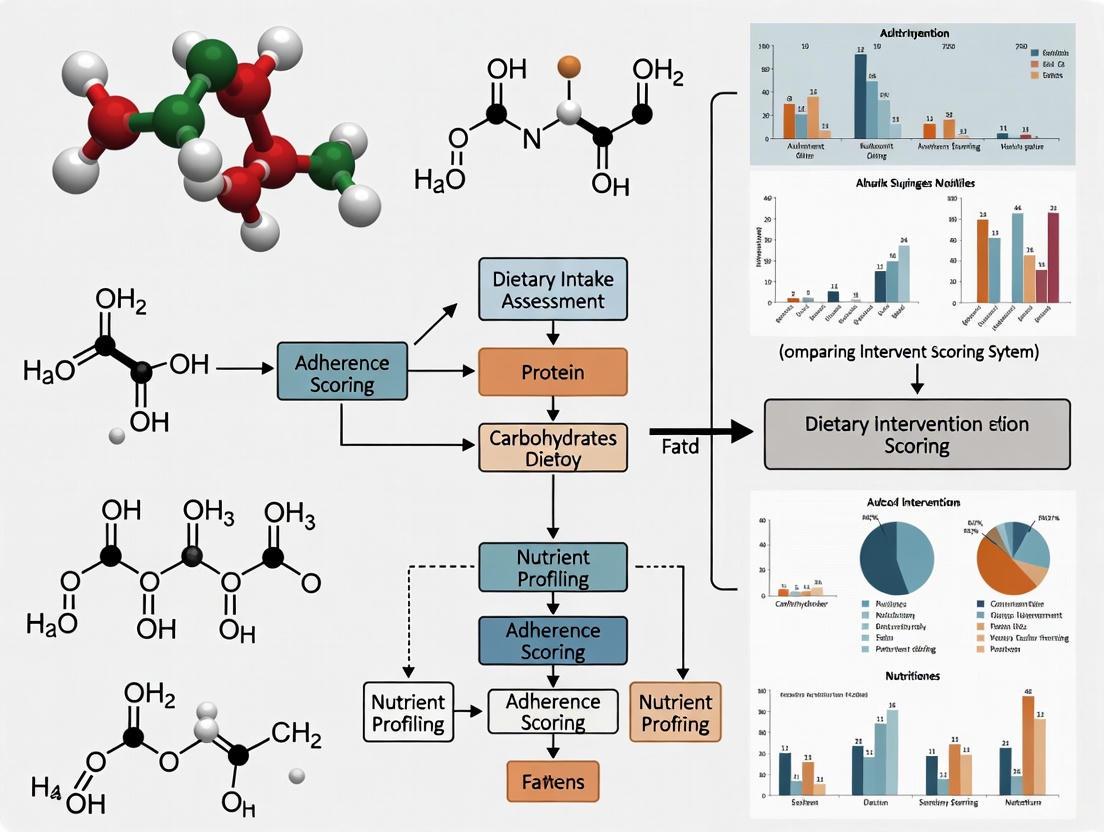
Accurately measuring participant adherence to dietary interventions is a critical yet complex challenge in clinical research and drug development.
Dietary Adherence Scoring Systems: A Comprehensive Guide for Clinical Research and Drug Development
Abstract
Accurately measuring participant adherence to dietary interventions is a critical yet complex challenge in clinical research and drug development. This article provides a systematic analysis of dietary adherence scoring systems, exploring their foundational principles, methodological applications, common pitfalls, and validation strategies. We examine established indices like HEI-2020, aMED, DASH, and DII alongside novel computational and behavioral approaches. Targeted at researchers and pharmaceutical professionals, this review synthesizes current evidence to guide the selection, implementation, and optimization of adherence metrics, ultimately enhancing the reliability and interpretability of nutrition-focused clinical trials and therapeutic development.
Core Principles and Landscape of Dietary Adherence Metrics
Accurately defining and measuring adherence is a fundamental challenge in nutritional science and intervention research. Moving beyond the simplistic concept of compliance, contemporary adherence science recognizes the multifaceted nature of how individuals follow dietary recommendations. The World Health Organization defines adherence as "the extent to which a person's behavior- taking medication, following a diet, and/or executing lifestyle changes- corresponds with the agreed recommendations from a healthcare provider" [1]. This definition encompasses not merely whether a diet is followed, but how closely the implementation matches the prescribed parameters across multiple dimensions.
In dietary intervention research, the selection of adherence assessment methodology significantly influences study outcomes and interpretations. Variations in operational definitions, measurement timeframes, and scoring algorithms can produce substantially different adherence estimates from the same underlying behavior [2]. This comparison guide examines the leading dietary adherence scoring systems, their experimental applications, methodological considerations, and performance characteristics to inform researcher selection and implementation.
Comparative Analysis of Dietary Adherence Scoring Systems
Several validated scoring systems have been developed to quantify adherence to evidence-based dietary patterns. These indices transform complex dietary behaviors into quantifiable metrics suitable for statistical analysis and intervention monitoring.
Table 1: Major Dietary Adherence Scoring Systems
| Scoring System | Dietary Pattern Assessed | Components Evaluated | Scoring Range | Primary Application Context |
|---|---|---|---|---|
| HEI-2020 [3] | Dietary Guidelines for Americans | 13 components: vegetables, fruits, whole grains, dairy, protein foods, fat intake | 0-100 points | Comprehensive dietary quality assessment |
| aMED [3] | Mediterranean Diet | 9 categories: vegetables, fruits, nuts, whole grains, legumes, fish, MUFA:SFA ratio, red/processed meats, alcohol | 0-9 points | Mediterranean diet adherence |
| DASH [4] [3] | DASH Diet | 9 nutrient targets: saturated fat, total fat, protein, cholesterol, fiber, magnesium, calcium, potassium, sodium | 0-9 points | Hypertension-focused dietary patterns |
| DII [3] | Diet Inflammatory Potential | Multiple food parameters with inflammatory/anti-inflammatory properties | Continuous scale | Inflammatory potential of dietary patterns |
| EAT-Lancet Index [5] | Planetary Health Diet | Food group consumption aligned with EAT-Lancet recommendations | Varies by implementation | Sustainable and healthy dietary patterns |
| WISH 2.0 [5] | Planetary Health Diet | Original WISH categories plus processed meat and alcoholic beverages | Varies by implementation | Sustainability and health-focused diets |
Performance Comparison in Research Settings
Different scoring systems demonstrate varying sensitivities and specificities when examining associations with health outcomes. Recent research has directly compared these indices to evaluate their performance characteristics.
Table 2: Performance Comparison of Dietary Indices in Health Outcomes Research
| Scoring System | Association with Periodontitis (OR)* [3] | Discriminatory Capacity | Regional Pattern Detection | Key Strengths |
|---|---|---|---|---|
| HEI-2020 | Not significant in fully adjusted models | Moderate | Limited | Comprehensive nutritional assessment |
| aMED | 1.147 (95%CI: 1.002-1.313) | Moderate | Strong for Mediterranean regions | Cultural specificity |
| DASH | 1.310 (95%CI: 1.139-1.507) | High | Moderate | Strong clinical outcome associations |
| DII | 0.675 (95%CI: 0.597-0.763) | High | Limited | Inflammatory pathway specificity |
| EAT-Lancet Index [5] | Not assessed in periodontitis study | Moderate | Limited | Environmental sustainability integration |
| WISH 2.0 [5] | Not assessed in periodontitis study | High | Strong for European patterns | Enhanced reflection of actual consumption |
Note: OR = Odds Ratio from fully adjusted models comparing fourth to first quartile of adherence; DII OR interpretation reversed due to its inverse scoring
In a direct comparison of four indices examining periodontitis risk, only DASH and DII maintained significant associations after full adjustment for covariates, suggesting these indices may capture dietary aspects most relevant to inflammatory oral health outcomes [3]. The EAT-Lancet index and WISH 2.0 were evaluated in a separate study of European dietary patterns, where WISH 2.0 demonstrated superior capacity to distinguish between different national dietary patterns and better alignment with actual food consumption data [5].
Experimental Protocols for Adherence Assessment
Dietary Data Collection Methodologies
The foundation of accurate adherence assessment lies in rigorous dietary data collection. The most common methodologies include:
24-Hour Dietary Recall
- Protocol: Structured interviews using multiple passes (quick list, detailed description, review) to capture all foods and beverages consumed in the previous 24 hours [4] [3]
- Tools: Standardized measuring aids, food models, picture references, and digital interfaces
- Administration: Typically conducted by trained interviewers, with at least two recalls (one in-person and one telephone) to account for day-to-day variation [3]
- Advantages: Minimal respondent burden, high immediate recall accuracy
- Limitations: Relies on memory, potential under-reporting of certain foods
Food Frequency Questionnaires (FFQ)
- Protocol: Self-administered questionnaires assessing frequency of consumption of specific foods over extended periods (typically 3-12 months)
- Tools: Validated food lists with culturally appropriate portion size estimation
- Administration: Can be completed independently or with interviewer assistance
- Advantages: Captures habitual intake, efficient for large studies
- Limitations: Memory bias, portion size estimation errors, fixed food lists may miss relevant items
Adherence Scoring Implementation
The transformation of raw dietary data into adherence metrics follows standardized computational procedures:
DASH Score Calculation Protocol [4] [3]
- Nutrient Quantification: Calculate daily intake of 9 target nutrients from dietary recall data
- Energy Adjustment: Express nutrient values per 1,000 kcal to account for varying energy requirements
- Scoring Application:
- Award 1 point for achieving target for each nutrient
- Award 0.5 points for intermediate achievement
- Sum points across all 9 nutrients for total score (maximum 9 points)
- Adherence Classification: Define adherence threshold (typically ≥4.5 points for DASH accordant) [4]
Planetary Health Diet Indices Protocol [5]
- Food Group Categorization: Classify consumed foods into predefined food groups aligned with EAT-Lancet recommendations
- Consumption Assessment: Compare actual consumption to recommended intake ranges for each food group
- Scoring Application:
- EAT-Lancet Index: Uses ordinal scoring based on degree of alignment with targets
- WISH 2.0: Applies continuous scoring with additional points for processed meat and alcohol moderation
- Normalization: Normalize scores to enable cross-population comparisons
Methodological Considerations in Adherence Measurement
Operational Definitions and Their Impact
The specific operational definition of adherence significantly influences measured adherence rates. Research across chronic conditions demonstrates that varying calculation methods produce substantially different results:
Table 3: Impact of Calculation Method on Adherence Rates [2]
| Calculation Method | Definition | Reported Adherence Range | Key Considerations |
|---|---|---|---|
| PILLCOUNT | Number of administrations ÷ number prescribed, regardless of timing | 89%-92% | Overestimates adherence by ignoring timing |
| DAILY | Days with correct number of administrations ÷ total days | 79%-85% | Accounts for missed days but not dosing intervals |
| TIMING | Administrations within prescribed dosing intervals ÷ total opportunities | 62%-68% | Most stringent, accounts for timing accuracy |
In a study of diabetes and hypertension medications, these different calculation methods produced adherence estimates varying by approximately 30 percentage points, highlighting the critical importance of methodological transparency [2].
Measurement Frequency and Variability
Dietary adherence demonstrates significant within-person variability over time, necessitating repeated assessments for accurate characterization. Electronic monitoring research reveals that adherence patterns fluctuate daily and weekly, influenced by lifestyle factors, day of week, and seasonal variations [6]. Visual analytics of dense adherence data captured through digital monitoring systems can reveal longitudinal patterns not apparent in summary statistics, including time-of-day effects, clustering of missed doses, and relationships between physiological measures and adherence behaviors [6].
Visualization of Adherence Assessment Methodologies
Adherence Assessment Methodology Framework
This diagram illustrates the comprehensive framework for dietary adherence assessment, encompassing the three critical dimensions: data collection methods, scoring systems, and calculation approaches. The integration of these components enables researchers to select methodologically aligned assessment strategies tailored to specific research questions and dietary patterns.
Table 4: Essential Research Reagents and Tools for Dietary Adherence Studies
| Tool/Resource | Function | Application Example | Key Features |
|---|---|---|---|
| EFSA Comprehensive European Food Consumption Database [5] | Reference food consumption data | Cross-national dietary pattern comparisons | Standardized EU menu methodology |
| USDA Food and Nutrient Database | Food composition data | Nutrient intake calculations | Comprehensive nutrient profiles |
| Tzameret Software [4] | Dietary intake calculation | Israeli National Health and Nutrition Survey | Integrated with local food database |
| Medication Event Monitoring System (MEMS) [2] | Electronic medication adherence monitoring | Timing and frequency of medication administration | Objective dosing data |
| Digital Health Feedback System (DHFS) [6] | Actual medication ingestion detection | Correlation between adherence and physiological measures | Edible sensor technology |
| Health-ITUES Survey [7] | Usability assessment of data visualization tools | Evaluating clinician comprehension of adherence reports | Validated usability metrics |
The precise definition and measurement of adherence represents a critical methodological frontier in nutritional intervention research. Rather than a unitary construct, adherence encompasses multiple dimensions including frequency, timing, quantity, and persistence. The selection of appropriate assessment methodologies—from data collection instruments through scoring algorithms and calculation methods—significantly influences study outcomes and interpretations.
Current evidence suggests that no single adherence metric serves all research purposes equally. The DASH score demonstrates robust associations with clinical outcomes including periodontitis [3], while WISH 2.0 offers enhanced capacity to detect national dietary patterns for sustainability-focused research [5]. Methodological transparency, including explicit reporting of operational definitions and calculation methods, is essential for cross-study comparisons and evidence synthesis.
Future directions in adherence science include the integration of digital monitoring technologies that capture dense longitudinal data [6], advanced visualization techniques to identify temporal patterns [7] [6], and standardized reporting frameworks that account for the multidimensional nature of dietary adherence behaviors. Through methodological rigor and appropriate tool selection, researchers can advance our understanding of how dietary adherence influences health outcomes across diverse populations and intervention contexts.
Dietary pattern indices are essential tools in nutritional epidemiology, allowing researchers to quantify the complexity of overall diet and examine its relationship with health outcomes. Unlike approaches focused on single nutrients or foods, these indices evaluate the cumulative and synergistic effects of diverse dietary components, providing a more holistic assessment of diet quality. This guide objectively compares four prominent dietary pattern indices—Healthy Eating Index-2020 (HEI-2020), alternative Mediterranean Diet Score (aMED), Dietary Approaches to Stop Hypertension (DASH), and Dietary Inflammatory Index (DII). Designed for researchers, scientists, and drug development professionals, this comparison covers each index's conceptual foundation, methodological approach, scoring system, and association with health outcomes, with a specific focus on their application in dietary intervention adherence scoring systems research.
Index Profiles and Scoring Methodologies
The following table summarizes the core characteristics, components, and scoring methodologies of the four dietary indices.
Table 1: Core Characteristics and Scoring of Major Dietary Indices
| Feature | HEI-2020 | aMED | DASH | DII |
|---|---|---|---|---|
| Primary Focus | Adherence to U.S. Dietary Guidelines [8] | Adherence to Mediterranean diet principles [9] | Blood pressure control; diet pattern from NHLBI trials [10] | Inflammatory potential of the overall diet [11] |
| Theoretical Basis | Dietary Guidelines for Americans (DGA) [12] | Traditional Mediterranean diet [9] | DASH clinical trials [10] | Empirical literature linking diet to inflammation [11] |
| Number of Components | 13 [9] | 9 [9] | Varies (commonly 7-9 food groups/nutrients) [10] | 45 food parameters (including nutrients and flavonoids) [11] |
| Component Types | Food groups & nutrients (e.g., fruits, vegetables, added sugars) [8] | Food groups & ratio of fats [9] | Food groups & nutrients (e.g., fruits, vegetables, sodium) [10] | Nutrients, bioactive compounds, and food ingredients [11] |
| Scoring Range | 0 to 100 [9] | 0 to 9 [9] | Varies by method (e.g., 8-40 for Fung method) [10] | Theoretical range from -∞ (anti-inflammatory) to +∞ (pro-inflammatory); typically ~ -8 to +8 in practice [11] |
| Scoring Basis | Density-based standards per 1,000 calories [8] | Median intake of cohort for each component [9] | Quintile-based intake of cohort for each component [10] | Global database of mean intakes for each parameter [11] |
| Key Strengths | Directly aligned with U.S. federal nutrition policy; useful for surveillance [12] | Captures a well-studied, culturally specific dietary pattern associated with longevity [13] | Based on a dietary pattern with proven efficacy in clinical trials [10] | Uniquely designed to specifically quantify diet's effect on chronic inflammation [14] |
Experimental Comparison: Protocol and Findings from a Cross-Sectional Analysis
A cross-sectional study offers a direct, empirical comparison of the HEI-2020, aMED, DASH, and DII in relation to a specific health outcome, periodontitis. The following workflow diagram outlines the key stages of this research.
Diagram 1: Experimental workflow for the comparative analysis of dietary indices and periodontitis, based on an NHANES study [9].
Detailed Experimental Protocol
The comparative analysis was designed as a cross-sectional study using data from the National Health and Nutrition Examination Survey (NHANES) collected between 2009 and 2014 [9].
- Study Population: The initial sample included 30,486 participants. After applying exclusion criteria (age <30 years, incomplete demographic or dietary data, and invalid periodontal assessments), the final analytical sample consisted of 8,571 adults aged 30 years and older [9].
- Dietary Assessment and Index Calculation: Dietary intake was assessed using two non-consecutive 24-hour dietary recalls. The data from these recalls were used to calculate scores for the four indices:
- HEI-2020: Comprises 13 components (e.g., fruits, vegetables, whole grains) scored based on density per 1,000 calories, summing to a total score of 100 [9].
- aMED: Comprises 9 components (e.g., fruits, vegetables, fish, ratio of monounsaturated to saturated fats). Participants scored one point for each component where their intake was above the sex-specific median for healthy components or below for unhealthy components, creating a total score from 0 to 9 [9].
- DASH: Based on the Fung method, which includes 8 components (fruits, vegetables, nuts and legumes, whole grains, low-fat dairy, sodium, red/processed meats, and sweetened beverages). Intakes are ranked by quintiles, with scores from 1 to 5 assigned for each component, resulting in a total score range of 8 to 40 [9].
- DII: Calculated based on intake of 45 food parameters compared to a global reference database. The scoring algorithm produces a score where more negative values indicate an anti-inflammatory diet, and more positive values indicate a pro-inflammatory diet [11].
- Outcome Assessment: Periodontitis was diagnosed through a full-mouth periodontal examination conducted by trained dentists. Assessment included clinical attachment loss (CAL) and probing depth (PD) at six sites per tooth [9].
- Statistical Analysis: The association between each dietary index and periodontitis was examined using multivariable logistic regression models, adjusted for confounders including age, sex, ethnicity, smoking status, and comorbidities. The analysis was conducted in three ways:
- Single exposure model: Each index was evaluated independently.
- Double exposure model: Pairs of indices were included to assess robustness.
- Overall model: All indices were included simultaneously [9].
- Additional analyses included ROC (Receiver Operating Characteristic) curves to compare the contribution of dietary indices to periodontitis relative to other factors, and Restricted Cubic Splines (RCS) to explore potential non-linear associations [9].
Key Findings and Comparative Performance
The study yielded clear findings on the relative performance of the four indices in relation to periodontitis risk.
Table 2: Association between Dietary Indices and Periodontitis from NHANES Analysis [9]
| Dietary Index | Performance in Single Exposure Model | Performance in Overall Model (Adjusted for all indices) | Odds Ratio (OR) for Periodontitis in Overall Model (95% CI) | Nature of Association |
|---|---|---|---|---|
| HEI-2020 | Significant association | Not significant | Not Reported (retained no significance) | Not applicable |
| aMED | Significant association | Significant | 1.147 (1.002, 1.313) | Positive (poor habit linked to higher risk) |
| DASH | Significant association | Significant | 1.310 (1.139, 1.507) | Positive (poor habit linked to higher risk) |
| DII | Significant association | Significant | 0.675 (0.597, 0.763) | Negative (pro-inflammatory diet linked to higher risk) |
- Model Robustness: While all four indices showed significant associations with periodontitis when assessed individually, only DASH and DII retained complete significance in the more rigorous double and overall exposure models, indicating their associations are more robust when accounting for other dietary patterns [9].
- Contribution to Outcome: The ROC analysis revealed that the collective contribution of these dietary indices to periodontitis was second only to demographic factors like sex and ethnicity, underscoring the importance of diet as a modifiable risk factor [9].
- Linearity of Association: Tests for non-linearity showed an approximately linear association for HEI-2020, aMED, and DASH with periodontitis. In contrast, the DII exhibited a significant non-linear association (p=0.024), suggesting a more complex relationship between inflammatory potential and disease risk [9].
- Conclusion: The study concluded that a poor habit for DASH was most robustly linked to the occurrence of periodontitis among the four indices evaluated [9].
Association with Health Outcomes Across Studies
Beyond periodontitis, these indices have been extensively studied in relation to major chronic diseases and overall health status.
All-Cause and Cause-Specific Mortality
- DASH Diet: A comprehensive dose-response meta-analysis of 17 prospective studies found that higher adherence to the DASH diet was linearly associated with a lower risk of mortality. For each 5-point increment in the DASH score (on a scale from 8 to 40), the summary hazard ratios (HRs) were 0.95 for all-cause mortality, 0.96 for cardiovascular disease (CVD) mortality, and 0.97 for cancer mortality. Evidence of a non-linear association was also found, with the risk reduction becoming more pronounced when adherence scores exceeded 20 points [10].
- aMED Diet: Studies have consistently linked the aMED with reduced mortality. In the Multiethnic Cohort (MEC), higher scores for both the raw (aMED) and energy-standardized (aMED-e) versions were associated with a lower risk of all-cause, CVD, and cancer mortality. The correlation between the two versions was lower among individuals with a higher BMI, though both yielded similar risk reductions for mortality [15].
Healthy Aging
A landmark study using data from the Nurses' Health Study and the Health Professionals Follow-Up Study (n=105,015) examined the association between long-term adherence to various dietary patterns, including aMED, DASH, and the related Alternative Healthy Eating Index (AHEI), with "healthy aging." Healthy aging was defined as surviving to age 70 years or older with intact cognitive, physical, and mental health, and without major chronic diseases. The study found that higher adherence to all dietary patterns was associated with significantly greater odds of healthy aging after 30 years of follow-up. The AHEI showed the strongest association, followed by empirically derived indices for insulinemia and inflammation. The aMED and DASH diets also showed strong, significant associations with greater odds of healthy aging [13].
Colorectal Cancer
A comparison of four different DASH indexes within the large NIH-AARP Diet and Health Study (n=491,841) found that higher scores were generally associated with a reduced incidence of colorectal cancer. In men, all four DASH indexes showed a significant inverse association. In women, three of the four indexes (Mellen, Fung, and Günther) showed a significant protective association [16]. This highlights that while different operationalizations of the same dietary pattern can affect results, the underlying construct consistently predicts disease risk.
Table 3: Key Databases, Tools, and Metrics for Dietary Pattern Research
| Resource | Type | Primary Function & Application |
|---|---|---|
| NHANES Database | Public Database | Provides nationally representative, publicly available data on diet, health, and examination metrics for the U.S. population; ideal for validation and population-level studies [9]. |
| MyPyramid Equivalents Database (MPED) | Food Group Database | A standardized system that disaggregates mixed foods into their constituent food groups and ingredients; essential for calculating food group-based scores like aMED and DASH [15]. |
| Global Dietary Intake Database (for DII) | Reference Database | A composite database of means and standard deviations for 45 food parameters from 11 countries worldwide; serves as the reference for calculating individual DII scores [11]. |
| ROC (Receiver Operating Characteristic) Analysis | Statistical Method | Evaluates the predictive performance and contribution of a variable (e.g., a diet score) to a specific outcome relative to other factors [9]. |
| Restricted Cubic Splines (RCS) | Statistical Method | A tool used in regression models to visually and statistically explore potential non-linear relationships between an exposure (diet score) and an outcome (disease) [9]. |
| Energy Standardization Methods | Methodological Consideration | Techniques (e.g., using density per 1000 kcal or nutrient residuals) to account for total energy intake, a critical step that can influence index scores and their interpretation [15]. |
This comparison reveals that the choice of a dietary index should be strategically aligned with the specific research question and the biological pathways of interest.
- For research focused on general diet quality and adherence to national guidelines, the HEI-2020 is the most appropriate tool [8] [12].
- For studies on chronic inflammation as a primary mechanism, the DII is specifically designed for this purpose and has been robustly validated [11] [14].
- For outcomes like cardiovascular health, hypertension, or periodontitis, the DASH index has demonstrated particularly strong and consistent associations [9] [10].
- For investigations into healthy aging and chronic disease prevention, the aMED and related indices like the AHEI are well-supported by longitudinal evidence [13] [15].
The finding that DASH was most robustly associated with periodontitis in a direct comparison underscores that the performance of an index can be outcome-dependent. This highlights the importance of selecting an index whose underlying dietary pattern is biologically relevant to the health outcome under investigation. Future research should continue to employ comparative studies across diverse populations to further refine the application of these indices in predictive and interventional research.
The Critical Link Between Adherence Scoring and Clinical Trial Outcomes
In clinical research, the bridge between a theoretically effective intervention and a proven successful outcome is participant adherence. For chronic conditions, medication adherence averages only 50% in developed countries, presenting a significant public health challenge that leads to poor health outcomes and increased healthcare costs [17]. The accurate measurement of adherence is therefore not merely a methodological detail but a critical determinant of a trial's validity and the real-world applicability of its findings. Without robust adherence scoring, researchers cannot distinguish between intervention failure and implementation failure, potentially leading to the erroneous dismissal of effective treatments [17]. This article provides a comprehensive comparison of adherence scoring methodologies across clinical and dietary intervention research, examining their measurement properties, applications, and relationships with trial outcomes.
Comparative Analysis of Adherence Measurement Approaches
Adherence measures are broadly categorized into subjective and objective methods, each with distinct strengths, limitations, and optimal use cases. The World Health Organization emphasizes that no single measure serves as a perfect "gold standard," recommending a multi-measure approach for the most accurate assessment [17].
Table 1: Comparative Overview of Adherence Measurement Methodologies
| Method Category | Specific Measures | Key Advantages | Principal Limitations | Optimal Use Cases |
|---|---|---|---|---|
| Subjective Measures | Self-report questionnaires, Healthcare professional assessments [17] | Identifies reasons for non-adherence, Low cost, Easy to implement [17] | Patient underreporting of non-adherence, Recall bias [17] | Initial adherence screening, Understanding behavioral determinants |
| Objective - Pharmacy Records | Proportion of Days Covered (PDC), Medication Possession Ratio (MPR) [18] | Suitable for large populations, Allows multidrug adherence assessment [17] | Assumes medication taken as prescribed, Cannot detect partial adherence [17] | Long-term chronic medication studies, Health services research |
| Objective - Electronic Monitoring | Electronic Medication Packaging (EMP) devices [17] | Precise recording of dosing patterns, Captapes timing of administration [17] | Higher cost, "White coat adherence" effect [17] | Detailed dosing pattern analysis, Complex regimens |
| Objective - Direct Measures | Drug/metabolite concentration in blood/urine, Biological markers [17] | Physical evidence of medication ingestion, Highly accurate for recent doses [17] | Intrusive, Expensive, Influenced by metabolic variability [17] | Single-dose therapy, Hospitalized patients |
| Dietary Adherence Algorithms | SAVoReD score, PrimeScreen-adapted FFQ, 3-day diet records [19] [20] | Captapes behavioral complexity, Can combine multiple compliance aspects [19] | Self-report limitations, Requires validation for each diet type [19] | Dietary intervention trials, Lifestyle modification studies |
Advanced Adherence Trajectories and Clinical Outcomes
Modern adherence research has evolved beyond static measurements to capture dynamic patterns over time. Group-based trajectory modeling represents a significant methodological advancement, identifying distinct adherence pathways that powerfully predict clinical outcomes.
Cardiovascular Disease Adherence Trajectories and Outcomes
A recent meta-analysis of nine cohorts comprising 226,203 cardiovascular disease patients with a mean age of 66.1 years identified four distinct medication adherence trajectories over a maximum follow-up of five years [21]. The study utilized Proportion of Days Covered (PDC) as the primary adherence assessment method in eight of the nine studies [21].
Table 2: Clinical Outcomes by Medication Adherence Trajectory in Cardiovascular Disease
| Adherence Trajectory | All-Cause Mortality Risk (HR) | Major Adverse Cardiovascular Events (MACE) Risk (HR) | Other Clinical Outcomes |
|---|---|---|---|
| Persistent Adherence | Reference (1.0) | Reference (1.0) | Reference for all outcomes |
| Persistent Nonadherence | Significantly higher risk [21] | Significantly higher risk [21] | Nearly 3 times higher recurrent venous thromboembolism risk [21] |
| Gradually Increasing Adherence | 26% higher risk [21] | 22% increased risk [21] | - |
| Gradually Declining Adherence | Not specified | 24% increased risk [21] | 43% decreased major bleeding risk [21] |
This evidence underscores that maintaining persistent adherence provides the most substantial clinical benefits, while even improving adherence after periods of non-adherence does not fully eliminate excess risk [21]. The findings highlight the critical importance of early and sustained adherence interventions in cardiovascular disease management.
Dietary Intervention Adherence Methodologies
Dietary adherence measurement presents unique challenges compared to medication adherence, requiring specialized approaches that account for multidimensional eating behaviors.
The SAVoReD Scoring System The Score for Adherence to Voluntary Restriction Diets (SAVoReD) represents an innovative methodology specifically designed to quantify and compare adherence across different food-group-restricting diets [20]. When applied to popular diets including whole food plant-based (WFPB), vegan, vegetarian, and Paleo diets, higher adherence to WFPB and vegan diets was significantly associated with lower BMI, though no such association was observed for vegetarian or Paleo diet followers [20]. This demonstrates how adherence metrics can reveal important differences between seemingly similar dietary patterns.
Composite Adherence Algorithms The Be Healthy in Pregnancy (BHIP) trial developed a novel adherence algorithm combining compliance data for prescribed protein and energy intakes with daily step counts [19]. This approach recognized that adherence is multidimensional, particularly in complex lifestyle interventions. The study found that adherence scores significantly increased from early to mid-pregnancy but declined toward late pregnancy, primarily due to reduced physical activity [19]. This pattern illustrates the dynamic nature of adherence even within relatively short trial durations and highlights the importance of repeated measurements throughout the study period.
Experimental Protocols for Adherence Assessment
Protocol 1: Pharmacotherapy Adherence Using Proportion of Days Covered (PDC)
The Proportion of Days Covered is the preferred methodology for measuring medication adherence in chronic drug therapies, endorsed by the Pharmacy Quality Alliance (PQA) with a standard threshold of 80% for optimal clinical benefit (or 90% for antiretroviral medications) [18].
Methodology:
- Data Collection: Extract prescription claims data from electronic health records or pharmacy databases for the therapeutic class of interest over the measurement period (typically one year) [18].
- Calculation Method:
- Identify the first prescription fill date during the measurement period
- Calculate the total number of days the patient possessed the medication (based on dosage and quantity supplied)
- Divide the number of days "covered" by the medication by the number of days in the measurement period
- For multiple medications in the same class, apply the same methodology considering overlapping coverage [18]
- Analysis: Determine the proportion of patients achieving PDC ≥80% threshold, with lower adherence indicating need for intervention [18].
Protocol 2: Dietary Intervention Adherence Scoring
The PREDITION trial implemented a comprehensive adherence monitoring system for a 10-week dietary intervention comparing flexitarian and vegetarian diets [22].
Methodology:
- Scoring Framework: Develop a 100-point adherence score based on:
- Consumption of allocated foods (red meat or plant-based meat alternatives)
- Abstention from non-provided animal-based foods
- Continuous monitoring through food diaries and regular check-ins [22]
- Support Structure: Implement behavioral support framework including:
- Household pair recruitment to encourage mutual accountability
- Regular nutritionist consultations
- Provision of key intervention foods [22]
- Assessment: Calculate total adherence scores at intervention conclusion, with the trial achieving an exceptional overall average adherence score of 91.5/100 [22].
Protocol 3: Group-Based Trajectory Modeling for Longitudinal Adherence
This advanced statistical approach identifies distinctive adherence patterns over time, moving beyond static measures.
Methodology:
- Data Collection: Gather repeated adherence measures (e.g., monthly PDC) over the study period [21].
- Model Selection: Apply group-based trajectory modeling to identify distinctive adherence patterns:
- Persistent adherence
- Persistent nonadherence
- Gradually increasing adherence
- Gradually declining adherence [21]
- Outcome Analysis: Link trajectory groups to clinical endpoints using multivariate Cox proportional hazards models, adjusting for relevant covariates [21].
- Validation: Conduct sensitivity analyses to confirm model robustness and account for potential reverse causation [21].
Visualizing Adherence Measurement Workflows
Adherence Measurement Decision Workflow
Table 3: Essential Research Resources for Adherence Measurement
| Resource Category | Specific Tools & Methods | Research Application | Key Considerations |
|---|---|---|---|
| Medication Adherence Measures | Proportion of Days Covered (PDC), Medication Possession Ratio (MPR), Electronic Medication Packaging [17] [18] | Chronic disease medication trials, Health services research | PQA recommends PDC with 80% threshold for most chronic therapies [18] |
| Dietary Adherence Instruments | SAVoReD score, PrimeScreen-adapted FFQ, 3-day diet records, Adherence algorithms [19] [20] | Nutritional intervention studies, Lifestyle modification trials | Combine objective biomarkers with self-report for validation [19] |
| Statistical Analysis Tools | Group-based trajectory modeling, Random effects models, Cox proportional hazards regression [21] | Longitudinal adherence pattern analysis, Clinical outcome prediction | Identifies distinct adherence trajectories (persistent, declining, increasing) [21] |
| Behavioral Assessment Tools | Positive Eating Scale, Purpose-designed exit surveys, Experience measures [22] | Understanding psychological factors, Intervention refinement | Higher satisfaction correlates with better adherence [22] |
Robust adherence measurement is not merely a methodological consideration but a fundamental component of meaningful clinical trials. The evidence consistently demonstrates that adherence levels and trajectories significantly influence clinical outcomes across therapeutic domains [21] [20] [22]. Researchers should select adherence measures based on their specific intervention type, resources, and research questions, recognizing that multi-method approaches typically provide the most comprehensive assessment [17]. Future trial design should integrate adherence tracking as a primary component rather than a secondary consideration, with pre-specified analyses examining the relationship between adherence patterns and clinical outcomes. Only through such rigorous attention to adherence measurement can we truly distinguish between ineffective interventions and effectively delivered treatments.
In the field of nutritional science, diet quality indices are essential tools for quantifying how closely a population's dietary patterns align with recommended guidelines. For researchers and drug development professionals, understanding the nuances of different scoring methodologies is critical for interpreting study results and selecting appropriate metrics for clinical trials or public health interventions. This guide objectively compares two prominent frameworks used to assess adherence to the Planetary Health Diet (PHD): the EAT-Lancet Index and the World Index for Sustainability and Health (WISH) 2.0 [5].
The following table summarizes the core characteristics and performance data of the two indices based on a recent study across 11 European countries [5].
| Feature | EAT-Lancet Index | WISH 2.0 |
|---|---|---|
| Core Reference | EAT-Lancet Commission's PHD [5] | EAT-Lancet Commission's PHD [5] |
| Scoring System | Ordinal | Continuous |
| Number of Food Categories | 14 | 15 (includes processed meat & alcoholic beverages) [5] |
| Key Differentiator | Original, widely-cited framework | Expanded framework with enhanced public health relevance [5] |
| Discriminatory Capacity | Standard | Higher; more accurately reflects national dietary patterns [5] |
| Alignment with Consumption Data | Good | Better [5] |
| Sample Mean Normalized Score | Higher average scores achieved | Effectively distinguishes between dietary patterns [5] |
Experimental Protocols and Data
The comparative analysis is based on a study conducted within the European PLAN’EAT project, which aimed to provide data and recommendations to transform food systems toward healthier and more sustainable dietary behaviors [5].
Detailed Methodology
- Data Source: Food consumption data was retrieved from the EFSA Comprehensive European Food Consumption Database. This database uses a homogeneous, standardized methodology (the EU menu methodology) for data collection across countries [5].
- Population: The study analyzed mean individual consumption data from the adult population (18–64 years) across 11 European countries [5].
- Index Application: The three dietary quality indices—EAT-Lancet, original WISH, and WISH 2.0—were applied to the consumption data. Scores were calculated and normalized to carry out descriptive and comparative analyses [5].
- Statistical Analysis: The researchers performed descriptive and comparative analyses of the scores. Cluster analyses were also conducted to examine dietary pattern differences by country and gender [5].
Key Experimental Findings
- Overall Adherence: The study found low adherence to the Planetary Health Diet across all 11 European countries, indicating a substantial gap between current dietary patterns and recommendations [5].
- Geographical Patterns: Southern European countries such as Italy, Greece, and Spain showed comparatively higher adherence. This highlights the cultural specificity of dietary behaviors and the similarity between the PHD and the traditional Mediterranean diet [5].
- Gender Differences: Gender-based analyses revealed that women exhibited dietary behaviors more aligned with the PHD recommendations than men, consistent with existing literature on health-conscious dietary behaviors [5].
A related study on Italian dietary trends provided longitudinal data using the WISH2.0 score, noting a 5.1% decrease in adherence among adults between 2005-2006 and 2018-2020, illustrating the index's sensitivity to temporal trends [23].
Index Application Workflow
The diagram below outlines the logical workflow for applying and comparing these dietary adherence indices in a research context.
The Researcher's Toolkit
The table below details key resources and their functions for conducting research on dietary adherence scoring systems.
| Research Reagent / Resource | Function / Application in Research |
|---|---|
| EFSA Comprehensive Food Consumption Database | Provides standardized, population-level food consumption data expressed in grams per day, essential for calculating and comparing dietary indices across Europe [5] [23]. |
| EU Menu Methodology | A standardized dietary survey methodology that ensures data homogeneity and comparability across different European countries [5]. |
| Planetary Health Diet (PHD) Framework | The reference dietary pattern against which adherence is measured; it integrates public health and environmental sustainability goals [5]. |
| NOVA Food Classification System | A tool for categorizing foods by level of industrial processing, used in parallel with adherence indices to assess diet quality (e.g., ultra-processed food consumption) [23]. |
| Statistical Software (e.g., R, SPSS, Python) | Used for applying scoring algorithms, performing descriptive and inferential statistics (cluster analysis, cross-tabulation), and generating visualizations [24]. |
Performance Analysis and Researcher Insights
The experimental data demonstrates that while both indices are valuable, WISH 2.0 offers enhanced practical utility for certain research applications. Its inclusion of processed meat and alcoholic beverages, two categories with significant public health and environmental relevance, makes it a more comprehensive tool for contemporary dietary studies [5].
The continuous scoring system of WISH 2.0, compared to the ordinal system of the EAT-Lancet index, likely contributes to its greater discriminatory capacity. This allows researchers to detect more subtle variations and trends in dietary patterns across populations and over time [5] [23]. For studies requiring high sensitivity to demographic or temporal differences, WISH 2.0 may be the superior instrument.
Implementing Adherence Scoring in Research and Clinical Settings
In both scientific research and professional practice, structured scoring systems provide an essential methodology for transforming complex, multi-faceted qualitative assessments into quantifiable, comparable, and objective data. These systems enable researchers and clinicians to standardize evaluations across diverse domains, from dietary adherence and healthcare competency to emergency supply management. The fundamental purpose of these systems is to mitigate subjective bias, enhance reproducibility, and facilitate data-driven decision-making. As the volume and complexity of data in health and management sciences continue to grow, the sophistication of these scoring methodologies has evolved correspondingly, incorporating advanced mathematical frameworks to handle uncertainty and competing criteria.
This guide focuses on two distinct categories of scoring systems: those designed for evaluating adherence to dietary patterns and those based on the multi-criteria decision-making framework known as Evaluation based on Distance from Average Solution (EDAS). While applied in different domains, both share a common foundation in systematically quantifying performance against established benchmarks. The accurate assessment of dietary adherence, for instance, is crucial for understanding the real-world effectiveness of nutritional interventions, as the theoretical benefits of a diet can only be realized if participants follow them appropriately [20]. Similarly, EDAS provides a powerful tool for ranking alternatives in complex decision-making environments where multiple, often conflicting, criteria must be considered simultaneously [25].
Understanding the Scoring System Landscape
Dietary Adherence Scoring Systems
Dietary adherence scoring systems are designed to measure how closely individuals follow prescribed or voluntary dietary patterns. These systems typically convert complex dietary intake data into simplified numerical scores that can be statistically analyzed against health outcomes.
- Function and Purpose: They serve as objective metrics in nutritional epidemiology and clinical trials, enabling researchers to quantify exposure to dietary patterns rather than isolated nutrients [20] [23] [4]. This is crucial for establishing valid relationships between diet and health outcomes.
- Methodological Approach: Most systems operationalize adherence by assessing consumption of target food groups or nutrients, often based on dietary recalls, food frequency questionnaires, or food diaries. Points are allocated based on meeting specific intake targets, with total scores reflecting overall adherence levels [23] [4].
- Key Applications: These scores are used to investigate associations between dietary patterns and body mass index (BMI), chronic disease risk, nutrient adequacy, and sustainability metrics [20] [23].
The EDAS (Evaluation Based on Distance from Average Solution) Method
EDAS is a multi-criteria decision-making (MCDM) method that ranks alternatives based on their distance from the average solution across all evaluated criteria [26] [25].
- Core Mechanism: Unlike simpler weighted-sum approaches, EDAS calculates two separate measures for each alternative: positive distance from average (PDA) and negative distance from average (NDA). The optimal alternative is identified by having the highest PDA and lowest NDA values [25].
- Advantages Over Traditional Methods: Conventional weighted-sum scoring systems often incorrectly penalize poor performance on unimportant criteria while failing to sufficiently penalize poor performance on critical criteria. EDAS and its advanced variants address this logical flaw through their dual-distance calculation approach [27].
- Evolution and Extensions: The basic EDAS method has been extended to operate in various uncertain environments, including fuzzy, intuitionistic fuzzy, spherical fuzzy, and hesitant fuzzy sets, enhancing its ability to handle real-world decision-making ambiguity [26] [25].
Table 1: Comparison of Scoring System Categories
| Feature | Dietary Adherence Systems | EDAS-Based Systems |
|---|---|---|
| Primary Purpose | Quantify compliance with dietary patterns | Rank alternatives in multi-criteria decisions |
| Key Output | Adherence score (continuous or categorical) | Ranking order of alternatives |
| Methodological Basis | Nutrient/food group intake vs. targets | Distance from average solution across criteria |
| Common Applications | Nutritional epidemiology, clinical trials | Supply chain, emergency management, healthcare |
| Handling Uncertainty | Statistical confidence intervals | Fuzzy sets, hesitant fuzzy models |
Comparative Analysis of Dietary Adherence Scoring Systems
System Methodologies and Scoring Protocols
Various dietary adherence scoring systems have been developed, each with distinct methodological approaches and applications:
SAVoReD (Scoring Adherence to Voluntary Restriction Diets): This metric quantifies and compares adherence across food-group-restricting diets like Paleo, vegan, vegetarian, and whole-food plant-based (WFPB). It examines associations between adherence and diet quality (Healthy Eating Index), BMI, and diet duration. In application, higher adherence to WFPB and vegan diets was significantly associated with lower BMI, but no association was observed for vegetarian or Paleo diet followers [20].
AIDGI (Adherence to Italian Dietary Guidelines Indicator) and WISH (World Index for Sustainability and Health): These complementary indices assess diet quality using different reference standards. AIDGI measures alignment with national Italian dietary recommendations, while WISH assesses adherence to the Planetary Health Diet, integrating both health and environmental sustainability criteria. When applied to Italian consumption data, these indices revealed scores around 50% of theoretical maximums, indicating substantial room for improvement in dietary quality [23].
DASH (Dietary Approaches to Stop Hypertension) Scoring Algorithm: This system assesses adherence based on nine target nutrients: saturated fatty acids (≤6% of energy), total fat (≤27% of energy), protein (≥18% of energy), cholesterol (≤71.4 mg/1,000 kcal), dietary fiber (≥14.8 g/1,000 kcal), magnesium (≥238 mg/1,000 kcal), calcium (≥590 mg/1,000 kcal), potassium (≥2,238 mg/1,000 kcal), and sodium (≤1,143 mg/1,000 kcal). Participants receive one point for meeting each nutrient goal, 0.5 points for intermediate achievement, with a maximum score of 9. A score ≥4.5 typically classifies participants as "DASH accordant" [4].
Experimental Data and Performance Comparisons
Table 2: Performance Metrics of Dietary Adherence Scoring Systems in Research Applications
| Scoring System | Study Population | Key Findings | Associations with Health Outcomes |
|---|---|---|---|
| SAVoReD | Followers of WFPB, vegan, vegetarian, Paleo diets | Higher adherence to WFPB/vegan diets associated with lower BMI; association strongest in those following diet ≥2 years | No significant BMI association for vegetarian/Paleo diets; WFPB/vegan had healthiest HEI scores/BMI |
| AIDGI/WISH | Italian adults (2005-2020) | AIDGI: +5.6% in elderly, -5.9% in adults; WISH: +2.8% in elderly, -5.1% in adults | UPFs contributed 23% of energy despite being only 6% of consumption by weight |
| DASH Score | Israeli adults (n=2,579); NFL users vs. non-users | 32.1% of NFL users were DASH accordant vs. 20.6% of non-users | NFL users had higher odds of meeting protein, fiber, magnesium, calcium, potassium targets |
| Checklist vs. Global Rating | Medical students in OSCEs | Higher pass rates with global rating vs. checklist scoring | Combined approaches provide more comprehensive assessment |
Experimental Protocols for Dietary Adherence Assessment
Protocol 1: SAVoReD Application in ADAPT Study
- Data Collection: Dietary intake assessed using the Diet History Questionnaire II (DHQ-II). Additional data included anthropometric measurements (BMI) and demographic information [20].
- Scoring Implementation: The SAVoReD metric was applied to quantify adherence across four diet types (WFPB, vegan, vegetarian, Paleo). Each dietary pattern had specific food-group restrictions that defined adherence criteria [20].
- Statistical Analysis: Multiple regression models examined associations between SAVoReD adherence scores and outcome measures (HEI, BMI), adjusting for potential confounders. Interaction effects between adherence and diet duration were tested [20].
- Sample Characteristics: The study included sufficient sample sizes across diet categories to enable comparative analysis between groups with different restriction patterns [20].
Protocol 2: AIDGI and WISH Application to Italian Dietary Trends
- Data Source: Food consumption data from the European Food Consumption Comprehensive Database for 2005-2006 and 2018-2020, including 2,313 adults and 290 elderly in initial survey; 726 adults and 156 elderly in follow-up [23].
- Index Calculation: AIDGI scoring based on adherence to Italian dietary guidelines across food groups. WISH scoring based on alignment with Planetary Health Diet reference values [23].
- UPF Classification: Application of NOVA classification to identify ultra-processed foods and quantify their contribution to total energy and nutrient intake [23].
- Trend Analysis: Statistical comparison of scores between time periods, with stratification by age group (adults 18-64 years vs. elderly 65-74 years) and gender [23].
Protocol 3: DASH Accordance and NFL Use Study
- Study Design: Cross-sectional analysis of Israeli National Health and Nutrition Survey (2014-2016) data from 2,579 participants aged 21-64 years [4].
- DASH Scoring: Single 24-hour dietary recall used to calculate DASH score based on 9 nutrient targets. Participants categorized as DASH accordant (score ≥4.5) or non-accordant [4].
- NFL Use Assessment: Participants categorized as NFL users if they reported "always or often" checking nutrition facts on food labels [4].
- Statistical Modeling: Multivariable logistic regression estimated odds ratios for DASH accordance among NFL users versus non-users, adjusting for age, sex, education, SES, physical activity, smoking, and BMI [4].
The EDAS Method: Foundations and Advancements
Core Methodology and Mathematical Framework
The EDAS method operates through a structured sequence of calculations to rank alternatives in multi-criteria decision-making environments. The process begins with the construction of a decision matrix where rows represent alternatives and columns represent criteria. After determining criterion weights, the method calculates the average solution for each criterion across all alternatives. The key differentiator of EDAS is the subsequent calculation of positive and negative distances from this average solution [25].
The EDAS method's mathematical formulation can be visualized through its logical decision workflow:
Extensions and Applications in Complex Environments
The basic EDAS framework has been extended to handle various types of uncertain and imprecise information common in real-world decision scenarios:
Spherical Hesitant Fuzzy Soft EDAS: This advanced extension integrates three powerful mathematical concepts: spherical fuzzy sets (which consider membership, non-membership, and neutral membership functions), hesitant fuzzy sets (accommodating multiple possible membership values), and soft sets (parameterization tool). This integrated approach provides exceptional flexibility in capturing complex uncertainty in emergency decision-making contexts, such as post-flood relief supply management [26].
Domain Applications: EDAS and its extensions have been successfully applied across diverse fields including healthcare management, supply chain optimization, energy resource allocation, manufacturing process selection, and transportation planning. In healthcare, it has been used for medical supplier selection and treatment option evaluation [25].
Table 3: EDAS Method Variations and Their Applications
| EDAS Variant | Uncertainty Handling Capability | Sample Application | Key Advantage |
|---|---|---|---|
| Conventional EDAS | Crisp, numerical data | Business management, manufacturing | Simple implementation with clear interpretation |
| Fuzzy EDAS | Linguistic assessments, vague information | Healthcare management, supplier selection | Accommodates qualitative expert judgments |
| Spherical Hesitant Fuzzy Soft EDAS | Multi-dimensional uncertainty with parameterization | Emergency supply management | Handles membership, neutral membership, and non-membership simultaneously |
| Intuitionistic Fuzzy EDAS | Degree of membership and non-membership | Energy project selection | Captures support and opposition dimensions |
The Scientist's Toolkit: Essential Research Reagents and Materials
Table 4: Key Research Reagents and Methodological Components for Scoring System Implementation
| Research Component | Function/Purpose | Example Implementation |
|---|---|---|
| 24-Hour Dietary Recall | Captures detailed recent food intake | Israeli National Health Survey used single 24-hour recall with visual aids for portion estimation [4] |
| Food Consumption Database | Standardized food composition and consumption data | European Food Consumption Comprehensive Database provided Italian consumption data [23] |
| Healthy Eating Index (HEI) | Measures diet quality against Dietary Guidelines | Used as outcome measure in SAVoReD validation [20] |
| NOVA Classification System | Categorizes foods by processing level | Applied to identify ultra-processed foods in Italian diet analysis [23] |
| Spherical Hesitant Fuzzy Soft Aggregation Operators | Transforms complex uncertain data into decision scores | Enabled emergency supply decision-making in post-flood scenarios [26] |
| Checklist and Global Rating Scales | Standardized performance assessment in OSCEs | Compared for evaluating medical student clinical competencies [28] |
The comparative analysis presented in this guide demonstrates that structured scoring systems serve as indispensable tools across research and practice domains, but their effectiveness depends on appropriate selection and implementation. Dietary adherence systems like SAVoReD, AIDGI, WISH, and DASH provide validated methodologies for quantifying compliance with nutritional patterns, each with distinct strengths and applications. Meanwhile, EDAS and its advanced extensions offer robust solutions for complex multi-criteria decision environments characterized by uncertainty and competing priorities.
Critical considerations for researchers and practitioners include:
- Domain-Specific Requirements: Dietary research demands different scoring properties (sensitivity to food group consumption, nutrient adequacy) compared to emergency management decisions (handling uncertain information, rapid ranking of alternatives).
- Uncertainty Handling: The complexity of real-world data often necessitates advanced mathematical frameworks like spherical hesitant fuzzy sets to adequately capture decision ambiguity.
- Validation and Reliability: As demonstrated by the comparison of checklist and global rating systems in medical assessment, combining complementary scoring approaches often yields more comprehensive evaluation than reliance on a single method [28].
The evolution of scoring systems continues to address limitations of conventional approaches, particularly through negative scoring mechanisms that more logically penalize poor performance on important criteria [27] and through hybrid models that integrate multiple mathematical frameworks to better capture real-world complexity [26]. These advancements promise enhanced decision support capabilities across scientific research, clinical practice, and organizational management.
This guide provides an objective comparison of different algorithmic approaches for creating composite adherence scores, a common challenge in clinical and intervention research. Based on the gathered research, we compare the performance, methodological underpinnings, and applications of various scoring algorithms, with a specific focus on evidence from dietary intervention and medication adherence studies.
Comparative Analysis of Composite Adherence Algorithms
Adherence measurement moves beyond tracking single behaviors to creating composite scores that reflect overall adherence to multi-faceted interventions, such as complex medication regimens or dietary patterns. The table below compares the core algorithmic approaches identified in the literature.
Table 1: Core Algorithmic Approaches for Composite Adherence Measurement
| Algorithm Name | Core Computational Logic | Key Performance Characteristics | Best-Suited Applications |
|---|---|---|---|
| "All" (Concurrent) [29] [30] | Participant is considered adherent only if adherence to each individual component meets the threshold (e.g., PDC ≥80% for every medication). | - Stringency: Most conservative measure; flags non-adherence to any component. [29] - Predictive Power: Significantly predicts hazards of healthcare utilization (e.g., ER visits). [30] | Scenarios where adherence to all components is critical for efficacy or safety (e.g., multi-drug chemotherapy). |
| "At Least One" [29] [30] | Participant is considered adherent if adherence to any one of the components meets the threshold. | - Sensitivity: Identifies more patients as persistent; slowest decline in adherence over time. [29] - Predictive Power: Significantly predicts hazards of healthcare utilization. [30] | Initial screening to identify a pool of patients with some level of engagement. |
| "Both" (Joint Coverage) [29] | Calculates the proportion of days covered by all required medications simultaneously. | - Stringency: Falls between "All" and "At Least One". [29] - Classification: Can misclassify if a patient is highly adherent to one medication but not others. | Regimens where medications are intended to be taken concurrently for a synergistic effect. |
| "Average" [29] [30] | Computes the mean adherence value across all individual component adherence scores. | - Ease of Use: Simple to calculate and interpret. [30] - Predictive Power: Significantly predicts hazards of all-cause and diabetes-related ER visits. [30] | Providing a single, summary metric of overall adherence behavior across a regimen. |
| Weighted Scoring [31] | Creates a composite score from multiple inputs, each multiplied by a pre-defined weight reflecting its relative importance. | - Flexibility: Can incorporate both static (e.g., patient risk factors) and dynamic (e.g., recent behavior) data. [31] - Context-Rich: Offers a more nuanced and holistic risk profile. [31] | Complex interventions where different components have varying levels of importance or for real-time, dynamic risk assessment. |
Experimental Protocols for Adherence Measurement
The following section details the methodologies from key studies that have implemented and validated these algorithms, providing a blueprint for experimental design.
Protocol: Composite Medication Adherence in Diabetes
This retrospective cohort study provides a template for comparing composite adherence estimators and linking them to clinical outcomes [29] [30].
- Data Source: Commercial claims database (MarketScan 2002–2003).
- Cohort: 6,043 non-elderly patients with separate prescriptions for two classes of diabetes medications (sulfonylurea and thiazolidinedione).
- Intervention/Exposure: N/A (observational study of prescription refills).
- Adherence Measurement:
- Metric: Proportion of Days Covered (PDC).
- Timeframes: Measured over 90-day periods (8 quarters) and cumulatively over a 2-year study period.
- Algorithms: The four composite measures ("All", "At Least One", "Both", "Average") were calculated. Adherence was dichotomized using an 80% threshold.
- Outcome Measurement: The primary outcomes were all-cause and diabetes-related emergency room (ER) visits. Statistical analyses included Cox proportional hazards models and concordance statistics to evaluate the predictive power of each algorithm.
- Key Findings: All composite measures predicted hazards of ER visits, with no single algorithm showing clear superiority. The optimal dichotomization cut-point for predicting outcomes was not consistently 80% [30].
Protocol: Dietary Pattern Adherence and Periodontitis
This cross-sectional study demonstrates the application of composite scoring in nutritional epidemiology and its association with health outcomes [3].
- Data Source: Publicly available data from the National Health and Nutrition Examination Survey (NHANES), 2009–2014.
- Cohort: 8,571 adults aged 30 years and older.
- Intervention/Exposure: Adherence to four dietary patterns, calculated from two 24-hour dietary recalls and operationalized as continuous index scores:
- Healthy Eating Index-2020 (HEI-2020)
- alternative Mediterranean Diet Score (aMED)
- Dietary Approaches to Stop Hypertension (DASH)
- Dietary Inflammatory Index (DII)
- Adherence Measurement:
- Metric: Standardized dietary pattern scores.
- Modeling: Dietary indices were included in logistic regression models in single, double, and overall forms to explore association with periodontitis.
- Outcome Measurement: Periodontitis, defined via standardized full-mouth periodontal examinations measuring clinical attachment loss and probing depth.
- Key Findings: While all indices showed a significant effect in single models, only DASH and DII retained significance in the overall model. The contribution of dietary indices to periodontitis, determined by ROC analysis, was second only to demographic factors like sex and ethnicity [3].
Workflow Visualization of Composite Score Development
The diagram below outlines the generalized workflow for developing and validating a composite adherence score, synthesizing the methodologies from the cited research.
This table outlines essential materials and tools for conducting research into dietary intervention adherence, as featured in the experimental protocols.
Table 2: Research Reagents and Solutions for Adherence Studies
| Item Name | Function in Research | Example from Literature |
|---|---|---|
| NHANES Dietary Data | Provides large-scale, publicly available demographic, dietary, and health examination data for observational studies. | Used as the primary data source to calculate dietary indices (HEI-2020, aMED, DASH, DII) and link them to periodontitis status [3]. |
| 24-Hour Dietary Recall | A structured interview method to quantitatively assess an individual's food and beverage intake over the previous 24 hours. | Used in NHANES and the DG3D trial to collect detailed dietary intake data for calculating adherence scores [3] [32]. |
| Validated Dietary Pattern Scores (HEI, aMED, DASH, DII) | Standardized algorithms to convert complex dietary intake data into a single quantitative measure of diet quality or inflammatory potential. | These indices were the core "composite scores" tested for their association with chronic disease outcomes in large cohort studies [3] [13]. |
| Pharmacy Claims Databases | Provides objective, longitudinal data on medication prescription fills for calculating refill-based adherence metrics. | Used in studies of multiple medication adherence to calculate PDC and its composite variants ("All", "Average", etc.) [29] [30]. |
| Proportion of Days Covered (PDC) | The primary metric for measuring medication adherence using pharmacy refill data; represents the proportion of days a patient has medication available. | Served as the fundamental adherence metric from which composite scores ("All", "At Least One", "Average") were built in diabetes medication studies [29] [30]. |
| Video-Based Monitoring System (VSMS) | A digital tool using asynchronous video uploads to directly observe and verify self-administration of interventions in near-real-time. | Used in repeated-dose clinical trials to obtain dosing information with accuracy comparable to direct observation, validating participant adherence [33]. |
This guide provides an objective comparison of GPS tracking technologies, focusing on their performance, reliability, and suitability for different research scenarios, particularly those requiring precise location and movement data, such as in dietary intervention adherence studies involving field researchers or participants.
The table below summarizes the core performance characteristics of major GPS technology categories, highlighting key differentiators for research applications. [34] [35]
| Technology Type | Representative Examples | Tracking Accuracy | Battery Performance | Connectivity Requirements | Best-Suited Research Application |
|---|---|---|---|---|---|
| Dedicated GPS Tracking Devices | PAJ GPS, Samsara, GPS Insight | High (within meters via satellite) [34] | Long-lasting (days/weeks); hardwired options [34] | Satellite + Cellular; independent operation [34] | Long-term asset/fleet tracking; remote area studies [34] [36] |
| Smartphone Navigation Apps | Google Maps, Apple Maps, Waze [37] | Variable (uses GPS, Wi-Fi, cell triangulation) [34] | High drain on phone battery [34] [35] | Requires consistent cellular/Wi-Fi [34] | Urban field navigation; short-term, casual location sharing [34] |
| Professional GPS Software Platforms | SafetyCulture, Rhino Fleet, Quartix [36] | High (dependent on device hardware) [36] | Varies by connected device [36] | Cellular/Wi-Fi for data transmission [36] | Fleet management; logistics; large-scale field team coordination [36] |
Detailed Technology Comparison and Experimental Data
Dedicated GPS Tracking Devices
Dedicated devices are purpose-built hardware for continuous, reliable location monitoring.
- Experimental Protocol for Accuracy Testing: To evaluate a GPS device's accuracy, a controlled route is established with known geocoordinate checkpoints. The device is mounted on a vehicle that traverses the route in varied environments (urban canyons, open highways, rural areas). The reported coordinates from the device are logged and compared against the known checkpoint coordinates. The average deviation in meters across all checkpoints quantifies accuracy. [34]
- Key Performance Data: These devices connect directly to satellites, providing consistent, real-time accuracy typically within a few meters. They operate independently of smartphones, ensuring tracking continues even if a phone is turned off. Many devices offer extended battery life from days to weeks or can be hardwired to a vehicle for permanent power. [34] [35]
Smartphone-Based GPS and Navigation Apps
These apps utilize the smartphone's built-in GPS receiver and are characterized by their convenience and rich feature sets.
- Experimental Protocol for Urban Navigation: Researchers can compare apps by simulating common field tasks. For example, multiple smartphones running different apps (e.g., Google Maps, Apple Maps, Waze) are used simultaneously to navigate identical urban routes during peak and off-peak hours. Metrics such as route calculation time, adherence to the fastest route despite traffic, ETA accuracy, and battery consumption are measured and compared. [37] [38]
- Key Performance Data: Accuracy can fluctuate as apps often augment satellite GPS data with less precise Wi-Fi and cellular tower triangulation. Continuous tracking rapidly depletes the phone's battery. Functionality is entirely dependent on the phone's power and an active data connection, making it less reliable for uninterrupted, long-term data collection. [34] [35]
Professional GPS Tracking Software
These are comprehensive software platforms that utilize data from dedicated devices or smartphones to provide advanced analytics and management features.
- Experimental Protocol for Fleet Efficiency: In a study involving a field research team, vehicles are equipped with a software platform like Samsara or Quartix. Over a defined period, researchers monitor key metrics provided by the software, including idle time, route deviation from pre-defined plans, and fuel consumption. The data is used to analyze operational efficiency and identify bottlenecks. [36]
- Key Performance Data: These platforms offer features critical for managing mobile resources: real-time tracking, geofencing (virtual boundaries that trigger alerts), historical route replay, and detailed reporting on driver behavior and vehicle health. [36]
Visual Workflow: Selecting a GPS Tool for Research
The diagram below outlines the decision-making process for selecting the appropriate GPS technology based on research requirements.
The Researcher's Toolkit: Essential GPS Technology Solutions
The table below catalogs key technology solutions and their primary functions in a research context.
| Tool Name | Technology Type | Primary Research Function |
|---|---|---|
| PAJ GPS Trackers [35] | Dedicated Hardware | Discreet, long-term asset and vehicle monitoring with high accuracy. |
| Google Maps Platform [37] | Smartphone App / API | Urban navigation, route planning, and location data integration into apps. |
| Samsara [36] | Professional Software | Centralized fleet management with AI-driven insights and operational data. |
| Rhino Fleet Management [36] | Professional Software | Real-time vehicle tracking, geofencing, and driver behavior monitoring. |
| SafetyCulture (iAuditor) [36] | Professional Software | GPS-enabled asset tracking and mobile data collection for field audits. |
| Waze [37] | Smartphone App | Real-time, crowdsourced traffic data for optimizing field routes. |
This guide compares dietary intervention adherence scoring systems by examining their experimental implementation and performance data across three clinical domains: non-alcoholic fatty liver disease (NAFLD), pregnancy, and cardiometabolic conditions.
Comparative Performance of Adherence Scoring Systems
Table 1: Quantitative Performance Comparison of Adherence Scoring Systems Across Clinical Domains
| Clinical Domain | Scoring System Name | System Type & Components | Key Performance Data | Reference |
|---|---|---|---|---|
| NAFLD | Exercise and Diet Adherence Scale (EDAS) | 33-item questionnaire across 6 dimensions (e.g., understanding, belief, self-control); 165-point total score. | Sensitivity/Specificity: • Score ≥116 (Good): 100%/75.8% for predicting >500 kcal/d reduction • Score <97 (Poor): 89.5%/44.4% for predicting daily exercise Clinical Outcomes: Significant correlation with daily calorie reduction (P<0.05) and ALT reduction (P=0.02). | [39] [40] |
| Pregnancy | BHIP Adherence Algorithm | Combined score from prescribed protein/energy intakes and daily step counts. | Adherence Change: Significant increase from early (1.52±0.70) to mid-pregnancy (1.89±0.82), declining to 1.55±0.78 in late pregnancy (P<0.0005). Diet Quality: Intervention group significantly improved and maintained diet scores (18.7±7.6 to 22.9±6.1, P<0.001). | [19] |
| Cardiometabolic | Proportional Days Covered (PDC) with IMB Model | Algorithmic identification of PDC<80% plus Information-Motivation-Behavioral Skills model. | Adherence Improvement: Adjusted odds ratio of 1.29 (95% CI: 1.06-1.56) for BP medications versus usual care. Risk Factor Control: No overall improvement in HbA1c, systolic BP, or LDL-C; subgroup with pharmacist outreach showed improved HbA1c (-0.4%, 95% CI: -0.8% to -0.1%). | [41] |
| NAFLD | Modified Alternate-Day Calorie Restriction (MACR) Adherence | Direct monitoring of 70% calorie restriction on fasting days. | Adherence Rate: Maintained 75-83% throughout 8-week trial. Clinical Outcomes: Significant reductions in BMI (P=0.02), ALT (P=0.02), liver steatosis and fibrosis scores (both P<0.01) versus control. | [42] |
Detailed Experimental Protocols and Methodologies
Case Study 1: NAFLD and the Exercise and Diet Adherence Scale (EDAS)
Objective: To develop and validate a scale for rapidly assessing adherence to lifestyle interventions in NAFLD patients, for whom lifestyle correction is the primary treatment [39].
Methodology:
- Item Pool Establishment: Professional medical workers conducted face-to-face conversations with 20 patients with typical NAFLD to record reasons affecting exercise and diet adherence [39].
- Scale Development: Initial 36 items across five dimensions were refined using the Delphi method with five NAFLD research professors and one psychology professor. After expert consultation and statistical analysis, the final EDAS contained 33 items across six dimensions: Understanding and valuing, Belief, Self-control of diet, Strengthen exercise self-control, Control dietary conditions, and Strengthen conditions for exercise [39].
- Validation Cohort: NAFLD patients aged 18-70 years were enrolled from a single hospital, excluding those with other liver diseases, excessive alcohol consumption, or serious systemic diseases. Sample size was calculated using a factor analysis approach [39].
- Intervention Protocol: Patients received 6-month lifestyle interventions including moderate aerobic exercise (>4 times/week, 150-250 min cumulative) and dietary recommendations (500-1000 kcal daily reduction, balanced low-sugar, low-fat diet) [39].
- Data Collection: Demographic characteristics, laboratory indices, body composition, and pedometer data were collected at baseline and 6 months. Reliability was determined by Cronbach's α coefficient and test-retest reliability. Validity analysis included content, criterion, and construct validity [39].
Case Study 2: Pregnancy and the BHIP Adherence Algorithm
Objective: To create an algorithm evaluating adherence to a high protein/dairy nutrition and walking exercise intervention from early pregnancy to birth, addressing the lack of standard adherence methods in pregnancy trials [19].
Methodology:
- Study Design: The Be Healthy in Pregnancy (BHIP) randomized trial (NCT01689961) enrolled participants at 14-17 weeks' gestation with follow-up at 26-28 and 36-38 weeks. Participants were randomized to intervention or control groups, stratified by prepregnancy BMI category and study site [19].
- Intervention Protocol: Intervention participants attended biweekly visits with a study nutritionist (11-12 total visits) who provided an individualized diet tailored to meet estimated energy requirements with 25% protein energy (50% from dairy foods). They were counseled on a walking-based exercise program with a goal of 10,000 steps daily and were provided with reduced-fat dairy foods [19].
- Adherence Algorithm Derivation: The adherence score combined compliance data for prescribed protein intake, energy intake, and daily step counts. Diet quality was measured using scores from an adapted PrimeScreen food frequency questionnaire, nutrient intake assessed by 3-day diet records, and physical activity using accelerometry [19].
- Statistical Analysis: Between-group diet quality scores and changes in adherence scores in the intervention group across pregnancy were analyzed using generalized estimating equations adjusted for prepregnancy BMI and study site [19].
Case Study 3: Cardiometabolic Medication Adherence
Objective: To examine the effectiveness of an intervention using algorithmic identification of low medication adherence, clinical decision support to physicians, and pharmacist outreach to improve cardiometabolic medication adherence and risk factor control [41].
Methodology:
- Study Design: A 2-arm, patient-randomized, parallel group clinical trial at 26 primary care clinics. Participants were aged 18-75 years, receiving statins or not at goal for HbA1c or BP, and had proportion of days covered (PDC) <80% for relevant medications [41].
- Intervention Protocol:
- Algorithmic Identification: Electronic health record-linked clinical decision support identified and encouraged discussion of medication adherence issues.
- Clinical Decision Support: Rooming staff printed adherence reports for clinicians and patients before encounters.
- Pharmacist Outreach: For patients continuing to meet eligibility criteria at 6 months, pharmacist telephone outreach was attempted using the World Health Organization-endorsed Information-Motivation-Behavioral Skills (IMB) model [41].
- Outcome Measures: Primary outcomes were adherence to cardiometabolic medication classes and control of HbA1c, BP, or LDL-C levels at 12 months post-index visit. Analysis used adjusted odds ratios and 95% confidence intervals [41].
The Scientist's Toolkit: Essential Research Reagents and Materials
Table 2: Key Research Reagents and Materials for Adherence Measurement
| Tool/Reagent | Primary Function | Application Example | Technical Specifications |
|---|---|---|---|
| PrimeScreen FFQ | Assess dietary quality via food frequency questionnaire | Adapted for BHIP pregnancy trial to compute diet quality scores | 25 questions capturing frequency of various food items [19] |
| SenseWear Armband | Tri-axis accelerometer for physical activity measurement | Objective step count and energy expenditure data in pregnancy trial | Model MF-SW; used with 3-day diet records at 3 timepoints [19] |
| InBodyS10 | Body composition analysis | Measured weight, waist circumference, arm circumference, abdominal fat in NAFLD trial | Bioelectrical impedance analysis; used at baseline, 3, and 6 months [39] |
| Medication Adherence Report Scale (MARS-5) | Self-reported medication adherence assessment | 5-item scale measuring forgetting, changing dosage, stopping medication | 5-point Likert scale; Indonesian version showed Cronbach's alpha of 0.803 [43] |
| FibroScan 502 Touch | Liver stiffness measurement and controlled attenuation parameter | Assessed liver steatosis and fibrosis in NAFLD trials | CAP and LSM measurements; device by Echosens [39] |
| Aixplorer Ultrasound System | 2D shear wave elastography for liver assessment | Quantified liver steatosis and fibrosis in intermittent fasting NAFLD trial | SuperSonic Imagine system; inter-observer agreement: 85% [42] |
| Beliefs about Medicine Questionnaire (BMQ) | Assess patient beliefs about medications | Evaluated medication beliefs in pregnant women; predictor of adherence | 18 items across general and specific subscales; Indonesian version Cronbach's alpha: 0.819 [43] |
Key Findings and Comparative Insights
Adherence Trajectories: The pregnancy study demonstrated that adherence is not static, showing significant decline from mid- to late-pregnancy primarily due to reduced physical activity, highlighting the need for trimester-specific support strategies [19].
Specificity Challenges: The EDAS system for NAFLD showed excellent sensitivity (100% for good adherence, 89.5% for poor adherence) but concerning specificity (75.8% and 44.4% respectively), potentially leading to unnecessary pharmacological interventions in patients misclassified as poor adherers [40].
Multimodal Advantage: The cardiometabolic trial demonstrated that combining algorithmic identification, clinical decision support, AND pharmacist outreach produced better outcomes than any single approach, particularly for patients eligible for pharmacist outreach who showed improved HbA1c control [41].
Direct vs. Indirect Measurement: Direct adherence measurement (e.g., 75-83% adherence in the MACR NAFLD trial) typically shows higher rates than algorithmically-derived scores, suggesting different applications for clinical management versus predictive screening [42].
These case studies demonstrate that effective adherence measurement requires domain-specific approaches, multimodal strategies, and consideration of both sensitivity and specificity in scoring systems to optimize patient outcomes across different clinical contexts.
Overcoming Adherence Challenges and Enhancing Participant Engagement
Identifying and Mitigating Common Adherence Barriers in Clinical Trials
Adherence, defined as the extent to which participants follow the study protocol as prescribed, stands as a pivotal determinant of clinical trial success. Poor medication adherence is a pervasive issue with considerable health and socioeconomic consequences, responsible for an estimated 125,000 deaths annually in the United States alone and underlying $100–300 billion of avoidable healthcare costs [44]. In the specific context of clinical trials, non-adherence can result in underestimated drug efficacy, delay the approval of investigational products, and contribute to spiraling costs [45]. Staggeringly, across all clinical trials, 50% of participants admit to not adhering to the dosing regimen set out in the protocol, a problem that traditional measurement methods like pill counts and self-reporting often fail to detect [45].
When subjects do not take their medication as directed, it decreases effect size and increases variability, thereby draining study power. This exponential relationship means that a 20% non-adherence rate among subjects necessitates a 50% increase in sample size to maintain equivalent statistical power, dramatically increasing costs and complexity at an average of $42,000 per additional patient in Phase III trials [45]. This paper systematically compares frameworks for identifying adherence barriers, with particular emphasis on dietary intervention trials where measuring compliance presents unique methodological challenges. We further explore strategic mitigation approaches that can preserve data integrity and maximize return on investment in clinical research.
Comparative Analysis of Adherence Barrier Identification Frameworks
The Barrier Identification and Mitigation (BIM) Tool
The Agency for Healthcare Research and Quality (AHRQ) developed the Barrier Identification and Mitigation (BIM) Tool to help frontline staff systematically identify and prioritize barriers to guideline or intervention adherence within their own care setting [46]. This practical, interdisciplinary approach involves a five-step process that begins with assembling a diverse team and progresses through barrier identification, summarization, prioritization, and action plan development [46].
The BIM framework categorizes barriers into three primary domains: provider-related factors (knowledge, attitude, practice habits), guideline-specific characteristics (evidence quality, applicability, ease of compliance), and system-level influences (task allocation, tools/technologies, organizational structure) [46]. During the prioritization phase, each barrier is rated on likelihood (probability of occurrence) and severity (impact on adherence), with scores multiplied to generate a priority score that guides resource allocation [46]. This structured approach ensures that improvement efforts target the most significant barriers first, maximizing the efficiency of quality improvement initiatives.
The Behaviour Change Wheel (BCW) Framework
The Behaviour Change Wheel (BCW) offers a comprehensive, theory-based method for analyzing adherence challenges and designing targeted interventions. This approach was effectively implemented in the MEL-SELF trial of patient-led surveillance for melanoma, where researchers defined the target adherence behavior as "conducting a thorough skin self-examination and submitting images for teledermatology review" [47].
The BCW process involves three systematic stages: (1) using the Capability, Opportunity, Motivation-Behaviour (COM-B) model to identify adherence barriers; (2) mapping identified barriers to corresponding intervention functions; and (3) selecting appropriate behaviour change techniques while evaluating feasibility using the APEASE criteria (Affordability, Practicability, Effectiveness and cost-effectiveness, Acceptability, Side-effects and safety, Equity) [47]. In the MEL-SELF trial, this method identified key barriers including non-engaged partners, inadequate planning, time constraints, low self-efficacy, and technological difficulties, leading to targeted solutions such as action planning, calendar scheduling, and optimized communication strategies [47].
Comparison of Framework Applications
Table 1: Comparative Analysis of Adherence Barrier Identification Frameworks
| Framework Feature | BIM Tool | Behaviour Change Wheel |
|---|---|---|
| Primary Focus | System-level quality improvement | Individual behavior change |
| Theoretical Foundation | Practical, empirical approach | COM-B model (Capability, Opportunity, Motivation-Behaviour) |
| Key Process Steps | 1. Assemble team2. Identify barriers3. Summarize data4. Prioritize barriers5. Develop action plan | 1. Define the behavior2. Identify barriers using COM-B3. Identify intervention functions4. Identify behaviour change techniques5. Evaluate using APEASE criteria |
| Data Collection Methods | Observation, discussion, process walking | Literature review, empirical data, stakeholder input |
| Evaluation Criteria | Likelihood and severity scores | APEASE criteria (Affordability, Practicability, etc.) |
| Implementation Context | Clinical units, hospital settings | Clinical trials, health behavior interventions |
Measurement and Scoring of Adherence in Dietary Intervention Trials
Established Dietary Adherence Scoring Indices
Dietary intervention trials present unique measurement challenges, necessitating validated scoring systems to quantify adherence. Several well-established indices are commonly employed in nutritional epidemiology, each with distinct characteristics and applications [3].
The Healthy Eating Index-2020 (HEI-2020) quantifies adherence to the Dietary Guidelines for Americans (DGA), 2020–2025, emphasizing vegetables, fruits, whole grains, dairy, and protein foods. The HEI-2020 consists of 13 dietary components scored from 0 to 10 or 0 to 5 based on the difference between actual intake and recommended intake levels, with a total possible score of 100 points [3].
The alternative Mediterranean Diet Score (aMED) evaluates adherence to the Mediterranean diet, prioritizing plant-based foods, fish, and olive oil. Participants receive one point for each category if their intake exceeds the median (with reversed scoring for red/processed meats and alcohol), yielding a total score ranging from 0 to 9 [3].
The Dietary Approaches to Stop Hypertension (DASH) score, designed to reduce blood pressure, emphasizes low sodium, high potassium, and fiber intake. DASH scoring typically involves assessing adherence to multiple nutrient targets, with studies often classifying participants as "DASH accordant" if they achieve a threshold score (e.g., ≥4.5 points out of 9) [4].
The Dietary Inflammatory Index (DII) quantifies the inflammatory potential of diets based on pro- and anti-inflammatory nutrient profiles, providing a novel approach to understanding how dietary patterns might influence health outcomes through inflammatory pathways [3].
Comparative Performance of Dietary Indices
Research comparing these dietary indices has revealed important differences in their associations with health outcomes. A cross-sectional study using NHANES data (2009-2014) found that although all dietary indices exhibited a significant effect on periodontitis in single exposure models, only DASH and DII retained complete significance in double exposure conditions [3]. In overall models adjusting for multiple factors, aMED and DASH presented significantly positive associations with periodontitis, while DII showed a negative association [3].
Notably, the study concluded that "a poor habit for DASH was robustly linked to the occurrence of periodontitis, while the other three dietary patterns were not," suggesting that the DASH index may be particularly valuable for inclusion in periodontitis risk evaluation and prevention strategies [3]. This comparative performance highlights the importance of selecting adherence measures that are specifically appropriate for the health outcomes being studied.
Methodological Protocols for Dietary Adherence Assessment
Table 2: Standardized Methodologies for Dietary Adherence Assessment in Clinical Trials
| Assessment Method | Protocol Description | Data Output | Applications |
|---|---|---|---|
| 24-Hour Dietary Recall | Structured interview assessing all foods/beverages consumed in preceding 24 hours; often conducted multiple times (e.g., first in-person, second via telephone 3-10 days later); aided by measuring aids, pictures, and visual guides [3] [4] | Detailed nutrient intake data used to calculate adherence scores | NHANES surveys, Rav Mabat Adult Survey [3] [4] |
| Food Frequency Questionnaire (FFQ) | Self-administered questionnaire assessing frequency of consumption of specific foods over extended period (e.g., past year) | Semi-quantitative dietary patterns suitable for calculating dietary indices | Nurses' Health Study, Health Professionals Follow-Up Study [48] |
| Nutrition Facts Label (NFL) Use Assessment | Direct questioning about checking nutrition facts on food labels; categorization as "always/often" vs "rarely/never" [4] | Self-reported label use behavior | Investigation of relationship between label use and dietary adherence [4] |
| Digital Dietary Monitoring | Smartphone apps or web platforms with features for self-monitoring, goal setting, and personalized feedback [49] | Real-time dietary logging with automated adherence scoring | Adolescent dietary interventions, decentralized clinical trials [49] |
Experimental Evidence on Adherence Barrier Mitigation Strategies
Digital and Technological Interventions
Digital interventions have emerged as powerful tools for improving adherence in clinical trials. A systematic review of digital dietary interventions for adolescents identified several behavior change techniques (BCTs) that were particularly effective in promoting adherence and engagement, including goal setting (14 of 16 studies), feedback on behavior (14 of 16 studies), social support (14 of 16 studies), prompts/cues (13 of 16 studies), and self-monitoring (12 of 16 studies) [49].
Digital interventions that incorporated personalized feedback (9 of 16 studies) demonstrated adherence rates between 63% and 85.5%, with notable improvements in dietary habits, including increased fruit and vegetable consumption and reduced intake of sugar-sweetened beverages [49]. While gamification showed promise, it was implemented in only one small study (n=36), indicating the need for further investigation of this approach [49].
Beyond dietary interventions, digital medication adherence monitoring systems have proven highly effective in general clinical trials. Smart package monitoring has demonstrated 97% accuracy compared to 60% for pill count, 50% for healthcare professional rating, and just 27% for self-report [45]. Such innovations can improve adherence to medication during clinical trials by up to 50% at a minimal cost of approximately $1 per day [45].
Participant-Centered and Operational Strategies
Successful adherence strategies extend beyond technology to encompass participant-centered approaches and operational excellence. Evidence suggests that creating a welcoming environment with respectful, nonjudgmental staff is fundamental, particularly for sensitive health areas like addictive disorders [50]. Establishing an efficient tracking system with multiple contact methods and maintaining regular communication significantly enhances retention [50].
Participant education emerges as a critical factor, with emphasis on explaining the significance of research follow-up even if participants discontinue the treatment intervention [50]. Flexible visit options, including telehealth, home visits, or weekend scheduling, reduce participant burden, while milestone recognition and appropriate incentives boost engagement [51].
At the operational level, standardized training for site staff ensures consistent protocol implementation, while systematic alerts and dashboards provide real-time flags for potential compliance issues [51]. Documented standard operating procedures (SOPs) and decision trees help staff navigate ambiguous situations, and cross-functional collaboration aligns clinical, regulatory, and data management teams for coordinated oversight [51].
Adherence Barrier Mitigation Logic
Adherence Barrier Mitigation Pathway: This diagram illustrates the logical relationship between common adherence barriers, evidence-based mitigation strategies, and resulting outcomes in clinical trials.
Essential Research Reagents and Tools for Adherence Research
Table 3: Research Reagent Solutions for Adherence Measurement and Intervention
| Tool Category | Specific Solutions | Research Application | Key Functionality |
|---|---|---|---|
| Digital Adherence Monitoring Platforms | Smart pill bottles/bags, Electronic blister packs, Medication event monitoring systems (MEMS) | Objective measurement of medication-taking behavior [45] | Continuous monitoring with 97% accuracy; real-time feedback to researchers [45] |
| Dietary Assessment Software | Tzameret (Israeli database), ASA24 (Automated Self-Administered 24-hour Recall), Food Frequency Questionnaire processing algorithms | Calculation of dietary adherence scores (HEI-2020, aMED, DASH, DII) [3] [4] | Standardized nutrient intake analysis; automated scoring of dietary patterns |
| Electronic Clinical Outcome Assessment (eCOA) Tools | Electronic patient-reported outcomes (ePRO), Electronic clinician-reported outcomes (eClinRO), Observer-reported outcomes (ObsRO) | Real-time capture of participant-reported symptoms and behaviors [51] | Digital data collection with compliance alerts; reminder systems |
| Behavior Change Technique (BCT) Frameworks | BCT Taxonomy v1 (93 techniques), COM-B model implementation guides | Systematic application of evidence-based behavior change strategies [49] [47] | Standardized classification of interventions; theoretical foundation for adherence strategies |
| Participant Engagement Platforms | Clinical trial patient apps, Secure messaging systems, Electronic consent (eConsent) tools | Enhanced communication and support throughout trial participation [51] | Visit reminders, educational content, direct messaging with study team |
The identification and mitigation of adherence barriers in clinical trials requires a multifaceted approach that combines systematic assessment frameworks, appropriate measurement tools, and evidence-based intervention strategies. The comparative analysis presented in this review demonstrates that no single method universally addresses all adherence challenges; rather, successful trial management necessitates selecting and integrating approaches specific to the study context, participant population, and intervention type.
For dietary intervention trials specifically, our analysis indicates that the DASH dietary pattern shows particular promise as a robust adherence indicator associated with health outcomes, while digital monitoring systems provide superior accuracy compared to traditional adherence measures [3] [45]. Furthermore, research confirms that combining multiple strategies—including participant education, flexible scheduling, digital reminders, and systematic barrier identification—produces synergistic effects that significantly enhance protocol compliance [51] [50].
As clinical trials continue to evolve with increasingly complex designs and decentralized elements, the strategic management of adherence barriers will remain fundamental to producing scientifically valid results efficiently. By implementing the compared frameworks and strategies detailed in this analysis, researchers can substantially enhance trial integrity, reduce costs associated with protocol deviations, and accelerate the development of effective interventions.
For researchers and drug development professionals evaluating nutritional interventions, a significant methodological challenge lies in objectively measuring and optimizing participant adherence to dietary protocols. Dietary adherence represents a critical mediator between intervention design and health outcomes, yet it is notoriously difficult to quantify [19]. Traditional approaches often rely on subjective self-reporting or simplistic compliance metrics, which lack the precision required for robust clinical trials and nutritional epidemiological studies [19] [22].
The emerging field of optimization-based dietary recommendations (ODR) addresses this challenge through computational approaches that formalize diet scoring as a mathematical optimization problem [52] [53]. By applying algorithms to maximize adherence to established dietary patterns, ODR provides a rigorous methodology for generating personalized dietary recommendations while simultaneously quantifying adherence levels. This approach represents a paradigm shift from descriptive dietary assessment to prescriptive dietary optimization, with significant implications for clinical trial design and nutritional intervention research.
This guide compares the performance of ODR against traditional dietary adherence measurement systems, examining their underlying methodologies, experimental validation, and practical applications in research settings.
Comparative Analysis of Dietary Scoring and Adherence Systems
Key Dietary Scoring Indices and Their Research Applications
Multiple dietary scoring systems have been developed to quantify adherence to specific dietary patterns, each with distinct components, scoring methodologies, and research applications. The table below compares four prominent indices used in nutritional epidemiology and clinical research.
Table 1: Comparison of Major Dietary Pattern Scoring Indices
| Index Name | Components Assessed | Scoring Range | Primary Research Applications | Strengths | Limitations |
|---|---|---|---|---|---|
| Healthy Eating Index (HEI) [52] [54] | 13 components: fruits, vegetables, whole grains, dairy, protein foods, saturated fats, sodium, added sugars | 0-100 | Assessing adherence to Dietary Guidelines for Americans; diet quality surveillance [54] | Comprehensive; aligns with national guidelines | Complex interdependencies between components [52] |
| Alternative Healthy Eating Index (AHEI) [13] | Plant-based foods, healthy fats, red/processed meat limitation, sugary beverages, trans fats | Variable (component-specific) | Chronic disease prevention research; healthy aging studies [13] | Strong association with chronic disease risk reduction | Less alignment with official dietary guidelines |
| Dietary Approaches to Stop Hypertension (DASH) [3] [54] | Sodium, potassium, fiber, calcium, protein, saturated fat, total fat | 0-9 | Hypertension research; cardiovascular disease trials [3] | Strong evidence base for blood pressure reduction | Limited to specific nutrient targets |
| Mediterranean Diet Score (MDS/aMED) [52] [3] | Vegetables, legumes, fruits, nuts, whole grains, fish, monounsaturated-to-saturated fat ratio, red/processed meat, alcohol | 0-9 | Cardiovascular research; inflammatory conditions; aging studies [3] | Strong epidemiological evidence base | Requires adaptation for non-Mediterranean populations |
Methodological Comparison: Traditional Assessment vs. Optimization-Based Approaches
Traditional dietary adherence measurement relies on manual scoring based on food frequency questionnaires, 24-hour recalls, or food records [19] [54]. Researchers calculate scores by comparing reported intake against predefined criteria, with limited capacity for personalized optimization. These approaches primarily serve as assessment tools rather than intervention tools.
In contrast, optimization-based dietary recommendation (ODR) systems formalize diet scoring as a mathematical optimization problem [52]. The ODR approach defines the food intake profile of an individual as ( f = (f1, f2, \ldots, fN) ), from which a diet score ( S ) can be computed as ( S = \sum{i=1}^n Ci(f) ), where ( Ci(f) ) represents the i-th component in the diet score [52]. The optimization goal is to maximize ( S ) by recommending an optimal food profile ( f ) that satisfies practical constraints, including:
- Maintenance of individual dietary patterns (at least 50% food item retention)
- Reasonable ranges for food amounts per eating occasion
- Assignment of recommended items to specific meal contexts [52]
ODR implements simulated annealing algorithms to navigate complex, multimodal optimization landscapes where increasing one dietary component might negatively impact others due to nutritional interdependencies and displacement effects [52].
Table 2: Methodological Comparison Between Traditional and ODR Approaches
| Feature | Traditional Dietary Assessment | Optimization-Based Dietary Recommendation (ODR) |
|---|---|---|
| Primary Function | Descriptive assessment of current diet | Prescriptive optimization of future diet |
| Mathematical Foundation | Arithmetic scoring based on intake data | Constrained optimization using simulated annealing |
| Personalization Capacity | Limited to descriptive profiling | High - generates individualized recommendations |
| Interdependency Handling | Manual consideration of trade-offs | Automated optimization of complex trade-offs |
| Output Format | Single score representing current adherence | Recommended food profile with projected adherence score |
| Research Applications | Observational studies; outcome correlation | Intervention design; adherence optimization |
Experimental Protocols and Validation Studies
ODR Experimental Implementation Protocol
The ODR methodology has been experimentally validated using data from the Diet-Microbiome Association Study (DMAS), which collected 24-hour food records from 34 healthy human subjects daily over 17 days [52]. The implementation protocol involves these key stages:
Data Acquisition and Preprocessing: Collect food intake data using standardized assessment tools (e.g., ASA24). Convert food profiles to nutrient profiles using composition databases (e.g., USDA FNDDS, Harvard food composition database) [52].
Algorithm Initialization: Define the target diet score (HEI, DII, AMED, etc.) as the optimization objective. Set constraint parameters including maximum food items per eating occasion and minimum retention of original food items [52].
Simulated Annealing Optimization:
- Start with a high "temperature" parameter allowing acceptance of both better and worse solutions to escape local minima
- Gradually decrease temperature, making the algorithm more selective
- Iteratively modify food profiles while maintaining practical constraints
- Continue until convergence or maximum iterations reached [52]
Output Generation: Produce recommended food profiles with assigned eating occasions. Calculate projected diet score improvement and specific food substitutions [52].
The following diagram illustrates the ODR experimental workflow:
Validation Studies and Performance Metrics
ODR Performance in Diet Score Optimization
In experimental validation using DMAS data, ODR demonstrated significant improvements across multiple dietary scoring systems:
Table 3: ODR Performance in Optimizing Different Diet Scores
| Diet Score | Baseline Score | ODR-Optimized Score | Key Dietary Modifications | Clinical Research Implications |
|---|---|---|---|---|
| HEI-2015 [52] | 26 | 76 | Reduced refined grains, chips, popcorn; increased dairy, fruits | Potential for rapid diet quality improvement in interventions |
| Dietary Inflammatory Index (DII) [52] | 4.7 | -2.5 | Reduced butter, cookies, rice; increased vegetables, apple, tuna, tea | Applications for inflammatory condition management |
| Alternate Mediterranean Diet (AMED) [52] | 2 | 6 | Increased whole grains, nuts, vegetables; reduced processed foods | Mediterranean diet adoption in non-Mediterranean populations |
Adherence Scoring in Clinical Trials
Beyond ODR, researchers have developed alternative adherence scoring methodologies for dietary intervention trials. The Be Healthy in Pregnancy (BHIP) randomized trial created a novel adherence algorithm combining compliance data for prescribed protein intake, energy intake, and daily step counts [19]. This approach demonstrated changing adherence patterns across pregnancy trimesters, with scores significantly increasing from early (1.52 ± 0.70) to mid-pregnancy (1.89 ± 0.82) but declining toward late pregnancy (1.55 ± 0.78) [19].
The PREDITION trial implemented a different adherence monitoring system for flexitarian and vegetarian interventions, calculating total adherence scores out of 100 possible points [22]. This study found significantly higher adherence in the flexitarian group (96.1 ± 4.6) compared to the vegetarian group (86.7 ± 10.0), highlighting how dietary pattern complexity influences adherence metrics [22].
Performance Comparison and Experimental Data
Quantitative Performance Comparison Across Systems
Direct comparison of dietary scoring systems reveals significant variation in their associations with health outcomes and their responsiveness to interventions:
Table 4: Performance Comparison of Dietary Indices in Predicting Health Outcomes
| Diet Index | Association with Healthy Aging [13] | Association with Periodontitis Risk [3] | Responsiveness to ODR Optimization [52] | Implementation Complexity |
|---|---|---|---|---|
| AHEI | Strongest association (OR: 1.86 for highest vs. lowest quintile) [13] | Not significant in multivariate models [3] | Not specifically tested | High (multiple components) |
| DASH | Moderate association (OR: ~1.7 for highest vs. lowest quintile) [13] | Strongest association (OR: 1.31 per range increment) [3] | Not specifically tested | Medium (9 components) |
| HEI | Moderate association [13] | Not significant in multivariate models [3] | 192% improvement demonstrated [52] | High (13 components) |
| aMED | Moderate association [13] | Significant but weaker than DASH [3] | 200% improvement demonstrated [52] | Medium (9 components) |
| DII | Not reported | Inverse association (OR: 0.68 per range increment) [3] | 153% improvement demonstrated [52] | High (45 food parameters) |
Comparative Effectiveness in Research Settings
The selection of appropriate dietary scoring systems depends heavily on research objectives and practical constraints. Studies directly comparing multiple indices find weak to moderate correlations between them (Spearman correlation coefficients: 0.26-0.68), confirming they capture different aspects of diet quality [54].
In periodontitis research, when multiple indices were evaluated in double-exposure models, only DASH and DII retained complete significance after adjustment for confounding factors [3]. Receiver operating characteristic (ROC) analyses demonstrated that dietary indices collectively contributed second only to sex and ethnicity in predicting periodontitis risk [3].
For healthy aging research, the AHEI demonstrated the strongest association (OR: 1.86, 95% CI: 1.71-2.01), followed by empirically developed indices for hyperinsulinemia (rEDIH) and inflammation (rEDIP) [13]. The association was stronger in women and specific subgroups including smokers and those with higher BMI [13].
Table 5: Essential Research Reagents and Resources for Dietary Adherence Studies
| Resource Category | Specific Tools/Solutions | Research Application | Key Features |
|---|---|---|---|
| Dietary Assessment Platforms | ASA24 (Automated Self-Administered 24-hr Recall) [52] | Food intake data collection | Standardized data collection compatible with scoring algorithms |
| Food Composition Databases | USDA FNDDS, Harvard Food Composition Database [52] | Nutrient profile calculation | Conversion of food items to nutrient data for score computation |
| Optimization Algorithms | Simulated Annealing implementation [52] | ODR recommendation generation | Global optimization with constraint handling for food profiles |
| Adherence Scoring Frameworks | BHIP adherence algorithm [19] | Clinical trial compliance monitoring | Combined nutrition and physical activity adherence metrics |
| Dietary Pattern Libraries | HEI, AHEI, DASH, aMED, DII scoring algorithms [52] [3] [13] | Diet quality quantification | Standardized implementations for consistent scoring |
| Statistical Analysis Tools | R, SAS with specialized nutritional epidemiology packages | Association analysis | Modeling diet-disease relationships with confounding adjustment |
The following diagram illustrates the relationship between key dietary adherence scoring methodologies and their research applications:
Optimization-based dietary recommendations represent a significant methodological advancement for nutritional science and clinical trial research. By formalizing dietary adherence as an optimization problem, ODR provides a systematic approach to generating personalized dietary recommendations that maximize adherence to target dietary patterns while respecting practical constraints [52].
For researchers designing dietary interventions, the choice of scoring system should align with specific research objectives: AHEI for healthy aging and chronic disease prevention studies [13], DASH for cardiovascular and inflammatory outcomes [3], and HEI for assessments aligned with national dietary guidelines [52] [54]. ODR methodology can be applied across these systems to enhance intervention effectiveness through personalized recommendations.
Future research directions include developing more sophisticated optimization algorithms that incorporate individual food preferences, cultural dietary patterns, and real-time adherence monitoring. Integration of ODR with mobile health technologies and biomarker validation could further enhance precision nutrition research, providing drug development professionals with robust tools for evaluating nutritional interventions in clinical trials.
The Role of Cultural Tailoring and Behavioral Change Techniques (BCTs)
Dietary intervention adherence refers to the extent to which participants follow prescribed dietary recommendations throughout a study period. Accurate measurement of adherence is fundamental to validating intervention efficacy, yet researchers employ diverse scoring systems with varying sensitivity and cultural appropriateness. The convergence of cultural tailoring and structured behavioral change techniques (BCTs) presents a transformative approach to enhancing both adherence rates and the accuracy of their measurement. This guide compares predominant adherence assessment methodologies, examining how cultural and behavioral components integrate within experimental frameworks to influence outcome validity.
Research indicates that social and economic factors, coupled with the central role of food in cultural identity, significantly contribute to disparities in diet quality and adherence to dietary guidelines, particularly among African American and other minority populations [55]. Tailoring interventions to address these factors is no longer merely an enhancement but a necessary component for equitable and effective nutritional science.
Comparative Analysis of Adherence Scoring Systems
The selection of an adherence scoring system is critical, as it directly influences a study's internal validity and the interpretability of its results. The following table summarizes the primary methodologies identified in current literature.
Table 1: Comparison of Dietary Adherence Scoring Systems
| Scoring System | Primary Measurement Method | Key Components/Mechanism | Reported Association with Outcomes |
|---|---|---|---|
| Healthy Eating Index (HEI) [3] [48] | 24-hour dietary recall | Aligns with U.S. Dietary Guidelines; 13 components scored 0-5 or 0-10, summed to 100. | Associated with healthy aging (OR: 1.45 for highest vs. lowest quintile) and chronic disease risk [48]. |
| DASH Accordance Score [3] [4] | 24-hour dietary recall | 9 nutrient targets (e.g., fat, protein, fiber, sodium); 1 point per met target, 0.5 for intermediate. | Robustly linked to periodontitis risk (OR: 1.31) [3]. Users of nutrition labels had 52% higher odds of adherence [4]. |
| Alternative Mediterranean Diet Score (aMED) [3] [48] | Food frequency questionnaire | 9-point score based on intake of vegetables, fruits, nuts, etc., above or below median. | Associated with healthy aging (OR range: 1.45-1.86 for highest vs. lowest quintile) [48]. |
| End-Stage Renal Disease Adherence Questionnaire (ESRD-AQ) [56] | Self-report questionnaire | Assesses four domains: hemodialysis attendance, medications, diet, and fluid restriction. | A pharmacist-led BCT intervention significantly increased total adherence scores (950.0 vs. 825.0 in usual care) [56]. |
| Likert Scale Self-Report [57] | Self-report questionnaire | Participants rate their own adherence on a numerical scale (e.g., 1-10). | Used in a GDM intervention, with CALD and non-CALD groups reporting similarly high adherence (8.10 vs. 7.58) [57]. |
Experimental Protocols for Enhancing and Measuring Adherence
Protocol 1: Culturally Tailored Intervention for African American Adults
This protocol is derived from the Dietary Guidelines: 3 Diets (DG3D) study and its subsequent qualitative investigation [55].
- Objective: To compare the adoption and health outcomes of three unmodified U.S. Dietary Guidelines (USDG) dietary patterns (Healthy US-Style, Mediterranean-Style, Vegetarian) among African American adults and to explore the cultural acceptability of these patterns.
- Population: African American adults with a BMI between 25–49.9 kg/m² and ≥3 risk factors for Type 2 diabetes [55].
- Intervention Structure: A 12-week program where participants were randomized to one of the three USDG dietary patterns. The intervention included weekly nutrition classes delivered via Zoom, cooking demonstrations led by an African American chef, and behavioral strategies from the Diabetes Prevention Program [55].
- Adherence Measurement: Diet quality was objectively measured using the Healthy Eating Index (HEI). Baseline HEI scores were 58, 55, and 55 for the Vegetarian, Mediterranean, and Healthy US groups, respectively [55].
- Key Findings: Post-intervention, all groups showed significant within-group weight loss (-2.4 to -2.6 kg) and improvements in HEI. Qualitative focus groups revealed that participants identified a need for cultural adaptations to the USDG dietary patterns to enhance relevance and long-term adherence [55].
- Conclusion: While all three dietary patterns led to improvements, the lack of cultural tailoring was identified as a barrier to optimal adherence and acceptability, highlighting the need for guidelines that accommodate diverse cultural foodways.
Protocol 2: Pharmacist-Led Behavioral Change Technique (PL-BCT) Intervention
This protocol details a cluster-randomized controlled trial for hemodialysis patients [56].
- Objective: To examine the effect of a pharmacist-led intervention using Behavior Change Technique Taxonomy (v1) on adherence to therapeutic regimens and clinical indices in hemodialysis patients.
- Population: Adult hemodialysis patients with moderate to poor adherence, as determined by the End-Stage Renal Disease Adherence Questionnaire (ESRD-AQ) [56].
- Intervention Structure: The intervention group received a program based on 13 selected BCTs, tailored to individual patient needs. A team comprising a nephrologist, a nurse, and clinical pharmacists developed the final BCT list through a consensus process [56].
- Adherence Measurement: The primary outcome was the total adherence score on the ESRD-AQ, which covers dialysis attendance, medication, diet, and fluid restriction.
- Key Findings: After one month, the PL-BCT group demonstrated a significantly higher total adherence score (950.0) compared to the usual care group (825.0). The good adherence rate was 42.1% in the intervention group versus 14.7% in the control group. This corresponded with significant improvements in clinical indices, including serum phosphate levels and interdialytic weight gain. The unadjusted odds of achieving good adherence were 4.59 times higher in the intervention group [56].
- Conclusion: The systematic application of tailored BCTs by a clinical pharmacist significantly enhanced adherence and improved key clinical outcomes in a complex chronic disease population.
Protocol 3: Fixed-Quality Variable-Type (FQVT) Dietary Intervention
This proposed methodology addresses limitations of traditional single-diet-type interventions [58].
- Objective: To standardize the objective measure of diet quality while allowing for a plurality of dietary patterns that accommodate individual cultural preferences, tastes, and ethnicities.
- Core Workflow:
- Baseline Assessment: Conduct a comprehensive assessment of dietary intake and overall diet quality at enrollment.
- Fix Diet Quality: Establish a prespecified range of high diet quality using a validated measure like the HEI-2020.
- Define Nutrient Tolerances: Impose further stipulations on nutrients of interest (e.g., high fiber, low sodium).
- Develop Cultural Variants: Create a range of dietary patterns (e.g., Mediterranean, Asian, Latin American) that all meet the fixed quality and nutrient criteria.
- Personalize and Deliver: Allow participants to select their preferred pattern and provide corresponding guidance or meals [58].
- Advantages: This method is designed to improve external validity (generalizability) by representing a multicultural society, enhance long-term adherence by respecting participant preferences, and reduce bias from low adherence that can shift results toward null.
The following diagram illustrates the logical workflow of the FQVT approach, contrasting it with the traditional model.
The Scientist's Toolkit: Key Reagents and Materials
Successful implementation of culturally tailored and behaviorally informed dietary research requires specific tools and frameworks. The table below details essential "research reagents" for this field.
Table 2: Essential Research Reagents and Frameworks for Dietary Adherence Studies
| Tool / Reagent | Type | Primary Function |
|---|---|---|
| Behavior Change Technique Taxonomy (BCTTv1) [56] [59] [49] | Classification Framework | Provides a standardized hierarchy of 93 BCTs; allows for precise description, replication, and tailoring of behavioral intervention components. |
| Healthy Eating Index (HEI) [55] [3] [58] | Diet Quality Metric | Objectively measures adherence to dietary guidelines; enables standardization of "diet quality" across different dietary patterns in FQVT studies. |
| NVivo Software [55] | Qualitative Analysis Tool | Facilitates thematic analysis of focus group or interview data; crucial for understanding cultural perceptions and refining tailoring strategies. |
| End-Stage Renal Disease Adherence Questionnaire (ESRD-AQ) [56] | Disease-Specific Adherence Tool | A validated self-report instrument to measure multi-dimensional adherence (dialysis, medication, diet, fluid) in hemodialysis populations. |
| 24-Hour Dietary Recall [3] [4] [57] | Dietary Assessment Method | A structured interview to quantify food and beverage intake over the previous 24 hours; used to calculate HEI, DASH, and other dietary scores. |
Integrated Workflow: Combining BCTs and Cultural Tailoring
The most effective dietary interventions systematically integrate behavioral science and cultural competence from design through evaluation. The following diagram maps this synergistic workflow.
This workflow demonstrates that cultural tailoring and BCTs are not sequential steps but intertwined processes. For instance, goal setting (a core BCT) is more effective when the goals are culturally relevant and acceptable [57]. Similarly, self-monitoring tools are more likely to be used if they include culturally familiar foods.
The comparative analysis presented in this guide demonstrates that no single adherence scoring system is universally superior. The choice of tool must be hypothesis-driven and population-specific. The evidence strongly indicates that integrating cultural tailoring with a structured BCT framework significantly enhances dietary adherence and the accuracy of its measurement.
Future research should prioritize the validation of the Fixed-Quality Variable-Type (FQVT) model [58] and continue to refine the specific combinations of BCTs that are most effective for particular cultural groups and health conditions. The ultimate goal is to move beyond a one-size-fits-all approach, developing dietary interventions that are both scientifically rigorous and personally meaningful, thereby improving health outcomes across diverse populations.
In long-term clinical trials, a participant's initial commitment to a protocol often wanes over time, a phenomenon known as temporal decline in adherence. This trend poses a significant threat to the validity and statistical power of research outcomes. In dietary interventions, where adherence is complex and multifactorial, this challenge is particularly acute. Without robust strategies to measure and mitigate declining participation, even well-designed trials can fail to detect true intervention effects. This guide compares contemporary adherence scoring systems and provides evidence-based methodologies for researchers to combat this decline, ensuring data integrity throughout the trial lifecycle.
Comparative Analysis of Adherence Scoring Systems
A critical first step in managing adherence is selecting an appropriate measurement system. The table below compares three prominent approaches detailed in recent literature, highlighting their core features and applicability to long-term studies.
Table 1: Comparison of Modern Adherence Scoring Systems
| Scoring System | Core Components Measured | Data Collection Methods | Output & Interpretation | Reported Temporal Sensitivity |
|---|---|---|---|---|
| Novel Adherence Algorithm (BHIP Trial) [19] | Combines nutrition (prescribed protein/energy intake) and physical activity (daily step counts). | - 3-day diet records- Food Frequency Questionnaire (PrimeScreen)- Accelerometry (SenseWear Armband) | A composite adherence score (continuous variable). Allows for tracking changes across study timepoints (e.g., early, mid, late pregnancy) [19]. | High. Successfully captured a significant decline in adherence from mid- to late-pregnancy, primarily driven by a drop in physical activity [19]. |
| SPUR 6/24 (Patient-Reported Measure) [60] | 13 behavioral drivers grouped into four categories: Social, Psychological, Usage, and Rational. | Digital or in-person questionnaire with 6 (screening) or 24 (in-depth) items. | Provides a non-adherence risk score and a profile of the underlying behavioral drivers (e.g., forgetfulness, financial burden, psychological reactance) [60]. | Designed for cross-sectional prediction. Its driver profile can identify patients at high risk of future decline, enabling preemptive action. |
| MedLife Index (MEDIET4ALL Project) [61] | Adherence to the Mediterranean Diet pattern, encompassing food groups and lifestyle habits. | Survey-based assessment (MEDIET4ALL international survey). | A diet quality and lifestyle adherence score. | Identifies regional/cultural variations in adherence but is not explicitly designed for tracking intra-trial temporal decline. |
Experimental Protocols for Adherence Assessment
Protocol: Composite Adherence Scoring for Diet and Exercise
This methodology is derived from the "Be Healthy in Pregnancy" (BHIP) randomized trial, which created a novel algorithm to evaluate combined adherence to a high-protein/dairy and walking intervention [19].
- Objective: To create a quantitative adherence score that combines compliance with prescribed nutrient intakes and physical activity goals, and to track this score across multiple time points in a long-term trial.
- Materials:
- Nutritionist Pro software (Axxya Systems): For nutrient intake analysis from diet records [19].
- Canadian Nutrient File: The reference database for food composition [19].
- PrimeScreen Questionnaire (adapted): A rapid dietary quality assessment tool [19].
- SenseWear Armband (BodyMedia): A tri-axis accelerometer for objective physical activity monitoring [19].
- Procedure:
- Baseline Assessment (Early Trial Phase): At 12-17 weeks' gestation, collect:
- Dietary Data: One 3-day diet record (3DDR) and the adapted PrimeScreen FFQ.
- Activity Data: Step counts and energy expenditure via accelerometry over a representative period.
- Follow-up Assessments: Repeat the identical data collection protocol at pre-specified intervals (e.g., at 26-28 weeks and 36-38 weeks in the BHIP trial) [19].
- Data Processing:
- Analyze 3DDRs using Nutritionist Pro to calculate average daily intake of target nutrients (e.g., protein, energy).
- Calculate a diet quality score from the PrimeScreen FFQ.
- Extract average daily step counts from accelerometry data.
- Score Calculation:
- The adherence score is derived by algorithmically combining normalized data for compliance with prescribed protein intake, energy intake, and daily step counts. The exact algorithm should be pre-defined based on the trial's specific intervention goals [19].
- Baseline Assessment (Early Trial Phase): At 12-17 weeks' gestation, collect:
- Key Experimental Outcome: The primary outcome is the change in the composite adherence score from baseline to subsequent study visits. The BHIP trial, for instance, demonstrated a statistically significant increase in adherence from early to mid-pregnancy (1.52 ± 0.70 to 1.89 ± 0.82), followed by a significant decline toward the end of the trial (1.55 ± 0.78) [19].
Protocol: Predictive Profiling for Non-Adherence Risk
This protocol uses the SPUR tool to identify patients at high risk of non-adherence early in the trial, allowing for targeted support [60].
- Objective: To assess a patient's risk of future non-adherence and understand the specific behavioral drivers contributing to that risk.
- Materials: The SPUR 6/24 questionnaire, available in digital or paper format [60].
- Procedure:
- Administration: The questionnaire is administered to participants early in the trial, ideally at baseline or shortly after intervention initiation.
- Item Response: Participants respond to the items, which are designed to measure the 13 drivers of adherence (Social, Psychological, Usage, Rational) [60].
- Analysis:
- SPUR 6: A quick-score version used for initial risk stratification.
- SPUR 24: A more comprehensive version that provides a detailed profile of the relative importance of each driver.
- Validation: The tool has been validated across multiple cohorts, countries, and pathologies (including diabetes, COPD, and cardiovascular disease) and shows strong correlation with other established adherence measures [60].
- Key Experimental Outcome: A patient-specific report detailing their overall risk of non-adherence and a ranked profile of their most significant behavioral barriers (e.g., high "forgetfulness," perceived "financial burden," or "psychological reactance"). This profile can directly inform personalized support strategies.
Visualizing Adherence Assessment and Decline
The following diagram illustrates the workflow for a comprehensive adherence assessment strategy that integrates the scoring systems discussed above, from initial measurement to the analysis of temporal trends.
Successfully implementing these strategies requires a suite of validated tools and technologies. The table below details key resources for constructing a robust adherence monitoring system.
Table 2: Essential Research Reagents and Resources for Adherence Monitoring
| Item Name | Type/Category | Primary Function in Adherence Research |
|---|---|---|
| Nutritionist Pro (Axxya Systems) [19] | Software | Analyzes food consumption data from diet records to quantify nutrient intake against prescribed intervention goals. |
| SenseWear Armband (BodyMedia) [19] | Wearable Sensor | Objectively monitors physical activity parameters (e.g., step count, energy expenditure) to validate self-reported exercise data. |
| PrimeScreen Questionnaire [19] | Survey Tool | Rapidly assesses overall diet quality and patterns, providing a complementary score to detailed nutrient analysis. |
| SPUR 6/24 Tool [60] | Predictive Psychometric Tool | Assesses a patient's risk of future non-adherence and identifies the underlying behavioral, social, and rational drivers. |
| Generalized Linear Models (GEE) [62] [63] | Statistical Model | A frequently employed analytical technique for modeling adherence data, particularly useful for handling correlated observations from repeated measures. |
| Accelerometry Data (e.g., from wearables) [19] | Objective Data | Provides an objective, quantifiable measure of physical activity adherence, reducing reliance on self-report. |
| 3-Day Diet Records (3DDR) [19] | Dietary Assessment Method | A standard method for collecting detailed food and beverage intake data for quantitative nutrient analysis. |
Synthesis and Strategic Recommendations
The evidence demonstrates that a single method is insufficient to capture the complexity of adherence over time. A multi-modal strategy is paramount.
- Integrate Objective and Subjective Measures: Relying solely on self-reported data is a limitation. The most robust protocols, like the BHIP trial's, combine objective measures (accelerometry) with subjective data (diet records, questionnaires) to create a more reliable composite score [19].
- Predict and Preempt with Behavioral Profiling: Use predictive tools like SPUR early in the trial to identify participants at high risk of decline. Allocating additional resources or tailored support to these participants can preemptively mitigate drop-offs [60].
- Plan for and Analyze Temporal Patterns: Proactively design trials with multiple, pre-planned adherence assessment points. This allows for the statistical modeling of temporal trends using methods like Generalized Estimating Equations (GEE), which can handle repeated measures data [62] [63]. Acknowledging that adherence is not static is the first step toward managing it effectively.
- Target Support Based on Drivers: The reasons for decline are not universal. The SPUR framework reveals that while some participants may struggle with practical "Usage" issues (forgetfulness, cost), others may face "Psychological" or "Social" barriers [60]. Interventions to boost adherence will be most effective if they are targeted toward these specific drivers.
Validation, Comparative Efficacy, and Predictive Value of Scoring Systems
In the development and evaluation of dietary adherence scoring systems, rigorous validation is paramount to ensure these tools measure what they intend to measure accurately and consistently. For researchers and pharmaceutical development professionals, understanding the nuances of different validation methodologies is crucial for selecting appropriate instruments for clinical trials and interpreting their results meaningfully. Validation encompasses a suite of statistical approaches that evaluate how well an assessment tool performs against established standards and theoretical constructs.
The trinitarian doctrine of validity traditionally divides this concept into three main types: content validity, criterion validity, and construct validity [64]. Content validity assesses whether a tool adequately covers the relevant domain of interest, such as ensuring a dietary adherence score captures all key aspects of a recommended eating pattern. Criterion validity evaluates how well a new instrument correlates with an established gold standard measure, while construct validity examines whether the tool performs in accordance with theoretical expectations when no gold standard exists [64]. Within these broader categories, specific methodologies like sensitivity, specificity, and factor analysis provide the quantitative rigor necessary for robust tool development and evaluation.
Each validation approach serves a distinct purpose in the research ecosystem. Sensitivity and specificity are particularly valuable for diagnostic or classification tools, helping researchers understand a tool's ability to correctly identify adherence and non-adherence. Construct validation methods, including convergent and discriminant validity, provide evidence that a tool aligns with theoretical frameworks, which is especially important for complex, multifaceted concepts like dietary behavior. Together, these methodologies form a comprehensive validation framework that strengthens the scientific integrity of dietary adherence research.
Theoretical Framework of Validity Types
Criterion Validity: Concurrent and Predictive Applications
Criterion validity represents a fundamental approach to validation that establishes how well a new measurement instrument correlates with an external criterion, ideally an accepted gold standard [64]. This form of validation is particularly valuable when a well-established benchmark exists for the construct being measured. In dietary research, this might involve comparing a new adherence scoring system against detailed dietary records analyzed by registered dietitians or against biomarkers of nutrient intake.
There are two primary subtypes of criterion validity, distinguished primarily by the timing of administration. Concurrent validity is assessed when the new tool and the criterion measure are administered simultaneously or within a short time frame [64]. This approach is appropriate for tools intended to diagnose existing conditions or current states. For example, a new dietary adherence score might be validated against 24-hour dietary recalls conducted on the same day [65]. In contrast, predictive validity evaluates how well a tool forecasts future outcomes or states [64]. This is particularly relevant for dietary instruments designed to predict health outcomes, such as whether a nutrition screening tool can accurately identify individuals who will develop specific nutrient deficiencies or metabolic conditions over time.
The statistical methods for establishing criterion validity vary depending on the nature of the variables being compared. For continuous variables, Pearson's correlation coefficient is commonly used to quantify the strength of the relationship between the new instrument and the gold standard [64]. When both measures are dichotomous (e.g., adherent/non-adherent), a 2×2 table can be constructed to calculate sensitivity, specificity, and the phi coefficient [64]. In cases where a continuous test tool is validated against a dichotomous criterion outcome, receiver operating characteristic (ROC) curves are generated, and the area under the curve (AUC) becomes the primary measure of validity [64].
Construct Validity: Establishing Theoretical Consistency
Construct validity assesses the extent to which an instrument measures the theoretical construct it purports to measure [64]. This approach becomes particularly important when no definitive gold standard criterion exists, which is often the case in complex behavioral domains like dietary adherence. Rather than comparing against a benchmark, construct validation evaluates whether the tool performs in ways consistent with established theories and related measures.
This validation approach typically comprises two complementary components: convergent validity and discriminant validity (also called divergent validity) [64]. Convergent validity examines the degree to which the new scale correlates with other measures of the same or related constructs. For instance, a dietary adherence tool for the DASH diet would be expected to correlate positively with established measures of diet quality [65]. Discriminant validity, conversely, assesses the extent to which the tool does not correlate with measures of unrelated constructs [64]. A dietary adherence measure should theoretically demonstrate weak correlations with constructs theoretically distinct from eating patterns, such as cognitive ability or personality traits.
A sophisticated method for evaluating both convergent and discriminant validity simultaneously is the multitrait-multimethod matrix analysis [64]. This approach measures two or more unrelated traits using two or more different methods, allowing researchers to disentangle the effects of the measurement method from the underlying constructs. High correlations between the same trait measured by different methods (homotrait-heteromethod) indicate good convergent validity, while low correlations between different traits measured by different methods (heterotrait-heteromethod) support discriminant validity [64].
Table 1: Statistical Methods for Different Validity Types
| Validity Type | Purpose | Statistical Methods |
|---|---|---|
| Concurrent Validity | Determine relationship between instrument and criterion administered simultaneously | Pearson's correlation (continuous variables); Sensitivity/Specificity or Phi coefficient (dichotomous variables); ROC curve and AUC |
| Predictive Validity | Examine whether scale scores predict future outcomes | Pearson's correlation (continuous variables); Sensitivity/Specificity or Phi coefficient (dichotomous variables); ROC curve and AUC |
| Convergent Validity | Assess correlation with measures of same or related constructs | Pearson's correlation coefficient; Multitrait-multimethod matrix |
| Discriminant Validity | Assess lack of correlation with measures of unrelated constructs | Pearson's correlation coefficient; Multitrait-multimethod matrix |
| Factorial Validity | Identify underlying factor structure | Exploratory Factor Analysis; Confirmatory Factor Analysis |
Sensitivity and Specificity in Dietary Adherence Assessment
Fundamental Principles and Calculations
Sensitivity and specificity represent crucial metric pairs for evaluating the classification accuracy of dietary adherence tools, particularly when these tools are used to categorize individuals as adherent or non-adherent to specific dietary patterns. Sensitivity refers to a tool's ability to correctly identify those who are truly adherent (true positive rate), while specificity measures its ability to correctly identify those who are non-adherent (true negative rate) [64]. These metrics are derived from a 2×2 contingency table that compares the classification results from a new tool against a reference standard.
The mathematical formulations for these metrics are straightforward yet powerful. Sensitivity is calculated as the number of true positives divided by the sum of true positives and false negatives. Specificity is calculated as the number of true negatives divided by the sum of true negatives and false positives. In dietary research, a true positive would occur when someone who is truly adherent to a dietary pattern is correctly classified as adherent by the new tool, while a false negative would occur when someone who is adherent is incorrectly classified as non-adherent.
The relationship between sensitivity and specificity often involves a trade-off, which can be visualized and optimized using receiver operating characteristic (ROC) curves [64]. These curves plot the true positive rate (sensitivity) against the false positive rate (1-specificity) across different classification thresholds. The area under the curve (AUC) provides a single numeric summary of the tool's overall classification performance, with values ranging from 0.5 (no better than chance) to 1.0 (perfect classification) [64]. For dietary adherence tools, the optimal cut-off point on the ROC curve balances sensitivity and specificity according to the specific application—whether missing cases of non-adherence (false negatives) or incorrectly classifying adherent individuals as non-adherent (false positives) represents the greater concern.
Application in Dietary Adherence Research
In practical dietary research, sensitivity and specificity metrics help validate simplified adherence tools against comprehensive assessment methods. For example, a study evaluating nutrition facts label use and adherence to the DASH dietary pattern essentially employed principles of classification accuracy by examining how well self-reported label use predicted actual dietary quality [65]. While not always explicitly calculating sensitivity and specificity, such studies operate on similar classification principles.
The Adherence Score Sheet (ASS) developed for monitoring adherence to personalized nutrition education in diabetes patients represents a more direct application of these concepts [66]. This tool demonstrated good agreement with dietary analysis programs, suggesting it could accurately classify patients as adherent or non-adherent to specific nutritional guidelines related to glycemic index, glycemic load, protein, and fat intake [66]. The intraclass correlation values ranging from 0.56 to 0.81 for different subcategories indicate moderate to excellent reliability, which underpins classification consistency [66].
Table 2: Interpretation Guidelines for Classification Accuracy Metrics
| Metric | Calculation | Poor Performance | Acceptable Performance | Excellent Performance |
|---|---|---|---|---|
| Sensitivity | True Positives / (True Positives + False Negatives) | <0.70 | 0.70-0.89 | ≥0.90 |
| Specificity | True Negatives / (True Negatives + False Positives) | <0.70 | 0.70-0.89 | ≥0.90 |
| AUC | Area under ROC curve | 0.50-0.69 | 0.70-0.89 | ≥0.90 |
| Phi Coefficient | Measure of association for 2×2 tables | <0.10 | 0.10-0.29 | ≥0.30 |
Construct Validation through Factor Analysis
Exploratory and Confirmatory Approaches
Factor analysis represents a powerful multivariate technique for assessing construct validity by examining the underlying structure of a measurement instrument [64]. This method evaluates whether multiple measured variables are linearly related to a smaller set of unobserved constructs, or factors, providing evidence that a tool accurately captures the theoretical dimensions it purports to measure. In dietary adherence research, factor analysis can reveal whether questions designed to assess different aspects of dietary behavior (e.g., food intake, eating behaviors, environmental influences) actually cluster together in ways consistent with theoretical models.
There are two primary forms of factor analysis: exploratory factor analysis and confirmatory factor analysis [64]. Exploratory factor analysis (EFA) is typically employed in the early stages of scale development when the underlying factor structure is not firmly established. Researchers use EFA to identify how many meaningful factors exist within a set of items and which items group together on these factors. For example, a study developing a dietary adherence tool for Korean adolescents used EFA to refine an initial set of 22 candidate items, ultimately deleting 4 items and adding 6 new ones to achieve a coherent 24-item tool encompassing three domains: food intake, dietary and physical activity behaviors, and dietary culture [67].
In contrast, confirmatory factor analysis tests a pre-specified factor structure based on theoretical expectations or previous research [67]. Researchers using CFA specify exactly which items should load on which factors and then assess how well this hypothesized model fits the observed data. The Korean adolescent dietary adherence study employed structural equation modeling with AMOS 29.0 to conduct confirmatory factor analysis, verifying that the three-domain structure provided adequate fit to the data [67]. This sequential use of EFA followed by CFA represents a rigorous approach to establishing the factorial validity of dietary assessment tools.
Implementation in Dietary Tool Development
The process of conducting factor analysis for dietary adherence tools follows a systematic sequence. First, researchers must ensure an adequate sample size, with general recommendations suggesting at least 10 participants per item or absolute sample sizes of 200-300, even for smaller item sets [67]. Next, appropriate factor extraction methods (e.g., principal component analysis, principal axis factoring) and rotation techniques (e.g., varimax, oblimin) are selected based on the research questions and whether factors are expected to be correlated.
In the Korean adolescent dietary adherence study, the factor analysis process revealed a clear three-domain structure that aligned with the conceptual framework of the Dietary Guidelines for Koreans [67]. The final tool demonstrated distinct dimensions measuring food intake (e.g., consumption of vegetables, fruits, proteins), dietary and physical activity behaviors (e.g., exercise, meal regularity), and dietary culture (e.g., home food availability, sustainable food choices) [67]. This factorial structure provides strong evidence for construct validity by showing that the tool captures the multifaceted nature of dietary adherence as conceptualized in the guidelines.
The output from factor analysis includes several key metrics for evaluating the resulting structure. Factor loadings indicate the strength of the relationship between each item and the underlying factor, with values above 0.4 or 0.5 generally considered meaningful. Eigenvalues help determine how many factors to retain, with values greater than 1.0 typically indicating factors that explain more variance than a single variable. Model fit indices in CFA (e.g., CFI, TLI, RMSEA) quantify how well the hypothesized structure reproduces the observed correlation matrix, with established thresholds indicating adequate fit.
Experimental Protocols for Validation Studies
Criterion Validity Assessment Protocol
Establishing criterion validity for dietary adherence tools requires meticulous methodological planning. The following protocol outlines a standardized approach for validating a new dietary adherence scoring system against an established reference method:
Participant Recruitment: Recruit a representative sample of the target population, with sample size calculations based on expected correlation coefficients and desired precision. For example, the study on nutrition facts label use and DASH adherence included 2,579 participants to ensure adequate power for detecting associations [65].
Parallel Administration: Administer the new dietary adherence tool and the reference standard (e.g., 24-hour dietary recalls, food frequency questionnaires, or biomarker assessments) within a close timeframe to minimize true change in dietary behavior. The Israeli National Health and Nutrition Survey used single-day, 24-hour recalls with measuring aids, pictures, and other visual tools to enhance accuracy [65].
Data Processing: Score both assessments according to their respective protocols. For the DASH diet adherence, this involved calculating a score based on adherence to 9 nutrient targets: saturated fatty acids, total fat, protein, cholesterol, dietary fiber, magnesium, calcium, potassium, and sodium [65].
Statistical Analysis: Calculate appropriate correlation coefficients based on the measurement level of the variables. For continuous adherence scores, use Pearson's correlation coefficient; for dichotomous classifications, calculate sensitivity, specificity, and phi coefficient; for continuous tools predicting dichotomous outcomes, generate ROC curves and calculate AUC [64].
Interpretation: Evaluate the magnitude of correlations against established benchmarks. For criterion validity, correlations above 0.50 are generally considered acceptable, though this varies by field and complexity of the construct being measured.
Construct Validation Experimental Protocol
The following protocol details a comprehensive approach for establishing construct validity through factor analysis and related methods:
Instrument Design: Develop a preliminary item pool based on theoretical frameworks and existing literature. The Korean adolescent dietary adherence study began with 22 candidate items aligned with the Dietary Guidelines for Koreans [67].
Pilot Testing: Administer the preliminary instrument to a development sample and conduct item analysis to identify poorly performing items (e.g., low variance, ceiling/floor effects).
Exploratory Factor Analysis:
- Assess data suitability using Kaiser-Meyer-Olkin measure (>0.6 acceptable) and Bartlett's test of sphericity (significant p-value) [67].
- Extract factors using principal component analysis or principal axis factoring.
- Apply rotation (varimax for orthogonal factors, oblimin for correlated factors).
- Retain factors with eigenvalues >1.0 and interpret factor loadings >0.4.
- Refine the scale by removing items with low loadings or cross-loadings.
Confirmatory Factor Analysis:
- Administer the refined scale to a new validation sample.
- Specify the hypothesized factor structure based on EFA results.
- Estimate model parameters using maximum likelihood or other appropriate estimation methods.
- Evaluate model fit using multiple indices: CFI >0.90, TLI >0.90, RMSEA <0.08 [67].
- Modify the model if necessary based on modification indices and theoretical justification.
Reliability Assessment: Calculate internal consistency reliability (Cronbach's alpha) for the overall scale and each subscale, with values >0.70 indicating acceptable reliability [67].
The following diagram illustrates the comprehensive construct validation workflow integrating both exploratory and confirmatory approaches:
Comparative Analysis of Dietary Adherence Tools
Performance Metrics Across Validation Studies
Direct comparison of validation metrics across different dietary adherence tools reveals important patterns in measurement performance and methodological approaches. The following table synthesizes validity evidence from multiple recent studies, providing researchers with benchmarks for evaluating new instrument development.
Table 3: Validation Metrics of Recent Dietary Adherence Assessment Tools
| Tool (Study) | Target Diet/Population | Criterion Validity | Construct Validity | Reliability | Key Factors Identified |
|---|---|---|---|---|---|
| Adherence Score Sheet (ASS) [66] | Diabetes nutrition guidelines | ICC: 0.74 (total score) | Not reported | ICC subcategories: 0.56-0.81 (inter-rater) | Glycemic index, glycemic load, protein, fat |
| Korean Adolescent Dietary Adherence Tool [67] | Dietary Guidelines for Koreans, adolescents | Not reported | 3-factor structure confirmed through CFA | Not reported | Food intake; Dietary/PA behaviors; Dietary culture |
| DASH Adherence Assessment [65] | DASH diet, Israeli adults | NFL users vs. non-users: OR=1.52 for DASH adherence | Not reported | Not reported | 9 nutrient targets: protein, fiber, magnesium, calcium, potassium, etc. |
| Total Dietary Quality Score (TDQS) [68] | General diet quality, adults with T2DM | Not reported | Combined DBA and DPA into TDQS | Not reported | Dietary behavior adherence; Dietary portion adherence |
Methodological Considerations and Trade-offs
The comparative analysis reveals several important methodological considerations in dietary adherence tool validation. First, there appears to be a trade-off between comprehensive assessment and practical feasibility. More detailed tools that capture multiple dimensions of dietary behavior (e.g., the Korean adolescent tool with its three domains) provide richer data but require more complex validation procedures and longer administration times [67]. Simplified tools like the Adherence Score Sheet for diabetes offer practicality but may sacrifice comprehensiveness [66].
Another key consideration is the choice between population-specific versus generalizable tools. The Korean adolescent tool was specifically developed and validated for a particular demographic, which likely enhanced its relevance for that group but limits applicability to other populations [67]. In contrast, the DASH adherence approach has been applied across multiple studies and populations, suggesting broader utility but potentially missing culturally specific dietary factors [65].
The validation approaches also differ in their emphasis on criterion versus construct validity. Some studies focus primarily on establishing criterion validity against reference standards [66], while others prioritize construct validation through factor analysis [67]. The most robust tools typically incorporate multiple validation approaches, providing evidence for both criterion and construct validity.
Essential Research Reagents and Materials
The following table details key methodological components and their functions in validation studies, serving as essential "research reagents" for scientists designing dietary adherence validation research.
Table 4: Essential Methodological Components for Validation Studies
| Component | Function in Validation | Examples from Literature |
|---|---|---|
| Reference Standard | Serves as benchmark for criterion validity | 24-hour dietary recalls [65]; Dietary analysis software [66]; Established dietary patterns (DASH) [65] |
| Statistical Software | Conducts validity and reliability analyses | AMOS for confirmatory factor analysis [67]; R or SPSS for correlation coefficients, ROC curves, factor analysis [64] |
| Sample Population | Provides data for validation analyses | Nationally representative surveys [65] [67]; Clinical populations (e.g., diabetes patients) [66] |
| Validation Metrics | Quantify instrument performance | Intraclass correlation coefficients [66]; Sensitivity/specificity [64]; Factor loadings [67]; Odds ratios [65] |
| Dietary Assessment Methods | Capture comprehensive dietary data | 24-hour recalls with visual aids [65]; Food frequency questionnaires; Food records [66] |
The most robust dietary adherence tools integrate multiple validation methodologies rather than relying on a single approach. Triangulation of evidence from criterion validity, construct validity, and reliability studies provides the strongest foundation for concluding that an instrument accurately measures dietary adherence. For instance, a comprehensive validation strategy might demonstrate adequate sensitivity and specificity against a reference standard, a coherent factor structure aligned with theoretical models, and consistent reliability across different administrations and raters.
Future methodological developments in dietary adherence assessment should focus on standardizing validation protocols to enable better cross-study comparisons. The field would benefit from consensus on core sets of validation metrics to report, standard reference standards for different dietary patterns, and established thresholds for acceptable performance across different contexts. Additionally, as dietary guidelines evolve and new eating patterns emerge, validation methodologies must adapt to ensure that adherence tools remain relevant and accurate.
For researchers and pharmaceutical development professionals, understanding these validation methodologies enables critical appraisal of existing dietary adherence tools and informs the development of new instruments for clinical trials and intervention studies. By applying rigorous validation standards, the scientific community can enhance confidence in dietary assessment data and strengthen conclusions about the relationship between dietary patterns and health outcomes.
Measuring adherence to dietary interventions is fundamental to nutritional epidemiology and public health research. The choice of a specific dietary adherence index can significantly influence the observed association between a diet and health outcomes, making the comparative evaluation of these indices a critical scientific undertaking. This guide provides an objective comparison of the performance of various dietary indices, with a focus on their association with measurable health and sustainability outcomes. Framed within a broader thesis on dietary intervention adherence scoring systems, this analysis is designed to assist researchers, scientists, and drug development professionals in selecting the most appropriate metric for their specific research objectives, whether they are focused on clinical trials, epidemiological studies, or public health monitoring.
Comparative Analysis of Dietary Indices: Performance and Associations
Key Studies in Index Comparison
Recent large-scale studies have directly compared multiple dietary indices, providing valuable insights into their performance characteristics.
- French National Survey (INCA3): A 2025 cross-sectional study compared 9 different dietary indices developed to measure adherence to the EAT-Lancet Commission's recommendations for healthy and sustainable diets. The study utilized repeated 24-hour dietary recall data from 1723 French adults to assess the validity and reliability of these indices against sociodemographic, nutritional, and environmental variables [69] [70].
- PLAN'EAT European Mapping: A 2025 study within the European PLAN'EAT project mapped adherence to the Planetary Health Diet (PHD) across 11 European countries using three dietary quality indices: the EAT-Lancet index, the original World Index for Sustainability and Health (WISH), and a newly developed version, WISH 2.0. This research highlighted the cultural specificity of dietary behaviors and the differing discriminatory capacities of the indices [71].
- Healthy Aging Cohorts: A 2025 analysis of longitudinal data from the Nurses' Health Study and the Health Professionals Follow-Up Study (1986–2016) examined the association of long-term adherence to eight dietary patterns with healthy aging. This study compared well-established indices like the Alternative Healthy Eating Index (AHEI), Mediterranean-DASH Intervention for Neurodegenerative Delay (MIND), and the Planetary Health Diet Index (PHDI) [13].
Index Performance and Health Outcome Associations
The following table summarizes the key findings from comparative studies regarding how different indices perform and their association with health outcomes.
Table 1: Association of Dietary Indices with Health and Sustainability Outcomes
| Index Name | Core Dietary Focus | Key Comparative Findings on Health/Sustainability Outcomes | Strengths and Distinguishing Features |
|---|---|---|---|
| AHEI (Alternative Healthy Eating Index) | General healthy eating patterns | Showed the strongest association with healthy aging (OR: 1.86 for highest vs. lowest quintile) and with intact physical and mental health [13]. | Effective for long-term health outcome research; rich supporting evidence from major cohorts. |
| PHDI (Planetary Health Diet Index) | EAT-Lancet Planetary Health Diet | Associated with the strongest odds of surviving to age 70 (OR: 2.17) and intact cognitive health [13]. Correlates with lower environmental impact [69]. | Integrates health and environmental sustainability; useful for dual-purpose research. |
| EAT-Lancet Index | EAT-Lancet Planetary Health Diet | Effectively captures dietary variability and converges with nutritional indicators. One proportional index version converged with both nutritional and environmental domains [69]. | Valid unidimensional structure; useful for precision-focused research (e.g., clinical trials, epidemiology) [69]. |
| WISH 2.0 (World Index for Sustainability and Health) | Sustainable & healthy diets (EAT-Lancet based) | Demonstrated greater discriminatory capacity than the EAT-Lancet index in European mapping, better reflecting actual food consumption and national dietary patterns [71]. | Includes processed meat and alcoholic beverages; practical and user-friendly as it is food-group based. |
| hPDI (Healthful Plant-Based Diet Index) | Plant-based diet quality | Showed the weakest association with healthy aging (OR: 1.45) and its domains among the eight patterns studied [13]. | Distinguishes between healthful and unhealthful plant-based foods. |
| Binary Scoring Indices | Varies (EAT-Lancet based) | Showed a stronger correlation with environmental indicators than proportionally-scored indices [69]. | Offer a simplified perspective; valuable for surveys, observational studies, and public health [69]. |
| Proportional Scoring Indices | Varies (EAT-Lancet based) | Captured dietary variability effectively, were less dependent on energy intake, and converged with nutritional indicators [69]. | Advantageous in precision-focused research; allow a global understanding of diet [69]. |
Concordance and Discriminatory Capacity
A critical finding from comparative studies is that different indices categorize individuals differently. The French INCA3 study found a low concordance rate of 32%–43% between the various EAT-Lancet-based indices, meaning they often identified different people as having high adherence [69]. Similarly, the PLAN'EAT project found that the EAT-Lancet index and WISH 2.0 have different discriminating capacities, with WISH 2.0 providing a more accurate reflection of ongoing food consumption patterns and a enhanced capacity to detect national dietary patterns [71]. This underscores that index choice is not neutral and can directly influence study results and conclusions.
Experimental Protocols for Index Comparison
To ensure validity and reliability when comparing dietary indices, researchers follow rigorous methodological protocols. The workflow below outlines the general process for a comparative study of dietary adherence indices.
Diagram 1: Workflow for Comparing Dietary Indices
Data Collection and Dietary Assessment
The foundation of any comparison is robust, high-quality dietary intake data.
- Data Sources: Studies typically utilize data from large national surveys (e.g., the French INCA3 survey [69] [70]), international databases (e.g., the EFSA Comprehensive European Food Consumption Database [71]), or long-running prospective cohorts (e.g., the Nurses' Health Study [13]).
- Assessment Methods: The gold standard often involves repeated 24-hour dietary recalls to capture detailed intake and account for day-to-day variation [69] [70]. Food Frequency Questionnaires (FFQs) are also widely used, especially in large longitudinal studies, to assess long-term habitual diet [13].
Application of Indices and Score Calculation
Each selected dietary index is applied to the same dietary intake data.
- Index Selection: Researchers choose indices based on the study's focus, such as general health (AHEI), sustainability (PHDI, WISH), or specific dietary patterns (MIND) [13]. The French study, for instance, applied 9 different indices all based on the same EAT-Lancet recommendations [69].
- Scoring Systems: This step involves applying the specific algorithms of each index, which can vary significantly. Key differences include:
- Scoring Type: Proportional scoring (e.g., WISH 2.0) captures intake continuity, while binary scoring uses fixed cut-off points [69] [71].
- Components: Indices may include different food categories (e.g., WISH 2.0 adds processed meat and alcohol versus the original WISH [71]).
- Adjustments: Scores may be energy-adjusted or normalized to facilitate comparison across studies and populations [69] [71].
Outcome Measurement and Statistical Validation
The core of the comparison lies in testing how well each index's score correlates with independent outcome measures.
- Health Outcomes: These can be multifaceted, such as "healthy aging" - a composite of freedom from chronic diseases, intact cognitive and physical function, and good mental health [13]. Other studies may look at nutrient adequacy or specific disease incidence.
- Environmental Outcomes: For sustainability-focused indices, outcomes include greenhouse gas emissions (GHGE), water use, and land use [69] [70].
- Validation Analyses: Statistical methods are used to assess:
- Validity: Examining correlations between index scores and the outcome variables (nutritional, health, environmental) [69] [13]. For example, the INCA3 study used ANCOVA and determined coefficients of determination (CD) for this purpose [69] [70].
- Reliability: Assessing the internal consistency of the index, for instance, through valid unidimensional structures using statistical methods like structural equation modeling (SEM) or confirmatory factor analysis (CFA) [69] [70].
- Concordance: Calculating agreement rates (e.g., Fleiss' Kappa) between how different indices categorize individuals (e.g., high vs. low adherers) [69].
Successfully conducting a comparison of dietary indices requires a suite of "research reagents" – from datasets to software. The following table details these essential components.
Table 2: Essential Research Reagents for Dietary Index Comparison
| Tool Category | Specific Examples | Function & Application in Research |
|---|---|---|
| Population Datasets | Nurses' Health Study (NHS), Health Professionals Follow-Up Study (HPFS) [13]; EFSA Comprehensive Food Consumption Database [71]; National Surveys (e.g., INCA3 in France [69]) | Provide large-scale, longitudinal, or nationally representative dietary and health data necessary for robust statistical analysis and validation of indices against real-world outcomes. |
| Dietary Assessment Tools | 24-Hour Dietary Recalls; Food Frequency Questionnaires (FFQs) [13] | Standardized instruments for collecting detailed food and beverage consumption data from study participants, forming the primary input for calculating adherence scores. |
| Statistical Software | R, SAS, STATA, Mplus | Platforms for performing complex statistical analyses, including multivariate regression, factor analysis (SEM, CFA), calculation of concordance (Kappa), and creation of comparative tables and graphs. |
| Environmental Impact Databases | Databases linking food items to GHG emissions, water footprint, and land use [69] | Enable the calculation of the environmental outcome variables (e.g., GHGE) against which the performance of sustainability-focused indices (e.g., PHDI, WISH) is validated. |
| Validated Dietary Indices | AHEI, PHDI, EAT-Lancet Index, WISH, MIND, DASH [69] [71] [13] | The core "reagents" being compared. These are the standardized algorithms and scoring systems that convert raw dietary data into a quantifiable measure of dietary pattern adherence. |
The comparative performance of dietary indices reveals a nuanced landscape where no single index is universally superior. The choice of an index must be deliberately aligned with the specific research objectives. For studies prioritizing precision in understanding the relationship between diet and health outcomes, particularly in clinical or epidemiological settings, proportionally-scored indices like the AHEI or certain versions of the EAT-Lancet index are advantageous [69] [13]. For public health surveillance or when environmental impact is a primary outcome, simplified binary indices or specialized tools like the WISH 2.0 and PHDI offer valuable, targeted insights [69] [71]. Researchers must acknowledge that different indices not only measure adherence differently but can also lead to differing classifications of the same individuals, impacting study conclusions. Therefore, a careful consideration of the underlying scoring methodology, component foods, and validated associations is paramount for generating reliable and meaningful evidence in nutritional science.
In dietary intervention trials, an participant's adherence to the prescribed diet is a critical mediator between the study design and the clinical outcome. Measuring adherence is therefore paramount; however, its ultimate value lies in its predictive validity—the demonstrable link between a high adherence score and a positive, clinically relevant health endpoint. For researchers and drug development professionals, understanding which adherence scoring systems possess the strongest predictive validity is essential for designing robust trials and interpreting their results. This guide objectively compares key dietary adherence scoring systems, evaluating the experimental evidence that links them to concrete clinical outcomes, from reduced diabetes risk to enhanced healthy aging.
Comparative Analysis of Adherence Scoring Systems
The following table summarizes the core characteristics and documented predictive power of several prominent dietary adherence scoring systems.
Table 1: Comparison of Dietary Adherence Scoring Systems and Their Predictive Validity
| Scoring System (Acronym) | Primary Dietary Pattern | Key Clinical Endpoints with Demonstrated Link | Strength of Predictive Validity (Reported Metrics) |
|---|---|---|---|
| Alternative Healthy Eating Index (AHEI) [13] | Diverse, healthful foods; rich in plants, nuts, legumes; moderate healthy animal-based foods. | Healthy Aging (intact cognitive, physical, and mental health, free of chronic diseases) [13] | Strong (OR: 1.86, 95% CI: 1.71–2.01 for highest vs. lowest quintile) [13] |
| Mediterranean Diet Adherence Screener (MEDAS) [72] [73] | Mediterranean Diet; high in fruits, vegetables, olive oil, whole grains, nuts. | Metabolic Syndrome (MetS) Risk, Type 2 Diabetes Risk [72] | Strong (Negative predictor of MetS risk: β= -0.04, p<0.05) [72] |
| Dietary Approaches to Stop Hypertension (DASH) Diet Screener [73] [13] | DASH Diet; emphasizes fruits, vegetables, whole grains, low-fat dairy, low sodium. | Healthy Aging, Cardiovascular Health [13] | Strong (OR for Healthy Aging: 1.69, 95% CI: 1.57–1.81 for highest vs. lowest quintile) [13] |
| Sustainable and Healthy Eating Behaviors Scale (SHEBS) [72] | Sustainable, healthy patterns; local, seasonal, minimally processed foods. | Metabolic Syndrome (MetS) Risk, Type 2 Diabetes Risk [72] | Strong (Negative predictor of MetS risk: β= -0.08, p<0.001) [72] |
| Sustainable Food Literacy Scale (SFLS) [72] | Underpins sustainable dietary choices; knowledge and skills for healthy, eco-friendly eating. | Metabolic Syndrome (MetS) Risk, Type 2 Diabetes Risk [72] | Strong (Most important negative predictor of diabetes risk: β= -0.11, p<0.001) [72] |
| Total Dietary Quality Score (TDQS) [74] | individualized meal planning for Type 2 Diabetes (T2DM); aligns with ADA guidelines. | Glycemic Control (HbA1c, FBG), Blood Lipids, BMI in T2DM patients [74] | Strong (Each 1-point increase associated with HbA1c reduction of -0.136%) [74] |
| GABAS-Index 17 [75] | Chilean Dietary Guidelines; fresh foods, shared meals, food sustainability, avoids ultra-processed foods. | Tool designed for monitoring population-level adherence; predictive validity for chronic diseases under investigation. | Under Investigation (High content and construct validity confirmed) [75] |
Experimental Protocols & Methodologies
A critical step in evaluating predictive validity is understanding the experimental designs used to establish the link between adherence scores and health outcomes.
Longitudinal Cohort Studies
Protocol Overview: This design tracks a large group of initially healthy individuals over an extended period, repeatedly assessing their diet and health status.
- Key Example (Nurses' Health Study & Health Professionals Follow-Up Study): This investigation analyzed data from 105,015 participants over up to 30 years [13].
- Adherence Measurement: Adherence to eight dietary patterns (AHEI, aMED, DASH, etc.) was calculated via validated food frequency questionnaires (FFQs) administered every four years.
- Endpoint Assessment: "Healthy aging" at the end of follow-up was rigorously defined as survival to 70 years free of 11 major chronic diseases, and with intact cognitive, physical, and mental health.
- Statistical Analysis: Multivariable-adjusted odds ratios (ORs) were calculated to compare the odds of healthy aging between those in the highest and lowest quintiles of dietary adherence scores [13].
Cross-Sectional Validation Studies
Protocol Overview: This design assesses both adherence and disease status at a single point in time to identify associations.
- Key Example (Turkish Adult Population Study): This study enrolled 6,364 healthy Turkish adults [72].
- Adherence Measurement: Participants completed several validated scales, including the MEDAS, SHEBS, and SFLS, via online surveys.
- Endpoint Assessment: Metabolic syndrome risk was quantified using the Metabolic Syndrome Index (MSI) and Metabolic Syndrome Research Form (MSAF), while diabetes risk was assessed with the Finnish Diabetes Risk Score (FINDRISC).
- Statistical Analysis: Multiple regression analyses were performed to determine if adherence scores were significant predictors of MetS and diabetes risk scores, reporting standardized beta coefficients (β) [72].
Randomized Dietary Intervention Trials
Protocol Overview: These trials directly test causality by randomizing participants to different dietary interventions and monitoring adherence and outcomes.
- Key Example (PREDITION Trial): An 80-participant, 10-week trial comparing a flexitarian diet (with red meat) to a vegetarian diet (with plant-based meat alternatives) [76].
- Adherence Measurement: Adherence was continuously monitored based on consumption of allocated foods and abstinence from non-permitted animal-based foods, resulting in a total score out of 100.
- Endpoint & Experience Assessment: While primary outcomes were biochemical, the trial also tracked "positive eating experiences" and diet satisfaction as secondary endpoints, linking high adherence to positive behavioral outcomes [76].
Conceptual Workflow for Establishing Predictive Validity
The process of establishing the predictive validity of an adherence score follows a logical sequence, from tool development to clinical correlation, as illustrated below.
Table 2: Essential Research Materials for Dietary Adherence and Outcomes Research
| Item / Resource | Function in Research Context | Example Application |
|---|---|---|
| Validated Food Frequency Questionnaire (FFQ) | Assesses long-term dietary patterns by querying frequency and portion size of food items. | The 30-year follow-up in the NHS and HPFS studies to calculate AHEI and other scores [13]. |
| Mediterranean Diet Adherence Screener (MEDAS) | A short, validated 14-item tool to specifically and rapidly assess adherence to the Mediterranean diet. | Used in cross-sectional studies to link MEDAS scores to MetS risk [72]. |
| Dietary Quality Questionnaires (DBA/DPA) | Combines food frequency and 24-hour recall to assess both behavior and portion adherence. | Used by dietitians in the TDQS study to evaluate dietary management in T2DM patients [74]. |
| Finnish Diabetes Risk Score (FINDRISC) | A simple, non-invasive questionnaire to estimate the 10-year risk of developing type 2 diabetes. | Served as a key clinical endpoint in the Turkish adult study to validate SFLS and SHEBS [72]. |
| Machine Learning Algorithms (e.g., LASSO, Random Forest) | Used for feature selection and developing predictive models from large datasets, including food preferences. | Identifying key food items for preference profiling and building CVD risk prediction models [77]. |
| Behavior Change Wheel (BCW) Framework | A systematic framework for designing interventions by understanding target behaviors. | Guiding the selection of intervention functions and behavior change techniques in digital health tools [77]. |
The evidence consistently demonstrates that well-constructed dietary adherence scores are not merely measures of compliance but are powerful predictors of clinical health outcomes. Systems like the AHEI, DASH, and MEDAS have strong, long-term data linking higher scores to successful healthy aging and reduced cardiometabolic risk. Emerging tools that incorporate dimensions of sustainability and food literacy (SHEBS, SFLS) or are tailored for specific disease management (TDQS) also show significant predictive potential. The choice of an adherence scoring system should be guided by the trial's target population, the specific dietary pattern under investigation, and the primary clinical endpoints of interest. Ultimately, selecting a score with proven predictive validity strengthens the conclusions of dietary intervention research and ensures that resources are invested in assessing adherence that truly matters for health.
Validated tools for measuring adherence to dietary interventions are fundamental to nutrition science, enabling researchers to distinguish between intervention failure and implementation failure. However, the performance of these instruments varies significantly across different population groups and disease states. A "one-size-fits-all" approach often fails to capture the unique physiological, cultural, and behavioral factors that influence dietary adherence in specific contexts. This guide objectively compares the validation approaches and performance metrics of dietary adherence scoring systems across diverse special populations, including pregnant individuals, patients with nonalcoholic fatty liver disease (NAFLD), adolescents, and those following culturally specific dietary patterns like the Mediterranean diet.
Comparative Performance of Adherence Scoring Systems Across Populations
Table 1: Validation Metrics of Dietary Adherence Scoring Systems Across Special Populations
| Scoring System | Target Population | Validation Metrics | Key Performance Results | Contextual Adaptations |
|---|---|---|---|---|
| Exercise and Diet Adherence Scale (EDAS) | NAFLD patients [78] | • Delphi method development• Correlation with lifestyle indicators• Threshold establishment | • 33 items across 6 dimensions• Significant correlation with key lifestyle indicators• Identified thresholds for good/average/poor adherence | Specifically designed for NAFLD lifestyle interventions (diet and physical activity) |
| Pregnancy Adherence Algorithm | Pregnant individuals [19] | • Composite scoring (protein intake, energy intake, step counts)• Longitudinal tracking across trimesters | • Scores increased significantly from early (1.52±0.70) to mid-pregnancy (1.89±0.82)• Decline in late pregnancy (1.55±0.78) primarily due to reduced step counts | Accounts for physiological changes across pregnancy timeline |
| Mediterranean Diet Scoring Systems | Italian adults [79], Firefighters [80] | • Comparison with FFQ• Specificity/sensitivity analysis• Intraclass correlation | • QueMD: ICC 0.50 vs. FFQ [79]• Feairheller MDSS: 70% adherence threshold with high specificity/sensitivity [80] | Cultural adaptation to Italian dietary patterns; occupational adaptation for firefighters |
| Korean Dietary Adherence Tool | Korean adolescents [81] | • Factor analysis• Structural equation modeling• Nationwide validation (n=1,010) | • 24-item tool across 3 domains• Mean adherence score: 54.5 (SD=12.1)• Domain scores: food intake (39.1), behaviors (51.6), culture (66.8) | Incorporates environmental factors, family support, and sustainability aspects |
| SAVoReD Metric | Voluntary restriction diets [20] | • Association with HEI, BMI, duration• Cross-diet comparison | • Higher adherence to WFPB/vegan associated with lower BMI• No association for vegetarian/Paleo diets• Adherence lowest in most restrictive diet (WFPB) | Designed for comparing adherence across different food-group-restricting diets |
Table 2: Adherence Scoring Methodologies and Implementation Characteristics
| Scoring System | Data Collection Method | Implementation Burden | Unique Population Challenges Addressed | Behavioral Components Measured |
|---|---|---|---|---|
| EDAS [78] | Clinical assessment | Moderate (33 items) | Disease-specific barriers to lifestyle change | Diet and exercise adherence combined |
| Pregnancy Algorithm [19] | 3DDR, accelerometry, FFQ | High (multiple instruments) | Changing physical capabilities and nutritional needs across gestation | Combines nutrition intake with physical activity monitoring |
| QueMD [79] | 15-item questionnaire | Low | Cultural dietary patterns in Mediterranean population | Focus on Mediterranean diet components |
| Korean Adolescent Tool [81] | 24-item self-report | Low-Moderate | Developmental stage, environmental influences | Food intake, behaviors, and cultural factors |
| SAVoReD [20] | Dietary reporting | Moderate | Variations in restrictive diet definitions | Quantifies adherence across different restriction patterns |
Experimental Protocols for Validation Studies
NAFLD-Specific Adherence Scale Validation
The Exercise and Diet Adherence Scale (EDAS) was developed specifically for nonalcoholic fatty liver disease patients using rigorous methodology. Researchers employed the Delphi method for scale development, creating a 33-item instrument across six dimensions that assesses adherence to both dietary and physical activity recommendations [78]. The validation process involved correlating EDAS scores with key lifestyle indicators, including daily exercise metrics and caloric restriction adherence. Thresholds were established to differentiate between good, average, and poor adherence levels, enabling clinicians to identify patients requiring additional support. This disease-specific approach allowed researchers to account for the unique challenges NAFLD patients face in implementing lifestyle modifications, moving beyond generic dietary adherence measures that might not capture disease-relevant behaviors [78].
Pregnancy Adherence Algorithm Development
The Be Healthy in Pregnancy (BHIP) randomized trial developed a novel adherence algorithm that combined multiple data sources to create a composite adherence score. Researchers collected dietary data using 3-day diet records (3DDRs) and a adapted PrimeScreen food frequency questionnaire at three timepoints: 14-17 weeks (early), 26-28 weeks (middle), and 36-38 weeks (late) gestation [19]. Physical activity was measured using accelerometry to track step counts. The algorithm integrated compliance data for prescribed protein intake, energy intake, and daily step counts, generating a composite adherence score that could track changes across pregnancy. This multidimensional approach was necessary to account for the changing physiological capabilities and nutritional needs throughout pregnancy, with results demonstrating significant variation in adherence patterns across trimesters [19].
Cultural Adaptation of Mediterranean Diet Assessments
Validation of the QueMD questionnaire for Italian populations illustrates the importance of cultural adaptation in adherence tools. Researchers recruited 483 participants from cancer-screening programs in Milan, collecting data through both the 15-item QueMD and a validated food frequency questionnaire (FFQ) as a reference standard [79]. Statistical analysis included Spearman correlation coefficients between QueMD responses and corresponding FFQ data, ranging from 0.15 to 0.84 for different food items. The moderate correlation (intraclass correlation coefficient 0.50; 95% CI, 0.42-0.58) between QueMD and FFQ for calculating the alternate Mediterranean score (aMED) demonstrated the tool's validity while dramatically reducing participant burden compared to comprehensive FFQs [79].
Similarly, the Feairheller MDSS was specifically validated in firefighters, a high-risk population for cardiovascular disease. This validation study established a 70% adherence threshold (≥11.9 out of 17 points) that demonstrated both specificity and sensitivity compared to an established Mediterranean diet scoring system [80]. The study provided participants with specialized tools including serving-size cups, portion-control bags, and a study website for self-reporting, creating a system appropriate for the occupational constraints of firefighting.
Adolescent-Focused Tool Development
The Korean dietary adherence tool development process highlights considerations for adolescent populations. Researchers conducted a nationwide survey of 1,010 adolescents, developing a 24-item instrument based on the Dietary Guidelines for Koreans [81]. The tool was structured across three domains: food intake, dietary and physical activity behaviors, and dietary culture. Validation employed factor analysis and structural equation modeling to confirm construct validity. Unlike adult-focused tools, this instrument incorporated environmental factors including household food availability, parental meal preparation, and family support systems, recognizing the unique socio-ecological context of adolescent dietary behaviors [81].
Diagram 1: Context-Specific Validation Workflow for Dietary Adherence Tools. This workflow illustrates the population-specific approaches and corresponding validation methodologies used to develop dietary adherence tools for special populations.
Research Reagent Solutions: Essential Methodological Components
Table 3: Essential Research Reagents and Methodological Components for Adherence Tool Validation
| Component Category | Specific Tools/Methods | Research Function | Population-Specific Considerations |
|---|---|---|---|
| Dietary Assessment Instruments | 3-day diet records (3DDR) [19], Food Frequency Questionnaires (FFQ) [79], PrimeScreen adapted FFQ [19] | Quantify nutrient intake and dietary patterns | Cultural adaptation of food lists; age-appropriate portion sizes |
| Physical Activity Monitors | Accelerometry (SenseWear Armband) [19], Step counts | Objective measurement of physical activity component | Pregnancy-appropriate activity modifications; disease-specific capability adjustments |
| Validation Reference Standards | Established Mediterranean diet scores [80], Comprehensive FFQs [79], Healthy Eating Index [20] | Criterion validity assessment | Appropriate reference standard selection for target population |
| Statistical Validation Packages | SPSS [80], Structural equation modeling software [81], Factor analysis tools | Psychometric validation | Sample size considerations for subgroup analyses |
| Participant Support Materials | Serving-size cups [80], Study manuals, Online reporting platforms [80] | Enhance adherence and data quality | Literacy-appropriate materials; technology access considerations |
The validation of dietary adherence scoring systems requires meticulous attention to population-specific factors that influence eating behaviors, monitoring capabilities, and psychological engagement with dietary interventions. The comparative analysis presented in this guide demonstrates that while common methodological principles underlie validation approaches—including criterion validity assessment, reliability testing, and threshold establishment—the implementation must be adapted to address unique population characteristics. Disease-specific tools like EDAS for NAFLD incorporate clinical biomarkers and disease-specific lifestyle recommendations, while life-stage tools for pregnancy account for changing physiological capabilities across gestation. Cultural adaptations ensure dietary assessments reflect culturally appropriate food choices and eating patterns, and adolescent-focused tools incorporate environmental influences like family support systems. This context-specific validation approach ensures that adherence scoring systems accurately capture the behavioral constructs most relevant to each population, ultimately strengthening the validity of dietary intervention research across diverse human populations.
Conclusion
Dietary adherence scoring systems are indispensable tools for ensuring intervention fidelity and interpreting clinical trial results. The evidence demonstrates that robust, validated systems like the EDAS, MDSS, and optimized DASH screeners provide critical insights into participant behavior and intervention effectiveness. Future directions must focus on developing more dynamic, personalized scoring algorithms that leverage digital technologies and artificial intelligence, while simultaneously addressing cultural and contextual factors to enhance real-world applicability. For drug development and clinical research, integrating these advanced adherence metrics will be crucial for demonstrating efficacy, optimizing combination therapies, and advancing personalized nutrition medicine. Standardizing these approaches across trials will strengthen evidence quality and accelerate the translation of dietary research into clinical practice.
References
- 1. An overview of the common methods used to measure ... [https://pmc.ncbi.nlm.nih.gov/articles/PMC6510353/]
- 2. Variation in adherence measures as a function of ... [https://www.frontiersin.org/journals/pharmacology/articles/10.3389/fphar.2024.1460327/full]
- 3. Comparison of the association between different dietary ... [https://www.frontiersin.org/journals/nutrition/articles/10.3389/fnut.2025.1590694/full]
- 4. Nutrition Facts Label Use and Adherence to the DASH ... [https://www.cdc.gov/pcd/issues/2025/24_0426.htm]
- 5. Mapping of the adherence to the planetary health diet in 11 ... [https://pmc.ncbi.nlm.nih.gov/articles/PMC12486606/]
- 6. Let Visuals Tell the Story: Medication Adherence in Patients ... [https://mhealth.jmir.org/2015/4/e108/]
- 7. Best practices for data visualization: creating and ... [https://pmc.ncbi.nlm.nih.gov/articles/PMC7647241/]
- 8. Healthy Eating Index-2020: Review and Update Process to ... [https://pmc.ncbi.nlm.nih.gov/articles/PMC10524328/]
- 9. Comparison of the association between different dietary ... [https://pmc.ncbi.nlm.nih.gov/articles/PMC12224441/]
- 10. Adherence to the dietary approaches to stop hypertension ... [https://pmc.ncbi.nlm.nih.gov/articles/PMC7178992/]
- 11. Perspective: The Dietary Inflammatory Index (DII) [https://pmc.ncbi.nlm.nih.gov/articles/PMC6416047/]
- 12. Healthy Eating Index (HEI) [https://www.fns.usda.gov/cnpp/healthy-eating-index-hei]
- 13. Optimal dietary patterns for healthy aging | Nature Medicine [https://www.nature.com/articles/s41591-025-03570-5]
- 14. Food-based indexes and their association with dietary ... [https://www.sciencedirect.com/science/article/pii/S2161831325000365]
- 15. The influence of energy standardization on the Alternate ... [https://pmc.ncbi.nlm.nih.gov/articles/PMC5505740/]
- 16. Comparison of 4 established DASH diet indexes [https://www.sciencedirect.com/science/article/pii/S0002916523052413]
- 17. Medication Adherence Measures: An Overview - PMC [https://pmc.ncbi.nlm.nih.gov/articles/PMC4619779/]
- 18. PQA Adherence Measures [https://www.pqaalliance.org/adherence-measures]
- 19. Comparative Assessment of Diet Quality and Adherence to ... [https://pmc.ncbi.nlm.nih.gov/articles/PMC10334218/]
- 20. Scoring adherence to voluntary restriction diets (SAVoReD ... [https://www.sciencedirect.com/science/article/pii/S0195666325001928]
- 21. Medication adherence trajectories and clinical outcomes in ... [https://pmc.ncbi.nlm.nih.gov/articles/PMC12061002/]
- 22. findings from a 10-week randomised dietary intervention trial [https://www.frontiersin.org/journals/nutrition/articles/10.3389/fnut.2023.1174726/full]
- 23. The 15-year trend in adherence to dietary ... [https://www.frontiersin.org/journals/nutrition/articles/10.3389/fnut.2025.1623827/full]
- 24. Top 6 Visualizations for Quantitative Data Analysis Methods [https://chartexpo.com/blog/quantitative-data-analysis-methods]
- 25. A state-of-the-art survey of evaluation based on distance ... [https://www.sciencedirect.com/science/article/pii/S0957417423002257]
- 26. A model for emergency supply management under ... [https://www.nature.com/articles/s41598-023-35390-3]
- 27. How to make better decisions – using scoring systems [https://www.port.ac.uk/news-events-and-blogs/blogs/developing-enhanced-technologies/how-to-make-better-decisions-using-scoring-systems]
- 28. A Comparison of the Checklist Scoring Systems, Global ... [https://pubmed.ncbi.nlm.nih.gov/37415995/]
- 29. Adherence to Multiple Medications Prescribed for a ... [https://pmc.ncbi.nlm.nih.gov/articles/PMC10438105/]
- 30. Comparing algorithms for composite measures of intra ... [https://fisherpub.sjf.edu/pharmacy_facpub/179/]
- 31. Best Dynamic Risk Scoring for AML: Averages vs. Weighted [https://www.flagright.com/post/best-dynamic-risk-scoring-algorithm-for-aml-fraud]
- 32. Perceptions of the Three Dietary Patterns of the 2020– ... [https://www.mdpi.com/2072-6643/17/21/3453]
- 33. Participant Adherence in Repeated-Dose Clinical Studies ... [https://mhealth.jmir.org/2025/1/e65668]
- 34. GPS Tracking Apps vs GPS Devices: Which One Is More ... [https://tracki.com/blogs/post/gps-tracking-apps-vs-gps-devices?srsltid=AfmBOorMxbumtreajeU10VwvGLslG1k0NfSS02sc97b71s5o0E5XHzBH]
- 35. GPS Tracker vs. Phone Tracker: 5 Key Differences [https://www.paj-gps.com/blog/differences-gps-tracker-phone-tracker/?srsltid=AfmBOoqgsseVgfLz53GgW4x3k-vnESDJC0gLlFD2QoL6M-hKNeWKzOSa]
- 36. The 7 Best GPS Tracking Softwares in 2025 [https://safetyculture.com/apps/gps-tracking-software]
- 37. The Best Navigation Apps for 2025 [https://www.pcmag.com/picks/the-best-navigation-apps]
- 38. 17 Best GPS Navigation Apps for iOS and Android for 2025 [https://www.badgermapping.com/blog/best-navigation-apps/]
- 39. Establishment and validation of an adherence prediction ... [https://pmc.ncbi.nlm.nih.gov/articles/PMC11000086/]
- 40. Scale offers the possibility of identifying adherence to ... [https://pmc.ncbi.nlm.nih.gov/articles/PMC11238675/]
- 41. Clinical Decision Support and Cardiometabolic Medication ... [https://pmc.ncbi.nlm.nih.gov/articles/PMC11718557/]
- 42. A Randomised Controlled Trial on the Effectiveness and ... [https://www.nature.com/articles/s41598-019-47763-8]
- 43. Medication Adherence During Pregnancy: A Hospital ... [https://pmc.ncbi.nlm.nih.gov/articles/PMC12121663/]
- 44. Overcoming barriers to patient adherence - PubMed Central [https://pmc.ncbi.nlm.nih.gov/articles/PMC10041531/]
- 45. Improving Clinical Trial ROI with Medication Adherence ... [https://aardexgroup.com/improving-clinical-trial-roi/]
- 46. Barrier Identification and Mitigation Tool [https://www.ahrq.gov/hai/tools/surgery/tools/surgical-complication-prevention/bim.html]
- 47. Using the Behaviour Change Wheel to identify barriers and ... [https://www.sciencedirect.com/science/article/pii/S155171442400096X]
- 48. Optimal dietary patterns for healthy aging - PubMed Central [https://pmc.ncbi.nlm.nih.gov/articles/PMC12092270/]
- 49. Digital dietary interventions for healthy adolescents: A ... [https://www.sciencedirect.com/science/article/pii/S0261561425000135]
- 50. Effective Strategies for Maintaining Research Participation in ... [https://pmc.ncbi.nlm.nih.gov/articles/PMC3848036/]
- 51. Improving Adherence and Protocol Compliance in Clinical ... [https://www.mahalo.health/insights/how-to-increase-adherence-and-protocol-compliance-for-clinical-trials]
- 52. Optimization-based dietary recommendations for healthy ... [https://pmc.ncbi.nlm.nih.gov/articles/PMC12560084/]
- 53. Optimization-based dietary recommendations for healthy eating [https://pubmed.ncbi.nlm.nih.gov/40804476/]
- 54. Comparisons of Four Diet Quality Indexes to Define Single ... [https://pmc.ncbi.nlm.nih.gov/articles/PMC8688208/]
- 55. Perceptions of the Three Dietary Patterns of the 2020– ... [https://pmc.ncbi.nlm.nih.gov/articles/PMC12608769/]
- 56. Pharmacist-led behavioral change intervention improves ... [https://www.nature.com/articles/s41598-025-18082-y]
- 57. Exploring CALD and Non-CALD Women's Behavioral ... [https://www.mdpi.com/2072-6643/17/20/3191]
- 58. The Fixed-Quality Variable-Type (FQVT) Dietary Intervention [https://pmc.ncbi.nlm.nih.gov/articles/PMC12592231/]
- 59. The effectiveness of mobile app-based interventions in ... [https://pmc.ncbi.nlm.nih.gov/articles/PMC12487266/]
- 60. Predicting and understanding non-adherence in chronic ... [https://www.nature.com/articles/s41598-025-17866-6]
- 61. Frontiers | Regional variations in Mediterranean diet ... adherence [https://www.frontiersin.org/journals/public-health/articles/10.3389/fpubh.2025.1596681/full]
- 62. Methods and computational techniques for predicting ... [https://www.sciencedirect.com/science/article/pii/S001048252500544X]
- 63. Methods and computational techniques for predicting ... [https://pubmed.ncbi.nlm.nih.gov/40288294/]
- 64. Criterion validity, construct validity, and factor analysis [https://pmc.ncbi.nlm.nih.gov/articles/PMC12468832/]
- 65. Nutrition Facts Label Use and Adherence to the DASH Dietary ... [https://pmc.ncbi.nlm.nih.gov/articles/PMC12249307/]
- 66. Reliability and validity of an adherence score sheet to ... [https://www.sciencedirect.com/science/article/pii/S2405457725028797]
- 67. Empowering Healthy Adolescents: A Dietary Adherence ... [https://pmc.ncbi.nlm.nih.gov/articles/PMC11990321/]
- 68. Associations of Total Dietary Quality Score ... [https://www.mdpi.com/2072-6643/17/21/3366/review_report]
- 69. How Do the Indices based on the EAT-Lancet ... [https://pubmed.ncbi.nlm.nih.gov/40104607/]
- 70. How Do the Indices based on the EAT-Lancet ... [https://www.sciencedirect.com/science/article/pii/S2475299125000241]
- 71. Mapping of the adherence to the planetary health diet in 11 ... [https://www.frontiersin.org/journals/nutrition/articles/10.3389/fnut.2025.1645824/full]
- 72. Predictive effect of sustainable dietary and literacy patterns ... [https://pmc.ncbi.nlm.nih.gov/articles/PMC12531129/]
- 73. Brief Diet Screener for Assessing Adherence to the Dietary ... [https://www.sciencedirect.com/science/article/pii/S2475299125030550]
- 74. Associations of Total Dietary Quality Score, ... [https://www.mdpi.com/2072-6643/17/21/3366]
- 75. Design and Validation of the Index of Adherence ... [https://www.mdpi.com/2072-6643/17/22/3621]
- 76. findings from a 10-week randomised dietary intervention trial [https://pmc.ncbi.nlm.nih.gov/articles/PMC10305861/]
- 77. Integrating Food Preference Profiling, Behavior Change ... [https://www.jmir.org/2025/1/e75106]
- 78. Validation of adherence prediction system for lifestyle ... [https://pmc.ncbi.nlm.nih.gov/articles/PMC11154672/]
- 79. Validation of a short questionnaire to record adherence ... [https://www.sciencedirect.com/science/article/abs/pii/S0939475318301947]
- 80. Validation of a Mediterranean Diet Scoring System for ... [https://clinmedjournals.org/articles/jnmdc/journal-of-nutritional-medicine-and-diet-care-jnmdc-7-053.php?jid=jnmdc]
- 81. Empowering Healthy Adolescents: A Dietary Adherence ... [https://www.mdpi.com/2072-6643/17/7/1102]