Digestive Enzymes and Nutrient Bioaccessibility: Mechanisms, Methods, and Clinical Implications
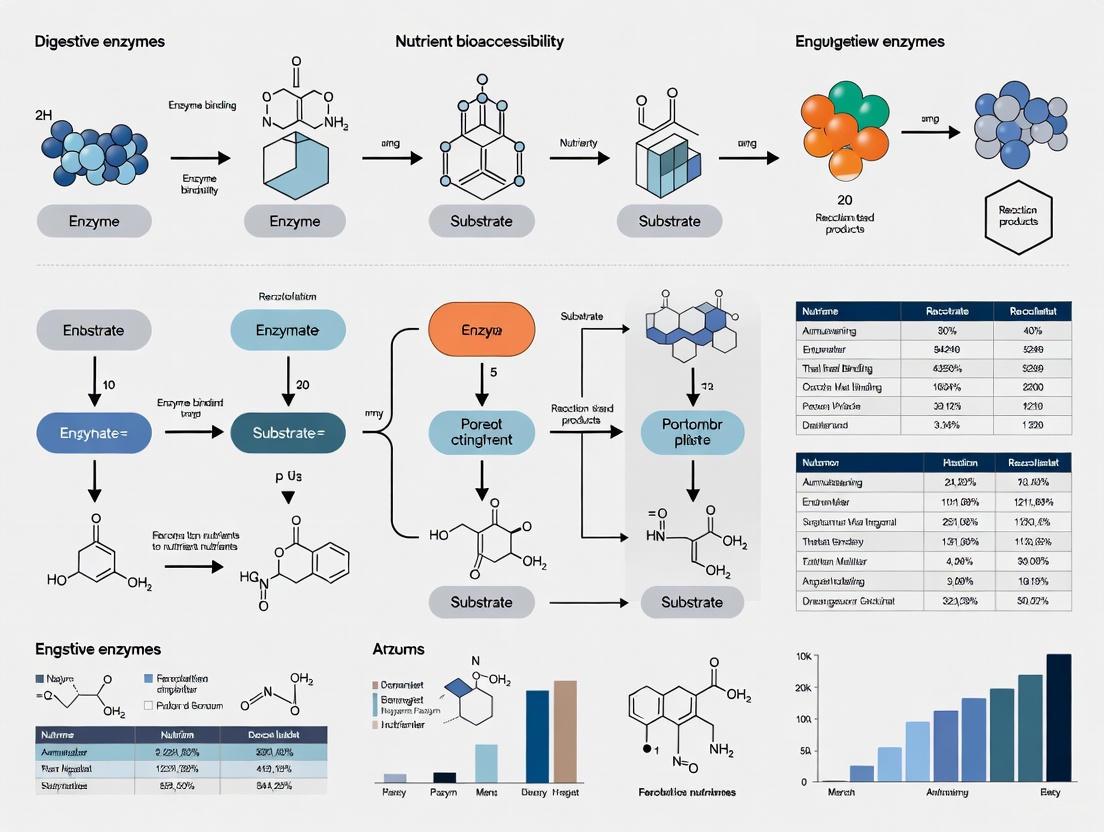
This article provides a comprehensive analysis of the critical role digestive enzymes play in determining nutrient bioaccessibility—the fraction of a compound released from its food matrix and made available for...
Digestive Enzymes and Nutrient Bioaccessibility: Mechanisms, Methods, and Clinical Implications
Abstract
This article provides a comprehensive analysis of the critical role digestive enzymes play in determining nutrient bioaccessibility—the fraction of a compound released from its food matrix and made available for intestinal absorption. Tailored for researchers, scientists, and drug development professionals, it synthesizes foundational concepts, explores advanced in vitro and in silico methodologies, and addresses key challenges in the field. The content covers the dynamic interactions between enzymes and food components, the impact of enzyme supplementation in clinical settings, and the application of standardized and computational models to predict and optimize nutrient release. By integrating current research and methodological insights, this review aims to bridge the gap between basic science and the development of targeted nutritional and pharmaceutical interventions.
Defining the Digestive Milieu: How Enzymes Govern Nutrient Release from Food
In the fields of nutritional science, pharmacology, and drug development, precise understanding of the biological fate of ingested compounds is paramount. The concepts of digestibility, bioaccessibility, and bioavailability represent sequential phases in the journey of nutrients and bioactive compounds from ingestion to systemic utilization. Digestibility refers to the susceptibility of food constituents to digestive enzymes and processes, representing the initial breakdown of complex macromolecules. Bioaccessibility describes the fraction of a compound that is released from its food matrix and becomes available for intestinal absorption, while bioavailability encompasses the proportion that ultimately reaches systemic circulation and is delivered to target tissues for physiological activity [1] [2] [3]. Within this framework, digestive enzymes serve as critical determinants of nutrient liberation, modulating the interface between digestibility and bioaccessibility. This technical guide examines these core concepts through the lens of digestive enzyme functionality, providing researchers with methodological frameworks for their precise quantification and differentiation.
Conceptual Foundations and Terminology
Defining the Core Concepts
The gastrointestinal fate of ingested compounds involves a progressive sequence of liberation, absorption, and utilization. According to standardized terminology proposed in recent literature, these concepts can be precisely defined as follows.
Digestibility: The percentage of food constituents that are converted by digestive processes into available forms present in digestible, soluble, and non-soluble fractions. It primarily concerns the enzymatic breakdown of macronutrients (proteins, lipids, carbohydrates) into their absorbable components (amino acids, fatty acids, monosaccharides) [2] [4].
Bioaccessibility: The fraction of a compound that is released from its food matrix in the gastrointestinal tract and becomes available for intestinal absorption. This process encompasses physical release from the matrix, solubilization in digestive fluids, and resistance to biochemical degradation during digestion [1] [2] [3]. It represents the crucial link between digestibility and bioavailability.
Bioavailability: The proportion of an ingested compound that reaches systemic circulation and is utilized for normal physiological functions or storage. This includes the compound's passage through the intestinal wall, potential metabolism during this transfer, and distribution to tissues and organs [2] [3].
The Sequential Relationship
These concepts exist in a hierarchical relationship where digestibility precedes bioaccessibility, which in turn precedes bioavailability. A compound must first be digested from its complex form, then released from the food matrix (bioaccessible), before it can be absorbed and utilized (bioavailable) [2] [3]. The critical role of digestive enzymes in this cascade is to facilitate the transition from digestibility to bioaccessibility by breaking down macromolecular structures and releasing bound compounds.
Table 1: Comparative Analysis of Core Concepts in Nutrient Availability
| Concept | Definition | Primary Determinants | Assessment Methods |
|---|---|---|---|
| Digestibility | Percentage of food constituents converted into available forms by digestive processes | Enzyme activity, food structure, processing methods, antinutritional factors | In vitro enzymatic assays, INFOGEST protocol, chromatographic analysis of hydrolysis products |
| Bioaccessibility | Fraction released from food matrix and available for intestinal absorption | Compound-matrix interactions, solubility in digestive fluids, stability to pH and enzymatic degradation | In vitro digestion models with membrane dialysis, solubility measurements in digesta |
| Bioavailability | Proportion reaching systemic circulation and available for physiological functions | Intestinal permeability, first-pass metabolism, tissue distribution | In vivo pharmacokinetic studies, cell culture models (Caco-2), clinical trials with plasma measurement |
The Role of Digestive Enzymes in Bioaccessibility Research
Fundamental Mechanisms
Digestive enzymes serve as biological catalysts that significantly influence nutrient bioaccessibility by hydrolyzing complex macronutrients into absorbable components. Their action determines the rate and extent to which nutrients are liberated from food matrices. Proteases (pepsin, trypsin, chymotrypsin) break down proteins into peptides and amino acids; lipases hydrolyze triglycerides into fatty acids and monoglycerides; and carbohydrases (amylase) cleave complex carbohydrates into simple sugars [5] [6]. The efficacy of these enzymatic processes is influenced by multiple factors including pH optima, enzyme concentration, presence of co-factors, and food matrix characteristics.
Recent research has demonstrated that digestive enzymes do not function in isolation but are significantly affected by other food components. For instance, polyphenols and other bioactive compounds can modulate enzymatic activity either through inhibition or activation, depending on their structural properties and concentration [5]. A study examining 25 bioactive compounds revealed that specific polyphenols like piceid and resveratrol enhanced chymotrypsin activity by 1.46- and 1.17-fold respectively, while phloretin inhibited the same enzyme by 0.65-fold [5]. These interactions illustrate the complex relationship between digestive enzymes and food components in determining ultimate bioaccessibility.
Enzyme-Related Factors Affecting Bioaccessibility
Several enzyme-specific parameters critically influence bioaccessibility outcomes in research settings:
Enzyme Origin and Specificity: Enzymes from different sources (porcine, microbial, recombinant) exhibit varying substrate specificities and optimal activity conditions. Microbial enzymes often demonstrate greater stability under extreme pH conditions, making them particularly useful for certain applications [6].
Dose-Response Relationships: Enzyme activity follows saturable kinetics, where increasing concentrations enhance bioaccessibility up to a plateau point. Establishing optimal enzyme-to-substrate ratios is essential for accurate bioaccessibility assessment [6].
Temporal Dynamics: Digestion time directly impacts enzymatic hydrolysis extent. Standardized protocols specify exact incubation periods (e.g., 2 hours gastric, 2 hours intestinal in INFOGEST) to enable cross-study comparisons [3].
Age-Related Variations: Digestive enzyme output declines with age, with pepsin concentration reduced by up to 40% in older adults [6]. Bioaccessibility studies targeting specific populations must adjust enzyme inputs accordingly to maintain physiological relevance.
Methodological Approaches for Assessment
In Vitro Digestion Models
In vitro digestion simulations serve as valuable tools for investigating digestibility and bioaccessibility, offering reproducibility, ethical advantages, and experimental control over in vivo models [4]. The INFOGEST protocol has emerged as an internationally standardized method for static digestion simulation, providing consistent parameters for pH, digestive fluids, enzymes, and timing across research laboratories [6] [3].
The typical INFOGEST workflow involves sequential oral, gastric, and intestinal phases with standardized parameters. For example, in protein digestibility assessment, pepsin is used at 268 units/mL in the gastric phase (pH 3) for 2 hours, followed by pancreatin at 16 units/mL trypsin activity in the intestinal phase (pH 7) with bile salts for another 2 hours [3]. Sample collection occurs at multiple time points throughout the process to monitor digestion kinetics.
Table 2: Experimental Parameters in Bioaccessibility Research
| Parameter | Standard Condition | Aging-Adapted Condition | Measurement Techniques |
|---|---|---|---|
| Gastric pH | 3.0 | 3.7 | pH electrode, buffers |
| Pepsin Concentration | 268 U/mL | 160.8 U/mL (40% reduction) | spectrophotometric activity assays |
| Gastric Phase Duration | 2 hours | 3 hours | timed sampling, reaction termination |
| Intestinal Pancreatin | 16 U/mL trypsin activity | 16 U/mL trypsin activity | titration, spectrophotometry |
| Temperature | 37°C | 37°C | incubator, water bath |
| Bioaccessibility Markers | Free amino nitrogen, fatty acids, simple sugars | Same markers with expected reduced levels | HPLC, GC, colorimetric assays |
Advanced Assessment Techniques
Sophisticated analytical methods are employed to quantify digestion products and bioaccessible fractions:
Chromatographic Techniques: High-performance liquid chromatography (HPLC) and LC-MS/MS enable identification and quantification of specific bioactive compounds and their metabolites throughout digestion. For example, research on Alpinia officinarum identified twelve major constituents and measured their bioaccessibility using HPLC-MS, finding galangin bioaccessibility ranging from 17.36-36.13% across different dietary models [7].
Cell Culture Models: Monocultures (Caco-2) and co-cultures (Caco-2/HT29-MTX-E12) of intestinal epithelial cells simulate human intestinal absorption, providing insights into transport mechanisms and bioavailability prediction [3].
Molecular Dynamics Simulations: Computational approaches model interactions between digestive enzymes, substrates, and bioactive compounds at atomic resolution, helping explain experimental observations of enzyme inhibition or activation [5].
Size Exclusion Chromatography: This technique characterizes peptide distribution profiles after protein digestion, providing information on the extent of proteolysis and molecular weight distribution of resulting peptides [6].
Experimental Protocols for Key Assessments
Protocol for Protein Digestibility Assessment
The following protocol adapted from INFOGEST standards and recent research [8] [6] outlines the procedure for determining protein digestibility:
Materials and Reagents:
- Substrate (protein source): 2.47% solution in appropriate buffer
- Digestive enzymes: Pepsin (porcine gastric mucosa, ≥3200 U/mg), Trypsin (bovine pancreas, ≥10,000 BAEE U/mg), α-Chymotrypsin (bovine pancreas, ≥40 U/mg)
- Simulated Gastric Fluid (SGF): pH 3.0
- Simulated Intestinal Fluid (SIF): pH 7.0
- Trichloroacetic acid (TCA): 20% (w/v)
- Water bath or incubator maintained at 37°C
Procedure:
- Prepare substrate solution (0.494 mL) in appropriate buffer at target pH.
- Pre-incubate substrate at 37°C for 5 minutes.
- Initiate digestion by adding enzyme solution (0.1 mL of 30 mg/L in 0.15 M NaCl, 0.0115 M CaCl₂, pH-adjusted).
- Incubate at 37°C with continuous agitation.
- At designated time points (10, 15, 20, 30 minutes), withdraw aliquots and mix with 1 mL of 20% TCA to terminate reaction.
- Centrifuge at 12,000g for 10 minutes to separate soluble peptides.
- Measure TCA-soluble peptides in supernatant at 280 nm.
- Calculate proteolytic units using the formula: One unit = ΔA₂₈₀/minute × reaction volume (mL) [5].
Protocol for Bioaccessibility Determination
This protocol outlines the procedure for assessing compound bioaccessibility using membrane dialysis methods [7]:
Materials and Reagents:
- Test compound or plant extract
- Simulated digestive fluids (oral, gastric, intestinal) per INFOGEST standards
- Cellulose dialysis membranes with appropriate molecular weight cutoff
- Water bath with horizontal shaking, maintained at 37°C
- HPLC or LC-MS system for quantitative analysis
Procedure:
- Prepare sample in oral fluid and incubate for 2 minutes with simulated saliva.
- Adjust to gastric pH, add pepsin solution, and incubate for 2 hours with gentle agitation.
- Adjust to intestinal pH, add pancreatin and bile salts, and place in dialysis membrane.
- Incubate intestinal phase for 2 hours with continuous agitation.
- Collect samples from both inside (bioaccessible fraction) and outside (absorbed fraction) the membrane at time points.
- Analyze samples using HPLC or LC-MS to quantify compounds of interest.
- Calculate bioaccessibility percentage as (Quantity in intestinal digest / Initial quantity) × 100 [7].
Factors Influencing Digestibility and Bioaccessibility
Food Matrix Effects
The food matrix significantly impacts both digestibility and bioaccessibility by controlling the release of bioactive compounds during digestion. Research on Alpinia officinarum demonstrated that the dietary matrix plays a crucial role in modulating bioaccessibility of active compounds, with galangin showing variable bioaccessibility (17.36-36.13%) across different dietary models [7]. Similarly, studies on plant-based proteins revealed that food formulation and processing methods significantly influence protein digestibility, with high-moisture foods (e.g., plant-based milk at 83% digestibility) showing superior performance compared to low-moisture formats (e.g., breadsticks at 69% digestibility) [8].
Matrix effects operate through several mechanisms:
- Encapsulation: Physical entrapment of compounds within structural components limits enzyme accessibility.
- Binding interactions: Covalent and non-covalent bonds between bioactive compounds and macronutrients (especially proteins and fibers) reduce liberation.
- Viscosity effects: Soluble dietary fibers increase digesta viscosity, impairing diffusion of enzymes and nutrients.
- Component interactions: Antinutritional factors (e.g., oxalates, phytates) can bind minerals and proteins, reducing their bioaccessibility [3].
Technological Interventions
Processing methods can significantly enhance digestibility and bioaccessibility by modifying food matrix structure:
Fermentation: Microbial fermentation using specific strains (e.g., Poria cocos fermentation of Radix Astragali) increased the bioaccessibility of Astragaloside IV by 8.62-fold through biotransformation of precursors and breakdown of cell wall structures [9].
Enzyme Supplementation: Addition of microbial enzyme mixtures enhanced nutrient bioaccessibility in aging-adapted digestion models, compensating for reduced endogenous enzyme output [6].
Thermal Processing: Appropriate heat treatment denatures proteins and gelatinizes starch, generally improving digestibility, though excessive heating can generate Maillard reaction products that reduce amino acid bioaccessibility.
Mechanical Processing: Particle size reduction through milling, homogenization, or high-pressure processing increases surface area for enzymatic action, enhancing digestibility rates.
Research Reagent Solutions
Table 3: Essential Research Reagents for Digestibility and Bioaccessibility Studies
| Reagent/Cell Line | Specifications | Research Application | Key Considerations |
|---|---|---|---|
| Pepsin | Porcine gastric mucosa, ≥3200 U/mg protein | Gastric phase digestion in INFOGEST protocol | Activity varies by source; requires pH 3 for optimal function |
| Pancreatin | Porcine pancreas, standardized to 16 U/mL trypsin activity | Intestinal phase digestion | Contains mixture of proteases, amylases, lipases |
| Caco-2 cell line | Human colorectal adenocarcinoma cells | Intestinal absorption studies | Differentiates into enterocyte-like cells; forms tight junctions |
| HT29-MTX-E12 | Mucin-secreting goblet cell line | Co-culture models for intestinal absorption | Produces mucus layer; used with Caco-2 for more physiological models |
| Microbial enzyme preparations | Fungal (Aspergillus) proteases, lipases, carbohydrases | Enzyme supplementation studies | Often more pH- and temperature-stable than mammalian enzymes |
| Cellulose dialysis membranes | Various molecular weight cutoffs (e.g., 3.5-14 kDa) | Separation of bioaccessible fraction | Pore size selection critical for compound retention/passage |
Visualization of Core Concepts and Methodologies
Bioaccessibility Pathway
Experimental Workflow
Distinguishing between digestibility, bioaccessibility, and bioavailability is essential for research in nutrition, pharmacology, and drug development. Digestibility represents the initial enzymatic breakdown of macromolecules; bioaccessibility encompasses the liberation of compounds from the food matrix into a form available for absorption; and bioavailability describes the fraction that ultimately reaches systemic circulation. Digestive enzymes play a pivotal role in transitioning compounds from the digestible to bioaccessible state, with their activity influenced by food matrix composition, processing methods, and physiological conditions.
Standardized in vitro protocols like INFOGEST provide robust frameworks for assessing these parameters, while advanced analytical techniques enable precise quantification. Understanding these concepts and their methodological approaches allows researchers to better predict the physiological efficacy of nutrients, bioactive compounds, and pharmaceutical agents, ultimately supporting the development of more effective nutritional and therapeutic interventions.
Within the framework of nutrient bioaccessibility research—which examines the fraction of a nutrient released from a food matrix and available for intestinal absorption—digestive proteases are fundamental gatekeepers. The concerted action of pepsin, trypsin, and chymotrypsin dictates the efficiency with which dietary proteins are hydrolyzed into absorbable peptides and amino acids. Understanding their specific roles, optimal conditions, and interactions is not merely an academic exercise but a critical pursuit for developing therapeutic strategies for malnutrition, metabolic disorders, and age-related sarcopenia. This whitepaper synthesizes current research to provide an in-depth technical guide on the functions and characteristics of this core protease trio, framing their activity within the broader context of protein digestibility and bioaccessibility.
Biochemical Profiles and Specificities of the Protease Trio
The enzymes pepsin, trypsin, and chymotrypsin operate in a highly compartmentalized and sequential manner along the gastrointestinal tract. Their distinct substrate specificities and optimal conditions ensure the complete breakdown of a diverse array of dietary proteins.
Table 1: Fundamental Characteristics of the Principal Digestive Proteases
| Enzyme | Production Site | Activator / Form | Optimal pH | Catalytic Type |
|---|---|---|---|---|
| Pepsin | Gastric chief cells | Active in stomach; autocatalytic at low pH [10] | 2-3 [11] [10] | Aspartic endopeptidase |
| Trypsin | Pancreas (acinar cells) | Trypsinogen activated by enteropeptidase in duodenum [12] | 7-8 [13] [11] | Serine endopeptidase |
| Chymotrypsin | Pancreas (acinar cells) | Chymotrypsinogen activated by trypsin [12] | 7-8 [13] [11] | Serine endopeptidase |
Table 2: Substrate Specificity and Primary Cleavage Sites
| Enzyme | Primary Cleavage Specificity | Representative Cleavage Sites |
|---|---|---|
| Pepsin | C-terminal to aromatic (Phe, Trp, Tyr) and large hydrophobic amino acids [11] | ...Phe\u2003Val..., ...Tyr\u2003Leu... [11] |
| Trypsin | C-terminal to basic amino acids Lys and Arg [14] [11] | ...Lys\u2003Ala..., ...Arg\u2003Ser... |
| Chymotrypsin | C-terminal to aromatic (Phe, Trp, Tyr) and other hydrophobic (Leu, Met) amino acids [11] | ...Phe\u2003Val..., ...Leu\u2003Ala... [11] |
Despite their structural similarities, trypsin and chymotrypsin achieve distinct specificities through a complex mechanism involving both the S1 binding pocket and dynamic motions of distal loops (L1 and L2). While the S1 pocket in trypsin contains an aspartate (Asp189) that attracts basic residues, chymotrypsin has a serine (Ser189) that accommodates bulky hydrophobic side chains [15]. Crucially, experiments show that simply mutating these residues is insufficient to swap specificities; the cooperative motions of loops L1 and L2 are critical for orienting the scissile bond and enabling efficient catalysis, highlighting the role of protein dynamics in enzyme function [15].
The Proteolytic Cascade: An Integrated Workflow for Protein Digestion
Protein digestion is a sequential process orchestrated by the protease trio. The following diagram illustrates the integrated workflow and logical relationships from the stomach to the small intestine.
This cascade ensures efficient amplification of the digestive signal. A small amount of active trypsin, generated by enteropeptidase, subsequently activates vast quantities of both additional trypsinogen and chymotrypsinogen, leading to a rapid and potent proteolytic response in the intestinal lumen [12].
Quantitative Assessment of Proteolytic Efficiency
Evaluating the efficiency of proteases is crucial for predicting protein bioaccessibility from different food sources. The following data, derived from enzymatic studies, provides a quantitative basis for such comparisons.
Table 3: Hydrolysis Efficiency and Molecular Weight Outcomes from a Porcine Placenta Model
| Enzyme | Incubation Time for Complete Hydrolysis | Dominant Molecular Weight (Mw) Distribution of Products |
|---|---|---|
| Trypsin | 1 hour [13] | 106 - 500 Da [13] |
| Chymotrypsin | 6 hours [13] | Broad range: 1 - 20 kDa [13] |
| Pepsin | Limited hydrolysis even after 24h [13] | > 7 kDa [13] |
A study investigating the hydrolysis of porcine placenta gelatin demonstrated that trypsin was the most efficient under its optimal conditions (pH 7-8), completely degrading the substrate within one hour and producing low molecular weight peptides. Chymotrypsin, while effective, acted more slowly and produced a broader range of peptide sizes. Pepsin showed poor hydrolysis efficiency on this particular substrate, which had been pretreated with heat, resulting in mostly large peptides [13]. This underscores that efficiency is not an intrinsic property of the enzyme alone but is also dependent on the substrate.
Methodologies for Investigating Protease Activity and Inhibition
Standardized experimental protocols are essential for generating reproducible and comparable data on protease function and its modulation.
Standardized In Vitro Digestion (INFOGEST 2.0 Protocol)
The INFOGEST 2.0 static simulation of gastrointestinal digestion is a widely adopted method for assessing nutrient bioaccessibility [16]. The protocol for protease activity is as follows:
- Gastric Phase: The protein substrate is suspended in a simulated gastric fluid (SGF), typically at a concentration of 2.5-3% (w/v) in water, and the pH is adjusted to 2.0-3.0. Pepsin is added to a final concentration of 5 mg/L. The mixture is incubated at 37°C for a defined period (e.g., 30-60 minutes) with constant agitation [16] [5].
- Intestinal Phase: The gastric chyme is then mixed with a simulated intestinal fluid (SIF) and the pH is raised to 7.0. A pancreatin mixture containing trypsin and chymotrypsin, or the individual purified enzymes, is added. The incubation continues at 37°C for another 60-120 minutes [16].
- Termination and Analysis: The reaction is stopped by adding trichloroacetic acid (TCA) to a final concentration of 2-5% or by heat inactivation (70°C for 30 min) [13] [5]. The TCA-soluble peptides in the supernatant are quantified after centrifugation (12,000×g for 10 min) by measuring the absorbance at 280 nm or using more specific assays like the o-phthaldialdehyde (OPA) method to determine the degree of hydrolysis [5].
Assessing the Impact of Bioactives and Anti-Nutritional Factors
To evaluate the effect of food-derived compounds (e.g., polyphenols) on protease activity, the following modification is used:
- Bioactive compounds are dissolved in ethanol (e.g., 10 mM stock) and added to the substrate solution before enzyme introduction to achieve a final, physiologically relevant concentration (e.g., 0.1 mM). An ethanol-only control is run in parallel [5].
- The remaining proteolytic activity is determined relative to the control after the same incubation period, allowing the identification of activators or inhibitors [5].
Factors Modulating Protease Activity and Protein Bioaccessibility
The efficiency of the protease trio is not absolute; it is modulated by a complex interplay of dietary components, food processing conditions, and host factors.
Food Matrix Interactions: Dietary fibers, such as pectic polysaccharides (PPs), can act as non-competitive inhibitors of digestive enzymes. The inhibition constant (Ki) decreases with an increasing methylation degree of the PPs, with lipase being the most susceptible, followed by α-amylase, alkaline phosphatase, and protease (chymotrypsin) [17]. This suggests that soluble fiber can physically interact with proteases, reducing their activity and potentially lowering protein bioaccessibility.
Protein Structural Integrity: The presence of D-amino acids in a protein sequence, which can form during high-temperature and high-pH food processing, significantly slows down proteolytic digestion. This effect is most pronounced for pepsin but also affects trypsin and chymotrypsin. The impediment occurs not only when the D-amino acid is at the enzyme's cleavage site but also when it is in a distant position, indicating that racemization can induce broader conformational changes that hinder enzyme access [11].
Pathophysiological Context: In disease states, the protease balance can be disrupted. For example, in cystic fibrosis, thickened secretions can block pancreatic ducts, leading to a deficiency of trypsin and chymotrypsin in the intestine, severely impairing protein digestion and nutrient absorption [14]. Furthermore, trypsin and chymotrypsin are implicated in cancer progression, where their overexpression in tumors promotes invasion and metastasis by degrading the extracellular matrix and activating other proteolytic systems like matrix metalloproteinases (MMPs) [14].
The Scientist's Toolkit: Key Research Reagents and Solutions
This section details essential materials and their functions for conducting research on digestive proteases, based on methodologies cited in the literature.
Table 4: Essential Research Reagents for Digestive Protease Studies
| Reagent / Material | Specification / Example | Research Function & Rationale |
|---|---|---|
| Pepsin | Porcine, e.g., Sigma P6887 (≥3200 U/mg) [5] | Standard enzyme for simulating gastric digestion; activity verified on substrates like hemoglobin [5]. |
| Trypsin | Bovine/porcine, e.g., Sigma T1426 (≥10000 BAEE U/mg) [5] | Key serine protease for intestinal phase studies; specific for Lys/Arg cleavage sites [13] [5]. |
| Chymotrypsin | Bovine, e.g., Sigma C4129 (≥40 U/mg) [13] [5] | Key serine protease for intestinal phase; specific for hydrophobic (Phe, Trp, Tyr) cleavage sites [13] [5]. |
| Model Protein Substrates | Hemoglobin, Ovalbumin, Gluten [5] | Well-characterized proteins representing diverse structures (globular, fibrous) to test protease efficacy and specificity. |
| Bioactive Compounds | Polyphenols (e.g., Resveratrol, Phloretin) [5] | Used to investigate modulation (inhibition/activation) of digestive protease activity in a controlled setting. |
| Synthetic Peptides | Custom sequences with D-amino acid substitutions [11] | Enable precise study of how racemization and specific residue changes impact protease kinetics and cleavage site recognition. |
| Acid-Active Proteases (S53 Family) | e.g., P24 protease [16] | Novel microbial proteases with acidic pH optimum; used to explore enhancement of gastric protein digestibility. |
The precise and coordinated functions of pepsin, trypsin, and chymotrypsin are fundamental to protein bioaccessibility. Their specific pH optima, cleavage specificities, and sequential activation create an efficient system for nutrient liberation. Current research is expanding beyond this foundational understanding to explore how this proteolytic system is modulated by the food matrix, processing conditions, and disease states. Future work will likely focus on leveraging this knowledge, for instance, by using acid-active microbial proteases to enhance the digestibility of plant-based proteins [16] or by designing targeted nutritional interventions for populations with compromised digestive function. A deep and quantitative understanding of the "protease trio" remains a cornerstone of research aimed at optimizing protein bioaccessibility for human health.
The digestion of dietary proteins into absorbable peptides and amino acids is a critical process underpinning nutrient bioaccessibility and human health. This proteolytic activity, primarily mediated by enzymes such as pepsin, trypsin, and chymotrypsin, is not an isolated event but is subject to complex modulation by various food-derived components. Among these modulators, dietary polyphenols—a large family of bioactive compounds found abundantly in fruits, vegetables, cereals, tea, and wine—have emerged as key players with a dualistic nature [18]. The interplay between these bioactives and digestive proteases represents a pivotal research focus within the broader context of nutrient bioaccessibility, as it directly influences the efficiency of protein digestion and the subsequent availability of essential amino acids.
The significance of this interaction is multifaceted. On one hand, the inhibition of proteolytic enzymes by certain polyphenols can be considered an anti-nutritional effect, potentially compromising protein digestibility and amino acid absorption [5]. On the other hand, this same inhibitory potential may be harnessed therapeutically; for example, modulating amino acid absorption kinetics could benefit individuals with specific metabolic disorders. Furthermore, some polyphenols paradoxically enhance proteolytic activity under certain conditions, adding layers of complexity to their overall impact [5]. Understanding these interactions is further complicated by factors such as the specific protein substrate involved, the structural class of the polyphenol, and the presence of other dietary constituents like fiber, which can form ternary complexes with polyphenols and enzymes [19]. This whitepaper synthesizes current scientific knowledge on these interactions, providing a technical guide for researchers and drug development professionals working at the intersection of food science, nutrition, and digestive health.
Core Mechanisms of Polyphenol-Protease Interactions
The modulation of proteolytic activity by polyphenols is governed by a series of direct and indirect mechanisms. The primary interaction often involves the direct binding of the polyphenol to the enzyme itself. This binding can occur at the active site, leading to competitive inhibition, or at allosteric sites, potentially causing non-competitive inhibition or even activation by inducing conformational changes that enhance catalytic efficiency [5]. The binding forces facilitating these complexes include hydrogen bonding, hydrophobic interactions, and π-π stacking [19].
Critically, the effect of polyphenols is not limited to the enzyme alone. As demonstrated by Borgonovi et al. (2025), certain bioactives that enhance chymotrypsin activity, such as piceid and resveratrol, appear to exert their effect by interacting with the protein substrate (e.g., ovalbumin), inducing a partial unfolding of its native structure [5]. This substrate-level effect makes the protein more susceptible to enzymatic hydrolysis, representing a mechanism that extends beyond simple enzyme modulation. This finding underscores the necessity of considering the specific enzyme-substrate pair when evaluating bioactive effects.
Finally, in a complex food matrix, binary interactions expand into ternary systems. Dietary fibers, both soluble and insoluble, can adsorb polyphenols and digestive enzymes, thereby influencing their interaction. For instance, insoluble fibers like cellulose can non-specifically adsorb digestive enzymes, reducing their availability, while also binding polyphenols, which may concurrently alter the polyphenol's capacity to inhibit or activate the enzyme [19]. The net effect on proteolysis is thus a result of the dynamic equilibrium between these multiple competing interactions.
The following diagram illustrates the core mechanisms and the experimental workflow used to investigate them.
Quantitative Effects of Selected Bioactives on Proteolytic Activity
The effect of bioactive compounds on protease activity is highly specific, depending on the compound's structure, the target enzyme, and the protein substrate used in the assay. The data below, derived from a systematic in vitro investigation, quantifies these effects for a range of common polyphenols.
Table 1: Impact of Bioactive Compounds (0.1 mM) on Chymotrypsin Activity Using Ovalbumin as Substrate (Adapted from Borgonovi et al., 2025)
| Bioactive Compound | Chemical Class | Fold Change in Activity | Effect |
|---|---|---|---|
| Piceid | Stilbenoid (glycoside) | +1.46 | Strong Activation |
| Resveratrol | Stilbenoid (aglycone) | +1.17 | Activation |
| Phloridzin Dihydrate | Dihydrochalcone (glycoside) | +0.41 | Weak Activation |
| Phloretin | Dihydrochalcone (aglycone) | -0.65 | Strong Inhibition |
Table 2: Effects of Bioactives on Pepsin and Trypsin with Various Substrates
| Enzyme | Substrate | Bioactive Compound | Reported Effect | Citation |
|---|---|---|---|---|
| Pepsin | Haemoglobin | Green Tea Polyphenols | Inhibition | [5] |
| Pepsin | β-Lactoglobulin | Epigallocatechin Gallate (EGCG) | Activation | [5] |
| Trypsin | Various | Cellulose (Fiber) | Concentration-dependent Inhibition (Mixed-type) | [19] |
| α-Chymotrypsin | Various | Monomeric Phenolics (e.g., Tannic Acid) | Competitive Inhibition | [19] |
The data in Table 1 highlights a critical structure-activity relationship: the presence of a glycosidic moiety can dramatically alter the functional outcome. For both the stilbenoid and dihydrochalcone classes, the glycosylated form (piceid and phloridzin) was an activator of chymotrypsin, while their corresponding aglycones (resveratrol and phloretin) were inhibitors or weaker activators [5]. This underscores that even minor structural changes can invert the modulatory effect of a compound. Furthermore, as seen in Table 2, the same enzyme can be differentially affected by a polyphenol depending on the substrate it is acting upon, emphasizing the limitation of single-substrate assays and the need for a more comprehensive evaluation framework.
Detailed Experimental Protocols for Assessing Protease Modulation
In Vitro Evaluation of Protease Activity in the Presence of Bioactives
This protocol is adapted from the standardized methodology used by Borgonovi et al. to generate the quantitative data presented in this review [5].
Principle: The activity of digestive proteases (pepsin, trypsin, chymotrypsin) is measured by the release of trichloroacetic acid (TCA)-soluble peptides from a protein substrate, detected spectrophotometrically at 280 nm, in the presence or absence of bioactive compounds.
Key Reagents and Solutions:
- Enzyme Solutions: Pepsin, trypsin, and α-chymotrypsin are dissolved at 30 mg L⁻¹ in 0.15 M NaCl, 0.0115 M CaCl₂. The solvent is adjusted to pH 2 for pepsin and pH 7 for trypsin and chymotrypsin.
- Substrate Solutions: Prepare 3% (w/v) solutions of protein substrates (e.g., bovine haemoglobin, chicken ovalbumin, wheat gluten) in purified water. Adjust the pH to 2 for pepsin assays and pH 7 for trypsin/chymotrypsin assays using 200 mM HCl.
- Bioactive Stock Solutions: Prepare 10 mM stock solutions of each bioactive compound in ethanol.
- Reaction Stop Solution: 20% (w/v) Trichloroacetic Acid (TCA).
Procedure:
- Reaction Setup: To 0.494 mL of the substrate solution, add 0.006 mL of the 10 mM bioactive stock solution (final bioactive concentration: 0.1 mM). For control reactions, add 0.006 mL of pure ethanol.
- Initiation: Start the enzymatic reaction by adding 0.1 mL of the appropriate enzyme solution (final enzyme concentration: 5 mg L⁻¹).
- Incubation: Incubate the reaction mixture at 37°C. For kinetic analysis, perform the reaction for multiple time intervals (e.g., 10, 15, 20, and 30 minutes).
- Termination: At each time point, stop the reaction by adding 1 mL of 20% TCA.
- Quantification: Centrifuge the terminated reactions at 12,000×g for 10 minutes. Measure the absorbance of the TCA-soluble supernatant at 280 nm against a blank.
- Calculation: One unit of proteolytic activity is defined as an increase of 0.001 in absorbance at 280 nm per minute under the specified assay conditions.
In Silico Investigation of Interaction Mechanisms
Computational approaches are indispensable for rationalizing the experimental observations and understanding the structural basis of the interactions.
- Objective: To investigate the binding affinity, preferred binding sites, and conformational changes induced by bioactive compounds on digestive enzymes and/or protein substrates.
- Methods:
- Molecular Docking:
- Obtain 3D crystal structures of the target enzymes (e.g., chymotrypsin) and substrates (e.g., ovalbumin) from the Protein Data Bank (PDB).
- Prepare the structures by adding hydrogen atoms, assigning partial charges, and removing water molecules.
- Generate 3D structures of the bioactive ligands and optimize their geometry.
- Perform docking simulations to predict the binding pose and affinity of the bioactive to the enzyme and/or substrate.
- Molecular Dynamics (MD) Simulations:
- Solvate the docked complexes in a water box and add ions to neutralize the system.
- Run MD simulations (typically 50-100 ns) to study the stability of the complexes and the conformational dynamics.
- Analyze the root-mean-square deviation (RMSD), radius of gyration (Rg), and hydrogen bonding patterns. As demonstrated in the key study, this can reveal whether bioactives that enhance activity induce partial unfolding in the substrate protein [5].
- Molecular Docking:
The Scientist's Toolkit: Essential Research Reagents and Materials
A well-equipped laboratory requires specific, high-purity reagents to reliably investigate these complex interactions. The following table details key materials used in the foundational research cited herein.
Table 3: Research Reagent Solutions for Studying Protease-Bioactive Interactions
| Reagent Category | Specific Example | Function/Application in Research | Source Example |
|---|---|---|---|
| Digestive Proteases | Porcine Pepsin (≥3200 U/mg) | Key gastric protease for in vitro digestion models. | Sigma-Aldrich P6887 [5] |
| Bovine Trypsin (≥10,000 BAEE U/mg) | Key pancreatic serine protease for intestinal digestion phase. | Sigma-Aldrich T1426 [5] | |
| Bovine α-Chymotrypsin (≥40 U/mg) | Pancreatic serine protease with broad specificity. | Sigma-Aldrich C4129 [5] | |
| Protein Substrates | Bovine Haemoglobin | Standard substrate for pepsin activity assays. | Sigma-Aldrich H2625 [5] |
| Chicken Ovalbumin | Model for digesting native, globular food proteins. | Sigma-Aldrich A5503 [5] | |
| Wheat Gluten | Model for digesting insoluble, complex protein aggregates. | Sigma-Aldrich G5004 [5] | |
| Bioactive Compounds | Resveratrol, Piceid | Representative stilbenoids to study structure-activity relationships. | BLD Pharm, Sigma-Aldrich [5] |
| Phloretin, Phloridzin | Representative dihydrochalcones for aglycone/glycoside comparisons. | Sigma-Aldrich [5] | |
| Epigallocatechin Gallate (EGCG) | Major green tea catechin for studying protease inhibition/activation. | BLD Pharm [5] | |
| Specialized Reagents | Trichloroacetic Acid (TCA) | Precipitates undigested protein for activity quantification. | - [5] |
Implications for Nutrient Bioaccessibility and Future Research Directions
The modulation of proteolytic activity by food bioactives has direct and significant consequences for nutrient bioaccessibility, a core concept in the user's thesis. The inhibition of key proteases like trypsin and chymotrypsin can reduce the efficiency of protein breakdown, potentially limiting the availability of essential amino acids for absorption [5]. This can be particularly consequential for populations with marginal protein intake. Furthermore, the fermentation of undigested protein in the colon by the gut microbiota has been linked to an increased risk of colon cancer and the production of potentially harmful metabolites, such as branched-chain fatty acids [5] [20]. Conversely, the finding that some polyphenols can enhance proteolysis suggests a potential avenue for developing functional foods or supplements aimed at improving protein digestibility in specific clinical contexts, such as pancreatic insufficiency.
Future research in this field must address several key challenges and opportunities. There is a pressing need to move beyond simplified in vitro systems toward more complex, physiologically relevant models that account for the dynamic nature of gastrointestinal digestion, including the role of the gut microbiota in transforming polyphenols into active metabolites [20] [21]. The application of computational tools, such as molecular docking and dynamics, will be crucial for predicting interactions and understanding structure-activity relationships at an atomic level, thereby guiding the rational design of functional foods [5] [21]. Finally, the development of innovative delivery systems, such as the micro-encapsulation of polyphenols, holds promise for controlling the release and bioavailability of these compounds in the gastrointestinal tract, thereby precisely modulating their impact on digestive enzymes [18] [20]. As research progresses, a precision nutrition approach that considers individual metabotypes, including variations in gut microbiota composition, will be essential for providing tailored dietary recommendations [21].
The food matrix is defined as the intricate microstructural organization of nutrients and non-nutrient components within a food, and the physical and chemical interactions between them [22]. This concept has evolved from a simple curiosity about food microstructure to a fundamental principle in nutritional science, recognizing that the biological effects of a food cannot be predicted solely from its chemical composition [23]. The matrix represents a critical barrier to nutrient liberation, influencing the release, mass transfer, and eventual absorption of dietary components throughout the gastrointestinal tract [23].
Within the context of digestive enzyme research, understanding the food matrix effect is paramount. The efficacy of endogenous and exogenous digestive enzymes is profoundly influenced by matrix properties, which can either facilitate or hinder access to their substrates [5] [22]. This technical guide explores the mechanical and biochemical barriers posed by food matrices, framing the discussion within the broader thesis that targeted enzymatic strategies are essential for optimizing nutrient bioaccessibility from complex food structures.
Mechanical Barriers to Nutrient Liberation
Structural Entrapment and Cellular Compartmentalization
The physical architecture of food acts as the primary mechanical barrier to nutrient liberation. In plant-based foods, intact cell walls composed of cellulose, hemicellulose, and pectin form a physical barrier that encapsulates intracellular nutrients, preventing their direct access to digestive enzymes [23]. This compartmentalization is a key reason why carotenoids possess five times more bioavailability when administered alone dissolved in oil compared to their native matrix in raw carrots [23]. The nutrients are effectively entrapped within the cellular structures and cannot be efficiently released during digestion.
The microstructure, including elements like cell walls, starch granules, and protein assemblies, governs the release and mass transfer of dietary phytochemicals [23]. Even after chewing and initial digestion, large fragments of cellular material can remain, further sequestering nutrients and limiting their bioaccessibility.
The Role of Food Processing in Modifying Structural Barriers
Food processing represents a primary intervention for disrupting mechanical barriers. Techniques such as heating, grinding, and homogenization can physically break down cell walls and other structural components, thereby enhancing the liberation of nutrients.
Table 1: Impact of Processing on Bioaccessibility from Different Food Matrices
| Food Matrix | Processing Method | Target Nutrient | Effect on Bioaccessibility | Mechanism |
|---|---|---|---|---|
| Plant Tissues (e.g., Carrots) | Heating, Homogenization | Carotenoids | Increase [23] | Breakdown of cell walls, disruption of carotenoid-protein complexes |
| Starch-Based Matrices | Cooking | Starch | Variable [23] | Gelatinization of starch granules, increasing enzyme accessibility |
| Dairy Matrix | Fermentation | Proteins, Peptides | Increase [24] | Microbial pre-digestion and production of bioactive metabolites (e.g., GABA) |
| Protein-Lipid Assemblies | Emulsification | Lipids | Increase [22] | Increased surface area for lipase activity |
However, processing can also create new structural barriers. For instance, the retrogradation of starch after cooking can form crystalline structures that are highly resistant to enzymatic digestion, creating a form of resistant starch that acts as a mechanical barrier to glucose liberation [24].
Biochemical Barriers to Nutrient Liberation
Molecular Interactions and Complexation
Beyond physical structure, biochemical interactions within the food matrix present significant barriers. These include:
- Polyphenol-Protein Complexation: Polyphenols can bind to dietary proteins and digestive enzymes through non-covalent bonds and hydrophobic interactions, potentially inhibiting proteolytic activity and reducing the bioavailability of both the polyphenols and the proteins [5].
- Mineral Binding: Phytates, oxalates, and dietary fibers can chelate minerals such as calcium, iron, and zinc, forming insoluble complexes that are poorly absorbed in the intestine [25].
- Starch-Flavonoid Interactions: Flavonoids can generate non-covalent connections with dietary carbohydrates, structurally modifying starches and inhibiting α-amylase and α-glucosidase activity, thereby slowing starch digestion [23].
The presence of sulfate groups in certain food additives, like carrageenan, provides another vivid example of a biochemical barrier. Free sulfate groups can stimulate the growth of sulfate-reducing bacteria in the gut, leading to the production of hydrogen sulfide (H₂S), a metabolite associated with increased mucosal permeability and inflammatory bowel disease [26].
The Food Matrix as a Modulator of Digestive Enzyme Efficacy
The local biochemical environment created by the matrix directly influences enzymatic efficiency. A compelling illustration comes from a 2025 study on κ-carrageenan (κ-CGN), which demonstrated that the food matrix significantly modulates its biological effects. When κ-CGN was dissolved in an aqueous solution, it induced intestinal barrier damage in mice. In stark contrast, when integrated into a 3% casein matrix (forming κ-CC), the same dose was found to repair intestinal barrier injury [26]. The proposed mechanism is that the casein matrix reduces the exposure of carrageenan's free sulfate groups, which are implicated in provoking inflammatory responses [26]. This underscores that a matrix can chemically sequester a detrimental component, thereby altering its interaction with the gut environment and digestive processes.
Furthermore, research shows that the effects of bioactive compounds on digestive proteases are highly substrate-dependent. For instance, the stilbenoid piceid was shown to act as a strong activator of chymotrypsin when ovalbumin was the substrate, increasing activity by 1.46-fold, while phloretin strongly inhibited the same enzyme under identical conditions [5]. This indicates that the specific protein substrate within a matrix can dictate whether a biochemical compound acts as a barrier or a facilitator to enzymatic digestion.
Experimental Methodologies for Assessing Matrix Effects
In Vitro Digestion Models and Bioaccessibility Assays
A critical protocol for evaluating nutrient liberation is the in vitro simulation of gastrointestinal digestion. The following methodology, adapted from studies on mineral bioaccessibility, provides a robust framework [25].
Protocol: In Vitro Bioaccessibility Assessment of Minerals
- Sample Preparation: Homogenize the food sample to a consistent particle size.
- Oral Phase: Mix the sample with simulated salivary fluid (SSF) containing α-amylase for a brief period (e.g., 2 min, pH 7).
- Gastric Phase: Adjust the pH to 2-3 and add simulated gastric fluid (SGF) containing pepsin. Incubate for 1-2 hours at 37°C with constant agitation.
- Intestinal Phase: Neutralize the pH to 7 and add simulated intestinal fluid (SIF) containing pancreatin and bile salts. Incubate for a further 2 hours at 37°C.
- Centrifugation: Centrifuge the final digest at high speed (e.g., 12,000×g, 30 min) to separate the soluble (bioaccessible) fraction from the insoluble residue.
- Analysis: Quantify the target nutrient in the supernatant. Bioaccessibility (%) is calculated as (Soluble Nutrient / Total Nutrient in Sample) × 100.
This protocol revealed that in green Spanish-style table olives, the bioaccessibility of key minerals varied dramatically: Na (93-98%), K (94-100%), Mg (78-91%), and Ca as low as 19-27% [25]. This highlights calcium as being particularly trapped within the olive matrix.
Molecular Docking and Dynamics Simulations
To investigate the biochemical barrier of polyphenol-enzyme interactions at an atomic level, computational approaches are employed [5].
Protocol: In Silico Analysis of Bioactive-Enzyme Interactions
- Molecular Docking:
- Obtain 3D crystal structures of target digestive enzymes (e.g., chymotrypsin, trypsin) from the Protein Data Bank.
- Prepare the structures by removing water molecules and adding hydrogen atoms.
- Generate 3D structures of the bioactive compounds (e.g., polyphenols) and assign partial atomic charges.
- Perform docking simulations to predict the binding pose and affinity (e.g., scoring function in kcal/mol) of the bioactive within the enzyme's active site.
- Molecular Dynamics (MD) Simulations:
- Solvate the top-ranked docking complexes in a water box with ions to simulate physiological conditions.
- Run MD simulations for tens to hundreds of nanoseconds to observe the stability of the interaction and conformational changes in the enzyme.
- Analyze root-mean-square deviation (RMSD), radius of gyration (Rg), and hydrogen bonding patterns.
This methodology elucidated why piceid activates chymotrypsin while phloretin inhibits it: the activating bioactives induced a partial unfolding of the protein substrate (ovalbumin), making it more susceptible to proteolysis [5].
The following diagram illustrates the logical workflow integrating these experimental approaches to study the food matrix effect.
The Scientist's Toolkit: Key Research Reagent Solutions
Table 2: Essential Reagents for Food Matrix and Digestive Enzyme Research
| Reagent Category | Specific Examples | Function in Research | Key Considerations |
|---|---|---|---|
| Digestive Enzymes | Porcine Pepsin (≥3200 U/mg), Bovine Trypsin (≥10,000 BAEE U/mg), α-Chymotrypsin (≥40 U/mg), Pancreatin [5] | Simulate human gastrointestinal digestion in vitro; assess specific proteolytic, amylolytic, and lipolytic activities. | Purity and specific activity are critical for reproducibility. Source (e.g., porcine, bovine) may influence specificity. |
| Protein Substrates | Bovine Hemoglobin, Chicken Egg Albumin (Ovalbumin), Wheat Gluten, Casein [5] [26] | Serve as standardized model food proteins for enzyme activity assays. Represent different protein classes (globular, fibrous). | Substrate choice significantly influences measured enzyme activity and the effect of bioactives [5]. |
| Bioactive Compounds | Resveratrol, Piceid, Phloretin, Phloridzin, Epigallocatechin Gallate (EGCG) [5] | Investigate the role of common food constituents (e.g., polyphenols) as biochemical barriers (enzyme inhibitors) or facilitators. | Solubility (often requiring stock solutions in ethanol or DMSO) and stability at digestive pH must be considered. |
| Simulated Digestive Fluids | Simulated Salivary Fluid (SSF), Gastric Fluid (SGF), Intestinal Fluid (SIF) [25] | Provide a physiologically relevant ionic and pH environment for in vitro digestion models. | Standardized recipes (e.g., INFOGEST) enhance inter-laboratory comparability. |
| Cell Culture Models | Caco-2 cell line (human colorectal adenocarcinoma) | Model the intestinal epithelium for transport and absorption studies following in vitro digestion. | Requires long-term culture (21 days) for full differentiation into enterocyte-like cells. |
The food matrix, through its intertwined mechanical and biochemical barriers, is a dominant factor governing nutrient liberation and bioaccessibility. The evidence demonstrates that the efficacy of digestive enzymes is not intrinsic but is contextually determined by the matrix in which their substrates are embedded. The implications for drug and nutraceutical development are substantial, necessitating a shift from a "nutrient-centric" to a "matrix-aware" approach. Future research must leverage transdisciplinary strategies, integrating advanced in vitro and in silico tools, to rationally design food structures and targeted enzymatic formulations that can overcome these barriers, ultimately optimizing nutritional outcomes and therapeutic efficacy.
From Bench to Bedside: In Vitro Models and Clinical Applications of Enzyme Supplementation
The INFOGEST 2.0 static in vitro digestion method represents an international consensus protocol designed to simulate human gastrointestinal digestion under standardized conditions. Developed by the COST Action INFOGEST network involving scientists from over 45 countries, this harmonized method addresses the critical need for comparable data across food and nutritional research laboratories worldwide [27]. The protocol provides a framework based on physiologically relevant conditions for sequential oral, gastric, and intestinal digestion phases, enabling researchers to systematically investigate food breakdown, nutrient bioaccessibility, and the release of bioactive compounds [28] [29]. By establishing consistent parameters for enzyme activities, pH, timing, and digestive fluid composition, INFOGEST 2.0 has become an essential tool for studying the complex role of digestive enzymes in nutrient bioaccessibility research.
The Need for Standardization in Digestion Models
Prior to the development of the INFOGEST protocol, in vitro digestion studies suffered from significant methodological variations that impeded direct comparison of results across research teams. These inconsistencies included the use of enzymes from different sources (porcine, rabbit, or human) with varying activities, divergent pH values, different mineral compositions, and inconsistent digestion times [30]. Such discrepancies altered enzyme activity and digestion phenomena, creating irreproducible results in the field of food bioactives and nutrient digestion research.
The international consensus that culminated in the INFOGEST protocol emerged from more than two years of extensive discussions among scientists from diverse disciplines [30]. This collaborative effort recognized that the lack of standardized methods was hindering progress in understanding the fundamental mechanisms of food digestion and nutrient release. The resulting protocol filled a critical methodological gap by establishing physiologically relevant conditions that could be applied across various research endpoints, from basic food breakdown studies to complex nutrient bioaccessibility assessments [31].
The INFOGEST 2.0 Protocol: Core Methodology
Experimental Workflow
The INFOGEST 2.0 protocol comprises three sequential phases that mimic the upper gastrointestinal tract digestion process. The complete static digestion simulation can be performed using standard laboratory equipment, making it accessible to a wide range of researchers [28] [27]. The entire procedure, including enzyme activity determination, can typically be completed within approximately seven days [28].
Table 1: Summary of INFOGEST 2.0 Digestion Phases and Parameters
| Digestion Phase | Duration | pH | Key Enzymes | Temperature | Additional Components |
|---|---|---|---|---|---|
| Oral | 2 minutes | 7.0 | α-amylase (150 U/mL) | 37°C | Simulated Salivary Fluid (SSF) electrolytes |
| Gastric | 2 hours | 3.0 | Porcine pepsin (2,000 U/mL) | 37°C | Simulated Gastric Fluid (SGF), phosphatidylcholine (0.17 mM) |
| Intestinal | 2 hours | 7.0 | Porcine pancreatin, bile salts | 37°C | Simulated Intestinal Fluid (SIF) |
The following diagram illustrates the sequential workflow of the INFOGEST 2.0 static digestion protocol:
Phase-by-Phase Protocol Specifications
Oral Phase
The oral phase initiates the digestion process, focusing on the physical breakdown and initial enzymatic action. For solid foods, the protocol recommends using a mincer to standardize the particle size to approximately 2 mm or smaller, reflecting the typical size of a swallowed bolus in vivo [30]. The simulated salivary fluid (SSF) contains a specific ionic composition at pH 7.0 and α-amylase at a standardized activity of 150 units per mL of SSF [30]. One unit is defined as the amount of enzyme that liberates 1.0 mg of maltose from starch in 3 minutes at pH 6.9 and 20°C [30].
The sample-to-saline ratio follows a 1:1 (v/w) ratio, meaning 5 g of solid food is mixed with 5 mL of SSF [30]. The contact time between the food and SSF is standardized at 2 minutes at 37°C, balancing physiological relevance with practical handling considerations. A typical oral phase preparation involves mixing 5 g of solid or 5 mL of liquid food with 3.5 mL of SSF electrolyte stock solution, 0.5 mL salivary α-amylase solution (1,500 U/mL), 25 μL of 0.3 M CaCl₂, and 975 μL of water [30].
Gastric Phase
The gastric phase employs a static pH of 3.0 for a standardized 2-hour duration, representing the mean value for a general meal over the gastric emptying half-time [30]. The only proteolytic enzyme included is porcine pepsin with a recommended activity of 2,000 U/mL of gastric contents, where one unit produces a ΔA₂₈₀ of 0.001 per minute at pH 2.0 and 37°C using hemoglobin as a substrate [30].
While the potential importance of human gastric lipase is acknowledged, it is not included in the standard protocol due to the unavailability of affordable, widely accessible enzymes with correct pH and site specificity [30]. Instead, the method includes phosphatidylcholine at 0.17 mM in vesicular form to simulate physiological conditions [30]. A typical gastric phase preparation involves mixing 10 mL of oral bolus with 7.5 mL of simulated gastric fluid (SGF) electrolyte stock solution, 2.0 mL porcine pepsin solution (20,000 U/mL), 5 μL of 0.3 M CaCl₂, and 0.2 mL of 1 M HCl to reach pH 3.0 [30].
Intestinal Phase
The intestinal phase completes the upper GI tract simulation with a 2-hour digestion at pH 7.0 using porcine pancreatin and bile salts in simulated intestinal fluid (SIF) [27]. This phase is critical for the final breakdown of macronutrients and the release of bioaccessible compounds. The intestinal environment facilitates the action of pancreatic enzymes including proteases, lipases, and carbohydrases, with bile salts supporting lipid emulsification and absorption.
The standardized intestinal phase enables researchers to assess the final digestibility of food components and collect the resulting bioaccessible fractions for further analysis, such as absorption studies or bioactivity assays [28] [29].
Research Reagent Solutions
Table 2: Essential Research Reagents for INFOGEST 2.0 Protocol
| Reagent | Specification | Function in Protocol | Physiological Basis |
|---|---|---|---|
| Porcine Pepsin | 2,000 U/mL gastric content; activity measured with hemoglobin substrate at pH 2.0, 37°C [30] | Gastric proteolysis | Mimics human gastric protease activity |
| Pancreatin | Porcine source, contains mixture of pancreatic enzymes | Intestinal digestion of proteins, lipids, carbohydrates | Represents composite pancreatic secretion |
| Bile Salts | Bovine or porcine extract | Lipid emulsification, micelle formation | Simulates biliary secretion enhancing lipid bioavailability |
| α-Amylase | 150 U/mL SSF; porcine or human salivary source [30] | Starch hydrolysis in oral phase | Represents salivary amylase activity |
| Simulated Fluids | Specific electrolyte compositions for SSF, SGF, SIF [30] | Maintain ionic strength and pH | Replicates inorganic ion environment of digestive secretions |
| Calcium Chloride | 0.3 M solution added in microliter quantities [30] | Cofactor for enzyme activation | Provides essential divalent cations for enzyme function |
Validation and Inter-laboratory Consistency
The harmonized INFOGEST method has undergone rigorous validation through inter-laboratory trials to assess its consistency and reproducibility. In one key validation study using skim milk powder as a model food, the protocol demonstrated significantly improved comparability of protein hydrolysis results across different laboratories [31]. The analysis revealed that caseins were predominantly hydrolyzed during the gastric phase, while β-lactoglobulin showed resistance to pepsin, consistent with previous in vivo observations [31].
These validation studies identified critical control points essential for protocol reproducibility. The largest deviations arose from the determination of pepsin activity, leading to further clarification and harmonization of this step in subsequent protocol refinements [31]. The improved consistency established through these systematic validation efforts enables more reliable comparison of in vitro digestion studies across research institutions and commercial laboratories.
Applications in Nutrient Bioaccessibility Research
Protein Digestibility Studies
The INFOGEST protocol has been extensively applied to evaluate protein digestibility from various food sources, providing insights into the role of digestive enzymes in amino acid bioaccessibility. A recent investigation utilizing the INFOGEST method examined protein breakdown in relation to food composition and moisture content, analyzing a blend of pea protein isolate and wheat flour (75:25) formulated into different food models [8].
The study demonstrated that protein digestion significantly depended on food hydration level, composition, and structure. High-moisture foods achieved the highest digestibility scores, with plant-based milk at approximately 83% and pudding at 81%, while medium-moisture and low-moisture foods (burger at 71% and breadstick at 69%, respectively) showed reduced protein accessibility to enzymatic hydrolysis [8]. These findings highlight how food matrix effects influence enzyme accessibility and proteolytic efficiency, crucial considerations for developing alternative protein products with optimized nutritional quality.
Bioaccessibility of Bioactive Compounds
The INFOGEST method has proven valuable for studying the stability and bioaccessibility of phenolic compounds and other bioactives throughout gastrointestinal digestion. A comprehensive review of 121 studies applying the INFOGEST 2.0 method to phenolic compounds revealed variable bioaccessibility patterns, with many works reporting high bioaccessibilities for total phenolics (>100%) though with considerable variability for individual species [32].
The research indicated that technological approaches such as encapsulation or microbial fermentation could improve phenolic bioaccessibility, potentially by protecting these compounds from degradation or facilitating their release from the food matrix [32]. Additionally, the reviewed studies suggested that digestion might enhance bioactivity, particularly when bioaccessibility is high, highlighting the importance of simulating gastrointestinal passage when assessing the functional properties of bioactive food components.
Protocol Adaptations for Specific Applications
While the INFOGEST 2.0 protocol provides a standardized foundation, researchers have developed targeted adaptations for specific food matrices while maintaining the core principles. For oleogel analysis, fundamental modifications addressing sample amount and shear conditions were necessary to achieve reliable lipolysis results without under- or overestimation [33].
Studies revealed that ethylcellulose oleogels followed an "interaction with enzymes and bile salts" digestion pattern, whereas wax oleogels followed a "disintegration of oleogel and interaction with enzymes and bile salts" route [33]. Such matrix-specific adaptations demonstrate the protocol's flexibility while emphasizing the importance of documenting and justifying modifications to maintain comparability across studies.
Implications for Digestive Enzyme Research
The standardized conditions established by the INFOGEST 2.0 protocol have created new opportunities for systematic investigation of digestive enzyme functions and their role in nutrient bioaccessibility. By controlling parameters such as pH, incubation times, and enzyme activities, researchers can isolate specific factors influencing enzymatic efficiency and nutrient release kinetics.
The protocol has been particularly valuable for studying enzyme-substrate interactions in complex food matrices, where component interactions significantly impact digestion kinetics and final bioaccessibility [8]. Furthermore, the method serves as a essential prescreening tool for in vivo trials and as a pretreatment step for bioavailability assays and simulated colonic fermentation studies [29], creating an integrated experimental pipeline for comprehensive nutrient bioavailability assessment.
The INFOGEST 2.0 static in vitro digestion method represents a transformative development in food digestion research, providing the scientific community with a standardized, physiologically relevant, and practically implementable protocol. By establishing consistent conditions for simulating gastrointestinal digestion, this international consensus method has significantly improved the comparability of data across laboratories, accelerating progress in understanding the complex interplay between food composition, digestive enzymes, and nutrient bioaccessibility.
Within the framework of investigating digestive enzymes' role in nutrient bioaccessibility, advanced in vitro simulation systems have become indispensable tools for researchers. These models allow for the precise study of enzymatic hydrolysis, nutrient release, and intestinal absorption under controlled and reproducible conditions. The Dynamic Gastrointestinal Model (TIM) and Caco-2 cell assays represent two sophisticated approaches that, individually or in tandem, provide profound insights into the digestive process. They serve as ethical and practical alternatives to in vivo studies, enabling the detailed examination of how digestive enzymes, from salivary amylase to pancreatic proteases, break down food matrices and liberate nutrients for absorption [34]. This technical guide details the operational principles, methodologies, and applications of these systems, providing a roadmap for their implementation in cutting-edge nutrient bioaccessibility and bioavailability research.
System Fundamentals and Technical Specifications
The TNO Gastro-Intestinal Model (TIM)
The TIM system is a multi-compartmental, computer-controlled dynamic model that simulates the physiological conditions of the human gastrointestinal tract with high fidelity. It goes beyond static models by incorporating temperature control, peristaltic mixing, gradual secretion of digestive juices and enzymes, regulated pH, and passive absorption of water and small molecules [34].
The TIM system typically consists of two main units: TIM1 and TIM2. The TIM1 unit模拟胃、十二指肠、空肠和回肠。它由四个串联的隔室组成,具有柔性的、可移动的内壁,通过液压泵压来模拟胃和肠的蠕动。这种机械力对于模拟固体食物的物理分解至关重要,这是酶有效作用的先决条件。消化液(唾液、胃酸、胰液和胆汁)的分泌由计算机控制,并根据已知的生理数据以逐步的方式注入。同样,每个隔室的pH值通过自动添加盐酸或碳酸氢钠来单独调节,以模拟从胃到小肠的过渡 [34]。
TIM2 represents the large intestine and is primarily used for studying colonic fermentation. It can be inoculated with human gut microbiota to investigate the fermentation of non-digestible compounds, such as prebiotics, and the subsequent production of short-chain fatty acids [34]. A key feature of the TIM system is the inclusion of dialysis membranes, which collect compounds of low molecular weight, representing the bioaccessible fraction—the fraction of a nutrient that has been released from the food matrix and is available for absorption [34].
Caco-2 Cell Assays
The Caco-2 cell line, derived from human colon adenocarcinoma, is a cornerstone of intestinal absorption research. Despite its colonic origin, upon differentiation, these cells spontaneously exhibit a phenotype resembling small intestinal enterocytes. They form a polarized monolayer with a well-defined apical brush border expressing digestive enzymes such as disaccharidases and peptidases, and develop tight junctions that regulate paracellular transport [35]. This makes them a validated in vitro model for predicting nutrient and drug permeability.
Differentiated Caco-2 cells are widely used in Transwell insert setups, creating a two-compartment system (apical and basolateral). Test compounds are applied to the apical side, which represents the intestinal lumen. After a specified period, the amount transported to the basolateral compartment is quantified, allowing for the calculation of an apparent permeability coefficient (Papp), a critical parameter for classifying compound absorption [35]. Regulatory agencies like the FDA and EMA recognize the Caco-2 model for establishing a correlation between Papp values and human intestinal absorption, making it a key tool in pharmaceutical development [35].
Recent advancements have enhanced the physiological relevance of standard Caco-2 models. For instance, research has demonstrated that culturing Caco-2 cells under air-liquid interface (ALI) conditions with the addition of vasointestinal peptide (VIP) induces the formation of a robust mucus layer, a feature normally absent in conventional cultures. This model more closely mimics the in vivo mucosal barrier and allows for more realistic studies of bacteria-mucus interactions and pathogen invasion [36].
Table 1: Key Technical Specifications of TIM and Caco-2 Models
| Feature | TIM System | Caco-2 Assay |
|---|---|---|
| Principle | Dynamic, multi-compartmental physical-chemical simulation | Cell-based, biological absorption model |
| Compartments Simulated | Stomach, duodenum, jejunum, ileum (TIM1); Colon (TIM2) | Intestinal epithelium (primarily small intestine) |
| Key Parameters Controlled | Temperature, pH, secretion rates, transit time, peristalsis | Cell differentiation, culture conditions, monolayer integrity |
| Primary Output | Bioaccessibility, structural changes during digestion | Apparent Permeability (Papp), uptake & transport mechanisms |
| Throughput | Lower, more complex | Higher, suitable for screening |
| Regulatory Recognition | Used for bioaccessibility and fermentation studies | Recognized by FDA/EMA for drug permeability classification [35] |
Experimental Protocols and Workflows
TIM System Operation Protocol
The operation of the TIM system is a complex, sequential process designed to mimic the in vivo journey of food. The following protocol outlines a standard procedure for studying nutrient bioaccessibility.
1. System Initialization:
- Ensure all compartments (stomach, duodenum, jejunum, ileum) are clean and connected.
- Pre-warm the entire system to 37°C.
- Fill the dialysis units with an appropriate buffer solution.
- Calibrate pH electrodes and ensure all pumps (for enzymes, acids, bases) are primed and functional.
2. Meal Introduction and Gastric Phase:
- Introduce the test food or meal into the gastric compartment.
- Initiate the gastric phase: Secretion of gastric juice (containing pepsin) begins. The pH is gradually lowered from the initial meal pH to a target of ~2.0 (for adult simulations) or ~4.0 (for infant simulations) using HCl [34].
- Gastric peristalsis is simulated through rhythmic compression of the stomach compartment, mixing the contents for a physiologically relevant duration (e.g., 1-2 hours). The gastric emptying rate is controlled, with chyme being gradually released into the duodenum.
3. Intestinal Phase:
- In the duodenal compartment, the acidic chyme is neutralized to pH ~6.5-7.0 by the secretion of a bicarbonate solution.
- Pancreatic enzymes (pancreatin, containing trypsin, amylase, lipase) and bile salts are secreted into the duodenum in a gradual, time-dependent manner [34].
- The contents pass through the jejunal and ileal compartments under continued peristalsis. Water and electrolytes are absorbed passively throughout the small intestinal compartments.
- The bioaccessible fraction is collected via the dialysis system, which mimics the passive absorption of small, soluble compounds into the bloodstream [34].
4. Sample Collection and Analysis:
- Collect dialysate at predetermined time points for analysis.
- At the end of the simulation, the ileal delivery (non-bioaccessible fraction) can be collected and introduced into the TIM2 system for colonic fermentation studies.
- Analyze all samples for the nutrient or compound of interest using appropriate analytical techniques (e.g., HPLC, MS, AAS).
Caco-2 Cell Permeability Assay Protocol
This protocol describes the standard process for validating and using Caco-2 cell monolayers for permeability studies, crucial for assessing the bioavailability of nutrients and drugs.
1. Cell Culture and Monolayer Preparation:
- Culture Caco-2 cells in appropriate media (e.g., DMEM with 10% FBS, L-glutamine, and non-essential amino acids) [35].
- Seed cells at a high density (e.g., 50,000-100,000 cells/cm²) on collagen-coated Transwell inserts.
- Allow cells to differentiate and form confluent monolayers for 21-24 days, with regular media changes every 2-3 days. Monitor the formation of tight junctions by measuring Transepithelial Electrical Resistance (TEER) regularly.
2. Monolayer Validation:
- Before experiments, validate monolayer integrity by confirming TEER values are above a pre-defined threshold (e.g., >300 Ω·cm²) [35].
- Use a marker for paracellular transport, such as FITC-dextran or mannitol, to confirm tight junction integrity. A low Papp for these markers indicates a tight monolayer.
- For formal regulatory studies, validate the system with a set of model drugs with known human absorption profiles to establish a rank-order relationship and a calibration curve [35].
3. Transport Experiment:
- Carefully aspirate the culture media from both the apical and basolateral compartments.
- Add a transport buffer (e.g., HBSS) containing the test compound to the apical compartment. For studies involving digested food, the bioaccessible fraction from a TIM or static digestion experiment is used, often after inactivation of enzymes (e.g., by heating or filtration) [34].
- Add fresh transport buffer to the basolateral compartment.
- Incubate the system at 37°C with mild agitation (e.g., orbital shaking) for the desired time (typically 1-2 hours).
- At the end of the incubation, sample the basolateral compartment and analyze it for the transported compound.
4. Data Calculation:
- Calculate the Apparent Permeability Coefficient (Papp) using the formula: ( Papp = (dQ/dt) / (A \times C0) ) where ( dQ/dt ) is the transport rate (mol/s), ( A ) is the surface area of the membrane (cm²), and ( C0 ) is the initial concentration in the donor compartment (mol/mL) [35].
- Classify the permeability of the test compound based on Papp values, for example:
- High permeability: ( Papp \geq 10 \times 10^{-6} ) cm/s
- Moderate permeability: ( Papp = 1-10 \times 10^{-6} ) cm/s
- Low permeability: ( Papp \leq 1 \times 10^{-6} ) cm/s [35]
Integrated Workflow and Data Interpretation
Synergistic Application in Bioaccessibility and Bioavailability
The true power of these advanced systems is realized when they are used in an integrated workflow. This sequential approach allows researchers to track a nutrient's journey from the food matrix, through digestion, to final absorption.
A typical integrated workflow begins with subjecting a food to digestion in the TIM system. This step provides data on how digestive enzymes and mechanical forces break down the food and release the nutrient of interest, yielding its bioaccessible fraction. This fraction, contained in the dialysate or the ileal effluent, is then applied to the apical side of a differentiated Caco-2 cell monolayer. The transport experiment quantifies the fraction that is actually absorbed by the intestinal cells, providing a measure of bioavailability [34]. This combined data offers a comprehensive profile, from nutrient liberation to its potential to enter the systemic circulation.
Visualization of Integrated Workflow
The diagram below illustrates the sequential stages of this integrated approach for evaluating nutrient bioavailability.
Research Reagent Solutions and Essential Materials
Successful implementation of TIM and Caco-2 assays requires precise and high-quality reagents. The following table details key materials and their functions.
Table 2: Essential Research Reagents and Materials
| Item | Function / Application | Example / Notes |
|---|---|---|
| Pepsin | Gastric protease; simulates protein digestion in the stomach [34]. | Porcine gastric mucosa origin, used in TIM gastric phase and static digestion. |
| Pancreatin | Mixture of pancreatic enzymes (trypsin, amylase, lipase); simulates intestinal digestion [34]. | Porcine pancreatic extract, used in TIM intestinal phase and static digestion. |
| Bile Salts | Emulsifiers; essential for the solubilization and digestion of dietary lipids [34]. | Porcine bile extract, often used in intestinal digestion simulations. |
| Transwell Inserts | Permeable supports for growing polarized, differentiated Caco-2 cell monolayers [36] [35]. | Polycarbonate or PET membrane, various pore sizes (e.g., 0.4, 3.0 μm) and surface areas. |
| Vasointestinal Peptide (VIP) | Signaling molecule; used to induce mucus production in advanced Caco-2 cultures [36]. | Added to basolateral compartment to stimulate mucin (MUC2) gene expression. |
| FITC-Dextran (4 kDa) | Paracellular permeability marker; validates integrity of Caco-2 monolayers [35]. | A high Papp indicates compromised tight junctions. |
| Model Drugs (for Validation) | Compounds with known human absorption; used to validate Caco-2 system performance [35]. | E.g., High-Permeability: Caffeine, Propranolol. Low-Permeability: Mannitol, Atenolol. |
Dynamic Gastrointestinal Models (TIM) and Caco-2 cell assays represent a powerful technological duo for deconstructing the complex interplay between digestive enzymes, food matrices, and the intestinal barrier. The TIM system excels at simulating the luminal environment where enzymatic digestion occurs, providing critical data on bioaccessibility. The Caco-2 model, in its standard or advanced forms, effectively predicts the subsequent step of intestinal absorption, a key component of bioavailability. Used in isolation, each system provides valuable mechanistic insights. However, their integrated application offers an unparalleled in vitro platform for comprehensively evaluating the functional fate of nutrients, pharmaceuticals, and bioactive compounds, firmly establishing their role as cornerstone methodologies in bioaccessibility research.
The efficacy of nutrient absorption, a process fundamentally governed by digestive enzymes, is paramount to human health. Nutrient bioaccessibility—the fraction of a compound that is released from its food matrix and becomes available for intestinal absorption—is critically dependent on enzymatic hydrolysis [37]. Deficiencies in key digestive enzymes, as seen in pancreatic exocrine insufficiency (PEI) and lactose intolerance, disrupt this process, leading to maldigestion, malabsorption, and subsequent nutritional deficiencies [38] [39]. Enzyme Replacement Therapy (ERT) serves as a cornerstone for managing these conditions, directly supplying the missing enzymes to restore digestive capacity. This whitepaper details the clinical translation of ERT, focusing on the experimental models, efficacy data, and protocols that underpin its application in pancreatic insufficiency and lactose intolerance, framed within the critical context of nutrient bioaccessibility research.
Enzyme Replacement for Pancreatic Exocrine Insufficiency
Pathophysiology and Clinical Need
Exocrine Pancreatic Insufficiency (EPI) is characterized by a reduction in the secretion or activity of pancreatic enzymes below the threshold required for normal nutrient digestion [39]. This leads to the malabsorption of fats, proteins, and carbohydrates. The most common causes in adults include chronic pancreatitis, pancreatic cancer, and post-pancreatic surgery, while in children, cystic fibrosis is the predominant cause [40]. The inability to digest fats (steatorrhea) is often the most prominent clinical sign, but protein and carbohydrate maldigestion also significantly contribute to malnutrition and its sequelae, including weight loss, sarcopenia, and deficiencies in fat-soluble vitamins [37] [39]. Pancreatic Enzyme Replacement Therapy (PERT), which typically involves porcine-derived lipase, protease, and amylase, is the standard treatment to counteract these deficits [37] [40].
Quantitative Evidence of PERT Efficacy
Recent research, including advanced in vitro and animal models, has quantified the profound impact of EPI and the restorative effect of PERT on nutrient digestibility.
Table 1: Impact of EPI and PERT on Praecaecal Nutrient Disappearance Rates in an Minipig Model [37]
| Nutrient | Control Minipigs (No EPI) | EPI Minipigs (No PERT) | EPI Minipigs (With PERT) |
|---|---|---|---|
| Fat | 95.5 - 96.6% | 47.4 - 54.3%* | Normalized (Values matching controls) |
| Protein | 70.2 - 78.6% | 22.4 - 33.5%* | Normalized (Values matching controls) |
Note: Statistically significant decrease versus controls.
Table 2: Lipid Digestion Efficacy of Fungal vs. Porcine Lipase in an In Vitro GI Model [41]
| Lipase Source | Formulation | Lipase Units | Simulated Lipid Digestion |
|---|---|---|---|
| Porcine | Enteric-coated pellets (Kreon/Pangrol) | 20,000 | Baseline for comparison |
| Fungal | Capsule (Nortase) | 14,000 | Similar to 20,000 porcine units |
| Fungal | Powder (from opened capsule) | 14,000 | Similar to encapsulated formulation |
Experimental Protocols for PERT Evaluation
Protocol 1: Assessing Praecaecal Digestibility Using a Minipig Model of EPI [37]
This protocol is critical for distinguishing enzymatic digestion in the small intestine from microbial fermentation in the hindgut, providing a more accurate assessment of nutrient bioaccessibility.
- Animal Model Preparation: Utilize adult female minipigs. Surgically create an ileocaecal fistula to allow for the collection of ileal chyme. For the EPI group, induce pancreatic insufficiency via ligation of the pancreatic duct (PL). Confirm EPI status by measuring faecal chymotrypsin activity (< 0.900 U/g faeces).
- Dietary Intervention: Administer defined test diets, such as high-caloric drinks (HCD), ensuring precise nutrient composition.
- PERT Administration: Administer PERT (e.g., enteric-coated pancreatin pellets) at a high dose with the test meal to evaluate the principle of efficacy. A typical dose is 96,000 units of lipase per meal [37].
- Sample Collection: Collect chyme from the ileocaecal cannula post-prandially.
- Nutrient Analysis: Analyze chyme for fat and protein content using standardized biochemical methods (e.g., Soxhlet extraction for fat, Kjeldahl method for nitrogen).
- Data Calculation: Calculate the praecaecal disappearance rate (pcDR) for each nutrient using the formula:
pcDR (%) = [(Nutrient intake - Nutrient in ileal chyme) / Nutrient intake] * 100.
Protocol 2: Evaluating Lipase Efficacy Using the In Vitro Dynamic TIM Model [41]
This gastrointestinal model simulates the dynamic conditions of the human stomach and small intestine, allowing for controlled evaluation of enzyme performance.
- Model Setup: Utilize the tiny-TIMsg system, which replicates gastric and small intestinal digestion parameters including temperature, pH, secretion of electrolytes, enzymes, and bile, and transit times.
- Simulation of Severe PI: Configure the model to simulate conditions of severe pancreatic insufficiency by omitting pancreatic secretions.
- Enzyme Supplementation: Introduce the test enzyme (porcine or fungal lipase) in its commercial form (capsule or powder) alongside a standardized meal.
- Sample Collection: Collect effluents from the jejunal and ileal compartments throughout the simulated digestion process.
- Analysis: Quantify the extent of lipid digestion, for example, via titration of released fatty acids or other appropriate analytical techniques.
Research Reagent Solutions for PERT
Table 3: Essential Research Materials for Pancreatic Insufficiency Studies
| Reagent / Model | Function in Research |
|---|---|
| Ellegaard Minipig (with ileocaecal cannula) | A well-established large animal model for studying praecaecal digestibility and PERT efficacy [37]. |
| Porcine Pancreatin Enzymes | The standard PERT used as a positive control in efficacy studies (e.g., Kreon, Pangrol) [41]. |
| Fungal Lipase (Nortase) | An investigational non-porcine enzyme supplement evaluated as an alternative to porcine enzymes [41]. |
| Tiny-TIMsg In Vitro GI Model | A dynamic computer-controlled system that simulates human gastrointestinal conditions for pre-clinical testing of digestive enzymes [41]. |
| Fecal Elastase-1 (FE-1) Test Kit | An immunoassay for measuring fecal elastase concentration, used for the non-invasive diagnosis of EPI in clinical and research settings [39]. |
Enzyme Replacement for Lactose Intolerance
Pathophysiology and Clinical Need
Lactose intolerance arises from a deficiency in the lactase enzyme (lactase-phlorizin hydrolase) in the brush border of the small intestine [38]. This deficiency leads to an inability to hydrolyze the disaccharide lactose into its absorbable monomers, glucose and galactose. Undigested lactose passes into the colon, where it is fermented by gut bacteria, producing short-chain fatty acids and gases (hydrogen, carbon dioxide, methane). This process causes an osmotic load and leads to the characteristic symptoms of bloating, abdominal pain, flatulence, and diarrhea [38]. Management strategies primarily include dietary lactose avoidance and oral replacement with lactase enzyme supplements.
Experimental Protocols for Lactase Evaluation
Protocol 3: Hydrogen Breath Test for Diagnosing Lactose Intolerance and Assessing Therapy [38]
This is the gold standard non-invasive test for diagnosing lactose malabsorption.
- Patient Preparation: Patients should fast overnight (at least 8 hours) and avoid smoking, vigorous exercise, and antibiotics for at least 4 weeks prior to testing. Avoid bowel preparation for colonoscopy within 2 weeks of the test.
- Baseline Breath Sample: Collect an initial end-expiratory breath sample to measure baseline hydrogen (H2) and methane (CH4) levels.
- Lactose Challenge: Administer a standard dose of lactose (typically 25-50 g) dissolved in water orally.
- Post-Challenge Sampling: Collect breath samples at regular intervals (e.g., every 15-30 minutes) for 2-4 hours after ingestion.
- Test Interpretation: A rise in breath hydrogen of >20 parts per million (ppm) above the baseline level is considered a positive test for lactose malabsorption. The efficacy of lactase supplements can be assessed by a reduction in the hydrogen peak or the prevention of a positive test.
Research Workflows and Pathways in Digestive ERT
The following diagrams illustrate the logical workflow for developing ERT and the pathway of nutrient digestion, highlighting the points of intervention for therapy.
ERT Development Workflow
Nutrient Digestion Pathway
ERT for pancreatic insufficiency and lactose intolerance represents a direct and effective application of nutrient bioaccessibility research. Quantitative data from robust experimental models confirm that PERT normalizes the digestion of fats and proteins, which is crucial for preventing malnutrition [37]. Similarly, lactase supplements provide a targeted solution for managing lactose digestion. Future research is poised to enhance ERT through the development of non-porcine enzymes, such as fungal lipases, which may offer advantages in stability and efficacy [41]. Furthermore, the exploration of microbiome-based therapies and advanced, personalized enzyme formulations holds promise for improving long-term management and quality of life for patients suffering from these digestive disorders. The continuous refinement of in vitro and in vivo models remains fundamental to accurately assessing the bioaccessibility of nutrients and the performance of next-generation enzyme therapies.
The investigation of bioactive pure compounds requires a rigorous methodological framework to accurately assess their bioaccessibility—the fraction released from the food matrix during digestion and available for intestinal absorption. Within the broader context of understanding the role of digestive enzymes in nutrient bioaccessibility research, this whitepaper delineates standardized in vitro digestion protocols, critical analytical techniques, and data interpretation frameworks. The guidance herein is designed to equip researchers with the tools necessary to generate reproducible, physiologically relevant data on the digestibility of pure compounds, thereby bridging the gap between compound efficacy in controlled environments and biological activity in vivo.
Bioaccessibility is defined as the quantity of a compound that is released from its food matrix in the gastrointestinal tract and becomes available for absorption [42]. It is a critical subset of bioavailability, which encompasses the complete pathway from ingestion to systemic circulation and physiological utilization [43] [44]. For pure bioactive compounds, understanding their bioaccessibility is a fundamental first step in predicting their efficacy, as even a highly potent compound confers no benefit if it is not liberated during digestion.
Digestive enzymes play a pivotal role in this process. They are the primary biochemical agents that break down complex matrices and facilitate the release of encapsulated or bound compounds. Therefore, any methodological approach to assessing bioaccessibility must seek to faithfully replicate the enzymatic conditions of the human digestive system. In vitro models provide a controlled, ethical, and reproducible means to study these complex interactions, allowing researchers to isolate the effects of specific digestive parameters on the fate of pure compounds [43] [44].
Core In Vitro Digestion Methodologies
A variety of in vitro models have been developed, ranging from simple static systems to highly sophisticated dynamic models. The choice of model depends on the research question, resources, and required physiological relevance.
The Standardized Static Method: INFOGEST Protocol
The INFOGEST consensus protocol provides a harmonized static digestion method to improve inter-laboratory reproducibility [44] [42]. This method simulates the oral, gastric, and small intestinal phases under fixed pH and enzymatic conditions.
Detailed Experimental Protocol:
- Oral Phase: The pure compound is mixed with simulated salivary fluid (SSF) and human salivary α-amylase (typically 75 U/mL for 2 min at pH 7.0) to initiate enzymatic activity [44] [45].
- Gastric Phase: The oral bolus is combined with simulated gastric fluid (SGF). The pH is adjusted to 3.0 using HCl, and porcine pepsin is added (e.g., 2000 U/mL of chyme). The mixture is incubated for 2 hours at 37°C under gentle agitation to simulate peristalsis [43] [44].
- Intestinal Phase: The gastric chyme is neutralized to pH 7.0 and mixed with simulated intestinal fluid (SIF). A pancreatin preparation (containing proteases, amylase, and lipase) and bile salts (e.g., 10 mM final concentration) are added. This mixture is incubated for a further 2 hours at 37°C [43] [44].
Following digestion, the bioaccessible fraction is typically separated by centrifugation (e.g., 2,800 × g, 5 min, 4°C), and the supernatant is collected for analysis [46].
Advanced Dynamic Models
Dynamic models, such as the TNO Intestinal Model (TIM) systems, offer a more physiologically realistic simulation [43]. These computer-controlled systems incorporate gradual pH changes, continuous flow of digestive fluids and enzymes, peristaltic movements, and passive absorption of digestion products [43] [44]. While these systems are expensive and complex, they provide superior predictive power for in vivo absorption, particularly for compounds whose release is sensitive to transit time and gradual changes in the luminal environment.
Dialyzability and Solubility Assays
These simpler methods are often used as proxies for bioaccessibility, particularly for minerals and other small molecules.
- Dialyzability: Introduced by Miller et al., this method involves placing a dialysis membrane with a specific molecular weight cut-off into the digestate. The fraction that passes through the membrane is considered bioaccessible, representing low molecular weight compounds available for absorption [43].
- Solubility: The intestinal digest is centrifuged, and the compound of interest is quantified in the supernatant. The percentage solubility is calculated as the amount in the supernatant relative to the total amount in the sample [43].
The following table summarizes the key characteristics of these primary methods.
Table 1: Comparison of Primary In Vitro Bioaccessibility Assessment Methods
| Method | Endpoint Measured | Key Advantages | Inherent Limitations |
|---|---|---|---|
| Static (e.g., INFOGEST) | Bioaccessibility | Standardized, simple, low-cost, high throughput [44] [42] | Fixed pH and secretion rates, lacks dynamic physiological responses [42] |
| Dynamic (e.g., TIM) | Bioaccessibility | High physiological relevance, incorporates pH gradients, peristalsis, and absorption [43] | Expensive, complex operation, low throughput [43] [44] |
| Solubility | Bioaccessibility | Simple, inexpensive, requires minimal equipment [43] | Cannot assess uptake kinetics or transport; may overestimate availability [43] |
| Dialyzability | Bioaccessibility | Simple, inexpensive, good for small molecules [43] | Membrane may not perfectly mimic mucosal absorption; static conditions [43] |
Method Selection Workflow
The decision-making process for selecting an appropriate bioaccessibility assessment method can be visualized as a logical workflow, ensuring the chosen approach aligns with research objectives and constraints.
Analytical Techniques for Quantification and Characterization
After in vitro digestion, robust analytical techniques are required to quantify the bioaccessible fraction and identify any transformation products.
1. High-Performance Liquid Chromatography (HPLC) and UHPLC-MS: These are the workhorses for separating and quantifying pure compounds in complex digestas.
- Application: Used to quantify specific polyphenols (e.g., rutin, naringenin, chlorogenic acid) and carotenoids in tomato and cucurbit digesta [47] [46]. Ultra-high-performance liquid chromatography coupled to high-resolution Orbitrap mass spectrometry (UHPLC-Q-Orbitrap HRMS) allows for unparalleled sensitivity and the ability to characterize unknown degradation products or metabolites formed during digestion [46].
2. Spectrophotometric Methods: These are used for high-throughput assessment of total classes of compounds and antioxidant capacity.
- Application: Frequently used to determine Total Phenolic Content (TPC) via the Folin-Ciocalteu assay and total antioxidant capacity via FRAP (Ferric Reducing Antioxidant Power) or ABTS/DPPH assays in digestas [46] [45]. It is critical to note that these are aggregate measures and do not reflect the fate of individual pure compounds unless used in conjunction with chromatographic methods.
3. Inductively Coupled Plasma Spectrometry: For mineral-based pure compounds, ICP-AES (Atomic Emission Spectroscopy) or ICP-MS (Mass Spectrometry) are the gold standards for quantification in the soluble or dialyzable fraction [43].
The Researcher's Toolkit: Essential Reagents and Materials
Successful execution of bioaccessibility studies requires a suite of well-characterized reagents and materials. The following table details key components used in standard protocols.
Table 2: Research Reagent Solutions for In Vitro Digestion Studies
| Reagent / Material | Function / Role in Simulation | Common Examples & Specifications |
|---|---|---|
| Simulated Digestive Fluids | Provides inorganic ions and electrolytes to mimic the ionic strength and composition of saliva, gastric, and intestinal juices [44] [42] | SSF (Simulated Salivary Fluid), SGF (Simulated Gastric Fluid), SIF (Simulated Intestinal Fluid) with specific concentrations of KCl, KH₂PO₄, NaHCO₃, NaCl, MgCl₂, (NH₄)₂CO₃ [44]. |
| Enzymes | Catalyze the breakdown of macronutrients, facilitating the release of bioactive compounds from the matrix. | Porcine pepsin (gastric phase) [43] [44]; Pancreatin from porcine pancreas (contains trypsin, amylase, lipase for intestinal phase) [43] [44]; Bile salts (emulsification of lipids) [43] [44]. |
| Centrifuge | Separates the soluble (bioaccessible) fraction from the insoluble pellet after digestion [46]. | Standard laboratory centrifuges capable of maintaining 4°C (e.g., 2,800 × g for 5 min) [46]. |
| Dialysis Membranes | Used in dialyzability assays to separate low molecular weight, potentially absorbable compounds [43]. | Tubing with a specific molecular weight cut-off (e.g., 10-14 kDa) [43]. |
| pH Meter / Stat | Critical for monitoring and adjusting pH to physiologically relevant levels in each digestion phase [43] [44]. | Automated titrators are used in semi-dynamic and dynamic models; manual adjustment is used in static models. |
Data Interpretation and Reporting
Calculating Bioaccessibility Index (BI): The bioaccessibility of a pure compound is typically expressed as a percentage, calculated using the following formula: Bioaccessibility Index (%) = (Amount in bioaccessible fraction / Total amount in undigested sample) × 100 [47].
Interpreting Results: It is crucial to understand that a high concentration of a compound in a food does not guarantee high bioaccessibility. For instance, studies on canned tomatoes showed significant losses and low recovery of polyphenols like rutin and chlorogenic acid after in vitro digestion, with bioaccessibility often below 30% [46]. Conversely, food processing techniques like nixtamalization (an alkali-cooking process) have been shown to dramatically improve the BI of calcium and polyphenols in cucurbits by degrading cell walls and reducing antinutrients like oxalates [47].
Researchers must also account for the limitations of their chosen in vitro method. Static models may overestimate bioaccessibility for some compounds compared to dynamic systems or in vivo studies. Therefore, data should be presented as a relative measure for ranking or screening compounds rather than an absolute predictor of in vivo absorption [43].
The rigorous assessment of pure compound bioaccessibility demands a meticulous and standardized methodological approach. By selecting an appropriate in vitro digestion model, such as the INFOGEST protocol for screening or dynamic systems for high-fidelity simulation, and coupling it with precise analytical techniques, researchers can generate valuable, reproducible data. This data is fundamental for understanding the critical role digestive enzymes play in liberating bioactive compounds. Mastering these methodologies provides a powerful foundation for predicting the physiological efficacy of pure bioactives and designing more effective nutraceuticals and functional foods. Future advancements will likely involve greater integration of these models with cellular absorption assays and microbial fermentation systems to create a more comprehensive view of the complete bioavailability pathway.
Overcoming Digestive Hurdles: Inhibitors, Variability, and Formulation Strategies
Carnosic acid and dietary polyphenols, while celebrated for their health benefits, exhibit a significant antinutritional property through the inhibition of key digestive enzymes. This inhibition directly impacts the bioaccessibility of macronutrients by altering their breakdown and release from the food matrix during digestion. The effect is highly dependent on the specific compound structure, its concentration, and the digestive environment. Understanding this dual nature is critical for formulating functional foods and nutraceuticals, where optimizing the bioavailability of both the bioactive polyphenols and essential nutrients is a primary goal. This technical guide details the mechanisms, quantitative effects, and methodologies for evaluating these interactions, providing a framework for researchers in drug development and nutritional science.
Within the context of nutrient bioaccessibility research, the gastrointestinal tract is the primary site where the liberation, transformation, and absorption of food components occur. Bioaccessibility, defined as the fraction of a compound that is released from its food matrix and becomes available for intestinal absorption, is a critical prerequisite for bioavailability [2]. Digestive enzymes are the key drivers of this process, hydrolyzing macronutrients into absorbable forms. However, the presence of certain food-derived bioactives can modulate this enzymatic activity. Carnosic acid (a diterpenoid phenolic compound found in rosemary and sage) and a broad range of dietary polyphenols can act as anti-nutritional factors by forming complexes with digestive enzymes or their substrates, thereby impairing nutrient digestion [5]. This review provides a technical examination of this inhibitory activity, its impact on nutrient bioaccessibility, and the standardized experimental approaches used to quantify it.
Mechanistic Insights into Enzyme Inhibition
Polyphenol-Enzyme Interactions
The interaction between polyphenols and digestive enzymes is a complex process governed by the structural properties of both the polyphenol and the enzyme, as well as the specific protein substrate involved.
- Binding and Direct Inhibition: Polyphenols can bind directly to the active sites of digestive enzymes through hydrogen bonding, hydrophobic interactions, and covalent linkages, leading to competitive or non-competitive inhibition [5]. The efficacy of this inhibition is dependent on specific molecular characteristics, such as the presence of hydroxyl groups, galloyl substituents, and conjugated systems [5].
- Substrate-Dependent Effects: Recent research reveals that the effects of bioactives are not absolute but can vary dramatically depending on the enzyme-substrate combination. For instance, a study testing 25 bioactives found that piceid and resveratrol acted as strong activators of chymotrypsin activity when ovalbumin was the substrate, increasing activity by 1.46- and 1.17-fold, respectively. In contrast, phloretin was a strong inhibitor under the same conditions, reducing activity by 0.65-fold [5]. Computational modelling suggested that activators might induce a partial unfolding of the protein substrate (e.g., ovalbumin), making it more susceptible to enzymatic cleavage, whereas inhibitors bind directly to the enzyme without affecting substrate structure [5].
Carnosic Acid as a Lipase and Amylase Inhibitor
Carnosic acid (CA) demonstrates potent inhibitory effects on enzymes critical for lipid and carbohydrate digestion. A comparative study on sage and rosemary, both rich in CA, showed significant inhibition of lipase, α-amylase, and α-glucosidase [48].
- Source and Bioaccessibility: The CA content in rosemary (18.72 ± 0.33 mg/g) was found to be higher than in sage (3.76 ± 0.13 mg/g). The bioaccessibility of CA was 45.10% in sage and 38.32% in rosemary, indicating that a substantial portion is released from the food matrix during digestion [48].
- Inhibitory Potency: The study reported IC₅₀ values (the concentration required for 50% enzyme inhibition) for both the plant extracts and standardized CA. Rosemary extract, with its higher CA content, was a more potent inhibitor across all tested enzymes [48].
Table 1: Inhibitory Effects of Carnosic Acid-Rich Extracts on Digestive Enzymes
| Enzyme | Sample | IC₅₀ Value (μg/mL) | Reference Compound |
|---|---|---|---|
| Lipase | Sage Extract | 6.20 ± 0.63 | Carnosic Acid |
| Rosemary Extract | 4.31 ± 0.62 | Carnosic Acid | |
| α-Amylase | Sage Extract | 107.65 ± 12.64 | Carnosic Acid |
| Rosemary Extract | 95.65 ± 2.73 | Carnosic Acid | |
| α-Glucosidase | Sage Extract | 88.49 ± 2.35 | Carnosic Acid |
| Rosemary Extract | 76.80 ± 1.68 | Carnosic Acid |
The Food Matrix Effect on Polyphenol Bioactivity
The inhibitory activity of polyphenols is not solely an intrinsic property of the compound but is significantly modulated by the surrounding food matrix. A comparative study on black chokeberry demonstrated that a purified polyphenolic extract (IPE) showed superior bioactivity and bioaccessibility compared to a fruit matrix extract (FME), despite the FME having a 2.3 times higher total polyphenol content [49]. The FME, which contains interfering components like dietary fibers, proteins, and pectins, showed a 49-98% loss of polyphenols throughout digestion. In contrast, the IPE saw a 20-126% increase in polyphenol content during gastric and intestinal stages, attributed to the release of bound phenolics, followed by ~60% degradation post-absorption [49]. This highlights that the antinutritional effect is more pronounced in purified systems, whereas in whole foods, the matrix can sequester polyphenols, reducing their interaction with digestive enzymes.
Experimental Protocols for Assessing Enzyme Inhibition
In Vitro Evaluation of Protease Activity
The following protocol, adapted from Borgonovi et al. (2025), provides a standardized method for assessing the impact of bioactives on proteolytic enzymes [5].
Objective: To determine the effect of a bioactive compound (e.g., carnosic acid, resveratrol) on the activity of pepsin, trypsin, and chymotrypsin using different protein substrates.
Materials:
- Enzymes: Pepsin, Trypsin, α-Chymotrypsin.
- Substrates: Haemoglobin, Gluten, Ovalbumin.
- Bioactive Compound: 10 mM stock solution in ethanol.
- Buffers: 200 mM HCl for pH adjustment (pepsin), 0.15 M NaCl, 0.0115 M CaCl₂ adjusted to pH 7 (trypsin, chymotrypsin).
- Equipment: Spectrophotometer, centrifuge, water bath.
Methodology:
- Reaction Setup: Add 0.006 mL of the 10 mM bioactive stock (or ethanol control) to 0.494 mL of a 3% (w/v) substrate solution in appropriate pH-adjusted water.
- Initiation: Start the reaction by adding 0.1 mL of enzyme solution (30 mg L⁻¹ in buffer). Final concentrations: Bioactive = 0.1 mM, Substrate = 2.47%, Enzyme = 5 mg L⁻¹.
- Incubation: Incubate the reaction mixture at 37°C. Stop the reaction at multiple timepoints (e.g., 10, 15, 20, 30 min) by adding 1 mL of 20% (w/v) trichloroacetic acid (TCA).
- Analysis: Centrifuge the TCA-treated samples at 12,000g for 10 min. Measure the absorbance of the TCA-soluble peptides in the supernatant at 280 nm.
- Calculation: One proteolytic unit is defined as the amount of enzyme that produces an increase of 1.0 absorbance unit per minute under the specified conditions. Calculate fold-change in activity relative to the ethanol control.
In Vitro Digestion Models for Bioaccessibility
The INFOGEST protocol is a widely adopted standardized static in vitro digestion model for studying food digestion [4]. It provides a controlled framework to simulate the gastric and intestinal phases.
Objective: To simulate the human gastrointestinal digestion of a polyphenol-rich food or extract and determine the bioaccessibility of the polyphenols and the resulting impact on macronutrient digestion.
Workflow Overview: The following diagram outlines the core structure of a static in vitro digestion experiment, from sample preparation to data analysis.
Key Parameters:
- Simulated Gastrointestinal Fluids: Precisely defined compositions of salts and electrolytes.
- Enzyme Activities: Standardized concentrations of pepsin (gastric) and pancreatin (intestinal) are critical for reproducibility.
- pH and Timing: Gastric phase is typically conducted at pH 3.0 for 2 hours; intestinal phase at pH 7.0 for 2 hours.
- Sampling: Aliquots are taken after the gastric and intestinal phases for analysis of digested products (e.g., peptides, sugars, free fatty acids) and remaining polyphenol content.
Data Interpretation:
- Nutrient Digestibility: Measured by the degree of hydrolysis of proteins, lipids, or carbohydrates.
- Polyphenol Bioaccessibility: Calculated as the fraction of the ingested polyphenol that remains soluble and chemically intact in the intestinal digest.
The Scientist's Toolkit: Research Reagent Solutions
Table 2: Essential Materials for Digestive Enzyme Inhibition Studies
| Item | Function / Relevance | Example from Literature |
|---|---|---|
| Pepsin, Trypsin, α-Chymotrypsin | Key digestive proteases for evaluating protein digestion inhibition. | Used to test 25 bioactives against haemoglobin, gluten, and ovalbumin [5]. |
| Pancreatin & Bile Extracts | Critical for complex in vitro digestion models simulating the intestinal phase. | Core components of the INFOGEST standardized protocol [4]. |
| Standardized Substrates (Haemoglobin, Ovalbumin, Gluten) | Provide consistent and comparable models for proteolytic activity assays. | Haemoglobin as a reference; Ovalbumin and Gluten as food-relevant models [5]. |
| Carnosic Acid (Standard) | Reference compound for quantifying inhibitory effects and standardizing assays. | Used to determine IC₅₀ values and equivalent inhibition capacities [48]. |
| Molecular Docking Software (e.g., AutoDock) | Computational tool for investigating polyphenol-enzyme binding interactions in silico. | Used to rationalize in vitro findings by modeling interactions with chymotrypsin [5]. |
The role of carnosic acid and polyphenols as digestive enzyme inhibitors presents a significant consideration for the field of nutrient bioaccessibility. Their antinutritional effects are not merely detrimental but represent a mechanism that can be harnessed for metabolic benefits, such as moderating postprandial glycemia or controlling obesity. However, this must be balanced against potential impairments in protein and lipid assimilation. Future research should focus on integrating dynamic in vitro models that more closely mimic human physiology, exploring the synergistic effects of polyphenol mixtures, and conducting targeted human trials to validate in vitro findings. A deep understanding of these interactions is indispensable for the rational design of next-generation functional foods and nutraceuticals that optimally deliver both essential nutrients and beneficial bioactives.
Within the field of nutrient bioaccessibility research, a pervasive challenge hinders comparative analysis and scientific consensus: the inconsistent application of fundamental terminology. The term "bioaccessibility" itself carries multiple definitions across the scientific literature, leading to confusion and making it difficult to compare results from different studies [2] [50]. This terminology inconsistency is particularly problematic when researching the role of digestive enzymes, as the mechanisms of enzyme action—including physical release, solubilization, and biochemical hydrolysis—are often ambiguously reported. In the context of macronutrient digestion, which requires enzymatic hydrolysis, the term 'bioaccessibility' is sometimes used to refer only to the release of nutrients from the food matrix, while at other times, it encompasses the entire process through to absorption at the enterocyte wall [50]. This lack of clarity complicates the interpretation of how digestive enzymes, whether endogenous or supplemental, influence the digestive fate of food.
The precise role of digestive enzymes in nutrient bioaccessibility can only be accurately determined when the processes they affect are clearly defined. For instance, an enzyme's efficacy can be measured by its ability to hydrolyze a macromolecule into absorbable units or by its capability to facilitate the release of nutrients from a complex food matrix. Without standardized terminology, attributing specific effects to enzyme activity becomes challenging. This article aims to dissect these terminology inconsistencies, propose a unified framework for key concepts, and demonstrate, through experimental data and methodology, how precise language is fundamental to advancing research on digestive enzymes and nutrient bioaccessibility.
Defining the Core Concepts: A Proposed Unified Framework
A review of current literature reveals several key terms that require precise and consistent definitions to facilitate clearer communication and more robust research outcomes.
Bioaccessibility: The portion of a compound that is released from its food matrix and solubilized in the gastrointestinal tract, making it available for potential absorption by the enterocytes. It is the result of combined processes, including physical release and solubilization [2] [50]. It is critical to distinguish this from mere release from the food matrix, as solubilization is a key prerequisite for absorption.
Bioavailability: The overall proportion of an ingested nutrient that is absorbed, metabolized, and utilized for physiological functions at the systemic level [4]. Bioaccessibility is a necessary precursor to bioavailability; a nutrient must be bioaccessible before it can be bioavailable.
Digestibility: This term refers to the extent to which a food or nutrient is broken down, primarily through enzymatic hydrolysis, during digestion [2] [50]. In animal sciences, it often encompasses both hydrolysis and absorption, but for clarity in human nutrition research, it is best confined to the hydrolysis process itself.
Table 1: Proposed Unified Definitions for Key Digestion Concepts
| Term | Proposed Definition | Key Processes Included |
|---|---|---|
| Bioaccessibility | The fraction of a compound that is released from the food matrix and solubilized in the gut, making it available for absorption. | Physical release, solubilization. |
| Bioavailability | The fraction of an ingested compound that is absorbed and reaches systemic circulation for physiological use. | Absorption, metabolism, tissue distribution. |
| Digestibility | The extent of enzymatic hydrolysis of macronutrients into their absorbable components (e.g., amino acids, monosaccharides, free fatty acids). | Enzymatic breakdown. |
| Hydrolysis | The biochemical cleavage of chemical bonds in macronutrients by digestive enzymes. | Action of proteases, lipases, amylases, etc. |
| Release | The physical liberation of nutrients from the structural constraints of the food matrix. | Matrix disintegration, cell wall rupture. |
The Role of Digestive Enzymes in Nutrient Bioaccessibility
Digestive enzymes are secreted by the oral, gastric, and intestinal systems and are essential for the hydrolysis of carbohydrates, proteins, and fats to promote nutrient absorption [51]. Their activity directly influences the hydrolysis and digestibility of macronutrients, which are foundational steps for achieving bioaccessibility. However, the interaction between enzymes and the food matrix is complex. Certain food components, particularly polyphenols, are reported to inhibit digestive enzymes and are commonly referred to as anti-nutritional factors [5]. For example, the dihydrochalcone phloretin was identified as a strong inhibitor of chymotrypsin activity, while its glycosylated form, phloridzin dihydrate, acted as a weaker activator [5]. These effects are highly dependent on the specific enzyme-substrate combination, highlighting the need for precise methodologies and reporting to understand the structure-activity relationships.
The effectiveness of enzymatic hydrolysis is also modulated by the physical form of the substrate. Nutrients encapsulated by plant cell walls may not be accessible to digestive enzymes without prior mechanical or chemical disruption of the wall, thus limiting their release and subsequent bioaccessibility [50]. Furthermore, the lipid class in which fatty acids are esterified significantly impacts their rate and extent of hydrolysis by lipases. A 2024 study on marine oil supplements found that oils with high wax ester content (e.g., Calanus finmarchicus oil) showed significantly lower free fatty acid release after in vitro digestion compared to fish oils rich in triacylglycerols, due to the poor susceptibility of wax esters to pancreatic lipase [52]. This underscores that the bioaccessibility of a nutrient is not solely a function of its chemical identity but is profoundly shaped by its dietary form and the enzymatic capability to hydrolyze that specific form.
Experimental Models and Analytical Methods for Studying Bioaccessibility
1In VitroDigestion Models
In vitro gastrointestinal models are widely used to study food digestion and determine the physicochemical and biochemical fate of food compounds [2] [4]. These models range from simple, single-compartment static systems to complex, multi-compartmental dynamic setups that more closely mimic the human digestive tract's physiological and physiochemical processes [4].
- The INFOGEST Protocol: A widely adopted, standardized static in vitro digestion method. It provides a consensus protocol for oral, gastric, and intestinal phases, specifying pH levels, digestive fluids, and enzyme activities [51]. Its key advantage is reproducibility and the facilitation of cross-comparison between different research teams [4].
- Semi-Dynamic and Dynamic Models: These models introduce gradual changes, such as sequential gastric secretion and acidification, mimicking the transient nature of human digestion more realistically than static models [51]. While more complex and instrument-intensive, they can provide "near real" digestion values [51].
Table 2: Key In Vitro Digestion Models and Their Characteristics
| Model Type | Key Features | Advantages | Limitations |
|---|---|---|---|
| Static (e.g., INFOGEST) | Fixed conditions for each digestive phase (pH, enzyme concentration, time). | Reproducible, simple, high-throughput, standardized. | Does not simulate dynamic physiological changes. |
| Semi-Dynamic | Sequential addition of gastric juices and gradual acidification. | More physiologically relevant gastric phase than static models. | More complex than static models, requires specific instrumentation. |
| Dynamic | Fully模拟 peristalsis, continuous fluid transport, and real-time feedback. | Closest in vitro representation of human GI physiology. | Expensive, technically complex, not widely accessible. |
The following workflow diagram illustrates a typical INFOGEST static digestion protocol used to assess the impact of enzymes on bioaccessibility:
Analytical Techniques for Quantifying Bioaccessibility
Following in vitro digestion, a variety of analytical methods are employed to quantify the bioaccessible fraction of nutrients.
- Chromatographic Methods: High-performance liquid chromatography (HPLC) is routinely used to separate and quantify specific nutrients and their hydrolysis products, such as free amino acids, peptides, sugars, and fatty acids [53] [51].
- Spectroscopic Methods: Proton nuclear magnetic resonance (1H-NMR) spectroscopy is a powerful technique that allows for the simultaneous identification and quantification of multiple molecules in a complex mixture without prior separation [52]. It is particularly effective for tracking lipid hydrolysis by observing chemical shift changes between esterified and free fatty acids [52].
- TLC-FID: Thin-layer chromatography coupled with flame ionization detection is used to separate and quantify different lipid classes (e.g., triglycerides, free fatty acids, phospholipids) before and after digestion to assess the extent of lipolysis [52].
The Scientist's Toolkit: Essential Research Reagents and Materials
Table 3: Key Research Reagents for Studying Digestive Enzymes and Bioaccessibility
| Reagent / Material | Function in Experiment | Example from Literature |
|---|---|---|
| Pepsin (porcine) | Simulates gastric proteolysis. | ≥3200 units/mg protein; used in INFOGEST gastric phase [5] [6]. |
| Pancreatin (porcine) | Provides a mixture of pancreatic enzymes (proteases, lipase, amylase) for intestinal digestion. | 8 × USP specifications; used in INFOGEST intestinal phase [51]. |
| Bile Salts | Emulsifies lipids, facilitating lipase action. | 10 mM in final volume; included in intestinal phase simulations [51]. |
| Simulated Digestive Fluids | Salivary, gastric, and intestinal fluids with defined electrolytes to mimic in vivo conditions. | Prepared according to INFOGEST 2.0 protocol [51] [6]. |
| Microbial Enzyme Supplements | Used to study supplemental enzyme efficacy; often acid-tolerant. | Mixtures containing proteases, amylases, lipases, cellulases, e.g., OPTIZIOME Macro Digest [6]. |
| Standard Protein/Energy Substrates | Well-defined substrates for enzyme activity assays (e.g., ovalbumin, haemoglobin, gluten) [5]. | Used to evaluate protease activity under controlled conditions [5]. |
Quantitative Data and Case Studies
Impact of Lipid Structure on Fatty Acid Bioaccessibility
A 2024 study quantitatively demonstrated how the lipid class, and thus the substrate for digestive lipases, directly determines the bioaccessibility of omega-3 fatty acids. The release of free fatty acids (FFAs) after in vitro digestion was measured using TLC-FID and 1H-NMR for various commercial marine oil supplements [52].
Table 4: Bioaccessibility of Fatty Acids from Different Marine Oil Sources
| Oil Supplement Source | Primary Lipid Classes | Key Finding: Free Fatty Acid Release After Digestion | Implication for Bioaccessibility |
|---|---|---|---|
| Fish Oil (FO) | Triacylglycerols (TAGs) | High FFA release. | TAGs are excellent substrates for pancreatic lipase, leading to high bioaccessibility of EPA and DHA. |
| Krill Oil (KO) | Phospholipids (PLs) & TAGs | Moderate FFA release. | PLs are also well hydrolyzed, supporting good bioaccessibility. |
| Calanus Oil (CO) | Wax Esters (WEs) | Lowest FFA release. | WEs are poor substrates for pancreatic lipase, resulting in significantly reduced bioaccessibility of EPA and DHA [52]. |
This data clearly shows that equivalent doses of EPA and DHA from different oil sources may yield different physiological effects due to fundamental differences in digestibility and bioaccessibility governed by enzymatic hydrolysis.
Enzyme Supplementation in Modeled Digestive Senescence
Research has utilized the INFOGEST protocol to model age-related digestive decline (senescence) by reducing pepsin concentration by 40% and increasing starting gastric pH [6]. In this model, a microbial enzyme mixture (ENZ) was tested for its ability to compensate for reduced endogenous enzyme activity. The results demonstrated that ENZ significantly enhanced nutrient bioaccessibility in the aging model compared to pepsin-alone controls [6]:
- Free Amino Nitrogen (FAN): Increased by 77.1% in the aging model versus 39.3% in the standard model.
- Essential Amino Acids: Increased by 100.4% in the aging model versus 57.6% in the standard model.
- Maltose: Increased by 142.1% in the aging model versus 0.7% in the standard model.
These quantitative results highlight how supplemental enzymes can specifically address terminology-defined processes—enhancing the hydrolysis of proteins and carbohydrates, thereby improving the bioaccessibility of amino acids and sugars, particularly under compromised digestive conditions.
The following diagram summarizes the experimental design and key findings of a study investigating the effects of bioactive compounds on digestive proteases, showcasing the complex interactions that must be precisely described:
The path toward a consensus on bioaccessibility definitions is not merely an academic exercise but a practical necessity for advancing research on digestive enzymes and human nutrition. Standardized terminology for bioaccessibility, bioavailability, digestibility, and hydrolysis creates a common language that enables accurate interpretation of experimental results, robust comparison between studies, and the rational development of functional foods and enzyme supplements.
Future work should focus on the continued refinement and validation of in vitro models, particularly for special populations like the elderly or those with digestive disorders, where standardized "aging-adapted" protocols are already emerging [6]. Furthermore, as the field progresses, linking precise in vitro measurements of bioaccessibility, defined with consistent terminology, to in vivo outcomes will be crucial for building predictive models of nutrient bioavailability and efficacy. By adopting a unified vocabulary, the scientific community can more effectively decipher the complex role of digestive enzymes in nutrient bioaccessibility and translate these findings into meaningful health applications.
The efficacy of orally administered therapeutic enzymes and the accuracy of nutrient bioaccessibility research are fundamentally dependent on the stability of digestive enzymes within the gastrointestinal (GI) tract. The GI environment presents a significant challenge, characterized by dramatic pH fluctuations—from the highly acidic stomach (pH 1.5–3) to the neutral-to-alkaline intestine (pH 6–7.5)—and the presence of proteolytic enzymes [5] [54]. These conditions can denature acid-labile enzymes, leading to premature inactivation, loss of function, and compromised therapeutic or experimental outcomes. Enteric coatings, which are pH-sensitive polymer barriers applied to solid dosage forms, provide a robust strategy to overcome this challenge. They are designed to remain intact in the acidic gastric environment, preventing drug release or enzyme degradation, and then dissolve upon reaching the higher pH of the small intestine [54]. This whitepaper explores the application of enteric coatings to protect enzyme stability, detailing the underlying mechanisms, key materials, experimental methodologies for evaluation, and its direct implications for advancing nutrient bioaccessibility research.
Enteric Coatings: Mechanism and Rationale for Enzyme Protection
Fundamental Principles and Therapeutic Rationale
Enteric coatings function on the principle of pH-dependent solubility. The polymers used contain ionizable functional groups, typically carboxylic acids, which remain protonated and unionized in the acidic stomach, rendering the coating insoluble. As the dosage form transits into the higher pH environment of the small intestine, these groups deprotonate, becoming ionized. This ionization leads to swelling and dissolution of the polymer matrix, thereby releasing the payload [54]. The primary rationales for employing this technology include:
- Protection of Acid-Labile Actives: Shielding therapeutic proteins, peptides, and enzymes from inactivation by gastric acid and proteases like pepsin, whose optimal activity is at pH 2 [54] [55].
- Prevention of Gastric Irritation: Minimizing direct contact between the gastric mucosa and drugs that can cause irritation or ulcers [54].
- Site-Specific Delivery: Ensuring the active ingredient is released at its intended site of absorption or action in the intestine, thereby maximizing its therapeutic potential and improving bioavailability [56] [54] [57].
Key Enteric Coating Polymers and Their Properties
The selection of an appropriate enteric polymer is critical and is governed by its dissolution pH threshold, which should align with the target release region in the GI tract. The following table summarizes the characteristics of commonly used enteric polymers.
Table 1: Key Enteric Coating Polymers and Their Properties
| Polymer | Chemical Class | Dissolution pH | Key Characteristics |
|---|---|---|---|
| Eudragit L100 | Methacrylic Acid Copolymer | ≥ 6.0 | Synthetic; suitable for proximal small intestine release [54]. |
| Eudragit S100 | Methacrylic Acid Copolymer | ≥ 7.0 | Synthetic; targets distal small intestine and colon [54] [57]. |
| Eudragit L100-55 | Methacrylic Acid Copolymer | ≥ 5.5 | Demonstrated 2.6-fold higher systemic exposure in vivo vs. non-coated forms [56]. |
| Cellulose Acetate Phthalate (CAP) | Cellulose Derivative | ≥ 6.2 | Semisynthetic; one of the earliest widely adopted variants [54]. |
| Hydroxypropyl Methylcellulose Phthalate (HPMCP) | Cellulose Derivative | 5.0–5.5 | Semisynthetic; offers tunable dissolution thresholds [54]. |
| Shellac | Natural Resin | ≥ 7.0 | Natural origin; historically used but can exhibit batch variability [54]. |
Beyond the polymer itself, coating formulations typically include plasticizers (e.g., triethyl citrate, polyethylene glycol) at 10-30% w/w to enhance film flexibility and prevent cracking, and other excipients like opacifiers (e.g., titanium dioxide) and lubricants (e.g., talc) [54].
Experimental Framework: Assessing Enzyme Stability and Coating Efficacy
A rigorous experimental approach is required to evaluate the protective efficacy of enteric coatings on enzyme stability and function. This involves in vitro simulations of digestion and precise analytical techniques.
In Vitro Gastrointestinal Digestion Models
The INFOGEST semi-dynamic protocol is a widely recognized and physiologically relevant model for simulating human GI digestion. It incorporates kinetic aspects such as gradual acidification, fluid secretion, and gastric emptying [55]. This model can be adapted to test enteric-coated formulations by exposing them to simulated gastric fluid (SGF) followed by simulated intestinal fluid (SIF).
- Simulated Gastric Phase: The formulation is incubated in SGF (e.g., FaSSGF, pH 1.6–1.8) containing pepsin for a specified period (e.g., 30-120 minutes). For enteric-coated products, no release of the enzyme should occur in this phase [56] [55].
- Simulated Intestinal Phase: The gastric contents are then transferred to or mixed with SIF (e.g., FaSSIF, pH 6.5–6.8) containing pancreatin and bile salts. The enteric coating should dissolve, and the release and activity of the enzyme can be monitored over time (e.g., 60-120 minutes) [56].
Diagram: Experimental Workflow for Assessing Enteric-Coated Enzyme Formulations
Protocol for Evaluating Proteolytic Enzyme Activity
The stability and functional activity of proteolytic enzymes (e.g., pepsin, trypsin, chymotrypsin) upon release can be assessed using a standardized enzyme activity assay [5].
Methodology:
- Reaction Setup: A small volume of the bioactive compound (or solvent control) is added to a solution of a protein substrate (e.g., ovalbumin, haemoglobin, gluten) in a buffer at the enzyme's optimal pH (pH 2 for pepsin, pH 7 for trypsin/chymotrypsin).
- Initiation: The reaction is started by adding a solution of the enzyme (e.g., 5 mg/L final concentration).
- Termination and Quantification: After timed intervals (e.g., 10, 15, 20, 30 minutes), the reaction is stopped by adding trichloroacetic acid (TCA). The mixture is centrifuged, and the TCA-soluble peptides in the supernatant are quantified by measuring absorbance at 280 nm [5].
- Data Calculation: One proteolytic unit can be defined as the amount of enzyme that produces an increase of 0.001 in absorbance at 280 nm per minute under the specified conditions [5]. The recovered activity of an enteric-released enzyme can be compared to a non-enteric control to quantify the protective effect.
This methodology was successfully employed to demonstrate that various food-derived bioactives can have substrate-dependent effects on chymotrypsin activity, highlighting the importance of the experimental setup [5].
Advanced Applications and Impact on Bioaccessibility Research
Enhancing the Bioavailability of Poorly Soluble Drugs and Actives
Enteric coatings are particularly valuable for weakly basic drugs and sensitive bioactive compounds. For instance, a 2025 study on abiraterone acetate (a weakly basic drug) demonstrated that a silica–lipid formulation delivered via Eudragit L100-55 enteric-coated minicapsules achieved a 2.6-fold higher systemic exposure in rats compared to the non-enteric form [56]. This strategy prevents the drug from partitioning out of its carrier in the stomach and precipitating upon entry into the higher pH intestine, thereby maintaining it in a solubilized, absorbable state [56]. Similarly, enteric coating of nanostructured lipid carriers (NLCs) loaded with curcumin significantly improved its stability in acidic conditions, limiting drug release in SGF to ~22% compared to ~59% in SIF, thereby enhancing its potential for intestinal absorption [57].
Modeling Altered Physiological Conditions
Enteric coating strategies must also be evaluated in the context of altered GI physiology, such as in patients using proton pump inhibitors (PPIs). PPIs profoundly reduce gastric acid secretion, raising postprandial gastric pH to 4–5 [55]. A modified INFOGEST PPI protocol (final gastric pH of 4.2, 50% reduction in gastric acid secretion volume) revealed that these conditions significantly reduce the hydrolysis of proteins and the release of minerals due to suppressed pepsin activity and reduced mineral solubility [55]. This has direct implications for nutrient bioaccessibility studies and for predicting the in vivo performance of enteric-coated formulations in specific patient populations.
The Scientist's Toolkit: Essential Research Reagents
Table 2: Key Research Reagents for Enteric Coating and Enzyme Stability Studies
| Reagent / Material | Function / Application | Example from Literature |
|---|---|---|
| Eudragit L100-55 | Enteric coating polymer for targeted release in the proximal small intestine (dissolves at pH ≥5.5). | Used to coat minicapsules for in vivo rat pharmacokinetic studies [56]. |
| Pepsin | Proteolytic enzyme for simulating gastric digestion; optimal activity at pH ~2. | Used in activity assays with haemoglobin as a substrate [5]. |
| Trypsin & Chymotrypsin | Proteolytic enzymes for simulating intestinal digestion; optimal activity at neutral pH. | Used to assess the impact of bioactives on proteolytic activity using various protein substrates [5]. |
| Porcine Pancreatin | A mixture of digestive enzymes (including lipases, amylases, proteases) used to simulate intestinal digestion in complex models. | Supernatant used as an intestinal enzyme source in in vitro lipolysis models [56]. |
| FaSSGF & FaSSIF | Biorelevant media simulating the fasted-state gastric and intestinal fluids, respectively. | Used in lipolysis experiments to provide physiologically relevant conditions [56]. |
| Triethyl Citrate (TEC) | A common plasticizer added to enteric coating formulations (10-30% w/w) to improve film flexibility and prevent cracking [54]. | Standard component in many enteric film-coating formulations. |
Enteric coating technology is a powerful and indispensable tool for optimizing the delivery and stabilizing the activity of enzymes and other sensitive molecules in the harsh GI environment. The strategic selection of polymers based on their dissolution pH, combined with robust in vitro evaluation using physiologically relevant models like the INFOGEST protocol, allows researchers to design effective targeted delivery systems. The application of this technology not only safeguards therapeutic enzymes and improves drug bioavailability but also significantly enhances the precision and reliability of nutrient bioaccessibility research. This is particularly critical when investigating complex interactions in altered digestive states, thereby contributing to the advancement of personalized nutrition and drug development. Future research will likely focus on further refining coating materials for specific targeting and integrating advanced manufacturing techniques like 3D printing for personalized dosage forms [58] [59].
Within the framework of nutrient bioaccessibility research, the fundamental role of digestive proteases is well-established. However, a critical and often overlooked factor is that the protein substrate itself is a primary determinant of proteolytic efficiency. The specific physicochemical characteristics of a dietary protein can significantly modulate enzymatic activity, thereby influencing the release of peptides and amino acids available for absorption. This article examines the principle of substrate-dependent proteolysis through a comparative analysis of two structurally distinct proteins: the globular protein ovalbumin and the proline-rich gluten. We explore the molecular basis for their differential digestion, present quantitative data on protease activity, and detail the experimental methodologies used to investigate these phenomena, providing a technical guide for researchers and drug development professionals.
Structural and Biochemical Determinants of Digestibility
The disparate proteolytic fates of ovalbumin and gluten are a direct consequence of their unique structural compositions.
Ovalbumin, the major protein in egg white, is a phosphorylated glycoprotein with a molecular weight of 45 kDa [60]. It is a member of the serpin (serine protease inhibitors) superfamily, though it lacks inhibitory activity. Its structure includes six cysteine residues, forming one disulfide bond, with the remaining four being free sulfhydryl groups [60]. A key feature of its digestibility is its conformational state. Native ovalbumin is resistant to trypsin digestion, but becomes susceptible upon denaturation by heat, acid, or alkali treatment [60]. This transition is crucial for its behavior in in vitro assays and the gastrointestinal tract.
Gluten, a complex of proteins found in wheat, presents a stark contrast. Its high proline (15%) and glutamine (35%) content is the principal factor behind its resistance to complete proteolysis [61] [62]. These amino acids create sequences that are poorly recognized by the active sites of common gastric and pancreatic proteases [62]. This resistance leads to the persistence of large peptide fragments (10-40 amino acids), such as the well-characterized 33-mer from α-gliadin, which contains multiple overlapping T-cell epitopes capable of triggering immune responses in celiac disease patients [61] [62].
Table 1: Fundamental Characteristics Influencing Proteolysis of Ovalbumin and Gluten
| Characteristic | Ovalbumin | Gluten |
|---|---|---|
| Protein Type | Globular, glycosylated | Prolamin, unstructured aggregate |
| Molecular Weight | ~45 kDa | Heterogeneous polymers |
| Key Structural Features | Single polypeptide with disulfide bonds; member of serpin family | Repetitive sequences with high proline and glutamine content |
| Isoelectric Point (pI) | ~4.5 [60] | Varies by fraction |
| Primary Digestion Challenge | Conformational stability (native state) | Amino acid sequence (proline-rich) |
| Known Immunogenic Peptides | Asp95-Ala102 (allergenic) [60] | 33-mer, 19-mer, 13-mer (celiac) [61] |
Quantitative Analysis of Protease Activity and Bioactive Modulation
The substrate-dependent nature of proteolysis is quantifiable through in vitro activity assays. A 2025 study systematically evaluated the impact of 25 food-derived bioactives on the activity of pepsin, trypsin, and chymotrypsin using ovalbumin, gluten, and hemoglobin as substrates [5]. The findings demonstrate that the effect of a bioactive compound is not intrinsic to the compound itself but is highly dependent on the specific enzyme-substrate combination.
For instance, when chymotrypsin activity was measured with ovalbumin as the substrate, the stilbenoids piceid and resveratrol acted as strong enzyme activators, increasing activity by 1.46-fold and 1.17-fold, respectively [5]. In contrast, phloretin was a strong inhibitor, reducing chymotrypsin activity by 0.65-fold [5]. This highlights that even structurally related compounds (e.g., a glycoside and its aglycone) can have opposing effects on the same enzyme. The study concluded that bioactives may have opposite effects on proteolytic activity depending on the substrate/enzyme combination and the structure of the bioactive itself [5].
Table 2: Substrate-Dependent Effects of Bioactive Compounds on Chymotrypsin Activity [5]
| Bioactive Compound | Chemical Class | Effect on Chymotrypsin (Fold Change) | Substrate |
|---|---|---|---|
| Piceid | Stilbenoid Glycoside | +1.46 (Strong Activation) | Ovalbumin |
| Resveratrol | Stilbenoid Aglycone | +1.17 (Activation) | Ovalbumin |
| Phloridzin Dihydrate | Dihydrochalcone Glycoside | +0.41 (Weak Activation) | Ovalbumin |
| Phloretin | Dihydrochalcone Aglycone | -0.65 (Strong Inhibition) | Ovalbumin |
The mechanistic basis for these effects was investigated using computational approaches including molecular docking and dynamics simulations [5]. The in silico analysis revealed that while all four tested bioactives (piceid, resveratrol, phloridzin, phloretin) could interact with chymotrypsin, only the activators (piceid and resveratrol) induced a partial unfolding of the ovalbumin structure. This suggests that the enhancement of proteolytic activity is not solely due to direct enzyme binding but may also involve substrate-directed mechanisms that increase the protein's susceptibility to proteolysis [5].
Experimental Protocols for Assessing Proteolysis
To ensure reproducibility and physiological relevance in nutrient bioaccessibility research, standardized protocols are essential. Below are detailed methodologies for key experiments.
In Vitro Protease Activity Assay
This protocol, adapted from Borgonovi et al. (2025), is used to determine the activity of digestive proteases in the presence of different substrates and bioactives [5].
- Reagents: Purified enzyme (pepsin, trypsin, or chymotrypsin), protein substrate (ovalbumin, gluten, hemoglobin), bioactive compound of interest, trichloroacetic acid (TCA), appropriate buffers.
- Procedure:
- Reaction Setup: Add a small volume (e.g., 0.006 mL) of a stock ethanolic solution of the bioactive (final concentration 0.1 mM) to a substrate solution (0.494 mL of 2.47% protein in water, pH-adjusted to 2 for pepsin or 7 for trypsin/chymotrypsin).
- Initiation: Start the reaction by adding the enzyme solution (0.1 mL of 5 mg L⁻¹ in appropriate buffer).
- Incubation & Termination: Incubate the reaction mixture at 37°C. At timed intervals (e.g., 10, 15, 20, 30 min), withdraw aliquots and stop the reaction by adding 20% (w/v) TCA.
- Analysis: Centrifuge the terminated samples (12,000g for 10 min) and measure the concentration of TCA-soluble peptides in the supernatant by absorbance at 280 nm.
- Data Calculation: One proteolytic unit is defined as the amount of enzyme that produces an increase of 0.001 units of absorbance at 280 nm per minute under the specified conditions [5].
INFOGEST Static In Vitro Simulation of Oro-Gastric Digestion
The INFOGEST protocol provides a consensus, physiologically relevant method for simulating upper GI digestion [4] [6]. It can be adapted to model specific physiological states, such as digestive senescence in aging.
- Reagents: Simulated salivary, gastric, and intestinal fluids (SSF, SGF, SIF), electrolytes, digestive enzymes (e.g., pepsin, pancreatin), bile salts, test meal.
- Aging-Adapted Protocol [6]:
- Gastric pH: Increase the starting gastric pH from the standard 3.0 to 3.7 to model reduced acidity.
- Pepsin Concentration: Reduce the pepsin concentration in the gastric phase by 40%.
- Gastric Duration: Extend the duration of the gastric phase from 2 hours to 3 hours to model slower gastric emptying.
- Procedure:
- Oral Phase: Mix the test meal with SSF (typically 1:1 ratio) and incubate for 2 minutes.
- Gastric Phase: Combine the oral bolus with SGF (1:1 ratio), adjust to the target pH (3.0 for standard, 3.7 for aging), and incubate with constant agitation for the designated time (2h standard, 3h aging) at 37°C.
- Intestinal Phase: Combine the gastric chyme with SIF (1:1 ratio), adjust to pH 7, and incubate for 2 hours.
- Analysis: Gastric or intestinal digesta can be analyzed for free amino nitrogen, specific amino acids, peptides (by size exclusion chromatography and gel electrophoresis), fatty acids, and sugars to quantify bioaccessibility [6].
Research Reagent Solutions
The following table details key reagents and their applications in studying protein digestibility, providing a toolkit for experimental design.
Table 3: Essential Research Reagents for Proteolysis Studies
| Reagent / Material | Function / Role in Research | Example Application |
|---|---|---|
| Pepsin (Porcine) | Key gastric aspartic protease for initial protein hydrolysis in stomach-phase simulations. | Used in INFOGEST protocol at 2000 U/mL in gastric phase; concentration reduced by 40% to model aging [5] [6]. |
| Trypsin / Chymotrypsin (Bovine) | Primary pancreatic serine proteases for intestinal-phase protein digestion. | Activity measured against various substrates to assess intestinal bioaccessibility and the effect of bioactives [5]. |
| Ovalbumin (Chicken Egg) | Model globular, structured protein substrate to study conformational barriers to digestion. | Demonstrates trypsin resistance in native state and susceptibility upon denaturation [5] [60]. |
| Wheat Gluten / Gliadin | Model proline-rich, disordered protein substrate to study sequence-based proteolytic resistance. | Source of immunogenic peptides (33-mer); used to evaluate glutenase activity and celiac disease therapies [5] [61]. |
| Microbial Enzyme Mixtures | Supplemental proteases (e.g., from Aspergillus) with robust activity under gastric conditions. | Investigated as enzyme therapies to enhance protein hydrolysis, particularly for resistant substrates like gluten [62] [6]. |
| Bioactive Compounds (e.g., Polyphenols) | Modulators of protease activity used to investigate structure-activity relationships and substrate-dependence. | Used at 0.1 mM to test activating/inhibitory effects on chymotrypsin with different substrates [5]. |
| INFOGEST Digestive Fluids | Standardized simulated salivary, gastric, and intestinal fluids for physiologically relevant in vitro digestion. | Provides a consensus framework for reproducible assessment of nutrient bioaccessibility from complex meals [4] [6]. |
The case studies of ovalbumin and gluten underscore a fundamental principle in nutrient bioaccessibility: the protein substrate is an active participant in the digestive process, not a passive reactant. The evidence demonstrates that proteolytic outcomes are governed by an interplay between enzyme specificity, substrate structure (both conformational and sequential), and the presence of dietary modulators like polyphenols. For ovalbumin, digestibility is primarily a function of its three-dimensional stability, while for gluten, it is dictated by its repetitive, proline-rich sequence. This understanding has profound implications. It compels a shift from a purely enzyme-centric view of digestion to a more holistic, substrate-informed perspective. In the development of functional foods and clinical interventions for conditions like celiac disease or age-related malabsorption, this knowledge is pivotal. Formulation strategies must account for the specific proteolytic barriers presented by target proteins, whether through selective pre-hydrolysis, the use of tailored enzyme supplements, or processing techniques that enhance native digestibility. Future research should continue to integrate quantitative in vitro data with advanced in silico modeling to predict proteolytic behavior, ultimately enabling the personalized design of foods for optimal health outcomes.
Validating Bioaccessibility: Computational, Comparative, and Correlation Analyses
In the study of nutrient bioaccessibility, understanding the interactions between digestive enzymes and their substrates is fundamental. In silico validation methods, primarily molecular docking and molecular dynamics (MD) simulations, have emerged as powerful computational tools to predict and analyze these interactions at an atomic level. These methods provide a structural and energetic basis for understanding digestive processes, offering insights that complement and guide in vitro and in vivo experiments [5] [63]. For researchers investigating how food components are broken down, these techniques are invaluable for elucidating the molecular mechanisms that determine the efficiency of nutrient hydrolysis and bioavailability.
The application of these computational approaches is particularly relevant for studying the effects of various food-derived bioactives on digestion. For instance, polyphenols can significantly alter proteolytic activity, but reports on their effects are often conflicting. A consistent methodology combining in vitro activity assays with in silico investigations can help rationalize these findings by revealing how specific bioactive compounds interact with digestive enzymes and even influence substrate structure [5]. This integrated strategy represents a significant advancement in our comprehension of the digestive-modulating properties of food bioactives, with potential implications for the rational design of functional foods.
Molecular Foundations of Enzyme-Substrate Interactions
Enzymes are biological catalysts that accelerate biochemical reactions in living systems. Their function relies on highly specific interactions with their substrates, a process central to nutrient digestion in the gastrointestinal tract [64].
Specificity and Recognition
The high specificity of enzymes is largely determined by the flexibility of their active site, a specific region that interacts with the substrate. Two primary models explain this recognition process:
- Lock-and-Key Model: The enzyme's active site is structurally rigid and perfectly complements the substrate's geometry, similar to a key fitting into a lock. An example is pectinase binding to pectin during juice processing [64].
- Induced-Fit Model: The active site is more flexible and undergoes a conformational change upon substrate binding to achieve optimal fit and binding affinity. Lactase, which breaks down lactose, operates through this mechanism [64].
Catalytic Mechanisms
Enzyme catalysis functions by lowering the activation energy required for a reaction. Several strategies are employed to achieve this:
- Acid-Base Catalysis: Enzymes like amylase donate or accept a proton (H+) to facilitate the hydrolysis of glycosidic bonds in starch [64].
- Covalent Catalysis: The enzyme forms a transient covalent bond with the substrate, as seen with lipase during the hydrolysis of ester bonds in triglycerides [64].
- Metal Ion Catalysis: Metal ions in the active site, such as zinc in proteases like trypsin and chymotrypsin, help stabilize the transition state and facilitate peptide bond cleavage [64].
Core Methodologies in In Silico Analysis
Molecular Docking
Molecular docking is a computational method that predicts the preferred orientation of a small molecule (ligand) when bound to a target macromolecule (e.g., a protein or enzyme). The primary goal is to forecast the binding affinity and binding mode of the complex.
Key Steps in a Standard Docking Workflow:
- Protein Preparation: The 3D structure of the enzyme, obtained from databases like the Protein Data Bank (PDB), is prepared by adding hydrogen atoms, assigning partial charges, and removing water molecules.
- Ligand Preparation: The 3D structure of the substrate or bioactive compound is optimized, including energy minimization and assignment of appropriate rotatable bonds.
- Grid Generation: A grid map is defined around the enzyme's active site to calculate the interaction energy with the ligand.
- Docking Simulation: An algorithm generates numerous possible binding poses for the ligand within the active site.
- Scoring and Ranking: Each pose is evaluated using a scoring function to estimate the binding free energy, and the poses are ranked to identify the most probable binding mode [65] [66].
Molecular Dynamics (MD) Simulations
While docking provides a static snapshot of binding, MD simulations model the dynamic behavior of the enzyme-ligand complex over time, typically on a scale of nanoseconds to microseconds. This allows researchers to study conformational changes, binding stability, and the fundamental physics of interactions.
Key Steps in a Standard MD Workflow:
- System Setup: The solvated enzyme-ligand complex is placed in a simulation box with water molecules and ions to mimic a physiological environment.
- Energy Minimization: The system's energy is minimized to remove any steric clashes and achieve a stable starting configuration.
- Equilibration: The temperature and pressure of the system are gradually adjusted to the desired experimental conditions (e.g., 310 K and 1 atm).
- Production Run: The actual simulation is performed, and the trajectories of all atoms are recorded at regular intervals.
- Trajectory Analysis: The saved trajectories are analyzed to calculate properties such as root-mean-square deviation (RMSD), radius of gyration (Rg), hydrogen bonding patterns, and free energy of binding (e.g., via MM/PBSA calculations) [5] [65].
The following diagram illustrates the logical workflow integrating both in silico and experimental approaches, as applied in nutrient bioaccessibility research.
Practical Application: A Case Study in Protein Digestion
To illustrate the application of these methods, consider a study investigating the impact of food-derived bioactives on the activity of digestive proteases [5].
Experimental Protocol
1. In Vitro Enzyme Activity Assay:
- Enzymes & Substrates: Pepsin, trypsin, and α-chymotrypsin are tested against protein substrates like ovalbumin, gluten, and haemoglobin.
- Bioactives: Twenty-five bioactive natural compounds (e.g., resveratrol, phloretin) are screened at a physiologically relevant concentration of 0.1 mM.
- Procedure: The enzyme reaction is initiated by adding the enzyme to the substrate solution containing the bioactive. The reaction is stopped at timed intervals (10, 15, 20, 30 min) with trichloroacetic acid (TCA).
- Measurement: After centrifugation, TCA-soluble peptides in the supernatant are quantified by measuring absorbance at 280 nm. Proteolytic activity is calculated and expressed as fold-change relative to the control (no bioactive) [5].
2. Integrated In Silico Investigation:
- Molecular Docking: Selected bioactives (e.g., piceid, phloridzin, and their aglycones) are docked into the crystal structure of chymotrypsin to identify potential binding sites and calculate binding energies.
- Molecular Dynamics (MD) Simulations: The enzyme-bioactive complexes, as well as the enzyme-substrate (ovalbumin) complex in the presence of bioactives, are subjected to MD simulations to assess complex stability and the effect of bioactives on substrate structure [5].
Key Quantitative Findings
The in vitro assays revealed that bioactives can have starkly different effects on proteolysis depending on their structure and the specific enzyme-substrate pair.
Table 1: Effect of Selected Bioactives on Chymotrypsin Activity with Ovalbumin as Substrate
| Bioactive Compound | Effect on Activity | Fold Change vs. Control |
|---|---|---|
| Piceid | Strong Activator | +1.46 |
| Resveratrol | Activator | +1.17 |
| Phloridzin dihydrate | Weaker Activator | +0.41 |
| Phloretin | Strong Inhibitor | -0.65 |
Source: Adapted from Borgonovi et al. (2025) [5]
The in silico analysis provided a mechanistic explanation for these observations. Docking confirmed that all four bioactives could interact with chymotrypsin. However, MD simulations demonstrated that only the activating compounds (piceid and resveratrol) induced a partial unfolding of the ovalbumin substrate. This suggests that the effect on digestion is not only enzyme-dependent but also mediated through alterations to the substrate's structure, making it more susceptible to enzymatic attack [5].
Essential Research Reagents and Tools
Successful execution of in silico studies and their experimental validation relies on a suite of specialized reagents, software, and databases.
Table 2: Key Research Reagent Solutions for In Silico and Validation Studies
| Category | Item | Function and Application |
|---|---|---|
| Software & Algorithms | AutoDock Vina, GROMACS, AMBER | Performing molecular docking and MD simulations [5] [66]. |
| Cytoscape | Visualizing and analyzing protein-protein interaction networks [65]. | |
| Databases | Protein Data Bank (PDB) | Repository for 3D structural data of proteins and nucleic acids [66]. |
| STITCH, SwissTargetPrediction | Databases for predicting chemical-protein interactions [65]. | |
| STRING | Database of known and predicted protein-protein interactions [65]. | |
| Experimental Reagents | Digestive Enzymes (Pepsin, Trypsin, Chymotrypsin) | Key proteases for in vitro digestion simulations [5] [6]. |
| Protein Substrates (Ovalbumin, Gluten, Haemoglobin) | Model proteins for evaluating proteolytic activity [5]. | |
| Bioactive Compounds (e.g., Resveratrol, Phloretin) | Test compounds for assessing impact on digestive enzyme activity [5]. |
Visualizing Molecular Interactions
The dynamic process of enzyme-substrate binding and the impact of a bioactive compound can be visualized through the following mechanism diagram.
Molecular docking and dynamics simulations are powerful components of the modern researcher's toolkit for predicting and validating enzyme-substrate interactions. When firmly embedded in the context of nutrient bioaccessibility research, these in silico methods provide deep mechanistic insights that are often difficult to obtain through experimental approaches alone. The case of digestive proteases and food bioactives clearly demonstrates how an integrated methodology can unravel complex structure-activity relationships, explaining why certain compounds inhibit digestion while others enhance it. As computational power increases and algorithms become more refined, the role of in silico validation in guiding the development of functional foods and nutritional interventions is poised to grow exponentially, enabling more efficient and targeted research into human health and digestion.
The pursuit of robust correlations between in vitro data and in vivo outcomes represents a cornerstone of modern scientific research, particularly in fields dedicated to understanding nutrient bioaccessibility and drug development. Within the specific context of digestive enzyme research, establishing predictive relationships is paramount for accurately forecasting how dietary components and pharmaceuticals behave in the human body. The core challenge lies in the multifaceted nature of digestion—a dynamic process involving complex enzymatic hydrolysis, pH shifts, and mechanical forces that collectively influence the release and absorption of bioactive compounds [50].
This guide delves into the methodological frameworks, persistent validation challenges, and emerging strategies aimed at strengthening the vital link between controlled laboratory simulations and physiological reality. A precise understanding of key concepts is fundamental to this endeavor. Bioaccessibility refers to the fraction of a compound that is released from its food matrix and becomes accessible for intestinal absorption after digestion [44]. Bioavailability, a related but distinct term, describes the proportion of the ingested substance that ultimately reaches the systemic circulation and is available for physiological activity [44]. The role of digestive enzymes is central to both these concepts, as they catalyze the breakdown of macronutrients, thereby governing the liberation of compounds from the food structure.
Methodological Frameworks for In Vitro Digestion
Standardized Digestion Protocols
A significant advancement in the field has been the development and adoption of harmonized in vitro digestion protocols, which provide a standardized framework for simulating the human gastrointestinal tract. The INFOGEST protocol, in its static and semi-dynamic versions, has emerged as a critical tool for researchers [55] [51]. This consensus method meticulously replicates the oral, gastric, and intestinal phases of digestion by incorporating simulated fluids, representative enzymes, and controlled pH conditions [44].
The selection between static and semi-dynamic models depends on the research question. The static model operates with fixed volumes and pH in each phase, offering a simpler, high-throughput screening tool [51]. In contrast, the semi-dynamic model introduces kinetic aspects, such as gradual acidification and sequential gastric secretion, which more accurately reflect the transient nature of in vivo digestion [55]. A comparative study on macronutrient digestion demonstrated that the kinetic aspects of the semi-dynamic model significantly alter digestion outcomes compared to the static approach, suggesting it should be preferred for more physiologically relevant results [51].
Key Experimental Parameters and Reagents
The physiological relevance of in vitro data is highly dependent on the careful control of experimental conditions. Key parameters include pH, digestion time, concentrations of digestive enzymes, and the solid-to-liquid ratio of the test meal [67]. For instance, the bioaccessibility of certain pesticides was found to be highest at pH 2.5 in the gastric phase and pH 6.5 in the intestinal phase, highlighting the critical nature of pH control [67]. Furthermore, the composition of the meal itself, including the presence of dietary components like lipids, proteins, and fibers, can significantly reduce the bioaccessibility of target compounds by binding or encapsulating them [67].
The table below details essential research reagents and their functions in a typical INFOGEST-based digestion experiment.
Table 1: Research Reagent Solutions for In Vitro Digestion Studies
| Reagent/Component | Function in the Experiment |
|---|---|
| Simulated Salivary Fluid (SSF) | Provides inorganic ions (e.g., K+, Na+, Cl-) to mimic the ionic strength and osmolality of human saliva. |
| α-Amylase (from human saliva) | Initiates the hydrolysis of starch in the oral phase; optimal activity at neutral pH [55]. |
| Simulated Gastric Fluid (SGF) | Provides an acidic environment (pH 2-3) and electrolytes to simulate gastric juice. |
| Pepsin (from porcine gastric mucosa) | The primary protease in the gastric phase, breaking down proteins into smaller peptides; optimal activity at pH 2-3 [55]. |
| Simulated Intestinal Fluid (SIF) | Provides a neutral pH environment and electrolytes to simulate the duodenal chyme. |
| Pancreatin (from porcine pancreas) | A mixture of digestive enzymes (proteases, lipase, amylase) that catalyze the hydrolysis of proteins, fats, and carbohydrates in the intestinal phase. |
| Bile Salts | Emulsify lipids, facilitating their hydrolysis by lipase, and form micelles to solubilize hydrophobic compounds for absorption. |
| Calcium Chloride (CaCl₂) | Acts as a cofactor for several enzymes, including gastric lipase and pancreatin enzymes, and influences the kinetics of lipid digestion. |
Analytical Techniques for Assessing Bioaccessibility
Evaluating the success of an in vitro digestion experiment requires analytical methods to quantify the breakdown of the food matrix and the release of nutrients or bioactive compounds. Common techniques include:
- Spectrophotometry: Used to measure the concentration of TCA-soluble peptides (absorbance at 280 nm) as an indicator of proteolytic activity [5].
- Chromatography: High-Performance Liquid Chromatography (HPLC) is employed to profile specific sugars, peptides, amino acids, and free fatty acids, providing a detailed picture of macronutrient hydrolysis [51].
- Chemical Assays: Methods to determine the degree of protein hydrolysis or the concentration of reducing sugars can track the kinetics of digestion [51].
The following workflow diagram illustrates the logical sequence of a typical in vitro digestion study and its intended correlation with in vivo outcomes.
Key Challenges in Validating In Vitro-In Vivo Correlations
Physiological and Methodological Complexities
Despite standardized protocols, several formidable challenges impede the establishment of robust In Vitro-In Vivo Correlations (IVIVC) and In Vitro-In Vivo Relationships (IVIVR).
- System Complexity and Compound Interactions: The digestive environment involves intricate interactions between food components, enzymes, and gut microbiota. For example, food-derived bioactives like polyphenols can have paradoxical effects on proteolytic activity, acting as either inhibitors or activators depending on the specific enzyme-substrate combination and the structure of the bioactive itself [5]. This substrate-dependent behavior is difficult to fully capture in vitro.
- Dynamic Physiological Conditions: Static models fail to replicate the continuous changes in pH, enzyme secretion, and gastric emptying that occur in vivo. While semi-dynamic models improve upon this, they may still not fully capture the complexity. Factors such as an individual's age significantly alter gastrointestinal function—infants have high gastric pH and low pepsin activity, while the elderly exhibit diminished gastric secretion and motility [44].
- Defining Bioaccessibility: A fundamental challenge is the lack of a universal definition for "bioaccessibility." The term is often used interchangeably with "digestibility" or "bioavailability," leading to confusion. A coherent framework suggests differentiating between the release of nutrients from the food matrix, their hydrolysis by digestive enzymes, and their final absorption [50]. The inconsistent use of this vocabulary hinders the comparison of results across studies.
Technical and Predictive Limitations
- Predictive Gaps for Complex Formulations: For complex delivery systems like Lipid-Based Formulations (LBFs), developing a quantitative IVIVC is particularly challenging. These formulations involve dynamic processes like lipid digestion and micelle formation, which are not easily captured by traditional dissolution tests. Case studies on drugs like fenofibrate and cinnarizine have shown failures in predicting in vivo performance from in vitro lipolysis data, with predictions sometimes failing to distinguish between fasted and fed states [68].
- Cellular Model Limitations: Models used to simulate intestinal absorption, such as Caco-2 cell monolayers, have limitations. While technically simpler, they often do not fully recapitulate the morphology, cellular diversity, and dynamic microenvironment of the human intestine, potentially leading to inaccurate absorption predictions [44].
Table 2: Levels of In Vitro-In Vivo Correlation (IVIVC) and Their Applications
| Level | Description | Predictive Capability | Common Applications & Limitations |
|---|---|---|---|
| Level A | Point-to-point correlation between in vitro dissolution and in vivo input rate. | Highest; can serve as a surrogate for in vivo bioequivalence studies [69]. | Primarily for sustained-release drugs where dissolution is the rate-limiting step. Difficult to achieve for complex, dynamically digested formulations like LBFs [68]. |
| Level B | Uses statistical moment analysis (compares mean in vitro dissolution time to mean in vivo residence time). | Moderate; does not reflect actual in vivo plasma concentration profiles. | Used for formulation development and ranking. Has limited regulatory value [68]. |
| Level C | Correlates a single dissolution time point (e.g., t50%) to a single pharmacokinetic parameter (e.g., AUC or Cmax). | Low; provides only a single-point relationship. | Useful in early formulation development. Does not capture the full shape of the dissolution profile [68]. |
| Multiple Level C | Expands Level C to correlate several dissolution time points with one or more PK parameters. | Moderate; more robust than a single-point correlation. | Can justify certain formulation modifications. Requires more data than Level C [68]. |
Future Directions and Emerging Solutions
Advanced Modeling and Integrated Approaches
The future of correlating in vitro with in vivo data lies in the integration of sophisticated computational and mechanistic models.
- Physiologically Based Pharmacokinetic (PBPK) Modeling: PBPK models represent a powerful tool for building and validating IVIVRs. These mechanistic models simulate the absorption, distribution, metabolism, and excretion (ADME) of compounds in the body. For instance, a PBPK model for progesterone intravaginal rings was successfully used to develop an IVIVR and establish a "virtual bioequivalence" (VBE) approach, reducing the need for extensive clinical testing [69].
- Quantitative In Vitro to In Vivo Extrapolation (QIVIVE): QIVIVE uses in vitro bioactivity data to predict in vivo toxicity or efficacy through reverse dosimetry. A key challenge is accounting for differences between the nominal concentration added to an in vitro assay and the biologically effective free concentration. Computational mass balance models (e.g., the Armitage model) are being refined to predict these free concentrations, thereby improving the accuracy of extrapolations [70].
- Integration of Bioaccessibility into Risk Assessment: Incorporating bioaccessibility data can significantly refine human health risk assessments. A study on pesticides in fruits demonstrated that using bioaccessible concentrations, rather than total concentrations, lowered dietary risk estimates by 11.85% to 79.57%, providing a more realistic and accurate safety profile [67].
Technological Innovations in Experimental Models
- Enhanced In Vitro Protocols: The adaptation of consensus protocols to simulate specific physiological or pathological conditions is a key advancement. Researchers have modified the semi-dynamic INFOGEST protocol to model the gastric environment of individuals using Proton Pump Inhibitors (PPIs), which reduce gastric acidity. This model successfully showed reduced release of peptides and minerals, aligning with known PPI side effects [55].
- Advanced Cellular and Microphysiological Systems: The development of more complex intestinal models, such as 2D and 3D self-organizing enteroids derived from stem cells and "gut-on-a-chip" devices, promises to better mimic the in vivo cellular environment, mucus layer, and fluid flow dynamics [44]. These systems are expected to provide more reliable data on compound absorption and metabolism.
The following diagram outlines a multi-faceted strategy for enhancing IVIVC, integrating the advanced solutions discussed.
Establishing a predictive correlation between in vitro data and in vivo efficacy remains a central challenge in nutrient bioaccessibility and pharmaceutical sciences. While standardized protocols like INFOGEST have provided a much-needed foundation, the path forward requires a concerted, multi-pronged approach. Success hinges on embracing more sophisticated, dynamic in vitro models that can simulate specific physiological states, coupled with the powerful integrative capabilities of PBPK modeling and QIVIVE. Furthermore, the consistent and precise use of terminology, particularly for "bioaccessibility," is essential for clear communication and data comparison across the scientific community. By leveraging these advanced tools and frameworks, researchers can progressively bridge the gap between the laboratory and human physiology, ultimately enabling the development of more effective, targeted nutritional and therapeutic interventions.
The efficacy of fortified foods and biofortified crops in combating global micronutrient deficiencies is not solely determined by their total nutrient content. Instead, it hinges on bioaccessibility—the fraction of a nutrient released from the food matrix during digestion and available for intestinal absorption—and bioavailability—the portion that is ultimately absorbed and utilized for physiological functions [71]. The human digestive system is a complex bioreactor where digestive enzymes interact with food components, and these interactions critically determine nutrient liberation. This guide examines the role of digestive proteases and other enzymes in modulating the bioaccessibility of mineral nutrients from various fortified food matrices, providing researchers with advanced analytical frameworks and methodologies.
The Digestive Enzyme Interface in Mineral Bioaccessibility
Digestive enzymes, while primarily tasked with macronutrient hydrolysis, directly and indirectly influence mineral bioaccessibility. Their activity can be significantly modulated by other food-derived bioactive compounds.
- Enzyme-Bioactive Interactions: Certain polyphenols, often classified as antinutritional factors (ANFs), can inhibit digestive proteases. The effect is highly specific; for instance, phloretin acts as a strong chymotrypsin inhibitor, while piceid and resveratrol can activate the same enzyme under specific conditions [5]. This inhibition can alter protein digestion, potentially leaving mineral-binding proteins intact and reducing mineral release.
- Impact of Food Matrix: The effect of bioactives is not universal but depends on the specific enzyme-substrate combination. Studies show that a compound inhibiting enzyme activity on one protein substrate (e.g., haemoglobin) may have no effect or even an activating effect on another (e.g., ovalbumin or gluten) [5]. This substrate-dependence underscores the necessity of testing bioaccessibility within relevant food matrices.
- Consequences for Minerals: Many minerals, such as iron and zinc, are often associated with proteins or sequestered by ANFs like phytic acid and polyphenols in plant-based matrices. Efficient proteolysis is, therefore, a prerequisite for liberating these minerals. Impeded protease activity can thus indirectly sustain mineral chelation, reducing their bioaccessibility [71].
Methodological Framework: In Vitro Digestion Models
In vitro digestion (IVD) models are indispensable tools for studying nutrient bioaccessibility, offering reproducibility, ethical flexibility, and controlled experimental conditions [4]. They simulate the human gastrointestinal tract, allowing for mechanistic studies without the complexity and cost of in vivo trials.
Model Selection and Standardization
Researchers must choose between static and dynamic models based on their research objectives:
- Static Models: These are single-compartment systems with fixed conditions (pH, enzyme concentration, time) for each digestive phase (oral, gastric, intestinal). They are simpler, reproducible, and ideal for high-throughput screening [4].
- Dynamic Models: These multi-compartmental systems more closely mimic physiological dynamics, including gradual pH changes, continuous enzyme secretion, and food transit. They provide a more realistic simulation but are more complex and resource-intensive [4].
- The INFOGEST Protocol: A major advancement in the field has been the standardization of IVD models through the INFOGEST protocol. This framework harmonizes critical parameters like pH, enzyme activities, and digestion times across laboratories, enabling direct comparison of results from different studies and enhancing the reliability of bioaccessibility data [4].
A Standardized Workflow for Mineral Bioaccessibility
The following workflow, based on the INFOGEST protocol, is recommended for assessing mineral bioaccessibility from fortified foods. This process can be adapted for static or dynamic systems.
Diagram 1: In Vitro Digestion and Analysis Workflow.
Critical Reagents and Materials
The table below details essential reagents required to execute the described IVD protocol.
Table 1: Key Research Reagents for In Vitro Digestion and Bioaccessibility Studies
| Reagent/Kit | Function in Protocol | Example Specification |
|---|---|---|
| Pepsin (porcine gastric mucosa) | Simulates gastric proteolysis, breaking down protein matrices that entrap minerals. | ≥ 250 units/mg [46] |
| Pancreatin (porcine pancreas) | Provides a mix of pancreatic enzymes (proteases, lipases, amylases) for intestinal digestion. | 8 × USP specification [46] |
| Bile Salts | Emulsifies lipids, facilitating fat-soluble compound release and simulating intestinal conditions. | Mixed salts, concentration varies by protocol [46] |
| α-Amylase | Initiates starch digestion in the oral phase. | ≥ 5 units/mg [46] |
| Caco-2 Cell Line | Human colon adenocarcinoma cell line; a model for intestinal absorption and bioavailability. | American Type Culture Collection [71] |
| Total Dietary Fiber (TDF) Assay Kit | Quantifies dietary fiber, an antinutritional factor that can bind minerals. | K-TDFR200A (Megazyme) [71] |
| Enzyme Activity Assay Reagents (e.g., TCA, Haemoglobin) | Used to standardize and verify enzyme activity before IVD experiments. | Trichloroacetic Acid for reaction termination [5] |
Impact of Processing and Matrix on Mineral Bioaccessibility
Food processing techniques and the inherent properties of the food matrix are critical determinants of mineral bioaccessibility, primarily through their alteration of ANFs and the physical microstructure.
Quantitative Effects of Processing on Minerals in Lentils
A study on iron-biofortified lentils provides a clear example of how processing affects various minerals differently. The data below compare raw, boiled, and fermented lentil flour.
Table 2: Impact of Processing on Mineral Bioaccessibility and Bioavailability in Fe-Biofortified Lentils [71]
| Mineral | Processing | Bioaccessibility (%) | Bioavailability (%) |
|---|---|---|---|
| Iron (Fe) | Raw Lentil Flour | Not Reported | Not Reported |
| Boiled Lentil Flour (BLF) | Not Reported | Not Reported | |
| Fermented Lentil Flour (FLF) | 76.1 | 69.4 | |
| Zinc (Zn) | Boiled Lentil Flour (BLF) | 62.6 | 52.3 |
| Fermented Lentil Flour (FLF) | Lower than BLF | Lower than BLF | |
| Copper (Cu) | Boiled Lentil Flour (BLF) | 99.0 | 81.2 |
| Fermented Lentil Flour (FLF) | Lower than BLF | Lower than BLF | |
| Calcium (Ca) | Boiled Lentil Flour (BLF) | 60.2 | Lower than FLF |
| Fermented Lentil Flour (FLF) | Lower than BLF | 50.3 |
Key Findings from the Data:
- Fermentation was particularly effective for iron, yielding the highest bioaccessibility (76.1%) and bioavailability (69.4%), supported by the highest Caco-2 cell ferritin formation (14.7 ng/mg protein) [71].
- Boiling was more beneficial for zinc and copper, resulting in higher bioaccessibility and bioavailability compared to fermentation [71].
- Correlation Analysis revealed that Total Phenolic Content (TPC) and Total Dietary Fiber (TDF) were generally negatively correlated with mineral bioavailability across all flour types, highlighting their role as antinutritional factors [71].
Matrix Effects in Other Food Systems
The principles observed in lentils apply to other fortified and functional foods:
- Plant vs. Dairy Matrices: Dairy matrices have been shown to offer superior protection for probiotic bacteria during simulated digestion compared to oat-based drinks, despite the latter's high fiber and β-glucan content [72]. This underscores how the matrix itself dictates the survival of beneficial organisms and, by extension, can influence nutrient and bioactive delivery.
- Bioactives in Tomatoes: A study on canned tomatoes found that the bioaccessibility of key antioxidant compounds post-digestion was low and variable. For example, only about 9.3-20% of lycopene and 25-31% of prominent polyphenols like rutin and chlorogenic acid remained bioaccessible after in vitro gastrointestinal digestion [46]. This illustrates significant losses and variability during digestion, even in processed foods.
Advanced Assessment: The Caco-2 Cell Bioassay
To transition from bioaccessibility to bioavailability, the Caco-2 cell model is a widely accepted in vitro tool. Upon differentiation, these cells form a monolayer that morphologically and functionally resembles human small intestinal enterocytes.
- Ferritin Formation Assay: For iron bioavailability, the most robust endpoint is the measurement of cellular ferritin concentration. Ferritin is the primary iron storage protein in cells, and its synthesis in Caco-2 cells is a sensitive indicator of iron uptake and utilization [71]. The process of integrating the IVD digest with the Caco-2 model is outlined below.
Diagram 2: Caco-2 Cell Assay for Iron Bioavailability.
The comparative analysis of mineral bioaccessibility reveals that there is no universal processing method or matrix ideal for all nutrients. The optimal strategy is mineral-specific and matrix-dependent. The interplay between digestive enzymes, food bioactives, and the food microstructure is a central governing factor. Future research must leverage standardized in vitro models to:
- Decipher the precise molecular interactions between digestive enzymes, polyphenols, and protein substrates that dictate mineral release.
- Engineer novel food processing techniques and delivery systems (e.g., nanoemulsions, encapsulation) designed to protect sensitive bioactives and enhance mineral solubility throughout the digestive trajectory.
- Validate in vitro findings with targeted in vivo and clinical studies to ensure public health interventions based on biofortified and fortified foods are both efficacious and impactful.
Digestive enzymes are fundamental to breaking down complex macronutrients into absorbable components, directly influencing nutrient bioaccessibility—the fraction of a compound released from the food matrix and made available for intestinal absorption [50]. Within this field, a critical evaluation exists between enzyme formulations derived from traditional animal sources and those produced by microorganisms. The selection between these sources significantly impacts the efficacy, consistency, and applicability of enzymatic models used in nutrient bioaccessibility research and pharmaceutical development. Microbe-derived enzymes, produced via controlled fermentation, offer advantages in scalability and customization, while animal-derived enzymes, extracted from organ tissues, may closely mimic mammalian digestive physiology [73] [74]. This guide provides a technical framework for researchers and drug development professionals to evaluate these enzyme formulations, focusing on their characteristics, experimental assessment methodologies, and implications for predicting nutrient digestibility.
Enzyme Source Profiles and Production Methodologies
Microbial Enzyme Production
Microbial enzymes are predominantly produced via submerged fermentation (SmF) or solid-state fermentation (SSF), with SmF being more common for industrial-scale production [73] [75]. In this process, carefully selected microbial strains (bacteria, fungi, yeast) are cultivated in large, sterile bioreactors containing a liquid nutrient medium. The target enzyme may be intracellular (requiring cell disruption post-fermentation) or extracellular (secreted into the culture medium) [73]. Subsequent downstream processing involves a series of purification steps, which may include:
- Filtration and Centrifugation: To separate microbial cells and solid debris from the crude enzyme extract.
- Precipitation: Using agents like ammonium sulfate or ethanol to concentrate the enzyme.
- Chromatography: Ion-exchange or affinity chromatography for high-purity purification.
- Ultrafiltration: For concentration and desalting [73] [76] [75].
Microbial enzymes are often formulated with synthetic preservatives and stabilizers to maintain activity during storage [73]. Genetic engineering is frequently employed to enhance microbial strain productivity, enzyme stability, and catalytic efficiency [76] [77].
Animal-Derived Enzyme Production
Animal-derived enzymes are typically extracted from specific organs or tissues obtained from slaughterhouses. The source tissue is selected based on the enzyme of interest; for example, rennet is derived from the abomasum (fourth stomach) of ruminants, catalase from bovine liver, and pepsin from hog stomachs [73]. The production workflow involves:
- Tissue Processing: Mincing or homogenizing the source organ to break down cellular structures.
- Extraction and Isolation: Using aqueous or buffered solutions to solubilize the enzyme.
- Purification: Employing techniques such as precipitation, ion-exchange, and freeze-drying to achieve the desired purity [73].
A significant regulatory consideration, particularly in organic processing, is the prohibition of methods used to genetically modify organisms for animal-derived enzyme production [73].
Comparative Analysis: Key Technical Characteristics
Table 1: Comparative profile of microbe-derived and animal-derived enzymes.
| Characteristic | Microbe-Derived Enzymes | Animal-Derived Enzymes |
|---|---|---|
| Primary Sources | Non-pathogenic fungi (e.g., Aspergillus), bacteria (e.g., Bacillus), yeast [74] [76] | Stomachs, pancreases, livers of cows, pigs, sheep [73] |
| Production Method | Submerged or Solid-State Fermentation [73] [75] | Extraction from animal tissues [73] |
| Scale-Up Potential | High; cost-effective, consistent, suitable for large-scale industrial production [74] [76] [77] | Limited by animal tissue availability; higher cost [74] |
| Genetic Modification | Common and feasible for improving yield and stability [76] [77] | Prohibited by certain regulations (e.g., NOP) [73] |
| Typical Purity & Consistency | High consistency between batches [74] [76] | Potential for batch-to-batch variation |
| Common Examples | Fungal lipase, bacterial α-amylase, microbial protease [74] [76] | Pepsin, trypsin, pancreatin, animal rennet [73] |
Experimental Protocols for Evaluating Enzymatic Efficacy
Evaluating enzyme efficacy in the context of nutrient bioaccessibility requires robust, standardized experimental models. These can range from simple static systems to complex dynamic models that simulate gastrointestinal physiology.
Static In Vitro Digestion Models
The INFOGEST protocol is a widely adopted static model that provides a standardized framework for simulating oral, gastric, and intestinal digestion phases [4]. Its reproducibility makes it ideal for initial, high-throughput screening of enzyme performance.
Protocol for Evaluating Enzyme Efficacy using a Static Model:
- Sample Preparation: Weigh a standardized amount of the food or drug substrate.
- Oral Phase: Mix the sample with simulated salivary fluid (SSF) containing electrolytes and α-amylase. Incubate for 2 minutes at 37°C with constant agitation [4].
- Gastric Phase: Combine the oral bolus with simulated gastric fluid (SGF). Adjust pH to 3.0. Add the test enzyme formulation (e.g., microbial vs. animal-derived pepsin). Incubate for 2 hours at 37°C with agitation [4].
- Intestinal Phase: Transfer the gastric chyme to a vessel containing simulated intestinal fluid (SIF). Adjust pH to 7.0. Add pancreatin (from animal or microbial sources) and bile salts. Incubate for 2 hours at 37°C [4].
- Sampling & Analysis: Collect samples at the end of each phase for analysis:
Dynamic In Vitro Digestion Models
Dynamic models offer a more physiologically relevant simulation by incorporating factors like gradual pH changes, continuous fluid flow, and peristaltic mixing [4]. These systems are more complex but provide superior data on the kinetics of nutrient release.
Key Considerations for Dynamic Model Design:
- Gastric Emptying: Implement a controlled, gradual transfer of gastric contents into the intestinal compartment.
- Enzyme Dosing: Mimic the continuous secretion of digestive enzymes in vivo, which may involve programmed addition of enzyme cocktails.
- Sampling: Use in-line probes or automated sampling ports to monitor reaction progress without disrupting the system [4].
Table 2: Key research reagents for in vitro digestibility studies.
| Research Reagent | Function in Experimental Protocol |
|---|---|
| Simulated Gastric/Intestinal Fluids | Provides a standardized matrix with specific pH, ionic strength, and electrolyte composition to mimic in vivo conditions [4]. |
| Purified Enzyme Preparations | The test articles (e.g., microbial protease, animal pepsin) used to catalyze the hydrolysis of macronutrients in the substrate [73] [74]. |
| pH Stat Titrator | An automated system that maintains a constant pH in the intestinal phase by titrating NaOH, allowing for real-time quantification of free fatty acid release (lipase activity) or extent of hydrolysis [4]. |
| Chromatography Systems (HPLC, GC) | Used for precise identification and quantification of specific hydrolytic products (e.g., peptides, amino acids, sugars, fatty acids) in digesta samples [74] [4]. |
| Spectrophotometer | Enables rapid, high-throughput assessment of general hydrolytic endpoints, such as the degree of protein hydrolysis (using the OPA method) or starch digestion (using the DNS method for reducing sugars) [4]. |
Data Interpretation and Conceptual Workflow
A precise vocabulary is essential for accurately describing the mechanisms of digestion. Researchers should distinguish between:
- Bioaccessibility: The release of nutrients from the food matrix into the gut lumen, making them available for absorption [50].
- Hydrolysis: The enzymatic cleavage of chemical bonds in macronutrients (e.g., peptide bonds in proteins, glycosidic bonds in starch) [50].
- Bioavailability: The overall fraction of a nutrient that is absorbed and reaches the systemic circulation [50] [4].
The following diagram illustrates the sequential and synergistic relationship between these concepts during the digestive process.
Diagram 1: Nutrient Bioaccessibility and Bioavailability Pathway.
Performance and Applicative Comparison
Quantitative Performance Metrics
When selecting enzymes for research or formulation, key performance metrics must be compared under standardized conditions.
Table 3: Quantitative performance comparison of selected microbial and animal-derived enzymes.
| Enzyme (Source) | Optimal pH | Optimal Temp (°C) | Specific Activity (U/mg) | Key Applications in Research & Industry |
|---|---|---|---|---|
| α-Amylase (B. licheniformis) | 6.0 - 7.0 | 90 - 100 | High [74] | Starch liquefaction; study of glycemic carbohydrate digestion [74] [75] |
| α-Amylase (Porcine Pancreas) | 6.5 - 7.5 | 37 - 55 | Moderate [74] | Physiological model of starch digestion; diagnostic kits [74] |
| Protease (A. niger) | 3.0 - 5.0 | 50 - 60 | High [74] [76] | Protein hydrolysis in acidic conditions; plant-based protein digestibility studies [74] [76] |
| Pepsin (Porcine Stomach) | 1.5 - 2.5 | 37 - 40 | Moderate [73] | Standard gastric digestion phase in INFOGEST protocol [73] [4] |
| Lipase (R. oryzae) | 7.0 - 8.0 | 30 - 40 | High [74] [75] | Fat digestion studies; synthesis of structured lipids [74] [75] |
| Lipase (Porcine Pancreas) | 7.0 - 8.5 | 37 - 45 | Moderate [74] | Model for intestinal lipid digestion and bioaccessibility [74] |
| Catalase (Bovine Liver) | 6.5 - 7.5 | 37 | Moderate [73] | Removal of H₂O₂ in food preservation models [73] |
Host-Microbiome Enzymatic Interplay in Digestion
Advanced understanding of digestion recognizes it as a cooperative process between host-derived enzymes and the vast enzymatic arsenal of the gut microbiota [78]. This synergy can be conceptualized through two models:
- The "Duet" Model: A sequential process where host enzymes (e.g., salivary and pancreatic amylase) initiate digestion, and microbial enzymes (e.g., glycoside hydrolases) in the colon ferment resistant compounds, producing metabolites like short-chain fatty acids (SCFAs) [78].
- The "Orchestra" Model: A spatially and temporally coordinated network with feedback loops. For example, host-derived bile acids are modified by microbial bile salt hydrolases, which in turn influence host lipid metabolism and signaling pathways [78].
The following diagram illustrates this complex, synergistic relationship within the gastrointestinal tract.
Diagram 2: Host-Microbiome Enzymatic Interplay (The "Orchestra" Model).
The evaluation of microbe-derived versus animal-derived enzymes is not a matter of declaring a universal superior source, but rather of matching enzyme characteristics to specific research or formulation objectives. Microbial enzymes generally offer superior stability under extreme conditions, cost-effectiveness for large-scale production, and high customization potential through genetic engineering. Animal-derived enzymes provide a closer representation of mammalian digestive physiology, which is crucial for certain biochemical and nutritional studies.
Future prospects in this field point towards several key trends. The use of multi-enzyme cocktails combining microbial and animal enzymes, or different microbial enzymes, to more comprehensively mimic the digestive process will likely increase [79]. Furthermore, the recognition of digestion as a coordinated host-microbiome system (the "orchestra" model) underscores the need for enzyme formulations that account for this complex interplay, potentially through the inclusion of microbial enzymes that target resistant fibers and prebiotics [78]. Finally, the push for personalized nutrition and therapeutics will drive demand for specialized enzyme formulations tailored to specific population needs or health conditions, an area where the versatility of microbial enzyme production holds significant promise [4] [78]. A rigorous, context-driven evaluation framework, as outlined in this guide, is essential for scientists to select the optimal enzyme formulations for advancing nutrient bioaccessibility research and therapeutic development.
Conclusion
The interplay between digestive enzymes and food matrices is a decisive factor in nutrient bioaccessibility, with implications spanning from basic nutrition to clinical therapeutics. Foundational research confirms that enzyme activity is not only dependent on physiological conditions but is also significantly modulated by food-derived bioactives, leading to either inhibition or activation in a substrate-dependent manner. Methodologically, the harmonization of in vitro protocols like INFOGEST, complemented by sophisticated dynamic models and computational simulations, provides a robust framework for predicting bioaccessibility. However, challenges remain in standardizing terminology and fully validating in vitro-in vivo correlations. Future research should focus on the rational design of functional foods and precision enzyme therapies, leveraging a deeper mechanistic understanding of enzyme-food component interactions to improve human health outcomes. The integration of computational predictive models with high-throughput in vitro systems presents a promising frontier for accelerating discovery in nutraceutical and pharmaceutical development.
References
- 1. Terminology in the context of in vitro food digestion studies [https://pubmed.ncbi.nlm.nih.gov/40288343/]
- 2. Terminology in the context of in vitro food digestion studies [https://www.sciencedirect.com/science/article/pii/S0308814625016759]
- 3. In vitro Bioaccessibility and Intestinal Absorption of ... [https://www.frontiersin.org/journals/nutrition/articles/10.3389/fnut.2021.818195/full]
- 4. A review of in-vitro digestibility models on diverse foods ... [https://link.springer.com/article/10.1007/s44187-025-00454-y]
- 5. Assessing the impact of food-derived bioactives on digestive ... [https://pubs.rsc.org/en/content/articlehtml/2025/fo/d4fo04022h]
- 6. The Effects of a Microbial Enzyme Mixture on Macronutrient ... [https://www.mdpi.com/2304-8158/14/6/937]
- 7. Influence of Diet on the Bioaccessibility of Active ... [https://pmc.ncbi.nlm.nih.gov/articles/PMC12655224/]
- 8. INFOGEST in vitro digestion: protein breakdown in relation to ... [https://pubs.rsc.org/en/content/articlehtml/2025/fo/d5fo00764j]
- 9. Biotransformation and bioaccessibility of active ingredients ... [https://www.nature.com/articles/s41598-023-33969-4]
- 10. Digestive Proteases: Roles in the Human Alimentary Tract [https://scholars.duke.edu/individual/pub1578739]
- 11. How D-amino acids embedded in the protein sequence ... [https://www.sciencedirect.com/science/article/abs/pii/S0308814624018259]
- 12. Mechanisms of Disease: protease functions in intestinal ... [https://pmc.ncbi.nlm.nih.gov/articles/PMC3049113/]
- 13. Effects of Concentration and Reaction Time of Trypsin, ... [https://pmc.ncbi.nlm.nih.gov/articles/PMC4597853/]
- 14. Trypsin, chymotrypsin and elastase in health and disease [https://fjps.springeropen.com/articles/10.1186/s43094-024-00709-y]
- 15. Specificity of Trypsin and Chymotrypsin: Loop-Motion- ... [https://pmc.ncbi.nlm.nih.gov/articles/PMC1366603/]
- 16. Acid-active proteases to optimize dietary protein digestibility [https://pmc.ncbi.nlm.nih.gov/articles/PMC10881760/]
- 17. Inhibition of digestive enzyme activities by pectic ... [https://www.sciencedirect.com/science/article/abs/pii/S2212619814000357]
- 18. Polyphenols—Ensured Accessibility from Food to the ... [https://pmc.ncbi.nlm.nih.gov/articles/PMC10135483/]
- 19. Understanding the interplay between dietary fiber, ... [https://www.sciencedirect.com/science/article/abs/pii/S0268005X2500270X]
- 20. Bioaccessibility and Bioavailability of Diet Polyphenols and ... [https://www.mdpi.com/1422-0067/24/4/3813]
- 21. Polyphenols and metabolism: from present knowledge to ... [https://link.springer.com/article/10.1007/s13105-024-01046-7]
- 22. Food structure revisited [https://www.sciencedirect.com/science/article/abs/pii/S0924224424001353]
- 23. The influence of food matrix on the stability and ... [https://www.sciencedirect.com/science/article/abs/pii/S2949824423002021]
- 24. Editorial: From nutrients, food matrices, bioactive ... [https://www.frontiersin.org/journals/nutrition/articles/10.3389/fnut.2025.1738451/full]
- 25. Bioaccessibility of Mineral Nutrients in Plain Green ... [https://pmc.ncbi.nlm.nih.gov/articles/PMC11394259/]
- 26. of Effect on Regulation of Intestinal Food and... Matrix Barrier [https://pmc.ncbi.nlm.nih.gov/articles/PMC11854102/]
- 27. INFOGEST [https://www.bio-cat.com/infogest/]
- 28. INFOGEST static in vitro simulation of gastrointestinal food ... [https://pubmed.ncbi.nlm.nih.gov/30886367/]
- 29. INFOGEST static in vitro simulation of gastrointestinal food ... [https://quadram.ac.uk/publications/infogest-static-in-vitro-simulation-of-gastrointestinal-food-digestion/]
- 30. InfoGest Consensus Method - The Impact of Food ... - NCBI [https://www.ncbi.nlm.nih.gov/books/NBK500165/]
- 31. The harmonized INFOGEST in vitro digestion method [https://www.sciencedirect.com/science/article/pii/S0963996915302751]
- 32. Application of the INFOGEST 2.0 standardized method to ... [https://pubmed.ncbi.nlm.nih.gov/40675074/]
- 33. Addressing criticalities in the INFOGEST static in vitro ... [https://www.sciencedirect.com/science/article/pii/S0963996922006913]
- 34. Application of in vitro bioaccessibility and bioavailability ... [https://www.frontiersin.org/journals/physiology/articles/10.3389/fphys.2012.00317/full]
- 35. Caco-2 Cell Line Standardization with Pharmaceutical ... [https://pmc.ncbi.nlm.nih.gov/articles/PMC10674574/]
- 36. Development of a Caco-2-based intestinal mucosal model ... [https://pubmed.ncbi.nlm.nih.gov/39714032/]
- 37. Is There Need for Pancreatic Enzyme Replacement ... [https://pmc.ncbi.nlm.nih.gov/articles/PMC12563479/]
- 38. Lactose Intolerance - StatPearls - NCBI Bookshelf [https://www.ncbi.nlm.nih.gov/books/NBK532285/]
- 39. Pancreatic Insufficiency - StatPearls - NCBI Bookshelf - NIH [https://www.ncbi.nlm.nih.gov/books/NBK555926/]
- 40. Exocrine Pancreatic Insufficiency (EPI) [https://my.clevelandclinic.org/health/diseases/21577-exocrine-pancreatic-insufficiency-epi]
- 41. Investigation of lipid digestion by fungal and porcine lipase ... [https://www.sciencedirect.com/science/article/pii/S2405844025017633]
- 42. Influence of In Vitro Digestion on Composition ... [https://www.mdpi.com/2072-6643/12/5/1401]
- 43. Application of in vitro bioaccessibility and bioavailability ... [https://pmc.ncbi.nlm.nih.gov/articles/PMC3429087/]
- 44. Trust your gut: Bioavailability and bioaccessibility of dietary ... [https://pmc.ncbi.nlm.nih.gov/articles/PMC8787780/]
- 45. an in vitro digestion approach [https://www.frontiersin.org/journals/nutrition/articles/10.3389/fnut.2025.1666391/full]
- 46. Bioaccessibility and Antioxidant Capacity of Bioactive ... [https://pmc.ncbi.nlm.nih.gov/articles/PMC8958018/]
- 47. Bioaccessibility of phytochemicals and nutrients in ... [https://www.sciencedirect.com/science/article/abs/pii/S0963996925020629]
- 48. Bioaccessibility and inhibitory effects on digestive enzymes ... [https://pubmed.ncbi.nlm.nih.gov/29709538/]
- 49. Comparative assessment of polyphenol stability, bioactivity ... [https://www.nature.com/articles/s41598-025-13104-1]
- 50. Bioaccessibility and associated concepts: Need for a ... [https://www.sciencedirect.com/science/article/abs/pii/S0924224424000499]
- 51. In vitro simulated study of macronutrient digestion ... [https://pmc.ncbi.nlm.nih.gov/articles/PMC11066670/]
- 52. Comparative Analysis of Fatty Acid Bioaccessibility in ... [https://pmc.ncbi.nlm.nih.gov/articles/PMC11675117/]
- 53. Quantitative analyses to estimate the bioaccessibility of a ... [https://www.sciencedirect.com/science/article/pii/S2405844021026037]
- 54. Enteric coating [https://grokipedia.com/page/Enteric_coating]
- 55. First assessments of nutrient bioaccessibility with an ... [https://www.sciencedirect.com/science/article/abs/pii/S096399692500170X]
- 56. Enteric Coating Enhances the Biopharmaceutical ... [https://pmc.ncbi.nlm.nih.gov/articles/PMC12566802/]
- 57. The combinative strategy for improving the intestinal ... [https://www.sciencedirect.com/science/article/abs/pii/S1773224723009607]
- 58. Next generation capsules: emerging technologies in ... [https://www.sciencedirect.com/science/article/pii/S0928098725002751]
- 59. Next generation Capsules: Emerging Technologies in ... [https://pubmed.ncbi.nlm.nih.gov/40973008/]
- 60. Ovalbumin - an overview | ScienceDirect Topics [https://www.sciencedirect.com/topics/agricultural-and-biological-sciences/ovalbumin]
- 61. The human digestive tract has proteases capable of gluten ... [https://pmc.ncbi.nlm.nih.gov/articles/PMC5485308/]
- 62. Addressing proteolytic efficiency in enzymatic degradation ... [https://www.nature.com/articles/srep30980]
- 63. In silico analyses as a tool for regulatory assessment of ... [https://ui.adsabs.harvard.edu/abs/2025CmTox..3500372R/abstract]
- 64. Enzyme Technology in the Food Industry: Molecular ... [https://pmc.ncbi.nlm.nih.gov/articles/PMC12441743/]
- 65. Integrating in-silico and experimental validation ... [https://www.nature.com/articles/s41598-025-19931-6]
- 66. In Silico strategies for drug discovery: optimizing natural ... [https://link.springer.com/article/10.1007/s44371-025-00201-3]
- 67. Study of Factors Influencing the Oral Bioaccessibility ... [https://www.mdpi.com/2304-8158/13/13/2019]
- 68. Improving In Vitro–In Vivo Correlation (IVIVC) for Lipid ... [https://pmc.ncbi.nlm.nih.gov/articles/PMC12567226/]
- 69. Demonstration of in vitroin vivo relationship (IVIVR) and ... [https://www.sciencedirect.com/science/article/abs/pii/S0022354925005003]
- 70. Comparative Analysis of Chemical Distribution Models for ... [https://www.mdpi.com/2305-6304/13/6/439]
- 71. Impact of dietary components and processing on mineral ... [https://www.sciencedirect.com/science/article/abs/pii/S0963996925017855]
- 72. The Health Benefits of Nutrients and Bioactive Compounds ... [https://www.mdpi.com/2072-6643/17/23/3679]
- 73. Enzymes | Organic Materials Review Institute [https://www.omri.org/enzymes]
- 74. Applications of Microbial Enzymes in Food Industry - PMC [https://pmc.ncbi.nlm.nih.gov/articles/PMC5956270/]
- 75. Recent status in production, biotechnological applications, commercial aspects, and future prospects of microbial enzymes: A comprehensive review [https://www.agriscigroup.us/articles/IJASFT-10-302.php]
- 76. Microbial enzymes and major applications in the food industry [https://fppn.biomedcentral.com/articles/10.1186/s43014-024-00261-5]
- 77. Microbial enzymes: industrial progress in 21st century [https://link.springer.com/article/10.1007/s13205-016-0485-8]
- 78. Coordinated Host–Microbiome Enzymatic Interplay in Gut ... [https://www.mdpi.com/2218-273X/15/8/1151]
- 79. Synergistic Effect of Microorganisms and Enzymes on ... [https://www.mdpi.com/2311-5637/11/4/210]