Digital vs. In-Person Dietary Interventions: A Comparative Review of Efficacy, Application, and Future Directions for Biomedical Research
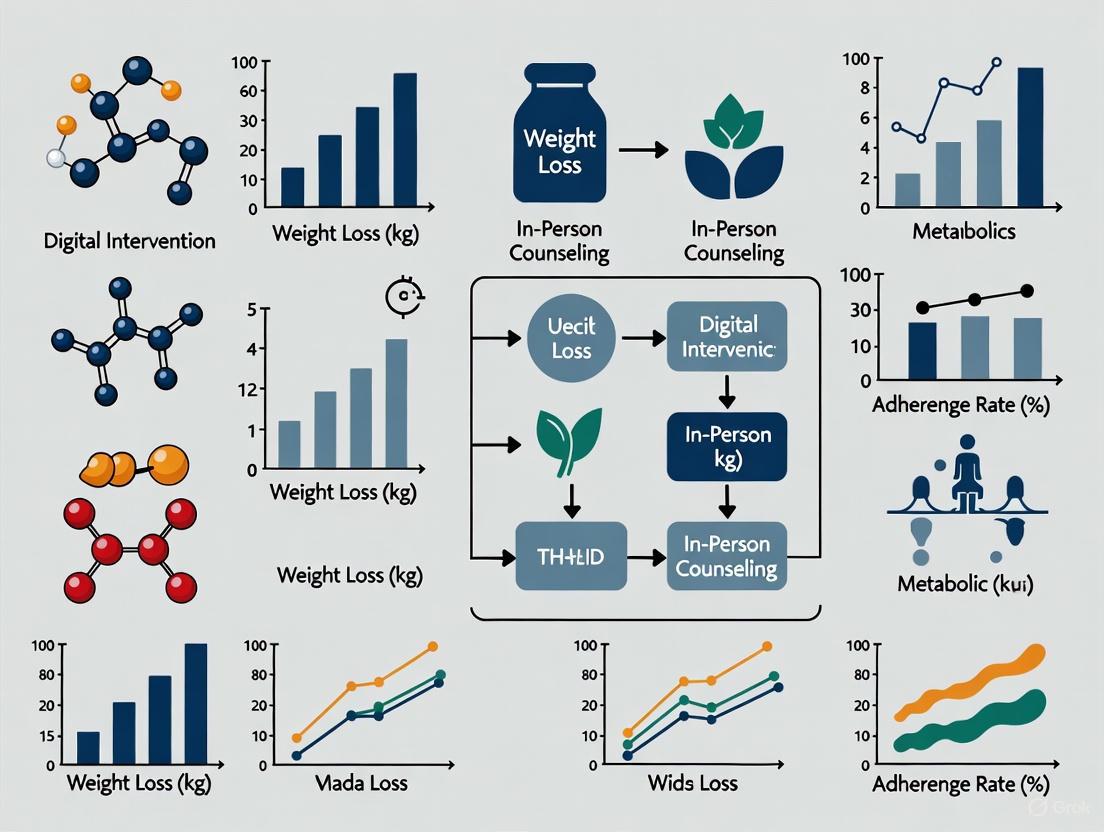
This article synthesizes current evidence on the comparative effectiveness of digital and in-person dietary interventions, a critical consideration for researchers and drug development professionals designing clinical trials and public health...
Digital vs. In-Person Dietary Interventions: A Comparative Review of Efficacy, Application, and Future Directions for Biomedical Research
Abstract
This article synthesizes current evidence on the comparative effectiveness of digital and in-person dietary interventions, a critical consideration for researchers and drug development professionals designing clinical trials and public health strategies. It explores the foundational evidence establishing the efficacy of both modalities, examines the specific behavior change techniques and methodologies that drive success, and addresses key challenges in intervention design, including cultural tailoring and long-term engagement. By evaluating head-to-head comparative studies and meta-analyses, this review provides a evidence-based framework for selecting, optimizing, and validating dietary intervention modalities to improve adherence and outcomes in both research and clinical practice.
Establishing the Evidence Base: Efficacy of Digital and In-Person Dietary Modalities
The escalating global prevalence of obesity necessitates evidence-based strategies for effective weight management [1] [2]. Lifestyle interventions remain the cornerstone of obesity treatment, but their delivery format has evolved significantly with technological advancements [1] [3]. Traditionally, in-person interventions have been the gold standard, offering direct practitioner support and structured monitoring. However, digital health interventions have emerged as promising alternatives, potentially increasing accessibility and reducing costs while maintaining effectiveness [4].
The comparative effectiveness of these approaches remains a critical question for researchers, healthcare providers, and policy makers. This review synthesizes meta-analytic evidence from direct comparisons between digital and in-person dietary interventions, providing a rigorous examination of weight loss outcomes, methodological considerations, and implications for clinical practice and research.
Methodological Approaches in Comparative Effectiveness Research
Study Designs and Participant Characteristics
Comparative studies of weight loss interventions employ various methodological approaches, each with distinct strengths and limitations. Randomized controlled trials (RCTs) represent the highest quality evidence, with recent non-inferiority designs specifically testing whether digital interventions perform no worse than in-person approaches [4]. These trials typically enroll adults with overweight or obesity (BMI ≥ 25-30 kg/m²), often with comorbid conditions such as type 2 diabetes or cardiovascular risk factors [5] [4].
Retrospective cohort studies provide complementary real-world evidence by analyzing data from participants self-selecting into different intervention formats [1] [3]. These studies often include larger sample sizes but may be susceptible to selection bias. For instance, one retrospective analysis compared 133 participants in an in-person program with 9,603 participants in a digital program, demonstrating the scalability of digital approaches [1].
Table 1: Key Study Characteristics in Weight Loss Intervention Research
| Study Characteristic | In-Person Interventions | Digital Interventions |
|---|---|---|
| Sample Sizes | Typically smaller (n=100-500) | Often larger (n=1,000-10,000+) |
| Participant Demographics | Often limited geographically | Broader geographical representation |
| Duration of Follow-up | Often 6-24 months | Varies widely (weeks to months) |
| Data Collection Methods | Direct measurement by staff | Often self-reported via platforms |
| Attrition Rates | 20-50% over 6-12 months | Can exceed 80% in some digital formats |
Core Intervention Components Across Modalities
Despite delivery format differences, effective weight loss interventions share common components. The Mayo Clinic Diet framework exemplifies this, implementing similar core principles in both in-person and digital formats: an initial "Lose It" phase focused on habit change and rapid weight loss, followed by a "Live It" phase for long-term maintenance [3]. Both approaches emphasize caloric reduction, increased physical activity, and behavior change techniques like self-monitoring and goal setting [3] [6].
Technical implementation varies, with in-person interventions relying on face-to-face sessions with multidisciplinary teams [3], while digital interventions deploy automated tracking tools, virtual coaching, and online support communities [1] [4]. The specific behavior change techniques employed significantly influence outcomes, with goal setting, feedback on behavior, social support, prompts/cues, and self-monitoring consistently associated with better adherence and effectiveness [6].
Comparative Efficacy of Digital vs. In-Person Interventions
Weight Loss Outcomes
Direct comparisons reveal nuanced patterns in weight loss outcomes between intervention formats. A large retrospective cohort study (n=9,736) found digital interventions superior, with participants achieving significantly greater percentage of total body weight loss (TBWL%) at 1, 3, and 6 months compared to in-person participants (5.3% vs. 2.9% at 6 months; p<0.001) [1] [3]. After adjusting for covariates, the digital group maintained a 2.0% greater TBWL% and had 66% higher odds of achieving >5% TBWL at 6 months [1].
Conversely, a randomized non-inferiority trial specifically designed to test equivalence found comparable effectiveness between formats [4]. Both groups achieved clinically significant weight loss over 6 months, with the digital intervention meeting non-inferiority criteria compared to the in-person program [4]. This suggests that well-designed digital interventions can achieve similar outcomes as traditional approaches.
Table 2: Weight Loss Outcomes Across Comparative Studies
| Study/Design | Digital Intervention Results | In-Person Intervention Results | Statistical Significance |
|---|---|---|---|
| Retrospective Cohort [1] | 5.3% TBWL at 6 months | 2.9% TBWL at 6 months | p < 0.001 |
| Randomized Non-Inferiority Trial [4] | Met non-inferiority criteria | Reference standard | Non-inferiority established |
| Randomized Controlled Trial [5] | -4.6 kg at 24 months | -5.1 kg at 24 months | No significant difference |
Long-term outcomes (24 months) from a randomized controlled trial showed both remote-only and in-person support groups achieved clinically significant weight loss compared to controls (-4.6 kg and -5.1 kg, respectively), with no significant difference between active interventions [5]. This demonstrates the potential for both formats to support sustained weight management.
Secondary Health Outcomes
Beyond weight loss, both intervention formats improve important secondary health outcomes. Digital interventions demonstrate particular benefits for waist circumference reduction [7] [8], glycemic control in patients with diabetes [4], and improvements in dietary behaviors like increased fruit and vegetable consumption [7] [6].
One meta-analysis of digital dietary interventions for chronic conditions found significant improvements in waist circumference (-2.24 cm), body weight (-1.94 kg), and hemoglobin A1c (-0.17%) [7]. These modest but clinically relevant improvements highlight the potential of digital approaches to address cardiometabolic risk factors beyond weight alone.
The Evolving Landscape of Pharmacological Interventions
Recent advances in obesity pharmacotherapy have introduced new dimensions to weight management. Network meta-analyses demonstrate the superior efficacy of newer agents, particularly semaglutide and tirzepatide, which achieve more than 10% total body weight loss versus placebo [2] [9]. These medications address the biological mechanisms of obesity, complementing lifestyle interventions regardless of delivery format.
The comparative effectiveness of pharmacological agents is increasingly relevant for clinical decision-making. Tirzepatide and semaglutide show not only significant weight reduction but also benefits for obesity-related complications including type 2 diabetes remission, cardiovascular risk reduction, and obstructive sleep apnea improvement [2]. However, safety considerations remain important, with gastrointestinal adverse events being common and leading to treatment discontinuation in some cases [9].
Table 3: Efficacy of Pharmacological Agents for Weight Management
| Medication | Weight Loss vs. Placebo | Key Clinical Benefits | Notable Safety Considerations |
|---|---|---|---|
| Tirzepatide | >10% TBWL | T2D remission, OSA improvement, MASH reduction | GI adverse events common |
| Semaglutide | >10% TBWL | Reduced MACE, improved knee OA pain | GI adverse events, gallbladder disorders |
| Liraglutide | <10% TBWL | Cardiovascular benefits | GI adverse events |
| Orlistat | ~3% TBWL vs. placebo | Modest cardiovascular risk reduction | GI side effects, fat-soluble vitamin deficiency |
Methodological Considerations and Implementation Challenges
Adherence and Engagement Factors
Engagement patterns differ substantially between intervention formats. Digital interventions face challenges with high attrition rates, with some studies reporting dropout exceeding 80% [4] [6]. Effective engagement strategies include personalized feedback, gamification elements, social support features, and regular prompts [6]. Interventions incorporating these techniques demonstrate adherence rates between 63% and 85.5% [6].
In-person interventions typically show higher retention but face barriers related to accessibility, time constraints, and geographical limitations [5]. The hybrid models emerging in recent research attempt to balance the accessibility of digital tools with the accountability of personal contact [5].
Measurement and Methodological Heterogeneity
Substantial heterogeneity in outcome measurement complicates cross-study comparisons. Digital interventions often rely on self-reported weight data [3], while in-person programs typically use directly measured metrics [5]. This methodological difference may introduce bias, though research suggests self-reported weight generally correlates well with measured weight.
Variability in intervention intensity, duration, and specific components also challenges direct comparison. The behavior change technique taxonomy provides a framework for standardizing intervention descriptions [6], but implementation differences remain significant. Future research would benefit from standardized outcome measures, detailed reporting of intervention components, and longer-term follow-up periods.
Visual Synthesis of Comparative Evidence
The following diagram synthesizes the comparative effectiveness evidence and key moderating factors identified in this review:
Essential Research Reagents and Methodological Tools
Table 4: Key Methodological Components for Weight Loss Intervention Research
| Research Component | Function/Purpose | Examples/Standards |
|---|---|---|
| Randomization Procedures | Minimizes selection bias | Stratified randomization, block randomization |
| Weight Assessment Methods | Primary outcome measurement | Direct measurement, validated scales, self-report protocols |
| Dietary Intake Measures | Assess intervention fidelity and mechanisms | Food frequency questionnaires, 24-hour recalls, digital food tracking |
| Behavior Change Technique Taxonomy | Standardizes intervention description | BCT Taxonomy v1 (93 techniques) |
| Adherence Metrics | Evaluates intervention engagement | Session attendance, platform logins, self-monitoring frequency |
| Statistical Methods for Missing Data | Addresses attrition bias | Multiple imputation, mixed-effects models, sensitivity analyses |
The evidence synthesized in this review demonstrates that well-designed digital interventions can achieve weight loss outcomes comparable to, and in some cases superior to, traditional in-person approaches. The comparative effectiveness depends significantly on specific intervention components, particularly the behavior change techniques employed and strategies to maintain engagement.
Future research should prioritize head-to-head trials using standardized outcome measures, longer-term follow-up to assess weight maintenance, and subgroup analyses to identify patient characteristics associated with success in different intervention formats. As digital technologies evolve and pharmacological options expand, the optimal approach to weight management will likely involve personalized combinations of lifestyle and medical interventions tailored to individual preferences, needs, and biological factors.
The rising global burden of cardiometabolic diseases necessitates effective intervention strategies for risk factor reduction, including elevated body mass index (BMI), dysglycemia, and dyslipidemia. Within this context, the mode of intervention delivery—digital versus traditional in-person methods—has become a critical area of comparative effectiveness research. Digital health interventions (DHIs), encompassing mobile applications, online platforms, and remote monitoring, offer the potential to increase accessibility and scalability. This guide objectively compares the performance of digital and in-person dietary and lifestyle interventions in reducing cardiometabolic risk factors, supported by current experimental data and detailed methodologies from key studies. The analysis is framed by a growing body of evidence, including a 2025 meta-analysis of 118 randomized controlled trials (RCTs) which found that DHIs significantly reduced HbA1c and fasting blood glucose in patients with type 2 diabetes, though effects on physical activity and insulin resistance were not significant [10]. Conversely, a separate 2025 meta-analysis of 34 RCTs concluded that digital and nondigital behavioral interventions are generally equally effective for improving a wide range of cardiovascular risk factors [11].
Comparative Data Synthesis: Digital vs. In-Person Interventions
The following tables synthesize quantitative data on the effectiveness of various intervention types in modifying key cardiometabolic risk factors, providing a direct comparison of outcomes.
Table 1: Impact of Digital Health Interventions (DHIs) on Cardiometabolic Risk Factors
| Risk Factor | Intervention Type | Number of Studies/Participants | Reported Change (Mean Difference, MD) | Key Findings |
|---|---|---|---|---|
| HbA1c (%) | Overall DHI [10] | 118 RCTs (21,662 participants) | MD = -0.32% to -0.54% | Significant reduction vs. usual care (p < 0.05); online platforms most effective (MD = -0.54) |
| Fasting Blood Glucose | Overall DHI [10] | 118 RCTs (21,662 participants) | MD = -0.30 to -0.85 mmol/L | Significant reduction vs. usual care (p < 0.05) |
| LDL-C | Smartphone App-Based [12] | 76 studies (46,000+ participants) | MD = -7.63 mg/dL (-0.20 mmol/L) | Significant reduction at 6 months; greater effect in East Asian populations |
| Body Weight | Digital vs. Nondigital (Dietary) [11] | 34 RCTs (17,389 participants) | MD = -0.66 kg | Digital dietary interventions superior to nondigital for weight loss |
| BMI (kg/m²) | Digital vs. Nondigital (Dietary) [11] | 34 RCTs (17,389 participants) | MD = -0.25 kg/m² | Digital dietary interventions superior to nondigital for BMI reduction |
| Total Cholesterol | Digital vs. Nondigital (Physical Activity) [11] | 34 RCTs (17,389 participants) | MD = -3.55 mg/dL (-0.09 mmol/L) | Digital physical activity interventions superior to nondigital |
Table 2: Impact of Traditional and In-Person Programs on Cardiometabolic Risk Factors
| Risk Factor | Intervention Type / Study | Number of Studies/Participants | Reported Change | Key Findings |
|---|---|---|---|---|
| Body Weight | US DPP-based Programs [13] | 44 studies (8,995 participants) | -3.77 kg (95% CI: -4.55; -2.99) | Programs with maintenance components achieved greater weight loss (additional -1.66 kg) |
| HbA1c (%) | US DPP-based Programs [13] | 44 studies (8,995 participants) | -0.21% (95% CI: -0.29; -0.13) | Effective in real-world translation outside of clinical trial settings |
| Fasting Blood Glucose | US DPP-based Programs [13] | 44 studies (8,995 participants) | -2.40 mg/dL (95% CI: -3.59; -1.21) | - |
| Systolic BP | US DPP-based Programs [13] | 44 studies (8,995 participants) | -4.29 mmHg (95% CI: -5.73, -2.84) | - |
| LDL-C | Lifestyle DTx [14] | 23 studies (Scoping Review) | 14 studies reported significant reduction (p<0.05) | LI-DTx optimized LDL-C through remote diet, exercise, and education interventions |
| BMI z-scores | Pediatric Program (In-Person) [15] | 27 participants (Matched cohort) | Small, non-significant decrease | No significant difference in outcomes compared to virtual delivery |
Table 3: Head-to-Head Comparisons of Digital vs. In-Person Delivery
| Comparison Context | Risk Factor | Digital Intervention Result | In-Person Intervention Result | Conclusion |
|---|---|---|---|---|
| AI-DPP vs. Human-Led DPP [16] | 5% Weight Loss & Activity Goal | 31.7% met composite benchmark | 31.9% met composite benchmark | Non-inferior effectiveness; AI group had higher initiation (93.4% vs 82.7%) and completion (63.9% vs 50.3%) |
| Virtual vs. In-Person Pediatric Program [15] | BMI z-score | No significant change | No significant change | No statistically significant differences in anthropometric, cardiometabolic, or mental health outcomes |
| Digital vs. Nondigital Interventions [11] | Fasting Blood Glucose | MD = -0.31 mg/dL | Reference | Digital dietary interventions achieved significantly greater reduction |
| Personalized vs. Conventional Nutrition [17] | HDL-C | Greater increase | Reference | Personalized education was more effective, particularly in women |
Detailed Experimental Protocols
To ensure the reproducibility of findings and facilitate critical appraisal, this section details the methodologies of key experiments cited in the comparison.
Protocol 1: Meta-Analysis of Digital Health Interventions for T2DM
- Objective: To evaluate the effectiveness of DHIs on glycemic control and physical activity in type 2 diabetes patients [10].
- Registration & Guidelines: Prospectively registered in PROSPERO (CRD420251032375) and conducted per PRISMA guidelines.
- Search Strategy: Five electronic databases (Web of Science, Embase, Scopus, Cochrane, PubMed) were searched through February 2025.
- Eligibility Criteria: Included RCTs with T2DM participants where the intervention group received DHIs (mobile apps, SMS, online platforms, remote monitoring) and the control group received usual care.
- Data Extraction: Two independent investigators extracted data on intervention characteristics, participant demographics, and outcomes (HbA1c, FBG, PBG, HOMA-IR, physical activity).
- Statistical Analysis: Meta-analyses employed random/fixed-effect models in Review Manager 5.3. Mean differences (MD) and standardized mean differences (SMD) were calculated for continuous outcomes. Heterogeneity was assessed using the I² statistic, with subgroup and sensitivity analyses performed for high heterogeneity (I² > 50%). Risk of bias was evaluated using the Cochrane RoB 2 tool [10].
Protocol 2: RCT Comparing AI vs. Human-Led Diabetes Prevention Programs
- Objective: To test whether a fully AI-driven DPP provides similar health benefits as yearlong, group-based programs led by human coaches [16].
- Trial Design: Phase III randomized controlled trial funded by the NIH.
- Participants: 368 middle-aged volunteers with prediabetes. Participants were 71% female, 61% white, 27% Black, and 6% Hispanic.
- Intervention Groups: Referral to either one of four remote, human-led DPPs or a reinforcement learning algorithm app that delivered personalized push notifications for weight management, physical activity, and nutrition.
- Outcome Measures: The primary benchmark was the CDC-defined composite for diabetes risk reduction (≥5% weight loss, ≥4% weight loss plus 150 min/week of physical activity, or an absolute A1C reduction of ≥0.2%). Engagement metrics (initiation and completion) were also tracked.
- Analysis: Outcomes were compared at 6 and 12 months. The researchers did not promote engagement after referral, allowing for a real-world comparison of adherence [16].
Protocol 3: Digital vs. Nondigital Behavioral Interventions Meta-Analysis
- Objective: To assess whether digital behavioral interventions improve cardiovascular risk factors more effectively than nondigital interventions [11].
- Search Strategy: Seven electronic databases were searched from 1990 to 2024.
- Eligibility Criteria: Included RCTs directly comparing digital (mobile apps, web platforms, wearables) and nondigital (face-to-face, paper-based) behavioral interventions in adults, reporting on body composition, blood pressure, blood glucose, or lipids.
- Data Analysis: A random-effects meta-analysis was performed to pool unstandardized between-intervention mean differences. Subgroup analyses were conducted based on intervention duration, risk of bias, and behavioral intervention type (e.g., diet, physical activity). Publication bias was assessed with funnel plots and Egger's test for analyses involving 10 or more studies [11].
Visualizing Comparative Effectiveness Research Workflows
The following diagram illustrates the standard workflow for conducting a systematic review and meta-analysis that compares digital and in-person interventions, a common methodology in this field.
The Scientist's Toolkit: Research Reagent Solutions
This table catalogues key methodological components and tools essential for conducting rigorous research in the comparison of digital and in-person lifestyle interventions.
Table 4: Essential Methodological Components for Comparative Intervention Research
| Item / Concept | Function in Research Context | Example from Search Results |
|---|---|---|
| PRISMA Guidelines | Provides a standardized framework for conducting and reporting systematic reviews, ensuring transparency and completeness. | Used in multiple meta-analyses to guide the review process [10] [11]. |
| PROSPERO Registration | A prospective international register for systematic reviews, helping to minimize bias by documenting the study plan before commencement. | The DHI meta-analysis was registered under CRD420251032375 [10]. |
| Cochrane RoB 2 Tool | A standardized tool for assessing the risk of bias in the results of randomized controlled trials. | Employed to evaluate the quality of included RCTs [10] [11]. |
| Random-Effects Model | A statistical model used in meta-analysis that assumes varying true effects across studies, often preferred when heterogeneity is present. | Used to pool effect sizes and calculate summary estimates [11] [13]. |
| I² Statistic | Quantifies the percentage of total variation across studies that is due to heterogeneity rather than chance. | Used to interpret heterogeneity, with I² > 50% indicating substantial heterogeneity [10]. |
| Propensity Score Matching | A statistical matching technique that attempts to estimate the effect of a treatment by accounting for covariates that predict receiving the treatment. | Used in an observational study to balance covariates between intervention and control groups [17]. |
| Digital Intervention Platforms | The software or hardware used to deliver the remote intervention, a key variable defining the treatment group. | Examples include smartphone apps, wearable activity trackers, and online platforms [10] [14] [18]. |
The escalating global burden of diet-related chronic diseases has intensified the focus on dietary quality improvements, particularly through increasing consumption of fruits and vegetables while moderating meat intake. Within public health and clinical research, a critical question has emerged: how do digitally delivered interventions compare to traditional in-person methods for facilitating these dietary changes? This comparison guide objectively examines the experimental evidence surrounding the efficacy of both modalities, providing researchers and drug development professionals with a synthesized analysis of intervention outcomes, methodologies, and implementation fidelity.
The comparative effectiveness of these approaches is not merely academic; it directly influences resource allocation, program scalability, and ultimately, population health outcomes. Digital interventions promise unprecedented reach and scalability, potentially overcoming barriers of geography and cost [3]. In contrast, in-person interventions offer the value of direct human interaction and personalized coaching, which may enhance accountability and adherence [19]. This guide systematically presents the experimental data and protocols behind these competing paradigms, focusing on their capacity to modify specific dietary components—fruits, vegetables, and meats—within the broader context of improved dietary patterns.
Comparative Efficacy Data: Digital vs. In-Person Interventions
Weight Loss and Clinical Outcomes
Table 1: Comparative Weight Loss Outcomes from Lifestyle Interventions
| Intervention Type | Study Duration | Participant Characteristics | Weight Loss Outcome | Statistical Significance | Source |
|---|---|---|---|---|---|
| Digital Enhanced (DELI) | 6 months | Adults with obesity (BMI 33.1); 85% female | -5.3% TBWL | p < 0.001 | [3] |
| In-Person (IPLI) | 6 months | Adults with obesity (BMI 36.4); 65.4% female | -2.9% TBWL | [3] | |
| Digital (Diabetes Prevention) | 12 months | Adults with prediabetes | -1.38 kg mean difference vs. in-person | Moderate certainty | [20] |
| In-Person (Diabetes Prevention) | 12 months | Adults with prediabetes | Reference | [20] |
TBWL: Total Body Weight Loss
The data from a large-scale retrospective cohort study directly comparing two versions of the same program (The Mayo Clinic Diet) indicates that the digital enhanced lifestyle intervention (DELI) produced statistically superior weight loss compared to the in-person (IPLI) version at 1, 3, and 6 months [3]. This difference remained significant even after adjusting for age, gender, and starting weight. A separate systematic review of randomized controlled trials (RCTs) for diabetes prevention also found that at 12 months, digital interventions were associated with significantly greater weight loss than in-person interventions, with a mean difference of -1.38 kg [20].
Dietary Pattern Adherence and Food Group Intake
Table 2: Dietary Pattern Effectiveness for Metabolic Health
| Dietary Pattern | Primary Characteristics | Impact on Waist Circumference | Impact on Blood Pressure | Impact on Fasting Glucose | Source |
|---|---|---|---|---|---|
| Vegan Diet | Plant-based, excludes meat, dairy, eggs | Best (Ranked 1st) MD: -12.00 cm | Not the most effective | Not the most effective | [21] |
| DASH Diet | High in fruits, vegetables, whole grains; low in red meat | Effective MD: -5.72 cm | Best for SBP (Ranked 1st) MD: -5.99 mmHg | Not the most effective | [21] |
| Ketogenic Diet | Very low carbohydrate, high fat | Not the most effective | Best for DBP (Ranked 1st) MD: -9.40 mmHg | Effective | [21] |
| Mediterranean Diet | Plant-rich, unsaturated fats, moderate fish/dairy | Effective | Effective | Best (Ranked 1st) | [21] |
| AHEI | Rich in plant-based foods, moderate healthy animal foods | N/A | N/A | N/A | [22] |
AHEI: Alternative Healthy Eating Index; DASH: Dietary Approaches to Stop Hypertension; SBP: Systolic Blood Pressure; DBP: Diastolic Blood Pressure; MD: Mean Difference vs. control.
Network meta-analysis of 26 RCTs revealed that specific dietary patterns, which inherently promote shifts in fruit, vegetable, and meat consumption, have distinct effects on metabolic syndrome components [21]. The Vegan and DASH diets, both emphasizing high fruit and vegetable intake and reduced meat consumption, were most effective for reducing waist circumference. The DASH diet was also the most effective for lowering systolic blood pressure.
Long-term observational data from large cohort studies (the Nurses' Health Study and the Health Professionals Follow-Up Study) further demonstrate that higher adherence to healthy dietary patterns like the AHEI is associated with significantly greater odds of "healthy aging" [22]. This multidimensional health outcome was strongly linked to higher intakes of fruits, vegetables, whole grains, nuts, and legumes, and lower intakes of red and processed meats.
Experimental Protocols and Methodologies
Digital Intervention Protocols
Digital interventions for dietary improvement employ structured, often automated, protocols delivered via web or mobile platforms.
- The Mayo Clinic Diet (DELI): This protocol includes a 2-week "Lose It!" phase focused on adopting 15 healthy habits, followed by an ongoing "Live It!" phase for long-term maintenance. The diet uses a food group system with assigned daily servings across fruits, vegetables, protein/dairy, carbohydrates, fats, and sweets. A key feature is the encouragement of unlimited consumption of healthy, low-energy-dense fruits and vegetables. Digital tools include:
- Self-Monitoring Trackers: For food, activity, and weight.
- Automated Feedback: Weekly behavioral lessons and personalized feedback via email.
- Support Communities: Access to a private Facebook group for peer support [3].
- Simplified vs. Detailed Self-Monitoring (Spark Pilot): This fully remote RCT protocol tested two digital self-monitoring approaches for weight loss in racial and ethnic minority adults.
- Detailed Tracking Arm: Participants used the Fitbit app to log all foods and drinks consumed daily.
- Simplified Tracking Arm: Participants used a web-based checklist to log only "red zone" foods (highly caloric, low-nutrition foods) each day.
- Both groups also self-monitored steps and weight daily and received weekly behavioral lessons and action plans [23].
In-Person Intervention Protocols
In-person protocols typically involve direct contact with healthcare professionals in a structured setting.
- The Mayo Clinic Diet (IPLI): This protocol begins with a "Lose It" phase conducted at home, followed by a intensive 2-day, in-person program at a medical center. The core components are:
- Multi-Disciplinary Coaching: Sessions with dietitians, wellness coaches, and physical therapists.
- Individualized Assessments: Physical activity assessment and personalized diet and activity plans.
- Didactic Sessions: Educational sessions on healthy living, physical activity, and resiliency.
- Follow-up: Weekly visits with a wellness coach for 12 weeks to discuss challenges and goals [3].
- Digital Nutrition Education for Older Adults: This hybrid protocol involved an initial in-person technology training session for older, technologically-limited adults. This was followed by online nutrition education delivered via Google Classroom. The in-person component was critical for building digital literacy and enabling participation in the subsequent digital intervention [19].
Dietary Feeding Trial Protocol (DG3D)
The Dietary Guidelines: 3 Diets (DG3D) study was a 12-week randomized controlled feeding trial designed to compare the adoption of three USDA dietary patterns among African American adults.
- Intervention Arms: Participants were randomized to one of three unmodified dietary patterns: Healthy U.S.-Style (H-US), Healthy Mediterranean-Style (Med), or Healthy Vegetarian (Veg).
- Intervention Components:
- Weekly Nutrition Classes: Conducted via Zoom, covering nutrition knowledge and self-efficacy.
- Cooking Demonstrations: Led by a chef to teach practical cooking skills.
- Food Samples: Participants picked up weekly food samples.
- Behavioral Strategies: Incorporation of lessons from the Diabetes Prevention Program.
- MyPlate App: Participants used the USDA app to set daily food goals [24].
Diagram 1: Core components of digital and in-person dietary intervention protocols.
Implementation Fidelity and Cultural Relevance
Beyond efficacy, successful implementation of dietary interventions depends on fidelity and cultural acceptability.
- Implementation Fidelity: A cluster randomized controlled trial of a digital nutrition education program for community-dwelling older adults demonstrated that high fidelity (>90% across key metrics) is achievable. Key factors included high attendance rates (97% for tech training, 94% for nutrition classes) and high participant satisfaction (96% with the online platform) [19].
- Cultural Relevance: Qualitative research embedded within the DG3D feeding trial highlighted that cultural adaptations are necessary for the successful adoption of USDA dietary patterns among African American adults. Participants reported a need for adaptations to enhance cultural relevance and program implementation, suggesting that unmodified national guidelines may not fully meet the needs of diverse populations [24].
The Scientist's Toolkit: Research Reagent Solutions
Table 3: Essential Research Tools for Dietary Intervention Studies
| Tool / Reagent | Primary Function | Application Example | Source |
|---|---|---|---|
| NESR Systematic Reviews | Provides rigorous, protocol-driven synthesis of scientific evidence on diet and health. | Used by the Dietary Guidelines Advisory Committee to inform the 2020-2025 DGA. | [25] |
| Food Pattern Modeling | Models how changes to food group amounts/types impact nutrient intake across a population. | Used to develop dietary patterns for infants/toddlers in the 2020-2025 DGA. | [25] |
| Healthy Eating Index (HEI) | A validated metric for assessing diet quality and adherence to Dietary Guidelines. | Primary outcome in the DG3D trial to measure diet quality. | [24] |
| Digital Self-Monitoring Platforms (e.g., Fitbit App) | Enables detailed, real-time tracking of dietary intake, physical activity, and weight. | Used in the "detailed" arm of the Spark Pilot Study for dietary self-monitoring. | [23] |
| Simplified Self-Monitoring Checklists | Low-burden tracking of specific target foods or behaviors to enhance engagement. | Used in the "simplified" arm of the Spark Pilot Study to track "red zone" foods. | [23] |
Diagram 2: Logical workflow and key decision points in dietary intervention research.
The evidence synthesized in this guide indicates that both digital and in-person dietary interventions are viable strategies for improving dietary quality, with effects manifesting in increased fruit and vegetable consumption, moderated meat intake, and improved health outcomes. The choice between digital and in-person modalities is not a matter of absolute superiority but depends on the target population, desired outcomes, and resource constraints.
Digital interventions demonstrate strong efficacy, particularly for weight loss, and offer advantages in scalability, accessibility, and potentially lower cost [3] [20]. Their effectiveness can be enhanced by simplifying self-monitoring to reduce user burden [23]. In-person interventions remain a powerful method, especially when hands-on skill development, high-touch accountability, or addressing technological barriers are priorities [19]. Future research should prioritize long-term outcomes, cost-effectiveness analyses, and the development of hybrid models that leverage the strengths of both approaches to maximize reach, engagement, and sustained dietary improvement across diverse populations.
The escalating global burden of diet-related non-communicable diseases has intensified the focus on effective dietary interventions. Within public health and clinical research, a central debate concerns the comparative effectiveness of digital tools against traditional in-person protocols. This guide objectively examines the scope, experimental data, and methodological approaches of both modalities to inform researchers and drug development professionals. Evidence synthesized from recent, rigorous studies demonstrates that digital and in-person interventions each occupy distinct yet sometimes overlapping niches, with effectiveness influenced by specific design elements, target populations, and outcome measures.
Comparative Outcome Data: Digital vs. In-Person Interventions
The following tables summarize key quantitative findings from controlled studies and reviews, providing a high-level comparison of intervention performance across critical metrics.
Table 1: Summary of Key Comparative Outcomes
| Intervention Modality | Study Duration | Primary Outcome Measure | Key Result | Source |
|---|---|---|---|---|
| Digital Enhanced LI (DELI) | 6 Months | Total Body Weight Loss % (TBWL%) | 5.3% TBWL | [1] |
| In-Person LI (IPLI) | 6 Months | Total Body Weight Loss % (TBWL%) | 2.9% TBWL | [1] |
| Web-based Sustainable Nutrition | 4 Weeks | Sustainable & Healthy Eating Behaviours Score | Increase from 3.9 to 4.2 (p<0.05) | [26] |
| Supermarket & Web-based (Strategy 2) | 3 Months | DASH Score (Dietary Quality) | Increase of 12.4 points | [27] |
| Supermarket & Web-based (Strategy 1) | 3 Months | DASH Score (Dietary Quality) | Increase of 8.6 points | [27] |
| Enhanced Control (In-person education) | 3 Months | DASH Score (Dietary Quality) | Increase of 5.8 points | [27] |
Table 2: Effectiveness of Digital Interventions for Specific Goals (Based on Scoping Reviews)
| Target Goal or Population | Digital Platform | Key Findings from Review | Source |
|---|---|---|---|
| Nutrition Knowledge & PA in LMICs | Social media, text messages, apps, websites | Majority of studies reported significant improvements in knowledge and healthy food consumption. | [28] |
| Adolescent Dietary Behaviours | Smartphone apps, web platforms | Mixed outcomes; challenges in maintaining long-term engagement and adherence. | [6] |
| Fruit & Vegetable Intake / Fat Reduction (Workplace) | Multi-component (e.g., education, environmental changes) | Evidence was strongest for these outcomes in workplace settings. | [29] |
| Weight Loss / Cholesterol Reduction (Workplace) | Multi-component (e.g., education, environmental changes) | Evidence was strongest for these outcomes in workplace settings. | [29] |
Detailed Experimental Protocols
To ensure methodological rigor and reproducibility, this section delineates the core protocols from key cited experiments.
Protocol for Web-Based Sustainable Nutrition Education
This study demonstrates the efficacy of a structured, fully automated digital educational program [26].
- Study Design: Pre-post design without a control group, with data collected at baseline and 4 weeks post-education.
- Participants: 397 young adults in Türkiye, without prior expertise in sustainable nutrition.
- Intervention Modality: A fully web-based education program hosted on a dedicated website.
- Intervention Content: The program consisted of eight modules, each 3-4 minutes long (30 minutes total), based on the Social Cognitive Theory and the sub-scales of the Sustainable and Healthy Eating Behaviours scale. Modules covered:
- Quality labels
- Seasonal food and avoiding food waste
- Animal welfare
- Meat reduction
- Healthy and balanced diet
- Local food
- Low fat
- Summary module
- Data Collection: Online questionnaires collected demographic data, anthropometric measurements, e-Healthy Diet Literacy scores, sustainable food preferences, and Sustainable and Healthy Eating Behaviours scores.
Protocol for Supermarket and Web-Based Trial (SuperWIN)
This randomized, controlled trial exemplifies a hybrid protocol integrating in-person and digital components within a real-world retail setting [27].
- Study Design: Multisite, randomized, controlled trial (NCT03895580) with a 2:2:1 randomization ratio.
- Participants: 247 adults from a community-based population.
- Control Group (Enhanced): Received medical nutrition therapy educational components beyond the routine standard of care.
- Strategy 1 (In-Person Protocol):
- Core Modality: Individualized, in-person, dietitian-led education.
- Data Guidance: Interventions were guided by the participant's own purchasing data.
- Setting: Focused on the in-store shopping environment.
- Strategy 2 (Hybrid Digital/In-Person Protocol):
- Core Modality: Included all components of Strategy 1.
- Digital Enhancement: Added training and access to online tools for shopping, home delivery, selection of healthier purchases, meal planning, and healthy recipes.
- Primary Endpoint: Change in Dietary Approaches to Stop Hypertension (DASH) score from baseline to 3 months.
Protocol for Direct In-Person vs. Digital Comparison
This retrospective cohort study provides a direct, quantitative comparison of weight loss outcomes between the two modalities [1].
- Study Design: Retrospective analysis of two concurrent cohorts.
- Participants: Adults with a BMI ≥25 kg/m² (133 in the In-Person cohort, 9603 in the Digital cohort).
- In-Person Lifestyle Intervention (IPLI):
- Core Modality: A 2-day in-person program.
- Follow-up: Monthly in-person follow-up sessions.
- Digital Enhanced Lifestyle Intervention (DELI):
- Core Modality: On-demand digital tools via The Mayo Clinic Diet platform.
- Content: Included food and activity tracking, educational content, and goal setting.
- Primary Endpoint: Total body weight loss percentage (TBWL%) at 6 months.
Logical Workflow and Signaling Pathways
The following diagram illustrates the conceptual decision-making pathway for selecting and implementing dietary intervention modalities, based on the synthesis of the reviewed studies.
Diagram 1: Intervention Modality Selection Pathway.
The Scientist's Toolkit: Research Reagent Solutions
This table details essential "research reagents"—the core components and tools required to design and implement rigorous dietary intervention studies.
Table 3: Essential Materials for Dietary Intervention Research
| Item / Tool | Function in Research | Example Application in Cited Studies |
|---|---|---|
| Validated Dietary Assessment Scales | Quantifies changes in dietary patterns, knowledge, and behaviours with high reliability. | The Sustainable and Healthy Eating Behaviours (SHEB) scale and e-Healthy Diet Literacy (e-HDL) scale were used to measure pre-post changes in web-based education [26]. |
| Objective Purchasing Data | Provides a behavioral, objective measure of dietary intake and intervention impact, minimizing self-report bias. | The SuperWIN trial used supermarket purchasing data to guide dietitian-led counseling and measure outcomes [27]. Other studies used loyalty card data [30]. |
| Behavior Change Techniques (BCTs) | Active ingredients or strategies designed to alter individual behaviors; essential for protocol design and replication. | Effective BCTs in digital interventions for adolescents included goal setting, feedback, social support, prompts/cues, and self-monitoring [6]. |
| Digital Delivery Platforms | The medium for deploying digital interventions, ranging from simple SMS to sophisticated apps and web platforms. | Studies utilized dedicated websites [26], smartphone apps [28] [6], and social media [28] for delivering content and tracking. |
| Theoretical Frameworks | Provides a conceptual foundation for intervention design, helping to explain and predict behavior change mechanisms. | The web-based sustainable nutrition program was structured following the principles of the Social Cognitive Theory [26]. |
The evidence indicates that the choice between digital and in-person dietary intervention modalities is not a matter of superior versus inferior but rather context-dependent suitability. Digital tools offer scalability, cost-effectiveness, and strong performance in improving knowledge and specific behaviours, with hybrid models showing particular promise for enhancing dietary quality. In-person protocols remain crucial for high-engagement settings and specific populations. Future research should focus on long-term sustainability, personalized intervention matching using predictive biomarkers, and refining hybrid models to leverage the respective strengths of both digital and in-person approaches.
Mechanisms of Action: Core Behavior Change Techniques and Delivery Systems
The management of obesity and chronic diseases through lifestyle interventions has increasingly shifted toward digital delivery formats. These eHealth interventions offer scalable, accessible, and cost-effective solutions for promoting healthy dietary behaviors. Self-monitoring, goal setting, and personalized feedback are core behavior change techniques (BCTs) that underpin both traditional in-person and modern digital strategies. This guide objectively compares the effectiveness of digital and in-person interventions employing these BCTs, synthesizing current experimental data to inform researchers and drug development professionals. The evidence indicates that while digital tools can enhance scalability and engagement, their effectiveness is closely tied to specific implementation methodologies and user adherence.
Comparative Effectiveness Data: Digital vs. In-Person Interventions
Table 1: Weight Loss Outcomes from Digital vs. In-Person Lifestyle Interventions
| Study & Intervention Type | Participant Characteristics | Intervention Duration | Key Outcome: Weight Loss | Statistical Significance (p-value) |
|---|---|---|---|---|
| Digital Enhanced LI (DELI) [1] | n=9,603; Mean BMI 33.1 | 6 months | -5.3% Total Body Weight Loss (TBWL%) | p < 0.001 vs. In-Person |
| In-Person LI (IPLI) [1] | n=133; Mean BMI 36.4 | 6 months | -2.9% Total Body Weight Loss (TBWL%) | Control group |
| Digital Therapy (DTxO) - Overall [31] | n=~103; BMI 30-45 kg/m² | 6 months | -3.2 kg ( -3.0%) | p < 0.001 (vs. baseline) |
| Digital Therapy (DTxO) - High Adherence [31] | n=35; BMI 30-45 kg/m² | 6 months | -7.02 kg ( -6.31%) | p = 0.02 (vs. placebo-adherent) |
Table 2: Engagement and Behavioral Outcomes from Digital Interventions
| Intervention Type / BCT Focus | Engagement / Behavioral Metric | Outcome | Context / Citation |
|---|---|---|---|
| Physical Activity with Feedback [32] | Effect Size (Cohen's d) | d = 0.73 (95% CI [0.09; 1.37]) | Meta-analysis; vs. no feedback |
| Self-Monitoring Prompt (SMP) [33] | Quality of Peer Feedback | Significant Increase (p = .019) | Metacognitive scaffold in online learning |
| Popular Diet Apps [34] | Mean Number of BCTs | 18.3 ± 5.8 | Analysis of 13 popular apps |
| Adolescent Digital Interventions [6] | Adherence with Personalization & Gamification | 63% to 85.5% | Techniques: personalized feedback (n=9), gamification (n=1) |
Experimental Protocols and Methodologies
The DEMETRA Randomized Clinical Trial
The DEMETRA trial was a prospective, multicenter, pragmatic, randomized, double-arm, single-blind, placebo-controlled trial designed to evaluate a digital therapeutic (DTx) for obesity [31].
- Participants: 246 adults aged 18-65 with a BMI between 30-45 kg/m² were recruited from two Italian obesity centers.
- Intervention Arm (DTxO): Used a comprehensive app featuring a personalized low-calorie Mediterranean diet (800 kcal/day deficit), tailored exercise routines, mindfulness components for dietary behavior, and medication reminders. The app provided active feedback.
- Control Arm (Placebo): Used an app that only allowed data logging (diet, physical activity) without any feedback or interactive features. Both groups followed the same dietary protocol.
- Primary Endpoint: Absolute weight change at 6 months.
- Adherence Metric: A key analysis subgrouped participants based on adherence, defined as overall app usage at or above the 75th percentile of daily usage [31].
The HLCP-2 Community-Based Intervention
The Healthy Lifestyle Community Program (cohort 2) was a 24-month non-randomized controlled intervention study with a community-based approach in rural Germany [35].
- Theoretical Framework: Grounded in the Health Action Process Approach (HAPA) model, which distinguishes between a motivation phase (intention formation) and a volition phase (action and maintenance).
- Intervention Group: Received a 10-week intensive group-based lifestyle intervention, followed by a 22-month alumni phase. The program was built on four principles: healthy plant-based diet, physical activity, stress management, and community support.
- Control Group: Received no intervention.
- Psychological Constructs Measured: Questionnaires assessed HAPA constructs, including action self-efficacy, maintenance self-efficacy, recovery self-efficacy, and action/coping planning at multiple time points over 24 months [35].
Conceptual Workflow of Behavior Change Techniques
The following diagram illustrates the theorized pathway through which core BCTs facilitate dietary behavior change, integrating elements from the HAPA model and insights from digital interventions [35].
Behavior Change Technique Pathway. This workflow integrates the HAPA model's phases with core BCTs, showing how goal setting initiates intention, while self-monitoring and feedback create a cycle that supports maintenance and recovery self-efficacy for sustained change [35].
The Scientist's Toolkit: Research Reagent Solutions
Table 3: Essential Tools and Methods for BCT and Digital Intervention Research
| Tool / Method Category | Specific Example | Primary Function in Research | Key Feature / Consideration |
|---|---|---|---|
| BCT Taxonomies | BCT Taxonomy v1 (93-item) [34] | Standardized coding of active intervention components. | Ensures consistent identification and reporting of BCTs. |
| App Quality Assessment | Mobile App Rating Scale (MARS) [34] | Objective rating of app quality, engagement, functionality. | Correlates with number of BCTs implemented (r=0.69) [34]. |
| Theoretical Frameworks | Health Action Process Approach (HAPA) [35] | Models psychological predictors of behavior change. | Distinguishes motivation and volition phases; measures self-efficacy. |
| Digital Tailoring Engines | Rule-Based Algorithms [36] | Automates personalization of feedback and goals. | Used in ~74% of dynamically tailored eHealth interventions [36]. |
| Adherence Metrics | Daily Usage Time (75th Percentile) [31] | Quantifies user engagement with digital tools. | Critical for interpreting efficacy; separates high vs. low adherers. |
| Metacognitive Scaffolds | Self-Monitoring Prompts (SMP) [33] | Improves quality of user-generated data and feedback. | Enhances feedback quality and uptake in online tasks. |
Discussion and Synthesis of Findings
Superior Performance of Digital Modalities: Under specific conditions, digitally-enhanced interventions can outperform in-person care. The DELI program, which provided on-demand digital tools, resulted in significantly greater weight loss at 1, 3, and 6 months (-5.3% TBWL) compared to a structured in-person program (-2.9% TBWL) [1]. This demonstrates the potential of scalable digital solutions to achieve clinically meaningful weight loss (≥5%) [1].
The Critical Role of Adherence and Engagement: The effectiveness of digital tools is not inherent but is mediated by user engagement. The DEMETRA trial found no significant overall difference between its comprehensive DTx app and a simple logging app. However, a pre-specified analysis of "adherent" users (those with usage ≥75th percentile) revealed that high engagers with the active DTx app achieved significantly greater weight loss (-6.31%) than high engagers with the placebo app (-2.78%) [31]. This underscores that intervention efficacy is contingent on adherence, a key variable for researchers to measure.
Personalization and Dynamic Tailoring as Key Mechanisms: Personalization extends beyond simple customization. Effective digital interventions use dynamic tailoring, adapting support based on ongoing user data [36]. This can involve adjusting goal difficulty based on self-reported capabilities [37] or providing context-aware feedback. Research in physical activity interventions suggests personalization is particularly effective for increasing the frequency of a behavior (e.g., suggested sessions per week) [37]. The most effective BCTs in popular diet apps and adolescent interventions are from the 'Goals and planning' and 'Feedback and monitoring' categories, which form a core cycle of self-regulation: set a goal, self-monitor progress, and receive feedback [34] [6].
The Irreplaceable Value of Human Interaction and Theory: Digital tools are most effective when grounded in behavior change theory. The HLCP-2 community intervention, based on the HAPA model, successfully improved key psychological constructs like action self-efficacy and coping planning over 24 months [35]. This highlights that digital interventions should not merely deliver technology but should operationalize theoretical constructs to impact the underlying mechanisms of behavior change. Furthermore, a review of dynamically tailored interventions noted that combining algorithm-driven feedback with human guidance was associated with greater efficacy [36], suggesting a hybrid model may be optimal.
Digital delivery platforms have become integral to modern healthcare, providing scalable tools for administering behavioral interventions, patient communication, and physiological monitoring. This guide examines three critical platform categories—mobile applications, SMS messaging systems, and wearable technology—within the context of dietary intervention research. The comparative effectiveness of digital versus in-person approaches represents a fundamental question for researchers and drug development professionals seeking efficient, evidence-based intervention strategies. Understanding the capabilities, validation methodologies, and performance characteristics of these platforms is essential for designing rigorous clinical trials and implementing effective digital health solutions.
Recent comprehensive analyses suggest digital interventions can achieve comparable, and in some cases superior, outcomes to traditional in-person approaches. A 2024 retrospective study comparing in-person (IPLI) and digitally enhanced (DELI) lifestyle interventions for overweight and obesity found the digital approach resulted in significantly greater weight loss at 1, 3, and 6 months, with the DELI group achieving 5.3% total body weight loss versus 2.9% in the in-person group after adjustment for age, gender, and baseline weight [1]. This growing body of evidence underscores the importance of critically evaluating the technological platforms enabling these interventions.
Comparative Effectiveness: Digital vs. In-Person Interventions
The question of whether digital platforms can effectively deliver behavioral interventions has been systematically investigated across multiple health domains. A 2025 meta-analysis of 34 randomized controlled trials with 17,389 participants directly compared digital versus nondigital behavioral interventions for cardiovascular risk reduction [11]. The overall analysis found no significant differences for most of the 11 cardiovascular risk factors examined, indicating digital interventions are generally as effective as their traditional counterparts.
Table 1: Cardiovascular Risk Factor Changes: Digital vs. Non-Digital Interventions [11]
| Risk Factor | Overall Effect (Digital vs. Non-Digital) | Subgroup Findings |
|---|---|---|
| Body Weight | No significant difference | Digital dietary interventions showed greater reduction (-0.66 kg, CI: -1.26 to -0.06) |
| Body Mass Index (BMI) | No significant difference | Digital dietary (-0.25, CI: -0.43 to -0.07) and combined interventions (-0.20, CI: -0.36 to -0.04) showed greater reduction |
| Fasting Blood Glucose | No significant difference | Digital dietary interventions showed greater reduction (-0.31 mg/dL, CI: -0.57 to -0.05) |
| Total Cholesterol | No significant difference | Digital physical activity interventions showed greater reduction (-3.55 mg/dL, CI: -4.63 to -2.46) |
| Blood Pressure | No significant difference | No significant subgroup differences identified |
| Other Lipid Measures | No significant difference | No significant subgroup differences identified |
Critical subgroup analyses revealed important nuances in effectiveness based on intervention type. Digital dietary interventions specifically demonstrated statistically significant advantages for weight, BMI, and fasting glucose, while digital physical activity interventions showed greater improvements in total cholesterol compared to nondigital approaches [11]. These findings suggest that matching specific digital platform capabilities to intervention goals is crucial for optimizing outcomes.
Mobile Applications and SMS for Intervention Delivery
Platform Capabilities and Security Considerations
Mobile applications and SMS systems represent distinct technological approaches with different security profiles and functional capabilities crucial for research applications.
Table 2: Communication Platform Comparison for Research Applications [38]
| Feature / Protocol | SMS | iMessage | RCS |
|---|---|---|---|
| Encryption | None (plain text) | End-to-End Encryption (E2EE) by default | E2EE only in Google Messages (1:1 chats) |
| Delivery Method | Cellular network | Internet (Wi-Fi or cellular data) | Internet (Wi-Fi or cellular data) |
| Security Score | 10/100 | 85/100 | 60/100 (with E2EE), 30/100 (without) |
| Media Support | Text-only (160 characters) | Full media, reactions, effects | High-res media, typing indicators |
| Compatibility | All mobile phones | Apple devices only | Android phones (inconsistently supported) |
| Best Use in Research | Basic alerts and reminders (non-sensitive data) | Secure communication between Apple devices | Enhanced messaging on Android with some security |
For research involving protected health information, platform security is a critical consideration. Traditional SMS lacks encryption, making it unsuitable for sensitive data, while modern messaging platforms like iMessage provide stronger security through default end-to-end encryption [38]. Research protocols must align platform selection with data security requirements and participant device ecosystems.
Implementation Platforms and Technical Considerations
Bulk messaging platforms enable research implementation at scale. Twilio provides API-driven customization with global scalability, making it suitable for large, international studies requiring tailored communication workflows, though its technical complexity may present barriers for non-technical teams [39]. ClickSend offers a more accessible interface with multi-channel messaging (SMS, email, voice) at lower cost, potentially benefiting studies with limited technical resources [39].
Wearable Technology for Dietary Monitoring
Validation of Wearable Sensing Technology
Automating dietary monitoring represents a significant challenge in nutritional science, with traditional methods like self-reporting prone to substantial error [40]. Wearable sensors offer potential solutions through objective data collection. A 2020 validation study assessed a wristband technology (GoBe2) for estimating energy intake against a reference method where participants consumed calibrated meals in a university dining facility [40].
The Bland-Altman analysis revealed a mean bias of -105 kcal/day with 95% limits of agreement between -1400 and 1189 kcal/day, indicating considerable variability in accuracy at the individual level [40]. The regression equation (Y = -0.3401X + 1963) demonstrated a systematic tendency where the device overestimated at lower calorie intakes and underestimated at higher intakes [40]. These findings highlight the ongoing challenges in achieving precise dietary intake measurement through wearable sensors.
Wearable Dietary Monitoring Principle
Advanced Sensing Approaches
Emerging research explores novel sensing modalities for dietary monitoring. The iEat system utilizes an atypical bio-impedance approach, leveraging unique temporal signal patterns caused by dynamic circuit variations between electrodes during dining activities [41]. This system recognizes food intake activities and food types by deploying a single impedance sensing channel with one electrode on each wrist.
During food intake activities, new parallel circuits form through the hand, mouth, utensils, and food, creating consequential impedance variations [41]. With a lightweight neural network model, iEat detected four food intake-related activities with a macro F1 score of 86.4% and classified seven food types with a macro F1 score of 64.2% in a study involving 40 meals across ten volunteers [41]. This demonstrates the potential for automated dietary monitoring without external instrumented devices.
Experimental Protocols and Methodologies
Validation Study Design for Wearable Dietary Monitors
The validation methodology for wearable nutrition trackers exemplifies rigorous device evaluation [40]:
- Participant Selection: 25 free-living adults recruited with exclusion criteria including chronic diseases, food allergies, restricted diets, medication affecting metabolism, and smoking.
- Study Design: Two 14-day test periods with consistent device use alongside a reference method.
- Reference Method: Collaboration with a university dining facility to prepare and serve calibrated study meals with precise energy and macronutrient quantification.
- Data Collection: Daily dietary intake (kcal/day) measured by both reference and test methods, with 304 input cases collected.
- Statistical Analysis: Bland-Altman tests to compare reference and test method outputs with calculation of mean bias and limits of agreement.
This protocol highlights the importance of controlled meal preparation as a reference standard, adequate testing duration, and appropriate statistical methods for validation studies.
Comparative Trial Methodology for Digital Interventions
The meta-analysis comparing digital and nondigital interventions established rigorous methodology for comparative effectiveness research [11]:
- Search Strategy: Seven electronic databases searched from 1990-2024 using structured terms combining digital technology, behavioral intervention, and cardiovascular risk factors.
- Inclusion Criteria: Randomized controlled trials with adults comparing digital vs. nondigital interventions with outcomes including body composition, blood pressure, blood glucose, or lipids.
- Data Extraction: Pre- and post-intervention means and standard deviations extracted or converted for meta-analysis.
- Quality Assessment: Cochrane Risk of Bias Tool (RoB 2) applied by independent reviewers.
- Statistical Synthesis: Random-effects meta-analysis with inverse variance method, quantifying heterogeneity using I² statistic.
- Subgroup Analysis: Conducted by intervention duration, risk of bias, and behavioral intervention type.
Digital Intervention Meta-Analysis Workflow
Research Reagent Solutions: Essential Tools for Digital Health Research
Table 3: Essential Research Tools for Digital Dietary Monitoring Studies
| Research Tool | Function | Example Applications |
|---|---|---|
| Bioimpedance Sensors | Measures electrical impedance through body tissues to detect dietary activities | iEat system for activity recognition and food classification [41] |
| Continuous Glucose Monitors | Tracks interstitial glucose levels to assess metabolic responses | Validation of dietary reporting protocols [40] |
| Calibrated Meal Systems | Provides precise reference standard for energy and nutrient intake | Validation studies for wearable dietary monitors [40] |
| Bulk Messaging Platforms | Enables scalable communication for intervention delivery | Twilio, ClickSend for participant engagement [39] |
| Secure Messaging APIs | Ensures protected health information security | iMessage, RCS with E2EE for sensitive data [38] |
| Multi-Carrier Integration | Supports automated dietary monitoring in free-living conditions | iEat system with wrist-worn electrodes [41] |
Digital delivery platforms—including mobile applications, SMS systems, and wearable technology—provide viable alternatives to traditional in-person interventions for dietary management and cardiovascular risk reduction. The evidence indicates that digital approaches can achieve comparable effectiveness to nondigital methods, with specific advantages for dietary interventions delivered through digital platforms. The integration of wearable sensors for automated dietary monitoring, though still developing, offers promising approaches to overcome limitations of self-reported intake.
Researchers should select platforms based on intervention specificity, security requirements, and validation status. Digital dietary interventions demonstrate particular effectiveness, while secure messaging platforms enable scalable communication with different security profiles. Wearable technologies show potential for objective dietary monitoring but require further validation. As the field advances, rigorous comparative studies and standardized validation methodologies will be essential for establishing digital platforms as validated tools in clinical research and practice.
This guide objectively compares the performance of structured in-person dietary protocols against digital and other alternative interventions, providing supporting experimental data within the broader context of research on the comparative effectiveness of digital versus in-person dietary interventions.
Comparative Effectiveness Data
The tables below summarize key quantitative findings from comparative studies on dietary and lifestyle interventions.
Table 1: Comparative Weight Loss Outcomes of In-Person vs. Digital Lifestyle Interventions
| Study & Intervention | Participant Characteristics | Primary Endpoint | Key Findings | Statistical Significance |
|---|---|---|---|---|
| Mayo Clinic Diet Study [3]• In-Person LI (IPLI)• Digital Enhanced LI (DELI) | IPLI: 133 adults, BMI 36.4DELI: 9603 adults, BMI 33.1 | Total Body Weight Loss % (TBWL%) at 6 months | • 1-month TBWL%: DELI 3.4% vs. IPLI 1.5%• 3-month TBWL%: DELI 4.7% vs. IPLI 2.4%• 6-month TBWL%: DELI 5.3% vs. IPLI 2.9%• >5% TBWL at 6 months: OR 1.66 for DELI | p < 0.001 for all TBWL% timepoints; p=0.023 for >5% TBWL |
| DEMETRA Trial [31]• Digital Therapeutics (DTxO) App• Placebo App (Data logging only) | 246 adults with BMI 30-45 kg/m² | Absolute weight change at 6 months | • DTxO Group: -3.2 kg (IQR -6.0 to -0.9)• Placebo Group: -4.0 kg (IQR -6.9 to -0.5)• High-Adherence DTxO Subgroup: -7.02 kg (95% CI -9.45 to -4.59) | p<.001 for within-group loss; p=.34 between groups; p=.02 for adherent subgroup |
Table 2: Efficacy of Dietary Interventions for Gestational Diabetes Mellitus (GDM) [42]
| Dietary Intervention | Impact on Glycemic Control | Impact on Pregnancy Outcomes |
|---|---|---|
| DASH Diet | Most effective: Reduced FBG (SMD = -2.35, CI [-4.15, -0.54]) and HOMA-IR (MD = -1.90, CI [-2.44, -1.36]) | Significantly reduced risk of cesarean section (OR = 0.54, CI [0.40, 0.74]) |
| Low-Glycemic Index (Low-GI) Diet | Effective: Improved postprandial glucose regulation | Significantly reduced risk of macrosomia (OR = 0.12, CI [0.03, 0.51]) |
| Low-Carbohydrate Diet | Effective: Helped limit glucose spikes | Limited data on pregnancy outcomes |
| Standard Care / Structured Meal Planning | Baseline comparison | Baseline comparison |
Table 3: Patient Preferences for Intervention Delivery Modality [43]
| Delivery Modality | Reported Advantages (Pros) | Reported Disadvantages (Cons) |
|---|---|---|
| In-Person Group Sessions | • Direct social support and idea exchange• Perceived accountability to the group• Non-verbal cues and personal interaction | • Logistical challenges (travel, scheduling)• Potential social discomfort or lack of privacy |
| Individual Medical Nutrition Therapy (MNT) | • Personalized, one-on-one attention• Privacy and comfort in personal disclosure• Customized to individual needs | • Lack of group support and shared experiences• Potentially higher cost and limited availability |
| Remote/Telephone Groups | • High convenience and accessibility• Reduced travel time and cost• Comfort of participating from home | • Technical challenges• Lack of non-verbal cues and visual learning• Perceived as less personal |
Detailed Experimental Protocols
- Study Design: Retrospective cohort study analyzing data from January 2014 to December 2021.
- Participant Cohort: Adults with BMI ≥25 kg/m² who participated in the IPLI program and had weight data recorded at least 3 months after initiation. Participants with a history of bariatric surgery or use of anti-obesity medications were excluded.
- Intervention Structure:
- "Lose It" Phase: An initial weight reduction phase completed at home, focusing on dietary adjustments, increased activity, and resilience topics.
- In-Person Component: A subsequent 2-day, multi-disciplinary, individualized program at the Mayo Clinic Healthy Living Program.
- Core Components: Medical nutrition therapy, physical activity assessment, individualized health and wellness coaching, and didactic sessions on healthy living, exercise, and resiliency.
- Follow-up: Weekly visits with a wellness coach for 12 weeks to discuss challenges, motivations, and personal goals.
- Data Collection: Weight was collected from electronic medical records at baseline, 1 month (±7 days), 3 months (±15 days), and 6 months (±45 days).
- Study Design: Prospective, multicenter, pragmatic, randomized, double-arm, single-blind, placebo-controlled trial.
- Participants: 246 adults aged 18-65 with a BMI between 30-45 kg/m², proficient in using mobile apps and fluent in Italian.
- Intervention Arms:
- DTxO Group: Used an app providing a personalized Mediterranean-style low-calorie diet (800 kcal/day deficit), tailored exercise routines, psycho-behavioral support, and mindfulness components.
- Placebo Control Group: Used an app that only allowed data logging without any personalized feedback or therapeutic content.
- Outcomes: The primary outcome was absolute weight change at 6 months. Secondary outcomes included changes in BMI, waist circumference, blood pressure, glucose metabolism, lipid profile, and adherence.
Conceptual Framework and Workflow Diagrams
Figure 1. Conceptual Framework for Comparing Dietary Intervention Modalities. This diagram outlines the core components of structured in-person and digital dietary interventions and their path to comparative outcome measures.
Figure 2. Decision Factors Influencing Patient Preferences for Intervention Modality. This workflow illustrates key factors identified from qualitative research that influence patient choice between in-person, individual, and remote intervention formats [43].
The Scientist's Toolkit: Key Research Reagent Solutions
Table 4: Essential Materials and Tools for Dietary Intervention Research
| Research Tool / Reagent | Function in Experimental Protocol |
|---|---|
| Structured Curriculum & Lesson Plans | Provides standardized, replicable educational content for both in-person and digital delivery, ensuring consistency across intervention groups [44]. |
| Validated Dietary Assessment Tools (e.g., FFQs, 24-hour recalls) | Measures primary outcomes of dietary intake and nutrient adequacy to assess intervention impact on nutritional status [45]. |
| Body Composition Analyzers | Quantifies primary efficacy endpoints, including body weight, BMI, and waist circumference, using standardized equipment [3] [31]. |
| Biochemical Assay Kits | Measures secondary metabolic outcomes such as fasting glucose, insulin, lipid profile, and other biomarkers from blood samples [31]. |
| Digital Platform / Mobile Application | Serves as the delivery mechanism for digital intervention arms, enabling content delivery, self-monitoring, and data collection [3] [31]. |
| Validated Psychometric Scales | Assesses behavioral and psychosocial factors, including technology acceptance, social isolation, mental health, and eating behaviors [46] [45]. |
| Randomization Software | Ensures unbiased allocation of participants to different study arms (e.g., in-person, digital, control) in randomized controlled trials [31]. |
The Role of Gamification and Artificial Intelligence in Enhancing Engagement
The comparative effectiveness of digital and in-person lifestyle interventions is a central question in modern healthcare research, particularly in managing chronic, diet-related conditions such as obesity and type 2 diabetes [1] [20]. While traditional in-person programs have been the cornerstone of care, digital interventions are increasingly being implemented, offering the potential for greater scalability and accessibility [20]. This evolution is now being accelerated by the integration of Artificial Intelligence (AI) and gamification, which aim to overcome the engagement and adherence challenges common to both modalities. AI introduces capabilities for hyper-personalization and adaptive feedback, while gamification leverages game design elements to enhance motivation and sustain participation [47] [48]. This guide objectively compares the performance of digital interventions enhanced with AI and gamification against traditional in-person programs, providing a synthesis of current experimental data and methodologies for a research-focused audience.
Comparative Experimental Data: Weight Loss and Engagement Outcomes
Quantitative data from recent studies indicate that digital interventions can achieve outcomes comparable to, and in some cases superior to, traditional in-person programs, especially in the short to medium term. The tables below summarize key findings from clinical trials and reviews.
Table 1: Comparative Weight Loss Outcomes from Lifestyle Interventions
| Study / Intervention Type | Participant Cohort | Duration | Mean Weight Loss (%) | Key Comparative Finding |
|---|---|---|---|---|
| Digital Enhanced LI (DELI) [1](Mayo Clinic Diet) | n=9,603Mean BMI: 33.1 | 6 Months | 5.3% TBWL* | Superior weight loss at 1, 3, and 6 months (p<0.001) vs. In-Person LI. |
| In-Person LI (IPLI) [1](Mayo Clinic Diet) | n=133Mean BMI: 36.4 | 6 Months | 2.9% TBWL* | |
| Digital Interventions [20](Systematic Review of T2DM Prevention) | n=2,450 (across 6 RCTs) | 12 Months | -1.38 kg Mean Difference | Significantly greater weight loss than in-person interventions (95% CI: -2.34 to -0.43). |
| In-Person Interventions [20](Systematic Review of T2DM Prevention) | n=2,450 (across 6 RCTs) | 12 Months | - | No significant differences at >12 months. |
*TBWL: Total Body Weight Loss
Table 2: Engagement and Behavioral Outcomes from Gamified and Digital Platforms
| Metric | Digital / Gamified Intervention Performance | Context / Comparison |
|---|---|---|
| User Engagement | 48% lift in engagement [47]; 100-150% boost vs. traditional recognition [49] | For brands using gamified elements (quizzes, polls). |
| Customer Retention | 22% boost in retention [47] [49] | Linked to gamified loyalty programs. |
| Course Completion | 22% improvement in rates [48] | AI-driven gamification in education vs. traditional methods. |
| Time on Task | 2–3x longer on interactive configurators [47] | e.g., Nike By You customization vs. standard product pages. |
| Academic Performance | Statistically significant improvement (p < 0.05) in final grades [48] | AI-driven gamification in management education. |
Detailed Experimental Protocols and Methodologies
To critically appraise the comparative data, it is essential to understand the design of the underlying experiments. The following protocols are reconstructed from key studies cited in this guide.
Protocol: Randomized Controlled Trial (RCT) of Digital vs. In-Person Diabetes Prevention
This protocol is based on a systematic review of RCTs comparing digital and in-person interventions for type 2 diabetes (T2DM) prevention [20].
- 1. Objective: To compare the effectiveness of purely digital versus in-person lifestyle interventions for preventing T2DM, with primary outcomes including weight loss, glycemic control, and incidence of T2DM.
- 2. Study Design:
- Type: Multicenter, randomized controlled trial (RCT).
- Groups: Participants are randomly assigned to either a digital intervention arm or an in-person intervention arm.
- Blinding: Single- or double-blind, where feasible, although complete blinding of participants to the intervention mode is often challenging.
- 3. Participant Selection:
- Population: Adults with prediabetes confirmed by blood glucose metrics (e.g., elevated HbA1c, impaired fasting glucose).
- Inclusion Criteria: BMI ≥25 kg/m², meeting criteria for prediabetes.
- Exclusion Criteria: Pre-existing diabetes, conditions preventing physical activity, pregnancy.
- 4. Intervention Protocols:
- Digital Intervention Arm:
- Platform: Access to a dedicated mobile application and/or web-based platform.
- Content: Structured curriculum on nutrition, physical activity, and behavior change delivered via video, text, and interactive modules.
- Tracking: Self-monitoring of diet, weight, and physical activity through the digital platform.
- Support: Automated feedback, algorithm-driven coaching, and asynchronous communication with health coaches.
- In-Person Intervention Arm:
- Format: Group-based sessions led by a certified lifestyle coach.
- Schedule: Weekly sessions for the initial 4-6 months, transitioning to monthly sessions for maintenance.
- Content: Curriculum based on established programs like the Diabetes Prevention Program (DPP), including supervised physical activity components.
- Support: Direct, face-to-face interaction and group dynamics for motivation.
- Digital Intervention Arm:
- 5. Data Collection & Measures:
- Primary Endpoints:
- Weight: Percent change in body weight from baseline at 6, 12, and 24 months.
- Glycemic Control: Change in HbA1c (%) and fasting glucose.
- T2DM Incidence: Number of participants progressing to T2DM, assessed annually.
- Secondary Endpoints: Blood pressure, lipid profile, health-related quality of life (e.g., SF-36), and cost-effectiveness.
- Measurement Timepoints: Baseline, 3, 6, 12, and 24 months.
- Primary Endpoints:
- 6. Statistical Analysis:
- Primary Analysis: Intention-to-treat (ITT) analysis.
- Methods: Linear mixed models for continuous outcomes (e.g., weight, HbA1c) and Cox proportional hazards models for time-to-event outcomes (e.g., T2DM incidence).
Protocol: Efficacy Trial of an AI-Driven Gamified Educational Environment
This protocol is adapted from a study investigating the integration of AI with gamification to enhance student motivation and engagement, providing a framework applicable to digital dietary interventions [48].
- 1. Objective: To determine the impact of an AI-driven gamified environment on user engagement, motivation, and learning outcomes compared to traditional instructional methods.
- 2. Study Design:
- Type: Quasi-experimental design with a control group.
- Groups: Participants are non-randomly or randomly assigned to an experimental group (AI-driven gamification) or a control group (traditional instruction).
- 3. Participant Selection:
- Population: A defined cohort (e.g., undergraduate students, patients in a dietary program).
- Sample Size: ~200 participants per group to ensure adequate power.
- 4. Intervention Protocols:
- Experimental Group (AI-Driven Gamification):
- Framework: An adaptive learning platform powered by AI algorithms.
- Gamification Elements: Points, badges, leaderboards, personalized challenges, and progress bars.
- AI Personalization: The system analyzes individual performance and interaction patterns to dynamically adjust the difficulty of challenges, provide real-time personalized feedback, and tailor the learning path.
- Control Group (Traditional Method):
- Format: Standard curriculum delivery via lectures, static reading materials, or non-gamified online modules.
- Support: Standardized, non-personalized feedback.
- Experimental Group (AI-Driven Gamification):
- 5. Data Collection & Measures:
- Quantitative Metrics:
- Engagement: Login frequency, time spent on platform, activity completion rates.
- Performance: Scores on knowledge assessments, quizzes, and final grades.
- Motivation: Pre- and post-intervention surveys using validated scales (e.g., Intrinsic Motivation Inventory).
- Qualitative Feedback: Thematic analysis of open-ended survey responses or focus group interviews to understand user experience.
- Quantitative Metrics:
- 6. Statistical Analysis:
- Methods: Independent samples t-tests to compare group means for engagement and performance metrics. ANOVA for analyzing changes over multiple time points. Thematic analysis for qualitative data.
Visualizing the AI-Gamification Synergy in Digital Interventions
The following diagram illustrates the logical workflow and synergistic relationship between AI, gamification, and user engagement in a digital intervention platform, as described in the research [48] [50].
The Scientist's Toolkit: Research Reagent Solutions for Digital Intervention Studies
For researchers designing clinical trials in this field, the "reagents" are the technological components and software platforms that enable the intervention. The table below details these essential digital tools.
Table 3: Essential Research Tools for Digital Health Interventions
| Tool / Solution | Function in Research Context | Example Applications |
|---|---|---|
| AI-Powered Learning Engine [48] | The core algorithm that analyzes individual user data (performance, engagement patterns) to personalize the intervention in real-time. | Dynamically adjusting dietary challenges based on a participant's progress and logging consistency. |
| Adaptive Learning Paths [48] [51] | A system that tailors the sequence and difficulty of educational content or behavioral tasks based on user proficiency. | Providing more advanced meal-planning modules to fast-learners while offering foundational nutrition review to others. |
| Gamification Element Library [47] [52] | A set of pre-built game mechanics (points, badges, leaderboards, progress bars) integrated into the digital platform to motivate users. | Awarding points for daily logging, a badge for a 7-day streak, and showing a progress bar toward a weight loss milestone. |
| Real-Time Feedback Generator [48] | An AI-driven module that provides immediate, individualized feedback and encouragement based on user actions. | Offering a positive reinforcement message after a healthy log or a tip if a high-calorie meal is recorded. |
| Data Analytics & Reporting Dashboard [49] [51] | A backend tool for researchers to monitor aggregate and individual participant data, engagement metrics, and outcome measures. | Tracking cohort-wide adherence rates, average weight loss, and generating reports for interim analysis. |
| Digital Intervention Platform (e.g., App/Web) [1] [53] | The primary delivery vehicle for the intervention, hosting all content, tools, and user interfaces. | Delivering virtual culinary medicine lessons [53] or a full digital diabetes prevention program [1]. |
The synthesized experimental data indicate that digital dietary interventions, particularly when enhanced with AI and gamification, can be a highly effective alternative to traditional in-person programs, demonstrating significant benefits for weight loss and user engagement in the short to medium term [1] [20]. The synergy between AI's personalization capabilities and gamification's motivational techniques creates a dynamic intervention environment that can adapt to individual needs, thereby promoting sustained adherence [47] [48]. However, the certainty of evidence varies, and long-term superiority remains less clear, highlighting the need for more rigorous, long-term RCTs [20]. For researchers and drug development professionals, these digital tools offer a scalable, data-rich methodology to support lifestyle interventions in clinical care and trial designs. Future work should focus on standardizing outcomes, ensuring equity in digital access, and further optimizing the integration of these technologies to maximize long-term health outcomes.
Overcoming Implementation Barriers: Adherence, Tailoring, and Scalability
The comparative effectiveness of digital health interventions versus traditional in-person delivery represents a critical area of scientific inquiry, particularly in dietary research for chronic disease prevention and management. As digital technologies offer promising scalable solutions for behavior modification, understanding their efficacy relative to established methods is essential for researchers, intervention designers, and policy makers. This review objectively examines the current evidence base, comparing the effectiveness of digital and in-person dietary interventions while addressing the foundational challenge of the digital divide—the gap in technology access and literacy that can limit intervention reach and efficacy, particularly among vulnerable populations [54].
The digital divide has evolved beyond mere internet connectivity to encompass access to capable devices, affordable data, digital literacy skills, and relevant, usable content [54]. In 2025, this divide persists as a significant barrier, disproportionately affecting low-income families, rural communities, older adults, and marginalized groups [55] [54]. For researchers designing comparative effectiveness trials, these disparities represent critical confounding variables that must be accounted for in recruitment, retention, and outcome measurement protocols.
Comparative Effectiveness: Digital vs. In-Person Dietary Interventions
Evidence from Cardiovascular Risk Factor Meta-Analyses
Recent meta-analyses of randomized controlled trials (RCTs) provide robust quantitative data comparing digital and non-digital behavioral interventions targeting modifiable risk factors, including dietary habits.
Table 1: Meta-Analysis of Digital vs. Non-Digital Interventions for Cardiovascular Risk Factors (2025)
| Outcome Measure | Number of Studies | Overall Effect (Digital vs. Non-Digital) | Subgroup Findings (Digital Interventions) |
|---|---|---|---|
| Body Weight | 34 RCTs (n=17,389) | No significant difference | Digital dietary interventions significantly reduced body weight (MD = -0.66 kg, 95% CI [-1.26, -0.06]) [11] |
| Body Mass Index (BMI) | 34 RCTs (n=17,389) | No significant difference | Digital dietary interventions significantly reduced BMI (MD = -0.25, 95% CI [-0.43, -0.07]); Combined digital interventions significantly decreased BMI (MD = -0.20, 95% CI [-0.36, -0.04]) [11] |
| Fasting Blood Glucose | 34 RCTs (n=17,389) | No significant difference | Digital dietary interventions significantly reduced fasting glucose (MD = -0.31, 95% CI [-0.57, -0.05]) [11] |
| Total Cholesterol | 34 RCTs (n=17,389) | No significant difference | Digital physical activity interventions lowered total cholesterol (MD = -3.55, 95% CI [-4.63, -2.46]) [11] |
| Attrition Rates | 4 RCTs (n=754) | No significant difference (RR 1.03, 95% CI [0.52-2.03]) [56] | Not reported |
| Session Attendance | 4 RCTs (n=754) | No significant difference (SMD -0.11, 95% CI [-1.13, -0.91]) [56] | Not reported |
This comprehensive meta-analysis concluded that digital behavioral interventions are as effective as non-digital approaches in reducing cardiovascular risk factors, establishing both as essential components of comprehensive cardiovascular disease prevention and management [11].
Evidence from Mental Health Intervention Comparative Studies
Research comparing digital and face-to-face delivery modalities has extended to systemic psychotherapy interventions, with findings relevant to dietary intervention research methodology.
Table 2: Digital vs. Face-to-Face Systemic Psychotherapy Outcomes (2025)
| Outcome Category | Number of Outcomes Analyzed | Results | Interpretation |
|---|---|---|---|
| Superiority of Digital Delivery | 10/56 (18%) | Digital modality superior for these outcomes | Limited evidence for digital superiority |
| Superiority of Face-to-Face Delivery | 3/56 (5%) | Face-to-face modality superior for these outcomes | Limited evidence for face-to-face superiority |
| Equivalence Between Modalities | 1/56 (2%) | Statistically equivalent outcomes | Rarely demonstrated equivalence |
| Inconclusive Results | 42/56 (75%) | Neither superiority nor equivalence demonstrated | High heterogeneity limits conclusions [56] |
This systematic review highlighted substantial heterogeneity in outcomes, with most comparisons (75%) showing neither superiority of one modality nor equivalence between modalities [56]. This methodological challenge directly parallels issues in dietary intervention research, where variability in intervention design, population characteristics, and outcome measures complicates comparative effectiveness assessments.
Methodological Considerations in Comparative Intervention Research
Experimental Protocols for Digital vs. In-Person Dietary Interventions
Robust comparative effectiveness research requires standardized methodologies to ensure valid, reproducible findings. Based on current systematic reviews and meta-analyses, the following experimental protocols represent best practices:
Protocol 1: Randomized Controlled Trial Design for Modality Comparison
- Population: Adults with cardiometabolic risk factors (overweight, obesity, prediabetes, metabolic syndrome) or chronic conditions (type 2 diabetes, cardiovascular disease) [11]
- Sample Size: Median 187 participants per trial (range 65-7,610) [11]
- Randomization: Computer-generated sequence with allocation concealment
- Intervention Groups:
- Digital intervention arm: Mobile health apps, web platforms, wearable devices, or telehealth programs focusing on dietary modification [11]
- In-person arm: Traditional face-to-face counseling sessions with equivalent dietary content
- Control Group: Waitlist, attention control, or usual care
- Outcome Measures: Body composition (weight, BMI, waist circumference), dietary behavior change (fruit/vegetable consumption, sugar-sweetened beverage intake), blood biomarkers (glucose, lipids), and intervention engagement metrics [11]
- Follow-up Period: Short-term (≤26 weeks) and long-term (>26 weeks) assessments [11]
- Blinding: Outcome assessors blinded to group assignment
Protocol 2: Dynamically Tailored eHealth Intervention Design
- Tailoring Strategy: Rule-based (74%) or data-driven/machine learning (13%) algorithms [36]
- Data Sources: Smartphone sensors, wearable devices, remote monitoring, ecological momentary assessments (EMA) [36]
- Behavior Change Techniques: Goal setting (automated: 36.1%; guided: 34.4%), self-monitoring, feedback on behavior, action planning [36]
- Intervention Components:
- Physical activity focus (82% of interventions)
- Nutrition focus (49.2% of interventions)
- Sedentary behavior focus (16.4% of interventions) [36]
- Delivery Modality: Text-based messaging, mobile applications, web platforms [36]
- Theoretical Foundation: Social Cognitive Theory, Self-Determination Theory, or Transtheoretical Model [36]
Participant Preference and Engagement Considerations
Intervention preferences are influenced by personal characteristics, with capacity to invest effort emerging as a significant predictor of modality choice. Research demonstrates that individuals with lower capacity to invest effort (due to time constraints, financial limitations, or energy availability) show stronger preference for digital self-help tools (66.1% preference among those with high distress and low capacity) [57]. This has important implications for recruitment, retention, and equity in comparative effectiveness trials.
Digital Intervention Preference Factors
The Digital Divide: Implications for Intervention Research and Implementation
Current Dimensions of the Digital Divide
The digital divide represents a critical challenge for implementing digitally-based dietary interventions, particularly when targeting diverse or disadvantaged populations. Current dimensions include:
Device Access Limitations
- Smartphone Dependency: While smartphones serve as primary internet access points globally, many users rely on outdated models with poor battery life, minimal storage, or outdated operating systems that cannot run essential health applications [54]
- Device Affordability Barriers: The cost of capable devices ($100-200 for smartphones) remains prohibitive for low-income families, with approximately 41% of low-income U.S. households lacking a laptop or desktop computer [54]
Connectivity Challenges
- Infrastructure Gaps: While 5G expands in urban areas, rural regions struggle with basic connectivity; over 50% of Sub-Saharan Africa lacks mobile broadband coverage [54]
- Affordability Barriers: Mobile data costs create recurring financial burdens, with satellite internet (promoted as a rural solution) costing up to 53% more than fiber optic service [58]
Digital Literacy Deficits
- Skills Gap: Millions lack basic digital skills to navigate apps, secure personal data, or use technology effectively; this literacy gap now surpasses access as a barrier in low and middle-income countries [54]
- Demographic Disparities: Older adults, first-time users, and rural residents demonstrate lower digital literacy, limiting their ability to engage with digital health interventions [54]
Sociodemographic Disparities
- Racial Inequity: Broadband access in Black-majority neighborhoods lags behind White-majority ones by 12.5 percentage points (53.2% vs. 65.7%) in low-income areas [58]
- Gender Gaps: In South Asia and Africa, women are significantly less likely to own a mobile phone or access the internet, constrained by affordability, literacy, social norms, and cultural barriers [54]
Research Reagent Solutions: Essential Tools for Digital Intervention Research
Table 3: Research Reagent Solutions for Digital Dietary Intervention Studies
| Reagent/Tool Category | Specific Examples | Research Application | Function in Experimental Protocol |
|---|---|---|---|
| Digital Intervention Platforms | Mobile health apps, Web-based programs, Telehealth systems [11] | Delivery of dietary intervention content | Primary intervention delivery mechanism in digital arms of comparative trials |
| Wearable Devices & Sensors | Smartwatches, Fitness trackers, Continuous glucose monitors [36] | Objective data collection | Capture physical activity, sleep patterns, heart rate, and physiological data for dynamic tailoring [59] |
| Remote Monitoring Tools | Bluetooth-enabled scales, Blood pressure monitors, Ecological Momentary Assessment (EMA) tools [36] | Real-time health assessment | Collect weight, vital signs, and self-reported dietary behaviors in natural environments |
| Tailoring Algorithms | Rule-based systems, Machine learning approaches [36] | Intervention personalization | Adapt intervention content, timing, and intensity based on individual participant data |
| Digital Literacy Assessment Tools | Technology proficiency questionnaires, Usability rating scales, Task completion metrics | Measuring participant capabilities | Assess and control for digital literacy as potential confounding variable |
| Engagement Analytics Platforms | Usage logging systems, Adherence tracking, Feature utilization metrics [57] | Intervention engagement measurement | Quantify dose-response relationships and identify engagement predictors |
Conceptual Framework for Addressing the Digital Divide in Intervention Research
Digital Divide Addressing Framework
The evidence comparing digital and in-person dietary interventions indicates comparable effectiveness for most outcomes, with digital interventions offering advantages in specific contexts (particularly dietary-focused programs) [11]. However, significant methodological challenges remain, including heterogeneity in outcomes [56], limited long-term follow-up data [60], and recruitment biases introduced by the digital divide [54].
Future comparative effectiveness research should:
- Systematically account for digital access and literacy as potential confounding variables
- Develop standardized protocols for digital and in-person intervention comparative trials
- Incorporate dynamic tailoring methods to enhance intervention precision [36]
- Address the digital divide through inclusive recruitment strategies, device provisioning programs, and digital literacy training components
- Extend follow-up periods to assess long-term sustainability of behavior changes
The digital divide represents both a challenge and an opportunity for dietary intervention researchers. By developing and implementing comprehensive strategies to address technology access and literacy barriers, the research community can enhance equity in recruitment and retention, reduce selection bias, and improve the generalizability of findings across diverse populations. As digital technologies continue to evolve, maintaining scientific rigor while embracing innovation will be essential for advancing our understanding of how to most effectively promote healthy dietary behaviors across populations.
Strategies for Cultural and Socioeconomic Tailoring of Dietary Guidelines
Dietary guidelines serve as the foundation for public health strategies aimed at combating obesity and preventing chronic diseases. However, the one-size-fits-all approach traditionally employed often fails to account for the profound influence of cultural identity, socioeconomic constraints, and environmental contexts that shape dietary behaviors [61]. The increasing diversity of populations worldwide has highlighted critical limitations in standardized approaches, necessitating a shift toward tailored interventions that respect cultural traditions while addressing structural barriers to healthy eating.
This comparative analysis examines the efficacy of digital versus in-person dietary interventions across diverse cultural and socioeconomic contexts. As research evolves beyond simply comparing delivery modalities to understanding how to optimize them for specific populations, evidence suggests that the most effective implementations incorporate strategic adaptations at multiple levels. These include linguistic appropriateness, cultural food alignment, accessibility considerations, and socioeconomic awareness [62] [61]. By systematically evaluating the experimental data and methodologies across intervention types, this guide provides researchers with evidence-based frameworks for developing more equitable and effective nutritional guidelines and implementations.
Comparative Effectiveness: Digital vs. In-Person Dietary Interventions
Weight Loss Outcomes Across Modalities
Table 1: Comparative Weight Loss Outcomes from Lifestyle Interventions
| Study Population | Intervention Type | Duration | Weight Change | Key Findings | Citation |
|---|---|---|---|---|---|
| Adults with BMI ≥25 (n=133) | In-Person Lifestyle (IPLI) | 6 months | -2.9% TBWL | Structured in-person program with multidisciplinary support | [3] [1] |
| Adults with BMI ≥25 (n=9,603) | Digital Enhanced (DELI) | 6 months | -5.3% TBWL | Superior weight loss with digital tools; greater proportion achieved >5% TBWL (OR 1.66) | [3] [1] |
| Women with overweight/obesity (n=16) | Remotely Delivered WFPB | 5 weeks | -4.99 kg | Significant reduction maintained at 12 weeks (-6.86 kg); high online engagement correlated with greater weight loss (r=0.62) | [63] |
| Racial/ethnic minority adults (n=35) | Digital (Detailed tracking) | 3 months | -3.4 kg | No significant difference between detailed and simplified tracking approaches | [23] |
| Racial/ethnic minority adults (n=35) | Digital (Simplified tracking) | 3 months | -3.3 kg | Higher engagement (97% vs. 49% of days) with simplified approach | [23] |
The comparative effectiveness of digital and in-person interventions reveals a complex landscape where delivery modality interacts significantly with population characteristics. A substantial retrospective cohort study of the Mayo Clinic Diet demonstrated that digital enhanced lifestyle interventions (DELI) produced superior weight loss outcomes compared to in-person programs (IPLI), with a 5.3% versus 2.9% total body weight loss at six months, respectively [3] [1]. This difference remained statistically significant after adjusting for age, gender, and starting weight, with the digital group having 1.66 times higher odds of achieving clinically significant weight loss (>5% TBWL) [1].
However, the effectiveness of digital interventions varies across demographic groups. Research indicates that culturally and linguistically diverse (CALD) and Indigenous populations show more limited improvements in body weight and dietary intake from digital health interventions [62]. A systematic review of nine randomized controlled trials revealed that only three trials demonstrated significant body weight changes in these populations, highlighting the need for culturally tailored approaches in digital delivery [62].
Behavioral and Psychosocial Outcomes
Table 2: Behavioral and Psychosocial Outcomes Across Intervention Types
| Outcome Measure | Digital Interventions | In-Person Interventions | Key Moderating Factors | Citation |
|---|---|---|---|---|
| Dietary Self-Monitoring Engagement | Simplified tracking: 97% of days | N/A | Simplified methods increase adherence in racial/ethnic minority groups | [23] |
| Detailed tracking: 49% of days | ||||
| Sustainable Eating Behaviors | Significant improvement (3.9 to 4.2, p<0.05) post-web-based education | N/A | Older age, female gender, rural living predicted better outcomes | [64] |
| Connection and Support | Moderate (virtual community) | Significantly greater connection reported | In-person interactions foster stronger social bonds | [65] |
| Culinary Skill Confidence | Significant improvements | Significant improvements | Both modalities effective for skill development | [65] |
| Adolescent Engagement | Mixed outcomes; gamification and BCTs improve adherence | N/A | Goal setting, social support, prompts/cues most effective | [6] |
Beyond weight metrics, behavioral and psychosocial outcomes provide crucial insights into intervention effectiveness. Research demonstrates that simplified dietary self-monitoring approaches in digital interventions result in substantially higher engagement rates (97% of days versus 49% of days) compared to detailed tracking methods, particularly among racial and ethnic minority adults [23]. This finding highlights the importance of adapting intervention components to reduce participation barriers.
Both digital and in-person modalities have shown effectiveness in building specific skills and knowledge. For instance, both virtual and in-person implementations of the Start Strong program for family care providers demonstrated similar improvements in cooking skill confidence and familiarity with food assistance programs [65]. However, in-person participants reported significantly greater connection with other providers, suggesting that social bonding aspects may be challenging to replicate in digital environments [65].
For adolescents, digital interventions incorporating behavior change techniques (BCTs) like goal setting, feedback on behavior, social support, prompts/cues, and self-monitoring have proven most effective for promoting adherence and engagement [6]. The evidence suggests that gamification elements show promise but require further investigation due to limited sample sizes in existing studies [6].
Experimental Protocols and Methodologies
Digital Intervention Delivery Protocols
Digital interventions for dietary management employ diverse methodologies tailored to specific populations and settings. The Mayo Clinic Diet Digital-Enhanced Lifestyle Intervention (DELI) utilized a structured two-phase approach consisting of a 2-week "Lose It" phase focused on habit change, followed by an ongoing "Live It" phase for long-term lifestyle maintenance [3]. This protocol featured on-demand digital tools including self-monitoring trackers, group coaching sessions, notifications, emails, and support forums. Participants received individualized calorie goals based on starting weight (1200-1800 kCal/day) and followed a food group system emphasizing unlimited fruits and vegetables with limited servings from other categories [3].
For culturally diverse populations, the Spark Pilot Study implemented a fully remote, randomized protocol comparing detailed versus simplified dietary self-monitoring [23]. The detailed arm used the Fitbit mobile app to track all foods and drinks, while the simplified arm used a web-based checklist to monitor only "red zone" foods (highly caloric, limited nutritional value). This methodology included weekly behavioral lessons, action plans, and personalized feedback delivered remotely, with all assessments conducted via shipped scales and digital tools [23]. The protocol demonstrated high feasibility and acceptability among racial and ethnic minority groups, with retention rates of 92% at 3 months.
Remotely delivered whole food plant-based (WFPB) interventions have employed community-supported digital models that incorporate weekly remote sessions, meal plans, and daily meal photo sharing in dedicated Facebook groups [63]. This methodology emphasizes ad libitum eating without calorie counting, focusing instead on food quality and community engagement. The high online group engagement correlated significantly with greater post-intervention weight loss (r=0.62, p<0.05), highlighting the importance of social components even in digital delivery [63].
In-Person Intervention Protocols
In-person dietary interventions typically leverage multidisciplinary approaches and direct practitioner support. The Mayo Clinic In-Person Lifestyle Intervention (IPLI) featured a comprehensive 2-day intensive program at a medical facility followed by monthly follow-ups [3]. The protocol included individualized assessments with dietitians to establish personalized diet plans, physical therapy consultations for activity planning, and multiple didactic sessions covering nutrition, physical activity, and behavioral resilience [3]. This methodology emphasized a weight pyramid guide for food choices with specific serving recommendations.
The Start Strong obesity prevention program for family care providers implemented a community-based in-person protocol focusing on hands-on culinary skill development [65]. The methodology incorporated the Learning Task Model, which anchors new information in prior knowledge, practices new skills, facilitates idea sharing among providers, and includes goal setting [65]. The protocol emphasized seven key culinary skills: knife skills for fruits and vegetables, whole grain preparation, bean and low-cost protein use, menu planning, and salt reduction techniques.
For culturally tailored implementations, protocols often include bicultural health professionals, culturally matched materials, and traditional food adaptations [61]. These methodologies emphasize cultural respect and collaborative design with community stakeholders to ensure appropriateness and relevance while maintaining scientific integrity.
Figure 1: Intervention Development and Implementation Workflow. This diagram illustrates the sequential process from population assessment through intervention selection and component implementation to outcome evaluation, highlighting parallel digital and in-person pathways.
Cultural and Socioeconomic Adaptation Frameworks
Principles for Cultural Tailoring
Effective cultural tailoring of dietary interventions requires systematic adaptations that honor cultural foodways while promoting nutritional adequacy. The USDA Nutrition Evidence Systematic Review emphasizes that culturally tailored dietary interventions should reflect personal preferences, cultural traditions, and budgetary considerations [61]. This approach recognizes that effective interventions must align with the cultural practices, beliefs, and preferences of target populations to improve diet quality and health outcomes.
Research indicates several core principles for effective cultural adaptation. Linguistic appropriateness represents the foundational level, ensuring materials are available in appropriate languages and literacy levels [62] [61]. Beyond translation, cultural food alignment modifies dietary recommendations to incorporate traditional foods and preparation methods in healthier adaptations [61]. Additionally, bicultural delivery staff who share cultural backgrounds with participants or have received cultural humility training significantly enhance intervention acceptability [61] [23].
The evidence scan conducted for the 2025 Dietary Guidelines for Americans identified that culturally tailored interventions effectively address diet-related psychosocial factors, including self-efficacy, motivation, and behavioral intentions, which mediate improved dietary intake and health outcomes [61]. This highlights the importance of addressing not only what people eat but also their psychological relationship with food and cultural identity.
Socioeconomic Considerations
Socioeconomic adaptations require addressing the structural barriers to healthy eating faced by disadvantaged populations. Effective interventions incorporate budget-conscious meal planning, food assistance program navigation (SNAP, WIC), and strategies for maximizing limited resources [65]. The Start Strong program demonstrated that both in-person and virtual modalities significantly improved family care providers' familiarity with and likelihood to refer families to food assistance programs, addressing critical knowledge gaps in low-income communities [65].
Digital accessibility represents another crucial socioeconomic consideration. Research indicates that simplified digital approaches that require less technological literacy or data usage can enhance engagement among disadvantaged groups [23]. Additionally, hybrid models that combine digital convenience with periodic in-person support may optimize accessibility while maintaining the benefits of human connection [65].
Figure 2: Multidimensional Framework for Dietary Guideline Tailoring. This model illustrates the three key dimensions for adapting dietary guidelines to diverse populations, with specific implementation components for each dimension.
The Scientist's Toolkit: Research Reagent Solutions
Table 3: Essential Research Tools for Dietary Intervention Studies
| Tool Category | Specific Examples | Research Application | Evidence Source |
|---|---|---|---|
| Digital Tracking Platforms | Fitbit app, Investigator-designed checklists | Comparing detailed vs. simplified self-monitoring; assessing engagement | [23] |
| Behavioral Change Frameworks | Social Cognitive Theory, Learning Task Model | Structuring intervention components and theoretical foundations | [64] [65] |
| Cultural Assessment Tools | Cultural food preference questionnaires, Acculturation measures | Evaluating cultural factors influencing dietary behaviors | [61] |
| Engagement Metrics | Platform usage analytics, Self-monitoring adherence rates | Quantifying intervention exposure and participation | [23] [6] |
| Dietary Assessment Methods | Food frequency questionnaires, 24-hour dietary recalls | Measuring primary outcomes for dietary intake changes | [23] |
| Anthropometric Equipment | Digital scales, Bioimpedance analyzers | Assessing weight and body composition outcomes | [63] |
| Psychosocial Measures | Self-efficacy scales, Connection surveys, Satisfaction questionnaires | Evaluating mechanisms of behavior change and intervention acceptability | [64] [65] |
The research toolkit for comparative dietary intervention studies requires multidimensional assessment strategies that capture biological, behavioral, and psychosocial outcomes. Digital tracking platforms serve as both intervention components and data collection tools, providing objective metrics on engagement and adherence [23]. These platforms range from commercial fitness apps to investigator-designed tools tailored to specific population needs.
Behavioral change frameworks provide the theoretical foundation for intervention design and implementation. The Social Cognitive Theory has been successfully applied in web-based nutrition education programs to promote sustainable eating behaviors [64], while the Learning Task Model has informed in-person culinary nutrition programs for family care providers [65]. These frameworks help researchers identify potential mechanisms of action and optimize intervention components.
Cultural assessment tools are essential for developing appropriately tailored interventions and evaluating their cultural appropriateness. These include validated measures of cultural food preferences, acculturation levels, and cultural identity, which help researchers understand modification needs for standard dietary guidelines [61]. Combining these with standard dietary assessment methods and anthropometric equipment allows for comprehensive evaluation of intervention effects across multiple dimensions of health.
The comparative effectiveness of digital versus in-person dietary interventions reveals a nuanced landscape where optimal implementation strategies depend heavily on target population characteristics. Digital interventions demonstrate superior weight loss outcomes in broad population studies and offer advantages in scalability and accessibility [3] [1]. However, in-person approaches maintain important benefits for fostering social connection and may be particularly valuable for building practical culinary skills [65].
The emerging evidence supports a precision implementation approach that matches intervention characteristics to population needs. For culturally and linguistically diverse populations, simplified digital protocols with cultural adaptations show promise for improving engagement and acceptability [23]. For disadvantaged socioeconomic groups, interventions that explicitly address structural barriers through food assistance navigation and budget-conscious strategies demonstrate significant value [65].
Future research should prioritize hybrid implementation models that combine the scalability of digital tools with the relational benefits of targeted in-person support. Additionally, longer-term studies are needed to evaluate the sustainability of intervention effects across diverse populations [62] [60]. As the field advances, the optimal approach to dietary guideline implementation will likely involve adaptive strategies that respond to individual cultural, socioeconomic, and preference factors rather than one-size-fits-all recommendations.
Combating Intervention Fatigue and Maintaining Long-Term Engagement
Intervention fatigue, characterized by a decline in adherence and engagement over the duration of a study, presents a significant challenge in clinical and behavioral research. This phenomenon can compromise data quality, reduce statistical power, and ultimately threaten the validity of research findings. In the specific context of dietary intervention studies, maintaining participant engagement is particularly challenging due to the demanding nature of dietary tracking, behavior modification, and long-term follow-up requirements.
The emergence of digital health technologies has introduced new modalities for delivering interventions, potentially offering solutions to engagement barriers inherent in traditional in-person approaches. This guide provides an objective comparison of digital and in-person dietary interventions, with a specific focus on their relative capacities to combat intervention fatigue and sustain long-term engagement. We present synthesized experimental data, detailed methodologies, and analytical frameworks to assist researchers in selecting and optimizing intervention designs for maximal participant retention.
Comparative Effectiveness: Digital vs. In-Person Interventions
Weight Loss Outcomes
Recent comparative studies have demonstrated significant differences in weight loss outcomes between digital and in-person lifestyle interventions. The table below synthesizes findings from a large retrospective cohort study comparing the Mayo Clinic Diet delivered through in-person (IPLI) and digital-enhanced (DELI) modalities [1] [3].
Table 1: Weight Loss Outcomes at 6 Months in Digital vs. In-Person Interventions
| Intervention Modality | Sample Size | Mean Age (years) | Female (%) | Baseline BMI | TBWL% at 6 Months | >5% TBWL at 6 Months |
|---|---|---|---|---|---|---|
| Digital Enhanced (DELI) | 9,603 | 60.1 | 85.0 | 33.1 | 5.3%* | OR 1.66* |
| In-Person (IPLI) | 133 | 46.3 | 65.4 | 36.4 | 2.9% | Reference |
TBWL%: Total Body Weight Loss Percentage; *p < 0.001 vs. IPLI [1] [3]
The digital approach demonstrated superior weight reduction at 1, 3, and 6-month intervals, with a significantly higher proportion of participants achieving clinically meaningful weight loss (>5% TBWL) after adjusting for age, gender, and starting weight [3]. This suggests that digital modalities may enhance adherence to protocol requirements, potentially through reduced participant burden.
Cardiovascular Risk Factor Management
A comprehensive meta-analysis of 34 randomized controlled trials (n=17,389) compared digital versus nondigital behavioral interventions across multiple cardiovascular risk factors [11]. The findings provide a nuanced perspective on modality effectiveness.
Table 2: Cardiovascular Risk Factor Reduction by Intervention Type
| Outcome Measure | Overall Digital vs. Non-digital | Digital Dietary Interventions | Digital Physical Activity Interventions | Combined Digital Interventions |
|---|---|---|---|---|
| Body Weight | NS | -0.66 kg* | NS | NS |
| Body Mass Index | NS | -0.25* | NS | -0.20* |
| Fasting Glucose | NS | -0.31 mg/dL* | NS | NS |
| Total Cholesterol | NS | NS | -3.55 mg/dL* | NS |
NS: Not Statistically Significant; *p < 0.05 [11]
While the overall analysis found no significant differences between digital and nondigital approaches, subgroup analyses revealed that specifically digital dietary interventions yielded statistically significant improvements in body weight, BMI, and fasting blood glucose compared to nondigital interventions [11]. This specificity highlights the importance of matching intervention modality to target outcomes.
Experimental Protocols and Methodologies
Digital Intervention Protocol (Mayo Clinic Diet DELI)
The digital enhanced lifestyle intervention (DELI) followed a structured protocol with distinct phases and components [3]:
Participant Recruitment & Enrollment:
- Self-enrollment through an online platform
- Collection of baseline demographics, weight loss goals, and motivations via digital forms
- Self-reported anthropometric data (weight, height)
Intervention Phases:
- "Lose It!" Phase (2 weeks): Habit-building phase targeting 15 specific health habits for rapid but safe initial weight loss.
- "Live It!" Phase (Ongoing): Maintenance phase focused on long-term lifestyle integration.
Intervention Components:
- Automated calorie goal assignment (1,200-1,800 kcal/day) based on starting weight
- Food group system with six categories (fruits, vegetables, protein/dairy, carbohydrates, fats, sweets)
- Digital tracking tools for food, activity, and weight with barcode scanning capability
- Library of nutritional content, recipes, and webinars
- Private social support forum and optional group coaching sessions
- Regular email notifications and reminders
Data Collection:
- Self-reported weight through mobile application at baseline, 1, 3, and 6 months (±7-45 days)
- Automated usage metrics and engagement analytics
In-Person Intervention Protocol (Mayo Clinic Diet IPLI)
The in-person lifestyle intervention (IPLI) implemented a more intensive, clinically embedded protocol [3]:
Participant Recruitment & Screening:
- Identification through clinical channels and medical records
- Exclusion criteria: history of bariatric surgery, use of anti-obesity medications
- In-person baseline assessments
Intervention Structure:
- At-Home "Lose It" Phase: Initial weight reduction period conducted independently.
- 2-Day Intensive In-Person Program: Multi-disciplinary immersion at a medical facility.
- Follow-up Phase: 12 weeks of weekly visits with a wellness coach.
Intervention Components:
- Individualized consultations with dietitians for meal planning
- Physical therapy assessment and personalized activity prescription
- Didactic sessions on healthy living practices, exercise, and resiliency
- Behavioral coaching focusing on motivation, challenges, and goal-setting
- Weight pyramid guide for food portion selection and meal planning
Data Collection:
- Clinically measured weight at baseline, 1, 3, and 6 months during in-person visits
- Medical record abstraction for outcome data
Conceptual Framework for Engagement
The following diagram illustrates the mechanisms through which digital interventions potentially reduce intervention fatigue and enhance long-term engagement, synthesized from the cited research.
This framework highlights how digital interventions target known barriers to adherence identified in qualitative systematic reviews, including time constraints, accessibility issues, and lack of self-regulation support [66].
Barriers and Facilitators to Adherence
A qualitative systematic review of 35 studies identified key factors influencing adherence to lifestyle interventions across three ecological levels [66]. Understanding these factors is crucial for designing interventions that minimize fatigue.
Table 3: Key Barriers and Facilitators to Intervention Adherence
| Level | Facilitators | Barriers |
|---|---|---|
| Individual | Positive attitudes towards health; Concern for health; Observation of physical changes | Lack of motivation; Competing priorities; Frustration with slow progress |
| Environmental | Strong social support; Social accountability; Accessible community resources | Lack of social support; Unchangeable community aspects (e.g., food deserts) |
| Intervention | Self-regulation training (BCTs); Tapering support; Personalized goals; Anticipating barriers | Rigid protocols; Inflexible scheduling; Lack of individualization |
The review emphasized that interventions incorporating behavior change techniques (BCTs) to foster self-regulatory skills, providing opportunities for social engagement, and personalizing goals demonstrated improved adherence [66]. These findings align with the engagement framework proposed in Section 4.
Behavior Change Techniques for Reducing Fatigue
Research identifying effective behavior change techniques (BCTs) in lifestyle interventions for fatigued populations provides specific guidance for intervention design [67]. Effective interventions frequently applied these BCTs:
Table 4: Promising Behavior Change Techniques for Fatigue Management
| Behavior Change Technique | Application Example | Effect on Fatigue |
|---|---|---|
| Goal Setting (Behavior) | Setting specific, measurable dietary or activity targets | Builds self-efficacy through achievable milestones |
| Instruction on How to Perform | Demonstrating proper dietary tracking or meal preparation techniques | Reduces cognitive load through clear guidance |
| Behavioral Practice/Rehearsal | Practicing new behaviors in controlled settings before full implementation | Builds confidence and habit strength |
| Generalization of Target Behavior | Incorporating lifestyle behaviors into daily routines and environments | Enhances long-term maintenance and integration |
| Credible Source | Delivering information through reputable medical institutions or experts | Increases trust in intervention demands and requirements |
A systematic review of 29 RCTs targeting cancer-related fatigue identified "Generalisation of the target behaviour" as a particularly promising BCT, as it was present in at least 25% of effective interventions but fewer than 25% of ineffective ones [67]. This technique focuses on incorporating lifestyle behaviors into daily routines, potentially reducing the perceived burden of intervention participation.
The Scientist's Toolkit: Research Reagent Solutions
This table details essential methodological components for designing dietary interventions optimized for long-term engagement, synthesized from the experimental protocols and engagement frameworks discussed previously.
Table 5: Essential Methodological Components for Engagement-Optimized Interventions
| Component Category | Specific Element | Function in Reducing Intervention Fatigue |
|---|---|---|
| Participant Screening | Fatigue Level Assessment | Identifies at-risk participants for tailored support |
| Goal Setting Framework | Personalized Target Setting | Enhances relevance and motivation through ownership |
| Self-Monitoring Tools | Digital Tracking Applications | Reduces recording burden through automation |
| Support Systems | Private Online Communities | Provides peer support without geographical constraints |
| Feedback Mechanisms | Automated Progress Reports | Delivers reinforcement without staff dependency |
| Intervention Tapering | Graduated Support Reduction | Builds self-management skills for long-term maintenance |
| Outcome Measurement | Long-Term Follow-Up Assessments | Captures sustainability beyond active intervention |
These components represent the active ingredients identified across effective digital and in-person interventions that successfully maintained engagement and reduced participant fatigue [66] [67].
The comparative evidence indicates that digital dietary interventions can achieve superior weight loss outcomes compared to traditional in-person approaches, potentially through mechanisms that reduce intervention fatigue and enhance long-term engagement. Key advantages include greater flexibility, reduced participation barriers, enhanced self-regulation support, and automated personalization.
However, the optimal intervention modality depends on target population characteristics, specific behavioral objectives, and available resources. Researchers should consider integrating the identified behavior change techniques, methodological components, and engagement strategies regardless of delivery modality to maximize participant retention and study validity. Future research should focus on personalized matching of intervention components to participant profiles to further combat engagement challenges in long-term dietary studies.
Balancing Fidelity with Flexibility in Multi-Site Clinical Trials
In the conduct of multi-site clinical trials, a fundamental tension exists between the competing demands of treatment fidelity and adaptive flexibility. Fidelity refers to the extent to which a treatment is delivered as intended, encompassing both adherence to specified interventions and the competence with which they are implemented [68]. This concept is traditionally rooted in the "drug metaphor," which posits a positive relationship between the dose of a treatment's active ingredients and patient outcomes [68]. In contrast, flexibility acknowledges the complex reality of clinical practice, where patient comorbidity is the norm and demands tailored adaptations for interventions to remain effective [68].
This balance is particularly crucial in dietary interventions research, where the comparative effectiveness of digital versus in-person delivery models must be evaluated through methodologically rigorous yet pragmatically adaptable trial designs. The scientific community has increasingly recognized that strict adherence to protocol may not always correlate with superior outcomes. A comprehensive meta-analysis revealed that fidelity may play very little, if any, role in explaining outcomes across different treatment modalities [68]. This evidence challenges a core assumption of evidence-based psychotherapy development—that the use of specific techniques is vital to good outcome—and by extension, raises similar questions for dietary intervention research [68].
Theoretical Foundations: Defining the Spectrum
The Fidelity Perspective
Treatment fidelity provides the methodological foundation for establishing internal validity and causal inference in clinical trials. In dietary intervention research, this translates to standardized protocols across all trial sites, whether delivering digital or in-person interventions. The fundamental premise is that consistent implementation allows researchers to confidently attribute observed outcomes to the intervention itself rather than to variations in delivery [68].
Fidelity is particularly critical at the systemic implementation level. Research has demonstrated that fidelity of programme delivery at the level of mental health care organizations can enhance efficacy and explain 11-42% of the variance in outcome [68]. Similarly, longer-term psychotherapy for borderline personality disorder has been shown to be three times less effective when poorly implemented than optimal treatment [68]. These findings stress the importance of fidelity not only at the level of the individual therapist or interventionist but also at the levels of the therapeutic team, management, and broader sociocultural context [68].
The Flexibility Imperative
Flexibility acknowledges the heterogeneous nature of patient populations and real-world clinical practice. In dietary interventions, this might involve adapting content to cultural food preferences, accommodating socioeconomic constraints, or modifying delivery methods based on participant technological literacy. The theoretical basis for flexibility stems from recognition that most specialized treatments focus on only a limited number of mechanisms of change in the face of significant heterogeneity within participant populations [68].
Emerging evidence suggests that adherence flexibility—the capacity to adapt treatment to the patient, potentially using interventions from other approaches—may be associated with superior outcomes [68]. This presents a paradox: as patients show poorer response, interventionists may become more rigidly adherent to their treatment model, potentially failing to address specific patient problems simply because they are not targeted by that model [68]. This may explain the negative relationship between fidelity and outcome reported in some studies [68].
Performance Metrics: Quantifying Trial Implementation
Effective monitoring of multi-site trials requires comprehensive performance metrics that capture both fidelity and adaptability. A systematic review identified 117 performance metrics across 21 studies, which can be categorized into six key domains essential for managing trial implementation [69].
Table 1: Key Performance Metrics for Multi-Site Trial Monitoring
| Category | Specific Metrics | Application in Dietary Interventions |
|---|---|---|
| Recruitment | Actual participants randomised per site; Screen failure rate; Time to first recruitment | Measures ability to enroll target population across digital and in-person arms |
| Retention | Study completion rate; Treatment discontinuation rate; Follow-up completion rate | Critical for determining long-term adherence to dietary interventions |
| Data Quality | Case report form completion timeliness; Query rate per page; Missing primary outcome data | Ensures reliability of dietary assessment data across collection methods |
| Trial Conduct | Protocol deviation rate; Visit duration consistency; Intervention session adherence | Monitors fidelity to either digital or in-person intervention protocols |
| Trial Safety | Adverse event reporting rate; Serious adverse event reporting completeness | Particularly important in dietary interventions for vulnerable populations |
| Site Potential | Patient population with condition of interest; Investigator experience assessment | Assesses capacity to recruit appropriate participants for dietary studies |
These metrics enable trial managers to identify sites requiring additional support and to determine whether problems stem from fidelity issues (e.g., protocol deviations) or insufficient flexibility (e.g., poor retention due to overly rigid protocols). The median number of performance metrics reported per paper was 8 (range 1-16), suggesting that a focused set of well-chosen metrics may be most practical for ongoing trial management [69].
Recent methodological advances aim to standardize these assessments. The development of a Clinical Trial Site Performance Measure (CT-SPM) seeks to establish a validated instrument for evaluating "good performance" across trials through a three-phase process: metric selection through expert consensus, psychometric testing, and definition of a "good performance" cut-off using statistical models [70].
Implementation Strategies: Operationalizing the Balance
Structural Approaches
Several structural frameworks have emerged to systematically balance fidelity with flexibility in multi-site trials:
Transdiagnostic and Modular Approaches: These frameworks maintain treatment integrity while allowing tailored implementation. Rather than focusing on a limited number of problem-specific techniques, these approaches address multiple mechanisms of change and may be at least as effective as "specialized" treatments [68]. In dietary intervention research, this might involve core modules on fundamental nutrition principles with flexible implementation based on cultural food preferences or specific health conditions.
Centralized Monitoring Systems: These systems use the performance metrics outlined in Table 1 to identify sites requiring additional support. The key is collecting "easily accessible data relevant to performance of sites" that can "trigger actions to mitigate problems at site level" [69]. For dietary trials, this might include monitoring digital platform engagement metrics alongside traditional compliance measures.
Enhanced Training Models: Training programs that incorporate a greater focus on "adherence flexibility and tailoring treatment to individual patient features" better prepare site staff to make appropriate adaptations while maintaining intervention core components [68]. While this may make training more complex and lengthy, it may improve effectiveness and reduce treatment costs in the long term [68].
Digital vs. In-Person Implementation
The balance between fidelity and flexibility manifests differently across delivery modalities in dietary interventions research:
Table 2: Comparative Implementation Considerations by Delivery Modality
| Aspect | Digital Interventions | In-Person Interventions |
|---|---|---|
| Fidelity Strength | Automated delivery ensures perfect adherence to digital content | Direct observation allows for quality control of intervention delivery |
| Flexibility Challenge | Limited capacity for real-time adaptation to individual participant needs | Risk of facilitator drift from protocol across multiple sites |
| Monitoring Approach | Analytics on engagement, module completion, and feature use | Session checklists, audio recording, and direct observation |
| Adaptation Mechanisms | Pre-programmed branching logic based on user characteristics | Facilitator judgment guided by decision-making algorithms |
| Data Collection | Passive data collection (usage patterns, self-monitoring frequency) | Scheduled assessments with potential for missing data |
Digital nutrition interventions, including virtual culinary medicine programs, web-based platforms, and mobile applications, offer unique advantages for standardized delivery while presenting flexibility challenges [53]. Research indicates that digital interventions can significantly improve dietary behaviors, with meta-analyses showing app use led to increased fruit and vegetable consumption (0.48 portions/day, 95% CI 0.18, 0.78) and a small decrease in meat consumption (-0.10 portions/day, 95% CI -0.16, -0.03) [71].
However, digital approaches must address barriers including "limited technological access or skills, lack of personalization, and privacy concerns" [53]. Hybrid programs combining online and in-person components may offer an optimal balance, providing the standardization advantages of digital tools with the adaptive capabilities of human support [53].
Decision Framework for Implementation
The following workflow provides a structured approach for balancing fidelity and flexibility throughout the trial lifecycle:
Trial Implementation Decision Framework
Essential Research Reagent Solutions
Successful implementation of multi-site trials balancing fidelity and flexibility requires specific methodological tools:
Table 3: Research Reagent Solutions for Trial Implementation
| Tool Category | Specific Solution | Function in Balancing Fidelity/Flexibility |
|---|---|---|
| Fidelity Assessment | Standardized Adherence Checklists | Quantifies protocol adherence across sites and interventionists |
| Adaptation Tracking | Modification Documentation System | Records protocol adaptations for analysis of their effects on outcomes |
| Site Performance Monitoring | Clinical Trial Site Performance Measure (CT-SPM) [70] | Standardized evaluation of site performance using validated metrics |
| Digital Intervention Platform | Modular Mobile Application Framework | Enables consistent delivery with configurable content based on participant characteristics |
| Data Quality Assurance | Query Rate Monitoring Systems [69] | Identifies sites requiring additional training on data collection procedures |
| Participant Engagement | Hybrid Program Models (Digital + In-Person) [53] | Combines standardization advantages with personalized support capabilities |
The balance between fidelity and flexibility in multi-site clinical trials is not a zero-sum game but rather a dynamic equilibrium that must be consciously managed throughout the trial lifecycle. The emerging evidence suggests that the most effective approach may be structured flexibility—clearly identifying the core components of an intervention that must be maintained with fidelity while defining which elements can be adapted to local contexts and individual participant needs [68].
This balance is particularly critical in dietary interventions research comparing digital and in-person delivery methods, where both standardization and relevance to diverse populations are essential for valid and meaningful results. By implementing comprehensive monitoring systems, clearly defining adaptation boundaries, and utilizing appropriate research tools, trialists can navigate this inherent tension to produce findings that are both scientifically rigorous and practically applicable.
Future methodological development should focus on identifying "transdiagnostic and transtheoretical mechanisms that are involved in the causation and maintenance of psychopathology" and other health conditions [68], with translational efforts to develop treatments grounded in this emerging knowledge. Such advances will further enhance our ability to implement multi-site trials that successfully balance treatment fidelity with necessary flexibility.
Head-to-Head Evidence: Systematic Reviews and Randomized Trials
The global rise in the prevalence of type 2 diabetes mellitus (T2DM) presents a critical public health challenge, with projections estimating 1.3 billion people living with the condition by 2050 [72]. Prediabetes, affecting approximately 464 million people worldwide in 2021, represents a crucial intervention window, as 5-18% of individuals with prediabetes progress to T2DM annually without intervention [73] [74]. Lifestyle modifications, particularly those promoting weight loss and physical activity, have demonstrated remarkable effectiveness in diabetes prevention, reducing incidence by up to 58% in high-risk populations [75] [72].
While traditional in-person interventions like the Diabetes Prevention Program (DPP) have established efficacy, significant implementation barriers including time constraints, scheduling difficulties, transportation issues, and high costs have limited their widespread adoption [75] [72]. Digital health interventions have emerged as a promising alternative, offering scalability, reduced burden, and personalized feedback through technologies such as mobile apps, SMS messaging, and interactive voice response systems [76] [72].
This systematic review synthesizes evidence from randomized controlled trials (RCTs) comparing the effectiveness of digital, in-person, and blended interventions for T2DM prevention, focusing on critical outcomes including weight loss, glycemic parameters, diabetes incidence, and reversion to normoglycemia.
Methods
Search Strategy and Selection Criteria
This review followed PRISMA (Preferred Reporting Items for Systematic Review and Meta-Analysis) guidelines [73]. We systematically searched MEDLINE, Embase, Cochrane Central Register of Controlled Trials, and other databases from inception to October 2024 for RCTs evaluating lifestyle interventions for T2DM prevention in adults with prediabetes [20] [73]. The population-intervention-comparison-outcome-study (PICOS) framework guided eligibility criteria.
Inclusion Criteria:
- Population: Adults with prediabetes (impaired fasting glucose, impaired glucose tolerance, or elevated HbA1c)
- Intervention: Structured lifestyle interventions (digital, in-person, or blended) lasting ≥1 year
- Comparison: Usual care or active comparator
- Outcomes: T2DM incidence, reversion to normoglycemia, weight loss, glycemic parameters
- Study Design: Randomized controlled trials
Exclusion Criteria:
- Pharmacological interventions alone
- Studies focusing only on intermediate outcomes
- Non-randomized studies
Data Extraction and Quality Assessment
Two independent reviewers extracted data using standardized forms, collecting information on study characteristics, participant demographics, intervention details, outcome measures, and results [73]. Methodological quality was assessed using the revised Cochrane Risk-of-Bias tool (RoB 2.0) for randomized trials [73]. Discrepancies were resolved through consensus or third-party adjudication. Meta-analyses were performed where appropriate using random-effects models [20] [73].
Results
Study Characteristics
The included RCTs encompassed diverse intervention approaches:
- Digital Interventions: Mobile applications (e.g., AI-supported CGM apps [72], cognitive behavioral therapy apps [77]), SMS text messaging programs (e.g., PREDIABETEXT [78]), interactive voice response systems [75], and web-based platforms.
- In-Person Interventions: Traditional group-based sessions, small group classes, and individual coaching modeled after the DPP [75] [73].
- Blended Interventions: Combinations of digital tools with face-to-face components [76] [79].
Sample sizes ranged from approximately 300 to 2,900 participants across the trials, with follow-up durations from 3 months to 3 years [20] [75] [79].
Weight Loss Outcomes
Table 1: Weight Loss Outcomes Across Intervention Modalities
| Intervention Type | Weight Change | Time Point | Statistical Significance | Study/Reference |
|---|---|---|---|---|
| Digital | -1.38 kg (mean difference vs. in-person) | 12 months | p<0.05 | Riera-Serra et al. [20] |
| Digital (DVD/IVR) | -0.94 BMI points | 6 months | p<0.001 | DiaBEAT-it [75] |
| Digital (DVD/IVR) | -0.88 BMI points | 12 months | p<0.001 | DiaBEAT-it [75] |
| Digital (AI CGM app) | -3.3 lbs (1.5 kg) | 33 days | p<0.0001 | npj Digital Medicine [72] |
| Digital (PREDIABETEXT) | Non-significant HbA1c reduction | 6 months | p=0.50 | Fiol-deRoque et al. [78] |
| Blended (DIGI+GROUP) | -1.8 cm waist circumference | 12 months | p=0.028 | Stop Diabetes Trial [79] |
Digital interventions demonstrated statistically significant weight reduction across multiple trials. In the DiaBEAT-it study, both DVD/IVR and Class/IVR groups maintained significant BMI reductions at 18 months (-0.78 and -0.58 points respectively, p<0.01) [75]. A systematic review of 8 RCTs found digital interventions were associated with significantly greater weight loss than in-person interventions at 12 months (mean difference: -1.38 kg) [20].
Glycemic Outcomes and Diabetes Incidence
Table 2: Glycemic Outcomes and Diabetes Incidence
| Intervention Type | Diabetes Incidence Reduction | Reversion to Normoglycemia | Glycemic Parameter Improvements | Study/Reference |
|---|---|---|---|---|
| Face-to-face | 46% (RR 0.54) | 46% (RR 1.46) | Not specified | Shao et al. [73] |
| Digital | 12% (RR 0.88) | Non-significant | Improved TIR: 74.7% to 85.5% (healthy), 49.7% to 57.4% (T2D) | Shao et al. [73], npj Digital Medicine [72] |
| Blended | 37% (RR 0.63) | 87% (RR 1.87) | Fasting insulin: prevention of increase | Shao et al. [73], Stop Diabetes Trial [79] |
| Digital (CBT app) | Not measured | Not measured | HbA1c: -0.28% (vs. +0.11% in control) | BT-001 Trial [77] |
Face-to-face interventions demonstrated the most robust reduction in diabetes incidence (46% risk reduction) and significantly increased reversion to normoglycemia (46%) [73]. Blended interventions showed promising results with a 37% risk reduction in diabetes incidence and 87% increase in reversion to normoglycemia [73]. Digital interventions alone showed more modest effects on diabetes incidence (12% risk reduction) that did not reach statistical significance (p=0.06) [73].
Glycemic control improvements were observed across intervention types. Digital interventions incorporating continuous glucose monitoring demonstrated significant improvements in time-in-range (TIR) metrics [72]. The BT-001 trial utilizing cognitive behavioral therapy demonstrated significant HbA1c reductions (-0.28%) compared to control groups [77].
Adherence and Engagement
Intervention adherence emerged as a critical factor in determining outcomes across all modalities. In the Stop Diabetes trial, good adherence to digital components (≥501 habits/year) was associated with significantly improved diet quality, while session attendance in blended interventions correlated with better outcomes [79]. Similarly, "power users" of digital applications demonstrated significantly greater improvements in TIR and weight loss compared to less engaged users [72].
Attrition rates varied substantially across studies, with digital interventions typically showing higher retention rates than in-person programs [75]. The DiaBEAT-it study reported 62-69% retention at 18 months [75], while the Stop Diabetes trial maintained approximately 85% retention across all groups at 12 months [79].
Experimental Protocols
The DiaBEAT-it Study Protocol
Objective: To evaluate the effectiveness of two technology-enhanced diabetes prevention interventions in a primary care setting [75].
Design: Hybrid 2-group preference and 3-group randomized controlled trial with 18-month follow-up [75].
Participants: 334 adults from Southwest Virginia at risk for diabetes (BMI ≥25, no T2D diagnosis) identified through electronic health records [75].
Intervention Groups:
- Standard Care (SC): Single 2-hour small group class for personal action plan development
- Class/IVR: Small group class plus automated telephone calls using interactive voice response system over 12 months
- DVD/IVR: DVD with class content plus IVR calls over 12 months [75]
Measurements: Weight, BMI, and ≥5% weight loss at 6, 12, and 18 months [75].
Analysis: Intention-to-treat analyses controlling for gender, race, age, and baseline BMI [75].
Stop Diabetes Trial Protocol
Objective: To compare the real-world effectiveness of digital and combined digital/group-based lifestyle interventions versus usual care [79].
Design: 1-year, multi-centre, unblinded, pragmatic RCT in Finnish primary healthcare [79].
Participants: 2907 adults aged 18-74 years at increased T2D risk [79].
Intervention Groups:
- DIGI: Digital lifestyle intervention based on habit formation, self-determination, and self-regulation theories
- DIGI+GROUP: Combined digital and group-based lifestyle intervention (6 sessions)
- CONTROL: Usual care [79]
Primary Outcomes: Changes in diet quality (Healthy Diet Index), physical activity, body weight, fasting plasma glucose, and 2-hour plasma glucose [79].
Data Collection: Digital questionnaires, clinical examinations, fasting blood tests, and 2-hour oral glucose tolerance tests [79].
Analysis: Linear mixed-effects models adjusted for age, sex, and province [79].
Research Reagent Solutions
Table 3: Essential Research Materials and Methodologies
| Research Tool | Function/Application | Example Use in Reviewed Studies |
|---|---|---|
| Continuous Glucose Monitoring (CGM) | Tracks interstitial glucose levels continuously; provides time-in-range (TIR) data | npj Digital Medicine study analyzed TIR improvements in healthy, prediabetic, and T2D users [72] |
| Interactive Voice Response (IVR) | Automated telephone calls for behavior change support and data collection | DiaBEAT-it study used IVR to initiate and maintain weight loss behaviors over 12 months [75] |
| Oral Glucose Tolerance Test (OGTT) | Measures glucose tolerance; diagnostic standard for prediabetes and diabetes | Stop Diabetes Trial used 2-hour OGTT as primary outcome measure [79] |
| Healthy Diet Index (HDI) | Validated score assessing overall diet quality based on food frequency questionnaires | Stop Diabetes Trial used HDI to detect improvements in nutritional quality [79] |
| Digital Cognitive Behavioral Therapy (CBT) | App-delivered psychological intervention targeting behavior change mechanisms | BT-001 trial delivered CBT via app to improve glycemic control in T2D [77] |
| Electronic Health Record (EHR) Screening | Identifies eligible participants based on diagnostic codes and clinical values | DiaBEAT-it used EHR queries to identify patients with prediabetes, obesity, or metabolic syndrome [75] |
Conceptual Framework and Decision Pathways
Theoretical Foundations of Diabetes Prevention Interventions
Theoretical Framework for Diabetes Prevention
Intervention Selection Decision Pathway
Intervention Selection Decision Pathway
Discussion
Comparative Effectiveness Across Modalities
The evidence synthesized in this review reveals a nuanced landscape of intervention effectiveness for T2DM prevention. Face-to-face interventions demonstrate superior efficacy for reducing diabetes incidence and promoting reversion to normoglycemia, supported by high-certainty evidence [73] [80]. These traditional approaches benefit from direct personal interaction, professional guidance, and structured accountability.
Digital interventions show particular strength for weight management, with some trials demonstrating superior weight loss compared to in-person programs at specific time points [20] [75]. Their advantages include scalability, reduced burden, lower costs, and the ability to provide real-time feedback [76] [72]. However, their effects on diabetes incidence remain less established, with only modest risk reduction that often fails to reach statistical significance [73] [74].
Blended approaches represent a promising middle ground, combining the scalability of digital tools with the efficacy of personal interaction [76] [79]. These interventions demonstrate robust effects on both diabetes incidence (37% risk reduction) and reversion to normoglycemia (87% increase) [73]. The Stop Diabetes trial demonstrated that combined digital and group-based delivery significantly improved diet quality and showed favorable trends for abdominal adiposity and insulin resistance [79].
Methodological Considerations and Future Research
Substantial heterogeneity exists in the digital health landscape, encompassing diverse technologies (mobile apps, SMS, IVR, web platforms), intervention intensities, behavioral change techniques, and theoretical foundations [74]. This variability complicates direct comparisons and consensus regarding optimal digital approaches.
Future research should prioritize:
- Standardization of outcome measures, particularly for digital adherence metrics
- Longer-term follow-up to assess sustainability of effects
- Head-to-head trials comparing optimized versions of each modality
- Economic evaluations to determine cost-effectiveness
- Personalized medicine approaches to match intervention types to individual patient characteristics, preferences, and risk profiles
Notably, current evidence gaps remain regarding the impact of interventions on critical outcomes such as quality of life, healthcare utilization, and provider experience [20] [74].
This systematic review demonstrates that all three intervention modalities—digital, in-person, and blended—can contribute meaningfully to type 2 diabetes prevention efforts, each with distinct strengths and limitations. Face-to-face interventions remain the gold standard for reducing diabetes incidence, while digital interventions show promise for weight management and scalability. Blended approaches offer a balanced solution with robust effects across multiple outcomes.
The choice of intervention strategy should consider specific program goals, target population characteristics, available resources, and healthcare context. Rather than seeking a universal superior modality, future implementation efforts should focus on matching intervention types to individual needs and preferences while optimizing specific components for maximum effectiveness. As digital technologies continue to evolve, ongoing rigorous evaluation will be essential to establish their role in comprehensive diabetes prevention strategies.
Cardiovascular diseases (CVDs) represent a significant global health concern, contributing substantially to morbidity and mortality worldwide [11]. With nearly 70% of CVD cases and related deaths attributable to modifiable risk factors, effective interventions targeting high body mass index (BMI), elevated blood pressure, dyslipidemia, and impaired fasting glucose are critically needed [11]. Lifestyle interventions, particularly those addressing dietary habits, form the cornerstone of cardiovascular risk management.
The emergence of digital technologies has transformed healthcare delivery, offering novel platforms for disseminating behavioral interventions. Digital behavioral interventions are delivered through technologies including smartphone applications, wearable devices, telehealth programs, and online platforms [11]. These interventions offer unique opportunities to improve the accessibility, engagement, and scalability of behavioral modification programs compared to traditional non-digital approaches.
This comparison guide objectively evaluates the efficacy of digital versus non-digital interventions for cardiovascular risk management by synthesizing current evidence from randomized controlled trials, meta-analyses, and systematic reviews, providing researchers and drug development professionals with a comprehensive analysis of implementation methodologies and outcomes.
Methodological Approaches in Key Studies
Experimental Designs and Protocols
Research comparing digital and non-digital interventions employs rigorous methodological approaches to ensure valid efficacy assessments. The DEMETRA study exemplifies a robust trial design—a prospective, multicenter, pragmatic, randomized, double-arm, single-blind, placebo-controlled trial evaluating a digital intervention for obesity [81]. This study randomly assigned 246 participants aged 18-65 years with BMI 30-45 kg/m² to either a Digital Therapeutics for Obesity (DTxO) app offering personalized diet plans, exercise routines, and psycho-behavioral support, or a placebo app that only allowed data logging without feedback [81].
Another significant methodology comes from a comprehensive meta-analysis that searched seven electronic databases from January 1, 1990, to April 4, 2024, including 34 randomized controlled trials with 17,389 participants [11]. This analysis performed random-effects meta-analyses to pool the effects of digital versus non-digital interventions on body composition, blood pressure, blood glucose, and lipid concentrations, with subgroup analyses based on intervention duration, risk of bias, and intervention types.
The Log2Lose trial implemented a sophisticated technical architecture to support its fully remote weight loss intervention [82]. This platform integrated data from BodyTrace cellular scales and fitness tracking applications, calculated weekly incentive eligibility, and sent automated feedback and motivational text messages. The system operated on a Heroku platform-as-a-service cloud server, utilizing a Ruby on Rails application linked to a PostgreSQL database, demonstrating how digital interventions can automate data collection and intervention delivery at scale.
Analytical Methods
Statistical approaches in this research field typically include random-effects meta-analyses with inverse variance methods to pool unstandardized between-intervention mean differences, accounting for between-study heterogeneity [11]. Researchers often quantify between-study heterogeneity using the I² statistic and conduct meta-regression and subgroup analyses to investigate sources of heterogeneity based on intervention duration, risk of bias, and behavioral intervention type.
Generalized linear models are frequently employed to assess associations with weight change outcomes. In the DEMETRA study, both univariable and multivariable generalized linear models were used to assess associations with 6-month absolute weight change (primary endpoint) and percent weight change (secondary endpoint) [81]. These sophisticated analytical approaches allow researchers to account for multiple covariates and potential confounding factors.
Comparative Efficacy Outcomes
Weight and Body Composition Outcomes
Digital interventions demonstrate significant efficacy for weight management, with some studies showing superiority to non-digital approaches. A large retrospective study of the Mayo Clinic Diet compared In-Person Lifestyle Intervention (IPLI) and Digital Enhanced Lifestyle Intervention (DELI) cohorts, finding that the DELI group achieved superior percentage of total body weight loss at 1, 3, and 6 months compared to the IPLI group (3.4% vs. 1.5%, 4.7% vs. 2.4%, 5.3% vs. 2.9%, respectively; p < 0.001) [1]. After adjusting for age, gender, and starting weight, the DELI group maintained a higher percentage of total body weight loss (difference 2.0%; 95% CI [1.0, 3.0], p < 0.001) [1].
A systematic review of randomized trials comparing digital and in-person interventions for type 2 diabetes prevention found that at 12 months, digital interventions were associated with significantly greater weight loss than in-person interventions (mean difference: -1.38 kg [95% CI: -2.34 to -0.43]) [20]. However, at shorter (3 and 6 months) and longer (>12 months) time points, no relevant differences were observed for weight or BMI between the modalities [20].
Table 1: Weight Loss Outcomes from Key Comparative Studies
| Study/Review | Population | Digital Intervention | Non-Digital Comparison | Weight Outcomes | Timeframe |
|---|---|---|---|---|---|
| Mayo Clinic Diet Study [1] | Adults with overweight/obesity (n=9,736) | Digital Enhanced LI (DELI) | In-Person LI (IPLI) | DELI: 5.3% TBWL*IPLI: 2.9% TBWL(p<0.001) | 6 months |
| DEMETRA Trial [81] | Adults with obesity (n=246) | DTxO App | Placebo App | DTxO: -3.2 kgPlacebo: -4.0 kg(No significant between-group difference) | 6 months |
| Diabetes Prevention Review [20] | Adults at risk for T2DM (n=2,450) | Various digital programs | In-person programs | Mean difference: -1.38 kg(95% CI: -2.34 to -0.43) | 12 months |
| Meta-Analysis (Subgroup) [11] | Adults with cardiometabolic risk factors | Digital dietary interventions | Non-digital interventions | MD = -0.66 kg(95% CI: -1.26 to -0.06) | Variable |
*TBWL: Total Body Weight Loss
Cardiovascular and Metabolic Parameters
The comparative efficacy of digital versus non-digital interventions extends beyond weight loss to important cardiovascular and metabolic parameters. A meta-analysis of 34 randomized controlled trials found that digital dietary interventions significantly reduced body weight (MD = -0.66, 95% CI [-1.26, -0.06]), BMI (MD = -0.25, 95% CI [-0.43, -0.07]), and fasting blood glucose (MD = -0.31, 95% CI [-0.57, -0.05]) compared to non-digital interventions [11].
Digital physical activity interventions demonstrated a significant reduction in total cholesterol (MD = -3.55, 95% CI [-4.63, -2.46]) compared to non-digital interventions [11]. Combined digital interventions (dietary, physical activity, and smoking cessation) significantly decreased BMI (MD = -0.20, 95% CI [-0.36, -0.04]) compared to non-digital interventions [11].
Digital-based nutrition interventions employing the Dietary Approaches to Stop Hypertension (DASH) diet have shown particular promise for improving cardiovascular parameters. One study in Iran found significant pre- and post-differences in the digital intervention group for both systolic blood pressure (p=0.0001) and diastolic blood pressure (p=0.0001) compared to the control group [83].
Table 2: Cardiovascular and Metabolic Risk Factor Outcomes
| Risk Factor | Intervention Type | Number of Studies | Mean Difference (95% CI) | Certainty of Evidence |
|---|---|---|---|---|
| Body Weight | Digital Dietary Interventions | 34 RCTs [11] | -0.66 kg (-1.26 to -0.06) | Moderate |
| BMI | Digital Dietary Interventions | 34 RCTs [11] | -0.25 (-0.43 to -0.07) | Moderate |
| Fasting Glucose | Digital Dietary Interventions | 34 RCTs [11] | -0.31 mg/dL (-0.57 to -0.05) | Moderate |
| Total Cholesterol | Digital PA Interventions | 34 RCTs [11] | -3.55 mg/dL (-4.63 to -2.46) | Moderate |
| Systolic BP | Digital DASH Interventions | 24 Studies [83] | Significant improvement (p=0.0001) | Low to Moderate |
Key Components of Effective Digital Interventions
Digital Intervention Components Analysis
A systematic review with component network meta-analysis of 68 trials identified nine common digital components in weight loss interventions: provision of information or education, goal setting, provision of feedback, peer support, reminders, challenges or competitions, contact with a specialist, self-monitoring, and incentives or rewards [84]. Three components were identified as "best bets" for weight loss support: patient information, contact with a specialist, and incentives or rewards [84].
An exploratory model combining these three components was significantly associated with successful weight loss at 6 months (-2.52 kg, 95% CI -4.15 to -0.88) and showed a strong trend at 12 months (-2.11 kg, 95% CI -4.25 to 0.01) [84]. Interestingly, no trial arms in the analysis used this specific combination of components, suggesting an opportunity for optimizing digital intervention design [84].
Engagement and adherence emerge as critical factors in digital intervention efficacy. In the DEMETRA trial, while overall weight loss did not differ significantly between the DTxO and placebo groups, participants who used the DTxO app for at least 40% of the expected time achieved significantly greater weight loss [81]. In this adherent subgroup, the estimated 6-month mean absolute weight change was -7.02 kg (95% CI -9.45 to -4.59) in the DTxO-adherent group compared to -3.50 kg (95% CI -7.01 to 0.01) in the placebo-adherent group (p=0.02) [81].
The Scientist's Toolkit: Research Reagent Solutions
Table 3: Essential Research Components for Digital Intervention Trials
| Research Component | Function | Exemplars from Literature |
|---|---|---|
| Digital Platforms | Infrastructure for intervention delivery | Heroku platform-as-a-service with Ruby on Rails application [82] |
| Wearable Devices & Sensors | Objective data collection on physical activity and weight | BodyTrace cellular scales, Fitbit activity trackers [82] |
| Dietary Tracking Tools | Self-monitoring of nutritional intake | MyFitnessPal dietary app, specialized nutrition tracking applications [81] [82] |
| Automated Messaging Systems | Delivery of reminders, feedback, and motivational content | SMS/text messaging systems with regulatory compliance adaptations [82] |
| Data Integration APIs | Combining data from multiple digital sources | Web APIs for integrating weight, activity, and dietary data [82] |
| Adherence Monitoring Systems | Tracking participant engagement with digital tools | Usage metrics, daily interaction time, feature utilization analytics [81] |
Digital interventions demonstrate comparable and sometimes superior efficacy to non-digital approaches for cardiovascular risk management, particularly for weight loss, BMI reduction, and improvement in certain metabolic parameters. The evidence suggests that digital dietary interventions significantly outperform non-digital approaches for weight loss and glucose control, while digital physical activity interventions provide advantages for cholesterol management.
The effectiveness of digital interventions appears heavily dependent on specific components—particularly the combination of patient information, specialist contact, and incentives—and on adequate participant engagement. Future research should prioritize optimizing these component combinations, ensuring equivalence in intervention intensity between comparison groups, and conducting longer-term follow-up to establish sustainability of benefits.
For researchers and drug development professionals, these findings support the integration of digitally-delivered lifestyle interventions as both standalone approaches and as complementary components to pharmacological therapies for comprehensive cardiovascular risk management. The scalability and accessibility of digital interventions offer particular promise for expanding the reach of evidence-based cardiovascular prevention strategies to broader populations.
Analysis of Superiority, Non-Inferiority, and Cost-Effectiveness
In the field of comparative effectiveness research, particularly when evaluating digital versus in-person dietary interventions, a clear understanding of experimental frameworks is essential. Superiority trials are designed to demonstrate that one intervention is statistically better than another, while non-inferiority trials aim to show that an intervention is not clinically meaningfully worse than an active comparator [85]. The cost-effectiveness analysis framework complements these approaches by evaluating whether the health benefits justify the additional costs, often using metrics like quality-adjusted life-years (QALYs) and incremental cost-effectiveness ratios (ICERs) [86].
The distinction between superiority and non-inferiority is not always absolute. As highlighted in a commentary on trial design, the classification can sometimes be arbitrary, depending on which intervention is designated as the "standard" versus "experimental" [85]. This is particularly relevant when comparing established in-person dietary interventions with emerging digital alternatives, where researchers must carefully consider which framework best addresses their specific research question.
Key Concepts and Methodological Foundations
Core Principles of Superiority Testing
Superiority trials operate on the null hypothesis that there is no difference between interventions. Researchers seek to reject this hypothesis in favor of the alternative that a significant difference exists. The smallest clinically important difference (often referred to as delta) must be predefined and justified, as it directly impacts sample size calculations and interpretability of results [85]. In dietary intervention research, superiority testing is appropriate when there is a priori reason to believe that one modality (e.g., digital delivery) may produce better outcomes than another (e.g., in-person delivery) due to factors such as increased adherence, personalized feedback, or greater accessibility.
Fundamentals of Non-Inferiority Design
Non-inferiority trials introduce the critical concept of the non-inferiority margin, which defines the maximum clinically acceptable difference by which the new intervention can be worse than the standard treatment while still being considered "non-inferior" [87] [88]. This margin must be carefully justified based on both clinical and statistical considerations. In the context of digital versus in-person dietary interventions, a digital approach might be considered non-inferior if it produces similar health outcomes while offering advantages in scalability, accessibility, or cost, even if it is not statistically superior.
Cost-Effectiveness Analysis Framework
Cost-effectiveness analysis provides a structured approach to resource allocation decisions by comparing interventions in terms of costs per unit of health benefit gained. The net monetary benefit (NMB) framework is increasingly used, which incorporates both cost and effectiveness data relative to a willingness-to-pay threshold [87] [88]. For dietary interventions, this might include calculating the cost per kilogram of weight loss achieved or cost per QALY gained when comparing digital and in-person delivery modalities.
Experimental Designs and Protocols
Randomized Controlled Trial Design for Digital vs. In-Person Interventions
Randomized controlled trials (RCTs) represent the gold standard for comparing digital and in-person dietary interventions. The fundamental protocol involves:
Participant Recruitment and Randomization: Individuals meeting specific eligibility criteria (e.g., adults with overweight/obesity, prediabetes, or other cardiovascular risk factors) are randomly assigned to either digital or in-person intervention groups [1] [11] [20]. Blocked or stratified randomization may be used to ensure balance on key prognostic factors.
Intervention Delivery: The in-person arm typically involves face-to-face sessions with healthcare providers, dietitians, or trained facilitators, often including group sessions, individual counseling, and structured educational components [1] [89]. The digital arm utilizes technology-enabled platforms such as mobile applications, web-based portals, wearable devices, or automated coaching systems [11] [86].
Outcome Assessment: Primary and secondary outcomes are measured at baseline, during, and after the intervention. Common outcomes in dietary studies include changes in body weight, body mass index (BMI), clinical biomarkers (e.g., blood glucose, lipid profiles), dietary behaviors (e.g., fruit and vegetable consumption), and patient-reported outcomes (e.g., quality of life) [1] [89] [11].
Statistical Analysis: Analyses are conducted according to intention-to-treat principles, with appropriate handling of missing data. Depending on the trial's primary objective, either superiority or non-inferiority statistical tests are applied with pre-specified alpha levels and confidence intervals [85].
Economic Evaluation Protocol
Cost-effectiveness analysis alongside RCTs follows a standardized protocol:
Cost Identification and Measurement: All relevant costs are identified from appropriate perspectives (e.g., healthcare system, societal). These may include intervention development and delivery costs, healthcare utilization costs, patient costs, and productivity losses [86].
Effectiveness Measurement: Health outcomes are measured in natural units (e.g., weight loss, cases of diabetes prevented) or preference-based measures such as QALYs [87] [86].
Incremental Analysis: The differences in costs and effects between interventions are calculated, generating ICERs representing the additional cost per additional unit of health benefit [86].
Uncertainty Assessment: Probabilistic sensitivity analysis is conducted to account for uncertainty in parameter estimates, typically presented using cost-effectiveness acceptability curves [87] [88].
Integrated Non-Inferiority and Cost-Effectiveness Framework
Recent methodological advances have proposed integrated frameworks that simultaneously evaluate non-inferiority in effectiveness and net monetary benefit. In this approach, an intervention is considered cost-effective in each probabilistic sensitivity analysis simulation if it preserves at least a pre-specified fraction (e.g., 75%) of the active control's effectiveness and demonstrates a positive NMB at a given willingness-to-pay threshold [87] [88].
Comparative Data: Digital vs. In-Person Dietary Interventions
Effectiveness Outcomes Across Interventions
Table 1: Comparison of Effectiveness Outcomes Between Digital and In-Person Dietary Interventions
| Health Outcome | Digital Interventions | In-Person Interventions | Comparative Effect | Source |
|---|---|---|---|---|
| Weight Loss (6 months) | -5.3% TBWL* | -2.9% TBWL | Digital superior (p<0.001) | [1] |
| Weight Loss (12 months) | -1.38 kg mean difference | Reference | Digital superior | [20] |
| ≥5% Weight Loss (6 months) | Higher proportion | Lower proportion | OR: 1.66, 95% CI: 1.08-2.55 | [1] |
| Fruit/Vegetable Intake | +68.6 g/day (3 months) | Reference | Significant improvement | [89] |
| Cardiovascular Risk Factors | Variable improvements | Similar improvements | Generally comparable | [11] |
| Fasting Blood Glucose | -0.31 mg/dL | Reference | Digital superior in dietary interventions | [11] |
*TBWL: Total Body Weight Loss Percentage
Cost-Effectiveness and Non-Inferiority Analysis Results
Table 2: Cost-Effectiveness and Non-Inferiority Analysis Findings
| Analysis Type | Intervention Comparison | Key Findings | Implications | Source |
|---|---|---|---|---|
| Traditional CEAC | rTMS vs. ECT for depression | Probability cost-effective: 39% at $50,000/QALY | Limited cost-effectiveness | [87] [88] |
| Non-inferiority CEA Framework | rTMS vs. ECT for depression | Probability cost-effective: 21% at $50,000/QALY | More conservative estimates | [87] [88] |
| Digital Health CEA | Various digital vs. standard care | Generally favorable cost-effectiveness | Promising for scalability | [86] |
| Non-Inferiority Margin | Methodological guidance | Margin should reflect smallest clinically important difference | Avoids arbitrary criteria | [85] |
Analytical Workflows and Decision Pathways
The comparative analysis of digital and in-person interventions follows a structured workflow that integrates both effectiveness and economic considerations. The pathway begins with a clear definition of the research question and appropriate design, proceeds through simultaneous assessment of clinical and economic outcomes, and culminates in implementation recommendations based on synthesized evidence.
Essential Research Reagents and Tools
Table 3: Key Research Reagents and Methodological Tools for Comparative Studies
| Tool Category | Specific Instrument/Technique | Application in Research | Key Considerations |
|---|---|---|---|
| Effectiveness Measures | Body composition (weight, BMI, waist circumference) | Primary effectiveness outcomes | Standardize measurement protocols |
| Biomarkers (blood glucose, lipid profiles) | Objective metabolic outcomes | Consider cost and participant burden | |
| Dietary intake assessments (FFQs, 24-hour recalls) | Behavioral outcome measurement | Validate instruments for population | |
| Economic Evaluation Tools | Cost measurement frameworks | Resource utilization quantification | Perspective determines scope |
| QALY measurement (EQ-5D, SF-6D) | Health utility assessment | Select validated preference-based measures | |
| Cost-effectiveness models (decision trees, Markov) | Long-term economic projection | Validate structural assumptions | |
| Statistical Methods | Power calculation for superiority/non-inferiority | Sample size determination | Justify margin/delta clinically |
| Intention-to-treat analysis | Effectiveness estimation | Preserves randomization benefits | |
| Probabilistic sensitivity analysis | Uncertainty quantification | Essential for decision uncertainty |
Interpretation and Application of Findings
The evidence comparing digital and in-person dietary interventions suggests that digital approaches can be equally effective and potentially superior for certain outcomes, particularly in the short term [1] [11] [20]. The non-inferiority framework is especially valuable when digital interventions offer advantages in scalability, accessibility, or cost, even if they are not statistically superior to in-person modalities.
When interpreting results, researchers should consider that the classification of trials as superiority or non-inferiority is not always straightforward and can sometimes be arbitrary [85]. The focus should remain on estimation and precision of effects rather than solely on significance testing. Additionally, the integration of non-inferiority and cost-effectiveness frameworks provides a more comprehensive approach to decision-making, particularly for healthcare systems with limited resources [87] [88] [86].
Future research should prioritize standardized outcome measures, longer-term follow-up, and careful consideration of intervention intensity equivalency when comparing digital and in-person modalities [20]. As digital health technologies continue to evolve, ongoing comparative effectiveness research will be essential to guide evidence-based implementation in diverse healthcare settings and populations.
Identifying Contextual and Demographic Factors Influencing Modality Success
A growing body of research compares the effectiveness of digital and in-person dietary interventions, with evidence indicating that success is not uniform but is significantly influenced by a complex interplay of contextual and demographic factors. Understanding these factors is critical for researchers and public health professionals aiming to design, implement, and scale effective nutritional programs. This guide objectively compares the performance of these modalities by synthesizing current experimental data and systematic reviews.
Comparative Effectiveness: Key Outcomes from Recent Studies
The comparative effectiveness of digital and in-person lifestyle interventions (LIs) is a central question in public health research. The following table summarizes key quantitative findings from recent controlled trials and reviews.
Table 1: Summary of Comparative Outcomes from Dietary Intervention Studies
| Study & Modality | Participant Population | Intervention Duration | Key Outcome Measures | Results |
|---|---|---|---|---|
| Digital vs. In-person for T2DM Prevention [20](Systematic Review of RCTs) | 2,450 adults across 6 trials | Up to 12 months & beyond | Weight loss (kg), Body Mass Index (BMI), Glycosylated haemoglobin | At 12 months, digital interventions led to significantly greater weight loss (mean difference: -1.38 kg). At other time points (3, 6, >12 months), no relevant differences were found. |
| Mayo Clinic Diet: DELI vs. IPLI [3](Retrospective Cohort) | Adults with BMI ≥25;DELI (n=9,603), IPLI (n=133) | 6 months | Total Body Weight Loss % (TBWL%) | DELI resulted in superior TBWL% at 6 months (5.3% vs. 2.9%, p<0.001). The DELI group had 1.66x higher odds of achieving >5% TBWL. |
| Web-based Sustainable Nutrition [26](Pre-Post Study) | 397 young adults in Türkiye | 4 weeks post-education | Sustainable and Healthy Eating Behaviours (SHEB) Scale | SHEB scores significantly increased from 3.9 to 4.2 (p < 0.05) after the 30-minute web-based education. |
| Mobile App for Sustainable Diets [90](Meta-Analysis) | 12,898 adults from 21 studies | 3 days to 6 months; follow-up to 12 months | Fruit/Vegetable consumption (portions/day), Meat consumption (portions/day) | App use increased fruit/vegetable intake (+0.48 portions/day) and decreased meat consumption (-0.10 portions/day). Apps focused on meat reduction were more effective. |
Demographic and Contextual Moderators of Success
The success of an intervention modality is not solely determined by its delivery method but is profoundly shaped by the characteristics of the target population and the intervention context.
Table 2: Key Demographic and Contextual Factors Influencing Modality Success
| Factor Category | Specific Factor | Influence on Modality Success | Supporting Evidence |
|---|---|---|---|
| Demographic Factors | Age | In a web-based nutrition study, older age was a significant predictor of higher post-education scores on sustainable eating behaviors [26]. | [26] |
| Gender | Women were more likely to achieve higher scores following a digital sustainable nutrition intervention [26]. | [26] | |
| Socioeconomic Position (SEP) | Individuals with a lower SEP are generally less likely to participate in and adhere to dietary interventions, potentially widening health inequalities. Digital tools can be adapted to their needs but require careful design [91]. | [91] | |
| Geographic & Cultural Factors | Location | Rural living was associated with better outcomes in a web-based nutrition program, highlighting digital tools' potential to reach underserved areas [26]. | [26] |
| Cultural & Dietary Guidelines | Graphic nutrition models (e.g., MyPlate, Eatwell Guide) must be adapted to local foods and dietary habits to be effective [92]. | [92] | |
| Intervention Design Factors | Behavior Change Techniques (BCTs) | Frequently applied BCT clusters in digital interventions for lower SEP groups include 'Goals and planning', 'Shaping knowledge', and 'Natural consequences' [91]. | [91] |
| Intervention Focus | Digital apps with a specific focus (e.g., meat reduction) were more effective for that outcome than general healthy eating apps [90]. | [90] | |
| Delivery Technique | Message-based content was identified as a particularly effective component in apps for reducing meat consumption [90]. | [90] |
Detailed Experimental Protocols
To ensure reproducibility and critical appraisal, below are the detailed methodologies from two key studies that provide head-to-head comparisons.
This systematic review followed Cochrane methodology to compare digital and in-person interventions.
- Search Strategy: Searches were conducted in EMBASE, MEDLINE, and Cochrane CENTRAL from inception to December 2024.
- Eligibility Criteria: Included completed and ongoing RCTs published in English or Spanish that compared purely digital and in-person interventions for T2DM prevention.
- Data Synthesis: Meta-analyses were performed for outcomes measured in at least two studies (e.g., weight loss). Narrative synthesis was used for other outcomes. The GRADE approach was used to assess the certainty of the evidence.
- Outcomes: Primary outcomes included weight loss, BMI, and glycosylated haemoglobin levels at 3, 6, 12, and >12 months.
This study compared the weight loss effectiveness of a Digital Enhanced Lifestyle Intervention (DELI) versus an In-Person Lifestyle Intervention (IPLI).
- Study Cohorts:
- IPLI Group: Adults with overweight/obesity who completed a 2-day in-person program at the Mayo Clinic between 2014-2021. Data were abstracted from electronic medical records.
- DELI Group: Adults who self-enrolled in the online Mayo Clinic Diet program in 2022. Data on self-reported weight and demographics were collected from the online platform.
- Intervention Description:
- Both groups followed the same dietary framework: a "Lose It!" phase for active weight loss, followed by a "Live It!" phase for maintenance.
- IPLI: Included a 2-day intensive, multi-disciplinary in-person session with follow-ups.
- DELI: Provided on-demand digital tools, including tracking features, educational content, and a supportive community.
- Primary Endpoint: Total Body Weight Loss percentage (TBWL%) at 6 months.
- Statistical Analysis: Weight loss outcomes were compared between groups, and analyses were adjusted for age, gender, and starting weight.
Research Reagent Solutions: Essential Tools for Dietary Intervention Research
The following table details key tools and methodologies essential for conducting rigorous comparative research in dietary interventions.
Table 3: Essential Research Reagents and Tools for Dietary Intervention Studies
| Research Tool / Reagent | Function / Application | Example in Context |
|---|---|---|
| Validated Psychometric Scales | Quantify changes in knowledge, attitudes, and behaviors that are not directly observable. | The Sustainable and Healthy Eating Behaviours (SHEB) scale was used to measure the impact of a web-based educational program [26]. |
| Behavior Change Technique Taxonomy (BCTTv1) | Provides a standardized framework to identify, report, and replicate the active ingredients of an intervention. | Used to code the components of digital interventions for populations with a lower socioeconomic position [91]. |
| Dietary Assessment Methods | Measure actual food and nutrient intake, ranging from self-report to objective biomarkers. | Food group consumption (e.g., fruit, vegetables, meat) was a common outcome in the meta-analysis of mobile app interventions [90]. |
| Randomized Controlled Trial (RCT) Design | The gold-standard for establishing causal inference by randomly assigning participants to different intervention arms. | Used in the trials synthesized in the systematic review comparing digital and in-person diabetes prevention programs [20]. |
| Meta-Analysis & Systematic Review | Statistically synthesizes results from multiple independent studies to provide a higher level of evidence. | Employed to determine the overall effectiveness of mobile apps on sustainable diet outcomes [90]. |
Logical Workflow for Modality Selection and Evaluation
The diagram below outlines a conceptual framework for the development, evaluation, and implementation of dietary interventions, incorporating the critical factors that influence modality success.
The evidence demonstrates that neither digital nor in-person dietary interventions are universally superior. The digital modality shows significant promise, particularly for weight loss at specific time horizons [20] [3] and for improving sustainable dietary behaviors like fruit and vegetable intake [26] [90]. Its strengths lie in scalability, accessibility for rural populations [26], and the ability to deliver targeted behavior change techniques [91]. However, success is moderated by demographic factors such as age, gender, and socioeconomic position [26] [91]. The in-person modality remains a robust and effective approach. The emerging paradigm is not a competition between modalities but a strategic integration. Future research should focus on personalizing intervention delivery based on individual demographic and contextual factors to maximize the effectiveness and reach of dietary public health initiatives.
Conclusion
The evidence confirms that both digital and in-person dietary interventions are viable and effective, with digital tools often demonstrating comparable and sometimes superior short-term efficacy for weight loss and specific cardiometabolic markers. The choice between modalities is not a matter of overall superiority but depends on the target population, specific health outcomes, and contextual factors like scalability and resource availability. Success is fundamentally linked to the integration of core behavior change techniques—such as self-monitoring and goal setting—and the careful tailoring of interventions to cultural, socioeconomic, and technological contexts. Future research for biomedical and clinical applications must prioritize long-term follow-up to assess sustainability, investigate the incremental benefits of blended hybrid models, and standardize the reporting of intervention components to improve reproducibility and translation into real-world practice.
References
- 1. Efficacy of in-person versus digital enhanced lifestyle ... [https://www.sciencedirect.com/science/article/pii/S2667368124000354]
- 2. A systematic review and meta-analysis of the efficacy and ... [https://www.nature.com/articles/s41591-025-03978-z]
- 3. Efficacy of in-person versus digital enhanced lifestyle ... [https://pmc.ncbi.nlm.nih.gov/articles/PMC11532308/]
- 4. Evidence from a Randomized Non-Inferiority Trial [https://www.mdpi.com/resolver?pii=nu16101510]
- 5. Comparative Effectiveness of Weight-Loss Interventions in ... [https://pmc.ncbi.nlm.nih.gov/articles/PMC4074540/]
- 6. Digital dietary interventions for healthy adolescents: A ... [https://www.sciencedirect.com/science/article/pii/S0261561425000135]
- 7. Effectiveness of dietary interventions delivered by digital ... [https://pubmed.ncbi.nlm.nih.gov/36504462/]
- 8. MyPlate.gov vs Calorie Counting - PMC - PubMed - NIH [https://pubmed.ncbi.nlm.nih.gov/PMC10549520/]
- 9. The quantity, quality and findings of network meta-analyses ... [https://www.ncbi.nlm.nih.gov/books/NBK616834/]
- 10. The effectiveness of digital health intervention on glycemic ... [https://pmc.ncbi.nlm.nih.gov/articles/PMC12340998/]
- 11. Digital versus nondigital behavioral interventions on ... [https://pmc.ncbi.nlm.nih.gov/articles/PMC12203340/]
- 12. Smartphone-based interventions and the management of ... [https://www.nature.com/articles/s41440-025-02453-z]
- 13. Cardiometabolic Risk Factor Changes Observed in Diabetes ... [https://journals.plos.org/plosmedicine/article?id=10.1371/journal.pmed.1002095]
- 14. Opportunities and challenges of lifestyle intervention-based ... [https://pmc.ncbi.nlm.nih.gov/articles/PMC12078976/]
- 15. Frontiers | Comparing the impact of in - person . virtual 10-week... vs [https://www.frontiersin.org/journals/pediatrics/articles/10.3389/fped.2025.1669107/full]
- 16. AI-Powered Diabetes Prevention Program Shows Similar ... [https://www.hopkinsmedicine.org/news/newsroom/news-releases/2025/10/ai-powered-diabetes-prevention-program-shows-similar-benefits-to-those-led-by-people]
- 17. Effects of Personalized Nutrition Education on Lipid ... [https://www.mdpi.com/2072-6643/17/13/2161]
- 18. Changes in Blood Lipid Levels After a Digitally Enabled ... [https://pmc.ncbi.nlm.nih.gov/articles/PMC8987960/]
- 19. Implementation Fidelity of a Digital Nutrition Education ... [https://www.sciencedirect.com/science/article/abs/pii/S1499404625004026]
- 20. A Systematic Literature Review of Randomized Trials ... [https://www.medrxiv.org/content/10.1101/2025.01.23.25321002v1]
- 21. Network meta-analysis of the effects of different dietary ... [https://www.frontiersin.org/journals/nutrition/articles/10.3389/fnut.2025.1634545/full]
- 22. Optimal dietary patterns for healthy aging | Nature Medicine [https://www.nature.com/articles/s41591-025-03570-5]
- 23. Detailed Versus Simplified Dietary Self-monitoring in a Digital ... [https://formative.jmir.org/2022/12/e42191]
- 24. Perceptions of the Three Dietary Patterns of the 2020– ... [https://pmc.ncbi.nlm.nih.gov/articles/PMC12608769/]
- 25. Dietary Guidelines for Americans, 2020–2025 [https://pmc.ncbi.nlm.nih.gov/articles/PMC8713704/]
- 26. Digital interventions in nutrition education: a web-based ... [https://pmc.ncbi.nlm.nih.gov/articles/PMC12619306/]
- 27. Efficacy of supermarket and web-based interventions for ... [https://www.nature.com/articles/s41591-022-02077-7]
- 28. Digital intervention targeting nutrition and physical activity ... [https://pmc.ncbi.nlm.nih.gov/articles/PMC12492931/]
- 29. The effectiveness of dietary workplace interventions [https://pmc.ncbi.nlm.nih.gov/articles/PMC10260510/]
- 30. Real-life experiments in supermarkets to encourage ... [https://pmc.ncbi.nlm.nih.gov/articles/PMC10280909/]
- 31. Effectiveness of a Digital Therapy on 6-Month Weight Loss ... [https://www.jmir.org/2025/1/e72054]
- 32. Impact of feedback generation and presentation on self ... [https://pubmed.ncbi.nlm.nih.gov/38178230/]
- 33. The impacts of self-monitoring prompt on provision and ... [https://www.sciencedirect.com/science/article/abs/pii/S0191491X24001287]
- 34. Behaviour change techniques, intervention features and ... [https://pmc.ncbi.nlm.nih.gov/articles/PMC12127858/]
- 35. Effect of a community-based lifestyle intervention on ... [https://www.frontiersin.org/journals/public-health/articles/10.3389/fpubh.2025.1560376/full]
- 36. Systematic review of dynamically tailored eHealth ... [https://www.nature.com/articles/s41746-025-02054-7]
- 37. Evaluating the Impact of Adaptive Personalized Goal ... [https://pmc.ncbi.nlm.nih.gov/articles/PMC9015741/]
- 38. 2025: Messaging , iMessage, RCS, Signal... Apps Compared SMS [https://citanex.com/resources/messaging-apps-comparison-2025/]
- 39. Top Bulk SMS for Businesses Platforms Compared [https://www.sobot.io/article/top-bulk-sms-platforms-2025/]
- 40. Wearable Technology to Quantify the Nutritional Intake of ... [https://pmc.ncbi.nlm.nih.gov/articles/PMC7407252/]
- 41. iEat: automatic wearable dietary monitoring with bio- ... [https://www.nature.com/articles/s41598-024-67765-5]
- 42. Comparative efficacy of dietary interventions for glycemic ... [https://www.frontiersin.org/journals/endocrinology/articles/10.3389/fendo.2025.1512493/full]
- 43. Medical Nutrition Therapy, In-Person, or Telephone Group ... [https://pmc.ncbi.nlm.nih.gov/articles/PMC12614765/]
- 44. Improving Classroom Guidance Curriculum With ... [https://tpcjournal.nbcc.org/improving-classroom-guidance-curriculum-with-understanding-by-design/]
- 45. A Culturally Tailored Digital Education Intervention to ... [https://pmc.ncbi.nlm.nih.gov/articles/PMC12463344/]
- 46. Effectiveness of school-based mental health programs on ... [https://pmc.ncbi.nlm.nih.gov/articles/PMC7377131/]
- 47. Gamification VS AI: Can marketers win back attention with ... [https://www.optimizely.com/insights/blog/ai-vs-gamification/]
- 48. Integrating Artificial Intelligence with Gamification ... [https://link.springer.com/chapter/10.1007/978-3-031-81962-9_58]
- 49. 25+ Gamification Statistics You Need to Know in 2025 [https://www.amplifai.com/blog/gamification-statistics]
- 50. Why Gamification Is the Future of User Engagement in 2025 [https://medium.com/@techved/why-gamification-is-the-future-of-user-engagement-in-2025-eebba48e44db]
- 51. Gamification Trends in 2025 [https://www.eidesign.net/gamification-trends-in-2025-packed-with-tips-and-ideas-you-can-use/]
- 52. Referral Marketing Trends 2025: AI, Gamification, and ... [https://viral-loops.com/blog/referral-marketing-trends-2025/]
- 53. Digital Microinterventions in Nutrition: Virtual Culinary ... [https://pmc.ncbi.nlm.nih.gov/articles/PMC12567249/]
- 54. Digital Divide in 2025: Where we stand & what's widening ... [https://blog.nuovopay.com/digital-divide-and-how-to-bridge-the-gap/]
- 55. Addressing the Digital Divide: Ensuring Equal Access to ... [https://blog.peachjar.com/digital-divide]
- 56. Systematic Review and Meta-Analysis of Randomized ... [https://www.i-jmr.org/2025/1/e46441]
- 57. Capacity to Invest Effort as a Predictor of Preference for ... [https://www.jmir.org/2025/1/e77802]
- 58. The Digital Divide in 2025 [https://medium.com/@mking2k/the-digital-divide-in-2025-f29afebbbbe1]
- 59. Digital interventions in mental health: An overview and future ... [https://pmc.ncbi.nlm.nih.gov/articles/PMC12051054/]
- 60. and Web-Based Interventions for Promoting Healthy Diets ... [https://www.jmir.org/2025/1/e60602]
- 61. Introduction - Culturally Tailored Dietary Interventions and Diet ... [https://www.ncbi.nlm.nih.gov/books/NBK611341/]
- 62. Effectiveness of Digital Health Interventions on Body ... [https://pubmed.ncbi.nlm.nih.gov/41185455/]
- 63. Effectiveness of a Remotely Delivered Whole Food Plant ... [https://pmc.ncbi.nlm.nih.gov/articles/PMC12185447/]
- 64. Digital interventions in nutrition education: a web-based ... [https://bmcpublichealth.biomedcentral.com/articles/10.1186/s12889-025-25154-1]
- 65. Comparison of In-Person and Virtual Implementations ... [https://www.mdpi.com/2673-4168/4/3/22]
- 66. Barriers and facilitators to diet, physical activity and lifestyle ... [https://ijbnpa.biomedcentral.com/articles/10.1186/s12966-023-01424-2]
- 67. Behaviour change techniques used in lifestyle ... [https://pmc.ncbi.nlm.nih.gov/articles/PMC10576285/]
- 68. Fidelity vs. flexibility in the implementation of psychotherapies [https://pmc.ncbi.nlm.nih.gov/articles/PMC6732688/]
- 69. Monitoring performance of sites within multicentre randomised ... [https://pmc.ncbi.nlm.nih.gov/articles/PMC6192157/]
- 70. Development of the clinical trial site performance metrics ... [https://www.sciencedirect.com/science/article/pii/S2215016125000135]
- 71. The effectiveness of mobile app-based interventions in ... [https://ijbnpa.biomedcentral.com/articles/10.1186/s12966-025-01823-7]
- 72. Impact of digital health interventions on glycemic control and weight management | npj Digital Medicine [https://www.nature.com/articles/s41746-025-01430-7]
- 73. Systematic Review and Meta-Analysis of Randomized ... [https://www.jmir.org/2025/1/e63975]
- 74. Digital Health Interventions to Prevent Type 2 Diabetes ... [https://pubmed.ncbi.nlm.nih.gov/40280555/]
- 75. A randomized controlled trial to test the effectiveness of two ... [https://pmc.ncbi.nlm.nih.gov/articles/PMC9998510/]
- 76. Type 2 diabetes prevention goes digital - PMC [https://pmc.ncbi.nlm.nih.gov/articles/PMC9832270/]
- 77. Randomized, Controlled Trial of a Digital Behavioral Therapeutic Application to Improve Glycemic Control in Adults With Type 2 Diabetes - PMC [https://pmc.ncbi.nlm.nih.gov/articles/PMC9862458/]
- 78. A Multifaceted Digital Intervention for the Prevention ... [https://www.jmir.org/2025/1/e70981]
- 79. Real-world effectiveness of digital and group-based ... [https://www.sciencedirect.com/science/article/pii/S266677622200223X]
- 80. Interventions for prediabetes: an umbrella review of ... [https://www.sciencedirect.com/science/article/pii/S1871402125001201]
- 81. Effectiveness of a Digital Therapy on 6-Month Weight Loss in ... [https://pmc.ncbi.nlm.nih.gov/articles/PMC12587017/]
- 82. Randomized Controlled Digital Health Trial [https://formative.jmir.org/2025/1/e70842]
- 83. Digital-Based Nutrition Interventions Employing the Dietary ... [https://pmc.ncbi.nlm.nih.gov/articles/PMC12413951/]
- 84. Systematic Review With Component Network Meta-Analysis [https://www.jmir.org/2025/1/e65443]
- 85. Superiority and non-inferiority: two sides of the same coin? [https://trialsjournal.biomedcentral.com/articles/10.1186/s13063-018-2885-z]
- 86. The cost-effectiveness of digital health interventions [https://www.frontiersin.org/journals/public-health/articles/10.3389/fpubh.2022.787135/full]
- 87. A Non-inferiority Framework for Cost-Effectiveness Analysis [https://pubmed.ncbi.nlm.nih.gov/31337452/]
- 88. A Non-inferiority Framework for Cost-Effectiveness Analysis [https://www.cambridge.org/core/journals/international-journal-of-technology-assessment-in-health-care/article/noninferiority-framework-for-costeffectiveness-analysis/6DB2162BE11F9E0594A7F1EB399E715A]
- 89. Effectiveness of Interventions and Behaviour Change ... [https://pmc.ncbi.nlm.nih.gov/articles/PMC6520715/]
- 90. The effectiveness of mobile app-based interventions in ... [https://pmc.ncbi.nlm.nih.gov/articles/PMC12487266/]
- 91. Digital health interventions to improve eating behaviour of ... [https://bmcnutr.biomedcentral.com/articles/10.1186/s40795-022-00635-3]
- 92. A Comparative Analysis of Graphic Models for Enhancing ... [https://pmc.ncbi.nlm.nih.gov/articles/PMC12195978/]