Ecological Momentary Assessment (EMA) for Dietary Lapse Monitoring: A Comprehensive Guide for Clinical Research and Intervention Development
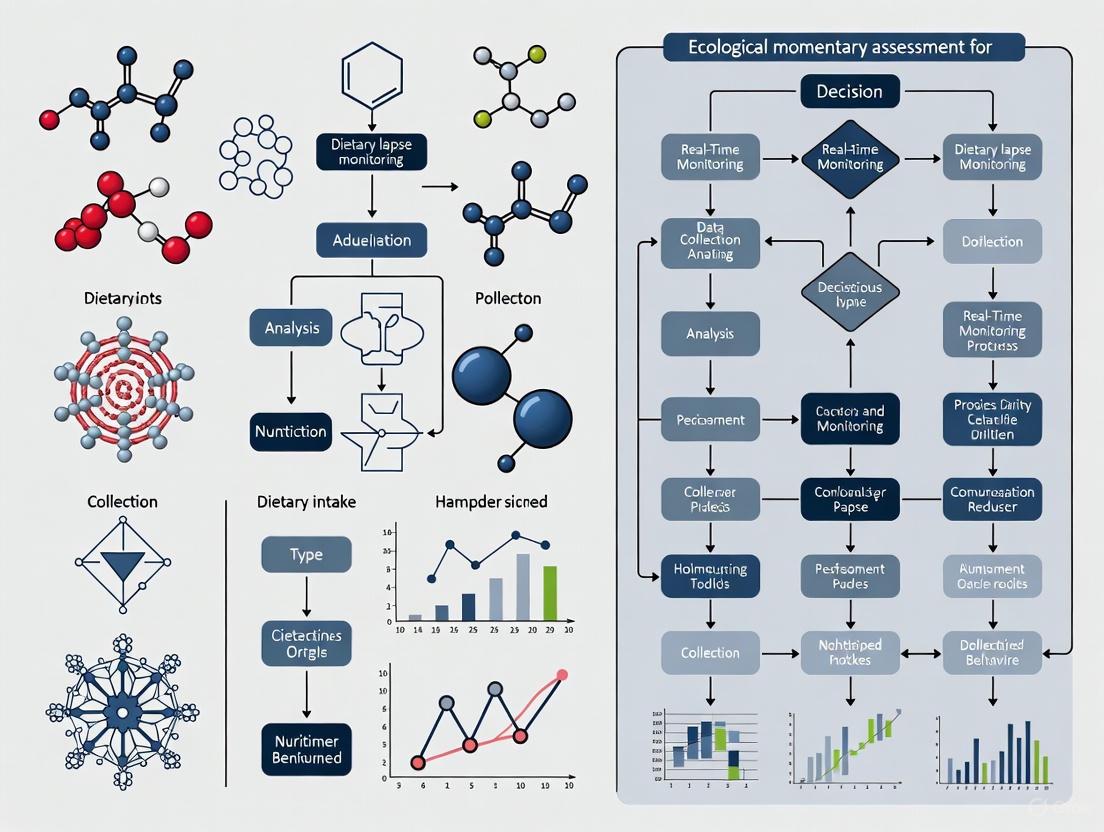
This article provides a comprehensive overview of Ecological Momentary Assessment (EMA) for monitoring dietary lapses, targeting researchers and drug development professionals.
Ecological Momentary Assessment (EMA) for Dietary Lapse Monitoring: A Comprehensive Guide for Clinical Research and Intervention Development
Abstract
This article provides a comprehensive overview of Ecological Momentary Assessment (EMA) for monitoring dietary lapses, targeting researchers and drug development professionals. It explores the foundational theory behind dietary lapses and EMA's suitability for capturing these real-time events. The scope covers methodological best practices for implementing EMA protocols, including technology selection and sampling strategies, alongside troubleshooting common challenges like participant compliance. The article further validates EMA through evidence of its predictive power for health outcomes like weight loss and glucose control and compares its efficacy against traditional dietary assessment methods. The synthesis aims to equip scientists with the knowledge to leverage EMA for enhancing behavioral obesity treatments and developing novel therapeutic interventions.
Understanding Dietary Lapses and the Foundational Role of EMA
Dietary lapses, defined as specific instances of nonadherence to recommended dietary goals, represent a critical challenge in behavioral weight management and chronic disease care [1] [2]. Within the framework of ecological momentary assessment (EMA) research, these lapses are conceptualized as discrete events where an individual's eating behavior deviates from their prescribed dietary plan, potentially undermining long-term health outcomes [3]. The real-time, in-context assessment capabilities of EMA have revolutionized our understanding of dietary lapses, moving beyond retrospective recall biases to capture the dynamic interplay between behavioral, environmental, and psychological factors that precipitate these events [4] [5]. This article examines the theoretical foundations, measurement methodologies, and clinical implications of dietary lapse monitoring through EMA, providing researchers with structured protocols and analytical frameworks for investigating this complex health behavior.
Theoretical Framework and Defining Characteristics
The conceptual understanding of dietary lapses is grounded in goal conflict theory, which posits that the eating behavior of individuals attempting to manage their weight is governed by two competing goals: the hedonic drive to consume palatable foods and the desire to achieve weight loss or health objectives [3]. According to this model, lapses occur when exposure to internal cues (e.g., hunger, emotions) or external cues (e.g., food availability, social contexts) activates biological drives that temporarily override dietary intentions [3].
EMA research has empirically characterized several key features of dietary lapses through intensive longitudinal monitoring. The most common lapse manifestations include consuming forbidden foods, eating larger portions than intended, and exceeding calorie prescriptions [3]. Temporal patterns consistently emerge across studies, with lapses occurring more frequently during evening hours and on weekends [3]. Environmental context significantly influences lapse probability, with most events occurring at home, though eating-out situations substantially increase risk [4]. Understanding these characteristic patterns provides the foundation for targeted intervention strategies.
Table 1: Characteristic Features of Dietary Lapses Identified Through EMA Studies
| Feature Category | Specific Characteristics | Research Support |
|---|---|---|
| Temporal Patterns | Higher frequency in evenings | [3] |
| Increased occurrence on weekends | [3] | |
| Environmental Context | Most likely to occur at home | [3] |
| Eating out increases risk | [4] | |
| Behavioral Manifestations | Eating forbidden foods | [3] |
| Larger portions than intended | [4] | |
| Exceeding calorie goals | [1] | |
| Associated Factors | Increased negative affect | [3] |
| Presence of palatable foods | [3] | |
| Social eating situations | [3] |
Quantitative Impact of Dietary Lapses
Caloric and Macronutrient Consequences
EMA studies coupled with objective dietary assessment have quantified the substantial impact of lapses on daily energy intake. Research demonstrates that days with reported dietary lapses are associated with significantly higher total caloric intake (approximately 139 additional kilocalories), increased consumption of added sugars (16.24 additional grams), and greater likelihood of exceeding daily calorie goals [1]. These findings establish the direct mechanistic pathway through which lapses influence energy balance and weight outcomes.
Notably, the nutritional quality of lapse episodes extends beyond mere caloric excess. Lapses are characterized by distinctive macronutrient profiles, particularly highlighting the role of added sugars in dietary non-adherence [1]. This pattern suggests that lapse events may represent not just quantitative overconsumption but qualitative shifts toward hyper-palatable, nutrient-poor food choices that undermine dietary prescriptions.
Impact on Weight and Metabolic Outcomes
The cumulative effect of dietary lapses translates into clinically significant weight outcomes. Research has established that more frequent lapses during early treatment phases predict less weight loss both concurrently and overall [3]. The relationship follows a curvilinear pattern across treatment, with lapse frequency initially decreasing during intensive intervention phases then increasing as treatment intensity tapers [3].
Beyond weight management, dietary lapses have demonstrated direct physiological consequences in chronic disease populations. In patients with type 2 diabetes, lapse occurrence predicts elevated 2-hour postprandial glucose levels, establishing a direct pathway between momentary non-adherence and metabolic dysregulation [4]. This finding underscores the particular importance of lapse management in populations where glycemic control is medically necessary.
Table 2: Quantitative Impact of Dietary Lapses on Health Outcomes
| Outcome Measure | Impact of Dietary Lapses | Magnitude/Effect Size | Source |
|---|---|---|---|
| Daily Caloric Intake | Significant increase on lapse days | B = 139.20 kcal/day | [1] |
| Added Sugar Consumption | Substantial increase | B = 16.24 g/day | [1] |
| Goal Achievement | Increased likelihood of exceeding calorie goal | B = 0.89 | [1] |
| Weight Loss | Negative association with lapse frequency | Reduced early and overall weight loss | [3] |
| Glycemic Control | Elevated postprandial glucose in T2D | Predicts 2-hour postprandial levels | [4] |
EMA Methodological Protocols for Dietary Lapse Monitoring
Study Design and Assessment Framework
Protocol 1: Comprehensive EMA for Dietary Lapse Monitoring
Objective: To capture real-time data on dietary lapse frequency, antecedents, and consequences in naturalistic settings.
Population: Adults with overweight/obesity (BMI 25-50 kg/m²) with or without comorbid conditions (e.g., cardiovascular disease risk factors, type 2 diabetes) [1] [4].
Assessment Schedule:
- Baseline: Demographics, medical history, psychological measures
- EMA Sampling: Biweekly assessment periods with 5-7 daily prompts [1]
- Duration: 6-12 months to capture longitudinal patterns [3]
- Supplementary Measures: 24-hour dietary recalls every 6 weeks [1]
EMA Content Domains:
- Lapse occurrence (primary outcome)
- Contextual factors: location, social environment, time
- Psychological antecedents: mood, cravings, fatigue, vigor [4]
- Behavioral factors: hunger, proximity to food cues
- Consequences: affective response, self-efficacy
Protocol 2: Integrated Sensor and EMA Platform
Objective: To combine passive eating monitoring with self-reported lapse data for objective characterization of eating episodes.
Hardware:
- Wrist-worn devices with accelerometers for bite detection [2]
- Smartphones for EMA data collection
- Optional continuous glucose monitors for metabolic feedback [4]
Data Integration:
- Synchronized timestamps between sensor and EMA data
- Algorithm-derived eating metrics: bite count, eating duration, eating rate [2]
- Event-contingent EMA triggered by detected eating episodes
Implementation Considerations
Successful EMA implementation requires careful attention to participant burden and data quality. Research recommends semi-random prompting within ±1 hour of anchor times (e.g., 9:00 a.m., 11:00 a.m., 2:00 p.m., 5:00 p.m., 8:00 p.m.) to ensure broad daily coverage while minimizing predictability [1]. Compliance is enhanced through initial training sessions, monthly refreshers, and user-friendly digital interfaces [1].
The definition of dietary lapses must be clearly operationalized for participants based on their specific dietary prescriptions. Common definitions include: "eating a larger portion than intended," "consuming a food you were trying to avoid," or "exceeding your calorie goal for a meal or snack" [4]. Standardized training with examples and non-examples improves measurement reliability.
Figure 1: Comprehensive EMA Research Workflow for Dietary Lapse Monitoring
Advanced Analytical Approaches
Statistical Modeling for Intensive Longitudinal Data
Multilevel modeling represents the gold standard for EMA data analysis, accounting for the nested structure of momentary assessments (Level 1) within days (Level 2) within participants (Level 3) [1] [4]. Mixed effects models can accommodate unbalanced designs and missing data common in longitudinal field studies.
For lapse prediction, mixed effects logistic regression models identify person-level and moment-level predictors of lapse occurrence [2] [4]. Time-lagged analyses can distinguish antecedent conditions from consequences, establishing temporal precedence for hypothesized mechanisms.
Protocol 3: Multilevel Model Specification
Level 1 (Momentary): logit(P(Lapseij = 1)) = β0j + β1j(Time) + β2j(NegativeAffectij) + β3j(Hungerij) + β4j(SocialContextij) + rij
Level 2 (Person): β0j = γ00 + γ01(BMIj) + γ02(SelfEfficacyj) + u0j
Machine Learning and Pattern Recognition
Advanced analytical approaches leverage passive sensing data to detect lapse patterns without relying exclusively on self-report. Algorithms can identify characteristic eating episode signatures associated with lapses, such as specific combinations of bite count, eating duration, and eating rate [2].
Moderation analyses reveal that the relationship between eating topography and lapse likelihood varies by context. Evening episodes with fewer bites, shorter duration, and slower eating rate show increased lapse probability, suggesting distinct lapse phenotypes across different temporal contexts [2].
Figure 2: Analytical Framework for Dietary Lapse Prediction and Characterization
Table 3: Research Reagent Solutions for Dietary Lapse Studies
| Tool Category | Specific Tool/Platform | Function/Application | Research Evidence |
|---|---|---|---|
| EMA Platforms | LifeData COR (RealLife Exp) | HIPAA-compliant smartphone EMA delivery | [1] |
| Custom smartphone applications | Flexible survey design and triggering | [5] | |
| Passive Sensing | Wrist-worn accelerometers (ActiGraph) | Continuous motion capture for eating detection | [2] [4] |
| Bite count algorithms | Automated eating characterization | [2] | |
| Dietary Assessment | 24-hour dietary recalls | Detailed nutritional intake assessment | [1] |
| NDSR (Nutrition Data System for Research) | Standardized nutrient analysis | [1] | |
| MyFitnessPal | Self-monitoring and calorie tracking | [1] | |
| Metabolic Monitoring | Freestyle Libre Pro CGM | Continuous glucose monitoring | [4] |
| Data Analysis | Multilevel modeling (HLM, R lme4) | Hierarchical data structure analysis | [1] [4] |
| Machine learning algorithms | Pattern recognition and prediction | [2] |
Clinical Applications and Translational Potential
The detailed characterization of dietary lapses through EMA methodologies enables targeted intervention strategies for weight management and chronic disease care. Real-time lapse prediction algorithms can facilitate just-in-time adaptive interventions (JITAIs) that deliver support during high-risk situations [2]. Understanding distinct lapse phenotypes (e.g., episodic overconsumption versus qualitative dietary deviations) allows for personalized intervention approaches matched to individual patterns.
For clinical trial design in pharmaceutical development, EMA-derived lapse metrics offer sensitive endpoints for evaluating behavioral interventions and pharmacotherapies targeting eating behavior. The objective identification of lapse patterns through integrated sensor and self-report data provides multidimensional outcome measures beyond traditional weight or glycemic endpoints [2] [4].
Future research directions include refining passive detection algorithms to minimize participant burden, developing standardized lapse measurement protocols across populations, and integrating real-time feedback systems for adaptive intervention. The growing methodological sophistication in dietary lapse monitoring holds significant promise for advancing behavioral medicine and improving outcomes in obesity and chronic disease management.
The Goal Conflict Model provides a foundational theory for understanding why individuals, particularly restrained eaters, experience difficulties in adhering to dietary prescriptions for weight management [6]. This model posits that the eating behavior of chronic dieters is governed by two competing goals: the hedonic drive to consume palatable foods (eating enjoyment) and the desire to control weight (weight control) [6] [3]. For restrained eaters, weight control typically serves as the focal goal, but extended exposure to palatable food stimuli increases the cognitive accessibility of the eating enjoyment goal until it becomes the dominant motive, resulting in overeating episodes known as dietary lapses [6]. This theoretical framework explains why losing weight and maintaining weight loss presents significant challenges for many individuals, as it accounts for the psychological processes underlying dietary adherence failures that cannot be explained by earlier theories emphasizing impaired recognition of internal hunger and satiation cues [6].
Within the context of ecological momentary assessment (EMA) for dietary lapse monitoring, the Goal Conflict Model provides the conceptual basis for understanding the momentary cognitive and environmental triggers that precipitate lapses. The model not only aligns with empirical findings from lapse research but also generates novel predictions supported by methods from cognitive psychology [6]. By framing dietary lapses as outcomes of goal competition rather than mere failures of willpower, the model offers a more nuanced understanding of eating behavior dynamics in real-world settings where individuals are constantly exposed to food cues while pursuing weight management objectives.
Theoretical Foundations and Mechanisms
The Goal Conflict Model represents a significant evolution from earlier theories of eating behavior. Earlier models, including psychosomatic theory, externality theory, and the boundary model of eating, assumed that individuals with obesity overate due to an impaired ability to recognize internal hunger and satiation cues [6]. The boundary model specifically suggested that this reduced sensitivity resulted from consistent attempts to control food intake through dietary restraint [6]. While these individuals could maintain success while focused on control, their eating restraint would falter when control motivation or ability was compromised by factors such as strong emotions [6].
In contrast, the Goal Conflict Model introduces a more dynamic framework centered on competing motivational forces rather than detection deficits. The core mechanism involves the dynamic activation of competing goals in response to internal and external cues [3]. When the eating enjoyment goal becomes highly accessible, it can temporarily dominate over the weight control goal, leading to disinhibition of eating behavior [6]. This temporary shift in goal dominance provides the psychological basis for what is observed empirically as a dietary lapse—a specific instance of nonadherence to recommended dietary goals [2].
The model further suggests that the hedonic regulation of eating behavior follows principles of automatic cognitive activation rather than purely conscious decision-making processes. Through associative learning, palatable food cues become linked with hedonic responses, creating a cognitive bias that automatically activates eating enjoyment goals when such cues are encountered [6] [3]. This automaticity explains why dietary lapses often feel impulsive and why conscious intention to maintain dietary control may be insufficient to prevent them, particularly in environments saturated with highly palatable food cues.
Application to Ecological Momentary Assessment (EMA) Research
EMA Methodology for Capturing Momentary Goal Conflicts
Ecological Momentary Assessment provides an ideal methodological framework for investigating the Goal Conflict Model in real-world settings by capturing momentary fluctuations in goal activation and environmental triggers. EMA reduces retrospective bias and enhances ecological validity by repeatedly collecting information in real time within natural environments [3] [7]. This approach allows researchers to assess the dynamic interplay between cognitive, affective, environmental, and situational factors that precipitate dietary lapses as predicted by the Goal Conflict Model [3].
EMA protocols typically involve brief, repeated assessments delivered via digital devices such as smartphones [3] [7]. These assessments can be time-contingent (delivered at fixed intervals), event-contingent (triggered by specific behaviors), or signal-contingent (delivered at random intervals) [7]. For dietary lapse monitoring, EMA surveys capture data on immediate contexts, including presence of palatable foods, internal states (hunger, emotions), social situations, and environmental characteristics at the moment of eating decisions [3]. This high-temporal-resolution data collection aligns with the Goal Conflict Model's emphasis on momentary fluctuations in goal accessibility and provides rich data for identifying lapse predictors and mechanisms.
eBLISS: A Novel EMA Tool Based on Goal Conflict Principles
The development of the Eating Behaviour Lapse Inventory Survey Singapore (eBLISS) demonstrates the application of Goal Conflict Theory to EMA tool development [8]. This novel EMA tool was meticulously crafted through an exploratory mixed-methods approach, deriving dietary lapse triggers from a synthesis of literature and thematic analysis of interviews with individuals with overweight/obesity [8]. The tool's content validity was rigorously affirmed through both qualitative and quantitative means, with iterative refinement by a multi-disciplinary expert panel via the Delphi method, achieving satisfactory content validity with an item-content validity index (I-CVI) and scale CVI (S-CVI) of >0.79 and ≥0.80 respectively [8].
Data harvested from eBLISS were used to develop the eating Trigger Response Inhibition Program (eTRIP), an AI-powered smartphone application for weight management that enhances user engagement in tracking eating behaviors and identifying lapse triggers [8]. Through a thorough process involving data cleaning, normalization, and feature selection via Recursive Feature Elimination with cross-validation, researchers developed a gradient boosting machine learning algorithm for dietary lapse prediction that achieved a sensitivity of 0.72, specificity of 0.85, accuracy of 0.79, F1 score of 0.76, and AUC score of 0.86 [8]. This represents a significant advancement in applying Goal Conflict principles through digital technology for real-time lapse prediction and intervention.
Table 1: Key Constructs in EMA Assessment of Goal Conflict Triggers
| Construct Category | Specific Constructs Measured | Measurement Approach | Theoretical Link to Goal Conflict |
|---|---|---|---|
| Environmental Triggers | Presence of palatable food, Social eating situations, Location (home, restaurant) | EMA self-report, GPS data | Increases accessibility of eating enjoyment goal [3] |
| Internal State Triggers | Hunger, Negative affect, Positive affect, Stress, Feelings of deprivation | EMA self-report using scales | Weakens cognitive resources for weight control goal maintenance [3] |
| Temporal Factors | Time of day (evening), Weekends vs. weekdays | Time-stamped EMA data | Timing effects on self-regulatory capacity [2] [3] |
| Behavioral Patterns | Eating rate, Meal duration, Bite count | Passive sensing via wrist-worn devices [2] | Identifies behavioral signatures of lapse episodes [2] |
Experimental Protocols for Goal Conflict Research
Protocol 1: EMA for Dietary Lapse Monitoring in Weight Management
Objective: To characterize dietary lapse frequency, patterns, and predictors throughout a lifestyle modification intervention using EMA and passive eating monitoring [2].
Participants: Adults with overweight/obesity (n=25) participating in a 24-week lifestyle modification intervention [2].
Materials and Equipment:
- Smartphones with EMA survey capability
- Wrist-worn devices with continuous motion capture
- Previously-validated algorithms for inferring eating episodes from wrist motion data
Procedure:
- EMA Survey Administration: Implement biweekly EMA surveys via smartphone to collect self-reported data on dietary lapses and non-lapse eating episodes [2].
- Passive Eating Monitoring: Participants wear wrist devices that capture continuous wrist motion throughout the intervention period [2].
- Data Processing: Apply validated algorithms to infer eating episodes from wrist motion data and calculate eating characteristics including bite count, eating duration, and eating rate (seconds per bite) [2].
- Data Integration: Synchronize timestamps of EMA-reported lapses with passively-sensed eating characteristics to identify objective behavioral markers of lapse episodes [2].
Analysis Approach:
- Conduct mixed effects logistic regressions to examine relationships between eating characteristics and lapse likelihood
- Perform moderation analyses to investigate how temporal factors (e.g., evening hours) influence relationships between eating characteristics and lapse probability [2]
- Identify distinct patterns of eating characteristics associated with increased lapse probability [2]
Protocol 2: Longitudinal EMA of Dietary Lapses in Behavioral Weight Loss
Objective: To characterize lapse occurrence, examine lapse frequency across treatment, identify predictors of lapses, and assess the relationship between lapses and weight loss over a 12-month behavioral weight loss program [3].
Participants: Adults (n=189) enrolled in a 12-month behavioral weight loss program [3].
Materials:
- Smartphones or dedicated devices for EMA data collection
- Standardized behavioral weight loss program materials
- Anthropometric measurement equipment
Procedure:
- Assessment Schedule: Implement EMA at baseline, mid-treatment (6 months), and end-of-treatment (12 months) [3].
- EMA Content: At each assessment, participants indicate whether a lapse has occurred and respond to questions assessing situational, environmental, and affective states [3].
- Weight Measurement: Collect objective weight measurements at regular intervals throughout the program [3].
- Data Collection: Capture detailed information about lapse characteristics, including location, timing, food type, and contextual factors [3].
Analysis Approach:
- Model lapse frequency over time using curvilinear analyses
- Examine relationships between lapse frequency and weight loss using regression analyses
- Identify prospective predictors of lapses using multivariate statistics
- Analyze triggers of lapses across different phases of treatment [3]
Table 2: Key Methodological Considerations for EMA Studies of Dietary Lapses
| Methodological Aspect | Considerations | Recommendations |
|---|---|---|
| EMA Sampling Design | Balance between comprehensive assessment and participant burden | Use a combination of time-contingent, event-contingent, and signal-contingent sampling [7] |
| Lapse Definition | Variability in how participants conceptualize lapses | Provide clear operational definitions with examples; use event-based recording of specific lapse episodes [3] |
| Participant Burden | High assessment frequency may reduce compliance | Optimize survey length (<1-2 minutes); use random sampling of days; provide compensation for adherence [7] |
| Technological Requirements | Device accessibility across diverse populations | Provide study phones when needed; ensure compatibility with various smartphone platforms [7] |
| Retention Strategies | Maintaining participation over extended assessment periods | Implement monthly compensation tied to completion rates; conduct check-ins for participants with low compliance [7] |
Data Synthesis and Empirical Findings
Patterns and Predictors of Dietary Lapses
Research guided by the Goal Conflict Model has identified consistent patterns in dietary lapse occurrence. Lapses demonstrate a curvilinear relationship over time during weight loss interventions, with frequency initially decreasing then increasing as treatment progresses [3]. This pattern aligns with the goal conflict framework, suggesting initial success in maintaining weight control goal accessibility followed by gradual erosion of this dominance over time.
Temporally, lapses occur most frequently in the evenings and on weekends [3]. Geographically, most lapses happen at home [3]. The most common lapse type involves consumption of forbidden foods [3], directly reflecting the hedonic eating enjoyment goal overturning dietary restrictions in the goal conflict.
EMA studies have identified consistent predictors of lapse episodes that align with Goal Conflict Theory. Environmental triggers include the presence of palatable food and social eating situations [3]. Internal state triggers encompass greater momentary hunger, feelings of deprivation, and various affective states [3]. These triggers theoretically function by increasing the cognitive accessibility of the eating enjoyment goal while simultaneously depleting cognitive resources needed to maintain the weight control goal.
Objective Eating Characteristics of Dietary Lapses
Recent technological advances have enabled the identification of objective behavioral markers of lapses through passive monitoring. Research combining EMA with wrist-worn motion sensors has revealed that eating episodes in the evening are more likely to be lapses if they involve fewer bites, shorter duration, or slower eating rate [2].
Complex interactions between eating characteristics have identified two distinct lapse patterns [2]:
- Episodes characterized as smaller, slower, and shorter than average
- Episodes characterized as larger, quicker, and longer than average
These distinct behavioral signatures suggest potentially different psychological processes underlying lapse episodes, possibly reflecting different patterns of goal activation and conflict resolution. The identification of these objective markers demonstrates the potential of sensors to identify non-adherence using only patterns of passively-sensed eating characteristics, minimizing reliance on self-report [2].
Table 3: Empirically-Documented Predictors of Dietary Lapses from EMA Studies
| Predictor Category | Specific Predictors | Strength of Evidence | Relevance to Goal Conflict Model |
|---|---|---|---|
| Temporal Factors | Evening hours, Weekend days | Strong [2] [3] | Temporal fluctuations in self-regulatory capacity |
| Environmental Factors | Presence of palatable food, Being at home, Social situations | Strong [3] | Environmental cues that activate eating enjoyment goal |
| Affective States | Negative affect, Stress, Positive affect | Moderate [3] | Affective processing that biases goal activation |
| Cognitive Factors | Feelings of deprivation, Impulsivity | Moderate [3] | Direct reflections of goal conflict dynamics |
| Physiological States | Hunger, Fatigue | Strong [3] | Internal cues that increase hedonic motivation |
Visualization of Goal Conflict Processes
Research Reagent Solutions and Essential Materials
Table 4: Essential Research Materials for EMA Studies on Dietary Lapses
| Research Tool Category | Specific Tools/Platforms | Primary Function | Application in Goal Conflict Research |
|---|---|---|---|
| EMA Survey Platforms | Commercial EMA apps, Custom smartphone applications | Deliver momentary surveys to participants | Assess real-time goal activation, triggers, and lapse occurrences [3] [7] |
| Passive Sensing Devices | Wrist-worn accelerometers, Smartphone sensors | Continuously capture behavioral and contextual data | Objectively characterize eating episodes without self-report bias [2] |
| Data Processing Algorithms | Eating detection algorithms, Feature extraction algorithms | Convert raw sensor data into meaningful eating metrics | Identify behavioral signatures of lapses (bites, duration, rate) [2] |
| Machine Learning Frameworks | Gradient boosting, Feature selection methods | Develop predictive models of lapse risk | Create personalized lapse prediction based on individual patterns [8] |
| Content Validation Tools | Delphi method protocols, Content Validity Index (CVI) | Establish psychometric properties of EMA measures | Ensure EMA surveys adequately capture goal conflict constructs [8] |
Implications for Intervention and Future Research
The Goal Conflict Model, operationalized through EMA methodologies, provides a robust framework for developing targeted interventions for dietary lapse prevention. Research findings suggest that effective interventions should address both goal activation processes and self-regulatory capacity [3]. This might include strategies to reduce exposure to palatable food cues, enhance cognitive barriers against automatic activation of eating enjoyment goals, and strengthen implementation intentions for maintaining weight control goals in high-risk situations.
Future research directions should focus on real-time intervention delivery based on momentary lapse risk prediction [8]. The development of machine learning algorithms capable of predicting lapse episodes with high sensitivity and specificity [8] opens possibilities for just-in-time adaptive interventions that provide support when individuals are at highest risk for lapses. Additionally, research should examine how goal conflict processes operate across diverse populations and how socioeconomic factors influence both goal accessibility and self-regulatory capacity [7].
Further validation of passive eating monitoring technologies will enhance our understanding of behavioral markers of goal conflict resolution [2]. As these technologies advance, researchers will be better equipped to objectively identify lapse episodes and their precursors without relying exclusively on self-report, potentially leading to more precise and effective interventions for weight management and dietary adherence.
Why EMA? Overcoming Recall Bias and Capturing Real-Time Context
A core challenge in health behavior research, particularly in the study of dietary lapses, is the inherent limitation of human memory. Traditional research methods rely on retrospective self-reporting, where participants are asked to recall their behaviors, emotions, and environmental contexts after a significant delay. This approach is vulnerable to recall bias, a systematic error that occurs when participants inaccurately remember or report past events [9]. In the context of dietary monitoring, this could mean misremembering the type or quantity of food consumed, the timing of a dietary lapse, or the emotional and environmental triggers that preceded it.
Ecological Momentary Assessment (EMA) is a methodological solution designed to address this fundamental problem. EMA is a data collection method in which a study participant’s real-time self-reports of symptoms, behaviors, and other experiences are collected in their natural environment at or close to the time they occur, often via electronic devices such as smartphones [10]. By capturing experiences as they happen, EMA bridges the critical gap between the laboratory and real life, providing data with high ecological validity and significantly reducing the memory distortions that plague traditional retrospective reports [11] [12] [13].
The Critical Limitations of Recall-Based Methods
Recall bias is not merely a minor inconvenience; it constitutes a major threat to the validity of research findings. The pitfalls of relying on memory for data collection are well-documented and multifaceted.
Mechanisms of Recall Failure
- Time-Decay Effect: The accuracy of memory erodes as time passes. Details of previous events become increasingly difficult to recall as time elapses, leading to a mismatch between recorded experiences and the actual events [14].
- Telescoping: Respondents may incorrectly place events that occurred outside the recall period into the period of interest, a phenomenon known as "forward" or "backward" telescoping [15].
- Motivated Forgetting and Trauma: In the case of sensitive or traumatic events, which for some individuals may include dietary lapses, psychological coping mechanisms such as dissociative amnesia or motivated forgetting can lead to a systematic failure to recall or a distortion of the event [15].
- Reconstruction Errors: People tend to reconstruct memories based on general beliefs or heuristics rather than recalling specific details. For instance, a participant might report their "typical" dietary pattern rather than what they actually consumed on a specific day [13].
Empirical Evidence of Recall Bias
Quantitative evidence demonstrates that recall bias is not just a theoretical concern but has a measurable impact on data.
Table 1: Empirical Evidence of Recall Bias in Health Research
| Study Context | Recall Method | EMA/Real-Time Method | Key Finding | Citation |
|---|---|---|---|---|
| Mobility & Greenery Exposure | Day Reconstruction Method (DRM) | Geographic EMA (GEMA) | Significant underestimation of short-term happiness and greenery exposure in recall data, especially for outdoor activities and travel. | [14] |
| Knee Osteoarthritis Pain | 1-month retrospective pain assessment | Twice-daily smartphone app ratings | Retrospective assessment consistently reported higher pain levels than the EMA average; bias magnitude was correlated with the number of pain peaks. | [16] |
| General Self-Reported Data | Questionnaires, Surveys, Interviews | - | Recall bias can lead to either underestimation or overestimation of the true effect or association, such as between dietary intake and disease risk. | [9] |
EMA as a Methodological Solution
EMA overcomes the limitations of recall by shifting the paradigm of data collection from retrospective to real-time and in-context.
Core Principles of EMA
The strength of EMA rests on several foundational principles [10] [12] [13]:
- Real-Time Data Collection: Capturing experiences and behaviors as they occur or very shortly thereafter, minimizing the delay that allows memory to degrade.
- Ecological Validity: Data is gathered in the participant's natural environment (e.g., at home, work, or a restaurant), ensuring that findings reflect real-world contexts and not artificial lab settings.
- Repeated Assessments: Collecting data at multiple time points allows researchers to observe the dynamic flow of experiences, identify patterns, and model within-person changes over time.
Key Advantages for Dietary Lapse Research
For researchers studying dietary lapses, EMA offers distinct advantages:
- Capturing Dynamic Triggers: Dietary lapses are often precipitated by transient states such as negative mood, stress, or specific environmental cues. EMA can capture these triggers in the moment, providing insight into the causal pathways leading to a lapse [11] [12].
- Accurate Timing and Context: By timestamping each entry and potentially integrating GPS or other sensor data, EMA allows researchers to pinpoint not just what happened, but when, where, and under what circumstances it happened [14] [13].
- Reduced Social Desirability Bias: Reporting a dietary lapse in real-time may feel less judgmental than admitting to a series of lapses in a weekly clinic visit, potentially leading to more honest reporting.
Designing an EMA Protocol for Dietary Lapse Monitoring
A well-designed EMA protocol is crucial for collecting high-quality data while minimizing participant burden.
Sampling Strategies and Signaling
The frequency and timing of assessments are central design considerations.
Table 2: Common EMA Sampling Strategies
| Sampling Strategy | Description | Best Use Cases | Considerations | |
|---|---|---|---|---|
| Time-Based | Signals are sent at predetermined times. | Capturing routine experiences or mood fluctuations throughout the day. | Can be fixed (e.g., 4 set times/day) or semi-random (e.g., once within each 2-hour block). | [10] |
| Event-Based | Participant initiates a report after a predefined event occurs. | Studying specific, discrete events like a dietary lapse or a high-stress situation. | Requires a clear, operational definition of the trigger event (e.g., "What constitutes a lapse?"). | [10] |
| Signal-Contingent | Random signals prompt reports within specified time windows. | Providing an unbiased snapshot of the participant's current state, avoiding predictability. | Excellent for assessing the natural prevalence of states without relying on participant initiative. | [12] [13] |
Core Measurement Constructs and Item Examples
For dietary lapse research, EMA items should be brief, relevant, and designed for quick completion. The following constructs are essential to measure:
- Primary Outcome (Lapse): A clear, participant-specific definition of a lapse.
- Example Item: "Since the last prompt, have you had a dietary lapse? (Y/N)"
- If Yes: "What food or drink did you consume?"
- Proximal Triggers:
- Affect/Mood: "Right now, I feel:" (1=Very Negative to 5=Very Positive).
- Craving: "Right now, my craving for [trigger food] is:" (1=None to 5=Strong).
- Hunger: "Right now, my hunger is:" (1=Not at all hungry to 5=Extremely hungry).
- Context:
- Location: "Where are you?" (Home, Work, Restaurant, Car, etc.).
- Social Context: "Who are you with?" (Alone, Family, Friends, Colleagues).
Implementation Workflow and Participant Management
Successfully running an EMA study requires careful planning and participant engagement.
Table 3: Key Research Reagent Solutions for EMA Studies
| Tool Category | Example Solutions | Critical Function | Considerations | |
|---|---|---|---|---|
| EMA Platform | mEMA (ilumivu), ExpiWell, Custom Apps | Provides the interface for survey delivery, data capture, and storage. | Select based on cost, customization, data security, and integration with passive sensing. | [11] [13] |
| Passive Sensing | Smartphone GPS, Accelerometer; Wearable devices (Actigraphy, HR monitors) | Objectively captures context (location, activity) and physiology without burdening the participant. | Reduces subjective reporting bias; requires careful data management and participant privacy protocols. | [14] [13] |
| Analytical Software | R, SPSS, Mplus | Handles complex, intensive longitudinal data structures (multilevel modeling, time-series analysis). | Requires statistical expertise for modeling nested data (moments within days within persons). | [10] [12] |
Analytical Approaches for EMA Data
EMA generates complex, intensive longitudinal datasets where repeated measures (Level 1) are nested within individuals (Level 2). This structure requires specialized analytical techniques.
- Multilevel Modeling (MLM): This is the most common approach for analyzing EMA data. MLM allows researchers to simultaneously model within-person variation (e.g., how a person's stress level at a given moment predicts their likelihood of a lapse in the next few hours) and between-person differences (e.g., how a person's average stress level across the study moderates the within-person effect) [10] [12].
- Time-Series Analysis: For data with very frequent assessments, time-series techniques can be used to model temporal dynamics, such as cyclical patterns or the duration of the effect of a trigger on lapse risk.
- Machine Learning: Predictive models can be built to identify which combination of real-time factors (mood, context, time of day) best predicts an imminent dietary lapse, potentially paving the way for just-in-time adaptive interventions.
Ecological Momentary Assessment represents a paradigm shift in how researchers can study complex, dynamic behaviors like dietary lapses. By moving beyond the flawed reliance on human recall, EMA provides a powerful methodological framework for capturing the real-time interplay between internal states, external contexts, and behavioral outcomes. The empirical evidence is clear: recall bias is a significant source of measurement error that can distort research findings, and EMA offers a validated means to mitigate it. For scientists and drug development professionals aiming to understand the precise mechanisms of dietary lapses and develop effective interventions, the adoption of EMA is not merely an option but a necessity for achieving a valid, nuanced, and ecologically-grounded understanding of human behavior in the real world.
Dietary lapses, defined as specific instances of nonadherence to a prescribed dietary regimen, present a significant challenge in behavioral weight loss treatment (BOT) [3]. The ability to consistently adhere to dietary prescriptions is critical for achieving successful weight loss and long-term weight loss maintenance [17]. Understanding when and where these lapses most frequently occur provides valuable insight for developing targeted intervention strategies. This application note synthesizes current research on the temporal patterns and common scenarios of dietary lapses, drawing from ecological momentary assessment (EMA) methodologies that capture real-time data in naturalistic settings. Within the broader context of dietary lapse monitoring research, characterizing these patterns enables researchers and clinicians to anticipate high-risk situations and deploy timely, personalized interventions.
Research utilizing Ecological Momentary Assessment has systematically quantified the frequency, timing, and context of dietary lapses in individuals engaged in behavioral weight loss efforts. The table below consolidates key findings from multiple studies.
Table 1: Characteristics and Predictors of Dietary Lapses
| Characteristic Category | Specific Finding | Supporting Evidence |
|---|---|---|
| Overall Frequency | 2.7 to 11.8 lapses per week [3] | Mixed studies of formal treatment & self-guided dieting |
| Temporal Pattern | Curvilinear relationship over time; frequency first decreases then increases during a 12-month program [17] [3] | EMA across baseline, mid-treatment, and end-of-treatment |
| Time of Day | Most likely to occur in the evening [17] [3] [18] | EMA surveys from adults in BOT |
| Day of Week | More frequent on weekends [17] [3] | EMA surveys from adults in BOT |
| Common Location | Most often occur at home [17] [3] [18] | EMA surveys from adults in BOT |
| Common Lapse Type | Most often entail eating a "forbidden" food [17] [3] | EMA surveys from adults in BOT |
| Prospective Predictors | Momentary hunger, feelings of deprivation, and presence of palatable food [17] [3] | Multivariate analysis of EMA data |
| Relationship with Weight Loss | Greater lapse frequency at baseline predicts less early and overall weight loss [17] [3] | Correlation of baseline EMA with weight outcomes |
Different types of lapses also demonstrate distinct patterns and outcomes. Research has identified three primary lapse types, each with unique predictors and consequences for weight outcomes.
Table 2: Characteristics of Dietary Lapse Types
| Lapse Type | Description | Key Predictors | Impact on Weight Loss |
|---|---|---|---|
| Eating a Larger Portion | Consuming a larger portion of a food than intended [19] | Not specified in available results | Not significantly associated with worse weight loss [19] |
| Eating an Unintended Type of Food | Eating a type of food that was not part of the dietary plan [19] | Not specified in available results | Not significantly associated with worse weight loss [19] |
| Eating at an Unplanned Time | Consuming food at a time that was not planned [19] | Momentary increases in deprivation, hunger, and boredom [19] | Associated with worse weight loss outcomes [19] |
Experimental Protocols for Lapse Monitoring
Core Ecological Momentary Assessment (EMA) Protocol
The following protocol is derived from studies that successfully characterized dietary lapses in adults with overweight or obesity enrolled in behavioral weight loss programs [17] [3] [18].
Objective: To characterize the frequency, temporal patterns, contextual factors, and predictors of dietary lapses in real-time and in natural environments.
Population: Adults with overweight or obesity (BMI typically 27-50 kg/m²) participating in a behavioral weight loss program [18].
EMA Schedule:
- Duration: 14-day assessment periods at multiple timepoints (e.g., baseline, mid-treatment, end-of-treatment) [17] [3].
- Prompt Type: Utilize a combination of:
- Signal-contingent prompts: Surveys delivered at random or semi-random intervals throughout the day.
- Event-contingent prompts: Surveys initiated by participants immediately following a perceived dietary lapse.
Key Survey Constructs:
- Lapse Occurrence: Self-report of whether a lapse has occurred since the last prompt.
- Lapse Characteristics: If a lapse occurred, record:
- Contextual and Affective States: Assess current:
Data Analysis:
- Use generalized estimating equations (GEE) to model longitudinal data and identify prospective predictors of lapse [19] [18].
- Model lapse frequency over time using curvilinear models to capture the U-shaped pattern [17].
- Correlate lapse frequency and type with weight change outcomes using regression analyses [17] [19].
Multi-Method Assessment Protocol
Advanced protocols integrate EMA with passive sensing to enhance objectivity and detail in lapse characterization [20] [21].
Objective: To supplement self-reported lapse data with objectively measured eating characteristics and nutritional composition.
Population: Adults with overweight/obesity in a BOT program [21].
Components:
- EMA Component: As described in Protocol 3.1, for self-report of lapses and context.
- Wrist-Based Passive Sensing:
- Device: Participants wear a wrist-based accelerometer/gyroscope (e.g., ActiGraph GT9X Link) [21].
- Purpose: To continuously detect wrist motion indicative of eating episodes.
- Data Extracted: Inferred eating episode timing, duration, bite count, and eating rate [21].
- Algorithm: Machine learning algorithms process wrist motion data to distinguish eating from other activities.
- Dietary Intake Assessment:
Integration: Data streams are synchronized to compare EMA-reported lapses with passively sensed eating episodes and their nutritional composition from recalls.
Multi-Method Lapse Assessment Workflow
The Scientist's Toolkit: Research Reagent Solutions
Table 3: Essential Tools for Dietary Lapse Monitoring Research
| Tool Category | Specific Tool/Technique | Primary Function in Research |
|---|---|---|
| Assessment Platform | Smartphone-based EMA Apps | Deliver time- and event-triggered surveys to collect real-time self-report data on lapses and context [23] [18]. |
| Wearable Sensor | Wrist-worn Inertial Measurement Unit (e.g., ActiGraph, Fitbit) | Passively collect accelerometer/gyroscope data to detect eating gestures and infer episode timing/duration [20] [21]. |
| Dietary Intake Tool | 24-Hour Dietary Recall (USDA Automated Multiple-Pass Method) | Collect detailed, interview-based data on nutritional composition of all foods/beverages consumed [21] [22]. |
| Algorithmic Method | Machine Learning Classifiers (e.g., LASSO) | Analyze sensed risk factors (e.g., location, activity) or sensor data to predict lapse episodes [20]. |
| Analytical Framework | Generalized Estimating Equations (GEE) | Statistically model longitudinal EMA data to identify predictors of lapse while accounting for repeated measures [19] [18]. |
Temporal Patterns and Contextual Triggers
The relationship between daily activities and lapse risk is complex and operates on different timescales. The following diagram synthesizes research findings on how common activities influence the immediate and subsequent risk of a dietary lapse [18].
Activity-Lapse Risk Relationships
The underlying mechanisms for these relationships are theorized to involve:
- Concurrent Risk Reduction: Activities like chores, work, or spiritual practice may be incompatible with simultaneous eating or may provide sufficient cognitive engagement to distract from food cues [18].
- Concurrent Risk Increase: Socializing often occurs in contexts where palatable foods are present and social norms encourage eating [18].
- Subsequent Risk Increase: Cooking creates immediate food availability and exposure to food cues that can lead to later consumption. Indoor hobbies may be associated with sedentary behavior and proximity to home food environments [18].
- Subsequent Risk Reduction: Spiritual activities, prayer, or meditation may provide an enduring sense of reward or reduce stress, thereby decreasing the subsequent drive to seek reward from food [18].
The systematic characterization of dietary lapses through EMA reveals consistent temporal patterns and common scenarios that represent high-risk situations for individuals attempting to adhere to a weight loss diet. Lapses follow a predictable curvilinear pattern over the course of treatment, occurring most frequently in the evening, on weekends, and at home. The presence of palatable food, hunger, and feelings of deprivation are key momentary predictors. Different types of lapses have distinct predictors and consequences, with eating at an unplanned time being particularly detrimental to weight outcomes. Modern research protocols are evolving to combine EMA with passive sensing and detailed dietary assessment, providing a more comprehensive and objective understanding of lapse behavior. This detailed characterization is fundamental to the next frontier in dietary lapse monitoring research: the development of just-in-time adaptive interventions (JITAIs) that can predict and prevent lapses in real-world settings.
Application Notes
Dietary lapses, defined as specific instances of nonadherence to one's dietary goals, are a critical determinant of success in behavioral weight loss interventions and chronic disease management. Research utilizing Ecological Momentary Assessment (EMA) has moved beyond simply quantifying lapses to precisely characterizing their nature, consequences, and the momentary psychosocial factors that precipitate them. These insights are foundational for developing targeted, just-in-time interventions.
Table 1: Impact of Dietary Lapse Types on Weight Loss Outcomes
Table summarizing findings from EMA studies on how different behavioral definitions of lapse correlate with weight loss.
| Lapse Type | Definition | Impact on Weight Loss |
|---|---|---|
| Eating at an Unintended Time [19] | Consuming food at an unplanned time. | Predicts worse weight loss outcomes [19]. |
| Unplanned Lapses (Composite) [24] | A category encompassing unplanned deviations, including eating a large portion or eating when not intended. | Significantly associated with less weekly percent weight loss [24]. |
| Eating a Larger Portion [19] [24] | Consuming a larger portion of a meal or snack than intended. | Associated with poorer weight loss outcomes, particularly as an unplanned behavior [24]. |
| Eating an Unintended Food Type [19] | Eating a type of food that was not part of the dietary plan. | Not consistently identified as a unique predictor of worse weight loss [19]. |
| Planned Lapse [24] | A premeditated, conscious decision to deviate from the dietary plan. | Not significantly associated with negative weight loss outcomes in preliminary research [24]. |
Table 2: Psychosocial and Environmental Triggers of Dietary Lapses
Table of momentary factors that prospectively predict the occurrence of a dietary lapse, derived from EMA studies.
| Trigger Category | Specific Factor | Association with Lapse Occurrence |
|---|---|---|
| Affective States | Increased Boredom [19] [3] | Increases likelihood of lapse. |
| Increased Fatigue [25] | Affects lapse in T2D patients and healthy adults. | |
| Low/Very High Vigor [25] | Impacts dietary lapse in T2D patients. | |
| Physical States | Greater Hunger [19] [3] | Prospectively predicts lapse. |
| Feelings of Deprivation [19] [3] | Prospectively predicts lapse. | |
| Increased Craving [25] | Affects lapse in T2D patients. | |
| Social Environment | Social Pressure [26] | Higher perceived pressure to divert from diet increases lapse odds. |
| Injunctive Norm [26] | Perception that others approve of diverting from diet predicts lapse. | |
| Descriptive Norm [26] | Perception that others are also diverting from their diets predicts lapse. | |
| Environmental Context | Presence of Palatable Food [3] | A strong external trigger for lapse. |
| Eating Outside the Home [25] | Linked to dietary lapse in both T2D patients and healthy adults. | |
| Evening Hours & Weekends [3] [26] | Higher risk periods for lapse occurrence. |
Experimental Protocols
Protocol 1: Core EMA for Dietary Lapse Monitoring
Objective: To capture the frequency, type, and real-time psychosocial context of dietary lapses in a naturalistic setting.
Methodology Summary: This protocol employs signal-contingent and event-contingent recordings via a smartphone application to collect data on lapse episodes and their antecedents [1] [25] [3].
Participant Training & Run-In:
- Conduct a structured briefing session to train participants on the definition of dietary lapses (providing examples and non-examples), the use of the EMA app, and the importance of timely reporting [1] [26].
- Implement a 7-day run-in period to ensure participants can reliably self-monitor and report dietary intake and lapses [1].
Assessment Schedule:
- Signal-Contingent Prompts: Program the EMA app to deliver semi-random prompts 5-6 times per day within pre-defined time windows (e.g., 9:00 a.m., 11:00 a.m., 2:00 p.m., 5:00 p.m., 8:00 p.m.) with a ±1 hour variation to minimize participant reactivity [1] [3]. Participants have a limited window (e.g., 30-60 minutes) to respond.
- Event-Contingent Recordings: Instruct participants to initiate a self-report immediately after any dietary lapse occurs, or around all eating episodes (before and after) to capture both lapse and non-lapse events [25] [2].
Core EMA Measures:
- Lapse Identification (Dependent Variable): At each prompt, ask: "Since the last prompt, did you have a slip or lapse in your eating plan?" [3] or "Did a dietary lapse occur?" [1].
- Lapse Typing: If a lapse occurred, participants select the type(s) from a list: "I ate a larger portion than I intended," "I ate an unintended type of food," "I ate at an unplanned time," "I was unaware of the caloric content," or "planned lapse" [19] [24].
- Contextual & Psychosocial Antecedents (Independent Variables): At each prompt, assess:
- Affect: Current levels of boredom, stress, sadness, vigor, fatigue, etc., on a Likert scale (e.g., 1-7) [19] [25] [3].
- Physical State: Current hunger, cravings, and tiredness [19] [25].
- Social Environment: Presence of others, perceived social pressure, and perceived social norms regarding dieting [26].
- Environmental Context: Location (home, work, restaurant), time of day, and presence of palatable food cues [19] [3].
Outcome Measures:
- Weight Loss: Measure body weight objectively at baseline, mid-treatment, and post-treatment using a standardized scale [19] [1]. In frequent monitoring, use Bluetooth-enabled scales for weekly self-weighing [24].
- Dietary Intake Validation: Periodically collect 24-hour dietary recalls via telephone or automated self-administered system (ASA-24) to objectively quantify energy and macronutrient intake on lapse days versus non-lapse days [1].
Protocol 2: Integrated Passive Sensing & EMA for Lapse Characterization
Objective: To objectively characterize eating behaviors marking a lapse using passive wrist-worn sensors, minimizing reliance on self-report.
Methodology Summary: This protocol complements EMA self-reports with continuous data from a wearable device to infer eating microstructure [2].
Device Deployment:
- Provide participants with a research-grade wrist-worn device (e.g., an accelerometer/gyroscope-based sensor) for continuous wear during waking hours over the assessment period (e.g., 24 weeks) [2].
Data Collection & Processing:
- Passive Eating Monitoring: Use previously validated algorithms to process the raw wrist motion data to automatically detect eating episodes and extract specific eating characteristics:
- Bite Count: Total number of bites per episode.
- Eating Duration: Total length of the eating episode in minutes.
- Eating Rate: Duration divided by bite count (seconds/bite) [2].
- EMA Synchronization: Synchronize the timestamps of self-reported lapse and non-lapse eating episodes from the EMA app with the passively sensed eating episodes.
- Passive Eating Monitoring: Use previously validated algorithms to process the raw wrist motion data to automatically detect eating episodes and extract specific eating characteristics:
Data Integration & Analysis:
- Use mixed-effects logistic regression models to determine if the passively-sensed eating characteristics (bite count, duration, rate) can distinguish a self-reported lapse from a non-lapse eating episode.
- Conduct moderation analyses to investigate if these relationships vary by time of day (e.g., evening vs. afternoon) [2].
Conceptual Workflow and Pathways
The following diagram illustrates the integrated model of dietary lapse antecedents and consequences, derived from contemporary EMA research.
The Scientist's Toolkit: Research Reagent Solutions
Table 3: Essential Materials for EMA Dietary Lapse Research
Key tools and platforms for implementing the described experimental protocols.
| Item / Solution | Function / Application in Research | Examples & Notes |
|---|---|---|
| EMA Software Platform | A HIPAA-compliant platform for designing and deploying smartphone-based EMA surveys, managing prompts, and collecting data. | LifeData (RealLife Exp) [1] [26]; Custom apps built using ResearchKit (iOS) or similar frameworks. |
| Wearable Sensor (Wrist-Worn) | Captures continuous wrist motion data to passively detect eating episodes and infer micro-behaviors (bites, duration) for objective lapse characterization. | ActiGraph [25]; Commercial devices (e.g., Fitbit, Apple Watch) with research-grade data access [2]. |
| 24-Hour Dietary Recall System | A standardized method to collect detailed dietary intake data for validating self-reported lapses and quantifying their nutritional impact. | Automated Self-Administered 24-hour (ASA-24) dietary assessment tool [1] [27]; Interviewer-administered recalls using software like NDSR. |
| Bluetooth-Enabled Scale | Allows for frequent, objective weight measurement that is automatically synced to a research database, reducing manual entry error and facilitating analysis of lapse-weight associations. | Withings Body+, Fitbit Aria Air; Used in frequent outcome monitoring [24]. |
| Continuous Glucose Monitor (CGM) | Measures interstitial glucose levels nearly continuously, providing an objective physiological outcome of dietary lapses, especially critical in type 2 diabetes research. | Freestyle Libre Pro (Abbott) [25]; Dexcom G6. |
| Data Analysis Software | For conducting advanced statistical analyses on intensive longitudinal data, including generalized estimating equations (GEE) and mixed-effects models. | R, SAS, Stata, Mplus. |
Implementing EMA Protocols: Design, Technology, and Data Collection
Ecological Momentary Assessment (EMA) is a research methodology that involves the repeated, real-time sampling of participants' experiences, behaviors, and physiological states as they occur in their natural environments [28]. Also known as the Experience Sampling Method (ESM) or ambulatory assessment, EMA minimizes recall bias and maximizes ecological validity by capturing data in the moment, rather than relying on retrospective accounts [29] [28]. This approach is particularly valuable for studying dynamic processes such as dietary lapses, which are defined as specific instances of non-adherence to recommended dietary goals during weight management interventions [3] [30].
The effectiveness of EMA hinges on its sampling protocols, which determine when and how data are collected. The three primary strategies—signal-contingent, event-contingent, and time-contingent sampling—each offer distinct advantages and are suited to different research questions. Within the context of dietary lapse monitoring, the selection of an appropriate protocol is critical for accurately capturing the antecedents, characteristics, and consequences of lapse episodes [3] [2]. This article provides a detailed examination of these protocols, their application in dietary research, and practical guidance for their implementation.
Core EMA Sampling Strategies: Conceptual Foundations and Methodologies
Signal-Contingent Sampling
Conceptual Foundation: Signal-contingent sampling, often considered the hallmark of EMA research, involves participants providing data in response to randomly timed "beeps" or prompts delivered by a device [29] [28]. This approach is designed to obtain a representative sample of a participant's day without their anticipation influencing the reporting. It is ideal for assessing momentary states (e.g., mood, stress, hunger) and for estimating the prevalence and context of behaviors that occur with some frequency [29].
Detailed Protocol:
- Device Provision: Participants are provided with a smartphone or other electronic device programmed with the EMA application [29] [31].
- Sampling Schedule Design: Researchers define a sampling window (e.g., 8:00 AM to 10:00 PM) and the number of daily prompts. Prompts are typically sent at random or semi-random times within pre-set intervals (e.g., five prompts per day within five 3-hour blocks) to ensure coverage of the entire day and avoid predictability [29] [32].
- Survey Delivery: At each prompt, a brief survey is delivered. To minimize participant burden, surveys should be completable in under two minutes [33] [34].
- Data Collection: Surveys typically assess current states (mood, hunger), contextual factors (location, company), and recent behaviors. In dietary research, this might include questions about recent food intake or cravings [29] [30].
Event-Contingent Sampling
Conceptual Foundation: Event-contingent sampling requires participants to initiate a data entry whenever a predefined event occurs [29] [28]. This protocol is exceptionally well-suited for studying specific, discrete events that are central to the research question, such as dietary lapses, smoking a cigarette, or experiencing a panic attack [29] [30]. It allows for an in-depth analysis of the event's frequency, triggers, and characteristics.
Detailed Protocol:
- Event Definition: The target event must be explicitly and objectively defined for the participant. In a dietary lapse study, a lapse might be defined as "eating a forbidden food" or "exceeding a pre-assigned points target for a meal/snack" [3] [30].
- Participant Training: Comprehensive training is crucial. Participants must be able to reliably identify and report the event. For example, in a weight loss study, participants were retrained 3-5 days after baseline on the definition of a dietary lapse to enhance reporting validity [30].
- Self-Initiated Reporting: Participants are instructed to complete an event-specific survey immediately after the event occurs. The survey captures details about the event itself (e.g., type and amount of food consumed during a lapse), its context (time, location, social environment), and antecedent factors (mood, cravings, hunger) [29] [3].
Time-Contingent Sampling
Conceptual Foundation: Time-contingent sampling involves collecting data at predetermined, fixed times [29]. This approach is useful for tracking diurnal patterns or behaviors that unfold predictably over time, such as morning motivation or evening fatigue. It can also reduce participant burden by creating a predictable routine for survey completion.
Detailed Protocol:
- Schedule Fixedness: Researchers establish a fixed schedule for assessments (e.g., upon waking, at 12:00 PM, 6:00 PM, and before bed) [29].
- Participant Instruction: Participants are informed of the fixed schedule. Notifications may still be used as reminders.
- Focused Assessment: Surveys are often tailored to the time of day. A morning survey might ask about sleep quality and plans for the day, while an end-of-day survey might assess overall stress, dietary success, and physical activity [34] [31].
Table 1: Comparative Overview of Core EMA Sampling Strategies
| Feature | Signal-Contingent | Event-Contingent | Time-Contingent |
|---|---|---|---|
| Primary Trigger | Random or semi-random signal from researcher [29] [28] | Occurrence of a predefined event by participant [29] [28] | Fixed, predetermined time [29] |
| Key Advantage | Minimizes anticipation & recall bias; captures representative experiences [29] [28] | Captures detailed data on specific events of interest; efficient for low-frequency events [29] [32] | Predictable for participants; ideal for tracking diurnal rhythms [29] |
| Common Application | Assessing mood, stress, and behavior in natural context [29] | Studying dietary lapses, smoking episodes, or social interactions [3] [30] | Measuring morning/evening routines, end-of-day summaries [34] [31] |
| Potential Challenge | Can be intrusive; may miss very brief or specific events [34] | Relies on participant recognition and initiative to report; potential for under-reporting [3] | May lead to "parking" (completing surveys from memory at the scheduled time rather than in the moment) [29] |
The following workflow diagram illustrates the decision-making process for selecting and implementing these core EMA sampling strategies.
Advanced and Hybrid Sampling Designs
In practice, research often demands more sophisticated designs than a single protocol can provide. Hybrid models combine the strengths of multiple strategies to create a more comprehensive data collection framework.
Common Hybrid Model: Signal- + Event-Contingent This is a frequently used and powerful combination. A study might use:
- Signal-contingent prompts at random intervals to capture background states, context, and non-lapse eating.
- Event-contingent reports to capture detailed data immediately when a dietary lapse occurs [30] [31].
This design allows researchers to compare the contexts of lapse episodes directly with randomly sampled non-lapse moments, providing a robust basis for identifying true predictors of lapses [3].
Protocol for a Combined Design:
- Technology Setup: Implement an EMA application on a smartphone that supports both scheduled prompts and participant-initiated entries.
- Participant Briefing: Clearly explain both reporting methods. Train participants on the definition of a target event (e.g., dietary lapse) and the procedure for self-initiating a report. Instruct them on the purpose and schedule of the random prompts.
- Survey Logic: Program the app so that an event-contingent entry (e.g., a lapse report) does not replace a subsequent signal-contingent prompt, ensuring the integrity of the random sampling schedule.
- Adherence Monitoring: Use time-stamped data to monitor compliance with both types of assessments. In one study, minimum adherence was defined as completing at least 2 signal-contingent surveys, 1 event-contingent survey, and 1 end-of-day survey per day [34] [31].
Application in Dietary Lapse Monitoring Research
EMA has proven to be an invaluable tool for moving beyond static assessments and understanding the dynamic, real-world processes that lead to dietary lapses during weight management interventions.
Key Findings from Dietary Lapse Studies
Research utilizing EMA has revealed critical insights into the nature of dietary lapses:
- Temporal Patterns: Lapse frequency often follows a curvilinear relationship over the course of a weight loss program, decreasing initially and then increasing later. Lapses are more likely to occur in the evening and on weekends [3].
- Contextual Triggers: Common antecedents include both internal states (greater momentary hunger, feelings of deprivation, negative affect) and external cues (presence of palatable food, socializing) [3] [30].
- Location: The home is a common location for dietary lapses to occur [3].
- Predictive Modeling: Machine learning algorithms applied to EMA data can predict dietary lapses with promising accuracy (e.g., 72% in one study), paving the way for just-in-time adaptive interventions (JITAIs) [30].
Case Study: Protocol for Monitoring Lapses in a Weight Loss Intervention
Objective: To characterize the frequency, context, and predictors of dietary lapses during a 12-month behavioral weight loss program [3].
EMA Protocol:
- Design: Hybrid signal- and event-contingent sampling.
- Schedule: Participants completed EMA at baseline, mid-treatment, and end-of-treatment. During each assessment period, they received signal-contingent prompts at multiple random times per day.
- Event Reporting: Participants were instructed to complete an event-contingent report every time a dietary lapse (defined as eating a forbidden food or exceeding a calorie/points target) occurred.
- Measures: Both types of surveys assessed situational (e.g., location, time), environmental (e.g., food availability), and affective (e.g., stress, mood) states [3].
Outcome: This design successfully identified that lapse frequency first decreased and then increased over time, and that more frequent lapses at baseline were associated with less early and overall weight loss [3].
The Scientist's Toolkit: Research Reagent Solutions
Successfully implementing an EMA study requires careful selection of technological and methodological "reagents." The following table details essential components for a modern EMA study, particularly in the context of dietary research.
Table 2: Essential Research Reagents for EMA Studies in Dietary Monitoring
| Tool Category | Specific Examples | Function & Rationale |
|---|---|---|
| Mobile EMA Platforms | m-Path, PsyMate, ilumivu, Custom apps (e.g., built on React Native) [33] [32] | Software platforms to design surveys, manage complex sampling schedules (random, fixed, event-based), and deliver prompts directly to participants' smartphones. Essential for real-time data capture. |
| Passive Sensing Devices | Wrist-worn accelerometers (e.g., ActiGraph), Smartphone sensors (GPS, microphone) [2] | Collect objective, continuous data on behavior and context without participant burden (e.g., infer eating episodes from wrist motion, track location via GPS). Can be used to trigger active EMA surveys. |
| Validated Question Banks | PANAS (Positive and Negative Affect Schedule), PSS (Perceived Stress Scale), study-specific lapse triggers [29] [30] | Pre-validated scales and items to ensure reliable and comparable measurement of psychological constructs like mood, stress, and self-efficacy. |
| Dietary Assessment Aids | Food Atlas (for portion size estimation), Nutrient Databases [33] | Visual tools and databases to improve the accuracy of self-reported dietary intake during event- or signal-contingent reports of eating episodes. |
| Data Management & Analysis Software | R, Stata, Mplus, HLM [29] | Statistical packages capable of handling intensive longitudinal data structures and performing multilevel modeling (also known as hierarchical linear modeling) to account for nested data (observations within persons). |
Protocol Implementation and Optimization
Ensuring Data Quality and Minimizing Burden
Participant burden is a primary threat to data quality and study adherence. The following strategies are critical for mitigation:
- Pilot Testing: Conduct pilot tests to refine survey length, question clarity, and sampling frequency. Use feedback to optimize the protocol [29] [31].
- Survey Design: Keep surveys brief and focused. One study successfully limited signal-contingent surveys to under one minute and end-of-day surveys to under three minutes [34].
- Flexible Scheduling: Use stratified random sampling to avoid inconvenient times (e.g., very early morning or late night) and respect participants' routines [29] [28].
- Cultural and Linguistic Sensitivity: For diverse populations, translate surveys and offer support in the participant's primary language. This was shown to be crucial for minimizing burden in immigrant and refugee samples [34] [31].
Data Management and Analytical Considerations
EMA data has a hierarchical structure: multiple observations (Level 1) are nested within each participant (Level 2). This requires specific analytical approaches.
- Handling Missing Data: Missing data is common in longitudinal designs. Techniques such as multilevel modeling are robust to unequal numbers of observations per participant [29].
- Multilevel Modeling (MLM): This is the standard analytical framework for EMA data. MLM partitions variance into within-person (how a person's triggers predict their own lapses) and between-person (how overall stress levels relate to overall lapse frequency) components, providing accurate estimates of effects [29] [3].
The following diagram summarizes the key stages and considerations for implementing a successful EMA study.
Application Notes: Core Components of an EMA Infrastructure
Ecological Momentary Assessment (EMA) for dietary lapse monitoring leverages a technology infrastructure designed to collect real-time, ecologically valid data in naturalistic settings. This infrastructure typically comprises smartphone applications for data collection, various sensors for passive monitoring, and robust data servers for processing and storage. The core advantage of this approach is the ability to capture dynamic fluctuations in behaviors, emotions, and contexts as they occur, thereby reducing recall bias and providing insights into the proximal antecedents of dietary lapses [5]. The integration of these components facilitates a comprehensive understanding of the complex, dynamic nature of overweight and obesity-related behaviors [5].
Smartphone Application Infrastructure
Smartphone apps serve as the primary interface for administering EMA surveys and, in many cases, for integrating data from passive sensors.
- Cross-Platform Design: Modern EMA initiatives prioritize cross-platform development to ensure interoperability across different operating systems (e.g., Android and iOS). Using frameworks like Flutter allows for the creation of a single codebase that provides a uniform user experience and core features across devices. This approach mitigates selection bias by not excluding participants with unsupported devices, reduces development and maintenance costs, and simplifies deployment [35].
- Configurable Assessment Logic: The backbone of a flexible EMA app is a configurable assessment logic, often defined in a study-specific JSON file received from a server. This file can specify:
- Question Types: Binary, multiple-choice, text/numeric input, date/time, and sliding scales [35].
- Survey Scheduling: Configurable frequency (e.g., daily, weekly) and trigger-based assessments (e.g., event-contingent) [35].
- Conditional Branching: The ability to skip or ask questions based on predetermined criteria, such as time of day or previous responses [35].
- Data Integrity and Security: To ensure data quality and privacy, EMA apps implement several key features:
- "Local-First" Storage: Data is stored locally on the device and synced to the server when an internet connection is available, preventing data loss [35].
- Input Validation: Syntactic checks ensure that only properly formed data is entered [35].
- Regulatory Compliance: Adherence to data protection regulations such as the General Data Protection Regulation (GDPR) is critical for safeguarding user data [35].
Sensor Integration for Passive Monitoring
The combination of passive sensor monitoring with traditional EMA self-reports represents a significant advancement in characterizing behaviors like dietary lapses.
- Wrist-Worn Devices: Sensors in commercially available wrist-worn devices can capture continuous motion data. Previously-validated algorithms can then process this data to infer eating episodes and calculate specific metrics such as bite count, eating duration, and eating rate [2].
- Contextual Sensing: Smartphones are equipped with various sensors (e.g., location, pedometer, proximity) that can be used to trigger EMA surveys based on the user's physical activity or environmental context, a method known as event-contingent EMA [35].
Data Server and Management Infrastructure
A server-side management system is essential for controlling the study, managing data, and ensuring quality.
- Online Management Dashboards: Platforms like JDash provide a browser-based dashboard for comprehensive study management. Key functions include assessment design, user administration, data quality control, and the configuration of reminder notifications [35].
- Common Data Models (CDMs): For large-scale research, transforming health data into a Common Data Model (CDM) like the Observational Medical Outcomes Partnership (OMOP) CDM facilitates systematic analysis across disparate data sources. The process involves extracting, transforming, and loading (ETL) source data into the standardized format, supported by open-source tools for data summarization, vocabulary mapping, and quality evaluation [36].
Quantitative Feasibility and Compliance Data
Compliance with EMA protocols is a critical metric for assessing feasibility and data quality. The following table summarizes compliance and response rates from recent studies, highlighting key influencing factors.
Table 1: EMA Feasibility and Compliance Metrics from Empirical Studies
| Study / Platform | Sample Characteristics | Average Compliance / Response Rate | Key Influencing Factors |
|---|---|---|---|
| JTrack-EMA+ Pilot Study [35] | Parents with newborns; 6-month study | 49.3% (6-month average); declined from 66.7% (Month 1) to 42% (Month 6) | Significant decline over study duration |
| Noncontact EMA Feasibility Study [37] | Middle-aged to older adults; 1-week study | 64.1% (EMA-experienced)54.3% (EMA-naïve) | Prior EMA experience; iOS users had higher response rates than Android users |
| General Noncontact EMA Literature [37] | Range of populations and study durations | ~65% (mean from 6 studies) | Technical issues (e.g., OS updates) a major cause of dropout |
Experimental Protocols for Dietary Lapse Monitoring
This protocol outlines the methodology for a study that combines passive eating monitoring with EMA to characterize dietary lapses, based on established research [2].
Objective
To evaluate if passively-inferred eating characteristics (bites, eating duration, eating rate) can distinguish self-reported dietary lapses from non-lapse eating episodes during a lifestyle modification intervention.
Materials and Reagents
Table 2: Research Reagent Solutions for EMA Dietary Lapse Monitoring
| Item | Function / Application in the Study |
|---|---|
| Smartphone with EMA App | Delivers EMA surveys, collects self-report data on lapses, and serves as a data aggregation hub. |
| Wrist-Worn Device with Motion Sensors | Captures continuous wrist motion data for the passive inference of eating episodes. |
| Eating Episode Detection Algorithm | Processes raw wrist motion data to identify the start and end of eating episodes. |
| Bite Count & Rate Algorithm | Analyzes identified eating episodes to calculate bite count, duration, and eating rate. |
| Secure Data Server | Stores and manages all collected data (EMA responses, sensor data), often using a CDM. |
Procedure
Participant Recruitment and Onboarding:
- Recruit adults with overweight or obesity who are enrolled in a lifestyle modification intervention [2].
- Obtain informed consent and provide training on the use of the wrist sensor and the EMA app.
- For noncontact studies, this can be done via written instructions, video demonstrations, or telephone calls [37].
Baseline Assessment:
- Administer baseline questionnaires to collect demographic and clinical characteristics.
Data Collection Phase (e.g., 24 weeks):
- Passive Sensor Monitoring: Participants wear the wrist device during waking hours to capture continuous motion data.
- EMA Surveys: Smartphone app prompts participants with biweekly surveys to self-report on both dietary lapse and non-lapse eating episodes shortly after they occur.
Data Processing and Analysis:
- Infer Eating Characteristics: Apply validated algorithms to the wrist sensor data to calculate bite count, eating duration, and eating rate for each eating episode.
- Data Integration: Synchronize the timing of sensor-inferred eating episodes with self-reported EMA data on lapses.
- Statistical Analysis: Use mixed effects logistic regressions to model the relationship between the passively-sensed eating characteristics and the likelihood of a dietary lapse.
Key Workflow Visualization
The following diagram illustrates the logical workflow and data flow for the integrated passive and active monitoring system described in the protocol.
Analysis and Data Integration Protocols
Statistical Analysis of Lapse Predictors
The integrated data analysis aims to identify objective markers of dietary lapses.
- Model Specification: Employ mixed effects logistic regressions to model the likelihood of a dietary lapse (binary outcome: lapse vs. non-lapse) as a function of the passively-sensed eating characteristics (bite count, duration, rate) [2].
- Moderation Analysis: Test for interactions between eating characteristics and contextual factors, such as time of day. Research has shown that evening eating episodes with certain patterns (e.g., smaller, slower, and shorter, or larger, quicker, and longer than average) are more likely to be lapses [2].
- Data Interpretation: The goal is to move towards models that can identify non-adherence using only patterns of passively-sensed characteristics, minimizing the need for intrusive self-reports in the future [2].
Data Standardization for Network Research
For studies aiming to pool data across multiple institutions, conversion to a Common Data Model (CDM) is recommended.
- ETL Process: The Extract, Transform, Load (ETL) process is key to standardization. Success factors include securing the right team with data and CDM expertise, proactively addressing data governance, and leveraging specialized tools for vocabulary mapping [36].
- Quality Control: Use tools like the DataQualityDashboard (DQD) to perform standardized data quality checks on the transformed CDM database in an iterative manner to ensure it is research-ready [36].
The following diagram summarizes the key stages and success factors in this data standardization process.
Ecological Momentary Assessment (EMA) is a powerful data collection method that captures real-time insights into an individual's behaviors, states, and contexts as they occur in natural environments. For dietary lapse monitoring, EMA enables researchers to move beyond traditional retrospective recalls—which are susceptible to memory biases—to capture the dynamic psychological, physiological, and environmental factors that precede and accompany dietary lapses. These specific instances of non-adherence to dietary goals are critical intervention targets in weight management and nutritional science. When designed effectively, EMA surveys can identify the precise triggers and tailoring variables that predict dietary lapses, forming the foundation for Just-in-Time Adaptive Interventions (JITAIs) that deliver support at moments of highest vulnerability.
Key Triggers and Tailoring Variables for Dietary Lapse Prediction
Effective EMA surveys for dietary monitoring strategically assess variables across psychological, contextual, and temporal domains. The selection of these constructs should be theoretically grounded in health behavior models and empirically validated for their predictive relationship with dietary outcomes.
Table 1: Key Triggers and Tailoring Variables for Dietary Lapse Prediction
| Domain | Construct | Measurement Approach | Evidence of Association with Dietary Lapse |
|---|---|---|---|
| Psychological | Negative Affect | Momentary mood ratings (e.g., irritated, stressed, depressed) [38] [30] | Strong predictor of lapse likelihood; particularly relevant for emotion-driven eating [30] |
| Self-Efficacy | Confidence in adhering to dietary goals for the remainder of the day [38] [30] | Lower confidence associated with increased lapse risk [30] | |
| Motivation & Intentions | Current motivation to follow dietary plan; intention to be physically active [38] | Declines in motivation predict reduced adherence [38] | |
| Cravings & Urges | Strength of food cravings; sudden urges to deviate from eating plan [30] | Strong, sudden urges are proximal predictors of lapses [30] | |
| Contextual/Environmental | Social Context | Presence of others during eating; socializing with/without food [30] | Social settings with food present increase lapse risk [30] |
| Food Environment | Tempting food within reach; exposure to food advertisements [30] | Immediate access to tempting foods significantly increases lapse likelihood [30] | |
| Activity Context | Watching TV; engaging in structured exercise [30] | Passive activities like TV watching associated with mindless eating [30] | |
| Temporal/Physiological | Hunger & Fatigue | Current hunger and tiredness levels [38] [30] | Increased hunger and fatigue states elevate lapse vulnerability [30] |
| Time of Day | Evening vs. morning hours [2] | Evening hours show stronger association with lapse episodes, particularly with specific eating patterns [2] | |
| Sleep Quality | Previous night's sleep duration and quality [38] | Poor sleep quality compromises self-regulation capacity [38] |
The selection of specific variables should be guided by their demonstrated predictive power. Research indicates that a relatively small set of well-chosen EMA items can yield accurate behavioral predictions. One machine learning study achieved 72% accuracy in predicting dietary lapses using EMA-derived features including affect, confidence, cravings, and environmental cues [30]. Similarly, another study found that self-efficacy, stress, planning, and perceived barriers were among the strongest predictors of physical activity engagement, achieving an area under the curve score of 0.87 in predictive models [38].
Experimental Protocols for EMA in Dietary Research
Core EMA Study Design Protocol
Implementing EMA for dietary lapse monitoring requires careful methodological planning across several dimensions:
Participant Training: Conduct comprehensive training sessions using demo surveys to familiarize participants with EMA procedures and lapse definitions. In dietary studies, operationalize lapses using objective criteria where possible (e.g., exceeding pre-defined meal point targets) to enhance measurement consistency [30].
Sampling Scheme: Employ a combination of signal-contingent (random prompts), interval-contingent (fixed intervals), and event-contingent (self-initiated when lapses occur) sampling. Typical designs use 4-6 prompts per day over 2-6 week periods [30]. For shift workers or those with irregular schedules, tailor prompt schedules to waking hours rather than fixed times [39].
Survey Design & Burden Management: Limit surveys to less than 30 seconds completion time [39] and carefully consider question frequency. Response burden is negatively correlated with compliance (r = -0.433, P < .001 for number of questions) [40]. Implement branching logic to reduce irrelevance—for example, trigger lapse-specific questions only when a lapse is reported [30].
Compliance Enhancement: Strategies include financial incentives (e.g., $0.50 per completed prompt with deductions for misses) [30], gamification elements (goal setting, rewards, streaks) [40], and personalized feedback. Overall compliance rates typically range from 58% to 92% across studies [39], with one substance use study reporting 91.9% compliance using financial incentives [41].
Just-in-Time Adaptive EMA (JITA-EMA) Protocol
The JITA-EMA approach adapts assessment intensity based on estimated lapse probability, optimizing the balance between measurement precision and participant burden [42]:
Initial Assessment: Administer a brief screening survey containing 2-3 high-priority predictors (e.g., stress, self-efficacy, cravings).
Adaptive Branching: If initial responses indicate elevated risk (e.g., low confidence + high cravings), administer additional items to refine risk classification.
Stopping Rule: Continue assessment until classification confidence reaches pre-set threshold (e.g., 85% probability of either lapse or non-lapse state).
Intervention Triggering: When cumulative evidence strongly suggests imminent lapse risk (e.g., >80% probability), deliver just-in-time intervention.
This adaptive approach can reduce the number of questions administered by 30-50% while maintaining or improving classification accuracy compared to fixed EMA [42].
Implementation Tools and Research Reagents
Table 2: Essential Research Reagent Solutions for EMA Dietary Studies
| Tool Category | Specific Solution | Function & Application |
|---|---|---|
| EMA Platforms | Polygon EMA Tool [43] | Supports multiple sampling schemes, custom alarms, dyadic data collection, and offline survey completion |
| SEMA3 App [39] | Open-source EMA application for iOS and Android with customizable prompting schedules and survey designs | |
| Passive Sensing | Wrist-worn Devices [2] | Capture eating behavior characteristics (bite count, eating duration, rate) that can complement self-report |
| Smartphone Sensors [43] | Leverage native smartphone capabilities for location tracking, activity inference, and contextual assessment | |
| Analytical Frameworks | Machine Learning Algorithms [30] | WEKA decision trees and other ML approaches for developing individual-level lapse prediction models |
| Computerized Classification Testing [42] | Psychometric framework for adaptive EMA that minimizes questions while maintaining classification accuracy | |
| Compliance Tools | Gamification Elements [40] [43] | Goal setting, rewards, badges, and streaks to maintain participant engagement over study duration |
| Financial Incentive Systems [30] | Structured compensation with minor deductions for missed prompts to enhance response rates |
Visualization of EMA Workflows
Dietary Lapse EMA Study Design
Just-in-Time Adaptive EMA Algorithm
Multi-Method Dietary Assessment Approach
Dietary lapses—specific instances of nonadherence to prescribed dietary goals—present a significant challenge in behavioral obesity treatment (BOT), occurring approximately 3-4 times per week and undermining weight loss outcomes [44] [45]. Traditional assessment methods relying on self-report are limited by recall bias, social desirability bias, and measurement error [46] [47]. Technological advances now enable multi-method approaches that combine ecological momentary assessment (EMA) with passive sensing using wrist-worn devices, providing objective data on eating behavior while minimizing participant burden [44] [46]. This protocol details the integration of these methodologies for dietary lapse monitoring within a comprehensive research framework, offering researchers standardized approaches for implementing these cutting-edge assessment strategies.
Quantitative Evidence Base
Research validating wrist-worn devices for eating behavior detection has demonstrated promising results across multiple study designs, from controlled laboratory settings to free-living conditions.
Table 1: Performance Metrics of Wrist-Based Eating Detection Algorithms
| Study Context | Sample Size | Primary Metric | Result | Citation |
|---|---|---|---|---|
| Laboratory Meal (Uncontrolled) | 47 participants | Bite Detection Sensitivity | 86% | [44] |
| Free-living (116 meals) | 43 participants | Eating Episode Inference Accuracy | 81% | [44] |
| Free-living (2,975 meals) | 77 participants | Correlation: Bite Count vs. Kilocalories | R² = 0.44 | [44] |
| Cafeteria Setting | 271 participants | Bite Detection Sensitivity | 75% | [44] |
| Free-living Family Study | 58 participants | Eating Event Precision | 77% | [47] |
Table 2: Compliance Rates for Multi-Method Assessment Protocols
| Assessment Method | Protocol Details | Compliance Rate | Citation |
|---|---|---|---|
| EMA (Time-Triggered) | 6 prompts daily over 2 weeks | 89.7% | [47] |
| EMA (Event-Triggered) | Eating event-contingent over 2 weeks | 85.7% | [47] |
| Overall EMA Compliance | Combined protocol in family study | 89.26% | [47] |
| Wrist Device Wear | Continuous wear during 24-week BOT | Feasible with pilot data | [44] |
The evidence indicates that wrist-worn devices can effectively detect eating episodes and characterize eating behaviors with reasonable accuracy, while EMA protocols maintain high compliance rates for ground truth validation [44] [47]. The combination of these methods enables researchers to capture both objective behavioral characteristics and contextual factors surrounding dietary lapses.
Integrated Methodological Workflow
The synergistic integration of EMA and wrist-worn passive sensing creates a comprehensive assessment system for dietary lapse monitoring. The following workflow illustrates the operationalization of this multi-method approach:
Multi-Method Assessment Workflow for Dietary Lapse Monitoring
This integrated workflow enables simultaneous capture of objective behavioral characteristics (via passive sensing), subjective experiences and contextual factors (via EMA), and nutritional composition (via dietary recalls) [44]. The synchronization of these data streams facilitates validation of passive sensing algorithms against self-reported ground truth while providing rich contextual information about lapse triggers and maintaining patterns [47].
Research Reagent Solutions
Implementation of this multi-method approach requires specific technological tools and assessment instruments. The following table details essential components for establishing a comprehensive dietary lapse monitoring system.
Table 3: Essential Research Reagents and Technological Tools
| Component | Specifications | Research Application | Validation Evidence |
|---|---|---|---|
| Wrist-Worn Inertial Sensor | ActiGraph GT9X Link (tri-axial accelerometer, gyroscope) | Continuous detection of wrist-roll motion indicative of eating behavior | 75-86% sensitivity for bite detection across studies [44] |
| EMA Platform | Smartphone application with time- and event-contingent survey capability | Real-time self-report of dietary lapses and contextual factors | 89.26% overall compliance in family study [47] |
| Dietary Recall System | Automated Self-Administered 24-hour Recall (ASA24) or interviewer-administered recall | Detailed nutritional composition analysis of lapse episodes | Validity for estimating macronutrient and energy intake [46] |
| Data Integration Framework | Custom software for synchronizing sensor data, EMA reports, and dietary recalls | Multi-stream temporal alignment for comprehensive lapse characterization | Enables comparison of objective and subjective lapse measures [44] |
Detailed Experimental Protocols
Protocol 1: Multi-Method Lapse Assessment in Behavioral Obesity Treatment
This protocol outlines a comprehensive approach for studying dietary lapses throughout a behavioral obesity treatment program, combining continuous passive monitoring with intermittent self-report and dietary assessment [44].
Participant Eligibility and Recruitment
- Inclusion Criteria: Adults aged 18-70 with BMI 25-50 kg/m² and at least one cardiovascular disease risk factor (e.g., hypertension, hypercholesterolemia, type 2 diabetes) [44] [45]
- Exclusion Criteria: Conditions preventing device wear, pregnancy, non-English speaking (if required for protocol comprehension)
- Sample Size: 40 participants provides adequate feasibility data; 150+ for powered clinical trials [44] [45]
Device Configuration and Data Collection
- Sensor Initialization: Initialize ActiGraph GT9X Link devices with appropriate sampling frequency (e.g., 30-100Hz) for eating detection [44]
- Device Placement: Secure device on participant's dominant wrist with manufacturer-provided band
- Continuous Monitoring: Participants wear device continuously during waking hours for 24-week protocol (12-week active treatment + 12-week maintenance) [44]
- Data Retrieval: Sync devices weekly during treatment sessions for preliminary processing and monitoring
EMA Protocol Implementation
- Survey Schedule: Program 6 daily EMA surveys at anchored times (8:30 AM, 11:00 AM, 1:30 PM, 4:00 PM, 6:30 PM, 9:00 PM) with 90-minute response windows [45]
- Lapse Assessment: Include items assessing dietary lapse occurrence since last prompt, type of lapse, contextual factors
- Contextual Variables: Measure affect, location, social context, temptation strength, coping efforts [47] [45]
- Compliance Enhancement: Implement reminder systems, compensation structures, family engagement strategies
Dietary Recall Schedule
- Periodic Assessment: Conduct 24-hour dietary recalls via structured telephone interview at 6-week intervals [44]
- Lapse-Focused Probing: Specifically query foods consumed during self-identified lapse episodes
- Nutritional Analysis: Code recalls for energy content, macronutrient composition, food types
Outcome Measures
- Primary: Weight change across treatment, objectively measured at each session [44]
- Secondary: Lapse frequency (EMA-defined), eating characteristics (device-derived), nutritional composition of lapses (recall-derived) [44]
Protocol 2: Just-in-Time Adaptive Intervention for Lapse Prevention
This protocol details the implementation of a wrist-worn device within a JITAI system for real-time dietary lapse prevention, combining risk detection with momentary intervention [45].
Risk Detection System
- EMA-Based Risk Assessment: Deploy 6 daily EMA surveys assessing known lapse triggers (negative affect, location, hunger, temptation) [45]
- Machine Learning Algorithm: Train algorithm on previous data to predict lapse risk based on current contextual variables
- Decision Rules: Establish threshold for "high risk" classification triggering intervention randomization
Microrandomized Intervention Design
- Randomization Scheme: When high lapse risk detected, randomize to one of six conditions:
- No intervention
- Generic risk alert
- Theory-driven interventions (education, self-efficacy, motivation, self-regulation) [45]
- Intervention Delivery: Push brief, contextually appropriate intervention messages to smartphone
- Proximal Outcome Measurement: Assess lapse occurrence in 2.5 hours post-intervention via EMA
Integration with Passive Sensing
- Eating Episode Detection: Use wrist device to passively detect eating events following intervention delivery
- Behavioral Characterization: Quantify eating rate, duration, and bite count for detected episodes [45]
- Validation: Compare device-detected eating with self-reported lapses
Protocol 3: Family Eating Dynamics Assessment
This protocol adapts the wrist-worn device methodology for assessing eating behavior in family systems, capturing both individual eating and social contextual factors [47].
Family Recruitment and Deployment
- Unit of Recruitment: Enroll families (n=20 families, approximately 58 participants) rather than individuals [47]
- Synchronized Monitoring: Equip all family members with wrist-worn devices and EMA-capable smartphones
- Proximity Detection: Implement Bluetooth beacons to detect family member co-location during eating episodes
Compliance Optimization Strategies
- Family Engagement: Conduct group training sessions, establish family-level compensation
- Compliance Monitoring: Track response rates in real-time, implement reminder protocols for non-response
- Contextual Predictors: Monitor temporal patterns (afternoon/evening lower compliance) and social facilitation effects (higher compliance when multiple family members responding) [47]
Multi-Level Data Analysis
- Individual Eating Behavior: Characterize each member's eating patterns using device data
- Family System Dynamics: Examine synchrony in eating timing, social context of lapses
- Cross-Level Effects: Model how family dynamics influence individual lapse susceptibility
Methodological Considerations
Technical Validation and Algorithm Refinement Continuous refinement of eating detection algorithms is essential, with current approaches achieving 75-86% sensitivity for bite detection but requiring improvement for precise lapse characterization [44]. Researchers should allocate resources for algorithm validation against ground truth eating annotations, with particular attention to differentiating lapse episodes from adherent eating.
Participant Burden and Compliance Despite high overall compliance rates (89.26%), temporal patterns indicate reduced afternoon and evening response rates, necessitating tailored reminder systems [47]. The elimination of manual button presses through automated eating detection significantly reduces participant burden compared to earlier methodologies [44].
Data Integration Challenges Synchronization of multiple data streams (sensor, EMA, dietary recalls) presents technical challenges requiring specialized software solutions. Researchers should establish clear temporal alignment protocols and develop standardized coding schemes for cross-modal data integration.
Ethical and Privacy Considerations Continuous monitoring raises privacy concerns, particularly when implementing proximity detection in family studies or using audio/visual recording for validation [46]. Researchers must implement robust data security measures and obtain comprehensive informed consent regarding data collection capabilities and limitations.
Ecological Momentary Assessment (EMA) has emerged as a powerful methodology for capturing health behaviors, such as dietary intake, in real-time and within natural environments. This approach minimizes recall bias and enhances ecological validity compared to traditional retrospective methods [7]. Within dietary research, particularly in the context of weight management and obesity treatment, EMA enables the detailed investigation of dietary lapses—specific instances of non-adherence to recommended dietary goals. Understanding these lapses is crucial, as they are significant contributors to suboptimal weight loss outcomes during lifestyle modification interventions [2]. The analysis of intensive longitudinal data (ILD) generated by EMA studies demands specialized statistical approaches that can account for the temporal dependencies, nested structure, and dynamic nature of the data. This protocol outlines the analytical frameworks and practical methodologies for transforming raw EMA data into meaningful insights about dietary behavior, with a specific focus on identifying predictors and patterns of dietary lapses.
Key Quantitative Findings from Recent EMA Dietary Research
Recent studies utilizing EMA in dietary research have yielded critical insights into participant engagement and the characteristics of eating episodes. The table below summarizes core quantitative findings from seminal studies in the field.
Table 1: Key Quantitative Findings from EMA Dietary Studies
| Study Focus | Sample Characteristics | EMA Completion Rates | Key Findings on Eating Behaviors |
|---|---|---|---|
| EMA Completion in a Childbearing Cohort [7] | N=310; Pregnant and postpartum individuals | Pregnancy: 52.4% (SD 27.8%)Postpartum: 59.1% (SD 22.0%) | Higher completion rates were associated with being older (>30 y), White, higher income (>$50,000/yr), and having a prepregnancy BMI classified as overweight. |
| Characterizing Dietary Lapses [2] | n=25; Adults with overweight/obesity in a 24-week lifestyle program | Not specified | Evening eating episodes with either 1) fewer bites, shorter duration, and slower rate, or 2) more bites, longer duration, and quicker rate were significantly more likely to be dietary lapses (p < .05 to p < .001). |
Experimental Protocols for EMA in Dietary Lapse Monitoring
Protocol 1: Integrating Passive Monitoring and EMA for Dietary Lapse Characterization
This protocol, adapted from a published study, combines passive sensor data with self-reported EMA to objectively characterize dietary lapses [2].
1. Objective: To evaluate if passively-inferred eating characteristics (bites, eating duration, eating rate) can distinguish self-reported dietary lapses from adherent eating episodes.
2. Materials and Equipment:
- Wrist-worn inertial measurement unit (IMU): Captures continuous high-frequency wrist motion data.
- Smartphone: Delivers EMA surveys and collects self-report data.
- Signal processing algorithms: Validated algorithms for inferring eating episodes and calculating bite count, meal duration, and eating rate (seconds per bite) from raw wrist motion data.
3. Participant Procedure:
- Participants wear the wrist device during all waking hours for the study duration (e.g., 24 weeks).
- Upon receiving a prompt on the smartphone, participants complete biweekly EMA surveys.
- In each survey, participants retrospectively report on their most recent eating episode, classifying it as either a dietary lapse (a specific instance of nonadherence to their dietary goals) or a non-lapse episode.
4. Data Processing and Analytical Workflow: The following diagram illustrates the integrated data processing and analysis pipeline.
5. Statistical Analysis:
- Employ mixed effects logistic regression models to examine the effects of bite count, eating duration, and eating rate on the likelihood of a dietary lapse.
- The model should account for the nested structure of the data (multiple eating episodes nested within individuals) by including participant-specific random intercepts.
- Conduct moderation analyses to test if the relationship between passive eating features and lapse likelihood varies by time of day (e.g., evening vs. other times).
Protocol 2: Longitudinal EMA on Food Intake in Special Populations
This descriptive study protocol focuses on maintaining long-term EMA engagement to understand dietary behaviors over critical life stages, such as pregnancy and postpartum [7].
1. Objective: To describe participant completion rates of food intake items in EMA surveys across a 15-month period and to examine variations across sociodemographic strata.
2. Materials and Equipment:
- Smartphones: Participant-owned devices or study-provided smartphones with unlimited data plans.
- EMA software platform: Configured to deliver time-contingent (beginning/end of day) and signal-contingent (random) surveys.
- Bluetooth-enabled smart scales: For adjunctive health data collection.
3. Participant Procedure:
- During a baseline visit, research assistants help participants configure the EMA application on their smartphones.
- Participants complete daily EMA surveys for approximately 15 months, spanning late pregnancy and 12 months postpartum.
- Surveys assessing dietary behavior (e.g., number of meals, consumption of sugary foods/beverages) are delivered on a random subset of days (e.g., 10 weekdays and 4 weekend days per 28-day block).
4. Analytical Workflow: The workflow for this longitudinal analysis is outlined below.
5. Statistical Analysis:
- Compute average completion rates (percentage of completed surveys out of delivered surveys) overall and for specific time periods (pregnancy vs. postpartum).
- Use descriptive statistics (means, standard deviations) to summarize completion rates.
- Examine completion rates across demographic variables (e.g., age, race, income) and combined strata (e.g., race and age) to identify potential inequities in engagement.
The Scientist's Toolkit: Reagents and Materials
Successful implementation of EMA for dietary monitoring relies on a suite of methodological and technological components.
Table 2: Essential Research Reagent Solutions for EMA Dietary Research
| Tool Category | Specific Example / Function | Application in Dietary Lapse Research |
|---|---|---|
| EMA Platform | Smartphone-based survey applications for delivering time-contingent and signal-contingent prompts. | Enables real-time, in-the-moment data collection on dietary behaviors and lapse occurrences, minimizing recall bias [7] [5]. |
| Passive Sensing Device | Wrist-worn inertial measurement unit (IMU) or accelerometer. | Captures continuous wrist motion data; used with validated algorithms to passively infer eating episodes and characteristics like bite count and duration [2]. |
| Data Processing Algorithm | Software for processing raw sensor data into meaningful metrics (e.g., bite count, eating rate). | Translates high-volume sensor data into quantifiable features that can be statistically linked to self-reported dietary lapses [2]. |
| Statistical Software Package | Programs capable of running mixed effects models (e.g., R, Python, Stata, SAS). | Essential for analyzing the nested, intensive longitudinal data structure of EMA studies, allowing researchers to model within-person variation over time [7] [2]. |
| Participant Incentive Structure | Tiered compensation (e.g., base pay for >60% compliance, bonus chance for >80% compliance). | A critical component for maintaining high participant engagement and data completion rates over long-term studies, as demonstrated by a 15-month study [7]. |
Optimizing EMA Studies: Tackling Compliance and Enhancing Intervention
Ecological Momentary Assessment (EMA) has emerged as a powerful methodology for capturing real-time data on health behaviors, including dietary lapses, in participants' natural environments. A dietary lapse is defined as a specific instance of nonadherence to recommended dietary goals within a lifestyle modification intervention [2]. Despite the methodological advantages of EMA, longitudinal engagement remains a significant challenge, with compliance rates often declining over time [48] [3]. This protocol outlines evidence-based strategies to maximize participant compliance specifically within the context of EMA studies focusing on dietary lapse monitoring, providing researchers with structured application notes and experimental protocols.
Quantitative Landscape of Engagement
Understanding typical engagement patterns is crucial for setting realistic compliance benchmarks and identifying critical intervention points. The data reveal significant variability in compliance across different monitoring domains and over time.
Table 1: Digital Self-Monitoring Adherence Rates During Weight Loss Maintenance (9-month period) [48]
| Self-Monitoring Target | Participants with Consistent High Adherence (≥50% of days/month) | Average Point of Disengagement (Months into Maintenance) | Re-engagement Rate After Low Adherence |
|---|---|---|---|
| Exercise | 61% (44/72) | 10.07 (SD 2.83) | 46% (13/28) |
| Weight | 40% (29/72) | 7.92 (SD 3.23) | 33% (17/51) |
| Diet | 21% (15/72) | 7.58 (SD 2.92) | 33% (19/57) |
Table 2: Dietary Lapse Characteristics from EMA Studies [3]
| Lapse Characteristic | Most Common Pattern | Notes |
|---|---|---|
| Frequency | Curvilinear trend over time | Decreases initially, then increases during maintenance phase |
| Timing | Evenings and weekends | Higher risk periods |
| Location | Home environment | Most common location for lapses |
| Nature | Consumption of "forbidden" foods | Primary lapse type reported |
| Predictive Value | Early lapses predict poorer outcomes | More frequent lapses at baseline associated with less early and overall weight loss |
Experimental Protocols for Enhanced Compliance
Protocol: Integrated Passive and Active Monitoring System
Background: Combining passive sensing with traditional EMA reduces participant burden and provides objective behavioral markers [2].
Materials:
- Wrist-worn devices with accelerometers (e.g., ActiGraph, Fitbit)
- Smartphone with EMA capability
- Data integration platform
Procedure:
- Device Configuration: Distribute wrist devices programmed to capture continuous wrist motion using previously validated algorithms for eating detection [2].
- EMA Trigger Design: Implement a hybrid assessment strategy:
- Event-based prompts: Triggered when passive device detects potential eating episodes
- Time-based prompts: 4-6 random prompts throughout waking hours
- Scheduled reports: End-of-day assessments
- Data Integration: Synchronize passive (bite count, eating duration, eating rate) and active (self-reported lapse, context, triggers) data streams timestamped data.
- Compliance Feedback: Provide participants with weekly compliance reports showing their own data alongside study averages.
Protocol: Dynamic Reinforcement Based on Individual Differences
Background: Individual psychological factors significantly impact engagement patterns. Weight-related information avoidance predicts faster decrease in dietary self-monitoring, while weight bias internalization correlates with higher initial weight tracking [48].
Materials:
- Weight-Related Information Avoidance Scale
- Weight Bias Internalization Scale
- Customized feedback templates
Procedure:
- Baseline Assessment: Administer psychological measures during study orientation.
- Participant Stratification: Categorize participants based on risk profiles:
- High information avoidance: Customize feedback to minimize distress
- High weight bias internalization: Focus on behavioral accomplishments rather than weight metrics
- Low risk: Standard protocol
- Tailored Messaging: Develop communication templates that address specific psychological barriers.
- Timely Re-engagement: Implement just-in-time adaptive interventions when disengagement patterns are detected, targeting months 6-10 of maintenance when disengagement peaks [48].
Visualization of Engagement Framework
Dynamic Engagement Monitoring System
The Researcher's Toolkit
Table 3: Essential Research Reagent Solutions for EMA Dietary Studies
| Tool Category | Specific Instrument/Platform | Research Function |
|---|---|---|
| EMA Software | REDCap, MetricWire, MovisensXS | Configurable smartphone surveys for real-time data collection with timing triggers |
| Passive Sensing | Wrist-worn accelerometers (ActiGraph, Fitbit) | Objective detection of eating episodes through wrist motion algorithms; infers bite count, duration, rate |
| Psychological Measures | Weight-Related Information Avoidance Scale | Assesses tendency to avoid weight-related information; predicts disengagement risk |
| Psychological Measures | Weight Bias Internalization Scale | Measures internalization of weight bias; identifies participants needing achievement-focused feedback |
| Dietary Assessment | Harvard Food Frequency Questionnaire | Validated comprehensive nutrient database and dietary pattern assessment |
| Data Integration | Custom SQL/Python pipelines | Synchronizes active EMA and passive sensor data streams for comprehensive analysis |
Signaling Pathways of Dietary Lapse
Dietary Lapse Trigger Pathway
Discussion and Implementation Guidelines
The protocols outlined above provide a comprehensive framework for maximizing participant compliance in longitudinal dietary lapse studies using EMA methodology. Key implementation considerations include:
Temporal Dynamics: Researchers should anticipate the curvilinear engagement pattern with heightened vigilance during critical disengagement periods, particularly months 6-10 of extended monitoring [48]. Dietary lapse frequency follows a similar pattern, decreasing initially then increasing during maintenance phases, requiring adaptable intervention intensity [3].
Context-Aware Intervention: The finding that evening eating episodes with specific characteristics (smaller, slower, shorter OR larger, quicker, longer than average) show increased probability of lapse enables targeted intervention [2]. Similarly, the predominance of lapses at home during evenings and weekends suggests context-specific support strategies.
Individual Differences: The significant relationships between psychological factors (information avoidance, weight bias internalization) and engagement patterns underscore the necessity of personalized approaches rather than one-size-fits-all protocols [48].
Successful implementation of these strategies requires balancing comprehensive data collection with participant burden, while maintaining flexibility to adapt protocols based on emerging engagement patterns throughout the study timeline.
Addressing Socioeconomic and Demographic Disparities in EMA Completion
Ecological Momentary Assessment (EMA) is a powerful methodological tool that enables the real-time capture of health-related behaviors, including dietary lapses, in participants' natural environments [49]. This approach significantly reduces recall bias and provides context-rich data essential for understanding complex behavioral patterns [3] [50]. However, the feasibility and effectiveness of EMA protocols are highly susceptible to participant burden, which disproportionately affects individuals from diverse socioeconomic and demographic backgrounds [50]. Suboptimal compliance compromises data validity and reliability, potentially exacerbating health disparities if research findings primarily reflect populations who can most easily adhere to demanding protocols [50]. Research indicates that gender identity, sexual orientation, and race/ethnicity significantly predict health behavior patterns and potentially influence engagement with research protocols [51]. Therefore, developing targeted strategies to address these disparities is paramount for advancing equitable dietary lapse monitoring research and ensuring findings are generalizable across populations.
Protocol for Equitable EMA Recruitment and Retention
Pre-Study Phase: Community-Engaged Protocol Design
Objective: To design an EMA protocol that minimizes participant burden and is culturally appropriate for diverse target populations.
- Community Consultation: Conduct focus groups with representatives from key demographic subgroups (e.g., varying socioeconomic status, race/ethnicity, age) to identify potential barriers (e.g., technological access, literacy, time constraints) and facilitators.
- Protocol Piloting: Implement a rigorous pilot testing phase (n ≥ 50) to assess preliminary compliance and identify practical obstacles. One study reported a median compliance of 49% in initial testing, highlighting the need for optimization [50].
- Resource Provision: Plan for the provision of necessary resources, such as loaner smartphones with data plans, to participants who may lack required technology.
Implementation Phase: Tailored Participant Support
Objective: To maintain high compliance across all participant subgroups through continuous support and protocol flexibility.
- Individualized Training: Provide comprehensive, hands-on initial training, supplemented with easy-to-understand visual guides, rather than relying solely on written instructions [50].
- Flexible Prompting Schedules: Allow for customization of prompting times within the EMA application to accommodate varying work schedules, caregiving responsibilities, and cultural routines.
- Systematic Compliance Monitoring: Monitor compliance in real-time and initiate supportive contact (e.g., a reminder call or message) if compliance drops below a pre-defined threshold (e.g., < 60% over two days) [50].
- Low-Burden Incentives: Structure compensation to reward partial completion (e.g., proportional payment or small bonuses for achieving weekly targets) rather than relying solely on full-study completion bonuses, which may disadvantage those with unpredictable lives.
The Scientist's Toolkit: Research Reagent Solutions
Table 1: Essential Materials and Tools for Equitable EMA Research on Dietary Lapses
| Item | Function/Description | Considerations for Equity |
|---|---|---|
| Mobile EMA Platform (e.g., HealthReact [50], eTRIP V.1 [49]) | Software application for delivering surveys and collecting data on mobile devices. | Select platforms with low data usage, offline capability, and compatibility with older smartphone models. |
| Wearable Activity Trackers (e.g., ActiGraph Link [52], Fitbit [50]) | Passively collects data on physical activity and can trigger event-based surveys. | Provide loaner devices. Choose models that are unobtrusive and easy to charge/operate. |
| Dietary Assessment Tools | 24-hour dietary recall interviews [53] [52] and image-based food records [54] can complement EMA data. | Interviews should be conducted in the participant's preferred language by trained, culturally competent staff. |
| Compliance Monitoring Dashboard | A backend system for researchers to track participant response rates in real-time. | Essential for identifying struggling participants early and providing proactive support. |
Experimental Workflow for an Equitable EMA Study
The following diagram illustrates a comprehensive workflow for implementing an EMA study designed to minimize socioeconomic and demographic disparities.
Methodological Considerations and Data Analysis
Quantitative Assessment of Disparities
Researchers must systematically collect and analyze socioeconomic and demographic data to identify disparities in compliance. The following table outlines key metrics and potential mitigation strategies informed by recent research.
Table 2: Metrics for Assessing and Addressing EMA Compliance Disparities
| Metric | Definition | Target Benchmark | Mitigation Strategy if Target Not Met |
|---|---|---|---|
| Overall Compliance Rate | Proportion of completed surveys vs. total prompts [50]. | >75% (based on meta-analysis) [50] | Simplify surveys, reduce items, increase flexibility. |
| Subgroup Compliance Variation | Difference in compliance rates across demographic groups (e.g., education, race). | <10% difference between groups. | Investigate barriers via qualitative interviews; tailor support. |
| Survey Completion Time | Median time to complete a single EMA prompt. | < 2 minutes [49] | Shorten surveys, simplify language and interface. |
| Attrition Rate | Proportion of participants who drop out before study completion. | <15% | Implement tiered incentives, enhance participant support. |
Analytical Approaches
- Covariate Adjustment: Include socioeconomic (e.g., income, education) and demographic (e.g., race/ethnicity, gender identity) variables as covariates in primary analyses to control for potential confounding in dietary lapse outcomes [51] [53].
- Stratified Analysis: Conduct analyses stratified by key demographic factors to identify potential effect modification. For example, triggers for dietary lapses may differ across cultural subgroups [49].
- Multilevel Modeling: Use multilevel models to account for the nested structure of EMA data (moments within days within persons) and to model person-level characteristics, such as socioeconomic status, as predictors of both baseline lapse risk and compliance [3].
Application Notes: JITAIs in Dietary Monitoring and Intervention
Just-in-Time Adaptive Interventions (JITAIs) represent an innovative approach in behavioral medicine, designed to deliver personalized support to individuals at moments of heightened risk or opportunity. Within dietary research, JITAIs are particularly valuable for addressing the dynamic nature of dietary lapses—specific instances of nonadherence to dietary goals that frequently undermine long-term weight management success [55].
The core strength of JITAIs lies in their ability to dynamically address individual needs through the delivery of the right type or amount of support at the right time. These interventions are characterized by three key features: (1) support corresponds directly to a real-time need, (2) content or timing is adapted based on data collected since support initiation, and (3) support is automatically system-triggered rather than user-initiated [56]. This approach is especially suited to dietary management, where lapse risk is idiosyncratic, dynamic, and multi-factorial, fluctuating throughout the day based on behavioral, psychological, and environmental triggers [55] [57].
Ecological Momentary Assessment (EMA) serves as a fundamental component for effective JITAI implementation, enabling real-time data collection on dietary behaviors and contextual factors as they occur in natural environments. EMA improves upon traditional dietary assessment methods by reducing recall bias, enhancing ecological validity, and capturing the contextual nuances surrounding eating episodes [58] [32]. When integrated within JITAIs, EMA data provides the critical input needed to identify moments of elevated lapse risk and trigger appropriate interventions.
Table 1: Key Studies Implementing JITAIs for Dietary and Health Behavior Change
| Study Reference | Target Population | JITAI Components | Proximal Outcomes | Key Findings |
|---|---|---|---|---|
| JITAI for Dietary Lapses [55] | Adults with overweight/obesity and CVD risk (n=159) | Decision Points: 6 EMA surveys/dayTailoring: Machine learning algorithm calculating lapse riskInterventions: No intervention, generic alert, or 1 of 4 theory-driven interventions | Occurrence of dietary lapse in 2.5 hours post-intervention | Protocol for MRT designed to optimize JITAI; ongoing trial |
| EMA-Driven JITAI for T2D [59] | Adults with Type 2 Diabetes (n=8) | Decision Points: Daily EMAs on activity, location, mood, cravingsTailoring: EMA responses on dynamic factorsInterventions: Tailored SMS support messages | Daily goal achievement for physical activity and nutrition | High acceptability; participants valued motivating messages; need for greater personalization identified |
| OFD Pilot Study [32] | Young OFD users (n=102) | Assessment: Signal-contingent (5 prompts/day) vs. event-contingent (self-report) EMAFocus: Capturing OFD events and context | Compliance rates; OFD events captured | Event-contingent superior for capturing OFD events; both methods feasible (∼73% compliance) |
Experimental Protocols for JITAIs in Dietary Research
Core JITAI Framework and Implementation Components
The implementation of JITAIs follows a structured framework comprising several interconnected components as defined by Nahum-Shani and colleagues [55] [59]:
- Distal Outcomes: Long-term health goals, such as percentage weight loss or improved adherence to dietary guidelines.
- Proximal Outcomes: Short-term behaviors directly targeted by interventions, such as the occurrence of dietary lapses or daily goal achievement.
- Tailoring Variables: Time-varying individual characteristics used to inform intervention decisions (e.g., current mood, location, environmental triggers).
- Decision Points: Specific moments when intervention decisions are made, typically following EMA surveys.
- Intervention Options: Available support strategies delivered to users (e.g., cognitive-behavioral techniques, motivational messages, self-regulation strategies).
- Decision Rules: Algorithms specifying how tailoring variables are used to select intervention options at each decision point.
Detailed Protocol: Microrandomized Trial for JITAI Optimization
Objective: To optimize a smartphone-based JITAI for preventing dietary lapses during behavioral obesity treatment [55].
Population: Adults with overweight or obesity (BMI ≥25) and at least one cardiovascular disease risk factor (e.g., hypertension, hypercholesterolemia, type 2 diabetes). Sample size: n=159.
Duration: 6-month intervention (3 months of behavioral obesity treatment + JITAI, followed by 3 months of JITAI only).
EMA Protocol:
- Frequency: 6 prompts daily at fixed times (8:30 AM, 11:00 AM, 1:30 PM, 4:00 PM, 6:30 PM, 9:00 PM)
- Response Window: 90 minutes per prompt
- Assessment Content: Dietary lapse occurrences, behavioral triggers (cravings, hunger), psychological factors (mood, stress, self-efficacy), environmental context (location, social setting)
- Compliance Monitoring: Automated tracking of response rates and completion times
Intervention Decision Rules:
- Risk Calculation: Machine learning algorithm analyzes EMA responses in real-time to calculate lapse risk
- Randomization Trigger: When elevated lapse risk is detected, system randomizes participants to one of six conditions:
- No intervention
- Generic risk alert
- Theory-driven intervention 1: Enhanced education
- Theory-driven intervention 2: Building self-efficacy
- Theory-driven intervention 3: Fostering motivation
- Theory-driven intervention 4: Improving self-regulation
Primary Outcome: Occurrence of dietary lapse within 2.5 hours following randomization, measured via subsequent EMA surveys [55].
Secondary Outcomes:
- Passive eating behavior monitoring via wrist-worn sensors (duration, rate of eating, bite count)
- Weight measurements at baseline, 3 months, and 6 months
- Contextual moderators (time of day, location, treatment phase)
Analytical Approach:
- Micro-randomized trial design with >100 randomization points per participant
- Multilevel models to examine intervention effects on proximal outcomes
- Moderator analyses to identify contextual factors influencing intervention efficacy
Protocol for EMA-Driven JITAI in Chronic Conditions
Objective: To provide tailored lifestyle support for people with Type 2 Diabetes through an EMA-driven JITAI [59].
Population: Individuals with Type 2 Diabetes, particularly focusing on those with suboptimal lifestyle behavior adherence.
EMA Components:
- Daily Assessments: Activity level, location, mood, overall condition, weather, cravings
- Delivery Modality: Smartphone-based surveys with SMS text message interventions
- Timing: Contextually appropriate decision points throughout the day
Tailoring Variables:
- Dynamic factors influencing healthy behavior: weather, mood, daily activities, cravings
- Personal barriers and facilitators identified through preliminary assessment
- Current behavior change stage (initiation vs. maintenance)
Intervention Options:
- Motivational messages tailored to current context
- Behavioral suggestions based on individual circumstances
- Cognitive restructuring techniques for challenging situations
- Action planning support for upcoming risk periods
Evaluation Methods:
- Semistructured interviews assessing acceptability
- Thematic analysis of user experiences
- Engagement metrics (response rates, intervention adherence)
The Scientist's Toolkit: Essential Research Reagents and Materials
Table 2: Essential Research Materials and Platforms for JITAI Implementation
| Tool Category | Specific Examples | Research Function | Implementation Considerations |
|---|---|---|---|
| Mobile Assessment Platforms | mEMA (ilumivu), PMRP, Movisens | Delivers EMA surveys and collects self-report data in real-time | Customizability, cross-platform compatibility, data security, integration with sensing technologies [32] |
| Passive Sensing Technologies | ActiGraph, Fitbit, Empatica E4, smartphone sensors | Collects objective behavioral and physiological data (activity, sleep, location) | Battery life, sampling frequency, data processing algorithms, validity for target constructs [55] [56] |
| JITAI Delivery Systems | Custom mobile apps, SMS platforms, notification systems | Delivers tailored interventions at decision points | Timing precision, message customization, user interface design, system reliability [59] |
| Data Integration & Analytics | R, Python, machine learning libraries (scikit-learn, TensorFlow), SQL databases | Processes multi-modal data streams and executes decision rules | Real-time processing capabilities, model training requirements, data fusion techniques [55] |
| Methodological Design Frameworks | MRT design, SMART designs, intensive longitudinal data analysis | Optimizes intervention timing and evaluates component efficacy | Statistical power considerations, randomization frequency, participant burden management [55] |
The successful implementation of JITAIs for dietary monitoring requires careful integration of these components, with particular attention to participant burden, data security, and the theoretical basis for intervention timing and content. Future developments in this field will likely focus on enhancing personalization through advanced machine learning, integrating multimodal data streams, and establishing standards for reporting and evaluation to advance the science of adaptive health interventions.
Pilot Testing and Iterative Refinement of EMA Protocols
Ecological Momentary Assessment (EMA) is a methodological cornerstone in modern behavioral research, enabling the collection of real-time data on participants' experiences in their natural environments [46]. In dietary lapse monitoring, EMA moves beyond traditional, often flawed, self-report methods like retrospective recalls and paper-based food diaries, which are susceptible to memory decay and social desirability bias [46]. The core strength of EMA lies in its ability to capture the dynamic interplay between behavioral, psychological, and environmental triggers that precipitate dietary lapses—specific instances of non-adherence to dietary goals [45]. This real-time data collection is crucial for developing effective, personalized interventions, particularly in behavioral obesity treatment (BOT), where frequent dietary lapses can stymie weight loss efforts and prevent individuals from realizing significant health benefits, such as reduced cardiovascular disease risk [45].
The transition from conventional dietary assessment to EMA-powered lapse tracking represents a significant advancement. While traditional methods have evolved into digital adaptations like online food logs, they continue to rely heavily on self-report mechanisms [46]. In contrast, EMA protocols for dietary lapse monitoring are increasingly integrated into Just-in-Time Adaptive Interventions (JITAIs). These sophisticated systems use smartphones to not only assess lapse triggers via momentary surveys but also to analyze this data in real-time using machine learning algorithms to determine the ongoing level of lapse risk, enabling the delivery of preventive support at critical moments of need [45]. This article provides a comprehensive guide to the pilot testing and iterative refinement of these complex EMA protocols, framed within the context of advancing dietary adherence research.
Key Considerations for EMA Protocol Design
Designing a robust EMA protocol for dietary lapse monitoring requires careful consideration of multiple intersecting factors to ensure scientific validity, participant adherence, and data integrity. The following table summarizes the primary challenges and strategic considerations from the perspectives of key stakeholders involved in the research process.
Table 1: Key Stakeholder Considerations in EMA Protocol Design for Dietary Lapse Monitoring
| Stakeholder | Primary Challenges | Design & Strategic Considerations |
|---|---|---|
| Researchers | - Ensuring validity and accuracy of lapse reporting [46]- Managing ethical use of data [46]- Reactivity in self-monitoring (altered behavior due to reporting) [46] | - Streamlining user interface to minimize burden [46]- Enhancing portion size estimation aids [46]- Maximizing data completeness and detail [46] |
| Users/Participants | - Perceived burden and time requirements [46]- Wearability and comfort of any sensors [46]- Privacy concerns, especially in public [46] | - Ensuring simplicity and intuitiveness of tools [46]- Providing robust privacy controls [46]- Requiring minimal instruction for use [46] |
| Developers | - Ensuring high adherence and sustained utilization [46]- Intellectual property and monetization [46]- Technical assistance and system maintenance [46] | - Capitalizing on opportunities to improve existing tools [46]- Building motivation for long-term use [46]- Maintaining data integrity across platforms [46] |
A cross-cutting challenge for all stakeholders is improving accessibility and reducing disparity in the use of these tools. This includes not only socioeconomic and digital literacy access but also ensuring the visual accessibility of the EMA interfaces themselves. Adherence to WCAG (Web Content Accessibility Guidelines) color contrast standards is not merely a legal compliance issue but a fundamental aspect of good design that ensures users with low vision or color vision deficiencies can effectively read and interact with survey prompts and app interfaces [60] [61] [62]. Furthermore, the selection of appropriate dietary lapse definitions and the frequency of EMA prompting schedules must be carefully balanced against participant burden to prevent survey fatigue, which can undermine data quality and study retention [63] [45].
Experimental Protocols for Pilot Testing
Pilot testing is an essential phase for validating EMA protocols, identifying unforeseen technical and participant-engagement issues, and refining procedures before launching large-scale studies. The following detailed protocols are synthesized from recent feasibility trials in the field.
Protocol 1: Feasibility and Acceptability Trial
Objective: To evaluate the feasibility and acceptability of a novel EMA-based dietary lapse tracking application compared to a standard calorie-tracking app within a behavioral weight loss intervention [63].
Methodology:
- Design: A randomized pilot trial.
- Participants: Adults with overweight or obesity recruited for a 12-week, counselor-led, web-based behavioral weight loss intervention.
- Intervention Groups: Participants are randomized to use either the experimental dietary lapse EMA app or a popular commercial calorie-tracking app for the duration of the intervention.
- Key Metrics:
- Feasibility Outcomes: Participant retention, percentage of days with app use, number of dietary slips/lapses reported, and contextual factors recorded at the time of each lapse.
- Acceptability Outcomes: Participant ratings of how helpful, tedious, taxing, time-consuming, and burdensome the assigned app was, collected via post-intervention surveys and focus groups.
- Exploratory Outcome: Weight change from baseline to 12 weeks.
Implementation Details: The experimental app features an "Oops! button" for users to log dietary lapses in real-time. Upon logging a lapse, the app prompts users to rate their stress and hunger on a scale of 0-10 and to report their location, concurrent activity, and the food consumed. The app also includes a "Slip History" log for users to review their patterns and receives daily and afternoon check-in notifications to report sleep, stress, hunger, and weight [63].
Protocol 2: Microrandomized Trial for JITAI Optimization
Objective: To optimize a smartphone-based Just-in-Time Adaptive Intervention that uses EMA to assess triggers for dietary lapses and deliver interventions when lapse risk is high [45].
Methodology:
- Design: A microrandomized trial (MRT).
- Participants: Adults with overweight or obesity and at least one cardiovascular disease risk factor.
- Procedure: Participants engage in a 6-month web-based BOT while using the JITAI. The system prompts users to complete 6 EMA surveys per day at anchored times. A machine learning algorithm analyzes EMA responses in real-time to calculate lapse risk.
- Randomization: Each time elevated lapse risk is detected, the participant is randomized to one of the following:
- No intervention
- A generic risk alert
- One of four theory-driven interventions (enhanced education, building self-efficacy, fostering motivation, improving self-regulation)
- Primary Outcome: The occurrence of a dietary lapse within the 2.5 hours following randomization.
- Secondary Outcomes: Passively measured eating characteristics via wrist-based sensors and exploration of contextual moderators.
Implementation Details: This design allows for over 100 randomizations per participant, providing robust data to determine which intervention is most effective in specific moments of vulnerability. The results directly inform an optimized algorithm for future full-scale randomized controlled trials [45].
Table 2: Quantitative Feasibility Benchmarks from Pilot Studies
| Metric | Benchmark from Slip Buddy App Trial [63] | Benchmark from JITAI Protocol [45] |
|---|---|---|
| Participant Retention | 97% in experimental condition over 12 weeks [63] | N/A (Protocol Description) |
| App Adherence | Used on 53.8% of days [63] | 6 EMA surveys per day, with 90-minute response windows [45] |
| Lapse Reporting | 94% of participants recorded lapses; average of 17.9 slips over 12 weeks [63] | Lapse occurrence measured proximal to each intervention randomization [45] |
| Common Lapse Contexts | - 40.9% during snacks- 55.2% at home- 28.4% while working- 24.2% while socializing [63] | Contextual moderators (location, time) analyzed for intervention efficacy [45] |
Workflow and Iterative Refinement Process
The development and optimization of an EMA protocol is not linear but a cyclical process of testing, analysis, and refinement. The diagram below illustrates this iterative workflow, integrating the key stages from initial design to the deployment of an optimized system.
The process begins with the careful definition of the EMA protocol, including the frequency of surveys, the specific definition of a dietary lapse, and the contextual variables to be measured. This initial protocol is then tested in a Feasibility Trial to gather preliminary data on participant retention, app adherence, and the burden of the methodology [63]. Qualitative feedback from participants at this stage is invaluable for identifying unforeseen usability issues.
The analysis of feasibility data directly informs the next stage: Developing a JITAI Algorithm. This involves building a machine learning model that uses the EMA data as tailoring variables to decide when a participant is at high risk for a lapse [45]. The subsequent Microrandomized Trial rigorously tests the efficacy of various intervention options in these high-risk moments. The data from the MRT is then used to Optimize Intervention Rules, creating a decision-making algorithm that selects the most effective intervention for a given context. This entire process is inherently iterative, with findings from the MRT often leading to further refinements in the JITAI's logic before the system is finalized and deployed in a large-scale randomized controlled trial.
The Scientist's Toolkit: Research Reagent Solutions
Successfully implementing and iterating on an EMA protocol for dietary lapse monitoring requires a suite of methodological "reagents"—the essential tools, measures, and software that form the backbone of the research. The following table details these key components.
Table 3: Essential Research Reagents for EMA Dietary Lapse Studies
| Tool/Resource | Function in Research | Specific Examples & Notes |
|---|---|---|
| Smartphone EMA Platform | The primary vehicle for delivering surveys, collecting self-report data, and often housing the intervention. | Custom-built apps (e.g., Slip Buddy [63]) or adaptable commercial/research platforms. Must support push notifications and offline data capture. |
| Dietary Lapse Definition | The operationalized metric that serves as the core dependent variable. | Defined as a specific instance of non-adherence to BOT dietary goals. Must be clearly communicated to participants [45]. |
| Contextual Variable Questionnaires | The set of items measuring behavioral, psychological, and environmental triggers proximal to a lapse. | Typically includes location, activity, stress (0-10 scale), hunger/satiety (0-10 scale), and social context [63] [45]. |
| Just-in-Time Adaptive Intervention Logic | The algorithm that automates the delivery of support based on real-time risk. | Uses machine learning to analyze EMA data and calculate lapse risk, triggering randomized or tailored interventions [45]. |
| Passive Sensing Technology | Provides objective, supplementary data on behavior without increasing user burden. | Wrist-based inertial sensors to detect hand-to-mouth gestures as a proxy for bites [46] [45]. |
| Accessibility Checking Tools | Ensures the visual design of EMA interfaces is readable and usable by all participants. | Tools like Colour Contrast Analyser or WebAIM Contrast Checker to verify WCAG compliance for color contrast [60] [64]. |
| Regulatory & Transparency Guidance | Provides the framework for responsible data sharing and clinical publication. | EMA Policy 0070 and Health Canada's Public Release of Clinical Information guidelines for planning clinical data anonymization and publication [65]. |
The pilot testing and iterative refinement of EMA protocols are critical, non-negotiable stages in the development of valid and effective tools for dietary lapse monitoring. As evidenced by recent research, moving from simple feasibility trials to more complex experimental designs like microrandomized trials allows scientists to move beyond merely confirming that a protocol can work, to empirically determining how and when it works best [45]. This rigorous, data-driven approach to iteration is what transforms a rudimentary tracking tool into a sophisticated, adaptive intervention capable of providing personalized support at moments of greatest vulnerability. By systematically employing the protocols, workflows, and tools detailed in this document, researchers can significantly contribute to the growing field of ecological momentary assessment and make substantive advances in the science of behavioral obesity treatment.
Balancing Participant Burden with Data Richness
Ecological Momentary Assessment (EMA) is a valuable method for capturing real-time data on behaviors and experiences in naturalistic settings, offering significant advantages over traditional retrospective surveys by minimizing recall bias and providing insights into microtemporal fluctuations in behaviors and putative causal factors [66]. However, maintaining participant engagement in longitudinal EMA studies remains challenging, particularly when collecting intensive data over extended periods. In dietary lapse monitoring research, this balance is critical: overly burdensome protocols can lead to systematic missing data and reduced statistical power, while insufficient data density may fail to capture critical behavioral patterns and lapse triggers [66] [67]. Understanding factors affecting completion rates is therefore essential for designing effective EMA protocols that maximize data richness while minimizing participant burden [66]. This Application Note provides evidence-based methodologies and protocols for optimizing this balance in dietary monitoring research, with specific applications for obesity management and dietary lapse prediction.
Key Quantitative Insights on EMA Completion and Burden
Analysis of recent studies reveals specific factors influencing EMA completion rates and participant burden, providing empirical guidance for protocol design. The following table summarizes key quantitative findings from major EMA studies:
Table 1: Factors Influencing EMA Completion Rates and Participant Burden
| Factor Category | Specific Factor | Effect on Completion/Burden | Study Details |
|---|---|---|---|
| Demographic Characteristics | Hispanic Ethnicity | Lower completion odds (OR: 0.79) [66] | 12-month study (N=246), mean completion: 77% [66] |
| Employment Status | Lower completion odds for employed (OR: 0.75) [66] | 12-month study (N=246) [66] | |
| Language & Immigration | Higher burden for non-English speakers & immigrant households [34] | 8-day study with diverse sample (N=150) [34] | |
| Contextual Factors | Phone Screen Status | Higher completion when screen on (OR: 3.39) [66] | 12-month study with young adults [66] |
| Location (Restaurants/Shops) | Lower completion odds (OR: 0.61) [66] | Signal-contingent prompts delivered hourly [66] | |
| Location (Sports Facilities) | Lower completion odds (OR: 0.58) [66] | Average of 12.1 prompts per day [66] | |
| Behavioral & Psychological | Short Sleep Duration | Lower completion odds (OR: 0.92) [66] | Based on previous night's sleep [66] |
| Momentary Stress | Lower subsequent completion (OR: 0.85) [66] | Higher stress predicted non-completion [66] | |
| Daily Depressed Mood | Associated with higher burden (β=0.15) [34] | Controlled for current-day adherence [34] | |
| Temporal Factors | Time in Study | Completion declined over 12 months (OR: 0.95) [66] | Significant decline over longitudinal period [66] |
| Travel Status | Lower completion odds (OR: 0.78) [66] | Associated with being away from home [66] |
These quantitative findings demonstrate that burden and completion are influenced by complex interactions between study design, participant characteristics, and momentary states. Researchers must consider these factors when designing dietary monitoring studies to ensure sufficient data richness while maintaining participant engagement.
Experimental Protocols for Dietary Lapse Monitoring
Protocol 1: Development and Validation of the Eating Behaviour Lapse Inventory Survey Singapore (eBLISS)
Background: Effective interventions that promote dietary adherence require understanding intricate socio-ecological and biobehavioral factors contributing to dietary lapses. The eBLISS was developed as a novel EMA tool to assess dietary triggers and lapses in a multi-ethnic Singaporean population [67].
Methodology:
- Instrument Design: An exploratory mixed-methods study design was employed using an instrument development model where a qualitative phase was sequentially followed by a quantitative phase [67].
- Content Development: Dietary lapse triggers were derived from a rich synthesis of literature and in-depth thematic analysis of interviews with individuals with overweight/obesity [67].
- Validity Assessment: Content validity was rigorously affirmed through both qualitative and quantitative means, with iterative refinement by a multi-disciplinary expert panel via the Delphi method [67].
- Validation Metrics: Content validity was assessed using item-content validity index (I-CVI) and scale CVI (S-CVI), with satisfactory thresholds set at >0.79 and ≥0.80 respectively [67].
Implementation:
- The final eBLISS instrument was deployed through an ecological momentary assessment over one week, which was deemed sufficient for initial validation [67].
- Data harvested from eBLISS were used to develop the eating Trigger Response Inhibition Program (eTRIP), an AI-powered smartphone application designed for weight management that enhances user engagement in tracking eating behaviors and identifying lapse triggers [67].
Protocol 2: Idiographic State Space Modeling for Lapse Prediction
Background: Growing evidence suggests that the progression and presentation of conditions like dietary lapse may be highly individualized. This protocol describes the development of idiographic state space models (SSMs) for personalized lapse prediction as an alternative to traditional machine learning classifiers [68].
Methodology:
- Study Design: A 3-month observational study of participants (N=148) in early recovery from alcohol use disorder was conducted, with once-daily EMA assessments [68].
- Model Development: Idiographic state space models were trained and compared to logistic regression and gradient-boosted machine learning classifiers [68].
- Performance Evaluation: Predictive performance was evaluated using the area under the receiver operating characteristic curve (AUROC) for three prediction tasks: same-day lapse, lapse within 3 days, and lapse within 7 days [68].
- Real-World Validation: To mimic real-world use, researchers evaluated changes in AUROC when models were given access to increasing amounts of a participant's EMA data (15, 30, 45, 60, and 75 days) [68].
Implementation:
- Bayesian hierarchical modeling was used to compare SSMs to benchmark machine learning techniques, specifically analyzing posterior estimates of mean model AUROC [68].
- The SSM framework supports idiographic model fitting, even for rare outcomes, and can offer better predictive performance than existing ML approaches, making it ideal for stepping beyond risk prediction to frameworks for optimal treatment selection [68].
Visualization of Workflows and Methodologies
Adaptive EMA Sampling Framework for Dietary Monitoring
Dietary Lapse Prediction Model Development
The Scientist's Toolkit: Essential Research Reagents and Solutions
Table 2: Essential Materials and Analytical Tools for EMA Dietary Research
| Tool Category | Specific Tool/Technique | Function/Application | Validation Metrics |
|---|---|---|---|
| EMA Instruments | Eating Behaviour Lapse Inventory Survey Singapore (eBLISS) | Assess dietary triggers and lapses in real-time [67] | I-CVI >0.79, S-CVI ≥0.80 [67] |
| Mobile Technology | Smartphone/Tablet Applications | Deliver signal-contingent, event-contingent, and end-of-day surveys [34] | Completion rates, time-stamped entries [66] |
| Wearable Sensors | Smartwatch Accelerometers | Passive data collection on physical activity and sleep patterns [66] | Correlation with self-reports, data completeness [66] |
| Analytical Models | Gradient Boosting Machines | Predict self-reported dietary overconsumption [67] | Sensitivity=0.72, Specificity=0.85, Accuracy=0.79 [67] |
| Idiographic Models | State Space Models (SSMs) | Personalized lapse prediction for individual participants [68] | AUROC superior with ≥30 days of data [68] |
| Content Validation | Delphi Method | Iterative refinement by multi-disciplinary expert panel [67] | Content validity indices, consensus measures [67] |
| Burden Assessment | End-of-Day Burden Question | Measure participant difficulty with surveys (5-item Likert) [34] | Mean burden scores, association with stress/mood [34] |
Implementation Guidelines and Best Practices
Protocol Optimization Strategies
Based on empirical findings, researchers should implement several key strategies to balance burden and data richness. First, adaptive sampling techniques should be employed that tailor prompt schedules to individual contexts, reducing intrusiveness during high-burden periods (e.g., work hours, travel) while maintaining density during optimal response windows [66]. Second, burst sampling designs with intensive measurement periods followed by rest phases can sustain long-term engagement in 12-month studies while capturing necessary data richness [66]. Third, multimodal assessment combining active EMA surveys with passive sensing through smartwatches provides complementary data streams that enrich datasets without increasing participant burden [66].
Participant-Centered Implementation
Successful dietary monitoring protocols must address participant characteristics that influence burden and compliance. Cultural and linguistic adaptation is essential, as non-English speakers and immigrant households report higher burden; providing surveys in the participant's primary language significantly improves engagement [34]. Momentary state monitoring allows researchers to anticipate compliance challenges, as elevated stress and depressed mood are strong determinants of participant-experienced EMA burden [34]. Implementing dynamic protocol adjustments based on real-time burden indicators can preemptively reduce prompt frequency during high-stress periods, preserving the participant-researcher relationship and maintaining longer-term study engagement [66] [34].
Analytical Considerations for Missing Data
Given that missing data in EMA studies is often non-random, with systematic noncompliance during high-stress periods or specific locations, researchers must employ analytical approaches that account for these patterns [66] [34]. Idiographic modeling approaches like state space models can provide robust predictions even with sparse individual-level data, making them particularly valuable for dietary lapse research where lapse events may be infrequent [68]. Multilevel modeling frameworks that separate within-person and between-person effects can help distinguish true behavioral patterns from artifactual patterns introduced by systematic missingness [66]. Additionally, sensitivity analyses should be conducted to assess how assumptions about missing data mechanisms affect study conclusions, particularly for research examining microtemporal relationships between triggers and dietary lapses [66] [67].
Validating EMA Outcomes and Comparative Efficacy in Research
Ecological Momentary Assessment (EMA) has emerged as a powerful methodology for capturing real-time data on dietary lapses and their physiological consequences. The tables below synthesize key quantitative findings from recent studies investigating the relationship between EMA-measured lapses, weight loss outcomes, and glucose control.
Table 1: EMA-Measured Dietary Lapses and Weight Loss Outcomes
| Study Population | Lapse Frequency & Characteristics | Impact on Weight Loss | Key Predictors of Lapses |
|---|---|---|---|
| Adults in Behavioral Weight Loss Treatment (n=189) [3] | Curvilinear frequency over 12-month treatment (decrease then increase). Most common at home, in evenings, on weekends, involving forbidden foods. | More frequent baseline lapses associated with significantly less early and overall weight loss. | Greater momentary hunger, feelings of deprivation, and presence of palatable food. Greater overall levels of negative affect and environmental triggers. |
| Multi-Ethnic Singaporean Adults (n= not specified) [67] | Lapses defined as exceeding planned meal time, type, or portion. | N/A (Study focused on prediction model development) | Model based on EMA (eBLISS) achieved 85% specificity and 72% sensitivity in predicting lapses. |
| Adults with Overweight/Obesity (n=12) [30] | Lapses defined as exceeding Weight Watchers meal/snack points targets. | N/A (Pilot study for algorithm development) | Machine learning model predicted lapses with 72% accuracy. Combined group and individual-level data required for optimal prediction. |
Table 2: EMA-Measured Dietary Lapses and Glucose Levels
| Study Population | Glucose Measurement Method | Impact on Glucose Levels | Key Psychosocial Predictors of Lapses |
|---|---|---|---|
| Patients with Type 2 Diabetes (T2D) (n=20) [25] [69] | Sensor-based glucose monitoring system (Freestyle Libre Pro). | Dietary lapses significantly predicted higher two-hour postprandial glucose levels. | Pre-meal low vigor, fatigue, and cravings. Eating-out situations were a strong environmental trigger. |
| Healthy Adults (n=16) [25] [69] | Not applicable. | Not applicable. | Only pre-meal fatigue significantly affected lapses. Eating-out situations were also a trigger. |
Experimental Protocols
Protocol: EMA for Dietary Lapse and Glycemic Correlation in T2D
This protocol is adapted from a study comparing T2D patients and healthy adults [25] [69].
Objective: To investigate the real-time relationship between psychosocial factors, dietary lapses, and subsequent postprandial glucose levels in individuals with Type 2 Diabetes.
Population:
- Intervention Group: 20 adults with diagnosed Type 2 Diabetes.
- Control Group: 16 healthy adults.
- Key Inclusion (T2D): Aged 20-69, no serious diabetic complications.
- Key Exclusion: Severe psychiatric disorders, dementia, inability to use EMA technology.
Duration: 2 weeks of intensive EMA data collection.
Materials & Equipment:
- EMA Platform: Smartphone-based survey tool (e.g., Google Forms via emailed URL).
- Glucose Monitoring: Freestyle Libre Pro (or equivalent continuous glucose monitor) for T2D group only.
- Activity Monitor: Wearable accelerometer (e.g., ActiGraph GT3X-BT) for T2D group only.
- Questionnaires: Japanese versions of PHQ-9 (depression) and DEBQ (eating behavior) as baseline measures.
Procedure:
- Baseline Assessment: Obtain informed consent, collect demographic data, and administer PHQ-9 and DEBQ questionnaires.
- Device Setup: Fit participants with CGM and activity monitors. Install and demonstrate the EMA smartphone application.
- EMA Data Collection:
- Event-Contingent Recording: Participants complete brief surveys immediately before and after all meals. Assessments include:
- Pre-Meal: Current mood (anxiety, anger, vigor, fatigue), appetite (hunger, craving), planned meal type, location, companions.
- Post-Meal: Dietary lapse occurrence (e.g., "I ate a larger portion than I intended"), type of lapse, and post-meal mood.
- Signal-Contingent Recording: Random prompts are sent at 30-minute intervals around 10:30, 14:30, and 20:30 to capture non-meal-related context and affect.
- Event-Contingent Recording: Participants complete brief surveys immediately before and after all meals. Assessments include:
- Data Integration: Timestamped EMA data is paired with CGM-derived 2-hour postprandial glucose values for the T2D group.
- Statistical Analysis: Employ multilevel logistic regression models to account for nested data (multiple observations within individuals). Model dietary lapse as a function of pre-meal psychosocial factors and environmental context, and as a predictor of postprandial glucose spikes.
Protocol: Machine Learning Prediction of Dietary Lapses
This protocol is adapted from studies developing and validating ML models for lapse prediction [67] [30].
Objective: To develop and test a machine learning algorithm capable of predicting dietary lapses in real-time using EMA-derived data.
Population:
- Adults with overweight or obesity, engaged in a weight management program.
- Sample size may vary; pilot studies (n=12) to larger validation studies.
Duration: 6-8 weeks of EMA data collection for model training and testing.
Materials & Equipment:
- Custom EMA App: Smartphone application capable of time- and event-based sampling (e.g., OnTrack, eBLISS).
- Backend Server: For data storage, model training, and real-time prediction.
Procedure:
- EMA Instrument Development (if needed): Develop EMA items (e.g., eBLISS survey) through mixed-methods approaches, including qualitative interviews and expert panel validation for content validity (Scale-CVI/Ave > 0.80) [67].
- Training Data Collection: Participants use the EMA app to report:
- Lapse Occurrence (event-contingent): Defined as eating an unintended food item, exceeding a planned portion, or eating at an unplanned time.
- Potential Predictors (time- and event-contingent): Affect, boredom, hunger, fatigue, cravings, confidence, temptation exposure, location, social context.
- Feature Engineering & Model Training:
- Clean and normalize EMA data.
- Perform feature selection (e.g., Recursive Feature Elimination).
- Train multiple ML classifiers (e.g., Gradient Boosting, Random Forest, Logistic Regression) using the EMA data to predict subsequent lapses.
- Model Validation: Evaluate model performance using k-fold cross-validation on held-out data. Key metrics include Accuracy, Sensitivity (recall), Specificity, F1-Score, and AUC.
- Model Deployment & JITAI: Integrate the validated model into a smartphone app to provide real-time lapse risk predictions, which can trigger Just-in-Time Adaptive Interventions (JITAIs) such as coping strategy suggestions.
The Scientist's Toolkit: Research Reagent Solutions
Table 3: Essential Materials and Tools for EMA Dietary Lapse Research
| Item Name | Function/Application | Specification Notes |
|---|---|---|
| Abbott Freestyle Libre Pro [25] [69] | Measures interstitial glucose levels to objectively quantify the glycemic impact of reported dietary lapses. | Sensor-based, factory-calibrated. Provides 2-week continuous data. Ideal for correlating with EMA events. |
| ActiGraph GT3X-BT [25] [69] | Objective monitoring of physical activity and sedentary behavior, a key covariate in energy balance and glucose metabolism. | Tri-axial accelerometer. Data can be used to control for activity levels in statistical models. |
| eBLISS (Eating Behaviour Lapse Inventory Survey Singapore) [67] | A validated EMA instrument specifically designed to assess dietary triggers and lapses in a multi-ethnic context. | Demonstrates high content validity (S-CVI > 0.80). Can be adapted for different cultural settings. |
| Gradient Boosting Machine (GBM) Algorithm [67] [68] | A powerful machine learning technique for developing high-accuracy, real-time predictive models of dietary lapse. | Often outperforms other classifiers (e.g., Random Forest, Logistic Regression) in this domain, with high sensitivity and specificity. |
| State Space Modeling (SSM) Framework [68] | An idiographic (person-specific) time-series modeling approach for lapse prediction, especially effective with >30 days of data per participant. | Provides a dynamic model of individual behavior, superior to population-level ML for same-day and near-future lapse prediction (AUROC > 0.85). |
| OnTrack / CBT+ JITAI Platform [59] [70] | A smartphone application framework for delivering Just-in-Time Adaptive Interventions based on EMA-driven lapse predictions. | Allows for testing of intervention effectiveness by providing coping support at moments of highest lapse risk. |
The accurate monitoring of dietary lapses—deviations from intended dietary goals—is a cornerstone of effective behavioral interventions for obesity and eating disorders. Traditional research has relied heavily on Ecological Momentary Assessment (EMA), which involves repeated self-reports delivered via mobile devices to capture behaviors, feelings, and contextual factors in real-time [71] [5]. While valuable, self-report is susceptible to recall bias, participant burden, and intentional misreporting [71] [7]. The integration of passive sensing data from wearable devices presents a paradigm shift, enabling the objective, continuous, and context-aware validation of lapse characteristics. This protocol details the application of multi-modal passive sensing within an EMA framework to advance the precision and personalization of dietary lapse monitoring.
Theoretical Foundation and Literature Synthesis
Ecological Momentary Assessment has elucidated dynamic patterns in eating behavior, consistently identifying affective states, contextual cues, and physiological factors as key antecedents to dietary lapses [30] [71] [5]. For instance, negative affect and boredom frequently precede binge-eating episodes, serving as temporary escape mechanisms [71] [5]. The affect regulation model posits that lapse behaviors are reinforced by the subsequent reduction of negative affect [71].
However, reliance on self-report alone limits the granularity and objectivity of data. As noted in a systematic review, "self-reported and objectively measured data do not always converge," highlighting discrepancies in areas like physical activity and cognitive functioning [71]. The field is therefore moving toward digital phenotyping—the moment-by-moment quantification of individual-level human behavior using data from personal digital devices [72] [73]. The Binge Eating Genetics Initiative (BEGIN), for example, employs passive sensor data to capture dynamic risk patterns for binge and purge episodes, aiming to identify digital signatures of heightened risk [72] [73].
Table 1: Key Constructs in Dietary Lapse Research and Their Measurement Approaches
| Construct | Traditional Self-Report Measure | Passive Sensing Alternative |
|---|---|---|
| Eating Episode Timing | Self-reported time of meal/snack or lapse | Automated detection via wrist-worn accelerometer [74] |
| Physiological Arousal | Self-rated hunger or fatigue | Continuous heart rate monitoring via photoplethysmography [72] [73] |
| Physical Activity | Recall of structured exercise | Step count and activity intensity from an inertial measurement unit (IMU) [72] [30] |
| Behavioral Context | Self-report of location (e.g., home, restaurant) | GPS-derived location data [71] |
Integrated Experimental Protocol for Lapse Validation
This protocol outlines a methodology for validating self-reported dietary lapses using a tripartite framework of passive sensing, active EMA, and machine learning.
Aims and Hypotheses
- Primary Aim: To develop and validate a multi-modal machine learning model that identifies dietary lapses by fusing passively sensed data with self-reported EMA.
- Secondary Aim: To characterize the physiological (heart rate variability, activity) and contextual (location, time) signatures that precede and accompany a self-reported dietary lapse.
- Hypothesis: A model integrating passive sensor data with self-reported context will predict dietary lapses with greater accuracy (>70%), sensitivity (>70%), and specificity (>50%) than models based on self-report or passive data alone [30].
Participant Recruitment and Eligibility
- Sample Size: Target N=120 to ensure adequate power for machine learning models and account for potential attrition, building upon prior studies with smaller samples [30] [74].
- Inclusion Criteria: Adults (age 18-65) with a body mass index (BMI) ≥ 25 kg/m² who are enrolled in a structured weight loss program, own a compatible smartphone, and can provide informed consent.
- Exclusion Criteria: Conditions affecting appetite or weight (e.g., uncontrolled thyroid disease, pregnancy), severe psychiatric comorbidities, or current participation in a conflicting intervention study.
Study Design and Workflow
The study employs a 30-day observational design with continuous passive sensing and event-triggered EMA. The workflow integrates data collection, processing, and modeling as shown in the diagram below.
Data Collection Procedures and Instruments
Data collection involves both active reporting and passive monitoring, utilizing a suite of digital tools detailed in the table below.
Table 2: Research Reagent Solutions for Digital Phenotyping
| Tool Category | Specific Instrument/Device | Primary Function | Data Output |
|---|---|---|---|
| Wearable Sensor | Apple Watch Series 8 or later | Continuous physiological & activity monitoring | Heart rate (HR), heart rate variability (HRV), step count, accelerometry [72] [73] |
| Mobile App Platform | Custom-built EMA app (e.g., via Recovery Record, Beiwe) | Deliver EMA surveys & collect self-report data | Time-stamped self-reports of lapses, affect, context, cravings [72] [30] |
| Data Integration Platform | Custom cloud server (e.g., AWS/Azure) | Secure data aggregation, storage, and pre-processing | Synchronized, minute-level time-series dataset [72] [74] |
Passive Sensing Data Acquisition
- Physiological and Activity Data: Participants will wear a provided Apple Watch for the 30-day study period. The device will be configured to collect heart rate (via photoplethysmography) and step count (via accelerometer and gyroscope) at their highest available sampling frequencies [72] [73]. Data will be securely streamed to a companion smartphone app and then to a centralized, HIPAA-compliant cloud server.
Ecological Momentary Assessment (EMA)
- Baseline EMA Training: Participants will receive in-person training on defining and reporting dietary lapses specific to their weight loss plan, emphasizing the importance of real-time reporting [30].
- EMA Sampling Strategy:
- Signal-Contingent: Participants will receive 5 semi-random prompts throughout the day to report current affect, context, and cravings [30] [7].
- Event-Contingent: Participants will initiate a survey immediately upon perceiving a dietary lapse. This survey will capture lapse specifics (time, type, amount) and precipitating factors [30].
Data Preprocessing and Feature Engineering
- Data Cleaning: Raw sensor data will be processed to remove artifacts. For heart rate, physiologically implausible values (e.g., <40 or >200 bpm) will be flagged and treated as missing. For accelerometer data, non-wear time will be identified [72] [73].
- Feature Extraction: The following features will be extracted from 60-minute windows preceding each EMA prompt and lapse event:
- Heart Rate Features: Mean, standard deviation, root mean square of successive differences (RMSSD).
- Activity Features: Step count, intensity of movement (vector magnitude).
- Temporal Features: Time of day, day of week.
- Data Integration: All data streams (passive features, EMA responses) will be merged into a unified minute-level time-series dataset for analysis [72].
Analytical Plan and Validation Metrics
Statistical and Machine Learning Modeling
- Primary Analysis: Predictive Modeling of Lapses. A machine learning classifier (e.g., Random Forest or XGBoost) will be trained to predict the occurrence of a self-reported lapse event using the extracted features from the preceding 60-minute window [30] [74].
- Model Training Strategy: We will employ a personalized approach that combines group-level and individual-level data. The model will be initially trained on group data, then fine-tuned on the first two weeks of an individual's data to improve prediction for the remaining period [30].
- Model Performance Metrics: Performance will be evaluated using 10-fold cross-validation, reporting Accuracy, Sensitivity (true positive rate for lapses), Specificity (true negative rate), and F1-Score [30].
Validation of Passively Sensed Lapse Characteristics
- Characterizing Lapse Signatures: The validated model will be used to identify the most important features predicting a lapse. We will then compare the passive sensor data in the windows preceding lapses against control windows (no lapse) using paired t-tests or Wilcoxon signed-rank tests to objectively define the physiological and behavioral "signature" of a lapse [72] [73].
Anticipated Results and Application
Based on prior research, we anticipate collecting a robust dataset. A similar digital phenotyping study gathered over 3.4 million heart rate values and 8,274 binge/purge events from 1,019 participants [72] [73]. We expect our model to achieve a prediction accuracy exceeding 70% [30].
The primary application of this protocol is the development of Just-In-Time Adaptive Interventions (JITAIs). Once validated, the model can be deployed in real-time to trigger micro-interventions (e.g., a coping strategy suggestion) at the first sign of a high-risk lapse signature, potentially preventing the behavior altogether [72] [30]. This represents a significant advancement beyond self-report, enabling proactive, personalized, and data-driven support for dietary management.
Ecological Momentary Assessment (EMA) is a research methodology involving repeated, real-time data collection of individuals' behaviors and experiences in their natural environments [75]. In the context of dietary monitoring, EMA reduces recall bias and provides higher contextual resolution compared to traditional methods, enabling more precise investigation of dietary lapses—specific instances of non-adherence to dietary goals [3] [76]. This document provides a comparative analysis and detailed protocols for implementing EMA in dietary lapse research, supporting the broader thesis that EMA offers superior ecological validity for understanding adherence behaviors.
Theoretical and Empirical Foundations
Defining Dietary Lapses and Assessment Challenges
Dietary lapses are specific instances of non-adherence to recommended dietary prescriptions within lifestyle interventions [3] [76]. These lapses are not uniform; research identifies multiple lapse types, including eating forbidden foods, consuming larger portions than planned, and eating at unplanned times [76]. The heterogeneity in lapse behaviors creates a significant measurement challenge, as traditional methods often fail to capture the nuanced contextual factors driving different lapse types.
According to goal conflict theory, dietary lapses occur when internal cues (e.g., hunger, negative affect) or external cues (e.g., palatable food, social situations) activate hedonic eating goals that override dieting intentions [3]. EMA methodology is uniquely positioned to capture these momentary goal conflicts as they unfold naturally.
Comparative Methodological Analysis
Table 1: Comparative Analysis of Dietary Assessment Methodologies
| Assessment Characteristic | EMA | Traditional 24-hour Recall | Lab-Based Methods |
|---|---|---|---|
| Ecological Validity | High (natural environment) | Moderate (recall of natural intake) | Low (controlled lab setting) |
| Temporal Resolution | Real-time or near-real-time | Retrospective (previous 24 hours) | Single time point |
| Recall Bias | Minimal | Significant | Not applicable |
| Contextual Data Capture | Comprehensive | Limited | Artificial |
| Participant Burden | Moderate (repeated brief surveys) | Low to moderate (single detailed recall) | Low (single session) |
| Dietary Lapse Detection Capability | Direct and contextualized | Indirect and subject to memory | Not applicable |
| Data Richness | Intensive longitudinal | Cross-sectional | Snapshot |
Empirical evidence demonstrates EMA's practical advantages. A 2025 study examining food intake during pregnancy and postpartum found EMA completion rates of 52.4% during pregnancy and 59.1% postpartum, with higher adherence among older, White, and higher-income participants [77]. This highlights both the feasibility of long-term EMA deployment and the importance of considering demographic factors in study design.
Research combining passive sensing with EMA has further advanced lapse characterization. One study found that lapse likelihood during evening episodes was associated with specific eating patterns detectable via wrist-worn sensors—fewer bites, shorter duration, or slower eating rate [2]. This integration of objective monitoring with self-report represents a significant advancement beyond traditional methods.
Experimental Protocols
Comprehensive EMA Protocol for Dietary Lapse Monitoring
Objective: To characterize the frequency, context, and predictors of dietary lapses during lifestyle interventions for weight management.
Duration: 14-day assessment periods at multiple timepoints (e.g., baseline, 3, 6, 12, and 18 months) to capture longitudinal trends [76].
Participant Criteria: Adults with overweight/obesity (BMI 25-50 kg/m²) enrolled in behavioral weight loss programs [76].
EMA Survey Design:
- Signal-Contingent Surveys: Random prompts 4-5 times daily assessing current context, affect, and environment [3].
- Event-Contingent Surveys: Self-initiated when dietary lapses occur, capturing detailed lapse characteristics [3].
- End-of-Day Surveys: Fixed time assessment summarizing daily patterns [77].
Lapse Characterization: For each reported lapse, collect:
- Lapse Type: Categorize as eating forbidden food, oversized portion, unplanned eating, etc. [76].
- Temporal Context: Time of day, day of week [3].
- Environmental Context: Location, presence of others, food availability [3].
- Internal States: Hunger, craving, affect, deprivation feelings [3].
- Behavioral Characteristics: For studies with sensors, include bite count, eating duration, eating rate [2].
Implementation Framework:
- Utilize smartphone applications for survey delivery and data collection [76].
- Provide comprehensive training on lapse identification and reporting procedures.
- Implement compliance protocols including reminder systems and compensation for adherence (>60% completion) [77].
Traditional 24-Hour Dietary Recall Protocol
Objective: To obtain detailed retrospective account of dietary intake for comparison with EMA data.
Implementation:
- Employ USDA 5-step multiple-pass method to enhance recall accuracy [78].
- Conduct recalls via telephone by trained research assistants.
- For comparative studies, implement recalls on random days within EMA assessment periods.
EMA-Assisted 24-Hour Recall Variant:
- Incorporate photographic data from EMA platform to enhance accuracy [78].
- Research assistants reference photos during recall to identify misreporting (omissions, intrusions, portion errors).
Integrated Passive Sensing Protocol
Objective: To objectively characterize eating behaviors associated with dietary lapses.
Device Specification:
- Wrist-worn sensors with accelerometers for continuous motion capture [2].
- Previously-validated algorithms to infer eating episodes and calculate metrics:
- Bite count
- Eating duration
- Eating rate (seconds per bite) [2]
Data Integration:
- Temporally synchronize sensor-derived eating episodes with EMA-reported lapses.
- Use mixed-effects models to identify sensor-measured eating patterns predictive of lapse occurrence [2].
The Researcher's Toolkit
Table 2: Essential Research Reagents and Materials for Dietary Lapse Studies
| Tool Category | Specific Solution/Device | Research Function | Implementation Notes |
|---|---|---|---|
| EMA Platform | Smartphone application | Real-time survey delivery and data collection | Ensure cross-platform compatibility; design adaptive surveys |
| Passive Sensing | Wrist-worn accelerometer device (e.g., ActiGraph, Empatica) | Objective monitoring of eating behaviors | Validate eating detection algorithms for target population |
| Dietary Assessment | USDA 5-step multiple-pass protocol | Standardized 24-hour dietary recall | Train research assistants to minimize interviewer bias |
| Geolocation Tracking | GPS functionality (smartphone or separate device) | Contextual environmental assessment | Implement privacy safeguards and obtain explicit consent |
| Data Integration | Custom software for multimodal data fusion | Synchronize EMA, sensor, and recall data | Ensure temporal alignment across data streams |
| Participant Compensation | Automated compliance monitoring system | Incentivize adherence to protocol | Consider tiered compensation (e.g., higher payment for >80% completion) [77] |
Data Analysis and Interpretation Framework
Statistical Approaches for Lapse Phenotyping
Multi-Level Factor Analysis:
- Identify clusters of behavioral, psychosocial, and contextual factors that differentiate lapse types [76].
- Account for nested data structure (multiple observations within individuals).
Mixed-Effects Modeling:
- Examine simple and interactive effects of predictors on lapse likelihood.
- Model both within-person and between-person variance.
- Example: Test interactions between time of day and sensor-measured eating characteristics [2].
Longitudinal Analysis:
- Model trajectory of lapse frequency across intervention phases.
- Identify phenotypic shifts over time using repeated 14-day assessments [76].
Interpretation Guidelines
Contextualizing Lapse Patterns:
- Evening hours and weekends present higher lapse risk [3].
- Environmental cues (palatable food, social situations) and internal states (negative affect, hunger) interact to trigger lapses [3].
- Distinct lapse phenotypes may require tailored intervention approaches [76].
Clinical Significance:
- Early lapse frequency predicts poorer weight loss outcomes [3].
- Specific lapse types have differential impact on weight change [76].
- Sensor-derived eating patterns (e.g., slower eating rate with fewer bites in evening) can identify lapse episodes without self-report [2].
EMA methodology represents a paradigm shift in dietary lapse research, addressing fundamental limitations of traditional recall and lab-based methods. The integration of real-time self-report, passive sensing, and advanced analytics enables unprecedented characterization of adherence behaviors in naturalistic contexts. The protocols and frameworks presented herein provide researchers with comprehensive tools for implementing this approach, advancing our understanding of the complex mechanisms underlying dietary lapses, and ultimately informing more effective, personalized interventions for weight management and health behavior change.
Ecological Validity and Usability of mEMA in Diverse Populations
Mobile-based Ecological Momentary Assessment (mEMA) has emerged as a transformative approach for monitoring dynamic health behaviors, such as dietary intake and physical activity, in real-world settings. This methodology addresses critical limitations of traditional self-report measures, including recall bias and reduced ecological validity. This application note examines the feasibility, usability, and ecological validity of mEMA across diverse populations, with particular relevance to dietary lapse monitoring research. We present structured quantitative comparisons, detailed experimental protocols, and standardized workflows to guide researchers in implementing robust mEMA methodologies that capture complex health behaviors as they unfold naturally in participants' environments.
Ecological Momentary Assessment (EMA) involves the repeated sampling of individuals' current behaviors and experiences in real time within their natural environments [79]. The mobile-based EMA (mEMA) approach leverages smartphone technology to assess phenomena close to their occurrence, thereby minimizing recall bias and maximizing ecological validity [80] [81]. The core rationale for mEMA methodology rests on three fundamental benefits: (1) avoidance of recall bias through collection of momentary states, (2) enhanced ecological validity through data collection in real-world settings, and (3) improved temporal resolution for analyzing dynamic processes over time [80] [81].
For dietary lapse monitoring research, mEMA offers particular promise in capturing complex, routinized behaviors and contextual factors that influence eating patterns [80] [79]. This application note synthesizes current evidence on mEMA implementation, focusing specifically on ecological validity and usability across diverse population groups, to provide researchers with standardized protocols for dietary behavior assessment.
Quantitative Analysis of mEMA Performance
Table 1: Compliance Rates with mEMA Across Diverse Populations
| Population | Sample Size | Study Duration | Prompt Frequency | Compliance Rate | Primary Challenge |
|---|---|---|---|---|---|
| Dutch Vocational Students [80] | 30 | 7 days | 5 times/day | 54%-71% (app-recorded); 29% decline (self-report) | Compliance decline over time |
| College Students [82] | 109 | 4 days | 8 times/day | Specific rates not reported | Latency in response (avg. 7.25 minutes) |
| Perinatal Cohort [83] | 310 | 15 months | Variable | 52.4% (pregnancy); 59.1% (postpartum) | Socioeconomic disparities in completion |
| Young OFD Users (Signal-contingent) [32] | 53 | 3 days | 5 times/day | 72.5% | App usability concerns |
| Young OFD Users (Event-contingent) [32] | 49 | 7 days | Self-initiated | 73.2% | Capturing sporadic OFD events |
Table 2: Ecological Validity and Usability Findings Across Studies
| Study | Ecological Validity Assessment | Usability Evaluation | Sampling Method |
|---|---|---|---|
| Spook et al. [80] | All DI and almost all PA response categories covered real-world settings | Feasible and usable, though compliance limited | Interval-contingent (5 fixed times daily) |
| Bruening et al. [82] | Valid for assessing eating behaviors and sedentary activity at day level | Reduced participant burden compared to traditional recalls | Random interval-contingent (8 times daily) |
| Systematic Review [84] | Captures real-time context of food consumption | Most studies reported compliance ≥80%; mixed burden reports | Signal-contingent (26 studies); Event-contingent (9 studies) |
| Jia et al. [32] | Captured real-time OFD context (location, social factors) | Similar feasibility between protocols; usability challenges reported | Compared signal-contingent vs. event-contingent |
Table 3: Research Reagent Solutions for mEMA Implementation
| Research Reagent | Function | Example Implementation |
|---|---|---|
| mEMA Software Platform | Enables survey delivery and data collection | ilumivu mEMA [85]; devilSPARC [82] |
| Content Management System (CMS) | Allows researcher adaptation of content, text, and prompting sequences | Custom-built CMS for modifying surveys and prompts [80] |
| Mobile Operating Systems | Supports cross-platform compatibility | iOS, Android, BlackBerry OS [80] |
| Cloud Communication APIs | Facilitates prompt delivery and data transmission | Twilio API for SMS text prompts [82] |
| Interval-Contingent Scheduling | Delivers prompts at fixed or random intervals | 5 fixed daily prompts (8:00, 12:00, 15:30, 18:30, 21:30) [80] |
| Event-Contingent Triggering | Initiates assessments based on participant-reported events | Self-reported eating occasions or online food delivery events [32] |
Experimental Protocols for mEMA Implementation
Protocol 1: Signal-Contingent mEMA for Dietary Assessment
Objective: To assess dietary intake and contextual factors using researcher-initiated prompts at random or fixed intervals.
Population: Dutch vocational education students (aged 16-21 years) [80].
Materials:
- Smartphones with mEMA application (iOS, Android, or BlackBerry OS)
- Content Management System for researcher control
- Auditory and visual prompt system
Procedure:
- Participant Recruitment and Setup:
- Recruit participants via educational institutions
- Obtain informed consent (parental consent for participants ≤17 years)
- Download mEMA app onto participants' personal smartphones
- Provide demonstration of app functionality
Baseline Assessment:
- Administer online questionnaire regarding dietary intake during preceding 7 days
- Collect demographic and smartphone usage data
mEMA Implementation:
- Program interval-contingent schedule with 5 daily prompts (8:00, 12:00, 15:30, 18:30, 21:30) with 30-minute range for each
- Implement reminder system: up to two reminders (30 and 60 minutes after initial prompt) for missed entries
- Present short questionnaires (14-16 items) assessing mood, eating behavior, food cravings, self-evaluative emotions, location, activities, social context, and food availability
- Utilize decision-tree logic to customize questions based on previous responses
Compliance Enhancement:
- Offer participatory incentives (e.g., €20 coupons)
- Provide doubled incentive chance for complete participation
- Allow one-day familiarization period before formal data collection
Evaluation:
- Administer online evaluation form after 7 days assessing feasibility and usability
- Conduct group discussions to gather qualitative feedback
Protocol 2: Event-Contingent mEMA for Online Food Delivery (OFD) Monitoring
Objective: To capture food consumption behaviors and contextual factors surrounding online food delivery use among young adults.
Population: Young OFD users (aged 16-35 years) in Australia [32].
Materials:
- mEMA mobile application (mEMASense, ilumivu)
- Smartphones with internet connectivity
- Online recruitment platforms
Procedure:
- Participant Recruitment:
- Recruit via flyers, social media advertising, and word-of-mouth
- Apply quota sampling to ensure age diversity
- Screen for OFD use (at least once in past 3 months)
Randomized Group Assignment:
- Assign participants to signal-contingent (3-day monitoring) or event-contingent (7-day monitoring) groups
- Signal-contingent: Receive 5 random prompts daily between 7:00-22:00
- Event-contingent: Self-initiate reports for each OFD event
Data Collection:
- Signal-contingent: Complete surveys on current/past 3-hour dietary intake and context
- Event-contingent: Report OFD orders in real-time with details on food type, location, social context
- Collect contextual data: location, social environment, activities, momentary factors
Feasibility and Acceptability Assessment:
- Track compliance rates for both protocols
- Administer usability and acceptability questionnaires
- Compare capture rates of OFD events between protocols
Data Analysis:
- Analyze associations between demographic variables and OFD use
- Examine food types commonly ordered via OFD platforms
- Assess contextual patterns of OFD consumption
Critical Methodological Considerations
Optimizing Ecological Validity
Ecological validity in mEMA research refers to the degree to which the assessment content approximates the real-world setting being examined [80]. To enhance ecological validity:
Comprehensive Response Options: Ensure multiple-choice options cover the full range of possible real-world dietary behaviors and physical environments. The mEMA app developed by Spook et al. demonstrated strong ecological validity as all dietary intake and almost all physical activity multiple-choice options were covered with compound response categories [80].
Contextual Assessment: Capture simultaneous data on social context, physical location, activities, and momentary psychological states to understand the real-world circumstances surrounding dietary behaviors [80] [32].
Real-Time Data Capture: Implement momentary sampling approaches that assess behaviors and experiences as they occur naturally, minimizing retrospective recall that may distort actual experiences [79].
Enhancing Compliance and Usability
Compliance remains a significant challenge in mEMA research, with studies showing decline over time [80] and variation across demographic groups [83]. Strategies to enhance compliance include:
Incentive Structures: Implement tiered incentive systems that reward both participation and evaluation completion [80]. Consider doubling chances for incentive rewards for complete participation.
Burden Management: Limit survey length and complexity. The devilSPARC app successfully implemented 1-minute surveys to minimize participant burden [82].
Adaptive Reminder Systems: Implement intelligent reminder systems with up to two reminders for missed entries (at 30 and 60 minutes after initial prompt) [80].
Demographic Considerations: Recognize that compliance may vary by demographic factors. Participants who were older, overweight before pregnancy, self-identified as White, working, or earning higher annual income had higher average completion rates than their counterparts [83].
Sampling Methodology Selection
The choice between signal-contingent and event-contingent sampling depends on research objectives and target behaviors:
Signal-Contingent Sampling: Appropriate for assessing behaviors and states at random or fixed intervals, capturing both events and non-events. Provides better representation of daily experiences but may miss specific low-frequency events [84] [32].
Event-Contingent Sampling: Ideal for capturing specific, discrete behaviors such as dietary lapses or OFD use. Participants in event-contingent groups were 3.53 times more likely to have OFD events captured compared to signal-contingent sampling [32].
mEMA methodology demonstrates significant potential for enhancing ecological validity in dietary lapse monitoring research while maintaining acceptable usability across diverse populations. The successful implementation of mEMA requires careful attention to protocol design, sampling strategies, and compliance enhancement techniques. Researchers should select sampling methods based on their specific research questions—opting for signal-contingent approaches for comprehensive behavioral assessment and event-contingent methods for capturing specific dietary events. Future research should focus on optimizing compliance strategies for underrepresented populations and further validating mEMA against objective dietary assessment biomarkers to strengthen its utility in dietary lapse monitoring and intervention research.
Ecological Momentary Assessment (EMA) is a research method that involves repeated, real-time sampling of individuals' behaviors, feelings, and contextual experiences within their natural environments [86] [58]. This approach is particularly valuable for studying dietary behaviors in obesity, as it overcomes the limitations of retrospective self-report and laboratory settings by capturing transient yet critical events like dietary temptations and lapses as they occur [86] [87]. For researchers and drug development professionals, EMA provides ecologically valid, high-resolution data essential for understanding the real-world dynamics of weight management and for developing effective, personalized interventions. This document synthesizes systematic review evidence on the application of EMA in obesity research and provides detailed protocols for its implementation in dietary lapse monitoring.
Synthesized Evidence from Systematic Reviews
Systematic reviews have consolidated empirical evidence from EMA studies to elucidate the appetitive and affective factors associated with dietary temptations and lapses during weight loss attempts.
Key Predictors of Dietary Temptations and Lapses
A 2023 systematic review of 10 EMA studies identified several within-person changes in appetite and affect that accompany and precede dietary lapses in individuals with obesity attempting to lose weight [86] [88]. The table below summarizes the primary findings:
Table 1: Momentary Factors Associated with Dietary Temptations and Lapses Identified via EMA
| Factor Domain | Specific Factor | Association with Temptations/Lapses |
|---|---|---|
| Appetitive Sensations | Increased Hunger | Precedes both temptations and lapses [86] [87] |
| Food Cravings | Precedes both temptations and lapses; strength of temptation mediates lapse occurrence [86] | |
| Affective State | Negative Mood | Elevated preceding and during lapses [86] [87] [88] |
| Positive Mood | Some studies report elevated positive mood during lapses compared to random moments [86] | |
| Context & Environment | Presence of Palatable Food Cues | Triggers temptations and lapses [86] [88] |
| Specific Locations (e.g., home) | Associated with higher frequency of lapses [87] | |
| Social Situations | Can precipitate lapses [86] | |
| Post-Lapse Consequences | Negative Abstinence-Violation Effects | Negative self-attitudes (e.g., reduced self-efficacy) following a lapse [86] [87] [88] |
Interventional Insights from EMA Evidence
The synthesized evidence points to actionable strategies for improving dietary adherence:
- Coping Strategy Efficacy: Engagement in pre-planned coping strategies during a dietary temptation is effective for preventing the transition to a lapse [86] [88]. EMA data can identify the critical moments when these strategies are most needed.
- Monitoring for Intervention: Monitoring real-time changes in appetite and affect can help identify the crucial "teachable moments" just before a lapse occurs, enabling just-in-time adaptive interventions (JITAIs) [86].
- Addressing Violation Effects: The common occurrence of negative abstinence-violation effects after a single lapse highlights the need for interventional support focused on self-compassion and getting "back on track" immediately to prevent total abandonment of diet goals [86] [87].
Experimental Protocols for EMA in Dietary Lapse Research
This section provides a detailed methodology for implementing EMA to study dietary lapses, based on protocols used in the reviewed literature.
Core Protocol Design
Objective: To capture real-time data on appetitive, affective, and contextual factors associated with dietary temptations and lapses in free-living individuals engaged in a weight loss attempt.
Population: Adults with overweight or obesity (BMI ≥ 25 kg/m²) who are currently engaged in a self-directed or guided dietary weight loss attempt [86]. Exclusion criteria typically include diagnosed eating disorders, history of bariatric surgery, or conditions that severely impact eating behavior [86].
Duration: Typically 7-14 days to capture sufficient variability and event frequency [86] [87].
EMA Sampling Strategies: Research indicates two primary EMA sampling strategies are used, often in combination:
Table 2: EMA Sampling Strategies for Dietary Assessment
| Sampling Strategy | Description | Application in Diet Research | Considerations |
|---|---|---|---|
| Event-Contingent | Participant-initiated report whenever a defined event (e.g., eating episode, temptation, lapse) occurs. [58] | Essential for capturing specific dietary temptation and lapse events. | Relies on participant recognition and adherence to reporting; may under-report if burden is high. |
| Signal-Contingent | Participant responds to randomly scheduled prompts sent by the device throughout the day. [58] | Provides a baseline of experiences, allowing comparison between lapse and non-lapse moments. | Reduces recall bias; can assess state even without a salient event. |
Detailed Workflow and Data Collection
The following diagram illustrates the integrated workflow of an EMA study on dietary lapses, combining both event-contingent and signal-contingent sampling:
Primary Outcome Measures (Collected via EMA Surveys):
- Appetite: Hunger, fullness, food cravings (typically on 5-point Likert scales) [86].
- Affect/Mood: Positive and negative affect (e.g., using Likert scales for happy, anxious, stressed, bored) [86] [87].
- Context: Location, presence of others, current activity [87].
- Dietary Behavior:
- Abstinence-Violation Effects (Post-Lapse): Feelings of guilt, failure, and reduced self-efficacy regarding the diet [86] [87].
- Coping Strategies: Whether any cognitive or behavioral strategy was used to resist a temptation [86].
Data Analysis Protocols
Two primary analytical approaches are used to model EMA data on lapses:
- Contrast Approach: Observations are collapsed across assessment types (temptation, lapse, random). Outcomes are compared between these experience types (e.g., "How does hunger during a lapse differ from hunger during a random non-lapse moment?") [86]. Multilevel models account for nested data (moments within persons).
- Prospective Approach: Data from assessments preceding a lapse are used to model how within-person changes in predictors (e.g., a spike in negative mood) influence the subsequent probability of lapsing [86]. Time-lagged analyses can identify temporal precursors.
The logic of these analytical models is summarized below:
The Scientist's Toolkit: Essential Research Reagents & Materials
Table 3: Key Resources for Implementing EMA in Obesity and Dietary Lapse Research
| Item / Solution | Function / Application | Examples / Specifications |
|---|---|---|
| EMA Software Platform | Enables the design, delivery, and management of EMA surveys on participant smartphones. | Commercial platforms (e.g., MetricWire, LifeData), custom apps built using research suites (e.g., ExperienceSampler, PIEL Survey). |
| Smartphone Devices | The primary hardware for delivering prompts and collecting participant responses in real-world settings. | Consumer smartphones (iOS/Android) with data plans to ensure connectivity. |
| Validated Rating Scales | Quantify transient psychological and appetitive states. | 5- or 7-point Likert scales for hunger, craving, positive/negative affect [86] [87]. Visual Analog Scales (VAS) can also be used. |
| Operational Definitions | Standardized criteria for event-contingent reporting to ensure data consistency. | Clear, participant-friendly definitions of "dietary temptation" (urge to break diet) and "dietary lapse" (specific violation of a diet rule) [86] [88]. |
| Data Management System | Securely stores, processes, and cleans the intensive longitudinal data generated by EMA. | Cloud servers (e.g., AWS, Azure) with encryption; statistical software (R, Python, Mplus) capable of handling multilevel data structures. |
| Statistical Analysis Software | To model complex, nested EMA data and test hypotheses. | R (with packages like lme4, nlme), Mplus, Stata, SAS, all supporting multilevel modeling and time-series analysis. |
Conclusion
Ecological Momentary Assessment has fundamentally advanced the monitoring and understanding of dietary lapses by providing ecologically valid, real-time data that is unattainable through traditional methods. The synthesis of evidence confirms that lapses are predictable events, influenced by specific psychosocial, environmental, and temporal triggers, and are critically linked to clinical outcomes like suboptimal weight loss and poor glucose control. Methodologically, successful EMA implementation requires robust technological infrastructure, careful protocol design to minimize participant burden, and strategies to ensure high compliance. The future of EMA lies in its integration with passive sensing technologies and the development of optimized, theory-driven Just-in-Time Adaptive Interventions (JITAIs) that can proactively prevent lapses. For biomedical and clinical research, these advancements open pathways for more personalized, effective obesity treatments and provide a powerful tool for evaluating the real-world efficacy of behavioral and pharmacological interventions aimed at improving dietary adherence.
References
- 1. Dietary lapses are associated with meaningful elevations ... [https://pmc.ncbi.nlm.nih.gov/articles/PMC9358737/]
- 2. Combining passive eating monitoring and ecological ... [https://www.sciencedirect.com/science/article/pii/S0195666322001817]
- 3. Ecological momentary assessment of dietary lapses ... - PMC [https://pmc.ncbi.nlm.nih.gov/articles/PMC5591758/]
- 4. Psychosocial factors influencing dietary management in ... [https://pubmed.ncbi.nlm.nih.gov/39839927/]
- 5. Applying Ecological Momentary Assessment (EMA) to ... [https://www.mdpi.com/2075-4426/15/11/526]
- 6. The goal conflict model: a theory of the hedonic regulation ... [https://www.sciencedirect.com/science/article/pii/S2352154622001097]
- 7. Completion Rates for Ecological Momentary Assessments of ... [https://humanfactors.jmir.org/2025/1/e67081]
- 8. Momentary dietary lapse prediction for obesity management [https://pubmed.ncbi.nlm.nih.gov/40472649/]
- 9. Information bias in health research: definition, pitfalls, and ... [https://pmc.ncbi.nlm.nih.gov/articles/PMC4862344/]
- 10. Utilizing ecological momentary assessment in nursing ... [https://pmc.ncbi.nlm.nih.gov/articles/PMC11700714/]
- 11. EMA for Real-Time Psychological Data Collection [https://www.expiwell.com/post/ecological-momentary-assessment-ema-a-revolution-in-real-time-psychological-data-collection]
- 12. Introduction to Ecological Momentary Assessment (EMA) [https://web.fibion.com/articles/ema-research-guide-2023/]
- 13. Ecological Momentary Assessment [https://ilumivu.com/solutions/science/]
- 14. Beyond recall bias: Integrating ecological momentary ... [https://www.sciencedirect.com/science/article/abs/pii/S1618866725002997]
- 15. Addressing recall bias in (post-)conflict data collection and ... [https://conflictandhealth.biomedcentral.com/articles/10.1186/s13031-022-00446-0]
- 16. Recall Bias Affects Pain Assessment in Knee Osteoarthritis [https://pmc.ncbi.nlm.nih.gov/articles/PMC9924980/]
- 17. Ecological Momentary Assessment of Dietary Lapses Across Behavioral Weight Loss Treatment: Characteristics, Predictors, and Relationships with Weight Change - PubMed [https://pubmed.ncbi.nlm.nih.gov/28281136/]
- 18. The Role of Everyday Activities on Likelihood of Dietary Lapse: An Ecological Momentary Assessment Study - PMC [https://www.ncbi.nlm.nih.gov/pmc/articles/PMC10164199/]
- 19. Using ecological momentary assessment to better understand dietary lapse types - PubMed [https://pubmed.ncbi.nlm.nih.gov/29981361/]
- 20. Comparing ecological momentary assessment to sensor ... [https://pubmed.ncbi.nlm.nih.gov/34529044/]
- 21. Combining ecological momentary assessment, wrist-based eating detection, and dietary assessment to characterize dietary lapse: A multi-method study protocol - PMC [https://www.ncbi.nlm.nih.gov/pmc/articles/PMC7863144/]
- 22. The Discovery of Data-Driven Temporal Dietary Patterns ... [https://www.mdpi.com/2072-6643/14/17/3483]
- 23. Validity and Feasibility of the Monitoring and Modeling Family ... [https://pmc.ncbi.nlm.nih.gov/articles/PMC8900902/]
- 24. Identifying behavioral types of dietary lapse from a mobile weight loss program: Preliminary investigation from a secondary data analysis - PubMed [https://pubmed.ncbi.nlm.nih.gov/34098003/]
- 25. Psychosocial factors influencing dietary management in ... [https://pmc.ncbi.nlm.nih.gov/articles/PMC11745877/]
- 26. Social Environmental Predictors of Lapse in Dietary Behavior [https://pmc.ncbi.nlm.nih.gov/articles/PMC10354841/]
- 27. Overview of Dietary Assessment Methods for Measuring ... [https://pmc.ncbi.nlm.nih.gov/articles/PMC8338737/]
- 28. Chapter 1 Introducing EMA [https://jruwaard.github.io/aph_ema_handbook/introduction.html]
- 29. Ecological Momentary Assessment (EMA) [https://www.simplypsychology.org/ecological-momentary-assessment.html]
- 30. Application of Machine Learning to Predict Dietary Lapses ... [https://pmc.ncbi.nlm.nih.gov/articles/PMC6134608/]
- 31. Ecological Momentary Assessment of Weight-Related ... [https://www.researchprotocols.org/2021/12/e30525/]
- 32. Using Mobile Ecological Momentary Assessment to ... [https://mhealth.jmir.org/2023/1/e49135/]
- 33. Experience Sampling as a dietary assessment method [https://pmc.ncbi.nlm.nih.gov/articles/PMC11350948/]
- 34. Ecological Momentary Assessment - PMC [https://pmc.ncbi.nlm.nih.gov/articles/PMC11079761/]
- 35. Cross-Platform Ecological Momentary Assessment App ... [https://www.jmir.org/2025/1/e51689/]
- 36. European Health Data & Evidence Network—learnings ... [https://pmc.ncbi.nlm.nih.gov/articles/PMC10746315/]
- 37. Smartphone App–Based Noncontact Ecological ... [https://pmc.ncbi.nlm.nih.gov/articles/PMC8941427/]
- 38. Feature Selection for Physical Activity Prediction Using ... [https://pmc.ncbi.nlm.nih.gov/articles/PMC11785349/]
- 39. Feasibility of ecological momentary assessment in measuring ... [https://jassb.biomedcentral.com/articles/10.1186/s44167-024-00063-7]
- 40. Understanding the Relationship Between Ecological ... [https://mhealth.jmir.org/2025/1/e57018]
- 41. Implementing real-time assessments of substance use ... [https://pmc.ncbi.nlm.nih.gov/articles/PMC12532816/]
- 42. Just-in-time adaptive ecological momentary assessment ... [https://link.springer.com/article/10.3758/s13428-023-02083-8]
- 43. EMA – Ecological Momentary Assessment - Polygon [https://polygon.company/articles/choosing-the-right-ema-platform-insights-from-jmir-and-how-polygon-measures-up]
- 44. Combining ecological momentary assessment, wrist-based ... [https://pmc.ncbi.nlm.nih.gov/articles/PMC7863144/]
- 45. Optimizing a Just-in-Time Adaptive Intervention to Improve ... [https://www.researchprotocols.org/2021/12/e33568/]
- 46. Opportunities and Challenges of Technology Tools in Dietary ... [https://pmc.ncbi.nlm.nih.gov/articles/PMC8803491/]
- 47. Validity and Feasibility of the Monitoring and Modeling Family ... [https://mhealth.jmir.org/2022/2/e30211]
- 48. Patterns and Predictors of Engagement With Digital Self ... [https://pmc.ncbi.nlm.nih.gov/articles/PMC10394603/]
- 49. Identifying Dietary Triggers Among Individuals with ... [https://www.mdpi.com/2072-6643/17/3/481]
- 50. Ecological momentary assessment of physical and eating ... [https://pmc.ncbi.nlm.nih.gov/articles/PMC11813119/]
- 51. Lifestyle Behavior Patterns and Socio-Demographic ... [https://pmc.ncbi.nlm.nih.gov/articles/PMC12226531/]
- 52. Combining ecological momentary assessment, wrist-based ... [https://pubmed.ncbi.nlm.nih.gov/33598309/]
- 53. and Between-Day Fluctuations in Food Parenting Practices ... [https://www.researchprotocols.org/2025/1/e73276]
- 54. The Use of Mobile Devices in Aiding Dietary Assessment ... [https://pmc.ncbi.nlm.nih.gov/articles/PMC2941896/]
- 55. Optimizing a Just-in-Time Adaptive Intervention to Improve ... [https://pmc.ncbi.nlm.nih.gov/articles/PMC8691411/]
- 56. A systematic review of just-in-time adaptive interventions ... [https://ijbnpa.biomedcentral.com/articles/10.1186/s12966-019-0792-7]
- 57. Technology-mediated just-in-time adaptive interventions ... [https://pmc.ncbi.nlm.nih.gov/articles/PMC8918048/]
- 58. A Systematic Review of Ecological Momentary Assessment ... [https://pmc.ncbi.nlm.nih.gov/articles/PMC6893429/]
- 59. Exploring the Acceptance of Just-in-Time Adaptive Lifestyle ... [https://formative.jmir.org/2025/1/e65026]
- 60. Color Contrast Accessibility: Complete WCAG 2025 Guide ... [https://www.allaccessible.org/blog/color-contrast-accessibility-wcag-guide-2025]
- 61. Understanding Success Criterion 1.4.3: Contrast (Minimum) [https://www.w3.org/WAI/WCAG21/Understanding/contrast-minimum.html]
- 62. Color Contrast and Visual Design: WCAG Guidelines Explained [https://adaaccess.group/blog/color-contrast-and-visual-design-wcag-guidelines-explained/]
- 63. Slip Buddy App for Weight Management: Randomized ... [https://mhealth.jmir.org/2021/4/e24249/]
- 64. Yellow, Purple, and the Myth of “Accessibility Limits Color ... [https://stephaniewalter.design/blog/yellow-purple-and-the-myth-of-accessibility-limits-color-palettes/]
- 65. Streamline Clinical Data Publication Under EMA Policy 0070 [https://www.certara.com/blog/streamline-clinical-data-publication-under-ema-policy-0070/]
- 66. Results From 12 Months of Burst Sampling in the TIME Study [https://mhealth.jmir.org/2025/1/e67117]
- 67. Momentary dietary lapse prediction for obesity management [https://www.sciencedirect.com/science/article/abs/pii/S0169260725002974]
- 68. Idiographic Lapse Prediction With State Space Modeling [https://formative.jmir.org/2025/1/e73265]
- 69. Psychosocial factors influencing dietary management in ... [https://www.frontiersin.org/journals/psychology/articles/10.3389/fpsyg.2024.1464542/full]
- 70. Stephanie Manasse [https://www.nemours.org/find-a-researcher/71802-stephanie-manasse-wilmington.html]
- 71. Moving beyond self-report data collection in the natural ... [https://pmc.ncbi.nlm.nih.gov/articles/PMC6942694/]
- 72. Passive Sensor Data for Characterizing States of Increased ... [https://pubmed.ncbi.nlm.nih.gov/35653175/]
- 73. Passive Sensor Data for Characterizing States of Increased ... [https://www.sciencedirect.com/org/science/article/pii/S1929074822003778]
- 74. A Real-Time Eating Detection System for Capturing Eating ... [https://mhealth.jmir.org/2020/12/e20625/]
- 75. 20Q: EMA Methodology - Research Findings and Clinical ... [https://www.audiologyonline.com/articles/20q-ema-methodology-research-findings-20193]
- 76. The Fully Understanding Eating and Lifestyle Behaviors ... [https://pmc.ncbi.nlm.nih.gov/articles/PMC11339753/]
- 77. Completion Rates for Ecological Momentary Assessments of ... [https://humanfactors.jmir.org/2025/1/e67081/]
- 78. Dietary Assessment for Early Childhood Dietary Intake [https://www.withpower.com/trial/phase-dietary-assessment-6-2025-1eb41]
- 79. Mobile Ecological Momentary Diet Assessment Methods for ... [https://mhealth.jmir.org/2018/11/e11170/]
- 80. Monitoring Dietary Intake and Physical Activity Electronically [https://pmc.ncbi.nlm.nih.gov/articles/PMC3785990/]
- 81. Monitoring Dietary Intake and Physical Activity Electronically [https://www.jmir.org/2013/9/e214/]
- 82. A Mobile Ecological Momentary Assessment Tool ... [https://www.jmir.org/2016/7/e209/]
- 83. Completion Rates for Ecological Momentary Assessments ... [https://www.sciencedirect.com/org/science/article/pii/S2292949525002196]
- 84. The Use of Mobile-Based Ecological Momentary ... [https://pmc.ncbi.nlm.nih.gov/articles/PMC9321045/]
- 85. Mobile Ecological Momentary Assessment Software [https://mema.ilumivu.com/]
- 86. A systematic review of ecological momentary assessment ... [https://pmc.ncbi.nlm.nih.gov/articles/PMC10909537/]
- 87. Ecological momentary assessment of temptation and lapse ... [https://www.sciencedirect.com/science/article/abs/pii/S147101530100037X]
- 88. A systematic review of ecological momentary assessment ... [https://pubmed.ncbi.nlm.nih.gov/37393517/]