Food Metabolome Biomarkers: From Discovery to Clinical Application in Precision Nutrition and Drug Development
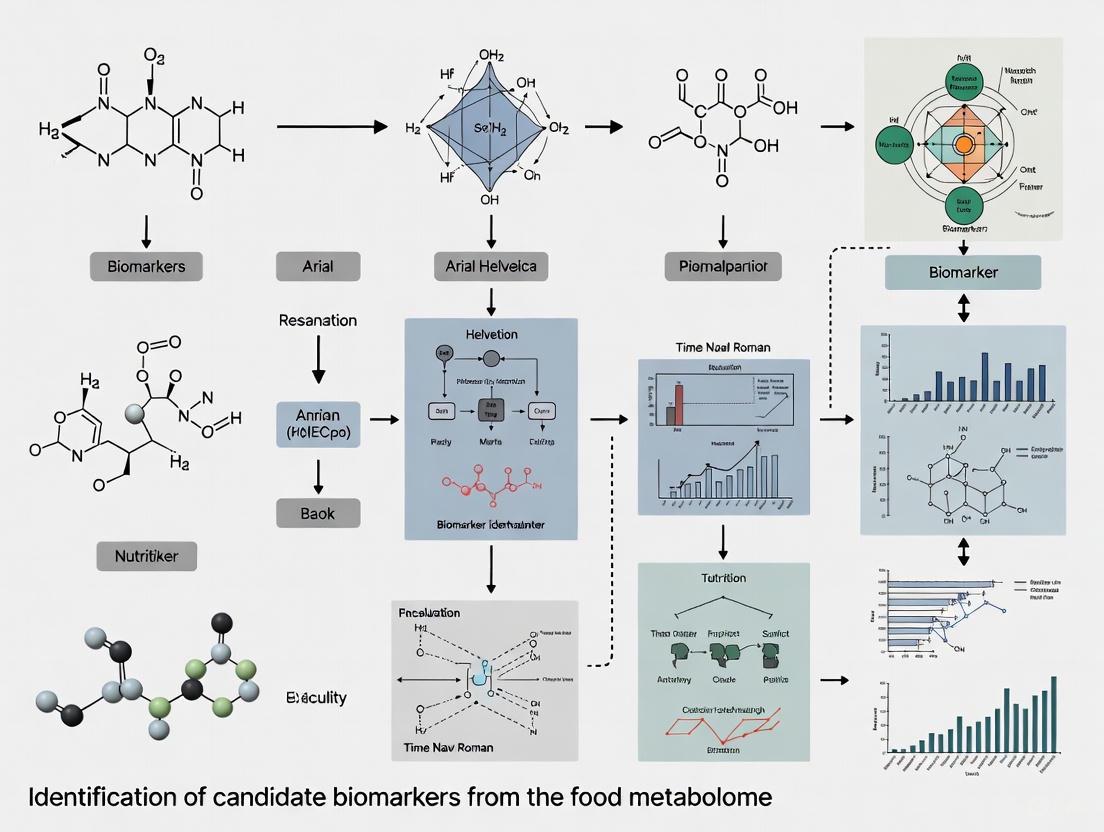
This comprehensive review explores the rapidly evolving field of food metabolome biomarker discovery and its transformative potential for precision nutrition, epidemiological research, and drug development.
Food Metabolome Biomarkers: From Discovery to Clinical Application in Precision Nutrition and Drug Development
Abstract
This comprehensive review explores the rapidly evolving field of food metabolome biomarker discovery and its transformative potential for precision nutrition, epidemiological research, and drug development. We examine how plasma metabolic variation serves as an objective, reproducible measure of dietary exposure and quality, with biomarker panels demonstrating accurate prediction of clinical phenotypes including diabetes and hypertension. The article covers foundational concepts of the food metabolome, advanced methodological approaches integrating mass spectrometry and machine learning, strategies for overcoming analytical and validation challenges, and comparative assessment of biomarker performance across diverse populations and applications. With the global metabolic biomarker testing market experiencing significant growth and major initiatives like the Dietary Biomarkers Development Consortium advancing the field, this synthesis provides researchers and drug development professionals with critical insights into current capabilities, limitations, and future directions for leveraging dietary biomarkers to advance human health.
The Food Metabolome: A Foundational Window into Dietary Exposure and Metabolic Response
The food metabolome is defined as the part of the human metabolome directly derived from the digestion and biotransformation of foods and their constituents [1] [2]. It represents a rich and complex source of information on dietary exposure, comprising more than 25,000 compounds known to exist in various foods, along with the extensive range of metabolites generated through host enzyme activity and gut microbiota metabolism [1] [3]. This dynamic metabolic interface between diet and human biology provides an exceptionally detailed record of food intake, capturing not only nutrients but also non-nutritive food constituents, food additives, contaminants, and the products of cooking processes [4]. The systematic exploration of the food metabolome has emerged as a critical discipline in nutritional science and biomedical research, offering unprecedented opportunities to discover candidate biomarkers that can objectively measure dietary exposure, elucidate diet-disease relationships, and advance the development of precision nutrition and medicine [1] [5].
The fundamental value of the food metabolome lies in its position as the functional endpoint of dietary influence on human physiology. Unlike the genome, which remains largely static, or the transcriptome and proteome, which represent cellular potential and capability, the metabolome provides a real-time snapshot of actual biochemical activity that has occurred within a biological system [6]. This metabolic signature integrates information from genetic predisposition, current health status, environmental exposures, and—most relevantly for this discussion—dietary intake patterns [7]. As such, the food metabolome serves as a uniquely powerful resource for identifying biomarkers that reflect true dietary exposure, bypassing many of the limitations inherent to self-reported dietary assessment methods such as food frequency questionnaires and dietary recalls, which are notoriously susceptible to recall bias and measurement error [4] [3].
Analytical Methodologies for Food Metabolome Characterization
Core Analytical Technologies
Comprehensive characterization of the food metabolome requires sophisticated analytical platforms capable of detecting and quantifying thousands of chemically diverse metabolites across a wide concentration range. Two principal technologies dominate this field: mass spectrometry (MS) and nuclear magnetic resonance (NMR) spectroscopy, each with distinct strengths and limitations for metabolomic applications [8] [3].
Table 1: Core Analytical Techniques in Food Metabolomics
| Technique | Key Features | Sensitivity | Metabolite Coverage | Throughput | Primary Applications |
|---|---|---|---|---|---|
| Liquid Chromatography-MS (LC-MS) | High resolution, requires metabolite separation | High (femtomolar range) | Broad (>1,200 metabolites) | Moderate to High | Discovery metabolomics, biomarker identification |
| Gas Chromatography-MS (GC-MS) | Excellent for volatile compounds | High | Moderate (~200-300 metabolites) | Moderate | Organic acids, sugars, fatty acids |
| Nuclear Magnetic Resonance (NMR) Spectroscopy | Non-destructive, minimal sample preparation | Moderate (micromolar range) | Moderate (~100-200 metabolites) | High | Quantitative profiling, structural elucidation |
| Capillary Electrophoresis-MS (CE-MS) | Excellent for polar/ionic compounds | High | Targeted (charged metabolites) | Moderate | Polar metabolites, complementary technique |
MS-based approaches, particularly when coupled with separation techniques like liquid chromatography (LC) or gas chromatography (GC), provide exceptional sensitivity (often reaching femtomolar concentrations) and broad metabolome coverage, enabling detection of more than 1,200 metabolites in a single blood or tissue sample [6] [3]. These platforms typically involve extensive sample preparation and chromatographic separations to resolve the complex mixture of metabolites present in biological samples. The implementation of high-resolution MS instruments has been particularly transformative for discovery-based metabolomics, allowing for the detection of thousands of molecular features and enabling hypothesis generation regarding novel dietary biomarkers [3].
In contrast, NMR spectroscopy offers complementary advantages, including high analytical reproducibility, minimal sample preparation requirements, and the ability to provide absolute quantification of metabolites without requiring reference standards [6] [3]. Although NMR is generally less sensitive than MS-based techniques, its non-destructive nature and robustness make it particularly valuable for large-scale epidemiological studies and clinical applications where standardization and longitudinal consistency are paramount [3]. The two approaches are increasingly used in tandem to leverage their respective strengths, with NMR providing broad metabolic screening and absolute quantification, while MS-based methods enable deeper investigation of specific metabolic pathways and lower-abundance metabolites [7].
Experimental Workflows and Strategic Approaches
Food metabolomics research employs two primary strategic approaches: untargeted and targeted metabolomics, which serve distinct but complementary purposes in dietary biomarker discovery [7]. Untargeted (or discovery) metabolomics adopts a global, hypothesis-generating approach aimed at comprehensively measuring all detectable metabolites in a biological sample without prior selection [7]. This strategy is particularly valuable for identifying novel dietary biomarkers and uncovering unexpected metabolic relationships between diet and health outcomes. Conversely, targeted metabolomics focuses on the precise quantification of a predefined set of metabolites, typically using validated methods with internal standards to ensure accuracy and reproducibility [7] [3]. This hypothesis-driven approach is most appropriate for validating candidate biomarkers and applying them in larger cohort studies or clinical settings.
A typical food metabolomics workflow encompasses multiple stages, from experimental design through biological interpretation [7]. The process begins with careful experimental design and sample collection, where standardization of procedures is critical to minimize technical variability. Subsequent sample preparation steps vary significantly depending on the analytical platform and biological matrix but generally involve protein precipitation, metabolite extraction, and sometimes chemical derivatization to enhance detection (particularly for GC-MS) [3]. Following data acquisition using MS or NMR platforms, raw data undergo extensive processing and preprocessing, including peak detection, alignment, normalization, and compound identification using specialized software and metabolic databases [6]. The final stages involve statistical analysis and biological interpretation, where multivariate methods, pathway analysis, and integration with other omics data help extract meaningful insights about diet-metabolite relationships.
Figure 1: The pathway from food intake to the identification of dietary biomarkers and their application in precision nutrition, highlighting key biological processes including host and gut microbiota metabolism.
Dietary Biomarker Discovery and Validation
Candidate Biomarkers of Food Intake
The systematic investigation of the food metabolome has yielded numerous candidate biomarkers for specific foods, food groups, and dietary patterns. A comprehensive review of nutritional metabolomics studies published through 2020, which evaluated evidence from 244 studies, identified 69 metabolites representing good candidate biomarkers of food intake based on interstudy repeatability and study design robustness [3]. These biomarkers span multiple food categories and provide objective measures of dietary exposure that complement or potentially replace traditional self-report methods.
Table 2: Evidence-Graded Candidate Biomarkers for Selected Food Categories
| Food Category | Candidate Biomarkers | Evidence Level | Biological Matrix | Key Characteristics |
|---|---|---|---|---|
| Citrus Fruits | Proline betaine, Stachydrine, Synephrine | Good | Urine, Serum | Citrus-specific, dose-dependent response |
| Coffee | Trigonelline, N-methylpyridinium, Quinate, Dihydrocaffeic acid-3-sulfate | Good | Urine, Plasma | Roasting products, high specificity |
| Red Meat | Carnitine, Acetylcarnitine, TMAO | Good | Serum, Plasma | Gut microbiota-dependent metabolism |
| Fish & Seafood | TMAO, Arsenobetaine, Histidine derivatives | Good | Urine, Plasma | Marine source-specific compounds |
| Whole Grains | Alkylresorcinols (C17:0, C19:0, C21:0) | Good | Plasma, Urine | Wheat/rye/bran biomarkers |
| Vegetables | Sulforaphane, Quercetin, Lutein | Fair to Good | Urine, Plasma | Varies by vegetable type |
| Nuts & Legumes | Tryptophan betaine, Sphingolipids | Fair | Serum | Novel biomarkers requiring validation |
The evidence grading system for these biomarkers considered both study design (with interventional studies receiving higher weighting than observational designs) and replication across independent studies and biological matrices [3]. Metabolites classified as providing "good" evidence were those that achieved a score of ≥5 points based on this system, indicating consistent identification across multiple rigorous studies. For example, proline betaine has been robustly established as a biomarker of citrus consumption through its identification in multiple intervention studies and detection in both blood and urine [3] [9]. Similarly, alkylresorcinols and their metabolites serve as specific biomarkers of whole-grain wheat and rye intake, with demonstrated utility in both compliance monitoring for intervention studies and assessment of habitual intake in population studies [3] [9].
Methodological Considerations for Biomarker Validation
The transition from candidate biomarker identification to validated biomarker application requires rigorous methodological standards and systematic validation procedures. Key considerations include specificity (the degree to which a biomarker uniquely reflects intake of a target food), sensitivity (the ability to detect changes in intake levels), kinetic profile (the time course of appearance and elimination in biological fluids), and dose-response relationship (the correlation between intake amount and biomarker concentration) [4] [3]. Interindividual variability in metabolite response, influenced by factors such as genetics, gut microbiota composition, age, sex, and health status, further complicates biomarker development and must be carefully characterized [10].
The gold standard for dietary biomarker discovery remains the controlled feeding study, in which participants consume a standardized diet with known composition, enabling direct correlation between food intake and subsequent metabolic profiles [4] [3]. However, such studies are resource-intensive and may not fully reflect habitual dietary patterns in free-living populations. Alternative approaches include cross-sectional studies that correlate metabolomic profiles with dietary assessments in large cohorts, though these are subject to the limitations of self-reported dietary data [4]. The most robust biomarker validation strategies typically combine elements of both approaches, beginning with controlled interventions to establish candidate biomarkers and progressing to large observational studies to assess their performance in real-world settings [3].
Advanced Research Applications
Gut Microbiota Interactions and Personalized Responses
The gut microbiota plays a pivotal role in shaping the food metabolome through the transformation of dietary components that escape host digestion, generating a diverse array of microbially derived metabolites that influence human health and disease risk [10]. This microbial metabolism contributes significantly to the high interindividual variability observed in metabolic responses to identical foods, complicating the identification of universal dietary biomarkers and necessitating personalized approaches [10]. Advanced computational methods are now being developed to predict individual metabolite responses to dietary interventions based on baseline gut microbial composition, with recent deep learning approaches such as McMLP (Metabolite response predictor using coupled Multilayer Perceptrons) demonstrating superior performance compared to traditional machine learning models in predicting post-intervention metabolite concentrations [10].
The tripartite relationship between food components, gut microbes, and metabolite production represents a particularly promising area for biomarker discovery, especially for compounds such as short-chain fatty acids (SCFAs), which are produced by microbial fermentation of dietary fiber and have been linked to numerous health benefits including immune regulation, gut-brain communication, and cardiovascular protection [10]. Butyrate, a key SCFA, has demonstrated particularly potent anti-inflammatory effects, and approaches to boost its production through microbiota-targeted dietary interventions represent an active research frontier [10]. Other notable examples of microbiota-dependent dietary biomarkers include trimethylamine-N-oxide (TMAO), generated from dietary choline and L-carnitine (abundant in red meat and eggs) through sequential microbial and host metabolism, which has been associated with increased cardiovascular disease risk [3].
Integration with Precision Medicine and Drug Development
The food metabolome is increasingly recognized as a critical component of precision medicine initiatives, particularly in the context of drug discovery and development [8] [6]. Pharmacometabolomics, an emerging branch of metabolomics that integrates pre-treatment metabolic profiles with drug response data, leverages information about an individual's metabolic baseline (including dietary influences) to predict drug efficacy, metabolism, and adverse reactions [8] [7]. This approach is particularly valuable for addressing the high failure rates in clinical drug development, where more than 30% of compounds entering Phase II trials fail to progress, and only 25-60% of patients typically exhibit the anticipated treatment response [7].
Diet-derived metabolites can significantly influence drug metabolism and efficacy through various mechanisms, including competition for metabolic enzymes, modulation of metabolic pathway activity, and alteration of gut microbiota composition that subsequently affects drug metabolism [6]. For example, metabolomic analysis of the diabetes drug metformin revealed that its mechanism extends beyond glucose metabolism to include significant effects on lipid metabolism and gut microbiome composition, explaining its potential utility in unrelated conditions such as cancer and aging [6]. The pharmaceutical industry has rapidly adopted these approaches, with more than 80% of top-20 pharmaceutical companies now integrating metabolomic platforms into their drug discovery pipelines for target validation, compound screening, and biomarker development [6].
Research Reagent Solutions and Essential Methodologies
Table 3: Essential Research Tools for Food Metabolomics and Biomarker Discovery
| Category | Specific Tools/Reagents | Key Function | Application Notes |
|---|---|---|---|
| Analytical Standards | Stable Isotope-Labeled Internal Standards (SIDA), Certified Reference Materials | Quantification accuracy, Peak identification | Critical for targeted metabolomics and absolute quantification |
| Chromatography | HILIC columns, C18 reverse-phase columns, GC capillary columns | Metabolite separation | HILIC excellent for polar metabolites, C18 for lipids/lipophilic compounds |
| Databases | Human Metabolome Database (HMDB), FooDB, Exposome-Explorer | Metabolite identification, Pathway mapping | FooDB contains >70,000 food-derived metabolites |
| Sample Preparation | Protein precipitation reagents (methanol, acetonitrile), Derivatization agents | Metabolite extraction, Analyte detection enhancement | Standardized protocols essential for reproducibility |
| Quality Control | Pooled quality control samples, Standard reference materials | Batch effect correction, Data quality assessment | Should be included at frequency of ~10% of study samples |
| Software Tools | MetaboAnalyst 6.0, XCMS, NMR processing software | Data processing, Statistical analysis, Visualization | Enable peak picking, alignment, normalization, multivariate statistics |
The implementation of robust metabolomic studies requires careful selection of research reagents and methodologies tailored to specific research questions. For untargeted discovery studies, comprehensive metabolite coverage is prioritized, typically employing multiple analytical platforms (e.g., HILIC-MS for polar metabolites and reversed-phase LC-MS for lipids) alongside extensive spectral libraries for compound identification [3]. In contrast, targeted biomarker validation emphasizes precision, accuracy, and sensitivity, necessitating stable isotope-labeled internal standards for absolute quantification and rigorously validated analytical methods [3] [9]. The emerging field of multi-omics integration further requires specialized computational tools and statistical approaches to correlate metabolomic data with genomic, transcriptomic, and proteomic datasets, providing more comprehensive insights into the biological mechanisms linking diet to health outcomes [6].
Quality control procedures represent an especially critical component of food metabolomics research, with international consortia having developed standardized protocols for sample collection, processing, and analysis to address reproducibility challenges [6]. These include the use of pooled quality control samples analyzed at regular intervals throughout analytical batches to monitor instrument performance, as well as standard reference materials with known metabolite concentrations to ensure analytical accuracy [6] [3]. The implementation of such quality management systems is particularly important for studies intended to generate regulatory-grade biomarker data for clinical applications [6].
The field of food metabolomics is advancing rapidly, driven by continuous improvements in analytical technologies, computational methods, and study design. Future progress will likely be accelerated by several key developments, including the integration of artificial intelligence and machine learning for metabolite identification and pathway analysis [6] [10], the establishment of large-scale shared repositories of metabolomic data to enhance statistical power and enable meta-analyses [1], and the development of point-of-care devices and wearable sensors for real-time monitoring of dietary biomarkers [6]. Additionally, there is growing recognition of the need for more coordinated international efforts to standardize methodologies and validate dietary biomarkers across diverse populations and ethnic groups [1] [3].
The systematic exploration of the food metabolome has fundamentally transformed our approach to dietary assessment and nutrition research, providing an objective and detailed window into dietary exposure that complements traditional methods. The continued identification and validation of dietary biomarkers will play an increasingly important role in clarifying the complex relationships between diet and chronic disease risk, supporting the development of evidence-based dietary guidelines, and advancing the implementation of precision nutrition strategies tailored to individual metabolic characteristics [3]. As these biomarkers become more firmly established and routinely applicable in both research and clinical settings, they hold exceptional promise for improving public health and personalizing dietary recommendations to optimize individual health outcomes.
Plasma Metabolic Variation as an Objective Measure of Dietary Intake and Quality
Diet is a complex exposure that significantly influences human health and disease risk across the lifespan. Traditional methods for assessing dietary intake, such as food frequency questionnaires (FFQs) and dietary recalls, are subject to considerable measurement error, including recall bias and inaccurate portion size estimation [11]. Consequently, there is a critical need for objective biomarkers that can reliably reflect the intake of specific nutrients, foods, and overall dietary patterns with sufficient accuracy.
Plasma metabolomics has emerged as a powerful tool for capturing the complex interplay between diet and metabolic phenotype. The plasma metabolome represents the dynamic collection of small-molecule metabolites (<1000 Da) in circulation, providing an integrated snapshot of endogenous metabolic processes, genetic influences, and exogenous exposures, including diet [12] [13]. This technical guide explores the use of plasma metabolic variation as an objective measure of dietary intake and quality, framed within the context of identifying candidate biomarkers from food metabolome research for applications in nutritional science, epidemiology, and drug development.
The Plasma Metabolome: Composition and Analytical Considerations
The human fasting plasma metabolome comprises a diverse array of biochemical compounds, with the most abundant components being major dietary fatty acids (e.g., oleate, palmitate) and amino acids (e.g., glutamine, branched-chain amino acids), followed by glucose, lactate, and creatinine [12]. Quantitative profiling reveals that these metabolites are present at more than 500-fold higher mass spectral counts than the average metabolite, highlighting their biological prominence.
Table 1: Major Classes of Metabolites in the Human Plasma Metabolome
| Metabolite Class | Proportion of Detected Metabolites | Representative Components | Technical Notes |
|---|---|---|---|
| Lipids | 28% | Oleate, Palmitate, Cholesteryl Esters, Sphingomyelins | Extensive correlations within class; requires specialized extraction |
| Amino Acids | 14% | Glutamine, Proline, Branched-Chain Amino Acids (Leucine, Isoleucine) | Often show log-normal distribution; high temporal stability (CV: 0.25) |
| Xenobiotics | 22% | Dietary compounds, Pharmaceuticals | High temporal variability (CV: 0.53); often cohort-specific |
| Uncharacterized | 19% | Unknown structures | High missingness rates; limited functional interpretation |
| Carbohydrates | - | Glucose, Lactate | Sensitive to sample storage time |
When designing studies to investigate dietary biomarkers, several pre-analytical and analytical factors must be considered to ensure data quality and biological relevance:
Sample Treatment: The presence of proteins and phospholipids in plasma/serum poses challenges for nuclear magnetic resonance (NMR) and mass spectrometry analysis. Comparative studies of sample treatment methods show that Carr-Purcell-Meiboom-Gill (CPMG) editing and glycerophospholipid solid-phase extraction (g-SPE) demonstrate better precision for most metabolites compared to protein precipitation with methanol or ultrafiltration [14]. The optimal procedure can be metabolite-dependent, necessitating careful method selection based on the target analytes.
Temporal Variability: Metabolites exhibit differing degrees of temporal stability. In analyses of samples obtained one year apart, amino acids showed a median coefficient of variation (CV) of 0.25, lipids 0.29, and xenobiotics 0.53—the latter being more variable but still with between-subject variability approximately 94% higher than within-subject variability for most metabolites [12]. This supports the use of single measurements for many epidemiological applications.
Statistical Approaches for High-Dimensional Data: With the number of assayed metabolites often exceeding the number of study subjects, particularly in nontargeted metabolomics, the choice of statistical methods is crucial. Sparse multivariate methods such as Sparse Partial Least Squares (SPLS) and Least Absolute Shrinkage and Selection Operator (LASSO) demonstrate superior performance in scenarios with highly correlated metabolite data, offering greater selectivity and reduced potential for spurious relationships compared to traditional univariate approaches with multiplicity correction [15].
Plasma Metabolites as Biomarkers of Dietary Patterns
Healthy dietary patterns that conform to national dietary guidelines are consistently associated with reduced chronic disease incidence and longer life span. Research has demonstrated that plasma metabolite profiles can objectively reflect adherence to such patterns, providing insights into potential biological mechanisms.
Table 2: Plasma Metabolites Associated with Diet Quality Indexes
| Diet Quality Index | Key Associated Metabolites | Correlation Coefficients (Range) | Relevant Dietary Components |
|---|---|---|---|
| Healthy Eating Index (HEI) 2010 | 23 metabolites (17 chemically identified) | -0.30 to 0.20 | Fruit, Vegetables, Whole Grains, Fish, Unsaturated Fat |
| Alternate Mediterranean Diet Score (aMED) | 46 metabolites (21 chemically identified) | -0.30 to 0.20 | Fruit, Vegetables, Whole Grains, Fish, Unsaturated Fat |
| WHO Healthy Diet Indicator (HDI) | 23 metabolites (11 chemically identified) | -0.30 to 0.20 | Polyunsaturated Fat, Fiber |
| Baltic Sea Diet (BSD) | 33 metabolites (10 chemically identified) | -0.30 to 0.20 | Fruit, Vegetables, Whole Grains, Fish, Unsaturated Fat |
Comprehensive studies have revealed that food-based diet indexes (HEI-2010, aMED, BSD) associate with metabolites correlated with most components used to score adherence, including fruits, vegetables, whole grains, fish, and unsaturated fats [11]. In contrast, the HDI, based primarily on nutrient intakes, correlated mainly with metabolites related to polyunsaturated fat and fiber components. Pathway analyses consistently identify the lysolipid and food and plant xenobiotic pathways as most strongly associated with overall diet quality [11].
The relationship between dietary patterns and the plasma metabolome can be modified by genetic factors. Recent research has demonstrated that adherence to the Mediterranean diet more effectively modulates dementia-related metabolites in APOE4 homozygotes, suggesting opportunities for targeted nutritional prevention strategies [13]. This genotype-dependent metabolic responsiveness underscores the potential for precision nutrition approaches based on individual genetic and metabolic profiles.
Experimental Workflows for Dietary Biomarker Discovery
The discovery and validation of robust dietary biomarkers require methodologically sound approaches integrating controlled feeding studies, metabolomic profiling, and rigorous statistical analysis.
The Dietary Biomarkers Development Consortium Framework
The Dietary Biomarkers Development Consortium (DBDC) has established a systematic, three-phase approach for biomarker discovery and validation [16]:
Phase 1: Identification - Controlled feeding trials administer test foods in prespecified amounts to healthy participants, followed by metabolomic profiling of blood and urine specimens to identify candidate compounds and characterize their pharmacokinetic parameters.
Phase 2: Evaluation - Controlled feeding studies of various dietary patterns evaluate the ability of candidate biomarkers to identify individuals consuming the biomarker-associated foods.
Phase 3: Validation - Independent observational studies validate candidate biomarkers for predicting recent and habitual consumption of specific test foods.
This comprehensive framework aims to significantly expand the list of validated biomarkers of intake for foods commonly consumed in target populations, enhancing understanding of how diet influences human health.
Protocol for Metabolite Measurement in Plasma Samples
Targeted metabolomic profiling for dietary biomarker studies typically follows standardized protocols [17]:
Sample Collection: Collect fasting blood samples in appropriate anticoagulant tubes (e.g., EDTA). Process plasma within 2 hours of collection by centrifugation at 4°C and store at -70°C or below in single-use aliquots to avoid freeze-thaw cycles.
Metabolite Extraction: For mass spectrometry-based approaches, use methanol-based protein precipitation or specific commercial kits (e.g., AbsoluteIDQ p180 kit) that enable quantification of acylcarnitines, amino acids, biogenic amines, hexose, glycerophospholipids, and sphingolipids.
Instrumental Analysis: Perform analysis using electrospray ionization liquid chromatography–mass spectrometry (ESI-LC/MS) and tandem mass spectrometry (MS/MS) according to manufacturer protocols. Include quality control samples (pooled plasma, blinded replicates) in each batch to monitor technical variability.
Data Processing: Integrate peak areas for known metabolites using instrument-specific software. Normalize data according to run day and quality control samples to account for instrumental drift.
Figure 1: Experimental Workflow for Plasma Metabolite Analysis
Metabolite Signatures of Dietary Intake in Disease Contexts
Plasma metabolic variation provides particular insight into the relationship between diet and metabolic syndrome (MetS), a cluster of conditions that increases risk for cardiovascular disease and type 2 diabetes.
Comprehensive metabolomic analysis of the KoGES Ansan-Ansung cohort revealed distinct metabolic profiles and nutrient intake patterns associated with MetS [17]. Specifically, eleven metabolites, including hexose, alanine, and branched-chain amino acids (BCAAs), and three nutrients (fat, retinol, and cholesterol) were significantly associated with MetS status. Pathway analysis highlighted disruptions in arginine biosynthesis and arginine-proline metabolism in individuals with MetS.
Notably, the MetS group exhibited six unique metabolite-nutrient pairs not observed in the non-MetS group, including 'isoleucine-fat,' 'isoleucine-P,' 'proline-fat,' 'leucine-fat,' 'leucine-P,' and 'valerylcarnitine-niacin' [17]. These altered relationships suggest that dysregulated metabolism of branched-chain amino acids, implicated in oxidative stress, may be a key metabolic feature of MetS. Machine learning approaches using metabolite profiles have demonstrated robust predictive performance for MetS classification, with stochastic gradient descent classifiers achieving an area under the curve (AUC) of 0.84 [17].
Figure 2: Diet-Metabolite-Disease Pathway in Metabolic Syndrome
The Scientist's Toolkit: Essential Research Reagents and Solutions
Table 3: Essential Research Reagents for Dietary Biomarker Studies
| Reagent/Technology | Function | Example Applications |
|---|---|---|
| AbsoluteIDQ p180 Kit | Targeted metabolomics kit for quantitative analysis of up to 188 metabolites | Simultaneous quantification of acylcarnitines, amino acids, biogenic amines, hexose, glycerophospholipids, and sphingolipids [17] |
| LC-MS/MS with ESI Source | High-sensitivity detection and quantification of metabolites in complex biological samples | Identification and quantification of food-derived metabolites; discovery of novel dietary biomarkers [17] |
| CPMG Pulse Sequence (NMR) | Editing technique for suppressing macromolecule signals in NMR spectroscopy | Improved quantification of low-molecular-weight metabolites in plasma by reducing protein and lipoprotein interference [14] |
| g-SPE (Glycerophospholipid Solid-Phase Extraction) | Sample treatment for phospholipid removal from plasma/serum | Effective removal of phospholipids for quantitative NMR analysis; demonstrates better precision for metabolites like 2-hydroxybutyrate and tryptophan [14] |
| LASSO/SPLS Regression | Sparse multivariate statistical methods for high-dimensional data | Identification of metabolite panels associated with dietary patterns while handling high correlation structures [15] |
| Semi-Quantitative Food Frequency Questionnaire (SFFQ) | Validated instrument for assessing habitual dietary intake | Collection of self-reported dietary data for correlation with metabolomic profiles; assessment of dietary pattern adherence [13] |
Plasma metabolic variation provides an objective, quantitative measure of dietary intake and quality that complements and enhances traditional dietary assessment methods. The integration of controlled feeding studies, high-throughput metabolomic profiling, and appropriate statistical approaches enables the discovery and validation of dietary biomarkers that reflect intake of specific foods and adherence to healthy dietary patterns.
The evolving field of food metabolome research continues to identify candidate biomarkers that offer insights into the complex relationships between diet, metabolism, and health outcomes. These advances support the development of precision nutrition approaches, where dietary recommendations can be tailored to individual metabolic profiles and genetic backgrounds for more effective prevention and management of chronic diseases. As the repertoire of validated dietary biomarkers expands, so too will our ability to decipher the intricate connections between diet and health, ultimately informing both public health guidelines and clinical practice.
Accurate dietary assessment remains a formidable challenge in nutritional epidemiology and health research. Traditional methods, including 24-hour dietary recalls and food frequency questionnaires (FFQs), are plagued by systematic and random measurement errors that obscure true diet-disease relationships. Advances in nutritional metabolomics have enabled the discovery of objective dietary biomarkers that circumvent the limitations of self-reported data. This technical guide explores how biomarker-based approaches overcome critical methodological challenges, focusing on the validation frameworks and analytical technologies driving this paradigm shift. Within the context of identifying candidate biomarkers from food metabolome research, we detail experimental protocols for biomarker discovery and validation, providing researchers with methodologies to enhance the objectivity and precision of dietary exposure assessment in both population studies and clinical trials.
The Problem: Measurement Error in Traditional Dietary Assessment
Traditional dietary assessment methods rely on self-reported intake data, introducing substantial measurement error that compromises data quality and interpretability.
Limitations of Self-Reported Methods
24-hour dietary recalls, while widely used in low-income countries for their cultural sensitivity and relatively low cognitive demand, are subject to both random and systematic errors [18]. Random errors reduce measurement precision and statistical power, while systematic errors generate bias that reduces accuracy, potentially leading to erroneous conclusions about diet-disease relationships [18]. These errors are particularly problematic when investigating complex relationships between specific nutrients or foods and health outcomes.
Key sources of error in self-reported methods include:
- Recall decay: Memory fades over time, leading to under-reporting of foods consumed further in the past [19]
- Telescoping: Respondents incorrectly shift consumption forward or backward in time outside the recall period [19]
- Heaping: Agglomeration of past events into one point in time [19]
- Social desirability bias: Systematic under-reporting of unhealthy foods and over-reporting of healthy foods
- Portion size estimation errors: Inaccurate quantification of consumed amounts
Quantifying the Impact
Studies comparing self-reported energy intake with objective measures like doubly labeled water (DLW) reveal significant under-reporting. One review notes that self-reporting tools suffer from errors in reporting total energy intake and food portion sizes by 30-88% [3]. This magnitude of measurement error severely hinders efforts to disentangle diet-disease relations and has persisted as a fundamental limitation in nutritional epidemiology.
High-frequency data collection using mobile technologies demonstrates that recall bias varies across different types of dietary information. Recall of consumption and experiences (such as sick days) suffers more greatly than recall of household time use for labor and farm activities [19]. This suggests that certain dietary components may be more susceptible to recall bias than others.
The Solution: Dietary Biomarkers as Objective Measures
Dietary biomarkers offer an objective approach to measuring food intake by detecting and quantifying food-derived compounds or their metabolites in biological specimens.
Defining Dietary Biomarkers
A biomarker is formally defined as "a characteristic that is measured as an indicator of normal biological processes, pathogenic processes, or responses to an exposure or intervention including therapeutic interventions" [20]. Biomarkers of food intake (BFIs) specifically are biochemical indicators of food intake that can be measured in biological samples such as blood, urine, or other tissues [21].
Unlike self-reported measures, BFIs provide:
- Objective quantification of intake unaffected by memory or social desirability bias
- Measurement of the bioavailable dose of food components
- Information about interindividual differences in metabolism
- Integration of exposures from different food sources and preparation methods
Classification and Evidence Grading
Dietary biomarkers can be categorized based on their specificity and the type of intake they represent. The table below summarizes major food categories and their associated biomarker evidence:
Table 1: Validated Dietary Biomarkers for Major Food Categories
| Food Category | Candidate Biomarkers | Level of Evidence | Biological Matrix |
|---|---|---|---|
| Fruits | Proline betaine, anthranilic acid | Good | Urine, plasma |
| Vegetables | Allyl methyl sulfide, quercetin | Good | Urine, plasma |
| High-fiber foods | Alkylresorcinols, enterolignans | Good | Plasma, urine |
| Meats | TMAO, 1-methylhistidine | Good | Urine, plasma |
| Seafood | TMAO, arsenic compounds | Good | Urine |
| Pulses, legumes, nuts | S-ethylcysteine, uracil | Fair | Urine |
| Alcohol | Ethyl glucuronide, ethyl sulfate | Good | Urine, serum |
| Caffeinated beverages | Paraxanthine, theobromine | Good | Urine, saliva |
| Dairy | D-lactose, 15:0 fatty acid | Good | Urine, plasma |
| Sweet foods | Sucrose, fructose | Fair | Urine |
A systematic review of nutritional metabolomics studies identified 69 metabolites representing good candidate biomarkers of food intake based on interstudy repeatability and study design validation [3]. The level of evidence was classified using a scoring system that considered replication across independent studies and biological matrices.
Validation Frameworks for Dietary Biomarkers
Comprehensive validation is essential to establish the reliability and appropriate use of dietary biomarkers in research settings.
The Eight-Criteria Validation Framework
A consensus-based procedure developed within the Food Biomarker Alliance (FoodBAll) proposes eight criteria for systematic validation of BFIs [21]:
Table 2: Validation Criteria for Biomarkers of Food Intake
| Validation Criterion | Key Questions | Required Studies |
|---|---|---|
| Plausibility | Is there a plausible link between the food and biomarker? | Controlled feeding studies, literature review |
| Dose-Response | Does biomarker level increase with food intake amount? | Dose-response feeding studies |
| Time-Response | What are the kinetic parameters of the biomarker? | Time-course studies post-consumption |
| Robustness | Is the response consistent across populations? | Multi-population studies |
| Reliability | Does repeated intake yield consistent responses? | Repeated feeding studies |
| Stability | Is the biomarker stable during storage? | Stability studies under various conditions |
| Analytical Performance | Is the analytical method valid? | Method validation studies |
| Inter-laboratory Reproducibility | Can the biomarker be measured across labs? | Ring trials, standardized protocols |
This validation framework addresses both biological validity (criteria 1-5) and analytical validity (criteria 6-8), ensuring that biomarkers are both nutritionally meaningful and technically measurable [21].
Biomarker Validation Pathway
The following diagram illustrates the systematic pathway from biomarker discovery to full validation:
Current Research Initiatives and Consortium Efforts
Major collaborative projects are addressing the challenge of dietary biomarker discovery and validation through controlled feeding studies and advanced metabolomic profiling.
The Dietary Biomarkers Development Consortium (DBDC)
The Dietary Biomarkers Development Consortium (DBDC), established in 2021, represents the first major coordinated effort to improve dietary assessment through discovery and validation of biomarkers for foods commonly consumed in the United States diet [22]. The DBDC employs a three-phase approach:
- Phase 1: Controlled feeding trials with prespecified amounts of test foods administered to healthy participants, followed by metabolomic profiling of blood and urine specimens to identify candidate compounds and characterize their pharmacokinetic parameters.
- Phase 2: Evaluation of candidate biomarkers' ability to identify individuals consuming biomarker-associated foods using controlled feeding studies of various dietary patterns.
- Phase 3: Validation of candidate biomarkers' predictive value for recent and habitual consumption of specific test foods in independent observational settings [22].
The DBDC leverages liquid chromatography-mass spectrometry (LC-MS) and hydrophilic-interaction liquid chromatography (HILIC) protocols across multiple study centers to enhance harmonization of metabolite identifications [22].
Food Biomarker Alliance (FoodBAll)
The Food Biomarker Alliance (FoodBAll) is a joint initiative across 11 countries aimed at discovery and validation of dietary biomarkers [3]. This consortium has systematically explored markers of food intake across different populations in Europe, creating comprehensive databases like the Food Database (FooDB) containing >70,000 metabolites derived from foods and food constituents [3].
Experimental Protocols for Biomarker Discovery and Validation
Robust experimental methodologies are essential for identifying and validating candidate dietary biomarkers.
Controlled Feeding Studies
Controlled feeding studies represent the gold standard for establishing causal links between food intake and biomarker appearance. Key design considerations include:
- Test food selection: Based on dietary guidelines and consumption patterns
- Dose escalation: Multiple intake levels to establish dose-response relationships
- Control diets: Elimination of confounding food compounds
- Sample timing: Frequent biospecimen collection to characterize kinetics
- Participant characteristics: Diverse populations to assess interindividual variability
The DBDC protocol administers test foods in prespecified amounts to healthy participants, followed by intensive biospecimen collection for metabolomic profiling [22]. This approach enables characterization of pharmacokinetic parameters of candidate biomarkers, including time to peak concentration, elimination half-life, and area under the curve.
Analytical Methodologies
Advanced metabolomic technologies have dramatically improved our ability to detect and quantify food-derived metabolites:
Table 3: Analytical Platforms for Dietary Biomarker Research
| Technology | Applications | Sensitivity | Throughput |
|---|---|---|---|
| LC-MS/MS | Targeted quantification of known biomarkers | High (pM range) | Medium-high |
| GC-MS | Volatile compounds, fatty acids | Medium-high | Medium |
| NMR spectroscopy | Untargeted profiling, structural elucidation | Low-medium | High |
| Meso Scale Discovery (MSD) | Multiplexed protein biomarkers | High (up to 100x ELISA) | High |
| Chemical metabolomics | Selective detection of metabolite classes | High for target class | Medium |
Liquid chromatography-tandem mass spectrometry (LC-MS/MS) has emerged as a powerful technology for dietary biomarker research due to its high sensitivity, specificity, and broad dynamic range [23]. This platform enables both untargeted metabolomics for hypothesis generation and targeted analyses for hypothesis testing.
Recent innovations in chemical metabolomics have enabled highly sensitive and selective detection of specific metabolite classes. One study applied chemoselective conjugation of carbonyl-containing metabolites to identify nutritional biomarkers with high sensitivity and specificity (AUC > 0.91) [24]. This approach allows targeted analysis of metabolites that are common bioproducts of dietary conversion by the microbiome.
Biomarker Discovery Workflow
The following diagram illustrates the comprehensive workflow for dietary biomarker discovery and validation:
The Scientist's Toolkit: Essential Research Reagents and Platforms
Successful dietary biomarker research requires specialized reagents, analytical platforms, and computational resources.
Table 4: Essential Research Tools for Dietary Biomarker Studies
| Tool Category | Specific Examples | Application in Biomarker Research |
|---|---|---|
| Analytical Platforms | LC-MS/MS systems, GC-MS, NMR spectrometers | Metabolite separation, detection, and quantification |
| Multiplex Assays | Meso Scale Discovery (MSD) U-PLEX | Simultaneous measurement of multiple protein biomarkers |
| Chromatography Columns | HILIC, C18 reverse phase | Compound separation prior to mass spectrometric detection |
| Chemical Derivatization Reagents | Dansyl chloride, O-benzylhydroxylamine | Selective detection of metabolite classes (e.g., carbonyls) |
| Metabolite Databases | FooDB, Exposome-Explorer, HMDB | Metabolite identification and biochemical context |
| Stable Isotope Standards | ¹³C-, ¹⁵N-labeled compounds | Absolute quantification using isotope dilution |
| Biospecimen Collection Kits | Stabilized blood collection tubes, urine preservatives | Sample integrity maintenance |
| Bioinformatics Tools | XCMS, MetaboAnalyst, GNPS | Data processing, statistical analysis, and feature annotation |
Advanced platforms like Meso Scale Discovery (MSD) offer significant advantages over traditional ELISA, providing up to 100 times greater sensitivity and the ability to multiplex biomarkers in a single sample [23]. For example, measuring four inflammatory biomarkers using individual ELISAs costs approximately $61.53 per sample, while MSD's multiplex assay reduces the cost to $19.20 per sample [23].
Future Directions and Implementation Challenges
While dietary biomarkers hold tremendous promise, several challenges must be addressed to realize their full potential in research and clinical applications.
Ongoing Methodological Developments
Future advances in dietary biomarker research will likely focus on:
- Integrated multi-omics approaches combining metabolomics with genomics, proteomics, and microbiomics
- Point-of-care devices for rapid biomarker measurement in clinical settings
- Digital biomarkers collected through wearable sensors and mobile health technologies [20]
- AI and machine learning for pattern recognition in complex biomarker data
- Improved kinetic modeling to quantify habitual intake from biomarker measurements
Implementation Challenges
Key challenges remaining in the field include:
- Biomarker specificity: Many candidate biomarkers reflect multiple food sources
- Interindividual variability: Genetic, microbiome, and physiological differences affect biomarker metabolism
- Analytical standardization: Lack of harmonization across laboratories and platforms
- Cost-effectiveness: Balancing analytical precision with practical implementation
- Regulatory qualification: Establishing biomarker validity for regulatory decision-making
The remarkably low success rate of biomarker qualification highlights these challenges - only about 0.1% of potentially clinically relevant cancer biomarkers described in literature progress to routine clinical use [23]. Similar challenges exist in the nutritional biomarker field.
Dietary biomarkers represent a paradigm shift in nutritional assessment, offering an objective approach to overcoming the recall bias and measurement error that have plagued traditional self-reported methods. Through controlled feeding studies, advanced metabolomic technologies, and systematic validation frameworks, researchers are building a comprehensive toolkit of biomarkers for commonly consumed foods.
Consortium efforts like the Dietary Biomarkers Development Consortium and FoodBAll are accelerating the discovery and validation of these biomarkers, while technological advances in LC-MS/MS and multiplexed immunoassays are enhancing our analytical capabilities. As the field progresses, these objective measures will play an increasingly important role in elucidating diet-disease relationships, assessing compliance to dietary interventions, and advancing the field of precision nutrition.
For researchers identifying candidate biomarkers from food metabolome research, rigorous attention to validation criteria - including dose-response relationships, kinetic parameters, and analytical performance - will be essential for generating biomarkers that are truly fit-for-purpose in both research and clinical applications.
Key Metabolic Pathways Reflecting Nutritional Status and Food Processing Effects
The food metabolome represents the complete set of metabolites derived from dietary intake, reflecting the complex interaction between consumed foods, endogenous metabolism, and food processing effects. Within the context of identifying candidate biomarkers from food metabolome research, understanding key metabolic pathways is essential for developing objective biomarkers of nutritional status and food processing outcomes. These biomarkers provide crucial insights beyond traditional dietary assessment methods, enabling more precise evaluation of dietary exposures and their biological impacts in nutritional research, drug development, and precision medicine initiatives [25] [26] [16].
Metabolites serve as functional readouts of physiological processes, capturing influences from both genetic variation and environmental factors, including diet, lifestyle, and microbiome composition [27]. The systematic study of these metabolites through metabolomics and lipidomics has become an indispensable tool for discovering biomarkers, elucidating metabolic pathways affected by nutritional status, and understanding how food processing alters bioactive compounds in foods [27] [26]. This technical guide provides researchers and drug development professionals with comprehensive methodologies, pathway analyses, and experimental frameworks for identifying and validating metabolic pathways that reflect nutritional status and food processing effects.
Core Metabolic Pathways in Nutritional Status Assessment
Energy Metabolism Pathways
Energy metabolism pathways provide crucial insights into nutritional status and energy homeostasis. The tricarboxylic acid (TCA) cycle serves as the central metabolic hub for energy production, with intermediates including citrate, succinate, fumarate, and malate reflecting mitochondrial function and cellular energy status [26]. These metabolites can be measured in various biological samples to assess energy metabolism efficiency and identify disruptions associated with nutritional deficiencies or excesses.
Glycolysis and gluconeogenesis pathways offer windows into carbohydrate metabolism and glucose homeostasis. Key metabolites including glucose-6-phosphate, pyruvate, and lactate provide information about glycolytic flux and anaerobic metabolism [26]. In fasting states or low carbohydrate availability, gluconeogenesis precursors including alanine, glutamine, and glycerol become important indicators of metabolic adaptation. Monitoring these metabolites helps researchers understand how dietary patterns influence glucose metabolism and can identify early markers of metabolic dysfunction.
Lipid metabolism pathways encompass complex networks involving fatty acid oxidation, synthesis, and lipid storage. Carnitine and acylcarnitine profiles reflect fatty acid transport into mitochondria for β-oxidation, while ketone bodies (β-hydroxybutyrate, acetoacetate) indicate hepatic fatty acid oxidation and alternative fuel production during fasting or low-carbohydrate availability [27]. Phospholipids, sphingolipids, and cholesterol esters provide information about membrane composition and lipid signaling, with specific lipid species emerging as biomarkers of dietary fat quality and metabolism [27] [26].
Amino Acid and Protein Metabolism
Amino acid metabolic pathways provide sensitive indicators of protein intake, quality, and utilization. Essential amino acids including leucine, isoleucine, and valine (branched-chain amino acids) reflect dietary protein adequacy and serve as biomarkers for recent protein intake [25]. The tryptophan-kynurenine pathway offers insights into protein metabolism and immune function, with alterations observed in various nutritional states and inflammatory conditions.
Methionine and cysteine metabolism within the transsulfuration pathway provides information about sulfur amino acid status and glutathione synthesis, connecting protein metabolism to antioxidant defense systems [26]. Arginine and citrulline in the urea cycle reflect nitrogen metabolism and detoxification capacity, with perturbations observed in both undernutrition and metabolic syndrome. Quantitative analysis of these amino acids and their metabolites enables researchers to assess protein-energy status and identify specific amino acid deficiencies or imbalances.
Micronutrient-Dependent Pathways
Micronutrient status influences numerous metabolic pathways, with specific metabolites serving as functional biomarkers of vitamin and mineral adequacy. Methylation pathways dependent on B vitamins (folate, B12, B6) generate metabolites including S-adenosylmethionine, S-adenosylhomocysteine, and methylmalonic acid that provide sensitive indicators of B vitamin status [26]. Altered levels of these metabolites often precede clinical signs of deficiency, enabling early detection of micronutrient inadequacies.
The citric acid cycle intermediate α-ketoglutarate connects to glutamate metabolism and serves as a cofactor for iron-dependent dioxygenases and α-ketoglutarate-dependent enzymes, linking energy metabolism to iron status and oxygen sensing [26]. Tryptophan-niacin metabolism through the kynurenine pathway provides information about vitamin B6 status, while specific carotenoids and tocopherols directly reflect dietary intake and tissue status of fat-soluble vitamins. Monitoring these micronutrient-dependent metabolites facilitates comprehensive assessment of micronutrient status beyond traditional concentration measurements.
Table 1: Key Metabolic Pathways Reflecting Nutritional Status
| Pathway Category | Specific Pathways | Key Metabolites | Nutritional Significance |
|---|---|---|---|
| Energy Metabolism | TCA Cycle | Citrate, succinate, fumarate, malate | Mitochondrial function, energy production |
| Glycolysis/Gluconeogenesis | Glucose-6-phosphate, pyruvate, lactate | Carbohydrate metabolism, fasting adaptation | |
| Lipid Metabolism | Acylcarnitines, ketone bodies, phospholipids | Fatty acid oxidation, ketogenesis, membrane integrity | |
| Amino Acid Metabolism | Branched-Chain Amino Acids | Leucine, isoleucine, valine | Protein quality, intake biomarkers |
| Transsulfuration Pathway | Methionine, cysteine, glutathione | Sulfur amino acid status, antioxidant defense | |
| Urea Cycle | Arginine, citrithine, ornithine | Nitrogen metabolism, detoxification capacity | |
| Micronutrient Pathways | One-Carbon Metabolism | SAM, SAH, methylmalonic acid | Folate, B12, B6 status |
| Antioxidant Systems | Ascorbate, α-tocopherol, glutathione | Vitamin C, E status, oxidative stress | |
| Vitamin-Dependent | Tryptophan, kynurenines, NAD+ | Vitamin B6 status, niacin metabolism |
Impact of Food Processing on Metabolic Pathways
Thermal Processing and Maillard Reaction Products
Thermal processing induces the Maillard reaction between reducing sugars and amino acids, generating a complex array of metabolites that influence both food quality and biological responses. Early Maillard reaction products including furosine and N-ε-carboxymethyllysine (CML) serve as biomarkers for thermal processing intensity and protein glycation [28]. Advanced glycation end products (AGEs) including pentosidine and methylglyoxal derivatives form during prolonged heating and high-temperature processing, with implications for food functionality and potential physiological effects.
Lipid oxidation pathways activated during thermal processing generate specific metabolites including malondialdehyde, 4-hydroxy-2-nonenal, and various oxysterols that indicate oxidative damage to lipids [28]. These compounds not only affect food sensory properties but may also influence cellular oxidative stress pathways when consumed. Monitoring these lipid oxidation products helps evaluate processing conditions and predict product stability and potential biological effects.
Fermentation and Biotransformation Pathways
Fermentation processes activate microbial metabolic pathways that significantly alter food metabolite profiles. Lactic acid bacteria generate metabolites including lactate, acetate, and various bacteriocins through glycolytic and proteolytic pathways [28]. These metabolites serve as biomarkers of fermentation efficiency and contribute to both food preservation and potential functional properties.
Polyphenol biotransformation during fermentation or digestion produces metabolites with altered bioavailability and bioactivity. Glycoside hydrolysis, ring fission, and phase II metabolism generate compounds including urolithins, equol, and various hydroxy-phenyl-γ-valerolactones that may serve as biomarkers of specific food consumption and microbial metabolic activity [28]. Understanding these biotransformation pathways is essential for identifying robust biomarkers of fermented food consumption and predicting their biological effects.
Mechanical Processing and Matrix Effects
Mechanical processing methods including homogenization, milling, and extrusion alter food matrix structure and release bioactive compounds from cellular compartments. Metabolites including inositol phosphates, free fatty acids, and liberated phenolic compounds indicate the degree of cellular disruption and bioaccessibility enhancement [28]. These processing-induced changes influence nutrient bioavailability and subsequent metabolic responses, highlighting the importance of considering food matrix effects in nutritional biomarker research.
Table 2: Food Processing Methods and Their Effects on Metabolic Pathways
| Processing Method | Affected Pathways | Characteristic Metabolites | Biological Significance |
|---|---|---|---|
| Thermal Processing | Maillard Reaction | Furosine, CML, acrylamide | Protein glycation, flavor formation |
| Lipid Oxidation | Malondialdehyde, 4-HNE, oxysterols | Oxidative stability, potential toxicity | |
| Vitamin Degradation | Oxidized folates, tocopherol quinones | Nutrient retention, antioxidant loss | |
| Fermentation | Glycolysis | Lactate, acetate, ethanol | Preservation, pH reduction |
| Proteolysis | Bioactive peptides, free amino acids | Flavor development, bioactivity | |
| Polyphenol Transformation | Urolithins, equol, γ-valerolactones | Bioavailability, estrogenic activity | |
| Mechanical Processing | Cell Wall Disruption | Free phenolics, released fatty acids | Bioaccessibility, oxidation susceptibility |
| Starch Gelatinization | Maltodextrins, resistant starch | Glycemic response, fiber functionality | |
| Lipid Emulsification | Lysophospholipids, free fatty acids | Absorption kinetics, metabolic response |
Experimental Methodologies for Pathway Analysis
Analytical Platforms and Technologies
Mass spectrometry (MS) has become the workhorse of metabolomics analysis due to its sensitivity, specificity, and ability to measure numerous diverse metabolites in biological samples [27]. Liquid chromatography-mass spectrometry (LC-MS) platforms provide extensive metabolite coverage, particularly for polar compounds and lipids, while gas chromatography-mass spectrometry (GC-MS) offers robust quantification for volatile compounds and fatty acids [26]. Ultra-high-performance liquid chromatography (UHPLC) coupled with high-resolution mass spectrometry enables comprehensive profiling of complex metabolite mixtures with excellent separation and mass accuracy.
Nuclear magnetic resonance (NMR) spectroscopy provides a robust, quantitative approach for metabolic phenotyping with high reproducibility and minimal sample preparation [27]. Although less sensitive than MS, NMR excels at structural elucidation and absolute quantification without requiring compound-specific optimization. The non-destructive nature of NMR enables repeated analysis of precious samples and facilitates the identification of unknown metabolites through 2D experiments.
Mass spectrometry imaging (MSI) technologies have emerged as powerful tools for spatial metabolomics, allowing simultaneous visualization of metabolite distributions in tissues and food matrices [26]. These techniques provide critical information about compartmentalization of metabolic processes and processing-induced changes in metabolite localization, connecting metabolic pathways to their spatial context.
Untargeted and Targeted Metabolomics Approaches
Untargeted metabolomics provides comprehensive screening of metabolites without prior selection, enabling hypothesis generation and discovery of novel biomarkers [27]. This approach requires careful optimization of sample preparation, chromatographic separation, and data acquisition to maximize metabolite coverage. Data processing using platforms including XCMS, MS-DIAL, or Asari algorithm followed by multivariate statistical analysis identifies metabolites discriminating sample groups and potentially related to nutritional status or processing effects [29].
Targeted metabolomics focuses on precise quantification of predefined metabolite panels with enhanced sensitivity, specificity, and dynamic range [26]. Using multiple reaction monitoring (MRM) on triple quadrupole instruments or selected ion monitoring (SIM) on high-resolution platforms, targeted assays validate candidate biomarkers and provide absolute quantification for pathway flux analysis. This approach is essential for validating findings from untargeted studies and establishing clinical or nutritional applications.
Diagram 1: Experimental Workflow for Nutritional Metabolomics. This workflow outlines the key stages in metabolomics studies from sample collection to biological interpretation, highlighting the phased approach necessary for robust biomarker discovery.
Fluxomics and Stable Isotope Tracing
Metabolic flux analysis using stable isotope tracers (e.g., ^13^C, ^15^N, ^2^H) provides dynamic information about pathway activities and nutrient utilization [27]. By tracking isotope incorporation into metabolic products, researchers can quantify pathway fluxes, identify rate-limiting steps, and elucidate compartmentalization of metabolic processes. This approach is particularly valuable for understanding how nutritional status and food processing influence metabolic regulation in specific pathways.
Time-resolved flux analysis captures metabolic dynamics following nutritional interventions, revealing temporal patterns of pathway activation and adaptation [30]. Pharmacokinetic modeling of isotope enrichment curves provides parameters including flux rates, pool sizes, and turnover rates that offer mechanistic insights into metabolic regulation. These dynamic measurements bridge the gap between static metabolite concentrations and functional metabolic outcomes.
Biomarker Discovery and Validation Framework
Candidate Biomarker Identification
Candidate biomarker identification begins with controlled feeding studies that administer specific foods or processing-modified compounds in prespecified amounts [16]. Metabolomic profiling of biofluids collected during these interventions identifies compounds associated with intake of specific foods or processing markers. Dose-response studies characterize the relationship between intake amount and biomarker levels, establishing dynamic range and sensitivity [25].
Temporal response studies define biomarker kinetics, including appearance rate, time to peak concentration, and elimination half-life [25]. These pharmacokinetic parameters inform optimal sampling timing and interpretation of biomarker levels in relation to intake timing. Robust biomarker candidates demonstrate consistent time- and dose-response relationships across individuals while maintaining specificity to the target food or processing method.
Validation Criteria and Procedures
Comprehensive biomarker validation assesses multiple criteria to establish analytical and biological validity. The validation framework includes eight key characteristics: plausibility, dose-response, time-response, robustness, reliability, stability, analytical performance, and inter-laboratory reproducibility [25]. Each criterion contributes to establishing the strength of evidence supporting a candidate biomarker's utility.
Plausibility requires that biomarkers have a biochemical rationale connecting them to the target food or process, often through known metabolic pathways or specific chemical reactions [25]. Dose-response evaluation establishes the relationship between intake level and biomarker response, while time-response characterization defines kinetic parameters. Robustness testing examines performance across different population groups, dietary patterns, and physiological states, while reliability assessment compares biomarkers against reference methods or other biomarkers.
Diagram 2: Biomarker Validation Criteria Framework. This diagram illustrates the sequential evaluation criteria for validating dietary biomarkers, from initial biological characterization to establishing transferability across laboratories.
Analytical validation establishes method performance characteristics including precision, accuracy, sensitivity, specificity, and reproducibility [25]. Stability testing evaluates biomarker integrity under various storage conditions and sample processing procedures, ensuring reliable measurement in real-world settings. Inter-laboratory reproducibility demonstrates consistent performance across different analytical platforms and operators, facilitating broader application of validated biomarkers.
Integration with Multi-omics Data
Integrating metabolomic data with other omics platforms provides systems-level understanding of nutritional responses and processing effects. Genomic data helps identify genetic variants influencing metabolite levels and nutrient metabolism, enabling stratification by genetic background [28]. Metabolomics-based genome-wide association studies (mGWAS) reveal genetic regulators of metabolite levels, informing personalized nutrition approaches [29].
Proteomic and transcriptomic integration connects metabolic changes to regulatory mechanisms and pathway adaptations. Multi-omics pathway analysis using platforms including MetaboAnalyst and QIAGEN Ingenuity Pathway Analysis (IPA) identifies coordinated changes across biological layers, providing mechanistic insights into nutritional interventions and processing effects [29] [31]. This integrated approach enhances biomarker discovery and validation by establishing biological context and functional significance.
Pathway Analysis Tools
MetaboAnalyst provides comprehensive functional analysis for metabolomic data, including pathway enrichment, metabolite set enrichment, and joint pathway analysis with gene expression data [29]. The platform supports over 120 species and includes libraries for metabolic pathway analysis and chemical class enrichment. The MS Peaks to Pathways module enables functional interpretation of untargeted metabolomics data without complete metabolite identification, leveraging collective pattern analysis for pathway prediction.
QIAGEN Ingenuity Pathway Analysis (IPA) offers causal network analysis and upstream regulator identification using expert-curated knowledge base [31]. The platform incorporates causal relationships between genes, proteins, chemicals, and biological processes, enabling hypothesis generation about regulatory mechanisms. The comparison analysis feature facilitates cross-study validation and identification of consistent pathway responses across multiple datasets.
Machine Learning Applications
Machine learning algorithms enhance biomarker discovery and pathway analysis through pattern recognition in complex metabolomic datasets. Random forests, support vector machines, and neural networks identify metabolite signatures predictive of nutritional status or processing effects [32]. These approaches handle high-dimensional data and detect nonlinear relationships that may be missed by traditional statistical methods.
Active learning and Bayesian optimization guide efficient experimental design for pathway optimization and biomarker validation [32]. These approaches iteratively select the most informative experiments to perform, reducing the number of experiments required to establish dose-response relationships or validate biomarker performance. Integration of machine learning with DBTL (Design-Build-Test-Learn) cycles accelerates the development of robust biomarkers and metabolic pathway models.
Table 3: Essential Research Tools for Nutritional Metabolomics
| Tool Category | Specific Tools/Platforms | Key Functions | Application Examples |
|---|---|---|---|
| Analytical Platforms | LC-MS/MS, GC-MS, NMR | Metabolite separation, detection, quantification | Comprehensive profiling, targeted analysis |
| Data Processing | XCMS, MS-DIAL, Asari | Peak picking, alignment, annotation | Untargeted data processing, feature table generation |
| Statistical Analysis | MetaboAnalyst, R packages | Multivariate statistics, machine learning | Pattern recognition, biomarker identification |
| Pathway Analysis | IPA, MetaboAnalyst, KEGG | Pathway mapping, enrichment analysis | Biological interpretation, mechanism elucidation |
| Database Resources | HMDB, FoodDB, BMRB | Metabolite reference, food composition | Compound identification, intake estimation |
| Stable Isotope Tools | IsoCor, MFA, OpenFlux | Flux calculation, isotopic labeling | Pathway flux measurement, kinetic analysis |
Applications in Research and Development
Nutritional Epidemiology and Dietary Assessment
Metabolite biomarkers objectively measure food intake and nutritional status, overcoming limitations of self-reported dietary assessment [25] [16]. The Dietary Biomarkers Development Consortium (DBDC) implements a systematic approach for biomarker discovery and validation, focusing on foods commonly consumed in the United States diet [16]. Validated biomarkers improve measurement accuracy in nutritional epidemiology, strengthening associations between diet and health outcomes.
Biomarker panels capture dietary patterns and compliance to dietary guidelines, providing objective measures of overall diet quality [28]. Multi-metabolite patterns associated with specific dietary patterns including Mediterranean diet or vegetarian diets offer comprehensive assessment of dietary exposures beyond single food biomarkers. These applications support nutritional epidemiology and public health monitoring with objective dietary assessment methods.
Drug Development and Precision Medicine
Metabolomics identifies physiological response markers and target engagement biomarkers during early drug development [30]. Monitoring changes in metabolic pathways provides insights into drug mechanisms of action and potential metabolic side effects. Nutritional status assessment through metabolomics informs patient stratification and personalized treatment approaches, as nutrient status influences drug metabolism and efficacy [27] [30].
Metabolic biomarkers support precision medicine by identifying individual metabolic phenotypes that influence nutritional requirements and treatment responses [28]. Nutri-metabolomics approaches define metabotypes—metabolic subgroups with distinct responses to dietary interventions—enabling personalized nutritional recommendations for disease prevention and management. This application bridges nutrition science and clinical practice, facilitating targeted interventions based on individual metabolic characteristics.
Food Science and Quality Control
Metabolic profiling monitors food quality and authenticity, detecting processing-induced changes and potential adulteration [28]. Specific metabolite patterns indicate proper processing execution or undesirable quality alterations, supporting quality control and process optimization. Food authentication verifies origin, production methods, and adherence to labeling claims through characteristic metabolite fingerprints.
Development of functional foods and optimized processing techniques utilizes metabolic pathway analysis to enhance bioactive compound content and bioavailability [28]. Monitoring metabolite changes during product development ensures retention of beneficial components while minimizing formation of undesirable compounds. These applications support the food industry in product development, quality assurance, and regulatory compliance.
Key metabolic pathways reflecting nutritional status and food processing effects provide critical insights for biomarker discovery and validation in food metabolome research. Integrating advanced analytical platforms with robust experimental designs and computational tools enables comprehensive characterization of these pathways and their modulation by dietary factors and processing methods. The framework presented in this technical guide supports researchers in identifying candidate biomarkers, validating their utility, and applying them in nutritional research, drug development, and food science. Continuing advances in metabolomic technologies, stable isotope tracing, and multi-omics integration will further enhance our understanding of metabolic pathways relevant to nutrition and food processing, strengthening the evidence base for precision nutrition and food-based interventions.
The human diet presents a vast, largely uncharted landscape of small molecules that interact with our biology in complex ways. Food metabolomics, the comprehensive analysis of dietary metabolites, is pivotal for identifying candidate biomarkers that reflect dietary intake, food processing effects, and biological responses. This whitepaper outlines the primary research gaps in understanding dietary chemical complexity and details advanced methodologies—including untargeted metabolomics, machine learning, and multi-omics integration—for discovering and validating food-derived biomarkers. We provide structured experimental protocols, analytical workflows, and essential resource tables to guide researchers in navigating the technical challenges of this emerging field. The insights herein aim to accelerate the development of robust, clinically relevant biomarkers for precision nutrition and therapeutic development.
The complexity of the human diet extends far beyond its macronutrient and micronutrient composition. It represents a highly complex system of exposure comprising thousands of bioactive molecules that undergo dynamic transformations through food processing, cooking, digestion, and microbial metabolism [33] [34]. Food metabolomics has emerged as a powerful discipline for characterizing this chemical complexity, enabling the high-throughput, untargeted screening of hundreds to thousands of metabolites in a single analysis [34]. This capability is essential for addressing the fundamental challenge in nutritional science: linking specific food components to physiological effects through identifiable biomarkers.
The concept of food identity markers—chemical compounds that uniquely identify food ingredients or processing methods—has gained prominence as a critical component for verifying food authenticity and tracking dietary exposure in biological systems [35]. Similarly, the field of precision nutrition recognizes that responses to dietary interventions vary significantly between individuals based on interactions between genetics, physiology, microbiome, and environmental exposures [33] [36]. Bridging these domains requires sophisticated analytical frameworks capable of mapping the intricate relationships between dietary chemicals and host biology.
This technical guide outlines the primary research gaps in understanding dietary chemical complexity and provides detailed experimental methodologies for identifying candidate biomarkers from food metabolome research. By synthesizing current advancements in analytical chemistry, bioinformatics, and systems biology, we aim to equip researchers with comprehensive tools to navigate this challenging yet promising frontier.
Research Gaps in Dietary Metabolome Mapping
Incomplete Metabolite Coverage and Annotation
Current metabolomics approaches capture only a fraction of the dietary metabolome. Major gaps exist in:
- Unknown Metabolite Identification: A significant proportion of signals detected in untargeted metabolomics remain unidentified, representing metabolites not present in current databases [37].
- Lipid Complexity: Lipidomics, as a subfield of metabolomics, faces particular challenges in characterizing the immense structural diversity of lipids and their biological functions [37].
- Food Processing Metabolites: The chemical transformations that occur during cooking, fermentation, and storage are poorly cataloged, despite their significant impact on nutritional quality and bioactivity [34] [35].
Individual Variability in Metabolic Responses
Precision nutrition research has highlighted substantial inter-individual variation in response to dietary interventions, creating challenges for biomarker generalizability:
- Genotype-Nutrient Interactions: While hundreds of gene-diet interactions have been identified, the scientific evidence remains insufficient for individual dietary recommendations [33].
- Microbiome-Mediated Metabolism: The gut microbiome significantly modifies dietary compounds, but person-specific microbial metabolism is rarely incorporated into biomarker discovery [33].
- Epigenetic Regulation: Diet influences epigenetic markers like DNA methylation, which vary between individuals and tissues, complicating biomarker identification [33].
Analytical Methodologies for Food Metabolome Characterization
Experimental Workflow for Metabolic Marker Discovery
The following diagram illustrates the comprehensive workflow for discovering and validating food-derived biomarkers, integrating both experimental and computational approaches:
Detailed Experimental Protocols
Sample Preparation and Chemical Fractionation
Based on established protocols for food metabolite discovery [35], implement the following fractionation scheme:
Volatile Organic Compounds (VOC) Extraction:
- Place 100 mg of homogenized sample in a 20 mL headspace vial
- Add 1 mL of saturated NaCl solution and internal standards (e.g., 2-Octanol, 20 µL of 0.1 mg/mL)
- Incubate at 60°C for 10 minutes with agitation
- Extract volatiles using Solid-Phase Microextraction (SPME) fiber (Divinylbenzene/Carboxen/Polydimethylsiloxane) for 30 minutes
- Desorb directly into GC-MS injector at 250°C for 5 minutes
Polar Metabolite (POL) Extraction:
- Homogenize 50 mg sample in 1 mL methanol:water (4:1, v/v) at -20°C
- Sonicate for 15 minutes at 4°C, then centrifuge at 14,000 × g for 15 minutes
- Transfer supernatant and evaporate under nitrogen stream
- Derivatize for GC-MS using 20 µL methoxyamine hydrochloride (20 mg/mL in pyridine) for 90 minutes at 30°C
- Add 40 µL MSTFA (N-Methyl-N-(trimethylsilyl)trifluoroacetamide) and incubate 30 minutes at 37°C
Solid Fraction (SOL) Hydrolysis:
- After polar extraction, dry the residual pellet completely
- Add 500 µL 6M HCl and hydrolyze at 100°C for 24 hours under nitrogen atmosphere
- Neutralize with 500 µL 6M NaOH and extract with ethyl acetate
- Derivatize as per polar metabolites for GC-MS analysis
Instrumental Analysis Parameters
Table 1: Analytical Platforms for Comprehensive Metabolite Coverage
| Platform | Separation Method | Detection | Metabolite Classes | Key Parameters |
|---|---|---|---|---|
| GC-MS | DB-5MS UI column (30m × 0.25mm × 0.25µm) | Electron Impact MS | Primary metabolites, Organic acids, Sugars, Sugar alcohols | Injector: 250°C, Gradient: 60°C (1min) to 330°C at 10°C/min, Scan: m/z 40-600 [35] |
| LC-MS (RP) | C18 column (100mm × 2.1mm × 1.8µm) | QTOF-MS ESI+/- | Lipids, Semi-polar secondary metabolites | Mobile phase: A=0.1% FA in water, B=0.1% FA in ACN, Gradient: 5-100% B in 20min, Flow: 0.3mL/min [34] |
| LC-MS (HILIC) | BEH Amide column (100mm × 2.1mm × 1.7µm) | QTOF-MS ESI+/- | Polar metabolites, Amino acids, Nucleotides | Mobile phase: A=95:5 ACN:Water 10mM AmAc, B=50:50 ACN:Water 10mM AmAc, Gradient: 0-100% B in 15min [37] |
| NMR | None | 600 MHz with cryoprobe | All classes (non-destructive) | Sample: 300μL in 3mm tubes, Pulse sequence: NOESY-presat, Temperature: 298K [37] |
Data Processing and Statistical Analysis Workflow
The computational workflow for analyzing metabolomic data requires multiple validation steps:
Machine Learning for Marker Discovery
Random Forest (RF) machine learning has proven particularly effective for food identity marker discovery [35]. Implement the following protocol:
Data Preparation:
- Compile peak intensity table from preprocessed metabolomics data
- Log-transform and pareto-scale the data
- Split dataset into training (70%) and validation (30%) sets
Random Forest Implementation:
Marker Selection Criteria:
- Calculate variable importance measures (Mean Decrease Accuracy)
- Retain features with MDA > 2.0
- Validate selected markers in independent test set
- Apply permutation testing (1000 iterations) to control false discovery rate
Analytical Platforms and Software Tools
Table 2: Essential Bioinformatics Tools for Food Metabolomics
| Tool/Platform | Primary Function | Application in Food Metabolomics | Key Features |
|---|---|---|---|
| MetaboAnalyst 6.0 [29] | Statistical analysis & functional interpretation | Pathway analysis, biomarker evaluation, dose-response analysis | Support for >120 species, multivariate statistics, ROC analysis, integration with MS peaks |
| XCMS [37] | LC/MS data preprocessing | Peak detection, retention time alignment, compound quantification | Cross-platform compatibility, parameter optimization, batch effect correction |
| Cytoscape [38] | Network visualization & analysis | Integration of metabolomic data with interaction networks | Plugin architecture, support for pathway databases, multi-omics data integration |
| QMDB [39] | Quantitative metabolite database | Reference ranges for metabolite concentrations in human plasma | >620 metabolites, demographic filtering, standardized quantification |
| MZmine 3 [37] | MS data processing | Untargeted metabolomics, feature detection, compound identification | Modular workflow, support for LC-MS/MS, GC-MS, IM-MS |
Experimental Reagents and Kits
Table 3: Essential Research Reagents for Food Metabolomics
| Reagent/Kit | Manufacturer | Application | Key Metabolite Coverage |
|---|---|---|---|
| MxP Quant 500 [39] | Biocrates | Quantitative metabolic profiling | 630 metabolites including lipids, amino acids, biogenic amines, sugars |
| AbsoluteIDQ p180 [39] | Biocrates | Targeted metabolomics | 188 metabolites (acylcarnitines, amino acids, biogenic amines, hexoses) |
| SPME Fibers (DVB/CAR/PDMS) [35] | Multiple suppliers | Volatile compound extraction | Broad-range extraction of flavor compounds, aroma markers |
| Derivatization Reagents (MSTFA, Methoxyamine) [35] | Multiple suppliers | GC-MS sample preparation | Enhancement of volatility and detection of polar metabolites |
| Retention Index Markers (Alkanes C8-C40) [35] | Multiple suppliers | GC retention time calibration | Normalization of retention times across samples and batches |
Biomarker Discovery and Validation Framework
Candidate Biomarker Identification
The process for identifying robust food-derived biomarkers requires multiple validation stages:
Level 1: Discovery Phase
- Apply untargeted metabolomics to food samples and biological specimens
- Use random forest feature selection to identify candidate markers
- Establish significant differences (p < 0.05 with FDR correction) between groups
- Require fold-change > 2.0 for candidate selection
Level 2: Technical Validation
- Confirm chemical structure using authentic standards when available
- Assess technical variability (CV < 15% in quality control samples)
- Validate detection in multiple analytical platforms (LC-MS, GC-MS)
- Test stability under storage conditions and sample processing
Level 3: Biological Validation
- Demonstrate dose-response relationships in intervention studies
- Assess inter-individual variability in absorption and metabolism
- Evaluate temporal kinetics (appearance and clearance)
- Correlate with other biomarkers of intake or effect
Multi-Omics Integration for Mechanistic Insights
Integrating metabolomic data with other omics layers provides mechanistic context for biomarker interpretation:
Genomics Integration:
- Conduct metabolomics-based genome-wide association studies (mGWAS) to identify genetic variants influencing metabolite levels [29]
- Apply Mendelian randomization to assess causal relationships between metabolites and health outcomes [29]
Microbiome Integration:
- Correlate microbial abundance data with food metabolite transformations
- Identify microbial gene clusters responsible for specific biotransformations
- Develop models predicting personalized microbial metabolism of dietary components
Proteomics Integration:
- Map metabolite-protein interactions using network analysis [38]
- Identify enzymatic activities correlated with metabolite changes
- Integrate with signaling pathway databases to place metabolites in biological context
The unmapped chemical complexity of our diet represents both a formidable challenge and tremendous opportunity for nutritional science and biomarker discovery. While significant research gaps remain in complete metabolite annotation, understanding individual variability, and validating robust biomarkers, current methodologies provide powerful tools for addressing these limitations. The experimental frameworks and technical resources outlined in this whitepaper offer researchers comprehensive guidance for navigating the complexities of food metabolome analysis.
Future advances will depend on continued development of multi-omics integration platforms, expansion of metabolite databases, and implementation of standardized reporting practices across laboratories. As these capabilities mature, we anticipate accelerated discovery of clinically relevant biomarkers that will transform personalized nutrition and enable more precise dietary recommendations based on individual metabolic phenotypes. The path forward requires collaborative efforts across scientific disciplines to fully map the complex chemical landscape of our diet and its interactions with human biology.
Advanced Analytical Approaches: Metabolomics Technologies and Machine Learning Integration
The pursuit of identifying candidate biomarkers from the food metabolome necessitates robust, sensitive, and versatile analytical platforms. Mass spectrometry (MS) has emerged as a cornerstone technology in this endeavor, enabling the precise identification and quantification of small-molecule metabolites that serve as objective markers of food intake [3] [26]. These metabolite signatures provide a functional readout of nutritional status, bridging the gap between dietary exposure and biological response [3]. Within this framework, Liquid Chromatography-Mass Spectrometry (LC-MS) and Gas Chromatography-Mass Spectrometry (GC-MS) have become the two principal analytical techniques driving discoveries in nutritional metabolomics. The inherent complexity of the food metabolome, which encompasses a vast array of chemically diverse compounds ranging from polar amino acids to non-polar lipids, means that no single analytical platform can provide comprehensive coverage [40] [41]. Consequently, the strategic selection and application of LC-MS and GC-MS, along with emerging rapid LC-MS methodologies, are critical for large-scale profiling studies aimed at uncovering dietary biomarkers with high specificity and reliability. This technical guide delineates the operational principles, optimal applications, and detailed methodologies for these platforms within the context of food metabolome research.
Core Platform Technologies: Principles and Applications
Liquid Chromatography-Mass Spectrometry (LC-MS)
Principles and Instrumentation: LC-MS couples high-performance liquid chromatography with mass spectrometric detection, offering the broadest metabolic coverage of any single platform [42]. Separation is achieved using various column chemistries, most commonly reversed-phase (RPLC) for non-polar to moderately polar metabolites, and hydrophilic interaction liquid chromatography (HILIC) for ionic and polar compounds not retained by RPLC [40] [42] [41]. This versatility allows for the analysis of a wide range of intact metabolites without the need for chemical derivatization [40].
The most prevalent ionization technique in LC-MS is electrospray ionization (ESI), which is well-suited for semipolar and polar compounds [40] [42]. Atmospheric pressure chemical ionization (APCI) and atmospheric pressure photoionization (APPI) are alternatives often used for less polar molecules [40] [43]. A key advantage of ESI is that it typically produces molecular ions with minimal fragmentation, preserving information about the intact metabolite [42]. Mass analyzers used in LC-MS span a range of capabilities, from high-sensitivity triple quadrupoles (TQ) and QTrap instruments for targeted analysis, to high-resolution accurate mass (HRAM) systems like quadrupole-time of flight (Q-TOF), Orbitrap, and Fourier transform ion cyclotron resonance (FTICR) for global profiling and metabolite identification [40] [43].
Applications in Food Metabolomics: LC-MS is the dominant platform for analyzing biological samples such as blood plasma, urine, and tissues for food-derived metabolites [41]. Its ability to detect a broad spectrum of nonvolatile and thermally labile compounds with high sensitivity makes it ideal for discovering biomarkers of specific food intake, such as fruits, vegetables, meats, and complex dietary patterns [3]. In food authentication, LC-MS-based metabolomics and lipidomics can distinguish meat species (e.g., pork vs. beef) based on their distinct metabolite and lipid fingerprints, addressing issues of food adulteration [44]. The technology is also pivotal in quantifying bioactive food components and their metabolites, thereby elucidating their mechanisms of action and potential health benefits [45] [26].
Gas Chromatography-Mass Spectrometry (GC-MS)
Principles and Instrumentation: GC-MS is a highly standardized and robust technology for metabolomic analysis, often considered a "gold standard" due to its high reproducibility and rich spectral libraries [46]. It is ideally suited for the analysis of volatile and thermally stable metabolites [46] [41]. For the majority of non-volatile metabolites, such as sugars, amino acids, and organic acids, chemical derivatization (e.g., trimethylsilylation) is required to increase volatility and thermal stability before analysis [46] [41].
The most common ionization method in GC-MS is electron ionization (EI), a "hard" ionization technique that generates extensive and reproducible fragment ions [40] [46]. This rich fragmentation provides structural information and enables high-confidence compound identification by matching experimental spectra against extensive, curated libraries such as the NIST database, which contains spectra for over 240,000 compounds [46]. GC-MS systems are typically equipped with single quadrupole or time-of-flight (TOF) mass analyzers, though TQ and Q-TOF configurations are also available [40] [46]. The high chromatographic resolution of GC, combined with standardized EI fragmentation, results in highly specific metabolite measurements with minimal matrix interference [40].
Applications in Food Metabolomics: GC-MS excels in the targeted and untargeted profiling of primary metabolites, including organic acids, sugars, sugar alcohols, amino acids, and fatty acids [46]. This makes it invaluable for studying energy metabolism, central carbon pathways, and the metabolic impacts of dietary interventions. In food profiling, GC-MS is the method of choice for analyzing volatile compounds that contribute to aroma and flavor, as well as for detecting specific non-volatile metabolites that serve as markers of food quality, origin, or adulteration [46] [41]. Its high quantitative precision and robust compound identification also make it well-suited for validating biomarkers initially discovered using other platforms [46].
Comparative Analysis of LC-MS and GC-MS
Table 1: Comparative characteristics of LC-MS and GC-MS platforms for food metabolomics.
| Feature | LC-MS | GC-MS |
|---|---|---|
| Analyte Suitability | Non-volatile, thermally labile, polar to non-polar compounds [42] [41] | Volatile and thermally stable compounds; non-volatiles require derivatization [46] [41] |
| Sample Preparation | Relatively simple; protein precipitation, dilution [44] | Often requires chemical derivatization (e.g., silylation) [46] [41] |
| Separation Mechanism | Reversed-phase (RPLC), HILIC, Ion Chromatography (IC) [40] [42] [41] | High-resolution gas chromatography with inert carrier gas [41] |
| Ionization Method | Electrospray (ESI), APCI, APPI [40] [43] [42] | Electron Ionization (EI), Chemical Ionization (CI) [40] [41] |
| Ion Fragmentation | Minimal in ESI; fragmentation requires MS/MS [42] | Extensive and reproducible fragmentation with EI [40] [46] |
| Compound Identification | Relies on precursor ion mass, MS/MS, retention time; uses databases (e.g., METLIN, MassBank) [42] | High-confidence matching against large, standardized EI spectral libraries (e.g., NIST, FiehnLib) [46] |
| Key Strengths | Broad metabolite coverage, analysis of intact lipids/proteins, high sensitivity, no derivatization needed [40] [42] | Excellent separation, highly reproducible spectra, robust compound ID, considered a "gold standard" [46] |
| Primary Applications in Food Metabolomics | Global untargeted profiling, lipidomics, biomarker discovery, food authentication [44] [45] [3] | Targeted quantification of primary metabolites, volatile profiling, metabolic pathway analysis [46] [3] |
Advanced and Rapid LC-MS Methodologies
The evolving demands of large-scale profiling, particularly in routine food analysis and clinical biomarker validation, have driven the development of advanced and rapid LC-MS methodologies. Key advancements include Ultra-High-Performance Liquid Chromatography (UHPLC), which utilizes sub-2µm particles and higher operating pressures to achieve significantly reduced analysis times (2–5 minutes per sample) and enhanced chromatographic resolution [43] [41]. This leads to greater analytical throughput and sensitivity, which is crucial for screening large sample cohorts [43].
Another transformative innovation is Ambient Ionization, which includes techniques such as desorption electrospray ionization (DESI) and rapid evaporative ionization (REIMS). These methods allow for direct MS analysis in real-time with minimal sample preparation, enabling high-throughput screening and even MS imaging to visualize the spatial distribution of metabolites in food or tissue samples [40].
To manage the high-dimensional data produced by untargeted LC-MS and enable its use in routine laboratories, novel data processing approaches are being developed. For instance, the BOULS (Bucketing of Untargeted LCMS Spectra) workflow addresses the challenge of comparing data acquired across different devices and times. It uses a three-dimensional bucketing strategy (retention time, m/z, and intensity) combined with machine learning (e.g., Random Forest models) to create robust classification systems for food authentication, as demonstrated by its successful application in determining the geographical origin of honey with 94% accuracy [47]. This facilitates the creation of continuously learning models that can adapt to new data without the need for complete reprocessing of historical datasets [47].
Experimental Protocols for Food Metabolome Profiling
Protocol 1: Untargeted LC-MS Profiling for Dietary Biomarker Discovery
This protocol is designed for the discovery of novel metabolite biomarkers associated with food intake from blood plasma or serum [45] [3].
Sample Preparation:
- Protein Precipitation: Thaw plasma/serum samples on ice. Add a 3:1 volume of cold methanol or a ternary solvent mixture (e.g., acetonitrile:isopropanol:water) to the sample [46] [3]. Vortex vigorously and incubate at -20°C for 1 hour.
- Centrifugation: Centrifuge at 14,000 x g for 15 minutes at 4°C to pellet proteins.
- Supernatant Collection & Evaporation: Transfer the clear supernatant to a new tube. Dry under a gentle stream of nitrogen or using a vacuum concentrator.
- Reconstitution: Reconstitute the dried metabolite extract in a solvent compatible with the chosen LC method (e.g., water:acetonitrile, 95:5 for HILIC). Vortex and centrifuge before transferring to an LC vial [47].
LC-MS Data Acquisition:
- Chromatography: Utilize a dual-column approach for comprehensive coverage.
- Mass Spectrometry: Acquire data using a high-resolution mass spectrometer (e.g., Q-Exactive Orbitrap) in both positive and negative ESI modes.
Data Processing and Analysis:
- Peak Picking and Alignment: Convert raw files to an open format (e.g., mzML). Use software packages like XCMS or Compound Discoverer for peak detection, retention time alignment, and feature correspondence across samples [47].
- Multivariate Statistics: Import the feature intensity table into statistical software. Perform unsupervised analysis (e.g., Principal Component Analysis - PCA) to observe natural clustering and identify outliers. Use supervised methods (e.g., Partial Least Squares-Discriminant Analysis - PLS-DA) to identify features most discriminatory between dietary groups [3] [47].
- Metabolite Identification: Query the accurate mass of significant features against metabolite databases (e.g., HMDB, FooDB). Confirm identities by matching acquired MS/MS spectra against spectral libraries (e.g., MassBank, mzCloud) [42] [3].
Protocol 2: Targeted GC-MS Analysis for Quantitative Metabolite Validation
This protocol is used for the absolute quantification of specific candidate biomarkers (e.g., amino acids, organic acids, sugars) identified from untargeted studies [46] [3].
Sample Preparation and Derivatization:
- Extraction: Prepare a metabolite extract from the biological matrix (e.g., 50 µL of plasma) using a methanol/water extraction, as described in the LC-MS protocol [46].
- Derivatization:
- Methoximation: Add methoxyamine hydrochloride in pyridine to the dried extract to protect carbonyl groups (e.g., in sugars), vortex, and incubate (e.g., 90 minutes at 30°C) [46].
- Silylation: Add a silylation reagent (e.g., N-Methyl-N-(trimethylsilyl)trifluoroacetamide - MSTFA) to the sample, vortex, and incubate (e.g., 30 minutes at 37°C) to replace active hydrogens with trimethylsilyl groups, rendering metabolites volatile [46].
GC-MS Data Acquisition:
- Chromatography: Inject the derivatized sample onto a GC system equipped with a non-polar or mid-polar capillary column (e.g., DB-5MS). Use helium as the carrier gas and a temperature ramp (e.g., 60°C to 330°C) to separate metabolites [46].
- Mass Spectrometry: Operate the mass spectrometer in electron ionization (EI) mode at 70 eV. Acquire data in full-scan mode (e.g., m/z 50-600) for untargeted profiling or in selected ion monitoring (SIM) mode for higher sensitivity in targeted quantification [46].
Data Processing and Quantification:
- Peak Deconvolution: Use software like AMDIS (Automated Mass Spectral Deconvolution and Identification System) to deconvolute co-eluting peaks and generate pure mass spectra [46].
- Compound Identification & Quantification: Identify metabolites by matching both the deconvoluted mass spectrum and the retention time index against standard libraries (e.g., FiehnLib). For absolute quantification, use calibration curves generated from authentic standards analyzed with the same protocol, and employ stable isotope-labeled internal standards for each analyte to correct for losses during preparation and matrix effects [46] [3].
Figure 1: Integrated experimental workflow for food metabolome analysis using LC-MS and GC-MS platforms.
The Scientist's Toolkit: Essential Reagents and Materials
Table 2: Key research reagents and materials for food metabolomics mass spectrometry.
| Item Category | Specific Examples | Function/Purpose |
|---|---|---|
| Chromatography Columns | C18 (e.g., Hypersil Gold C18), HILIC (e.g., Accucore-150-Amide-HILIC), DB-5MS GC Column [46] [41] [47] | Separation of metabolite mixtures based on hydrophobicity (C18), polarity (HILIC), or volatility/ polarity (GC). |
| Extraction Solvents | Methanol, Acetonitrile, Isopropanol, Water (often in ternary mixtures) [46] | Protein precipitation and metabolite extraction from complex biological matrices. |
| Derivatization Reagents | MSTFA, Methoxyamine hydrochloride [46] | For GC-MS: chemically modify non-volatile metabolites to make them volatile and thermally stable. |
| Ionization Additives | Formic Acid, Ammonium Acetate, Ammonium Formate [40] | Volatile buffers and modifiers for LC-MS mobile phases to enhance ionization efficiency. |
| Internal Standards | Stable Isotope-Labeled Compounds (e.g., 13C, 15N) [40] [46] | Correct for analyte loss during preparation and ion suppression/enhancement during MS analysis; enable absolute quantification. |
| Mass Spectrometry Databases | METLIN, HMDB, mzCloud (LC-MS); NIST, FiehnLib, GMD (GC-MS) [46] [42] [3] | Reference spectral libraries for metabolite identification by matching mass and fragmentation data. |
The strategic integration of LC-MS, GC-MS, and rapid LC-MS platforms provides a powerful, synergistic framework for large-scale profiling of the food metabolome. LC-MS offers unparalleled breadth in metabolite coverage and is the workhorse for untargeted biomarker discovery, while GC-MS delivers highly specific and quantitative data for primary metabolism, bolstered by its robust spectral libraries. The ongoing evolution of rapid LC-MS methodologies, including UHPLC and ambient ionization, coupled with advanced data processing and machine learning, is dramatically increasing throughput and enabling the application of metabolomics in routine analysis and clinical settings. By leveraging the complementary strengths of these platforms, as detailed in the experimental protocols and comparative analyses of this guide, researchers can systematically identify and validate sensitive and specific candidate biomarkers. These biomarkers are crucial for objectively assessing dietary intake, understanding the metabolic basis of diet-disease relationships, and ultimately advancing the field of personalized nutrition.
Metabolomics, the comprehensive analysis of low-molecular-weight molecules in biological systems, has emerged as a powerful tool for uncovering biomarkers that reflect physiological status, disease risk, and responses to dietary interventions. In food metabolome research, the identification of candidate biomarkers enables authentication of food origin, detection of adulteration, assessment of nutritional quality, and understanding of diet-health relationships [48]. Unlike other omics technologies, metabolomics provides a direct readout of biochemical activity by measuring metabolites—the ultimate downstream products of genetic, transcriptomic, and proteomic regulation [49] [50]. This positions metabolomics as an exceptionally powerful approach for identifying sensitive biomarkers that capture the complex interactions between diet, metabolism, and health outcomes.
The metabolomics field employs two primary analytical strategies: untargeted (discovery) and targeted (validation) approaches, each with distinct strengths and applications in biomarker research [51] [49]. A third hybrid approach, semi-targeted metabolomics, has recently emerged to bridge the gap between these two extremes [52]. Within food research, these methodologies are increasingly applied to identify metabolic signatures that can distinguish food varieties, authenticate geographical origin, verify production methods, and detect adulteration [53] [48]. This technical guide examines the strategic implementation of non-targeted and targeted metabolomics workflows specifically for biomarker discovery in food metabolome research, providing researchers with a framework for selecting and optimizing these approaches based on their specific research objectives.
Core Analytical Approaches: Principles and Applications
Fundamental Distinctions Between Approaches
Untargeted metabolomics represents a hypothesis-generating approach that comprehensively analyzes all detectable metabolites in a sample without prior selection [51]. This global profiling strategy is particularly valuable in the initial phases of biomarker discovery when the metabolic features of interest are unknown. In food research, untargeted approaches have revealed distinct metabolic profiles among mung bean varieties, identifying 547 metabolites including fatty acids, phenolic acids, and amino acids that differentiate varieties with enhanced antioxidant capacity and stress tolerance [53]. Similarly, untargeted analysis of milk from cows with high and low milk fat percentage identified 48 differential metabolites and revealed that specific amino acids inhibit milk fat synthesis through distinct metabolic pathways [54].
Targeted metabolomics employs a hypothesis-driven approach focused on precise quantification of a predefined set of metabolites [51] [49]. This method is characterized by high accuracy, precision, and sensitivity for specific compounds of known biological relevance. Targeted approaches are typically deployed in later validation phases of biomarker research, where rigorous quantification of candidate biomarkers is required across larger sample sets. In food authentication, targeted methods excel at verifying specific adulterants or authenticating premium products based on known marker compounds [48].
Semi-targeted metabolomics has emerged as a hybrid solution that combines elements of both approaches, enabling researchers to quantitatively measure a predefined panel of metabolites while simultaneously capturing untargeted data on the broader metabolome [52]. This approach is particularly valuable in translational food research, where quantification of known biomarker candidates is needed while remaining open to discovering additional metabolic features that might explain biological variability or serve as complementary markers.
Table 1: Core Characteristics of Metabolomics Approaches
| Parameter | Untargeted | Semi-Targeted | Targeted |
|---|---|---|---|
| Analytical Scope | Global analysis of all detectable metabolites [51] | Predefined panel (100-500 compounds) plus untargeted discovery [52] | Focused analysis of specific metabolites (typically 10-100) [51] [52] |
| Quantification | Relative quantification (semi-quantitative) [51] | Absolute for targeted panel; semi-quantitative for discoveries [52] | Absolute quantification using authentic standards [51] |
| Primary Application | Hypothesis generation; novel biomarker discovery [51] [49] | Biomarker validation and expansion; mechanistic studies [52] | Clinical validation; regulatory submissions; quality control [51] [52] |
| Reproducibility | Variable (platform-dependent) [51] | Excellent (CV <10-15%) for targeted compounds [52] | Excellent (CV <10%) [51] [52] |
| Throughput | Moderate data acquisition; prolonged data interpretation [51] [48] | Moderate (1-2 weeks analysis; 2-4 weeks interpretation) [52] | Fast (days) [52] |
Comparative Workflows and Experimental Design
The fundamental differences between untargeted and targeted metabolomics extend to their experimental workflows, which require distinct considerations in sample preparation, instrumentation, data processing, and statistical analysis. Understanding these workflow differences is essential for designing appropriate biomarker discovery pipelines.
Diagram 1: Comparative workflows for untargeted, targeted, and semi-targeted metabolomics approaches in biomarker discovery. Each pathway reflects distinct methodological considerations from sample preparation through data interpretation.
Methodological Considerations for Food Metabolome Research
Analytical Platforms and Instrumentation
The selection of analytical platforms represents a critical consideration in designing metabolomics studies for food biomarker discovery. The two primary technologies are mass spectrometry and nuclear magnetic resonance spectroscopy, each offering distinct advantages and limitations.
Mass spectrometry platforms, particularly when coupled with separation techniques like liquid chromatography or gas chromatography, provide high sensitivity, broad metabolome coverage, and the ability to detect thousands of metabolic features in a single analysis [50]. High-resolution mass spectrometry has become the cornerstone of modern untargeted metabolomics due to its exceptional mass accuracy and resolution, which facilitates the identification of unknown metabolites [50]. In food authentication research, LC-MS has successfully differentiated mung bean varieties based on their distinct profiles of defense-related compounds, amino acids, and fatty acids [53]. The typical workflow involves metabolite extraction followed by LC-MS analysis using reverse-phase chromatography for non-polar to medium-polarity metabolites and HILIC chromatography for polar metabolites.
Nuclear magnetic resonance spectroscopy offers advantages in reproducibility, minimal sample preparation, and the ability to provide structural information without destruction of the sample [55]. Although generally less sensitive than MS-based methods, NMR provides highly quantitative data and exceptional analytical robustness, making it particularly valuable for applications requiring transferability across laboratories [55]. NMR-based non-targeted protocols have been successfully applied to authenticate wines, olive oil, and other high-value food products based on their geographical and varietal origins [55].
Table 2: Analytical Platforms for Food Metabolomics
| Platform | Key Strengths | Limitations | Ideal Food Applications |
|---|---|---|---|
| LC-MS (Liquid Chromatography-Mass Spectrometry) | High sensitivity; broad metabolite coverage; structural information via MS/MS [50] | Matrix effects; requires method optimization; compound identification challenges [48] | Comprehensive profiling of non-volatile metabolites; authentication of plant varieties [53] |
| GC-MS (Gas Chromatography-Mass Spectrometry) | Excellent separation efficiency; robust compound identification using standard libraries [50] | Limited to volatile or derivatizable compounds; thermal degradation possible [50] | Analysis of volatile compounds, organic acids, sugars; quality control of essential oils |
| NMR (Nuclear Magnetic Resonance) | Highly reproducible and quantitative; non-destructive; minimal sample preparation; structural elucidation [55] | Lower sensitivity compared to MS; limited dynamic range [55] | Authentication of high-value products (wine, honey); verification of geographical origin [55] |
| HRMS (High-Resolution Mass Spectrometry) | Accurate mass measurement for elemental composition; retrospective data analysis; untargeted screening [50] | High instrument cost; complex data processing; requires expert interpretation [50] | Discovery of novel biomarkers; detection of unknown adulterants |
Experimental Design and Sample Preparation
Robust experimental design is paramount in food metabolomics studies aimed at biomarker discovery. For untargeted approaches, sample size must be sufficient to detect meaningful metabolic differences while accounting for biological variability inherent in food matrices. Quality control samples, including pooled quality control samples and process blanks, should be incorporated throughout the analytical sequence to monitor instrument performance and identify potential contaminants [56].
Sample preparation protocols must be optimized based on the food matrix and analytical objectives. The comprehensive analysis of mung bean varieties utilized a methanol:water extraction protocol followed by analysis with UHPLC-MS/MS, enabling the identification of 547 metabolites across six varieties [53]. Similarly, milk metabolomics studies employed protein precipitation with organic solvents prior to LC-MS analysis to detect biomarkers associated with milk fat percentage [54]. For complex food matrices, consideration should be given to extracting both polar and non-polar metabolites, potentially requiring multiple extraction protocols.
Data Processing and Statistical Analysis
Data processing workflows differ substantially between untargeted and targeted approaches. Untargeted data processing typically involves peak detection, alignment, and normalization using platforms like XCMS, MZmine, or MS-DIAL, followed by multivariate statistical analysis such as principal component analysis and orthogonal partial least squares-discriminant analysis to identify differentially abundant features [53] [56]. In the mung bean study, PCA revealed that the first two principal components accounted for 20.1% and 17.0% of the total variance respectively, successfully distinguishing varieties based on their metabolic profiles [53].
Targeted approaches employ simpler data processing focused on integrating peaks for specific metabolites of interest, typically using internal standards for normalization and calibration curves for quantification. Statistical analysis generally relies on univariate methods with appropriate multiple testing corrections.
Applications in Food Metabolome Research
Food Authentication and Origin Verification
Metabolomics has demonstrated exceptional utility in verifying food authenticity and detecting economically motivated adulteration. NMR-based non-targeted approaches have been particularly successful in authenticating high-value products like wine, olive oil, and dairy products by establishing characteristic metabolic fingerprints associated with specific geographical regions or production methods [55]. These methods capture subtle compositional differences that serve as reliable markers of authenticity, enabling the detection of mislabeling and fraudulent substitution of premium ingredients with lower-cost alternatives [48].
Nutritional Quality and Bioactive Compound Profiling
Metabolomics approaches enable comprehensive characterization of the nutrient profiles and bioactive compounds in foods, providing a scientific basis for nutritional claims and health benefit assessments. The identification of distinct metabolic profiles in mung bean varieties revealed enhanced accumulation of defense-related compounds, amino acids, and flavonoids in specific varieties, informing breeding programs aimed at improving nutritional quality [53]. Similarly, metabolomic analysis of milk identified specific amino acids that influence milk fat synthesis, providing insights into nutritional composition variation [54].
Biomarker Discovery for Food Safety and Adulteration Detection
Untargeted metabolomics serves as a powerful tool for detecting unexpected adulterants and contaminants in the food supply. By providing a comprehensive view of the metabolic composition, these approaches can identify marker compounds indicative of adulteration, even when specific contaminants are unknown beforehand [48]. The non-targeted nature of these methods makes them particularly valuable for detecting emerging fraud trends where targeted methods might fail to detect novel adulterants.
Integrated Workflows for Biomarker Discovery and Validation
Sequential Untargeted-to-Targeted Pipelines
The most robust approach for biomarker discovery in food metabolomics involves a sequential pipeline beginning with untargeted analysis for hypothesis generation, followed by targeted validation. This integrated strategy leverages the strengths of both approaches while mitigating their individual limitations. In the initial discovery phase, untargeted metabolomics identifies candidate biomarkers by comprehensively comparing metabolic profiles between sample groups. These candidates are then validated using targeted methods in larger, independent sample sets to confirm their utility and reliability.
Diagram 2: Sequential biomarker discovery pipeline integrating untargeted and targeted approaches. This integrated strategy leverages the comprehensive coverage of untargeted methods for hypothesis generation with the precision of targeted methods for validation.
The Scientist's Toolkit: Essential Research Reagents and Materials
Table 3: Essential Research Reagents and Materials for Food Metabolomics
| Category | Specific Examples | Function & Application |
|---|---|---|
| Extraction Solvents | Methanol, acetonitrile, water, chloroform, methyl-tert-butyl ether [53] | Metabolite extraction from various food matrices; typically used in binary or ternary mixtures optimized for specific metabolite classes |
| Internal Standards | Stable isotope-labeled compounds (e.g., 13C, 2H, 15N); chemical analogues [51] | Quality control; normalization of analytical variation; quantification in targeted analyses |
| Chromatography Columns | C18 reverse-phase; HILIC; phenyl-hexyl; polar-embedded stationary phases [50] | Separation of complex metabolite mixtures prior to detection; different selectivities for comprehensive coverage |
| Mass Spectrometry Reference Standards | Commercial metabolite libraries; authentic chemical standards [52] | Compound identification and confirmation; construction of calibration curves for quantification |
| NMR Reference Standards | DSS (4,4-dimethyl-4-silapentane-1-sulfonic acid); TSP (trimethylsilylpropanoic acid) [55] | Chemical shift referencing; quantification; quality assurance in NMR spectroscopy |
| Sample Preparation Materials | Solid-phase extraction cartridges; filtration devices; protein precipitation plates [48] | Sample clean-up; removal of interfering matrix components; preparation for instrumental analysis |
Emerging Trends and Technologies
The field of food metabolomics continues to evolve with several emerging technologies enhancing biomarker discovery capabilities. Semi-targeted approaches are gaining prominence as they bridge the gap between discovery and validation, allowing researchers to quantify predefined metabolites while remaining open to new discoveries [52]. Computational metabolomics and molecular docking approaches are being integrated to predict metabolic interactions and biological activities of food components, potentially accelerating the identification of functionally relevant biomarkers [57]. Spatial metabolomics techniques, including mass spectrometry imaging, enable the localization of metabolites within food tissues, providing insights into distribution patterns that may correlate with quality attributes [50].
Advancements in multi-omics integration are strengthening biomarker discovery by contextualizing metabolic changes within broader biological frameworks. Combining metabolomics with genomics, transcriptomics, and proteomics provides systems-level understanding of how food composition influences human health outcomes [50]. Additionally, the establishment of standardized protocols and collaborative databases is addressing key challenges in reproducibility and cross-laboratory validation, particularly for NMR-based methods [55].
Strategic selection and implementation of metabolomics approaches are critical for successful biomarker discovery in food research. Untargeted metabolomics provides unparalleled capability for novel biomarker discovery and hypothesis generation, while targeted methods deliver the quantitative rigor necessary for validation and application. The emerging semi-targeted paradigm offers a pragmatic middle ground, combining discovery potential with quantitative reliability.
For researchers embarking on food biomarker discovery, the optimal strategy typically involves a phased approach that begins with untargeted analysis to identify candidate biomarkers, followed by targeted validation in independent sample sets. This integrated pipeline leverages the complementary strengths of both approaches while mitigating their individual limitations. As metabolomics technologies continue to advance and standardization improves, these approaches will play an increasingly vital role in ensuring food authenticity, safety, and quality, ultimately supporting the development of a more transparent and trustworthy food system.
The quest to identify candidate biomarkers from the food metabolome represents a frontier in nutritional science and precision medicine. The food metabolome, comprising the complete set of metabolites derived from food intake and subsequent human and microbial metabolism, provides a functional readout of dietary exposure [58]. Machine learning (ML) and artificial intelligence (AI) have emerged as powerful computational tools to decipher the complex patterns within this high-dimensional chemical space, enabling the discovery of robust biomarkers that can objectively complement or replace traditional self-reported dietary assessments [35] [58]. These biomarkers are crucial for verifying food authenticity, assessing dietary compliance in intervention studies, and understanding the biological impacts of nutrition on health [35] [59].
The analytical challenge in food metabolome research stems from the "small-sample, high-dimensional" nature of typical datasets, where the number of measured metabolites (ranging from hundreds to tens of thousands) far exceeds the number of study participants [60] [61]. This landscape necessitates specialized ML approaches that can handle significant intercorrelations among metabolites, right-skewed data distributions, and non-random missingness while maintaining model interpretability and biological relevance [60]. This technical guide examines the core ML methodologies—Random Forests, LASSO, and Deep Learning—that are transforming pattern recognition in food metabolomics, providing researchers with a framework for implementing these approaches in biomarker discovery pipelines.
Core Machine Learning Methodologies
Random Forests for Feature Selection and Classification
Random Forests (RF) represent an ensemble learning method that constructs multiple decision trees during training and outputs the mode of their classes (for classification) or mean prediction (for regression) [62] [35]. This approach is particularly effective for food metabolomics due to its inherent feature extraction capability, robustness to noise and overfitting, and ability to model complex, nonlinear relationships between metabolite concentrations and dietary exposures [35] [63].
In practice, RF operates by:
- Bootstrap Aggregating (Bagging): Creating multiple random subsets of the original data with replacement to train individual trees.
- Random Feature Selection: At each split in tree construction, only a random subset of metabolites (features) is considered, decorrelating the trees and improving model robustness.
- Feature Importance Scoring: The predictive strength of each metabolite is quantified through metrics like Mean Decrease in Accuracy or Gini Importance, providing a ranked list of candidate biomarkers [35].
A key application in food metabolomics demonstrated that RF could differentiate between seed ingredients (chia, linseed, sesame) in processed foods with 91% classification accuracy when distinguishing almond from walnut intake, despite the dilution or loss of unique secondary metabolites during food processing [35]. The method's inherent feature extraction successfully identified food processing markers, including 4-hydroxybenzaldehyde for chia and succinic acid monomethylester for linseed additions [35].
LASSO for High-Dimensional Regression
The Least Absolute Shrinkage and Selection Operator (LASSO) is a regression analysis method that performs both variable selection and regularization to enhance prediction accuracy and interpretability [62] [64]. LASSO is particularly valuable in food metabolomics where the number of potential biomarker metabolites (p) vastly exceeds the number of observations (n), creating the "p >> n" problem common in high-throughput metabolomic studies [60] [64].
The mathematical formulation of LASSO adds an L1-penalty term to the ordinary least squares regression, minimizing the objective function: [ \min{\beta} \left( \frac{1}{2N} \sum{i=1}^N (yi - \beta0 - \sum{j=1}^p x{ij}\betaj)^2 + \lambda \sum{j=1}^p |\beta_j| \right) ] where ( \lambda ) is the tuning parameter controlling the strength of the penalty, which shrinks less important coefficients to exactly zero, effectively performing feature selection [64].
A critical consideration when applying LASSO to metabolomic data is accounting for measurement error, which is inherent in mass spectrometry-based platforms. Without correction, measurement error can lead to biased coefficients and unreliable variable selection [64]. Recent methodological advances propose corrected LASSO approaches that utilize technical replicates and repeated measurements to mitigate these effects, thereby improving the reliability of selected biomarkers [64].
Deep Learning Architectures for Complex Predictions
Deep Learning (DL) architectures, particularly multilayer perceptrons (MLPs) and neural ordinary differential equations (NODEs), represent the cutting edge for predicting complex metabolite responses to dietary interventions [10] [59]. These methods excel at capturing intricate, non-linear relationships between baseline microbial composition, dietary inputs, and resulting metabolomic profiles.
The McMLP (Metabolite response predictor using coupled Multilayer Perceptrons) architecture exemplifies this approach, employing a two-step prediction strategy:
- Endpoint Microbiome Prediction: The first MLP predicts post-intervention microbial composition from baseline microbiota, metabolome data, and dietary intervention strategy.
- Endpoint Metabolite Prediction: The second MLP predicts the final metabolomic profile using the predicted microbiome composition, baseline metabolome, and intervention strategy [10] [59].
This two-step approach outperforms traditional machine learning models (Random Forest and Gradient-Boosting Regressor), particularly when training sample sizes are limited [10]. Validation on synthetic data generated from Microbial Consumer-Resource Models and real data from six dietary intervention studies demonstrated McMLP's superior predictive power for forecasting postprandial metabolite concentrations, including short-chain fatty acids like butyrate, which has known anti-inflammatory effects [10] [59].
Table 1: Comparison of Machine Learning Methods in Food Metabolomics
| Method | Key Features | Best Use Cases | Limitations |
|---|---|---|---|
| Random Forests | Ensemble method, robust to noise, provides feature importance scores | Food authentication, classification of food ingredients, identifying processing markers [35] [65] | May be overdesigned for simple classifications; limited interpretability of complex forests [35] |
| LASSO | L1 regularization, variable selection, handles high-dimensional data | Identifying sparse biomarker sets, regression with many correlated features [62] [64] | Struggles with highly correlated features; measurement error can bias selections without correction [60] [64] |
| Deep Learning (McMLP) | Multilayer perceptrons, captures complex non-linear relationships | Predicting metabolite responses to dietary interventions, personalized nutrition [10] [59] | Requires large datasets; complex interpretation; computationally intensive [59] |
Experimental Protocols and Workflows
Metabolomic Data Generation and Preprocessing
The foundation of successful biomarker discovery lies in rigorous metabolomic data generation and preprocessing. Standardized protocols across studies enable meaningful comparisons and meta-analyses. The typical workflow encompasses:
Sample Preparation:
- Fresh plant or fecal tissues are homogenized into fine powder using liquid nitrogen-cooled mortars to preserve metabolite integrity [62].
- Approximately 15mg of tissue powder is accurately weighed and transferred to extraction tubes [62].
- Metabolite extraction employs pre-cooled chloroform/water/methanol mixtures (20:20:60, v/v/v) with tungsten carbide beads for mechanical disruption [62].
- Homogenization occurs at 70Hz for three intermittent cycles (60s each with 5s intervals) using low-temperature homogenizers [62].
- After centrifugation (12,000 rpm, 10min, 4°C), supernatants are collected, dried under nitrogen, and reconstituted in 50% methanol for analysis [62].
LC-MS Analysis:
- Ultra-performance liquid chromatography-quadrupole time-of-flight mass spectrometry (UHPLC-Q-TOF/MS) provides high-resolution separation and detection [62].
- Chromatographic separation uses C18 columns (e.g., Phenomenex Kinetex C18, 100×2.1mm, 2.6μm) with security guard columns at 40°C [62].
- Mobile phase typically consists of 0.1% formic acid in water (v/v) and acetonitrile with gradient elution [62].
- Mass spectrometric detection employs both positive and negative ion modes with ion source temperature at 550°C and ion spray voltage at ±4500V [62].
Data Preprocessing:
- Raw files are converted to mzML format using tools like ProteoWizard [62].
- Ion feature extraction utilizes software such as XCMS, followed by metabolite identification against reference databases (e.g., Human Metabolome Database) [62].
- Missing value imputation is critical; QRILC (Quantile Regression Imputation of Left-Censored Data) outperforms simple substitution methods for values missing due to detection limits [60].
- Data normalization addresses right-skewed distributions through logarithmic or centered log-ratio transformations [60] [10].
Biomarker Discovery Workflow
The integrated biomarker discovery workflow combines metabolomic profiling with machine learning:
- Reference Material Selection: Authenticated food samples or biological specimens from controlled feeding studies [35] [58].
- Chemical Fractionation: Broad metabolome coverage through volatile organic compounds (VOC), polar soluble fractions (POL), and solid fractions (SOL) [35].
- Non-targeted Metabolomics: Comprehensive profiling using GC-MS or LC-MS platforms [62] [35].
- Data Processing: Peak detection, alignment, and metabolite annotation [62] [35].
- Machine Learning Analysis: Application of RF, LASSO, or DL for feature selection and model building [62] [35] [10].
- Biomarker Validation: Chemical annotation and independent validation using controlled samples [35].
Biomarker Discovery Workflow
Ensemble Methods for Enhanced Stability
A significant challenge in metabolomic biomarker discovery is the instability of feature selection under slight data perturbations [61]. Ensemble methods like MVFS-SHAP (Majority Voting Feature Selection with SHAP integration) address this by:
- Multiple Dataset Generation: Creating data subsets through five-fold cross-validation and bootstrap sampling [61].
- Base Feature Selection: Applying the same selection method (e.g., Ridge regression) to each subset [61].
- Majority Voting Integration: Combining feature subsets using consensus strategies [61].
- SHAP-based Re-ranking: Computing feature importance scores using SHAP (SHapley Additive exPlanations) values and selecting top-ranked features for the final subset [61].
This approach has demonstrated stability indices exceeding 0.90 on experimental datasets, significantly outperforming single-method feature selection [61].
Visualization of Methodologies
Random Forest Recursive Feature Elimination
Random Forest Recursive Feature Elimination (RF-RFE) is an advanced wrapper method that combines the feature importance metrics from RF with recursive feature elimination to identify optimal biomarker panels [65]. The process systematically removes the least important features and rebuilds the model at each iteration, enhancing the stability and predictive power of the final feature set.
RF-RFE Feature Selection Process
This method proved highly effective in lamb origin traceability, where RF-RFE identified 29 potential biomarkers from 4139 metabolites, with a refined panel of 14 metabolites demonstrating optimal accuracy and robustness for breed-specific authentication [65].
McMLP Architecture for Metabolite Response Prediction
The McMLP architecture represents a significant advancement in predicting personalized metabolite responses to dietary interventions. Its two-step approach effectively models the complex temporal dynamics between baseline state, intervention, and endpoint outcome.
McMLP Two-Step Prediction Architecture
This architecture successfully predicted endpoint concentrations of health-relevant metabolites like short-chain fatty acids across six dietary intervention studies, outperforming traditional machine learning methods, particularly when baseline metabolite concentrations were incorporated as additional inputs [10] [59].
The Scientist's Toolkit: Research Reagent Solutions
Table 2: Essential Research Reagents and Platforms for Food Metabolomics
| Category | Specific Tools/Platforms | Function in Biomarker Discovery |
|---|---|---|
| Chromatography Systems | UHPLC (SCIEX Exion LC), Phenomenex Kinetex C18 columns | High-resolution separation of complex metabolite mixtures prior to mass spectrometry analysis [62] |
| Mass Spectrometry Platforms | Triple TOF 5600+ MS, GC-MS systems (Agilent) | High-sensitivity detection and quantification of metabolite abundances with high mass accuracy [62] [35] |
| Metabolite Databases | Human Metabolome Database (HMDB), NIST08, WILEY08 | Reference spectra for metabolite identification and annotation from experimental mass spectra [62] [58] |
| Data Processing Software | XCMS, ProteoWizard, AMDIS, MSD ChemStation | Raw data conversion, peak detection, alignment, and deconvolution of complex metabolomic data [62] [58] |
| Programming Environments | R packages (mixOmics, imputeLCMD), Python | Statistical analysis, machine learning implementation, and data visualization [62] [60] |
Quantitative Performance Comparisons
Table 3: Performance Metrics of ML Methods in Food Metabolomics Studies
| Application Domain | ML Method | Performance Metrics | Reference |
|---|---|---|---|
| Food Authentication | Random Forest | 91% classification accuracy distinguishing almond from walnut intake [58] | [58] |
| Geo-origin Tracing | RF + LASSO | Identified 43 geographical marker compounds in medicinal herbs [62] | [62] |
| Lamb Origin Traceability | RF-RFE + Naive Bayes | 14 metabolic biomarkers achieved highest classification accuracy among evaluated methods [65] | [65] |
| Dietary Intervention Prediction | McMLP | Superior predictive power vs. RF and GBR on synthetic and real dietary intervention data [10] | [10] |
| Feature Selection Stability | MVFS-SHAP | Stability indices >0.90 on experimental datasets, outperforming single-method selection [61] | [61] |
Implementation Considerations
Successful implementation of machine learning in food metabolome biomarker discovery requires careful attention to several methodological considerations:
Data Quality and Preprocessing: Metabolomic data typically exhibit right-skewed distributions, requiring appropriate transformations (logarithmic, CLR) before analysis [60]. Missing values, often non-random in metabolomics, should be addressed through methods like QRILC for values below detection limits or random forest/k-nearest neighbors imputation for data missing at random [60].
Model Validation: Rigorous validation is essential to avoid overfitting and ensure generalizability. Nested cross-validation, where feature selection occurs within each training fold of the cross-validation, provides more realistic performance estimates than simple train-test splits [60] [61]. External validation using completely independent cohorts represents the gold standard for establishing biomarker reliability [63].
Interpretability and Biological Plausibility: While complex models like deep learning may offer superior predictive accuracy, their "black box" nature can hinder biological interpretation and clinical adoption [63]. Methods like SHAP (SHapley Additive exPlanations) provide post-hoc interpretability by quantifying the contribution of each feature to individual predictions [61]. Additionally, integration with pathway analysis tools (e.g., MetaboAnalyst) helps contextualize selected biomarkers within known biological pathways, enhancing their biological plausibility and research utility [62].
The integration of these machine learning approaches with robust experimental design and validation frameworks will continue to advance the discovery and application of food-derived biomarkers, ultimately supporting more personalized nutritional recommendations and enhanced verification of food authenticity.
Accurately measuring dietary intake represents a fundamental challenge in nutritional science and epidemiology. Traditional methods, which predominantly rely on self-reported data from tools like food frequency questionnaires and 24-hour recalls, are notoriously susceptible to measurement error, recall bias, and inaccurate portion size estimation [66] [22]. These limitations significantly obstruct precise investigations into the relationships between diet and chronic diseases. The emergence of metabolomics—the comprehensive study of small molecule metabolites—offers a transformative approach for developing objective biomarkers of dietary intake [26]. Unlike self-reporting, metabolomic biomarkers reflect the actual bioavailable dose of consumed foods, capturing both ingested compounds and the body's physiological response to dietary intake [22] [26].
This whitepaper explores the development and application of poly-metabolite scores as multi-compound biomarkers for complex dietary patterns. Framed within a broader thesis on identifying candidate biomarkers from food metabolome research, this document provides researchers, scientists, and drug development professionals with a technical examination of this emerging methodology. We focus particularly on the landmark development of a poly-metabolite score for ultra-processed food (UPF) intake—a significant advancement in the objective assessment of modern dietary patterns [66] [67].
Technical Foundation: From Single Metabolites to Integrated Scores
The Conceptual Framework of Poly-metabolite Scores
A poly-metabolite score is a quantitative index derived from the combined concentrations of multiple metabolites in biological specimens, designed to collectively represent exposure to a specific dietary pattern or food group. This approach recognizes that complex dietary exposures cannot be adequately captured by single compounds but instead produce characteristic signatures across the metabolome [67] [68]. These scores are developed using machine learning algorithms that identify metabolite patterns associated with reported dietary intake, then validated in controlled feeding studies to establish causal relationships [66] [69].
The biological rationale stems from the fact that food consumption introduces numerous compounds into the body while simultaneously altering endogenous metabolic pathways. The resulting metabolic signature therefore includes both direct food derivatives and indirect physiological response markers, together providing a more comprehensive and objective measure of dietary exposure than self-reporting alone [26] [68].
Advantages Over Traditional Biomarker Approaches
- Specificity for Complex Exposures: Single biomarkers lack specificity for multifaceted dietary patterns like UPF consumption. Poly-metabolite scores integrate signals from dozens to hundreds of metabolites across multiple biochemical classes, creating a specific signature for the target exposure [67] [68].
- Objective Measurement: These scores provide a reliable, objective measure that bypasses the systematic errors inherent in self-reported dietary data, enabling more accurate assessment of diet-disease relationships in large population studies [66] [69].
- Mechanistic Insights: The specific metabolites comprising these scores can illuminate biological pathways linking dietary patterns to health outcomes, offering insights into potential intervention targets [26].
Table 1: Comparison of Dietary Assessment Methods
| Assessment Method | Key Advantages | Key Limitations | Primary Use Cases |
|---|---|---|---|
| Food Frequency Questionnaires | Captures habitual intake; practical for large studies | Recall bias; measurement error; insensitive to dietary changes | Large epidemiological studies |
| 24-Hour Dietary Recalls | Reduced memory bias; detailed intake data | Intra-individual variability; requires multiple administrations | Validation studies; detailed intake assessment |
| Single Biomarkers | Objective measure; high specificity for specific nutrients | Limited to specific foods/nutrients; expensive | Validation of intake for specific compounds (e.g., sucrose, sodium) |
| Poly-metabolite Scores | Objective; captures complex patterns; provides mechanistic insights | Requires advanced analytics; validation across populations needed | Objective assessment of dietary patterns in etiological research |
Case Study: Developing a Poly-metabolite Score for Ultra-Processed Food Intake
Study Design and Methodological Framework
A recent groundbreaking study by researchers at the National Institutes of Health (NIH) demonstrated the development and validation of poly-metabolite scores for diets high in ultra-processed foods [66] [67] [68]. The research employed a robust, multi-stage design integrating both observational and experimental components:
- Discovery Phase: An observational study included 718 participants from the Interactive Diet and Activity Tracking in AARP (IDATA) Study, aged 50-74 years, who provided serial blood and urine samples alongside multiple 24-hour dietary recalls (ASA-24s) collected over 12 months [67] [68].
- Validation Phase: A post-hoc analysis of a randomized, controlled, crossover-feeding trial included 20 adults (aged 18-50) admitted to the NIH Clinical Center. Participants consumed, in random order, two diets: one high in UPF (80% of energy) and one with no UPF (0% of energy), each for two weeks [66] [68].
Dietary intake was classified according to the Nova system, which categorizes foods based on the extent and purpose of industrial processing [68]. Ultra-processed foods were defined as "ready-to-eat or ready-to-heat, industrially manufactured products, typically high in calories and low in essential nutrients" [66].
Analytical Methods and Metabolite Profiling
Metabolomic profiling was conducted using ultra-high performance liquid chromatography with tandem mass spectrometry (UHPLC-MS/MS), measuring over 1,000 metabolites in both serum and urine specimens [67] [68]. This platform enabled the detection of compounds across diverse biochemical classes, including amino acids, lipids, carbohydrates, xenobiotics, and vitamins.
Statistical analysis involved:
- Metabolite Identification: Partial Spearman correlations identified metabolites significantly associated with the percentage of energy from UPF after adjusting for false discovery rate (FDR) [68].
- Score Development: Least Absolute Shrinkage and Selection Operator (LASSO) regression, a machine learning technique, selected the most predictive metabolites for UPF intake and constructed the poly-metabolite scores as linear combinations of the selected metabolites [67] [68].
- Validation: Paired t-tests evaluated whether the scores differentiated between the high-UPF and zero-UPF diet phases within individuals in the feeding trial [68].
Diagram 1: Experimental workflow for UPF poly-metabolite score development and validation.
Key Findings and Metabolite Signatures
The analysis revealed extensive metabolomic perturbations associated with UPF intake. Researchers identified 191 serum and 293 urine metabolites significantly correlated with the percentage of energy from UPFs after FDR correction [67] [68]. These represented diverse biochemical classes:
Table 2: Key Metabolite Classes Associated with Ultra-Processed Food Intake
| Metabolite Class | Number of Serum Metabolites | Number of Urine Metabolites | Representative Compounds |
|---|---|---|---|
| Lipids | 56 | 22 | Various fatty acids and complex lipids |
| Amino Acids | 33 | 61 | Branched-chain amino acids, derivatives |
| Xenobiotics | 33 | 70 | Food additives, processing contaminants |
| Cofactors & Vitamins | 9 | 12 | Vitamin derivatives, metabolic cofactors |
| Carbohydrates | 4 | 8 | Sugar derivatives, energy metabolism markers |
| Nucleotides | 7 | 10 | Purine, pyrimidine metabolites |
| Peptides | 7 | 6 | Short-chain peptides |
The LASSO regression selected 28 serum and 33 urine metabolites as optimal predictors for constructing the poly-metabolite scores [68]. Notably, several metabolites appeared in both serum and urine scores, including:
- (S)C(S)S-S-Methylcysteine sulfoxide (inverse correlation)
- N2,N5-diacetylornithine (inverse correlation)
- Pentoic acid (inverse correlation)
- N6-carboxymethyllysine (positive correlation) [68]
Crucially, in the controlled feeding trial validation, both the serum and urine poly-metabolite scores significantly differentiated within individuals between the 80% UPF and 0% UPF diet phases (P < 0.001 for paired t-test), confirming their sensitivity to changes in UPF intake [67] [68].
Methodological Protocols for Poly-metabolite Score Development
Sample Collection and Metabolomic Profiling
Robust poly-metabolite score development requires standardized protocols for biospecimen collection, processing, and analysis:
- Biospecimen Collection: Collect serial blood (serum/plasma) and urine (24-hour or first-morning void) samples from study participants to capture both systemic circulation and excretion patterns [67] [68]. Multiple collections over time help account for intra-individual variability.
- Sample Processing: Immediately process blood samples by centrifugation (e.g., 2000 × g for 10 minutes at 4°C) to separate serum/plasma. Aliquot samples and store at -80°C until analysis to preserve metabolite stability [22].
- Metabolomic Profiling: Employ UHPLC-MS/MS with both reverse-phase and hydrophilic interaction liquid chromatography (HILIC) separations to maximize metabolite coverage [67] [22]. Use quality control samples (pooled reference samples, internal standards) throughout the analytical batch to monitor instrument performance and correct for technical variation.
- Metabolite Identification: Use authentic chemical standards where possible for confident identification. For unknown features, report as "unknown features" with mass-to-charge ratio and retention time, and attempt structural annotation using MS/MS spectral libraries [22].
Statistical Analysis and Machine Learning Approaches
The analytical workflow for developing poly-metabolite scores involves multiple stages of statistical analysis:
- Data Preprocessing: Normalize metabolomic data to account for variations in sample concentration and instrument performance. Common approaches include probabilistic quotient normalization, sample-specific normalization factors (e.g., using creatinine for urine), or quantile normalization [67].
- Feature Selection: Identify metabolites associated with the dietary exposure of interest using appropriate statistical tests (e.g., partial Spearman correlation adjusted for covariates like age, sex, and BMI), with multiple testing correction (e.g., FDR < 0.05) [68].
- Score Construction: Apply regularized regression methods like LASSO that perform both variable selection and regularization to enhance prediction accuracy and interpretability. LASSO is particularly suitable as it shrinks coefficients of non-informative metabolites to zero, effectively selecting a parsimonious set of predictive biomarkers [67] [68].
- Validation: Internally validate using bootstrapping or cross-validation to estimate model performance. Externally validate in independent populations or, ideally, in controlled feeding studies where intake is known and fixed [67] [22].
Diagram 2: Data analysis workflow for poly-metabolite score development.
The Scientist's Toolkit: Essential Research Reagents and Platforms
Successful implementation of poly-metabolite score research requires specific laboratory resources, analytical platforms, and computational tools:
Table 3: Essential Research Reagents and Platforms for Dietary Biomarker Discovery
| Category | Specific Tools/Platforms | Key Function | Application Notes |
|---|---|---|---|
| Analytical Instrumentation | UHPLC-MS/MS; HILIC chromatography; NMR spectroscopy | Separation and detection of metabolite features | Enables broad coverage of polar and non-polar metabolites; essential for detecting diverse food-derived compounds [67] [26] |
| Metabolite Standards | Authentic chemical standards; stable isotope-labeled internal standards | Metabolite identification and quantification | Critical for confident compound identification and accurate quantification in complex biological matrices [22] |
| Bioinformatics Software | XCMS, MetaboAnalyst, MS-DIAL | Raw data processing, peak alignment, statistical analysis | Open-source and commercial platforms for metabolomic data preprocessing, statistical analysis, and visualization [57] |
| Statistical Programming | R, Python with scikit-learn | Machine learning, statistical modeling, data visualization | LASSO regression implementation; custom analytical pipeline development; data visualization [67] [68] |
| Biospecimen Collection | Serum/plasma collection tubes; urine collection containers | Standardized biological sample acquisition | Consistency in collection protocols is essential for reproducible results across studies and populations [22] |
| Dietary Assessment Tools | ASA-24, FFQ, 24-hour recalls | Reference data for biomarker discovery and validation | Required for initial correlation studies between metabolite patterns and reported dietary intake [67] [68] |
Future Directions and Research Applications
Integration with Broader Biomarker Initiatives
The development of poly-metabolite scores aligns with larger concerted efforts to advance dietary biomarker science, most notably the Dietary Biomarkers Development Consortium (DBDC). This NIH-funded initiative employs a systematic, three-phase approach to biomarker discovery and validation [16] [22]:
- Phase 1: Controlled feeding trials with prespecified test food amounts to identify candidate biomarkers and characterize their pharmacokinetic parameters.
- Phase 2: Evaluation of candidate biomarkers' ability to identify individuals consuming biomarker-associated foods using various dietary patterns.
- Phase 3: Validation of biomarkers for predicting recent and habitual food consumption in independent observational settings [16] [22].
This structured framework ensures rigorous evaluation of potential biomarkers across different study designs and populations, ultimately expanding the repertoire of validated biomarkers for foods commonly consumed in the United States diet.
Applications in Drug Development and Precision Medicine
Poly-metabolite scores hold significant promise for enhancing drug development and precision medicine initiatives:
- Stratification in Clinical Trials: These scores can objectively identify and stratify participants based on dietary patterns that might modify drug response, reducing confounding in nutrition-pharmacology interactions [26].
- Biomarker-Driven Interventions: As components of composite biomarkers, poly-metabolite scores could help identify patients who would benefit from dietary interventions alongside pharmacological treatment, particularly for metabolic diseases [26] [70].
- Pharmacometabolomics: Integration of dietary biomarker data with drug metabolism profiles could reveal novel interactions between nutrition and pharmaceutical agents, informing personalized dosing regimens [57] [26].
Technical Challenges and Limitations
Despite their promise, several challenges remain in the implementation of poly-metabolite scores:
- Population Specificity: Scores developed in one population (e.g., older U.S. adults) may not generalize to others with different dietary habits, genetic backgrounds, or gut microbiomes [66] [68].
- Temporal Dynamics: The kinetics of metabolite appearance and clearance in response to dietary intake requires further characterization to determine optimal sampling protocols and interpret single timepoint measurements [22].
- Analytical Standardization: Inter-laboratory variability in metabolomic platforms and protocols necessitates standardization to enable comparison across studies [16] [22].
- Complex Data Integration: Integrating poly-metabolite scores with other omics data (genomics, proteomics) and clinical parameters requires advanced computational approaches and appropriate sample sizes [57] [26].
Future research should focus on replicating and refining poly-metabolite scores across diverse populations, improving their sensitivity and specificity, and establishing standardized protocols for their implementation in both research and clinical settings. As metabolomic technologies advance and computational methods become more sophisticated, poly-metabolite scores are poised to become indispensable tools for objective dietary assessment in nutritional epidemiology, clinical research, and ultimately, precision nutrition.
Diet is a complex exposure that significantly influences health and disease risk across the lifespan. A major challenge in nutritional epidemiology has been the reliance on self-reported dietary data, which may be subject to reporting inaccuracies and recall bias [69] [66]. Food metabolome research offers a transformative approach by identifying objective biomarkers that reflect dietary intake with high specificity and sensitivity. This technical guide synthesizes current advances in the discovery and validation of biomarker panels for ultra-processed foods, specific foods, and overall dietary patterns, providing researchers with methodologies and frameworks to advance precision nutrition.
The metabolome represents the dynamic interface between dietary intake and physiological response, capturing thousands of bioactive food constituents and their metabolic products [71] [72]. Nutritional metabolomics enables the comprehensive profiling of these small molecules (<1000 Da) in biological specimens, revealing intake biomarkers that are unencumbered by the limitations of self-reported data [11] [49]. This whitepaper presents case studies and methodologies central to a broader thesis on identifying candidate biomarkers from food metabolome research, with specific application for researchers, scientists, and drug development professionals.
Biomarker Panels for Ultra-Processed Foods
Case Study: Poly-Metabolite Scores for UPF Intake
A groundbreaking study by Loftfield et al. (2025) established the first objective biomarker score for quantifying ultra-processed food intake [69] [66]. This research utilized complementary observational and experimental study designs to identify metabolite patterns predictive of UPF consumption.
Experimental Protocol:
- Observational Component: 718 participants from the Interactive Diet and Activity Tracking in AARP (IDATA) Study provided detailed dietary intake information and biospecimens over a 12-month period [69].
- Experimental Component: A domiciled feeding study at the NIH Clinical Center included 20 subjects randomized to two conditions: a diet high in UPF (80% of calories) or a diet with zero UPF (0% energy) for two weeks, immediately followed by the alternate diet for two weeks [69] [66].
- Analytical Approach: Machine learning algorithms identified patterns of metabolites in blood and urine associated with high UPF intake, leading to the development of poly-metabolite scores based on these signatures [69].
The researchers found hundreds of metabolites correlated with the percentage of energy from ultra-processed foods and demonstrated that the blood and urine poly-metabolite scores could accurately differentiate between the highly processed and unprocessed diet conditions within trial subjects [69] [66].
Table 1: Key Metabolite Categories Associated with Ultra-Processed Food Intake
| Category | Specific Metabolite Classes | Biological Significance |
|---|---|---|
| Organic Acids | Amino acids and derivatives | Energy metabolism, protein balance |
| Lipids/Lipid-like Molecules | Fatty acids, phospholipids | Cellular structure, inflammation |
| Xenobiotic Food Components | Food additives, processing by-products | Direct markers of industrial processing |
| Other Compounds | Dietary oxysterols, nucleotides | Various metabolic functions |
UPF Biomarker Validation and Performance
The poly-metabolite scores demonstrated significant predictive accuracy in both controlled feeding studies and observational settings. Additional validation studies have categorized UPF biomarkers into several key classes, including organic acids (including amino acids), lipids/lipid-like molecules, xenobiotic food components specifically associated with UPFs, and other molecular compounds such as dietary oxysterols, nucleotides, and proteins [71].
The experimental workflow for UPF biomarker discovery and validation follows a structured pathway that ensures rigorous evaluation of candidate biomarkers:
Biomarkers for Specific Foods and Dietary Patterns
Dietary Patterns and Metabolite Profiles
Research has established strong correlations between predefined dietary patterns and serum metabolite profiles. A 2016 study examining four diet quality indexes (Healthy Eating Index-2010, Alternate Mediterranean Diet Score, WHO Healthy Diet Indicator, and Baltic Sea Diet) identified distinct metabolite signatures associated with each pattern [11].
Key Findings:
- The HEI-2010, aMED, and BSD were associated with 23, 46, and 33 metabolites respectively [11].
- Food-based diet indexes correlated with metabolites reflecting most components used to score adherence, including fruits, vegetables, whole grains, fish, and unsaturated fats [11].
- The lysolipid and food/plant xenobiotic pathways were most strongly associated with overall diet quality [11].
Data-Driven Dietary Patterns and CRC Risk
A 2024 study investigated data-driven dietary patterns and their association with metabolite profiles and colorectal cancer risk [72]. The research identified 12 data-driven dietary patterns through a combination of exploratory and confirmatory factor analysis.
Table 2: Dietary Pattern Associations with Metabolite Profiles and Disease Risk
| Dietary Pattern/Component | Number of Associated Metabolites | Disease Risk Association |
|---|---|---|
| Breakfast Food Pattern | Not specified | Inverse association with colorectal cancer risk (OR: 0.89 per SD) |
| Alcohol | Multiple identified | Increased CRC risk |
| Fiber, Wholegrain, Fruits & Vegetables | 3 metabolites | Decreased CRC risk |
| Healthy Eating Index (HEI-2010) | 23 | Not assessed for disease in this study |
| Alternate Mediterranean Diet | 46 | Not assessed for disease in this study |
Experimental Methodology: The study employed a nested case-control design within the Northern Sweden Health and Disease Study, including 680 CRC cases and matched controls [72]. Dietary patterns were identified using a rigorous statistical approach:
- Dietary data were randomly split into halves for exploratory and confirmatory factor analysis
- Maximum likelihood factorization with oblimin rotation identified potential dietary patterns
- Factors with loadings >0.3 were selected for further validation
- The process was repeated multiple times to ensure reproducible factor identification
Metabolite profiling was conducted using liquid chromatography-mass spectrometry (LC-MS), and associations with CRC risk were assessed through multivariable conditional logistic regression [72].
Analytical Frameworks and Experimental Protocols
Metabolomic Workflows for Biomarker Discovery
The general workflow for dietary biomarker discovery incorporates both untargeted and targeted metabolomic approaches, each with distinct applications and advantages:
Multi-Phase Validation Framework
The Dietary Biomarkers Development Consortium (DBDC) has established a systematic 3-phase approach for biomarker discovery and validation [16]:
Phase 1: Identification
- Administration of test foods in prespecified amounts to healthy participants
- Metabolomic profiling of blood and urine specimens
- Characterization of pharmacokinetic parameters of candidate biomarkers
Phase 2: Evaluation
- Assessment of candidate biomarkers' ability to identify individuals consuming biomarker-associated foods
- Utilization of controlled feeding studies with various dietary patterns
Phase 3: Validation
- Evaluation of candidate biomarkers' validity for predicting recent and habitual consumption
- Testing in independent observational settings
This rigorous framework ensures that candidate biomarkers demonstrate specificity, sensitivity, and reproducibility across different study designs and populations.
The Scientist's Toolkit: Essential Research Reagents and Platforms
Table 3: Essential Research Reagents and Platforms for Dietary Biomarker Discovery
| Category | Specific Tools/Platforms | Function/Application |
|---|---|---|
| Analytical Instruments | High-Resolution LC-MS/MS | Detection and quantification of >1,200 metabolites in single sample [6] |
| NMR Spectroscopy | Absolute metabolite quantification without reference standards [6] | |
| Bioinformatics Tools | MetaboAnalyst 6.0 | Data processing, statistics, and pathway analysis [6] |
| MzMine | LC-MS spectral processing and peak detection [49] | |
| Databases & Libraries | Human Metabolome Database (HMDB) | Metabolite identification and reference [49] |
| FOODBALL Portal | Food metabolome community resource and biomarker database [73] | |
| Statistical Approaches | Machine Learning Algorithms | Pattern recognition for poly-metabolite score development [69] |
| Factor Analysis | Identification of data-driven dietary patterns [72] |
Future Directions and Translational Applications
Integration with Drug Development and Precision Medicine
Metabolomic biomarkers are increasingly influencing drug discovery and development, with more than 80% of top-20 pharmaceutical companies now integrating metabolomic approaches into their pipelines [6]. Applications include:
- Target Identification: Metabolic profiling reveals disease-specific pathway disruptions that represent promising therapeutic targets
- Treatment Response Monitoring: Metabolite signatures can detect therapeutic responses days or weeks before clinical changes become apparent
- Patient Stratification: Baseline metabolomic profiling identifies individual variations in drug metabolism that inform personalized dosing strategies
Emerging Opportunities
The field of dietary biomarker research continues to evolve with several promising directions:
- Multi-Omics Integration: Combining metabolomics with genomics, transcriptomics, and proteomics for comprehensive molecular portraits of dietary responses
- Real-Time Monitoring: Development of wearable biosensors for continuous metabolic monitoring
- Microbiome Metabolomics: Investigation of how gut microbial metabolism influences dietary biomarker profiles and drug response
The ongoing work of consortia like the DBDC and FOODBALL promises to significantly expand the list of validated biomarkers, enhancing our understanding of how diet influences human health and disease [16] [73]. As analytical technologies advance and computational tools become more sophisticated, food metabolome research will continue to transform nutritional science and precision medicine.
Navigating Analytical Challenges and Optimizing Biomarker Discovery Workflows
Addressing Inter-individual Variation in Metabolic Responses to Diet
Inter-individual variation in metabolic responses to diet presents a significant challenge and opportunity in nutritional science and personalized medicine. While dietary intake is a well-established modulator of chronic disease risk, individuals respond differently to identical food interventions, obscuring clear diet-disease relationships in population-level studies [74]. This variation stems from complex interactions between genetic background, gut microbiome composition, and environmental factors, which collectively shape an individual's unique metabolic phenotype [75]. The plasma metabolome serves as a functional readout of these interactions, reflecting metabolic activities across different organs and tissues [75]. Advances in metabolomic technologies now enable researchers to quantify thousands of plasma metabolites, providing unprecedented insight into the factors governing inter-individual variation and facilitating the discovery of candidate biomarkers that can predict differential responses to dietary interventions [75] [3]. This technical guide examines the sources of this metabolic variation and provides methodologies for identifying robust biomarkers to advance personalized nutrition strategies.
Research has systematically quantified the proportional contributions of different factors to inter-individual variability in the plasma metabolome. A comprehensive study of 1,368 individuals from the Lifelines DEEP and Genome of the Netherlands cohorts assessed 1,183 plasma metabolites to determine how much variance in the metabolome was explained by diet, genetics, and the gut microbiome [75].
Table 1: Variance in Plasma Metabolome Explained by Key Factors
| Factor | Percentage of Variance Explained | Number of Metabolites Dominantly Associated |
|---|---|---|
| Diet | 9.3% | 610 |
| Gut Microbiome | 12.8% | 85 |
| Genetics | 3.3% | 38 |
| Intrinsic Factors (age, sex, BMI) + Smoking | 4.9% | Not specified |
| Combined Total | 25.1% | 733 |
The analysis revealed that 769 metabolites were significantly associated with at least one factor, with 185 metabolites associated with multiple factors [75]. Only seven metabolites showed evidence of factor interactions (genetics-microbiome, genetics-diet, or diet-microbiome), suggesting that these factors largely operate independently in shaping the metabolome [75].
Table 2: Characteristics of Dominant Factor-Associated Metabolites
| Dominant Factor | Representative Metabolite Classes | Notable Examples |
|---|---|---|
| Diet | Food components, plant metabolites | 10/21 diet-dominant metabolites with >20% variance explained were direct food components |
| Gut Microbiome | Microbiome-related metabolites, uremic toxins | 23/85 were annotated as microbiome-related, including 15 uremic toxins |
| Genetics | Lipid species, amino acids | 10 lipid species, 8 amino acids |
The dominance of specific factors for different metabolites highlights their distinct origins. Diet-dominant metabolites often represent direct food components or their immediate derivatives, while microbiome-dominant metabolites include compounds produced through microbial transformation of dietary components [75]. Genetics-dominant metabolites typically involve core metabolic pathways under strong genetic control, such as lipid metabolism and amino acid regulation [75].
Methodological Approaches for Investigating Metabolic Variation
Controlled Feeding Studies and Metabolomic Profiling
Controlled feeding studies represent the gold standard for investigating metabolic responses to dietary interventions. The Dietary Biomarkers Development Consortium (DBDC) has implemented a structured 3-phase approach for biomarker discovery and validation [16]:
Phase 1: Candidate Biomarker Identification
- Administer test foods in prespecified amounts to healthy participants
- Collect serial blood and urine specimens for metabolomic profiling
- Characterize pharmacokinetic parameters of candidate biomarkers
- Employ untargeted metabolomics using flow-injection time-of-flight mass spectrometry (FI-MS) or liquid chromatography-mass spectrometry (LC-MS) [75]
Phase 2: Evaluation of Candidate Biomarkers
- Utilize controlled feeding studies with various dietary patterns
- Assess the ability of candidate biomarkers to identify consumers of specific foods
- Apply statistical models to determine specificity and sensitivity
Phase 3: Validation in Observational Settings
- Evaluate candidate biomarkers in independent observational cohorts
- Validate biomarkers for predicting recent and habitual consumption
- Establish performance metrics in free-living populations
Multi-Omics Integration and Bioinformatic Analysis
Integrating data from multiple omics technologies is crucial for comprehensive understanding of metabolic variation:
Genomics Analysis
- Conduct metabolite quantitative trait loci (mQTL) mapping to identify genetic variants influencing metabolite levels
- Perform genome-wide association studies with metabolomic data
- Apply Mendelian randomization to infer causal relationships [75]
Microbiome Analysis
- Sequence gut microbiota using 16S rRNA or shotgun metagenomics
- Determine microbial species abundance and functional potential (MetaCyc pathways)
- Conduct microbiome-wide association studies with metabolomic profiles [75]
Statistical Integration
- Use multivariate statistical models (linear regression with lasso regularization) to estimate variance explained by different factors [75]
- Perform interaction analysis to identify synergistic effects between factors
- Apply pathway enrichment analysis to identify biological processes
Diagram 1: Experimental Workflow for Metabolic Variation Studies
Criteria for Validating Biomarkers of Food Intake
Dragsted et al. established key criteria for validating biomarkers of food intake (BFI) [76]:
Table 3: Validation Criteria for Biomarkers of Food Intake
| Criteria | Explanation | Assessment Methods |
|---|---|---|
| Selectivity/Specificity | Marker should be specific to the food group or ingredient | Identify major dietary sources; exclude confounding factors |
| Sensitivity (Dose-response) | Ability to differentiate between different intake levels | Controlled dosing studies with correlation analysis |
| Time Response | Appropriate temporal reflection of intake | Serial measurements after controlled intake |
| Reliability | Consistent performance across studies | Validation in independent cohorts and populations |
| Stability | Resistance to degradation during processing | Stability tests under various storage conditions |
| Reproducibility | Low coefficient of variability in repeated measures | Inter-laboratory validation and batch analysis |
| Analytical Performance | Sufficient precision, accuracy, detection limits | Method validation following established guidelines |
These criteria ensure that identified biomarkers provide objective, quantitative measures of food intake that complement or replace traditional self-reported dietary assessment methods [76].
The Scientist's Toolkit: Essential Research Reagents and Platforms
Table 4: Essential Research Reagents and Platforms for Metabolic Variation Studies
| Category | Specific Products/Platforms | Function |
|---|---|---|
| Metabolomics Platforms | Flow-injection time-of-flight MS (FI-MS) | High-throughput untargeted metabolomic profiling [75] |
| Liquid chromatography-MS (LC-MS) | Targeted quantification of specific metabolite classes [3] | |
| NMR spectroscopy | Highly reproducible metabolite quantification with minimal sample preparation [3] | |
| Genomics Reagents | Whole-genome sequencing kits | Comprehensive genetic variant detection |
| Genotyping arrays | Cost-effective genetic variant screening | |
| PCR and qPCR reagents | Targeted genetic analysis | |
| Microbiome Analysis | 16S rRNA sequencing reagents | Microbial community profiling |
| Shotgun metagenomics kits | Strain-level resolution and functional potential | |
| DNA extraction kits (optimized for stool) | High-quality microbial DNA isolation | |
| Statistical Software | R or Python with specialized packages | Data integration and multivariate statistics |
| Bioinformatic pipelines for multi-omics | Integrated analysis of heterogeneous data types | |
| Reference Databases | Human Metabolome Database (HMDB) | Metabolite annotation and pathway information [75] |
| FoodDB (FooDB) | Food-derived metabolites and constituents [3] | |
| Exposome-Explorer | Curated database of dietary biomarkers [3] |
Emerging Trends and Future Perspectives
The field of metabolic variation research is rapidly evolving, with several emerging trends poised to enhance our understanding of inter-individual responses to diet:
Artificial Intelligence and Machine Learning
- AI-driven algorithms for predictive modeling of metabolic responses
- Automated interpretation of complex multi-omics datasets
- Personalized treatment planning based on individual metabolic profiles [77]
Advanced Biomarker Technologies
- Liquid biopsy approaches for non-invasive monitoring
- Single-cell analysis technologies for cellular heterogeneity
- MicroRNA profiling for novel biomarker discovery [76]
Multi-Omics Integration
- Systems biology approaches to understand biological pathway interactions
- Comprehensive biomarker signatures reflecting disease complexity
- Collaborative research platforms integrating diverse data types [77]
Diagram 2: AI-Driven Personalized Nutrition Framework
These technological advances, combined with rigorous validation frameworks, will accelerate the discovery of robust biomarkers that can account for inter-individual variation in metabolic responses to diet, ultimately enabling more effective personalized nutrition strategies to combat metabolic syndrome and related disorders [76].
In the pursuit of identifying candidate biomarkers from the food metabolome, researchers face a critical challenge: distinguishing true biological signals from technical artifacts. Technical variability, introduced during sample collection, processing, and analytical measurement, can significantly compromise data integrity and obscure the very biomarkers essential for advancing precision nutrition and health. The food metabolome, comprising thousands of compounds derived from food digestion and biotransformation, offers a rich source for biomarker discovery but demands rigorous methodological standardization [1]. This technical guide provides a comprehensive framework for managing pre-analytical and analytical variability to enhance the reliability and reproducibility of food metabolome research, with a specific focus on candidate biomarker identification.
Sample Collection Considerations
Proper sample collection is the foundational step in minimizing technical variability. The timing, type, and handling of biospecimens directly influence metabolite stability and must be carefully controlled to ensure data quality.
Biological Matrix Selection
Different biological matrices offer distinct windows into metabolic processes and present unique advantages and challenges for biomarker discovery.
Table 1: Characteristics of Common Biological Matrices in Food Metabolomics
| Matrix | Key Advantages | Key Limitations | Primary Applications in Food Metabolomics |
|---|---|---|---|
| Urine | Non-invasive collection; high metabolite concentrations; ideal for kinetic studies | High variability due to hydration status; requires normalization | Biomarkers of recent intake; comprehensive exposure profiling [78] |
| Blood (Plasma/Serum) | Reflects systemic metabolism; homeostatic control | Invasive collection; complex protein removal required | Fasting status biomarkers; endogenous metabolic responses [78] |
| Feces | Direct insight into gut microbiota metabolism | Complex matrix; high individual variability | Microbial co-metabolism biomarkers; diet-gut axis interactions [78] |
| Tissues | Direct tissue-specific metabolic information | Invasive access; ethical constraints | Mechanistic studies; tissue-specific accumulation [78] |
Temporal and Physiological Considerations
The timing of sample collection must be strategically planned to account for biological rhythms and physiological states that significantly influence the metabolome.
Nutritional Status: The choice between fasting or postprandial collection depends on the research objective. Fasting plasma samples are typically preferred for exploring how systemic metabolism differs between populations with different dietary habits, as they minimize acute dietary influences. In contrast, acute postprandial urine collection is ideal for identifying biomarkers specifically associated with recent food item consumption [78]. For biomarker discovery, metabolites that are rapidly absorbed (within 1.0–1.5 hours) and excreted (1.5–2.5 hours later) are considered strong candidates for habitual intake biomarkers [78].
Circadian Rhythms: A substantial fraction of the mammalian metabolome undergoes circadian oscillations independent of feeding or sleep. In mice, more than 40% of the serum metabolome and 45% of the liver metabolome show time-dependent fluctuations [78]. These rhythms are tissue-specific, with different lipid oscillation patterns observed in serum versus liver [78]. Consistent collection times across study days are therefore critical for reducing variability introduced by these natural cycles.
Matrix-Specific Collection Protocols
Standardized protocols for each matrix are essential for reproducible metabolomic data.
Urine Collection: The choice between timed spot collection versus 24-hour sampling depends on the study aim. Twenty-four-hour sampling eliminates diurnal variability and is preferred when seeking biomarkers of habitual intake. However, this method is burdensome for participants and may affect compliance. Spot collections are more convenient but require careful standardization of collection time [78]. Immediate cooling during collection is necessary to prevent metabolite degradation from residual cellular or enzymatic activity [78].
Blood Collection: Blood samples should be collected using appropriate anticoagulants (e.g., EDTA, heparin) for plasma, or allowed to clot for serum separation. Time from collection to processing should be minimized to prevent glycolysis and other ex vivo metabolic activities. Maintaining samples at the lowest possible temperature during collection and processing is critical for preserving labile metabolites [78].
Feces and Tissues: These matrices require immediate snap-freezing in liquid nitrogen to quench ongoing metabolic activity. Aliquotting upon collection is recommended to avoid repeated freeze-thaw cycles, which progressively degrade sample quality [78].
Sample Processing and Storage Protocols
Standardized processing and storage procedures are critical for maintaining sample integrity from collection through analysis.
Universal Processing Considerations
Several key principles apply across different biological matrices to minimize pre-analytical variability:
Temperature Control: Samples must be kept at the lowest possible temperature during processing, with immediate snap-freezing recommended to quench degradation activity such as oxidation of labile metabolites and enzymatic reactions [78].
Aliquot Management: Samples should be aliquoted before storage to avoid repeated freeze-thaw cycles, which lead to progressive loss in sample quality. Each aliquot should contain sufficient material for a single analytical run [78].
Long-Term Storage: Consistent storage at -80°C or lower is universally recommended for all sample types before metabolomic analysis. Storage temperature fluctuations must be minimized and documented [78].
Matrix-Specific Processing Methodologies
Different biological matrices require tailored processing approaches to optimize metabolite recovery and stability.
Table 2: Standard Operating Procedures for Biospecimen Processing
| Matrix | Processing Protocol | Critical Steps | Storage Conditions |
|---|---|---|---|
| Urine | Centrifugation (2000-3000 × g, 10 min, 4°C) to remove cells and debris | Remove bacteria/cells to prevent continued enzymatic activity; normalize for dilution (creatinine) | Aliquots at -80°C; avoid freeze-thaw cycles [78] |
| Blood (Plasma) | Centrifugation (2000 × g, 10-15 min, 4°C) within 30-60 min of collection | Select appropriate anticoagulant; separate plasma from cellular components | Aliquots at -80°C; use within 3 months for optimal results [78] |
| Blood (Serum) | Allow blood to clot (30 min, room temperature); centrifuge (2000 × g, 10 min, 4°C) | Standardize clotting time; complete clot formation before centrifugation | Aliquots at -80°C; use within 3 months for optimal results [78] |
| Feces | Homogenize in buffer or under liquid nitrogen; centrifuge to remove particulates | Immediate snap-freezing after collection; standardized homogenization | Aliquots at -80°C; anaerobic conditions if preserving microbial communities [78] |
| Tissues | Snap-freeze in liquid nitrogen; pulverize under continuous cooling | Rapid freezing to quench metabolism; maintain frozen state during processing | Aliquots at -80°C or in vapor phase liquid nitrogen for long-term [78] |
Analytical Platform Considerations
The selection of analytical technologies and data processing approaches significantly influences the depth and reliability of biomarker discovery in food metabolomics.
Analytical Technology Selection
Modern metabolomics relies on complementary analytical platforms that offer different strengths for detecting the diverse chemical space of the food metabolome.
Mass Spectrometry Platforms: Liquid chromatography-mass spectrometry (LC-MS), particularly ultra-high-performance liquid chromatography (UHPLC) coupled with high-resolution mass spectrometers like QTOF or Orbitrap systems, has become a cornerstone in food metabolomics due to its high sensitivity, resolution, and reproducibility [34]. These systems can track changes in metabolites during thermal processing, fermentation, and storage, providing deeper insights into food quality and safety [34]. Gas chromatography-mass spectrometry (GC-MS) remains valuable for volatile compounds and provides excellent separation efficiency [79].
Nuclear Magnetic Resonance (NMR) Spectroscopy: NMR offers advantages in quantitative analysis, structural elucidation, and minimal sample preparation. Though generally less sensitive than MS-based methods, NMR provides highly reproducible data and is non-destructive, allowing for additional analyses on the same sample [79].
Capillary Electrophoresis (CE): CE-MS provides excellent separation for polar and ionic compounds, complementing LC-MS and GC-MS approaches, particularly for challenging metabolite classes [80].
Metabolite Identification and Validation
Confident metabolite identification remains a significant challenge in untargeted metabolomics. The Metabolomics Standards Initiative has established guidelines for reporting metabolite identifications with different levels of confidence [79]. The gold standard involves comparison to authentic chemical standards, but this is not always feasible. When standards are unavailable, researchers rely on matching experimental data to reference databases such as:
- Human Metabolome Database (HMDB): Contains detailed information about metabolites found in the human body [79]
- METLIN: A extensive metabolite database with MS/MS data [79]
- FooDB: Comprehensive resource on food constituents and chemistry [79]
Multi-platform approaches significantly enhance metabolite identification confidence and coverage of the food metabolome.
Quality Control and Standardization
Robust quality control procedures are essential for monitoring technical performance and ensuring data quality throughout analytical sequences.
- Pooled Quality Control Samples: Creating a pooled sample from all study samples and analyzing it repeatedly throughout the sequence helps monitor instrument stability and correct for analytical drift.
- Standard Reference Materials: Using certified reference materials when available allows for method validation and cross-laboratory comparability.
- Blank Samples: Process blanks and extraction blanks are essential for identifying contamination and background signals.
Case Study: Biomarker Discovery for Ultra-Processed Foods
A recent NIH study demonstrates the successful application of rigorous methodologies to address technical variability in biomarker discovery. Researchers developed a poly-metabolite score to objectively measure consumption of ultra-processed foods, addressing limitations of self-reported dietary data [66] [69].
Experimental Design
The research employed complementary observational and experimental approaches:
Observational Component: 718 older adults from the Interactive Diet and Activity Tracking in AARP (IDATA) Study provided biospecimens and detailed dietary information over a 12-month period [66] [69].
Experimental Component: A domiciled feeding study at the NIH Clinical Center included 20 subjects who consumed either a diet high in ultra-processed foods (80% of calories) or a diet with zero ultra-processed foods (0% energy) for two weeks each in random order [66] [69].
Technical Approaches
The study implemented several key strategies to manage technical variability:
Standardized Biospecimen Collection: All participants provided blood and urine samples following standardized protocols to minimize pre-analytical variability [69].
Metabolomic Profiling: Researchers identified hundreds of metabolites correlated with the percentage of energy from ultra-processed foods using high-throughput metabolomic platforms [66].
Machine Learning Application: Computational approaches were used to identify metabolic patterns associated with high intake of ultra-processed foods and calculate poly-metabolite scores for blood and urine separately [66] [69].
Validation and Performance
The poly-metabolite scores demonstrated robust performance in differentiating between the highly processed and unprocessed diet phases within trial subjects [66] [69]. This objective measure has the potential to significantly advance the study of associations between ultra-processed foods and health outcomes by improving exposure assessment accuracy.
The Scientist's Toolkit: Essential Research Reagents and Materials
Successful food metabolome research requires carefully selected reagents and materials to ensure analytical reliability and reproducibility.
Table 3: Essential Research Reagents and Materials for Food Metabolomics
| Category | Specific Items | Function/Application | Technical Considerations |
|---|---|---|---|
| Sample Collection | EDTA, heparin tubes (blood); sterile containers (urine, feces); liquid nitrogen; cryovials | Maintain sample integrity during and immediately after collection | Anticoagulant choice affects metabolite stability; immediate freezing preserves labile metabolites [78] |
| Sample Preparation | Organic solvents (methanol, acetonitrile, chloroform); solid-phase extraction cartridges; internal standards | Metabolite extraction; cleanup; quantification | Use isotope-labeled internal standards for quantification; solvent purity critical for MS sensitivity [79] |
| Analytical Standards | Certified reference metabolites; stable isotope-labeled compounds; pooled quality control materials | Metabolite identification and quantification; instrument calibration | Include in every batch; essential for distinguishing dietary metabolites from host metabolites [79] |
| Chromatography | LC columns (C18, HILIC); GC columns (DB-5ms); mobile phase additives | Compound separation prior to detection | Column chemistry significantly impacts metabolite coverage; HILIC valuable for polar compounds [34] |
| Data Analysis | Reference databases (HMDB, FooDB, METLIN); spectral libraries; processing software | Metabolite identification; data extraction; statistical analysis | Use multiple databases for confident identification; implement standardized processing pipelines [79] [1] |
Managing technical variability in sample collection, processing, and analytical platforms is not merely a methodological concern but a fundamental requirement for advancing food metabolome research and biomarker discovery. The intricate nature of the food metabolome, with its tremendous diversity and dynamic range, demands rigorous standardization at every experimental stage. By implementing the comprehensive framework outlined in this guide—from strategic sample collection timing and matrix-specific processing protocols to appropriate analytical platform selection and robust data validation—researchers can significantly enhance the reliability and reproducibility of their findings. Continued attention to these technical fundamentals, coupled with emerging technologies and collaborative standardization efforts, will accelerate the discovery and validation of robust dietary biomarkers, ultimately advancing the fields of precision nutrition and preventive health.
In the pursuit of identifying robust candidate biomarkers from food metabolome research, the effects of food processing present substantial analytical challenges. Processing-induced changes—including marker dilution, chemical transformation, and instability—can fundamentally alter the food metabolome, potentially obscuring the relationship between dietary intake and measurable biomarkers in biological systems [81]. The food metabolome encompasses the complete set of metabolites present in food, as well as those generated through processing, cooking, and digestion [73]. Understanding these transformations is critical for developing reliable biomarkers that can accurately reflect food intake in nutritional and clinical studies, particularly as part of a broader thesis on biomarker discovery.
Food processing techniques, ranging from thermal treatment to fermentation, induce complex chemical reactions that modify the food matrix and generate new compounds while degrading others. These changes directly impact the potential of specific metabolites to serve as valid biomarkers of intake [82]. Moreover, the stability of these candidate biomarkers during sample preparation, storage, and analysis introduces additional layers of complexity that must be addressed through standardized protocols [83] [84]. This technical guide examines these critical issues within the framework of food metabolome research, providing methodological approaches to identify, validate, and account for processing effects on candidate dietary biomarkers.
Core Mechanisms of Processing-Induced Metabolomic Changes
Major Pathways of Metabolite Transformation
Food processing triggers multiple chemical pathways that transform the native metabolome. Understanding these mechanisms is essential for differentiating processing-derived metabolites from those originating from the raw food itself.
- Thermal Degradation and Maillard Reaction: Heating processes induce Maillard reactions between reducing sugars and amino acids, generating a complex array of neo-formed compounds including melanoidins, heterocyclic amines, and advanced glycation end products (AGEs). These reactions can diminish the concentration of precursor amino acids and sugars while creating new potential marker compounds [81].
- Enzymatic Activity: Endogenous food enzymes (e.g., polyphenol oxidases, lipoxygenases, myrosinases) remain active during minimal processing and storage, leading to metabolite conversions such as polyphenol oxidation, fatty acid hydroperoxidation, and glucosinolate hydrolysis [83].
- Oxidative Processes: Exposure to oxygen during processing operations leads to oxidation of sensitive compounds including unsaturated lipids (generating volatile aldehydes and ketones), pigments (causing discoloration), and vitamins (reducing nutritional value) [85].
- Microbial Transformation: Fermentation processes introduce microbial metabolic activities that significantly alter the food metabolome through pathways such as lactic acid production, ethanol fermentation, and bioformation of various aromatic compounds [82].
The following diagram illustrates the primary pathways of metabolite transformation during food processing and their impact on biomarker discovery:
Impact of Processing on Biomarker Validity
The transformations depicted above directly impact the validity of potential dietary biomarkers through several mechanisms:
- Loss of Specificity: Thermal and enzymatic processes can degrade food-specific metabolites, reducing their utility as unique markers of intake. Conversely, process-formed compounds may lack specificity to a particular food if generated across multiple food matrices [81].
- Altered Kinetics: Processing changes the bioavailability and pharmacokinetic profiles of food metabolites, affecting their temporal appearance and clearance in biological fluids [16].
- Quantitative Disconnect: The relationship between a food's original composition and its biomarker response becomes obscured when processing creates or destroys significant quantities of marker compounds [82].
- Matrix Effects: Processing alters the food matrix, which can affect the release and absorption of metabolites during digestion, further complicating the relationship between intake and biomarker concentration [73].
Methodological Approaches for Studying Processing Effects
Experimental Designs for Processing Studies
Robust experimental designs are essential for isolating processing effects from other variables in biomarker discovery research. Controlled feeding studies represent the gold standard for this purpose.
The Dietary Biomarkers Development Consortium (DBDC) employs a three-phase approach that specifically addresses processing effects [16]:
- Phase 1: Candidate Biomarker Identification - Administration of defined test foods in prespecified amounts to healthy participants under controlled conditions, followed by comprehensive metabolomic profiling of blood and urine specimens. This phase characterizes the pharmacokinetic parameters of candidate biomarkers associated with specific foods, including processed forms.
- Phase 2: Biomarker Evaluation - Assessment of candidate biomarkers' ability to identify individuals consuming biomarker-associated foods using controlled feeding studies of various dietary patterns that include both processed and unprocessed forms.
- Phase 3: Biomarker Validation - Evaluation of candidate biomarkers' validity to predict recent and habitual consumption of specific test foods in independent observational settings, accounting for processing variations.
Stability-focused experimental designs incorporate multiple critical factors [83] [86]:
- Time-course experiments tracking metabolite degradation during processing and storage
- Temperature variations simulating different processing and storage conditions
- Matrix comparisons assessing effects of different food matrices on marker stability
- Multiple analytical platforms employing complementary techniques to capture diverse metabolite classes
Analytical Methodologies for Metabolite Stability Assessment
Comprehensive assessment of processing effects requires orthogonal analytical approaches to capture the diverse chemical nature of food metabolites. The following workflow illustrates a integrated approach to evaluating processing effects on candidate biomarkers:
Quantitative Stability Assessment Protocols
Nuclear Magnetic Resonance (NMR) Spectroscopy Protocol for Metabolite Stability [83]:
- Sample Preparation: Tissue homogenization using cold methanol (-20°C) for simultaneous cell membrane disruption and enzyme quenching. Addition of chloroform and water followed by shaking at 4°C for 10 minutes, incubation at -20°C for 30 minutes, and centrifugation at 16,100 g for 30 minutes.
- NMR Analysis: Drying extracts under vacuum and reconstitution in 600 µL of 50 mM deuterated phosphate buffer (pH 7.2) containing 2×10^-5 M DSS as internal reference standard. Acquisition of 1H NMR spectra with quantitative parameters.
- Stability Assessment: Measurement of 63 metabolites in brain tissue and 52 metabolites in blood with incubation at 4°C for time periods ranging from minutes to 24 hours.
- Data Analysis: Quantification of metabolite concentrations relative to internal standard, with statistical analysis of changes over time using paired t-tests or Wilcoxon signed-rank tests.
Liquid Chromatography-Mass Spectrometry (LC-MS) Protocol for Storage Effects [86]:
- Sample Design: Utilization of split-aliquot serum samples from the same individuals stored continuously at -20°C and -80°C for median duration of 4.2 years without thawing.
- LC-MS/MS Analysis: Targeted quantification of 300 analytes (122 metabolites and metabolite ratios, 147 tryptic peptides, 31 proteins) using multiple reaction monitoring (MRM).
- Quality Control: Application of intra-class correlation threshold (<0.4) based on duplicate sample analysis, removal of analytes with >50% missing values.
- Statistical Analysis: Calculation of storage effect score Sd = μd/σd, where μd is mean difference between analyte levels at different storage temperatures and σ_d is standard deviation of the difference.
Quantitative Data on Processing and Storage Effects
Metabolite Stability Under Different Storage Conditions
The stability of candidate biomarkers varies significantly based on storage conditions, with critical implications for study design and data interpretation.
Table 1: Metabolite Stability in Biological Samples Under Different Storage Conditions
| Metabolite Class | Storage Condition | Timeframe | Key Changes | Experimental System |
|---|---|---|---|---|
| Energy Metabolites (ATP, ADP, NAD, NADH, NADPH) | 4°C | 24 hours | 5-fold decrease in ATP/ADP; NAD, NADH, NADPH below detection limit | Human whole blood homogenate [83] |
| Nucleotide Degradation Products (AMP, IMP, hypoxanthine, nicotinamide) | 4°C | 24 hours | Statistically significant increase | Human whole blood homogenate [83] |
| Broad Metabolite Classes (amino acids, organic acids, alcohols, amines, sugars, nitrogenous bases, nucleotides) | 4°C | Several minutes to hours | Noticeable changes across all classes | Rat brain tissue [83] |
| Serum Metabolites & Proteins (15 of 193 analytes) | -20°C vs -80°C | 4.2 years | Clearly susceptible to storage temperature; glutamate/glutamine ratio >0.20 indicates suboptimal storage | Human serum [86] |
| Serum Metabolites & Proteins (120 of 193 analytes) | -20°C vs -80°C | 4.2 years | Apparently unaffected by storage temperature | Human serum [86] |
Analytical Platform Performance Characteristics
The selection of analytical platforms significantly influences the ability to detect processing-induced changes in the food metabolome.
Table 2: Analytical Platform Comparison for Detecting Processing Effects
| Analytical Platform | Key Strengths | Key Limitations | Optimal Applications in Processing Studies |
|---|---|---|---|
| NMR Spectroscopy | Quantitative measurements straightforward; minimal sample preparation; high reproducibility | Lower sensitivity (50-80 metabolites typically detected); limited dynamic range | Tracking major metabolite class transformations; quantitative comparison of processed vs. unprocessed foods [83] |
| LC-MS (Untargeted) | High sensitivity (100s of metabolites detectable); broad metabolite coverage; no requirement for prior knowledge | Semi-quantitative measurements; ionization efficiency varies; extensive data processing required | Discovery of novel processing-derived metabolites; comprehensive metabolome coverage [84] |
| LC-MS/MS (Targeted) | Reliable identification and quantification; high sensitivity and specificity; validated methods | Limited to predefined metabolites; method development required | Validated analysis of specific biomarker candidates; pharmacokinetic studies [85] |
| GC-MS | Excellent for volatile compounds; established compound libraries; high separation efficiency | Requires derivatization for many metabolites; limited to thermally stable compounds | Analysis of thermal degradation products; Maillard reaction volatiles [82] |
The Scientist's Toolkit: Essential Reagents and Materials
Successful investigation of processing effects on food biomarkers requires carefully selected reagents and materials to ensure reproducible and meaningful results.
Table 3: Essential Research Reagents and Materials for Processing Effects Studies
| Reagent/Material | Specification | Function in Experimental Protocol | Critical Quality Parameters |
|---|---|---|---|
| Cold Methanol | HPLC grade, -20°C | Cell membrane disruption and enzyme quenching during homogenization; prevents metabolite degradation | Low water content; pre-cooled to -20°C; stored under inert atmosphere [83] |
| Deuterated Phosphate Buffer | 50 mM, pH 7.2, in D₂O | NMR spectroscopy solvent providing field frequency lock; maintains constant pH for reproducible chemical shifts | pD 7.2 (pH 7.0); contains DSS reference standard [83] |
| DSS (Sodium 3-trimethylsilylpropane-1-sulfonate) | 2×10⁻⁵ M in buffer | Internal chemical shift reference (0 ppm) and quantification standard for NMR spectroscopy | High purity; accurately weighed; stable in solution [83] |
| Chloroform | HPLC grade, cold | Lipid extraction in Folch-style extraction; phase separation for comprehensive metabolite coverage | Low ethanol stabilizer; pre-cooled; protected from light [83] |
| Quality Control Materials | Pooled reference samples; internal standards | Monitoring analytical performance across batches; correcting for instrumental drift | Representative of study samples; stable long-term; contains isotopes internal standards [84] |
| Solid Phase Extraction Cartridges | Various chemistries (C18, HILIC, ion exchange) | Sample cleanup and metabolite class fractionation; reduction of matrix effects | Consistent lot-to-lot performance; appropriate for metabolite classes of interest [84] |
| Stable Isotope-Labeled Standards | ¹³C, ¹⁵N, or ²H labeled analogs | Internal standards for quantitative MS; correction for extraction efficiency and matrix effects | High isotopic purity; chemically identical to analytes; not present in native samples [85] |
Biomarker Qualification Framework in Regulatory Context
The validation of food intake biomarkers for regulatory purposes requires a structured framework that specifically addresses processing effects. The FDA's Biomarker Qualification Program provides a relevant model for this process [87] [88].
Context of Use Definition
The Context of Use (COU) represents a critical foundation for biomarker validation, defined as "a concise description of the biomarker's specified use in drug development" [88]. For food intake biomarkers, the COU must explicitly address:
- Specific food processing methods covered by the biomarker
- Biological matrices in which the biomarker is measured (plasma, urine, etc.)
- Temporal window of intake detection (recent vs. habitual consumption)
- Demographic factors that may influence biomarker performance [85]
Fit-for-Purpose Validation Approach
Biomarker validation should follow a fit-for-purpose paradigm where the level of evidence required matches the intended application [88]. This approach includes:
- Analytical Validation: Assessment of accuracy, precision, sensitivity, specificity, and reproducibility of the biomarker measurement method across different processed forms of the food.
- Clinical/Biological Validation: Demonstration that the biomarker accurately reflects intake of the target food, accounting for processing-induced variations in bioavailability and metabolism.
- Storage Stability Documentation: Evidence of biomarker stability under anticipated storage conditions, referencing quantitative data on temperature and time effects [86].
The qualification process proceeds through three formal stages [87]:
- Letter of Intent: Initial proposal outlining the drug development need, biomarker information, COU, and measurement approach.
- Qualification Plan: Detailed proposal describing biomarker development strategy, including studies to address processing effects.
- Full Qualification Package: Comprehensive compilation of evidence supporting biomarker qualification for the specified COU.
Addressing food processing effects is not merely a methodological challenge but a fundamental consideration in the discovery and validation of dietary biomarkers. The transformation, dilution, and instability of marker compounds during processing represent significant confounding factors that must be systematically evaluated throughout the biomarker development pipeline.
Successful navigation of these challenges requires integrated experimental strategies that combine controlled processing studies, stability assessment protocols, and fit-for-purpose validation frameworks. The quantitative data presented in this guide provide a foundation for designing such studies, while the methodological protocols offer reproducible approaches for generating comparable data across research groups.
As the field advances toward standardized biomarker qualification [87] [16], explicit consideration of processing effects will strengthen the evidentiary basis for dietary biomarkers and enhance their utility in nutritional epidemiology, clinical nutrition, and regulatory contexts. Future directions should include development of processing-resistant biomarker panels, advanced kinetic modeling approaches that account for processing effects, and establishment of standardized protocols for stability assessment across diverse metabolite classes.
By systematically addressing the challenges of marker dilution, transformation, and stability, researchers can significantly advance the robustness and applicability of food metabolome research in the broader context of precision nutrition and health.
The food metabolome, defined as the subset of the metabolome originating from diet, encompasses an extraordinarily complex array of over 25,000 compounds, most of which undergo further metabolism within the human body [89]. Identifying candidate biomarkers from this vast chemical space is fundamental to advancing nutritional science and precision medicine. However, the food metabolome is not universal; it exhibits significant variation across regions and cultures, shaped by dietary patterns, genetics, gut microbiota, and environmental exposures [90]. Biomarker exploration has been largely concentrated in European and American populations, creating a critical knowledge gap. This whitepaper examines the distinct metabolic phenotypes, or "metabotypes," observed in Asian populations, framing these findings within the broader thesis of candidate biomarker discovery and validation for global application in research and drug development.
Metabolomic Signatures in Asian Populations: Key Evidence
Comprehensive metabolomic profiling in multi-ethnic Asian cohorts has unveiled specific metabolite patterns and diet-metabolite interactions that underscore the necessity of population-specific biomarker development.
Table 1: Key Metabolomic Findings from Asian Cohort Studies
| Cohort / Study | Population | Key Metabolomic Findings | Implications for Biomarker Discovery |
|---|---|---|---|
| KoGES Ansan-Ansung (Korea) | 2,306 middle-aged Koreans [91] | • 11 metabolites significantly associated with Metabolic Syndrome (MetS), including hexose, alanine, and branched-chain amino acids (BCAAs) [91]. • Three nutrients (fat, retinol, cholesterol) linked to MetS [91]. • Disruption in arginine biosynthesis and arginine-proline metabolism pathways [91]. | • Suggests BCAAs and hexose as candidate biomarkers for MetS risk in Korean populations. • Highlights metabolite-nutrient interactions (e.g., 'leucine–fat') as specific biomarker pairs [91]. |
| Multi-ethnic Asian Cohort | 8,391 individuals [90] | • Assessment of 1,055 plasma metabolites and 169 food/beverage items [90]. • Multi-biomarker panels developed using machine learning explained variance in intake prediction better than single biomarkers [90]. • Diet-metabolite relationships improved prediction of clinical outcomes (e.g., insulin resistance, diabetes) compared to self-reports [90]. | • Demonstrates the superiority of biomarker panels over single biomarkers for objective dietary assessment. • Validates the approach of using metabolomic profiles to link dietary exposure to health outcomes in diverse Asian groups. |
The following diagram illustrates the conceptual relationship between dietary exposure, the resulting population-specific metabotype, and its applications, as evidenced by the research in Asian cohorts.
Methodologies for Biomarker Discovery and Validation
The journey from candidate biomarker identification to a validated tool requires a rigorous, multi-stage process. The following workflow outlines the key phases and criteria, adapted for dietary intake biomarkers.
Biomarker Development Workflow
Experimental Designs and Analytical Protocols
Robust biomarker discovery relies on specific study designs and advanced analytical techniques. The tables below summarize common experimental approaches and the critical reagents and instruments that form the researcher's toolkit.
Table 2: Key Experimental Designs for Dietary Biomarker Research
| Design | Primary Objective | Typical Population Size | Key Strengths | Key Limitations |
|---|---|---|---|---|
| Controlled Feeding Study | To establish a direct causal link between a specific dietary component and metabolomic changes under tightly controlled conditions. | Small to medium (e.g., N=78 [24]) | • Establishes dose-response. • Controls for confounding. • Ideal for assessing kinetics. | • Low generalizability to free-living populations. • Resource-intensive and costly. |
| Large Cross-Sectional Cohort | To identify associations between habitual diet (via FFQ/recall) and metabolomic profiles in a free-living population. | Large (e.g., N=2,306 [91] to N=8,391 [90]) | • Reflects real-world dietary patterns. • Allows for investigation of population variability. | • Cannot prove causality. • Relies on self-reported dietary data with inherent measurement error [89]. |
| Nested Case-Control Study | To discover metabolomic markers that predict future disease risk within a prospective cohort. | Variable (e.g., N=1,336 across 5 studies [11]) | • Efficient for studying diseases with long latency. • Biomarkers measured prior to disease diagnosis. | • Prone to selection bias. • Requires long-term follow-up and sample storage. |
Table 3: Research Reagent Solutions and Essential Materials
| Item | Function in Biomarker Research | Specific Examples / Kits |
|---|---|---|
| Mass Spectrometry Kits | Targeted quantification of a predefined set of metabolites, providing high sensitivity and specificity for known compounds. | AbsoluteIDQ p180 Kit (used in KoGES for 40 acylcarnitines, 21 amino acids, etc.) [91]. |
| Untargeted Metabolomics Platforms | Global, hypothesis-free profiling to discover novel biomarkers and metabolic pathways without a predetermined target list. | Platforms from commercial providers (e.g., Metabolon Inc. [11] [90]). |
| Chemical Derivatization Reagents | To enhance the detection and quantification of specific chemical classes, increasing the sensitivity and coverage of metabolomic assays. | Reagents for chemoselective conjugation of carbonyl-metabolites [24]. |
| Stable Isotope-Labeled Standards | To correct for matrix effects and instrument variability during mass spectrometry, enabling highly accurate and precise quantification. | Internal standards for amino acids, acylcarnitines, and other metabolites included in targeted kits [91]. |
| Doubly Labeled Water (DLW) | An objective biomarker for total energy expenditure, used as a reference method to validate self-reported energy intake [89]. | Water enriched with Deuterium (²H) and Oxygen-18 (¹⁸O). |
The distinct metabotypes identified in Asian populations are not merely curiosities; they are essential components for building globally applicable, robust biomarker models. The pathway from population-specific discovery to widespread application involves several critical steps. First, cross-population validation is required to determine whether a candidate biomarker identified in one ethnic group holds its specificity and dose-response in another. Second, the development of multi-biomarker panels, as demonstrated in multi-ethnic Asian studies, offers a more resilient approach than reliance on single biomarkers, as panels can account for a wider range of dietary and metabolic variability [90]. Finally, the integration of metabolomic data with other multi-omics data (genomics, proteomics) and self-reported dietary information will create a more comprehensive picture of the exposure and its biological impact.
In conclusion, research on Asian metabotypes provides a powerful template for candidate biomarker discovery. It firmly establishes that biomarker development must account for ethnic and population variability to achieve global relevance. By adhering to rigorous validation frameworks and leveraging advanced metabolomic technologies, researchers can translate population-specific findings into precise tools for dietary assessment, disease risk prediction, and ultimately, personalized health interventions worldwide.
Food metabolomics, the comprehensive analysis of small-molecule metabolites in food and biological systems, has emerged as a powerful tool for identifying dietary biomarkers that objectively reflect food intake. Unlike traditional dietary assessment methods that rely on self-reporting with inherent measurement errors, food-based biomarkers provide an objective measure of dietary exposure, reflecting the true "bioavailable" dose of consumed foods [16] [22]. The field has gained significant momentum through initiatives such as the Dietary Biomarkers Development Consortium (DBDC), which leads systematic efforts to discover and validate biomarkers for foods commonly consumed in the United States diet [16]. This objective approach is crucial for advancing precision nutrition and understanding the complex relationships between diet and health outcomes across the lifespan.
The journey from raw spectral data to biological interpretation in food metabolomics represents a formidable challenge, requiring integration of multiple analytical technologies, advanced computational methods, and biological validation. Food metabolomics applies two primary analytical approaches: targeted analysis based on a priori knowledge of a defined set of metabolites, and non-targeted analysis that aims to comprehensively capture the entire metabolic fingerprint without bias [55]. Nuclear magnetic resonance (NMR) spectroscopy and mass spectrometry (MS) have become cornerstone technologies in this field, with NMR offering high reproducibility and robustness across different instruments and laboratories, while MS provides superior sensitivity for detecting a wide range of metabolites [55] [34]. The complexity of food matrices, influenced by factors such as species, geographic origin, agricultural practices, and processing methods, creates significant challenges for data integration and interpretation that must be addressed through sophisticated analytical and computational strategies [34].
Analytical Platforms and Data Acquisition Challenges
Spectroscopy and Mass Spectrometry Platforms
The analytical foundation of food metabolomics rests on multiple complementary technologies, each with distinct strengths and limitations for biomarker discovery. NMR spectroscopy excels in providing highly reproducible structural information and quantitative analysis without requiring extensive sample preparation. Its remarkable robustness allows direct comparison of spectra across different instruments and laboratories, making it particularly valuable for large-scale collaborative studies and the establishment of community-built datasets [55]. Key advantages of NMR include minimal sample preparation requirements, the ability to detect compounds lacking chromophores, and the provision of rich structural information through parameters such as chemical shift, coupling constants, and relaxation times. However, NMR suffers from relatively low sensitivity compared to MS-based methods, potentially limiting its ability to detect low-abundance metabolites that may serve as critical biomarkers.
Mass spectrometry platforms, particularly when coupled with separation techniques such as liquid chromatography (LC-MS) or capillary electrophoresis, offer superior sensitivity and the ability to detect thousands of metabolites in a single analysis. Ultra-high-performance liquid chromatography (UHPLC) systems combined with high-resolution mass spectrometers (e.g., QTOF and Orbitrap instruments) have significantly enhanced metabolomic coverage by improving sensitivity, resolution, and reproducibility [34]. These systems enable researchers to track subtle changes in metabolites during food processing, storage, and digestion, providing crucial insights into food quality and safety. The DBDC employs LC-MS with hydrophilic-interaction liquid chromatography (HILIC) protocols across its study centers to increase the likelihood of identifying similar molecules and molecule classes, though site-to-site differences in instrumentation, columns, and protocols inevitably create variances in metabolite identifications [16].
Hyperspectral imaging represents an emerging analytical approach that integrates both spectral and spatial resolution, reconstructing 3D chemical distribution maps through hundreds of contiguous narrow bands [92]. This technology enables non-destructive analysis of chemical composition, microbial contamination, and physical properties in food samples, though it faces challenges including data redundancy, environmental interference susceptibility, and model reproducibility limitations [92].
Table 1: Key Analytical Platforms in Food Metabolomics
| Technology | Key Strengths | Limitations | Common Applications in Food Metabolomics |
|---|---|---|---|
| NMR Spectroscopy | High reproducibility, structural elucidation, minimal sample preparation, quantitative without standards | Lower sensitivity compared to MS, limited dynamic range | Food authentication, metabolic pathway analysis, quality control |
| LC-MS (Liquid Chromatography-Mass Spectrometry) | High sensitivity, wide metabolome coverage, detection of low-abundance metabolites | Matrix effects, requires method optimization, compound identification challenges | Biomarker discovery, comprehensive metabolite profiling, food safety |
| Hyperspectral Imaging | Spatial and spectral information, non-destructive analysis, rapid screening | Data redundancy, large data storage requirements, model transfer challenges | Food quality assessment, contamination detection, composition mapping |
Data Acquisition and Preprocessing Challenges
The acquisition of high-quality spectral data represents the critical first step in the biomarker discovery pipeline, yet numerous challenges emerge at this initial stage. Sample preparation variability introduces significant pre-analytical bias, as factors such as extraction methods, solvent choices, and temperature conditions can dramatically alter metabolic profiles [55]. In NMR-based analyses, subtle differences in sample preparation—including extraction processes, concentration adjustments, or purification steps—can substantially impact the resulting spectral data and subsequent interpretations [55]. The DBDC addresses these challenges through harmonized approaches to data collection procedures, including standardized protocols for urine screening and dilution, clinical and laboratory procedures, and food specimen processing and analysis [22].
Instrument-specific variability presents another major challenge in data acquisition. Even when using identical analytical platforms, differences in instrument calibration, column performance, detector sensitivity, and maintenance schedules can introduce systematic biases that complicate cross-study comparisons [55]. The Metabolomics Working Group within the DBDC focuses specifically on coordinating strategies to enhance harmonization of metabolite identifications across platforms, based on MS/MS ion patterns and retention times [22]. This approach acknowledges the practical reality that site-to-site differences in instrumentation are inevitable, yet strives to create systems that maximize comparability.
Data preprocessing introduces additional complexity in the transition from raw spectral data to analyzable features. NMR spectra require careful processing steps including phasing, baseline correction, chemical shift alignment, and normalization, while MS data processing involves peak detection, alignment, deconvolution, and noise filtration [55]. The development of validated, standardized protocols for spectral acquisition and processing remains an ongoing challenge in food metabolomics, with current efforts focused on establishing frameworks that ensure reliability, robustness, and broad applicability across diverse food matrices and research objectives [55].
Data Processing and Multimodal Integration Strategies
Computational Processing of Spectral Data
The transformation of raw spectral data into meaningful biological information requires sophisticated computational approaches that can handle the complexity, high dimensionality, and inherent noise of metabolomic datasets. NMR data processing typically begins with Fourier transformation of free induction decay (FID) signals, followed by critical preprocessing steps including phasing, baseline correction, and chemical shift calibration [55]. Spectral alignment represents a particular challenge in NMR, as subtle variations in pH, temperature, and solvent composition can cause signal shifts that complicate comparative analyses. Advanced processing techniques such as adaptive intelligent binning (AI-binning) have been developed to address these challenges by dynamically adjusting bin boundaries to accommodate spectral shifts while preserving metabolic information [55].
Mass spectrometry data processing involves even more complex computational pipelines due to the higher dimensionality and greater sensitivity of the technology. Peak detection algorithms must distinguish true metabolic signals from chemical noise, while peak alignment algorithms correct for retention time shifts across samples [92]. The complexity of MS-based metabolomic data is further amplified by the presence of multiple ion species for individual metabolites, including isotopes, adducts, and fragments, which must be correctly assembled through deconvolution algorithms to accurately represent the underlying metabolites. The DBDC addresses these challenges through coordinated data analysis plans and the development of standardized data dictionaries that facilitate cross-site comparisons and meta-analyses [22].
A critical step in both NMR and MS data processing is normalization, which aims to remove technical variations while preserving biological signals. Common normalization approaches include constant sum normalization (CSN), which scales spectra to a constant total intensity, and group aggregating normalization (GAN), which uses internal standards or quality control samples to correct systematic biases [55]. The choice of normalization strategy significantly impacts downstream statistical analyses and biological interpretations, yet no single approach has emerged as universally optimal across diverse experimental designs and sample types.
Multimodal Data Integration Approaches
The integration of multiple data modalities represents both a formidable challenge and a tremendous opportunity in food metabolomics. Multimodal integration combines information from complementary analytical platforms—such as NMR, LC-MS, and hyperspectral imaging—to construct a more comprehensive metabolic picture than could be obtained from any single technology [92]. This approach leverages the unique strengths of each platform; for instance, NMR provides highly reproducible quantitative data and structural information, while MS offers superior sensitivity for detecting low-abundance metabolites. Data fusion strategies can be categorized as low-level (fusion of raw data), mid-level (fusion of extracted features), or high-level (fusion of model outputs), each with distinct advantages and computational requirements [92].
The emerging field of foodomics further extends multimodal integration beyond metabolomics to incorporate transcriptomic, proteomic, and lipidomic data, enabling holistic assessment of molecular interactions within food systems [34]. This multi-omics approach provides unprecedented insights into the biochemical pathways underlying food quality, safety, and nutritional value. For example, integrated metabolomic and transcriptomic analysis has revealed tissue-specific flavonoid biosynthesis mechanisms in lotus plants, with important implications for functional food development [34]. Similarly, the combination of proteomics and metabolomics has enhanced understanding of metabolic responses during food processing and fermentation.
Table 2: Data Integration Challenges and Computational Solutions
| Integration Challenge | Computational Approach | Key Implementation Considerations |
|---|---|---|
| Spectral Data Heterogeneity | Adaptive intelligent binning (AI-binning), retention time alignment algorithms | Balance between signal preservation and data comparability; parameter optimization critical |
| Multi-platform Data Fusion | Mid-level feature fusion, multiblock statistical models | Platform-specific data quality assessment; appropriate scaling and normalization required |
| Multi-omics Integration | Multivariate statistical models, pathway-based integration, kernel methods | Biological context essential; temporal and spatial resolution mismatches must be addressed |
| Large-Scale Data Management | Cloud analytics platforms, centralized repositories with standardized metadata | Data security, interoperability standards, and computational resource allocation |
Machine learning and deep learning approaches have dramatically enhanced capabilities for multimodal data integration in food metabolomics. Traditional machine learning methods such as support vector machines (SVMs) and partial least squares discriminant analysis (PLS-DA) remain valuable for small-sample scenarios and offer strong interpretability through feature weights that can be correlated with known physicochemical properties [92]. However, deep learning approaches including convolutional neural networks (CNNs) and recurrent neural networks (RNNs) have demonstrated superior performance for complex multimodal integration tasks, automatically learning relevant features from raw or minimally processed data without relying on manual feature engineering [92]. These approaches excel at identifying complex nonlinear relationships between diverse data types, though they require large training datasets and substantial computational resources.
From Metabolic Features to Biological Interpretation
Metabolite Identification and Pathway Analysis
The transition from spectral features to biologically meaningful metabolites represents one of the most challenging steps in food metabolomics. Metabolite identification begins with the assignment of spectral features, whether NMR peaks or MS m/z values, to specific chemical structures. In NMR, metabolites are identified based on characteristic chemical shifts, coupling constants, and through comparison with reference spectra in specialized databases [55]. For MS-based approaches, identification relies on matching observed m/z values, retention times, and fragmentation patterns against reference standards in databases such as the Human Metabolome Database (HMDB) or MetLin [34]. Despite advances in database comprehensiveness, a substantial proportion of spectral features in typical metabolomic studies remain unidentified, representing either novel compounds or known metabolites not yet included in reference databases.
Following metabolite identification, pathway analysis places these compounds within their biological context, identifying enriched metabolic pathways and biochemical networks that are perturbed under experimental conditions. Pathway analysis tools such as MetaboAnalyst, IMPaLA, and MPEA integrate metabolite concentration data with pathway databases including KEGG and MetaCyc to identify biologically relevant patterns [34]. This approach helps researchers move beyond individual biomarker candidates to understand systems-level responses to dietary interventions. For example, pathway analysis might reveal that a particular food consumption alters not only specific marker compounds but also broader metabolic processes such as fatty acid oxidation, amino acid metabolism, or microbial co-metabolism.
The biological interpretation of food metabolomics data is further complicated by the complex nature of dietary exposures. Unlike pharmaceutical interventions with single active compounds, foods contain thousands of distinct metabolites that may interact synergistically or antagonistically within biological systems. The DBDC addresses this challenge through controlled feeding studies that administer test foods in prespecified amounts to healthy participants, followed by metabolomic profiling of blood and urine specimens to identify candidate biomarkers associated with specific foods [16]. This systematic approach helps distinguish direct food-derived metabolites from endogenous metabolic responses, providing a stronger foundation for biological interpretation.
Biomarker Validation and Translation
The journey from putative biomarker to validated diagnostic tool requires rigorous evaluation through structured validation frameworks. The DBDC implements a comprehensive 3-phase approach to biomarker development: Phase 1 involves identification of candidate biomarkers through controlled feeding trials with prespecified food amounts; Phase 2 evaluates the ability of candidate biomarkers to identify individuals consuming biomarker-associated foods using controlled feeding studies of various dietary patterns; and Phase 3 assesses the validity of candidate biomarkers to predict recent and habitual consumption of specific test foods in independent observational settings [16] [22]. This systematic approach ensures that biomarkers meet criteria for plausibility, dose-response, time-response, analytic performance, stability, and robustness in free-living populations [22].
Machine learning algorithms play an increasingly important role in biomarker validation by identifying multivariate biomarker panels that outperform individual metabolites. Random Forest, Support Vector Machine-Recursive Feature Elimination (SVM-RFE), and LASSO logistic regression have been successfully applied to identify robust biomarker combinations in various domains [93] [94]. These approaches can detect complex interactions between metabolites and identify minimal biomarker panels that maintain high classification accuracy while minimizing redundancy. For example, in cancer diagnostics, multivariate biomarker panels have demonstrated area under the curve (AUC) values exceeding 0.97 in distinguishing cases from controls [95], illustrating the power of integrated biomarker approaches.
The translation of validated biomarkers to clinical or public health practice requires additional considerations, including the development of standardized analytical protocols, establishment of reference ranges, and demonstration of utility in target populations. The DBDC addresses these translational needs through public accessibility of data generated during all study phases, archiving results in publicly accessible databases as resources for the broader research community [16]. This commitment to data sharing accelerates the translation of dietary biomarkers into practical tools for assessing diet-disease relationships in epidemiological studies and clinical trials.
Visualizing Complex Workflows and Relationships
Experimental Workflow Visualization
The complex, multi-stage process of transforming raw spectral data into biological insights benefits greatly from visual representation. The following diagram illustrates the comprehensive workflow for dietary biomarker discovery and validation, integrating analytical processes with data interpretation steps:
Diagram 1: Comprehensive Workflow for Dietary Biomarker Discovery and Validation. This workflow illustrates the multi-stage process from sample collection to validated biomarkers, highlighting critical transitions between data acquisition, processing, integration, and biological interpretation.
Multimodal Data Integration Visualization
The integration of diverse data types presents both conceptual and practical challenges in food metabolomics. The following diagram illustrates the complex relationships and data flows in multimodal integration:
Diagram 2: Multimodal Data Integration Framework in Food Metabolomics. This diagram illustrates the integration of diverse data sources through multiple fusion strategies and computational approaches to generate comprehensive biological insights.
Essential Research Reagents and Computational Tools
Successful navigation of the challenging path from raw spectral data to biological interpretation requires a comprehensive toolkit of research reagents and computational resources. The following table details essential solutions used in food metabolomics research, particularly within the context of biomarker discovery:
Table 3: Essential Research Reagent Solutions for Food Metabolomics
| Category | Specific Tools/Reagents | Function in Biomarker Discovery |
|---|---|---|
| Sample Preparation | Deuterated solvents (D₂O, CD₃OD), internal standards (DSS, TSP), protein precipitation reagents (acetonitrile, methanol), solid-phase extraction cartridges | Standardization of extraction efficiency, quantitative accuracy, and minimization of pre-analytical variability |
| Analytical Standards | Certified reference metabolites, stable isotope-labeled internal standards, quality control pooled samples | Metabolite identification, quantification accuracy, instrument performance monitoring, and cross-laboratory data comparability |
| Separation Technologies | HILIC columns, C18 reverse-phase columns, guard columns, mobile phase additives (formic acid, ammonium acetate) | Chromatographic separation of polar and non-polar metabolites, reduction of ion suppression, and improved metabolite detection |
| Data Processing Software | NMR processing suites (MNova, Chenomx), MS data processing (XCMS, MS-DIAL, OpenMS), cloud analytics platforms | Spectral preprocessing, peak alignment, feature detection, and batch effect correction |
| Statistical & Bioinformatics Tools | MetaboAnalyst, IMPaLA, in-house scripts (R, Python), multivariate statistics packages (SIMCA, JMP) | Statistical analysis, pathway enrichment, biomarker pattern recognition, and multi-omics integration |
| Database Resources | HMDB, MetLin, FoodDB, BMRB, KEGG, MetaCyc | Metabolite identification, pathway analysis, and biological context interpretation |
The DBDC exemplifies the implementation of many these tools through its harmonized approach to dietary biomarker discovery. The consortium employs LC-MS with HILIC protocols across study centers, uses standardized protocols for biospecimen collection and processing, and develops centralized data repositories to ensure consistency and reproducibility [16] [22]. The Metabolomics Working Group within DBDC specifically focuses on creating systems to enhance harmonization of metabolite identifications across platforms, based on MS/MS ion patterns and retention times, addressing one of the most persistent challenges in cross-laboratory metabolomic studies [22].
Emerging computational approaches, particularly deep learning methods, are increasingly integrated into the food metabolomics toolkit. Convolutional neural networks (CNNs) can analyze spectral data from NIR and FTIR spectroscopy, achieving 90-97% accuracy in maturity classification and component quantification for fruits and dairy products [92]. The synergy between spectroscopic technologies and deep learning provides a rich feature repository that transcends the environmental parameter limitations inherent in conventional models, enabling more robust biomarker discovery despite the complexity of food matrices and biological systems.
The journey from raw spectral data to biological interpretation in food metabolomics represents a complex challenge requiring integrated expertise across analytical chemistry, computational science, and biology. Despite significant advances in analytical technologies and computational methods, substantial hurdles remain in data integration, metabolite identification, and biological validation. The establishment of consortia such as the DBDC and FOODOMICS reflects a growing recognition that addressing these challenges requires collaborative, multidisciplinary approaches with standardized protocols and shared resources [16] [96].
The future of food metabolomics and dietary biomarker discovery will likely be shaped by several key developments: increased multimodal integration of complementary analytical platforms; advancement of AI and deep learning approaches for data analysis and pattern recognition; implementation of larger controlled feeding studies for biomarker validation; and creation of more comprehensive, curated databases for metabolite identification and pathway analysis. As these developments converge, they will enhance our ability to identify robust dietary biomarkers that accurately reflect food intake and provide insights into diet-health relationships. This progress will ultimately support the transition toward personalized nutrition approaches that account for individual metabolic variation and enable more precise dietary recommendations for improved health outcomes.
Validation Frameworks and Comparative Analysis of Dietary Biomarker Performance
The identification and validation of dietary biomarkers represent a cornerstone of precision nutrition, enabling objective assessment of food intake and exposure. This whitepaper delineates three fundamental study designs—controlled feeding trials, observational cohorts, and cross-over studies—that form the methodological foundation for robust dietary biomarker validation. Each design offers distinct advantages and addresses specific phases of the biomarker development pipeline, from initial discovery to population-level validation. Controlled feeding studies provide the highest internal validity for establishing causal relationships between dietary intake and metabolite profiles, while observational cohorts assess biomarker performance in free-living populations. Cross-over designs efficiently control for inter-individual variability, enhancing statistical power to detect treatment effects. The integration of advanced metabolomic technologies, including ultra-high performance liquid chromatography with tandem mass spectrometry (UHPLC-MS/MS), has dramatically accelerated biomarker discovery and validation. This technical guide provides researchers with comprehensive methodological frameworks, experimental protocols, and analytical considerations for implementing these study designs within the context of food metabolome research, ultimately supporting the development of robust biomarkers for nutrition science and public health applications.
Dietary biomarker validation is a systematic process that transforms candidate metabolites into validated biomarkers of food intake (BFIs) capable of objectively assessing dietary exposure. Traditional dietary assessment methods, including food frequency questionnaires (FFQs) and 24-hour recalls, are plagued by systematic measurement errors, recall biases, and substantial misreporting [3] [97]. Nutritional metabolomics has emerged as a powerful approach to address these limitations by identifying objective chemical fingerprints of food intake in biological specimens. The validation pathway progresses from initial discovery in controlled settings to verification in diverse populations, requiring rigorous methodological frameworks to establish biomarker reliability, specificity, and reproducibility [21].
The Food Biomarker Alliance (FoodBAll) and related consortia have established systematic validation criteria encompassing eight critical dimensions: plausibility (biological mechanism), dose-response relationship, time-response characteristics, robustness (across populations), reliability (reproducibility), stability (in storage), analytical performance, and inter-laboratory reproducibility [21]. These criteria provide a comprehensive framework for evaluating candidate biomarkers across different study designs and applications. The evolving landscape of dietary biomarker research now emphasizes complex dietary patterns beyond single foods, requiring sophisticated analytical approaches and validation strategies that account for food matrix effects, culinary preparation methods, and inter-individual metabolic variability [3] [97].
Core Validation Study Designs
Controlled Feeding Trials
Design Principles and Methodology
Controlled feeding trials represent the gold standard for dietary biomarker discovery and initial validation, providing maximum control over dietary exposures and enabling precise characterization of metabolite kinetics. In these studies, researchers provide all foods and beverages to participants in prescribed amounts, typically through specialized feeding facilities or metabolic kitchens [98] [99]. This design allows for exact documentation of nutrient composition, portion sizes, and timing of consumption, creating a direct linkage between dietary intake and subsequent metabolic profiles. The fundamental strength of controlled feeding trials lies in their ability to establish causal relationships between specific dietary components and biomarker candidates while minimizing confounding factors.
Recent methodological innovations have enhanced the ecological validity of controlled feeding studies while maintaining scientific rigor. The Women's Health Initiative Nutrition and Physical Activity Assessment Study Feeding Study (NPAAS-FS) implemented an individualized menu approach where each participant's 2-week controlled diet was designed to approximate her habitual food intake based on a 4-day food record [98] [99]. This design preserved the normal variation in nutrient and food consumption present in the study population while maintaining control over actual intake, thereby minimizing metabolic perturbations during the relatively short feeding period. Similarly, the MAIN (Metabolomics at Aberystwyth, Imperial and Newcastle) Study employed menu plans that delivered a wide range of foods in meals emulating conventional UK eating patterns, allowing participants to prepare and consume foods in their own homes while adhering to strict protocols [97].
Implementation Protocols
Successful implementation of controlled feeding trials requires meticulous attention to menu development, food procurement, preparation standardization, and compliance monitoring. The NPAAS-FS protocol began with extensive dietary assessment, including a 4-day food record and an in-depth interview to ascertain usual food choices, preferences, brands, and meal patterns [98]. Study diet energy needs were established using a combination of self-reported energy intake, standard energy estimating equations, and calibration equations incorporating BMI, race-ethnicity, and age. Food prescriptions were adjusted upward by an average of 335 ± 220 kcal/d for 73% of participants whose food record energy intake fell below correction values [98].
The Dietary Biomarkers Development Consortium (DBDC) has implemented a sophisticated 3-phase controlled feeding approach specifically designed for biomarker validation [16]. In phase 1, controlled feeding trials administer test foods in prespecified amounts to healthy participants, followed by intensive metabolomic profiling of serial blood and urine specimens to identify candidate compounds and characterize their pharmacokinetic parameters. Phase 2 employs controlled feeding studies of various dietary patterns to evaluate the ability of candidate biomarkers to identify individuals consuming biomarker-associated foods. Phase 3 assesses the validity of candidate biomarkers to predict recent and habitual consumption in independent observational settings [16]. This systematic approach ensures comprehensive biomarker evaluation from initial discovery to real-world applicability.
Table 1: Key Characteristics of Controlled Feeding Trials for Biomarker Validation
| Aspect | Specifications | Examples from Literature |
|---|---|---|
| Study Duration | Typically 2-4 weeks per intervention | NPAAS-FS: 2 weeks [98]; DBDC: varies by phase [16] |
| Participant Numbers | Generally 20-400 participants | NPAAS-FS: n=153 [98]; MAIN Study: n=51 [97] |
| Dietary Control | Complete (all foods provided) or partial (key foods provided) | NPAAS-FS: all foods [98]; MAIN Study: all foods for test days [97] |
| Biospecimen Collection | Blood (serum/plasma), urine (24-h, spot), sometimes feces | Serial blood and urine in DBDC [16]; Spot urine in MAIN Study [97] |
| Analytical Approach | Primarily LC-MS/MS, both targeted and untargeted | UHPLC with tandem MS in IDATA [68]; LC-MS in MAIN Study [97] |
Observational Cohorts
Design Considerations
Observational cohort studies provide essential real-world validation of dietary biomarkers discovered in controlled settings, assessing their performance under free-living conditions with natural variations in food composition, preparation methods, and consumption patterns. These studies enroll participants who continue their habitual diets while providing detailed dietary self-reports and biospecimens, enabling researchers to examine associations between reported food intake and biomarker concentrations in diverse populations [68] [99]. The fundamental strength of observational designs lies in their ability to evaluate biomarker validity across heterogeneous dietary patterns, genetic backgrounds, and lifestyle factors that cannot be replicated in controlled settings.
The Interactive Diet and Activity Tracking in AARP (IDATA) Study exemplifies a comprehensive observational approach to biomarker development, enrolling 1,082 participants aged 50-74 years who provided biospecimens and completed multiple 24-hour dietary recalls (ASA-24s) over 12 months [68] [67]. This longitudinal design captured seasonal variation in diet and incorporated within-person variability, with 97% of participants completing ≥4 ASA-24s. The extended assessment period allowed researchers to evaluate both recent intake (via 24-hour recalls) and habitual consumption patterns, addressing a critical challenge in dietary biomarker validation—distinguishing acute exposure markers from long-term status indicators [68].
Methodological Approaches
Observational biomarker studies employ sophisticated statistical methods to account for the complex confounding structures and measurement errors inherent in free-living populations. The IDATA analysis used partial Spearman correlations with false discovery rate correction to identify metabolites associated with ultra-processed food intake, followed by Least Absolute Shrinkage and Selection Operator (LASSO) regression to build poly-metabolite scores predictive of consumption [68]. This machine learning approach selected the most informative metabolites from hundreds of candidates, creating composite biomarkers with enhanced predictive validity compared to single metabolites.
The Women's Health Initiative Nutrition and Physical Activity Assessment Study Observational Study (NPAAS-OS) implemented a multi-method dietary assessment approach, combining FFQs, 4-day food records, and 24-hour recalls with objective biomarker measures including doubly labeled water for energy expenditure and 24-hour urinary nitrogen for protein intake [99]. This comprehensive protocol enabled researchers to evaluate the performance of nutritional biomarkers against both self-reported intake and recovery biomarkers, providing a robust framework for assessing the validity of dietary pattern biomarkers such as the Healthy Eating Index (HEI) and alternative Mediterranean Diet (aMED) scores [99].
Table 2: Observational Cohort Designs in Dietary Biomarker Research
| Cohort Study | Sample Size & Population | Dietary Assessment Methods | Key Biomarker Findings |
|---|---|---|---|
| IDATA Study [68] [67] | n=718; aged 50-74 years | 1-6 ASA-24s over 12 months | Poly-metabolite scores for ultra-processed food intake using 28 serum and 33 urine metabolites |
| NPAAS-OS [99] | n=450; postmenopausal women | FFQ, 4-day food record, 24-hour recall | Biomarker signatures for HEI-2010 and aMED dietary patterns |
| MAIN Study [97] | n=51; aged 19-77 years | Controlled menus in free-living setting | Novel putative biomarkers for legumes, curry, heated products, artificial sweeteners |
Randomized Cross-Over Studies
Design Advantages
Randomized cross-over studies represent a methodologically robust approach for dietary biomarker validation, combining the control of intervention studies with enhanced statistical efficiency through within-subject comparisons. In this design, each participant receives multiple dietary interventions in randomized sequence, serving as their own control and thereby eliminating between-subject variability from treatment effect estimates [68] [100]. This characteristic makes cross-over designs particularly valuable for nutritional metabolomics, where inter-individual differences in metabolism, gut microbiota composition, and baseline nutritional status can substantially obscure dietary effects.
The statistical efficiency of cross-over designs allows for smaller sample sizes while maintaining adequate power to detect biomarker responses to dietary interventions. A scoping review of controlled feeding studies incorporating metabolomic analyses found that 25 of 50 identified studies used crossover designs, typically with 8-395 participants [100]. This design prevalence underscores its utility in nutritional biomarker research, particularly for macronutrient manipulation studies and comparisons of dietary patterns where carryover effects can be adequately managed through appropriate washout periods [100].
Implementation Framework
Successful implementation of cross-over designs requires careful consideration of intervention duration, washout periods, randomization schemes, and potential carryover effects. A post-hoc analysis of a randomized, controlled, crossover-feeding trial demonstrated the utility of this design for biomarker validation [68] [67]. In this study, 20 participants were admitted to the NIH Clinical Center and randomized to consume ad libitum diets containing either 80% or 0% energy from ultra-processed foods for 2 weeks, immediately followed by the alternate diet for 2 weeks [67]. The within-subject comparison allowed researchers to test whether poly-metabolite scores developed in the IDATA observational study could differentiate between the extreme dietary conditions within individuals, providing robust validation of the biomarker panel.
The cross-over design is particularly advantageous for characterizing the kinetic parameters of dietary biomarkers, including onset, peak response, and clearance patterns. By collecting serial biospecimens following controlled dietary exposures, researchers can establish temporal response profiles essential for determining optimal sampling windows for biomarker detection [16] [97]. This pharmacokinetic information is critical for translating biomarkers into practical applications, such as determining whether spot urine samples or fasting blood draws provide the most reliable assessment of specific dietary exposures.
Experimental Protocols and Workflows
Standardized Experimental Workflow
The biomarker validation pipeline follows a systematic sequence from study conception through biomarker qualification, with each study design contributing unique evidence at different stages. The following diagram illustrates the integrated experimental workflow incorporating all three validation designs:
Biospecimen Collection and Processing Protocols
Standardized biospecimen collection and processing are critical for generating reproducible metabolomic data in validation studies. The following protocols represent best practices derived from multiple studies [16] [68] [98]:
Blood Collection and Processing:
- Fasting blood samples collected in appropriate vacutainers (EDTA, heparin, or serum tubes)
- Immediate processing (within 2 hours of collection) with centrifugation at 4°C
- Aliquoting into cryovials and flash-freezing at -80°C
- Avoidance of freeze-thaw cycles during storage and analysis
Urine Collection and Processing:
- Timed collections (24-hour or spot samples) with volume measurement
- Addition of preservatives when necessary (e.g., sodium azide for microbial inhibition)
- Aliquoting without centrifugation (for untargeted metabolomics) or with centrifugation (for targeted analyses)
- Flash-freezing at -80°C within 4 hours of collection
The MAIN Study implemented a minimally invasive urine collection protocol focusing on spot samples collected at home by free-living participants [97]. This approach demonstrated high participant compliance and generated high-quality metabolome data, supporting the feasibility of home-based biospecimen collection for large-scale epidemiological studies. The study identified optimal post-prandial collection windows for capturing dietary exposures while minimizing participant burden.
Metabolomic Analysis Methodologies
Advanced metabolomic platforms form the analytical foundation of dietary biomarker validation, with liquid chromatography coupled to mass spectrometry (LC-MS) emerging as the predominant technology [68] [100] [3]. The IDATA Study employed ultra-high performance liquid chromatography with tandem mass spectrometry (UHPLC-MS/MS) to measure >1,000 serum and urine metabolites, providing comprehensive coverage of diverse chemical classes including lipids, amino acids, carbohydrates, xenobiotics, vitamins, peptides, and nucleotides [68] [67].
Standardized metabolomic workflows incorporate both untargeted and targeted approaches:
- Untargeted metabolomics: Broad metabolite profiling for hypothesis generation using high-resolution mass spectrometry
- Targeted metabolomics: Quantitative analysis of specific candidate biomarkers using validated assays with stable isotope internal standards
The MAIN Study utilized mass spectrometry coupled with data mining techniques to identify novel putative biomarkers for an extended range of foods, including legumes, curry, strongly-heated products, and artificially sweetened beverages [97]. This approach emphasized biomarker generalizability across related food groups and different preparation methods, addressing a critical challenge in dietary biomarker research.
The Researcher's Toolkit: Essential Reagents and Materials
Table 3: Essential Research Reagents and Materials for Dietary Biomarker Validation
| Category | Specific Items | Function/Application |
|---|---|---|
| Analytical Instruments | UHPLC-MS/MS systems, NMR spectrometers, automated sample preparators | Metabolite separation, detection, and quantification |
| Chromatography Supplies | C18 columns, HILIC columns, solid-phase extraction cartridges, solvent systems | Metabolite separation prior to mass spectrometric analysis |
| Biospecimen Collection | EDTA/heparin blood collection tubes, urine containers, cryovials, portable coolers | Standardized collection, processing, and storage of biological samples |
| Reference Standards | Stable isotope-labeled internal standards, chemical reference compounds, quality control pools | Metabolite identification, quantification, and analytical quality assurance |
| Dietary Assessment Tools | ASA-24 system, FFQs, food record booklets, nutrient analysis software | Assessment of self-reported dietary intake for validation purposes |
| Data Analysis Resources | Metabolomic databases (FooDB, HMDB), statistical software (R, Python), bioinformatics pipelines | Metabolite identification, data processing, and statistical analysis |
Integration of Study Designs in Biomarker Validation Pipelines
Sequential Validation Framework
The most robust dietary biomarker validation employs a sequential approach that integrates multiple study designs, leveraging the unique strengths of each while mitigating their respective limitations. The Dietary Biomarkers Development Consortium (DBDC) exemplifies this integrated framework with its structured 3-phase approach [16]. Phase 1 utilizes highly controlled feeding trials to identify candidate biomarkers and characterize their pharmacokinetic parameters. Phase 2 employs controlled feeding studies of various dietary patterns to evaluate biomarker performance across different dietary contexts. Phase 3 validates candidate biomarkers in independent observational studies, assessing their ability to predict food intake in free-living populations [16].
This sequential validation framework ensures that biomarkers progress from initial discovery under ideal conditions to real-world application in diverse populations. The poly-metabolite scores for ultra-processed food intake developed in the IDATA observational study were subsequently validated in a randomized, controlled, crossover-feeding trial, demonstrating that the scores differentiated within individuals between diets containing 80% and 0% energy from ultra-processed foods [68] [67]. This multi-stage validation approach provides compelling evidence for biomarker utility across different study designs and population settings.
Statistical Considerations and Data Integration
Integrating data across different study designs requires sophisticated statistical approaches that account for varying sources of variability, measurement error, and confounding structures. Mixed-effects models can incorporate both within-subject variability (from cross-over designs) and between-subject variability (from observational cohorts), providing comprehensive estimates of biomarker performance [68] [99]. Measurement error models are particularly important for reconciling discrepancies between self-reported dietary intake and biomarker measurements, allowing for correction of systematic biases in FFQs and other assessment tools [99].
Machine learning approaches, including LASSO regression and random forests, have emerged as powerful tools for developing multi-metabolite panels that predict dietary intake with greater accuracy than single biomarkers [68] [67]. These algorithms automatically select the most informative metabolites from high-dimensional datasets, creating composite biomarkers that capture the complexity of dietary exposures. The resulting poly-metabolite scores can be validated across different study designs, providing robust objective measures of food intake for epidemiological and clinical applications.
The validation of dietary biomarkers requires a methodologically diverse approach incorporating controlled feeding trials, observational cohorts, and cross-over studies in an integrated framework. Each design addresses distinct aspects of biomarker validation, from initial discovery and kinetic characterization to real-world performance assessment. Controlled feeding studies provide the highest internal validity for establishing causal relationships between dietary intake and metabolite profiles. Observational cohorts evaluate biomarker performance under free-living conditions across diverse populations. Cross-over designs efficiently control for inter-individual variability, enhancing statistical power for detecting dietary effects.
Advanced metabolomic technologies, particularly UHPLC-MS/MS, have dramatically expanded our capacity to discover and validate dietary biomarkers across diverse food types and dietary patterns. The development of standardized validation criteria encompassing biological plausibility, dose-response relationships, time-response characteristics, robustness, reliability, stability, and analytical performance provides a comprehensive framework for assessing biomarker quality [21]. As the field progresses toward multi-metabolite panels and dietary pattern biomarkers, the integration of multiple study designs will become increasingly important for developing robust, reproducible biomarkers that advance nutritional epidemiology and support evidence-based dietary guidance.
Accurately measuring dietary intake represents one of the most persistent challenges in nutritional epidemiology and precision health. Traditional reliance on self-reported dietary assessment tools, such as food frequency questionnaires and 24-hour recalls, introduces substantial measurement error due to systematic and random reporting biases [16] [22]. These limitations have significantly hindered progress in understanding the precise relationships between diet and chronic disease risk. The food metabolome—defined as the complete set of metabolites derived from foods—offers a promising alternative for objective dietary assessment, containing over 25,000 compounds that can be detected in biological specimens [3] [89]. However, before these compounds can serve as reliable biomarkers, they must undergo rigorous validation. The Dietary Biomarkers Development Consortium (DBDC) was established in 2021 as the first major coordinated effort to systematically discover and validate dietary biomarkers for foods commonly consumed in the United States diet [16] [22]. This consortium represents a pioneering initiative funded by the National Institute of Diabetes and Digestive and Kidney Diseases (NIDDK) and the USDA-National Institute of Food and Agriculture (USDA-NIFA) to address critical gaps in dietary assessment methodology through advanced metabolomics and controlled feeding studies [22].
The DBDC Organizational Framework and Strategic Objectives
Consortium Infrastructure and Governance
The DBDC operates through a sophisticated organizational structure designed to foster collaboration while maintaining scientific rigor across multiple research sites. The consortium comprises three academic study centers located at Harvard University (in collaboration with the Broad Institute of MIT and Harvard), the Fred Hutchinson Cancer Center (in collaboration with the University of Washington), and the University of California Davis (in collaboration with the USDA Agricultural Research Service) [22]. A Data Coordinating Center (DCC) established at Duke University provides centralized administrative support, data quality control, and analytical coordination across the consortium [22]. The DCC also maintains a central document repository and will archive all trial data in both the NIDDK Central Repository and Metabolomics Workbench at the trial's conclusion, ensuring data accessibility for the broader research community [22].
Strategic governance is provided through a Steering Committee comprising principal investigators from each study center, the DCC, and project scientists from NIDDK and USDA-NIFA [22]. This committee is supported by an Executive Committee that addresses time-sensitive issues and oversees biospecimen sharing protocols. Three specialized working groups focus on specific operational domains: the Dietary Intervention Working Group harmonizes feeding study protocols across sites; the Metabolomics Working Group coordinates analytical methods for biomarker identification; and the Data Analysis/Harmonization Working Group standardizes data collection and analysis plans [22]. This infrastructure ensures methodological consistency while allowing for specialized expertise application across the biomarker development pipeline.
Core Scientific Mission
The primary scientific mission of the DBDC is to significantly expand the limited repertoire of validated dietary biomarkers currently available to researchers. While previous efforts such as the European Food Biomarker Alliance (FoodBAll) have explored markers in European populations, the DBDC represents the first systematic effort focused on foods commonly consumed in the United States diet, accounting for transatlantic differences in food preferences, regulations, and dietary recommendations [22]. The consortium aims to discover biomarkers that meet rigorous validation criteria including plausibility, dose-response relationships, time-response characteristics, robustness, reliability, stability, and analytical performance [22] [21]. Through controlled feeding studies coupled with high-dimensional bioinformatics analyses of metabolite patterns and postprandial kinetics, the DBDC seeks to identify compounds that serve as sensitive and specific biomarkers of target foods [22].
The DBDC Three-Phase Biomarker Development Pipeline
The DBDC has implemented a systematic, three-phase approach to biomarker development that progresses from initial discovery to validation in free-living populations. This structured pipeline ensures that only the most promising candidate biomarkers advance through successive validation stages.
Table 1: The DBDC Three-Phase Biomarker Development Pipeline
| Phase | Primary Objective | Study Design | Key Outputs |
|---|---|---|---|
| Phase 1: Discovery | Identify candidate biomarkers and characterize pharmacokinetic parameters | Controlled feeding trials with test foods administered in prespecified amounts to healthy participants [16] | Candidate compounds with associated PK parameters (dose-response, time-response) [16] |
| Phase 2: Evaluation | Assess ability of candidate biomarkers to identify consumption of biomarker-associated foods | Controlled feeding studies of various dietary patterns [16] [22] | Evaluation of biomarker specificity and sensitivity across different dietary backgrounds [16] |
| Phase 3: Validation | Determine validity for predicting recent and habitual consumption in free-living populations | Independent observational studies [16] [22] | Fully validated biomarkers suitable for use in epidemiological settings [16] |
Phase 1: Discovery and Pharmacokinetic Characterization
The discovery phase employs controlled feeding trials where specific test foods are administered in predetermined quantities to healthy participants. The DBDC has selected test foods based on the USDA MyPlate Guidelines to ensure relevance to the United States diet [22]. During these trials, researchers collect blood and urine specimens at multiple time points, which subsequently undergo comprehensive metabolomic profiling using liquid chromatography-mass spectrometry (LC-MS) and hydrophilic-interaction liquid chromatography (HILIC) protocols [16] [22]. This systematic sampling design enables characterization of pharmacokinetic parameters for candidate biomarkers, including peak concentration times, elimination rates, and dose-response relationships [16]. The identification of candidate compounds relies on detecting metabolites that show significant increases following consumption of specific test foods while remaining stable during control periods. Data from these studies are archived in a publicly accessible database to serve as a resource for the broader research community [16].
Phase 2: Evaluation in Complex Dietary Patterns
The evaluation phase assesses how candidate biomarkers perform in the context of complex dietary backgrounds. While Phase 1 establishes basic relationships between food intake and metabolite levels, Phase 2 examines whether these relationships persist when participants consume varied dietary patterns [16]. This critical step evaluates biomarker specificity—the ability to correctly identify consumption of the target food—and sensitivity—the ability to detect consumption when it occurs [22]. Controlled feeding studies in this phase utilize various dietary patterns that either include or exclude the target foods, allowing researchers to determine whether candidate biomarkers remain robust despite interference from other dietary components. Successful candidate biomarkers from this phase demonstrate consistent performance across different dietary backgrounds, indicating their potential utility for assessing dietary intake in free-living populations with diverse eating patterns [16].
Phase 3: Validation in Observational Settings
The final validation phase tests candidate biomarkers in independent observational settings where participants consume their habitual diets [16]. This phase represents the most rigorous test of biomarker utility for epidemiological research. Researchers evaluate the validity of candidate biomarkers for predicting both recent and habitual consumption of specific test foods by comparing biomarker measurements with dietary intake data collected through multiple assessment methods [22]. Successful biomarkers in this phase must demonstrate temporal reliability—consistent performance over time—and robustness to inter-individual variations in metabolism, genetics, and gut microbiome composition [22] [21]. Biomarkers that successfully complete all three phases become suitable for implementation in large-scale epidemiological studies to objectively measure dietary exposure and strengthen investigations of diet-disease relationships [16].
Methodological Framework: Biomarker Validation Criteria
The DBDC's approach to biomarker validation incorporates a comprehensive set of criteria developed through international consensus processes. These criteria ensure that validated biomarkers meet rigorous standards for both biological relevance and analytical performance.
Table 2: Comprehensive Biomarker Validation Criteria
| Validation Criterion | Definition | Assessment Method |
|---|---|---|
| Plausibility | Biological rationale connecting biomarker to food intake | Evidence from food chemistry, metabolic pathways [21] |
| Dose-Response | Relationship between amount of food consumed and biomarker level | Controlled feeding with varying food amounts [21] |
| Time-Response | Kinetic profile of biomarker after food consumption | Multiple blood/urine samples collected over time [21] |
| Robustness | Performance across different individuals and populations | Studies in diverse participant groups [21] |
| Reliability | Consistency of measurement over time | Repeated measurements in same individuals [21] |
| Stability | Resistance to degradation during sample processing and storage | Stability studies under various conditions [21] |
| Analytical Performance | Accuracy, precision, and sensitivity of analytical method | Validation of LC-MS/HILIC protocols [21] |
| Inter-laboratory Reproducibility | Consistent measurement across different laboratories | Round-robin studies across consortium sites [21] |
These validation criteria align with international standards proposed by the Food Biomarker Alliance and other expert consortia [21]. The plausibility criterion requires that a candidate biomarker has a clear biological connection to the food of interest, either as a food component or as a metabolite derived from its consumption [21]. The dose-response relationship demonstrates that biomarker levels increase proportionally with the amount of food consumed, enabling semi-quantitative or quantitative intake assessment [21]. Time-response characteristics define the temporal window during which a biomarker reflects intake, distinguishing between short-term markers (hours to days) and long-term markers (weeks to months) [21]. The remaining criteria address practical considerations for implementing biomarkers in research settings, including analytical reliability and cross-laboratory reproducibility.
Experimental Protocols and Methodologies
Controlled Feeding Study Designs
The DBDC employs several controlled feeding trial designs to identify and evaluate candidate biomarkers. These studies administer test foods in prespecified amounts to healthy participants under carefully controlled conditions [16]. The consortium has implemented standardized protocols across all study sites for participant eligibility criteria, dietary intervention implementation, and biospecimen collection [22]. Specific trial designs include acute feeding studies that examine short-term metabolite kinetics following single food doses, and chronic feeding studies that investigate metabolite accumulation and steady-state levels during prolonged consumption [16]. All studies include appropriate washout periods and control diets to establish baseline metabolite levels and distinguish food-specific metabolites from background dietary noise.
Metabolomic Profiling and Analytical Techniques
The DBDC utilizes advanced metabolomic profiling techniques to identify candidate biomarkers in blood and urine specimens. The consortium employs both liquid chromatography-mass spectrometry (LC-MS) and hydrophilic-interaction liquid chromatography (HILIC) to achieve broad coverage of the metabolome [16] [22]. These platforms enable detection of thousands of molecular features in each sample, providing comprehensive metabolic snapshots following test food consumption. The Metabolomics Working Group coordinates analytical methods across sites to enhance harmonization of metabolite identifications based on MS/MS ion patterns and retention times [22]. This coordination is essential for ensuring consistent metabolite identification across different instrumentation platforms and laboratory settings.
Data Processing and Bioinformatics
The massive datasets generated by metabolomic profiling require sophisticated bioinformatics processing pipelines. The DBDC employs both nontargeted and targeted approaches for data analysis [3]. Nontargeted analysis enables hypothesis-free discovery of novel candidate biomarkers, while targeted analysis provides precise quantification of known metabolites [3]. Data processing includes peak detection, alignment, normalization, and metabolite identification using reference databases such as the Human Metabolome Database and FoodDB [3] [101]. Multivariate statistical methods including principal component analysis and orthogonal projection to latent structures discriminant analysis help identify metabolite patterns associated with specific food intake [101]. The Data Analysis/Harmonization Working Group develops standardized data dictionaries and analysis plans to ensure consistent analytical approaches across the consortium [22].
The Scientist's Toolkit: Essential Research Reagents and Materials
Table 3: Essential Research Reagents and Materials for Dietary Biomarker Research
| Reagent/Material | Specification | Primary Function |
|---|---|---|
| LC-MS Systems | Ultra-high performance liquid chromatography coupled to high-resolution mass spectrometers [22] | Separation and detection of metabolites in biological samples |
| HILIC Columns | Hydrophilic-interaction liquid chromatography columns [22] | Retention and separation of polar metabolites |
| Stable Isotope Standards | Deuterated or 13C-labeled metabolite analogs [101] | Internal standards for quantitative accuracy |
| Reference Metabolite Libraries | Commercially available pure chemical standards [3] | Metabolite identification based on retention time and fragmentation patterns |
| Sample Preparation Kits | Protein precipitation plates, solid-phase extraction cartridges [101] | Removal of proteins and purification of metabolites from biological matrices |
| Quality Control Materials | Pooled plasma/serum samples, NIST reference materials [11] | Monitoring analytical performance and batch-to-batch variation |
This toolkit represents essential resources for implementing the metabolomic workflows central to the DBDC's biomarker discovery pipeline. The LC-MS systems provide the analytical foundation for detecting and quantifying metabolites in complex biological matrices [22]. HILIC columns complement traditional reversed-phase chromatography by enabling effective separation of highly polar metabolites that are poorly retained on C18 columns [22]. Stable isotope standards are critical for achieving accurate quantification by correcting for matrix effects and instrument variability [101]. Comprehensive reference metabolite libraries containing authentic chemical standards enable confident metabolite identification by matching retention times and fragmentation spectra [3]. Standardized sample preparation protocols ensure reproducible metabolite extraction and minimize pre-analytical variability [101]. Finally, quality control materials integrated throughout analytical batches monitor system performance and identify technical artifacts [11].
Integration with Food Metabolome Research
The DBDC's systematic approach aligns with and advances the broader field of food metabolome research. The food metabolome encompasses the complete set of metabolites derived from foods, including both original food components and their transformation products generated through human metabolism or gut microbial activity [3]. Recent reviews have identified 69 metabolites with good evidence as candidate biomarkers of food intake, representing 11 food-specific categories or dietary patterns including fruits, vegetables, high-fiber foods, meats, seafood, pulses, legumes, nuts, alcohol, caffeinated beverages, teas, cocoas, dairy, soya, sweet and sugary foods, and complex dietary patterns [3]. The DBDC builds upon this foundation by implementing rigorous validation protocols that move beyond correlation-based discovery to establish causal relationships between food intake and biomarker levels [16] [22].
The consortium's work also addresses important methodological challenges in nutritional metabolomics, including inter-individual variability in metabolite production, the influence of food processing on biomarker generation, and the impact of dietary background on biomarker specificity [3] [21]. By systematically investigating these factors through controlled feeding studies, the DBDC aims to develop biomarkers that remain robust across diverse populations and dietary contexts. Furthermore, the consortium's focus on pharmacokinetic parameters represents a significant advancement over earlier approaches that primarily identified biomarkers based on cross-sectional associations [16] [22].
Visualizing the DBDC Workflow
The following diagram illustrates the integrated workflow for dietary biomarker discovery and validation implemented by the DBDC:
This workflow visualization captures the sequential progression from initial discovery to final validation, highlighting key activities at each phase of the DBDC's biomarker development pipeline. The color-coded phases clearly distinguish between discovery (yellow), evaluation (green), and validation (blue) stages, while red nodes indicate critical analytical processes.
The Dietary Biomarkers Development Consortium represents a transformative initiative in nutritional science, addressing fundamental limitations in dietary assessment through systematic biomarker discovery and validation. The consortium's rigorous three-phase approach—progressing from controlled feeding studies to observational validation—ensures that only biomarkers meeting stringent criteria for specificity, sensitivity, and reliability are advanced for research applications. By leveraging advanced metabolomic technologies and standardized protocols across multiple research sites, the DBDC is generating a publicly accessible resource of validated dietary biomarkers that will significantly enhance nutritional epidemiology, clinical nutrition research, and public health monitoring. The consortium's work establishes a new paradigm for objective dietary assessment that moves beyond traditional self-report methods, ultimately strengthening our understanding of diet-health relationships and supporting evidence-based dietary recommendations.
The identification of robust biomarkers from food metabolome research is a cornerstone of modern nutritional science and precision medicine. It enables the objective assessment of dietary intake, understanding of diet-disease relationships, and development of personalized nutritional interventions. The food metabolome—the complete set of low-molecular-weight metabolites derived from the digestion and biotransformation of foods—provides a readout of dietary exposure that reflects both food composition and individual metabolic heterogeneity. Unlike traditional self-reported dietary assessment methods, which are prone to measurement error and recall bias, food-derived biomarkers offer an objective, quantitative measure of intake. The performance of these candidate biomarkers is critically evaluated through the lenses of sensitivity, specificity, and predictive accuracy, which collectively determine their utility in research and clinical applications. This whitepaper synthesizes current evidence and methodologies for identifying and validating dietary biomarkers, providing researchers with a technical framework for evaluating biomarker performance within the broader context of nutritional metabolomics.
Methodological Frameworks in Biomarker Discovery
Experimental Designs for Discovery and Validation
Robust biomarker discovery relies on complementary study designs, each addressing distinct aspects of biomarker performance. Randomized controlled trials (RCTs) with controlled dietary interventions provide the highest level of evidence for establishing causal links between food intake and metabolite profiles. For example, a randomized, controlled, crossover dietary intervention study identified urinary biomarkers of kiwifruit intake by providing participants with standardized doses and collecting serial urine samples over multiple time points [102]. This design allows for detailed kinetic profiling of candidate biomarkers and establishes a direct relationship between intake and metabolite appearance.
Observational cohort studies with comprehensive dietary assessment enable the discovery of biomarkers for habitual intake in free-living populations. The Interactive Diet and Activity Tracking in AARP (IDATA) Study, which collected serial blood and urine samples alongside multiple 24-hour dietary recalls over 12 months, exemplifies this approach [68] [67]. This design captures the natural variation in dietary patterns and helps identify biomarkers that perform under real-world conditions.
Cross-sectional analyses of well-characterized cohorts offer opportunities for discovering biomarkers associated with dietary patterns or nutritional status. The cross-sectional analysis of the KoGES Ansan-Ansung cohort, which examined associations between metabolite profiles, nutrient intake, and metabolic syndrome, demonstrates how existing cohorts can be leveraged for biomarker discovery [17].
Analytical Platforms and Metabolite Profiling
The choice of analytical platform significantly impacts the scope, sensitivity, and specificity of biomarker discovery. Liquid chromatography-mass spectrometry (LC-MS) in various configurations represents the workhorse of modern food metabolome analysis.
Ultra-high performance liquid chromatography coupled with high-resolution mass spectrometry (UHPLC-HRMS) provides exceptional sensitivity and resolution for untargeted metabolomics. This platform was employed in a colorectal cancer biomarker study that identified 26 CRC-associated serum metabolites from 715 participants, achieving outstanding diagnostic performance (AUROC 0.96-0.97) [103]. The high resolution enables detection of thousands of metabolite features and structural annotation through comparison to spectral libraries.
Targeted mass spectrometry using kits such as the AbsoluteIDQ p180 kit enables precise quantification of predefined metabolite classes. This approach was used in the KoGES study to quantify 135 plasma metabolites, including acylcarnitines, amino acids, biogenic amines, and lipids [17]. Targeted assays typically offer higher sensitivity and quantitative accuracy for specific metabolite classes but limited discovery potential.
Fourier Transform Infrared (FTIR) spectroscopy provides a rapid, cost-effective alternative for metabolic fingerprinting. A comparative study of critically ill patients found that FTIR spectroscopy outperformed UHPLC-HRMS in predictive models with unbalanced patient groups, achieving 83% accuracy despite its lower spectral resolution [104]. This suggests a role for FTIR in initial screening or resource-limited settings.
Chemical metabolomics approaches that selectively target specific metabolite classes can enhance sensitivity for structurally related compounds. One study applied chemoselective conjugation of carbonyl metabolites to identify nutritional biomarkers for a (poly)phenol-rich diet, discovering four biomarkers with exceptional sensitivity and specificity (AUC > 0.91) [24]. This targeted enrichment strategy reduces metabolic complexity and enhances detection of low-abundance metabolites.
Bioinformatics and Statistical Analysis
The transformation of raw spectral data into validated biomarkers requires sophisticated bioinformatics and statistical pipelines. Data preprocessing includes peak detection, alignment, and normalization using software packages like XCMS [103]. Metabolite identification leverages public databases such as the Human Metabolome Database (HMDB) and Kyoto Encyclopedia of Genes and Genomes (KEGG) [103].
Multivariate statistical methods including partial least squares-discriminant analysis (PLS-DA) and group least absolute shrinkage and selection operator (LASSO) regression identify metabolite patterns associated with dietary exposures or disease states [17]. Machine learning algorithms have become indispensable for developing predictive models from high-dimensional metabolomic data. Commonly used algorithms include Support Vector Machine (SVM), Random Forest (RF), eXtreme Gradient Boosting (XGBoost), and Logistic Regression (LR) [103].
The performance evaluation of candidate biomarkers or biomarker panels relies on receiver operating characteristic (ROC) analysis, which plots sensitivity against 1-specificity across all possible classification thresholds. The area under the ROC curve (AUROC or AUC) provides a comprehensive measure of predictive accuracy [103].
Table 1: Key Analytical Platforms in Food Metabolome Research
| Platform | Metabolite Coverage | Sensitivity | Throughput | Primary Applications |
|---|---|---|---|---|
| UHPLC-HRMS | Broad (>1000 metabolites) | High (nM-pM) | Moderate | Untargeted discovery, pathway analysis |
| Targeted LC-MS/MS | Selective (dozens to hundreds) | Very high (pM-fM) | High | Quantitative validation, clinical assays |
| FTIR Spectroscopy | Global fingerprint | Moderate | Very high | Rapid screening, classification |
| Chemical Metabolomics | Class-specific | High for target class | Moderate | Enhanced detection of specific metabolites |
Case Studies in Biomarker Performance
Biomarkers for Ultra-Processed Food Intake
The development of poly-metabolite scores for ultra-processed food (UPF) intake demonstrates a comprehensive approach to biomarker validation. Researchers identified 191 serum and 293 urine metabolites correlated with UPF intake percentage in the IDATA Study (n=718) using partial Spearman correlations and false discovery rate correction [68] [67]. LASSO regression selected 28 serum and 33 urine metabolites as predictors, which were combined into poly-metabolite scores.
The validation of these scores in a randomized controlled crossover-feeding trial represents a gold-standard approach. The scores significantly differentiated, within individuals, between diets containing 80% and 0% energy from UPF (P<0.001 for paired t-test) [68] [67]. This demonstrates that biomarkers developed in free-living populations can predict intake under controlled conditions, providing strong evidence for their validity.
Notable metabolites associated with UPF intake included (S)C(S)S-S-Methylcysteine sulfoxide (inverse correlation), N2,N5-diacetylornithine (inverse correlation), pentoic acid (inverse correlation), and N6-carboxymethyllysine (positive correlation) [67]. The combination of these metabolites into a single score enhanced predictive performance beyond individual metabolites.
Metabolic Syndrome Diagnostic Biomarkers
The KoGES study identified 11 plasma metabolites significantly associated with metabolic syndrome (MetS), including hexose (FC=0.95, P=7.04×10–54), alanine, and branched-chain amino acids [17]. Three nutrients—fat, retinol, and cholesterol—were also associated with MetS. Pathway analysis revealed disruptions in arginine biosynthesis and arginine-proline metabolism in individuals with MetS.
The study employed eight machine learning models to predict MetS status from metabolite data. The stochastic gradient descent classifier achieved the best performance (AUC=0.84), demonstrating the utility of metabolomic profiles for disease risk stratification [17]. The MetS group exhibited six unique metabolite-nutrient pairs not observed in the non-MetS group, including 'isoleucine–fat' and 'leucine–fat,' suggesting altered metabolic relationships in MetS.
This case study illustrates how biomarker panels can surpass traditional clinical parameters in disease prediction and provide insights into underlying metabolic disruptions.
Food-Specific Biomarker Discovery
A randomized intervention study for kiwifruit intake identification exemplifies the rigorous approach to food-specific biomarker development. The study identified 23 urinary metabolites with significantly elevated kinetic profiles after kiwifruit consumption, 15 of which were matched to compounds detected in the original fruit or in vitro digestion samples [102]. These included polyphenol-related metabolites and plant-derived amino acid derivatives.
Unlike biomarkers for many other fruits, kiwifruit metabolites exhibited delayed excretion patterns, with 2-isopropylmalic acid peaking at 24 hours rather than within 6 hours [102]. This highlights the importance of detailed kinetic studies for establishing appropriate sampling windows.
Since individual metabolites often lack specificity (e.g., hippuric acid), the researchers employed an XGBoost algorithm-based model using 7 metabolites, achieving substantial discriminative performance (accuracy=0.88) in predicting kiwifruit intake [102]. This demonstrates the advantage of multivariate biomarker panels over single metabolites.
Table 2: Performance Metrics of Selected Biomarker Panels
| Biomarker Application | Biomarker Type | Sensitivity | Specificity | AUC | Algorithm |
|---|---|---|---|---|---|
| Colorectal Cancer Detection [103] | 10 serum metabolites | 92.5% | 92.5% | 0.96-0.97 | Multiple (SVM, RF, XGBoost, LR) |
| Metabolic Syndrome Prediction [17] | 11 plasma metabolites | Not specified | Not specified | 0.84 | Stochastic Gradient Descent |
| Kiwifruit Intake [102] | 7 urinary metabolites | Not specified | Not specified | Accuracy=0.88 | XGBoost |
| (Poly)phenol-Rich Diet [24] | 4 carbonyl metabolites | >91% | >91% | >0.91 | Not specified |
| Ultra-Processed Food Intake [67] | 28 serum metabolites | Not specified | Not specified | Significant differentiation between diets | LASSO Regression |
Experimental Protocols
Sample Preparation for Serum Metabolomics
Standardized sample preparation is critical for reproducible metabolomic analysis. For serum samples, the following protocol has been used in large-scale studies [103]:
Sample Collection and Storage: Collect blood via venipuncture after an 8-16 hour fast. Separate serum within 2 hours by centrifugation at 3,000 rpm for 10 minutes at room temperature. Transfer supernatant and centrifuge again at 14,000 rpm for 10 minutes at 4°C. Aliquot and store at -80°C.
Protein Precipitation: Thaw serum samples on ice. Vortex for 30 seconds. Aliquot 10μL serum into a clean tube. Add 400μL methanol (4:1 ratio) to precipitate proteins. Vortex for 30 seconds and centrifuge at 14,000 rpm for 10 minutes at 4°C.
Sample Reconstitution: Transfer 200μL supernatant to a new tube. Dry using a speed vac concentrator for 150 minutes at 37°C. Store dried samples at -80°C if not analyzing immediately.
LC-MS Preparation: Reconstitute dried samples in 50μL ultrapure water. Vortex for 30 seconds and sonicate in a water bath for 30 seconds. Centrifuge at 14,000 rpm for 10 minutes at 4°C. Collect 20μL supernatant for LC-MS analysis.
Quality Control: Prepare pooled quality control (QC) samples by combining aliquots from all samples. Inject QC samples at the beginning of the run for system equilibration and periodically throughout the analysis (every 10 samples) to monitor instrument stability.
Untargeted LC-MS Analysis
For comprehensive metabolite profiling, the following UPLC-MS conditions have been successfully implemented [103]:
- Chromatography System: ACQUITY UPLC I-Class system with HSS T3 column (1.8μm, 2.1×100mm)
- Mobile Phase:
- Phase A: H₂O with 0.1% formic acid
- Phase B: Acetonitrile with 0.1% formic acid
- Gradient Elution: Optimized for polar metabolite separation
- Mass Spectrometry: Synapt G2-Si ESI-QTOF
- Ionization Modes: ESI positive and negative with capillary voltage 2.0kV
- Mass Range: 50-1200 m/z at resolution 10,000
- Source Conditions: Temperature 100°C, desolvation temperature 200°C, desolvation gas flow 500 L/h
Data Processing and Biomarker Validation
The workflow for transforming raw data into validated biomarkers includes [103]:
- Data Conversion: Convert raw files to mzXML format using ProteoWizard MSConvert.
- Feature Detection: Use XCMS for peak picking with parameters: peakwidth=c(5,20), noise=1000, snthresh=3, ppm=20.
- Metabolite Annotation: Match features to HMDB and KEGG databases using metID with ms1.match.ppm=15, rt.match.tol=30.
- Statistical Filtering: Apply univariate (t-tests, fold change) and multivariate (PLS-DA, OPLS-DA) methods to identify significant metabolites.
- Model Building: Implement machine learning algorithms (SVM, RF, XGBoost) with cross-validation.
- Performance Assessment: Calculate AUC, sensitivity, specificity with independent test sets or cross-validation.
Metabolic Pathways and Biomarker Signatures
Biomarkers rarely function in isolation but rather represent nodes in complex metabolic networks. Pathway analysis of significant metabolites provides biological context and enhances biomarker validation. In colorectal cancer, significantly altered metabolites mapped to dysregulated pathways including primary bile acid biosynthesis and taurine/hypotaurine metabolism, suggesting active reprogramming of host-microbiota metabolic axes in CRC pathogenesis [103]. In metabolic syndrome, pathway enrichment highlighted disruptions in arginine biosynthesis and arginine-proline metabolism [17]. The following diagram illustrates key metabolic pathways associated with dietary biomarkers:
Diagram 1: Key Metabolic Pathways in Dietary Biomarker Research. This diagram illustrates how dietary components are transformed through host and microbial metabolism into measurable biomarker classes associated with health conditions like metabolic syndrome (MetS) and colorectal cancer (CRC). BCAAs: Branched-Chain Amino Acids.
The experimental workflow for biomarker discovery and validation involves multiple coordinated steps as illustrated below:
Diagram 2: Experimental Workflow for Biomarker Discovery and Validation. This diagram outlines the key stages in developing and evaluating dietary biomarkers, from initial study design to final performance assessment. RCT: Randomized Controlled Trial.
The Scientist's Toolkit: Essential Research Reagents and Platforms
Table 3: Essential Research Reagents and Platforms for Food Metabolome Analysis
| Category | Specific Product/Platform | Key Features | Representative Application |
|---|---|---|---|
| MS-Based Kits | AbsoluteIDQ p180 Kit (BIOCRATES) | Quantifies 40 acylcarnitines, 21 amino acids, 19 biogenic amines, 1 hexose, 90 glycerophospholipids, 15 sphingolipids | Targeted metabolomics in cohort studies [17] |
| LC-MS Systems | UHPLC-HRMS (e.g., Thermo Q Exactive HF-X) | High resolution (>100,000), fast scanning, high mass accuracy | Untargeted metabolomics for biomarker discovery [102] |
| Chromatography Columns | ACQUITY UPLC HSS T3 (Waters Corp.) | Retention of polar metabolites, pH stability (1-8) | Comprehensive metabolite separation [103] |
| Data Processing Software | XCMS (R-based) | Peak detection, retention time correction, annotation | Metabolite feature identification from raw MS data [103] |
| Metabolite Databases | HMDB, KEGG | Curated metabolite information, pathways, spectral data | Metabolite identification and pathway analysis [103] |
| Chemical Derivatization Reagents | Chemoselective carbonyl tags | Selective enrichment of carbonyl-containing metabolites | Enhanced detection of polyphenol metabolites [24] |
| Quality Control Materials | Pooled QC samples, isotopic internal standards | Monitoring instrument stability, normalization | Ensuring data quality throughout analytical runs [102] |
The field of food metabolome research has matured significantly, with well-defined methodologies for biomarker discovery and validation. The performance of candidate biomarkers—measured through sensitivity, specificity, and predictive accuracy—is maximized through multivariate panels rather than single metabolites, sophisticated machine learning algorithms, and validation across multiple study designs. As the field advances, key challenges remain in standardizing analytical protocols, improving metabolite annotation, and demonstrating clinical utility. Nevertheless, the current state of research provides robust frameworks for developing biomarkers that can transform dietary assessment, enable personalized nutrition, and illuminate diet-disease relationships. The integration of food metabolome biomarkers into large-scale epidemiological studies and clinical practice promises to advance public health and precision medicine.
The human food metabolome, comprising the thousands of metabolites derived from the ingestion, digestion, and absorption of foods, represents a rich source of candidate biomarkers for clinical applications [105]. These small-molecule metabolites (typically <1,500 Da) provide a functional readout that captures interactions between genetic predisposition, environmental exposures, and physiological processes [26]. Advances in metabolomic technologies—including mass spectrometry (MS) and nuclear magnetic resonance (NMR) spectroscopy—have enabled comprehensive characterization of these food-related metabolites in biological samples, creating new opportunities for their translation into clinical practice [5] [26]. When framed within the broader thesis of identifying candidate biomarkers from food metabolome research, these metabolites offer exceptional potential because they provide objective measures of dietary exposure and its downstream effects on host metabolism [3] [106].
The clinical translation of food-derived biomarkers spans three interconnected domains: predicting disease risk years before clinical manifestation, accelerating drug target identification and therapeutic development, and enabling personalized nutrition interventions. This technical guide examines the current state of biomarker development and validation in each of these domains, providing detailed methodologies and resources for researchers and drug development professionals working to advance precision medicine.
Biomarkers for Disease Risk Prediction
Metabolomic Signatures for Disease Stratification
Metabolomic biomarkers derived from food and endogenous metabolic processes have demonstrated remarkable utility for stratifying disease risk across multiple conditions. A recent large-scale study analyzing NMR metabolomics data from 700,217 participants across three national biobanks developed metabolomic scores for 12 leading causes of disability-adjusted life years [107]. The research utilized 36 clinically validated biomarkers measured in blood samples to build disease-specific prediction models.
Table 1: Performance of Metabolomic Risk Scores for Common Diseases
| Disease | Number of Biomarkers in Score | High-Risk Group Hazard Ratio | Key Biomarker Classes |
|---|---|---|---|
| Type 2 Diabetes | 33 | ~10 | Lipoproteins, fatty acids, glycolysis precursors |
| Alcoholic Liver Disease | 28 | ~10 | Liver enzymes, inflammatory markers |
| Liver Cirrhosis | 30 | ~10 | Hepatic function markers |
| Chronic Obstructive Pulmonary Disease | 29 | ~4 | Inflammatory markers, amino acids |
| Lung Cancer | 24 | ~4 | Inflammatory markers, ketone bodies |
| Myocardial Infarction | 31 | ~2.5 | Cholesterol, triglycerides, fatty acids |
| Stroke | 27 | ~2.5 | Lipid fractions, inflammatory markers |
| Vascular Dementia | 26 | ~2.5 | Lipoproteins, amino acids |
| Alzheimer's Disease | 17 | ~1.8 | Branched-chain amino acids, inflammation |
The metabolomic scores demonstrated superior performance compared to polygenic risk scores for most conditions, with particularly strong prediction for metabolic diseases [107]. This superiority stems from metabolomics capturing both genetic predisposition and current physiological status, including responses to dietary exposures.
Experimental Protocol for Metabolomic Risk Biomarker Discovery
Sample Collection and Preparation:
- Collect fasting blood samples in appropriate collection tubes (EDTA plasma recommended for metabolomic studies)
- Process samples within 2 hours of collection by centrifugation at 4°C
- Aliquot and store plasma/serum at -80°C until analysis
- For NMR analysis, mix 100 μL plasma with 350 μL saline buffer in 5mm NMR tubes
- For MS analysis, precipitate proteins with cold methanol or acetonitrile (2:1 ratio)
Analytical Profiling:
- For NMR: Acquire 1D 1H NMR spectra using NOESY-presat pulse sequence for water suppression at 600-800 MHz field strength
- For MS: Utilize UHPLC-HRMS with HILIC and reversed-phase chromatography for broad metabolite coverage
- Include quality control samples (pooled reference plasma) throughout analysis batch
- Incorporate standard reference materials for instrument calibration
Data Processing and Statistical Analysis:
- Process raw spectra using tools like NMRProcFlow or MS-DIAL
- Perform spectral alignment, baseline correction, and peak picking
- Normalize data using probabilistic quotient normalization or internal standards
- Conduct univariate (t-tests, ANOVA) and multivariate (PCA, PLS-DA) analyses
- Apply false discovery rate correction for multiple testing
- Build prediction models using Cox proportional hazards or machine learning algorithms with appropriate cross-validation
Biomarkers in Drug Development
Metabolic Biomarkers for Target Identification and Therapeutic Monitoring
Food-derived metabolites serve crucial roles in drug development by illuminating disease mechanisms and providing pharmacodynamic biomarkers. A prominent example is trimethylamine N-oxide (TMAO), a metabolite produced by gut microbiota from dietary nutrients like choline and L-carnitine found in eggs, red meat, and fish [3]. Elevated TMAO levels are associated with atherogenic pathways, making it both a potential therapeutic target and a biomarker for cardiovascular drug development.
Table 2: Food-Derived Metabolites as Targets in Drug Development
| Metabolite | Dietary Source | Biological Role | Therapeutic Area | Development Stage |
|---|---|---|---|---|
| TMAO | Choline, L-carnitine (red meat, eggs) | Atherosclerosis promotion | Cardiovascular disease | Clinical trials |
| Branched-chain amino acids | Animal proteins | Insulin resistance | Type 2 diabetes | Target validation |
| Bile acids | Dietary fats | Glucose homeostasis, inflammation | Metabolic disorders | Preclinical/clinical |
| Short-chain fatty acids | Dietary fiber | Immune modulation, inflammation | Inflammatory diseases | Preclinical development |
| LysoPLs | Phospholipids | Insulin signaling | Metabolic syndrome | Target identification |
Experimental Protocol for Pharmacometabolomics
Study Design:
- Implement controlled feeding studies to standardize dietary background
- Collect longitudinal biospecimens (plasma, urine) pre- and post-intervention
- Include appropriate control groups and randomization
- Measure drug/metabolite levels at multiple time points for pharmacokinetic profiling
Analytical Methods:
- Use targeted LC-MS/MS for precise quantification of candidate metabolites
- Employ stable isotope-labeled internal standards for absolute quantification
- Implement validated assays following FDA bioanalytical method validation guidelines
- Perform untargeted profiling to discover novel response biomarkers
Data Integration:
- Integrate metabolomic data with genomic, transcriptomic, and proteomic datasets
- Apply pathway enrichment analysis to identify perturbed biological pathways
- Use multivariate statistics to identify metabolite signatures predictive of drug response
- Develop mechanism-based pharmacokinetic-pharmacodynamic models incorporating metabolite data
Biomarkers for Personalized Nutrition
Biomarker Discovery and Validation Frameworks
The Dietary Biomarkers Development Consortium (DBDC) has established a systematic 3-phase framework for the discovery and validation of food intake biomarkers [16] [22]:
Phase 1: Discovery
- Implement controlled feeding trials with test foods administered in prespecified amounts
- Collect longitudinal blood and urine specimens for metabolomic profiling
- Identify candidate compounds showing dose-response relationships
- Characterize pharmacokinetic parameters of candidate biomarkers
Phase 2: Evaluation
- Evaluate candidate biomarkers in controlled feeding studies of various dietary patterns
- Assess specificity and sensitivity for detecting food intake
- Determine interindividual variability in biomarker response
Phase 3: Validation
- Validate candidate biomarkers in independent observational cohorts
- Assess performance for predicting recent and habitual consumption
- Establish calibration equations for self-reported dietary assessment
Using this framework, researchers have identified 69 metabolites representing good candidate biomarkers of food intake across 11 food categories [3]. The level of evidence supporting these biomarkers varies based on interstudy repeatability and study design.
Implementation in Personalized Nutrition Interventions
Personalized nutrition programs utilizing biomarker data have demonstrated efficacy in randomized controlled trials. A recent 18-week trial comparing a personalized dietary program (PDP) to general advice showed significant improvements in cardiometabolic outcomes [108]. The PDP integrated multiple biological inputs including:
- Postprandial glucose and triglyceride responses to foods
- Gut microbiome composition
- Blood parameters
- Health history and lifestyle factors
The intervention group showed significantly greater reductions in triglycerides (-0.13 mmol L⁻¹), body weight (-2.46 kg), waist circumference (-2.35 cm), and HbA1c (-0.05%) compared to the control group receiving standard dietary advice [108].
Analytical Methodologies and Research Tools
Key Analytical Platforms for Biomarker Research
Nuclear Magnetic Resonance (NMR) Spectroscopy
- Advantages: Highly reproducible, minimal sample preparation, quantitative, excellent for lipids and lipoproteins
- Limitations: Lower sensitivity compared to MS, limited coverage of low-abundance metabolites
- Applications: Large-scale epidemiologic studies, lipoprotein profiling, validated clinical assays
Liquid Chromatography-Mass Spectrometry (LC-MS)
- Advantages: High sensitivity, broad metabolite coverage, structural elucidation capability
- Limitations: More variable, requires extensive sample preparation, matrix effects
- Applications: Untargeted discovery, targeted quantification, structural characterization
Complementary Approaches:
- GC-MS: Ideal for volatile compounds, organic acids, sugars
- CE-MS: Excellent for ionic compounds and polar metabolites
- MS Imaging: Spatial resolution of metabolite distribution in tissues
Table 3: Key Research Reagent Solutions for Food Metabolome Biomarker Studies
| Resource Category | Specific Examples | Function/Application | Key Features |
|---|---|---|---|
| Metabolite Databases | FooDB, HMDB, Phenol-Explorer | Metabolite identification | 70,000+ food chemicals; 40,000+ human metabolites |
| Biomarker Databases | Exposome-Explorer, PhytoHub | Biomarker validation | Manually curated dietary and pollutant biomarkers |
| Reference Materials | Stable isotope-labeled standards | Quantitative accuracy | Internal standards for LC-MS/MS quantification |
| Analytical Platforms | NMR spectrometers, UHPLC-HRMS | Metabolite profiling | High sensitivity and resolution for complex samples |
| Bioinformatic Tools | MS-DIAL, NMRProcFlow, MetaboAnalyst | Data processing and analysis | Spectral processing, statistical analysis, pathway mapping |
| Biobank Resources | UK Biobank, Estonian Biobank | Validation cohorts | Large-scale datasets with metabolomics and health data |
Visualization of Research Workflows
Biomarker Discovery and Validation Pipeline
Personalized Nutrition Implementation Framework
The clinical translation of biomarkers derived from food metabolome research represents a rapidly advancing frontier with significant implications for disease prediction, drug development, and personalized nutrition. The systematic discovery and validation frameworks established by consortia like the DBDC provide rigorous methodologies for advancing candidate biomarkers from controlled feeding studies to clinical applications [16] [22]. Large-scale biobank studies demonstrate the superior performance of metabolomic biomarkers over traditional genetic risk scores for many common diseases [107], while randomized trials confirm the efficacy of biomarker-guided personalized nutrition interventions [108].
Future developments in this field will likely focus on several key areas: (1) integration of multi-omics data to refine predictive models; (2) standardization of analytical methodologies and biomarker validation criteria; (3) expansion of biomarker databases to encompass diverse foods and dietary patterns; and (4) translation of biomarker panels into clinical practice through regulatory approval and commercialization. As these advancements mature, food-derived metabolomic biomarkers will play an increasingly central role in precision medicine approaches to disease prevention and management.
The global metabolomics market is experiencing significant growth, driven by rising demand for precision medicine and advanced biomarker discovery. This expansion is particularly relevant for researchers focused on identifying candidate biomarkers from the food metabolome, as it provides the essential technological infrastructure and analytical tools required for this work. Metabolomics, the comprehensive analysis of small-molecule metabolites, offers a powerful approach for discovering dietary biomarkers that can objectively reflect food intake without relying on self-reported data, which is often limited by recall errors and under-reporting [109]. The market's progression is fueled by substantial investments in life sciences, ongoing technological innovations in analytical platforms, and the growing need to understand how diet influences human health and disease risk.
For scientists investigating food-derived biomarkers, this growing market landscape translates to increasingly sophisticated instrumentation, enhanced computational capabilities, and more standardized methodologies. The field has evolved from merely cataloging metabolites to systematically discovering and validating biomarkers that can reliably indicate consumption of specific foods or dietary patterns [16] [109]. This whitepaper examines the current market landscape, details experimental protocols for biomarker discovery, and explores implementation trends that are shaping this rapidly advancing field at the intersection of nutritional science, analytical chemistry, and bioinformatics.
Market Growth Analysis and Projections
Global Market Size and Growth Trajectory
The metabolomics market has demonstrated substantial growth in recent years, with projections indicating continued expansion throughout the next decade. This growth reflects the increasing adoption of metabolomic approaches across pharmaceutical, academic, and clinical sectors, particularly for biomarker discovery applications.
Table 1: Global Metabolomics Market Size and Growth Projections
| Source | Base Year Size | Projected Year Size | CAGR | Forecast Period |
|---|---|---|---|---|
| Precedence Research [110] | $3.77 billion (2024) | $14.40 billion (2034) | 14.34% | 2025-2034 |
| Market.us [111] | $2.4 billion (2024) | $6.9 billion (2034) | 11.1% | 2025-2034 |
| Research Nester [112] | $4.2 billion (2025) | $15.04 billion (2035) | 13.8% | 2026-2035 |
| MarketsandMarkets [113] | $1.9 billion (2020) | $4.1 billion (2025) | 13.4% | 2020-2025 |
While estimates vary due to different methodological approaches and market definitions, all sources indicate a consistent double-digit growth trajectory. The specialized segment of metabolomics-based nutritional products is projected to grow even more rapidly, with an estimated CAGR of 23.3% from 2025-2034, increasing from $2.8 billion in 2024 to $27.2 billion by 2034 [114]. This exceptional growth in nutritional applications underscores the expanding role of metabolomics in food biomarker research and personalized nutrition.
Market Segmentation Analysis
The metabolomics market can be segmented by product, application, indication, and end-user, with each segment demonstrating distinct growth patterns and adoption trends relevant to food biomarker researchers.
Table 2: Metabolomics Market Segmentation and Key Trends
| Segment | Dominant Sub-Segment | Market Share & Growth Trends | Relevance to Food Biomarker Research |
|---|---|---|---|
| Product & Service | Instruments | 32.8% share by 2035 [112]; Largest share in 2024 [113] | Foundation for analytical capabilities in biomarker discovery |
| Application | Biomarker Discovery | 53.1% revenue share [111]; Leading application segment [113] | Directly enables food intake biomarker identification |
| Indication | Oncology | 49.8% market share [111]; 28.7% revenue share by 2035 [112] | Connects dietary patterns to cancer risk through metabolic signatures |
| End User | Academic & Research Institutes | 47.2% share [111]; Pharmaceutical & Biotech companies show strong growth [112] | Primary setting for basic biomarker discovery research |
The instruments segment maintains dominance due to continuous technological innovations in mass spectrometry, nuclear magnetic resonance (NMR) spectroscopy, and chromatography systems. Meanwhile, biomarker discovery leads applications because metabolic biomarkers provide crucial indicators for disease detection, therapeutic development, and dietary assessment [110] [113]. The strong position of oncology reflects the extensive use of metabolomics in cancer research, including studies investigating how dietary patterns influence cancer risk through metabolic alterations [11].
Regional Adoption Trends
North America currently dominates the metabolomics market, accounting for approximately 40-43% of the global share [110] [111] [112]. This leadership position stems from advanced research infrastructure, substantial funding for biomedical research, and early technology adoption. The U.S. National Institutes of Health allocated $47 billion to biomedical research in 2024, creating a consistent capital influx that supports metabolomics innovation [112]. Collaborative initiatives between leading academic institutions and industry players, such as partnerships between Metabolon Inc. and the Mayo Clinic, further strengthen translational research efforts in this region [111].
The Asia-Pacific region is projected to achieve the highest growth rate during the forecast period, driven by rising healthcare investments, expanding research capabilities, and government-backed programs addressing non-communicable diseases. Significant developments include the Chinese Academy of Sciences committing $1.2 billion to support national omics research initiatives and the Indian Council of Medical Research allocating $500 million to strengthen precision medicine infrastructure [111]. These investments position metabolomics as a key component of strategic research focus in the region, with particular relevance for studying traditional diets and their health impacts through metabolic phenotyping.
Europe demonstrates steady growth in the metabolomics market, with substantial research initiatives such as the FoodBall consortium advancing food biomarker discovery and validation [109]. Collaborative European projects have been instrumental in establishing validation criteria for food intake biomarkers and conducting systematic reviews of biomarkers for various foods including citrus, red meat, coffee, and vegetables.
Experimental Protocols for Food Biomarker Discovery
Methodological Framework for Biomarker Identification
The discovery and validation of food intake biomarkers requires a systematic, multi-phase approach that progresses from controlled interventions to observational validation. The Dietary Biomarkers Development Consortium (DBDC) has established a comprehensive 3-phase framework that represents current best practices in the field [16]:
Phase 1: Identification - Controlled feeding trials where test foods are administered in prespecified amounts to healthy participants, followed by metabolomic profiling of blood and urine specimens to identify candidate compounds. This phase characterizes pharmacokinetic parameters of candidate biomarkers associated with specific foods.
Phase 2: Evaluation - Assessment of candidate biomarkers' ability to identify individuals consuming biomarker-associated foods using controlled feeding studies of various dietary patterns.
Phase 3: Validation - Evaluation of candidate biomarkers' validity to predict recent and habitual consumption of specific test foods in independent observational settings.
This rigorous approach ensures that biomarkers meet established validation criteria before implementation in research or clinical settings. The DBDC aims to significantly expand the list of validated biomarkers of intake for foods commonly consumed in the United States diet, advancing understanding of how diet influences human health [16].
Analytical Technologies and Platforms
Metabolomic analysis for food biomarker discovery employs complementary analytical platforms to achieve comprehensive coverage of the metabolome. The primary technologies include:
Mass Spectrometry (MS) - Often coupled with separation techniques like liquid chromatography (LC) or gas chromatography (GC), MS provides high sensitivity and specificity for metabolite identification and quantification. High-resolution MS platforms can now detect more than 1,000 small-molecule metabolites in a single analytical run [111].
Nuclear Magnetic Resonance (NMR) Spectroscopy - NMR offers advantages for structural elucidation and absolute quantification without requiring extensive sample preparation. It enables measurement of metabolite levels in intact tissue [48].
Chromatography Systems - Ultra-performance liquid chromatography (UHPLC), high-performance liquid chromatography (HPLC), and gas chromatography systems separate complex biological mixtures prior to detection, enhancing metabolite identification [113].
These analytical technologies are integrated with bioinformatics tools and databases for data processing, metabolite identification, and statistical analysis. The growing complexity of metabolomic data has driven substantial innovation in bioinformatics, making this the fastest-growing segment in the metabolomics market [110].
Validation Criteria for Food Intake Biomarkers
The FoodBall consortium has established rigorous validation criteria to ensure the reliability and utility of food intake biomarkers [109]. These criteria provide a systematic framework for evaluating candidate biomarkers:
Plausibility - Verification of specificity to the food and identification of food chemistry, processing, or experimental factors that could explain increased concentration after consumption.
Dose-Response - Assessment of biomarker response to varying portions of a specific food, considering intake range, habitual baseline levels, bioavailability, excretion kinetics, and saturation thresholds.
Time-Response - Characterization of excretion kinetics and half-life of the biomarker following food consumption.
Robustness - Demonstration of consistent performance across different population groups with limited interactions with other foods.
Reliability - Agreement with other biomarkers or assessment methods, acknowledging limitations of self-reported data.
Stability - Evidence of chemical stability in the biofluid used for analysis.
Analytical Performance - Documentation of precision, accuracy, detection limits, and inter- and intra-batch variation.
Reproducibility - Consistency of results across different laboratories and analytical techniques.
Variability - Assessment of intra- and inter-individual variability in biomarker levels.
Proline betaine serves as an exemplary validated biomarker that distinguishes between low, medium, and high consumers of citrus fruits using different analytical techniques across various laboratories [109].
The Scientist's Toolkit: Essential Research Reagents and Solutions
Table 3: Key Research Reagent Solutions for Food Metabolome Research
| Reagent Category | Specific Examples | Function in Food Biomarker Research |
|---|---|---|
| Separation Tools | GC, UPLC, HPLC, Capillary Electrophoresis | Separate complex biological mixtures prior to metabolite detection [113] |
| Detection Tools | Mass Spectrometry, NMR Spectroscopy | Identify and quantify metabolites with high sensitivity and specificity [113] [48] |
| Bioinformatics Tools | MetaboAnalyst 5.0, MZmine3, LipidSig | Process, analyze, and interpret complex metabolomic data [112] |
| Chemical Standards | Stable isotope-labeled internal standards | Enable precise quantification and correction for analytical variability [109] |
| Sample Preparation Kits | Metabolite extraction kits, protein precipitation reagents | Prepare biological samples for analysis while maintaining metabolite integrity [48] |
| Databases | FoodDB, HMDB, PhytoHub | Support metabolite identification and annotation [48] |
This toolkit enables researchers to implement comprehensive workflows for food biomarker discovery, from sample preparation to data analysis. The integration of these reagents and solutions into standardized protocols has been essential for advancing the field and generating reproducible, validated biomarkers of food intake.
Implementation in Nutritional Research and Future Directions
Current Applications in Nutrition Science
Validated food intake biomarkers are currently being implemented across multiple domains of nutritional research:
Measurement of Adherence - Objective assessment of compliance to prescribed diets in intervention studies, overcoming limitations of self-reported data [109].
Intake Prediction - Objective prediction of food intake without reliance on self-reported assessment methods [109].
Calibration of Self-Reported Data - Correction for measurement errors in food frequency questionnaires and dietary recalls in large epidemiological studies [109].
Food Authentication - Verification of food identity and detection of adulteration in food products, ensuring compliance with labeling regulations [48] [35].
These applications demonstrate the transformative potential of food biomarkers for advancing nutritional science. For example, metabolomics coupled with machine learning technology has successfully identified food identity markers that distinguish between chia, linseed, and sesame seeds in both raw and processed forms, showcasing the power of this approach for food authentication [35].
Emerging Trends and Future Opportunities
Several emerging trends are shaping the future landscape of food metabolome research and its applications:
Integration of Artificial Intelligence - AI and machine learning algorithms are revolutionizing data processing, interpretation, and pattern recognition in metabolomic studies. These technologies enable more efficient handling of complex datasets and improve biomarker identification accuracy [110].
Multi-Omics Integration - Combining metabolomic data with genomic, proteomic, and microbiomic datasets to generate systems-level biological insights into diet-health relationships [111].
Single-Cell Metabolomics - Advancing techniques for metabolite analysis at individual cell resolution, uncovering metabolic variations between cells that were previously obscured in bulk sample assessments [111].
Spatial Metabolomics - Imaging mass spectrometry technologies that map metabolite distributions across tissue sections with spatial resolutions of 10-20 μm, linking chemical alterations to histological structures [111].
Personalized Nutrition Applications - Development of metabolomics-guided clinical tools to refine dietary recommendations and customize nutritional interventions based on individual metabolic phenotypes [114].
These advancements are supported by growing regulatory frameworks for metabolomics and increasing investment in precision nutrition research. As noted in recent analyses, a minimum of 10 NIH-registered clinical trials are employing metabolite signatures to customize therapeutic regimens and assess treatment response as of early 2025 [111].
The metabolomics market continues to evolve rapidly, driven by technological advancements, increasing research investments, and growing recognition of the importance of objective dietary assessment methods. For researchers focused on identifying candidate biomarkers from food metabolome research, this expanding landscape offers unprecedented opportunities through improved analytical sensitivity, enhanced computational capabilities, and more standardized validation frameworks. The double-digit growth projections across market segments indicate strong confidence in the continued value and application of metabolomic approaches in nutritional science.
The implementation of rigorous experimental protocols and validation criteria, as exemplified by the Dietary Biomarkers Development Consortium and FoodBall consortium, remains essential for advancing the field beyond putative biomarker discovery to clinically and research-relevant applications. As AI integration, multi-omics approaches, and personalized nutrition continue to gain traction, food metabolite biomarker research is poised to make increasingly significant contributions to understanding diet-health relationships and developing targeted nutritional interventions. The converging trends of market growth, technological innovation, and methodological standardization create a promising environment for translating food metabolome research into practical tools for improving human health.
Conclusion
The identification of candidate biomarkers from the food metabolome represents a paradigm shift in nutritional science, offering objective measures of dietary exposure that overcome limitations of traditional self-report methods. As demonstrated by recent advances, metabolomic biomarker panels can accurately assess dietary intake and quality while predicting clinical outcomes like diabetes and hypertension. The integration of high-throughput metabolomics with machine learning has enabled discovery of poly-metabolite scores for complex dietary patterns, including ultra-processed food consumption. However, significant challenges remain in addressing inter-individual variability, standardizing analytical approaches, and validating biomarkers across diverse populations. Future directions will focus on multi-omics integration, AI-powered biomarker discovery, large-scale validation through consortia efforts, and translation into clinical practice for precision nutrition and therapeutic development. The expanding global metabolic biomarker testing market reflects growing recognition of these tools' potential to transform dietary assessment, disease prevention, and personalized health interventions.
References
- 1. The food metabolome: a window over dietary exposure [https://www.sciencedirect.com/science/article/pii/S0002916523050918]
- 2. Definitions and Selected Literature [https://foodmetabolome.org/definitions]
- 3. Nutritional Metabolomics and the Classification of Dietary ... [https://pmc.ncbi.nlm.nih.gov/articles/PMC8634495/]
- 4. Metabolomics in nutritional epidemiology [https://pmc.ncbi.nlm.nih.gov/articles/PMC4144099/]
- 5. Nutritional metabolomics: Recent developments and future ... [https://www.sciencedirect.com/science/article/pii/S1367593123001382]
- 6. Metabolomic Biomarkers in Drug Discovery 2025 [https://motif.bio/blog/metabolomic-biomarkers-drug-discovery-2025]
- 7. Metabolomics and Pharmacometabolomics [https://www.mdpi.com/2218-1989/15/11/750]
- 8. Advancing Precision Medicine in Drug Discovery and ... [https://pubmed.ncbi.nlm.nih.gov/41295335/?utm_source=FeedFetcher&utm_medium=rss&utm_campaign=None&utm_content=0HrvDJDlNuooP-WUj89s4o-KdPalycMDQvjbxTgCWLs&fc=None&ff=20251128060904&v=2.18.0.post22+67771e2]
- 9. Nutritional Metabolomics - Molecular Life Sciences - TUM [https://www.mls.ls.tum.de/en/lms/group-hofmann/nutritional-metabolomics/]
- 10. Predicting metabolite response to dietary intervention ... [https://www.nature.com/articles/s41467-025-56165-6]
- 11. Identifying biomarkers of dietary patterns by using metabolomics [https://pmc.ncbi.nlm.nih.gov/articles/PMC5267308/]
- 12. Analysis of plasma metabolomes from 11 309 subjects in ... [https://www.nature.com/articles/s41598-024-59388-7]
- 13. Interplay of genetic predisposition, plasma metabolome ... [https://www.nature.com/articles/s41591-025-03891-5]
- 14. Frontiers | Quantitative plasma profiling by 1H NMR-based ... [https://www.frontiersin.org/journals/molecular-biosciences/articles/10.3389/fmolb.2023.1125582/full]
- 15. Quantitative Comparison of Statistical Methods for ... [https://pmc.ncbi.nlm.nih.gov/articles/PMC9227835/]
- 16. The Dietary Biomarkers Development Consortium: An ... [https://www.sciencedirect.com/science/article/pii/S2475299125028951]
- 17. Metabolomics and nutrient intake reveal metabolite–nutrient ... [https://pmc.ncbi.nlm.nih.gov/articles/PMC12366009/]
- 18. Measurement Errors in Dietary Assessment Using Self- ... [https://pmc.ncbi.nlm.nih.gov/articles/PMC5683000/]
- 19. Assessing recall bias and measurement error in high- ... [https://link.springer.com/article/10.1007/s11111-019-0314-1]
- 20. Traditional and Digital Biomarkers: Two Worlds Apart? - PMC [https://pmc.ncbi.nlm.nih.gov/articles/PMC7015353/]
- 21. Validation of biomarkers of food intake—critical assessment of ... [https://genesandnutrition.biomedcentral.com/articles/10.1186/s12263-018-0603-9]
- 22. The Dietary Biomarkers Development Consortium [https://pmc.ncbi.nlm.nih.gov/articles/PMC12242990/]
- 23. Beyond ELISA: the future of biomarker validation [https://www.drugtargetreview.com/article/154316/beyond-elisa-the-future-of-biomarker-validation/]
- 24. Identification of nutritional biomarkers through highly ... [https://www.sciencedirect.com/science/article/pii/S0308814623010993]
- 25. Validation of biomarkers of food intake—critical assessment of ... [https://pmc.ncbi.nlm.nih.gov/articles/PMC5975465/]
- 26. Small molecule metabolites: discovery of biomarkers and ... [https://www.nature.com/articles/s41392-023-01399-3]
- 27. Metabolomics and lipidomics strategies in modern drug ... [https://pmc.ncbi.nlm.nih.gov/articles/PMC10543515/]
- 28. Goals in Nutrition Science 2020-2025 - PMC - PubMed Central [https://pmc.ncbi.nlm.nih.gov/articles/PMC7923694/]
- 29. MetaboAnalyst [https://www.metaboanalyst.ca/]
- 30. Recent advances in metabolomics analysis for early drug ... [https://www.sciencedirect.com/science/article/pii/S1359644622000769]
- 31. QIAGEN Ingenuity Pathway Analysis (IPA) [https://digitalinsights.qiagen.com/products-overview/discovery-insights-portfolio/analysis-and-visualization/qiagen-ipa/]
- 32. Machine learning for metabolic pathway optimization: A review [https://pmc.ncbi.nlm.nih.gov/articles/PMC10781721/]
- 33. Research gaps and opportunities in precision nutrition: an NIH ... [https://pmc.ncbi.nlm.nih.gov/articles/PMC9761773/]
- 34. Advances in Food Metabolomics [https://www.mdpi.com/2076-3417/15/15/8283]
- 35. Discovery of food identity markers by metabolomics and ... [https://www.nature.com/articles/s41598-019-46113-y]
- 36. Research gaps and opportunities in precision nutrition [https://www.sciencedirect.com/science/article/pii/S0002916523037188]
- 37. Guide to Metabolomics Analysis: A Bioinformatics Workflow [https://pmc.ncbi.nlm.nih.gov/articles/PMC9032224/]
- 38. Cytoscape: An Open Source Platform for Complex Network ... [https://cytoscape.org/]
- 39. QMDB – Quantitative metabolomics database [https://biocrates.com/quantitative-metabolomics-database/]
- 40. Overview of Mass Spectrometry-Based Metabolomics: Opportunities and Challenges - PMC [https://pmc.ncbi.nlm.nih.gov/articles/PMC4336784/]
- 41. Principles and Differences between GC-MS and LC-MS [https://metabolomics.creative-proteomics.com/resource/principles-and-differences-between-gc-ms-and-lc-ms.htm]
- 42. LC-MS Metabolomics Analysis | Thermo Fisher Scientific - US [https://www.thermofisher.com/us/en/home/industrial/mass-spectrometry/mass-spectrometry-learning-center/mass-spectrometry-applications-area/metabolomics-mass-spectrometry/practical-guide-metabolomics/lc-ms-metabolomics-analysis.html]
- 43. Recent Advances in Liquid Chromatography–Mass ... [https://pmc.ncbi.nlm.nih.gov/articles/PMC12204688/]
- 44. Possibilities of Liquid Chromatography Mass Spectrometry ... [https://pmc.ncbi.nlm.nih.gov/articles/PMC9478982/]
- 45. Metabolomics for Clinical Biomarker Discovery and ... [https://pmc.ncbi.nlm.nih.gov/articles/PMC11124072/]
- 46. Metabolomics by Gas Chromatography-Mass Spectrometry [https://pmc.ncbi.nlm.nih.gov/articles/PMC4829120/]
- 47. Application of untargeted liquid chromatography-mass ... [https://www.nature.com/articles/s41598-024-67459-y]
- 48. Application of the Metabolomics Approach in Food ... [https://www.mdpi.com/1420-3049/26/24/7565]
- 49. Metabolomics and Pharmacometabolomics - PubMed Central [https://pmc.ncbi.nlm.nih.gov/articles/PMC12654014/]
- 50. Plant metabolomics: applications and challenges in the era of ... [https://pmc.ncbi.nlm.nih.gov/articles/PMC11889285/]
- 51. Targeted vs Untargeted Metabolomics [https://www.metabolon.com/blog/targeted-vs-untargeted-metabolomics/]
- 52. Semi-Targeted Metabolomics To Bridge Targeted and ... [https://www.arome-science.com/semi-targeted-metabolomics-to-bridge-targeted-and-untargeted-approaches/]
- 53. Comparative non-targeted metabolomics reveals distinct ... [https://journals.plos.org/plosone/article?id=10.1371/journal.pone.0327962]
- 54. Non-targeted metabolomics identifies biomarkers in milk ... [https://www.sciencedirect.com/science/article/abs/pii/S0963996924000590]
- 55. Validating NMR-based non-targeted methods and fostering ... [https://www.sciencedirect.com/science/article/abs/pii/S0079656525000068]
- 56. Evaluating untargeted metabolomics pipelines for sports ... [https://pubs.rsc.org/en/content/articlehtml/2025/ay/d5ay01484k]
- 57. A comprehensive review on computational metabolomics [https://www.sciencedirect.com/science/article/pii/S2001037025002806]
- 58. Fecal Metabolites as Biomarkers for Predicting Food Intake by ... [https://pmc.ncbi.nlm.nih.gov/articles/PMC9840004/]
- 59. Deep learning for microbiome-informed precision nutrition [https://pmc.ncbi.nlm.nih.gov/articles/PMC12139001/]
- 60. Statistical Workflow for Feature Selection in Human ... [https://pmc.ncbi.nlm.nih.gov/articles/PMC6680705/]
- 61. A stable feature selection method based on majority voting ... [https://www.sciencedirect.com/science/article/pii/S0169260725005863?dgcid=rss_sd_all]
- 62. Integrating Metabolomics and Machine Learning to Analyze ... [https://pmc.ncbi.nlm.nih.gov/articles/PMC12300666/]
- 63. Machine Learning in Biomarker Discovery for Precision ... [https://esmed.org/machine-learning-in-biomarker-discovery-for-precision-medicine/]
- 64. Accounting for measurement error in high-dimensional ... [https://cdas.cancer.gov/approved-projects/5057/]
- 65. Metabolomics for origin traceability of lamb: An ensemble ... [https://www.sciencedirect.com/science/article/pii/S2590157525007035]
- 66. Diets high in ultra-processed foods, which are ... [https://www.nih.gov/news-events/news-releases/nih-researchers-develop-biomarker-score-predicting-diets-high-ultra-processed-foods]
- 67. Identification and validation of poly-metabolite scores for diets ... [https://journals.plos.org/plosmedicine/article?id=10.1371/journal.pmed.1004560]
- 68. Identification and validation of poly-metabolite scores for diets ... [https://pmc.ncbi.nlm.nih.gov/articles/PMC12091781/]
- 69. Biomarker for Diets High in Ultra-processed Foods - NCI [https://dceg.cancer.gov/news-events/news/2025/biomarker-ultra-processed-foods]
- 70. Modulating biological aging with food-derived signals [https://www.nature.com/articles/s41514-025-00266-5]
- 71. Review Dietary biomarkers of ultra-processed foods [https://www.sciencedirect.com/science/article/pii/S2667268525000658]
- 72. Dietary patterns, untargeted metabolite profiles and their ... [https://www.nature.com/articles/s41598-023-50567-6]
- 73. The FOODBALL Portal [https://foodmetabolome.org/]
- 74. Interindividual Variability in Biomarkers of Cardiometabolic ... [https://pmc.ncbi.nlm.nih.gov/articles/PMC5502866/]
- 75. Influence of the microbiome, diet and genetics on inter ... [https://www.nature.com/articles/s41591-022-02014-8]
- 76. Biomarkers of food intake and their relevance to metabolic ... [https://pubs.rsc.org/en/content/articlehtml/2024/fo/d4fo00721b]
- 77. Challenges and Future Trends in Biomarker Analysis for ... [https://blog.crownbio.com/challenges-and-future-trends-in-biomarker-analysis-for-clinical-research-whats-ahead-in-2025]
- 78. Important Considerations for Sample Collection in ... [https://pmc.ncbi.nlm.nih.gov/articles/PMC7142637/]
- 79. Dietary Assessment and Metabolomic Methodologies in ... [https://pmc.ncbi.nlm.nih.gov/articles/PMC10721540/]
- 80. Food Metabolites as Tools for Authentication, Processing ... [https://pmc.ncbi.nlm.nih.gov/articles/PMC8465241/]
- 81. Advancements in foodomics: Transformative applications ... [https://www.sciencedirect.com/science/article/pii/S2772753X25002497]
- 82. Foodomics: Analytical Opportunities and Challenges - PMC [https://pmc.ncbi.nlm.nih.gov/articles/PMC8756396/]
- 83. Stability of Metabolomic Content during Sample Preparation [https://pmc.ncbi.nlm.nih.gov/articles/PMC9505456/]
- 84. Tips and tricks for LC–MS-based metabolomics and ... [https://www.sciencedirect.com/science/article/pii/S0165993624004230]
- 85. Current Status of Metabolomic Biomarker Discovery [https://pmc.ncbi.nlm.nih.gov/articles/PMC7345110/]
- 86. Effect of serum sample storage temperature on ... [https://www.nature.com/articles/s41598-022-08429-0]
- 87. About Biomarkers and Qualification [https://www.fda.gov/drugs/biomarker-qualification-program/about-biomarkers-and-qualification]
- 88. Use of Biomarkers in Drug Development for Regulatory ... [https://pmc.ncbi.nlm.nih.gov/articles/PMC12489174/]
- 89. Intake Biomarkers for Nutrition and Health: Review ... [https://www.mdpi.com/2218-1989/14/5/276]
- 90. Metabolic variation reflects dietary exposure in a multi ... [https://pubmed.ncbi.nlm.nih.gov/40962943/]
- 91. Metabolomics and nutrient intake reveal metabolite–nutrient ... [https://nutritionj.biomedcentral.com/articles/10.1186/s12937-025-01189-3]
- 92. Deep Learning-Enhanced Spectroscopic Technologies for ... [https://pmc.ncbi.nlm.nih.gov/articles/PMC12248972/]
- 93. Identification of candidate biomarkers correlated with the ... [https://www.nature.com/articles/s41598-025-93208-w]
- 94. Identification and verification of four candidate biomarkers ... [https://www.sciencedirect.com/science/article/pii/S2405844024111528]
- 95. Integrative proteomic profiling of tumor and plasma ... [https://pmc.ncbi.nlm.nih.gov/articles/PMC12147850/]
- 96. Pioneering metabolomics research for healthier futures [https://www.innovationnewsnetwork.com/new-era-chair-in-foodomics-pioneering-metabolomics-research-healthier-futures/64221/]
- 97. Frontiers | Design and Characterisation of a Randomized Food Intervention That Mimics Exposure to a Typical UK Diet to Provide Urine Samples for Identification and Validation of Metabolite Biomarkers of Food Intake [https://www.frontiersin.org/journals/nutrition/articles/10.3389/fnut.2020.561010/full]
- 98. Dietary biomarker evaluation in a controlled feeding study in women from the Women’s Health Initiative cohort - PMC [https://pmc.ncbi.nlm.nih.gov/articles/PMC5267309/]
- 99. Novel Application of Nutritional Biomarkers From a Controlled Feeding Study and an Observational Study to Characterization of Dietary Patterns in Postmenopausal Women - PMC [https://pmc.ncbi.nlm.nih.gov/articles/PMC8799924/]
- 100. Dietary Assessment and Metabolomic Methodologies in Human Feeding Studies: A Scoping Review - ScienceDirect [https://www.sciencedirect.com/science/article/pii/S2161831323013601]
- 101. Mass spectrometry-based metabolomics for the discovery ... [https://www.nature.com/articles/s41598-021-85190-w]
- 102. Discovery of urinary biomarkers of kiwifruit intake in a ... [https://nutritionj.biomedcentral.com/articles/10.1186/s12937-025-01230-5]
- 103. Serum metabolomics-based diagnostic biomarkers for ... [https://pmc.ncbi.nlm.nih.gov/articles/PMC12597806/]
- 104. Comparison of two metabolomics-platforms to discover ... [https://www.sciencedirect.com/science/article/pii/S0010482524014781]
- 105. Metabolomics application for the design of an optimal diet [https://pmc.ncbi.nlm.nih.gov/articles/PMC9710392/]
- 106. Biomarkers of food intake: current status and future ... [https://pubmed.ncbi.nlm.nih.gov/39917822/]
- 107. Metabolomic and genomic prediction of common diseases ... [https://www.nature.com/articles/s41467-024-54357-0]
- 108. Effects of a personalized nutrition program on ... [https://www.nature.com/articles/s41591-024-02951-6]
- 109. Biomarkers of food intake: current status and future ... [https://www.cambridge.org/core/product/1432DCE9F648085E0010A9B080D8DE74]
- 110. Metabolomics Market Size to Hit USD 14.40 Billion by 2034 [https://www.precedenceresearch.com/metabolomics-market]
- 111. Metabolomics Market Set to Reach USD 6.9 Billion by 2034 [https://media.market.us/global-metabolomics-market-news/]
- 112. Metabolomics Market Size & Share, Growth Trends 2035 [https://www.researchnester.com/reports/metabolomics-market/515]
- 113. Metabolomics Market Size, Share, Trends and Revenue ... [https://www.marketsandmarkets.com/Market-Reports/metabolomics-technology-market-900.html]
- 114. Metabolomics-based Nutritional Products Market Size [https://www.gminsights.com/industry-analysis/metabolomics-based-nutritional-products-market]