Harnessing Nature's Pharmacy: A Scientific Review of Bioactive Compounds from Natural Sources for Advanced Functional Foods
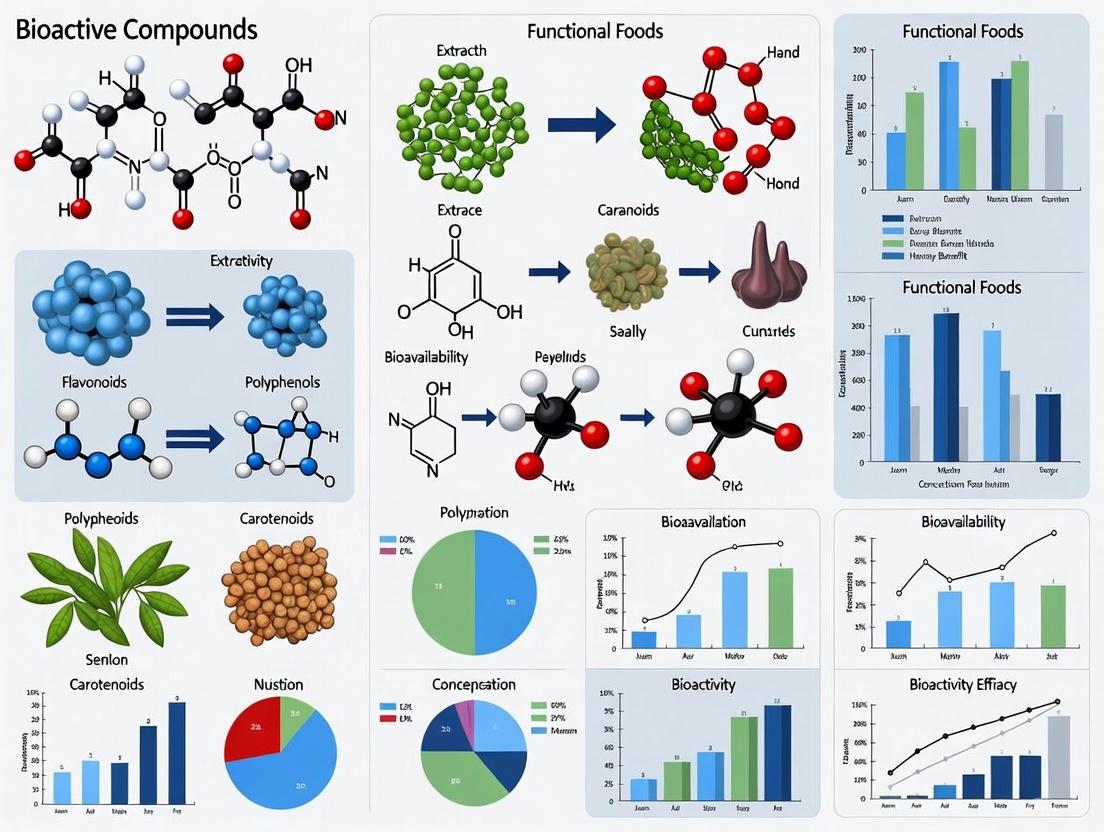
This article provides a comprehensive scientific review for researchers and drug development professionals on the identification, extraction, application, and validation of bioactive compounds for functional foods.
Harnessing Nature's Pharmacy: A Scientific Review of Bioactive Compounds from Natural Sources for Advanced Functional Foods
Abstract
This article provides a comprehensive scientific review for researchers and drug development professionals on the identification, extraction, application, and validation of bioactive compounds for functional foods. It explores the foundational science behind major classes of bioactives, including their natural sources and mechanisms of action. The content details advanced extraction and functionalization methodologies, addresses key challenges in stability and bioavailability, and evaluates current validation strategies from in vitro studies to clinical trials. By synthesizing recent advances and existing gaps, this review aims to bridge the fields of food science, nutrition, and pharmaceutical development to foster the creation of evidence-based, health-promoting food products.
Exploring the Spectrum of Bioactive Compounds: From Natural Sources to Molecular Mechanisms
Defining Bioactive Compounds in the Functional Food Paradigm
In recent decades, the concept of food has evolved from simply providing energy and basic nutrients to a proactive factor in promoting health and preventing chronic diseases [1]. This shift has led to the emergence of functional foods—those that, in addition to meeting nutritional needs, contain biologically active compounds that, when consumed regularly, offer additional health benefits or help reduce the risk of disease [1]. At the core of functional foods are bioactive compounds, which are naturally occurring chemical substances derived from plant, animal, or microbial sources [1]. These compounds are not considered essential nutrients like vitamins or minerals, yet they exert regulatory effects on physiological processes and contribute to improved health outcomes [1]. This technical guide provides a comprehensive framework for understanding bioactive compounds within the functional food paradigm, offering detailed methodologies for their analysis and characterization aimed at research scientists and drug development professionals.
Bioactive compounds in functional foods constitute a broad and chemically diverse group of natural substances that provide health benefits beyond basic nutrition [1]. They are mainly classified into polyphenols, flavonoids, carotenoids, polyunsaturated fatty acids (PUFAs), bioactive peptides, glucosinolates, organosulfur compounds, alkaloids, and phytosterols [1].
Table 1: Major Classes of Bioactive Compounds and Their Characteristics
| Compound Class | Examples | Major Food Sources | Key Health Benefits |
|---|---|---|---|
| Polyphenols | Quercetin, catechins, anthocyanins | Berries, apples, onions, green tea | Cardiovascular protection, anti-inflammatory effects, antioxidant properties [2] |
| Carotenoids | Beta-carotene, lutein | Carrots, sweet potatoes, spinach, kale | Supports immune function, enhances vision, promotes skin health [2] |
| Omega-3 Fatty Acids | EPA, DHA | Fatty fish, flaxseeds, walnuts | Reduces cardiovascular risk, anti-inflammatory effects [2] |
| Bioactive Peptides | Glycomacropeptide | Milk, dairy products | Protection against inflammation and oxidative stress, wound healing [3] |
| Probiotics/Prebiotics | Lactobacilli, Bifidobacteria | Yogurt, fermented foods | Gut microbiota modulation, improved digestive health [2] |
These compounds exhibit a wide range of health-promoting effects, including antioxidants, anti-inflammatory, and antihypertensive activities, as well as modulation of the gut microbiota, neuroprotective effects, and anticarcinogenic properties [1]. A key distinction of functional foods lies in the synergistic matrix effect, whereby the bioactivity of compounds may be enhanced or modulated by interactions with other food constituents, processing conditions, or delivery mechanisms [1].
Mechanisms of Action and Therapeutic Potential
Bioactive compounds exert their beneficial effects through multiple molecular mechanisms that impact physiological processes and disease pathways.
Antioxidant and Anti-inflammatory Activities
Polyphenols and carotenoids demonstrate potent antioxidant activity by neutralizing free radicals and reactive oxygen species (ROS), thereby reducing oxidative stress—a key contributor to chronic diseases [1]. For instance, naringenin—a bioactive compound present in tomatoes and citrus fruits—exerted in vitro anti-inflammatory effects by reducing oncostatin M release and mRNA expression in neutrophil-like differentiated HL-60 cells [3]. Similarly, glycomacropeptide, a milk-derived bioactive peptide, provided protection against inflammation and oxidative stress in an in vitro model of atopic dermatitis using human keratinocytes [3].
Gut Microbiota Modulation
Many bioactive compounds, particularly polyphenols and prebiotics, interact with the gut microbiome, promoting the growth of beneficial bacteria and inhibiting pathogenic species [2]. This modulation influences not only gastrointestinal health but also systemic inflammation and immune function. Supplementation with procyanidin B1 and coumaric acid from highland barley alleviated high-fat-diet-induced hyperlipidemia in diabetic C57BL/6J mice and ameliorated gut microbiota dysbiosis [3].
Enzyme and Pathway Modulation
Bioactive compounds can inhibit or modulate key enzymes involved in disease processes. For example, specific truffle extracts inhibited enzymes involved in type 2 diabetes; α-amylase and α-glucosidase activities were reduced by aqueous and ethanolic fractions, respectively [3]. Similarly, glycated casein exerted protective effects against dextran sulfate sodium (DSS)-induced intestinal inflammation in mice by modulating the expression of proteins involved in the TLR4/NF-κB signaling pathway [3].
The following diagram illustrates the multi-target mechanisms through which bioactive compounds exert their health benefits:
Analytical Methodologies for Bioactive Compound Characterization
The analysis of bioactive compounds requires sophisticated methodologies for extraction, isolation, and characterization to ensure accurate identification and quantification.
Extraction Techniques
Extraction is the crucial first step in the analysis of bioactive compounds from natural sources. The selection of solvent system largely depends on the specific nature of the bioactive compound being targeted [4].
Table 2: Common Extraction Methods for Bioactive Compounds
| Method | Common Solvents | Temperature (°C) | Time Required | Key Advantages |
|---|---|---|---|---|
| Soxhlet Extraction | Methanol, ethanol, or mixture of alcohol and water | Depending on solvent used | 3–18 hours | Continuous extraction, good for non-polar compounds [4] |
| Sonification | Methanol, ethanol, or mixture of alcohol and water | Can be heated | 1 hour | Rapid, efficient for small samples [4] |
| Maceration | Methanol, ethanol, or mixture of alcohol and water | Room temperature | 3–4 days | Simple, requires minimal equipment [4] |
| Pressurized Liquid Extraction | Water, ethanol, mixture with water | Elevated temperatures | Short cycles | Efficient, uses green solvents [1] |
| Supercritical Fluid Extraction | CO₂ with modifiers | 31-60°C (critical point) | 1-4 hours | Solvent-free, high selectivity [1] |
Modern extraction techniques include solid-phase micro-extraction, supercritical-fluid extraction, pressurized-liquid extraction, microwave-assisted extraction, solid-phase extraction, and surfactant-mediated techniques, which possess advantages such as reduction in organic solvent consumption and in sample degradation, elimination of additional sample clean-up and concentration steps before chromatographic analysis, and improvement in extraction efficiency, selectivity, and kinetics of extraction [4].
Chromatographic Separation and Identification
Due to the fact that plant extracts usually occur as a combination of various types of bioactive compounds with different polarities, their separation remains a significant challenge for the process of identification and characterization [4].
Ultra-High-Performance Liquid Chromatography Coupled with Quadrupole Time-of-Flight Mass Spectrometry (UPLC-QTOF-MS) provides high-resolution separation and accurate mass measurement for comprehensive profiling of bioactive compounds [5] [6]. This technique enables tentative identification of compounds through precise mass determination and fragmentation patterns [5].
High Performance Liquid Chromatography (HPLC) is a versatile, robust, and widely used technique for the isolation of natural products [4]. Reversed-phase HPLC (RP-HPLC) is particularly useful for carotenoid separation, using C18 columns and mobile phases of acetonitrile, methanol, water, and ethyl acetate [7].
Thin-Layer Chromatography (TLC) and Bio-autographic Methods combine chromatographic separation and in situ activity determination, facilitating the localization and target-directed isolation of active constituents in a mixture [4]. Bioautographic technique uses the growth inhibition of microorganisms to detect anti-microbial components of extracts chromatographed on a TLC layer [4].
The following workflow diagram illustrates a comprehensive approach to bioactive compound analysis:
Quantitative Analysis
For quantitative analysis of specific bioactive compounds, HPLC with various detection methods is widely employed [5] [6]. For example, in the analysis of Juniperus chinensis L., quantitative analysis using LC-MS/MS revealed that the levels of quercetin-3-O-α-l-rhamnoside and amentoflavone in the crude extract were 203.78 and 69.84 mg/g, respectively [5]. Validation of analytical methods including linearity, precision, accuracy, and limits of detection and quantification is essential for reliable quantification [6].
Experimental Protocols for Bioactive Compound Analysis
Protocol 1: Comprehensive Analysis of Bioactive Compounds Using UPLC-QTOF-MS
This protocol is adapted from studies on Juniperus chinensis L. [5] and the "ginseng-polygala" drug pair [6].
Sample Preparation:
- Reduce plant material to fine powder using a laboratory mill
- Accurately weigh 1.0 g of powdered material
- Extract with 10 mL of methanol using sonication for 60 minutes
- Centrifuge at 4000 × g for 10 minutes
- Filter supernatant through 0.45-μm nylon membrane prior to analysis
UPLC-QTOF-MS Conditions:
- Column: Acquity UPLC BEH C18 (100 × 2.1 mm, 1.7 μm)
- Mobile Phase: A: 0.1% formic acid in water, B: 0.1% formic acid in acetonitrile
- Gradient Program: 5-95% B over 25 minutes
- Flow Rate: 0.4 mL/min
- Column Temperature: 40°C
- Injection Volume: 2 μL
- MS Detection: ESI negative/positive mode, mass range 50-1500 m/z
Data Analysis:
- Process data using appropriate software (e.g., Waters' UNIFI, MS-DIAL)
- Perform peak detection, alignment, and normalization
- Identify compounds by matching accurate mass and fragmentation patterns with databases (ChemSpider, PubChem, HMDB)
- Confirm identities using authentic standards when available
Protocol 2: Evaluation of Antioxidant Activity and Total Phenolic Content
This protocol incorporates methods from multiple studies [8] [9] [7].
DPPH Radical Scavenging Assay:
- Prepare sample extracts at varying concentrations
- Add 1 mL of each extract to 1 mL of 0.1 mM DPPH solution in methanol
- Incubate in darkness for 30 minutes at room temperature
- Measure absorbance at 517 nm against a blank
- Calculate IC50 values (concentration providing 50% inhibition)
ABTS Radical Cation Decolorization Assay:
- Generate ABTS•+ by reacting 7 mM ABTS with 2.45 mM potassium persulfate
- Dilute the ABTS•+ solution to absorbance of 0.70 (±0.02) at 734 nm
- Mix 10 μL of sample with 1 mL of ABTS•+ solution
- Measure absorbance after 6 minutes at 734 nm
- Express results as Trolox equivalents (TEAC)
Total Phenolic Content (Folin-Ciocalteu Method):
- Mix 100 μL of appropriately diluted extract with 500 μL of Folin-Ciocalteu reagent (diluted 1:10 with water)
- After 5 minutes, add 400 μL of 7.5% sodium carbonate solution
- Incubate for 60 minutes at room temperature in darkness
- Measure absorbance at 765 nm
- Calculate phenolic content as gallic acid equivalents (GAE)
Protocol 3: Quality Control of Bioactive Compounds Using HPLC
This protocol is based on quality control approaches for traditional Chinese medicine [6].
Standard Solution Preparation:
- Accurately weigh 4.00 mg of each reference standard
- Dissolve in 1.0 mL methanol to prepare stock solutions
- Prepare working standard solutions by appropriate dilution with methanol
- Store at 4°C protected from light
Sample Extraction:
- Precisely weigh 0.5 g of powdered sample
- Add 10 mL of methanol and extract by sonication for 60 minutes
- Centrifuge at 4000 × g for 10 minutes
- Collect supernatant and repeat extraction twice
- Combine supernatants and evaporate under reduced pressure at 40°C
- Reconstitute residue in 2 mL methanol and filter through 0.45-μm membrane
HPLC Analysis:
- Column: C18 column (250 × 4.6 mm, 5 μm)
- Mobile Phase: Optimize based on target compounds (e.g., water-acetonitrile gradient)
- Flow Rate: 1.0 mL/min
- Detection: UV-Vis or DAD (wavelengths specific to target compounds)
- Column Temperature: 30°C
- Injection Volume: 10 μL
Method Validation:
- Determine linearity using at least five concentrations of each standard
- Calculate precision as intra-day and inter-day RSD (%)
- Assess accuracy through recovery studies (80-120%)
- Determine LOD and LOQ based on signal-to-noise ratios of 3:1 and 10:1, respectively
The Scientist's Toolkit: Essential Research Reagents and Materials
Table 3: Essential Research Reagents and Materials for Bioactive Compound Analysis
| Category | Specific Items | Function/Application |
|---|---|---|
| Extraction Solvents | Methanol, ethanol, ethyl acetate, water, supercritical CO₂ | Selective extraction of compounds based on polarity [4] |
| Chromatography Columns | C18 reversed-phase, HILIC, phenyl-hexyl | Separation of complex mixtures of bioactive compounds [5] [6] |
| Reference Standards | Quercetin, gallic acid, β-carotene, ginsenosides, amentoflavone | Compound identification and quantification [5] [6] |
| MS Calibration Solutions | Sodium formate, ESI Tuning Mix | Mass accuracy calibration for MS systems [5] |
| Antioxidant Assay Reagents | DPPH, ABTS, Folin-Ciocalteu reagent, Trolox | Assessment of antioxidant capacity [8] [7] |
| Cell Culture Materials | PC12 cells, DMEM medium, fetal bovine serum, MTT reagent | In vitro assessment of bioactivity [6] |
| Sample Preparation | 0.45-μm nylon membranes, solid-phase extraction cartridges | Sample clean-up and filtration [4] [6] |
The field of bioactive compounds in functional foods represents a promising and innovative approach to promoting health, preventing chronic diseases, and supporting sustainable nutrition [1]. Bioactive compounds derived from a wide array of natural sources exhibit diverse biological activities, from antioxidant and anti-inflammatory effects to cardioprotective, immunomodulatory, neuroprotective, and gut microbiota-regulating properties [1]. Advanced extraction technologies, sophisticated analytical methodologies, and comprehensive bioactivity assessment form the foundation of research in this field. Despite compelling evidence supporting the health benefits of bioactive compounds in functional foods, several scientific, technological, regulatory, and societal challenges continue to limit their large-scale implementation and clinical translation [1]. Future perspectives include personalized nutrition, AI-guided formulation, and omics-integrated validation, aimed at advancing the development of next-generation functional foods [1]. Interdisciplinary collaboration and innovation remain essential to unlock the full potential of bioactive compounds in preventive nutrition and global health.
The growing burden of chronic diseases has catalyzed a shift in nutritional science toward proactive, health-oriented dietary strategies. Within this paradigm, functional foods enriched with bioactive compounds have emerged as a critical frontier in preventive healthcare [10]. These compounds, consumed as part of a regular diet, exert regulatory effects on physiological processes and help reduce the risk of disease [1]. Among the most investigated bioactives are polyphenols, carotenoids, and bioactive peptides, each representing a distinct class of molecules with unique chemical structures and health-promoting properties [11] [2] [1]. Their significance lies in their ability to modulate fundamental processes such as oxidative stress, inflammation, metabolic function, and immune response [12] [10]. This whitepaper provides a comprehensive technical guide to these three major classes, detailing their natural origins, quantitative presence in food sources, and the advanced methodologies used for their isolation and analysis, framed within the context of functional foods research for a scientific audience.
Polyphenols: Potent Antioxidants from Plants
Polyphenols are a large, complex group of plant secondary metabolites characterized by the presence of aromatic rings with hydroxyl groups. They are primarily classified into flavonoids, phenolic acids, stilbenes, and lignans, based on their chemical structure [12] [13]. Over 8,000 distinct polyphenolic compounds have been identified, contributing to the color, flavor, and aroma of plants [12]. They are ubiquitous in plant-based foods, with their concentration and profile varying significantly based on plant type, growing region, and harvest season [13].
Table 1: Major Polyphenol Classes, Their Sources, and Quantitative Data
| Class | Subclass | Dietary Sources | Representative Compounds | Typical Concentration | Key Health Benefits |
|---|---|---|---|---|---|
| Flavonoids | Flavonols, Flavanols, Anthocyanins | Berries, apples, onions, green tea, cocoa, citrus fruits [2] [12]. | Quercetin, Catechins, Anthocyanins [2]. | 300-600 mg/day (Typical Dietary Intake) [2]. | Cardiovascular protection, anti-inflammatory, antioxidant [2] [12]. |
| Phenolic Acids | Hydroxybenzoic, Hydroxycinnamic | Coffee, whole grains, berries, spices, olive oil [2] [12]. | Caffeic acid, Ferulic acid, Gallic acid [2]. | 200-500 mg/day (Typical Dietary Intake) [2]. | Neuroprotection, antioxidant, skin health [2]. |
| Stilbenes | - | Red wine, grapes, peanuts, blueberries [2] [12]. | Resveratrol, Pterostilbene [2]. | ~1 mg/day (Typical Dietary Intake) [2]. | Anti-aging, cardiovascular protection, cognitive health [2] [14]. |
| Lignans | - | Flaxseeds, sesame seeds, whole grains, legumes [2] [12]. | Secoisolariciresinol, Matairesinol [2]. | ~1 mg/day (Typical Dietary Intake) [2]. | Hormone regulation, cancer prevention, gut health [2] [12]. |
Experimental Protocol: Polyphenol Extraction and Analysis
The isolation and identification of polyphenols from food matrices require optimized protocols to account for their chemical diversity and susceptibility to degradation [12].
Extraction Workflow:
- Sample Preparation: The plant material is freeze-dried and ground to a fine powder to increase the surface area for extraction [13].
- Solvent Extraction: The powder is mixed with a solvent. The choice of solvent is critical and depends on the polarity of the target polyphenols. Common solvents include aqueous methanol, ethanol, and acetone. Recent advances promote Natural Deep Eutectic Solvents (NADES) for higher extraction efficiency and sustainability [13]. For instance, strawberry polyphenols are optimally extracted with acetone under specific conditions of time, temperature, and liquid-to-solid ratio [13].
- Post-Processing: The extract is centrifuged to remove solid debris, and the supernatant is concentrated under reduced pressure using a rotary evaporator. The concentrate may be further purified via liquid-liquid extraction.
Analytical Technique: LC-MS/MS Identification
- Instrumentation: Liquid Chromatography (e.g., HPLC) coupled with tandem Mass Spectrometry (MS/MS) with UV detection [11] [15].
- Method Details:
- Chromatography: A reverse-phase C18 column is used. The mobile phase typically consists of water with a volatile acid (e.g., 0.1% formic acid) and an organic modifier (e.g., acetonitrile or methanol) in a gradient elution to separate the complex mixture of polyphenols.
- Detection & Identification: UV-Vis detectors are used for initial quantification, while MS/MS provides structural identification. Compounds are identified by comparing their retention times, mass-to-charge (m/z) ratios, and fragmentation patterns with those of authentic standards or databases [15].
Polyphenol Analysis Workflow
Carotenoids: Pigments with Nutritional and Therapeutic Potential
Carotenoids are fat-soluble tetraterpenoid pigments synthesized by plants, algae, and some bacteria and fungi [16] [17]. With over 1,100 structures identified, they are responsible for the red, yellow, and orange hues in nature [17]. They are broadly classified into carotenes (pure hydrocarbons like β-carotene and lycopene) and xanthophylls (oxygen-containing derivatives like lutein and astaxanthin) [16] [17]. For most animals, including humans, diet is the sole source of these compounds, which play essential roles in vision, immune function, and photoprotection [16].
Table 2: Major Carotenoids, Their Sources, and Quantitative Data
| Carotenoid | Type | Dietary Sources | Key Health Benefits | Provitamin A Activity | Typical Daily Intake |
|---|---|---|---|---|---|
| β-Carotene | Carotene | Carrots, sweet potatoes, spinach, mangoes, pumpkin [2] [16]. | Supports immune function, enhances vision, promotes skin health [2] [16]. | Yes (High) [16]. | 2-7 mg [2]. |
| Lycopene | Carotene | Tomatoes, watermelon, guava, pink grapefruit [16] [17]. | Antioxidant, associated with reduced risk of prostate cancer [16] [17]. | No [16]. | N/A |
| Lutein | Xanthophyll | Kale, spinach, broccoli, corn, egg yolk [2] [16]. | Eye health, blue light filtration, reduces risk of age-related macular degeneration (AMD) [2] [16]. | No [16]. | 1-3 mg [2]. |
| Astaxanthin | Xanthophyll | Microalgae (H. luteoviridis, D. salina), salmon, trout, shrimp [16] [17]. | Potent antioxidant, anti-inflammatory, supports skin and cardiovascular health [16] [17]. | No [16]. | N/A |
| Zeaxanthin | Xanthophyll | Corn, bell peppers, goji berries, egg yolk [16]. | Eye health, complements lutein in protecting the macula [16]. | No [16]. | N/A |
Experimental Protocol: Carotenoid Extraction Using Green Technologies
The extraction of labile carotenoids requires methods that prevent oxidation and isomerization. Supercritical Fluid Extraction (SFE) is a leading green technology.
SFE Protocol with CO₂:
- Sample Preparation: The biological material (e.g., carrot pulp, microalgae) is dried and homogenized. The moisture content is carefully controlled, as high moisture can impede extraction efficiency.
- Extraction Setup: The sample is loaded into a high-pressure extraction vessel.
- Supercritical Extraction:
- Parameters: CO₂ is pumped into the vessel and heated and pressurized beyond its critical point (e.g., 31°C and 74 bar). Operational parameters are tuned for selectivity (e.g., 300-400 bar, 40-60°C).
- Process: The supercritical CO₂ diffuses through the solid matrix, dissolving the carotenoids.
- Use of Cosolvents: To improve the yield of more polar xanthophylls, a food-grade cosolvent like ethanol (1-10%) is often added to the CO₂ stream.
- Separation and Collection: The carotenoid-laden CO₂ is passed into a separate separation vessel held at a lower pressure, causing the CO₂ to lose its solvating power and precipitate the carotenoids. The CO₂ is then condensed and recycled [17].
Analytical Technique: HPLC-DAD for Carotenoid Profiling
- Instrumentation: High-Performance Liquid Chromatography with a Diode Array Detector (DAD).
- Method Details:
- Column: A C30 reverse-phase column is preferred for its superior separation of geometric isomers compared to standard C18 columns.
- Detection: The DAD is set to scan from 200-600 nm, with quantification performed at specific wavelengths for major carotenoids (e.g., 450 nm for β-carotene, 472 nm for lycopene).
- Identification & Quantification: Peaks are identified by comparing retention times and UV-Vis spectra with authenticated standards. Quantification uses external calibration curves [16] [17].
Bioactive Peptides: Specific Protein Fragments
Bioactive peptides are short sequences of 2-20 amino acids encrypted within the primary structure of parent proteins [11] [15]. They are released through enzymatic hydrolysis, microbial fermentation, or gastrointestinal digestion [11] [15]. Unlike their parent proteins, these peptides can be absorbed in the intestine and exert systemic physiological effects, including antihypertensive, antioxidant, antimicrobial, and immunomodulatory activities [11] [15]. They are sourced from both animals (e.g., milk, eggs, fish) and plants (e.g., legumes, cereals), with plant peptides gaining attention for their lower allergenic potential and sustainable production [11] [15].
Table 3: Bioactive Peptides from Diverse Natural Sources
| Peptide Sequence/Name | Source | Parent Protein/Origin | Reported Bioactivity | Reference |
|---|---|---|---|---|
| KDLWDDFKGL | Camel Milk | Camel Milk Protein | Anti-diabetic | [11] |
| KWCFRVCYRGICYRRCR (Tachyplesin I) | Horseshoe Crab | Hemocytes | Anti-bacterial | [11] |
| LSGYGP | Tilapia Skin | Skin Gelatin | ACE Inhibitory (Antihypertensive) | [11] |
| CPAP | Chlorella pyrenoidosa (Microalgae) | Algal Protein | Anticancer | [11] |
| VTYM | Ginger | Ginger Rhizome | Antihypertensive | [11] |
| RALGWSCL | Ginger | Ginger Rhizome | Anticancer | [11] |
| Peptides with Glu, Asp, Gly, Ala, Leu, Phe | Various Plants | Plant Proteins | Antioxidant | [15] |
Experimental Protocol: Generation and Identification of Bioactive Peptides
The standard pipeline for discovering bioactive peptides involves enzymatic release, purification, and de novo sequencing via mass spectrometry.
Enzymatic Hydrolysis Protocol:
- Protein Isolation: The protein source (e.g., soy flour, milk casein) is defatted and solubilized in a suitable buffer (e.g., phosphate buffer, pH 8.0 for alcalase).
- Hydrolysis Reaction: The protein solution is heated to the enzyme's optimal temperature (e.g., 50°C for alcalase). The enzyme (e.g., alcalase, pepsin, trypsin) is added at a predetermined enzyme-to-substrate ratio (e.g., 1-4% w/w).
- Process Control: The pH is maintained constant using a pH-stat. The degree of hydrolysis is monitored over time (e.g., 1-6 hours).
- Reaction Termination: The hydrolysis is stopped by heating the mixture to 85°C for 15 minutes to denature the enzyme, followed by centrifugation to remove insoluble residues [11] [15].
Peptidomics Workflow: LC-MS/MS for Peptide Sequencing
- Peptide Separation: The hydrolysate is first fractionated using ultrafiltration membranes (e.g., 3 kDa and 10 kDa molecular weight cut-offs) or semi-preparative HPLC.
- Bioactivity Screening: Fractions are tested for target bioactivities using in vitro assays (e.g., ACE-inhibition assay for antihypertensive activity, DPPH/ABTS radical scavenging for antioxidant activity) [11] [15].
- LC-MS/MS Analysis:
- Instrumentation: Nano-flow or conventional HPLC system coupled to a high-resolution tandem mass spectrometer (e.g., Q-TOF or Orbitrap).
- Chromatography: Peptides are separated on a reverse-phase C18 column with a gradient of water/acetonitrile/0.1% formic acid.
- Mass Spectrometry: The MS operates in data-dependent acquisition (DDA) mode: a full MS scan is followed by MS/MS scans on the most intense precursor ions. Collision-induced dissociation (CID) is used to fragment the peptides.
- Data Analysis & De Novo Sequencing: The resulting MS/MS spectra are analyzed using bioinformatics software. De novo sequencing algorithms interpret the fragment ion series to determine the amino acid sequence without relying on a protein database, which is crucial for discovering novel peptides [11].
Bioactive Peptide Discovery Workflow
The Scientist's Toolkit: Essential Research Reagents and Materials
Table 4: Key Reagents and Materials for Bioactive Compound Research
| Reagent/Material | Function/Application | Examples/Notes |
|---|---|---|
| Alcalase | Microbial protease used for enzymatic hydrolysis of proteins to generate bioactive peptides [15]. | Efficiently cleaves at hydrophobic residues; often used for plant proteins. |
| Pepsin & Trypsin | Digestive enzymes used to simulate gastrointestinal digestion of proteins or for targeted hydrolysis [11] [15]. | Pepsin (acidic pH), Trypsin (cleaves after Lys/Arg). |
| Natural Deep Eutectic Solvents (NADES) | Green, tunable solvents for the extraction of polyphenols and other polar bioactives [13]. | e.g., Choline chloride-Urea mixture; offers high extraction yield and eco-friendliness. |
| Supercritical CO₂ | Solvent for green, non-thermal extraction of lipophilic compounds like carotenoids [17]. | Requires high-pressure equipment; can be modified with ethanol cosolvent. |
| DPPH (2,2-Diphenyl-1-picrylhydrazyl) | Stable free radical used in colorimetric assays to evaluate the antioxidant activity of compounds [15] [13]. | Reduction of DPPH is measured by absorbance decrease at 517 nm. |
| ABTS (2,2'-Azino-bis(3-ethylbenzothiazoline-6-sulfonic acid)) | Compound used to generate a radical cation for measuring antioxidant capacity (TEAC assay) [15] [13]. | Measures hydrogen-donating and radical-scavenging ability. |
| C18 and C30 Chromatography Columns | Stationary phases for reverse-phase HPLC separation of polyphenols (C18) and carotenoids (C30) [16] [17]. | C30 provides superior shape recognition for separating carotenoid isomers. |
| Maltodextrin / Gum Arabic | Carrier materials used in spray-drying or freeze-drying for the encapsulation of bioactives like polyphenols [13]. | Improve stability, shelf-life, and bioaccessibility of sensitive compounds. |
Polyphenols, carotenoids, and bioactive peptides represent three pillars of bioactive compound research for functional foods. Their diverse chemical natures dictate distinct natural origins, extraction methodologies, and analytical techniques. Polyphenols, derived from a wide array of plant tissues, require solvent extraction and LC-MS analysis. Carotenoids, as lipophilic pigments from colored fruits and vegetables, are effectively isolated using green technologies like SFE. Bioactive peptides, released from parent proteins in animal and plant sources, are identified through enzymatic hydrolysis and advanced peptidomics. Mastering these protocols and understanding the structure-activity relationships of these compounds are fundamental for researchers and drug development professionals aiming to harness their potential in disease prevention and health promotion. Future advancements will likely focus on improving the bioavailability of these compounds through nanoencapsulation and personalized nutrition approaches, further solidifying their role in modern functional foods science.
The growing demand for sustainable and health-promoting food ingredients has catalyzed the exploration of novel and underutilized natural sources of bioactive compounds. Agri-food byproducts, microalgae, and medicinal plants represent promising reservoirs of diverse biomolecules with significant potential for functional foods and nutraceuticals. This whitepaper provides an in-depth technical examination of these sources, focusing on their bioactive components, extraction methodologies, health benefits, and integration into sustainable research and development frameworks. The content is structured to serve researchers, scientists, and drug development professionals engaged in advancing functional foods research.
Microalgae: A Sustainable Powerhouse for Bioactives
Microalgae are photosynthetic microorganisms recognized for their rapid growth and ability to produce a wide spectrum of valuable bioactive compounds. They are considered a sustainable resource due to their minimal land and water requirements and their ability to capture CO₂ during cultivation [18].
Key Bioactive Compounds and Health Benefits
Microalgae biomasses are excellent sources of diverse bioactive compounds, including lipids, polysaccharides, carotenoids, vitamins, phenolics, and phycobiliproteins [19]. These compounds exhibit a wide range of biological activities.
Table 1: Major Bioactive Compounds from Microalgae and Their Associated Health Benefits
| Bioactive Compound | Example Microalgae Sources | Reported Health Benefits |
|---|---|---|
| Carotenoids | Dunaliella, Haematococcus | Antioxidant, anticancer, neuroprotective (e.g., against Alzheimer's disease) [19] |
| Phycobiliproteins | Spirulina, Chlorella | Antioxidative, anti-inflammatory [19] |
| Omega-3 Fatty Acids | Various species | Cardiovascular and brain health [18] |
| Sulfated Polysaccharides | Spirulina platensis | Anti-obesity (2g/day enhanced weight loss by >2-fold), immune modulation [20] |
| Peptides and Amino Acids | Various species | Antioxidant, antihypertensive [18] |
The health benefits are not merely theoretical. For instance, microalgae-derived antioxidants help prevent radical-induced neuronal damage, thereby potentially slowing the progression of conditions like Alzheimer's disease (AD) by scavenging free radicals [19]. Furthermore, a human trial demonstrated that ingestion of 2 grams of Spirulina platensis per day resulted in a more than two-fold enhancement in weight loss, highlighting its anti-obesity potential [20].
Cultivation and Optimization Strategies
The biochemical composition of microalgae biomass is highly dependent on cultivation conditions [20]. Both open-culture systems and closed-culture systems (photobioreactors) are employed, with the latter recommended for products meant for human consumption due to superior sterility control [19]. Key cultivation parameters that can be manipulated to enhance the yield of target bioactive compounds include light intensity, temperature, pH, and salinity [20]. Strategies such as metabolic, environmental, and genetic engineering are used to induce higher accumulation of these valuable molecules [19]. For example, a semi-continuous cultivation of a lutein-producing strain with a 75% medium replacement ratio achieved a markedly higher lutein productivity of 6.24 mg/L/d and a concentration of 50.6 mg/L compared to batch and fed-batch systems [19].
Experimental Workflow for Bioactive Compound Exploration
The following diagram outlines a generalized experimental workflow for the exploration and development of microalgae-derived bioactive compounds, from strain selection to product formulation.
Agri-food Byproducts: Valorizing Waste into Wealth
Agricultural activities generate significant by-products like peels, hulls, seeds, and pulp, traditionally considered waste. Within the framework of a circular economy, innovative valorization strategies are transforming these streams into valuable resources for the food and beverage sector [21].
Innovative Uses and Extraction Technologies
Advanced processing technologies are key to unlocking the potential of agricultural by-products. These include:
- Microwave-Assisted Extraction (MAE): This method revolutionizes the recovery of bioactive compounds by using microwave energy to rapidly heat the plant material, increasing extraction efficiency and reducing solvent consumption [21].
- Enzymatic Treatments: Specific enzymes are used to break down plant cell walls, facilitating the release of bound bioactive compounds [21].
- Fermentation: Microbial processes can transform by-products into new value-added ingredients or enhance their nutritional profile [21].
These by-products can be utilized as direct food additives, functional ingredients, and nutraceuticals. For instance, fruit and vegetable peels are rich sources of bioactive compounds and can also be repurposed into eco-friendly packaging materials [21].
Analysis and Characterization of Bioactives
Following extraction, the obtained compounds require rigorous characterization. Standard analytical techniques include:
- Gas Chromatography-Mass Spectrometry (GC-MS): Ideal for profiling volatile compounds, fatty acids, and other small molecules [21].
- High-Performance Liquid Chromatography with Diode-Array Detection (HPLC-DAD): Used for separating, identifying, and quantifying non-volatile bioactive compounds like phenolics and carotenoids [21].
Table 2: Key Research Reagents and Materials for Bioactive Compound Research
| Reagent/Material | Function/Application | Technical Notes |
|---|---|---|
| Organic Solvents (e.g., Ethanol, Hexane) | Extraction of lipids, carotenoids, and other non-polar compounds. | Pressurized liquid extraction (PLE) can enhance efficiency [18]. |
| Enzymes (e.g., Cellulase, Pectinase) | Enzymatic treatment to break down cell walls for improved compound release [21]. | |
| Chromatography Standards | Reference compounds for identifying and quantifying bioactives via GC-MS/HPLC [21]. | Critical for method validation and accurate quantification. |
| Cell Culture Media & Reagents | For in vitro bioactivity screening (e.g., antioxidant, anticancer assays). | Includes specific cell lines and assay kits. |
| Encapsulation Matrices (e.g., Maltodextrin, Alginate) | Protect bioactive compounds from degradation and improve stability/bioavailability [18]. | Electrospinning and spray-freeze drying are advanced techniques [18]. |
Biosynthetic Pathways and Process Optimization
Understanding the biosynthetic pathways of target compounds is crucial for metabolic engineering and process optimization.
Carotenoid Biosynthesis in Microalgae
Carotenoids are terpenoid pigments with over 600 identified variants, such as β-carotene and lycopene. They are crucial for photosynthesis and possess strong antioxidant properties [18]. The biosynthesis involves a series of enzymatic steps as visualized below.
Life Cycle Analysis for Sustainable Process Design
The integration of Life Cycle Analysis (LCA) is a critical strategic tool for optimizing the environmental and economic sustainability of processes utilizing these novel sources [18]. LCA provides a comprehensive framework to assess the environmental impacts associated with the entire life cycle of a product, from raw material acquisition (cultivation/harvesting) and processing to distribution, use, and end-of-life disposal. For microalgae processes, this helps in selecting cultivation systems, extraction technologies, and raw materials that minimize environmental footprint while maximizing product quality and yield [18]. Similarly, applying LCA to agricultural byproduct valorization can quantify the benefits of waste reduction and compare the sustainability of different extraction methodologies [21].
Agri-food byproducts, microalgae, and medicinal plants offer a vast and largely untapped reservoir of bioactive compounds with immense potential for functional foods and nutraceuticals. The successful exploitation of these resources relies on interdisciplinary research integrating advanced cultivation, innovative extraction technologies, rigorous chemical and biological characterization, and a commitment to sustainability through tools like Life Cycle Analysis. While evidence from animal studies is strong, further human clinical trials are essential to validate these health benefits and ensure the long-term safety of consumption. By focusing on these novel sources, researchers and industry professionals can contribute to developing a more sustainable, healthy, and resilient food system.
Functional foods, which provide health benefits beyond basic nutrition through bioactive compounds, have emerged as a pivotal area of modern nutritional science [2]. These compounds, derived from various plant, animal, and microbial sources, exert their physiological effects primarily through three interconnected molecular pathways: antioxidant, anti-inflammatory, and gut-modulating mechanisms [2] [10]. The therapeutic potential of these bioactive components lies in their ability to modulate fundamental cellular processes, thereby contributing to the prevention and management of chronic diseases [22] [10]. This technical review examines the core molecular mechanisms through which key bioactive compounds—including polyphenols, carotenoids, omega-3 fatty acids, and probiotics—influence human health, providing researchers and drug development professionals with a mechanistic framework for understanding their functional properties in the context of bioactive compound research for functional foods.
Bioactive compounds in functional foods comprise diverse chemical classes with distinct molecular structures and biological activities. The table below summarizes major bioactive compounds, their natural sources, and primary mechanisms of action.
Table 1: Key Bioactive Compounds in Functional Foods: Sources and Mechanisms
| Compound Class | Examples | Major Natural Sources | Primary Mechanisms of Action |
|---|---|---|---|
| Polyphenols | Flavonoids (quercetin, catechins), Phenolic Acids (caffeic acid, ferulic acid), Stilbenes (resveratrol) | Berries, apples, green tea, cocoa, coffee, whole grains, red wine [2] [23] | Antioxidant activity through free radical scavenging; modulation of NF-κB and MAPK signaling pathways; gut microbiota modulation [2] [24] |
| Carotenoids | Beta-carotene, Lutein, Lycopene | Carrots, tomatoes, bell peppers, leafy greens, sweet potatoes [2] | Provitamin A activity; physical quenching of singlet oxygen; reduction of oxidative stress via antioxidant mechanisms [2] [23] |
| Omega-3 Fatty Acids | Eicosapentaenoic acid (EPA), Docosahexaenoic acid (DHA) | Fatty fish (salmon, mackerel, tuna), fish oil supplements [2] [25] | Incorporation into cell membranes; suppression of NF-κB pathway; production of specialized pro-resolving mediators (SPMs) [2] [10] |
| Probiotics & Prebiotics | Lactobacillus spp., Bifidobacterium spp., Fructooligosaccharides (FOS), Galactooligosaccharides (GOS) | Yogurt, fermented foods, kimchi, whole grains, asparagus, bananas [2] [26] [25] | Competitive exclusion of pathogens; strengthening intestinal barrier function; production of short-chain fatty acids (SCFAs); immunomodulation [2] [27] [26] |
Quantitative intake parameters for these compounds vary based on physiological targets. For maintenance of health, polyphenol intake of 300-600 mg/day is typical, while pharmacological interventions may utilize 500-1000 mg/day [2]. Omega-3 fatty acid supplementation at 0.8-1.2 g/day significantly reduces cardiovascular event risk according to meta-analytical evidence [2].
Antioxidant Mechanisms
Molecular Pathways of Oxidative Stress Protection
Antioxidants from natural sources combat oxidative stress through multiple molecular mechanisms. The primary pathway involves direct free radical scavenging, where compounds like polyphenols donate hydrogen atoms or electrons to neutralize reactive oxygen species (ROS) such as hydroxyl radicals (•OH), superoxide anions (O₂•⁻), and peroxynitrite (ONOO⁻) [23]. This reaction terminates the chain propagation of lipid peroxidation, protecting cellular membranes from oxidative damage [23] [28].
A second crucial mechanism involves metal chelation, particularly iron and copper ions that catalyze Fenton reactions producing highly reactive •OH radicals [23]. Phenolic compounds with catechol or galloyl groups effectively chelate these metal ions, reducing their pro-oxidant activity [23]. Additionally, certain antioxidants function indirectly by activating cellular defense systems through the transcription factor Nrf2 (nuclear factor erythroid 2-related factor 2) [10]. Under basal conditions, Nrf2 is bound to Keap1 in the cytoplasm and targeted for proteasomal degradation. Upon exposure to electrophiles or oxidative stress, Nrf2 dissociates from Keap1, translocates to the nucleus, and binds to the Antioxidant Response Element (ARE), initiating transcription of antioxidant enzymes including NAD(P)H quinone dehydrogenase 1 (NQO1), heme oxygenase-1 (HO-1), and glutathione S-transferases (GSTs) [10].
Diagram: Nrf2-ARE Pathway for Antioxidant Gene Activation
Experimental Assessment of Antioxidant Activity
Several standardized methodologies are employed to evaluate the antioxidant capacity of bioactive compounds:
ORAC (Oxygen Radical Absorbance Capacity) Assay: Measures the ability of compounds to protect fluorescein from peroxyl radical-induced oxidation, quantified by the area under the fluorescence decay curve [23]. The assay utilizes 2,2'-azobis(2-amidinopropane) dihydrochloride (AAPH) as a peroxyl radical generator, with Trolox as a standard reference.
DPPH (2,2-Diphenyl-1-picrylhydrazyl) Radical Scavenging Assay: Evaluates antioxidant capacity through the reduction of stable DPPH radical, measured by spectrophotometric monitoring of absorbance decrease at 515-517 nm [23]. IC₅₀ values (concentration required for 50% radical scavenging) are calculated for potency comparison.
FRAP (Ferric Reducing Antioxidant Power) Assay: Quantifies the reduction of ferric tripyridyltriazine (Fe³⁺-TPTZ) complex to ferrous (Fe²⁺) form at low pH, monitored by absorbance at 593 nm [23]. Results are expressed as μM Fe²⁺ equivalents or compared to ascorbic acid standards.
Cell-Based Assays for Oxidative Stress Protection: Utilize intracellular ROS-sensitive fluorescent probes (e.g., DCFH-DA, DHE) to measure antioxidant effects in cell cultures under induced oxidative stress (e.g., H₂O₂ or t-BHP treatment) [23].
Anti-inflammatory Mechanisms
Regulation of Inflammatory Signaling Pathways
Bioactive compounds modulate inflammation primarily through interference with key signaling pathways, including NF-κB (Nuclear Factor kappa-light-chain-enhancer of activated B cells), JAK-STAT (Janus Kinase-Signal Transducer and Activator of Transcription), and MAPK (Mitogen-Activated Protein Kinase) cascades [22] [24]. The NF-κB pathway represents a central regulatory node, where compounds like curcumin, resveratrol, and epigallocatechin-3-gallate (EGCG) inhibit IκB kinase (IKK), preventing IκB phosphorylation and subsequent NF-κB nuclear translocation [24]. This blockade reduces transcription of pro-inflammatory genes encoding cytokines (TNF-α, IL-1β, IL-6), chemokines, and adhesion molecules.
A critical emerging mechanism involves the regulation of macrophage polarization [24]. Macrophages can differentiate into pro-inflammatory M1 phenotypes (driving inflammation) or anti-inflammatory M2 phenotypes (promoting resolution). Natural products including flavonoids, terpenoids, and phenolic compounds shift the balance toward M2 polarization through modulation of the JAK-STAT pathway, particularly STAT1 (promoting M1) versus STAT6 (promoting M2) [24]. For instance, baicalein from Scutellaria baicalensis inhibits STAT1 activation, reducing M1 markers (iNOS, CD86) while enhancing M2 markers (ARG1, CD206) [24].
Diagram: Anti-inflammatory Pathways via Macrophage Polarization
Specialized Pro-Resolving Mediators from Omega-3 Fatty Acids
Omega-3 fatty acids (EPA and DHA) undergo enzymatic conversion to specialized pro-resolving mediators (SPMs), including resolvins, protectins, and maresins [10]. These mediators actively resolve inflammation by inhibiting neutrophil infiltration, enhancing macrophage phagocytosis of apoptotic cells and debris, and decreasing pro-inflammatory cytokine production without immunosuppression [10]. The biosynthesis involves lipoxygenase pathways, with aspirin potentially triggering epimeric forms (aspirin-triggered resolvins) through acetylated COX-2 [10].
Gut-Modulating Mechanisms
Microbiota Composition and Gut-Brain Axis Communication
Dietary bioactive compounds profoundly influence health through modulation of the gut microbiota ecosystem [27]. The gut microbiota comprises trillions of microorganisms dominated by Firmicutes, Bacteroidetes, Actinobacteria, and Proteobacteria phyla [27]. Prebiotics (non-digestible food ingredients) selectively stimulate growth of beneficial bacteria, while probiotics (live microorganisms) directly introduce beneficial strains [2] [26].
The gut-brain axis represents a bidirectional communication network where gut microbiota influences central nervous system function through multiple pathways: production of neurotransmitters (GABA, serotonin, dopamine), regulation of immune responses, modulation of afferent vagal signaling, and generation of microbial metabolites [27]. Dysbiosis (microbial imbalance) disrupts this communication, contributing to conditions like functional dyspepsia (FD) and irritable bowel syndrome (IBS) [27].
Probiotic strains such as Lactobacillus gasseri LG21 and Bacillus coagulans MY01 restore microbial equilibrium through competitive exclusion of pathogens, production of antimicrobial compounds (bacteriocins), reinforcement of intestinal barrier function via enhanced tight junction protein expression, and immunomodulation [27].
Diagram: Gut-Brain Axis Signaling Mechanisms
Short-Chain Fatty Acid Production and Barrier Function
Gut microbiota ferment dietary fibers to produce short-chain fatty acids (SCFAs), primarily acetate, propionate, and butyrate [26]. These metabolites strengthen intestinal barrier function by enhancing mucus production, promoting tight junction assembly, and regulating immune responses [27] [26]. Butyrate serves as the primary energy source for colonocytes and exhibits anti-inflammatory effects through inhibition of histone deacetylases (HDACs) and subsequent suppression of NF-κB signaling [26].
Clinical evidence demonstrates that specific prebiotics like konjac glucomannan (KGM) significantly improve gut microbial diversity and alleviate functional constipation [26]. Similarly, postbiotics from Limosilactobacillus fermentum IOB802 (derived from kimchi) demonstrate antioxidant, anti-inflammatory, and microbiota-modulating properties that protect against blue-light-induced retinal injury [26].
Experimental Methodologies for Mechanism Characterization
In Vitro and Cell-Based Assays
Macrophage Polarization Assays: Utilize bone marrow-derived macrophages (BMDMs) or cell lines (RAW 264.7, THP-1) stimulated with LPS/IFN-γ (for M1) or IL-4/IL-13 (for M2) in the presence of test compounds [24]. Phenotype characterization includes flow cytometry for surface markers (CD86 for M1, CD206 for M2), qPCR for gene expression (iNOS, TNF-α for M1; ARG1, FIZZ1 for M2), and cytokine measurements (ELISA for IL-12, IL-10) [24].
Intestinal Barrier Integrity Models: Employ Caco-2 cell monolayers to assess transepithelial electrical resistance (TEER) and paracellular permeability (using FITC-dextran) following treatment with bioactive compounds or probiotics [27]. Immunofluorescence staining for tight junction proteins (occludin, ZO-1, claudins) provides structural assessment.
NF-κB Pathway Activation Assays: Use reporter cell lines (HEK-Blue NF-κB) or immunoblotting for IκB phosphorylation/degradation and NF-κB nuclear translocation (via subcellular fractionation and Western blot or immunofluorescence) [24].
In Vivo Models
Colitis Models: Dextran sulfate sodium (DSS)-induced colitis in mice evaluates anti-inflammatory and gut-modulating effects through disease activity index (DAI), colon length, histopathological scoring, and cytokine profile analysis [24].
Metabolic Disorder Models: High-fat diet (HFD)-fed mice assess improvements in insulin sensitivity, glucose tolerance, adipose tissue inflammation, and gut microbiota composition following intervention with bioactive compounds [10] [26].
Gut-Brain Axis Models: Employ maternal separation, chronic stress, or antibiotic-induced dysbiosis models to investigate microbiota-neuroimmune interactions, including behavioral tests, vagal nerve recording, and neuroinflammation assessment [27].
Research Reagent Solutions
Table 2: Essential Research Reagents for Mechanistic Studies
| Reagent/Cell Line | Application | Key Function in Experimental Design |
|---|---|---|
| RAW 264.7 cells | Macrophage polarization studies | Mouse leukemic monocyte-macrophage cell line for screening anti-inflammatory compounds and assessing M1/M2 phenotype shifts [24] |
| Caco-2 cells | Intestinal barrier integrity | Human colorectal adenocarcinoma cells that spontaneously differentiate into enterocyte-like monolayers for permeability and transport studies [27] |
| HEK-Blue NF-κB cells | NF-κB pathway screening | Engineered HEK293 cells with NF-κB-inducible secreted embryonic alkaline phosphatase (SEAP) reporter for high-throughput compound screening [24] |
| Dextran Sulfate Sodium (DSS) | Inflammatory bowel disease modeling | Chemical inducer of colitis in murine models for evaluating protective effects of gut-modulating compounds [24] |
| Lipopolysaccharide (LPS) | Inflammation induction | Toll-like receptor 4 (TLR4) agonist used to stimulate pro-inflammatory responses in cell cultures and animal models [24] |
| 2,2'-azobis(2-amidinopropane) dihydrochloride (AAPH) | Antioxidant capacity assessment | Peroxyl radical generator in ORAC assay to evaluate free radical scavenging capacity of test compounds [23] |
| DCFH-DA (2',7'-dichlorofluorescin diacetate) | Cellular ROS measurement | Cell-permeable fluorescent probe that becomes fluorescent upon oxidation by intracellular ROS [23] |
The molecular mechanisms through which bioactive compounds in functional foods exert their effects involve complex, interconnected pathways spanning antioxidant, anti-inflammatory, and gut-modulating activities. The Nrf2-ARE pathway represents a central antioxidant defense mechanism, while NF-κB, JAK-STAT, and MAPK signaling pathways serve as key regulators of inflammatory responses. Gut microbiota modulation occurs through competitive exclusion, barrier function enhancement, and production of bioactive metabolites like SCFAs that influence local and systemic physiology. Understanding these precise molecular mechanisms provides a scientific foundation for developing evidence-based functional foods and offers researchers standardized methodological approaches for further investigation into the therapeutic potential of bioactive compounds from natural sources.
The concept of nutrient synergy represents a paradigm shift in nutritional science, moving beyond the traditional reductionist approach that studies single nutrients in isolation. Defined as the phenomenon where the combined effects of two or more nutrients working in conjunction exert a greater physiological impact than the sum of their individual contributions, nutrient synergy acknowledges the complex interactions that occur within whole foods and complex diets [29]. This synergistic effect fundamentally challenges the conventional methodology of nutritional research and has profound implications for the development of functional foods and dietary recommendations.
The food matrix—the intricate molecular and structural organization of food components—plays a crucial role in mediating these synergistic interactions. The matrix serves as more than just a delivery vehicle for bioactive compounds; it actively modulates their bioaccessibility, bioavailability, and physiological efficacy through various mechanisms [30]. As the functional food industry continues to expand, projected to reach USD 91 billion by 2031, understanding these complex interactions becomes increasingly critical for formulating products that deliver validated health benefits [30]. This technical guide examines the mechanisms, experimental evidence, and methodological approaches for investigating food matrix effects and multi-compound interactions, providing researchers with a comprehensive framework for advancing this emerging field.
Mechanisms of Food Matrix Effects on Bioactive Compounds
Molecular Interaction Pathways
The food matrix influences bioactive compounds through several distinct mechanistic pathways that operate throughout the digestive cascade. Non-covalent interactions, including hydrophobic interactions, van der Waals forces, and hydrogen bonding, represent the primary mechanism through which food matrices modulate the release and activity of bioactive compounds [31]. For instance, proteins such as β-lactoglobulin can bind with various phytochemicals through hydrophobic interactions and van der Waals forces, effectively trapping these compounds and altering their release kinetics during digestion [31].
Encapsulation and entrapment phenomena constitute another significant mechanism, where the physical structure of the food matrix creates barriers that control the release of bioactive compounds. Dietary fibers, particularly soluble fibers like pectins and gums, can form gel networks that encapsulate bioactive compounds, while insoluble fibers may physically adsorb them onto their surfaces [30]. Starch amylose chains can form helical inclusion complexes with hydrophobic compounds, effectively trapping them within the helical structure and requiring enzymatic degradation for release [31]. These encapsulation mechanisms can be strategically employed to protect sensitive compounds from degradation during processing and storage, as demonstrated by the enhanced shelf-life of curcumin when complexed with sugar beet pectin [30].
The digestive kinetics modulation pathway operates through the food matrix's influence on the rate and extent of digestive processes. Matrices that slow gastric emptying or enzyme accessibility consequently delay the release of encapsulated bioactives, potentially shifting their absorption to more distal intestinal regions [30]. Furthermore, competition for absorption pathways represents a crucial mechanism, where food matrix components may compete with bioactive compounds for transporter proteins or absorption sites in the intestinal epithelium, thereby modulating their overall bioavailability [29].
Macronutrient-Specific Interaction Mechanisms
Different macronutrient classes exhibit distinct interaction patterns with bioactive compounds. Proteins primarily interact through binding phenomena, with studies demonstrating that bovine α-lactalbumin forms noncovalent complexes with green tea polyphenols such as epigallocatechin-3-gallate [31]. These interactions can significantly alter the structural conformation of both the protein and the bioactive compound, potentially enhancing or inhibiting bioactivity depending on the specific molecular context.
Dietary fibers demonstrate variable effects based on their chemical structure and solubility. Soluble fibers like fenugreek-derived fiber have been shown to enhance curcuminoid bioavailability through complex formation, while insoluble fibers may reduce bioaccessibility through adsorption mechanisms [30]. Interestingly, hemicellulose content exhibits a strong positive correlation with bioaccessibility in biscuit matrices (ρ = 0.66) but shows no significant effect in custard systems (ρ = 0.12), highlighting the matrix-dependent nature of these interactions [30].
Lipids play a crucial role in enhancing the bioaccessibility of lipophilic bioactive compounds through micellization facilitation. The presence of emulsified lipids has been consistently associated with increased bioaccessibility of carotenoids and curcuminoids by incorporating them into mixed micelles during intestinal digestion [30]. This mechanism underpins the strategic combination of fat-soluble bioactive compounds with lipid-rich food matrices to optimize their absorption.
Quantitative Evidence of Nutrient Synergy Across Physiological Systems
Table 1: Documented Synergistic Nutrient Interactions and Their Physiological Impacts
| Body System | Synergistic Combination | Experimental Model | Quantified Outcome | Proposed Mechanism |
|---|---|---|---|---|
| Nervous System | Rhodiola + Green Tea + Magnesium + B vitamins | Human RCT (n=100); Trier Social Stress Test | Greatest increase in EEG theta activity; maximal attenuation of subjective stress and anxiety [29] | Complementary targeting of stress response pathways; enhanced neurochemical modulation |
| Nervous System | Omega-3 fatty acids (675 mg DHA + 975 mg EPA) + Alpha-lipoic acid (600 mg) | Human RCT; Alzheimer's patients (12-month intervention) | Significantly less decline in Mini-Mental State Examination score vs. control or omega-3 alone [29] | Combined neuroprotective effects; enhanced blood-brain barrier penetration |
| Nervous System | Vitamin B12 + Folate + Vitamin B6 | VITACOG trial (n=1,400 across 10 countries) | ~4 μmol/L reduction in homocysteine; slowed progression of brain white matter loss [29] | Cofactor synergy in homocysteine metabolism; reduced neurotoxic effects |
| Cardiovascular System | Coenzyme Q10 + Vitamin E | Human clinical trial | Reduced LDL-C, increased HDL-C, reduced atherogenic coefficient [29] | Complementary antioxidant protection against lipoprotein oxidation |
| Musculoskeletal System | Calcium + Vitamin D + Vitamin K | Human clinical trial | Improved bone mineral density vs. individual components [29] | Sequential activation of bone mineralization pathways |
The documented synergistic effects presented in Table 1 demonstrate that targeted nutrient combinations can produce substantially greater physiological impacts than individual compounds across multiple organ systems. The nervous system appears particularly responsive to synergistic combinations, with multiple studies showing enhanced neuroprotection and cognitive benefits [29]. The combination of B vitamins (B12, folate, and B6) exemplifies well-characterized biochemical synergy, where these compounds act as essential cofactors in the metabolic pathway that converts homocysteine to methionine, explaining their collective efficacy in reducing homocysteine levels and associated neurological benefits [29].
The variation in synergistic effects across different physiological systems highlights the importance of pathway-specific mechanisms. The combination of omega-3 fatty acids with alpha-lipoic acid for Alzheimer's disease demonstrates target complementarity, where each compound addresses distinct aspects of the neurodegenerative process [29]. Similarly, the Rhodiola, green tea, magnesium, and B-vitamin combination for stress reduction illustrates multi-target modulation, where ingredients simultaneously address different physiological aspects of the stress response [29].
Methodological Framework for Investigating Food Matrix Effects
Standardized Experimental Protocols
INFOGEST In Vitro Digestion Protocol
The INFOGEST standardized static in vitro digestion method represents the current gold standard for assessing bioaccessibility of bioactive compounds from complex food matrices [30]. This consensus protocol provides reproducible conditions for simulating the oral, gastric, and intestinal phases of human digestion.
Oral Phase Protocol: Sample mixed with simulated salivary fluid (SSF) containing α-amylase (75 U/mL) in a 1:1 ratio. Incubate for 2 minutes at 37°C with constant agitation.
Gastric Phase Protocol: Combine oral bolus with simulated gastric fluid (SGF) containing pepsin (2000 U/mL) in a 1:1 ratio. Adjust pH to 3.0 using HCl. Incubate for 2 hours at 37°C with constant agitation.
Intestinal Phase Protocol: Combine gastric chyme with simulated intestinal fluid (SIF) containing pancreatin (100 U/mL trypsin activity) and bile salts (10 mM) in a 1:1 ratio. Adjust pH to 7.0 using NaOH. Incubate for 2 hours at 37°C with constant agitation.
Bioaccessibility Assessment: Following intestinal digestion, centrifuge samples at 10,000 × g for 60 minutes at 4°C. Collect the aqueous phase for analysis of released bioactive compounds. Calculate bioaccessibility as: (Amount in aqueous phase / Total amount in digest) × 100.
Curcuminoid Bioaccessibility Assay
A specific application for assessing food matrix effects on curcuminoids involves the following protocol adapted from recent research [30]:
Food Matrix Preparation: Prepare custard and biscuit formulations with varying fiber types (5.7% w/w supplementation). Incorporate curcuminoid extract (62-90% curcumin, 9-23% demethoxycurcumin, 0.3-14% bisdemethoxycurcumin) at 0.1% w/w during manufacturing.
Digestion and Extraction: Subject samples to INFOGEST protocol. Terminate digestion by immediate cooling on ice. Extract curcuminoids from aqueous phase using methanol:ethyl acetate (1:1 v/v) with 0.1% BHT to prevent oxidation.
HPLC Analysis: Quantify curcuminoids using reverse-phase HPLC with UV detection at 425 nm. Employ C18 column (250 × 4.6 mm, 5 μm) with gradient elution (acetonitrile:water with 1% acetic acid). Calculate individual and total curcuminoid bioaccessibility.
Matrix Characterization: Parallelly analyze food matrices for proximate composition (protein, lipid, carbohydrate, moisture, ash), dietary fiber composition (soluble, insoluble, specific fiber types), and physicochemical properties (water activity, pH, viscosity).
Computational Modeling Approaches
Advanced computational methods have emerged as powerful tools for predicting and optimizing food matrix effects. Bayesian hierarchical modeling represents a particularly promising approach for handling the complex, multi-factor interactions within food systems [30].
Table 2: Key Variables for Modeling Food Matrix Effects on Bioaccessibility
| Variable Category | Specific Parameters | Measurement Technique | Model Impact Weight |
|---|---|---|---|
| Macronutrient Composition | Protein, lipid, available carbohydrate, moisture content | AOAC official methods | High (ρ = 0.89 with curcuminoid bioaccessibility) [30] |
| Fiber Characteristics | Soluble/insoluble ratio, hemicellulose, pectin, cellulose content | Enzymatic-gravimetric methods | Matrix-dependent (ρ = 0.66 in biscuits) [30] |
| Physicochemical Properties | Viscosity, water activity, pH, particle size distribution | Rheometry, aw meter, laser diffraction | Medium to high depending on matrix |
| Bioactive Compound Properties | Log P, molecular weight, hydrogen bond donors/acceptors | Computational prediction, HPLC | Compound-specific modulation |
| Processing Parameters | Time-temperature profile, shear rate, mixing intensity | Process monitoring | Context-dependent |
The Bayesian modeling framework integrates these variables through the following structure:
Model Structure: yij ∼ N(μij, σ) Linear Predictor: μij = α + βm × Macronutrientsij + βf × Fiberij + γj × MatrixTypej + εij Hierarchical Priors: γj ∼ N(0, τ) for matrix-specific effects (custard vs. biscuit) Regularizing Priors: βm, β_f ∼ N(0, 1) for stable parameter estimation
This approach has demonstrated exceptional predictive performance for curcuminoid bioaccessibility, with optimization performance of r² = 0.97 and leave-one-out cross-validation score of r² = 0.93 [30].
Visualization of Experimental Workflows and Interaction Mechanisms
Food Matrix Effect Investigation Pathway
Molecular Interaction Mechanisms
Research Reagent Solutions for Food Matrix Studies
Table 3: Essential Research Reagents for Investigating Food Matrix Effects
| Reagent Category | Specific Examples | Functional Role | Application Notes |
|---|---|---|---|
| Digestion Enzymes | Porcine pepsin, pancreatin (100 U/mL trypsin activity), α-amylase (75 U/mL) | Simulate human gastrointestinal digestion for bioaccessibility studies | Source standardized enzymes; maintain activity verification [30] |
| Bile Salts | Porcine bile extract (10 mM in intestinal phase) | Emulsify lipids and form mixed micelles for solubilizing lipophilic bioactives | Critical for assessing lipid-soluble compound bioaccessibility [30] |
| Dietary Fibers | Fenugreek fiber, sugar beet pectin, hemicellulose, cellulose variants | Modify food matrix structure and study fiber-bioactive interactions | Vary solubility and structural properties; use at 5-10% supplementation [30] |
| Analytical Standards | Curcuminoid mix (curcumin, demethoxycurcumin, bisdemethoxycurcumin) | Quantification and method validation for specific bioactive compounds | Include purity certification; prepare fresh stock solutions [30] |
| Chromatography Materials | C18 reverse-phase columns (250 × 4.6 mm, 5 μm); acetonitrile:water gradients with 1% acetic acid | Separation and quantification of bioactive compounds and metabolites | Optimize mobile phase for specific compound classes; use guard columns [30] |
| Cell Culture Models | Caco-2 intestinal epithelium models, HT29-MTX mucus-producing cells | Assess bioavailability and transport across intestinal barrier | Use validated protocols with tight junction integrity verification [2] |
| Encapsulation Systems | Nanoemulsions, liposomes, biopolymer complexes (e.g., whey protein-pectin) | Enhance stability and bioavailability of sensitive bioactives | Characterize particle size, zeta potential, encapsulation efficiency [1] [2] |
The systematic investigation of food matrix effects and multi-compound interactions represents a critical frontier in nutritional science and functional food development. The evidence presented in this technical guide demonstrates that synergistic interactions between food components can significantly enhance the physiological efficacy of bioactive compounds, often producing effects that exceed what would be predicted from individual component activities [29]. The food matrix serves not merely as a passive delivery system but as an active modulator of bioaccessibility, bioavailability, and biological activity through complex molecular interactions that occur during digestion and absorption [31] [30].
Future research in this field should prioritize the development of more sophisticated computational models that can predict interaction effects across diverse food matrices and bioactive compound classes. The successful application of Bayesian hierarchical modeling to curcuminoid bioaccessibility demonstrates the potential of machine learning approaches to handle the multifactorial complexity of food systems [30]. Additionally, the integration of multi-omics technologies (transcriptomics, proteomics, metabolomics) with targeted intervention studies will provide unprecedented insights into the molecular mechanisms underlying observed synergistic effects [32]. As the field advances, standardized methodologies for assessing and reporting food matrix effects will be essential for building a cumulative knowledge base that can guide the development of evidence-based functional foods with validated health benefits.
The translation of this knowledge into practical applications requires interdisciplinary collaboration among food scientists, nutritionists, computational biologists, and clinical researchers. By systematically elucidating the mechanisms and magnitude of food matrix effects, researchers can develop targeted strategies for optimizing the health benefits of bioactive compounds through strategic formulation approaches that leverage the inherent synergy within complex food systems.
From Extraction to Application: Advanced Methodologies for Bioactive Compound Integration
The growing demand for functional foods enriched with bioactive compounds has catalyzed the exploration of advanced extraction technologies that are efficient, sustainable, and capable of preserving the structural and functional integrity of target metabolites. Conventional extraction methods, such as Soxhlet extraction and maceration, are often time-consuming, solvent-intensive, and involve high temperatures that can degrade heat-sensitive bioactive compounds [33] [34]. In response, green extraction technologies including Ultrasound-Assisted Extraction (UAE), Microwave-Assisted Extraction (MAE), and Supercritical Fluid Extraction (SFE) have emerged as promising alternatives. These techniques significantly reduce solvent consumption, lower energy input, shorten processing times, and enhance the yield and quality of extracts, thereby aligning with the principles of green chemistry and sustainable industrial practices [35] [36] [34]. This whitepaper provides an in-depth technical analysis of these three advanced extraction technologies, framed within the context of recovering bioactive compounds from natural sources for functional foods research. It compares their fundamental mechanisms, optimization strategies, and relative performances, and includes detailed experimental protocols and reagent specifications to serve as a comprehensive resource for researchers and scientists in drug and functional food development.
Core Principles and Mechanisms
Ultrasound-Assisted Extraction (UAE)
UAE utilizes the principle of acoustic cavitation. High-frequency sound waves (typically 20-100 kHz) propagate through a solvent, creating alternating compression and expansion cycles. During the expansion cycle, microscopic bubbles or cavities form, grow, and subsequently collapse violently during the compression cycle. This implosion generates localized extreme conditions of very high temperatures (several thousand Kelvin) and pressures (several hundred atmospheres) [33] [37]. The mechanical shockwaves from these collapsing bubbles disrupt plant cell walls and enhance solvent penetration into the plant matrix, thereby accelerating the release of intracellular bioactive compounds into the extraction medium [37]. The efficiency of UAE is influenced by several parameters, including ultrasound power, frequency, extraction temperature, and time [38].
Microwave-Assisted Extraction (MAE)
MAE employs dielectric heating to extract bioactive compounds. Microwaves are electromagnetic waves in the frequency range of 300 MHz to 300 GHz. When these waves interact with a dielectric material (the plant matrix and solvent), they cause the rotation of dipolar molecules (e.g., water, ethanol) and the migration of ions. This molecular agitation generates heat rapidly and volumetrically within the material. The internal pressure build-up causes the rupture of plant glandular and cell structures, facilitating the liberation of bioactive compounds into the surrounding solvent [33] [35]. MAE is characterized by its ability to heat the entire sample simultaneously, leading to reduced extraction times and higher yields. Key operating parameters include microwave power, extraction time, temperature, and the dielectric properties of both the solvent and the plant material [35] [39].
Supercritical Fluid Extraction (SFE)
SFE, most commonly using carbon dioxide (CO₂), utilizes fluids above their critical temperature and pressure. At this supercritical state, the fluid exhibits unique properties: gas-like diffusivity and viscosity, which facilitate rapid penetration into solid matrices, combined with liquid-like density, which provides superior solvating power [34]. The solvent power of a supercritical fluid can be finely tuned by adjusting the pressure and temperature, allowing for selective extraction of target compounds. Supercritical CO₂ (SC-CO₂) is the most widely used solvent due to its moderate critical point (31.1°C, 73.8 bar), non-toxicity, non-flammability, low cost, and GRAS (Generally Recognized as Safe) status [34]. It is particularly effective for extracting non-polar compounds. For more polar bioactive compounds like phenolics, a polar co-solvent or modifier, such as ethanol, is often added to enhance solubility [34].
The following diagram illustrates the core mechanisms and workflow common to these advanced extraction techniques.
Comparative Technical Analysis
The selection of an optimal extraction technique depends on the specific objectives of the research, the nature of the target compounds, and considerations of efficiency, cost, and sustainability. The following table provides a direct comparison of UAE, MAE, and SFE based on key performance metrics and operational characteristics.
Table 1: Comparative Analysis of Advanced Extraction Technologies
| Feature | Ultrasound-Assisted Extraction (UAE) | Microwave-Assisted Extraction (MAE) | Supercritical Fluid Extraction (SFE) |
|---|---|---|---|
| Primary Mechanism | Acoustic cavitation [33] | Dielectric heating [33] | Tunable solvation in supercritical state [34] |
| Typical Solvent | Ethanol-Water mixtures [38] [40] | Ethanol-Water mixtures [33] | Supercritical CO₂ (often with ethanol modifier) [34] |
| Extraction Time | Medium (e.g., 30-60 min) [37] | Short (e.g., 1-10 min) [33] [39] | Medium to Long (30 min - several hours) |
| Temperature | Low to Moderate (often 25-60°C) [38] [37] | Moderate (can be controlled) [33] | Moderate (near-critical to supercritical, e.g., 31-80°C) [34] |
| Key Advantage | Effective cell disruption, relatively simple equipment | Very fast, high yield, volumetric heating | Superior selectivity, solvent-free residues, ideal for thermolabile compounds [34] |
| Key Disadvantage | Potential for free radical formation | Potential thermal degradation if not controlled | High capital cost, limited for highly polar compounds without modifiers [34] |
| Selectivity | Moderate | Moderate | High (tunable via P & T) [34] |
| Scalability | Good | Good | Technically complex but established for some applications [34] |
| Environmental Impact | Low solvent consumption | Low solvent and energy consumption [35] | Very low (uses CO₂), no solvent residue [34] |
Quantitative Performance Comparison
Recent comparative studies provide quantitative evidence of the performance of these techniques for recovering bioactive compounds. A study on stevia leaves demonstrated that MAE outperformed UAE, yielding 8.07% higher total phenolic content (TPC), 11.34% higher total flavonoid content (TFC), and 5.82% higher antioxidant activity, while requiring 58.33% less extraction time [33]. In contrast, a study on grape pomace found that UAE achieved the highest TPC (87.48 mg GAE/g), whereas Soxhlet extraction (a conventional method) showed the strongest antioxidant activity, indicating that phenolic concentration and antioxidant potential are not always directly correlated [40]. SFE is renowned for its high selectivity and ability to produce solvent-free extracts, making it ideal for high-value applications in the food and pharmaceutical industries, though it requires significant initial investment [34].
Table 2: Representative Extraction Yields and Bioactive Compound Recovery
| Source Material | Extraction Technique | Optimal Conditions | Key Outcomes | Source |
|---|---|---|---|---|
| Stevia Leaves | MAE | 5.15 min, 284 W, 53% EtOH, 53.9°C | Higher TPC, TFC, and AA than UAE. | [33] |
| Stevia Leaves | UAE | Not optimized vs MAE | Lower TPC, TFC, and AA compared to MAE. | [33] |
| Hawthorn Leaves | UAE | 70°C, 40% EtOH, 44 min, 100 W | ~16% higher TPC than SLE; reduced ethanol use. | [38] |
| Betel Leaves | MAE | 240 W, 1.6 min, 1:22 S/L ratio | Yield: 8.92%; TPC: 77.98 mg GAE/g. | [39] |
| Grape Pomace | UAE | Ethanol solvent | Highest TPC: 87.48 mg GAE/g. | [40] |
| Galangal | UAE | 47.5°C, 52.7 min, 30 mL/g | TPC: 64.74 mg GAE/g; outperformed conventional. | [37] |
Experimental Protocols and Methodologies
This section outlines detailed, reproducible protocols for the extraction of bioactive compounds using UAE, MAE, and SFE, as derived from recent research publications.
Protocol for Ultrasound-Assisted Extraction (UAE)
The following protocol is adapted from the optimization study on galangal [37] and hawthorn leaves [38].
- Objective: To extract total phenolic and flavonoid compounds from plant material.
- Sample Preparation: Plant material (e.g., galangal rhizome, hawthorn leaves) is dried and ground to a fine powder (particle size ~0.5-1.0 mm). This increases the surface area for solvent contact [38] [37].
- Equipment:
- Ultrasonic processor with probe (e.g., 24 kHz, 100-400 W) [38].
- Temperature-controlled water bath.
- Centrifuge.
- Vacuum filtration system.
- Spectrophotometer for analysis (TPC, TFC, AA).
- Procedure:
- Weigh a precise amount of plant powder (e.g., 0.5-1.0 g) into a glass vessel.
- Add the extraction solvent (e.g., 30 mL/g of 40-50% ethanol in water) [38] [37].
- Subject the mixture to ultrasonic irradiation under optimized parameters: Temperature: 47-50°C, Time: 45-50 minutes, Ultrasound Power: 100 W [38] [37].
- After extraction, cool the mixture and centrifuge (e.g., 4000 rpm, 15 min) to separate the solid residue.
- Collect the supernatant and concentrate under reduced pressure using a rotary evaporator at ≤40°C.
- The concentrated extract can be lyophilized to obtain a dry powder for further analysis or redissolved in a suitable solvent for immediate quantification of TPC, TFC, and antioxidant activity (DPPH, ABTS, FRAP) [38] [37].
Protocol for Microwave-Assisted Extraction (MAE)
This protocol is based on optimized methods for stevia [33] and betel leaves [39].
- Objective: To rapidly extract phytochemicals using microwave energy.
- Sample Preparation: As in UAE, plant leaves are dried and ground to a uniform particle size (e.g., 150-250 μm) [33] [39].
- Equipment:
- Closed-vessel microwave extraction system with temperature and pressure control.
- Rotary evaporator.
- Analytical balance.
- Spectrophotometer.
- Procedure:
- Weigh plant powder (e.g., 1-10 g) and mix with the appropriate solvent (e.g., 50% ethanol) at a defined solid-to-solvent ratio (e.g., 1:22 g/mL) [33] [39].
- Load the mixture into sealed microwave vessels.
- Set the microwave parameters to the optimized conditions: Power: 240-280 W, Time: 1.5-5.0 minutes, Temperature: 50-55°C [33] [39].
- After the irradiation cycle, allow vessels to cool before opening.
- Filter the extract to remove particulate matter.
- Concentrate the filtrate using a rotary evaporator and either dry the extract for storage or prepare dilutions for phytochemical analysis [39].
Protocol for Supercritical Fluid Extraction (SFE)
This general protocol is derived from principles and applications of SFE with CO₂ [34].
- Objective: To selectively extract lipophilic compounds or to fractionate extracts using a tunable solvent.
- Sample Preparation: The plant material should be dried and ground. The moisture content must be low to prevent ice formation and clogging. Sometimes the material is mixed with an inert modifier to improve flow dynamics.
- Equipment:
- SFE system comprising: CO₂ supply cylinder with siphon, cooling unit, high-pressure pump, co-solvent pump, extraction vessel (with temperature control), pressure regulation valves, and separate collection vessels.
- Procedure:
- Weigh the plant material and load it into the high-pressure extraction vessel.
- Set the desired Temperature (e.g., 40-70°C) and Pressure (e.g., 100-350 bar) based on the target compounds [34]. For polar compounds, add a GRAS co-solvent like ethanol (e.g., 5-15% by volume) via the co-solvent pump.
- Pressurize the system with CO₂ and maintain the conditions for a set Extraction Time (e.g., 30-120 minutes) in a static (soaking) or dynamic (continuous flow) mode.
- The dissolved solutes are carried by the supercritical CO₂ to the separation vessel where the pressure is reduced, causing CO₂ to lose its solvating power and precipitate the extract.
- The CO₂ can be liquefied and recycled. The extract is collected from the separation vessel.
- If a co-solvent was used, it may need to be evaporated under gentle conditions to obtain the final extract.
The Scientist's Toolkit: Essential Research Reagents and Materials
Successful implementation of advanced extraction technologies requires specific reagents and materials. The following table details key items and their functions in the extraction and analysis workflow.
Table 3: Essential Research Reagents and Materials for Bioactive Compound Extraction
| Reagent/Material | Technical Function in Extraction & Analysis |
|---|---|
| Ethanol (Absolute or Aqueous) | A GRAS (Generally Recognized as Safe), green solvent. Used in UAE, MAE, and as a co-solvent in SFE. Its polarity can be tuned with water to extract a wide range of phenolics and flavonoids [38] [40]. |
| Carbon Dioxide (CO₂), High Purity | The principal solvent for SFE. In its supercritical state, it acts as a non-polar, tunable solvent for lipophilic compounds. Its non-toxic and volatile nature allows for solvent-free extracts [34]. |
| Folin-Ciocalteu (FC) Reagent | A chemical oxidant used in the spectrophotometric assay for Total Phenolic Content (TPC). It reacts with phenolic compounds to form a blue complex measured at 760 nm [33] [39]. |
| DPPH (2,2-Diphenyl-1-picrylhydrazyl) | A stable free radical used to assess Antioxidant Activity (AA). The scavenging activity of an extract is measured by the decrease in DPPH absorbance at 517 nm [33] [39]. |
| Aluminum Chloride (AlCl₃) | Used in the colorimetric assay for Total Flavonoid Content (TFC). It forms acid-stable complexes with the C-4 keto group and either the C-3 or C-5 hydroxyl group of flavones and flavonols, producing a yellow color measured at 415-510 nm [33] [39]. |
| Gallic Acid & Quercetin | Reference standards for calibrating the TPC (gallic acid equivalents, GAE) and TFC (quercetin equivalents, QE) assays, respectively [39] [37]. |
Optimization and Modeling Approaches
Modern extraction development heavily relies on statistical and computational tools for optimization, moving beyond the inefficient one-factor-at-a-time approach.
Response Surface Methodology (RSM): RSM is a collection of mathematical and statistical techniques used to model and analyze processes where the response of interest is influenced by several variables. A standard design like Central Composite Design (CCD) or Box-Behnken Design (BBD) is used to fit a quadratic model. This model helps identify significant factors (e.g., time, temperature, power) and their interactions to find optimal conditions with a reduced number of experimental runs [33] [37]. For instance, RSM was successfully applied to optimize UAE of galangal [37] and MAE of betel leaves [39].
Artificial Neural Networks with Genetic Algorithm (ANN-GA): ANN is a computational model inspired by biological neural networks, capable of modeling complex non-linear relationships between input and output data. When coupled with GA, a powerful optimization algorithm inspired by natural selection, it can predict global optima with high accuracy. A study on stevia extraction demonstrated that an ANN-GA model (R² = 0.9985, MSE = 0.7029) outperformed RSM in predictive accuracy for optimizing MAE conditions [33]. This hybrid approach is becoming increasingly important for precision extraction engineering.
The following diagram summarizes the integrated optimization and application pipeline for these technologies.
Biotechnological and Chemoenzymatic Strategies for Compound Synthesis and Modification
The synthesis and modification of bioactive compounds have undergone a paradigm shift, moving from traditional chemical methods toward more sophisticated biotechnological and chemoenzymatic approaches. These strategies leverage the exquisite selectivity and efficiency of biological systems to create complex molecules under mild, environmentally friendly conditions. Within functional foods research, these advanced synthesis methods enable the production of high-value nutraceuticals and bioactive compounds with enhanced bioavailability and targeted functionality. The integration of these techniques is revolutionizing how we access and optimize natural compounds for health promotion and disease prevention [41] [1].
Biotechnological synthesis utilizes biological systems—including isolated enzymes or whole cells—to catalyze specific chemical transformations. This approach offers significant advantages over conventional chemical synthesis, including higher regio- and stereoselectivity, reduced energy consumption, and minimized generation of hazardous waste. Complementarily, chemoenzymatic synthesis strategically combines chemical and enzymatic steps, harnessing the strengths of both disciplines to assemble complex molecular structures that would be challenging to produce using either method alone [42] [43]. These hybrid approaches are particularly valuable for modifying bioactive compounds derived from natural sources, enabling researchers to enhance their stability, bioavailability, and therapeutic efficacy for functional food applications.
Core Biotechnological Synthesis Strategies
Enzyme Systems for Molecular Modification
Enzyme-catalyzed reactions form the cornerstone of biotechnological synthesis, offering unparalleled specificity in the modification of complex natural products. Key enzyme classes have been identified for their particular utility in functionalizing bioactive compounds:
Nucleoside Phosphorylases (NPs) and N-Deoxyribosyltransferases (NDTs): These enzymes play indispensable roles in the biosynthesis of nucleoside analogs, which possess significant therapeutic potential. They facilitate the reversible cleavage of glycosidic bonds in nucleosides, enabling the transfer of sugar moieties to alternative base structures. This transglycosylation capability provides an efficient, green route to modified nucleosides compared to multi-step chemical synthesis [41].
Glycosyltransferases: These enzymes catalyze the transfer of sugar moieties to aglycones, generating glycosylated compounds with improved solubility and stability. This transformation is particularly valuable for enhancing the bioavailability of polyphenolic compounds in functional foods [42].
Oxidoreductases (Cytochrome P450s, Laccases, Peroxidases): This diverse enzyme family catalyzes hydroxylation and oxidation reactions, introducing functional groups that can be used for further modification. For example, cytochrome P450 enzymes can hydroxylate complex molecules like artemisinin, while laccases oxidize phenolic compounds to generate quinones and other oxidized products [42].
Table 1: Key Enzyme Classes Used in Bioactive Compound Synthesis
| Enzyme Class | Reaction Catalyzed | Bioactive Compound Example | Advantages |
|---|---|---|---|
| Nucleoside Phosphorylases | Transglycosylation | Nucleoside analogs | High specificity, reversible reaction |
| Glycosyltransferases | Glycosylation | Flavonoid glycosides | Enhanced solubility & stability |
| Cytochrome P450 | Hydroxylation | Hydroxyartemisinin | Introduces reactive sites for further modification |
| Laccases | Oxidation | Polyphenol quinones | Eco-friendly oxidation, broad substrate range |
Multi-Enzyme Cascade Systems
Multi-enzyme cascades represent an advanced biotechnological strategy where several enzymes work in concert, often in a single reaction vessel, to perform consecutive transformations. These systems mimic natural metabolic pathways and offer significant advantages for synthesizing complex bioactive molecules:
Advantages of Cascade Systems:
- Improved reaction efficiency by eliminating intermediate isolation and purification steps
- Driving equilibrium-limited reactions through coupled processess
- Reduced waste generation and processing time
- Enhanced atom economy through coordinated reaction sequences
In functional foods research, multi-enzyme cascades have been successfully applied to synthesize complex oligosaccharides with prebiotic properties and to modify polyphenolic compounds for enhanced bioactivity. The development of these systems requires careful consideration of enzyme compatibility, reaction conditions, and spatial organization of the enzymatic components [41].
Chemoenzymatic Synthesis Approaches
Fundamentals and Methodologies
Chemoenzymatic synthesis represents an interdisciplinary frontier that merges the precision of enzymatic catalysis with the versatility of synthetic chemistry. This hybrid approach enables the construction of complex molecular architectures that would be challenging to access through either method independently. The core principle involves designing sequential or concurrent reaction pathways where enzymatic and chemical steps complement each other, often with the enzymatic steps providing stereochemical control and the chemical steps enabling diverse functionalization [42] [43].
Several strategic frameworks have been developed for chemoenzymatic synthesis:
Self-Labeling Protein-Enzyme Fusions: Systems such as SNAP-tag, CLIP-tag, and HaloTag utilize engineered enzymes that form irreversible covalent bonds with specific small-molecule substrates. When these enzymes are fused to proteins of interest, they enable site-specific labeling with various functional groups, including fluorophores for tracking bioactive compounds in functional foods [44].
Post-Translational Modification Mimicry: This approach harnesses enzymes responsible for natural post-translational modifications, such as biotin ligase (BirA) or lipoic acid ligase (LpIA), to incorporate non-natural functional groups into specific peptide sequences. These functional groups then serve as handles for further chemical modification, enabling the creation of customized protein-bioactive conjugates [44].
Modular Chemoenzymatic Cascade Assembly (MOCECA): Advanced strategies like MOCECA enable the customized, large-scale synthesis of complex molecules through systematic assembly of building blocks. This approach has been successfully applied to produce gangliosides and analogs at hectogram scales, demonstrating its industrial relevance for obtaining sufficient quantities of bioactive compounds for functional food applications [45].
Experimental Protocol: Chemoenzymatic Synthesis of Ganglioside Analogs
The following detailed protocol outlines the MOCECA strategy for synthesizing ganglioside analogs, illustrating the practical integration of chemical and enzymatic steps [45]:
Module 1: Preparation of D-Sphingosines
- Starting Material Protection: Begin with L-serine (10 g scale). Protect carboxyl and amine groups by reaction with methanol and di-tert-butyl dicarbonate in anhydrous tetrahydrofuran (THF) at room temperature for 12 hours to produce compound 28 with 98% yield.
- Hydroxyl Protection: Treat compound 29 with tert-butyldimethylsilyl chloride (TBDMSCl, 1.2 equiv) and imidazole (1.5 equiv) in dichloromethane (DCM) at 0°C to room temperature for 6 hours.
- Phosphine Oxide Formation: React protected serine with dimethoxy methyl phosphine oxide (1.3 equiv) and n-BuLi (1.3 equiv) in THF at -78°C for 2 hours, then warm to 0°C to produce compound 30 with 93% yield.
- Aldehyde Coupling: Couple compound 30 with n-tetradecanal or n-hexadecaldehyde (1.2 equiv) in THF at -78°C for 3 hours to generate compounds 31 and 32 with 81% yield.
- Selective Reduction: Reduce ketones 31 and 32 using LiAlH(OtBu)₃ (1.5 equiv) in THF at -78°C for 4 hours to obtain compounds 33 and 34 with diastereomeric excess >99% and 95% yield.
- Deprotection:
- First, treat with 1M HCl in methanol (10 vol) at 0°C for 30 minutes to remove silyl protection, generating compounds 35 and 36 with 99% yield.
- Then, treat with acetyl chloride in methanol (5 vol) at room temperature for 2 hours to remove Boc protection, yielding final D-sphingosines (d18:1 and d20:1) with 60% yield and overall 41% yield from L-serine.
Module 2: Oligosaccharide Fluoride Preparation
- Enzymatic Glycosylation: Perform one-pot enzymatic glycosylation of lactose fluoride (Lac-F, 5 g scale) using appropriate glycosyltransferases (0.1-0.5 mol%) and sugar nucleotides (1.2 equiv) in 50 mM Tris-HCl buffer (pH 7.5) containing 10 mM MnCl₂ at 30°C for 12 hours.
- Product Isolation: Purify the oligosaccharide fluoride products by size exclusion chromatography on Sephadex G-25, followed by lyophilization.
Module 3: Glycosylsphingosine Synthesis
- Enzymatic Assembly: Incubate oligosaccharide fluorides (1 equiv) with sphingosines (1.5 equiv) and appropriate glycosynthases (5 mg/mL) in 50 mM phosphate buffer (pH 7.0) containing 5% dimethylformamide (DMF) as cosolvent at 37°C for 24 hours.
- Purification: Extract products with ethyl acetate, concentrate under reduced pressure, and purify by silica gel chromatography (DCM:MeOH:water, 65:25:4) to obtain glycosylsphingosines with >84% yield.
Module 4: Ceramide Assembly
- Acylation Reaction: Incubate glycosylsphingosines (1 equiv) with fatty acids (2 equiv) and Shewanella alga G8 sphingolipid ceramide N-deacylase (SA_SCD, 5 mg/mL) in 50 mM Tris-HCl buffer (pH 8.0) containing 1% Triton X-100 at 30°C for 48 hours.
- Final Purification: Purify ganglioside analogs by reverse-phase HPLC (C18 column, methanol:water gradient) to achieve >95% purity.
Research Reagent Solutions for Chemoenzymatic Synthesis
Successful implementation of chemoenzymatic strategies requires specific reagents and materials. The following table details essential components for establishing these methodologies:
Table 2: Essential Research Reagents for Chemoenzymatic Synthesis
| Reagent/Material | Function/Application | Specifications/Alternatives |
|---|---|---|
| SNAP-tag/CLIP-tag | Self-labeling enzyme tags for site-specific protein modification | Commercial systems available from New England Biolabs; require fusion to protein of interest |
| HaloTag | Self-labeling protein tag forming covalent bonds with chloroalkane substrates | Available from Promega; compatible with various synthetic ligands |
| Biotin Ligase (BirA) | Enzyme for site-specific biotinylation of acceptor peptide (AP) tags | Can incorporate ketone-containing biotin isostere for further chemical modification |
| Lipoic Acid Ligase (LpIA) | Enzyme for attaching lipoic acid analogs to LpIA acceptor peptide | Accepts azide- and alkyne-containing probes for click chemistry applications |
| Glycosynthases | Engineered glycosidases that catalyze glycosidic bond formation using glycosyl fluorides | Mutant glycosidases with altered substrate specificity; available for various sugar types |
| Shewanella alga G8 Sphingolipid Ceramide N-deacylase (SA_SCD) | Enzyme for ceramide assembly on glycosylsphingosines | Key for ganglioside analog synthesis; specific for sphingolipid substrates |
| Glycosyltransferases | Enzymes for synthesizing oligosaccharides and glycoconjugates | Require sugar nucleotide donors; available for various glycosidic linkages |
Implementation and Optimization Strategies
Process Scaling and Industrial Translation
Translating laboratory-scale biotechnological and chemoenzymatic synthesis to industrially relevant production requires careful process optimization. Several key considerations emerge from recent advances:
Flow Chemistry Integration: Continuous flow reactors offer significant advantages for scaling chemoenzymatic processes, including improved mass transfer, better temperature control, and enhanced safety profiles. Flow systems enable the seamless integration of chemical and enzymatic steps through compartmentalized reactors, preventing incompatibility issues between different process stages. The application of flow chemistry has demonstrated particular utility for hazardous reactions and multi-step syntheses of complex natural products [42].
Enzyme Immobilization: Stabilizing enzymes on solid supports enables their reuse across multiple reaction cycles, significantly improving process economics. Various immobilization strategies have been developed, including covalent attachment to functionalized resins, encapsulation in porous matrices, and cross-linked enzyme aggregate (CLEA) formation. These approaches enhance enzyme stability under process conditions while facilitating efficient separation from reaction mixtures [41].
Modular Process Design: The MOCECA strategy exemplifies how complex molecule synthesis can be optimized through a modular approach, where individual building blocks are prepared separately under optimized conditions before final assembly. This methodology facilitates troubleshooting, allows parallelization of synthetic steps, and enables the creation of diverse analog libraries through systematic variation of module components [45].
Analytical and Quality Control Methods
Robust analytical methodologies are essential for characterizing products obtained through biotechnological and chemoenzymatic synthesis. Key techniques include:
Chromatographic Methods: High-performance liquid chromatography (HPLC) and gas chromatography-mass spectrometry (GC-MS) provide essential tools for monitoring reaction progress, determining yields, and assessing product purity. Reverse-phase HPLC with UV/Vis or mass spectrometric detection is particularly valuable for analyzing polar compounds like glycosylated bioactives [1].
Structural Elucidation Techniques: Nuclear magnetic resonance (NMR) spectroscopy remains the gold standard for determining the structure of synthesized compounds, particularly for establishing stereochemistry and regiochemistry. Two-dimensional NMR techniques (COSY, HSQC, HMBC) provide detailed information about molecular connectivity in complex natural products [1].
Activity and Stability Assessment: Bioactivity screening using enzyme inhibition assays, cellular models, and in vitro digestibility models provides critical data on the functional properties of synthesized compounds. Accelerated stability studies under various pH, temperature, and light exposure conditions help predict shelf-life and guide formulation development for functional food applications [2] [46].
Application to Functional Foods Research
Enhancement of Bioavailability and Stability
A primary application of biotechnological and chemoenzymatic strategies in functional foods research involves improving the bioavailability and stability of bioactive compounds. Several successful approaches have been demonstrated:
Glycosylation of Polyphenols: Enzymatic glycosylation of flavonoid aglycones using glycosyltransferases enhances their water solubility and stability during storage and gastrointestinal transit. This modification can significantly improve the bioavailability of these compounds, as demonstrated for quercetin glycosides which show enhanced absorption compared to the aglycone form [42].
Nanoencapsulation Systems: Enzyme-assisted synthesis of shell materials for nanoencapsulation enables the creation of advanced delivery systems for sensitive bioactives. Techniques such as Pickering emulsions, liposomes, and biopolymer nanoparticles protect compounds from degradation, mask undesirable flavors, and enable targeted release in the gastrointestinal tract. These systems have been successfully applied to omega-3 fatty acids, carotenoids, and polyphenols [2] [1].
Lipid-Based Formulations: Chemoenzymatic synthesis of structured lipids with specific fatty acid profiles enhances the absorption of fat-soluble bioactives. Lipases and phospholipases can tailor lipid structures to improve their capacity as solubilizing vehicles for carotenoids, phytosterols, and fat-soluble vitamins, significantly increasing their bioavailability in functional food products [1].
Sustainable Sourcing and Production
The integration of biotechnological approaches supports the sustainable production of bioactive compounds for functional foods:
Upcycling of Agro-Industrial Byproducts: Fermentation and enzymatic biotransformation of food processing side streams (e.g., fruit pomace, vegetable peels, cereal brans) can valorize waste materials into valuable bioactive compounds. This approach aligns with circular economy principles while reducing production costs. Specific examples include the conversion of olive mill wastewater into antioxidant-rich extracts and the transformation of citrus peels into prebiotic oligosaccharides [47].
Green Extraction Technologies: Modern extraction methods including ultrasound-assisted extraction (UAE), microwave-assisted extraction (MAE), and supercritical fluid extraction (SFE) offer improved efficiency and reduced environmental impact compared to conventional solvent extraction. When combined with enzymatic pretreatment to break down cell walls, these technologies significantly increase yields of intracellular bioactives [1].
Table 3: Comparison of Synthesis Methods for Bioactive Compounds
| Parameter | Chemical Synthesis | Biotechnological Synthesis | Chemoenzymatic Synthesis |
|---|---|---|---|
| Stereoselectivity | Requires chiral auxiliaries/catalysts | High (enzyme-dependent) | High for specific steps |
| Environmental Impact | Higher (solvents, energy) | Lower (aqueous systems, mild conditions) | Moderate (optimized conditions) |
| Scalability | Well-established | Challenging for some systems | Emerging solutions (e.g., flow chemistry) |
| Structural Diversity | Broad but complex | Limited by enzyme specificity | Broad through hybrid approach |
| Production Cost | Variable (catalyst-dependent) | Higher upstream, lower downstream | Moderate to high (enzyme production) |
Biotechnological and chemoenzymatic strategies represent powerful tools for the synthesis and modification of bioactive compounds in functional foods research. These approaches enable the production of complex molecules with high selectivity under environmentally friendly conditions, addressing key challenges in compound availability, bioavailability, and functionality. The continued advancement of these technologies—through improved enzyme engineering, process integration, and analytical methodologies—will undoubtedly expand their application in developing next-generation functional foods with validated health benefits. As research progresses, the strategic combination of biological and chemical catalysis will play an increasingly important role in creating sustainable, effective solutions for preventive nutrition and health promotion.
In the pursuit of developing effective functional foods from natural bioactive compounds, a significant challenge persists: many of these beneficial molecules possess inherently low stability, solubility, and absorption within the human gastrointestinal tract. This greatly limits their practical health benefits and efficacy in disease prevention [48] [49]. Nanoencapsulation has emerged as a transformative technological solution, designed to overcome these physiological barriers. By encapsulating bioactive compounds within nanoscale delivery systems, it is possible to protect fragile actives, enhance their dispersion, and control their release at target sites in the body [50] [51]. The ultimate goal of these advanced delivery strategies is to significantly increase the bioavailability of bioactive compounds—the proportion that reaches the systemic circulation and active site to exert its desired physiological effect [49]. This technical guide explores the core principles, material solutions, and experimental methodologies that underpin the functionalization and delivery of bioactive compounds, providing a scientific toolkit for researchers and drug development professionals working within the broader context of functional foods research.
Scientific Foundations: Bioavailability and the Role of Nanoencapsulation
The Bioavailability Pathway
For a bioactive compound to be effective, it must successfully navigate the complex environment of the human digestive system. This journey is conceptualized as a multi-stage pathway, with bioaccessibility being a critical initial step. Bioaccessibility is defined as the fraction of a compound that is released from its food matrix and becomes available for intestinal absorption after gastrointestinal digestion [49]. The overall oral bioavailability (BA) is a function of three key processes, which can be quantitatively described for screening purposes as [51]:
BA = B* × A* × T*
Where:
- B* represents Bioaccessibility: The fraction of the compound solubilized and released into the gut lumen.
- A* represents Absorption: The fraction that successfully crosses the intestinal epithelium.
- T* represents Transformation: The fraction that remains in its active form after gastrointestinal and hepatic metabolism.
Nanoencapsulation aims to positively influence each of these variables, thereby maximizing the final bioavailability.
Mechanisms of Bioavailability Enhancement
Nanocarriers enhance bioavailability through several interconnected physical and biological mechanisms [50] [51] [52]:
- Enhanced Solubility and Bioaccessibility: Reducing particle size to the nanoscale dramatically increases the surface area-to-volume ratio, which can improve the dissolution rate and solubility of poorly soluble compounds (e.g., coenzyme Q10, curcumin) in gastrointestinal fluids [51].
- Protection from Degradation: The encapsulation matrix forms a physical barrier that shields sensitive bioactive compounds (e.g., polyphenols, vitamins, omega-3 fatty acids) from destructive factors in the gut, including acidic pH, digestive enzymes, and reactive oxygen species [50] [48].
- Improved Mucosal Permeability: Nanoscale particles can be engineered with surface properties that promote intimate contact with, and translocation across, the intestinal mucus and epithelial layer, sometimes enabling uptake via specialized enterocytes or M-cells [51].
- Controlled Release and Targeted Delivery: Nanoencapsulation allows for the programmed release of actives at specific sites within the gastrointestinal tract (e.g., small intestine vs. colon), maximizing therapeutic effect and minimizing premature degradation [48].
- Altered Pharmacokinetics: By modifying the surface chemistry of nanocarriers (e.g., with hydrophilic polymers like PEG), their residence time in circulation and distribution within the body can be enhanced [51].
The following diagram illustrates the sequential pathway a bioactive compound follows and the points where nanoencapsulation intervenes to enhance its bioavailability.
Nanocarrier Systems: Classification and Material Composition
Nanodelivery systems are broadly categorized based on the chemical nature of their structural materials. The choice between inorganic and organic nanomaterials is critical, as it dictates the carrier's biocompatibility, functionality, and potential application in food products.
Inorganic Nanomaterials
Inorganic nanomaterials are composed of metals, metal oxides, or silicon-based compounds and are primarily utilized for food packaging and sensing applications due to safety concerns regarding ingestion. However, some have explored roles as nutrient carriers or antimicrobial agents [51] [52].
Table 1: Key Inorganic Nanomaterials in Food Science
| Nanomaterial | Common Forms | Primary Functions | Example Applications |
|---|---|---|---|
| Silver (Ag) | Nanoparticles, Nanocomposites | Antimicrobial agent | Food packaging films to extend shelf-life [51]. |
| Zinc Oxide (ZnO) | Nanoparticles, Nanocomposites | Antimicrobial, Antioxidant, UV blocker | Coating for fresh-cut fruits to prevent browning; packaging material [51]. |
| Titanium Dioxide (TiO₂) | Nanoparticles | Colorant, UV blocker | Previously used as a white pigment in some food applications [50]. |
| Silicon Dioxide (SiO₂) | Nanoparticles, Nanostructures | Anticaking agent, Carrier for flavors/fragrances | Powdered foods to improve flow; delivery of volatile compounds [50]. |
Organic Nanomaterials
Organic nanomaterials, typically derived from food-grade or biocompatible components, are the primary focus for the encapsulation and delivery of bioactive compounds intended for consumption. Their biodegradability and generally recognized as safe (GRAS) status make them more suitable for functional food development [48] [52].
Table 2: Key Organic Nanocarriers for Bioactive Delivery
| Nanocarrier Type | Core/Shell Composition | Key Advantage | Encapsulation Strategy | Common Bioactives |
|---|---|---|---|---|
| Polymeric Nanoparticles | Proteins (e.g., Zein, Whey), Polysaccharides (e.g., Chitosan, Alginate), or synthetic (e.g., PLGA) [52]. | High stability, controlled release profile, protection from harsh gastric conditions [50]. | Bioactives are entrapped within or surface-adsorbed to a polymer matrix [48]. | Flavonoids, vitamins, polyphenols [50]. |
| Liposomes | Phospholipid bilayer surrounding an aqueous core [52]. | Ability to encapsulate both hydrophilic (in core) and hydrophobic (in bilayer) compounds simultaneously [52]. | Passive loading during synthesis; active loading post-formation. | Vitamin C, enzymes, antioxidants, phenolic compounds [52]. |
| Solid Lipid Nanoparticles (SLNs) | Solid lipid core stabilized by surfactants [52]. | Improved physical stability over liposomes, high encapsulation efficiency for lipophilic actives [52]. | Bioactives are dispersed within a solid lipid matrix at room temperature. | Essential oils, coenzyme Q10, fat-soluble vitamins [52]. |
| Nanoemulsions | Oil droplets dispersed in water (O/W) or vice versa (W/O), stabilized by emulsifiers [50]. | Ease of production with food-grade ingredients, enhances water-dispersion of lipophilic compounds [50]. | High-energy (e.g., homogenization) or low-energy (e.g., phase inversion) methods. | Lipid-soluble vitamins, carotenoids, omega-3 fatty acids [50] [51]. |
The Scientist's Toolkit: Research Reagent Solutions
The development and evaluation of nanoencapsulation systems require a specific set of reagents and materials. The following table details essential components for formulating and testing organic nanocarriers, which are most relevant for food and nutraceutical applications.
Table 3: Essential Research Reagents for Nanoencapsulation Development
| Reagent / Material | Function / Role | Technical Notes & Common Examples |
|---|---|---|
| Wall & Matrix Materials | Forms the structural backbone of the nanocarrier, protecting the core bioactive. | Natural Polymers: Chitosan (cationic), Alginate (anionic), Gelatin, Soy Protein [51] [52]. Lipids: Triglycerides (for SLNs), Phospholipids (for liposomes), Beeswax, Stearic acid [52]. |
| Surfactants & Emulsifiers | Stabilizes interfaces, reduces surface tension, and prevents aggregation of nanoparticles. | Synthetic: Poloxamers, Polysorbates (Tweens), Span series [51]. Natural: Soy lecithin, Quillaja saponins, Caseinate [51] [48]. |
| Bioactive Compounds (Cargo) | The therapeutic or nutraceutical agent to be delivered. | Hydrophilic: Vitamin C, Rutin (improved solubility when encapsulated), peptides [50] [52]. Hydrophobic: Curcumin, Resveratrol, Vitamin D, Beta-carotene, Omega-3 fatty acids [50] [48]. |
| Solvents & Processing Aids | Medium for dissolution and formulation. Critical for certain preparation techniques. | Aqueous Solvents: Water, Buffers (PBS, etc.). Organic Solvents: Ethanol, Acetone, Methylene Chloride (must be thoroughly removed) [48]. |
| In Vitro Digestion Model Components | To simulate human gastrointestinal conditions for bioaccessibility studies. | Enzymes: Pepsin (gastric), Pancreatin, & Amylase (intestinal) [49]. Bile Salts: Sodium taurocholate, for micelle formation in the small intestine [49]. Salts & Acids: To adjust and maintain physiological pH and ionic strength. |
Experimental Protocols: Key Methodologies
This section provides detailed methodologies for the core experimental procedures in nanoencapsulation research, from preparation to efficacy evaluation.
Protocol: Preparation of Chitosan-Based Nanoparticles via Ionic Gelation
This is a classic and widely used method for preparing polymeric nanoparticles from the natural polysaccharide chitosan, which is known for its mucoadhesive properties [52].
Principle: Chitosan, a cationic polymer in acidic conditions, undergoes cross-linking and precipitation upon the addition of an anionic cross-linker, such as tripolyphosphate (TPP), to form nanoparticles.
Materials:
- Chitosan (low or medium molecular weight)
- Sodium Tripolyphosphate (TPP)
- Acetic acid (1% v/v)
- Bioactive compound (e.g., a polyphenol extract)
- Magnetic stirrer & Beakers
- Probe sonicator or High-speed homogenizer
- Centrifuge
Procedure:
- Polymer Solution: Dissolve chitosan (e.g., 0.1-0.2% w/v) in an aqueous acetic acid solution (1% v/v) under magnetic stirring at room temperature until fully dissolved. Filter the solution if necessary.
- Cross-linker Solution: Prepare an aqueous TPP solution (e.g., 0.05-0.1% w/v) in deionized water.
- Bioactive Incorporation: The bioactive compound can be added to either the chitosan or TPP solution, depending on its solubility and intended encapsulation mechanism.
- Nanoparticle Formation: Under constant stirring (500-1000 rpm), add the TPP solution dropwise to the chitosan solution. A typical chitosan-to-TPP volume ratio is 5:1, but this should be optimized.
- Stirring: Continue stirring for 30-60 minutes to allow for complete cross-linking and nanoparticle formation.
- Purification: Centrifuge the nanoparticle suspension (e.g., 15,000 rpm for 30 min) to remove unencapsulated bioactive and free polymers. Resuspend the pellet in deionized water or a suitable buffer.
- Characterization: The resulting nanoparticles can be characterized for size (dynamic light scattering), zeta potential (electrophoretic light scattering), and encapsulation efficiency (indirectly measured by quantifying unencapsulated compound in the supernatant).
Protocol: In Vitro Bioaccessibility Assessment Using a Static Digestion Model
This protocol simulates the human gastrointestinal tract to estimate the bioaccessibility of a nanoencapsulated bioactive compound [49]. It is a cornerstone for predicting bioavailability.
Principle: The nanoencapsulated product is sequentially exposed to simulated salivary, gastric, and intestinal fluids. The fraction of the bioactive compound that remains in the digest (simulated intestinal fluid) after centrifugation is considered the bioaccessible fraction.
Materials:
- Test sample (nanoencapsulated bioactive or control)
- Simulated Salivary Fluid (SSF), Gastric Fluid (SGF), Intestinal Fluid (SIF) - prepared per standardized recipes (e.g., INFOGEST protocol)
- Enzymes: α-Amylase, Pepsin, Pancreatin
- Bile salts (e.g., porcine bile extract)
- pH meter & stat, Water bath or incubator shaker (37°C)
- Centrifuge and syringe filters (0.22 µm)
Procedure:
- Oral Phase: Mix the sample with SSF (containing α-amylase) at a defined ratio. Incubate for 2 minutes at 37°C with constant agitation.
- Gastric Phase: Combine the oral bolus with SGF (containing pepsin). Adjust the pH to 3.0. Incubate for 2 hours at 37°C with agitation.
- Intestinal Phase: Transfer the gastric chyme to a vessel containing SIF (containing pancreatin and bile salts). Adjust the pH to 7.0. Incubate for 2 hours at 37°C with agitation.
- Termination & Separation: After digestion, immediately cool the sample on ice. Centrifuge the intestinal digest at high speed (e.g., 10,000-40,000 × g) for 30-60 minutes at 4°C. Alternatively, filter the digest through a 0.22 µm filter.
- Analysis: Quantify the concentration of the bioactive compound in the supernatant or filtrate (the "bioaccessible fraction") using a validated analytical method (e.g., HPLC, UV-Vis spectrophotometry).
- Calculation:
Bioaccessibility (%) = (Amount of bioactive in supernatant or filtrate / Total amount of bioactive in initial sample) × 100
The following diagram outlines the complete experimental workflow, from nanocarrier preparation to final efficacy assessment.
Quantitative Data and Efficacy Benchmarks
The ultimate measure of a successful nanoencapsulation strategy is its quantitative impact on stability, bioaccessibility, and biological activity. The following table compiles representative data from the literature to illustrate the potential efficacy gains.
Table 4: Quantitative Efficacy of Nanoencapsulation Strategies for Bioactive Compounds
| Bioactive Compound | Nano-Delivery System | Key Experimental Findings & Quantitative Improvement | Reference |
|---|---|---|---|
| Curcumin | Encapsulated in nanoemulsions, SLNs, or protein nanoparticles. | Stability: Remained stable after pasteurization and at different ionic strengths. Bioavailability: Nano-formulations showed significantly higher bioavailability compared to free curcumin in various models. | [50] [51] |
| Rutin (Flavonoid) | Encapsulated within recombinant ferritin nanocages. | Solubility & Stability: Encapsulation markedly enhanced water solubility, thermal stability, and UV radiation stability compared to free rutin. | [50] |
| Cyanidin-3-O-glucoside (C3G) | Encapsulated within apo recombinant soybean seed ferritin. | Stability: The nanoencapsulated pigment demonstrated improved thermal stability and photostability, preserving its biological activity. | [50] |
| Coenzyme Q10 | Lipid-free nano-CoQ10 system modified with surfactants. | Bioavailability: The novel nano-system significantly improved the solubility and oral bioavailability of CoQ10, which is otherwise poorly bioavailable. | [51] |
| Vitamin D3 & Omega-3 | Co-encapsulated in beeswax Solid Lipid Nanoparticles (SLNs). | Stability & Delivery: Successful co-encapsulation was achieved with high encapsulation efficiency and stability, enabling simultaneous delivery of two critical lipophilic nutrients. | [48] |
Nanoencapsulation represents a paradigm shift in the functionalization and delivery of bioactive compounds from natural sources. By rationally designing nanocarriers using food-grade organic materials such as proteins, polysaccharides, and lipids, researchers can effectively overcome the major physicochemical and physiological barriers that limit the efficacy of these compounds. The experimental frameworks for producing, characterizing, and evaluating these systems—particularly through standardized in vitro digestion models—provide robust tools for screening and optimizing formulations. As the field advances, the integration of co-delivery systems for synergistic effects, the refinement of targeted release mechanisms, and the thorough investigation of long-term safety profiles will be critical. When successfully implemented, these sophisticated delivery systems bridge the gap between the promising bioactivity of natural compounds observed in vitro and their tangible health benefits in vivo, thereby unlocking the full potential of functional foods in preventive health and nutrition.
The paradigm of "food as medicine" represents a fundamental shift in modern nutritional science, positioning functional foods as proactive players in health promotion and chronic disease prevention [10]. At the core of this transition lies the strategic incorporation of bioactive compounds—substances with documented physiological benefits—into everyday food matrices. This technical guide examines the scientific principles, methodological approaches, and technological innovations enabling the effective integration of bioactives into three critical product categories: fortified beverages, dairy products, and bakery applications, contextualized within broader research on natural bioactive sources for functional foods.
Bioactive compounds encompass a chemically diverse group of substances, including polyphenols, carotenoids, omega-3 fatty acids, probiotics, prebiotics, and bioactive peptides [2] [1]. These compounds exert therapeutic effects through multiple mechanisms, such as antioxidant activity, anti-inflammatory responses, modulation of gut microbiota, and enzyme inhibition [2] [53]. The global functional food market reflects this innovation trajectory, with the dairy-based beverages segment alone projected to grow from $157.5 billion in 2024 to $201.4 billion by 2030, demonstrating a compound annual growth rate (CAGR) of 4.2% [54].
Scientific Foundations of Bioactive Compounds
Classification and Mechanisms of Action
Bioactive compounds derive from diverse natural sources—plants, marine organisms, and microorganisms—and exhibit varied chemical structures that dictate their physiological effects and compatibility with food matrices. Understanding these classifications is fundamental to effective incorporation strategies.
Table 1: Major Bioactive Compound Classes: Sources, Mechanisms, and Health Applications
| Compound Class | Examples | Natural Sources | Primary Mechanisms | Health Applications |
|---|---|---|---|---|
| Polyphenols | Flavonoids, Phenolic acids, Lignans, Stilbenes | Berries, green tea, coffee, whole grains, flaxseeds | Antioxidant, anti-inflammatory, modulation of enzyme activity | Cardiovascular protection, neuroprotection, cancer prevention [2] |
| Carotenoids | Beta-carotene, Lutein, Lycopene | Carrots, tomatoes, leafy greens, bell peppers | Provitamin A activity, antioxidant, blue light filtration | Eye health, immune function, skin protection [2] [55] |
| Omega-3 Fatty Acids | EPA, DHA, ALA | Fatty fish, algae, flaxseeds, walnuts | Anti-inflammatory, cell membrane fluidity, gene expression modulation | Cardiovascular health, brain development, cognitive function [2] [10] |
| Probiotics | Lactobacillus, Bifidobacterium | Fermented foods, cultured dairy | Gut microbiota modulation, immune stimulation, pathogen inhibition | Digestive health, immune support, metabolic regulation [56] [57] |
| Bioactive Peptides | ACE-inhibitory peptides, Bacteriocins | Dairy, meat, fish, plants | Enzyme inhibition, antimicrobial activity, mineral binding | Blood pressure regulation, antimicrobial protection, antioxidant activity [57] |
Key Challenges in Bioactive Incorporation
The effective delivery of bioactive compounds faces significant technical hurdles that must be addressed through strategic formulation and processing:
Bioavailability Limitations: Many bioactive compounds, particularly polyphenols and carotenoids, exhibit poor absorption profiles due to low water solubility, molecular size, and chemical instability [1]. For instance, lutein in fat-free protein matrices demonstrates bioaccessibility ranging from only 12.8% to 33.4% depending on matrix microstructure [55].
Stability During Processing and Storage: Bioactives are often susceptible to degradation from heat, light, and oxygen exposure during manufacturing and storage. For example, anthocyanins in fruit-enriched yogurts are highly vulnerable to oxidative degradation [57].
Sensory Compromises: Many bioactive compounds impart undesirable flavors, colors, or textures that can reduce product acceptability. Plant-derived polyphenols often introduce bitterness or astringency, while carotenoids create color changes that may be unappealing in certain products [58] [57].
Matrix Interactions: Bioactive compounds can interact with food components, potentially reducing their activity or altering food properties. Phenolic compounds may bind with dairy proteins, affecting both bioavailability and product texture [57].
Food Matrix-Specific Incorporation Strategies
Fortified Beverages
Beverages represent an ideal vehicle for bioactive delivery due to their consumption frequency, hydration properties, and fluid state that facilitates absorption. The dairy-based beverage sector exemplifies successful innovation in this category, with products ranging from probiotic fermented drinks to fortified milk and shake products [54].
Key Technological Approaches:
Emulsion Systems: Oil-in-water emulsions stabilize lipid-soluble bioactives like carotenoids and omega-3 fatty acids, protecting them from oxidation and improving dispersibility. Dairy proteins naturally function as effective emulsifiers, creating stable delivery systems [56].
Microencapsulation: Probiotics and sensitive bioactives are encapsulated using polysaccharides or proteins to enhance gastric survival. For example, encapsulated probiotics in dairy beverages maintain viability through gastrointestinal transit [58].
Clean-Label Fortification: Modern consumers prefer recognizable ingredients, driving innovation in minimally processed fortificants from natural sources like fruit pulps, herb extracts, and traditional fermented ingredients [54] [56].
Research Protocol: GABA-Enriched Functional Yogurt Objective: Develop a fermented dairy beverage with enhanced gamma-aminobutyric acid (GABA) content for potential neurological benefits. Methodology: Co-ferment milk using Streptococcus thermophilus and Levilactobacillus brevis strains selected for high GABA production. Monitor GABA levels, pH, microbial viability, and sensory properties throughout fermentation and refrigerated storage. Validate GABA stability under refrigerated conditions over product shelf life [59].
Dairy Matrices
Dairy products offer unique advantages as bioactive carriers due to their complex colloidal structure, buffering capacity, and consumer association with health benefits. The matrix effect in dairy systems can significantly enhance bioactive stability and bioavailability.
Innovation Frontiers in Dairy:
Fermented Matrices: Yogurt, kefir, and traditional fermented products provide dual benefits of inherent probiotics and the ability to deliver additional bioactives. Fermentation can also generate new bioactive compounds, such as bioactive peptides with ACE-inhibitory activity [57].
Encapsulation Technologies: Liposomal confinement and nanoencapsulation protect sensitive compounds like vitamins and phenolic compounds from degradation while masking undesirable flavors. Whey proteins particularly excel as encapsulation materials due to their amphiphilic nature [58] [56].
Indigenous Dairy Systems: Traditional products like ghee, laban, and fermented camel milks represent culturally relevant vehicles for bioactive delivery while preserving edible biodiversity. These systems often contain unique microbial consortia with untapped potential [56].
Table 2: Dairy Market Segments: Growth Projections and Bioactive Applications
| Dairy Category | 2024 Market Value (USD Billion) | 2030 Projected Value (USD Billion) | CAGR (%) | Promising Bioactive Incorporations |
|---|---|---|---|---|
| Milk-based Beverages | 84.5 (est.) | 90.4 | 3.6 | Vitamin D & calcium complexes, omega-3 fatty acids, plant sterols [54] |
| Yogurt-based Beverages | 35.2 (est.) | 43.7 (est.) | 3.7 | Probiotics (Lactobacillus, Bifidobacterium), prebiotic fibers, fruit polyphenols [54] |
| Fermented Goat Milk | Niche segment | Growing | - | Bioactive peptides, medium-chain fatty acids, conjugated linoleic acid [57] |
| Cheese | Mature segment | Stable | - | ACE-inhibitory peptides, vitamin K2, calcium [59] |
Research Protocol: Whey Protein-Lutein Complexation Objective: Enhance lutein bioaccessibility in fat-free dairy matrices using whey protein isolate (WPI). Methodology: Prepare WPI dispersions (10% m/v) at pH 4.5 and 7.0, supplement with lutein (0.002% m/v), and subject to heat-induced gelation (90°C for 30 minutes). Characterize microstructure using confocal microscopy. Evaluate lutein bioaccessibility through in vitro static digestion simulating gastric and intestinal phases. Analyze proteolysis kinetics and lutein release profiles [55].
Bakery Products
While less prominent in the provided search results, bakery products represent a significant opportunity for bioactive fortification due to their widespread consumption. The challenging processing environment (high heat, shear forces) requires specialized stabilization approaches.
Promising Incorporation Strategies:
Thermoprotective Encapsulation: Bioactive compounds are encapsulated using heat-stable wall materials (modified starches, gums, or proteins) to withstand baking temperatures.
Dough-Phase Incorporation: Fiber complexes and antioxidant-rich fruit powders are integrated directly into dough systems to leverage matrix protection.
Post-Baking Applications: Heat-sensitive compounds like probiotics and certain enzymes are applied as sprays or inclusions after the baking process to preserve activity.
Advanced Technologies and Methodological Approaches
Bioavailability Enhancement Strategies
Overcoming bioavailability barriers represents the foremost challenge in functional food development. Several technological approaches have demonstrated efficacy:
Nanoencapsulation Systems: Lipid-based nanoparticles, nanoemulsions, and biopolymeric nanocarriers increase solubility and protect bioactives through the gastrointestinal tract. For lutein in whey protein matrices, gelation creates a protective network that significantly improves bioaccessibility compared to dispersions [55].
Synergistic Formulations: Combining bioactives with absorption enhancers (e.g., piperine with curcumin) or designing multi-component systems that target different absorption pathways.
Food Matrix Engineering: Controlling microstructure parameters (particle size, porosity, and component distribution) to dictate release kinetics and absorption. Research demonstrates that protein digestion occurs more slowly in gels than dispersions, allowing controlled release of incorporated lutein [55].
Experimental Protocols for Efficacy Validation
Protocol 1: In Vitro Bioaccessibility Assessment Application: Quantifying bioactive compound release during digestion. Procedure: Utilize static in vitro digestion models simulating oral, gastric, and intestinal phases. Incorporate appropriate electrolytes, enzymes (amylase, pepsin, pancreatin), and bile extracts. Incubate under physiological temperature (37°C) and pH conditions. Separate bioaccessible fraction (micellar phase) by ultracentrifugation. Quantify released bioactive compounds using HPLC or spectrophotometric methods [55].
Protocol 2: Microbiota Modulation Analysis Application: Evaluating prebiotic and antimicrobial effects of functional ingredients. Procedure: Inoculate fecal samples or defined microbial communities in anaerobic cultures containing test substrates. Monitor microbial population dynamics through 16S rRNA sequencing, metabolite production (SCFAs) via GC-MS, and functional changes through metatranscriptomics. Co-culture with immune cells can additionally assess immunomodulatory effects [59].
Visualization of Key Mechanisms and Workflows
Bioactive Compound Incorporation and Delivery Pathway
Diagram 1: Bioactive compound development workflow from isolation to efficacy validation.
Bioavailability Enhancement Mechanisms
Diagram 2: Addressing bioavailability challenges through technological solutions.
The Scientist's Toolkit: Essential Research Reagents and Materials
Table 3: Key Research Reagents for Bioactive Incorporation Studies
| Reagent/Material | Function/Application | Example Use Cases |
|---|---|---|
| Whey Protein Isolate (WPI) | Emulsification, gelation, encapsulation | Creating fat-free bioactive carrier matrices [55] |
| Lutein (≥91% purity) | Model carotenoid for incorporation studies | Bioaccessibility testing in protein matrices [55] |
| Pepsin from porcine gastric mucosa | Simulated gastric digestion | In vitro bioaccessibility models [55] |
| Pancreatin from porcine pancreas | Simulated intestinal digestion | In vitro bioaccessibility models [55] |
| Bovine bile extracts | Micelle formation in digestion | Bioaccessibility assessment [55] |
| Probiotic strains (Lactobacillus, Bifidobacterium) | Gut health modulation | Fermented dairy product development [57] |
| Fruit pulps/powders | Polyphenol and fiber source | Yogurt and beverage fortification [57] |
| Resistant starch | Prebiotic fiber substrate | Microbiota modulation studies [59] |
Future Perspectives and Research Directions
The field of bioactive incorporation into food matrices continues to evolve rapidly, driven by several converging technological and scientific trends:
AI-Guided Formulation: Artificial intelligence and machine learning algorithms are revolutionizing bioactive screening, formulation optimization, and predictive modeling of ingredient interactions. These approaches enable high-throughput virtual screening of potential bioactive-matrix combinations, significantly accelerating development timelines [2] [1].
Personalized Nutrition: Advances in nutrigenomics and microbiome science are paving the way for tailored functional foods designed for specific genetic profiles, health statuses, or microbial ecosystems [10].
Sustainable Sourcing: The valorization of food by-products and adoption of green extraction technologies align functional food development with circular economy principles. Whey, once a waste product, now serves as a valuable source of bioactive proteins and peptides [57].
Advanced Delivery Systems: Stimuli-responsive release mechanisms, engineered microbial therapeutics, and precision fermentation techniques represent the next frontier in bioactive delivery efficiency [1].
In conclusion, the successful incorporation of bioactive compounds into food matrices requires an interdisciplinary approach spanning food chemistry, microbiology, materials science, and gastrointestinal physiology. By leveraging advanced encapsulation strategies, matrix engineering, and robust validation methodologies, researchers can develop effective functional foods that deliver measurable health benefits to targeted populations. The continuing convergence of food science with biotechnology and digital tools promises to unlock new dimensions of precision and efficacy in this rapidly advancing field.
AI-Driven Approaches for High-Throughput Screening and Predictive Formulation
The exploration of natural sources for bioactive compounds represents a frontier in developing next-generation functional foods. However, the traditional discovery and formulation processes are often slow, serendipitous, and inefficient. The integration of Artificial Intelligence (AI) is revolutionizing this field by enabling systematic, high-throughput screening and predictive formulation [60]. This paradigm shift addresses key challenges in functional foods research, including the need to rapidly identify novel bioactives, characterize their health effects, and optimize their delivery within food matrices for enhanced bioavailability and efficacy [1] [2].
AI technologies, particularly machine learning (ML) and deep learning (DL), are poised to vastly expand the pool of characterized bioactive ingredients [60]. By leveraging large-scale data analysis, these tools can accelerate the discovery of natural, efficacious, and safe ingredients that target specific health needs, moving the field beyond serendipitous discovery towards a more predictive and targeted science [61] [60]. This technical guide examines the core AI methodologies, experimental protocols, and practical implementations that are transforming high-throughput screening and predictive formulation for functional foods research.
AI Technologies in Bioactive Compound Research
The application of AI in functional food research leverages a suite of computational technologies designed to handle large, complex datasets. These technologies can be broadly categorized, each with distinct strengths and applications as summarized in the table below.
Table 1: Key AI Technologies for Screening and Formulation
| AI Technology | Primary Function | Common Algorithms/Methods | Application in Bioactive Research |
|---|---|---|---|
| Machine Learning (ML) / Deep Learning | Pattern recognition, predictive modeling, and data analysis [62]. | Support Vector Machines (SVM), Random Forests (RF), Artificial Neural Networks (ANN), Bayesian Networks [61]. | Predicting bioactive compound activity [63], optimizing extraction processes [64], and forecasting health outcomes [62]. |
| Computer Vision | Image-based analysis and identification [62]. | Convolutional Neural Networks (CNNs) [61]. | Automated species identification [61] and food intake monitoring via image recognition [62]. |
| Natural Language Processing (NLP) | Mining and analyzing textual data. | Large Language Models (LLMs) [62]. | Analyzing scientific literature for novel bioactive interactions and extracting information from clinical records [62]. |
Among these, machine and deep learning are the most prominent, holding a major share of the AI in personalized nutrition market due to their ability to leverage structured data like lab results and dietary logs [62]. For instance, ensemble learning strategies like Bagging can integrate multiple ML models to achieve highly accurate predictions, as demonstrated by a model that achieved an R² of 0.9688 for predicting antioxidant activity in natural products [63].
High-Throughput Screening of Bioactive Compounds
High-throughput screening (HTS) powered by AI allows for the rapid evaluation of vast libraries of natural compounds for specific biological activities. This approach is crucial for identifying quality markers and linking complex mixtures of compounds to health outcomes.
Experimental Protocol: A Machine Learning-Based Screening Strategy
The following workflow, derived from a case study on Hypericum perforatum L. (St. John's Wort), provides a reproducible methodology for screening antioxidants or other bioactive compounds [63].
Sample Preparation and Metabolomic Data Acquisition:
- Procedure: Collect a diverse set of botanical samples. Use High-Resolution Mass Spectrometry (HRMS) to acquire high-precision, semi-quantitative data on the full spectrum of chemical constituents present in each sample.
- Output: A comprehensive dataset (X-value) detailing the relative concentrations of numerous compounds across all samples.
Bioactivity Assay:
- Procedure: Conduct standardized in vitro assays to determine the sample's bioactivity. For antioxidant screening, this typically involves a DPPH radical scavenging assay to measure the free scavenging activity of each sample.
- Output: A quantitative bioactivity measurement (Y-value), such as the % DPPH scavenging activity, for each sample.
Machine Learning Model Construction and Training:
- Procedure: Employ the metabolomic data (X) as input features and the bioactivity data (Y) as the target variable. Construct and train multiple ML models (e.g., Support Vector Regression, Random Forest, Multilayer Perceptron). An integrated Bagging ensemble learning strategy is often used to improve performance and robustness.
- Output: A trained ML model capable of predicting the bioactivity of a sample based solely on its metabolomic profile.
Feature Importance Analysis and Compound Screening:
- Procedure: Analyze the trained model(s) to extract feature importance scores. These scores identify which specific compounds (features) in the metabolomic data most strongly influence the predicted bioactivity.
- Output: A ranked list of potential bioactive compounds based on their contribution to the model's predictions.
In silico Validation:
- Procedure: For the top-ranked compounds, perform molecular docking and molecular dynamics simulations to validate their potential mechanism of action. For example, docking compounds with the Keap1 protein to study the Keap1/Nrf2/ARE antioxidant pathway.
- Output: Binding affinity scores and stability data that provide mechanistic insights and further prioritize lead compounds for in vivo studies [63].
Figure 1: AI-Driven High-Throughput Screening Workflow. This diagram outlines the integrated experimental and computational pipeline for identifying bioactive leads from natural sources.
The Scientist's Toolkit: Key Research Reagent Solutions
Table 2: Essential Reagents and Materials for AI-Driven Screening
| Item | Function/Application | Technical Notes |
|---|---|---|
| High-Resolution Mass Spectrometer (HRMS) | Provides high-precision, semi-quantitative data for non-targeted metabolomics [63]. | Essential for creating the comprehensive compound dataset (X-value) for ML models. |
| DPPH (2,2-Diphenyl-1-picrylhydrazyl) | A stable free radical used to evaluate the antioxidant activity of plant extracts [63]. | The standard for in vitro antioxidant assays to generate bioactivity data (Y-value). |
| Machine Learning Software/Libraries | (e.g., Scikit-learn, TensorFlow, PyTorch). Used to construct, train, and validate predictive ML models. | Enables the development of both standalone models (SVM, RF, ANN) and ensemble methods [61] [63]. |
| Molecular Docking Software | (e.g., AutoDock Vina, GOLD). Performs in silico validation of screened compounds against target proteins [63]. | Validates binding affinity and hypothesizes mechanism of action for top-ranked bioactives. |
| Keap1 Protein (Recombinant) | A key regulatory protein in the endogenous antioxidant Keap1/Nrf2/ARE pathway [63]. | Used in molecular docking studies to confirm the potential antioxidant mechanism of screened compounds. |
Predictive Formulation and Process Optimization
Beyond discovery, AI plays a critical role in formulating functional foods and optimizing processing parameters to enhance the stability and bioavailability of bioactive compounds.
Predictive Modeling for Bioavailability and Stability
A major challenge in functional food development is the low bioavailability and chemical instability of many bioactive compounds [1] [2]. AI-driven predictive models help design advanced delivery systems, such as nanoencapsulation, which protects bioactives from degradation in the gastrointestinal tract and enhances their absorption [61] [1]. AI can predict the optimal physicochemical properties for absorption and assist in designing these delivery systems to ensure bioactive molecules effectively reach their targets [61].
AI-Optimized Extraction and Processing
AI models are exceptionally adept at optimizing technical processes. For example, an Artificial Neural Network (ANN) was used to model the microwave-assisted convective drying of garlic slices. The ANN successfully predicted key quality parameters—including allicin content, vitamin C retention, flavor, and rehydration ratio—based on input variables like microwave power, air temperature, and airflow velocity [64]. This allows for the optimization of processes to maximize the retention of bioactive compounds while maintaining product quality.
Figure 2: ANN for Process Optimization. An Artificial Neural Network model mapping input processing parameters to predicted quality attributes of a bioactive-rich food.
Table 3: Quantitative Data from AI-Optimized Garlic Drying [64]
| Microwave Power (W) | Air Temperature (°C) | Airflow Velocity (m/s) | Allicin Content (mg/g dm) | Vitamin C (mg/g dm) | Water Activity |
|---|---|---|---|---|---|
| 300 | 65 | 0.3 | 4.95 (Min, 39.5% reduction) | - | - |
| 100 | 45 | 1.0 | - | 0.1751 (Max) | 0.505 |
| 300 | 45 | 0.5 | - | - | - (15.53% RR improvement) |
Future Perspectives and Challenges
The future of AI in functional food research is auspicious but requires addressing several challenges. Key future directions include the rise of personalized nutrition enabled by AI analysis of individual genetics, microbiome, and lifestyle data [1] [62], and the integration of omics technologies (nutrigenomics, metabolomics) for a deeper, systems-level understanding of bioactive mechanisms [1].
However, significant hurdles remain. The effectiveness of AI is contingent on large, high-quality datasets, which are often lacking due to the chemical diversity of natural products and variability in study designs [61] [60]. Furthermore, the regulatory landscape for AI-derived functional foods and health claims is still evolving, presenting challenges for commercial translation [1] [2]. Ongoing investment in research, data sharing, and interdisciplinary collaboration is essential to fully realize the potential of AI in creating effective, safe, and targeted functional foods [61].
Overcoming Development Hurdles: Stability, Bioavailability, and Regulatory Challenges
Addressing Low Bioavailability and Rapid Metabolism of Bioactives
The efficacy of bioactive compounds in functional foods is fundamentally constrained by their bioavailability, defined as the proportion of an ingested nutrient that enters the systemic circulation and reaches the site of action to exert its physiological effects [1]. Bioactive compounds, including polyphenols, carotenoids, and flavonoids, are increasingly recognized for their therapeutic potential in preventing chronic diseases such as cancer, cardiovascular disorders, and metabolic conditions [65] [66]. However, their practical application is severely limited by inherent deficiencies, including low water solubility, chemical instability in response to environmental factors (UV light, pH, heat), rapid metabolism, and poor absorption in the gastrointestinal tract [67] [68]. Consequently, these factors diminish the systemic concentration of bioactives, thereby restricting their in vivo efficacy despite promising in vitro activities [66].
This technical guide examines advanced strategies to overcome these bioavailability barriers, with a focus on cutting-edge encapsulation technologies, structural modification techniques, and robust experimental protocols for evaluating their effectiveness. The integration of these approaches is critical for advancing the field of functional foods and translating the potential of bioactive compounds into tangible health benefits.
Advanced Strategies to Enhance Bioavailability
Nanoencapsulation and Delivery Systems
Nanoencapsulation technologies have emerged as a forefront strategy for enhancing the stability, solubility, and targeted release of bioactive compounds.
Liposomal Systems: These are lipid-bilayer vesicles that encapsulate hydrophilic compounds within their aqueous core and hydrophobic compounds within the lipid membrane. Liposomes significantly enhance bioavailability by protecting polyphenols from degradation in the gastrointestinal tract and facilitating their transport across biological membranes [66]. A critical advancement involves the use of nanoliposomes for co-delivery, enabling synergistic effects and improved loading capacity [67].
Polymer-Based Nanoparticles: Biodegradable polymers, including zein (corn protein) and shellac, are employed to form nanoparticles that offer controlled release profiles. For instance, curcumin-loaded zein-shellac nanoparticles fabricated via a pH-driven method demonstrated enhanced stability and potent anti-inflammatory effects [69]. These systems protect bioactives from gastric conditions and enable release in specific intestinal segments.
Nanoemulsions: Both single (O/W or W/O) and double (W/O/W) emulsions are utilized to encapsulate bioactives with different polarities. Emulsion-based systems improve the water dispersibility of lipophilic compounds and protect sensitive bioactives like EGCG from chemical degradation [1] [67].
Co-Encapsulation Systems: This innovative approach involves the simultaneous encapsulation of multiple bioactive compounds within a single carrier. This strategy not only protects individual compounds but also leverages their synergistic effects. For example, freeze-dried mushroom particles co-loaded with curcumin and quercetin more effectively inhibited lipid oxidation in cooked beef patties than single-component systems [67].
Functionalization and Structural Modification
Beyond physical encapsulation, chemical and biological functionalization strategies are employed to enhance the metabolic stability of bioactive compounds.
Molecular Complexation: Cyclodextrins, cyclic oligosaccharides with hydrophobic cavities, form inclusion complexes with bioactive molecules, enhancing their aqueous solubility and shielding them from enzymatic degradation [70].
Prodrug Strategies: Chemical modification of bioactive compounds to create prodrugs can significantly reduce first-pass metabolism. For example, O-methylpyrimidine prodrugs of phenolic compounds are designed to be activated by the hepatic enzyme aldehyde oxidase, thereby bypassing initial conjugative metabolism in the intestine [1].
Biotransformation: Enzymatic or microbial transformation of bioactive compounds can generate derivatives with improved absorption profiles and biological activity [1].
Food Matrix Engineering
The surrounding food matrix plays a crucial role in determining bioactive bioavailability. Research indicates that dairy matrices offer superior protection for probiotics like Lacticaseibacillus casei during simulated digestion compared to oat-based beverages [68]. This protective effect is attributed to the buffering capacity and colloidal structure of dairy, which shields sensitive organisms from gastric stress. Designing matrices that control the release of bioactives during digestion is a critical consideration for functional food development.
Table 1: Quantitative Efficacy of Selected Bioavailability Enhancement Strategies
| Strategy | Bioactive Compound | Key Outcome | Reference Model |
|---|---|---|---|
| Liposomal Encapsulation | General Polyphenols | Improved solubility, stability, and cellular uptake | In vitro digestion & cell models [66] |
| Co-encapsulation (Curcumin & EGCG) | Curcumin & EGCG | Synergistic anti-proliferative effect on PC3 cells (up-regulated p21) | In vitro (cell culture) [67] |
| Zein-shellac Nanoparticles | Curcumin | Enhanced stability and anti-inflammatory effect | In vitro release study [69] |
| W/O/W Double Emulsion | Curcumin & Quercetin | Superior inhibition of lipid oxidation in food model | Cooked beef patties [67] |
| Prodrug (O-methylpyrimidine) | Phenolic Compounds | Bypass of intestinal conjugation metabolism | In vitro metabolic assay [1] |
Experimental Protocols for Assessing Bioavailability
Robust and standardized experimental protocols are essential for evaluating the effectiveness of bioavailability enhancement strategies.
In Vitro Digestion Models
Simulated gastrointestinal digestion models provide a cost-effective and high-throughput method for initial screening.
- Protocol Workflow:
- Oral Phase: Mix the encapsulated bioactive with simulated salivary fluid (SSF) containing electrolytes and α-amylase, incubate for 2-5 minutes at pH 6.8-7.0.
- Gastric Phase: Adjust the mixture to pH 3.0 with simulated gastric fluid (SGF) containing pepsin. Incubate for 1-2 hours at 37°C under continuous agitation.
- Intestinal Phase: Raise the pH to 6.5-7.0 with simulated intestinal fluid (SIF) containing pancreatin and bile salts. Incubate for 2-4 hours at 37°C.
- Analysis: Post-digestion, samples are centrifuged. The supernatant (bioaccessible fraction) is analyzed using techniques like HPLC or GC-MS to quantify the released and stable bioactive compounds [67] [68].
Bioavailability and Bioactivity Assessment
Following in vitro digestion, advanced cell models and omics technologies are used to evaluate absorption and physiological effects.
- Caco-2 Cell Monolayer Model: This human colon adenocarcinoma cell line, when differentiated, mimics the intestinal epithelium. The protocol involves:
- Growing Caco-2 cells on transwell inserts until they form a tight monolayer (21 days).
- Applying the bioaccessible fraction from the digestion model to the apical side.
- Sampling from the basolateral side over time to measure the transported compounds via HPLC-UV/MS.
- Calculating apparent permeability (Papp) to quantify absorption efficiency [67].
- Mechanistic Bioactivity Assays: To confirm retained functionality post-encapsulation and digestion, assays targeting specific pathways are conducted. For example, the protective effect of encapsulated kaempferol against high-salt-induced endothelial injury can be evaluated by measuring markers of ferroptosis (e.g., ACSL4) via Western blotting in vascular cell cultures [69].
Diagram 1: Experimental workflow for assessing bioactive bioavailability and efficacy.
Characterization of Delivery Systems
Comprehensive physicochemical characterization of the encapsulation system is fundamental to understanding its performance.
- Dynamic Light Scattering (DLS): Measures the hydrodynamic diameter and size distribution (PDI) of nanoparticles.
- Zeta Potential Measurement: Evaluates the surface charge of particles, predicting their colloidal stability.
- Encapsulation Efficiency (EE): Determined by separating free bioactives (via centrifugation, filtration) and quantifying them. EE (%) = (Total Bioactive - Free Bioactive) / Total Bioactive × 100.
- In Vitro Release Kinetics: The carrier is immersed in a release medium at physiological pH. Samples are taken at intervals and analyzed to profile the release rate, which can be modeled using equations like Higuchi or Korsmeyer-Peppas [67].
Table 2: Key Reagents and Materials for Bioavailability Research
| Research Reagent / Material | Critical Function & Explanation | Exemplary Application |
|---|---|---|
| Simulated Gastrointestinal Fluids (SSF, SGF, SIF) | Standardized media replicating the ionic composition and enzymes of the human GI tract for predictive digestion models. | In vitro bioaccessibility studies [68]. |
| Caco-2 Cell Line | A human colon adenocarcinoma cell line that differentiates into an intestinal epithelial-like monolayer for absorption studies. | Permeability and transport assays [67]. |
| Transwell Inserts | Permeable supports for growing cell monolayers, allowing separate access to apical and basolateral compartments. | Measuring transepithelial transport of bioactives [67]. |
| Zein (Corn Protein) | A natural, biodegradable polymer used to form nanoparticles for encapsulating hydrophobic bioactives. | Fabrication of curcumin-loaded nanoparticles [69]. |
| Liposomes (e.g., DPPC, Cholesterol) | Phospholipid-based vesicles that form biocompatible carriers for protecting and delivering bioactives. | Liposomal encapsulation of polyphenols [66]. |
| High-Performance Liquid Chromatography (HPLC) | An analytical technique for separating, identifying, and quantifying each component in a complex mixture. | Quantifying bioactive concentration and metabolite profiles [1]. |
The strategic application of advanced delivery systems and meticulous experimental validation is paving the way for a new generation of efficacious functional foods. Future research will likely focus on personalized nutrition approaches, tailoring delivery systems based on individual genetic, metabolic, and gut microbiome profiles [70]. Furthermore, AI-guided formulation can accelerate the discovery and optimization of novel encapsulation materials and architectures [1] [2]. The continued integration of omics technologies (metabolomics, nutrigenomics) with robust in vitro and clinical studies will be crucial for validating the health benefits of these advanced functional foods, ultimately bridging the gap between laboratory research and real-world health outcomes [1] [71].
Ensuring Compound Stability During Processing and Storage
The efficacy of functional foods hinges on the bioavailability and stability of their embedded bioactive compounds. Isolating these compounds from natural sources like the biodiverse Brazilian Cerrado fruits is only the first step; ensuring they remain potent and active through processing, storage, and gastrointestinal transit presents a significant scientific challenge [72]. Instability can lead to the loss of nutritional value, reduction in health benefits, and potential generation of undesirable compounds. This guide provides an in-depth analysis of the factors affecting compound stability and outlines advanced methodologies to mitigate degradation, providing a technical roadmap for researchers and scientists in the field of functional food development.
Critical Factors Affecting Bioactive Compound Stability
The stability of bioactive compounds is influenced by a complex interplay of environmental and compositional factors. Understanding these is paramount for designing robust processes and formulations. The major destabilizing factors are heat, light, oxidation, and hydrolysis [73].
Heat universally accelerates chemical reaction rates. For every 10°C increase in temperature, the degradation rate of a hydrolysis- or oxidation-susceptible compound can increase exponentially. In an extreme example, a hydrolizable chemical exposed to a 20°C temperature increase may lose up to 96% of its shelf life [73]. Many processing techniques involve heat, making thermal degradation a primary concern. For instance, a study on oxytocin showed a 10% potency loss after exposure to 55°C for just five minutes, illustrating that even moderate heat can damage sensitive molecules [73].
Light, particularly UV light, can induce photo-oxidation and photolysis, generating free radicals that perpetuate chain degradation reactions. The susceptibility varies greatly; micronized tretinoin in a gel degraded by 9% after eight hours of UV light exposure, while another formulation lost 72% under the same conditions. Methylcobalamin is highly light-sensitive in aqueous solutions, though its appearance may not change, whereas apomorphine visibly darkens to a greenish-black color upon light exposure [73].
Oxidation is a key degradation pathway for compounds with specific molecular structures. Molecules with hydroxyl groups bonded to an aromatic ring (e.g., hydroquinone), conjugated dienes, or heterocyclic aromatic rings are particularly susceptible. Oxidation often results in color changes—hydroquinone turns brown—and a loss of therapeutic activity, as also seen with epinephrine [73].
Hydrolysis, the cleavage of chemical bonds by water, predominantly affects compounds containing amide or ester functional groups. A classic example is aspirin, which hydrolyzes into acetic acid and salicylic acid in the presence of water, while remaining stable in dry environments [73]. This underscores the importance of designing anhydrous formulations for hydrolysis-prone bioactives.
Table 1: Key Destabilizing Factors and Their Effects on Bioactive Compounds
| Factor | Chemical Targets | Result of Instability | Examples from Literature |
|---|---|---|---|
| Heat [73] | Universal, especially proteins/peptides | Loss of potency, increased degradation rate | 10% oxytocin potency loss at 55°C for 5 minutes [73] |
| Light [73] | Unsaturated bonds, specific chromophores | Photo-oxidation, photolysis, color change | 9-72% tretinoin degradation after 8h UV light; apomorphine color shift [73] |
| Oxidation [73] | Structures with hydroxyl groups on aromatic rings | Color change (browning), loss of activity | Hydroquinone and epinephrine turn brown with oxidized loss of activity [73] |
| Hydrolysis [73] | Amide and ester functional groups | Breakdown into constituent molecules | Aspirin hydrolysis to acetic acid and salicylic acid in water [73] |
Advanced Methodologies for Stability Assessment
A comprehensive stability assessment is multi-faceted, encompassing chemical, physical, and microbiological parameters. The United States Pharmacopeia (USP) defines stability as the extent to which a product retains its original properties and characteristics throughout its shelf life, comprising five components: chemical, physical, microbiological, therapeutic, and toxicological stability [73].
Quantitative Analysis of Chemical Integrity
High-Performance Liquid Chromatography (HPLC) is the gold standard for quantifying the concentration of bioactive compounds and detecting degradation products. The protocol involves:
- Sample Preparation: Extracting the bioactive from the food matrix using appropriate solvents (e.g., methanol, ethanol, aqueous buffers). For solid matrices, homogenization and centrifugation are required.
- Chromatographic Separation: Injecting the extract onto a reverse-phase C18 column. A mobile phase gradient, typically water (with 0.1% formic acid) and acetonitrile, is used to elute compounds at a flow rate of 0.8-1.0 mL/min.
- Detection and Quantification: Using a Photodiode Array (PDA) or Mass Spectrometric (MS) detector. The concentration is determined by comparing peak areas against a standard curve of the authentic reference standard [72].
Accelerated Stability Studies are critical for predicting shelf-life. The standard ICH Q1A(R2) guideline protocol involves storing samples in stability chambers at elevated temperatures (e.g., 40°C ± 2°C) and relative humidity (e.g., 75% ± 5% RH). Samples are pulled at predetermined intervals (0, 1, 2, 3, and 6 months) and analyzed via HPLC for potency. The degradation rate constant is calculated, and the Arrhenius equation is used to extrapolate the shelf-life at intended storage conditions.
Physical and Microbiological Stability Evaluation
Different dosage forms exhibit distinct signs of physical instability, which must be checked and documented as part of release inspections [73]:
- Solutions, Elixirs, Syrups: Precipitation and microbial growth (dark streaks, odor change).
- Emulsions: Breaking, i.e., separation of oil and water phases that cannot be redispersed.
- Suspensions: Caking (solid phase that cannot be resuspended) or presence of large crystals.
- Creams: Emulsion breakage, crystal growth, shrinkage, or microbial growth.
- Ointments: Changes in consistency, "leaking" (liquid separation), or grittiness.
- Hard Gelatin Capsules: Softening, hardening, or clumping of contents, often due to moisture uptake.
- Suppositories: Excessive softening, brittleness, or altered melting point.
Microbiological stability is assessed through compendial methods like USP <61>, which involves total aerobic microbial count and total combined yeasts and molds count.
The following workflow diagrams the comprehensive stability assessment pathway for a newly isolated bioactive compound intended for functional food application.
Stabilization Strategies and Experimental Protocols
To counter degradation pathways, advanced stabilization strategies are employed. These include both the careful selection of processing parameters and the use of cutting-edge encapsulation technologies.
Stabilization Through Processing and Formulation
- Control of Thermal Load: Utilize emerging non-thermal technologies such as Ultra-High Pressure (HPP) and Pulsed Electric Fields (PEF) for microbial inactivation with minimal heat impact. When heat is necessary, use the lowest possible temperature and shortest duration. For example, rapid dissolve tablets (RDTs) can be baked at 80°C for 30 minutes using specific bases like RDT-Plus, which is less destructive than the conventional 110°C for 15 minutes [73].
- Protection from Light and Oxygen: Dispense final products in light-resistant, airtight containers. During processing, use aluminum foil to wrap vessels containing light-sensitive compounds like methylcobalamin [73]. For oxidation-prone compounds like hydroquinone, incorporate antioxidants such as ascorbic acid, butylated hydroxytoluene (BHT), or sodium sulfite into the formulation.
- Control of Water Activity: For compounds susceptible to hydrolysis (those with ester/amide groups), develop anhydrous or low-moisture formulations. Use desiccants in packaging and ensure airtight closure systems to prevent moisture uptake during storage, which is critical for hygroscopic materials like betahistine dihydrochloride in capsules [73].
Encapsulation for Enhanced Stability and Bioavailability
Encapsulation is a powerful technology that entraps sensitive bioactives within a protective wall material, shielding them from environmental stressors and controlling their release [72]. Common techniques include spray drying, complex coacervation, and ionic gelation.
Protocol: Preparation of Bioactive-Loaded Nanoemulsions via High-Pressure Homogenization This protocol is suitable for lipophilic compounds like carotenoids from Pequi or Buriti.
- Oil Phase Preparation: Dissolve the purified bioactive extract (e.g., 1% w/w) in a carrier oil (e.g., medium-chain triglyceride oil, 10% w/w). Heat gently to 40°C to ensure complete dissolution.
- Aqueous Phase Preparation: Dissolve the emulsifier (e.g., 2% w/w Tween 80 or a natural biopolymer like modified starch) in purified water (88% w/w). Heat to the same temperature as the oil phase.
- Primary Emulsion: Slowly add the oil phase to the aqueous phase under high-shear mixing (e.g., 10,000 rpm for 3 minutes) using an Ultra-Turrax homogenizer to form a coarse pre-emulsion.
- High-Pressure Homogenization: Pass the pre-emulsion through a high-pressure homogenizer for 3-5 cycles at a pressure of 100-150 MPa. Maintain the sample in an ice bath to dissipate heat.
- Characterization: Analyze the nanoemulsion for droplet size (via dynamic light scattering, target < 200 nm), polydispersity index (PDI), and encapsulation efficiency (via centrifugation/ultrafiltration and HPLC analysis of the non-encapsulated compound).
Protocol: Ionic Gelation for Chitosan-Alginate Microparticles This method is ideal for hydrophilic compounds and can be used for probiotics or phenolic compounds from Cagaita.
- Polyelectrolyte Solution Preparation: Dissolve sodium alginate (1.5% w/v) in deionized water. Separately, dissolve the bioactive compound (0.5% w/v) in this alginate solution.
- Cross-linking Solution Preparation: Prepare a calcium chloride (CaCl₂) solution (2% w/v) and a chitosan solution (0.5% w/v in 1% v/v acetic acid).
- Droplet Formation: Using a syringe pump with a needle (e.g., 25G), drip the alginate-bioactive solution into the gently stirred CaCl₂ solution. The droplets instantaneously form calcium-alginate gel beads. Allow them to harden for 30 minutes under stirring.
- Polyelectrolyte Coating: Recover the beads by filtration and rinse with water. Transfer them to the chitosan solution and stir for 20 minutes to form a polyelectrolyte complex coating on the alginate core.
- Recovery and Drying: Recover the final microparticles by filtration, rinse, and either freeze-dry or air-dry for storage.
Table 2: Comparison of Advanced Encapsulation Technologies for Bioactives
| Technology | Wall Materials | Particle Size | Key Advantages | Ideal for Compound Type |
|---|---|---|---|---|
| Spray Drying [72] | Maltodextrin, Gum Arabic, Whey Protein | 10 - 200 µm | Low cost, scalable, good stability | Heat-stable compounds (e.g., some phenolics) |
| Nanoemulsions [72] | Lecithin, Tween, Starch | 50 - 500 nm | Enhanced bioavailability, transparent, physical stability | Lipophilic compounds (e.g., carotenoids, curcumin) |
| Biopolymeric Particles [72] | Chitosan, Alginate, Gelatin | 1 µm - 2 mm | Controlled release, protection in GI tract, biodegradable | Hydrophilic compounds (e.g., vitamins, phenolics) |
| Liposomes | Phospholipids (e.g., soy lecithin) | 50 nm - 5 µm | Encapsulate both hydrophilic and lipophilic compounds | Fragile compounds (e.g., antioxidants, peptides) |
The Scientist's Toolkit: Essential Research Reagents and Materials
Successful stabilization research requires a suite of specialized reagents and analytical tools. The following table details key items essential for this field.
Table 3: Essential Research Reagents and Materials for Stability Studies
| Reagent / Material | Function / Application | Example Use-Case |
|---|---|---|
| High-Performance Liquid Chromatography (HPLC) System | Quantitative analysis and purity assessment of bioactive compounds. | Measuring the concentration of a specific phenolic compound in a Cagaita fruit extract over time during a stability study [72]. |
| Mass Spectrometry (MS) Detector | Structural elucidation and identification of degradation products. | Coupled with HPLC (LC-MS) to identify the molecular structure of new peaks appearing in a chromatogram after forced degradation [72]. |
| Stability Chambers | Providing controlled environments (temperature, humidity, light) for accelerated and long-term stability testing. | Storing samples of a newly formulated buriti oil nanoemulsion at 40°C/75% RH to predict its shelf-life under ambient conditions. |
| Emulsifiers (e.g., Tween 80, Lecithin) | Stabilizing oil-water interfaces in emulsion-based delivery systems. | Formulating a stable nanoemulsion for pequi carotenoids to prevent oxidation and improve water-dispersibility [72]. |
| Biopolymers (e.g., Chitosan, Alginate) | Forming the wall material for microencapsulation and controlled release systems. | Creating a chitosan-alginate microparticle to protect a sensitive probiotic strain through the gastric passage [72]. |
| Oxygen Scavengers / Antioxidants (e.g., BHT, Ascorbic Acid) | Inhibiting oxidative degradation of susceptible compounds. | Adding ascorbic acid to a hydroquinone-containing cream to prevent browning and loss of efficacy [73]. |
| Light-Resistant Containers (Amber Glass/Plastic) | Protecting light-sensitive compounds from photo-degradation during storage and experimentation. | Storing an apomorphine solution to prevent its color change and degradation upon exposure to ambient light [73]. |
| Dynamic Light Scattering (DLS) Instrument | Measuring the particle size and size distribution (PDI) of colloidal systems like nanoemulsions and liposomes. | Characterizing the droplet size of a newly developed buriti oil nanoemulsion to ensure it is within the nanometric range (<200 nm). |
Navigating Regional Regulatory Landscapes and Health Claim Approvals
The global functional foods market is rapidly expanding, driven by consumer demand for foods that provide health benefits beyond basic nutrition [74]. For researchers and scientists developing functional foods from bioactive compounds, navigating the complex and often divergent regulatory landscapes for health claim approvals is a critical challenge. The regulatory philosophy and evidence requirements differ significantly between major markets like the European Union (EU), the United States (U.S.), and the Asia-Pacific (APAC) region [75] [76]. A deep understanding of these frameworks is not merely a final step for commercialization but is essential for guiding research priorities and experimental design from the earliest stages of product development. This guide provides a detailed technical analysis of these regulatory pathways, with a specific focus on the evidence generation required for successful health claim authorization.
Comparative Analysis of Major Regulatory Frameworks
The European Union: A Pre-Approval Model
The EU operates one of the world's most stringent pre-approval systems for health claims under Regulation (EC) No 1924/2006 [77] [78]. A foundational principle is that all health claims are prohibited unless explicitly authorized by the European Commission following a scientific assessment by the European Food Safety Authority (EFSA) [77].
- Claim Types: The regulation distinguishes between:
- Substantiation Standard: EFSA requires robust and conclusive scientific evidence, primarily from human intervention studies, to establish a cause-and-effect relationship [77]. The evidence must demonstrate that the effect is beneficial and consistent across studies.
- Key Challenges:
- Probiotics: The term "probiotic" is considered a health claim in the EU. To date, EFSA has rejected the vast majority of probiotic claims due to insufficient evidence linking specific strains to defined health benefits, creating a significant hurdle for gut-health products [77] [78].
- Botanical Substances: Over 2,000 health claims related to botanicals remain in regulatory limbo, as their evaluation has been suspended pending the development of a consistent framework [77].
Table 1: Key Regulatory Bodies and Health Claim Types in Major Markets
| Region | Regulatory Body | Primary Health Claim Types | Core Legal Framework |
|---|---|---|---|
| European Union | European Commission (EC), European Food Safety Authority (EFSA) | Article 13 (Function Claims), Article 14 (Disease Risk Reduction & Children's Health) | Regulation (EC) No 1924/2006 [78] |
| United States | Food and Drug Administration (FDA) | Authorized Health Claims, Qualified Health Claims, Structure/Function Claims | Nutrition Labeling and Education Act (NLEA), FDAMA, DSHEA [79] |
| Japan | Consumer Affairs Agency (CAA) | Foods with Function Claims (FFC), Foods for Specified Health Uses (FOSHU) | FOSHU System, FFC System [80] |
| China | State Administration for Market Regulation (SAMR) | Health Food (Non-Nutrient Supplements) with specific function claims | "Dual Nos" Reform & 2023 Health Function Directories [80] |
The United States: A Tiered Approach
The U.S. framework, overseen by the Food and Drug Administration (FDA), offers multiple pathways for claims, creating a more flexible but complex environment [79].
- Authorized Health Claims: These require Significant Scientific Agreement (SSA) and are approved via FDA regulation. The evidence standard is similar in rigor to the EU's [79] [76].
- Qualified Health Claims: This unique pathway allows for claims where the scientific evidence is supportive but does not meet the SSA standard. They must include qualifying language to prevent misleading consumers [79]. This pathway is valuable for emerging research.
- Structure/Function Claims: These describe the role of a nutrient or dietary ingredient intended to affect the normal structure or function of the human body (e.g., "calcium builds strong bones") [79]. They do not require pre-market approval but must be truthful, non-misleading, and accompanied by a disclaimer on dietary supplements. The FDA must be notified within 30 days of marketing [79].
The Asia-Pacific Region: Diverse and Evolving Frameworks
APAC markets are dynamic, with regulations frequently updated.
- Japan: A pioneer with the FOSHU (Foods for Specified Health Uses) system, a pre-approval system for claims. More recently, Japan introduced the FFC (Foods with Function Claims) system, which allows notifications based on self-substantiated evidence, increasing market flexibility [80].
- China: Regulates "Health Food" through the State Administration for Market Regulation (SAMR). A significant 2023 update revised the Directory of Health Functions, reducing the number of approved claims from 27 to 24 and requiring companies to rephrase claims and, in many cases, conduct new animal function tests [80]. A five-year transition period is underway.
- Australia: The Therapeutic Goods Administration (TGA) regulates many health supplements as "complementary medicines." In 2025, new mandates require liver risk warnings on labels for products containing Garcinia gummi-gutta and other hydroxycitric acid (HCA)-containing ingredients [80]. Guidelines for probiotic quality are also expected.
Table 2: Evidence Requirements and Approval Processes for Health Claims
| Region / Claim Type | Evidence Standard | Pre-Market Approval Required? | Notification System? | Unique Features & Challenges |
|---|---|---|---|---|
| EU: Article 13/14 Claims | Robust, conclusive human data; cause-and-effect established [77] | Yes [77] | No | List of permitted claims; Difficulties with probiotics & botanicals [77] |
| US: Authorized Health Claim | Significant Scientific Agreement (SSA) [79] | Yes | No | Considered the "gold standard" in the US |
| US: Qualified Health Claim | Emerging, credible evidence [79] | No (Enforcement Discretion) | No | Requires disqualifying language; unique to US |
| US: Structure/Function Claim | Truthful and not misleading; substantiation held by manufacturer [79] | No | Yes (for supplements) [79] | Focus on normal structure/function; cannot reference diseases |
| Japan: FFC Claim | Self-substantiated evidence based on scientific literature or clinical trials [80] | No | Yes (60/120 days prior to sale) [80] | System balances consumer access with industry flexibility |
The following diagram illustrates the divergent procedural pathways for health claim approval in the EU and U.S., highlighting key decision points for researchers.
Health Claim Approval Pathways: EU vs. US
Experimental Design for Health Claim Substantiation
Substantiating a health claim requires a rigorous, multi-phase experimental approach that moves from basic research to targeted human trials.
Phase 1: Bioactive Compound Identification and Mechanistic Studies
The initial phase focuses on the compound itself, its sources, and its proposed mechanism of action.
- Isolation and Purification: Utilize advanced techniques such as Microwave-Assisted Extraction (MAE), Ultrasound-Assisted Extraction (UAE), and Supercritical Fluid Extraction (SFE) for efficient, high-yield recovery of bioactives from natural matrices [1]. Subsequent purification and characterization employ High-Performance Liquid Chromatography (HPLC) and Gas Chromatography-Mass Spectrometry (GC-MS) [1].
- In Vitro Bioactivity Screening: Conduct assays to determine the compound's fundamental properties.
- Antioxidant Capacity: Assess via ORAC (Oxygen Radical Absorbance Capacity) or FRAP (Ferric Reducing Antioxidant Power) assays [2].
- Anti-Inflammatory Activity: Measure the inhibition of pro-inflammatory cytokines (e.g., TNF-α, IL-6) in cell cultures [1].
- Enzyme Inhibition: Evaluate relevant inhibition (e.g., α-amylase/α-glucosidase for glycemic control, ACE for hypertension) [2].
- Bioavailability Enhancement: Address poor solubility and stability early. Develop nanoencapsulation systems (liposomes, biopolymeric nanoparticles) or other delivery vehicles (emulsions, Pickering emulsions) to enhance stability and intestinal absorption [2] [1].
Table 3: The Scientist's Toolkit: Key Reagents and Assays for Health Claim Research
| Research Stage | Key Reagent / Technology | Technical Function & Application |
|---|---|---|
| Extraction & Analysis | Supercritical Fluid Extraction (SFE) | Green extraction using CO₂ for thermolabile compounds [1] |
| HPLC-MS / GC-MS | Purification, identification, and quantification of bioactive compounds [1] | |
| In Vitro Screening | ORAC/FRAP Assay Kits | Quantify antioxidant capacity against peroxyl and other radicals [2] |
| Human Cell Lines (Caco-2, etc.) | Model intestinal absorption, inflammatory response, and other physiological effects [1] | |
| Enzyme Inhibition Assays (e.g., α-glucosidase) | Screen for potential to modulate metabolic pathways [2] | |
| Formulation | Nanoencapsulation (Liposomes, Chitosan NPs) | Enhance bioactive stability, bioavailability, and targeted release [2] [1] |
| In Vivo / Clinical | Omics Technologies (Metabolomics) | Identify biomarkers and elucidate mechanisms of action in human trials [1] [10] |
| Gut Microbiome Sequencing (16S rRNA) | Analyze shifts in microbial composition in response to pre/probiotic interventions [2] [10] |
Phase 2: Preclinical and Clinical Trial Design
Human evidence is the cornerstone of health claim approval, particularly in the EU.
- Preclinical Studies: Use animal models to confirm efficacy and safety, identify biomarkers, and determine a safe starting dose for human studies [1].
- Human Clinical Trials: Design randomized, controlled, double-blind trials—the gold standard for EFSA and the FDA.
- Population Selection: Define a specific, relevant target population (e.g., hypercholesterolemic individuals for a cardiovascular claim).
- Intervention & Dosage: Use a well-characterized test product with a placebo control. Establish a dose-response relationship if possible.
- Endpoint Selection:
- Primary Endpoints: Should be validated biomarkers or physiological parameters that are accepted surrogates for a health outcome. Examples include LDL-cholesterol for heart health, glycated hemoglobin (HbA1c) for blood sugar control, or specific immune markers [10].
- Secondary Endpoints: Can include quality-of-life questionnaires, dietary recalls, and other supporting data.
- Gut Microbiome Studies: For probiotics and prebiotics, include 16S rRNA sequencing and metabolomic analysis to demonstrate modulation of the gut microbiota and the production of functional metabolites like short-chain fatty acids [2] [10].
The following workflow maps the key stages of research and evidence generation needed to build a strong case for a health claim dossier.
Research Workflow for Health Claim Substantiation
Successfully navigating the global regulatory landscape for functional food health claims demands an integrated strategy where robust scientific research is aligned with specific regulatory requirements from the outset. The EU's pre-approval model requires conclusive human trial data, while the U.S. offers more flexible, tiered options. APAC markets present dynamic opportunities but require close monitoring of regulatory changes. For researchers, the key is to prioritize high-quality human intervention studies with relevant biomarkers, invest in advanced formulation technologies to ensure bioavailability, and develop a clear regional regulatory strategy early in the R&D process. By adopting this holistic, evidence-based approach, scientists can effectively translate the promise of bioactive compounds into approved, commercially successful functional foods that meet both regulatory standards and consumer health needs.
Balancing Efficacy with Sensory Properties and Consumer Acceptance
The development of functional foods enriched with bioactive compounds from natural sources presents a significant challenge for researchers and food scientists: balancing demonstrated physiological efficacy with acceptable sensory properties and consumer appeal. Bioactive compounds, while offering health benefits, often impart undesirable sensory attributes such as bitterness, astringency, or pungency that can limit consumer acceptance [81]. This technical guide examines the inherent tensions in functional food development and provides evidence-based methodologies to navigate these challenges, with a focus on maintaining the integrity of bioactive compounds while ensuring palatability. The integration of sensory science with clinical validation protocols is essential for successfully translating laboratory findings into commercially viable products that deliver measurable health benefits without compromising sensory experience.
Bioactive Compounds and Their Sensory Implications
Key Bioactive Classes and Sensory Profiles
Bioactive compounds from natural sources provide health benefits but simultaneously contribute significantly to the sensory profile of functional foods. Understanding these compound-attribute relationships is fundamental to successful product formulation.
Table 1: Bioactive Compounds and Their Associated Sensory Attributes
| Bioactive Compound Class | Specific Examples | Associated Sensory Attributes | Food Sources |
|---|---|---|---|
| Flavonoids | Rutin, chrysin, apigenin, luteolin | Bitter, Astringent | Citrus fruits, vegetables [81] |
| Flavonols | Quercetin, kaempferol, myricetin | Bitter | Onions, kale, berries [81] |
| Flavanols | Proanthocyanidins, catechin, epicatechin | Astringent, Bitter | Tea, cocoa, grapes [81] |
| Flavanones | Hesperidin, naringin, naringenin | Bitter | Citrus fruits [81] |
| Anthocyanidins | Cyanidin, delphinidin, malvidin | Astringent, Slightly bitter | Berries, purple carrots, red grapes [81] |
| Terpenes | Linalool, α-terpineol, steviosides | Bitter, Sweet (at high concentrations) | Herbs, stevia [81] |
| Phenolic Compounds | Eugenol, vanillin, coumarins | Pungent, Aromatic | Spices, vanilla [81] |
| Carotenoids | β-carotene, α-carotene, β-cryptoxanthin | Slightly bitter (at high concentrations) | Carrots, sweet potatoes, leafy greens [81] |
| Capsaicinoids | Capsaicin, dihydrocapsaicin | Pungent, "Heat" | Chili peppers [81] |
| Alkaloids | Spermine | Bitter | Goji berry [81] |
Molecular Mechanisms of Taste Perception
The perception of taste-active molecules involves complex signal transduction pathways initiated when compounds interact with taste receptors on the tongue:
Taste Receptor Activation: Bioactive compounds bind to specific G protein-coupled receptors (GPCRs) in taste bud cells, including:
- T1R2-T1R3 heterodimers for sweet compounds
- T2R family receptors for bitter compounds
- T1R1-T1R3 receptors for amino acid flavors [81]
Intracellular Signaling Cascade: Receptor activation triggers a downstream signaling pathway involving:
- G-proteins (Gαi2)
- Phospholipase C-β2 (PLC-β2)
- Inositol trisphosphate receptor (IP3R3)
- Transient receptor potential M5 (TRPM5) channels [81]
Neural Signal Transmission: The cellular depolarization results in neurotransmitter release, activating gustatory neurons that transmit signals to the central nervous system for taste perception [81].
Methodologies for Sensory Evaluation and Consumer Acceptance
Age-Tailored Sensory Evaluation Protocols
Sensory evaluation methods must be adapted to the developmental characteristics and cognitive abilities of target consumer groups to generate reliable data.
Table 2: Sensory Evaluation Methods for Different Age Groups
| Age Group | Recommended Methods | Key Considerations | Protocol Specifications |
|---|---|---|---|
| Children (Ages 2-13) | 3-point hedonic scale, Emoji-based assessments, Facial expression decoding | Limited verbal and cognitive capacity; short attention spans | Use visual tools with familiar symbols; keep sessions under 10 minutes; test in comfortable environments [82] |
| Adults | 9-point hedonic scale, Descriptive Analysis, Check-All-That-Apply (CATA), Temporal Dominance of Sensations (TDS) | Ability to provide nuanced feedback on complex attributes | Can handle longer sessions (20-30 minutes); trained panels can generate detailed sensory profiles; include emotion profiling [82] |
| Elderly | Simplified CATA, Texture-modified food evaluations, 9-point scale with larger fonts | Age-related declines in olfactory and gustatory sensitivity; impact of medications; potential cognitive changes | Ensure adequate lighting; account for potential denture use; consider increased threshold for basic tastes [82] |
Case Study: Sensory-Optimized Functional Snack Development
A 2025 study on maize snacks enriched with purple carrot powder demonstrates a systematic approach to balancing bioactive enrichment with sensory acceptance [83].
Experimental Protocol: Bioactive-Enriched Snack Development
Materials and Preparation:
- Yellow maize flour (base ingredient)
- Purple carrot powder (PCP) as functional ingredient
- Substitution ratios: 5%, 10%, and 20% PCP to maize flour
- Single-screw extruder (Brabender GmbH & Co. KG) for processing [83]
Extrusion Parameters:
- Screw speed: 120 rpm
- Feed rate: 30 rpm
- Temperature profile: 55°C → 90°C → 140°C → 155°C (feed to die)
- Nozzle diameter: 3 mm [83]
Physical Parameter Assessment:
- Expansion Index: Diameter of extrudates divided by nozzle diameter (3 mm)
- Bulk Density: Mass per unit volume of expanded snacks
- Measurements taken with digital caliper (10 replicates per formulation) [83]
Bioactive Compound Analysis:
- Total Polyphenols: Folin-Ciocalteu method
- Anthocyanins: pH differential method
- Carotenoids: Spectrophotometric quantification
- Antioxidant Activity: DPPH and FRAP assays [83]
Sensory Evaluation Protocol:
- Trained panel (n=≥25) using quantitative descriptive analysis
- Attributes evaluated: appearance, texture, flavor, overall acceptability
- 9-point hedonic scale (1=dislike extremely, 5=neither like nor dislike, 9=like extremely)
- Statistical analysis: ANOVA with post-hoc tests (p<0.05) [83]
Key Findings and Optimization Outcomes
The study demonstrated that incorporation level significantly impacted both bioactive content and sensory properties:
5% and 10% PCP enrichment: Resulted in more than double the total polyphenols, anthocyanins, and carotenoids compared to control, with significant increases in antioxidant activity (DPPH and FRAP). These formulations maintained adequate expansion index and acceptable bulk density, with satisfactory sensory scores [83].
20% PCP enrichment: While providing highest bioactive content, this level resulted in unsatisfactory physical and sensory properties, including inadequate expansion, high density, and low acceptability scores, leading to its exclusion from further consideration [83].
Processing impact: The extrusion-cooking process did not significantly affect health-promoting compound content or antioxidant properties, demonstrating the robustness of these bioactive compounds under appropriate processing conditions [83].
Clinical Validation and Efficacy Assessment
Designing Clinical Trials for Functional Foods
Clinical trials serve as the cornerstone for establishing efficacy of functional foods, though they present unique methodological challenges compared to pharmaceutical trials.
Table 3: Clinical Trial Design Considerations for Functional Foods
| Trial Component | Functional Food Considerations | Methodological Recommendations |
|---|---|---|
| Study Population | High inter-individual variability in response | Define precise inclusion/exclusion criteria; consider genotype/phenotype stratification; account for baseline dietary patterns [84] |
| Control Formulation | Difficulty in creating appropriate placebo | Use matched products without bioactives; consider active controls; employ crossover designs where feasible [84] |
| Dosage and Delivery | Bioactive bioavailability varies with food matrix | Conduct preliminary bioavailability studies; standardize food matrix across participants; consider dietary restrictions [84] |
| Outcome Measures | Multiple mechanisms of action; modest effect sizes | Use validated biomarkers; include patient-reported outcomes; consider composite endpoints; ensure adequate power [84] |
| Confounding Factors | Susceptibility to dietary and lifestyle confounders | Implement dietary monitoring; track physical activity; account for medication use; use run-in periods [84] |
Integrating Sensory and Clinical Testing
A 2025 feasibility study on functional foods for mental well-being demonstrated the importance of integrating consumer preference data with clinical development [85]. The research found that while natural functional foods like fruits, vegetables, nuts, herbal infusions, and honey demonstrated positive effects on mental and physical health, consumer preferences showed a strong inclination toward products that balance sensory appeal with health benefits, including milk-based and plant-based beverages, protein bars, and granola bars [85]. This highlights the necessity of incorporating sensory evaluation throughout the clinical development process.
Formulation Strategies and Technical Solutions
Masking and Delivery Technologies
Successful functional food formulation requires strategies to mitigate undesirable sensory attributes while maintaining bioactive efficacy:
Encapsulation Technologies:
- Spray drying for heat-stable compounds
- Liposome encapsulation for sensitive bioactives
- Cyclodextrin complexation for bitter compounds
- Application: Masking bitter tastes in polyphenol-fortified products
Flavor Modulation Systems:
- Bitterness blockers (e.g., adenosine monophosphate, sodium salts)
- Sweetness enhancers to counterbalance bitterness
- Aroma compounds to divert from negative tastes
- Application: Improving palatability of protein-fortified foods
Matrix Engineering:
- Texture modification to alter temporal flavor release
- Fat-based delivery for lipid-soluble bioactives
- Emulsion systems for controlled release
- Application: Enhancing acceptability of fiber-enriched products
The Scientist's Toolkit: Essential Research Reagents and Materials
Table 4: Key Research Reagents and Materials for Functional Food Development
| Reagent/Material | Function/Application | Technical Specifications |
|---|---|---|
| DPPH (2,2-diphenyl-1-picrylhydrazyl) | Free radical for antioxidant activity assessment | Prepare 0.1 mM solution in methanol; measure absorbance at 517 nm; express results as Trolox equivalents [83] |
| Folin-Ciocalteu Reagent | Total polyphenol content quantification | Use gallic acid as standard; measure absorbance at 765 nm; results expressed as mg GAE/g sample [83] |
| TPTZ (2,4,6-tris(2-pyridyl)-s-triazine) | FRAP (Ferric Reducing Antioxidant Power) assay | Prepare working solution with acetate buffer, TPTZ solution, and FeCl3·6H2O; measure at 593 nm [83] |
| Carrez Clarification Solutions | Sample clarification for analysis | Carrez-I (potassium ferrocyanide) and Carrez-II (zinc acetate) for precipitation of interfering compounds [83] |
| HPLC-grade Solvents | Bioactive compound separation and identification | Methanol, acetonitrile, ethyl acetate for chromatographic analysis; include formic acid as mobile phase modifier [83] |
| Sensory Evaluation Scales | Consumer acceptance measurement | 9-point hedonic scale (1=dislike extremely to 9=like extremely); 3-point scales for children; CATA questionnaires for rapid profiling [82] |
Integrated Development Workflow
Successful functional food development requires a systematic, iterative approach that integrates efficacy optimization with sensory refinement throughout the development process.
This integrated workflow emphasizes the iterative nature of functional food development, where findings from later stages inform refinements in earlier stages. The case study of purple carrot-enriched snacks exemplifies this approach, where the 20% enrichment level was rejected based on sensory feedback, leading to optimization at the 5-10% incorporation level that maintained both bioactivity and acceptability [83].
Balancing efficacy with sensory properties and consumer acceptance requires a multidisciplinary approach that integrates food chemistry, sensory science, and clinical nutrition. The successful development of functional foods from natural bioactive compounds depends on understanding the inherent sensory properties of these compounds, implementing age-appropriate sensory evaluation methods, and validating efficacy through rigorously designed clinical trials. The case study of purple carrot-enriched maize snacks demonstrates that optimal incorporation levels must be determined empirically to achieve the delicate balance between health benefits and consumer acceptability. As the functional food market continues to evolve, the integration of these disciplines will be essential for developing products that deliver measurable health benefits without compromising sensory experience, ultimately bridging the gap between scientific discovery and consumer adoption.
Sustainable Sourcing and Scalability for Industrial Production
For researchers and scientists in functional foods, the journey from identifying a promising bioactive compound to producing it at an industrial scale is fraught with technical and logistical challenges. Sustainable Sourcing and Scalability for Industrial Production are no longer secondary concerns but fundamental pillars for the successful translation of research into viable, evidence-based functional food products. This guide provides a technical roadmap for navigating this complex landscape, framed within the broader thesis of advancing functional foods research. It details practical methodologies for the ethical procurement of natural bioactive compounds and the advanced bioprocessing strategies required to scale their production without compromising on environmental responsibility, efficacy, or economic feasibility.
Sustainable Sourcing of Bioactive Compounds
Sustainable sourcing ensures a long-term, reliable, and responsible supply of high-quality bioactive ingredients, which is the foundation of credible functional food research and development.
Key Sourcing Initiatives and Methodologies
The following initiatives are shaping modern sourcing strategies for bioactives in 2025.
Initiative 1: Sustainable Material Sourcing and Traceability: Responsible sourcing of raw materials is a primary opportunity for reducing environmental impact. This involves prioritizing materials that are certified, recycled, or regenerative.
- Experimental Protocol for Material Verification: Implement a chain-of-custody verification process. For a compound like a carotenoid, this requires collecting supplier documentation against standards like GRS (Global Recycled Standard) or FSC for plant-derived materials. Techniques such as High-Performance Liquid Chromatography (HPLC) can be used to create a unique chemical fingerprint of the sourced material, which is then compared to a certified reference standard to verify authenticity and origin [86].
- Application: Sourcing omega-3 fatty acids from algae certified by the Marine Stewardship Council (MSC) instead of wild-caught fish oils, ensuring traceability from the cultivation facility to the lab.
Initiative 2: Carbon Accounting and Emissions Reduction: A cornerstone of sustainable sourcing is the rigorous accounting of greenhouse gas emissions throughout the value chain, particularly Scope 3 emissions (indirect emissions from the supply chain).
- Experimental Protocol for Carbon Footprinting: Conduct a Lifecycle Assessment (LCA) for a target bioactive. The steps include:
- Goal Definition: Define the scope (e.g., "cradle-to-gate" for a polyphenol extract).
- Inventory Analysis: Collect data on energy, water, and chemical inputs from suppliers for every stage (agriculture, extraction, purification, transport).
- Impact Assessment: Use software tools (e.g., OpenLCA) to calculate the global warming potential in kg CO2-equivalent per kg of bioactive.
- Interpretation: Identify hotspots and work with suppliers to reduce the overall footprint [86].
- Experimental Protocol for Carbon Footprinting: Conduct a Lifecycle Assessment (LCA) for a target bioactive. The steps include:
Initiative 3: Circular Economy Partnerships: Moving beyond a linear "take-make-dispose" model is critical. This involves designing sourcing strategies that allow for the reintegration of waste back into the production cycle.
- Experimental Protocol for By-Product Valorization: To extract bioactives from food processing by-products (e.g., carob pulp, grape pomace), a protocol can be developed:
- Waste Characterization: Analyze the by-product matrix to identify target compounds (e.g., inositols, gallic acid) using HPLC or GC-MS [1] [87].
- Green Extraction: Employ optimized, low-energy extraction methods like Ultrasound-Assisted Extraction (UAE) or Enzyme-Assisted Extraction (EAE) to recover bioactives [87].
- Product Formulation: Incorporate the resulting extract into a new functional food matrix, such as a fortified bakery product [1].
- Experimental Protocol for By-Product Valorization: To extract bioactives from food processing by-products (e.g., carob pulp, grape pomace), a protocol can be developed:
Initiative 4: Ethical Labor and ESG Audits: Ethical sourcing verifies that social and environmental standards are met throughout the supply chain.
- Experimental Protocol for Supplier Assessment: Develop a supplier scorecard based on third-party audit frameworks such as SA8000 (for social accountability) and ISO 14001 (for environmental management). This involves conducting on-site audits or reviewing audit reports to assess working conditions, wage compliance, and environmental management systems before procurement [86].
Quantitative Analysis of Sourcing Impact
The table below summarizes key quantitative data related to sustainable sourcing initiatives.
Table 1: Quantitative Impact of Sustainable Sourcing Initiatives
| Initiative | Key Metric | Impact/Goal | Data Source/Standard |
|---|---|---|---|
| Consumer Demand | Premium consumers are willing to pay | +9.7% on sustainably produced goods | PwC Data [88] |
| Carbon Reduction | Focus of total corporate carbon footprint | >70% from Scope 3 supply chain emissions | GHG Protocol [86] |
| Material Traceability | Regulatory requirement for material origin | Mapping from Tier 1 to Tier 3 suppliers | EU CSDDD, UFLPA [86] |
| Circular Sourcing | Extraction yield from by-products | Inositols up to 80 mg/g from carob pulp | Box-Behnken optimized SLE [87] |
Sustainable Sourcing Framework
The following diagram illustrates the decision-making workflow for implementing a sustainable sourcing strategy for bioactive compounds.
Diagram 1: Sustainable Sourcing Workflow
Scaling Up Industrial Production
Transitioning from lab-scale extraction and synthesis to industrial production requires meticulous planning to overcome physical and chemical scaling challenges while maintaining the integrity and bioactivity of the compound.
Core Scaling Methodologies
Method 1: Optimizing Process Design for Scalability: A scale-down approach is used to design for scale-up. This involves:
- Analyzing large-scale production conditions.
- Translating these conditions into a representative lab-scale model.
- Identifying optimal strain and environmental parameters at the small scale.
- Applying the validated parameters back to the large scale [89].
- Experimental Protocol (Scale-Down Model Calibration): To replicate mixing conditions in a large-scale bioreactor for a microbial bioactive (e.g., a probiotic), measure the power input per unit volume (P/V) and blend time at the production scale. Design a lab-scale bioreactor experiment that matches these key parameters, not just the agitation speed. This ensures the microorganisms experience a similar hydrodynamic environment during scale-up [89].
Method 2: Leveraging Automation and Digitalization: Advanced digital tools are crucial for managing the complexity of scale-up.
- Experimental Protocol for Digital Bioprocessing: Implement a Cloud-based Laboratory Information Management System (LIMS) to collect data from all scaling runs. Use sensors for real-time monitoring of Critical Process Parameters (CPPs) like pH, dissolved oxygen, and temperature. Apply AI-driven predictive models to this dataset to identify patterns and predict optimal setpoints for the next scaling iteration, reducing the number of costly pilot-scale experiments required [89].
Method 3: Integrating Scalable Equipment and Technologies: The choice of hardware is critical. Single-use bioreactors offer flexibility and reduce cross-contamination risk, while traditional stainless-steel systems are well-understood for large volumes. High-Throughput Screening (HTS) systems using 1536-well plates and liquid handling robots can rapidly identify the most productive microbial strains or optimal extraction conditions, accelerating process development [89].
Advanced Formulation for Enhanced Efficacy
A major challenge in scaling bioactive compounds is their inherent poor solubility and bioavailability. Nanoencapsulation is a key functionalization strategy to overcome this.
- Experimental Protocol for PLGA Nanoparticle Synthesis: This protocol details the emulsification-solvent evaporation method for co-encapsulating multiple bioactives [90], such as curcumin and quercetin.
- Form Organic Phase: Dissolve 200 mg PLGA (50:50) and the bioactive compounds (e.g., Curcumin:Quercetin:Piperine at 10:10:2 mg) in 3 mL of a 4:1 DCM:Acetone mixture.
- Form Aqueous Phase: Prepare 5 mL of a 2% Polyvinyl Alcohol (PVA) solution.
- Emulsification: Slowly add the organic phase to the aqueous phase under constant stirring to form a coarse emulsion. Subsequently, sonicate the mixture in an ice bath at 40% amplitude for 5 minutes to form a fine oil-in-water (O/W) emulsion.
- Solvent Evaporation: Transfer the emulsion to 10 mL of 0.5% PVA solution and stir magnetically for 3 hours at room temperature to evaporate the organic solvent and solidify the nanoparticles.
- Purification: Centrifuge the suspension at 15,000 rpm for 30 minutes at 4°C. Wash the pellet with distilled water and repeat centrifugation three times to remove free compounds and PVA.
- Lyophilization: Re-suspend the final nanoparticle pellet and freeze-dry for storage and further characterization [90].
Scaling Methodology and Validation
The following diagram outlines the core methodology for scaling up the production of bioactive compounds.
Diagram 2: Bioactive Compound Scale-Up Path
Scaling Process Quantitative Data
The table below presents key quantitative data that must be monitored and controlled during the scale-up process.
Table 2: Key Scaling Parameters and Production Metrics
| Process Stage | Key Parameter | Lab Scale | Pilot Scale | Industrial Scale | Analysis Method |
|---|---|---|---|---|---|
| Extraction (Carob Pulp) | Yield of Pinitol | ~70 mg/g [87] | To be validated | Target: >65 mg/g | HPLC [87] |
| Fermentation | Bioreactor Volume | 1 L | 150 L [89] | 2,000 - 20,000 L [89] | - |
| Nano-Encapsulation | Particle Size (PLGA NP) | 210.6 ± 0.22 nm [90] | Maintain PDI <0.2 | Maintain PDI <0.2 | Dynamic Light Scattering [90] |
| Product Release | Cumulative Release (96h) | Curcumin: 26.9% [90] | Consistent release profile | Consistent release profile | In vitro dissolution assay [90] |
The Scientist's Toolkit: Research Reagent Solutions
This section details essential materials and reagents critical for R&D in sustainable sourcing and scaling of bioactive compounds.
Table 3: Essential Research Reagents and Materials
| Reagent/Material | Function/Application | Key Consideration for Sustainability & Scaling |
|---|---|---|
| PLGA (50:50) | Biodegradable polymer for nanoencapsulation to enhance bioactive bioavailability [90]. | Select vendors with ISO 14001 certification; optimize drug-polymer ratio (e.g., 1:10 [90]) for cost-effective scaling. |
| Cellulase Enzymes | Enzyme-Assisted Extraction (EAE) to intensify yield from plant matrices under mild conditions [87]. | Source from suppliers using sustainable fermentation; assess activity per unit cost for economic scaling. |
| PVA (Polyvinyl Alcohol) | Surfactant used in the formation and stabilization of nanoemulsions and nanoparticles [90]. | Investigate biodegradable alternatives; recover and recycle from waste streams during process development. |
| Certified Reference Standards | HPLC/GC-MS quantification of target bioactives (e.g., inositols, gallic acid) for quality control [87]. | Essential for validating sourcing authenticity and ensuring consistent product CQAs across scales. |
| HTS 1536-Well Plates | High-Throughput Screening (HTS) of microbial strains or extraction parameters to accelerate R&D [89]. | Enables rapid, resource-efficient optimization, reducing overall material and energy consumption during development. |
| Sustainable Solvents (e.g., Ethanol/Water) | Green extraction solvents for recovering polar and semi-polar bioactives [87]. | Prioritize suppliers of bio-based ethanol; implement closed-loop recovery and distillation systems at scale. |
The successful integration of sustainable sourcing and robust scaling methodologies is the definitive challenge in translating functional foods research from the laboratory to the global market. This guide has outlined a comprehensive technical framework, from implementing rigorous ESG audits and circular economy principles to adopting scale-down modeling and advanced nano-encapsulation. For researchers and scientists, mastering this integrated approach is no longer optional but essential for developing the next generation of functional foods that are not only effective and safe but also environmentally responsible and economically viable. The future of the industry hinges on this multidisciplinary, scalable, and sustainable paradigm.
Evaluating Efficacy and Safety: From In Vitro Models to Clinical Evidence
In Vitro and In Silico Models for Preliminary Bioactivity Screening
Within functional foods research, the discovery of bioactive compounds from natural sources requires robust, efficient screening methodologies to identify promising candidates before committing to extensive clinical trials. In vitro and in silico models provide complementary approaches for preliminary bioactivity assessment, offering controlled, high-throughput, and cost-effective alternatives to traditional methods [1]. In vitro techniques utilize cell cultures, enzymes, and simulated biological environments to evaluate compound effects outside living organisms, providing foundational mechanistic data [91]. Simultaneously, in silico methods leverage computational power, bioinformatics databases, and predictive algorithms to model compound-target interactions virtually, dramatically accelerating the initial discovery phase [92] [93]. The integration of these approaches creates a powerful pipeline for validating the therapeutic potential of food-derived bioactives—from polyphenols and peptides to carotenoids and prebiotics—while addressing key challenges such as bioavailability, stability, and mechanism of action [2] [1].
In Vitro Screening Methodologies
Core Assay Systems for Bioactivity Assessment
In vitro models provide the first experimental validation of bioactivity through controlled laboratory systems that mimic specific physiological processes. These assays are particularly valuable in functional foods research for establishing dose-response relationships and mechanisms of action before progressing to complex biological systems [91].
Antioxidant Activity Evaluation: The DPPH (2,2-diphenyl-1-picrylhydrazyl) assay measures free radical scavenging ability, with percentage inhibition calculated relative to control. For example, Vitex agnus-castus fruit extract demonstrated 85.98% DPPH scavenging at 0.5 mg/mL concentration [94]. The FRAP (Ferric Reducing Antioxidant Power) assay quantifies reduction of ferric tripyridyltriazine complex, with higher absorbance indicating greater activity (e.g., absorbance of 0.51 at 700 nm for Vitex agnus-castus extract) [94].
Cytotoxicity and Anticancer Assessment: The MTT (3-(4,5-dimethylthiazol-2-yl)-2,5-diphenyltetrazolium bromide) assay measures mitochondrial dehydrogenase activity in viable cells, with results expressed as IC₅₀ values (concentration inhibiting 50% cell growth). Bioactive compounds show selective cytotoxicity against cancer cell lines including PC3 (prostate), A431 (epidermoid carcinoma), MCF7 (breast adenocarcinoma), and HepG2 (hepatocellular carcinoma) with IC₅₀ values ranging from 38.27 to 80.97 µg/mL, while demonstrating minimal impact on normal BJ1 fibroblasts [94] [91].
Enzyme Inhibition Assays: These evaluate compound effects on key metabolic enzymes. Xanthine oxidase (XO) inhibition is measured by monitoring uric acid production from xanthine, with food-derived compounds like luteolin-7-glucuronide showing significant inhibition (IC₅₀ 26.15 µM) [93]. Angiotensin-converting enzyme (ACE) inhibition and dipeptidyl peptidase IV (DPP-IV) inhibition are crucial for assessing antihypertensive and antidiabetic potential of bioactive peptides [95] [92].
Table 1: Standard In Vitro Bioactivity Assays in Functional Food Research
| Assay Type | Target | Measured Parameters | Applications in Functional Foods |
|---|---|---|---|
| DPPH Scavenging | Free radicals | % Radical scavenging, IC₅₀ | Antioxidant capacity of polyphenols, flavonoids [94] |
| FRAP | Ferric ions | Absorbance at 700 nm | Reducing power of plant extracts [94] |
| MTT Assay | Cell viability | IC₅₀ values, % viability | Selective cytotoxicity against cancer cells [94] [91] |
| XO Inhibition | Xanthine oxidase | IC₅₀, uric acid production | Anti-gout activity of flavonoids, peptides [93] |
| ACE Inhibition | Angiotensin-converting enzyme | IC₅₀, fluorescence | Antihypertensive peptides from fermented foods [95] [92] |
Advanced Functionalization and Bioavailability Assessment
Beyond basic bioactivity screening, advanced in vitro models address critical delivery challenges through bioavailability assessment using simulated gastrointestinal digestion models that sequentially expose compounds to simulated salivary, gastric, and intestinal fluids [1] [68]. Encapsulation efficiency evaluation measures how effectively delivery systems (e.g., complex coacervation with gum Arabic and whey protein) protect bioactives, with successful microencapsulation of Vitex agnus-castus extract demonstrating enhanced stability through gastrointestinal conditions [94].
Diagram 1: In Vitro Screening and Functionalization Workflow. This workflow illustrates the process from natural extract screening through encapsulation to final functional food product development.
In Silico Screening Approaches
Bioinformatics and Molecular Docking
In silico methods leverage computational power to predict bioactivity through structure-based modeling, significantly reducing experimental time and resources. Molecular docking simulations predict how food-derived compounds interact with therapeutic targets at the atomic level, providing mechanistic insights [92]. For example, docking studies have confirmed interactions between phytochemicals like catechin, quercetin, gallic acid, and chlorogenic acid from Vitex agnus-castus with cancer-related targets, corroborating observed bioactivity [94]. Similarly, docking scores ≤ -9.0 kcal/mol identified potent xanthine oxidase inhibitors from food compounds, including luteolin-7-glucuronide, 5,4′-dihydroxyflavone, and uralenol [93].
Bioinformatics databases provide essential repositories of chemical and biological information. Key resources include BIOPEP-UWM for bioactive peptides, PubChem for compound libraries, and PepBank for peptide sequences [92]. These databases enable virtual screening of thousands of compounds against specific targets, with machine learning models achieving area under curve (AUC) values up to 0.992 for predicting xanthine oxidase inhibitors [93].
Machine Learning and Molecular Dynamics
Advanced computational approaches integrate multiple methodologies for enhanced prediction accuracy. Machine learning classification employs algorithms like Random Forest with topological-torsion fingerprints to identify bioactive compounds from extensive libraries, successfully screening 3,142 medicine-food homology compounds with precision up to 0.98 [93]. Molecular dynamics (MD) simulations provide temporal resolution of compound-target interactions, with 200-ns simulations confirming stable complexes between food compounds and xanthine oxidase through analysis of root-mean-square deviation (RMSD) fluctuations and binding interactions [93].
Table 2: In Silico Methods for Bioactivity Prediction of Food Compounds
| Methodology | Application | Key Parameters | Outcomes |
|---|---|---|---|
| Molecular Docking | Protein-ligand interaction | Docking score (kcal/mol), binding poses | Identification of potent XO inhibitors (score ≤ -9.0 kcal/mol) [93] |
| Machine Learning QSAR | Activity prediction | AUC, precision, recall | TT-RF model: AUC 0.992, precision 0.98 for XO inhibitors [93] |
| Molecular Dynamics | Binding stability | RMSD, hydrogen bonds, interaction energy | Stable complexes of flavonoids with XO over 200-ns simulation [93] |
| Bioinformatic Screening | Peptide bioactivity | PeptideRanker, ToxinPred | Discovery of antioxidant and ACE-inhibitory peptides [92] |
Diagram 2: Integrated In Silico Screening Pipeline. This pipeline demonstrates the sequential computational approaches from initial library screening through machine learning to molecular dynamics validation.
Integrated Screening Workflows
Bioactivity-Guided Fractionation with In Silico Validation
The most effective screening strategies combine experimental and computational approaches. The in vitro bioactivity-guided and in silico-validated approach first identifies promising extracts through experimental assays, then characterizes active components computationally [94]. For example, bioactivity-guided fractionation of Vitex agnus-castus fruit extract identified fractions with potent antioxidant (85.98% DPPH scavenging) and selective cytotoxic activities (IC₅₀: 38.27–80.97 µg/mL against cancer cells), followed by HPLC-DAD analysis to identify catechin, quercetin, gallic acid, and chlorogenic acid as major phenolics, with molecular docking validating their interactions with cancer targets [94].
AI-Driven Discovery Pipelines
Machine-learning and simulation workflows enable systematic screening of extensive compound libraries. This integrated approach applied to 3,142 medicine-food homology compounds combined machine learning (topological-torsion Random Forest model with AUC 0.992), molecular docking (scores ≤ -9.0 kcal/mol), and MD simulations (200-ns) to identify food-derived xanthine oxidase inhibitors, with in vitro validation confirming IC₅₀ values of 26.15, 39.06, and 34.64 µM for luteolin-7-glucuronide, 5,4′-dihydroxyflavone, and uralenol respectively [93].
The Scientist's Toolkit: Research Reagent Solutions
Table 3: Essential Research Reagents for Bioactivity Screening
| Reagent/Category | Function in Screening | Specific Examples & Applications |
|---|---|---|
| Cell Lines | Cytotoxicity assessment | PC3 (prostate cancer), A431 (epidermoid carcinoma), MCF7 (breast adenocarcinoma), HepG2 (hepatocellular carcinoma), BJ1 (normal fibroblasts) [94] |
| Enzymatic Targets | Mechanism-specific bioactivity | Xanthine oxidase (anti-gout), ACE (antihypertensive), DPP-IV (antidiabetic) [92] [93] |
| Encapsulation Materials | Bioavailability enhancement | Gum Arabic, whey protein (complex coacervation for extract stabilization) [94] |
| Bioinformatics Tools | In silico prediction | BIOPEP-UWM (peptide activity), molecular docking software, MD simulation platforms [92] |
| Antioxidant Assay Reagents | Free radical scavenging capacity | DPPH (2,2-diphenyl-1-picrylhydrazyl), FRAP (Ferric Reducing Antioxidant Power) reagents [94] |
The integration of in vitro and in silico models establishes a robust framework for preliminary bioactivity screening of natural compounds for functional foods. This synergistic approach enables researchers to efficiently identify promising candidates, elucidate mechanisms of action, and address delivery challenges before progressing to complex in vivo studies and clinical trials. As computational power advances and biological models become more sophisticated, these integrated screening methodologies will play an increasingly vital role in accelerating the discovery and validation of bioactive compounds from natural sources, ultimately supporting the development of evidence-based functional foods with validated health benefits.
In the field of functional foods research, animal models serve as a critical bridge between in vitro studies and human clinical trials for validating the physiological effects and mechanisms of action of bioactive compounds derived from natural sources [96]. These in vivo studies are integral to advancing our understanding of disease mechanisms and assessing the safety and efficacy of potential nutraceuticals and functional food ingredients [96]. As our awareness of animal pain, sentience, and consciousness deepens, the scientific community is increasingly reassessing the value and validity of these models in light of emerging scientific evidence, evolving animal welfare standards, and the development of alternative methodologies [96]. This reassessment is essential for maintaining ethical scientific practices while ensuring research approaches remain relevant and justifiable, particularly when animal species serve as both the experimental subject and the intended recipient of veterinary health benefits [96].
The growing interest in functional foods and their bioactive components is driven by converging scientific and public health trends, reflecting the urgent need to address the global burden of non-communicable diseases [1]. Bioactive compounds such as polyphenols, flavonoids, carotenoids, polyunsaturated fatty acids (PUFAs), and bioactive peptides exhibit diverse biological activities, including antioxidant, anti-inflammatory, cardioprotective, immunomodulatory, and gut microbiota-regulating effects [1] [2]. Animal studies provide a complex biological system to evaluate these health claims and elucidate the underlying molecular mechanisms before proceeding to human trials.
Validity and Ethical Considerations in Animal Models
Scientific Validity and Challenges
The validity of animal models in veterinary therapeutic research warrants careful consideration, especially regarding the interspecies extrapolation of findings [96]. While challenges exist when applying results from animal models to human medicine, the context differs when an animal species serves as both the experimental subject and the intended veterinary patient [96]. In functional foods research, animal models provide invaluable insights into systemic physiological responses that cannot be fully replicated in in vitro systems, including:
- Whole-organism metabolism and biodistribution of bioactive compounds
- Complex inter-organ communication and signaling pathways
- Integrated immune and endocrine responses
- Behavioral and cognitive outcomes
- Long-term safety and toxicity profiles
However, researchers must critically evaluate the translational relevance of their chosen animal model to the target species, considering differences in anatomy, physiology, metabolism, and disease pathogenesis between model organisms and the intended beneficiaries of the research.
Ethical Framework and the 3Rs Principle
Modern animal research in functional foods operates within a strict ethical framework guided by the 3Rs principle: Replacement, Reduction, and Refinement [96]. Veterinary research can improve efforts to meet these principles by integrating alternative in vitro and in silico models early in the investigative process and utilizing specialized tools within the target veterinary population during clinical trials [96]. The 3Rs application in bioactive compound research includes:
- Replacement: Using cell cultures, organoids, computer modeling, and human volunteers where possible [96]
- Reduction: Employing statistical methods and experimental designs that minimize animal numbers while maintaining scientific validity
- Refinement: Improving housing, care, and experimental techniques to minimize pain and distress
As our understanding of animal sentience advances, these ethical considerations become increasingly important in justifying and designing animal studies for functional food validation [96].
The following tables summarize key bioactive compounds under investigation in functional foods research, their natural sources, and demonstrated health benefits based on animal studies and other evidence.
Table 1: Classification and Health Benefits of Major Bioactive Compounds in Functional Foods
| Bioactive Compound Class | Examples | Major Food Sources | Key Health Benefits Demonstrated in Animal Studies |
|---|---|---|---|
| Polyphenols | Flavonoids, Phenolic Acids, Lignans, Stilbenes | Berries, apples, onions, green tea, cocoa, coffee, whole grains, flaxseeds, red wine, grapes [2] | Cardiovascular protection, anti-inflammatory effects, antioxidant properties, neuroprotection, hormone regulation, anti-aging effects [2] |
| Carotenoids | Beta-carotene, Lutein | Carrots, sweet potatoes, spinach, mangoes, pumpkin, kale, broccoli, corn, egg yolk [2] | Supports immune function, enhances vision, promotes skin health, protects against age-related macular degeneration [2] |
| Omega-3 Fatty Acids | EPA, DHA | Fatty fish, algae, flaxseeds, walnuts [2] | Reduces cardiovascular risk, anti-inflammatory effects, supports cognitive function [2] |
| Bioactive Peptides | Lactoferrin, Casein-derived peptides | Dairy products, fermented foods [2] | Antihypertensive, antioxidant, antimicrobial, immunomodulatory activities [2] |
| Prebiotics & Probiotics | Inulin, FOS, Lactobacillus, Bifidobacterium | Yogurt, kefir, fermented vegetables, chicory root, onions [2] | Gut microbiota modulation, improved digestive health, enhanced immune function [2] |
Table 2: Dosage Ranges and Therapeutic Potential of Bioactive Compounds
| Bioactive Compound | Daily Intake Threshold (mg/day) | Pharmacological Doses Used in Research (mg/day) | Demonstrated Efficacy in Disease Models |
|---|---|---|---|
| Flavonoids | 300-600 [2] | 500-1000 [2] | Cardiovascular protection, anti-inflammatory effects, improved blood circulation [2] |
| Phenolic Acids | 200-500 [2] | 100-250 [2] | Neuroprotection, antioxidant activity, reduced inflammation, skin health benefits [2] |
| Lignans | ~1 [2] | 50-600 [2] | Hormone regulation, cancer prevention, improved gut microbiota, cardiovascular benefits [2] |
| Stilbenes (e.g., Resveratrol) | ~1 [2] | 150-500 [2] | Anti-aging effects, cardiovascular protection, anticancer properties, cognitive health improvement [2] |
| Beta-carotene | 2-7 [2] | 15-30 [2] | Supports immune function, enhances vision, promotes skin health [2] |
Recent meta-analytic evidence from animal and human studies indicates that omega-3 fatty acid supplementation at 0.8-1.2 g/day significantly reduces the risk of major cardiovascular events, heart attacks, and cardiovascular death, especially in patients with coronary heart disease [2]. Similarly, polyphenols have demonstrated significant benefits for improving muscle mass in sarcopenic models, highlighting their therapeutic potential [2].
Experimental Design and Methodologies for In Vivo Validation
Standardized Experimental Protocols
Well-designed animal studies for bioactive compound validation follow standardized protocols to ensure reproducibility and translational relevance. Key methodological considerations include:
- Animal Model Selection: Choosing appropriate species and strains that best replicate human or target species disease conditions
- Dose Determination: Establishing physiologically relevant doses based on anticipated human consumption and bioavailability data
- Administration Route: Typically oral administration via diet, gavage, or drinking water to mimic human consumption patterns
- Study Duration: Ranging from acute (single dose) to subchronic (weeks) and chronic (months) interventions based on research objectives
- Control Groups: Including appropriate negative controls, vehicle controls, and positive controls when available
Sample Collection and Analysis
Comprehensive biomarker analysis is essential for validating physiological effects. Standard procedures include:
- Blood Collection: For plasma/serum analysis of inflammatory markers, oxidative stress indicators, metabolic parameters, and bioactive compound metabolites
- Tissue Sampling: Collection of target organs (liver, kidney, heart, brain, adipose tissue, gastrointestinal tract) for histopathological examination, gene expression analysis, and compound accumulation studies
- Microbiome Analysis: Fecal collection for 16S rRNA sequencing and metabolomic profiling to assess gut microbiota modulation
- Behavioral Assessments: Cognitive, motor, and affective behavior tests relevant to the purported health benefits
Diagram 1: Experimental workflow for in vivo validation of bioactive compounds.
Advanced Functionalization Strategies
A significant challenge in bioactive compound research is the low bioavailability and chemical instability of many natural compounds [1]. To overcome these limitations, researchers employ various functionalization strategies:
- Nanoencapsulation: Enhancing stability and bioavailability through encapsulation in nanoparticles, liposomes, or polymeric micelles [1]
- Stimuli-Responsive Delivery Systems: Designing carriers that release bioactive compounds in response to specific physiological triggers [1]
- Chemical Modification: Creating prodrugs or derivatives with improved pharmacokinetic properties [1]
- Combination Approaches: Using complementary compounds to enhance absorption or activity
These advanced delivery systems are particularly important for compounds like polyphenols, which often suffer from poor bioavailability despite promising in vitro activity [1]. Recent studies highlight the role of nanoencapsulation in enhancing the therapeutic effectiveness of these compounds by improving stability, protecting them from degradation, and enhancing absorption [2].
Molecular Mechanisms and Signaling Pathways
Bioactive compounds from natural sources exert their physiological effects through modulation of key cellular signaling pathways. Animal studies have been instrumental in elucidating these complex mechanisms in vivo.
Key Signaling Pathways Modulated by Bioactive Compounds
Diagram 2: Key signaling pathways modulated by bioactive compounds in vivo.
Gut-Brain Axis and Microbiome Interactions
Emerging research highlights the importance of the gut-brain axis in mediating the effects of bioactive compounds. Animal studies demonstrate that many bioactive compounds, particularly polyphenols and prebiotics, modulate gut microbiota composition, which in turn influences systemic health through various mechanisms:
- Short-Chain Fatty Acid Production: Fermentation of dietary fibers and polyphenols by gut bacteria produces SCFAs that exert systemic anti-inflammatory effects
- Neurotransmitter Modulation: Gut microbiota can produce or influence neurotransmitters that affect brain function and behavior
- Immune System Regulation: Microbial metabolites regulate immune function both locally in the gut and systemically
- Barrier Function Enhancement: Bioactive compounds can improve intestinal barrier integrity, reducing systemic inflammation
The Scientist's Toolkit: Essential Research Reagents and Materials
Table 3: Essential Research Reagents and Materials for In Vivo Bioactive Compound Studies
| Research Tool Category | Specific Examples | Function in Research | Application Notes |
|---|---|---|---|
| Animal Models | Rodents (mice, rats), zebrafish, porcine models, canine models [96] | Provide complex biological systems for evaluating efficacy, bioavailability, and safety of bioactive compounds | Selection depends on research question, physiological similarity to target species, and practical considerations [96] |
| Bioactive Compound Sources | Standardized plant extracts, purified compounds, synthetic analogs, encapsulated formulations [1] | Source of test material with defined composition and concentration | Standardization and characterization of test materials is critical for reproducibility and interpretation |
| Analytical Instruments | HPLC, GC-MS, LC-MS/MS, spectrophotometers [1] | Quantification of bioactive compounds and metabolites in biological samples; analysis of biomarker levels | Advanced analytical methods enable precise quantification of low-concentration compounds in complex matrices |
| Molecular Biology Reagents | ELISA kits, PCR reagents, Western blot materials, immunohistochemistry supplies | Analysis of gene expression, protein levels, and cellular signaling pathways | Essential for elucidating mechanisms of action at molecular level |
| Alternative Models | Cell cultures, organoids, in silico models [96] | Complement animal studies by providing mechanistic insights and preliminary screening | Integration early in investigative process helps reduce animal use while maintaining scientific rigor [96] |
The future of animal studies in functional foods research will likely involve greater integration of alternative methodologies while refining in vivo approaches to maximize scientific validity while respecting ethical considerations [96]. Emerging trends include:
- Multi-omics Integration: Combining genomics, transcriptomics, proteomics, and metabolomics data from animal studies to build comprehensive mechanistic understanding
- Microbiome-Focused Research: Increased emphasis on gut microbiota as a mediator of bioactive compound effects
- Personalized Nutrition Approaches: Using animal models to understand how genetic variation affects responses to bioactive compounds
- Advanced Imaging Technologies: Non-invasive monitoring of physiological processes and compound distribution in live animals
- AI-Guided Formulation: Leveraging artificial intelligence and predictive modeling to optimize bioactive compound formulations and delivery systems [1] [2]
As the field progresses, veterinary research can improve efforts to meet the principles of the 3Rs by integrating alternative in vitro and in silico models early in the investigative process and utilizing specialized tools within the target veterinary population during clinical trials [96]. This balanced approach will advance our understanding of bioactive compounds from natural sources while maintaining ethical scientific practices.
The investigation of natural bioactive compounds for functional foods depends on robust clinical evidence to verify their health benefits and mechanisms of action. This evidence is primarily derived from human trials and aggregated through meta-analyses. Randomised controlled trials (RCTs), when properly designed, conducted, and reported, are considered the most reliable evidence for evaluating healthcare interventions, including nutritional ones [97]. The field faces a dual challenge: ensuring that individual trials are reported with complete transparency and that systematic reviews of multiple trials are conducted with methodological rigor to provide unbiased, conclusive findings. This is especially critical for functional foods, where health claims must be scientifically validated to gain regulatory approval and consumer trust [2].
The process bridges fundamental research and public health application. Bioactive compounds like polyphenols, carotenoids, and omega-3 fatty acids demonstrate therapeutic potential through mechanisms such as antioxidant activity, anti-inflammatory responses, and modulation of gut microbiota [2]. However, this potential can only be translated into validated functional foods through the meticulous analysis of clinical data, which informs everything from dosage and bioavailability to specific health outcomes.
Analyzing Data from Human Trials
Reporting Guidelines and Data Quality
The foundation of reliable trial analysis is complete and transparent reporting. The CONSORT (Consolidated Standards of Reporting Trials) statement provides a minimum set of essential items for reporting randomised trials. The updated CONSORT 2025 statement includes a 30-item checklist and a flow diagram for documenting participant progression, aiming to account for recent methodological advancements and enhance transparency [97]. Journal endorsement of CONSORT is associated with more complete trial reporting, which is a prerequisite for accurate critical appraisal and data analysis [97].
Clinical data management has evolved significantly, leveraging technology to improve data quality. Modern platforms facilitate data integration, standardization, and review. The use of AI and automation can shorten data review cycle times by up to 80% and significantly reduce the time required for generating listings and configuring key risk indicators [98]. This enhanced data management supports three core types of analytics used in clinical trials:
- Descriptive Analytics: Summarizes historical data to identify patterns, trends, and anomalies, answering "what happened?" [99].
- Predictive Analytics: Uses historical and real-time data to forecast outcomes, patient drop-off, and safety risks, answering "what is likely to happen?" [99].
- Prescriptive Analytics: Provides actionable recommendations based on simulations and AI models, answering "what should be done?" to guide decisions on patient selection or resource allocation [99].
Key Experiments and Outcome Measures
A pivotal area of clinical research for functional foods involves measuring the impact of specific bioactive compounds on health parameters. The following experiments illustrate common methodologies for evaluating efficacy.
Experiment 1: Assessing the Impact of Omega-3 Fatty Acids on Cardiovascular Health
- Objective: To determine the efficacy of omega-3 supplementation in reducing the risk of major cardiovascular events.
- Protocol: A common approach is a randomized, double-blind, placebo-controlled trial. Participants with specific risk factors (e.g., pre-existing coronary heart disease) are assigned to receive either a daily dose of omega-3 fatty acids (e.g., 0.8-1.2 g/day) or a matched placebo over a period of several years [2].
- Primary Outcomes: The cumulative incidence of a composite endpoint, which may include cardiovascular death, non-fatal myocardial infarction, and non-fatal stroke.
- Data Analysis: The analysis typically employs survival models, such as Cox proportional hazards regression, to compare the time-to-event for the primary composite endpoint between the treatment and control groups, reporting a hazard ratio (HR) with a 95% confidence interval.
Experiment 2: Evaluating the Effect of Polyphenols on Muscle Mass in Sarcopenia
- Objective: To evaluate whether polyphenol supplementation can significantly improve muscle mass in sarcopenic individuals.
- Protocol: A randomized, controlled, parallel-group trial. Sarcopenic older adults are randomized to receive either a high-polyphenol supplement or an iso-caloric control. The intervention typically lasts for several months, with body composition measured at baseline and follow-up.
- Primary Outcomes: Change in appendicular lean mass (ALM), often assessed using Dual-Energy X-ray Absorptiometry (DXA).
- Data Analysis: An analysis of covariance (ANCOVA) is used to compare the change in ALM between groups, adjusting for baseline ALM values and other potential confounders like age and physical activity level.
Experiment 3: Investigating Probiotic Efficacy in Irritable Bowel Syndrome (IBS)
- Objective: To assess the effectiveness of a specific probiotic strain or mixture in relieving symptoms of IBS.
- Protocol: A randomized, double-blind, placebo-controlled trial. Participants meeting the Rome IV criteria for IBS are randomized to receive a daily probiotic or placebo for a pre-defined period (e.g., 8-12 weeks).
- Primary Outcomes: The proportion of participants experiencing adequate relief of global IBS symptoms or a significant reduction in the IBS-Severity Scoring System (IBS-SSS) total score.
- Data Analysis: A binary logistic regression model is used to calculate the odds ratio (OR) for the probability of symptom relief in the probiotic group compared to the placebo group.
Table 1: Key Quantitative Findings from Clinical Trials on Bioactive Compounds
| Bioactive Compound | Primary Outcome | Dosage | Effect Size (Reported as) | Key Finding |
|---|---|---|---|---|
| Omega-3 Fatty Acids [2] | Major Cardiovascular Events | 0.8 - 1.2 g/day | Significant Risk Reduction | Significantly reduces risk, especially in patients with coronary heart disease. |
| Polyphenols [2] | Muscle Mass (in Sarcopenia) | Not Specified | Significant Improvement | Significantly improves muscle mass in sarcopenic individuals. |
| Probiotics [2] | IBS Symptoms, Allergic Rhinitis, Pediatric Atopic Dermatitis | Strain/Disease Dependent | Odds Ratio (OR) / Other | Efficacy demonstrated through meta-analyses across several conditions. |
Meta-Analyses of Individual Participant Data
Methodological Framework
Meta-analysis, and particularly Individual Participant Data (IPD) meta-analysis, is considered the gold standard for synthesizing evidence across multiple clinical trials. Unlike aggregate data meta-analysis that uses summary statistics from published reports, IPD meta-analysis involves obtaining, checking, and synthesizing the raw, participant-level data from each eligible study. This allows for more powerful and flexible analysis, enabling the investigation of how participant-level characteristics (e.g., age, genetics, baseline health status) influence treatment effect [100].
The conduct and reporting of IPD meta-analyses are guided by the PRISMA-IPD statement, which provides a detailed checklist and flow diagram to ensure transparency and completeness [100]. The key stages of an IPD meta-analysis are outlined below.
Analytical Approaches in IPD Meta-Analysis
A major advantage of IPD is the ability to perform more sophisticated statistical analyses. The two primary approaches are:
- Two-Stage Approach: In the first stage, the effect estimate (e.g., odds ratio, mean difference) is calculated from the IPD within each study independently. In the second stage, these study-specific estimates are combined using standard meta-analysis methods, typically with a random-effects model to account for between-study heterogeneity.
- One-Stage Approach: The IPD from all studies are analyzed simultaneously in a single model, using statistical techniques (e.g., generalised linear mixed models) that account for the clustering of participants within studies. This approach is more complex but allows for more detailed investigation of how participant-level covariates interact with the treatment effect.
This is particularly relevant for functional foods, as individual responses to bioactive compounds can vary significantly based on factors like genetics, gut microbiome composition, and baseline nutritional status [46]. IPD meta-analysis provides a powerful tool to explore these interactions and move towards personalized nutrition.
Data Presentation and Visualization
Summarizing Quantitative Evidence
Effective data presentation is crucial for communicating the results of clinical trials and meta-analyses. Structured tables allow for clear comparison of key findings across different studies and compounds. The following table summarizes the quantitative data on daily intake and health effects of major bioactive compound classes.
Table 2: Bioactive Compounds in Functional Foods: Intake and Health Effects
| Bioactive Compound | Key Examples | Major Food Sources | Key Health Benefits | Typical Daily Intake (mg/day) | Pharmacological Doses in Trials (mg/day) |
|---|---|---|---|---|---|
| Flavonoids [2] | Quercetin, Catechins | Berries, apples, green tea, cocoa | Cardiovascular protection, anti-inflammatory, antioxidant | 300 - 600 | 500 - 1000 |
| Phenolic Acids [2] | Caffeic acid, Ferulic acid | Coffee, whole grains, olive oil | Neuroprotection, antioxidant, skin health | 200 - 500 | 100 - 250 |
| Stilbenes [2] | Resveratrol | Red wine, grapes, peanuts | Anti-aging, cardiovascular protection, cognitive health | ~1 | 150 - 500 |
| Beta-Carotene [2] | (Provitamin A) | Carrots, sweet potatoes, spinach | Supports immune function, vision, skin health | 2 - 7 | 15 - 30 |
| Lutein [2] | (Eye health) | Kale, spinach, broccoli, egg yolk | Protects against macular degeneration, reduces eye strain | 1 - 3 | 10 - 20 |
The Scientist's Toolkit: Research Reagent Solutions
Table 3: Essential Research Reagents and Materials for Clinical Analysis
| Item / Solution | Function in Clinical Research Context |
|---|---|
| Electronic Data Capture (EDC) System [99] | Digital backbone for collecting, storing, and managing patient and study data in real time during clinical trials, replacing paper-based processes. |
| Statistical Analysis Software (SAS, R, SPSS) [99] | Industry-standard tools for performing complex statistical analyses on trial datasets, including efficacy evaluation and safety signal detection. |
| AI and Machine Learning Platforms [98] [99] | Used to predict trial outcomes, optimize site selection, reconcile data, and identify anomalies or patient safety signals in large, complex datasets. |
| Data Visualization Platforms (Tableau, Power BI) [99] | Transform complex clinical datasets into intuitive dashboards and charts for monitoring study progress and communicating insights to stakeholders. |
| Deep Eutectic Solvents (e.g., Glycerol/Glycine) [46] | Eco-friendly "green" solvents used in the laboratory for the highly efficient extraction of antioxidant polyphenols from plant sources like olive leaves. |
| Validated Biomarker Assays | Critical for quantitatively measuring the physiological effects of bioactive compounds (e.g., inflammatory markers, oxidative stress indicators) in participant samples. |
Signaling Pathways and Mechanistic Insights
A key strength of clinical evidence is its ability to link intervention to outcome, and mechanistic studies help explain the "how." For functional foods, several core pathways are frequently implicated in the action of bioactive compounds. The diagram below illustrates a simplified, integrated view of these key mechanisms.
Functional foods have garnered significant scientific interest for their role in providing health benefits beyond basic nutrition, primarily due to the presence of bioactive compounds [2]. These compounds, which include polyphenols, carotenoids, omega-3 fatty acids, and bioactive peptides, exhibit diverse therapeutic effects through mechanisms such as antioxidant activity, anti-inflammatory responses, and modulation of gut microbiota [2] [101]. The growing paradigm of "food as medicine" reflects a broader shift in nutritional science toward proactive, health-oriented dietary strategies aimed at preventing chronic non-communicable diseases such as cardiovascular disease, type 2 diabetes, and certain cancers [10]. However, the efficacy of these bioactive compounds is fundamentally governed by their bioactive potency, which varies considerably across different natural sources and physical formats.
This whitepaper provides a comprehensive technical analysis of the factors influencing bioactive potency, with a specific focus on variations between plant and animal sources, different plant tissues, and formulated products. Intended for researchers, scientists, and drug development professionals, this review synthesizes current evidence and methodologies essential for evaluating bioactivity in the context of functional foods research. We examine quantitative data on compound concentration and antioxidant capacity, delve into the experimental protocols for their assessment, and visualize the complex relationships governing their efficacy. Furthermore, we address the critical challenge of bioavailability and its impact on realized potency, offering a foundational resource for the targeted development of effective functional food products [102].
The concentration and potency of bioactive compounds are highly dependent on their source material. This variation can be observed across different species, different parts of the same plant, and between natural and processed formats.
Cross-Species and Cross-Tissue Variation in Plants
A comparative study on Bistorta vivipara (alpine bistort) exemplifies the significant variation in bioactive compound distribution across different plant parts. The research identified 76 distinct compounds, with flavonoids and organic acids as the predominant chemical classes [103]. Quantitative analysis and assessment of antioxidant capacity revealed that the rhizome possessed the highest antioxidant activity compared to the achene and cauline leaf. Furthermore, cultured alpine bistort exhibited a consistent trend of higher phytochemical content and greater uniformity compared to wild specimens, highlighting the impact of cultivation practices on bioactive potency [103].
Table 1: Bioactive Compound Distribution and Antioxidant Capacity in Different Parts of Bistorta vivipara
| Plant Part | Key Bioactive Classes | Total Compounds Identified | Key Discriminatory Compounds | Relative Antioxidant Capacity |
|---|---|---|---|---|
| Rhizome | Flavonoids, Organic Acids | 76 | Cianidanol, Miquelianin, Saxifragin, Neochlorogenic acid | Highest |
| Cauline Leaf | Flavonoids, Organic Acids | 76 | Cianidanol, Miquelianin, Saxifragin, Neochlorogenic acid | Intermediate |
| Achene | Flavonoids, Organic Acids | 76 | Cianidanol, Miquelianin, Saxifragin, Neochlorogenic acid | Lowest |
Similar analytical approaches applied to Juniperus chinensis L. leaves identified specific flavonoids as major bioactive components. Quantitative analysis via UPLC-MS/MS determined that quercetin-3-O-α-l-rhamnoside and amentoflavone were present at concentrations of 203.78 mg/g and 69.84 mg/g, respectively, in the crude extract. This precise quantification is critical for standardizing extracts for research and product development, ensuring consistent and reproducible bioactivity [5].
Animal-Derived Bioactives: The Case of Sheep Milk
Animal sources, particularly sheep milk, provide a rich and distinct profile of bioactive compounds. Sheep milk is a notable source of bioactive peptides and fatty acids with demonstrated health benefits [104].
Table 2: Key Bioactive Compounds in Sheep Milk and Their Comparative Potency
| Bioactive Compound | Concentration in Sheep Milk | Comparative Concentration (Cow Milk) | Key Potency Indicators |
|---|---|---|---|
| Lactoferrin | 0.7–0.9 g/L | 0.02–0.5 g/L | Antimicrobial activity; DPP-IV inhibition for blood glucose regulation [104]. |
| Proline | 102 mg/g protein | 69 mg/g protein | Supports hemoglobin production; shows cytotoxic potential against cancer cells [104]. |
| Conjugated Linoleic Acid (CLA) | ~0.8% of milk fat | ~0.7% of milk fat | Anticancer, anti-atherosclerotic, and cholesterol-lowering effects [104]. |
The high concentration of these compounds in sheep milk, particularly lactoferrin, suggests a potentially more potent effect in applications such as blood glucose regulation and immune support compared to similar products derived from cow's milk [104].
Methodologies for Assessing Bioactive Potency
A rigorous, multi-step experimental approach is required to qualitatively and quantitatively characterize bioactive compounds and determine their potency.
Experimental Workflow for Bioactive Compound Analysis
The following diagram outlines a generalized workflow for the extraction, identification, quantification, and activity assessment of bioactive compounds from natural sources.
Detailed Experimental Protocols
Qualitative and Quantitative Profiling
- Sample Preparation: Plant or animal material is typically lyophilized and ground into a homogeneous powder. Bioactive compounds are then extracted using solvents such as ethanol, methanol, or aqueous mixtures under optimized conditions of temperature and duration [5] [103].
- Qualitative Analysis (UPLC-QTOF-MS): The crude extract is analyzed using Ultra-High-Performance Liquid Chromatography coupled with Quadrupole Time-of-Flight Mass Spectrometry (UPLC-QTOF-MS). This technique separates compounds based on chromatography and identifies them with high mass accuracy. Components are tentatively identified by matching their mass spectra, fragmentation patterns, and isotopic signatures against chemical databases (e.g., ChemSpider, MassBank) and scientific literature [5] [103].
- Quantitative Analysis (UPLC-MS/MS): For precise quantification of target compounds, Ultra-High-Performance Liquid Chromatography coupled with Tandem Mass Spectrometry (UPLC-MS/MS) is employed. This method operates in Multiple Reaction Monitoring (MRM) mode, offering high sensitivity and specificity. Quantification is achieved by comparing the peak areas of the target compounds in the sample to those of external reference standards of known concentration [5].
Bioactivity and Mechanism Elucidation
- Antioxidant Capacity Assays: The free radical scavenging potential of extracts is evaluated using standard in vitro assays such as DPPH (2,2-diphenyl-1-picrylhydrazyl), ABTS (2,2'-azino-bis(3-ethylbenzothiazoline-6-sulfonic acid)), and FRAP (Ferric Reducing Ability of Plasma). Results are often expressed relative to a standard antioxidant such as Trolox [103].
- Antimicrobial Activity Testing: The crude extract and/or isolated compounds are tested against a panel of pathogenic bacteria using methods like broth microdilution to determine the Minimum Inhibitory Concentration (MIC) [5].
- Network Pharmacology and Molecular Docking: To elucidate the mechanism of action, an in silico approach is used. Potential protein targets of the identified bioactive compounds are predicted. A compound-target-pathway network is constructed and visualized using bioinformatics tools. Molecular docking simulations are then performed to predict the binding affinity and interaction mode between key bioactive compounds (e.g., flavonoids like cianidanol) and core targets (e.g., AKT1, TNF, IL6), providing insights into the multi-target, multi-pathway nature of their bioactivity [103].
The Critical Role of Bioavailability and Bioaccessibility
The inherent concentration of a bioactive compound in a source is not synonymous with its efficacy in the body. Bioavailability—the fraction of an ingested compound that reaches systemic circulation and is available at the site of action—is a critical determinant of realized potency [102]. Bioavailability is a complex process involving several stages: liberation from the food matrix (bioaccessibility), absorption, distribution, metabolism, and elimination (LADME) [102].
- Bioaccessibility: This is the first step, defined as the fraction of a compound released from its food matrix in the gastrointestinal tract, making it available for intestinal absorption. It is influenced by food matrix composition, synergies between components, and food processing. For example, fermentation of wheat prior to baking can break ferulic acid's ester links to fiber, thereby increasing its bioaccessibility [102].
- Absorption Challenges: Both hydrophilic (e.g., polyphenols) and lipophilic (e.g., carotenoids, PUFAs) compounds face distinct absorption barriers. Lipophilic compounds require incorporation into mixed micelles (composed of bile salts and phospholipids) to cross the unstirred water layer of the intestine, and uptake occurs via passive diffusion or facilitated transport [102].
- Impact on Efficacy: Many bioactive food compounds, particularly polyphenols, have relatively poor absorption rates, ranging from 0.3% to 43% [102]. Consequently, the circulating plasma concentrations of their metabolites can be low, which can limit their functional efficacy in the body.
The Scientist's Toolkit: Essential Research Reagents and Materials
Table 3: Key Reagent Solutions for Bioactive Compound Research
| Reagent / Material | Function in Research | Example Application |
|---|---|---|
| UPLC-QTOF-MS System | High-resolution separation and accurate mass identification of unknown compounds in complex extracts. | Qualitative profiling of Juniperus chinensis leaf extract [5]. |
| UPLC-MS/MS System | Highly sensitive and selective quantification of target analytes. | Quantifying quercetin-3-O-α-l-rhamnoside and amentoflavone [5]. |
| Reference Standards | Authentic chemical compounds used for calibration, validation, and peak confirmation in chromatographic analysis. | Using pure cianidanol and chlorogenic acid to quantify these compounds in alpine bistort [103]. |
| In Vitro Assay Kits | Standardized reagents for evaluating biological activity (e.g., antioxidant, enzyme inhibition). | DPPH and ABTS kits for determining antioxidant capacity of plant extracts [103]. |
| Chromatography Solvents & Columns | Mobile and stationary phases for compound separation (e.g., C18 columns, acetonitrile, methanol). | Essential for all HPLC/UPLC-based separation protocols [5] [103]. |
The bioactive potency of natural compounds is a multifaceted property determined by a confluence of factors, including the biological source, specific tissue origin, chemical profile, and the formulation and delivery format. As this analysis demonstrates, significant potency variations exist, from the heightened antioxidant capacity in the rhizome of Bistorta vivipara to the elevated concentrations of immunomodulatory proteins in sheep milk. A critical and often limiting factor in translating this inherent potency into in vivo efficacy is the compound's bioavailability.
Future research in functional foods must, therefore, adopt an integrated approach that combines rigorous analytical characterization with strategies to enhance bioavailability. Advanced technologies such as nanoencapsulation, AI-driven predictive modeling for formulation, and a deeper understanding of gut microbiota interactions are pivotal to overcoming these challenges [2] [102]. By systematically quantifying potency, standardizing analytical methodologies, and addressing the delivery barriers, researchers can more effectively bridge the gap between laboratory findings and the development of efficacious, evidence-based functional food products that fulfill their promise in health promotion and chronic disease prevention.
Quality Control and Analytical Methods for Standardization and Safety
The growing incorporation of bioactive compounds from natural sources into functional foods necessitates robust quality control (QC) and analytical standardization frameworks to ensure efficacy, safety, and batch-to-batch consistency. These compounds, derived from plant, marine, and microbial sources, exhibit tremendous potential in preventing chronic diseases and promoting health beyond basic nutrition [1] [2]. However, their complex chemical nature, inherent variability due to source differences, and susceptibility to contamination present significant challenges for industrial application and regulatory approval. Quality control serves as a systematic approach that monitors and controls various aspects of product development, manufacturing, and distribution to guarantee consistent product quality [105]. For bioactive compounds used in functional foods, this involves standardized processes for authenticating herbal ingredients, detecting and preventing contaminants, and adhering to evolving regulatory standards across international jurisdictions [106] [105]. Implementing stringent QC measures is paramount for protecting consumer health, building trust among healthcare professionals, and fostering the responsible growth of the functional food industry.
The integration of traditional knowledge with modern scientific approaches is vital for achieving optimal quality control outcomes [105]. As the field evolves, emerging technologies such as artificial intelligence (AI)-powered quality control, multi-omics-based validation, and blockchain traceability are becoming critical for ensuring the safety and efficacy of products derived from natural sources [106]. Furthermore, the adoption of Green Analytical Chemistry (GAC) principles promotes the use of eco-friendly alternatives that minimize solvent consumption, reduce waste, and enhance extraction efficiency during analysis [107]. This technical guide provides an in-depth examination of the current analytical methodologies, advanced techniques, and safety control measures essential for standardizing bioactive compounds, with a specific focus on their application within functional foods research.
Sample Preparation and Extraction Techniques
The initial and most critical step in the analytical workflow is sample preparation, which directly influences the accuracy, sensitivity, and reliability of subsequent quality evaluations. Advanced preparation techniques have evolved to address the complex matrices of medicinal and edible plants (MEPs), aiming for efficient extraction of target analytes while minimizing co-extraction of interfering substances [108].
Modern Extraction Technologies
Traditional extraction techniques often rely on toxic organic solvents and energy-intensive processes, leading to environmental concerns and inefficient workflows. Modern approaches have shifted toward more sustainable and efficient methods:
- Pressurized Liquid Extraction (PLE): This technique utilizes solvents at elevated temperatures and pressures, below their critical points, to enhance extraction efficiency. The high temperature improves analyte solubility and desorption from the matrix, while the pressure keeps the solvent in a liquid state, enabling rapid and efficient extraction with reduced solvent volumes [107].
- Supercritical Fluid Extraction (SFE): Principally using supercritical CO₂, SFE offers high selectivity, shorter extraction times, and lower environmental impact. The solvating power of supercritical fluids can be finely tuned by adjusting temperature and pressure, allowing for selective extraction of target bioactive compounds. It is particularly advantageous for thermolabile compounds due to its low operating temperatures [107].
- Gas-Expanded Liquid Extraction (GXL): This method involves expanding an organic liquid with a compressible gas (e.g., CO₂), creating a tunable solvent system whose properties lie between those of liquids and supercritical fluids. GXL can improve mass transfer and offers greater selectivity compared to conventional liquid extraction [107].
- Microextraction Techniques: These miniaturized approaches, often based on novel solvents and nanomaterials, enable high enrichment factors of target analytes from small sample volumes. They align with green chemistry principles and are particularly valuable for quantifying trace-level contaminants or potent bioactive compounds [108].
Novel Solvent Systems
The development of novel green solvents presents sustainable solutions that improve biodegradability, safety, and solvent recyclability:
- Deep Eutectic Solvents (DES): These are typically formed by mixing a hydrogen bond acceptor (e.g., quaternary ammonium salt) and a hydrogen bond donor (e.g., carboxylic acid, sugar). DES are valued for their low toxicity, biodegradability, and tunable physicochemical properties, which can be customized for specific extraction applications [107].
- Bio-based Solvents: Derived from renewable resources, these solvents offer a sustainable alternative to petroleum-based counterparts. Their use in sample preparation reduces the environmental footprint of the analytical process [107].
Table 1: Comparison of Advanced Sample Preparation Techniques for Bioactive Compounds
| Technique | Mechanism | Advantages | Typical Applications |
|---|---|---|---|
| Pressurized Liquid Extraction (PLE) | Enhanced solubility and mass transfer at high T/P | Reduced solvent consumption, faster extraction, automation friendly | Extraction of polyphenols, essential oils [107] |
| Supercritical Fluid Extraction (SFE) | Solvation with tunable supercritical fluids (e.g., CO₂) | High selectivity, solvent-free extracts, low thermal degradation | Lipids, carotenoids, thermolabile compounds [107] |
| Gas-Expanded Liquid Extraction (GXL) | Hybrid properties of liquids and supercritical fluids | Improved mass transfer, tunable selectivity, moderate P/T | Polar and non-polar compounds, fractionation [107] |
| Deep Eutectic Solvents (DES) | Hydrogen bonding and solvation with green solvents | Low toxicity, biodegradable, designable for task specificity | Polar bioactive compounds like polyphenols [107] |
Standardization and Identification of Herbs
Standardization ensures consistent and reliable levels of active compounds or markers in herbal medication products, minimizing batch-to-batch variability and guaranteeing that each product meets predetermined quality standards [105]. For bioactive compounds intended for functional foods, this process begins with the unambiguous authentication of the source material.
Authenticity Testing Methods
Accurate identification of the botanical species is fundamental, as different species or plant parts may have varying therapeutic properties and safety profiles. Several complementary techniques are employed:
- Macroscopic and Microscopic Examination: These are the initial, traditional methods for identifying crude plant materials based on morphological and anatomical features. While useful for quality control of raw materials, they have limitations with processed samples [105].
- Chromatographic Techniques: Thin-Layer Chromatography (TLC) provides a simple and rapid fingerprint for initial screening. High-Performance Liquid Chromatography (HPLC) and Gas Chromatography (GC) are workhorses for the quantitative analysis of active compounds or markers, offering high resolution, sensitivity, and the ability to quantify multiple compounds simultaneously [105].
- DNA Barcoding: This molecular technique uses short, standardized DNA sequences to authenticate plant species. It is highly reliable for identifying raw materials and detecting adulteration, even in processed samples where morphological features are destroyed [105].
Quantitative Analysis and Reference Standards
Once authenticity is confirmed, standardization requires precise quantification of key bioactive constituents.
- Active Compound Identification: The key active compounds or markers that contribute to the therapeutic properties of the herb must be identified through scientific research, traditional knowledge, or existing literature [105].
- Reference Standards: Established reference standards or reference materials act as benchmarks for comparison during quality control testing. These certified materials are essential for ensuring consistency and accuracy across different batches and laboratories [105].
The following workflow diagram illustrates the integrated process for the quality control and safety evaluation of bioactive compounds:
Analytical Methods for Quality Evaluation
Advanced analytical techniques are indispensable for characterizing the complex chemical profiles of bioactive compounds, ensuring their identity, purity, and potency.
Chromatographic and Spectroscopic Techniques
- High-Performance Liquid Chromatography (HPLC) Coupled with Mass Spectrometry (MS): HPLC-MS is a powerful tool for the separation, identification, and quantification of a wide range of bioactive compounds. It is extensively used for analyzing polyphenols, carotenoids, and alkaloids in complex plant matrices [1]. The mass spectrometer serves as a highly specific and sensitive detector, providing structural information.
- Gas Chromatography-Mass Spectrometry (GC-MS): This technique is ideal for the analysis of volatile and semi-volatile compounds, such as essential oils, fatty acids, and terpenoids. GC-MS provides excellent separation efficiency and enables compound identification through extensive spectral libraries [109].
- Spectroscopic Methods: Techniques like UV-Vis Spectroscopy and Infrared (IR) Spectroscopy are used for qualitative and quantitative analysis. They can provide rapid fingerprinting of samples and are often employed in conjunction with chromatographic methods.
Omics Technologies and High-Throughput Screening
Recent advances have incorporated omics technologies and high-throughput methods into quality evaluation:
- Metabolomics: This approach provides a comprehensive, unbiased analysis of all metabolites in a biological sample. It is particularly useful for assessing the overall quality, authenticity, and batch-to-batch consistency of complex natural products [1].
- High-Throughput Screening: Automated platforms allow for the rapid bioactivity assessment of extracts, fractions, or isolated compounds against specific molecular targets or cellular pathways, facilitating the discovery of novel bioactive compounds [109].
Table 2: Key Bioactive Compounds in Functional Foods: Sources and Analytical Focus
| Bioactive Compound | Major Natural Sources | Key Health Benefits | Primary Analytical Techniques |
|---|---|---|---|
| Polyphenols/Flavonoids | Berries, green tea, cocoa, onions | Antioxidant, anti-inflammatory, cardioprotective | HPLC-MS, UV-Vis Spectroscopy [1] [2] |
| Carotenoids (e.g., Beta-carotene) | Carrots, tomatoes, leafy greens | Provitamin A, vision, immune function | HPLC-DAD/MS, SFE [2] |
| Omega-3 Fatty Acids | Fatty fish, algae, flaxseeds | Cardiovascular and cognitive health | GC-MS, GC-FID [84] [2] |
| Bioactive Peptides | Dairy, legumes, marine sources | Antihypertensive, antioxidant, antimicrobial | HPLC-MS/MS, Bioassays [1] |
Safety Control and Contaminant Analysis
Ensuring the safety of bioactive compounds involves rigorous testing for exogenous contaminants that may pose health risks. This is a critical component of quality control for medicinal and edible plants [108].
Major Contaminant Classes and Detection
- Pesticides: Residues from agricultural practices are a primary concern. Multi-residue methods using LC-MS/MS or GC-MS/MS are standard for monitoring a broad spectrum of pesticides with high sensitivity and specificity [108].
- Heavy Metals: Toxic elements like lead, cadmium, arsenic, and mercury can accumulate in plants. Techniques such as Inductively Coupled Plasma Mass Spectrometry (ICP-MS) and Atomic Absorption Spectroscopy (AAS) are employed for their precise quantification at trace levels [108].
- Mycotoxins: These toxic metabolites produced by fungi (e.g., aflatoxins, ochratoxin A) are potent carcinogens. Immunoaffinity cleanup followed by HPLC with fluorescence detection (HPLC-FLD) or LC-MS is commonly used for their analysis [108].
- Polycyclic Aromatic Hydrocarbons (PAHs): These environmental pollutants, formed during incomplete combustion, can contaminate plant materials. They are typically analyzed using GC-MS or HPLC with fluorescence detection [108].
Adulteration and Misidentification
Deliberate adulteration with cheaper ingredients or misidentification of plant species remains a significant challenge. DNA barcoding, as mentioned, is a powerful tool to combat this issue. Furthermore, advanced chromatographic fingerprinting can detect the presence of unexpected compounds that indicate adulteration.
Experimental Protocols and Methodologies
This section provides a detailed methodology for a key analytical procedure relevant to the quality control of bioactive compounds.
Detailed Protocol: HPLC-DAD Analysis of Polyphenols in a Plant Extract
This protocol outlines the steps for the quantification of major polyphenols (e.g., flavonoids and phenolic acids) using High-Performance Liquid Chromatography with a Diode Array Detector (HPLC-DAD).
1. Sample Preparation:
- Extraction: Weigh 1.0 g of the finely powdered plant material. Add 10 mL of a methanol-water (70:30, v/v) solution. Subject the mixture to ultrasound-assisted extraction for 30 minutes at room temperature.
- Filtration and Concentration: Centrifuge the extract at 5000 rpm for 10 minutes. Filter the supernatant through a 0.45 µm membrane filter. If necessary, gently evaporate an aliquot under a stream of nitrogen and reconstitute in the mobile phase to a known volume for analysis.
2. Instrumentation and Conditions:
- HPLC System: Equipped with a quaternary pump, autosampler, column thermostat, and DAD.
- Column: Reversed-phase C18 column (e.g., 250 mm x 4.6 mm, 5 µm particle size).
- Mobile Phase: A: Water with 0.1% Formic Acid; B: Acetonitrile with 0.1% Formic Acid.
- Gradient Program:
| Time (min) | % A | % B |
|---|---|---|
| 0 | 95 | 5 |
| 5 | 95 | 5 |
| 30 | 60 | 40 |
| 35 | 10 | 90 |
| 40 | 10 | 90 |
| 45 | 95 | 5 |
- Flow Rate: 1.0 mL/min.
- Injection Volume: 10 µL.
- Column Temperature: 35 °C.
- DAD Detection: Scan from 200 nm to 400 nm; quantify at 280 nm and 330 nm for different phenolic subclasses.
3. Quantification:
- Prepare a series of standard solutions of target polyphenols (e.g., gallic acid, catechin, quercetin) at known concentrations.
- Inject standards and samples in triplicate.
- Plot the peak area versus concentration for each standard to create a calibration curve.
- Identify compounds in the sample by comparing retention times and UV spectra with standards. Quantify by interpolating the peak area from the corresponding calibration curve.
The Scientist's Toolkit: Key Research Reagent Solutions
Table 3: Essential Reagents and Materials for Quality Control Experiments
| Research Reagent/Material | Function and Application | Key Characteristics |
|---|---|---|
| Reference Standards | Certified pure compounds used as benchmarks for qualitative and quantitative analysis. | High purity (>95%), traceable certification, stable under storage conditions [105]. |
| Chromatography Solvents (HPLC/MS Grade) | Used as mobile and stationary phases for separation science. | Low UV absorbance, high purity to minimize background noise and column damage. |
| Deep Eutectic Solvents (DES) | Green, tunable solvents for the extraction of bioactive compounds. | Biodegradable, low toxicity, tailored physicochemical properties [107]. |
| Solid-Phase Extraction (SPE) Sorbents | For sample clean-up and pre-concentration of analytes. | Selective binding properties (e.g., C18 for non-polar compounds), reduces matrix interference [108]. |
| DNA Extraction Kits & PCR Master Mix | For DNA barcoding and genetic authentication of plant material. | High yield and quality of genomic DNA, specific primers for plant barcoding regions (e.g., ITS2) [105]. |
The field of quality control and standardization for bioactive compounds from natural sources is dynamically evolving, driven by technological advancements and increasing regulatory scrutiny. The future of this field lies in the harmonization of international regulatory frameworks to facilitate global trade and consumer trust [106]. Emerging trends point toward the increased integration of omics technologies (metabolomics, genomics) for comprehensive profiling, the application of AI and machine learning for predictive quality control and data analysis, and the adoption of blockchain for enhanced traceability throughout the supply chain [106] [2]. Furthermore, the principles of Green Analytical Chemistry will continue to guide the development of new, sustainable sample preparation and analytical methods [107] [108]. By embracing these advanced methodologies and fostering interdisciplinary collaboration, researchers and industry professionals can ensure the delivery of safe, efficacious, and high-quality functional foods enriched with standardized bioactive compounds, thereby fully unlocking their potential in preventive nutrition and global health.
Conclusion
The integration of bioactive compounds from natural sources into functional foods represents a powerful convergence of nutrition and preventive healthcare. The scientific foundation is well-established, with clear mechanisms of action identified for major compound classes and advanced methodologies enabling efficient extraction and application. However, the path to clinical translation requires overcoming significant hurdles in bioavailability, stability, and rigorous validation. Future progress hinges on multidisciplinary collaboration, leveraging innovations in delivery systems, personalized nutrition, and robust clinical trials to substantiate health claims. For biomedical and clinical research, this field offers immense potential for developing targeted, food-based strategies to combat chronic diseases, shifting the focus from treatment to prevention and improving public health outcomes through scientifically-validated dietary solutions.
References
- 1. Natural sources of bioactive compounds: recent advances ... [https://www.sciencedirect.com/science/article/abs/pii/S096399692502191X]
- 2. Functional Foods Enriched With Bioactive Compounds: Therapeutic Potential and Technological Innovations - PMC [https://pmc.ncbi.nlm.nih.gov/articles/PMC12501769/]
- 3. Insights on the Health Benefits and Functional Potential of Food Bioactive Compounds - PMC [https://pmc.ncbi.nlm.nih.gov/articles/PMC12155392/]
- 4. Extraction, Isolation and Characterization of Bioactive ... [https://pmc.ncbi.nlm.nih.gov/articles/PMC3218439/]
- 5. Qualitative and Quantitative Analysis of the Major Bioactive ... [https://pmc.ncbi.nlm.nih.gov/articles/PMC10180426/]
- 6. Qualitative and quantitative analysis of the bioactive ... [https://www.frontiersin.org/journals/pharmacology/articles/10.3389/fphar.2022.949757/full]
- 7. Experimental Design and Optimization of Recovering ... [https://www.mdpi.com/1420-3049/27/1/29]
- 8. Experimental protocol for the recovery and evaluation of ... [https://www.sciencedirect.com/science/article/abs/pii/S0308814615301795]
- 9. Comprehensive comparative evaluation of bioactive ... [https://www.sciencedirect.com/science/article/abs/pii/S0308814625045406]
- 10. Functional Foods in Modern Nutrition Science [https://www.mdpi.com/2072-6643/17/13/2153]
- 11. Exploring the Potential of Bioactive Peptides: From Natural ... [https://pmc.ncbi.nlm.nih.gov/articles/PMC10855437/]
- 12. Frontiers | Dietary polyphenols and human health: sources, biological activities, nutritional and immunological aspects, and bioavailability– a comprehensive review [https://www.frontiersin.org/journals/immunology/articles/10.3389/fimmu.2025.1653378/full]
- 13. Polyphenols in Foods and Their Use in the Food Industry: Enhancing the Quality and Nutritional Value of Functional Foods [https://www.mdpi.com/1422-0067/26/12/5803]
- 14. Multifaceted role of plant polyphenols in human health: a comprehensive review | Food Science and Biotechnology [https://link.springer.com/article/10.1007/s10068-025-01991-z]
- 15. Bioactive Plant Peptides: Physicochemical Features ... [https://www.mdpi.com/1420-3049/30/18/3683]
- 16. Carotenoids: Dietary Sources, Extraction, Encapsulation ... [https://pmc.ncbi.nlm.nih.gov/articles/PMC9025559/]
- 17. Bioactivity and Bioavailability of Carotenoids Applied in ... [https://www.mdpi.com/1422-0067/25/14/7603]
- 18. Innovative Bioactive Products with Medicinal Value from ... [https://www.mdpi.com/1660-3397/22/4/152]
- 19. Bioactive compounds by microalgae and potentials for the ... [https://pmc.ncbi.nlm.nih.gov/articles/PMC9988413/]
- 20. Microalgae biomass–A source of sustainable dietary ... [https://www.sciencedirect.com/science/article/pii/S2772753X25000425]
- 21. Innovative uses of agricultural by-products in the food and ... [https://www.sciencedirect.com/science/article/pii/S2772753X24002338]
- 22. Natural products and nutraceuticals in the management of ... [https://pubmed.ncbi.nlm.nih.gov/40960578/]
- 23. Natural antioxidants from some fruits, seeds, foods ... [https://pmc.ncbi.nlm.nih.gov/articles/PMC10084981/]
- 24. Natural products inhibit inflammatory diseases by ... [https://www.sciencedirect.com/science/article/abs/pii/S1567576925016066]
- 25. Anti Inflammatory Diet [https://www.hopkinsmedicine.org/health/wellness-and-prevention/anti-inflammatory-diet]
- 26. Catching up with microbiome modulation : A round-up of the latest... [https://www.nutraingredients.com/Article/2025/11/18/catching-up-with-microbiome-modulation-a-round-up-of-the-latest-science/]
- 27. Frontiers | Dietary microbes and functional dyspepsia: modulating the... [https://www.frontiersin.org/journals/nutrition/articles/10.3389/fnut.2025.1625987/full]
- 28. Spices and herbs: Natural sources of antioxidants – a mini ... [https://www.sciencedirect.com/science/article/pii/S1756464615001127]
- 29. Nutrient synergy: definition, evidence, and future directions [https://pmc.ncbi.nlm.nih.gov/articles/PMC10600480/]
- 30. Probabilistic Modelling of the Food Matrix Effects on ... [https://pmc.ncbi.nlm.nih.gov/articles/PMC11276217/]
- 31. Interactions between food matrices and odorants: A review [https://www.sciencedirect.com/science/article/abs/pii/S0308814624037361]
- 32. Synergistic Effects of Food Components on Health [https://www.frontiersin.org/research-topics/76051/advancing-the-science-of-combination-in-nutrition-synergistic-effects-of-food-components-on-health]
- 33. Comparative evaluation and optimization of microwave and ... [https://pubs.rsc.org/en/content/articlehtml/2025/fb/d5fb00329f]
- 34. Green Extraction of Plant Antioxidants: Supercritical ... [https://www.sciencedirect.com/science/article/abs/pii/S2949824425002915]
- 35. Microwave-assisted extraction: Recent advances in ... [https://www.sciencedirect.com/science/article/pii/S2772826925000677]
- 36. A comprehensive review of modern green analytical methods [https://www.sciencedirect.com/science/article/pii/S2772826924000178]
- 37. A response surface methodology approach for optimization ... [https://www.sciencedirect.com/science/article/abs/pii/S2214786125000622]
- 38. PMC Search Update - PubMed Central [https://pmc.ncbi.nlm.nih.gov/articles/PMC12382680/]
- 39. Microwave-assisted extraction of phytochemicals from ... [https://pmc.ncbi.nlm.nih.gov/articles/PMC12221380/]
- 40. Comparative efficiency of extraction techniques for ... [https://www.sciencedirect.com/science/article/pii/S0961953425010190]
- 41. Biotechnological synthesis of nucleoside analogs [https://www.sciencedirect.com/science/article/pii/S2666554925000511]
- 42. Advanced Molecular Modification Techniques [https://www.numberanalytics.com/blog/advanced-molecular-modification-techniques-natural-products]
- 43. Recent advances in chemoenzymatic synthesis of oligosaccharides... [https://pubs.rsc.org/en/content/articlelanding/2025/py/d5py00938c]
- 44. for Site-Specific Protein Chemoenzymatic ... Methods Modification [https://pmc.ncbi.nlm.nih.gov/articles/PMC2997875/]
- 45. A modular chemoenzymatic cascade strategy for the... [https://www.nature.com/articles/s42004-024-01102-9?error=cookies_not_supported&code=b550c888-963d-472a-b2d5-db331dbf3511]
- 46. Bioactive Compounds and Functional Foods in Human ... [https://www.mdpi.com/2072-6643/17/22/3586]
- 47. Advances in the Biotechnological Synthesis of Bioactive ... [https://www.frontiersin.org/research-topics/56470/advances-in-the-biotechnological-synthesis-of-bioactive-molecules-through-up-cycling-of-by-productsundefined]
- 48. Recent advances in bio-based co-delivery systems for food ... [https://www.sciencedirect.com/science/article/abs/pii/S2212429224021898]
- 49. Bioaccessibility and bioactive potential of different ... [https://www.frontiersin.org/journals/nutrition/articles/10.3389/fnut.2023.1184535/full]
- 50. Application of Nanotechnology in Food Science [https://www.frontiersin.org/journals/microbiology/articles/10.3389/fmicb.2017.01501/full]
- 51. Nanotechnology in food science: Functionality, applicability ... [https://pmc.ncbi.nlm.nih.gov/articles/PMC9337296/]
- 52. Advances in Nanotechnology Research in Food ... [https://www.mdpi.com/2072-6643/17/15/2443]
- 53. Functional Foods Enriched With Bioactive Compounds [https://pubmed.ncbi.nlm.nih.gov/41063746/]
- 54. -based Dairy Industry Report Beverages | Surge in... 2025 [https://finance.yahoo.com/news/dairy-based-beverages-industry-report-080900091.html]
- 55. Bioaccessibility of lutein incorporated into fat-free protein ... [https://www.sciencedirect.com/science/article/abs/pii/S0268005X25005922]
- 56. Frontiers | Preserving edible biodiversity through indigenous dairy ... [https://www.frontiersin.org/journals/nutrition/articles/10.3389/fnut.2025.1693995/full]
- 57. Editorial: Enhancing Functional Dairy Foods: Bioactive ... [https://www.frontiersin.org/journals/food-science-and-technology/articles/10.3389/frfst.2025.1685154/abstract]
- 58. /enrichment of milk and Fortification by encapsulated... dairy products [https://pubmed.ncbi.nlm.nih.gov/35761536/]
- 59. Editorial: From nutrients, food matrices, bioactive ... [https://www.frontiersin.org/journals/nutrition/articles/10.3389/fnut.2025.1738451/full]
- 60. Artificial Intelligence in Functional Ingredient Discovery and... Food [https://pmc.ncbi.nlm.nih.gov/articles/PMC8640466/]
- 61. Artificial intelligence-driven innovation in Ganoderma spp.: potentialities... [https://pubs.rsc.org/en/content/articlehtml/2025/fb/d4fb00357h]
- 62. AI in Personalized Nutrition Market Size to Hit USD 4.89 ... [https://www.towardsfnb.com/insights/ai-in-personalized-nutrition-market]
- 63. A machine learning-based strategy for screening bioactive ... [https://pubs.rsc.org/en/content/articlelanding/2025/nj/d5nj02230d]
- 64. Artificial neural network and machine learning predictive ... [https://www.sciencedirect.com/science/article/pii/S2590157525005504]
- 65. Functional foods and bioactive compounds [https://www.frontiersin.org/journals/nutrition/articles/10.3389/fnut.2024.1499697/full]
- 66. Dietary polyphenols and human health: sources, biological ... [https://pubmed.ncbi.nlm.nih.gov/41256860/]
- 67. Strategic Approaches for Co-Encapsulation of Bioactive ... [https://www.mdpi.com/2304-8158/14/12/2024]
- 68. The Health Benefits of Nutrients and Bioactive Compounds ... [https://www.mdpi.com/2072-6643/17/23/3679]
- 69. Journal of Functional Foods | Vol 125, February 2025 [https://www.sciencedirect.com/journal/journal-of-functional-foods/vol/125/suppl/C]
- 70. Dietary Modulation of Metabolic Health: From Bioactive ... [https://pmc.ncbi.nlm.nih.gov/articles/PMC12471629/]
- 71. Effects of Functional Foods and Dietary Bioactives on ... [https://www.mdpi.com/1420-3049/30/22/4355]
- 72. Cerrado fruits as sources of bioactive extracts: functional ... food [https://pubs.rsc.org/en/content/articlehtml/2025/fb/d5fb00299k]
- 73. Factors That Affect the Stability of Compounded Medications [https://www.pccarx.com/Blog/factors-that-affect-the-stability-of-compounded-medications]
- 74. And Beverage in the Real World: 5 Uses You'll... Functional Food [https://www.linkedin.com/pulse/functional-food-beverage-real-world-5-uses-youll-nqejf]
- 75. An international regulatory review of food health-related ... [https://www.sciencedirect.com/science/article/pii/S1756464620301201]
- 76. Claims: The United States and European Perspective [https://www.burdockgroup.com/claims-the-united-states-and-european-perspective]
- 77. : Functional food claims Regulation [https://www.dairyreporter.com/Article/2025/10/27/functional-food-claims-regulation/]
- 78. A Balancing Act—20 Years of Nutrition and Health Claims ... [https://pmc.ncbi.nlm.nih.gov/articles/PMC12071930/]
- 79. Label Claims for Conventional Foods and Dietary ... [https://www.fda.gov/food/nutrition-food-labeling-and-critical-foods/label-claims-conventional-foods-and-dietary-supplements]
- 80. New nutra regulations across APAC in 2025 [https://www.nutraingredients.com/Article/2025/01/07/new-nutra-regulations-across-apac-in-2025/]
- 81. Bioactive compounds, sensory attributes, and flavor ... [https://pmc.ncbi.nlm.nih.gov/articles/PMC11417018/]
- 82. Sensory evaluation methods for food products targeting ... [https://www.sciencedirect.com/science/article/abs/pii/S0963996925019465]
- 83. Bioactive Compounds, Physical Parameters and Sensory ... [https://pmc.ncbi.nlm.nih.gov/articles/PMC12469811/]
- 84. Functional Foods in Clinical Trials and Future Research ... [https://pmc.ncbi.nlm.nih.gov/articles/PMC12346611/]
- 85. A Feasibility Study for Developing a Novel Functional Food ... [https://www.mdpi.com/1661-3821/5/2/10]
- 86. 7 Product Sourcing Sustainability Initiatives in 2025 [https://sourceoneltd.com/7-product-sourcing-sustainability-initiatives-in-2025/]
- 87. Optimization and Enzymatic Intensification of Bioactive ... [https://www.sciencedirect.com/science/article/pii/S2772582025000713]
- 88. The top 3 sustainable practices shaping the future of ... [https://incit.org/en_us/thought-leadership/the-top-3-sustainable-practices-shaping-the-future-of-manufacturing-in-2025/]
- 89. 5 Methods for Scaling Up Bioprocessing in Research Labs [https://genemod.net/blog/5-methods-for-scaling-up-bioprocessing-in-research-labs]
- 90. Synthesis and performance optimization of multi-bioactive ... [https://www.nature.com/articles/s41598-025-25043-y]
- 91. From laboratory to clinic: opportunities and challenges of ... [https://www.frontiersin.org/journals/nutrition/articles/10.3389/fnut.2025.1627949/full]
- 92. Trends in In Silico Approaches to the Prediction ... [https://www.mdpi.com/2076-3417/11/23/11236]
- 93. Machine-learning and simulation identify food-derived ... [https://www.nature.com/articles/s41598-025-25624-x]
- 94. in vitro bioactivity-guided and in silico-validated approach [https://www.sciencedirect.com/science/article/pii/S2772502225005918]
- 95. Recent advances in bioactive peptides from fermented ... [https://www.sciencedirect.com/science/article/pii/S2590157525011381]
- 96. Evolving value and validity of animal models in veterinary ... [https://www.sciencedirect.com/science/article/pii/S0928098725001101]
- 97. CONSORT 2025 statement: Updated guideline for reporting ... [https://pmc.ncbi.nlm.nih.gov/articles/PMC11996237/]
- 98. Clinical Data Integration & Visualization: Clinical Data Studio [https://www.medidata.com/en/clinical-data-studio/]
- 99. Clinical Trial Analytics: Data Management Insights 2025 [https://www.egnyte.com/guides/life-sciences/clinical-trial-analytics-data-management-2025]
- 100. PRISMA-Ipd - Search for reporting guidelines [https://www.equator-network.org/reporting-guidelines/prisma-ipd/]
- 101. Natural bioactive compounds and their mechanisms of ... [https://www.frontiersin.org/journals/nutrition/articles/10.3389/fnut.2025.1614947/full]
- 102. Bioavailability of bioactive food compounds: a challenging ... [https://pmc.ncbi.nlm.nih.gov/articles/PMC3575927/]
- 103. Comprehensive comparative evaluation of bioactive ... [https://www.sciencedirect.com/science/article/pii/S0308814625045406]
- 104. Natural Bioactive Compounds in Sheep Milk: Potential ... [https://www.mdpi.com/1467-3045/47/6/456]
- 105. Advancing herbal medicine: enhancing product quality and ... [https://pmc.ncbi.nlm.nih.gov/articles/PMC10561302/]
- 106. Management, Safety, and Efficacy Evaluation of Nutraceutical ... [https://pmc.ncbi.nlm.nih.gov/articles/PMC12232238/]
- 107. Innovative sample preparation techniques in food analysis [https://www.sciencedirect.com/science/article/pii/S2772582025000440]
- 108. Sample preparation techniques for quality evaluation and ... [https://www.sciencedirect.com/science/article/pii/S2095177925001133]
- 109. Functional Evaluation of Bioactive Compounds from ... [https://www.mdpi.com/journal/molecules/special_issues/38BLZ3T17J]