LADME Framework for Bioactive Food Compounds: From Bioaccessibility to Bioefficacy in Drug Development
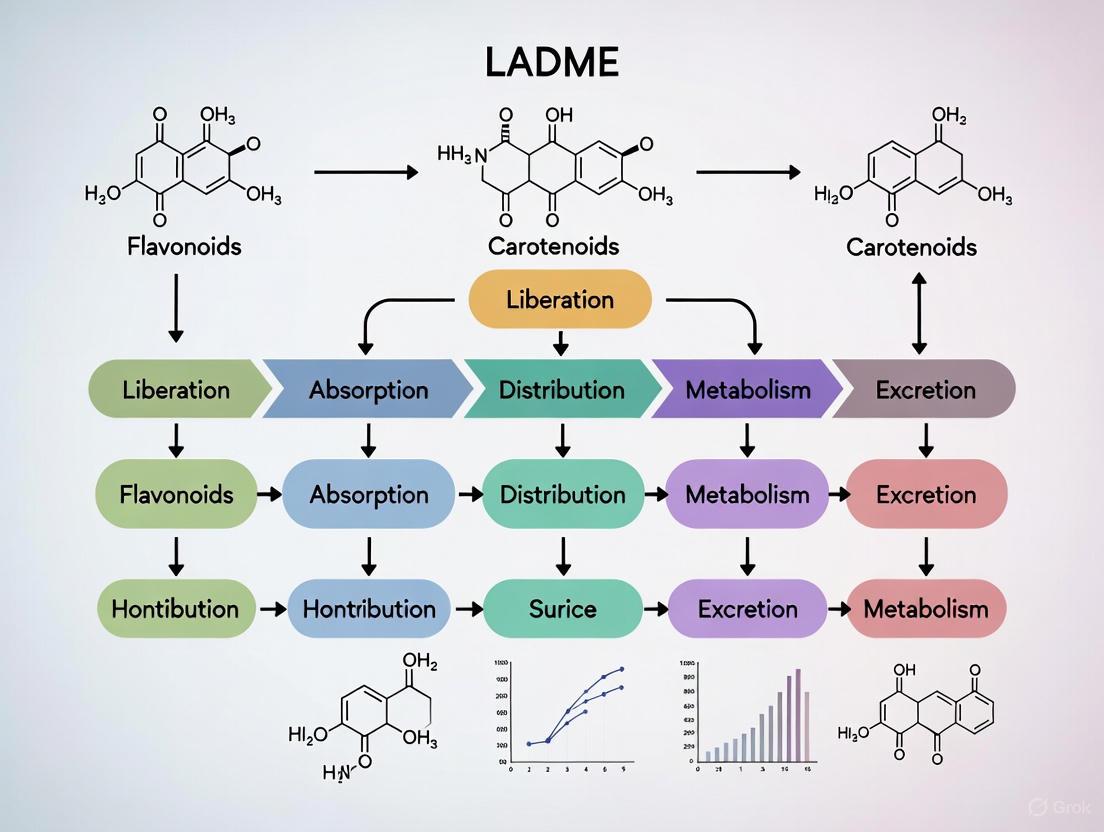
This article provides a comprehensive analysis of the LADME (Liberation, Absorption, Distribution, Metabolism, Elimination) framework as it applies to bioactive food compounds.
LADME Framework for Bioactive Food Compounds: From Bioaccessibility to Bioefficacy in Drug Development
Abstract
This article provides a comprehensive analysis of the LADME (Liberation, Absorption, Distribution, Metabolism, Elimination) framework as it applies to bioactive food compounds. Tailored for researchers, scientists, and drug development professionals, it explores the foundational principles governing the bioavailability of dietary bioactives, examines advanced methodological approaches for its assessment, and discusses strategies to overcome key bioavailability challenges. The content further validates these concepts through an analysis of food-drug interactions and a comparative evaluation with pharmaceutical pharmacokinetics, synthesizing critical insights for enhancing the efficacy and application of bioactive compounds in functional foods and therapeutic contexts.
Deconstructing LADME: The Fundamental Journey of Bioactive Compounds from Plate to Target
The LADME framework is a fundamental pharmacokinetic model that describes the fate of bioactive compounds within an organism. This framework systematically outlines the processes of Liberation, Absorption, Distribution, Metabolism, and Elimination, providing a comprehensive understanding of the bioavailability and efficacy of dietary bioactives. Within nutritional sciences and functional food research, applying the LADME framework is crucial for quantifying intake recommendations and linking specific bioactive compounds to health benefits [1]. This whitepaper details the core principles, experimental methodologies, and research tools essential for investigating the LADME phases of bioactive food compounds, with a focus on enabling evidence-based formulation of functional foods.
Bioactive food compounds, such as polyphenols, carotenoids, and omega-3 fatty acids, provide health benefits beyond basic nutrition, including antioxidant, anti-inflammatory, and gut-modulating effects [2]. However, their therapeutic potential is not solely determined by their presence in food; it is fundamentally governed by their pharmacokinetic profile within the human body. The LADME framework offers a structured approach to investigate this lifecycle.
The framework's relevance is underscored by ongoing efforts to develop a formal structure for establishing recommended intakes of bioactive dietary substances. This process requires characterizing the bioactive, quantifying its amounts in food sources, evaluating safety, and establishing a causal relationship between intake and health markers through systematic evidence reviews [1]. The LADME framework provides the mechanistic backbone for this efficacy evaluation, bridging the gap between food consumption and physiological outcome.
Core Phases of the LADME Framework
Liberation
Liberation refers to the release of the bioactive compound from its food matrix. This is the initial and critical step for orally consumed substances, as it directly influences the amount available for subsequent absorption.
- Gastric and Intestinal Processes: In the digestive tract, liberation involves mechanical breakdown (chewing, peristalsis) and chemical hydrolysis by gastric acid and digestive enzymes. The efficiency of these processes is highly dependent on the food matrix. For instance, the liberation of carotenoids from raw vegetables is less efficient than from processed or cooked ones.
- Experimental Focus: Research in this phase often centers on developing innovative food processing techniques and delivery systems to enhance the stability and release of sensitive bioactives. Nanoencapsulation has emerged as a prominent strategy to protect compounds like polyphenols from degradation in the stomach and target their release to the intestine [2].
Absorption
Absorption encompasses the passage of the liberated bioactive compound through the intestinal mucosa into the systemic circulation or lymphatic system.
- Pathways and Mechanisms: Absorption can occur via passive diffusion (for lipophilic compounds), active transport (requiring carrier proteins), or paracellular transport (between cells). The chemical nature of the compound—its size, polarity, and solubility—dictates the primary mechanism.
- Key Site and Challenges: The small intestine is the primary site for absorption due to its large surface area. A major challenge for many bioactive compounds, particularly polyphenols, is their inherently low bioavailability, which is often a consequence of poor aqueous solubility or instability in the intestinal environment [2].
- Research Objectives: A primary goal in functional food science is to improve the bioavailability of these compounds. This is actively pursued through formulation strategies such as emulsion-based systems, liposomes, and the aforementioned nanoencapsulation, all designed to enhance solubility and protect the compound during transit.
Distribution
Distribution describes the reversible transfer of a bioactive compound from the systemic circulation to various tissues and organs throughout the body.
- Influencing Factors: The extent of distribution is determined by the compound's affinity for specific tissues, its ability to cross biological barriers (e.g., the blood-brain barrier), and its binding to plasma proteins. Lipophilic compounds, such as carotenoids and omega-3 fatty acids, often distribute into adipose tissue or are targeted to organs like the eyes and brain.
- Health Outcome Link: The distribution pattern is critical for understanding a compound's mechanism of action. For example, the efficacy of lutein in supporting eye health is directly linked to its distribution and accumulation in the macula [2].
Metabolism
Metabolism involves the enzymatic modification of the absorbed bioactive compound, primarily aiming to make it more water-soluble for excretion. These reactions are typically categorized as Phase I (functionalization, e.g., oxidation, hydrolysis) and Phase II (conjugation, e.g., glucuronidation, sulfation).
- Primary Site and Consequences: The liver is the major organ for metabolism, though the gut wall and microbiome also contribute significantly. Metabolism can lead to deactivation of the bioactive, but in some cases, it can produce active metabolites that contribute to or are responsible for the observed health effects.
- Inter-individual Variability: Metabolic rates can vary widely among individuals due to genetic polymorphisms, age, sex, and gut microbiota composition, leading to significant differences in individual responses to the same dose of a bioactive.
Elimination
Elimination is the final process by which the bioactive compound and its metabolites are removed from the body.
- Primary Routes: The main routes of elimination are via urine (for water-soluble metabolites) and feces (for unabsorbed compounds or those excreted in bile). Minor routes include exhalation, sweat, and breast milk.
- Pharmacokinetic Parameter: The elimination half-life of a compound determines the duration of its presence and action in the body, which directly informs the frequency of intake required to maintain a desired physiological effect.
The following diagram illustrates the sequential flow and key interactions within the LADME framework for a bioactive compound.
Quantitative Profiling of Key Bioactive Compounds
The pharmacokinetic behavior of a bioactive compound is intrinsically linked to its chemical structure and properties. The following table summarizes the LADME-relevant characteristics and established health benefits of major bioactive compound classes.
Table 1: LADME and Health Benefit Profile of Key Bioactive Compounds
| Bioactive Compound & Examples | Key Food Sources | Typical Daily Intake (mg/day) | Key LADME Considerations | Primary Documented Health Benefits |
|---|---|---|---|---|
| Flavonoids (Quercetin, Catechins) | Berries, apples, onions, green tea, cocoa, citrus fruits [2] | 300 - 600 [2] | Low oral bioavailability; extensive Phase II metabolism (glucuronidation) in gut/liver; influenced by gut microbiota. | Cardiovascular protection, anti-inflammatory effects, antioxidant properties [2]. |
| Phenolic Acids (Caffeic acid, Ferulic acid) | Coffee, whole grains, berries, spices, olive oil [2] | 200 - 500 [2] | Often esterified in food matrix; requires liberation by gut enzymes; rapid absorption and elimination. | Neuroprotection, antioxidant activity, reduced inflammation [2]. |
| Carotenoids (Beta-carotene, Lutein) | Carrots, sweet potatoes, spinach, mangoes, kale [2] | Beta-carotene: 2-7 [2] Lutein: 1-3 mg [2] | Lipophilic; requires dietary fat for liberation/absorption; distributed to fatty tissues and retina; can be cleaved to Vitamin A. | Supports immune function, enhances vision (lutein protects vs. AMD) [2]. |
| Omega-3 Fatty Acids (EPA, DHA) | Fatty fish, algae oils, fortified foods | 800 - 1200 (for cardiovascular benefit) [2] | Absorbed via lymphatic system; distributed and incorporated into cell membranes; beta-oxidation for energy. | Significantly reduces risk of major cardiovascular events [2]. |
| Stilbenes (Resveratrol) | Red wine, grapes, peanuts, blueberries [2] | ~1 [2] | Very low bioavailability due to rapid and extensive metabolism; high inter-individual variability. | Anti-aging effects, cardiovascular protection, anticancer properties [2]. |
Essential Experimental Protocols for LADME Profiling
In Vitro Gastrointestinal Digestion Model
This protocol simulates human digestion to study the Liberation and stability of a bioactive from its food matrix.
- Oral Phase: Incubate the food sample with simulated salivary fluid (SSF) containing amylase at pH 7 for 2-5 minutes.
- Gastric Phase: Adjust the mixture to pH 3.0 with HCl, add simulated gastric fluid (SGF) containing pepsin, and incubate with constant agitation for 1-2 hours at 37°C.
- Intestinal Phase: Adjust the gastric chyme to pH 7.0 with NaOH, add simulated intestinal fluid (SIF) containing pancreatin and bile salts. Incubate for 2 hours at 37°C.
- Analysis: Centrifuge the final digest to separate the aqueous fraction (containing liberated bioactives) from the solid residue. The bioaccessible fraction in the aqueous phase can be quantified using techniques like High-Performance Liquid Chromatography (HPLC).
Caco-2 Cell Transwell Model for Absorption
This is a standard in vitro model for predicting intestinal Absorption.
- Cell Culture: Grow and differentiate human colon adenocarcinoma (Caco-2) cells on permeable filters in transwell plates for 21-28 days until they form a polarized monolayer with tight junctions.
- Dosing and Sampling: Add the bioactive compound (e.g., from the bioaccessible fraction of the digestion model) to the apical compartment (simulating intestinal lumen). Collect samples from the basolateral compartment at regular intervals over 2-4 hours.
- Integrity Monitoring: Monitor the integrity of the cell monolayer throughout the experiment by measuring the Transepithelial Electrical Resistance (TEER) or the permeability of a non-absorbable marker like Lucifer Yellow.
- Data Calculation: Calculate the Apparent Permeability (Papp) coefficient using the amount of compound transported to the basolateral side. A high Papp value indicates high absorption potential.
In Vivo Pharmacokinetic Study Design
In vivo studies in animal models or humans are required for a holistic view of Distribution, Metabolism, and Elimination.
- Dosing and Sampling: Administer a precise dose of the bioactive compound orally to the subject. Collect serial blood samples at predetermined time points (e.g., 0, 0.25, 0.5, 1, 2, 4, 8, 12, 24 hours) via an indwelling catheter. Urine and feces are also collected over 24-48 hours.
- Sample Analysis: Quantify the concentration of the parent compound and its major metabolites in plasma, urine, and feces using a validated bioanalytical method (e.g., LC-MS/MS).
- Data Analysis: Use non-compartmental analysis (NCA) to calculate key pharmacokinetic parameters:
- C~max~: Maximum observed plasma concentration.
- T~max~: Time to reach C~max~.
- AUC~0-t~: Area under the plasma concentration-time curve from zero to the last measurable time point, representing total systemic exposure.
- t~1/2~: Elimination half-life.
- CL/F: Apparent clearance.
- V~d~/F: Apparent volume of distribution.
The workflow for these core experiments is depicted below.
The Scientist's Toolkit: Key Research Reagents and Materials
Table 2: Essential Reagents and Materials for LADME Research
| Research Tool / Reagent | Primary Function in LADME Studies |
|---|---|
| Simulated Gastrointestinal Fluids (Salivary, Gastric, Intestinal) | To replicate the chemical environment (pH, enzymes, ions) of the human GI tract for in vitro digestion studies (Liberation). |
| Caco-2 Cell Line | A well-established human cell model that, upon differentiation, mimics the intestinal epithelium. Used to study permeability and transport mechanisms (Absorption). |
| LC-MS/MS (Liquid Chromatography-Tandem Mass Spectrometry) | The gold-standard analytical technique for the sensitive and specific quantification of bioactive compounds and their metabolites in complex biological matrices like plasma, urine, and tissue homogenates (All LADME phases). |
| Specific Metabolic Enzyme Kits (e.g., CYP450 isoforms, UGTs) | Recombinant enzymes or microsomal preparations used to identify the specific enzymes involved in the biotransformation of a bioactive compound and to characterize metabolites (Metabolism). |
| Validated Animal Models (e.g., rat, mouse, pig) | Used for in vivo pharmacokinetic and tissue distribution studies, providing a whole-body system to investigate the integrated LADME process. |
The LADME framework provides an indispensable, systematic approach for advancing the science of bioactive food compounds. By dissecting the journey of a compound from ingestion to elimination, researchers can move beyond simply identifying beneficial substances to understanding and optimizing their in vivo efficacy. The application of robust experimental protocols—from in vitro models to human clinical trials—is critical for generating the high-quality, quantitative evidence required to develop intake recommendations [1]. As the field progresses, overcoming challenges related to the low bioavailability of many bioactives through innovative delivery systems [2] will be paramount. Ultimately, a deep understanding of the LADME framework empowers researchers, nutrition scientists, and product developers to create evidence-based functional foods that reliably deliver on their promise of enhanced health and well-being.
For researchers and scientists developing nutraceuticals and functional foods, the journey of a bioactive compound from ingestion to its target site of action is a complex cascade of physiological processes. While the health benefits of compounds like polyphenols, carotenoids, and bioactive peptides are widely recognized, their efficacy is ultimately governed by their fate within the human body. It is a critical misconception to equate the concentration of a compound in a food source with its physiological impact. Bioaccessibility and bioavailability are the sequential, interdependent parameters that determine the functional efficacy of nutraceuticals, and understanding their distinction is fundamental for rational product development [3] [4].
This distinction becomes particularly significant when framed within the LADME framework—Liberation, Absorption, Distribution, Metabolism, and Elimination—which provides a comprehensive model for tracking bioactive compounds [4] [5]. Within this framework, bioaccessibility primarily concerns the initial Liberation step, making compounds accessible for absorption, while bioavailability encompasses the entire LADME sequence. The scientific and commercial challenge is substantial; many bioactive phytochemicals exhibit absorption rates as low as 0.3% to 43%, leading to minimal systemic circulation and limited therapeutic potential [4]. This whitepaper delineates the critical distinctions between bioaccessibility and bioavailability, examines the factors influencing each, and outlines advanced assessment methodologies and strategies for their enhancement, providing a technical guide for research and development professionals.
Defining the Critical Concepts within the LADME Framework
Conceptual Clarification and the LADME Sequence
In nutraceutical science, precise terminology is crucial for accurate communication and research design. The following concepts form the foundation of efficacy assessment:
Bioaccessibility refers to the fraction of a compound that is released from its food matrix and becomes solubilized in the gastrointestinal tract, thereby becoming available for potential intestinal absorption [3] [4]. It encompasses the processes of digestion and release, culminating in the compound's presence in the gut lumen as a solubilized entity. For lipophilic compounds like carotenoids, this often involves incorporation into mixed micelles alongside bile salts, cholesterol, and fatty acids [6]. In essence, bioaccessibility answers the question: "Is the compound free and ready for uptake?"
Bioavailability is a broader and more complex parameter. It is defined as the proportion of an ingested compound that reaches the systemic circulation and is thereby delivered to the site of physiological action [3] [7]. It integrates the entire LADME sequence: Liberation from the food matrix (bioaccessibility), Absorption through the intestinal epithelium, Distribution to various tissues and organs via circulation, Metabolism (which can occur in the gut lumen, intestinal cells, or the liver), and finally, Elimination from the body [4]. From a nutritional perspective, bioavailability indicates the fraction of a nutrient that is stored or utilized in physiological functions [7].
Bioactivity represents the ultimate endpoint: the measurable, beneficial physiological effect exerted by the bioactive compound or its metabolites after interacting with molecular targets in the body [3]. A compound may be highly bioavailable yet lack significant bioactivity if it does not effectively interact with its intended target.
Table 1: Core Concepts in Nutraceutical Efficacy
| Term | Definition | Key Processes Included | Position in LADME |
|---|---|---|---|
| Bioaccessibility | Fraction released from food matrix and solubilized in the gut [3] [4] | Digestion, enzymatic degradation, solubilization | Primarily Liberation |
| Bioavailability | Fraction that reaches systemic circulation and is available for tissue distribution/action [3] [7] | Absorption, Distribution, Metabolism, Elimination | Entire LADME sequence |
| Bioactivity | The physiological effect exerted after interaction with target biomolecules [3] | Receptor binding, signaling pathway modulation, gene expression | Post-LADME, at target tissue |
The relationship between these concepts is sequential and hierarchical, as visualized below. A compound must first be bioaccessible to be bioavailable, and must be bioavailable to exert bioactivity.
Factors Influencing Bioaccessibility and Bioavailability
The journey of a bioactive compound is fraught with obstacles. Understanding these factors is key to predicting efficacy and designing effective nutraceuticals.
Key Determinants of Bioaccessibility
- Food Matrix Effect: The physical entrapment of bioactive compounds within plant and food structures (e.g., cell walls, protein complexes) is a primary barrier. For instance, ferulic acid in whole grain wheat exhibits bioavailability below 1% due to its strong binding to polysaccharides; this can be improved through fermentation, which breaks ester links and liberates the compound [4].
- Composition of the Meal: The presence of other macronutrients significantly impacts bioaccessibility. Dietary fats are crucial for the micellarization and subsequent bioaccessibility of lipophilic compounds like carotenoids and fat-soluble vitamins. Studies show that consuming salad with full-fat or reduced-fat dressing significantly improves carotenoid absorption compared to fat-free dressing [4].
- Processing and Preparation Methods: Thermal and non-thermal processing can disrupt the food matrix, enhancing release. Cooking, fermentation, and emerging technologies like high-pressure processing and cold atmospheric plasma can break down cell walls and inhibit degrading enzymes, thereby increasing the bioaccessible fraction [8].
- Chemical Structure and Molecular Linkage: The specific form of a compound (e.g., glycosylated vs. aglycone polyphenols, esterified vs. free carotenoids) determines its susceptibility to digestive enzymes and its solubility in the gastrointestinal fluids [6].
Key Determinants of Bioavailability
- Absorption and Transport Mechanisms: Bioavailability is governed by the compound's ability to cross the intestinal epithelium. Hydrophilic compounds often require specific transporters, while lipophilic compounds rely on passive diffusion or micelle-assisted uptake. Low permeability is a common cause of low bioavailability [3] [4].
- Host Metabolism and Gut Microbiota: Extensive pre-systemic metabolism, either by host enzymes in the gut and liver or by the colonic microbiota, can rapidly transform and inactivate many bioactive compounds. Conversely, some compounds like certain polyphenols are activated by microbial metabolism, producing metabolites with enhanced bioactivity [4].
- Inter-Individual Variability: Genetic polymorphisms affecting digestive enzyme activity, transporter expression, and metabolic pathways can lead to significant variability in bioavailability between individuals [4] [6]. This is often summarized by the SLAMENGHI mnemonic, encompassing Species of carotenoid, Linkage, Amount, Matrix, Effectors, Nutrient status, Genetic, Host-related factors, and Interactions [6].
- Effector Nutrients: Co-consumed nutrients can act as antagonists or synergists. For example, calcium can inhibit iron absorption, while vitamin C can enhance it [4].
Assessment Methodologies: From In Vitro Simulations to Clinical Gold Standards
Accurately assessing bioaccessibility and bioavailability requires a multi-faceted approach, ranging from controlled in vitro simulations to complex in vivo studies.
In Vitro Digestion Models
In vitro models simulate human physiological conditions to predict the bioaccessibility of bioactive compounds, offering ethical, economical, and high-throughput alternatives to in vivo studies [9] [10]. These models typically follow a sequential simulation of the gastrointestinal tract.
Table 2: In Vitro Models for Assessing Bioaccessibility and Bioavailability
| Method | Endpoint Measured | Principle & Workflow | Advantages & Limitations |
|---|---|---|---|
| Static Digestion | Bioaccessibility | Two- or three-step digestion (oral, gastric, intestinal) with fixed enzyme concentrations and pH [9] [3]. | Advantages: Simple, inexpensive, high-throughput [10].Limitations: Oversimplifies dynamic physiology. |
| Dynamic Models (TIM) | Bioaccessibility | Computer-controlled system simulating stomach to ileum with real-time pH adjustment, peristalsis, and metabolite removal [10]. | Advantages: More physiologically relevant, allows sampling at different gut sections [10].Limitations: Expensive, complex operation [10]. |
| Caco-2 Cell Model | Bioavailability (Absorption) | Human intestinal cell line grown on Transwell inserts. Measures compound uptake and transport from apical to basolateral side [9] [10]. | Advantages: Studies absorption mechanisms and transporter effects [10].Limitations: Requires cell culture expertise; does not fully capture mucus/microbiome layer [10]. |
| Dialyzability/Solubility | Bioaccessibility | After digestion, the soluble fraction is separated by centrifugation or dialysis through a membrane of specific molecular weight cut-off [10]. | Advantages: Simple, inexpensive estimate of soluble, absorbable fraction [10].Limitations: Cannot predict uptake kinetics or transporter effects [10]. |
The following diagram illustrates a generalized workflow for a coupled in vitro digestion - Caco-2 absorption assay, a common protocol for predicting bioavailability.
The Gold Standard: In Vivo Assessment
Despite the utility of in vitro models, human studies are considered the "gold standard" for determining true bioavailability [9]. This involves pharmacokinetic studies that measure the concentration of the bioactive compound and its metabolites in blood plasma or serum over time after consumption. The resulting concentration-time curve allows for the calculation of key parameters such as the area under the curve (AUC), peak concentration (C~max~), and time to peak concentration (T~max~) [4]. In vivo studies are indispensable for validating in vitro models and understanding the complete LADME profile, including tissue distribution and the biological activity of metabolites.
The Scientist's Toolkit: Essential Reagents and Materials
Successful assessment of bioaccessibility and bioavailability relies on a suite of specialized reagents, cell models, and analytical equipment.
Table 3: Essential Research Reagents and Materials for Bioavailability Studies
| Category | Specific Items | Function & Application |
|---|---|---|
| Digestive Enzymes | Pepsin (porcine), Pancreatin (porcine), Bile salts (porcine or bovine) | Simulate the enzymatic hydrolysis and emulsification of nutrients in the stomach (pepsin) and small intestine (pancreatin, bile) [10]. |
| Cell Culture Models | Caco-2 cell line (HTB-37), Transwell inserts, Cell culture media | Model the human intestinal epithelium for absorption and transport studies. Transwell inserts create apical and basolateral compartments to mimic the gut lumen and blood side [10]. |
| Analytical Standards | Pure reference compounds (e.g., Quercetin, β-carotene, Curcumin), Isotope-labeled internal standards | Essential for identification and accurate quantification of bioactive compounds and their metabolites in complex digests or biological fluids using HPLC or MS [3] [8]. |
| Advanced Gut Models | TIM system (TNO), Mucolytic agents, Donor fecal matter | Sophisticated systems that dynamically simulate GI physiology (TIM). Fecal matter is used to simulate colonic fermentation in models of the large intestine [10]. |
Advanced Strategies for Enhancing Delivery and Efficacy
Overcoming the inherent limitations of poor solubility and stability is a primary focus of nutraceutical R&D. Nanotechnology offers some of the most promising strategies.
- Nanoemulsions: These are oil-in-water or water-in-oil colloidal dispersions with droplet sizes typically below 250 nm. They are highly effective at encapsulating lipophilic bioactives (e.g., carotenoids, curcumin), enhancing their water dispersibility, protecting them from degradation, and promoting rapid absorption in the GI tract due to their high surface area [6] [5].
- Polymeric Nanoparticles and Micelles: Systems like polymeric micelles self-assemble from amphiphilic block copolymers, creating a hydrophobic core for drug encapsulation and a hydrophilic shell (often PEG) that provides steric protection and prolongs circulation. These systems can be engineered for stimulus-sensitive release (e.g., pH- or thermo-responsive) for targeted delivery [11].
- Electrospun Nanofibers: This technique uses electrical force to create ultrafine fibers from polymer solutions. These fibers offer a high surface-area-to-volume ratio and can provide high encapsulation efficiency and sustained or controlled release of bioactives, making them suitable for solid-state functional foods or edible coatings [5].
- Encapsulation in Acid-Resistant Capsules: Formulating nutraceuticals into capsules designed to withstand the stomach's acidic environment and release their payload in the intestine can significantly improve the recovery of sensitive compounds like polyphenols, as demonstrated with tea extracts and fennel waste capsules [3].
The critical distinction between bioaccessibility and bioavailability is non-negotiable for the scientifically-grounded development of efficacious nutraceuticals. Bioaccessibility—the liberation and solubilization of a compound—is the essential first gatekeeper. Bioavailability—the fraction that reaches systemic circulation—is the ultimate determinant of physiological potential, integrating the complex LADME pathway. While in vitro models provide invaluable, high-throughput tools for screening and formulation development, they must be applied with a clear understanding of their endpoints and limitations. The future of nutraceutical science lies in the continued refinement of these assessment methods, coupled with the intelligent application of advanced delivery systems like nanoemulsions and nanomicelles. By systematically addressing the barriers to bioaccessibility and bioavailability, researchers can truly bridge the gap between the promising bioactivity of compounds observed in vitro and their tangible health benefits in human consumers.
Physicochemical Factors Governing Bioactive Liberation from Food Matrices
The bioefficacy of bioactive food compounds is fundamentally governed by their journey through the body, conceptualized by the LADME framework: Liberation, Absorption, Distribution, Metabolism, and Elimination [12] [13]. Liberation, the initial and critical step, refers to the release of bioactive compounds from the native food matrix into the gastrointestinal fluids, making them available for absorption [14]. This process of bioaccessibility is a prerequisite for bioavailability and subsequent health benefits [15]. The efficiency of liberation is not a matter of chance but is governed by a complex interplay of physicochemical factors related to the compound itself, the food matrix, and the conditions of the gastrointestinal tract (GIT) [14]. Understanding and manipulating these factors is essential for researchers and drug development professionals aiming to design functional foods, nutraceuticals, and oral drugs with predictable and enhanced efficacy. This technical guide provides an in-depth analysis of these governing factors, supported by experimental data and methodologies relevant to contemporary research.
Key Physicochemical Factors Affecting Bioactive Liberation
The liberation of bioactives is a complex process influenced by multiple interconnected factors. The following diagram illustrates the core conceptual framework and the key physicochemical factors involved.
Food Matrix Effects
The food matrix acts as a physical entrapment system for bioactive compounds, and its structural integrity and composition are primary determinants of liberation.
- Cell Wall Integrity: Plant-based bioactives are often encapsulated within cellular structures. The rigidity and composition of plant cell walls, primarily composed of polysaccharides like cellulose, hemicellulose, and pectin, constitute the first physical barrier to liberation. Mechanical disruption or enzymatic digestion of these walls is often a prerequisite for compound release [14].
- Macronutrient Interactions: Bioactives can bind non-covalently or covalently with macronutrients. For instance, polyphenols can form complexes with proteins or dietary fiber, which can sequester the compound and reduce its bioaccessibility [14] [16]. The presence and type of dietary lipids are particularly crucial for lipophilic compounds (e.g., carotenoids, fat-soluble vitamins), as lipids can facilitate their solubilization into mixed micelles during digestion [12].
- Presence of Antinutrients: Some food matrices contain inherent compounds like tannins or phytates that can bind to bioactives or inhibit digestive enzymes, further impeding the liberation process [14].
Compound Solubility and Chemical Structure
The intrinsic physicochemical properties of the bioactive compound itself are equally critical.
- Hydrophilicity vs. Lipophilicity: The polarity of a compound dictates its solubility in the aqueous environment of the GIT. Hydrophilic compounds (e.g., vitamin C, many phenolic glycosides) may be more readily liberated into gastrointestinal fluids, while lipophilic compounds (e.g., carotenoids, curcumin) require the presence of lipids and bile salts for solubilization [12].
- Molecular Size and Conformation: Larger, polymeric compounds (e.g., polymeric procyanidins in apples) may be less readily liberated compared to their smaller, monomeric counterparts. The specific glycosylation pattern of flavonoids, for example, can significantly influence their release kinetics [17].
- Crystalline vs. Amorphous State: The physical form of a compound within the matrix can affect its dissolution rate. Amorphous forms generally exhibit higher solubility and faster liberation compared to crystalline structures [14].
Quantitative Impact of Processing and Matrix Composition
Processing techniques are deliberately employed to modify the food matrix and enhance the liberation of bioactives. The table below summarizes the quantitative impact of different factors on bioactive content and liberation, as evidenced by recent research.
Table 1: Quantitative Impact of Processing and Matrix on Bioactive Compounds
| Factor / Material | Key Finding | Quantitative Change | Reference |
|---|---|---|---|
| Ultrasound-Assisted Extraction (UAE) on Raspberries | Optimal UAE with Deep Eutectic Solvents increased phenolic & anthocyanin recovery. | Optimal conditions: 60 min, 35 mL solvent, 30 mL added water. | [18] |
| Pome Fruit Leaves vs. Fruits | Leaves are richer sources of bioactive and nutritional compounds than fruits. | Leaves had 3-6x higher mineral content (Ca, Mg, Fe, K); Higher organic acids (11.5-41.5 g/100g dw vs 1.3-2.4 g/100g dw in fruits). | [17] |
| Conventional Extraction of Chlorella | Optimal solid-liquid extraction for pigments & phenolics. | Optimal conditions: 30°C, 24 h, 37 mLsolv/gbiom; Yield: 15.39% w/w; Total carotenoids: 9.92 mg/gextr. | [19] |
| Hazelnut Skin (Agro-waste) | Defatted skins are a significant source of polyphenols. | Total Phenolic Content: ~155 mg GAE/g dw; Antioxidant Capacity (FRAP): ~23 mM TE. | [16] |
Mechanical and Thermal Treatments
Traditional processing methods physically and chemically alter the matrix structure.
- Thermal Treatments: Cooking, blanching, and pasteurization can soften plant tissues, denature proteins, and gelatinize starch, thereby breaking down physical barriers and enhancing the liberation of bound compounds. However, excessive heat can also degrade thermolabile bioactives [14].
- Mechanical Processes: Grinding, milling, and homogenization reduce particle size, exponentially increasing the surface area exposed to digestive fluids and enzymes. This is a fundamental principle for improving liberation efficiency [14].
- Soaking, Germination, and Fermentation: These biological processes utilize water uptake, endogenous enzymes, or microbial activity to pre-digest the food matrix, breakdown antinutrients, and facilitate the release of bioactives [14].
Advanced and Green Extraction Technologies
Modern technologies offer more controlled and efficient means of enhancing liberation, both in food processing and in in vitro analysis.
- Ultrasound-Assisted Extraction (UAE): UAE employs acoustic cavitation—the formation, growth, and implosive collapse of microbubbles in a liquid medium. This implosion generates localized extremes of temperature and pressure, along with high-shear microjets, which effectively disrupt cell walls and enhance mass transfer [18] [20]. The efficiency of UAE is governed by multiple parameters, including frequency, ultrasonic power, temperature, and solvent selection [20].
- Other Non-Conventional Techniques: Techniques like Microwave-Assisted Extraction (dielectric heating), Enzyme-Assisted Extraction (specific cell wall degradation), and the use of Deep Eutectic Solvents (DES)—green, tunable solvents—are also being increasingly adopted to achieve higher yields and more sustainable extraction processes [18] [20].
Experimental Protocols for Assessing Liberation (Bioaccessibility)
The gold standard for evaluating the liberation of bioactives under controlled conditions that simulate human digestion is the in vitro gastrointestinal model.
Standardized In Vitro Digestion Protocol
This protocol outlines a general procedure for simulating the gastrointestinal fate of a food material to determine bioaccessibility.
- Sample Preparation: The food sample is homogenized and often subjected to a simulated oral phase. This involves mixing with a simulated saliva fluid (containing electrolytes and α-amylase) for a short period (e.g., 2-5 minutes) at neutral pH to mimic mastication and the initiation of starch digestion [15].
- Gastric Phase Simulation: The oral bolus is mixed with a simulated gastric juice. This typically includes a solution of pepsin in a hydrochloric acid buffer to achieve a pH of 2.5-3.0. The incubation is carried out for 1-2 hours at 37°C with constant agitation to simulate stomach motility. This phase is critical for protein digestion and the liberation of compounds from protein-complexed matrices [15].
- Intestinal Phase Simulation: The gastric chyme is neutralized and mixed with simulated intestinal fluid. This fluid contains pancreatic enzymes (e.g., pancreatin, which includes proteases, amylase, and lipase) and a bile salts extract. The pH is adjusted to ~7.0, and the mixture is incubated for 2 hours at 37°C. This phase is essential for the digestion of lipids and starch, and the solubilization of lipophilic compounds into mixed micelles [15].
- Bioaccessibility Analysis: After intestinal digestion, the sample is centrifuged at high speed (e.g., 10,000 x g for 1-2 hours) to separate the aqueous phase (containing solubilized bioactives) from the solid residue (undigested matrix and unliberated compounds). The bioactive content in the aqueous phase is analyzed using appropriate techniques (e.g., HPLC, UV-Vis spectrophotometry). Bioaccessibility (%) is calculated as:
(Amount of bioactive in aqueous phase / Total amount in original sample) × 100[15].
Optimization of Extraction for Analysis: A Case Study
To accurately quantify the total potential bioactive content of a food material—a prerequisite for bioaccessibility calculations—efficient extraction is key. The following workflow demonstrates how experimental design is applied to optimize this process.
As exemplified by the optimization of phenolic compound recovery from raspberries using Ultrasound-Assisted Extraction (UAE) with Deep Eutectic Solvents (DES), a systematic approach is paramount [18].
- Selection of Factors and Responses: Critical extraction parameters are identified (e.g., extraction time, solvent volume, water content in DES). The target response variables are defined (e.g., total phenolic content, anthocyanin yield) [18].
- Experimental Design (DOE): A statistical design, such as the Box-Behnken Design (BBD), is employed. This response surface methodology allows for the efficient exploration of the effect of multiple factors and their interactions on the responses with a reduced number of experimental runs [18] [20].
- Model Fitting and Analysis: The experimental data is used to fit a quadratic polynomial model. Analysis of Variance (ANOVA) is performed to assess the statistical significance of the model and its terms. The model is then visualized using 3D response surface plots to understand the relationships between factors and responses [18] [19].
- Optimization and Validation: The fitted model is used to numerically predict the combination of factor levels that will yield an optimal response. These predicted optimal conditions are then validated experimentally to confirm the model's accuracy [18].
The Scientist's Toolkit: Key Research Reagents and Materials
Success in this field relies on a suite of specialized reagents, solvents, and materials. The following table catalogues essential solutions for studying bioactive liberation.
Table 2: Essential Research Reagent Solutions for Bioactive Liberation Studies
| Reagent/Material | Function/Application | Key Characteristics & Examples |
|---|---|---|
| Deep Eutectic Solvents (DES) | Green, tunable solvents for efficient extraction of polyphenols, anthocyanins [18]. | Compositions like lactic acid/maltose; Adjustable polarity for specific compound classes. |
| Simulated Gastrointestinal Fluids | Key components of in vitro digestion models to mimic human GI conditions [15]. | Include salivary α-amylase, gastric pepsin/HCl, intestinal pancreatin & bile salts. |
| Enzymes for Matrix Digestion | Breakdown of complex food matrices (cell walls, proteins, starch) to liberate bound compounds. | Cellulases, pectinases, proteases, amylases; Used in enzyme-assisted extraction. |
| Green Solvent Mixtures | Eco-friendly alternative to traditional organic solvents for extraction. | Ethanol/water mixtures (e.g., 90/10 v/v); Effective for pigments & phenolics [19]. |
| Analytical Standards | Identification and quantification of specific bioactive compounds in liberated fractions. | Pure reference compounds (e.g., amentoflavone, quercetin-3-O-α-l-rhamnoside) [21]. |
The liberation of bioactive compounds from food matrices is a critical and controllable first step in the LADME pathway that dictates ultimate bioefficacy. This process is predominantly governed by the physicochemical interplay between the structural properties of the food matrix, the chemical nature of the bioactive compound, and the dynamic conditions of the gastrointestinal environment. A deep understanding of these factors—from the role of cell walls and macromolecular interactions to the impact of solubility and particle size—empowers researchers to strategically enhance bioaccessibility. Leveraging both traditional and advanced processing technologies, alongside rigorous in vitro digestion models and statistically optimized analytical protocols, provides a powerful toolkit for this purpose. Mastering the phase of bioactive liberation is therefore foundational for advancing the fields of functional food development, nutraceutical science, and drug delivery, enabling the rational design of interventions with proven and enhanced health-promoting potential.
The journey of a bioactive compound from ingestion to systemic circulation is a complex process governed by its fundamental physicochemical properties, chief among them being hydrophilicity and lipophilicity. Within the broader context of the LADME phases (Liberation, Absorption, Distribution, Metabolism, Elimination) of bioactive food compounds, understanding these distinct absorption pathways is crucial for predicting bioefficacy [22]. The affinity of a molecule for aqueous versus lipid environments directly determines its mechanism of traversal across the predominantly lipophilic biological membranes of the gastrointestinal tract [23] [24]. This whitepaper provides an in-depth technical contrast of the absorption mechanisms for hydrophilic and lipophilic compounds, equipping researchers and drug development professionals with the experimental frameworks and predictive models necessary for advanced nutrient and drug delivery system design.
Fundamental Physicochemical Properties
The absorption pathway of a compound is primarily dictated by its lipophilicity, a property that quantifies its affinity for lipids or fats versus water [23].
Defining Lipophilicity and Hydrophilicity
- Lipophilicity: This "fat-loving" property describes a compound's ability to dissolve in non-polar solvents like oils. It is crucial for pharmacology as it significantly influences a drug's absorption, distribution, metabolism, and excretion (ADME) [23] [24]. Lipophilic drugs can readily diffuse through lipid-rich biological membranes [24].
- Hydrophilicity: This "water-loving" property describes a compound's affinity for aqueous environments. Hydrophilic compounds are polar and dissolve readily in water but struggle to cross lipid membranes without specialized transport mechanisms [25].
Quantitative Measurement: Log P and Log D
The partition coefficient is the standard measure for lipophilicity.
- Log P: This is the logarithm of the ratio of a compound's concentration in an organic solvent (typically n-octanol) to its concentration in water at equilibrium. A high log P indicates high lipophilicity, while a low or negative value indicates hydrophilicity [23]. Log P describes the intrinsic lipophilicity of the un-ionized drug.
- Log D: This parameter accounts for the ionization of compounds at a specific pH (e.g., physiological pH of 7.4). It is the logarithm of the ratio of the sum of the concentrations of all forms of the compound (ionized + un-ionized) in octanol to the sum of the concentrations of all forms in water [26]. Log D provides a more accurate picture of lipophilicity under physiologically relevant conditions.
The table below summarizes the key characteristics of these two classes of compounds.
Table 1: Key Characteristics of Hydrophilic and Lipophilic Compounds
| Characteristic | Hydrophilic Compounds | Lipophilic Compounds |
|---|---|---|
| Chemical Nature | Polar compounds [25] | Non-polar compounds [25] |
| Solubility | High water solubility [24] | High solubility in lipids/oils [23] [24] |
| Primary Transport Mechanism | Facilitated transport (carriers, ion channels) [25] | Passive diffusion through lipid bilayers [25] [24] |
| Blood-Brain Barrier Penetration | Significantly less susceptible [25] | Free diffusion across the barrier [25] |
| Typical Elimination Route | Kidneys [25] | Liver metabolism, bile duct excretion [25] |
Absorption Pathways and the LADME Framework
The LADME framework outlines the journey of a xenobiotic: Liberation from its matrix, Absorption into systemic circulation, Distribution to tissues, Metabolism (biotransformation), and Elimination from the body [22] [27]. The absorption phase is where the divergence between hydrophilic and lipophilic pathways is most pronounced.
Pathway for Lipophilic Compounds
Lipophilic compounds are predominantly absorbed via passive transcellular diffusion due to their ability to dissolve in and traverse the lipid bilayer of cell membranes [24]. Once absorbed, their high log P (typically >5) directs them toward a specific systemic route that bypasses initial liver metabolism.
Diagram 1: Lipophilic Compound Absorption Pathway
Pathway for Hydrophilic Compounds
Hydrophilic compounds, being polar, cannot easily diffuse through the lipophilic core of the cell membrane. Their absorption is limited and occurs via alternative mechanisms.
Diagram 2: Hydrophilic Compound Absorption Pathway
Experimental Protocols for Mechanistic Investigation
Determining Lipophilicity: Log P/D Measurement
Objective: To quantitatively determine the lipophilicity of a compound using the shake-flask method [24] [26].
Table 2: Reagents for Log P/D Measurement
| Research Reagent | Function |
|---|---|
| n-Octanol | Simulates the lipophilic environment of biological membranes [24] [26]. |
| Aqueous Buffer (e.g., PBS, pH 7.4) | Simulates the aqueous physiological environment (e.g., plasma, cytosol) [26]. |
| Compound of Interest | The drug or bioactive molecule whose lipophilicity is being characterized. |
| UV-Vis Spectrophotometer / HPLC | Analytical instruments used to accurately quantify the concentration of the compound in each phase after partitioning [26]. |
Methodology:
- Pre-Saturation: Pre-saturate n-octanol and the aqueous buffer (e.g., phosphate buffer, pH 7.4) with each other by mixing them overnight to ensure volume stability.
- Partitioning: Add a known quantity of the test compound to a mixture of pre-saturated octanol and buffer in a vial or tube. The typical volume ratio is 1:1.
- Equilibration: Shake the mixture vigorously for a set period (e.g., 1 hour) at a constant temperature (e.g., 25°C or 37°C) to allow the compound to distribute between the two phases.
- Separation: Centrifuge the mixture to achieve a clean and complete separation of the two phases.
- Quantification: Carefully sample from each phase and analyze the concentration of the compound using a validated analytical method, such as UV-Vis spectroscopy or HPLC [26].
- Calculation:
- Log P (for un-ionizable compounds): Log P = Log₁₀ ( [Compound]ₒcₜₐₙₒₗ / [Compound]ₐqᵤₑₒᵤₛ )
- Log D (for ionizable compounds at a specific pH): Log D = Log₁₀ ( [Total Compound]ₒcₜₐₙₒₗ / [Total Compound]ₐqᵤₑₒᵤₛ )
Predicting Food Effects Using the μFLUX System
Objective: To investigate the theoretical and experimental prediction of food effects on oral drug absorption, particularly for solubility-permeability-limited cases [28].
Background: Food intake significantly alters gastrointestinal conditions, notably increasing bile micelle concentrations (e.g., using FaSSIF/FeSSIF media). These micelles can solubilize drugs but also bind them, reducing the free fraction available for permeation [28].
Methodology:
- Theoretical Prediction (FaRLS): First, categorize the drug's absorption rate-limiting step (e.g., Solubility-Epithelial Membrane Permeation Limited, SL-E) based on its physicochemical properties to predict the potential food effect [28].
- In Vitro Simulation (μFLUX): a. Donor Chamber: Use fasted-state (FaSSIF) and fed-state (FeSSIF) simulated intestinal fluids as donor solutions to mimic the intestinal environment [28]. b. Acceptor Chamber: Use a physiologically relevant acceptor solution. c. Membrane: Employ a permeation membrane (e.g., artificial or cellular like Caco-2). d. Measurement: Measure the dissolution-permeation flux (JμFLUX) of the drug from the donor to the acceptor compartment over time under both FaSSIF and FeSSIF conditions [28].
- Data Analysis: Compare the flux profiles. For SL-E drugs, a marked increase in total drug concentration (C_D) in FeSSIF may not translate to a proportional increase in JμFLUX, as the free drug concentration remains unchanged. This result is consistent with a minimal positive food effect [28].
The Influence of Food and Formulation
Food intake can profoundly alter the absorption landscape, with effects that differ for hydrophilic and lipophilic compounds.
Mechanisms of Food Effects
Table 3: Food Effects on Drug Absorption
| Factor | Effect on Lipophilic Compounds | Effect on Hydrophilic Compounds |
|---|---|---|
| Gastric Emptying | Delayed emptying can increase time for dissolution and absorption [29]. | Delayed emptying can delay the onset of absorption (increased Tₘₐₓ) [29]. |
| Bile Secretion | Major Positive Effect: Bile salts emulsify fats and form mixed micelles, significantly enhancing the solubilization and absorption of lipophilic compounds [28] [29]. | Minimal direct effect. |
| GI Fluid Volume & pH | Increased volume may dilute the drug. Elevated gastric pH can affect the dissolution of ionizable lipophilic compounds [29]. | Increased volume can dilute the drug, reducing the concentration gradient for passive diffusion [29]. |
| Lymphatic Transport | Significant Enhancement: High-fat meals stimulate chylomicron production, promoting lymphatic transport of highly lipophilic drugs (log P > ~5), bypassing first-pass metabolism [30]. | Not a relevant pathway. |
Advanced Formulation Strategies
To overcome poor bioavailability, advanced delivery systems can be employed.
- For Lipophilic Compounds: Lipid-based formulations such as Self-Emulsifying Drug Delivery Systems (SEDDS) and nanoemulsions enhance solubility and promote association with the intestinal lymphatic system [5] [30]. Lipid nanoparticles (LNPs) also encapsulate drugs for protection and enhanced absorption [30].
- For Hydrophilic Compounds: Nanofibers produced by electrospinning offer high encapsulation capacity and sustained release, which can be beneficial for compounds that are unstable in the GI tract or have a narrow absorption window [5].
The absorption pathways of hydrophilic and lipophilic compounds are fundamentally distinct, shaping their journey through the LADME phases. Lipophilic compounds primarily rely on passive transcellular diffusion and can be strategically directed through the lymphatic system to enhance bioavailability. In contrast, hydrophilic compounds face greater membrane barriers and typically rely on paracellular or carrier-mediated transport. A deep understanding of these mechanisms, quantified by parameters like log P/D and investigated through protocols like the μFLUX system, is indispensable for researchers. This knowledge enables the rational prediction of food effects and the design of sophisticated formulation strategies, such as lipid nanoparticles and nanoemulsions, to optimize the delivery and efficacy of bioactive compounds and pharmaceuticals.
The Role of Gut Microbiota in the Metabolism of Dietary Polyphenols and Glycosides
The bioavailability and efficacy of dietary polyphenols are intrinsically linked to the metabolic capabilities of the gut microbiota. This in-depth technical guide explores the central role of commensal bacteria in the liberation, absorption, distribution, metabolism, and excretion (LADME) of these bioactive food compounds. We detail the specific enzymatic machinery possessed by key bacterial taxa that transforms complex polyphenols and glycosides into bioavailable metabolites, framing these interactions within the broader context of bioactive compound research. The document provides structured quantitative data, detailed experimental methodologies, and visualizations of critical pathways to serve researchers, scientists, and drug development professionals working at the intersection of nutrition, microbiology, and pharmacology.
Dietary polyphenols represent a vast class of secondary plant metabolites found in fruits, vegetables, tea, coffee, and wine, characterized by their phenolic structures. These compounds exist primarily as glycosides (conjugated with sugars) or in polymerized forms, which significantly influences their fate within the human body. The LADME framework—encompassing Liberation, Absorption, Distribution, Metabolism, and Excretion—provides a systematic approach for understanding the pharmacokinetics of bioactive food compounds. For most polyphenols, fewer than 10% are absorbed in their native form in the small intestine; the remaining 90–95% progress to the colon, where the gut microbiota performs extensive biotransformation [31] [32] [33]. This colonic metabolism is not merely an elimination pathway but is arguably the most critical phase for generating systemically active metabolites that influence host physiology through anti-inflammatory, antioxidant, and neuroprotective mechanisms [31] [33] [34].
The gut microbiota, often termed a "hidden organ," comprises trillions of microorganisms, predominantly the phyla Firmicutes, Bacteroidetes, Actinobacteria, and Proteobacteria. This consortium acts as a versatile bioreactor, encoding a diverse repertoire of enzymes that hydrolyze, cleave, and modify dietary polyphenols into absorbable metabolites. This review delineates the specific microbial transformations within the LADME continuum, provides experimental protocols for their study, and visualizes the complex metabolic networks, thereby offering a comprehensive resource for advancing research in this field.
Microbial Biotransformation within the LADME Phases
Liberation and Absorption
The initial liberation of polyphenols from the food matrix is influenced by mechanical processing and gastric digestion. However, the primary liberation of aglycones from their glycosylated forms occurs via microbial enzymes. Most polyphenol glycosides resist hydrolysis by human digestive enzymes but are susceptible to bacterial β-glucosidases, α-rhamnosidases, and other glycosidases [35] [34]. For instance, the flavonol quercetin-3-O-rutinoside (rutin) is hydrolyzed to its aglycone, quercetin, by bacterial β-glucosidases before further catabolism [34].
Site of Absorption: The small intestine absorbs a minor fraction of simple aglycones and low-molecular-weight polyphenols (e.g., certain isoflavones and flavanols). The vast majority of polyphenols, including polymerized proanthocyanidins and complex glycosides, reach the colon where microbial biotransformation occurs, and the resulting metabolites (e.g., simple phenolic acids) are absorbed across the colonic epithelium [31] [33].
Metabolism and Distribution
Once liberated, polyphenol aglycones undergo extensive metabolism by gut microbiota and host systems.
- Microbial Ring Fission and Dehydroxylation: Bacterial species such as Eubacterium ramulus and Flavonifractor plautii cleave the C-ring of flavonols like quercetin. Clostridium orbiscindens and Enterococcus casseliflavus are also involved in the degradation of various flavonoids, producing smaller phenolic acids like 3,4-dihydroxyphenylacetic acid and 3-(3-hydroxyphenyl)propionic acid [31] [35].
- Host Conjugation (Phase II Metabolism): After absorption, polyphenol metabolites travel to the liver via the portal vein where they undergo conjugation—methylation, sulfation, and glucuronidation [32] [34]. These conjugated forms enter systemic circulation and are distributed to target tissues, including the brain, as demonstrated for metabolites derived from grape seed polyphenol extract [31].
- Enterohepatic Recirculation: Some conjugated metabolites are excreted in bile, transported back to the small intestine, and may undergo deconjugation by microbial β-glucuronidases, facilitating reabsorption and prolonging their systemic presence [32].
Excretion
The final stage involves excretion of polyphenol metabolites and their conjugates, primarily via urine and feces. The profile of urinary metabolites serves as a key indicator of an individual's microbial metabolic capacity and polyphenol intake [31] [36].
Table 1: Key Bacterial Taxa and Enzymes in Polyphenol Biotransformation
| Polyphenol Class | Example Compounds | Key Metabolizing Bacterial Taxa | Microbial Enzymes Involved | Major Microbial Metabolites |
|---|---|---|---|---|
| Flavonols | Quercetin, Rutin | Eubacterium ramulus, Clostridium orbiscindens, Bacteroides spp., Bifidobacterium spp. | β-Glucosidase, C-ring cleavage dioxygenases | 3,4-Dihydroxyphenylacetic acid, 3-(3-Hydroxyphenyl)propionic acid, Homoprotocatechuic acid |
| Isoflavones | Daidzein, Genistein | Slackia isoflavoniconvertens, Adlercreutzia equolifaciens, Lactonifactor longoviformis | Glycosidases, Dehydroxylases, Reductases | Dihydrodaidzein, Equol, O-Desmethylangolensin (ODMA) |
| Ellagitannins | Punicalagins | Gordonibacter spp., Ellagibacter spp., Enterocloster spp. | Ellagitannin acyl hydrolases, Lactonases | Urolithins (A, B, C, D) |
| Flavan-3-ols | Catechins, Proanthocyanidins | Flavonifractor plautii | C-ring cleavage, Dehydroxylation | 5-(3',4'-Dihydroxyphenyl)-γ-valerolactone, Phenylpropionic acids |
| Phenolic Acids | Chlorogenic acid, Caffeic acid | Various Lactobacillus, Bifidobacterium | Esterases, Reductases | Dihydrocaffeic acid, 3-Hydroxy-3-phenylpropionic acid |
Table 2: Quantitative Overview of Polyphenol Bioavailability and Microbial Metabolism
| Parameter | Typical Range or Value | Notes and Methodological Context |
|---|---|---|
| Small Intestinal Absorption | 5 - 10% of intake [33] [34] | Applies to monomeric, dimeric, and some glycosylated forms; varies by compound. |
| Colonic Arrival for Microbial Metabolism | 90 - 95% of intake [33] | Includes polymeric and complex glycosylated polyphenols. |
| Major Classes of Microbial Metabolites | Phenolic acids, Phenyl-γ-valerolactones, Urolithins, Equol | Over 30 key metabolites routinely identified in urine and plasma [31] [36]. |
| Time to Peak Plasma Concentration (T~max~) for Microbial Metabolites | 6 - 24 hours post-consumption | Slower T~max~ compared to parent compounds, reflecting colonic fermentation time. |
| Interindividual Variation in Metabolite Production | High (e.g., 30-50% are equol producers) [36] | Dependent on individual gut microbiota composition ("metabotypes"). |
Experimental Protocols for Investigating Polyphenol-Microbiota Interactions
In Vitro Simulation of Colonic Fermentation
This protocol models the human colon environment to study polyphenol metabolism under controlled conditions.
Key Reagents & Materials:
- Polyphenol Substrate: Standardized extract or purified compound (e.g., grape seed extract, chlorogenic acid).
- Inoculum: Fresh fecal samples from human donors (pooled from multiple individuals to represent diversity), homogenized in anaerobic phosphate buffer.
- Culture Medium: Complex medium like YCFA (Yeast Extract, Casitone, Fatty Acids) or MGAM (Medium with Gut Microbiota Accessible Nutrients), pre-reduced and maintained under anaerobic conditions (N₂/CO₂/H₂: 80/10/10).
- Anaerobic Chamber: To maintain an oxygen-free environment for all procedures.
Detailed Methodology:
- Preparation: Weigh the polyphenol substrate into fermentation vessels (e.g., serum bottles). Prepare the culture medium and reduce it by boiling and cooling under a constant stream of oxygen-free gas.
- Inoculation: Inside an anaerobic chamber, add a defined volume of the homogenized fecal inoculum (e.g., 10% v/v) to the medium. Transfer this mixture to the fermentation vessels containing the substrate.
- Fermentation: Incubate the vessels at 37°C with constant agitation for a predetermined period (typically 24-48 hours).
- Sampling: At regular intervals (e.g., 0, 6, 12, 24, 48h), aseptically withdraw samples for analysis.
- For Metabolite Analysis: Centrifuge samples (e.g., 13,000 rpm, 10 min) and collect the supernatant. Analyze using HPLC-MS/MS or GC-MS to identify and quantify polyphenol metabolites (e.g., phenolic acids, urolithins) [31] [32].
- For Microbiota Analysis: Pellet the microbial cells from the sample for DNA extraction. Perform 16S rRNA gene sequencing (e.g., V3-V4 region) or shotgun metagenomics to track changes in microbial community structure and genetic potential [37].
Protocol for Identifying and Quantifying Microbial Metabolites in Biofluids
This method is critical for translating in vitro findings to human and animal studies.
Key Reagents & Materials:
- Biological Samples: Plasma, urine, or fecal samples from human/animal intervention studies.
- Internal Standards: Deuterated or otherwise isotopically labeled analogs of target metabolites (e.g., d₄-equol, ¹³C₆-phenolic acids).
- Solid-Phase Extraction (SPE) Cartridges: C18 or mixed-mode sorbents for sample clean-up and metabolite concentration.
- LC-MS/MS System: High-performance liquid chromatography coupled to a tandem mass spectrometer.
Detailed Methodology:
- Sample Preparation: Thaw biofluids on ice. Precipitate proteins by adding a volume of cold acetonitrile (e.g., 1:3 sample:ACN ratio) containing the internal standards. Vortex, then centrifuge (e.g., 14,000 rpm, 15 min, 4°C) [31].
- Solid-Phase Extraction (SPE): Condition the SPE cartridge with methanol and water. Load the supernatant from step 1. Wash with a mild acid or low-percentage methanol solution. Elute metabolites with a stronger solvent (e.g., methanol with 1% formic acid). Evaporate the eluent under a gentle stream of nitrogen and reconstitute in the initial mobile phase for LC-MS analysis.
- LC-MS/MS Analysis:
- Chromatography: Use a reverse-phase C18 column with a gradient elution of water and acetonitrile, both containing 0.1% formic acid, to separate metabolites.
- Mass Spectrometry: Operate the mass spectrometer in multiple reaction monitoring (MRM) mode. Use optimized collision energies for each metabolite-transition pair for maximum sensitivity and selectivity.
- Data Analysis: Quantify metabolites by comparing the peak area ratio of the analyte to its corresponding internal standard against a calibration curve prepared from authentic standards [36] [32].
Visualization of Metabolic Pathways and Workflows
Diagram 1: LADME Pathway of Polyphenols
Diagram 2: Bidirectional Polyphenol-Microbiota Interaction
The Scientist's Toolkit: Essential Research Reagents and Materials
Table 3: Essential Research Reagents and Materials for Investigating Polyphenol-Microbiota Interactions
| Category / Item | Specific Examples | Function / Application | Technical Notes |
|---|---|---|---|
| Polyphenol Standards | Quercetin-3-O-glucoside, Cyanidin-3-O-galactoside, Procyanidin B2, Chlorogenic Acid, Resveratrol | Analytical calibration; dosing in vitro and in vivo experiments. | Use high-purity (>95%) standards. Store as per manufacturer's instructions, often at -20°C, protected from light. |
| Microbial Metabolite Standards | Urolithin A, Urolithin B, (±)-Equol, 3,4-Dihydroxyphenylacetic acid, 5-(3',4'-Dihydroxyphenyl)-γ-valerolactone | Quantification of microbial metabolites in biofluids and culture supernatants via LC-MS/MS. | Deuterated internal standards (e.g., d₄-equol) are crucial for accurate quantification. |
| Anaerobic Chamber | Coy Laboratory Products, Baker Ruskinn | Provides an oxygen-free atmosphere (N₂/CO₂/H₂) for cultivating obligate anaerobic gut bacteria. | Critical for maintaining the viability of strict anaerobes during all procedures. |
| Specialized Culture Media | YCFA (Yeast Extract, Casitone, Fatty Acids), MGM (Mucin-based Gut Microbiota Medium), MGAM | Supports the growth of a diverse and representative gut microbial community in vitro. | Must be pre-reduced before inoculation. Can be supplemented with polyphenols as the primary carbon source. |
| DNA/RNA Extraction Kits | QIAamp PowerFecal Pro DNA Kit, ZymoBIOMICS DNA Miniprep Kit | Isolation of high-quality genetic material from complex fecal or culture samples for microbiome analysis. | Protocols should include mechanical lysis steps (bead beating) to efficiently lyse Gram-positive bacteria. |
| 16S rRNA Gene Primers | 515F/806R (targeting V4 region), 341F/785R (targeting V3-V4 regions) | Amplicon sequencing to profile and compare microbial community structure. | Choice of primer set influences taxonomic resolution and biases. |
| LC-MS/MS System | Agilent, Waters, Sciex HPLC systems coupled to triple quadrupole mass spectrometers | Targeted identification and highly sensitive quantification of polyphenols and their metabolites. | MRM (Multiple Reaction Monitoring) mode is the gold standard for targeted quantification. |
The intricate partnership between dietary polyphenols and the gut microbiota is a cornerstone of the LADME profile for these bioactive compounds. Understanding the specific bacterial taxa, their enzymatic arsenal, and the resulting metabolite profiles is no longer a niche interest but a fundamental requirement for advancing nutritional science, pharmacology, and the development of functional foods and drugs. The high interindividual variation in microbial metabolic capacity, conceptualized as "metabotypes" (e.g., equol producers vs. non-producers, urolithin metabotypes A, B, and 0), presents both a challenge and an opportunity [36]. It complicates blanket dietary recommendations but opens the door to personalized nutrition strategies where diets and interventions are tailored to an individual's gut microbial makeup.
Future research must focus on closing the identified knowledge gaps. This includes a more complete mapping of the microbial gene clusters responsible for specific biotransformations, a deeper understanding of the ecological principles governing the competition for polyphenols as substrates in the gut, and large-scale long-term human intervention studies that link specific metabotypes to tangible health outcomes. The tools, protocols, and frameworks presented in this document provide a foundation for these endeavors. Ultimately, leveraging the gut microbiota to maximize the health benefits of dietary polyphenols represents a paradigm shift in our approach to disease prevention and health promotion, firmly rooting the LADME of bioactives within the context of our personal microbial ecosystem.
The LADME framework—Liberation, Absorption, Distribution, Metabolism, and Excretion—describes the pharmacokinetic journey of bioactive food compounds (BFCs) from ingestion to elimination. Understanding this pathway is crucial for predicting the health benefits of functional foods and dietary supplements. However, a critical challenge in nutritional science and drug development is the significant inter-individual variability (IIV) observed in each LADME phase, which causes identical doses of bioactive compounds to produce markedly different physiological responses and health outcomes across individuals [38]. This variability stems from a complex interplay of intrinsic and extrinsic factors, primarily an individual's genetic makeup, the composition and function of their gut microbiome, and their physiological status [39] [38]. This whitepaper synthesizes current evidence to provide an in-depth technical guide on the determinants of IIV in the LADME of BFCs, framing this discussion within the broader context of personalized nutrition and drug development. We present quantitative data, experimental methodologies, and visual frameworks to equip researchers and scientists with the tools to dissect and address these variabilities in their work.
Systematic analyses of human cohorts have begun to quantify the relative contribution of different factors to the variability observed in the plasma metabolome, which serves as a functional readout of LADME processes. A comprehensive study of 1,368 individuals quantified the proportion of inter-individual variation in the plasma metabolome explained by diet, genetics, and the gut microbiome [39]. The findings provide a foundational understanding of how these factors dominate the metabolism of different classes of compounds.
Table 1: Proportion of Metabolome Variance Explained by Key Factors in a Dutch Cohort (n=1,368) [39]
| Explanatory Factor | Percentage of Variance Explained (Whole Metabolome) | Number of Metabolites Dominantly Associated | Median Explained Variance per Metabolite (Range) |
|---|---|---|---|
| Diet | 9.3% | 610 | 0.4% - 35% |
| Gut Microbiome | 12.8% | 85 | 0.7% - 25% |
| Genetics | 3.3% | 38 | 3% - 28% |
| Intrinsic Factors (Age, Sex, BMI) & Smoking | 4.9% | Not Specified | Not Specified |
| Combined Model | 25.1% | 733 metabolites significantly associated with ≥1 factor | Not Applicable |
Another study focusing on impaired glucose control highlighted that the gut microbiome's influence on the blood metabolome can be even more pronounced in certain disease contexts, accounting for nearly one-third of the variance, which is twice that observed in healthy populations [40]. These quantitative assessments underscore that for a majority of metabolites, dietary habits and gut microbiome composition are more dominant explanatory factors than host genetics, although the latter can be decisive for specific compounds.
The Genetic Determinants of LADME Variability
Key Mechanisms and Polymorphisms
Genetic polymorphisms in genes encoding enzymes and transporters involved in the ADME of xenobiotics are a well-established source of IIV. For bioactive food compounds, this is particularly relevant for phase I and II metabolism enzymes. Single Nucleotide Polymorphisms (SNPs) in genes for enzymes like Cytochrome P450 (CYP) isoforms, UDP-glucuronosyltransferases (UGTs), and sulfotransferases (SULTs) can lead to altered enzyme activity, creating distinct metabotypes (e.g., poor vs. extensive metabolizers) [38]. For instance, studies on flavanones (abundant in citrus) and flavan-3-ols (found in tea and cocoa) have shown that inter-individual differences in their metabolism and the resulting plasma metabolite profiles are influenced by polymorphisms in these enzymes [38].
Experimental Protocols for Genotyping and Phenotyping
Objective: To identify genetic polymorphisms (mQTLs - metabolite quantitative trait loci) associated with inter-individual variation in the metabolism of specific BFCs. Methodology:
- Cohort Design: Recruit a large (n > 500), well-phenotyped human cohort. The Lifelines DEEP (LLD) and Genome of the Netherlands (GoNL) cohorts are prime examples [39].
- Genotyping: Perform high-throughput genotyping (e.g., using genome-wide arrays followed by imputation) to obtain data on millions of genetic variants for each participant.
- Metabolomic Profiling: Collect plasma or serum samples after a controlled dose of the BFC of interest or under fasting conditions. Use untargeted metabolomics platforms like Flow-Injection Time-of-Flight Mass Spectrometry (FI-MS) or Liquid Chromatography with tandem mass spectrometry (LC-MS/MS) to quantify a wide range of metabolites [39].
- QTL Mapping: Conduct an association analysis between each genetic variant and the plasma level of each metabolite. This is typically done using linear regression models, adjusting for covariates like age, sex, and population structure. Significance thresholds are corrected for multiple testing (e.g., False Discovery Rate, FDR < 0.05) [39]. Key Output: A list of significant genetic variant-metabolite pairs (mQTLs), indicating which genetic loci explain a significant portion of the variance in the levels of specific metabolites.
The Gut Microbiome as a Dominant Modifier of LADME
Role in Metabolism and Bioavailability
The gut microbiome is a pivotal metabolic organ that profoundly influences the LADME of BFCs, particularly the liberation and metabolism phases for compounds that are otherwise poorly digested by human enzymes. Its role is so significant that it creates qualitative differences in metabolic outcomes, leading to the classification of individuals into producer/non-producer metabotypes [38]. This is best exemplified by:
- Ellagitannins (found in pomegranates and berries): Gut microbial metabolism produces urolithins. Individuals are stratified into urolithin metabotypes (UMA, UMB, UMC), defined by their ability to produce certain urolithins, which in turn influences the compounds' potential health benefits [38].
- Isoflavones (e.g., daidzein in soy): A portion of the population possesses a gut microbiome capable of converting daidzein to equol or O-desmethylangolensin (O-DMA). Equol producers may derive greater cardiovascular and hormonal benefits from soy consumption [38].
- Resveratrol: The production of the metabolite lunularin is another example of a microbiome-dependent, binary producer/non-producer metabotype [38].
Furthermore, microbiome-dominant metabolites include many uremic toxins and other compounds whose circulating levels are primarily determined by microbial activity [39].
Analytical Workflow for Microbiome-Metabolome Association Studies
Objective: To identify and validate associations between specific gut microbial taxa/functions and plasma metabolites, establishing the microbiome as a causal factor. Methodology:
- Multi-omics Data Collection: For each participant in a cohort, collect fecal samples for metagenomic sequencing (to profile gut microbial species and genes) and plasma/serum for metabolomic profiling [39] [40].
- Machine Learning Modeling: Use advanced algorithms like Gradient-Boosted Decision Trees (GBDT) or Random Forest to build models that predict the plasma level of each metabolite based on microbial features (e.g., Metagenomic Species - MGSs). The model's performance (e.g., R²) indicates the proportion of metabolite variance explained by the microbiome [40].
- Cross-Validation and Robustness Checks:
- In Vivo Validation: Compare metabolite levels in Germ-Free (GF) mice versus Conventionally Raised (CONV-R) mice. A significant difference in a metabolite's abundance confirms its microbial origin [40]. Key Output: A validated list of microbiome-associated metabolites and the specific microbial taxa or pathways responsible for their production or modulation.
Diagram 1: Workflow for identifying microbiome-metabolite links.
Physiological and Non-Genetic Host Factors
Beyond genetics and the microbiome, an individual's physiological status and life stage introduce significant variability in LADME. The concept of "biome-aging" has been proposed to describe aging-associated transformations in the gut microbiome and host physiology that collectively impact metabolism [41]. Key age-related changes include:
- Immunosenescence and Inflammaging: Age-associated chronic, low-grade inflammation ("inflammaging") can disrupt gut barrier integrity and microbiome composition, altering the absorption and distribution of BFCs [41].
- Decline in Gastrointestinal Function: With age, there is a reduction in gastric acid production (leading to achlorhydria), decreased intestinal epithelial cell function, impaired gut motility, and reduced secretions from accessory organs like the pancreas. These changes affect the liberation, absorption, and subsequent metabolism of BFCs [41].
- Polypharmacy and Malnutrition: Common in elderly populations, polypharmacy can severely alter gut microbiome diversity and function. Coupled with age-related reductions in appetite and nutrient absorption, this leads to a decline in beneficial microbes that produce essential metabolites like short-chain fatty acids (SCFAs) and vitamins [41].
Other host factors such as sex, ethnicity, body mass index (BMI), and physical activity levels have also been identified as contributors to IIV in the metabolism and bioavailability of various (poly)phenols, although their effects are often compound-specific and less characterized than those of the microbiome [38].
Integrated Workflow for Studying LADME Variability
To comprehensively dissect the complex interactions between genetics, microbiome, and physiology, an integrated, multi-omics approach is required. The following workflow, derived from large-scale cohort studies, provides a robust template.
Diagram 2: Integrated analysis for causal inference.
Experimental Protocol for Integrated Analysis:
- Cohort Profiling: In a deeply phenotyped cohort (e.g., n > 1,000), collect comprehensive data: host genetics (genotyping arrays/WGS), gut microbiome (shotgun metagenomics), plasma metabolome (untargeted metabolomics), dietary habits (validated Food Frequency Questionnaires), and clinical phenotypes (age, BMI, health status) [39] [40].
- Variance Partitioning: Use multivariate statistical models or machine learning to estimate the proportion of variance (r²) for each metabolite that is uniquely attributable to genetics, microbiome, and diet [39]. This identifies the "dominant factor" for each metabolite.
- Causal Inference Analysis:
- Mendelian Randomization (MR): Use genetic variants as instrumental variables to infer putative causal relationships between the gut microbiome and metabolite levels. For example, MR has supported a potential causal effect of Eubacterium rectale in decreasing plasma levels of the toxin hydrogen sulfite [39].
- Mediation Analysis: Test hypotheses where a metabolite mediates the effect of a microbial taxon on a health outcome, or where the host genotype influences a metabolite level through mediation by the microbiome [39].
- Stability and Longitudinal Assessment: Analyze repeated samples from the same individuals over time (e.g., 4-year follow-up) to correlate the stability of metabolite levels with the amount of variance explained by the models. More stable metabolites are often those under stronger genetic or early-life microbiome control [39].
The Scientist's Toolkit: Key Research Reagent Solutions
Table 2: Essential Reagents and Platforms for LADME Variability Research
| Item/Tool | Function/Application | Technical Notes |
|---|---|---|
| Untargeted Metabolomics (FI-MS/LC-MS) | Flow-Injection Time-of-Flight Mass Spectrometry for high-throughput profiling of 1,000+ plasma metabolites; LC-MS/MS for validation [39]. | Validates against gold-standard methods (e.g., NMR); covers lipids, organic acids, phenylpropanoids [39]. |
| Shotgun Metagenomic Sequencing | Profiling gut microbial community at species/strain-level resolution (e.g., Metagenomic Species - MGSs) and functional potential [39] [40]. | Use multiple pipelines (Canopy, Kraken 2, MetaPhlAn 4) for robust association discovery [40]. |
| Genome-Wide Association Study (GWAS) Arrays | Genotyping millions of single nucleotide polymorphisms (SNPs) across the human genome to identify mQTLs [39]. | Enables Mendelian Randomization for causal inference [39]. |
| Validated Food Frequency Questionnaire (FFQ) | Standardized assessment of dietary habits and intake of specific food components. | MiniMeal-Q is an example of a web-based, interactive FFQ used in cohort studies [40]. |
| Germ-Free (GF) Mouse Model | In vivo validation of microbiome-metabolite associations by comparing metabolite levels in GF vs. conventionally raised mice [40]. | Gold-standard for confirming microbial origin of plasma metabolites. |
| Machine Learning Algorithms (GBDT, Random Forest) | Modeling complex, non-linear relationships between microbiome features (MGSs) and plasma metabolite levels [40]. | Provides estimate of variance explained (predictive power) for each metabolite. |
The journey of bioactive food compounds through the LADME pathway is not a standardized process but a highly individualized one, shaped predominantly by the gut microbiome, dietary patterns, and host genetics. The emergence of distinct metabotypes, such as equol or urolithin producers, underscores that binary or qualitative differences are as significant as quantitative gradients in understanding human response to diet. Future research must prioritize longitudinal studies to track how these metabotypes evolve over a lifetime and in response to interventions. Furthermore, the integration of artificial intelligence and machine learning with multi-omics data holds the promise of building predictive models that can anticipate an individual's response to a specific bioactive compound, ultimately ushering in the era of truly personalized nutrition and medicine. Closing the gap between the characterization of IIV and the development of targeted microbiome-based therapeutics or genetically-informed dietary recommendations represents the next frontier in leveraging LADME science to improve human health.
Advanced Methodologies for Analyzing Bioactive Compound Pharmacokinetics
In Vitro Digestion Models for Assessing Bioaccessibility
The study of how food components are released, absorbed, and utilized by the body is fundamental to nutritional science and drug development. The Liberation, Absorption, Distribution, Metabolism, and Elimination (LADME) framework describes the complete journey of bioactive compounds through the body [14]. Within this framework, bioaccessibility—defined as the proportion of a compound that is released from the food matrix and becomes soluble in the gastrointestinal tract, making it available for intestinal absorption—serves as a critical initial indicator of potential bioavailability [42]. In vitro digestion models have emerged as indispensable tools for predicting this parameter, offering a reproducible, ethical, and cost-effective alternative to complex in vivo studies [43].
This technical guide provides researchers and drug development professionals with a comprehensive overview of the current state of in vitro digestion models for assessing bioaccessibility. It details the various model systems, standardizes associated terminology, presents core experimental protocols, and explores advanced applications, all within the context of the broader LADME pathway.
Core Concepts and Terminology
A clear understanding of the terminology is essential for accurately designing studies and interpreting data related to food digestion.
- Digestibility: The susceptibility of food constituents (e.g., macronutrients) to enzymatic breakdown during digestion [42].
- Bioaccessibility: The fraction of a compound that is released from its food matrix and solubilized in the gut lumen during digestion, thereby becoming available for absorption by the intestinal epithelium [42]. This is a key parameter measured by in vitro models.
- Bioavailability: The overall proportion of an ingested compound that reaches the systemic circulation and is transported to the site of action, thus being available for physiological activity [14] [42]. Bioaccessibility is a prerequisite for bioavailability.
- In Vitro Digestion Models: Laboratory systems that simulate the human gastrointestinal environment to study the breakdown of food and the release of nutrients or bioactive compounds without the need for human or animal trials [43].
The relationship between these concepts, particularly how in vitro bioaccessibility serves as a predictor for in vivo bioavailability, is foundational to their application in research.
Classification of In Vitro Digestion Models
In vitro digestion models vary significantly in their complexity, cost, and the physiological realism they offer. They are broadly categorized into static and dynamic systems.
Table 1: Classification and Characteristics of In Vitro Digestion Models
| Model Type | Key Features | Advantages | Limitations | Common Applications |
|---|---|---|---|---|
| Static Models | Single-compartment; fixed parameters (pH, enzyme concentrations, time) [43]. | Simple, inexpensive, highly reproducible, suitable for high-throughput screening [43]. | Does not simulate dynamic physiological processes (e.g., gastric emptying, peristalsis) [43]. | Initial screening of nutrient release, bioaccessibility of bioactive compounds [43]. |
| Dynamic Models | Multi-compartmental; simulate changing conditions (pH, secretion rates, peristalsis) [44] [43]. | More physiologically relevant, can simulate gastric emptying and mixing [44]. | More complex, expensive, lower throughput [43]. | Mechanistic studies of food breakdown, predicting glycemic response, protein hydrolysis [44] [43]. |
A comparative study using common bean as a model food found that dynamic digestion models, even simpler ones, consistently showed higher levels of bioaccessible nutrients (starch, protein, phenolics) than static models, highlighting the importance of mechanical forces and fluid dynamics in the digestive process [44].
Standardized Experimental Protocols
The adoption of standardized protocols, such as the INFOGEST method, has been a significant advancement in the field, improving the reproducibility and cross-comparability of research findings [43]. The following section outlines a generalized static protocol inspired by this consensus.
A Generalized Static In Vitro Digestion Protocol
This protocol simulates the oral, gastric, and intestinal phases of digestion [45] [46]. All steps are typically performed at 37°C under constant agitation.
- Oral Phase: The food sample is mixed with simulated salivary fluid (SSF) containing electrolytes and α-amylase. The mixture is incubated for a short period (typically ~2 minutes) to initiate starch breakdown.
- Gastric Phase: Simulated gastric fluid (SGF) is added to the oral bolus. The SGF contains pepsin, and the pH is adjusted to 2.5-3.0 with HCl. This mixture is incubated for 1-2 hours to simulate stomach digestion [45].
- Intestinal Phase: The pH of the gastric chyme is raised to ~7.0 with a sodium bicarbonate solution. Simulated intestinal fluid (SIF) containing pancreatin and bile salts is then added. This mixture is incubated for another 1-2 hours to simulate digestion in the small intestine [45].
After the intestinal phase, the digestate is centrifuged. The bioaccessible fraction is typically defined as the amount of the compound of interest present in the supernatant [45].
Workflow for Bioaccessibility Assessment
The following diagram illustrates the logical workflow of a typical bioaccessibility study, from sample preparation to data interpretation.
Key Factors Influencing Bioaccessibility
The measured bioaccessibility of a compound is not an intrinsic property but is influenced by a multitude of factors related to the food, the digestive conditions, and the compound itself.
- Food Matrix Effects: The physical and chemical structure of the food is a primary determinant. One study on Alpinia officinarum found that the bioaccessibility of its active compound, galangin, varied significantly (17.36–36.13%) depending on the accompanying diet, demonstrating how the food matrix can trap or release bioactives [47].
- Processing and Storage Conditions: Thermal and non-thermal processing methods can dramatically alter bioaccessibility. For example, thermosonication of dill juice was shown to better preserve phenolic compounds and enhance their post-digestive bioaccessibility compared to conventional thermal pasteurization [46]. Conversely, boiling and freezing broccoli led to significant losses of phenolic content and vitamin C after in vitro digestion [45].
- Digestive Fluid Composition: The specific parameters of the in vitro model itself are critical. Research on heavy metals in soil revealed that Cl⁻ concentration and the pH of the simulated gastrointestinal fluid were among the top five factors influencing the bioaccessibility of cadmium and lead [48]. The choice of enzymes and bile salts also plays a significant role.
Advanced Applications and Computational Approaches
In vitro digestion models are increasingly integrated with advanced analytical and computational techniques to provide deeper insights.
- Machine Learning for Prediction: Machine learning (ML) is being used to predict bioaccessibility and identify key controlling factors, potentially reducing experimental workload. For instance, the Random Forest algorithm has been successfully used to predict the bioaccessibility of cadmium and lead in soils, achieving high test-set R² values (0.74–0.82) and identifying soil properties like pH and fine particle percentage as critical variables [48].
- Process Optimization: Statistical and optimization algorithms are employed to enhance food processing for maximal bioaccessibility. One study optimized the thermosonication parameters for dill juice using a combination of Response Surface Methodology (RSM) and an Equilibrium Optimizer (EO) algorithm to maximize the retention of β-carotene and chlorophyll [46].
The Scientist's Toolkit: Essential Research Reagents
The table below lists key reagents and materials required to establish and perform a standard in vitro digestion study.
Table 2: Key Research Reagent Solutions for In Vitro Digestion Studies
| Reagent / Material | Function / Role in Simulation |
|---|---|
| Simulated Salivary Fluid (SSF) | Contains electrolytes (e.g., KCl, KSCN, NaH₂PO₄) to mimic the ionic composition of saliva [45]. |
| α-Amylase | Digestive enzyme in the oral phase that initiates the hydrolysis of starch [43]. |
| Simulated Gastric Fluid (SGF) | Contains pepsin and HCl; creates the acidic environment of the stomach for protein digestion [45]. |
| Pepsin | Proteolytic enzyme active in the stomach for breaking down proteins [45] [43]. |
| Simulated Intestinal Fluid (SIF) | Contains pancreatin and bile salts; neutralizes gastric acid and enables fat digestion and micelle formation [45]. |
| Pancreatin | Enzyme mixture (e.g., trypsin, lipase, amylase) that simulates pancreatic secretions for digesting proteins, fats, and carbohydrates [43]. |
| Bile Salts | Emulsify lipids, facilitating their digestion by lipases and the solubilization of hydrophobic compounds for absorption [43]. |
| Cellulose Dialysis Membranes | Used in some models to separate the bioaccessible fraction (solubilized compounds) from the digested residue, mimicking passive absorption [47]. |
| Caco-2 Cell Line | A human colon adenocarcinoma cell line that, upon differentiation, exhibits enterocyte-like properties. It is the gold standard in vitro model for studying active absorption and transport of compounds [47]. |
In vitro digestion models are powerful and evolving tools that provide critical insights into the bioaccessibility of food components, directly informing the Liberation and potential Absorption phases of the LADME framework. The field has matured with the development of standardized protocols like INFOGEST, allowing for more reproducible and comparable data across laboratories.
The integration of these models with advanced analytical techniques, computational methods like machine learning, and absorption models like Caco-2 cell cultures, creates a robust pipeline for predicting the in vivo fate of bioactive compounds. As research progresses, the refinement of these models to account for individual physiological differences and more complex food matrices will further enhance their value in nutritional science, functional food development, and pharmaceutical research.
Chromatographic Techniques (e.g., HPLC-DAD) for Compound Identification and Quantification
The study of bioactive food compounds extends beyond mere identification to understanding their journey through the body, known as the LADME phases: Liberation, Absorption, Distribution, Metabolism, and Elimination [4] [13]. Within this research framework, chromatographic techniques, particularly High-Performance Liquid Chromatography with Diode Array Detection (HPLC-DAD), serve as indispensable tools. They provide the precise quantitative data necessary to track these compounds through complex biological systems, from their release from the food matrix to their appearance in systemic circulation as parent compounds or metabolites [4].
The efficacy of any bioactive compound is fundamentally constrained by its bioavailability—the fraction of an ingested dose that reaches the systemic circulation and is delivered to the site of action [4]. This complex process begins with bioaccessibility, the compound's release from the food matrix into the gastrointestinal tract, making it available for intestinal absorption [13]. By accurately quantifying specific compounds and their metabolites in various matrices (food, digesta, blood, tissues), HPLC-DAD generates critical data that helps researchers unravel the factors influencing bioavailability, thereby bridging the gap between food consumption and health outcomes.
HPLC-DAD Fundamentals and Application to LADME Studies
HPLC-DAD operates on the principle of separating complex mixtures based on the differential interaction of their components with a stationary phase (the column packing) and a mobile phase (the solvent). The separated compounds are then detected and identified by a Diode Array Detector, which captures their full ultraviolet-visible (UV-Vis) absorption spectra. The coupling of separation power with spectral confirmation makes HPLC-DAD exceptionally valuable for analyzing the diverse and often structurally similar phenolic acids, aldehydes, and other bioactive molecules found in natural products [49].
The quantification process involves comparing the peak areas or heights of target analytes in samples against those of known standards. Table 1 summarizes the key analytical parameters for a validated HPLC-DAD method used in quantifying bioactive compounds in vanilla, demonstrating the technique's capability for precise, simultaneous multi-analyte determination [49].
Table 1: Validation Parameters of an HPLC-DAD Method for Quantifying Bioactive Compounds in Vanilla planifolia [49]
| Validation Parameter | Result / Range |
|---|---|
| Compounds Quantified | Divanillin, p-hydroxybenzyl alcohol, vanillyl alcohol, p-hydroxybenzaldehyde, p-hydroxybenzoic acid, vanillic acid, vanillin, anisyl alcohol, anisic acid |
| Linearity Range | 0.1 – 200 mg/L |
| Coefficient of Determination (r²) | > 0.99 |
| Accuracy (% Recovery) | 98.04 – 101.83% |
| Precision (Relative Standard Deviation) | < 2% |
| Analysis Time | 15 minutes |
The Scientist's Toolkit: Essential Research Reagent Solutions
The development of a robust HPLC-DAD method requires specific, high-quality materials and reagents. The following table details key solutions used in a typical protocol for analyzing phenolic compounds.
Table 2: Key Research Reagent Solutions for HPLC-DAD Analysis of Phenolic Compounds [49]
| Reagent / Material | Function / Application |
|---|---|
| C18 Reverse-Phase Column | The stationary phase for separation; separates compounds based on hydrophobicity. |
| HPLC-Grade Methanol & Water | Components of the mobile phase; ensure purity and prevent system contamination and baseline noise. |
| Phosphoric Acid (H₃PO₄) | Mobile phase modifier; acidifies the solvent to control pH, improving peak shape and separation efficiency. |
| Dimethyl Sulfoxide (DMSO) | Solvent for preparing stock solutions of standards; helps dissolve poorly water-soluble compounds. |
| Reference Standards | Pure compounds used for identification (retention time, spectrum) and calibration (quantification). |
Detailed Experimental Protocol: Quantifying Divanillin and Phenolics in Vanilla
The following workflow and detailed protocol are adapted from a recently published and validated method for the simultaneous quantification of divanillin and eight other aromatic compounds in Vanilla planifolia [49].
Figure 1: Experimental workflow for HPLC-DAD analysis of vanilla compounds.
Materials and Reagent Preparation
- Standards: Obtain high-purity reference standards (e.g., p-hydroxybenzyl alcohol, vanillin, divanillin). Stock solutions are prepared in a 1:1 mixture of DMSO and an acidified methanol/water solution (3:7 ratio, acidified with 100 mM H₃PO₄) [49].
- Mobile Phase: Prepare a binary solvent system. Mobile Phase A is acidified water (e.g., 10 mM H₃PO₄). Mobile Phase B is HPLC-grade methanol. Both should be filtered and degassed before use [49].
- Samples: Use cured vanilla pods. The sample preparation must follow a standardized protocol, such as those described in NF-ISO-5565-2 or NOM-182-SCFI-2011, often involving Soxhlet extraction [49].
Instrumental Configuration and Chromatographic Conditions
- HPLC System: Standard system with binary pump, autosampler, and column thermostat.
- Detector: Diode Array Detector (DAD).
- Column: Zorbax Eclipse XDB-C18 column (250 mm × 4.6 mm i.d., 5 μm particle size) or equivalent [49].
- Gradient Elution Program: A typical gradient for separating vanillin-related phenolics might start with a high proportion of aqueous phase and ramp to a high proportion of organic phase over 15 minutes. For example: 0 min: 10% B → 15 min: 90% B [49] [50].
- Flow Rate: 2.25 mL/min [49].
- Column Temperature: Maintain constant (e.g., 30°C) [50].
- Injection Volume: 20 μL [50].
- Detection Wavelengths: Simultaneous monitoring at 230 nm, 254 nm, and 280 nm for optimal detection of different phenolic compounds [49].
Data Analysis and Method Validation
- Identification: Confirm analyte identity by matching both the retention time and the UV-Vis spectrum with those of the authentic standard [49] [50].
- Quantification: Construct a calibration curve by plotting the peak area (or height) against the concentration for each standard. The method demonstrated a linear range of 0.1–200 mg/L with a coefficient of determination (r²) higher than 0.99 for all compounds [49].
- Validation: The method should be validated according to International Conference on Harmonisation (ICH) Q2(R1) guidelines, assessing [49]:
- Accuracy via recovery studies (target: 98-102%).
- Precision as relative standard deviation (target: RSD < 2%).
- Limit of Detection (LOD) and Limit of Quantification (LOQ).
Integrating HPLC-DAD Data into the LADME Framework
The quantitative data generated by HPLC-DAD acts as the critical link between each phase of the LADME pathway for bioactive compounds. The following diagram illustrates how chromatographic analysis is applied throughout bioavailability research.
Figure 2: Applying HPLC-DAD to LADME phase research.
Liberation & Absorption: HPLC-DAD quantifies the bioaccessibility of a compound—the fraction released from the food matrix during simulated digestion [4] [13]. Furthermore, using cell culture models like Caco-2 monolayers, researchers can apply HPLC-DAD to measure the transport of the compound from the apical to the basolateral side, providing a model for intestinal absorption [4].
Distribution & Metabolism: Once absorbed, the compound enters the distribution phase. HPLC-DAD analysis of plasma, serum, and tissues provides concentration-time data that is fundamental to pharmacokinetic studies. A key application is monitoring metabolic transformations. For instance, the oxidation of vanillin into divanillin by peroxidases, a reaction that also occurs during the curing of vanilla beans, can be tracked using a validated HPLC-DAD method [49]. This mirrors the metabolic fate of many phenolic compounds.
Elimination: The final phase involves quantifying the compound and its metabolites in excreta like urine and feces. This data helps establish mass balance and understand the major routes of elimination from the body [4].
HPLC-DAD stands as a cornerstone analytical technique in the rigorous study of bioactive food compounds. Its power lies in providing validated, quantitative data that is essential for mapping the complex LADME pathway—from the initial liberation of a compound from its food matrix to its final elimination from the body. The detailed, validated protocols for compound-specific analysis, as demonstrated for vanilla phenolics, provide researchers with the robust methodological foundation needed to generate reliable and reproducible data. This, in turn, is critical for advancing our understanding of bioavailability, deciphering mechanisms of action, and ultimately validating the health claims associated with dietary bioactives.
Cell-based Assays and Permeability Models for Absorption Studies
The study of the Liberation, Absorption, Distribution, Metabolism, and Excretion (LADME) of bioactive food compounds is critical for understanding their physiological efficacy. Within this framework, intestinal absorption serves as a major gatekeeper, determining the bioavailability and subsequent biological activity of nutraceuticals and functional food components. Cell-based assays and permeability models have emerged as indispensable in vitro tools for predicting this crucial absorption phase, enabling researchers to screen and select compounds with favorable pharmacokinetic profiles before advancing to more complex and costly in vivo studies [51] [52].
The importance of these models is magnified in food science, where bioactive compounds such as polyphenols, carotenoids, and peptides often demonstrate low natural bioavailability. Their efficacy is not guaranteed by mere presence in food but is "shaped by food structure and, increasingly, by interactions with the gut microbiota" [53]. Cell-based assays provide a controlled system to investigate these fundamental processes, offering biological response data that more accurately reflect in vivo conditions compared to non-cellular assays [52]. This technical guide details the core models, methodologies, and emerging innovations in permeability studies, framing them within the specific context of LADME research for bioactive food compounds.
Core Permeability Models: Principles and Applications
Researchers employ a spectrum of in vitro models to evaluate the intestinal permeability of bioactive compounds, each offering a unique balance of physiological relevance, throughput, and practical feasibility.
Cell-Based Epithelial Models
Caco-2 Cell Model The Caco-2 (human colon adenocarcinoma) cell line is the most widely used and characterized model for predicting human intestinal absorption. Upon differentiation, these cells spontaneously form a polarized monolayer that expresses functional tight junctions, microvilli, and a range of transporters (e.g., P-gp, peptide transporters) found in the human small intestine [51] [54]. Their key advantage is the ability to model both passive paracellular and transcellular diffusion, as well as active transporter-mediated processes, providing a robust correlation with in vivo bioavailability [55] [52]. A significant limitation is the extended cultivation time (typically 21 days) required for full differentiation and the absence of a mucus layer, which can be a critical barrier for certain food compounds [54]. Strategies to enhance this model include co-culturing with mucin-producing cells like HT29-MTX and using advanced scaffolds or accelerated differentiation media to reduce maturation time and improve physiological accuracy [51] [54].
MDCK Cell Model The Madin-Darby Canine Kidney (MDCK) cell line presents a faster alternative to Caco-2, forming tight monolayers in just 3-5 days [55]. While originally derived from canine renal tissue, this model has been validated for passive permeability screening and is particularly useful for transporter studies when transfected with human transporters. Its primary strengths are rapid growth and good reproducibility, though its transporter profile differs from the human intestine, making it less suitable for modeling active transport of food compounds without genetic modification [55] [54].
Non-Cellular and Artificial Membrane Models
Parallel Artificial Membrane Permeability Assay (PAMPA) PAMPA is a high-throughput, non-cell-based system that employs an artificial lipid membrane immobilized on a filter to assess passive transmembrane diffusion [55]. Its major advantages are low cost, high adaptability to different lipid compositions and pH conditions, and compatibility with automation, making it ideal for early-stage screening of large compound libraries [55]. A significant body of validation exists; for instance, a study of ~6500 compounds demonstrated an ~85% correlation between PAMPA permeability at pH 5 and in vivo oral bioavailability in rodent models [55]. The principal limitation is its inability to model active transport, efflux, or paracellular pathways, which are relevant for many hydrophilic bioactive compounds and their metabolites [55].
Advanced and Emerging Models
The field is rapidly evolving towards more physiologically complex systems. Co-culture models, such as Caco-2/HT29-MTX, introduce a mucus layer, better simulating the intestinal epithelium and providing crucial data on the impact of mucus on the absorption of bioactive compounds [51] [54]. Three-dimensional (3D) models, including organoids and cell spheroids, recapitulate the architecture and multi-cellular environment of intestinal tissue, offering greater physiological relevance for studying nutrient absorption [51] [54]. Furthermore, organ-on-a-chip microfluidic systems dynamically mimic fluid flow, mechanical peristalsis, and complex cellular interactions, potentially enabling unprecedented insight into the absorption process within the LADME framework [51] [54].
Table 1: Comparison of Core Permeability Assay Platforms
| Model | Physiological Relevance | Throughput | Cultivation Time | Key Applications in Food Research |
|---|---|---|---|---|
| Caco-2 | High (includes transporters, tight junctions) | Medium | 21 days | Mechanistic studies of absorption; transporter interactions; passive/active flux [51] [52] |
| MDCK | Moderate (tight junctions, non-human transporters) | Medium-High | 3-5 days | Passive permeability ranking; transporter studies (if transfected) [55] [54] |
| PAMPA | Low (passive diffusion only) | Very High | N/A (non-cell-based) | Early, high-throughput passive permeability screening of compound libraries [55] |
| Caco-2/HT29-MTX Co-culture | High (includes mucus layer) | Medium | 21+ days | Studying absorption of compounds affected by mucus (e.g., certain polyphenols) [54] |
| 3D Models / Organ-on-a-chip | Very High (3D architecture, fluid flow) | Low-Medium | Varies | Advanced absorption studies with microbiome integration; complex food matrix effects [51] [54] |
Quantitative Data and Validation in Permeability Assessment
The effective permeability (P~eff~), typically expressed in units of 10⁻⁶ cm/s, is the primary quantitative endpoint derived from these assays. This metric allows for the rank-ordering of compounds and estimation of their in vivo absorption potential.
Validation against known in vivo data is crucial. As previously noted, PAMPA permeability has demonstrated a strong correlation (~85%) with preclinical oral bioavailability [55]. Similarly, Caco-2 data exhibits a well-established correlation with human intestinal absorption, allowing researchers to classify compounds into high (>80% absorbed), moderate (20-80%), or low (<20% absorbed) permeability categories [51] [55]. The following table summarizes typical permeability classifications and their correlation with fraction absorbed for standard reference compounds.
Table 2: Permeability Classifications and Reference Compound Data
| Permeability Category | Typical P~eff~ (10⁻⁶ cm/s) | Estimated Human Fraction Absorbed | Example Reference Compounds |
|---|---|---|---|
| High Permeability | >10 | >80% | Verapamil, Dexamethasone [55] |
| Moderate Permeability | 1 - 10 | 20% - 80% | -- |
| Low Permeability | <1 | <20% | Ranitidine [55] |
| Classification Method | Compounds are categorized based on cutoffs, e.g., low permeability: <10 x 10⁻⁶ cm/s and moderate/high: >10 x 10⁻⁶ cm/s [55]. | -- | -- |
Machine learning and QSAR (Quantitative Structure-Activity Relationship) models are increasingly being deployed to predict permeability from chemical structure. These in silico tools, built on large experimental datasets (e.g., ~6500 compounds for a published PAMPA model), can achieve prediction accuracies of 71-78% and serve as a powerful complement to experimental screening, helping to prioritize virtual compounds for synthesis and testing [55].
Experimental Protocols for Key Assays
Robust and standardized experimental protocols are fundamental to generating reliable and reproducible permeability data.
Caco-2 Assay Protocol
Cell Cultivation and Seeding:
- Culture Caco-2 cells in standard media (e.g., DMEM with 10% FBS, 1% NEAA) [54].
- Seed cells onto collagen-coated Transwell inserts at a high density (e.g., 1.0 x 10⁵ cells/cm²) [54].
- Allow 21 days for differentiation, refreshing the media every 2-3 days. Monitor Transepithelial Electrical Resistance (TEER) regularly to confirm the formation of tight, intact monolayers (TEER values typically >300 Ω·cm²) [54].
Assay Execution:
- Preparing Test Compounds: Dissolve the bioactive food compound in an appropriate buffer (e.g., Hanks' Balanced Salt Solution, HBSS). A typical donor concentration is 10-100 µM. It is critical to ensure the solvent (e.g., DMSO) concentration is ≤0.5-1% to avoid monolayer disruption [55] [52].
- Applying Samples: Add the compound solution to the donor compartment (apical for A-to-B transport; basolateral for B-to-A transport). The receiver compartment contains fresh buffer.
- Incubation: Incubate the plates at 37°C with mild agitation (e.g., on an orbital shaker) to reduce the aqueous boundary layer. The standard incubation time is 1-2 hours, with samples taken from the receiver compartment at multiple time points [52].
- Sample Analysis: Quantify the compound concentration in donor, receiver, and sometimes post-assay donor samples using analytical techniques like UPLC-MS or HPLC-UV [55].
Data Analysis:
Calculate the apparent permeability (P~app~) using the formula:
dQ/dt / (A * C₀)
Where dQ/dt is the transport rate, A is the membrane surface area, and C₀ is the initial donor concentration.
PAMPA Protocol
Assay Setup:
- Use a 96-well filter plate as the acceptor plate and a matching deep well plate as the donor plate [55].
- Immobilize a proprietary gut-mimicking lipid (e.g., GIT-0 lipid) on the filter of the acceptor plate [55].
- Fill the donor wells with a pH 5.0 buffer to simulate the intestinal lumen pH and the acceptor wells with a pH 7.4 sink buffer to simulate the blood-side pH, creating a pH gradient that influences the permeability of ionizable compounds [55].
Assay Execution:
- Sample Preparation: Dilute the test compound to 0.05 mM in the pH 5.0 donor buffer [55].
- Incubation: Assemble the sandwich plate and incubate for 30 minutes at room temperature with stirring in a Gutbox to minimize the aqueous boundary layer [55].
- Concentration Measurement: Measure the compound concentration in both compartments after incubation using a UV plate reader. For compounds with weak UV activity, UPLC-MS analysis is employed [55].
Data Analysis: The effective permeability (P~eff~) is automatically calculated by the Pion software using the double-sink method, which accounts for the flux from donor to acceptor and the maintenance of sink conditions [55].
Diagram 1: Caco-2 assay workflow.
The Scientist's Toolkit: Essential Reagents and Materials
Successful execution of permeability assays requires specific, high-quality reagents and materials. The following table details key components and their functions in a typical experimental setup.
Table 3: Essential Research Reagent Solutions for Permeability Assays
| Reagent/Material | Function and Role in Assay | Example/Specification |
|---|---|---|
| Caco-2 Cell Line | Human epithelial cell model that differentiates into an enterocyte-like monolayer, forming tight junctions and expressing relevant transporters [51] [52]. | ATCC HTB-37 |
| Cell Culture Media | Supports cell growth and maintenance. Typically includes high glucose Dulbecco's Modified Eagle Medium (DMEM), fetal bovine serum (FBS), and non-essential amino acids (NEAA) [54]. | DMEM, 10% FBS, 1% NEAA |
| Transwell Inserts | Permeable supports that allow for the separation of apical and basolateral compartments, enabling the formation of polarized cell monolayers and measurement of transport [54]. | Collagen-coated, polyester membrane, 0.4 µm or 1.0 µm pore size |
| Transport Buffer | A physiologically relevant salt solution that maintains cell viability and osmotic balance during the assay. | Hanks' Balanced Salt Solution (HBSS) with 10 mM HEPES |
| TEER Electrode | Used to measure Transepithelial Electrical Resistance, a key quality control metric indicating the integrity and tightness of the cell monolayer [54]. | Chopstick or cup electrode |
| PAMPA Lipid Solution | A proprietary lipid mixture that mimics the gastrointestinal tract barrier for passive permeability screening in the non-cell-based PAMPA model [55]. | GIT-0 lipid (Pion Inc.) |
| LC-MS/MS System | Highly sensitive analytical instrument for quantifying the concentration of test compounds and their metabolites in samples from donor and receiver compartments [55]. | UPLC-MS/MS |
The field of intestinal permeability research is dynamically evolving beyond traditional 2D monocultures. Future trends are firmly directed towards enhancing physiological relevance. Key advancements include the integration of gut microbiota and immune cells into advanced models to study the complex interplay between food components, microbes, and the host epithelium, which profoundly impacts the LADME profile of bioactives [53]. The use of induced pluripotent stem cells (iPSCs) to generate human intestinal epithelial cells offers a path toward more personalized models that can capture genetic diversity in absorption responses [51]. Furthermore, high-content screening and automated imaging systems are increasing the throughput and informational depth of cell-based assays, moving beyond single permeability endpoints to include data on cell health and signaling pathways [56] [52].
Diagram 2: Model evolution and future drivers.
In conclusion, cell-based assays and permeability models are foundational tools for deconstructing the absorption phase within the LADME framework for bioactive food compounds. The strategic selection from the available model portfolio—from high-throughput PAMPA to physiologically complex co-cultures and 3D systems—enables researchers to efficiently and effectively forecast the in vivo absorption potential of nutraceuticals. As these models continue to advance, they will undoubtedly provide deeper, more human-relevant insights, accelerating the development of evidence-based functional foods and personalized nutritional strategies.
In Silico Approaches for Predicting ADME Properties of Food Bioactives
The journey of a food bioactive compound from ingestion to elimination is systematically described by the LADME framework: Liberation, Absorption, Distribution, Metabolism, and Excretion. For researchers developing functional foods or nutraceuticals, understanding these pharmacokinetic phases is crucial for ensuring that promising compounds not only demonstrate efficacy in vitro but also reach their target sites in the body in sufficient concentrations and for a adequate duration. The evaluation of LADME properties directly influences a compound's bioavailability—the fraction of an ingested dose that reaches systemic circulation and is available for biological activity [57].
The pharmaceutical industry has long recognized that poor ADME characteristics are a primary reason for the failure of drug candidates. This same principle applies to food bioactive compounds. While they often exhibit lower toxicity and fewer side effects than pharmaceuticals, their therapeutic effects are generally less potent and are primarily used in functional foods, nutritional supplements, and dietary supplements [58]. Natural compounds from food sources present unique challenges for LADME prediction. They are often more structurally diverse and complex than synthetic molecules; tend to be larger; contain more oxygen and chiral centers; and frequently violate conventional drug-likeness rules such as Lipinski's Rule of Five [57] [59]. Furthermore, many face obstacles such as chemical instability under environmental factors (heat, light, oxygen, pH variations), degradation by stomach acid, extensive first-pass metabolism in the liver, and poor aqueous solubility [57] [59].
In silico (computational) approaches offer powerful alternatives to traditional experimental methods for predicting LADME properties. These methods eliminate the need for physical samples and laboratory infrastructure, providing rapid, cost-effective screening that can prioritize compounds for more resource-intensive experimental testing [57] [59]. This technical guide explores the predominant in silico methods, protocols, and tools used to evaluate the LADME properties of food bioactives within the broader context of bioactive food compound research.
FundamentalIn SilicoMethodologies for LADME Prediction
A diverse array of computational methods is available for predicting the various phases of the LADME pathway. These methods range from fundamental quantum mechanical calculations to complex machine learning models, each with specific applications and strengths.
Core Computational Techniques
Quantum Mechanics (QM) and Molecular Mechanics (MM) Methods QM and QM/MM simulations provide high-accuracy predictions of molecular reactivity and stability, which are critical for understanding metabolic fate. With advances in computational power, these resource-intensive calculations are now more feasible for studying food bioactive compounds [57] [59].
- Application Example: QM calculations at the B3LYP/6-311+G* level have been used to investigate the regioselectivity of estrogen metabolism by CYP enzymes. The calculations confirmed that C4 is more susceptible to oxidation than C2 due to increased electron delocalization, making it more nucleophilic and therefore more likely to be oxidized [57] [59].
- Stability Assessment: Semiempirical methods (e.g., PM6, MNDO) are frequently used to characterize the chemical stability and reactivity of natural compounds. For instance, the stability of coriandrin was assessed using PM6 methods, while alternamide was found to be highly reactive using PM3 [57] [59].
Molecular Docking Docking simulations predict the preferred orientation of a small molecule (ligand) when bound to a macromolecular target (e.g., protein, enzyme). This is particularly valuable for predicting interactions with metabolic enzymes and transport proteins [60].
- Protocol: The general workflow involves:
- Obtaining the 3D structure of the target protein from databases like the Protein Data Bank (PDB).
- Preparing the ligand and protein structures (e.g., adding hydrogen atoms, assigning charges).
- Defining the binding site on the protein.
- Running the docking algorithm to generate multiple binding poses.
- Scoring the poses based on binding affinity (often reported in kcal/mol).
- Case Study: Docking identified compound CC-43 as a potential inhibitor of the TLK2 kinase domain with a strong binding affinity of -8.2 kcal/mol, highlighting its potential for further investigation in oncology-related applications [61].
Pharmacophore Modeling A pharmacophore represents the essential molecular features necessary for a biological interaction. It is an abstract model that defines steric and electronic features without specifying a exact chemical scaffold [57].
- Application: Used in virtual screening to identify potential bioactive compounds from large libraries that share the necessary features to interact with a specific biological target, such as a metabolic enzyme or a transporter involved in absorption.
Quantitative Structure-Activity Relationship (QSAR) Analysis QSAR models establish a quantitative correlation between the chemical structure of compounds (described by molecular descriptors) and a specific biological activity or property [57] [58].
- Protocol for Model Development:
- Data Collection: Compile a dataset of compounds with known experimental values for the target ADME property (e.g., permeability, metabolic stability).
- Descriptor Calculation: Compute molecular descriptors (e.g., molecular weight, log P, topological indices) for all compounds.
- Model Training: Use statistical or machine learning methods (e.g., Multiple Linear Regression, Partial Least Squares, Random Forest) to build a model that relates the descriptors to the biological activity.
- Model Validation: Assess the model's predictive power using internal (e.g., cross-validation) and external validation (using a test set not used in training).
Molecular Dynamics (MD) Simulations MD simulations provide insights into the dynamic behavior of molecules over time, offering a more realistic view of molecular interactions than static docking [60].
- Application: Used to study the stability of ligand-protein complexes, the mechanism of enzyme catalysis, and the permeation of compounds through lipid bilayers, which is directly relevant to intestinal absorption.
Physiologically Based Pharmacokinetic (PBPK) Modeling PBPK models are sophisticated mathematical representations that simulate the absorption, distribution, metabolism, and excretion of compounds in the whole organism based on physiological parameters and compound-specific properties [57].
- Application: These models can integrate in silico predictions of individual LADME parameters to predict the overall pharmacokinetic profile of a food bioactive in a specific population, accounting for factors like age, disease state, or genetics.
Machine Learning and Deep Learning Approaches
Machine learning (ML) has emerged as a transformative tool for ADME prediction, often outperforming traditional QSAR models [62]. ML algorithms can learn complex, non-linear relationships from large datasets of chemical structures and their associated properties.
- Model Construction Workflow [58] [62]:
- Data Preparation: Collection of high-quality datasets from public (e.g., ChEMBL, PubChem) or proprietary sources. Data preprocessing, including cleaning, normalization, and handling of imbalanced datasets, is critical.
- Molecular Representation: Compounds are converted into numerical representations that computers can process. Common methods include:
- Molecular Descriptors: Numerical values representing physicochemical properties (e.g., log P, polar surface area).
- Fingerprints: Binary vectors indicating the presence or absence of specific structural features.
- Graph Representations: Atoms as nodes and bonds as edges, which are particularly suited for deep learning.
- Algorithm Selection: Choosing an appropriate ML algorithm based on the problem.
- Supervised Learning (for labeled data): Used for classification (e.g., CYP inhibitor yes/no) and regression (e.g., predicting plasma concentration) tasks. Common algorithms include Random Forest (RF), Support Vector Machines (SVM), and Artificial Neural Networks (ANN) [62] [63] [64].
- Unsupervised Learning (for unlabeled data): Used to find patterns or cluster compounds based on structural similarity.
- Model Training and Evaluation: The dataset is split into training and test sets. The model is trained on the training set and its performance is evaluated on the unseen test set using metrics like accuracy, precision, recall, and Root Mean Square Error (RMSE). Cross-validation is used to ensure robustness.
The following diagram illustrates the standard workflow for constructing a machine learning model for ADME prediction.
Machine Learning Model Development Workflow
Experimental Protocols and Methodologies
This section details specific protocols for key in silico experiments commonly used in the evaluation of food bioactives.
Protocol for Predictive ADMET Profiling and Toxicity Assessment
Objective: To comprehensively evaluate the ADMET profiles of a series of natural compounds using computational tools and predictive models [61] [64].
Methodology:
- Compound Selection and Preparation:
- Select a library of compounds for screening (e.g., 58 organic compounds as in [61]).
- Optimize the 3D chemical structures using a molecular mechanics force field (e.g., MMFF94).
Descriptor Calculation and ADMET Prediction:
- Use computational tools such as SwissADME and PreADMET to calculate key ADMET descriptors.
- Critical descriptors to compute include:
- Log P: Predicted octanol-water partition coefficient (indicates lipophilicity).
- Log S: Aqueous solubility.
- Caco-2 Permeability: Predicts human intestinal absorption.
- CYP450 Interactions: Identifies potential substrates or inhibitors of major cytochrome P450 enzymes (e.g., CYP3A4, CYP2D6).
- hERG Inhibition: Predicts potential cardiotoxicity.
- LD₅₀: Predicted median lethal dose (acute toxicity).
- DILI: Prediction of drug-induced liver injury.
Data Analysis and Modeling:
- Perform statistical analysis (e.g., Pearson correlation, Principal Component Analysis (PCA)) to identify trends and relationships between descriptors.
- Implement a Random Forest regression model to predict specific toxicity endpoints like LD₅₀. Validate the model using k-fold cross-validation (e.g., five-fold) and report performance metrics (e.g., r², RMSE) [61].
Toxicity Prediction Strategies [64]:
- Top-Down Approaches: Utilize existing knowledge or databases to predict toxicity based on structural similarity. Methods include:
- Quantitative Structure-Activity Relationship (QSAR).
- Support Vector Machines (SVM) for classification.
- Association Rule Mining (ARM) to find correlations between components and toxicity.
- Bottom-Up Approaches: Focus on understanding molecular mechanisms. Methods include:
- Molecular Docking to predict binding to toxicological targets.
- Physiologically Based Pharmacokinetic (PBPK) modeling to simulate ADME processes.
- Top-Down Approaches: Utilize existing knowledge or databases to predict toxicity based on structural similarity. Methods include:
Protocol for Screening Bioactive Peptides from Food Proteins
Objective: To identify potential bioactive peptides (e.g., antihypertensive, antioxidant) encrypted within food protein sequences using in silico tools [58] [65].
Methodology:
- Protein Sequence Selection:
- Obtain the amino acid sequences of target food proteins (e.g., myofibrillar proteins from meat, milk proteins) from public databases like UniProt.
In Silico Hydrolysis:
- Use bioinformatics tools (e.g., BIOPEP-UWM 'Enzyme Action' tool, ExPASy PeptideCutter) to simulate enzymatic digestion.
- Select relevant proteolytic enzymes (e.g., pepsin at pH 1.3 for gastric digestion, trypsin for pancreatic digestion, or food processing enzymes like papain and bromelain).
Bioactivity Prediction:
- Screen the resulting peptide sequences against databases of known bioactive peptides (e.g., BIOPEP-UWM, BioPepDB) to identify matches.
- Use predictive models (e.g., iDPPIV-SCM for dipeptidyl peptidase IV inhibitory peptides, PeptideRanker) to score peptides for potential bioactivity.
Stability and Bioavailability Screening:
- Predict gastrointestinal stability by simulating the action of digestive enzymes on the candidate peptides.
- Use tools like ToxinPred to assess potential toxicity.
- Calculate key physicochemical properties (e.g., molecular weight, hydrophobicity, net charge) using tools like ProtParam and GRAVY Calculator to inform bioavailability.
Molecular Docking (Optional):
- Perform molecular docking simulations to evaluate the interaction between the candidate peptide and its molecular target (e.g., docking an ACE-inhibitory peptide to the Angiotensin-Converting Enzyme active site) to validate the mechanism of action [65].
Successful application of in silico methods relies on a suite of software tools, databases, and algorithms. The table below catalogs essential "research reagents" for computational scientists in this field.
Table 1: Essential Computational Tools for Predicting ADME Properties of Food Bioactives
| Tool/Resource Name | Type | Primary Function in LADME Research | Example Application |
|---|---|---|---|
| SwissADME [61] | Web Tool / Software | Calculates key physicochemical, pharmacokinetic, and drug-likeness parameters. | Rapid prediction of Log P, Log S, gastrointestinal absorption, and CYP450 interactions. |
| PreADMET [61] | Software | Predicts ADMET properties including in vitro cell permeability and plasma protein binding. | Estimating Caco-2 permeability and hERG inhibition potential. |
| BIOPEP-UWM [65] [60] | Database & Web Tool | Database of bioactive peptides; tools for in silico protein hydrolysis and bioactivity prediction. | Identifying ACE-inhibitory peptides released from meat proteins during simulated digestion. |
| QSAR Toolbox [64] | Software | Facilitates the grouping of chemicals and read-across of toxicological data for hazard assessment. | Profiling the toxicity of a novel food bioactive by comparison to structurally similar compounds with known data. |
| Random Forest [61] [62] | Machine Learning Algorithm | Supervised learning for classification and regression tasks; robust against overfitting. | Building a model to predict LD₅₀ values or classify compounds as CYP3A4 inhibitors/non-inhibitors. |
| Support Vector Machine (SVM) [63] [64] | Machine Learning Algorithm | Supervised learning model for classification and regression, effective in high-dimensional spaces. | Classifying natural compounds as toxic or non-toxic based on molecular descriptors. |
| Molecular Docking Software (e.g., AutoDock, PyRx) [61] [60] | Software | Predicts the preferred orientation and binding affinity of a ligand to a protein target. | Identifying potential inhibitors of the DPP-IV enzyme from a library of food-derived peptides. |
| Protein Data Bank (PDB) [60] | Database | Repository of 3D structural data of biological macromolecules. | Source of 3D protein structures (e.g., CYP enzymes, transporters) for molecular docking studies. |
Integrated Workflow and Visualization
A practical research program integrates multiple in silico methods into a coherent pipeline. This allows for the systematic prioritization of lead candidates from vast libraries of food bioactive compounds. The following diagram outlines a proposed integrated workflow for screening and evaluating food bioactives, from initial compound selection to final candidate prioritization.
Integrated In Silico LADME Screening Workflow
In silico approaches provide an indispensable toolkit for predicting the LADME properties of food bioactive compounds. By leveraging methods ranging from fundamental molecular modeling to advanced machine learning, researchers can efficiently navigate the complex pharmacokinetic landscape of natural products. These computational strategies enable the early identification of potential absorption issues, metabolic instability, and toxicity liabilities, thereby de-risking the development pipeline for functional foods and nutraceuticals.
The integration of these tools into a cohesive workflow, as outlined in this guide, allows for the rational prioritization of the most promising candidates. This not only accelerates the discovery process but also aligns with the principles of the 3Rs (Replacement, Reduction, and Refinement) by minimizing unnecessary animal testing [57]. As databases expand and algorithms become more sophisticated, the accuracy and scope of in silico predictions will continue to improve, solidifying their role as a cornerstone of modern food bioactive research within the essential context of the LADME framework.
Application of the Biopharmaceutics Classification System (BCS) to Food Compounds
The Biopharmaceutics Classification System (BCS), a foundational framework in pharmaceutical sciences, provides a powerful tool for predicting drug absorption based on solubility and permeability. This whitepaper explores its innovative application to bioactive food compounds, framing their absorption and efficacy within the context of the Liberation, Absorption, Distribution, Metabolism, and Elimination (LADME) process. For researchers and drug development professionals, this approach offers a mechanistic, science-based methodology to overcome the significant challenge of low and variable bioavailability of food bioactives, enabling a more predictive assessment of their in vivo performance and health benefits.
The Biopharmaceutics Classification System (BCS) is an advanced tool originally developed for classifying drug substances based on their aqueous solubility and intestinal permeability [66]. First proposed by Amidon et al. in 1995, this theoretical framework allows for the comparison of in vitro drug dissolution with in vivo bioavailability [67] [66]. The BCS categorizes compounds into four distinct classes, which are pivotal for understanding the rate-limiting steps in oral absorption [66].
- Objectives of BCS: The primary goal of the BCS is to evaluate the in vivo performance of medicinal products based on in vitro permeability and solubility data. It provides a mechanism for categorizing products based on these properties and their dosage form dissolution, thereby improving the efficiency of drug development and review processes [66].
- Fundamental Parameters: The classification is based on three key parameters that control absorption [66]:
- Solubility: A compound is considered highly soluble when the highest dose strength is soluble in ≤ 250 mL of aqueous medium over a pH range of 1–7.5 [66].
- Permeability: A compound is deemed highly permeable when the extent of intestinal absorption is determined to be ≥ 90% of the administered dose [66].
- Dissolution: A drug product is considered rapidly dissolving when ≥ 85% of the labeled amount dissolves within 30 minutes using standard USP apparatus [66].
BCS Classification and its Relevance to Food Bioactives
The standard BCS classification provides a structured framework that can be directly adapted for food bioactive compounds.
Table 1: Standard BCS Classes and Implications for Food Bioactives
| BCS Class | Solubility | Permeability | Rate-Limiting Step for Absorption | Example Food Bioactives (Theoretical) |
|---|---|---|---|---|
| Class I | High | High | Gastric Emptying | Caffeine, some simple phenolic acids |
| Class II | Low | High | Dissolution / Liberation | Curcumin, resveratrol, quercetin aglycone, fat-soluble vitamins |
| Class III | High | Low | Permeability across intestinal mucosa | Many glycosylated polyphenols (e.g., certain flavonoid glucosides) |
| Class IV | Low | Low | A combination of dissolution and permeability | Complex polyphenols, some large molecular weight compounds |
For BCS Class II and IV compounds, which are most prevalent among food bioactives, a more detailed sub-classification has been proposed in the pharmaceutical field to refine predictive models. This sub-classification for Class II drugs includes [68]:
- Class IIa (Weak Acids): Compounds with poor solubility at gastric pH but high solubility at intestinal pH (e.g., pKa ~4–5). Their dissolution increases significantly upon entering the small intestine.
- Class IIb (Weak Bases): Compounds with high solubility in the stomach but a tendency to precipitate in the higher pH environment of the small intestine.
- Class IIc (Neutral): Compounds whose solubility is largely unaffected by pH changes in the GI tract, but may be influenced by surfactants and lipids in the luminal environment.
This sub-classification is a critical step toward developing a more science-based, mechanistic in vivo predictive dissolution (IPD) methodology [68].
The LADME Framework for Bioactive Food Compounds
The bioavailability of bioactive food components is a complex process that can be defined by the LADME sequence: Liberation, Absorption, Distribution, Metabolism, and Elimination [13]. It is crucial to distinguish between bioaccessibility—the fraction of a compound released from its food matrix into the gastrointestinal lumen, making it available for absorption—and bioavailability—the rate and extent to which the bioactive is absorbed and becomes available at the site of action [13]. The LADME process for food bioactives is illustrated below.
The BCS directly interacts with the initial, critical phases of this LADME cascade. While the classic BCS focuses on the properties of a pure Active Pharmaceutical Ingredient (API), its application to food compounds must account for the additional, critical first step of Liberation from a complex food matrix [13]. Digestion processes, including mastication and the action of enzymes in various digestive fluids, break down the food matrix in the stomach and intestines, which is a prerequisite for a compound to become bioaccessible [13].
Experimental Protocols for BCS-Based Characterization of Food Compounds
To effectively apply the BCS to food bioactives, standardized experimental protocols are essential for determining their critical properties.
Solubility Determination
Objective: To determine the equilibrium solubility of a bioactive compound across the physiologically relevant pH range (pH 1.0 - 7.5) to classify it as "high" or "low" solubility.
Methodology:
- Preparation of Buffers: Prepare aqueous buffers simulating gastrointestinal conditions (e.g., Simulated Gastric Fluid without enzymes at pH 1.2, and buffers at pH 4.5, and 6.8) [66].
- Excess Solute Experiment: Add an excess of the purified bioactive compound to a known volume (e.g., 10-50 mL) of each buffer in a sealed container.
- Equilibration: Agitate the suspensions in a water bath at 37°C for a sufficient time (e.g., 24 hours) to reach equilibrium.
- Separation: Separate the undissolved compound from the saturated solution by filtration or centrifugation using a 0.45 μm or smaller pore size filter.
- Quantification: Analyze the concentration of the bioactive in the saturated solution using a validated analytical method (e.g., HPLC-UV, LC-MS).
- Calculation: Calculate the total volume required to dissolve the highest dose (or typical serving size) of the bioactive. If this volume is ≤ 250 mL across all pH values, the compound is classified as "high solubility" [66].
Permeability Assessment
Objective: To evaluate the intestinal permeability of a bioactive compound.
Methodology (Using the Caco-2 Cell Model):
- Cell Culture: Grow and differentiate human colon adenocarcinoma (Caco-2) cells on semi-permeable membrane inserts in transwell plates for 21-28 days to form a confluent, polarized monolayer.
- Integrity Check: Measure the Trans-Epithelial Electrical Resistance (TEER) before and after the experiment to ensure monolayer integrity.
- Dosing: Add the bioactive compound (at a physiologically relevant concentration) in a suitable buffer (e.g., Hanks' Balanced Salt Solution, HBSS) to the donor compartment (apical side for absorptive permeability).
- Incubation: Incubate the plates at 37°C with gentle agitation. Sample from the receiver compartment (basolateral side) at predetermined time points over 1-2 hours.
- Analysis: Quantify the amount of bioactive that has traversed the monolayer using HPLC or LC-MS.
- Calculation: Calculate the apparent permeability coefficient (Papp). A high-permeability reference standard (e.g., metoprolol) should be used for comparison. A compound is typically considered highly permeable if its fraction absorbed in humans is ≥ 90% [66].
Dissolution Testing for Bioactive Formulations
Objective: To assess the release profile of a bioactive from a food matrix or a nutraceutical dosage form under simulated gastrointestinal conditions.
Methodology (USP Apparatus 2 - Paddle Method):
- Dissolution Medium: Use 500-900 mL of dissolution medium (e.g., 0.1 N HCl for gastric phase, followed by buffers at pH 4.5 and 6.8 for intestinal phase), maintained at 37°C ± 0.5°C [66].
- Agitation: Place the food product or dosage form in the vessel and rotate the paddle at a specified speed (e.g., 50-75 rpm).
- Sampling: Automatically withdraw samples from the dissolution vessel at specified time intervals (e.g., 5, 10, 15, 30, 45, 60 minutes).
- Analysis: Filter and analyze the samples immediately to determine the concentration of the dissolved bioactive.
- Interpretation: A formulation is considered "rapidly dissolving" if not less than 85% of the labeled amount dissolves within 30 minutes [66].
Table 2: Key Experimental Parameters for BCS Determination of Food Bioactives
| Parameter | Standard Definition | Experimental Conditions | Classification Criterion |
|---|---|---|---|
| Solubility | Volume required to dissolve the highest dose | pH range 1.0 - 7.5, 37°C | High Solubility: Dose soluble in ≤ 250 mL |
| Permeability | Extent of intestinal absorption | In vivo human studies; in vitro Caco-2 model; in situ perfusions | High Permeability: ≥ 90% absorption (or Papp comparable to high-permeability standards) |
| Dissolution | Release rate from dosage form/matrix | USP Apparatus 1 or 2, 500-900 mL medium, 37°C | Rapid Dissolution: ≥ 85% in 30 minutes |
The Scientist's Toolkit: Essential Reagents and Materials
Successful experimental characterization requires a suite of reliable research reagents and tools.
Table 3: Research Reagent Solutions for BCS Studies on Food Bioactives
| Reagent / Material | Function / Application | Example Specifics |
|---|---|---|
| Simulated Gastric/Intestinal Fluids | Dissolution and solubility testing in biologically relevant media. | SGF (pH 1.2) without pepsin; SIF (pH 6.8) without pancreatin [69]. |
| Caco-2 Cell Line | In vitro model for predicting human intestinal permeability. | Human colon adenocarcinoma cells (ATCC HTB-37). Requires 21-day differentiation to form enterocyte-like monolayers. |
| Transwell Plates | Permeability studies with cell cultures. | Polycarbonate membranes (e.g., 3.0 μm pore size, 24 mm diameter). |
| HPLC / UPLC Systems with Detectors | Quantitative analysis of bioactive concentration in solubility, dissolution, and permeability samples. | Reversed-phase C18 columns; DAD, FLD, or MS detectors for compound-specific detection. |
| USP-Compliant Dissolution Testers | Standardized dissolution testing for solid formulations. | Apparatus 1 (Baskets) and 2 (Paddles) with 500-900 mL vessels, temperature control, and auto-samplers. |
Techniques to Enhance Bioavailability of Poorly Soluble Food Bioactives (BCS Class II/IV)
Given that many promising food bioactives fall into BCS Class II or IV, various strategies can be employed to improve their solubility and bioavailability, mirroring pharmaceutical approaches [66].
Physical Modifications focus on altering the particle characteristics of the bioactive without changing its chemical structure. Key techniques include:
- Micronization/Nanoionization: Reducing particle size to 1-10 microns (micronization) or 200-600 nm (nanoionization) to increase the surface area available for dissolution, thereby enhancing the dissolution rate and bioavailability [66].
- Solid Dispersions: Dispensing a hydrophobic bioactive in a hydrophilic matrix (e.g., polyvinylpyrrolidone, polyethylene glycol). This can be achieved via methods like the hot-melt method (fusion) or solvent evaporation, which can significantly improve solubility [66].
Chemical Modifications involve altering the bioactive itself to improve solubility:
- Use of Complexing Agents: Employing agents like cyclodextrins, which can form inclusion complexes with bioactive molecules, shielding their hydrophobic regions and increasing their apparent aqueous solubility [66].
Formulation Approaches involve incorporating the bioactive into a delivery system designed to enhance its solubility and stability:
- Lipid-Based Delivery Systems: Utilizing microemulsions, nanoemulsions, or Self-Emulsifying Drug Delivery Systems (SEDDS/SNEDDS) can be particularly effective for lipophilic bioactives, as they mimic the natural solubilization process by dietary lipids [66].
- Surfactants: The inclusion of surfactants (e.g., polysorbates) in the formulation can enhance solubility and permeability by improving wetting and membrane fluidity [66].
The application of the Biopharmaceutics Classification System to food bioactive compounds represents a paradigm shift from a purely empirical to a mechanistic, science-based approach in nutritional research. By classifying bioactives according to their solubility and permeability, and by framing their journey within the LADME process, researchers can more rationally predict and overcome the challenges of low bioavailability. This framework provides a common language for food scientists, nutritionists, and pharmaceutical professionals, facilitating the development of effective, high-quality nutraceuticals and functional foods. Future work should focus on validating and refining in vitro predictive dissolution methodologies specifically for complex food matrices, exploring the impact of the gut microbiota on the permeability and metabolism of different BCS classes, and establishing clear regulatory-grade guidelines for the application of BCS in the food and nutraceutical industry to ensure efficacy and safety for consumers.
The LADME scheme is a fundamental pharmacokinetic framework that describes the fate of bioactive compounds in the body, encompassing Liberation, Absorption, Distribution, Metabolism, and Excretion [70]. For bioactive food compounds, bioavailability is a critical prerequisite for bioefficacy, meaning these compounds must successfully navigate all LADME phases to exert their beneficial health effects [4]. Unlike pharmaceutical drugs, bioactive food compounds face unique challenges due to their complex food matrices, varied physicochemical properties, and the interplay of dietary factors [4].
This analysis applies the LADME framework to two important classes of bioactive food compounds: the hydrophilic polyphenols found in coffee and the lipophilic omega-3 polyunsaturated fatty acids (PUFAs) from marine sources. Understanding their distinct journeys through the body is essential for leveraging their health benefits, which range from reducing the risk of type 2 diabetes and neurodegenerative diseases to improving cardiovascular and bone health [71] [72] [73].
LADME Analysis of Coffee Polyphenols
Coffee is a major dietary source of polyphenols, primarily hydroxycinnamic acids such as chlorogenic acid (CGA), caffeic acid, and ferulic acid [71] [74]. These compounds have garnered significant scientific interest for their potential role in preventing and managing type 2 diabetes mellitus (T2DM) through mechanisms including improving glucose homeostasis, enhancing insulin sensitivity, and exerting anti-inflammatory and antioxidant effects [71]. Despite this promise, their therapeutic application is hindered by inherently low bioavailability [71].
Detailed LADME Pathway Evaluation
- Liberation and Absorption: Coffee polyphenols must first be released from the food matrix in the gastrointestinal tract to become bioaccessible [4]. Their absorption is influenced by factors such as solubility and interactions with other dietary ingredients [4]. A significant challenge is that the majority of coffee polyphenols, like many other dietary polyphenols, are poorly absorbed in the small intestine, with absorption rates ranging from a mere 0.3% to 43% [4].
- Distribution and Metabolism: The fraction that is absorbed undergoes extensive phase II metabolism in the gut and liver, where they are conjugated into methylated, sulfated, or glucuronidated forms [4]. These conjugated metabolites are the forms primarily found in systemic circulation.
- Excretion and Colonic Fate: A substantial portion of coffee polyphenols that are not absorbed in the upper gut proceeds to the colon [4]. Here, they encounter the gut microbiota, which hydrolyzes conjugates and metabolizes the parent compounds into smaller, absorbable metabolites like ferulic acid and dihydrocaffeic acid [4]. These microbial metabolites can be present in high concentrations and are now considered crucial for understanding the biological activity of dietary polyphenols [4].
Table 1: LADME Profile of Coffee Polyphenols
| LADME Phase | Key Characteristics | Major Challenges | Influencing Factors |
|---|---|---|---|
| Liberation | Release from the coffee matrix during digestion. | Plant cell walls can be resistant to degradation. | Food processing, grinding, brewing method. |
| Absorption | Limited in the small intestine; passive diffusion. | Low absorption rates (0.3-43%) [4]. | Molecular structure, transporters, food matrix. |
| Distribution | Widespread as conjugated metabolites. | Limited data on tissue-specific distribution. | Plasma protein binding, membrane permeability. |
| Metabolism | Extensive first-pass and colonic metabolism. | Rapid conjugation; inter-individual variability. | Host enzymes, gut microbiota composition. |
| Excretion | Renal and biliary excretion of metabolites. | Rapid elimination, short half-life. | Molecular weight, polarity of metabolites. |
Experimental Protocols for Bioavailability Assessment
Protocol 1: In Vitro Bioaccessibility Model This protocol simulates human digestion to assess the release of polyphenols from the food matrix.
- Simulated Gastric Phase: Incubate the coffee sample with pepsin at pH 2.0 for 1-2 hours.
- Simulated Intestinal Phase: Adjust pH to 7.0 and add pancreatin and bile salts. Incubate for 2 hours.
- Analysis: Centrifuge the mixture and analyze the supernatant (bioaccessible fraction) using High-Performance Liquid Chromatography (HPLC) to quantify released chlorogenic acid and other polyphenols [4].
Protocol 2: In Vivo Pharmacokinetic Study in Humans This protocol characterizes the absorption and metabolism of coffee polyphenols in humans.
- Dosing: Administer a standardized dose of coffee (e.g., containing 300 mg of chlorogenic acid) to fasted human volunteers.
- Sample Collection: Collect blood plasma and urine samples at predetermined time points (e.g., 0, 0.5, 1, 2, 4, 8, 12, 24 hours).
- Sample Analysis: Use LC-MS/MS to quantify the concentrations of parent polyphenols and their major metabolites (glucuronides, sulfates, and microbial metabolites) in plasma and urine.
- Data Calculation: Determine pharmacokinetic parameters including C~max~ (maximum concentration), T~max~ (time to reach C~max~), and AUC (area under the curve, reflecting total exposure) [4] [71].
LADME Analysis of Marine Omega-3 PUFAs
Marine omega-3 PUFAs, primarily eicosapentaenoic acid (EPA) and docosahexaenoic acid (DHA), are essential fats with demonstrated benefits for cardiovascular, brain, and bone health [75] [72] [73]. They are considered essential because humans cannot synthesize them de novo and must obtain them from the diet, primarily from fatty fish (e.g., salmon, tuna) and fish oils [72]. Unlike coffee polyphenols, their primary challenge is not poor absorption per se, but rather their lipophilic nature, which complicates their delivery and makes them susceptible to oxidation [72].
Detailed LADME Pathway Evaluation
- Liberation and Absorption: The bioavailability of omega-3 PUFAs is highly dependent on their chemical form. In natural fish oil, EPA and DHA are found as triglycerides, which generally have good bioavailability. However, concentrated supplements often use other forms. A key clinical study demonstrated that the bioavailability of EPA and DHA from re-esterified triglycerides was 124% compared to natural fish oil, while that from ethyl esters was only 73% [76]. The bioavailability of free fatty acid forms was found to be 91%, not significantly different from natural triglycerides [76]. Digestion involves emulsification by bile salts and hydrolysis by pancreatic lipase to form micelles containing free fatty acids and monoacylglycerols, which are then absorbed by enterocytes [4].
- Distribution: Following absorption, long-chain fatty acids are re-esterified into triglycerides in the enterocyte, packaged into chylomicrons, and secreted into the lymphatic system, bypassing first-pass liver metabolism. They then enter the systemic circulation for delivery to various tissues [4].
- Metabolism and Excretion: EPA and DHA are incorporated into cell membranes phospholipids. They are also metabolized into a class of potent signaling molecules called Specialized Pro-resolving Mediators (SPMs), such as resolvins and protectins, which are critical for actively resolving inflammation [72]. Excess fatty acids are stored in adipose tissue or undergo beta-oxidation for energy. Excretion occurs slowly.
Table 2: LADME Profile of Marine Omega-3 PUFAs
| LADME Phase | Key Characteristics | Major Challenges | Influencing Factors |
|---|---|---|---|
| Liberation | Dependent on lipid digestion; requires bile and lipase. | Susceptibility to oxidation during processing and storage [72]. | Food matrix, fat content of the meal, chemical form (TG, EE, FFA) [76]. |
| Absorption | Micelle-dependent uptake into intestinal cells. | Low water solubility; must traverse an unstirred water layer [4]. | Chemical form (TG > FFA > EE) [76], presence of other fats. |
| Distribution | Via lymphatic system in chylomicrons; incorporated into cell membranes. | Selective tissue partitioning (e.g., DHA in the brain and retina). | Lipoprotein dynamics, tissue demands. |
| Metabolism | Incorporated into phospholipids; converted to SPMs [72]. | Competition with omega-6 PUFAs for metabolic enzymes. | Dietary omega-6/omega-3 ratio, health status. |
| Excretion | Slow turnover from adipose stores; oxidation to CO~2~. | Long biological half-life (weeks to months). | Overall energy expenditure, metabolic rate. |
Experimental Protocols for Bioavailability Assessment
Protocol 1: Clinical Bioavailability Study of Formulations This protocol compares the bioavailability of different omega-3 formulations in human volunteers.
- Study Design: A randomized, double-blinded, controlled trial with multiple arms (e.g., ethyl ester, free fatty acid, re-esterified triglyceride, and natural triglyceride groups).
- Dosing: Administer approximately 3.3 g of EPA+DHA daily for 2 weeks to ensure steady-state.
- Sample Collection: Collect fasting blood samples at baseline and after the intervention.
- Analysis: Extract serum lipids and analyze the fatty acid composition in specific lipid pools (triglycerides, cholesterol esters, phospholipids) using gas chromatography (GC). The increase in the absolute amount of EPA and DHA in these pools serves as the biomarker for bioavailability [76].
Protocol 2: Encapsulation for Stability and Delivery This protocol outlines the development of advanced delivery systems to overcome stability and solubility issues.
- Formulation Preparation: Prepare omega-3 PUFA-loaded nanoparticles using methods like emulsion-based techniques or nanoprecipitation. Use food-grade polymers or lipids as encapsulating materials.
- Characterization: Analyze the nanoparticles for particle size, zeta potential, encapsulation efficiency, and oxidative stability (e.g., by measuring peroxide value).
- In Vitro Release: Study the release profile of EPA and DHA from the nanoparticles in simulated gastrointestinal fluids to predict enhanced bioavailability [72].
Comparative Visualization of LADME Pathways
The following diagrams illustrate the distinct LADME pathways for coffee polyphenols and marine omega-3 PUFAs, highlighting key differences in their absorption and systemic fate.
Diagram 1: The complex journey of coffee polyphenols is characterized by limited direct absorption and a significant role for the gut microbiota in generating bioactive metabolites.
Diagram 2: The lipid-driven pathway of marine omega-3 PUFAs, showing efficient absorption via the lymphatic system and distribution for structural and signaling functions.
The Scientist's Toolkit: Key Research Reagents and Materials
Table 3: Essential Reagents and Materials for LADME Research
| Item/Category | Function in Research | Specific Examples & Notes |
|---|---|---|
| Standard Compounds | Analytical reference for quantification and metabolite identification. | Chlorogenic acid, caffeic acid, ferulic acid; EPA ethyl ester, DHA triglyceride standards. Crucial for HPLC and GC calibration. |
| In Vitro Digestion Models | Simulate human GI conditions to study bioaccessibility (Liberation). | Simulated gastric & intestinal fluids (pepsin, pancreatin, bile salts). Allows controlled, reproducible study of matrix effects. |
| Cell Culture Models | Study cellular uptake and transport (Absorption). | Caco-2 cell line (human colorectal adenocarcinoma) for intestinal permeability studies. |
| Analytical Instrumentation | Detect, identify, and quantify compounds and metabolites in complex biological samples. | HPLC-DAD/UV: For polyphenol analysis. GC-FID/GC-MS: For fatty acid profiling. LC-MS/MS: Gold standard for sensitive quantification of both classes and their metabolites. |
| Specialized Pro-Resolving Mediators (SPMs) | Investigate the advanced metabolic fate and anti-inflammatory mechanisms of omega-3 PUFAs. | Resolvin E1, Protectin D1. Used in assays to study the downstream biological effects of EPA/DHA [72]. |
| Encapsulation Materials | Develop formulations to enhance stability and bioavailability. | Food-grade polymers (e.g., chitosan, alginate), lipids for nanoemulsions/nanoparticles. Address low solubility/oxidation [72]. |
The application of the LADME framework to coffee polyphenols and marine omega-3 PUFAs reveals distinct challenges and opportunities for optimizing their health benefits. Coffee polyphenols are primarily hampered by low absorption and extensive metabolism, directing research toward understanding the role of gut microbiota and their metabolites [4]. In contrast, the efficacy of marine omega-3 PUFAs is significantly influenced by their chemical formulation and susceptibility to oxidation, driving innovation in delivery systems like re-esterified triglycerides and nano-encapsulation [76] [72].
Future research should focus on well-designed clinical trials to validate the health impacts of specific polyphenol metabolites and optimized omega-3 formulations. Furthermore, exploring the potential synergistic effects of combining these compounds within a balanced diet represents a promising frontier in nutritional science for the prevention of chronic diseases. A deep understanding of the LADME properties of these bioactive compounds is therefore not merely academic; it is essential for developing effective functional foods and dietary recommendations.
Overcoming Bioavailability Hurdles: Strategies for Enhanced Bioefficacy
Identifying Major Bottlenecks in the LADME Pathway for Common Bioactives
The journey of a bioactive compound from ingestion to systemic circulation and target tissues is governed by a series of complex processes collectively known as LADME: Liberation, Absorption, Distribution, Metabolism, and Excretion [4] [27]. For bioactive food compounds, understanding these pathways is crucial for predicting their efficacy and potential health benefits [4]. Unlike pharmaceutical drugs, which are often optimized for favorable LADME properties, bioactive food compounds face unique challenges due to their diverse chemical structures and the complex food matrices in which they are contained [4]. This technical guide examines the major bottlenecks within each LADME phase for common bioactives, providing researchers with advanced methodologies to identify and overcome these limitations in preclinical development.
LADME Pathway Bottlenecks: Mechanisms and Experimental Assessment
The following section details the primary bottlenecks at each stage of the LADME pathway, along with standardized experimental protocols for their characterization.
Liberation and Absorption
Liberation, the release of a bioactive from its food matrix, is the critical first step determining subsequent bioavailability [4]. Bioaccessibility, defined as the fraction of a compound released from the food matrix into the gastrointestinal lumen and thus available for absorption, is often the primary limiting factor [4]. For example, ferulic acid in whole grain wheat demonstrates limited bioavailability (<1%) due to its strong binding to polysaccharides in the cell wall [4]. Absorption involves the compound's passage across the intestinal epithelium into systemic circulation, a process highly dependent on a molecule's physicochemical properties and the presence of specific transporters [4] [77].
Table 1: Major Bottlenecks in Liberation and Absorption
| Bottleneck | Underlying Mechanism | Key Bioactives Affected | Quantitative Impact |
|---|---|---|---|
| Low Bioaccessibility | Strong binding to food matrix (e.g., dietary fiber), encapsulation in plant cell structures [4]. | Ferulic acid in grains, polyphenols in unprocessed plant foods. | Ferulic acid bioavailability <1% from wheat; processing (fermentation) can increase it to ~60% [4]. |
| Poor Passive Permeability | High molecular weight, excessive polarity or hydrophilicity, violation of Lipinski's "Rule of 5" guidelines [77]. | Many hydrophilic polyphenols, saponins. | Molecular weight >500 Da and LogP >5 are associated with significantly reduced passive diffusion [77]. |
| Efflux Transporter Substrate | Recognition and active transport back into the gut lumen by efflux pumps like P-glycoprotein (P-gp) [78]. | Various alkaloids, certain flavonoids. | Can reduce net absorption by over 50%, determined using Caco-2 assays [78]. |
| Degradation in GI Environment | Instability at extreme pH (stomach acid) or metabolism by digestive enzymes before absorption [4]. | Certain peptides, ascorbic acid. | Varies widely; can lead to complete inactivation of the compound. |
Experimental Protocol: Assessing Bioaccessibility and Absorption
- In Vitro Simulated Gastrointestinal Digestion: A standardized protocol to assess bioaccessibility involves a multi-stage incubation simulating oral, gastric, and intestinal phases [4].
- Oral Phase: Incubate the standardized food sample with simulated salivary fluid (α-amylase) for 5-10 minutes at pH 6.8-7.0.
- Gastric Phase: Adjust the mixture to pH 2.5-3.0 with simulated gastric fluid (pepsin) and incubate for 1-2 hours at 37°C.
- Intestinal Phase: Adjust to pH 6.5-7.0 with simulated intestinal fluid (pancreatin, bile salts) and incubate for 2 hours at 37°C.
- Analysis: Centrifuge the final digest to obtain a bioaccessible fraction (supernatant) for compound quantification via HPLC-MS.
- Caco-2 Cell Permeability Assay: This well-established model predicts intestinal absorption.
- Culture Caco-2 cells on semi-permeable membrane inserts until they differentiate into a confluent monolayer (21-25 days).
- Add the bioaccessible fraction or pure compound to the apical (donor) compartment.
- Sample from the basolateral (receiver) compartment at regular intervals over 2-4 hours.
- Analyze samples to determine the apparent permeability coefficient (Papp). A Papp < 1 x 10⁻⁶ cm/s indicates poor permeability.
Distribution and Metabolism
Once absorbed, bioactives face the challenges of distribution to target tissues and systemic metabolism. Distribution is constrained by plasma protein binding, tissue permeability, and active transport mechanisms [27]. Metabolism, particularly by cytochrome P450 (CYP) enzymes in the liver and small intestine, represents a major elimination pathway and a significant source of inter-individual variation [79] [27]. For instance, many polyphenols and carotenoids are substrates for CYP3A4 and other isoforms, leading to extensive first-pass metabolism [79] [27]. Furthermore, food compounds can inhibit or induce these enzymes, leading to complex food-drug interactions (FDIs) [27].
Table 2: Major Bottlenecks in Distribution and Metabolism
| Bottleneck | Underlying Mechanism | Key Bioactives Affected | Quantitative Impact |
|---|---|---|---|
| Extensive Plasma Protein Binding | High affinity for serum albumin or other plasma proteins, reducing free (active) concentration [27]. | Curcumin, many fatty acids, polyphenols. | For some compounds, >95% can be protein-bound, drastically reducing the free fraction [27]. |
| First-Pass Metabolism | Pre-systemic metabolism by hepatic and intestinal CYP450 enzymes and Phase II conjugating enzymes [79] [27]. | Most polyphenols (e.g., from tea, coffee), capsaicin. | Can lead to absolute oral bioavailability of less than 10% for many compounds [4]. |
| Tissue-Specific Barrier Penetration | Inability to cross specialized barriers like the blood-brain barrier (BBB) due to efflux transporters or poor passive diffusion [77]. | Hydrophilic bioactives, P-gp substrates. | Critical for neuroactive compounds; can reduce brain concentration to <1% of plasma levels. |
| Enzyme Inhibition/Induction | Direct interaction with drug-metabolizing enzymes, altering self-metabolism and the metabolism of co-consumed drugs [27]. | Bioactives in grapefruit (CYP3A4 inhibition), St. John's wort (CYP3A4 induction) [27]. | Grapefruit juice can increase AUC of some drugs by >200% via CYP3A4 inhibition [27]. |
Experimental Protocol: Metabolic Stability in Hepatocytes This assay determines the rate at which a compound is metabolized by liver enzymes.
- Incubation Setup: Incubate the test compound (1-10 µM) with cryopreserved human hepatocytes (0.5-1.0 million cells/mL) in a suitable buffer (e.g., Krebs-Henseleit) at 37°C [80].
- Sampling: Remove aliquots at multiple time points (e.g., 0, 15, 30, 60, 90, 120 minutes).
- Reaction Termination: Stop the reaction in each aliquot by adding an equal volume of ice-cold acetonitrile.
- Analysis: Centrifuge to precipitate proteins and analyze the supernatant via LC-MS/MS to quantify the remaining parent compound.
- Data Calculation: Plot the natural log of the parent compound concentration remaining versus time. The slope of the linear phase is the intrinsic clearance (CLint).
For low-turnover compounds that show minimal depletion in short-term assays, more advanced models like HepatoPac (a micropatterned hepatocyte-fibroblast co-culture system) can be used to extend incubation times to several days, providing a more robust metabolic response [80].
Excretion
The final bottleneck is excretion, the process by which the parent compound and its metabolites are eliminated from the body, primarily via the kidneys (urine) or the liver (bile) [79]. The polarity of a compound and its metabolites heavily influences the primary route of excretion. Furthermore, active transport into urine or bile can significantly accelerate elimination.
Experimental Protocol: Investigating Transporter-Mediated Excretion
- Transfected Cell Lines: Use cell lines overexpressing human transporters involved in excretion (e.g., OAT1, OAT3 for renal; MRP2, BCRP for biliary).
- Uptake Assay: Incubate cells with the test compound and measure intracellular accumulation over time in the presence and absence of specific transporter inhibitors.
- Data Interpretation: A significant reduction in accumulation in the presence of an inhibitor indicates that the compound is a substrate for that specific efflux transporter.
The Scientist's Toolkit: Essential Research Reagents and Models
Table 3: Key Research Reagent Solutions for LADME Studies
| Reagent / Model | Function in LADME Research | Key Application Example |
|---|---|---|
| Caco-2 Cell Line | A model of the human intestinal epithelium to predict absorption and efflux [78]. | Measuring apparent permeability (Papp) and identifying P-glycoprotein substrates. |
| Cryopreserved Human Hepatocytes | Contains a full complement of hepatic metabolizing enzymes to study metabolic stability and clearance [80]. | Intrinsic clearance (CLint) determination and metabolite profiling. |
| Recombinant CYP450 Enzymes | Individual human cytochrome P450 isoforms (e.g., CYP3A4, CYP2D6) to identify specific metabolic pathways [79]. | Reaction phenotyping to identify which enzyme is primarily responsible for metabolism. |
| Transfected Cell Lines (e.g., MDCK, HEK293) | Engineered to overexpress specific human transporters (e.g., P-gp, BCRP, OATP1B1) [78]. | Confirming involvement of specific uptake or efflux transporters in absorption or excretion. |
| HepatoPac Co-culture System | A micropatterned hepatocyte-fibroblast co-culture that maintains metabolic activity for over one week [80]. | Studying metabolism and metabolite identification for low-turnover compounds. |
| Simulated Gastrointestinal Fluids | Standardized solutions of enzymes and salts to mimic the chemical environment of the GI tract in vitro [4]. | Assessing bioaccessibility during simulated digestion. |
Visualization of Key Pathways and Workflows
The LADME Pathway and Key Bottlenecks
The following diagram illustrates the sequential stages of the LADME pathway for a bioactive compound, highlighting the primary bottlenecks and factors that can limit its bioavailability at each step.
LADME Pathway with Critical Bottlenecks
Experimental Workflow for Bioavailability Assessment
This flowchart outlines a standardized experimental workflow for systematically assessing the bioavailability of a bioactive compound and identifying its specific LADME limitations.
Bioactive Bioavailability Assessment Workflow
The bioavailability of bioactive food compounds is a multifaceted challenge governed by a series of potential bottlenecks along the LADME pathway. Key limitations include poor bioaccessibility from plant matrices, low intestinal permeability due to unfavorable physicochemical properties or active efflux, extensive pre-systemic metabolism by CYP450 enzymes, and rapid excretion. Addressing these challenges requires a systematic, integrated research approach. Utilizing advanced in vitro models like Caco-2 cells, hepatocyte co-cultures, and transporter-assay systems—within the standardized workflows outlined in this guide—enables researchers to precisely identify the rate-limiting steps for specific bioactives. This foundational knowledge is critical for developing strategic interventions, such as optimized food processing, novel delivery systems, or structural modifications, to enhance the bioavailability and ultimately the efficacy of health-promoting food compounds.
Food Matrix Engineering and Processing Techniques to Improve Liberation
In the study of bioactive food compounds, the LADME framework—comprising Liberation, Absorption, Distribution, Metabolism, and Excretion—describes the pharmacokinetic processes that determine the ultimate bioefficacy of these compounds [70]. Liberation, the initial and critical phase, is defined as the release of bioactive compounds from their food matrix or dosage form [70]. Without effective liberation, subsequent processes of absorption and distribution to target tissues are compromised, thereby nullifying any potential health benefits. Food matrix engineering is a discipline dedicated to designing and manipulating the structural organization of food components to precisely control this liberation process. By understanding and engineering the complex physical and chemical environment of food, scientists can optimize the bioaccessibility of active ingredients, ensuring they are released in a targeted and timely manner during digestion [81] [4]. This technical guide provides researchers and drug development professionals with a detailed overview of advanced engineering strategies and processing techniques specifically aimed at enhancing the liberation of bioactive compounds, setting a robust foundation for their subsequent bioavailability and bioefficacy.
Food Matrix Composition and Its Role in Liberation
A food matrix is a multi-component system consisting of macromolecules such as proteins, polysaccharides, and lipids, organized in a specific structure that includes water, air, and micronutrients [81]. This architecture is not merely a passive container but an active determinant of a nutrient's fate during digestion. The spatial arrangement and molecular interactions within the matrix govern key properties, including texture, stability, and, most importantly, the liberation of encapsulated bioactives [81].
The concept of bioaccessibility is defined as the fraction of a compound that is released from its food matrix into the gastrointestinal lumen and thus becomes available for intestinal absorption [4]. It is the direct and measurable outcome of the liberation process. Factors such as the composition of the food matrix, the synergisms and antagonisms between different components, and physicochemical conditions like pH and temperature all exert a profound influence on bioaccessibility [4]. For instance, the rigid plant cell walls in whole grains can act as a significant barrier to liberation, as demonstrated by ferulic acid in wheat, which exhibits low bioaccessibility (<1%) when bound to fiber. However, processing techniques like fermentation can break these ester links, effectively releasing the acid and improving its bioavailability [4]. Therefore, a fundamental understanding of the microstructure-function relationships is the cornerstone of effective food matrix engineering for enhanced liberation.
Engineering Strategies for Enhanced Liberation
Encapsulation Systems
Encapsulation is a core technique in food matrix engineering that involves enclosing sensitive bioactive compounds (e.g., vitamins, probiotics, flavors) within a protective shell or matrix [81]. This strategy serves a dual purpose: it protects the compound from degradation during storage and processing (e.g., from light, oxygen, or heat), and it provides a mechanism for controlled release during digestion [81]. Common encapsulation materials include proteins, polysaccharides, and lipids. Advanced methods such as coacervation, spray drying, and nanoemulsification allow for high loading efficiency and targeted release, ensuring the bioactive is liberated at the desired site in the gastrointestinal tract [81].
Emulsion and Gel System Design
Emulsions and gels are critical structural formats used to control the liberation of bioactives. Emulsions—mixtures of immiscible liquids stabilized by emulsifiers—are foundational in products like dressings and ice creams. Gels, formed by polymer networks, provide structure in products like yogurts and jellies [81]. By engineering the interactions among emulsifiers, proteins, and hydrocolloids, researchers can tailor the mechanical strength, stability, and breakdown kinetics of these systems. For example, double emulsions (water-in-oil-in-water) can carry both hydrophilic and lipophilic bioactives, allowing for complex nutrient loading and staged release profiles [81]. Similarly, gel systems can be designed as "smart" delivery systems that respond to specific digestive triggers like pH or enzymes, thereby ensuring targeted liberation [81].
Biopolymer Manipulation
Biopolymers like starch, pectin, gelatin, and whey protein are essential building blocks for constructing functional food matrices. These natural materials can form films, fibers, foams, and gels, and their properties can be tailored through processing to control liberation kinetics [81]. For instance, modifying the molecular weight or charge of a biopolymer allows engineers to adjust viscosity, gel strength, and ultimately, digestibility. A practical application is the use of modified starches to improve freeze-thaw stability in frozen foods, which helps maintain the integrity of the matrix and protects the bioactive until consumption [81].
Smart Responsive Matrices
A advanced frontier in matrix engineering is the development of "smart" food systems that respond to environmental cues such as temperature, pH, or enzymes [81]. These matrices are often based on hydrocolloids, liposomes, or specific biopolymer blends that undergo predictable structural changes under physiological conditions. For instance, a pH-sensitive coating can be designed to remain intact in the stomach but dissolve in the higher pH of the intestines, thereby liberating the nutrient specifically for absorption in the intestinal tract and protecting it from stomach acid [81]. This level of precision is particularly valuable for the delivery of compounds sensitive to acidic environments or for targeting colonic absorption.
Processing Techniques to Modulate Matrix Structure and Liberation
Novel food processing technologies can selectively modify the structure of the food matrix to facilitate the liberation of bioactive compounds. The following table summarizes the mechanisms and effects of key advanced processing techniques.
Table 1: Novel Food Processing Techniques and Their Impact on Liberation
| Processing Technique | Mechanism of Action | Impact on Food Matrix & Liberation |
|---|---|---|
| Ohmic Heating [82] | Uses food as an electrical resistor; volumetric heat generation. | Modifies protein structure (denaturation, aggregation); can enhance proteolysis and release of bioactive peptides; improves water/oil holding capacity. |
| High-Pressure Processing (HPP) [82] | Applies isostatic pressure (100-600 MPa). | Alters protein particle size, secondary structure, and coagulation properties; can disrupt non-covalent bonds, leading to partial unfolding and increased enzyme accessibility. |
| Pulsed Electric Fields (PEF) [82] | Applies short, high-voltage pulses to food. | Enhances protein solubility and modifies structure via electroporation; creates microscopic pores in cell membranes, facilitating the release of intracellular compounds. |
| Enzyme-Assisted Extraction (EAE) [83] | Uses specific enzymes (e.g., cellulase, protease) to catalyze the breakdown of cell wall components. | Selectively degrades polysaccharide (e.g., cellulose) or protein barriers in the cell wall, dramatically improving the release of intracellular proteins, sugars, and pigments like R-phycoerythrin. |
| Ultrasonication [82] | Uses high-frequency sound waves to generate cavitation bubbles. | Disrupts cell walls and particle aggregates through intense shear forces, reducing particle size and increasing the surface area for enhanced extractability of bioactives. |
Detailed Experimental Protocol: Enzyme-Assisted Extraction
The following protocol, adapted from research on Gracilaria gracilis biomass, provides a detailed methodology for enhancing the liberation of water-soluble components (proteins, sugars, and pigments) via enzyme-assisted extraction [83].
Objective
To investigate the efficacy of enzyme-assisted extraction (EAE) in liberating soluble sugars, proteins, and R-phycoerythrin from dried and fresh macroalgae biomass.
Materials and Reagents
- Biomass: Freeze-dried or fresh Gracilaria gracilis (or other relevant plant/animal tissue).
- Enzymes: Cellulase (from Aspergillus niger) and/or Protease (from Bacillus licheniformis).
- Buffer: Acetate buffer (0.1 M, pH 4.8 for cellulase; adjust pH as per enzyme optimum).
- Equipment: Laboratory mixer or grinder, incubator/shaker bath, refrigerated centrifuge, spectrophotometer.
Procedure
- Sample Preparation: Rinse biomass to remove impurities. For freeze-dried biomass, grind with liquid nitrogen. For fresh biomass, homogenize using a mixer to a uniform consistency [83].
- Extraction Setup: Prepare a mixture of seaweed sample and acetate buffer at a ratio of 3 g per 100 ml [83].
- Enzyme Addition: Add the selected enzyme (cellulase, protease, or a cocktail of both) at a predetermined optimal concentration (e.g., 0.1% to 1.0% w/w) to the mixture. A control sample (without enzyme) must be run simultaneously under identical conditions [83].
- Incubation: Agitate the mixture in an incubator/shaker bath at a controlled temperature (e.g., 32°C) in the dark for a set period (e.g., 286 minutes) [83].
- Termination and Separation: Centrifuge the mixture at high speed (e.g., 25,000 ×g) for 20 minutes at 4°C to separate the supernatant (containing the liberated compounds) from the solid residue [83].
- Analysis: Quantify the target components in the supernatant:
- Protein: Use the Kjeldahl method or Bradford assay.
- Sugar: Use the phenol-sulfuric acid method.
- R-Phycoerythrin: Measure absorbance at specific wavelengths (e.g., 565 nm, 455 nm) and calculate concentration using established formulas [83].
Data Interpretation
Compare the yields of protein, sugar, and R-phycoerythrin from enzyme-treated samples against the control. The results typically show that the use of an enzyme cocktail on freeze-dried biomass can synergistically boost extraction yield due to the complementary effect of different enzymes. In contrast, a single enzyme might be more effective and economical for fresh biomass, depending on the target compound [83].
The workflow of the enzyme-assisted extraction process and its role in the LADME framework is visualized below.
The Scientist's Toolkit: Key Research Reagents and Materials
Table 2: Essential Reagents for Food Matrix Liberation Studies
| Reagent/Material | Function in Liberation Studies |
|---|---|
| Cellulase [83] | Hydrolyzes cellulose in plant cell walls, disrupting structural integrity and facilitating the release of intracellular proteins and other bioactives. |
| Protease [83] | Catalyzes the breakdown of proteinaceous barriers within the cell wall or matrix, improving the liberation of compounds entrapped in protein networks. |
| Acetate Buffer [83] | Provides a stable pH environment optimal for enzyme activity during extraction, ensuring consistent and reproducible results. |
| Biopolymers (Proteins, Polysaccharides) [81] | Serve as building blocks for designing controlled-release matrices (e.g., gels, emulsions, encapsulation systems). |
| High-Pressure Processing (HPP) Equipment [82] | Applies non-thermal pressure to disrupt non-covalent bonds in the food matrix, leading to structural modifications that enhance liberation. |
| Pulsed Electric Field (PEF) Equipment [82] | Induces electroporation in cell membranes, creating pores that allow for the enhanced release of intracellular content without significant heating. |
The strategic engineering of food matrices and the application of targeted processing techniques are paramount for optimizing the initial liberation phase of the LADME sequence. Methods such as encapsulation, emulsion design, biopolymer manipulation, and smart matrices provide a toolkit for precise control over when and where a bioactive compound is released. Furthermore, non-thermal and enzymatic processing techniques offer powerful means to physically and chemically dismantle the natural barriers within food, thereby significantly enhancing bioaccessibility. As research progresses, the integration of these approaches with emerging technologies like artificial intelligence for predictive modeling holds the promise of fully personalized and optimized food formulations, ensuring that the health-prom potential of bioactive food compounds is fully realized from consumption to physiological action.
Colloidal Delivery Systems (Nanoemulsions, Liposomes) for Enhanced Absorption
The efficacy of bioactive food compounds and pharmaceutical agents is fundamentally constrained by their bioavailability, which is governed by the LADME (Liberation, Absorption, Distribution, Metabolism, Excretion) framework. Colloidal delivery systems, particularly nanoemulsions and liposomes, have emerged as transformative technologies to modulate these phases. These nanocarriers enhance the solubility, stability, and targeted delivery of bioactives, thereby improving their liberation from the food matrix, enhancing intestinal absorption, altering distribution profiles, and protecting against presystemic metabolism. This whitepaper provides an in-depth technical analysis of the mechanisms, formulation, and experimental evaluation of these systems, contextualized within LADME principles for a research-focused audience.
The journey of a bioactive compound within the body is described by the LADME phases: Liberation from its matrix, Absorption into systemic circulation, Distribution to tissues, Metabolism into other compounds, and ultimately Excretion. A significant number of newly discovered active pharmaceutical ingredients (APIs) and bioactive food compounds (BACs) are poorly water-soluble, placing them in Class II of the Biopharmaceutics Classification System (BCS), where their bioavailability is limited by dissolution and solubility during the liberation and absorption phases [84] [85]. This leads to wasted resources, suboptimal therapeutic outcomes, and the need for higher doses that increase the risk of side effects [86].
Colloidal delivery systems offer a powerful strategy to intervene in the early LADME phases. By encapsulating bioactives within nanoscale carriers, they can:
- Enhance Liberation and Dissolution: Increasing the surface area available for dissolution, as described by the Noyes-Whitney equation [84].
- Protect from Degradation: Shielding compounds from the harsh conditions of the gastrointestinal (GI) tract during liberation [84] [87].
- Promote Absorption: Facilitating transport across the intestinal epithelium via various pathways [86].
- Alter Distribution and Reduce Metabolism: Utilizing passive targeting mechanisms like the Enhanced Permeability and Retention (EPR) effect in diseased tissues and bypassing first-pass metabolism [84] [86].
System Fundamentals and Comparative Analysis
Liposomes: Phospholipid-Based Vesicles
Liposomes are spherical vesicles composed of one or more concentric phospholipid bilayers enclosing an aqueous core. This unique structure allows for the simultaneous encapsulation of hydrophilic compounds (within the core) and hydrophobic compounds (within the lipid bilayer) [84] [87].
Structural Classification:
- Small Unilamellar Vesicles (SUVs): 20–100 nm, single bilayer. Ideal for targeted delivery and deep tissue penetration [87].
- Large Unilamellar Vesicles (LUVs): 200–500 nm, single bilayer. Suitable for sustained release and higher drug loading [87].
- Multilamellar Vesicles (MLVs): 1–5 μm, multiple concentric bilayers. High encapsulation efficiency for lipophilic drugs due to extensive lipid content [84] [88].
Key Technical Advantages:
Nanoemulsions: Submicron Oil-in-Water Dispersions
Nanoemulsions are thermodynamically stable, isotropic dispersions of two immiscible liquids, typically oil and water, stabilized by an interfacial film of surfactants and co-surfactants. Droplet sizes typically range from 20 to 200 nm [86] [89].
- Structural Types: Oil-in-water (O/W), water-in-oil (W/O), and more complex multiple emulsions (e.g., W/O/W) [85].
- Key Technical Advantages:
Head-to-Head Comparative Analysis
The table below summarizes the key characteristics of liposomes and nanoemulsions to guide selection for specific applications.
Table 1: Comparative Analysis of Liposomal and Nanoemulsion Delivery Systems
| Parameter | Liposomes | Nanoemulsions |
|---|---|---|
| Structure | Phospholipid bilayer(s) surrounding aqueous core(s) [84] | Oil droplets dispersed in aqueous continuous phase, stabilized by surfactants [86] |
| Typical Size Range | 20 nm to several micrometers [87] | 20 - 200 nm [89] |
| Encapsulation Capacity | Hydrophilic (aqueous core), hydrophobic (lipid bilayer), and amphiphilic drugs [88] | Primarily hydrophobic bioactives (oil core) [86] |
| Key Absorption Mechanisms | Membrane fusion, endocytosis, passive targeting (EPR) [86] | Increased surface area, enhanced membrane permeation, lymphatic uptake [86] |
| Stability Profile | Prone to oxidation, aggregation, and leakage; requires stabilizers (e.g., cholesterol) [85] [87] | High physical stability; resistant to aggregation and Oswald ripening [86] |
| Manufacturing Complexity | High; requires specialized techniques for solvent removal and size control [88] | Moderate to low; high-energy methods are scalable [86] |
| Relative Cost | High (specialized phospholipids, complex processes) [86] | Lower (common food-grade oils and surfactants) [86] |
| Dominant Applications | Oncology (Doxil), fungal infections (AmBisome), nutraceuticals (Vitamin C) [86] [88] | Oral delivery of poorly soluble drugs, functional beverages, transdermal delivery, vaccines [86] [89] |
Experimental Protocols for Formulation and Evaluation
Laboratory-Scale Production Methods
Protocol 1: Thin-Film Hydration for Liposomes [88] [87]
- Objective: To prepare multilamellar vesicles (MLVs) for encapsulation of both hydrophilic and hydrophobic agents.
- Materials: Phospholipid (e.g., soy phosphatidylcholine), cholesterol, organic solvent (chloroform/methanol), rotary evaporator, aqueous hydration buffer (e.g., phosphate-buffered saline), bath sonicator or extruder.
- Procedure:
- Dissolve lipid and cholesterol in organic solvent in a round-bottom flask.
- Attach the flask to a rotary evaporator to remove the solvent under reduced pressure, forming a thin lipid film on the inner wall.
- Hydrate the dry lipid film with an aqueous buffer (above the phase transition temperature of the lipids) under gentle agitation for 1-2 hours to form MLVs.
- To produce SUVs or LUVs, subject the MLV suspension to probe sonication (for SUVs) or extrusion through polycarbonate membranes (for LUVs/SUVs) of defined pore size.
- Critical Parameters: Lipid composition and phase transition temperature, hydration time and temperature, sonication energy/ time, extrusion pressure and number of passes.
Protocol 2: High-Pressure Homogenization for Nanoemulsions [86]
- Objective: To produce stable O/W nanoemulsions with a narrow droplet size distribution.
- Materials: Oil phase (e.g., medium-chain triglycerides), water phase, surfactant (e.g., Tween 80), co-surfactant (e.g., ethanol), high-pressure homogenizer.
- Procedure:
- Pre-mix the oil, surfactants, and lipophilic bioactive to form a uniform oil phase.
- Add the aqueous phase to the oil phase with high-shear mixing (e.g., using an Ultra-Turrax) to form a coarse emulsion.
- Circulate the coarse emulsion through a high-pressure homogenizer for multiple cycles (e.g., 3-5 cycles) at a predetermined pressure (e.g., 500–1500 bar).
- The intense shear, turbulence, and cavitation forces within the homogenizer disrupt the droplets to the nanoscale.
- Critical Parameters: Homogenization pressure and cycle number, surfactant-to-oil ratio (SOR), oil phase composition, temperature.
Critical Quality Attribute (CQA) Assessment
- Particle Size, Polydispersity Index (PDI), and Zeta Potential: Measured using Dynamic Light Scattering (DLS). Size and PDI indicate homogeneity, while zeta potential predicts colloidal stability (values > |±30| mV indicate good electrostatic stability) [84] [88].
- Encapsulation Efficiency (EE): Determined by separating unencapsulated drug (via dialysis, ultracentrifugation, or size-exclusion chromatography) and quantifying the encapsulated fraction using HPLC or UV-Vis spectroscopy. EE% = (Amount of encapsulated drug / Total amount of drug) × 100 [87].
- In Vitro Release Profile: Using dialysis methods against a suitable release medium (e.g., PBS at pH 7.4, simulated gastric/intestinal fluids). Samples are taken at intervals to quantify drug release kinetics [87].
- Stability Studies: Formulations are stored under accelerated conditions (e.g., 4°C, 25°C, 40°C) for a defined period. Changes in particle size, PDI, zeta potential, and EE are monitored to assess physical and chemical stability [87].
The Scientist's Toolkit: Essential Research Reagents
The following table catalogues key reagents and their functions for developing and analyzing colloidal delivery systems.
Table 2: Key Research Reagents for Colloidal Delivery System Development
| Reagent / Material | Function / Application | Technical Notes |
|---|---|---|
| Phospholipids (e.g., Soy PC, DPPC) | Primary building block of liposomal bilayers [84] [87]. | Soy PC (unsaturated) creates fluid bilayers; DPPC (saturated) creates rigid, stable bilayers. |
| Cholesterol | Incorporated into liposomal membranes to enhance stability and reduce permeability [85] [87]. | Typically used at 20-50 mol% relative to phospholipid. |
| PEGylated Lipids (e.g., DSPE-PEG) | Confers "stealth" properties to liposomes, prolonging circulation half-life by reducing opsonization and RES uptake [84]. | Can contribute to the Accelerated Blood Clearance (ABC) phenomenon upon repeated administration. |
| Polyoxyethylene Sorbitan Fatty Acid Esters (Tweens) | Non-ionic surfactants for stabilizing nanoemulsions and as emulsifiers in SEDDS [86] [90]. | Commonly used in food and pharmaceutical grades. |
| Poloxamers (e.g., Pluronic F127) | Non-ionic triblock copolymer surfactants; used as stabilizers for nanoemulsions and cubosomes [90]. | Also used to form thermosensitive hydrogels for controlled release. |
| Trehalose / Sucrose | Cryo-/Lyoprotectants used during freeze-drying of liposomes to prevent fusion and maintain vesicle integrity [87]. | Protects by forming a stable glassy matrix and replacing water molecules around phospholipids. |
| Medium-Chain Triglycerides (MCT Oil) | Commonly used oil phase in nanoemulsions and SEDDS due to its excellent solvent capacity and digestibility [86]. | Facilitates the formation of mixed micelles in the GI tract, enhancing absorption. |
| Chitosan | A natural cationic polysaccharide used to coat liposomes, improving stability and enabling mucoadhesion [85] [87]. | The positive charge interacts with negatively charged mucosal surfaces. |
Visualization of Workflows and Mechanisms
Liposome Preparation and Drug Delivery Workflow
The following diagram illustrates the primary laboratory-scale methods for liposome production and their subsequent journey through the LADME framework to enhance bioactive absorption.
Nanoemulsion Absorption Enhancement Pathways
This diagram details the specific mechanisms by which nanoemulsions enhance the absorption of bioactive compounds, particularly focusing on the Liberation and Absorption phases of LADME.
Colloidal delivery systems represent a paradigm shift in optimizing the LADME journey of bioactive compounds. Liposomes and nanoemulsions offer distinct and complementary strategies to overcome the significant challenges of poor solubility and low permeability. The choice between systems depends on the physicochemical properties of the bioactive, the target release profile, and economic considerations, as detailed in this guide.
Future research is trending towards multifunctional and "smart" systems. This includes:
- Stimuli-Responsive Liposomes: Designed to release their payload in response to specific pathological triggers such as low pH in tumors or specific enzymes [84] [88].
- Hybrid and Solidified Systems: Incorporating liposomes into hydrogel matrices or converting liquid nanoemulsions into solid powders to enhance stability and enable versatile application in solid dosage forms [87].
- Precision Targeting: Advancing beyond the EPR effect through increased use of antibody fragments and targeting peptides conjugated to nanocarriers for active targeting [84]. As formulation techniques and our understanding of biological barriers advance, these sophisticated colloidal systems are poised to play an increasingly vital role in the development of next-generation functional foods and pharmaceuticals, ultimately leading to more effective and personalized health solutions.
In the scientific exploration of bioactive food compounds, their potential health benefits can only be realized if they are bioavailable. Bioavailability is a complex process encompassing the stages of Liberation, Absorption, Distribution, Metabolism, and Elimination (LADME) [4]. For bioactive compounds, whether derived from plants or animals, the journey to efficacy begins not in the human body, but with how the food is processed and prepared. Traditional food processing techniques such as fermentation, germination, and thermal processing are not merely methods of preservation or palatability enhancement; they are critical interventions that can fundamentally modify the LADME pathway.
These techniques act primarily on the initial "Liberation" phase by breaking down complex food matrices and antinutritional factors, thereby enhancing bioaccessibility—the fraction of a compound released from the food into the gastrointestinal lumen [4]. Through this action, they subsequently influence absorption and metabolism. For instance, many bioactive polyphenols are relatively poorly absorbed, with absorption rates ranging from a mere 0.3% to 43%, leading to low circulating plasma concentrations of their active metabolites [4]. This review provides an in-depth technical guide on how fermentation, germination, and thermal processing can be utilized to optimize the bioavailability of bioactive compounds, framing the discussion within the crucial context of LADME phases for researchers and drug development professionals.
Core Techniques and Their Impact on Bioavailability
Fermentation
Fermentation is a biochemical modification process driven by microorganisms and their enzymes. Its primary role in enhancing bioavailability lies in its ability to degrade antinutritional factors and pre-digest complex macronutrients.
Mechanisms of Action: Fermentation activates endogenous enzymes such as phytase, amylases, and proteases. Phytase is particularly crucial as it degrades phytic acid, a potent antinutrient that chelates minerals like iron and zinc, rendering them insoluble and unavailable for absorption in the intestines [91]. Furthermore, microbial tannase activity can break down protein-tannin complexes, liberating proteins and polyphenols [91]. Lactic acid bacteria, such as Lactobacillus plantarum, exhibit significant proteolytic activity and possess tannase, which cleaves protein-tannin complexes, thereby improving protein and polyphenol bioaccessibility [91].
Impact on LADME and Key Findings: A study comparing the effect of Lactobacillus plantarum fermentation with natural fermentation on sorghum flour demonstrated that controlled fermentation increased in vitro protein digestibility by 92%, compared to a 47% increase from natural fermentation [91]. This directly enhances the Liberation of amino acids and peptides for Absorption. Furthermore, fermentation of wheat breaks ferulic acid ester links to dietary fibre, significantly improving the bioaccessibility of this phenolic compound from less than 1% to approximately 60% [4]. The table below summarizes quantitative changes in key nutritional parameters due to fermentation.
Table 1: Impact of Fermentation on Nutritional Composition and Bioaccessibility
| Parameter | Change | Food Matrix | Mechanism & Notes |
|---|---|---|---|
| Protein Digestibility | Increase of 47% to 92% | Sorghum Flour [91] | Microbial degradation of complex proteins and tannin complexes. |
| Mineral Bioaccessibility | Increased | Cereals & Legumes [91] | Phytate degradation by microbial phytase reduces mineral chelation. |
| Ferulic Acid Bioaccessibility | Increase from <1% to ~60% | Wheat [4] | Microbial enzymes break ester bonds linking ferulic acid to fibre. |
| Phytic Acid Content | Decreased | Cereals & Legumes [91] | Hydrolysis by activated phytase; effectiveness depends on grain's native phytase level. |
| Bioactive Compound Profile | Altered | Various | Gut microbiota performs bioconversion, producing bioactive metabolites [4]. |
Germination (Malting)
Germination is a controlled process of physiological activation within the seed, triggering the synthesis of hydrolytic enzymes that mobilize stored reserves.
Mechanisms of Action: During germination, endogenous enzymes such as α-amylase, proteases, and phytase are activated. These enzymes break down starch, storage proteins, and phytic acid, respectively. This enzymatic activity reduces the levels of antinutrients and simultaneously increases the content of simple sugars, peptides, free amino acids, and soluble minerals, thereby enhancing their bioaccessibility [91].
Impact on LADME and Key Findings: Germination alone has been shown to result in higher levels of bioavailable minerals [92]. The process also increases the content of total phenolic compounds and enhances antioxidant activities (ABTS, DPPH, FRAP), indicating an improvement in the Liberation of these bioactive compounds [92]. Furthermore, germination significantly increases in vitro protein digestibility, directly impacting the Absorption phase [92].
Thermal Processing
While not as extensively detailed in the provided search results for germination and fermentation, thermal processing (cooking, heating) is a pivotal traditional technique that interacts strongly with the other methods.
Mechanisms of Action: Heat application denatures proteins, gelatinizes starch, and can inactivate heat-labile antinutritional factors like protease inhibitors (e.g., trypsin inhibitors) and lectins [91]. This disruption of the native food structure facilitates greater access for digestive enzymes later in the GI tract.
Impact on LADME and Synergy with Other Techniques: Thermal processing is often used in conjunction with fermentation and germination. For instance, fermentation followed by cooking was effective in nearly bringing the digestibility of grain protein to the same level as meat [91]. However, it is critical to note that thermal processing can also destroy endogenous enzymes. Roasting or cooking grains prior to fermentation can destroy phytase, rendering fermentation ineffective for phytic acid reduction [91]. This highlights the importance of process sequence in protocol design.
Table 2: Comparative Analysis of Traditional Processing Techniques on LADME Parameters
| Technique | Primary LADME Target | Key Antinutrients Reduced | Impact on Bioactives | Technical Considerations |
|---|---|---|---|---|
| Fermentation | Liberation, Absorption | Phytates, Tannins, Trypsin Inhibitors | Increases phenolic bioaccessibility; may produce novel microbial metabolites [4] | Starter culture vs. natural; pH and temperature control critical. |
| Germination | Liberation, Absorption | Phytates, Protease Inhibitors | Increases free phenolics and antioxidant activity [92] | Controlled temperature and humidity are essential; duration is key. |
| Thermal Processing | Liberation | Trypsin Inhibitors, Lectins | Can increase bioaccessibility of some compounds (e.g., lycopene) but may degrade heat-labile vitamins. | Time-temperature profile is critical; can inactivate beneficial endogenous enzymes. |
Experimental Protocols for Efficacy Evaluation
Protocol for Combined Germination and Solid-State Fermentation
This protocol, adapted from a study on brown finger millet, is designed to maximize nutritional improvement [92].
- Sample Preparation: Clean and sanitize whole grains. Steep grains in a 0.5% (v/v) food-grade sodium hypochlorite solution for 30 minutes for surface sterilization. Rinse thoroughly with sterile deionized water.
- Germination: Spread the sterilized grains on sterile trays lined with moist filter paper. Maintain at 25-30°C in a controlled environment chamber with >90% relative humidity for 48 hours. Sprinkling with sterile water at regular intervals (e.g., every 12 hours).
- Fermentation Inoculation: After germination, dry the grains to a safe moisture content (e.g., <15%) to prevent spoilage. Mill the germinated grains into a whole flour. Inoculate the flour with a selected microbial strain (e.g., Lactobacillus plantarum at 10^6 CFU/g) suspended in a sterile nutrient medium. Mix thoroughly to achieve uniform moisture (approximately 40-50%).
- Solid-State Fermentation: Incubate the inoculated flour in sterile containers at the optimal temperature for the microbe (e.g., 30°C for L. plantarum) for 48-72 hours.
- Termination and Analysis: After fermentation, dry the product in an oven at 50-60°C to halt microbial activity. The resulting flour can be analyzed for phytate content, total phenolic content, antioxidant capacity (DPPH, FRAP, ABTS), and in vitro protein and starch digestibility.
In Vitro Protein Digestibility Assay
This protocol is critical for quantifying the improvement in protein quality post-processing.
- Sample Digestion: Weigh a sample containing approximately 50 mg of protein into a digestion vessel. Add 25 mL of 0.1 N HCl. Adjust the pH to 2.0 using 1 N HCl or NaOH. Add 5 mg of pepsin (enzyme activity ~1:10,000 U/mg) and incubate in a shaking water bath at 37°C for 2 hours.
- Pancreatic Digestion: After peptic digestion, adjust the pH to 7.5 using 0.5 N NaOH. Add 10 mg of pancreatin to the mixture. Incubate again at 37°C for 4 hours with constant shaking.
- Termination and Precipitation: Stop the reaction by adding 25 mL of 10% (w/v) trichloroacetic acid (TCA). Allow the mixture to stand for 30 minutes to precipitate undigested protein.
- Analysis: Centrifuge the TCA-treated mixture at 10,000 x g for 15 minutes. Collect the supernatant, which contains the digested protein (peptides and amino acids). Determine the nitrogen content in the supernatant using the Kjeldahl method or a colorimetric method (e.g., Bradford assay). Protein digestibility is calculated as the percentage of total protein nitrogen that is solubilized in the TCA supernatant after enzymatic digestion [91].
Research Reagent Solutions and Essential Materials
Table 3: Essential Research Reagents and Materials for Traditional Processing Studies
| Reagent/Material | Function/Application | Technical Notes |
|---|---|---|
| Lactobacillus plantarum | Starter culture for controlled fermentation. | Provides consistent, high enzymatic (protease, tannase) activity compared to natural fermentation [91]. |
| Pepsin (from porcine gastric mucosa) | Simulates gastric digestion in in vitro protein digestibility assays. | Activity ~1:10,000 U/mg; used in 0.1 N HCl at pH 2.0 [91]. |
| Pancreatin (from porcine pancreas) | Simulates intestinal digestion in in vitro digestibility assays. | A mixture of amylase, protease, and lipase; used at pH 7.5 [91]. |
| Phytase Assay Kit | Quantitative measurement of phytic acid degradation in processed samples. | Critical for evaluating the effectiveness of fermentation/germination on mineral bioaccessibility. |
| DPPH (2,2-Diphenyl-1-picrylhydrazyl) | Free radical used to assess antioxidant activity of processed food extracts. | Measures hydrogen-donating activity of antioxidants; result expressed as % inhibition or TEAC [92]. |
| ABTS (2,2'-Azino-bis(3-ethylbenzothiazoline-6-sulfonic acid)) | Potassium persulfate is used to generate the radical cation for antioxidant capacity assays. | Measures radical scavenging activity; often reported as FRAP or TEAC values [92]. |
| Sterile Deionized Water | Preparation of solutions, rinsing, and maintaining humidity during germination. | Prevents contamination by exogenous microbes during germination and fermentation. |
Workflow and Mechanistic Pathways
The following diagram illustrates the integrated experimental workflow for processing and evaluating grains, and the mechanistic pathway by which these techniques influence the LADME cycle.
Addressing Inter-individual Variation through Personalized Nutrition Approaches
Personalized nutrition represents a paradigm shift from generic dietary advice to tailored interventions that account for individual variations in response to bioactive food compounds. This approach is particularly critical within the LADME framework (Liberation, Absorption, Distribution, Metabolism, and Elimination) of bioactive compounds, where inter-individual differences in genetics, gut microbiota, and metabolic phenotypes significantly influence bioavailability and efficacy. This technical review examines how personalized nutrition strategies address these variations through advanced assessment technologies, including nutrigenomics, microbiome profiling, and real-time metabolic monitoring. We provide methodologies for quantifying within-individual responses and detail experimental protocols for assessing bioavailability variations. The integration of digital health technologies and AI-driven analytics enables dynamic adaptation of nutritional recommendations, offering researchers and drug development professionals novel approaches to enhance the efficacy of bioactive compounds and functional foods.
The efficacy of bioactive food compounds is fundamentally constrained by their bioavailability through the LADME phases: Liberation, Absorption, Distribution, Metabolism, and Elimination [4]. Each phase exhibits significant inter-individual variation driven by genetic polymorphisms, gut microbiota composition, metabolic phenotypes, and environmental factors. Bioactive compounds, whether derived from plant or animal sources, must be bioavailable to exert beneficial physiological effects, making understanding of these variations crucial for effective nutritional interventions [4] [93].
Research demonstrates dramatic individual differences in response to identical dietary interventions. For instance, polyphenols exhibit absorption rates ranging from 0.3% to 43% between individuals, while lipid-soluble compounds like carotenoids and polyunsaturated fatty acids show variability in bioaccessibility from food matrices [4]. These differences stem from genetic factors influencing metabolic enzymes and transporters, gut microbial bioconversion capabilities, and food matrix interactions. The emerging paradigm of personalized nutrition addresses this heterogeneity through tailored approaches based on individual biological characteristics, moving beyond one-size-fits-all dietary recommendations [94] [95].
Genetic Influences on Bioactive Compound Metabolism
Genetic polymorphisms significantly impact the metabolism and efficacy of bioactive compounds throughout the LADME pathway. Key genetic variations affect enzyme activity, transporter function, and cellular receptors:
- FTO and TCF7L2 genes: Variants in these genes are associated with increased risk of obesity and impaired glucose metabolism, influencing individual responses to carbohydrate intake and dietary patterns [94].
- PPARG polymorphisms: Individuals with specific PPARG mutations show enhanced metabolic benefits from Mediterranean diets rich in monounsaturated fats [94].
- APOA2 variations: These polymorphisms influence individual sensitivity to saturated fat intake, affecting cardiovascular risk profiles [94].
Nutrigenetic testing enables the development of genotype-guided diets that account for these metabolic variations. For example, individuals with specific FTO variants may achieve better weight management outcomes through personalized macronutrient distributions tailored to their genetic predispositions [94].
Gut Microbiota-Mediated Biotransformation
The gut microbiota serves as a crucial mediator of bioactive compound metabolism, contributing significantly to inter-individual variation:
- Polyphenol metabolism: Gut microbial communities transform dietary polyphenols into bioactive metabolites through processes like deglycosylation, ring fission, and demethylation [4]. The presence and abundance of specific bacterial taxa determine the metabolic fate and efficacy of these compounds.
- Short-chain fatty acid production: Microbial fermentation of dietary fiber varies significantly between individuals, influenced by baseline microbiota composition [94]. Those with higher abundance of Akkermansia muciniphila demonstrate enhanced insulin sensitivity in response to high-fiber interventions due to increased production of short-chain fatty acids [94].
- Bioactivation of precursors: Certain bioactive compounds require microbial transformation to become active, creating variation based on an individual's microbial biocatalytic capacity [4].
Microbiome-based personalization utilizes these differences to tailor prebiotic and probiotic interventions according to an individual's microbial profile [94].
Metabolic Phenotype Variations
Individual metabolic phenotypes influence the processing and efficacy of bioactive compounds:
- Glucose metabolism: Continuous glucose monitoring reveals significant variation in postprandial glycemic responses to identical foods, influenced by factors including insulin sensitivity, pancreatic beta-cell function, and metabolic flexibility [94].
- Lipid absorption efficiency: Genetic and epigenetic factors affect lipid digestion and absorption, particularly the efficiency of micelle formation and uptake of lipophilic compounds [4].
- Enzyme activity profiles: Phase I and II metabolic enzyme activities vary between individuals, affecting the metabolism and elimination of bioactive compounds [4].
Table 1: Key Genetic Variations Influencing Response to Bioactive Compounds
| Gene | Polymorphism | Dietary Interaction | Physiological Impact |
|---|---|---|---|
| FTO | rs9939609 | Increased carbohydrate sensitivity | Enhanced weight loss on low-glycemic diets |
| TCF7L2 | rs7903146 | Dietary fiber intake | Modulated glucose metabolism and insulin secretion |
| PPARG | Pro12Ala | Monounsaturated fat intake | Improved lipid profiles and insulin sensitivity |
| APOA2 | rs5082 | Saturated fat consumption | Differential effects on BMI and cardiovascular risk |
Assessment Methodologies for Quantifying Variation
Digital Health Technologies for Real-Time Monitoring
Advanced digital monitoring technologies enable precise quantification of individual responses to nutritional interventions:
- Continuous Glucose Monitors (CGMs): These devices track interstitial glucose levels in real-time, revealing individual variations in glycemic response to identical meals [94]. CGMs provide dynamic data for tailoring carbohydrate intake and meal timing according to individual metabolic patterns.
- Wearable sensors: Emerging wearable technologies monitor additional metabolic parameters including heart rate variability, sleep patterns, and physical activity, providing multidimensional data for personalized nutrition recommendations [94] [95].
- Ecological Momentary Assessment (EMA): This methodology captures real-time behavioral and psychological data in natural environments, identifying triggers and patterns that influence dietary choices and metabolic responses [95].
These technologies facilitate the development of just-in-time adaptive interventions (JITAIs) that provide personalized guidance based on current physiological state and environmental context [95].
Omics Technologies for Deep Phenotyping
Comprehensive omics profiling enables detailed characterization of individual biochemical individuality:
- Nutrigenomics: DNA sequencing identifies genetic variations that influence nutrient metabolism and requirements, enabling genotype-based personalization [94].
- Metabolomics: LC-MS and GC-MS based metabolomic profiling characterizes individual metabolic phenotypes and responses to nutritional interventions, identifying biomarker patterns predictive of efficacy [93].
- Microbiomics: 16S rRNA sequencing and shotgun metagenomics assess gut microbiota composition and functional potential, predicting individual responses to prebiotics, probiotics, and specific bioactive compounds [94].
The integration of multi-omics data through artificial intelligence and machine learning algorithms enables the development of comprehensive personalization models that account for the complex interplay between genetics, metabolism, and gut microbiota [94] [95].
Within-Individual Study Designs
Quantifying inter-individual variation requires specialized study designs that compare responses within the same individuals across different interventions:
- Paired measurements: For studies with two measurements per individual (e.g., pre- and post-intervention), the appropriate numerical summary is the mean difference between paired measurements [96].
- Case-profile plots: These visualizations display measurements for each individual across multiple timepoints or conditions, facilitating visualization of response patterns and variation between individuals [96].
- Cohort analysis: Grouping participants based on shared characteristics (e.g., genetic variants, microbiome profiles) enables comparison of response patterns between distinct subpopulations [97].
Table 2: Methodologies for Assessing Inter-individual Variation
| Assessment Method | Parameters Measured | Analytical Approach | Applications in Personalized Nutrition |
|---|---|---|---|
| Continuous Glucose Monitoring | Interstitial glucose levels | Time-series analysis, pattern recognition | Personalized carbohydrate recommendations |
| Genotyping | Single nucleotide polymorphisms | Genome-wide association studies | Nutrigenetic-guided dietary plans |
| Microbiome Sequencing | 16S rRNA, metagenomic sequences | Diversity analysis, functional prediction | Prebiotic and probiotic personalization |
| Metabolomic Profiling | Plasma/urine metabolites | Multivariate statistics, pathway analysis | Metabolic phenotype characterization |
Experimental Protocols for Bioavailability Assessment
Protocol for Assessing Inter-individual Variation in Polyphenol Bioavailability
Objective: To quantify inter-individual differences in the bioavailability of specific polyphenols and identify factors contributing to variation.
Materials and Reagents:
- Standardized polyphenol extract (e.g., green tea catechins, berry anthocyanins)
- HPLC-MS system with appropriate columns (C18 for polyphenol separation)
- Stable isotope-labeled internal standards (e.g., 13C-catechin for quantification)
- DNA collection kits for genotyping
- Sample collection tubes (EDTA plasma, urine)
- Microbial DNA extraction kit for microbiome analysis
Methodology:
- Participant Selection and Baseline Characterization:
- Recruit participants (minimum n=20 for variability assessment)
- Collect baseline blood, urine, and fecal samples
- Perform genotyping for relevant polymorphisms (e.g., UGT, COMT, SULT enzymes)
- Characterize gut microbiota composition through 16S rRNA sequencing
Intervention and Sample Collection:
- Administer standardized dose of polyphenol extract after overnight fast
- Collect blood samples at baseline, 0.5, 1, 2, 4, 6, 8, and 24 hours post-administration
- Collect urine over 0-4, 4-8, 8-12, and 12-24 hour intervals
- Record dietary intake and medications throughout study period
Sample Analysis:
- Extract polyphenols and metabolites from plasma and urine using solid-phase extraction
- Quantify parent compounds and phase I/II metabolites using HPLC-MS/MS with stable isotope internal standards
- Calculate pharmacokinetic parameters (AUC, Cmax, Tmax, half-life) for each participant
- Perform targeted metabolomic analysis on pre- and post-intervention samples
Data Analysis:
- Calculate coefficient of variation for pharmacokinetic parameters between individuals
- Correlate genetic variants with metabolite profiles and pharmacokinetic parameters
- Identify microbial taxa associated with specific metabolic patterns
- Use multivariate statistics to identify clusters of responders and non-responders
Protocol for Functional Food Matrix Effects on Bioaccessibility
Objective: To assess how food matrix composition affects bioaccessibility of bioactive compounds across individuals with different digestive capabilities.
Materials and Reagents:
- Bioactive compound of interest (e.g., carotenoid, phytosterol, polyphenol)
- Food matrices for testing (e.g., high-fat, high-fiber, protein-rich)
- In vitro digestion model (INFOGEST standardized protocol)
- Simulated gastrointestinal fluids (saliva, gastric, intestinal)
- Caco-2 cell line for absorption studies
- Ultracentrifuge for micelle fraction separation
Methodology:
- Food Matrix Preparation:
- Incorporate standardized amount of bioactive compound into different food matrices
- Characterize physicochemical properties (particle size, viscosity, lipid content)
In Vitro Digestion:
- Subject fortified food matrices to INFOGEST simulated digestion
- Collect bioaccessible fraction through ultracentrifugation
- Analyze bioaccessible compound content using HPLC
Absorption Assessment:
- Apply bioaccessible fraction to Caco-2 cell monolayers
- Measure transepithelial transport over time
- Analyze metabolites appearing in basolateral compartment
Inter-individual Variation Assessment:
- Compare bioaccessibility across different food matrices
- Analyze correlation between digestive enzyme activity (collected from participants) and bioaccessibility
- Assess how genetic variations in digestive enzymes (e.g., amylase, lipase) affect matrix-mediated bioaccessibility
Advanced Personalization Approaches
Adaptive Personalized Nutrition Advice Systems
The emerging paradigm of Adaptive Personalized Nutrition Advice Systems (APNAS) integrates multiple data domains for dynamic personalization [95]:
- Biomedical/health phenotyping: Combines traditional biomarkers with omics data for comprehensive physiological profiling
- Behavioral signatures: Incorporates both stable behavioral traits and dynamic states influencing food choices
- Food environment data: Accounts for accessibility, cultural context, and socioeconomic factors affecting dietary patterns
These systems utilize machine learning algorithms to generate personalized goals and behavior change processes that adapt based on individual progress and changing circumstances [95]. Rather than static recommendations, APNAS provide dynamic guidance that evolves with the individual's physiological state, environment, and goals.
Nanotechnology and Bioavailability Enhancement
Advanced delivery systems address inter-individual variation in absorption and metabolism:
- Nanoencapsulation: Lipid-based nanoparticles, biopolymer complexes, and nanoemulsions enhance solubility and stability of bioactive compounds, reducing inter-individual variation in absorption [93] [2].
- Stimuli-responsive delivery systems: pH-sensitive, enzyme-activated, or time-release systems target specific gastrointestinal regions for optimized absorption [93].
- Mucoadhesive formulations: Prolong gastrointestinal residence time, increasing absorption windows for individuals with rapid transit times [93].
These technologies mitigate variation in the Liberation and Absorption phases of LADME, ensuring more consistent delivery of bioactive compounds across diverse individuals.
Table 3: Research Reagent Solutions for Personalized Nutrition Studies
| Reagent/Category | Specific Examples | Function in Research | Application in Personalized Nutrition |
|---|---|---|---|
| Genotyping Kits | Illumina Global Screening Array, TaqMan SNP Genotyping Assays | Identification of genetic variations affecting nutrient metabolism | Nutrigenetic-guided intervention development |
| Microbiome Profiling Kits | QIAGEN DNeasy PowerSoil Pro, ZymoBIOMICS Sequencing Service | Characterization of gut microbiota composition and function | Microbiome-based prebiotic/probiotic recommendations |
| Metabolic Assay Kits | Abcam β-glucuronidase Activity Assay, Cayman COX Inhibitor Screening | Quantification of enzyme activities and metabolic pathways | Metabolic phenotype characterization |
| Bioavailability Assessment | Caco-2 cell line, Simulated Gastrointestinal Fluids | Prediction of absorption and metabolism of bioactive compounds | Bioavailability optimization for target populations |
| Omics Analysis | Metabolon Metabolomics, Olink Proteomics | Comprehensive molecular profiling | Deep phenotyping for personalization algorithms |
Addressing inter-individual variation through personalized nutrition approaches requires multidimensional assessment and intervention strategies throughout the LADME pathway. The integration of genomic, microbiomic, metabolic, and behavioral data enables the development of targeted interventions that account for individual differences in bioavailability and response to bioactive compounds. Advanced technologies including nanoencapsulation, digital monitoring, and AI-driven analytics provide powerful tools for implementing personalized nutrition at scale.
Future research directions should focus on:
- Standardizing methodologies for quantifying and classifying inter-individual responses
- Developing predictive models that integrate multi-omics data for response prediction
- Validating personalized approaches in diverse populations and long-term studies
- Addressing ethical considerations including data privacy, accessibility, and genetic determinism
As personalized nutrition evolves from elite intervention to widely accessible approach, it holds significant promise for enhancing the efficacy of bioactive compounds and functional foods, ultimately advancing preventive healthcare and precision medicine.
Synergistic Formulations to Inhibit Pre-systemic Metabolism and Improve Stability
For researchers and drug development professionals, ensuring that bioactive compounds reach their systemic circulation and target sites of action is a fundamental challenge. This process is systematically described by the LADME framework, which encompasses the Liberation of the compound from its matrix, its Absorption, subsequent Distribution throughout the body, its Metabolism, and finally, its Elimination [4]. For orally administered compounds—whether small-molecule drugs or bioactive food components—the pre-systemic phase, particularly metabolism in the gut and liver, represents a significant barrier that can severely limit oral bioavailability [4].
Bioactive food compounds, such as polyphenols and polyunsaturated fatty acids (PUFAs), often exhibit poor bioavailability, with absorption rates for some polyphenols ranging from a mere 0.3% to 43% [4]. This limited bioavailability is a major obstacle to realizing their full therapeutic potential in functional foods or oral drug formulations. Pre-systemic metabolism, catalyzed by enzymes in the gastrointestinal lumen and enterocytes, and instability in the harsh pH and enzymatic environment of the gut, are primary culprits behind this inefficiency [4] [98].
To overcome these barriers, the field is increasingly turning to synergistic formulations. These advanced delivery systems are designed not only to protect their payload from degradation but also to actively inhibit the metabolic processes that lead to its premature inactivation. This technical guide explores the cutting-edge strategies and methodologies employed to develop such formulations, providing a detailed resource for scientists aiming to enhance the efficacy of bioactive compounds.
Core Strategies for Inhibition of Pre-systemic Metabolism and Enhancement of Stability
Synergistic formulations operate on multiple fronts to enhance bioavailability. The following sections detail the primary technological approaches, their mechanisms, and the experimental evidence supporting their use.
Lipid-Based Nanocarrier Systems
Lipid-based nanocarriers represent a versatile platform for improving the stability and absorption of bioactive compounds, particularly lipophiles. Their structure allows for the encapsulation of a wide range of molecules and can be engineered to inhibit metabolic enzymes.
Mechanisms of Action:
- Encapsulation and Protection: Shielding the bioactive compound from enzymatic hydrolysis and degradation in the gastrointestinal tract [99].
- Facilitated Absorption: Lipid digestion products form mixed micelles with bile salts, enhancing the solubilization and absorption of lipophilic compounds via the lymphatic system, thereby partially bypassing first-pass liver metabolism [4].
- Enzyme Inhibition: Certain lipid excipients can inhibit efflux transporters like P-glycoprotein and enzymes such as cytochrome P450 (CYP450), reducing pre-systemic metabolism [99].
Key Experimental Findings: Table 1: Selected Lipid-Based Nanocarriers for Synergistic Delivery
| Nanocarrier Type | Therapeutic Agents (Synergistic Pair) | Key Findings | Cell Line / Model | Citation |
|---|---|---|---|---|
| Liposome | Cobimetinib / Ncl-240 | Demonstrated enhanced anti-tumor efficacy in colon cancer models. | HCT 116 (Colon Cancer) | [99] |
| Liposome | Paclitaxel / Trichosanthin | Co-delivery showed improved outcomes in lung cancer treatment. | A549 (Lung Cancer) | [99] |
| Solid Lipid Nanoparticle (SLN) | Cisplatin prodrug / Paclitaxel | Synergistic effect observed in cervical cancer models. | HeLa (Cervical Cancer) | [99] |
| Liposome | Docetaxel / siRNA | Co-delivery to overcome multidrug resistance in lung cancer. | A549/H226 (Lung Cancer) | [99] |
Polymer-Based and Other Advanced Carriers
Beyond lipid systems, polymeric nanoparticles and other materials offer complementary strategies for enhancing stability and inhibiting metabolism.
Mechanisms of Action:
- Mucoadhesion: Polymers like chitosan can prolong the residence time of the formulation in the gut by adhering to the mucosal layer, which can enhance absorption and provide sustained release [98].
- pH-Responsive Release: Smart polymers can be designed to remain intact in the stomach's acidic environment and release their payload only in the neutral pH of the small intestine, the primary site for absorption [98].
- Enzyme Inhibition: Some polymeric materials or co-formulated enzyme inhibitors can directly interact with and inhibit digestive or metabolic enzymes [100].
Key Technologies:
- Mucoadhesive Polymers: Chitosan and its derivatives are widely used for their ability to open tight junctions between epithelial cells, facilitating paracellular transport [98].
- Nanotechnology: Poly(lactic-co-glycolic acid) (PLGA) nanoparticles are a benchmark for controlled release and protection of sensitive compounds [98].
- Synergistic Carrier Systems: Co-delivery of a bioactive compound with a specific metabolic enzyme inhibitor (e.g., a CYP450 inhibitor) within the same particle creates a localized, high-concentration effect that protects the primary drug [99].
Experimental Protocols for Key Formulations
Protocol 1: Preparation and Evaluation of Enzyme-Inhibiting Solid Lipid Nanoparticles (SLNs)
Objective: To develop SLNs co-encapsulating a bioactive compound (e.g., a polyphenol) and a natural enzyme inhibitor (e.g., a bioflavonoid that inhibits CYP3A4).
Materials:
- Lipids: Glyceryl monostearate, Compritol 888 ATO.
- Surfactant: Poloxamer 188, Tween 80.
- Drugs: Bioactive compound (e.g., Curcumin), Enzyme inhibitor (e.g., Quercetin).
- Solvent: Dichloromethane or Ethanol.
Methodology:
- Hot Melt Emulsification: Melt the lipid phase (1 g) above its melting point. Dissolve the drug and inhibitor in the molten lipid.
- Emulsification: Add the hot aqueous surfactant solution (50 mL of 2% Poloxamer 188) to the lipid phase under high-speed homogenization (15,000 rpm for 5 minutes) to form a primary emulsion.
- Size Reduction: Subject the hot emulsion to probe sonication (5 cycles of 1-minute pulse with 1-minute rest, on ice) to form nanoemulsions.
- Solidification: Stir the nanoemulsion magnetically at 4°C for 2 hours to allow the lipid to recrystallize and form SLNs.
- Purification: Centrifuge the SLN dispersion at 15,000 rpm for 30 minutes and wash the pellet with distilled water to remove free drugs and surfactant.
Evaluation:
- Particle Size and Zeta Potential: Analyze by dynamic light scattering (DLS). Aim for size <200 nm and zeta potential >|30| mV for physical stability.
- Encapsulation Efficiency (EE): Determine by ultrafiltration. Measure the free drug concentration in the filtrate using HPLC. EE(%) = (Total drug added - Free drug) / (Total drug added) × 100.
- In Vitro Release Study: Use dialysis bag method in simulated gastric fluid (SGF, pH 1.2) for 2 hours, followed by simulated intestinal fluid (SIF, pH 6.8) for up to 48 hours. Assess samples periodically by HPLC.
- Cellular Uptake and Transport: Use Caco-2 cell monolayers. Apply the SLN formulation to the apical side and measure the drug appearance in the basolateral side over time to calculate apparent permeability (Papp).
Protocol 2: Assessing Inhibition of Pre-systemic Metabolism in Caco-2 Cell Models
Objective: To evaluate the ability of a synergistic formulation to reduce the metabolism of a bioactive compound during transit across the intestinal epithelium.
Materials:
- Caco-2 cells (human colon adenocarcinoma cell line).
- Transwell plates (12-well, 1.12 cm² surface area, 0.4 μm pore size).
- LC-MS/MS system for analytical quantification.
- Test formulation (e.g., inhibitor-loaded SLNs) and control (free drug).
Methodology:
- Cell Culture: Grow Caco-2 cells in DMEM with 20% FBS and 1% non-essential amino acids. Seed onto Transwell inserts at a density of 1x10⁵ cells/insert. Culture for 21-28 days, changing media every 2-3 days, until transepithelial electrical resistance (TEER) values exceed 500 Ω·cm².
- Metabolism Inhibition Assay:
- Pre-incubate the cell monolayers with the test formulation (apical side) for 1 hour.
- Replace the media with a fresh solution containing the substrate drug (e.g., verapamil, a known CYP3A4 substrate) and the formulation.
- Incubate for a set period (e.g., 2 hours).
- Sample Collection: Collect samples from both the apical and basolateral compartments at the end of the incubation.
- Sample Analysis: Quench samples with ice-cold acetonitrile, centrifuge, and analyze the supernatant by LC-MS/MS to quantify the concentration of the parent drug and its major metabolites.
Data Analysis:
- Calculate the metabolic ratio: (Area of Metabolite / Area of Parent Drug) in the basolateral compartment.
- A significant reduction in the metabolic ratio in the test formulation group compared to the control indicates successful inhibition of pre-systemic metabolism.
The Scientist's Toolkit: Essential Research Reagents and Materials
The development and evaluation of synergistic formulations require a suite of specialized reagents and instruments.
Table 2: Key Research Reagent Solutions for Formulation Development
| Reagent / Material | Function / Application | Specific Examples |
|---|---|---|
| Lipid Excipients | Form the core matrix of lipid nanocarriers; can influence drug release and stability. | Glyceryl monostearate, Compritol 888 ATO, Trilaurin, DSPE-PEG2000 (for stealth coating) [99]. |
| Polymeric Materials | Create pH-sensitive, mucoadhesive, or controlled-release nanoparticles. | PLGA, Chitosan, Eudragit (S100, L100) [98]. |
| Absorption Enhancers | Temporarily increase intestinal permeability to improve drug uptake. | Sodium caprate, Labrasol, Chitosan [98]. |
| Enzyme Inhibitors | Co-formulated to specifically inhibit pre-systemic metabolic enzymes. | Quercetin (CYP450 inhibitor), Piperine (also inhibits CYP450 and P-gp) [100]. |
| Surfactants & Stabilizers | Stabilize emulsions and nanoparticle suspensions during formulation. | Poloxamer 188, Tween 80, Polyvinyl alcohol (PVA) [99]. |
| In Vitro Model Systems | Used to screen permeability and metabolism before animal studies. | Caco-2 cell monolayers, co-culture models (e.g., Caco-2/HT29-MTX), gut-on-a-chip microfluidic devices [4]. |
| Analytical Instruments | Essential for characterizing formulations and quantifying drugs/metabolites. | Dynamic Light Scattering (DLS) for size/zeta potential, HPLC, LC-MS/MS [99]. |
Visualizing Workflows and Mechanisms
The following diagrams, generated using Graphviz DOT language, illustrate key experimental workflows and the mechanistic logic behind synergistic formulations.
Diagram 1: Formulation Development Workflow
Diagram 2: Mechanism of Synergistic Formulations in LADME
The strategic development of synergistic formulations represents a paradigm shift in overcoming the persistent challenges of pre-systemic metabolism and instability for bioactive compounds. By intelligently combining active molecules with functional excipients and advanced delivery systems, researchers can significantly enhance bioavailability within the LADME framework. The continued integration of lipidic, polymeric, and nanotechnological approaches, validated through robust in vitro and in vivo protocols, holds the key to unlocking the full therapeutic potential of a wide range of bioactive compounds, from pharmaceutical drugs to nutraceuticals in functional foods.
Validation, Interactions, and Comparative Analysis with Pharmaceutical Kinetics
Validating In Vitro Findings with In Vivo and Clinical Trial Data
For researchers and drug development professionals working with bioactive food compounds, the journey from in vitro analysis to proven in vivo efficacy is complex. Bioavailability, defined as the key step in ensuring the bioefficacy of bioactive food compounds, is a complex process involving several different stages: liberation, absorption, distribution, metabolism, and elimination (LADME) [101]. The central challenge lies in the fact that bioactive food compounds, whether derived from various plant or animal sources, need to be bioavailable to exert any beneficial effects [101]. This whitepaper provides a technical guide to robustly validating in vitro findings through in vivo and clinical data, framed within the critical LADME phases.
Oral bioavailability is the result of fundamental physicochemical and biological processes: liberation, absorption, distribution, metabolism, and elimination [14]. Through a better understanding of the digestive fate of bioactive food compounds, researchers can significantly impact the promotion of health and improvement of performance. However, many varying factors affect bioavailability, including bioaccessibility, food matrix effect, transporters, molecular structures, and metabolizing enzymes [101]. This framework establishes the foundation for all validation methodologies discussed in this technical guide.
Foundational Concepts: From LADME to Clinical Validation
The LADME Framework for Bioactive Compounds
The LADME framework provides a systematic approach to understanding the fate of bioactive compounds:
- Liberation: The release of the bioactive compound from its food matrix.
- Absorption: The compound's passage across the gastrointestinal tract into systemic circulation.
- Distribution: The compound's dispersion throughout tissues and body fluids.
- Metabolism: The chemical modification of the compound by biological systems.
- Elimination: The removal of the compound and its metabolites from the body [101] [14].
For food-based compounds, this process is particularly challenging due to the complex nature of food matrices and the different absorption mechanisms of hydrophilic versus lipophilic bioactive compounds [101]. Unraveling the bioavailability of food constituents requires sophisticated approaches that account for these complexities.
Key Validation Methodologies
Three primary methodologies form the cornerstone of validating in vitro findings:
In Vitro-In Vivo Correlation (IVIVC): A predictive mathematical model describing the relationship between an in vitro property of a dosage form and a relevant in vivo response [102].
Physiologically Based Pharmacokinetic (PBPK) Modeling: A mechanistic modeling approach that simulates the absorption, distribution, metabolism, and excretion of compounds in humans based on physiological parameters and compound-specific properties [102].
Clinical Trial Validation: The ultimate proof of efficacy through well-designed human studies following established guidelines such as SPIRIT 2025 for protocol development [103].
Technical Approaches for Establishing Correlation
In Vitro-In Vivo Correlation (IVIVC) Development
IVIVC studies are commonly used for assessing the impact of formulation and manufacturing changes on drug performance [102]. For bioactive compounds where clinical trials are complex and expensive, IVIVC provides a valuable tool for predicting in vivo performance based on in vitro data.
Level A IVIVC represents the highest category of correlation, pointing to a 1:1 relationship between in vitro dissolution and the in vivo input rate [102]. This level of correlation can be used as a surrogate for in vivo studies in certain circumstances. The development of a robust Level A IVIVC requires specialized methodologies as detailed in the experimental protocols section.
Physiologically Based Biopharmaceutics Modeling (PBBM)
PBBM integrates IVIVC with physiologically based pharmacokinetic modeling to create a comprehensive framework for predicting in vivo performance. This approach is particularly valuable for establishing Patient-Centric Quality Standards (PCQS) for dissolution, ensuring that in vitro dissolution profiles are clinically relevant and predictive of in vivo drug performance [102].
Advanced PBBM enables the development of a "design space," allowing researchers to predict the clinical impact of formulation and process variations without additional in vivo studies [102]. For bioactive food compounds with complex absorption characteristics, this approach provides a systematic framework for establishing robust dissolution criteria that align with therapeutic outcomes.
Quantitative Analysis Methods for Validation
Robust quantitative analysis forms the foundation of successful validation strategies. The table below outlines key quantitative methods used in analyzing bioavailablity data:
Table 1: Quantitative Data Analysis Methods for Bioavailability Research
| Analysis Type | Primary Function | Application in Bioavailability Research | Common Statistical Methods |
|---|---|---|---|
| Descriptive Analysis | Understand what happened in the data | Calculate average bioavailability parameters, identify common responses | Mean, median, mode, standard deviation |
| Diagnostic Analysis | Understand why outcomes occurred | Identify relationships between variables affecting bioavailability | Correlation analysis, chi-square tests |
| Predictive Analysis | Forecast future outcomes | Predict in vivo performance from in vitro data | Regression modeling, machine learning |
| Prescriptive Analysis | Recommend specific actions | Optimize formulation strategies based on LADME parameters | Advanced modeling with optimization algorithms |
These quantitative data analysis methods enable researchers to transform raw numerical data into meaningful insights about compound behavior. Statistical testing helps determine if observed correlations are meaningful or random chance, while regression analysis reveals relationships between different variables that influence bioavailability [104].
Experimental Protocols: Methodologies for Key Experiments
Dissolution Testing Protocols for Bioactive Compounds
Dissolution testing is a fundamental tool in the development and quality control of oral dosage forms, playing a central role in formulation design, process optimization, and regulatory approval [102]. The following protocol outlines a comprehensive approach to dissolution testing for establishing IVIVC:
Materials and Equipment:
- USP Apparatus II (paddle) and/or USP Apparatus III (reciprocating cylinder)
- Biorelevant media (e.g., Fast State Simulated Intestinal Fluid) and standard compendial media
- HPLC system with validated analytical methods for compound quantification
- Membrane filters (0.45 µm pore size) for sample clarification
Methodology:
- Apparatus Selection: Evaluate both USP II and USP III apparatus to determine the most biopredictive system.
- Media Optimization: Test various dissolution media including biorelevant and non-biorelevant media with varying pH levels and compositions.
- Hydrodynamic Optimization: Systematically vary agitation rates (USP II) or dip rates (USP III) to establish sink conditions.
- Sampling Time Points: Collect samples at appropriate intervals (e.g., 1, 2, 4, 6, 8, 12, 18, 24 hours) to fully characterize the release profile.
- Analytical Validation: Employ validated HPLC or other analytical methods to quantify compound concentration in dissolution samples.
- Profile Comparison: Compare dissolution profiles using similarity factors (f2) and difference factors (f1).
This comprehensive approach to dissolution method development enables the establishment of biopredictive in vitro tests that can reliably forecast in vivo performance [102].
Protocol for Establishing Level A IVIVC
The development of a robust Level A IVIVC requires a systematic approach as demonstrated in lamotrigine extended-release tablet research [102]:
Step 1: Formulation Selection
- Develop multiple formulations with different release rates (fast, medium, slow)
- Ensure these formulations cover the acceptable dissolution specification space
Step 2: In Vivo Data Collection
- Conduct pharmacokinetic studies in appropriate animal models or human subjects
- Measure plasma concentration time profiles following administration of each formulation
Step 3: Deconvolution Analysis
- Apply mathematical deconvolution methods (e.g., Wagner-Nelson for one-compartment models, Loo-Riegelman for two-compartment models) to determine the in vivo absorption time course
- Compare different deconvolution approaches to select the most appropriate method
Step 4: Model Development
- Plot the fraction absorbed in vivo against the fraction dissolved in vitro for each formulation
- Apply appropriate mathematical models (e.g., second-order polynomial) to describe the relationship
- Validate the model using internal and external validation criteria
Step 5: Predictability Assessment
- Calculate prediction errors for Cmax and AUC
- Ensure prediction errors fall below acceptable limits (typically <10-15%)
- Establish dissolution specifications based on the validated IVIVC model
This systematic approach enables researchers to develop validated IVIVC models that can reduce the need for extensive clinical studies [102].
Clinical Trial Validation Protocols
For definitive proof of efficacy, well-designed clinical trials following SPIRIT 2025 guidelines are essential [103]. The key elements of a robust clinical validation protocol include:
Protocol Development:
- Comprehensive trial protocol following SPIRIT 2025 checklist of 34 minimum items
- Clear definition of primary and secondary endpoints related to benefits and harms
- Detailed statistical analysis plan established prior to trial initiation
- Explicit description of interventions and comparators
Patient-Centric Approaches:
- Consider decentralized clinical trial (DCT) elements to enhance participant diversity and retention
- Implement electronic data capture (EDC) systems for efficient data management
- Utilize electronic clinical outcome assessment (eCOA) platforms for patient-reported outcomes
- Incorporate patient and public involvement in trial design, conduct, and reporting
Regulatory Compliance:
- Ensure proper trial registration in approved registries
- Establish transparent data sharing policies
- Define dissemination plans for communicating results to all stakeholders
- Document conflicts of interest and funding sources
The updated SPIRIT 2025 statement provides an evidence-based checklist of 34 minimum items to address in a trial protocol, along with a diagram illustrating the schedule of enrolment, interventions, and assessments for trial participants [103].
Visualization of Research Workflows
Experimental Workflow for Bioavailability Validation
The following diagram illustrates the comprehensive workflow for validating in vitro findings with in vivo and clinical data:
Diagram 1: Bioavailability Validation Workflow
IVIVC Development Process
This diagram details the specific workflow for developing and validating an IVIVC model:
Diagram 2: IVIVC Development Process
The Researcher's Toolkit: Essential Materials and Reagents
Successful validation of in vitro findings requires specialized reagents and materials. The following table details key research solutions for bioavailability studies:
Table 2: Essential Research Reagents for Bioavailability Validation
| Reagent/Material | Function in Research | Application Examples | Technical Considerations |
|---|---|---|---|
| Biorelevant Media (FaSSGF, FaSSIF, FeSSGF, FeSSIF) | Simulates gastrointestinal fluids for dissolution testing | Predicting in vivo dissolution behavior; establishing biopredictive dissolution methods | Composition varies based on fasted/fed state; requires fresh preparation |
| Caco-2 Cell Line | Model for intestinal permeability assessment | Predicting human intestinal absorption; studying transport mechanisms | Requires 21-day differentiation; validated transport models needed |
| Chromatography Systems (HPLC, UPLC, LC-MS/MS) | Quantitative analysis of compounds and metabolites | Bioanalysis of plasma samples; dissolution testing; metabolite identification | High sensitivity required for low bioavailability compounds |
| PBPK Modeling Software | Mechanistic simulation of ADME processes | Predicting human pharmacokinetics; first-in-human dose projection | Requires integration of in vitro and physicochemical data |
| USP Dissolution Apparatus (I, II, III, IV) | Standardized dissolution testing | Quality control; formulation development; IVIVC establishment | Apparatus selection critical for biopredictive performance |
These essential research reagents and materials enable the comprehensive evaluation of bioactive compounds throughout the LADME cascade. The selection of appropriate tools is critical for generating meaningful data that can predict in vivo performance.
Advanced Strategies and Future Directions
Enhancing Bioavailability of Problematic Compounds
For bioactive compounds with poor bioavailability, several advanced strategies have emerged:
Traditional Techniques:
- Thermal treatments, mechanical processes, soaking, germination, and fermentation can improve bioaccessibility [14]
- Matrix modification to reduce antinutrient effects
- Processing to disrupt plant cell walls and release bound compounds
Nanotechnology Approaches:
- Loading of bioactives in different colloidal delivery systems (CDSs) [14]
- Lipid-based nanocarriers for enhanced lipophilic compound absorption
- Polymeric nanoparticles for controlled release and protection from metabolism
These strategies can significantly improve oral bioavailability of nutrients and food bioactives, enhancing their potential health benefits [14].
Emerging Technologies in Bioavailability Assessment
The field of bioavailability assessment continues to evolve with several promising technologies:
Decentralized Clinical Trial (DCT) Platforms:
- Integration of electronic data capture (EDC), eConsent, and eCOA systems
- Remote patient monitoring through connected devices
- Home health services for sample collection
- Direct-to-patient drug shipment [105]
Artificial Intelligence in Data Analysis:
- Machine learning approaches for predicting bioavailability
- Advanced pattern recognition in complex datasets
- Automation of data integration from multiple sources
Advanced Imaging and Sensing Technologies:
- Real-time monitoring of compound absorption
- Non-invasive assessment of compound distribution
- High-resolution tracking of metabolite formation
These emerging technologies promise to enhance the efficiency and accuracy of bioavailability validation in the coming years.
Validating in vitro findings with in vivo and clinical trial data remains a challenging but essential endeavor in bioactive food compound research. By employing systematic approaches including robust IVIVC development, PBPK modeling, and well-designed clinical trials following SPIRIT 2025 guidelines, researchers can bridge the gap between laboratory findings and demonstrated efficacy. The continuous advancement of analytical technologies and methodological frameworks promises to enhance our ability to predict and optimize the bioavailability of bioactive compounds, ultimately leading to more effective nutritional interventions and health-promoting food products.
Mechanisms of Food-Drug Interactions at Various LADME Stages
The bioavailability and efficacy of orally administered drugs and bioactive food compounds are governed by a complex sequence of processes known as LADME: Liberation, Absorption, Distribution, Metabolism, and Excretion. Food-drug interactions can significantly alter the pharmacokinetic and pharmacodynamic profiles of pharmaceuticals, leading to either diminished therapeutic efficacy or increased risk of adverse effects. This technical review examines the mechanistic underpinnings of these interactions at each LADME stage, highlighting specific food components that modulate drug disposition through physiological, physicochemical, and biochemical pathways. Within the broader context of bioactive food compound research, understanding these interactions is paramount for optimizing drug therapy, personalizing nutritional interventions, and informing drug development processes. The article further provides experimental methodologies for investigating these interactions and visualizes key pathways and workflows to assist researchers and drug development professionals.
The LADME framework provides a systematic approach for understanding the disposition of xenobiotics, including pharmaceutical drugs, within the body [106]. Liberation refers to the release of the active ingredient from its dosage form; Absorption encompasses its passage into systemic circulation; Distribution involves its transfer to body tissues; Metabolism describes its biochemical transformation; and Excretion covers its elimination from the body [107] [4]. When drugs are administered orally, this pathway intersects with the complex matrix of food components and the physiological changes induced by food consumption, creating numerous potential interaction points.
Food-drug interactions (FDIs) are defined as changes in the pharmacokinetic or pharmacodynamic properties of a drug or nutrient, or a decline in nutritional status caused by the introduction of a pharmaceutical agent [107]. These interactions present substantial clinical challenges, as they can compromise treatment efficacy and patient safety. The FooDrugs database documents over 3.4 million potential food-drug interactions, underscoring the scale and complexity of this issue [108]. The mechanisms underlying these interactions can be categorized as physiologic (e.g., changes in gastric emptying), physicochemical (e.g., binding), or biochemical (e.g., enzyme modulation) [109]. This review systematically examines these mechanisms across the LADME continuum, providing a foundation for predicting, managing, and investigating these critical interactions in both clinical and research settings.
Mechanistic Analysis of Interactions by LADME Stage
Liberation and Absorption Stages
The initial stages of drug bioavailability begin with liberation from the formulation and absorption across the gastrointestinal epithelium. Food and dietary components can profoundly influence these processes through multiple mechanisms.
Physicochemical and Physiological Influences: In the liberation phase, the active substance is released from its pharmaceutical form and becomes available for absorption. Food can alter gastric pH, delay gastric emptying, and interact with digestive enzymes, all of which impact drug solubility and subsequent release [107]. During absorption, food components can bind to drugs (e.g., complexation between tetracyclines/fluoroquinolones and divalent cations like calcium in dairy products), reducing their bioaccessibility [109]. Conversely, high-fat meals can enhance the absorption of lipophilic drugs (e.g., saquinavir, atazanavir) by improving solubility and promoting lymphatic transport [109]. The presence of food can also alter bile secretion and transport kinetics, further modifying absorption profiles [107].
Bioaccessibility and Food Matrix Effects: For bioactive food compounds, the concept of bioaccessibility—the fraction of a compound released from the food matrix into the gastrointestinal lumen—is a critical first step [13] [4]. This process is influenced by food composition, processing methods, and physicochemical properties like pH and temperature. For instance, the bioaccessibility of ferulic acid from whole grain wheat is remarkably low (<1%) due to its strong binding to polysaccharides, but this can be significantly improved through fermentation processes that break ester links to fiber [4]. These matrix effects are equally relevant for drugs taken with food, where the digested food components can either enhance or inhibit drug liberation and dissolution.
Distribution and Metabolism Stages
After absorption, drugs are distributed throughout the body and subjected to metabolic transformations, primarily in the liver and intestine.
Distribution Mechanisms: Once absorbed, drugs circulate in the bloodstream and distribute into tissues and extracellular fluids, often by binding to plasma proteins which act as a reservoir [107]. Food components such as cholesterol can influence transport proteins, while other dietary compounds affect drug transporters, particularly P-glycoprotein (Pgp) [107]. Pgp plays a significant role in drug absorption in the intestine, distribution to sites like the brain and placenta, and excretion via urine and bile. Inhibition of intestinal Pgp by food compounds (e.g., certain flavonoids) can increase drug bioavailability, while induction reduces it [107].
Metabolic Transformations: Metabolism represents a critical site for food-drug interactions, primarily through modulation of the cytochrome P450 (CYP450) enzyme system, which is responsible for metabolizing approximately 73% of all drugs [107]. Numerous dietary substances inhibit or induce these enzymes, particularly in the intestine, where they create a significant barrier to systemic drug exposure. For example:
- Grapefruit juice potently inhibits intestinal CYP3A4, markedly increasing the bioavailability of drugs like felodipine, simvastatin, and cyclosporine [107] [109].
- Cruciferous vegetables and grilled meats (containing polycyclic aromatic hydrocarbons) can induce CYP1A2, potentially accelerating the metabolism of drugs like theophylline and clozapine [107].
- St. John's Wort is a well-known inducer of CYP3A4, reducing plasma concentrations of numerous drugs, including cyclosporine and some antivirals [107].
These biochemical interactions represent some of the most clinically significant food-drug interactions due to their potential to drastically alter systemic drug concentrations.
Excretion Stage
The final stage of drug disposition involves elimination, primarily through renal or biliary pathways. Dietary factors can influence these processes, particularly renal excretion.
Renal Elimination Mechanisms: Food can alter the pH of urine, which subsequently affects the renal excretion of certain drugs. A diet that acidifies urine (e.g., high in meat, fish, eggs, and cheese) can reduce the excretion of salicylates and sulfonamides, while an alkalinizing diet (e.g., high in milk and vegetables) can reduce the excretion of amphetamines and theophylline [107]. Additionally, food components may compete with drugs for active renal transport systems, potentially modifying elimination rates and half-lives.
Enterohepatic Recirculation Interference: Some drugs undergo enterohepatic recirculation, where they are excreted in bile and subsequently reabsorbed from the intestine. Dietary components that bind these drugs in the intestine can disrupt this cycle, enhancing overall elimination. For instance, dietary fiber can bind to various compounds, preventing their reabsorption and facilitating fecal excretion.
Table 1: Key Food-Drug Interactions and Their Clinical Consequences
| LADME Stage | Interaction Mechanism | Example Food/Component | Affected Drug(s) | Potential Clinical Outcome |
|---|---|---|---|---|
| Liberation | Binding/complexation | Dairy products (divalent cations) | Tetracyclines, Fluoroquinolones | Reduced absorption & therapeutic failure |
| Absorption | Altered solubility/Pgp inhibition | High-fat meal | Saquinavir, Atazanavir | Enhanced absorption |
| Distribution | Altered protein binding | - | - | - |
| Metabolism | CYP3A4 inhibition | Grapefruit juice | Felodipine, Simvastatin, Cyclosporine | Increased bioavailability & potential toxicity |
| Metabolism | CYP induction | St. John's Wort, Grilled meat | Cyclosporine, Theophylline | Reduced bioavailability & therapeutic failure |
| Excretion | Urine pH alteration | Protein-rich diet (acidic urine) | Salicylates, Sulfonamides | Reduced excretion & prolonged effect |
Experimental and Computational Methodologies
In Vitro and Clinical Assessment
Robust experimental methodologies are essential for identifying and characterizing food-drug interactions. The following protocols represent standard approaches in the field.
Clinical Food-Effect Study Design: Regulatory agencies recommend specific designs for assessing food effects on drug pharmacokinetics. The standard protocol involves a high-calorie (800-1000 kcal), high-fat (~50% of total calories) meal as a "worst-case scenario" to maximize gastrointestinal physiological changes [109]. This single-dose, two-treatment, two-period crossover study compares drug administration under fasting conditions versus administration after the test meal. Key pharmacokinetic parameters measured include AUC (area under the curve), C~max~ (maximum concentration), and T~max~ (time to reach C~max~). A significant increase (AUC or C~max~ increase >20%) or decrease (AUC or C~max~ decrease >20%) indicates a clinically relevant food effect that may necessitate specific dosing instructions.
In Vitro CYP Inhibition Assays: To evaluate the potential of food components to inhibit drug metabolism, human liver microsomes or recombinant CYP enzymes are incubated with the drug of interest and the food component/extract. A typical protocol involves:
- Preparation of incubation mixtures containing phosphate buffer (pH 7.4), NADPH-generating system, human liver microsomes (0.1-1 mg protein/mL), drug substrate (at concentrations near K~m~), and varying concentrations of the food component.
- Incubation at 37°C for predetermined time points.
- Reaction termination with an organic solvent such as acetonitrile.
- Analysis of metabolite formation using LC-MS/MS.
- Calculation of IC~50~ (concentration causing 50% inhibition) or K~i~ (inhibition constant) values to quantify inhibition potency.
This approach has been used to identify potent CYP inhibitors in grapefruit juice (furanocoumarins), starfruit (prohibitin), and other dietary substances [109].
Computational Prediction Approaches
Advances in computational methods have enabled the prediction of potential food-drug interactions before conducting resource-intensive clinical studies.
Structural Similarity Screening: The FARFOOD database employs a computational method to predict interactions based on structural similarity between food compounds and drugs [108]. The methodology involves:
- Data Acquisition: Food compound structures from FooDB and drug structures from CHEMBL.
- Structural Comparison: Pairwise comparison of over 70,000 food compounds and 10,000 drugs using the Tanimoto index (threshold ≥0.7) based on molecular fingerprints.
- Interaction Prediction: Identification of structurally similar pairs that may compete for the same protein targets or metabolic enzymes.
Molecular Docking Validation: Potential interactions identified through structural similarity can be validated using molecular docking simulations [108]. The standard protocol includes:
- Protein Preparation: Retrieval of target protein structures from the Protein Data Bank and preparation (adding hydrogens, removing water molecules).
- Ligand Preparation: Generation of 3D structures of drugs and food compounds from their SMILES notations using tools like Open Babel.
- Docking Simulation: Performing blind docking using programs such as DockThor or HDock to predict binding poses and affinities.
- Analysis: Comparison of binding sites and energies between drugs and structurally similar food compounds to assess potential competitive interactions.
These computational approaches enable high-throughput screening of potential interactions, which can be prioritized for further experimental validation.
Research Reagents and Tools
Table 2: Essential Research Reagents and Resources for Food-Drug Interaction Studies
| Reagent/Resource | Function/Application | Example Use |
|---|---|---|
| Human Liver Microsomes | In vitro metabolism studies | CYP inhibition assays |
| Recombinant CYP Enzymes | Specific enzyme activity assessment | Metabolic phenotyping |
| Caco-2 Cell Line | Intestinal absorption and transport studies | Permeability and Pgp interaction assays |
| FooDB Database | Comprehensive food compound data | Structural similarity screening |
| FARFOOD Database | Predictive food-drug interaction resource | Identification of potential interactions |
| Open Babel | Chemical toolbox for structural conversion | SMILES to PDB format conversion |
| DockThor/HDock | Molecular docking platforms | Binding affinity prediction |
| CHEMBL Database | Curated database of bioactive molecules | Drug target and structure information |
Visualizing Pathways and Workflows
LADME Stages and Food Interaction Mechanisms
Food-Drug Interaction Investigation Workflow
Understanding food-drug interactions through the LADME framework is essential for optimizing pharmacotherapy and advancing nutritional sciences. The mechanisms are multifaceted, spanning from physicochemical interactions during liberation and absorption to biochemical modulation of metabolic enzymes and transport systems. The clinical implications are substantial, with certain interactions (e.g., grapefruit juice with CYP3A4 substrates) necessitating clear avoidance, while others (e.g., high-fat meals with lipophilic drugs) may be strategically employed to enhance bioavailability.
Future research directions should focus on several key areas. First, the role of gut microbiota in mediating food-drug interactions requires deeper exploration, as microbial biotransformation can significantly alter drug and food component bioavailability [13] [4]. Second, interindividual variability driven by genetic polymorphisms, age, sex, and microbiome composition must be systematically incorporated into predictive models to enable personalized nutrition and medicine approaches [13]. Third, standardized methodologies for identifying and quantifying bioactive food components will enhance the consistency and comparability of research findings [109]. Finally, the integration of computational prediction tools with high-throughput experimental validation represents the most promising path forward for comprehensively mapping the complex interaction landscape between dietary substances and pharmaceuticals.
As the fields of pharmacotherapy and nutritional science continue to converge, a mechanistic understanding of food-drug interactions across the LADME spectrum will be indispensable for developing safer, more effective therapeutic regimens and fulfilling the promise of personalized medicine.
Pharmacokinetics is the study of how biological, chemical, and physical forces affect the absorption, distribution, metabolism, and elimination of substances in the body [110]. To systematically describe these processes, scientists utilize the LADME scheme, a foundational framework that outlines the sequential stages a compound undergoes after administration [70]. LADME represents: Liberation, Absorption, Distribution, Metabolism, and Excretion [4] [70]. While these processes are presented sequentially, they are not discrete events and often occur simultaneously, particularly with modified-release formulations where liberation may continue while absorption, distribution, and elimination are underway [70].
For any compound to exert a therapeutic or beneficial effect, it must be bioavailable—the rate and extent to which the active component is absorbed and becomes available at the site of action [4] [13]. From a nutritional perspective, bioavailability represents the fraction of a consumed food that the body can utilize, making it a matter of nutritional efficacy [4]. The LADME framework provides a structured approach to compare the pharmacokinetic profiles of bioactive food compounds and pharmaceutical drugs, highlighting fundamental differences in their journey through the body.
The LADME Scheme: A Detailed Examination
Liberation and Absorption
Liberation refers to the release of the drug or bioactive compound from its dosage form or food matrix [70]. For pharmaceutical drugs, this typically involves dissolution from a tablet, capsule, or other formulated product. For bioactive food compounds, this initial stage is more complex and is specifically termed bioaccessibility—the fraction of a compound released from the food matrix in the gastrointestinal tract and made available for intestinal absorption [4] [13].
Absorption represents the movement of the compound from the site of administration into systemic circulation [70]. Pharmaceutical drugs are typically designed for efficient liberation and absorption, often without requiring food co-ingestion. In contrast, bioactive food compounds face the dual challenge of being released from the food matrix (becoming bioaccessible) and then absorbed in the gastrointestinal tract [13]. The absorption of these compounds is influenced by numerous factors including solubility, interactions with other dietary components, molecular transformations, cellular transporters, and gut microbiota interactions [4].
The following diagram illustrates the sequential yet overlapping stages of the LADME framework for both bioactive compounds and pharmaceutical drugs:
Distribution, Metabolism, and Elimination
After absorption, compounds enter the distribution phase, moving from intravascular space to extravascular tissues [70]. Metabolism involves chemical transformation into compounds that are easier to eliminate, while elimination refers to the removal of unchanged drug or metabolites from the body via renal, biliary, or pulmonary processes [70]. For bioactive compounds, metabolism is particularly complex, with the gut microbiota playing a significant role in the bioconversion of many polyphenols and other plant compounds [4] [13]. Microbial metabolites can achieve high concentrations and may represent the crucial link between consumption of certain polyphenols and their biological activity [4].
Comparative Pharmacokinetics: Key Differences
Fundamental Divergences in LADME Processing
The pharmacokinetic handling of bioactive food compounds and pharmaceutical drugs differs substantially across the LADME spectrum. These differences stem from their distinct origins, physicochemical properties, and the complexity of their matrices.
Table 1: Fundamental Pharmacokinetic Differences Between Bioactive Compounds and Pharmaceutical Drugs
| LADME Parameter | Bioactive Food Compounds | Pharmaceutical Drugs |
|---|---|---|
| Liberation | Must be released from complex food matrix (bioaccessibility); influenced by food processing, matrix composition, and meal context [4] [13] | Formulated for optimized release from dosage form; can be administered without food to simplify dissolution [4] |
| Absorption Mechanisms | Complex pathways; often require hydrolysis before absorption; gut microbiota significantly involved [4] [13] | Typically passive diffusion or specific transporter-mediated; designed for predictable absorption [4] |
| Distribution | Often extensive metabolism during first pass; protein binding varies widely [111] [112] | Predictable distribution patterns; protein binding well-characterized [110] |
| Metabolism | Significant microbial bioconversion in colon; extensive phase II metabolism; inter-individual variability based on microbiome [4] [13] | Primarily hepatic metabolism via CYP enzymes; well-defined metabolic pathways [111] [113] |
| Elimination | Renal and biliary elimination of diverse metabolites [4] | Clear elimination pathways; half-life typically well-defined [70] |
| Bioavailability Range | Often low (e.g., 0.3-43% for polyphenols) and highly variable [4] | Generally higher and more predictable; optimized during development [4] |
| Inter-individual Variability | High due to genetics, microbiome, age, sex, diet [4] [13] | Lower variability; managed through dose adjustment and monitoring [110] |
Quantitative Pharmacokinetic Comparisons
Direct comparisons of pharmacokinetic parameters between bioactives and drugs reveal substantial differences in exposure, half-life, and variability. The following table summarizes key parameters from experimental studies:
Table 2: Experimental Pharmacokinetic Parameters of Selected Bioactive Compounds and Drugs
| Compound | Source/Type | AUC0-∞ | Cmax | Tmax (h) | T½ (h) | Notes |
|---|---|---|---|---|---|---|
| Salvianolic acid B | Guanxinshutong Capsule (AMI rats) | 1961.8 ng·h/mL | - | - | - | Significantly higher in AMI vs normal rats [111] |
| Tanshinone IIA | Guanxinshutong Capsule (AMI rats) | - | - | - | 10.1 | Markedly longer in AMI vs normal rats [111] |
| Gallic acid | Guanxinshutong Capsule (AMI rats) | Increased | Increased | Increased | Increased | All parameters significantly elevated in AMI [111] |
| Rhein | Raw Rhubarb | Higher | Higher | - | - | Compared to steamed rhubarb [112] |
| Emodin | Steamed Rhubarb | Higher | Higher | - | - | Enhanced bioavailability after processing [112] |
| Conventional Drugs | Various | Consistent | Predictable | Defined | Defined | Optimized for therapeutic efficacy [110] |
Experimental Methodologies in Comparative Pharmacokinetics
Standard Workflow for Pharmacokinetic Studies
Investigating the comparative pharmacokinetics of bioactive compounds requires sophisticated analytical approaches and careful study design. The following diagram outlines a typical experimental workflow:
Detailed Experimental Protocols
Animal Model Preparation
The establishment of relevant animal models is critical for meaningful pharmacokinetic comparisons. In a study comparing nine bioactive compounds from Guanxinshutong Capsule, researchers established an acute myocardial infarction (AMI) rat model by ligating the left anterior descending coronary artery, comparing results to normal rats [111]. This approach allows investigators to examine how pathological states alter pharmacokinetic profiles—a particular concern for bioactive compounds with therapeutic applications.
Analytical Method Implementation
Modern pharmacokinetic studies rely heavily on advanced analytical technologies. A representative study of rhubarb compounds used these precise specifications:
- Instrumentation: UPLC-MS/MS (Ultra-Performance Liquid Chromatography coupled with Tandem Mass Spectrometry)
- Chromatographic Conditions: ACQUITY UPLC HSS T3 column (2.1 × 100 mm, 1.8 μm) maintained at 40°C
- Mobile Phase: Gradient system with (A) 0.1% formic acid in water and (B) acetonitrile
- Flow Rate: 0.4 mL/min with a total run time of 6.5 minutes
- Mass Spectrometry: Electrospray ionization source operating in negative ion mode for phenolic acids and positive ion mode for tanshinones
- Monitoring: Multiple reaction monitoring for specific ion transitions of each analyte [112]
This method enabled simultaneous quantification of six analytes with a lower limit of quantification reaching 1.36 ng/mL for certain compounds, demonstrating the sensitivity required for bioactive compound analysis [112].
Pharmacokinetic and Statistical Analysis
Following data acquisition, pharmacokinetic parameters are calculated using non-compartmental methods:
- AUC (Area Under the concentration-time curve): Calculated using the linear trapezoidal rule
- Cmax and Tmax: Observed directly from concentration-time data
- T½ (Elimination half-life): Calculated as 0.693/λz, where λz is the elimination rate constant
- Statistical comparisons typically employ Student's t-test or ANOVA with significance set at p < 0.05 [111] [112]
The Scientist's Toolkit: Essential Research Reagents and Materials
Table 3: Essential Research Reagents and Materials for Bioactive Compound Pharmacokinetics
| Item/Category | Specific Examples | Function/Application |
|---|---|---|
| Analytical Instruments | UPLC-MS/MS, LC-MS/MS Systems | High-sensitivity quantification of compounds and metabolites in biological matrices [111] [112] |
| Chromatography Columns | ACQUITY UPLC HSS T3, C18 columns | Compound separation with high resolution and efficiency [112] |
| Mobile Phase Reagents | HPLC-grade acetonitrile, methanol, formic acid | Creating gradient elution systems for optimal compound separation [112] |
| Reference Standards | Authentic bioactive compounds (e.g., aloe-emodin, emodin, gallic acid) | Method validation, calibration curves, and compound identification [111] [112] |
| Biological Matrices | Control plasma/serum, tissue homogenates | Matrix-matched calibration standards and quality control samples [111] |
| Sample Preparation | Protein precipitation reagents (e.g., methanol, acetonitrile), solid-phase extraction cartridges | Clean-up and concentration of analytes from biological samples [112] |
| Animal Models | Disease-specific models (e.g., AMI rats), genetically modified strains | Assessing pharmacokinetics in pathological states [111] |
Factors Influencing Bioactive Compound Pharmacokinetics
Food Matrix and Processing Effects
The bioavailability of bioactive compounds is profoundly influenced by their food matrix and processing methods. For instance, fermentation of wheat prior to baking breaks ferulic acid ester links to fiber, releasing the compound and improving its bioavailability [4]. Similarly, steaming rhubarb with wine significantly alters the pharmacokinetic behavior of its anthraquinones, increasing the bioavailability of compounds like emodin and chrysophanol while decreasing that of others [112]. These processing-induced changes highlight a critical distinction from pharmaceuticals, where formulation is carefully controlled to ensure consistent liberation.
Inter-individual Variability
A fundamental challenge in bioactive compound research is the considerable inter-individual variability in bioavailability. This variation depends on several key factors including diet, genetic background, gut microbiota composition and activity [4]. A well-known example is the conversion of soy isoflavones into equol by the gut microbiota, which distinguishes equol producers from non-producers, with the former experiencing more beneficial health effects from soy consumption [13]. This variability often leads to the classification of "responders" and "non-responders" in clinical trials, suggesting that particular foods or bioactive constituents may benefit some individuals more than others [13].
Disease State Influences
Pathological conditions can significantly alter the pharmacokinetics of bioactive compounds. In AMI rats, the AUC and T½ of multiple compounds from Guanxinshutong Capsule showed significant alterations compared to normal rats [111]. Molecular docking studies suggest these changes may result from interactions with metabolic enzymes and transporters like CYP450 isoforms and P-glycoprotein, whose expression can be modulated by disease states [111]. This phenomenon is less pronounced for pharmaceutical drugs, which are typically studied extensively in specific patient populations.
Implications for Research and Development
Advanced Delivery Technologies
To overcome the inherent bioavailability limitations of many bioactive compounds, researchers are developing advanced delivery systems. Nanotechnology-based approaches, including liposomes, niosomes, and solid lipid nanoparticles, have emerged as promising solutions to enhance the therapeutic potential of herbal medicines by improving their delivery and targeting capabilities [114]. Similarly, 3D-printed oral dosage forms represent an innovative approach to personalized nutraceutical delivery [115]. These technologies aim to bridge the bioavailability gap between naturally occurring bioactives and specifically engineered pharmaceuticals.
Future Research Directions
The convergence of traditional knowledge and modern technology is reshaping natural product research. Omics platforms—including genomics, metabolomics, proteomics, and spatial omics—enable comprehensive mapping of biosynthetic pathways and regulatory networks [114]. Artificial intelligence-driven approaches are transforming predictive modeling and automated metabolite annotation [114]. Additionally, the valorization of agri-food by-products aligns bioactive compound research with circular economy principles, transforming waste streams into cost-effective sources of bioactive raw materials [115]. These interdisciplinary approaches promise to enhance our understanding of bioactive compound pharmacokinetics and maximize their therapeutic potential.
The comparative pharmacokinetics of bioactive food compounds and pharmaceutical drugs reveal fundamental differences rooted in their complexity, matrix effects, and metabolic handling. While pharmaceuticals follow predictable LADME pathways optimized during development, bioactive compounds navigate a more complex journey influenced by food matrix, processing methods, gut microbiota, and individual characteristics. Understanding these differences is essential for optimizing the therapeutic application of bioactive compounds, developing appropriate delivery systems, and designing clinically relevant studies. The ongoing integration of traditional knowledge with modern analytical technologies and computational approaches promises to unlock the full potential of bioactive compounds in personalized nutrition and therapeutic interventions.
Inhibitory and Inductive Effects of Food Compounds on CYP450 Enzymes and P-glycoprotein
Within the framework of bioactive food compound research, understanding their journey through the body via the Liberation, Absorption, Distribution, Metabolism, and Excretion (LADME) phases is paramount [107]. This whitepaper focuses on the critical interactions that occur specifically during the metabolism and distribution phases, where food and herbal compounds can function as perpetrators that significantly alter the pharmacokinetics of co-ingested drugs [107]. These interactions primarily involve modulation of two key systems: the cytochrome P450 (CYP450) enzyme superfamily, responsible for the metabolism of a majority of pharmaceuticals, and P-glycoprotein (P-gp), a crucial efflux transporter that influences drug distribution and elimination [116] [117].
The clinical significance of these interactions is substantial. Inhibition of these systems can lead to dangerously elevated drug concentrations, while induction can result in subtherapeutic levels and therapeutic failure [107] [118]. As the use of dietary supplements and functional foods grows, and polypharmacy becomes more common, a mechanistic understanding of these interactions is essential for researchers and drug development professionals to predict and mitigate adverse events, and to optimize therapeutic outcomes [107] [119].
Core Concepts: CYP450 Enzymes and P-glycoprotein
The Cytochrome P450 (CYP450) System
Function and Clinical Relevance: CYP450 enzymes are hemoprotein-containing monooxygenases that serve as the primary catalysts for Phase I drug metabolism [119] [120]. They are responsible for the oxidation of approximately 70-80% of all clinically used drugs, facilitating their conversion into more hydrophilic metabolites for excretion [119] [120]. The activity of these enzymes is a major source of interindividual variability in drug response, influenced by genetic polymorphisms, as well as internal and external exposures collectively known as the exposome [119].
Major Isoforms: The human genome contains 57 functional CYP genes, with enzymes from the CYP1, CYP2, and CYP3 families handling most xenobiotic metabolism [119] [120]. Key isoforms include:
- CYP3A4: The most abundant hepatic and intestinal isoform, involved in the metabolism of over 50% of drugs, including many statins, benzodiazepines, and immunosuppressants [119].
- CYP2D6: Metabolizes about 20% of common drugs, including many antidepressants and antipsychotics. It is highly polymorphic [119].
- CYP2C9: Metabolizes drugs such as warfarin (S-) and losartan [119].
- CYP2C19: Metabolizes proton pump inhibitors, clopidogrel, and some antidepressants [119].
- CYP1A2: Metabolizes caffeine and clozapine, and is inducible by polycyclic aromatic hydrocarbons found in grilled meat and tobacco smoke [107] [119].
The P-glycoprotein (P-gp) Transporter
Function and Clinical Relevance: P-gp is an ATP-dependent efflux pump encoded by the ABCB1 gene [116] [117]. It is strategically expressed in the apical membrane of enterocytes (limiting oral drug absorption), the canalicular membrane of hepatocytes (mediating biliary excretion), the brush-border membrane of renal proximal tubule cells (promoting urinary excretion), and the blood-brain barrier (restricting drug access to the central nervous system) [117] [121]. By actively pumping its substrates out of cells, P-gp is a fundamental determinant of a drug's absorption, distribution, and elimination profile [116].
Interaction Dynamics: A substance can be a substrate (actively transported by P-gp), an inhibitor (blocking P-gp's transport function), or an inducer (increasing P-gp expression) [116]. Inhibition of intestinal P-gp can increase the bioavailability of a victim drug, while induction can decrease it [107] [116]. It is critical to note that many compounds that modulate P-gp also concurrently affect CYP3A4 due to shared substrate specificities and regulatory pathways, particularly via the pregnane X receptor (PXR), leading to potentiated interaction effects [116].
Mechanisms of Action: Inhibition and Induction
Mechanisms of CYP450 Inhibition
The inhibition of CYP450 enzymes can be categorized into two primary mechanistic types, each with distinct clinical implications for management.
Reversible Inhibition: This involves rapid association and dissociation between the inhibitor and the enzyme and can be competitive or non-competitive [118] [122].
- Competitive Inhibition: Two substrates compete for access to the same active site of the enzyme. The outcome depends on their relative binding affinities (Km) and concentrations. A high-affinity food compound can displace a drug from the enzyme's active site, reducing the drug's metabolism and increasing its systemic exposure [118].
- Non-competitive Inhibition: The inhibitor binds to an allosteric site on the enzyme, distinct from the active site, inducing a conformational change that renders the enzyme less active or inactive, even if the drug is bound to the active site [118].
Irreversible Mechanism-Based Inhibition (MBI): Also known as suicide inhibition, this is a more profound and clinically consequential mechanism. The perpetrator compound is metabolized by the CYP450 enzyme into a highly reactive intermediate. This intermediate forms a stable, covalent bond with the enzyme's apoprotein or heme moiety, leading to irreversible inactivation [118]. The inhibited enzyme cannot recover its activity; de novo synthesis of new enzyme is required, leading to a prolonged interaction effect that persists even after the perpetrator has been cleared from the body. This necessitates a longer washout period before administering a victim drug [118].
Induction of CYP450 and P-gp
Induction is a process that increases the expression and thus the functional activity of CYP450 enzymes and/or P-gp. Many food compounds and drugs act as inducers by activating nuclear receptors, such as the pregnane X receptor (PXR) or the constitutive androstane receptor (CAR) [116]. Upon binding to a ligand (e.g., a food compound), these receptors heterodimerize with the retinoid X receptor (RXR), and the complex translocates to the nucleus. It then binds to specific response elements in the promoter regions of target genes (e.g., CYP3A4, ABCB1), promoting their transcription and ultimately increasing the cellular levels of these enzymes and transporters [116]. The net effect is an accelerated metabolism and efflux of victim drugs, potentially leading to a loss of therapeutic efficacy.
The diagram below illustrates the core mechanisms of inhibition and induction.
Quantitative Data on Food and Herb Interactions
The following tables summarize documented inhibitory and inductive effects of selected food compounds and herbs on major CYP450 enzymes and P-glycoprotein, based on clinical and experimental data.
Table 1: Effects of Common Foods and Juices on CYP450 and P-gp
| Food/Item | Target | Effect | Magnitude / Key Examples | Clinical Implication |
|---|---|---|---|---|
| Grapefruit Juice | CYP3A4 (primarily intestinal) [107] [119] | Potent Inhibition | Mechanism-based inhibition; effect can last >24h [119] | ↑ Bioavailability of calcium channel blockers, statins, immunosuppressants; risk of toxicity |
| Seville Orange | CYP3A4 | Inhibition | Similar mechanism to grapefruit juice [107] | Similar drug interaction profile as grapefruit juice |
| Cranberry Juice | CYP450 (multiple) | Inhibition | Documented inhibition of CYP activity in case reports [107] | Potential for increased drug exposure |
| Pomegranate Juice | CYP450 | Inhibition | Documented inhibition of CYP activity in case reports [107] | Potential for increased drug exposure |
| Grilled Meat / Tobacco Smoke | CYP1A1, CYP1A2 | Induction | Contains polycyclic aromatic hydrocarbons (PAHs) that induce enzyme expression [107] [119] | ↑ Metabolism of CYP1A2 substrates (e.g., theophylline, clozapine); potential therapeutic failure |
| Tyramine-rich Foods | Monoamine Oxidase (MAO) | Inhibition (of MAO) | "Cheese effect"; tyramine found in blue cheese, aged meats [107] | Hypertensive crisis in patients on MAO inhibitor drugs |
| Curcumin | BCRP | Inhibition | Listed by FDA as a Breast Cancer Resistance Protein (BCRP) inhibitor [123] | Potential for increased bioavailability of BCRP substrate drugs |
Table 2: Effects of Common Herbs on CYP450 and P-gp
| Herb | Target | Effect | Experimental Evidence | Clinical Implication |
|---|---|---|---|---|
| St. John's Wort (Hypericum perforatum) | CYP3A4, CYP2C19, P-gp [107] [123] | Strong Induction | Activates PXR, leading to increased expression of CYP3A4 and P-gp [107] [116] | ↓ Plasma levels of cyclosporine, warfarin, oral contraceptives; therapeutic failure |
| Ginkgo biloba | CYP3A4, CYP2B1/2, P-gp | Induction & Inhibition | In vivo induction of human CYP3A4 and rat CYP2B1/2; in vitro inhibition of human P-gp [117] | Complex interactions; potential for both increased and decreased drug exposure |
| Garlic (Allium sativum) | CYP2C9, CYP3A4, CYP2E1, P-gp | Mixed Effects | In vitro inhibition of CYP2C9/3A4; In vivo induction of CYP1A2/2E1 and intestinal P-gp [117] | Complex, time-dependent interactions; net effect difficult to predict |
| Astragalus membranous | CYP450 | Inhibition | Documented as a CYP inhibitor in case reports [107] | Potential for increased drug exposure |
Experimental Protocols for Interaction Studies
Robust in vitro and in vivo models are essential for identifying and characterizing food-drug interactions. Below are detailed methodologies for key assays.
In Vitro CYP450 Induction Assay in HepaRG Cells
The human HepaRG cell line is a well-differentiated hepatoma model that expresses major drug-metabolizing enzymes and nuclear receptors at physiologically relevant levels, making it suitable for CYP induction studies [124].
Methodology:
- Cell Culture and Seeding: Maintain HepaRG cells in proprietary growth medium. Seed cells in 96-well or 24-well collagen-coated plates at a density of ~1-2 x 10^5 cells/well and allow them to differentiate over 2 weeks in serum-free induction medium.
- Treatment with Test Compound: Expose differentiated HepaRG cells to the food compound or herbal extract of interest across a range of concentrations (e.g., 1 µM - 100 µM). Include appropriate controls: vehicle control (e.g., DMSO <0.1%) and positive controls for specific CYPs (e.g., omeprazole for CYP1A2, phenobarbital for CYP2B6, rifampicin for CYP3A4) [124].
- CYP Activity Measurement (Cocktail Assay): After 48-72 hours of incubation, measure CYP enzyme activities using a cocktail of isoform-selective probe substrates added directly to the culture medium.
- CYP1A2 Activity: Use phenacetin as a probe. Measure the formation of its metabolite, acetaminophen, by LC-MS/MS.
- CYP2B6 Activity: Use bupropion as a probe. Measure the formation of hydroxybupropion.
- CYP3A4 Activity: Use midazolam or testosterone as a probe. Measure the formation of 1'-hydroxymidazolam or 6β-hydroxytestosterone, respectively [124].
- Data Analysis: Quantify metabolite formation rates. Induction is typically expressed as fold-change over the vehicle control. A compound is considered an inducer if it causes a statistically significant increase (e.g., ≥2-fold) in metabolite formation compared to the control.
In Vitro P-gp Inhibition Assay (MDCK-MDR1 Model)
The MDCK-MDR1 cell line (Madin-Darby Canine Kidney cells transfected with the human ABCB1 gene) is a gold-standard model for assessing P-gp-mediated transport and inhibition [121].
Methodology:
- Cell Culture: Grow MDCK-MDR1 cells in DMEM supplemented with 10% FBS and selective antibiotic (e.g., G418). Seed cells on Transwell permeable filters at high density and culture for 5-7 days to form a confluent, polarized monolayer. Monitor integrity by measuring transepithelial electrical resistance (TEER).
- Transport Experiment:
- Prepare transport buffer (e.g., Hanks' Balanced Salt Solution, HBSS).
- Add the test compound (potential inhibitor) at various concentrations to both the donor (apical) and receiver (basolateral) compartments, or as required by the experimental design, and pre-incubate for a short period.
- Replace the donor solution with a fresh buffer containing a known P-gp substrate (e.g., 1-10 µM [³H]-digoxin or fexofenadine) along with the test inhibitor. Add buffer containing only the substrate to inhibitor-free control wells.
- Collect samples from the receiver compartment at predetermined time points (e.g., 30, 60, 90, 120 minutes).
- Analysis: Quantify the amount of substrate that has been transported to the receiver side using liquid scintillation counting (for radiolabeled digoxin) or LC-MS/MS (for fexofenadine).
- Data Interpretation: Calculate the apparent permeability (Papp) and the efflux ratio (Papp(B→A)/Papp(A→B)). A significant decrease in the efflux ratio in the presence of the test compound, compared to the control, indicates P-gp inhibition. The half-maximal inhibitory concentration (IC50) can be determined by testing a range of inhibitor concentrations [121].
The logical workflow for conducting these interaction studies is summarized below.
The Scientist's Toolkit: Key Research Reagents and Materials
Table 3: Essential Reagents for Food-Drug Interaction Research
| Reagent / Material | Function / Application | Key Examples & Notes |
|---|---|---|
| HepaRG Cell Line | A human hepatoma cell line used for reliable in vitro assessment of CYP450 induction and toxicity. | Retains high expression of major CYPs, nuclear receptors (PXR, CAR), and transporters; requires a specific differentiation protocol [124]. |
| MDCK-MDR1 Cell Line | A transfected cell model used to study P-gp-mediated transport and inhibition across a confluent monolayer. | The gold-standard for assessing a compound's potential to be a P-gp substrate or inhibitor; requires TEER monitoring for integrity [121]. |
| Recombinant CYP Enzymes | Individual human CYP isoforms expressed in insect or bacterial systems. Used for high-throughput inhibition screening and reaction phenotyping. | Available for all major isoforms (e.g., CYP3A4, 2D6); allows for isoform-specific activity measurement without interference from other enzymes. |
| Isoform-Specific Probe Substrates | Drugs metabolized primarily by a single CYP enzyme, used to quantify that enzyme's activity in complex systems (e.g., cells, microsomes). | CYP1A2: Phenacetin → Acetaminophen. CYP2B6: Bupropion → Hydroxybupropion. CYP2C9: Diclofenac → 4'-Hydroxydiclofenac. CYP2D6: Dextromethorphan → Dextrorphan. CYP3A4: Midazolam → 1'-Hydroxymidazolam [124]. |
| LC-MS/MS System | Liquid Chromatography with Tandem Mass Spectrometry. The analytical gold-standard for quantifying drugs and their metabolites in complex biological matrices. | Provides high sensitivity, specificity, and throughput for measuring metabolite formation in induction/inhibition assays and drug concentrations in plasma from clinical studies. |
| P-gp Probe Substrates | Well-characterized drugs transported by P-gp, used as marker compounds in transport assays. | [³H]-Digoxin: A classical, radiolabeled P-gp substrate. Fexofenadine: A non-radiolabeled alternative, quantifiable by LC-MS/MS. Dabigatran etexilate: FDA-recommended probe for intestinal P-gp [116] [123]. |
The modulation of CYP450 enzymes and P-glycoprotein by food compounds and herbs is a pervasive and clinically significant phenomenon that must be rigorously investigated within the LADME paradigm. As detailed in this whitepaper, these interactions can occur through well-defined mechanistic pathways, including reversible and irreversible inhibition, as well as receptor-mediated induction. The quantitative data and experimental protocols provided herein offer researchers a foundation for systematically evaluating these interactions.
Moving forward, the field must integrate exposome-related factors—including diet, environmental pollutants, and lifestyle—with genetic profiling to build more predictive models of individual drug response [119]. A deeper understanding of these complex interactions is not merely an academic exercise; it is a critical component of developing safer and more effective personalized therapeutic strategies, preventing adverse drug reactions, and ensuring the efficacy of treatments in an increasingly complex pharmacological landscape.
Clinical Case Studies of Significant Food-Drug Interactions (e.g., Grapefruit Juice, St. John's Wort)
The study of how food and herbs influence drug efficacy and safety is a critical area of research in clinical pharmacology and drug development. While the LADME framework (Liberation, Absorption, Distribution, Metabolism, Excretion) provides a systematic approach to understanding the fate of bioactive compounds in the body, food-drug interactions represent a significant challenge that can alter this pathway, potentially leading to therapeutic failure or serious adverse events [4] [13]. Although grapefruit juice and St. John's Wort represent the most widely recognized examples, the clinical relevance of food-drug interactions extends far beyond these two substances [125].
This technical guide examines significant food-drug interactions through the lens of the LADME framework, providing researchers and drug development professionals with structured data, experimental protocols, and visual tools to identify, evaluate, and mitigate these interactions in both clinical practice and drug development pipelines. Understanding these interactions is particularly crucial for medications with narrow therapeutic indices, such as immunosuppressants, anticancer drugs, and cardiovascular medications, where even minor alterations in bioavailability can have serious clinical consequences [125].
Theoretical Foundations: LADME Framework and Interaction Mechanisms
The LADME Framework for Bioactive Compounds
The LADME framework describes the sequential steps a compound undergoes within an organism: Liberation from its delivery matrix, Absorption into systemic circulation, Distribution to tissues and sites of action, Metabolism into more soluble compounds, and Excretion from the body [4] [13]. For bioactive food compounds and orally administered drugs, this journey begins in the gastrointestinal tract, where they face multiple barriers before reaching systemic circulation.
Bioaccessibility—the fraction of a compound released from its food matrix into the gastrointestinal lumen—represents the first critical step before absorption can occur [4]. This distinction is particularly important for bioactive food compounds, which must first be liberated from complex food matrices before they can exert any systemic effects. The bioavailability of a compound is ultimately determined by its success in navigating all LADME stages, with food and herbal components potentially interfering at each point [4] [13].
Biochemical Mechanisms of Food-Drug Interactions
Food and herbal components can alter drug disposition through physiological, physicochemical, and biochemical mechanisms. The most clinically significant interactions often involve biochemical modulation of drug-metabolizing enzymes and transport proteins [109].
- Enzyme Inhibition: Certain food components can directly inhibit cytochrome P450 (CYP) enzymes, particularly intestinal CYP3A4, reducing first-pass metabolism and increasing systemic drug exposure. Grapefruit juice is the prototypical example, with its furanocoumarins causing irreversible mechanism-based inhibition of CYP3A4 [109] [126].
- Enzyme Induction: Some herbal compounds can upregulate drug-metabolizing enzymes, increasing drug metabolism and reducing therapeutic efficacy. St. John's Wort exemplifies this mechanism through activation of the pregnane X receptor (PXR), leading to increased expression of both CYP3A4 and P-glycoprotein (P-gp) [126].
- Transport Protein Modulation: Dietary components can inhibit or induce drug transport proteins such as P-glycoprotein (P-gp), organic anion-transporting polypeptides (OATPs), and other carriers that govern drug absorption and elimination [109] [107].
The following diagram illustrates how food and herbal components interfere with the normal LADME pathway of drugs, particularly at the metabolic stage:
Clinical Case Studies
Case Study 1: Grapefruit Juice-Drug Interactions
Background and Clinical Significance: Grapefruit juice (GFJ) represents one of the most extensively studied food-drug interactions in clinical pharmacology. The interaction was first identified accidentally in 1989 during a study on alcohol interactions with felodipine, where GFJ was used to mask the taste of alcohol and was found to markedly increase felodipine concentrations [109] [127]. Since then, numerous case reports and clinical studies have confirmed that GFJ can significantly increase the bioavailability of certain drugs, leading to potential toxicity.
Mechanistic Insights: GFJ contains furanocoumarins (such as bergamottin and 6',7'-dihydroxybergamottin) that cause irreversible, mechanism-based inhibition of intestinal CYP3A4 [109] [127]. This inhibition reduces pre-systemic metabolism of drugs in the gut wall, significantly increasing their oral bioavailability. Additionally, GFJ flavonoids can inhibit P-glycoprotein (P-gp) and organic anion-transporting polypeptides (OATPs), further complicating the interaction profile [127]. The interaction is particularly concerning because a single glass of GFJ can inhibit intestinal CYP3A4 for 24-72 hours, making simple temporal separation of drug and juice administration ineffective [109].
Documented Clinical Cases:
- Felodipine and GFJ: A landmark study demonstrated that GFJ increased felodipine bioavailability by approximately 300%, resulting in enhanced antihypertensive effects and increased incidence of side effects including headache, dizziness, and orthostatic hypotension [109].
- Cilostazol and GFJ: A case report documented a 79-year-old man who developed purpura (bleeding under the skin) after concomitant ingestion of cilostazol, aspirin, and GFJ. The purpura resolved upon discontinuation of GFJ without alteration of his medication regimen, suggesting GFJ-induced increase in cilostazol bioavailability as the likely mechanism [127].
Case Study 2: St. John's Wort-Drug Interactions
Background and Clinical Significance: St. John's Wort (SJW), derived from Hypericum perforatum, is a popular herbal remedy used for depression. However, it presents a significant interaction risk with numerous conventional medications through induction of drug-metabolizing enzymes and transport proteins [125] [126].
Mechanistic Insights: SJW contains hyperforin, which activates the pregnane X receptor (PXR), leading to increased transcription of CYP3A4 and other enzymes. It also induces P-glycoprotein (P-gp) expression, enhancing drug efflux from enterocytes [126]. Unlike the inhibitory effect of GFJ, SJW typically reduces drug bioavailability through enhanced metabolism and elimination. The inductive effect requires repeated dosing and may take up to 2 weeks to fully manifest and resolve after discontinuation.
Documented Clinical Cases:
- Cyclosporine and SJW: Multiple case reports document organ transplant rejection in patients taking SJW concurrently with cyclosporine. In one representative case, a heart transplant patient stabilized on cyclosporine experienced a 60% decrease in cyclosporine blood levels after taking SJW, leading to acute rejection episodes. Cyclosporine levels normalized after SJW discontinuation [126].
- Oral Contraceptives and SJW: Clinical studies have demonstrated that SJW reduces ethinyl estradiol bioavailability through induction of metabolism, resulting in breakthrough bleeding and unintended pregnancies. One study reported a significant increase in follicular development and breakthrough bleeding in women taking oral contraceptives concomitantly with SJW [126].
Case Study 3: Warfarin-Dietary Interactions
Background and Clinical Significance: Warfarin has a narrow therapeutic index and is subject to numerous food and herb interactions that can either increase bleeding risk or reduce anticoagulant efficacy. Understanding these interactions is critical for maintaining therapeutic international normalized ratio (INR) levels [127].
Mechanistic Insights: Warfarin interactions occur through multiple mechanisms, including vitamin K antagonism (with vitamin K-rich foods), CYP450 modulation (particularly CYP2C9), and protein-binding displacement [127]. The S-enantiomer of warfarin, which is more potent, is primarily metabolized by CYP2C9, making it susceptible to inhibition or induction of this enzyme.
Documented Clinical Cases:
- Vitamin K-Rich Foods and Warfarin: Consumption of large quantities of vegetables high in vitamin K (e.g., broccoli, Brussels sprouts, kale, spinach) can antagonize warfarin's anticoagulant effect, leading to subtherapeutic INR levels and increased thrombosis risk [127].
- Cranberry Juice and Warfarin: Multiple case reports document elevated INR values and bleeding episodes in patients taking warfarin who consumed cranberry juice. The proposed mechanism involves inhibition of CYP2C9 by flavonoids in cranberry juice, though the interaction remains somewhat controversial due to inconsistent reports in the literature [127].
Table 1: Quantitative Effects of Food-Drug Interactions in Documented Cases
| Interacting Pair | Affected Drug | PK Parameter Change | Clinical Outcome | Onset/Duration |
|---|---|---|---|---|
| Grapefruit Juice + Felodipine | Felodipine | ~300% ↑ in AUC | Enhanced antihypertensive effect, side effects | Rapid onset, lasts 24-72h |
| St. John's Wort + Cyclosporine | Cyclosporine | Up to 60% ↓ in trough levels | Organ transplant rejection | Gradual (days-weeks) |
| St. John's Wort + Oral Contraceptives | Ethinyl Estradiol | Significant ↓ in AUC | Breakthrough bleeding, pregnancy | Gradual (weeks) |
| High Vitamin K Foods + Warfarin | Warfarin | Variable INR reduction | Reduced anticoagulation, thrombosis risk | Dose-dependent |
| Cranberry Juice + Warfarin | Warfarin | INR elevation | Bleeding risk | Case-dependent |
Experimental Protocols for Studying Food-Drug Interactions
In Vitro Screening for CYP450 Inhibition
Objective: To screen and characterize the inhibitory potential of food/herbal components on major CYP450 enzymes.
Methodology:
- Enzyme Source Preparation: Use human liver microsomes or recombinant CYP450 enzymes (CYP3A4, CYP2C9, CYP2D6, CYP1A2) suspended in potassium phosphate buffer.
- Incubation Conditions: Combine enzyme source with probe substrate (e.g., midazolam for CYP3A4), NADPH-regenerating system, and test food component at varying concentrations.
- Reaction Monitoring: Terminate reactions at predetermined time points and analyze metabolites using LC-MS/MS.
- Data Analysis: Calculate IC50 values (concentration causing 50% inhibition) and determine mechanism of inhibition (reversible vs. time-dependent).
Key Considerations:
- Include positive controls (known inhibitors) and negative controls.
- For mechanism-based inhibition, conduct pre-incubation with NADPH before substrate addition.
- Use physiologically relevant concentrations of food components [109].
Clinical Food-Drug Interaction Studies
Objective: To evaluate the effect of food/herbal products on drug pharmacokinetics in humans.
Methodology:
- Study Design: Randomized, crossover design with washout period between treatments.
- Participants: Healthy volunteers (n=12-24) with appropriate inclusion/exclusion criteria.
- Interventions:
- Reference: Drug administration after overnight fast.
- Test: Drug administration with standardized food/herbal product.
- Sample Collection: Serial blood sampling over multiple elimination half-lives.
- Bioanalytical Methods: Validate LC-MS/MS methods for drug and major metabolites.
- Pharmacokinetic Analysis: Non-compartmental analysis to determine Cmax, Tmax, AUC, and other parameters [109].
Key Considerations:
- Use FDA-recommended high-fat, high-calorie meal for standardized food-effect studies.
- For herbal products, ensure standardization of marker compounds.
- Consider genetic polymorphisms in metabolizing enzymes [109].
Data Analysis and Visualization
Quantitative Analysis of Interaction Magnitude
The magnitude of food-drug interactions can be quantified using pharmacokinetic parameters, primarily area under the curve (AUC) and maximum concentration (Cmax). The following table summarizes the effects of major food-drug interactions based on clinical studies:
Table 2: Quantitative Effects of Common Food-Drug Interactions on Pharmacokinetic Parameters
| Interaction | Drug Class | Representative Drug | AUC Change (%) | Cmax Change (%) | Clinical Recommendation |
|---|---|---|---|---|---|
| Grapefruit Juice | Calcium channel blockers | Felodipine | ↑ 200-300% | ↑ 150-200% | Contraindicated |
| Grapefruit Juice | Statins | Simvastatin | ↑ 350% | ↑ 250% | Contraindicated |
| St. John's Wort | Immunosuppressants | Cyclosporine | ↓ 30-60% | ↓ 25-50% | Contraindicated |
| St. John's Wort | Antiretrovirals | Indinavir | ↓ 57% | ↓ 81% | Contraindicated |
| High-fat Meal | Antiretrovirals | Atazanavir | ↑ 70-100% | ↑ 50-70% | Take with food |
| Dairy Products | Antibiotics | Doxycycline | ↓ 30-50% | ↓ 20-40% | Take 1-2h before or 4-6h after |
Research Reagent Solutions for Food-Drug Interaction Studies
Table 3: Essential Research Reagents for Studying Food-Drug Interactions
| Research Reagent | Function/Application | Examples/Specifics |
|---|---|---|
| Human Liver Microsomes | In vitro metabolism studies; CYP450 inhibition assays | Commercial preparations with characterized enzyme activities |
| Recombinant CYP450 Enzymes | Specific enzyme inhibition studies; reaction phenotyping | CYP3A4, CYP2C9, CYP2D6, CYP1A2 isoforms |
| Transfected Cell Systems | Transport protein studies (P-gp, OATP, etc.) | Caco-2 cells, MDCK cells overexpressing specific transporters |
| Probe Substrates | Specific enzyme activity assessment | Midazolam (CYP3A4), Diclofenac (CYP2C9), Dextromethorphan (CYP2D6) |
| Standardized Plant Extracts | Positive controls; test materials | Characterized furanocoumarin content for grapefruit, hyperforin content for St. John's Wort |
| LC-MS/MS Systems | Bioanalysis of drugs and metabolites | Quantitative methods for drug concentrations in biological matrices |
Food-drug interactions represent a significant challenge in clinical practice and drug development, with potential consequences ranging from therapeutic failure to serious adverse drug reactions. The case studies of grapefruit juice, St. John's Wort, and warfarin interactions illustrate the diverse mechanisms through which food and herbal components can alter drug disposition, primarily through modulation of metabolic enzymes and transport proteins.
A systematic approach utilizing the LADME framework provides researchers and clinicians with a structured method to predict, evaluate, and manage these interactions. As the consumption of dietary supplements and functional foods continues to grow, understanding these interactions becomes increasingly important for optimizing pharmacotherapy and ensuring patient safety. Future research should focus on standardizing study methodologies, identifying novel interaction mechanisms, and developing quantitative prediction models to better anticipate clinically significant interactions during drug development.
Regulatory and Safety Implications for Functional Foods and Drug Co-Administration
The convergence of functional foods and pharmaceutical products represents a critical frontier in public health and drug development. For researchers and scientists, understanding the implications of their co-administration is paramount, particularly when framed within the LADME phases (Liberation, Absorption, Distribution, Metabolism, and Elimination) of bioactive food compounds [4]. Bioactive food components, whether derived from various plant or animal sources, must be bioavailable to exert beneficial effects, navigating a complex pathway from ingestion to systemic circulation [4]. This journey is fraught with potential interactions when pharmaceuticals are present, creating a landscape that demands rigorous scientific scrutiny and evolving regulatory oversight. Only by understanding the mechanisms of absorption of food-derived compounds can their bioavailability be enhanced and thus the potential for greater health benefits—or unintended pharmacological consequences—be realized [4]. This technical guide examines these interactions through the lens of bioavailability science, analytical methodology, and contemporary regulatory frameworks.
Bioavailability (LADME) of Bioactive Food Compounds and Interaction Potentials
The LADME framework provides a systematic approach for predicting and analyzing how functional food components can modulate drug efficacy and safety.
Liberation and Bioaccessibility
Liberation, the first critical step, involves the release of compounds from the food matrix during digestion. Bioaccessibility is defined as the fraction of a compound released from the food matrix in the gastrointestinal lumen, thereby becoming available for intestinal absorption [4]. This process is influenced by multiple factors:
- Food Matrix Composition: Synergisms and antagonisms between different food components significantly impact bioaccessibility [4]. For instance, the presence of fat improves the bioaccessibility of lipophilic compounds. One study demonstrated that both full-fat and reduced-fat salad dressing enhanced carotenoid absorption in human subjects compared to consumption with fat-free dressing [4].
- Processing Effects: Processing of plant foods can influence bioaccessibility, mainly through changes in plant cell wall structure and properties [4]. Fermentation of wheat prior to baking, for example, breaks ferulic acid ester links to fiber, releasing ferulic acid and subsequently improving its bioavailability [4].
- Particle Size Reduction: Mastication initiates the process, with further breakdown occurring through digestive fluids and enzymes in the stomach and intestines [4].
Absorption and Distribution
Once bioaccessible, compounds face the challenge of absorption through the intestinal epithelium, a process governed by differing mechanisms for hydrophilic and lipophilic compounds [4]. The physiology of the small intestine, with its unstirred water layer, presents a particular barrier to lipid absorption [4]. To overcome this, dietary lipid particles are reduced in size and form mixed micelles with bile salts and other amphiphilic nutrients acting as emulsifiers [4]. Uptake by enterocytes occurs through both passive diffusion and facilitated diffusion via transporters [4].
Distribution of absorbed compounds throughout the body is influenced by their affinity for plasma proteins, tissue-specific transporters, and their ability to cross biological barriers such as the blood-brain barrier. Lipophilic compounds typically exhibit different distribution patterns compared to hydrophilic compounds, potentially accumulating in adipose tissues or specific organs.
Metabolism and Elimination
Metabolism represents a major site for food-drug interactions, primarily occurring in the liver and intestinal epithelium. Phase I (functionalization) and Phase II (conjugation) reactions can be induced or inhibited by bioactive food components. For instance, many polyphenols are relatively poorly absorbed, with absorption ranging from 0.3% to 43%, and undergo extensive microbial bioconversion in the colon [4]. Williamson & Clifford noted that since microbial metabolites could be present in very high concentrations, colonic metabolites could be considered as the missing link between the consumption of certain polyphenols and their biological activity [4].
Elimination, the final LADME phase, involves the excretion of compounds and their metabolites, primarily through renal or biliary pathways. Alterations in elimination kinetics due to food components can significantly affect drug half-life and exposure.
Table 1: LADME Phases and Potential Food-Drug Interactions
| LADME Phase | Process Description | Potential Interaction Mechanisms |
|---|---|---|
| Liberation | Release of compounds from food matrix during digestion | Altered gastrointestinal pH; changes in motility; binding to food components |
| Absorption | Passage through intestinal epithelium | Competition for transport proteins; alteration of gut permeability; complex formation |
| Distribution | Movement throughout body systems | Displacement from plasma protein binding sites; modulation of tissue transporters |
| Metabolism | Biotransformation primarily in liver and gut | CYP450 enzyme induction/inhibition; phase II conjugation modulation; gut microbial metabolism |
| Elimination | Removal from body via urine or bile | Altered renal clearance; modulation of efflux transporters; enterophepatic recirculation disruption |
Analytical Methodologies for Assessing Bioactive Compounds
Rigorous analytical techniques are essential for characterizing the composition of functional foods and quantifying their bioactive components. The following protocols represent state-of-the-art methodologies currently employed in research settings.
Qualitative Analysis Using UPLC-QTOF-MS
Objective: To comprehensively identify major bioactive components in complex plant extracts. Experimental Protocol:
- Extraction: Prepare ethanolic crude extract from plant material (e.g., Juniperus chinensis L. leaves) using accelerated solvent extraction or maceration techniques [21].
- Chromatographic Separation: Utilize Ultra-High-Performance Liquid Chromatography (UPLC) with a reversed-phase C18 column (2.1 × 100 mm, 1.7 μm). Employ a binary mobile phase system consisting of (A) 0.1% formic acid in water and (B) 0.1% formic acid in acetonitrile with a gradient elution from 5% to 100% B over 15 minutes at a flow rate of 0.3 mL/min [21].
- Mass Spectrometric Detection: Perform analysis using Quadrupole Time-of-Flight Mass Spectrometry (QTOF-MS) in electrospray ionization (ESI) negative ion mode, as this often provides more information and higher fragmentation compared to positive ion mode [21]. Set source temperature to 120°C, desolvation temperature to 450°C, and use nitrogen as desolvation gas (800 L/h).
- Data Analysis: Process acquired data using specialized software (e.g., Waters' UNIFI version 1.9) and cross-reference with chemical databases (e.g., ChemSpider). Identify components with mass error thresholds below 5 ppm [21].
Quantitative Analysis Using UPLC-MS/MS
Objective: To accurately quantify specific bioactive compounds in functional food matrices. Experimental Protocol:
- Sample Preparation: Prepare calibration standards of reference compounds at a minimum of six concentration levels. Extract test samples in triplicate using appropriate solvents [21].
- Chromatographic Conditions: Optimize UPLC conditions for separation of target analytes. For flavonoid analysis, a suggested runtime is 12 minutes with a column temperature maintained at 40°C [21].
- Mass Spectrometric Detection: Operate tandem mass spectrometry (MS/MS) in multiple reaction monitoring (MRM) mode. Optimize collision energies for each transition from precursor to product ion for maximum sensitivity.
- Quantification: Generate calibration curves by plotting peak areas against concentrations of standard solutions. Calculate compound concentrations in test samples using linear regression analysis. In applications, this method has quantified quercetin-3-O-α-l-rhamnoside at 203.78 mg/g and amentoflavone at 69.84 mg/g in Juniperus chinensis L. leaf extracts [21].
Antioxidant Activity Assessment
Objective: To evaluate the free radical scavenging capacity of functional food components. Experimental Protocol:
- Sample Preparation: Prepare serial dilutions of food extracts in appropriate solvents [128].
- DPPH Assay: Add 0.1 mM methanolic solution of 2,2-diphenyl-1-picrylhydrazyl (DPPH) radical to each sample dilution. Incubate in darkness for 30 minutes at room temperature [128].
- Measurement: Measure absorbance at 517 nm using a UV-Visible spectrophotometer against a blank (methanol without DPPH).
- Calculation: Calculate percentage inhibition using the formula: % Inhibition = [(Acontrol - Asample)/A_control] × 100. Determine IC50 values (concentration providing 50% inhibition) from the dose-response curve.
- Statistical Analysis: Perform Principal Component Analysis to correlate total phenolic content with antioxidative potential, as demonstrated in apple genotype studies where phenols were identified as primary contributors to antioxidant efficacy [128].
The experimental workflow below illustrates the relationship between these key analytical processes:
Key Reagents and Research Materials
Table 2: Essential Research Reagents for Bioactive Compound Analysis
| Reagent/Instrument | Function/Application | Technical Specifications |
|---|---|---|
| UPLC-QTOF-MS System | High-resolution qualitative analysis of unknown compounds | Mass accuracy <5 ppm; Resolution >20,000 FWHM; ESI source |
| UPLC-MS/MS System | Sensitive quantification of target analytes | MRM capability; LOD in ng/mL range |
| C18 Chromatographic Column | Separation of complex mixtures | 2.1 × 100 mm, 1.7 μm particle size |
| Reference Standards | Compound identification and quantification | High-purity (>95%) certified materials |
| DPPH Radical | Assessment of free radical scavenging activity | 0.1 mM solution in methanol |
| Formic Acid | Mobile phase modifier for improved chromatography | LC-MS grade, 0.1% in water and acetonitrile |
Regulatory Landscape and Safety Considerations
The regulatory framework governing functional foods and drug interactions is evolving rapidly in response to emerging safety data and analytical capabilities.
FDA's Evolving Regulatory Approach
Recent developments signal significant shifts in food safety regulation and monitoring:
- Adverse Event Monitoring: The FDA has launched a new interactive, web-based dashboard search tool for its FDA Adverse Event Reporting System (FAERS) database, significantly enhancing accessibility to data concerning adverse reactions to medications and therapeutic biologic products [129]. A recent analysis of FAERS data revealed 177,174 DDI cases reported, with 14,821 resulting in death, highlighting the significant clinical impact of drug interactions [129].
- Import Safety: The FDA announced its first-ever import certification requirement for Indonesian shrimp and spices, effective October 31, 2025, based on the risk of potential Cesium-137 contamination [130]. This demonstrates the agency's increasing vigilance regarding food supply chain safety.
- Food Standards Modernization: Federal agencies are actively reviewing and updating food standards, including proposals to revoke the regulation authorizing the use of Orange B, a petroleum-based food dye, and amendments to permit higher levels of Vitamin D3 in yogurt products [130].
State-Level Legislative Initiatives
Concurrent with federal actions, states are implementing their own regulatory frameworks:
- Texas Senate Bill 25: Requires warning labels on foods containing over 40 additives and synthetic dyes banned or restricted in countries like Canada and the EU, effective 2027 [131].
- California AB 1264: Would phase out ultra-processed foods containing chemical additives like dyes, emulsifiers, and artificial flavors from public school meals by 2035 [131].
- Louisiana Legislation: Bans artificial dyes and preservatives in school meals starting in 2027 and requires disclosure of seed oil usage in restaurants [131].
FDA's Definitional Framework
The FDA is preparing to formally define "ultraprocessed foods," a category that includes many snacks, drinks, and convenience meals dominating the American diet [131]. This definition, developed in collaboration with the USDA, could examine the chemicals and additives in food, ingredient count, and nutritional value, potentially guiding school meals, federal nutrition programs, and food labeling [131].
The diagram below illustrates the complex safety monitoring ecosystem that has emerged from these regulatory developments:
Table 3: Reported Drug-Drug Interactions from FAERS Database (as of March 2024)
| Reported Medication | Percentage of Total Reports | Common Interaction Partners |
|---|---|---|
| Warfarin | 4.33% | Antibiotics; NSAIDs; PPIs |
| Aspirin | 4.19% | Anticoagulants; SSRIs; Corticosteroids |
| Sertraline Hydrochloride | 3.25% | MAOIs; Antiplatelets; Triptans |
| Tacrolimus | 3.02% | Antifungals; Macrolides; Calcium Channel Blockers |
| Simvastatin | 2.93% | Fibrates; Calcium Channel Blockers; Amiodarone |
| Fluoxetine Hydrochloride | 2.84% | MAOIs; Triptans; Tamoxifen |
Risk Assessment and Clinical Implications
The integration of functional foods into therapeutic regimens requires systematic risk assessment, particularly for vulnerable populations.
Population-Specific Risk Factors
Analysis of FAERS data reveals significant demographic patterns in adverse event reporting:
- Age Distribution: Patients aged 18-64 years accounted for 52.49% of reported DDIs, while those aged 65-85 years represented 36.77% of cases [129]. This distribution reflects both medication exposure patterns and potential age-related metabolic differences.
- Gender Distribution: A slightly higher proportion of affected patients were female (52.77%) compared to male (47.23%) [129], suggesting potential gender-based pharmacokinetic variations or reporting biases.
- Reporter Specialization: Healthcare professionals submitted 74.81% of DDI reports, while consumers accounted for 25.19% [129], indicating recognition of the clinical significance of these interactions by medical experts.
Mechanistic Risk Classification
Food-drug interactions can be categorized by their primary mechanism:
- Pharmacokinetic Interactions: Occur when food components alter drug absorption, distribution, metabolism, or excretion. For instance, the inhibition of cytochrome P450 enzymes by flavonoids can significantly increase systemic exposure to drugs with narrow therapeutic windows.
- Pharmacodynamic Interactions: Occur when food components directly or indirectly affect the drug's mechanism of action or physiological response. Examples include the potentiation of anticoagulant effects by vitamin K-rich foods or additive sedative effects with central nervous system depressants.
The co-administration of functional foods and pharmaceutical agents presents a complex interplay that extends throughout the LADME continuum. Understanding these interactions requires sophisticated analytical methodologies, comprehensive safety monitoring, and evolving regulatory frameworks. As research continues to elucidate the bioavailability and biological activities of food bioactive compounds, and as regulatory agencies develop more nuanced approaches to safety assessment, the scientific community must maintain vigilance in identifying, characterizing, and communicating risks associated with food-drug interactions. Future directions should include the development of predictive models for interaction potential, standardized testing protocols for functional food products, and educational initiatives for healthcare providers and consumers regarding the safe integration of functional foods into therapeutic regimens.
Conclusion
The LADME framework provides an indispensable paradigm for understanding and optimizing the bioefficacy of bioactive food compounds, bridging the gap between dietary intake and physiological effect. Key takeaways reveal that bioaccessibility is the critical first gateway to bioavailability, inter-individual variability significantly impacts therapeutic outcomes, and advanced delivery systems offer promising solutions to historical bioavailability challenges. The demonstrated potential for food-drug interactions necessitates a holistic approach in clinical pharmacology. Future directions must prioritize the development of standardized in vitro-in vivo correlation models, exploration of the gut-brain axis within the LADME context, and rigorous clinical trials to substantiate health claims. Ultimately, integrating sophisticated LADME analysis into the development of functional foods and nutraceuticals will be paramount for advancing personalized nutrition and validating their role in preventive medicine and therapeutic adjuncts.
References
- 1. Perspective: Framework for Developing Recommended ... [https://www.sciencedirect.com/science/article/pii/S2161831322001648]
- 2. Functional Foods Enriched With Bioactive Compounds [https://pmc.ncbi.nlm.nih.gov/articles/PMC12501769/]
- 3. Bioaccessibility and bioactive potential of different ... [https://pmc.ncbi.nlm.nih.gov/articles/PMC10415696/]
- 4. Bioavailability of bioactive food compounds: a challenging ... [https://pmc.ncbi.nlm.nih.gov/articles/PMC3575927/]
- 5. Electrospun Nanofibers and Nanoemulsions for ... [https://www.sciencedirect.com/science/article/abs/pii/S0924224425005606]
- 6. Improving the Bioaccessibility and Bioavailability of ... [https://www.mdpi.com/2076-3921/11/10/1931]
- 7. What is the Difference Between Bioavailability ... [https://www.linkedin.com/pulse/what-difference-between-bioavailability-bioactivity-food-galanakis]
- 8. Evaluation of bioaccessibility and bioavailability of dietary ... [https://www.sciencedirect.com/science/article/abs/pii/S2212429224018595]
- 9. Trust your gut: Bioavailability and bioaccessibility of dietary ... [https://www.sciencedirect.com/science/article/pii/S2665927122000028]
- 10. Application of in vitro bioaccessibility and bioavailability ... [https://pmc.ncbi.nlm.nih.gov/articles/PMC3429087/]
- 11. Enhancing Bioavailability and Biological Efficacy of ... [https://www.iomcworld.org/articles/enhancing-bioavailability-and-biological-efficacy-of-bioactive-nutrients-with-nano-micelles-94459.html]
- 12. Bioavailability of bioactive food compounds [https://www.ovid.com/journals/bjcpha/pdf/10.1111/j.1365-2125.2012.04425.x~bioavailability-of-bioactive-food-compounds-a-challenging]
- 13. Bioactive component:The four steps of Bioavailability [https://www.biofortis.fr/2018/08/07/bioactive-componentthe-four-steps-of-bioavailability/]
- 14. Oral bioavailability of bioactive compounds; modulating ... [https://pubmed.ncbi.nlm.nih.gov/37096550/]
- 15. Terminology in the context of in vitro food digestion studies [https://www.sciencedirect.com/science/article/pii/S0308814625016759]
- 16. Detection and Comparison of Bioactive Compounds in ... [https://www.mdpi.com/2218-1989/11/5/296]
- 17. Comparison of bioactive compounds and health promoting ... [https://www.nature.com/articles/s41598-021-99293-x]
- 18. Optimization of experimental conditions for bioactive ... [https://www.sciencedirect.com/science/article/pii/S2772502223000835]
- 19. Experimental Design and Optimization of Recovering ... [https://www.mdpi.com/1420-3049/27/1/29]
- 20. Design of Experiments for Optimizing Ultrasound-Assisted ... [https://pmc.ncbi.nlm.nih.gov/articles/PMC10707804/]
- 21. Qualitative and Quantitative Analysis of the Major Bioactive ... [https://pmc.ncbi.nlm.nih.gov/articles/PMC10180426/]
- 22. Bioavailability of bioactive food compounds [https://www.lifescience.net/publications/1625234/bioavailability-of-bioactive-food-compounds-a-chal/]
- 23. What is Lipophilicity? [https://www.pion-inc.com/blog/what-is-lipophilicity]
- 24. Journal of Pharmacokinetics & Experimental Therapeutics [https://www.omicsonline.org/open-access/lipophilicity-a-crucial-concept-in-drug-design-and-pharmacology-jpet-1000252-135438.html]
- 25. Drug Distribution - StatPearls - NCBI Bookshelf - NIH [https://www.ncbi.nlm.nih.gov/books/NBK567736/]
- 26. Relative hydrophobicity and lipophilicity of drugs measured ... [https://www.sciencedirect.com/science/article/abs/pii/S0223523403000448]
- 27. Hazardous Interactions Between Food, Herbs, and Drugs in ... [https://pmc.ncbi.nlm.nih.gov/articles/PMC12155451/]
- 28. Predicting Food Effect On Oral Drug Absorption For ... [https://pmc.ncbi.nlm.nih.gov/articles/PMC12592319/]
- 29. Food Effects on Oral Drug Absorption [https://dmpkservice.wuxiapptec.com/articles/58-food-effects-on-oral-drug-absorption-preliminary-investigation-of-mechanisms-and-case-studies-in-large-animal-pharmacokinetics/]
- 30. An Understanding of Drug Oral Absorption & Food Effect [https://drug-dev.com/formulation-forum-lymphatic-versus-portal-drug-delivery-an-understanding-of-drug-oral-absorption-food-effect/]
- 31. The Role of the Gut Microbiota in the Metabolism of ... [https://pmc.ncbi.nlm.nih.gov/articles/PMC6021178/]
- 32. Unlocking Polyphenol Efficacy: The Role of Gut Microbiota ... [https://www.mdpi.com/2072-6643/17/17/2793]
- 33. Natural polyphenols-gut microbiota interactions and effects ... [https://www.sciencedirect.com/science/article/abs/pii/S0924224423002868]
- 34. The Interaction of Polyphenols and the Gut Microbiota in ... [https://www.mdpi.com/2072-6643/14/24/5373]
- 35. The Two-Way Polyphenols-Microbiota Interactions and ... [https://www.frontiersin.org/journals/nutrition/articles/10.3389/fnut.2019.00188/full]
- 36. (Poly)phenol-gut microbiota interactions and their impact ... [https://pmc.ncbi.nlm.nih.gov/articles/PMC12147749/]
- 37. Gut microbial carbohydrate metabolism contributes to ... [https://www.nature.com/articles/s41586-023-06466-x]
- 38. Factors driving the inter-individual variability in ... [https://www.sciencedirect.com/science/article/pii/S2213231724000715]
- 39. Influence of the microbiome, diet and genetics on inter ... [https://pmc.ncbi.nlm.nih.gov/articles/PMC9671809/]
- 40. Microbiome–metabolome dynamics associated with ... [https://www.nature.com/articles/s41591-025-03642-6]
- 41. Microbiome-based therapeutics towards healthier aging and ... [https://genomemedicine.biomedcentral.com/articles/10.1186/s13073-025-01493-x]
- 42. Terminology in the context of in vitro food digestion studies [https://www.sciencedirect.com/science/article/abs/pii/S0308814625016759]
- 43. A review of in-vitro digestibility models on diverse foods ... [https://link.springer.com/article/10.1007/s44187-025-00454-y]
- 44. Comparison of simulated gastrointestinal digestion ... [https://pubmed.ncbi.nlm.nih.gov/41251189/]
- 45. Evaluation of bioaccessibility of bioactive compounds in ... [https://pmc.ncbi.nlm.nih.gov/articles/PMC12645050/]
- 46. an in vitro digestion approach [https://www.frontiersin.org/journals/nutrition/articles/10.3389/fnut.2025.1666391/full]
- 47. Influence of Diet on the Bioaccessibility of Active ... [https://www.mdpi.com/1420-3049/30/22/4429]
- 48. Quantifying the contributions of factors to bioaccessible Cd ... [https://www.sciencedirect.com/science/article/abs/pii/S0304389425000147]
- 49. Development and Validation of an HPLC–DAD Method for the Quantification of Divanillin and the Main Compounds Present in Vanilla planifolia Jacks. ex Andrew | Food Analytical Methods [https://link.springer.com/article/10.1007/s12161-025-02776-0]
- 50. Development and Validation of HPLC-DAD Method for Simultaneous Determination of Seven Food Additives and Caffeine in Powdered Drinks - PMC [https://pmc.ncbi.nlm.nih.gov/articles/PMC7466259/]
- 51. Advances in cell-based permeability assays to screen ... [https://pubmed.ncbi.nlm.nih.gov/32154737/]
- 52. Role of Cell-Based Assays in Drug Discovery and ... [https://www.creative-bioarray.com/support/role-of-cellbased-assays-in-drug-discovery-and-development.htm]
- 53. Bioactive Compounds and Functional Foods in Human Health ... [https://pmc.ncbi.nlm.nih.gov/articles/PMC12655171/]
- 54. Advancements in techniques for analyzing cell permeability [https://www.sciencedirect.com/science/article/pii/S2405844025022236]
- 55. Using in vitro ADME Data for Lead Compound Selection [https://pmc.ncbi.nlm.nih.gov/articles/PMC9843724/]
- 56. New Options for Cell-Based Assay Automation [https://www.ddw-online.com/new-options-for-cell-based-assay-automation-1496-200510/]
- 57. In Silico ADME Methods Used in the Evaluation of Natural ... [https://pmc.ncbi.nlm.nih.gov/articles/PMC12389637/]
- 58. Advances in machine learning screening of food bioactive ... [https://www.sciencedirect.com/science/article/abs/pii/S0924224424002541?via%3Dihub]
- 59. In Silico ADME Methods Used in the Evaluation of Natural ... [https://www.mdpi.com/1999-4923/17/8/1002]
- 60. In Silico strategies for drug discovery: optimizing natural ... [https://link.springer.com/article/10.1007/s44371-025-00201-3]
- 61. In silico evaluation of pharmacokinetic properties and ... [https://www.sciencedirect.com/science/article/pii/S1476927125002877]
- 62. Leveraging machine learning models in evaluating ADMET ... [https://pmc.ncbi.nlm.nih.gov/articles/PMC12205928/]
- 63. Artificial intelligence-driven innovation in Ganoderma spp. [https://pubs.rsc.org/en/content/articlehtml/2025/fb/d4fb00357h]
- 64. Computational approaches to predict the toxicity of ... [https://pmc.ncbi.nlm.nih.gov/articles/PMC11811359/]
- 65. Trends in In Silico Approaches to the Prediction ... [https://www.mdpi.com/2076-3417/11/23/11236]
- 66. Emerging Role of Biopharmaceutical Classification and ... [https://pmc.ncbi.nlm.nih.gov/articles/PMC9780568/]
- 67. Application of the Biopharmaceutical Classification System in ... [https://pmc.ncbi.nlm.nih.gov/articles/PMC2751386/]
- 68. The Biopharmaceutics Classification System: Subclasses for ... [https://pmc.ncbi.nlm.nih.gov/articles/PMC4112588/]
- 69. Biowaiver based on biopharmaceutics classification system [https://www.sciencedirect.com/science/article/pii/S2773216923000181]
- 70. Section 1 - LADME Scheme [https://www.rxkinetics.com/pktutorial/1_2.html]
- 71. Coffee and Its Major Polyphenols in the Prevention ... [https://pubmed.ncbi.nlm.nih.gov/40565007/]
- 72. Unraveling the Omega-3 Puzzle: Navigating Challenges ... [https://pmc.ncbi.nlm.nih.gov/articles/PMC11509197/]
- 73. Mediterranean diet: The role of long-chain ω-3 fatty acids in ... [https://www.sciencedirect.com/science/article/abs/pii/S0035378719307738]
- 74. Tea, Coffee, and Seafood as Functional Food [https://link.springer.com/rwe/10.1007/978-981-97-9936-7_9-1]
- 75. Polyphenols and ω-3 PUFAs: Beneficial Outcomes to ... [https://www.frontiersin.org/journals/nutrition/articles/10.3389/fnut.2021.781622/full]
- 76. Bioavailability of marine n-3 fatty acid formulations [https://pubmed.ncbi.nlm.nih.gov/20638827/]
- 77. Overcoming Challenges in Small-Molecule Drug ... [https://www.mdpi.com/1422-0067/25/23/13121]
- 78. Integrating DMPK Early in Drug Development: A Strategic ... [https://blog.crownbio.com/integrating-dmpk-early-in-drug-development-a-strategic-imperative-for-success]
- 79. Current trends in drug metabolism and pharmacokinetics - PMC [https://pmc.ncbi.nlm.nih.gov/articles/PMC6900561/]
- 80. Low-Turnover Drug Molecules: A Current Challenge for ... [https://www.sciencedirect.com/science/article/abs/pii/S0090955624102310]
- 81. Advances in Food Matrix Engineering for Optimized ... [https://foodjournal.researchfloor.org/advances-in-food-matrix-engineering-for-optimized-rheological-sensory-and-nutrient-delivery-properties/]
- 82. Exploring the Effects of Novel Food Processing Methods on ... [https://pmc.ncbi.nlm.nih.gov/articles/PMC12152504/]
- 83. Enhanced Liberation of Soluble Sugar, Protein, and R- ... [https://www.frontiersin.org/journals/chemical-engineering/articles/10.3389/fceng.2022.718857/full]
- 84. Advances in Liposomal Drug Delivery - PubMed Central - NIH [https://pmc.ncbi.nlm.nih.gov/articles/PMC12298344/]
- 85. Critical Review of Food Colloidal Delivery System for ... [https://www.mdpi.com/2304-8158/13/16/2596]
- 86. Liposomal vs Nanoemulsion: Unlocking the Future of Drug ... [https://www.wbcil.com/blog/liposomal-vs-nanoemulsion-unlocking-the-future-of-drug-delivery/]
- 87. Food-Grade Liposome-Loaded Delivery Systems [https://pmc.ncbi.nlm.nih.gov/articles/PMC12428440/]
- 88. Liposome-Based Drug Delivery Systems: From Laboratory ... [https://www.mdpi.com/2305-7084/9/3/56]
- 89. Nanoemulsions in Drug Delivery: Advances, Applications, ... [https://sennosbiotech.com/JDDB/1/article/view/178]
- 90. New Deliveries Used to Enhance Bioavailability through ... [https://www.walshmedicalmedia.com/open-access/new-deliveries-used-to-enhance-bioavailability-through-novel-drug-delivery-systems-130479.html]
- 91. Fermentation and germination improve nutritional value of ... [https://pmc.ncbi.nlm.nih.gov/articles/PMC6261201/]
- 92. Impact of germination alone or in combination with solid ... [https://www.sciencedirect.com/science/article/pii/S0023643821018879]
- 93. Natural sources of bioactive compounds: recent advances ... [https://www.sciencedirect.com/science/article/abs/pii/S096399692502191X]
- 94. Personalized Nutrition in the Era of Digital Health [https://pmc.ncbi.nlm.nih.gov/articles/PMC12474561/]
- 95. Data in Personalized Nutrition: Bridging Biomedical ... [https://www.sciencedirect.com/science/article/pii/S2161831325000134]
- 96. 13 Comparing within individuals | Scientific... quantitative data [https://bookdown.org/pkaldunn/SRM-Textbook/SummariseWithin.html]
- 97. : Definition, Examples, Types, Methods, & Analysis Quantitative Data [https://userpilot.com/blog/quantitative-data/]
- 98. Oral peptide delivery Systems: Synergistic approaches ... [https://www.sciencedirect.com/science/article/pii/S1773224725006082]
- 99. Nanoparticle drug delivery systems for synergistic delivery of ... [https://pmc.ncbi.nlm.nih.gov/articles/PMC9978018/]
- 100. Food Bioactive Compounds and Their Interference in Drug ... [https://pmc.ncbi.nlm.nih.gov/articles/PMC6321138/]
- 101. Bioavailability of bioactive food compounds: a challenging journey to bioefficacy - PubMed [https://pubmed.ncbi.nlm.nih.gov/22897361/]
- 102. Development of in vitro-in vivo correlation for establishing ... [https://www.sciencedirect.com/science/article/abs/pii/S0939641125002516]
- 103. SPIRIT 2025 statement: Updated guideline for protocols of ... [https://pmc.ncbi.nlm.nih.gov/articles/PMC12037212/]
- 104. A Practical Guide to Quantitative Data Analysis Methods ... [https://www.looppanel.com/blog/quantitative-data-analysis-methods]
- 105. Decentralized Clinical Trial Platforms in 2025 - Castor EDC [https://www.castoredc.com/insight-briefs/decentralized-clinical-trial-platforms-in-2025-a-practical-guide-for-clinical-operations/]
- 106. Reviews Pharmacokinetics in Drug Discovery [https://www.sciencedirect.com/science/article/abs/pii/S0022354916324832]
- 107. Hazardous Interactions Between Food, Herbs, and Drugs ... [https://www.mdpi.com/1422-0067/26/11/5188]
- 108. FARFOOD: a database of potential interactions between food ... [https://pmc.ncbi.nlm.nih.gov/articles/PMC12645732/]
- 109. Mechanisms Underlying Food-Drug Interactions: Inhibition ... [https://pmc.ncbi.nlm.nih.gov/articles/PMC3466398/]
- 110. Primer on Applied Biopharmaceutics and Pharmacokinetics [https://pharmafeatures.com/primer-on-biopharmaceutics-and-pharmacokinetics-part-one/]
- 111. Pharmacokinetic Comparison of Nine Bioactive ... [https://pubmed.ncbi.nlm.nih.gov/35751765/]
- 112. Pharmacokinetic comparisons of major bioactive ... [https://www.sciencedirect.com/science/article/abs/pii/S0731708518329583]
- 113. The mechanisms of pharmacokinetic food-drug interactions [https://www.sciencedirect.com/science/article/pii/S0928098719301411]
- 114. Medicinal plants and human health: a comprehensive ... [https://link.springer.com/article/10.1007/s11101-025-10194-7]
- 115. Special Issue: New Research on Bioactive Natural Products [https://pmc.ncbi.nlm.nih.gov/articles/PMC12525515/]
- 116. A Systematic Review and Classification of the Effects of P ... [https://pmc.ncbi.nlm.nih.gov/articles/PMC12158833/]
- 117. Pharmacokinetic Interactions of Herbs with Cytochrome P450 ... [https://pmc.ncbi.nlm.nih.gov/articles/PMC4302358/]
- 118. Mechanisms of CYP450 Inhibition: Understanding Drug- ... [https://pmc.ncbi.nlm.nih.gov/articles/PMC7557591/]
- 119. The impact of the exposome on cytochrome P450-mediated ... [https://pmc.ncbi.nlm.nih.gov/articles/PMC12554611/]
- 120. Decoding the Role of CYP450 Enzymes in Metabolism and ... [https://www.mdpi.com/2227-9059/12/7/1467]
- 121. Rapid Identification of P-glycoprotein Substrates and ... [https://www.sciencedirect.com/science/article/abs/pii/S0090955624036705]
- 122. Inhibition of Cytochrome P450 Enzymes by Drugs— ... [https://www.biomolther.org/journal/view.html?doi=10.4062/biomolther.2021.102]
- 123. FDA's Examples of Drugs that Interact with CYP Enzymes ... [https://www.fda.gov/drugs/drug-interactions-labeling/healthcare-professionals-fdas-examples-drugs-interact-cyp-enzymes-and-transporter-systems]
- 124. Induction of human cytochrome P450 enzyme activities by ... [https://pubmed.ncbi.nlm.nih.gov/41067530/]
- 125. Is the clinical relevance of drug-food and drug-herb interactions limited to grapefruit juice and Saint-John's Wort? - PubMed [https://pubmed.ncbi.nlm.nih.gov/27693910/]
- 126. Review article: cytochrome P450 enzyme, and transport protein mediated herb-drug interactions in renal transplant patients: grapefruit juice, St John's Wort - and beyond! - PubMed [https://pubmed.ncbi.nlm.nih.gov/18363644/]
- 127. Food-Drug Interactions - PMC - PubMed Central [https://pmc.ncbi.nlm.nih.gov/articles/PMC3191675/]
- 128. Differential quantity of key bioactive compounds and their ... [https://www.sciencedirect.com/science/article/pii/S2405844025005286]
- 129. A descriptive analysis of FDA adverse event reporting system [https://pmc.ncbi.nlm.nih.gov/articles/PMC12459552/]
- 130. Food and Beverage Litigation and Regulatory Update [https://www.jdsupra.com/legalnews/food-and-beverage-litigation-and-3484221/]
- 131. Food & Beverage Regulatory Update – June 2025 [https://www.michaelbest.com/Newsroom/373509/Food-amp-Beverage-Regulatory-Update-ndash-June-2025]