Linear Programming for Sustainable Diet Modeling: A Computational Framework for Nutritionally Adequate and Eco-Friendly Diets
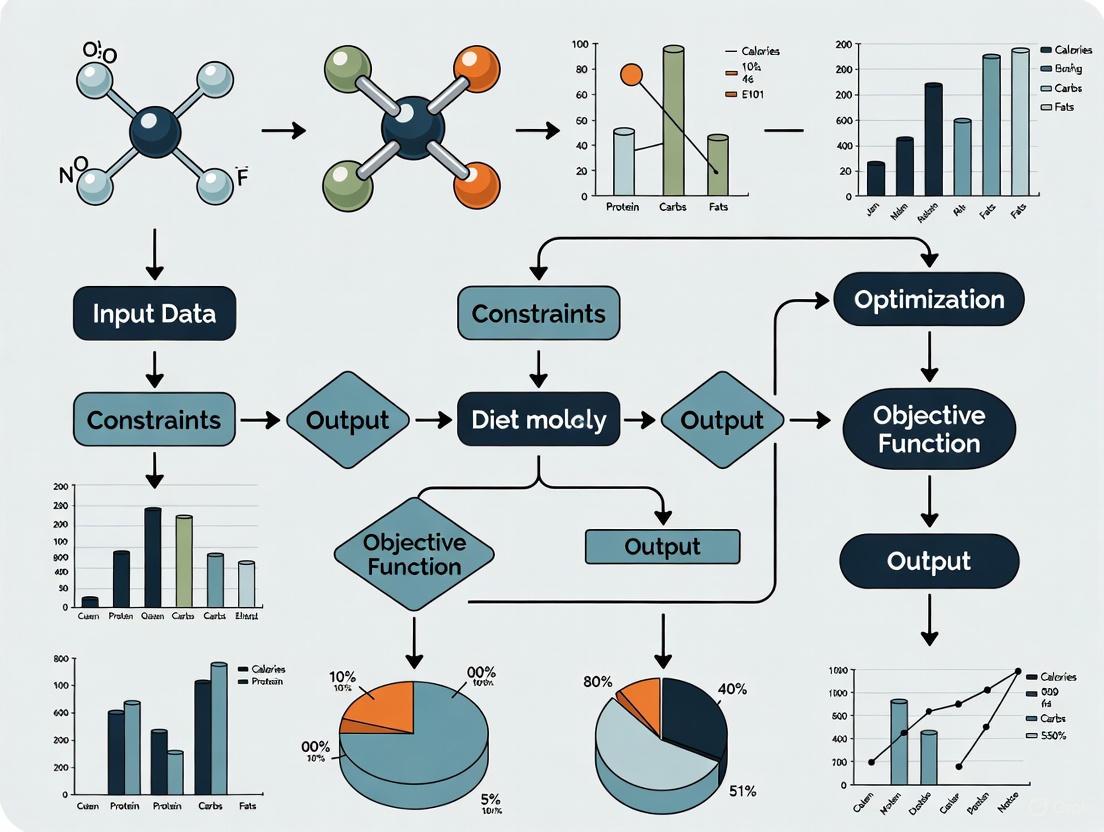
This article synthesizes current research and methodologies on applying Linear Programming (LP) to model sustainable, nutritionally adequate diets.
Linear Programming for Sustainable Diet Modeling: A Computational Framework for Nutritionally Adequate and Eco-Friendly Diets
Abstract
This article synthesizes current research and methodologies on applying Linear Programming (LP) to model sustainable, nutritionally adequate diets. Tailored for researchers and scientists, it explores the foundational principles of mathematical diet optimization, from its historical 'Diet Problem' origins to advanced multi-objective applications. The content details methodological approaches for integrating nutritional, economic, and environmental constraints, addresses common challenges like nutrient gaps and cultural acceptability, and validates models through comparative case studies across diverse populations. By presenting a cohesive framework that bridges computational optimization, nutritional science, and sustainability goals, this review aims to equip professionals with the knowledge to develop evidence-based, context-specific dietary solutions for global health challenges.
The Foundations of Diet Optimization: From Stigler's Problem to Modern Sustainable Goals
The 'diet problem' represents one of the earliest and most enduring applications of mathematical optimization to real-world challenges. First formally articulated by economist George Stigler in the 1940s, this problem sought to identify the cheapest combination of foods that would satisfy all nutritional requirements [1]. Its emergence was inextricably linked to the global crisis of World War II, a period characterized by severe food shortages and the urgent need to nourish populations and military personnel under extreme resource constraints [2] [3].
This article traces the historical trajectory of the diet problem from its wartime origins to its modern incarnation in sustainable diet modeling. We provide detailed application notes and experimental protocols to equip researchers with practical methodologies for implementing linear programming (LP) and multi-objective optimization (MOO) in nutritional epidemiology, public health policy, and sustainable food systems research.
Historical Context: Wartime Imperatives and Early Optimization
World War II Nutritional Challenges
The Second World War created unprecedented nutritional challenges that catalyzed advances in both nutrition science and mathematical optimization. Key historical developments are summarized in Table 1.
Table 1: Historical Foundations of the Diet Problem During World War II
| Aspect | Historical Context | Impact on Diet Optimization |
|---|---|---|
| Food Rationing | UK (1940-1954): Bacon, butter, sugar initially rationed; points system for tinned goods (1941) [2]. Switzerland: Transition to system controlling 95% of food supplies by 1942 [4]. | Created need for systematic allocation of limited food resources to meet population nutritional needs. |
| Nutritional Science | Establishment of first Recommended Dietary Allowances (RDAs) by US Food and Nutrition Board (1943) [3]. "Basic 7" food guide created as practical implementation [3]. | Provided essential nutrient constraints for mathematical optimization models. |
| Scientific Advances | Stigler's 1945 paper "The Cost of Subsistence" formalized the diet problem using linear programming [1]. | Established foundational mathematical framework for nutritional optimization. |
| Natural Experiment | UK sugar rationing limited added sugar to near modern guidelines [5]. | Subsequent studies showed lifelong health benefits (35% lower diabetes risk) for those exposed to rationing in early childhood [6] [5]. |
The Birth of Systematic Nutrition
Wartime necessitated the development of systematic approaches to nutrition. In the United States, the Food and Nutrition Board (FNB) was established in 1940 to advise on nutrition problems in connection with National Defense [3]. By 1943, the FNB published the nation's first recommended daily dietary allowances, which included calories, protein, calcium, iron, and essential vitamins [3]. This scientific understanding of nutritional requirements provided the essential constraint parameters for early optimization attempts.
Simultaneously, rationing systems forced populations to adapt their eating patterns. In Britain, rationing continued for 14 years, from 1940 to 1954, fundamentally changing food habits for a generation [2]. The British government implemented a points-based scheme in 1941 for certain items including tinned goods, allowing flexibility within constrained conditions [2]. These real-world adaptations demonstrated the practical challenges of optimizing nutritional intake under scarcity.
Methodological Evolution: From Linear to Multi-Objective Optimization
Fundamental Concepts and Definitions
The core mathematical framework for diet optimization has evolved from simple linear programming to complex multi-objective optimization:
- Linear Programming (LP): A mathematical method to achieve the best outcome (such as minimum cost or maximum nutrition) in a model whose requirements are represented by linear relationships, subject to constraints [1].
- Multi-Objective Optimization (MOO): An extension that simultaneously optimizes two or more conflicting objectives (e.g., cost, environmental impact, cultural acceptability) subject to constraints [7].
- The Pareto Front: In MOO, the set of optimal solutions where improving one objective would worsen another; represents trade-offs between competing goals [7].
Algorithmic Workflow and Visualization
The following diagram illustrates the standard workflow for applying optimization techniques to diet modeling, from problem formulation to solution implementation:
Application Notes: Contemporary Implementation Frameworks
Key Problem Nutrients in Optimization Models
Contemporary research has consistently identified specific micronutrients that remain challenging to optimize using locally available foods. Table 2 summarizes these problem nutrients across different age groups, based on recent scoping reviews.
Table 2: Problem Nutrients in Diet Optimization Across Age Groups [1]
| Age Group | Absolute Problem Nutrients | Frequently Problematic Nutrients |
|---|---|---|
| 6-11 months | Iron | Zinc, Calcium |
| 12-23 months | Iron, Calcium | Zinc, Folate |
| 1-3 years | Fat, Calcium, Iron, Zinc | - |
| 4-5 years | Fat, Calcium, Zinc | - |
These problem nutrients represent critical constraints in optimization models and often necessitate food fortification or dietary diversification strategies in practical implementations.
Research Reagent Solutions for Diet Optimization Studies
Successful implementation of diet optimization requires specific methodological tools and data resources. The following table details essential "research reagents" for conducting diet optimization studies.
Table 3: Research Reagent Solutions for Diet Optimization Studies
| Research Reagent | Function | Example Tools/Data Sources |
|---|---|---|
| Nutrient Databases | Provides food composition data for constraint formulation | USDA FoodData Central, FAO/INFOODS |
| Optimization Software | Solves LP and MOO problems | WHO Optifood, WFP NutVal, Python SciPy, R lpSolve |
| Dietary Assessment Tools | Collects baseline consumption data | 24-hour recalls, Food Frequency Questionnaires |
| Environmental Impact Data | Quantifies sustainability objectives | GHG emission coefficients, water footprint databases |
| Food Price Data | Enables cost minimization objectives | Market surveys, national food price databases |
Experimental Protocols
Protocol 1: Historical Analysis of Wartime Rationing Effects
Application: Natural experiment analysis of long-term health impacts of early-life nutritional interventions.
Methodology:
- Cohort Identification: Utilize historical birth records to identify individuals exposed to specific rationing policies during development (e.g., UK Biobank data for sugar rationing studies) [5].
- Exposure Classification: Categorize participants based on timing and duration of exposure to rationing policies during critical developmental windows (in utero, infancy, early childhood).
- Health Outcome Assessment: Link exposure data to long-term health records for conditions such as type 2 diabetes, hypertension, and cardiovascular disease.
- Statistical Analysis: Employ regression models controlling for potential confounders (socioeconomic status, later-life diet, genetic factors).
Key Historical Controls:
- Compare with non-exposed cohorts (born before/after policy implementation)
- Utilize sibling comparisons where possible
- Account for simultaneous rationing of multiple food items with different end dates [5]
Protocol 2: Multi-Objective Diet Optimization for Sustainable Food Systems
Application: Designing culturally acceptable, nutritionally adequate, environmentally sustainable diets.
Methodology:
- Objective Function Specification:
- Minimize cost:
Σ(food_i × price_i) - Minimize environmental impact:
Σ(food_i × GHG_i) - Minimize deviation from current diet:
Σ|food_i - current_i|[7]
- Minimize cost:
Constraint Formulation:
- Nutrient constraints:
Σ(food_i × nutrient_ij) ≥ RDA_jfor all essential nutrients - Food group boundaries:
LB_k ≤ Σ(food_i) ≤ UB_kfor culturally acceptable consumption ranges - Energy balance:
Total calories = Σ(food_i × calorie_i) ± 5% of requirement
- Nutrient constraints:
Model Implementation:
- Select appropriate MOO algorithm (epsilon-constraint, weighted sum, evolutionary algorithms)
- Generate Pareto front to visualize trade-offs
- Apply multi-criteria decision analysis to select optimal solution based on policy priorities [7]
Validation Steps:
- Compare optimized diets with current consumption patterns
- Assess feasibility through focus groups with target populations
- Conduct sensitivity analysis on key parameters (food prices, nutrient requirements)
Contemporary Applications and Case Studies
Sustainable Diet Design Using Multi-Objective Optimization
Recent applications of MOO have demonstrated the ability to balance multiple sustainability dimensions simultaneously. The following diagram illustrates the conflicting objectives and constraints in sustainable diet optimization:
Implementation in Sub-Saharan Africa: A Case Study
A recent scoping review identified 30 studies across 12 Sub-Saharan African countries that employed LP to develop Food-Based Recommendations (FBRs) [8]. Primary applications included:
- Formulating FBRs by optimizing current dietary patterns to meet nutritional needs and gaps (n=24)
- Developing nutritionally optimized and cost-minimized food baskets (n=4)
- Designing population-specific food-based dietary guidelines (n=2) [8]
These implementations demonstrate how the historical diet problem has evolved to address contemporary nutritional challenges in low-resource settings, while maintaining the core mathematical principles established during World War II.
The trajectory of the 'diet problem' from its World War II origins to contemporary applications demonstrates the enduring value of mathematical optimization in addressing complex nutritional challenges. What began as Stigler's quest for a minimally adequate diet at lowest cost has evolved into sophisticated multi-objective frameworks that balance nutrition, sustainability, cultural acceptability, and economic feasibility.
Future research directions should focus on:
- Integrating behavioral insights to enhance the adoption of optimized diets
- Developing dynamic optimization models that adapt to climate change impacts on food systems
- Creating personalized nutrition recommendations using individual-level data and preferences
- Expanding cross-disciplinary collaboration between nutrition scientists, mathematicians, economists, and environmental researchers
The protocols and application notes provided herein offer researchers a comprehensive toolkit for advancing this field, building upon eight decades of methodological development since the diet problem was first formalized during the global crisis of World War II.
Linear Programming (LP) is a mathematical optimization technique used to identify the best possible outcome from a set of linear relationships, widely applied in nutritional science for developing sustainable, healthy, and cost-effective dietary recommendations [9] [10]. At its core, LP provides a structured framework for making optimal decisions about resource allocation—in this case, determining the ideal combination of foods to meet specific nutritional, economic, and environmental goals [11]. The technique has evolved significantly since its early application to the classic "diet problem" by George Stigler during World War II, which sought the lowest-cost diet meeting nutritional requirements [11]. Today, LP enables researchers to formulate evidence-based, context-specific food-based dietary recommendations (FBRs) that balance multiple competing dimensions of diet sustainability [8].
The fundamental components of any LP problem include decision variables representing the choices to be made, an objective function defining the goal to be achieved, and constraints that limit the possible values of decision variables [9]. In nutritional applications, LP can determine food combinations that meet nutrient requirements while minimizing cost or environmental impact, helping to identify nutrient gaps that cannot be filled with locally available foods alone [1]. The method is particularly valuable for addressing complex dietary challenges in resource-limited settings and for developing population-specific dietary guidelines [8].
Core Components of a Linear Programming Model
Decision Variables
Decision variables form the foundational elements of any linear programming model, representing the unknown quantities that the model aims to determine [9]. In nutritional applications, these variables typically correspond to the quantities of specific foods, food groups, or dishes to be included in a diet or meal plan [12].
Characteristics of decision variables:
- Represent measurable, continuous amounts (e.g., grams of food, number of portions)
- Must be non-negative in most practical scenarios (e.g., you cannot consume negative amounts of food)
- Each variable should have a clear interpretation and unit of measurement [9]
Examples in nutrition research:
- x₁ = grams of whole grains per day
- x₂ = grams of vegetables per day
- x₃ = grams of animal-source foods per day
- y₁ = number of servings of dairy products daily [9] [13]
In more advanced implementations, binary decision variables (0 or 1) may be used to indicate the presence or absence of specific dishes in a meal plan, enabling the modeling of dietary acceptability and variety constraints [12].
Objective Function
The objective function is a linear mathematical expression that defines the goal of the optimization problem, specifying what needs to be maximized or minimized [9]. This function combines decision variables with coefficients that quantify each variable's contribution to the overall objective [10].
Common objective functions in nutritional LP:
Table 1: Types of Objective Functions in Nutritional Linear Programming
| Objective Type | Mathematical Form | Application Example |
|---|---|---|
| Cost Minimization | Minimize Z = c₁x₁ + c₂x₂ + ... + cₙxₙ | Minimizing the monetary cost of a diet while meeting nutritional requirements [11] |
| Environmental Impact Minimization | Minimize Z = e₁x₁ + e₂x₂ + ... + eₙxₙ | Minimizing greenhouse gas emissions or other environmental impacts of a diet [13] |
| Nutrient Adequacy Maximization | Maximize Z = n₁x₁ + n₂x₂ + ... + nₙxₙ | Maximizing the intake of specific nutrients or overall nutritional quality [1] |
| Deviation Minimization | Minimize Z = |x₁ - a₁| + |x₂ - a₂| + ... | Minimizing deviation from current consumption patterns to enhance acceptability [13] |
The coefficients (cᵢ, eᵢ, nᵢ) represent parameters such as cost per gram, environmental impact per gram, or nutrient density per gram of each food item [11] [13]. For example, in a diet cost minimization problem, the objective function would be: Minimize Z = 0.02x₁ + 0.03x₂ + 0.05x₃, where x₁, x₂, x₃ represent grams of different foods and 0.02, 0.03, 0.05 represent their costs per gram [11].
Constraints
Constraints are linear inequalities or equalities that define the limitations and requirements that must be satisfied for a solution to be feasible [9]. In nutritional linear programming, these constraints ensure that optimized diets meet nutritional, practical, and environmental requirements.
Major constraint categories in nutritional LP:
Table 2: Constraint Types in Nutritional Linear Programming Models
| Constraint Category | Mathematical Form | Purpose and Examples |
|---|---|---|
| Nutritional Constraints | a₁x₁ + a₂x₂ + ... + aₙxₙ ≥ RDA (for minimum) a₁x₁ + a₂x₂ + ... + aₙxₙ ≤ UL (for maximum) | Ensure the diet meets recommended nutrient intakes (e.g., protein ≥ 50g, vitamin C ≥ 75mg) [1] |
| Environmental Constraints | e₁x₁ + e₂x₂ + ... + eₙxₙ ≤ Emax | Limit the environmental impact (e.g., GHGE ≤ 1.57 kg CO₂eq/day) [13] |
| Acceptability Constraints | L₁ ≤ x₁ ≤ U₁ L₂ ≤ x₂ ≤ U₂ | Define minimum and maximum portions of food groups based on consumption patterns [12] |
| Cost Constraints | c₁x₁ + c₂x₂ + ... + cₙxₙ ≤ Budget | Ensure the diet remains within financial limitations [11] |
| Non-negativity Constraints | x₁ ≥ 0, x₂ ≥ 0, ..., xₙ ≥ 0 | Prevent negative food quantities [9] |
Nutritional constraints are derived from dietary reference values and typically include both lower bounds (to prevent deficiencies) and upper bounds (to prevent toxicity) [1]. Research has identified that during diet optimization, certain "problem nutrients" frequently remain difficult to meet with local foods alone, particularly iron and zinc for infants aged 6-11 months, and iron, calcium, and zinc for children aged 12-23 months [1].
Acceptability constraints ensure that optimized diets remain culturally appropriate and realistic for consumption, often implemented through bounds on food group quantities or limits on repetition frequency of dishes [12]. For example, an acceptability constraint might limit red meat consumption to no more than 3 times per week or ensure that the same vegetable is not repeated on consecutive days [13] [12].
LP Model Formulation and Solution Methods
Mathematical Formulation
A comprehensive linear programming model for nutritional applications integrates all previously discussed components into a unified mathematical framework. The standard formulation appears as follows:
Maximize or Minimize: Z = c₁x₁ + c₂x₂ + ... + cₙxₙ
Subject to:
- a₁₁x₁ + a₁₂x₂ + ... + a₁ₙxₙ ≤ b₁
- a₂₁x₁ + a₂₂x₂ + ... + a₂ₙxₙ ≤ b₂
- ...
- aₘ₁x₁ + aₘ₂x₂ + ... + aₘₙxₙ ≤ bₘ
- x₁ ≥ 0, x₂ ≥ 0, ..., xₙ ≥ 0
Where:
- x₁, x₂, ..., xₙ are decision variables (food quantities)
- c₁, c₂, ..., cₙ are coefficients in the objective function
- aᵢⱼ are technological coefficients (nutrient content per food unit)
- b₁, b₂, ..., bₘ are constraint limits (nutrient requirements, etc.) [10]
In matrix notation, this becomes: Maximize {cᵀx | x ∈ ℝⁿ ∧ Ax ≤ b ∧ x ≥ 0} [10]
Solution Approaches
Multiple methodological approaches exist for solving linear programming problems in nutritional science, each with specific advantages and limitations.
Table 3: Linear Programming Solution Methods for Nutritional Applications
| Method | Key Features | Applicability | Tools and Software |
|---|---|---|---|
| Graphical Method | Visual representation of constraints and feasible region Identification of optimal solution at corner points | Suitable only for problems with 2 decision variables Primarily for educational purposes | Manual plotting Basic graphing software |
| Simplex Method | Algebraic approach moving between vertices of feasible region Guaranteed to find global optimum for linear problems | Handles multiple variables and constraints Standard method for medium-sized problems | PuLP, SciPy Gurobi, CPLEX |
| Interior-Point Methods | Traverses through interior of feasible region Polynomial time complexity | Large-scale problems with many variables and constraints | Commercial solvers Specialized optimization software |
| Computer-Based Solvers | User-friendly interfaces Efficient handling of complex problems | Most practical applications in research Requires proper model formulation | Google OR-Tools Python libraries (PuLP, SciPy) |
The following diagram illustrates the workflow for formulating and solving nutritional LP problems:
Application Protocols for Nutritional Linear Programming
Protocol 1: Basic Diet Optimization for Nutrient Adequacy
This protocol outlines the fundamental steps for formulating and solving a basic linear programming problem to develop a nutritionally adequate diet at minimal cost.
Research Reagent Solutions:
Table 4: Essential Inputs for Basic Diet Optimization
| Component | Description | Data Sources |
|---|---|---|
| Food Composition Database | Nutrient profiles of candidate foods | FAO/INFOODS, USDA FoodData Central, national databases |
| Nutrient Requirements | Population-specific dietary recommendations | WHO/FAO guidelines, national dietary reference values |
| Food Price Data | Local market prices for candidate foods | Market surveys, national statistics, institutional procurement data |
| LP Software | Tools for model formulation and solution | Excel Solver, PuLP, LINDO, MATLAB |
Methodology:
- Define the target population and their specific nutrient requirements based on age, gender, physiological status, and health considerations [1]
- Select candidate foods commonly consumed by the target population, considering cultural preferences and availability [8]
- Specify decision variables representing the quantity of each food to be included in the diet (e.g., x₁, x₂, ..., xₙ as grams per day) [9]
- Formulate the objective function to minimize the total cost of the diet: Minimize Z = Σ(cᵢ × xᵢ), where cᵢ represents the cost per gram of food i [11]
- Implement nutritional constraints for each essential nutrient:
- Energy: Σ(energyᵢ × xᵢ) ≥ EER
- Protein: Σ(proteinᵢ × xᵢ) ≥ RDA
- Micronutrients: Σ(micronutrientᵢ × xᵢ) ≥ RDA for each essential vitamin and mineral [1]
- Apply acceptability constraints to ensure the optimized diet remains within culturally appropriate consumption ranges for each food group [12]
- Solve the LP model using appropriate software and verify solution feasibility
- Conduct sensitivity analysis to determine how changes in input parameters affect the optimal solution [11]
Expected Outcomes:
- Identification of the lowest-cost nutritionally adequate diet
- Recognition of "problem nutrients" that are difficult to meet with available foods [1]
- Determination of optimal food combinations to meet nutritional requirements
Protocol 2: Multi-Objective Optimization for Sustainable Diets
This advanced protocol addresses the simultaneous optimization of multiple objectives, such as minimizing environmental impact while maintaining nutritional adequacy, cost-effectiveness, and cultural acceptability.
Research Reagent Solutions:
Table 5: Additional Inputs for Sustainable Diet Optimization
| Component | Description | Data Sources |
|---|---|---|
| Environmental Impact Data | GHG emissions, water use, land use associated with foods | LCA databases, scientific literature, FAO statistics |
| Consumption Pattern Data | Current dietary intake of target population | National dietary surveys, 24-hour recall studies |
| Cultural Acceptability Parameters | Frequency limits for foods/dishes, traditional meal patterns | Ethnographic studies, focus groups, consumption data |
Methodology:
- Define multiple objectives representing different dimensions of sustainability:
- Objective 1: Minimize cost → Z₁ = Σ(costᵢ × xᵢ)
- Objective 2: Minimize environmental impact → Z₂ = Σ(GHGᵢ × xᵢ)
- Objective 3: Minimize deviation from current diet → Z₃ = Σ|xᵢ - currentᵢ| [13]
- Approach selection for multi-objective optimization:
- Weighted sum method: Combine objectives into a single function with predetermined weights
- Goal programming: Set aspiration levels for each objective and minimize deviations
- ε-constraint method: Optimize one objective while treating others as constraints [13]
- Implement comprehensive constraint set:
- Nutritional adequacy constraints for all essential nutrients
- Environmental impact limits (e.g., GHGE ≤ 2.0 kg CO₂eq/day)
- Food group boundary constraints based on consumption patterns
- Meal pattern constraints respecting cultural practices [12]
- Advanced modeling techniques for enhanced acceptability:
- Use binary integer programming to model dish selection
- Implement frequency constraints limiting repetition of specific dishes
- Incorporate variety constraints across food categories [12]
- Cluster-based optimization to address population heterogeneity:
- Identify dietary patterns within population using clustering algorithms
- Develop optimized diets for each cluster separately
- Compare results with population-level optimization [13]
- Iterative refinement of models based on feasibility analysis and stakeholder feedback
Expected Outcomes:
- Sustainable diet plans that balance nutritional, economic, environmental, and acceptability dimensions
- Identification of trade-offs between different sustainability objectives
- Cluster-specific dietary recommendations that account for population heterogeneity [13]
Advanced Methodological Extensions
Addressing Dietary Acceptability Through Integer Programming
Traditional linear programming faces limitations in addressing complex acceptability constraints related to meal composition and variety. Binary Integer Linear Programming (BILP) extends LP capabilities by introducing binary decision variables that indicate the presence or absence of specific dishes in a meal plan [12].
Implementation framework:
- Let yᵢⱼ be a binary variable where yᵢⱼ = 1 if dish i is included in meal j, and 0 otherwise
- Define constraints to ensure logical meal composition (e.g., each meal includes exactly one main dish)
- Implement variety constraints: Σyᵢⱼ ≤ Vₖ over a time period, limiting repetitions of similar dishes [12]
- Incorporate traditional meal patterns by defining required or prohibited combinations
This approach enables the generation of concrete meal plans with defined recipes rather than abstract food quantities, significantly enhancing the practical implementation of optimized diets [12].
Scenario and Sensitivity Analysis
Robust nutritional linear programming requires systematic evaluation of how changes in input parameters affect optimal solutions. Key analyses include:
Nutrient requirement sensitivity:
- Determine how variations in nutrient recommendations affect optimal food combinations
- Identify critical nutrients with the strongest influence on diet composition
Price fluctuation impact:
- Analyze how changes in food prices affect the optimal diet composition
- Identify stable dietary patterns resilient to market variations
Environmental target scenarios:
- Evaluate diet modifications required to meet progressively stricter environmental targets
- Quantify trade-offs between environmental impact and other objectives [13]
These analyses provide crucial information for policymakers regarding the stability and robustness of dietary recommendations under changing conditions.
Linear programming provides a powerful methodological framework for addressing complex challenges in nutritional science and sustainable diet modeling. By systematically integrating decision variables, objective functions, and constraints, researchers can develop evidence-based dietary recommendations that simultaneously address nutritional adequacy, economic feasibility, environmental sustainability, and cultural acceptability. The continued refinement of LP methodologies—including the incorporation of integer programming for enhanced acceptability and multi-objective optimization for balancing sustainability dimensions—holds significant promise for supporting the transition toward healthier and more sustainable food systems worldwide.
Application Notes
The application of Linear Programming (LP) and Multi-Objective Optimization (MOO) has become a cornerstone in the development of sustainable diets, evolving from its initial single-objective focus to integrated frameworks that simultaneously address nutrition, cost, and environmental impact. This evolution directly responds to the global challenge of creating food systems that are not only healthy but also economically viable and environmentally sustainable [14] [11] [7]. These optimization tools are mathematically rigorous methods for identifying the best outcome (such as minimizing cost or environmental impact) from a set of feasible alternatives, subject to a set of linear constraints representing nutritional needs, food availability, and other limits [11].
The transition towards multi-objective frameworks is critical because it makes the inherent trade-offs between different sustainability goals explicit. For instance, while it is mathematically possible to design a diet that reduces greenhouse gas emissions (GHGE) by up to 80%, such a diet may deviate significantly from current eating patterns, rendering it culturally unacceptable to consumers [15]. Similarly, a scoping review of LP applications in Sub-Saharan Africa (SSA) highlights that the primary goal in many studies has been to formulate nutritionally adequate and economically affordable food patterns, often reflecting the distinct priorities of low-resource settings [8]. Effectively balancing these competing dimensions—nutritional quality, economic viability, environmental sustainability, and cultural acceptability—is the central challenge in modern sustainable diet modeling [7].
Table 1: Core Objectives and Common Constraints in Sustainable Diet Optimization Models
| Objective Domain | Specific Objective | Common Metrics & Constraints |
|---|---|---|
| Nutritional Quality | Meet or achieve nutrient adequacy for a target population. | Energy (kcal); Macronutrients (protein, fat, carbs); Micronutrients (iron, zinc, calcium, vitamins); Upper and lower limits for nutrients or food groups [11] [1]. |
| Economic Viability | Minimize the daily or weekly cost of the diet. | Total diet cost; Food price data; Income constraints; Minimization of cost function [8] [11]. |
| Environmental Sustainability | Minimize the environmental footprint of the diet. | Greenhouse Gas Emissions (GHGE, in CO2-eq); Land use; Water use (blue water); Planetary boundaries [15] [16] [7]. |
| Cultural Acceptability | Minimize deviation from current or habitual dietary patterns. | Deviation from baseline food intake; Food preference scores; Constraints on feasible portion sizes for specific foods [15] [7]. |
Key insights from recent applications include:
- Problem Nutrients: When optimizing diets using locally available foods, certain micronutrients consistently prove difficult to meet, especially for vulnerable groups. Iron and zinc are the most common "problem nutrients" identified in optimized diets for children under five, followed by calcium, folate, and some B vitamins [1].
- The Acceptability Trade-off: Research using the iOTA Model shows that diets optimized solely for the lowest GHGE or price tend to have the lowest consumer acceptability, as they often include only a limited variety of foods. In contrast, diets with a minimal deviation from baseline patterns remain realistic and can still reduce GHGE by 10-30% while keeping costs at or below baseline levels [15].
- Context is Critical: The feasibility of achieving all nutrient requirements depends heavily on local food availability and cultural practices. In some cases, LP analyses reveal that nutrient adequacy cannot be met with local foods alone, pointing to the need for supplementation or fortification programs [8].
Experimental Protocols
Protocol: Single-Objective Linear Programming for Cost-Minimized, Nutritious Diets
This protocol outlines the steps for using LP to develop a nutritionally adequate diet at the lowest possible cost, a common approach in public health nutrition for developing Food-Based Dietary Recommendations (FBRs) [8] [1].
1. Problem Definition and Data Collection
- Objective Function: Define the goal is to minimize the total cost of the diet. Mathematically, this is expressed as
Minimize Z = Σ (c_i * x_i), wherec_iis the cost per unit of foodiandx_iis the decision variable representing the quantity of foodiin the diet [1]. - Data Requirements:
- Food Composition Data: A database of the nutritional content (energy and key nutrients) per unit of all candidate foods.
- Food Price Data: The cost per unit for each candidate food, ideally collected from local markets.
- Nutritional Constraints: A set of recommended nutrient intakes (RNIs) for the target population (e.g., children under five), which will form the constraints of the model. These should include both lower limits (to prevent deficiency) and, where necessary, upper limits (to prevent toxicity) [11] [1].
- Food Consumption Patterns: Data on current typical consumption to inform acceptability constraints (e.g., setting maximum and minimum limits on food group portions) [8].
2. Model Formulation
- Decision Variables:
x_i(amount of each foodiin the diet). - Nutritional Constraints:
Σ (a_ij * x_i) ≥ RNI_jfor each nutrientj, wherea_ijis the amount of nutrientjin foodi. - Acceptability Constraints:
Min_i ≤ x_i ≤ Max_ifor each food or food groupito ensure the diet remains realistic and culturally acceptable. - Energy Constraint:
Σ (kcal_i * x_i) = Energy Targetto ensure the diet meets energy needs.
3. Model Solving and Validation
- Software and Solvers: Implement the model using optimization software or programming languages (e.g., Python with Pyomo, R) and solve using LP solvers (e.g., commercial solvers like Gurobi, or open-source solvers like CBC and HiGHS, which have shown satisfactory performance in agricultural applications) [17].
- Validation: Check the resulting "optimal" diet for realism and ensure that all nutrient constraints are met. If the model fails to find a feasible solution, relax constraints (if scientifically justified) or re-evaluate the list of candidate foods [8] [1].
- Sensitivity Analysis: Test how the optimal diet changes with variations in food prices or nutrient requirements to assess the robustness of the recommendations [11].
Figure 1: Single-Objective LP Workflow for Diet Optimization
Protocol: Multi-Objective Optimization for Sustainable Diets
This protocol describes a more advanced MOO approach to balance several competing objectives, such as environmental impact, cost, and nutritional adequacy simultaneously [7].
1. Problem Definition and Data Collection
- Objective Functions: Define two or more objectives to be optimized. A typical set includes:
- Data Requirements: In addition to the data in Protocol 2.1, this requires:
2. Model Formulation and Solving
- Decision Variables and Constraints: Similar to Protocol 2.1.
- MOO Method Selection: Use a MOO technique to handle the multiple objectives. A common method is the Weighted Sum Approach, which combines all objectives into a single function:
Minimize Z = w1*f1 + w2*f2 + w3*f3, wherew1, w2, w3are weights reflecting the relative importance of each objective [7]. - Generating the Pareto Front: By systematically varying the weights, a set of optimal solutions, known as the Pareto front, can be generated. On the Pareto front, improving one objective (e.g., lowering GHGE further) necessarily worsens another (e.g., increases cost or reduces acceptability) [7].
3. Analysis and Decision-Making
- Trade-off Analysis: Visualize the Pareto front (e.g., a 2D or 3D plot) to understand the trade-offs between objectives. This allows policymakers to see the environmental and economic implications of pushing for diets that are more or less similar to current habits [7].
- Multi-Criteria Decision Making (MCDM): If the number of objectives is large, use MCDM methods to help select the most suitable optimal diet from the many options on the Pareto front [7].
Table 2: Quantitative Environmental Impact Ranges for Major Food Categories
| Food Category | Representative GHG Emission Ranges (kg CO2-eq per kg) | Key Contributing Factors & Notes |
|---|---|---|
| Red Meats | Highest among food categories [16] | Significant contributions from methane production, feed production, and land use change. |
| Dairy & Other Animal Products | Moderate to High [16] | Varies by product and production system. |
| Seafood | Variable (can be moderate) [16] | Highly dependent on fishing method (fuel use) or aquaculture system. |
| Fruits & Vegetables | Lowest among food categories [16] | Emissions primarily from agricultural operations, transportation, and refrigeration. |
| Other Plant-Based Foods | Low [16] | Includes legumes, grains, and pulses. Their production is generally less emissions-intensive. |
Figure 2: The Core Challenge of Multi-Objective Diet Optimization
The Scientist's Toolkit: Research Reagent Solutions
Table 3: Key Tools and Data Resources for Diet Optimization Research
| Tool / Resource | Type | Primary Function & Application | Example Use Case |
|---|---|---|---|
| The iOTA Model [15] [18] | Dietary Optimization Tool (Mixed Integer Linear Programming) | An open-access, country-specific tool that integrates nutrient bioavailability to model diets optimizing for nutrition, cost, and environment. | Assessing trade-offs between nutrient adequacy, GHGE, price, and acceptability in New Zealand [15]. |
| Optifood [1] | Linear Programming Software | A software package developed with WHO to identify nutrient gaps and develop FBRs using locally available foods. | Formulating FBRs for children under five in low-income settings to address micronutrient deficiencies [1]. |
| Life Cycle Assessment (LCA) Databases [16] | Environmental Impact Data | Provide critical data on the environmental footprints (GHGE, land/water use) of individual food items, essential for constraining MOO models. | Informing the environmental constraints in a MOO model to minimize a diet's carbon footprint [16] [7]. |
| Open-Source LP Solvers (CBC, HiGHS) [17] | Computational Solver | Software engines that perform the mathematical calculations to find the optimal solution to a defined LP or MILP problem. | Solving large-scale farm operation scheduling or national-level diet optimization models with satisfactory efficiency [17]. |
Application Context and Core Principles
Linear programming (LP) has emerged as a critical mathematical tool for addressing complex challenges in sustainable diet modeling and public health nutrition. The core principle involves optimizing a specific objective function (such as minimizing diet cost or maximizing nutrient adequacy) subject to a set of constraints (such as nutrient requirements, food consumption patterns, and affordability) [1]. In the context of diet modeling, this approach helps identify a unique combination of foods that meets dietary recommendations while respecting local consumption habits and economic realities [1] [8].
The formulation of Food-Based Dietary Recommendations (FBRs) and Food-Based Dietary Guidelines (FBDGs) is a complex process that must balance nutritional adequacy, cultural acceptability, environmental sustainability, and economic accessibility. LP provides an evidence-based framework to navigate this complexity, moving beyond expert opinion to deliver data-driven, context-specific dietary solutions [1] [8]. Primary applications include:
- Developing Nutritionally Adequate Food Baskets: Optimizing combinations of locally available foods to meet nutrient requirements for specific populations, particularly in resource-limited settings [8].
- Identifying Problem Nutrients: Pinpointing specific micronutrients that cannot be supplied in sufficient quantities from local food sources alone, thus informing the need for supplementation or fortification strategies [1].
- Formulating Cost-Minimized Diets: Designing the most affordable nutritionally adequate diet for a given population, a critical consideration for social safety nets and food assistance programs [1] [8].
Key Tools and Software Platforms
WHO Optifood
The WHO Optifood software is a pre-packaged LP tool specifically designed to develop and analyze FBRs for infants, young children, and other population groups [1]. It assists researchers and public health planners in identifying optimal sets of food-based recommendations that maximize nutrient intake while adhering to constraints on local food consumption patterns.
WFP NutVal
The World Food Programme's NutVal (Nutrition Value) tool is another linear programming model used to assess the nutritional adequacy of food baskets and aid packages [1]. It is instrumental in designing and optimizing food assistance programs to ensure they meet the nutritional needs of beneficiaries, particularly in emergency and development contexts.
Other Modeling Approaches
While Optimeal was not identified in the available literature, the field of diet optimization utilizes various computational frameworks. Linear Goal Programming is an extension of LP used when multiple, often competing, objectives need to be simultaneously considered [8]. Furthermore, sophisticated Integer Linear Programming (ILP) frameworks, though more common in drug discovery research [19] [20], demonstrate the advanced potential of optimization methodologies in biological sciences.
Quantitative Analysis of Diet Optimization Outcomes
The application of LP in diet modeling consistently reveals specific patterns of nutrient inadequacy across different populations. The following table synthesizes findings from a scoping review of LP studies focused on children under five years of age, highlighting the most common "problem nutrients" [1].
Table 1: Problem Nutrients Identified in Linear Programming Studies for Children Under Five
| Age Group | Absolute Problem Nutrients | Other Frequently Limiting Nutrients |
|---|---|---|
| 6-11 months | Iron | Calcium, Zinc |
| 12-23 months | Iron, Calcium | Zinc, Folate |
| 1-3 years | Fat, Calcium, Iron, Zinc | --- |
| 4-5 years | Fat, Calcium, Zinc | --- |
These findings are remarkably consistent across studies conducted in diverse geographic and socioeconomic settings, underscoring the global challenge of meeting micronutrient requirements from local foods alone [1]. Iron is a particular concern, identified as a problem nutrient in all studies involving infants aged 6-11 months [1].
The next table outlines the key parameters and constraints that define a typical LP model for sustainable diet formulation.
Table 2: Core Parameters of a Linear Programming Model for Diet Optimization
| Model Component | Description | Example in Diet Modeling |
|---|---|---|
| Decision Variables | The quantities of foods or food groups to be determined by the model. | Grams of rice, beans, vegetables, etc., per day. |
| Objective Function | The single goal to be minimized or maximized. | Minimize total diet cost or minimize deviation from current diet. |
| Constraints | Limitations that the solution must adhere to. | |
| - Nutrient Constraints | Ensure nutrient intakes meet requirements. | Total vitamin A ≥ Recommended Intake; Energy ≤ Estimated Need. |
| - Food Consumption Constraints | Ensure the diet is culturally acceptable. | Portions of green leafy vegetables ≤ typical observed intake. |
| - Cost Constraints | Ensure the diet is economically feasible. | Total weekly food cost ≤ Household food budget. |
Experimental Protocol for Developing FBRs Using Linear Programming
This protocol provides a step-by-step methodology for using LP tools like Optifood to develop context-specific FBRs.
Phase I: Data Collection and Preparation
- Define the Target Population: Clearly specify the demographic group (e.g., children 12-23 months, women of reproductive age) and geographic region.
- Compile a Food List: Create a comprehensive list of locally available and commonly consumed foods. This list should be representative of the dietary habits of the target population.
- Gather Food Composition Data: Obtain nutrient composition data for all foods on the list. Use local food composition tables when available, or substitute with regional/international databases.
- Collect Food Price Data: (For cost-minimization models) Gather current market prices for all listed foods to inform the objective function.
- Establish Dietary Intake Constraints: Use data from 24-hour dietary recalls or food frequency questionnaires to define the minimum and maximum realistic consumption amounts for each food or food group.
- Define Nutrient Requirements: Select the appropriate nutrient intake recommendations (e.g., WHO/FAO Recommended Nutrient Intakes) for the target population to serve as model constraints.
Phase II: Model Construction and Implementation
- Select the Objective Function: Decide on the primary goal of the optimization. The most common objective is to "Minimize the total cost of the diet" while ensuring all nutrient constraints are met [1] [8].
- Input Data into LP Software: Load the prepared data (food list, nutrient composition, prices, intake constraints, and nutrient requirements) into the chosen LP software platform (e.g., Optifood).
- Run the Baseline Model: Execute the model to find the cheapest possible diet that meets all nutrient needs within the defined food intake constraints. This "nutrient-adequate, cost-minimized diet" serves as a baseline.
Phase III: Analysis and Recommendation Formulation
- Analyze Model Outputs:
- Identify Problem Nutrients: Nutrients that the model cannot fulfill, even with optimal use of local foods. These are indicated when the model finds "no feasible solution" unless the constraint for that nutrient is relaxed [1].
- Analyze the Optimal Food Basket: Examine the types and quantities of foods selected by the model to understand the core components of an ideal local diet.
- Test and Refine Food-Based Recommendations (FBRs): Formulate hypothetical FBRs (e.g., "consume 2 servings of leafy greens daily") and test them by adding them as new constraints to the model. Re-run the model to see if these FBRs lead to a feasible, nutrient-adequate diet.
- Explore Scenarios: Run the model under different scenarios, such as:
- Food-to-Food Fortification: Test the impact of adding a small quantity of a fortified food to the diet.
- Seasonal Variation: Model diets using food availability and price data from different seasons.
- Supplementation: Determine which single micronutrient supplement would resolve the problem of multiple nutrient inadequacies.
- Formulate Final FBRs: Based on the iterative testing, define a final set of FBRs that are practical, culturally acceptable, and likely to lead to a significant improvement in nutrient adequacy.
Visualization of the Linear Programming Workflow
The following diagram illustrates the end-to-end process of using linear programming for developing sustainable diet models and recommendations.
Research Reagent Solutions: Essential Materials for Diet Modeling
The following table lists key "reagents" or essential inputs required for conducting high-quality linear programming analysis in nutrition research.
Table 3: Essential Inputs for Linear Programming-Based Diet Modeling
| Research Reagent | Function and Role in the Modeling Process |
|---|---|
| Local Food Composition Table | Provides the nutrient profile for each food; the fundamental database that links food consumption to nutrient intake. |
| Dietary Assessment Data | Informs realistic constraints on food consumption patterns (minimums and maximums) to ensure the optimized diet is culturally acceptable. |
| Nutrient Requirement Standards | Serves as the target values for nutrient constraints in the model (e.g., WHO/FAO RNIs). |
| Food Price Data | Allows for economic analysis and is used as the coefficient for the objective function in cost-minimization models. |
| Linear Programming Software | The computational engine that performs the optimization calculations (e.g., WHO Optifood, WFP NutVal, or general-purpose solvers). |
Methodology in Action: Designing Nutritionally Adequate and Culturally Acceptable Diets with LP
Linear programming (LP) is a mathematical optimization technique used to achieve the best outcome—such as maximum nutritional adequacy or minimum cost or environmental impact—in a model whose requirements are represented by linear relationships [10]. In the context of sustainable diet modeling, LP provides a powerful framework for developing food-based dietary recommendations (FBRs) that are nutritionally adequate, culturally acceptable, economically viable, and environmentally sustainable [8] [7]. The method is particularly valuable for addressing complex dietary challenges in resource-constrained settings, where optimizing limited resources is essential for public health nutrition.
The fundamental principle of LP involves optimizing a linear objective function subject to a set of linear constraints [21]. In diet modeling, this translates to finding a combination of foods that best meets specific goals while respecting nutritional, economic, and practical limitations. The approach has been successfully applied to develop complementary feeding recommendations for children [22], design sustainable dietary patterns [7], and create culturally appropriate food baskets for diverse populations [8].
Core Components of a Linear Programming Model
Fundamental Elements
Every linear programming model for diet optimization consists of four core components [21]:
- Decision Variables: Quantities of different foods or food groups to include in the diet
- Objective Function: The goal to be optimized (e.g., minimize cost or environmental impact)
- Constraints: Limitations and requirements the solution must satisfy
- Non-Negativity Restrictions: Ensuring realistic solutions where food quantities cannot be negative
Mathematical Formulation
A standard linear programming problem can be expressed in mathematical form as [10]:
Maximize or Minimize: $$Z = c1x1 + c2x2 + \cdots + cnxn$$
Subject to: $$\begin{align} a{11}x1 + a{12}x2 + \cdots + a{1n}xn & \leq b1 \ a{21}x1 + a{22}x2 + \cdots + a{2n}xn & \leq b2 \ \vdots & \ a{m1}x1 + a{m2}x2 + \cdots + a{mn}xn & \leq bm \ x1, x2, \ldots, xn & \geq 0 \end{align}$$
In matrix notation, this becomes [10]: $$\max{ \mathbf{c}^{\mathsf{T}}\mathbf{x} \mid \mathbf{x} \in \mathbb{R}^{n} \land A\mathbf{x} \leq \mathbf{b} \land \mathbf{x} \geq 0 }$$
Step-by-Step Protocol for Model Construction
The following diagram illustrates the comprehensive workflow for constructing a linear programming model for sustainable diet modeling:
Step 1: Define Decision Variables
Decision variables represent the quantities of different foods or food groups to be included in the optimized diet. The selection of these variables should be guided by:
- Local Availability: Focus on foods commonly available and consumed in the target population [8]
- Nutritional Relevance: Include foods that are significant sources of key nutrients
- Cultural Acceptability: Consider dietary habits and food preferences of the target group [7]
Protocol:
- Conduct a food consumption survey to identify commonly consumed foods
- Group similar foods into categories (e.g., grains, legumes, vegetables, animal-source foods)
- Define variables for each food group representing daily consumption amounts
- Establish measurement units (e.g., grams, servings, household measures)
Example Decision Variables:
- (x_1) = amount of grains (g/day)
- (x_2) = amount of legumes (g/day)
- (x_3) = amount of vegetables (g/day)
- (x_4) = amount of animal-source foods (g/day)
- (x_5) = amount of fruits (g/day)
Step 2: Formulate the Objective Function
The objective function defines the goal of the optimization. Common objectives in sustainable diet modeling include [7] [22]:
- Minimize Cost: Total cost of the diet
- Minimize Environmental Impact: Greenhouse gas emissions, water use, or land use
- Maximize Nutrient Adequacy: Overall nutritional quality of the diet
- Minimize Deviation from Current Diet: To enhance cultural acceptability
Protocol for Cost Minimization:
- Collect retail price data for all food items
- Calculate cost per unit for each food group
- Formulate objective function as the sum of cost coefficients multiplied by decision variables
Mathematical Formulation: $$\text{Minimize } Z = c1x1 + c2x2 + \cdots + cnxn$$ Where (ci) represents the cost per unit of food group (i), and (xi) represents the amount of food group (i).
Step 3: Define Nutritional Constraints
Nutritional constraints ensure the optimized diet meets specific nutritional requirements. These are typically based on dietary reference intakes for the target population.
Protocol:
- Identify key nutrients of concern based on population needs
- Establish minimum and/or maximum limits for each nutrient
- Calculate nutrient contribution from each food group
- Formulate linear inequalities for each nutrient constraint
Critical Nutritional Constraints for Sustainable Diets:
Table 1: Typical Nutritional Constraints for Adult Sustainable Diet Models
| Nutrient | Constraint Type | Basis for Value | Typical Range |
|---|---|---|---|
| Energy | Lower and upper bound | Estimated Energy Requirement | 2000-2500 kcal/day |
| Protein | Lower bound | Recommended Dietary Allowance | 50-60 g/day |
| Iron | Lower bound | Recommended Dietary Allowance | 8-18 mg/day |
| Calcium | Lower bound | Recommended Dietary Allowance | 1000-1200 mg/day |
| Zinc | Lower bound | Recommended Dietary Allowance | 8-11 mg/day |
| Folate | Lower bound | Recommended Dietary Allowance | 400 μg/day |
| Vitamin B12 | Lower bound | Recommended Dietary Allowance | 2.4 μg/day |
| Saturated Fat | Upper bound | Dietary Guidelines | <10% total energy |
Mathematical Formulation for Nutrient Constraints: For each nutrient (j), the constraint takes the form: $$a{j1}x1 + a{j2}x2 + \cdots + a{jn}xn \geq Lj$$ $$a{j1}x1 + a{j2}x2 + \cdots + a{jn}xn \leq Uj$$ Where (a{ji}) represents the amount of nutrient (j) in food group (i), and (Lj) and (U_j) represent the lower and upper limits for nutrient (j), respectively.
Step 4: Define Practical Constraints
Practical constraints ensure the optimized diet is realistic, culturally acceptable, and sustainable.
Protocol for Acceptability Constraints:
- Analyze current consumption patterns from dietary surveys
- Set minimum and maximum bounds for each food group based on habitual intake
- Define food group combination rules (ratios, exclusions)
- Establish sustainability limits (environmental impact caps)
Table 2: Common Practical Constraints in Sustainable Diet Models
| Constraint Category | Purpose | Implementation |
|---|---|---|
| Acceptability Constraints | Ensure diet aligns with cultural norms | Set upper/lower bounds on food groups based on current consumption patterns |
| Sustainability Constraints | Limit environmental impact | Cap total greenhouse gas emissions, water use, or land use |
| Food Group Balance | Ensure dietary diversity and balance | Define minimum number of food groups; set ratios between food groups |
| Cost Constraints | Ensure economic accessibility | Limit maximum daily or weekly diet cost |
Step 5: Implement Model in LP Software
Various software tools are available for implementing and solving LP models for diet optimization.
Protocol for Model Implementation:
- Software Selection: Choose appropriate LP software (e.g., R, Python with PuLP, MATLAB, Excel Solver, specialized tools like WHO Optifood or WFP NutVal)
- Data Preparation: Organize food composition, cost, and consumption data in structured formats
- Model Coding: Implement the objective function and constraints in the chosen software
- Parameter Setting: Configure solver parameters for optimal performance
- Model Execution: Run the optimization and obtain solutions
Step 6: Validate and Refine Model
Model validation ensures the optimized diets are realistic, acceptable, and meet the intended objectives.
Validation Protocol:
- Sensitivity Analysis: Test how changes in parameters affect the solution
- Face Validation: Review optimized diets with nutrition experts and target population representatives
- Nutrient Gap Analysis: Identify problem nutrients that are difficult to meet with local foods [23]
- Scenario Testing: Evaluate different constraint combinations and objective functions
Application in Sustainable Diet Research
Modeling Process for Sustainable Diets
The following diagram illustrates the specific modeling process for developing sustainable diets using linear programming:
Problem Nutrients in Optimized Diets
Research has identified consistent problem nutrients across different populations that are difficult to meet using locally available foods:
Table 3: Common Problem Nutrients in Optimized Diets Across Different Age Groups [23]
| Age Group | Most Common Problem Nutrients | Additional Problem Nutrients |
|---|---|---|
| Infants 6-11 months | Iron (all studies) | Calcium, Zinc |
| Children 12-23 months | Iron, Calcium (almost all studies) | Zinc, Folate |
| Children 1-3 years | Fat, Calcium, Iron, Zinc | - |
| Children 4-5 years | Fat, Calcium, Zinc | - |
Research Reagent Solutions: Essential Tools for LP Diet Modeling
Table 4: Key Research Tools and Software for LP Diet Modeling
| Tool Category | Specific Tools | Function | Application Context |
|---|---|---|---|
| LP Software Packages | R (lpSolve, PuLP), Python (PuLP, Pyomo), MATLAB | Provides optimization algorithms to solve LP problems | General diet optimization research |
| Specialized Nutrition Tools | WHO Optifood, WFP NutVal | Pre-configured for nutrition applications with built-in constraints | Developing FBRs for specific populations |
| Data Management Tools | FAO/INFOODS, USDA FoodData Central | Standardized food composition databases | Nutrient profiling of diet models |
| Multi-Objective Optimization Tools | MATLAB Optimization Toolbox, Python (Platypus, pymoo) | Handles multiple conflicting objectives simultaneously | Sustainable diet modeling balancing nutrition, cost, and environment |
Linear programming provides a robust methodological framework for developing sustainable diet models that balance nutritional adequacy, cultural acceptability, economic accessibility, and environmental sustainability. The step-by-step protocol outlined in this document provides researchers with a comprehensive guide to constructing, implementing, and validating LP models for diet optimization.
The key to successful model construction lies in careful definition of decision variables that reflect local food availability, formulation of objective functions aligned with program goals, and specification of constraints that ensure nutritional adequacy while maintaining cultural appropriateness. Particular attention should be paid to problem nutrients that consistently prove difficult to meet with local foods, as these may require targeted interventions such as fortification, supplementation, or promotion of specific nutrient-dense foods.
As the field advances, multi-objective optimization approaches that simultaneously consider health, environmental, economic, and social dimensions of sustainable diets will become increasingly important for addressing the complex challenges of modern food systems.
Linear programming (LP) has emerged as a powerful mathematical tool for designing sustainable diets, capable of balancing nutritional adequacy, cost, and environmental impact [24]. The reliability of these models is fundamentally dependent on the quality and integration of the underlying data. This protocol provides a detailed guide for researchers on sourcing, processing, and integrating the three core data types required for sustainable diet modeling: food composition, cost, and environmental impact. The methodologies outlined are designed to be integrated within a broader LP research framework for optimizing dietary patterns.
A successful diet sustainability analysis relies on linking high-quality, publicly available datasets from governmental and research institutions. The following tables summarize the primary data sources across the three key domains.
Table 1: Core Data Sources for Sustainable Diet Modeling
| Data Domain | Primary Source Name | Key Metrics Provided | Update Frequency & Notes | Direct Link |
|---|---|---|---|---|
| Food Composition | USDA FoodData Central (FDC) [25] [26] | Macronutrients, micronutrients, phytonutrients, and other food components for over 8,000 foods. | Twice annually (April & October); includes data from USDA's National Nutrient Database, branded foods, and foundation foods. | https://fdc.nal.usda.gov/ |
| Food Cost | USDA Economic Research Service (ERS) Food Price Outlook [27] | Consumer Price Index (CPI) for food-at-home and food-away-from-home; forecasts for food categories (e.g., beef, eggs, fresh vegetables). | Monthly updates and forecasts; provides historical context and prediction intervals. | http://www.ers.usda.gov/data-products/food-price-outlook/ |
| Environmental Impact | Meta-analyses from Scientific Literature (e.g., Poore & Nemecek, 2018) [28] | Greenhouse gas emissions (CO2eq), land use, freshwater use, and eutrophication potential per unit of food. | Varies by study; the 2018 meta-analysis is a widely used source, covering 38,700 farms in 119 countries. | N/A (Access via academic journals) |
Table 2: Supplementary and Integrated Data Sources
| Source Name | Description and Utility | Key Linkages |
|---|---|---|
| National Health and Nutrition Examination Survey (NHANES) [29] | Provides nationally representative, individual-level data on food and nutrient intake in the US (What We Eat in America component). Essential for modeling baseline diets and consumption patterns. | Linked to FDC data via the Food and Nutrient Database for Dietary Studies (FNDDS). |
| Our World in Data [28] | Synthesizes environmental impact data from primary research, providing accessible charts and summaries on the carbon footprint of various foods. | Useful for contextualizing data from scientific meta-analyses. |
| UN Resources on Food & Climate [30] | Offers high-level summaries of the nexus between food systems and climate change, reinforcing the rationale for sustainable diet modeling. | Supports the framing and introduction of research. |
Experimental Protocols for Data Integration
Protocol: Constructing a Unified Food List for LP Modeling
Objective: To create a master list of foods with associated composition, cost, and environmental impact data for use as decision variables in an LP model.
Materials:
- Spreadsheet software (e.g., Microsoft Excel, Google Sheets) or statistical software (e.g., R, Python with pandas).
- Data from Tables 1 and 2.
Methodology:
- Define Food Items: Select a list of common food items (e.g., beef, chicken, rice, lentils, spinach, milk) relevant to the dietary context of your study.
- Populate Nutritional Data:
- Access the USDA FoodData Central API or download data directly from the website [25] [29].
- For each food item, extract key nutritional data per 100g edible portion. Essential nutrients include energy (kcal), protein, fat, carbohydrates, fiber, and key micronutrients of interest (e.g., iron, calcium, vitamin C).
- Record the Food Data Central ID (FDC ID) for each item to ensure traceability.
- Populate Cost Data:
- Consult the USDA ERS Food Price Outlook and associated datasets for average price data [27].
- Calculate the cost per 100g of each food item. For fresh foods, use retail price data. For complex dishes, disaggregate into ingredients.
- Note: Cost data may need to be supplemented with other sources, such as national statistical offices or commercial market research data, for greater granularity.
- Populate Environmental Impact Data:
- Source data from published life-cycle assessment (LCA) meta-analyses [28]. The work of Poore & Nemecek (2018) is a standard reference.
- For each food item, extract the average greenhouse gas emissions (kg CO2eq) per 100g of product.
- Where available, record additional impact indicators such as land use (m² per year) and water use (liters).
- Data Integration and Harmonization:
- Create a single spreadsheet or database table where each row represents a unique food item.
- The columns should include: Food ID, Food Name, FDC ID, and the compiled data for nutrition, cost, and environmental impact, all standardized to a common unit (e.g., per 100g).
- Perform data validation checks to ensure all foods have complete data across all three domains.
Protocol: Formulating and Solving a Multi-Objective Linear Programming Model
Objective: To develop an LP model that identifies a diet meeting nutritional requirements while minimizing cost and environmental impact.
Materials:
- LP modeling software (e.g., R with
lpSolvepackage, Python withPuLPorSciPy, or dedicated optimization software). - The unified food list from Protocol 3.1.
- A set of nutritional constraints (e.g., Dietary Reference Intakes).
Methodology:
- Define Decision Variables: Let ( x_j ) represent the quantity (in grams) of food ( j ) in the daily diet, where ( j = 1, 2, ..., n ) foods.
- Formulate the Objective Function: A common approach is to minimize a weighted sum of objectives. For example:
Minimize: Z = α * (Total Cost) + β * (Total GHG Emissions)Where Total Cost = ( \sum{j=1}^{n} (costj * xj) ) and Total GHG = ( \sum{j=1}^{n} (ghgj * xj) ). The parameters ( α ) and ( β ) are weights that reflect the relative importance of cost and environment, which can be varied to explore trade-offs [24] [12]. - Formulate the Constraints:
- Nutritional Constraints: Ensure the total nutrient intake from the diet falls within recommended bounds.
- Energy: ( L{kcal} \leq \sum{j=1}^{n} (kcalj * xj) \leq U{kcal} )
- Protein: ( L{protein} \leq \sum{j=1}^{n} (proteinj * xj) \leq U{protein} )
- ... (Repeat for all relevant nutrients)
- Acceptability Constraints: Impose limits on food quantities to ensure the diet is realistic and culturally acceptable [12]. For example:
- ( L{beef} \leq x{beef} \leq U_{beef} )
- ( \sum (x{fruit}) \geq L{total fruit} )
- Total Diet Mass Constraint: ( \sum{j=1}^{n} xj = T ) (e.g., T = 1500 g of solid food per day).
- Nutritional Constraints: Ensure the total nutrient intake from the diet falls within recommended bounds.
- Model Solving and Analysis:
- Input the model formulation and data into the optimization software.
- Solve the model iteratively for different values of ( α ) and ( β ) to generate a "pareto front" of optimal solutions, illustrating the trade-off between cost and environmental impact.
- Analyze the resulting diets for their composition, cost, and environmental performance.
Visualization of the Data Integration Workflow
The following diagram, generated using the DOT language, outlines the logical sequence and relationships in the data integration process for sustainable diet modeling.
Diagram 1: Sustainable Diet Modeling Data Workflow. This flowchart illustrates the multi-stage process, from initial data acquisition from primary sources, through processing into a unified list, to formulation and solving of the Linear Programming model, culminating in the analysis of optimal diet solutions.
The Scientist's Toolkit: Research Reagent Solutions
Table 3: Essential Data and Software Tools for Sustainable Diet Modeling
| Item Name | Function / Application in Research | Example / Source |
|---|---|---|
| USDA FoodData Central API | Programmatic access to retrieve detailed food composition data for integration into analytical scripts and models. | https://fdc.nal.usda.gov/api-guide.html |
| NHANES Dietary Data | Provides real-world consumption data to define baseline diets, model current intakes, and set realistic constraints for optimization. | "What We Eat in America" survey component [29]. |
| Life-Cycle Assessment (LCA) Database | Provides the critical environmental impact coefficients (e.g., GHG emissions, land use) for food items. | Poore & Nemecek (2018) meta-analysis [28]; Ecoinvent database. |
| Linear Programming Solver | The computational engine that finds the optimal solution to the diet model given the objectives and constraints. | R lpSolve package; Python PuLP library; Gurobi Optimizer. |
| Binary Integer Linear Programming (BILP) | An advanced variant of LP used to model "yes/no" decisions, such as the inclusion of specific dishes in a weekly menu, enhancing cultural acceptability [12]. | Implementable in solvers like Gurobi and CPLEX. |
Complementary feeding, defined as the process of providing foods in addition to milk when breast milk or milk formula alone are no longer adequate to meet nutritional requirements, generally starts at age 6 months and continues until 23 months of age [31]. This developmental period is critical for establishing long-term dietary patterns and coincides with the peak period for risk of growth faltering and nutrient deficiencies [31]. The World Health Organization (WHO) has established guidelines for complementary feeding to address these nutritional needs, but translating these guidelines into practical, context-specific food-based recommendations (FBRs) remains challenging [31] [1].
Linear programming (LP) has emerged as a powerful mathematical tool for developing optimized FBRs that meet nutritional requirements while considering local food availability, cost constraints, and cultural acceptability [1] [8] [11]. The application of LP to nutrition problems has a long history, dating back to George Stigler's "diet problem" in the 1940s, which sought to find the cheapest diet meeting nutritional requirements [11]. Modern computational capabilities have expanded LP applications to address complex diet optimization challenges, including complementary feeding recommendations for infants and young children [1] [8].
This case study examines the application of linear programming for formulating complementary feeding recommendations within the context of sustainable diet modeling research, providing detailed protocols for implementing LP approaches to address critical nutrient gaps in children aged 6-23 months.
Key Nutrient Challenges in Complementary Feeding
Mathematical optimization approaches have consistently identified specific problem nutrients that are difficult to meet using locally available foods in complementary feeding diets. Evidence from multiple LP studies across diverse geographic regions reveals remarkable consistency in these nutrient gaps [1].
Table 1: Problem Nutrients in Complementary Feeding Identified Through Linear Programming Studies
| Age Group | Primary Problem Nutrients | Secondary Problem Nutrients |
|---|---|---|
| 6-11 months | Iron (identified in all studies) | Zinc, Calcium, Thiamine |
| 12-23 months | Iron, Calcium (almost all studies) | Zinc, Folate, Niacin |
| 1-3 years | Fat, Calcium, Iron, Zinc | - |
| 4-5 years | Fat, Calcium, Zinc | - |
The scoping review by PMC11971847 analyzing 14 LP studies concluded that "modeled diets involving local foods are inadequate to meet the requirements for certain micronutrients, particularly iron and zinc" [1]. This finding is consistent across studies conducted in different geographic and socioeconomic settings, highlighting the universal challenge of meeting micronutrient needs during this critical growth period.
Linear Programming Protocol for Complementary Feeding Recommendations
Data Collection and Parameter Definition
Objective: To collect comprehensive data on nutritional composition, food consumption patterns, and constraints necessary for formulating optimized complementary feeding recommendations.
Materials and Reagents:
- Food composition database (e.g., FAO/INFOODS, USDA FoodData Central)
- Dietary assessment tools (24-hour recall forms, food frequency questionnaires)
- Nutrient requirement guidelines (WHO/FAO nutrient requirements)
- Food price data from local markets
- Cultural food preference surveys
Experimental Protocol:
Define Nutrient Constraints:
- Establish minimum and maximum limits for all essential nutrients based on WHO recommendations for the target age group (6-23 months)
- Include energy, protein, fat, vitamins (A, C, D, E, thiamine, riboflavin, niacin, B6, folate, B12) and minerals (iron, zinc, calcium, selenium, iodine)
- Account for bioavailability differences, particularly for iron and zinc
Compile Food List:
- Survey locally available and culturally acceptable foods
- Record nutritional composition for each food item
- Document typical food preparation methods and associated nutrient retention factors
- Collect current food consumption patterns through dietary surveys
Define Model Constraints:
- Establish food consumption boundaries (minimum and maximum amounts per food item or group)
- Incorporate food combination preferences and dietary patterns
- Include cost constraints where applicable
Table 2: Key Parameters for Linear Programming Model in Complementary Feeding
| Parameter Type | Description | Example Sources |
|---|---|---|
| Decision Variables | Food items or food groups to be optimized | Locally available foods (cereals, legumes, fruits, vegetables, animal source foods) |
| Objective Function | Quantity to minimize or maximize (e.g., cost, nutrient adequacy) | Total diet cost, deviation from current diet |
| Nutritional Constraints | Minimum and maximum nutrient levels | WHO nutrient requirements for 6-23 month-olds |
| Acceptability Constraints | Limits on food amounts based on consumption patterns | Upper and lower bounds per food item/group |
| Economic Constraints | Cost limitations per meal or daily diet | Local food price data |
Linear Programming Model Formulation
Objective: To formulate a mathematically optimized complementary diet that meets nutritional requirements while minimizing cost and maintaining cultural acceptability.
Model Specifications:
The LP model follows this general structure:
- Objective Function: Minimize Z = Σ(ci × xi) where ci is the cost of food i and xi is the amount of food i in the diet
- Subject to:
- Nutrient constraints: Σ(aij × xi) ≥ Njmin for all nutrients j
- Nutrient constraints: Σ(aij × xi) ≤ Njmax for all nutrients j
- Acceptability constraints: Li ≤ xi ≤ U_i for all foods i
- Energy constraints: Emin ≤ Σ(ei × xi) ≤ Emax
Where:
- a_ij = amount of nutrient j in food i
- Njmin = minimum requirement for nutrient j
- Njmax = maximum safe intake for nutrient j
- L_i = minimum amount of food i (can be zero)
- U_i = maximum amount of food i
- e_i = energy content of food i
- Emin, Emax = minimum and maximum energy requirements
Advanced Optimization Approaches
Integration with Machine Learning for Acceptability
Recent advances combine LP with machine learning approaches to enhance dietary acceptability. The integration of recipe completion algorithms with traditional diet optimization allows for better modeling of food combinations and meal context [32]. This approach considers hundreds of potential food alternatives and assesses their compatibility within a meal, resulting in diets with either higher nutritional adequacy or greater substitute acceptability compared to traditional food group filtering methods [32].
Protocol for ML-Enhanced Acceptability:
Data Collection:
- Collect detailed recipe data and food combination patterns
- Record meal structures and eating occasions
- Document food preferences and taboos
Model Integration:
- Develop recipe completion algorithms to assess food compatibility
- Incorporate acceptability metrics derived from consumption data
- Apply natural language processing to recipe databases
Optimization:
- Implement two-stage optimization: nutritional adequacy followed by acceptability refinement
- Use quadratic programming for acceptability functions where appropriate
Multi-Objective Optimization for Sustainability
For sustainable diet modeling, LP can be extended to include environmental constraints alongside nutritional and economic considerations [11].
Environmental Extension Protocol:
Define Environmental Indicators:
- Greenhouse gas emissions (CO₂e)
- Water usage (L)
- Land use (m²)
- Biodiversity impact
Incorporate Constraints:
- Add environmental impact boundaries to the LP model
- Use multi-objective optimization to balance nutrition, cost, and sustainability
- Apply goal programming to address conflicting objectives
Validation and Implementation Framework
Model Validation Protocol
Objective: To validate the optimized complementary feeding recommendations for nutritional adequacy, cultural acceptability, and practical implementation.
Experimental Protocol:
Nutrient Adequacy Assessment:
- Compare optimized diet nutrient levels with WHO recommendations
- Conduct sensitivity analysis on key nutrient constraints
- Test model robustness across different food availability scenarios
Acceptability Testing:
- Conduct focus group discussions with caregivers
- Assess practicality of food combinations and preparation time
- Evaluate affordability across socioeconomic strata
Field Testing:
- Implement pilot feeding trials with target population
- Monitor adherence and acceptance
- Assess impact on growth indicators and nutrient status
Table 3: Essential Research Tools for LP-Based Complementary Feeding Formulation
| Tool Category | Specific Tools/Software | Application in CFR Development |
|---|---|---|
| LP Software | Optifood, NutVal, MATLAB, R (lpSolve) | Core optimization algorithms for diet formulation |
| Food Composition Databases | FAO/INFOODS, USDA FNDDS, West African Food Composition Table | Nutrient composition data for model constraints |
| Nutrient Requirement Guidelines | WHO Nutrient Requirements, FAO/WHO Expert Consultations | Reference values for constraint setting |
| Dietary Assessment Tools | 24-hour recall protocols, Food Frequency Questionnaires | Data on current consumption patterns for acceptability constraints |
| Statistical Analysis Software | R, SPSS, STATA | Analysis of dietary intake data and model validation |
| Costing Tools | World Food Programme cost databases, local market surveys | Economic constraint parameterization |
Interpretation and Troubleshooting
Addressing Common Optimization Challenges
Scenario 1: No Feasible Solution
- Problem: The LP model cannot find a solution that meets all constraints
- Troubleshooting:
- Identify the most restrictive nutrient constraints
- Relax upper bounds on rarely consumed but nutrient-dense foods
- Consider gradual introduction of non-traditional foods
- Evaluate need for fortified foods or supplements
Scenario 2: Unacceptable Food Combinations
- Problem: The optimized diet contains culturally unacceptable food combinations
- Troubleshooting:
- Incorporate food combination constraints
- Use machine learning approaches for recipe compatibility
- Implement pairwise food constraints in the model
Scenario 3: Problem Nutrients Persist
- Problem: Certain nutrients (iron, zinc) remain inadequate despite optimization
- Troubleshooting:
- Consider food fortification strategies
- Evaluate bioavailability enhancers (Vitamin C with plant-based iron)
- Assess supplementation needs for specific populations
- Consider novel food sources or processing techniques
Reporting and Documentation Standards
Comprehensive documentation should include:
- Complete list of model constraints and objective functions
- Food list and nutritional composition sources
- Cultural acceptability considerations incorporated
- Sensitivity analysis results
- Limitations and potential biases
- Implementation recommendations for programmatic application
Linear programming provides a robust methodological framework for developing evidence-based, context-specific complementary feeding recommendations that address the persistent challenges of micronutrient deficiencies during this critical developmental window. The integration of advanced computational approaches with nutritional science offers promising pathways for improving child nutrition outcomes globally.
Linear programming (LP) has emerged as a powerful mathematical tool for addressing complex dietary challenges by optimizing food combinations to meet nutritional requirements at minimal cost or environmental impact. This case study examines the application of LP in designing least-cost, nutrient-adequate diets for New Zealand adults, utilizing the innovative iOTA Model. The analysis demonstrates that reducing dietary greenhouse gas emissions (GHGE) or price by approximately 80% is technically feasible while maintaining nutrient adequacy, though such diets face significant acceptability challenges due to substantial deviation from baseline eating patterns [33] [34]. More modest reductions of 10-30% in GHGE achieved through diets with minimal deviation from current patterns prove more realistic and acceptable while maintaining nutritional adequacy and cost below baseline levels [33]. This research highlights the critical trade-offs between cost, environmental sustainability, nutrient adequacy, and cultural acceptability in sustainable diet modeling, providing valuable insights for researchers and policymakers working toward sustainable food systems.
Linear programming represents a computational approach that identifies optimal solutions to problems with linear relationships between variables, constraints, and objectives. In nutritional science, LP determines the optimal combination of foods to meet specific nutritional, economic, and environmental targets [1]. The method has gained prominence in diet optimization research as it enables systematic exploration of trade-offs between competing objectives, such as minimizing cost while ensuring nutrient adequacy and environmental sustainability [8].
The iOTA Model applied in this New Zealand case study utilizes mixed integer linear programming to integrate country-specific dietary data, incorporating sophisticated features such as nutrient digestibility and bioavailability coefficients for more accurate estimation of nutrient supply [33] [34]. This represents an advancement over traditional LP approaches, enhancing the practical applicability of generated dietary recommendations. The model's open-access nature further supports independent dietary sustainability research through optimization [34].
Core Modeling Principles and Key Findings
Optimization Approaches and Outcomes
The iOTA Model was constructed using comprehensive New Zealand-specific data, including food composition, GHGE values, and retail prices for 346 individual food items [33] [34]. Baseline diets were adapted from simulated typical diets developed for the 2016 New Zealand Total Diet Study, consisting of 132 food items selected based on consumption frequency reported in the New Zealand Adult Nutrition Survey 2008/09 [34]. The model incorporated several optimization scenarios to explore different dimensions of diet sustainability.
Table 1: Summary of iOTA Model Optimization Scenarios and Outcomes for New Zealand Adults
| Optimization Scenario | GHGE Reduction | Cost Reduction | Nutrient Adequacy | Acceptability (Deviation from Baseline) | Key Food Components |
|---|---|---|---|---|---|
| Minimum GHGE (extreme optimization) | ~80% | Not primary focus | Maintained | Substantial deviation, limited food variety | Limited selection of lowest-GHGE foods |
| Minimum cost (extreme optimization) | Not primary focus | ~80% | Maintained | Substantial deviation, limited food variety | Limited selection of lowest-cost foods |
| Minimum deviation (balanced approach) | 10% (females) 30% (males) | Below baseline | Maintained | Minimal deviation, maintained food variety | Diverse foods similar to current patterns |
| Least-cost nutrient adequate | Not measured | NZD $3.23/day | Maintained | Not assessed | Milk, eggs, legumes, cabbage, green mussels [35] |
| Plant-only least-cost | Not measured | NZD $4.34/day | Maintained | Not assessed | Soy beverage, plant-based foods [35] |
The analysis revealed that while drastic reductions in either GHGE or diet cost were mathematically feasible, these optimized diets suffered from poor consumer acceptability as they substantially deviated from typical eating patterns and included only a limited variety of foods [33]. In contrast, diets with minimal deviation from baseline patterns remained realistic while still adhering to nutrient targets, reducing GHGE by 10% and 30% for female and male consumers aged 19-30 years respectively, with weekly cost remaining below baseline [33].
Price Sensitivity of Animal-Source Foods
The New Zealand modeling demonstrated interesting differences in price sensitivity of animal-source foods compared to previous research in the United States. Milk was removed from the least-cost diet when its price increased to 2.2x current retail price (compared to 8x in the USA), eggs at 1.8x (compared to 11.5x in the USA), and meat items at 1-2x (compared to 3-5.5x in the USA) [35]. In contrast, green mussels remained in the least-cost diet even with a tenfold price increase, highlighting their exceptional nutritional value for cost [35].
Experimental Protocol: Diet Optimization Using Linear Programming
Computational Framework and Data Preparation
Objective Function Formulation: The LP model minimizes total departure between observed and modeled diets using the objective function f, expressed as the sum of absolute values of relative weight change for each food item [36]:
Where i is a food item, n is the number of available food items, Qopt is optimized quantity, and Qobs is mean observed quantity [36].
Nutritional Constraints:
- Define 32 nutrient constraints based on dietary reference values [36]
- Apply bioavailability coefficients (0-1) to protein and essential amino acids [33] [34]
- Set energy intake constraints based on observed values [36]
Acceptability Constraints:
- Constrain total food weight to within ±20% of observed diet weight [36]
- Limit individual food items to between 10th percentile (whole population) and 90th percentile (consumers only) [36]
- Maintain ratio of solid-to-liquid food weights at observed values [36]
Figure 1: Workflow for linear programming diet optimization
Food Database Compilation Protocol
Step 1: Food Item Selection
- Select 346 individual food items from the New Zealand Adult Nutrition Survey 2008/09 [33] [34]
- Match items to New Zealand's FOODfiles composition database, averaging up to three best-matching compositions [33]
- Prioritize 'plain' versions and cooked forms where cooking is necessary for edibility [34]
Step 2: Nutrient Data Enhancement
- Supplement missing nutrient data (e.g., amino acid profiles) from USDA Food Data Central [33] [34]
- Normalize amino acid content to total protein content
- Apply bioavailability coefficients to protein and essential amino acids (range 0-1) [34]
Step 3: Environmental and Economic Data Integration
- Incorporate GHGE values from cradle-to-point-of-sale life-cycle assessment data [33] [34]
- Collect retail prices from three mainstream supermarket chains across multiple cities [34]
- Use average prices from over 8,000 data points across different store locations [33]
Step 4: Baseline Diet Establishment
- Adapt baseline diets from simulated typical diets used in the 2016 New Zealand Total Diet Study [34]
- Include 132 food items reflecting consumption frequency in national surveys [33]
- Remove infrequently consumed items that may skew optimization (e.g., mussels, shrimp, lamb's liver) [34]
Optimization Implementation
Software and Computational Requirements:
- Implement using mixed integer linear programming capabilities [33]
- SAS v9.4 statistical software package or equivalent optimization software [36]
- Open-access platform for broader accessibility and verification [33]
Sequential Optimization Steps:
- Run nutritionally adequate diet with minimized departure from observed diet without GHGE constraint (NUTR) [36]
- Implement stepwise GHGE reduction constraints (10% increments) while minimizing departure from observed diet (NUTR-GHGE) [36]
- Execute nutritionally adequate diet with minimized GHGE (NUTR-GHGE-MINI) to determine maximal achievable GHGE reduction [36]
- Repeat for cost minimization objectives
- Validate all optimized diets for nutritional adequacy against all 32 nutrient constraints [36]
The Scientist's Toolkit: Research Reagent Solutions
Table 2: Essential Research Materials and Data Sources for Diet Optimization Studies
| Research Component | Specific Application in NZ Case Study | Function/Purpose |
|---|---|---|
| Food Composition Data | NZ FOODfiles database; USDA Food Data Central | Provides nutrient profiles for optimization constraints |
| Environmental Impact Data | Cradle-to-point-of-sale LCA data for GHGE | Enables environmental impact minimization objectives |
| Economic Data | Retail price data from 3 supermarket chains | Facilitates cost minimization and affordability analysis |
| Consumption Pattern Data | NZ Adult Nutrition Survey 2008/09 | Establishes baseline diets and acceptability constraints |
| Nutrient Requirement Standards | 32 nutrient constraints from EFSA with modifications | Defines nutritional adequacy targets for optimization |
| Linear Programming Software | SAS v9.4 or equivalent optimization tools | Executes mathematical optimization algorithms |
| Bioavailability Coefficients | Protein and amino acid digestibility factors (0-1) | Enhances accuracy of nutrient supply estimation |
Discussion and Research Implications
The application of linear programming in developing least-cost, nutrient-adequate diets for New Zealand adults demonstrates both the power and limitations of mathematical optimization in addressing complex dietary challenges. The findings reveal an inherent tension between optimal solutions from purely mathematical perspectives and practical implementations considering consumer acceptance and dietary habits [33].
While extreme optimization achieving 80% reduction in GHGE or cost demonstrates technical feasibility, the substantial deviation from typical eating patterns renders these solutions practically unworkable without significant behavioral interventions [33]. This highlights the critical importance of incorporating acceptability constraints through minimizing deviation from baseline diets, resulting in more modest but potentially achievable sustainability gains [33].
The identification of persistent problem nutrients across optimization studies, particularly iron, zinc, and calcium [1], suggests potential limitations in relying exclusively on food-based approaches in certain populations. This indicates possible roles for targeted supplementation or fortification strategies to address persistent nutrient gaps in cost-optimized diets [1] [37].
Future research directions should explore multi-objective optimization approaches that simultaneously balance nutritional adequacy, environmental sustainability, economic constraints, and cultural acceptability [7]. Additionally, expanding these models to incorporate diverse population subgroups, account for seasonal price fluctuations, and integrate potential climate impact scenarios would enhance their utility in developing resilient, sustainable food systems.
The iOTA Model represents a significant advancement in country-specific dietary optimization tools, with its open-access nature supporting broader research applications and verification across different contexts [33]. As mathematical optimization approaches continue evolving, their integration with behavioral science insights and policy development will be essential for translating theoretical dietary solutions into practical, sustainable eating patterns that benefit both human and planetary health.
The application of mathematical optimization in nutritional science represents a paradigm shift in the development of sustainable dietary patterns. While linear programming (LP) has been extensively used for diet modeling, its single-objective nature often fails to capture the complex, often competing dimensions of sustainability—nutritional adequacy, environmental impact, economic feasibility, and cultural acceptability. Integer and quadratic programming overcome these limitations by incorporating discrete decision variables and managing trade-offs between multiple, conflicting objectives simultaneously. These advanced techniques enable researchers to develop practical dietary recommendations that are not only nutritionally sound but also culturally appropriate and environmentally sustainable [7].
The transition toward sustainable diets is urgently needed, as global food systems contribute approximately 30% of anthropogenic greenhouse gas emissions and consume about 70% of freshwater resources [7]. Simultaneously, diet-related health issues continue to rise globally, creating a dual challenge for public health and environmental sustainability. Mathematical optimization provides a systematic framework to address these interconnected problems by identifying optimal food combinations that meet nutritional requirements while respecting planetary boundaries and cultural preferences [8] [7].
Key Concepts and Mathematical Foundations
From Linear to Advanced Optimization Paradigms
Traditional linear programming approaches in nutrition have primarily focused on minimizing diet cost or maximizing nutrient adequacy through continuous variables representing food quantities [8] [1]. While valuable for identifying nutrient gaps in populations, these models cannot readily incorporate acceptability constraints that require discrete decisions, such as limiting the number of foods in a diet or setting minimum consumption thresholds [38].
Integer programming extends LP by introducing binary (0-1) decision variables that enable modeling of yes/no choices—whether a specific food is included in a dietary pattern. This capability is crucial for designing realistic dietary recommendations that respect cultural preferences and consumption habits [38]. Quadratic programming incorporates quadratic terms in the objective function, allowing researchers to optimize for variance-based measures—essential for balancing nutrient combinations or managing risk in portfolio-based dietary approaches [38].
Multi-Objective Optimization for Sustainability
Multi-objective optimization (MOO) represents the cutting edge in sustainable diet modeling, simultaneously addressing multiple competing objectives such as environmental impact, cost, nutritional adequacy, and cultural acceptability [7]. Unlike single-objective approaches, MOO generates a set of optimal solutions known as the Pareto front, where improvement in one objective (e.g., lower environmental impact) necessitates compromise in another (e.g., higher cost or reduced acceptability) [7].
Table 1: Core Optimization Approaches in Sustainable Diet Modeling
| Approach | Key Features | Applications in Diet Modeling | Limitations |
|---|---|---|---|
| Linear Programming (LP) | Linear objective function and constraints; continuous variables | Minimizing diet cost; identifying nutrient gaps; developing FBRs [8] [1] | Cannot handle discrete choices; single-objective focus |
| Integer Programming | Incorporates binary (0-1) decision variables | Limiting number of foods; minimum consumption thresholds; food inclusion/exclusion [38] | Computational complexity increases with binary variables |
| Quadratic Programming | Quadratic objective function with linear constraints | Portfolio optimization; risk balancing; nutrient combination optimization [38] | Requires linearization for complex integer problems |
| Multi-Objective Optimization (MOO) | Simultaneously optimizes multiple competing objectives | Balancing cost, environmental impact, nutrition, and acceptability [7] | Solution selection complexity; visualization challenges |
Application Notes: Implementing Acceptability Constraints
Modeling Cultural Acceptability and Consumption Patterns
Cultural acceptability represents a critical dimension in sustainable diet modeling, as even nutritionally optimal dietary patterns will fail if they significantly deviate from traditional eating habits. Advanced optimization approaches incorporate acceptability through several mechanisms:
Dietary Distance Constraints: MOO models often limit the deviation between optimized diets and observed consumption patterns, ensuring recommendations remain within culturally plausible ranges [7]. This approach prevents solutions that are theoretically optimal but practically unacceptable to target populations.
Food Frequency and Diversity Constraints: Integer programming enables modeling of constraints on the number of different foods in a diet or consumption frequency of specific food groups. For example, binary variables can enforce that a food is either included or excluded, or that if included, it must appear within a specified frequency range [38].
Semi-Continuous Constraints: These constraints model real-world consumption patterns where certain foods may be consumed either zero or above a minimum threshold. This avoids recommending trivial quantities that are nutritionally or practically irrelevant [38].
Quantitative Framework for Acceptability Constraints
Table 2: Mathematical Formulation of Key Acceptability Constraints
| Constraint Type | Mathematical Formulation | Parameters | Application Context | ||
|---|---|---|---|---|---|
| Food Inclusion/Exclusion | (vi \in {0,1}; \quad f{min}vi \leq xi \leq f{max}vi) | (vi): binary variable for food i; (xi): continuous quantity variable; (f{min}, f{max}): minimum and maximum consumption limits [38] | Ensuring practical food portions; eliminating trivial recommendations | ||
| Portfolio Size Limits | (m \leq \sum{i=1}^n vi \leq M) | (m, M): minimum and maximum number of distinct foods in the diet [38] | Controlling dietary diversity; respecting practical meal planning | ||
| Dietary Distance Limits | (\sum_{i=1}^n | xi - ri | \leq D) | (r_i): reference intake from observed diet; (D): maximum allowable deviation [7] | Ensuring cultural acceptability by limiting deviation from current patterns |
| Food Group Frequency | (vg = \sum{i \in G} vi; \quad vg \geq F_g) | (G): food group; (vg): number of foods from group G; (Fg): minimum foods required from group G [38] | Maintaining traditional meal structures; ensuring nutritional diversity |
Experimental Protocols and Methodologies
Protocol: Multi-Objective Diet Optimization with Acceptability Constraints
Objective: Develop a sustainable dietary pattern that simultaneously minimizes environmental impact and cost while maintaining nutritional adequacy and cultural acceptability.
Input Data Requirements:
- Food composition database (nutrient profiles for all candidate foods)
- Environmental impact factors (GHG emissions, water use, land use) for each food
- Food price data
- Current consumption patterns for target population
- Nutritional requirements for target demographic
Step-by-Step Procedure:
Problem Formulation:
- Define decision variables: (xi) (continuous) for quantity of food i, (vi) (binary) for inclusion of food i
- Set objective functions:
- Define nutritional constraints: (\sum n{ij} xi \geq R_j) for all essential nutrients j [1]
- Define acceptability constraints:
Solution Approach:
Solution Selection:
- Use multi-criteria decision-making (MCDM) methods to select final solution from Pareto optimal set
- Validate selected solution against nutritional requirements and acceptability thresholds
Protocol: Mixed-Integer Quadratic Programming for Diet Portfolio Optimization
Objective: Develop a nutritionally balanced diet portfolio that minimizes nutrient variance while respecting practical consumption constraints.
Methodology Overview: This protocol adapts the MIQP portfolio optimization approach used in finance [38] to nutritional optimization, treating nutrients as returns and their variance as risk.
Implementation Steps:
Problem Setup:
- Let (x_i) be the decision variable representing proportion of diet from food i
- Let (v_i) be binary variable indicating inclusion of food i in diet
- Let (n_{ij}) be amount of nutrient j in food i
- Let (\bar{n}_j) be target intake for nutrient j
Objective Function:
- Minimize nutrient variance: (\min \sumj (\sumi n{ij} xi - \bar{n}_j)^2) [38]
- This quadratic objective ensures balanced nutrient intake
Constraint Formulation:
Solution Technique:
- Linearize quadratic objective using sequential linear programming [38]
- Add cutting plane constraints iteratively to approximate quadratic term
- Solve resulting MILP using branch-and-bound algorithm
- Iterate until convergence between linear approximation and quadratic objective
The Researcher's Toolkit
Table 3: Key Resources for Diet Optimization Research
| Resource Category | Specific Tools/Platforms | Function/Purpose | Implementation Considerations |
|---|---|---|---|
| Optimization Software | MATLAB Optimization Toolbox [38], GNU Linear Programming Kit (GLPK), CPLEX | Solving LP, MILP, MIQP, and MOO problems | Academic licenses available; open-source alternatives for budget constraints |
| Diet Modeling Platforms | WHO Optifood [1], WFP NutVal [1], R package 'dietaryoptim' | Specialized tools for nutritional optimization | Platform-specific constraint handling; varying flexibility for custom constraints |
| Data Resources | FAO food composition databases [7], GHG emission factors [7], food price surveys | Providing input parameters for optimization models | Data quality critical for realistic results; regional specificity important |
| Computational Approaches | Sequential Linear Programming [38], Branch-and-Bound [38], ε-Constraint Method [7] | Handling complex optimization problems with integer and quadratic elements | Computation time increases with problem size; heuristic methods for large problems |
Results and Implementation Guidelines
Expected Outcomes and Interpretation
Implementation of integer and quadratic programming approaches typically yields several key outcomes:
Pareto Front Visualization: For MOO approaches, the trade-off between objectives (e.g., cost vs. environmental impact) appears as a Pareto frontier [7]. Each point on this curve represents an optimal compromise, and the shape reveals the sensitivity of solutions to objective priorities.
Problem Nutrient Identification: Consistent across studies, certain nutrients emerge as "problem nutrients" that are difficult to obtain in adequate quantities from locally available foods. Iron and zinc are consistently identified as problematic across multiple population studies, followed by calcium, folate, and certain B vitamins [1].
Acceptability Metrics: Solutions should be evaluated against acceptability measures, including deviation from current consumption patterns, number of foods included, and feasibility of recommended food combinations.
Validation and Practical Implementation Framework
Model Validation:
- Compare optimized diets with observed consumption patterns
- Validate nutritional adequacy using dietary assessment methods
- Conduct sensitivity analysis on key parameters (price fluctuations, nutrient requirements)
Implementation Strategies:
- Use optimization results to inform food-based dietary guidelines (FBDGs) [8] [39]
- Develop graduated implementation pathways based on Pareto optimal solutions
- Identify complementary interventions (fortification, supplementation) for problem nutrients [1]
Identifying and Overcoming Modeling Challenges: Nutrient Gaps, Cost, and Acceptability
Application Note: The Scope of the Problem and the Role of Linear Programming
In the pursuit of designing sustainable diets, the optimization of nutrient intake presents a significant challenge. Mathematical optimization models, particularly linear programming (LP), have emerged as powerful tools to formulate nutritionally adequate, affordable, and environmentally sustainable diets [12]. However, even optimized diets frequently fail to meet requirements for specific micronutrients, which are thus termed "problem nutrients" [23]. This review systematically examines the recurrent and pervasive inadequacies in three critical minerals—iron, zinc, and calcium—within the context of using LP for sustainable diet modeling. These specific nutrients are consistently identified as gaps across diverse populations and geographic settings, even when dietary patterns are optimized using local foods [23]. Understanding the scale of these deficiencies and the methodologies to identify and address them is crucial for researchers and public health professionals aiming to improve nutritional status through evidence-based dietary interventions.
Global and Regional Prevalence of Nutrient Inadequacies
The inadequacy of iron, zinc, and calcium intake is a global public health issue, affecting populations in both high-income and low- and middle-income countries. A recent, landmark modeling study analyzing data from 185 countries found that a substantial proportion of the global population consumes insufficient amounts of these key minerals [40].
Global Inadequacy Estimates (2024) The following table summarizes the findings of the global study, which evaluated dietary intake for 34 different age-sex groups.
| Nutrient | Global Population with Inadequate Intake | Key Demographic Vulnerabilities |
|---|---|---|
| Calcium | 66% (∼5.2 Billion) | Highest inadequacy observed in males and females aged 10-30, across all regions including North America, Europe, and Asia [40]. |
| Iron | 65% (∼5.1 Billion) | More prevalent in women than men within the same country and age group [40]. |
| Zinc | Data not explicitly stated in global summary | Not specified in global summary. |
Longitudinal and Regional Evidence Supporting these global findings, longitudinal studies in specific regions reveal worsening trends. A 16-year study (2006-2022) of Iranian adults demonstrated a dramatic increase in calcium inadequacy, rising from 39.6% to 68.6% [41]. This study also highlighted that mineral inadequacies disproportionately affect women and older adults, with calcium inadequacy reaching 74.1% in women and 75.0% in older adults by the 2018-2022 phase [41]. Similarly, iron inadequacy in this cohort more than doubled, from 14.5% to 39.1%, with the burden predominantly falling on women [41]. A scoping review of LP studies focused on children under five confirmed that iron and calcium are absolute problem nutrients across all age subgroups, followed by zinc, which is particularly problematic for infants aged 6-23 months [23].
Experimental Protocols for Dietary Assessment and Modeling
To systematically identify and address these nutrient gaps, a standardized methodological workflow is essential. The following protocols outline the key steps from dietary data collection to diet optimization using linear programming.
Protocol 1: Dietary Intake Assessment and Nutrient Adequacy Analysis
This protocol details the process for collecting dietary data and evaluating its adequacy against nutritional standards, forming the foundational evidence for identifying problem nutrients.
- 1. Objective: To assess habitual dietary intake and quantify the prevalence of inadequate mineral intake (iron, zinc, calcium) within a target population.
- 2. Materials and Reagents:
- Validated Food Frequency Questionnaire (FFQ) or 24-Hour Recall: A semi-quantitative tool designed to capture the frequency and portion sizes of commonly consumed foods over a specified period (e.g., the past year) [41].
- Food Composition Table (FCT): A standardized database detailing the nutrient content of foods. Common sources include the USDA Food Composition Table and localized FCTs for indigenous foods (e.g., Iranian Food Composition Table) [41].
- Dietary Analysis Software: Software capable of converting food intake data into nutrient values using the FCT (e.g., NUTRITIONIST IV, PC-NUT, or custom scripts in R/Python).
- Nutrient Reference Standards: Evidence-based guidelines defining recommended nutrient intakes for different age-sex groups (e.g., ESPEN guidelines, WHO/FAO recommendations) [41].
- 3. Procedure:
- Participant Recruitment: Recruit a representative sample of the target population using appropriate sampling methods (e.g., multi-stage cluster random sampling) [41].
- Dietary Data Collection: Conduct face-to-face interviews with participants using the FFQ or 24-hour recall. Trained dietitians should administer the questionnaires to ensure accurate reporting of portion sizes using standardized household measures [41].
- Data Processing: Convert reported food consumption into daily grams. Calculate daily mineral intake for each participant by cross-referencing food items with the FCT.
- Adequacy Assessment: Compare each individual's calculated mineral intake with the age- and sex-specific recommended intake from the chosen nutrient reference standards. The prevalence of inadequacy is calculated as the percentage of the population with intake below the requirement.
- Statistical Analysis: Analyze trends over time using repeated measures analysis of variance (for longitudinal data) and report descriptive statistics for cross-sectional analyses. Disaggregate data by key demographic variables such as gender and age [41].
Protocol 2: Linear Programming for Diet Optimization
This protocol describes the application of LP to formulate a diet that meets nutritional constraints while minimizing cost or environmental impact, thereby identifying nutrients that cannot be met with local foods.
- 1. Objective: To determine the most affordable or environmentally sustainable combination of locally available foods that satisfies nutritional requirements, and to identify which nutrients (e.g., iron, zinc, calcium) remain problematic.
- 2. Materials and Software:
- Food List & Price/Impact Data: A comprehensive list of locally available foods with their current market prices and environmental impact data (e.g., GHG emissions, water footprint) [12].
- Nutrient Composition Database: As used in Protocol 1.
- Modeling Software/Tools: Specialized software packages for implementing LP models, such as:
- WHO Optifood: A software application specifically designed for developing food-based recommendations using LP [23].
- WFP NutVal: A tool for linear programming of food assistance [23].
- General-Purpose Optimization Software: Solver functions in Excel, or packages in R (
lpSolve) and Python (SciPy,PuLP).
- 3. Model Formulation Procedure:
- Define Decision Variables: These are the quantities (in grams) of each food item to be included in the daily or weekly diet.
- Define Objective Function: The goal to be minimized. This is typically the total diet cost or the total environmental impact. For example: Minimize
Σ (Food_Quantity_i * Price_i)for all foodsi[12] [23]. - Define Nutritional Constraints: Impose constraints that the total intake of each nutrient must be greater than or equal to the recommended intake (e.g., Iron >= RDA for Iron) and less than or equal to a safe upper limit. Energy intake must be constrained to match estimated energy requirements.
- Define Acceptability Constraints: Impose realistic constraints on food consumption based on cultural habits. These can include upper and lower limits for food group quantities (e.g., maximum number of servings of meat per week) and constraints on dish repetition to ensure variety and palatability [12].
- Model Execution and Analysis: Run the LP model to find the optimal solution. If the model fails to find a feasible solution that meets all constraints, systematically relax the nutrient constraints one by one to identify the "problem nutrients" whose requirements cannot be met with the given food list and acceptability constraints [23]. The problem nutrients are those that, when constrained, prevent a feasible solution.
The logical workflow integrating these two protocols is depicted below.
The Scientist's Toolkit: Research Reagent Solutions
The following table details key reagents, software, and data resources essential for conducting research in dietary assessment and linear programming modeling.
| Item Name | Type | Function / Application |
|---|---|---|
| Semi-Quantitative FFQ | Research Tool | A validated questionnaire to assess habitual dietary intake by capturing frequency and portion size of commonly consumed foods over a specific period [41]. |
| USDA Food Composition Table | Database | A comprehensive, standardized reference providing the nutrient content of thousands of food items, essential for converting dietary intake into nutrient values [41]. |
| Local Food Composition Table | Database | Supplements international databases by providing nutrient information for indigenous and locally specific food items not listed in standard references [41]. |
| ESPEN/WHO Nutrient Guidelines | Reference Standard | Evidence-based recommendations for nutrient intakes used as constraints in LP models or benchmarks for assessing dietary adequacy [41] [23]. |
| WHO Optifood | Software | A pre-packaged linear programming software application specifically designed by the WHO to develop food-based recommendations for vulnerable groups [23]. |
| Binary Integer Linear Programming (BILP) | Modeling Paradigm | An advanced optimization technique that uses binary variables to model the presence/absence of specific dishes in a meal plan, crucial for incorporating cultural acceptability and meal variety [12]. |
Advanced Modeling: Incorporating Acceptability with Binary Integer Linear Programming
While traditional LP is effective for nutrient and cost optimization, it often fails to generate realistic and culturally acceptable meal plans. To address this limitation, a more advanced modeling paradigm, Binary Integer Linear Programming (BILP), is required [12]. In BILP, binary decision variables (0 or 1) are used to represent the selection or non-selection of a specific dish for a particular meal slot over a weekly or monthly menu [12]. This allows for the direct incorporation of complex acceptability constraints that are difficult to handle in traditional LP, such as:
- Bounding the daily, weekly, or total repetition of single dishes.
- Limiting the frequency of dishes from the same food group.
- Ensuring meal structures align with cultural habits (e.g., a pasta course followed by a meat course) [12].
The key difference between these modeling approaches and their relationship to problem nutrients is illustrated below.
The recurrent identification of iron, zinc, and calcium as problem nutrients in diets optimized through linear programming underscores a fundamental limitation of food-based approaches alone. The methodologies reviewed provide a robust framework for quantifying these gaps. The evidence is clear: even optimized diets based on locally available foods are often inadequate in these critical minerals, necessitating complementary strategies. Future research and public health initiatives must therefore integrate LP findings with broader interventions. These include:
- Food Fortification: Strategically fortifying staple foods or condiments with problem nutrients like iron, zinc, and calcium.
- Targeted Supplementation: Providing supplements to vulnerable populations, such as children, pregnant women, and the elderly, where dietary intake remains insufficient.
- Agricultural Innovation: Promoting biofortification and agricultural practices that enhance the mineral density of crops.
By combining sophisticated modeling techniques like BILP with these multi-faceted intervention strategies, researchers and policymakers can develop more effective, sustainable, and culturally resonant solutions to the persistent challenge of micronutrient deficiencies.
Micronutrient deficiencies, often termed "hidden hunger," affect over two billion people globally, compromising immune systems, cognitive development, and overall health [42] [43]. This pervasive issue is exacerbated by climate change, economic barriers, and reliance on nutrient-poor staple crops, making diverse, nutritious diets inaccessible to many [7] [43]. Addressing these gaps requires evidence-informed, sustainable strategies that are both effective and culturally acceptable.
This document provides application notes and experimental protocols for two primary strategies to bridge nutrient gaps: Food Multi-Mix (FMM) formulation and food fortification. These approaches are framed within the context of sustainable diet modeling using linear programming (LP) and multi-objective optimization (MOO), mathematical tools that enable the design of nutritionally adequate, affordable, and culturally acceptable dietary solutions [44] [8] [7].
Scientific and Methodological Foundations
Linear Programming in Diet Optimization
Linear programming is a mathematical optimization technique used to identify the best outcome (such as minimizing cost or maximizing nutrient adequacy) within a set of linear constraints (such as food pattern limits and nutrient requirements) [1]. In nutrition, LP determines the optimal combination of locally available foods to meet nutritional needs.
- Objective Function: The goal of the optimization, typically to minimize cost or deviation from current diet, or to maximize nutrient adequacy.
- Decision Variables: The quantities of different food items to be included in the diet.
- Constraints: Limitations within which the solution must be found, including:
- Nutritional Constraints: Minimum and/or maximum levels for energy, macronutrients, and micronutrients.
- Food Pattern Constraints: Realistic upper and lower limits on the weekly consumption of specific foods, based on observed dietary patterns.
- Acceptability Constraints: Limits on dietary changes to ensure cultural and practical acceptability [44] [8] [1].
Tools like the WHO's Optifood software implement LP to develop Food-Based Recommendations (FBRs) and identify "problem nutrients" that cannot be sufficiently supplied by local foods alone, guiding the need for FMM or fortification [44] [1].
The Food Multi-Mix (FMM) Concept
The FMM concept is a food-based approach involving the strategic blending of locally available, culturally acceptable foods to create a composite product with optimized nutritive value. This process leverages the natural nutrient strengths of individual ingredients, creating a synergistic "food-to-food fortification" effect without necessarily relying on external fortificants [45].
An FMM is defined as a blend of locally available, affordable, culturally acceptable, and commonly consumed foodstuffs mixed proportionately to optimize the nutritive value of the end-product [45]. This approach is inherently flexible and can be tailored to meet the needs of specific vulnerable groups.
Food Fortification as a Complementary Strategy
Food fortification is the practice of deliberately increasing the content of essential vitamins and minerals in foods during processing to provide a public health benefit with minimal risk [46]. The primary vehicles are:
- Large-Scale Food Fortification (LSFF): Addition of micronutrients to staple foods (e.g., wheat flour, maize flour, rice, salt, oil) during industrial processing [42] [46].
- Biofortification: Breeding food crops to increase their nutritional value using conventional or agronomic practices [42].
- Point-of-Use Fortification: Adding micronutrient powders to foods immediately before consumption, often targeted at infants and young children [46].
Fortification is a powerful, cost-effective intervention ranked highly by the Copenhagen Consensus for its development impact [42].
Application Notes & Experimental Protocols
Protocol 1: Developing a Food Multi-Mix using Linear Programming
This protocol outlines the steps for developing an FMM to address nutrient gaps, exemplified by a study for stunted non-wasted children in Indonesia [44].
1. Define Target Population and Nutrient Goals
- Population: Clearly define the target group (e.g., stunted non-wasted children aged 12-23 months). Establish inclusion/exclusion criteria and obtain ethical approval [44].
- Nutrient Goals: Define the nutrient requirements to be fulfilled, including both micronutrients and amino acids, based on international or national dietary guidelines [44].
2. Conduct Dietary Assessment
- Method: Use a 7-day estimated food record (EFR) to collect detailed data on food consumption. Train caregivers on portion size estimation using food models, pictures, and the child's own utensils [44].
- Data Processing: Convert consumed foods into raw ingredients using conversion factors. Match food items to a comprehensive food composition database to calculate nutrient intakes [44].
3. Develop a Complementary Feeding Recommendation (CFR) via LP
- Software: Utilize LP software such as Optifood.
- Input Parameters:
- Serving Size: Define as the 50th percentile from the dietary survey.
- Food Pattern Constraints: Set lower and upper limits (e.g., 5th and 95th percentiles of consumption) for food items and groups to ensure realism [44].
- Nutrient Constraints: Set based on population-specific requirements.
- LP Analysis: Run the LP model to generate a CFR that achieves the best possible nutrient adequacy using locally available and commonly consumed foods. Identify remaining "problem nutrients" [44].
4. Formulate the Food Multi-Mix
- Ingredient Identification: Select underutilized, nutrient-dense local foods rich in the identified problem nutrients. In the case study, cowpea, buncis batik, wader fish, and cow's milk were integrated [44] [47].
- Recipe Formulation & Optimization: Use mathematical software (e.g., Matlab, Excel) to generate and test various permutations of ingredient combinations. The goal is to find a blend that fills the nutrient gaps while maintaining palatability [44] [45].
- Laboratory Analysis: Process the selected recipe and conduct laboratory analyses (proximate, mineral, vitamin) to verify the final nutrient composition [45].
5. Product Development and Sensory Evaluation
- Processing: Develop the FMM into a final product (e.g., powder for porridge). Package appropriately (e.g., in 100g sachets) [45].
- Sensory Testing: Conduct organoleptic tests (texture, taste, acceptability) using standard scientific protocols to ensure consumer approval [45].
6. Efficacy Testing
- Conduct a randomized controlled trial to assess the impact of the developed CFR and FMM on nutrient intake, biomarkers, and functional outcomes like linear growth [44].
The following workflow diagram illustrates this multi-stage protocol for developing a nutrient-rich Food Multi-Mix.
Protocol 2: Implementing a Large-Scale Food Fortification Program
This protocol provides a framework for establishing and monitoring a mandatory large-scale food fortification program, based on WHO guidelines and industry best practices [42] [46] [43].
1. Situation Analysis & Nutrient Gap Identification
- Epidemiological Data: Review data on the prevalence of micronutrient deficiencies (e.g., anemia, vitamin A deficiency) to identify priority nutrients [42] [43].
- Dietary Surveys: Use dietary intake data to quantify the magnitude of nutrient gaps at the population level [42].
- Food Consumption Patterns: Identify widely consumed staple foods or condiments that can serve as effective "vehicles" for fortification (e.g., wheat flour, maize meal, salt, oil, sugar) [42] [46].
2. Select Vehicle and Fortificants
- Vehicle Selection: Choose a food that is consumed in consistent quantities by a large proportion of the target population, and that is centrally processed to allow for quality control [42].
- Fortificant Selection: Choose appropriate chemical forms of vitamins and minerals that are stable, bioavailable, and do not adversely affect the sensory properties of the food vehicle (e.g., iron compounds for flour, vitamin A for oil and sugar) [42].
3. Establish Legal and Regulatory Framework
- Mandatory Legislation: Develop and enact mandatory fortification standards. This provides a level playing field for industry and ensures high population coverage [46] [43].
- Standards Setting: Define the specific food vehicles, fortificants, and minimum/maximum levels of addition in national food regulations or standards, aligned with international Codex principles [46].
4. Implementation and Quality Assurance
- Industry Engagement: Work with private sector food producers to build capacity, providing technical support on dosing equipment, quality control procedures, and training [43].
- Internal Monitoring: Food producers must implement daily internal controls to check fortificant levels in the final product.
- External Monitoring and Regulatory Enforcement: National regulatory agencies must conduct independent, periodic monitoring and enforcement activities at factories, retail outlets, and households to ensure compliance [42].
5. Impact Evaluation and Program Adjustment
- Monitoring Coverage and Consumption: Use household surveys to assess the proportion of the population consuming the fortified food.
- Evaluating Biological Impact: Measure changes in micronutrient status (e.g., serum ferritin for iron, serum retinol for vitamin A) in the target population over time [42].
- Program Refinement: Use monitoring and evaluation data to adjust fortification levels, vehicles, or regulatory strategies as needed.
Data Synthesis and Analysis
Problem Nutrients Identified through Linear Programming
LP analyses consistently identify specific micronutrients that are difficult to meet using local foods alone, especially for young children. The table below synthesizes findings from multiple LP studies [1].
Table 1: Problem Nutrients Identified by Linear Programming Diet Optimization for Different Age Groups
| Age Group | Consistently Identified Problem Nutrients | Occasionally Problematic Nutrients |
|---|---|---|
| 6-11 months | Iron | Calcium, Zinc |
| 12-23 months | Iron, Calcium | Zinc, Folate |
| 1-3 years | Fat, Calcium, Iron, Zinc | - |
| 4-5 years | Fat, Calcium, Zinc | - |
Comparison of Nutrient Gap Bridging Strategies
Each strategy for bridging nutrient gaps has distinct advantages, limitations, and primary applications, as summarized below.
Table 2: Comparative Analysis of Nutrient Gap Bridging Strategies
| Feature | Food Multi-Mix (FMM) | Large-Scale Food Fortification (LSFF) | Biofortification |
|---|---|---|---|
| Core Principle | Food-to-food fortification via ingredient blending [45] | Adding micronutrients during food processing [46] | Breeding crops for higher nutrient content [42] |
| Key Advantage | Uses local foods; culturally adaptable; synergistic nutrient interactions [45] | Cost-effective at scale; wide population reach; builds on existing infrastructure [42] [43] | Targets rural poor; sustainable once established; integrated into farming systems [42] |
| Key Challenge | Limited shelf-life; requires local production capacity; recipe-specific | Requires strong regulatory enforcement; may not reach remote populations | Long development time for new varieties; nutrient levels can be influenced by environment |
| Ideal Use Case | Targeted interventions for vulnerable groups; complementary feeding | Population-wide prevention of deficiencies; urban and peri-urban settings | Rural agricultural communities relying on subsistence farming |
The Scientist's Toolkit: Key Research Reagents and Materials
The following table details essential materials and tools used in the research and development of FMM and fortified foods.
Table 3: Essential Research Reagents and Tools for Diet Modeling and Product Development
| Item | Function/Application | Example Specifications/Notes |
|---|---|---|
| Optifood Software | Linear programming tool for developing FBRs and identifying problem nutrients [44] [1] | WHO-recommended; uses MS Excel as interface. |
| Food Composition Database | Provides nutrient data for foods and ingredients for diet modeling and recipe formulation [44] | Should include local foods; e.g., Indonesian FCT, USDA FCT. |
| Electronic Kitchen Scale | Accurate weighing of food ingredients and consumption during dietary assessment and recipe development [44] | Precision of ±2 g; e.g., CAMRY EK3131. |
| Food Models & Picture Atlas | Aids in portion size estimation during dietary data collection to improve accuracy [44] | Should be culturally and regionally specific. |
| Laboratory Reagents for Proximate Analysis | Determining macronutrient composition (protein, fat, moisture, ash) of developed FMM products [45] | Standard reagents for Kjeldahl (protein), Soxhlet (fat), etc. |
| Micronutrient Premix | Standardized blend of vitamins and minerals used in food fortification protocols [42] | Composition and form (e.g., encapsulated) tailored to food vehicle. |
| Matlab/Programming Software | For advanced optimization and generating recipe permutations during FMM formulation [45] | Used for chemometric analysis and recipe optimization. |
Advanced Modeling: Multi-Objective Optimization for Sustainable Diets
For designing diets that are simultaneously nutritious, environmentally sustainable, affordable, and culturally acceptable, single-objective LP is limited. Multi-Objective Optimization (MOO) is the advanced methodology that balances these competing objectives [7].
The core of MOO involves solving a problem with multiple objective functions. A sample MOO structure for a sustainable diet is [7]:
- Objective Functions (to be minimized simultaneously):
f1(x) = Total Environmental Impact (e.g., GHG emissions)f2(x) = Total Diet Costf3(x) = Deviation from Current Dietary Pattern
- Subject to Constraints:
Nutrient Intake >= Dietary Recommended Intake for all essential nutrientsFood item consumption <= Upper limit (based on consumption patterns)
The solution to an MOO problem is a set of "Pareto-optimal" solutions, where improving one objective (e.g., lowering cost) worsens another (e.g., increasing environmental impact). The figure below visualizes this trade-off.
Linear programming (LP) has emerged as a powerful mathematical tool for addressing the complex challenge of designing diets that simultaneously meet nutritional requirements, minimize costs, and reduce environmental impact. This protocol outlines the application of LP and Mixed Integer Linear Programming (MILP) approaches to model the inherent trade-offs between sustainability objectives and economic constraints in food systems. The methodologies described enable researchers to quantify the compromises between greenhouse gas emissions reduction, dietary affordability, and consumer acceptability, providing evidence-based guidance for developing sustainable dietary recommendations.
The global food system accounts for approximately one-third of anthropogenic greenhouse gas emissions (GHGE), creating an urgent need to transition toward more sustainable dietary patterns [15]. Mathematical optimization approaches, particularly linear programming, offer rigorous methodologies to formulate diets that balance multiple competing objectives, including nutritional adequacy, economic viability, environmental sustainability, and cultural acceptability [11] [48]. The inherent trade-offs between these dimensions present significant challenges for researchers and policymakers seeking to promote sustainable food systems.
Recent applications of optimization modeling have demonstrated that diets with significantly reduced environmental impact can be nutritionally adequate but may face challenges in affordability and acceptability. For instance, studies using the iOTA Model showed that reducing dietary GHGE by approximately 80% while maintaining nutrient adequacy resulted in diets that deviated substantially from current consumption patterns, indicating lower consumer acceptability [15]. These findings highlight the critical importance of quantifying and understanding the trade-offs between sustainability dimensions when developing dietary recommendations.
Theoretical Foundation
Historical Context of Diet Optimization
The "Diet Problem" originated during World War II when mathematicians sought to develop a low-cost diet that would meet the nutritional needs of soldiers [11] [48]. Economist George Stigler first attempted to solve this problem using optimization techniques, but it was George Dantzig who, in 1947, developed the simplex algorithm that provided the correct mathematical solution [48]. Early applications revealed limitations in the models, such as Dantzig's personal experiment that resulted in a diet of 200 bouillon cubes daily due to the absence of upper bounds on salt consumption [48]. These findings led to the introduction of upper and lower bounds as essential constraints in LP formulations.
Linear Programming Fundamentals
Linear programming is a mathematical technique that identifies the optimal solution to a problem characterized by linear relationships between variables [11] [48]. In nutritional applications, LP seeks to minimize or maximize an objective function (e.g., diet cost or environmental impact) subject to multiple linear constraints (e.g., nutrient requirements, food consumption patterns).
The standard LP formulation for diet optimization problems can be expressed as:
- Objective function: Minimize ( Z = \sum{j=1}^{n} cj x_j )
- Subject to:
- ( \sum{j=1}^{n} a{ij} xj \geq bi ) (nutrient adequacy constraints)
- ( \sum{j=1}^{n} a{ij} xj \leq di ) (safety or environmental constraints)
- ( lj \leq xj \leq u_j ) (consumption pattern constraints)
Where:
- ( x_j ) = quantity of food j in the diet
- ( c_j ) = cost per unit of food j
- ( a_{ij} ) = amount of nutrient i in one unit of food j
- ( b_i ) = minimum recommended intake of nutrient i
- ( d_i ) = maximum recommended intake of nutrient i
- ( lj, uj ) = minimum and maximum possible consumption of food j
Quantitative Analysis of Trade-offs
Cost-Sustainability Trade-offs in Recent Studies
Table 1: Trade-offs between environmental impact reduction and economic/acceptability factors
| Study/Model | GHGE Reduction | Cost Impact | Acceptability Impact | Key Findings |
|---|---|---|---|---|
| iOTA Model (New Zealand) [15] | ~80% reduction possible | Remained affordable | Substantial deviation from baseline patterns | Diets with lowest GHGE or price were least acceptable |
| iOTA Model (New Zealand) [15] | 10-30% reduction | Below baseline weekly price | Minimal deviation from baseline | Realistic diets maintaining nutrient adequacy |
| European Studies [48] | 25% reduction (Spain, France, Sweden) | Minimal change to 0.57% reduction | Increased legumes/pasta; reduced meat | Achievable without significant cost increases |
| Wilson et al. [48] | 36% reduction (2.43 kg CO₂eq/d) | £29/week | Not specified | Demonstrated feasibility of significant GHGE reduction |
Problem Nutrients in Optimized Diets
Table 2: Frequently identified problem nutrients in optimized diets across populations
| Population Group | Most Common Problem Nutrients | Less Frequent Problem Nutrients | Contextual Factors |
|---|---|---|---|
| Infants 6-11 months [1] | Iron (all studies), Zinc, Calcium | - | Iron consistently inadequate despite optimization |
| Children 12-23 months [1] | Iron, Calcium | Zinc, Folate | Multiple micronutrient challenges |
| Children 1-3 years [1] | Fat, Calcium, Iron, Zinc | - | Macronutrient and micronutrient issues |
| Children 4-5 years [1] | Fat, Calcium, Zinc | - | Persistent lipid and mineral inadequacies |
| Rural Malawi (non-harvest) [49] | Riboflavin, Zinc | - | Limited animal-source foods; high phytate content |
Application Notes
Workflow for Diet Optimization Modeling
The following diagram illustrates the systematic workflow for conducting diet optimization studies balancing cost and sustainability objectives:
Core Optimization Approaches
Single-Objective Optimization
Single-objective linear programming focuses on optimizing one primary goal while treating other factors as constraints. Common applications include:
- Cost minimization: Finding the lowest-cost diet that meets nutritional requirements and environmental targets [8] [48]
- Environmental impact minimization: Designing diets with minimal GHGE while maintaining nutritional adequacy and cost limits [15]
- Acceptability maximization: Developing diets with minimal deviation from current consumption patterns while meeting nutritional and sustainability criteria [15]
Multi-Objective Optimization
Multi-objective approaches recognize the need to balance competing goals simultaneously. The iOTA Model exemplifies this approach by integrating:
- Nutrient adequacy targets
- Greenhouse gas emission limits
- Cost constraints
- Acceptability factors (deviation from current consumption) [18] [15]
Multi-objective optimization typically employs goal programming or weighted sum approaches to handle conflicting objectives.
Experimental Protocols
Protocol: Modeling Cost-Sustainability Trade-offs in Population Diets
Objective
To quantify the trade-offs between reducing dietary environmental impact and maintaining affordability while ensuring nutritional adequacy in population-level diets.
Materials and Equipment
Table 3: Research reagent solutions for diet optimization studies
| Tool/Resource | Function | Application Context |
|---|---|---|
| iOTA Model [18] [15] | Mixed Integer Linear Programming framework | Country-specific diet optimization with bioavailability considerations |
| WHO Optifood [1] | Linear programming tool | Developing food-based recommendations for vulnerable groups |
| WFP NutVal [1] | Diet optimization software | Food aid programming and emergency nutrition |
| Standard LP Solvers (e.g., Excel, R, Python libraries) | Algorithm implementation | Custom optimization models with specific constraints |
| Food composition databases | Nutrient profile reference | Defining constraint parameters in optimization models |
| Environmental impact databases | GHGE and resource use data | Quantifying sustainability objectives and constraints |
Data Requirements and Preparation
Food consumption data: Collect quantitative dietary intake data representative of the target population, including:
- Individual food consumption amounts
- Seasonal variations in consumption patterns [49]
- Demographic characteristics (age, gender, socioeconomic status)
Food composition data: Compile comprehensive nutrient composition data for all foods, including:
Economic data: Gather food price information from:
- Local market surveys
- National food price databases
- Seasonal price variations
Environmental impact data: Collect life cycle assessment data for foods, including:
Model Formulation Procedure
Define decision variables:
- Let ( x_j ) represent the quantity (in grams) of food j in the daily diet
Establish objective functions (select based on research question):
- Cost minimization: ( \text{Minimize } Z = \sum{j=1}^{n} cj x_j )
- GHGE minimization: ( \text{Minimize } Z = \sum{j=1}^{n} gj x_j )
- Acceptability maximization: ( \text{Minimize } Z = \sum{j=1}^{n} |xj - bj| ) where ( bj ) is baseline consumption
Formulate nutritional constraints:
- Energy: ( E{\text{min}} \leq \sum{j=1}^{n} ej xj \leq E_{\text{max}} )
- Macronutrients: ( \sum{j=1}^{n} m{ij} xj \geq M{i,\text{min}} ) for protein, carbohydrates, fats
- Micronutrients: ( \sum{j=1}^{n} v{kj} xj \geq V{k,\text{min}} ) for essential vitamins and minerals
Implement sustainability constraints:
- GHGE limits: ( \sum{j=1}^{n} gj xj \leq G{\text{max}} )
- Progressive reduction scenarios: Apply decreasing ( G_{\text{max}} ) values (e.g., 10%, 30%, 50% reduction from baseline)
Incorporate acceptability constraints:
- Food group boundaries: ( L{\text{fg}} \leq \sum{j \in \text{fg}} xj \leq U{\text{fg}} ) for each food group
- Individual food limits: ( lj \leq xj \leq u_j ) based on observed consumption percentiles
Execute optimization:
- Utilize appropriate LP solvers (e.g., simplex method, interior point methods)
- Verify solution feasibility for each scenario
- Conduct sensitivity analysis on key constraints
Analysis and Interpretation
Trade-off assessment:
- Compare achieved GHGE reductions across optimization scenarios
- Evaluate corresponding cost changes and nutrient adequacy
- Quantify dietary pattern changes (food group compositions, diversity metrics)
Problem nutrient identification:
- Analyze shadow prices of nutrient constraints to identify most limiting nutrients
- Assess frequency of nutrient inadequacy across optimization scenarios
Sensitivity analysis:
- Vary key constraint parameters to assess robustness of solutions
- Test impact of food price fluctuations on optimal diets
- Evaluate effects of different environmental impact allocation methods
Protocol: Managing Acceptability in Sustainable Diet Transitions
Objective
To develop sustainable dietary recommendations with minimal deviation from current consumption patterns while achieving environmental and nutritional targets.
Methodology
Establish baseline consumption patterns:
- Calculate mean consumption amounts for food groups
- Determine 5th and 95th percentile consumption as minimum and maximum bounds
Implement stepwise sustainability targets:
- Develop optimization scenarios with progressively stricter GHGE limits (10%, 20%, 30% reduction)
- For each scenario, minimize deviation from baseline consumption patterns
Identify critical food group modifications:
- Analyze which food group changes drive sustainability improvements
- Quantify the relationship between specific food substitutions and GHGE reduction
Visualization of Trade-off Relationships
The following diagram illustrates the conceptual relationships and trade-offs between key dimensions in sustainable diet optimization:
Linear programming provides a robust methodological framework for quantifying and navigating the complex trade-offs between dietary sustainability, affordability, and acceptability. The protocols outlined in this document enable researchers to systematically analyze these relationships and develop evidence-based dietary recommendations. Future research should focus on enhancing the incorporation of bioavailability considerations, expanding country-specific modeling capacity, and integrating behavioral dynamics to improve the real-world applicability of optimization models. As demonstrated by recent applications, successful implementation of sustainable diets requires careful balancing of environmental targets with economic and cultural factors to ensure both population health and planetary health.
In the field of sustainable diet modeling, the mathematical optimum of a diet plan is irrelevant if it is rejected by the target population. Dietary acceptability—the degree to which a diet is culturally appropriate, palatable, and practical for consumers—is thus a critical constraint for the successful implementation of food-based recommendations (FBRs). Linear Programming (LP) and other mathematical optimization techniques provide a powerful framework for designing nutritionally adequate and environmentally sustainable diets. However, without explicitly modeling acceptability and variety, these tools can generate theoretical solutions that ignore the complex reality of human food preferences and eating habits [32] [8]. This Application Note details advanced protocols for integrating quantitative and qualitative measures of dietary acceptability into optimization models, ensuring that the resulting dietary advice is not only optimal but also adoptable.
Core Techniques for Modeling Acceptability
The primary challenge in diet optimization is balancing nutritional goals with the practical necessity of consumer adherence. The following techniques, which can be used individually or in combination, address this challenge.
Minimizing Deviation from Observed Diets
The most common method for enforcing acceptability is to constrain the optimized diet to remain close to the population's current dietary pattern.
- Mathematical Principle: The objective function (or a constraint) of the LP model is designed to minimize the total deviation between the observed diet and the optimized diet [36] [50] [22].
- Protocol Implementation:
- Define the Baseline: Calculate the mean observed intake (
Q_obs) for each food item (i) from national dietary survey data. - Formulate the Objective Function: The function to be minimized is often expressed as the sum of absolute values of the relative weight change for each food item [36]:
f = Σ | (Q_opt_i - Q_obs_i) / Q_obs_i |whereQ_optis the optimized quantity. - Apply Bounds: To prevent unrealistic portions, food group intakes are typically constrained to lie between the 10th percentile (to include non-consumers) and the 90th percentile (among consumers) of the observed population distribution [36]. Total diet weight can be constrained to within ±20% of the observed total [36].
- Define the Baseline: Calculate the mean observed intake (
Integrating Machine Learning for Food Substitution
Beyond simple deviation minimization, machine learning (ML) can model the complex context of meals to make more intelligent and acceptable food substitutions.
- Principle: A recipe completion algorithm analyzes existing dietary patterns to identify which food items are compatible substitutes for one another within a specific meal context [32].
- Protocol Implementation:
- Data Preparation: Compile a dataset of common meals or recipes from the target population.
- Model Training: Train a model (e.g., a collaborative filtering or neural network model) to learn the probabilistic relationships between foods that co-occur in meals.
- Integration with Optimization: During the LP diet optimization process, when a food item needs to be reduced or replaced, the recipe completion model is queried to suggest a list of contextually appropriate, high-probability substitutes. This list is then used to define the feasible set of substitutions within the LP constraints [32].
- Evaluation: Compared to traditional food-group filtering, this method has been shown to deliver diets with either higher nutritional adequacy or greater substitute acceptability [32].
Multi-Objective Optimization (MOO) for Balancing Competing Goals
Diet design involves balancing multiple, often conflicting, objectives such as cost, environmental impact, and acceptability. MOO is designed specifically for this task.
- Principle: MOO does not seek a single optimal solution but rather a set of "Pareto-optimal" solutions where improving one objective (e.g., lower carbon footprint) requires worsening another (e.g., higher cost or lower acceptability) [7].
- Protocol Implementation:
- Define Objectives: Formulate at least two objective functions, for example:
- Minimize greenhouse gas emissions (GHGE).
- Minimize total diet cost.
- Minimize deviation from the observed diet (as a proxy for "consumer inconvenience" or unacceptability) [51].
- Solve the MOO Problem: Use an MOO algorithm (e.g., weighted sum, epsilon-constraint, or evolutionary algorithms) to generate the Pareto front.
- Visualization and Decision-Making: The Pareto front is visualized, allowing policymakers to transparently see the trade-offs and select a solution that balances all objectives according to societal priorities [7].
- Define Objectives: Formulate at least two objective functions, for example:
Cluster-Based Optimization for Population Heterogeneity
A "one-size-fits-all" diet optimized for a national average may require extreme changes for sub-populations with distinct eating patterns. Cluster-based optimization accounts for this diversity.
- Principle: Population dietary data is first segmented into clusters with similar intake patterns using cluster analysis (e.g., k-means or hierarchical clustering). LP models are then run separately for each cluster [51] [13].
- Protocol Implementation:
- Data Collection & Preprocessing: Use individual-level dietary intake data. Standardize food intakes by energy (g/MJ) to account for different energy needs.
- Cluster Analysis: Apply a clustering algorithm (e.g., hierarchical clustering with Ward's method and Canberra distance [13]). Use multiple indices (e.g., NbClust package in R) to determine the optimal number of clusters.
- Cluster-Specific Optimization: Develop and run separate LP models for each cluster, using the cluster's average diet as the baseline for deviation minimization. This ensures the optimized diet maintains the core characteristics of the cluster's original pattern [13].
- Outcome: This approach generates tailored dietary recommendations for different consumer segments (e.g., "meat-lovers," "vegetable-forward"), which are more acceptable and realistic for each group than a single population-wide recommendation [13].
Experimental Protocols
Protocol 1: Linear Programming with Acceptability Constraints
Aim: To design a nutritionally adequate diet that minimizes deviation from the current average diet.
Materials:
- Software: SAS, R, Python (with PuLP or Pyomo libraries), or specialized tools like WHO Optifood or WFP NutVal [1] [36].
- Data Inputs:
Step-by-Step Method:
- Compile Food List: From the dietary data, generate a list of all consumed foods.
- Set Nutritional Constraints: Define lower and upper bounds for all essential nutrients based on dietary reference values. For example:
- Constraint: Energy = 2000 kcal
- Constraint: Iron ≥ 15 mg
- Constraint: Saturated Fat ≤ 10% of total energy [36]
- Set Acceptability Constraints:
- Formulate Objective Function: Minimize the function
f = Σ | (Q_opt_i - Q_obs_i) / Q_obs_i |for all food items (i) [36]. - Run Optimization: Execute the LP model to find the solution that satisfies all constraints while minimizing the objective function.
- Validate Output: Check the optimized diet for nutritional adequacy and realism. Iterate by relaxing constraints if no feasible solution is found.
Protocol 2: Cluster-Based Diet Optimization
Aim: To develop tailored sustainable diet recommendations for sub-populations with distinct dietary patterns.
Step-by-Step Method:
- Data Preprocessing: Standardize individual food intakes by total energy intake (g/MJ) to remove the effect of energy needs on food choice patterns [13].
- Feature Selection: Select major food groups consumed by >75% of the population for clustering. Include key indicator foods like pulses and nuts even if consumption is lower [13].
- Cluster Analysis: Using R or Python, perform hierarchical clustering with Ward's method and Canberra distances. Use the NbClust package to determine the optimal number of clusters [13].
- Cluster Profiling: Characterize each cluster by its dominant food patterns, sociodemographic factors, and baseline environmental impact.
- Cluster-Specific Modeling: For each cluster, use its average consumption as the baseline
Q_obsin a separate LP model, following Protocol 1. - Comparative Analysis: Analyze the differences in the optimized diets across clusters. The total dietary change required (the "inconvenience index") will vary, indicating which groups may adapt more easily [51].
Key Data and Problem Nutrients
Table 1: Common Problem Nutrients in Optimized Diets for Young Children
This table summarizes nutrients that frequently remain inadequate in optimized diets based on local foods, as identified in a scoping review of LP studies [1].
| Age Group | Absolute Problem Nutrients | Frequently Problematic Nutrients |
|---|---|---|
| 6-11 months | Iron | Zinc, Calcium |
| 12-23 months | Iron, Calcium | Zinc, Folate |
| 1-3 years | Fat, Calcium, Iron, Zinc | - |
| 4-5 years | Fat, Calcium, Zinc | - |
The Scientist's Toolkit: Research Reagent Solutions
Table 2: Essential Tools and Data for Diet Optimization Modeling
| Item | Function & Application | Example/Specification |
|---|---|---|
| Optifood Software | A user-friendly LP software package designed specifically for nutrition research to develop FBRs and identify nutrient gaps [1]. | WHO-supported tool; uses LP to model food patterns. |
| National Food Composition DB | Provides the nutrient profile for all foods in the model. Critical for accurate nutritional constraint calculation. | e.g., Swedish Food Agency's database; must be linked to consumption data [13]. |
| Climate Footprint DB | Provides life-cycle assessment (LCA) data for foods, enabling environmental constraints (e.g., GHGE limits) in MOO models. | e.g., RISE Climate Database (Sweden) with CO2e for >2000 items [13]. |
| Dietary Survey Data | Serves as the baseline for current consumption and for calculating acceptability constraints (percentiles, deviation minimization). | e.g., Riksmaten Vuxna (Sweden) [13], NHANES (USA). Should include 4-day records for best accuracy. |
| Nutrient Requirement Set | Defines the lower and upper bounds for nutrients in the LP constraints, ensuring nutritional adequacy and safety. | e.g., European Food Safety Agency (EFSA) Dietary Reference Values [36]. |
Validation and Comparative Analysis of LP Models Across Populations and Diets
Linear Programming (LP) has emerged as a powerful mathematical tool for developing sustainable, nutritionally adequate diets by identifying optimal combinations of foods that meet specific nutritional, economic, and environmental constraints [1] [52] [53]. The core application involves determining decision variables (food quantities), objective functions (minimizing cost or deviation from current diets), and constraints (nutritional requirements, cultural acceptability) [52] [22]. However, the utility of LP-derived dietary recommendations depends entirely on robust validation frameworks that assess both nutritional adequacy and real-world feasibility. Validation ensures that modeled diets translate effectively from theoretical constructs to practical, adoptable eating patterns that genuinely improve health outcomes while respecting sustainability principles [22] [53]. This document outlines comprehensive validation protocols specifically designed for LP-based sustainable diet models, providing researchers with standardized methodologies for evaluating model performance and implementation success.
Core Validation Framework Components
Foundational Principles
The validation of LP-derived dietary models rests on three interconnected pillars that correspond to key dimensions of diet sustainability: nutritional adequacy, economic feasibility, and socio-cultural acceptability [53] [54]. A diet is considered validated only when it satisfies criteria across all three dimensions, ensuring it is simultaneously health-promoting, affordable, and practically adoptable by target populations.
Nutritional Adequacy ensures the modeled diet meets established nutrient requirements for the target population. This involves verifying that the solution provides adequate energy, macronutrients, and essential micronutrients without excessive levels that could pose health risks [1] [22]. Economic Feasibility confirms the diet is affordable for the target population, often by minimizing cost while meeting nutritional constraints or testing against household food budget thresholds [52] [53]. Socio-Cultural Acceptability assesses whether the dietary pattern aligns with local eating habits, food preferences, and cultural traditions to enhance adoption likelihood [52] [53].
The validation process must also address recurrent "problem nutrients" consistently identified in LP diet optimization studies. Evidence shows that even optimized local food diets frequently fall short in specific micronutrients, notably iron, zinc, and calcium, particularly for vulnerable groups like children and pregnant women [1] [22]. This necessitates targeted validation protocols for these high-risk nutrients.
Problem Nutrients in LP Diet Modeling
Table 1: Frequently Identified Problem Nutrients in LP-Derived Diets Across Population Groups
| Population Group | Consistently Problematic Nutrients | Occasionally Problematic Nutrients | Primary Studies |
|---|---|---|---|
| Infants (6-11 months) | Iron, Zinc | Calcium, Thiamine | [1] [22] |
| Children (12-23 months) | Iron, Calcium | Zinc, Folate | [1] [22] |
| Children (1-3 years) | Fat, Calcium, Iron, Zinc | Niacin, Folate | [1] |
| Children (4-5 years) | Fat, Calcium, Zinc | Iron, Vitamin B12 | [1] |
| General Population | Iron, Zinc | Calcium, Folate, Vitamin B12 | [52] [53] |
Validation Protocols and Methodologies
Nutritional Adequacy Assessment Protocol
Objective: To verify that LP-optimized diets meet established nutrient requirements for the target population through computational checks and biochemical validation.
Materials and Equipment:
- LP software with nutritional analysis capability (e.g., WHO Optifood, WFP NutVal)
- Food composition database (region-specific preferred)
- Nutrient requirement standards (e.g., WHO/FAO recommendations)
- Statistical analysis software (R, SPSS, or STATA)
Procedure:
- Model Parameterization: Input food list, portion sizes, consumption frequencies, and food composition data based on locally available foods [22].
- Constraint Setting: Apply nutritional constraints based on age/gender-specific nutrient recommendations with appropriate upper and lower limits [1] [53].
- Objective Function Application: Run optimization using appropriate objective functions (minimize cost, minimize deviation from current diet, or maximize nutrient adequacy) [52] [22].
- Nutrient Gap Analysis: Systematically compare optimized diet nutrient levels against requirement standards, flagging nutrients falling below 100% of recommendations [1].
- Sensitivity Testing: Vary key parameters (food prices, portion sizes) to test solution robustness [53].
- Biochemical Validation (where feasible): Collect blood samples from intervention studies to assess nutritional biomarkers (e.g., ferritin for iron, TIBC for iron status) to correlate dietary intake with biochemical status [55].
Acceptance Criteria: The optimized diet should meet ≥95% of requirements for all nutrients except identified "problem nutrients" where achieving ≥80% may be acceptable. No nutrient should exceed upper safe limits [1] [22].
Economic Feasibility Assessment Protocol
Objective: To evaluate the affordability of LP-optimized diets for target populations, particularly in low-income settings.
Materials:
- Local food price data (seasonally adjusted if possible)
- Household income expenditure data
- Cost of Diet (CoD) analysis tools
Procedure:
- Cost Minimization Modeling: Implement LP with objective function to minimize total diet cost while meeting nutritional constraints [52] [53].
- Affordability Benchmarking: Compare optimized diet cost against household food expenditure patterns and minimum wage indicators.
- Scenario Analysis: Test cost implications under different food price volatility scenarios.
- Food Basket Optimization: Identify least-cost combinations of locally available foods meeting nutritional requirements [52].
Acceptance Criteria: The optimized diet should not exceed 60-70% of household food expenditure for the target income group to be considered affordable [52].
Cultural Acceptability and Feasibility Assessment Protocol
Objective: To evaluate whether LP-optimized diets align with local eating patterns and are practically implementable.
Materials:
- Food consumption survey data for target population
- Focus group discussion guides
- Acceptability rating scales
Procedure:
- Food Pattern Comparison: Quantify deviation between optimized diet and habitual consumption patterns using similarity indices [53].
- Food Group Proportionality Analysis: Ensure optimized diet maintains culturally appropriate balances between food groups (e.g., staple-to-relish ratios) [54].
- Practicality Assessment: Evaluate meal frequency, preparation time, and seasonal availability of recommended foods.
- Stakeholder Feedback: Conduct focus groups with target population to identify potential adoption barriers [52].
Acceptance Criteria: The optimized diet should maintain core elements of local dietary patterns while introducing feasible modifications for improved sustainability and nutrition.
Visualization of Validation Workflows
Comprehensive LP Diet Validation Pathway
Figure 1: Comprehensive LP Diet Model Validation Pathway illustrating the three-phase approach to validating linear programming-derived dietary recommendations, highlighting iterative refinement based on validation outcomes.
Nutritional Validation Methodology
Figure 2: Nutritional Validation Methodology mapping the process from input data through assessment methods to validation outputs for evaluating nutrient adequacy in LP-optimized diets.
Research Reagents and Tools
Table 2: Essential Research Tools and Resources for LP Diet Modeling and Validation
| Tool/Resource | Type | Primary Function | Application in Validation |
|---|---|---|---|
| WHO Optifood | Software | Linear programming analysis | Identifies nutrient gaps in food baskets; tests FBRs [1] |
| WFP NutVal | Software | Diet optimization and analysis | Develops nutritionally adequate food baskets at minimal cost [1] |
| Food Composition Database | Data Resource | Nutrient profiles of foods | Critical input for accurate nutrient calculation in models [22] |
| 24-Hour Dietary Recall | Assessment Method | Captures habitual food intake | Provides baseline diet data for modeling and validation [55] |
| Diet History Questionnaire | Assessment Method | Comprehensive dietary assessment | Validates against self-reported intake in intervention studies [55] |
| Nutritional Biomarkers | Biological Samples | Objective nutritional status | Validates modeled diets against biochemical status (e.g., ferritin, TIBC) [55] |
| Cost of Diet (CoD) Tool | Software | Economic analysis | Assesses affordability of optimized diets [53] |
Implementation and Field Validation Protocols
Field Testing Methodology
Objective: To evaluate the real-world effectiveness of LP-developed Food-Based Recommendations (FBRs) in improving dietary intake and nutritional status.
Study Design: Cluster-randomized controlled trials or quasi-experimental studies comparing intervention groups receiving LP-developed FBRs with control groups receiving standard nutrition education [22].
Materials:
- Dietary assessment tools (24-hour recalls, food frequency questionnaires)
- Anthropometric measurement equipment
- Blood collection supplies for biomarker analysis
- Socio-economic and acceptability questionnaires
Procedure:
- Baseline Assessment: Collect dietary intake, socio-demographic, anthropometric, and biochemical data from both intervention and control groups.
- Intervention Delivery: Provide LP-developed FBRs through multiple channels (counseling, printed materials, demonstrations) to intervention group.
- Monitoring: Track intervention fidelity and adherence through periodic checks.
- Endpoint Assessment: Repeat baseline measurements after predetermined intervention period (typically 6-12 months).
- Statistical Analysis: Compare changes in primary outcomes (nutrient intake, anthropometry, biomarkers) between groups using appropriate statistical tests.
Outcome Measures:
- Primary: Changes in intake of problem nutrients (iron, zinc, calcium)
- Secondary: Improvements in nutritional status biomarkers, dietary diversity scores, anthropometric indicators
- Process: Acceptability ratings, adherence measures, cost-effectiveness
Data Analysis and Interpretation Framework
Quantitative Analysis:
- Use paired t-tests or Wilcoxon signed-rank tests to compare within-group changes
- Employ linear mixed models or ANCOVA for between-group comparisons adjusting for covariates
- Calculate effect sizes with confidence intervals for primary outcomes
- Conduct mediation analysis to identify pathways of effect
Qualitative Analysis:
- Thematic analysis of focus group discussions regarding barriers and facilitators
- Acceptability scoring analysis to identify problematic food recommendations
Interpretation Guidelines:
- Statistically significant improvement in primary outcomes indicates intervention efficacy
- Effect sizes should be considered for practical significance
- Triangulation between quantitative and qualitative findings provides insights for refinement
Comprehensive validation of LP-derived sustainable diet models requires a multi-dimensional approach assessing nutritional adequacy, economic feasibility, and cultural acceptability. The protocols outlined provide standardized methodologies for researchers to rigorously evaluate diet optimization models before implementation. Special attention should be given to recurrent problem nutrients, particularly iron and zinc in vulnerable populations, through targeted validation efforts. Field testing remains essential to translate theoretical models into practical, effective dietary guidance. Future validation frameworks should increasingly incorporate environmental sustainability metrics alongside traditional nutrition and acceptability measures to fully address the multi-dimensional nature of sustainable diets.
Application Notes: Key Findings from Linear Programming Diet Models
Linear Programming (LP) has emerged as a powerful mathematical tool for optimizing diets to meet nutritional requirements while considering constraints such as cost, environmental impact, and cultural acceptability. This analysis synthesizes LP outcomes across three demographic groups: infants, adults, and the elderly, highlighting distinct nutritional challenges and modeling approaches for each population.
LP Outcomes for Infant and Young Child Nutrition
LP models for infants and young children (6-24 months) primarily focus on developing complementary feeding recommendations (CFRs) to prevent undernutrition and stunting. The objective functions commonly aim to maximize nutrient content or minimize cost while ensuring dietary adequacy [22].
Table 1: Problem Nutrients Identified by LP in Optimized Diets for Children
| Age Group | Primary Problem Nutrients | Secondary Problem Nutrients |
|---|---|---|
| 6-11 months | Iron (all studies), Calcium, Zinc [1] | Thiamine, Niacin [1] |
| 12-23 months | Iron, Calcium (almost all studies) [1] | Zinc, Folate [1] |
| 1-3 years | Fat, Calcium, Iron, Zinc [1] | - |
| 4-5 years | Fat, Calcium, Zinc [1] | - |
These "problem nutrients" are those that cannot be adequately supplied by locally available foods in the optimized diet models, indicating a need for fortification, supplementation, or modified dietary guidelines [1]. Intervention studies have demonstrated that LP-developed CFRs can effectively improve children's nutrient intake and feeding practices, as well as maternal knowledge [22].
LP Outcomes for Adult Nutrition
For adults, LP models often balance nutritional adequacy with cost minimization and, increasingly, environmental sustainability. A study modeling least-cost diets for New Zealand adults found that a nutrient-adequate diet necessarily included both plant- and animal-sourced foods [56]. The model, based on 883 foods, achieved a daily cost of NZ $3.23.
Table 2: Key Constraints and Outcomes in Adult LP Diet Models
| Modeling Aspect | Common Parameters & Findings |
|---|---|
| Typical Objective | Minimize cost or environmental impact [11] [56] |
| First-Limiting Nutrients | Biotin, Calcium, Molybdenum, Potassium, Selenium, Vitamin A, Pantothenic acid, Vitamin C [56] |
| Plant-Only Diet Scenario | Increased daily cost (NZ $4.34) and additional limiting nutrients (Zinc, Vitamin B-12, Vitamin D) [56] |
| Acceptability Integration | Challenging in traditional LP; requires Binary Integer Linear Programming (BILP) for realistic meal plans [12] |
LP Outcomes for Elderly Nutrition
While the provided search results specifically mention the use of BILP for designing full-board menus for nursing homes [12], they do not offer the same granular, nutrient-level data for the elderly as for infants and adults. The primary focus for this demographic, as demonstrated in the available research, is on creating meal plans that are simultaneously:
- Nutritionally adequate
- Culturally acceptable and varied
- Low in environmental impact
- Economically affordable [12]
The BILP approach succeeds by assigning specific dishes to daily meals over a period, explicitly bounding the repetition of single dishes or food groups to ensure variety and palatability for residents [12].
Experimental Protocols
Protocol 1: Developing Complementary Feeding Recommendations (CFRs) using LP
This protocol outlines the methodology for using LP to formulate population-specific food-based recommendations for infants and young children [1] [22].
1. Problem Definition and Objective Function:
- Define Objective: Common objectives include maximizing the total nutrient content of the diet or minimizing the total diet cost [22].
- Identify Decision Variables: These are typically the quantities (grams) of locally available food items to be included in the daily diet.
2. Data Collection and Parameterization:
- Compile a local food list and determine standard portion sizes for the target population.
- Obtain data on the nutrient composition for all food items.
- Gather local food price data if the objective is cost-minimization.
- Define nutritional constraints based on age-specific Nutrient Reference Values (NRVs) for energy, macronutrients, and micronutrients.
- Define acceptability constraints, such as upper and lower limits for food group quantities based on observed consumption patterns [22].
3. Model Formulation and Execution:
- Input the objective function, decision variables, and all constraints into LP software (e.g., WHO's Optifood, WFP's NutVal, or spreadsheet-based tools) [1] [11].
- Run the LP analysis to generate an optimal diet pattern.
4. Analysis and Recommendation Development:
- Identify Problem Nutrients: Analyze the optimized diet for nutrients that do not meet their requirements, indicating they are not supplied in adequate amounts by the local food basket [1].
- Develop CFRs: Formulate a set of food-based recommendations (e.g., number of servings per food group) derived from the optimized model.
- Validate Model: Conduct sensitivity analyses to test the robustness of the recommendations [22].
Protocol 2: Designing Culturally Acceptable Sustainable Meal Plans using BILP
This protocol details the use of Binary Integer Linear Programming for creating practical meal plans for institutional settings like nursing homes, where acceptability is paramount [12].
1. Menu and Recipe Framework Definition:
- Define the meal plan structure (e.g., full-board) over a specific period (e.g., one week).
- Create a set of acceptable recipes (dishes) that align with cultural habits.
- For each recipe, calculate its nutritional content, environmental impact (e.g., GHGE), and price [12].
2. Model Formulation with Acceptability Constraints:
- Decision Variables: Use binary variables (0 or 1) to represent the presence or absence of a specific dish in a particular meal slot.
- Objective Function: Typically to minimize total environmental impact or cost.
- Nutritional Constraints: Ensure the total nutrition from all dishes over the planning period meets daily requirements.
- Hard Acceptability Constraints:
- Set bounds on the daily, weekly, or total repetition of a single dish.
- Set bounds on the repetition of dishes from the same food group [12].
3. Model Execution and Output:
- Solve the BILP to obtain a practical meal schedule.
- The output is a sequence of daily meals with specific dish assignments, ensuring variety and cultural appropriateness [12].
Table 3: Key Resources for Linear Programming in Nutrition Research
| Tool / Resource | Function & Application |
|---|---|
| Optifood (WHO) | A software package specifically designed for LP modeling of diets to develop food-based recommendations for vulnerable groups [1]. |
| NutVal (WFP) | A tool used to design nutritionally adequate, cost-effective, and context-specific diets, often applied in food aid contexts [1]. |
| Binary Integer Linear Programming (BILP) | A modeling paradigm that uses binary (0-1) variables to create realistic meal plans, crucial for integrating cultural acceptability [12]. |
| Local Food Composition Tables | Databases detailing the nutrient content of locally available foods; essential for accurate model parameterization [22]. |
| Dietary Assessment Data | Population-specific data on current consumption patterns (e.g., from 24-hour recalls) used to define realistic food consumption constraints [22]. |
Linear programming has emerged as a critical mathematical tool for optimizing diet formulations that must satisfy multiple, often competing, constraints of nutritional adequacy, environmental sustainability, and economic feasibility [57] [58]. This document provides detailed application notes and experimental protocols for researchers investigating the trade-offs between plant-based and animal-optimized dietary patterns within sustainable food systems. The presented framework enables systematic scenario testing to identify dietary configurations that minimize environmental impact while maintaining nutritional adequacy, addressing a core challenge in sustainable nutrition research. As global food systems face increasing pressure to operate within planetary boundaries while supporting human health, these methodologies offer rigorous approaches for quantifying the complex relationships between dietary composition, nutrient provision, and environmental outcomes [59] [60]. The protocols outlined below integrate life cycle assessment data with nutritional constraints through linear optimization algorithms, providing a standardized approach for comparing dietary scenarios across multiple sustainability indicators.
Key Concepts and Definitions
Dietary Patterns Terminology
Plant-Based Dietary Patterns: Diets emphasizing foods derived from plants, with varying levels of animal product exclusion [59]. These include:
- Vegan: Excludes all animal products (meat, fish, poultry, dairy, eggs) [59].
- Vegetarian: Excludes meat, fish, and poultry but includes eggs and dairy [59].
- Pescatarian: Excludes meat and poultry but includes fish, dairy, and eggs [59].
- Healthy Plant-Based: High consumption of fruits, vegetables, legumes, whole grains, nuts, and unsaturated vegetable oils; low or no consumption of animal products and processed foods [61] [59].
- Unhealthy Plant-Based: High consumption of fruit juices, sugar-sweetened beverages, refined grains, potatoes, and sweets; lower consumption of healthy plant foods and animal products [61] [59].
Animal-Optimized Diets: Dietary patterns that include animal-source foods at levels calibrated to meet specific nutritional and environmental objectives, recognizing contextual factors such as life stage, population needs, and production methods [60] [62].
EAT-Lancet Reference Diet: A planetary health diet consisting primarily of fruits, vegetables, whole grains, legumes, nuts, and unsaturated oils; includes low to moderate seafood and poultry; and zero to low red meat, processed meat, added sugar, refined grains, and starchy vegetables [59].
Environmental Impact Indicators
- Global Warming Potential (GWP): Greenhouse gas emissions expressed in CO₂ equivalents (CO₂-eq) [57].
- Land Use: Agricultural land required for food production, including cropland and pasture [59].
- Water Use: Freshwater consumption, differentiated into green water (precipitation) and blue water (surface and groundwater) [59].
- Eutrophication: Nutrient pollution of water bodies, particularly from nitrogen and phosphorus runoff [59].
- Biodiversity Loss: Impact on species diversity and ecosystem functioning [63].
Experimental Protocols
Linear Programming Optimization Protocol
Objective Function Formulation
Purpose: To define the mathematical objective for diet optimization, typically minimizing environmental impact or dietary deviation from current patterns.
Procedure:
- Define Optimization Goal: Select primary objective:
- Minimize environmental impact indicators (GWP, land use, water use)
- Minimize dietary deviation from current consumption patterns
- Minimize economic cost
Formulate Deviation Function:
- Apply quadratic deviation function to spread changes across multiple food items [58]:
deviation = Σ(i=1 to n) (x_i* - x_i)²Where:
x_i= consumption (g) of food i in reference dietx_i*= consumption (g) of food i in optimized dietn= total number of food items in model (e.g., 207 items)
Implement Constraints:
- Apply lower and upper boundaries for 36 nutrients (Table 1)
- Set energy intake constraints (e.g., 2000 kcal/day)
- Define food group consumption limits based on scenario parameters
Nutritional Constraints Implementation
Purpose: To ensure optimized diets meet all nutritional requirements for health.
Procedure:
- Establish Nutrient Boundaries:
- Set lower boundaries at Recommended Daily Intake (RDI) or Adequate Intake (AI) levels
- Set upper boundaries at Tolerable Upper Intake Level (UL) or Maximum Reference Value (MRV)
- Include constraints for macronutrients, vitamins, and minerals (refer to Table 1 for complete list)
- Address Critical Nutrients:
- Pay special attention to nutrients typically limited in plant-based diets: vitamin B12, vitamin D, calcium, iron, zinc, and omega-3 fatty acids [59] [64]
- Consider nutrient bioavailability differences between plant and animal sources
- Include complete amino acid profile requirements for protein adequacy
Table 1: Nutritional Constraints for Diet Optimization
| Nutrient | Lower Boundary | Upper Boundary | Unit |
|---|---|---|---|
| Energy | 2000 | 2000 | kcal |
| Protein | 50 | 125 | g |
| Fat | 44.4 | 88.9 | g |
| Saturated Fat | 0 | 22.2 | g |
| Carbohydrates | 200 | 350 | g |
| Fiber | 30 | - | g |
| Vitamin B12 | 2.8 | - | μg |
| Vitamin D | 3.3 | 100 | μg |
| Calcium | 1000 | 2500 | mg |
| Iron | 15 | 25 | mg |
| Zinc | - | - | mg |
Scenario Testing Framework
Purpose: To compare the effects of modifying specific food group consumption levels on sustainability and nutrition outcomes.
Procedure:
- Define Baseline Diet:
- Use current consumption patterns from national food surveys (e.g., Dutch National Food Consumption Survey)
- Ensure baseline meets nutritional constraints through initial optimization
Implement Scenario Modifications:
- Select food groups for manipulation (meat, dairy, vegetables, fruits, legumes)
- Set fixed consumption levels across range (0-1000g at 20g intervals)
- Run optimization for each fixed level while allowing other food groups to adjust
Output Analysis:
- Record environmental impact indicators for each scenario
- Document resulting dietary patterns and food group compositions
- Identify nutrient-limiting factors in each scenario
- Analyze economic implications of dietary shifts
Environmental Impact Assessment Protocol
Life Cycle Inventory Analysis
Purpose: To quantify environmental impacts associated with each dietary scenario.
Procedure:
- Data Collection:
- Source LCA data from established databases (Agribalyse v3.2, Agribalyse 3.1.1)
- Cover multiple environmental impact categories (16+ indicators)
- Ensure geographical and technological representativeness of data
Impact Assessment:
- Apply characterization factors from Product Environmental Footprint (PEF) v3.1 methodology
- Calculate impacts for each food item in optimized diets
- Aggregate results to dietary level for each scenario
Composite Scoring:
- Apply weighted composite environmental score when comparing overall impacts
- Ensure transparency in weighting schemes and normalization approaches
Trade-off Analysis
Purpose: To identify and quantify conflicts between nutritional, environmental, and economic objectives.
Procedure:
- Multi-dimensional Impact Mapping:
- Plot nutritional adequacy against environmental impact indicators
- Analyze cost implications of different dietary patterns
- Identify Pareto-optimal solutions across multiple objectives
- Sensitivity Analysis:
- Test robustness of results to key assumptions
- Evaluate effects of varying constraint levels
- Assess impact of different functional units and allocation methods
Comparative Data Analysis
Quantitative Environmental Impact Comparisons
Table 2: Environmental Impact Reduction by Dietary Pattern
| Dietary Pattern | GHG Reduction | Land Use Reduction | Water Use Reduction | Eutrophication Reduction |
|---|---|---|---|---|
| Vegan | 46-49% [59] [64] | 76% [59] | 21% (green), 14% (blue) [59] | 49% [59] |
| Ovo-Lacto Vegetarian | 35% [64] | - | - | - |
| Pesco-Vegetarian | Up to 35% [64] | - | - | - |
| EAT-Lancet Diet | Up to 50% [59] | Up to 62% [59] | - | - |
| School Guidelines (2020 vs 2005) | 52% (range 5-52% across indicators) [65] | - | - | - |
Nutritional and Economic Trade-offs
Table 3: Nutritional and Economic Considerations in Diet Optimization
| Dietary Modification | Environmental Impact | Nutritional Considerations | Economic Impact |
|---|---|---|---|
| Meat Reduction | Decreased [57] | Protein, iron, zinc, vitamin B12 require replacement | Increased price [57] |
| Dairy Reduction/Omission | Minimal change [57] | Calcium, vitamin D, riboflavin require replacement; increased colorectal cancer risk at low intake [57] | Increased price [57] |
| Legume Increase | Context-dependent | Improved fiber, protein; potential mineral bioavailability issues | Variable |
| Fruit/Vegetable Increase | Minimal change when within realistic levels [57] | Improved micronutrient density, phytochemicals | Increased price [57] |
Research Reagent Solutions
Table 4: Essential Research Tools for Sustainable Diet Modeling
| Research Tool | Function | Application Notes |
|---|---|---|
| Optimeal 2.0 Software | Linear/quadratic programming platform for diet optimization | Uses deviation minimization algorithm; incorporates popularity estimates [57] [58] |
| Agribalyse Database | Life cycle inventory database for food products | Provides environmental impact data for ~2,500 food products; version 3.2 recommended [65] |
| Food Balance Sheets (FAO) | National-level food supply data | Enables analysis of food availability trends; critical for macroeconomic assessments [66] |
| Food Composition Databases | Nutrient content of foods | Country-specific databases required (e.g., BEDCA for Spain, USDA FoodData Central) [64] |
| Geometric Framework for Nutrition | Multi-dimensional nutritional analysis | Assesses interactive effects of multiple nutrients on health outcomes [66] |
Workflow Visualization
Dietary Scenario Testing Workflow
Diet Optimization Algorithm Structure
Application Notes
Contextual Implementation Considerations
Geographical and Socioeconomic Context: The optimal balance between plant-based and animal-optimized diets varies significantly by geographical, cultural, and socioeconomic context [60] [62]. In high-income countries where animal protein consumption is excessive, reduction strategies typically yield both health and environmental benefits. Conversely, in low-income settings where animal-source foods consumption is low, modest increases may improve nutritional status, particularly for vulnerable groups [60].
Life Stage Considerations: Emerging evidence suggests that optimal protein sources may vary by age group. A 2025 analysis of global data found that early-life survivorship improves with higher animal-based protein supplies, while later-life survival improves with increased plant-based protein [66]. This suggests that age-specific dietary recommendations may be necessary to balance health and sustainability objectives.
Methodological Limitations and Mitigations
Data Quality and Availability: Limitations in current datasets include incomplete coverage of environmental impact categories, geographical representativeness, and temporal relevance. Mitigation strategies include using multiple complementary databases, conducting sensitivity analyses, and clearly documenting data limitations.
Nutritional Bioavailability: Standard food composition tables do not account for differences in nutrient bioavailability between plant and animal sources. Researchers should consider implementing adjustment factors for critical nutrients like iron and zinc, or conducting sensitivity analyses with varying bioavailability assumptions.
Consumer Acceptability: Optimized diets generated through linear programming may have limited cultural acceptability or practicality. Incorporating food preference data and gradual transition scenarios can enhance real-world applicability of results.
The protocols and application notes presented here provide a comprehensive framework for conducting scenario tests comparing plant-based and animal-optimized diets using linear programming approaches. The methodologies enable systematic evaluation of the complex trade-offs between nutritional adequacy, environmental sustainability, and economic factors in dietary patterns. As research in this field evolves, incorporating more nuanced understanding of context-specific factors, life stage considerations, and implementation challenges will further enhance the utility of these modeling approaches for informing sustainable food policy and dietary guidance.
Linear programming (LP) has emerged as a powerful mathematical tool for addressing complex challenges in sustainable diet modeling. This approach enables researchers and policymakers to identify optimal food combinations that meet specific nutritional, economic, and environmental objectives within given constraints. The application of LP reveals distinct yet interconnected challenges and solutions across different geographical contexts, particularly when comparing initiatives in Sub-Saharan Africa and Europe. This analysis examines how LP models are tailored to address region-specific priorities—primarily nutrient adequacy in Sub-Saharan Africa and environmental sustainability in Europe—while highlighting transferable lessons that can inform global food system strategies. The following sections provide a detailed comparison of LP applications, structured protocols for implementation, and visualization of the core modeling workflow.
Geographical Comparison of LP Applications
Table 1: Comparative Analysis of LP Diet Modeling Applications in Sub-Saharan Africa and Europe
| Aspect | Sub-Saharan Africa Context | European Context |
|---|---|---|
| Primary Focus | Addressing nutrient adequacy and combating malnutrition among vulnerable populations, especially children under five [23]. | Reducing environmental impact (e.g., GHG emissions) while maintaining nutrient-adequate diets [67] [58]. |
| Typical Objective Function | Minimize cost of diet while meeting nutrient requirements [23]. | Minimize deviation from current diet (for acceptability) or minimize environmental impact, subject to nutrient constraints [58]. |
| Key Problem Nutrients | Iron, zinc, calcium, folate, and thiamine identified as critical gaps in modeled diets for children [23]. | Not explicitly listed, but the focus is on ensuring all nutrient requirements are met while adjusting macronutrient and food group contributions [58]. |
| Typical Constraints | Nutrient requirements (as lower bounds), food consumption patterns (upper bounds), and sometimes food affordability [23]. | Nutrient requirements, environmental impact limits (e.g., GHG emissions), and sometimes food group intake limits [58]. |
| Food-Based Recommendations | Focus on leveraging locally available foods to fill nutrient gaps as much as possible [23]. | Focus on shifting proportions of major food groups (e.g., reducing meat, adjusting dairy) within a diverse food supply [58]. |
| Key Challenges | Local food supplies may be inherently inadequate to meet micronutrient needs, requiring cost-effective fortification or supplementation strategies [23]. | Balancing environmental goals with nutritional adequacy, consumer acceptance, and diet affordability [58]. |
| Policy Implications | Highlights need for strategies beyond local food-based approaches, such as targeted supplementation and fortification programs [23]. | Informs sustainable dietary guidelines and agricultural policies (e.g., CAP) that integrate health and environmental objectives [67] [68]. |
LP Modeling Workflow for Sustainable Diets
The following diagram illustrates the generalized linear programming workflow for sustainable diet modeling, which forms the basis for applications in both geographical contexts.
Experimental Protocols for Diet Optimization
Protocol 1: Modeling for Nutrient Adequacy in High-Risk Populations
This protocol outlines the methodology for using LP to address nutrient deficiencies, as applied in Sub-Saharan African contexts focusing on children under five [23].
- Objective Definition: Formally state the goal (e.g., "Identify the lowest-cost diet meeting all nutrient requirements for children 6-23 months using locally available foods").
- Constraint Specification:
- Nutrient Constraints: Set lower bounds at Recommended Daily Intake (RDI) or Adequate Intake (AI) levels for all essential nutrients. Set upper bounds at Tolerable Upper Intake Level (UL) where applicable [23].
- Food Consumption Constraints: Define realistic upper and lower limits for individual foods or food groups based on observed consumption patterns to ensure cultural acceptability.
- Data Collection and Preparation:
- Compile a nutrient composition database for all candidate local foods.
- Gather local food price data for cost-minimization objectives.
- Collect baseline dietary intake data to define realistic consumption constraints.
- Model Implementation and Solving:
- Utilize LP software (e.g., WHO Optifood, WFP NutVal) to input the objective function, constraints, and data.
- Execute the model to find the optimal solution.
- Analysis of Output and Identification of Problem Nutrients:
- Examine the optimized diet for nutritional adequacy.
- Identify any nutrients that cannot meet their requirement even in the optimized model—these are designated "problem nutrients" requiring intervention [23].
- Sensitivity Analysis: Test the robustness of the model by varying key parameters, such as food prices or nutrient requirements, to ensure recommendations are stable.
Protocol 2: Modeling for Environmental Sustainability
This protocol describes the method for optimizing diets to reduce environmental impact, as applied in European contexts, using tools like the Optimeal model [58].
- Objective Definition: Define the primary goal, which can be:
- Minimization of Deviation: Find a nutrient-adequate diet with a lower environmental impact that is as similar as possible to the current diet to enhance acceptability [58].
- Minimization of Environmental Impact: Find the diet with the lowest possible environmental impact (e.g., GHG emissions, land use) that meets all nutrient constraints.
- Constraint Specification:
- Nutrient Constraints: Set as in Protocol 1.
- Food Group Constraints: Impose limits on specific food groups (e.g., maximum meat intake, minimum dairy intake) to explore sustainable dietary patterns.
- Data Integration:
- Integrate Life Cycle Assessment (LCA) data for greenhouse gas emissions, land use, and other environmental indicators for each food item.
- Combine LCA data with food composition data and current consumption data from national surveys [58].
- Model Implementation and Solving:
- Use an LP/QP platform like Optimeal 2.0.
- For deviation minimization, the objective function is to minimize the sum of squared changes in food item amounts from the reference diet [58].
- Scenario Exploration:
- Systematically fix the intake levels of key food groups (e.g., meat, dairy) at different levels and re-optimize the rest of the diet.
- Record the resulting environmental impact, cost, and nutrient composition for each scenario to map trade-offs [58].
- Trade-off Analysis: Analyze the non-linear relationships between environmental goals, economic costs, and nutritional adequacy to inform policy.
Table 2: Essential Tools and Data Sources for LP Diet Modeling Research
| Tool/Resource | Type | Primary Function | Example Sources/Platforms |
|---|---|---|---|
| LP Software Platforms | Software | Core engine for building and solving optimization models. | WHO Optifood [23], WFP NutVal [23], Optimeal 2.0 [58], Generic MILP solvers [67]. |
| Food Composition Database | Data | Provides nutrient profiles for individual foods, essential for defining nutrient constraints. | Dutch Food Composition Database (NEVO) [58], FAO/INFOODS databases. |
| Life Cycle Assessment (LCA) Database | Data | Provides environmental impact values (e.g., GHG, land use) for food items, crucial for sustainability modeling. | Agri-footprint; farm-to-gate LCA data [58]. |
| Food Consumption Survey Data | Data | Informs realistic upper and lower bounds for food intake in models, ensuring cultural and practical acceptability. | Dutch National Food Consumption Survey [58], Local and national dietary surveys. |
| Nutrient Intake Guidelines | Reference | Provides the lower (e.g., RDA) and upper (UL) bounds for nutrient constraints in the model. | National and international (e.g., WHO/FAO) nutrient intake recommendations [23] [58]. |
The application of linear programming in sustainable diet modeling demonstrates both context-specific solutions and universal principles. In Sub-Saharan Africa, LP models critically expose the limitations of local food systems to meet micronutrient needs, particularly for iron and zinc in children, directing policymakers toward essential supplementation and fortification strategies [23]. Conversely, European applications focus on navigating the trade-offs between environmental impact, cost, and nutritional adequacy, revealing that simply removing food groups like dairy can lead to less affordable diets without clear environmental benefits [58]. A key cross-cutting lesson is the inadequacy of evaluating foods in isolation; their value and impact must be assessed within the context of a complete, nutrient-adequate diet. Future research should continue to integrate these perspectives, developing LP models that simultaneously address the triple burdens of malnutrition, environmental sustainability, and economic accessibility on a global scale.
Conclusion
Linear Programming has firmly established itself as an indispensable, rigorous tool for converting precise nutrient requirements into practical, sustainable food combinations. The synthesis of evidence reveals that while LP can design nutritionally adequate diets using locally available foods, certain micronutrients like iron and zinc remain persistently challenging, necessitating targeted strategies such as the inclusion of nutrient-dense underutilized foods or fortification. Future directions must focus on enhancing model realism by better integrating cultural acceptability and consumer behavior, improving data quality on environmental impacts and food prices, and exploring multi-objective optimization that simultaneously balances health, economic, and planetary goals. For biomedical and clinical research, LP offers a powerful framework to develop dietary interventions for specific health conditions, optimize therapeutic diets, and inform public health policies aimed at combating malnutrition and promoting sustainable food systems.
References
- 1. The use of linear programming approach in diet optimization ... [https://pmc.ncbi.nlm.nih.gov/articles/PMC11971847/]
- 2. How World rationing gave us a liking for SPAM War II [https://theconversation.com/how-world-war-ii-rationing-gave-us-a-liking-for-spam-35975]
- 3. Nutrition on the Home Front in World (U.S. National Park Service) War II [https://www.nps.gov/articles/000/nutrition-on-the-home-front-in-world-war-ii.htm]
- 4. (PDF) Rationing System, Food Policy, and Nutritional Science During... [https://www.academia.edu/7405520/Rationing_System_Food_Policy_and_Nutritional_Science_During_the_Second_World_War_A_Comparative_View_of_Switzerland]
- 5. WWII Sugar Rationing Gave Kids a Lifelong Health Boost [https://www.scientificamerican.com/article/wwii-sugar-rationing-gave-kids-a-lifelong-health-boost/]
- 6. Early-life nutrition | National Institutes of Health (NIH) [https://www.nih.gov/news-events/nih-research-matters/early-life-nutrition]
- 7. Sustainable diets, from design to implementation by multi- ... [https://www.frontiersin.org/journals/sustainable-food-systems/articles/10.3389/fsufs.2025.1629739/full]
- 8. Relevance of Mathematical Optimization as a Tool for Diet ... [https://www.sciencedirect.com/science/article/pii/S2161831325001164]
- 9. 6 Steps to Solve Linear Programming Problems [2025 ... [https://zencoder.ai/blog/how-to-solve-linear-programming-problems]
- 10. Linear programming [https://en.wikipedia.org/wiki/Linear_programming]
- 11. A Review of the Use of Linear Programming to Optimize ... [https://www.frontiersin.org/journals/nutrition/articles/10.3389/fnut.2018.00048/full]
- 12. Making a Sustainable Diet Acceptable [https://pmc.ncbi.nlm.nih.gov/articles/PMC7677360/]
- 13. Developing a novel optimisation approach for keeping ... [https://www.nature.com/articles/s41430-023-01368-7]
- 14. Toward an integrated approach to nutritional quality, ... [https://pubmed.ncbi.nlm.nih.gov/25351044/]
- 15. Nutrient-adequate diets with the lowest greenhouse gas ... [https://pubmed.ncbi.nlm.nih.gov/40823015/]
- 16. Carbon footprint of food production: a systematic review ... [https://www.nature.com/articles/s41598-025-19476-8]
- 17. An analytical approach to optimizing sustainable farm ... [https://www.sciencedirect.com/science/article/pii/S2772662225000888]
- 18. Food Access | January 2025 Research Roundtable [https://www.anh-academy.org/community/research-communities/food-access-demand-for-healthy-diets/events/food-access-january-2025]
- 19. Identifying Drug Effects via Pathway Alterations using an ... [https://pmc.ncbi.nlm.nih.gov/articles/PMC2776985/]
- 20. A linear programming computational framework integrates ... [https://bmcsystbiol.biomedcentral.com/articles/10.1186/s12918-017-0501-6]
- 21. Linear Programming [https://www.geeksforgeeks.org/maths/linear-programming/]
- 22. Application of linear programming in the development ... [https://www.sciencedirect.com/science/article/abs/pii/S0899900725003016]
- 23. The use of linear programming approach in diet optimization ... [https://bmcpublichealth.biomedcentral.com/articles/10.1186/s12889-025-22414-y]
- 24. Balancing Health, Sustainability, and Culture: A Review of ... [https://link.springer.com/article/10.1007/s11831-025-10457-8]
- 25. USDA FoodData Central [https://fdc.nal.usda.gov/]
- 26. Food Composition | National Agricultural Library - USDA [https://www.nal.usda.gov/human-nutrition-and-food-safety/food-composition]
- 27. Food Price Outlook - Summary Findings - ERS.USDA.gov [http://www.ers.usda.gov/data-products/food-price-outlook/summary-findings]
- 28. Environmental Impacts of Food Production [https://ourworldindata.org/environmental-impacts-of-food]
- 29. Data Integration for Diet Sustainability Analyses [https://www.mdpi.com/2071-1050/13/14/8082]
- 30. Food and Climate Change: Healthy diets for a healthier ... [https://www.un.org/en/climatechange/science/climate-issues/food]
- 31. WHO Guideline for complementary feeding of infants and ... [https://www.who.int/publications/i/item/9789240081864]
- 32. Using diet optimization and machine learning for the ... [https://www.sciencedirect.com/science/article/pii/S0377221725004874?dgcid=rss_sd_all]
- 33. Nutrient-adequate diets with the lowest greenhouse gas ... [https://www.frontiersin.org/journals/nutrition/articles/10.3389/fnut.2025.1596081/full]
- 34. Nutrient-adequate diets with the lowest greenhouse gas ... [https://pmc.ncbi.nlm.nih.gov/articles/PMC12353718/]
- 35. Least cost nutrient adequate diets in NZ [https://sustainablenutritioninitiative.com/least-cost-nutrient-adequate-diets-in-nz/]
- 36. Diet modeling with linear programming [https://bio-protocol.org/exchange/minidetail?id=6444786&type=30]
- 37. Affordability and nutritional challenges for the future of EAT ... [https://www.sciencedirect.com/science/article/pii/S2542519625002037]
- 38. Mixed-Integer Quadratic Programming Portfolio Optimization [https://www.mathworks.com/help/optim/ug/miqp-portfolio-problem-based.html]
- 39. Food Pattern Modeling for the 2025 Advisory Committee ... [https://www.dietaryguidelines.gov/2025-advisory-committee-report/food-pattern-modeling]
- 40. Billions worldwide consume inadequate levels ... [https://hsph.harvard.edu/news/billions-worldwide-consume-inadequate-levels-of-micronutrients-critical-to-human-health/]
- 41. Repeated cross-sectional and longitudinal study of dietary ... [https://pmc.ncbi.nlm.nih.gov/articles/PMC12065302/]
- 42. Food Fortification: The Advantages, Disadvantages and ... [https://pmc.ncbi.nlm.nih.gov/articles/PMC8066912/]
- 43. WBCSD launches a playbook to accelerate food and ... [https://www.wbcsd.org/news/wbcsd-launches-a-playbook-to-accelerate-food-and-nutrition-security-through-food-fortification/]
- 44. Development of Food Multi-Mix Using a Linear ... [https://pmc.ncbi.nlm.nih.gov/articles/PMC9818143/]
- 45. Applying the food multimix concept for sustainable and ... [https://www.cambridge.org/core/journals/proceedings-of-the-nutrition-society/article/applying-the-food-multimix-concept-for-sustainable-and-nutritious-diets/B7C4065752493B5602DD07A78EE76BBB]
- 46. Food fortification [https://www.who.int/health-topics/food-fortification]
- 47. Development of Food Multi-Mix Using a Linear ... [https://pubmed.ncbi.nlm.nih.gov/36613280/]
- 48. A Review of the Use of Linear Programming to Optimize ... [https://pmc.ncbi.nlm.nih.gov/articles/PMC6021504/]
- 49. Linear and nonlinear programming to optimize the nutrient ... [https://www.sciencedirect.com/science/article/pii/S0002916523061221]
- 50. Application of linear programming in the development ... [https://pubmed.ncbi.nlm.nih.gov/41176885/]
- 51. Low-carbon diets across diverse dietary patterns [https://www.sciencedirect.com/science/article/pii/S0048969724063113]
- 52. Relevance of Mathematical Optimization as a Tool for Diet ... [https://pmc.ncbi.nlm.nih.gov/articles/PMC12335993/]
- 53. Mathematical Optimization to Explore Tomorrow's ... [https://www.sciencedirect.com/science/article/pii/S2161831322012558]
- 54. Fundamentals of a healthy and sustainable diet [https://nutritionj.biomedcentral.com/articles/10.1186/s12937-024-01049-6]
- 55. Dietary assessment methodologies in eating disorders [https://pmc.ncbi.nlm.nih.gov/articles/PMC12482415/]
- 56. Using Linear Programming to Determine the Role of Plant [https://www.sciencedirect.com/science/article/pii/S2475299122106037]
- 57. Exploring Nutrient-Adequate Sustainable Diet Scenarios ... [https://pmc.ncbi.nlm.nih.gov/articles/PMC11767869/]
- 58. Exploring Nutrient-Adequate Sustainable Diet Scenarios ... [https://www.mdpi.com/2072-6643/17/2/343]
- 59. Plant-Based Dietary Patterns for Human and Planetary ... [https://pmc.ncbi.nlm.nih.gov/articles/PMC9024616/]
- 60. Friend or Foe? The Role of Animal-Source Foods in ... [https://www.sciencedirect.com/science/article/pii/S0022316622131378]
- 61. Healthy plant-based diets better for the environment than ... [https://hsph.harvard.edu/news/healthy-plant-based-diets-better-for-the-environment-than-less-healthy-plant-based-diets/]
- 62. Assessing the role of animal-sourced foods in healthy and ... [https://sustainablenutritioninitiative.com/assessing-the-role-of-animal-sourced-foods-in-healthy-and-sustainable-diets/]
- 63. The Environmental Sustainability of Plant-Based Dietary ... [https://www.sciencedirect.com/science/article/pii/S0022316623065896]
- 64. Vegan diet can halve your carbon footprint, study shows [https://www.frontiersin.org/news/2025/11/11/frontiers-nutrition-plant-based-diets-reduction-carbon-emissions-land-use]
- 65. Evolution, trade-offs and optimization of the environmental ... [https://www.sciencedirect.com/science/article/pii/S0048969725017425]
- 66. Associations between national plant-based vs animal ... [https://www.nature.com/articles/s41467-025-58475-1]
- 67. A mixed integer linear programming framework for ... [https://www.sciencedirect.com/science/article/pii/S0959652625009862]
- 68. The EU's competing strategic interests in Africa: Priorities ... [https://ecdpm.org/work/eus-competing-strategic-interests-africa-priorities-next-mff]