Multi-Objective Optimization for Sustainable Diets: Balancing Nutrition, Environment, and Health
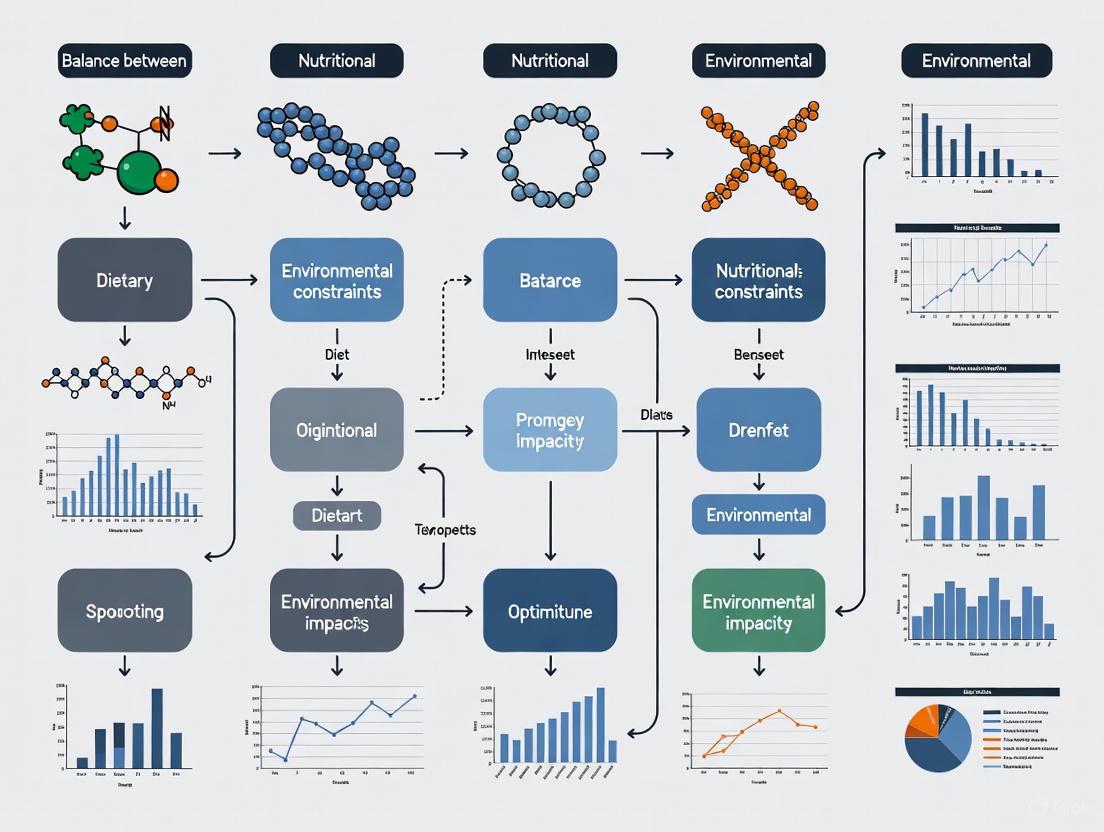
This article explores the application of mathematical diet optimization to design nutritionally adequate, environmentally sustainable, and culturally acceptable diets.
Multi-Objective Optimization for Sustainable Diets: Balancing Nutrition, Environment, and Health
Abstract
This article explores the application of mathematical diet optimization to design nutritionally adequate, environmentally sustainable, and culturally acceptable diets. We examine foundational principles, methodological approaches like multi-objective optimization (MOO), and practical applications from recent research. The content addresses trade-offs between nutritional guidelines and environmental impact reduction, strategies for overcoming implementation barriers, and validation through case studies in diverse populations. Aimed at researchers and clinical professionals, this synthesis provides a framework for integrating sustainability into nutritional science and public health policy, highlighting implications for future biomedical and clinical research.
The Science of Sustainable Nutrition: Principles and Pressures
Definitions and Core Concepts
What is the definition of a Sustainable Healthy Diet (SHD)?
A Sustainable Healthy Diet (SHD) is a dietary pattern that promotes human health and well-being while maintaining environmental boundaries and respecting sociocultural contexts. It is intrinsically linked to sustainable food systems via relationships to health, environment, culture, and economy [1]. Achieving healthy, sustainable, and equitable diets is the defining challenge for 21st-century food systems [1].
What is the four-domain framework for SHDs?
SHDs integrate four key dimensions [1]:
- Health: Prevents malnutrition, obesity, and non-communicable diseases.
- Environment: Respects planetary boundaries (e.g., low greenhouse gas emissions, minimal water use).
- Economy: Is economically affordable and fair across the supply chain.
- Sociocultural: Is culturally diverse, acceptable, and equitable.
How do dietary guidelines, like the EAT-Lancet planetary health diet, translate to different countries?
While the EAT-Lancet commission presented a planetary health diet as a global reference, healthy and sustainable diets are culturally diverse and vary depending on individual preferences, household budget, local foods, and cuisine [1]. Context-specific dietary changes therefore depend on the national burden of disease, environmental challenges, and cultural traditions [1]. For example, increasing meat and dairy consumption may help address inadequacies in some low- and middle-income countries, while most high-income countries should limit consumption due to health and environmental impacts [1].
Methodological Challenges & Troubleshooting
What is a common methodological challenge when modeling sustainable diets using food groups?
A significant challenge is the high variability in nutrient composition and environmental impact profiles within food groups [2]. When modeling is done only at the food group level, this internal variability is not captured, potentially overlooking opportunities to further improve the nutritional adequacy and sustainability of diets [2].
Troubleshooting Guide:
- Problem: Modeled diets have poor nutritional adequacy or higher-than-expected environmental impact.
- Solution: Implement within-food-group optimization in diet modeling. Adjust quantities of specific food items within a group (e.g., increase carrots and decrease cucumbers within the "vegetables" group) instead of only adjusting the entire group's quantity [2].
- Expected Outcome: This approach can meet nutrient recommendations with a 15-36% reduction in greenhouse gas emissions (GHGE) and requires only about half the dietary change compared to between-group optimization alone, improving potential consumer acceptance [2].
What trade-offs emerge during the transition to SHDs in different economies?
Dynamic modeling reveals critical trade-offs, especially in emerging and developing economies [3].
- Problem: In initial transition phases, increased food demand can escalate water use and worsen food affordability in these regions [3].
- Solution: Long-term planning and financial support are crucial. While long-term projections show improved dietary quality (30-45%), reduced water use (1-15%), and better affordability (9-63%) by 2070, the short-term costs necessitate targeted international support and governance [3].
How can behavioral barriers to adopting SHDs be addressed?
A systematic review identified 22 key barriers to SHD adoption [4].
- Problem: Barriers include the high perceived cost of SHDs, social and cultural resistance to dietary change, and limited access to nutritious foods, especially in low-income areas [4].
- Solution: Develop tailored, multidisciplinary policies that address these specific behavioral drivers and barriers. The "SHDs Barriers & Drivers" framework can help policymakers design informed actions [4].
Health and Environmental Impact of Major Food Categories
Table 1 summarizes the relationship between food categories, nutritional value, and environmental impact based on current evidence [1].
Table 1: Health and Environmental Impact of Major Food Categories
| Major Food Categories | Nutritional Benefits | Risk of Chronic Disease & Mortality | Environmental Impact |
|---|---|---|---|
| Plant foods (whole grains, fruits, vegetables, legumes, nuts) | High | Low | Low |
| Fish, seafood, and poultry | High | Low | Moderate |
| Dairy and eggs | High | Neutral to moderate | Moderate |
| Red and processed meats | Moderate | Moderate to high | High |
| Sugar-sweetened beverages & refined grains | Low | Moderate to high | Low to moderate |
Diet Optimization and Dietary Change Requirements
Table 2 compares the dietary changes required to achieve specific GHG emission reductions under different modeling approaches [2].
Table 2: Dietary Change Required for GHGE Reduction via Optimization Strategies
| Modeling Strategy | GHGE Reduction Target | Estimated Dietary Change Required | Key Findings |
|---|---|---|---|
| Between-Food-Group Optimization | 30% | ~44% | Standard approach, larger dietary shift. |
| Combined Within- & Between-Group Optimization | 30% | ~23% | Halves the required dietary change, potentially enhancing consumer acceptance [2]. |
| Within-Food-Group Optimization Only | 15-36% | Not specified | Can achieve significant GHGE reduction by only changing food item quantities within existing groups [2]. |
Evolution of Environmental Impact in School Meal Guidelines
Table 3 shows the progressive improvement in environmental impact across successive versions of school meal dietary guidelines in Catalonia, Spain [5].
Table 3: Reduction in Environmental Impact of Catalan School Meal Guidelines (2005-2020)
| Guideline Version | Composite Environmental Impact Reduction (vs. 2005) | Key Contributing Food Groups to Impact | Suggested Improvement Strategy |
|---|---|---|---|
| 2005 (Baseline) | Baseline | Second dishes (meat and fish) | Not applicable |
| 2017 | Not specified | Second dishes (meat and fish) | Not applicable |
| 2020 | 40% reduction | Second dishes (meat and fish) | Replacing meat and fish with plant-based proteins and diversifying cereal intake could reduce impact by ~50% [5]. |
Experimental Protocols
Detailed Methodology: Within-Food-Group Diet Optimization
Objective: To investigate the extent to which the nutritional adequacy, sustainability, and acceptability of diets can be improved through dietary changes within food groups [2].
1. Data Acquisition:
- Source: Obtain food consumption data from a national dietary survey (e.g., U.S. National Health and Nutrition Examination Survey - NHANES) [2].
- Target Group: Define a homogeneous sub-population (e.g., adults aged 18-65). Exclude individuals reporting implausibly low or high energy intakes [2].
- Data Processing: Calculate the average daily intake per food item (g/day) for the target group to create the "observed diet" [2].
2. Food Group Classification:
- Apply a food group classification system (e.g., What We Eat in America - WWEIA). Studies have used classifications comprising 46 to over 300 groups [2].
- Exclude infrequently consumed items (e.g., foods consumed three times or less) and items classified as "other" from optimization, keeping their quantities fixed [2].
3. Greenhouse Gas Emissions (GHGE) Estimation:
- Estimate GHGE for each food item in the consumption data, expressed in CO₂ equivalents, using a life cycle assessment (LCA) database (e.g., Agribalyse) [2].
4. Diet Modeling and Optimization:
- Model: Develop a diet optimization model that adjusts food quantities to minimize GHGE and total dietary change (a proxy for acceptability) while meeting nutrient requirements [2].
- Scenarios: Run separate optimizations:
- Scenario A (Between-Group): Allow changes only to the total quantity of each food group.
- Scenario B (Within-Group): Allow changes to the quantities of individual food items within their respective groups.
- Scenario C (Combined): Allow changes both within and between groups [2].
- Constraints: Impose constraints to ensure nutrient adequacy based on national guidelines and to prevent unrealistic consumption levels for any single food [2].
5. Output Analysis:
- Calculate the achieved GHGE reduction and the total dietary change (measured as the absolute difference in food quantities between the observed and optimized diets) for each scenario [2].
- Compare the performance of the different optimization strategies.
Workflow for Diet Optimization Research
The diagram below outlines the core experimental workflow for designing and evaluating Sustainable Healthy Diets.
Framework for Sustainable Healthy Diets (SHDs)
This diagram visualizes the integrated four-domain framework that defines Sustainable Healthy Diets.
The Scientist's Toolkit: Research Reagent Solutions
Table 4: Essential Materials and Tools for SHD Research
| Tool / Resource | Function / Application in SHD Research |
|---|---|
| National Dietary Surveys (e.g., NHANES) | Provides baseline data on current food consumption patterns for a population, serving as the input for diet optimization models [2]. |
| Food Composition Databases (e.g., FNDDS) | Supplies detailed data on the nutrient content of foods, enabling the assessment of nutritional adequacy in modeled diets [2]. |
| Life Cycle Assessment (LCA) Databases (e.g., Agribalyse) | Provides environmental impact data (e.g., GHGE, water use) for food items, allowing for the calculation of a diet's environmental footprint [2] [5]. |
| Diet Optimization Models | Computational models (e.g., linear programming) used to generate diets that meet specific nutritional, environmental, and cost constraints [2]. |
| Food Group Classification Systems (e.g., WWEIA) | Standardizes the grouping of individual food items, which is a critical step in structuring the optimization problem [2]. |
| Health Outcome Metrics (e.g., AHEI) | Indexes like the Alternative Healthy Eating Index (AHEI) quantify the health quality and potential of a dietary pattern [3]. |
Researcher FAQs and Troubleshooting Guides
Q1: What is the "Dual Burden" in the context of global food systems, and why is it a critical research area?
The "Dual Burden" refers to the coexistence of two major global challenges: (1) malnutrition in all its forms, including undernutrition, micronutrient deficiencies, overweight, and obesity; and (2) the transgression of planetary boundaries caused by food systems [6] [7].
This is critical because our current food systems are both a primary cause of human disease and a major driver of environmental degradation. The 2025 EAT-Lancet Commission report highlights that food systems are the single largest cause of planetary boundary transgressions, driving five of the seven boundaries that have already been breached, including climate change and biodiversity loss [8] [7]. At the same time, over half the world's population struggles to access healthy diets, and the double burden of malnutrition affects a significant portion of the global population [8] [6].
Q2: My diet modeling requires a 30% reduction in greenhouse gas emissions (GHGE). What optimization strategy minimizes required dietary change for better consumer acceptance?
For a 30% GHGE reduction, a combined within-and-between food group optimization strategy is most efficient. This approach requires only half the dietary change compared to between-group optimization alone [9] [2].
Table: Dietary Change Required for a 30% GHGE Reduction
| Optimization Strategy | Dietary Change Required | Key Advantage |
|---|---|---|
| Between food groups only | 44% | Traditional approach |
| Within and between food groups | 23% | Halves the dietary change, potentially greatly improving consumer acceptance [9] [2] |
Experimental Protocol: Within-Food-Group Optimization
- Data Source: Start with national food consumption survey data (e.g., NHANES 2017-2018) [9] [2].
- Food Group Classification: Use a detailed classification system (e.g., 345 food groups) to capture variability within groups [9] [2].
- Model Definition: Optimize nutrient intake while minimizing GHGE and dietary change. The objective function should prioritize minimizing deviation from nutritional recommendations, then GHGE reduction, and finally, minimizing dietary change [9] [2].
- Constraint Application: Apply nutritional constraints based on recommended daily allowances and keep overall food group quantities similar to the observed diet to enhance acceptability [9] [2].
Q3: How can I quantify the health and environmental impacts of different dietary patterns in my research?
The EAT-Lancet Commission's Planetary Health Diet (PHD) provides a scientifically-established reference framework. Adopting this diet could prevent approximately 15 million deaths annually from non-communicable diseases and could cut food-related greenhouse gas emissions by more than half [8] [7].
Table: Environmental and Health Impact of Dietary Transformation
| Metric | Current System Impact | Potential with PHD Adoption |
|---|---|---|
| Annual Deaths | -- | Prevent up to 15 million deaths per year [8] [7] |
| Food System GHG Emissions | ~30% of global total | Reduction of more than 50% [8] |
| Population in "Safe and Just Space" | Only ~1% | Vastly increased |
| Responsibility for Environmental Impact | Richest 30% cause >70% of pressure [8] | More equitable distribution |
Experimental Protocol: Assessing Diet Quality
- Dietary Data Collection: Use 24-hour dietary recalls. For broader assessments, leverage nationally representative cross-sectional household surveys [6].
- Diet Quality Scoring: Apply globally recognized tools:
- Global Dietary Recommendations (GDR) Score: A score of 6 out of 11 recommendations indicates a healthier diet [6].
- Minimum Dietary Diversity for Women (MDD-W): Consumption from ≥5 of 10 food groups indicates adequate diversity [6].
- Global Diet Quality (GDQ) Score: A score ≥23 indicates low risk for NCDs [6].
- Environmental Impact Calculation: Use Life Cycle Assessment (LCA) methodology and databases (e.g., Agribalyse) to characterize multiple environmental indicators [5].
Q4: A key challenge is designing diets that are healthy, sustainable,andacceptable to consumers. What strategies can improve acceptability?
Acceptability is crucial for the real-world adoption of sustainable diets. Two evidence-based strategies are:
- Leverage Within-Food-Group Substitutions: As shown in FAQ #2, this strategy drastically reduces the amount of overall dietary change needed, which is a key factor in consumer acceptance. Shifting from beef to chicken or lentils within the "protein foods" group is a smaller change for consumers than eliminating the entire group [9] [2].
- Protect and Promote Healthy Traditional Diets: The updated Planetary Health Diet is designed to be flexible and compatible with diverse cultural foods, dietary patterns, and traditions. This respects culinary heritage and avoids imposing a single, uniform diet globally [8].
Experimental Protocol: Integrating Justice into Food Systems Research The EAT-Lancet Commission emphasizes that a just transformation is necessary. Research frameworks should analyze [8]:
- Distributive Justice: Fair distribution of resources (healthy food, clean environment) and burdens.
- Representational Justice: Fair distribution of power and policy-making voice, especially for affected groups.
- Recognitional Justice: Recognition of diverse identities and experiences, ensuring all social groups can participate as equals.
The Scientist's Toolkit
Table: Key Research Reagents and Methodologies
| Tool / Reagent | Function / Application | Example / Specification |
|---|---|---|
| Life Cycle Assessment (LCA) | Quantifies environmental impacts of diets/foods across multiple indicators (e.g., GHGE, water use) [5]. | Uses databases like Agribalyse; follows standards like Product Environmental Footprint (PEF) [5]. |
| Diet Optimization Models | Mathematical models to design diets meeting nutritional needs within environmental constraints. | Can be run at different levels: between food groups or within and between groups for lower dietary change [9] [2]. |
| Global Dietary Assessment Tools | Standardized metrics to evaluate diet quality and link to health outcomes. | GDR Score, MDD-W, GDQ Score [6]. |
| National Food Consumption Data | Provides baseline data on actual consumption patterns for modeling. | e.g., NHANES (US), Food and Nutrient Database for Dietary Studies (FNDDS) [9] [2]. |
| Planetary Health Diet (PHD) | A reference diet based on the best available science for optimal health and environmental sustainability [8] [7]. | Flexitarian diet; rich in plant-based foods but can contain some animal products [7]. |
Research Workflows and Pathways
Research Workflow for Sustainable Diet Optimization
Food System as a Global Integrator
Frequently Asked Questions (FAQs)
FAQ 1: What are the core dietary principles for a sustainable diet and what is their scientific rationale?
A sustainable diet is underpinned by three interlinked principles: variety, balance, and moderation [10]. The scientific rationale is grounded in evolutionary and ecological processes. Human physiological needs for energy and nutrients have been shaped by evolution, while the sustainability of food systems is dependent on operating within planetary boundaries [10].
- Variety means eating a variety of nutritious foods daily from both across and within core food groups, prioritizing minimally processed foods. This helps achieve nutritional adequacy and protects the biodiversity of food systems, making them more resilient [10].
- Balance refers to the relative proportions of different food groups. Key recommendations include increasing plant-source foods (fruits, vegetables, legumes, nuts, whole grains) relative to animal-source foods, and prioritizing minimally processed foods over ultra-processed foods (UPFs). This helps reduce the risk of non-communicable diseases and excessive use of environmental resources [10].
- Moderation involves consuming portions that help achieve a healthy body weight and avoid wasting finite environmental resources used in providing food surplus to nutritional requirements [10].
FAQ 2: In diet optimization modeling, what is the difference between "within-food-group" and "between-food-group" changes, and why does it matter for consumer acceptance?
Diet optimization is a method used to design diets that meet nutritional needs while minimizing environmental impact [2].
- Between-Food-Group Optimization involves adjusting the total quantities of broad food groups (e.g., increasing vegetables, reducing meat). This approach can require large and potentially disruptive shifts in consumption patterns [2].
- Within-Food-Group Optimization involves substituting specific foods within the same group (e.g., replacing beef with lentils in the "protein foods" group, or choosing calcium-rich broccoli over cucumbers in the "vegetables" group) [2]. This approach accounts for the significant variability in nutrient and environmental profiles among individual foods within the same group.
Importance for Acceptance: Research shows that within-food-group optimization can achieve the same nutritional and environmental goals (e.g., a 30% reduction in greenhouse gas emissions) with only about half the total dietary change compared to between-group optimization alone (23% vs 44% change) [2]. Since smaller dietary changes are generally more acceptable and achievable for consumers, this strategy can significantly improve the real-world feasibility of sustainable diets [2].
FAQ 3: What are common nutritional challenges when optimizing diets for lower environmental impact, and how can they be mitigated?
A primary challenge is meeting all micronutrient requirements, particularly when reducing animal-source foods, which are dense in certain nutrients. Key limitations identified in optimization studies include:
- Sodium and Selenium: These are often the strongest limiting constraints in optimized sustainable diets [11].
- Other Nutrients: Adequacy of iron and calcium can also be challenging when shifting toward more plant-based patterns, due to differences in bioavailability and nutrient density [12].
Mitigation Strategies:
- Targeted Within-Food Selection: Choose specific foods within groups that are rich in the limiting nutrients. For selenium, this could include Brazil nuts or seafood; for iron, legumes, leafy greens, and fortified grains; for calcium, calcium-set tofu, fortified plant drinks, and dark leafy greens [2] [13].
- Legume Integration: Modeling shows that explicitly incorporating legumes (≥40 g/day) can enable greater reductions in environmental impact (up to 35% in GHGE) while maintaining nutritional adequacy [11].
- Nutrient-Based Optimization: Using mathematical models that treat individual foods, rather than broad food groups, as variables allows for precise adjustments to meet all nutrient constraints with minimal dietary change [2].
Troubleshooting Guides
Problem 1: High Greenhouse Gas Emissions (GHGE) in Modeled Diets
Issue: Optimized diets fail to meet target GHGE reductions.
Solution:
- Primary Intervention: Prioritize reducing red and ruminant meat quantities, as these are typically the highest GHGE contributors [11].
- Secondary Intervention: Increase the diversity and quantity of plant-based protein sources, especially legumes (e.g., lentils, beans, peas). Studies show that scenarios with ≥40 g/day of legumes can achieve a 35% GHGE reduction, whereas scenarios that fix ruminant meat intake are limited to about a 15% reduction [11].
- Advanced Tuning: Implement within-food-group substitutions. Replace high-impact foods with nutritionally similar, lower-impact alternatives within the same group (e.g., poultry for some ruminant meat, specific vegetables for others) to fine-tune emissions without drastic structural diet changes [2].
Problem 2: Failure to Meet All Nutrient Constraints
Issue: The optimized diet is nutritionally inadequate, particularly for specific micronutrients.
Solution:
- Identify Limiting Nutrients: Determine which nutrients (e.g., selenium, iron, calcium) are the binding constraints [11].
- Expand Food Variety: Ensure the model includes a wide range of foods from all groups. Nutritional adequacy is best achieved by selecting foods from both across and within core food groups [10] [13].
- Leverage Within-Group Diversity: Exploit the varying nutrient profiles within a food group. For example, within the vegetable group, dark leafy greens (spinach) are high in iron, while red and orange vegetables (carrots, tomatoes) are high in Vitamin A [13]. The table below illustrates the variability in key nutrients within and between food groups, which can be used to target specific deficiencies.
Table: Variability in Nutrient Profiles Within Food Groups (Illustrative Examples)
| Food Group | Example Food Item | Key Nutrient 1 | Key Nutrient 2 | Environmental Impact (GHGE) |
|---|---|---|---|---|
| Protein Foods | Beef (ruminant) | High Iron (Heme) | Vitamin B12 | Very High |
| Pork / Poultry | Iron | Vitamin B12 | Medium | |
| Lentils | Iron (Non-Heme), Fiber | Folate | Low | |
| Almonds | Vitamin E, Magnesium | Calcium | Low-Medium | |
| Vegetables | Spinach (Dark Green) | Iron, Vitamin K | Folate | Low |
| Carrots (Red/Orange) | Vitamin A (Beta-carotene) | Fiber | Low | |
| Cauliflower | Vitamin C, Choline | Vitamin K | Low | |
| Grains | Whole Wheat | Fiber, Magnesium | B Vitamins | Low |
| Brown Rice | Manganese, Selenium | Magnesium | Low | |
| Quinoa | Complete Protein, Iron | Magnesium | Low |
Problem 3: Low Diet Acceptability and High Dietary Change Score
Issue: The optimized diet is too different from the current population's diet, making consumer adoption unlikely.
Solution:
- Minimize Total Dietary Change: Use quadratic optimization with a objective function that minimizes the deviation (e.g., sum of squared differences) from the observed diet while meeting nutrient and environmental constraints [11].
- Apply Within-Food-Group Optimization: This is the most effective strategy. It can achieve the same nutritional and environmental targets with only half the dietary change required by between-food-group optimization alone [2].
- Apply Realism Constraints: Introduce model constraints to prevent the complete removal of culturally valued food groups (e.g., retaining a small, fixed amount of ruminant meat) or to limit the maximum change for any single food item, thereby preserving familiar dietary patterns as much as possible [11].
Experimental Protocols & Data
Protocol 1: Diet Optimization Modeling for Sustainability
Objective: To design a nutritionally adequate diet that minimizes environmental impact (e.g., GHGE) and departure from the current observed diet.
Methodology:
- Data Collection:
- Dietary Intake: Gather representative food consumption data from national surveys (e.g., NHANES in the US, Norkost in Norway) [2] [11].
- Nutrient Composition: Link each food item to a food composition database to determine its content of relevant macro- and micronutrients [11].
- Environmental Impact: Assign environmental impact values (e.g., GHGE, land use, water use) to each food item, typically from Life Cycle Assessment (LCA) databases [11].
- Model Formulation:
- Decision Variables: The quantity (in grams) of each individual food item in the optimized diet.
- Objective Function: Minimize the total deviation from the observed diet (for acceptability) and/or minimize total GHGE (for sustainability).
- Constraints:
- Nutrient Adequacy: Total intake of each essential nutrient must be between the recommended lower and upper limits.
- Energy Balance: Total calorie intake must meet the population's energy requirement.
- Food-based Guidelines: Adherence to food group recommendations (e.g., fruit/vegetable servings, red meat limits) [11].
- Environmental Cap: Total diet GHGE must be below a specified target (e.g., 30% less than the observed diet) [11].
- Optimization & Scenarios: Run the model under different scenarios, such as allowing or restricting within-food-group changes, or imposing different GH reduction targets [2].
Table: Summary of Diet Optimization Scenarios and Outcomes from Select Studies
| Study / Scenario | GHGE Reduction Target | Dietary Change Required | Key Dietary Shifts | Key Limitations/Nutrients of Concern |
|---|---|---|---|---|
| General Between-Group Optimization [2] | 30% | ~44% | Large reductions in meat; increases in plant foods. | Model may become infeasible with high change. |
| Combined Within- & Between-Group Optimization [2] | 30% | ~23% | Smaller, more precise shifts; substitutions within groups. | Requires detailed food-level data. |
| NNR2023 Guidelines (Norway) [11] | 30% | Significant | Increase fruits, vegetables, grains; decrease red meat, discretionary foods. | Sodium, Selenium |
| NNR2023 with Legumes (≥40g/day) [11] | 35% | Significant | Above changes, plus specific incorporation of legumes. | Sodium, Selenium |
| Fixed Ruminant Meat (62g/day) [11] | 15% (Max) | Significant | Drastic reductions in other meat types to meet constraints. | Severely limits environmental benefits. |
The Scientist's Toolkit: Research Reagent Solutions
Table: Key Materials and Data Resources for Diet Optimization Research
| Item Name | Function in Research | Specification Notes |
|---|---|---|
| Food Consumption Data (e.g., NHANES, Norkost) | Provides the baseline "observed diet" from which to optimize and calculate dietary change. | Should include individual-level, quantity-consumed data for a representative population. |
| Food Composition Database (e.g., FNDDS, USDA SR) | Provides the nutrient profile (energy, macronutrients, vitamins, minerals) for each food item consumed. | Critical for formulating and verifying nutrient adequacy constraints in the model. |
| Life Cycle Assessment (LCA) Database (e.g., Norwegian LCA Food DB) | Assigns environmental impact values (GHGE, water use, land use) to individual food items. | Data should be compatible with the food list in the consumption data (same level of aggregation/processing). |
| Diet Optimization Software (e.g., R, Python with optimization libraries) | The computational engine to solve the mathematical problem of minimizing objectives subject to constraints. | Must be able to handle linear or quadratic programming with multiple constraints. |
| Nutrient Requirement Guidelines (e.g., NNR2023, WHO) | Defines the lower (e.g., Average Requirement) and upper bounds for each nutrient in the model's constraints. | Choice of standard (e.g., RI vs. AR) can affect model feasibility [11]. |
Workflow Visualization
Diagram: Diet Optimization Research Workflow
Frequently Asked Questions (FAQs) and Troubleshooting
1. What is the most significant methodological challenge when modeling sustainable diets? A primary challenge is balancing nutritional adequacy with environmental impact and consumer acceptability [2]. Diets optimized solely for low environmental impact often risk nutrient deficiencies or require dietary changes that populations are unwilling to make [14]. Furthermore, the environmental and affordability trade-offs of transitioning to sustainable diets are more pronounced in emerging and developing economies, where initial phases may see increased water use and worsened food affordability [3].
- Troubleshooting Tip: To improve acceptability, consider a within-food-group optimization approach. This strategy can achieve significant environmental benefits (e.g., 15-36% reduction in GHGE) with only half the dietary change required by between-food-group optimization alone, making the resulting diets more likely to be adopted [2].
2. Which nutrients are most commonly problematic in optimized, sustainable diets? "Problem nutrients" are those that cannot be adequately supplied by locally available foods in a modeled diet. For young children, iron and zinc are almost universally identified as problem nutrients [15]. For broader populations, calcium, certain B vitamins (thiamine, niacin, folate), and fat can also be difficult to meet when optimizing for sustainability [15].
- Troubleshooting Tip: When your models consistently fail to meet requirements for these nutrients, it indicates that local food sources are insufficient. This signals the need for strategies beyond dietary change, such as:
- Food fortification: Adding micronutrients to staple foods.
- Supplementation: Providing nutrient supplements to at-risk groups.
- Promotion of nutrient-dense foods: Encouraging the production and consumption of underutilized local foods that are rich in the problem nutrients [16].
3. How can Linear Programming (LP) be applied to develop national dietary guidelines? Linear Programming is a mathematical optimization tool used to identify the combination of locally available foods that meets a population's nutritional needs at the lowest cost or environmental impact [15] [16]. The steps typically involve:
- Defining Constraints: Inputting data on local food consumption, nutrient requirements, and food prices or environmental impact data (e.g., GHG emissions, water use) [16].
- Setting the Objective Function: Defining the goal, such as "minimize cost" or "minimize greenhouse gas emissions" while satisfying all nutritional constraints [15].
- Model Validation and Refinement: Running the model to generate a theoretically optimal diet and then refining it based on cultural acceptability and practical feasibility [16].
4. Why are environmental sustainability considerations often absent from official national dietary guidelines? Despite strong scientific evidence, environmental sustainability remains a "missing ingredient" in many guidelines, such as the U.S. Dietary Guidelines for Americans [17]. This is often due to:
- Narrow Mandates: The committees responsible for the guidelines may have a strict public health mandate that excludes environmental considerations.
- Political and Economic Pressures: Recommendations to reduce the consumption of certain high-impact animal-based foods can face significant opposition from industry groups [17].
- Implementation Challenges: Defining and quantifying sustainable diets within a national context is complex, though tools like Life Cycle Assessment (LCA) and diet optimization models are helping to overcome this [17].
Key Experimental Protocols and Data
Protocol 1: Within- vs. Between-Food-Group Diet Optimization
This methodology assesses the potential to improve diet sustainability through substitutions of similar foods, which may be more acceptable to consumers than wholesale dietary overhaul [2].
- 1. Objective: To quantify the improvements in nutritional adequacy, sustainability, and acceptability achievable by optimizing food choices within, as opposed to between, food groups.
- 2. Data Input:
- Consumption Data: Use high-resolution national dietary survey data (e.g., NHANES) with detailed food item records [2].
- Food Classification: Classify all food items into hierarchical groups (e.g., "Fruits" -> "Citrus fruits" -> "Oranges").
- Nutrient Composition: Obtain nutrient profiles for each food item.
- Environmental Impact Data: Assign greenhouse gas emission (GHGE) values, typically in CO₂ equivalents (CO₂e), to each food item [2].
- 3. Modeling Scenarios:
- Scenario A (Between-Group): Allow the model to change the total quantity of each food group, but keep the proportion of individual foods within each group fixed.
- Scenario B (Within-Group): Allow the model to change the quantities of individual foods within each food group, but keep the total quantity of each group fixed.
- Scenario C (Combined): Allow the model to change quantities both within and between groups freely.
- 4. Output Analysis: Compare the GHGE reduction and degree of dietary change (a proxy for acceptability) required to meet nutritional targets across the three scenarios [2].
Table 1: Sample Results from a Within-Food-Group Optimization Analysis
| Modeling Scenario | GHGE Reduction | Dietary Change Required | Key Finding |
|---|---|---|---|
| Between-Group Only | 30% | 44% | Large dietary shifts needed for significant emission cuts. |
| Within- & Between-Group | 30% | 23% | Same emission cuts achieved with half the dietary change, improving potential acceptability [2]. |
Protocol 2: Linear Programming for Identifying Problem Nutrients
This protocol is used to develop Food-Based Dietary Recommendations (FBRs) and identify nutrient gaps that cannot be filled by local foods [15] [16].
- 1. Objective: To formulate a nutritionally adequate diet using locally available foods at the lowest possible cost and to identify "problem nutrients" for which this is not feasible.
- 2. Data Input:
- Food List: A comprehensive list of locally available and culturally acceptable foods.
- Food Prices: Average market prices for the listed foods.
- Constraints: Define minimum and maximum intake for each nutrient based on dietary reference intakes, and for food groups based on habitual consumption to ensure realism [16].
- 3. Model Execution:
- The LP software is run to find the cheapest possible diet that meets all constraints.
- If no solution is found, the nutritional constraints are iteratively relaxed one by one to identify which nutrient(s) are preventing a solution—these are the "problem nutrients" [15].
- 4. Output and Recommendation: The output is a list of recommended foods and quantities. The identified "problem nutrients" inform the need for fortification, supplementation, or agricultural interventions [15].
Table 2: Common "Problem Nutrients" in Optimized Diets for Children
| Age Group | Most Common Problem Nutrients | Less Common Problem Nutrients |
|---|---|---|
| 6-11 months | Iron, Zinc | Calcium |
| 12-23 months | Iron, Calcium | Zinc, Folate |
| 1-3 years | Fat, Calcium, Iron, Zinc | - |
| 4-5 years | Fat, Calcium, Zinc | - |
Source: Adapted from [15]
Visualization: Diet Optimization Workflow
The following diagram illustrates the logical workflow and iterative process of using linear programming for diet optimization.
Diet Optimization Workflow
The Scientist's Toolkit: Key Research Reagents & Materials
Table 3: Essential Tools and Data for Diet Optimization Research
| Tool / Material | Function in Research | Examples / Notes |
|---|---|---|
| Dietary Consumption Data | Provides the baseline "observed diet" from which to model changes. | National surveys (e.g., NHANES), 24-hour dietary recalls. High resolution (individual foods) is crucial for within-food-group analysis [2]. |
| Food Composition Table | Provides nutrient profile data (macronutrients, vitamins, minerals) for each food item. | Must be compatible with the dietary consumption data. Databases like FAO/INFOODS or national nutrient databases [16]. |
| Environmental Impact Databases | Assigns environmental footprints (GHGE, water, land use) to food items. | Life Cycle Assessment (LCA) databases; critical for modeling sustainable diets. Carbon footprint is the most commonly used metric [14]. |
| Linear Programming Software | The computational engine that solves the optimization problem. | Tools like WHO's Optifood, WFP's NutVal, or custom models in R, Python, or GAMS [15] [16]. |
| Cultural Acceptability Constraints | Mathematical limits (e.g., max/min food amounts) to ensure modeled diets are realistic and palatable. | Based on observed consumption patterns to avoid recommending drastic or culturally inappropriate changes [2] [16]. |
Methodologies in Diet Optimization: From Linear Programming to Multi-Objective Models
Core Concepts of Diet Optimization
Mathematical diet optimization is a computational approach used to design food plans that meet specific nutritional, health, economic, and environmental objectives while adhering to practical constraints. It translates dietary guidelines into precise, actionable food plans by finding the optimal combination of foods from a given set [18] [19].
Key Objectives in Optimization Models
In diet optimization, an objective function is a mathematical expression that the model seeks to minimize or maximize. The table below summarizes common objectives used in the field.
Table: Primary Objectives in Diet Optimization Models
| Objective Name | Mathematical Goal | Primary Application Context |
|---|---|---|
| Minimize Deviation | Minimize the difference (absolute or squared) from the observed or habitual diet [19] [11]. | Enhancing cultural acceptability and practical adoption of recommended diets. |
| Minimize Cost | Minimize the total monetary cost of the food basket [20]. | Developing economically affordable food-based recommendations, especially in low-resource settings. |
| Minimize Environmental Impact | Minimize metrics like Global Warming Potential (GWP), land use, or water consumption [21] [11]. | Designing sustainable diets with lower environmental footprints. |
| Maximize Nutrient Adequacy | Fulfill all nutritional constraints, often by minimizing nutritional inadequacy [22]. | Ensuring diets meet all essential nutrient requirements to prevent deficiencies. |
Common Constraints in Optimization Models
Constraints are non-negotiable rules or boundaries that any solution from the optimization model must satisfy. They define the feasibility space for the resulting diet.
Table: Common Constraint Types in Diet Optimization
| Constraint Type | Description | Examples |
|---|---|---|
| Nutritional Constraints | Ensure the diet meets specific nutrient levels [19] [11]. | Lower limits: Protein, Iron, Calcium. Upper limits: Sodium, Saturated Fat. |
| Health-Based Food Group Constraints | Define amounts for food groups based on health recommendations [19] [11]. | Minimum: Fruits, Vegetables, Whole grains. Maximum: Red meat, Discretionary foods. |
| Acceptability Constraints | Limit how much the optimized diet can deviate from usual eating patterns to ensure realism [19] [11]. | Food group amounts kept within the 5th and 95th percentiles of observed population intake. |
| Environmental Constraints | Cap the total environmental impact of the diet [21] [11]. | Maximum allowable greenhouse gas emissions (e.g., CO2-equivalents). |
Troubleshooting Common Optimization Problems
Researchers often encounter specific issues when building and solving diet optimization models. The following guide addresses frequent problems.
Model Infeasibility
Problem: The solver returns no solution, indicating that no diet can be found that satisfies all constraints simultaneously [11].
Solutions:
- Loosen Nutrient Constraints: Identify critical or conflicting nutrients. For example, if meeting iron and zinc requirements with high phytate plant-based foods is infeasible due to bioavailability, consider adjusting the required levels or using bioavailability factors [22].
- Review Acceptability Bounds: Excessively tight acceptability constraints (e.g., preventing large decreases in commonly over-consumed foods like red meat) can conflict with nutritional or environmental goals. Systematically relax these bounds to find a solution [11].
- Sequential Constraint Introduction: Add constraints in a step-wise manner to identify which one causes the infeasibility. Start with nutritional adequacy, then add health-based food groups, and finally introduce environmental caps [19].
Unrealistic or Extreme Diets
Problem: The optimized diet includes unrealistically large quantities of a few, often inexpensive, nutrient-dense foods (e.g., liver or specific vegetables) [18].
Solutions:
- Implement Consumption Constraints: Impose upper limits (maximum grams per day) for individual food groups or items based on observed consumption patterns (e.g., the 95th percentile of population intake) to prevent over-reliance on a single food [19].
- Change the Objective Function: Using a squared deviation objective function penalizes large changes in any single food group more heavily than a linear deviation, leading to more balanced and realistic diets [19].
Data Quality and Integration
Problem: The model's outputs are unreliable due to underlying data issues.
Solutions:
- Classify Foods Consistently: Use a standardized food classification system like FoodEx2 to ensure consistent grouping of foods and accurate linkage to nutrient composition databases [19].
- Account for Nutrient Bioavailability: Particularly for iron and zinc in plant-based diets, consider incorporating bioavailability factors instead of relying solely on total nutrient content in the database to avoid overestimating nutrient supply [22].
- Use Representative Dietary Data: Employ high-quality, representative dietary intake data for the target population to set meaningful acceptability constraints and accurately model habitual diets [22] [19].
Frequently Asked Questions (FAQs)
Q1: What is the difference between Linear Programming (LP) and Multi-Objective Optimization (MOO)? A: Linear Programming (LP) is a single-objective method typically used to minimize cost or deviation from a current diet while meeting a set of constraints [20]. Multi-Objective Optimization (MOO) simultaneously balances several, often conflicting, objectives—such as minimizing cost, environmental impact, and deviation from current diet—without prioritizing one over the others beforehand. This generates a set of optimal solutions (a Pareto front), allowing decision-makers to see the trade-offs between different goals [21].
Q2: How do you ensure that an optimized diet is culturally acceptable? A: Cultural acceptability is typically operationalized by minimizing the deviation, either linear or squared, between the optimized diet and the population's current average diet or habitual intake patterns [21] [11]. Furthermore, acceptability constraints can be applied to prevent the model from suggesting amounts of specific food groups that fall outside the observed range of consumption (e.g., between the 5th and 95th percentiles) for that population [19].
Q3: What are the common nutritional challenges when optimizing diets for sustainability? A: Key challenges include ensuring adequate intake of several micronutrients [22]:
- Iron and Zinc: These are often limiting in plant-based diets due to lower bioavailability from plant sources.
- Selenium and Calcium: These minerals can be difficult to meet in diets with significantly reduced animal-source foods, as seen in optimization studies for Nordic countries [11].
- Vitamin B12: Exclusively found in animal products, requiring careful planning or fortification in vegan diets.
Experimental Protocol: Quadratic Optimization for Sustainable Diets
The following protocol is adapted from a study designing diets following the Nordic Nutrition Recommendations (NNR2023) for Norway [11].
Objective
To find a nutritionally adequate diet that minimizes deviation from the current average Norwegian diet, meets health-based food group targets, and satisfies a constraint on global warming potential (GWP).
Methodology
Step 1: Data Preparation and Aggregation
- Dietary Intake Data: Use data from a national dietary survey (e.g., Norkost 3 for Norway). Collect at least two 24-hour recalls from a representative sample of the target adult population.
- Food Aggregation: Aggregate all consumed foods (e.g., 1,507 items) into a manageable number of food sub-groups (e.g., 53 groups) based on nutritional and environmental characteristics.
- Nutrient Composition: Link each food item to a national food composition database. Calculate the population-weighted nutrient content for each food sub-group.
- Environmental Impact: Link each food item to a Life Cycle Assessment (LCA) database containing environmental impact indicators, such as Global Warming Potential (GWP in kg CO2-eq).
Step 2: Define Model Parameters
- Objective Function: Minimize the quadratic (squared) deviation between the optimized diet and the observed average diet. This promotes balanced changes across all food groups.
- Decision Variables: The quantities (in grams) of each of the 53 food sub-groups in the optimized diet.
- Constraints:
- Nutritional: Meet the recommended intakes for all essential nutrients (e.g., protein, iron, calcium, selenium).
- Health-based: Adhere to food group targets from dietary guidelines (e.g., fruits ≥ 500 g/day, red meat ≤ 350 g/week).
- Environmental: Constrain the total GWP of the diet to be at least 30% lower than the observed diet.
- Acceptability: Impose upper and lower bounds on food groups based on observed consumption percentiles.
Step 3: Model Solving and Validation
- Software: Implement the model using optimization software capable of solving quadratic programming problems (e.g., in R or Python with appropriate solvers).
- Solve: Run the optimization to find the diet that satisfies all constraints with minimal deviation.
- Validate: Check the resulting diet's nutrient composition and environmental impact against the constraints to ensure all are met. Identify which constraints are "binding" (i.e., actively limiting further improvement).
The Scientist's Toolkit: Key Reagents & Materials
Table: Essential Resources for Diet Optimization Studies
| Resource Name | Function / Application | Example / Source |
|---|---|---|
| National Dietary Survey Data | Provides data on habitual food consumption to define the baseline diet and set acceptability constraints. | Norkost 3 (Norway) [11] |
| Food Composition Database | Supplies detailed data on the nutrient content of foods, which is essential for evaluating nutritional constraints. | The German KBS system [19]; EFSA Comprehensive Database [19] |
| Life Cycle Assessment (LCA) Database | Provides environmental impact values for food items, enabling the calculation of the diet's total footprint. | Norwegian LCA Food Database [11] |
| Food Classification System | Standardizes the grouping of foods for consistent analysis and reporting. | EFSA's FoodEx2 system [19] |
| Optimization Software | The computational engine that performs the mathematical optimization to solve the model. | Solver packages in R (e.g., quadprog), Python (e.g., SciPy), or specialized optimization suites. |
Workflow and Logical Diagrams
The following diagram illustrates the standard workflow for building and solving a diet optimization model.
Diagram: Diet Optimization Modeling Workflow
The diagram below shows the hierarchical relationship between different types of constraints in a typical model, which is crucial for troubleshooting infeasibility.
Diagram: Constraint Hierarchy in Diet Optimization
Frequently Asked Questions (FAQs)
1. What is Multi-Objective Optimization, and why is it important in diet research? Multi-Objective Optimization (MOO) deals with problems involving more than one objective function that are often in conflict. The goal is to find solutions where no objective can be improved without worsening another, a state known as Pareto optimality [23] [24]. In sustainable diet research, this is crucial for balancing competing goals such as nutritional adequacy, economic cost, cultural acceptability, and environmental impact (like greenhouse gas emissions and water use) [25] [26] [27]. Unlike single-objective optimization, which can yield extreme and impractical solutions, MOO helps identify a range of balanced, feasible dietary patterns [27].
2. My optimization model returns no feasible solution. What could be wrong? An infeasible solution often signals that the constraints are too restrictive or conflicting [25]. In a diet optimization context, this could mean:
- Overly Strict Nutritional Constraints: The required nutrient levels cannot be achieved with the available or permitted foods.
- Cultural Acceptability Limits: Excessively tight bounds on food groups (e.g., completely excluding staple foods) may make it impossible to meet nutritional needs.
- Data Inconsistencies: The nutrient composition or environmental impact data for foods might have errors or be incompatible with the constraint levels. To resolve this, try relaxing the constraints (e.g., allow a wider range for food group intake) and ensure your input data is accurate and consistent [25].
3. What is the difference between the "a priori," "a posteriori," and "interactive" approaches? These are three general strategies for incorporating decision-maker preferences into the MOO process [28]:
- A Priori: Preferences (e.g., weights for each objective) are defined before the optimization run. The method then finds a single solution matching these preferences.
- A Posteriori: The algorithm first approximates the entire Pareto front—the set of non-dominated solutions. The decision maker then selects a solution from this set after seeing the available trade-offs.
- Interactive: Preferences are refined during the optimization process, allowing the decision maker to steer the search based on intermediate results. This is highly useful for complex problems where trade-offs are not fully understood beforehand [28].
4. How do I handle many (more than three) conflicting objectives? Problems with many objectives, known as "many-objective" problems, face challenges like poor searchability and difficulty in visualizing results [28] [27]. A proven strategy is to reduce the number of objectives by integrating Multi-Criteria Decision-Making (MCDM) methods before optimization [27]. For example, multiple environmental footprints (carbon, water, land use) can be aggregated into a single sustainability score using an MCDM tool. This simplifies the problem into a more manageable bi-objective optimization (e.g., minimizing environmental score vs. minimizing deviation from current diet) without losing critical information [27].
5. What is the Pareto Front, and how do I interpret it? The Pareto Front is a visualization of the trade-offs between conflicting objectives. It is the set of points in the objective space mapped from the Pareto optimal solutions in the decision space [24]. In diet optimization, each point on the front represents a unique trade-off, for instance, between diet cost and environmental impact. A key insight is that moving along the front (e.g., choosing a diet with lower environmental impact) inevitably leads to a sacrifice in another objective (e.g., an increase in cost or a greater deviation from current eating habits). Analyzing the shape of the Pareto front helps researchers understand the nature of the conflicts and identify "sweet spots" where significant gains in one objective can be made with minimal losses in another [23] [24].
Troubleshooting Common Experimental Issues
Problem: High Computational Cost and Long Runtime
Issue: Optimization, especially with evolutionary algorithms, takes too long. Solution Guide:
- Simplify the Model: Reduce the number of decision variables by aggregating similar food items into food groups [25] [29].
- Choose the Right Algorithm: For linear problems, use efficient Linear Programming (LP) solvers. For complex, non-linear problems, consider modern evolutionary algorithms like NSGA-II or MOEA/D, which are designed for efficient convergence [30] [28].
- Leverage Software: Use specialized optimization software and libraries (e.g.,
Platypus,PyGMOfor evolutionary algorithms, orGurobi,CPLEXfor mathematical programming) that implement highly optimized solvers [31].
Problem: Optimized Diets are Culturally Unacceptable or Extreme
Issue: The algorithm suggests diets with unrealistic consumption of a few foods (e.g., only cabbage and lentils). Solution Guide:
- Implement Habit Constraints: Introduce constraints that limit the deviation of optimized food amounts from current or typical consumption patterns. This forces the solution to be closer to a culturally familiar diet [25] [27].
- Use the "Minimize Deviation" Objective: Formulate the objective function to explicitly minimize the difference between the optimized diet and the current average diet, alongside other goals like cost or sustainability [25] [26].
- Apply Food Group Boundaries: Define upper and lower limits for individual foods or food groups to prevent unnaturally high or low intake of any single item [29].
Problem: Uncertainty in Input Data Leads to Unreliable Results
Issue: Input parameters like nutrient content or environmental footprint data have inherent variability, making the single "optimal" solution questionable. Solution Guide:
- Robust Optimization: Use optimization techniques that explicitly account for data uncertainty. This involves defining uncertainty sets for key parameters and finding solutions that remain feasible and near-optimal across these sets.
- Sensitivity Analysis: Run the optimization multiple times with slightly varied input parameters (e.g., footprint data within its uncertainty range). Observe how stable the Pareto front and the resulting dietary recommendations are to these changes [27].
- Stochastic Programming: If the probability distributions of uncertain parameters are known, use this method to find solutions that optimize the expected value of your objectives.
Experimental Protocols for Diet Optimization
Protocol 1: Linear Programming for a Nutritious, Low-Cost Food Basket
This protocol uses Linear Programming (LP), a foundational technique for diet optimization [25] [29].
1. Objective:
- Minimize total diet cost.
2. Decision Variables:
- ( x_j ): The daily quantity (in grams) of food ( j ) to include in the diet.
3. Constraints:
- Nutritional Adequacy: For each nutrient ( i ), the total from all foods must meet the recommended daily intake (RDI). ( \sum{j} a{ij} xj \geq RDIi ) where ( a_{ij} ) is the amount of nutrient ( i ) in food ( j ).
- Energy Balance: Total energy must be within a acceptable range. ( E{min} \leq \sum{j} ej xj \leq E{max} ) where ( ej ) is the energy content of food ( j ).
- Food Consumption Limits: Realistic bounds on food intake. ( Lj \leq xj \leq Uj ) where ( Lj ) and ( U_j ) are the minimum and maximum plausible daily amounts for food ( j ).
4. Procedure: 1. Data Collection: Compile a database of foods, their costs, nutrient composition, and relevant environmental footprints. 2. Model Formulation: Define the objective function and constraints as linear equations using the data. 3. Model Solving: Input the model into an LP solver to find the optimal food combination. 4. Validation: Check the solution for realism and ensure all constraints are met.
Protocol 2: Multi-Objective Evolutionary Algorithm for Sustainable Diets
This protocol uses an a posteriori approach to map the trade-off between sustainability and dietary habits [30] [27].
1. Objectives (to be minimized simultaneously):
- ( f_1 ): Total environmental impact (e.g., a weighted score of GHG emissions, water use, and land use).
- ( f_2 ): Total deviation from the current observed diet.
2. Decision Variables & Constraints: Similar to Protocol 1.
3. Procedure: 1. Algorithm Selection: Choose a multi-objective evolutionary algorithm (MOEA) like NSGA-II. 2. Initialization: Create an initial population of random diets. 3. Evaluation: Calculate ( f1 ) and ( f2 ) for each diet in the population. 4. Pareto Ranking: Assign ranks based on non-domination; solutions on the first front are the best. 5. Selection & Variation: Select high-ranking solutions and apply genetic operators (crossover, mutation) to create a new generation. 6. Iteration: Repeat steps 3-5 for multiple generations until the Pareto front converges. 7. Decision Making: Analyze the final Pareto front to select a balanced diet.
Workflow and Relationship Diagrams
Diagram Title: MOO Workflow for Sustainable Diet Design
Diagram Title: Pareto Front and Trade-Offs in Objective Space
Key Research Reagents and Computational Tools
The following table details essential "reagents" – data and software – required for conducting robust diet optimization studies.
| Item Name | Type | Primary Function | Key Considerations |
|---|---|---|---|
| Food Composition Data | Database | Provides nutrient profiles (vitamins, minerals, macros) for foods. | Quality and completeness are critical. Use nationally or regionally representative tables (e.g., FAO/INFOODS) [25]. |
| Environmental Footprint Data | Database | Quantifies environmental impacts (GHG, water, land) of food items. | Sources can vary (e.g., LCA studies). Address uncertainty by using ranges or averages from multiple sources [26] [27]. |
| Food Consumption Data | Dataset | Informs cultural constraints and baseline diets for "minimize deviation" objectives. | Can be from national surveys or Food Balance Sheets (FAO). Ensures solutions are realistic for the population [25] [27]. |
| Linear/Quadratic Programming Solver | Software | Finds optimal solutions for mathematical programming models. | Tools like Gurobi, CPLEX, or open-source alternatives (GLPK, SCIP). Essential for LP and QP problems [29]. |
| Evolutionary Algorithm Framework | Software Library | Implements population-based search for complex, non-linear MOO. | Libraries like Platypus (Python) or NSGA-II in DEAP enable a posteriori discovery of Pareto fronts [30] [28]. |
| Multi-Criteria Decision-Making (MCDM) | Method & Tool | Aggregates multiple conflicting indicators into a single score. | Methods like the SURE score simplify many-objective problems. Used before optimization to reduce dimensionality [27]. |
Frequently Asked Questions (FAQs)
What are the core components of a diet optimization model? A diet optimization model, often based on Linear Programming (LP), is built from three core components: the decision variables (typically the quantities of foods to be selected), the objective function (the goal to be minimized or maximized, such as diet cost or deviation from current intake), and the nutritional and dietary constraints (which ensure the solution meets nutrient requirements and respects cultural or practical food habits) [32].
What are the most common "problem nutrients" identified in diet optimization studies? Iron and zinc are frequently identified as problem nutrients across studies, meaning it is difficult to meet their requirements using locally available foods alone. For infants aged 6-11 months, iron is a universal problem nutrient, followed by calcium and zinc. For children aged 12-23 months, iron and calcium are problematic in almost all studies, followed by zinc and folate [32].
How can diet optimization models incorporate environmental sustainability? Environmental sustainability can be incorporated by adding constraints related to environmental impact indicators, such as greenhouse gas emissions, eutrophication potential, acidification potential, and energy consumption. The objective can then be to minimize one or more of these impacts while simultaneously meeting nutritional requirements [33] [34].
What is the role of cultural acceptability in these models? Cultural acceptability is a critical practical constraint. Models often include constraints that limit the deviation from observed food intake patterns or set upper and lower bounds on food group amounts to ensure the optimized diet is realistic and adoptable by the target population [20] [35].
Why is high-quality input data crucial for diet optimization? High-quality data on food composition, nutrient requirements, food consumption patterns, costs, and environmental impacts are essential. Inaccurate data can lead to model solutions that are not nutritionally adequate, too expensive, or culturally inappropriate, limiting their real-world application [20] [22].
Troubleshooting Common Experimental Issues
Issue: Model Yields No Feasible Solution
| Potential Cause | Diagnostic Steps | Solution |
|---|---|---|
| Overly Restrictive Constraints | Review all constraint upper and lower bounds for logical errors. Check if nutrient requirements are set too high or food group limits too low. | Loosen constraints that may not be essential for an initial test. Run the model with fewer constraints and add them back incrementally. |
| Conflicting Objectives | Check if objectives like minimum cost and minimum environmental impact are in direct opposition given the available foods. | Prioritize a single primary objective function (e.g., cost) and use the other (e.g., environmental impact) as a constraint. |
| Data Inconsistencies | Verify that the nutrient profile of the selected foods can theoretically meet the set of nutrient requirements. | Reconcile food composition and nutrient requirement data sources. Ensure all units are consistent. |
Issue: Optimized Diet is Culturally Unacceptable
| Potential Cause | Diagnostic Steps | Solution |
|---|---|---|
| Inadequate Acceptance Constraints | Compare the optimized food list with baseline consumption data from dietary surveys. | Impose constraints on the maximum deviation from current food intake or set upper limits for rarely consumed foods [35]. |
| Limited Food List | Check if the model's food list lacks key traditional or staple foods. | Expand the model's food basket with a more comprehensive and culturally relevant list of locally available foods [20]. |
Issue: Certain Nutrient Requirements Cannot Be Met ("Problem Nutrients")
| Potential Cause | Diagnostic Steps | Solution |
|---|---|---|
| Local Food Supply Gap | Run the model without the problematic nutrient constraint to see if a solution appears. | Consider strategies beyond dietary changes, such as fortification of staple foods or micronutrient supplementation [20] [32]. |
| Bioavailability Not Accounted For | Check if the model uses total nutrient content versus bioavailable nutrient values. | Use adjusted values for bioavailability, especially for iron and zinc, as it significantly impacts their adequacy in plant-based diets [22]. |
Experimental Protocol: A Standard Diet Optimization Workflow
The following protocol outlines a generalized methodology for conducting a diet optimization study, synthesizing approaches used in the field [20] [33] [32].
Objective: To develop a nutritionally adequate, culturally acceptable, and cost-effective food basket for a defined population group using Linear Programming (LP).
Step-by-Step Methodology:
Problem Definition and Scoping:
- Define the target population (e.g., children under five, urban adults).
- Specify the goal of the optimization (e.g., minimize cost, minimize deviation from current diet, minimize environmental impact).
Data Collection and Preparation:
- Food List: Compile a list of locally available and commonly consumed foods.
- Food Composition Data: Assign nutrient profiles to each food using national or international databases (e.g., USDA Food Composition Database).
- Food Prices: Collect local market prices for each food item.
- Nutritional Constraints: Define the nutrient intake targets (e.g., Recommended Dietary Allowances - RDAs) and acceptable intake ranges (Upper Limits - ULs).
- Dietary Constraints: Define cultural acceptability constraints based on dietary surveys, such as minimum and maximum portions for each food group.
Model Formulation:
- Decision Variables (X₁, X₂, ..., Xₙ): The quantity (in grams or portions) of each food (i) in the diet.
- Objective Function: The goal to be optimized. A common example is minimizing cost:
- Minimize Z = Σ (Costᵢ × Xᵢ)
- Constraints:
- Nutrient Constraints: For each nutrient j, the total from all foods must be between its lower (Lⱼ) and upper (Uⱼ) limit.
- Lⱼ ≤ Σ (Nutrientᵢⱼ × Xᵢ) ≤ Uⱼ
- Food Group Constraints: Limit the quantity of food from specific groups (e.g., "grains" or "meats") to realistic amounts.
- Energy Constraint: Total energy intake must be within a specified range.
- Palatability/Acceptability Constraints: (e.g., Limit the number of times a food appears per week).
- Nutrient Constraints: For each nutrient j, the total from all foods must be between its lower (Lⱼ) and upper (Uⱼ) limit.
Model Implementation and Solving:
- Implement the model using specialized software (e.g., WHO's Optifood, Excel Solver, R, Python with optimization libraries).
- Run the solver to find the optimal combination of foods that satisfies all constraints and optimizes the objective function.
Analysis and Validation:
- Analyze the resulting "optimized diet" for its food composition, cost, and nutrient adequacy.
- Identify "problem nutrients" that cannot be met with the given constraints and food list.
- Conduct sensitivity analyses to test how changes in key parameters (e.g., food prices, nutrient requirements) affect the solution.
- Validate the model's recommendations with nutritionists and stakeholders for cultural and practical acceptability.
Workflow Visualization
Key Parameter Tables for Experimental Design
Common Nutritional Constraints in Diet Optimization
The following table lists key nutrients and typical constraints used in models to ensure nutritional adequacy [32] [22].
| Nutrient | Role / Rationale for Inclusion | Typical Constraint (Lower Bound) | Common Issue |
|---|---|---|---|
| Iron | Critical for cognitive development and preventing anemia. High requirement relative to energy in young children. | Recommended Dietary Allowance (RDA) | Most frequent problem nutrient; bioavailability is often not fully accounteded for. |
| Zinc | Essential for immune function and growth. | RDA | Common problem nutrient, especially in plant-based diets due to phytates. |
| Calcium | Vital for bone mineralization and growth. | RDA or Adequate Intake (AI) | Frequently a problem nutrient, particularly for young children. |
| Fat | Concentrated energy source for rapid growth. | Acceptable Macronutrient Distribution Range (AMDR) | Can be an absolute problem nutrient for children 1-3 years. |
| Folate | Supports rapid cell growth and division. | RDA | Problem nutrient in some studies for children 12-23 months. |
Typical Objective Functions in Diet Optimization Models
| Objective Function | Primary Goal | Common Application Context |
|---|---|---|
| Minimize Cost | Identify the cheapest diet that meets all nutritional and acceptability constraints. | Public health planning in low-resource settings; developing economically feasible food baskets [20] [32]. |
| Minimize Deviation | Find a diet that meets new guidelines (e.g., sustainability) while changing current habits as little as possible. | Transitioning populations to more sustainable or healthier dietary patterns [35]. |
| Maximize Nutrient Adequacy | Find a diet that provides the highest possible levels of multiple nutrients within a given energy limit. | Addressing widespread micronutrient deficiencies. |
| Minimize Environmental Impact | Find a diet with the lowest environmental footprint (e.g., GHG, water use) that is still nutritionally adequate. | Developing sustainable dietary guidelines [33] [34]. |
Core Model Parameters and Variables
This table details the fundamental building blocks of a diet optimization model.
| Parameter / Variable | Description | Example in a Model |
|---|---|---|
| Decision Variables (Xᵢ) | The quantity of each food i to be included in the optimized diet. | Xrice, Xspinach, X_chicken (in grams) |
| Objective Function Coefficients (Cᵢ) | The parameter linked to each food that the model seeks to minimize or maximize. | Cᵢ could be the price per gram of food i for a cost-minimization model. |
| Nutrient Constraints (aᵢⱼ) | The amount of nutrient j provided per gram of food i. | a_rice, Iron = 0.0008 mg/g (amount of iron in 1g of rice) |
| Acceptability Constraints (Lᵢ, Uᵢ) | The minimum (Lᵢ) and maximum (Uᵢ) allowable amount for each food or food group i. | Lvegetables = 100 g/day, Ured_meat = 70 g/day |
| Tool / Resource | Function / Purpose | Key Considerations for Selection |
|---|---|---|
| Linear Programming (LP) Software | The computational engine that solves the optimization problem by finding the best values for the decision variables. | Options range from user-friendly tools like WHO Optifood and WFP NutVal to flexible programming environments in R (lpSolve) and Python (PuLP, SciPy). |
| Food Composition Database | Provides the nutrient profile for each food in the model, forming the basis of the nutrient constraints. | Must be relevant to the study location (e.g., country-specific database). Quality and completeness of data are critical. Examples: USDA FCDB, FAO/INFOODS. |
| Dietary Survey Data | Informs the cultural and practical acceptability constraints by documenting what the target population currently eats. | Should be recent and representative of the specific sub-population being studied. Used to set upper/lower bounds on food groups. |
| Nutrient Requirement Guidelines | Define the lower (and sometimes upper) bounds for the nutrient constraints in the model. | Use age- and sex-specific recommendations (e.g., WHO/FAO recommendations, national RDAs). |
| Environmental Impact Database | Provides life cycle assessment (LCA) data (e.g., GHG emissions, water use) for foods, allowing for environmental objectives or constraints. | Data should be regionally specific where possible. System boundaries (e.g., farm-to-gate) must be consistent [33]. |
Frequently Asked Questions & Troubleshooting Guides
This guide addresses common challenges in diet optimization research, providing practical solutions for balancing nutritional adequacy, environmental impact, and consumer acceptance.
How can I reduce the environmental impact of a diet without making it nutritionally inadequate?
Answer: Implement a within-food-group optimization strategy. Research shows that by adjusting food quantities within existing food groups (e.g., substituting different types of proteins or vegetables), you can achieve significant greenhouse gas emission (GHGE) reductions of 15% to 36% while still meeting macro- and micronutrient recommendations [2]. This approach often requires less total dietary change than strategies that only adjust quantities between food groups, potentially improving consumer acceptance [2].
Troubleshooting Tip: If you encounter nutritional gaps when reducing high-impact foods, use linear programming (LP) models to define minimum and maximum constraints for essential nutrients, ensuring the optimized diet remains adequate [20].
My optimized diet models are mathematically sound but not adopted by consumers. What am I missing?
Answer: This is a common issue when model acceptability constraints are too narrow. To improve adoption [2]:
- Quantify Dietary Change: Limit the total deviation from the original diet. One study found that a 30% GHGE reduction required only a 23% dietary change when optimizing within- and between groups, compared to 44% when only optimizing between groups [2].
- Leverage Food Similarity: Substitutions within the same food group are often more acceptable because the foods are more similar (e.g., replacing beef with chicken rather than with lentils) [2].
What is the best computational method for optimizing complex diet scores?
Answer: For complex, non-linear diet scores like the Healthy Eating Index (HEI), classical optimization methods like Simulated Annealing (SA) are highly effective [36]. The interdependencies between components in scores like HEI make them challenging for simpler linear programming.
Troubleshooting Tip: If the algorithm gets stuck in a local minimum, adjust the "temperature" parameter in the Simulated Annealing algorithm to allow for more exploration early in the optimization process [36].
How do I apply these methods in low-resource settings?
Answer: In Sub-Saharan Africa, Linear Programming (LP) has been successfully used to develop affordable, nutritionally adequate Food-Based Dietary Recommendations (FBRs) [20].
Key considerations for these settings [20]:
- Local Availability: Constrain the model to prioritize locally available and culturally appropriate food items.
- Nutrient Gaps: Be prepared to model the inclusion of fortified foods or supplements if locally available foods cannot meet certain nutrient needs (e.g., iron, vitamin A).
- Economic Constraints: The primary goal is often cost-minimization alongside nutritional adequacy.
Table 1: Diet Optimization Modeling Approaches
| Modeling Approach | Description | Key Strength | Key Weakness | Typical GHGE Reduction | Required Dietary Change |
|---|---|---|---|---|---|
| Between-Food-Group Optimization | Adjusts quantities of broad food groups (e.g., more vegetables, less meat). | Simpler model; easier to implement. | Ignores variability within groups; can require large dietary shifts. | ~30% [2] | 40-69% [2] |
| Within-Food-Group Optimization | Adjusts quantities of specific foods within their groups (e.g., substituting lentils for beans). | Captures nutrient/environmental variability; smaller, more acceptable dietary changes. | Requires more granular data. | 15-36% [2] | ~23% (for 30% GHGE reduction) [2] |
| Hybrid Optimization (Within & Between) | Combines both approaches for maximum flexibility. | Optimizes for all objectives (nutrition, sustainability, acceptability). | Most complex modeling requirements. | ~30% [2] | ~23% [2] |
| Linear Programming (LP) | Mathematical method to find optimal solution given linear constraints. | Excellent for cost-minimization and basic nutrient adequacy. | Struggles with non-linear diet scores (e.g., HEI). | Varies | Varies |
| Simulated Annealing (SA) | Probabilistic technique for approximating global optimum. | Effective for complex, non-linear objective functions like HEI. | Computationally intensive; requires parameter tuning. | Varies | Varies |
Table 2: Key Diet Scores and Their Optimization
| Diet Score | Purpose | Number of Components | Optimization Challenge | Suitable Optimization Method |
|---|---|---|---|---|
| Healthy Eating Index (HEI) | Measures adherence to Dietary Guidelines for Americans. | 13 [36] | Interdependency between food and nutrient components [36]. | Simulated Annealing [36] |
| Alternative Healthy Eating Index (AHEI) | Tailored to chronic disease prevention. | Not specified in sources | Similar to HEI, emphasizes plant-based foods. | Simulated Annealing or LP |
| Mediterranean Diet Score (MDS) | Quantifies adherence to the Mediterranean diet. | 9 [36] | All components are food-based, making optimization more straightforward [36]. | Linear Programming |
| Dietary Inflammatory Index (DII) | Evaluates the inflammatory potential of a diet. | 45 [36] | Very high dimensionality; complex relationships. | Simulated Annealing [36] |
Experimental Protocols
Protocol 1: Within-Food-Group Diet Optimization
Objective: To improve the nutritional adequacy and sustainability of a population's diet with minimal dietary change by optimizing food choices within existing food groups [2].
Methodology:
- Consumption Data Input: Obtain average daily food intake data for the target population (e.g., from national surveys like NHANES) [2].
- Food Group Classification: Classify all consumed food items into a detailed food group structure (e.g., >150 groups) [2].
- Define Constraints:
- Nutritional: Set constraints to meet recommended daily intakes for key macro- and micronutrients.
- Acceptability: Constrain the model so the total quantity change of all foods does not exceed a set percentage (e.g., 25%) of the original diet mass/energy [2].
- Food-level: Optionally, set upper and lower bounds for individual foods to prevent unrealistic recommendations.
- Define Objective Function: The goal is to minimize total GHGE, calculated using a database of emissions for each primary food item [2].
- Model Execution: Use a linear programming or quadratic programming algorithm to solve for the optimal set of food quantities that minimizes GHGE while satisfying all constraints.
Protocol 2: Optimization-Based Dietary Recommendation using Simulated Annealing
Objective: To provide personalized food-level recommendations that optimize a specific diet score (e.g., HEI, DII) [36].
Methodology:
- Input Individual Diet: Start with an individual's detailed food intake profile (
f) from a 24-hour recall or food diary [36]. - Compute Nutrient Profile: Translate the food profile into a nutrient profile (
q) using a food composition database [36]. - Calculate Baseline Score: Compute the initial diet score
S(e.g., HEI2015) whereS = Σ Ci(f), andCiis the score for the i-th component [36]. - Initialize Simulated Annealing:
- Set a high initial "temperature" (T).
- Define a cooling schedule (how T decreases over iterations).
- Iterative Optimization:
- Perturb: Generate a new food profile by randomly adjusting quantities of a few food items. Ensure at least half of the original food items are retained for dietary consistency [36].
- Evaluate: Calculate the new diet score
S_new. - Accept/Reject: Always accept the new profile if
S_new > S. IfS_new <= S, accept it with a probabilityp = exp( (S_new - S) / T )to escape local optima [36]. - Cool: Reduce the temperature T according to the schedule.
- Termination: Stop when the temperature reaches a minimum threshold or after a set number of iterations. The best-found food profile is the final recommendation.
Workflow & System Diagrams
Diet Optimization Research Workflow
Simulated Annealing for Diet Scores
The Scientist's Toolkit: Research Reagent Solutions
Table 3: Essential Materials for Diet Optimization Research
| Item | Function in Research |
|---|---|
| National Food Consumption Data (e.g., NHANES) | Provides baseline data on what a population currently eats, essential for building realistic models and measuring dietary change [2]. |
| Food Composition Database (e.g., FNDDS, USDA) | Translates food intake data into nutrient intake data, allowing researchers to apply nutritional constraints [36]. |
| Environmental Impact Database (e.g., GHGE values) | Provides the environmental metric (e.g., kg CO2-eq per kg food) that is minimized or constrained in the optimization model [2]. |
| Food Group Classification System | A hierarchical system for grouping similar foods, enabling within- and between-group optimization strategies [2]. |
| Diet Score Algorithms (e.g., HEI, DII) | Provides a standardized, quantitative target function for the optimization algorithm to maximize or minimize [36]. |
| Linear Programming Solver Software | Computational tool used to solve optimization problems with linear constraints and objectives, commonly used for cost or GHGE minimization [20]. |
| Simulated Annealing Algorithm | Computational method used to optimize complex, non-linear diet scores where component interdependencies exist [36]. |
Navigating Trade-offs and Enhancing Acceptability in Diet Design
Identifying and Resolving Incompatibilities in Nutrient and Environmental Targets
Troubleshooting Guides & FAQs
FAQ: Resolving Common Research Challenges
1. How can a dietary model be both nutritionally adequate and stay within planetary boundaries? This is a core challenge in sustainable diet research. The Nutrient Index-based Sustainable Food Profiling Model (NI-SFPM) is one approach that addresses this by integrating nutritional Life Cycle Assessment (LCA) with a planetary boundary-based LCA (PB-LCA). This model evaluates food products against multiple environmental impact categories (e.g., climate change, land use, freshwater use) while ensuring they contribute to a nutritionally adequate diet, helping to identify options that satisfy both constraints [37].
2. Why might a plant-based diet still have a high environmental impact? While generally lower impact, not all plant-based diets are equal. Research shows that plant-based diets incorporating a high amount of processed meat substitutes can be associated with a higher carbon footprint than those based on less-processed plant foods [14]. Furthermore, the specific environmental metrics matter; a diet might have low greenhouse gas emissions but involve high water consumption or specific energy use from processing [38].
3. What is the role of food processing in balancing nutrition and sustainability? The relationship is complex. A study comparing model meal plans found no clear link between diet quality, environmental impact, and the degree of food processing when measured by processing-specific energy consumption [38]. Some processing techniques are essential for food safety and preservation and may not degrade nutritional quality. The key is to evaluate the nutritional composition and environmental footprint of the final product, rather than assuming all "processed" foods are unsustainable or unhealthy [38].
4. How can I handle conflicting data when nutritional and environmental targets point to different optimal diets? This incompatibility is frequently observed. For instance, some diets that enhance healthiness, like the Mediterranean diet, can be associated with a higher carbon footprint than diets primarily focused on reducing meat [14]. Systematic reviews recommend:
- Expanding the set of environmental indicators beyond just carbon footprint to include land use, water consumption, and eutrophication potential [14].
- Using optimization tools that can calculate a diet meeting all nutritional constraints with minimal changes to the current diet, thereby balancing attainability with sustainability goals [39].
Troubleshooting Guide: Data Integration and Model Optimization
Problem: Inability to integrate disparate data sources (nutritional, LCA, consumption) into a single analysis framework.
- Step 1 - Standardize Data Formats: Ensure all data inputs are normalized to a common functional unit, such as "per 100g of food product" for nutritional data and "per kg of food" for LCA data [37] [39].
- Step 2 - Employ a Unified Software Tool: Utilize specialized software solutions like Optimeal, which comes with a default dataset integrating a reference diet, nutritional constraints, nutritional properties, and environmental properties (Life Cycle Assessment impacts) for food products [39].
- Step 3 - Validate Data Compatibility: Cross-check that the food items or categories are consistent across your nutritional and environmental databases. Mismatches here are a common source of error.
Problem: Optimization model fails to converge on a solution that satisfies both nutritional and environmental constraints.
- Step 1 - Relax Constraints Iteratively: Begin by relaxing less critical environmental or nutritional targets one at a time to identify which constraint is causing the failure [39] [14].
- Step 2 - Check for "Lockout" Scenarios: In agricultural contexts, a "nutrient lockout" can occur where an imbalance (e.g., incorrect pH or excess salts) prevents plants from absorbing nutrients, analogous to a model being unable to find a feasible solution due to conflicting hard constraints. The remedy is to "flush" the system by re-evaluating and adjusting the most restrictive parameters [40].
- Step 3 - Use a Tiered Approach: Implement a model like webBESyD, which uses simple, advanced, and expert submodules. This allows you to first ensure fundamental nutrient requirements are met before applying more complex environmental optimization algorithms [41].
Problem: High environmental impact of a nutritionally optimal diet, particularly regarding water use or land use.
- Step 1 - Conduct Scenario Analysis: Model alternative dietary scenarios. A systematic review found that "affordable diets" often involved more freshwater use, while "acceptable diets" high in meat had a high carbon footprint [14]. Testing multiple scenarios helps identify trade-offs.
- Step 2 - Implement an Optimization Tool: Apply a tool like the River Basin Export Reduction Optimization Support Tool (RBEROST), which identifies the lowest-cost combination of management practices to meet nutrient load targets [42]. This principle can be adapted to diet optimization to find the dietary pattern that meets nutritional needs with the least environmental cost.
- Step 3 - Incorporate Regional Data: The environmental impact of food consumption varies widely by continent and country due to differing agricultural practices. Use region-specific LCA data where possible, as generalized data can lead to inaccurate conclusions [14].
Experimental Protocols & Data Presentation
Protocol: Applying the NI-SFPM Model for Food Product Assessment
This protocol outlines the methodology for assessing the sustainability of individual food products within planetary boundaries, based on the Nutrient Index-based Sustainable Food Profiling Model [37].
1. Objective: To identify food products that provide sufficient nutrition in relation to their environmental impacts, in accordance with the criteria of a planetary health diet.
2. Materials and Reagents:
- Software: Statistical analysis software (e.g., R, Python).
- Databases:
- Nutritional composition database (e.g., national food composition tables).
- Life Cycle Inventory (LCI) database for food products.
- Reference Values: Dietary reference values (DRVs) for essential nutrients.
3. Methodology:
- Step 1 - Compile Inventory Data: For each food product, gather cradle-to-gate LCA data for the following impact categories: climate change, nitrogen cycling, phosphorus cycling, freshwater use, land-system change, and biodiversity loss [37].
- Step 2 - Calculate Nutrient Index: Develop a nutrient-based index that quantifies the overall nutritional value of the food product per unit weight.
- Step 3 - Define Planetary Boundaries: Assign a share of the safe operating space (planetary boundary) for each environmental impact category to the food system.
- Step 4 - Integrate and Score: Calculate the ratio of the nutritional value to the aggregated environmental impact, normalized against the assigned planetary boundaries. The model results in a sustainability ranking of the food products [37].
Protocol: Comparing Dietary Scenarios for Environmental Impact
This protocol is derived from methodologies used in systematic reviews of diet environmental impacts [14] and model meal plan studies [38].
1. Objective: To quantitatively analyze and compare the environmental impact and nutritional quality of different dietary patterns.
2. Methodology:
- Step 1 - Diet Definition: Define distinct dietary scenarios (e.g., 'Current', 'Mediterranean', 'Plant-based', 'Food-based dietary guidelines').
- Step 2 - Dietary Assessment: Quantify the food group consumption for each diet in grams per day. Use food composition tables to calculate the intake of key nutrients.
- Step 3 - Environmental Impact Calculation: Multiply the consumption of each food group by its respective environmental impact indicator value (e.g., kg CO₂-eq/kg for carbon footprint, m²/year for land use) and sum across all food groups to get the total diet-level impact [14].
- Step 4 - Nutritional Quality Assessment: Calculate a diet quality score, such as the Alternative Healthy Eating Index (AHEI), for each scenario [38].
- Step 5 - Statistical Comparison: Compare the environmental impacts and nutritional scores across the different dietary scenarios to identify significant differences and trade-offs.
Data Presentation: Key Environmental Impact Indicators for Diet Assessment
The following table summarizes the most common environmental indicators used in dietary assessments, their prevalence in research, and a key consideration, as identified in a systematic review of 120 studies [14].
Table 1: Prevalence and Description of Environmental Indicators in Diet Studies
| Environmental Indicator | Prevalence in Studies | Key Consideration |
|---|---|---|
| Carbon Footprint (CF) | 86% of diets | The most reported indicator; often used as a proxy for overall environmental impact. |
| Land Use | 36% of diets | Critical for biodiversity and carbon sequestration; can conflict with low-carbon diets. |
| Total Freshwater Use | 22% of diets | Measures total water withdrawal; important for assessing water resource stress. |
| Blue Water Use | 15% of diets | Specifically tracks consumption of freshwater from surface and groundwater sources. |
| Cumulative Energy Use | 14% of diets | Accounts for direct and indirect energy use throughout the food lifecycle. |
Mandatory Visualizations
Diagram: Interplay of Dietary Components and Sustainability Outcomes
Diagram: Research Workflow for Diet Optimization
The Scientist's Toolkit: Research Reagent Solutions
Table 2: Essential Tools and Datasets for Integrated Nutrition-Environmental Research
| Tool / Dataset | Type | Primary Function | Key Feature |
|---|---|---|---|
| Optimeal Software [39] | Software Tool | Dietary optimization | Uses linear/quadratic programming to find diets that meet nutritional and environmental constraints with minimal change from current patterns. |
| NI-SFPM Model [37] | Analytical Model | Food product profiling | Evaluates and ranks food products based on their nutrition-to-environmental impact ratio against planetary boundaries. |
| Planetary Boundaries Framework [37] | Conceptual Framework | Defining environmental limits | Provides a science-based ceiling for environmental impacts (e.g., for climate, N/P cycles) to which diet impacts can be compared. |
| Life Cycle Assessment (LCA) Database [37] [39] | Dataset | Quantifying environmental impact | Provides cradle-to-gate environmental impact data (e.g., global warming, eutrophication) for individual food products and ingredients. |
| Food Composition Database | Dataset | Quantifying nutritional value | Contains detailed information on the vitamin, mineral, macronutrient, and calorie content of foods. |
| webBESyD System [41] | Software Tool | Farm-level nutrient management | A web-based system for calculating fertilizer requirements and nutrient balances, providing decision support to reduce nutrient losses to the environment. |
Troubleshooting Guides & FAQs
FAQ 1: How can we achieve significant reductions in diet-related greenhouse gas emissions without requiring large, and likely unpopular, shifts in overall food group consumption?
- Answer: Research indicates that optimizing food choices within existing food groups, rather than only adjusting quantities between major groups, is a highly effective strategy. This approach leverages the variability in nutrient density and environmental impact that exists among individual foods within the same category. One study found that by only making substitutions within food groups, macro- and micronutrient recommendations could be met while also achieving a 15% to 36% reduction in greenhouse gas emissions (GHGE) from the diet [9] [2]. This method minimizes the total dietary change required, which is a key factor in improving consumer acceptance [9].
FAQ 2: What is the quantitative evidence that a within-group strategy improves acceptability by reducing the required dietary shift?
- Answer: Direct comparisons of diet optimization models demonstrate a clear advantage for the within-group strategy. When models allowed changes both within and between food groups, achieving a 30% reduction in GHGE required only 23% total dietary change. In contrast, models that only allowed changes between major food groups required a 44% dietary change to meet the same environmental target [9]. Cutting the required dietary shift in half can significantly improve the perceived acceptability and feasibility of the optimized diet.
FAQ 3: Can within-food-group substitutions meaningfully improve the nutritional profile of a diet?
- Answer: Yes. A study focusing on improving the nutrient adequacy of French diets found that substitutions within the same food subgroup resulted in a marked and rapid improvement in overall diet quality (as measured by the PANDiet index) without significantly altering energy intake [43]. The improvements were driven by small changes across many different food subgroups, demonstrating that the cumulative effect of many minor, similar-food swaps can be substantial [43].
FAQ 4: How does this strategy perform in a real-world setting, such as school meal programs?
- Answer: Case studies from school meal programs show the practical effectiveness of this principle. An optimization of school menus in Camerino, Italy, involved changes like increasing the frequency of legumes and reducing certain meat types. This led to an increase in fiber content and a significant reduction in the carbon footprint from 5.2 to 3.7 kg CO₂eq per meal, and the water footprint from 5176 to 4608 liters per meal [44]. Similarly, successive updates to school meal guidelines in Catalonia progressively reduced environmental impact by moderating meat and fish in favor of plant-based proteins [5].
Experimental Protocols & Data
Key Diet Modeling Methodology
The following protocol is adapted from studies that successfully quantified the benefits of within-food-group optimization [9] [2] [45].
1. Objective: To design a nutritionally adequate diet that minimizes greenhouse gas emissions and total dietary change by optimizing food quantities within and between food groups.
2. Data Acquisition and Preparation:
- Consumption Data: Obtain detailed food consumption data from national surveys (e.g., NHANES in the U.S., INCA in France). Use individual-level data from 24-hour recalls or dietary records [9] [45].
- Food Classification: Classify all consumed foods into a hierarchical structure (e.g., groups, subgroups, individual items). For example, a "Fruit" group may contain a "Citrus" subgroup, which contains "Oranges" [9].
- Nutrient Data: Link each food item to its nutrient composition from a corresponding food composition database [9] [45].
- Environmental Data: Assign a greenhouse gas emission value (in CO₂ equivalents) to each food item, typically from life cycle assessment (LCA) databases [9] [44] [45].
3. Model Constraints:
- Nutritional Constraints: Define a set of nutritional constraints based on national or international dietary recommendations (e.g., EFSA, WHO). These include lower and upper limits for energy, macronutrients, vitamins, and minerals [45].
- Acceptability Constraints: Apply constraints to keep the optimized diet culturally acceptable. These can include:
- Limiting the total change in food group quantities to within a certain percentage of the observed diet.
- Setting minimum and maximum consumption limits for individual foods or subgroups to avoid unrealistic or extreme portions [9] [45].
- Maintaining the total diet weight or ratio of solid-to-liquid foods close to observed habits [45].
4. Optimization Scenarios: Run the model under different scenarios to compare strategies:
- Scenario A (Between-Group): Allow the model to change only the total quantity of each pre-defined food group, keeping the internal proportion of foods within each group fixed.
- Scenario B (Within-Group): Allow the model to change the quantities of individual foods within each group, while keeping the total quantity of each group close to the observed intake.
- Scenario C (Combined): Allow the model to change both the quantities of food groups (between) and the individual foods within them (within) freely [9].
5. Output Analysis: For each scenario, calculate and compare:
- Nutritional Adequacy: Percentage of nutrient recommendations met.
- Environmental Impact: Total GHGE of the optimized diet.
- Dietary Change: The total absolute change in food weights compared to the observed diet, often expressed as a percentage [9] [45].
The tables below synthesize key quantitative findings from the research.
Table 1: Performance of Different Diet Optimization Strategies
| Optimization Strategy | GHGE Reduction Achievable | Total Dietary Change Required for 30% GHGE Reduction | Key Nutritional Outcome |
|---|---|---|---|
| Within-Food-Group Only | 15% - 36% [9] [2] | Not Applicable (Smaller max reduction) | Macro- and micronutrient recommendations met [9] |
| Between-Food-Group Only | Varies | 44% [9] | Nutrient adequacy achievable with larger shifts |
| Combined (Within & Between) | Up to 62% - 78% [45] | 23% [9] | Highest nutritional adequacy with maximal GHGE cuts [45] |
Table 2: Real-World Impact of Dietary Shifts in Institutional Settings
| Case Study | Dietary Change | Environmental Outcome | Nutritional Outcome |
|---|---|---|---|
| Camerino, Italy (School Meals) [44] | Increased legumes; Reduced red/processed meat. | Carbon footprint: ↓ 29% (5.2 to 3.7 kg CO₂eq/meal). Water footprint: ↓ 11% (5176 to 4608 L/meal). | Fiber content increased from 7.8g to 8.9g per meal. |
| Catalonia (School Guidelines) [5] | Successive guideline updates moderating meat and fish. | 2020 guidelines had 40% lower impact vs. 2005 guidelines. | Not specified in excerpt; focused on aligning with healthy recommendations. |
Visual Workflow: The Within-Food-Group Optimization Process
The following diagram illustrates the logical workflow for designing and evaluating diets using the within-food-group optimization strategy.
Diagram Title: Diet Optimization Workflow
The Scientist's Toolkit: Key Research Reagents & Materials
Table 3: Essential Components for Diet Modeling Research
| Item | Function in Research |
|---|---|
| National Food Consumption Survey Data (e.g., NHANES, INCA2) | Provides the baseline, "observed" diet data for a population. Serves as the starting point for optimization models and is crucial for defining cultural and acceptability constraints [9] [45]. |
| Harmonized Food Classification System | A standardized framework (e.g., based on FoodEx) for categorizing foods into groups and subgroups. This is essential for ensuring comparisons are consistent and for cleanly defining "within-group" versus "between-group" changes [45]. |
| Life Cycle Assessment (LCA) Database | Provides the environmental impact data (e.g., GHGE, water footprint) for individual food items. Databases like Agribalyse or the Barilla CFN database are key inputs for the environmental objective function in the model [9] [44]. |
| Food Composition Database | Contains detailed nutrient profiles for each food item. Used to formulate and check the nutritional adequacy constraints during the optimization process [9] [45]. |
| Linear Programming Software & Code | The computational engine that solves the multi-objective optimization problem (e.g., minimizing GHGE while meeting nutrient needs with minimal change). Software can include SAS, R, or Python with specific optimization libraries [45]. |
Addressing Socio-Economic and Cultural Barriers to Adoption
For researchers in diet optimization, the chasm between theoretical models and real-world adoption is a significant hurdle. Even the most nutritionally and environmentally perfect diet, derived from sophisticated algorithms, will fail if it does not account for human factors. Success depends on addressing the complex socio-economic and cultural barriers that influence dietary choices. This technical support center provides targeted guidance to help you troubleshoot these challenges, ensuring your research achieves both scientific rigor and practical impact.
Troubleshooting Guides
Problem 1: Low Participant Adherence in Dietary Intervention Studies
Q: Despite providing a nutritionally optimized diet plan, participant adherence in our clinical trial is low. Our models show the diet is perfect, but our subjects aren't following it. What are we missing?
A: This common issue often stems from a diet plan that, while technically optimal, conflicts with participants' cultural backgrounds, economic constraints, or habitual eating patterns. The solution involves integrating socio-cultural acceptability directly into your optimization models.
Diagnostic Steps:
- Conduct a Cultural Palatability Check: Analyze the proposed food list against the cultural norms of your target population. Are there foods that are unfamiliar, disliked, or traditionally prepared in a different way?
- Perform an Economic Accessibility Audit: Compare the cost of the optimized diet with the average food budget of your participant demographic. Identify the most expensive items that may be acting as barriers.
- Assess Dietary Change Magnitude: Quantify the degree of change required from the participants' baseline diet. Research indicates that smaller dietary shifts are generally perceived as more acceptable and achievable [2].
Resolution Protocol: Implement a Within-Food-Group Optimization strategy. Instead of only making changes between major food groups (e.g., reducing meat to increase vegetables), optimize choices within them [2].
- Methodology: Use diet modeling software to adjust the quantities of specific foods within the same food group to improve nutritional and environmental outcomes, rather than swapping entire groups.
- Expected Outcome: One study found that this method could achieve a 30% reduction in greenhouse gas emissions with only 23% total dietary change, compared to a 44% change required when optimizing only between groups [2]. This smaller shift can significantly improve consumer acceptance.
Problem 2: Culturally Tailoring Dietary Guidelines for Specific Populations
Q: Our research aims to adapt national dietary guidelines for a specific ethnic community. How can we do this systematically without compromising nutritional integrity?
A: Effective cultural tailoring is a structured process, not guesswork. It requires moving beyond simple translation to modifying food types, preparation methods, and meal structures.
Diagnostic Steps:
- Identify Core Cultural Foods: Use focus groups or dietary recalls to determine the staple foods, traditional dishes, and culturally significant ingredients in the target community [46].
- Map to Nutritional Equivalents: Analyze these cultural foods for their nutritional composition and identify potential swaps or modifications that align with guideline goals (e.g., using leaner cuts of meat, alternative cooking oils, or increasing whole grains in traditional breads).
Resolution Protocol: Follow a Culturally Relevant Intervention Development Framework [46].
- Methodology:
- Qualitative Assessment: Conduct focus group discussions with members of the target community who have experience with the dietary patterns you are studying. Explore perceptions, barriers, and facilitators [46].
- Thematic Analysis: Transcribe and code discussions using a constant comparative method to identify key themes, such as preferences for familiar foods, the importance of traditional cooking methods, and visual appeal [46].
- Iterative Modification: Use these insights to adapt recipes, meal plans, and educational materials. For example, a study adapting U.S. Dietary Guidelines for African American adults incorporated community feedback on food preferences and practical challenges [46].
- Methodology:
Q: Our optimized diets consistently show that plant-based proteins are the most sustainable, but this recommendation faces strong cultural resistance in our study population. How can we balance environmental targets with acceptability?
A: A blunt "all-or-nothing" approach to animal protein is often a key point of failure. The solution is a gradual, inclusive strategy.
Diagnostic Steps:
- Quantity Current Intake: Determine the current consumption levels of red meat, white meat, fish, and plant-based proteins in your population's baseline diet.
- Pinpoint Impact Contributors: Use Life Cycle Assessment (LCA) data to identify which animal-based contributions most to the diet's environmental footprint. Studies show that second dishes, mainly meat and fish, are often the largest contributors [5].
Resolution Protocol: Implement a Gradual Protein Transition Model.
- Methodology:
- Moderate, Don't Eliminate: Rather than complete removal, significantly reduce the frequency of meat consumption, particularly red and processed meat [5] [44].
- Increase Legume Frequency: Gradually increase the frequency of legume-based meals. A school menu case study successfully increased legume meals from once to twice a week [44].
- Promote Diversified Cereals: Combine this with introducing a wider variety of whole grains to enhance nutrient diversity and acceptance [5].
- Expected Outcome: This approach can reduce the environmental impact of school meals by approximately 50% while maintaining cultural relevance and palatability [5].
- Methodology:
Frequently Asked Questions (FAQs)
Q1: What quantitative metrics can I use to measure "dietary acceptability" or "cultural alignment" in my research? A: While inherently qualitative, you can proxy these concepts with quantifiable metrics:
- Dietary Change Mass: The total percentage change in the weight of all foods consumed between the observed and optimized diet. A lower percentage indicates less disruption and higher potential acceptability [2].
- Healthy Eating Index (HEI) or Adherence to Dietary Guidelines Indicator (AIDGI): These scores measure how well a diet aligns with nutritional recommendations. Tracking changes in these scores can indicate how interventions affect diet quality within cultural constraints [46] [47].
- Ultra-Processed Food (UPF) Contribution to Energy: The percentage of total calories coming from UPFs. In Italy, for example, UPFs contributed 23% of total energy in 2018-2020, a near-doubling from 2005-2006, signaling a decline in diet quality [47]. Monitoring this can help assess the impact of westernization.
Q2: Are there documented trade-offs between nutritional adequacy, environmental impact, and socio-economic cost? A: Yes, trade-offs are inherent and must be managed. The key is to model for these multiple objectives simultaneously.
- Nutrition vs. Environment: Recommending less meat is good for the planet but must be done carefully to avoid nutrient deficiencies (e.g., iron, B12).
- Cost vs. All Objectives: The most nutritious and sustainable diets may rely on expensive organic or specialty products. Research must optimize for affordability, defined as the cost of the diet as a percentage of household income, to ensure equitable access [48].
Q3: How significant is the environmental benefit of within-food-group optimization compared to between-group strategies? A: The benefit is substantial, primarily achieved through reduced dietary change. One study found that by adjusting food choices within standard groups, researchers could meet nutrient recommendations while still achieving a 15% to 36% reduction in greenhouse gas emissions [2]. This demonstrates that significant sustainability gains are possible without asking people to completely change how they eat.
The following table details key methodological "reagents" and data sources essential for conducting robust diet optimization research that incorporates socio-economic and cultural dimensions.
| Research Reagent / Tool | Function in Diet Optimization Research | Key Application Notes |
|---|---|---|
| Diet Modeling Software | Core engine for running optimization algorithms that balance multiple constraints (nutrition, environment, cost). | Used to implement both between- and within-food-group optimization strategies [2]. |
| Life Cycle Assessment (LCA) Databases | Provides the environmental footprint data (e.g., GHGE, water use) for individual food items. | Essential for calculating the environmental impact of dietary patterns. Examples include the Agribalyse and Barilla Center databases [5] [44]. |
| Food Consumption Surveys | Provides baseline data on what people actually eat (e.g., NHANES in the US, INRAN SCAI in Italy). | Serves as the foundational input for optimization models and for calculating dietary change [2] [47]. |
| Healthy Eating Index (HEI) | A metric for assessing diet quality and adherence to dietary recommendations. | Used to validate that optimized diets are nutritionally adequate [46]. |
| NOVA Food Classification System | Classifies foods by degree of processing (e.g., ultra-processed foods - UPFs). | Critical for evaluating and controlling for the health quality of diets beyond basic nutrients [47]. |
| Cultural Adaptation Frameworks | A structured methodology for tailoring dietary interventions to specific cultural groups. | Provides a guide for the qualitative research needed to ensure cultural relevance and improve adoption [46]. |
Experimental Workflow Visualization
The diagram below outlines the core workflow for developing a diet optimization model that integrates socio-economic and cultural factors.
Diagram: Diet Optimization and Cultural Validation Workflow
This iterative workflow integrates quantitative modeling with qualitative validation. The loop back from the cultural check to the model is critical, ensuring the final diet pattern is not only scientifically sound but also practical and acceptable for the target population.
Optimizing for Cost and Accessibility to Bridge Socio-Economic Disparities
Within the field of sustainable nutrition, a central challenge is designing diets that simultaneously satisfy nutritional requirements, minimize environmental impact, and remain affordable and accessible across socio-economic groups. Research indicates that perceived trade-offs between these objectives can be a significant barrier to widespread adoption. However, recent modeling studies demonstrate that these barriers can be overcome. For instance, a 2025 study on Dutch adults found that modest dietary changes led to a 19-24% reduction in greenhouse gas (GHG) emissions and a 52-56% improvement in diet quality, without increasing median diet costs across socio-economic subgroups [49]. This technical support center provides methodologies and troubleshooting guidance for researchers implementing such multi-objective optimization studies, with a specific focus on reconciling nutritional, environmental, and economic constraints.
Key Data Tables: Sustainability and Cost Metrics
Table 1: Environmental and Nutritional Outcomes of Diet Optimization
The following table summarizes quantitative findings from recent diet optimization studies, providing benchmark data for research planning and validation.
| Study Reference | GHG Emissions Reduction | Diet Quality Improvement | Cost Change | Key Dietary Shifts |
|---|---|---|---|---|
| Dutch National Study (2025) [49] | 19% - 24% | 52% - 56% (DHD15 Index) | No increase in median diet cost | More vegetables, fruits, nuts, legumes, fish; less grains, dairy, meat, sugars |
| Iranian University Menu Optimization (2025) [50] | 36% (Carbon Footprint) | 25% (NRF19.3 Index) | 32% reduction | Reformulation and integration of new food items to enhance sustainability |
Table 2: Research Reagent Solutions for Diet Optimization Studies
This table outlines essential materials and computational tools for constructing and analyzing sustainable diet models.
| Item Name | Function in Research | Application Example |
|---|---|---|
| Food Consumption Survey Data | Provides baseline data on current dietary patterns for different populations. | Dutch National Food Consumption Survey 2019-2021 used as baseline for optimization [49]. |
| Life Cycle Assessment (LCA) Database | Quantifies environmental impact of food items (e.g., GHG, water, land use). | Dutch LCA Food Database used to calculate GHG emissions [49]; BCFN Double Pyramid for carbon footprint [50]. |
| Food Composition Database | Provides nutritional profiles (macronutrients, vitamins, minerals) for foods. | Iranian Food Composition Table with Nutritionist IV software [50]; Dutch NEVO database [49]. |
| Mathematical Optimization Software | Solves linear and goal programming models to find optimal diet solutions. | Microsoft Excel Solver used for Linear Programming (LP) and Goal Programming (GP) [50]. |
| Food Price Datasets | Links retail prices to food items to calculate diet cost and affordability. | Household Income and Expenditure Survey (HIES) data [50]; web-scraped supermarket pricing [49]. |
Core Experimental Protocols
Protocol: Linear Programming for Sustainable Diet Optimization
This methodology is central to designing diets that meet multiple constraints [50].
- A. Define Decision Variables: The primary decision variables are the quantities (in grams) of each food item to be included in the optimized diet or menu.
- B. Formulate Objective Functions: The model can be run with different single or multi-objectives.
- Maximize Nutritional Quality: The objective function can be set to maximize a nutrient density index, such as the NRF (Nutrient Rich Food) score [50].
- Minimize Environmental Impact: The function can be set to minimize a selected environmental indicator, such as GHG emissions or water footprint [49] [50].
- Minimize Economic Cost: The function can be set to minimize the total cost of the diet [50].
- C. Establish Constraints: These are the non-negotiable conditions the solution must meet.
- Nutritional Adequacy: Ensure the diet meets recommended intakes for energy, macronutrients, and key micronutrients [50].
- Cultural Acceptability: Limit deviations from current consumption patterns (e.g., no more than a 33% change per food group) to ensure the optimized diet is realistic and acceptable [49].
- Food Group Boundaries: Set minimum and maximum limits for specific food groups (e.g., fruits, vegetables, meat) to align with health guidelines or environmental goals.
- D. Implementation and Solving: Input the model into optimization software (e.g., Excel Solver, MATLAB, R) and run the solver to find the optimal combination of food quantities that meets all constraints and best achieves the objective[s citation:7].
Protocol: Assessing Environmental and Economic Indicators
- A. Carbon Footprint Calculation:
- Obtain carbon footprint data (kg CO₂-eq per kg of food) from a validated LCA database (e.g., the BCFN Double Pyramid database or a national LCA database) [50].
- For each food item in the diet, multiply the quantity consumed (kg) by its specific carbon footprint.
- Sum the results across all food items to get the total carbon footprint for the diet [50].
- B. Water Footprint Calculation:
- C. Diet Cost Assessment:
- Link a database of retail food prices to the individual food consumption data. Prices should be collected from multiple retailers and adjusted for preparation waste [49].
- Assign the lowest retail price (or median/mean) to each generic food item [49].
- Calculate the total diet cost by summing the cost of all constituent food items [49] [50].
Troubleshooting Guides and FAQs
Troubleshooting Guide: Model Infeasibility
Problem: The optimization model returns no solution ("infeasible"), meaning it cannot find a diet that satisfies all constraints.
Question: What is the first step to diagnose an infeasible model?
- Answer: Systematically relax your constraints. Identify the most restrictive constraints (e.g., very narrow nutrient ranges, very small allowable changes from current diets) and loosen them incrementally. This process helps isolate which constraint(s) are making the problem impossible to solve [49] [50].
Question: The model is infeasible even with relaxed constraints. What could be wrong?
- Answer: Check for conflicting constraints. For example, a constraint demanding high intake of a specific nutrient (e.g., iron) while simultaneously imposing a very low limit on the primary food sources of that nutrient (e.g., red meat, legumes) can create a conflict. Review and adjust the constraints to ensure they are not mutually exclusive [50].
Question: How can I ensure my model produces a culturally acceptable diet?
- Answer: Use a benchmarking approach. Instead of optimizing from scratch, define the optimized diet as a linear combination of existing diets from the target population. This ensures the final diet remains closer to habitual consumption patterns, enhancing acceptability [49].
Troubleshooting Guide: Data Integration Challenges
Problem: Difficulty merging data from different sources (e.g., nutritional, environmental, cost) for a unified analysis.
Question: How should I handle missing environmental data for specific foods or dishes?
- Answer: Develop a consistent mapping and approximation strategy. For composite dishes, disaggregate them into ingredients and use environmental data for each ingredient. For missing items, use data from a similar food item as a proxy. Document all assumptions and conduct a sensitivity analysis to test their impact on your results [49] [50].
Question: How can I accurately assess diet affordability across socio-economic groups?
- Answer: Use detailed, item-specific cost data rather than aggregate food group costs. Link individual food consumption data with the lowest available retail prices to calculate a minimum diet cost, which is most relevant for assessing affordability for low-income groups. Sensitivity analyses using mean or median prices can also be informative [49].
FAQ: Addressing Socio-Economic Disparities
Question: Can healthy and sustainable diets truly be affordable for low socio-economic populations?
- Answer: Yes, research confirms that modest dietary adjustments can improve both health and sustainability without increasing costs. The key is to optimize within the constraints of existing dietary patterns and preferences of each socio-economic group, focusing on affordable, nutrient-dense plant-based foods like legumes, seasonal vegetables, and whole grains [49].
Question: How can optimization models help bridge socio-economic disparities in diet quality?
- Answer: By explicitly modeling diets for different socio-economic groups separately, researchers can demonstrate that improvements are possible within each group's budget and food preferences. This provides evidence that socio-economic disparities in diet quality can be reduced without imposing additional financial burdens, given the right support and facilitation [49].
Pathway and Workflow Visualizations
Diet Optimization Workflow
Sustainability Trade-offs
Validating Optimized Diets: Efficacy, Cost-Analysis, and Real-World Impact
Frequently Asked Questions (FAQs)
FAQ 1: What are the most common methodological pitfalls when quantifying GHG emissions from dietary changes, and how can they be avoided?
A common pitfall is modeling dietary changes only at the food group level, which ignores significant variations in GHG emissions and nutrient content between individual foods within the same group. This oversight can obscure optimal solutions [2] [9]. To avoid this, researchers should implement within-food-group optimization in their models. This approach leverages the variability among individual food items (e.g., choosing lentils over chickpeas within the legume group) to achieve greater GHG reductions with smaller, more acceptable dietary shifts [2] [9]. For accurate emission factors, use standardized tools like the EPA's AVoided Emissions and geneRation Tool (AVERT) for electricity-related emissions or the GHG Protocol cross-sector tools for broader calculations [51] [52].
FAQ 2: How can we ensure that optimized, low-emission diets remain nutritionally adequate, especially for vulnerable populations?
Nutritional adequacy, particularly for at-risk micronutrients like iron, zinc, and vitamin B12, must be an explicit constraint in the optimization model [22] [53]. Key strategies include:
- Incorporating Bioavailability: Especially for iron and zinc, models should account for reduced absorption from plant-based sources due to phytates [22].
- Life-Stage Specific Constraints: Apply different nutrient intake recommendations for vulnerable groups like females of reproductive age and children, who have higher nutrient needs relative to their energy requirements [22].
- Multi-Objective Optimization: Use frameworks that simultaneously optimize for both environmental impact and nutritional adequacy, such as the Probability of Adequate Nutrient Intake (PANDiet) score, rather than treating nutrition as a simple constraint [53].
FAQ 3: Our optimized diet model suggests drastic dietary changes. How can we improve the real-world acceptability of the results?
The acceptability of an optimized diet is inversely related to the degree of dietary change it proposes [2] [9]. To improve acceptability:
- Minimize Dietary Deviation: Formulate the objective function to not only reduce GHG emissions but also to minimize the deviation from current, observed dietary patterns [2] [9].
- Prioritize Within-Group Shifts: As shown in the table below, optimizing within food groups can achieve significant GHG reductions with less than half the dietary change required by between-group optimization alone [2] [9].
- Incorporate Cultural Preferences: Use individual-level consumption data from surveys like NHANES as a baseline, and apply constraints to ensure recommended foods are culturally relevant and commonly consumed [20].
Table 1: Impact of Optimization Strategy on Dietary Change and GHG Emissions
| Optimization Strategy | Dietary Change Required for 30% GHGE Reduction | Key Strengths | Key Limitations |
|---|---|---|---|
| Between-Food-Group Only | ~44% | Simpler modeling; identifies broad dietary shifts (e.g., reduce meat, increase vegetables) | Ignores variability within groups; can suggest less acceptable, larger shifts [2] [9] |
| Combined Within- & Between-Group | ~23% | Achieves goals with smaller, more palatable dietary changes; leverages full food-level data | Requires more detailed and high-resolution input data [2] [9] |
Troubleshooting Guides
Problem: Infeasible Model Solution - Diet optimization model cannot find a solution that meets all nutritional constraints while lowering GHG emissions.
| Potential Cause | Diagnostic Steps | Solution |
|---|---|---|
| Overly Restrictive Nutritional Constraints | Check if the model fails when specific micronutrient constraints (e.g., iron, zinc) are active. | Relax constraints for hard-to-achieve nutrients to their minimum adequate intake level. Investigate the inclusion of fortified foods or biofortified crops as additional food choices to meet these needs [22] [20]. |
| Limited Food List | Verify if the list of optimizable foods is too narrow or lacks key nutrient-dense items. | Expand the food list to include a wider variety of regionally available, nutrient-dense foods. Ensure biodiversity is considered, as measured by Dietary Species Richness (DSR), to increase the nutrient portfolio [53]. |
| Conflicting Objectives | Analyze the trade-offs between GHG reduction and nutritional adequacy. | Implement a Multi-Objective Optimization (MOO) framework. This does not provide a single solution but a "Pareto front" of optimal trade-offs, allowing researchers to see how much GHG reduction is possible for different levels of nutritional quality [53]. |
Problem: High Uncertainty in GHG Emission Estimates for Individual Foods.
| Potential Cause | Diagnostic Steps | Solution |
|---|---|---|
| Use of Overly Aggregate Data | Determine if emission factors are assigned to entire food groups (e.g., "vegetables") rather than specific items (e.g., "spinach" vs "potatoes"). | Shift to using life cycle assessment (LCA) data for specific food items. The dataFIELD database is an example used in research to assign distinct GHGE values to individual foods in consumption surveys like NHANES [2] [9]. |
| Inconsistent Emission Factor Sources | Check if emission factors are from mixed or outdated sources. | Standardize calculations using established, peer-reviewed databases and tools. For US-based studies, the EPA's Emission Factors Hub provides a consistent reference. For international contexts, the EDGAR database provides country-specific emissions data [51] [52] [54]. |
Experimental Protocols
Protocol 1: Within- and Between-Food-Group Diet Optimization
This protocol details the method for designing sustainable and nutritious diets with minimized dietary shifts [2] [9].
1. Objective: To optimize nutrient intake while minimizing greenhouse gas emissions (GHGE) and deviation from observed dietary patterns, by adjusting food quantities both within and between food groups.
2. Materials and Data Inputs:
- Consumption Data: Individual-level 24-hour dietary recall data (e.g., from NHANES 2017-2018) [2] [9].
- Food Composition Data: Nutrient composition for all food items (e.g., from the Food and Nutrient Database for Dietary Studies - FNDDS) [2] [9].
- GHG Emission Data: Life cycle assessment-based emission factors for individual food items (e.g., from the dataFIELD database), expressed in kg CO₂-eq per 100g [2] [9].
- Food Group Classification: A hierarchical classification system (e.g., What We Eat in America - WWEIA) with at least 150 food groups to allow for meaningful within-group optimization [2] [9].
- Nutritional Constraints: A set of nutrient intake recommendations (e.g., Recommended Dietary Allowances - RDA) for the target population.
3. Methodology:
- Step 1: Model Formulation. Define a multi-objective linear programming model. The objective function should be structured to prioritize, in order:
- Minimizing the maximum deviation from nutrient recommendations.
- Minimizing total dietary GHGE.
- Minimizing total dietary change (the sum of absolute differences between observed and optimized food quantities).
- Step 2: Define Decision Variables. The model's decision variables are the quantities (g/day) of each individual food item in the optimized diet.
- Step 3: Apply Constraints.
- Nutritional Constraints: Total intake of each nutrient must be ≥ RDA (or within an acceptable range).
- Energy Constraint: Total energy intake must be within a defined range of the observed average.
- Acceptability Constraints: Optionally, set upper and lower bounds on food group quantities to prevent unrealistic recommendations.
- Step 4: Model Execution. Run the optimization model using different weighting schemes for the objectives to explore the trade-off frontier between GHGE reduction and dietary change.
4. Workflow Visualization: The following diagram illustrates the logical workflow and data integration points for the diet optimization protocol.
Protocol 2: Multi-Objective Optimization for Synergistic Dietary Dimensions
This protocol uses MOO to balance adherence to the EAT-Lancet diet, food biodiversity, and reduced ultra-processed food (UPF) intake [53].
1. Objective: To simultaneously optimize nutrient adequacy (PANDiet score), reduce GHG emissions, and reduce land use by co-optimizing multiple dietary dimensions.
2. Materials and Data Inputs:
- Cohort Data: Large-scale cohort data with dietary intake, such as the European Prospective Investigation into Cancer and Nutrition (EPIC).
- Dietary Dimension Metrics:
- Healthy Reference Diet (HRD) Score: A 0-140 point score measuring adherence to the EAT-Lancet dietary pattern [53].
- Dietary Species Richness (DSR): The number of unique biological species consumed, split into plant (DSRPlant) and animal (DSRAnimal) sources [53].
- Food Processing Level: The percentage of total food intake by weight from ultra-processed foods (UPFs) vs. unprocessed or minimally processed foods [53].
- Outcome Metrics:
- Nutrition: PANDiet score.
- Environment: Dietary GHGE (kg CO₂-eq/day) and Land Use (m²/day).
3. Methodology:
- Step 1: Regression Analysis. First, conduct multivariate regression models to quantify the independent associations of HRD score, DSR, and UPF intake with the nutritional and environmental outcome metrics.
- Step 2: Multi-Objective Optimization. Use the coefficients from the regression models to inform an MOO algorithm. The three objectives to be simultaneously optimized are:
- Maximize PANDiet score.
- Minimize GHGE.
- Minimize Land Use.
- Step 3: Pareto Front Analysis. The output is not a single diet but a set of non-dominated solutions (the Pareto front). Each solution on this front represents a unique optimal trade-off; for example, one point might show the maximum possible PANDiet score for a given GHGE level.
- Step 4: Synergy Identification. Analyze the optimal solutions to identify how changes in HRD, DSR, and UPF intake combine to achieve the outcomes, revealing synergies and trade-offs.
4. Workflow Visualization: The following diagram illustrates the multi-objective optimization process for analyzing synergistic dietary dimensions.
The Scientist's Toolkit: Essential Research Reagents & Solutions
Table 2: Key Tools and Data Resources for Diet Optimization Research
| Tool/Resource Name | Type | Primary Function | Source/Reference |
|---|---|---|---|
| NHANES & FNDDS | Database | Provides nationally representative, individual-level dietary consumption data and associated nutrient profiles for the US population. | [2] [9] |
| AVoided Emissions and geneRation Tool (AVERT) | Software Tool | Estimates emission reductions from energy efficiency and renewable energy policies at a regional level, critical for assessing indirect emissions. | [51] |
| EPA MOVES Model | Software Tool | A state-of-the-science model for estimating GHG and other emissions from on-road and non-road mobile sources. | [51] |
| GHG Protocol Tools | Tool Suite | Provides standardized calculation tools and emission factors for corporate and sectoral GHG accounting. | [52] |
| EDGAR Database | Database | Provides independent, comprehensive global GHG emission time series for all countries, broken down by sector and GHG type. | [54] |
| Linear & Goal Programming | Methodology | The core mathematical optimization technique for solving diet models that seek to meet nutrient needs at minimal cost or environmental impact. | [20] |
| Multi-Objective Optimization (MOO) | Methodology | A mathematical framework to explore trade-offs between conflicting objectives (e.g., nutrition vs. environment) without pre-defined weights. | [53] |
| PANDiet Score | Metric | A composite score (0-100%) that measures the probability of adequate nutrient intake for a suite of nutrients, used as a nutritional objective. | [53] |
| Dietary Species Richness (DSR) | Metric | Quantifies food biodiversity by counting the number of unique biological species consumed; a predictor of nutrient adequacy. | [53] |
Frequently Asked Questions (FAQs)
Q1: What is the fundamental difference between a between-group and a within-group study design? A1: In a between-group design, different participants test each condition or intervention. For example, in a diet optimization study, one group of participants follows Diet A, while a separate group follows Diet B. In a within-group (or repeated-measures) design, the same participants test all conditions. For instance, the same group of participants follows Diet A for a period, then Diet B for another period, allowing for a direct comparison within individuals [55].
Q2: When should I choose a within-group design for my nutritional optimization study? A2: A within-group design is advantageous when your research aims to minimize the impact of individual participant differences (e.g., metabolism, baseline health) on the results, and when you want to maximize the statistical power of your study with a limited number of participants [55]. This design is common in diet optimization research where the same population's response to different dietary patterns is observed over time [56] [57].
Q3: What are the main risks of a within-group design, and how can I mitigate them? A3: The primary risk is transfer or learning effects between conditions. In dietary studies, knowledge or habits gained from one diet may influence results in the subsequent diet [55]. To mitigate this, use randomization and counterbalancing. Randomly assign the order in which participants experience the different diets. For example, half your participants start with Diet A, while the other half start with Diet B. Additionally, incorporate adequate "washout" periods between dietary interventions to reduce carryover effects [55].
Q4: How does a between-group design control for confounding variables? A4: Between-group designs rely on random assignment to control for confounding variables. By randomly assigning participants to different dietary intervention groups, you help ensure that known and unknown confounding variables (e.g., age, genetics, lifestyle) are distributed equally across groups. This makes it more likely that any observed differences in outcomes are due to the dietary intervention itself rather than other factors [55].
Q5: In the context of multi-objective diet optimization, how are these designs applied? A5: Mathematical optimization models are used to identify diets that balance nutritional, environmental, and economic goals [56] [57]. A between-group design could be used to compare the real-world adherence and health outcomes of populations assigned to different optimized dietary patterns (e.g., Mediterranean vs. Planetary Health diet). A within-group design could track a single cohort's metrics as they transition through these different optimized diets, using each participant as their own control to measure changes in outcomes like greenhouse gas emissions or nutritional biomarker levels [56].
Troubleshooting Guides
Problem: High Variability in Outcomes Masking Intervention Effects
Description: Your study results show no significant effect of the dietary intervention, but you suspect that high variability between individual participants (high between-participant variance) is obscuring a real effect.
Possible Causes and Solutions:
- Cause: Inadequate Sample Size
- Solution: For a between-group design, recalculate your statistical power and increase the sample size per group to better detect an effect amidst the variability. For a within-group design, which inherently requires fewer participants, ensure you have met the minimum sample size required for statistical power [55].
- Cause: Poorly Controlled Extraneous Factors
- Solution: Implement stricter inclusion/exclusion criteria or measure and statistically control for key covariates (e.g., physical activity level, socioeconomic status) that may contribute to outcome variability [58].
- Cause: Inappropriate Design Choice
- Solution: If feasible, switch from a between-group to a within-group design. Within-group designs minimize the influence of individual differences by using each participant as their own control, thereby reducing "noise" in the data and making it easier to detect the "signal" of the intervention [55].
Problem: Suspected Order Effects in a Within-Group Study
Description: You are concerned that the order in which participants experience different dietary interventions is affecting your results. For example, participants might perform better on the second diet simply due to practice or familiarity with the study protocol, not because the diet is superior.
Possible Causes and Solutions:
- Cause: Learning or Practice Effects
- Solution: Implement full counterbalancing. For two diets (A and B), randomly assign half your participants to sequence A-B and the other half to sequence B-A. For more than two conditions, use a Latin square design to ensure each condition appears equally often in each sequential position [55].
- Cause: Carryover Effects
- Solution: Introduce a washout period between interventions. This is a period where participants return to their normal diet or a neutral baseline diet. The goal is to eliminate any residual physiological or metabolic effects from the previous intervention before starting the next one. The required length of this period depends on the specific dietary components being studied.
Problem: High Dropout Rates in a Longitudinal Within-Group Study
Description: Participants are withdrawing from your study before completing all dietary interventions, leading to missing data and potential bias.
Possible Causes and Solutions:
- Cause: Participant Burden
- Solution: Within-group studies can be long and demanding. Simplify data collection procedures where possible, offer flexible scheduling for assessments, and provide adequate compensation and feedback to maintain participant engagement [55].
- Cause: Dietary Intervention is Too Restrictive or Unpalatable
- Solution: During the diet optimization phase, use mathematical models that incorporate cultural acceptability and palatability as constraints. This helps ensure the proposed diets are not only nutritious and sustainable but also practical and enjoyable for participants to follow long-term [57].
Experimental Protocols & Data Presentation
Detailed Methodology: Comparing Optimized Diets Using a Within-Subject Crossover Design
Objective: To compare the physiological and environmental impacts of two optimized sustainable diets (e.g., Mediterranean vs. Ovo-Lacto-Vegetarian) in the same individuals.
Workflow Diagram:
Protocol Steps:
- Recruitment & Screening: Recruit participants matching the target population (e.g., healthy adults). Obtain informed consent.
- Baseline Assessment: Monitor participants' current dietary intake, collect baseline physiological data (blood lipids, glucose, etc.), and calculate baseline environmental impact (e.g., diet-related GHG emissions).
- Randomization & Counterbalancing: Randomly assign participants to one of the two intervention sequences: Diet A followed by Diet B, or Diet B followed by Diet A.
- Intervention Period 1: Provide all food and beverages for the first diet (e.g., Mediterranean). Maintain this for a predefined period (e.g., 4 weeks).
- Washout Period: Participants return to their habitual diet for 2-4 weeks to eliminate carryover effects.
- Intervention Period 2: Provide all food and beverages for the second diet (e.g., Ovo-Lacto-Vegetarian) for the same duration as Period 1.
- Data Collection: At the end of each intervention period, repeat all measurements from the baseline assessment.
- Data Analysis: Use statistical methods suitable for repeated-measures data (e.g., paired t-tests, repeated-measures ANOVA) to compare outcomes between the two diets within the same individuals [55].
Quantitative Data Comparison
The table below summarizes the core characteristics of the two experimental designs, aiding in the selection process.
Table 1: Key Characteristics of Between-Group vs. Within-Group Experimental Designs
| Feature | Between-Group Design | Within-Group Design |
|---|---|---|
| Basic Principle | Different participants for each condition/intervention. | The same participants experience all conditions/interventions. |
| Control for Individual Differences | Relies on random assignment to distribute variability. | Uses each participant as their own control; inherently controls for individual variability. |
| Required Sample Size | Larger; need enough participants per group to achieve power. | Smaller; fewer participants needed as each provides multiple data points [55]. |
| Risk of Order/Transfer Effects | None, as participants only experience one condition. | High risk; requires counterbalancing and washout periods to mitigate [55]. |
| Experimental Session Length | Shorter per participant. | Longer and more complex per participant. |
| Statistical Power | Lower, as data is "noisier" due to between-participant variance. | Higher, as it eliminates between-participant variance from the error term [55]. |
| Ideal Application in Diet Optimization | Comparing distinct population groups (e.g., experts vs. novices) or when an intervention causes permanent change [55]. | Comparing the effects of different dietary patterns on the same cohort over time [56]. |
The Scientist's Toolkit: Research Reagent Solutions
Table 2: Essential Methodological Components for Diet Optimization Studies
| Item / Method | Function & Explanation |
|---|---|
| Multi-Objective Optimization Model | A mathematical framework (e.g., Linear or Non-Linear Programming) used to identify the optimal combination of foods that simultaneously meet nutritional, environmental, and economic constraints [56] [57]. |
| Life Cycle Assessment (LCA) Database | A source of data on the environmental impact (e.g., Greenhouse Gas Emissions) of various food items, which serves as a critical input for the environmental constraint in optimization models [56]. |
| Nutritional Analysis Software | Tools used to calculate the nutrient composition of proposed diets, ensuring they meet nutritional requirements set as constraints in the model (e.g., NRD9.3 index) [56]. |
| Standardized Dietary Assessment | Methodologies (e.g., 24-hour recalls, food frequency questionnaires) to accurately measure baseline dietary intake and adherence to the intervention diets during the study. |
| Counterbalancing Protocols | A pre-defined plan (e.g., using a Latin square) to randomize the order of interventions in a within-group study, which is crucial for controlling order effects [55]. |
Frequently Asked Questions
Q1: What are the most effective dietary changes for reducing environmental impact without compromising nutrition? Research consistently shows that reducing animal-based foods, particularly red meat and dairy, and increasing plant-based foods like vegetables, fruits, legumes, nuts, and whole grains is the most effective strategy [59]. In the Dutch context, optimized diets involved more vegetables, fruits, nuts, legumes, and fish, with less grains, dairy, meat, and sugars [49]. For Italian diets, simply reducing the cooking time for traditional dishes like pasta sauce and using electric instead of gas stoves can cut climate impact by over 50% [60].
Q2: How significant is the trade-off between environmental sustainability and micronutrient adequacy in diets? A Swedish cohort study found that while more climate-friendly diets had a lower intake of some micronutrients, they did not substantially increase the risk of deficiencies. There was no significant trend in the blood status of vitamin D, selenium, zinc, and folate across groups with different dietary climate impacts [61]. This suggests that well-planned climate-friendly diets can be nutritionally adequate.
Q3: Can sustainable diets be affordable across different socio-economic groups? Yes, a Dutch modeling study demonstrated that modest dietary adjustments could improve health and environmental sustainability without increasing median diet costs across socio-economic subgroups [49]. This is crucial for ensuring equitable access to healthy and sustainable diets.
Q4: What methodological approaches are best for designing diets that are both nutritious and sustainable? Mathematical optimization, particularly Linear Programming (LP) , is a valuable and established tool for this purpose [20]. Life Cycle Assessment (LCA) is the standard method for quantifying environmental impact from farm to fork, following ISO 14040 and 14044 guidelines [60] [49].
Troubleshooting Common Experimental Challenges
Problem: High GHG emissions in optimized diet models.
- Potential Cause: Over-reliance on animal-based proteins, especially red meat and cheese, or energy-intensive cooking methods.
- Solution:
- Constrain the model to limit animal-based food quantities.
- Promote a shift to plant-based protein sources like legumes and nuts.
- Consider the use phase; recommend energy-efficient cooking appliances and reduced cooking times [60].
Problem: Optimized diets are culturally unacceptable or expensive.
- Potential Cause: The model introduces foods that are not common in the local diet or are cost-prohibitive.
- Solution:
- Use a benchmarking approach that creates optimized diets as linear combinations of current diets from a peer group. This ensures the results remain closer to existing consumption patterns [49].
- Use Linear Goal Programming to incorporate cost constraints and minimize diet cost while meeting nutritional and environmental goals [20].
Problem: Inability to meet all micronutrient requirements in a sustainable diet.
- Potential Cause: The local food basket may be naturally low in certain nutrients.
- Solution:
- The model can identify and promote specific, locally available nutrient-dense foods.
- Fortified foods or supplements can be included as a last resort if nutritional gaps persist [20].
Experimental Protocols & Data
Protocol 1: Life Cycle Assessment (LCA) for Dietary Environmental Impact
This methodology is used to quantify the environmental footprint of a diet or food item from production to consumption [60] [49].
- Goal and Scope Definition: Define the study's purpose and system boundaries (e.g., "cradle-to-grave" including production, transport, cooking, and waste).
- Life Cycle Inventory (LCI): Collect data on all energy and material inputs and environmental outputs for each life cycle stage.
- Life Cycle Impact Assessment (LCIA): Calculate the potential environmental impacts using a recognized method (e.g., EF 3.1). Key categories include:
- Climate Change (kg CO₂-equivalents)
- Land Use (quality-adjusted m²)
- Water Use (m³ water deprived)
- Fossil Resource Use (MJ)
- Interpretation: Analyze results to identify significant issues and formulate conclusions.
Protocol 2: Diet Optimization using Linear Programming
This method finds the optimal combination of foods to meet specific goals under a set of constraints [20].
- Define Decision Variables: These are the quantities of each food item in the diet.
- Define Objective Function: This is the goal to be achieved (e.g., minimize GHG emissions or cost).
- Set Constraints: These are the non-negotiable rules the diet must follow, such as:
- Nutritional Constraints: Meet the Average Requirement (AR) or Recommended Intake (RI) for all essential nutrients.
- Cultural/Acceptability Constraints: Limit changes to, for example, no more than a 33% deviation from current consumption for common food groups [49].
- Cost Constraints: Ensure the diet does not exceed a certain budget.
- Model Solving and Validation: Use optimization software to solve the model. Validate the resulting diet for practicality and nutritional safety.
Quantitative Data from Key Studies
Table 1: Environmental Impact Comparison of Dutch and Italian Lunches (per meal, ~700 kcal) [60]
| Lunch Type | Climate Change (kg CO₂-eq) | Land Use | Water Use (m³ deprived) | Fossil Resource Use (MJ) |
|---|---|---|---|---|
| Italian (Pasta, traditional) | 1.73 | 1 (Baseline) | ~0.13 | 23.7 |
| Italian (Pasta, efficient) | 0.73 | ~1 | ~0.13 | 7.4 |
| Dutch (Cheese sandwich) | 0.57 | 13.5 | ~0.12 | 4.8 |
| Dutch (Vegan sandwich) | 0.31 | 0.8 | ~0.08 | 3.1 |
Table 2: Outcomes of Diet Optimization for Dutch Adults [49]
| Metric | Current Diets | Optimized Diets |
|---|---|---|
| GHG Emissions Reduction | Baseline | 19% - 24% |
| Diet Quality (DHD15-Index) Improvement | Baseline | 52% - 56% |
| Median Diet Cost | No significant increase | |
| Vegetables, Fruits, Nuts, Legumes, Fish | Below recommendations | Increased |
| Grains, Dairy, Meat, Sugars | Above recommendations | Decreased |
Workflow and Methodology Diagrams
Diet Optimization Workflow
Dietary Life Cycle Assessment
The Scientist's Toolkit: Key Research Reagents & Materials
Table 3: Essential Resources for Diet Optimization Research
| Item / Resource | Function / Application |
|---|---|
| Food Consumption Data | Provides baseline information on what a population currently eats. (e.g., Dutch National Food Consumption Survey) [49]. |
| Food Composition Database | Contains detailed nutrient profiles for foods (e.g., Dutch NEVO database, USDA FoodData Central) [49]. |
| LCA (Life Cycle Assessment) Database | Provides environmental impact data for food items from production to disposal (e.g., Dutch LCA Food Database) [49]. |
| Mathematical Optimization Software | Solves linear programming models to find the optimal diet given constraints (e.g., R, Python with PuLP or Gurobi, specialized nutrition software) [20]. |
| Diet Quality Index | A metric to quantify the healthfulness of a diet pattern based on adherence to dietary guidelines (e.g., Dutch Healthy Diet (DHD15) index) [49]. |
| Food Cost Database | Links retail food prices to consumption data to calculate diet affordability [49]. |
Evaluating Scalability and Long-Term Viability of Optimized Dietary Patterns
FAQs: Dietary Pattern Research
Q1: What defines a dietary pattern as "optimized" for both health and sustainability? An optimized dietary pattern effectively balances two key constraints: nutritional adequacy for promoting long-term health and environmental sustainability to ensure long-term viability. This means the diet must be rich in foods associated with reduced chronic disease risk and lower all-cause mortality—such as fruits, vegetables, whole grains, and nuts [62] [63]—while also minimizing environmental impacts like greenhouse gas emissions, energy use, and water use compared to standard dietary patterns [64].
Q2: What are the common methodological challenges in scaling dietary interventions from efficacy to real-world effectiveness? A significant challenge is the efficacy-effectiveness gap. Efficacy trials (RCTs) are conducted in highly controlled settings with restrictive eligibility criteria, which can limit the generalizability of findings to broader, more diverse populations in real-world conditions [65]. Furthermore, nutritional interventions, outcome assessments, and condition definitions often lack uniformity across studies, complicating the synthesis of evidence and its translation into clinical practice [65].
Q3: How can researchers assess the environmental impact of a specific dietary pattern? A standard methodology is the Life Cycle Assessment (LCA). This approach evaluates the environmental impact of a diet—assessing factors like greenhouse gas emissions and water use—across the entire lifecycle of its constituent foods, from production to consumption [64] [66]. This data can be combined with nutritional quality scores, such as the Spanish Nutrient Rich Diet (sNRD) model, for a combined nutrition-environmental analysis [66].
Q4: When a highly controlled feeding study shows positive health outcomes, what is the next step for evaluating its scalability? The logical next step is an effectiveness RCT (pragmatic trial). These trials are embedded within routine clinical practice or community settings, employ broader eligibility criteria, and rely on patient-oriented outcomes. This design allows researchers to assess how the dietary intervention performs under real-world conditions, providing crucial evidence for broader implementation [65].
Troubleshooting Common Research Problems
Problem 1: High Drop-out Rates in Long-Term Dietary Intervention Studies
Possible Causes:
- Participant Burden: Highly restrictive and complex dietary protocols can be difficult for participants to maintain [65].
- Unaddressed Deficiencies: Participants may experience nutrient deficiencies or side effects (e.g., gastrointestinal discomfort), leading to poor adherence and dropout [67].
Solutions:
- Incorporate Adaptive Design Elements: Use flexible trial designs that allow for planned modifications, such as tailoring intervention intensity or providing supplemental options for participants struggling to meet dietary goals [65].
- Simplify Dietary Guidance: Move beyond complex calorie counting. Utilize intuitive portioning methods, such as the hand-portion system (e.g., palms for protein, fists for vegetables), to reduce participant burden and improve long-term adherence [67].
Problem 2: Inconsistent or Confounding Results in Free-Living Dietary Studies
Possible Causes:
- Treatment Contamination: Participants in the control group may inadvertently adopt elements of the intervention diet, thereby reducing the observed effect size [65].
- Uncontrolled Confounders: Factors like habitual dietary patterns, comorbidities, medication use, and socioeconomic status can introduce bias that is difficult to control in pragmatic settings [65].
Solutions:
- Employ a Pragmatic Trial Framework: Choose outcome measures that are routinely collected in clinical care (e.g., via electronic health records) and accept a certain degree of contamination as reflective of real-world conditions. The focus should be on the overall effectiveness of the intervention strategy [65].
- Stratified Randomization: During the trial design phase, stratify participant randomization based on key potential confounders (e.g., socioeconomic status, baseline BMI) to ensure these factors are evenly distributed across study arms [62] [65].
Problem 3: Balancing Nutritional Quality with Environmental Sustainability Goals
Possible Causes:
- Trade-offs: Some nutritionally dense foods (e.g., certain "superfoods" or lean animal proteins) may have a higher environmental footprint than less nutrient-dense alternatives [66].
- Dietary Pattern Composition: Diets that are compliant with national guidelines (e.g., a Healthy US-style pattern) may, in some analyses, lead to similar or even increased greenhouse gas emissions, energy use, and water use compared to current average diets [64].
Solutions:
- Model Dietary Shifts: Conduct scenario analyses using LCA to model the environmental impact of shifting towards dietary patterns that are higher in plant-based foods and lower in animal-based foods, as this is consistently associated with improved sustainability [64].
- Use a Functional Unit Based on Nutrition: When conducting LCAs, employ a nutritional functional unit (e.g., impact per unit of nutrient density score) instead of a weight-based unit (e.g., impact per kg of food). This can reveal that the environmental cost of achieving adequate nutrition may be lower for optimized diets, even if their total footprint per kg is higher [66].
Experimental Protocols & Data
Standard Protocol for Dietary Pattern Assessment
The following workflow outlines a standard methodology for evaluating the health impacts of dietary patterns, based on large-scale cohort studies.
Quantitative Data on Dietary Patterns and Health Outcomes
The table below summarizes key findings from a 30-year longitudinal study on dietary patterns and healthy aging [62] [68].
Table 1: Association Between High Dietary Pattern Adherence and Healthy Aging (After 30-Year Follow-up)
| Dietary Pattern | Acronym | Odds Ratio (Highest vs. Lowest Quintile) for Healthy Aging | Key Associated Food Components (Positive) | Key Associated Food Components (Negative) |
|---|---|---|---|---|
| Alternative Healthy Eating Index | AHEI | 1.86 (1.71 - 2.01) [68] | Fruits, vegetables, whole grains, nuts, legumes [62] | Trans fats, sodium, sugary beverages [62] |
| Alternative Mediterranean Diet | aMED | Data not quantified in extracts | Unsaturated fats, low-fat dairy [62] | Red/processed meats [62] |
| Dietary Approaches to Stop Hypertension | DASH | Data not quantified in extracts | Legumes, nuts [62] | Sodium, red/processed meats [62] |
| Healthful Plant-Based Diet | hPDI | 1.45 (1.35 - 1.57) [68] | Whole grains, unsaturated fats [62] | Sugary beverages, red/processed meats [62] |
Protocol for Integrated Nutrition-Environmental Impact Analysis
This workflow describes a methodology for simultaneously evaluating the health and environmental impacts of dietary patterns.
Table 2: Environmental Impact of Adding 'Superfoods' to Standard Diets
| Dietary Pattern | Change in Nutritional Quality (sNRD9.2) | Change in Environmental Impact (LCA) | Key Insight |
|---|---|---|---|
| Mediterranean Diet (MD) | +3.5% [66] | Increased in 5-6 of 7 impact categories [66] | Nutritional boost comes with an environmental cost, requiring optimization. |
| Vegan Diet (VD) | +4.7% [66] | Increased in 5-6 of 7 impact categories [66] | Highlights the challenge of integrating novel, nutrient-dense foods. |
| Healthy Eating Plate (HEP) | +5.6% [66] | Increased in 5-6 of 7 impact categories [66] | Using a nutritional functional unit can offset some environmental impacts. |
The Scientist's Toolkit: Key Research Reagents & Materials
Table 3: Essential Reagents and Tools for Dietary Pattern Research
| Item | Function in Research |
|---|---|
| Validated Food Frequency Questionnaire (FFQ) | A core tool for collecting long-term dietary intake data from large cohorts in observational studies [62] [68]. |
| Dietary Pattern Adherence Scores (e.g., AHEI, aMED, DASH) | Standardized algorithms to quantify how closely a subject's diet aligns with a predefined, health-optimized pattern [62] [68]. |
| Life Cycle Assessment (LCA) Software & Databases | Essential for quantifying environmental impacts (e.g., greenhouse gas emissions, water use) of dietary patterns across the food supply chain [64] [66]. |
| Nutrient Profiling Model (e.g., sNRD9.2) | A metric to calculate and compare the overall nutritional quality and density of different dietary patterns [66]. |
| Electronic Health Record (EHR) Data Linkage | Enables the collection of real-world, patient-oriented health outcomes (e.g., disease incidence, mortality) in pragmatic trials [65]. |
| Adaptive Trial Design Protocol | A pre-planned framework for modifying an ongoing trial (e.g., adjusting sample size, dropping ineffective arms) based on interim results, improving research efficiency [65]. |
Conclusion
Diet optimization models, particularly Multi-Objective Optimization, provide a powerful, evidence-based framework for designing diets that successfully balance human health and environmental sustainability. Key findings demonstrate that strategic dietary shifts, especially within-food-group substitutions, can significantly reduce greenhouse gas emissions by 15-36% while meeting nutritional needs and requiring less behavioral change. Future directions for biomedical and clinical research include investigating the long-term health impacts of optimized sustainable diets, personalizing dietary recommendations based on individual health status and genetics, and developing functional foods to address potential micronutrient gaps in plant-forward dietary patterns. Integrating these dietary models into public health policy and clinical practice is crucial for achieving global sustainability targets and improving population health outcomes.
References
- 1. Toward healthy and sustainable diets for the 21st century [https://pmc.ncbi.nlm.nih.gov/articles/PMC10293822/]
- 2. Within-food-group optimization improves nutritional ... [https://pmc.ncbi.nlm.nih.gov/articles/PMC12518068/]
- 3. Transitioning to healthy and sustainable diets has higher ... [https://www.nature.com/articles/s41467-025-59275-3]
- 4. Understanding food choices in sustainable healthy diets [https://www.sciencedirect.com/science/article/pii/S1462901124003095]
- 5. Evolution, trade-offs and optimization of the environmental ... [https://www.sciencedirect.com/science/article/pii/S0048969725017425]
- 6. Diet healthiness and double burden of malnutrition among ... [https://pmc.ncbi.nlm.nih.gov/articles/PMC12322533/]
- 7. EAT-Lancet 2025: Global food transformation needed to ... [https://www.stockholmresilience.org/research/research-stories/2025-10-03-eat-lancet-2025-global-food-transformation-needed-to-ease-pressure-on-the-planet-and-save-millions-of-lives.html]
- 8. A just food system within planetary boundaries [https://www.climate-kic.org/news/a-just-food-system-within-planetary-boundaries/]
- 9. Within-food-group optimization improves nutritional ... [https://www.frontiersin.org/journals/nutrition/articles/10.3389/fnut.2025.1648055/full]
- 10. Fundamentals of a healthy and sustainable diet - PMC [https://pmc.ncbi.nlm.nih.gov/articles/PMC11608455/]
- 11. Nutritionally adequate, healthy, and climate-friendly diets ... [https://www.frontiersin.org/journals/nutrition/articles/10.3389/fnut.2025.1485287/full]
- 12. 2.2: Nutritional Balance - Moderation and Variety [https://med.libretexts.org/Courses/American_Public_University/APUS%3A_Basic_Foundation_of_Nutrition_for_Sports_Performance_(Byerley)/02%3A_The_Athlete's_Diet_Basics_and_Tools/2.02%3A_Nutritional_Balance_-_Moderation_and_Variety]
- 13. Nutrition for Consumers - UNT Open Books [https://openbooks.library.unt.edu/nutritionforconsumers/chapter/chapter-2-nutrition-recommendations/]
- 14. Environmental Impact of Current Diets and Alternative ... [https://pubmed.ncbi.nlm.nih.gov/40459336/]
- 15. The use of linear programming approach in diet optimization ... [https://bmcpublichealth.biomedcentral.com/articles/10.1186/s12889-025-22414-y]
- 16. Relevance of mathematical optimization as a tool for diet ... [https://knowledge4policy.ec.europa.eu/publication/relevance-mathematical-optimization-tool-diet-modelling-development-food-based-dietary_en]
- 17. Environmental Sustainability: A Missing Ingredient in the ... [https://na.mxns.com/blog/environmental-sustainability-a-missing-ingredient-in-the-2025-2030-dietary-guidelines-for-americans]
- 18. Diet optimization methods can help translate dietary ... [https://pubmed.ncbi.nlm.nih.gov/19535422/]
- 19. Navigating the Future of Dietary Guidelines - Simple Science [https://scisimple.com/en/articles/2025-05-27-navigating-the-future-of-dietary-guidelines--a9pejpe]
- 20. Relevance of Mathematical Optimization as a Tool for Diet ... [https://www.sciencedirect.com/science/article/pii/S2161831325001164]
- 21. Frontiers | Sustainable diets , from design to implementation by... [https://www.frontiersin.org/journals/sustainable-food-systems/articles/10.3389/fsufs.2025.1629739/full]
- 22. outcomes of dietary modelling studies using diet optimization [https://pmc.ncbi.nlm.nih.gov/articles/PMC11321105/]
- 23. Multi-objective optimization [https://en.wikipedia.org/wiki/Multi-objective_optimization]
- 24. A Gentle Introduction to Multi-Objective Optimisation [https://codemonk.io/blog/a-gentle-introduction-to-multi-objective-optimization/]
- 25. Mathematical Optimization to Explore Tomorrow's ... [https://pmc.ncbi.nlm.nih.gov/articles/PMC6140431/]
- 26. Achieving Healthy and Sustainable Diets: A Review of the ... [https://www.sciencedirect.com/science/article/pii/S2161831322002265]
- 27. Integrating multi-criteria decision-making with ... [https://www.sciencedirect.com/science/article/abs/pii/S0959652625005839]
- 28. A tutorial on multiobjective optimization: fundamentals and ... [https://link.springer.com/article/10.1007/s11047-018-9685-y]
- 29. Relevance of Mathematical Optimization as a Tool for Diet ... [https://pmc.ncbi.nlm.nih.gov/articles/PMC12335993/]
- 30. Fifty years of multi-objective optimization and decision ... [https://www.sciencedirect.com/science/article/pii/S0377221725004849]
- 31. a Repository of Many Multi-Objective Optimization Tasks [https://arxiv.org/html/2511.16882v1]
- 32. The use of linear programming approach in diet optimization ... [https://pmc.ncbi.nlm.nih.gov/articles/PMC11971847/]
- 33. A new dietary guideline balancing sustainability and ... [https://pmc.ncbi.nlm.nih.gov/articles/PMC9519510/]
- 34. Article A new dietary guideline balancing sustainability and ... [https://www.sciencedirect.com/science/article/pii/S2589004222013207]
- 35. Diet Optimization Methods Can Help Translate Dietary ... [https://www.sciencedirect.com/science/article/pii/S0022316622068419]
- 36. Optimization-based dietary recommendations for healthy ... [https://pmc.ncbi.nlm.nih.gov/articles/PMC12560084/]
- 37. Integrating nutrition into environmental impact ... [https://www.sciencedirect.com/science/article/pii/S2352550925000685]
- 38. Examination of the interrelationships between nutrition ... [https://pmc.ncbi.nlm.nih.gov/articles/PMC10681926/]
- 39. Sustainable diets [https://blonksustainability.nl/tools/optimeal]
- 40. How To Fix And Prevent Nutrient Lockout [https://atlas-scientific.com/blog/nutrient-lockout/?srsltid=AfmBOoqWP_J_j_FICwTtbPy4lOFt6nrc5Uw2XfoqA_d9guNDTAOBfiHO]
- 41. Web-based nutrient management with the software ... [https://www.sciencedirect.com/science/article/pii/S2772375525000929]
- 42. EPA Researchers Develop Tool That Helps Water Quality ... [https://www.epa.gov/sciencematters/epa-researchers-develop-tool-helps-water-quality-managers-meet-nutrient-load-targets]
- 43. Simple Changes within Dietary Subgroups Can Rapidly ... [https://www.sciencedirect.com/science/article/pii/S0022316622009154]
- 44. An evaluation and optimization of nutrition, environmental ... [https://translational-medicine.biomedcentral.com/articles/10.1186/s12967-025-06626-9]
- 45. Dietary changes needed to improve diet sustainability [https://www.nature.com/articles/s41430-017-0080-z]
- 46. Perceptions of the Three Dietary Patterns of the 2020– ... [https://pmc.ncbi.nlm.nih.gov/articles/PMC12608769/]
- 47. The 15-year trend in adherence to dietary ... [https://www.frontiersin.org/journals/nutrition/articles/10.3389/fnut.2025.1623827/full]
- 48. Soc Agriculture & Society: 7 Powerful Social Impacts In 2025 [https://farmonaut.com/blogs/soc-agriculture-society-7-powerful-social-impacts-in-2025]
- 49. Diets optimized for environmental sustainability and health [https://www.frontiersin.org/journals/nutrition/articles/10.3389/fnut.2025.1667399/full]
- 50. Developing optimal sustainable menus: a guide based on ... [https://pmc.ncbi.nlm.nih.gov/articles/PMC12574127/]
- 51. Quantifying Energy Savings and Greenhouse Gas (GHG ... [https://www.epa.gov/inflation-reduction-act/quantifying-energy-savings-and-greenhouse-gas-ghg-reductions]
- 52. Calculation Tools and Guidance [https://ghgprotocol.org/calculation-tools-and-guidance]
- 53. SYNERGIES BETWEEN FOOD BIODIVERSITY ... [https://www.sciencedirect.com/science/article/abs/pii/S0002916525006744]
- 54. GHG emissions of all world countries - 2025 Report [https://edgar.jrc.ec.europa.eu/report_2025]
- 55. Between-Subjects vs. Within-Subjects Study Design [https://www.nngroup.com/articles/between-within-subjects/]
- 56. Multi-Objective Optimization of Nutritional, Environmental and ... [https://pmc.ncbi.nlm.nih.gov/articles/PMC7696294/]
- 57. Mathematical Optimization to Explore Tomorrow's ... [https://www.sciencedirect.com/science/article/pii/S2161831322012558]
- 58. Comparing Between- and Within-Group Variances ... [https://pmc.ncbi.nlm.nih.gov/articles/PMC5965538/]
- 59. Alignment of Healthy Dietary Patterns and Environmental ... [https://pmc.ncbi.nlm.nih.gov/articles/PMC5105037/]
- 60. Italian lunch vs Dutch lunch - which has more impact? [https://www.hhc.earth/knowledge-base/articles/italian-lunch-vs-dutch-lunch]
- 61. Dietary Climate Impact in Relation to Micronutrient Intake ... [https://www.sciencedirect.com/science/article/pii/S2475299125029622]
- 62. Optimal dietary patterns for healthy aging - PubMed Central [https://pmc.ncbi.nlm.nih.gov/articles/PMC12092270/]
- 63. Dietary Patterns for Health-Span and Longevity [https://www.mdpi.com/2076-3417/15/22/12013]
- 64. Systematic Review of Dietary Patterns and Sustainability in ... [https://www.sciencedirect.com/science/article/pii/S2161831322003258]
- 65. Optimizing clinical nutrition research: the role of adaptive and ... [https://pmc.ncbi.nlm.nih.gov/articles/PMC10861156/]
- 66. Environmental and nutritional performance of 'superfood' ... [https://www.sciencedirect.com/science/article/pii/S0195925525000575]
- 67. 3 Steps to Fix Any Diet Problem [https://www.precisionnutrition.com/fix-any-diet-problem]
- 68. Optimal dietary patterns for healthy aging | Nature Medicine [https://www.nature.com/articles/s41591-025-03570-5]