Neck-Worn Eating Detection Systems: Development, Challenges, and Clinical Translation
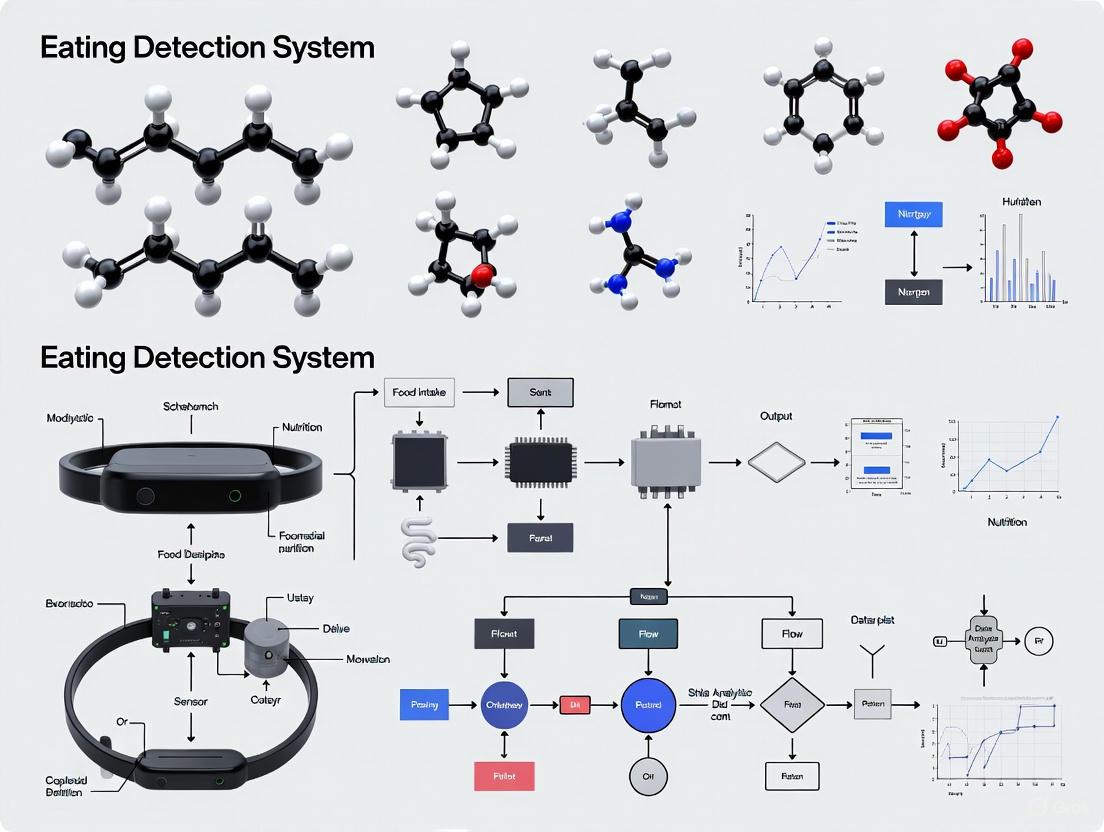
This article provides a comprehensive analysis of the development lifecycle for neck-worn eating detection systems, tailored for researchers and drug development professionals.
Neck-Worn Eating Detection Systems: Development, Challenges, and Clinical Translation
Abstract
This article provides a comprehensive analysis of the development lifecycle for neck-worn eating detection systems, tailored for researchers and drug development professionals. It explores the foundational principles of using sensor systems to passively and objectively detect eating behaviors, moving beyond traditional self-report methods. The content covers the methodological approaches for system design, including multi-sensor integration and algorithmic development, and delves into critical troubleshooting and optimization strategies for real-world deployment. Finally, it offers a rigorous framework for the validation and comparative analysis of these systems against other sensing modalities, discussing their significant potential to enhance dietary assessment in clinical research and nutrition care.
The Foundation of Automated Dietary Monitoring: Principles and Potential
The Critical Need for Objective Eating Behavior Data in Clinical Research
Traditional methods for assessing dietary intake and eating behavior in clinical research have relied predominantly on self-reported tools such as 24-hour dietary recalls, food diaries, and food frequency questionnaires [1] [2]. While these methods have been widely used, they are susceptible to significant limitations including recall error, social desirability bias, and intentional misreporting [1]. The subjective nature of these tools challenges the reliability of data collected in both clinical trials and nutritional surveillance studies.
The emergence of sensor-based technologies offers a transformative opportunity to capture objective, behaviorally-defined eating metrics. This shift is particularly critical in obesity research, drug development, and nutritional science, where precise measurement of eating behaviors is essential for evaluating intervention efficacy [2]. This document outlines structured protocols and application notes for implementing objective eating behavior assessment, with specific focus on integration with neck-worn detection systems within a comprehensive research framework.
The Case for Objectivity: Quantifying the Limitations of Self-Report
Evidence of Self-Report Inaccuracy
Multiple studies demonstrate the critical inaccuracies inherent in subjective eating behavior assessment:
- Visual Estimation Challenges: In clinical environments, nursing staff failed to record 44% (220/503) of meals correctly when using traditional food intake charts [3].
- Manual Input Limitations: Nutrition management applications requiring manual input demonstrate significant underestimation of energy intake and vary considerably in accuracy between platforms [3].
- Craving Measurement Limitations: Studies using the Food Craving Inventory (FCI) demonstrate that self-reported hunger metrics (e.g., visual analog scales) may not adequately control for objective physiological hunger states, potentially confounding results [4].
Comparative Accuracy of Objective Methods
Recent validation studies demonstrate the superior performance of objective assessment technologies:
Table 1: Comparative Performance of Eating Behavior Assessment Methods
| Assessment Method | Accuracy/Performance Metrics | Limitations | Research Context |
|---|---|---|---|
| AI-Based Food Image Analysis | Mean Absolute Error (MAE) of 0.85 (8.5% error); high correlation with actual energy (ρ=0.89-0.97) [3] | Lower accuracy than direct visual estimation by trained staff; requires standardized imaging | Hospital liquid food estimation |
| Smartwatch-Based Meal Detection | 96.48% meals detected (1259/1305); Precision: 80%, Recall: 96%, F1-score: 87.3% [5] | Requires dominant hand movement; may miss non-hand-to-mouth eating | Free-living meal detection in college students |
| Objective Hunger Measurement (Fasting) | Significant correlation with cravings for sweets (r=0.381, p=0.034) [4] | Requires controlled fasting protocols; limited to specific time windows | Obesity research with controlled fasting |
Technological Landscape: Sensor-Based Modalities for Objective Eating Behavior Assessment
Sensor Taxonomy for Eating Behavior Measurement
Research identifies multiple sensor modalities capable of capturing distinct eating metrics [2]:
- Acoustic Sensors: Detect chewing and swallowing sounds through neck-worn devices
- Motion/Inertial Sensors: Capture hand-to-mouth gestures (wrist-worn) and head movement (neck-worn)
- Strain Sensors: Measure swallowing frequency and muscle activity
- Camera-Based Systems: Provide visual documentation of food type and quantity
- Physiological Sensors: Monitor heart rate, glucose, and other metabolic parameters
Integration Framework for Neck-Worn Detection Systems
Neck-worn eating detection systems typically employ a multi-sensor approach, integrating data from acoustic, motion, and physiological sensors to detect eating episodes with high temporal resolution. The diagram below illustrates the core architecture and data flow for a comprehensive neck-worn eating detection system.
Application Notes: Implementation Protocols for Clinical Research
Protocol 1: Validation of Neck-Worn Sensors Against Objective Food Intake
Purpose: To establish criterion validity of neck-worn eating detection systems against weighed food intake in controlled clinical settings.
Experimental Workflow:
Methodological Details:
- Participants: Recruit 30-50 adults representing diverse BMI categories (normal weight, overweight, obesity)
- Control Measures: Implement standardized pre-meal fasting (≥4 hours), control for menstrual cycle phase (days 10-14 for premenopausal women) [4]
- Food Presentation: Serve standardized meals with predetermined portion sizes; weigh all food items pre- and post-consumption
- Sensor Configuration: Simultaneously deploy neck-worn acoustic sensors, inertial measurement units, and reference video recording
- Validation Metrics: Calculate sensitivity, specificity, F1-score for meal detection; intraclass correlation coefficients for meal duration; root mean square error for eating rate estimation
Protocol 2: Free-Living Eating Behavior Monitoring
Purpose: To characterize naturalistic eating patterns and contextual factors in free-living environments.
Methodological Details:
- Deployment Duration: 7-14 days to capture weekday/weekend variability
- Contextual Data Collection: Implement ecological momentary assessment (EMA) triggered by automated eating detection to capture:
- Social context (eating alone vs. with others)
- Location (home, work, restaurant)
- Mood and stress levels
- Food craving intensity [5]
- Compliance Optimization: Utilize smartwatch-based triggering (87.3% F1-score for meal detection) to prompt EMA responses during eating episodes [5]
- Data Integration: Temporally synchronize sensor data with EMA responses and auxiliary biometric data (e.g., continuous glucose monitoring, physical activity)
Protocol 3: Intervention Response Assessment
Purpose: To objectively quantify changes in eating behavior in response to pharmacological, behavioral, or surgical interventions.
Methodological Details:
- Study Design: Randomized controlled trials with pre-post intervention assessment
- Core Metrics:
- Eating microstructure: Bite rate, chewing rate, swallowing frequency
- Meal patterns: Meal frequency, timing, duration
- Eating rate: Grams per minute, kilocalories per minute
- Control Measures: Standardize food type and texture during laboratory meals; control for time of day
- Data Analysis: Compare pre-post changes in objective eating parameters between intervention and control groups; correlate with clinical outcomes (weight loss, metabolic parameters)
The Scientist's Toolkit: Essential Research Reagent Solutions
Table 2: Key Reagents and Technologies for Objective Eating Behavior Research
| Tool/Category | Specific Examples | Research Application | Key Considerations |
|---|---|---|---|
| Neck-Worn Acoustic Sensors | - Piezoelectric microphones- Accelerometers | Capture chewing and swallowing sounds; vali-dated for eating episode detection [2] | Signal quality affected by ambient noise; requires positioning optimization |
| Inertial Measurement Units | - 3-axis accelerometers- Gyroscopes | Track head movement during food ingestion; complementary to acoustic sensors [2] | Can distinguish chewing from talking; sensitive to sensor placement |
| Algorithmic Platforms | - Random Forest classifiers- Convolutional Neural Networks- Support Vector Machines | Classify eating episodes from sensor data; achieve >90% detection accuracy in controlled settings [5] [6] | Performance varies by food texture; requires individual calibration |
| Validation Reference Systems | - Weighed food intake- Video recording- Double-labeled water | Establish criterion validity for newly developed detection systems [3] | Labor-intensive; may influence natural eating behavior |
| Contextual Assessment Tools | - Ecological Momentary Assessment (EMA)- Eating Behaviors Assessment for Obesity (EBA-O) | Capture subjective experience alongside objective metrics; assess pathological eating patterns [5] [7] | EMA timing critical; validated questionnaires disease-specific |
Data Analysis and Interpretation Framework
Signal Processing and Feature Extraction
Raw sensor data requires sophisticated processing to extract meaningful eating behavior metrics:
- Acoustic Signals: Apply bandpass filtering (0.5-2 kHz) to capture chewing sounds; extract temporal features (burst duration, interval) and spectral features (median frequency, spectral entropy)
- Motion Signals: Process accelerometer data to identify characteristic head movement patterns associated with food ingestion; quantify movement frequency, amplitude, and regularity
- Sensor Fusion: Implement machine learning algorithms (e.g., convolutional neural networks, random forests) to integrate multi-modal sensor data for improved classification accuracy [5] [1]
Clinical Interpretation of Objective Eating Metrics
Translating sensor-derived metrics into clinically meaningful parameters requires validated frameworks:
- Eating Microstructure: Bite rate, chewing rate, and swallowing frequency correlate with energy intake rate and nutrient absorption
- Meal Temporal Patterns: Objective meal timing and frequency data provide insights into circadian eating patterns and their metabolic consequences
- Behavioral Phenotyping: Cluster analysis of multiple eating parameters can identify distinct behavioral phenotypes (e.g., rapid eaters, frequent snackers) with potential therapeutic implications [7]
The integration of objective, sensor-based eating behavior assessment into clinical research represents a paradigm shift with transformative potential. Neck-worn detection systems offer particular promise through their ability to capture rich, high-temporal resolution data on natural eating patterns in both controlled and free-living environments. The protocols and application notes outlined herein provide a framework for implementing these technologies with scientific rigor, enabling researchers to overcome the limitations of traditional self-report methods and advance our understanding of eating behavior as a critical component of health and disease.
The development of robust neck-worn eating detection systems represents a significant frontier in automated dietary monitoring (ADM) and precision health. These systems aim to objectively capture eating behaviors by detecting physiological and gestural signatures of food intake, thereby overcoming the limitations of self-reported methods [8] [2]. The core of such systems relies on a multi-modal sensing approach, where Piezoelectric Sensors, Inertial Measurement Units (IMUs), and Acoustic Detection modules work in concert. Piezoelectric sensors capture mechanical vibrations from swallowing, IMUs track head and neck movements associated with feeding gestures, and acoustic sensors identify sounds related to chewing and swallowing. This application note details the operating principles, performance characteristics, and experimental protocols for integrating these three key sensing modalities, providing a foundational framework for researchers and engineers in the field [2] [9].
The table below summarizes the core characteristics, target signals, and performance metrics of the three primary sensing modalities used in neck-worn eating detection systems.
Table 1: Core Sensing Modalities for Neck-Worn Eating Detection
| Sensing Modality | Primary Target Signals | Key Performance Metrics (from Literature) | Strengths | Key Challenges |
|---|---|---|---|---|
| Piezoelectric Sensor | Swallowing vibrations (anterior neck), laryngeal movement [9] | Swallow detection: F1-score of 0.864 (solid), 0.837 (liquid) [9] | High sensitivity to laryngeal movement, robust to ambient acoustic noise | Signal variation with sensor placement and skin contact; confounds from speech |
| Inertial Measurement Unit (IMU) | Head flexion/extension (forward/backward lean), hand-to-mouth gestures (via wrist IMU) [2] [9] | Critical for compositional eating detection logic (e.g., forward lean + bites) [9] | Provides crucial contextual data for differentiating eating from other activities | Prone to motion artifacts; requires precise orientation tracking |
| Acoustic Detection | Chewing sounds, swallowing sounds, food texture [2] | Food-type classification (7 types): 84.9% accuracy with a neck-worn microphone [2] | Direct capture of ingestive sounds, rich data for food type classification | Susceptible to ambient noise; significant privacy concerns [2] |
Experimental Protocols for Modality Evaluation
Rigorous experimental protocols are essential for validating the performance of each sensing modality individually and in an integrated system. The following workflows and procedures outline standardized methods for data collection and analysis.
Protocol for Piezoelectric Swallow Detection
This protocol is designed to evaluate the efficacy of a piezoelectric sensor in detecting and classifying swallows in a controlled laboratory setting.
Table 2: Key Research Reagents for Piezoelectric Swallow Detection
| Item Name | Function/Description | Example Specification / Note |
|---|---|---|
| Piezoelectric Film Sensor | Converts mechanical strain from laryngeal movement into an electrical signal. | Embedded in a snug-fitting necklace form factor to ensure skin contact [9]. |
| Data Acquisition (DAQ) System | Conditions (amplifies, filters) and digitizes the analog signal from the piezoelectric sensor. | Requires high-resolution ADC; on-board filtering (e.g., 1-500 Hz bandpass) is recommended. |
| Mobile Ground Truth App | Allows annotator to manually mark the timing of each swallow event during the experiment. | Provides a synchronized ground truth label for supervised machine learning [9]. |
| Signal Processing & ML Software | For feature extraction (e.g., wavelet features) and training a swallow classifier (e.g., SVM). | Used to derive performance metrics like F1-score from the labeled dataset [9]. |
Figure 1: Experimental workflow for piezoelectric swallow detection, showing the parallel paths of data collection and ground truth annotation leading to model evaluation.
Procedure:
- Participant Preparation: Recruit participants following institutional review board (IRB) protocols. Fit the neck-worn device with the embedded piezoelectric sensor snugly against the anterior neck.
- Data Collection: In a controlled lab environment, present participants with standardized boluses of solid and liquid foods. Simultaneously:
- Signal Acquisition: Record the raw voltage signal from the piezoelectric sensor.
- Ground Truth Annotation: A trained annotator uses a mobile application to mark the exact timing of every swallow event, creating a labeled dataset [9].
- Data Processing: Synchronize the sensor signal and ground truth labels. Preprocess the signal (bandpass filtering, normalization) and segment it into windows containing swallow and non-swallow events.
- Model Training & Evaluation: Extract features (e.g., time-domain, frequency-domain, wavelet) from the segmented data. Train a machine learning classifier (e.g., Support Vector Machine) using cross-validation and report performance metrics like F1-score, accuracy, and recall [9].
Protocol for Multi-Modal Eating Episode Detection
This protocol describes a compositional method for detecting full eating episodes by fusing data from all three modalities, suitable for both lab and free-living validation.
Table 3: Key Research Reagents for Multi-Modal Eating Detection
| Item Name | Function/Description | Example Specification / Note |
|---|---|---|
| Multi-Sensor Neckband | Wearable platform housing piezoelectric sensor, IMU, and microphone. | Enables synchronized data capture from all core modalities [9]. |
| Wearable Camera (e.g., egocentric camera) | Provides objective, first-person video as ground truth for eating episodes. | Must be synchronized with sensor data; raises privacy considerations [9]. |
| Data Fusion & Analysis Framework | Software platform to synchronize, process, and apply logic/rules to multi-modal data streams. | Implements the compositional logic for fusing detections from individual sensors. |
Figure 2: Logical decision diagram for multi-modal eating detection, illustrating how signals from different sensors are fused to robustly identify an eating episode.
Procedure:
- System Deployment: Deploy the multi-sensor neckband (piezoelectric, IMU, acoustic) to participants in lab or free-living settings. Synchronize the sensor data streams with a ground truth method, such as a wearable camera or a dedicated annotation app [9].
- Component Detection: Run individual detectors on each sensor stream:
- Piezoelectric Sensor: Identify swallow events.
- IMU: Detect feeding gestures (hand-to-mouth via wrist IMU) and head pose (forward lean).
- Acoustic Sensor: Detect chewing and biting events.
- Compositional Logic Fusion: Implement a logic-based or probabilistic model to fuse the outputs of the individual detectors. For example, an eating episode is predicted only if bites, chews, swallows, feeding gestures, and a forward lean are detected in close temporal proximity [9]. This approach improves robustness; detecting only swallows and a backward lean might indicate drinking instead.
- Validation: Compare the system's detected eating episodes against the ground truth. Report episode-level precision, recall, and F1-score. Free-living studies are critical for testing the system's resilience to confounding activities (e.g., talking, smoking) [9].
Discussion and Integration Strategy
The true strength of a neck-worn eating detection system lies in the synergistic fusion of its constituent modalities. While each sensor has limitations—acoustic sensors are sensitive to noise, piezoelectric signals vary with placement, and IMUs are prone to motion artifacts—their combination creates a robust system through compositionality [9]. This multi-modal approach allows the system to cross-validate signals, significantly reducing false positives caused by confounding behaviors like speaking or non-food hand-to-mouth gestures.
Future development should focus on optimizing sensor fusion algorithms, enhancing energy efficiency for long-term deployment, and rigorously validating systems in diverse, free-living populations to ensure generalizability. Addressing privacy concerns, particularly for acoustic data, through advanced on-device processing and sound filtering will be essential for user adoption and ethical implementation [2].
Application Notes
Rationale and Technological Foundation
The development of neck-worn eating detection systems represents a paradigm shift in objective dietary monitoring, moving from isolated swallow capture to a comprehensive compositional analysis of eating behavior. This approach leverages the neck as a physiologically strategic site, using mechano-acoustic sensors to detect vibrations propagated from the vocal tract and upper digestive system during feeding activities. Unlike acoustic microphones, these sensors preserve user privacy through inherent signal filtering and demonstrate robust performance against background noise, making them ideal for ecologically valid monitoring [10].
The "compositional approach" conceptualizes a meal not as a single event but as a hierarchical structure of discrete behavioral components: swallows, chews, and bites. By detecting and temporally sequencing these fundamental elements, the system can reconstruct complete eating episodes and extract meaningful behavioral patterns. Research on throat physiology monitors has demonstrated high accuracy in classifying swallowing events, forming the foundational layer upon which this compositional model is built [11] [12].
Key Performance Metrics of Detection System Components
Table 1: Performance characteristics of different sensing modalities for detecting components of eating behavior.
| Detection Component | Sensing Modality | Reported Accuracy/Performance | Key Advantages | Primary Limitations |
|---|---|---|---|---|
| Swallow Detection | Neck Surface Accelerometer (NSA) | High accuracy in classifying swallowing events [11] | Privacy-preserving, robust to background noise [10] | Early development stage [11] |
| Chew Detection | Video-based Facial Landmarks | 60% accuracy for chew counting [13] | Non-invasive, scalable | Requires camera, privacy concerns |
| Bite Detection | Smartwatch Inertial Sensing (Hand-to-Mouth) | F1-score of 87.3% for meal detection [5] | Leverages commercial hardware, real-time capability | Requires watch wear on dominant hand |
| Bite Detection | Video-based Facial Landmarks | 90% accuracy for bite counting [13] | High accuracy for bites | Requires camera, privacy concerns |
| Meal Context | Smartwatch-Triggered Ecological Momentary Assessment (EMA) | 96.48% of meals successfully triggered EMAs [5] | Captures subjective contextual data in real-time | Relies on user self-report |
Data Integration and Output
Integrating data from these complementary detection layers enables the derivation of complex behavioral metrics that are clinically significant. These include:
- Eating Rate: Bites or grams consumed per minute.
- Chewing Efficiency: Chews per bite or per gram of food.
- Meal Duration: Total time from first to last bite.
- Swallowing Safety: Coordination of breathing and swallowing.
- Contextual Patterns: Meal timing, social context, and self-reported food type.
This multi-faceted data output provides a comprehensive digital phenotype of eating behavior, with applications ranging from clinical monitoring of dysphagia in head and neck cancer survivors to behavioral interventions for obesity [11] [5]. The integration of passive sensing with active self-report via EMAs creates a powerful mixed-methods framework for understanding the full context of eating [5].
Experimental Protocols
Protocol A: Validation of a Neck-Worn Swallow Detection System
Objective: To validate the accuracy of a Neck Surface Accelerometer (NSA) for detecting and classifying swallowing events against a videofluoroscopic standard in a controlled lab setting.
Materials:
- In-house NSA device (e.g., Knowles BU-27135 accelerometer in silicon pad) [10]
- Data logger (e.g., Sony voice recorder, ICD-UX565F) [10]
- Videofluoroscopy system
- Standardized food and liquid consistencies (e.g., thin liquid, pudding, cookie)
- Disinfectant for equipment cleaning
Procedure:
- Sensor Placement: Attach the NSA sensor securely to the participant's neck at the sternal notch using double-sided adhesive and ensure a strong signal via a monitoring interface [10].
- System Synchronization: Synchronize the clock of the NSA data logger with the videofluoroscopy system to enable millisecond-level alignment of data streams.
- Calibration: Record a 30-second baseline of resting swallows (saliva swallows) with the participant in a seated position.
- Data Collection:
- Present the participant with 5 mL of each standardized consistency via a spoon or cup.
- Instruct the participant to hold the bolus in their mouth until cued to swallow.
- Simultaneously record swallowing vibrations via the NSA and the physiological swallow sequence via videofluoroscopy.
- Repeat each consistency three times in randomized order.
- Data Export: Transfer NSA data as WAV files and videofluoroscopy videos to a secure server for analysis [10].
Analysis:
- Annotation: A trained clinician will annotate the onset and type of each swallow on the videofluoroscopy recording, creating the ground truth.
- Feature Extraction: From the NSA signal, extract time-frequency features (e.g., signal energy, spectral centroid, duration) for each annotated swallow event.
- Model Training: Train a machine learning classifier (e.g., Random Forest) using the videofluoroscopy annotations as labels and the NSA features as inputs.
- Performance Calculation: Calculate the precision, recall, and F1-score of the classifier for detecting and differentiating between swallow types.
Protocol B: Free-Living Meal Detection via Multi-Modal Sensing
Objective: To deploy a multi-modal sensor system (neck-worn sensor and smartwatch) for compositional eating behavior detection and contextual data capture in a free-living environment.
Materials:
- Neck-worn NSA device (as in Protocol A)
- Commercial smartwatch (e.g., Pebble, Apple Watch) running a custom eating detection app [5]
- Smartphone to act as a data hub and for administering EMAs [5]
Procedure:
- Device Setup:
- Fit the participant with the NSA device.
- Install the eating detection application on the smartwatch and smartphone.
- Fit the participant with the smartwatch on their dominant wrist.
- Briefing: Instruct the participant to wear both devices for 8-12 hours per day for 3 consecutive days and to go about their normal daily routine, including all meals and snacks.
- Passive Data Collection:
- The NSA continuously records vibrations from the neck.
- The smartwatch accelerometer continuously monitors for hand-to-mouth gestures characteristic of eating [5].
- Active Data Collection (EMA):
- Data Logging: Participants are provided with a simple diary to note the start and end times of their main meals for ground-truth validation.
Analysis:
- Meal Episode Segmentation: Use the smartwatch's meal detection output (e.g., a cluster of eating gestures) to define the start and end of putative meal episodes.
- Component Analysis: Within each meal episode, analyze the NSA signal to identify and count swallow and chew events.
- Data Fusion: Temporally align the swallow/chew data from the NSA with the bite data (from hand gestures) from the smartwatch to build a compositional timeline of the meal.
- Context Integration: Merge the derived behavioral metrics with the self-reported contextual data from the EMAs for a holistic analysis.
System Workflow and Signaling Pathways
Logical Workflow for Compositional Eating Detection
Multi-Modal Sensor Data Integration Logic
The Scientist's Toolkit: Research Reagent Solutions
Table 2: Essential materials and tools for developing and testing neck-worn eating detection systems.
| Item Name | Function/Application | Example/Specifications | Key Considerations |
|---|---|---|---|
| Neck Surface Accelerometer (NSA) | Core sensor for detecting swallows and chews via neck skin vibrations. | Knowles BU-27135; <$100 per unit; 44.1 kHz sampling rate [10]. | Inherently privacy-preserving; robust against background noise [10]. |
| Data Logger | Records high-fidelity sensor data for later analysis. | Sony voice recorder (ICD-UX565F); saves data in WAV format [10]. | Sufficient battery life for intended recording duration; reliable storage. |
| Smartwatch with Inertial Sensors | Detects bites via hand-to-mouth movement patterns. | Commercial devices (e.g., Pebble, Apple Watch) with 3-axis accelerometer [5]. | Must support development of custom data collection applications. |
| Ecological Momentary Assessment (EMA) Software | Captures self-reported contextual data in real-time. | Custom smartphone app triggered by passive eating detection [5]. | Questions must be brief and designed for minimal user burden. |
| Videofluoroscopy System | Gold-standard ground truth for validating swallow detection. | Clinical-grade system for visualizing bolus flow during swallowing. | Restricted to lab settings due to radiation exposure and equipment requirements. |
| Signal Processing & Machine Learning Platform | For feature extraction, model training, and classification of eating events. | Python with scikit-learn, TensorFlow/PyTorch; MATLAB. | Requires expertise in time-series analysis and machine learning. |
| Annotation Software | For manual labeling of sensor data to create ground-truth datasets. | Noldus Observer XT, ELAN, or custom solutions [13]. | Time-consuming process requiring trained, reliable annotators. |
Application Note: Navigating Research Barriers in Wearable Eating Detection
The development of neck-worn wearable systems for eating detection represents a paradigm shift in objective dietary monitoring for clinical research and obesity treatment. However, the translation of this technology from laboratory prototypes to reliable free-living clinical instruments faces three interconnected barriers: sample selection, transdisciplinarity, and real-world realism [9]. This application note synthesizes findings from multiple studies to provide a structured framework for addressing these challenges, complete with quantitative performance data and detailed methodological protocols.
Sample selection challenges arise when specific inclusion criteria limit participant recruitment, potentially compromising claims of translational potential. For instance, research indicates that eating research on non-obese samples often fails to generalize to obese populations, highlighting the critical need for representative sampling [9].
Transdisciplinarity presents integration challenges, as successful mHealth systems require unification of medical investigators, software, electrical, and mechanical engineers, computer scientists, research staff, and information technologists under a common goal [9]. This diversity of expertise, while necessary, creates significant coordination challenges.
Real-world realism remains elusive because controlled lab studies, while optimal for collecting data and ground truth, often fail to generalize to natural environments. Conversely, free-living studies substantially complicate data and ground truth collection procedures while introducing potential behavioral alterations due to device presence [9] [14].
Table 1: Evolution of Neck-Worn Eating Detection Systems Across Study Environments
| Study | Study Type | Participants (Obese) | Sensing Modalities | Primary Target | Key Result |
|---|---|---|---|---|---|
| Study 1 (Alshurafa et al.) [9] | In-lab | 20 | Piezo | Swallow | 87.0% Detection |
| Study 2 (Kalantarian et al.) [9] | In-lab | 30 | Piezo, Accelerometer | Swallow | 86.4% Detection |
| Study 3 (Zhang et al.) [9] | In-wild | 20 (10) | Proximity, Ambient, IMU | Eating | 77.1% Detection |
| Study 4 (SenseWhy) [9] [15] | In-wild | 60 (60) | Proximity, Ambient, IMU | Eating | Analysis Ongoing |
Experimental Protocols for Eating Behavior Research
The SenseWhy Free-Living Study Protocol
The SenseWhy study exemplifies a comprehensive approach to addressing real-world realism challenges through multi-modal sensor deployment and rigorous ground truth collection [9] [15].
Primary Objective: To monitor eating behavior in free-living settings and identify overeating patterns through passive sensing and ecological momentary assessment (EMA).
Participant Profile:
- Sample: 65 adults with obesity (final analysis n=48 after attrition and data quality filters)
- Mean Age: 41 years (range: 21-66)
- Gender Distribution: 77.1% female
- Inclusion Criteria: BMI ≥30, smartphone ownership, willingness to wear sensors
Sensor Configuration:
- NeckSense Necklace: Multi-sensor neck-worn device detecting bites, chews, and feeding gestures
- HabitSense Body Camera: Activity-oriented camera with thermal sensing triggered by food presence
- Wrist-worn Activity Tracker: Commercial-grade device (FitBit/Apple Watch equivalent) for movement capture
Study Duration & Data Collection:
- Monitoring Period: 2 weeks per participant
- Total Data: 2,302 meal-level observations (average 48 meals per participant)
- Video Footage: 6,343 hours spanning 657 days with manual micromovement labeling
- EMA Collection: Psychological and contextual information gathered before and after meals
Ground Truth Establishment:
- Dietitian-Administered 24-hour Recalls: Standardized nutritional assessment
- Manual Video Annotation: Frame-by-frame labeling of bites, chews, and swallows
- Meal Classification: 369 (16.4%) of 2,246 meals identified as overeating episodes
Analytical Framework:
- Machine Learning: XGBoost classifier for overeating detection
- Feature Sets: EMA-only, passive sensing-only, and feature-complete models
- Clustering: Semi-supervised learning to identify overeating phenotypes
Table 2: Performance Metrics for Overeating Detection in SenseWhy Study
| Model Configuration | AUROC (Mean) | AUPRC (Mean) | Brier Score Loss | Top Predictive Features |
|---|---|---|---|---|
| EMA-Only Features | 0.83 | 0.81 | 0.13 | Light refreshment (negative), pre-meal hunger (positive), perceived overeating (positive) |
| Passive Sensing-Only | 0.69 | 0.69 | 0.18 | Number of chews (positive), chew interval (negative), chew-bite ratio (negative) |
| Feature-Complete (Combined) | 0.86 | 0.84 | 0.11 | Perceived overeating (positive), number of chews (positive), light refreshment (negative) |
Laboratory Validation Protocol for Sensor Development
Controlled laboratory studies provide essential foundational validation for eating detection algorithms before free-living deployment [9].
Objective: To establish baseline performance metrics for swallowing and eating detection in controlled environments.
Participant Recruitment:
- Sample Size: 20-30 participants per validation study
- Stratification: Include participants across BMI categories to test generalizability
Experimental Setup:
- Standardized Meals: Fixed food types with varying textures (solid vs. liquid)
- Sensor Placement: Neck-worn piezoelectric sensor array positioned for optimal swallow detection
- Ground Truth: Concurrent video recording with manual annotation of swallowing events
Data Collection Parameters:
- Piezoelectric Sensors: Vibration recording from electrical charge produced during sensor deformation
- Inertial Measurement Units (IMUs): Motion capture during feeding gestures
- Signal Processing: Spectrogram analysis for swallow identification
Performance Validation:
- Classification Algorithms: Trained on resulting voltages and inertial data streams
- Validation Method: Leave-one-subject-out cross-validation
- Outcome Measures: Swallow detection for solids (F=0.864) and liquids (F=0.837)
Compositional Detection Logic for Complex Eating Behaviors
Eating detection requires a compositional approach where systems understand behavior emerging from multiple, easier-to-sense behavioral or biometric features [9]. The logical framework for distinguishing eating from confounding activities follows a decision tree based on sensor inputs.
Research Reagent Solutions: Essential Materials for Eating Detection Studies
Table 3: Essential Research Materials for Wearable Eating Detection Studies
| Category | Specific Tool/Technology | Function/Purpose | Example Implementation |
|---|---|---|---|
| Neck-Worn Sensors | Piezoelectric Sensor Array | Detects swallows via neck vibration | Embedded in necklace for snug fit [9] |
| Inertial Measurement Unit (IMU) | Captures feeding gestures and body posture | Multi-axis accelerometer/gyroscope [9] | |
| Complementary Wearables | Optical Tracking Sensors (OCO) | Monitors facial muscle activations | Embedded in smart glasses frames [16] |
| Activity-Oriented Camera (AOC) | Records food-related actions while preserving privacy | HabitSense with thermal triggering [17] [14] | |
| Jawline Motion Sensor | Detects chewing via jaw movement | Button-sized sensor on jawline [18] | |
| Ground Truth Collection | Wearable Camera Systems | Provides video verification of eating episodes | Thermal-sensing bodycam [17] [15] |
| Ecological Momentary Assessment (EMA) | Captures psychological and contextual factors | Smartphone app for pre/post-meal surveys [15] | |
| 24-Hour Dietary Recall | Validates food intake and meal timing | Dietitian-administered standardized protocol [15] | |
| Analytical Tools | Machine Learning Frameworks | Classifies eating episodes from sensor data | XGBoost for overeating detection [15] |
| Signal Processing Algorithms | Extracts features from raw sensor data | Spectrogram analysis for swallow detection [9] |
Study Deployment Workflow: From Laboratory to Free-Living Environments
Successful translation of eating detection systems requires progressive validation across environments of increasing ecological validity. The following workflow illustrates this deployment pipeline.
Implementation Framework for Addressing Key Challenges
Sample Selection Strategy
Representative Recruitment:
- Population-Specific Sampling: Prioritize inclusion of target clinical populations (e.g., individuals with obesity) rather than convenience samples of healthy individuals [9]
- Stratified Enrollment: Ensure demographic and anthropometric diversity to test device performance across body types and eating behaviors
Handling Body Variability:
- Modular Design: Implement configurable form factors to accommodate different neck sizes and body shapes [9]
- Sensor Placement Protocols: Standardize positioning procedures to minimize inter-participant measurement variance
Transdisciplinarity Management
Team Composition:
- Integrated Expertise: Assemble teams encompassing medical science, engineering, computer science, and clinical research staff [9]
- Clear Role Delineation: Establish defined responsibilities while maintaining collaborative problem-solving channels
Technology Development Approach:
- Build vs. Buy Decisions: Carefully evaluate trade-offs between commercial technologies (limited flexibility) and custom solutions (development overhead) [9]
- Iterative Prototyping: Implement rapid cycles of development and validation with continuous feedback from all disciplinary perspectives
Real-World Realism Enhancement
Progressive Ecological Validation:
- Staged Deployment: Transition systematically from laboratory to semi-controlled to free-living environments [9] [18]
- Contextual Diversity: Ensure testing across various eating contexts (home, restaurant, social gatherings) to capture behavioral variability
Ground Truth Methodologies:
- Multi-Modal Verification: Combine wearable cameras, EMAs, and dietitian recalls to establish comprehensive ground truth [15]
- Privacy-Preserving Design: Implement activity-oriented recording (e.g., thermal-triggered cameras) to balance data quality with participant comfort [17] [14]
Behavioral Authenticity:
- Habituation Periods: Allow extended device wear before formal data collection to minimize observation effects [9]
- Unobtrusive Sensing: Minimize device bulk and visibility to support natural eating behaviors
The frameworks and protocols outlined provide a roadmap for developing neck-worn eating detection systems that successfully navigate the critical challenges of sample selection, transdisciplinarity, and real-world realism. Implementation of these structured approaches will accelerate the translation of wearable sensing technologies from research prototypes to validated clinical instruments for obesity treatment and dietary behavior research.
Building the System: Sensor Integration, Algorithm Development, and Clinical Workflow
The development of automated dietary monitoring systems represents a significant frontier in mobile health (mHealth). Among various approaches, neck-worn eating detection systems have emerged as a promising platform due to their proximity to relevant physiological and behavioral signals. These systems face the fundamental challenge of achieving robust detection accuracy across diverse populations and real-world conditions, which single-sensor architectures often fail to address. Multi-sensor fusion has consequently become an essential architectural paradigm, integrating complementary data streams to overcome the limitations of individual sensing modalities. This architecture enables systems to distinguish eating from confounding activities through compositional behavior analysis, where eating is recognized as the temporal co-occurrence of multiple component actions such as chewing, swallowing, and feeding gestures [9]. This application note details the hardware architecture, sensor modalities, experimental protocols, and validation methodologies for implementing robust multi-sensor fusion in neck-worn eating detection systems, framed within the broader context of developing clinically viable dietary monitoring tools.
Core Sensor Modalities and Fusion Architecture
The effectiveness of a neck-worn eating detection system hinges on the strategic selection and integration of complementary sensor modalities. The following table summarizes the primary sensors employed, their measured parameters, and their specific roles in detecting components of eating behavior.
Table 1: Core Sensor Modalities in Neck-Worn Eating Detection Systems
| Sensor Type | Measured Parameter | Target Behavior | Role in Fusion |
|---|---|---|---|
| Proximity Sensor | Distance to chin/neck [19] | Jaw movement during chewing [19] | Detects periodic chewing sequences; primary indicator of mastication. |
| Inertial Measurement Unit (IMU) | Acceleration, orientation [19] | Head tilt (Lean Forward Angle), feeding gestures [9] [19] | Identifies body posture indicative of eating; distinguishes eating from drinking [9]. |
| Ambient Light Sensor | Light intensity [19] | Hand-to-mouth gestures occluding light [19] | Provides supplementary context for feeding gestures. |
| Piezoelectric Sensor | Skin vibrations [9] | Swallowing events (deglutition) [9] | Captures swallows of solids and liquids; a direct physiological correlate of intake. |
The logical relationship and data flow between these sensors and the fusion process can be visualized as a hierarchical architecture.
System Architecture and Data Flow
The Researcher's Toolkit: Essential Research Reagents and Materials
The development and validation of a multi-sensor fusion system for eating detection require a specific set of hardware, software, and methodological "reagents." The following table details these essential components and their functions within the research workflow.
Table 2: Key Research Reagents and Materials for System Development
| Category | Item | Specification / Example | Primary Function |
|---|---|---|---|
| Hardware Platform | Custom Necklace/Patch | Embedded proximity, ambient light, IMU sensors [19] | Form-factor for sensor integration and participant wear. |
| Data Acquisition Unit | On-board memory, Bluetooth/Wi-Fi module | Captures and stores/transmits raw sensor data streams. | |
| Ground Truth Collection | Wearable Camera (e.g., egocentric camera) | First-person view [9] [19] | Provides objective, frame-level ground truth for eating episodes in free-living studies. |
| Mobile Application | Custom app for self-reporting [9] [20] | Enables participant-initiated meal logging (e.g., start/end times). | |
| Data Processing & Analysis | Signal Processing Toolkit | MATLAB, Python (NumPy, SciPy) | For filtering, segmenting, and extracting features from raw sensor data. |
| Machine Learning Library | Python (scikit-learn, TensorFlow/PyTorch) | For building and training classification and fusion models (e.g., SVM, Random Forest, Neural Networks) [20]. | |
| Validation Tools | Video Annotation Software | ELAN, ANVIL | To manually label eating episodes and micro-actions from video ground truth. |
Experimental Protocols for System Validation
Rigorous validation across controlled and free-living settings is critical to demonstrate system robustness. The experimental workflow progresses from initial feasibility studies to comprehensive in-the-wild deployments.
Experimental Workflow for Validation
Protocol 1: Controlled In-Lab Feasibility Study
This protocol establishes a baseline performance benchmark under ideal conditions [9].
- Objective: To validate the core functionality of individual sensors and the initial fusion algorithm for detecting specific micro-actions like chewing and swallowing.
- Participant Recruitment: ~20-30 participants. It is crucial to include individuals with diverse Body Mass Index (BMI) to assess the impact of body morphology on sensor performance [9] [19].
- Experimental Procedure: Participants consume standardized meals (including solids and liquids) in a laboratory setting. The session is recorded using high-quality video cameras from multiple angles to provide precise ground truth.
- Ground Truth Collection: Video recordings are manually annotated by trained researchers to label the exact timestamps of swallows, bites, and chews [9].
- Key Metrics: F1-score, precision, and recall for detecting swallows and chewing sequences. Example: A piezo-based system achieved F-scores of 0.864 for solid and 0.837 for liquid swallows in lab settings [9].
Protocol 2: Semi-Free-Living (Exploratory) Study
This protocol tests the system in a more natural, yet still somewhat controlled, environment [19].
- Objective: To evaluate the integrated system's performance in a realistic setting and identify usability issues before full deployment.
- Setting: A controlled environment like a hospital ward or a designated living area where participants can move freely but are intermittently monitored.
- Procedure: Participants wear the system for a defined period (e.g., one waking day) and consume meals as they choose in the designated area. They may use a mobile application to self-report the start and end of meals.
- Ground Truth: A combination of wearable camera footage and self-reports is used for ground truth annotation [19].
- Key Metrics: Per-episode F1-score for eating event detection, battery life duration, and qualitative feedback on comfort and usability. Example: The NeckSense system achieved an F1-score of 81.6% for eating episodes in a semi-free-living setting [19].
Protocol 3: Full Free-Living Validation Study
This is the most rigorous test, evaluating the system's performance in a participant's daily life [9] [19] [20].
- Objective: To assess the real-world efficacy, robustness to confounding activities, and generalizability of the system across a diverse population.
- Participant Recruitment: A larger cohort (e.g., 60 participants) that includes the target population, such as individuals with obesity, who are most likely to benefit from dietary monitoring [9] [19].
- Procedure: Participants wear the system for multiple consecutive days (e.g., 2+ days) in their homes and workplaces without any restrictions on their activities, meals, or locations.
- Ground Truth Collection: The primary ground truth is obtained from a wearable camera (e.g., egocentric camera). To manage privacy, the camera may be set to record at regular intervals or be controlled by the participant. The video is later annotated to mark eating episodes [9] [19].
- Key Metrics:
- Performance: F1-score for eating episode detection. Example: Performance typically drops in free-living settings; one study reported an F1-score of 77.1% for episodes [19].
- Engineering: Battery life (target: >15 hours for a full waking day [19]), data storage integrity, and device adherence.
- Robustness: Rate of false positives triggered by confounding activities (e.g., talking, smoking).
Performance Data and Comparison
The following table synthesizes quantitative performance data from key studies, illustrating the progression from lab to real-world validation and the impact of multi-sensor fusion.
Table 3: Performance Comparison Across Development Stages
| Study Type | Sensing Modalities | Primary Target | Reported Performance (F1-Score) | Key Challenges Highlighted |
|---|---|---|---|---|
| In-Lab [9] | Piezoelectric, Accelerometer | Swallow Detection | 87.0% (Swallow) | Limited external validity; fails to generalize to real-world. |
| Semi-Free-Living [19] | Proximity, Ambient Light, IMU | Eating Episodes | 81.6% (Episode) | Usability concerns; need for comfort and longer battery life. |
| Full Free-Living [19] | Proximity, Ambient Light, IMU | Eating Episodes | 77.1% (Episode) | Confounding activities, body variability, environment noise. |
| Wrist-Worn Free-Living [20] | Accelerometer, Gyroscope | Eating Segments | 82.0% (Segment) | Demonstrates viability of an alternative, less obtrusive form-factor. |
The drop in performance from semi-free-living to full free-living conditions underscores the significant challenge posed by completely unconstrained environments. Multi-sensor fusion is the key strategy to mitigate this drop, as it increases the system's resilience to confounding factors [9]. Furthermore, models trained exclusively on populations with normal BMI show degraded performance when tested on individuals with obesity, emphasizing the necessity of inclusive participant recruitment throughout all validation stages [19].
Machine Learning Pipelines for Recognizing Eating Gestures and Swallows
The automated detection of eating gestures and swallows represents a significant advancement in objective dietary monitoring and clinical dysphagia screening. For researchers developing neck-worn eating detection systems, machine learning (ML) pipelines offer the potential to transform raw, multi-sensor data into actionable insights about ingestive behavior. This document provides application notes and experimental protocols for implementing such pipelines, framed within the context of neck-worn system development. We focus on two primary sensing modalities: acoustic sensing for swallow detection and multi-sensor fusion for eating gesture recognition, detailing the ML workflows that underpin their functionality for an audience of researchers, scientists, and drug development professionals.
ML Pipeline for Swallow Detection via Cervical Auscultation
Digital cervical auscultation (CA) involves recording swallowing sounds from the neck. Its clinical application has been limited by the need for manual segmentation of swallow events by trained experts, a process that is both time-consuming and subjective [21] [22]. Automated ML pipelines can address this bottleneck.
Quantitative Performance of Swallow Detection Models
Recent studies utilizing transfer learning have demonstrated high accuracy in automatically segmenting and detecting swallows across different populations. The table below summarizes key performance metrics.
Table 1: Performance of Swallow Detection Models Using Transfer Learning
| Population | Sample Size | Model Architecture | Overall Accuracy | Sensitivity/Recall | Specificity/Precision | Citation |
|---|---|---|---|---|---|---|
| Preterm Neonates | 78 patients | Deep Convolutional Neural Network (DCNN) + Feedforward Network | 94% | 95% (Bottle), 95% (Breast) | 96% (Bottle), 92% (Breast) | [21] |
| Children (Typical Development & Feeding Disorders) | 35 patients | Deep Convolutional Neural Network (DCNN) + Feedforward Network | 91% | 81% | 79% | [22] |
Experimental Protocol: Swallow Sound Segmentation
Objective: To train and validate a model for the automated segmentation of swallow sounds from digital cervical auscultation recordings.
Materials:
- Digital Stethoscope or Acoustic Sensor: High-fidelity recorder placed on the neck adjacent to the laryngopharynx.
- Audio Recording System: Device to capture and digitize swallow sound data at a sufficient sampling rate (e.g., ≥44.1 kHz).
- Annotation Software: For manual labeling of swallow events by clinical experts to create ground truth.
- Computing Hardware: GPU-enabled workstation for efficient model training.
Methodology:
- Data Acquisition & Preprocessing:
- Collect swallow sound recordings from the target population (e.g., preterm neonates, children, adults) during controlled feeding sessions [21] [22].
- Manually segment and label all swallow events in the audio waveforms to create a ground-truth dataset. This is a critical and time-intensive step.
- Preprocess the raw audio data, which may include filtering, noise reduction, and amplitude normalization.
Feature Extraction & Model Training (Transfer Learning):
- Utilize a pre-trained Deep Convolutional Neural Network (DCNN), originally designed for general audio event classification, as a feature extractor [21] [22].
- Input raw or preprocessed swallow audio data into the base DCNN to generate embedding vectors that represent the salient features of the audio segments.
- Use these embedding vectors to train a downstream classifier, such as a feedforward neural network, to perform the binary classification of "swallow" vs. "non-swallow" for a given audio segment [21] [22].
Model Validation:
- Evaluate model performance using hold-out test sets or cross-validation, reporting standard metrics including accuracy, sensitivity (recall), specificity, and precision [21] [22].
- Test model generalizability by evaluating performance on swallows not present in the training set (e.g., saliva swallows in children) [22].
Workflow Diagram: Swallow Detection Pipeline
ML Pipelines for Eating Gesture Recognition
Beyond swallow detection, broader eating activity can be recognized by detecting the gestures associated with eating, such as chewing and hand-to-mouth movements. Here, we contrast neck-worn and wrist-worn sensing approaches.
Quantitative Performance of Eating Detection Systems
The following table compares the performance of different wearable systems for eating detection, highlighting the trade-offs between form factor and capability.
Table 2: Performance Comparison of Eating Detection Systems
| System (Form Factor) | Sensing Modalities | Key ML Approach | Performance (F1-Score/Accuracy) | Testing Environment | Citation |
|---|---|---|---|---|---|
| NeckSense (Necklace) | Proximity, Ambient Light, IMU | Sensor Fusion & Clustering | F1: 81.6% (Episode) | Free-Living | [19] |
| SPLENDID (Ear-worn) | Air Microphone, PPG | Pattern Recognition on Sensor Signals | Accuracy: 93.8% (Lab) | Laboratory & Semi-Controlled | [23] |
| Smartwatch-Based (Wrist) | Accelerometer, Gyroscope | Fusion of Deep & Classical ML | F1: 82.0% (Segment) | In-the-Wild | [20] |
| Smartwatch-Based (Wrist) | Accelerometer | Hand Movement Classification | F1: 87.3% (Meal) | In-the-Wild | [24] |
Experimental Protocol: Multi-Sensor Eating Episode Detection
Objective: To detect and cluster eating episodes from a continuous stream of data from a multi-sensor necklace.
Materials:
- Multi-Sensor Necklace: A device housing a proximity sensor (to detect jaw movement), an Inertial Measurement Unit (IMU) (to capture lean-forward angle and feeding gestures), and an ambient light sensor (to detect hand-to-mouth gestures) [19].
- Data Logger: A companion device (e.g., smartphone or custom hardware) for data storage, processing, and/or transmission.
Methodology:
- Data Collection & Labeling:
- Deploy the necklace to participants in free-living or semi-controlled studies for extended periods (e.g., multiple days) [19].
- Collect ground truth data through self-reports, video recordings, or researcher annotations to mark the start and end of eating episodes.
Feature Extraction & Eating Activity Detection:
- Extract features from the sensor streams. The proximity sensor signal can be analyzed for periodicity associated with chewing using algorithms like the longest periodic subsequence [19].
- Fuse features from all sensors (proximity, ambient light, IMU). The combination of leaning forward, feeding gestures, and periodic chewing is indicative of an "in-moment eating activity" [19].
- Train a classifier (e.g., an SVM or neural network) on these fused features to identify chewing sequences or individual eating gestures.
Episode Clustering:
- Cluster the predicted chewing/eating activity sequences into distinct eating episodes. This step aggregates fine-grained detections into full meals [19].
Validation:
- Validate performance at both the fine-grained per-second level and the coarse-grained per-episode level against the ground truth, reporting metrics like F1-score, precision, and recall [19].
Workflow Diagram: Multi-Sensor Eating Detection
The Scientist's Toolkit: Research Reagent Solutions
For researchers replicating or building upon these experiments, the following table catalogs essential "research reagents"—the key hardware and software components used in the featured studies.
Table 3: Essential Research Reagents for Eating Detection System Development
| Item Category | Specific Examples / Models | Function in the Experimental Pipeline |
|---|---|---|
| Acoustic Sensors | Digital Stethoscope, Throat Microphone [21] [22] | Captures swallowing sounds from the laryngopharynx for cervical auscultation. |
| Motion & Proximity Sensors | Inertial Measurement Unit (IMU), Proximity Sensor [19] | Detects jaw movement, head tilt (lean-forward angle), and feeding gestures. |
| Optical Sensors | Photoplethysmogram (PPG), Ambient Light Sensor [23] [19] | PPG may detect chewing via blood volume changes in the ear; ambient light detects hand-to-mouth gestures. |
| Data Acquisition Hardware | Custom Necklace Platform (e.g., NeckSense [19]), Smartwatch (e.g., Pebble [24]), Data Logger | Houses sensors, collects raw data, and often performs preliminary processing or data transmission. |
| Core ML Models & Architectures | Pre-trained Deep Convolutional Neural Network (DCNN) [21] [22], Feedforward Neural Network, SVM [20] | DCNN for feature extraction from audio; downstream classifiers for final activity detection. |
| Data Processing & Annotation Tools | Audio/Video Annotation Software, Signal Processing Libraries (Python, MATLAB) | Creates ground-truth labels for model training and validation; preprocesses sensor signals. |
The development of automated dietary monitoring (ADM) systems, particularly neck-worn sensors, represents a significant advancement in objective nutrition assessment technology. These systems address critical limitations of traditional self-reported methods, which are prone to recall bias and substantial under-reporting [25]. Research demonstrates that passive wearable sensors can generate supplementary data that improve the validity of dietary intake information collected in naturalistic settings [25]. This application note details how neck-worn eating detection systems integrate with the standardized Nutrition Care Process (NCP), providing researchers with protocols for enhancing nutrition assessment, diagnosis, intervention, and monitoring/evaluation.
The NCP framework provides a systematic problem-solving method for nutrition and dietetics professionals to deliver high-quality care through four distinct steps: Nutrition Assessment and Reassessment, Nutrition Diagnosis, Nutrition Intervention, and Nutrition Monitoring and Evaluation [26] [27]. Neck-worn sensors like NeckSense, a multi-sensor necklace, have demonstrated capability to automatically detect eating episodes with F1-scores of 81.6% in semi-free-living settings and 77.1% in completely free-living environments [19]. This technology offers unprecedented opportunities to capture fine-grained temporal patterns of eating behavior that were previously inaccessible through traditional assessment methods.
Neck-worn eating detection systems utilize multiple integrated sensors to capture physiological and behavioral signals associated with food consumption. The core technology typically includes:
- Proximity sensors that measure distance to the chin, detecting jaw movements during chewing
- Inertial Measurement Units (IMUs) that capture head orientation and lean-forward angles
- Ambient light sensors that provide contextual environmental data
- Acoustic sensors in some systems that detect chewing and swallowing sounds
These systems employ sensor fusion algorithms to combine multiple data streams for improved detection accuracy. For instance, NeckSense demonstrated that augmenting proximity sensor data with ambient light and IMU sensor data improved eating episode detection by 8% compared to using proximity sensing alone [19]. This multi-sensor approach enables reliable detection of chewing sequences, which serve as fundamental building blocks for identifying complete eating episodes.
Table 1: Performance Metrics of Neck-Worn Eating Detection Systems
| Metric | Semi-Free-Living Performance | Completely Free-Living Performance | Reference |
|---|---|---|---|
| Eating Episode F1-Score | 81.6% | 77.1% | [19] |
| Fine-Grained (Per-Second) F1-Score | 76.2% | 73.7% | [19] |
| Battery Life | 13 hours | 15.8 hours | [19] |
| Participant Compliance | High across diverse BMI populations | Maintained with improved design | [19] |
Integration with Nutrition Assessment
Enhanced Data Collection Capabilities
Nutrition Assessment, the first step of the NCP, involves "collecting and documenting information such as food or nutrition-related history" [26]. Neck-worn sensors significantly enhance this process by passively capturing objective eating behavior data that eliminates reliance on memory-based reporting. These systems can detect and record precise meal start times, duration, chewing rate, bite count, and hand-to-mouth gestures [19] [14]. This granular temporal data enables researchers to identify eating patterns that traditional methods often miss, particularly unstructured eating occasions like snacks and grazes.
Research shows that a substantial proportion of adults have moved away from conventional three-meal patterns toward smaller, more frequent meals and snacks [28]. These less-structured eating occasions are frequently omitted in self-reported dietary assessments due to forgetfulness or conscious under-reporting [28]. Neck-worn sensors address this critical gap by providing continuous monitoring across the entire waking day, capturing all eating episodes regardless of timing or context.
Assessment Protocol
Objective: To comprehensively assess temporal eating patterns using neck-worn sensor technology.
Materials:
- Neck-worn eating detection sensor (e.g., NeckSense prototype)
- Data processing unit with machine learning classification capabilities
- Ground truth validation tools (e.g., structured food diaries, timestamped photos)
Methodology:
- Device Calibration: Fit the neck-worn sensor to ensure proper positioning for proximity detection from the chin. Verify all sensor functionalities through standardized movement tests.
- Data Collection: Deploy sensors for a minimum 7-day monitoring period to capture weekday and weekend variations. Collect continuous sensor data including proximity, IMU, and ambient light readings.
- Ground Truth Annotation: Implement time-synchronized food logging through mobile applications with push notifications at 3-hour intervals. Capture before-and-after meal photographs for portion size estimation.
- Signal Processing: Apply bandpass filters to raw sensor data to reduce motion artifacts and environmental noise.
- Feature Extraction: Calculate time-domain features including mean, variance, and periodicity of chewing sequences from proximity sensors. Extract spatial features including lean-forward angle from IMU data.
- Meal Episode Clustering: Apply density-based clustering algorithms to group detected chewing sequences into discrete eating episodes based on temporal proximity.
Validation: Compare algorithm-detected eating episodes with ground truth annotations using precision, recall, and F1-score metrics. Cross-validate with participant-completed 24-hour dietary recalls administered by trained researchers.
Integration with Nutrition Diagnosis
Identifying Problematic Eating Patterns
The Nutrition Diagnosis step involves "naming the specific problem" based on assessment data [26]. Neck-worn sensors provide objective data to support specific nutrition diagnoses by identifying problematic eating behaviors that contribute to poor health outcomes. Research using multi-sensor systems has identified five distinct overeating patterns: Take-out Feasting, Evening Restaurant Reveling, Evening Craving, Uncontrolled Pleasure Eating, and Stress-Driven Evening Nibbling [14]. These patterns reflect the complex interaction between environment, emotion, and habit that drives excessive energy intake.
Sensor data enables precise characterization of eating microstructure, including eating rate, chewing frequency, and meal duration, which may indicate specific nutrition problems. For example, rapid eating rates detected through accelerated chewing cycles may correlate with inadequate chewing and swallowing difficulties [28]. Similarly, irregular meal timing patterns captured through temporal analysis of eating episodes can support diagnoses related to disordered eating patterns.
Diagnostic Decision Support Protocol
Objective: To transform sensor-derived eating metrics into standardized nutrition diagnoses.
Materials:
- Processed eating episode data from neck-worn sensors
- NCP Terminology (NCPT) reference guide
- Diagnostic algorithm for pattern classification
Methodology:
- Data Integration: Compile sensor-derived metrics including eating frequency, timing, duration, and chewing rate across the monitoring period.
- Pattern Recognition: Apply unsupervised learning algorithms to identify clusters of similar eating behaviors across days. Flag statistically significant deviations from established patterns.
- Etiology Analysis: Correlate eating patterns with contextual data including location (via Bluetooth beacons), physical activity (via wrist-worn accelerometers), and self-reported mood.
- Diagnosis Formulation: Map identified patterns to standardized NCPT diagnoses using decision rules:
- Cluster late-evening eating episodes with high energy density → "Evening Craving" pattern [14]
- Detect rapid eating rate with large bite count → "Excessive energy intake"
- Identify prolonged between-meal intervals → "Irregular meal pattern"
- PES Statement Development: Structure Problem, Etiology, and Signs/Symptoms statements using sensor data as objective evidence.
Validation: Compare algorithm-generated diagnoses with clinical assessments by registered dietitians. Evaluate diagnostic accuracy through blinded review of randomly selected cases.
Integration with Nutrition Intervention
Real-Time Intervention Delivery
Nutrition Intervention involves selecting "the nutrition intervention that will be directed to the root cause of the nutrition problem" [26]. Neck-worn sensors enable innovative just-in-time adaptive interventions (JITAIs) that deliver personalized feedback when problematic eating is detected. These systems can trigger real-time notifications through connected devices to encourage behavior modification at teachable moments [19]. For example, a sensor detecting rapid eating rate can prompt the user to slow down, while detection of an untimely eating episode might deliver a mindfulness reminder.
Research demonstrates support among clinicians for mobile adaptive interventions that use contextual inputs, such as detection of an eating episode or number of mouthfuls consumed, to adapt the content and timing of interventions [19]. This approach moves beyond one-size-fits-all solutions toward a world where "health technology feels less like a prescription and more like a partnership" [14].
Intervention Protocol
Objective: To implement sensor-triggered interventions for modifying problematic eating behaviors.
Materials:
- Real-time eating detection system
- Mobile application for intervention delivery
- Intervention content library
Methodology:
- Intervention Design: Develop appropriate messaging strategies for specific eating patterns:
- For rapid eating: "You're eating quite quickly. Try placing your utensil down between bites."
- For late-evening eating: "This is your third evening snack this week. Are you eating out of hunger or habit?"
- Trigger Configuration: Program detection thresholds for intervention delivery:
- Eating rate > 45 bites/minute triggers mindfulness prompt
- Eating episode after 9:00 PM triggers alternative activity suggestion
- Detection of continuous eating > 20 minutes triggers satiety check-in
- Delivery System: Establish secure Bluetooth communication between neck-worn sensor and smartphone application for real-time notification delivery.
- Contextual Adaptation: Modify intervention timing and content based on additional contextual factors including location and preceding activities.
- Response Monitoring: Track user engagement with interventions and subsequent eating behavior modifications.
Evaluation: Measure intervention effectiveness through A-B testing designs comparing behavior change between intervention and control periods. Assess long-term efficacy through repeated monitoring phases.
Integration with Monitoring and Evaluation
Objective Progress Tracking
Nutrition Monitoring and Evaluation determines "if the client has achieved, or is making progress toward, the planned goals" [26]. Neck-worn sensors provide continuous objective data to evaluate intervention effectiveness without relying on self-report. These systems can detect subtle changes in eating microstructure, such as reduced eating rate or more consistent meal timing, that indicate progress toward nutritional goals [19]. This enables more precise evaluation than traditional methods and allows for timely intervention adjustments.
The continuous monitoring capability of these systems supports longitudinal evaluation of eating behavior changes, providing rich data on adherence to nutritional recommendations and sustainability of behavior modifications. This objective tracking is particularly valuable between clinical consultations, extending the dietitian's ability to monitor patients in their natural environments [28].
Evaluation Protocol
Objective: To quantitatively evaluate intervention effectiveness using sensor-derived eating metrics.
Materials:
- Baseline and follow-up sensor data
- Statistical analysis software
- Goal attainment scaling framework
Methodology:
- Baseline Establishment: Calculate reference values for key eating metrics during initial assessment phase (minimum 7 days).
- Goal Setting: Establish specific, measurable targets for improvement based on baseline data and clinical goals:
- Reduce eating rate by 15%
- Decrease after-8pm eating episodes by 80%
- Increase meal regularity index by 25%
- Continuous Monitoring: Collect sensor data throughout intervention period with particular emphasis on first 2 weeks and final 2 weeks.
- Progress Analysis: Compare eating metrics between baseline and intervention phases using paired statistical tests:
- Paired t-tests for normally distributed metrics (eating rate)
- McNemar's tests for binary outcomes (presence of late-night eating)
- Goal Attainment Scaling: Calculate proportion of established goals achieved, partially achieved, or not achieved.
- Adaptation Decision Points: Predefine evaluation timepoints (e.g., weekly) for determining whether interventions require modification based on progress metrics.
Reporting: Generate comprehensive evaluation reports with visualizations of trends in key metrics over time. Highlight clinically significant changes beyond statistical significance.
Experimental Visualization
Research Reagent Solutions
Table 2: Essential Research Materials for Neck-Worn Eating Detection Studies
| Item | Specification | Research Function |
|---|---|---|
| NeckSense Prototype | Multi-sensor necklace with proximity, IMU, and ambient light sensors [19] | Primary data collection device for eating detection in free-living studies |
| Inertial Measurement Unit (IMU) | 9-axis (accelerometer, gyroscope, magnetometer) with ±4g/±500dps ranges [19] | Captures head movement and lean-forward angle during eating episodes |
| Infrared Proximity Sensor | 10-80cm detection range with I²C interface [19] | Measures jaw movement through distance-to-chin variation during chewing |
| Annotation Software | Custom video coding platform with timestamp synchronization [19] | Ground truth labeling of eating episodes from first-person video recordings |
| Signal Processing Library | Python-based with bandpass filters and feature extraction algorithms [19] | Processes raw sensor data into meaningful eating behavior features |
| Machine Learning Framework | Scikit-learn or TensorFlow with random forest/CNN classifiers [5] | Classifies sensor data into eating/non-eating activities and detects patterns |
Neck-worn eating detection systems represent a transformative technology for enhancing the precision and personalization of the Nutrition Care Process. These systems address fundamental limitations of traditional dietary assessment methods by providing objective, continuous monitoring of eating behaviors in naturalistic environments. The integration pathways and experimental protocols outlined in this application note provide researchers with a framework for leveraging this technology across all NCP steps—from comprehensive nutrition assessment through targeted intervention and objective evaluation.
Future research should focus on improving detection algorithms for diverse populations, enhancing battery life for extended monitoring, and developing more sophisticated just-in-time adaptive interventions. As these technologies evolve, they hold significant promise for advancing nutritional science and enabling more effective, data-driven nutrition care.
Leveraging Event Detection for Ecological Momentary Assessment (EMA)
Application Notes: Integrating Event Detection with EMA
Ecological Momentary Assessment (EMA) is a methodology for the repeated, real-time collection of participant data in their natural environments. The integration of automated event detection significantly enhances EMA by moving beyond traditional, participant-initiated reports to passive, objective triggering of assessments. This is particularly transformative in the context of neck-worn eating detection systems, which can identify the onset of eating behaviors and automatically prompt EMAs to capture critical contextual data. This approach minimizes recall bias and provides unparalleled insights into the behavioral, environmental, and psychological antecedents of solid food intake [29] [30].
The core advantage lies in the ability to capture data precisely when a target event occurs. For example, a system detecting the onset of mastication can prompt an user to report their current emotional state, location, or social context. This objective triggering is crucial for investigating behavioral patterns such as the five distinct overeating profiles identified by recent research: Take-out Feasting, Evening Restaurant Reveling, Evening Craving, Uncontrolled Pleasure Eating, and Stress-Driven Evening Nibbling [14].
The table below summarizes key quantitative findings from recent EMA and sensor studies, providing a evidence base for designing event-driven protocols.
Table 1: Key Quantitative Data from EMA and Sensor Studies
| Study Focus / Metric | Key Finding / Value | Implications for Event-Driven EMA |
|---|---|---|
| EMA Compliance (General) [29] | Average completion: 83.8% (28,948/34,552 prompts) | High compliance is achievable with well-designed protocols. |
| EMA Compliance (Substance Use) [30] | Pooled compliance: 75.06% (95% CI: 72.37%, 77.65%) | Clinical populations may show lower compliance, requiring tailored approaches. |
| Impact of Design Factors [29] | No significant main effects on compliance from survey length (15 vs. 25 questions), frequency (2 vs. 4/day), or prompt schedule (random vs. fixed). | Design flexibility allows prioritization of scientific questions over strict adherence to a "gold standard" protocol. |
| Participant Factors [29] | Higher compliance associated with older age, no history of substance use problems, and no current depression. | Highlights the need for additional support strategies for certain participant subgroups. |
| Neck-Worn Sensor Performance [31] | The Neck-Worn Electronic Stethoscope (NWES) enabled objective measurement of bite count, swallow count, and Oral Processing and Swallowing Time (OPST). | Demonstrates feasibility of automated, sensor-based event detection for solid food consumption. |
| Age-Related Changes in Eating [31] | Age-related prolongation of OPST, particularly in men (p < 0.001); women showed decreased swallow count with age (p < 0.001). | Event detection can capture subtle, demographic-specific variations in behavior for highly personalized interventions. |
Experimental Protocols
Protocol for a Sensor-Triggered EMA Study on Solid Food Consumption
Objective: To investigate the contextual and psychological predictors of various overeating patterns using a neck-worn sensor for automated eating event detection to trigger EMA surveys.
Materials:
- Neck-worn sensor: A device such as the
NeckSensenecklace [14] or a Neck-Worn Electronic Stethoscope (NWES) [31] capable of detecting mastication and swallowing sounds. - Smartphone application: A custom app to receive sensor triggers, deliver EMAs, and store data.
- EMA questionnaires: Brief surveys (target: 15 questions or fewer [29]) assessing mood, context, food type, and social environment.
Procedure:
- Participant Enrollment & Training: Recruit participants meeting study criteria (e.g., adults with obesity). Obtain informed consent. Schedule a training session to demonstrate the use of the neck-worn sensor and smartphone app [29].
- Sensor Calibration & Setup: Fit the neck-worn sensor on the participant. For an NWES, position it on the anterior neck between the C2 and C5 vertebrae [31]. Conduct a brief calibration to ensure signal quality.
- Study Execution (14-28 day period):
- Participants wear the sensor during all waking hours.
- Upon detection of a chewing or swallowing event, the sensor signals the smartphone app via Bluetooth.
- The app triggers an EMA prompt within 2 minutes of event onset.
- Participants complete the brief survey regarding their current context.
- Additionally, participants may be prompted by 2-4 random signal-contingent EMAs per day to capture baseline data unrelated to eating events [29].
- Data Collection: The system collects:
- Data Analysis: Synchronize sensor and EMA data streams. Use multivariate statistical models to identify which contextual factors (e.g., negative affect, location, time of day) predict the onset and characteristics of detected eating events, particularly those classified as overeating [14].
Protocol for Validating a Neck-Worn Sensor Against Video Observation
Objective: To establish the criterion validity of a neck-worn electronic stethoscope (NWES) for automatically assessing parameters of the Test of Masticating and Swallowing Solids (TOMASS) [31].
Materials:
- Neck-Worn Electronic Stethoscope (NWES) [31].
- Smartphone with video recording capability.
- Test food (e.g., two standard crackers, 3g each) [31].
- Audio-video synchronization and annotation software (e.g., ELAN) [31].
Procedure:
- Participant Preparation: Fit the NWES on the participant's neck. Position the smartphone camera for a close-up view of the participant's mouth and hands.
- Data Recording: Instruct the participant to eat one cracker at a time as usual. Simultaneously record audio via the NWES and video via the smartphone. The participant verbally indicates "Finished" upon swallowing the last bite [31].
- Data Synchronization: Manually integrate the NWES audio and smartphone video in the annotation software by aligning the audio waveform of the "Finished" utterance with the corresponding video frame [31].
- Manual Coding (Gold Standard): A trained human coder, blinded to the NWES automated outputs, reviews the synchronized audio-video recording to manually code for [31]:
- Discrete Bite Count: The total number of bites for one cracker.
- Swallow Count: The number of swallows for one cracker.
- Oral Processing and Swallowing Time (OPST): Time from first bite sound to the onset of the "Finished" utterance.
- First OPST (1st-OPST): Time from first bite sound to the onset of the first swallow sound.
- Automated Scoring: Run the NWES-recorded audio data through the deep learning-based analysis algorithm to generate automated scores for the same four parameters.
- Validation Analysis: Calculate intra-class correlation coefficients (ICCs) and Bland-Altman limits of agreement to compare the automated NWES scores against the manual coding gold standard.
The Scientist's Toolkit: Research Reagent Solutions
Table 2: Essential Materials for Neck-Worn Eating Detection Research
| Item | Function / Description | Example / Specification |
|---|---|---|
| NeckSense | A necklace-style sensor that passively records multiple eating behaviors (e.g., chewing speed, bite count, hand-to-mouth gestures) in real-world environments [14]. | Detects behaviors via an integrated inertial measurement unit (IMU) and other sensors; used for triggering EMAs. |
| Neck-Worn Electronic Stethoscope (NWES) | A contact microphone sensor positioned on the neck that uses deep learning to analyze swallowing and mastication sounds for automated TOMASS assessment [31]. | Placed between C2-C5 vertebrae; records audio data for analysis of bite count, swallow count, and timing. |
| HabitSense Bodycam | An Activity-Oriented Camera (AOC) that uses thermal sensing to initiate recording only when food enters its field of view, capturing eating behavior while preserving bystander privacy [14]. | Privacy-focused; provides ground truth video data for validation without continuous recording. |
| Smartphone App (EMA) | The software platform for delivering prompted surveys, managing payment incentives, and storing self-report data. Critical for user interaction [29]. | Should be intuitive; system usability scale (SUS) score >80 is desirable [29]. |
| Standardized Test Food | A consistent food item used for validation studies to control for variability in texture and hardness, which influence masticatory parameters [31]. | e.g., Nabisco Premium Crackers (3g, 47x47x3mm) [31]. |
| Audio-Video Annotation Software | Software used to synchronize and manually code sensor data with video ground truth for validation and algorithm training [31]. | e.g., ELAN (Max Planck Institute for Psycholinguistics) [31]. |
Navigating Real-World Deployment: Usability, Confounding, and Technical Hurdles
Optimizing for Social Acceptability and Long-Term Wearer Comfort
The successful deployment of any neck-worn wearable technology in free-living conditions is contingent not only on its technical accuracy but also on its ability to be worn comfortably and unobtrusively for extended periods. For eating detection systems, which aim to monitor behavior in real-world settings, optimizing for social acceptability and long-term wearer comfort is a critical engineering challenge that directly impacts data quality, user compliance, and the ecological validity of the research [9]. These factors are essential for translating technological promise into reliable clinical and research tools [9]. This document outlines application notes and experimental protocols for assessing and improving these user-centric parameters, framed within the broader context of neck-worn eating detection system development.
The following tables synthesize key quantitative findings from the development and deployment of neck-worn eating detection systems, focusing on performance, usability, and deployment scale.
Table 1: Performance and Battery Life of a Multi-Sensor Necklace (NeckSense) Across Studies
| Study Type | Participants (with obesity) | Data Collected (hours) | Battery Life (hours) | Eating Episode Detection F1-Score |
|---|---|---|---|---|
| Exploratory (Semi-Free-Living) [19] | 20 (11) | 470+ | ~13.0 | 81.6% |
| Free-Living [19] | Not Specified | Not Specified | ~15.8 | 77.1% |
| SenseWhy (In-Wild) [9] | 60 (60) | 5600 | TBD | TBD |
Table 2: Evolution of Neck-Worn Sensor Systems for Eating Detection
| Study Reference | Study Type | Primary Sensing Modalities | Target Behavior | Performance (F1-Score) |
|---|---|---|---|---|
| Alshurafa et al. (Study 1) [9] | In-Lab | Piezo | Swallow | 87.0% |
| Kalantarian et al. (Study 2) [9] | In-Lab | Piezo, Accelerometer | Swallow | 86.4% |
| Zhang et al. (Study 3) [19] [9] | In-Wild | Proximity, Ambient Light, IMU | Eating Episode | 77.1% |
Experimental Protocols for Assessing Comfort and Acceptability
To systematically evaluate social acceptability and long-term comfort, researchers should implement the following structured protocols.
Protocol for Longitudinal Usability and Comfort Assessment
Objective: To quantitatively and qualitatively assess the wearer comfort and social acceptability of a neck-worn eating detection device over a multi-day, free-living deployment.
Materials:
- Neck-worn sensing device (e.g., NeckSense [19])
- Validated comfort and usability surveys (e.g., with Likert-scale questions)
- Semi-structured interview guides
- Ground truth tools (e.g., wearable camera, food diary app) [9]
Methodology:
- Pre-Study Baseline: Administer a pre-study questionnaire to capture initial perceptions of the device's aesthetics, comfort, and potential social stigma.
- Device Deployment: Provide participants with the device and instructions for continuous wearing during waking hours for a period of 7-14 days.
- In-Situ Data Collection:
- Ecological Momentary Assessments (EMAs): Prompt participants via a smartphone app to report on comfort (e.g., "How comfortable is the device right now?") and social context (e.g., "Are you in a public or private setting?") at random intervals and during specific events like meals [14].
- Objective Compliance Monitoring: Use the device's own sensors (e.g., accelerometer for motion, proximity for don/doff detection) to objectively measure adherence to wearing protocols.
- Post-Study Evaluation:
- Quantitative Survey: Re-administer the initial questionnaire and analyze shifts in perceptions. Include items on physical comfort (e.g., skin irritation, weight), psychological comfort, and social acceptability.
- Qualitative Interviews: Conduct semi-structured interviews with a subset of participants. Use thematic analysis to identify recurring themes related to barriers and facilitators to long-term wear [9]. Probe into specific situations where the device felt conspicuous.
Protocol for Form Factor and Sensor Fusion Optimization
Objective: To iteratively refine the device's physical design and sensor suite to minimize obtrusiveness while maintaining high detection accuracy.
Materials:
- Multiple device prototypes (varying in size, weight, shape, and material)
- Laboratory setup for controlled eating studies
- Ground truth video recording equipment
Methodology:
- Iterative Design Loop:
- Form Factor Testing: Develop prototypes with reduced size and weight, and use hypoallergenic materials. Test these prototypes in controlled lab studies with participants of diverse body types (BMI, neck circumference) [9].
- Sensor Sufficiency Analysis: Evaluate whether the fusion of multiple, low-power sensors (e.g., proximity, ambient light, IMU) can achieve target accuracy with less obtrusive hardware, moving away from more conspicuous sensors like cameras or throat microphones where possible [19] [2].
- Controlled Comparison: In a lab study, have participants wear different prototypes while performing eating and non-eating activities (e.g., talking, walking, drinking). Collect both sensor data and immediate user feedback on comfort and perceived obtrusiveness for each prototype.
- Analysis: Correlate device design features (e.g., weight, profile) with both user comfort ratings and system detection accuracy (F1-score). The goal is to identify the design that offers the best trade-off.
Visualizing Development and Sensing Workflows
The following diagrams illustrate the key processes in developing a socially acceptable device and its underlying sensing logic.
Iterative Development and Validation Workflow
Iterative Device Development and Validation Workflow
Multi-Sensor Fusion for Eating Detection
Multi-Sensor Fusion Logic for Eating Detection
The Scientist's Toolkit: Research Reagent Solutions
Table 3: Essential Materials and Tools for Eating Detection Research
| Item Name | Function / Rationale | Example/Note |
|---|---|---|
| NeckSense or Equivalent Prototype [19] | A multi-sensor necklace integrating proximity, ambient light, and an IMU to capture chin movement, feeding gestures, and posture. | The core research apparatus for data collection. |
| Activity-Oriented Camera (AOC) [14] | A privacy-preserving ground truth tool that uses thermal sensing to record only when food is present, mitigating privacy concerns of continuous video. | HabitSense camera; critical for validating detections in free-living settings. |
| Wrist-Worn Activity Tracker [14] | Provides complementary data on physical activity and general context, helping to distinguish eating from other activities. | Similar to commercial Fitbit or Apple Watch. |
| Smartphone App for EMAs & Ground Truth [9] [14] | Enables Ecological Momentary Assessments (comfort, context), 24-hour dietary recalls, and manual logging of meals and mood. | Reduces recall bias and provides rich contextual data. |
| Structured Interview Guides & Surveys [9] | Qualitative and quantitative tools to systematically gather user feedback on comfort, acceptability, and usability after deployment. | Essential for iterative design improvements. |
Within the development of neck-wwn eating detection systems, a paramount challenge is the precise differentiation of target eating behaviors from a myriad of confounding non-eating activities. Activities such as speaking, laughing, coughing, and other head or neck movements generate physiological signals that can closely mimic those of eating, potentially leading to false positive detections and compromising data integrity [32]. This document provides detailed application notes and experimental protocols for characterizing and mitigating these confounding behaviors. The methodologies outlined herein are designed to be integrated into a broader research framework for wearable sensor system development, providing researchers and drug development professionals with robust tools for validating behavioral monitoring technologies. The focus is on creating generalizable and systematic approaches for data collection, annotation, and analysis that are agnostic to specific sensor modalities, thereby strengthening the evidence base for how these systems discriminate complex, real-world activities.
Systematic evaluation of a neck-worn system's performance requires quantifying its ability to discriminate eating from non-eating behaviors. The following tables summarize key quantitative metrics from a hypothetical validation study, illustrating typical performance outcomes and the characteristics of common confounding behaviors.
Table 1: Performance Metrics for Eating vs. Non-Eating Behavior Classification
| Behavioral Class | Precision (%) | Recall (%) | F1-Score (%) | False Positive Rate (%) |
|---|---|---|---|---|
| Eating | 92.5 | 88.2 | 90.3 | 4.1 |
| Speaking | 85.1 | 90.5 | 87.7 | 7.3 |
| Laughing | 88.9 | 82.4 | 85.5 | 5.9 |
| Head Turning | 94.2 | 95.1 | 94.6 | 2.1 |
| Coughing | 96.0 | 91.7 | 93.8 | 1.5 |
Table 2: Characteristics of Common Confounding Non-Eating Gestures
| Confounding Behavior | Average Duration (seconds) | Typical Signal Peak Amplitude (V) | Spectral Centroid (Hz) | Primary Distinguishing Feature |
|---|---|---|---|---|
| Speaking | 2.5 | 0.85 | 450 | Rhythmic, high-frequency bursts |
| Laughing | 1.8 | 1.12 | 620 | Aperiodic, high-amplitude bursts |
| Head Nodding | 1.2 | 0.45 | 3 | Low-frequency, periodic pattern |
| Head Turning | 2.1 | 0.51 | 2 | Sustained low-frequency shift |
| Coughing | 0.8 | 1.35 | 250 | Single, sharp high-amplitude peak |
Experimental Protocols
Objective: To acquire a high-quality, labeled dataset of eating and confounding non-eating behaviors under controlled conditions for algorithm training and validation.
Materials:
- Multi-sensor neck-worn wearable platform (e.g., incorporating inertial measurement units (IMUs) and electromyography (EMG)).
- Audio recording device for synchronization and verification.
- Video recording system for ground truth annotation.
- Standardized food items (e.g., apple, sandwich, crackers).
- Protocol script detailing all activities and rest periods.
Procedure:
- Participant Preparation: Fit the neck-worn device securely on the participant. Calibrate sensors according to manufacturer specifications. Explain the entire protocol to the participant.
- Baseline Recording: Record a 5-minute baseline with the participant in a resting, seated position.
- Food Consumption Trials: Instruct the participant to consume each standardized food item. Each eating episode should be separated by at least 2 minutes of rest.
- Confounding Behavior Elicitation: Guide the participant through a series of non-eating activities:
- Speaking: Engage in a structured dialogue for 3 minutes.
- Laughing: Watch a short, humorous video clip.
- Head Movements: Perform a sequence of prescribed head nods, turns, and tilts.
- Other Gestures: Simulate coughing, yawning, and drinking water.
- Free-Living Simulation: A 15-minute semi-structured session where the participant can engage in a mix of activities (reading, talking, eating a small snack) to simulate a more naturalistic environment.
- Data Synchronization: Ensure all data streams (sensor, audio, video) are synchronized using a common time signal or event marker at the start and end of the session.
Protocol 2: Data Annotation and Ground Truth Labeling Workflow
Objective: To establish an accurate and reliable ground truth dataset from synchronized multi-modal recordings.
Materials:
- Video and audio recording from Protocol 1.
- Data annotation software (e.g., ELAN, ANVIL, or custom MATLAB/Python tools).
- Structured annotation codebook.
Procedure:
- Data Ingestion: Import synchronized video, audio, and sensor data streams into the annotation software.
- Codebook Definition: Define a hierarchical codebook of behaviors. Top-level labels should include
Eating,Speaking,Head_Movement,Other_Confounding, andRest. - Blinded Annotation: Have at least two independent annotators label the data streams using the defined codebook. Annotators should be blinded to the experimental hypotheses to reduce bias.
- Temporal Segmentation: Annotators will mark the start and end timestamps for every instance of a defined behavior.
- Coding Reconciliation: Calculate inter-rater reliability (e.g., Cohen's Kappa) for the annotations. Disagreements should be resolved through consensus or adjudication by a third, senior researcher.
- Ground Truth Generation: The reconciled annotations form the final ground truth dataset, which is then aligned with the raw sensor data for subsequent machine learning model training and testing.
Protocol 3: Feature Extraction and Model Validation Framework
Objective: To extract discriminative features from sensor data and systematically evaluate classification performance.
Materials:
- Labeled sensor dataset from Protocol 2.
- Computational environment (e.g., MATLAB, Python with scikit-learn).
- Feature extraction and machine learning libraries.
Procedure:
- Data Preprocessing: Filter sensor signals to remove noise (e.g., a bandpass filter for EMG, high-pass filter for IMU to remove gravitational components).
- Segmentation: Slice the continuous sensor data into fixed-length or variable-length segments based on the ground truth labels.
- Feature Extraction: From each data segment, compute a suite of features across temporal, spectral, and statistical domains. Examples include:
- Time-domain: Mean, standard deviation, root mean square.
- Frequency-domain: Spectral centroid, bandwidth, entropy.
- Time-frequency domain: Wavelet coefficients.
- Model Training & Validation: Split the feature set into training and testing subsets. Train a classifier (e.g., Random Forest, Support Vector Machine) on the training set. Validate performance on the held-out test set using metrics from Table 1.
- Cross-Validation: Perform k-fold cross-validation to ensure the robustness and generalizability of the results.
System Architecture and Signal Processing Workflow
The following diagram illustrates the end-to-end workflow for sensor data processing, from acquisition to behavior classification and feedback, highlighting the critical stage of confounding behavior discrimination.
Behavior Discrimination Workflow
The Scientist's Toolkit: Research Reagent Solutions
Table 3: Essential Materials and Reagents for Wearable Eating Detection Research
| Item Name | Function/Application | Specifications & Notes |
|---|---|---|
| Multi-Sensor Neck-Worn Platform | Primary data acquisition unit for capturing physiological and kinematic signals. | Should integrate IMU, EMG, and optionally audio. Example: System described in Romano et al. [33]. |
| Biomechatronic Feedback Actuator | Provides real-time haptic or auditory feedback to the user based on detected behavior. | Can be a vibrotactor or auditory beeper integrated into the wearable system [32]. |
| Data Annotation Software Suite | Enables precise temporal labeling of multi-modal data streams to create ground truth. | Software such as ELAN or ANVIL is critical for Protocol 2. |
| Signal Processing & ML Toolbox | Computational environment for feature extraction, model training, and validation. | Python (with Pandas, NumPy, scikit-learn) or MATLAB. |
| Standardized Food Items | Used in controlled studies to elicit consistent eating behavior across participants. | Items with varying textures (apple, sandwich, crackers) are recommended [32]. |
| Protocol Scripts | Ensures consistent and reproducible elicitation of both target and confounding behaviors across all participants. | Must detail the sequence and timing of all activities in Protocol 1. |
Addressing Inter-Subject Variability in Anatomy and Eating Patterns
Inter-subject variability in anatomy and eating patterns presents a significant challenge in the development of robust neck-worn eating detection systems. Anatomical differences, such as neck circumference and tissue composition, can alter sensor positioning and signal acquisition. Furthermore, variability in eating behaviors—including meal timing, food preferences, and chewing styles—complicates the creation of generalized detection models. Addressing these sources of variability is critical for ensuring accurate dietary monitoring across diverse populations in both clinical and free-living settings. This document outlines application notes and experimental protocols to systematically characterize and mitigate these factors within a comprehensive research framework for wearable dietary monitoring [9].
Quantitative Characterization of Variability
The following tables synthesize empirical data on key variability factors and their impact on system performance from existing research.
Table 1: Documented Performance of Sensor Systems Across Populations
| Study Description | Participant Count & Characteristics | Sensing Modalities | Primary Target | Performance Outcome |
|---|---|---|---|---|
| In-Lab Swallow Detection [9] | 20 participants | Piezoelectric sensor (necklace) | Swallow detection | F-score: 0.87 (solid), 0.837 (liquid) |
| In-Lab Swallow Detection [9] | 30 participants | Piezoelectric sensor, Accelerometer | Swallow detection | F-score: 0.864 |
| In-Wild Eating Detection [9] | 20 participants (10 obese) | Proximity, Ambient light, IMU | Eating episode detection | F-score: 0.771 |
| In-Wild Eating Detection (SenseWhy) [9] | 60 participants (all obese) | Proximity, Ambient light, IMU | Eating episode detection | Analysis Pending (TBD) |
| iEat Wearable (Wrist) [34] | 10 volunteers, 40 meals | Bio-impedance (one electrode per wrist) | 4 food intake activities | Macro F1-score: 0.864 |
| iEat Wearable (Wrist) [34] | 10 volunteers, 40 meals | Bio-impedance (one electrode per wrist) | 7 food types | Macro F1-score: 0.642 |
Table 2: Classification of Inter-Subject Variability Factors
| Variability Category | Specific Factors | Impact on System Development |
|---|---|---|
| Anatomical & Physiological | Neck circumference, tissue density, beard presence, submandibular fat, larynx prominence [9] | Alters sensor-skin contact, signal amplitude, and sensor orientation; can induce sensor failure or signal degradation. |
| Behavioral: Meal Patterns | Number of daily meals, skipping breakfast, grazing pattern, temporal distribution of intake [35] | Affects the timing and context of detection, requiring models robust to various eating schedules. |
| Behavioral: Food Intake Mechanics | Chewing rate, swallowing strength, bite size, hand-to-mouth gesture kinematics [9] | Causes variation in the signals generated for the same type of food or activity (e.g., chew count, swallow vibration). |
| Behavioral: Food Choices & Context | Food combinations (e.g., sandwiches vs. salads), location, social setting, concurrent activities [35] [36] | Influences the acoustic, inertial, and bio-impedance signatures of eating; a source of confounding events. |
Experimental Protocols for Assessing Variability
Protocol: Anatomical Variability and Sensor Interface Characterization
Objective: To quantify the effect of anatomical differences on signal quality and to optimize sensor placement.
Materials:
- Neck-worn sensor prototype (e.g., integrating piezoelectric, IMU, and proximity sensors)
- Anthropometric measurement tools (tape measure, calipers)
- 3D scanning system or camera for neck topography
- Standardized vibration source (e.g., calibration shaker)
Procedure:
- Participant Screening & Grouping: Recruit a minimum of 30 participants stratified by sex, BMI (normal, overweight, obese), and neck circumference.
- Baseline Anthropometry: Record height, weight, and neck circumference. Document features affecting sensor fit: beard presence, jawline definition, and thyroid cartilage prominence [9].
- Sensor Positioning Map: Define a standardized coordinate system on the anterior neck. Test sensor performance at multiple nodes (e.g., suprasternal notch, thyroid cartilage, bilateral sternocleidomastoid).
- Signal Acquisition: With the sensor secured at each position:
- Instruct the participant to perform standardized acts: dry swallow, water swallow, simulated chewing.
- Use the calibrated vibration source to apply a known mechanical input near the larynx.
- Data Analysis:
- Calculate Signal-to-Noise Ratio (SNR) for each activity and anatomical group.
- Correlate signal amplitude and SNR with anthropometric measurements.
- Identify sensor positions that are most robust to anatomical variability.
Protocol: Meal Pattern and Behavioral Variability in Free-Living Conditions
Objective: To capture the diversity of eating behaviors and contextual factors for model training and confounding analysis.
Materials:
- Multi-sensor neck-worn device (e.g., with IMU, audio, proximity)
- Wearable camera (e.g., lapel-mounted) for ground truth
- Mobile app for self-report (e.g., meal labels, hunger level)
Procedure:
- Study Design: Conduct a longitudinal observation study for a minimum of 7 days in a free-living setting [9].
- Sensor Deployment: Equip participants with the neck-worn device and a wearable camera. The camera should be configured for periodic imaging to preserve battery and privacy.
- Ground Truth Collection:
- Wearable Camera: Use first-person video to annotate the start/end of eating episodes, food type, and bite count.
- Electronic Self-Report: Prompt participants via a mobile app to label eating occasions and report context (location, social setting, meal type).
- Data Processing:
- Annotation: Sync sensor data with video and self-report ground truth to create labeled datasets.
- Contextual Labeling: Tag episodes with contextual factors: location, presence of others, concurrent activities (e.g., watching TV).
- Variability Analysis:
- Extract features from sensor data: chew count, swallow rate, feeding gesture pace, and head pose.
- Use clustering techniques (e.g., k-means, Latent Class Analysis) to identify distinct behavioral patterns [35].
- Train and test detection models using leave-one-subject-out cross-validation to assess generalizability.
The Scientist's Toolkit: Research Reagent Solutions
Table 3: Essential Materials for Wearable Eating Detection Research
| Item | Function/Application in Research |
|---|---|
| Piezoelectric Film Sensor | Detects vibrations from swallowing and vocalization; a core component for capturing deglutition [9]. |
| Inertial Measurement Unit (IMU) | Tracks head and neck movement to identify feeding gestures (hand-to-mouth motion), head tilt, and chewing motion [9]. |
| Bio-impedance Sensor (Wrist) | An alternative sensing modality; measures variations in electrical impedance caused by hand-mouth circuits during eating with utensils or hands [34]. |
| Wearable Camera (e.g., Lapel) | Provides rich, objective ground truth for eating episodes, food type, and context in free-living studies [9]. |
| Gaussian Graphical Models (GGMs) | A statistical technique for constructing food networks; reveals how food groups are consumed together in meals, highlighting patterns related to diet quality [36]. |
| Latent Class Analysis (LCA) | An advanced statistical method to identify unobserved subgroups of individuals based on their meal patterns (e.g., temporal, contextual) [35]. |
Visualization of Experimental and Analytical Workflows
Anatomical Variability Assessment
Free-Living Behavioral Analysis
Multi-Modal Data Fusion for Robust Detection
Strategies for Power Management and Extending Battery Life
Effective power management is a cornerstone in the development of sophisticated neck-worn eating detection systems, where the conflicting demands of continuous, multi-sensor data acquisition and extended, unobtrusive real-world deployment must be reconciled [9] [37]. These research-grade wearable devices leverage complex sensing modalities—including inertial measurement units (IMUs), proximity sensors, and acoustic sensors—to passively capture behavioral proxies of eating, such as chewing, swallowing, and hand-to-mouth gestures [9] [2]. However, the potential of these systems as clinical instruments for objective dietary assessment is critically limited by battery capacity and the resulting operational lifespan [37] [38]. This document outlines structured strategies and experimental protocols to maximize battery life without compromising the data integrity essential for academic and clinical research.
Core Power Management Strategies
The following strategies form the foundation of a comprehensive power management plan for wearable sensing systems deployed in eating behavior research.
Table 1: Core Power Management Strategies for Wearable Sensors
| Strategy Category | Specific Technique | Implementation Example | Key Consideration |
|---|---|---|---|
| Architectural & Hardware | Power Management ICs (PMICs) | Use of integrated circuits from vendors like Texas Instruments or Analog Devices for multi-rail power regulation, charging, and safety protection [37] [39]. | Select PMICs with high conversion efficiency and low quiescent current to minimize losses. |
| Dynamic Power Scaling | Adjusting processor voltage and clock frequency based on the current computational load (e.g., low for idle, high for real-time feature extraction) [37] [40]. | Requires firmware that can accurately classify processor demand states. | |
| Sensor & Communication Optimization | Sensor Duty Cycling | Operating sensors in bursts (e.g., IMU active for 2s every 10s to detect feeding gestures) rather than continuously [37]. | The duty cycle must be tuned to the temporal dynamics of the target behavior (e.g., bite rate). |
| Efficient Communication Protocols | Using Bluetooth Low Energy (BLE) for data syncing instead of classic Bluetooth or Wi-Fi, and compressing data locally before transmission [37] [40]. | BLE's connection interval and slave latency are key parameters for power optimization. | |
| Intelligent System Design | Multi-Agent Deep Reinforcement Learning (DRL) | Implementing frameworks like SmartAPM, which use DRL to dynamically control individual device components based on user context and sensor readings [40]. | This requires significant initial dataset compilation and model training but can extend battery life by over 36% [40]. |
| Hybrid Learning & Transfer Learning | Combining on-device learning for immediate adaptation with cloud-based learning for long-term pattern optimization across users [40]. | Accelerates personalization for new users, improving power efficiency from the first deployment. |
Experimental Protocol for Power Profiling and System Optimization
This protocol provides a methodology for empirically characterizing and optimizing the power consumption of a neck-worn eating detection system.
Objective
To quantitatively profile the power consumption of all major subsystems of a neck-worn eating sensor and to validate the efficacy of selected power management strategies in a controlled laboratory environment.
Materials and Equipment
- Device Under Test (DUT): Prototype neck-worn eating detection system (e.g., integrating an IMU, proximity sensor, and microcontroller).
- Power Measurement Unit: A high-precision digital multimeter or a dedicated source measurement unit (SMU) capable of logging current.
- Data Acquisition System: A host computer for recording time-synchronized power and sensor data.
- Load Simulation Software: Custom scripts to emulate different operational states (idle, sensing, processing, data transmission).
- Controlled Environment: A shielded enclosure to minimize RF interference during testing.
Procedure
Step 1: Baseline Power Profiling
- Connect the DUT to the power measurement unit in series.
- For each subsystem (CPU, IMU, proximity sensor, BLE radio), execute a script that isolates its activity.
- Log current draw at a high sampling rate (≥1 kHz) for a minimum of 10 cycles per operational state.
- Calculate the average current (Iavg), peak current (Ipeak), and total charge used (in mAh) for each state.
Step 2: Strategy Implementation and Validation
- For Duty Cycling: Implement firmware that toggles the IMU and proximity sensor with a configurable duty cycle (e.g., 10%, 25%, 50%). Repeat Step 1 for each duty cycle configuration.
- For Dynamic Power Scaling: Implement firmware that switches the CPU between sleep, low-frequency, and high-frequency modes. Execute a standardized data processing task (e.g., feature extraction on a 5-second data window) in each mode and record the total energy consumed (Joules) and task completion time.
- For DRL-based Management: Integrate a lightweight DRL agent, such as one based on the SmartAPM framework [40]. Train the agent in a simulated environment that replicates user eating episodes and non-eating activities. Deploy the agent on the DUT and profile power consumption during a simulated 24-hour free-living protocol.
Step 3: Data Analysis and Optimization
- Synthesize data into a system-level power budget model.
- Identify the primary power drains and quantify the energy savings from each implemented strategy.
- Use the model to predict overall battery life under various usage scenarios.
The logical workflow for this multi-stage experimental protocol is outlined below.
The Scientist's Toolkit: Research Reagent Solutions
This section details essential hardware and software components for developing and testing power-efficient wearable systems.
Table 2: Essential Research Reagents for Power Management Studies
| Reagent / Tool | Type | Primary Function in Research | Exemplar Models / Libraries |
|---|---|---|---|
| Source Measurement Unit (SMU) | Hardware | Provides highly accurate, programmable sourcing and measurement of voltage and current for precise power profiling of individual components and full systems. | Keithley 2400 Series, Keysight B2900A Series |
| Power Management IC (PMIC) | Hardware | Integrates multiple voltage regulators, battery charging circuits, and power monitoring functions into a single chip, simplifying PCB design and improving efficiency. | Texas Instruments BQ系列, Analog Devices MAX系列 [37] [39] |
| BLE Sniffer / Protocol Analyzer | Hardware | Captures and decodes BLE packets during communication, allowing researchers to optimize connection parameters (interval, latency) to minimize radio-on time. | Nordic nRF Sniffer, Ellisys Bluetooth Analyzer |
| Deep Reinforcement Learning Framework | Software | Provides the tools to develop and train adaptive power management agents that can learn optimal control policies for system components based on context. | TensorFlow Lite for Microcontrollers, PyTorch Mobile [40] |
| Energy Harvesting Evaluation Kit | Hardware | Allows for the experimental evaluation of ambient energy sources (solar, thermal, kinetic) to supplement or replace battery power in wearable systems. | Kinergizer BLE KinetIC, E-peas SEMTECH Kit |
Advanced Protocol: Validating Adaptive Power Management In-Situ
This protocol is designed for the field validation of intelligent power management systems.
Objective
To evaluate the performance and energy efficiency of an adaptive power management system, such as a DRL-based agent, in a real-world, free-living setting alongside the primary eating detection task.
Procedure
Step 1: Pilot Deployment and Data Collection
- Deploy the DUT with full sensing capabilities to a small cohort (n=5-10) in a free-living environment for 24-48 hours.
- Use a high-capacity battery and the SMU to log detailed, timestamped power consumption data for the entire period.
- Simultaneously, collect ground truth data on eating episodes using a method such as a wearable camera (e.g., HabitSense [14]) or a validated self-report app.
Step 2: Model Personalization and Testing
- Use the collected power and context data to personalize the DRL agent's policy for each user via transfer learning techniques [40].
- Deploy the personalized model to the DUT for a subsequent 24-48 hour free-living study.
- Compare the battery life and eating detection accuracy (F1-score) against a control firmware version using static, pre-defined power management rules.
The interaction between the intelligent power manager and the device's core functions is a closed-loop system, depicted below.
Benchmarks and Trade-offs: Evaluating Performance Against Clinical Standards
The transition of neck-worn eating detection systems from research laboratories to clinical practice hinges on addressing three interdependent feasibility criteria: accuracy, battery life, and comfort/social acceptability. These criteria form a critical triad that determines whether a technological solution can provide reliable, continuous monitoring in real-world settings without burdening the user. Research indicates that for dietitians and clinicians to adopt such technologies in practice, devices should ideally demonstrate accuracy ≥80%, battery life covering entire waking days (>15 hours), and designs that are socially acceptable and comfortable for long-term wear [38]. The absence of any single element compromises the entire system's clinical utility, as inaccurate data, frequent recharging requirements, or poor wearer compliance will render the technology ineffective for sustained monitoring. This framework is particularly crucial for neck-worn systems, which occupy a sensitive body location and must balance sensor performance with wearability considerations.
Quantitative Feasibility Targets and Performance Benchmarks
Table 1: Established feasibility targets for clinical deployment of neck-worn eating detection systems
| Feasibility Criterion | Minimum Clinical Target | Exemplary Performance from Literature | Assessment Methodology |
|---|---|---|---|
| Accuracy | ≥80% [38] | F1-score of 81.6% for eating episodes (semi-free-living) and 77.1% (free-living) [19] | Comparison against video-annotated ground truth or standardized tests like TOMASS [31] |
| Battery Life | >15 hours (covering waking hours) [38] | 15.8 hours in free-living deployment [19] | Continuous operation during free-living studies with timing from full charge to depletion |
| Comfort/Social Acceptability | No specific quantitative threshold | 46% of devices failed due to comfort/social acceptability issues [38] | User surveys, adherence metrics, and qualitative feedback across diverse populations |
The performance benchmarks illustrate the current state of neck-worn eating detection technology. The NeckSense system demonstrates how multi-sensor fusion (proximity, ambient light, and IMU) can achieve detection accuracy approaching the 80% feasibility target in controlled environments, though performance typically decreases in completely free-living conditions [19]. This accuracy decline in naturalistic settings highlights the challenge of maintaining performance outside laboratory environments. Battery life represents another critical constraint, with the most advanced systems now approaching the 16-hour target needed for full-day monitoring [19]. Perhaps most challenging is the comfort and social acceptability criterion, which has proven to be a barrier for nearly half of proposed devices [38]. This demonstrates that technical performance alone is insufficient without consideration of user experience factors.
Table 2: Comparison of representative neck-worn eating detection systems
| System/Device | Sensing Modalities | Accuracy Performance | Battery Life | Comfort & Acceptability Notes |
|---|---|---|---|---|
| NeckSense [19] | Proximity, ambient light, IMU | 76.2% (per-second), 81.6% (per-episode) in semi-free-living | 15.8 hours | Tested on participants with and without obesity; designed for all-day wear |
| Neck-worn Electronic Stethoscope (NWES) [31] [41] | Piezoelectric vibration sensor | Enabled objective TOMASS measurements | Not specified | Positioned on back of neck between C2-C5; used in study of 123 adults |
| Piezoelectric Sensor Necklace [9] | Piezoelectric sensor, accelerometer | 86.4% for swallow detection (in-lab) | Not specified | Early research prototype; snug-fit necklace design |
Experimental Protocols for Feasibility Validation
Protocol for Accuracy Validation in Free-Living Conditions
Objective: To evaluate eating detection accuracy in naturalistic environments that reflect real-world usage conditions.
Equipment: Neck-worn sensing device (multi-sensor platform), wearable camera for ground truth annotation (e.g., head-mounted or chest-mounted), time-synchronization system, data storage unit.
Participant Selection: Recruit participants across diverse demographics including varying BMI classifications (e.g., with and without obesity), age groups, and both genders to ensure generalizability [19] [9]. Sample sizes should be sufficient for statistical power, typically ranging from 20-60 participants in validation studies [19] [9].
Procedure:
- Simultaneously activate the neck-worn device and wearable camera at the beginning of the study period.
- Collect data across entire waking days (minimum 8-12 hours) in participants' natural environments.
- Ensure participants engage in their normal activities, including structured meals and snacks.
- Record all eating episodes through first-person video with continuous recording or regular sampling.
Data Analysis:
- Annotate video data to identify ground truth eating episodes (start and end times).
- Extract features from sensor streams (proximity, ambient light, IMU) to detect chewing sequences through periodicity analysis.
- Apply classification algorithms (e.g., machine learning models) to identify eating activities.
- Cluster predicted eating activities to determine eating episodes.
- Calculate precision, recall, and F1-scores by comparing detected episodes against video-annotated ground truth [19].
Protocol for Battery Life Assessment
Objective: To determine the operational duration of the device under typical usage conditions.
Equipment: Fully charged neck-worn device, power monitoring circuit, controlled environmental chamber (for standardized temperature testing).
Procedure:
- Fully charge the device battery before testing.
- Activate all sensors (proximity, ambient light, IMU) at sampling rates specified for eating detection.
- Implement data processing and wireless transmission protocols identical to deployment settings.
- Operate continuously until battery depletion, monitoring voltage at regular intervals.
- Record time from full activation to automatic shutdown.
- Repeat tests across multiple devices (minimum n=3) to establish average battery life.
Analysis: Calculate mean and standard deviation of operational duration across test devices. Compare against the 15-hour clinical requirement for all-day monitoring [19] [38].
Protocol for Comfort and Social Acceptability Evaluation
Objective: To assess wearability and user acceptance of the neck-worn device during extended use.
Equipment: Neck-worn device prototype, structured questionnaires, interview guides.
Participant Selection: Representative sample of target population (typically 20+ participants) with diversity in age, gender, neck size, and BMI [9].
Procedure:
- Participants wear the device for a predetermined period (minimum 8 hours).
- Collect quantitative ratings on comfort, perceived obtrusiveness, and interference with daily activities using Likert scales.
- Conduct structured interviews to gather qualitative feedback on design, comfort, and social acceptability.
- Document any adaptations made to clothing or behavior due to device presence.
- Record wear time compliance through device usage logs.
Analysis: Thematically analyze qualitative feedback and compute quantitative satisfaction scores. Compare compliance rates across demographic groups and correlate with device design features [9] [38].
The Scientist's Toolkit: Research Reagent Solutions
Table 3: Essential research reagents and materials for neck-worn eating detection development
| Reagent/Material | Function/Application | Exemplification from Literature |
|---|---|---|
| Multi-sensor Necklace Platform | Data acquisition from multiple modalities (proximity, light, IMU) | NeckSense platform fusing proximity, ambient light, and IMU sensors [19] |
| Piezoelectric Vibration Sensors | Detection of swallowing sounds and jaw movements | Neck-worn electronic stethoscope (NWES) for swallowing detection [31] [41] |
| Wearable Camera Systems | Ground truth establishment through first-person video | Used as validation standard in free-living studies [19] [9] |
| Standardized Test Foods | Controlled assessment of mastication and swallowing | Crackers used in TOMASS protocol for validation [31] |
| Data Annotation Software | Time-synchronized labeling of sensor data and video | ELAN software for synchronizing and annotating audio-video data [31] |
| Structured Interview Guides | Qualitative assessment of comfort and acceptability | Thematic analysis of user experience with wearables [9] |
Technological Implementation and Sensor Fusion Framework
Modern neck-worn eating detection systems employ a multi-sensor approach to improve accuracy and robustness in free-living environments. The technological implementation typically involves:
Sensor Fusion Architecture: Combining proximity sensors (to detect chin movement during chewing), ambient light sensors (to detect feeding gestures through light pattern changes), and inertial measurement units (to capture lean-forward angles and body position during eating) [19]. This multi-modal approach addresses the limitation of single-sensor systems that are more susceptible to confounding factors.
Algorithmic Processing: Implementing longest periodic subsequence algorithms on proximity sensor signals to identify chewing sequences through their characteristic periodicity, then augmenting with ambient light, IMU, and temporal features (hour-of-day) to improve detection specificity [19].
Power Management Strategies: Implementing duty cycling of high-power sensors, efficient data processing pipelines, and optimized wireless transmission protocols to extend battery life toward the 15-hour clinical target [19]. These strategies balance the competing demands of detection accuracy and operational duration.
The development of clinically viable neck-worn eating detection systems requires simultaneous optimization across three feasibility domains: accuracy must approach or exceed 80% in free-living conditions, battery life must support continuous monitoring throughout waking hours, and devices must be designed for comfort and social acceptability to ensure user compliance. The current generation of research prototypes demonstrates progressive improvement across these criteria, with multi-sensor systems like NeckSense showing particular promise through sensor fusion approaches [19]. Future development should maintain this integrated perspective, recognizing that excellence in any single domain cannot compensate for deficiencies in others when creating technologies for real-world clinical deployment.
Wearable sensor technology has revolutionized the monitoring of physiological and behavioral data across clinical, research, and free-living settings. The anatomical placement of a sensor is a critical determinant of its functionality, dictating the type and quality of data it can capture. This analysis provides a structured comparison of neck-worn, wrist-worn, and ear-worn sensors, with a specific focus on applications in eating behavior detection and general physiological monitoring. Framed within the context of developing neck-worn eating detection systems, this document delineates the relative advantages, limitations, and optimal use cases for each form factor, supported by quantitative data and detailed experimental protocols for researcher implementation.
Quantitative Performance Comparison of Sensor Modalities
The following tables summarize the key characteristics, validated performance metrics, and primary applications of the three sensor modalities based on current literature and technological validations.
Table 1: General Characteristics and Application Domains
| Feature | Neck-Worn Sensors | Wrist-Worn Sensors | Ear-Worn Sensors |
|---|---|---|---|
| Primary Data Types | Swallowing sounds, neck musculature activity [31] [42] | Heart Rate (PPG), accelerometry for movement [43] [44] | Core body temperature (tympanic), heart rate, audio [45] |
| Best-Suited Applications | Mastication and swallowing analysis (e.g., TOMASS), dysphagia screening [31] [41] [42] | General activity tracking, energy expenditure estimation, cardiovascular monitoring [46] [44] | Heat strain monitoring, core temperature estimation, illness detection [45] |
| Key Advantages | Direct capture of swallowing/acoustic events; high relevance for eating behavior [31] [2] | High user compliance, comfortable for long-term wear, extensive commercial development [46] [44] | Proximal site for core temperature measurement; less obtrusive than ingestible pills [45] |
| Key Limitations | May be more obtrusive; limited to specific physiological signals | Prone to motion artifacts; indirect measure of eating [43] | Small form factor limits sensor size/battery life; may not be suitable for all PPE [45] |
Table 2: Validated Performance Metrics from Recent Studies
| Sensor Modality & Device | Validated Parameter | Performance against Reference Standard | Citation |
|---|---|---|---|
| Neck-Worn (NWES) | Swallowing Count | Enabled objective TOMASS measurements; strong agreement with video analysis [31] | [31] [41] |
| Wrist-Worn (Polar Vantage V2) | Heart Rate (PPG) | Moderate accuracy: Bias of 2.56 bpm, MAE of 6.41 bpm vs. ECG chest strap [43] | [43] |
| Arm-Worn (Polar Verity Sense) | Heart Rate (PPG) | High accuracy: Bias of -0.05 bpm, MAE of 1.43 bpm vs. ECG chest strap [43] | [43] |
| Wrist-Worn (Fossil Sport with custom algorithm) | Energy Expenditure (METs) | RMSE of 0.281 METs vs. metabolic cart [44] | [44] |
| Ear-Worn (e.g., Cosinusso oTemp) | Core Temperature | Closely reflects core temperature (vs. esophageal/rectal); requires shielding from environment [45] | [45] |
Experimental Protocols for Key Applications
Protocol for Automated TOMASS using a Neck-Worn Electronic Stethoscope (NWES)
This protocol is adapted from Sugita et al. (2025) for the automated assessment of masticating and swallowing solids [31] [41].
Objective: To objectively measure parameters of the Test of Masticating and Swallowing Solids (TOMASS)—including discrete bite count, swallow count, and oral processing time—using a Neck-Worn Electronic Stethoscope (NWES) to reduce operator dependency and enhance objectivity.
Materials:
- Neck-Worn Electronic Stethoscope (NWES) system (e.g., a contact microphone positioned at the back of the neck between vertebrae C2-C5 connected to a smartphone).
- Smartphone with data recording application and cloud upload capability.
- Video recording device (e.g., smartphone camera).
- Commercially available crackers (e.g., Nabisco Premium Crackers, 3g each).
- Computer with audio-video analysis software (e.g., ELAN from Max Planck Institute).
Procedure:
- Participant Preparation: Position the NWES sensor on the participant's anterior neck, ensuring good skin contact between the C2 and C5 vertebrae.
- Equipment Setup: Connect the NWES to the smartphone and initiate the audio recording application. Position the video camera to capture a close-up of the participant's face and hands during the cracker consumption.
- Synchronization: Before starting the test, record a simultaneous audio-visual event (e.g., a sharp hand clap) to facilitate post-hoc synchronization of audio and video files.
- Test Administration: Provide the participant with one cracker. Instruct them to eat it at their normal pace and to verbally indicate "Finished" upon completion.
- Data Recording: Simultaneously start video recording and ensure the NWES is actively recording audio. The participant then consumes the cracker.
- Repetition: Repeat steps 4 and 5 with a second cracker.
- Data Upload: Securely transfer the recorded audio data from the smartphone to cloud storage for subsequent analysis.
- Data Integration and Annotation: Manually synchronize the audio and video recordings using the pre-recorded event and the analyzing software.
- Parameter Extraction:
- Discrete Bite Count: Manually count the number of bites from the synchronized video.
- Swallow Count: Count the number of swallows by identifying characteristic swallowing sound waveforms in the NWES audio data, verified against the video.
- Oral Processing and Swallowing Time (OPST): Using the software, measure the time from the initial biting sound on the audio waveform to the participant's verbal "Finished" indication.
- First OPST (1st-OPST): Measure the time from the initial biting sound to the onset of the sound associated with the first swallow.
Protocol for Validating Heart Rate Accuracy of Wrist-Worn Sensors
This protocol is based on the methodology of Schweizer & Gilgen-Ammann (2025) for validating wearables in naturalistic environments [43].
Objective: To assess the accuracy and reliability of heart rate measurements from wrist-worn photoplethysmography (PPG) devices across a range of physical activities and intensities, using an electrocardiogram (ECG) chest strap as a criterion measure.
Materials:
- Wrist-worn device(s) under validation (e.g., Polar Vantage V2).
- Criterion measure ECG chest strap (e.g., Polar H10).
- Equipment for structured activities (e.g., treadmill, cycling ergometer, weights).
- Data processing software (e.g., Python, R, or MATLAB).
Procedure:
- Participant Screening: Recruit healthy participants. Exclude those with known ECG abnormalities, tattoos on sensor placement areas, or who are taking medication that affects heart rate.
- Device Placement: Moisten the electrodes of the ECG chest strap and secure it around the participant's chest. Place the wrist-worn device on the participant's nondominant wrist according to the manufacturer's instructions.
- Calibration: Activate all devices at least 5 minutes before the protocol begins to allow sensors to stabilize.
- Structured Activity Protocol: Conduct the following activities in sequence, with brief rests between them. The entire protocol should be repeated twice to assess reliability.
- Lying down (5 minutes)
- Sitting (5 minutes)
- Walking (15 minutes)
- Jogging (8 minutes)
- Weight training (8 minutes; e.g., squats, biceps curls)
- Cycling (8 minutes on an ergometer)
- High-Intensity Interval Training (HIIT) (8 minutes)
- Post-exercise sitting (20 minutes)
- Data Collection: Record continuous heart rate data from all devices throughout the protocol.
- Data Processing: Synchronize the data streams from all devices. Remove artifacts and outliers from the datasets.
- Statistical Analysis: Calculate the following metrics to compare the wrist-worn device data to the ECG chest strap reference:
- Systematic bias (mean of differences)
- Mean Absolute Error (MAE) and Mean Absolute Percentage Error (MAPE)
- Pearson correlation coefficient (r)
- Lin's Concordance Correlation Coefficient (CCC)
Visualization of Sensor Selection and Application Workflow
The following diagram illustrates the decision-making workflow for selecting and deploying a sensor modality based on the primary monitoring objective.
Diagram 1: Sensor Selection Workflow for key monitoring objectives.
The Scientist's Toolkit: Essential Research Reagents and Materials
Table 3: Key Materials and Equipment for Sensor-Based Eating Behavior Research
| Item | Function/Description | Example Use Case/Note |
|---|---|---|
| Neck-Worn Electronic Stethoscope (NWES) | A contact microphone system placed on the neck to capture swallowing and chewing sounds for deep learning-based analysis [31] [41]. | Core component for objective, automated TOMASS evaluation and solid food swallowing studies [31] [42]. |
| Electrocardiogram (ECG) Chest Strap | Criterion measurement device for validating the heart rate accuracy of other wearables (e.g., wrist-worn PPG) [43]. | Polar H10 is often used as a gold-standard reference in validation studies [47] [43]. |
| Research-Grade Accelerometer | Provides high-fidelity motion data for activity classification and energy expenditure algorithm development [44]. | ActiGraph wGT3X+ is commonly used as a benchmark in free-living and lab studies [44]. |
| Metabolic Cart | Gold-standard system for measuring energy expenditure and calculating Metabolic Equivalents of Task (METs) via indirect calorimetry [44]. | Used as ground truth for validating energy expenditure algorithms in laboratory settings [44]. |
| Synchronized Audio-Video Recording System | Enables manual annotation and verification of automated measures (e.g., bite count, activity type) by providing ground truth data [31] [44]. | Critical for data reduction and validation in protocols like TOMASS and free-living activity annotation [31]. |
| Standardized Test Foods | Foods with consistent properties (e.g., mass, texture, dimensions) used to ensure reproducibility in eating behavior studies [31] [42]. | Nabisco Premium Crackers are validated for TOMASS; semi-solid foods with defined texture are used for swallowing studies [31] [42]. |
Within the development pipeline of a neck-worn eating detection system, the rigorous evaluation of performance metrics across different food types is not merely a validation step but a cornerstone for ensuring ecological validity and clinical utility. Eating is a complex behavior with high intra- and inter-individual variability, heavily influenced by the physical properties of food itself. The performance of automated detection systems can vary significantly based on whether the food is crispy, crunchy, soft, or liquid, as these characteristics directly impact the acoustic and motional signatures the system is designed to capture [48] [2]. Therefore, a granular analysis of accuracy, precision, and recall stratified by food type is imperative. It moves beyond aggregate performance measures to reveal system strengths and weaknesses, guiding iterative hardware and algorithm refinement, and ultimately determining the system's suitability for real-world deployment in research and therapeutic applications, such as in the management of dietary disorders [9] [49].
This document provides a structured framework for conducting such an analysis, presenting consolidated quantitative findings from contemporary literature, detailing standardized experimental protocols for benchmarking, and offering visualization tools to elucidate the relationship between food properties and detection performance.
Consolidated Performance Metrics Across Food Types
The following tables synthesize quantitative performance data reported in recent studies for different food classification and detection tasks. These metrics serve as a benchmark for the expected performance range in the field.
Table 1: Performance of Audio-Based Food Type Classification using Deep Learning Models This table summarizes the results of a study that classified 20 food items based on their eating sounds using advanced deep learning models, demonstrating the high feasibility of audio-based analysis [48].
| Deep Learning Model | Accuracy (%) | Precision (%) | Recall (%) | F1-Score (%) |
|---|---|---|---|---|
| GRU | 99.28 | 97.5 | 97.3 | 97.3 |
| Bidirectional LSTM + GRU | 98.27 | 97.7 | 97.3 | 97.3 |
| RNN + Bidirectional LSTM | 97.83 | 97.2 | 97.45 | 97.45 |
| Proposed CNN | 95.96 | 95.8 | 95.8 | 95.8 |
| LSTM | 95.57 | 94.9 | 95.0 | 95.0 |
| RNN + Bidirectional GRU | 97.48 | 96.9 | 96.8 | 96.8 |
| InceptionResNetV2 | 94.56 | 94.2 | 94.2 | 94.2 |
Table 2: Performance of a Multi-Sensor Neck-Worn System in Free-Living Conditions This table outlines the performance of a neck-worn system across multiple studies, highlighting the variability between laboratory and free-living settings, which is a critical consideration for system development [9].
| Study | Study Type | Participants (n) | Target | Key Performance Metric | Result |
|---|---|---|---|---|---|
| Study 1 (Alshurafa et al.) | In-Lab | 20 | Swallow Detection | F1-Score | 87.0% |
| Study 2 (Kalantarian et al.) | In-Lab | 30 | Swallow Detection | F1-Score | 86.4% |
| Study 3 (Zhang et al.) | In-Wild | 20 (10 obese) | Eating Episode Detection | F1-Score | 77.1% |
| Study 4 (SenseWhy) | In-Wild | 60 (all obese) | Eating Episode Detection | F1-Score | To Be Determined |
Table 3: Performance of a Wrist-Based Bio-Impedance System (iEat) This table details the performance of the iEat wearable, which uses a novel bio-impedance sensing approach to classify food intake activities and types, showcasing an alternative sensing modality [34].
| Task | Classification Categories | Key Performance Metric | Result |
|---|---|---|---|
| Activity Recognition | Cutting, Drinking, Eating with hand, Eating with fork | Macro F1-Score | 86.4% |
| Food Type Classification | 7 Food Types | Macro F1-Score | 64.2% |
Experimental Protocols for Metric Acquisition
Protocol for Audio-Based Food Classification Benchmarking
This protocol is designed to benchmark the performance of a neck-worn system's acoustic analysis component against a known dataset and methodology [48].
1. Objective: To train and evaluate deep learning models for classifying food items based on their characteristic eating sounds.
2. Materials and Data Preparation:
- Dataset: Collect a dataset of audio files for target food items. A referenced study used 1200 audio files for 20 food items [48].
- Preprocessing: Use signal processing techniques for cleaning audio files and extracting meaningful features. Essential features include:
- Mel-Frequency Cepstral Coefficients (MFCCs): To capture timbral and textural aspects of sound.
- Spectrograms: For visual representation of signal strength over time and frequency.
- Spectral Roll-off & Bandwidth: To measure the shape of the signal.
3. Model Training and Evaluation:
- Model Selection: Select a suite of deep learning models for training and comparison. Recommended models include Gated Recurrent Unit (GRU), Long Short-Term Memory (LSTM), Bidirectional LSTM, and hybrid models (e.g., Bidirectional LSTM + GRU) [48].
- Training: Split the dataset into training and testing sets (e.g., 80/20). Train each model on the extracted features.
- Evaluation: Calculate standard performance metrics (Accuracy, Precision, Recall, F1-Score) for each food type and model. The model with the highest accuracy and F1-score on the test set should be considered the top performer for that dataset [48].
Protocol for In-Wild Eating Episode Detection
This protocol outlines the deployment of a neck-worn system in a free-living environment to assess its real-world efficacy in detecting eating episodes, a critical validation step [9].
1. Objective: To validate the detection performance (Accuracy, Precision, Recall) of a neck-worn eating detection system in free-living conditions.
2. Participant Recruitment and Setup:
- Recruitment: Recruit a participant cohort representative of the target population. Studies have included participants with and without obesity to test generalizability [9].
- Sensor Deployment: Equip participants with the neck-worn device, which should include sensing modalities such as a proximity sensor, ambient light sensor, and an Inertial Measurement Unit (IMU) [9].
3. Ground Truth Collection and Data Analysis:
- Ground Truth: Utilize a robust ground truth method. In free-living studies, this often involves a combination of a wearable camera (e.g., to capture context and eating moments) and a mobile application for manual logging of eating events [9].
- Data Processing: The system should detect eating episodes as "an aggregate of chewing sequences that occur within a short duration of time" [9].
- Performance Calculation: Compare system-detected eating episodes against the ground truth to calculate metrics. An F1-score of 77.1% was achieved in a prior 20-participant in-wild study, which can serve as an initial benchmark [9].
Signaling Pathways and Workflow Diagrams
The following diagram illustrates the logical workflow and the key factors influencing performance metrics in a neck-worn eating detection system.
Diagram 1: Workflow of performance metrics analysis for a neck-worn eating detection system, highlighting the impact of food properties and sensing modalities on key metrics.
The Scientist's Toolkit: Research Reagent Solutions
This section details the essential materials, sensors, and algorithms that constitute the core "research reagents" for developing and evaluating a neck-worn eating detection system.
Table 4: Essential Research Reagents for Neck-Worn Eating Detection System Development
| Category | Item / Solution | Function / Explanation | Example from Literature |
|---|---|---|---|
| Sensing Modalities | Acoustic Sensor (Microphone) | Captures chewing and swallowing sounds; critical for analyzing food texture via audio features [48]. | High-fidelity microphone in a neck-worn form factor [9]. |
| Inertial Measurement Unit (IMU) | Detects head and neck movements associated with chewing and swallowing gestures [2]. | Integrated accelerometer and gyroscope in a necklace or smartwatch [5] [9]. | |
| Bio-Impedance Sensor | Measures variations in electrical impedance caused by body-food interactions (e.g., hand-to-mouth gestures) [34]. | iEat wearable with electrodes on each wrist [34]. | |
| Data Processing & Algorithms | Feature Extraction (MFCCs, Spectrograms) | Converts raw audio signals into meaningful features that capture the unique acoustic signature of different foods [48]. | MFCCs and spectrograms used for deep learning-based food classification [48]. |
| Deep Learning Models (GRU, LSTM, CNN) | Classifies temporal sequences of sensor data to identify eating activities or specific food types [48] [49]. | GRU model achieving 99.28% accuracy on audio-based food classification [48]. | |
| Validation & Ground Truth | Wearable Camera | Provides objective, continuous ground truth for eating episodes in free-living studies [9]. | Camera used in conjunction with a mobile app for ground truth labeling [9]. |
| Ecological Momentary Assessment (EMA) | Short, in-situ questionnaires triggered by detection system to capture self-reported contextual data [5]. | Smartphone-prompted questions upon detection of a meal episode [5]. |
Lessons from In-Lab vs. Free-Living Validation Studies
The development of wearable sensors for automated eating detection represents a significant advancement in mobile health (mHealth). These systems promise to overcome the limitations of traditional dietary assessment methods, which rely heavily on self-report and are prone to inaccuracies due to forgetting, non-adherence, and dishonesty [9]. However, the path from laboratory validation to reliable free-living deployment is fraught with challenges. The transition from controlled environments to real-world settings reveals critical differences in system performance, data quality, and practical implementation. This document examines these lessons through the lens of developing a neck-worn eating detection system, providing a structured comparison and detailed protocols to guide researchers, scientists, and drug development professionals in validating mHealth technologies [9].
Quantitative Comparison of Study Environments
The performance and characteristics of eating detection systems vary considerably between laboratory and free-living settings. The table below summarizes key differences observed across multiple studies.
Table 1: Comparative Performance of Eating Detection Systems Across Environments
| Study & Citation | Study Type | Participants (n) | Sensing Modalities | Target Behavior | Key Performance Result |
|---|---|---|---|---|---|
| Alshurafa et al. [9] | In-Lab | 20 | Piezo Sensor | Swallow | 87.0% Accuracy |
| Kalantarian et al. [9] | In-Lab | 30 | Piezo, Accelerometer | Swallow | 86.4% Accuracy |
| Zhang et al. [9] | In-Wild | 20 (10 obese) | Proximity, Ambient, IMU | Eating Episode | 77.1% Accuracy |
| SenseWhy Study [9] | In-Wild | 60 (all obese) | Proximity, Ambient, IMU | Eating Episode | Analysis Pending (TBD) |
| Smartwatch System [5] | In-Wild | 28 | Smartwatch Accelerometer | Meal Episode | 87.3% F1-Score |
| Wrist-based Deep Learning [49] | In-Wild | 34 | Apple Watch (Accel., Gyro.) | Meal Episode | AUC: 0.872 (Personalized) |
Table 2: Challenges and Characteristics of Different Validation Environments
| Characteristic | In-Lab Studies | Free-Living Studies |
|---|---|---|
| Environmental Control | High | Low |
| Ground Truth Quality | High | Difficult to obtain |
| External Validity | Low | High |
| Participant Behavior | May be altered [9] | Naturalistic |
| Primary Challenge | Generalizability to real world | Data collection and ground truth |
| Data Complexity | Low | High |
| Typical Duration | Hours | Days to Weeks |
| Key Strength | Ideal for initial validation | Tests real-world applicability |
Experimental Protocols
Protocol for Controlled Laboratory Validation
Objective: To initially validate the sensing modality and detection logic for specific eating-related behaviors (e.g., swallows, bites) in a controlled environment.
Materials:
- Neck-worn prototype with integrated sensors (e.g., piezoelectric sensor, accelerometer)
- Mobile application for ground truth annotation
- Standardized food items (solids and liquids)
Procedure:
- Participant Recruitment: Recruit a cohort of 20-30 participants meeting specific inclusion criteria [9].
- Sensor Deployment: Fit the neck-worn device snugly to the participant's neck to ensure proper sensor contact [9].
- Data Collection:
- Instruct participants to consume standardized meals and snacks in a laboratory setting.
- Utilize a companion mobile application for real-time annotation of ground truth events (e.g., swallow, bite) by the participant or researcher [9].
- Record sensor data from all modalities (e.g., piezoelectric for swallowing vibrations, inertial for head movement) synchronously with ground truth annotations.
- Data Analysis:
- Extract features from the raw sensor data streams.
- Train and test classification algorithms (e.g., Random Forest) to detect target behaviors against the high-quality ground truth.
- Report performance metrics such as accuracy, F-score, and area under the curve (AUC).
Protocol for Free-Living Validation
Objective: To evaluate the system's performance, robustness, and usability in a participant's natural environment.
Materials:
- A more robust, longer-lasting version of the neck-worn device.
- A multi-modal ground truth system, such as a wearable camera and an Ecological Momentary Assessment (EMA) application on a smartphone [9] [5].
Procedure:
- Participant Recruitment: Recruit a larger and more diverse cohort (e.g., including obese participants), aiming for 60+ individuals to ensure statistical power and representativeness [9].
- Sensor Deployment:
- Ground Truth Collection:
- Utilize a wearable camera that passively captures images at regular intervals to provide objective evidence of eating episodes [9].
- Complement camera data with EMA-triggered self-reports. When the system passively detects a potential eating episode, it prompts the user to answer short questions about their meal context [5].
- Data Collection Period: Conduct the study over an extended period (e.g., several days to weeks) to capture a wide variety of eating behaviors and contexts [49].
- Data Analysis:
- Analyze the data for eating episodes at a meal-level aggregation, which often yields higher accuracy than second-by-second analysis [49].
- Evaluate performance against the multi-modal ground truth. Examine false positives to identify confounding behaviors (e.g., talking, smoking) [9].
- Consider developing and testing personalized models that fine-tune the algorithm to an individual's unique patterns, which can significantly boost performance [49].
System Architecture and Validation Workflow
The following diagram illustrates the core components and data flow of a typical wearable eating detection system and its validation process.
System Architecture and Validation Workflow for a Wearable Eating Detection System
Compositional Detection Logic for Complex Behaviors
Detecting a complex behavior like "eating" requires a compositional approach that synthesizes multiple, simpler-to-detect sub-behaviors. This multi-modal sensing strategy increases robustness against confounding factors. The logic can be visualized as follows:
Compositional Logic for Detecting Eating and Drinking
The Scientist's Toolkit: Research Reagent Solutions
Table 3: Essential Materials and Technologies for Eating Detection Research
| Item / Technology | Function / Application | Example Use Case |
|---|---|---|
| Piezoelectric Sensor | Detects vibrations from swallowing and chewing by deforming and producing an electrical charge [9]. | Embedded in a necklace to detect swallows in-lab [9]. |
| Inertial Measurement Unit (IMU) | Tracks motion and orientation using accelerometers and gyroscopes [9] [49]. | Detects feeding gestures (hand-to-mouth movement) and body posture (forward lean) [9]. |
| Wearable Camera | Passively captures images at timed intervals to provide objective ground truth of eating episodes and context in free-living studies [9]. | Used as a ground truth tool in the SenseWhy study [9]. |
| Ecological Momentary Assessment (EMA) | Short, in-the-moment questionnaires delivered via smartphone to capture subjective context (e.g., meal company, mood) [5]. | Triggered upon passive meal detection to capture eating context and validate predictions [5]. |
| Neck-Worn Platform | A form factor that allows sensors to be positioned close to the throat and head for optimal detection of swallows, chews, and head posture [9]. | Hosts piezoelectric and IMU sensors for multi-modal eating detection [9]. |
| Smartwatch (Wrist-Worn) | A common commercial device used to capture hand-to-mouth gestures via its built-in accelerometer and gyroscope as a proxy for eating [5] [49]. | Used in a 3-week study with college students to detect meals and trigger EMAs [5]. |
| Personalized Machine Learning Models | Algorithms that are fine-tuned on data from a specific individual, improving detection accuracy by accounting for personal habits and physiology [49]. | A model that achieved an AUC of 0.872 for eating detection in free-living conditions, outperforming generalized models [49]. |
Conclusion
The development of neck-worn eating detection systems represents a promising frontier in objective dietary monitoring, with strong potential to enhance clinical research and nutrition care. Synthesizing the key intents reveals that success hinges on a transdisciplinary approach that balances technical performance with human-centered design. Foundational research has established robust detection principles, while methodological advances enable sophisticated multi-sensor data fusion. However, troubleshooting remains critical, as real-world feasibility is ultimately determined by wearer comfort, resilience to confounding, and energy efficiency. Validation studies confirm that while no system currently meets all ideal feasibility criteria, continuous refinement is rapidly closing the gap. For biomedical research, the future direction involves integrating these systems into larger digital health ecosystems to enable real-time, sensor-triggered interventions, personalized feedback, and remote monitoring of therapeutic adherence, thereby transforming the management of chronic conditions linked to dietary behavior.
References
- 1. Artificial Intelligence Applications to Measure Food and ... [https://pmc.ncbi.nlm.nih.gov/articles/PMC11638690/]
- 2. A Systematic Review of Sensor-Based Methods for ... [https://www.mdpi.com/1424-8220/25/10/2966]
- 3. A Food Intake Estimation System Using an Artificial ... [https://formative.jmir.org/2024/1/e55218]
- 4. The associations of objective, behaviorally measured ... [https://www.nature.com/articles/s41366-025-01925-z]
- 5. A Real-Time Eating Detection System for Capturing ... [https://pmc.ncbi.nlm.nih.gov/articles/PMC7775824/]
- 6. Transforming Food Consumer Analysis: The Role of ... [https://www.sciencedirect.com/science/article/pii/S2772566925001454]
- 7. Clinical Assessment of Altered Eating Behaviors in People ... [https://pmc.ncbi.nlm.nih.gov/articles/PMC11990189/]
- 8. Wearable sensing in eating episode monitoring - PMC - NIH [https://pmc.ncbi.nlm.nih.gov/articles/PMC12207139/]
- 9. Barriers and Opportunities of Wearables for Eating Research [https://pmc.ncbi.nlm.nih.gov/articles/PMC11864365/]
- 10. Wearable Neck Surface Accelerometers for Occupational ... [https://pmc.ncbi.nlm.nih.gov/articles/PMC9391979/]
- 11. Wearable Technologies in Head and Neck Oncology: Scoping ... [https://mhealth.jmir.org/2025/1/e72372]
- 12. Wearable Technologies in Head and Neck Oncology [https://pmc.ncbi.nlm.nih.gov/articles/PMC12513687/]
- 13. Capturing Eating Behavior from Video Analysis [https://www.mdpi.com/2072-6643/14/22/4847]
- 14. Wearable sensors could reshape obesity treatment [https://news.northwestern.edu/stories/2025/09/three-sensor-overeating-detection-could-reshape-obesity-treatment]
- 15. Unveiling overeating patterns within digital longitudinal ... [https://www.nature.com/articles/s41746-025-01698-9]
- 16. Controlled and Real-Life Investigation of Optical Tracking ... [https://mhealth.jmir.org/2024/1/e59469]
- 17. Wearable Sensors Could Reshape Obesity Treatment | News [https://www.mccormick.northwestern.edu/news/articles/2025/09/wearable-sensors-could-reshape-obesity-treatment/]
- 18. Scientists to Study Real-World Eating Behaviors Using ... [https://cockrell.utexas.edu/news/scientists-to-study-real-world-eating-behaviors-using-wearable-sensors-and-ai/]
- 19. NeckSense: A Multi-Sensor Necklace for Detecting Eating ... [https://pmc.ncbi.nlm.nih.gov/articles/PMC8248934/]
- 20. Smartwatch-Based Eating Detection: Data Selection for ... [https://www.mdpi.com/1424-8220/21/5/1902]
- 21. Using Machine Learning for the Automated Segmentation ... [https://pubmed.ncbi.nlm.nih.gov/40936063/]
- 22. Use of Transfer Learning for the Automated Segmentation ... [https://pubmed.ncbi.nlm.nih.gov/40459758/]
- 23. The SPLENDID Eating Detection Sensor: Development ... [https://pmc.ncbi.nlm.nih.gov/articles/PMC6231803/]
- 24. A Real-Time Eating Detection System for Capturing Eating ... [https://mhealth.jmir.org/2020/12/e20625/]
- 25. Automatic, wearable-based, in-field eating detection approaches for public health research: a scoping review | npj Digital Medicine [https://www.nature.com/articles/s41746-020-0246-2]
- 26. Nutrition Care Process (NCP) [https://www.ncpro.org/nutrition-care-process]
- 27. NCP Overview [https://www.eatrightpro.org/practice/nutrition-care-process/ncp-overview]
- 28. Enhancing Nutrition Care Through Real-Time, Sensor ... [https://pmc.ncbi.nlm.nih.gov/articles/PMC9108538/]
- 29. Investigating Best Practices for Ecological Momentary ... [https://pmc.ncbi.nlm.nih.gov/articles/PMC11347889/]
- 30. Compliance with ecological momentary assessment ... [https://pmc.ncbi.nlm.nih.gov/articles/PMC6492133/]
- 31. Automated Assessment of Test of Masticating and ... [https://pmc.ncbi.nlm.nih.gov/articles/PMC12624163/]
- 32. Frontiers | A biomechatronic system for the real- time monitoring and... [https://www.frontiersin.org/journals/mechanical-engineering/articles/10.3389/fmech.2025.1619366/full]
- 33. Christopher Romano | Northwestern University | 6 Publications [https://scispace.com/authors/christopher-romano-2ns4va0phv]
- 34. iEat: automatic wearable dietary monitoring with bio- ... [https://www.nature.com/articles/s41598-024-67765-5]
- 35. Meal Pattern Analysis in Nutritional Science [https://pmc.ncbi.nlm.nih.gov/articles/PMC8321870/]
- 36. Using food network analysis to understand meal patterns in ... [https://ijbnpa.biomedcentral.com/articles/10.1186/s12966-021-01172-1]
- 37. Power Management in Wearable Electronics: Strategies for ... [https://arshon.com/blog/power-management-in-wearable-electronics-strategies-for-longer-life-and-smarter-designs/]
- 38. Enhancing Nutrition Care Through Real-Time, Sensor ... [https://www.frontiersin.org/journals/nutrition/articles/10.3389/fnut.2022.852984/full]
- 39. How Battery Management Chips For Wearable Devices ... [https://www.linkedin.com/pulse/how-battery-management-chips-wearable-devices-works-ihmof/]
- 40. SmartAPM framework for adaptive power management in ... [https://www.nature.com/articles/s41598-025-89709-3]
- 41. Automated Assessment of Test of Masticating and ... [https://pubmed.ncbi.nlm.nih.gov/40751301/]
- 42. Swallowing behavior response to semi-solid foods with ... [https://www.sciencedirect.com/science/article/pii/S2534773X25000382]
- 43. Wrist-Worn and Arm-Worn Wearables for Monitoring Heart ... [https://cardio.jmir.org/2025/1/e67110]
- 44. Developing and comparing a new BMI inclusive energy ... [https://www.nature.com/articles/s41598-025-99963-0]
- 45. Wearable Sensors for Service Members & First Responders [https://www.rti.org/rti-press-publication/wearable-sensors-service-members-first-responders-considerations-using-commercially-available-sensor]
- 46. Wearable Tech Health Guide 2025: The Best Devices and ... [https://www.medicaldaily.com/wearable-tech-health-guide-2025-best-devices-innovation-gadgets-worth-buying-473925]
- 47. A Systematic Review of Chest-Worn Sensors in Cardiac ... [https://pmc.ncbi.nlm.nih.gov/articles/PMC12526813/]
- 48. Automated detection and recognition system for chewable ... [https://www.nature.com/articles/s41598-024-57077-z]
- 49. Enabling Eating Detection in a Free-living Environment [https://www.jmir.org/2022/3/e27934/]