Nutri-Metabolomics: Decoding Diet-Host Interactions for Precision Nutrition and Drug Development
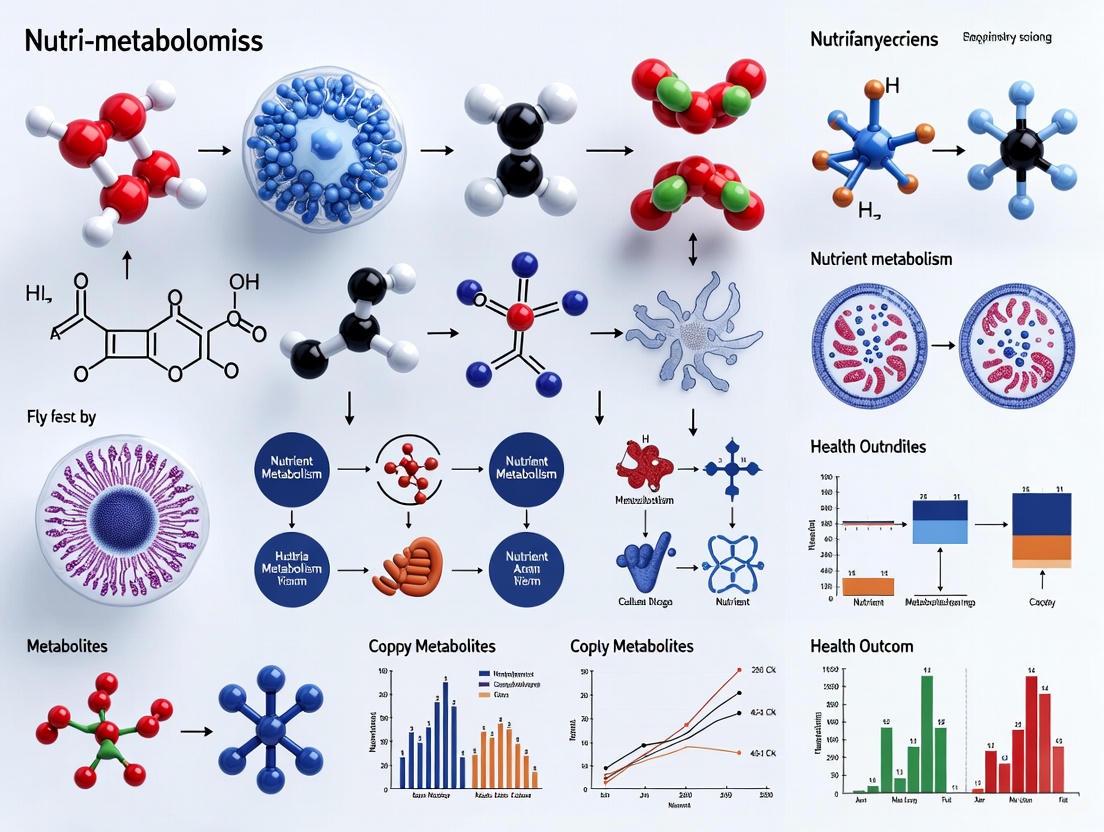
Nutri-metabolomics, the intersection of metabolomics and nutritional science, is revolutionizing our understanding of how diet influences human health.
Nutri-Metabolomics: Decoding Diet-Host Interactions for Precision Nutrition and Drug Development
Abstract
Nutri-metabolomics, the intersection of metabolomics and nutritional science, is revolutionizing our understanding of how diet influences human health. This article provides a comprehensive overview for researchers, scientists, and drug development professionals, exploring the foundational principles of how food intake shapes the metabolome. It delves into the critical methodological approaches—untargeted versus targeted strategies—and their applications in discovering dietary biomarkers and elucidating metabolic pathways in conditions like metabolic syndrome. The content further addresses key analytical challenges and optimization strategies, while examining the robust validation frameworks and comparative analyses that strengthen the field's findings. By synthesizing evidence from recent studies, this article highlights the transformative potential of nutri-metabolomics in advancing personalized nutrition, identifying novel therapeutic targets, and developing objective biomarkers for clinical trials and dietary interventions.
The Core Principles: How Diet Shapes the Human Metabolome
Defining Nutri-Metabolomics and Its Scope in Nutritional Research
Nutri-metabolomics represents a transformative approach within nutritional science, defined as the application of metabolomics technologies to decipher the complex interactions between diet and human health. This emerging field has evolved from basic biochemical analysis to a sophisticated discipline integral to precision nutrition, enabling the objective assessment of dietary intake, comprehension of metabolic dynamics, and prediction of individual health risks. The exponential growth in human studies over the past decade—from sporadic publications to over 114 annual research articles—signals its rising importance in nutritional research and drug development. This whitepaper delineates the core principles, methodological frameworks, and innovative applications of nutri-metabolomics, providing researchers and scientists with a comprehensive technical guide to its expanding scope in nutritional science research.
Nutri-metabolomics is an advanced scientific discipline that employs comprehensive metabolomic analyses to investigate how dietary components and patterns influence human metabolic pathways and health outcomes [1]. The field has emerged alongside technological developments in "omics" sciences over the past two decades, fundamentally shifting the conceptualization of food from merely a source of energy and nutrients to a critical exposure factor that determines health risks [1]. This paradigm shift has enabled nutrition research to identify objective dietary biomarkers and deepen understanding of metabolic dynamics, moving beyond traditional methods reliant on self-reported dietary data that suffer from significant inaccuracies and biases [2].
The terminology "nutrimetabolomics" was formally introduced by Zhang et al. in a foundational review that positioned it as a key omics technique for nutritional research [1]. While the sister term "metabonomics" was originally defined by Nicholson in 1999 as "the quantitative measurement of the dynamic multiparametric metabolic response of living systems to pathophysiological stimuli or genetic modification," nutrimetabolomics specifically focuses on the metabolic profiling of biological samples in response to dietary factors [1]. The field stands at the intersection of nutritional science, analytical chemistry, and bioinformatics, providing a powerful lens through which to view the intricate relationships between diet, metabolism, and health.
Historical Development and Growth Trajectory
The evolution of nutri-metabolomics spans distinct phases, reflecting both technological advancements and conceptual maturation within the field. Pioneering work began in the early 2000s with only a handful of studies published annually, predominantly analyzing urine samples via NMR spectroscopy through small-scale non-randomized clinical trials or crossover studies [1]. These initial investigations established fundamental methodologies for detecting metabolic fluctuations in biofluids and explored responses to specific foods and beverages rich in phytochemicals, including various teas, coffee, and cocoa [1].
The subsequent exponential growth in nutri-metabolomics research is demonstrated by the dramatic increase in publication output, which expanded from just a few studies per year in the early 2000s to approximately 70% more publications in 2019 compared to the previous year, reaching 114 research articles in that single year alone [1]. This rapid acceleration was fueled by the introduction of high-sensitivity detection methods, particularly mass spectrometry (MS), which complemented the initial nuclear magnetic resonance (NMR) approaches [1]. The field's development can be categorized into three distinct periods:
Table 1: Evolutionary Phases of Nutri-Metabolomics Research
| Time Period | Defining Characteristics | Primary Technologies | Research Focus |
|---|---|---|---|
| Early Phase (2000-2009) | Small-scale studies, foundational methodologies | NMR, initial MS applications | Biofluid comparisons, specific food components, basic metabolic fluctuations |
| Middle Phase (2010-2014) | Rapid methodological expansion, larger studies | Advanced MS platforms, improved sensitivity | Biomarker discovery, dietary pattern associations, intermediate-scale cohorts |
| Recent Phase (2015-Present) | Exponential growth, integration with precision health | High-resolution MS, computational integration | Dietary assessment, metabolic profiling, health risk prediction, personalized nutrition |
This historical progression demonstrates the field's trajectory from basic analytical approaches to sophisticated integrations with systems biology, positioning nutri-metabolomics as a cornerstone of modern nutritional research with significant implications for drug development and personalized healthcare [1].
Core Applications in Nutritional Research
Objective Dietary Assessment
A primary application of nutri-metabolomics lies in overcoming the limitations of self-reported dietary data, which suffers from error rates ranging from 30% to 88% for caloric intake and food portion size estimation due to memory bias, cultural differences, and the complexity of assessing habitual diets [2]. Metabolomic analysis provides a robust, unbiased alternative by measuring metabolites in biological samples that reflect actual nutritional intake and physiological state [2]. This approach captures the synergistic interactions between dietary components that influence metabolic responses, moving beyond isolated nutrients to assess comprehensive food group biomarkers [2].
Research has consistently identified specific metabolite signatures associated with various food groups. For instance, betaine and betaine-related metabolites are associated with fruits and vegetables, with proline betaine specifically linked to citrus fruit consumption and tryptophan betaine to legume intake [2]. High-fiber diets contribute to the production of short-chain fatty acids (SCFAs) by gut microbiota, while meats and seafood provide amino acids and carnitines, with trimethylamine N-oxide (TMAO) serving as a marker linked to cardiovascular risk [2]. These food-specific biomarkers enable researchers to objectively verify dietary patterns and compliance in intervention studies, providing a more reliable foundation for establishing diet-disease relationships.
Metabolic Phenotyping and Health Risk Prediction
Nutri-metabolomics enables the identification of metabolic phenotypes (metabotypes) that reflect individual variations in metabolic responses to dietary interventions [2]. This application is particularly valuable for predicting disease risk and understanding inter-individual variability in response to nutritional interventions. Metabotyping integrates a wide range of factors, including diet, anthropometric measures, clinical parameters, metabolomics data, and gut microbiota composition, to classify individuals into distinct metabolic subgroups [2].
Research has demonstrated that individuals with different metabotypes exhibit significantly different glycemic responses to identical foods, with those classified in "intermediate" and "unfavorable" metabotypes showing substantially higher postprandial glucose concentrations following an oral glucose tolerance test [2]. Similarly, dietary fiber interventions produce differential metabolic benefits depending on baseline metabotype, with individuals exhibiting poorer baseline metabolic health experiencing the greatest improvements in insulin levels, cholesterol, and blood pressure [2]. This stratification approach enables more targeted and effective nutritional interventions for specific metabolic risk profiles.
Gut Microbiome-Host Interaction Mapping
The gut microbiome plays a critical role in modulating host metabolism, influencing energy production, nutrient utilization, and overall physiological adaptation [3]. Nutri-metabolomics provides a powerful approach to deciphering these complex host-microbiome relationships, particularly through integrated multi-omics analyses that combine metagenomic and metabolomic profiling [3]. This application has revealed how microbial functions specialize to meet unique metabolic demands, such as differences between athletes relying on oxidative versus glycolytic energy systems [3].
Studies comparing elite weightlifters and cyclists through integrative omics analysis have revealed distinct metabolic profiles and microbial functional pathways, with lipid-related pathways such as lipid droplet formation and glycolipid synthesis driving the differences between athlete types [3]. Notably, elevated carnitine, amino acid, and glycerolipid levels in weightlifters suggest energy system-specific metabolic adaptations mediated through host-microbiome interactions [3]. These findings underscore the potential for targeted modulation of the gut microbiota as a basis for tailored nutritional interventions to support specific physiological demands.
Analytical Methodologies and Workflows
Core Analytical Technologies
Nutri-metabolomics relies on two principal analytical platforms: mass spectrometry (MS) and nuclear magnetic resonance (NMR) spectroscopy [4]. Each technology offers distinct advantages and limitations, with the choice dependent on specific research questions, available instrumentation, and required sensitivity.
Nuclear Magnetic Resonance (NMR) spectroscopy provides comprehensive information about a wide range of metabolites without requiring extensive sample preparation [4]. It is nondestructive and highly reproducible, making it suitable for large-scale applications and absolute quantification. However, NMR has lower sensitivity compared to MS and may not detect metabolites present at very low concentrations [4].
Mass Spectrometry (MS) platforms, particularly when coupled with separation techniques like liquid chromatography (LC-MS) or gas chromatography (GC-MS), offer superior sensitivity and the ability to detect thousands of metabolite features in a single analysis [5]. High-resolution mass spectrometry (HRMS) has dramatically expanded the coverage and precision of metabolomic analyses [6]. Technological advances such as the Orbitrap mass spectrometer have enabled higher resolution mass spectrometry, accelerating the discovery process to understand the chemical nature of metabolites [4].
Table 2: Core Analytical Technologies in Nutri-Metabolomics
| Technology | Advantages | Limitations | Common Applications |
|---|---|---|---|
| NMR Spectroscopy | Non-destructive, excellent reproducibility, absolute quantification, minimal sample preparation | Lower sensitivity, limited metabolite coverage | Large cohort studies, metabolic flux analysis, quantitative profiling |
| Mass Spectrometry | High sensitivity, wide dynamic range, comprehensive coverage, structural elucidation | Semi-destructive, requires calibration, complex data processing | Biomarker discovery, unknown metabolite identification, targeted quantification |
| LC-MS | Broad metabolite coverage, separation of isomers, compatibility with diverse metabolites | Matrix effects, longer analysis times, column variability | Untargeted profiling, lipidomics, polar metabolite analysis |
| GC-MS | High separation efficiency, robust identification, comprehensive libraries | Derivatization required, limited to volatile compounds | Metabolite identification, metabolic pathway analysis, volatile compounds |
Untargeted Metabolomics Workflow
The standard workflow for untargeted nutri-metabolomics studies involves multiple interconnected steps, from experimental design through biological interpretation. The following diagram illustrates this comprehensive process:
This workflow highlights the comprehensive nature of nutrimetabolomics studies, emphasizing the critical importance of quality control at each stage to ensure reproducible and biologically meaningful results [5].
Advanced Computational Approaches
Modern nutri-metabolomics increasingly relies on sophisticated computational tools to address the challenge of metabolite annotation, which remains a significant bottleneck in the field. On average, only 10% of molecules detected in untargeted metabolomics can be annotated, hampering biochemical interpretation and effective comparison across studies [6]. Several computational strategies have emerged to address this limitation:
Molecular Networking has gained significant traction as an approach for organizing MS/MS data based on spectral similarities, enabling the identification of structurally related metabolites that may share biochemical pathways or substructures [7]. This method uses an unsupervised vector-based computational algorithm to group molecular ions into networks of molecular families [7].
Feature-Based Molecular Networking (FBMN) represents an advancement that integrates quantitative data and enables the resolution of isomeric compounds [7]. This approach combines traditional molecular networking with feature detection tools from standard metabolomics software, incorporating quantitative information such as chromatographic peak areas while maintaining the ability to identify structural relationships [7].
Machine Learning and In-Silico Annotation tools have shown considerable promise in enhancing metabolite identification through predictive algorithms trained on existing spectral libraries [6]. These methods can predict structural properties from MS/MS data and suggest plausible identities for unknown compounds, though they typically provide annotations at MSI level 2 or 3 rather than definitive identifications [6].
The creation of contextual mass spectral libraries specific to nutritional research has further advanced annotation capabilities. For example, specialized "Nutri-Metabolomics" libraries containing MS/MS spectra of approximately 300 food-related human metabolites acquired under standardized instrumental conditions have been developed to improve annotation accuracy and relevance for nutritional studies [7].
Quality Assurance and Quality Control Frameworks
Robust quality assurance (QA) and quality control (QC) practices are essential for generating reliable, reproducible nutri-metabolomics data. The Metabolomics Quality Assurance and Quality Control Consortium (mQACC) has been established to address key QA/QC issues in untargeted metabolomics and promote suitable reference materials (RMs) [5]. Currently, only about 33% of metabolomics laboratories use RMs regularly, and practices are not consistent across laboratories [5].
Reference materials play critical roles in various aspects of quality control, including instrument calibration, monitoring analytical performance, assessing reproducibility, and enabling cross-laboratory comparisons [5]. These materials range from certified reference materials (CRMs) with certificates of analysis to study-specific pooled quality control samples and long-term reference samples analyzed across multiple studies or platforms [5].
The implementation of standardized QA/QC protocols is particularly important for large-scale nutritional studies and multi-center collaborations, where technical variability must be minimized to detect subtle metabolic changes induced by dietary interventions. Appropriate use of RMs provides confidence in measurements and enables standardization of data across different instrumental platforms, facilitating the translation of biological discoveries into practical nutritional applications [5].
Experimental Protocols for Key Applications
Protocol for Food Intake Biomarker Discovery
Objective: To identify and validate metabolite biomarkers specific to dietary intake of particular foods or food groups.
Sample Collection:
- Collect biofluids (plasma, serum, or urine) at baseline and at multiple time points postprandially (e.g., 30, 60, 120, 240, and 360 minutes after food intake) [7].
- Implement controlled dietary interventions with specific foods of interest.
- Include appropriate controls and randomization in study design.
Sample Preparation:
- For urine: Thaw samples on ice, vortex, and dilute with appropriate solvent (e.g., water:acetonitrile:formic acid) [7].
- For plasma/serum: Use protein precipitation with cold organic solvents (e.g., methanol or acetonitrile).
- Include quality control pooled samples created by combining aliquots from all samples.
LC-MS/MS Analysis:
- Utilize reversed-phase chromatography with C18 columns for lipid-soluble metabolites and HILIC columns for polar metabolites.
- Employ both positive and negative ionization modes in data-dependent acquisition (DDA) to maximize metabolite coverage.
- Include blank samples and standard reference materials in the analytical sequence to monitor contamination and instrument performance.
Data Processing:
- Convert raw data to open formats (e.g., .mzML) using tools like ProteoWizard [7].
- Process data using feature detection and alignment software (e.g., XCMS, MS-DIAL).
- Annotate metabolites using spectral matching against databases (e.g., GNPS, HMDB) and retention time alignment with authentic standards when available.
Validation:
- Confirm candidate biomarkers in independent validation cohorts.
- Conduct dose-response and time-course studies to establish kinetic profiles.
- Verify structural identities using authentic chemical standards when possible.
Protocol for Multi-omics Integration of Gut Microbiome and Metabolome
Objective: To investigate relationships between gut microbial composition and host metabolic responses to dietary interventions.
Sample Collection:
- Collect paired fecal (for metagenomics) and blood/urine (for metabolomics) samples from participants [3].
- Record detailed dietary intake, anthropometric measures, and clinical parameters.
- Immediately freeze samples at -80°C until analysis.
Metagenomic Sequencing:
- Extract DNA from fecal samples using kits designed for microbial DNA.
- Perform shotgun metagenomic sequencing on Illumina or similar platforms.
- Process sequencing data using tools like MetaPhlAn for taxonomic profiling and HUMAnN for functional pathway analysis [3].
Metabolomic Analysis:
- Conduct untargeted metabolomics on plasma/urine samples as described in Section 6.1.
- Perform targeted analysis for specific metabolite classes of interest (e.g., SCFAs, bile acids, neurotransmitters).
Data Integration:
- Use multivariate statistical methods (e.g., OPLS-DA, regularized canonical correlation analysis) to identify associations between microbial features and metabolites.
- Apply pathway enrichment analysis to identify biological processes linking microbes and metabolites.
- Implement network analysis to visualize complex microbe-metabolite relationships.
Functional Validation:
- Conduct in vitro cultures with specific bacterial strains to confirm metabolic capabilities.
- Perform animal studies with microbiota transplantation to establish causal relationships.
Table 3: Essential Research Reagents and Resources for Nutri-Metabolomics
| Resource Category | Specific Examples | Function and Application |
|---|---|---|
| Reference Materials & QC Tools | NIST SRM 1950 (Metabolites in Human Plasma), pooled study QC samples, long-term reference samples [5] | Quality control, instrument calibration, cross-laboratory standardization, technical variability assessment |
| Contextual Mass Spectral Libraries | "Nutri-Metabolomics" libraries (~300 food-related metabolites), GNPS public libraries, HMDB [7] | Metabolite annotation, structural identification, spectral matching, unknown compound characterization |
| Bioinformatic Platforms | GNPS Molecular Networking, XCMS Online, MetaboAnalyst, mzMine [7] [6] | Data processing, statistical analysis, metabolite annotation, pathway mapping, multi-omics integration |
| Analytical Columns & Consumables | C18 reversed-phase columns, HILIC columns, solid-phase extraction cartridges, volatile removal devices | Metabolite separation, sample cleanup, interference removal, analytical reproducibility |
| Chemical Standards | Authentic metabolite standards, stable isotope-labeled internal standards, compound libraries | Metabolite identification, absolute quantification, method development, recovery assessment |
Advanced Data Visualization and Interpretation
Molecular Networking for Metabolite Annotation
Molecular networking provides a powerful approach for visualizing and interpreting complex metabolomic data by grouping structurally related metabolites based on their MS/MS spectral similarities. The following diagram illustrates the conceptual framework and workflow for molecular networking in nutri-metabolomics:
This visualization approach enables researchers to efficiently navigate complex metabolomic datasets and prioritize unknown metabolites for further investigation based on their structural proximity to annotated compounds [7].
Nutri-metabolomics continues to evolve rapidly, with several emerging trends shaping its future trajectory in nutritional research and drug development. The field is moving toward greater integration with other omics technologies, including genomics, transcriptomics, and proteomics, to provide multi-dimensional insights into the molecular mechanisms underlying diet-health relationships [2]. This systems biology approach will enhance our understanding of how genetic variation influences individual responses to dietary interventions, advancing the goals of precision nutrition.
The development of more sophisticated computational tools, particularly artificial intelligence and machine learning algorithms, promises to address current challenges in metabolite annotation and biological interpretation [6]. As these tools mature and reference databases expand, the proportion of annotated metabolites in untargeted studies is expected to increase significantly, revealing new metabolic pathways and biomarkers relevant to nutritional status and health outcomes.
Technical innovations in analytical instrumentation, particularly in mass spectrometry sensitivity, resolution, and speed, will continue to push the boundaries of metabolome coverage and detection limits [4]. Simultaneously, advances in sample collection methods, such as dried blood spot sampling and volumetric absorptive microsampling, are making metabolomic analyses more accessible and practical for large-scale epidemiological studies and clinical applications [2].
In conclusion, nutri-metabolomics has established itself as an indispensable approach in modern nutritional science, providing unprecedented insights into the complex interactions between diet, metabolism, and health. Its applications span from objective dietary assessment and metabolic phenotyping to gut microbiome-host interaction mapping, offering powerful tools for developing targeted nutritional interventions and personalized nutrition strategies. As methodologies continue to advance and integrate with other omics platforms, nutri-metabolomics is poised to play an increasingly central role in bridging the gap between nutritional science, clinical practice, and therapeutic development.
Metabolic profiling has emerged as a powerful tool in nutritional science, providing a dynamic snapshot of an individual's physiological status by measuring small-molecule metabolites. Nutri-metabolomics—the application of metabolomics to nutritional research—objectively assesses dietary intake, comprehends metabolic responses to interventions, and identifies biomarkers of nutritional status [2]. The selection of appropriate biofluids is paramount, as each offers a unique window into metabolic processes. This technical guide details the core biofluids—plasma, urine, and feces—for metabolic profiling, framing their utility within the context of nutri-metabolomics research for scientists and drug development professionals. The integrative analysis of these biofluids facilitates a systems biology approach, enabling researchers to unravel the complex interactions between diet, host metabolism, and the gut microbiome [8] [9].
Core Biofluids in Nutri-Metabolomics
The three primary biofluids used in metabolic profiling each provide distinct and complementary information, making them suitable for different research applications within nutritional science.
Table 1: Comparative Overview of Key Biofluids for Metabolic Profiling
| Biofluid | Key Metabolic Information | Advantages in Research | Common Analytical Platforms |
|---|---|---|---|
| Plasma/Serum | Systemic metabolism, lipid profiles, amino acids, energy metabolism biomarkers [10] [11]. | Reflects real-time systemic metabolic status; ideal for biomarker discovery for diseases and dietary intake [10] [11]. | LC-MS, GC-MS, NPELDI-MS, NMR [12] [13] [11]. |
| Urine | Comprehensive polar metabolome, diet-derived metabolites, microbial co-metabolites, end-products of systemic metabolism [8] [14] [15]. | Non-invasive collection; integrates metabolic signals over hours; captures high variation in dietary metabolites [14] [15]. | LC-MS, GC-MS, NMR [12] [13]. |
| Feces | Direct insight into gut microbial activity, diet-microbiota co-metabolites, SCFAs, bile acids [8] [9]. | Directly reflects gut microbiome function and its interaction with diet [8] [9]. | LC-MS, GC-MS [8] [12]. |
Plasma and Serum
Plasma and serum are the most common biofluids for profiling systemic metabolism. They provide a rich source of information on lipids, amino acids, and other circulating metabolites, reflecting real-time metabolic regulation [10] [11]. Their application is crucial for identifying biomarkers for disease diagnosis and progression. For instance, in metabolic syndrome (MetS), distinct plasma metabolite signatures have been identified, including elevated levels of branched-chain amino acids (BCAAs like isoleucine, leucine, valine), alanine, and the hexose glucose [10]. In brainstem glioma, a serum metabolic signature enabled diagnosis and prognosis, highlighting the power of plasma/serum in revealing systemic metabolic dysregulation [11].
Urine
Urine is invaluable for its non-invasive collection and its coverage of the polar metabolome. It contains a diverse array of metabolites, including those directly derived from food and those produced by the gut microbiota, making it a robust source for nutritional biomarkers [14] [15]. For example, high dietary fiber intake is associated with elevated urinary levels of hippurate, a microbial co-metabolite [14]. Controlled feeding studies show that dietary interventions shift the urinary metabolome, such as a move from sugar degradation to ketogenesis during negative energy balance [9]. Population studies have successfully used urinary metabolites to objectively classify individuals based on their habitual intake of foods like citrus (proline betaine), poultry (taurine), and processed meats [14].
Feces
Fecal metabolomics offers a direct window into the functional output of the gut microbiome. It is essential for investigating how diet-driven microbiome remodeling affects host physiology [8] [9]. Analysis of feces reveals metabolites produced by gut bacteria from dietary substrates, such as short-chain fatty acids (SCFAs) and other diet-microbiota co-metabolites. Research has demonstrated that a high-fiber "Microbiome Enhancer Diet" (MBD) significantly alters the fecal metabolome compared to a Western diet (WD), leading to a decrease in specific co-metabolites and an increase in microbial biomass. These changes are correlated with reduced energy absorption in the host, providing a mechanistic link between diet, gut microbes, and host energy balance [8] [9].
Experimental Methodologies and Protocols
Standardized protocols are critical for generating reproducible and biologically relevant metabolomic data. The following workflows outline the key steps from sample collection to data analysis for each biofluid.
Sample Collection and Pre-processing
Proper sample handling is the first and most critical step to ensure sample integrity.
Diagram 1: Generalized metabolomics workflow.
- Plasma/Serum: Collection requires a professional blood draw. Plasma samples need rapid processing and cold-chain logistics to preserve integrity, while serum is obtained by allowing blood to clot. For more accessible sampling, dried blood spot (DBS) methods like volumetric absorptive microsampling (VAMS) are emerging, which only need a finger-prick and are stable at ambient temperatures [2].
- Urine: Mid-stream urine collection is standard. Samples are typically stable at ambient temperature for short periods and do not require preservatives, simplifying collection in field studies [14].
- Feces: Samples should be immediately frozen at -80°C or placed in a stabilization buffer after collection to halt microbial activity and preserve the metabolic profile [8].
Metabolite Extraction and Analysis
Metabolite extraction aims to comprehensively capture both hydrophilic and hydrophobic compounds from the biological matrix.
- Extraction: An optimized methanol–water–chloroform combination is widely used. This creates a biphasic mixture upon centrifugation, separating the upper aqueous layer (containing polar metabolites) from the lower organic layer (containing non-polar metabolites like lipids) [13].
- Separation and Detection: Liquid Chromatography-Mass Spectrometry (LC-MS) is the most prevalent platform. Reversed-phase LC (e.g., C18 columns) separates non-polar metabolites, while hydrophilic interaction liquid chromatography (HILIC) is used for polar compounds [10] [13]. Gas Chromatography-MS (GC-MS) is preferred for volatile compounds or those made volatile through derivatization [13]. Emerging techniques like Nanoparticle-Enhanced Laser Desorption/Ionization MS (NPELDI-MS) offer rapid, pretreatment-free analysis with high throughput, suitable for large clinical cohorts [11].
- Data Processing: Raw data from MS undergoes peak picking, alignment, and normalization using specialized software (e.g., Progenesis, MetaboAnalyst). Metabolite identification is performed by matching mass spectra against compound databases such as Kyoto Encyclopedia of Genes and Genomes (KEGG) and Human Metabolome Database (HMDB) [13].
The Scientist's Toolkit: Essential Research Reagents and Materials
Successful metabolomic studies rely on a suite of reliable reagents and kits. The following table details key solutions for different stages of the workflow.
Table 2: Essential Research Reagent Solutions for Metabolic Profiling
| Reagent/Kits | Function/Application | Example Use-Case |
|---|---|---|
| AbsoluteIDQ p180 Kit (BIOCRATES) | Targeted quantification of up to 188 metabolites (acylcarnitines, amino acids, biogenic amines, lipids, hexoses) [10]. | High-throughput, validated targeted metabolomics for epidemiological studies [10]. |
| Methanol/Water/Chloroform Solvent System | Biphasic extraction of a wide range of polar and non-polar metabolites from diverse biofluids and tissues [13]. | Comprehensive untargeted metabolomics; standard protocol for sample preparation [13]. |
| C18 LC Columns | Chromatographic separation of non-polar to mid-polar metabolites using reversed-phase mechanics [13]. | Standard LC-MS analysis for lipids, bile acids, and other hydrophobic compounds [13]. |
| HILIC LC Columns | Chromatographic separation of polar and ionic metabolites [13]. | LC-MS analysis of amino acids, organic acids, nucleotides, and other hydrophilic compounds [13]. |
| Volumetric Absorptive Microsampling (VAMS) Devices (e.g., Mitra) | Standardized and volumetric collection of dried blood from a finger-prick, enabling ambient transport/storage [2]. | At-home sampling or remote collection for consumer health tests or decentralized clinical trials [2]. |
| NPELDI-MS Nanoparticles | Chromatography alternatives that selectively enrich metabolites from native serum for direct MS analysis, minimizing sample prep [11]. | Rapid, high-throughput serum metabolomics for clinical diagnostics and biomarker discovery [11]. |
Application in Nutritional Science: A Workflow Example
Integrating multi-biofluid metabolomics is a powerful strategy to uncover the mechanisms by which diet influences health. The following diagram illustrates this application using a controlled feeding study as an example.
Diagram 2: Diet-gut microbiome-host metabolism integration.
A landmark controlled feeding study exemplifies this approach [8] [9]. Researchers provided participants with two diets in a randomized crossover design: a Microbiome Enhancer Diet (MBD) high in fiber and whole foods, and a macronutrient-matched Western Diet (WD) low in fiber. The study combined precise energy balance measurements with global metabolomic profiling of feces, serum, and urine.
- Feces Analysis: Revealed that the MBD led to a significant loss of energy in feces and an increase in microbial biomass. Specific diet-microbiota co-metabolites in feces were identified that correlated with these changes, indicating a "fed" microbiota state [8] [9].
- Urine Analysis: Showed a shift in the metabolic signature from pathways of sugar degradation toward ketogenesis, providing independent biochemical evidence of a negative systemic energy balance induced by the MBD [9].
- Serum Analysis: Helped connect gut-level events to host physiology, such as changes in satiety hormones like pancreatic polypeptide (PP) [8].
This multi-biofluid approach demonstrated a direct causal link between diet, gut microbiome metabolism, and host energy balance, showcasing the power of integrated metabolic profiling.
Discovering Food-Specific Compounds (FSC) and Dietary Biomarkers
In the evolving field of nutritional science, nutri-metabolomics represents a powerful convergence of metabolomics and nutrition research, enabling comprehensive investigation of how diets and specific foods influence the human metabolome [16]. Within this domain, food-specific compounds (FSC) and dietary biomarkers have emerged as critical objective tools for advancing precision nutrition. FSC are defined as chemical compounds detected exclusively in one food source and not in others within a study context, serving as unique chemical signatures of intake [16]. These biomarkers address significant limitations inherent in traditional dietary assessment methods, such as food frequency questionnaires and 24-hour recalls, which are susceptible to measurement error, misreporting, and misclassification bias [17]. The discovery and validation of dietary biomarkers hold immense significance for precision health, offering a more accurate method to track food consumption and provide personalized dietary recommendations [18].
The broader thesis of nutri-metabolomics positions these biomarkers as essential tools for transforming nutritional science from subjective reporting to objective measurement, ultimately strengthening research on diet-disease relationships and enabling truly personalized nutrition interventions [19]. As the field advances, biomarkers are categorized into several functional types according to the FDA-NIH BEST Resource, including susceptibility/risk, diagnostic, monitoring, prognostic, predictive, pharmacodynamic/response, and safety biomarkers [20]. This classification provides a critical framework for understanding how dietary biomarkers can be applied across different contexts in both research and clinical practice.
Methodological Approaches for FSC Discovery
Experimental Workflows and Analytical Techniques
The discovery of food-specific compounds follows a systematic experimental workflow that integrates food analysis with biospecimen profiling. Liquid chromatography-mass spectrometry (LC-MS) has emerged as the cornerstone technology for FSC discovery due to its high sensitivity and capacity to detect a wide range of metabolites [16]. The typical workflow begins with comprehensive metabolomic profiling of individual foods, followed by comparative analysis to identify compounds unique to specific food items, and finally tracing these candidate FSCs in human biospecimens after controlled consumption.
Sample preparation represents a critical first step in this process. Food samples are typically lyophilized (freeze-dried) to preserve compound integrity, followed by homogenization and methanol extraction to precipitate proteins and extract metabolites [16]. For complex matrices like peanut butter, modified approaches such as increased injection volumes may be required to achieve sufficient analytical sensitivity [16]. Parallel preparation of urine samples involves normalization through total useful signal to account for physiological variability, followed by the same methanol extraction protocol applied to food samples [16].
Data processing and analysis utilize specialized software platforms such as MassHunter Profinder and Mass Profiler Professional for untargeted data mining and compound identification [16]. Blank subtraction is essential to remove compounds originating from preparation or instrumentation artifacts. Statistical approaches including principal component analysis (PCA) and hierarchical clustering using Ward's method help identify patterns and groupings within the complex metabolomic datasets [16]. The establishment of FSC requires rigorous comparative analysis across multiple food types to verify that candidate compounds are truly unique to a specific food item within the study context.
Key Research Reagents and Technologies
The following table details essential research reagents and technologies used in advanced FSC discovery research:
Table 1: Essential Research Toolkit for FSC Discovery
| Research Tool | Specific Application | Technical Function |
|---|---|---|
| LC-MS with Time-of-Flight Detection | Metabolomic profiling of foods and biospecimens | High-resolution separation and detection of thousands of metabolites simultaneously [16] |
| C18 Reverse Phase Chromatography | Compound separation prior to mass detection | Separates compounds based on hydrophobicity, resolving complex mixtures [16] |
| Methanol Extraction | Sample preparation for metabolomics | Protein precipitation and metabolite extraction from diverse matrices [16] |
| Labeled Internal Standards | Quality control and quantification | Correction for analytical variability and instrument performance [16] |
| Automated Homogenization Systems | Sample preparation standardization | Ensures consistent processing across sample batches, reducing variability [21] |
Key Food-Specific Compounds and Biomarker Panels
Validated Biomarkers Across Food Groups
Substantial research has identified specific metabolite biomarkers associated with consumption of various food groups. The following table synthesizes key biomarkers validated across multiple studies:
Table 2: Validated Dietary Biomarkers Across Food Categories
| Food Category | Specific Biomarkers | Biological Matrix | Strength of Evidence |
|---|---|---|---|
| Cereals & Grains | 3-(3,5-dihydroxyphenyl) propanoic acid glucuronide, 3,5-dihydroxybenzoic acid | Plasma, Serum, Urine | ≥3 bibliographic appearances in systematic review [18] |
| Coffee | Theobromine, 7-methylxanthine, caffeine, quinic acid, paraxanthine, theophylline | Plasma, Serum, Urine | ≥4 bibliographic appearances in systematic review [18] |
| Dairy & Protein Foods | Omega-3 fatty acids, specific amino acids | Plasma, Serum, Urine | ≥3 bibliographic appearances in systematic review [18] |
| Nuts & Seafood | Hypaphorine (nuts), trimethylamine N-oxide (seafood) | Plasma, Serum, Urine | ≥3 bibliographic appearances in systematic review [18] |
| Cruciferous Vegetables | Sulfurous compounds, isothiocyanates | Urine | Multiple observational and intervention studies [17] |
| Soy Foods | Isoflavones (daidzein, genistein), equol | Urine | 10 dedicated studies in systematic review [17] |
| Citrus Fruits | Flavanones, polyphenols | Urine | 13 studies in systematic review [17] |
The evidence supporting these biomarkers comes from rigorous systematic reviews that established specific cutoff points (≥3 or ≥4 bibliographic appearances) to identify reliable biomarkers indicative of dietary consumption [18]. This approach ensures that only biomarkers with consistent evidence across multiple studies are recommended for use in research settings.
Emerging Biomarkers for Complex Dietary Patterns
Beyond individual food compounds, recent research has advanced toward developing poly-metabolite scores for complex dietary exposures. National Institutes of Health researchers have pioneered this approach for ultra-processed food intake, identifying hundreds of metabolites that correlate with the percentage of energy from ultra-processed foods [22]. Using machine learning, they developed metabolic patterns that accurately differentiate between highly processed and unprocessed diet phases in controlled feeding studies [22].
This multi-metabolite approach represents a significant advancement over single compound biomarkers, as it better captures the complexity of whole dietary patterns and food combinations. The poly-metabolite scores have the potential to reduce reliance on self-reported dietary data in large population studies and improve the accuracy of assessing associations between ultra-processed foods and health outcomes [22]. Similar approaches are being explored for other dietary patterns, including the Mediterranean diet and DASH-style diets [16].
Experimental Protocols for Biomarker Validation
Controlled Feeding Study Design
Protocol Title: Randomized Controlled Crossover Feeding Study for Biomarker Validation
Objective: To validate candidate food-specific compounds under controlled dietary conditions while minimizing confounding from free-living variables.
Study Population: Adult participants (typically n=20-50) without metabolic diseases that might alter nutrient processing. The original DASH-style diet study included 19 participants (6 men, 13 women) with mean age 61 ± 2 years [16].
Study Design:
- Randomized crossover design with two or more intervention periods
- Run-in period (2 weeks): Participants consume self-selected typical diets while establishing baseline measurements
- First intervention (6 weeks): Controlled feeding of defined diet with comprehensive menu cycles
- Washout period (4 weeks): Return to self-selected diets to eliminate carryover effects
- Second intervention (6 weeks): Controlled feeding of alternative test diet [16]
Dietary Control:
- All meals prepared in metabolic research kitchen with strict portion control
- Seven-day rotating menu cycles to account for variety while maintaining nutritional consistency
- Use of standardized food sourcing to minimize batch-to-batch variation
- Compliance monitoring through direct observation and uneaten food returned [16]
Sample Collection:
- 24-hour urine collections at baseline and during final two weeks of each intervention period
- Blood samples (plasma/serum) collected after overnight fast at similar timepoints
- Ambulatory blood pressure monitoring over consecutive days for health outcome assessment [16]
Biomarker Analytical Validation Framework
Protocol Title: Fit-for-Purpose Biomarker Validation for Nutritional Applications
Objective: To establish analytical and clinical validity of candidate dietary biomarkers according to regulatory standards.
Analytical Validation Parameters:
- Accuracy: Comparison to reference materials or alternative validated methods
- Precision: Intra-day and inter-day replication studies
- Analytical Sensitivity: Limit of detection and quantification for target analytes
- Analytical Specificity: Assessment of potential interferents from similar compounds
- Reportable Range: Linear dynamic range of quantification
- Reference Ranges: Establishment of normal values in relevant populations [20]
Clinical Validation Approach:
- Sensitivity and Specificity: Determination of biomarker performance against dietary truth standard
- Positive/Negative Predictive Values: Assessment of clinical utility in target populations
- Dose-Response Relationship: Evaluation of biomarker concentration against known intake levels
- Temporal Characteristics: Understanding kinetics of appearance and clearance in biospecimens [20]
The validation approach follows the fit-for-purpose principle, where the level of evidence required is determined by the intended context of use [20]. For example, a biomarker intended for use as a pharmacodynamic marker to guide dosing requires different validation than one used as a surrogate endpoint for regulatory approval.
Technological Advances in Biomarker Discovery
Emerging Analytical Platforms
The field of dietary biomarker discovery is undergoing rapid technological transformation, driven by advances in multiple analytical domains. Spatial biology techniques have emerged as particularly significant, enabling researchers to study gene and protein expression in situ without altering spatial relationships between cells [23]. Unlike traditional approaches, spatial transcriptomics and multiplex immunohistochemistry allow researchers to understand how biomarkers are organized within biological contexts, which can be critical for understanding functional significance [23].
Multi-omic profiling represents another major advancement, integrating genomic, epigenomic, and proteomic data to provide a holistic approach to biomarker discovery [23]. This integration can reveal novel insights into the molecular basis of diseases and drug responses, identifying new biomarkers and therapeutic targets. For example, an integrated multi-omic approach was instrumental in identifying the functional role of two genes, TRAF7 and KLF4, frequently mutated in meningioma [23].
Artificial intelligence and machine learning have transitioned from theoretical buzzwords to practical tools in biomarker discovery. AI algorithms are now essential for analyzing the massive volumes of complex data generated by modern analytical platforms, capable of identifying subtle biomarker patterns in high-dimensional datasets that conventional methods might miss [23]. Natural language processing (NLP) is simultaneously revolutionizing how researchers extract insights from clinical data, helping annotate complex clinical information and identify novel therapeutic targets hidden in electronic health records [23].
Advanced Model Systems
Organoids and humanized systems represent significant advances in biomarker discovery by better mimicking human biology and drug responses compared to conventional models [23]. Organoids excel at recapitulating complex architectures and functions of human tissues, making them well-suited for functional biomarker screening, target validation, and exploration of resistance mechanisms [23]. Similarly, humanized mouse models allow research teams to conduct studies in the context of human immune responses, particularly beneficial for investigating response and resistance to immunotherapies [23].
These technological advances are collectively transforming the biomarker discovery pipeline, offering higher resolution, faster speed, and more translational relevance than ever before [23]. This technological renaissance is elevating biomarkers from mere diagnostic tools to indispensable orchestrators of personalized treatment paradigms across multiple therapeutic areas.
Visualization of Research Workflows
Experimental Workflow for FSC Discovery
Figure 1: Experimental Workflow for FSC Discovery. This diagram illustrates the comprehensive process from food analysis to biomarker validation, highlighting the integration of controlled feeding studies with advanced analytical techniques.
Biomarker Validation and Implementation Pathway
Figure 2: Biomarker Validation and Implementation Pathway. This diagram outlines the rigorous process from initial biomarker identification through regulatory qualification to clinical application, emphasizing the multifaceted validation requirements.
The discovery of food-specific compounds and dietary biomarkers represents a transformative advancement in nutritional science, enabling a shift from subjective dietary assessment to objective measurement of food intake. The field has progressed significantly from single compound biomarkers to complex poly-metabolite scores that capture the complexity of whole dietary patterns [22]. These tools are essential for advancing precision nutrition and understanding the intricate relationships between diet, metabolism, and health outcomes.
Future directions in dietary biomarker research include expanding biomarker panels to cover broader ranges of foods and dietary patterns, improving the specificity of biomarkers to distinguish between similar foods, and developing standardized validation frameworks for regulatory acceptance [19]. The integration of artificial intelligence and machine learning will continue to accelerate biomarker discovery, while multi-omic approaches will provide deeper insights into the biological mechanisms linking diet to health [23]. As these technologies mature, dietary biomarkers will play an increasingly central role in both clinical practice and public health initiatives, ultimately supporting more effective and personalized nutritional recommendations for diverse populations.
The systematic discovery and validation of food-specific compounds positions nutri-metabolomics as a cornerstone of modern nutritional science, providing the objective tools necessary to advance our understanding of diet-health relationships and implement truly evidence-based precision nutrition strategies.
Nutri-metabolomics provides a powerful framework for elucidating the complex interactions between dietary intake and metabolic physiology. This technical guide examines how specific nutrient classes, particularly amino acids and dietary fatty acids, influence critical metabolic pathways in the context of non-alcoholic fatty liver disease (NAFLD), metabolic syndrome (MetS), and related conditions. Through detailed case studies and experimental protocols, we demonstrate how metabolomic profiling reveals nutrient-related pathway disruptions and enables precision nutrition approaches. Our analysis integrates quantitative evidence from recent clinical and preclinical studies, highlighting branched-chain amino acids, specific lipid classes, and their interactions as key modulators of metabolic health with implications for therapeutic development.
Nutri-metabolomics represents the application of metabolomic technologies to nutritional science, creating a critical bridge between dietary patterns and biochemical pathways. This approach captures the complex metabolic signatures that reflect both nutrient intake and individual metabolic responses, providing insights beyond traditional nutritional epidemiology. The core premise of nutri-metabolomics is that circulating metabolites serve as functional readouts of nutrient utilization and pathway activity, revealing how dietary components influence health and disease states. This is particularly relevant for conditions like metabolic syndrome and NAFLD, where nutrient metabolism is fundamentally disrupted.
Advanced metabolomic platforms now enable simultaneous quantification of hundreds of metabolites from biological samples, creating comprehensive metabolic snapshots that reflect both endogenous metabolism and dietary influences. When integrated with dietary assessment methods, these profiles provide unprecedented insight into how specific nutrients modulate metabolic pathways. For researchers and drug development professionals, this integrative approach offers opportunities to identify novel therapeutic targets, develop nutritional biomarkers, and create personalized dietary interventions based on individual metabolic phenotypes.
Case Study 1: Amino Acid Intake and NAFLD Risk
Epidemiological and Clinical Evidence
A recent case-control study examining dietary amino acid consumption patterns revealed significant associations between specific amino acids and NAFLD risk. The study involved 171 NAFLD patients and 730 controls from Tehran, Iran, with dietary intake assessed using a validated 168-item food frequency questionnaire. Daily intakes of protein and individual amino acids were calculated using Nutritionist IV software, which links food items to their amino acid composition [24].
The investigation demonstrated that total protein and all amino acid intakes were significantly higher in NAFLD patients compared to controls (P < 0.001). More importantly, specific amino acids showed particularly strong associations with NAFLD risk after adjusting for age, sex, BMI, smoking status, physical activity, diabetes history, and total energy intake. The highest quartiles of dietary isoleucine, tyrosine, threonine, and valine intake were associated with significantly increased NAFLD risk compared to the reference quartile [24].
Table 1: Association Between Dietary Amino Acid Intake and NAFLD Risk
| Amino Acid | Odds Ratio (Highest vs. Lowest Quartile) | 95% Confidence Interval | P-value |
|---|---|---|---|
| Isoleucine | 4.72 | 1.57–14.19 | <0.05 |
| Tyrosine | 5.11 | 1.73–15.05 | <0.05 |
| Threonine | 3.47 | 1.16–10.33 | <0.05 |
| Valine | 4.51 | 1.45–14.02 | <0.05 |
Subgroup analysis revealed sex-specific associations, with females showing significantly different risk patterns. Women in the highest quartile of non-essential amino acid intake had reduced NAFLD odds (OR = 0.36, 95% CI: 0.13–0.98), while those with highest essential amino acid intake had increased risk (OR = 2.78, 95% CI: 1.02–7.50) compared to the first quartile. No significant trends were observed among male cases, suggesting potential sex-specific metabolic handling of dietary amino acids [24].
Experimental Protocol: Dietary Amino Acid Assessment
Objective: To quantify dietary amino acid intake and assess associations with NAFLD risk.
Study Population:
- Cases: 171 recently diagnosed NAFLD patients (CAP score ≥263 dB/m via Fibroscan)
- Controls: 730 individuals with no hepatic steatosis on ultrasound
- Recruitment: Hepatology clinics in Tehran, Iran
Dietary Assessment Method:
- Instrument: Validated 168-item semi-quantitative food frequency questionnaire (FFQ)
- Administration: Face-to-face interviews by trained nutritionists
- Data processing: Conversion of frequency and portion size to daily intake values
- Nutrient calculation: Nutritionist IV software linking food items to amino acid composition
- Quality control: Exclusion of participants with >10% incomplete FFQ or energy intake outside 500–5000 kcal/day range
Statistical Analysis:
- Amino acid intake categorized into quartiles based on control group distribution
- Multivariable logistic regression models adjusting for confounders
- Stratified analysis by sex
- Statistical significance threshold: P < 0.05
- Software: STATA version 12 [24]
Pathway Analysis and Mechanistic Insights
The observed associations between specific amino acids and NAFLD risk align with emerging understanding of amino acid metabolism in liver health. Branched-chain amino acids (BCAAs) including isoleucine and valine appear particularly significant, with elevated levels potentially contributing to insulin resistance and hepatic lipogenesis through multiple mechanisms. Experimental models suggest that BCAA catabolism generates intermediates that may activate mTOR signaling, promoting lipid accumulation and impairing insulin sensitivity in hepatocytes [24].
Additionally, metabolomic studies in alcoholic liver disease patients with ascites have identified disruptions in both amino acid and lipid metabolism pathways, suggesting shared metabolic disturbances across different liver disease etiologies. These findings position amino acid metabolism as a central pathway in liver pathology and potential target for nutritional interventions [25].
Case Study 2: Lipid Metabolism in Metabolic Syndrome
Metabolomic Profiling in Metabolic Syndrome
Comprehensive metabolomic analysis of the Korean Genome and Epidemiology Study (KoGES) Ansan-Ansung cohort has revealed distinct metabolite patterns associated with MetS. The study included 2,306 middle-aged adults (1,109 men and 1,197 women), with plasma metabolites measured using liquid chromatography-mass spectrometry, identifying 135 metabolites. Nutrient intake was assessed using a validated semi-quantitative food frequency questionnaire covering 23 nutrients [26].
The analysis identified 11 metabolites significantly associated with MetS, including hexose (FC = 0.95, P = 7.04 × 10^(-54)), alanine, and branched-chain amino acids. Three nutrients—fat, retinol, and cholesterol—also showed significant associations with MetS (FC range = 0.87–0.93; all P < 0.05). Pathway enrichment analysis highlighted disruptions in arginine biosynthesis and arginine-proline metabolism as central to MetS pathophysiology [26].
Table 2: Significant Metabolite-Nutrient Interactions in Metabolic Syndrome
| Metabolite | Nutrient | Interaction Type | Biological Significance |
|---|---|---|---|
| Isoleucine | Fat | Positive association | Linked to oxidative stress |
| Isoleucine | Phosphorus | Positive association | BCAA metabolism disruption |
| Proline | Fat | Positive association | Arginine-proline pathway disruption |
| Leucine | Fat | Positive association | BCAA metabolism disruption |
| Leucine | Phosphorus | Positive association | BCAA metabolism disruption |
| Valerylcarnitine | Niacin | Positive association | Fatty acid oxidation impairment |
Machine learning approaches applied to the metabolomic data demonstrated robust predictive performance for MetS classification, with the stochastic gradient descent classifier achieving the highest performance (AUC = 0.84) among eight models tested. This highlights the potential of metabolomic profiling for early identification of at-risk individuals and personalized intervention strategies [26].
Dietary Fatty Acids and Metabolic Health
The relationship between dietary fatty acid composition and metabolic health extends beyond total fat intake to specific fatty acid classes. Saturated fatty acids (SFAs) and trans isomeric fatty acids (TFAs) have demonstrated particularly adverse effects on metabolic parameters, while monounsaturated fatty acids (MUFAs) and n-3 polyunsaturated fatty acids (PUFAs) generally show beneficial metabolic effects [27].
Notably, all TFAs should not be uniformly considered adverse, as evidence suggests differential effects based on their origin. Industrial-origin TFAs (iTFAs) are consistently associated with increased risk of dyslipidemia and coronary heart disease, while ruminant-origin TFAs (rTFAs) appear to have less pronounced adverse effects, though both forms likely elevate cardiovascular risk factors [27].
Among n-3 PUFAs, different members exhibit distinct biological effects. The REDUCE-IT trial found that 4 g/day EPA ethyl ester supplementation significantly reduced cardiovascular death, stroke, and myocardial infarction, while the STRENGTH trial showed no benefit from combined EPA and DHA supplementation on major adverse cardiovascular events. This suggests that specific n-3 PUFAs rather than the general class may drive cardiometabolic benefits [27].
Experimental Protocol: Metabolomic Profiling in Cohort Studies
Objective: To characterize metabolomic profiles and nutrient interactions in metabolic syndrome.
Study Population:
- 2,306 middle-aged adults from KoGES Ansan-Ansung cohort
- Cross-sectional analysis of 2005-2006 data
- MetS diagnosis based on NCEP ATP III criteria with Korean-specific waist circumference cutoffs
Metabolite Measurement:
- Platform: Liquid chromatography-mass spectrometry (ESI-LC/MS and MS/MS)
- Kit: AbsoluteIDQ p180 kit (BIOCRATES Life Sciences AG)
- Metabolite coverage: 40 acylcarnitines, 21 amino acids, 19 biogenic amines, 1 hexose, 90 glycerophospholipids, 15 sphingolipids
- Sample volume: 10 μL serum
- Quality control: Strict adherence to manufacturer protocol
Nutrient Intake Assessment:
- Instrument: Validated semi-quantitative food frequency questionnaire
- Coverage: 23 nutrients
- Data analysis: Integration with metabolomic profiles
Statistical Analysis:
- Identification of MetS-associated metabolites: Wilcoxon rank-sum test, logistic regression, PLS-DA, group LASSO
- Pathway enrichment analysis
- Metabolite-nutrient interaction assessment: Fixed-effects models
- Machine learning: Eight different models for MetS prediction [26]
Integrative Analysis: Cross-Talk Between Amino Acid and Lipid Metabolism
The relationship between amino acid and lipid metabolism represents a crucial intersection in metabolic regulation, with emerging evidence highlighting significant cross-talk between these pathways. Metabolomic studies reveal that disturbances in both amino acid and lipid metabolic pathways frequently co-occur in metabolic diseases, suggesting shared underlying mechanisms or reciprocal regulation [25] [26].
In MetS, specific metabolite-nutrient pairs demonstrate this integration, with interactions between branched-chain amino acids (isoleucine, leucine) and dietary fats significantly associated with disease status. These interactions are not observed in healthy controls, suggesting the metabolic dysregulation in MetS creates unique nutrient sensitivities. The association between valerylcarnitine (an intermediate of fatty acid oxidation) and niacin intake further illustrates the interconnectedness of these metabolic domains [26].
Pathway analysis from multiple studies indicates coordinated disruption in arginine biosynthesis, proline metabolism, and carnitine shuttle systems in metabolic disease. This metabolic network appears centrally involved in the pathophysiology of both NAFLD and MetS, with potential amplification loops between amino acid accumulation and lipid dysregulation [25] [26].
The Scientist's Toolkit: Research Reagent Solutions
Table 3: Essential Research Reagents and Platforms for Nutri-Metabolomic Studies
| Reagent/Platform | Manufacturer | Function/Application | Key Features |
|---|---|---|---|
| AbsoluteIDQ p180 kit | BIOCRATES Life Sciences AG | Targeted metabolomics: quantification of 40 acylcarnitines, 21 amino acids, 19 biogenic amines, 1 hexose, 90 glycerophospholipids, 15 sphingolipids | Standardized kit for plasma/serum; validated protocols [26] |
| Nutritionist IV | First Databank, Hearst Corp | Dietary nutrient analysis: calculates protein/amino acid content from FFQ data | Links food items to amino acid composition; database of nutrient profiles [24] |
| Liquid Chromatograph 1290 Infinity | Agilent Technologies | Liquid chromatography separation for metabolomics | High-resolution separation; compatible with multiple detection systems [25] |
| Quadrupole Time-of-Flight Mass Spectrometer 6550 iFunnel | Agilent Technologies | Untargeted metabolomics: high-resolution mass detection | High sensitivity and mass accuracy; suitable for discovery metabolomics [25] |
| STATA v.12 | StataCorp LLC | Statistical analysis: multivariate regression, trend analysis, confounder adjustment | Comprehensive statistical package for clinical and epidemiological data [24] |
| MetaboAnalyst version 4.0 | N/A | Web-based metabolomic data processing: normalization, statistical analysis, pathway mapping | User-friendly interface; multiple normalization options; pathway enrichment tools [25] |
The integration of nutri-metabolomic approaches provides unprecedented insight into how specific nutrients influence metabolic pathways relevant to NAFLD, MetS, and related conditions. The evidence demonstrates that beyond total energy intake, the specific composition of dietary protein (particularly specific amino acids) and fats significantly modulates disease risk through discrete metabolic pathways.
For researchers and drug development professionals, these findings highlight several promising directions. First, dietary interventions might be optimized by considering specific amino acid composition rather than just total protein content, potentially favoring plant-based sources or specific amino acid restrictions in high-risk individuals. Second, the differential effects of fatty acid subclasses suggest opportunities for more precise dietary fat recommendations beyond simple reduction of total fat. Finally, the identification of unique metabolite-nutrient interactions in disease states creates opportunities for targeted nutritional approaches based on individual metabolic phenotypes.
Future research should focus on validating these associations in diverse populations, establishing causal relationships through intervention studies, and developing practical clinical tools for implementing personalized nutrition approaches based on metabolic profiling. The integration of multi-omics technologies with nutritional science promises to further unravel the complex relationships between diet and metabolism, enabling more effective prevention and management of metabolic diseases.
The Role of the Gut Microbiome in Generating Diet-Derived Metabolites
The field of nutri-metabolomics represents a transformative approach in nutritional science, focusing on the comprehensive analysis of metabolites to understand the complex interactions between diet, human biochemistry, and health outcomes. This discipline sits at the intersection of nutritional science and metabolomics, providing a unique window into how dietary components are processed and transformed within the body. The human gut microbiome, comprising trillions of microorganisms in the gastrointestinal tract, serves as a crucial metabolic interface that dynamically interacts with dietary intake [28] [29]. These microbes possess diverse enzymatic capabilities that allow them to metabolize dietary components that human hosts cannot otherwise digest, generating a vast array of bioactive metabolites with local and systemic effects [29].
The gut microbiome functions as a metabolic organ that significantly expands the host's metabolic capacity through the production of numerous diet-derived metabolites. These microbial metabolites include short-chain fatty acids (SCFAs), bile acids, tryptophan derivatives, vitamins, and various other bioactive compounds that influence host physiology, metabolism, and immune function [29] [30] [31]. The emerging discipline of nutri-metabolomics leverages advanced analytical technologies to identify and quantify these metabolites, thereby revealing the functional output of host-microbiome-diet interactions [32]. This approach provides critical insights into the mechanistic links between dietary patterns, microbial metabolism, and human health, enabling researchers to move beyond simple correlative observations toward causal understanding of how diet influences health through microbial transformation.
Table 1: Major Classes of Diet-Derived Metabolites Produced by the Gut Microbiome
| Metabolite Class | Major Dietary Precursors | Key Producing Bacteria | Primary Biological Functions |
|---|---|---|---|
| Short-chain fatty acids (SCFAs) | Dietary fiber, resistant starch | Bacteroides, Firmicutes, Bifidobacterium | Energy for colonocytes, anti-inflammatory, regulate immunity [29] [30] |
| Secondary bile acids | Primary bile acids, dietary fats | Clostridium, Lactobacillus, Bacteroides | Lipid absorption, signaling through FXR and TGR5 receptors [28] [31] |
| Tryptophan derivatives | Dietary tryptophan | Bacteroides, Bifidobacterium | Aryl hydrocarbon receptor activation, neuroactive compounds [33] [30] |
| Branched-chain fatty acids | Branched-chain amino acids | Various Firmicutes | Energy metabolism, associated with insulin resistance [31] |
| Vitamins (K, B vitamins) | Various dietary components | Bacteroides, Bifidobacterium | Cofactors in enzymatic reactions [28] |
Experimental Approaches in Nutri-Metabolomics Research
Controlled Feeding Studies and Microbiome Depletion
Elucidating the specific role of the gut microbiome in generating diet-derived metabolites requires carefully controlled experimental approaches that can distinguish microbial metabolites from those produced by the host or directly derived from food. One powerful methodology involves controlled feeding experiments coupled with microbiome depletion strategies. A seminal study by Tanes et al. implemented a 15-day inpatient study where participants were randomized to receive either a defined omnivorous diet or an exclusive enteral nutrition (EEN) diet, followed by microbiome depletion using non-absorbable oral antibiotics (vancomycin and neomycin) and polyethylene glycol purging [28].
This experimental design enabled researchers to identify microbiome-derived metabolites by comparing their concentrations before and after microbiome depletion. Metabolites that decreased significantly after depletion were classified as microbial products, while those that increased were designated as microbial substrates [28]. The findings were striking: 2,856 metabolites decreased post-depletion (microbial products), while 1,057 increased (microbial substrates), creating a comprehensive atlas of 8,712 microbe- and diet-derived metabolites [28]. This approach demonstrates the critical importance of experimental controls in nutri-metabolomics research for distinguishing the specific contribution of gut microbes to the overall metabolome.
Diagram 1: Experimental workflow for identifying diet-derived metabolites using controlled feeding and microbiome depletion. This approach enables precise discrimination between microbial products, microbial substrates, and diet-derived metabolites [28].
Analytical Technologies for Metabolite Profiling
Nutri-metabolomics relies on sophisticated analytical platforms to detect, identify, and quantify the vast array of metabolites present in biological samples. The two primary technologies employed are mass spectrometry (MS) and nuclear magnetic resonance (NMR) spectroscopy [32]. Mass spectrometry, particularly when coupled with liquid or gas chromatography separation methods (LC-MS/GC-MS), offers high sensitivity and the ability to profile thousands of metabolites simultaneously in untargeted approaches [32]. NMR spectroscopy, while generally less sensitive, provides highly reproducible quantitative data and detailed structural information without destroying samples [32].
The Dietary Biomarkers Development Consortium (DBDC) has established standardized protocols for metabolomic profiling in nutritional research, implementing liquid chromatography-mass spectrometry (LC-MS) and hydrophilic-interaction liquid chromatography (HILIC) across multiple study centers to ensure consistency in metabolite identification [34]. These platforms enable researchers to characterize both known and unknown small molecule metabolites, providing insights into metabolic pathways and their regulation in health and disease [32]. Advanced bioinformatics tools and databases are then employed to annotate detected features, map them to biochemical pathways, and interpret their biological significance within the context of diet-microbiome-host interactions.
Table 2: Key Analytical Platforms in Nutri-Metabolomics Research
| Technology | Key Features | Applications in Diet-Derived Metabolite Research | Limitations |
|---|---|---|---|
| Liquid Chromatography-Mass Spectrometry (LC-MS) | High sensitivity, broad metabolite coverage, quantitative capability | Untargeted and targeted analysis of diverse metabolite classes in stool, plasma, urine [34] [32] | Matrix effects, requires metabolite standardization |
| Hydrophilic-Interaction Liquid Chromatography (HILIC) | Excellent retention of polar metabolites | Separation of water-soluble metabolites (amino acids, nucleotides, organic acids) [34] | Longer equilibration times, method development complexity |
| Nuclear Magnetic Resonance (NMR) Spectroscopy | Non-destructive, highly reproducible, provides structural information | Quantitative analysis of abundant metabolites, metabolic flux studies [32] | Lower sensitivity compared to MS, limited dynamic range |
| Mass Spectrometry Imaging (MSI) | Spatial distribution of metabolites in tissues | Localization of metabolites in intestinal tissues, host-microbe interface [32] | Complex sample preparation, semi-quantitative |
Metabolic Pathways and Signaling Mechanisms
Key Microbial Metabolic Pathways
The gut microbiome contributes to host metabolism through several fundamental biochemical pathways that transform dietary components into bioactive metabolites. One of the most significant is the fermentation of complex carbohydrates that escape digestion in the upper gastrointestinal tract. Microbial fermentation of dietary fiber produces short-chain fatty acids (SCFAs)—primarily acetate, propionate, and butyrate—which serve as crucial energy sources for colonocytes and exert systemic effects on host metabolism [29] [30]. Butyrate, in particular, is a primary energy source for colonocytes and plays a role in maintaining gut barrier function, while acetate and propionate influence hepatic gluconeogenesis and lipid metabolism [29].
Another critical pathway involves the transformation of primary bile acids into secondary bile acids through microbial deconjugation and dehydroxylation reactions [28] [31]. Primary bile acids synthesized in the liver from cholesterol are conjugated to glycine or taurine and secreted into the intestine to facilitate lipid absorption. Gut microbes, particularly members of the Clostridium genus, deconjugate and transform these primary bile acids into secondary forms such as deoxycholic acid and lithocholic acid [28]. These secondary bile acids act as signaling molecules through receptors such as the farnesoid X receptor (FXR) and Takeda G-protein receptor 5 (TGR5), regulating glucose metabolism, lipid homeostasis, and energy expenditure [31].
Diagram 2: Key microbial metabolic pathways for generating diet-derived metabolites. The gut microbiome transforms various dietary components through specialized enzymatic pathways to produce bioactive metabolites that influence host physiology [28] [29] [30].
Host Signaling Pathways Modulated by Microbial Metabolites
Diet-derived microbial metabolites influence host physiology through multiple signaling mechanisms. SCFAs, particularly butyrate, function as histone deacetylase (HDAC) inhibitors, thereby modulating gene expression through epigenetic mechanisms [29] [30]. SCFAs also activate G-protein coupled receptors (GPCRs) such as GPR41, GPR43, and GPR109a, which are expressed on various cell types including intestinal epithelial cells, immune cells, and adipocytes [29]. Activation of these receptors regulates inflammation, hormone secretion, and energy homeostasis.
Tryptophan derivatives, including indole and its metabolites, activate the aryl hydrocarbon receptor (AhR), a ligand-activated transcription factor that plays crucial roles in immune regulation, mucosal barrier function, and xenobiotic metabolism [33] [30]. AhR activation by microbial tryptophan metabolites promotes IL-22 production, which enhances epithelial barrier function and provides protection against intestinal inflammation [33]. Additionally, microbial metabolites influence host metabolism through modulation of the endocannabinoid system, peroxisome proliferator-activated receptors (PPARs), and hypoxia-inducible factors (HIFs), creating a complex network of microbial-host communication [29].
The gut-brain axis represents another important signaling pathway through which microbial metabolites influence host physiology. Gut microbes produce neurotransmitters and neuromodulators, including gamma-aminobutyric acid (GABA), serotonin precursors, and other neuroactive compounds that can influence central nervous system function and behavior [35] [33]. These findings highlight the broad systemic impact of diet-derived microbial metabolites on host physiology and the intricate signaling networks that connect gut microbial metabolism to distant organs.
Methodologies and Research Protocols
Detailed Experimental Protocol for Controlled Feeding Studies
The identification of diet-derived metabolites requires rigorous experimental designs that control for dietary intake while monitoring changes in the metabolome. The following protocol, adapted from the Dietary Biomarkers Development Consortium (DBDC) and recent microbiome studies, provides a framework for conducting controlled feeding studies to identify microbiome-derived metabolites [28] [34]:
Phase 1: Study Design and Participant Selection
- Recruit healthy participants (typically n=20-30 per group) with comprehensive inclusion/exclusion criteria to minimize confounding factors
- Implement a randomized crossover or parallel-group design with controlled feeding periods
- Include both omnivore and defined enteral nutrition diets to contrast different dietary patterns
- Obtain informed consent and ethical approval from institutional review boards
Phase 2: Diet Preparation and Standardization
- Prepare defined diets using standardized recipes with comprehensive nutrient composition analysis
- Collect and archive samples of all foods and ingredients for subsequent chemical analysis
- Implement a rotating menu to account for day-to-day variation while maintaining nutritional consistency
- For extreme dietary contrasts, include both high-fiber omnivore diets and fiber-free enteral nutrition formulations
Phase 3: Sample Collection Timeline
- Day 0: Baseline fasted blood and stool collections
- Days 1-5: Controlled feeding with daily stool and timed blood/urine collections
- Day 6: Pre-intervention sampling (intact microbiome state)
- Days 6-8: Microbiome depletion protocol (non-absorbable antibiotics: vancomycin 125mg and neomycin 500mg QID)
- Day 7: Polyethylene glycol bowel purge (240mL in 2L water)
- Day 9: Post-depletion sampling (depleted microbiome state)
- Days 10-15: Recovery phase monitoring with continued sampling
Phase 4: Sample Processing and Storage
- Process stool samples within 30 minutes of collection: aliquot for DNA extraction (microbiome analysis), metabolomics (flash freeze in liquid N₂), and secondary assays
- Collect blood in EDTA tubes, centrifuge at 4°C to isolate plasma, and flash freeze in liquid N₂
- Store all samples at -80°C until analysis
- Maintain standardized operating procedures across all collection sites
Phase 5: Metabolomic Analysis
- Perform untargeted metabolomics using LC-MS/HILIC-MS platforms with both positive and negative ionization modes
- Include quality control samples (pooled reference samples, internal standards, solvent blanks) throughout analytical batches
- Use targeted metabolomics approaches for quantitative analysis of key metabolite classes (SCFAs, bile acids, tryptophan metabolites)
Phase 6: Data Integration and Bioinformatics
- Process raw metabolomic data using platforms such as XCMS, MZmine, or Progenesis QI
- Annotate metabolites using databases including HMDB, METLIN, and MassBank
- Integrate with microbiome sequencing data (16S rRNA gene sequencing or metagenomics)
- Apply multivariate statistics (PCA, OPLS-DA) and pathway analysis (MSEA, MetaboAnalyst)
This comprehensive protocol enables researchers to distinguish microbiome-derived metabolites from host-derived and diet-derived compounds through the controlled modulation of the gut microbiome.
The Scientist's Toolkit: Essential Research Reagents and Platforms
Table 3: Essential Research Reagents and Platforms for Investigating Diet-Derived Metabolites
| Category | Specific Reagents/Platforms | Function in Research |
|---|---|---|
| Microbiome Depletion | Vancomycin (125mg QID), Neomycin (500mg QID), Polyethylene Glycol (240mL/2L) | Non-absorbable antibiotics and purgative to transiently deplete gut microbiome for identifying microbiome-dependent metabolites [28] |
| Metabolomics Platforms | LC-MS Systems (Q-TOF, Orbitrap), HILIC Columns, GC-MS Systems | Separation and detection of diverse metabolite classes with high sensitivity and resolution [34] [32] |
| Chromatography Columns | C18 Reverse Phase, HILIC, Phenyl-Hexyl | Separation of metabolites based on chemical properties prior to mass spectrometry detection [34] |
| Internal Standards | Stable Isotope-Labeled Compounds (¹³C, ¹⁵N, ²H) | Quantification and quality control in mass spectrometry-based metabolomics [32] |
| DNA Sequencing | 16S rRNA Gene Reagents, Shotgun Metagenomics Kits | Characterization of microbial community structure and functional potential [28] [36] |
| Bioinformatics Tools | XCMS, METLIN, HMDB, MZmine, MetaboAnalyst | Raw data processing, metabolite annotation, and pathway analysis [34] [32] |
| Cell Culture Models | Caco-2 cells, HT-29 cells, Organoid Culture Systems | In vitro models for studying host-microbe interactions and metabolite effects [29] |
Implications for Human Health and Disease
The metabolic output of the gut microbiome has profound implications for human health, influencing susceptibility to and progression of various diseases. In type 2 diabetes, gut microbial dysbiosis is associated with reduced production of SCFAs and increased production of detrimental metabolites such as trimethylamine N-oxide (TMAO) and imidazole propionate, which promote insulin resistance and inflammation [31]. Individuals with T2DM consistently demonstrate reduced microbial diversity, lower abundance of SCFA-producing bacteria, and increased presence of opportunistic, endotoxin-producing gram-negative bacteria [31].
In inflammatory bowel disease (IBD), alterations in gut microbial composition lead to disrupted metabolite profiles that contribute to disease pathogenesis. Patients with IBD show decreased levels of SCFAs, particularly butyrate, which plays a crucial role in maintaining colonocyte health and gut barrier function [28] [33]. The comorbidity between IBD and depressive disorders may be mediated by shared disruptions in the gut microbiome and metabolome, particularly involving tryptophan metabolism and the production of neuroactive metabolites [33]. Microbial metabolites can influence brain function and behavior through the gut-brain axis, providing a potential mechanistic link between gastrointestinal inflammation and mood disorders [33].
Beyond metabolic and gastrointestinal diseases, gut microbiome-derived metabolites have been implicated in cardiovascular health, bone metabolism, and neurological function. In diabetic cardiomyopathy, gut microbiota-derived metabolites including SCFAs, TMAO, bile acids, and tryptophan catabolites modulate cardiac energy metabolism, inflammatory signaling, and mitochondrial function through epigenetic regulation and other mechanisms [30]. Similarly, in bone health, microbial metabolites such as SCFAs influence bone remodeling by regulating osteoclastogenesis and osteoblast function, while also enhancing mineral absorption by lowering intestinal pH [36]. These diverse effects highlight the systemic nature of microbial metabolite signaling and their relevance to multiple physiological systems and disease processes.
Future Directions and Research Applications
The field of nutri-metabolomics is rapidly evolving, with several promising directions for future research. Large-scale initiatives such as the Dietary Biomarkers Development Consortium (DBDC) are working to systematically identify and validate biomarkers of food intake through controlled feeding studies and multi-omics approaches [34]. These efforts aim to expand the limited list of validated dietary biomarkers, which will enhance our ability to assess dietary intake objectively and understand relationships between diet, microbial metabolism, and health outcomes.
The integration of artificial intelligence and machine learning approaches with multi-omics data represents another frontier in nutri-metabolomics research. Advanced computational models have already demonstrated accuracy rates exceeding 90% in predicting individual metabolic responses to dietary interventions [37]. These approaches enable the development of personalized nutrition strategies that account for individual variations in gut microbiome composition and metabolic phenotype [37]. The PREDICT, FOOD4ME, and PRECISION-HEALTH trials have demonstrated significant improvements in weight management, glycemic control, and dietary adherence using personalized approaches compared to conventional one-size-fits-all dietary recommendations [37].
Future research will also focus on translating mechanistic insights into targeted therapeutic interventions. Strategies such as fecal microbiota transplantation, prebiotics, probiotics, and engineered microbial communities offer promising approaches to modulate the gut microbiome for health benefits [35] [36]. The development of next-generation probiotics, including oxygen-sensitive species that were previously uncultivable, expands our ability to therapeutically manipulate the gut microbial ecosystem [35]. Additionally, phage therapy approaches that target specific bacterial taxa without disrupting the broader microbial community represent a more precise strategy for microbiome modulation [31].
As the field advances, the integration of nutrigenomics with microbiome science will enable truly personalized nutritional recommendations based on an individual's genetic background, microbiome composition, and metabolic phenotype. This integrated approach has the potential to transform nutritional science from population-based recommendations to targeted interventions that optimize health based on individual characteristics and needs.
Analytical Platforms and Translational Applications in Disease Research
Nutri-metabolomics, the application of metabolomics in nutritional research, has undergone extraordinary transformation driven by technological advancements in analytical chemistry [1] [38]. This field aims to decipher the complex interactions between diet and health by comprehensively analyzing low-molecular-weight metabolites in biological systems [39]. No single analytical technique can completely characterize the vast chemical diversity of the metabolome, which includes molecules varying widely in concentration, polarity, and stability [40] [38]. Consequently, the choice of analytical platform—typically nuclear magnetic resonance (NMR) spectroscopy, liquid chromatography-mass spectrometry (LC-MS), or gas chromatography-mass spectrometry (GC-MS)—represents a critical decision point that directly influences the quality and scope of nutritional research findings [40]. Within the context of nutri-metabolomics, these platforms enable researchers to identify dietary biomarkers, understand metabolic dynamics, and explore the relationship between nutrition and disease [1] [39]. The emerging paradigm emphasizes that rather than selecting a single "best" platform, researchers should understand the inherent complementarities between techniques and strategically combine them to maximize metabolome coverage and annotation confidence [41] [42].
Core Analytical Techniques: Principles and Technical Specifications
Nuclear Magnetic Resonance (NMR) Spectroscopy
NMR spectroscopy exploits the magnetic properties of certain atomic nuclei to provide detailed information about molecular structure and dynamics [40]. When placed in a strong magnetic field, nuclei such as ¹H, ¹³C, or ³¹P absorb and re-emit electromagnetic radiation at frequencies characteristic of their chemical environment [40]. The resulting NMR spectrum provides a reproducible molecular fingerprint of the sample with minimal preparation [40] [43]. Key advantages of NMR include its non-destructive nature, excellent reproducibility, and inherently quantitative capabilities, as signal intensity is directly proportional to metabolite concentration [40]. NMR is particularly amenable to detecting compounds less tractable to MS analysis, including sugars, organic acids, alcohols, and other highly polar compounds [40]. A significant strength of NMR in nutrition research is its ability to study intact tissues via magic-angle spinning (MAS) NMR and perform real-time metabolic flux analysis in living systems [40]. The primary limitation of NMR is its relatively low sensitivity (typically ≥1 μM), which restricts detection to the most abundant metabolites in a sample [40].
Mass Spectrometry (MS) Platforms: LC-MS and GC-MS
Mass spectrometry measures the mass-to-charge ratio of ionized molecules and fragments, providing exceptional sensitivity for metabolite detection [41] [38]. Both LC-MS and GC-MS incorporate separation techniques prior to mass analysis to reduce sample complexity and enhance metabolite identification.
Liquid Chromatography-Mass Spectrometry (LC-MS) separates metabolites in a liquid phase using chromatographic columns with different stationary phases [38]. Ultra-performance LC (UPLC) utilizes smaller beads (<2 μm) and higher pressures than conventional HPLC, offering improved sensitivity, reduced analysis time, and lower solvent consumption [38]. LC-MS is particularly valuable for analyzing thermally unstable and non-volatile compounds without derivatization [38].
Gas Chromatography-Mass Spectrometry (GC-MS) volatilizes metabolites for separation in a gaseous phase, requiring chemical derivatization for many compounds to improve volatility and thermal stability [41] [38]. This process can be problematic due to non-uniform derivatization, incomplete column recovery, and potential decomposition during derivatization [41]. However, GC-MS provides excellent separation efficiency and access to extensive, well-established electron impact ionization libraries for compound identification [41] [38].
Table 1: Technical Comparison of NMR, LC-MS, and GC-MS in Nutri-Metabolomics
| Parameter | NMR | LC-MS | GC-MS |
|---|---|---|---|
| Sensitivity | Low (≥1 μM) [40] | High (nM-pM range) [40] [38] | High (nM-pM range) [40] |
| Reproducibility | Excellent (high inter-laboratory reproducibility) [40] | Moderate (subject to ionization suppression, column aging) [41] [42] | Good (robust with stable derivatives) [41] |
| Sample Preparation | Minimal (dilution with deuterated solvent) [40] | Moderate (protein precipitation, extraction) [38] | Extensive (chemical derivatization required) [41] [38] |
| Sample Recovery | Non-destructive (sample can be recovered) [40] | Destructive [40] | Destructive [40] |
| Quantitation | inherently quantitative [40] | Requires internal standards [40] | Requires internal standards [40] |
| Metabolite Identification | Direct structure elucidation; isotope tracing [40] | Limited to library matching; fragmentation patterns [41] | Limited to library matching; fragmentation patterns [41] |
| Throughput | Medium to high (rapid for 1D ¹H NMR) [40] | Low to medium (chromatography increases time) [38] | Low to medium (chromatography and derivatization increase time) [41] |
| Key Applications in Nutrition | In vivo flux analysis, intact tissue analysis, lipoprotein profiling [40] [43] | Phytochemical analysis, food profiling, biomarker discovery [38] [16] | Polar metabolite analysis, metabolic pathway mapping [41] |
Complementary Strengths and Weaknesses in Nutritional Research
NMR and MS platforms offer complementary strengths that make them particularly powerful when combined for nutri-metabolomics studies [41]. NMR detects the most abundant metabolites, while MS detects metabolites that are readily ionizable, leading to different sets of uniquely detected metabolites [41]. This complementarity was clearly demonstrated in a study of Chlamydomonas reinhardtii where 102 metabolites were detected: 82 by GC-MS, 20 by NMR, and 22 by both techniques [41]. Importantly, metabolites identified by both techniques generally exhibited similar changes upon compound treatment, validating the combined approach [41].
NMR's strengths in nutritional research include its ability to perform both in vitro and in vivo metabolic flux analyses, its inherently quantitative nature without requiring standards for every compound, and its unique capacity for non-invasive analysis of intact tissues and living systems [40]. NMR also excels at isotope tracking, allowing researchers to map stable isotope incorporation into metabolites—a valuable capability for studying nutrient metabolism [40].
MS platforms, particularly LC-MS and GC-MS, provide superior sensitivity for detecting low-abundance metabolites, with detection limits typically 10-100 times better than NMR [40]. This enhanced sensitivity enables identification of hundreds to thousands of metabolites in a single analysis, far exceeding the 50-200 typically identified by NMR [40]. LC-MS is particularly valuable for analyzing complex phytochemicals in foods, while GC-MS provides robust analysis of central carbon metabolism intermediates [41] [38].
Table 2: Metabolite Class Coverage by Analytical Platform in Nutri-Metabolomics
| Metabolite Class | NMR | LC-MS | GC-MS | Nutritional Relevance |
|---|---|---|---|---|
| Amino Acids | Comprehensive coverage; some unique identifications (lysine, methionine, valine) [41] | Comprehensive coverage; some unique identifications (asparagine, cysteine, histidine) [41] | Comprehensive coverage [41] | Protein quality assessment, dietary pattern biomarkers [39] |
| Organic Acids | Strong coverage (acetate, citrate, malate, succinate) [41] | Good coverage | Good coverage (fumarate) [41] | Energy metabolism indicators, gut microbiota activity [39] |
| Sugars and Sugar Alcohols | Excellent for directly detectable sugars (fructose, glycerol) [41] | Good coverage with appropriate columns | Requires derivatization; good for phosphorylated sugars (fructose-6-phosphate) [41] | Carbohydrate metabolism, dietary sugar intake biomarkers [16] |
| Lipids | Limited profiling; excellent for lipoprotein analysis [40] [43] | Excellent comprehensive coverage [38] | Limited to fatty acids and simple lipids | Energy metabolism, cardiovascular health [39] |
| Secondary Plant Metabolites | Limited | Excellent comprehensive coverage [38] [16] | Limited to volatile compounds | Phytochemical intake biomarkers, bioactivity assessment [16] |
| Nucleotides/Nucleosides | Good coverage (7/10 detected) [41] | Good coverage | Good coverage (7/10 detected) [41] | Cellular turnover, one-carbon metabolism |
Experimental Design and Workflow Integration
Sample Preparation Protocols
NMR Spectroscopy Protocol for Biofluids:
- Sample Collection: Collect biofluids (urine, blood plasma/serum) following standardized protocols. For plasma, use anticoagulants such as EDTA or heparin [40].
- Preparation: Centrifuge blood samples at 4°C (2000-3000 × g for 10 min) to separate plasma/serum [40].
- Mixing: Combine 400 μL of plasma/serum with 200 μL of deuterated phosphate buffer (pH 7.4, 99.9% D₂O) containing 0.1% sodium azide and 0.8 mM TSP (trimethylsilylpropanoic acid) as chemical shift reference [40].
- Transfer: Pipette 550 μL of the mixture into a 5 mm NMR tube [40].
- Data Acquisition: Acquire ¹H NMR spectra at 25°C using a standard 1D nuclear Overhauser effect spectroscopy (NOESY) presaturation pulse sequence to suppress the water signal [40].
LC-MS Protocol for Food Samples (based on DASH diet study):
- Food Preparation: Wash fruits and vegetables with tap water, remove inedible parts (peels, leaves) [16].
- Lyophilization: Freeze samples at -80°C and lyophilize to remove water [16].
- Extraction: Weigh approximately 50 mg of freeze-dried material, add 480 μL of chilled methanol and 10 μL of labeled internal standards [16].
- Protein Precipitation: Incubate at -80°C for 60 minutes, then centrifuge to pellet precipitated proteins [16].
- Concentration: Transfer supernatant to new tubes and dry using vacuum centrifugation [16].
- Reconstitution: Suspend dried extract in 50 μL of 95:5 LC/MS grade water-acetonitrile [16].
- Analysis: Inject 1-8 μL onto a C18 column using an HPLC system coupled to a time-of-flight mass spectrometer with electrospray ionization [16].
GC-MS Protocol for Polar Metabolites:
- Extraction: Use methanol/water or chloroform/methanol/water extraction for comprehensive metabolite coverage [41].
- Derivatization: Dry aliquots under nitrogen stream, then add methoxyamine hydrochloride in pyridine (20-40 μL, 15-90 min, 25-40°C) to protect carbonyl groups [41].
- Silylation: Add N-methyl-N-(trimethylsilyl)trifluoroacetamide (MSTFA, 30-100 μL, 30 min - overnight, 37-70°C) to replace active hydrogens with trimethylsilyl groups [41].
- Analysis: Inject 1 μL into GC-MS system using helium as carrier gas and temperature gradient (e.g., 60°C to 300°C over 20-30 min) [41].
Integrated Workflow for Comprehensive Nutri-Metabolomics
Diagram 1: Integrated NMR and MS Workflow for Nutri-Metabolomics
Data Integration and Fusion Strategies
Combining data from multiple analytical platforms through data fusion (DF) strategies represents the cutting edge of nutri-metabolomics, providing a more comprehensive view of biochemical processes than any single platform [42]. DF methodologies integrate datasets from different analytical sources to build more robust and informative models [42].
Low-Level Data Fusion (LLDF) involves the direct concatenation of raw or pre-processed data matrices from different platforms [42]. This approach requires careful pre-processing to correct for acquisition artifacts and equalize contributions from different analytical blocks through methods such as mean centering or unit variance scaling [42]. LLDF can be analyzed using both unsupervised (e.g., Principal Component Analysis) and supervised methods (e.g., Partial Least Squares regression) [42].
Mid-Level Data Fusion (MLDF) addresses the high dimensionality of metabolomics data by first extracting important features from each platform separately before concatenation [42]. Dimension reduction techniques like Principal Component Analysis are commonly used to generate scores that are subsequently merged into a single matrix for analysis [42]. This approach is particularly effective when dealing with disparate data structures across platforms [42].
High-Level Data Fusion (HLDF) combines previously calculated models or decisions from individual platforms to improve prediction performance and reduce uncertainty [42]. This most complex fusion approach employs heuristic rules, Bayesian consensus methods, or fuzzy aggregation strategies to integrate model outputs [42].
Diagram 2: Data Fusion Strategies for Integrating NMR and MS Data
Essential Research Reagents and Materials
Table 3: Essential Research Reagents for Nutri-Metabolomics
| Reagent/Material | Application | Technical Specification | Platform |
|---|---|---|---|
| Deuterated Solvents (D₂O, CD₃OD) | NMR locking and signal referencing | 99.9% deuterium content; contains 0.1% TSP as chemical shift reference | NMR |
| Methanol (LC-MS Grade) | Metabolite extraction | High purity, low UV absorbance, minimal ion suppression | LC-MS, GC-MS |
| Derivatization Reagents (MSTFA, methoxyamine) | Volatilization for GC-MS | MSTFA: N-Methyl-N-(trimethylsilyl)trifluoroacetamide; methoxyamine hydrochloride in pyridine | GC-MS |
| Internal Standards | Quantitation normalization | Stable isotope-labeled compounds (¹³C, ²H, ¹⁵N); non-endogenous analogs | LC-MS, GC-MS |
| C18 Chromatography Columns | Reverse-phase separation | 1.7-1.8 μm particle size; 100 × 2.1 mm dimensions; maintained at 40°C | LC-MS |
| Deuterated Buffer Solutions | pH control in NMR | Phosphate buffer in D₂O, pH 7.4; contains sodium azide as preservative | NMR |
| Quality Control Pools | System performance monitoring | Pooled representative samples; analyzed throughout sequence | All platforms |
Applications in Nutritional Science: Case Studies
Dietary Biomarker Discovery
The DASH diet study exemplifies the power of combined MS platforms for discovering food-specific compounds (FSC) and their detection in human biospecimens [16]. Researchers profiled 12 representative DASH-style foods using LC-MS, cataloguing between 66-969 compounds per food as potential FSC [16]. Notably, 4-hydroxydiphenylamine was identified as unique to apples [16]. Subsequent analysis of 24-hour urine samples from participants consuming DASH-style diets detected 13-190 of these FSC, demonstrating that unmetabolized food compounds can be discovered in urine using metabolomics [16]. Although no FSC from the 12 profiled foods showed significant associations with blood pressure, 16 endogenous and food-related compounds were associated with blood pressure, highlighting the potential of this approach for discovering biomarkers of effect [16].
Metabolic Pathway Analysis
The study of Chlamydomonas reinhardtii demonstrated how combining NMR and GC-MS enhances coverage of central metabolic pathways [41]. This integrated approach informed on pathway activity in the oxidative pentose phosphate pathway, Calvin cycle, tricarboxylic acid cycle, and amino acid biosynthetic pathways leading to fatty acid and complex lipid synthesis [41]. The combined platform identified nine glycolytic intermediates, with fructose, glycerol, and pyruvate uniquely identified by NMR and fructose-6-phosphate unique to GC-MS [41]. Similarly, tricarboxylic acid cycle metabolites exhibited complementary detection, with acetate, isocitrate, ketoglutarate, malate, and succinate identified by NMR, while fumarate was limited to GC-MS [41].
The future of nutri-metabolomics lies not in identifying a single superior platform, but in strategically integrating complementary analytical techniques to maximize metabolome coverage [41] [42]. While MS platforms offer exceptional sensitivity, NMR provides unmatched structural information, quantitative accuracy, and the ability to study living systems and intact tissues [40]. The emerging paradigm of data fusion, combining NMR and MS through low-, mid-, or high-level integration strategies, represents the most promising direction for the field [42]. As nutri-metabolomics continues to evolve, these integrated approaches will be essential for advancing personalized nutrition, identifying robust dietary biomarkers, and understanding the complex interactions between diet and health at a systems level [1] [39]. Researchers should design their studies with platform complementarity in mind, recognizing that the combined application of NMR and MS technologies provides synergistic benefits that exceed the capabilities of any single platform alone [41] [42].
In the evolving field of nutri-metabolomics, research strategies are fundamentally shaped by two complementary analytical philosophies: untargeted and targeted metabolomics. These approaches represent a critical dichotomy in scientific investigation—the tension between exploratory discovery and confirmatory validation. Untargeted metabolomics functions as a hypothesis-generating engine, capable of mapping the complex metabolic perturbations induced by nutritional interventions without preconceived notions. Conversely, targeted metabolomics serves as a validation tool, providing precise, quantitative data on predefined metabolic pathways to test specific biological hypotheses [44] [45].
The emergence of nutrimetabolomics has revolutionized nutritional science by transforming food from merely a source of energy and nutrients to a critical exposure factor that determines health risks [1]. Through the development of omics technology over the last two decades, nutrition research has gained powerful methodologies to identify dietary biomarkers and deepen our understanding of metabolic dynamics and their impacts on health [1]. This technical guide examines the operational characteristics, applications, and implementation frameworks of both untargeted and targeted metabolomics, specifically contextualized within nutritional science research for drug development professionals and scientific investigators.
Core Conceptual Framework: Fundamental Differences Between Approaches
The distinction between untargeted and targeted metabolomics extends beyond technical implementation to encompass divergent philosophical approaches to scientific inquiry. Untargeted metabolomics represents a comprehensive, global analysis strategy that captures all measurable metabolites within a biological sample, including both known compounds and those yet to be identified [44] [45]. This approach is inherently hypothesis-free, designed to uncover novel metabolic patterns and generate new research directions without the constraints of predetermined analytical targets.
In contrast, targeted metabolomics employs a focused strategy centered on the accurate quantification of a specific, well-defined set of biochemically annotated analytes [44] [46]. This methodology is fundamentally hypothesis-driven, relying on prior knowledge of metabolic pathways and mechanisms to answer specific biological questions [45]. The targeted approach validates or refutes predefined hypotheses regarding metabolic changes in response to nutritional interventions or disease states.
Table 1: Fundamental Characteristics of Untargeted and Targeted Metabolomics
| Characteristic | Untargeted Metabolomics | Targeted Metabolomics |
|---|---|---|
| Primary Objective | Hypothesis generation and discovery | Hypothesis testing and validation |
| Metabolite Coverage | Comprehensive (100s-1000s of metabolites) | Focused (typically ~20-200 metabolites) |
| Quantification Approach | Relative quantification (semi-quantitative) | Absolute quantification |
| Prior Knowledge Dependency | Minimal | Extensive |
| Data Complexity | High | Moderate |
| False Discovery Risk | Higher | Minimized through standardized methods |
| Ideal Application Context | Exploratory research, biomarker discovery | Clinical validation, pathway analysis |
The procedural methodologies for these approaches reflect their fundamental differences. Targeted metabolomics requires specific extraction procedures optimized for the physicochemical properties of the target analytes, while untargeted metabolomics necessitates global metabolite extraction to capture the broadest possible metabolic profile [44]. Both methods utilize advanced analytical techniques including nuclear magnetic resonance (NMR), gas chromatography-mass spectrometry (GC-MS), or liquid chromatography-mass spectrometry (LC-MS) for data acquisition [44] [45]. However, untargeted metabolomics demands additional data processing steps to manage the complexity and volume of generated data [44].
Technical Methodologies: Analytical Workflows and Protocols
Untargeted Metabolomics Workflow
The untargeted metabolomics workflow constitutes a multi-step process designed to capture, analyze, and interpret the vast array of metabolites in a sample [47]. This comprehensive protocol begins with experimental design, where researchers define study scope, sample size, control groups, and experimental conditions to ensure adequate statistical power and minimal variability [47]. For nutritional studies, this might involve designing controlled feeding trials, cross-over studies, or longitudinal dietary interventions.
Sample collection and preparation follows, where biofluids (plasma, urine) or tissues are gathered and processed to extract metabolites using solvents such as methanol or acetonitrile to preserve metabolic integrity [47]. Consistency across all samples is critical to reduce technical noise and ensure data reflects true biological differences rather than preparation artifacts [47]. In nutrimetabolomics, standardized collection protocols are particularly important given the influence of diurnal variation, recent nutrient intake, and other pre-analytical factors on metabolic profiles [1].
Data acquisition employs advanced analytical techniques to detect metabolites. Liquid Chromatography-Mass Spectrometry (LC-MS) is commonly used for its high sensitivity and ability to analyze polar and semi-polar metabolites, often utilizing high-resolution tools like Orbitrap mass spectrometers [47]. Gas Chromatography-Mass Spectrometry (GC-MS) is preferred for volatile compounds and provides structural data through electron ionization, while Nuclear Magnetic Resonance (NMR) offers detailed structural insights with lower sensitivity, making it a complementary option for confirmation [47]. High-resolution accurate mass (HRAM) instruments are essential to distinguish closely related compounds [47].
The subsequent data processing phase transforms spectral data into a usable format for analysis. This involves correcting baselines and reducing noise with software like Compound Discoverer or XCMS, followed by identifying peaks that represent metabolites and aligning them across samples to account for slight variations in retention times [47]. Normalization adjusts for systematic biases, often using stable endogenous metabolites like creatinine or total spectral area, ensuring data comparability [47].
Statistical analysis uncovers significant patterns or differences in metabolite profiles. Researchers employ univariate methods (t-tests, ANOVA) to identify individual metabolite changes, or multivariate approaches such as Principal Component Analysis (PCA) to explore data structure and detect outliers, and Partial Least Squares-Discriminant Analysis (PLS-DA) to classify samples into groups [47]. These analyses aim to extract biologically relevant insights from the complex data matrices generated by untargeted platforms.
Metabolite identification assigns identities to detected peaks by matching spectral data against databases such as mzCloud, METLIN, HMDB for LC-MS, or NIST for GC-MS [47]. For unknown compounds, high-resolution accurate mass MS^n analysis provides structural clues, though this remains challenging due to numerous novel metabolites not yet cataloged [47]. The final biological interpretation maps identified metabolites to biological pathways using resources like KEGG or MetaCyc to understand their roles in processes such as disease mechanisms or metabolic regulation [47]. This stage often integrates metabolomics data with other omics datasets (genomics, proteomics) to build systems-level understanding of biology [47].
Targeted Metabolomics Workflow
Targeted metabolomics employs a meticulously planned analytical strategy focused on a specific subset of metabolites [46]. The workflow begins with selection of metabolites based on prior knowledge or hypotheses related to the biological system under study [46]. In nutritional research, this might focus on metabolites involved in specific pathways such as amino acid metabolism, lipid classes, or energy metabolism intermediates relevant to the dietary intervention.
Sample preparation is optimized to ensure preservation and accurate measurement of the metabolites of interest [46]. This involves extraction techniques (liquid-liquid extraction, solid-phase extraction) tailored to the chemical properties of the target metabolites to minimize interference and maximize recovery [46]. The precision of this step is crucial for obtaining accurate quantitative results.
The analytical techniques employed in targeted metabolomics prioritize sensitivity and specificity. High-performance liquid chromatography (HPLC) coupled with mass spectrometry (MS) is most common, though gas chromatography–mass spectrometry (GC–MS) and nuclear magnetic resonance (NMR) spectroscopy are also utilized [46]. These methods are configured for optimal detection of the target analyte panel.
Quantification and calibration represent the cornerstone of targeted metabolomics. This approach relies on internal standards and calibration curves to achieve precise quantification [46]. Internal standards are compounds similar in chemical structure to the target metabolites, used to correct for variability in sample processing and analysis [46]. Calibration curves, created using known concentrations of metabolites, translate instrument responses into accurate concentration measurements [46]. The use of authentic isotope-labeled internal standards (AILIS) is particularly important for achieving high precision, with demonstrated 3-7 times lower coefficients of variation compared to non-authentic standards [48].
Data analysis in targeted metabolomics processes high-resolution data using specialized software. The analysis compares metabolite levels across different samples, conditions, or treatment groups [46]. Statistical methods identify significant changes in metabolite concentrations to draw meaningful conclusions about biological significance [46]. The more focused nature of targeted data simplifies interpretation compared to untargeted approaches.
Advanced targeted assays continue to push the boundaries of metabolite coverage while maintaining quantitative rigor. The MEGA assay, for instance, can quantitatively measure 721 metabolites in serum/plasma, covering 20 metabolite classes through chemical derivatization followed by reverse phase LC-MS/MS and/or direct flow injection MS (DFI-MS) in both positive and negative ionization modes [49]. This assay demonstrates limits of detection ranging from 1.4 nM to 10 mM, recovery rates from 80% to 120%, and quantitative precision within 20% [49]. Such comprehensive quantitative metabolomics makes targeted approaches more accessible, automatable, and applicable to large-scale clinical studies [49].
Comparative Analysis: Strategic Advantages and Limitations
Advantages and Disadvantages of Untargeted Metabolomics
The strengths of untargeted metabolomics complement the limitations of targeted approaches [44]. As a discovery-oriented methodology, untargeted metabolomics doesn't require extensive prior knowledge of identified metabolites, allowing measurement of thousands of metabolites in a single sample and enabling comprehensive analyses for metabolite identification and metabolic profiling [44]. Key advantages include:
- Discovery Potential: Capacity to detect both known and unknown metabolites leads to discoveries of previously unidentified or unexpected changes [44]. This is particularly valuable in nutritional research where many diet-derived metabolites and their transformations remain uncharacterized.
- Hypothesis Generation: Systematic measurement of numerous metabolites in an unbiased manner facilitates novel hypothesis generation regarding metabolic pathways affected by nutritional interventions [45].
- Comprehensive Coverage: Flexible biological sample preparation and broad metabolite coverage enable detection of metabolic patterns that might be missed in targeted approaches [44] [45].
Despite providing valuable insights into novel processes, untargeted metabolomics presents several limitations:
- Analytical Challenges: The extensive data generated requires complex statistical analyses, and identifying unknown metabolites without reference standards poses significant challenges [44]. Unpredictable fragmentation patterns and difficulty interpreting false discovery rates further complicate analysis [44].
- Quantification Limitations: Decreased precision due to relative quantification rather than absolute measurements limits comparability across studies and laboratories [45] [48].
- Resource Intensity: Additional time and resources are required for statistical analysis and method selection [44]. The approach also shows bias toward detecting higher abundance metabolites, potentially missing biologically important low-abundance compounds [44].
Advantages and Disadvantages of Targeted Metabolomics
Targeted metabolomics offers distinct advantages rooted in its focused analytical framework:
- Quantitative Precision: The use of isotopically labeled standards and defined parameters minimizes false positives and analytical artifacts while enabling absolute quantification [44] [45]. This precision enhances measurement reliability compared to untargeted metabolomics [44].
- Reproducibility and Standardization: Optimized sample preparation reduces the impact of high-abundance molecules, and the focused nature of the approach enhances reproducibility across studies and laboratories [46] [48].
- Clinical Applicability: Targeted approaches are more feasible for FDA approval for specific assays, as they provide the specificity, quantification, and reproducibility that align with regulatory requirements for in vitro diagnostics [48].
The limitations of targeted metabolomics include:
- Limited Scope: Dependency on prior knowledge and a restricted number of measured metabolites (typically around 20 in most protocols) increases the risk of overlooking relevant metabolites outside the predefined panel [44].
- Reduced Discovery Capacity: The hypothesis-driven nature of targeted analysis inherently limits potential for novel discovery, as unexpected metabolites or pathways remain undetected [45].
- Development Complexity: Developing comprehensive targeted assays requires significant resources and expertise, particularly for methods quantifying hundreds of metabolites [49].
Table 2: Performance Comparison Between Untargeted and Targeted Metabolomics
| Performance Metric | Untargeted Metabolomics | Targeted Metabolomics |
|---|---|---|
| Sensitivity | Variable; good for high-abundance compounds | High; optimized for specific targets |
| Specificity | Lower for individual metabolites | High for targeted metabolites |
| Reproducibility | Moderate to good with robust QC | Excellent |
| Quantitative Accuracy | Relative quantification | Absolute quantification |
| Metabolite Identification | Challenging for unknowns | Confirmed for predefined targets |
| Automation Potential | Moderate | High |
| Regulatory Acceptance | Challenging for diagnostics | More feasible for specific assays |
Applications in Nutri-Metabolomics: From Discovery to Clinical Translation
Nutrimetabolomics has emerged as a powerful application field, expected to play a significant role in deciphering the interaction between diet and health [1]. The number of human metabolomics studies focused on nutrition and diet has grown exponentially, from only a few publications annually in the early 2000s to 114 research articles in 2019 alone—a 70% increase from the previous year [1]. This rapid growth demonstrates the high expectations for nutrimetabolomics in nutritional research.
Within this domain, untargeted and targeted metabolomics fulfill complementary roles across the research continuum:
Untargeted Applications in Nutritional Research
Untargeted metabolomics serves as a discovery engine in nutritional science through several key applications:
- Dietary Biomarker Discovery: Untargeted approaches identify novel biomarkers of food intake, moving beyond self-reported dietary assessment to objective measures of exposure [1]. This application has been particularly valuable for characterizing metabolic responses to complex foods and dietary patterns.
- Metabolic Phenotyping: Comprehensive metabolic profiling captures individual variations in response to nutritional interventions, contributing to the development of personalized nutrition approaches [1].
- Mechanistic Insight Generation: By revealing unexpected metabolic changes following dietary interventions, untargeted metabolomics generates hypotheses about underlying biological mechanisms [47].
Targeted Applications in Nutritional Research
Targeted metabolomics provides validation and precision in key nutritional applications:
- Hypothesis Testing: Targeted approaches test specific hypotheses regarding metabolic pathway modulation by nutritional interventions, such as the effects of specific nutrients on energy metabolism or inflammatory pathways [46].
- Biomarker Validation: Following discovery phases, targeted metabolomics provides rigorous validation of potential dietary biomarkers using absolute quantification [45] [48].
- Clinical Monitoring: Targeted panels enable precise monitoring of metabolic parameters in clinical nutrition studies and patient care [46] [48].
Integrated Approaches in Contemporary Research
Researchers increasingly combine multiple analytical methods to address the limitations of individual metabolomics techniques [44]. For example, in exploring the metabolome linked to hyperuricemia, a study used untargeted metabolomics for initial biomarker screening, followed by targeted metabolomics for validation [44]. This integrated approach has unveiled insights into hyperuricemia and shed light on diseases like cardiovascular disease, neurodegenerative conditions, diabetes, and cancer [44].
The "widely-targeted metabolomics" technology represents a strategic hybrid that combines DDA and MRM data acquisition modes based on Q-TOF and QQQ (triple quadrupole) mass spectrometers [44]. This process first performs untargeted metabolomics using high-resolution mass spectrometers to collect primary and secondary mass spectrometry data from various samples, compares these data against databases for high throughput metabolite identification, then employs targeted metabolomics using low-resolution QQQ mass spectrometers in MRM mode to collect quantitative data based on the metabolites detected from the high-resolution mass spectrometer [44].
Semi-targeted analyses involving larger predefined lists of targets (e.g., hundreds of metabolites) without specific hypotheses have also emerged as a valuable intermediate approach [44] [50]. This strategy has advanced understanding of physiology and disease, notably identifying key metabolites associated with increased risk of future pancreatic cancer [44]. Additionally, integrating metabolomics with genome-wide association studies (mGWAS) has revealed genetic associations with changing metabolite levels, providing deeper insights into the causal mechanisms behind physiology and disease [44].
The Researcher's Toolkit: Essential Methodological Components
Analytical Platforms and Instrumentation
The technical execution of metabolomics studies relies on sophisticated analytical platforms, each with specific strengths and applications:
- Liquid Chromatography-Mass Spectrometry (LC-MS): The workhorse of modern metabolomics, LC-MS offers high sensitivity and the ability to analyze a broad range of polar and semi-polar metabolites [47]. High-resolution accurate mass (HRAM) instruments like Orbitrap systems are particularly valuable for untargeted analyses, while triple quadrupole (QQQ) systems provide optimal sensitivity for targeted quantification using Multiple Reaction Monitoring (MRM) [44] [49].
- Gas Chromatography-Mass Spectrometry (GC-MS): Particularly suited for volatile compounds and metabolites amenable to chemical derivatization, GC-MS provides excellent chromatographic resolution and structural information through electron ionization fragmentation patterns [47]. This platform is widely used for organic acid analysis and metabolic profiling.
- Nuclear Magnetic Resonance (NMR) Spectroscopy: Though less sensitive than mass spectrometry-based methods, NMR offers non-destructive analysis, absolute quantification without standards, and detailed structural elucidation capabilities [47]. NMR serves as a valuable orthogonal validation method and is particularly useful for quantitative metabolic phenotyping [49].
Research Reagent Solutions
Table 3: Essential Research Reagents for Metabolomics Studies
| Reagent Category | Specific Examples | Function and Application |
|---|---|---|
| Internal Standards | Isotope-labeled internal standards (ILIS), Authentic ILIS (AILIS) | Enable precise quantification by correcting for analytical variability; AILIS provide highest precision with 3-7x lower CVs [48] |
| Chemical Derivatization Reagents | Phenylisothiocyanate (PITC), 3-nitrophenylhydrazines (3-NPH) | Enhance detection of specific metabolite classes by improving chromatographic separation or mass spectrometric detection [49] |
| Extraction Solvents | Methanol, acetonitrile, chloroform, methanol-water mixtures | Extract metabolites from biological matrices; solvent choice optimized for targeted metabolite classes or comprehensive extraction in untargeted approaches [47] [46] |
| Mobile Phase Additives | Formic acid, ammonium acetate, Optima LC/MS grade solvents | Enable efficient chromatographic separation and optimal ionization in mass spectrometric detection [49] |
| Quality Control Materials | NIST SRM 1950 plasma standard, pooled quality control samples | Monitor analytical performance, ensure reproducibility, and enable cross-laboratory comparison [49] |
The computational analysis of metabolomics data requires specialized bioinformatic tools and resources:
- Data Processing Platforms: Software packages like XCMS, Compound Discoverer, and MS-DIAL enable peak detection, alignment, and normalization of raw spectral data [47].
- Statistical Analysis Environments: Tools like MetaboAnalyst provide user-friendly interfaces for univariate and multivariate statistical analysis, while R-based packages offer advanced modeling capabilities for experienced researchers [47].
- Metabolite Databases: Reference databases including HMDB, METLIN, mzCloud, and KEGG support metabolite identification and pathway mapping [47].
- Pathway Analysis Resources: Platforms like KEGG, MetaCyc, and Reactome facilitate biological interpretation by mapping identified metabolites to established metabolic pathways [47].
The strategic selection between untargeted and targeted metabolomics approaches fundamentally shapes the research questions that can be addressed in nutrimetabolomics. Untargeted metabolomics serves as an indispensable tool for hypothesis generation, offering comprehensive metabolic mapping capabilities that can reveal unexpected relationships between diet and metabolic regulation. Its discovery-oriented framework makes it particularly valuable in exploratory phases of research where the objective is to identify novel metabolic biomarkers or patterns associated with nutritional interventions.
Conversely, targeted metabolomics provides the quantitative validation necessary to translate metabolic discoveries into clinically applicable knowledge. Its precision, reproducibility, and capacity for absolute quantification make it essential for hypothesis testing, biomarker validation, and clinical monitoring applications. The rigorous analytical standards achievable through targeted methods facilitate regulatory acceptance and clinical implementation.
The most impactful nutritional research strategically employs both approaches throughout the research continuum—leveraging untargeted metabolomics to discover novel metabolic relationships and targeted metabolomics to validate and quantify these findings. This integrated approach, potentially enhanced by emerging hybrid methodologies like widely-targeted metabolomics, represents the future of advanced nutrimetabolomics research. As the field continues to evolve, the complementary strengths of both untargeted and targeted approaches will remain essential for deciphering the complex interactions between nutrition and human metabolism.
Nutri-metabolomics, the integration of nutritional science and metabolomic profiling, provides a powerful framework for investigating complex chronic diseases. This approach enables researchers to decode the dynamic metabolic reprogramming characteristic of conditions like Metabolic Syndrome (MetS) and Type 2 Diabetes Mellitus (T2DM) [51]. By offering a real-time, systems-level snapshot of small-molecule metabolites, metabolomics captures the integrated outcome of genetic predisposition, physiological processes, and environmental exposures, including dietary intake [51] [52]. This technical guide elucidates the application of metabolomics within a nutri-metabolomics context, detailing the analytical platforms, identified metabolic disruptions, and methodological protocols that are advancing research and precision medicine for MetS and T2DM.
Analytical Platforms in Metabolomics
The choice of analytical platform is critical and depends on the research goals, whether for untargeted biomarker discovery or targeted quantification. The following table summarizes the core technologies and their characteristics relevant to diabetes and MetS research [51].
Table 1: Comparison of Key Analytical Platforms in Diabetes and MetS Metabolomics
| Platform | Key Strengths | Key Limitations | Common Applications in Diabetes/MetS |
|---|---|---|---|
| Liquid Chromatography-Mass Spectrometry (LC-MS) | High sensitivity and metabolite coverage; broad dynamic range; suitable for polar and non-polar metabolites [51]. | Requires expert data handling; matrix effects can influence ionization [51]. | Untargeted and targeted profiling of amino acids, lipids, bile acids, and other central carbon metabolites [51] [10]. |
| Gas Chromatography-Mass Spectrometry (GC-MS) | High separation efficiency; excellent for volatile and thermally stable compounds; robust libraries for identification [51]. | Often requires chemical derivatization, which can alter structure and affect reproducibility [51]. | Analysis of fatty acids, organic acids, and sugars after derivatization [51]. |
| Nuclear Magnetic Resonance (NMR) Spectroscopy | Highly quantitative and reproducible; non-destructive; minimal sample preparation; provides structural insights [51]. | Lower sensitivity compared to MS, limiting detection of low-abundance metabolites [51]. | High-throughput screening of biofluids; identifying dysregulation of branched-chain amino acids (BCAAs) and lipids [51]. |
| Capillary Electrophoresis-Mass Spectrometry (CE-MS) | High resolution for polar and ionic metabolites [51]. | Narrower focus on specific metabolite classes [51]. | Quantifying organic acids, nucleotides, and amino acids in energy metabolism studies [51]. |
Key Metabolic Perturbations and Biomarker Discovery
Metabolomic studies have consistently identified several classes of metabolites that are dysregulated in MetS and T2DM, offering insights into pathogenesis and opportunities for early diagnosis.
Amino Acid Metabolism
Branched-Chain Amino Acids (BCAAs—leucine, isoleucine, valine) and aromatic amino acids like phenylalanine are strongly associated with insulin resistance and an increased risk of future T2DM [51] [10]. Alanine and proline have also been highlighted as significant in MetS [10]. Pathway analyses frequently implicate disruptions in arginine biosynthesis and arginine-proline metabolism in MetS pathophysiology [10].
Lipid Metabolism
Complex dysregulation of lipid species is a hallmark of both diseases. This includes:
- Acylcarnitines (e.g., long-chain acylcarnitines, valerylcarnitine): intermediates of fatty acid oxidation that accumulate due to mitochondrial dysfunction and contribute to insulin resistance [51] [10].
- Glycerophospholipids and Sphingolipids: Specific species, such as phosphatidylcholines (PCs) and lysophosphatidylcholine (lysoPC a C18:2), are associated with lipid abnormalities and all five components of MetS [10].
- Diacylglycerols (DAGs): Act as lipotoxic intermediates that impair insulin signaling cascades [51].
Energy Metabolism and Other Pathways
Elevated levels of hexose (e.g., glucose) are a direct reflection of hyperglycemia [10]. Bile acids and short-chain fatty acids, influenced by gut microbiota, are also emerging as key players in metabolic regulation and disease progression [51].
Table 2: Key Metabolite Biomarkers in Metabolic Syndrome and Type 2 Diabetes
| Metabolite Class | Specific Metabolites | Direction of Change | Proposed Pathophysiological Role |
|---|---|---|---|
| Amino Acids | Branched-Chain Amino Acids (Leucine, Isoleucine, Valine) | Increased [10] | Contribute to insulin resistance via mTOR signaling and oxidative stress [10]. |
| Alanine | Increased [10] | Substrate for gluconeogenesis. | |
| Proline | Increased [10] | Linked to disrupted arginine-proline metabolism [10]. | |
| Lipids | Long-Chain Acylcarnitines | Increased [51] | Marker of incomplete fatty acid β-oxidation and mitochondrial dysfunction [51]. |
| Lysophosphatidylcholine (lysoPC a C18:2) | Decreased [10] | Associated with all five MetS components; implicated in glucose metabolism and cardiovascular risk [10]. | |
| Carbohydrates | Hexose | Increased [10] | Direct indicator of hyperglycemia. |
Experimental Protocols and Workflows
A standardized protocol is essential for generating robust, reproducible metabolomic data. The following workflow details a common approach for plasma/serum analysis using LC-MS.
Sample Collection and Preparation
- Collection: Collect venous blood after an overnight fast into EDTA or heparin tubes. Centrifuge at 4°C to separate plasma within one hour of collection [53].
- Storage: Aliquot and immediately store plasma at -80°C to prevent metabolite degradation.
- Protein Precipitation: Thaw samples on ice. Mix a 50 µL aliquot of plasma with 200 µL of cold methanol (or a methanol:acetonitrile mixture). Vortex thoroughly and incubate at -20°C for one hour.
- Centrifugation: Centrifuge at high speed (e.g., 14,000 x g) for 15 minutes at 4°C to pellet proteins.
- Supernatant Collection: Carefully transfer the clear supernatant to a new vial. Evaporate to dryness under a gentle stream of nitrogen gas.
- Reconstitution: Reconstitute the dried metabolite pellet in a volume of LC-MS compatible solvent (e.g., water:acetonitrile) suitable for the instrument's sensitivity. Centrifuge again before transferring to an LC vial for analysis.
LC-MS Analysis (Untargeted Approach)
- Chromatography: Use a reversed-phase C18 column (e.g., 2.1 x 100 mm, 1.7 µm) maintained at 40°C. The mobile phase consists of (A) water and (B) acetonitrile, both with 0.1% formic acid. Employ a linear gradient from 2% B to 98% B over 15-20 minutes.
- Mass Spectrometry: Operate the mass spectrometer in both positive and negative electrospray ionization (ESI) modes. Data-Independent Acquisition (DIA) or Data-Dependent Acquisition (DDA) modes are used on a high-resolution mass spectrometer (e.g., UHPLC-Q-TOF or Orbitrap) to capture accurate mass and fragmentation data.
Data Processing and Statistical Analysis
- Peak Picking and Alignment: Process raw data using software (e.g., XCMS, MS-DIAL) for peak detection, alignment, and integration to create a feature table.
- Metabolite Identification: Annotate features by matching accurate mass and MS/MS spectra against databases (e.g., HMDB, METLIN).
- Multivariate Statistics: Apply methods like Partial Least Squares-Discriminant Analysis (PLS-DA) to separate sample groups and identify significant features.
- Machine Learning: Utilize models like stochastic gradient descent (SGD) classifiers or group least absolute shrinkage and selection operator (LASSO) to build predictive models and select key biomarkers [10].
Experimental workflow for metabolomics
The Scientist's Toolkit: Essential Research Reagents and Materials
Table 3: Essential Research Reagents and Kits for Metabolomics
| Item / Kit | Function / Application | Key Features |
|---|---|---|
| AbsoluteIDQ p180 Kit | Targeted metabolomics for the quantitative analysis of up to 188 metabolites [10]. | Predefined panel for acylcarnitines, amino acids, biogenic amines, hexose, glycerophospholipids, and sphingolipids; includes internal standards [10]. |
| Mass Spectrometry Grade Solvents | Used as mobile phases in LC-MS and for sample preparation (e.g., protein precipitation). | High purity (e.g., Optima LC/MS grade) to minimize chemical noise and ion suppression. |
| Stable Isotope-Labeled Internal Standards | Added to samples to correct for variability in sample preparation and ionization efficiency. | Isotopically labeled versions of target metabolites (e.g., 13C, 15N); essential for accurate quantification. |
| Biofluid Samples (Plasma/Serum) | The primary matrix for human nutritional and metabolic disease studies. | Requires standardized collection and storage protocols to maintain metabolite integrity [53]. |
| C18 Reversed-Phase Chromatography Columns | Separation of complex metabolite mixtures prior to mass spectrometric detection. | Ultra-high-performance liquid chromatography (UHPLC) columns with sub-2µm particles for high resolution. |
Metabolic Pathways and Nutrient Interactions
Nutri-metabolomics research has revealed that the relationship between nutrient intake and metabolic status is altered in disease. Studies in cohorts like the Korean Genome and Epidemiology Study (KoGES) Ansan-Ansung cohort have identified unique metabolite-nutrient pairs in individuals with MetS that are not observed in healthy controls. These include pairs such as 'isoleucine–fat,' 'leucine–fat,' and 'valerylcarnitine–niacin,' suggesting a dysregulated metabolic response to dietary components [10]. This underscores the potential for developing personalized dietary interventions, such as BCAA-restricted diets or modulation of niacin intake, based on an individual's metabolic profile [10].
Pathway from nutrient intake to disease
The rising global burden of non-communicable chronic diseases (NCCDs) necessitates advanced approaches for risk stratification and prevention [54]. Nutri-metabolomics, which studies the dynamic relationship between nutritional intake, metabolic pathways, and health outcomes, has emerged as a powerful tool for understanding the biochemical basis of disease development [54] [55]. When integrated with machine learning (ML) algorithms, metabolomic data enables the construction of sophisticated predictive models that can identify individuals at high risk for multiple diseases simultaneously [56] [57]. This technical guide examines the methodologies, experimental protocols, and analytical frameworks for building disease risk stratification models within the context of nutri-metabolomics research.
The foundational premise of this approach lies in the recognition that blood metabolomic profiles provide a direct snapshot of physiological status, capturing information from both genetic predisposition and environmental influences, including diet [57]. Nuclear magnetic resonance (NMR) spectroscopy and mass spectrometry (MS) platforms can quantify hundreds of circulating metabolites, creating comprehensive metabolic signatures that serve as inputs for predictive algorithms [54] [57]. These signatures reflect the complex interplay between dietary components, metabolic pathways, and health status, making them ideal biomarkers for disease risk assessment [55].
Analytical Technologies in Metabolomic Profiling
Platform Selection and Methodological Considerations
The selection of appropriate analytical platforms is critical for generating high-quality metabolomic data. The two primary technologies employed in nutri-metabolomics research are NMR spectroscopy and MS, each with distinct advantages and limitations [54].
Nuclear Magnetic Resonance (NMR) Spectroscopy offers high reproducibility and minimal batch effects, making it particularly suitable for large-scale epidemiological studies [57]. The technology provides absolute quantification of metabolites without requiring complex sample preparation, and its standardized protocols facilitate cross-study comparisons [56] [57]. Modern NMR platforms can simultaneously quantify 150-200 metabolic biomarkers including lipoproteins, fatty acids, amino acids, and glycolysis-related metabolites [57].
Mass Spectrometry (MS) coupled with chromatographic separation techniques provides superior sensitivity and a broader coverage of the metabolome [54]. Liquid Chromatography-MS (LC-MS) and Gas Chromatography-MS (GC-MS) enable the detection of thousands of metabolic features, though they typically require more extensive sample preparation and may exhibit greater technical variability [54] [58]. The choice between targeted and untargeted approaches depends on research objectives: targeted assays focus on predefined metabolites with precise quantification, while untargeted methods aim for comprehensive metabolite detection with relative quantification [54].
Table 1: Comparison of Metabolomic Analytical Platforms
| Platform | Metabolite Coverage | Reproducibility | Throughput | Sample Preparation | Best Use Cases |
|---|---|---|---|---|---|
| NMR Spectroscopy | 150-200 metabolites | High (minimal batch effects) | High | Minimal | Large cohort studies, clinical applications |
| LC-MS (Untargeted) | 1,000+ metabolic features | Moderate (requires normalization) | Moderate | Extensive | Biomarker discovery, pathway analysis |
| LC-MS/GC-MS (Targeted) | 50-500 predefined metabolites | High with internal standards | Moderate to High | Moderate | Hypothesis-driven studies, clinical validation |
Quality Control and Standardization Protocols
Robust quality control (QC) procedures are essential for generating reliable metabolomic data [58]. For MS-based approaches, pooled QC samples should be analyzed throughout the analytical sequence to monitor instrument performance and correct for technical variation [58]. Metabolite features with high relative standard deviation (%RSD > 10-15%) in QC samples should be excluded from analysis [58]. For NMR, automated preprocessing pipelines should include procedures for phase and baseline correction, chemical alignment, and calibration using internal standards [57].
Sample collection and preparation must be standardized to minimize pre-analytical variability. For serum/plasma metabolomics, recommended protocols include:
- Fasting blood collection (typically 8-12 hours)
- Rapid processing (within 30-60 minutes of collection)
- Immediate centrifugation at recommended g-forces and temperatures
- Aliquoting and storage at -80°C without repeated freeze-thaw cycles [58]
Experimental Design for Nutri-Metabolomic Risk Prediction
Cohort Selection and Phenotyping Strategies
The development of robust risk prediction models requires carefully characterized cohorts with comprehensive clinical data and sufficient follow-up duration. Large biobanks with detailed phenotyping, such as the UK Biobank (n = 117,981), Estonian Biobank, and Finnish THL Biobank (total n = 700,217 across three biobanks), have demonstrated the utility of metabolomic profiles for multi-disease risk prediction [56] [57]. Key considerations in cohort design include:
- Population Diversity: Ensuring representation of different ethnic groups, particularly given known metabolic variations between populations (e.g., Asian metabotypes associated with higher cardiometabolic risk) [55]
- Clinical Endpoint Ascertainment: Utilizing standardized disease definitions (e.g., ICD codes) with validation through medical record review [56]
- Longitudinal Follow-up: Sufficient duration to capture incident events (e.g., median 12.2 years in UK Biobank studies) [57]
- Comprehensive Covariate Data: Collection of demographic, clinical, lifestyle, and dietary data to adjust for potential confounding factors [56]
Metabolomic Data Preprocessing and Feature Engineering
Raw metabolomic data requires extensive preprocessing before model development. Standard preprocessing workflows include:
- Data Normalization: Correcting for technical variation using internal standards, probabilistic quotient normalization, or quality control-based approaches [58]
- Missing Value Imputation: Employing methods such as k-nearest neighbors, random forest, or minimum value imputation for metabolites below detection limits [58]
- Batch Effect Correction: Using ComBat, surrogate variable analysis, or other statistical methods to remove technical artifacts [57]
- Metabolite Identification: Validating metabolite identities using authentic standards, spectral libraries, and database matching [54]
Table 2: Essential Research Reagent Solutions for Nutri-Metabolomics
| Reagent/Category | Function | Example Specifications |
|---|---|---|
| Methanol (with internal standards) | Protein precipitation and metabolite extraction | LC-MS grade, with 4-chlorophenylalanine or other isotope-labeled standards |
| Quality Control Pool | Instrument performance monitoring | Pooled representative samples from study participants |
| NMR Reference Standard | Chemical shift calibration and quantification | Contains reference compounds like TSP (trimethylsilylpropanoic acid) |
| Stable Isotope Standards | Absolute quantification in targeted MS | 13C- or 2H-labeled analogues of target metabolites |
| Chromatography Columns | Metabolite separation | C18 columns for reversed-phase LC-MS; HILIC for polar metabolites |
| Sample Preparation Kits | Standardized metabolite extraction | Commercial kits for plasma/serum metabolomics (e.g., Biocrates, Metabolon) |
Machine Learning Approaches for Risk Model Development
Algorithm Selection and Model Architectures
Multiple machine learning approaches have been successfully applied to metabolomic data for disease risk prediction. The choice of algorithm depends on sample size, number of metabolic features, and the specific prediction task.
Cox Proportional Hazards Models with Regularization are widely used for time-to-event analysis in epidemiological cohorts [56]. LASSO (Least Absolute Shrinkage and Selection Operator) and ridge regression incorporate penalty terms to handle high-dimensional metabolomic data and prevent overfitting [56]. These models provide hazard ratios for individual metabolites while generating metabolomic scores for risk stratification.
Neural Networks offer advantages for capturing complex, non-linear relationships between metabolites and disease risk. Deep residual multitask neural networks can simultaneously learn disease-specific metabolomic states for multiple conditions, leveraging shared metabolic pathways while retaining endpoint-specific variations [57]. These architectures have demonstrated superior performance compared to linear models for multi-disease prediction [57].
Ensemble Methods such as random forests and gradient boosting machines (XGBoost) effectively handle heterogeneous metabolomic data and automatically model interaction effects [58]. These methods provide feature importance metrics that aid in biomarker discovery and biological interpretation.
Model Training and Validation Framework
Robust model validation is essential to ensure generalizability and prevent overfitting. Recommended practices include:
- Data Partitioning: Splitting data into training (e.g., 70%), validation (e.g., 15%), and test sets (e.g., 15%) while preserving the temporal sequence of data collection [57]
- Spatial/Temporal Validation: Testing models on participants from different recruitment centers or time periods to assess transportability [57]
- External Validation: Evaluating model performance in completely independent cohorts with different demographic characteristics [57]
- Hyperparameter Tuning: Using cross-validation on the training set to optimize model parameters without leaking information from the test set
The model development workflow for metabolomic risk prediction can be visualized as follows:
Model Development Workflow for Metabolomic Risk Prediction
Performance Metrics and Clinical Utility Assessment
Statistical Measures of Predictive Performance
The predictive performance of metabolomic risk models should be evaluated using multiple statistical metrics to provide a comprehensive assessment of clinical utility:
- Discrimination: Ability to distinguish between individuals who develop disease versus those who remain healthy, measured by Area Under the Receiver Operating Characteristic Curve (AUC) or C-index for time-to-event data [56] [57]
- Calibration: Agreement between predicted probabilities and observed event rates, assessed using calibration plots and goodness-of-fit tests [57]
- Reclassification: Improvement in risk categorization compared to established models, measured by Net Reclassification Improvement (NRI) and Integrated Discrimination Improvement (IDI) [57]
For time-to-event analysis, cumulative incidence curves across metabolomic risk strata provide visual assessment of risk stratification, with hazard ratios comparing extreme risk groups (e.g., top vs. bottom decile) [56] [57].
Clinical Application and Decision Thresholds
Decision curve analysis evaluates the clinical net benefit of metabolomic risk models across a range of probability thresholds, quantifying the trade-off between true positives and false positives for clinical decision-making [57]. This approach determines whether using the model to guide interventions would improve outcomes compared to standard care or treat-all strategies.
Table 3: Performance of Metabolomic Risk Scores for Selected Diseases
| Disease Endpoint | Hazard Ratio (Top vs. Bottom Decile) | AUC with Clinical Model + Metabolomics | Key Predictive Metabolites |
|---|---|---|---|
| Type 2 Diabetes | 61.45 (95% CI: 47.00, 86.12) [57] | 0.74-0.89 [56] [55] | Lipoprotein subclasses, branched-chain amino acids, glycolysis metabolites [56] |
| Alzheimer's Disease | 6.39 (95% CI: 5.40, 8.09) [57] | ~0.82 [56] | Specific lipid and amino acid profiles [56] |
| Myocardial Infarction | ~9.25 (for MACE) [57] | 0.72-0.84 [56] | Cholesterol in HDL and LDL subclasses, fatty acids, inflammatory glycoproteins [56] [57] |
| Heart Failure | 11.27 (95% CI: 9.43, 13.50) [57] | ~0.80 [57] | Ketone bodies, fatty acids, amino acids [57] |
| Liver Cirrhosis | ~10.0 [56] | Not reported | Fatty acid composition, inflammatory markers [56] |
Advanced Applications in Precision Nutrition
Integration with Other Omics Technologies
The integration of metabolomic data with other molecular profiling technologies enhances risk prediction and enables deeper biological insight. Multi-omics approaches combining genomics, proteomics, and metabolomics have demonstrated complementary value for disease risk stratification [56] [55]. For example:
- Polygenic Scores + Metabolomic Scores: Provide integrated assessment of genetic predisposition and current metabolic state [56]
- Proteomic Profiles + Metabolomic Profiles: Capture both upstream regulatory signals and downstream metabolic consequences [55]
- Gut Microbiome Data + Metabolomic Data: Reveal microbial influences on host metabolism and disease pathways [55]
The relationship between different molecular data types and their contribution to risk prediction can be visualized as:
Multi-Omics Integration for Risk Prediction
Dynamic Monitoring and Nutritional Interventions
Unlike genetic risk scores, metabolomic profiles are dynamic and can change in response to dietary interventions, lifestyle modifications, or pharmacological treatments [56]. Longitudinal metabolomic profiling captures these changes and enables monitoring of intervention effectiveness. In a subset of 18,709 individuals with repeated metabolomic measurements, changes in metabolomic scores corresponded to changes in disease risk, suggesting their utility for tracking metabolic health over time [56].
Nutritional interventions can be tailored based on individual metabolomic phenotypes. For example, individuals with specific metabolic signatures associated with insulin resistance may benefit from different dietary approaches (e.g., low-glycemic load, Mediterranean, or low-carbohydrate diets) [55]. Metabolomic profiling enables the identification of metabotypes—subgroups of populations with distinct metabolic characteristics that respond differently to nutritional interventions [55].
Implementation Challenges and Future Directions
Analytical and Clinical Validation
Despite promising results, several challenges remain in translating metabolomic risk models to clinical practice:
- Standardization: Establishing standardized protocols for metabolomic profiling across different platforms and laboratories [54]
- Reference Ranges: Defining population-specific reference ranges for metabolomic biomarkers across different ethnic groups [55]
- Clinical Trials: Demonstrating that metabolomic-guided interventions improve patient outcomes in randomized controlled trials [55]
- Cost-effectiveness: Evaluating the economic value of metabolomic screening in different healthcare settings [57]
Emerging Trends and Research Opportunities
Future research directions in nutri-metabolomics and disease risk prediction include:
- Real-time Monitoring: Developing wearable sensors for continuous metabolic monitoring [55]
- Multi-omics Integration: Creating unified models that incorporate genomic, proteomic, metabolomic, and microbiomic data [56] [55]
- Personalized Nutritional Recommendations: Generating algorithm-based dietary advice tailored to individual metabolic profiles [55]
- Digital Health Integration: Incorporating metabolomic risk scores into digital health platforms for proactive health management [55]
Recent initiatives such as the FDA-NIH Nutrition Regulatory Science Program highlight the growing recognition of nutrition and metabolism as critical components of chronic disease prevention, promising to advance the evidence base for metabolomic-guided interventions [59].
The integration of metabolomic profiling with machine learning algorithms represents a powerful approach for disease risk stratification within nutritional science research. NMR and MS-based metabolomic platforms can generate comprehensive metabolic signatures that capture both genetic and environmental influences on disease risk. When analyzed using appropriate statistical and machine learning methods, these signatures enable identification of high-risk individuals for multiple common diseases simultaneously, often outperforming traditional risk factors.
The dynamic nature of metabolomic profiles offers unique opportunities for monitoring intervention effectiveness and personalizing nutritional recommendations based on individual metabotypes. While analytical and implementation challenges remain, ongoing research initiatives and technological advances promise to further establish the role of metabolomic risk prediction in precision nutrition and preventive medicine.
Identifying Metabolomic Signatures of Dietary Patterns like the DASH Diet
Nutri-metabolomics, the application of metabolomic technologies to nutritional science, has emerged as a powerful tool for obtaining a precise and objective snapshot of an individual's physiological response to diet. Unlike traditional dietary assessment methods that rely on self-reporting and are susceptible to bias, metabolomics provides a quantitative readout of the downstream products of metabolic processes, capturing the complex interaction between genotype, dietary intake, and environmental factors [32]. This approach is particularly valuable for studying multi-faceted dietary patterns like the Dietary Approaches to Stop Hypertension (DASH) diet, which is characterized by high intake of fruits, vegetables, whole grains, low-fat dairy, and reduced saturated fat and sodium [60]. By measuring the abundance of small-molecule metabolites (<1500 Da) in biological fluids, researchers can identify distinct metabolic signatures that reflect adherence to the DASH diet and elucidate the biochemical mechanisms underlying its well-documented health benefits, particularly for blood pressure reduction and cardiovascular risk mitigation [61] [62] [32].
The DASH diet's efficacy is supported by rigorous clinical trials, including the original DASH trial and the DASH-Sodium trial, which demonstrated significant blood pressure reduction compared to a typical American diet [63]. However, the precise metabolic pathways mediating these effects have only recently begun to be unraveled through metabolomic studies. This technical guide synthesizes current evidence on the metabolomic signatures of the DASH diet, detailing the experimental methodologies, key findings, and practical tools essential for researchers in the field of nutri-metabolomics.
Key Metabolomic Signatures of the DASH Diet
Controlled feeding studies and observational cohorts have identified a range of serum and urine metabolites associated with DASH diet adherence and its blood pressure-lowering effects. These signatures largely consist of food-derived compounds and endogenous metabolites influenced by the diet's nutrient profile.
Serum and Urine Metabolites from Clinical Trials
Table 1: Key Metabolomic Signatures of the DASH Diet Identified in Clinical Trials
| Metabolite Class | Specific Metabolites | Biospecimen | Association with DASH Diet | Putative Dietary Source |
|---|---|---|---|---|
| Amino Acids & Derivatives | Tryptophan betaine, N-methylproline, N-methylhydroxyproline, N-methylglutamate, Proline derivatives (e.g., Stachydrine, 3-hydroxystachydrine) | Serum, Urine | Associated with BP reduction in DASH diet groups [61] | Fruits, vegetables [61] |
| Xenobiotics | Theobromine, 7-methylurate, 3-methylxanthine, 7-methylxanthine, Phloroglucinol sulfate, 3,5-dihydroxybenzoic acid | Serum, Urine | Significantly different between DASH and control diets; influential biomarkers [61] | Plant foods, coffee, tea [61] |
| Phenolic Acids | Cinnamic acid & its derivatives (e.g., Cinnamic acid-4'-sulfate, 2'-hydroxycinnamic acid), Hydroxybenzoic acids, Phenylacetic acids, Hippuric acids | Urine, Plasma | Core components of a multi-dietary-pattern signature for plant-rich diets, including DASH [64] [65] | Diverse plant foods [64] |
| Lignans | Enterolactone-glucuronide, Enterolactone-sulfate | Urine | Present in metabolic signatures for multiple plant-rich diets, including DASH [64] [65] | Whole grains, flaxseeds, sesame seeds [64] |
| Acylcarnitines & Fatty Acids | A group of specific acylcarnitines and fatty acids | Plasma | Associated with DASH adherence and inversely associated with incident type 2 diabetes [66] | Reflection of overall energy metabolism [66] |
| Cofactors & Vitamins | β-Cryptoxanthin | Serum | Influential metabolite distinguishing DASH from control diet [61] | Citrus fruits, corn, eggs |
| Lipids & Carbohydrates | Chiro-inositol, Galactonate | Serum, Urine | Differentiated DASH from control dietary patterns [61] | Fruits, beans, grains |
A 2023 investigation of the DASH and DASH-Sodium trials identified 65 significant interactions between metabolites and systolic or diastolic blood pressure in response to the dietary interventions [61]. Notably, serum tryptophan betaine was associated with diastolic blood pressure reduction specifically in participants consuming the DASH diet. Similarly, urinary proline derivatives (e.g., stachydrine, 3-hydroxystachydrine) and N-methylglutamate were linked to systolic and diastolic blood pressure improvements on the DASH diet but not the control diet, suggesting they may be involved in the diet's mechanism of action [61].
Metabolic Signatures in Free-Living Populations
Beyond controlled feeding studies, metabolic signatures have been developed to assess adherence to the DASH diet in free-living individuals. A 2025 study developed a metabolic signature for the DASH diet using a targeted metabolomics approach focusing on 108 plant food metabolites [65]. The signature consisted of 35 predictive metabolites, predominantly phenolic acids (including cinnamic acids and hydroxybenzoic acids) and lignans (enterolactone-glucuronide and enterolactone-sulfate) [64] [65]. This signature was robustly correlated with DASH diet adherence scores across multiple sample types, including 24-hour urine, spot urine, and plasma, demonstrating its potential as an objective biomarker for dietary monitoring in epidemiological research [65].
Experimental Methodologies for Nutri-Metabolomics
Establishing reliable metabolomic signatures requires rigorous experimental design, from sample collection through data analysis. The following protocols are considered gold standard in the field.
Study Designs for Dietary Metabolomics
The most compelling evidence for diet-derived metabolomic signatures comes from randomized controlled feeding studies, where all food is provided to participants, ensuring high adherence and precise control of nutrient intake.
- The DASH Trial Metabolomics Study: This parallel-arm study provided participants with either a DASH diet or a typical American control diet for 8 weeks. All foods were provided, and sodium levels were kept identical (3000 mg/d) to isolate the effect of the overall dietary pattern. Serum samples for metabolomic profiling were collected at the end of the intervention [61].
- The DASH-Sodium Trial Metabolomics Study: This study utilized a hybrid design. Participants were assigned to either a DASH or control diet (parallel arm), and within each diet, they received high, intermediate, and low sodium levels in a randomized order (crossover design). This allowed researchers to examine the interaction between the DASH diet and sodium intake. Urine samples were collected at the end of each 4-week feeding period [61].
For studies in free-living populations, validated Food Frequency Questionnaires (FFQs), such as the EPIC-Norfolk FFQ, are used to calculate adherence scores to the DASH diet (e.g., using the Günther index), which are then correlated with metabolomic profiles from blood or urine samples [66] [65].
Sample Processing and Metabolomic Profiling
Table 2: Key Analytical Platforms in Nutri-Metabolomics
| Platform | Key Applications | Strengths | Weaknesses |
|---|---|---|---|
| LC-MS (Liquid Chromatography-Mass Spectrometry) | Broad, untargeted profiling; analysis of semi-polar and polar metabolites (e.g., phenolic acids, amino acids) [62] [65] | High sensitivity and selectivity; broad coverage of metabolites; does not require derivatization | Complex data; metabolite identification can be challenging |
| GC-MS (Gas Chromatography-Mass Spectrometry) | Analysis of volatile compounds or those that can be made volatile (e.g., organic acids, sugars, fatty acids) [62] | High separation efficiency; reproducible fragmentation patterns with standardized libraries | Requires derivatization for many metabolites; limited to volatile/derivatizable compounds |
| NMR (Nuclear Magnetic Resonance) Spectroscopy | Targeted quantification of abundant metabolites; structural elucidation [62] | Highly reproducible and quantitative; non-destructive; minimal sample preparation | Lower sensitivity compared to MS; limited dynamic range |
The general workflow for metabolomic profiling involves:
- Sample Collection: Blood (plasma/serum) and 24-hour urine are the most common biospecimens. Fasting samples are preferred for blood to minimize acute dietary effects. For urine, 24-hour collections provide a comprehensive integrated metabolic snapshot [65].
- Sample Preparation: Proteins are precipitated from serum/plasma using organic solvents like methanol or acetonitrile. Urine often requires dilution and centrifugation. For targeted analyses, deuterium-labeled internal standards are added to correct for variations in extraction and ionization [66].
- Data Acquisition: Untargeted metabolomics is used for hypothesis-generating studies, aiming to capture as many metabolites as possible [61]. Targeted metabolomics, which quantifies a predefined set of metabolites (e.g., a panel of 108 plant food metabolites [65]), is used for hypothesis-driven validation. Modern studies often use UPLC-MS (Ultra-Performance Liquid Chromatography-MS) for high-resolution separation and detection [64] [65].
- Quality Control: Incorporation of pooled quality control (QC) samples (a mixture of all study samples) analyzed throughout the batch is critical to monitor instrument stability. Replicate samples are also used to assess technical precision [61].
Data Analysis and Statistical Workflow
The analysis of metabolomic data involves multiple steps to extract biologically meaningful information from complex raw data.
- Pre-processing: This includes peak picking, alignment, and integration to create a data matrix of metabolite features (retention time, mass-to-charge ratio, and intensity).
- Normalization: Data is normalized to correct for technical variations using methods like probabilistic quotient normalization, regression on QC samples, or using creatinine levels for urine.
- Multivariate Statistics: Unsupervised methods like Principal Component Analysis (PCA) are used to visualize overall data structure and identify outliers. Supervised methods like Partial Least Squares-Discriminant Analysis (PLS-DA) are used to identify metabolites that best discriminate between study groups (e.g., DASH vs. control diet) [66].
- Signature Building: Machine learning approaches, such as ridge regression or elastic net, are employed to build a predictive metabolic signature from a combination of metabolites that best correlates with dietary adherence [65].
- Pathway Analysis: Metabolites identified as significant are mapped onto biochemical databases (e.g., KEGG, HMDB) to identify enriched metabolic pathways, providing insight into the biological mechanisms affected by the diet.
The following diagram illustrates the core experimental workflow for identifying metabolomic signatures of dietary patterns.
Biological Pathways and Mechanisms
The metabolites identified as signatures of the DASH diet are not merely biomarkers of intake; they are active players in, or outputs of, metabolic pathways believed to contribute to the diet's cardioprotective effects.
Pathway of Plant-Derived Metabolite Absorption and Metabolism
A key mechanism involves the metabolism of plant-based compounds. The following diagram illustrates the journey of key DASH diet-derived metabolites from consumption to their physiological roles.
- Gut Microbiome-Derived Metabolites: The DASH diet is rich in fiber and polyphenols. The gut microbiota ferments dietary fiber to produce short-chain fatty acids (SCFAs) like acetate, propionate, and butyrate, which have been shown to exert anti-inflammatory and antihypertensive effects [15]. Furthermore, gut microbes transform complex polyphenols into simpler, absorbable phenolic acids (e.g., hippuric acid, cinnamic acid derivatives) and convert lignans into enterolignans like enterolactone, all of which have been detected as key components of the DASH metabolomic signature and possess antioxidant and anti-inflammatory activities [64] [65].
- Methylated Amino Acids: Metabolites such as stachydrine (a proline betaine found in citrus), N-methylproline, and tryptophan betaine are direct markers of fruit and vegetable intake [61]. Their association with blood pressure reduction suggests a potential role in the DASH diet's mechanism, possibly through osmotic regulation, anti-inflammatory effects, or as methyl donors in one-carbon metabolism.
- Acylcarnitines and Fatty Acid Metabolism: The association of specific acylcarnitine and fatty acid profiles with DASH adherence and reduced diabetes risk points to the diet's role in optimizing mitochondrial function and lipid metabolism [66]. This shift in energy substrate utilization may contribute to improved insulin sensitivity and cardiovascular health.
Table 3: Key Research Reagent Solutions for DASH Diet Metabolomics
| Item / Reagent | Function / Application | Example from Search Results |
|---|---|---|
| Deuterated Internal Standards | Quantification and correction for technical variance during MS analysis. | Deuterium-labeled internal standards used for acylcarnitine, amino acid, and sterol analysis [66]. |
| Validated Food Frequency Questionnaire (FFQ) | Assessing dietary intake and calculating adherence scores in free-living cohorts. | EPIC-Norfolk FFQ used with FETA software for dietary pattern scoring (DASH, MIND, PDI) [65]. |
| Stable Isotope-Labeled Tracers | For dynamic metabolic flux studies to trace the fate of specific nutrients. | While not explicitly mentioned in results, this is a logical extension for mechanistic studies following discovery. |
| Targeted Metabolomics Kits/Panels | Validated, quantitative panels for specific metabolite classes. | Targeted UHPLC-MS method for 108 plant food metabolites [64] [65]. |
| Biofluid Collection Kits | Standardized collection, stabilization, and storage of biospecimens. | Use of 24-hour urine collections and fasting plasma/serum samples [61] [65]. |
| Chromatography Columns | Separation of complex metabolite mixtures prior to MS detection. | Atlantis HILIC Column (for acylcarnitines), ZB-50 column (for amino acids) [66]. |
| Metabolomic Databases | Metabolite identification, annotation, and pathway mapping. | Use of the Human Metabolome Database (HMDB) and biochemical pathway databases (e.g., KEGG) for annotation [32]. |
The identification of metabolomic signatures for the DASH diet represents a significant advancement in nutritional science, moving from subjective dietary assessment to an objective, biochemical evaluation of intake and metabolic response. The signatures, comprising plant-derived phenolic acids, methylated amino acids, microbial co-metabolites, and specific lipid species, provide a direct readout of adherence and offer mechanistic insights into the diet's health benefits [61] [64] [65].
Future research must focus on standardizing methodologies across laboratories to improve the comparability and reproducibility of findings [67]. Furthermore, the transition from discovery metabolomics to reprogramming metabolomics—where knowledge of key metabolites and pathways is used to develop targeted dietary interventions or metabolite-based therapies—represents the next frontier [62]. Integrating metabolomics with other omics data (genomics, proteomics) will further unravel the complex interplay between diet, host genetics, and gut microbiota, ultimately paving the way for highly personalized nutrition strategies to prevent and manage cardiovascular and metabolic diseases [32].
Navigating Analytical Challenges and Data Interpretation
Overcoming Metabolite Identification and Annotation Hurdles
In nutri-metabolomics, the precise identification of metabolites is paramount for deciphering the complex interactions between diet, metabolism, and health. This process, however, is fraught with challenges, from distinguishing a vast number of unknown compounds to managing complex datasets. This guide details the primary hurdles in metabolite annotation and presents a suite of advanced methodologies and computational strategies to overcome them, enabling researchers to move from mere feature detection to confident biological interpretation.
The Core Challenges in Nutri-Metabolomics
The first step in any metabolomics workflow is to recognize the fundamental obstacles that complicate metabolite identification:
- The "Unknown" Metabolite Problem: A significant portion of the metabolome consists of "unknowns"—metabolites absent from standard spectral libraries. These can originate from gut microbiome transformations, dietary xenobiotics, or uncharacterized human metabolic pathways [68].
- Limitations of Spectral Library Matching: Identification relies heavily on matching experimental data to reference standards. When a match is not found in databases like HMDB or METLIN, annotation fails, creating a knowledge gap known as "dark matter" in metabolomics [68].
- Data Complexity and Integration: Untargeted LC-MS analyses generate thousands of data points comprising precursor mass, fragmentation spectra, retention time, and peak intensity. Correlating this multi-dimensional data accurately is a significant computational and analytical challenge [13] [68].
Advanced Methodologies for Confident Identification
Overcoming these challenges requires a multi-tiered experimental approach that progressively increases annotation confidence. The following table summarizes the key stages and their objectives.
Table 1: Tiered Experimental Approach for Metabolite Identification
| Identification Stage | Primary Objective | Key Techniques & Tools | Confidence Level |
|---|---|---|---|
| Primary (Putative) Annotation | Identify likely metabolite matches using accurate mass. | Database search (HMDB, METLIN, KEGG); Mass Profiler Professional [69]. | Low to Medium |
| Spectral Library Matching | Confirm identity by comparing experimental and reference MS/MS spectra. | In-house MS/MS libraries; Public libraries (NIST, MoNA) [69]. | High |
| In Silico Fragmentation | Predict structures for unknowns without reference spectra. | MetFrag, CFM-ID, SIRIUS, MS-FINDER [69] [68]. | Medium (Requires validation) |
| Orthogonal Validation | Definitive confirmation using a physical standard. | Comparison of RT and MS/MS spectrum with a purchased chemical standard [69]. | Highest |
Detailed Experimental Protocols
1. Protocol for Primary Putative Annotation This initial step uses accurate mass to generate a list of candidate identities.
- Database Search: Use software like Mass Profiler Professional (MPP) to query databases (e.g., METLIN, HMDB, KEGG, Lipid Maps) [69].
- Scoring & Filtering: Apply a database score threshold (e.g., ≥70/100) to filter results. Limit the number of matches (e.g., top 10) based on this score [69].
- Parameters: Set a mass error window (e.g., ≤10 ppm) and define the elements for molecular formula generation (typically C, H, N, O, S, P) [69].
2. Protocol for High-Confidence MS/MS Confirmation For statistically significant compounds, high-confidence identification is achieved via tandem MS.
- Fragmentation: Subject precursor ions to fragmentation (e.g., CID, HCD) to generate MS/MS spectra [69].
- Library Matching: Search the experimental MS/MS spectra against two types of libraries:
- In Silico Follow-up: For compounds without a library match, use tools like MetFrag for in silico fragmentation and candidate ranking against structural databases [69].
Computational & Network-Based Solutions for Unknowns
For metabolites not found in libraries, innovative computational strategies are required to annotate the "dark matter" of the metabolome.
The Knowledge-Guided Multi-Layer Network (KGMN) Approach: This strategy, illustrated below, propagates annotations from known "seed" metabolites to unknowns by integrating multiple data layers [68].
Diagram 1: KGMN workflow for annotating unknowns.
The KGMN framework integrates three powerful networks [68]:
- Knowledge-Based Metabolic Reaction Network (KMRN): Maps seed metabolites to a biochemical network of known reactions and uses in silico enzymatic reaction rules to predict novel, yet biochemically plausible, unknown metabolites.
- Knowledge-Guided MS/MS Similarity Network: Connects experimental data points not just by spectral similarity, but also by the mass difference expected from a biochemical reaction (e.g., +H2 for a reduction), ensuring structurally explicable connections.
- Global Peak Correlation Network: Uses chromatographic co-elution to group different ion species (adducts, in-source fragments, isotopes) originating from the same metabolite, cleaning the data and providing a more complete picture of each compound's signature.
Successful metabolite identification relies on a comprehensive suite of software, databases, and analytical tools.
Table 2: Essential Resources for Metabolite Identification
| Resource Category | Resource Name | Function & Application |
|---|---|---|
| Spectral & Chemical Databases | HMDB, METLIN, KEGG, Lipid Maps, NIST MS/MS | Reference libraries for matching accurate mass and MS/MS spectra [69] [13]. |
| In Silico Fragmentation Tools | MetFrag, CFM-ID, MS-FINDER, SIRIUS | Predict fragmentation patterns for unknown metabolites to propose candidate structures [69] [68]. |
| Bioinformatics & Data Analysis | MetaboAnalyst, Progenesis QI, 3 Omics, eXtensible CMS | Platforms for processing complex raw data, statistical analysis, and functional interpretation [13]. |
| Network Analysis Platforms | GNPS, MetDNA, KGMN | Tools for constructing molecular networks to propagate annotations and uncover unknowns [68]. |
| Key Analytical Instrumentation | LC-MS/MS, GC-MS, QTOF, Orbitrap, Triple Quadrupole (QQQ) | Core separation and mass spectrometry technologies for generating high-quality metabolomics data [13]. |
Quantitative Data & Analytical Thresholds
Rigorous data quality control is essential. The following table outlines standard parameters and thresholds used to ensure identification accuracy.
Table 3: Standard Parameters for Metabolite Annotation Confidence
| Parameter | Typical Setting / Threshold | Purpose & Rationale |
|---|---|---|
| Mass Accuracy | ≤ 10 ppm | Ensures highly specific database queries based on accurate mass [69]. |
| Database Match Score | ≥ 70 (out of 100) | Filters for high-probability candidate matches from databases [69]. |
| Molecular Formula Elements | C, H, N, O, S, P | Defines the elemental composition for generating plausible molecular formulas [69]. |
| Mass Range | Up to 2500 Da | Covers the typical range of low-molecular-weight metabolites [69]. |
| Fragmentation Coverage | >80% corroboration with in silico tools | Validates putative unknown annotations from network approaches like KGMN [68]. |
The path to overcoming metabolite identification hurdles in nutri-metabolomics is no longer reliant on a single technique. It requires a synergistic strategy that combines robust experimental validation using standards with powerful computational and network-based approaches. By adopting this multi-layered framework, researchers can systematically decode the "dark matter" of the metabolome, transforming unknown peaks into biologically meaningful insights on the interplay between nutrition and human health.
Strategies for Handling High Sample Variability and Complexity
Nutri-metabolomics, which represents the intersection of metabolomics and nutrition research, faces significant challenges due to the inherent complexity and dynamism of the metabolome [54]. In this field, researchers investigate how nutrients and food bioactive compounds (BACs) interact with and modulate metabolic pathways, with applications ranging from chronic disease prevention to personalized nutrition [54]. The metabolic profile obtained from biological samples provides a snapshot of the physiological status, which is influenced by numerous factors including genotype, pathological conditions, diet, physical activity, gut microbiota, and environmental exposures [70] [71]. This complexity is compounded by the fact that metabolite levels can fluctuate dramatically based on circadian rhythms, nutritional status, and pre-analytical handling procedures [71]. Between-person biological variability in metabolite levels typically shows a median coefficient of variation (CV) of 50-70%, while analytical precision of metabolomics platforms generally demonstrates a mean median CV of approximately 9% [72]. The successful implementation of nutri-metabolomics studies therefore requires rigorous strategies to manage both biological and technical sources of variability, ensuring that observed metabolic differences truly reflect the nutritional interventions under investigation rather than confounding factors or artifacts.
Pre-Analytical Standardization Strategies
Sample Collection Considerations
The pre-analytical phase encompasses all steps from sample collection to analysis, including collection, pre-processing, aliquoting, transport, storage, and thawing [70]. Each of these steps represents a potential source of variability that must be controlled through standardized protocols. The timing of sample collection is particularly crucial, as metabolite levels exhibit circadian oscillations independent of feeding or sleep [71]. In mice, more than 40% of the serum metabolome and 45% of the liver metabolome demonstrate sensitivity to time of day, with different metabolic pathways peaking at different times [71]. Nutritional status also significantly influences metabolomic profiles, with 16-hour fasting in rodents affecting one-third to one-half of monitored serum metabolites [71]. For human studies, collecting all samples within the same time window (e.g., early morning) under similar conditions (e.g., fasting) is essential to minimize these sources of variation [70].
The choice of biological matrix introduces another layer of complexity. Blood-derived samples (plasma and serum) and urine are the most frequently employed biofluids in nutri-metabolomics, each with distinct advantages and considerations [70]. Serum typically contains increased metabolite content compared to plasma due to volume displacement during coagulation, but the clotting process must be tightly controlled to minimize enzymatic reactions and metabolomic alterations [70]. Plasma offers quicker processing and potentially better reproducibility due to the absence of the clotting step [70]. Urine provides a non-invasive matrix that contains signals from both endogenous and environmental sources, including diet and gut microbiota activity, offering a historical overview of metabolic events [71].
Table 1: Key Pre-Analytical Factors and Standardization Recommendations
| Pre-Analytical Factor | Impact on Metabolome | Standardization Recommendations |
|---|---|---|
| Collection Time | >40% of serum and >45% of liver metabolome show circadian oscillations [71] | Collect samples at same time daily; control for circadian effects |
| Nutritional Status | 33-50% of serum metabolites affected by 16-hour fasting in rodents [71] | Standardize fasting duration; record time since last meal |
| Blood Collection Tube | Anticoagulants (heparin, EDTA, citrate) alter specific metabolite classes [70] | Use same tube type/manufacturer throughout study; avoid gel separators |
| Processing Temperature | Enzymatic degradation and oxidation of labile metabolites [71] | Keep samples at lowest possible temperature; immediate snap freezing |
| Freeze-Thaw Cycles | Progressive loss of sample quality with repeated thawing [71] | Aliquot samples to avoid repeated freeze-thaw cycles |
| Long-Term Storage | Potential metabolite degradation over time [71] | Store at -80°C or lower with limited temperature fluctuations |
Sample Processing and Storage Protocols
Immediate stabilization of metabolites is critical upon sample collection. Samples should be kept at the lowest temperature possible during processing, with immediate snap freezing recommended to quench rapid degradation activities such as oxidation of labile metabolites and enzymatic reactions [71]. The container materials used during collection and processing can introduce exogenous contaminants; plastic polymers, plasticizers, and slip agents have been identified as major sources of contamination in mass spectrometry assays [70]. Aliquotting samples is strongly recommended to avoid repeated freeze-thaw cycles, which lead to progressive loss in sample quality [71]. Long-term storage at -80°C or less is essential for maintaining sample integrity before analysis [71].
For specific matrices, tailored protocols are necessary. Urine samples require removal of cells and bacteria and/or quenching of ongoing enzymatic activities to prevent changes in metabolic composition [71]. Fecal samples, which reflect gut microbiome activity and are increasingly used as an intermediate phenotype mediating host-microbiome interactions, require immediate freezing to stabilize the metabolome [71]. Tissue samples, particularly liver with its complex metabolic functions, should be collected rapidly and snap-frozen in liquid nitrogen to preserve metabolic integrity [71].
Analytical Methodologies for Complex Metabolomic Data
Metabolomics Platforms and Approaches
Metabolomics employs two major analytical approaches: untargeted and targeted analysis [54]. Untargeted metabolomics aims to detect as many features as possible in a sample without bias, including unknown chemical compounds, making it ideal for hypothesis generation and novel biomarker discovery [54] [73]. Targeted metabolomics focuses on quantifying chemically known and annotated metabolites, providing higher precision, selectivity, and absolute quantification for hypothesis-driven studies [54]. A third approach, semi-targeted analysis or "metabolomic profiling," focuses on an a priori selection of a pathway or set of related metabolites [54].
The choice of analytical platform significantly influences the coverage and quality of metabolomic data. Nuclear magnetic resonance (NMR) spectroscopy and mass spectrometry (MS) coupled with various separation techniques are the most widely used platforms in nutri-metabolomics [54] [73]. MS-based platforms include gas chromatography-mass spectrometry (GC-MS), liquid chromatography-mass spectrometry (LC-MS), capillary electrophoresis-mass spectrometry (CE-MS), and direct infusion mass spectrometry (DIMS) [54]. Each platform offers distinct advantages and limitations regarding sensitivity, specificity, and the classes of metabolites that can be detected [54]. GC-MS provides high peak capacity and excellent repeatability but requires chemical derivatization of samples, making it suitable for volatile compounds like fatty acids and organic acids [54]. LC-MS allows detection of a broader range of metabolites with different molecular weights and hydrophobicity characteristics [54]. High-resolution accurate mass (HRAM) MS systems are particularly valuable for determining elemental composition and isotopic ratios of detected features [54].
Table 2: Analytical Platforms in Nutri-Metabolomics
| Analytical Platform | Metabolite Coverage | Advantages | Limitations |
|---|---|---|---|
| GC-MS | Volatile compounds, fatty acids, organic acids [54] | High peak capacity; excellent retention time repeatability; extensive compound libraries [54] | Requires chemical derivatization; impossible to save samples for further analysis [54] |
| LC-MS | Broad range: low to high molecular weight, hydrophilic to hydrophobic [54] | Versatile with different columns; no derivatization needed; broader metabolite coverage [54] | Matrix effects (ion suppression/enhancement); requires method optimization [54] |
| CE-MS | Polar and ionic compounds [54] | High separation efficiency for polar metabolites; small sample volumes [54] | Lower robustness; limited application for lipophilic compounds [54] |
| NMR | Diverse molecular classes; structural information [73] | Non-destructive; quantitative; minimal sample preparation; high reproducibility [73] | Lower sensitivity compared to MS; limited dynamic range [73] |
| HRAM MS | Wide range with elemental composition [54] | High mass accuracy; determines elemental composition; isotopic ratio information [54] | Higher cost; complex data interpretation [54] |
Data Processing and Normalization Methods
Metabolomics data are characterized by high dimensionality, intercorrelation between variables, significant noise, and extensive missingness [73]. Proper data processing and normalization are essential to address these challenges and derive biologically meaningful results. Missing data in metabolomics can arise from various sources, including metabolites present at levels below detection limits, technical errors in peak alignment, or metabolite structural instability [73]. Traditional statistical techniques for multiple imputation have been applied, but newer approaches specifically designed for metabolomics data, such as the MetabImpute R package, can assess missingness patterns as completely random (MCAR), missing at random (MAR), or missing not at random (MNAR) [73].
Metabolomics data typically exhibit heteroscedasticity (non-constant variance) and right-skewed distributions, necessitating appropriate transformation [73]. Log-transformation is commonly used to correct skewness, while various normalization methods, including median or quantile normalization, help eliminate between-sample variation [73]. Filtering of overly heterogeneous or poor-quality samples through multivariate techniques like principal component analysis (PCA) and clustering is recommended to prevent error propagation throughout the dataset [73]. The application of inappropriate pre-analytical methods for normalization or transformation can significantly impact results and potentially alter the ranks of relevant metabolites [73].
Statistical and Computational Approaches
Multivariate Analysis Techniques
Multivariate analysis (MVA) is essential for metabolomics data analysis because biological systems involve coordinated changes across multiple metabolites rather than isolated alterations in single variables [73]. MVA techniques incorporate all variables simultaneously to assess relationships among them and their joint contribution to the phenotype under study [73]. These methods are broadly categorized into unsupervised and supervised approaches.
Unsupervised techniques, such as principal component analysis (PCA), identify independent components in the data based on linear combinations of correlated features without using prior class information [73]. While PCA has limited direct utility in biomarker discovery due to its unsupervised nature, it serves valuable purposes in quality control to screen for outlier data points and can be used to correct for hidden confounder effects in subsequent univariate tests [73]. Supervised methods, including partial least squares-discriminant analysis (PLS-DA) and orthogonal projections to latent structures (OPLS), incorporate class information to maximize separation between predefined groups and identify metabolites that contribute most to these differences [73]. These approaches are particularly useful for identifying metabolic signatures associated with specific nutritional interventions or health statuses.
Biomarker Discovery and Validation
The discovery and validation of robust biomarkers is a key objective in many nutri-metabolomics studies. Successful biomarkers should exhibit high specificity, sensitivity, repeatability, and clinical usefulness [73]. The process typically begins with untargeted analysis to identify potential biomarker candidates, followed by targeted validation in independent cohorts using precise quantification methods [73]. For nutritional research, biomarkers of food intake are particularly valuable for objectively assessing dietary adherence in intervention studies and quantifying consumption of specific foods in observational studies [16].
Recent advances in metabolomics have enabled the discovery of food-specific compounds (FSC) that can serve as objective biomarkers of intake [16]. This approach involves comprehensively characterizing the chemical composition of foods using mass spectrometry-based metabolomics, identifying compounds unique to individual foods, and then tracing these FSC in biospecimens from individuals consuming controlled diets [16]. In one proof-of-principle study, researchers catalogued between 66-969 compounds as FSC from 12 representative DASH-style foods and detected 13-190 of these FSC in participant urine, demonstrating that unmetabolized food compounds can be discovered in urine using metabolomics [16].
Experimental Design and Protocol Implementation
Controlled Feeding Studies and Natural Experiments
Nutri-metabolomics research employs various experimental designs, each with distinct advantages for handling variability. Controlled feeding studies represent the gold standard for establishing causal relationships between dietary interventions and metabolic changes [16]. In these studies, participants consume all meals provided by the research team, ensuring strict control over nutritional composition and intake timing [16]. This approach minimizes the confounding effects of variable dietary intake and allows researchers to attribute observed metabolic changes directly to the intervention. For example, in a DASH-style diet intervention study, participants were randomized to consume controlled diets with different predominant protein sources for six weeks, with 24-hour urine collections obtained before and after each intervention for metabolomic analysis [16].
Natural experiments offer an alternative approach for studying real-world dietary patterns and food environment interventions [74]. These studies leverage naturally occurring variations in food access or consumption, such as the implementation of food cooperatives in rural food deserts, to observe effects on metabolic profiles [74]. While natural experiments may introduce more variability than controlled feeding studies, they provide valuable insights into the effectiveness of interventions in real-world settings and enhance ecological validity. A proposed protocol for evaluating the impacts of food coops on food consumption and health utilizes a natural experiment design with mixed pre/post methods, comparing communities with new food coops to control communities awaiting coop openings [74].
Standard Operating Procedures and Quality Control
Implementing standard operating procedures (SOPs) throughout the entire metabolomic pipeline is crucial for ensuring reproducibility and reliability, particularly in large-scale multicenter studies [70]. SOPs should cover all pre-analytical steps, including sample collection, processing, storage, and shipping conditions [70] [71]. For blood samples, the type of collection tubes (with specific anticoagulants for plasma or clotting activators for serum) must be consistent throughout a study, as different tubes can introduce significant variability in metabolomic profiles [70]. Similarly, urine collection procedures (timed vs. 24-hour) should be standardized based on the research objectives [71].
Quality control measures should include the use of pooled quality control samples, internal standards, and technical replicates to monitor analytical performance [72] [73]. Pooled QC samples, created by combining small aliquots from all study samples, are analyzed repeatedly throughout the analytical sequence to assess instrument stability and perform data correction [73]. Internal standards, including stable isotope-labeled compounds, help correct for variations in sample preparation and analysis [16]. Technical replicates evaluate the analytical precision of the platform, with overall median CVs of approximately 9% considered well-suited for human clinical trials and epidemiological studies [72].
Essential Research Reagent Solutions
Table 3: Key Research Reagent Solutions for Nutri-Metabolomics
| Reagent/Resource | Function | Application Examples |
|---|---|---|
| Anticoagulant Tubes | Prevention of blood coagulation for plasma collection [70] | EDTA tubes for richer lipid profiles; heparin tubes for broader metabolite detection [70] |
| Internal Standards | Correction of technical variability during sample preparation and analysis [16] | Stable isotope-labeled compounds for quantification; retention time markers [16] |
| Methanol & Acetonitrile | Protein precipitation and metabolite extraction [16] [72] | Chilled methanol for protein precipitation in food and urine samples [16] |
| LC-MS Mobile Phases | Chromatographic separation of metabolites [54] [16] | Reverse-phase chromatography with water-acetonitrile gradients [16] |
| Derivatization Reagents | Chemical modification for volatile compound analysis [54] | GC-MS analysis of fatty acids and organic acids [54] |
| Cryopreservation Tubes | Long-term sample storage at ultra-low temperatures [71] | Storage at -80°C or lower to maintain metabolite stability [71] |
| Quality Control Pools | Monitoring analytical performance and data correction [73] | Pooled samples from study participants analyzed throughout sequence [73] |
Managing high sample variability and complexity represents a fundamental challenge in nutri-metabolomics research. Successful navigation of these challenges requires integrated strategies spanning pre-analytical standardization, appropriate analytical platform selection, sophisticated data processing, and robust statistical analysis. By implementing strict protocols for sample collection, processing, and storage; selecting analytical approaches aligned with research questions; applying appropriate data normalization and multivariate statistical methods; and designing studies that either control for or leverage natural variability, researchers can enhance the reliability and biological relevance of their findings. As the field continues to evolve, further development of standardized protocols, improved metabolite identification capabilities, and advanced computational approaches will strengthen our ability to decipher the complex relationships between diet, metabolism, and health outcomes despite the inherent variability in biological systems.
Nutri-metabolomics has emerged as a transformative approach in nutritional science, offering a comprehensive snapshot of the biochemical activities that reflect the complex interplay between diet and human physiology. This field systematically analyzes metabolites—the small molecule substrates, intermediates, and products of metabolism—to understand the unique chemical fingerprints left behind by dietary interventions, nutrient metabolism, and metabolic pathways [75] [76]. The quality and interpretability of nutri-metabolomics data are strongly influenced by rigorous quality control practices throughout the entire analytical workflow, from sample collection to instrumental analysis. These practices control metabolite recovery, integrity, and detection sensitivity, ultimately determining data quality, reproducibility, and biological relevance [75].
In the context of nutritional research, pre-analytical handling variability such as storage conditions, deproteinization, metabolite stabilization, and solvent extraction can dramatically influence metabolomic profiles [75]. Unlike genomics or proteomics, which deal with relatively stable macromolecules, metabolites represent highly dynamic molecular species with diverse physicochemical properties that are extremely vulnerable to pre-analytical factors including temperature, pH, enzymatic activity, and processing time [75]. The implementation of robust quality control strategies is therefore crucial to ensure the reproducibility, accuracy, and meaningfulness of metabolomics data in nutritional studies, particularly as the field moves toward more complex dietary pattern assessments and biomarker discovery [77] [78].
Sample Collection and Preparation: Foundational QC Considerations
Pre-Analytical Variables and Their Control
The metabolic integrity of biological samples begins with proper collection and handling procedures. Pre-analytical factors related to sample collection and preprocessing must be tightly controlled to guarantee reliable results [77]. For blood-derived samples (plasma and serum), which are the most common matrices in nutritional metabolomics, variables such as donor diurnal variations, emotional or physical stress, collection temperature, collection methods, processing times, storage temperatures, and storage time can significantly affect metabolite concentrations [79]. These confounders can complicate the interpretation of metabolomic data, the assessment of nutritional status, and the discovery of novel dietary biomarkers.
Table 1: Critical Pre-Analytical Factors in Blood Sample Collection for Nutri-Metabolomics
| Factor | Impact on Metabolite Stability | Recommended Practice |
|---|---|---|
| Time to Processing | Significant degradation of labile metabolites (e.g., ATP, glutathione) within hours | Process within 1-2 hours of collection; immediate cooling to 4°C |
| Temperature Control | Enzyme activity continues at room temperature, altering metabolite profiles | Maintain consistent temperature (4°C) during processing; freeze at -80°C for storage |
| Hemolysis | Release of intracellular metabolites alters plasma/serum metabolic profile | Gentle handling; avoid freeze-thaw cycles; visual inspection and documentation |
| Anticoagulant Choice | Different anticoagulants (EDTA, heparin, citrate) can interfere with analysis | Consistency across study; EDTA generally preferred for LC-MS |
| Freeze-Thaw Cycles | Degradation of sensitive metabolites with each cycle | Aliquot samples to avoid repeated thawing; limit cycles to ≤3 |
For urine samples, which are particularly valuable in nutritional studies for capturing food-specific metabolites, collection should include normalization strategies due to variable concentration, and preservation agents like formic acid may be added to prevent metabolic activity [76]. Tissue samples in nutritional intervention studies require rapid freezing in liquid nitrogen to prevent degradation of metabolites, with homogenization techniques adapted to the specific tissue type [76].
Sample Extraction Techniques and Methodologies
Efficient metabolite extraction is paramount for comprehensive metabolome coverage. The choice of extraction method depends on the chemical diversity of metabolites of interest and the biological matrix being studied.
Protein Precipitation: For blood-derived samples, protein precipitation using organic solvents like acetonitrile or methanol remains a fundamental approach. The standard protocol involves adding chilled methanol (typically 3:1 solvent-to-sample ratio) to precipitate proteins, incubation at -80°C for 60 minutes, followed by centrifugation to remove precipitated proteins [77] [16]. The supernatant containing metabolites is then transferred and dried using vacuum centrifugation before reconstitution in solvents compatible with downstream analysis [16].
Liquid-Liquid Extraction (LLE): This technique separates compounds based on their solubility in different immiscible solvents and is often used for non-polar metabolites. In nutritional metabolomics, LLE is valuable for extracting lipid-soluble nutrients and metabolites, including fat-soluble vitamins and their metabolites [75] [76].
Solid-Phase Extraction (SPE): SPE uses a solid adsorbent to isolate specific metabolites or metabolite classes and is suitable for a wide range of analytes. This approach is particularly useful for fractionating complex samples or concentrating low-abundance dietary biomarkers [75] [76]. Emerging techniques such as microextraction and hybrid systems are transforming throughput, sensitivity, and reproducibility in nutritional metabolomics [75].
Quality Control Framework for Analytical Instrumentation
Quality Control Samples and Their Implementation
The analysis of biological quality control (QC) samples is the gold standard in metabolomics for monitoring and controlling data quality throughout the analytical sequence [77]. The QComics protocol provides a robust, easily implementable framework for QC that operates in various sequential steps aimed at (i) correcting for background noise and carryover, (ii) detecting signal drifts and "out-of-control" observations, (iii) dealing with missing data, (iv) removing outliers, (v) monitoring quality markers to identify samples affected by improper collection, preprocessing, or storage, and (vi) assessing overall data quality in terms of precision and accuracy [77].
Pooled QC Samples: These are typically prepared by mixing equal aliquots of each study sample, creating a representative "average" sample that is analyzed repeatedly throughout the analytical sequence. For nutritional studies focusing on specific food interventions, surrogate QCs can be employed when the pooling strategy is not practicable [77]. The recommended injection sequence includes:
- Five consecutive procedural blank samples to stabilize the system and check background noise
- Several consecutive QC samples (5-10) to condition the system for the study matrix
- Real samples in random order with intermittent QCs (e.g., one QC after every 10 samples)
- Five procedural blank samples at the end to assess carryover [77]
Chemical Descriptors: A set of metabolites that can be regularly detected in QC samples should be selected to assess method reproducibility and data quality. These metabolites should preferably belong to different chemical classes representing the analytical coverage of the method, have diverse molecular weights and peak intensities, and be well-distributed along the chromatographic run [77].
System Suitability and Performance Monitoring
System suitability testing (SST) ensures the analytical system is fit-for-purpose before sample analysis begins. The Metabolomics Quality Assurance and Quality Control Consortium (mQACC) has highlighted the importance of SST, though community-wide agreement on specific metrics and acceptance criteria is still evolving [80].
Table 2: Quality Control Samples and Their Applications in Nutri-Metabolomics
| QC Sample Type | Composition | Primary Application | Frequency in Sequence |
|---|---|---|---|
| Pooled QC | Aliquots from all study samples | Monitoring analytical precision, signal drift correction, batch effect correction | Beginning (5-10 injections), then every 6-10 study samples |
| Procedural Blank | Solvents only, processed identical to samples | Identifying background contamination, carryover assessment | Beginning (5 injections) and end of sequence (5 injections) |
| Standard Reference Material | Certified reference materials when available | Assessing analytical accuracy, cross-laboratory comparability | Beginning, middle, and end of sequence |
| Long-Term Reference QC | Commercially available or in-house reference | Longitudinal performance monitoring, multi-batch studies | Each analytical batch |
| Serially Diluted QC | Pooled QC at multiple dilution levels | Assessing linearity, identifying non-linear responses | Once per batch or study |
For LC-MS based nutritional metabolomics, key system suitability metrics include retention time stability (RSD < 2%), peak area reproducibility (RSD < 15-20% for most metabolites), mass accuracy (< 5 ppm for high-resolution instruments), and chromatographic peak shape (asymmetry factor 0.8-1.5) [77] [80]. The use of internal standards, particularly isotopically labeled compounds chemically similar to target metabolites, is essential for monitoring extraction efficiency and instrument performance [76].
Analytical Techniques and Platform-Specific QC
LC-MS and GC-MS Quality Considerations
Liquid chromatography-mass spectrometry (LC-MS) and gas chromatography-mass spectrometry (GC-MS) are the most widely used platforms in nutri-metabolomics due to their sensitivity, broad metabolite coverage, and compatibility with diverse chemical classes [75] [78].
LC-MS Platform Considerations: Sample preparation for LC-MS must ensure samples are free from particulates that can clog chromatographic columns, and solvents must be compatible with both the extraction process and the LC-MS system [76]. For reversed-phase LC-MS, which is commonly used in nutritional studies for its broad applicability, chemical descriptors spanning various metabolite classes should be selected to monitor system performance [77]. The growing integration of ion mobility spectrometry (LC-IMS-MS) provides an additional dimension of separation and enables the determination of collision cross-section (CCS) values, which serve as additional molecular descriptors for improved metabolite annotation [81].
GC-MS Platform Considerations: Sample preparation for GC-MS typically involves derivatization to make metabolites volatile and thermally stable. Common derivatization agents include silylating compounds like BSTFA, and solvent selection must prioritize compatibility with GC-MS analysis [76]. The derivatization process itself requires careful QC, as incomplete derivatization or side reactions can generate artifacts or reduce sensitivity for certain metabolite classes.
NMR Spectroscopy in Nutritional Metabolomics
Nuclear magnetic resonance (NMR) spectroscopy provides detailed information on molecular structure non-destructively and with high reproducibility, though with lower sensitivity compared to MS techniques [79]. NMR requires minimal sample preparation, is amenable to full automation, and offers facile, accurate quantification—attributes that make it valuable for nutritional epidemiology and long-term studies [79].
Sample preparation for NMR requires high-purity solvents, typically deuterated, to avoid background signals, and proper metabolite concentration within the detectable range of the instrument [76]. Recent advancements in standardized LC-MS methods and the implementation of high-resolution MS have made it possible to detect thousands of molecular features in untargeted metabolomics, though rigorous data-filtering approaches are needed to reduce dataset redundancy and artifact signals to prevent false discoveries [78].
Data Processing, Bioinformatics, and Quality Assessment
Data Pre-processing and Normalization
Pre-processing, normalization, and statistical analysis are key computational steps in metabolomics workflows with direct influence on data reliability, reproducibility, and interpretability [75]. Mistakes in these steps can result in false positives or obscure biologically significant variations, particularly problematic in nutritional studies seeking subtle effects of dietary interventions.
Data normalization strategies must account for technical variability while preserving biological information. Common approaches include total useful signal normalization, which adjusts for overall signal intensity variations between samples [16], and probabilistic quotient normalization, which assumes most metabolites remain constant across samples. For urine samples in nutritional studies, normalization to creatinine or specific gravity may be appropriate to account for concentration differences [76].
The use of quality control-based normalization, such as quality control-based robust LOESS signal correction (QCRLSC) or batch correction using pooled QC samples, has gained traction for correcting systematic errors and analytical drifts [77]. These approaches use the stable response of metabolites in repeated QC injections to model and correct technical variations throughout the analytical sequence.
Metabolite Annotation and Pathway Analysis in Nutritional Studies
Metabolite annotation and identification remain significant challenges in nutri-metabolomics. The bioinformatics integration and pathway analysis serve as the connectional bridge between functional interpretation and molecular patterns, enabling identification of dietary biomarkers, nutritional profiling, and physiological monitoring [75].
For nutritional studies, databases like the Food Database (FooDB) containing over 70,000 metabolites derived from foods and food constituents, and Exposome-Explorer, a manually curated database of exposome chemicals including dietary biomarkers, are invaluable resources [78]. The Food Biomarker Alliance, a joint initiative across 11 countries, aims to discover and validate dietary biomarkers, further strengthening annotation capabilities in the field [78].
Validation of Food-Specific Compounds: The process of discovering and validating specific biomarkers of food intake is extensive, usually entailing well-controlled, acute feeding of specific foods [16]. An alternative approach identifies "food-specific compounds" (FSC) by comparing the chemical composition of various foods using mass spectrometry-based metabolomics, then tracing these patterns in human biospecimens following whole diet interventions [16]. This strategy can classify candidate biomarkers of food intake without the need for acute feeding studies.
The Scientist's Toolkit: Essential Research Reagents and Materials
Table 3: Essential Research Reagents for Quality Control in Nutri-Metabolomics
| Reagent/Material | Function | Application Notes |
|---|---|---|
| Isotopically Labeled Internal Standards | Monitoring extraction efficiency, instrument performance, quantification reference | Should cover diverse chemical classes; added at beginning of extraction [77] [76] |
| LC-MS Grade Solvents | Sample extraction, reconstitution, mobile phase preparation | High purity minimizes background interference; methanol, acetonitrile, water [76] |
| Protein Precipitation Solvents | Deproteinization of samples, metabolite liberation | Cold methanol, acetonitrile, or mixtures; 3:1 solvent-to-sample ratio typical [16] [76] |
| Derivatization Reagents | Chemical modification for GC-MS analysis | BSTFA, MSTFA for silylation; methoxyamine for oxime formation [76] |
| Deuterated Solvents | NMR spectroscopy | Minimize proton background signals; D₂O, CD₃OD common choices [76] |
| Quality Control Pool Material | System conditioning, performance monitoring | Pooled study samples or commercially available reference materials [77] [80] |
| Chemical Descriptors | System performance monitoring | Metabolites representing analytical coverage; stable in pooled QC [77] |
Quality control practices from sample preparation to instrument analysis form the foundation of reliable, reproducible nutri-metabolomics research. The field continues to evolve with emerging technologies and standardized approaches that enhance data quality and cross-study comparability. Automation in sample preparation enhances reproducibility and efficiency by reducing manual handling and potential errors [76], while advanced extraction techniques like supercritical fluid extraction and microwave-assisted extraction offer improved efficiency and selectivity [76].
The trend toward miniaturization and high-throughput techniques, including microextraction methods and automated liquid handling systems, improves throughput and reduces costs without compromising data quality [76]. Meanwhile, community-led initiatives like the Metabolomics Quality Assurance and Quality Control Consortium (mQACC) continue to develop and disseminate best practices, promoting harmonization across laboratories and studies [80].
As nutri-metabolomics advances toward more complex dietary assessments and larger epidemiological studies, the implementation of robust, comprehensive quality control frameworks will be essential for generating meaningful biological insights and validated biomarkers of food intake and nutritional status. By adhering to these best practices, researchers can ensure their data withstands scrutiny and contributes effectively to our understanding of the complex relationships between diet and health.
Integrating Metabolomic Data with Other Omics Layers for Holistic Insight
In the evolving landscape of nutritional science, metabolomics occupies a uniquely influential position as the downstream endpoint of the omics cascade, reflecting the combined influences of genetics, transcription, translation, and environmental exposures, including diet [82] [83]. The emerging field of nutri-metabolomics leverages this positioning to decipher the complex interactions between diet and health, providing a powerful approach for objective dietary characterization and understanding metabolic responses to nutritional interventions [84] [85]. Metabolomics deals with multiple and complex chemical reactions within living organisms and how these are influenced by external or internal perturbations, serving as the biochemical layer that reflects information expressed by the genome, transcriptome, and proteome while remaining closest to the phenome [82]. This strategic location makes metabolomic integration with other omics layers particularly valuable for nutritional science research, enabling researchers to identify dietary biomarkers, understand metabolic dynamics, and uncover mechanisms linking nutrition to complex diseases [86] [85].
The integration of metabolomics with other omics data offers unprecedented possibilities to enhance current understanding of biological functions, elucidate underlying mechanisms, and uncover hidden associations between omics variables [82]. In nutrition research, this multi-omics approach has revealed how specific dietary components influence metabolic pathways and disease risk, moving beyond traditional nutrient-focused investigations to provide systems-level insights [84]. For instance, nutritional metabolomics has identified metabolites associated with alcohol intake, vitamin E consumption, and animal fat consumption that correlate with breast cancer risk, demonstrating how this approach can elucidate diet-disease relationships [86] [85]. The continued development of high-throughput technologies has made multi-omics studies increasingly feasible, driving the need for standardized approaches to integrate these complex datasets and extract biologically meaningful insights relevant to nutritional science and personalized nutrition [87] [83].
Theoretical Foundations of Multi-Omics Integration
Classification of Integration Approaches
Multi-omics data integration strategies can be categorized according to several conceptual frameworks based on when integration occurs, the underlying biological hypothesis, and the data structure. Understanding these classifications is essential for selecting appropriate analytical methods that align with research objectives in nutri-metabolomics.
Table 1: Classification of Multi-Omics Integration Approaches
| Classification Criteria | Category | Description | Application Context |
|---|---|---|---|
| Integration Strategy [82] [83] | Early Integration | Raw or preprocessed data from multiple omics are combined into a single matrix before analysis | Requires complete matched samples; useful for predictive modeling |
| Intermediate Integration | Data transformation performed prior to modeling, often using dimensionality reduction | Maintains data structure while enabling integration; neural encoder-decoder networks | |
| Late Integration | Separate analyses performed on each omics dataset with results integrated afterward | Accommodates partially overlapping or disjoint sample sets | |
| Biological Hypothesis [82] | Multi-staged | Assumes unidirectional flow of biological information (e.g., genome → transcriptome → metabolome) | Causal inference; Mendelian randomization studies |
| Meta-dimensional | Assumes multidirectional or simultaneous variation across omics layers | Network analysis; studying complex feedback mechanisms | |
| Data Structure [82] | Horizontal Integration | Combining same omics entities across different cohorts or studies | Meta-analysis of metabolomics data from multiple populations |
| Vertical Integration | Combining entities from different omics levels measured on same samples | Integrative analysis of genomics, proteomics, and metabolomics |
Study Design Considerations for Nutri-Metabolomics
The experimental design and data scenario fundamentally determine which integration approaches can be applied. Matched samples designs, where multiple omics are measured from the same biological samples, represent the optimal scenario enabling simultaneous integration methods [83]. This design is particularly valuable in nutritional interventions where pre- and post-intervention samples can be profiled using multiple omics technologies. Partially overlapping or disjoint sample sets necessitate step-wise or late integration approaches, which are common in nutritional epidemiology where different omics data may come from different subsets of a cohort [83].
The choice of biological samples is equally critical in nutri-metabolomics. Blood samples (plasma or serum) provide systemic metabolic information with relatively low inter-individual variability, while urine samples offer insights into recent dietary exposures and waste elimination but exhibit higher inter-individual variability [84]. Fecal samples are essential for investigating gut microbiome-metabolite interactions, which are increasingly recognized as important mediators of diet-health relationships [82]. The timing of sample collection must account for acute dietary effects, as metabolic profiles can be significantly influenced by recent food intake [84].
Methodological Workflow for Metabolomics Integration
Data Acquisition and Preprocessing
The initial phase of multi-omics integration involves rigorous data acquisition and preprocessing to ensure data quality and comparability across omics layers. For metabolomics, two primary analytical platforms are employed: mass spectrometry (MS) and nuclear magnetic resonance (NMR) spectroscopy [88]. MS-based approaches, particularly liquid chromatography-MS (LC-MS) and gas chromatography-MS (GC-MS), offer high sensitivity and can detect a wide range of metabolites, while NMR provides high structural information and excellent reproducibility but with lower sensitivity [88]. The selection of platform depends on the specific research questions, with LC-MS being suitable for moderately polar to polar compounds (lipids, organic acids, flavonoids) and GC-MS being limited to volatile or derivatizable compounds (amino acids, sugars, fatty acids) [88].
Data preprocessing for metabolomics includes noise reduction, retention time correction, peak detection and integration, and chromatographic alignment using software such as XCMS, MZmine, or MAVEN [88]. Subsequent quality control steps are critical, including:
- Normalization to reduce systematic bias or technical variation
- Missing value imputation using methods like quantile regression imputation of left-censored data (QRILC) or MissForest [89]
- Data transformation (e.g., log transformation) to achieve normal distribution
- Scaling (e.g., Pareto or unit variance scaling) to ensure metabolites with different ranges contribute equally to analysis [87]
Metabolite identification follows established reporting standards defined by the Metabolomics Standards Initiative (MSI), with four confidence levels ranging from identified metabolites (level 1) to unknown compounds (level 4) [88]. This standardized annotation is crucial for meaningful biological interpretation and cross-study comparison.
Data Integration Methods and Algorithms
Table 2: Computational Methods for Multi-Omics Data Integration
| Method Category | Specific Methods | Key Features | Suitable Data Scenarios |
|---|---|---|---|
| Correlation-Based Networks [87] [90] | Weighted Correlation Network Analysis (WGCNA) | Identifies modules of highly correlated genes and metabolites | Matched transcriptomics and metabolomics data |
| Gene-Metabolite Networks | Visualizes interactions between genes and metabolites using Cytoscape | Exploring regulatory relationships | |
| Partial Correlation Networks | Estimates direct associations while controlling for indirect effects | Inferring causal relationships in complex datasets | |
| Machine Learning Approaches [82] [90] | Neural Encoder-Decoder Networks | Intermediate integration with non-negative weights to enforce biological directionality | Predicting metabolite abundance from microbiome data |
| Random Forests, SVM | Handles high-dimensional data and identifies important features | Biomarker discovery and classification | |
| Deep Learning Models | Captures complex non-linear relationships between omics layers | Large datasets with complex interactions | |
| Statistical Integration Methods [82] [87] | Multivariate Statistics (PCA, PLS-DA) | Dimension reduction and supervised pattern recognition | Exploratory analysis and class discrimination |
| Mendelian Randomization | Uses genetic variants as instrumental variables to infer causality | Testing causal relationships between metabolites and diseases | |
| Pathway Enrichment Analysis | Joint pathway analysis using KEGG, Reactome databases | Functional interpretation of multi-omics findings |
Multi-Omics Data Integration Workflow
Experimental Protocols for Nutri-Metabolomics Studies
Protocol 1: Nutritional Metabolomics in Cohort Studies
This protocol outlines the procedure for conducting a nutritional metabolomics study within an established cohort, based on the approach used in the Prostate, Lung, Colorectal and Ovarian (PLCO) Cancer Screening Trial [86].
Sample Collection and Preparation:
- Collect non-fasting blood samples from cohort participants following standardized protocols
- Process samples to obtain serum or plasma, and store immediately at -70°C until analysis
- Record detailed metadata including participant characteristics, clinical measurements, and dietary information
Metabolomic Profiling:
- Employ untargeted metabolomics platform using liquid chromatography-tandem mass spectrometry (LC-MS/MS) and gas chromatography-mass spectroscopy (GC-MS)
- Include quality control samples: technical replicates, pooled reference samples, and process blanks
- Analyze samples in randomized order with case-control pairs processed in the same batch to minimize batch effects
Dietary Assessment:
- Administer validated food frequency questionnaire (FFQ) assessing typical frequency and portion sizes of foods
- Calculate intake of specific food groups and nutrients based on dietary guidelines
- Compute overall diet quality scores (e.g., Healthy Eating Index)
Data Preprocessing:
- Perform peak detection and alignment using platform-specific software
- Impute values below the limit of detection with the minimum observed value for each metabolite
- Exclude metabolites with >90% missing values or poor technical reproducibility (intraclass correlation coefficient <0.5)
- Normalize data using median scaling or probabilistic quotient normalization to correct for technical variation
Statistical Analysis:
- Conduct partial Pearson correlations between metabolites and dietary variables, adjusting for potential confounders
- Perform multivariate analysis (principal component analysis, partial least squares-discriminant analysis) to identify metabolic patterns associated with dietary exposures
- Use conditional logistic regression to evaluate associations between diet-related metabolites and disease outcomes, with false discovery rate correction for multiple testing
Protocol 2: Integrated Multi-Omics Analysis of Microbiome-Metabolome Interactions
This protocol describes the procedure for investigating microbiome-metabolome interactions using intermediate data integration, adapted from the approach by Le et al. for inflammatory bowel disease [82].
Sample Collection:
- Collect fecal samples for microbiome analysis and metabolomic profiling from the same individuals
- Immediately freeze samples at -80°C to preserve microbial community structure and metabolite stability
- Record relevant clinical metadata and dietary information
Microbiome Profiling:
- Extract DNA from fecal samples using kits designed for bacterial DNA isolation
- Amplify 16S rRNA gene regions (V3-V4) using barcoded primers
- Sequence amplicons using high-throughput sequencing platform (Illumina)
- Process sequences: quality filtering, OTU clustering, taxonomic assignment against reference database
Metabolomic Profiling:
- Extract metabolites using methanol:water extraction protocol
- Analyze using LC-MS in both positive and negative ionization modes
- Include quality control samples: pooled quality control, solvent blanks, and standard reference materials
Data Preprocessing:
- For microbiome data: perform rarefaction to even sequencing depth, transform to centered log-ratio to address compositionality
- For metabolomics data: perform peak picking, alignment, and normalization using computational pipelines (e.g., XCMS, MetaboAnalystR)
- Merge datasets based on sample identifiers, ensuring matched samples
Intermediate Data Integration:
- Apply neural encoder-decoder framework to model microbe-metabolite relationships
- Implement non-negative constraints on network weights to enforce unidirectional biological relationships (microbes → metabolites)
- Train model to predict metabolite abundance from microbe abundance data
- Validate model using cross-validation and independent test set
Biological Interpretation:
- Identify key microbe-metabolite relationships based on model weights
- Perform pathway enrichment analysis on associated metabolites
- Integrate with clinical outcomes to identify microbiome-metabolite axes associated with disease phenotypes
Table 3: Essential Research Resources for Nutri-Metabolomics Studies
| Resource Category | Specific Tools/Platforms | Application in Nutri-Metabolomics | Key Features |
|---|---|---|---|
| Analytical Platforms [88] | LC-MS (Liquid Chromatography-Mass Spectrometry) | Broad metabolome coverage; suitable for lipids, organic acids, flavonoids | High sensitivity; requires sample preparation |
| GC-MS (Gas Chromatography-Mass Spectrometry) | Analysis of volatile compounds; amino acids, sugars, organic acids | High resolution; requires derivatization for non-volatiles | |
| NMR (Nuclear Magnetic Resonance) | Structural elucidation; highly reproducible quantitative analysis | Non-destructive; minimal sample preparation | |
| Computational Tools [89] [87] | MetaboAnalyst | Comprehensive web-based platform for metabolomics analysis | User-friendly; statistical analysis, pathway enrichment, biomarker analysis |
| XCMS, MZmine | LC-MS data preprocessing; peak detection, alignment | Open-source; extensive customization options | |
| Cytoscape | Network visualization and analysis | Interactive; plugin architecture for extended functionality | |
| Biological Databases [89] [88] | KEGG (Kyoto Encyclopedia of Genes and Genomes) | Pathway analysis; mapping metabolites to biological pathways | Curated pathways; integrated genomic and chemical information |
| HMDB (Human Metabolome Database) | Metabolite identification; chemical and biological information | Comprehensive metabolite annotations; MS and NMR reference data | |
| Metabolomics Workbench | Data repository; reference datasets | Public data storage; standardized formats | |
| Statistical Frameworks [82] [90] | WGCNA (Weighted Gene Co-expression Network Analysis) | Correlation network analysis; module identification | Scale-free topology; integration of external traits |
| mixOmics | Multivariate data integration; dimension reduction | Multiple integration methods; biomarker identification | |
| Mendelian Randomization | Causal inference using genetic instruments | Tests causal relationships; minimizes confounding |
Nutri-Metabolomics Biological Relationships
Applications in Nutritional Science and Disease Research
The integration of metabolomics with other omics layers has yielded significant insights into diet-disease relationships, particularly in complex conditions like cancer, diabetes, and obesity. In breast cancer research, nutritional metabolomics has identified specific metabolites associated with dietary exposures that influence cancer risk [86] [85]. For example, prospective studies have revealed that prediagnostic serum concentrations of caprate (a saturated fatty acid from butter), γ-carboxyethyl hydrochroman (a vitamin E derivative), and specific androgens are significantly associated with estrogen receptor-positive breast cancer risk [86]. These findings demonstrate how nutri-metabolomics can identify objective biomarkers of dietary exposures and elucidate their roles in disease pathogenesis.
In diabetes research, integrated multi-omics approaches have revealed how branched-chain amino acid (BCAA) metabolism contributes to disease pathogenesis. Mendelian randomization studies combining genetic and metabolomic data have supported a causal role of BCAA metabolism in type 2 diabetes and identified the PPM1K gene as a potential therapeutic target [83]. This gene encodes the mitochondrial phosphatase that activates the branched-chain alpha-ketoacid dehydrogenase complex, the rate-limiting enzyme in BCAA catabolism, providing a specific molecular mechanism linking metabolic perturbations to disease.
The application of multi-omics integration in nutritional science also extends to understanding metabolic individuality and personalized nutrition. Large-scale population studies have shown that common genetic variants can explain up to 62% of variation in metabolite concentrations, highlighting the importance of gene-diet interactions [83]. Furthermore, epigenetic modifications, particularly DNA methylation, have been shown to influence metabolism in response to dietary factors, creating adaptive responses to regular food intake and specific dietary challenges [83]. These insights are paving the way for more personalized nutritional recommendations based on individual metabolic phenotypes.
The integration of metabolomic data with other omics layers represents a transformative approach in nutritional science, enabling a systems-level understanding of how diet influences health and disease. The strategic position of metabolomics as the downstream endpoint of biological processes makes it particularly valuable for capturing the integrated effects of genetic predisposition, transcriptional regulation, protein function, and environmental exposures, including diet [82] [83]. As analytical technologies continue to advance and computational methods for data integration become more sophisticated, nutri-metabolomics is poised to make increasingly significant contributions to precision nutrition and personalized dietary recommendations.
Future directions in the field include larger-scale integration efforts that combine more than two omics modalities, enhanced causal inference methods such as Mendelian randomization, and the development of more sophisticated computational models that can capture the dynamic, multi-directional relationships between omics layers [83] [90]. The growing recognition of the gut microbiome as a key mediator between diet and host metabolism also highlights the need for integrated microbiome-metabolome analyses [82]. Furthermore, standardization of analytical protocols, reporting standards, and data sharing practices will be crucial for advancing the field and ensuring reproducibility across studies [87]. As these developments unfold, the integration of metabolomics with other omics layers will continue to provide unprecedented insights into the complex relationships between nutrition and health, ultimately supporting more effective, evidence-based nutritional strategies for disease prevention and health promotion.
Addressing Limitations in Generalizability and the Need for External Validation
In nutri-metabolomics, the translation of research findings into broadly applicable clinical or public health strategies is often hampered by limitations in generalizability and a frequent lack of robust external validation. This whitepaper details the specific sources of these limitations—including population-specific metabolic responses, cohort characteristics, and analytical variability—and provides a structured framework of experimental protocols and statistical methodologies to overcome them. By implementing rigorous validation strategies, researchers can enhance the reliability, reproducibility, and translational potential of nutri-metabolomic studies, thereby strengthening the evidence base for precision nutrition.
Nutri-metabolomics investigates the complex relationships between dietary intake, metabolic pathways, and health outcomes. A primary challenge, however, lies in the limited generalizability of findings from individual studies. Factors such as genetic background, gut microbiome composition, age, sex, lifestyle, and baseline health status can dramatically alter an individual's metabolic response to dietary interventions [10] [91]. For instance, a metabolite-nutrient relationship identified in a South Korean cohort may not hold in a Western European population due to differences in genetics, habitual diet, or environmental exposures [10]. Furthermore, studies often rely on specific, sometimes homogenous, cohorts, which limits the extrapolation of results to broader, more diverse populations. The absence of external validation in many studies compounds this problem, leaving findings confined to the initial sample set without confirmation of their wider applicability [10]. This document outlines the major sources of these limitations and provides a actionable guide for addressing them.
Quantitative Landscape of Generalizability Limitations
The following tables synthesize key quantitative data from recent nutri-metabolomics research, highlighting specific factors that impact generalizability and the performance of validation techniques.
Table 1: Cohort-Specific Metabolite-Nutrient Associations Affecting Generalizability
| Cohort Description | Identified Metabolite-Nutrient Pairs | Reported Strength of Association (e.g., Fold Change, P-value) | Potential Limitation for Generalization |
|---|---|---|---|
| Korean Adults (Ansan-Ansung Cohort, n=2,306) [10] | Isoleucine–Fat, Isoleucine–Phosphorus, Proline–Fat, Leucine–Fat, Leucine–Phosphorus, Valerylcarnitine–Niacin | FC range = 0.87–0.93; all P < 0.05 | Associations unique to the MetS group; unknown if they replicate in other ethnicities or health statuses. |
| Adults on DASH-style Diet (n=19) [16] | 4-hydroxydiphenylamine (Apple-specific) | Detected in urine post-consumption; no significant association with BP. | Food-specific compounds (FSC) identified; small sample size limits power and generalizability of BP associations. |
| Multi-Study Synthesis [91] | Hippurate, Trimethylamine-N-oxide (TMAO), Proline, Betaine | Classified as 'diet modifiable' in ≥3 independent studies. | Reproducibility across studies increases confidence in these biomarkers for broader application. |
Table 2: Performance of Machine Learning and Network Models for Risk Prediction
| Model or Tool Name | Primary Function | Reported Performance / Key Feature | Role in Addressing Validation |
|---|---|---|---|
| Stochastic Gradient Descent Classifier [10] | MetS prediction from metabolite data | AUC = 0.84 (Best among 8 models tested) | High internal predictive performance noted, but absence of external validation limits generalizability. |
| CorrelationCalculator [92] | Single partial correlation network construction | Uses Debiased Sparse Partial Correlation (DSPC); handles datasets where metabolites > samples. | Data-driven network tool for hypothesis generation and internal relationship mapping. |
| Filigree [92] | Differential network analysis between two sample groups | Employs Joint network estimation and NetGSA for enrichment analysis. | Enables comparison of metabolic networks across different conditions or populations, testing network stability. |
Experimental Protocols for Enhancing Generalizability and Validation
Implementing rigorous methodologies at the study design and analysis stages is critical for improving the external validity of nutri-metabolomic research.
Protocol for Multi-Cohort Study Design
Objective: To actively assess and improve the generalizability of nutri-metabolomic findings by designing studies that incorporate population diversity from the outset.
- Cohort Selection: Intentionally recruit participants from distinct geographic, genetic, and socio-demographic backgrounds. For example, a study should include parallel cohorts from East Asia, Europe, and North America [10].
- Standardized Data Collection:
- Metabolite Profiling: Use identical analytical platforms (e.g., AbsoluteIDQ p180 kit for targeted analysis [10]) and standard operating procedures across all sites.
- Dietary Assessment: Employ validated, culturally adapted food frequency questionnaires or 24-hour dietary recalls [10] [16].
- Clinical Phenotyping: Collect uniform clinical data (BMI, blood pressure, lipid profiles) using the same criteria and equipment [10].
- Data Integration and Analysis: Utilize tools like Filigree to construct differential networks and identify metabolite-metabolite relationships that are consistent across cohorts versus those that are cohort-specific [92].
Protocol for External Validation of Metabolite Biomarkers
Objective: To confirm that metabolite biomarkers or signatures discovered in an initial cohort reliably predict outcomes in an independent population.
- Hold-Out Validation Set: Randomly partition the original cohort into a discovery set (e.g., 70%) and a hold-out validation set (e.g., 30%). Train the model on the discovery set and test its performance on the validation set [89].
- Fully External Validation Cohort: Obtain data from a completely independent study that fulfills the following criteria:
- Conducted in a different population or location.
- Used a similar but independent study design.
- Includes the same metabolites and outcome measures of interest.
- Performance Assessment: Apply the pre-specified model (e.g., the stochastic gradient descent classifier with its fixed parameters [10]) to the external cohort's data. Calculate performance metrics such as Area Under the Curve (AUC), sensitivity, and specificity. A significant drop in performance indicates limited generalizability.
Protocol for Data-Driven Network Analysis with Filigree
Objective: To move beyond single-metabolite associations and uncover robust, system-level metabolic alterations that may generalize better across populations.
- Data Preprocessing: Log-transform and autoscale the metabolite abundance matrix. Ensure sample IDs and group assignments (e.g., Control vs. Intervention) are clearly defined [92].
- Joint Network Estimation: Input the preprocessed data from all samples into Filigree. The tool will leverage the DNEA algorithm to estimate a single, joint network that identifies conditional dependencies between metabolites, accounting for all data simultaneously [92].
- Consensus Clustering: Filigree performs consensus clustering on the joint network to identify robust modules (groups) of co-regulated metabolites [92].
- Differential Network Enrichment Analysis (NetGSA): Test the identified metabolite modules for significant associations with the outcome of interest (e.g., MetS status) across the different experimental groups. This tests whether entire functional modules are conserved [92].
Visualization of Workflows and Metabolic Pathways
The following diagrams, generated with Graphviz, illustrate core concepts and methodologies for addressing validation in nutri-metabolomics.
The Scientist's Toolkit: Research Reagent Solutions
Table 3: Essential Materials and Tools for Robust Nutri-Metabolomics
| Reagent / Tool | Function / Description | Utility in Validation & Generalizability |
|---|---|---|
| AbsoluteIDQ p180 Kit [10] | Targeted metabolomics kit for quantifying 40 acylcarnitines, 21 amino acids, 19 biogenic amines, 1 hexose, 90 glycerophospholipids, and 15 sphingolipids. | Enables standardized, reproducible metabolite quantification across different laboratories, a prerequisite for multi-center studies and external validation. |
| Liquid Chromatography-Mass Spectrometry (LC-MS) [10] [16] | High-resolution platform for untargeted and targeted metabolomic profiling of complex biological samples like urine, plasma, and food extracts. | The primary technology for discovering food-specific compounds (FSC) and endogenous metabolites. Standardization of LC-MS protocols is critical for cross-study comparisons. |
| MetaboAnalyst [89] | A comprehensive web-based platform for metabolomic data analysis, including statistical, pathway, and biomarker analysis. | Provides built-in functions for ROC curve analysis and cross-validation, aiding in the internal evaluation of biomarker models before external validation. |
| CorrelationCalculator & Filigree [92] | Bioinformatics tools for constructing partial correlation-based and differential metabolite networks from experimental data. | Moves analysis beyond single metabolites to systems-level, identifying robust network structures and modules that may be more generalizable across populations. |
| Semi-Quantitative Food Frequency Questionnaire (FFQ) [10] | A validated instrument for assessing habitual dietary intake of multiple nutrients over a specified period. | Allows for the correlation of metabolite patterns with nutrient intake. Using culturally adapted FFQs is key for valid dietary assessment in multi-ethnic cohorts. |
Validation Frameworks and Comparative Efficacy for Clinical Translation
Nutri-metabolomics, an emerging field at the intersection of nutritional science and metabolomics, aims to decipher the complex interactions between diet and health by comprehensively analyzing the metabolome [1]. This field generates vast, high-dimensional datasets from biological fluids, creating an pressing need for robust statistical validation methods to ensure reliable and reproducible findings. The inherent challenges of these datasets—including strong dependence among observed variables, high dimensionality, and frequent non-Gaussianity—make traditional statistical approaches insufficient [93]. Robust statistical validation provides a powerful toolkit to overcome these challenges, enabling researchers to distinguish true biological signals from analytical noise and thereby advance the field toward clinically applicable biomarkers and personalized nutrition strategies [1].
The evolution of high-throughput metabolomics technologies has fundamentally transformed nutrition research, shifting the definition of food from mere sources of energy and nutrients to a critical exposure factor that determines health risks [1]. This paradigm shift necessitates equally advanced statistical frameworks. Robust factor analysis, in particular, serves as a critical methodology for handling dependent measurements that arise frequently from various applications including genomics, neuroscience, and nutritional science [93]. By implementing rigorous validation techniques, researchers can develop predictive models with enhanced accuracy, reliability, and translational potential, ultimately contributing to evidence-based dietary recommendations and precision medicine approaches in nutrition.
Theoretical Foundations of Multivariate Models
Factor Models and Principal Component Analysis
Factor models represent a class of powerful statistical models specifically designed to handle dependent measurements in high-dimensional data. The generic factor model assumes that observed data vectors can be decomposed into structured components driven by a small number of latent factors and unstructured idiosyncratic components [93]. Formally, for n i.i.d. p-dimensional random vectors x₁, …, xₙ representing metabolomic profiles, the factor model structure is:
xᵢ = μ + Bfᵢ + uᵢ
In matrix form, this becomes: X = μ1ₙᵀ + BFᵀ + U
Where X = (x₁, …, xₙ) ∈ ℝᵖ×ⁿ is the data matrix, μ = (μ₁, …, μₚ)ᵀ is the mean vector, B = (b₁, …, bₚ)ᵀ ∈ ℝᵖ×ᴷ is the matrix of factor loadings, F = (f₁, …, fₙ)ᵀ ∈ ℝⁿ×ᴷ stores K-dimensional vectors of common factors with Efᵢ = 0, and U = (u₁, …, uₙ) ∈ ℝᵖ×ⁿ represents the error terms (idiosyncratic components) that have mean zero and are uncorrelated with or independent of F [93]. In the context of nutri-metabolomics, these common factors may represent underlying metabolic pathways or dietary patterns that influence multiple observed metabolites simultaneously.
Factor analysis is closely related to principal component analysis (PCA), which decomposes the covariance matrix into orthogonal components that explain the maximum variation in the data [93]. The covariance matrix of xᵢ consists of two components: cov(Bfᵢ) and cov(uᵢ). When the factor term Bfᵢ dominates the error term uᵢ, the top-K eigenspace of the sample covariance matrix aligns well with the column space of B, providing a theoretical foundation for using PCA to estimate latent factors in high-dimensional settings [93]. This relationship enables researchers to apply spectral methods, particularly PCA, to estimate factors and loading matrices in nutri-metabolomic studies, though careful attention must be paid to identifiability conditions and perturbation effects of idiosyncratic covariance on the eigenstructure.
Robust Covariance Estimation
Classical PCA exhibits sensitivity to outliers and heavy-tailed distributions, which are common in experimental metabolomic data. Robust statistical validation addresses this limitation through robust covariance estimation techniques that maintain reliability despite data contamination or non-Gaussian characteristics [93]. These methods include robust M-estimators, minimum covariance determinant (MCD) estimators, and robust projection pursuit approaches that downweight influential observations while preserving the underlying covariance structure.
The core theoretical challenge in robust factor analysis involves characterizing how idiosyncratic covariance cov(uᵢ) perturbs the eigenstructure of the factor covariance BBᵀ [93]. Robust covariance inputs for PCA procedures guard against corruption from heavy-tailed data, missing data, and heterogeneity—common challenges in nutritional metabolomic studies. Implementation typically involves constructing a well-crafted covariance matrix that is resistant to outliers while preserving the true signal, then applying PCA to this robust covariance estimate to obtain reliable factor and loading estimates. This approach maintains the interpretative advantages of traditional factor models while providing enhanced protection against violations of distributional assumptions.
Machine Learning Approaches for Predictive Modeling
Random Survival Forests for Mortality Prediction
Machine learning methods offer powerful alternatives to traditional statistical approaches, particularly for complex prediction tasks in nutritional epidemiology and health outcomes research. Random Survival Forests (RSF) represent a particularly valuable non-parametric machine learning method for analyzing right-censored survival data, which is common in longitudinal nutritional studies tracking disease outcomes or mortality [94]. RSF generates multiple decision trees using bootstrap samples from the original data and predicts outcomes based on the majority votes of individual decision trees.
When the primary outcome is survival (time to event), RSF produces a cumulative hazard function (CHF) from each decision tree that are averaged into an ensemble CHF [94]. This approach overcomes limitations of traditional survival techniques like Cox proportional hazards models, which rely on restrictive assumptions including proportional hazards, often require parametric specifications for nonlinear effects and interactions, lack reliability with high censoring rates, and risk overfitting [94]. RSF automatically handles non-linear relationships and complex interactions without explicit specification, making it particularly suitable for nutri-metabolomic data where the functional forms of relationships are rarely known in advance.
Table 1: Key Machine Learning Methods for Nutritional Metabolomics
| Method | Key Features | Applications in Nutri-Metabolomics | Advantages |
|---|---|---|---|
| Random Survival Forests | Non-parametric, handles censored data, ensemble method | Mortality risk prediction, disease progression modeling | No distributional assumptions, handles complex interactions |
| Factor-Adjusted Robust Methods | Combines factor models with robust inference | High-dimensional biomarker selection, multiple testing | Controls false discoveries, handles dependence structures |
| Principal Component Analysis | Dimension reduction, spectral method | Latent structure identification, data compression | Reveals underlying patterns, reduces noise |
Validation and Performance Metrics
Robust validation of machine learning models requires appropriate performance metrics and rigorous validation procedures. For survival models like RSF, key discrimination metrics include prediction error rates and the integrated Brier score (IBS), which measures overall model accuracy across the follow-up period [94]. Variable importance (VIMP) metrics quantify the predictive contribution of each variable, enabling researchers to identify the most influential nutritional and metabolomic factors.
In a study developing an RA mortality prediction model using RSF, researchers assessed model performance by ensuring sufficient trees were included to minimize prediction error rates, with error stabilization typically occurring above 200 trees [94]. The most important predictor variables identified through VIMP included age at diagnosis, median erythrocyte sedimentation rate, number of hospital admissions, calendar year of diagnosis, and ethnicity [94]. Time-dependent sensitivity and specificity at specific follow-up intervals (1, 2, 5, and 7 years) provide additional performance assessment, while calibration curves evaluate the agreement between predicted and observed event risks [94].
Table 2: Performance Metrics for Machine Learning Model Validation
| Metric Category | Specific Metrics | Interpretation | Application Example |
|---|---|---|---|
| Discrimination | Prediction error rate | Lower values indicate better separation between risk groups | RSF model for RA mortality: training cohort 0.187, validation 0.233 [94] |
| Accuracy | Integrated Brier Score (IBS) | Lower values indicate better overall accuracy | Used to compare RSF models with different splitting rules [94] |
| Variable Importance | VIMP | Positive values indicate predictive contribution; higher values indicate greater importance | Age at RA diagnosis showed highest VIMP [94] |
| Classification Performance | Time-dependent sensitivity/specificity | Performance at specific clinical time points | For RSF model: specificity 0.79-0.80, sensitivity 0.43-0.48 at 1-7 years [94] |
Experimental Design and Methodological Protocols
Cohort Design and Data Collection
Robust statistical validation begins with appropriate experimental design and rigorous data collection protocols. In nutri-metabolomic studies, this typically involves well-characterized cohorts with comprehensive demographic, clinical, and dietary assessment. The Hospital Clínico San Carlos RA Cohort (HCSC-RAC) and the Hospital Universitario de La Princesa Early Arthritis Register Longitudinal study (PEARL) provide exemplary models for cohort design, with the former representing day-to-day clinical practice and the latter focusing on early arthritis patients [94]. Such designs should incorporate appropriate sample sizes, with the HCSC-RAC including 1,461 patients and PEARL including 280 patients, providing sufficient statistical power for mortality prediction modeling [94].
Data collection should encompass demographic variables (age, gender, ethnicity), clinical measures (disease activity scores, laboratory parameters), dietary assessments (food frequency questionnaires, dietary patterns), and metabolomic profiles from appropriate biological fluids. Blood and urine represent the most common biofluids in nutrimetabolomics research, with analyses conducted using nuclear magnetic resonance (NMR) spectroscopy or mass spectrometry (MS) techniques [1]. Longitudinal studies should establish clear timeframes for data collection, such as variables collected during the first two years after diagnosis with median follow-up times of 4.3-5.0 years for mortality outcomes [94]. Protocols must explicitly address handling of missing data, with decisions documented regarding exclusion of variables with excessive missingness (e.g., ACPA and HAQ excluded due to high proportion of missing data) [94].
Analytical Workflow for Nutri-Metabolomic Studies
Nutri-Metabolomics Analytical Workflow
The analytical workflow for robust nutri-metabolomic studies follows a systematic process from data acquisition to biological interpretation. Quality control and data preprocessing represent critical initial stages, addressing technical variability, batch effects, missing values, and data normalization. Subsequent factor analysis or PCA on metabolite data identifies latent structures and reduces dimensionality [93]. Machine learning model development then builds predictive models using techniques such as RSF, with careful attention to hyperparameter tuning—for example, determining that approximately 200 trees provide stable prediction errors in RSF models [94]. Model validation and performance assessment employ appropriate internal and external validation strategies, with external validation in independent cohorts like the PEARL study providing the strongest evidence of generalizability [94].
Implementation Framework: Techniques and Reagents
Statistical Computing and Software Tools
Implementation of robust statistical validation requires appropriate computational tools and software environments. R and Python represent the most widely used platforms for statistical analysis in nutri-metabolomics research. Key R packages include randomForestSRC for implementing RSF models, factoextra and FactoMineR for factor analysis and PCA, robust and robustbase for robust statistical methods, and caret and mlr for unified machine learning frameworks. Python alternatives include scikit-survival for survival analysis, scikit-learn for general machine learning, and statsmodels for traditional statistical models.
For the RSF methodology specifically, implementation involves setting appropriate parameters including the number of trees (stabilizing above 200 trees), splitting rules (log-rank or log-rank score), and node size [94]. The log-rank splitting rule often exhibits lower prediction error and higher discrimination ability compared to alternatives [94]. Computational considerations include handling high-dimensional data efficiently, managing memory requirements for large metabolomic datasets, and implementing parallel processing for resource-intensive methods like RSF that involve generating multiple decision trees.
Essential Research Reagents and Materials
Table 3: Essential Research Reagent Solutions for Nutri-Metabolomics
| Reagent/Material | Specifications | Function in Research | Technical Considerations |
|---|---|---|---|
| Blood Collection Tubes | EDTA, heparin, or serum separation tubes | Biological sample preservation for metabolomic analysis | Tube type affects metabolomic profile; consistency critical |
| Urine Collection Kits | Sterile containers with preservatives | Standardized urine metabolome sampling | Preservatives prevent metabolite degradation |
| NMR Solvents | Deuterated solvents (D₂O, CD₃OD) | Solvent for NMR-based metabolomics | Deuterated solvents enable locking and referencing |
| Mass Spectrometry Columns | C18, HILIC, reversed-phase | Chromatographic separation prior to MS | Column choice determines metabolite coverage |
| Internal Standards | Stable isotope-labeled compounds | Quantitation and quality control | Correct for analytical variation |
| Quality Control Pools | Mixed sample aliquots | Monitoring analytical performance | Identify technical drift across batches |
Advanced Applications in Nutri-Metabolomics
Factor-Adjusted Robust Model Selection (FarmSelect)
Factor-Adjusted Robust Model Selection (FarmSelect) represents an advanced statistical approach that integrates factor models with regularized regression for high-dimensional variable selection. In nutri-metabolomics, FarmSelect addresses the challenge of identifying truly associated dietary biomarkers from hundreds or thousands of measured metabolites while controlling false discoveries. The method first estimates latent factors using robust PCA to capture the underlying metabolic structure, then performs variable selection on the factor-adjusted data to identify associations conditional on the latent structure [93].
This two-stage approach effectively separates the strong dependence structure among metabolites (captured by the factors) from the sparse individual effects, significantly improving selection accuracy compared to conventional methods that ignore the dependence structure. FarmSelect incorporates robust procedures to handle heavy-tailed measurement errors and outliers common in metabolomic data, providing reliable inference even when distributional assumptions are violated. Applications in nutri-metabolomics include identifying dietary biomarkers associated with specific foods or dietary patterns, selecting metabolomic signatures predictive of nutritional status, and discovering metabolites that mediate the relationship between diet and health outcomes.
Factor-Adjusted Robust Multiple Testing (FarmTest)
Factor-Adjusted Robust Multiple Testing (FarmTest) provides a rigorous framework for large-scale hypothesis testing in high-dimensional nutri-metabolomic studies. Traditional multiple testing corrections become overly conservative when applied to dependent metabolomic data, reducing power to detect true associations. FarmTest addresses this limitation by incorporating factor adjustment to account for the dependence structure among metabolites, then applying robust procedures to handle non-Gaussian errors [93].
The methodology involves estimating the latent factors and their loadings using robust PCA, computing factor-adjusted test statistics, and deriving critical values based on the estimated dependence structure. This approach controls the false discovery rate (FDR) more effectively than standard methods like Benjamini-Hochberg procedure when metabolites exhibit strong correlations. FarmTest enables researchers to identify significantly altered metabolic pathways in response to dietary interventions, detect metabolite associations with nutritional biomarkers while maintaining false discovery control, and discover metabolic signatures that differentiate dietary patterns with enhanced statistical power and reliability.
Factor-Adjusted Testing Workflow
Validation and Reproducibility Framework
Internal and External Validation Strategies
Robust statistical validation requires comprehensive assessment of model performance through both internal and external validation strategies. Internal validation techniques include bootstrapping, which resamples data with replacement to estimate model performance, and k-fold cross-validation, which partitions data into k subsets and iteratively uses k-1 subsets for training and one subset for testing. For RSF models, internal validation involves assessing prediction error convergence as the number of trees increases, with stabilization typically occurring above 200 trees [94].
External validation represents the gold standard for assessing model generalizability, testing performance on completely independent datasets from different populations or settings. In the RA mortality prediction study, external validation in the PEARL cohort revealed an increase in prediction error from 0.187 in the training cohort to 0.233 in the validation cohort, demonstrating expected but quantifiable performance reduction in independent data [94]. Calibration curves assess agreement between predicted probabilities and observed outcomes, with ideal models showing close alignment along the 45-degree line. In nutritional metabolomics, models frequently show overestimation of risk in external validation, highlighting the importance of this step before clinical application [94].
Reproducibility and Reporting Standards
Ensuring reproducibility in nutri-metabolomics research requires meticulous documentation and adherence to reporting standards. Complete reporting should include detailed descriptions of preprocessing steps, quality control metrics, model parameters, and validation results. For factor models, this includes specifying identifiability assumptions, factor estimation methods, and rotation techniques [93]. For machine learning models, documentation should encompass all hyperparameters, such as the number of trees in RSF, splitting rules, and node size [94].
Transparent reporting of both successful and negative results prevents publication bias and enables more accurate meta-analyses. The rapid growth of nutrimetabolomics research, with publications increasing from a few annually in the early 2000s to 114 research articles in 2019 alone, underscores the importance of standardized reporting to facilitate evidence synthesis [1]. Sharing of analysis code, preferably through public repositories, and detailed methodological descriptions enable independent verification and scientific advancement. Nutritional metabolomics researchers should adhere to domain-specific reporting guidelines such as METRO (Metabolomics Reporting Guidelines) while incorporating statistical validation elements specific to multivariate and machine learning approaches.
The field of nutritional science is undergoing a paradigm shift from population-based recommendations toward precision nutrition, driven by recognition that individuals exhibit markedly different metabolic responses to identical foods. This evolution centers on a critical methodological transition: from reliance on self-reported dietary data to the utilization of objective metabolomic signatures that capture individual metabolic responses. Nutri-metabolomics, defined as the comprehensive analysis of small-molecule metabolites in biological samples in response to dietary intake, provides a crucial bridge between dietary exposure and phenotypic expression [55]. As a terminal manifestation of the genome-transcriptome-proteome-metabolome cascade, metabolomic profiles offer a functional readout of physiological status and biological responses to diet, capturing complex interactions between nutritional intake, gut microbiota, and host metabolism [10] [55]. This technical guide examines the comparative strengths, limitations, and applications of traditional dietary assessment methods versus emerging metabolomic signature approaches within nutri-metabolomics research frameworks, providing researchers and drug development professionals with methodological insights for advancing nutritional science.
Methodological Foundations: Traditional Assessment vs. Metabolomic Signatures
Traditional Dietary Assessment Methods
Traditional dietary assessment methods share fundamental characteristics as indirect measures of intake based on self-reporting. The Food Frequency Questionnaire (FFQ) assesses habitual consumption of predefined food items over extended periods (months to years), typically utilizing frequency categories and standardized portion sizes. The 24-Hour Dietary Recall involves structured interviews to detail all foods and beverages consumed in the previous 24 hours, with data often processed through standardized nutrient databases. Diet Records require respondents to prospectively record all dietary intake, typically for 3-7 days, with varying levels of detail regarding portion sizes and preparation methods [95]. These methods share inherent limitations including recall bias, portion size estimation errors, social desirability bias in reporting, and limited capacity to capture complex food matrices and cooking effects. Additionally, traditional methods rely on static food composition databases that cannot account for bioaccessibility, bioavailability, or inter-individual variation in nutrient metabolism [95] [96].
Metabolomic Signature Approaches
Metabolomic signatures represent a fundamental shift from reporting to biological measurement, quantifying downstream molecular consequences of dietary intake. These approaches detect and quantify small-molecule metabolites (<1500 Da) in biological specimens, providing a snapshot of metabolic status influenced by diet, genetics, gut microbiota, and environmental factors [97]. Two primary analytical approaches dominate nutri-metabolomics research: untargeted metabolomics for global, hypothesis-generating profiling of all detectable metabolites, and targeted metabolomics for precise quantification of predefined metabolite panels [10]. Liquid chromatography-mass spectrometry (LC-MS) represents the predominant analytical platform, often employing C18-negative mode for free fatty acids and lipid-derived mediators, C8-positive mode for lipids, and HILIC-positive/negative modes for polar metabolites including amino acids and sugars [96]. The resulting metabolomic signatures may be derived through multivariate statistical models or machine learning algorithms that identify metabolite patterns predictive of dietary exposure or physiological response [98] [96].
Table 1: Fundamental Characteristics of Dietary Assessment Methodologies
| Characteristic | Traditional Dietary Assessment | Metabolomic Signatures |
|---|---|---|
| Data Type | Self-reported consumption | Objective metabolite measurements |
| Timeframe | Retrospective or prospective intake | Recent intake (hours to days) |
| Key Metrics | Food groups, nutrients, dietary patterns | Metabolite concentrations, ratios, and multi-metabolite scores |
| Primary Output | Estimated nutrient composition | Metabolic response profile |
| Influencing Factors | Memory, portion size estimation, social desirability | Genetics, gut microbiota, metabolic state, medication |
| Analytical Approach | Nutrient databases, pattern analysis | Mass spectrometry, nuclear magnetic resonance, machine learning |
Quantitative Performance Comparison in Research Applications
Predictive Performance for Disease Outcomes
Comparative analyses demonstrate that metabolomic signatures frequently outperform traditional dietary assessments in predicting cardiometabolic disease incidence. In the Coronary Artery Risk Development in Young Adults (CARDIA) study, a metabolite signature derived to reflect a CM-CVD-adverse diet showed stronger associations with incident diabetes and cardiovascular disease than the Healthy Eating Index-2015 score based on self-report [96]. The standardized hazard ratio for diabetes was 1.62 (95% CI: 1.32-1.97, P < 0.0001) for the metabolomic signature versus self-reported diet quality. Similarly, in research on type 2 diabetes complications, a 14-metabolite signature of ultra-processed food consumption showed superior discrimination for microvascular complications compared to self-reported UPF consumption, with C-statistics improving significantly when the metabolomic signature was added to prediction models [98].
Methodological Accuracy and Biomarker Discovery
Metabolomic signatures provide objective measures that circumvent the systematic biases inherent in self-reported data. Controlled feeding studies reveal that metabolomic profiles can accurately distinguish between dietary patterns with similar macronutrient composition but different food sources [95] [96]. Research in Asian populations has identified distinct metabolite profiles associated with metabolic syndrome, including elevated branched-chain amino acids, altered phospholipids, and disrupted arginine biosynthesis pathways, providing insights into potential mechanisms linking diet to disease development [10]. In childhood obesity research, a metabolomic signature comprising 10 metabolites demonstrated exceptional discriminatory power between obese and normal-weight children (ROC-AUC: 0.986), highlighting the precision of metabolic phenotyping for nutritional status assessment [97].
Table 2: Quantitative Performance Metrics Across Assessment Methods
| Performance Metric | Traditional Assessment | Metabolomic Signatures | Research Context |
|---|---|---|---|
| Variance Explained in Diet | N/A (reference method) | 3.37-3.84% for UPF intake [98] | UK Biobank, T2D population |
| Diabetes Prediction (HR per SD) | 1.00 (reference) | 1.62 (1.32-1.97) [96] | CARDIA study |
| Discrimination of Obesity Status (AUC) | N/A | 0.986 [97] | Pediatric case-control study |
| Microvascular Complications Prediction | C-statistic: 0.659 | C-statistic: 0.676 (with signature) [98] | Type 2 diabetes cohort |
| Mediation of UPF-Complication Pathway | N/A | 26.2% for composite microvascular complications [98] | Prospective cohort study |
Experimental Protocols for Nutri-Metabolomics Research
Metabolomic Signature Derivation Protocol
The derivation of validated metabolomic signatures follows a standardized workflow with rigorous quality control. Sample preparation begins with protein precipitation using cold acetonitrile:methanol (1:4 v/v) mixtures with added internal standards, followed by centrifugation and supernatant collection [10] [97]. LC-MS analysis typically employs reversed-phase chromatography (C18 or C8 columns) for lipid-soluble metabolites and hydrophilic interaction liquid chromatography (HILIC) for polar metabolites, with mass detection in both positive and negative ionization modes to maximize metabolite coverage [10] [96]. Data preprocessing includes peak detection, alignment, and integration, with quality control samples (pooled reference samples, internal standards, and solvent blanks) injected at regular intervals to monitor instrumental performance [97]. Statistical analysis involves both univariate (false discovery rate-controlled t-tests) and multivariate (partial least squares-discriminant analysis) methods to identify diet-associated metabolites, followed by machine learning approaches such as elastic net regularization or random forest with recursive feature elimination to derive parsimonious metabolite signatures [98] [96] [97]. Validation in independent testing sets or external cohorts is essential to establish generalizability beyond the discovery cohort.
Integrated Assessment Protocol
Advanced nutritional studies increasingly employ integrated designs that combine traditional and metabolomic approaches. The CARDIA study protocol exemplifies this approach: dietary intake was assessed using a validated diet history questionnaire, with subsequent metabolite profiling performed on fasting plasma samples [96]. Machine learning models were then developed to predict food group intake from metabolite data, with the resulting metabolite signatures tested for association with incident cardiometabolic diseases. Similarly, controlled feeding studies provide all or most foods to participants while collecting biospecimens for metabolomic analysis, thereby eliminating the reporting bias inherent in observational designs while capturing metabolic responses to defined dietary interventions [95] [67]. These integrated protocols typically include covariate assessment (anthropometrics, clinical biomarkers, demographics) to adjust for potential confounding factors in analysis.
Visualization of Nutri-Metabolomics Workflows
Diagram 1: Comparative Workflows in Dietary Assessment - This diagram illustrates the parallel workflows and fundamental differences between traditional dietary assessment methods (left) and metabolomic signature approaches (right), highlighting the objective nature of metabolomic measures versus the subjective reporting inherent in traditional methods.
Diagram 2: Machine Learning Pipeline for Metabolomic Signature Development - This diagram outlines the machine learning approaches used to derive metabolomic signatures from raw metabolite data, highlighting specific signatures identified in recent research and their applications in nutritional science and precision medicine.
The Scientist's Toolkit: Essential Research Reagents and Platforms
Table 3: Essential Research Reagents and Platforms for Nutri-Metabolomics
| Tool Category | Specific Examples | Research Application | Technical Function |
|---|---|---|---|
| Metabolomics Kits | AbsoluteIDQ p180 Kit [10] | Targeted metabolomics | Simultaneous quantification of 40 acylcarnitines, 21 amino acids, 19 biogenic amines, 1 hexose, 90 glycerophospholipids, 15 sphingolipids |
| LC-MS Platforms | Liquid Chromatography-Mass Spectrometry systems with C18-negative, C8-positive, HILIC modes [96] | Untargeted and targeted metabolomics | Separation and detection of metabolites in biological samples with high sensitivity and resolution |
| Bioinformatic Tools | Elastic net regularization, LASSO regression, Random Forest with recursive feature elimination [98] [96] [97] | Metabolomic signature development | Variable selection and model building for high-dimensional metabolomic data |
| Statistical Software | R, Python with specialized metabolomics packages | Data preprocessing and analysis | Normalization, batch correction, and statistical analysis of metabolomic data |
| Biological Specimens | Fasting plasma/serum, urine [95] [67] | Metabolic phenotyping | Matrices for metabolite quantification reflecting systemic metabolism |
The comparative analysis of metabolomic signatures versus traditional dietary assessment reveals complementary rather than competing roles in advanced nutritional research. Traditional methods provide crucial data on food consumption patterns and cultural context, while metabolomic signatures deliver objective biomarkers of intake and individual metabolic responses that more directly reflect biological effects. The integration of both approaches represents the most promising path forward, enabling researchers to connect dietary exposures with metabolic consequences while accounting for the complex inter-individual variability driven by genetics, microbiome, and environment. For drug development professionals, metabolomic signatures offer particular value in patient stratification for clinical trials and monitoring metabolic responses to nutritional interventions. As the field advances, standardized protocols for metabolomic signature development and validation will be essential to establish consistent methodologies across research laboratories and enable comparability between studies. The ongoing refinement of these approaches will continue to drive the evolution of nutritional science from population-level recommendations toward truly personalized nutrition strategies optimized for individual metabolic phenotypes.
Nutri-metabolomics, the integration of nutritional science with metabolomic profiling, is revolutionizing our understanding of how diet influences metabolic pathways and disease risk. This technical guide examines the benchmarking performance of metabolomic signatures in predicting disease outcomes, a critical frontier for enabling personalized nutrition and preventive medicine. Metabolomic signatures derived from nuclear magnetic resonance (NMR) spectroscopy and mass spectrometry provide a comprehensive snapshot of an individual's physiological state, capturing complex interactions between genetic predisposition, dietary patterns, and metabolic health. Within nutritional science research, these signatures offer unprecedented opportunities to move beyond one-size-fits-all dietary recommendations toward targeted nutritional interventions based on individual metabolic phenotypes.
Performance Benchmarks of Metabolomic Signatures
Rigorous benchmarking against established risk assessment tools is essential for evaluating the clinical and research utility of metabolomic signatures. The tables below summarize key performance metrics from recent large-scale studies.
Table 1: Performance of Metabolomic Signatures in Predicting Disease Incidence Across Biobanks
| Disease Outcome | Hazard Ratio (Highest vs. Lower Risk Groups) | Biobank(s) | Sample Size | Key Metabolite Classes |
|---|---|---|---|---|
| Type 2 Diabetes | ~10 [56] | UK Biobank, Estonian Biobank, Finnish THL Biobank | 700,217 [56] | Lipoproteins, Fatty Acids, Glycolysis-Related Metabolites [56] |
| Alcoholic Liver Disease | ~10 [56] | UK Biobank, Estonian Biobank, Finnish THL Biobank | 700,217 [56] | Lipoprotein Subclasses, Fatty Acids, Inflammatory Glycoproteins [56] |
| Liver Cirrhosis | ~10 [56] | UK Biobank, Estonian Biobank, Finnish THL Biobank | 700,217 [56] | Lipoprotein Subclasses, Fatty Acids, Inflammatory Glycoproteins [56] |
| Chronic Obstructive Pulmonary Disease (COPD) | ~4 [56] | UK Biobank, Estonian Biobank, Finnish THL Biobank | 700,217 [56] | Lipoprotein Subclasses, Amino Acids [56] |
| Lung Cancer | ~4 [56] | UK Biobank, Estonian Biobank, Finnish THL Biobank | 700,217 [56] | Lipoprotein Subclasses, Amino Acids [56] |
| Myocardial Infarction | ~2.5 [56] | UK Biobank, Estonian Biobank, Finnish THL Biobank | 700,217 [56] | Triglyceride-Rich Lipoproteins, HDL Subclasses [99] [56] |
| Stroke | ~2.5 [56] | UK Biobank, Estonian Biobank, Finnish THL Biobank | 700,217 [56] | Triglyceride-Rich Lipoproteins, HDL Subclasses [99] [56] |
Table 2: Comparison of Metabolomic vs. Polygenic Risk Scores for Disease Prediction
| Metric | Metabolomic Scores | Polygenic Scores (PGS) |
|---|---|---|
| Predictive Strength | Outperformed PGS for most common diseases [56] | Generally lower association with disease onset than metabolomic scores [56] |
| Temporal Dynamics | Can track changes in risk profile over time [56] | Generally static throughout life [56] |
| Biological Insight | Captures current metabolic state integrating genetic, dietary, lifestyle factors [100] | Reflects genetic predisposition only [56] |
| Nutritional Relevance | Directly responsive to dietary interventions [100] | Unaffected by dietary changes [56] |
Metabolomic signatures demonstrate particular strength in predicting incident diabetes and liver diseases, with hazard ratios approximately 10 when comparing highest-risk to lower-risk groups [56]. This predictive power surpasses that of polygenic risk scores for most common diseases, highlighting the value of capturing current metabolic state rather than just genetic predisposition [56]. The clinical utility is further enhanced by the dynamic nature of metabolomic signatures, which can track changes in risk profiles due to dietary modifications, lifestyle interventions, or pharmacological treatments [56].
Methodological Frameworks for Signature Development
Analytical Workflows for Metabolomic Signature Derivation
The process of developing validated metabolomic signatures involves sophisticated computational and statistical workflows as illustrated below:
Unsupervised Learning for Metabolic Pattern Discovery
Unsupervised learning approaches, particularly consensus clustering, have proven highly effective for identifying robust metabolic patterns without pre-existing disease labels. In a study of 118,001 UK Biobank participants, researchers applied hierarchical consensus clustering to 325 plasma metabolic markers, identifying 11 stable metabolic clusters linked to 445 health phenotypes, mostly cardiometabolic diseases [99]. The clustering stability was rigorously determined by setting the maximum number of clusters (K) to 50, with 100 iterations of 80% random resampling for each K [99]. This approach effectively addressed the high dimensionality and multicollinearity inherent in metabolomic data.
For each identified cluster, signature indices were calculated by extracting the first principal component (PC1) from principal component analysis, which captured 64% to 92% of the variance across clusters [99]. The metabolic signature index for each individual was computed by summing the PC1 scores of metabolites within each cluster, creating a single metric representing the dominant metabolic pattern [99]. These signature indices subsequently served as inputs for phenome-wide association studies (PheWAS) and genome-wide association studies (GWAS) to elucidate their biological and clinical relevance.
Integrative Analysis of Multi-Omic Data
The integration of metabolomic data with other omic layers, particularly microbiome data, presents both challenges and opportunities for understanding disease mechanisms. A comprehensive benchmark of 19 integrative methods for microbiome-metabolome data identified optimal strategies for different research questions [101]. The study evaluated four key analytical approaches:
- Global association methods (e.g., Procrustes analysis, Mantel test, MMiRKAT) test overall associations between entire metabolomic and microbial datasets [101].
- Data summarization methods (e.g., CCA, PLS, MOFA2) identify latent factors explaining shared variance across omic layers [101].
- Individual association methods detect specific microbe-metabolite relationships through correlation or regression analysis [101].
- Feature selection methods (e.g., sCCA, sPLS, LASSO) identify the most relevant features across datasets while addressing multicollinearity [101].
The performance of these methods varied significantly depending on data characteristics and research questions, with no single approach dominating across all scenarios [101]. Proper handling of microbiome data compositionality through centered log-ratio (CLR) or isometric log-ratio (ILR) transformations was crucial for avoiding spurious results [101].
Advanced Computational Approaches
Machine Learning for Metabolic Age Prediction
Sophisticated machine learning algorithms have been applied to metabolomic data to develop biological aging clocks that predict health outcomes beyond chronological age. A recent benchmark evaluating 17 machine learning algorithms on NMR metabolomic data from 225,212 UK Biobank participants found that a Cubist rule-based regression model achieved superior performance in predicting chronological age (mean absolute error = 5.31 years) and health outcomes [100]. The discrepancy between metabolomic-predicted age and chronological age (termed "MileAge delta") significantly associated with health outcomes, with each 1-year increase in MileAge delta corresponding to a 4% rise in all-cause mortality risk [100].
The study employed rigorous nested cross-validation to ensure robust model evaluation and implemented statistical corrections to remove systematic biases in age prediction [100]. Positive MileAge delta values (accelerated aging) were strongly associated with frailty, shorter telomeres, higher morbidity, and increased mortality risk, demonstrating the utility of metabolomic aging clocks for health risk stratification [100].
Method Selection Framework for Integrative Analysis
The relationship between research questions and appropriate analytical methods for microbiome-metabolome integration can be visualized as follows:
The Scientist's Toolkit: Essential Research Reagents and Platforms
Table 3: Essential Research Tools for Metabolomic Signature Development
| Tool/Platform | Type | Primary Function | Key Features |
|---|---|---|---|
| Nightingale Health NMR Platform [102] [56] | Commercial NMR Platform | High-throughput metabolomic biomarker quantification | Provides absolute concentrations of 36-249 biomarkers; Clinically validated for in vitro diagnostic use in Europe [56] |
| Procrustes Analysis [101] | Statistical Method | Global association testing between omic datasets | Assesses overall concordance between microbiome and metabolome data structures [101] |
| Canonical Correlation Analysis (CCA) [101] | Multivariate Method | Data summarization and latent factor identification | Identifies shared patterns of variation across microbiome and metabolome datasets [101] |
| Sparse PLS (sPLS) [101] | Feature Selection Method | Identification of most relevant associated features | Selects key microbiome and metabolome features while addressing multicollinearity [101] |
| ConsensusClusterPlus [99] | R Package | Unsupervised pattern discovery in metabolomic data | Implements hierarchical consensus clustering with resampling for robust cluster identification [99] |
| BOLT-LMM [99] | Software Tool | Genome-wide association analysis | Efficient mixed model analysis for genetic association studies with metabolomic signatures [99] |
| Cubist Regression [100] | Machine Learning Algorithm | Metabolomic age prediction | Rule-based model that demonstrated superior performance in predicting biological age [100] |
Benchmarking studies consistently demonstrate that metabolomic signatures outperform traditional risk factors and polygenic scores for predicting incident cardiometabolic diseases, liver conditions, and all-cause mortality. The integration of unsupervised learning for pattern discovery, machine learning for predictive modeling, and multi-omic integration approaches provides a powerful framework for advancing nutri-metabolomics research. As the field evolves, standardization of analytical protocols, validation in diverse populations, and development of clinically actionable thresholds will be essential for translating these biomarkers into personalized nutritional interventions that improve human healthspan and lifespan.
Nutri-metabolomics, the comprehensive analysis of metabolites in biological samples in response to diet, has emerged as a powerful tool for identifying objective biomarkers of dietary intake. These biomarkers are crucial for advancing nutritional science beyond the limitations of self-reported dietary assessment methods, which are prone to systematic and random measurement errors [103]. However, the translation of candidate biomarkers from discovery to application requires rigorous validation across diverse populations. Cross-study comparisons form the cornerstone of this validation process, establishing whether metabolomic biomarkers retain their predictive value across different genetic backgrounds, dietary patterns, and environmental exposures.
The complexity of human metabolism and the diverse chemical composition of foods create significant challenges for biomarker validation. A biomarker that appears specific to a certain food in one population may show different kinetics or correlations in another population with distinct gut microbiota, genetic polymorphisms, or habitual dietary patterns. Furthermore, methodological variations in metabolomic analysis across laboratories can impede direct comparison of results. This technical guide provides a comprehensive framework for designing and implementing cross-study comparisons to validate dietary biomarkers, with specific methodologies and criteria tailored for researchers and scientists working at the intersection of nutrition and metabolomics.
Validation Frameworks and Criteria
Systematic Validation Criteria
A robust validation framework is essential for establishing the reliability and applicability of dietary biomarkers across diverse populations. Adapted from the Food Biomarker Alliance (FoodBAll) consortium, the following criteria provide a systematic approach for evaluating biomarker validity [103]:
Plausibility and Specificity: The biomarker should be a parent compound or metabolite derived from the specific food or food component, with a clear biological pathway linking intake to biomarker appearance in biological samples.
Dose Response: The biomarker concentration should demonstrate a consistent relationship with increasing intake levels of the target food under both controlled and free-living conditions.
Time Response: The kinetic profile, including absorption, metabolism, and elimination half-life, should be characterized to determine the appropriate temporal window for sampling.
Correlation with Habitual Intake: The biomarker should show moderate to strong correlation (r > 0.2) with habitual food intake as measured by dietary assessment tools in free-living populations.
Reproducibility Over Time: For biomarkers intended to reflect long-term intake, the intraclass correlation coefficient (ICC) of repeated measures should exceed 0.4, indicating reasonable stability [103].
Analytical Performance: The accuracy, precision, sensitivity, and reproducibility of the analytical method must be established for the specific biospecimen matrix.
Quantitative Validation Metrics
Different types of biomarkers serve distinct purposes in nutritional epidemiology, each with specific validation requirements and performance metrics.
Table 1: Types of Dietary Biomarkers and Their Validation Metrics
| Biomarker Type | Definition | Key Validation Metrics | Examples |
|---|---|---|---|
| Recovery Biomarkers | Quantitative measures where excretion corresponds directly to intake amount | High recovery rate (>85%), low within-person variability, validity for correcting measurement error | Doubly labeled water for energy expenditure, urinary nitrogen for protein intake [103] |
| Concentration Biomarkers | Correlate with food intake but affected by metabolism and other factors | Moderate to strong correlation with intake (r > 0.2), known half-life, understanding of non-dietary determinants | Plasma alkylresorcinols for whole-grain wheat and rye intake [103] |
| Prediction Biomarkers | Highly predictive of food intake but don't fulfill recovery biomarker requirements | High sensitivity and specificity, strong predictive value in multivariate models, validation in independent populations | Poly-metabolite scores for ultra-processed food intake [104] |
| Replacement Biomarkers | Substitute for direct measurement when recovery biomarkers unavailable | Consistent dose-response, low within-person variation, established reference values | Urinary sucrose and fructose for total sugars intake [103] |
Methodological Considerations for Cross-Study Comparisons
Standardizing Metabolomic Analyses
The comparability of metabolomic data across studies is fundamental to successful biomarker validation. Variability in laboratory methodologies can introduce significant systematic differences that obscure true biological variation. Key methodological components requiring standardization include:
Sample Collection and Processing: Protocols for biospecimen collection, processing, and storage must be harmonized across study sites. For nutritional metabolomics, the timing of sample collection relative to meals requires particular attention, as metabolite concentrations fluctuate in response to recent intake. Fasting samples are typically preferred for minimizing acute dietary effects, but postprandial sampling may be relevant for specific biomarkers [105]. Standardized operating procedures should detail centrifugation conditions, aliquot volumes, storage temperatures (-80°C is recommended for long-term storage), and freeze-thaw cycles.
Metabolomic Analysis Platforms: The choice of analytical platform significantly influences the metabolomic profile detected. Liquid chromatography-mass spectrometry (LC-MS) is widely used in nutritional metabolomics due to its sensitivity and capacity to detect a broad range of metabolites [10] [105]. Nuclear magnetic resonance (NMR) spectroscopy offers advantages in quantification and reproducibility but generally lower sensitivity [43]. Targeted approaches focus on precise quantification of predefined metabolites, while untargeted methods provide comprehensive coverage for biomarker discovery [106]. Cross-study comparisons are most reliable when using consistent analytical platforms, or when established harmonization procedures are implemented.
Metabolite Identification and Quantification: Confident metabolite identification is essential for biomarker validation. The Metabolomics Standards Initiative has established levels of identification certainty, with level 1 representing identification by comparison to authentic standards under identical analytical conditions [105]. For cross-study comparisons, quantification using stable isotope-labeled internal standards provides the highest accuracy. When using relative quantification, normalization procedures must be standardized, typically using quality control samples such as pooled reference plasma analyzed throughout the batch sequence.
Experimental Designs for Validation
Different study designs offer complementary approaches for validating dietary biomarkers across populations:
Controlled Feeding Studies: These studies provide the highest level of dietary control, enabling rigorous assessment of dose-response relationships and biomarker kinetics. In a typical design, participants consume standardized diets with varying amounts of the target food, with intensive biospecimen collection to characterize temporal profiles [105]. The crossover design, where each participant receives all interventions in random order, provides excellent control for inter-individual variability. For example, a randomized crossover feeding trial demonstrated that poly-metabolite scores differentiated between diets containing 80% versus 0% energy from ultra-processed foods within the same individuals [104].
Observational Studies with Repeated Measures: Prospective cohorts with repeated dietary assessments and biospecimen collection over time enable evaluation of biomarker reliability and correlation with habitual intake. The Intraclass Correlation Coefficient (ICC) quantifies reproducibility over time, with ICC > 0.4 considered acceptable for biomarkers of habitual intake [103]. Such studies also allow investigation of demographic, genetic, and lifestyle factors that influence biomarker performance.
Multi-Cohort Consortia: Combining data from multiple populations provides the most robust assessment of biomarker generalizability. Consortia such as the Food Biomarker Alliance facilitate cross-study comparisons by implementing standardized protocols across diverse populations [103]. Meta-analyses of individual participant data can identify modifiers of biomarker-diet relationships and establish population-specific reference ranges when necessary.
Case Studies in Cross-Study Validation
Metabolomic Biomarkers of Metabolic Syndrome
The Korean Genome and Epidemiology Study (KoGES) Ansan-Ansung cohort provides a compelling case study in population-specific biomarker development and validation. This comprehensive metabolomic analysis identified 11 metabolites significantly associated with metabolic syndrome (MetS), including hexose, alanine, and branched-chain amino acids, along with three nutrients (fat, retinol, and cholesterol) linked to MetS status [10]. The application of machine learning approaches, particularly a stochastic gradient descent classifier, achieved impressive predictive performance (AUC = 0.84) based on metabolite profiles [10].
However, the authors explicitly noted that "the absence of external validation limits the generalizability of these findings" [10], highlighting a critical limitation common in biomarker discovery research. This case illustrates both the potential of metabolomics for identifying disease-related metabolic signatures and the essential need for cross-population validation before clinical or public health application. The disrupted metabolic pathways identified, including arginine biosynthesis and arginine-proline metabolism, provide promising candidates for validation in other populations with differing genetic backgrounds and dietary patterns.
Poly-Metabolite Scores for Ultra-Processed Food Intake
The development and validation of poly-metabolite scores for ultra-processed food (UPF) intake demonstrates a sophisticated approach to cross-study validation [104]. This research employed a two-phase design: initial discovery in the IDATA observational study (n = 718) followed by validation in a randomized controlled crossover-feeding trial.
In the discovery phase, UPF intake was correlated with 191 serum and 293 urine metabolites, including lipids, amino acids, carbohydrates, and xenobiotics [104]. LASSO regression selected 28 serum and 33 urine metabolites as predictors of UPF intake, which were combined into poly-metabolite scores. The critical validation step occurred in the feeding trial, where these scores significantly differentiated within individuals between diets containing 80% and 0% energy from UPF (P < 0.001) [104].
This case study exemplifies rigorous biomarker validation, transitioning from observational association to causal inference through controlled experimentation. The cross-study approach strengthened confidence in the identified biomarkers by demonstrating their responsiveness to dietary manipulation under highly controlled conditions.
Analytical Frameworks and Statistical Approaches
Statistical Methods for Cross-Study Comparison
Appropriate statistical methods are essential for robust cross-study comparisons of dietary biomarkers. The following approaches address key challenges in biomarker validation:
Meta-Analysis Methods: Fixed-effects and random-effects models can pool biomarker-diet associations across multiple studies. Fixed-effects models assume a common true effect size across studies, while random-effects models allow for heterogeneity, which is often more appropriate for diverse populations. Meta-regression can identify study-level characteristics (e.g., age distribution, ethnicity, BMI range) that modify biomarker performance.
Measurement Error Modeling: Statistical models that account for measurement error in both dietary assessments and biomarker measurements are crucial for unbiased estimation of biomarker-diet relationships. Regression calibration and moment-based methods can correct for systematic and random measurement errors [103].
Machine Learning for Pattern Recognition: Machine learning approaches can identify complex multivariate patterns that distinguish dietary exposures more accurately than single biomarkers. In the KoGES study, eight different machine learning models were compared, with stochastic gradient descent achieving the best prediction of metabolic syndrome (AUC = 0.84) [10]. Similarly, LASSO regression was used to develop poly-metabolite scores for UPF intake, selecting the most predictive metabolites while reducing overfitting [104].
Assessment of Heterogeneity and Generalizability
Quantifying and understanding heterogeneity is central to cross-study comparisons of dietary biomarkers. The I² statistic quantifies the percentage of total variation across studies due to heterogeneity rather than chance, with values above 50% indicating substantial heterogeneity. When significant heterogeneity is detected, subgroup analyses and meta-regression can identify potential sources, including:
- Genetic factors (e.g., lactase persistence for dairy biomarkers)
- Gut microbiota composition (affecting metabolite production from dietary precursors)
- Age, sex, and physiological status
- Habitual dietary patterns (background diet effects)
- Analytical methodologies
When biomarkers show population-specific characteristics, stratified reference ranges or population-specific calibration may be necessary rather than abandoning the biomarker entirely.
Implementation Tools and Research Reagents
Essential Research Reagent Solutions
Successful cross-study comparison of dietary biomarkers requires careful selection of research reagents and analytical tools. The following table details key materials and their applications in nutri-metabolomics research:
Table 2: Essential Research Reagents for Nutritional Metabolomics
| Research Reagent | Function/Application | Examples/Specifications |
|---|---|---|
| AbsoluteIDQ p180 Kit | Targeted metabolomics for quantification of predefined metabolites | Measures 40 acylcarnitines, 21 amino acids, 19 biogenic amines, 1 hexose, 90 glycerophospholipids, 15 sphingolipids [10] |
| Stable Isotope-Labeled Internal Standards | Quantitative accuracy in mass spectrometry-based metabolomics | ¹³C, ¹⁵N, or ²H-labeled analogs of target metabolites for precise quantification |
| Reference Standard Compounds | Metabolite identification and method development | Authentic chemical standards for confident level 1 identification [105] |
| Quality Control Materials | Monitoring analytical performance across batches and laboratories | Pooled reference plasma/serum, NIST Standard Reference Materials, in-house quality control pools |
| Sample Preparation Kits | Standardized metabolite extraction | Protein precipitation, solid-phase extraction, or liquid-liquid extraction kits for reproducible sample processing |
| Lipoprotein Profiling Reagents | NMR-based lipoprotein analysis | Specialized reagents for detailed lipoprotein subclass quantification [43] |
Experimental Workflow for Biomarker Validation
The following diagram illustrates a comprehensive experimental workflow for cross-study validation of dietary biomarkers:
Biomarker Validation Workflow
Biomarker Validation Assessment Framework
The following diagram outlines the key criteria and decision process for evaluating biomarker validity across studies:
Validation Assessment Framework
Cross-study comparisons are fundamental to establishing the validity and generalizability of dietary biomarkers in nutri-metabolomics. As the field advances, several key areas require continued development: standardized reporting guidelines for diet-related metabolomic studies to improve comparability [105], open data sharing initiatives to facilitate cross-study collaboration, and the development of statistical methods specifically designed for complex metabolomic data from diverse populations.
The integration of multiple biomarker types—including recovery, concentration, and predictive biomarkers—into comprehensive panels represents a promising direction for nutritional epidemiology. Furthermore, as demonstrated by the poly-metabolite score approach [104], combining multiple metabolites into integrated scores may provide more robust measures of complex dietary exposures than single biomarkers. As these methodologies mature, they will enhance our ability to objectively assess dietary intake across diverse populations, strengthening the evidence base for dietary recommendations and accelerating research on diet-health relationships.
Within nutritional science research, demonstrating the clinical value of novel metabolomic biomarkers requires robust statistical approaches that move beyond traditional discrimination metrics. This technical guide provides researchers and drug development professionals with a comprehensive framework for implementing Net Reclassification Improvement (NRI) and complementary discrimination measures to quantify the prediction increment offered by nutri-metabolomic biomarkers. We present detailed methodologies, computational protocols, and interpretive guidelines grounded in the specific challenges of nutritional epidemiology, including the transition from subjective dietary recalls to objective biomarker-based risk stratification. By integrating cutting-edge validation techniques with practical implementation tools, this whitepaper enables more accurate assessment of how metabolomic discoveries translate into clinically meaningful improvements in disease risk prediction and personalized nutrition interventions.
Nutri-metabolomics has emerged as a powerful analytical framework for investigating the complex interplay between dietary exposure, metabolic regulation, and health outcomes [1]. This rapidly evolving field leverages high-throughput technologies to systematically characterize small-molecule metabolites in biological samples, providing unprecedented insights into individual metabolic responses to nutritional interventions [39]. The promises of nutri-metabolomics include identifying objective biomarkers of dietary intake, elucidating mechanisms linking diet to chronic diseases, and ultimately advancing personalized nutrition [107]. However, a significant translational challenge persists: demonstrating that metabolically derived biomarkers offer clinically meaningful improvements over established risk prediction tools [1].
The validation of prediction models in nutritional research has traditionally relied on discrimination metrics, particularly the Area Under the Receiver Operating Characteristic curve (AUC), which quantifies how well models separate individuals who experience events from those who do not [108]. While AUC provides valuable information about overall model performance, substantial limitations have been identified, including insensitivity to clinically important improvements in risk stratification and lack of direct clinical interpretability [109] [110]. These limitations were notably demonstrated in studies of HDL cholesterol, where AUC analysis failed to detect significant predictive value that was nevertheless clinically apparent [109].
The Net Reclassification Improvement (NRI) was developed specifically to address these limitations by quantifying how well a new model reclassifies individuals into more appropriate risk categories [109] [111]. Unlike AUC, which evaluates separation between events and non-events, NRI directly measures movement across pre-defined clinical risk thresholds, offering more clinically actionable information for intervention targeting [110]. Within nutri-metabolomics, NRI provides a crucial metric for determining whether metabolically derived biomarkers meaningfully improve upon existing risk prediction models that rely on conventional factors such as dietary questionnaires, anthropometric measurements, and basic clinical biomarkers [22].
This technical guide integrates the statistical framework of NRI and discrimination metrics within the specific context of nutri-metabolomics research, providing both theoretical foundations and practical implementation protocols to advance the rigorous validation of nutritional biomarkers across diverse research and clinical applications.
Theoretical Foundations of NRI and Discrimination Metrics
Net Reclassification Improvement: Conceptual Framework and Calculation
The Net Reclassification Improvement evaluates how effectively an updated prediction model that incorporates new biomarkers reclassifies individuals across clinically meaningful risk categories compared to a baseline model [109] [110]. The core principle underpinning NRI is that a valuable new biomarker should appropriately increase estimated risk for individuals who experience the event (cases) and decrease estimated risk for those who do not (controls) [110].
The NRI calculation involves categorizing changes in predicted probabilities between baseline and expanded models:
- Events (Cases): Individuals who experience the outcome of interest
- Nonevents (Controls): Individuals who do not experience the outcome
- "Up" movement: Reclassification to a higher risk category in the new model
- "Down" movement: Reclassification to a lower risk category in the new model
The NRI statistic is calculated as follows:
NRI = [P(Up|Event) - P(Down|Event)] + [P(Down|Nonevent) - P(Up|Nonevent)]
This formula can be decomposed into two clinically interpretable components:
Event NRI (NRIe) = P(Up|Event) - P(Down|Event)
Nonevent NRI (NRIne) = P(Down|Nonevent) - P(Up|Nonevent)
Thus, NRI = NRIe + NRIne [110]
Table 1: Components of the Net Reclassification Improvement
| Component | Interpretation | Ideal Direction |
|---|---|---|
| P(Up|Event) | Proportion of events moving to higher risk | Higher values desirable |
| P(Down|Event) | Proportion of events moving to lower risk | Lower values desirable |
| P(Down|Nonevent) | Proportion of nonevents moving to lower risk | Higher values desirable |
| P(Up|Nonevent) | Proportion of nonevents moving to higher risk | Lower values desirable |
In practice, NRIe represents the net proportion of events correctly reclassified upward, while NRIne represents the net proportion of nonevents correctly reclassified downward [110]. The overall NRI combines these components, with positive values indicating improved reclassification, negative values indicating worse reclassification, and zero indicating no net improvement [109].
Extensions and Refinements of the NRI Framework
Several important extensions to the standard NRI have been developed to address specific methodological challenges:
Continuous NRI: Also called category-free NRI, this approach eliminates the need for pre-defined risk categories by considering any increase or decrease in predicted probabilities as "up" or "down" movement, respectively [109] [110]. While this avoids arbitrary category thresholds, it may overstate clinical relevance when small probability changes lack practical significance [110].
Weighted NRI: This extension incorporates utilities, costs, and benefits associated with reclassification decisions, allowing differential weighting of correct upward reclassification of events versus correct downward reclassification of nonevents [110]. The weighted NRI formula is:
wNRI = s₁[P(up|event)P(event) - P(down|event)P(event)] + s₂[P(down|nonevent)P(nonevent) - P(up|nonevent)P(nonevent)]
where s₁ represents the benefit of correctly identifying events and s₂ represents the benefit of correctly identifying nonevents [110].
Modified NRI (mNRI): Recent work has addressed methodological limitations of standard NRI, including its high false positive rate and lack of propriety (not achieving optimum when the true data-generating process is specified) [111]. The modified NRI incorporates likelihood-based principles to create a proper scoring function with improved statistical properties [111].
Discrimination Metrics: AUC and Beyond
Discrimination evaluates how well a prediction model separates events from non-events [108]. The Area Under the ROC Curve (AUC) remains the most widely used discrimination metric, representing the probability that a randomly selected event has a higher predicted risk than a randomly selected non-event [108]. Values range from 0.5 (no discrimination) to 1.0 (perfect discrimination).
While AUC provides a useful global summary of discrimination, it has recognized limitations:
- Insensitivity to small but clinically important improvements [109]
- Lack of clinical interpretability for decision-making [110]
- Failure to capture calibration (agreement between predicted and observed risks) [108]
The Integrated Discrimination Improvement (IDI) was developed as a complementary metric that quantifies the difference in discrimination slopes between new and old models [110]. Unlike AUC, IDI captures average improvements in predicted probabilities across all individuals.
Methodological Protocols for Metric Implementation
Experimental Workflow for Biomarker Validation
The following diagram illustrates the comprehensive workflow for assessing the incremental value of nutri-metabolomic biomarkers using NRI and discrimination metrics:
Diagram 1: Biomarker Validation Workflow
Statistical Analysis Protocol
Phase 1: Model Development
- Baseline Model Specification: Develop a multivariable prediction model using established risk factors (e.g., age, sex, clinical biomarkers, dietary patterns)
- Expanded Model Specification: Develop a model incorporating novel nutri-metabolomic biomarkers alongside established factors
- Risk Category Definition: Establish clinically meaningful risk thresholds based on intervention guidelines or population risk distribution [110]
Phase 2: Metric Calculation
NRI Computation:
- Calculate predicted probabilities from baseline and expanded models
- Cross-tabulate risk category movements for events and nonevents
- Compute NRIe, NRIne, and overall NRI with confidence intervals [110]
Discrimination Assessment:
- Calculate AUC for both models with statistical comparison
- Compute IDI as the difference in discrimination slopes [110]
Calibration Evaluation:
Phase 3: Validation and Sensitivity Analysis
- Internal Validation: Apply bootstrapping or cross-validation to correct for overoptimism
- Clinical Impact Assessment: Estimate net benefit and decision consequences at relevant risk thresholds [108]
- Sensitivity Analyses: Evaluate robustness to alternative risk categories and modeling assumptions
Implementation in Statistical Software
Table 2: R Packages for NRI and Prediction Metrics
| Package | Primary Function | Key Features | Application Context |
|---|---|---|---|
| PredictABEL | Assessment of risk prediction models | Comprehensive NRI and IDI calculation | General risk prediction models [109] |
| nricens | NRI for time-to-event and binary data | Handles censored survival data | Cohort studies with time-to-event outcomes [109] |
| survIDINRI | IDI and NRI for survival data | Competing risk prediction models with censored data | Survival analysis in clinical trials [109] |
| ResourceSelection | Hosmer-Lemeshow test | Model calibration assessment | Logistic regression validation [112] |
Example R code for NRI calculation:
Critical Interpretation and Methodological Considerations
Proper Interpretation of NRI Components
Correct interpretation of NRI requires careful attention to its components and limitations:
- NRI is not a proportion: The combined NRI can range from -2 to +2 and should not be interpreted as a proportion of reclassified individuals [110]
- Component-specific reporting: Always report NRIe and NRIne separately, as the clinical implications differ substantially [110]
- Clinical context: The value of reclassification depends on the consequences of risk stratification decisions, including intervention benefits, harms, and costs [108]
Table 3: Common Misinterpretations of NRI and Recommended Practices
| Misinterpretation | Correct Interpretation | Recommended Practice |
|---|---|---|
| "NRI represents the proportion of appropriately reclassified patients" | NRI combines four proportions but is not itself a proportion | Report NRIe and NRIne separately with clear interpretations [110] |
| "A statistically significant NRI indicates clinical usefulness" | Statistical significance does not ensure clinical value | Evaluate clinical usefulness via decision analysis and net benefit [108] |
| "Category-free NRI is always preferable" | Category-free NRI may overstate clinical importance | Use clinically meaningful risk categories when available [110] |
| "NRI alone suffices for biomarker evaluation" | NRI provides incomplete information without discrimination and calibration | Comprehensive assessment requires multiple metrics [110] |
Methodological Challenges and Limitations
Several important methodological considerations must be addressed when implementing NRI:
Risk Category Selection: The standard NRI requires pre-defined risk categories, which may be arbitrary or population-specific [110]. Category-free NRI addresses this but loses clinical interpretability [109]. Category selection should be guided by clinical practice guidelines when available.
High False Positive Rates: Simulation studies demonstrate that standard NRI can produce high false positive rates for uninformative biomarkers, particularly in small samples or when using incorrect variance estimation [110] [111]. Bootstrap confidence intervals and the modified NRI address this limitation [111].
Lack of Propriety: The standard NRI is not a proper scoring rule, meaning it may not achieve optimum when the true data-generating process is specified [111]. The modified NRI (mNRI) addresses this through likelihood-based principles [111].
Dependence on Baseline Model Quality: NRI measures improvement over a specific baseline model. If the baseline model is poorly specified or miscalibrated, NRI interpretation becomes problematic [110]. Always assess baseline model performance before interpreting NRI.
Integration with Decision-Analytic Frameworks
For comprehensive assessment of clinical utility, NRI should be integrated with decision-analytic approaches:
Net Benefit Analysis: Decision curve analysis evaluates the net benefit of models across probability thresholds, incorporating clinical consequences of decisions [108]. The improvement in net benefit (ΔNB) provides a utility-weighted measure of prediction improvement [110].
Cost-Effectiveness Considerations: Clinical usefulness analyses can incorporate intervention costs and benefits to identify optimal risk thresholds and estimate maximum justifiable intervention costs [108].
Application in Nutri-Metabolomics Research
Implementation in Nutritional Biomarker Development
The validation of nutri-metabolomic biomarkers presents unique methodological considerations that influence the application of NRI and discrimination metrics:
Objective Dietary Biomarkers: Unlike self-reported dietary data, metabolomic biomarkers offer objective measures of dietary exposure and metabolic response [22]. When evaluating these biomarkers, the baseline model typically includes conventional dietary assessment methods (e.g., food frequency questionnaires, 24-hour recalls), while the expanded model incorporates metabolomic biomarkers either as replacements or supplements to self-reported data [22].
Poly-Metabolite Scores: Recent advances involve developing multi-metabolite scores that collectively represent complex dietary patterns, such as consumption of ultra-processed foods [22]. Evaluating the incremental value of these scores requires careful specification of baseline models that include established dietary indicators and clinical risk factors.
Biological Variability: The dynamic nature of metabolomic profiles in response to acute dietary intake necessitates careful study design, including repeated measurements and fasting samples, to distinguish transient metabolic responses from stable biomarker signatures [1].
Case Example: Ultra-Processed Food Biomarker Score
A recent NIH study developed a poly-metabolite score to objectively measure consumption of ultra-processed foods, addressing limitations of self-reported dietary data [22]. The validation approach included:
- Baseline Model: Conventional dietary assessment identifying percentage of energy from ultra-processed foods
- Expanded Model: Poly-metabolite score derived from blood and urine metabolomic profiles
- Validation Design: Cross-sectional analysis in observational cohorts plus randomized controlled feeding trial for causal inference
- Performance Metrics: Discrimination metrics comparing biomarker-based classification to self-reported intake, with planned assessment of reclassification for obesity-related outcomes
This approach demonstrates how NRI and discrimination metrics can validate metabolomic biomarkers that objectively quantify complex dietary exposures, advancing nutritional epidemiology beyond reliance on error-prone self-report measures [22].
The Scientist's Toolkit: Essential Research Reagents and Platforms
Table 4: Essential Research Resources for Nutri-Metabolomic Biomarker Studies
| Category | Specific Tools/Platforms | Function in Biomarker Research |
|---|---|---|
| Analytical Platforms | LC-MS (Liquid Chromatography-Mass Spectrometry), NMR (Nuclear Magnetic Resonance) | Untargeted and targeted metabolomic profiling of biofluids [1] |
| Biofluid Collection | Standardized blood (serum/plasma) and urine collection kits | Standardized specimen acquisition for metabolic profiling [1] |
| Statistical Software | R packages: nricens, PredictABEL, survIDINRI | Calculation of NRI, IDI, and related prediction metrics [109] |
| Dietary Assessment | Validated FFQs, 24-hour recall protocols, dietary records | Reference measures for biomarker validation [22] |
| Biobanking Solutions | Automated liquid handling, -80°C freezers, LIMS systems | Preservation of sample integrity for metabolomic studies [1] |
| Computational Resources | High-performance computing clusters, metabolomic databases | Processing of large-scale metabolomic data and pathway analysis [39] |
Comparative Analysis of Prediction Metrics
Strategic Selection of Validation Metrics
The appropriate selection of prediction metrics depends on the specific research question, clinical context, and stage of biomarker development:
Table 5: Comparative Performance of Prediction Metrics for Nutri-Metabolomic Biomarkers
| Metric | Strengths | Limitations | Optimal Application Context |
|---|---|---|---|
| AUC/ΔAUC | Intuitive interpretation, widely accepted, handles probabilistic predictions | Insensitive to clinically important improvements, lacks clinical context | Initial screening of biomarker discrimination ability [109] [110] |
| NRI (Categorical) | Clinically interpretable, incorporates risk thresholds, action-oriented | Requires arbitrary category definitions, may have high false positive rate | Advanced validation with established clinical decision thresholds [110] |
| NRI (Category-free) | Avoids arbitrary categories, more sensitive to continuous changes | May overstate clinical importance, less directly actionable | Early biomarker development without established risk categories [109] |
| IDI | Captures average improvement in predicted probabilities, continuous measure | Lacks direct clinical interpretation, less established in clinical literature | Complementary metric to NRI and AUC [110] |
| Calibration Measures | Assesses accuracy of risk estimates, critical for clinical application | Does not evaluate discrimination, multiple metrics needed | Essential for model validation before clinical implementation [108] [112] |
| Net Benefit | Incorporates clinical consequences, decision-analytic foundation | Requires utility estimates, less familiar to researchers | Health economic evaluation and clinical implementation decisions [108] |
Integrated Assessment Framework
A comprehensive biomarker validation strategy should incorporate multiple metrics to address complementary aspects of predictive performance:
- Discrimination: ΔAUC and IDI evaluate the model's ability to separate events from nonevents
- Reclassification: NRI quantifies improvement in risk stratification across clinical decision thresholds
- Calibration: Hosmer-Lemeshow test, calibration plots, and Spiegelhalter Z-statistic assess agreement between predicted and observed risks [108] [112]
- Clinical Usefulness: Decision curve analysis and net benefit evaluate clinical value considering decision consequences [108]
This integrated approach ensures that nutri-metabolomic biomarkers are evaluated from multiple perspectives, supporting robust conclusions about their potential clinical utility in personalized nutrition and preventive medicine.
The rigorous validation of nutri-metabolomic biomarkers requires moving beyond traditional discrimination metrics to incorporate comprehensive assessment frameworks that capture clinically meaningful improvements in risk prediction. Net Reclassification Improvement provides a crucial metric that directly quantifies how novel biomarkers improve risk stratification across clinically relevant thresholds, addressing limitations of conventional AUC analysis. However, NRI must be implemented with careful attention to its methodological limitations, including proper interpretation of components, appropriate risk category selection, and integration with calibration assessment and decision-analytic approaches.
For nutri-metabolomics to fulfill its potential in advancing personalized nutrition, researchers must adopt these sophisticated validation methodologies to demonstrate that metabolically derived biomarkers offer genuine improvements over existing risk assessment tools. The protocols and guidelines presented in this technical overview provide a comprehensive framework for implementing these approaches, enabling more rigorous evaluation of how metabolomic discoveries translate into meaningful enhancements in nutritional risk prediction and clinical decision-making. Through continued methodological refinement and appropriate application of these metrics, nutri-metabolomics will increasingly contribute to evidence-based personalized nutrition strategies that improve individual and population health outcomes.
Conclusion
Nutri-metabolomics has firmly established itself as a powerful tool that moves beyond traditional dietary assessment to provide an objective, dynamic readout of dietary exposure and its metabolic consequences. By decoding the complex interactions between diet, host metabolism, and the gut microbiome, this field offers unprecedented insights for biomedical and clinical research. The key takeaways underscore its utility in identifying robust biomarkers for personalized nutrition, elucidating the mechanisms behind diet-disease relationships—such as the role of branched-chain amino acids in metabolic syndrome and specific lipid components in diabetic complications—and enhancing the predictive power for disease risk. Future efforts must focus on standardizing methodologies, fostering data sharing for larger meta-analyses, and conducting rigorous intervention trials to translate these findings into clinically actionable strategies. For drug development, nutri-metabolomics presents a promising avenue for discovering novel therapeutic targets, stratifying patient populations for clinical trials based on metabolic phenotypes, and developing companion diagnostics for nutritional therapies, ultimately paving the way for a new era of precision nutrition and improved public health outcomes.
References
- 1. A Scoping Review of the Application of Metabolomics in ... [https://pmc.ncbi.nlm.nih.gov/articles/PMC8623534/]
- 2. Precision nutrition – Unlocking health through metabolomics [https://biocrates.com/precision-nutrition-through-metabolomics/]
- 3. Integrating metagenomics and metabolomics to study the ... [https://www.nature.com/articles/s41598-025-98973-2]
- 4. Reading the metabolic fine print. The application of ... [https://pmc.ncbi.nlm.nih.gov/articles/PMC2613217/]
- 5. a review by the metabolomics quality assurance and ... [https://link.springer.com/article/10.1007/s11306-021-01848-6]
- 6. Good practices and recommendations for using and ... [https://pmc.ncbi.nlm.nih.gov/articles/PMC9722809/]
- 7. Combining Feature-Based Molecular Networking and ... [https://www.mdpi.com/2218-1989/12/10/1005]
- 8. Global Metabolite Profiling in Feces, Serum, and Urine ... [https://www.sciencedirect.com/science/article/abs/pii/S0002916525004605]
- 9. Global metabolite profiling in feces, serum, and urine yields ... [https://pubmed.ncbi.nlm.nih.gov/40835099/]
- 10. Metabolomics and nutrient intake reveal metabolite–nutrient ... [https://pmc.ncbi.nlm.nih.gov/articles/PMC12366009/]
- 11. Serum metabolic profiling enables diagnosis, prognosis ... [https://www.nature.com/articles/s41467-025-61163-9]
- 12. Metabolic Profiling: Methods and Protocols [https://link.springer.com/book/10.1007/978-1-0716-4334-1]
- 13. Metabolomics in Endocrinology: The Way Forward - PMC [https://pmc.ncbi.nlm.nih.gov/articles/PMC12410955/]
- 14. Metabolomics-Based Biomarkers for Nutrition and Health [https://www.mdpi.com/journal/metabolites/special_issues/O9582209M1]
- 15. Metabolite Profiles in Response to Dietary Interventions for ... [https://link.springer.com/article/10.1007/s13668-025-00676-7]
- 16. Nutrimetabolomics reveals food-specific compounds in ... [https://www.nature.com/articles/s41598-020-57979-8]
- 17. Urinary metabolites as biomarkers of dietary intake [https://www.frontiersin.org/journals/nutrition/articles/10.3389/fnut.2025.1596543/full]
- 18. Exhaustive Search of Dietary Intake Biomarkers as ... [https://pubmed.ncbi.nlm.nih.gov/39331531/]
- 19. Advancing Nutritional Biomarker Science: From Food ... [https://link.springer.com/collections/beaghhicba]
- 20. Use of Biomarkers in Drug Development for Regulatory ... [https://pmc.ncbi.nlm.nih.gov/articles/PMC12489174/]
- 21. What Are Biomarkers? Definition, Applications and ... [https://blog.omni-inc.com/blog/what-are-biomarkers-and-whats-new-in-2025]
- 22. Diets high in ultra-processed foods, which are ... [https://www.nih.gov/news-events/news-releases/nih-researchers-develop-biomarker-score-predicting-diets-high-ultra-processed-foods]
- 23. Emerging Technologies in Biomarker Discovery You ... [https://blog.crownbio.com/emerging-technologies-in-biomarker-discovery-you-should-know-about]
- 24. The association between dietary consumption of amino and the... acids [https://nutritionandmetabolism.biomedcentral.com/articles/10.1186/s12986-025-00992-3]
- 25. Metabolomic Analysis Uncovers Lipid and Amino Acid ... [https://pmc.ncbi.nlm.nih.gov/articles/PMC9234647/]
- 26. Metabolomics and nutrient intake reveal metabolite–nutrient ... [https://nutritionj.biomedcentral.com/articles/10.1186/s12937-025-01189-3]
- 27. Dietary Fatty Acids and Metabolic Health - PMC [https://pmc.ncbi.nlm.nih.gov/articles/PMC12348275/]
- 28. Distinguishing diet- and microbe-derived metabolites in the ... [https://microbiomejournal.biomedcentral.com/articles/10.1186/s40168-025-02258-9]
- 29. Mechanisms and implications of the gut microbial ... [https://www.nature.com/articles/s44324-025-00066-1]
- 30. Gut Microbiota‐Derived Metabolites Orchestrate Metabolic ... [https://pmc.ncbi.nlm.nih.gov/articles/PMC12406765/]
- 31. Mechanisms and key mediators of gut microbiota and type ... [https://www.sciencedirect.com/science/article/pii/S2590097825000254]
- 32. Small molecule metabolites: discovery of biomarkers and ... [https://www.nature.com/articles/s41392-023-01399-3]
- 33. Advances in Gut Microbiome and Metabolomics Research ... [https://pubmed.ncbi.nlm.nih.gov/41250828/]
- 34. The Dietary Biomarkers Development Consortium [https://pmc.ncbi.nlm.nih.gov/articles/PMC12242990/]
- 35. Nutrition & microbiome research highlights NeuroGASTRO ... [https://www.gutmicrobiotaforhealth.com/nutrition-and-microbiome-research-highlights-from-neurogastro-2025/]
- 36. Deciphering the gut microbiome's metabolic code [https://www.frontiersin.org/journals/endocrinology/articles/10.3389/fendo.2025.1553655/full]
- 37. Nutrigenomics meets multi-omics: integrating genetic ... [https://genesandnutrition.biomedcentral.com/articles/10.1186/s12263-025-00790-9]
- 38. You Are What You Eat: Application of Metabolomics ... [https://pmc.ncbi.nlm.nih.gov/articles/PMC8229064/]
- 39. Integrating (Nutri-)Metabolomics into the One Health ... [https://pmc.ncbi.nlm.nih.gov/articles/PMC10384896/]
- 40. NMR Spectroscopy for Metabolomics Research - PMC [https://pmc.ncbi.nlm.nih.gov/articles/PMC6680826/]
- 41. Combining Mass Spectrometry and NMR Improves Metabolite ... [https://pmc.ncbi.nlm.nih.gov/articles/PMC6668615/]
- 42. Integrating NMR and MS for Improved Metabolomic Analysis [https://www.mdpi.com/1420-3049/30/12/2624]
- 43. A primer to nutritional metabolomics by NMR spectroscopy ... [https://www.sciencedirect.com/science/article/pii/S0963996912005480]
- 44. Targeted vs Untargeted vs Widely-targeted Metabolomics [https://www.metwarebio.com/targeted-vs-untargeted-metabolomics/]
- 45. Targeted vs Untargeted Metabolomics [https://www.metabolon.com/blog/targeted-vs-untargeted-metabolomics/]
- 46. Targeted vs Untargeted Metabolomics [https://metabolomics.creative-proteomics.com/resource/comparative-analysis-targeted-vs-untargeted-metabolomics.htm]
- 47. Untargeted Metabolomics Analysis Workflows [https://www.metwarebio.com/untargeted-metabolomics-analysis-workflow/]
- 48. Which metabolomics strategy should you choose? [https://bevital.no/which-metabolomics-strategy-should-you-choose/]
- 49. A Comprehensive LC–MS Metabolomics Assay for ... [https://pmc.ncbi.nlm.nih.gov/articles/PMC11596266/]
- 50. Targeted vs Untargeted vs Semi-Targeted Metabolomics [https://www.arome-science.com/metabolomics/targeted-vs-untargeted-vs-semi-targeted-metabolomics/]
- 51. Frontiers | Metabolomics uncovers the diabetes metabolic network: from pathophysiological mechanisms to clinical applications [https://www.frontiersin.org/journals/endocrinology/articles/10.3389/fendo.2025.1624878/full]
- 52. Metabolomics applications in type 2 diabetes mellitus [https://www.sciencedirect.com/science/article/abs/pii/S0166526X23000983]
- 53. The Burden of Multiple Metabolic Diseases and Their ... [https://pmc.ncbi.nlm.nih.gov/articles/PMC12499592/]
- 54. Nutrimetabolomics: An Update on Analytical Approaches to ... [https://pmc.ncbi.nlm.nih.gov/articles/PMC5187872/]
- 55. Integration of metabolomics and machine learning for ... [https://www.sciencedirect.com/science/article/pii/S0261561425001396]
- 56. Metabolomic and genomic prediction of common diseases ... [https://www.nature.com/articles/s41467-024-54357-0]
- 57. Metabolomic profiles predict individual multidisease ... [https://www.nature.com/articles/s41591-022-01980-3]
- 58. Integration of metabolomics methodologies for the ... [https://pmc.ncbi.nlm.nih.gov/articles/PMC11697755/]
- 59. FDA and NIH Announce Innovative Joint Nutrition ... [https://www.fda.gov/news-events/press-announcements/fda-and-nih-announce-innovative-joint-nutrition-regulatory-science-program]
- 60. DASH Diet: A Review of Its Scientifically Proven Hypertension ... [https://pmc.ncbi.nlm.nih.gov/articles/PMC10551663/]
- 61. Metabolomic Profiles Associated With Blood Pressure ... [https://pmc.ncbi.nlm.nih.gov/articles/PMC10262995/]
- 62. Functional metabolomics: from biomarker discovery to ... [https://pmc.ncbi.nlm.nih.gov/articles/PMC4537470/]
- 63. The Science Behind the DASH Eating Plan | NHLBI, NIH [https://www.nhlbi.nih.gov/education/dash/research]
- 64. Development of metabolic signatures of plant-rich dietary ... [https://pubmed.ncbi.nlm.nih.gov/39604558/]
- 65. Development of metabolic signatures of plant-rich dietary ... [https://link.springer.com/article/10.1007/s00394-024-03511-x]
- 66. Metabolomic profiling of the Dietary Approaches to Stop ... [https://pmc.ncbi.nlm.nih.gov/articles/PMC10410496/]
- 67. Dietary Assessment and Metabolomic Methodologies in ... [https://www.sciencedirect.com/science/article/pii/S2161831323013601]
- 68. Metabolite annotation from knowns to unknowns through ... [https://www.nature.com/articles/s41467-022-34537-6]
- 69. Metabolite annotation and identification [https://bio-protocol.org/exchange/minidetail?id=3608979&type=30]
- 70. Recommendations and Best Practices for Standardizing the ... [https://pmc.ncbi.nlm.nih.gov/articles/PMC7344701/]
- 71. Important Considerations for Sample Collection in ... [https://www.mdpi.com/2218-1989/10/3/104]
- 72. Biological variability dominates and influences analytical ... [https://pmc.ncbi.nlm.nih.gov/articles/PMC2203971/]
- 73. Statistical methods and resources for biomarker discovery ... [https://bmcbioinformatics.biomedcentral.com/articles/10.1186/s12859-023-05383-0]
- 74. Implementing a Rural Natural Experiment: A Protocol for ... [https://www.mdpi.com/2409-9279/5/2/33]
- 75. Advancements in sample preparation and extraction ... [https://www.sciencedirect.com/science/article/abs/pii/S0026265X25026074]
- 76. Metabolomics Sample Preparation [https://www.organomation.com/metabolomics-sample-preparation]
- 77. QComics: Recommendations and Guidelines for Robust ... [https://pmc.ncbi.nlm.nih.gov/articles/PMC10809278/]
- 78. Nutritional Metabolomics and the Classification of Dietary ... [https://pmc.ncbi.nlm.nih.gov/articles/PMC8634495/]
- 79. Recommendations for sample selection, collection and ... [https://pmc.ncbi.nlm.nih.gov/articles/PMC12065766/]
- 80. Establishing a framework for best practices for quality ... [https://link.springer.com/article/10.1007/s11306-023-02080-0]
- 81. Advanced LC-IMS-MS Protocol for Holistic Metabolite ... [https://pubmed.ncbi.nlm.nih.gov/39812986/]
- 82. Approaches to Integrating Metabolomics and Multi-Omics Data: A Primer - PMC [https://pmc.ncbi.nlm.nih.gov/articles/PMC8003953/]
- 83. Multi-omics integration in biomedical research – A metabolomics-centric review - PMC [https://pmc.ncbi.nlm.nih.gov/articles/PMC7701361/]
- 84. A Scoping Review of the Application of Metabolomics in ... [https://www.mdpi.com/2072-6643/13/11/3760]
- 85. Nutritional Metabolomics in Diet–Breast Cancer Relations [https://www.mdpi.com/2227-9059/11/7/1845]
- 86. Nutritional metabolomics and breast cancer risk in a ... [https://pmc.ncbi.nlm.nih.gov/articles/PMC5525118/]
- 87. Metabolomics and Multi-Omics Integration: A Survey of Computational Methods and Resources - PMC [https://www.ncbi.nlm.nih.gov/pmc/articles/PMC7281435/]
- 88. Guide to Metabolomics Analysis: A Bioinformatics Workflow [https://pmc.ncbi.nlm.nih.gov/articles/PMC9032224/]
- 89. MetaboAnalyst [https://www.metaboanalyst.ca/]
- 90. Integrating Molecular Perspectives: Strategies for Comprehensive Multi-Omics Integrative Data Analysis and Machine Learning Applications in Transcriptomics, Proteomics, and Metabolomics [https://www.mdpi.com/2079-7737/13/11/848]
- 91. Advances in Nutritional Metabolomics - PMC - PubMed Central [https://pmc.ncbi.nlm.nih.gov/articles/PMC5909708/]
- 92. Tools for Data-Driven Network Analysis of Metabolomics ... [https://pmc.ncbi.nlm.nih.gov/articles/PMC11785453/]
- 93. Robust high dimensional factor models with applications to statistical machine learning - PMC [https://pmc.ncbi.nlm.nih.gov/articles/PMC8315369/]
- 94. Development and validation of a multivariate predictive model for rheumatoid arthritis mortality using a machine learning approach | Scientific Reports [https://www.nature.com/articles/s41598-017-10558-w]
- 95. Dietary Assessment and Metabolomic Methodologies in ... [https://pubmed.ncbi.nlm.nih.gov/37604308/]
- 96. metabolic Dietary and cardiometabolic risk - PMC signatures [https://pmc.ncbi.nlm.nih.gov/articles/PMC10169425/]
- 97. Frontiers | Obesity metabolomics in children: associations... signature [https://www.frontiersin.org/journals/endocrinology/articles/10.3389/fendo.2025.1671613/full]
- 98. of ultraprocessed food consumption and... Metabolomic signature [https://www.nature.com/articles/s41538-025-00597-3?error=cookies_not_supported&code=9a76be26-ef5c-4273-a729-fb779b9bab0d]
- 99. Unsupervised Learning-Derived Complex Metabolic ... [https://pmc.ncbi.nlm.nih.gov/articles/PMC11891690/]
- 100. Machine learning reveals how metabolite profiles predict ... [https://www.news-medical.net/news/20250101/Machine-learning-reveals-how-metabolite-profiles-predict-aging-and-health.aspx]
- 101. A systematic benchmark of integrative strategies for ... [https://www.nature.com/articles/s42003-025-08515-9]
- 102. The performance of metabolomics-based prediction scores ... [https://pmc.ncbi.nlm.nih.gov/articles/PMC11493906/]
- 103. Dietary biomarkers—an update on their validity and ... [https://pmc.ncbi.nlm.nih.gov/articles/PMC11317775/]
- 104. Identification and validation of poly-metabolite scores for diets ... [https://journals.plos.org/plosmedicine/article?id=10.1371/journal.pmed.1004560]
- 105. Dietary Assessment and Metabolomic Methodologies in ... [https://pmc.ncbi.nlm.nih.gov/articles/PMC10721540/]
- 106. Metabolomics in Rice Nutritional and Color Diversity ... [https://www.metwarebio.com/rice-metabolomics-nutrition-color-diversity/]
- 107. From a “Metabolomics fashion” to a sound application of ... [https://www.nature.com/articles/s41430-020-00781-6]
- 108. Beyond Discrimination: a Comparison of Calibration ... [https://pmc.ncbi.nlm.nih.gov/articles/PMC5716927/]
- 109. Net reclassification improvement [https://en.wikipedia.org/wiki/Net_reclassification_improvement]
- 110. Net Reclassification Indices for Evaluating Risk-Prediction ... [https://pmc.ncbi.nlm.nih.gov/articles/PMC3918180/]
- 111. A modified net reclassification improvement statistic [https://www.sciencedirect.com/science/article/abs/pii/S0378375823000186]
- 112. Hosmer–Lemeshow Test (Logistic Regression Calibration) [https://metricgate.com/docs/hosmer-lemeshow-test/]