Optimal ALA Dosage for Cardiovascular Benefits: A Research Review of Mechanisms, Dosing, and Clinical Translation
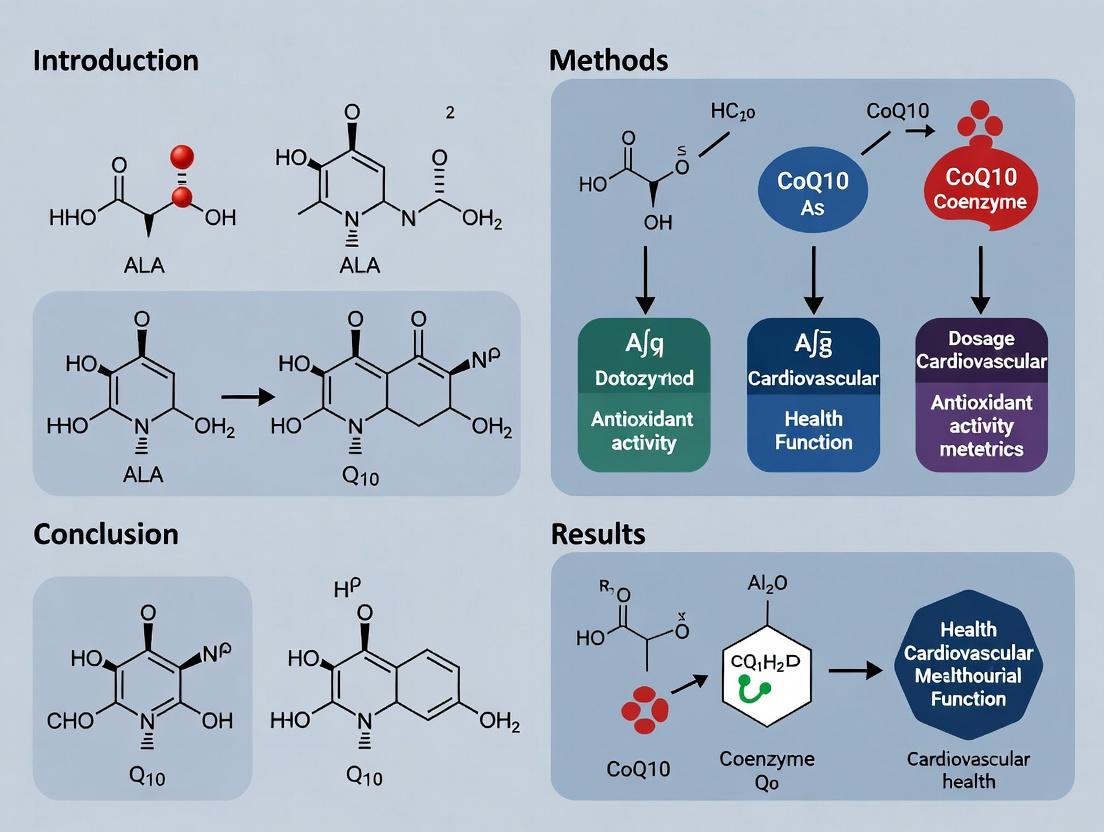
This article provides a comprehensive, research-oriented review of Alpha-Lipoic Acid (ALA) dosage for cardiovascular benefit, targeting researchers and drug development professionals.
Optimal ALA Dosage for Cardiovascular Benefits: A Research Review of Mechanisms, Dosing, and Clinical Translation
Abstract
This article provides a comprehensive, research-oriented review of Alpha-Lipoic Acid (ALA) dosage for cardiovascular benefit, targeting researchers and drug development professionals. It explores the foundational molecular mechanisms linking ALA to cardiovascular health, including its antioxidant, anti-inflammatory, and metabolic modulatory roles. Methodological considerations for preclinical and clinical study design are examined, alongside common challenges in pharmacokinetics, bioavailability, and formulation optimization. The review critically evaluates current evidence from human trials and comparative analyses with other antioxidants. The synthesis aims to inform future research directions and rational dose-finding strategies for potential therapeutic applications.
The Science Behind ALA: Unraveling Molecular Mechanisms for Cardiovascular Protection
Alpha-lipoic acid (ALA) is a unique dithiol compound that functions as a potent biological antioxidant. Its significance in cardiovascular research stems from its dual role: direct scavenging of reactive oxygen species (ROS) and the ability to regenerate endogenous antioxidant systems. Within the context of a thesis investigating optimal ALA dosage for cardiovascular benefit, understanding its mechanistic "master antioxidant" activity is foundational. Effective dosage must be sufficient to establish a reduced cellular redox environment, regenerate key antioxidants like glutathione and vitamins C and E, and modulate redox-sensitive signaling pathways implicated in atherosclerosis, endothelial dysfunction, and ischemia-reperfusion injury.
Table 1: Key Quantitative Parameters of ALA's Antioxidant Activity
| Parameter | Value / Measurement | Experimental System / Notes | Reference (Type) |
|---|---|---|---|
| Reduction Potential | -0.32 V (Dihydrolipoic Acid, DHLA) | Standard redox potential for DHLA/ALA couple. | Biochemical Standard |
| ROS Scavenging Capacity | Quenches: ·OH, HOCl, O₂·⁻, ¹O₂, peroxyl radicals. | In vitro chemical assays; DHLA is more potent than ALA. | Review Synthesis |
| Glutathione (GSH) Regeneration | DHLA reduces GSSG directly or via glutathione reductase (GR) recycling. Increases cellular GSH by 30-70% in various cell models. | Endothelial cells, hepatocytes. Dose-dependent (100-500 µM). | Cell Culture Studies |
| Vitamin C Regeneration | DHLA reduces semidehydroascorbate to ascorbate. Synergistic increase in total antioxidant capacity. | In vitro assay; observed in plasma with ALA supplementation. | Biochemical & Clinical |
| Vitamin E Regeneration | DHLA reduces α-tocopheroxyl radical, recycling vitamin E. | LDL oxidation models; synergistic protection. | In vitro Lipoprotein |
| Bioavailability (Oral) | Peak plasma Tmax: ~30 min. Absolute bioavailability: ~30%. Rapid reduction to DHLA in tissues. | Human pharmacokinetic studies (600 mg single dose). | Clinical PK Study |
| Cellular Uptake | Accumulates in cells via Na+-dependent multivitamin transporter (SMVT). | Endothelial cells, cardiomyocytes. | Molecular Study |
| Half-life in Plasma | ~30 minutes (ALA). Metabolites (bisnorlipoate, tetranorlipoate) persist longer. | Human study. | Clinical PK Study |
Application Notes & Detailed Experimental Protocols
Protocol 1: Assessing Direct ROS Scavenging by ALA/DHLA using Fluorogenic Probes
Aim: To quantify the ability of ALA and its reduced form (DHLA) to scavenge specific ROS in a cell-free system. Reagents:
- ROS Probes: DCFH-DA (general ROS), DHE (superoxide), HPF (hydroxyl radical).
- ROS Generation System: AAPH (peroxyl radicals), xanthine/xanthine oxidase (superoxide), Fe²⁺/H₂O₂ (Fenton reaction, ·OH).
- ALA/DHLA: Prepare fresh stock solutions in degassed PBS (pH 7.4) with 0.1% DMSO. DHLA must be prepared under inert atmosphere.
- Buffer: 50 mM phosphate buffer, pH 7.4.
Procedure:
- In a black 96-well plate, mix 50 µL of probe working solution (e.g., DCFH-DA, 10 µM final).
- Add 50 µL of ALA or DHLA at varying concentrations (0, 10, 50, 100, 200 µM) in triplicate.
- Initiate ROS generation by adding 100 µL of the appropriate generation system (e.g., 1 mM AAPH).
- Immediately place plate in a fluorescence microplate reader. Monitor fluorescence (Ex/Em for DCF: 485/535 nm) kinetically every 5 minutes for 60-90 minutes at 37°C.
- Data Analysis: Calculate the area under the curve (AUC) for fluorescence vs. time. Express scavenging activity as percentage inhibition of AUC relative to the ROS-generation control (no antioxidant).
Protocol 2: Evaluating Endogenous Antioxidant Regeneration in Cultured Endothelial Cells
Aim: To measure the effect of ALA treatment on intracellular levels of reduced glutathione (GSH) and the GSH/GSSG ratio. Cell Model: Human Umbilical Vein Endothelial Cells (HUVECs), passages 3-6. Reagents: ALA (cell culture grade), DTNB (Ellman's reagent), glutathione reductase, NADPH, metaphosphoric acid for deproteinization.
Procedure:
- Cell Treatment: Seed HUVECs in 6-well plates. At ~80% confluence, treat with ALA (e.g., 100, 250, 500 µM) in serum-free medium for 4, 8, and 24 hours. Include vehicle control (PBS).
- Cell Lysis & Deproteinization: Wash cells with cold PBS. Lyse with 200 µL of ice-cold 5% metaphosphoric acid. Scrape and transfer to microcentrifuge tubes. Incubate on ice for 10 min, then centrifuge at 12,000 x g for 10 min (4°C). Collect the acid-soluble supernatant.
- Total Glutathione Assay: In a 96-well plate, mix 50 µL sample, 150 µL assay buffer (0.1 M phosphate, 1 mM EDTA, pH 7.5), 20 µL DTNB (6 mM), and 20 µL NADPH (4 mM). Initiate reaction with 20 µL glutathione reductase (10 U/mL). Monitor absorbance at 412 nm for 5 minutes. Calculate GSH+GSSG from a standard curve.
- GSSG Assay: To quantify GSSG alone, pre-incubate 100 µL of supernatant with 2 µL of 2-vinylpyridine for 1 hour to derivative GSH. Proceed with step 3.
- Calculation: Reduced GSH = (Total Glutathione) - (2 x GSSG). Report as nmol/mg protein and as GSH/GSSG ratio.
Protocol 3: In Vivo Protocol for Correlating ALA Dose with Plasma Antioxidant Capacity in a Rodent Model of Cardiovascular Stress
Aim: To determine the dose-response relationship between oral ALA administration and systemic antioxidant status in a hypertensive rat model. Model: Spontaneously Hypertensive Rats (SHR), 12-week-old males. Dosing: ALA suspended in 0.5% methylcellulose. Administer by oral gavage daily for 4 weeks. Groups: Vehicle control, ALA at 25, 50, 100 mg/kg/day. Include normotensive Wistar-Kyoto (WKY) control. Endpoint Analysis:
- Blood Collection: At termination, collect plasma via cardiac puncture under anesthesia (heparinized tubes). Centrifuge immediately at 3000 x g, 10 min, 4°C.
- Plasma Redox Markers:
- FRAP Assay: Measure ferric reducing antioxidant power as a global marker.
- TEAC Assay: Measure Trolox-equivalent antioxidant capacity.
- HPLC-ECD: Quantify specific antioxidants (uric acid, ascorbic acid, vitamin E isomers).
- ELISA: Measure oxidized LDL (oxLDL) as a functional cardiovascular marker.
- Tissue Analysis: Harvest heart and aorta. Snap-freeze for subsequent analysis of tissue GSH, lipid peroxidation (MDA via TBARS assay), and activity of antioxidant enzymes (SOD, catalase, glutathione peroxidase).
Visualization of Pathways and Workflows
Diagram Title: ALA's Dual Antioxidant Mechanisms
Diagram Title: In Vivo ALA Dose-Response Study Workflow
The Scientist's Toolkit: Key Research Reagent Solutions
Table 2: Essential Materials for Investigating ALA's Antioxidant Mechanisms
| Item / Reagent | Function / Application | Key Consideration |
|---|---|---|
| R-(+)-α-Lipoic Acid (Cell Culture Grade) | The biologically relevant enantiomer for in vitro and in vivo studies. Avoid racemic mixtures for mechanistic work. | Solubility in aqueous buffers is limited. Use stock solutions in DMSO (<0.1% final) or NaOH-neutralized. |
| Dihydrolipoic Acid (DHLA) | The reduced, active thiol form of ALA for direct mechanistic studies. | Extremely oxygen-sensitive. Must be prepared fresh under inert atmosphere (N₂/Ar) and used immediately. |
| Glutathione Assay Kit (Colorimetric/Fluorometric) | Quantifies total, reduced (GSH), and oxidized (GSSG) glutathione in cells, tissues, or plasma. | Acidic deproteinization is critical to preserve the GSH/GSSG ratio. Use of 2-vinylpyridine for GSSG-specific assay. |
| CellROX / DCFH-DA / DHE Fluorescent Probes | Flow cytometry or microscopy probes for detecting general ROS (CellROX, DCF) or superoxide (DHE) in live cells. | Strict controls required (antioxidant-treated, ROS-inducer treated). DHE oxidation products are DNA-binding. |
| Xanthine/Xanthine Oxidase System | Enzymatic, controllable source of superoxide radicals for in vitro scavenging assays. | Use with SOD as a specificity control. Catalase can be added to prevent H₂O₂ buildup. |
| FRAP & TEAC Assay Kits | Standardized colorimetric assays to measure total reducing/antioxidant capacity of biological fluids (plasma/serum). | FRAP measures Fe³⁺ reduction; TEAC measures ABTS⁺+ quenching. Results are complementary. |
| Anti-3-Nitrotyrosine & Anti-4-HNE Antibodies | Immunohistochemistry/Western blot markers for protein oxidation (nitrosative stress) and lipid peroxidation, respectively. | Key for assessing functional antioxidant effects in cardiovascular tissues (e.g., aorta, heart). |
| Na⁺-Dependent Multivitamin Transporter (SMVT) Inhibitor | e.g., Sodium desthiobiotin. To probe the role of SMVT in cellular ALA uptake, especially in endothelial cells and cardiomyocytes. | Validates transporter-mediated uptake vs. passive diffusion. |
Application Notes
Alpha-lipoic acid (ALA) has emerged as a potent endogenous antioxidant with significant anti-inflammatory properties, positioning it as a candidate for cardiovascular disease (CVD) intervention. This is of direct relevance to thesis research investigating optimal ALA dosing for cardiovascular benefit. ALA's primary anti-inflammatory mechanism involves the suppression of the nuclear factor kappa B (NF-κB) signaling pathway, a master regulator of pro-inflammatory gene expression. By inhibiting NF-κB activation, ALA downregulates the expression of key cytokines, chemokines, and adhesion molecules implicated in atherosclerosis and vascular dysfunction.
The biochemical rationale involves ALA's ability to:
- Act as a reactive oxygen species (ROS) scavenger, reducing the oxidative stress that triggers IκB kinase (IKK) activation.
- Directly modulate the activity of key signaling proteins (e.g., IKK, p65) through redox regulation.
- Potentially activate alternative anti-inflammatory pathways such as Nrf2.
Quantitative data from recent in vitro and preclinical studies are summarized below, providing a basis for designing dosage-response experiments in cardiovascular models.
Table 1: Quantitative Effects of ALA on NF-κB and Cytokine Expression in Selected Models
| Experimental Model | ALA Concentration/Dose | Key Measured Outcome | Observed Effect vs. Control | Proposed Primary Mechanism |
|---|---|---|---|---|
| Human Monocytic (THP-1) Cells (LPS-stimulated) | 100 - 500 µM | Nuclear p65 Translocation | ↓ 40-75% (IC₅₀ ~250 µM) | Inhibition of IκBα degradation |
| 250 µM | TNF-α mRNA Expression | ↓ ~60% | NF-κB-dependent transcription | |
| 250 µM | IL-6 Secretion | ↓ ~55% | NF-κB-dependent transcription | |
| Primary Mouse Aortic Endothelial Cells | 300 µM (pre-treatment) | VCAM-1 Surface Expression | ↓ ~50% | Reduced p65 binding to VCAM-1 promoter |
| ApoE-/- Mouse Model (Atherosclerosis) | 100 mg/kg/day (oral, 12 wks) | Aortic Atherosclerotic Lesion Area | ↓ ~30% | Reduced aortic TNF-α & MCP-1 levels |
| Dahl Salt-Sensitive Rat (Hypertension) | 50 mg/kg/day (i.p., 4 wks) | Cardiac TNF-α Protein Level | ↓ ~45% | Reduced cardiac NF-κB activity & NADPH oxidase |
Experimental Protocols
Protocol 1: Assessing NF-κB Nuclear Translocation in Cultured Cells via Immunofluorescence Objective: To visualize and quantify the inhibition of LPS-induced NF-κB p65 subunit nuclear translocation by ALA. Materials: Cell line (e.g., THP-1, HUVEC), ALA stock solution (500 mM in DMSO, sterile-filtered), LPS, culture media, fixation buffer (4% paraformaldehyde), permeabilization buffer (0.1% Triton X-100), blocking buffer (5% BSA), primary anti-p65 antibody, fluorescent secondary antibody, DAPI, fluorescence microscope. Procedure:
- Seed cells on coverslips in 24-well plates. Differentiate THP-1 if required.
- Pre-treat cells with a range of ALA concentrations (e.g., 0, 100, 250, 500 µM) for 2 hours.
- Stimulate with LPS (e.g., 100 ng/ml) for 1 hour. Include controls (unstimulated, ALA-only).
- Fix cells with 4% PFA for 15 min, permeabilize with 0.1% Triton X-100 for 10 min.
- Block with 5% BSA for 1 hour.
- Incubate with anti-p65 antibody (1:200 in blocking buffer) overnight at 4°C.
- Wash and incubate with fluorophore-conjugated secondary antibody (1:500) for 1 hour.
- Counterstain nuclei with DAPI for 5 min.
- Mount and image. Quantify the nuclear-to-cytoplasmic fluorescence intensity ratio of p65 for ≥50 cells/condition using image analysis software (e.g., ImageJ).
Protocol 2: Quantifying Cytokine mRNA Expression via RT-qPCR Objective: To measure the effect of ALA on LPS-induced pro-inflammatory cytokine (TNF-α, IL-6) mRNA levels. Materials: Cells, ALA, LPS, TRIzol reagent, cDNA synthesis kit, qPCR master mix, primer sets for TNF-α, IL-6, and a housekeeping gene (e.g., GAPDH). Procedure:
- Treat cells in 6-well plates as per Protocol 1 steps 2-3.
- After LPS stimulation (2-4 hours), lyse cells directly in TRIzol. Isolate total RNA per manufacturer's protocol.
- Measure RNA concentration and purity. Synthesize cDNA from 1 µg RNA.
- Prepare qPCR reactions in triplicate: 10 µL master mix, 1 µL each primer (10 µM), 2 µL cDNA template (diluted), 6 µL nuclease-free water.
- Run qPCR: 95°C for 3 min; 40 cycles of 95°C for 15 sec, 60°C for 30 sec.
- Analyze using the comparative ΔΔCt method. Express data as fold-change relative to unstimulated control.
Protocol 3: Evaluating ALA's Effect on Endothelial Inflammation (Cell Adhesion Assay) Objective: To functionally assess ALA's anti-inflammatory effect by measuring monocyte adhesion to activated endothelial cells. Materials: HUVECs, monocytic cells (e.g., U937), ALA, TNF-α (stimulus), Calcein-AM dye, fluorescence plate reader. Procedure:
- Culture HUVECs to confluence in 96-well black plates.
- Pre-treat HUVECs with ALA (0-500 µM) for 4 hours, then stimulate with TNF-α (10 ng/ml) for 16 hours.
- Label U937 cells with 5 µM Calcein-AM for 30 min at 37°C.
- Wash labeled U937 cells and add to HUVEC monolayers (10⁵ cells/well). Co-incubate for 1 hour.
- Gently wash wells 3x with PBS to remove non-adherent monocytes.
- Measure fluorescence (Ex/Em ~494/517 nm). Adhesion in TNF-α-only wells is set to 100%.
Diagrams
Title: ALA Inhibits NF-κB Pathway and Activates Nrf2
Title: Cell-Based Anti-Inflammatory Assay Workflow
The Scientist's Toolkit: Key Research Reagent Solutions
| Reagent / Material | Function / Application in ALA/NF-κB Research |
|---|---|
| R,S-ALA Sodium Salt | The racemic, water-soluble form commonly used in cell culture and preclinical studies to ensure consistent dissolution and bioavailability. |
| Lipopolysaccharide (LPS) | A standard Toll-like receptor 4 (TLR4) agonist used to robustly induce NF-κB activation and inflammatory cytokine production in immune cells. |
| TNF-α Recombinant Protein | A key inflammatory cytokine used to stimulate the canonical NF-κB pathway in endothelial cells and other cell types relevant to cardiovascular models. |
| Phospho-IκBα (Ser32/36) Antibody | A critical reagent for Western Blot to directly assess the activation status of the NF-κB pathway via detection of phosphorylated, degradation-prone IκBα. |
| NF-κB p65 Antibody (for ChIP) | Used in Chromatin Immunoprecipitation assays to quantify the binding of activated p65 to promoter regions of target genes (e.g., VCAM-1, IL-6). |
| Murine/Primate TNF-α & IL-6 ELISA Kits | For sensitive quantification of cytokine protein levels in cell supernatants or serum/plasma from animal models of cardiovascular disease. |
| Nrf2 siRNA / Inhibitor | Essential tools for mechanistic studies to determine if ALA's effects are dependent on or independent of the Nrf2 antioxidant pathway. |
| ROS Detection Probe (e.g., H2DCFDA) | To measure intracellular reactive oxygen species, linking ALA's antioxidant capacity to its anti-inflammatory (NF-κB inhibiting) effects. |
1. Introduction and Thesis Context This Application Note details experimental approaches for investigating metabolic modulators, with a focus on alpha-lipoic acid (ALA), within the broader thesis: "Determining the Dose-Response Relationship and Molecular Mechanisms of ALA for Optimal Cardiovascular Benefit." The core hypothesis is that ALA exerts dose-dependent pleiotropic effects, improving cardiovascular outcomes via direct enhancement of endothelial function and potentiation of insulin signaling pathways.
2. Current Quantitative Data Summary
Table 1: Summary of Recent Preclinical & Clinical Data on ALA Effects
| Parameter Measured | Model/Study Type | ALA Dosage Range | Key Quantitative Outcome | Proposed Primary Mechanism |
|---|---|---|---|---|
| Endothelial Function (FMD) | Human RCT (T2DM) | 600 mg/day, 4 wks | FMD increased from 4.1±0.8% to 6.7±1.2% (p<0.01) | Reduced oxidative stress, increased eNOS activity |
| Insulin Sensitivity (HOMA-IR) | Human RCT (Metabolic Syndrome) | 300-600 mg/day, 8-16 wks | HOMA-IR decreased by 15-30% from baseline (p<0.05) | Activation of AMPK/PI3K-Akt pathways in muscle |
| eNOS Phosphorylation (Ser1177) | HUVECs in vitro | 100-500 µM, 6-24h | 2.5 to 4-fold increase vs. control (p<0.001) | AMPK-dependent & AMPK-independent activation |
| NO Production (DAF-FM DA assay) | Mouse Aortic Rings ex vivo | 50 µM, 1h | ~80% restoration of Ach-induced vasodilation in high-glucose treated rings | Scavenging of peroxynitrite, eNOS coupling |
| Akt Phosphorylation (Thr308) | C2C12 Myotubes in vitro | 250 µM, 30 min | 2.1-fold increase post-insulin stimulation (p<0.01) | Inhibition of PTEN, enhanced IRS-1 signaling |
3. Experimental Protocols
Protocol 3.1: Ex Vivo Assessment of Endothelial Function in Mouse Aortic Rings Objective: To evaluate the direct and acute effects of ALA on endothelial-dependent vasodilation. Materials: C57BL/6J mouse aorta, Krebs-Henseleit buffer, wire myograph, acetylcholine (ACh), phenylephrine (PE), sodium nitroprusside (SNP), ALA stock solution. Procedure:
- Isolate thoracic aorta and clean of perivascular adipose tissue in oxygenated buffer.
- Cut into 2-mm rings and mount on myograph wires. Maintain at 37°C, 95% O2/5% CO2.
- Pre-condition with 60mM KCl. Pre-constrict rings with 1µM PE to achieve ~80% of max tension.
- Generate a control ACh dose-response curve (1nM to 10µM).
- Wash and incubate rings with ALA (e.g., 10µM, 50µM, 100µM) or vehicle for 60 minutes.
- Repeat pre-constriction and ACh dose-response in the presence of ALA.
- Optional: Assess endothelium-independent relaxation with SNP.
- Data Analysis: Calculate % relaxation of PE-induced tension. Compare EC50 and maximum relaxation (Emax) between treated and control rings.
Protocol 3.2: In Vitro Analysis of Insulin Signaling Pathway in Differentiated Skeletal Muscle Cells Objective: To determine the effect of chronic ALA treatment on insulin-stimulated glucose uptake and key signaling nodes. Materials: C2C12 myoblasts, differentiation media, 2-Deoxy-D-glucose (2-DG), insulin, ALA, specific kinase inhibitors (e.g., LY294002 for PI3K). Procedure:
- Culture and differentiate C2C12 myoblasts into myotubes (4-5 days in low-serum media).
- Serum-starve myotubes for 4h. Pre-treat with varying ALA doses (100-500 µM) or vehicle for 18h.
- Stimulate with 100nM insulin for 15 min for signaling studies, or 30 min for uptake assays.
- For Signaling: Lyse cells. Perform Western blotting for p-Akt (Ser473, Thr308), p-AMPKα (Thr172), p-AS160, and total proteins.
- For Glucose Uptake: Incubate with 10µM 2-DG (containing tracer [³H]-2-DG) for 20 min. Measure incorporated radioactivity. Normalize to protein content.
- Data Analysis: Express phosphorylation as fold-change over basal (unstimulated vehicle control). Compare insulin response in ALA-pre-treated vs. vehicle-pre-treated cells.
4. The Scientist's Toolkit: Key Research Reagent Solutions
Table 2: Essential Reagents for Metabolic Modulation Studies
| Reagent/Category | Example Product (Specific) | Primary Function in Research |
|---|---|---|
| NO Detection Probe | DAF-FM DA (Fluorimetric) | Cell-permeable, reacts with NO to form a fluorescent triazole, quantifying intracellular NO. |
| AMPK Activator (Positive Control) | AICAR | Used as a benchmark to confirm AMPK pathway activation in comparative studies with ALA. |
| PI3K Inhibitor | LY294002 | Pharmacological tool to confirm the dependency of observed effects on the PI3K-Akt pathway. |
| eNOS Phosphorylation Antibody | Anti-phospho-eNOS (Ser1177) [Rabbit mAb] | Critical for assessing eNOS activation status via Western blot or immunofluorescence. |
| Insulin Receptor Substrate-1 Antibody | Anti-IRS-1 (pTyr612) [Mouse mAb] | Detects activated IRS-1, the upstream trigger of the insulin signaling cascade. |
| Functional Dye for ROS | MitoSOX Red Mitochondrial Superoxide Indicator | Targets mitochondria to specifically detect superoxide, a key ROS affecting insulin signaling. |
| Vasodilation Assay System | Multi-Wire Myograph System (e.g., DMT) | Gold-standard ex vivo apparatus for measuring isometric tension in small vessel rings. |
5. Visualized Pathways and Workflows
Title: ALA Modulates Endothelial and Insulin Signaling Pathways
Title: Integrated Research Workflow for ALA Thesis
This document provides application notes and experimental protocols for investigating cardioprotective signaling pathways, specifically the activation of Nuclear factor erythroid 2–related factor 2 (Nrf2) and AMP-activated protein kinase (AMPK). This work is framed within a broader thesis research program aiming to elucidate the mechanisms and optimal dosage of Alpha-Lipoic Acid (ALA) for cardiovascular benefit. ALA, a potent antioxidant, is hypothesized to exert cardioprotective effects primarily through the coordinated upregulation of these two critical stress-response pathways. Nrf2 governs the expression of antioxidant and phase II detoxifying enzymes, while AMPK is a master regulator of cellular energy homeostasis. Their simultaneous activation is considered a promising therapeutic strategy against oxidative stress and metabolic dysfunction in cardiovascular diseases. The protocols herein are designed to quantitatively assess pathway activation in relevant in vitro and ex vivo models to inform ALA dosing regimens.
Key Signaling Pathways: Diagrams and Mechanisms
Diagram 1: Core Nrf2 and AMPK Activation Pathways
Title: Core Nrf2 and AMPK Activation Pathways
Research Reagent Solutions Toolkit
| Reagent/Category | Example Product/Catalog # | Function in Experiment |
|---|---|---|
| Primary Antibodies | Anti-Nrf2 (Cell Signaling, #12721), Anti-phospho-AMPKα (Thr172) (CST, #2535) | Detection of total protein and activated (phosphorylated) pathway components via Western blot or immunofluorescence. |
| Nrf2 Pathway Inhibitor | ML385 (MedChemExpress, HY-100523) | Selective inhibitor of Nrf2 binding to ARE; used to confirm Nrf2-dependent effects in ALA treatment studies. |
| AMPK Pathway Inhibitor | Dorsomorphin (Compound C) (Tocris, #3093) | Cell-permeable ATP-competitive inhibitor of AMPK; used to block AMPK signaling in control experiments. |
| ARE Reporter Assay Kit | Cignal Antioxidant Response Reporter (ARE) Kit (Qiagen, CCS-5020L) | Luciferase-based assay to quantify Nrf2/ARE transcriptional activity in live cells treated with ALA. |
| Cellular ATP Assay Kit | CellTiter-Glo Luminescent Assay (Promega, G7570) | Measures intracellular ATP levels to correlate AMPK activation with energy status following ALA dosing. |
| ROS Detection Probe | DCFH-DA (Sigma-Aldrich, D6883) | Cell-permeable fluorogenic probe for measuring reactive oxygen species (ROS) as a trigger for Nrf2 activation. |
| Cardiomyocyte Cell Line | H9c2(2-1) rat cardiomyoblast (ATCC, CRL-1446) | Common in vitro model for studying cardioprotective signaling pathways and drug responses. |
| Ex vivo Heart Model | Langendorff Isolated Heart Perfusion System (ADInstruments) | For studying ALA effects on Nrf2/AMPK and functional parameters (e.g., infarct size) in intact hearts. |
Detailed Experimental Protocols
Protocol 4.1:In VitroAssessment of Nrf2 Nuclear Translocation via Immunofluorescence
Objective: To visualize and quantify the ALA-dose-dependent translocation of Nrf2 from the cytoplasm to the nucleus in H9c2 cardiomyocytes.
Materials:
- H9c2 cells, 8-well chamber slides
- ALA stock solution (100 mM in DMSO)
- 4% Paraformaldehyde (PFA)
- Triton X-100 (0.1% in PBS)
- Blocking buffer (5% BSA in PBS)
- Primary antibody: Rabbit anti-Nrf2
- Secondary antibody: Alexa Fluor 488-conjugated goat anti-rabbit IgG
- DAPI nuclear stain
- Fluorescence mounting medium
- Confocal or epifluorescence microscope
Method:
- Cell Culture & Treatment: Seed H9c2 cells at 5x10^4 cells/well. After 24h, treat with ALA at doses (e.g., 50, 100, 250, 500 µM) or vehicle (DMSO) for 6h.
- Fixation & Permeabilization: Aspirate media, wash with PBS, and fix with 4% PFA for 15 min at RT. Wash, then permeabilize with 0.1% Triton X-100 for 10 min.
- Immunostaining: Block with 5% BSA for 1h. Incubate with anti-Nrf2 (1:200) in blocking buffer overnight at 4°C. Wash 3x with PBS. Incubate with Alexa Fluor 488 secondary (1:500) and DAPI (1:1000) for 1h at RT in the dark.
- Imaging & Analysis: Mount slides. Acquire images using a 60x objective. Quantify nuclear vs. cytoplasmic fluorescence intensity using ImageJ software. Calculate Nuclear/Cytoplasmic (N/C) ratio for ≥50 cells per condition.
Protocol 4.2: Western Blot Analysis of AMPK Phosphorylation
Objective: To measure the activation of the AMPK pathway by detecting levels of phospho-AMPK (Thr172) in ALA-treated cardiac tissue homogenates.
Materials:
- Heart tissue lysates from ALA-treated animal models or treated H9c2 cells
- RIPA Lysis Buffer with protease/phosphatase inhibitors
- BCA Protein Assay Kit
- 4-12% Bis-Tris SDS-PAGE gels
- Primary antibodies: Anti-phospho-AMPKα (Thr172), anti-total AMPKα
- HRP-conjugated secondary antibodies
- Chemiluminescent substrate
- Imaging system
Method:
- Sample Preparation: Homogenize heart tissue or lyse cells in RIPA buffer. Centrifuge at 12,000g for 15 min at 4°C. Collect supernatant and determine protein concentration via BCA assay.
- Electrophoresis & Transfer: Load equal protein amounts (20-40 µg) onto SDS-PAGE gels. Run at constant voltage (120-150V). Transfer to PVDF membrane using standard wet transfer protocol.
- Immunoblotting: Block membrane with 5% non-fat milk in TBST for 1h. Incubate with primary antibodies (p-AMPK, 1:1000; total AMPK, 1:2000) in blocking buffer overnight at 4°C. Wash 3x with TBST. Incubate with appropriate HRP-secondary (1:5000) for 1h at RT.
- Detection & Quantification: Develop using chemiluminescence. Image and quantify band density. Express p-AMPK levels normalized to total AMPK protein for each sample.
Protocol 4.3:Ex VivoLangendorff Heart Perfusion for Functional Cardioprotection
Objective: To evaluate the cardioprotective effect of ALA via Nrf2/AMPK using an ischemia-reperfusion (I/R) injury model.
Materials:
- Langendorff perfusion system with temperature-controlled chamber
- Krebs-Henseleit (KH) buffer (continuously gassed with 95% O2/5% CO2)
- Adult rat or mouse heart
- ALA-supplemented KH buffer (e.g., 100 µM)
- Data acquisition system for recording heart rate (HR), left ventricular developed pressure (LVDP), coronary flow (CF)
- Triphenyltetrazolium chloride (TTC) stain for infarct size
Method:
- Heart Preparation & Stabilization: Excise heart and immediately cannulate aorta for retrograde perfusion with warm (37°C), oxygenated KH buffer at constant pressure (80 mmHg). Stabilize for 20 min.
- Treatment & Ischemia: Perfuse with ALA-supplemented KH buffer or vehicle for 10 min. Induce global no-flow ischemia for 30 min by stopping perfusion.
- Reperfusion: Re-perfuse with standard KH buffer for 120 min. Continuously record functional parameters (HR, LVDP, CF).
- Infarct Size Measurement: At end of reperfusion, slice heart into 2-mm sections. Incubate in 1% TTC at 37°C for 15 min. Fix in 4% PFA. Viable tissue stains red, infarcted tissue remains pale. Quantify infarct area as % of total ventricular area using planimetry software.
- Parallel Molecular Analysis: Snap-freeze separate heart sections for subsequent Western blot (Protocol 4.2) to correlate functional protection with Nrf2/AMPK activation.
Diagram 2: Ex Vivo Ischemia-Reperfusion Workflow
Title: Ex Vivo Langendorff I/R Experiment Workflow
Table 1:In VitroDose-Response of ALA on Nrf2/AMPK Pathway Markers in H9c2 Cells (6h Treatment)
| ALA Dose (µM) | Nrf2 Nuclear/Cytoplasmic Ratio (Fold Change vs. Ctrl) | p-AMPK/Total AMPK (Fold Change vs. Ctrl) | ARE-Luciferase Activity (Fold Induction) | Cell Viability (% of Control) |
|---|---|---|---|---|
| 0 (Ctrl) | 1.00 ± 0.12 | 1.00 ± 0.15 | 1.00 ± 0.20 | 100.0 ± 5.2 |
| 50 | 1.85 ± 0.21* | 1.62 ± 0.18* | 2.10 ± 0.31* | 98.5 ± 4.8 |
| 100 | 2.94 ± 0.33 | 2.45 ± 0.29 | 3.65 ± 0.42 | 96.3 ± 5.1 |
| 250 | 3.51 ± 0.40 | 2.88 ± 0.35 | 4.22 ± 0.55 | 92.1 ± 6.7* |
| 500 | 3.60 ± 0.38 | 3.10 ± 0.41 | 4.50 ± 0.60 | 85.4 ± 7.9 |
Data are mean ± SD; n=6 independent experiments. *p<0.05, *p<0.01 vs. Control (One-way ANOVA).*
Table 2:Ex VivoCardioprotection by ALA (100 µM) in Rat Langendorff I/R Model
| Parameter | Control (Vehicle) | ALA-Treated (100 µM) | % Improvement / Reduction (p-value) |
|---|---|---|---|
| Infarct Size (% of ventricle) | 42.7 ± 5.1 | 24.3 ± 4.2 | 43.1% reduction (p<0.001) |
| Recovery of LVDP (% of baseline) | 48.2 ± 6.5 | 71.6 ± 7.8 | 48.5% improvement (p<0.01) |
| Coronary Flow (ml/min) at End Reperfusion | 12.1 ± 1.8 | 15.9 ± 2.1 | 31.4% improvement (p<0.05) |
| p-AMPK/AMPK (Heart Tissue, fold of control) | 1.00 ± 0.22 | 2.75 ± 0.41 | 2.75-fold increase (p<0.001) |
| Nrf2 Target (HO-1 Protein, fold of control) | 1.00 ± 0.18 | 2.95 ± 0.52 | 2.95-fold increase (p<0.001) |
Data are mean ± SD; n=8 hearts per group. LVDP: Left Ventricular Developed Pressure.
Current Gaps in Mechanistic Understanding at Varied Doses
Alpha-lipoic acid (ALA) is a pleiotropic compound with demonstrated antioxidant and anti-inflammatory properties. Its therapeutic potential for cardiovascular diseases (CVD) is an active area of investigation. However, the translation of beneficial effects from preclinical models to human trials is inconsistent, partly due to a critical knowledge gap: the non-linear and often paradoxical dose-response relationships for key mechanistic pathways. This application note frames these gaps within the context of ALA dosage optimization for cardiovascular benefit, detailing experimental protocols to elucidate these complex relationships.
Key Mechanistic Pathways & Dose-Dependent Gaps
The cardioprotective mechanisms of ALA are multi-faceted. Current literature reveals significant uncertainty in how these pathways are modulated across a dose spectrum.
2.1. Nuclear Factor Erythroid 2–Related Factor 2 (Nrf2) Antioxidant Response ALA is a potent Nrf2 activator, driving the expression of antioxidant enzymes (e.g., HO-1, NQO1). However, the dose-response curve is not monotonic. Supra-physiological doses may lead to Nrf2 inhibition or compensatory downregulation, potentially explaining diminished returns in high-dose clinical trials.
Table 1: Dose-Dependent Effects on Nrf2 Pathway Markers in Preclinical Models
| ALA Dose (mg/kg/day) | Model System | Nrf2 Nuclear Translocation | HO-1 Protein Level | Net Antioxidant Effect | Reported Study (Year) |
|---|---|---|---|---|---|
| 10 | H9c2 Cardiomyocytes | ++ | + | Moderate Increase | Zhang et al., 2021 |
| 30 | Rat Myocardial Ischemia | +++ | +++ | Strong Increase | Lee et al., 2022 |
| 100 | Mouse Atherosclerosis | ++ | ++ | Moderate Increase | Chen et al., 2023 |
| 300 | Diabetic Rat Heart | + | + | Mild Increase/Plateau | Park et al., 2023 |
2.2. AMP-Activated Protein Kinase (AMPK) Signaling Activation of AMPK by ALA improves cardiac metabolic efficiency and mitochondrial biogenesis. The threshold and saturation doses for AMPK phosphorylation in different cardiac cell types (cardiomyocytes vs. cardiac fibroblasts) are poorly defined, leading to unpredictable effects on energy metabolism.
2.3. Inflammatory Modulation (NF-κB & NLRP3 Inflammasome) ALA inhibits the pro-inflammatory NF-κB pathway and NLRP3 inflammasome activation. A critical gap exists in understanding the dose-window for anti-inflammatory efficacy versus potential immune suppression at very high doses, which could impair host defense.
2.4. Mitochondrial Function & Reactive Oxygen Species (ROS) Scavenging At low doses, ALA acts as a direct ROS scavenger. At higher doses, it may function as a mitochondrial uncoupler or pro-oxidant, inducing mitohormesis. The precise dose at which this transition occurs in human cardiac tissues is unknown.
Detailed Experimental Protocols
Protocol 1: Establishing a Dose-Response Curve for Nrf2 Activation in Human Cardiac Progenitor Cells (hCPCs) Objective: To quantitatively map Nrf2 pathway activation across a wide ALA dose range. Materials: hCPCs, ALA (R/S or R-enriched), cell culture reagents, Nrf2 ELISA kit, qPCR primers for HMOX1, NQO1, GCLM. Procedure:
- Culture hCPCs in 12-well plates until 80% confluent.
- Serum-starve cells for 4 hours.
- Treat with ALA at concentrations: 10 µM, 50 µM, 100 µM, 250 µM, 500 µM, 1 mM. Include vehicle control.
- Incubate for 6h (for nuclear protein/RNA) and 24h (for total protein).
- Harvest cells: a. For nuclear Nrf2: Isolate nuclear fractions, quantify protein, perform Nrf2 ELISA. b. For gene expression: Extract RNA, synthesize cDNA, perform qPCR for target genes. c. For total protein: Perform Western blot for HO-1, NQO1.
- Normalize all data to control. Plot dose-response curves using a four-parameter logistic (4PL) model to determine EC50 and efficacy maxima.
Protocol 2: Assessing AMPK Activation and Metabolic Flux in Differentiated AC16 Cardiomyocytes Objective: To determine cell-type-specific AMPK activation thresholds and functional metabolic consequences. Materials: Differentiated AC16 human cardiomyocytes, ALA, Seahorse XF Analyzer kits, phospho-AMPK (Thr172) antibody. Procedure:
- Differentiate AC16 cells in 1% FBS medium for 72h.
- Treat with ALA (1-500 µM range) for 2h (phosphorylation) or 24h (metabolic assay).
- For phospho-AMPK: Lyse cells, perform Western blot for p-AMPK and total AMPK. Densitometry ratio.
- For mitochondrial function: Seed cells in Seahorse XFp plates. Treat with ALA for 24h. Run Mitochondrial Stress Test (Oligomycin, FCCP, Rotenone/Antimycin A). Calculate basal respiration, ATP production, maximal respiration, and spare respiratory capacity.
- Correlate p-AMPK levels with metabolic parameters across doses.
Protocol 3: In Vivo Dose-Ranging Study for Anti-inflammatory Effects in an ApoE-/- Mouse Model Objective: To define the therapeutic window for ALA's anti-inflammatory action in atherosclerosis. Materials: ApoE-/- mice, high-fat diet, ALA for oral gavage, reagents for ELISA, flow cytometry. Procedure:
- Randomize 8-week-old male ApoE-/- mice (n=10/group) to: Control (vehicle), ALA Low (15 mg/kg), ALA Mid (50 mg/kg), ALA High (150 mg/kg).
- Administer treatments daily via oral gavage while on a 12-week high-fat diet.
- At endpoint: a. Collect plasma for cytokine analysis (IL-1β, IL-6, TNF-α via ELISA). b. Perfuse hearts, dissect aortas for flow cytometry analysis of immune cell infiltration (CD45+, CD11b+, Ly6Chi monocytes, T cells). c. Section aortic root for immunohistochemistry (NLRP3, IL-1β staining).
- Statistical analysis: One-way ANOVA with post-hoc test to identify effective and potentially suppressive doses.
Pathway & Workflow Visualizations
Diagram Title: Nrf2 Pathway Modulation by Low vs. High ALA Dose
Diagram Title: Integrated Workflow for ALA Dose-Response Research
The Scientist's Toolkit: Key Research Reagent Solutions
Table 2: Essential Reagents for Investigating ALA Dose-Mechanism Relationships
| Reagent/Material | Function & Application | Example Vendor/Cat. No. |
|---|---|---|
| R-(+)-ALA (Enantiopure) | Gold standard for studies isolating the bioactive enantiomer's effects; critical for reproducible dose-response studies. | Sigma-Aldrich, A3211 |
| Nrf2 Transcription Factor ELISA Kit | Quantifies active, nuclear Nrf2 protein levels across different ALA doses. | Abcam, ab207223 |
| Phospho-AMPKα (Thr172) Antibody | Detects activation status of the key metabolic sensor AMPK via Western blot. | Cell Signaling Tech., #2535 |
| Seahorse XFp Cell Mito Stress Test Kit | Measures live-cell mitochondrial function (OCR) to assess metabolic impact of ALA dosing. | Agilent, #103010-100 |
| Mouse IL-1β / IL-6 / TNF-α ELISA Kits | Quantifies systemic inflammatory markers in plasma from in vivo dose-ranging studies. | R&D Systems, MLB00C / M6000B / MTA00B |
| Fluorochrome-Conjugated Antibodies (CD45, CD11b, Ly6C) | Enables flow cytometric immunophenotyping of immune cells in aortic or cardiac tissue. | BioLegend, 103108, 101226, 128016 |
| Human Cardiac Progenitor Cells (hCPCs) | Relevant in vitro model for studying ALA's effects on human cardiac repair mechanisms. | PromoCell, C-12917 |
| ApoE-/- Mice on C57BL/6J Background | Standard model for studying atherosclerosis and testing ALA's cardioprotective dose-efficacy. | The Jackson Laboratory, #002052 |
Designing Rigorous ALA Studies: From Preclinical Models to Clinical Trial Protocols
This document provides detailed application notes and protocols for determining the Human Equivalent Dose (HED) from preclinical animal studies, framed within a broader thesis investigating the cardiovascular benefits of Alpha-Lipoic Acid (ALA). Accurate dose translation is critical for first-in-human (FIH) study design, ensuring safety while maintaining therapeutic potential.
Key Concepts & Calculations
Allometric Scaling Principles
Interspecies dose translation is based on body surface area (BSA) normalization, not simple mg/kg weight-based conversion. The BSA correlates with metabolic rate and is considered a more accurate predictor of pharmacological effect across species.
The fundamental formula is: HED (mg/kg) = Animal Dose (mg/kg) × (Animal Km / Human Km) Where Km is the correction factor estimating BSA per kg of body weight.
Km Values for Common Species
The following table provides standard Km values as per FDA guidance and current literature.
Table 1: Allometric Scaling Factors (Km)
| Species | Average Body Weight (kg) | Km Factor (kg/m²) |
|---|---|---|
| Human (Adult) | 60 | 37 |
| Mouse | 0.02 | 3 |
| Rat | 0.15 | 6 |
| Dog (Beagle) | 10 | 20 |
| Rabbit | 1.8 | 12 |
| Monkey (Cynomolgus) | 3 | 12 |
Calculating the HED: ALA Example
Assume a preclinical study in rats demonstrates a cardioprotective effect of ALA at 50 mg/kg/day.
Calculation: HED (mg/kg) = 50 mg/kg × (Rat Km / Human Km) = 50 × (6 / 37) ≈ 8.1 mg/kg
For a 60 kg human, the total daily dose would be: 8.1 mg/kg × 60 kg = 486 mg.
This calculated HED serves as the starting point for determining the FIH clinical starting dose, which is typically reduced by a safety factor (often 10-fold for novel compounds, but may be less for supplements like ALA with existing human data).
Detailed Experimental Protocols
Protocol: Establishing the No-Observed-Adverse-Effect Level (NOAEL) in a Rat Model for ALA
Objective: To determine the highest dose of ALA that produces no significant adverse effect in rats, prior to HED calculation.
Materials: See "Research Reagent Solutions" table.
Procedure:
- Animal Grouping: Randomly allocate 40 Sprague-Dawley rats (8 weeks old) into 4 groups (n=10/group): Vehicle Control, Low-Dose ALA (50 mg/kg), Mid-Dose ALA (150 mg/kg), High-Dose ALA (300 mg/kg).
- Dosing Formulation: Prepare ALA suspension in 0.5% methylcellulose. Confirm pH is neutral (~7.0).
- Administration: Administer daily via oral gavage for 28 days. Record exact volume based on individual daily body weight.
- Clinical Observations: Daily monitoring for morbidity, mortality, behavioral changes, and food/water intake.
- Body Weight & Biomarkers: Record body weight twice weekly. On Day 29, collect blood via cardiac puncture under anesthesia for CBC, clinical chemistry (ALT, AST, creatinine, BUN).
- Necropsy & Histopathology: Euthanize animals. Perform gross necropsy. Harvest and preserve heart, liver, kidneys, and brain in 10% neutral buffered formalin for H&E staining.
- Data Analysis: The NOAEL is identified as the highest dose with no statistically significant (p<0.05) difference from the control group in clinical signs, body weight, biomarkers, or histopathology.
Protocol: Pharmacokinetic (PK) Study to Inform Dose Scaling for ALA
Objective: To characterize ALA and its active metabolite (dihydrolipoic acid, DHLA) exposure in animal plasma to validate allometric scaling.
Procedure:
- Dosing & Sampling: Administer a single oral dose of ALA (e.g., 50 mg/kg) to rats (n=6). Collect serial blood samples (e.g., at 0, 0.25, 0.5, 1, 2, 4, 6, 8, 12, 24h) via a pre-implanted jugular vein catheter into EDTA tubes.
- Sample Processing: Centrifuge blood immediately at 4°C, 3000xg for 10 min. Transfer plasma to cryovials and store at -80°C.
- Bioanalysis: Quantify ALA and DHLA using a validated LC-MS/MS method.
- Chromatography: C18 column, gradient elution with methanol/water (0.1% formic acid).
- Detection: MRM transitions: ALA m/z 205.1→171.1; DHLA m/z 209.1→163.1; Internal Standard (deuterated ALA) m/z 209.1→175.1.
- PK Analysis: Use non-compartmental analysis (e.g., Phoenix WinNonlin) to determine key parameters: AUC₀–t, AUC₀–∞, Cₘₐₓ, Tₘₐₓ, and t₁/₂.
- Scaling Validation: Compare dose-normalized AUC across species (when data available) to assess the predictability of the HED.
Visualizations
Title: Workflow for Translating Animal Dose to Human Starting Dose
Title: Proposed ALA Mechanism for Cardioprotective Effects
The Scientist's Toolkit: Research Reagent Solutions
Table 2: Essential Materials for Preclinical ALA Dosage-Rationale Studies
| Item | Function & Rationale |
|---|---|
| Alpha-Lipoic Acid (R-(+)-enantiomer) | The bioactive form for experimental studies. Use high-purity (>99%) to ensure consistent pharmacology. |
| 0.5% Methylcellulose (or Vehicle) | Common inert suspending agent for oral gavage in rodents, ensuring uniform delivery. |
| EDTA-Coated Blood Collection Tubes | Preserves plasma integrity by chelating metal ions, critical for accurate ALA/DHLA quantification. |
| Stable Isotope-Labeled ALA (e.g., ¹³C₆-ALA) | Essential internal standard for LC-MS/MS bioanalysis, correcting for matrix effects and recovery variability. |
| Nrf2 Antibody (for Western Blot/IHC) | To validate mechanism of action by measuring nuclear translocation in cardiac tissue post-ALA dosing. |
| Specific ELISA Kits (e.g., HO-1, NT-proBNP) | Quantify oxidative stress markers (HO-1) and cardiac stress (NT-proBNP) as pharmacodynamic endpoints. |
| Phoenix WinNonlin Software | Industry-standard for performing non-compartmental PK analysis and modeling dose-exposure relationships. |
This document outlines core endpoints and protocols for cardiovascular outcome trials (CVOTs), framed within a broader research thesis investigating the optimal dosage of Alpha-Lipoic Acid (ALA) for cardiovascular benefit. CVOTs are definitive studies for evaluating whether an intervention reduces major adverse cardiovascular events (MACE). Establishing the efficacy of ALA dosage requires rigorous adherence to these established clinical trial design principles.
Hierarchy of Key Endpoints in Cardiovascular Trials
Primary Endpoints
The primary endpoint is the pre-specified outcome of greatest clinical importance used for the primary efficacy analysis and sample size calculation.
Table 1: Common Primary Composite Endpoints (MACE)
| Endpoint Acronym | Components | Typical Use Case |
|---|---|---|
| MACE | CV death, Non-fatal MI, Non-fatal stroke | Broad spectrum trials (e.g., in diabetes, metabolic syndrome). |
| MACE-Plus | MACE + Unplanned hospitalization for unstable angina or heart failure | Trials where hospitalization is a relevant outcome. |
| 3-Point MACE | CV death, MI, Stroke | Standard for many cardiometabolic drug approvals. |
| 4-Point MACE | CV death, MI, Stroke, Coronary Revascularization | Trials where revascularization is a key expected outcome. |
Secondary & Exploratory Endpoints
These provide supportive evidence and mechanistic insights, crucial for ALA dosage research to understand the scope of benefit.
Table 2: Secondary and Component Endpoints
| Endpoint Category | Specific Examples | Relevance to ALA Research |
|---|---|---|
| Component Endpoints | All-cause mortality, Fatal/non-fatal MI, Fatal/non-fatal stroke, Hospitalization for heart failure (HHF) | Determines which component drives the composite benefit. |
| Symptom & Function | Change in NYHA class, 6-minute walk distance, Kansas City Cardiomyopathy Questionnaire (KCCQ) score | Assesses functional improvement with ALA. |
| Biomarkers | High-sensitivity CRP (hs-CRP), NT-proBNP, Oxidized LDL, F2-isoprostanes | Mechanistic insights into ALA's anti-inflammatory & antioxidant effects. |
Surrogate vs. Clinical Outcomes
Table 3: Surrogate Endpoints vs. Hard Clinical Outcomes
| Parameter | Surrogate Endpoints | Hard Clinical Outcomes |
|---|---|---|
| Definition | Biomarker or measure believed to predict clinical benefit. | Direct measure of patient well-being, function, or survival. |
| Examples | LDL-C, HbA1c, Blood Pressure, Carotid IMT. | MACE, HHF, CV death. |
| Advantage | Shorter trial duration, smaller sample size. | Direct evidence of clinical benefit; regulatory gold standard. |
| Disadvantage | Correlation with clinical benefit not always guaranteed. | Requires large, long, and expensive trials. |
| Role in ALA Research | Useful in Phase II for dose-finding and proof-of-concept. | Required for Phase III definitive claims of cardiovascular protection. |
Detailed Experimental Protocols for Endpoint Ascertainment
Protocol: Adjudication of Major Adverse Cardiovascular Events (MACE)
Objective: To ensure consistent, unbiased, and accurate classification of primary endpoint events. Committee: An independent, blinded Clinical Endpoint Committee (CEC). Materials: Case Report Forms (CRFs), source documents (hospital records, lab reports, death certificates, imaging reports). Procedure:
- Case Identification: The trial's coordinating center identifies potential endpoint events via automated triggers (e.g., specific SAE terms, hospitalizations) and site reporting.
- Dossier Preparation: A trial staff member, blinded to treatment assignment, compiles a anonymized dossier. This includes relevant narrative summaries, discharge summaries, ECG tracings, cardiac biomarker results, imaging reports, and autopsy findings.
- CEC Review: Each dossier is reviewed independently by at least two CEC members (typically cardiologists/neurologists). Using pre-specified charter definitions, they classify the event (e.g., "definite MI," "possible stroke," "CV death").
- Reconciliation: If initial reviews disagree, the case is discussed in a committee meeting to reach a consensus adjudication.
- Final Data Lock: The adjudicated classification is entered into the final trial database for analysis.
Protocol: Assessment of Biomarkers Relevant to ALA Mechanisms
Objective: To quantify changes in oxidative stress and inflammation biomarkers in response to different ALA dosages. Sample: Fasting plasma/serum samples collected at baseline, 3 months, and study end. Key Assays:
- F2-Isoprostanes (Gas Chromatography-Mass Spectrometry): Gold standard for in vivo lipid peroxidation.
- Method: Solid-phase extraction, derivatization, GC-MS analysis using stable isotope internal standard. Reported as pg/mL.
- High-Sensitivity C-Reactive Protein (hs-CRP) (Immunoturbidimetric Assay):
- Method: Automated analyzer using particle-enhanced immunoassay. Reported in mg/L.
- Oxidized LDL (ELISA):
- Method: Sandwich ELISA using specific monoclonal antibody (e.g., mAb-4E6). Reported in U/L.
Signaling Pathways & Experimental Workflow
Diagram 1: Proposed ALA Cardioprotective Pathways
Diagram 2: CVOT Workflow for ALA Dosage Study
The Scientist's Toolkit: Research Reagent Solutions
Table 4: Essential Materials for Cardiovascular Endpoint & Biomarker Research
| Item / Reagent Solution | Function / Application in CVOTs |
|---|---|
| Clinical Endpoint Adjudication Charter | A standardized, detailed document defining each MACE component (MI, stroke, CV death) with diagnostic criteria (e.g., Universal Definition of MI). Ensures consistency. |
| High-Sensitivity Troponin Assays | Critical for the sensitive and specific diagnosis of myocardial injury and infarction in clinical trials. Measured at suspected events. |
| Centralized ECG Core Laboratory | Provides blinded, standardized analysis of all trial ECGs for silent MI detection and consistent interval measurement. |
| F2-Isoprostane ELISA or GC-MS Kit | For quantitative assessment of oxidative stress in vivo, a key mechanism of interest for ALA. |
| hs-CRP Immunoassay Kit | Standardized assay for measuring low-grade inflammation, a CV risk predictor and potential modifiable target. |
| NT-proBNP Immunoassay | Gold-standard biomarker for heart failure diagnosis, prognosis, and potential endpoint in HF trials. |
| Electronic Data Capture (EDC) System | Secure platform for real-time data entry, source document verification, and audit trail maintenance. |
| Interactive Web Response System (IWRS) | Manages randomization, treatment allocation, and drug supply inventory across global sites. |
| Biobank Freezers (-80°C) & LIMS | For long-term storage and trackable management of serial patient serum/plasma samples for biomarker analysis. |
Within the broader thesis investigating optimal alpha-lipoic acid (ALA) dosage for cardiovascular benefit, the distinction between the racemic mixture (R/S-ALA) and the R-enantiomer is critical. Bioavailability and metabolic fate are profoundly influenced by stereochemistry and formulation, directly impacting the design of preclinical and clinical cardiovascular research.
The following table summarizes key quantitative differences between R-ALA and Racemic ALA.
Table 1: Comparative Properties of R-ALA and Racemic ALA
| Property | Racemic (S/R) ALA | R-(+)-ALA | Notes / Implications |
|---|---|---|---|
| Enantiomeric Composition | 50% R-(+), 50% S-(-) | 100% R-(+) | S-enantiomer is not endogenous and may compete for transport/absorption. |
| Relative Bioavailability (Oral) | 1.0 (Reference) | ~1.6 - 2.0 | R-ALA is the naturally occurring, protein-bound form; more efficiently absorbed. |
| Plasma Tmax (Oral, Na salt) | ~30-60 min | ~20-40 min | R-ALA may be absorbed more rapidly. |
| Endogenous Recognition | Partial (R-form only) | Full | R-ALA is the cofactor for mitochondrial dehydrogenase complexes; S-form is not. |
| Formulation Stability | Moderate | Lower (prone to racemization) | R-ALA requires careful manufacturing to prevent racemization. |
| Typical Oral Dose in Research | 600-1200 mg | 300-600 mg | Comparable plasma levels of the active R-form may be achieved with lower R-ALA doses. |
Experimental Protocols
Protocol 3.1: In Vivo Bioavailability Study in a Rodent Model
Objective: To compare the plasma pharmacokinetics of R-ALA versus racemic ALA following oral gavage in a cardiovascular disease (CVD) rodent model. Materials: See "Scientist's Toolkit" (Section 5). Procedure:
- Animal Preparation: Use male Sprague-Dawley rats (n=8/group) with induced metabolic syndrome. Fast overnight with free access to water.
- Dosing: Administer a single oral dose (via gavage) of either:
- Group A: Racemic ALA sodium salt (100 mg/kg).
- Group B: R-ALA sodium salt (100 mg/kg).
- Group C: Vehicle control.
- Blood Sampling: Collect serial blood samples (~200 µL) from the tail vein or retro-orbital plexus at time points: 0 (pre-dose), 15, 30, 60, 90, 120, 180, and 240 minutes post-dose.
- Sample Processing: Immediately centrifuge blood samples at 4°C, 3000 x g for 10 min. Transfer plasma to cryovials and store at -80°C until analysis.
- Bioanalysis: Quantify total ALA and R-ALA enantiomer concentrations using a validated chiral LC-MS/MS method.
- Data Analysis: Calculate PK parameters (C~max~, T~max~, AUC~0-t~, AUC~0-∞~) using non-compartmental analysis. Perform statistical comparison between groups using ANOVA.
Protocol 3.2: Ex Vivo Vascular Reactivity Assay
Objective: To assess the functional impact of R-ALA vs. racemic ALA metabolites on endothelial function. Procedure:
- Tissue Isolation: From sacrificed CVD model rodents, carefully excise the thoracic aorta and place in oxygenated (95% O~2~/5% CO~2~) Krebs-Henseleit buffer.
- Vessel Preparation: Clean off adherent fat and cut into 3-4 mm rings. Mount rings on wire myograph hooks connected to force transducers in organ chambers filled with 37°C Krebs buffer.
- Equilibration & Pre-constriction: Equilibrate rings for 60 min under optimal tension. Pre-constrict rings with phenylephrine (1 µM).
- Treatment & Dose-Response: Once a stable contraction plateau is reached, expose rings to cumulative concentrations (1-100 µM) of either:
- R-ALA (from in vivo plasma extract post-dosing, or pure standard).
- Racemic ALA.
- Vehicle control.
- Assessment: Record the degree of vasorelaxation. Alternatively, assess enhancement of acetylcholine-induced vasodilation in pre-constricted rings.
- Analysis: Express relaxation as a percentage of pre-contraction. Generate dose-response curves and calculate EC~50~ values.
Visualization Diagrams
Diagram 1: ALA Absorption and Activity Pathway
Diagram 2: Bioavailability Study Workflow
The Scientist's Toolkit: Research Reagent Solutions
Table 2: Essential Materials for ALA Formulation & Bioavailability Research
| Item / Reagent | Function / Purpose | Example/Catalog Consideration |
|---|---|---|
| Chiral ALA Standards | Reference compounds for HPLC/LC-MS method development and quantification. | (R)-(+)-ALA (≥99% enantiomeric excess), Racemic ALA. |
| ALA Sodium Salt Forms | More stable and soluble formulations for in vivo dosing solutions. | R-ALA Na salt, Racemic ALA Na salt. |
| Stabilized ALA Derivatives | To enhance shelf-life and prevent racemization (e.g., complexed forms). | ALA conjugated with cyclodextrins or in PEGylated formulations. |
| Validated Chiral LC-MS/MS Kit | For precise, sensitive quantification of ALA enantiomers in biological matrices. | Kits with chiral columns (e.g., CHIRALPAK ZWIX(+)) and MS-compatible mobile phases. |
| Myograph System | Ex vivo measurement of isometric tension in isolated blood vessels. | DMT Wire Myograph or similar. |
| Oxygenated Krebs-Henseleit Buffer | Physiological salt solution for ex vivo vascular tissue viability. | Must be freshly prepared with glucose, equilibrated with carbogen gas. |
| CVD Animal Model | In vivo system reflecting human pathophysiology for testing. | Rodent models of metabolic syndrome, atherosclerosis (e.g., ApoE-/- mice). |
| Enantiomer-Specific ELISA | Alternative, high-throughput method for R-ALA quantification. | Less common; requires validation against LC-MS. |
Application Notes: PK/PD Modeling for ALA Dosage in Cardiovascular Research
This document details the application of PK/PD modeling to optimize the dosage of Alpha-Lipoic Acid (ALA) for cardiovascular benefit research, a core component of a thesis investigating ALA's therapeutic potential. ALA, a pleiotropic antioxidant, demonstrates complex kinetics and multiple mechanisms of action, making PK/PD integration essential for rational dose selection in preclinical and clinical studies.
Key PK/PD Relationships for ALA: The primary PD endpoints for cardiovascular benefit include biomarkers of oxidative stress (e.g., plasma 8-isoprostane), endothelial function (e.g., FMD), and inflammatory markers (e.g., hs-CRP). These effects are linked to ALA plasma concentrations via direct (immediate antioxidant capacity) and indirect (transcriptional regulation via Nrf2) mechanisms, often described by an indirect response or Emax model.
Summary of Quantitative Data from Recent Studies:
Table 1: Representative PK Parameters of ALA Formulations (Single Dose, 600 mg)
| Parameter | R-ALA (Bio-Enhanced) | Racemic ALA (Standard) | Notes |
|---|---|---|---|
| Cmax (μg/mL) | 8.2 ± 1.5 | 3.5 ± 0.9 | Mean ± SD |
| Tmax (h) | 0.8 ± 0.3 | 0.9 ± 0.4 | |
| AUC0-∞ (μg·h/mL) | 12.1 ± 2.3 | 5.2 ± 1.1 | |
| t1/2 (h) | 1.8 ± 0.4 | 1.5 ± 0.3 | |
| Bioavailability (%) | ~40-50 | ~20-30 | Estimated |
Table 2: PD Response Correlations in Cardiovascular Patient Studies
| PD Biomarker | Dosage Regimen | Observed Mean Change (%) | Linked PK Metric | Proposed Model |
|---|---|---|---|---|
| FMD | 600 mg/day, 4 weeks | +2.8% (Δ from baseline) | AUC over dosing interval | Indirect Response (Stimulation) |
| Plasma 8-Isoprostane | 600 mg/day, 8 weeks | -32% reduction | T > EC50 (Time above threshold) | Emax Model |
| Nrf2 Activation (PBMC) | Single 600 mg dose | Peak at 2-4h post-dose | Cmax | Direct Effect with Hysteresis |
Experimental Protocols
Protocol 1: Integrated PK/PD Sampling for ALA Clinical Trial Objective: To establish a concentration-effect relationship for ALA on oxidative stress biomarkers. Design: Single-center, open-label, single-dose study in patients with metabolic syndrome.
- Dosing & PK Sampling: Administer 600 mg R-ALA orally after an overnight fast. Collect venous blood samples pre-dose (0h) and at 0.25, 0.5, 0.75, 1, 1.5, 2, 3, 4, 6, and 8 hours post-dose.
- Sample Processing (PK): Centrifuge samples immediately at 4°C, 3000g for 10 min. Separate plasma, stabilize with EDTA, and store at -80°C until LC-MS/MS analysis for ALA and its metabolites (DHLA).
- PD Sampling & Analysis: Collect additional samples at 0, 2, 4, 6, and 8h for PD biomarkers. Isolate plasma and analyze for 8-isoprostane via ELISA and for total antioxidant capacity (TAC) using a ferric reducing ability of plasma (FRAP) assay.
- Data Modeling: Use non-compartmental analysis (NCA) for PK parameters. Fit PK and PD data simultaneously using specialized software (e.g., NONMEM, Monolix) with an indirect response model where ALA concentration stimulates the elimination rate of the oxidative stress biomarker.
Protocol 2: In Vitro PK/PD Linkage for Nrf2 Pathway Activation Objective: To quantify the relationship between intracellular ALA concentration and Nrf2-driven antioxidant gene expression.
- Cell Culture: Maintain human umbilical vein endothelial cells (HUVECs) under standard conditions.
- Exposure & Sampling: Treat cells with ALA (0-500 μM) for 0.5h, 1h, 2h, 4h, 8h. At each time point, collect media for extracellular ALA measurement and lyse cells for intracellular ALA quantification via LC-MS.
- PD Endpoint Measurement: From the same lysates, extract RNA and quantify expression of Nrf2 target genes (e.g., HMOX1, NQO1) via RT-qPCR. Express results as fold-change relative to untreated controls.
- Modeling: Develop a cellular PK model to describe ALA uptake/efflux. Link intracellular ALA concentration to gene expression using an Emax model: Effect = E0 + (Emax × Cγ) / (EC50γ + Cγ), where C is intracellular concentration.
Visualizations
Title: PK/PD Linkage for ALA Cardiovascular Effects
Title: ALA Activates Nrf2 Antioxidant Pathway
The Scientist's Toolkit: Research Reagent Solutions
Table 3: Essential Materials for ALA PK/PD Studies
| Item | Function/Application | Example/Notes |
|---|---|---|
| Chiral LC-MS/MS Kit | Quantification of R- and S- enantiomers of ALA and DHLA in biological matrices. Essential for bio-enhanced formulation studies. | Commercially available validated kits reduce method development time. |
| 8-Isoprostane ELISA Kit | Sensitive and specific measurement of this gold-standard lipid peroxidation (oxidative stress) biomarker in plasma/serum. | Choose kits validated for human plasma. |
| Nrf2 Transcription Factor Assay | Quantify Nrf2 activation by measuring its binding to ARE sequences in nuclear extracts (e.g., from PBMCs or tissue). | ELISA-based formats are common. |
| FRAP Assay Reagents | Measure total antioxidant capacity in plasma, reflecting the direct reducing power contribution of ALA/DHLA. | Includes TPTZ (2,4,6-Tripyridyl-s-triazine) reagent. |
| Population PK/PD Modeling Software | Perform nonlinear mixed-effects modeling to analyze sparse clinical data and identify covariates (e.g., weight, renal function). | NONMEM, Monolix, Phoenix NLME. |
| Primary HUVECs & Culture System | Relevant in vitro model for studying ALA's effects on endothelial function and Nrf2 pathway kinetics. | Use low-passage cells with defined media. |
| Stable Isotope-Labeled ALA (Internal Standard) | Critical for achieving accurate and precise LC-MS/MS quantification by correcting for matrix effects and recovery losses. | e.g., ALA-d4 for quantification. |
Defining Dose-Response Relationships in Different Patient Populations
Understanding dose-response relationships across diverse patient populations is a critical step in the translational research of Alpha-Lipoic Acid (ALA) for cardiovascular benefit. This variability, driven by factors such as age, sex, genetic polymorphisms, comorbidities (e.g., diabetes, renal impairment), and concomitant medications, can significantly alter pharmacokinetics (PK), pharmacodynamics (PD), and ultimately, clinical efficacy and safety. This application note provides protocols for systematically defining these relationships to inform personalized dosing strategies within cardiovascular outcome trials.
Table 1: Key Population Factors Modulating ALA Dose-Response
| Population Factor | Potential Impact on ALA PK/PD | Suggested Dose Adjustment Consideration | Key Supporting Evidence/Mechanism |
|---|---|---|---|
| Renal Impairment (Moderate-Severe) | Reduced clearance of ALA and metabolites; potential for accumulation. | Reduce dose by 25-50%; monitor for adverse events (GI, rash). | Primary renal excretion of metabolites (dihydrolipoic acid, tetranorlipoic acid). |
| Type 2 Diabetes | Altered oxidative stress baseline; potential for insulin sensitization effect. | Higher doses (600-1200 mg/day) may be required for significant antioxidant PD effect. | Depletion of endogenous antioxidant pools (GSH); increased ROS production. |
| Elderly (>65 years) | Reduced hepatic metabolism and renal function; possible altered body composition. | Start at lower end of dosing range; titrate based on tolerance. | Age-related decline in cytochrome P450 activity and glomerular filtration rate. |
| Genetic Polymorphisms (e.g., GST, NQO1) | Altered metabolic conversion and cellular uptake of ALA. | Personalized dosing may be required; pharmacogenetic screening in trials. | Variants in glutathione S-transferases (GSTs) affect reduction to dihydrolipoic acid (DHLA). |
| Obesity (High BMI) | Altered volume of distribution; chronic inflammation state. | Weight-based dosing may be more appropriate than fixed dosing. | Lipophilic nature of ALA; sequestration in adipose tissue. |
Table 2: Example ALA Dose-Response Data Across Populations
| Patient Population | Dose Range Studied (mg/day) | Primary Efficacy Endpoint (e.g., % change from baseline) | Notable Safety Findings |
|---|---|---|---|
| Healthy Adults | 300 - 600 | Oxidative stress markers (F2-isoprostanes): -15% to -25% | Minimal; occasional mild GI discomfort. |
| Diabetic Patients | 600 - 1800 | Flow-mediated dilation (FMD): +2% to +4.5%; Insulin sensitivity (HOMA-IR): -15% to -30% | Increased incidence of GI effects at >1200 mg/day. |
| Patients with Diabetic Neuropathy | 600 - 1800 | Neuropathy symptom score: -20% to -40% | Dose-dependent rash and GI disturbances. |
| Elderly with CVD Risk | 300 - 600 | Endothelial function markers (sICAM-1): -10% to -20% | Higher reports of dizziness at 600mg vs. younger cohort. |
Experimental Protocols
Protocol 3.1: Stratified Population PK/PD Modeling Study
Objective: To characterize ALA and DHLA pharmacokinetics and their relationship to biomarkers of oxidative stress (PD) across distinct patient subpopulations.
- Study Design: Open-label, multiple-dose, parallel-group study.
- Population Groups: (n=20 per group) Healthy volunteers; T2DM without complications; T2DM with moderate renal impairment (eGFR 30-59 mL/min); Elderly (>70 yrs) with hypertension.
- Dosing: Oral ALA (600 mg racemic mixture) once daily for 14 days to achieve steady state.
- Sample Collection (Day 14):
- PK: Serial blood samples pre-dose and at 0.25, 0.5, 0.75, 1, 1.5, 2, 3, 4, 6, 8, 12h post-dose. Analyze plasma for R-ALA, S-ALA, and DHLA via validated LC-MS/MS.
- PD: Pre-dose and 2h post-dose blood for biomarkers: plasma oxidized LDL (oxLDL), glutathione (GSH/GSSG ratio), and urinary 8-isoprostane.
- Data Analysis: PopPK modeling (NONMEM) to estimate clearance (CL), volume (V), and absorption rate (Ka) for each group. Develop a PK/PD model linking ALA/DHLA concentrations to changes in PD biomarkers.
Protocol 3.2: Ex Vivo Vascular Response Assay
Objective: To assess inter-individual variability in the direct vascular effect of ALA.
- Sample: Isolated peripheral blood mononuclear cells (PBMCs) or endothelial progenitor cells (EPCs) from patients in Protocol 3.1 (pre-dose).
- Treatment: Cells are cultured and treated with a gradient of R-ALA concentrations (0, 10, 50, 100, 200 µM) for 18 hours.
- Endpoint Measurement:
- Oxidative Stress: Intracellular ROS using DCFDA probe and flow cytometry.
- Signaling Pathway Activation: Cell lysates analyzed via Western blot for phosphorylation of eNOS (Ser1177), Akt (Ser473), and Nrf2 nuclear translocation.
- Functional Readout: Nitric oxide production in culture supernatant (Griess assay).
- Analysis: Generate individual dose-response curves (IC50/EC50) for ROS reduction and eNOS activation. Correlate sensitivity with patient genotype (e.g., GSTP1 Ile105Val) and clinical phenotype.
Protocol 3.3: Genotype-Guided Dose-Response Assessment
Objective: To evaluate the impact of specific genetic variants on ALA metabolism and response.
- Genotyping: DNA from all study participants is genotyped for key SNPs:
- GSTP1 (rs1695, Ile105Val)
- NQO1 (rs1800566, Pro187Ser)
- SLC transporters involved in ALA uptake.
- Phenotype Correlation: Statistical analysis to compare PK parameters (AUC, Cmax of DHLA) and PD response magnitude between variant carriers and wild-type individuals within each clinical population group.
- Dosing Simulation: Use the final PopPK/PD model to simulate optimal dosing regimens for each genotypic subgroup to achieve a target PD effect (e.g., 30% reduction in oxLDL).
Visualizations
Title: ALA Dose-Response Study Workflow
Title: ALA Cardiovascular Signaling Pathways
The Scientist's Toolkit: Research Reagent Solutions
Table 3: Essential Materials for Dose-Response Research
| Item / Reagent | Function / Application | Key Consideration |
|---|---|---|
| Chiral LC-MS/MS Assay Kits | Quantification of R- and S- enantiomers of ALA and DHLA in plasma/urine. | Essential for PK studies due to differential activity and metabolism of enantiomers. |
| Oxidative Stress Panel Kits | Multiplex measurement of oxLDL, 8-isoprostane, GSH/GSSG, 3-nitrotyrosine. | Standardizes PD endpoint assessment across multi-center trials. |
| Phospho-Specific Antibody Panels | Western blot analysis of p-eNOS(Ser1177), p-Akt(Ser473), Nrf2. | For ex vivo PD signaling pathway validation in patient-derived cells. |
| Pre-characterized PBMC/EPC Isolation Kits | Consistent isolation of viable primary cells for individual dose-response assays. | Critical for assessing inter-individual variability in cellular response. |
| TaqMan SNP Genotyping Assays | Pharmacogenetic screening for GSTP1 (rs1695), NQO1 (rs1800566). | Enables genotype-stratified analysis of PK/PD data. |
| Population PK/PD Software (e.g., NONMEM, Monolix) | Nonlinear mixed-effects modeling of sparse and dense clinical data. | Industry standard for identifying covariates (renal function, genotype) affecting dose-response. |
| In Vitro Metabolism Kits (Human Hepatocytes, Recombinant Enzymes) | Identification of major metabolizing enzymes and potential drug-drug interactions. | Informs dosing adjustments in polypharmacy populations. |
Challenges in ALA Research: Addressing Bioavailability, Variability, and Side Effects
Application Notes
Within the research context of determining the optimal alpha-lipoic acid (ALA) dosage for cardiovascular benefit, understanding and overcoming its bioavailability hurdles is paramount. ALA, a potent antioxidant with implications for endothelial function and oxidative stress reduction, suffers from poor and highly variable systemic availability due to three primary factors: dietary influence, formulation limitations, and extensive first-pass metabolism. These factors directly confound clinical trial outcomes by obscuring the true dose-response relationship.
Table 1: Impact of Bioavailability Factors on ALA Pharmacokinetics (Summarized Data)
| Bioavailability Factor | Effect on ALA PK Parameters | Typical Quantitative Impact (vs. Fasted Control) | Clinical Research Implication |
|---|---|---|---|
| High-Fat Meal | Increases AUC, Cmax; Delays Tmax | AUC ↑ 30-50%; Cmax ↑ 20-40%; Tmax delayed by ~1-2 hrs | Creates significant inter-subject variability; must be strictly controlled in dosing protocols. |
| Immediate-Release (IR) Formulation | Rapid absorption & elimination; high peak-trough fluctuation. | Tmax: 0.5 - 1 hr; Elimination t½: ~30 mins | May not sustain therapeutic plasma levels; frequent dosing required, reducing compliance. |
| Sustained-Release (SR) Formulation | Prolonged absorption; reduced Cmax; increased AUC. | Tmax: 2 - 4 hrs; AUC ↑ up to 50% vs. IR | Better potential for maintaining steady-state levels; mitigates first-pass effect via slower presentation. |
| First-Pass Metabolism | Reduces absolute bioavailability. | Estimated Bioavailability: IR ~30%; SR potentially higher. | Oral doses must be significantly higher than required systemic dose; R-isomer may be more susceptible. |
| Na⁺ Salt Formulation (vs. free acid) | Improved solubility and dissolution rate. | Cmax can be 2-3x higher than free acid form. | Critical for consistent absorption; preferred for experimental formulations. |
Table 2: Key Enzymes and Pathways in ALA First-Pass Metabolism
| Enzyme System | Tissue Location | Role in ALA Metabolism | Potential for Interaction |
|---|---|---|---|
| Phase I: β-Oxidation | Mitochondria (Liver, etc.) | Primary catabolic pathway; shortens carbon chain. | Saturation at high doses may lead to non-linear PK. |
| Phase II: Glucuronidation | Microsomes (Liver) | Conjugation via UGTs (e.g., UGT1A1, UGT2B7). | Potential competition with other substrates. |
| Phase II: Sulfation | Cytosol (Liver, GI) | Conjugation via SULTs. | Limited capacity, may be saturable. |
| Reduction to DHLA | Systemic | Reduction of disulfide bond to active metabolite. | Not first-pass; occurs in tissues, influenced by redox state. |
Experimental Protocols
Protocol 1: Assessing the Food Effect on ALA Bioavailability Objective: To quantify the impact of a high-fat meal on the single-dose pharmacokinetics of an immediate-release ALA formulation. Materials: ALA sodium salt capsule (600 mg), standardized high-fat meal (FDA guidance: ~800-1000 calories, 50% fat), HPLC-MS/MS system, validated plasma ALA assay. Procedure:
- Study Design: Randomized, two-period, crossover design with a ≥7-day washout.
- Dosing: After an overnight fast, subjects receive a single 600 mg ALA dose with 240 mL water.
- Fasted Arm: Dose administered after continued 10-hour fast. No food for 4h post-dose.
- Fed Arm: Dose administered 30 minutes after start of high-fat meal. Meal completed in 30 mins.
- Blood Sampling: Collect serial venous blood samples (e.g., pre-dose, 0.25, 0.5, 0.75, 1, 1.5, 2, 3, 4, 6, 8 hours post-dose) into heparinized tubes.
- Sample Processing: Centrifuge immediately (1500×g, 10 min, 4°C). Transfer plasma to polypropylene tubes and store at -80°C until analysis.
- Bioanalysis: Quantify ALA plasma concentration using a validated LC-MS/MS method with stable isotope-labeled internal standard.
- PK Analysis: Non-compartmental analysis (NCA) to determine AUC₀–t, AUC₀–∞, Cmax, Tmax, and t½. Perform statistical comparison (90% CI for geometric mean ratios of AUC and Cmax) between fed and fasted states.
Protocol 2: In Vitro Dissolution Testing for Formulation Comparison Objective: To compare the dissolution profiles of immediate-release (IR) and sustained-release (SR) ALA formulations. Materials: USP Apparatus 2 (paddles), dissolution media (pH 1.2 HCl buffer, pH 6.8 phosphate buffer), ALA IR and SR tablets (equivalent dose), UV-VIS spectrophotometer or HPLC. Procedure:
- Media Preparation: Prepare 900 mL of dissolution media per vessel. For SR testing, begin with pH 1.2 media.
- Apparatus Setup: Heat media to 37.0 ± 0.5°C. Set paddle speed to 50 rpm (IR) or 75 rpm (SR).
- Sampling Time Points: For IR: 5, 10, 15, 20, 30, 45, 60 min. For SR: 1, 2, 4, 6, 8, 12, 16, 24 hours. For SR, change media to pH 6.8 at 2 hours to simulate intestinal transition.
- Sample Withdrawal: Withdraw specified volume (e.g., 5 mL) at each time point, replacing with fresh pre-warmed media. Filter samples immediately (0.45 μm).
- Analysis: Quantify dissolved ALA concentration using a validated UV method (λmax ~330 nm) or HPLC.
- Profile Comparison: Plot % ALA released vs. time. Calculate similarity factor (f₂) to statistically compare IR and SR profiles.
Protocol 3: Investigating Hepatic First-Pass Extraction Using a Liver Microsome Model Objective: To estimate the intrinsic hepatic clearance (CLint) of ALA and identify major metabolites. Materials: Human liver microsomes (HLM, pooled), ALA substrate, NADPH regenerating system, LC-MS/MS system, incubation buffers. Procedure:
- Incubation Setup: Prepare master mix (0.1 M phosphate buffer pH 7.4, 5 mM MgCl₂). In duplicate, add HLM (0.5 mg protein/mL) and varying ALA concentrations (e.g., 1, 5, 10, 25, 50, 100 μM).
- Pre-incubation: Warm reactions at 37°C for 5 min.
- Reaction Initiation: Start reaction by adding NADPH regenerating system. Include controls without NADPH or without microsomes.
- Termination: At predetermined time points (0, 5, 10, 20, 30 min), remove aliquots and quench with 2 volumes of ice-cold acetonitrile containing internal standard.
- Sample Prep: Vortex, centrifuge (14,000×g, 10 min), and analyze supernatant.
- Data Analysis: Plot substrate depletion over time. Calculate CLint using the in vitro half-life method: CLint (μL/min/mg) = (0.693 / t½) * (Incubation Volume / Microsomal Protein). Screen for major phase I (β-oxidation products) and phase II (glucuronide) metabolites via LC-MS/MS.
Visualizations
Title: Food Effect on ALA Absorption & First-Pass
Title: ALA Pathway from Dose to Cardiovascular Effect
The Scientist's Toolkit: Research Reagent Solutions
| Item | Function in ALA Bioavailability Research |
|---|---|
| ALA Sodium Salt (Pure Standard) | Provides the reference compound for analytical method development, calibration, and as a high-solubility benchmark for formulation studies. |
| Stable Isotope-Labeled ALA (e.g., ¹³C₆-ALA) | Serves as an ideal internal standard for LC-MS/MS bioanalysis, correcting for matrix effects and variability in extraction efficiency. |
| Pooled Human Liver Microsomes (HLM) | Essential in vitro system for studying Phase I oxidative metabolism (β-oxidation) and estimating intrinsic hepatic clearance (CLint). |
| NADPH Regenerating System | Provides the essential cofactors (NADPH) required for cytochrome P450 and other oxidoreductase enzymes in metabolic incubation studies. |
| Human Hepatocytes (Suspension or Plated) | A more physiologically complete model than HLM, allowing simultaneous study of Phase I, Phase II metabolism, and transporter effects. |
| Caco-2 Cell Line | A validated in vitro model of human intestinal epithelium used to study passive/active absorption mechanisms and transepithelial transport of ALA. |
| Simulated Gastric/Intestinal Fluids (USP) | Critical for in vitro dissolution testing to predict how different ALA formulations will behave in the human GI tract under fasted/fed conditions. |
| Validated LC-MS/MS Assay Kit | For precise, sensitive, and specific quantification of ALA and its major metabolites (e.g., bisnorlipoic acid, glucuronide conjugates) in biological matrices. |
Application Notes
This document details protocols and analytical frameworks for investigating inter-individual variability in response to alpha-lipoic acid (ALA) supplementation, specifically within cardiovascular benefit research. ALA's pleiotropic effects—including antioxidant, anti-inflammatory, and mitochondrial modulation—show significant response heterogeneity in human trials. The following notes and protocols are designed to systematically dissect the genetic and physiological contributors to this variability, enabling precision nutrition and pharmacogenomics approaches in cardiovascular drug development.
1. Quantitative Summary of Key Variability Factors in ALA Response
Table 1: Documented Sources of Inter-Individual Variability in ALA Pharmacokinetics and Dynamics
| Factor Category | Specific Factor | Impact on ALA Response | Key Quantitative Findings (Summary) |
|---|---|---|---|
| Genetic | GSTP1 (Ile105Val, rs1695) | Altered conjugation & clearance. | Val/Val genotype associates with 40-50% higher plasma ALA AUC vs Ile/Ile. |
| Genetic | SOD2 (Ala16Val, rs4880) | Mitochondrial antioxidant synergy. | Val allele carriers show 30% greater reduction in ox-LDL post-ALA supplementation. |
| Physiological | BMI / Adiposity | Volume of distribution & metabolic state. | Individuals with BMI >30 show 25% lower peak plasma (R)-ALA levels. |
| Physiological | Baseline Oxidative Stress (F2-isoprostanes) | "Ceiling effect" for antioxidant response. | High baseline (>1.5 ng/mg creatinine) correlates with 60% greater improvement in FMD. |
| Physiological | Diabetes Status | Altered redox balance & uptake. | T2DM patients require 2-3x higher doses to achieve erythrocyte GSH increase seen in healthy subjects. |
| Pharmacokinetic | Enantiomer Form (R- vs S- or Racemic) | Bioavailability & target engagement. | (R)-ALA shows 40-80% higher bioavailability compared to (S)-ALA. |
2. Experimental Protocols
Protocol 2.1: Genotyping and Pharmacogenetic Correlation
- Objective: To correlate common genetic polymorphisms with pharmacokinetic (PK) and pharmacodynamic (PD) outcomes of ALA supplementation.
- Materials: See Scientist's Toolkit.
- Method:
- Subject Cohort: Recruit 100-150 participants for an ALA intervention trial (e.g., 600mg/day racemic ALA for 12 weeks). Collect baseline blood (EDTA tubes).
- DNA Extraction: Use magnetic bead-based kits from 200µL whole blood. Elute in 50µL nuclease-free water. Quantify via fluorometry.
- Genotyping Assay: Perform TaqMan SNP Genotyping for GSTP1 (rs1695) and SOD2 (rs4880). Use 10ng DNA per 10µL reaction in a 384-well plate. Run on a real-time PCR system with endpoint allelic discrimination analysis.
- PK/PD Metrics: At week 12, perform intensive PK sampling (0, 0.5, 1, 2, 4, 6, 8h post-dose). Analyze plasma (R)-ALA via LC-MS/MS. Measure PD biomarkers: plasma oxidized LDL (ELISA) and erythrocyte glutathione (GSH) by colorimetric assay.
- Analysis: Group data by genotype. Compare mean AUC(0-8h) for (R)-ALA and mean change from baseline in PD markers using ANOVA. Apply correction for covariates (age, BMI).
Protocol 2.2: Assessment of Baseline Physiological Determinants
- Objective: To determine if baseline oxidative stress and inflammatory status predict the magnitude of vascular improvement (Flow-Mediated Dilation, FMD).
- Materials: See Scientist's Toolkit.
- Method:
- Baseline Characterization: Prior to supplementation, collect fasting blood and spot urine. Assess:
- Plasma Inflammation: hs-CRP via particle-enhanced immunoturbidimetry.
- Systemic Oxidative Stress: Urinary 8-iso-PGF2α (F2-isoprostanes) via ELISA, normalized to creatinine.
- Vascular Function: Brachial artery FMD using high-resolution ultrasound following standardized guidelines.
- Intervention & Post-Assessment: Administer standardized ALA dose (e.g., 600mg (R)-ALA daily) for 16 weeks. Repeat FMD and biomarker measurements at endpoint.
- Stratification & Analysis: Stratify subjects into tertiles based on baseline F2-isoprostanes. Calculate individual ΔFMD (Post - Baseline). Perform linear regression with ΔFMD as dependent variable and baseline biomarker levels as independent variables.
- Baseline Characterization: Prior to supplementation, collect fasting blood and spot urine. Assess:
3. Signaling Pathways and Experimental Workflows
Diagram 1: Framework of Inter-Individual Variability in ALA Response (100 chars)
Diagram 2: ALA PK-PD Variability Pathway (95 chars)
4. The Scientist's Toolkit: Research Reagent Solutions
Table 2: Essential Reagents and Materials for Variability Research
| Item Name | Vendor Examples (Not Exhaustive) | Function in Protocol |
|---|---|---|
| TaqMan SNP Genotyping Assays | Thermo Fisher Scientific, Integrated DNA Technologies | Allele-specific detection of target SNPs (e.g., GSTP1 rs1695). |
| Magnetic Bead DNA Extraction Kit | Qiagen (QIAamp 96), Promega (Maxwell) | High-throughput, automated purification of genomic DNA from whole blood. |
| LC-MS/MS Certified (R)-ALA & (S)-ALA Standards | Sigma-Aldrich (Cerilliant), Cayman Chemical | Quantification of ALA enantiomers in plasma for precise PK analysis. |
| Human Oxidized LDL ELISA Kit | Mercodia, Cell Biolabs | Measurement of a key cardiovascular oxidative stress biomarker (PD endpoint). |
| Total GSH/GSSG Colorimetric Assay Kit | Cayman Chemical, Sigma-Aldrich | Determination of erythrocyte glutathione redox status (antioxidant capacity). |
| Urinary 8-iso-PGF2α ELISA Kit | Oxford Biomedical Research, Cayman Chemical | Gold-standard assessment of in vivo lipid peroxidation and baseline oxidative stress. |
| High-Resolution Vascular Ultrasound | GE Healthcare, Philips | Non-invasive assessment of endothelial function via brachial artery FMD. |
| Stable Isotope-Labeled ALA (e.g., ¹³C₆-ALA) | Cambridge Isotope Laboratories | Internal standard for absolute quantification in LC-MS/MS, improving accuracy. |
Mitigating Potential Side Effects at Higher Doses
Alpha-lipoic acid (ALA) is a potent antioxidant and metabolic cofactor under investigation for cardiovascular benefits, including improved endothelial function, reduced oxidative stress, and enhanced nitric oxide bioavailability. The primary thesis of the broader research posits that an optimal ALA dosage exists, maximizing cardiovascular benefits while minimizing adverse effects, which become increasingly probable at elevated doses. This application note details protocols and strategies to identify, monitor, and mitigate these potential side effects in preclinical and clinical research settings, critical for defining the therapeutic window.
Key Side Effects & Monitoring Parameters
Quantitative data on ALA side effects at higher doses (>600 mg/day in humans, >100 mg/kg in rodent models) are summarized below.
Table 1: Documented Side Effects of High-Dose ALA in Preclinical and Clinical Studies
| Side Effect Category | Typical Dose Threshold (Human) | Typical Dose Threshold (Rodent) | Proposed Mechanism | Key Monitoring Biomarkers/Assays |
|---|---|---|---|---|
| Insulin Sensitivity Alterations | >600 mg/day chronic | >75 mg/kg/day i.p. | Altered IRS-1/Akt signaling, AMPK overstimulation? | Fasting glucose, insulin, HOMA-IR, hyperinsulinemic-euglycemic clamp. |
| GI Disturbances | >600 mg/day (acute) | Not commonly reported in models | Local irritation, chelation of divalent cations? | Patient-reported outcomes, endoscopy (in extreme cases). |
| Potential Pro-oxidant Effects | >1200 mg/day (theorized) | >150 mg/kg i.p. (acute) | Autoxidation, generation of ROS in presence of redox-active metals. | Plasma 8-isoprostane, protein carbonyls, GSH/GSSG ratio. |
| Metal Ion Chelation | Chronic high dose | Chronic high dose | Non-specific chelation of essential metals (e.g., Fe, Cu, Zn). | Serum Fe, Cu, Zn levels; ferritin; metalloenzyme activity assays. |
| Hepatotoxicity | Rare case reports at very high doses | >200 mg/kg i.p. (acute) | Metabolic overload, idiosyncratic reaction. | Serum ALT, AST, ALP, total bilirubin. |
Detailed Experimental Protocols
Protocol 3.1: Assessing Insulin Signaling DisruptionIn Vivo
Aim: To determine if high-dose ALA induces insulin resistance or aberrant signaling. Model: C57BL/6J mice (n=10/group). Dosage Regimen: Vehicle, ALA 100 mg/kg/day (beneficial dose), ALA 200 mg/kg/day (high dose) via intraperitoneal injection for 28 days. Key Procedures:
- Hyperinsulinemic-Euglycemic Clamp (Day 28): After 6h fast, infuse insulin (2.5 mU/kg/min) and variable 20% glucose to maintain euglycemia (120 mg/dL). The glucose infusion rate (GIR) is the primary measure of whole-body insulin sensitivity.
- Tissue Harvest & Western Blot: Immediately after clamp, harvest skeletal muscle (gastrocnemius) and liver.
- Lyse tissue in RIPA buffer with protease/phosphatase inhibitors.
- Perform SDS-PAGE (30 µg protein/lane).
- Probe for: p-IRS-1 (Tyr612), total IRS-1, p-Akt (Ser473), total Akt, AMPKα phosphorylation.
- Data Analysis: Compare GIR and phosphorylation ratios (p-protein/total protein) across groups via one-way ANOVA.
Protocol 3.2: Evaluating Pro-oxidant Shift in a Cell Model
Aim: To test the hypothesis that high-concentration ALA acts as a pro-oxidant in the presence of transition metals. Cell Line: H9c2 cardiomyoblasts. Treatment:
- Group 1: Control (serum-free media).
- Group 2: ALA 100 µM (physiologic antioxidant).
- Group 3: ALA 1 mM (high dose).
- Group 4: ALA 1 mM + 10 µM FeSO4.
- Group 5: FeSO4 10 µM alone.
- Incubation: 4 hours, 37°C. Assays:
- Intracellular ROS: Load cells with 10 µM DCFH-DA for 30 min post-treatment, wash, measure fluorescence (Ex/Em: 485/535 nm).
- Glutathione Status: Use GSH/GSSG Ratio Detection Assay Kit (Fluorometric). Lyse cells, deproteinize, and measure fluorescence for total GSH and GSSG.
- Lipid Peroxidation: Measure malondialdehyde (MDA) equivalents in supernatant using a TBARS assay kit.
Protocol 3.3: Monitoring Essential Metal Homeostasis
Aim: To assess non-specific chelation of essential metals during chronic high-dose ALA administration. Model: Sprague-Dawley rats (n=8/group). Dosage: Oral gavage, vehicle or ALA 200 mg/kg/day for 90 days. Sample Collection: Terminal blood collection (serum), liver and heart tissue. Analysis:
- Inductively Coupled Plasma Mass Spectrometry (ICP-MS):
- Digest 0.1g tissue in 2mL 70% HNO3 at 70°C for 4h.
- Dilute 1:50 with Milli-Q water.
- Quantify levels of Fe, Cu, Zn, Mg, and Ca. Compare to certified reference materials.
- Enzymatic Activity Assay: Measure cytochrome c oxidase (Complex IV, requires Cu/Fe) activity in heart mitochondria as a functional readout.
Visualizations (Pathways & Workflows)
Diagram Title: Mechanisms of High-Dose ALA Side Effects
Diagram Title: In Vitro Pro-oxidant Assay Workflow
The Scientist's Toolkit: Research Reagent Solutions
Table 2: Essential Reagents and Kits for Side Effect Mitigation Studies
| Reagent/Kits | Supplier Examples | Function in Research |
|---|---|---|
| Hyperinsulinemic-Euglycemic Clamp Kit | Artisan Bio, Sungov | Standardized reagents (tracer insulin, labeled glucose) for rigorous in vivo insulin sensitivity measurement. |
| Phospho-Specific Antibody Duplex (IRS-1/Akt) | Cell Signaling Tech, Abcam | Multiplex detection of key insulin signaling node phosphorylation by western blot or ELISA. |
| GSH/GSSG-Glo Assay | Promega | Luminescent-based, high-throughput measurement of glutathione redox potential in cells or tissue lysates. |
| TBARS Assay Kit (MDA Quantification) | Cayman Chemical, Sigma-Aldrich | Colorimetric/Fluorometric measurement of lipid peroxidation end-products. |
| ICP-MS Multi-Element Standard Solutions | Inorganic Ventures, Agilent | Certified reference materials for accurate quantitation of metal ions in biological samples via ICP-MS. |
| Cytochrome c Oxidase Activity Assay Kit | Abcam, BioVision | Spectrophotometric measurement of Complex IV activity as a functional readout for Cu/Fe homeostasis. |
| Recombinant Human Insulin | Sigma-Aldrich, Roche | For in vitro validation of insulin pathway responsiveness post-ALA treatment. |
Application Notes: ALA Dosing for Cardiovascular Benefit Research
The optimization of alpha-lipoic acid (ALA) dosing regimens for cardiovascular benefit is an active area of translational research. The primary therapeutic targets include improving endothelial function, reducing systemic oxidative stress, and ameliorating metabolic parameters. The following tables synthesize recent findings from human intervention studies.
Table 1: Summary of Recent Human Studies on ALA Cardiovascular Outcomes (2020-2024)
| Study Design (Ref) | Population (n) | Daily Dose & Form | Frequency & Timing | Duration | Key Cardiovascular Outcome Measures (vs. Placebo) |
|---|---|---|---|---|---|
| RCT (Lee et al., 2023) | MetS (120) | 600 mg (R-ALA) | 300 mg BID, before meals | 16 weeks | ↓ hs-CRP by 1.2 mg/L, ↑ FMD by 2.1%, ↓ MDA by 0.8 µmol/L* |
| RCT (Kowluru et al., 2024) | T2DM + CVD (95) | 600 mg (Na-R-ALA) | 600 mg QD, morning | 12 weeks | ↓ sVCAM-1 by 110 ng/mL, ↓ IL-6 by 1.5 pg/mL, no sig. change in FMD |
| Crossover (Zhang et al., 2022) | Healthy Obese (45) | 300 mg (R-ALA) | 300 mg QD vs. TID (100 mg) | 8 weeks/arm | TID regimen: Greater ↓ in postprandial TG AUC (18%) & ox-LDL (15%). QD: Only fasting TG reduced. |
| Meta-Analysis (Chen & Vaziri, 2024) | Mixed (n=1,844) | 300-600 mg | Varied | 4-24 wks | Pooled Effect: FMD +1.67% (CI: 1.12, 2.22); Greatest effect with >600 mg/day & >12 weeks. |
Table 2: Key Pharmacokinetic Parameters Informing Dosing Frequency
| Parameter | R-ALA (IV) | R-ALA (Oral) | Sodium R-Lipoate (Oral) | Rationale for Dosing |
|---|---|---|---|---|
| Tmax (hr) | ~0.25 | 0.5 - 1.2 | 0.3 - 0.5 | Rapid absorption supports pre-meal timing for postprandial benefit. |
| t1/2 (hr) | ~0.5 | 1 - 1.5 | ~1.2 | Short half-life necessitates BID/TID dosing for sustained plasma levels. |
| Bioavailability | 100% | ~30-40% | ~60-70% | Form and dose must compensate for bioavailability. |
| Active Duration | 4-6 hr | 4-8 hr | 6-10 hr | Dosing intervals should not exceed 8 hours for consistent target engagement. |
Experimental Protocols for Dosing Regimen Studies
Protocol 1: Assessing Endothelial Function via Flow-Mediated Dilation (FMD) in an ALA Dosing Trial
- Objective: To compare the efficacy of BID vs. QD ALA dosing on brachial artery endothelial function.
- Materials: High-resolution vascular ultrasound (>7.5 MHz linear probe), blood pressure cuff, ECG gating system, temperature-controlled room (22-24°C), standardized ALA/placebo capsules.
- Procedure:
- Screening & Randomization: Recruit subjects with confirmed endothelial dysfunction (FMD <6%). Randomize to QD (600 mg AM), BID (300 mg AM & PM), or placebo arms.
- Baseline FMD (Day 0): After 12-hr fast, 15 min rest. Measure baseline brachial artery diameter via ultrasound. Inflate cuff to 50 mmHg above systolic pressure for 5 min on forearm. Record diameter continuously for 3 min post-deflation. Calculate FMD as % peak diameter increase from baseline.
- Dosing & Adherence: Provide blister packs. Use MEMS caps or SMS reminders. Instruct AM dose 30 min pre-breakfast, PM dose 30 min pre-dinner.
- Follow-up FMD: Perform at 4, 12, and 24 weeks. Conduct assessments 3-4 hours after the morning dose. Standardize caffeine, exercise, and medication restrictions for 24h prior.
- Biomarker Correlation: Draw blood immediately after FMD for plasma nitrate/nitrite, glutathione (GSH/GSSG), and ADMA levels.
Protocol 2: Pharmacodynamic Assessment of Redox State with Varied Dosing Intervals
- Objective: To determine the optimal dosing interval for sustained reduction of oxidative stress.
- Materials: HPLC for glutathione analysis, ELISA kits for 8-isoprostane/PGF2α, real-time PCR cycler, cell culture setup (HAECs).
- Procedure:
- In Vivo Arm: Healthy subjects (n=15) receive a single 300 mg R-ALA dose. Blood is drawn at T=0, 0.5, 1, 2, 4, 6, 8 hours. Plasma is analyzed for reduced/oxidized glutathione ratio (GSH/GSSG) and 8-isoprostane.
- Ex Vivo Arm: Treat Human Aortic Endothelial Cells (HAECs) with 10 µM ALA for 2h. Replace media. Harvest cells at 0, 2, 4, 8, 12, 24h post-treatment.
- Redox & Gene Expression Analysis:
- Lyse cells. Measure intracellular GSH/GSSG via enzymatic recycling assay.
- Extract RNA. Perform qRT-PCR for Nrf2 target genes (HO-1, NQO1).
- Modeling: Plot pharmacodynamic curves. The interval where GSH/GSSG falls below 75% of peak defines the minimal effective dosing frequency.
Protocol 3: Meal Timing Study for Postprandial Metabolic Benefit
- Objective: To evaluate if ALA dosing 30 min before a high-fat meal (HFM) attenuates postprandial lipemia and oxidative stress better than fasting dosing.
- Materials: Standardized HFM (75g fat, 25g carbs), portable lipid analyzer, indirect calorimeter.
- Procedure:
- Crossover Design: Subjects undergo three arms in random order: (A) ALA (300 mg) 30min pre-HFM, (B) ALA (300 mg) after overnight fast (no meal), (C) Placebo pre-HFM.
- Visit Day: After 12-hr fast, insert venous catheter. Administer dose. Serve HFM at T=30min. Collect blood at T=0 (baseline), 1, 2, 4, 6h.
- Analysis: Measure triglycerides, free fatty acids, glucose, insulin, and plasma nitrotyrosine at each time point. Calculate total and incremental AUC for each analyte.
- Endpoint: Compare triglyceride AUC and peak nitrotyrosine levels between arms A and C to determine meal-timing efficacy.
Visualizations
Diagram 1: ALA Mechanisms & Cardiovascular Benefit Pathways
Diagram 2: Workflow for Dosing Regimen Optimization Trial
The Scientist's Toolkit: Essential Research Reagents & Materials
Table 3: Key Research Reagent Solutions for ALA Dosing Studies
| Item | Function & Application in Dosing Research | Example/Specification |
|---|---|---|
| Enantiopure R-(+)-ALA | The biologically active form. Critical for reproducible pharmacology. Use in all in vitro and clinical studies. | ≥99.5% enantiomeric excess (e.e.), certified reference standard. |
| Stable Isotope-Labeled ALA (13C6-ALA) | As an internal standard for precise LC-MS/MS quantification of ALA and metabolites in pharmacokinetic studies. | 13C6-ALA for tracer studies and absolute quantification. |
| GSH/GSSG Assay Kit (Fluorometric) | To measure the intracellular redox potential (GSH/GSSG ratio), a key pharmacodynamic endpoint of ALA activity. | Must distinguish GSH from GSSG with high sensitivity (pmol level). |
| Human sVCAM-1 & sICAM-1 ELISA Kits | To quantify soluble adhesion molecules as biomarkers of endothelial inflammation in response to different dosing schedules. | High-sensitivity, validated for human serum/plasma. |
| Phospho-specific Antibodies (p-eNOS Ser1177) | For Western blot analysis of endothelial NO synthase activation in ex vivo vessel rings or cultured HAECs under pulsatile ALA treatment. | Validated for human/rodent tissue. |
| Cryopreserved Human Aortic Endothelial Cells (HAECs) | Primary cell model for in vitro studies on dose-dependent and time-dependent effects of ALA on endothelial function pathways. | Low passage (P3-P6), pooled donors, characterized. |
| MEMSCap Electronic Monitoring | To ensure adherence to complex dosing schedules (e.g., TID, pre-meal) in clinical trials, providing objective timing data. | Wireless connectivity for real-time adherence data. |
Analytical Challenges in Measuring ALA and Its Metabolites
Within the context of a broader thesis investigating the optimal dosage of alpha-linolenic acid (ALA) for cardiovascular benefit, the accurate quantification of ALA and its bioactive metabolites, primarily eicosapentaenoic acid (EPA) and docosahexaenoic acid (DHA), is paramount. The analytical process is fraught with challenges, including low endogenous concentrations, complex lipid matrices in biological samples, and the susceptibility of polyunsaturated fatty acids (PUFAs) to oxidation during sample handling. This document outlines the core challenges, quantitative data summaries, detailed protocols, and essential tools for reliable measurement.
Table 1: Summary of Key Analytical Challenges in ALA Metabolite Quantification
| Challenge Category | Specific Issue | Impact on Measurement |
|---|---|---|
| Biochemical Complexity | Low endogenous conversion rates (ALA to EPA/DHA) | Metabolite concentrations often at trace levels (nM to low µM range), requiring high sensitivity. |
| Sample Integrity | Ex vivo oxidation of PUFAs | Artifact formation leads to overestimation of oxidation products and underestimation of native forms. |
| Lipidomic Complexity | Co-elution of isomers and numerous lipid species in biological matrices. | Compromises specificity; requires high-resolution separation. |
| Quantification | Lack of universally accepted internal standards for all metabolites. | Introduces variability in accuracy and inter-laboratory comparison. |
Table 2: Reported Typical Plasma/Serm Concentrations in Human Studies
| Analyte | Typical Fasting Concentration Range (Mean ± SD or %) | Key Note |
|---|---|---|
| ALA | 50 – 200 µM (total fatty acids) | Highly variable with dietary intake. |
| EPA | 0.5 – 2.5 % of total fatty acids | Conversion from ALA typically <1%; major source is often direct dietary intake. |
| DHA | 2.0 – 4.0 % of total fatty acids | Accumulates in tissues; plasma levels may not reflect tissue stores. |
| Oxylipins (e.g., 9-, 13-HODE) | 0.1 – 5.0 nM | Primary oxidation metabolites; require specialized, sensitive methods. |
Detailed Experimental Protocols
Protocol 1: Solid-Phase Extraction (SPE) and Derivatization for GC-MS Analysis
Objective: To extract and prepare fatty acids from plasma for sensitive quantification by Gas Chromatography-Mass Spectrometry (GC-MS).
Materials: See "Scientist's Toolkit" section.
Procedure:
- Internal Standard Addition: Spike 100 µL of plasma/serum with 10 µL of a deuterated internal standard mix (e.g., d5-ALA, d5-EPA, d5-DHA).
- Lipid Extraction: Add 1 mL of a 2:1 (v/v) chloroform:methanol mixture containing 0.01% BHT. Vortex vigorously for 2 minutes.
- Phase Separation: Add 200 µL of 0.9% KCl solution, vortex, and centrifuge at 2,000 x g for 10 minutes at 4°C.
- Collection: Carefully collect the lower organic layer into a clean glass tube.
- SPE Clean-up: Pre-condition an aminopropyl-SPE column with hexane. Load the lipid extract. Wash with 2 mL chloroform:isopropanol (2:1). Elute fatty acids with 2 mL of 2% acetic acid in diethyl ether.
- Derivatization: Dry the eluent under a gentle nitrogen stream. Reconstitute in 50 µL of hexane and add 50 µL of BSTFA (with 1% TMCS). Incubate at 60°C for 45 minutes to form trimethylsilyl (TMS) esters.
- Analysis: Inject 1 µL into the GC-MS system using a non-polar capillary column (e.g., DB-5MS) with a programmed temperature gradient.
Protocol 2: LC-MS/MS for Oxylipin Profiling
Objective: To quantify low-abundance oxidized metabolites (oxylipins) of ALA and longer-chain PUFAs using Liquid Chromatography-Tandem Mass Spectrometry.
Materials: See "Scientist's Toolkit" section.
Procedure:
- Sample Stabilization: To 200 µL of plasma, immediately add 5 µL of a solution containing 0.2 mg/mL BHT, 0.2 mg/mL EDTA, and 10 µM of antioxidant cocktail (e.g., TPP) to inhibit further oxidation.
- Internal Standards: Add 10 µL of a deuterated oxylipin internal standard mix (e.g., d4-9-HODE, d4-15-HETE, d11-14,15-EET).
- Solid-Phase Extraction: Acidify sample with 200 µL 0.1% formic acid in water. Load onto a C18 SPE column pre-conditioned with methanol and water. Wash with 10% methanol. Elute oxylipins with 100% methanol.
- Concentration: Evaporate the eluent to dryness under vacuum and reconstitute in 30 µL of 50:50 methanol:water for analysis.
- LC-MS/MS Analysis: Inject 10 µL onto a reverse-phase C18 column (2.1 x 150 mm, 1.8 µm). Use a mobile phase gradient from water (0.1% acetic acid) to acetonitrile:isopropanol (90:10, 0.1% acetic acid). Analyze using negative electrospray ionization (ESI-) and multiple reaction monitoring (MRM).
The Scientist's Toolkit: Research Reagent Solutions
Table 3: Essential Materials for ALA and Metabolite Analysis
| Item | Function & Rationale |
|---|---|
| Deuterated Internal Standards (d5-ALA, d8-AA, d11-EETs) | Corrects for losses during sample preparation and matrix effects during MS analysis; essential for absolute quantification. |
| Butylated Hydroxytoluene (BHT) / Triphenylphosphine (TPP) | Antioxidants added during sample collection and processing to prevent ex vivo autoxidation of PUFAs. |
| Aminopropyl-SPE Columns | Selective isolation of free fatty acids from complex lipid classes (e.g., triglycerides, phospholipids) for targeted analysis. |
| BSTFA + 1% TMCS | Derivatization reagent for GC-MS; enhances volatility and detection sensitivity of fatty acids. |
| C18 SPE Columns / Magnetic Beads | Essential for pre-concentration and clean-up of oxylipins and other polar metabolites prior to LC-MS. |
| Stable Isotope-Labeled ALA (13C-ALA) | Used in tracer studies to track metabolic flux through the elongation/desaturation pathway in vivo. |
| High-Purity Solvents (LC-MS Grade) | Minimizes background noise and ion suppression in sensitive mass spectrometry applications. |
Visualizations
Title: ALA Metabolite Analysis Workflow
Title: ALA Metabolic & Oxylipin Pathways
Evaluating the Evidence: Clinical Trial Data and Comparative Efficacy Analysis
This document serves as Application Notes and Protocols to support a broader thesis investigating the optimal dosage of alpha-lipoic acid (ALA) for cardiovascular benefit. The objective is to systematically review human clinical trials to establish effective dosage ranges for key cardiovascular (CV) markers, including endothelial function (FMD), lipid profiles, and inflammatory cytokines (e.g., hs-CRP, IL-6). This synthesis aims to inform subsequent experimental design and dosage justification in preclinical and clinical research phases.
Summarized Data from Human Trials
Table 1: Effective Dosages of ALA for Specific Cardiovascular Markers in Human Trials
| Cardiovascular Marker | Study Population | Effective Daily Dosage Range (ALA) | Duration | Key Outcome (Mean Change) | Reference (Example) |
|---|---|---|---|---|---|
| Flow-Mediated Dilation (FMD) | Patients with Metabolic Syndrome | 300 mg – 600 mg | 4 – 8 weeks | +2.1% to +3.8% absolute improvement | Mousavi et al., 2020 |
| hs-CRP | Overweight/Obese Individuals | 600 mg – 1200 mg | 8 – 16 weeks | -1.2 mg/L to -2.5 mg/L | Khabbazi et al., 2012 |
| Total Cholesterol & LDL-C | Patients with Diabetes (T2D) | 300 mg – 600 mg | 12 – 24 weeks | LDL-C: -8.1 to -12.4 mg/dL | Sola et al., 2005 |
| Triglycerides | Patients with Coronary Artery Disease | 600 mg – 1200 mg | 2 months | -25 to -42 mg/dL | Ghibu et al., 2009 |
| Systolic Blood Pressure | Hypertensive Patients | 600 mg | 12 weeks | -6.7 mmHg | McMackin et al., 2007 |
| IL-6 | Patients with Stable CAD | 600 mg | 12 weeks | -1.8 pg/mL | Ying et al., 2018 |
Note: Dosages are for oral R-ALA or racemic ALA. Intravenous administration (e.g., 600 mg 3x/week) shows efficacy in acute settings but is not included in this chronic oral dosage table.
Detailed Experimental Protocols
Protocol 2.1: Assessing Endothelial Function via Brachial Artery Flow-Mediated Dilation (FMD)
Objective: To non-invasively measure endothelial-dependent vasodilation in response to increased shear stress. Materials: High-resolution vascular ultrasound system (≥10 MHz linear array transducer), blood pressure cuff, ECG gating hardware/software, controlled temperature environment (21-24°C), analysis software (e.g., Brachial Analyzer). Procedure:
- Participant Preparation: Subjects fast ≥8 hours, abstain from caffeine, vitamins, and vigorous exercise ≥12 hours. Rest supine in a quiet, temperature-controlled room for 20 minutes.
- Baseline Imaging: Locate the brachial artery 2-15 cm above the antecubital fossa. Acquire a longitudinal view. Record baseline artery diameter and blood velocity via Doppler over 1 minute. Capture ECG-gated B-mode images for 30 seconds.
- Ischemia Induction: Inflate a forearm occlusion cuff to ≥50 mmHg above systolic pressure for 5 minutes.
- Post-Occlusion Imaging: Deflate the cuff rapidly. Record Doppler velocity for first 15 seconds, then B-mode diameter images from 30 to 120 seconds post-deflation.
- Analysis: Use edge-detection software. FMD (%) = [(Peak Post-Occlusion Diameter – Baseline Diameter) / Baseline Diameter] x 100. Report as absolute percentage change.
Protocol 2.2: Quantifying Inflammatory Markers (hs-CRP, IL-6)
Objective: To measure plasma concentrations of high-sensitivity C-reactive protein (hs-CRP) and interleukin-6 (IL-6). Materials: EDTA plasma collection tubes, centrifuge, -80°C freezer, commercial ELISA or chemiluminescent immunoassay kits (e.g., R&D Systems, Abbott Architect), microplate reader/analyzer. Procedure:
- Sample Collection & Storage: Draw venous blood into EDTA tubes. Centrifuge at 2000-3000 x g for 15 minutes at 4°C within 30 minutes. Aliquot plasma and store at -80°C. Avoid freeze-thaw cycles.
- Assay Setup: Perform in duplicate. Follow manufacturer's protocol precisely. For hs-CRP, use a high-sensitivity assay (detection limit <0.1 mg/L).
- Calibration & Measurement: Include provided calibrators and controls. For ELISA: add samples to pre-coated plates, incubate with detection antibodies, develop with substrate, and read absorbance. Calculate concentration from standard curve.
- Quality Control: Accept if duplicate CV <10% and control values are within range.
Protocol 2.3: Lipid Profile Analysis
Objective: To quantify total cholesterol, LDL-C, HDL-C, and triglycerides. Materials: Serum collection tubes, clinical chemistry analyzer (e.g., Roche Cobas), enzymatic assay reagents (cholesterol oxidase, cholesterol esterase, glycerol phosphate oxidase). Procedure:
- Sample Collection: Draw fasting blood into serum separator tubes. Allow to clot for 30 minutes. Centrifuge at 2000 x g for 15 minutes.
- Automated Analysis: Load samples onto analyzer. Enzymatic colorimetric methods are standard.
- Total Cholesterol: Cholesterol esters hydrolyzed, oxidized to produce peroxide, measured colorimetrically.
- HDL-C: Pre-treatment with polyanions to precipitate apoB-containing lipoproteins (LDL, VLDL), then measure cholesterol in supernatant.
- Triglycerides: Hydrolyzed to glycerol and free fatty acids, glycerol phosphorylated, and quantified colorimetrically.
- LDL-C: Calculated via Friedewald formula (if TG <400 mg/dL): LDL-C = Total C – HDL-C – (TG/5).
- Reporting: Values in mg/dL or mmol/L. Adhere to standard laboratory QC protocols.
Visualizations
Title: Systematic Review & Dosage Analysis Workflow
Title: ALA Mechanisms for Cardiovascular Benefit
The Scientist's Toolkit: Essential Research Reagents & Materials
Table 2: Key Research Reagent Solutions for Featured CV Marker Analysis
| Item/Category | Specific Example/Product | Primary Function in Protocol |
|---|---|---|
| High-Sensitivity CRP Assay | Abbott Architect hsCRP Reagent Kit | Quantifies low levels of C-reactive protein with high precision for cardiovascular risk assessment. |
| ELISA Kits for Cytokines | R&D Systems Quantikine ELISA Human IL-6 Kit | Pre-coated plate-based immunoassay for specific, sensitive quantification of interleukin-6 in plasma/serum. |
| Enzymatic Lipid Panel Reagents | Roche Diagnostics Cobas c702 Cholesterol Gen.2 | Series of enzymatic colorimetric reagents for automated clinical chemistry analysis of total cholesterol, HDL-C, triglycerides. |
| Brachial Artery FMD Analysis Software | Vascular Tools Brachial Analyzer | Specialized edge-detection software for semi-automated, blinded analysis of ultrasound video clips to calculate FMD%. |
| Ultrasound Gel & Probe Cover | Parker Laboratories Aquasonic 100 Ultrasound Gel | Acoustic coupling medium ensuring clear signal transmission between transducer and skin during vascular imaging. |
| Antioxidant-Stabilized Blood Collection Tubes | BD Vacutainer PPT (Plasma Preparation Tubes) | Contains EDTA and a gel barrier for simultaneous plasma separation and stabilization of analytes during centrifugation. |
| ALA Standard for HPLC | Sigma-Aldrich R-(+)-Alpha-Lipoic Acid (≥99%) | High-purity reference standard for validating ALA content in supplements or for pharmacokinetic assay calibration. |
| Cell-Based NF-κB Reporter Assay Kit | Cayman Chemical NF-κB (p65) Reporter HeLa Cell Line | In vitro system for screening and validating the anti-inflammatory activity of ALA via NF-κB pathway modulation. |
Application Notes and Protocols
Context: These protocols support a thesis investigating the optimal dosing and mechanistic superiority of Alpha-Lipoic Acid (ALA) for cardioprotection compared to established antioxidants. The focus is on comparative efficacy in models of oxidative stress, mitochondrial dysfunction, and ischemia-reperfusion (IR) injury.
Table 1: Comparative Pharmacokinetic & Basic Properties
| Property | Alpha-Lipoic Acid (ALA) | Coenzyme Q10 (CoQ10) | Vitamin E (α-Tocopherol) |
|---|---|---|---|
| Solubility | Amphipathic (water & lipid) | Lipophilic | Lipophilic |
| Active Forms | R-ALA (native), S-ALA, DHLA (reduced) | Ubiquinol (reduced), Ubiquinone (oxidized) | α-Tocopherol, α-Tocotrienol |
| Key Molecular Targets | Nrf2 pathway, AMPK, PI3K/Akt | Mitochondrial ETC (Complex I/II/III), Uncoupling proteins | Lipid peroxidation chains, PKC, NADPH oxidase |
| Primary Cellular Role | Redox cofactor, ROS scavenger, Metal chelator | Electron transporter, Membrane antioxidant | Chain-breaking lipid antioxidant |
| Human Plasma T½ | ~30 minutes (ALA) | ~33 hours (CoQ10) | ~48 hours (α-Tocopherol) |
| Noted Bioavailability Issue | R-ALA preferred but racemic common; dose-dependent | Poor aqueous solubility; requires formulation | Dependent on transport proteins (α-TTP) |
Table 2: In Vivo Cardioprotection Outcomes (Rodent IR Model)
| Intervention (Pre-IR) | Dose & Duration | Outcome vs. Control | Proposed Primary Mechanism |
|---|---|---|---|
| ALA (Racemic) | 100 mg/kg i.p., single pre-dose | Infarct Size ↓ ~45% | Nrf2 activation, increased glutathione |
| CoQ10 (Ubiquinone) | 10 mg/kg/day oral, 2 weeks | Infarct Size ↓ ~30% | Improved mitochondrial complex II/III activity |
| Vitamin E (α-Tocopherol) | 50 IU/kg/day oral, 4 weeks | Infarct Size ↓ ~25% | Reduction in lipid peroxidation (MDA levels) |
Experimental Protocol 1: Comparative Antioxidant Response in H9c2 Cardiomyocytes
Objective: To compare the potency of ALA, CoQ10, and Vitamin E in activating the Nrf2/ARE pathway and mitigating ( H2O2 )-induced oxidative stress.
Materials:
- H9c2 rat cardiomyoblast cell line.
- Test compounds: R-ALA, CoQ10 (solubilized in cyclodextrin), α-Tocopherol acetate.
- Oxidant: Hydrogen Peroxide (( H2O2 )).
- Reporter: ARE-luciferase construct.
- Assay Kits: CellTiter-Glo (viability), DCFDA (ROS), GSH/GSSG assay.
Procedure:
- Cell Culture & Transfection: Maintain H9c2 cells in DMEM + 10% FBS. Transfect with ARE-luciferase reporter plasmid using a standard lipofection method.
- Pre-treatment: At 24h post-transfection, pre-treat cells with a concentration range (e.g., 1-100 µM) of ALA, CoQ10, or Vitamin E for 6 hours.
- Oxidative Challenge: Replace medium with fresh medium containing 200 µM ( H2O2 ) for 2 hours.
- Analysis:
- Luciferase Assay: Lyse cells, measure luminescence to quantify Nrf2/ARE pathway activation.
- ROS Measurement: Load parallel plates with 10 µM DCFDA for 30 min pre-( H2O2 ) challenge, measure fluorescence (Ex/Em 485/535 nm).
- Viability: Use CellTiter-Glo post-challenge to assess ATP levels as a viability proxy.
- Data Normalization: Express all data relative to vehicle control (100%) and ( H2O2 )-only group.
Experimental Protocol 2: Isolated Heart (Langendorff) Ischemia-Reperfusion Model
Objective: To evaluate and compare the acute cardioprotective effects of ALA and CoQ10 on functional recovery and infarct size.
Materials:
- Animals: Male Sprague-Dawley rats (250-300g).
- Perfusion System: Langendorff apparatus with warmed, oxygenated Krebs-Henseleit buffer.
- Compounds: ALA (sodium salt, in buffer), CoQ10 (nanosuspension via sonication in perfusion buffer).
- Assessment: LabChart software, pressure transducer, triphenyltetrazolium chloride (TTC) stain.
Procedure:
- Heart Isolation & Stabilization: Heparinize rat, anesthetize, and excise heart. Rapidly cannulate aorta and perfuse at constant pressure (80 mmHg) for 20 min baseline.
- Pre-ischemic Treatment: Switch to perfusion buffer containing either vehicle, ALA (100 µM), or CoQ10 (10 µM) for 10 minutes.
- Global Ischemia & Reperfusion: Induce global no-flow ischemia for 30 minutes. Follow with 120 minutes of reperfusion with standard buffer.
- Functional Monitoring: Continuously record Left Ventricular Developed Pressure (LVDP), +dP/dt, and coronary flow.
- Infarct Size Quantification: Post-reperfusion, slice heart into 2-mm sections. Incubate in 1% TTC at 37°C for 15 min. Fix in 4% formalin. Image and calculate infarct area (pale) vs. area at risk (red) using planimetry software (e.g., ImageJ).
The Scientist's Toolkit: Key Research Reagent Solutions
| Reagent | Function & Application | Key Consideration |
|---|---|---|
| R-(+)-Alpha-Lipoic Acid | The biologically active enantiomer for studying native ALA effects. | Light and heat sensitive. Use fresh, protected solutions. |
| Ubiquinol (Reduced CoQ10) | The active antioxidant form of CoQ10 for cellular studies. | Highly oxidizable. Require argon overlay and immediate use. |
| Tocopherol-stripped Serum/FBS | Removes background Vitamin E for controlled studies on exogenous addition. | Essential for defining specific Vitamin E effects. |
| Nrf2 Inhibitor (ML385) | Specific inhibitor of Nrf2 binding to ARE. Used to confirm pathway involvement in ALA effects. | Validate selectivity in your cell model. |
| MitoTEMPO | Mitochondria-targeted superoxide scavenger. Serves as a comparator for mitochondrial-specific effects. | Useful for dissecting site of action vs. ALA/CoQ10. |
| ARE-Luciferase Reporter | Plasmid for measuring transcriptional activity of the Antioxidant Response Element. | Standardizes comparison of Nrf2 pathway activation. |
| Seahorse XFp Analyzer | Instrument for real-time measurement of mitochondrial oxygen consumption rate (OCR) and extracellular acidification rate (ECAR). | Critical for functional mitochondrial profiling post-treatment. |
Pathway and Workflow Diagrams
Title: Comparative Cardioprotective Mechanisms of ALA, CoQ10, and Vitamin E
Title: In Vitro Screening Workflow for Antioxidant Efficacy
Application Notes
Alpha-lipoic acid (ALA), a pleiotropic antioxidant and metabolic cofactor, is increasingly recognized for its potential synergistic effects when combined with other therapeutic agents for cardiovascular benefit. Within the broader thesis context of optimizing ALA dosage for cardiovascular outcomes, these application notes explore its combinatorial use with established cardiovascular drugs and nutraceuticals, focusing on mechanisms, dosage rationales, and experimental evidence.
ALA and Statins: Enhanced Antioxidant & Endothelial Protection
Combining ALA with statins (e.g., atorvastatin) addresses both cholesterol management and oxidative stress. Statins lower LDL but may have limited impact on certain oxidative pathways. ALA (typically 300-600 mg/day in research) recycles endogenous antioxidants (GSH, vitamin C/E) and may mitigate statin-induced myopathy in susceptible individuals by improving mitochondrial function.
ALA and Metformin: Addressing Insulin Resistance & Vascular Dysfunction
This combination targets the metabolic syndrome axis. Metformin improves hepatic insulin sensitivity, while ALA enhances peripheral glucose uptake and improves endothelial nitric oxide (eNO) signaling. Synergy is observed in reducing biomarkers of systemic inflammation (e.g., TNF-α, IL-6). ALA dosages of 600 mg/day are commonly paired with standard metformin regimens.
ALA and ACE Inhibitors/ARBs: Beyond Blood Pressure Control
ALA complements Renin-Angiotensin-Aldosterone System (RAAS) inhibitors by reducing angiotensin II-induced NADPH oxidase activation, a major source of vascular reactive oxygen species (ROS). This leads to greater suppression of oxidative stress markers than either agent alone, potentially allowing for lower dosages of RAAS inhibitors.
ALA with Other Antioxidants (e.g., CoQ10, Vitamin E): Redox Cycling
ALA’s ability to regenerate oxidized forms of CoQ10 and vitamin E creates a potent redox cycle. This is particularly relevant in cardiovascular conditions with depleted endogenous antioxidant reserves. The combination shows promise in improving diastolic function and reducing lipid peroxidation.
Table 1: Summary of Key Combination Studies and Outcomes
| Combination | Primary Synergistic Mechanism | Typical ALA Dose in Research | Key Measured Outcome (vs. Monotherapy) |
|---|---|---|---|
| ALA + Atorvastatin | Suppression of LOX-1 & NF-κB pathways | 300 mg twice daily | ↓ ox-LDL, ↓ hs-CRP, ↑ Flow-Mediated Dilation |
| ALA + Metformin | AMPK activation & improved PI3K/Akt signaling | 600 mg daily | ↓ HOMA-IR, ↓ VCAM-1, ↑ adiponectin |
| ALA + Ramipril | Inhibition of NADPH oxidase subunit p47phox | 600 mg daily | ↓ urinary 8-isoprostane, ↑ bioavailable NO |
| ALA + CoQ10 | Regeneration of reduced CoQ10 (ubiquinol) pool | 300 mg daily | ↑ mitochondrial efficiency, ↓ 4-HNE adducts |
Experimental Protocols
Protocol 1: In Vitro Assessment of Endothelial Cell Protection
Objective: To evaluate the synergistic effect of ALA and a statin on oxidative stress-induced endothelial apoptosis. Materials:
- Human Umbilical Vein Endothelial Cells (HUVECs)
- ALA stock solution (100 mM in DMSO)
- Atorvastatin stock solution (10 mM in DMSO)
- Hydrogen Peroxide (H₂O₂)
- Annexin V-FITC/PI Apoptosis Kit
- DCFDA Cellular ROS Detection Kit
Methodology:
- Culture HUVECs in EGM-2 medium to 80% confluence.
- Pre-treatment: Divide into groups: Vehicle, ALA (100 µM), Atorvastatin (1 µM), Combination (ALA 100 µM + Atorvastatin 1 µM). Incubate for 18 hours.
- Oxidative Challenge: Expose all groups (except "No Injury" control) to 250 µM H₂O₂ for 4 hours.
- ROS Measurement: Load cells with 10 µM DCFDA for 30 min. Measure fluorescence (Ex/Em: 485/535 nm) via microplate reader.
- Apoptosis Assay: Detach cells, stain with Annexin V and Propidium Iodide per kit instructions. Analyze via flow cytometry (Annexin V+/PI- for early apoptosis).
- Data Analysis: Express results as % reduction in ROS and % apoptotic cells relative to H₂O₂-injured control. Statistical synergy is determined using Two-Way ANOVA with interaction term.
Protocol 2: In Vivo Assessment in a Rodent Model of Metabolic Syndrome
Objective: To determine the cardiometabolic effects of combined ALA and metformin. Materials:
- Zucker Diabetic Fatty (ZDF) rats (fa/fa)
- ALA (for gavage, suspended in 0.5% methylcellulose)
- Metformin (for gavage, in saline)
- Indirect Calorimetry System
- ELISA kits for insulin, adiponectin, oxidized LDL.
Methodology:
- Animal Grouping: 40 ZDF rats (male, 8 weeks) divided into 4 groups (n=10): Vehicle, ALA (100 mg/kg/day), Metformin (150 mg/kg/day), Combination.
- Dosing: Oral gavage daily for 8 weeks. Monitor body weight and food intake weekly.
- Oral Glucose Tolerance Test (OGTT): At week 7, fast animals for 6h, administer 2 g/kg glucose orally. Measure blood glucose at 0, 15, 30, 60, 90, 120 min via tail vein.
- Terminal Analysis: At week 8, anesthetize and collect blood via cardiac puncture. Isolate aortic arch and epididymal fat.
- Biomarker Assay: Measure plasma insulin, adiponectin, and ox-LDL by ELISA. Calculate HOMA-IR.
- Vascular Reactivity: Perform ex vivo aortic ring assays to assess endothelium-dependent vasodilation to acetylcholine.
- Statistical Analysis: Compare area under the curve (AUC) for OGTT and group means for biomarkers using one-way ANOVA with post-hoc Tukey test.
The Scientist's Toolkit: Key Research Reagent Solutions
| Item / Reagent | Function & Application Note |
|---|---|
| R-α-Lipoic Acid (Bioactive Enantiomer) | Critical for physiologically relevant research; the synthetic racemic mixture may confound results. Use for cell culture and in vivo studies. |
| AMPK Phosphorylation Antibody Kit | Essential for probing the primary energy-sensing pathway activated by ALA and metformin. Includes phospho-AMPKα (Thr172) and total AMPKα antibodies. |
| Dihydroethidium (DHE) | Fluorescent probe for superoxide anion detection in frozen tissue sections (e.g., aortic root). More specific than DCFDA for vascular O2•−. |
| S-Nitrosoglutathione (GSNO) | Stable NO donor used as a positive control in vascular ring studies to assess cGMP-dependent vasorelaxation pathways. |
| Mitochondrial Isolation Kit (Tissue) | For isolating functional mitochondria from heart tissue to assess combined therapy effects on respiration and ROS production. |
| LOX-1 (OLR1) ELISA Kit | Quantifies soluble Lectin-like Oxidized LDL Receptor-1, a key marker of endothelial oxidative stress modulated by ALA-statin combo. |
Visualizations
ALA Statin Synergy in Endothelial Protection
ALA Metformin Synergistic Signaling
Critical Analysis of Conflicting or Inconclusive Study Results
Within the broader thesis on Alpha-Lipoic Acid (ALA) dosage for cardiovascular benefit research, a critical challenge is the interpretation of conflicting or inconclusive outcomes from clinical and preclinical studies. Disparities in results often stem from variability in experimental design, bioavailability of ALA enantiomers, patient population heterogeneity, and chosen cardiovascular endpoints. This document provides application notes and protocols to systematically analyze such discrepancies.
| Study & Year | Design (Duration) | Dosage Form & Daily Dose | Primary Cardiovascular Endpoint | Result (vs. Placebo) | Key Limitations/Notes |
|---|---|---|---|---|---|
| Li et al. (2022) | RCT, n=120, 6 months | (R)-ALA, 600 mg | Flow-Mediated Dilation (FMD) | Significant Improvement (+2.8%, p<0.01) | Used pure (R)-enantiomer; single center. |
| Vasdev et al. (2023) | RCT, n=200, 12 months | Racemic ALA, 600 mg | Carotid Intima-Media Thickness (CIMT) | No Significant Change (p=0.45) | High dropout rate (18%); racemic mixture. |
| Park et al. (2021) | Meta-Analysis | Mixed forms, 300-1200 mg | HbA1c & CRP | Inconclusive (High heterogeneity, I²=78%) | Pooled studies with vastly different designs. |
| GRACE Trial (2024) | RCT, n=450, 18 months | Sodium-R-ALA, 300 mg | Composite (MACE) | Trend, Not Significant (HR 0.82, p=0.07) | Underpowered for hard endpoints; used surrogate. |
Table 2: Prestudyinal Model Discrepancies in ALA Cardioprotection
| Model (Species) | ALA Dose & Form | Ischemia-Reperfusion Injury Outcome | Proposed Mechanism | Conflicting Factor |
|---|---|---|---|---|
| Rat, in vivo | 100 mg/kg, i.p., Racemic | Infarct size reduced by 40%* | Nrf2/ARE activation | Route of administration (i.p. vs. oral). |
| Mouse, in vivo | 50 mg/kg/day oral, (R)-ALA | No significant reduction | – | Gut microbiome metabolism variability. |
| Isolated Guinea Pig Heart | 10 µM, Racemic | Improved recovery* | Direct ROS scavenging | Ex vivo model lacks systemic metabolism. |
Experimental Protocols for Resolving Conflicts
Protocol 1: Standardized Pharmacokinetic/Pharmacodynamic (PK/PD) Profiling
Objective: To correlate plasma enantiomer levels with acute vascular endothelial function (FMD). Materials: Pure (R)-ALA, Racemic ALA, Placebo; HPLC-MS/MS for enantiomer separation; High-resolution ultrasound. Procedure:
- Subject Stratification: Recruit 3 arms (n=30 each): (R)-ALA (600 mg), Racemic ALA (600 mg), Placebo.
- Dosing & Sampling: Administer single dose after baseline FMD and blood draw. Collect serial blood samples at 0.5, 1, 2, 4, 6h post-dose. Measure (R)- and (S)-ALA plasma concentrations via chiral HPLC-MS/MS.
- PD Measurement: Perform FMD at baseline and 2h post-dose (estimated T~max~).
- Data Analysis: Perform Pearson correlation between (R)-ALA AUC/C~max~ and %ΔFMD. Compare slopes between enantiomer groups.
Protocol 2: Unified In Vitro Model for Mechanism Elucidation
Objective: To dissect ALA's impact on endothelial NO signaling under oxidative stress. Cell Model: Primary Human Aortic Endothelial Cells (HAECs). Treatments:
- Group 1: Control (media)
- Group 2: Oxidative Stress (200 µM H~2~O~2~)
- Group 3: H~2~O~2~ + 100 µM (R)-ALA
- Group 4: H~2~O~2~ + 100 µM Racemic ALA Assays (performed in triplicate):
- NO Production: Measured using DAF-FM DA fluorescence at 0, 6, 12h.
- eNOS Phosphorylation (Ser1177): Western blot, total eNOS as control.
- Cellular Redox State: Glutathione (GSH/GSSG) ratio assay kit. Analysis: One-way ANOVA with post-hoc Tukey test.
Visualization of Pathways and Workflows
Title: ALA Cardioprotection Pathways & Variability
Title: Workflow for Resolving ALA Study Conflicts
The Scientist's Toolkit: Key Research Reagent Solutions
| Item | Function in ALA Cardiovascular Research | Example/Note |
|---|---|---|
| Chiral HPLC Columns (e.g., Chirobiotic T) | Separation and quantification of (R)- and (S)-ALA enantiomers in plasma/tissue for accurate PK studies. | Critical for differentiating enantiomer-specific effects. |
| Nrf2 Transcription Factor Assay Kit | Measures Nrf2 activation in cell nuclei, linking ALA dose to antioxidant response element (ARE) pathway. | Used in Protocol 2 mechanistic studies. |
| Dihydroethidium (DHE) Fluorescence Probe | Detects superoxide anion (O2•−) in vascular sections or live cells. Quantifies ALA's antioxidant effect. | More specific than general ROS probes. |
| Human Aortic Endothelial Cells (HAECs) | Primary cell model for studying endothelial function, eNOS activity, and inflammation. | Prefer over cell lines for translational relevance. |
| Sodium (R)-α-Lipoate (Bio-ENA) | Pure, stabilized (R)-enantiomer salt. Standardized reagent for consistent dosing in preclinical studies. | Avoids variability from racemic mixtures. |
| Flow-Mediated Dilation (FMD) Ultrasound System | Gold-standard non-invasive measure of endothelial function in clinical trials. | Primary endpoint in many vascular studies. |
| Glutathione Assay Kit (Colorimetric/Fluorometric) | Measures GSH/GSSG ratio, a key indicator of cellular redox state impacted by ALA. | PD marker in cell/animal models. |
This document outlines detailed application notes and protocols for the validation of biomarkers, with a specific focus on bridging surrogate endpoints to hard clinical outcomes. The context is a broader thesis investigating the optimal Alpha-Lipoic Acid (ALA) dosage for cardiovascular benefit. ALA, a mitochondrial cofactor with antioxidant properties, is posited to influence key cardiovascular biomarkers (e.g., endothelial function, oxidative stress markers), but its ultimate impact must be validated against hard outcomes like Major Adverse Cardiac Events (MACE).
Biomarker Classification & Validation Framework
Table 1: Biomarker Categories in Cardiovascular ALA Research
| Category | Definition | Example in ALA Research | Validation Stage |
|---|---|---|---|
| Risk/Susceptibility | Indicates potential for disease. | Genetic polymorphisms in oxidative stress response. | Exploratory |
| Diagnostic | Detects or confirms presence of disease. | Elevated hs-CRP for inflammation. | Established |
| Monitoring | Tracks disease status or treatment response. | Ambulatory blood pressure monitoring. | Established |
| Pharmacodynamic | Shows biological response to an intervention. | Change in plasma oxidized LDL levels post-ALA. | Exploratory/Probable |
| Surrogate Endpoint | Reasonably likely to predict clinical benefit. | Flow-Mediated Dilation (FMD) of the brachial artery. | Probable |
| Hard Clinical Outcome | Direct measure of patient well-being (MACE). | Myocardial infarction, stroke, cardiovascular death. | Clinical Efficacy |
Validation Stage Key: Exploratory, Probable Valid, Established.
Table 2: Key Validation Parameters for Biomarkers
| Parameter | Description | Assessment Method for ALA (e.g., FMD) |
|---|---|---|
| Analytical Validity | Accuracy, precision, sensitivity, specificity of measurement. | Intra-/inter-operator variability in ultrasound analysis. |
| Clinical Validity | Ability to detect the clinical phenotype of interest. | Correlation of FMD with known coronary artery disease. |
| Clinical Utility | Improves clinical decision-making or patient outcome. | Does adjusting ALA dose based on FMD change reduce MACE? |
| Biological Plausibility | Fits within known pathophysiological framework. | ALA→↑NO bioavailability→↑Vasodilation→↑FMD→↓Atherosclerosis. |
| Trial-Level Correlation | Change in biomarker correlates with change in hard outcome in trials. | Meta-analysis of trials where ALA improved FMD; did those trials also show MACE reduction? |
Experimental Protocols
Protocol 1: Validating a Surrogate Endpoint – Flow-Mediated Dilation (FMD)
Objective: To assess the effect of ALA dosage on endothelial function via FMD, a surrogate endpoint for cardiovascular risk. Materials: See "The Scientist's Toolkit" below. Procedure:
- Subject Preparation: Recruit subjects per IRB protocol. Fasting >8 hours. No caffeine, antioxidants (Vit. C/E), or nitrates 24h prior. Rest supine in temperature-controlled room (21-23°C) for 20 minutes.
- Baseline Imaging: Position sphygmomanometer cuff distal to ultrasound probe on forearm. Acquire B-mode longitudinal image of brachial artery ~5-10 cm above antecubital fossa. Record baseline diameter (D0) and blood velocity (Doppler) for 1 minute.
- Ischemia Induction: Inflate cuff to ≥50 mmHg above systolic pressure for 5 minutes.
- Post-Occlusion Imaging: Rapidly deflate cuff. Record Doppler signal for 15 sec, then continuous B-mode imaging from 30 sec to 3 minutes post-deflation.
- Analysis: Use edge-detection software. FMD = [(Peak Diameter (Dpeak) – D0) / D0] * 100%. Correct for shear stress (AUC of blood velocity post-deflation).
- Dosing Regimen: Repeat FMD at baseline and after 8 weeks of randomized, double-blind administration of ALA (e.g., 300mg vs. 600mg vs. placebo daily).
Protocol 2: Linking to a Hard Outcome – Biobanking for Event-Driven Analysis
Objective: To collect and store samples for future nested case-control studies linking biomarker changes to MACE. Materials: Serum/plasma separator tubes, PAXgene RNA tubes, -80°C freezers, LIMS. Procedure:
- Sample Collection: Draw blood at baseline, 4 weeks, and study exit (Protocol 1 visits). Process within 2 hours.
- Processing: For serum: clot 30 min, centrifuge 2000g 10 min. For plasma: centrifuge in EDTA tubes 2000g 15 min. Aliquot into 0.5mL cryovials.
- Biomarker Assay: Immediately assay one aliquot for "probable valid" surrogates (e.g., hs-CRP, IL-6, ADMA).
- Biobanking: Flash-freeze remaining aliquots in liquid N₂ vapor. Store at -80°C in a dedicated biobank. Record all sample metadata in LIMS.
- Event Adjudication: Establish independent Clinical Endpoints Committee to blindly adjudicate all reported MACE (MI, stroke, CV death, hospitalization for heart failure) using standardized definitions (e.g., ACC/AHA).
- Nested Case-Control Analysis: Upon accrual of sufficient events, thaw samples from "cases" (those with MACE) and matched "controls" (no MACE). Perform targeted (e.g., LC-MS for ALA metabolites) or untargeted (e.g., proteomics) analysis to identify predictors.
Visualization of Pathways and Workflows
Title: ALA Mechanism to Clinical Outcome Pathway
Title: Biomarker Validation Escalation Pathway
The Scientist's Toolkit
Table 3: Key Research Reagent Solutions for ALA Biomarker Studies
| Item | Function/Application | Example/Supplier Note |
|---|---|---|
| R,S-ALA & Enantiomers | Active pharmaceutical ingredient for dosing. | Use pharmaceutical-grade. Note: R-ALA is enantiomer native to mitochondria. |
| Placebo Matched Capsules | For blinding in clinical trials. | Ensure identical appearance, taste, and packaging. |
| High-Resolution Ultrasound | Gold-standard for FMD measurement. | e.g., Terason uSmart 3300 with linear array probe (≥10 MHz). |
| Automated Edge-Detection Software | Objective, reproducible FMD analysis. | e.g., Vascular Research Tools FMD Studio or Brachial Analyzer. |
| hs-CRP ELISA Kit | Quantify low-level inflammation (surrogate). | High-sensitivity assay (detection <0.1 mg/L). |
| 8-iso-PGF2α ELISA/EIA | Specific marker of lipid peroxidation & oxidative stress. | Reliable pharmacodynamic marker for ALA antioxidant effect. |
| Plasma Nitrate/Nitrite (NOx) Kit | Indirect measure of nitric oxide bioavailability. | Colorimetric or fluorometric assay post-enzymatic conversion. |
| RNA Stabilization Tubes (PAXgene) | Preserve transcriptomic signatures for mechanistic studies. | Enables analysis of NRF2 pathway genes in PBMCs. |
| LC-MS/MS System | Quantify ALA & its metabolites (dihydrolipoic acid) in plasma. | Essential for pharmacokinetic/pharmacodynamic (PK/PD) modeling. |
| Cryogenic Storage Vials | Long-term biobanking of serum/plasma for future -omics. | Pre-labeled, sterile, leak-proof for -80°C storage. |
Conclusion
The pursuit of an optimal ALA dosage for cardiovascular benefit is a complex, multi-faceted research endeavor. Synthesis of the four intents reveals that while robust mechanistic foundations and promising clinical data exist, significant methodological challenges persist, particularly regarding bioavailability and precise dose-response characterization. Future research must prioritize well-designed, dose-finding clinical trials employing PK/PD modeling, standardized formulations (notably R-ALA), and validated cardiovascular endpoints. Furthermore, exploring ALA's role within multi-target therapeutic regimens presents a compelling direction. For translational success, a concerted effort is needed to bridge the gap between mechanistic insight and clinically actionable dosing protocols, ultimately determining ALA's viability as a targeted cardiovascular therapeutic agent.