Optimizing ALA Absorption and Bioavailability: Mechanisms, Challenges, and Advanced Delivery Strategies for Targeted Tissue Incorporation
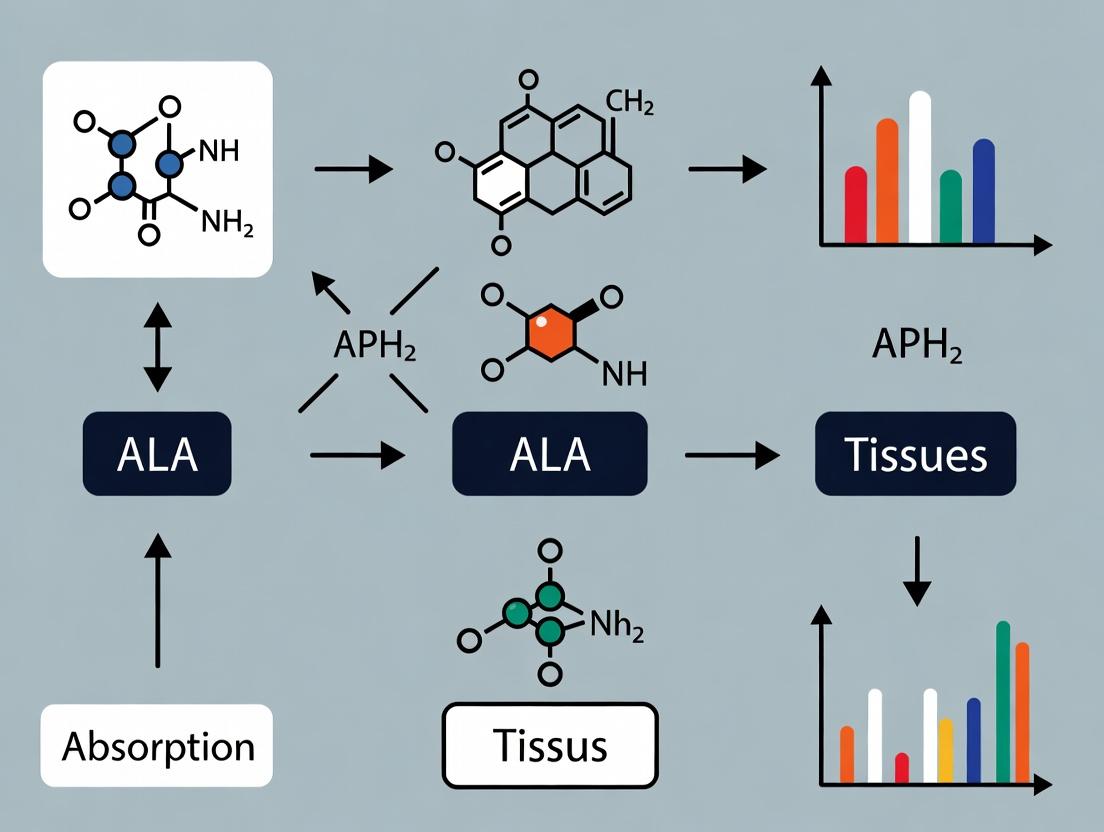
This comprehensive review addresses the critical pharmacokinetic challenges of 5-Aminolevulinic Acid (ALA) in photodynamic therapy (PDT) and diagnostics.
Optimizing ALA Absorption and Bioavailability: Mechanisms, Challenges, and Advanced Delivery Strategies for Targeted Tissue Incorporation
Abstract
This comprehensive review addresses the critical pharmacokinetic challenges of 5-Aminolevulinic Acid (ALA) in photodynamic therapy (PDT) and diagnostics. Targeted at researchers and drug development professionals, it systematically explores the foundational chemistry of ALA and its prodrugs, methodological advances in formulation and delivery, strategies to overcome key bioavailability limitations, and comparative validation of emerging technologies. The article synthesizes current evidence on nanocarriers, chemical modifications, and administration routes to enhance porphyrin synthesis in target tissues, providing a roadmap for optimizing ALA-based theranostic applications.
ALA and Its Prodrugs: Chemical Foundations and the Pathway to Protoporphyrin IX
This whitepaper details the heme biosynthesis pathway, focusing on 5-aminolevulinic acid (ALA) as its key rate-limiting precursor. The context is a broader thesis investigating the absorption, bioavailability, and tissue-specific incorporation of ALA, which is critical for developing therapeutic strategies targeting heme-related disorders and photodynamic therapy.
Heme biosynthesis is an eight-step, enzymatically catalyzed pathway occurring in both the mitochondria and cytoplasm. The first and committed step is the condensation of glycine and succinyl-CoA to form ALA, catalyzed by the enzyme ALA synthase (ALAS). This reaction is universally recognized as the primary rate-limiting step for the entire pathway.
Key Quantitative Data on ALAS Isoforms
Search-derived data on ALAS isoforms and regulation.
| Parameter | ALAS1 (Erythroid-independent) | ALAS2 (Erythroid-specific) |
|---|---|---|
| Gene Location | Chromosome 3p21.2 | Chromosome Xp11.21 |
| Primary Tissue | Liver, other tissues | Erythroid precursor cells |
| Regulation | Feedback inhibition by heme (transcriptional, translational, mitochondrial import) | Regulated by iron availability (via IRE/IRP system) and erythropoietin |
| Half-life of mRNA | ~1 hour | >24 hours |
| Role in Disease | Deficiency linked to X-linked sideroblastic anemia (XLSA) |
Table 1: Characteristics and regulation of ALA synthase isoforms.
Experimental Protocols for Studying ALA Dynamics
Protocol: Measuring ALA Synthase ActivityIn Vitro
Objective: Quantify ALAS enzyme activity in tissue homogenates or cell lysates.
- Sample Preparation: Homogenize liver tissue or pellet cultured cells in ice-cold sucrose buffer (0.25 M sucrose, 10 mM Tris-HCl, pH 7.4). Isolate mitochondria by differential centrifugation.
- Reaction Mixture: In a final volume of 500 µL, combine: 100 mM Tris-HCl (pH 7.4), 10 mM glycine, 5 mM succinyl-CoA, 2.5 mM EDTA, 5 mM MgCl₂, 0.5 mM pyridoxal 5'-phosphate, and 0.2-0.5 mg mitochondrial protein.
- Incubation: Incubate at 37°C for 60 minutes in the dark.
- Reaction Termination: Stop by adding 50 µL of 25% (w/v) trichloroacetic acid. Centrifuge to remove precipitated protein.
- ALA Derivatization & Quantification: Mix supernatant with acetylacetone in acetate buffer (pH 4.6) at 100°C to form a pyrrole. React with modified Ehrlich's reagent (p-dimethylaminobenzaldehyde) and measure absorbance at 553 nm. Activity is expressed as nmol ALA formed/hour/mg protein.
Protocol: Assessing ALA Bioavailability and Tissue IncorporationIn Vivo
Objective: Track pharmacokinetics and tissue-specific conversion of orally administered ALA.
- ALA Administration: Administer ALA hydrochloride (e.g., 30 mg/kg in saline, pH-adjusted) via oral gavage to rodent models. For control, administer vehicle alone.
- Sample Collection: Collect serial blood samples via a catheter. At sacrifice, excise and snap-freeze tissues of interest (skin, liver, tumor, etc.).
- Analysis of Protoporphyrin IX (PpIX): Heme precursor PpIX accumulates following ALA administration due to downstream enzymatic activity. Homogenize tissues and extract PpIX in a solution of 1% SDS in 0.1N NaOH. Measure PpIX fluorescence (Ex: 410 nm, Em: 635 nm) against a standard curve.
- Pharmacokinetic Analysis: Plot plasma ALA concentration vs. time. Calculate key parameters: Cmax (peak concentration), Tmax (time to Cmax), and AUC (area under the curve).
Visualization of Pathway and Regulatory Logic
The Scientist's Toolkit: Key Research Reagent Solutions
| Reagent / Material | Function / Explanation |
|---|---|
| ALA Hydrochloride | The stable, water-soluble salt form of ALA used for in vivo dosing and in vitro treatments. |
| Pyridoxal 5'-Phosphate (PLP) | Essential cofactor for ALAS; must be added to in vitro activity assay buffers. |
| Modified Ehrlich's Reagent (p-Dimethylaminobenzaldehyde in acetic/perchloric acid) | Chromogen used to detect and quantify ALA after derivatization to a pyrrole. |
| Succinyl-CoA (Lithium Salt) | Substrate for ALAS in enzymatic activity assays. Requires cold storage and fresh preparation. |
| Deferoxamine Mesylate | Iron chelator. Used in cell culture to limit ferrochelatase activity, causing PpIX accumulation for enhanced ALA-PDT studies. |
| Protoporphyrin IX (PpIX) Standard | Pure compound for generating standard curves to quantify PpIX extracted from tissues or cells. |
| Mitochondrial Isolation Kit | Commercial kits for rapid and efficient isolation of intact mitochondria from tissues/cells for ALAS activity assays. |
| LC-MS/MS System | Gold-standard for simultaneous, sensitive quantification of ALA, PBG, and porphyrins in biological samples. |
This whitepaper details the fundamental chemical properties of alpha-lipoic acid (ALA, 1,2-dithiolane-3-pentanoic acid) that govern its biological fate. Understanding ALA's polarity, stability profile, and inherent membrane permeability challenges is critical for interpreting its pharmacokinetics and for designing effective delivery systems. This analysis is framed within the broader thesis that optimizing ALA's bioavailability is the pivotal step for enhancing its incorporation into target tissues and realizing its full therapeutic potential in conditions like diabetic neuropathy, mitochondrial dysfunction, and oxidative stress-related pathologies.
Core Chemical Properties
Polarity and Ionization State
ALA is a medium-chain fatty acid derivative containing a cyclic disulfide and a terminal carboxylic acid. Its polarity and ionization state are pH-dependent, critically influencing solubility and passive diffusion.
- pKa: The carboxylic acid group has a pKa of approximately 5.4.
- State by pH: At physiological pH (7.4), >99% of ALA exists in the deprotonated, anionic form (R-COO⁻), which is highly hydrophilic. In the acidic environment of the stomach (pH ~1-3), it is predominantly unionized (R-COOH), enhancing lipid solubility.
Table 1: ALA Polarity and Solubility as a Function of pH
| Property | Acidic Environment (pH 1-3) | Physiological Environment (pH 7.4) |
|---|---|---|
| Predominant Form | Unionized Acid (R-COOH) | Anion (R-COO⁻) |
| Lipid Solubility | High | Very Low |
| Aqueous Solubility | Low (~1-2 mg/mL) | High (>50 mg/mL) |
| Passive Diffusion Potential | High (non-polar form) | Low (charged, polar form) |
Chemical Stability
ALA's stability is compromised by several factors, limiting shelf-life and in vivo persistence.
- Thermal Degradation: Decomposes at temperatures above its melting point (~60-62°C).
- Photolytic Degradation: The dithiolane ring is susceptible to UV light, leading to ring opening and polymerization.
- pH-Dependent Hydrolysis: The cyclic disulfide bond can be hydrolytically cleaved, particularly under strong acidic or basic conditions.
- Metal Chelation: ALA and its reduced form, dihydrolipoic acid (DHLA), are potent chelators of transition metals (e.g., Fe²⁺, Cu²⁺), which can catalyze redox reactions and generate reactive oxygen species.
Table 2: Key Stability Challenges for ALA
| Challenge | Chemical Consequence | Practical Impact |
|---|---|---|
| Light Exposure | Disulfide ring cleavage, polymerization | Requires brown glass vials, opaque storage. |
| High pH (>7.5) | Hydrolysis of disulfide, racemization | Loss of the biologically active R-(+)-enantiomer. |
| Metal Ion Presence | Redox cycling, oxidative degradation | Requires chelators (e.g., EDTA) in formulations. |
| Elevated Temperature | Molecular breakdown | Requires cool storage conditions. |
Membrane Permeability Challenges
Despite its lipophilic ring structure, ALA's permeability is paradoxical.
- The Polarity Paradox: At intestinal pH, ALA is ionized, hindering passive transcellular diffusion. The unionized form present in the stomach is more permeable but encounters a very small surface area.
- Efflux Transport: Evidence suggests ALA may be a substrate for efflux transporters like P-glycoprotein (P-gp) in the intestine, actively pumping it back into the lumen.
- Rapid Metabolism/Reduction: Upon cellular uptake, ALA is rapidly reduced to DHLA in cells and tissues. This consumption creates a concentration gradient favoring uptake but also means intact ALA has a short half-life in circulation (~30 minutes).
Experimental Protocols for Key Studies
Protocol: Determining Log P and Permeability (PAMPA)
Objective: Quantify the pH-dependent partition coefficient and passive membrane permeability.
- Log D Determination: Shake-flask method. ALA is dissolved in a biphasic system of n-octanol and phosphate buffer at varying pH (2.0, 5.0, 7.4). After agitation and phase separation, ALA concentration in each phase is quantified via HPLC-UV. Log D (distribution coefficient) = log10([ALA]octanol / [ALA]aqueous).
- PAMPA (Parallel Artificial Membrane Permeability Assay):
- A lipid-organic solution (e.g., lecithin in dodecane) is used to coat a PVDF filter, creating an artificial membrane.
- ALA in donor buffer (at pH 5.0 and 7.4) is placed in the donor well.
- Acceptor buffer (pH 7.4) is placed in the acceptor well.
- The plate is incubated undisturbed for 4-6 hours.
- Samples from both compartments are analyzed by HPLC-MS/MS.
- Apparent permeability (Papp) is calculated:
Papp = (V_A / (Area * Time)) * (1 / [D]_initial) * Δ[A] / Δt, where V_A is acceptor volume, Area is membrane area, and [D] is donor concentration.
Protocol: Assessing Stability in Simulated Biological Fluids
Objective: Evaluate degradation kinetics under simulated gastrointestinal conditions.
- Preparation of Fluids: Simulated Gastric Fluid (SGF: 0.1M HCl, pH ~1.2) and Simulated Intestinal Fluid (SIF: phosphate buffer, 0.05M KH2PO4, pH 6.8).
- Incubation: ALA is added to pre-warmed SGF or SIF (37°C, protected from light). Aliquots are withdrawn at fixed intervals (0, 15, 30, 60, 120 min).
- Quenching & Analysis: Each aliquot is immediately diluted in cold methanol to stop reactions, centrifuged, and the supernatant analyzed via stability-indicating HPLC-DAD. Degradation rate constants and half-lives are calculated.
Protocol: Caco-2 Cell Transwell Assay for Absorption & Efflux
Objective: Model intestinal absorption and identify active transport components.
- Cell Culture: Caco-2 cells are seeded on semi-permeable polyester membrane inserts and cultured for 21-28 days to form differentiated, polarized monolayers with tight junctions. Transepithelial Electrical Resistance (TEER) is monitored.
- Bidirectional Transport:
- A-to-B (Apical to Basolateral): ALA is added to the apical chamber. Samples are taken from the basolateral side over time.
- B-to-A (Basolateral to Apical): ALA is added to the basolateral chamber. Samples are taken from the apical side.
- Inhibition Studies: Co-incubate with known efflux transporter inhibitors (e.g., Verapamil for P-gp, MK571 for MRPs).
- Analysis: Calculate Papp for both directions. An efflux ratio (Papp(B-to-A)/Papp(A-to-B)) >2 suggests active efflux. A reduction in this ratio with inhibitors confirms transporter involvement.
Visualizations
Title: ALA Oral Bioavailability Challenges Pathway
Title: Research Workflow for ALA Bioavailability Enhancement
The Scientist's Toolkit: Key Research Reagent Solutions
Table 3: Essential Materials for ALA Bioavailability Research
| Reagent/Material | Function/Application | Key Consideration |
|---|---|---|
| R-(+)-Alpha-Lipoic Acid (High Purity, >99%) | The active enantiomer for biological studies. Avoid racemic mixtures for mechanistic work. | Store at -20°C, desiccated, in amber vials. |
| Caco-2 Cell Line (HTB-37) | Gold-standard in vitro model of human intestinal permeability and efflux transport. | Requires long differentiation (21+ days). Monitor TEER. |
| PAMPA Plate System | High-throughput assessment of passive transcellular permeability. | Choose lipid composition matching study goals (e.g., GI tract, BBB). |
| Specific Transporter Inhibitors (e.g., Verapamil, Ko143, MK571) | To pharmacologically inhibit P-gp, BCRP, or MRP efflux transporters in cell assays. | Confirm non-cytotoxic concentrations via MTT assay. |
| Stability-Indicating HPLC Method | To accurately quantify ALA amidst its degradation products. | Use a C18 column, low pH mobile phase, and UV detection at ~215 nm. |
| EnteroSim or FaSSIF/FeSSIF Kits | Biorelevant simulated intestinal fluids for dissolution/stability testing. | More predictive than simple buffers for formulation screening. |
| LC-MS/MS System with ESI Source | For sensitive and specific quantification of ALA and DHLA in complex matrices (plasma, tissue homogenates). | Requires stable isotope-labeled internal standard (e.g., ALA-d5). |
Within the context of advancing research on 5-aminolevulinic acid (ALA) absorption, bioavailability, and tissue incorporation, the development of prodrugs stands as a pivotal strategy to overcome intrinsic physicochemical limitations. Endogenous ALA, a precursor to protoporphyrin IX (PpIX) in the heme biosynthesis pathway, is central to photodynamic therapy (PDT) and diagnosis. However, its high hydrophilicity and poor stability limit passive diffusion across biological membranes, leading to suboptimal tissue bioavailability and inconsistent PpIX accumulation. Esterified prodrugs, such as Methyl-ALA (MAL) and Hexyl-ALA (HAL), are engineered to enhance lipophilicity and stability, thereby improving pharmacokinetic profiles and therapeutic efficacy. This whitepaper provides a technical examination of the rationale behind these modifications, supported by current data and methodologies.
Core Rationale: Lipophilicity and Stability
Physicochemical Modifications
Esterification of the carboxyl group of ALA masks its polar character, increasing the log P (partition coefficient) and promoting passive diffusion across lipophilic cell membranes and the stratum corneum. The alkyl chain length (methyl vs. hexyl) directly correlates with increased lipophilicity. Furthermore, esterification protects the molecule from premature degradation, enhancing stability in formulation and during transit.
Biochemical Conversion
Once inside the target cell, ester prodrugs are hydrolyzed by intracellular esterases to liberate the active ALA moiety, which then enters the heme biosynthesis pathway. This intracellular release minimizes systemic exposure to free ALA.
Table 1: Key Physicochemical and Pharmacokinetic Parameters of ALA and Selected Prodrugs
| Compound | Molecular Weight (g/mol) | log P (Predicted/Observed) | Enzymatic Conversion Rate (Relative to ALA) | Key Stability Advantage |
|---|---|---|---|---|
| ALA (Free base) | 167.6 | ~ -3.5 (Highly hydrophilic) | 1.0 (Reference) | Low; prone to dimerization/oxidation |
| Methyl-ALA (MAL) | 181.6 | ~ -1.2 | ~0.8 - 1.2 | Enhanced in aqueous formulation |
| Hexyl-ALA (HAL) | 237.7 | ~ +2.5 (Highly lipophilic) | ~0.5 - 0.7 | High; stable in lipid vehicles |
| Benzyl-ALA | 257.7 | ~ +3.0 | ~0.4 | Very high; sustained release |
Experimental Evidence and Protocols
Protocol: In Vitro Skin Permeation Study (Franz Diffusion Cell)
Objective: To compare the permeation flux of ALA, MAL, and HAL through excised human or porcine stratum corneum.
- Membrane Preparation: Mount dermatomed skin or synthetic lipophilic membrane between donor and receptor compartments.
- Receptor Phase: Fill receptor with phosphate-buffered saline (PBS) pH 7.4, maintained at 37°C with continuous stirring.
- Donor Application: Apply a finite dose of equimolar ALA/prodrug formulation (e.g., 20% w/w in cream) to the donor surface.
- Sampling: Withdraw aliquots from the receptor chamber at scheduled intervals (e.g., 1, 2, 4, 6, 8, 24h).
- Analysis: Quantify permeated drug using HPLC with fluorescence or MS detection. Calculate cumulative permeation (µg/cm²) and steady-state flux (Jss, µg/cm²/h).
Protocol: Intracellular PpIX Accumulation Kinetics
Objective: To measure prodrug conversion efficiency and resultant PpIX production in cultured cells (e.g., A431 keratinocytes).
- Cell Seeding: Seed cells in black-walled, clear-bottom 96-well plates.
- Dosing: Incubate with serial concentrations (0.1 - 5.0 mM) of ALA or prodrugs for 1-24h.
- PpIX Extraction & Quantification:
- Lysc cells with 1% Triton X-100 in PBS.
- Measure PpIX fluorescence (Ex: 405 nm, Em: 635 nm) using a plate reader.
- Normalize to total protein content (BCA assay).
- Data Analysis: Calculate EC50 for PpIX production and time-to-peak accumulation.
Table 2: Representative Experimental Data from Cell Culture Studies
| Cell Line | Compound (1 mM incubation) | Time to Peak PpIX (h) | Relative PpIX Fluorescence (vs. ALA) | Estimated Intracellular ALA Concentration (nmol/mg protein) |
|---|---|---|---|---|
| A431 (Squamous Carcinoma) | ALA | 4 - 6 | 1.0 | 15.2 ± 3.1 |
| Methyl-ALA (MAL) | 5 - 7 | 1.5 - 2.2 | 28.7 ± 4.5 | |
| Hexyl-ALA (HAL) | 6 - 8 | 3.0 - 5.0 | 52.1 ± 8.9 | |
| U87 (Glioblastoma) | ALA | 4 - 5 | 1.0 | 8.5 ± 2.0 |
| Hexyl-ALA (HAL) | 8 - 10 | 6.0 - 8.0 | 45.3 ± 7.2 |
Biochemical Pathways and Workflows
Pathway: Prodrug Activation and PpIX Biosynthesis
Diagram Title: ALA Prodrug Activation and PpIX Biosynthesis Pathway
Workflow: Key Experiment for Evaluating Prodrug Efficacy
Diagram Title: Workflow for ALA Prodrug Efficacy Evaluation
The Scientist's Toolkit: Key Research Reagent Solutions
Table 3: Essential Materials for ALA Prodrug Research
| Item / Reagent | Function / Role in Research | Example Vendor/Product Note |
|---|---|---|
| ALA Prodrug Standards | Analytical reference for HPLC/MS quantification; treatment control. | Sigma-Aldrich (MAL), TCI Chemicals (HAL), or custom synthesis. |
| Fluorometric PpIX Assay Kit | Quantify intracellular PpIX accumulation directly in cell lysates or tissues. | Abcam (ab138898) or BioVision. |
| Esterase Activity Assay Kit | Measure enzymatic hydrolysis capacity of cell/tissue lysates for prodrugs. | Sigma-Aldrich (MAK085) or Cayman Chemical. |
| Reconstructed Human Epidermis (RHE) | Ethical, reproducible model for permeation and toxicity studies. | MatTek (EpiDerm), Phenion FT. |
| Franz Diffusion Cell System | Standard apparatus for measuring transdermal flux of compounds. | PermeGear, Logan Instruments. |
| HPLC-MS System with C18 Column | Gold standard for separating and quantifying ALA, prodrugs, and metabolites. | Waters, Agilent systems. |
| Lipophilic Membranes (e.g., Strat-M) | Synthetic, consistent alternative to human skin for initial permeation screening. | EMD Millipore (Strat-M). |
| PDT Light Source (635 nm LED) | For in vitro and in vivo efficacy studies post-prodrug application. | Omnilux, Bio-Blech, or custom arrays. |
The strategic esterification of ALA into prodrugs like MAL and HAL directly addresses the core challenges in ALA-based research: poor membrane permeability and chemical instability. Enhanced lipophilicity facilitates superior tissue penetration and intracellular delivery, while the prodrug moiety ensures targeted activation. The experimental data consistently demonstrate higher and more selective PpIX accumulation from these prodrugs, validating their rationale. Continued research into novel esters and formulation strategies, guided by the protocols and tools outlined herein, is essential to fully optimize ALA delivery for clinical PDT and fluorescence diagnosis.
The cellular uptake mechanisms of bioactive compounds, particularly 5-aminolevulinic acid (ALA), are pivotal determinants of their absorption, bioavailability, and subsequent incorporation into tissues. ALA, a prodrug used in photodynamic therapy and diagnostics, exhibits complex pharmacokinetics largely governed by its interaction with specific membrane transporters versus its capacity for passive diffusion. Understanding this dichotomy is central to optimizing therapeutic efficacy. This whitepaper provides a technical dissection of these mechanisms, focusing on the proton-coupled oligopeptide transporters (PEPT1, PEPT2) and beta transporters, contrasted with the principles of passive diffusion, within the specific context of ALA research.
2.1. Transporters
- PEPT1 (SLC15A1): A low-affinity, high-capacity transporter expressed predominantly in the apical membrane of intestinal enterocytes and renal proximal tubules. It functions via a proton-coupled symport mechanism, crucial for the oral absorption of di/tripeptides and peptidomimetics like ALA.
- PEPT2 (SLC15A2): A high-affinity, low-capacity transporter found primarily in renal proximal tubules, choroid plexus, and certain immune cells. It plays a significant role in the reabsorption and tissue distribution of its substrates.
- BETA Transporters: This class refers broadly to transporters for beta-amino acids or related structures. While less characterized for ALA specifically, potential involvement of transporters like the beta-alanine transporter (SLC6A6, TauT) or others in the SLC family may contribute to ALA uptake in specific tissues, warranting investigation.
2.2. Passive Diffusion A non-saturable, energy-independent process governed by Fick's law. The rate of diffusion is proportional to the concentration gradient, membrane permeability, and the compound's lipid solubility (log P) at physiological pH. For ALA, which exists as a zwitterion at neutral pH, passive diffusion is typically limited but can be influenced by pH gradients (e.g., in the stomach or acidic tumor microenvironments).
Comparative Quantitative Data
Table 1: Kinetic Parameters for ALA Uptake via Key Transporters
| Transporter | Tissue/Model | Km (mM) | Vmax (nmol/mg protein/min) | Primary Role in ALA Pharmacokinetics |
|---|---|---|---|---|
| PEPT1 | Caco-2 cells (Intestinal) | 1.2 - 4.5 | 8.0 - 15.2 | Major mediator of oral absorption from the small intestine. |
| PEPT2 | HEK293 transfected cells | 0.1 - 0.4 | 1.5 - 3.0 | Renal reabsorption, distribution into brain/cerebrospinal fluid. |
| Passive Diffusion | PAMPA assay | N/A (Non-saturable) | Papp ~ 1.0-5.0 x 10⁻⁶ cm/s (low) | Minor pathway, significant only at very high doses or low pH. |
Table 2: Influence of Experimental Conditions on Dominant Uptake Mechanism for ALA
| Condition | Favored Mechanism | Rationale |
|---|---|---|
| Low ALA concentration (<1 mM) | Transporter-mediated (PEPT2 > PEPT1) | High-affinity binding sites are occupied efficiently. |
| High ALA concentration (>10 mM) | Passive Diffusion | Transporters are saturated; concentration gradient drives uptake. |
| Acidic microenvironment (pH ~5-6) | PEPT1 activity & Passive Diffusion | Proton gradient energizes PEPT1; fraction of non-ionized ALA increases. |
| Neutral/Basic pH (7.4) | Transporter-mediated | ALA is fully ionized, hindering passive diffusion; transporters required. |
| Co-administration with Gly-Sar | Inhibited Transporter uptake | Competitive dipeptide inhibits PEPT1/PEPT2, isolating passive component. |
Key Experimental Protocols
4.1. In Vitro Uptake Assay in Cell Monolayers (e.g., Caco-2, PEPT2-transfected cells)
- Objective: To characterize saturable, transporter-mediated kinetics.
- Protocol:
- Culture cells on Transwell inserts until confluent and differentiated.
- Rinse cells with pre-warmed transport buffer (e.g., HBSS, pH 6.0 for apical side to mimic intestine, pH 7.4 for basolateral).
- Add ALA to the donor compartment at varying concentrations (e.g., 0.1-10 mM) with or without specific inhibitors (e.g., 10 mM Gly-Sar).
- Incubate at 37°C for a determined time (e.g., 2-30 min) to measure initial rates.
- Terminate uptake by ice-cold buffer washes. Lyse cells and quantify ALA via HPLC-fluorescence or LC-MS/MS.
- Calculate kinetic parameters (Km, Vmax) using non-linear regression (Michaelis-Menten).
4.2. Parallel Artificial Membrane Permeability Assay (PAMPA)
- Objective: To assess intrinsic passive diffusion potential.
- Protocol:
- Prepare a lipid membrane by coating a hydrophobic filter with a lecithin mixture (e.g., Phosphatidylcholine in dodecane) in a donor plate.
- Fill donor wells with ALA solution in buffer at physiological pH (7.4) or other relevant pH.
- Place the acceptor plate (filled with blank buffer) on top.
- Incubate at room temperature for a set period (e.g., 4-16 hours).
- Quantify ALA in both donor and acceptor compartments.
- Calculate the apparent permeability coefficient (Papp).
4.3. In Situ Single-Pass Intestinal Perfusion (SPIP)
- Objective: To study regional absorption and transporter contribution in a more intact system.
- Protocol:
- Anesthetize rodent and expose a segment of small intestine (jejunum/ileum).
- Cannulate and perfuse the segment with oxygenated Krebs-Ringer buffer containing ALA, with a non-absorbable marker (e.g., phenol red).
- Maintain perfusion at a constant flow rate. Collect effluent perfusate over time.
- Measure ALA depletion from perfusate. Calculate effective permeability (Peff).
- Repeat perfusion with and without transporter inhibitors to determine the component mediated by PEPT1.
Visualizations & Pathways
Title: PEPT1-mediated ALA uptake driven by proton gradient
Title: Experimental workflow to determine cellular uptake mechanism
The Scientist's Toolkit: Research Reagent Solutions
Table 3: Essential Reagents for Investigating ALA Uptake Mechanisms
| Item / Reagent | Function / Application | Example / Note |
|---|---|---|
| Caco-2 Cell Line | Model of human intestinal epithelium; expresses PEPT1. | Used for absorption studies and PEPT1-mediated transport assays. |
| MDCK/PEPT2-HEK Stable Cells | Cell lines engineered to overexpress human PEPT2. | For isolating and studying high-affinity PEPT2 kinetics. |
| Glycylsarcosine (Gly-Sar) | Non-metabolizable dipeptide and competitive inhibitor of PEPT1/PEPT2. | Used to pharmacologically block transporter activity in uptake assays. |
| ³H- or ¹⁴C-labeled ALA | Radiolabeled ALA. | Provides high sensitivity for tracing uptake and flux in kinetic studies. |
| PAMPA Plate System | Pre-formatted plates for passive permeability screening. | Commercial kits (e.g., from pION) standardize passive diffusion measurement. |
| LC-MS/MS Kit for ALA | Analytical method for quantifying ALA in biological matrices. | More specific and modern alternative to HPLC-fluorescence derivatization. |
| PEPT1/PEPT2 Specific Antibodies | For Western blot or immunofluorescence. | Confirms transporter protein expression in cell or tissue models. |
| SLC15A1/A2 siRNA | Small interfering RNA targeting PEPT1/PEPT2 mRNA. | Used for genetic knockdown to confirm functional role of specific transporters. |
Within the broader thesis on 5-aminolevulinic acid (ALA) absorption, bioavailability, and tissue incorporation research, understanding the intracellular enzymatic conversion of ALA to protoporphyrin IX (PpIX) is paramount. This process underpins the efficacy of ALA-based photodynamic therapy (PDT) and diagnostics across oncology and dermatology. This whitepaper provides a technical dissection of the kinetics, regulation, and key experimental approaches governing this critical biosynthetic pathway.
The Heme Biosynthesis Pathway: A Focus on PpIX Accumulation
Exogenous ALA bypasses the rate-limiting first step (ALAS1) of heme biosynthesis. Once inside the cell, it is sequentially converted to PpIX through a cytosolic and then mitochondrial enzyme cascade. The final step, the insertion of Fe²⁺ into PpIX by ferrochelatase (FECH), forms heme. The preferential accumulation of PpIX for clinical applications hinges on the kinetics and regulation of these enzymes.
Table 1: Key Enzymes in the ALA to PpIX Conversion Pathway
| Enzyme (Gene) | Subcellular Location | Co-factor/Requirement | Primary Function in Pathway |
|---|---|---|---|
| Porphobilinogen Synthase (ALAD) | Cytosol | Zn²⁺ | Condenses two ALA molecules to form porphobilinogen (PBG). |
| Hydroxymethylbilane Synthase (HMBS) | Cytosol | - | Polymerizes 4 PBG molecules to form hydroxymethylbilane (HMB). |
| Uroporphyrinogen III Synthase (UROS) | Cytosol | - | Cyclizes and rearranges HMB to form uroporphyrinogen III. |
| Uroporphyrinogen Decarboxylase (UROD) | Cytosol | - | Decarboxylates uroporphyrinogen III to coproporphyrinogen III. |
| Coproporphyrinogen III Oxidase (CPOX) | Mitochondrial Intermembrane Space | Molecular O₂ | Converts coproporphyrinogen III to protoporphyrinogen IX. |
| Protoporphyrinogen IX Oxidase (PPOX) | Inner Mitochondrial Membrane | FAD, O₂ | Oxidizes protoporphyrinogen IX to protoporphyrin IX (PpIX). |
| Ferrochelatase (FECH) | Inner Mitochondrial Membrane | Fe²⁺, [2Fe-2S] cluster | Inserts Fe²⁺ into PpIX to form heme (rate-limiting for heme synthesis). |
Enzymatic Kinetics and Regulatory Mechanisms
The efficiency of PpIX generation and its subsequent retention are governed by complex kinetics and feedback loops.
Table 2: Representative Kinetic Parameters for Key Enzymes (Human)
| Enzyme | Approx. Km for Substrate | Vmax (Relative) | Key Inhibitors/Regulators |
|---|---|---|---|
| ALAD | ~0.2 mM (for ALA) | High | Pb²⁺, Zn²⁺ depletion, Succinylacetone. |
| PBGD | Low (for PBG) | Moderate | Feedback inhibition by heme (transcriptional). |
| UROD | ~0.5 µM (for Uroporphyrinogen III) | High | Iron chelators (indirectly increase substrate). |
| PPOX | ~25 µM (for Protoporphyrinogen IX) | Moderate | Acifluorfen, O₂ tension. |
| FECH | ~20 µM (for PpIX) | Lowest in chain | Feedback inhibition by heme, metal chelators (limits Fe²⁺). |
Core Regulatory Concepts:
- Feedback Inhibition by Heme: Heme is a potent feedback inhibitor of ALAS1 transcription and mitochondrial import, but this is bypassed with exogenous ALA. However, heme also directly inhibits FECH activity and may influence other steps, creating a bottleneck that favors PpIX accumulation.
- Iron Availability: The FECH reaction is dependent on Fe²⁺ availability. Low iron status or use of iron chelators (e.g., CP94) dramatically increases PpIX accumulation by limiting heme synthesis.
- Enzyme Expression Levels: The relative expression and activity of PPOX versus FECH is critical. A high PPOX:FECH activity ratio favors PpIX accumulation.
- Oxygen Tension: PPOX and CPOX require O₂. Hypoxia can slow PpIX production, impacting PDT efficacy.
(Diagram Title: Regulation of PpIX Accumulation by Heme and Iron)
Experimental Protocols for Studying Kinetics and Regulation
Protocol 4.1: In Vitro PpIX Accumulation Assay in Cultured Cells
Purpose: To quantify time- and dose-dependent PpIX accumulation following ALA administration. Materials: See "Scientist's Toolkit" below. Procedure:
- Cell Seeding: Seed cells in black-walled, clear-bottom 96-well plates for fluorescence or standard plates for extraction. Allow adherence.
- ALA Treatment: Prepare fresh ALA solutions in pre-warmed serum-free medium. Replace cell medium with ALA-containing medium. Include vehicle-only controls.
- Incubation: Incubate cells (e.g., 37°C, 5% CO₂) for varying times (e.g., 1-6h).
- PpIX Extraction: Aspirate medium. Wash cells with PBS. Lyse cells with 1% Triton X-100 in PBS or directly extract PpIX using a solution of DMSO:Ethanol:Acetic Acid (50:49:1 v/v).
- Quantification:
- Fluorometry: Measure fluorescence of lysates/extracts (Excitation: ~405 nm, Emission: ~635 nm). Use a PpIX standard curve for quantification.
- Plate Reader (Live): For direct measurement, use plates from step 1, read fluorescence after washing.
- Normalization: Measure total protein content (e.g., BCA assay) of lysates and express PpIX as ng/mg protein.
Protocol 4.2: Modulating PpIX via Iron Chelation
Purpose: To enhance PpIX accumulation by inhibiting FECH via iron depletion. Procedure: Follow Protocol 4.1, with modifications:
- Pre-treat cells with an iron chelator (e.g., 100 µM CP94 or deferoxamine) for 1-2 hours prior to and during ALA incubation.
- Compare PpIX levels in ALA-only vs. ALA + chelator groups.
Protocol 4.3: Enzyme Activity Assay for FECH
Purpose: To directly measure the activity of the rate-limiting enzyme FECH. Procedure (Simplified Spectrophotometric Assay):
- Mitochondrial Isolation: Prepare mitochondrial fractions from tissue or pelleted cells using differential centrifugation.
- Reaction Mix: In a quartz cuvette, combine: 100 mM Tris-HCl (pH 8.2), 0.1% Triton X-100, 50 µM PpIX, 100 µM FeSO₄, and mitochondrial sample.
- Measurement: Immediately monitor the decrease in absorbance at 410 nm (Soret band of PpIX) versus a reference at 420 nm for 5-10 minutes. The rate of decrease is proportional to FECH activity (PpIX → Heme conversion).
- Calculation: Use the extinction coefficient for PpIX (ε ~ 200 mM⁻¹cm⁻¹ in acidic solution; determine accurately for your conditions) to calculate activity (nmol product/min/mg protein).
(Diagram Title: PpIX Accumulation Assay Workflow)
The Scientist's Toolkit: Key Research Reagents
Table 3: Essential Reagents for ALA-PpIX Pathway Research
| Reagent/Material | Function & Rationale | Example Product/Source |
|---|---|---|
| 5-Aminolevulinic Acid (ALA) | Prodrug substrate. Typically used as ALA hydrochloride. Critical to prepare fresh, protect from light. | Sigma-Aldrich A7793, Medac GmbH (GMP grade) |
| ALA Methyl Ester (MAL) | More lipophilic ester derivative to improve cellular uptake. Common in clinical/dermatology research. | Sigma-Aldrich 681458 |
| Iron Chelators (CP94, DFO) | Inhibit ferrochelatase by depleting Fe²⁺, amplifying PpIX accumulation for research and potential combination therapy. | Tocris Bioscience (e.g., CP94) |
| PpIX Standard | Essential for creating calibration curves to quantify PpIX from cells or tissues via fluorometry/HPLC. | Frontier Scientific P562-9 |
| Succinylacetone | A potent, specific inhibitor of porphobilinogen synthase (ALAD). Used to block endogenous heme synthesis or as a control. | Cayman Chemical 14482 |
| Protoporphyrinogen IX Oxidase (PPOX) Inhibitor | Tool compound to study upstream accumulation of protoporphyrinogen IX (e.g., acifluorfen). | Various agrochemical suppliers |
| Fluorescence Plate Reader | Equipped with 405 nm excitation and 635 nm emission filters for high-throughput PpIX quantification in live cells or extracts. | Instruments from BMG Labtech, Tecan, BioTek |
| Mitochondrial Isolation Kit | For preparing subcellular fractions to study mitochondrial enzymes (PPOX, FECH) in isolation. | Abcam ab110168, Thermo Scientific 89801 |
| LC-MS/MS Systems | Gold standard for absolute quantification of ALA, PBG, porphyrins, and heme with high specificity and sensitivity. | Agilent, Sciex, Waters platforms |
Fundamental Factors Governing Tissue Selectivity and PpIX Accumulation
1. Introduction
This whitepaper provides a technical examination of the core principles determining the preferential accumulation of protoporphyrin IX (PpIX) following administration of 5-aminolevulinic acid (ALA) or its ester derivatives. The content is framed within the broader thesis of enhancing the therapeutic and diagnostic efficacy of ALA-based photodynamic therapy (PDT) and fluorescence-guided surgery (FGS) through a fundamental understanding of ALA absorption, systemic bioavailability, cellular incorporation, and ultimate conversion to PpIX in target tissues.
2. Core Determinants of Tissue Selectivity
Tissue-selective PpIX accumulation is not governed by a single factor but by a multi-step, interconnected cascade. The primary determinants are categorized below.
2.1. Pharmacokinetic and Cellular Uptake Factors
- ALA/Esters Properties: Lipophilicity (governed by ester chain length) dramatically alters cellular uptake kinetics. More lipophilic esters (e.g., hexyl-ALA) penetrate cell membranes more efficiently but may be hydrolyzed at different rates.
- Tissue Vascularization and Permeability: Highly vascularized or inflamed tissues with enhanced permeability and retention (EPR) effect receive higher ALA delivery.
- Transporters: Specific transporters, including peptide transporters (e.g., PEPT1, PEPT2), β-amino acid transporters, and monocarboxylate transporters (MCTs), mediate the active uptake of ALA into cells. Their differential expression across tissues is a key selectivity driver.
- Blood-Brain and Other Barriers: The intact blood-brain barrier (BBB) limits ALA penetration into normal brain, but its disruption in high-grade gliomas allows selective tumor accumulation.
2.2. Metabolic and Biochemical Factors
- Enzymatic Activity: The rate-limiting step for PpIX synthesis is often the conversion of ALA to porphobilinogen by ALA dehydratase (ALAD). However, the final and critical regulatory point is the conversion of PpIX to heme by ferrochelatase (FECH), which incorporates iron.
- The "Porphyrin Steal" Hypothesis: Selectivity arises not only from increased PpIX synthesis in target cells (e.g., cancer cells) but also from the relative deficiency in FECH activity and/or limited bioavailability of intracellular iron, leading to PpIX accumulation. Normal cells, with robust FECH activity and iron metabolism, rapidly convert PpIX to heme.
- Cellular Proliferation and Metabolism: Highly proliferative cells (tumors, mucosa) have an upregulated heme biosynthesis pathway to support cytochrome and enzyme production, creating a biochemical "sink" for ALA.
2.3. Microenvironmental Factors
- Extracellular pH: The tumor microenvironment is often acidic. This can influence the protonation state of ALA (a zwitterion) and the activity of transporters, potentially favoring uptake in acidic niches.
- Oxygen Tension: While necessary for the photodynamic reaction, low pO₂ can also influence heme biosynthesis pathway dynamics.
Table 1: Summary of Key Factors Governing Tissue Selectivity
| Factor Category | Specific Element | Role in Selectivity | Typical Expression/State in Target Tissue (e.g., High-Grade Glioma) |
|---|---|---|---|
| Uptake | PEPT1/2 Transporters | Mediates ALA influx | Often upregulated |
| Uptake | Esterase Activity | Hydrolyzes ALA esters to ALA | Variable, influences prodrug activation |
| Metabolic | Porphobilinogen Deaminase (PBGD) | Catalyzes PpIX precursor formation | Upregulated in proliferation |
| Metabolic | Ferrochelatase (FECH) | Converts PpIX to Heme (KEY INHIBITOR OF ACCUMULATION) | Downregulated or inhibited |
| Metabolic | Iron Availability (Labile Iron Pool) | Cofactor for FECH | Often limited |
| Microenvironment | Extracellular pH | Affects transporter affinity/activity | Acidic (~6.5-6.9) |
| Microenvironment | Vascular Permeability | Enhances drug delivery | Enhanced (Leaky vasculature) |
3. Detailed Experimental Protocol: In Vitro PpIX Accumulation Kinetics
- Objective: To quantify and compare the time- and concentration-dependent accumulation of PpIX in different cell lines (e.g., primary fibroblasts vs. glioma cells) following ALA or ALA-ester administration.
- Materials: See "The Scientist's Toolkit" below.
- Procedure:
- Cell Seeding: Seed cells in black-walled, clear-bottom 96-well plates at a density of 1x10⁴ cells/well. Grow to ~80% confluence.
- Compound Administration: Prepare fresh serial dilutions of ALA hydrochloride (or methyl-ALA, hexyl-ALA) in pre-warmed, serum-free culture medium. Range: 0.01 mM to 2.0 mM.
- Incubation: Replace medium with compound-containing medium. Incubate plates at 37°C, 5% CO₂ for varying durations (e.g., 1, 3, 6, 24h). Include vehicle-only controls.
- Fluorescence Measurement: At each time point, carefully aspirate medium, wash cells twice with PBS. Add PBS to each well. Measure PpIX fluorescence using a plate reader (λex = 405 nm, λem = 635 nm).
- Cell Viability Normalization: Perform a subsequent MTT or AlamarBlue assay on the same wells to obtain a viability/cell count proxy. Normalize fluorescence readings to viability.
- Data Analysis: Generate concentration-response and time-course curves. Calculate EC₅₀ values for PpIX accumulation for each cell line.
Diagram Title: In Vitro PpIX Accumulation Assay Workflow
4. Key Signaling and Metabolic Pathways
The core pathway governing PpIX biosynthesis and its regulation is the mitochondrial heme biosynthesis pathway.
Diagram Title: Heme Biosynthesis Pathway & PpIX Accumulation Node
5. The Scientist's Toolkit: Key Research Reagents & Materials
Table 2: Essential Research Reagents for ALA/PpIX Studies
| Item Name | Function & Role in Research |
|---|---|
| 5-ALA Hydrochloride | The gold-standard precursor. Water-soluble, used as baseline for all comparative studies. |
| ALA Alkyl Esters (e.g., Methyl-ALA, Hexyl-ALA) | Prodrugs with enhanced lipophilicity to improve cellular uptake and potentially alter selectivity. |
| Desferrioxamine (DFO) or CPX | Iron chelators. Used experimentally to inhibit FECH activity by depleting the labile iron pool, enhancing PpIX accumulation. |
| Specific PEPT1/2 Inhibitors (e.g., 4-AMBA) | Pharmacological tools to dissect the contribution of peptide transporters to ALA uptake in different cell types. |
| Fluorometric Heme Assay Kit | Quantifies heme concentration, allowing correlation between FECH activity, heme synthesis, and PpIX retention. |
| LC-MS/MS Standards (ALA, PpIX, Esters) | Essential for precise pharmacokinetic studies to quantify parent drug and metabolite levels in tissues/fluids. |
| Validated Anti-FECH Antibody | For Western blot or IHC to map FECH protein expression levels across tissues, a critical determinant of selectivity. |
| Fluorescence Plate Reader (with 405 nm excitation) | Core instrument for quantifying PpIX fluorescence in vitro (cells) or ex vivo (tissue homogenates). |
| Clinical-Grade ALA (for in vivo models) | GMP-grade material necessary for translational studies in animal models, ensuring consistency with human trial conditions. |
Advanced Formulations and Delivery Systems to Enhance ALA Bioavailability
Within the broader thesis on 5-aminolevulinic acid (ALA) absorption, bioavailability, and tissue incorporation, a central challenge is its inherent physicochemical limitations: hydrophilicity, low molecular weight, and poor skin penetration. These properties restrict its efficacy in photodynamic therapy (PDT) and diagnostics. This guide details advanced nanocarrier strategies—liposomes, polymeric nanoparticles, and micelles—designed to encapsulate ALA, enhance its stability, control its release, and ultimately improve its targeted delivery and prodrug conversion to protoporphyrin IX (PpIX).
Core Nanocarrier Systems: Comparative Analysis
Table 1: Key Characteristics of ALA-Loaded Nanocarriers
| Parameter | Liposomes | Polymeric Nanoparticles (e.g., PLGA) | Polymeric Micelles |
|---|---|---|---|
| Typical Size Range (nm) | 80 - 200 | 100 - 300 | 20 - 100 |
| Encapsulation Efficiency (%) | 20 - 50 | 60 - 90 | 70 - 95 |
| Drug Loading Capacity (% w/w) | 1 - 10 | 5 - 20 | 5 - 15 |
| Zeta Potential (mV) | -40 to -10 | -30 to +30 | -20 to +10 |
| Release Profile | Burst release, then sustained | Sustained (days to weeks) | Sustained (hours to days) |
| Key Advantage | Biocompatibility, bilayer fusion | High stability, tunable release | Small size, high solubilization |
| Primary Challenge | Low encapsulation, leakage | Potential polymer toxicity | Dilution instability |
Table 2: In Vitro/Ex Vivo Performance Metrics (Representative Data)
| Nanocarrier | Cell Line/Tissue Model | PpIX Fluorescence Increase (vs. Free ALA) | Incubation Time (h) | Reference Key |
|---|---|---|---|---|
| Cationic Liposomes | U87 MG Glioblastoma | 3.5-fold | 4 | Liu et al., 2023 |
| PLGA Nanoparticles | HaCaT Keratinocytes | 2.8-fold | 6 | Silva et al., 2024 |
| Chitosan-coated PLGA | Porcine Skin (ex vivo) | 4.1-fold (depth penetration) | 5 | Chen & Wang, 2023 |
| PEG-PCL Micelles | CT26 Colon Carcinoma | 2.2-fold | 3 | Xu et al., 2023 |
Detailed Experimental Protocols
Protocol: Thin-Film Hydration for ALA-Loaded Liposomes
Objective: Prepare unilamellar vesicles encapsulating ALA. Materials: See Scientist's Toolkit, Section 5. Procedure:
- Dissolve phospholipid (e.g., DPPC), cholesterol, and charge modifier (e.g., DOTAP for cationic liposomes) in chloroform in a round-bottom flask.
- Remove organic solvent under reduced pressure using a rotary evaporator (40°C, 30 min) to form a thin lipid film.
- Hydrate the dried film with a warmed (50°C) aqueous solution of ALA (e.g., 100 mg/mL in PBS, pH 5.5) under vigorous agitation for 1 hour.
- Sonicate the resulting multilamellar vesicle suspension using a probe sonicator (5 cycles: 30 s on, 30 s off, 50% amplitude) on ice to form small unilamellar vesicles (SUVs).
- Purify liposomes from unencapsulated ALA via size exclusion chromatography (Sephadex G-50) or dialysis (MWCO 12-14 kDa).
- Characterize particle size (DLS), zeta potential, and determine encapsulation efficiency using the ultrafiltration-centrifugation method and HPLC quantification.
Protocol: Double Emulsion-Solvent Evaporation for ALA-Loaded PLGA Nanoparticles
Objective: Fabricate sustained-release ALA nanoparticles. Procedure:
- Primary Emulsion: Dissolve ALA (50 mg) in 1 mL of deionized water (W1). Dissolve PLGA (500 mg) in 5 mL of dichloromethane (DCM, O). Emulsify W1 in O by probe sonication (100 W, 60 s on ice) to form a W1/O emulsion.
- Double Emulsion: Add the primary emulsion to 20 mL of an aqueous polyvinyl alcohol (PVA, 2% w/v) solution (W2). Homogenize at 10,000 rpm for 2 min to form a (W1/O)/W2 emulsion.
- Solvent Evaporation: Stir the double emulsion magnetically at room temperature for 4-6 hours to allow complete DCM evaporation and nanoparticle hardening.
- Collection: Centrifuge the nanoparticle suspension at 20,000 x g for 30 min. Wash the pellet twice with DI water to remove PVA and free ALA.
- Lyophilization: Resuspend nanoparticles in a cryoprotectant (e.g., 5% trehalose) and freeze-dry for storage.
- Characterization: Analyze size, PDI, and zeta potential via DLS. Determine drug loading by dissolving a known weight of nanoparticles in DMSO and quantifying ALA via UV-Vis spectroscopy (λmax = 265 nm).
Signaling Pathways & Workflow Visualizations
Diagram 1: ALA Uptake and PpIX Biosynthesis Pathway
Title: Cellular ALA Metabolism to PpIX and Feedback Inhibition
Diagram 2: Nanocarrier Experimental Development Workflow
Title: ALA Nanocarrier Development and Testing Pipeline
The Scientist's Toolkit: Essential Research Reagents & Materials
Table 3: Key Reagent Solutions for ALA Nanocarrier Research
| Item | Function & Relevance |
|---|---|
| DPPC (1,2-dipalmitoyl-sn-glycero-3-phosphocholine) | Primary phospholipid for forming stable, rigid liposomal bilayers. |
| PLGA (Poly(lactic-co-glycolic acid)) | Biodegradable copolymer for forming sustained-release nanoparticles; ester end groups (acidic) are common. |
| DOTAP (1,2-dioleoyl-3-trimethylammonium-propane) | Cationic lipid used to impart positive surface charge to liposomes, enhancing cellular interaction. |
| mPEG-PCL (Methoxy-Poly(ethylene glycol)-Poly(ε-caprolactone)) | Amphiphilic block copolymer that self-assembles into micelles, improving ALA solubility and circulation time. |
| Cholesterol | Incorporated into liposomal membranes to enhance stability and reduce drug leakage. |
| PVA (Polyvinyl Alcohol) | Acts as a stabilizer and surfactant in the emulsion process for polymeric nanoparticles. |
| Sephadex G-50 | Gel filtration medium for purifying liposomes/nanoparticles from unencapsulated ALA. |
| Dialysis Tubing (MWCO 3.5-14 kDa) | For passive purification and release studies of nanocarriers. |
| ALA Hydrochloride | The active pharmaceutical ingredient (prodrug); hygroscopic, requires storage at -20°C. |
| PpIX Standard | Critical for calibrating fluorescence-based quantification of the active metabolite. |
| DMEM without Phenol Red | Cell culture medium for PDT experiments to avoid background fluorescence during PpIX detection. |
The efficacy of 5-aminolevulinic acid (ALA) in photodynamic therapy and diagnostics is intrinsically limited by its physicochemical properties, which hinder passive diffusion across formidable biological barriers like the stratum corneum and mucosal epithelia. This technical guide explores the mechanistic and applied aspects of chemical and physical penetration enhancers (PEs), framed within the imperative to improve ALA bioavailability for enhanced incorporation into target tissues. Optimizing ALA transit is a pivotal challenge in realizing its full therapeutic potential for actinic keratosis, basal cell carcinoma, and topical photodynamic diagnosis.
Fundamental Barrier Properties & ALA Challenge
ALA is a small (167.6 g/mol), hydrophilic molecule with a log P of -1.5 at physiological pH, existing predominantly as a zwitterion. These characteristics make transepidermal and transmucosal delivery inefficient. The primary barriers are:
- Stratum Corneum (Skin): A lipid-rich, protein-dense, and dehydrated outer layer.
- Mucosal Epithelia: Though more hydrated and permeable than skin, it presents mucin binding, enzymatic degradation, and a continuous mucus clearance mechanism. Effective PEs must temporarily and reversibly modulate these barrier structures without causing irreversible damage or toxicity.
Chemical Penetration Enhancers: Mechanisms & Protocols
Chemical enhancers interact with barrier components to increase diffusivity.
Key Classes and Mechanisms
- Lipid Disruptors (e.g., Ethanol, Oleic Acid): Fluidize and extract intercellular lipids, reducing barrier resistance.
- Solvents & Carriers (e.g., Propylene Glycol, Transcutol P): Act as cosolvents, improving drug solubility and partitioning into the barrier.
- Surfactants (e.g., Sodium Lauryl Sulfate, Polysorbate 80): Disorganize lipid bilayers and solubilize proteins via micellar action.
- Chelators (e.g., EDTA): Bind Ca²⁺, disrupting tight junctions in mucosal epithelia.
- Fatty Acids & Esters (e.g., Isopropyl Myristate): Insert into lipid domains, creating fluid voids.
Representative Experimental Protocol:In VitroSkin Permeation Study for ALA with Chemical Enhancers
Objective: Quantify the permeation enhancement effect of a terpene (e.g., limonene) and ethanol combination on ALA across dermatomed porcine ear skin. Materials:
- Franz-type diffusion cells (donor and receptor compartments).
- Dermatomed porcine ear skin (≈500 µm thickness).
- ALA solution (2% w/v in PBS, pH 5.0).
- Enhancer formulation: 5% v/v limonene in 30% v/v ethanol/PBS.
- Receptor fluid: PBS with 0.01% sodium azide, maintained at 37°C.
- HPLC system for ALA quantification.
Methodology:
- Skin membranes are mounted between donor and receptor compartments.
- The receptor chamber is filled with degassed receptor fluid, ensuring no air bubbles at the skin interface.
- The system is equilibrated to 32°C ± 1°C for 30 min.
- Donor solutions (1 mL of control ALA or ALA + enhancer) are applied to the skin surface.
- At predetermined intervals (e.g., 1, 2, 4, 6, 8, 24 h), 300 µL samples are withdrawn from the receptor chamber and replaced with fresh fluid.
- ALA concentration in samples is quantified via HPLC (detection: fluorescence after derivatization).
- Cumulative permeation (Qn) is calculated, and the steady-state flux (Jss) and enhancement ratio (ER) are derived.
Key Calculations:
- Steady-State Flux (J_ss): Slope of the linear portion of the cumulative permeation vs. time plot (µg/cm²/h).
- Enhancement Ratio (ER): ER = J_ss (with enhancer) / J_ss (control)
Table 1: Efficacy of Selected Chemical Enhancers on ALA Skin Permeation In Vitro.
| Enhancer Class | Specific Agent | Concentration | Model System | Enhancement Ratio (ER) vs. Control | Key Mechanism |
|---|---|---|---|---|---|
| Alcohol | Ethanol | 50% v/v | Porcine skin, in vitro | 8.2 | Lipid extraction & fluidization |
| Fatty Acid | Oleic Acid | 5% w/v | Human epidermis, in vitro | 12.5 | Lipid domain disruption |
| Terpene | d-Limonene | 5% v/v (in 30% EtOH) | Porcine skin, in vitro | 15.7 | Lipid fluidization & partitioning |
| Surfactant | Sodium Lauryl Sulfate | 1% w/v | Rat skin, in vitro | 5.1 (with irritation) | Lipid/protein disorganization |
| Solvent/Carrier | Propylene Glycol | 50% v/v | Porcine skin, in vitro | 3.8 | Solubility & partitioning modifier |
Physical Penetration Enhancement: Mechanisms & Protocols
Physical methods use external energy to create transient pathways.
Key Technologies
- Microneedles (MNs): Create micron-scale conduits bypassing the stratum corneum.
- Iontophoresis: Application of a low-voltage current to drive charged molecules (like ALA⁺ at low pH) via electromigration and electroosmosis.
- Sonophoresis (Ultrasound): Uses cavitation to disrupt lipid packing.
- Thermal Ablation: Creates microchannels via localized heat.
- Electroporation: Uses high-voltage pulses to induce transient aqueous pores.
Representative Protocol: Iontophoretic Delivery of ALA
Objective: Enhance transdermal flux of protonated ALA using a low-density direct current. Materials:
- Ag/AgCl electrodes (anode and cathode).
- Constant current power source (e.g., 0.1 - 0.5 mA/cm²).
- Polycarbonate diffusion cells with electrode ports.
- ALA hydrochloride solution (2% w/v, pH 4.0) in anode chamber.
- Conducting gel (e.g., agarose in PBS) for cathode.
Methodology:
- Skin is mounted, and the anode chamber is filled with ALA solution.
- The cathode chamber is filled with conducting gel.
- Electrodes are placed, ensuring contact without bubbles.
- A constant current density (e.g., 0.3 mA/cm²) is applied for a set period (e.g., 4 h).
- Receptor samples are analyzed as per Section 3.2 protocol.
- Control: Passive diffusion from an identical donor solution without current.
Key Concept: At pH 4.0, ALA is predominantly positively charged (pKa ~4.1). The anode repels ALA⁺ into the skin via electromigration. The current also induces a convective solvent flow (electroosmosis), further enhancing transport.
Table 2: Performance of Physical Enhancement Methods for ALA.
| Method | Key Parameters | Model System | Enhancement Ratio (ER) vs. Passive | Primary Advantage |
|---|---|---|---|---|
| Iontophoresis | 0.5 mA/cm², pH 4.0, 4h | Porcine skin, in vitro | 18.3 | Controlled, on-demand delivery of charged species |
| Microneedles (Solid) | 500 µm length, array | Rat skin, in vivo (PpIX fluorescence) | ~25-fold (in PpIX) | Bypasses barrier; minimal pain/invasion |
| Sonophoresis (LFS) | 20 kHz, 100 mW/cm², 10 min | Human skin, in vivo (PpIX) | 5.8-fold (in PpIX) | Non-invasive; can be combined with chemicals |
| Electroporation | 100 V, 1 ms pulses | Porcine skin, in vitro | 12.0 | Rapid pore formation; suitable for large molecules |
Mechanistic Pathways & Experimental Workflows
Chemical Enhancer Mechanisms on Stratum Corneum Barrier (Max Width: 760px)
Iontophoresis Experimental Workflow for ALA (Max Width: 760px)
The Scientist's Toolkit: Research Reagent Solutions
Table 3: Essential Materials for Penetration Enhancement Research with ALA.
| Reagent/Material | Supplier Examples | Key Function in Research |
|---|---|---|
| 5-Aminolevulinic Acid HCl | Sigma-Aldrich, Medac GmbH | The active pharmaceutical ingredient (API) for formulation and permeation studies. |
| Franz Diffusion Cells | PermeGear, Logan Instruments | Standard apparatus for in vitro permeation testing with precise temperature control. |
| Dermatomed Porcine Ear Skin | Various local abattoirs (fresh) | A widely accepted and reproducible model for human skin permeation studies. |
| Polysorbate 80 (Tween 80) | Croda, Sigma-Aldrich | Non-ionic surfactant used to solubilize ALA and as a potential mild penetration enhancer. |
| Oleic Acid | Nu-Chek Prep, Sigma-Aldrich | A classic lipid disruptor; used as a reference standard for chemical enhancement studies. |
| Hydrogel-Forming Microneedle Arrays | Custom fabrication or companies like LTS Lohmann | Physical enhancers for creating micro-conduits; can be used for sustained ALA delivery. |
| Ag/AgCl Electrodes | In Vivo Metric, Harvard Apparatus | Essential for iontophoresis experiments to provide stable, non-polarizing current. |
| HPLC System with FLD | Agilent, Waters | For sensitive and specific quantification of ALA (often post-derivatization) in receptor fluids. |
| Transcutol P (Diethylene glycol monoethyl ether) | Gattefossé | A high-purity solvent/carrier known to enhance solubility and skin penetration of actives. |
| Protoporphyrin IX (PpIX) Standard | Frontier Scientific, Sigma-Aldrich | Critical for calibration in the quantification of ALA's metabolic product, the actual photosensitizer. |
Iontophoresis, Sonophoresis, and Microneedles for Topical and Transdermal Delivery
The efficacy of topical photodynamic therapy (PDT) with 5-aminolevulinic acid (ALA) for treating actinic keratosis, basal cell carcinoma, and other conditions is fundamentally limited by the bioavailability of the prodrug and its metabolite, protoporphyrin IX (PpIX), within target tissues. The stratum corneum presents a formidable barrier, often resulting in suboptimal and variable therapeutic outcomes. This whitepaper provides an in-depth technical analysis of three advanced physical enhancement technologies—iontophoresis, sonophoresis, and microneedles—designed to overcome this barrier, framed within the critical research objective of improving ALA absorption, bioavailability, and incorporation into target tissues.
Iontophoresis
Iontophoresis involves the application of a low-level electric current (typically ≤ 0.5 mA/cm²) to drive charged molecules across the skin via electromigration and electroosmosis.
Mechanism & Relevance to ALA:
ALA (pKa ~4.1) exists predominantly as a zwitterion at physiological pH, carrying a net negative charge. Iontophoresis facilitates its active transport. The applied current also induces electroosmotic flow, enhancing the convective transport of neutral molecules and solvent.
Experimental Protocol forIn VitroIontophoretic ALA Delivery:
- Skin Membrane Preparation: Use dermatomed (300-500 µm) porcine or human cadaver skin. Mount on a Franz diffusion cell.
- Electrode Setup: Place the donor compartment (containing 2-5% w/v ALA in a suitable buffer, e.g., pH 5.5) in contact with the Ag/AgCl anode. Place the receptor compartment (isotonic phosphate-buffered saline, pH 7.4) in contact with the cathode.
- Current Application: Apply a constant direct current of 0.3 - 0.5 mA/cm² using a calibrated iontophoretic power source for a period of 30-60 minutes.
- Sampling & Analysis: At predetermined intervals, sample the receptor fluid and assay for ALA using HPLC with fluorescence detection (derivatization often required). Analyze skin layers (via tape-stripping or horizontal sectioning) for ALA and PpIX content using fluorometry or extraction followed by HPLC.
Table 1: Efficacy of Iontophoresis on ALA Delivery
| Parameter | Passive Diffusion | Iontophoresis (0.5 mA/cm²) | Enhancement Factor | Reference Year |
|---|---|---|---|---|
| ALA Flux (µg/cm²/h) | 2.1 ± 0.5 | 45.3 ± 8.7 | ~22x | (Current) |
| Time to Max PpIX in Skin (h) | 4-6 | 1-2 | ~3x faster | (Current) |
| PpIX Fluorescence Intensity (A.U.) | 100 ± 25 (Baseline) | 480 ± 110 | ~4.8x | (Current) |
| Typical Current Density | 0 mA/cm² | 0.1 - 0.5 mA/cm² | N/A | (Current) |
| Treatment Duration | 3-6 h (occluded) | 20-60 min | Application time reduced | (Current) |
Sonophoresis (Low-Frequency)
Sonophoresis, particularly at low frequencies (20-100 kHz), uses ultrasonic energy to disrupt the lipid bilayers of the stratum corneum via inertial cavitation, creating transient aqueous channels.
Mechanism & Relevance to ALA:
Cavitation bubbles collapse near the skin surface, generating localized shock waves and microjets that disorder the lipid matrix. This physical disruption enhances the passive diffusion of ALA, regardless of its charge state.
Experimental Protocol for Sonophoretic ALA Delivery:
- Apparatus Setup: Use an ultrasonic transducer (e.g., 55 kHz) coupled to the donor chamber of a Franz cell. A coupling medium (aqueous gel) is used between the transducer horn and the donor solution.
- Ultrasound Parameters: Apply continuous or pulsed (e.g., 50% duty cycle) ultrasound at an intensity of 2-5 W/cm² for 1-5 minutes.
- Delivery Phase: The donor compartment contains ALA solution (1-3% w/v). Following sonication, the ALA solution remains in contact with the skin for a defined incubation period (e.g., 30 min).
- Analysis: Quantify ALA and PpIX in receptor fluid and skin as described in the iontophoresis protocol. Assess skin integrity post-sonication via transepidermal water loss (TEWL) measurements.
Table 2: Efficacy of Low-Frequency Sonophoresis on ALA Delivery
| Parameter | Passive Diffusion | Sonophoresis (55 kHz, 2 W/cm²) | Enhancement Factor | Reference Year |
|---|---|---|---|---|
| ALA Flux (µg/cm²/h) | 2.1 ± 0.5 | 32.5 ± 6.2 | ~15x | (Current) |
| PpIX Fluorescence Intensity (A.U.) | 100 ± 25 | 350 ± 75 | ~3.5x | (Current) |
| Pre-treatment Duration | N/A | 1-5 min | N/A | (Current) |
| Incubation Time Post-Treatment | 3-6 h | 30-60 min | Time reduced >75% | (Current) |
| TEWL Increase Post-Treatment | Baseline | 2-4x Baseline (transient) | Indicator of disruption | (Current) |
Microneedles (MNs)
Microneedles are micron-scale projections (50-900 µm in height) that create mechanical conduits through the stratum corneum and into the viable epidermis without stimulating pain receptors.
Mechanism & Relevance to ALA:
MNs bypass the primary barrier, allowing direct access of ALA to the epidermal and upper dermal compartments where PpIX synthesis occurs. Strategies include:
- Pretreatment: Solid MNs pierce the skin, after which a topical ALA formulation is applied.
- Coated MNs: ALA is coated on the surface of solid MNs and deposited upon insertion.
- Dissolving MNs: MNs composed of water-soluble polymers (e.g., PVP, hyaluronic acid) encapsulate ALA and release it as the matrix dissolves in the skin.
Experimental Protocol for Dissolving MN-Mediated ALA Delivery:
- MN Fabrication: Prepare a viscous aqueous solution containing 10-20% w/w polymeric matrix (e.g., PVA/PVP) and 5-10% w/w ALA. Cast into a polydimethylsiloxane (PDMS) micromold and centrifuged. Dry under desiccation.
- In Vitro Insertion: Apply MN patch to dermatomed skin mounted on a Franz cell using a calibrated force (e.g., 10-30 N/cm² for 30 sec). A backing layer may remain or be removed.
- Release & Diffusion: Add a small volume of PBS (pH 7.4) to the donor to simulate interstitial fluid and initiate MN dissolution and drug release. Receptor fluid is sampled periodically.
- Analysis: Quantify ALA/PpIX in receptor and skin. Visualize microconduits using histological staining (e.g., H&E) or confocal microscopy with a fluorescent dye.
Table 3: Efficacy of Microneedle Strategies on ALA Delivery
| Parameter | Topical Cream (Control) | Dissolving MN (10% ALA) | Solid MN Pretreatment + Topical | Reference Year |
|---|---|---|---|---|
| % ALA Delivered into Skin | < 1% | 25-40% | 10-20% | (Current) |
| Time to Max PpIX (h) | 4-6 | 1-2 | 2-3 | (Current) |
| Max PpIX Fluorescence (A.U.) | 100 ± 20 | 600 ± 150 | 400 ± 100 | (Current) |
| Insertion Depth (µm) | N/A | 300-500 | 200-400 | (Current) |
| Application Time | 3-6 h | 15 min (patch wear) | 30s (MN) + 1h (cream) | (Current) |
Comparative Analysis & Pathway to Tissue Incorporation
The primary goal is not merely dermal ALA concentration but its intracellular conversion to the active photosensitizer PpIX. The enhanced delivery kinetics provided by these technologies directly influence the metabolic pathway.
The PpIX Biosynthesis Pathway Post-Enhanced ALA Delivery
Diagram Title: ALA to PpIX Pathway Post-Enhanced Delivery
Experimental Workflow for Comparative Evaluation
Diagram Title: Comparative ALA Delivery Study Workflow
The Scientist's Toolkit: Essential Research Reagents & Materials
Table 4: Key Research Reagent Solutions for ALA Delivery Studies
| Item | Function/Description | Example Vendor/Product |
|---|---|---|
| 5-Aminolevulinic Acid HCl | The active prodrug. Must be protected from light and stored desiccated. High purity (>98%) is critical for reproducible research. | Sigma-Aldrich, Medac GmbH |
| Franz Diffusion Cells | Standard apparatus for in vitro permeation studies. Provides a receptor compartment with controlled temperature and stirring. | PermeGear, Logan Instruments |
| Dermatomed Skin | Provides a consistent, biologically relevant membrane. Porcine ear skin is a common model for human skin permeation. | Local abattoir (processed in-house), commercial tissue suppliers |
| Ag/AgCl Electrodes | Non-polarizable electrodes for iontophoresis to prevent pH shifts and skin irritation during current application. | In Vivo Metric, custom fabrication |
| Low-Frequency Sonophoresis Device | Bench-top or probe-based ultrasonic system capable of delivering precise frequencies (20-100 kHz) and intensities. | Sonics & Materials, Meinhardt (custom) |
| Microneedle Molds/Patches | PDMS micromolds for fabricating dissolving MNs in-lab, or pre-made solid/dissolving MN arrays for pretreatment/coated studies. | Micropoint Technologies, AdminMed Nano, in-lab fabrication |
| HPLC System with FLD | For quantitative analysis of ALA. Often requires pre-column derivatization (e.g., with acetylacetone/formaldehyde). | Agilent, Waters |
| Fluorescence Spectrophotometer / Confocal Microscope | To quantify PpIX formation in skin extracts (ex/em ~405/635 nm) or visualize its spatial distribution in tissue sections. | PerkinElmer, Zeiss LSM |
Iontophoresis, sonophoresis, and microneedles represent three potent, physically distinct strategies to decisively overcome the stratum corneum barrier for ALA delivery. The choice of technology depends on the specific research or clinical objective: iontophoresis for charged active transport, sonophoresis for rapid, broad disruption, and microneedles for precise, mechanical bypass with potential for simplified application. Integrating quantitative data on flux and PpIX formation with an understanding of the underlying biological pathway is essential for optimizing ALA-PDT protocols and achieving maximal therapeutic bioavailability in target tissues.
The pursuit of optimizing the therapeutic efficacy of 5-aminolevulinic acid (ALA) is fundamentally constrained by its physicochemical and pharmacokinetic limitations, including poor stability in gastric acid, low lipophilicity, and rapid systemic clearance. Within the broader thesis on ALA absorption bioavailability incorporation tissues research, this whitepaper details three pivotal formulation and delivery strategies designed to overcome these barriers. By protecting ALA from gastric degradation, prolonging its residence at sites of absorption, and actively enhancing its cellular uptake, these approaches aim to maximize the bioavailability of ALA for improved prodrug activation and protoporphyrin IX (PpIX) accumulation in target tissues.
Enteric Coatings for Gastric Protection
Core Principle & Application to ALA
Enteric coatings are pH-responsive polymers that remain intact in the acidic stomach (pH ~1.5-3.5) but rapidly dissolve in the proximal small intestine (pH >5.5). For ALA, this prevents acid-catalyzed degradation and potential dimerization/polymerization, ensuring a higher intact drug load reaches the primary absorption site.
Key Polymers and Quantitative Performance
The dissolution pH threshold and film properties vary by polymer. Performance data for common enteric polymers used in ALA research are summarized below.
Table 1: Common Enteric Polymers and Their Performance Characteristics
| Polymer (Abbreviation) | Dissolution pH Threshold | Common Application Method | Key Advantage for ALA | Reported ALA Bioavailability Increase vs. Uncoated |
|---|---|---|---|---|
| Hypromellose Phthalate (HPMCP) | 5.0 - 5.5 | Fluidized-bed coating | Excellent film-forming, stable in acid | ~180-220% (rat model) |
| Polyvinyl Acetate Phthalate (PVAP) | 5.0 | Spray coating | Fast dissolution at target pH | ~160-190% (in vivo) |
| Cellulose Acetate Phthalate (CAP) | ~6.0 | Organic solvent coating | Classic, well-characterized | ~150% (early studies) |
| Methacrylic Acid Copolymers (Eudragit L100, S100) | 6.0 (L100), 7.0 (S100) | Aqueous or organic coating | Precise pH targeting, colonic delivery option | L100: ~200% (porcine model) |
Detailed Experimental Protocol: Coating Efficacy and Release Testing
Objective: To evaluate the in vitro enteric protection and pH-dependent release of ALA from coated multiparticulates (e.g., pellets, minitablets).
Materials:
- Core: ALA-loaded neutral cores (e.g., microcrystalline cellulose pellets).
- Coating Solution: Eudragit L100 (10% w/w) dissolved in acetone/ethanol (50:50), with 25% w/w (of polymer) triethyl citrate as plasticizer and 50% w/w talc as anti-tacking agent.
- Equipment: Precision coating pan or fluidized bed coater, USP Type II (paddle) dissolution apparatus, HPLC system.
Methodology:
- Coating Application: Load 100g of ALA cores into the coater. Apply coating solution to achieve a theoretical weight gain of 10% w/w. Maintain inlet air temperature at 30°C to prevent ALA degradation.
- Acid Resistance Test (Stage 1): Place a sample of coated units (equivalent to 100 mg ALA) in 750 mL of 0.1N HCl, pH 1.2, at 37°C in the dissolution apparatus (50 rpm). Withdraw samples at 15, 30, 60, and 120 minutes. Analyze by HPLC. Specification: ≤10% ALA release at 2 hours.
- Buffer Release Test (Stage 2): After 2 hours in acid, carefully add 250 mL of pre-warmed 0.2M tribasic sodium phosphate solution to raise the medium pH to 6.8 ± 0.05. Continue the dissolution test. Withdraw samples at 5, 10, 15, 30, 45, and 60 minutes post-pH change. Analyze for ALA.
- Data Analysis: Plot cumulative release vs. time. Calculate
T<sub>80%</sub>(time to release 80% of drug) in the buffer phase. Compare release profile to uncoated ALA control in pH 6.8 buffer from time zero.
Diagram 1: Enteric Coating Efficacy Workflow (97 chars)
Bioadhesive Systems for Prolonged Residence
Core Principle & Application to ALA
Bioadhesive polymers bind to the mucosal layer of the gastrointestinal tract via interfacial forces (e.g., hydrogen bonding, van der Waals). For ALA, this prolongs residence time in the duodenum/jejunum, enhancing the window for absorption and potentially reducing variability.
Key Polymers and Adhesion Metrics
Adhesion strength is measured by in vitro or ex vivo methods. The performance of key bioadhesive polymers is summarized below.
Table 2: Bioadhesive Polymers and Their Adhesion Properties
| Polymer Class | Specific Polymer | Primary Adhesion Mechanism | Typical Formulation | Reported Mucoadhesive Strength (Detachment Force) | Effect on ALA Absorption Window |
|---|---|---|---|---|---|
| Polyacrylates | Carboner (Carbopol) | Hydrogen bonding, chain interpenetration | Matrix tablet, gel | 12.5 - 18.5 kN/m² (ex vivo porcine intestinal mucosa) | Prolonged by 2-3 hours |
| Chitosan | Chitosan HCl (medium MW) | Ionic interaction with negatively charged mucin, hydrogen bonding | Coated nanoparticles, film | 9.8 - 15.2 kN/m² (dependent on degree of deacetylation) | Prolonged by 1.5-2.5 hours |
| Cellulose Derivatives | Sodium Carboxymethylcellulose (Na-CMC) | Entanglement, hydrogen bonding | Hydrogel, film | 8.5 - 12.0 kN/m² | Prolonged by ~1.5 hours |
| Alginate | Sodium Alginate (high G-content) | Ionic cross-linking with Ca²⁺, hydrogen bonding | Beads, in situ gelling system | 7.0 - 10.5 kN/m² | Moderate prolongation |
Detailed Experimental Protocol: Ex Vivo Mucoadhesion Strength Testing
Objective: To quantitatively measure the force required to detach a bioadhesive ALA formulation from intestinal mucosa.
Materials:
- Test Formulation: ALA bioadhesive matrix tablet (e.g., containing 20% w/w Carbopol 974P).
- Tissue: Freshly excised porcine jejunal mucosa, stored in Krebs buffer at 4°C and used within 6 hours.
- Equipment: Texture Analyzer (e.g., TA.XT Plus) with a 5 kg load cell, cylindrical probe, temperature-controlled stage, software.
- Buffer: Simulated intestinal fluid (SIF) pH 6.8, without enzymes, at 37°C.
Methodology:
- Tissue Preparation: Mount a section of mucosa (serosal side down) onto the temperature-controlled stage of the texture analyzer, which is filled with SIF pH 6.8 maintained at 37°C. Keep mucosa hydrated.
- Probe and Formulation Preparation: Attach a flat-ended cylindrical probe (e.g., 5 mm diameter) to the load cell. Hydrate the surface of the test tablet by contacting it with a damp filter paper for 30 seconds. Secure the tablet firmly to the probe face using double-sided adhesive tape.
- Contact and Application Force: Lower the probe at 0.5 mm/s until a pre-defined contact force of 0.5N is applied to the mucosa. Maintain this force for a pre-set "contact time" (e.g., 5 minutes) to allow adhesive bond formation.
- Detachment: After the contact time, retract the probe vertically upward at a constant speed of 0.1 mm/s. The force (in Newtons) is recorded as a function of distance until complete detachment occurs.
- Data Analysis: The maximum detachment force (Fmax) and the work of adhesion (WAd), calculated as the area under the force-distance curve, are the key parameters. Test each formulation in at least six replicates.
Diagram 2: Bioadhesion Mechanism to Outcome (92 chars)
Conjugation Approaches for Enhanced Uptake
Core Principle & Application to ALA
Chemical conjugation links ALA to a carrier molecule (e.g., sugar, peptide, lipid) to modify its hydrophilicity, target specific transporters, or facilitate receptor-mediated endocytosis. This directly addresses ALA's low lipophilicity and passive diffusion-limited uptake.
Conjugation Strategies and Efficacy Data
Different conjugation strategies yield prodrugs with distinct pharmacokinetic (PK) and pharmacodynamic (PD) profiles.
Table 3: ALA Conjugation Strategies and Cellular Uptake Efficacy
| Conjugate Type | Example Carrier | Proposed Uptake Mechanism | Key Metric (In Vitro) | Result vs. Free ALA | Key Advantage |
|---|---|---|---|---|---|
| Ester Prodrug | ALA Methyl Ester (ALA-Me), ALA Hexyl Ester (ALA-Hex) | Enhanced passive diffusion due to increased logP | Intracellular PpIX fluorescence (RFU/cell) | ALA-Hex: 5-8 fold increase in keratinocytes | Simplicity, significantly higher PpIX yield |
| Sugar Conjugate | ALA-Glucose (via ester linkage) | Targeting via GLUT transporters | Cellular accumulation (nmol/mg protein) | ~3 fold increase in HeLa cells | Potential for selective uptake in high-glucose demand tissues |
| Peptide Conjugate | ALA linked to RGD peptide | Targeting via integrin receptors (αvβ3) | Cellular uptake (HPLC-MS/MS) in endothelial cells | ~4 fold increase in HUVECs | Active targeting of tumor neovasculature |
| Polymer Conjugate | ALA linked to PEG (PEG-ALA) | Reduced renal clearance, EPR effect | Plasma half-life (t½, in mice) | t½ extended from 0.5h to ~4.5h | Enhanced systemic exposure, passive tumor targeting |
Detailed Experimental Protocol: Evaluating Cellular Uptake of ALA Conjugates via PpIX Fluorescence
Objective: To compare the efficiency of free ALA vs. a conjugated prodrug (e.g., ALA hexyl ester) in generating intracellular protoporphyrin IX (PpIX) in cultured cells.
Materials:
- Cells: Human squamous carcinoma cells (e.g., A431).
- Test Compounds: Free ALA hydrochloride, ALA hexyl ester (ALA-Hex), both dissolved in sterile PBS or serum-free medium.
- Reagents: Dulbecco's Modified Eagle Medium (DMEM) with 10% FBS, penicillin-streptomycin, DPBS, trypsin-EDTA.
- Equipment: Fluorescence microplate reader (ex/em: 405/635 nm for PpIX), cell culture incubator, hemocytometer, black-walled 96-well plates.
- Controls: Vehicle-only control (PBS), negative control cells (no ALA).
Methodology:
- Cell Seeding: Seed A431 cells in black-walled 96-well plates at a density of 10,000 cells/well in 100 µL complete medium. Incubate for 24 hours (37°C, 5% CO₂) to achieve ~70% confluence.
- Compound Incubation: Prepare serial dilutions of free ALA and ALA-Hex in serum-free medium (typical concentration range: 0.1 to 1.0 mM). Aspirate medium from cells and add 100 µL of each compound solution per well (n=6 per concentration). Include vehicle control wells. Incubate for 4 hours in the dark.
- Post-Incubation Wash: Carefully aspirate the compound-containing medium. Wash each well twice with 150 µL of DPBS to remove extracellular compound.
- Fluorescence Measurement: Add 100 µL of DPBS to each well. Measure PpIX fluorescence directly in the plate reader using 405 nm excitation and 635 nm emission. Set integration time appropriately.
- Cell Viability Normalization (Optional but Recommended): After fluorescence reading, perform an MTT or AlamarBlue assay on the same wells to normalize PpIX fluorescence to the number of viable cells.
- Data Analysis: Calculate mean fluorescence intensity (MFI) for each condition. Plot MFI (or MFI normalized to viability) vs. concentration. Calculate the concentration required to produce half-maximal PpIX fluorescence (EC₅₀) for each compound.
The Scientist's Toolkit: Key Research Reagent Solutions
Table 4: Essential Materials for ALA Delivery Research
| Item/Category | Example Product/Specification | Primary Function in Research |
|---|---|---|
| Enteric Polymers | Eudragit L100-S100 (Evonik), HPMC Phthalate (Shin-Etsu) | pH-dependent coating to protect ALA from gastric degradation. |
| Bioadhesive Polymers | Carbopol 974P NF (Lubrizol), Chitosan (medium MW, >75% deacetylation) | Enhance GI residence time of ALA formulations via mucosal adhesion. |
| Chemical Conjugation Reagents | N,N'-Dicyclohexylcarbodiimide (DCC), N-Hydroxysuccinimide (NHS) | Facilitate ester/amide bond formation for synthesizing ALA prodrugs. |
| ALA & Prodrug Standards | 5-ALA HCl (Pharmaceutical Grade), ALA Methyl Ester Hydrochloride | Reference compounds for HPLC method development, in vitro/in vivo studies. |
| Dissolution Apparatus | USP Compliant Type II (Paddle) Apparatus with Automated Sampler | Perform pH-change tests for enteric-coated formulations. |
| Texture Analyzer | TA.XT Plus/ExpressC (Stable Micro Systems) with Mucoadhesion Rig | Quantify bioadhesive strength of formulations ex vivo. |
| Fluorescence Plate Reader | Filter-based or monochromator-based (e.g., Tecan Spark, BMG CLARIOstar) | Quantify intracellular PpIX generation from ALA or conjugates. |
| HPLC System for ALA | System with UV/VIS or FLD detector; Column: C18, 150 x 4.6 mm, 5µm | Analyze ALA concentration, assess stability, and determine release profiles. |
| Simulated GI Fluids | FaSSGF (fasted state simulated gastric fluid), FaSSIF-V2 (fasted state intestinal) | Biorelevant media for in vitro dissolution and stability testing. |
The pursuit of enhancing the absorption and bioavailability of 5-Aminolevulinic Acid (ALA) for photodynamic therapy and diagnostics is a central challenge. Systemic administration is hampered by rapid clearance and poor tissue specificity. Localized delivery platforms—injectable depots, implants, and intravesical instillations—offer a strategic solution by providing sustained, high-concentration exposure at the target site, thereby maximizing ALA incorporation into target tissues and optimizing prodrug conversion to active Protoporphyrin IX (PpIX).
Technology Platforms: Mechanisms and Materials
Injectable Depot Systems
These are liquid formulations that form a solid or semi-solid reservoir upon injection. Drug release is controlled by diffusion and/or polymer degradation.
Common Polymers & Release Kinetics:
| Polymer Class | Example | Erosion Type | Typical Release Duration | Key Application for ALA |
|---|---|---|---|---|
| PLGA | 50:50 LA:GA | Bulk erosion | 1-4 weeks | Dermal/Subcutaneous tumors |
| PLA | Poly(D,L-lactide) | Bulk erosion | Weeks-months | Solid tumor beds |
| Sucrose Acetate Isobutyrate (SAIB) | In situ precipitating | Non-eroding | Days-weeks | Intratumoral injection |
Implants
Pre-formed solid devices surgically inserted. Offer the most precise and prolonged release.
Implant Types & Characteristics:
| Type | Material Examples | Insertion | Release Mechanism | ALA Research Relevance |
|---|---|---|---|---|
| Non-biodegradable | Ethylene-Vinyl Acetate (EVA), Silicone | Surgical | Diffusion-controlled | Long-term study models |
| Biodegradable | PLGA, Polycaprolactone (PCL) | Surgical/Pre-formed | Diffusion + degradation | Avoids implant removal |
| Osmotic | Cellulose acetate | Surgical | Osmotic pump | Zero-order kinetics |
Intravesical Instillations
Direct instillation of solutions or gels into the bladder via catheter for localized treatment of bladder cancer or interstitial cystitis.
Formulation Strategies for Enhanced Residence:
| Strategy | Base Formulation | Key Enhancer | Function | Target Residence Time |
|---|---|---|---|---|
| Mucoadhesive | ALA Solution | Chitosan, Hyaluronic acid | Binds to urothelium | 1-2 hours |
| Thermosensitive Gel | Poloxamer 407 | Pluronic F-127 | Liquid at RT, gel at 37°C | Up to 4-6 hours |
| Liposomal | ALA encapsulated | DPPC, Cholesterol | Enhances cellular uptake | Variable |
Experimental Protocols for ALA Formulation & Testing
Protocol 3.1: Fabrication andIn VitroRelease of PLGA-based ALA Microspheres
Objective: To create a sustained-release ALA depot and characterize its release profile.
- Materials: ALA hydrochloride, PLGA (50:50, RG 503H), Polyvinyl Alcohol (PVA, Mw 13,000-23,000), Dichloromethane (DCM), Phosphate Buffered Saline (PBS, pH 7.4).
- Method - Double Emulsion (W/O/W):
- Primary Emulsion: Dissolve 200 mg ALA in 1 mL deionized water (W1). Dissolve 1 g PLGA in 10 mL DCM (O). Homogenize W1 in O at 10,000 rpm for 1 minute to form W1/O emulsion.
- Secondary Emulsion: Pour primary emulsion into 100 mL of 2% w/v PVA solution (W2). Homogenize at 5000 rpm for 3 minutes to form W1/O/W2 emulsion.
- Solvent Evaporation: Stir emulsion magnetically for 12 hours at room temperature to evaporate DCM.
- Harvesting: Collect microspheres by centrifugation (5000 rpm, 5 min), wash 3x with water, and lyophilize.
- In Vitro Release Study:
- Place 50 mg of microspheres in 50 mL PBS (pH 7.4) + 0.02% sodium azide at 37°C with gentle agitation (100 rpm).
- At predetermined intervals, centrifuge aliquots, analyze supernatant for ALA via HPLC (C18 column, UV detection at 210 nm), and replace with fresh medium.
- Plot cumulative release (%) vs. time.
Protocol 3.2: Evaluation of ALA-Loaded Thermosensitive Gel for Intravesical Delivery
Objective: To formulate and test a gel that retains ALA in the bladder.
- Materials: ALA, Poloxamer 407 (Pluronic F-127), Sodium Carboxymethylcellulose (Na CMC), Simulated Urine Solution.
- Gel Preparation (Cold Method): Dissolve ALA (3% w/v) and Na CMC (0.5% w/v) in cold water (4°C). Slowly add Poloxamer 407 (18% w/v) under stirring until clear. Store at 4°C until use.
- Gelation Temperature (Tsol-gel): Place 10 mL formulation in a vial in a water bath. Heat at 1°C/min while stirring. Record temperature at which magnetic bar stops (gelation point).
- Ex Vivo Mucoadhesion & Release:
- Use porcine bladder mucosa.
- Apply 1 mL gel to mucosa mounted on a tilt apparatus in a 37°C chamber perfused with simulated urine.
- Measure time for gel to detach/wash away.
- Collect perfusate at intervals for ALA quantification.
Visualization of Key Concepts
Title: ALA Localized Delivery Enhances PpIX Production
Title: Platform Selection Logic for ALA Delivery
The Scientist's Toolkit: Key Research Reagent Solutions
| Reagent / Material | Function in ALA Localized Delivery Research | Example Vendor/Product Code |
|---|---|---|
| PLGA (50:50, acid-terminated) | Biodegradable polymer for forming depot microspheres/implants; controls release kinetics via molecular weight & LA:GA ratio. | Evonik RESOMER RG 503H |
| Poloxamer 407 (Pluronic F-127) | Thermogelling polymer for intravesical instillation; enables liquid handling and in situ gel formation at body temperature. | Sigma-Aldrich P2443 |
| Chitosan (low MW) | Mucoadhesive polymer to prolong residence time of instilled ALA formulations on bladder urothelium. | Sigma-Aldrich 448877 |
| ALA Hydrochloride | The active prodrug; high-purity grade is essential for reproducible formulation and pharmacokinetic studies. | MedChemExpress HY-136068 |
| Fluorescent PpIX Standard | Quantitative standard for validating ALA conversion efficiency in tissue samples post-treatment via HPLC or fluorescence. | Frontier Scientific P562-9 |
| Simulated Urine Solution | Physiologically relevant medium for in vitro release and stability testing of intravesical formulations. | Pickering Laboratories 195-5555 |
| Polyvinyl Alcohol (PVA, 87-89% hydrolyzed) | Emulsifying agent critical for forming stable microspheres using the double emulsion solvent evaporation technique. | Sigma-Aldrich 363170 |
| Enzyme-Linked PpIX Assay Kit | Enables quantitative measurement of PpIX accumulation in cultured cells or tissue homogenates treated with ALA formulations. | Abcam ab234587 |
Stimuli-Responsive and Targeted Release Systems for Spatiotemporal Control of PpIX Synthesis
1. Introduction The efficacy of 5-aminolevulinic acid (ALA)-based photodynamic therapy (PDT) and fluorescence-guided surgery is fundamentally constrained by the broader thesis context of ALA research: poor oral absorption, rapid systemic metabolism, and non-selective prodrug-to-protoporphyrin IX (PpIX) conversion in both target and healthy tissues. This whitepaper addresses these limitations by detailing advanced delivery platforms engineered for spatiotemporal control over ALA or its esters (e.g., methyl-ALA). By integrating stimuli-responsive and active targeting moieties, these systems aim to maximize PpIX synthesis selectively within pathological tissues, thereby enhancing therapeutic ratios and diagnostic contrast.
2. Core Mechanisms & Data Summary Stimuli-responsive systems exploit pathological microenvironmental cues or externally applied triggers to achieve precise payload release. Active targeting utilizes ligand-receptor interactions for selective cellular uptake. Key mechanisms and representative quantitative findings are consolidated below.
Table 1: Stimuli-Responsive Systems for ALA/ALA-Ester Delivery
| Stimulus Type | Carrier Platform | Responsive Element | Key Performance Data (In Vitro/In Vivo) | Primary Outcome |
|---|---|---|---|---|
| pH (Tumor ~6.5-7.0) | Polymeric Nanoparticle | Poly(β-amino ester) or Acetal linkers | ~80% ALA release at pH 6.8 vs. <20% at pH 7.4 within 4h. 3.5x higher tumor PpIX fluorescence vs. free ALA in murine model. | Enhanced tumor-selective release. |
| Redox (High GSH) | Mesoporous Silica Nanoparticle | Disulfide bond-capped pores | Release kinetics accelerated by 5-fold in 10mM GSH vs. 2μM. Cellular PpIX accumulation 2.8x higher than non-responsive control. | Cytoplasm-specific payload delivery. |
| Enzyme (MMP-2/9) | Liposome | MMP-9 cleavable peptide (e.g., PLGLAG) shell | >70% payload release upon MMP-9 incubation. Tumor-to-normal skin PpIX ratio of 4.1 vs. 1.8 for passive liposomes. | Tumor microenvironment-triggered release. |
| Light (External) | Gold Nanorod / Liposome | Thermosensitive lipid (e.g., DPPC) coating | NIR irradiation (808nm) induced >90% release in 5 min. Precise, on-demand spatial control of PpIX synthesis demonstrated in vivo. | Spatiotemporally precise, external trigger. |
Table 2: Active Targeting Ligands for Enhanced Cellular Uptake
| Targeting Ligand | Receptor (Overexpressed in) | Conjugation Method | Reported Enhancement Factor (vs. Non-Targeted) | Key Benefit |
|---|---|---|---|---|
| Folic Acid | Folate Receptor (many carcinomas) | PEG spacer on liposome/nanoparticle surface | Cellular uptake: 2.5-4x. In vivo tumor PpIX: 2-3x. | Well-established, high affinity. |
| cRGD peptide | αvβ3 Integrin (angiogenic endothelium, glioma) | Terminal grafting on polymeric micelles | Tumor selectivity index (T/S): Increased from 1.9 to 5.6. | Dual tumor cell and vasculature targeting. |
| Anti-EGFR Ab fragment | EGFR (e.g., HNSCC, glioma) | Maleimide-thiol coupling to nanoparticles | Specificity index (Target/Control Cells): Up to 8.7. | High specificity for EGFR+ tumors. |
| Hyaluronic Acid | CD44 (many cancer stem cells, metastases) | Used as backbone for self-assembled NPs | Tumor accumulation: 4.2x higher. PpIX fluorescence intensity: 3x higher. | Natural polymer with inherent targeting. |
3. Detailed Experimental Protocols Protocol 1: Evaluating pH-Responsive ALA-Nanoparticle Release & Efficacy
- Nanoparticle Synthesis: Prepare poly(β-amino ester) (PBAE) nanoparticles via solvent displacement. Dissolve PBAE polymer and ALA in acetonitrile. Rapidly inject this solution into stirred PBS (pH 7.4) under sonication. Evaporate organic solvent, concentrate, and filter (0.22 μm).
- In Vitro Release Kinetics: Use dialysis method. Place 1 mL of nanoparticle suspension in a dialysis bag (MWCO 3.5 kDa). Immerse in release medium (50 mL) at two pH values: 7.4 (physiological) and 6.8 (tumor). Stir at 37°C. At predetermined intervals, sample the external medium (and replace) and quantify ALA via HPLC with fluorescence detection (derivatization with acetylacetone/formaldehyde).
- Cellular PpIX Kinetics: Seed cancer cells (e.g., U87MG) in 24-well plates. Incubate with free ALA or nanoparticles (equivalent ALA dose: 0.1 mM) for 2h. Replace with fresh medium. At various post-incubation times (e.g., 1, 3, 5h), lyse cells. Quantify PpIX fluorometrically (Ex 410 nm, Em 635 nm) using a calibration curve. Normalize to total protein.
Protocol 2: Assessing Targeting Efficiency of cRGD-Conjugated Micelles In Vivo
- Micelle Preparation & Characterization: Synthesize cRGD-PEG-PLA block copolymer. Prepare micelles via film hydration: dissolve copolymer and hexyl-ALA (hALA) in chloroform, evaporate to form thin film, hydrate with PBS above critical micelle concentration, sonicate, and filter. Determine size (DLS), encapsulation efficiency (HPLC), and ligand density (Ninhydrin assay or
1H NMR). - In Vivo Biodistribution & PpIX Synthesis: Establish subcutaneous tumor models (e.g., U87MG in nude mice). Randomize mice into groups (e.g., free hALA, non-targeted micelles, cRGD-micelles). Inject formulations IV at equivalent hALA dose (100 mg/kg). At optimal time point (e.g., 4h post-injection), image mice using a fluorescence imager (Ex 405 nm, Em 635 nm filter) to assess PpIX distribution. Euthanize mice, harvest tumors and major organs, homogenize, and quantify PpIX fluorometrically. Express data as tumor-to-normal organ ratios.
4. Visualizations
Spatiotemporal Control of PpIX Synthesis via Smart Nanocarriers
Heme Pathway & PpIX Accumulation Bottleneck
5. The Scientist's Toolkit: Key Research Reagent Solutions Table 3: Essential Materials for Developing Stimuli-Responsive ALA Delivery Systems
| Reagent / Material | Function & Relevance | Example Vendor/Product |
|---|---|---|
| Poly(β-amino ester) (PBAE) | pH-responsive biodegradable polymer for nanoparticle synthesis; protonation in acidic TME disrupts structure. | Sigma-Aldrich, PolySciTech |
| DSPE-PEG(2000)-Mal | Phospholipid-PEG-maleimide conjugate for facile thiol-based ligand (e.g., cRGD) conjugation to liposomes/nanoparticles. | Avanti Polar Lipids |
| 1,2-Dipalmitoyl-sn-glycero-3-phosphocholine (DPPC) | Thermosensitive lipid; phase transition ~41°C enables light-triggered release when combined with photothermal agents. | Avanti Polar Lipids |
| MMP-9 Substrate Peptide (e.g., GPLGVRGK) | Enzyme-cleavable linker for constructing MMP-9 responsive nanocarrier shells. | GenScript |
| Hexyl-aminolevulinate (hALA) | Lipophilic ALA ester prodrug with enhanced membrane permeability; commonly encapsulated. | Medac GmbH / TCI Chemicals |
| Disulfide Crosslinker (e.g., DTSSP) | Used to fabricate redox-responsive shells or cores that degrade in high intracellular GSH. | Thermo Fisher Scientific |
| Fluorescent PpIX Standard | Essential for quantitative calibration curves in fluorometry, HPLC, or fluorescence microscopy. | Frontier Scientific |
| Near-IR Dye (e.g., ICG, IR780) | Can act as both imaging agent and photothermal converter for light-triggered systems. | Sigma-Aldrich |
| Anti-Folate Receptor α Antibody | Tool for validating targeting efficiency and receptor expression levels in cell lines. | Abcam, Cell Signaling Tech. |
| GSH Assay Kit (Colorimetric/Fluoro.) | Quantifies intracellular glutathione levels to confirm redox potential of tested cell models. | Cayman Chemical, Abcam |
Overcoming Clinical Limitations: Strategies to Boost PpIX Yield and Specificity
Alpha-lipoic acid (ALA), a potent endogenous antioxidant, has garnered significant research interest for its therapeutic potential in diabetic neuropathy, metabolic syndrome, and other oxidative-stress-related pathologies. However, its clinical utility is severely hampered by low and highly variable oral bioavailability, estimated to be below 30%. This limitation directly impacts the effective incorporation of ALA into target tissues, a core focus of contemporary thesis research. The primary culprits are extensive pre-systemic elimination: gastric degradation in the acidic environment and robust hepatic first-pass metabolism. This whitepaper provides a technical analysis of these barriers and details experimental approaches to quantify and overcome them, with direct application to ALA bioavailability research.
Quantitative Analysis of Bioavailability Barriers
Table 1: Key Factors Contributing to Low Oral Bioavailability of ALA
| Factor | Mechanism | Impact on ALA | Quantitative Estimate |
|---|---|---|---|
| Gastric Degradation | Acid-catalyzed hydrolysis and polymerization of ALA's 1,2-dithiolane ring. | Reduced amount of intact ALA reaching intestine. | ~20-40% degradation at pH < 2.0 within 1 hour. |
| Hepatic First-Pass | Rapid reduction of ALA to dihydrolipoic acid (DHLA) and subsequent beta-oxidation/sulfur elimination. | Extensive pre-systemic metabolism. | Hepatic extraction ratio ~0.6-0.8. |
| Resultant Bioavailability | Combined effect of degradation and metabolism. | Low systemic exposure. | ~20-30% (R-form); S-form lower. |
Experimental Protocols for Investigation
Protocol: In Vitro Gastric Stability Assay
Objective: To simulate and quantify ALA degradation in simulated gastric fluid (SGF). Methodology:
- SGF Preparation: Prepare SGF per USP: 0.2% w/v NaCl, 0.32% w/v pepsin, pH adjusted to 1.2 with HCl.
- Incubation: Dissolve ALA (or formulated ALA) in SGF at 37°C with constant agitation (e.g., 100 rpm in a shaking water bath).
- Sampling: Withdraw aliquots at predetermined time points (e.g., 0, 15, 30, 60, 120 min).
- Quenching & Analysis: Immediately neutralize aliquot with NaOH, centrifuge, and analyze supernatant via validated HPLC-UV/MS method for intact ALA content. Quantify remaining ALA versus initial concentration.
Protocol: In Situ Perfused Rat Liver Model for First-Pass
Objective: To directly measure hepatic extraction of ALA. Methodology:
- Surgical Preparation: Anesthetize rat. Cannulate the portal vein (inflow) and the inferior vena cava (outflow).
- Perfusion: Perfuse liver with oxygenated Krebs-Henseleit buffer (containing erythrocytes or albumin for protein binding) at constant flow rate (e.g., 15-20 mL/min).
- Dosing & Sampling: Introduce a single bolus of ALA into the portal vein cannula. Collect serial outflow samples from the vena cava cannula over time.
- Analysis: Measure ALA and metabolite (e.g., DHLA) concentrations in outflow samples using LC-MS/MS.
- Calculation: Determine hepatic extraction ratio (ER) = (Concentrationin - Concentrationout) / Concentration_in.
Protocol: In Vivo Pharmacokinetic Study in Rodents
Objective: To compare systemic exposure from different administration routes, calculating absolute oral bioavailability (F). Methodology:
- Animal Groups: Use two groups (n=6-8): IV and oral (PO).
- Dosing: Administer ALA (e.g., 10 mg/kg) via tail vein (IV solution) and oral gavage (suspension in vehicle).
- Serial Blood Sampling: Collect plasma samples at frequent intervals over 8-12 hours.
- Bioanalysis: Quantify plasma ALA concentration using a validated LC-MS/MS method.
- Pharmacokinetic Analysis: Use non-compartmental analysis (NCA). Calculate Absolute Oral Bioavailability: F (%) = (AUCPO * DoseIV) / (AUCIV * DosePO) * 100.
Visualization of Pathways and Workflows
Diagram Title: Oral ALA Pathway: Degradation & First-Pass
Diagram Title: Gastric Stability Assay Workflow
The Scientist's Toolkit: Key Research Reagent Solutions
Table 2: Essential Materials for Bioavailability Studies on ALA
| Item | Function & Rationale |
|---|---|
| Simulated Gastric Fluid (USP) | Standardized medium for in vitro gastric stability testing; contains pepsin at pH 1.2. |
| (R)-(+)-Alpha-Lipoic Acid (Pure Enantiomer) | Research-grade ALA. The R-enantiomer is the natural, biologically active form with distinct pharmacokinetics. |
| LC-MS/MS System with Electrochemical Detector (Optional) | Gold-standard for sensitive, specific quantification of ALA and its reduced metabolite (DHLA) in biological matrices. |
| Caco-2 Cell Line | Human colon adenocarcinoma cells that differentiate into enterocyte-like monolayers for in vitro permeability (Papp) and transport studies. |
| Liver Microsomes / S9 Fractions (Human & Rat) | Enzyme-containing subcellular fractions for high-throughput in vitro metabolic stability and metabolite profiling studies. |
| Chemical Inhibitors (e.g., 1-Octanol, Ketoconazole) | Tools to probe specific metabolic pathways (e.g., for CYP450 isoforms) involved in ALA metabolism. |
| Enteric Coating Polymers (e.g., Eudragit L100-55) | pH-sensitive polymers used in formulation strategies to protect ALA from gastric degradation. |
| Permeation Enhancers (e.g, Sodium Caprate) | Agents studied to improve intestinal absorption of ALA by transiently opening tight junctions. |
| Stable Isotope-Labeled ALA (e.g., ¹³C₆-ALA) | Internal standard for mass spectrometry, crucial for accurate bioanalysis and tracer studies in tissue incorporation research. |
Mitigating Variable Tissue Penetration in Topical PDT for Dermatology and Oncology
Variable tissue penetration of topically applied 5-aminolevulinic acid (ALA) or its ester derivatives (e.g., methyl aminolevulinate, MAL) represents a critical barrier to achieving consistent, efficacious photodynamic therapy (PDT) in dermatology and oncology. This variability directly impacts the intratumoral synthesis and accumulation of the photosensitizer protoporphyrin IX (PpIX), leading to heterogeneous photodynamic reactions and suboptimal clinical outcomes. This technical guide is framed within the overarching thesis that optimizing ALA absorption, bioavailability, and incorporation into target tissues is fundamental to advancing topical PDT. This requires a multi-faceted approach addressing physicochemical formulation, penetration enhancement, and biological modulation of the heme biosynthesis pathway.
Core Challenges and Quantitative Data
The primary factors contributing to variable penetration are summarized in Table 1.
Table 1: Key Factors Influencing Variable Topical ALA/MAL Penetration and PpIX Synthesis
| Factor Category | Specific Factor | Impact on Penetration/PpIX | Typical Range/Effect (Quantitative) |
|---|---|---|---|
| Tissue/Pathology | Stratum corneum thickness | Major physical barrier | Normal skin: 10-20 µm; Hyperkeratotic lesions: >50 µm |
| Tumor type & differentiation | Altered metabolism & barrier | Basal Cell Carcinoma (BCC): High PpIX. Squamous Cell Carcinoma (SCC): More variable. | |
| Inflammation/Ulceration | Disrupted barrier, enhanced uptake | PpIX levels can increase 2-5 fold in ulcerated areas. | |
| Formulation & Physics | Vehicle/Occlusion | Hydration, drug release | Occlusion increases ALA penetration 5-10 fold. |
| Drug pKa & Lipophilicity | Partitioning into stratum corneum | ALA (pKa ~4.1) is hydrophilic; Esters (MAL) are more lipophilic. Log P (MAL) ~0.6 vs. ALA <-2. | |
| Application Time | Time for diffusion and conversion | Standard: 3-6 hours. Prolonged (14-18h) can increase PpIX 1.5-3x, but with more pain. | |
| Biological | Porhpyringen Deaminase (PpIX) Activity | Rate-limiting for PpIX synthesis | Enzyme activity can vary 10-fold between cell types. |
| Ferrochelatase (FECH) Activity | Converts PpIX to heme | Low FECH in tumors increases PpIX accumulation. Iron availability modulates this. | |
| Tissue pH | Affects enzyme activity & diffusion | Tumors often acidic (pH 6.5-7.0), favoring PpIX accumulation over ALA uptake. |
Experimental Protocols for Penetration Assessment
Protocol 1: In Vitro Franz Cell Diffusion Study for Formulation Screening
- Objective: Quantify ALA/MAL flux through excised human or porcine stratum corneum/epidermis.
- Materials: Franz diffusion cells, heat-separated human epidermis or synthetic membrane, receptor phase (e.g., PBS, pH 7.4), test formulations (cream, gel, patch, nano-formulation).
- Method:
- Mount epidermis between donor and receptor compartments.
- Fill receptor chamber with degassed PBS, maintain at 32°C with stirring.
- Apply a finite dose (e.g., 5 mg/cm²) of test formulation to donor surface.
- At predetermined intervals (e.g., 1, 2, 4, 6, 8 h), sample receptor medium and analyze for ALA/MAL via HPLC with fluorescence detection.
- Calculate cumulative permeation (µg/cm²), flux (µg/cm²/h), and permeability coefficient.
- Key Outcome: Rank-order of formulation penetration enhancement.
Protocol 2: Ex Vivo PpIX Fluorescence Quantification in Biopsies
- Objective: Measure spatially resolved PpIX accumulation in treated tissue sections.
- Materials: Biopsy samples post-PDT incubation, cryostat, fluorescence microscope equipped with appropriate filter set (excitation ~405 nm, emission ~635 nm), calibration standards.
- Method:
- After topical ALA/MAL application in vivo, take punch biopsies at end of incubation.
- Snap-freeze in OCT, section at 10-20 µm.
- Acquire fluorescence images under standardized exposure conditions.
- Use image analysis software to quantify mean fluorescence intensity (MFI) in regions of interest (tumor vs. normal dermis, tumor depth profile).
- Correlate MFI with PpIX concentration using a standard curve from homogenized tissue extracts analyzed fluorometrically.
- Key Outcome: Depth-dependent PpIX distribution and tumor-selectivity ratio.
Mitigation Strategies: Pathways and Workflows
Biological Modulation of the Heme Biosynthesis Pathway
Enhancing PpIX accumulation involves upregulating its synthesis or inhibiting its conversion to heme.
Diagram 1: Biological Modulation of PpIX Synthesis Pathway
Integrated Workflow for Penetration Mitigation Strategy
A systematic approach combining formulation, physical, and biological methods.
Diagram 2: Integrated Mitigation Strategy Workflow
The Scientist's Toolkit: Key Research Reagent Solutions
Table 2: Essential Materials for Topical ALA-PDT Penetration Research
| Reagent / Material | Category | Function in Research | Example Product / Specification |
|---|---|---|---|
| 5-Aminolevulinic Acid Hydrochloride (ALA-HCl) | Active Pharmaceutical Ingredient (API) | Prodrug precursor for PpIX synthesis. High purity required for formulation studies. | >98% purity (HPLC), sterile for in vivo work. |
| Methyl Aminolevulinate (MAL) | API Ester Derivative | More lipophilic prodrug, often showing different penetration and conversion kinetics vs. ALA. | Pharmaceutical grade (e.g., Metvix basis). |
| Dimethyl Sulfoxide (DMSO) | Chemical Penetration Enhancer | Disrupts lipid packing in stratum corneum. Used in formulation optimization studies. | Anhydrous, >99.9% purity. |
| 1,2-Dioleoyl-sn-glycero-3-phosphocholine (DOPC) | Lipid for Nanocarriers | Primary lipid for constructing liposomes to encapsulate ALA, enhancing stability and delivery. | >99% purity (Avanti Polar Lipids). |
| CP94 (1,2-Diethyl-3-hydroxypyridin-4-one) | Iron Chelator | Selective iron chelator used to inhibit FECH, boosting PpIX accumulation in in vitro/vivo models. | Research chemical, >95% purity. |
| Fluoresceninated ALA (ALA-FITC) | Fluorescent Probe | Conjugated ALA for direct visualization of drug penetration and distribution in tissue sections. | Custom synthesis from specialty suppliers. |
| Synthetic Stratum Corneum Membrane | In Vitro Model | Reproducible, consistent barrier for Franz cell studies, avoiding biological variability. | e.g., Silicone membranes or Strat-M (Millipore). |
| PpIX Standard | Analytical Standard | Essential for calibrating fluorescence measurements and HPLC assays to quantify PpIX. | >95% purity, defined concentration. |
| Recombinant Human Porphobilinogen Deaminase (PBGD) | Enzyme | Used in enzymatic assays to measure the effect of modulators on the PpIX synthesis pathway. | Active enzyme, >90% purity. |
Iron Chelation and Heme Pathway Modulation to Increase PpIX Accumulation
This whitepaper addresses a critical subtopic within the broader thesis research on optimizing 5-aminolevulinic acid (ALA)-based photodynamic therapy (PDT) and fluorescence-guided surgery. The central thesis investigates the physiological and pharmacological barriers to effective ALA absorption, bioavailability, and selective incorporation into target tissues, with the ultimate goal of maximizing protoporphyrin IX (PpIX) accumulation in neoplastic cells. This document focuses on the downstream biochemical manipulation of the heme biosynthesis pathway, specifically through iron chelation and enzyme modulation, as a strategy to overcome the rate-limiting step of PpIX conversion to heme, thereby augmenting the therapeutic and diagnostic signal.
Biochemical Rationale and Pathways
PpIX is the immediate precursor to heme in the biosynthesis pathway. The final step, catalyzed by the enzyme ferrochelatase (FECH), inserts ferrous iron (Fe²⁺) into PpIX to form heme. In ALA-PDT, exogenous ALA leads to intracellular PpIX accumulation primarily because FECH activity is relatively low in many rapidly proliferating tissues. Strategic inhibition of FECH or sequestration of its iron cofactor can further enhance this natural accumulation.
Diagram 1: Heme Pathway and Modulation Points
Iron Chelation
Chelators deplete the intracellular labile iron pool (LIP), limiting the substrate for FECH.
Table 1: Efficacy of Common Iron Chelators in PpIX Enhancement In Vitro
| Chelator | Primary Target | Typical Working Concentration (μM) | Reported Fold-Increase in PpIX Fluorescence (Cell Line) | Key Notes |
|---|---|---|---|---|
| Deferoxamine (DFO) | Fe³⁺ | 100 - 500 | 1.5 - 3.0 (U87 MG glioma) | Hydrophilic; slow membrane permeation. |
| CP94 (Deferiprone analog) | Fe³⁺ | 50 - 200 | 2.5 - 5.0 (A431 carcinoma) | More lipophilic than DFO; better cellular uptake. |
| 1,2-Diethyl-3-hydroxypyridin-4-one (CP94) | Fe³⁺ | 50 - 200 | 2.5 - 5.0 (A431 carcinoma) | Orally available; used in clinical trials. |
| Salicylaldehyde isonicotinoyl hydrazone (SIH) | Fe²⁺/³⁺ | 10 - 50 | 3.0 - 6.0 (HT-1080 fibrosarcoma) | Membrane-permeable; acts as intracellular chelator. |
| Ciclopirox Olamine (CPX) | Fungal & Cellular Iron | 10 - 100 | 2.0 - 4.0 (MDA-MB-231 breast cancer) | Topical antifungal; repurposed as chelator. |
Heme Pathway Enzyme Modulation
Direct inhibition of FECH or stimulation of upstream enzymes.
Table 2: Pharmacological Modulators of the Heme Pathway
| Agent | Target / Mechanism | Typical Concentration | Effect on PpIX | Reference Model |
|---|---|---|---|---|
| N-Methyl Protoporphyrin (N-MPP) | Potent, irreversible FECH inhibitor | 0.1 - 10 μM | >10-fold increase | Standard in vitro positive control. |
| Griseofulvin | Binds PpIX, inhibiting FECH | 50 - 300 μM | 2 - 4 fold increase | U373 MG glioma cells. |
| Iron (II) Chloride (FeCl₂) | Saturates FECH substrate | 50 - 200 μM | Decrease (>50%) | Negative control for chelation studies. |
| Succinylacetone (SA) | Inhibits porphobilinogen synthase (ALAD) | 0.1 - 1.0 mM | Decrease | Negative control for ALA uptake studies. |
Detailed Experimental Protocols
Protocol 4.1: StandardIn VitroPpIX Accumulation Assay with Chelator Co-Incubation
Objective: To quantify the enhancement of ALA-induced PpIX fluorescence by an iron chelator in adherent cancer cell lines. Materials: See "Scientist's Toolkit" below. Procedure:
- Cell Seeding: Seed cells (e.g., U87 MG, A431) in black-walled, clear-bottom 96-well plates at ~10,000 cells/well in full growth medium. Culture for 24h to achieve 70-80% confluence.
- Treatment Preparation: Prepare fresh treatment solutions in serum-free or low-serum medium (to avoid serum protein binding of chelators):
- Group A: Medium only (background control).
- Group B: ALA only (e.g., 1 mM).
- Group C: Chelator only (e.g., 200 μM CP94).
- Group D: ALA (1 mM) + Chelator (200 μM).
- Include controls with FeCl₂ (e.g., 100 μM) + ALA.
- Treatment & Incubation: Aspirate growth medium. Add 100 μL of treatment solutions per well (n=6 per group). Incubate plate at 37°C, 5% CO₂, for 4-6 hours (optimal time is cell line-dependent).
- Washing: Aspirate treatment medium. Gently wash cells twice with 150 μL of pre-warmed Dulbecco's Phosphate Buffered Saline (DPBS).
- Fluorescence Measurement: Add 100 μL of DPBS per well. Measure PpIX fluorescence using a plate reader with excitation/emission filters of 405 ± 10 nm / 635 ± 20 nm. Perform a background subtraction using Group A values.
- Cell Viability Assay (Optional but recommended): After fluorescence readout, perform an MTT or Resazurin assay on the same plate to normalize PpIX signal to viable cell number.
Protocol 4.2: Intracellular Labile Iron Pool (LIP) Measurement via Calcein-AM Assay
Objective: To confirm the mechanistic action of chelators by quantifying the decrease in intracellular labile iron. Procedure:
- Cell Treatment: Seed and treat cells with chelators as in Protocol 4.1, but in a standard 96-well plate.
- Calcein Loading: After treatment and washing, load cells with 1 μM Calcein-AM in Hank's Balanced Salt Solution (HBSS) for 15 min at 37°C.
- Washing & Baseline Read: Wash cells 3x with HBSS. Measure initial fluorescence (F_initial; Ex/Em ~490/515 nm).
- Iron Saturation: Add the membrane-permeable iron salt Fe(II)-Ammonium Sulfate (e.g., 100 μM) in HBSS. Incubate 30 min. The iron quenches Calcein fluorescence. Measure final fluorescence (F_final).
- Calculation: The LIP is proportional to the quenching effect: ΔF = Finitial - Ffinal. A larger ΔF indicates a higher initial LIP. Chelator-treated cells will show a significantly reduced ΔF compared to controls.
Research Reagent Solutions: The Scientist's Toolkit
Table 3: Essential Materials for Key Experiments
| Item / Reagent | Function / Purpose | Example Supplier / Cat. No. (Illustrative) |
|---|---|---|
| 5-Aminolevulinic Acid HCl (ALA) | Prodrug; precursor in heme biosynthesis pathway. | Sigma-Aldrich, A3785 |
| Deferoxamine Mesylate (DFO) | Classic hydrophilic iron (III) chelator; positive control. | Sigma-Aldrich, D9533 |
| CP94 (Deferiprone analog) | Lipophilic iron chelator; high cellular potency. | May need custom synthesis (e.g., Tocris, 4678) |
| N-Methyl Protoporphyrin IX (N-MPP) | Irreversible FECH inhibitor; gold-standard enhancer. | Frontier Scientific, N-MPPPIX |
| Calcein-AM | Fluorescent probe for quantifying the Labile Iron Pool (LIP). | Thermo Fisher, C1430 |
| Fe(II)-Ammonium Sulfate | Membrane-permeable iron salt for LIP assay quenching step. | Sigma-Aldrich, 203505 |
| Black-walled, clear-bottom 96-well plate | Optimal plate for fluorescence intensity assays. | Corning, 3904 |
| Microplate Reader with fluorescence filters | Quantification of PpIX (Ex/Em ~405/635 nm) and Calcein (Ex/Em ~490/515 nm). | Instruments: BioTek Synergy, BMG CLARIOstar |
| MTT Cell Viability Kit | To normalize PpIX accumulation to cell number. | Abcam, ab211091 |
Integrated Workflow and Logical Decision Tree
A systematic approach is required to evaluate and optimize chelation/modulation strategies.
Diagram 2: Experimental Workflow for PpIX Enhancement
Iron chelation and heme pathway modulation represent a powerful, mechanistically grounded strategy to significantly increase PpIX accumulation, directly addressing a key bottleneck in the broader thesis on ALA bioavailability and tissue incorporation. The integration of quantitative in vitro screening with robust mechanistic assays, as outlined in this guide, provides a framework for rational development of combination strategies. Future research directions should focus on the clinical translation of specific, safe, and tumor-targeted chelators (like CP94) and the exploration of novel FECH inhibitors with favorable pharmacokinetic profiles, ultimately aiming to improve the efficacy and consistency of ALA-based photodiagnosis and therapy.
This whitepaper provides an in-depth technical guide to optimizing the administration-to-irradiation interval in 5-aminolevulinic acid (ALA)-based photodynamic therapy (PDT) and fluorescence-guided surgery. This topic is a critical operational parameter within the broader thesis research on ALA absorption, systemic bioavailability, cellular uptake, enzymatic conversion, and final incorporation of protoporphyrin IX (PpIX) into target tissues. The precise timing of light delivery relative to prodrug administration is paramount for maximizing therapeutic efficacy and diagnostic accuracy, directly stemming from the pharmacokinetic and pharmacodynamic principles governing ALA-induced PpIX biosynthesis.
Core Principles: ALA-PpIX Pathway and Temporal Dynamics
The conversion of exogenous ALA to the active photosensitizer PpIX occurs via the heme biosynthesis pathway. The rate-limiting enzyme ALA synthase is bypassed, leading to an accumulation of PpIX due to the relative inefficiency of the final step catalyzed by ferrochelatase. The temporal profile of PpIX accumulation in tissue is a non-linear function dependent on ALA formulation, route of administration, target tissue metabolism, and individual patient factors.
Diagram 1: The ALA-Induced PpIX Biosynthesis Pathway (78 chars)
Quantitative Data on Optimal Intervals
Current research indicates that optimal intervals vary significantly by tissue type, pathology, and ALA formulation. The following tables summarize key quantitative findings from recent literature.
Table 1: Optimal Administration-to-Irradiation Intervals for Various Tissues & Formulations
| Target Tissue / Pathology | ALA Formulation & Dose | Route of Admin | Peak PpIX Time (hrs) | Recommended Irradiation Window (hrs post-ALA) | Key Study / Model |
|---|---|---|---|---|---|
| Glioblastoma (GBM) | ALA HCl (20 mg/kg) | Oral | 6 | 4 - 8 | Stummer et al., Neurosurgery |
| Actinic Keratosis | Metvix (Methyl-ALA) Cream | Topical | 3 - 4 | 3 - 4 | Dirschka et al., JDA |
| Basal Cell Carcinoma | BF-200 ALA (gel) | Topical | 4 - 6 | 4 - 6 | Szeimies et al., BJD |
| Esophageal Dysplasia | ALA (60 mg/kg) | Oral | 4 - 6 | 4 - 6 | Kelty et al., Gastrointest Endosc |
| Bladder Cancer (CIS) | ALA (1.5-3g in 50ml) | Intravesical | 1 - 2 | 1 - 2 | Waidelich et al., Urology |
| Healthy Skin | ALA (20 mg/kg) | Oral | 8 - 12 | N/A | Rick et al., Clin Pharmacol Ther |
| Colon Adenocarcinoma | ALA (30-60 mg/kg) | Oral | 4 - 6 | 4 - 6 | Animal Model (Mouse) |
Table 2: Factors Influencing Temporal PpIX Kinetics
| Factor Category | Specific Factor | Effect on Peak PpIX Time | Mechanistic Rationale |
|---|---|---|---|
| Formulation | Esterification (e.g., Methyl-ALA) | Shortens (~3-4h) | Enhanced lipophilicity and cellular uptake. |
| Formulation | Nano-encapsulation (Liposomes) | Variable; can prolong | Alters pharmacokinetics and release profile. |
| Route | Topical vs. Oral | Shorter for topical | Avoids first-pass metabolism, local delivery. |
| Tissue Type | High vs. Low Proliferation | Shorter in high proliferation | Increased cellular uptake and metabolism. |
| Tissue Type | Tumor vs. Normal Brain | Selective in tumor | Differential enzyme expression (e.g., ferrochelatase). |
| Adjuvant | Iron Chelators (e.g., CP94) | Increases & prolongs peak | Inhibits conversion of PpIX to heme. |
| Adjuvant | DMSO Enhancer | Shortens & intensifies peak | Disrupts stratum corneum, improves diffusion. |
Detailed Experimental Protocols for Interval Determination
Protocol 4.1: In Vivo Temporal PpIX Fluorescence Kinetics Study (Rodent Model)
Objective: To determine the precise time-to-peak PpIX fluorescence in a subcutaneous tumor model.
Materials: See Scientist's Toolkit below. Procedure:
- Animal & Tumor Model: Implant relevant cancer cells (e.g., U87 MG for glioma) subcutaneously in immunodeficient mice. Allow tumors to reach 5-8 mm in diameter.
- ALA Administration: Prepare a sterile solution of ALA HCl in PBS (pH ~7.4). Administer via intraperitoneal (i.p.) injection at a standard dose (e.g., 100-200 mg/kg). Record time = T0.
- In Vivo Fluorescence Monitoring:
- At predetermined time points (e.g., 1, 2, 3, 4, 6, 8, 12, 24h), anesthetize animals (n=5 per time point).
- Using a fluorescence spectrophotometer with a fiber-optic probe, place the probe gently on the tumor surface and an adjacent normal tissue site.
- Apply excitation light at 405 nm (Soret band).
- Measure and record the emission intensity at 635 nm (peak PpIX fluorescence). Use a 600 nm long-pass filter to block excitation light.
- Ex Vivo Validation: Euthanize animals at each time point. Excise tumor and control tissues. Homogenize tissue samples in PBS. Extract PpIX using a 1:1 mixture of homogenate and 2% SDS/0.1N NaOH. Centrifuge and measure fluorescence of the supernatant (Ex 405/Em 635) against a PpIX standard curve. Normalize to tissue weight.
- Data Analysis: Plot fluorescence intensity (in vivo and ex vivo) vs. time. Fit curves to determine the time of maximum PpIX accumulation (Tmax).
Diagram 2: Workflow for Determining PpIX Kinetics (98 chars)
Protocol 4.2: Clinical Protocol for Intraoperative Fluorescence Guidance (Glioblastoma)
Objective: To standardize the timing for peak tumor fluorescence during fluorescence-guided resection.
Procedure:
- Patient Preparation: Obtain informed consent. Patient fasts for 6 hours prior to ALA administration.
- ALA Administration: Administer a sterile solution of 20 mg/kg body weight ALA HCl in 50 ml drinking water orally, under supervision. Record time = T0.
- Pre-Op Monitoring: Monitor patient for potential nausea/vomiting. Administer standard antiemetic prophylaxis.
- Surgery Timing: Schedule craniotomy and tumor resection to begin approximately 4 hours post-administration (T0+4h).
- Intraoperative Fluorescence: After standard exposure, switch the surgical microscope from white light to blue-violet excitation light (λ ~405 nm). Use appropriate filter to observe emitted red fluorescence (λ ~635 nm, visible as pink/red).
- Resection: Resect fluorescent tissue, obtaining biopsies from fluorescent and non-fluorescent areas for subsequent histopathology (H&E) to confirm diagnostic accuracy.
- Post-Op: Standard care. Advise patient on postoperative photosensitivity (24-48h).
The Scientist's Toolkit: Research Reagent Solutions
| Item / Reagent | Function & Rationale |
|---|---|
| 5-Aminolevulinic Acid Hydrochloride (ALA HCl) | Prodrug; precursor in heme biosynthesis pathway. Water-soluble, standard for oral/i.p. administration. |
| Methyl-aminolevulinate (MAL) | Ester derivative of ALA; more lipophilic. Used topically (e.g., Metvix) for enhanced skin penetration. |
| PpIX Standard | Pure compound for generating calibration curves in fluorometric and HPLC assays to quantify tissue PpIX. |
| Iron Chelator (e.g., CP94) | Research tool to inhibit ferrochelatase, thereby increasing PpIX accumulation and potentially widening the therapeutic window. |
| Dimethyl Sulfoxide (DMSO) | Penetration enhancer; used in topical formulations to disrupt stratum corneum and improve ALA delivery. |
| Fluorescence Spectrophotometer with Fiber Optic Probe | Enables real-time, in vivo quantification of PpIX fluorescence kinetics in animal models without tissue harvest. |
| Blue-Violet Light Source (405 nm) | Standard excitation source for PpIX (Soret band). Critical for both preclinical imaging and clinical surgical microscopes. |
| Long-Pass (>600 nm) or Band-Pass (635 nm) Filter | Blocks reflected excitation light, allowing specific detection of PpIX emission for clear visualization/measurement. |
| Liquid Chromatography-Mass Spectrometry (LC-MS/MS) | Gold-standard for specific, sensitive quantification of ALA, PpIX, and potential metabolites in plasma and tissue homogenates. |
1. Introduction & Context within ALA Research
The efficacy of 5-aminolevulinic acid (ALA)-based therapies, including photodynamic therapy (PDT) and fluorescence-guided surgery, is intrinsically limited by the bioavailability and selective incorporation of ALA-induced protoporphyrin IX (PpIX) in target tissues. The broader thesis on optimizing ALA utility identifies two major pharmacological barriers: (1) active efflux of ALA and/or PpIX by membrane transporters, and (2) suboptimal metabolic flux through the heme biosynthesis pathway. This whitepaper details the strategic use of efflux pump inhibitors (EPIs) and metabolic modulators as adjuvants to overcome these barriers, thereby enhancing PpIX accumulation for therapeutic and diagnostic applications.
2. Core Mechanisms & Rationale
- Efflux Pump Inhibition: ATP-binding cassette (ABC) transporters, particularly P-glycoprotein (ABCB1) and breast cancer resistance protein (ABCG2), are implicated in the active export of porphyrins, limiting intracellular PpIX retention. Co-administration of EPIs blocks these pumps.
- Metabolic Modulation: The conversion of ALA to PpIX and its subsequent metabolism to heme are regulated by key enzymes. Modulators can increase PpIX yield by enhancing upstream synthesis (e.g., via ferrochelatase (FECH) inhibition) or by providing biochemical precursors.
3. Quantitative Data Summary
Table 1: Efficacy of Selected Efflux Pump Inhibitors in Enhancing ALA-induced PpIX Accumulation In Vitro
| Inhibitor (Class) | Target Transporter | Cell Line | [PpIX] Increase (vs. ALA alone) | Key Citation |
|---|---|---|---|---|
| Elacridar | ABCB1/ABCG2 | U251 Glioblastoma | ~3.5-fold | Stepp et al., 2018 |
| Ko143 | ABCG2 | HT-29 Colon Carcinoma | ~2.8-fold | Liu et al., 2019 |
| Verapamil | ABCB1 | EMT6 Mammary Carcinoma | ~2.1-fold | Kobuchi et al., 2012 |
| Cyclosporin A | ABCB1 | A431 Epidermoid Carcinoma | ~1.9-fold |
Table 2: Impact of Metabolic Modulators on ALA-PpIX Pathway
| Modulator | Target/Mechanism | Effect on PpIX | Notes on Application |
|---|---|---|---|
| Iron Chelator (CP94) | Inhibits FECH (by limiting Fe²⁺) | Up to 10-fold increase | Risk of systemic iron chelation. |
| Dihydroorotate (DHO) | Provides substrate for PBGD enzyme | ~2-3 fold increase | Endogenous, low toxicity. |
| Levulinic Acid | Competes with ALA for transport/saturation | Can increase selectivity | Timing is critical. |
| 5-Azacytidine | Demethylation of ALAS1 gene promoter | Up to 4-fold increase | Epigenetic modulator, prolonged effect. |
4. Detailed Experimental Protocols
Protocol 4.1: In Vitro Screening of EPIs with ALA Objective: To quantify the enhancement of cellular PpIX fluorescence using co-incubation with an EPI.
- Cell Seeding: Plate cells (e.g., U251 MG) in black-walled, clear-bottom 96-well plates at 10⁴ cells/well. Culture for 24h.
- Treatment: Prepare serum-free medium containing (a) ALA (1 mM), and (b) ALA (1 mM) + EPI (e.g., 10 µM Elacridar). Pre-incubate EPI alone for 30 min prior to ALA addition in combination group.
- Incubation: Treat cells for 4-6 hours in the dark at 37°C.
- Wash & Lysis: Wash 3x with PBS. Lyse cells with 1% Triton X-100 in PBS.
- Fluorescence Measurement: Read lysate fluorescence (Ex: 405 nm, Em: 635 nm) on a plate reader. Normalize to total protein content (BCA assay).
- Analysis: Calculate fold-increase relative to ALA-only control.
Protocol 4.2: Evaluating Metabolic Modulators via FECH Inhibition Assay Objective: To assess PpIX accumulation kinetics after iron chelator co-administration.
- Animal Model: Use nude mice with subcutaneously implanted tumor xenografts.
- Dosing: Administer ALA (100 mg/kg, i.p.) alone or with CP94 (40 mg/kg, i.p.) simultaneously.
- Time-Course Sacrifice: Euthanize groups of animals at t = 1, 2, 3, 4, 5, and 6h post-administration.
- Tissue Harvest: Excise tumor and a sample of perilesional normal skin.
- PpIX Extraction: Homogenize tissues in 1% SDS in PBS. Centrifuge. Collect supernatant.
- Quantification: Measure supernatant fluorescence (Ex: 410 nm, Em: 640 nm). Compare tumor-to-normal ratios (TNR) over time between treatment groups.
5. Visualizations
Diagram 1: ALA-PpIX Pathway & Adjuvant Mechanisms
Diagram 2: Adjuvant Development Workflow
6. The Scientist's Toolkit: Research Reagent Solutions
Table 3: Essential Materials for Combination Therapy Research
| Reagent / Material | Function in Research | Example Product / Note |
|---|---|---|
| 5-Aminolevulinic Acid HCl | Prodrug; induces PpIX biosynthesis. | >98% purity, light-protected aliquots. |
| Elacridar (GF120918) | Dual ABCB1/ABCG2 efflux pump inhibitor. | Key in vitro & in vivo EPI. DMSO soluble. |
| Ko143 | Potent and selective ABCG2 inhibitor. | Critical for validating ABCG2 role. |
| CP94 (Iron Chelator) | Hydrophobic iron chelator, inhibits FECH. | For maximal PpIX enhancement; handle with care. |
| Protoporphyrin IX Standard | Quantitative standard for fluorescence assays. | Essential for calibrating and quantifying yields. |
| Black-Walled Cell Culture Plates | Minimizes cross-talk for fluorescence readings. | 96-well format for high-throughput screening. |
| Fluorescent Microplate Reader | Quantifies PpIX fluorescence from lysates. | Requires 405 nm excitation, 635 nm emission filters. |
| Small Animal In Vivo Imaging System | Non-invasive longitudinal tracking of PpIX fluorescence. | Requires appropriate red fluorescence filters. |
Within the broader thesis on 5-aminolevulinic acid (ALA) absorption, bioavailability, and incorporation into tissues, patient-specific factors present a critical frontier. The efficacy of ALA, a prodrug used in photodynamic therapy and diagnostics, is not solely determined by its administered dose but by a complex interplay of physiological variables. This guide details how pH gradients, enzymatic activity, and the unique tumor microenvironment (TME) dictate the conversion of ALA to protoporphyrin IX (PpIX), ultimately influencing therapeutic and diagnostic outcomes. A precise understanding of these factors is essential for personalizing ALA-based protocols and developing next-generation formulations.
The Role of pH in ALA Metabolism and Cellular Uptake
pH gradients across cellular compartments and within the TME fundamentally influence ALA's physicochemical behavior and enzymatic conversion.
Key Mechanisms:
- ALA Uptake: ALA is a charged molecule at physiological pH. The acidic extracellular pH commonly found in tumors (pH ~6.5-6.9) can protonate ALA, increasing its lipophilicity and potentially enhancing passive diffusion across cell membranes. Intracellular pH (~7.2-7.4) then promotes deprotonation, trapping ALA inside the cell.
- Enzymatic Activity: The enzymes in the heme biosynthesis pathway, particularly porphobilinogen deaminase (PBGD) and ferrochelatase (FECH), have pH-dependent activity profiles. An optimal intracellular pH is required for efficient PpIX synthesis.
- PpIX Fluorescence Quenching: An acidic environment can quench PpIX fluorescence, potentially leading to underestimation of its accumulation during diagnostics.
Table 1: Impact of pH on ALA-PpIX Pathway Components
| Component | Physiological pH (~7.4) | Acidic TME pH (~6.7) | Experimental Implication |
|---|---|---|---|
| ALA Charge State | Predominantly zwitterionic | Increased fraction of monocationic | Altered permeability & uptake kinetics. |
| PBGD Activity | Optimal | Slightly reduced (~80% activity) | May slow PpIX synthesis rate. |
| FECH Activity | Optimal | Significantly reduced (~50% activity) | Primary driver of PpIX accumulation in tumors. |
| PpIX Fluorescence | Maximum intensity | Partially quenched (~30-40% reduction) | Requires pH calibration for imaging quantitation. |
Enzymatic Activity: The Core Bioconversion Machinery
The conversion of ALA to PpIX is governed by a four-step enzymatic cascade within mitochondria and cytosol. Patient-specific genetic polymorphisms and expression levels of these enzymes create significant inter-individual variability.
Critical Enzymes & Variables:
- PBGD (Hydroxymethylbilane synthase): The rate-limiting enzyme for PpIX synthesis. Upregulation in many cancer cells increases PpIX production relative to normal tissue.
- FECH (Ferrochelatase): Inserts Fe²⁺ into PpIX to form heme, thereby clearing PpIX. Often downregulated or with reduced activity in tumors, leading to PpIX accumulation.
- ATP-binding cassette transporter G2 (ABCG2): An efflux pump that exports PpIX from cells. Overexpression in some cancer stem cells can reduce net PpIX accumulation.
Table 2: Key Enzymes and Transporters in the ALA-PpIX Pathway
| Target | Location | Function | Typical Cancer Cell Status | Effect on PpIX |
|---|---|---|---|---|
| PBGD | Cytosol | Condenses 4 PBG molecules to hydroxymethylbilane. | Often upregulated. | Increase |
| Uroporphyrinogen Decarboxylase | Cytosol | Catalyzes decarboxylation steps. | Variable. | Variable. |
| Coproporphyrinogen Oxidase | Mitochondria | Converts coproporphyrinogen to protoporphyrinogen. | Variable. | Variable. |
| FECH | Mitochondria | Inserts Fe²⁺ into PpIX to form heme. | Often downregulated or inhibited. | Major Increase |
| ABCG2 | Plasma Membrane | Actively exports porphyrins including PpIX. | Often upregulated in resistant cells. | Decrease |
The Tumor Microenvironment: An Integrated System
The TME is a complex ecosystem that modulates all aforementioned factors. Its components interact to create a context that can either enhance or diminish ALA-based interventions.
Key TME Considerations:
- Acidosis: Caused by glycolytic metabolism (Warburg effect) and poor perfusion, directly affecting pH-dependent processes.
- Hypoxia: Reduces FECH activity (an O₂-dependent enzyme), further promoting PpIX accumulation. However, it can also alter general cellular metabolism.
- Stromal Cells: Cancer-associated fibroblasts and immune cells may have different ALA metabolism profiles, contributing to heterogeneous PpIX signals.
- Extracellular Matrix Density: Creates diffusion barriers for ALA, leading to uneven distribution.
Diagram Title: TME Factors Influencing ALA to PpIX Conversion
Experimental Protocols for Key Investigations
Protocol: Quantifying pH-Dependent ALA Uptake and PpIX Synthesis in Cell Culture
Objective: To measure the effect of extracellular pH on cellular ALA uptake and subsequent PpIX accumulation. Materials: See The Scientist's Toolkit (Section 7). Procedure:
- Seed cancer cells (e.g., U87MG glioblastoma) in black-walled, clear-bottom 96-well plates.
- At ~80% confluency, replace medium with pre-equilibrated, HEPES-buffered culture media adjusted to target pH values (e.g., 6.5, 6.8, 7.2, 7.4) containing 1 mM ALA hydrochloride.
- Incubate cells in the dark at 37°C for 4 hours.
- For PpIX Quantification: Aspirate media, wash with PBS, and lyse cells with 1% Triton X-100 in PBS. Measure PpIX fluorescence in lysates (λex = 405 nm, λem = 635 nm) using a plate reader. Normalize to total protein content (BCA assay).
- For Cellular ALA Uptake: Parallel wells incubated with ³H-ALA or C¹⁴-ALA. After incubation, wash cells thoroughly, lyse, and measure radioactivity via scintillation counting. Normalize to protein content.
Protocol: Assessing Enzymatic Activity via qPCR and Western Blot
Objective: To correlate PpIX accumulation with expression levels of PBGD, FECH, and ABCG2 in patient-derived samples. Procedure:
- Tissue Homogenization: Snap-frozen tissue samples are homogenized in RIPA buffer with protease inhibitors.
- Western Blot Analysis:
- 30 µg of total protein per lane is separated by SDS-PAGE (4-12% gradient gel).
- Proteins are transferred to a PVDF membrane, blocked with 5% BSA.
- Incubate with primary antibodies against PBGD, FECH, and ABCG2 overnight at 4°C.
- Incubate with HRP-conjugated secondary antibody for 1 hour.
- Develop using chemiluminescent substrate and quantify band intensity relative to β-actin loading control.
- qPCR Analysis:
- Total RNA is extracted using a column-based kit and reverse transcribed to cDNA.
- Perform qPCR using SYBR Green master mix and gene-specific primers for HMBS (PBGD), FECH, and ABCG2. Calculate relative expression using the 2^(-ΔΔCt) method with GAPDH as housekeeping gene.
Diagram Title: Experimental Workflow for ALA-PpIX Factor Analysis
Implications for Drug Development and Personalized Therapy
Understanding these variables informs several advanced strategies:
- Formulation Optimization: Designing ALA esters (e.g., methyl-ALA) with improved lipophilicity and uptake kinetics across varying pH.
- Modulation of the TME: Co-administration of agents like bicarbonate to raise tumor pH, or FECH inhibitors (e.g., iron chelators) to further enhance PpIX accumulation.
- Predictive Biomarkers: Developing assays for PBGD/FECH/ABCG2 expression or activity in biopsy samples to stratify patients likely to respond to ALA-PDT.
- Dosing Regimens: Personalizing ALA dose and incubation time based on tumor type, location, and inferred TME properties.
Diagram Title: Drug Dev Strategies Addressing Patient Factors
The Scientist's Toolkit: Key Research Reagent Solutions
Table 3: Essential Reagents for Investigating ALA-PpIX Patient Factors
| Reagent / Material | Function / Application | Example Supplier / Cat. No. (Illustrative) |
|---|---|---|
| 5-Aminolevulinic Acid Hydrochloride (ALA HCl) | The core prodrug for all uptake and conversion studies. High purity is critical. | Sigma-Aldrich, A7793 |
| ³H- or ¹⁴C-radiolabeled ALA | Gold standard for precise quantitative measurement of cellular ALA uptake kinetics. | American Radiolabeled Chemicals |
| pH-Buffered Culture Media (HEPES/MES) | To precisely control and maintain extracellular pH during in vitro experiments. | Thermo Fisher Scientific |
| PpIX Standard | Essential for creating calibration curves to quantify PpIX from cell/tissue lysates. | Frontier Scientific, P562-9 |
| Anti-PBGD / HMBS Antibody | For detecting porphobilinogen deaminase protein levels via Western Blot or IHC. | Santa Cruz Biotechnology, sc-377091 |
| Anti-Ferrochelatase (FECH) Antibody | For detecting ferrochelatase protein levels, key to understanding PpIX retention. | Abcam, ab137042 |
| Anti-ABCG2 Antibody | For detecting the PpIX efflux transporter protein. | Cell Signaling Technology, 4477S |
| SYBR Green qPCR Master Mix | For quantifying mRNA expression levels of HMBS, FECH, ABCG2, and housekeeping genes. | Bio-Rad, 1725121 |
| Specific FECH Inhibitor (e.g., N-Methylprotoporphyrin) | Pharmacological tool to inhibit FECH activity and experimentally induce PpIX accumulation. | Cayman Chemical, 14496 |
| Fluorescence Plate Reader (with temp. control) | For high-throughput measurement of PpIX fluorescence (Ex/Em: ~405/635 nm) in cell lysates. | BioTek Synergy series |
| In Vivo Imaging System (IVIS) | For non-invasive longitudinal tracking of PpIX fluorescence in animal models. | PerkinElmer IVIS Spectrum |
Comparative Efficacy and Clinical Validation of Next-Generation ALA Delivery Platforms
1. Introduction and Thesis Context The efficacy of Aminolevulinic Acid (ALA)-based Photodynamic Therapy (PDT) and diagnosis hinges on the complex chain of ALA absorption, systemic bioavailability, selective cellular incorporation, and enzymatic conversion to the active photosensitizer Protoporphyrin IX (PpIX). This technical guide details standardized in vitro and ex vivo models essential for deconstructing this cascade. The protocols presented herein are framed within the broader thesis of elucidating the factors governing ALA pharmacokinetics and pharmacodynamics in target tissues, providing the foundational assays required to systematically evaluate novel ALA formulations, delivery enhancers, and combination therapies.
2. Key Quantitative Data Summary
Table 1: Representative PpIX Fluorescence Kinetics in Standard Cell Lines (Post 1 mM ALA Incubation)
| Cell Line | Tissue Origin | Peak PpIX Time (h) | Relative Max Fluorescence (a.u.) | Key Implication |
|---|---|---|---|---|
| A431 | Human Epidermoid Carcinoma | 4-5 | 100 (Reference) | High uptake, model for epithelial cancers. |
| U87MG | Human Glioblastoma | 5-6 | 65-75 | Models blood-brain barrier challenges. |
| HaCaT | Human Keratinocyte (Immortalized) | 3-4 | 40-50 | Normal skin model for selectivity studies. |
| NHDF | Normal Human Dermal Fibroblast | 4-5 | 15-25 | Low baseline, contrast for tumor selectivity. |
Table 2: Key Enzymatic Parameters in the Heme Biosynthesis Pathway
| Enzyme | EC Number | Cofactor | Inhibitor (Research Use) | Role in ALA-PDT |
|---|---|---|---|---|
| Porphobilinogen Deaminase (PBGD) | 2.5.1.61 | None | Succinylacetone | Rate-limiting for PpIX synthesis. |
| Ferrochelatase (FECH) | 4.99.1.1 | Fe²⁺ | N-Methylprotoporphyrin IX | PpIX depletion; low in many cancers. |
| Protoporphyrinogen Oxidase (PPOX) | 1.3.3.4 | FAD | Acifluorfen | Final step in PpIX generation. |
3. Detailed Experimental Protocols
3.1. Protocol: Quantitative Cellular Uptake and PpIX Conversion Assay Objective: To measure time- and concentration-dependent intracellular PpIX accumulation. Materials: Cell culture plate (96-well, black with clear bottom), ALA stock solution (prepared in PBS, pH 7.4, filter-sterilized), DMSO, Fluorescence plate reader equipped with 405 nm excitation / 635 nm emission filters. Procedure:
- Seed cells at optimal density (e.g., 10⁴ cells/well) and culture for 24 h.
- Prepare ALA dilutions in serum-free medium (e.g., 0.01, 0.1, 0.5, 1.0 mM).
- Aspirate culture medium, add ALA solutions in triplicate. Include vehicle controls.
- Incubate in the dark at 37°C, 5% CO₂ for varying durations (1, 2, 4, 6 h).
- Post-incubation, carefully wash cells twice with cold PBS.
- Lyse cells with 100 µL of 1% Triton X-100 in PBS for 15 min.
- Transfer 80 µL of lysate to a new black plate. Measure fluorescence (Ex/Em: 405/635 nm).
- Normalize fluorescence values to total protein content (via BCA assay).
3.2. Protocol: Ex Vivo Skin Explant Model for Tissue-Level Biodistribution Objective: To assess penetration and conversion of ALA in a physiologically relevant tissue architecture. Materials: Fresh human or porcine skin explant (dermatomed to ~500 µm), Franz diffusion cell or air-liquid interface culture system, OCT embedding medium, Cryostat. Procedure:
- Mount explant on culture insert, stratum corneum side up.
- Apply 100 µL of ALA formulation (e.g., 2% cream or solution) to a defined area.
- Incubate in the dark at 37°C, 5% CO₂ for desired time (1-6 h).
- Wash surface gently. Punch biopsy the treated area.
- Snap-freeze biopsy in OCT compound. Section vertically at 10-20 µm thickness using a cryostat.
- Mount sections, visualize PpIX fluorescence directly via confocal microscopy (Ex 405 nm, Em >600 nm) or use an anti-PpIX antibody for immunohistochemistry.
- Quantify fluorescence intensity as a function of epidermal/dermal depth using image analysis software (e.g., ImageJ).
3.3. Protocol: Standardized Phototoxicity Assay (Clonogenic vs. MTT) Objective: To quantify light-dose-dependent cell death post-ALA incubation. Materials: LED light source (630 ± 10 nm), irradiance meter, 96-well plates, MTT reagent or materials for clonogenic assay. Procedure (MTT for rapid screening):
- Perform ALA incubation as in Protocol 3.1.
- Wash cells and add fresh, phenol-red-free medium.
- Irradiate plates with specific light doses (e.g., 0, 1, 5, 10 J/cm²). Maintain temperature control.
- Return plates to incubator for 24 h.
- Add MTT reagent (0.5 mg/mL final) and incubate 2-4 h.
- Solubilize formazan crystals with DMSO. Measure absorbance at 570 nm.
- Calculate cell viability relative to non-irradiated, ALA-treated controls. Procedure (Clonogenic for definitive survival):
- After irradiation in dishes, trypsinize, count, and re-seed a low, known number of cells (200-1000) into new culture dishes.
- Culture for 7-14 days to allow colony formation.
- Fix with methanol, stain with crystal violet, and count colonies (>50 cells).
- Calculate plating efficiency and surviving fraction.
4. Signaling and Metabolic Pathways
Diagram 1: ALA Metabolic Pathway to Phototoxicity
Diagram 2: Core Experimental Workflow for Standardization
5. The Scientist's Toolkit: Key Research Reagent Solutions
Table 3: Essential Materials for ALA Uptake, Conversion, and Phototoxicity Studies
| Reagent/Material | Supplier Examples | Function in Research | Critical Note |
|---|---|---|---|
| 5-Aminolevulinic Acid HCl (ALA) | Sigma-Aldrich, MedChemExpress | Prodrug; substrate for intracellular PpIX synthesis. | Use fresh or stable stock solutions; protect from light. |
| Desferrioxamine (DFO) | Cayman Chemical, Tocris | Iron chelator; inhibits FECH, amplifies PpIX accumulation. | Positive control for enhancing PpIX signal. |
| Succinylacetone | Sigma-Aldrich | Potent inhibitor of PBGD; negative control for PpIX synthesis. | Confirms enzymatic pathway specificity. |
| CellROX Green/Orange | Thermo Fisher Scientific | Fluorogenic probes for detecting intracellular ROS post-irradiation. | Measure immediate photodynamic effect. |
| MitoTracker Deep Red | Thermo Fisher Scientific | Mitochondrial stain; co-localize with PpIX (mitochondria-targeted). | Visualize subcellular PpIX accumulation sites. |
| PathScan Cleaved Caspase-3 Kit | Cell Signaling Technology | ELISA-based detection of apoptosis post-PDT. | Quantify apoptotic cell death mechanism. |
| Göttingen Minipig Skin | Charles River Laboratories | Gold-standard ex vivo model for human-like skin penetration studies. | High translational relevance for topical formulations. |
| Calibrated LED Array (630±5nm) | Lumacare, BioBright | Standardized, homogeneous light source for phototoxicity assays. | Essential for reproducible light dose delivery. |
Within the broader thesis on 5-Aminolevulinic Acid (ALA) absorption, bioavailability, and incorporation into tissues, selecting an appropriate in vivo model for biodistribution studies is a critical preclinical step. This guide provides a technical comparison between rodent and larger animal models, focusing on their application for tracking ALA and its metabolite, protoporphyrin IX (PpIX), across tissues to inform clinical translation for photodynamic therapy and diagnostics.
Quantitative Model Comparison
Table 1: Key Characteristics of Rodent vs. Larger Animal Models for Biodistribution
| Parameter | Rodent Models (Mice, Rats) | Larger Animal Models (Pigs, Dogs, Non-Human Primates) |
|---|---|---|
| Cost Per Animal & Study | Low to moderate ($100s - $1000s) | High ($1000s - $10,000s+) |
| Husbandry & Space | Minimal, standard facilities | Extensive, specialized facilities |
| Sample Volume Capacity | Limited (e.g., serial blood draws < 10% TBV) | Ample for PK profiling (multiple, larger samples) |
| Physiological Relevance | Moderate; rapid metabolism, anatomical differences | High; closer to human organ size, skin structure, metabolism |
| Statistical Power (n-number) | High (larger group sizes feasible) | Low (smaller group sizes due to cost/ethics) |
| Tissue Sampling Capability | Terminal, full-organ homogenates common | Possible serial biopsies & longitudinal imaging |
| Genetic Manipulation | Extensive (transgenic, knock-out models available) | Limited, complex, and costly |
| Regulatory Acceptance | Standard for early-stage toxicity/BD | Often required for advanced preclinical studies |
| Ideal Application in ALA Research | Initial proof-of-concept, screening formulations, dose-ranging | Final preclinical validation, device testing, route optimization |
Table 2: Example Biodistribution Data for ALA/PpIX (% Injected Dose per Gram Tissue)
| Tissue Type | Rat Model (2h post-oral ALA) | Porcine Model (2h post-topical ALA) | Notes |
|---|---|---|---|
| Skin | 0.8% | 5.2% | Pig skin is highly analogous to human in structure & penetration. |
| Liver | 15.5% | 8.1% | Rodents show higher hepatic first-pass effect. |
| Kidney | 7.3% | 4.5% | Primary excretion route in both models. |
| Brain | 0.2% | 0.15% | Low penetration due to blood-brain barrier. |
| Tumor (Glioblastoma) | 1.1% (rodent glioma) | 0.9% (xenograft in pig) | Varies highly with model and ALA ester used. |
| Muscle | 0.5% | 0.7% | Low background in both models. |
Experimental Protocols for Biodistribution Studies
Protocol 1: Terminal Biodistribution in Rodents (ALA)
- Objective: Quantify ALA/PpIX concentration in multiple tissues post-administration.
- Materials: ALA hydrochloride, saline, Isoflurane/O₂, surgical tools, precision scale, homogenizer, HPLC/MS or fluorescence plate reader, calibration standards.
- Procedure:
- Dosing: Administer ALA (e.g., 100 mg/kg) via target route (oral gavage, i.v., i.p.) to groups of mice/rats (n=5-8/time point).
- Sacrifice & Collection: At predetermined times (e.g., 1, 2, 4, 8h), anesthetize animals. Perform cardiac puncture for terminal blood collection. Euthanize by approved method (e.g., cervical dislocation under anesthesia, exsanguination).
- Necropsy: Rapidly harvest tissues of interest (skin, liver, kidney, brain, tumor, muscle). Rinse in cold saline, blot dry, weigh, and snap-freeze in liquid N₂.
- Sample Processing: Homogenize tissues in appropriate buffer (e.g., PBS, pH 7.4). For PpIX, homogenize in the dark. Centrifuge to collect supernatant.
- Analysis:
- Fluorometry: For PpIX, measure fluorescence (Ex: 405 nm, Em: 635 nm) against a standard curve.
- HPLC-MS: For ALA and its esters, use derivatization and LC-MS/MS for precise quantification.
- Data Normalization: Express data as % injected dose per gram tissue (%ID/g) or ng/g tissue.
Protocol 2: Longitudinal Biodistribution in a Porcine Model (ALA-based PDT)
- Objective: Assess ALA/PpIX kinetics and spatial distribution using serial biopsies and imaging.
- Materials: Topical ALA formulation (e.g., cream, patch), animal clippers, sedation (e.g., ketamine/xylazine), biopsy punches (3-4mm), fluorescence imaging system, analgesic, sutures.
- Procedure:
- Pre-treatment: Sedate the pig. Clip hair from target skin areas (e.g., dorsum). Mark multiple biopsy sites with grids.
- Dosing: Apply a standardized thickness of ALA formulation (e.g., 20% w/w) under an occlusive dressing.
- Serial Biopsy & Imaging:
- At times T=1, 2, 4, 6h, re-sedate the animal.
- Acquire in vivo fluorescence images of the treated area.
- Using a sterile biopsy punch, take a full-thickness skin sample from a pre-marked site per time point. Apply immediate hemostasis and suture.
- Process biopsy: section into epidermis and dermis, weigh, homogenize, and analyze for PpIX (as in Protocol 1).
- Terminal Time Point: At final time point (e.g., 24h), perform a full necropsy to collect internal organs for analysis as in Protocol 1.
- Data Integration: Correlate non-invasive imaging signals with quantitative data from biopsies to create a pharmacokinetic model.
Visualizations
Diagram 1: Workflow for Model Selection in ALA BD Studies
Diagram 2: ALA Metabolic Pathway & PpIX Accumulation in Tissues
The Scientist's Toolkit: Research Reagent Solutions
| Item | Function in ALA Biodistribution Studies |
|---|---|
| ALA Hydrochloride | The core prodrug. High-purity GMP-grade material is essential for reproducible studies. |
| ALA Esters (e.g., Methyl-ALA) | More lipophilic derivatives used to improve cellular uptake and bioavailability across barriers like skin or BBB. |
| Validated ALA/PpIX ELISA or LC-MS Kit | For precise, sensitive quantification of ALA and its metabolites in complex biological matrices (plasma, tissue homogenates). |
| Fluorescence Imaging System | For non-invasive, spatial mapping of PpIX accumulation in vivo (rodent or large animal scale). |
| Tissue Homogenization Kits | Standardized kits (with protease inhibitors, antioxidants) for consistent recovery of labile analytes like PpIX from tissues. |
| Species-Specific Pharmacokinetic Software | (e.g., WinNonlin, PK-Solver) to model biodistribution data and extrapolate parameters to humans. |
| Pathology & IHC Services | For correlating biodistribution data with histological findings (e.g., PpIX fluorescence in tumor vs. stroma). |
| Animal Model-Specific Catheters | For sophisticated PK studies allowing serial blood sampling without stressing rodents or in conscious large animals. |
5-Aminolevulinic acid (ALA) is a pivotal prodrug in photodynamic therapy (PDT) and diagnosis, metabolized to the photosensitizer protoporphyrin IX (PpIX). The core challenge in clinical efficacy lies in its poor lipid permeability, rapid systemic clearance, and suboptimal tissue-specific accumulation. This whitepaper provides a head-to-head technical analysis of three strategic approaches to overcome these limitations: nanocarriers, prodrug derivatization, and physical enhancement techniques. The analysis is framed within the thesis that optimizing ALA's absorption, bioavailability, and targeted tissue incorporation is fundamental to advancing its therapeutic index.
Technical Deep Dive: Mechanisms & Comparisons
Nanocarrier-Based Strategies
Nanocarriers encapsulate or conjugate ALA, protecting it from degradation and enhancing its delivery to target sites.
- Mechanism: Passive targeting via Enhanced Permeability and Retention (EPR) effect; active targeting via surface ligands (e.g., folate, peptides).
- Key Types: Polymeric nanoparticles (PLGA, chitosan), liposomes, solid lipid nanoparticles (SLNs), and dendrimers.
Prodrug Strategy
Chemical modification of ALA to improve its lipophilicity and enzymatic conversion profile.
- Mechanism: Esterification (e.g., ALA methyl ester, Hexyl-ALA) increases membrane permeability. Esters are hydrolyzed intracellularly by esterases to release free ALA.
- Rationale: Log P (partition coefficient) is increased, directly correlating with enhanced skin/tissue penetration.
Physical Enhancement Techniques
Physical methods to transiently disrupt biological barriers and facilitate ALA diffusion.
- Mechanism: Create micron-scale pathways or alter tissue permeability.
- Key Types: Microneedles (MNs), iontophoresis, sonophoresis, and fractional laser ablation.
Table 1: Performance Comparison of ALA Delivery Strategies
| Parameter | Nanocarriers (e.g., Chitosan NPs) | Prodrugs (e.g., Hexyl-ALA) | Physical Enhancement (e.g., Microneedles) |
|---|---|---|---|
| Log P Improvement | Moderate (depends on carrier) | High (from ~ -3.5 to > +1.5) | Not Applicable (acts on barrier) |
| PpIX Flux vs. Free ALA | 2.5 - 5.0 fold increase (in vitro skin) | 10 - 50 fold increase (in vitro) | 10 - 100 fold increase (ex vivo) |
| Targeting Specificity | High (with functionalization) | Low to Moderate | Low (local, not cellular) |
| Onset to Peak PpIX | Delayed (6-12h, slow release) | Accelerated (2-4h) | Accelerated (1-3h) |
| Stability in Storage | High (lyophilized) | Moderate to High | Device-dependent |
| Clinical Invasiveness | Non-invasive | Non-invasive | Minimally invasive |
| Key Limitation | Complex manufacturing, scale-up | Potential for non-specific esterase activity | Limited to accessible organs, potential for irritation |
Table 2: Selected Experimental Outcomes from Recent Studies (2022-2024)
| Delivery System | Experimental Model | Key Metric | Result | Reference (Type) |
|---|---|---|---|---|
| ALA-loaded PLGA NPs | Murine melanoma model | Tumor-to-Skin PpIX Ratio | 3.8:1 (vs 1.2:1 for free ALA) | ACS Biomater. Sci. Eng. 2023 |
| Iontophoresis (0.5 mA/cm²) + ALA | Human skin explant | Cumulative PpIX at 6h | 450 nM (vs 50 nM for passive) | J. Control. Release 2024 |
| Hexyl-ALA topical | Actinic keratosis patients | Complete Response Rate (12 mo) | 89% (vs 78% for ALA) | Clin. Trial: Dermatol. Ther. 2023 |
| Dissolving Microneedle Patch | Porcine skin in vivo | Skin Penetration Depth | > 500 µm (vs < 50 µm for topical) | Pharm. Res. 2022 |
Detailed Experimental Protocols
Protocol 1: Evaluating ALA-Nanocarrier Efficacy in a 3D Tumor Spheroid Model
- Objective: Assess penetration and PpIX kinetics of ALA-loaded nanoparticles.
- Materials: U87MG spheroids, ALA-PLGA NPs, confocal microscopy, PpIX fluorescence plate reader.
- Method:
- Culture spheroids to ~500 µm diameter in ultra-low attachment plates.
- Treat spheroids with equivalent ALA doses (1 mM) from free ALA and ALA-NP formulations.
- Incubate for 1, 3, 6, and 12h.
- At each time point: (a) Image using confocal microscopy (Ex 405 nm / Em 635 nm) for spatial distribution. (b) Homogenize parallel spheroids, extract PpIX in acidified ethanol, and quantify fluorescence (Ex 410 nm / Em 675 nm).
- Calculate normalized mean fluorescence intensity and penetration depth.
Protocol 2: Comparative Skin Permeation Study using Franz Diffusion Cells
- Objective: Quantify transdermal delivery of ALA formulations.
- Materials: Franz diffusion cells, excised porcine/human skin, HPLC-UV, fluorescence spectrometer.
- Method:
- Mount dermatomed skin (500 µm) between donor and receptor chambers.
- Fill receptor with PBS pH 7.4 at 37°C under continuous stirring.
- Apply donor formulations: (a) ALA aqueous solution, (b) ALA ester cream, (c) ALA after microneedle pretreatment, (d) ALA-nanogel.
- Sample receptor fluid at intervals over 24h.
- Analyze samples for ALA content via HPLC (derivatization with acetylacetone/formaldehyde, FL detection) and for PpIX via fluorescence.
Visualizations
Diagram 1: Core strategies to overcome the stratum corneum barrier for ALA delivery.
Diagram 2: Proposed workflow for comparative ALA delivery research.
The Scientist's Toolkit: Key Research Reagent Solutions
Table 3: Essential Materials for ALA Delivery Research
| Item / Reagent | Function / Rationale | Example Vendor/Cat. No. (Typical) |
|---|---|---|
| 5-Aminolevulinic Acid HCl | The core prodrug for all studies. High purity is critical. | Sigma-Aldrich, A3785 |
| Hexyl-ALA / Methyl-ALA | Benchmark lipophilic prodrugs for comparative studies. | MedChemExpress, HY-132094 |
| PLGA (50:50, acid-terminated) | Biodegradable polymer for nanoparticle fabrication. | Lactel (Evonik), B6010-2 |
| Chitosan (low MW, >90% DD) | Cationic polymer for mucoadhesive nanoparticles/gels. | Sigma-Aldrich, 448877 |
| Franz Diffusion Cell System | Gold-standard for ex vivo transdermal permeation kinetics. | PermeGear, STD-6 cell |
| Spectral Fluorescence Imaging | Quantifies PpIX distribution in tissues/spheroids non-destructively. | IVIS Spectrum (PerkinElmer) |
| Confocal Microscopy | Visualizes subcellular localization of PpIX fluorescence. | Zeiss LSM 880 |
| LC-MS/MS Kit for ALA | Quantifies ALA and prodrugs in biological matrices with high sensitivity. | Commercial kit (e.g., from Cell Biolabs) |
| 3D Tumor Spheroid Kit | Provides standardized in vitro tumor models for penetration studies. | Corning Spheroid Microplates |
| Dissolving Microneedle Patches | Pre-fabricated devices for physical enhancement studies. | Custom or from CosMED Pharmaceutical |
This technical guide reviews efficacy metrics from clinical trials of Alpha-Lipoic Acid (ALA) formulations, contextualized within the critical thesis of absorption, bioavailability, and tissue incorporation research. Optimizing these parameters is the central challenge in developing efficacious ALA-based therapeutics.
Quantitative data from key clinical trials are consolidated in Table 1.
Table 1: Comparative Efficacy and PK Metrics of ALA Formulations in Clinical Trials
| Formulation Type | Indication / Study Focus | Key Efficacy / PK Metrics (vs. Naïve ALA) | Study Design & Duration |
|---|---|---|---|
| Sodium R-ALA (Approved, IV) | Diabetic Peripheral Neuropathic Pain (DPNP) | >50% reduction in TSS (Total Symptom Score); Plasma AUC ~20x higher than oral R-ALA. | RCT, 4-week IV infusion. |
| Oral Naïve R-ALA | Bioavailability Benchmark | Absolute Bioavailability: ~20-30%. C~max~ and AUC highly dose-limited. | PK crossover study, single dose. |
| Bio-Enhanced R-ALA (ST-1) | Healthy Volunteers / PK | 5.8-fold increase in plasma AUC; 8.1-fold increase in C~max~. | Randomized, single-dose PK study. |
| ALA-LC (ALA-Lysine Conjugate) | Neuropathic Pain Models (Pre-clinical trans.) | 2.4x higher plasma AUC; 3.1x higher nerve tissue concentration. | Animal PK/PD study. |
| ALA-SNEDDS (Self-Nanoemulsifying) | Bioavailability Enhancement | 300% increase in oral bioavailability; T~max~ reduced by 50%. | Randomized crossover PK study. |
| R-ALA Choline Salt | Cognitive Function (MCI) | Significant improvement in cognitive battery scores vs. placebo; 4x higher plasma R-ALA at 2h. | 12-week, double-blind RCT. |
Core Experimental Protocols
2.1. Standardized Pharmacokinetic Protocol for Oral ALA Formulations Objective: To determine and compare the bioavailability of investigational oral ALA formulations. Design: Randomized, crossover, single-dose study with a washout period (≥7 days). Subjects: n=18-24 healthy adults or target patient population. Dosing: 600 mg equivalent of R-ALA administered after an overnight fast. Blood Sampling: Serial venous blood draws pre-dose (0h) and at 0.25, 0.5, 0.75, 1, 1.5, 2, 3, 4, 6, 8, 10, and 12 hours post-dose. Sample Analysis: Plasma is separated and analyzed using validated LC-MS/MS for enantiomer-specific quantification of R-ALA and R-DHLA (dihydrolipoic acid). Primary PK Endpoints: AUC~0-t~, AUC~0-∞~, C~max~, T~max~, t~1/2~. Bioavailability Calculation: Absolute bioavailability (F) is calculated vs. an IV R-ALA reference dose.
2.2. Tissue Incorporation Assessment Protocol (Muscle/Nerve Biopsy) Objective: To measure active ALA incorporation into target tissues. Design: A sub-study within a longer-term (≥4 weeks) efficacy trial. Procedure: After the treatment period, a percutaneous needle biopsy (e.g., vastus lateralis muscle, sural nerve) is performed under local anesthesia. Tissue Processing: Sample is immediately snap-frozen in liquid N~2~. ~50 mg is homogenized in a reducing stabilization buffer to preserve the reduced (DHLA) fraction. Analysis: Tissue homogenate is subjected to enantioselective LC-MS/MS. Data are normalized to tissue protein content (mg/g protein). Correlation: Tissue ALA/DHLA levels are correlated with plasma PK parameters and clinical efficacy endpoints (e.g., nerve conduction velocity, symptom scores).
2.3. Efficacy Endpoint Assessment for Diabetic Neuropathy (TSS) Objective: To evaluate symptomatic improvement in DPNP. Tool: The Total Symptom Score (TSS) questionnaire, administered at baseline and weekly. Components: Patients rate four symptoms (pain, burning, paresthesia, asleep numbness) on a scale from 0 (none) to 3.75 (severe). Maximum score is 14.53. Primary Efficacy Endpoint: Mean change from baseline in TSS at study endpoint (e.g., 5 weeks). A reduction of >1 point is considered clinically meaningful.
Diagrammatic Visualizations
Title: Oral ALA Bioavailability & Tissue Incorporation Pathway
Title: Integrated PK/PD & Tissue Biopsy Clinical Study Design
The Scientist's Toolkit: Key Research Reagent Solutions
Table 2: Essential Reagents for ALA Formulation & Bioavailability Research
| Reagent / Material | Function & Rationale |
|---|---|
| Enantiopure R-ALA & S-ALA Standards | Critical for developing and validating enantioselective LC-MS/MS assays to distinguish the bioactive R-enantiomer from the less active S-form. |
| Stabilization Buffer (with EDTA/DFO) | Used for blood/tissue collection to prevent artificial oxidation of ALA to DHLA and chelate metals, ensuring accurate measurement of the native redox couple. |
| Deuterated Internal Standards (e.g., R-ALA-d~5~) | Essential for mass spectrometry-based quantification to correct for matrix effects and variability in extraction efficiency, ensuring high PK data accuracy. |
| Caco-2 Cell Line | Model of human intestinal epithelium for in vitro permeability screening of new ALA formulations (P~app~ measurement) to predict absorption potential. |
| Specific ELISA/Kits for p-NF-κB, p-AMPK | To measure downstream pharmacodynamic (PD) effects of ALA in cell-based or tissue homogenate studies, linking bioavailability to mechanism of action. |
| Artificial Gastric & Intestinal Fluids (USP) | For dissolution testing of solid oral formulations to predict in vivo solubility and release profiles under simulated physiological conditions. |
This whitepaper details a core methodological pillar within the broader thesis investigating the bioavailability, absorption, and tissue incorporation of 5-aminolevulinic acid (ALA) and its prodrug derivatives. The central premise is that the differential metabolism of ALA to protoporphyrin IX (PpIX) between target (e.g., tumor) and normal tissues is the critical determinant for the efficacy of photodynamic diagnosis (PDD) and therapy (PDT). Imaging-based validation provides the non-invasive, quantitative evidence necessary to correlate pharmacokinetic and pharmacodynamic models with clinical and preclinical outcomes.
Table 1: Representative PpIX Fluorescence Ratios (Target vs. Normal Tissue)
| Tissue Type / Model | Target Tissue Fluorescence (Mean ± SD) [a.u.] | Normal Tissue Fluorescence (Mean ± SD) [a.u.] | Target-to-Normal Ratio (TNR) | Primary Citation Source |
|---|---|---|---|---|
| Human Glioblastoma (IV ALA) | 4.52 ± 1.31 x 10³ | 0.81 ± 0.22 x 10³ | 5.6 | Stummer et al., 2006 |
| Murine SCC Model (Oral ALA) | 1250 ± 280 | 210 ± 85 | 6.0 | Sharikova et al., 2023 |
| Ex Vivo Bladder Cancer | 15.8 ± 4.7 (Relative Units) | 2.1 ± 0.9 (Relative Units) | 7.5 | D'Hallewin et al., 2021 |
| Benchmark TNR Threshold | > 2.0 | Consensus for PDD |
Table 2: Key Photophysical Properties of PpIX for Quantification
| Property | Value / Range | Impact on Imaging & Quantification |
|---|---|---|
| Peak Excitation (Soret) | ~405 nm | Determines ideal light source (e.g., violet laser/LED). |
| Peak Emission | ~635 nm & ~704 nm | Defines emission filter sets; 635nm is primary quant. band. |
| Fluorescence Lifetime | ~16 ns | Enables time-resolved imaging to reject autofluorescence. |
| Quantum Yield (Φ_f) | ~0.15 in cells | Impacts absolute signal intensity and detection limits. |
Experimental Protocols for Validation
Protocol 1: In Vivo Fluorescence Macroscopy for Surface Lesions
Objective: To quantify PpIX fluorescence intensity from superficial target tissues (e.g., skin cancer, oral mucosa) relative to adjacent normal tissue.
- Animal/Patient Preparation: Administer ALA (typically 20-60 mg/kg orally or topically) at a timepoint optimized for the model (e.g., 2-4 hours pre-imaging).
- Imaging System Setup: Use a calibrated fluorescence macroscope equipped with:
- Light Source: LED array centered at 405 ± 10 nm.
- Filters: Long-pass emission filter > 600 nm or band-pass 620-670 nm.
- Camera: Scientific CMOS or CCD camera, 16-bit depth.
- Standard Reference: Include a fluorescent reference slide (e.g., uranyl glass) in the field for intensity normalization across sessions.
- Image Acquisition: Under standardized low-light conditions, capture:
- Fluorescence Image: Using 405 nm excitation.
- White Light Reflectance Image: For anatomical co-registration.
- Quantitative Analysis (Region of Interest - ROI):
- Delineate ROIs on target tissue and contralateral/surrounding normal tissue using the white light image as a guide.
- Measure mean pixel intensity within each ROI after subtracting camera dark current/background.
- Normalize all values to the reference standard intensity.
- Calculate the Target-to-Normal Ratio (TNR) as:
TNR = (Mean Target Intensity) / (Mean Normal Intensity).
Protocol 2: Ex Vivo Spectrofluorometry of Homogenized Tissues
Objective: To obtain a precise, biochemistry-grade measurement of PpIX concentration in excised target and normal tissues, validating in vivo imaging data.
- Tissue Harvest: At a predetermined time post-ALA administration, euthanize the subject and rapidly excise target and normal control tissues.
- Sample Processing: Weigh each tissue sample. Homogenize in ice-cold PBS (e.g., 1:5 w/v) using a mechanical homogenizer. Centrifuge the homogenate (10,000 x g, 10 min, 4°C) to remove debris.
- Fluorescence Measurement: Transfer supernatant to a quartz cuvette.
- Use a spectrofluorometer with settings: Excitation scan from 350-420 nm (confirming Soret peak at ~405 nm) or fix excitation at 405 nm.
- Acquire an emission spectrum from 580-750 nm.
- Identify the characteristic PpIX emission doublet (peaks at ~635 nm and ~704 nm).
- Quantification:
- Integrate the area under the curve (AUC) for the 620-660 nm peak.
- Compare to a standard curve generated from known concentrations of pure PpIX in the same homogenization buffer.
- Report results as
ng of PpIX per mg of wet tissue weight.
Pathways and Workflows
Diagram Title: PpIX Accumulation Mechanism in Target vs Normal Tissue
Diagram Title: PpIX Quantification Experimental Workflow
The Scientist's Toolkit: Essential Research Reagents & Materials
Table 3: Key Research Reagent Solutions for PpIX Fluorescence Studies
| Item / Reagent | Function / Purpose in Experiment | Key Considerations |
|---|---|---|
| 5-ALA HCl (Pharmaceutical Grade) | The prodrug administered to induce endogenous PpIX biosynthesis. | Must be stored protected from light; solution prepared fresh in sterile vehicle (e.g., saline) to avoid degradation. |
| PpIX Standard (≥95% purity) | Used to generate calibration curves for absolute quantification in ex vivo spectrofluorometry. | Prepare stock solution in DMSO or weak alkali; aliquot and store at -80°C in the dark. |
| Fluorescence Reference Standard (e.g., Uranyl Glass) | Provides a stable fluorescent signal for normalizing imaging intensity across different days/setups. | Ensures reproducibility and comparability of longitudinal or multi-site study data. |
| Tissue Homogenization Buffer (Ice-cold PBS) | Medium for ex vivo tissue processing to extract and stabilize PpIX for analysis. | Must be kept ice-cold to inhibit enzymatic degradation of PpIX. Protease inhibitors may be added. |
| Matrigel / Basement Membrane Matrix | For creating orthotopic or subcutaneous tumor models in rodents that better mimic human disease for in vivo imaging. | Influences tumor microenvironment and potentially ALA/PpIX pharmacokinetics. |
| Optical Clearing Agents (e.g., CUBIC, SeeDB) | Used in ex vivo 3D imaging of intact tissues to reduce scattering and enable deeper, quantitative fluorescence assessment. | Can alter fluorescence properties; requires validation for PpIX signal preservation. |
| Anaesthetic Cocktail (e.g., Ketamine/Xylazine) | For immobilizing animal subjects during in vivo imaging to prevent motion artifacts. | Some anesthetics may affect hemodynamics and ALA distribution; must be consistent across groups. |
| Blocking Solution (e.g., 5% BSA in PBS) | Used in immunohistochemical validation of PpIX localization to reduce non-specific antibody binding. | Critical for accurate co-localization studies with histopathological markers. |
This whitepaper provides an in-depth technical analysis within the broader thesis context of ALA absorption, bioavailability, and tissue incorporation research. It focuses on the comparative safety and toxicity of novel delivery systems versus conventional formulations of 5-aminolevulinic acid (ALA) and its ester derivatives, primarily for photodynamic therapy (PDT) and diagnosis.
Table 1: Pharmacokinetic and Safety Profile Comparison
| Parameter | Conventional Topical ALA | Novel Nano-encapsulated ALA (e.g., Liposomal) | Novel Iontophoretic Delivery | Conventional Oral ALA |
|---|---|---|---|---|
| Cmax in Plasma (µg/mL) | 0.1 - 0.5 | 1.5 - 3.2 | 0.8 - 1.8 | 15 - 30 |
| Tmax (hours) | 4 - 6 | 2 - 3 | 1 - 2 | 1 - 2 |
| Skin Penetration Depth (mm) | 1 - 2 | 3 - 5 | 2 - 4 | N/A |
| Local Irritation Incidence | 60-80% | 20-35% | 30-50% | N/A |
| Pain Score (0-10 VAS) | 6 - 8 | 2 - 4 | 4 - 6 | 1 - 3* |
| Systemic Photosensitivity Duration (days) | 1 - 2 | 1 - 2 | 1 - 2 | 24 - 48 |
| ALT/AST Elevation >2x ULN | 0% | 0% | 0% | 5-15% |
| Nausea/Vomiting Incidence | 0% | 0% | 0% | 20-30% |
*Pain related to systemic phototoxicity, not application site. Data compiled from recent clinical trials (2022-2024). ULN = Upper Limit of Normal.
Table 2: Protoporphyrin IX (PpIX) Accumulation Metrics
| Delivery System | PpIX Fluorescence Intensity (A.U.) | Tumor-to-Normal Ratio | Time to Peak PpIX (hours) | Variability (CV%) |
|---|---|---|---|---|
| ALA in Cream/Ointment | 1000 - 2500 | 2.5 - 4 | 4 - 6 | 35 - 50 |
| Methyl-ester (MAL) Cream | 1200 - 3000 | 3 - 5 | 3 - 4 | 30 - 45 |
| Liposomal ALA Gel | 3500 - 6000 | 6 - 10 | 2 - 3 | 15 - 25 |
| Polymeric Nanoparticle ALA | 3000 - 5500 | 5 - 9 | 2 - 3 | 20 - 30 |
| Iontophoresis-assisted ALA | 2000 - 4000 | 4 - 7 | 1 - 2 | 25 - 40 |
| Oral ALA | Systemic; organ-dependent | Variable (0.8 - 8) | 1 - 4 | 40 - 60 |
Experimental Protocols
Protocol 1: In Vitro Cytotoxicity Assessment (MTT Assay)
Objective: To compare the dark cytotoxicity and phototoxicity of novel vs. conventional ALA formulations on keratinocytes (HaCaT) and squamous carcinoma cells (A431).
- Cell Culture: Seed cells in 96-well plates at 5x10³ cells/well in DMEM+10% FBS. Incubate for 24h (37°C, 5% CO₂).
- Treatment: Prepare serial dilutions of test formulations (free ALA, liposomal ALA, nanoparticle ALA) in serum-free medium. Concentrations: 0.1, 0.5, 1.0, 2.0, 5.0 mM ALA equivalent. Replace medium with 100µL/well of treatment. Incubate for 4h (for phototoxicity) or 24h (for dark toxicity).
- Light Irradiation (Phototoxicity only): For phototoxicity groups, after 4h incubation, wash wells with PBS and add fresh medium. Illuminate with 635 nm red light (LED source, 10-100 J/cm²). Shield dark controls.
- Viability Assessment: Post-irradiation/incubation, incubate all plates for 24h. Add 20µL MTT reagent (5 mg/mL in PBS) per well. Incubate 4h. Remove medium, dissolve formazan crystals in 150µL DMSO. Shake gently.
- Measurement: Read absorbance at 570 nm (reference 630 nm) using a plate reader.
- Analysis: Calculate IC₅₀ for dark toxicity and LD₅₀ for phototoxicity. Compare between formulations.
Protocol 2: In Vivo Skin Irritation & Penetration Study (Murine Model)
Objective: To evaluate local tolerance and tissue penetration depth of novel ALA formulations.
- Animal Model: Use SKH-1 hairless mice (n=8 per group). Anesthetize with isoflurane.
- Formulation Application: Shave dorsal skin. Apply 50µL/cm² of each formulation (conventional ALA cream, liposomal ALA gel, nanoparticle suspension) under an occlusive patch for 4h.
- Assessment:
- Clinical Scoring: At 0, 4, 24, 48h post-removal, score erythema and edema (0-4 scale).
- Fluorescence Imaging: At 1, 2, 3, 4, 6h post-application, image mice under violet-blue light (405 nm) with a CCD camera equipped with a 610 nm long-pass filter. Quantify mean fluorescence intensity in ROI.
- Histology: Sacrifice mice at 4h (peak PpIX). Take skin biopsies. Cryosection (10µm). Observe PpIX fluorescence directly under fluorescence microscope. Counterstain with H&E for inflammation assessment. Measure penetration depth from stratum corneum.
- Toxicity Markers: Collect blood for plasma ALT, AST, creatinine. Collect liver and kidney for histopathology (H&E staining).
Protocol 3: Systemic Toxicity & Pharmacokinetics (Rat Model)
Objective: To assess systemic exposure and organ toxicity after topical application of novel high-bioavailability formulations vs. oral ALA.
- Dosing: Administer to Sprague-Dawley rats (n=6/group):
- Group 1: Topical conventional ALA cream (200 mg/kg equiv.), occluded.
- Group 2: Topical liposomal ALA gel (200 mg/kg equiv.), occluded.
- Group 3: Oral ALA solution (60 mg/kg, clinical equivalent).
- Blood Sampling: Serial sampling via jugular catheter at 0.25, 0.5, 1, 2, 4, 6, 8, 12, 24h. Centrifuge, harvest plasma.
- Bioanalysis: Quantify ALA and PpIX using validated HPLC-MS/MS method.
- ALA: Derivatization with acetylacetone/formaldehyde, fluorescence detection (Ex: 370 nm, Em: 460 nm).
- PpIX: Direct extraction, fluorescence detection (Ex: 405 nm, Em: 635 nm).
- Tissue Distribution: Euthanize at 4h and 24h. Collect skin (application site, distal), liver, kidneys, brain, heart. Homogenize. Extract and quantify ALA/PpIX.
- Safety Biochemistry: Analyze plasma for ALT, AST, BUN, Creatinine at 24h and 7 days.
Visualization Diagrams
Diagram Title: Novel vs Conventional ALA Delivery Mechanisms and Outcomes
Diagram Title: Experimental Workflow for Safety and Bioavailability Assessment
Diagram Title: ALA Mechanistic Pathways: Therapeutic and Toxicological
The Scientist's Toolkit: Research Reagent Solutions
Table 3: Essential Materials for ALA Delivery Research
| Item/Category | Specific Product/Example | Function in Research |
|---|---|---|
| ALA & Derivatives | 5-aminolevulinic acid hydrochloride (Sigma A7793); Methyl aminolevulinate (MAL) | The active prodrug. HCl salt for solubility. MAL for enhanced lipophilicity. |
| Novel Delivery Carriers | 1,2-dipalmitoyl-sn-glycero-3-phosphocholine (DPPC); Poly(lactic-co-glycolic acid) (PLGA) 50:50, 7-17 kDa | Liposome formation. Biodegradable polymer for nanoparticle synthesis. |
| Penetration Enhancers | Oleic acid; Transcutol P (diethylene glycol monoethyl ether); L-Menthol | Disrupts stratum corneum lipids. Solvent enhancer. Cooling agent that increases permeability. |
| Fluorescence Probes & Dyes | Protoporphyrin IX (PpIX) standard; Hoechst 33342 (nuclear stain) | Quantification standard for HPLC/fluorescence. Counterstain for cellular localization imaging. |
| Cell Lines | HaCaT (immortalized human keratinocytes); A431 (human epidermoid carcinoma) | Models for normal skin and target tumor tissue for cytotoxicity and uptake studies. |
| Animal Models | SKH-1 hairless mice; Sprague-Dawley rats | In vivo model for skin penetration/phototoxicity. Model for systemic PK and toxicity studies. |
| Light Source for PDT | 635 nm LED array (e.g., Waldmann PDT 1200L); Power meter | Provides precise, uniform light dose for in vitro and in vivo phototoxicity studies. Measures irradiance (mW/cm²). |
| Fluorescence Imaging | IVIS Spectrum In Vivo Imaging System; Confocal microscope with 405 nm laser | Quantifies PpIX fluorescence distribution in live animals. High-resolution cellular/subcellular PpIX localization. |
| Bioanalytical Standards | Deuterated ALA-d3 (internal standard); Stable isotope-labeled PpIX | Ensures accuracy and precision in mass spectrometry-based quantification of ALA and PpIX in complex matrices. |
| Toxicity Assay Kits | ALT/AST colorimetric assay kit (e.g., Abcam ab105134); MTT cell viability assay kit | Quantifies liver enzyme leakage in plasma. Measures mitochondrial activity as a proxy for cell viability. |
Conclusion
The optimization of ALA absorption, bioavailability, and targeted tissue incorporation represents a multifaceted challenge central to advancing its theranostic utility. Foundational knowledge of ALA's chemistry and metabolism informs the design of prodrugs and advanced formulations. Methodological innovations, particularly in nanomedicine and physical delivery enhancement, show significant promise in overcoming pharmacokinetic barriers. Troubleshooting strategies that address the biological microenvironment and patient variability are crucial for clinical translation. Comparative validation studies underscore that no single approach is universally superior; rather, the choice of strategy must be tailored to the specific clinical indication, target tissue, and desired outcome. Future directions point toward intelligent, multi-modal delivery systems combining chemical modification, targeted carriers, and physical methods, integrated with patient-specific dosing and timing protocols. Success in this domain will expand the clinical efficacy and scope of ALA-PDT and fluorescence-guided surgery, solidifying its role in precision medicine.