Organic vs. Conventional Food: A Scientific Analysis of Nutritional Quality for Health Research
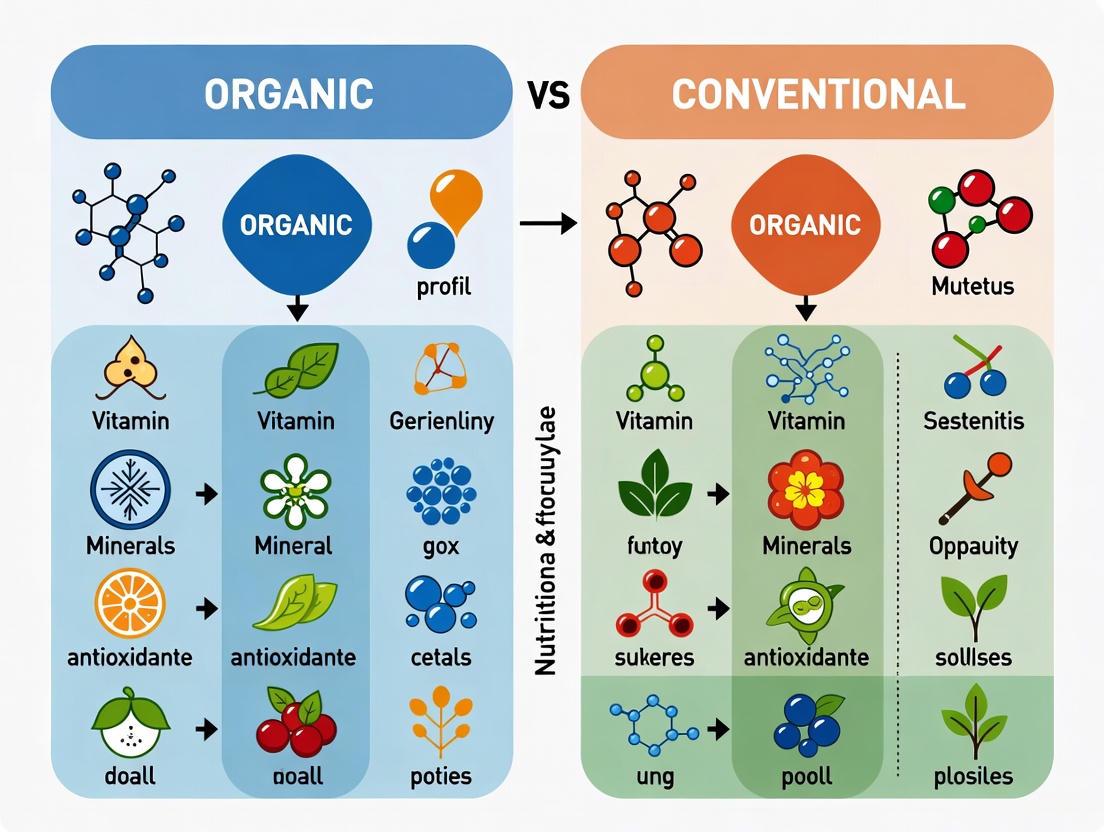
This article provides a critical, evidence-based synthesis for researchers and health professionals on the complex debate surrounding the nutritional quality of organic versus conventionally produced foods.
Organic vs. Conventional Food: A Scientific Analysis of Nutritional Quality for Health Research
Abstract
This article provides a critical, evidence-based synthesis for researchers and health professionals on the complex debate surrounding the nutritional quality of organic versus conventionally produced foods. We explore the foundational principles and consumer perceptions driving organic demand, analyze the methodological challenges in comparative nutritional studies, and present meta-analyses findings that show no generalizable nutritional superiority for organic foods, with significant differences being highly contextual. The review further examines the validated benefits of organic production, including significantly reduced pesticide residues and potential positive impacts on specific health outcomes, while addressing the yield and economic limitations of organic systems. Finally, we discuss the implications of these findings for future biomedical research, particularly in understanding the role of dietary patterns and low-level pesticide exposure in chronic disease etiology.
Defining Organic Systems and Exploring the Drivers of Consumer and Research Interest
Organic agriculture is a systematically standardized approach to farming that is governed by four core principles: Health, Ecology, Fairness, and Care. These principles, as defined by IFOAM - Organics International, serve as the foundational roots from which organic agriculture grows and develops, representing a holistic vision to improve all agriculture in a global context [1]. For researchers and scientists, understanding the empirical data and experimental methodologies that underpin these principles is crucial for evaluating organic agriculture's role in sustainable food systems, particularly in the critical comparison of nutritional quality versus conventional production methods.
The Four Principles and Their Scientific Rationale
The principles of organic agriculture are interconnected ethical concepts that guide the development of positions, programs, and standards within the organic movement.
Principle of Health: Organic agriculture should sustain and enhance the health of soil, plant, animal, human, and planet as one and indivisible. This principle posits that the health of individuals and communities is inseparable from the health of ecosystems [1]. This is operationalized by avoiding synthetic inputs that can leave harmful residues on food and degrade soil health, thereby producing cleaner, more nutritious food while protecting the ecosystem [2].
Principle of Ecology: Organic agriculture should be based on living ecological systems and cycles, work with them, emulate them, and help sustain them [1]. This involves practices such as crop rotation, composting, and maintaining permanent vegetation to foster ecological corridors, thereby supporting a greater density and variety of soil organisms and beneficial insects [3].
Principle of Fairness: This principle characterizes equity, respect, justice, and stewardship of the shared world, both among people and in their relations to other living beings [4]. It emphasizes that relationships should ensure fairness at all levels—from farmers and workers to traders and consumers—and requires that natural resources be managed in a socially and ecologically just way, held in trust for future generations [4] [1].
Principle of Care: Organic agriculture should be managed in a precautionary and responsible manner to protect the health and well-being of current and future generations and the environment [1]. This principle prioritizes proven techniques while avoiding unpredictable methods, ensuring that decisions are guided by the values and needs of those impacted, always acting with caution [2].
Quantitative Comparison: Organic vs. Conventional Agriculture
Long-term scientific trials provide critical data for an objective comparison between organic and conventional production systems. The following tables summarize key performance indicators across agronomic, environmental, and economic dimensions.
Table 1: Agronomic and Environmental Performance Indicators
| Indicator | Organic Agriculture Performance | Conventional Agriculture Performance | Key Research Findings |
|---|---|---|---|
| Crop Yield | Competitive with conventional; can be higher in stress conditions [5] [6]. | Highly variable; dependent on inputs. | Organic yields matched conventional for cash crops; organic corn yields were 31% higher in drought years [5]. A 2025 study on common beans found organic equals conventional yield under irrigation and enhances seed quality in drought [6]. |
| Soil Health | Increases soil organic matter, microbial biomass, and activity [5] [7]. | Soil health remains largely unchanged [5]. | A 2025 chronosequence study found organic farming on clay soils increased total Soil Organic Carbon (SOC) and labile carbon fractions, indicating higher soil biological activity [7]. |
| Biodiversity | Significantly higher (e.g., ~30% more species per hectare) [3]. | Lower due to monocultures and pesticide use [3]. | Organic agriculture fosters insect biodiversity that provides essential ecosystem services like pollination and biocontrol [8]. |
| Water Infiltration & Quality | Significantly faster infiltration; does not contribute to toxin accumulation in waterways [5]. | Slower infiltration; risk of water contamination from nutrient and pesticide runoff [5] [3]. | Organic farms can reduce water contamination by up to 75% compared to conventional systems [3]. |
| Pesticide Residues & GHG | Up to 98% lower synthetic pesticide use; lower carbon emissions [3] [6]. | High synthetic pesticide use; reliant on petrochemicals. | Organic systems use 45% less energy and emit 40% less carbon than conventional systems [6]. |
Table 2: Economic and Nutritional Quality Indicators
| Indicator | Organic Agriculture Performance | Conventional Agriculture Performance | Key Research Findings |
|---|---|---|---|
| Profitability | Higher profitability, especially with organic price premiums [5] [6]. | Lower profit margins; vulnerable to input cost fluctuations. | The organic manure system was the most profitable, even without organic price premiums. Organic systems achieved 3–6 times the profit of conventional production [5] [6]. |
| Nutritional Quality | Enhanced quality under stress conditions; higher in specific nutrients [6]. | Standard nutritional quality. | A 2025 study found organic common beans under rainfed (drought) conditions promoted higher protein and fat content, leading to a higher seed energy value [6]. |
| Input Costs | Lower long-term operation costs; reduced reliance on purchased inputs [5] [3]. | High and variable input costs, dependent on synthetic chemicals [3]. | Organic systems avoid the recurring costs of synthetic fertilizers and pesticides, reducing financial risk for farmers [3]. |
Experimental Protocols and Methodologies
Robust, long-term field trials are essential for generating reliable data on the impacts of organic management. Below are detailed methodologies from key studies cited in this guide.
The Rodale Institute Farming Systems Trial (FST)
Launched in 1981, the FST is one of the longest-running comparisons of organic and conventional grain cropping systems in North America [5].
- Experimental Design: The FST compares three core farming systems: a chemical input-based conventional system, a legume-based organic system, and a manure-based organic system. In 2008, the trial was expanded into a split-plot design where each core system was divided to compare standard full-tillage and emerging reduced-tillage practices. Genetically modified crops were also introduced to the conventional system at that time to mirror prevalent practices [5].
- Management Practices:
- Conventional Synthetic: Relies on synthetic nitrogen for fertility and synthetic herbicides for weed control, following university extension recommendations.
- Organic Legume: Features a mid-length rotation of annual grain and cover crops, with leguminous cover crops as the sole fertility source and crop rotation for pest management.
- Organic Manure: Represents a diversified organic livestock operation with a long rotation of annual grains and perennial forage. Fertility comes from leguminous cover crops and composted manure [5].
- Data Collection: The trial involves continuous, rigorous collection and analysis of data on yields, soil health (including Comprehensive Assessment of Soil Health scores), soil microbial biomass carbon, water infiltration rates, and economic metrics [5].
Common Bean Genotype Study (2025)
A recent study investigated how organic management affects common bean yield and nutritional quality under different water regimes [6].
- Experimental Workflow: The following diagram outlines the study's core structure and measured outcomes.
- Methodological Details:
- Site and Conditions: Trials were conducted over three growing seasons (2016-2018) in Arkaute, Alava (Spain), a region where low precipitation coincides with the bean's flowering and grain-filling stages [6].
- Soil Analysis: Initial soil analyses included pH, organic matter, and key health indicators (nitrogen, nitrate, phosphorous, potassium, magnesium, calcium, sodium, carbon/nitrogen ratio, and texture) [6].
- Water Regimes: The "irrigated" subplots received complementary irrigations (three of 12 mm each in 2016/2017, two in 2018), while "rainfed" plots received only minimal initial water [6].
- Seed and Plant Analysis: Seeds were analyzed in an elemental analyzer and an isotope ratio mass spectrometer to determine water-use efficiency (via carbon isotope discrimination, δ13C) and nitrogen fixation. Photosynthetic efficiency was measured at the pod-filling stage using a portable fluorimeter. Seed quality was determined by analyzing the balance of protein, fat, carbohydrates, fiber, and energy value [6].
Soil Organic Carbon Chronosequence Study (2025)
This study investigated the long-term influence of organic farming on Soil Organic Carbon (SOC) characteristics [7].
- Experimental Design: Researchers established two chronosequences (a series of sites representing a sequence of time) of certified organically managed commercial farms paired with nearby conventional counterparts. One chronosequence was on clay-dominated soils (0-34 years of organic management), and another was on sand-dominated soils (0-69 years of organic management) [7].
- Soil Sampling and Analysis: Topsoil (0-15 cm) samples were collected. Alongside total SOC content, researchers measured influencing soil properties (pH, silt, clay, iron oxides, aluminum oxides). SOC quality was characterized using four techniques:
- Permanganate Oxidizable Carbon (POXC): A chemical measure of a labile, readily available carbon fraction.
- Rock-Eval Thermal Analysis: A method that provides information on SOC thermal stability and biogeochemical composition.
- Physical Fractionation: Separation into particulate organic matter (POM) and mineral-associated organic matter (MAOM).
- Elemental C:N Analysis: The ratio of carbon to nitrogen, which indicates the quality and decomposition state of organic matter [7].
The Scientist's Toolkit: Key Reagents and Methods for Organic Agriculture Research
For scientists designing experiments in this field, the following table details essential reagents, tools, and methods, with explanations of their application and function in organic agriculture research.
Table 3: Essential Reagents and Methods for Organic Research
| Reagent / Method | Function & Application in Research |
|---|---|
| Carbon Isotope Discrimination (δ13C) | Serves as an effective physiological marker for assessing plant water-use efficiency and selecting stress-tolerant genotypes under drought or heat stress conditions [6]. |
| Permanganate Oxidizable Carbon (POXC) | A key indicator of the labile, biologically active fraction of soil organic carbon, which is a sensitive early indicator of changes in soil management [7]. |
| Rock-Eval Thermal Analysis | A rapid, comprehensive method for characterizing the stability and biogeochemical composition of soil organic carbon, providing data on several SOC pools simultaneously [7]. |
| Portable Fluorimeter | Used for in-field measurement of photosynthetic efficiency (e.g., chlorophyll fluorescence) in light-adapted leaves, providing real-time data on plant physiological status [6]. |
| Physical SOC Fractionation | Separates soil organic matter into Particulate Organic Matter (POM) and Mineral-Associated Organic Matter (MAOM) to understand carbon turnover rates and stabilization mechanisms [7]. |
| Elemental Analyzer & Isotope Ratio Mass Spectrometer | Used for precise measurement of total carbon, nitrogen, and the ratios of stable isotopes (e.g., 13C/12C, 15N/14N), which are crucial for studying nutrient cycling, nitrogen fixation, and carbon sequestration [6]. |
The body of evidence from long-term trials and targeted studies provides a robust scientific foundation for the four principles of organic agriculture. Data confirm that organic systems can deliver competitive yields while enhancing soil organic carbon, biodiversity, and farm profitability [5] [3] [6]. Notably, emerging research highlights organic farming's capacity to enhance the nutritional quality of crops, particularly under the drought stress conditions increasingly prevalent due to climate change [6]. For the research community, these findings underscore the importance of these principles not as mere philosophical ideals, but as a framework for designing resilient and sustainable agricultural systems. Future research, particularly into soil-specific management recommendations and the mechanisms behind nutritional enhancement, will be critical to optimizing organic agriculture's contribution to global food security.
Key Prohibited and Allowed Practices in Organic vs. Conventional Farming
Organic and conventional farming represent two distinct approaches to agricultural production, each governed by different principles and regulatory standards. Conventional agriculture is characterized by its reliance on synthetic inputs to maximize efficiency and yield. In contrast, organic farming is a holistic production system that promotes and enhances agroecosystem health, including biodiversity, biological cycles, and soil biological activity, while emphasizing management practices over external inputs [9] [10]. The foundational principle of organic standards is that natural substances are allowed, and synthetic substances are prohibited, though with specific exceptions detailed in official regulations [11].
In the United States, the USDA National Organic Program (NOP) establishes the governing standards for organic certification, which includes the National List of Allowed and Prohibited Substances [12] [11]. This list functions as organic's "restricted toolbox," containing a limited number of synthetic substances that are permitted only when necessary and when no natural alternative exists [11]. For researchers investigating the nutritional quality of organically and conventionally produced foods, understanding these fundamental regulatory differences is essential, as the allowed and prohibited practices directly influence soil health, plant metabolism, and ultimately, the biochemical composition of food crops.
Comparative Analysis of Allowed and Prohibited Inputs
The distinction between organic and conventional farming systems is most evident in their respective regulations regarding agricultural inputs. The following tables summarize the key allowed and prohibited substances and practices, providing a clear framework for understanding the operational boundaries of each system.
Table 1: Comparison of Key Allowed and Prohibited Substances in Crop Production
| Substance Category | Organic Farming | Conventional Farming |
|---|---|---|
| Synthetic Fertilizers | Prohibited [10] | Widely allowed and commonly used [9] [10] |
| Synthetic Pesticides | Prohibited; restricted access to only 27 synthetic active ingredients for pest control only when preventative methods fail [11] | Over 900 synthetic pesticides are registered for use [11] |
| Genetically Modified Organisms (GMOs) | Strictly prohibited [12] [13] | Widely allowed and commonly used [12] [5] |
| Plant Growth Regulators | Generally prohibited | Commonly allowed |
| Soil Amendments | Reliance on natural inputs like compost, manure, and green manures [12] [14] | Use of synthetic, readily soluble amendments is standard |
| Weed Management | Relies on crop rotation, mulching, and mechanical weeding [12] [15] | Primarily relies on synthetic herbicides [5] |
Table 2: Comparison of Key Allowed and Prohibited Substances in Livestock Production
| Substance Category | Organic Farming | Conventional Farming |
|---|---|---|
| Preventive Antibiotics | Prohibited [15] | Often allowed and routinely used |
| Growth Hormones | Prohibited [15] | Commonly allowed and used |
| Livestock Treatments | Restricted access to 37 synthetic active ingredients for animal health [11] | Over 550 synthetic active ingredients are approved [11] |
| Animal Feed | Must be 100% organic; prohibits synthetic additives [11] | No restrictions on conventional feed or certain synthetic additives |
Experimental Data on Agronomic and Environmental Performance
Long-term experimental trials provide critical quantitative data on how these differing practices affect agronomic and environmental outcomes. Data from Rodale Institute's Farming Systems Trial (FST), a multi-decade study, offers a robust comparison.
Table 3: Agronomic and Environmental Performance from Long-Term Trials
| Performance Metric | Organic Systems | Conventional Systems | Notes & Context |
|---|---|---|---|
| Average Yield | Varies by crop and context; generally 0-18% lower [10] | Baseline for comparison | A 2023 meta-analysis found an 18.4% average yield gap [10]. However, organic can match conventional yields for some crops like corn and soybean [5]. |
| Drought Resilience | 31% higher corn yields than conventional in drought years [5] | More susceptible to yield decline during water stress | Linked to higher soil organic matter improving water retention [5]. |
| Soil Health | Significantly higher; 7% higher soil organic matter [10] | Remains essentially unchanged over time [5] | Organic practices increase microbial biomass and diversity [9] [10]. |
| Water Infiltration | Significantly faster [5] | Slower | Reduces flooding and runoff [5]. |
| Energy Consumption | 21% lower per unit of area [10] | Higher | Due to avoidance of energy-intensive synthetic fertilizers. |
| Profitability (without premium) | Organic manure system most profitable [5] | Less profitable | Even without organic price premiums, the organic manure system was most profitable in the FST [5]. |
Detailed Experimental Protocol: Farming Systems Trial (FST)
To critically assess the data presented in Table 3, researchers must understand the methodology from which it was derived. The following outlines the core protocol of the landmark Rodale Institute FST [5].
- Objective: To compare the long-term impacts of organic and conventional grain cropping systems on yield, profitability, and environmental health.
- Systems Compared:
- Conventional Synthetic: Relies on synthetic fertilizers and herbicides as recommended by local extension services. Genetically modified crops were introduced in 2008.
- Organic Legume: A cash grain system using leguminous cover crops for fertility and crop rotation for pest management.
- Organic Manure: Represents a diversified livestock operation, using leguminous cover crops and composted manure for fertility.
- Experimental Design:
- Duration: Launched in 1981; data represents over 40 years of continuous monitoring.
- Plot Management: The trial uses a randomized block design with replicated plots. In 2008, each core system was split into standard full-tillage and reduced-tillage subplots.
- Data Collection: The FST team gathers annual data on crop yields, soil health (including comprehensive chemical, physical, and biological assays), economic inputs and returns, and environmental parameters such as water infiltration and carbon sequestration.
The logical flow of this experimental design and its key measurements can be visualized in the following workflow.
Impact on Soil Biology and Crop Nutrition Pathways
The distinct input regimes of organic and conventional farming directly shape the soil ecosystem, which in turn influences nutrient cycling and plant health. Research indicates that organic management significantly enhances soil biological properties.
- Soil Microbial Abundance and Diversity: A meta-analysis showed that organic systems have 32–84% greater microbial biomass carbon, microbial biomass nitrogen, and total phospholipid fatty acids than conventional systems [10]. Another study found that organic practices increased the abundance of specific bacterial phyla like Acidobacteria and Firmicutes, which were correlated with beneficial soil biochemical changes and higher crop yields [14].
- Enzyme Activity: Dehydrogenase, urease, and protease activities are significantly greater in organically managed soils, indicating a more active and robust nutrient cycling system [10].
- Biodiversity: Organic farms support approximately 34% higher species richness compared to conventional farms [10].
These biological differences create a distinct nutrient acquisition environment for plants. In conventional systems, nutrients are often provided in readily soluble forms (e.g., synthetic nitrogen), which plants can absorb directly. In organic systems, plants rely more on complex interactions with soil microbes, which mineralize nutrients from organic matter like compost and cover crops. This fundamental difference in nutrient availability is a hypothesized pathway influencing the metabolic and nutritional profile of plants.
The Scientist's Toolkit: Key Research Reagent Solutions
For researchers designing studies to compare the nutritional quality or biological impacts of organic and conventional production, the following tools and methodologies are essential.
Table 4: Essential Reagents and Methods for Agricultural Systems Research
| Research Tool | Function/Application | Relevance to Organic vs. Conventional Studies |
|---|---|---|
| Phospholipid Fatty Acid (PLFA) Analysis | A biochemical assay to profile the structure and abundance of the entire soil microbial community. | Quantifying differences in total microbial biomass and community structure between systems [9] [10]. |
| High-Throughput 16S rRNA Sequencing | Genetic sequencing to identify and classify soil bacterial communities to a high taxonomic resolution. | Detecting shifts in specific bacterial phyla and species (e.g., Acidobacteria, Firmicutes) in response to management [14]. |
| Soil Enzyme Activity Assays | Colorimetric or fluorometric measurements of specific enzyme activities (e.g., dehydrogenase, protease, β-glucosidase). | Serving as sensitive indicators of soil biological activity and nutrient cycling functions [14] [10]. |
| Comprehensive Assessment of Soil Health (CASH) | A standardized set of physical, chemical, and biological assays to provide an overall soil health score. | Providing an integrated metric to compare the overall functionality of soils under different management [5]. |
| Stable Isotope Analysis | Using rare, non-radioactive isotopes (e.g., ¹⁵N) to trace the movement and fate of nutrients in the soil-plant system. | Tracing the efficiency and pathway of nutrient uptake from organic versus synthetic fertilizers [10]. |
| Liquid Chromatography-Mass Spectrometry (LC-MS) | An analytical chemistry technique for identifying and quantifying compounds in a sample. | Profiling the metabolome of crops to compare concentrations of nutrients, antioxidants, and other phytochemicals [14]. |
The global market for organic foods has demonstrated substantial growth, transitioning from a niche segment to a mainstream staple. By 2025, the organic foods market is estimated to be valued at USD 186.77 billion and is projected to exhibit a compound annual growth rate (CAGR) of 11.6%, reaching USD 402.67 billion by 2032 [16]. This growth is largely driven by evolving consumer perceptions that associate organic consumption with specific health, safety, and environmental benefits. Within the broader thesis of comparing the nutritional quality of organic versus conventional production methods, this guide objectively examines the scientific evidence behind these consumer motivations. It synthesizes current experimental data on nutritional content, pesticide residues, and environmental impacts, providing researchers and scientists with a structured comparison of organic and conventional food production systems.
The perception of organic foods as healthier and safer is widespread among consumers. Studies indicate that consumers often choose organic products based on the belief that they possess a superior nutritional profile and reduce exposure to pesticide residues, thereby offering health and safety advantages [17]. Furthermore, environmental altruism—behavior motivated by concern for the well-being of others or the environment—shows a positive association with organic food consumption patterns, suggesting that environmental considerations are a significant motivator [18]. This analysis delves into the empirical evidence supporting or contradicting these perceptions, providing a critical resource for professionals engaged in nutritional science, toxicology, and environmental health research.
Experimental Data on Nutritional Quality
Systematic Reviews of Nutrient Content
A primary motivation for organic food consumption is the perceived nutritional superiority. However, systematic reviews of scientific literature reveal only limited and inconsistent differences in nutrient content between organically and conventionally produced foodstuffs.
A 2020 systematic survey comparing the nutritional quality of prepacked organic and conventional products found minimal significant differences. The study analyzed 569 product pairs across nine food categories in Italy, collecting nutritional data from mandatory packaging information. The key findings revealed that, based on the information printed on packaging, "prepacked organic products are not of a superior nutritional quality than conventional ones, with just a few exceptions" [17]. Specifically, in the "pasta, rice and other cereals" category, organic products were lower in energy and protein, and higher in saturates. Organic "jams, chocolate spreads and honey" were lower in energy, carbohydrates, and sugars, but higher in protein. No differences were detected for energy, macronutrients, and salt in other food categories [17].
Another systematic review covering 50 years of research (1958-2008) and including 162 studies (137 crops and 25 livestock products) found no strong evidence for nutritional superiority. In an analysis restricted to 55 satisfactory-quality studies, conventionally produced crops had a significantly higher nitrogen content, while organically produced crops had significantly higher phosphorus content and titratable acidity. For the remaining 8 out of 11 crop nutrient categories analyzed, "no evidence of a difference was detected" [19]. The analysis of livestock products similarly found no evidence of a difference in nutrient content between organic and conventional production methods [19].
Table 1: Nutrient Comparison Between Organic and Conventional Crops from Systematic Reviews
| Nutrient/Component | Organic Crops | Conventional Crops | Statistical Significance |
|---|---|---|---|
| Nitrogen | Lower | Higher | Significant [19] |
| Phosphorus | Higher | Lower | Significant [19] |
| Titratable Acidity | Higher | Lower | Significant [19] |
| Energy | Mixed Results* | Mixed Results* | Category-dependent [17] |
| Protein | Mixed Results* | Mixed Results* | Category-dependent [17] |
| Sugars | Mixed Results* | Mixed Results* | Category-dependent [17] |
*Significant differences were only found in specific food categories, with no consistent pattern across all categories.
Experimental Protocol for Nutritional Comparison
The methodological approach for comparing nutritional quality between organic and conventional food products requires rigorous design and standardized protocols. The 2020 study on prepacked foods implemented a systematic methodology that can serve as a template for such comparisons [17].
Data Collection Protocol:
- Source: Online retailers of major Italian supermarkets (Auchan, Bennet, Carrefour, Conad, Coop Italia, Crai, Despar, Esselunga, Il Gigante, Iper, Pam Panorama, Selex, Sidis)
- Timeframe: January 2019 to July 2019
- Product Selection: Pairs of organic and conventional products of the same brand, available in at least one online shop
- Inclusion Criteria: Prepacked foods with mandatory food information, Community organic logo on packaging
- Exclusion Criteria: Non-prepacked foods; organic foods without conventional counterparts; incomplete pack images; unclear nutrition declarations; unavailable products
- Data Extracted: Company name, brand name, descriptive name, energy (kcal/100 g or 100 mL), total fat, saturates, carbohydrate, sugars, protein, and salt
Statistical Analysis:
- Software: IBM SPSS Statistics (Version 25.0)
- Normality Test: Kolmogorov-Smirnov test
- Data Expression: Median (interquartile range) due to rejected normality
- Analysis Method: Mann-Whitney non-parametric test for two independent samples
- Significance Level: p < 0.05
This protocol ensured standardized comparison across 569 product pairs, categorized into: sweet cereal-based foods; bread and substitutes; pasta, rice and other cereals; milk, dairy foods and plant-based drinks; fruit juices, nectars and iced teas; jams, chocolate spreads and honey; fruit and vegetable-based foods; legumes; and oils, fats and dressings [17].
Figure 1: Experimental Workflow for Nutritional Comparison Study
Environmental Impact and Sustainability Metrics
Comparative Environmental Footprints
Environmental considerations constitute a significant motivation for organic food consumption, with consumers increasingly considering the ecological impacts of their food choices. Research comparing the environmental sustainability of organic versus conventional agricultural systems reveals distinct differences in key environmental metrics.
A 2025 study comparing the economic and environmental sustainability of conventional and organic dairy farming found that "organic farming systems present stronger environmental sustainability" despite requiring substantial financial support [20]. This aligns with data estimating that organic farming uses up to 45% less energy per unit of production compared to conventional methods [21]. The environmental benefits extend beyond energy savings to include enhanced soil health, reduced chemical pollution, and lower greenhouse gas emissions.
Table 2: Environmental Impact Comparison: Organic vs. Conventional Agriculture (Estimated 2025)
| Practice/Aspect | Conventional Agriculture | Organic Agriculture | Environmental Benefit |
|---|---|---|---|
| Soil Health | Low to Moderate organic matter | High organic matter & microbial life | Enhances sustainable productivity [21] |
| Pesticide Use (kg/ha) | 8–15 | 0–1 (natural controls) | Reduces chemical pollution [21] |
| Water Consumption (L/ha) | 6,000,000 | 4,200,000 | Minimizes water waste [21] |
| GHG Emissions (CO₂e/ha) | 4–5 tons | 1.5–3 tons | Lowers carbon footprint [21] |
| Energy Use | Higher | Up to 45% less per unit | Reduces resource consumption [21] |
| Biodiversity | Lower | Enhanced | Supports ecosystem resilience [21] |
The enhancement of soil health through organic practices represents a particularly significant environmental benefit. Organic methods view soil as a dynamic ecosystem rather than merely a growth medium, utilizing composting, minimal soil disturbance, cover cropping, and crop rotations to build healthy, living soils with improved water retention and reduced erosion [21]. These practices contribute to the resilience of agricultural systems, particularly under climate stress conditions.
Consumer Environmental Motivations
Research on the psychological drivers of organic consumption reveals that environmental altruism significantly influences purchasing decisions. A 2025 study investigating the moral correlates of organic food consumption found a "positive association between environmental altruism, proxied by collective environmental values, and higher rates of organic food consumption" [18]. This suggests that consumers are motivated by genuine concern for environmental protection rather than solely self-interested reasons.
The same study found no evidence for "environmental hypocrisy" - where expressed environmental concerns don't align with actual behaviors - in organic purchasing patterns. Instead, observed purchasing behaviors largely aligned with pro-environmental attitudes, indicating that organic food consumption represents a consistent environmental behavior for motivated consumers [18]. This finding challenges assumptions about the attitude-behavior gap in sustainable consumption.
The Value-Belief-Norm theory provides a framework for understanding these environmental motivations. According to this theory, consumers who hold strong biospheric and altruistic values are more likely to believe that environmental threats have consequences for things they value (awareness of consequences), feel personal responsibility for these threats (ascription of responsibility), and experience activated personal norms that lead to pro-environmental actions like organic food purchasing [18].
Figure 2: Value-Belief-Norm Theory of Environmental Motivation
Health and Safety Perceptions Versus Scientific Evidence
Pesticide Residue and Chemical Exposure
Health and safety concerns represent a primary driver of organic food consumption, with consumers often motivated by desires to reduce exposure to pesticide residues and synthetic chemicals. The regulatory framework for organic production explicitly prohibits the use of synthetic pesticides, fertilizers, genetically modified organisms (GMOs), growth hormones, and antibiotics, relying instead on natural and biological control processes [21]. This fundamental difference in production methods directly addresses consumer concerns about chemical exposure.
Scientific evidence confirms that "consumption of organic foods may reduce exposure to nitrate and pesticide residues due to the strict limitation of the use of chemically synthesized inputs" [17]. However, the significance of this difference is moderated by the fact that "actual levels of contamination in organic and conventional foods are generally well below acceptable limits" established by regulatory authorities [17]. Furthermore, research suggests that "the proximity to sources of contamination (e.g., traffic, chemical industries) seems to have a crucial role in the occurrence of environmental pollutants in foodstuffs," indicating that production method is not the sole determinant of food purity [17].
The health implications of reduced pesticide exposure remain a subject of ongoing research. While the scientific literature confirms lower pesticide residues in organic products, evidence linking organic food consumption to measurable health outcomes remains limited. Studies examining the association between organic food consumption and chronic disease risk have generally found weak evidence, partly because contamination levels in both production methods typically fall within safety thresholds [17].
Psychological Drivers of Health Perceptions
Consumer psychology plays a significant role in health perceptions of organic foods, often extending beyond scientific evidence. Research indicates that people tend to perceive organic foods as healthier than conventional alternatives due to a "health halo effect," which induces consumers to "overestimate the healthfulness of a food with a specific attribute" [17]. This cognitive bias leads consumers to attribute additional positive qualities to organic products beyond their verified characteristics.
A 2025 study applying the Theory of Planned Behavior to organic consumption found that health consciousness significantly influences purchase intentions both directly and indirectly through its effects on attitudes, subjective norms, and perceived behavioral control [22]. Consumers with high health consciousness are more likely to hold positive attitudes toward organic foods, believe that important others think they should consume organic products, and perceive themselves as capable of purchasing organic foods despite typically higher prices [22].
Table 3: Psychological Constructs Influencing Organic Food Purchases
| Psychological Construct | Definition | Impact on Organic Purchase Intention |
|---|---|---|
| Health Consciousness | Individual's concern for their health status and tendency to take health-maintaining actions | Positive direct and indirect influence [22] |
| Environmental Awareness | Individual's understanding of environmental issues and willingness to engage in protective behaviors | Positive direct and indirect influence [22] [18] |
| Attitude | Individual's positive or negative evaluation of organic food behavior | Positive influence [22] |
| Subjective Norms | Perceived social pressure from others regarding organic consumption | Positive influence [22] |
| Perceived Behavioral Control | Individual's perception of their ability to perform organic purchasing behavior | Positive influence [22] |
The interplay of these psychological factors creates a complex decision-making framework for consumers. While health considerations are prominent, they frequently interact with environmental concerns and social influences. The 2025 study found that both health consciousness and environmental awareness not only directly affect purchase intentions but also work indirectly through the three core Theory of Planned Behavior constructs (attitudes, subjective norms, and perceived behavioral control) to influence organic consumption behaviors [22].
Research Reagents and Methodological Toolkit
To facilitate rigorous research into organic versus conventional food quality, scientists require specific methodological tools and approaches. The following table details essential research components derived from the experimental protocols analyzed in this review.
Table 4: Research Reagent Solutions for Organic-Conventional Food Studies
| Research Component | Function/Application | Exemplary Protocol |
|---|---|---|
| Standardized Nutritional Analysis | Quantifies macronutrient and micronutrient content in food samples | Laboratory analysis of energy, protein, fat, carbohydrates, sugars, salt [17] |
| Pesticide Residue Screening | Detects and measures synthetic chemical residues in food products | Chromatographic methods to quantify pesticide levels below regulatory limits [17] |
| Soil Quality Assessment | Evaluates biological, chemical, and physical properties of agricultural soils | Measurement of organic matter, microbial diversity, water retention capacity [21] |
| Consumer Survey Instruments | Assesses psychological constructs driving organic food purchases | Validated scales for health consciousness, environmental awareness, and Theory of Planned Behavior constructs [22] |
| Statistical Analysis Software | Analyzes comparative data with appropriate statistical tests | IBM SPSS Statistics with non-parametric tests (Mann-Whitney) for non-normal distributions [17] |
| Carbon Footprint Tracking | Quantifies greenhouse gas emissions from different production systems | Tools like Farmonaut's carbon footprinting to measure CO₂e/ha [21] |
This methodological toolkit enables researchers to conduct comprehensive comparisons between organic and conventional production systems across multiple dimensions: nutritional composition, chemical contamination, environmental impact, and consumer psychology. The integration of these diverse methodological approaches provides a more complete understanding of the complex trade-offs between different agricultural production systems.
The comparison between organic and conventional food production systems reveals a complex landscape of trade-offs where consumer perceptions are only partially aligned with scientific evidence. From a nutritional perspective, systematic reviews consistently demonstrate minimal differences in nutrient profiles between organic and conventionally produced foods, with detected variations being small, biologically plausible, and primarily related to differences in production methods [17] [19]. The prevalent consumer perception of organic foods as nutritionally superior appears to be influenced more by the "health halo effect" than by substantial compositional differences.
Regarding environmental impacts, the evidence more strongly supports consumer motivations. Organic agriculture demonstrates clear advantages in several environmental dimensions, including enhanced soil health, reduced pesticide use, lower energy consumption, and diminished greenhouse gas emissions per unit of land [20] [21]. These environmental benefits align with findings that environmental altruism significantly influences organic purchasing patterns, with consumers expressing genuine concern for ecological sustainability through their food choices [18].
Health and safety considerations present a nuanced picture. While organic production methods确实 reduce exposure to synthetic pesticide residues, the significance of this difference is moderated by the fact that contamination levels in both production systems typically fall within regulatory safety limits [17]. The strong influence of health consciousness on organic food purchases [22] suggests that consumer behavior is driven more by risk perception and precautionary principles than by demonstrated health outcomes from reduced chemical exposure.
For researchers continuing this investigation, future studies should prioritize longitudinal research on health outcomes, more comprehensive environmental life cycle assessments, and deeper exploration of the socio-psychological mechanisms driving organic food perceptions and purchases. Such research will further illuminate the complex interplay between production methods, food quality, environmental impacts, and consumer behavior in the evolving organic food marketplace.
Socioeconomic and Educational Factors Influencing Organic Food Purchasing
The global organic food market has experienced rapid growth, propelled by consumer perceptions of its health and environmental benefits [23]. Understanding the factors driving this expansion requires examining not only the nutritional profile of organic products but also the complex socioeconomic and educational characteristics of their consumers. This review synthesizes evidence comparing organic and conventional foods while exploring the demographic and psychographic determinants of organic purchasing behavior, providing researchers and policymakers with a comparative analysis grounded in experimental data and consumer research.
Nutritional Composition: Organic Versus Conventional Foods
Comparative Analysis of Nutrient Profiles
The debate regarding nutritional differences between organic and conventional foods remains scientifically contentious. A 2024 comprehensive review analyzing 147 articles containing 656 comparative analyses based on 1,779 food samples found no generalizable nutritional superiority of organic over conventional foods [24]. Significant differences were observed in only 29.1% of comparisons, with 41.9% showing no significant differences [24].
Table 1: Nutritional Composition Comparison Between Organic and Conventional Foods
| Nutrient Category | Specific Nutrient | Research Findings | Clinical Significance |
|---|---|---|---|
| Macronutrients | Proteins, Lipids, Carbohydrates | Minimal differences between production methods [25] | Not clinically significant |
| Micronutrients | Vitamin C, Iron, Magnesium | Slightly higher in some organic produce [23] | Uncertain clinical relevance |
| Phytochemicals | Polyphenols, Antioxidants | Higher concentrations in organic crops [26] | Potential health benefits |
| Contaminants | Pesticide Residues, Heavy Metals | Lower in organic foods [26] | Potentially clinically important |
| Minerals | Phosphorus, Acidity | Higher in organic foods [27] | Not clinically significant |
| Nitrate/Nitrite | Lower in organic foods [26] | Potentially beneficial |
The BADALI Project analyzing six food types in the Spanish market found that while organic foods presented a slightly improved nutrient profile compared to conventional foods, many statistically significant differences were nutritionally irrelevant [25]. Notably, this study concluded that 81% of organic foods were classified as "less healthy" according to the Pan American Health Organization Nutrient Profile Model (PAHO-NPM) [25].
Experimental Evidence on Health Outcomes
Research has identified potential health benefits associated with organic food consumption, though evidence remains limited due to methodological challenges:
- Reduced Disease Risks: Observational studies link organic consumption with reduced incidence of infertility, birth defects, allergic sensitization, non-Hodgkin lymphoma, and metabolic syndrome [23] [26]
- Pesticide Exposure: Studies consistently demonstrate lower pesticide residue excretion in consumers of organic diets [26]
- Limitations: Current evidence cannot definitively establish causality due to confounding factors (e.g., healthier overall lifestyles of organic consumers) and insufficient long-term clinical trials [26] [25]
Socioeconomic Determinants of Organic Food Purchasing
Educational Attainment and Consumer Behavior
Educational level represents one of the strongest predictors of organic food purchasing. Multiple studies demonstrate that higher education levels correlate significantly with increased organic food consumption [23] [28]. A study investigating Bangladeshi consumers found a 3.27-fold increase in organic food purchasing among consumers with higher education levels [23]. This relationship operates through multiple pathways:
- Health Consciousness: Higher education associates with greater awareness of health and environmental concerns related to food choices [23] [29]
- Knowledge Acquisition: Educated consumers demonstrate better understanding of organic certification, labeling, and production methods [29]
- Information Processing: Those with higher education more effectively search, process, and utilize information about food production methods [29]
Table 2: Socioeconomic Factors Influencing Organic Food Purchasing Behavior
| Factor Category | Specific Variable | Impact on Organic Purchasing | Supporting Evidence |
|---|---|---|---|
| Education | Higher Education Level | 3.27-fold increase in purchasing [23] | Strong positive correlation |
| Income | High Household Income | 10-40% price premium creates barrier [23] [28] | Strong positive correlation |
| Occupational Status | Professional Occupation | Increased purchasing frequency [28] | Moderate positive correlation |
| Geographic | Population Density | Higher adoption in urban areas [30] | Moderate positive correlation |
| Household | Presence of Children | Increases health motivations [31] | Variable correlation |
| Age | Younger Consumers | More likely to purchase organic [29] | Weak to moderate correlation |
Income, Price Sensitivity, and Economic Barriers
Organic foods typically command 10-40% price premiums over conventional alternatives, creating significant economic barriers [23]. Research consistently identifies higher income levels as strong predictors of organic food purchasing [23] [28] [32]. Tunisian research found socioeconomic status (incorporating income, education, and occupation) significantly predicted perceived organic food values [28]. Income influences organic purchasing through:
- Reduced Price Sensitivity: Higher-income households show greater willingness to pay premium prices [28]
- Perceived Value Assessment: Economic capacity affects utilitarian and hedonic value assessments of organic products [28]
- Budget Allocation: Higher-income households dedicate greater proportions of food budgets to organic categories [31]
Demographic and Cultural Influences
Beyond education and income, additional demographic factors influence organic purchasing patterns:
- Geographic Distribution: Population density and regional agricultural structures affect availability and adoption [30]
- Cultural Dietary Habits: Traditions and preferences for specific farming methods influence organic acceptance [23]
- Age and Life Stage: Mixed evidence, with some studies showing stronger effects among younger consumers, others among older demographics [23] [29]
- Household Composition: Families with children often show heightened health consciousness and greater organic purchasing [29] [31]
Consumer Motivations and Perception Frameworks
Psychological Drivers of Organic Food Selection
Research identifies three primary attitude categories driving organic food purchases [31]:
- Pro-Environmental Attitudes: Concern for sustainability and ecological protection
- Pro-Health Attitudes: Focus on personal and family health and food safety
- Pro-Wellbeing Attitudes: Emphasis on personal satisfaction, emotional wellbeing, and ethical considerations
Polish research demonstrates that women more frequently prioritize pro-health attitudes, while higher household income correlates with stronger pro-environmental and pro-health attitudes [31].
Perceived Value Dimensions
Consumer decision-making involves two primary value dimensions [28]:
- Utilitarian Values: Focus on nutritious, healthfulness, purity, and safety attributes
- Hedonic Values: Emphasis on better taste, freshness, and pleasure from making positive health choices
Socioeconomic status significantly influences both value dimensions, with higher-SES consumers perceiving greater utilitarian and hedonic values in organic products [28].
Research Methodologies and Experimental Protocols
Consumer Behavior Study Designs
Robust research in this field employs multiple methodological approaches:
- Structural Equation Modeling (SEM): Tests hypothesized relationships between socioeconomic factors, perceived values, and purchasing intentions [28]
- Theory of Planned Behavior (TPB) Extensions: Expanded frameworks incorporating knowledge, health consciousness, and environmental concern [29]
- Canonical Correlation Analysis: Examines multidimensional relationships between purchasing frequency and determining factors [32]
- Zero-Inflated Negative Binomial Models: Explores factors affecting initial adoption and adoption intensity [30]
Nutritional Comparison Methodologies
Nutritional quality assessment employs rigorous experimental protocols:
- Systematic Review Methodologies: Comprehensive literature searches across multiple databases (Google Scholar, Science Direct, Scopus, Web of Science) with strict inclusion/exclusion criteria [24]
- Laboratory Analysis: Chemical quantification of macronutrients, micronutrients, heavy metals, and pesticide residues [24] [25]
- Nutrient Profiling Models: Application of standardized models (e.g., PAHO-NPM) to evaluate overall "healthiness" [25]
- Statistical Analysis: Appropriate statistical testing with correction for multiple comparisons and assessment of clinical significance [24] [25]
Table 3: Key Research Reagent Solutions for Organic Food Analysis
| Research Tool | Application in Organic Food Research | Experimental Function |
|---|---|---|
| Mass Spectrometry | Pesticide residue detection | Quantifies synthetic chemical contaminants |
| HPLC | Phytochemical analysis | Measures antioxidant compounds (polyphenols) |
| Atomic Absorption Spectroscopy | Heavy metal testing | Detects cadmium, lead, and other metals |
| Nutrient Profiling Models (PAHO-NPM) | Healthiness classification | Evaluates overall nutritional quality |
| Standardized Surveys | Consumer behavior assessment | Measures attitudes, perceptions, and intentions |
| Structural Equation Modeling | Data analysis | Tests complex variable relationships |
The organic food market represents a complex intersection of perceived health benefits, environmental concerns, and socioeconomic factors. While nutritional differences between organic and conventional foods remain limited and of uncertain clinical significance, consistent demographic patterns emerge among organic consumers. Higher educational attainment, household income, and professional occupation consistently predict organic food purchasing, operating through multiple psychological mechanisms including health consciousness, environmental concern, and perceived value dimensions.
Future research should address methodological limitations including confounding factors, study duration, and clinical relevance of compositional differences. Understanding these socioeconomic dimensions is crucial for policymakers, producers, and researchers seeking to navigate the expanding organic food marketplace and its implications for public health, agricultural practices, and food systems sustainability.
The Global Market Trajectory and Growth of Organic Food Production
The global agricultural landscape has witnessed a significant transformation over the past decades, characterized by the rapid emergence and expansion of organic food production. This agricultural approach, designed to mitigate environmental pollution and prioritize animal welfare through protective management strategies, represents a fundamental shift from conventional production methods [23]. Framed within the context of nutritional quality comparison research, this guide objectively examines the performance of organic production systems against conventional alternatives, supported by market trajectory data, experimental findings, and methodological protocols relevant to researchers, scientists, and drug development professionals investigating the intersection of agriculture, nutrition, and health outcomes. The core principles of organic farming—health, ecology, fairness, and care—guide a system that relies on biological and ecological processes to preserve food's natural qualities while fostering biodiversity [23].
Global Market Trajectory: Quantitative Analysis
The organic food market has evolved from a niche segment to a mainstream powerhouse, demonstrating robust growth across global regions. This expansion is fueled by increasing consumer awareness of health and sustainability, governmental support, and the proliferation of digital commerce platforms [33] [34].
Global Market Size and Projection
The market's growth trajectory reflects strong and sustained consumer and producer adoption worldwide, as detailed in Table 1.
Table 1: Global Organic Food Market Size and Projections
| Metric | 2023/2024 Value | 2025 Projection | 2034 Projection | Compound Annual Growth Rate (CAGR) | Source |
|---|---|---|---|---|---|
| Global Organic Farming Area | 98.9 million hectares | - | - | - | [35] |
| Global Organic Sales | €136 billion (approx. $146 billion) | - | - | - | [35] |
| Global Organic Food Market | - | $286.4 billion | $1.05 trillion | 15.5% (2025-2034) | [33] |
| U.S. Organic Food Sales | $71.6 billion | - | - | 5.2% (from 2023) | [36] |
| Alternative U.S. Market Estimate | $154.3 billion | $168.2 billion | $364.4 billion | 9% (2025-2034) | [34] |
Regional Market Dynamics and Distribution
Market penetration and growth rates vary significantly across regions, influenced by consumer awareness, regulatory support, and supply chain development, as compared in Table 2.
Table 2: Regional Market Share and Growth Dynamics
| Region | Market Share (2024) | Key Characteristics and Growth Drivers | Leading Countries |
|---|---|---|---|
| North America | 47.4% [34] | Mature market, high consumer awareness, strong retail presence [37] [34]. | United States (market value $57.8B in 2024) [34] |
| Europe | 40.2% [34] | Strong policy support (e.g., EU Organic Action Plan), high consumer trust [35] [34]. | Germany ($16.1B sales), France, UK [35] [34] |
| Asia Pacific | ~10% (2025) [34] | Fastest-growing region (12.1% CAGR); urbanization and food-safety concerns drive demand [34]. | China ($12.6B sales), Japan, India [35] [34] |
| Latin America | - | 10.8% area growth in 2023; major contributor to global area increase [35]. | Argentina (4M hectares), Uruguay (25.4% organic land) [35] |
| Oceania | - | 53.2M hectares of organic land; more than half of global total [35]. | Australia (53M hectares) [35] |
| Africa | - | 24% area growth in 2023; high relative growth from a small base [35]. | Burkina Faso (notable producer increase) [35] |
Nutritional and Production System Comparison
The comparison between organic and conventional production systems extends beyond philosophical approaches to measurable differences in inputs, environmental impact, and potential health implications.
Fundamental Production Practices
Organic and conventional systems employ fundamentally different approaches to managing soil fertility, pests, and diseases, as Artificially summarized in Table 3.
Table 3: Comparison of Core Production Practices and Outcomes
| Aspect | Organic Production | Conventional Production |
|---|---|---|
| Core Philosophy | Holistic, system-based approach emphasizing ecological balance [38] [23]. | Input-intensive approach focused on maximizing yield [38]. |
| Fertilization | Natural inputs (compost, manure, cover crops); requires mineralization [39]. | Synthetic, readily soluble fertilizers for immediate plant availability [39]. |
| Weed Control | Mechanical weeding, mulch, crop rotation, hand weeding [38] [39]. | Synthetic chemical weed killers [38]. |
| Pest & Disease Control | Beneficial insects, trap crops, crop rotation, cover crops [38]. | Synthetic chemical pesticides and fungicides [38]. |
| Genetic Modification | Prohibited use of Genetically Modified Organisms (GMOs) [38] [23]. | GMOs are commonly used [38]. |
| Soil Health & Biodiversity | Enhances soil organic matter, microbial biomass, and biodiversity [39]. | Can detriment natural soil microbial populations [39]. |
| Yield & Cost | Generally lower yield and higher production cost [39]. | Higher yield potential and lower production cost [39]. |
Nutritional and Contaminant Profile
A comprehensive review of existing literature identifies nuanced differences in the nutritional and contaminant profiles of organic and conventional foods, crucial for understanding their potential impact on human health.
Table 4: Nutritional and Contaminant Comparisons: Organic vs. Conventional
| Component | Organic | Conventional | Research Findings and Implications |
|---|---|---|---|
| Macronutrients | Comparable | Comparable | No consistent significant differences in macronutrient profiles [23]. |
| Micronutrients | Higher in Iron, Magnesium, Vitamin C [23]. | Variable levels. | Nutritional differences are influenced by soil type, crop variety, and climate [23]. |
| Pesticide Residues | Lower synthetic pesticide residues [23]. | Higher likelihood of detectable synthetic pesticide residues [23]. | Associated with reduced risk of obesity, BMI, pre-eclampsia, and certain cancers (NHL, colorectal) with organic consumption [23]. |
| Antioxidant Content | Some studies report higher levels. | Some studies report lower levels. | Evidence remains mixed and is often confounded by other dietary and lifestyle factors [23]. |
Experimental Protocols for System Comparison
Robust scientific comparison requires standardized methodologies. The following protocols are essential for investigating the differences between organic and conventional production systems, particularly in terms of soil dynamics and nutritional content.
Protocol 1: Soil Nitrogen Mineralization Dynamics
Objective: To quantify the rate and magnitude of nitrogen mineralization in soils under long-term organic versus conventional management [39].
Principle: This incubation-based method measures the conversion of organic nitrogen from soil and amendments into plant-available inorganic forms (ammonium and nitrate) under controlled conditions, simulating field processes [39].
Materials:
- Soil sampling equipment (soil corer, auger, sample bags)
- Drying oven (105°C) and analytical balance
- Incubation chambers (maintaining 25°C and 60% water holding capacity)
- Sieve (2mm mesh)
- Equipment for soil chemical analysis (e.g., Spectrophotometer or AutoAnalyzer for inorganic N)
Procedure:
- Field Sampling: Collect paired soil samples from organic and conventional fields with similar environmental conditions and soil types. Post-harvest, take undisturbed soil cores (e.g., 6-inch depth) alongside composite soil samples from the same depth [39].
- Soil Pre-processing: Air-dry the composite sample, crush gently, and sieve through a 2mm mesh. Analyze for baseline physical, chemical, and biological characteristics (e.g., soil organic matter content, total N%, water holding capacity) [39].
- Laboratory Incubation: Incubate the undisturbed soil cores for a defined period (e.g., 10 weeks) at a constant temperature of 25°C, maintaining moisture at 60% of the soil's water holding capacity [39].
- Post-Incubation Analysis: After incubation, analyze the soil from the cores for inorganic nitrogen content (NH₄⁺ and NO₃⁻).
- Data Calculation & Analysis:
- Calculate Net Nitrogen Mineralized = (Post-incubation inorganic N) - (Pre-incubation inorganic N from composite sample).
- Compare mineralization rates and quantities between management systems using statistical tests (e.g., t-test, ANOVA).
- Perform regression analysis to identify soil characteristics (e.g., SOM, N%, water holding capacity) that most significantly drive N availability.
Protocol 2: Nutritional and Contaminant Analysis in Edible Tissues
Objective: To determine the concentration of specific nutrients, antioxidants, and synthetic pesticide residues in the edible portions of crops grown under organic and conventional regimes.
Principle: Using chromatographic and spectroscopic techniques to accurately identify and quantify target compounds in plant tissues, allowing for a direct comparison of their nutritional quality and chemical exposure.
Materials:
- Freeze-drier and mechanical grinder
- Analytical balance (0.0001g sensitivity)
- Solid Phase Extraction (SPE) system
- Liquid Chromatograph with Tandem Mass Spectrometry (LC-MS/MS) for pesticide residue analysis
- Inductively Coupled Plasma Optical Emission Spectrometry (ICP-OES) for mineral analysis
- High-Performance Liquid Chromatography (HPLC) for antioxidant and vitamin analysis
Procedure:
- Sample Collection & Preparation: Harvest edible crop portions at commercial maturity from paired organic and conventional plots. Wash, freeze-dry, and homogenize samples to a fine powder using a mechanical grinder.
- Pesticide Residue Analysis (for synthetic pesticides):
- Extraction: Weigh 2g of homogenized sample. Add 10mL of acetonitrile, shake vigorously for 1 minute, add salts for partitioning (QuEChERS method), and centrifuge.
- Clean-up: Transfer supernatant to a dispersive SPE tube for clean-up to remove co-extractives.
- Analysis: Inject the purified extract into the LC-MS/MS. Identify and quantify residues by comparing with certified calibration standards.
- Mineral Nutrient Analysis (e.g., Fe, Mg):
- Digestion: Weigh 0.5g of sample into a digestion tube. Add 8mL of concentrated HNO₃ and microwave digest.
- Analysis: Dilute the digestate and analyze using ICP-OES. Quantify concentrations against a series of matrix-matched standard solutions.
- Vitamin C Analysis:
- Extraction: Extract 1g of sample with a meta-phosphoric acid/acetic acid solution to stabilize Vitamin C.
- Analysis: Analyze the extract using HPLC with a UV-Vis detector. Quantify by comparing peak areas to those of L-ascorbic acid standards.
- Data Analysis: Statistically compare the mean concentrations of each analyte between the organic and conventional groups, correcting for multiple comparisons.
Research Visualization and Workflows
The experimental protocols and system interactions can be visualized through the following workflow diagrams, which outline the logical sequence of steps and relationships.
Nutritional & Contaminant Analysis Workflow
Soil Nutrient Cycling System Comparison
The Scientist's Toolkit: Key Research Reagent Solutions
Research in this field relies on specific reagents, analytical standards, and methodologies to ensure accurate and reproducible results. The following table details essential materials for conducting comparative studies of organic and conventional production systems.
Table 5: Essential Research Reagents and Materials for Comparative Agricultural Studies
| Reagent/Material | Function in Research | Application Example |
|---|---|---|
| Certified Pesticide Reference Standards | Provide known quantities for accurate identification and quantification of pesticide residues in crop samples. | LC-MS/MS analysis for synthetic pesticides (e.g., glyphosate, organochlorines) not permitted in organic systems [23]. |
| Inorganic Element Standards (ICP Grade) | Calibrate instruments for precise measurement of mineral nutrients (e.g., Fe, Mg, Zn) and potential contaminants (e.g., Cd). | ICP-OES analysis to compare mineral content in organic vs. conventional produce [23]. |
| Stable Isotope-Labeled Compounds (¹⁵N, ¹³C) | Trace the fate and transformation of nutrients in soil-plant systems, enabling precise study of nutrient cycling. | ¹⁵N-labeled fertilizers to track nitrogen use efficiency and leaching in different management systems [39]. |
| QuEChERS Extraction Kits | Streamline sample preparation for pesticide analysis by providing a quick, easy, cheap, effective, rugged, and safe method for analyte extraction and clean-up. | Preparing fruit and vegetable homogenates for multi-residue pesticide analysis by LC-MS/MS [23]. |
| Soil Sampling Equipment (Coring Devices) | Collect undisturbed, depth-specific soil samples for analyzing physical, chemical, and biological properties. | Obtaining 6-inch soil cores for incubation studies on nitrogen mineralization dynamics [39]. |
| Selective Culture Media for Microbes | Isolate and enumerate specific functional groups of soil microorganisms (e.g., N-fixing bacteria, phosphate solubilizers). | Assessing the impact of organic amendments on soil microbial community structure and function [39]. |
Research Methodologies and Analytical Frameworks for Nutritional Comparison
When comparing the nutritional quality of organic versus conventional production methods, researchers primarily rely on two distinct methodological approaches: randomized controlled trials (RCTs) and market basket surveys. The choice between them dictates the type of question that can be answered—from establishing efficacy under controlled conditions to assessing real-world exposure and availability.
Experimental Objectives and Core Principles
Defining the Research Approaches
The foundational principles of these two designs cater to different research objectives.
| Aspect | Controlled Trials (Efficacy/Explanation) | Market Basket Studies (Exposure/Assessment) |
|---|---|---|
| Core Objective | To establish a causal relationship between an intervention (e.g., diet) and a specific outcome (e.g., biomarker change) under controlled conditions [40]. | To assess the real-world availability, quality, and price of foods in a given retail environment [41] [42]. |
| Central Question | "Does consuming an organic diet cause a measurable improvement in blood nutrient levels compared to a conventional diet?" | "What is the nutritional content, variability, and cost of organic foods available to consumers in supermarkets?" |
| Guiding Principle | Maximizing internal validity by controlling for confounding variables through randomization and blinding [40]. | Capturing real-world variability and situating the findings within a specific geographic or economic context [41] [42]. |
Detailed Experimental Protocols
Protocol for a Human Nutrition Randomized Controlled Trial
RCTs are considered the gold standard for establishing causal relations in nutrition [40]. The following workflow outlines the key stages of a parallel-design RCT, which is common for dietary interventions.
Protocol Design and Ethics:
- Define Research Question: Formulate the question using the PICO framework—Population, Intervention, Comparator, and Outcome [40]. For an organic diet study, this could be: "In healthy adults (P), does a diet of organic foods (I), compared to a diet of conventional foods (C), affect blood nutrient levels or pesticide residue biomarkers (O)?"
- Select Study Design: Choose an appropriate design. A parallel design, where participants are randomly assigned to one of two or more groups for the entire study, is common. A crossover design, where participants receive all interventions in sequence, is efficient but requires careful estimation of a "washout" period to eliminate carryover effects [40].
- Ethics Approval: The study protocol must be submitted to an Institutional Review Board (IRB) for ethics approval before commencement [40].
Participant Management:
- Recruitment and Screening: Participants are recruited based on specific inclusion/exclusion criteria (e.g., age, health status, non-smoking) and screened for eligibility [40].
- Randomization and Blinding: Eligible participants are randomly assigned to intervention or control groups to minimize selection bias. Blinding (single, double, or triple) is used to prevent bias from participants, investigators, or outcome assessors [40].
Intervention and Analysis:
- Intervention Implementation: The intervention (e.g., provision of organic food) and control (provision of conventional food) are administered. Participant adherence is closely monitored [40].
- Outcome Assessment: Pre-specified primary and secondary outcomes (e.g., nutrient biomarkers, body composition) are measured at baseline and follow-up [40].
- Statistical Analysis: Data are analyzed based on the initial specific aims, using appropriate statistical models to compare outcomes between groups while controlling for type I error [40].
Protocol for a Market Basket Survey
Market basket surveys are observational assessments designed to snapshot the food retail environment.
Study Scope and Sampling:
- Define Scope: Determine the geographical area (e.g., a specific city, county, or region) and the types of retail outlets to be audited (e.g., supermarkets, convenience stores, dollar stores) [42].
- Select Stores and Products: Create a sampling frame from a list of all relevant stores in the area. Stores may be randomly selected, sometimes with oversampling of smaller formats to ensure representation [42]. A predefined list of food items (the "market basket") is created for assessment [41] [42].
Data Collection:
- Train Auditors: Data collection teams are trained to use a standardized audit tool, such as the Market Basket Assessment Tool (MBAT), to ensure consistency and reliability [42].
- In-Store Data Collection: Auditors visit selected stores and record data on the availability, price, and quality of each item on the list. Price is typically recorded as the lowest per-unit price, excluding promotions [42].
Laboratory Analysis and Scoring:
- Laboratory Analysis: For detailed nutrient analysis, purchased samples are transported to a lab. Analytical techniques like high-performance liquid chromatography (HPLC) for vitamins and inductively coupled plasma-mass spectrometry (ICP-MS) for minerals are used to quantify specific nutrients [41].
- Calculate Scores: A Healthy Food Availability and Quality Score is often calculated based on the variety and quality of foods present in major food groups, providing a quantitative measure for comparison between store types or regions [42].
Data Analysis: Statistical analyses (e.g., linear regression) are used to compare prices and availability scores across different store formats and regions [41] [42].
Key Research Reagents and Materials
The following tools and reagents are essential for executing the experimental protocols described above.
| Item Category | Specific Example | Function in Research |
|---|---|---|
| Data Collection Tool | Market Basket Assessment Tool (MBAT) [42] | A validated retail audit tool to systematically record the availability, price, and quality of healthy foods in stores. |
| Analytical Standard | Certified Reference Materials (e.g., NIST SRM 1869) [41] | A standardized material with known nutrient concentrations used to calibrate equipment and validate the accuracy of laboratory analytical methods. |
| Chemical Standards | Retinyl palmitate (Vitamin A), Cholecalciferol (Vitamin D3) standards [41] | Pure chemical compounds used to create calibration curves for quantifying the concentration of specific vitamins in food samples. |
| Laboratory Equipment | HPLC-DAD, LC-MS/MS, ICP-MS [41] | Advanced instruments for separating, identifying, and measuring the concentration of vitamins (HPLC, LC-MS/MS) and minerals (ICP-MS) in food samples. |
| Study Design Framework | PICO (Population, Intervention, Comparator, Outcome) [40] | A structured framework used in controlled trials to formulate a precise and answerable clinical research question. |
Quantitative Data from Each Study Design
The two approaches yield fundamentally different types of data, as shown in these examples from real research.
Table 1: Representative Data from a Market Basket Survey This table shows the variability in micronutrient content found across different brands and lots of plant-based milk alternatives, illustrating the key output of a market basket survey. [41]
| Micronutrient | PBMA Type (Example) | Measured Concentration Variability (Within-Lot %CV) | Key Finding |
|---|---|---|---|
| Vitamin A | Various (Almond, Oat, Soy) | 4.1% to 42.2% | Significant variability across brands; some products not fortified. |
| Vitamin D | Various (Almond, Oat, Soy) | 1.5% to 44.1% | High variability; underscores that label values may not reflect actual content. |
| Calcium | Various (Almond, Oat, Soy) | 1.7% to 37.6% | Many products fortified to match dairy milk, but levels can vary. |
Table 2: Representative Findings from a Systematic Review of Controlled Trials This table summarizes the conclusions of a high-quality systematic review, a synthesis of multiple controlled trials, comparing the nutrient content of organic and conventional foods. [43] [27]
| Nutrient Category | Finding from Systematic Review | Clinical Significance Conclusion |
|---|---|---|
| Nitrogen | Significantly higher in conventional crops [43]. | Differences were small and judged to lack clinical significance [43] [27]. |
| Phosphorus | Significantly higher in organic crops [43]. | |
| Titratable Acidity | Significantly higher in organic crops [43]. | |
| Most other nutrients (8 of 11 categories) | No evidence of a difference between organic and conventional [43]. | No nutritional superiority was detected based on nutrient composition alone. |
Application in Organic vs. Conventional Research
The choice between study designs directly shapes the evidence base for the organic versus conventional debate.
Controlled Trials have been pivotal in addressing the core question of nutritional superiority. A major systematic review of such studies concluded that there is no evidence of a difference in nutrient quality between organically and conventionally produced foodstuffs, with the small differences detected being biologically plausible but clinically insignificant [43] [27]. These studies prioritize controlled conditions to isolate the effect of the farming method itself.
Market Basket Studies shift the focus to real-world contexts. They can reveal important findings about the organic marketplace, such as price premiums—with organic foods often costing 10% to 40% more [23]—and disparities in availability, where healthy foods (including organic options) can be significantly more expensive and less available in convenience stores compared to supermarkets [42]. This highlights accessibility and economic factors that controlled trials do not capture.
In conclusion, robust research programs do not view these methodologies as mutually exclusive but as complementary. Together, they provide a comprehensive evidence base, from mechanistic efficacy to public health relevance, informing scientists, policymakers, and consumers alike.
Analytical Techniques for Profiling Macronutrients, Micronutrients, and Phytochemicals
The objective comparison of nutritional quality between organic and conventional food production systems relies heavily on advanced analytical chemistry. For researchers and drug development professionals, the choice of analytical technique is paramount, as it directly influences the accuracy, reproducibility, and biological relevance of nutritional data. This guide provides a critical comparison of modern profiling techniques, detailing their applications, limitations, and appropriate contexts within agricultural and nutritional research. The fundamental goal of nutritional profiling is to classify or rank foods based on their nutritional composition for reasons linked to disease prevention and health promotion [44]. As the demand for precise nutritional data grows, particularly in the context of comparing organic and conventional production methods, the sophistication of these analytical tools continues to advance, enabling more nuanced understanding of food composition and its impact on human health.
Core Analytical Techniques for Nutritional Profiling
Chromatographic Techniques for Macronutrient and Phytochemical Analysis
Chromatography forms the backbone of modern nutritional analysis, enabling the separation of complex food matrices into individual components for precise quantification.
High-Performance Liquid Chromatography (HPLC) is particularly valuable for separating thermally unstable compounds and those with high molecular weights. HPLC systems are routinely applied to analyze water-soluble vitamins (B-complex and C), fat-soluble vitamins (A, D, E, K), amino acids, and various phytochemicals like phenolic compounds and flavonoids [45] [46]. When coupled with mass spectrometry (HPLC-MS/MS), this technique provides superior sensitivity and specificity for quantifying multiple micronutrients simultaneously in biological samples, enabling comprehensive status assessment [46]. For drug development professionals, HPLC-MS/MS offers the required precision for pharmacokinetic studies of bioactive food compounds.
Gas Chromatography (GC) is ideal for separating volatile compounds without decomposition. GC provides high sensitivity, wide dynamic concentration range, and excellent resolution for analyzing sterols, oils, low-chain fatty acids, and aroma components [44]. When combined with mass spectrometry (GC-MS), it becomes a powerful tool for identifying unknown phytochemicals. Recent research on Ficus vasta and Curio radicans has demonstrated GC-MS's effectiveness in preliminary identification of 28 phytocompounds, including stigmasterol derivatives, fatty acids, steroids, vitamins, and esters [47] [48]. However, GC requires volatile compounds or chemical derivatization to increase volatility, which can be a limitation for some analytes.
Table 1: Comparison of Chromatographic Techniques for Nutritional Profiling
| Technique | Primary Applications | Detection Limits | Advantages | Limitations |
|---|---|---|---|---|
| HPLC-UV/Vis | Vitamin analysis, phenolic compounds, amino acids | ng-μg range | High precision for known compounds, good reproducibility | Limited identification capability for unknowns |
| HPLC-MS/MS | Micronutrient profiling, metabolite quantification | pg-ng range | High sensitivity and specificity, multi-analyte capability | High cost, complex operation, requires expertise |
| GC-FID | Fatty acid profiles, sterols, alcohols | ng range | Excellent for volatile compounds, robust quantification | Requires volatile analytes or derivatization |
| GC-MS | Phytochemical discovery, aroma compounds, volatile profiles | ng range | Powerful identification with spectral libraries | Same volatility requirements as GC-FID |
Spectroscopic Methods for Rapid Analysis
Spectroscopic techniques offer rapid, often non-destructive analysis of food components with minimal sample preparation.
Fourier Transform Near-Infrared (FT-NIR) Spectroscopy has emerged as a valuable tool for predicting macronutrient content in food products. Combined with chemometric techniques like partial least squares regression (PLSR), FT-NIR can rapidly predict fat, protein, carbohydrate, sugar, and salt content in various food matrices [49]. This method provides outstanding solutions for quality control due to its rapidity and simple sample preparation. Studies on snack products have demonstrated excellent prediction accuracy (R²/Q² > 0.94/0.82) for macronutrients using FT-NIR with proper calibration models [49].
Ultraviolet-Visible (UV-Vis) Spectroscopy remains fundamental for quantitative analysis of specific nutrient classes. While less specific than chromatographic methods, UV-Vis is widely used for determining total phenolic content (Folin-Ciocalteu method), total flavonoid content (aluminum chloride method), and antioxidant capacity assays (DPPH, FRAP, ABTS) [47] [48]. These methods provide valuable screening tools for comparing overall bioactive potential between organic and conventional samples, though they lack compound-specific information.
Methodologies for Comprehensive Nutrient Analysis
Macronutrient Profiling Protocols
Protein Analysis: The historical standard for protein analysis involves determining total nitrogen content via the Kjeldahl method or similar approaches, then converting to protein content using specific conversion factors (Jones factors) that range from 5.18 for nuts and seeds to 6.38 for milk [50]. However, the recommended approach for research purposes is amino acid analysis via ion-exchange, gas-liquid, or high-performance liquid chromatography, with the sum of amino acid residues and free amino acids representing the true protein content [50]. This method eliminates assumptions about non-protein nitrogen content and amino acid proportions, providing more accurate data for nutritional comparisons.
Fat Analysis: For energy evaluation purposes, the preferred method involves analyzing fatty acids and expressing them as triglyceride equivalents, which excludes non-energy yielding components like waxes and phospholipid phosphate content [50]. Gravimetric methods, though less desirable, remain acceptable for routine analysis. Chromatographic techniques (GC, HPLC) provide detailed fatty acid profiles essential for understanding nutritional differences between production methods.
Carbohydrate Analysis: Total carbohydrate content has traditionally been calculated "by difference" [100 - (protein + fat + water + ash + alcohol)], but this approach includes fiber and can introduce cumulative errors from other analytical measurements [50]. Modern methods utilize specific enzymatic and chromatographic techniques for quantifying individual sugars, dietary fiber components, and complex carbohydrates, providing more accurate data for nutritional comparisons.
Micronutrient and Phytochemical Analysis Protocols
Micronutrient Status Assessment: Comprehensive micronutrient analysis requires sophisticated approaches due to the diverse chemical nature of vitamins and minerals. HPLC-tandem mass spectrometry (HPLC-MS/MS) has become the method of choice for simultaneous quantification of multiple vitamins in biological samples, addressing limitations of single-nutrient approaches [46]. For minerals, techniques include atomic absorption spectroscopy, inductively coupled plasma mass spectrometry (ICP-MS), and specific biochemical assays for functional status markers (e.g., erythrocyte glutathione reductase for riboflavin status) [46].
Phytochemical Profiling: A standardized protocol for phytochemical analysis involves sequential extraction, qualitative screening, quantitative determination, and advanced characterization:
Extraction: Modern green extraction techniques like pressurized liquid extraction, microwave-assisted extraction, and ultrasound-assisted extraction have largely replaced traditional solid-liquid and Soxhlet extraction, yielding higher efficiency and quality while minimizing solvent usage and energy consumption [45].
Qualitative Screening: Standard phytochemical screening protocols test for alkaloids (Mayer's test), flavonoids (reaction with NaOH), tannins (ferric chloride or lead acetate test), saponins (persistent foam formation), terpenoids (chloroform and sulfuric acid test), and phenolic compounds (ferric chloride test) [47] [48].
Quantitative Analysis: Specific protocols exist for quantifying different phytochemical classes:
- Total Phenolic Content: Folin-Ciocalteu method with gallic acid standard [48]
- Total Flavonoid Content: Aluminum chloride method with quercetin standard [48]
- Alkaloids: Precipitation with concentrated NH₄OH after extraction with ethanol-ethyl acetate [47]
- Saponins: Sequential extraction with aqueous ethanol and n-butanol followed by gravimetric analysis [47]
Table 2: Analytical Methods for Specific Micronutrients and Phytochemicals
| Analyte | Recommended Method | Sample Preparation | Key Considerations |
|---|---|---|---|
| Vitamin B Complex | HPLC-MS/MS | Protein precipitation, stabilization | Measure active coenzyme forms when possible |
| Vitamin A & Carotenoids | HPLC with UV/Vis or MS detection | Saponification, extraction | Protect from light and oxygen |
| Vitamin D | LC-MS/MS | Protein precipitation, derivatization | Low concentrations require high sensitivity |
| Vitamin E | HPLC with fluorescence | Solvent extraction | Separate tocopherol and tocotrienol isomers |
| Flavonoids | HPLC-PDA or LC-MS/MS | Acid hydrolysis, solid-phase extraction | Identify specific aglycones and glycosides |
| Minerals | ICP-MS | Acid digestion | Check for interferences and polyatomic ions |
Analytical Workflows for Nutritional Profiling
The following diagram illustrates the integrated workflow for comprehensive nutritional profiling of food samples, from sample preparation to data analysis:
Diagram 1: Nutritional Profiling Workflow
Application in Organic vs. Conventional Nutritional Comparison
The analytical techniques described above provide the scientific foundation for comparing the nutritional profiles of organically and conventionally produced foods. Current evidence suggests nuanced differences rather than clear superiority of either production method. A comprehensive systematic review of 147 scientific articles containing 656 comparative analyses found significant differences between organic and conventional foods in only 29.1% of comparisons, with no significant differences in 41.9% of cases [51]. This highlights the importance of technique selection and analytical rigor in such comparisons.
Specific studies have identified slightly higher levels of certain micronutrients in organic produce, including iron, magnesium, and vitamin C [23]. Organic farming practices also appear to influence phytochemical composition, potentially due to plant stress responses in the absence of synthetic pesticides [39]. However, evidence supporting generalized health benefits remains limited due to study biases, short durations, and confounding variables [23].
Analytical techniques have revealed that organic farming generally results in lower pesticide residues and different patterns of heavy metal contamination compared to conventional methods [23] [51]. The avoidance of synthetic pesticides in organic agriculture reduces consumer exposure to compounds like glyphosate, which has been associated with various health concerns despite regulatory approvals [23].
Essential Research Reagent Solutions
Table 3: Key Research Reagents for Nutritional Profiling Experiments
| Reagent/Category | Specific Examples | Primary Application | Technical Notes |
|---|---|---|---|
| Chromatography Standards | Retinol, α-tocopherol, amino acid mix, fatty acid methyl esters | Compound identification and quantification | Use certified reference materials for accurate quantification |
| Extraction Solvents | Methanol, ethanol, ethyl acetate, n-butanol, diethyl ether | Phytochemical extraction | Solvent choice depends on target compound polarity |
| Derivatization Reagents | Silylation agents, BSTFA, methylating reagents | GC analysis of non-volatile compounds | Essential for analyzing compounds like amino acids and sugars by GC |
| Antioxidant Assay Kits | DPPH, ABTS, FRAP, ORAC | Measuring antioxidant capacity | Standardize with Trolox or ascorbic acid for comparable results |
| Enzyme Assay Kits | α-Amylase, α-glucosidase, acetylcholinesterase | Bioactivity screening | Used to assess potential antidiabetic and neuroprotective effects |
| Spectrophotometric Assays | Folin-Ciocalteu reagent, aluminum chloride, ferric chloride | Total phenolic and flavonoid content | Rapid screening methods requiring proper standardization |
Advanced analytical techniques provide the necessary tools for objective comparison of nutritional profiles between organic and conventional production methods. While chromatography and spectroscopy offer complementary approaches for comprehensive nutrient analysis, the choice of specific methodology must align with research objectives, required sensitivity, and available resources. For researchers and drug development professionals, understanding the capabilities and limitations of each technique is essential for designing rigorous nutritional comparison studies. The evolving field of nutritional profiling continues to benefit from technological advancements, particularly in mass spectrometry and miniaturized technologies, which promise enhanced sensitivity, multiplexing capabilities, and functional insights for future nutritional research.
Contradictory results among randomized clinical trials addressing similar questions are a common occurrence in scientific research, particularly in fields like nutritional science. These conflicts arise when conclusions from different investigator groups disagree or when the results of several trials are statistically inconclusive [52]. In the context of comparing organic versus conventional production methods, the body of evidence often presents seemingly opposing findings, creating challenges for researchers, policymakers, and consumers seeking definitive answers. Meta-analysis has emerged as a powerful methodological approach for evaluating and combining results of conflicting studies, offering a systematic means to reconcile contradictory findings and arrive at more reliable conclusions [52].
The debate surrounding the nutritional quality of organic versus conventionally produced foods exemplifies this challenge, with individual studies often reporting conflicting outcomes regarding nutrient density, pesticide residues, and health impacts. Resolving these contradictions requires more than mere narrative review—it demands rigorous statistical synthesis of available evidence through meta-analytic techniques. This guide examines the methodological framework of meta-analysis as a tool for resolving such contradictions, with specific application to the organic versus conventional food production debate, providing researchers with structured approaches for conducting robust evidence synthesis.
Methodological Foundation of Meta-Analysis
Core Components and Approaches
Meta-analysis represents a formal statistical process for evaluating and combining results from multiple independent studies addressing a common research question. This approach involves distinct methodological components that transform individual study findings into a coherent quantitative synthesis. Two primary techniques include pooled analysis, where results of multiple clinical trials are combined and outcomes are compared across treatment groups, and methodologic analysis, where clinical trials are judged according to standards assessing scientific validity and clinical applicability [52].
When neither technique alone proves satisfactory for resolving conflicting results, an integrated approach requiring methodologic criteria to identify scientifically valid studies combined with pooling criteria to combine data from each qualified study offers enhanced scientific validity and clinical applicability [52]. This dual requirement ensures that only methodologically sound studies contribute to the pooled effect estimates, strengthening conclusions derived from the synthesis.
The Systematic Review Process
Meta-analysis properly exists within the broader context of systematic reviews, which employ explicit, reproducible methods to identify, select, and critically appraise all relevant research on a specific question. The qualitative synthesis component provides a necessary narrative, textual approach to summarizing, analyzing, and assessing the body of evidence included in the review [53]. This qualitative foundation enables researchers to analyze relationships between studies, explore patterns, investigate heterogeneity, discuss applicability of evidence, and critique strengths and weaknesses of the evidence as a whole [53].
Table 1: Key Stages in Systematic Review and Meta-Analysis
| Stage | Process Description | Primary Output |
|---|---|---|
| Problem Formulation | Defining research question, inclusion criteria, and analysis plan | Protocol with explicit criteria |
| Literature Search | Systematic identification of all relevant studies using multiple databases | Comprehensive study collection |
| Data Extraction | Coding of study characteristics, methodologies, and outcomes | Structured dataset of study findings |
| Quality Assessment | Evaluation of methodological rigor and risk of bias | Quality ratings for each study |
| Qualitative Synthesis | Narrative analysis of patterns and relationships across studies | Conceptual framework for quantitative analysis |
| Quantitative Synthesis | Statistical combination of effect sizes across qualified studies | Pooled effect estimates with confidence intervals |
| Heterogeneity Analysis | Investigation of variability in study outcomes | Understanding of moderators and subgroups |
| Sensitivity Analysis | Testing robustness of findings to methodological decisions | Assessment of result stability |
Application to Nutritional Quality Comparison: Organic vs. Conventional Production
Conflicting Evidence in the Literature
The nutritional comparison between organic and conventional food production methods presents a prime example of an area characterized by contradictory findings. Individual studies have reported conflicting results regarding nutrient content, with some suggesting superior nutritional profiles in organic foods and others finding minimal differences. A systematic review published in the American Journal of Clinical Nutrition, which evaluated 52,471 articles and identified 162 studies (137 crops and 25 livestock products), found that conventionally produced crops had a significantly higher content of nitrogen, while organically produced crops had significantly higher content of phosphorus and titratable acidity [43]. However, for the majority of nutrient categories analyzed (8 of 11), no evidence of difference was detected [43].
Meanwhile, a 2024 comprehensive analysis published in Foods journal suggested that organic food contains higher levels of certain nutrients like iron, magnesium, and vitamin C, and identified various health benefits associated with higher consumption of organic foods, including reduction in obesity and body mass index (BMI), improvements in blood nutrient composition, and reduced risks of certain cancers [23]. However, the same review acknowledged that evidence remains limited due to study biases, short study durations, and confounding variables, making definitive conclusions challenging [23]. This contradiction exemplifies the need for rigorous meta-analytic approaches to resolve conflicting findings.
Methodological Challenges in Organic-Conventional Comparisons
Comparative studies of organic and conventional production systems face several methodological challenges that contribute to contradictory findings. These include variations in soil types, climate conditions, crop varieties, agricultural practices, harvest timing, post-harvest handling, and analytical methods. Additionally, the complex interactions between production methods and environmental factors create substantial heterogeneity that must be accounted for in meta-analytic approaches.
Long-term studies are particularly valuable in this context, as critical variables like soil health, pest dynamics, and nutrient cycling often change slowly and can have cumulative effects over time [54]. A 16-year long-term experiment comparing organic and chemical-intensive agricultural systems found that while organic wheat generally underperformed compared to chemical-intensive alternatives (77-80% of conventional yields), organic soybeans yielded on average 102% of chemical-intensive yields due to biological nitrogen fixation [54]. Such long-term data provides more reliable evidence for meta-analyses than short-term studies that may capture transient effects.
Quantitative Synthesis of Organic vs. Conventional Nutritional Profiles
Statistical Integration of Nutrient Composition
The core of meta-analysis involves the statistical integration of findings across multiple studies to derive more precise estimates of effects. In the context of organic versus conventional nutritional comparisons, this requires extracting relevant data on nutrient concentrations from each qualified study, calculating effect sizes (typically standardized mean differences), and combining these using appropriate statistical models (fixed-effect or random-effects).
Table 2: Nutritional Composition Differences Between Organic and Conventional Foods
| Nutrient/Component | Direction of Effect | Magnitude of Difference | Consistency Across Studies | Notes |
|---|---|---|---|---|
| Nitrogen | Conventional > Organic | Significant | High | Related to synthetic fertilizer use [43] |
| Phosphorus | Organic > Conventional | Significant | Moderate | Linked to organic soil amendments [43] |
| Titratable Acidity | Organic > Conventional | Significant | Moderate | May affect flavor perception [43] |
| Iron | Organic > Conventional | Variable | Low | Inconsistent across studies; 2024 review reported higher levels [23] |
| Magnesium | Organic > Conventional | Variable | Low | Inconsistent across studies; 2024 review reported higher levels [23] |
| Vitamin C | Organic > Conventional | Variable | Low | Inconsistent across studies; 2024 review reported higher levels [23] |
| Antioxidants | Inconsistent | Not significant | Low | High variability by crop type and growing conditions |
| Protein Content | Conventional > Organic | Small | Moderate | Related to nitrogen availability |
When conducting such analyses, researchers must account for heterogeneity between studies using statistical measures like I², which quantifies the percentage of total variation across studies due to heterogeneity rather than chance. Significant heterogeneity suggests the potential presence of effect modifiers and warrants investigation through subgroup analysis or meta-regression to identify sources of variation.
Assessment of Methodological Quality and Bias
The validity of meta-analytic conclusions depends heavily on the methodological quality of included studies. Various tools exist for assessing risk of bias in different study designs, including the Newcastle-Ottawa Scale (NOS) for observational studies, which was used in a systematic review of dietary patterns and health-related quality of life, where quality scores ranged from medium to high [55]. In the organic food literature, common methodological limitations include short study durations, failure to control for confounding variables (e.g., soil characteristics, climate, crop varieties), and potential conflicts of interest.
A key advantage of meta-analysis is its ability to investigate publication bias statistically through funnel plots, Egger's test, or other methods. In the organic-conventional comparison domain, where strong consumer and industry interests exist, the potential for selective outcome reporting represents a particular concern that meta-analytic techniques can help detect and address.
Visualizing the Meta-Analytic Workflow
The process of conducting a meta-analysis to resolve contradictory findings follows a structured pathway with multiple decision points, as illustrated below:
Diagram 1: Meta-Analysis Workflow for Contradiction Resolution
Resolving Contradictions Through Methodological Rigor
Analytical Framework for Reconciliation
When contradictory findings emerge in the organic versus conventional literature, meta-analysis provides a structured framework for reconciliation. The process begins with identifying methodological differences that may explain discrepant results, including variations in agricultural practices, analytical methods, or study designs. By grouping studies according to these methodological features, meta-analysts can determine whether effects vary systematically by study characteristics.
For example, the contradiction between the 2009 systematic review finding few nutritional differences [43] and the 2024 review suggesting several nutritional advantages for organic foods [23] might be resolved by examining differences in inclusion criteria, analytical techniques, or the time period covered (as agricultural practices evolve). Similarly, contradictions regarding health outcomes might be explained by variations in exposure assessment, confounding control, or outcome measurement.
The statistical power of meta-analysis to detect small but consistent effects represents another key advantage in resolving contradictions. Individual studies with limited sample sizes may lack power to detect modest differences, leading to null findings, while meta-analysis combining multiple studies can achieve sufficient power to detect these effects. Conversely, meta-analysis can demonstrate that apparently significant findings from individual studies represent false positives when viewed in the context of the entire evidence base.
Advanced Analytical Techniques
Beyond basic pooled estimates, meta-analysis offers advanced techniques for resolving contradictions:
- Subgroup analysis examines whether treatment effects differ by categorical study characteristics (e.g., crop type, soil characteristics, climate)
- Meta-regression explores the relationship between continuous study characteristics (e.g., publication year, soil organic matter) and effect size
- Sensitivity analysis tests the robustness of findings to methodological decisions (e.g., inclusion criteria, quality thresholds, statistical models)
- Cumulative meta-analysis reveals how evidence has evolved over time, identifying when conclusions stabilized or shifted
Application of these techniques to the organic-conventional comparison might reveal, for instance, that differences in antioxidant content are more pronounced in specific crop types or under certain growing conditions, helping to resolve apparent contradictions between studies conducted in different contexts.
Research Reagent Solutions for Nutritional Quality Assessment
Table 3: Essential Methodological Tools for Nutritional Comparison Studies
| Research Tool Category | Specific Examples | Application in Organic-Conventional Research |
|---|---|---|
| Diet Quality Indexes | Healthy Eating Index (HEI-2015), Dietary Approaches to Stop Hypertension (DASH) Accordance Score, Main Meal Quality Index (MMQI), Nutrient Rich Foods (NRF) Index [56] | Standardized assessment of overall nutritional quality; allows comparison across production methods |
| Laboratory Analytical Methods | High-performance liquid chromatography (HPLC), mass spectrometry, atomic absorption spectroscopy | Quantification of specific nutrients, phytochemicals, and contaminant levels in food samples |
| Statistical Software Packages | R, SAS, STATA, Comprehensive Meta-Analysis Software | Conducting complex statistical syntheses and modeling of nutritional data |
| Soil Health Assessment Tools | Soil organic matter measurement, microbial biomass assays, nitrogen mineralization tests [39] | Linking agricultural practices to nutritional outcomes through soil health parameters |
| Quality Assessment Instruments | Newcastle-Ottawa Scale (NOS), Cochrane Risk of Bias Tool, GRADE approach [55] | Evaluating methodological quality of individual studies for inclusion in synthesis |
Meta-analysis provides an indispensable methodological framework for resolving contradictory findings in the comparison of organic versus conventional production methods. By statistically synthesizing results across multiple studies while accounting for methodological quality and heterogeneity, this approach moves beyond narrative reviews to offer more definitive conclusions about nutritional differences and health implications. The visualizations and tables presented in this guide offer researchers structured approaches for implementing these methods in their investigative work.
As the evidence base continues to expand, ongoing meta-analytic syntheses will be essential for reconciling new contradictory findings and providing evidence-based guidance to consumers, policymakers, and agricultural producers. The iterative nature of meta-analysis—updated as new evidence emerges—enserves that conclusions remain current with the evolving scientific understanding of how production methods influence food quality and health outcomes.
Nutrient Profile Models (NPMs) are scientific tools that classify or rank foods based on their nutritional composition to support public health goals, particularly the prevention of diet-related non-communicable diseases (NCDs) [57]. As global health organizations seek effective policies to combat rising obesity and NCD rates, NPMs provide an objective basis for regulating food marketing, implementing front-of-package (FOP) warning labels, guiding school food policies, and designing fiscal nutrition policies [58] [57]. The Pan American Health Organization Nutrient Profile Model (PAHO-NPM) has emerged as a particularly comprehensive system that identifies foods excessive in critical nutrients—sugars, sodium, total fats, saturated fats, and trans fats—based on their ratio to energy content rather than fixed amounts [58]. This review examines the application, stringency, and experimental validation of PAHO-NPM alongside other prominent models, with particular attention to its relevance in evaluating foods from different production methods, including organic versus conventional agriculture.
Key Nutrient Profile Models: Comparative Framework
Model Structures and Classification Criteria
NPMs vary substantially in their underlying philosophy, eligibility criteria, nutrient thresholds, and intended applications. The PAHO-NPM is distinctive in its explicit consideration of food processing level, applying only to processed and ultra-processed food products rather than all foods [59] [57]. It establishes thresholds for critical nutrients based on the ratio between nutrient content and energy content, aligning with WHO Population Nutrient Intake Goals for preventing obesity and NCDs [58] [57]. The model also considers the presence of non-nutritive sweeteners as a disqualifying characteristic [57].
By contrast, the Chilean NPM (developed for that country's pioneering FOP warning label system) employs a different threshold approach based on the food consumption distribution of the Chilean population [57]. The Brazilian National Health Surveillance Agency (Anvisa) proposed NPM evaluates content of free sugar, sodium, and saturated fats per 100g or 100ml of foods, with numerous exclusions including salts, vinegars, herbs, coffees, frozen fruits and vegetables, and foods for special dietary uses [57]. The Health Star Rating (HSR) and Nutri-Score models represent alternative nutrient-based approaches that incorporate both "risk" and "positive" nutrients to generate summary scores [60].
The NOVA classification system represents a fundamentally different approach, categorizing foods based solely on the extent and purpose of industrial processing rather than nutrient content [59]. NOVA identifies ultra-processed foods (UPF) as formulations of ingredients primarily for industrial use, typically containing cosmetic additives and rarely or never used in home kitchens [59].
Table 1: Fundamental Characteristics of Major Nutrient Profile Models
| Model | Classification Basis | Key Nutrients/Components Assessed | Eligibility Scope | Key Applications |
|---|---|---|---|---|
| PAHO-NPM | Nutrient thresholds + processing degree | Free sugars, total fats, saturated fats, trans fats, sodium, non-nutritive sweeteners | Processed & ultra-processed foods only | FOP warnings, marketing restrictions, school food policies |
| Chilean NPM | Nutrient thresholds | Sodium, saturated fats, sugars, energy | All packaged foods | FOP warning labels |
| Anvisa NPM | Nutrient thresholds | Free sugars, sodium, saturated fats | Selected food categories (many exemptions) | FOP warning labels (proposed) |
| NOVA | Processing extent & purpose | None (focuses on processing characteristics) | All foods | Dietary guidelines, epidemiological research |
| Health Star Rating | Nutrient balancing | "Risk" nutrients (sugar, sodium, saturated fat) vs. "positive" nutrients (protein, fiber, fruit/vegetable content) | All packaged foods | Voluntary FOP labeling |
Experimental Protocols for Model Validation
Research validating the performance of NPMs typically employs cross-sectional study designs analyzing comprehensive food composition databases. The standard methodological approach involves several systematic phases:
Food Sample Collection: Studies photograph and catalog all packaged foods and beverages from major supermarket chains to create a representative database of the food supply [59] [57]. For example, one study analyzing PAHO-NPM performance collected data from 10 outlets of major supermarket retail chains in two large Brazilian cities (São Paulo and Salvador), capturing 11,434-13,000 packaged items [59] [57].
Data Extraction and Standardization: Trained researchers or nutritionists extract information from nutrition facts panels and ingredient lists, including serving size, energy content, amounts of critical nutrients (sugars, sodium, total fats, saturated fats, trans fats), and presence of specific ingredients like non-nutritive sweeteners or cosmetic additives [59] [57]. For products requiring reconstitution (e.g., powdered mixes), nutrition information is calculated for the as-consumed form [57].
Food Categorization: Items are classified into standardized food groups and categories based on product type, ingredients, and typical consumption patterns [57].
Model Application: Each NPM is systematically applied to all eligible products in the database using standardized algorithms and threshold values. For PAHO-NPM, this involves calculating nutrient-to-energy ratios and comparing them to established cut-offs [57].
Statistical Analysis: Researchers calculate the proportion of foods that would be identified as "unhealthy" under each model, overall and by food category. Agreement between models is typically assessed using kappa statistics and percentage agreement [59] [57] [60].
Comparative Performance of Nutrient Profile Models
Stringency and Agreement Across Models
Empirical comparisons reveal substantial variations in the strictness of different NPMs. Research on the Brazilian food supply demonstrates that PAHO-NPM identifies the highest proportion of products as requiring FOP warning labels, classifying 62% of packaged products as unhealthy, compared to 45% under the proposed Anvisa NPM and 41% under the Chilean NPM [57]. This pattern of PAHO-NPM exhibiting greater stringency is consistent across international comparisons; a study of the Australian food supply found PAHO-NPM classified only 22% of products as "healthy," the lowest proportion among seven evaluated schemes [60].
Table 2: Comparative Stringency of Nutrient Profile Models Across Studies
| Model | Percentage of Products Classified as "Unhealthy" | Study Context | Key Distinguishing Features |
|---|---|---|---|
| PAHO-NPM | 62% | Brazilian food supply (11,434 products) [57] | Highest stringency, identifies more sugary beverages |
| Anvisa NPM | 45% | Brazilian food supply (11,434 products) [57] | Moderate stringency with numerous category exemptions |
| Chilean NPM | 41% | Brazilian food supply (11,434 products) [57] | Lower stringency, especially for sugary products |
| PAHO-NPM | 78% | Australian food supply (7,322 products) [60] | Classified lowest proportion of products as "healthy" |
| Health Star Rating | 37% | Australian food supply (7,322 products) [60] | Classified highest proportion (63%) as "healthy" |
| NOVA | 55% | Australian food supply (7,322 products) [60] | Intermediate stringency based on processing criteria |
The PAHO-NPM demonstrates particular effectiveness in identifying products high in free sugars, including sweetened dairy and non-dairy beverages, which represent significant contributors to sugar and energy intake in many populations [57]. While statistical agreement between different NPMs is often "good" overall (kappa coefficients ranging from 0.57-0.92 in one study [57]), agreement varies substantially across food categories, with notable divergences in how different models classify specific product types.
PAHO-NPM and Ultra-Processed Food Identification
The PAHO-NPM shows strong convergence with the NOVA classification system in identifying ultra-processed foods (UPF). A comprehensive analysis of 9,851 Brazilian packaged foods found that 97.1% of products classified as UPF by NOVA criteria contained one or more critical nutrients in excess according to PAHO-NPM thresholds [59]. Furthermore, 82.1% of UPF contained cosmetic additives, and 98.8% had either cosmetic additives or excess critical nutrients [59]. The combined criterion of cosmetic additives or nutrient excess successfully identified 100% of certain UPF categories, including sweet cookies, salted biscuits, margarine, cakes and sweet pies, chocolate, dairy beverages, and ice cream [59].
Diagram 1: PAHO-NPM food classification logic. The model only evaluates processed and ultra-processed foods, assessing both nutrient thresholds and specific additive presence.
Nutrient Profiling in Organic vs Conventional Food Research
Nutritional Composition Comparisons
The application of NPMs to organic versus conventional foods reveals complex nutritional profiles that challenge simplistic categorizations. Comprehensive systematic reviews find no consistent evidence of superior nutritional quality in organic foods; one analysis of 147 studies covering 68 different foods found significant nutritional differences in only 29% of comparisons, with 42% showing no significant differences and 29% displaying divergent results across studies [51]. Where differences exist, organic foods sometimes contain higher levels of certain phytochemicals with antioxidant and anti-inflammatory properties, and may have lower pesticide residues, but macronutrient and micronutrient profiles vary substantially based on specific cultivation practices, soil health, and crop varieties rather than organic status alone [61] [62] [63].
Table 3: Nutritional Composition Comparisons: Organic vs Conventional Foods
| Nutrient/Component | Research Findings | Implications for Nutrient Profiling |
|---|---|---|
| Macronutrients | Little consistent evidence for significant differences in carbohydrate, protein, or fat content [61] [63] | Unlikely to substantially affect NPM classification |
| Micronutrients | Variable results; some studies show higher iron, magnesium, vitamin C in certain organic produce [23], but systematic reviews find inconsistent differences [51] | Minor effects on nutrient density but unlikely to change NPM outcomes |
| Phytochemicals | Organically grown crops often contain higher levels of certain phytochemicals (polyphenols, flavonoids, anthocyanins) with antioxidant and anti-inflammatory properties [61] | Not currently considered in most NPMs, representing a potential limitation |
| Pesticide Residues | Conventionally grown foods typically have higher pesticide residues [23] [62] [63] | Not assessed by current NPMs despite health relevance |
| Heavy Metals & Contaminants | Mixed evidence; some studies show lower cadmium in organic grains, but patterns vary [51] | Not incorporated into most NPM algorithms |
Soil Health as a Mediating Factor
Research suggests that farming practices affecting soil health may have greater influence on nutritional profiles than the organic-conventional distinction per se. Practices that build soil organic matter through compost, mulch, and reduced tillage can increase crop micronutrient and phytochemical content on both conventional and organic farms [61]. Conversely, frequent tillage—common in both conventional and organic systems—degrades soil organic matter and disrupts microbial communities that facilitate mineral uptake, potentially reducing nutrient density regardless of farming method [61]. This suggests that NPMs focused solely on final nutrient composition may miss important aspects of food quality related to production methods that influence both nutrient content and environmental sustainability.
Research Toolkit: Analytical Approaches for Food Healthiness Assessment
Key Reagents and Materials
Food Composition Databases: Standardized repositories of nutritional information for diverse food products (e.g., Brazilian Table of Food Composition, AUSNUT 2011-2013, Mintel Global New Products Database) enabling systematic nutrient analysis [59] [60].
Cosmetic Additive Classification System: Standardized criteria for identifying cosmetic additives (flavors, colors, emulsifiers, sweeteners, etc.) based on authorized food additive lists from regulatory agencies like the Brazilian National Health Surveillance Agency (Anvisa) [59].
Nutrient Analysis Software: Computational tools for calculating nutrient-to-energy ratios and comparing values against established thresholds for critical nutrients [57].
Food Classification Frameworks: Standardized protocols for categorizing foods by processing level (NOVA system), food category, and ingredient composition [59] [57].
Methodological Considerations for Research Design
Sample Size Determination: Power calculations based on expected effect sizes and variability in nutrient composition across food categories [51] [57].
Confounding Factor Control: Statistical adjustment for variables that may influence nutrient composition independent of production method, including crop variety, harvest timing, storage conditions, and seasonal effects [61] [62].
Blinded Assessment: Implementation of blinded nutrient analysis and food classification to minimize investigator bias in model application [51] [57].
Sensitivity Analysis: Testing of different assumptions and threshold values to assess robustness of findings, particularly for nutrients with estimated values (e.g., free sugars when not mandatory on labels) [59] [57].
The PAHO-NPM represents one of the most stringent nutrient profiling systems, particularly effective at identifying products high in free sugars and ultra-processed foods. Its distinctive features—including processing-based eligibility criteria, nutrient-to-energy ratios, and consideration of non-nutritive sweeteners—contribute to its public health orientation. When applied to the organic versus conventional food debate, NPMs reveal that production method alone is a poor predictor of nutritional profile as defined by critical nutrients; farming practices that enhance soil health may have greater influence on nutrient density than organic status per se. Future research should explore integrated assessment approaches that combine nutrient profiling with environmental impact indicators to provide more comprehensive food evaluation frameworks supporting both human and planetary health.
A critical analysis of the scientific literature reveals that the comparison of nutritional quality between organic and conventional production methods is significantly influenced by key confounding variables: soil quality, crop variety, and post-harvest handling. This review synthesizes empirical data from recent studies to disentangle these factors, demonstrating that soil management practices directly affect microbial diversity and nutrient availability, genotype selection impacts stress tolerance and nutritional profiles, and post-harvest handling dictates shelf-life and decay dynamics. By systematically evaluating experimental methodologies and presenting quantitative comparisons, this guide provides researchers with a framework for designing controlled studies that accurately attribute observed differences to production systems rather than confounding factors.
The debate surrounding the nutritional superiority of organic versus conventional foods remains scientifically contentious, with meta-analyses reporting conflicting conclusions. A comprehensive systematic review of 147 articles found significant differences in only 29.1% of comparisons, with the majority (41.9%) showing no significant nutritional advantage for either production method [51]. This inconsistency stems primarily from inadequate control of confounding variables that significantly influence crop composition independently of farming system classification.
Understanding these confounders is particularly crucial for drug development professionals who investigate plant-derived compounds, as variations in phytochemical composition directly impact standardization, efficacy, and safety profiles of botanical preparations. This review provides a critical evaluation of three fundamental confounding variables—soil quality, crop variety, and post-harvest handling—and presents methodological approaches for controlling these factors in comparative studies.
Soil Quality as a Confounding Variable
Impact on Soil Properties and Microbial Ecology
Soil quality represents a primary confounding variable in production system comparisons, with organic management demonstrating significant improvements in key indicators of soil health. A meta-analysis of 154 publications in China's black soil region found that organic material application increased soil quality index by 14% while enhancing crop yields by 6% [64]. Similarly, a comparative study of coffee plantations in the Western Ghats of India revealed that organic systems achieved a soil quality index of 0.98 compared to 0.87 in conventional systems [65].
Table 1: Soil Quality Parameters Under Different Management Systems
| Parameter | Organic Systems | Conventional Systems | % Change | Reference |
|---|---|---|---|---|
| Soil Organic Carbon (%) | 4.0-15.2% increase | Baseline | +15.6% | [65] [66] |
| Microbial Biomass | 54.8-119.3% higher | Baseline | +34% | [65] [66] |
| Soil Respiration | Significantly higher | Baseline | - | [65] |
| Bulk Density | Lower | Higher | - | [65] |
| Available Nutrients | 10.7-36.6% higher | Baseline | - | [66] |
The microbial diversity associated with different soil management practices directly influences crop nutritional quality. Organic farming systems demonstrate significantly higher soil microbial respiration rates and enhanced microbial diversity indices, including Shannon-Wiener's index and Simpson's Diversity Index [65]. This diverse microbiome enhances nutrient cycling and availability, potentially influencing the phytochemical composition of crops.
Experimental Protocols for Soil Analysis
Standardized soil quality assessment should incorporate physical, chemical, and biological parameters through the following methodologies:
- Soil Physical Properties: Bulk density and particle density determined using the Keen Raczkowski cup method; soil texture analysis via the International Pipette method for sand, silt, and clay composition [65].
- Soil Chemical Properties: Soil pH and electrical conductivity measured in 1:2 soil-water ratio; organic carbon determined using K₂Cr₂O₇ oxidation and back-titration with 0.5 N FAS; available nitrogen assessed by alkaline KMnO₄ method; available phosphorus extracted with Bray's extractant and measured colorimetrically at 660nm; available potassium and micronutrients (Ca, Mg, S, Fe, Zn, Cu, Mn) determined via ICP-OES [65].
- Soil Biological Properties: Dehydrogenase activity estimated by TTC reduction to TPF measured at 485nm; acid phosphatase activity measured using p-nitrophenyl phosphate technique at 400nm; soil respiration quantified as CO₂ evolution; urease activity and fluorescein diacetate (FDA) assayed by standard methods [65].
Crop Variety and Genotype Considerations
Genetic Influence on Nutritional Profiles
Crop variety represents a significant confounding variable in nutritional comparisons, with genotype often exerting a stronger influence on nutrient composition than production system. Research on common beans demonstrated that local landraces balanced resilience to elevated heat with superior nutritional quality, with specific genotypes showing enhanced performance under organic management [6].
The interaction between genotype and production system significantly impacts nutritional outcomes. Under drought conditions, organic common bean systems promoted higher protein, fiber, and nitrogen fixation compared to conventional systems, with the local genotype AA emerging as particularly tolerant and productive under rainfed organic conditions [6]. This genotype-specific response highlights the importance of controlling for variety in comparative studies.
Table 2: Genotype-Specific Responses to Production Systems
| Crop Type | Genotype | Production System | Key Findings | Reference |
|---|---|---|---|---|
| Common Bean | Local Landraces | Organic Rainfed | Highest fat and protein content | [6] |
| Common Bean | Commercial Varieties | Conventional Irrigated | Highest yields and caloric value | [6] |
| 'Huangguan' Pear | Huangguan | Conventional | Higher firmness after storage | [67] |
| 'Huangguan' Pear | Huangguan | Organic | Higher SSC, TA, and decay index | [67] |
Experimental Protocols for Genotype Control
To minimize varietal confounding, researchers should implement the following methodological controls:
- Standardized Germplasm: Utilize identical cultivars or isogenic lines across compared production systems, ideally from the same seed source and generation.
- Local Adaptation Assessment: Include both commercial varieties and local landraces to account for genotype × environment interactions, as demonstrated in common bean trials [6].
- Molecular Characterization: Employ DNA fingerprinting to verify genetic identity, particularly when studying locally adapted landraces with potential genetic heterogeneity.
- Multi-Location Trials: Conduct comparisons across diverse geographical locations to distinguish genotypic effects from environmental influences.
Post-Harvest Handling and Quality Dynamics
Impact on Nutritional Composition and Shelf-Life
Post-harvest handling procedures introduce significant variability in nutritional comparisons, with differences in storage conditions, duration, and microbial communities affecting final quality parameters. Research on 'Huangguan' pears demonstrated that organic fruits exhibited significantly lower firmness after 30 days of storage at 25°C alongside higher soluble solids content (SSC), titratable acidity (TA), and decay indices compared to conventional fruits [67].
The microbial communities colonizing fruits differ substantially between production systems and influence post-harvest quality. Organic pears showed distinct epiphytic fungal profiles dominated by Fusarium and Starmerella, while conventional fruits were characterized by Meyerozyma dominance [67]. These compositional differences correlated with variations in decay patterns during storage.
Experimental Protocols for Post-Harvest Analysis
Standardized post-harvest evaluation should incorporate the following methodologies:
- Quality Parameter Assessment: Fruit firmness measured with a handheld firmness tester at the equator; soluble solids content (SSC) determined using a digital refractometer; titratable acidity (TA) assessed by acid-base titration method; decay rate calculated as ratio of decayed fruit to total fruit [67].
- Microbial Community Analysis: Epiphytic microorganisms collected via sterile cotton swabs from fruit surfaces; endophytic microorganisms sampled from surface-sterilized tissue; DNA extraction and Illumina sequencing of fungal ITS and bacterial 16S genes; sequence analysis using QIIME2 after DADA2 denoising [67].
- Storage Condition Standardization: Controlled environment storage at specified temperature (e.g., 25°C) and relative humidity (80±2%) with regular monitoring; destructive sampling at predetermined intervals (0, 15, 30 days) for time-series analysis [67].
Integrated Experimental Design
Controlling for Confounding Variables
Robust experimental designs must simultaneously address multiple confounding variables to attribute observed differences accurately to production systems. Long-term field trials demonstrate that the duration of organic management significantly influences outcomes, with yield penalties in organic maize declining from 11.9% to 8.09% over a 3-year transition period as soil health improves [66].
The integration of appropriate controls requires multifactorial designs that account for interactions between soil management, genotype, and post-harvest handling. Extreme Gradient Boosting models applied to meta-analysis data have identified experimental duration and organic material type as primary factors affecting crop yield and soil quality responses [64].
Research Reagent Solutions
Table 3: Essential Research Reagents and Materials for Comparative Studies
| Reagent/Material | Function | Application Example | Reference |
|---|---|---|---|
| Farmyard Manure (FYM) | Organic fertilizer providing macro/micronutrients | Soil amendment in maize-berseem-cowpea system | [66] |
| Plant Growth Promoting Rhizobacteria (PGPR) | Enhances nutrient uptake, N-fixation, root growth | Bioinoculant for enhanced nutrient availability | [66] |
| Panchagavya | Indigenous liquid formulation enhances microbial activity | Foliar spray (3%) to improve plant immunity | [66] |
| Bray's Extractant | Chemical extraction of plant-available phosphorus | Soil nutrient analysis (0.025M HCl + 0.03M NH₄F) | [65] |
| FAS Solution (0.5N) | Back-titrant for soil organic carbon determination | Wet oxidation method for SOC quantification | [65] |
| ICP-OES | Multi-element analysis of soil and plant tissues | Determination of Ca, Mg, S, Fe, Zn, Cu, Mn | [65] |
| p-nitrophenyl phosphate | Substrate for phosphatase enzyme activity | Soil health assessment via colorimetric assay | [65] |
This critical evaluation demonstrates that soil quality, crop variety, and post-harvest handling represent significant confounding variables that must be controlled to validly attribute nutritional differences to production systems. Soil management practices directly influence microbial diversity and nutrient availability, genotype selection determines stress response and nutritional profiles, and post-harvest handling dictates shelf-life and quality retention. Future research should implement the standardized methodologies and experimental designs outlined herein to produce comparable, reproducible results that advance our understanding of how agricultural management practices influence food quality and composition. For drug development professionals, particularly those working with plant-derived compounds, careful attention to these confounders is essential for ensuring consistent composition and efficacy of botanical preparations.
Addressing Research Limitations, Yield Gaps, and Economic Viability
A critical analysis for researchers and scientists on the complexities of comparing organic and conventional production methods.
The debate surrounding the nutritional quality of organic versus conventionally produced foods represents a significant challenge in agricultural and nutritional sciences. For researchers and drug development professionals, interpreting the conflicting data requires a deep dive into methodological variations, study design limitations, and contextual factors that collectively shape research outcomes. The fundamental question persists: why do some studies demonstrate clear nutritional advantages for organic production while others find no significant differences?
The global organic market has expanded rapidly, valued at approximately 125 billion euros, driven by consumer perceptions that organic foods offer superior health benefits [68] [23]. This review systematically examines the evidential landscape through multiple analytical dimensions: quantitative synthesis of comparative studies, detailed experimental protocols, assessment of environmental confounders, and analysis of phytochemical variation patterns. By contextualizing inconsistent findings within a framework of methodological constraints, this analysis provides researchers with tools to critically evaluate existing literature and design more definitive future studies.
Quantitative Data Synthesis: A Meta-Analytical Perspective
Comprehensive analysis of aggregated research findings reveals why broad generalizations about nutritional superiority remain problematic. The table below synthesizes results from major comparative studies and meta-analyses, highlighting the inconsistent outcomes across different nutritional parameters.
Table 1: Comparative Analysis of Organic vs. Conventional Food Production
| Parameter Assessed | Organic Advantage | No Significant Difference | Conventional Advantage | Key Studies |
|---|---|---|---|---|
| Antioxidants/Polyphenols | Significantly higher in organic Allium vegetables (garlic, onions, leeks) [69] | Limited evidence for consistent superiority [63] | Not reported | Czech et al., 2022 [69]; Watson, 2012 [63] |
| Vitamin & Mineral Content | Higher Vitamin C, Iron, Magnesium [23] | Majority of minerals show no consistent differences [24] | Not reported | Bahl et al., 2024 [23]; Hattab et al., 2024 [24] |
| Heavy Metal Contamination | Lower cadmium levels [26] | No consistent pattern for other metals [24] | Not reported | Mie et al., 2019 [26] |
| Pesticide Residues | 30% lower than conventional [63] | Both generally within "safe limits" [63] | Not reported | Watson, 2012 [63] |
| Omega-3 Fatty Acids | Higher in organic milk and chicken [63] | Not typically measured in plant studies | Not reported | Watson, 2012 [63] |
| Protein & Carbohydrates | Not reported | Majority show no significant differences [24] | Not reported | Hattab et al., 2024 [24] |
A 2024 analysis of 147 studies containing 656 comparative analyses found that only 29.1% showed significant differences between organic and conventional foods, while 41.9% showed no significant differences, with the remainder showing divergent results [24]. This statistical distribution explains the contradictory nature of the literature and underscores that claims of nutritional advantages are highly specific to particular food types and nutritional parameters rather than generalizable across the entire food category.
Experimental Protocols: Methodological Variations and Their Impact
Comparative Study Design in Allium Vegetables
A 2022 study specifically examined the nutritional value and antioxidant capacity of organic and conventional vegetables of the genus Allium (garlic, leek, red onion, yellow onion) [69]. The experimental protocol included:
- Sample Procurement: Four species of Allium vegetables were obtained from both organic and conventional production systems, ensuring comparable growing regions and harvest times.
- Proximate Composition Analysis: Determined content of dry matter, crude protein, and crude fiber using standard Association of Official Analytical Chemists (AOAC) methods.
- Mineral Content Assessment: Quantified calcium (Ca), magnesium (Mg), iron (Fe), zinc (Zn), copper (Cu), and manganese (Mn) levels via atomic absorption spectrometry.
- Bioactive Compound Quantification: Measured total polyphenols, flavonoids, and antioxidant activity using FRAP (Ferric Reducing Antioxidant Power) and DPPH (2,2-diphenyl-1-picrylhydrazyl) assays.
This study found that all organic Allium vegetables exhibited significantly higher mineral content, elevated levels of bioactive compounds, and greater antioxidant capacity compared to their conventional counterparts [69]. The consistency of findings across multiple Allium species suggests that family-specific metabolic responses may influence nutritional outcomes.
Systematic Review Methodology
The 2019 systematic review by Mie et al. employed rigorous inclusion criteria to assess health outcomes [26]:
- Database Search: Comprehensive search of Cochrane, MEDLINE, EMBASE, and TOXNET databases through January 2019.
- Study Selection: Included clinical trials and observational studies providing comparative results on direct or indirect health outcomes.
- Quality Assessment: Two independent reviewers evaluated full articles for inclusion based on relevance and eligibility criteria.
- Data Extraction: Standardized parameters included study population, sample size, design, duration, exposure definition, outcomes, and results.
This methodology identified 35 papers meeting inclusion criteria, with significant positive outcomes observed in longitudinal studies where organic consumption was associated with reduced incidence of infertility, birth defects, allergic sensitization, and non-Hodgkin lymphoma [26]. However, the authors noted that few clinical trials assessed direct health improvements, with most focusing on pesticide exposure or other indirect measures.
Diagram 1: Comparative Research Workflow. This diagram illustrates the standardized experimental pathway for nutritional comparison studies between organic and conventional production methods.
Environmental Impact and Crop Performance Context
Understanding the environmental context of agricultural production systems provides crucial insights for interpreting nutritional studies. The environmental conditions and stress factors differ significantly between organic and conventional systems, potentially influencing nutritional profiles through effects on plant metabolism and soil health.
Table 2: Environmental and Yield Performance Comparison
| Performance Indicator | Organic Systems | Conventional Systems | Notes |
|---|---|---|---|
| Average Yield | 18.4% lower overall [10] | Higher overall yield | Gap varies by crop type and climate |
| Yield Stability | Superior during drought periods [70] | More stable under ideal conditions | Organic yields 31% higher during drought [70] |
| Global Warming Potential | Lower per unit area [68] | Higher per unit area [68] | Similar per unit mass [68] |
| Energy Use | 32% lower [71] | Higher energy consumption | Mainly due to synthetic fertilizer production |
| Biodiversity | Approximately 34% higher species richness [10] | Lower biodiversity | Beneficial for ecosystem resilience |
| Soil Health | Higher organic matter, better water infiltration [70] | Lower organic matter | Improves soil structure and water retention |
The yield gap between organic and conventional systems is significantly affected by climate conditions, with warm temperate climates showing a 21.18% yield reduction in organic systems [10]. This environmental context is crucial for researchers to consider, as plants under mild stress (such as the reduced nitrogen availability often found in organic systems) may produce higher levels of secondary metabolites and antioxidants as defense compounds, potentially explaining some observed nutritional differences [69].
Phytochemical Variation and Signaling Pathways
The biochemical pathways influencing phytochemical production in plants under different cultivation systems provide mechanistic explanations for observed nutritional variations. Organic cultivation practices often create mild stress conditions that activate plant defense mechanisms, resulting in enhanced production of secondary metabolites with potential human health benefits.
Diagram 2: Stress-Induced Metabolite Production. This diagram illustrates how different agricultural practices activate plant signaling pathways that influence the production of nutritionally relevant secondary metabolites.
The activation of these biochemical pathways explains why organic growing conditions can enhance certain phytochemicals without necessarily affecting macronutrient composition. This mechanistic understanding helps researchers reconcile why significant differences emerge for some nutritional parameters (particularly antioxidants and polyphenols) but not for others (macronutrients).
Research Reagent Solutions for Comparative Studies
Standardized methodologies and high-quality research reagents are essential for generating comparable data in organic versus conventional food studies. The following table details essential materials and their applications in this research domain.
Table 3: Essential Research Reagents for Nutritional Comparison Studies
| Reagent Category | Specific Examples | Research Application | Functional Purpose |
|---|---|---|---|
| Antioxidant Assay Kits | DPPH, FRAP, ORAC | Antioxidant capacity measurement | Quantify total antioxidant activity in plant extracts |
| Chromatography Standards | Polyphenol, flavonoid reference standards | HPLC/UPLC quantification | Identify and quantify specific phytochemicals |
| Elemental Analysis Kits | ICP-MS standards for minerals | Mineral content analysis | Precisely measure macro and trace minerals |
| Pesticide Residue Standards | Multi-residue pesticide reference | LC-MS/MS analysis | Detect and quantify synthetic pesticide residues |
| Spectrophotometric Assays | Folin-Ciocalteu, Bradford assays | Total phenolics, protein content | Measure broad classes of nutritional compounds |
| Enzymatic Assay Kits | Myrosinase, polyphenol oxidase | Enzyme activity studies | Assess biochemical activity in fresh produce |
The inconsistency in study findings regarding nutritional advantages of organic versus conventional production methods stems from multiple factors: variations in experimental design, differences in agricultural practices, environmental conditions, crop-specific responses, and methodological limitations in assessing complex food matrices. For researchers and drug development professionals, this analysis demonstrates that nutritional differences are context-dependent rather than absolute.
The most consistent findings emerge in specific categories: reduced pesticide residues, higher antioxidant capacity in certain crops, and improved omega-3 profiles in organic animal products. The emerging consensus suggests that organic cultivation practices can enhance certain phytochemicals through activation of plant defense pathways, while macronutrient composition remains largely similar between production methods. Future research should focus on long-term, whole-diet interventions and improved assessment methods for biodiversity, toxicity, and soil quality impacts to provide more definitive answers for both consumers and agricultural policymakers.
The debate surrounding the yield differential between organic and conventional agricultural systems remains a critical focus in sustainable agriculture research. This meta-analysis synthesizes current global research to quantify the yield gap and examines the agronomic, environmental, and climatic factors that moderate this relationship. Evidence indicates that organic systems typically produce yields 19-25% lower than conventional approaches, though this variance is significantly influenced by crop type, management practices, and climatic conditions [72] [73]. Specific cropping systems and strategic management can reduce this gap dramatically, with some organic practices achieving yields within 5-15% of conventional counterparts, and in certain cases—particularly under drought conditions—outperforming conventional systems [72]. The analysis further explores the complex trade-offs between yield, environmental sustainability, and nutritional quality, providing methodological frameworks for ongoing research in this domain.
The "yield gap" between organic and conventional agriculture represents more than a simple productivity metric; it embodies the complex trade-offs between agricultural intensification, environmental sustainability, and food security. While conventional agriculture has dominated global food production through synthetic inputs and specialized breeding programs, concerns over environmental degradation, biodiversity loss, and climate change have accelerated research into organic alternatives [73].
Historical perceptions often characterized organic agriculture as inherently lower-yielding, but emerging evidence reveals a more nuanced reality where management practices, crop selection, and ecological conditions significantly moderate productivity differences [72]. This meta-analysis systematically examines these variables across climatic contexts, addressing both the magnitude of yield differences and the methodological approaches used to quantify them.
For researchers and agricultural scientists, understanding these relationships is crucial for developing context-appropriate agricultural policies and practices that balance productivity with environmental stewardship. This analysis specifically focuses on yield comparisons while acknowledging the broader thesis context of nutritional quality comparisons between organic and conventional production methods.
Quantitative Yield Gap Analysis
Comprehensive synthesis of current research reveals consistent patterns in organic-conventional yield differences across multiple dimensions. The overall yield gap persists but is frequently smaller than historically assumed and continues to narrow with advancements in organic management techniques.
Recent meta-analyses provide robust quantitative assessments of the yield gap. A comprehensive review of 115 studies across multiple continents found that organic yields average 19-25% lower than conventional methods [72]. Similarly, an analysis of 1000 comparison cases from 38 countries and 52 crops indicated an average 19% yield reduction in organic systems [73]. These figures represent global averages that mask significant variation across specific cropping systems and contexts.
Crop-Specific Yield Variations
Yield differences exhibit remarkable variation across crop types, with some organic systems achieving near-parity with conventional production for specific commodities. The table below summarizes yield gaps by major crop categories:
Table 1: Crop-Specific Organic Yield Comparisons Relative to Conventional Systems
| Crop Category | Specific Examples | Yield Percentage (%) | Key Research Findings |
|---|---|---|---|
| Fruits | Tomatoes, Apples | 80-95% of conventional [72] | Organic tomatoes and apples typically within 5-15% of conventional yields [73] |
| Vegetables | Leafy greens, Carrots | 75-95% of conventional [72] | Kale, lettuce, and spinach frequently match conventional yields [72] |
| Legumes | Soybeans, Beans | Often 100% after transition [72] | Particularly well-adapted to organic management, often matching conventional yields |
| Cereals | Wheat, Corn, Rice | 70-80% of conventional [72] | Largest gaps for wheat and barley (19% study) [73] |
| Root Crops | Potatoes, Carrots | 75-85% of conventional [72] | Improvement with crop rotation and soil management |
| Specialty Crops | Grapes, Berries | 100%+ in some cases [72] | Established vineyards and berry varieties thrive with organic practices |
Management and Climate Impacts on Yields
The yield gap is significantly moderated by management practices and environmental conditions. Cropping diversity strategies including intercropping and crop rotation can reduce the yield gap by up to half, according to meta-analysis findings [73]. Perhaps most notably, organic systems demonstrate superior resilience under drought conditions, with organic corn yields recorded as 31% higher than conventional during drought years due to improved soil water retention [72]. After a 3-5 year transition period, organic corn and soybean yields can match conventional yields, highlighting the importance of soil ecosystem development [72].
Methodological Approaches in Yield Gap Research
Robust experimental design is essential for meaningful comparison between agricultural systems. This section outlines prevalent methodologies and protocols in yield gap research.
Meta-Analysis Protocols
Recent comprehensive meta-analyses follow systematic protocols to ensure representative and unbiased comparisons:
Literature Search and Selection: Comprehensive database searches (Web of Science, Scopus, Google Scholar) using standardized keyword combinations ["organic agriculture," "conventional agriculture," "yield comparison," "crop productivity"] across a defined timeframe [73]. Studies must provide direct yield comparisons with comparable growing conditions.
Inclusion/Exclusion Criteria: Preferred studies include side-by-side field trials, long-term agricultural system experiments, and farm surveys with statistically representative samples. The FiBL meta-analysis evaluated 528 publications comparing 33 parameters between organic and conventional management [74].
Data Extraction and Standardization: Yield data normalized to percentage differences or absolute yield per hectare. Categorization by crop type, management practices, soil conditions, and climatic context [75] [73].
Statistical Analysis: Calculation of weighted mean effect sizes, confidence intervals, and investigation of moderating variables through multivariate regression analysis [75].
Field Experiment Methodologies
Long-term comparative field experiments provide the foundational data for meta-analyses:
System Management Differences: Organic systems prohibit synthetic fertilizers and pesticides, relying instead on approved amendments, crop rotations, and biological pest control [76]. Conventional systems follow regional practices for synthetic input use [75].
Study Duration Considerations: Minimum 3-year studies account for transition effects and seasonal variability. Long-term experiments (e.g., Rodale Institute's 38-year Farming Systems Trial) provide insights into system evolution [77].
Measurement Protocols: Standardized yield measurement at physiological maturity, accounting for moisture content. Soil health indicators (organic matter, microbial biomass), environmental impacts (nitrogen leaching, greenhouse gas emissions), and economic factors often measured concurrently [75] [74].
The diagram below illustrates the multi-tiered analytical framework for yield gap meta-analysis:
Analytical Framework for Yield Meta-Analysis
Visualizing Experimental Workflows
The research process for yield gap analysis follows a systematic pathway from data collection through to the identification of key moderating variables. The workflow diagram above illustrates this multi-stage analytical process, highlighting how methodological rigor and contextual factors interact to shape research outcomes.
The process begins with a clearly defined research question, proceeds through structured literature review and standardized data extraction, and incorporates analysis of critical moderating variables including crop type selections, management interventions, climatic conditions, and soil properties. This comprehensive approach ensures that yield comparisons account for the complex interacting factors that influence agricultural productivity [75] [73] [74].
Research Reagent Solutions for Agricultural Systems Comparison
Comparative agricultural research requires specialized materials and methodological approaches. The following table details essential research solutions for conducting rigorous organic-conventional yield comparisons.
Table 2: Essential Research Materials and Methods for Agricultural Systems Comparison
| Research Solution | Function/Application | Implementation Examples |
|---|---|---|
| Standardized Reference Crops | Controls for genetic variability in yield comparisons | Certified seeds of widely adapted cultivars (e.g., specific wheat, tomato varieties) grown in both systems [72] |
| Soil Amendment Kits | Quantifies nutrient inputs and soil health parameters | NPK analyzers, organic matter combustion analyzers, microbial biomass assays [75] |
| Microclimate Monitoring Systems | Tracks environmental conditions affecting yields | Soil moisture sensors, temperature loggers, precipitation gauges, photosynthetic active radiation sensors [72] |
| Yield Measurement Apparatus | Standardizes harvest quantification across studies | Precision scales, moisture meters, grain harvesters with yield monitoring, quadrats for vegetable crops [73] |
| Statistical Analysis Software | Enables meta-analysis and cross-study comparison | R packages for multivariate analysis, mixed-effects models, publication bias assessment [75] [73] |
Climate Interaction and Environmental Trade-Offs
The relationship between agricultural systems and climate patterns represents a critical dimension of yield gap analysis, with significant implications for climate resilience and environmental sustainability.
Climate Adaptation and Resilience
Organic systems demonstrate distinctive performance under varying climatic conditions, particularly excelling in water-stress environments. The Rodale Institute's long-term trial showed organic corn yields 31% higher than conventional during drought years, attributed to improved soil structure and water retention capabilities [72]. This climate resilience appears linked to enhanced soil organic matter, which improves water infiltration and storage capacity—critical attributes as climate variability increases.
A 2025 meta-analysis on soil fertility and greenhouse gas emissions revealed that management practices significantly influence climate interactions. The study found semi-organic systems (integrating organic and conventional approaches) increased yield (+25%) while reducing greenhouse gas intensity (+13%), particularly in cereals under intercropping [75]. This suggests hybrid approaches may optimize both productivity and environmental outcomes.
Environmental Impact Comparisons
While yield differences represent one dimension of system performance, comprehensive evaluation requires consideration of multiple environmental indicators:
Biodiversity Benefits: Organic farming demonstrates significant advantages for species diversity, with meta-analysis showing 95% higher arable flora species, 35% more field birds, and 23% more flower-visiting insects compared to conventional systems [74].
Soil Health Indicators: Organic management enhances critical soil parameters, with 78-94% higher earthworm abundance and biomass, 26% higher humus content, and 15% improved aggregate stability [74].
Greenhouse Gas Emissions: Complex trade-offs emerge in climate impact assessments. While organic systems show lower N₂O emissions (organic +21% vs. conventional +62%) [75], yield-related climate protection benefits may be comparable between systems due to productivity differences [74].
The following diagram illustrates the complex trade-offs between organic and conventional systems across multiple environmental and productivity dimensions:
This meta-analysis demonstrates that while a measurable yield gap exists between organic and conventional systems, its magnitude is significantly influenced by crop-type selection, management expertise, and climatic context. The prevailing 19-25% differential represents an oversimplification that masks substantial variation across agricultural contexts, with some organic systems achieving near parity or even superior performance under specific conditions.
Critical research gaps persist, particularly regarding long-term climate resilience, nutritional quality interactions, and optimized integrated systems. Future research should prioritize standardized methodologies that account for moderating variables, longitudinal studies capturing system evolution, and sophisticated analyses that quantify the full spectrum of environmental and social trade-offs beyond simple yield metrics [75] [74].
For researchers and agricultural professionals, these findings underscore the importance of context-specific recommendations rather than universal prescriptions. The continuing evolution of organic management techniques, coupled with increasing environmental pressures on conventional systems, suggests the yield gap will likely continue to narrow, further complicating these agricultural comparisons in coming decades.
The global market for organic products has demonstrated remarkable growth, expanding from approximately $59 billion in 2010 to about €136 billion ($146 billion) in 2023 [78]. Despite this increasing consumer demand and the well-documented environmental benefits of organic agriculture, a persistent yield gap between organic and conventional production systems remains a significant challenge. Research consistently indicates that organic grain yields can be 20–40% lower than their conventional counterparts, creating a critical barrier to wider adoption [78]. This productivity challenge necessitates a systematic investigation into management practices that can optimize organic system productivity without compromising its foundational ecological principles.
This review synthesizes current research to objectively compare management practices that enhance productivity in organic vegetable production systems. By examining experimental data on soil nutrient dynamics, pest management efficacy, and system-level productivity metrics, we aim to provide researchers and agricultural scientists with evidence-based strategies to bridge the productivity gap. The analysis is situated within the broader context of nutritional quality comparisons between organic and conventional production methods, recognizing that productivity enhancements must not come at the expense of the nutritional integrity that often distinguishes organic produce in consumer perception [39].
Comparative Analysis of Core Management Practices
Soil Fertility Management: Synchronizing Nutrient Release
Soil fertility management represents a fundamental distinction between organic and conventional systems. Organic vegetable production relies exclusively on natural inputs—such as amino acids, proteins, composts, and manures—which must undergo microbial mineralization to become plant-available [39]. This process transforms organic nitrogen into plant-available forms (NH4+ and NO3–), creating a complex dynamic that depends on multiple factors including carbon-to-nitrogen ratio, moisture, temperature, and soil texture [39]. In contrast, conventional systems utilize synthetic fertilizers that provide immediately available nutrients, bypassing the need for microbial mineralization and offering more precise timing of nutrient availability.
Table 1: Comparative Analysis of Soil Fertility Management Practices
| Management Practice | Mechanism of Action | Impact on Soil Organic Matter | Yield Impact Compared to Conventional | Nutrient Use Efficiency |
|---|---|---|---|---|
| Compost Application | Recycling nutrients through decomposition of organic matter | Increases by up to 21% [79] | 10-15% lower but more stable over time [79] | Variable release; dependent on mineralization rates |
| Legume Cover Crops | Biological nitrogen fixation; typical range of 50-150 kg N/ha/season [39] | Increases by 15-18% [79] | 5-8% lower in rotation systems [79] | Highly efficient N fixation; reduces leaching |
| Crop Rotation | Disrupts pest cycles; enhances nutrient cycling | Increases by 15-18% [79] | 7-10% lower but with higher yield stability (92-95%) [79] | Improves overall system efficiency |
| Conventional Synthetic Fertilizers | Direct application of plant-available nutrients | No significant increase or may decrease over time | Baseline for comparison | Immediately high but prone to leaching losses |
Current research on California's Central Coast investigates nitrogen mineralization dynamics across 20 paired organic and conventional fields with similar environmental conditions and soil types [39]. This study employs undisturbed soil cores incubated for 10 weeks at 25°C and 60% water holding capacity to determine how much nitrogen mineralizes or immobilizes during that period. Researchers hypothesize that organic fields will demonstrate lower starting inorganic nitrogen content but mineralize more nitrogen over the incubation period, with water holding capacity, soil organic matter content, and soil nitrogen percentage being the most significant characteristics driving nitrogen availability [39].
Pest and Disease Management Strategies
Organic farming methodology employs a sophisticated integrated pest management (IPM) approach that leverages ecological principles rather than synthetic chemicals. This includes the introduction of natural predators (e.g., ladybugs, lacewings, parasitic wasps), use of biopesticides derived from plants or microbes, crop diversification, and strategic habitat management to naturally disrupt pest cycles [80]. Conventional systems typically rely on targeted synthetic pesticides that offer immediate and potent control but may reduce beneficial microbial populations and lead to resistance development in pest populations over time [39].
Table 2: Efficacy Comparison of Pest Management Approaches
| Management Strategy | Organic System Efficacy | Conventional System Efficacy | Environmental Impact | Resistance Development Risk |
|---|---|---|---|---|
| Biological Control (Beneficial Insects) | 60-80% reduction in target pests [80] | Rarely used as primary strategy | Positive impact on biodiversity | Low |
| Biopesticides (Plant/Microbe-derived) | 70-90% control when properly timed [80] | Occasionally used in resistance management | Low toxicity to non-target species | Moderate |
| Cultural Practices (Crop Rotation) | 40-60% reduction in pest pressure [79] | Used but less critical with chemical backups | Positive impact on soil health | Low |
| Synthetic Pesticides | Not permitted in certified systems | 90-95% immediate control | Can harm non-target species and soil microbes | High without rotation |
The whole-systems approach required for successful organic pest management presents both challenges and opportunities. While organic growers cannot rely on "rescue treatments" for severe infestations, well-designed organic systems develop resilience through biodiversity, with evidence suggesting that sustainable agricultural practices can boost on-farm biodiversity by 30% [79]. This enhanced biodiversity creates natural defense systems that buffer against pest outbreaks and climate shocks.
System-Level Productivity and Economic Considerations
Beyond individual practices, the overall productivity and economic viability of organic systems depends on the integration of multiple management strategies. Research indicates that price premiums for organic produce often make organic farming financially viable despite typically lower yields, with organic corn and soybeans in the U.S. remaining profitable specifically because premium prices offset higher production costs and reduced output [78]. Additionally, organic systems demonstrate particular strengths in yield stability (estimated at 90-95% for many crops) and reduced yield fluctuations under climate extremes or pest outbreaks [79].
Table 3: Whole-System Productivity and Economic Metrics
| Performance Indicator | Organic Systems | Conventional Systems | Notes |
|---|---|---|---|
| Average Yield | 20-40% lower for major grains [78] | Baseline | Yield gap varies by crop and management |
| Yield Stability | 90-95% stability [79] | 85-90% stability | Organic systems show less fluctuation |
| Production Costs | Higher input costs but reduced synthetic input expenses over time [39] | Lower labor costs but higher synthetic input costs | Organic requires more management effort |
| Price Premium | 20-30% typically [78] | No premium | Essential for organic economic viability |
| Energy Efficiency | 30-50% higher per unit area [79] | Baseline | Organic uses less non-renewable energy |
| Carbon Sequestration | 0.15-0.7 tC/ha/yr depending on practice [79] | Minimal or negative | Significant climate mitigation benefit |
The transition period to certified organic production presents a particular economic challenge, as fields must undergo a mandatory three-year transition during which no synthetic chemicals are used but the crop cannot yet be sold as organic, often creating financial strain [78]. Successful organic operations typically employ a combination of practices—such as adding organic amendments to build soil health while maintaining conventional inputs as a "failsafe" during transition—to bridge this challenging period [39].
Experimental Protocols for Evaluating System Productivity
Nitrogen Mineralization Dynamics Protocol
The nitrogen mineralization study referenced from California's Central Coast provides a robust methodological framework for investigating nutrient dynamics in comparative agricultural systems [39]. This protocol can be adapted by researchers seeking to quantify the nitrogen supplying capacity of soils under different management regimes.
Experimental Workflow:
Detailed Methodology:
- Site Selection: Identify 20 paired organic and conventional fields with similar environmental conditions, soil types, and crop histories to control for confounding variables [39].
- Soil Sampling: Following vegetable crop harvest, collect 6-inch undisturbed soil cores alongside composite 6-inch soil samples using standardized coring equipment.
- Pre-Incubation Analysis: Analyze composite samples for physical (texture, water holding capacity), chemical (pH, total C and N, SOM content), and biological (microbial biomass) characteristics to establish baseline conditions.
- Laboratory Incubation: Incubate undisturbed cores for 10 weeks at 25°C and 60% water holding capacity, maintaining constant conditions to simulate ideal mineralization temperatures.
- N Mineralization Quantification: Periodically extract soil subsamples throughout incubation period to measure ammonium and nitrate concentrations using standard colorimetric methods (KCl extraction followed by flow injection analysis).
- Statistical Modeling: Perform regression analyses to identify relationships between soil properties and mineralization rates, with particular focus on water holding capacity, SOM content, and N% as hypothesized drivers [39].
This protocol enables researchers to quantify the often variable but predictable nitrogen mineralization from organic amendments and compare the nutrient release timing between management systems [39].
Long-Term System Productivity Assessment
Evaluating the long-term productivity of organic systems requires monitoring multiple indicators beyond simple yield measurements. The Global Agricultural Productivity (GAP) Initiative utilizes a Total Factor Productivity (TFP) Growth Frontier model that assesses productivity across four technological domains: input extensification, input intensification, efficiency optimization, and system integration [81]. This comprehensive framework moves beyond simple yield comparisons to evaluate how efficiently agricultural systems utilize all inputs together—including land, labor, capital, and materials—to produce output.
Table 4: Research Reagent Solutions for Agricultural System Studies
| Reagent/Category | Function in Research | Application Example | Technical Considerations |
|---|---|---|---|
| Undisturbed Soil Cores | Maintains soil structure for mineralization studies | Nitrogen mineralization experiments [39] | Standardized coring equipment required; handle carefully to preserve structure |
| IoT Soil Sensors | Real-time monitoring of soil parameters | Continuous tracking of moisture, temperature, nutrient levels [79] | Calibration against lab methods necessary; placement critical |
| Multispectral Satellite Imagery | Remote assessment of crop health and soil conditions | NDVI measurement for vegetation health monitoring [79] | Requires clear atmospheric conditions; ground-truthing essential |
| Biopesticide Formulations | Pest management in organic systems | Efficacy trials against specific pests [80] | Storage conditions critical for microbial viability |
| Molecular Microbial Assay Kits | Analysis of soil microbial communities | Assessment of treatment effects on soil biology [39] | Rapid processing required to preserve nucleic acid integrity |
| Stable Isotope Tracers (15N) | Tracking nutrient movement in systems | Nitrogen use efficiency studies | Specialized MS instrumentation required for detection |
| Soil Respiration Chambers | Quantifying microbial activity | Carbon cycling measurements in different systems | Environmental conditions must be controlled during measurement |
Integrated Management Framework for Optimized Productivity
The productivity challenge in organic systems cannot be addressed through single-practice solutions but requires an integrated management framework that leverages synergistic interactions between practices. Research suggests that combining organic amendments with strategic conventional safeguards during transition periods represents a practical approach to bridging the productivity gap [39]. This hybrid methodology maintains the ecological benefits of organic management while providing a safety net during the vulnerable transition phase.
The relationship between management practices and system outcomes can be visualized as an interconnected network where strategic interventions influence multiple productivity dimensions simultaneously:
This integrated framework demonstrates how strategic combinations of practices—such as legume cover crops within diversified rotations, complemented by compost applications and biological pest control—create synergistic effects that enhance overall system productivity [79] [80]. The model highlights that no single practice operates in isolation; rather, the interconnections between soil health, nutrient cycling, pest regulation, and system resilience collectively determine productivity outcomes.
Advanced monitoring technologies now enable more precise implementation of this integrated approach. Satellite-driven crop monitoring, AI-based advisory systems, and blockchain-based traceability platforms provide organic growers with real-time data to optimize management decisions [79]. These technological tools help address the timing challenges associated with nutrient mineralization in organic systems and provide early warning of pest pressures, allowing preemptive rather than reactive management.
The productivity gap between organic and conventional agriculture systems represents a complex challenge rooted in fundamental differences in nutrient dynamics, pest management approaches, and system resilience characteristics. Evidence suggests that this gap can be substantially narrowed through integrated management practices that enhance soil organic matter, improve nutrient cycling efficiency, and leverage ecological principles for pest regulation [39] [79]. The strategic combination of crop rotation, cover cropping, composting, and biological pest control creates synergistic effects that build system resilience while gradually enhancing productivity.
Future research directions should focus on optimizing nitrogen mineralization timing through improved amendment formulations, developing more effective biological control agents for key pests, and breeding crop varieties specifically adapted to organic production conditions. Additionally, economic models that better account for the environmental benefits and ecosystem services provided by organic systems would provide a more comprehensive comparison of overall productivity. As technological innovations in monitoring and data analytics continue to advance, organic management practices will become increasingly precise, further bridging the productivity gap while maintaining the environmental integrity that defines organic agriculture.
The global marketplace for organic foods has expanded significantly, driven by consumer perceptions of superior health benefits and environmental sustainability. For researchers and scientists investigating food systems, understanding the economic landscape is crucial. This guide provides an objective, data-driven comparison of organic and conventional food markets, focusing on the price premium dynamics and the scientific evidence underlying nutritional quality claims. It synthesizes current market data and experimental findings to serve as a resource for professionals engaged in nutritional science and food policy research.
The organic food market demonstrates robust growth, reflecting sustained consumer and research interest. Current data indicate the global organic food market size was calculated at $228.38 billion in 2024, with projections reaching $660.25 billion by 2034, representing a compound annual growth rate (CAGR) of 11.20% [82]. In the United States, sales of certified organic products accelerated in 2024, reaching a new high of $71.6 billion with an annual growth rate of 5.2%—more than double the 2.5% growth of the overall food marketplace [83].
A key economic trend is the narrowing gap between organic and conventional produce prices. Analysis from the USDA Economic Research Service notes that the price premiums for products like organic apples, strawberries, and spinach have decreased since 2015 [84]. During the high food price inflation of 2022, conventional prices increased at a higher rate than organic, further compressing this premium. The Organic Trade Association reports that organic producers demonstrated hesitancy to increase prices during the COVID-19 pandemic, given the already higher price point faced by consumers [84].
Table: Global Organic Food Market Projections (2024-2034)
| Year | Market Size (USD Billion) | Year-over-Year Growth |
|---|---|---|
| 2024 | 228.38 | - |
| 2025 | 253.96 | 11.20% |
| 2026 | 282.40 | 11.20% |
| 2034 | 660.25 | 11.20% (CAGR) |
Data Source: Towards F&B Insights [82]
The following diagram illustrates the primary factors influencing the organic food market and their interrelationships, highlighting the dynamic nature of price premiums.
Comparative Price Data
Historical and contemporary price comparisons reveal the premium consumers pay for organic goods. A foundational study by Colby College students surveyed prices for 21 items at five grocery stores, finding a wide range of differences [85]. The mean cost for organic items was 68% higher, though some items, like organic brown rice and oatmeal, were cheaper or nearly equivalent in price.
Table: Historical Price Comparison of Select Organic vs. Non-Organic Foods (2011 Data)
| Product | Average Non-Organic Price | Average Organic Price | Percent Difference |
|---|---|---|---|
| Dairy & Eggs | |||
| Yogurt | $0.06/oz | $0.13/oz | +117% |
| Milk | $3.79/gal | $7.36/gal | +94% |
| Eggs | $2.59/doz | $4.18/doz | +61% |
| Produce | |||
| Romaine Lettuce | $1.78/head | $3.54/head | +99% |
| Carrots | $0.77/lb | $1.51/lb | +96% |
| Apples | $1.57/lb | $2.34/lb | +49% |
| Protein | |||
| Beef Burgers | $3.58/lb | $8.39/lb | +134% |
| Frozen Chicken | $3.46/lb | $5.07/lb | +47% |
Data Source: Maine Organic Farmers and Gardeners Association (MOFGA) [85]
Recent analyses confirm that while premiums persist, they have shrunk across categories including grocery and dairy, making consumers more open to purchasing organic [83]. This is particularly evident in mainstream grocery retailers where shoppers are more price-sensitive.
Nutritional Quality Comparison: Experimental Evidence
A primary driver of the organic market is the belief in its nutritional superiority. This section examines the experimental evidence, detailing key methodologies and findings from major systematic reviews.
Key Research Findings and Protocols
Comprehensive Systematic Review (2019): A systematic review assessing 35 studies compared health outcomes and indirect measures of organic versus conventional diets [26]. The methodology involved searching Cochrane, MEDLINE, EMBASE, and TOXNET databases for articles published until January 2019. Inclusion criteria encompassed clinical trials and observational studies providing comparative results on direct or indirect health outcomes. The review found significant positive outcomes in longitudinal studies, linking increased organic intake with reduced incidence of infertility, birth defects, allergic sensitization, and non-Hodgkin lymphoma. However, it concluded that the evidence base does not yet allow a definitive statement on health benefits, calling for more long-term, whole-diet substitution studies [26].
Heliyon Journal Review (2024): This research collected 147 scientific articles containing 656 comparative analyses based on 1,779 samples of 68 different foods [51]. The study compared 22 nutritional properties and nine residues. The results showed that in
29.1%(191) of comparisons, significant differences existed. However, in a similar number of cases (29.0%;190), study results diverged, and most comparisons (41.9%;275) showed no significant difference. The study's protocol involved a massive aggregation of published comparative analyses to identify statistically significant trends, concluding no generalizable nutritional superiority of organic foods [51].Stanford University Meta-Analysis: This landmark analysis sifted through thousands of papers, identifying 237 relevant studies for review [86]. These included 17 studies of populations consuming organic and conventional diets and 223 studies comparing nutrient levels or bacterial/fungal/pesticide contamination. The researchers found little significant difference in health benefits. No consistent differences were seen in vitamin content, and only phosphorus was significantly higher in organic produce. The analysis noted a
30%lower risk of pesticide contamination in organic produce but stated that pesticide levels in all foods generally fell within allowable safety limits [86].
The experimental workflow for conducting such large-scale comparative analyses is standardized in the field, as shown in the following diagram.
Consensus and Controversy in Nutritional Differences
The body of evidence suggests that dramatic nutritional differences are not consistently present. The Harvard Health Blog summarizes that while organic foods have safety advantages, such as reduced pesticide exposure, nutritionally they offer little extra [63]. The Stanford meta-analysis concluded that if an adult's decision is based solely on health, "there isn't much difference between organic and conventional foods" [86].
However, some nuanced differences have been reported. The 2019 systematic review noted that organic foods have lower levels of toxic metabolites, including heavy metals like cadmium, and synthetic pesticide residues [26]. Consumption of organic foods may also reduce exposure to antibiotic-resistant bacteria [26]. Furthermore, some studies suggest organic milk and meat may have an improved fatty acid profile, including higher levels of omega-3 fatty acids [26] [86].
Table: Summary of Key Nutritional and Safety Findings from Major Reviews
| Aspect Compared | Representative Finding | Source |
|---|---|---|
| Macronutrients | No consistent differences in vitamin content or macronutrient profile. | [86] |
| Phosphorus | Significantly higher in organic produce, but clinical relevance is low. | [86] |
| Omega-3 Fatty Acids | Organic milk may contain significantly higher levels. | [86] |
| Pesticide Residues | Organic produce is 30% less likely to be contaminated. | [86] |
| Antibiotic-Resistant Bacteria | Organic chicken/pork reduce exposure by about one-third. | [86] |
| Heavy Metals | Lower levels of toxic metabolites like cadmium in organic foods. | [26] |
The Scientist's Toolkit: Research Reagent Solutions
For researchers designing studies in this field, several key reagents and materials are essential for generating comparable and valid data. The following table details critical components for a laboratory analyzing nutritional and contaminant profiles in organic and conventional foods.
Table: Essential Research Reagents and Materials for Food Comparison Studies
| Reagent/Material | Function in Experimental Protocol |
|---|---|
| High-Performance Liquid Chromatography (HPLC) Systems | Separation, identification, and quantification of individual vitamins (e.g., A, C, E), antioxidants (e.g., polyphenols), and other phytochemicals in food samples. |
| Gas Chromatography-Mass Spectrometry (GC-MS) | Detection and precise measurement of pesticide residues, volatile organic compounds, and specific contaminants present at low levels in food extracts. |
| Inductively Coupled Plasma Mass Spectrometry (ICP-MS) | Highly sensitive analysis of mineral content (e.g., phosphorus, magnesium) and heavy metals (e.g., cadmium) in digested food samples. |
| Enzyme-Linked Immunosorbent Assay (ELISA) Kits | Targeted detection and quantification of specific proteins, allergens, or mycotoxins. Useful for high-throughput screening. |
| Certified Reference Materials (CRMs) | Standardized materials with known analyte concentrations used to calibrate instruments and validate the accuracy and precision of analytical methods. |
| Solid-Phase Extraction (SPE) Cartridges | Sample preparation to clean up complex food matrices, removing interfering substances and concentrating analytes of interest before instrumental analysis. |
The economic reality of organic foods is characterized by a persistent but narrowing price premium, coupled with strong and accelerating market growth. From a nutritional science perspective, the collective evidence from major systematic reviews and meta-analyses does not support a definitive claim of broad nutritional superiority for organic production methods. The most consistent findings relate to what organic foods contain less of—namely, pesticide residues and antibiotic-resistant bacteria. The observed nutritional differences, such as elevated phosphorus or omega-3 fatty acids in specific products, are often minor and of debatable clinical significance. For researchers, this indicates that consumer choice and public health policy must weigh nuanced trade-offs: the potential for reduced exposure to certain contaminants and support for specific farming practices against a higher direct cost, without the expectation of dramatically enhanced nutritional intake. Future research should prioritize long-term, whole-diet interventions to better elucidate any subtle health outcomes associated with organic consumption.
The debate between organic and conventional agricultural production methods extends far beyond simple nutritional comparisons. For researchers and scientists, the core challenge lies in quantifying a complex web of broader health and environmental co-benefits that are not captured by traditional nutritional metrics. While consumers often perceive organic food as healthier and more sustainable, the scientific community requires rigorous, data-driven assessments to validate these claims. This guide provides an objective comparison of organic versus conventional production methods by synthesizing current experimental data and meta-analyses, focusing on yield performance, environmental impacts, nutritional quality, and pesticide residue profiles. The analysis reveals significant trade-offs and context-dependent outcomes that complicate straightforward comparisons between these production systems.
Quantitative Comparison of Agricultural Systems
Yield Performance Analysis
Table 1: Yield Gap Analysis Between Organic and Conventional Cropping Systems
| Factor | Conventional Farming | Organic Farming | Comparative Difference | Context Notes |
|---|---|---|---|---|
| Overall Yield | Higher yield base | 18.4% lower on average [10] | RR = 0.83 [10] | Based on meta-analysis of 105 studies |
| Climate Context | Consistent performance | Varies by climate type [10] | -21.18% in warm temperate [10] | Minimal difference in boreal, arid, equatorial |
| Crop-Specific Variation | Generally stable | Highly variable [10] | Smaller gaps in legumes & perennials [9] | Depends on N availability & management |
| Long-Term Trajectory | High initial yield | Potential yield increase over time [9] | Not fully quantified | Requires soil microbiome development |
The yield gap between organic and conventional farming presents a significant challenge for sustainable agriculture planning. A comprehensive meta-analysis of 105 studies with 786 pairwise observations determined that organic farming yields are 18.4% lower on average than conventional yields [10]. This yield penalty is not uniform across all contexts, with warm temperate climates showing the largest difference (21.18% lower), while other climate types (boreal, arid, and equatorial) showed less significant gaps [10]. The variation highlights the importance of regional factors and specific crop types when evaluating productivity.
Environmental Impact Assessment
Table 2: Environmental Impact Profile Comparison per Functional Unit
| Impact Category | Per Area Unit (Organic vs. Conventional) | Per Mass Unit (Organic vs. Conventional) | Significance Level | Notes |
|---|---|---|---|---|
| Global Warming Potential | Lower [68] | Similar [68] | Significant per area | Varies by product type |
| Eutrophication Potential | Lower [68] | Similar [68] | Significant per area | Affected by fertilizer type |
| Energy Use | Lower [68] | Similar [68] | Significant per area | 45% less energy [87] |
| Land Use | Higher [68] | Higher [68] | Significant | Due to lower yields |
| Biodiversity Impact | Lower [68] | Lower [68] | Significant | 34% higher species richness [10] |
| Ecotoxicity Potential | Lower [68] | Lower [68] | Highly significant | Reduced pesticide impacts [88] |
| Soil Quality | Improved [9] | Improved [9] | Significant | 7% higher SOM [10] |
The environmental performance of organic versus conventional agriculture reveals a complex picture highly dependent on the chosen functional unit. When measured per unit area, organic systems demonstrate lower environmental impacts for most categories, including global warming potential, eutrophication potential, and energy use [68]. However, when evaluated per unit of output (mass), these advantages diminish or disappear due to lower organic yields [68]. Organic farming shows consistently lower ecotoxicity potential and positive effects on biodiversity regardless of the functional unit, with organic farms supporting approximately 34% higher species richness [10] [68].
Nutritional and Contaminant Profile
Table 3: Nutritional Quality and Safety Parameters
| Parameter | Organic | Conventional | Significance | Research Consensus |
|---|---|---|---|---|
| Vitamin C | Higher [89] | Lower [89] | Significant | Early studies show clear difference |
| Iron & Magnesium | Higher [89] | Lower [89] | Significant | Consistent finding |
| Polyphenols & Antioxidants | Higher [26] | Lower [26] | Moderate | Varies by crop type |
| Nitrates | Lower [89] | Higher [89] | Significant | Potential health implication |
| Pesticide Residues | Significantly lower [88] | Higher but typically below MRL [26] | Highly significant | 30% conventional have multiple residues [26] |
| Cadmium & Heavy Metals | Lower trends [89] | Higher trends [89] | Not significant | Requires more research |
| Omega-3 (Dairy) | Higher [26] | Lower [26] | Significant | Due to feeding practices |
| Overall Nutritional Superiority | No generalizable advantage [51] | No generalizable advantage [51] | Not significant | Context-dependent |
The comparison of nutritional quality reveals mixed findings. A comprehensive systematic review of 147 scientific articles found that in only 29.1% of comparisons were there significant differences between organic and conventional foods, with no generalizable nutritional superiority [51]. However, specific nutrients show consistent patterns, with organic crops containing significantly more vitamin C, iron, magnesium, and phosphorus, while having significantly less nitrates [89]. The most substantial difference lies in pesticide residue profiles, with organic produce generally having significantly lower levels, often undetectable, while conventional produce frequently contains multiple pesticide residues, though typically below maximum residue levels (MRLs) [26] [88].
Experimental Protocols and Methodologies
Life Cycle Assessment (LCA) Protocols
Life Cycle Assessment represents the methodological gold standard for evaluating environmental impacts across the entire production chain. The LCA protocol follows these critical stages:
Goal and Scope Definition: The product system is defined with explicit system boundaries, typically "cradle-to-farm-gate" for agricultural comparisons [68]. The functional unit is carefully selected (mass, area, or nutritional unit).
Life Cycle Inventory: Inputs (energy, resources, chemicals) and outputs (emissions, waste) are quantified for each process stage. For organic systems, this includes natural fertilizers and pesticides; for conventional, synthetic inputs [90].
Impact Assessment: Inventory data are translated into environmental impact categories using characterization factors. Standard categories include global warming potential, eutrophication potential, acidification potential, land use, biodiversity impact, and ecotoxicity potential [68].
Interpretation: Results are analyzed for hotspots, uncertainty, and sensitivity, considering the influence of functional unit choice on conclusions [90] [68].
A key methodological challenge in LCA is evaluating biodiversity, toxicity, soil quality, and carbon changes, as these are often poorly represented in standard databases [68]. Furthermore, the choice of functional unit significantly influences results, highlighting the importance of considering multiple units when comparing systems [68].
Pesticide Residue Analysis Methodology
The analytical protocol for determining pesticide residues follows rigorous standardized procedures:
Sample Preparation: Representative samples are homogenized using high-speed blenders to ensure consistent analysis [88].
Extraction: Pesticides are extracted from the matrix using solvents like acetonitrile or ethyl acetate, sometimes with added salts for phase separation (QuEChERS method) [88].
Cleanup: Matrix co-extractives are removed using solid-phase extraction (SPE) or dispersive SPE to minimize interference [88].
Analysis and Detection:
- Liquid or Gas Chromatography: Separates individual pesticide compounds from the extract.
- Mass Spectrometry (MS): Identifies and quantifies pesticides by mass-to-charge ratio, with tandem MS (MS/MS) providing enhanced specificity [88].
Quantification: Results are compared against certified reference standards and reported relative to established Maximum Residue Levels (MRLs) [88].
This methodology allows for the detection of multiple pesticide residues at concentrations as low as parts per billion, providing the scientific basis for food safety assessments and comparative profiles between production systems [88].
Field Trial Protocols for Yield Comparison
Comparative yield studies employ controlled experimental designs to ensure valid comparisons:
Site Selection: Paired plots with similar pedoclimatic conditions (soil type, topography, climate) are selected to minimize confounding variables [10].
Experimental Design: Randomized complete block designs or split-plot arrangements with sufficient replication to account for field variability [10].
Management Practices: Each system follows prescribed protocols - conventional uses synthetic fertilizers and pesticides, while organic employs approved amendments and biological controls [9] [38].
Data Collection: Yield measurements are taken at optimal harvest timing for each crop, with standardized harvesting techniques across treatments [10].
Statistical Analysis: Yield ratios (organic:conventional) are calculated and subjected to meta-analysis techniques to determine overall effect sizes and explore sources of heterogeneity [10].
Long-term trials (5+ years) are particularly valuable as they allow for the full development of soil microbial communities and organic system maturity, which can influence yield trajectories over time [9].
Research Workflow and Logical Relationships
Research Methodology Flow
The Scientist's Toolkit: Essential Research Solutions
Table 4: Key Reagents and Materials for Agricultural Research
| Research Solution | Primary Function | Application Context | Technical Considerations |
|---|---|---|---|
| PLFA Extraction Kits | Biomarker analysis for soil microbial biomass & community structure [9] | Assessing soil health in different farming systems | Differentiates bacterial vs. fungal biomarkers |
| MicroResp System | Soil microbial catabolic response profiling [9] | Functional assessment of soil microbiome | Measures community-level physiological profiles |
| LC-MS/MS Systems | High-sensitivity pesticide residue detection & quantification [88] | Food safety and comparative exposure assessment | Can detect multiple residues simultaneously |
| DNA/RNA Extraction Kits | Molecular analysis of soil and plant microbiomes [9] | Understanding microbial diversity & functions | Must preserve RNA for functional gene expression |
| Stable Isotope Tracers | Nutrient cycling & uptake studies (e.g., 15N, 13C) [9] | Tracking nutrient pathways in ecosystems | Requires mass spectrometry detection |
| LCA Software (e.g., SimaPro) | Environmental impact modeling & assessment [90] [68] | Quantifying system-wide environmental footprints | Dependent on accurate agricultural inventory data |
| Portable Soil Sensors | In-situ measurement of soil parameters (pH, moisture, nutrients) [10] | Precision agriculture & field monitoring | Requires calibration with lab methods |
The comparison between organic and conventional agricultural systems reveals a complex landscape of trade-offs rather than clear superiority of either approach. While organic agriculture demonstrates definite advantages in specific environmental dimensions (particularly biodiversity, ecotoxicity, and energy use per unit area) and offers reduced pesticide exposure, these benefits come with the cost of lower yields and consequently higher land requirements. The nutritional differences, while present for specific compounds, do not demonstrate consistent superiority across the board. For researchers and scientists, the challenge lies in developing more comprehensive assessment frameworks that can adequately capture the multifunctional aspects of agricultural systems, including soil health, biodiversity, and social dimensions. Future research should focus on optimizing both systems to maximize their benefits while minimizing limitations, potentially through hybrid approaches that integrate the best practices from both management philosophies.
Validated Differences: Pesticide Residues, Environmental Impact, and Health Outcomes
The escalating consumer and research interest in organically produced foods is largely driven by the desire to minimize exposure to synthetic pesticide residues. This review objectively compares the pesticide residue profiles of organic and conventional food production methods and examines the subsequent implications for long-term human health. The analysis is framed within the broader context of comparing the nutritional quality of organic versus conventional production methods, a field where consensus has been elusive. While nutritional differences remain debated, evidence consistently demonstrates that a primary distinguishing feature of organic food is significantly reduced synthetic pesticide residue levels [23]. This distinction is critical for researchers and drug development professionals, as chronic, low-dose exposure to pesticide cocktails through the diet is an emerging area of concern for its potential role in the pathogenesis of various chronic diseases [91]. This guide synthesizes current experimental data, detailing methodologies for residue analysis and evaluating the associated epidemiological and toxicological evidence on health outcomes.
Quantitative Data Comparison: Pesticide Residues in Organic vs. Conventional Foods
Numerous studies have quantitatively assessed the differences in pesticide presence between organic and conventional produce. The data consistently show that organic foods have markedly lower levels of synthetic pesticide residues.
Table 1: Pesticide Residue Levels and Detection Frequency in Organic vs. Conventional Produce
| Metric | Organic Produce | Conventional Produce | Data Source / Context |
|---|---|---|---|
| Number of Pesticides Detected | Few to none | Dozens of different pesticides; "Dirty Dozen" items can contain 50+ different pesticides [92]. | EWG's 2025 Shopper's Guide [92] |
| Overall Pesticide Load | Consistently lower | Higher, with levels increasing pesticide concentrations in human urine [92]. | EWG/CDC NHANES Study [92] |
| Specific Crop Example (Spinach) | Lower residue by weight | Highest pesticide residue level by weight among all crops tested [92]. | USDA Testing Data [92] |
| Toxic Mixture Concern | Lower concern | The most toxic mix of concerning pesticides found in green beans, spinach, bell/hot peppers, and kale/collard/mustard greens [92]. | EWG's 2025 Analysis [92] |
Beyond the simple presence of residues, the health implications are also shaped by the specific chemical profiles and their toxicity.
Table 2: Health Risk Comparison and Consumer Exposure Mitigation
| Aspect | Organic Production | Conventional Production | Notes & Implications |
|---|---|---|---|
| Chronic Health Risk Association | Associated with reduced risks (e.g., non-Hodgkin lymphoma, colorectal cancers) [23]. | Associated with increased risks from chronic exposure [91] [23]. | Epidemiological data shows associations, not always direct causation. |
| Consumer Exposure Route | Primarily through environmental contamination (air, water) [93]. | Primarily through dietary intake of residues [93]. | Occupational exposure is the highest risk group for both systems [93]. |
| Impact of Washing | Reduces existing residues and other contaminants. | Significantly reduces pesticide residue levels [92]. | Washing for 15-20 seconds under running water is effective; peeling after washing provides further reduction [92]. |
Experimental Protocols for Pesticide Residue and Health Effect Analysis
Protocol 1: Urinary Biomarker Analysis for Dietary Pesticide Exposure
This protocol is based on a study that correlated dietary intake of pesticides from produce with body burden measurements [92].
- 1. Study Design: A cross-sectional or controlled feeding study.
- 2. Food Sample Source & Preparation: Obtain conventionally and organically produced fruits and vegetables from standard retail outlets. Prepare them as consumers would, by washing for 15-20 seconds under cold running water and peeling if applicable [92].
- 3. Food Residue Analysis: Analyze the prepared food samples using standardized methods, such as the USDA Pesticide Data Program (PDP) protocols. This typically involves gas chromatography-tandem mass spectrometry (GC-MS/MS) and liquid chromatography-tandem mass spectrometry (LC-MS/MS) to identify and quantify a broad spectrum of pesticide residues [92].
- 4. Human Subject & Biomarker Collection: Recruit human subjects and collect detailed dietary records. Concurrently, collect urine samples over a 24-hour period. The National Health and Nutrition Examination Survey (NHANES) provides a model for this biomonitoring [92].
- 5. Urine Analysis: Analyze urine samples for specific pesticide biomarkers, such as metabolites of organophosphates, pyrethroids, and other common pesticide classes, using high-sensitivity LC-MS/MS.
- 6. Data Correlation: Statistically correlate the data on dietary pesticide intake (from food residue analysis and consumption records) with the concentration of pesticide biomarkers found in urine.
The workflow below illustrates the protocol for analyzing pesticide exposure from diet to biomarker measurement.
Protocol 2: Systematic Review of Long-Term Health Effects
This protocol outlines the methodology for evaluating the association between chronic pesticide exposure and long-term health outcomes, as used in recent systematic reviews [91].
- 1. Research Question Formulation: Define a clear, focused question (e.g., "What are the long-term health effects of chronic dietary pesticide exposure in humans?").
- 2. Search Strategy: Search multiple scientific databases (e.g., Scopus, Web of Science, PubMed/MEDLINE) for peer-reviewed articles published within a specified timeframe (e.g., 2000-2024) [91].
- 3. Keyword Selection: Use a combination of keywords and Boolean operators. Example: (
pesticide*ORinsecticide*ORherbicide*ORfungicide*) AND (exposureORresidue*) AND (health risk*ORlong-term effect*ORcancerORneurologicalORendocrine disruption) AND (human*) [91]. - 4. Inclusion/Exclusion Criteria:
- Inclusion: Epidemiological studies (cohort, case-control, cross-sectional), toxicological studies, and meta-analyses focusing on defined health outcomes and pesticide exposure.
- Exclusion: Articles not in English, editorials, opinion pieces, conference abstracts, and studies not directly linking pesticide exposure to human health outcomes [91].
- 5. Study Selection & Data Extraction: Two independent reviewers screen titles/abstracts, followed by full-text review. Data is extracted using a standardized form covering author, publication year, study design, population, exposure type, health outcomes, and key findings [91].
- 6. Quality Assessment & Synthesis: Assess the quality and risk of bias of included studies. Perform a narrative synthesis of findings. If sufficient homogeneity exists across studies in terms of exposure, outcome, and effect measures, conduct a meta-analysis to calculate pooled effect estimates [91].
Implications of Pesticide Exposure for Long-Term Health
Chronic exposure to pesticides, even at low doses, has been associated with a spectrum of adverse long-term health effects. The risk is influenced by the route, duration, and intensity of exposure.
Table 3: Documented Long-Term Health Risks Associated with Pesticide Exposure
| Health Category | Associated Health Outcomes | Key Evidence & Populations at Risk |
|---|---|---|
| Oncological Effects | Non-Hodgkin lymphoma (NHL), colorectal cancers [23]. | Association with glyphosate exposure; higher incidence in occupational settings [91] [23]. |
| Neurological & Neurodevelopmental Effects | Attention and learning problems in children; increased risk of neurodegenerative diseases (e.g., Parkinson's) [92] [91]. | Children are particularly susceptible; exposure during pregnancy linked to developmental issues [92]. |
| Reproductive & Developmental Effects | Birth defects, low birth weight, fetal death, congenital malformations, spontaneous abortions, lower sperm concentrations [92] [91]. | Exposure during pregnancy is a critical window of risk [92]. |
| Other Chronic Effects | Endocrine disruption, respiratory diseases, cardiovascular problems, and genetic damage [91]. | Mechanisms include oxidative stress induction and acting as hormone mimics [91]. |
The following diagram summarizes the primary pathways through which pesticide exposure occurs and the potential long-term health outcomes, highlighting the increased risk for certain populations.
The Scientist's Toolkit: Key Reagents and Materials for Pesticide Residue Analysis
Table 4: Essential Research Reagents and Solutions for Pesticide Analysis
| Reagent / Material | Function / Application | Experimental Context |
|---|---|---|
| GC-MS/MS & LC-MS/MS Systems | High-sensitivity identification and quantification of multiple pesticide residues and their metabolites in complex matrices (food, urine, soil) [92]. | Gold-standard instrumentation for targeted multi-residue analysis. |
| Certified Reference Standards | Analytical standards for target pesticides and their urinary metabolites (e.g., organophosphate metabolites, pyrethroid phenols). Essential for calibration, quantification, and method validation. | Used in biomonitoring (urine analysis) and food residue testing to ensure accuracy. |
| Solid-Phase Extraction (SPE) Cartridges | Sample clean-up and pre-concentration of analytes from biological (urine) and food homogenates prior to instrumental analysis. Reduces matrix effects. | Standard sample preparation step to improve analytical sensitivity and specificity. |
| Organic Solvents (Acetonitrile, Acetone, Hexane) | Extraction of pesticide residues from solid food samples and other matrices. | Used in sample preparation protocols like QuEChERS (Quick, Easy, Cheap, Effective, Rugged, Safe). |
| Enzymes (e.g., β-Glucuronidase/Sulfatase) | Enzymatic deconjugation of Phase II metabolites (glucuronides, sulfates) in urine samples to measure total metabolite burden. | Critical for accurate assessment of exposure in biomonitoring studies. |
| Mobile Phase Additives (e.g., Ammonium Formate/ Acetate) | Buffers and ion-pairing agents used in LC-MS/MS mobile phases to improve chromatographic separation and ionization efficiency of target analytes. | Essential for optimizing LC-MS/MS method performance. |
The debate between organic and conventional agricultural production methods is a pivotal area of research, particularly as the global community seeks to establish sustainable food systems. This assessment provides a comparative analysis of these systems, focusing on three critical environmental parameters: biodiversity, soil health, and greenhouse gas (GHG) emissions. The context of nutritional quality research underscores the importance of understanding how production methods influence not only the food we consume but also the ecosystems that support its production. For researchers, scientists, and drug development professionals, this comparison offers evidence-based insights into the complex trade-offs and synergies between different agricultural management practices, informing both agricultural policy and future research directions in bioactive compound sourcing.
Comparative Environmental Performance
Biodiversity Impacts
Table 1: Biodiversity Indicators in Organic vs. Conventional Agricultural Systems
| Biodiversity Metric | Organic Agriculture | Conventional Agriculture | Data Source |
|---|---|---|---|
| Species Richness Increase | Up to 30% higher species biodiversity [94] | Baseline (no significant increase) | Biodiversity in Ecosystems studies [94] |
| Beneficial Microorganisms | ~50% more beneficial microorganisms [94] | Lower microbial diversity and activity | Biodiversity in Ecosystems studies [94] |
| Pollinator & Bird Species | Up to 20% more species [13] | Potential decline due to pesticide exposure [95] | Field comparison studies [13] |
| Agricultural Practice | Relies on biodiversity for pest control and soil fertility [13] [94] | Often suppresses biodiversity through chemical inputs [95] | Management system requirements |
Organic agriculture demonstrates significantly enhanced biodiversity outcomes compared to conventional systems. Research indicates that organic farms support approximately 30% higher species biodiversity and host 50% more beneficial microorganisms than conventional farms [94]. This increase spans multiple taxonomic groups, including pollinators, birds, and soil fauna. The fundamental mechanism driving this difference is the absence of synthetic pesticides and fertilizers in organic systems, which allows native flora and fauna to flourish without the suppressive effects of these chemicals [94]. Furthermore, organic standards often mandate practices that explicitly support biodiversity, such as maintaining hedgerows, buffer strips, and mixed cropping systems that provide habitat for various species [13].
In contrast, conventional agriculture's reliance on chemical inputs has been identified as a contributor to biodiversity loss. Pesticides from every chemical class have been detected in groundwater and surface waters, posing risks to insect species and entire ecosystems [95]. The conversion of wildlands to agricultural production and habitat loss further exacerbates these pressures on native species [95]. The resistance developed by over 400 insect and mite pests to one or more pesticides illustrates the evolutionary pressure exerted by conventional practices on ecological communities [95].
Soil Health Indicators
Table 2: Soil Health Parameters Under Different Management Systems
| Soil Health Parameter | Organic Agriculture | Conventional Agriculture | Conservation Agriculture |
|---|---|---|---|
| Soil Organic Matter | 20-30% higher than conventional [13] [94] | Baseline | 10-15% higher than conventional [13] |
| Water Holding Capacity | Significantly increased (+10%) [96] | Reduced capacity [96] | Enhanced, particularly in organic reduced tillage [96] |
| Erosion Rate | 40-70% lower [13] | Higher erosion risk [97] | Reduced through minimal soil disturbance [13] |
| Soil Structure | Improved through compost, manure, and crop rotations [94] | Degradation through intensive tillage and chemical use [97] | Enhanced by no-till practices and permanent soil cover [13] |
| Primary Practices | Compost, manure, green manures, crop rotations [94] | Synthetic fertilizers, intensive tillage [97] | No-till, cover crops, crop rotations [13] |
Soil health represents a fundamental differentiation between production systems. Organic agriculture consistently shows superior performance in key soil parameters, including organic matter content, water retention, and erosion control. Research demonstrates that organic management increases soil organic matter by 20-30% compared to conventional systems [13] [94], which directly contributes to enhanced water holding capacity—approximately 10% higher according to recent studies [96]. This improved water retention becomes particularly valuable in drought conditions, where organic fields have demonstrated greater resilience [94]. The mechanisms driving these benefits include the application of compost and manure, use of green manures, diverse crop rotations, and minimal tillage practices that collectively build soil organic matter and improve soil structure [94].
Conventional agriculture faces significant challenges with soil degradation. Current practices contribute to wind and water erosion of exposed topsoil, soil compaction, loss of soil organic matter, and reduced water holding capacity [95]. The United Nations warns that without intervention, we could lose up to 90% of the world's topsoil by 2050, primarily due to biodiversity loss and intensive agricultural practices [97]. Nutrient depletion presents another concern, as repeated planting of the same crop on the same land depletes specific nutrients while overproducing others, ultimately reducing soil fertility [97].
Conservation agriculture, including no-till practices, offers an intermediate approach, typically showing soil organic matter 10-15% higher than conventional systems [13]. A 2024 study found that while tillage decreased bulk density and penetration resistance (potentially facilitating root growth), it had detrimental effects on soil microbes compared to conservation practices [96].
Greenhouse Gas Emissions
Table 3: Greenhouse Gas Emission Profiles Across Agricultural Systems
| Emission Metric | Organic Agriculture | Conventional Agriculture | Notes |
|---|---|---|---|
| Average Product-based CF | -12% lower than conventional [98] | Baseline (higher emission intensity) | Per unit of product |
| Average Land-based CF | -43% lower than conventional [98] | Baseline (significantly higher) | Per unit of land area |
| Major Emission Sources | Biological processes in soil, manure management [99] | Synthetic fertilizer production/use [100] [99] | Synthetic N fertilizers are major emission drivers |
| Carbon Sequestration Potential | High (improved soil organic matter) [94] | Limited (often net carbon loss) [99] | Organic practices enhance soil carbon storage |
| System-specific Findings | Reduce tillage with organic inputs: lower emissions [99] | Reduce tillage with synthetic inputs: highest emissions (979 CO2 eq kg ha−1) [99] | Combined practices significantly influence outcomes |
Greenhouse gas emissions present a complex picture with notable differences between assessment metrics. A systematic review of existing studies found that organic food has a lower average impact on climate than conventional production, but the magnitude depends on the functional unit [98]. When assessed per unit of land, organic systems generate 43% fewer GHG emissions on average; when assessed per unit of product, the advantage narrows to 12% [98]. This discrepancy occurs because the carbon footprint per unit of product can sometimes be higher for organic due to typically lower yields, while the carbon footprint per unit of land more accurately reflects agriculture's actual contribution to climate change through land-atmosphere GHG fluxes [98].
The sources of emissions differ substantially between systems. In conventional agriculture, the production and use of synthetic nitrogen fertilizers represent a major emission source, with agrosystems using synthetic inputs showing the highest emissions (979 CO2 eq kg ha−1 in reduced tillage with synthetic inputs) [99]. Additionally, conventional systems contribute to deforestation, which accounts for 15-18% of total GHG emissions globally [99]. Agriculture and land use collectively contribute to 25% of global CO2 emissions [94], with conventional practices playing a significant role.
Organic systems generally show lower indirect emissions associated with input production since they avoid energy-intensive synthetic fertilizers [99]. They also contribute to carbon sequestration through practices that build soil organic matter [94]. Research has identified organic legumes and fruits as having particularly high carbon sequestration potential among crop types [94]. A global conversion to organic croplands would likely significantly reduce total GHG emissions from the land sector [98].
Experimental Protocols and Methodologies
GHG Measurement Protocols
Research quantifying greenhouse gas emissions from agricultural systems typically employs standardized measurement approaches. The closed static chamber method is widely used for in-situ quantification of CO2, N2O, and CH4 fluxes from soils [99]. This involves placing chambers over the soil surface for specified periods and collecting gas samples for laboratory analysis using gas chromatography. Measurements are conducted regularly throughout growing seasons and across multiple years to capture temporal variability related to management practices and environmental conditions.
Indirect emissions calculations incorporate life cycle assessment approaches that account for fuel used in producing and packing synthetic fertilizers and herbicides, as well as emissions from manure mineralization [99]. These cradle-to-gate assessments provide a more comprehensive picture of the total climate impact of different production systems. For carbon footprint comparisons, two functional units are standard: product-based (GHG per unit of product) and land-based (GHG per unit of land) [98]. Each metric offers distinct insights, with the land-based metric better reflecting agriculture's contribution to climate change through land-atmosphere GHG fluxes [98].
Soil Health Assessment Methods
Long-term field experiments represent the gold standard for comparing soil health under different management regimes. The FArming System and Tillage experiment (FAST) near Zurich, Switzerland, exemplifies this approach, comparing conventional tillage, conventional no-tillage, organic tillage, and non-inversion reduced tillage under organic farming since 2009 [96]. Researchers collect undisturbed soil cores to assess numerous physical and chemical properties, including bulk density, penetration resistance, porosity, water holding capacity, and organic matter content.
Standard methodologies include penetration resistance measurements using penetrometers, bulk density determination through core sampling, water retention characterization via pressure plates, and porosity analysis using X-ray computed tomography [96]. Biological assessments incorporate measurements of microbial biomass (through phospholipid fatty acid analysis or DNA quantification), root biomass (via soil coring and root washing), and microbial diversity (using high-throughput sequencing of bacterial 16S rRNA and fungal ITS regions) [96].
Biodiversity Monitoring Techniques
Biodiversity assessment in agricultural landscapes employs multi-taxon approaches to capture responses across different organismal groups. Standard methodologies include transect walks and quadrant sampling for plant diversity, pitfall traps and soil cores for soil fauna, sweep netting and malaise traps for flying insects, and point counts for birds [13] [94]. Molecular techniques such as DNA metabarcoding of soil samples are increasingly used to characterize microbial diversity [96].
Comparative studies typically sample paired organic and conventional farms in similar landscapes to control for environmental variation. The Statistics, Reviews and Analysis Committee often oversees data collection protocols to ensure consistency across studies [94]. Research focuses not only on species richness but also on functional diversity and the abundance of beneficial organisms, such as pollinators and natural enemies of pests, which provide key ecosystem services [13] [94].
Conceptual Framework of Agricultural Management Impacts
Research Reagent Solutions for Environmental Impact Studies
Table 4: Essential Research Materials and Tools for Agricultural Impact Assessment
| Research Tool/Reagent | Primary Application | Experimental Function | Representative Use |
|---|---|---|---|
| Closed Static Chambers | GHG flux measurement | Quantifies CO2, N2O, CH4 emissions from soils [99] | Field measurement of greenhouse gas fluxes [99] |
| Gas Chromatography Systems | Gas sample analysis | Precisely measures GHG concentrations from chamber samples [99] | Laboratory analysis of field-collected gas samples [99] |
| Soil Core Samplers | Soil physical properties | Collects undisturbed soil samples for analysis [96] | Assessing bulk density, water retention, porosity [96] |
| Penetrometer | Soil strength measurement | Quantifies soil penetration resistance [96] | Evaluating soil compaction and root growth potential [96] |
| DNA Extraction Kits | Microbial diversity analysis | Extracts nucleic acids from soil samples for sequencing [96] | Characterizing bacterial and fungal communities [96] |
| Pressure Plate Apparatus | Soil water retention | Determines soil water content at specific tensions [96] | Measuring water holding capacity [96] |
| X-ray Computed Tomography | Soil structure visualization | Non-destructive 3D imaging of soil pore networks [96] | Quantifying soil porosity and pore connectivity [96] |
This environmental impact assessment demonstrates that organic and conventional agricultural systems create markedly different environmental outcomes. Organic agriculture consistently shows benefits for biodiversity conservation, soil health enhancement, and reduction of greenhouse gas emissions per unit of land. However, the comparison is nuanced, particularly regarding greenhouse gas emissions, where the metric used (per unit product vs. per unit land) significantly influences interpretations. Conventional agriculture faces documented challenges regarding biodiversity suppression, soil degradation, and significant GHG emissions, primarily from synthetic fertilizer inputs.
For researchers and professionals engaged in nutritional quality studies, these findings highlight the importance of considering production methods as potential variables influencing not only nutritional content but also broader ecosystem impacts. Future research should continue to refine these comparisons through standardized methodologies and explore integrated approaches that combine the productivity of conventional systems with the environmental benefits of organic and conservation practices. Such interdisciplinary efforts will be essential for developing agricultural systems that simultaneously support human nutrition and planetary health.
The global organic food market has experienced significant growth, driven by consumer perceptions that organic products offer superior health and environmental benefits [23]. This review synthesizes epidemiological evidence investigating the association between organic food consumption and the reduced risk of specific chronic diseases, including obesity, cancer, and adverse pregnancy outcomes. Within the broader context of nutritional quality comparison between organic and conventional production methods, this analysis focuses specifically on human health outcomes as measured in observational and intervention studies. Understanding these potential relationships is particularly relevant for researchers and public health professionals developing evidence-based dietary recommendations and future research directions [101].
The principle behind investigating organic food consumption lies in the potential reduction of exposure to synthetic pesticide residues and the possible differences in nutritional composition. Organic farming regulations prohibit or strictly limit the use of synthetic pesticides, fertilizers, and genetically modified organisms, instead relying on biological pest control and organic fertilizers [23]. This fundamental difference in production methods may translate into varying health impacts, which epidemiological studies attempt to quantify through large-scale population research.
Methodological Framework for Evidence Synthesis
Search Strategy and Inclusion Criteria
This analysis synthesizes findings from recent systematic reviews and major cohort studies published primarily between 2020-2025. The evidence was gathered through a comprehensive search of scientific databases including Google Scholar, Science Direct, Scopus, and Web of Science using combined keywords related to nutritional parameters, cropping systems (organic/conventional), and health outcomes [24]. Studies were prioritized based on several criteria: (1) cohort size and statistical power; (2) prospective design with adequate follow-up duration; (3) control for key confounding variables (e.g., socioeconomic status, overall diet quality, lifestyle factors); and (4) clear definition and assessment of organic food consumption.
The methodological challenge of confounding factors is particularly relevant in this field, as organic food consumers often exhibit healthier overall lifestyles [101] [102]. For instance, a systematic review noted that individuals who frequently consume organic foods tend to have higher fruit and vegetable consumption, lower red meat intake, higher physical activity levels, and lower smoking prevalence compared to conventional food consumers [101]. Quality studies therefore employ multivariate statistical models to adjust for these potential confounders.
Data Extraction and Synthesis Approach
For each study included in this review, the following data were extracted: study population characteristics (country, sample size, age range), study design (prospective cohort, cross-sectional, or intervention), method of organic consumption assessment (food frequency questionnaires, interviews), primary health outcomes measured, statistical adjustments applied, and effect sizes with confidence intervals. The strength of evidence was evaluated based on consistency across studies, magnitude of associations, dose-response relationships, and biological plausibility.
Table 1: Key Cohort Studies Providing Epidemiological Evidence on Organic Food Consumption
| Study/Reference | Population | Design | Organic Consumption Assessment | Key Health Outcomes Measured |
|---|---|---|---|---|
| French NutriNet-Santé Study [101] | 68,946 French adults | Prospective cohort | Frequency of organic food consumption | Cancer incidence (postmenopausal breast cancer, lymphomas) |
| Danish National Birth Cohort [103] | 60,274 mother-child pairs | Prospective cohort | Telephone interviews & FFQ in gestation weeks 25 & 30 | Pediatric-onset inflammatory bowel disease in offspring |
| Three-year French Study [101] | Not specified | Prospective cohort | Frequency of organic food consumption | BMI changes and risk of overweight/obesity |
| EWG Biomarker Study [104] | 1,837 U.S. adults | Cross-sectional with biomonitoring | Dietary recall combined with pesticide residue data | Urinary pesticide biomarkers |
Epidemiological Evidence by Health Outcome
Organic Consumption and Cancer Risk
Epidemiological evidence regarding organic food consumption and cancer risk shows intriguing but inconsistent patterns. The French NutriNet-Santé cohort study, involving 68,946 adults, found that higher organic food consumption was associated with a significant 25% reduced overall cancer risk, with particularly strong inverse associations observed for postmenopausal breast cancer and lymphomas [101]. The reduced risk for lymphomas aligns with known biological mechanisms, as certain pesticides used in conventional agriculture have been classified as probable human carcinogens with specific links to hematopoietic cancers [23].
In contrast, a large UK study of 623,080 women found no significant association between organic food consumption and overall cancer risk, except for a reduced risk of non-Hodgkin lymphoma [101]. This discrepancy highlights the methodological challenges in this research area, including differences in population characteristics, assessment methods for organic consumption, and varying levels of pesticide exposure across agricultural regions.
The reduced pesticide exposure pathway provides a plausible biological mechanism for the observed associations. Research has consistently demonstrated that individuals consuming organic diets have significantly lower urinary levels of pesticide metabolites. For example, one study found that those primarily consuming organic diets had 89% lower pesticide metabolites in their urine compared to conventional diet consumers [101]. This is particularly relevant for health outcomes as certain classes of pesticides, including organophosphates and glyphosate, have been associated with increased cancer risk in occupational studies [23] [105].
Organic Consumption and Obesity/Body Weight
Multiple epidemiological studies have reported consistent associations between organic food consumption and lower risks of obesity and more favorable body weight trajectories. A three-year French study found that frequent organic food consumers experienced significantly smaller increases in body mass index (BMI) over time and a reduced risk of developing overweight or obesity compared to low organic food consumers [101]. This association persisted even after controlling for lifestyle factors such as physical activity, smoking status, and overall dietary quality.
Pregnant women who reported higher organic food consumption also exhibited lower pre-pregnancy BMI and lower rates of obesity [101]. The protective association may be partially explained by the overall healthier dietary patterns typically adopted by organic consumers, who tend to eat more fruits, vegetables, and whole grains, and less processed food and meat [23]. However, some researchers have hypothesized that certain agricultural chemicals used in conventional farming may function as "obesogens" - compounds that disrupt metabolic processes and promote fat accumulation [101].
Table 2: Summary of Significant Health Outcomes Associated with Organic Food Consumption
| Health Outcome | Study Population | Effect Size/Association | Key Findings |
|---|---|---|---|
| Cancer Risk | 68,946 French adults [101] | 25% reduced overall cancer risk | Strongest associations for postmenopausal breast cancer and lymphomas |
| Non-Hodgkin Lymphoma | 623,080 UK women [101] | Reduced risk | Consistent finding across multiple studies |
| Obesity/BMI | French cohort [101] | Smaller BMI increase over 3 years | Lower risk of becoming overweight or obese |
| Type 2 Diabetes | Multiple studies [101] | 35% reduced risk | Independent of other lifestyle factors |
| Pregnancy Outcomes | Danish Birth Cohort [103] | Reduced risk of pre-eclampsia | Associated with organic vegetable consumption |
| Crohn's Disease in Offspring | 60,274 mother-child pairs [103] | 60% reduced risk (HR: 0.40) | Specifically linked to organic egg and dairy consumption |
Maternal Organic Consumption and Pregnancy Outcomes
The Danish National Birth Cohort provides compelling evidence regarding the potential benefits of organic food consumption during pregnancy. This large prospective study of 60,274 mother-child pairs found that frequent maternal consumption of organic foods, particularly organic eggs and dairy, during pregnancy was associated with a significantly lower risk of pediatric-onset Crohn's disease in offspring (HR: 0.40, 95% CI: 0.17-0.94) [103]. This association was specific to Crohn's disease and not observed for ulcerative colitis.
Additional pregnancy-related benefits associated with organic food consumption include reduced risks of pre-eclampsia, gestational diabetes, and pregnancy-related hypertensive disorders [101]. The biological mechanisms potentially underlying these associations may involve reduced exposure to pesticide residues that can function as endocrine disruptors, and possibly differences in the nutritional composition of certain organic animal products [103]. For instance, organic farming practices that allow livestock outdoor access and organic feed may influence the fatty acid composition of dairy products, particularly increasing levels of beneficial omega-3 fatty acids [23].
The reduced pesticide exposure in pregnant women consuming organic diets is particularly relevant for fetal development, as the developing fetus may be more vulnerable to the potential effects of environmental chemicals. Research has shown that certain pesticides can cross the placental barrier, and some compounds have been detected in meconium and cord blood [105].
Experimental Protocols and Research Gaps
Biomarker Assessment in Organic Diet Studies
A key methodological advancement in this research field involves the use of biomonitoring to objectively measure pesticide exposure. The Environmental Working Group's recent study developed a "dietary pesticide exposure score" that combined USDA pesticide residue data with dietary recall information from NHANES participants [104]. This approach demonstrated a clear dose-response relationship between consumption of high-pesticide-residue produce and urinary levels of organophosphate, pyrethroid, and neonicotinoid pesticides.
The experimental protocol for such biomarker studies typically involves: (1) comprehensive dietary assessment using validated food frequency questionnaires or 24-hour recalls; (2) quantification of pesticide residues on specific foods through regulatory monitoring programs; (3) collection of urine samples from participants; and (4) analysis of specific pesticide metabolites using liquid chromatography-tandem mass spectrometry. Intervention studies have consistently shown that switching from conventional to organic produce can dramatically reduce urinary pesticide levels within days [104].
Methodological Limitations and Research Gaps
Despite the growing body of evidence, significant methodological limitations and research gaps remain. A major challenge is the residual confounding inherent in observational studies, as organic food consumers generally exhibit healthier overall lifestyles [101] [24]. While statistical models attempt to control for these factors, unmeasured confounding remains a possibility.
Additional limitations include:
- Self-reported consumption: Most studies rely on self-reported organic food consumption, which may be subject to recall bias and misclassification [103].
- Limited long-term interventions: Few long-term randomized controlled trials have been conducted due to practical and ethical constraints [101].
- Variability in agricultural practices: Organic farming practices themselves vary considerably, creating heterogeneity in exposure [6].
- Chemical mixture effects: Current risk assessment models typically evaluate pesticides individually, whereas consumers are exposed to complex mixtures [104].
Future research priorities include longer-term intervention studies, more precise methods for quantifying organic food consumption, investigation of underlying biological mechanisms, and evaluation of potential differential effects across socioeconomic groups [105].
Research Tools and Visualizations
Experimental Workflow for Cohort Studies
The following diagram illustrates the typical methodological workflow for prospective cohort studies investigating associations between organic food consumption and health outcomes:
Proposed Biological Pathways
The potential biological mechanisms linking organic food consumption to reduced disease risk operate through multiple interconnected pathways:
Essential Research Reagent Solutions
Table 3: Key Research Reagents and Methodologies for Organic Food Health Research
| Research Tool | Application/Function | Example Methodology |
|---|---|---|
| Food Frequency Questionnaires (FFQ) | Quantify organic food consumption frequency and patterns | Validated questionnaires with organic-specific modules (e.g., Danish Birth Cohort) [103] |
| Liquid Chromatography-Mass Spectrometry | Quantify pesticide metabolites in biological samples | Analysis of organophosphate and pyrethroid metabolites in urine [104] |
| Disease Registries | Objective health outcome assessment | Linkage to national cancer, birth, and hospitalization registries [101] [103] |
| Dietary Pesticide Exposure Scores | Estimate cumulative pesticide exposure from diet | Combination of food consumption data with pesticide residue monitoring [104] |
| Inflammatory Biomarkers | Measure intermediate biological effects | C-reactive protein, cytokine panels, inflammatory mediators [101] |
| Healthy Eating Indices | Control for overall diet quality | Scoring systems based on adherence to dietary guidelines [103] |
The current epidemiological evidence suggests potential health benefits associated with organic food consumption, particularly for reduced risks of obesity, certain cancers (especially lymphomas), and improved pregnancy outcomes. The most consistent finding across studies is the significant reduction in pesticide exposure among organic consumers, providing a plausible biological mechanism for observed health associations [101] [104].
However, important methodological limitations remain, primarily related to residual confounding and measurement challenges in observational research. For researchers and health professionals, this evidence suggests that while organic food consumption may offer certain health advantages, these benefits should be considered within the broader context of overall dietary patterns, where adequate fruit and vegetable consumption remains paramount regardless of production method [102].
Future research priorities should include more long-term intervention studies, investigation of mechanistic pathways, and analysis of potential differential effects across population subgroups. The development of more precise methods for quantifying both organic food consumption and cumulative pesticide exposure will be essential for advancing this field and providing clearer public health guidance.
Farmworkers represent one of the population groups most affected by pesticide use in agriculture [106]. These individuals—including both pesticide applicators and fieldworkers who tend to and harvest crops—experience frequent occupational exposure to toxic chemicals through multiple pathways: direct contact during application, contact with treated plants, pesticide drift, and contaminated water [106]. Their families and children face secondary exposure when pesticides are carried home via clothing or shoes [107] [106]. The scientific community has reached significant consensus that pesticide exposure contributes to numerous adverse health effects, making farming systems that reduce or eliminate pesticides a critical intervention for protecting this vulnerable workforce [108] [91].
This review synthesizes evidence comparing health outcomes and exposure levels between conventional and organic farming systems, with particular focus on quantitative biomarker data and experimental methodologies relevant to researchers and health professionals. The analysis confirms that organic agriculture, with its prohibition of most synthetic pesticides, provides a validated means of safeguarding farmworker health.
Documented Health Risks from Agricultural Pesticide Exposure
Acute and Chronic Health Effects
Agricultural workers exposed to pesticides face a spectrum of health consequences, ranging from immediate symptoms to long-term chronic diseases. Acute effects include skin and eye irritation, vomiting, and respiratory distress, while chronic exposures have been linked to serious illnesses including various cancers, neurological disorders, and reproductive toxicity [108] [107].
Table 1: Documented Health Effects of Pesticide Exposure in Agricultural Workers
| Health Effect Category | Specific Conditions/Findings | Key Supporting Evidence |
|---|---|---|
| Carcinogenic Effects | Prostate, colon, lung, pancreas, and bladder cancer; myeloma, leukemia, non-Hodgkin lymphoma [107]; Lip cancer, brain tumors, melanoma [108] | Cohort studies showing increased cancer incidence [108] |
| Neurological & Cognitive Effects | Lower IQ in children with prenatal exposure [109] [107]; Parkinsonism signs (excessive salivation, action tremor) [108]; Cognitive disabilities, attention deficit disorder [107] | Longitudinal birth cohort studies [109]; Clinical assessments [108] |
| Reproductive & Developmental Effects | Birth defects [106]; Fetal malformation [108]; Adverse neurodevelopmental impacts [109] | Case studies of birth defects [106]; Epidemiological studies [108] |
| Immunological & Hematological Effects | Decreased B lymphocytes [110]; Altered biochemical, hematological, and immunological parameters [108]; Myelodysplastic syndromes [108] | Biomarker studies comparing farmworkers to controls [110] |
| Other Chronic Effects | Endocrine disruption [91]; Respiratory issues [91]; Liver damage [111] | Systematic reviews and cohort studies [91] |
Vulnerable Subpopulations
The risks of pesticide exposure are not uniformly distributed among agricultural workers. Pregnant farmworkers unwittingly expose their unborn babies, with studies linking prenatal exposure to lower IQ, autism, and other adverse neurodevelopmental outcomes [109] [107] [106]. Children in farmworker families are particularly susceptible due to developing organ systems that are more vulnerable and less able to detoxify toxic chemicals [106]. A 2025 longitudinal study further highlights these vulnerabilities, finding that Latinx children from rural farmworker families showed different cognitive impact patterns compared to urban children, linked to differing pesticide exposure profiles [112].
Comparative Analysis: Organic Versus Conventional Farming Systems
Measuring Exposure Through Pesticide Residues
A substantial body of evidence demonstrates that organic farming significantly reduces pesticide presence in the agricultural environment and consequently farmworker exposure.
Table 2: Pesticide Residue Comparison Between Conventional and Organic Production
| Study Focus/Commodity | Conventional Farming Results | Organic Farming Results | Study Reference |
|---|---|---|---|
| European Harvested Products (192 residues analyzed) | 85.7% of samples contained residues; 71.4% had multiple residues; Median concentrations 17x higher than organic [113] | 40.0% of samples contained residues; 13.7% had multiple residues [113] | European multi-country study, 2025 [113] |
| Apples in Estonian School Meals | 94.4% of samples contained multiple pesticide residues; All below EU limits but included banned substances [111] | No residues detected in any apple samples [111] | Estonian study, 2025 [111] |
| Potatoes in Estonian School Meals | No residues detected [111] | No residues detected [111] | Estonian study, 2025 [111] |
| Global Crops & Processed Foods | More than 4-fold higher pesticide residues compared to organic [114] | Significant reduction in residue levels [114] | Meta-analysis of 343 publications [114] |
Biomarker Evidence of Reduced Biological Impact
Beyond environmental measurements, studies using biological biomarkers provide direct evidence of reduced health impacts in organic farmers.
Table 3: Biomarker Comparisons Between Traditional and Organic Farmers
| Biomarker Category | Traditional Farmers vs. Controls | Organic Farmers vs. Controls | Significance |
|---|---|---|---|
| Genetic Damage | |||
| Micronuclei in lymphocytes | Significant increase (FR=2.80) [110] | Similar to controls [110] | Indicates chromosomal damage |
| Micronuclei in reticulocytes | Significant increase (FR=1.89) [110] | Similar to controls [110] | Indicates chromosomal damage |
| Chromosomal aberrations | Significant increase (FR=2.19) [110] | Similar to controls [110] | Structural chromosome damage |
| DNA damage (Comet assay) | Significant increase (MR=1.71) [110] | Similar to controls [110] | Measures DNA strand breaks |
| Immunological Alterations | |||
| B lymphocytes proportion | Significant decrease (MR=0.88) [110] | Similar to controls [110] | Indicates immune system impact |
FR: Frequency Ratio; MR: Mean Ratio
A 2014 Portuguese study that compared traditional farmers, organic farmers, and controls found that traditional farmers presented a significant increase in all genetic damage biomarkers and a decrease in B lymphocytes, while organic farmers showed similar levels to controls, confirming that organic farming practices eliminate the genetic and immunologic damage associated with pesticide exposure [110].
Methodological Approaches: Assessing Farmworker Exposure and Health
Biomarker Assessment for Pesticide Exposure and Effect
The most comprehensive studies of farmworker health utilize a multistage approach that integrates biomarkers of exposure, effect, and susceptibility.
Analytical Methods for Pesticide Residue Detection
Advanced analytical techniques are essential for quantifying pesticide exposure in both environmental and biological samples. The most current methodologies employ sophisticated chromatographic separation coupled with mass spectrometric detection.
Table 4: Analytical Methods for Pesticide Residue Detection in Food and Biological Samples
| Method/Technique | Application | Key Features | Study Reference |
|---|---|---|---|
| LC-MS/MS (Liquid Chromatography with Tandem Mass Spectrometry) | Polar or thermally labile pesticides [111] | High sensitivity and specificity; avoids thermal decomposition | Estonian apple study, 2025 [111] |
| GC-MS/MS (Gas Chromatography with Tandem Mass Spectrometry) | Volatile and thermally stable pesticides [111] | Excellent separation and identification of volatile compounds | Estonian apple study, 2025 [111] |
| Multi-residue Methods (Screening for 791 pesticides) | Comprehensive food monitoring [111] | Broad screening capability; LOQ of 0.01 mg/kg for most substances | Estonian school meals study [111] |
Longitudinal Study Designs for Health Outcome Assessment
Recent research has employed longitudinal designs to track the long-term health impacts of pesticide exposure, particularly in vulnerable populations. A 2025 study exemplifies this approach by comparing cognitive abilities in Latinx children from rural farmworker and urban non-farmworker families over a 2-3-year period using the Weschler Intelligence Scale for Children-Fifth Edition (WISC-V) [112]. This methodology allows researchers to observe changes in cognitive function over time and correlate them with cumulative pesticide exposure, providing stronger evidence for causal relationships than cross-sectional studies.
The Researcher's Toolkit: Essential Reagents and Methods
Table 5: Essential Research Reagents and Methods for Farmworker Health Studies
| Reagent/Method Solution | Primary Function | Application Context |
|---|---|---|
| Lymphocyte Culture Media | Support lymphocyte growth and division for cytogenetic analysis | Micronucleus test and chromosomal aberration assays [110] |
| Acridine Orange/ Giemsa Stain | Stain genetic material for microscopic visualization | Identification of micronuclei in lymphocytes and reticulocytes [110] |
| Single-Cell Gel Electrophoresis Reagents | Detect DNA strand breaks at the individual cell level | Comet assay for DNA damage quantification [110] |
| Flow Cytometry Antibody Panels | Identify and quantify specific lymphocyte subpopulations | Immunological alteration assessment (B cells, T cells, NK cells) [110] |
| Solid-Phase Extraction Cartridges | Extract and concentrate pesticides from urine samples | Biomarker of exposure quantification [110] |
| Polymerase Chain Reaction (PCR) Reagents | Amplify specific DNA sequences for genetic analysis | Genotyping metabolic and DNA repair polymorphisms [110] |
The body of evidence from residue analysis, biomarker studies, and health outcome research consistently demonstrates that organic farming practices significantly reduce pesticide exposure and associated health risks for agricultural workers. The experimental data summarized in this review provides researchers with validated methodologies for further investigating the health benefits of reduced pesticide exposure in this critical population.
Future research should focus on longitudinal studies that track health outcomes in workers transitioning from conventional to organic farming systems, and further elucidate the mechanisms through which specific pesticide classes produce neurological, immunological, and carcinogenic effects. Such research will strengthen the scientific foundation for agricultural policies and practices that protect those who work essential to our food supply.
The debate between organic and conventional agricultural systems represents a critical nexus in the quest for sustainable food production. For researchers, scientists, and drug development professionals, understanding the nuanced trade-offs between these systems is essential, particularly when evaluating the raw materials that may influence nutritional research and health outcomes. While organic agriculture is often perceived as inherently more environmentally friendly, its lower productivity raises important questions about its scalability and overall sustainability. This guide provides an objective, data-driven comparison of these systems, focusing on their environmental advantages and productivity trade-offs, framed within the broader context of nutritional quality research. The analysis synthesizes current meta-analytical findings and empirical data to offer a balanced perspective for scientific evaluation.
Defining the Farming Systems
Organic Agriculture
Organic agriculture is a holistic production system which emphasizes management practices over off-farm inputs, based on site-specific, locally adapted systems [10]. It is formally defined and governed by internationally recognized certification standards (e.g., USDA Organic, EU Organic) that strictly prohibit the use of synthetic pesticides, fertilizers, and genetically modified organisms (GMOs) [13]. The system relies on natural processes and materials, such as composting, crop rotations, and biological pest control, to maintain soil fertility and ecosystem health [13] [10].
Conventional Agriculture
Conventional agriculture, in contrast, is a farming system where synthetic pesticides, herbicides, and fertilizers are typically used, and fields are often managed with short crop rotation cycles [10]. From the perspective of organic standards, "conventional" is defined as any material, production, or processing practice that is not organic or organic "in conversion" [10]. This system heavily relies on chemical inputs and technological intensification to maximize productivity and yield [115].
Quantitative System Comparison: Performance Metrics
Table 1: Comparative Environmental and Productivity Metrics of Organic and Conventional Agriculture
| Performance Metric | Organic Agriculture | Conventional Agriculture | Notes & Context |
|---|---|---|---|
| Average Yield Gap | 18.4% lower [10] | Baseline | Meta-analysis of 105 studies/786 observations; other meta-analyses found 19.2% [116] and 20-25% gaps [13]. |
| Land Use | Consistently higher [117] | Lower per unit of output | To produce the same quantity of food, organic systems require a larger land area [117]. |
| Energy Use | Predominantly lower [117] | Higher | Exception: organic vegetable farming can have higher energy use due to alternative weed control methods [117]. |
| Eutrophication Potential | Typically higher [117] | Lower | Nutrient release from manure in organic systems is less matched to crop demand, leading to higher runoff potential [117]. |
| Acidification Potential | Typically higher [117] | Lower | Linked to nutrient management practices [117]. |
| Greenhouse Gas Emissions | No clear winner; varies by food type [117] | No clear winner; varies by food type [117] | Conventional emits more via fertilizer production, while organic can emit more nitrous oxide from manure [117]. |
| Soil Organic Matter | 7% higher concentration [10] | Baseline | Also shown to be 20-25% higher in some analyses [13]. |
| Soil Health | Builds fertility naturally [115] | Can deplete nutrients [115] | Organic practices enhance soil structure and biological activity. |
| Biodiversity (Species Richness) | Approximately 34% higher [10] | Baseline | Up to 20% more pollinator and bird species reported [13]. |
Table 2: Comparative Economic and Crop Composition Metrics
| Performance Metric | Organic Agriculture | Conventional Agriculture | Notes & Context |
|---|---|---|---|
| Cost of Production | Often higher [115] | Lower [115] | Driven by higher labor needs and certification costs [115]. |
| Consumer Price | Higher premium [115] | Lower [115] | Justified by higher production costs and perceived benefits. |
| Vitamin C Content | Significantly more [89] | Lower | Based on statistical analysis of comparative nutrient content [89]. |
| Iron Content | Significantly more [89] | Lower | Based on statistical analysis of comparative nutrient content [89]. |
| Magnesium Content | Significantly more [89] | Lower | Based on statistical analysis of comparative nutrient content [89]. |
| Phosphorus Content | Significantly more [89] | Lower | Based on statistical analysis of comparative nutrient content [89]. |
| Nitrate Content | Significantly less [89] | Higher | Based on statistical analysis of comparative nutrient content [89]. |
Detailed Experimental Data and Protocols
Yield Gap Meta-Analysis Protocol
A 2023 meta-analysis investigated the yield gap between organic and conventional farming systems across different climate types, providing a robust methodological framework for this comparison [10].
4.1.1 Objective: To examine the yield ratio between organic and conventional farming systems in different climate types and investigate other influencing factors such as crop type and soil properties [10].
4.1.2 Data Collection: Yield data were collected from 105 studies comparing organic and conventional farming, resulting in 786 pairwise observations. Data were extracted from previous meta-analyses and via an extensive bibliographic search [10].
4.1.3 Inclusion Criteria: Studies were included based on direct comparisons of organic and conventional yields. Comparisons of subsistence yields against improved methods or yields from different years were excluded [10].
4.1.4 Statistical Analysis: The meta-analysis was conducted using R software. The natural log of the response ratio (organic yield/conventional yield) was calculated for each comparison. A hierarchical meta-analytic model was employed to account for data heterogeneity and structure, including random effects for between-study and within-study variance [10] [116]. This method overcame pseudo-replication issues in prior analyses.
4.1.5 Key Findings: The analysis concluded that organic farming yields were 18.4% lower than conventional farming on average (RR = 0.83; 95% CI: 0.77 to 0.89; p < 0.0001). The yield gap was most pronounced in warm temperate climates (21.18% lower) [10].
Environmental Impact Life-Cycle Assessment (LCA) Protocol
A comprehensive meta-analysis by Clark & Tilman (2017) compared the relative environmental impacts of organic and conventional agriculture through life-cycle assessment [117].
4.2.1 Objective: To compare the relative environmental impacts of organic and conventional agriculture across multiple impact categories and food types [117].
4.2.2 Data Collection: The analysis reviewed 164 life-cycle assessments (LCAs) comparing 742 agricultural systems and 90 unique foods. Studies were included only if they accounted for inputs pre-farm and on-farm (until the food leaves the farm) to ensure consistent system boundaries [117].
4.2.3 Impact Categories Assessed:
- Greenhouse gas emissions
- Land use
- Acidification potential
- Eutrophication potential
- Energy use
4.2.4 Data Synthesis: The relative impact ratio of organic to conventional agriculture was calculated for each study, where a value of 1.0 indicates equal impact, >1.0 indicates higher organic impact, and <1.0 indicates higher conventional impact. Results were aggregated by food type and impact category, with averages and standard errors reported [117].
Nutritional Quality Comparison Protocol
A comparative study analyzed existing literature on the nutrient content of organic versus conventional crops [89].
4.3.1 Objective: To survey existing literature comparing nutrient content of organic and conventional crops using statistical methods to identify significant differences and trends [89].
4.3.2 Data Collection: Published comparative measurements of organic and conventional nutrient content were entered into a database for calculation. For each comparison, a percent difference was calculated: (organic - conventional)/conventional × 100 [89].
4.3.3 Statistical Analysis: For nutrients with adequate data, the Wilcoxon signed-rank test was used to identify significant differences in nutrient content as represented by the percent difference. Mean percent difference values were also calculated for each significant nutrient by study and by vegetable [89].
4.3.4 Key Findings: Organic crops contained significantly more vitamin C, iron, magnesium, and phosphorus and significantly less nitrates than conventional crops. There were non-significant trends showing less protein but of better quality and a higher content of nutritionally significant minerals in organic crops [89].
Visualizing Comparative Frameworks and Relationships
The Researcher's Toolkit: Key Analytical Methods
Table 3: Essential Analytical Methods for Agricultural System Comparison
| Method/Technique | Primary Function | Application in System Comparison |
|---|---|---|
| Life Cycle Assessment (LCA) | Quantifies environmental impacts across all stages of production | Used to compare GHG emissions, energy use, eutrophication, and acidification potential from pre-farm to farm gate [117]. |
| Meta-Analysis | Statistically combines results from multiple independent studies | Provides robust, generalized estimates of yield gaps and environmental impacts across diverse contexts [10] [116]. |
| Hierarchical Modeling | Accounts for data heterogeneity and nested structure | Addresses pseudo-replication in meta-analyses by incorporating random effects for study, year, and observation [116]. |
| Wilcoxon Signed-Rank Test | Non-parametric test for comparing paired differences | Identifies statistically significant differences in nutrient content between organic and conventional crops [89]. |
| Composite Sustainability Index | Integrates multiple indicators into a single metric | Enables comparative assessment of economic and environmental sustainability across farming systems [118]. |
The comparative analysis of organic and conventional agriculture reveals a complex matrix of trade-offs with no single system offering a perfect solution. Organic agriculture demonstrates clear environmental benefits for specific metrics, including enhanced biodiversity, improved soil health, and reduced energy consumption, while also showing potential for improved nutritional profiles for certain micronutrients. However, these advantages are counterbalanced by a significant and persistent yield gap of approximately 18-25%, higher land requirements to produce equivalent food volumes, and potentially greater eutrophication potential. Conventional agriculture, while more productive and land-efficient, raises concerns about long-term environmental degradation, biodiversity loss, and reliance on synthetic inputs. For researchers in nutrition and pharmaceutical development, these systemic differences in production methods may have implications for the compositional quality of raw materials, though more investigation is needed to determine the clinical significance of these differences. The future of sustainable agriculture likely lies not in choosing one system exclusively, but in developing integrated approaches that incorporate the most beneficial practices from both systems to optimize productivity, environmental sustainability, and nutritional quality.
Conclusion
The body of scientific evidence does not support a consistent or nutritionally significant superiority of organic foods in terms of vitamin and mineral content, challenging a primary consumer belief. The most robust and validated advantages of organic production are a significant reduction in pesticide residue exposure and demonstrable benefits for environmental health and farmworker safety. For biomedical researchers, this suggests that the potential health benefits of organic food consumption are more likely linked to the reduction in dietary pesticides and associated contaminants rather than a enhanced nutritional profile. Future research should prioritize long-term, large-scale cohort studies that can better control for lifestyle confounders and investigate the clinical significance of low-level, chronic pesticide exposure on human health, particularly in vulnerable populations. Furthermore, the well-documented yield gap presents a critical challenge, underscoring the need for research into optimizing organic systems to contribute meaningfully to sustainable food security while providing their proven ecological and safety benefits.
References
- 1. The Four Principles of Organic Agriculture [https://www.ifoam.bio/why-organic/shaping-agriculture/four-principles-organic]
- 2. The Four Organic Principles: Care, Health, Ecology & ... [https://www.doitorganic.com/principles]
- 3. 4 Advantages Of Organic Agriculture For 2025 [https://farmonaut.com/blogs/4-advantages-of-organic-agriculture-for-2025]
- 4. The Principle of Fairness [https://www.ifoam.bio/why-organic/principles-organic-agriculture/principle-fairness]
- 5. Farming Systems Trial [https://rodaleinstitute.org/science/farming-systems-trial/]
- 6. Study Shows Organic Practices Increase Crop and ... [https://beyondpesticides.org/dailynewsblog/2025/08/study-shows-organic-practices-increase-crop-and-nutritional-quality-with-weather-uncertainty/]
- 7. Understanding the effects of organic versus conventional ... [https://www.sciencedirect.com/science/article/pii/S0016706125002095]
- 8. Research Bill Would Support Organic Sector, Seen as ... [https://beyondpesticides.org/dailynewsblog/2025/10/research-bill-would-support-organic-sector-seen-as-solution-to-health-and-environmental-crises/]
- 9. Conventional vs. Organic Agriculture–Which One Promotes ... [https://pmc.ncbi.nlm.nih.gov/articles/PMC9261957/]
- 10. Yield gap between organic and conventional farming ... [https://www.sciencedirect.com/science/article/abs/pii/S0308521X23001373]
- 11. National List of Allowed and Prohibited Substances [https://ota.com/advocacy/organic-integrity-standards/national-list-allowed-prohibited-substances]
- 12. Organic Farming In The United States: A Comprehensive ... [https://agristuff.com/farming/organic-farming-in-the-united-states-a-comprehensive-guide/]
- 13. Organic Agriculture vs Sustainable: 5 Key Differences 2025 [https://farmonaut.com/blogs/organic-agriculture-vs-sustainable-5-key-differences-2025]
- 14. Organic farming practices change the soil ... - PubMed Central [https://pmc.ncbi.nlm.nih.gov/articles/PMC8465994/]
- 15. How to do organic farming from a data point of view [https://geopard.tech/blog/how-to-do-organic-farming-from-a-data-point-of-view/]
- 16. Organic Foods Market Share & Opportunities 2025-2032 [https://www.coherentmarketinsights.com/industry-reports/organic-foods-market]
- 17. The Nutritional Quality of Organic and Conventional Food ... [https://pmc.ncbi.nlm.nih.gov/articles/PMC7282013/]
- 18. Environmental altruism, egoism, and hypocrisy in organic ... [https://www.sciencedirect.com/science/article/abs/pii/S0959652625016336]
- 19. Nutritional quality of organic foods: a systematic review [https://www.sciencedirect.com/science/article/pii/S0002916523265636]
- 20. Agriculture: Organic of... versus Conventional Comparison [https://reference-global.com/article/10.2478/rtuect-2025-0001]
- 21. Agriculture Organic & Farming Production Guide Products 2025 [https://farmonaut.com/blogs/organic-agriculture-production-farming-products-guide-2025]
- 22. Exploring the role of health consciousness and environmental ... [https://pmc.ncbi.nlm.nih.gov/articles/PMC11921780/]
- 23. A Comprehensive Analysis of Organic Food [https://pmc.ncbi.nlm.nih.gov/articles/PMC10814746/]
- 24. Are organics more nutritious than conventional foods? A ... [https://pmc.ncbi.nlm.nih.gov/articles/PMC10987935/]
- 25. Nutritional Description of Organic and Conventional Food ... [https://www.mdpi.com/2072-6643/15/8/1876]
- 26. A Systematic Review of Organic Versus Conventional Food ... [https://pmc.ncbi.nlm.nih.gov/articles/PMC7019963/]
- 27. Conventionally and organically produced foods have ... [https://nutrition.ucdavis.edu/outreach/nutr-health-info-sheets/similar-nutritional-value]
- 28. On linking socioeconomic status to consumer willingness ... [https://pmc.ncbi.nlm.nih.gov/articles/PMC7884557/]
- 29. Factors affecting purchase intention of organic food products [https://pmc.ncbi.nlm.nih.gov/articles/PMC11077184/]
- 30. Sustainable school food procurement: What factors do ... [https://www.sciencedirect.com/science/article/pii/S030691921730115X]
- 31. Why Do Consumers Buy Organic? Exploring Motivations ... [https://www.mdpi.com/2077-0472/15/1/50]
- 32. Factors Determining Buying Behavior on the Organic Food ... [https://www.mdpi.com/2071-1050/17/2/672]
- 33. Organic Food Market Report 2025-2034 | Global Industry [https://www.globenewswire.com/news-release/2025/06/13/3098893/28124/en/Organic-Food-Market-Report-2025-2034-Global-Industry-Growth-Competitive-Landscape-Opportunities-and-Challenges.html]
- 34. Organic Food Market [https://www.gminsights.com/industry-analysis/organic-food-market]
- 35. Global Organic Continues to Grow [https://www.ifoam.bio/news/global-organic-area-continues-grow-2025]
- 36. 2025 Organic Market Report | OTA [https://ota.com/OrganicMarketReport]
- 37. Organic Agriculture | Economic Research Service [http://www.ers.usda.gov/topics/natural-resources-environment/organic-agriculture]
- 38. Differences Between Organic and Conventional Fresh ... [https://www.organicproducenetwork.com/organic-growers/differences-between-organic-and-conventional-fresh-produce]
- 39. Organic vs Conventional Vegetable Production: Pros and ... [https://progressivecrop.com/2025/03/16/organic-vs-conventional-vegetable-production-pros-and-cons/]
- 40. Perspective: Design and Conduct of Human Nutrition ... [https://pmc.ncbi.nlm.nih.gov/articles/PMC7849995/]
- 41. Market Basket Survey of the Micronutrients Vitamin A, Vitamin ... [https://pmc.ncbi.nlm.nih.gov/articles/PMC9881837/]
- 42. Prices and Availability of Healthy Foods Across SNAP- ... [https://www.cdc.gov/pcd/issues/2021/21_0173.htm]
- 43. Nutritional quality of organic foods: a systematic review [https://pubmed.ncbi.nlm.nih.gov/19640946/]
- 44. An overview of nutritional profiling in foods - PubMed Central [https://pmc.ncbi.nlm.nih.gov/articles/PMC10070841/]
- 45. Analytical Techniques for Phytochemical Analysis and ... [https://link.springer.com/chapter/10.1007/978-981-96-2790-5_6]
- 46. Micronutrient status assessment in humans [https://www.sciencedirect.com/science/article/pii/S0165993617303813]
- 47. Phytochemical profiling, HPLC analysis, and antimicrobial ... [https://www.nature.com/articles/s41598-025-18323-0]
- 48. Phytochemical Profiling, In Vitro Biological Activities, and In ... [https://pmc.ncbi.nlm.nih.gov/articles/PMC9495161/]
- 49. Predicting macronutrients and energy content of snack ... [https://www.sciencedirect.com/science/article/pii/S0260877420300522]
- 50. CHAPTER 2: METHODS OF FOOD ANALYSIS [https://www.fao.org/4/y5022e/y5022e03.htm]
- 51. Are organics more nutritious than conventional foods? A ... [https://www.sciencedirect.com/science/article/pii/S2405844024043196]
- 52. conflicting clinical trials: guidelines for Resolving - meta analysis [https://pubmed.ncbi.nlm.nih.gov/3367182/]
- 53. 8. Synthesize Your Results - Systematic Reviews [https://hslguides.osu.edu/systematic_reviews/synthesize]
- 54. Organic Farming Competes with Chemical-Intensive ... [https://beyondpesticides.org/dailynewsblog/2025/09/organic-farming-competes-with-chemical-intensive-practices-on-resilience-input-costs-and-profitability/]
- 55. A systematic review of the association between dietary ... [https://hqlo.biomedcentral.com/articles/10.1186/s12955-020-01581-z]
- 56. Comparisons of Four Diet Quality Indexes to Define Single ... [https://pmc.ncbi.nlm.nih.gov/articles/PMC8688208/]
- 57. Role of different nutrient profiling models in identifying ... [https://pmc.ncbi.nlm.nih.gov/articles/PMC8025091/]
- 58. Nutrient Profile Model [https://www.paho.org/en/nutrient-profile-model]
- 59. Food additives and PAHO's nutrient profile model as ... [https://www.nature.com/articles/s41598-023-40650-3]
- 60. Nutrition Classification Schemes for Informing ... [https://www.sciencedirect.com/science/article/pii/S2475299123121032]
- 61. Soil Health and Nutrient Density: Beyond Organic vs. ... [https://www.frontiersin.org/journals/sustainable-food-systems/articles/10.3389/fsufs.2021.699147/full]
- 62. Organic foods: Are they safer? More nutritious? [https://www.mayoclinic.org/healthy-lifestyle/nutrition-and-healthy-eating/in-depth/organic-food/art-20043880]
- 63. Organic food no more nutritious than conventionally grown ... [https://www.health.harvard.edu/blog/organic-food-no-more-nutritious-than-conventionally-grown-food-201209055264]
- 64. Responses of crop yield and soil quality to organic material ... [https://www.sciencedirect.com/science/article/abs/pii/S0167198725002442]
- 65. Soil quality and microbial diversity across organic ... [https://www.nature.com/articles/s41598-025-15437-3]
- 66. Organic farming for a sustainable future: soil and yield ... [https://www.frontiersin.org/journals/sustainable-food-systems/articles/10.3389/fsufs.2025.1564945/full]
- 67. The Microbial Diversity in Relation to Postharvest Quality ... [https://pmc.ncbi.nlm.nih.gov/articles/PMC10217483/]
- 68. Organic food has lower environmental impacts per area ... [https://www.nature.com/articles/s43247-024-01415-6]
- 69. Nutritional value and antioxidant capacity of organic and ... [https://pubmed.ncbi.nlm.nih.gov/36333512/]
- 70. Research from The Rodale Institute Shows Organic Yields ... [https://www.cfsph.iastate.edu/thelivestockproject/research-from-the-rodale-institute-shows-organic-yields-produce-higher-yields-than-conventional-during-extreme-weather/]
- 71. Study Shows Value of Organic Practices in Lowering ... [https://beyondpesticides.org/dailynewsblog/2024/05/study-shows-value-of-organic-practices-in-lowering-environmental-impact-of-agriculture/]
- 72. Organic vs. Conventional Farming: The Real Story Behind ... [https://csafarms.ca/organic-vs-conventional-farming-the-real-story-behind-crop-yields/]
- 73. 有机农业产量已经接近常规农业 [https://dialogue.earth/zh/5/42603/]
- 74. What organic farming achieves for environment and society [https://www.fibl.org/en/info-centre/news/organic-farming-environment-society-meta-analysis-results]
- 75. Unpacking the Trade-Offs: A Meta-Analysis of Soil Fertility ... [https://pmc.ncbi.nlm.nih.gov/articles/PMC12526232/]
- 76. 有机食品真的有那么好吗? [http://hbj.lyg.gov.cn/lygshbj/hbbk/content/251e8720-44f3-4b67-8377-9a9a8c986de5.html]
- 77. 有机耕作真的使气候更糟吗? 一个答复 [https://rodaleinstitute.org/zh-CN/%E6%96%B0%E9%97%BB/%E6%98%AF%E6%9C%89%E6%9C%BA%E7%9A%84%EF%BC%8C%E5%AF%B9%E6%B0%94%E5%80%99%E6%9D%A5%E8%AF%B4%E7%9C%9F%E7%9A%84%E6%9B%B4%E7%B3%9F/]
- 78. Organic vs. Conventional Agriculture: A Global Decade ... [https://www.linkedin.com/pulse/organic-vs-conventional-agriculture-global-analysis-satapathy-vv41f]
- 79. Organic Farming And Sustainability: 7 Ways For 2025 ... [https://farmonaut.com/blogs/organic-farming-and-sustainability-7-ways-for-2025-success]
- 80. Organic Farming Methodology: 7 Methods & Practices 2025 [https://farmonaut.com/blogs/organic-farming-methodology-7-methods-practices-2025]
- 81. 2025 GAP Report Launch | Global Agricultural Productivity ... [https://globalagriculturalproductivity.org/2025-gap-report-launch-2/]
- 82. Organic Food Market Size, Growth, and Trends 2025 to 2034 [https://www.towardsfnb.com/insights/organic-food-market]
- 83. Growth of U.S. Organic Marketplace Accelerated in 2024 [https://ota.com/about-ota/press-releases/growth-us-organic-marketplace-accelerated-2024]
- 84. Gap between select organic and conventional produce prices ... [http://www.ers.usda.gov/data-products/charts-of-note/chart-detail?chartId=110911]
- 85. Organic vs. Non-Organic Food Prices [https://www.mofga.org/resources/local-food/organic-food-prices/]
- 86. Stanford study shows little evidence of health benefits from ... [https://healthpolicy.fsi.stanford.edu/news/stanford_study_shows_little_evidence_of_health_benefits_from_organic_foods_20120904]
- 87. The Benefits of Going Organic [https://www.sierraclub.org/santa-barbara-ventura/blog/2024/06/benefits-going-organic]
- 88. Analysis in Pesticide . Residue Produce Organic vs Conventional [https://smsla.global/pesticide-residue-analysis/]
- 89. Nutritional quality of organic versus conventional fruits, ... [https://pubmed.ncbi.nlm.nih.gov/11327522/]
- 90. Comparison of organic and conventional cropping systems [https://www.sciencedirect.com/science/article/pii/S0195925523001531]
- 91. A systematic review of pesticide exposure, associated risks ... [https://pmc.ncbi.nlm.nih.gov/articles/PMC11664077/]
- 92. Dozens of pesticides enter the body through contaminated fruits... | CNN [https://www.cnn.com/2025/09/24/health/pesticides-produce-fruits-vegetables-toxins-wellness]
- 93. Pesticide residues in food [https://www.who.int/news-room/fact-sheets/detail/pesticide-residues-in-food]
- 94. Why organic farming is better for the environment and how ... [https://www.csu.edu.au/social-impact/environment/why-organic-farming-is-better-for-the-environment-and-how-we-can-help]
- 95. 10.6 Conventional Agriculture – Environmental Issues [https://pressbooks.bccampus.ca/environmentalissues/chapter/9-3-conventional-agriculture/]
- 96. Effects of conventional, organic and conservation ... [https://www.sciencedirect.com/science/article/pii/S0016706124001563]
- 97. Environmental Impact of Traditional Farming: 5 Effects [https://www.edengreen.com/blog-collection/environmental-impact-of-traditional-and-vertical-farming-2021-report]
- 98. Determining organic versus conventional food emissions to ... [https://www.sciencedirect.com/science/article/pii/S0959652622045103]
- 99. Direct and indirect greenhouse gas emissions under ... [https://www.sciencedirect.com/science/article/pii/S0167880922002973]
- 100. Understanding the relationship between greenhouse gas ... [https://www.sciencedirect.com/science/article/abs/pii/S0013935123028530]
- 101. Do organic foods really offer better health benefits? [https://www.news-medical.net/news/20240916/Do-organic-foods-really-offer-better-health-benefits.aspx]
- 102. Is Organic Really Better? Myth Vs Truth [https://theoncologydietitian.com/blog/is-organic-really-better/]
- 103. Impact of maternal organic food consumption and diet ... [https://www.frontiersin.org/journals/nutrition/articles/10.3389/fnut.2025.1632729/full]
- 104. Eating These Popular Fruits Could Spike Pesticide Levels ... [https://scitechdaily.com/eating-these-popular-fruits-could-spike-pesticide-levels-in-your-body/]
- 105. A Review from an Environmental Justice Perspective [https://www.mdpi.com/1660-4601/22/11/1683]
- 106. Health Benefits of Organic Agriculture [https://www.beyondpesticides.org/programs/organic-agriculture/why-organic/health-benefits]
- 107. OTA applauds EPA steps to safeguard health of farmworkers [https://ota.com/ota-applauds-epa-steps-safeguard-health-farmworkers]
- 108. Health problems in agricultural workers occupationally ... [https://pmc.ncbi.nlm.nih.gov/articles/PMC7879472/]
- 109. Organophosphate Pesticide Drift from Agricultural Fields ... [https://beyondpesticides.org/dailynewsblog/2025/10/organophosphate-pesticide-drift-from-agricultural-fields-elevates-risk-for-pregnant-farmworkers/]
- 110. Is organic farming safer to farmers' health? A comparison ... [https://pmc.ncbi.nlm.nih.gov/articles/PMC4532340/]
- 111. Pesticide Residues in Organic and Conventional Apples ... [https://www.mdpi.com/2071-1050/17/22/10269]
- 112. A longitudinal study comparing the impact of pesticide ... [https://pubmed.ncbi.nlm.nih.gov/40233860/]
- 113. Occurrence of pesticide residues in harvested products of ... [https://www.sciencedirect.com/science/article/pii/S0304389425020291]
- 114. Health Benefits + Reduced Pesticide Exposure [https://organic-center.org/health-benefits-reduced-pesticide-exposure]
- 115. Organic vs. Conventional Farming: Which Is More ... [https://ijoear.com/organic-vs-conventional-farming]
- 116. Diversification practices reduce organic to conventional yield ... [https://pmc.ncbi.nlm.nih.gov/articles/PMC4286047/]
- 117. Is organic really better for the environment than conventional ... [https://ourworldindata.org/is-organic-agriculture-better-for-the-environment]
- 118. Organic versus Conventional Agriculture: Comparison of ... [https://ui.adsabs.harvard.edu/abs/2025SJRUE..29....1B/abstract]