Overcoming Polyphenol Bioavailability Barriers: Advanced Delivery Systems and Validation Strategies for Enhanced Therapeutic Efficacy
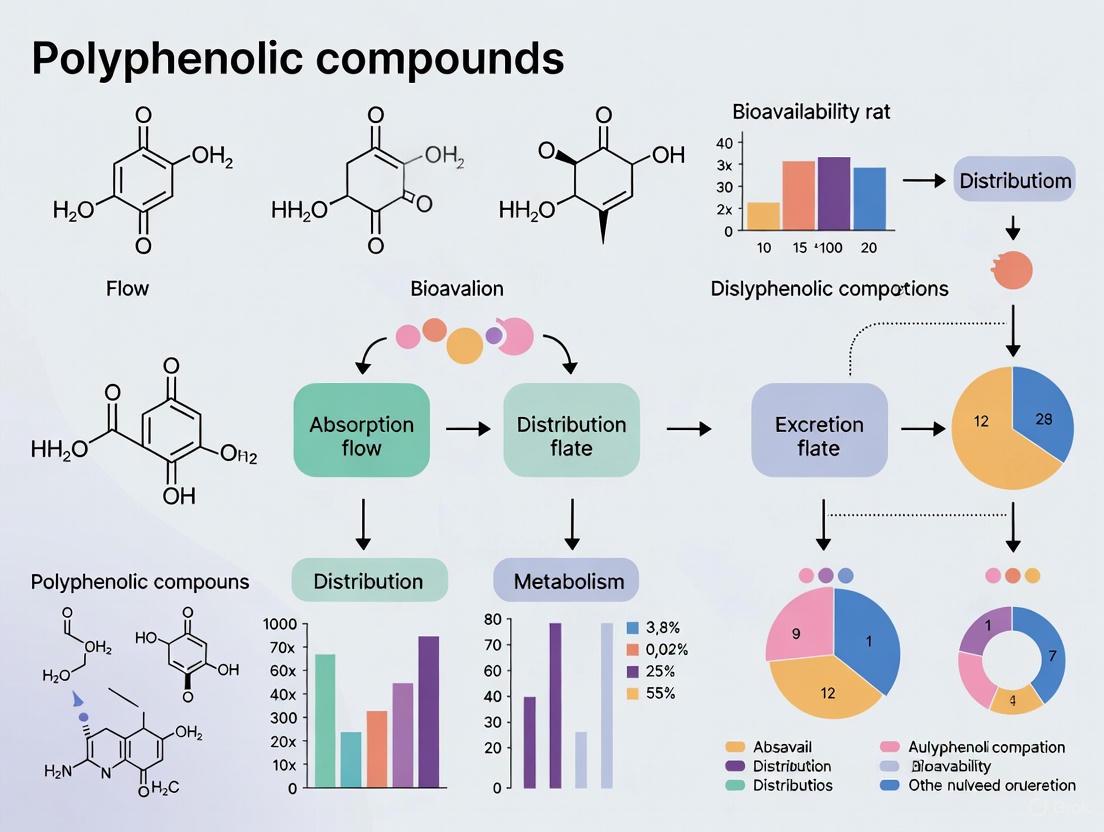
This article comprehensively addresses the significant challenge of low bioavailability that limits the clinical application of polyphenolic compounds, despite their broad therapeutic potential.
Overcoming Polyphenol Bioavailability Barriers: Advanced Delivery Systems and Validation Strategies for Enhanced Therapeutic Efficacy
Abstract
This article comprehensively addresses the significant challenge of low bioavailability that limits the clinical application of polyphenolic compounds, despite their broad therapeutic potential. Tailored for researchers, scientists, and drug development professionals, it synthesizes foundational knowledge on the physicochemical and metabolic barriers to polyphenol absorption. The scope spans from exploratory mechanisms to advanced methodological solutions, including lipid-based nanocarriers, emulsion systems, and phytosomes. It further provides a critical evaluation of optimization strategies, comparative effectiveness of formulations, and validation through in vitro and in vivo models. The article aims to serve as a strategic guide for developing clinically viable polyphenol-based nutraceuticals and therapeutics by integrating cutting-edge research on bioavailability enhancement.
The Bioavailability Challenge: Deconstructing the Absorption Barriers of Polyphenolic Compounds
Core Concepts: Why Bioavailability Matters
What is bioavailability and why is it a critical parameter in drug development? Bioavailability is defined as the fraction of an administered dose of a drug that reaches systemic circulation in an active form, becoming available to exert its therapeutic effect at the desired target. It is a crucial determinant of a drug's therapeutic efficacy, safety profile, and commercial viability. A drug can only produce its expected pharmacological effect if it can achieve adequate concentration at its site of action in the body [1] [2].
How is bioavailability quantitatively measured? Bioavailability is assessed using several key pharmacokinetic parameters [1]:
- Absolute Bioavailability: The percentage of an active substance that enters the bloodstream after administration compared to an intravenous dose, which is considered 100% bioavailable.
- Relative Bioavailability: The ratio of the bioavailability of two different dosage forms of the same drug (e.g., tablet vs. syrup).
- Area Under the Curve (AUC): The total exposure of the body to the active substance over time.
- Time to Maximum Concentration (Tmax): The time it takes for the drug to reach its highest concentration in the blood.
What is the fundamental ADME process that governs bioavailability? The journey of a drug in the body is described by the ADME process, which stands for Absorption, Distribution, Metabolism, and Excretion. Bioavailability primarily encompasses the absorption and metabolism phases, determining how much of the administered dose is ultimately available [1] [2].
Troubleshooting Guides & FAQs
FAQ: The Polyphenol Paradox
Why do many polyphenolic compounds, despite promising bioactivity in lab studies, show low efficacy in clinical trials? This discrepancy, often called the "polyphenol paradox," arises primarily from poor bioavailability. High dietary intake of polyphenols does not always correlate with high bioavailability or bioaccessibility. Many polyphenols have large molecular structures and pass into the colon, where they are extensively biotransformed by gut microbiota before any small fragments can be absorbed. Furthermore, factors like binding to salivary proteins can precipitate polyphenols, rendering them unavailable for absorption from the outset [3].
What are the three primary mechanisms behind the low bioavailability of polyphenols and many small-molecule drugs? The core problem rests on three interconnected pillars [2] [4] [5]:
- Poor Solubility: Many bioactive compounds have low aqueous solubility. For a drug to be absorbed through the gastrointestinal (GI) tract, it must first dissolve in the aqueous environment of the GI lumen. Poor solubility is a major rate-limiting step for absorption.
- Low Stability: Compounds can be unstable in the harsh environment of the GI tract, which features varying pH levels, digestive enzymes, and the presence of oxygen. For example, the polyphenol curcumin is sensitive to alkaline pH, light, and heat, leading to its rapid degradation before absorption [5].
- Rapid Metabolism and Efflux: Even if a compound is absorbed through the intestinal wall, it is subject to extensive first-pass metabolism in the liver and the intestinal cells themselves. Additionally, efflux transporters like P-glycoprotein (P-gp) in the intestinal epithelium can actively pump the absorbed compound back into the gut lumen, significantly reducing the net amount that enters systemic circulation [2] [5].
Troubleshooting Guide: Overcoming Bioavailability Hurdles
The following table outlines common bioavailability problems and potential strategic solutions for researchers to investigate.
Table 1: Troubleshooting Guide for Common Bioavailability Challenges
| Problem Identified | Underlying Cause | Potential Solution Strategies |
|---|---|---|
| Low Aqueous Solubility | High lipophilicity; strong crystal lattice energy. | - Salt Formation (for ionizable compounds) [2].- Particle Size Reduction/Nanonization (increasing surface area for dissolution) [2] [4].- Amorphous Solid Dispersions (dispersing drug in polymer matrix) [2] [4].- Use of Co-solvents or Surfactants in formulations. |
| Poor Chemical Stability | Degradation in GI tract due to pH, enzymes, or light. | - Enteric Coating to protect from stomach acid.- Encapsulation in liposomes, nanoparticles, or micelles to shield the compound [5].- Antioxidants in formulation to prevent oxidative degradation. |
| Rapid Metabolism & Efflux | First-pass metabolism; action of efflux pumps like P-gp. | - Prodrug Approach (administering an inactive form that is metabolized into the active drug) [2].- Use of Permeation Enhancers or P-gp Inhibitors [5].- Nanocarrier Systems that can bypass efflux mechanisms [5]. |
| Limited Permeability | Large molecular size; low lipophilicity. | - Structural Modification to optimize lipophilicity (LogP 1-3 is generally favorable) [2] [4].- Carrier-Mediated Delivery systems.- Mucoadhesive Systems to prolong residence time at absorption site [5]. |
Experimental Protocols for Assessing Bioavailability
Protocol 1: In Vitro Solubility and Dissolution Testing
Objective: To determine the equilibrium solubility and dissolution rate of a new chemical entity (NCE) under physiologically relevant conditions.
Materials:
- Test compound (NCE)
- Simulated Gastric Fluid (SGF) without enzymes, pH ~1.2
- Simulated Intestinal Fluid (SIF) without enzymes, pH ~6.8
- Phosphate Buffered Saline (PBS), pH 7.4
- Water bath or shaking incubator maintained at 37°C
- HPLC system with UV-Vis detector or equivalent analytical instrument
Methodology:
- Solubility Determination: Add an excess of the test compound to each media (SGF, SIF, PBS) in sealed vials.
- Agitate the vials in a water bath or shaker at 37°C for 24 hours to reach equilibrium.
- Centrifuge the samples and filter the supernatant through a 0.45 µm membrane filter.
- Dilute the filtrate appropriately and analyze the concentration using a validated HPLC method.
- Dissolution Testing: Use a USP-approved dissolution apparatus (e.g., paddle method). Place a known dose of the compound (in pure form or as a formulation) into the vessels containing 900 mL of dissolution media (SGF for gastric release, SIF for intestinal release) at 37°C.
- Withdraw samples at predetermined time points (e.g., 5, 10, 15, 30, 45, 60 minutes), filter, and analyze the concentration of the drug. This generates a dissolution profile.
Protocol 2: Parallel Artificial Membrane Permeability Assay (PAMPA)
Objective: To provide a high-throughput, cell-free initial assessment of a compound's passive transcellular permeability.
Materials:
- PAMPA plate system (donor and acceptor plates)
- Artificial lipid membrane (e.g., Lecithin in dodecane)
- Test compound solution in PBS (pH 7.4)
- Acceptor sink buffer (PBS with pH 7.4)
- UV plate reader or LC-MS system
Methodology:
- The artificial lipid membrane is prepared in the donor plate.
- The test compound solution is added to the donor well.
- The acceptor plate, filled with sink buffer, is carefully placed on top of the donor plate to form a "sandwich."
- The assembly is incubated for a set period (e.g., 4-16 hours) at room temperature to allow for passive diffusion.
- After incubation, the plates are separated, and the concentration of the compound in both the donor and acceptor compartments is quantified.
- The permeability coefficient (Pe) is calculated based on the compound's flux from the donor to the acceptor compartment.
Protocol 3: In Vivo Pharmacokinetic Study in Rodents
Objective: To determine the absolute bioavailability and full pharmacokinetic profile of an NCE.
Materials:
- Laboratory rats or mice (with IACUC approval)
- Test compound for oral (PO) and intravenous (IV) administration
- Formulation vehicles (e.g., saline for IV, carboxymethyl cellulose for PO)
- Heparinized blood collection tubes
- LC-MS/MS system for bioanalysis
Methodology:
- Formulation: Prepare the test compound in a suitable vehicle for IV (sterile, soluble) and PO administration.
- Dosing and Sampling: Administer the NCE to groups of animals via IV (bolus) and PO (gavage) routes at a defined dose. Collect blood samples at multiple time points post-administration (e.g., 5, 15, 30 min, 1, 2, 4, 8, 12, 24 hours).
- Bioanalysis: Process blood samples to plasma. Use a validated LC-MS/MS method to determine the plasma concentration of the NCE at each time point.
- Data Analysis: Plot plasma concentration versus time curves. Use non-compartmental analysis to calculate key PK parameters: AUC (Area Under the Curve), C~max~ (maximum concentration), T~max~ (time to C~max~), and t~1/2~ (elimination half-life).
- Absolute Bioavailability (F) Calculation: F (%) = (AUC~PO~ × Dose~IV~) / (AUC~IV~ × Dose~PO~) × 100
Visualization of Pathways and Workflows
Experimental Workflow for Bioavailability Assessment
The following diagram illustrates a logical, tiered workflow for assessing and troubleshooting the bioavailability of a new compound, from initial in silico screening to in vivo validation.
Polyphenol Metabolism and Absorption Pathway
This diagram maps the complex journey and metabolic fate of a dietary polyphenol, highlighting key points of loss that contribute to low bioavailability.
The Scientist's Toolkit: Research Reagent Solutions
Table 2: Essential Reagents and Materials for Bioavailability Research
| Item | Function/Application in Research |
|---|---|
| Simulated Gastrointestinal Fluids (SGF, SIF) | Used for in vitro dissolution and stability testing to mimic the physiological conditions of the human GI tract. |
| Caco-2 Cell Line | A human colon adenocarcinoma cell line that, upon differentiation, mimics the intestinal epithelium. It is the gold standard for in vitro assessment of drug permeability and efflux transport (e.g., P-gp). |
| Liver Microsomes (Human, Rat) | Subcellular fractions containing cytochrome P450 enzymes and other metabolizing enzymes. Used in metabolic stability assays to predict in vivo clearance and first-pass metabolism. |
| PAMPA Plates | Provides a high-throughput, cell-free system for early-stage screening of passive permeability of compounds. |
| Analytical Standards | High-purity compounds for use in developing and validating bioanalytical methods (e.g., HPLC, LC-MS/MS) for quantifying drug concentrations in various matrices. |
| Liposome/Nanoparticle Preparation Kits | Commercial kits to facilitate the development of lipid-based or polymeric nanocarriers to enhance solubility and stability of poorly bioavailable compounds [5]. |
| Specific Enzyme Inhibitors (e.g., CYP450 inhibitors) | Used in mechanistic studies to identify which specific enzymes are responsible for metabolizing a drug candidate. |
| P-glycoprotein Substrates/Inhibitors (e.g., Digoxin, Verapamil) | Used in transport assays (e.g., with Caco-2 cells) to determine if a new compound is a substrate or inhibitor of this critical efflux pump. |
Frequently Asked Questions (FAQs)
FAQ 1: Why do polyphenols exhibit low bioavailability despite high dietary intake? The low bioavailability of polyphenols is primarily due to several factors: limited absorption in the small intestine, extensive metabolism by gut microbiota in the colon, rapid liver metabolism (phase I/II reactions), and poor aqueous solubility and stability. Only a small fraction of consumed polyphenols is absorbed directly; the majority reaches the colon for microbial transformation [3] [6] [7].
FAQ 2: How does the gut microbiota influence the bioavailability and activity of polyphenols? The gut microbiota biotransforms non-absorbed polyphenols into simpler, more bioavailable phenolic metabolites. These microbial metabolites are often more biologically active than the parent compounds and can enter systemic circulation to exert distant effects. This process also positively modulates gut microbiota composition, promoting the growth of beneficial bacteria and inhibiting pathogens, which contributes to health benefits through the gut-liver-brain axis [7] [8] [9].
FAQ 3: What are the key differences between extractable (EPP) and non-extractable (NEPP) polyphenols in gastrointestinal fate? Extractable Polyphenols (EPPs) are released from the food matrix with aqueous organic solvents and are potentially bioaccessible in the upper GI tract. Non-Extractable Polyphenols (NEPPs) remain bound to macromolecules like cellulose, protein, and lignin; they are not released during digestion but pass to the colon where gut microbiota ferment them into bioactive metabolites [10].
FAQ 4: What experimental models are used to study polyphenol absorption and metabolism? The Caco-2 cell monolayer model is a standard in vitro system for predicting intestinal absorption and permeability. It provides vital insights into intestinal transport, efflux ratios, and apparent permeability coefficients (Papp), with strong correlation to in vivo absorption data [11]. In vitro simulated digestion and fermentation models are also widely used to study bioaccessibility and gut microbiota interactions [12].
Troubleshooting Common Experimental Issues
Issue 1: Inconsistent Bioavailability Results in Absorption Experiments
- Potential Cause: Variability in polyphenol stability under different pH, temperature, or light conditions during experimental procedures [6].
- Solution: Standardize experimental conditions. Use controlled environments (e.g., inert gas, dark) and validate compound stability in buffers simulating gastrointestinal pH. Confirm monolayer integrity in cell models by regularly measuring Transepithelial Electrical Resistance (TEER), ensuring values exceed 300 Ω·cm² [11].
Issue 2: Low Recovery or Unexpected Metabolite Profiles in Fermentation Studies
- Potential Cause: Inter-individual variability in gut microbiota composition (diversity and abundance) from donor samples leads to different metabolic capacities [7] [13].
- Solution: Characterize the baseline microbiota of fecal donors through 16S rRNA sequencing. Use pooled samples from multiple donors or standardized microbial consortia to improve reproducibility. Include controls for microbial activity, such as short-chain fatty acid (SCFA) production [12].
Issue 3: Poor Aqueous Solubility of Polyphenols Affecting Assays
- Potential Cause: Inherent poor water solubility limits bioaccessibility [6] [14].
- Solution: Employ solubilization strategies. Use minimal, non-cytotoxic concentrations of solvents like DMSO (e.g., ≤1% v/v) for stock solutions. For delivery, consider advanced systems like nano-encapsulation (liposomes, polymeric nanoparticles) or Self-Emulsifying Drug Delivery Systems (SEDDS) to enhance solubility and stability [6] [14].
Quantitative Data on Polyphenol Absorption
Table 1: Apparent Permeability (Papp) and Efflux Ratios of Selected Polyphenols in Caco-2 Cell Model [11]
| Polyphenol Compound | Papp (AP→BL) (×10⁻⁶ cm/s) | Papp (BL→AP) (×10⁻⁶ cm/s) | Efflux Ratio | Absorption Classification |
|---|---|---|---|---|
| Puerarin | Highest | - | - | Well-absorbed |
| Diosmin | Highest | Highest | - | Well-absorbed / Significant Efflux |
| Hesperetin | - | - | 5.45 | Significant Efflux |
| Silybin | - | Highest | - | Significant Efflux |
| Flavokawain A | Incomplete | Incomplete | - | Poorly absorbed |
| Phloretin | Incomplete | Incomplete | - | Poorly absorbed |
| Chrysin | Incomplete | Incomplete | - | Poorly absorbed |
| Dicoumarol | Incomplete | Incomplete | - | Poorly absorbed |
Note: AP→BL (Apical to Basolateral) simulates absorption from gut to blood. BL→AP (Basolateral to Apical) simulates efflux back into the gut lumen. A higher efflux ratio (ER > 3) indicates the compound is a substrate for efflux transporters, which can limit its net absorption. Papp = Apparent Permeability Coefficient.
Table 2: Key Drug Delivery Systems to Enhance Polyphenol Bioavailability [6] [14]
| Delivery System | Composition Examples | Mechanism of Action | Key Advantages for Polyphenols |
|---|---|---|---|
| Liposomes | Phospholipids, Cholesterol | Encapsulates compound in a lipid bilayer | Enhances solubility, protects from degradation, improves cellular uptake |
| Polymeric Nanoparticles | PLGA, Chitosan, Gelatin | Encapsulates or embeds the drug for controlled release | Provides sustained release, targets specific tissues, enhances stability |
| Solid Lipid Nanoparticles (SLN) | Solid lipids at room/body temperature | Solid matrix protects labile compounds | High biocompatibility, good scale-up potential, controlled release |
| Nanoemulsions (SEDDS/SMEDDS) | Oils, Surfactants, Co-surfactants | Forms fine oil-in-water emulsion in GI fluids | Significantly increases solubility and absorption of lipophilic polyphenols |
| Phytosomes | Polyphenol-Phospholipid Complex | Forms hydrogen bonds between polyphenol and phospholipid | Improves absorption and pharmacokinetic profile compared to uncomplexed polyphenols |
Detailed Experimental Protocols
This protocol simulates the human gastrointestinal tract to track the release, transformation, and microbial metabolism of polyphenols.
Workflow Overview:
Materials & Reagents:
- Polyphenol Extract: Standardized extract of interest.
- Simulated Digestive Fluids: Saliva, gastric juice, intestinal juice (with enzymes like pepsin, pancreatin, bile salts).
- Fecal Inoculum: Fresh fecal sample from healthy human donor(s), homogenized in anaerobic phosphate buffer.
- Anaerobic Chamber: For maintaining oxygen-free conditions during fermentation.
- HPLC-MS/MS: For identification and quantification of polyphenols and their metabolites.
Step-by-Step Procedure:
- In Vitro Digestion:
- Oral Phase: Mix the polyphenol sample with simulated saliva (pH ~6.8) and incubate for a few minutes with constant agitation.
- Gastric Phase: Adjust the pH to ~2.5-3.0, add simulated gastric fluid containing pepsin, and incubate for 1-2 hours at 37°C.
- Intestinal Phase: Adjust the pH to ~6.5-7.0, add simulated intestinal fluid containing pancreatin and bile salts, and incubate for 2 hours at 37°C.
- Analysis: Centrifuge the final digest. The supernatant represents the bioaccessible fraction. Analyze its Total Phenolic Content (TPC) and antioxidant activity (e.g., by ORAC or FRAP assays) [12].
In Vitro Fermentation:
- Prepare the fermented medium in anaerobic conditions.
- Inoculate the non-bioaccessible residue (pellet from digestion) or the pure polyphenol with the fecal inoculum.
- Incubate anaerobically at 37°C for 24-48 hours with gentle shaking.
- Collect samples at different time points (e.g., 0, 6, 12, 24 h).
Post-Fermentation Analysis:
- Microbial Analysis: Use 16S rRNA gene sequencing to analyze changes in gut microbiota composition.
- Metabolite Analysis: Use HPLC or GC-MS to quantify microbial metabolites, particularly Short-Chain Fatty Acids (SCFAs: acetate, propionate, butyrate) and phenolic acids.
- Polyphenol Metabolites: Use HPLC-MS/MS to identify and quantify specific polyphenol metabolites produced during fermentation [12].
This protocol measures the transport of polyphenols across a differentiated monolayer of Caco-2 cells, modeling the human intestinal epithelium.
Workflow Overview:
Materials & Reagents:
- Caco-2 Cells: Human colon adenocarcinoma cell line.
- Transwell Inserts: Permeable supports with a porous (e.g., 0.4 or 3.0 µm) membrane.
- DMEM Culture Medium: Dulbecco's Modified Eagle Medium, supplemented with Fetal Bovine Serum (FBS), Non-Essential Amino Acids, and Penicillin/Streptomycin.
- Transport Buffer: HBSS (Hanks' Balanced Salt Solution) with optional HEPES for pH stability.
- Transepithelial Electrical Resistance (TEER) Meter: To monitor monolayer integrity.
- HPLC-UV/MS System: For quantifying compound transport.
Step-by-Step Procedure:
- Cell Culture and Differentiation:
- Seed Caco-2 cells at a high density (e.g., 1x10^5 cells/cm²) onto the apical side of Transwell inserts.
- Culture for 21 days, changing the medium every 2-3 days, to allow full differentiation into an enterocyte-like monolayer.
Integrity Check:
- Before the experiment, measure TEER. Only use monolayers with TEER values >300 Ω·cm².
- Confirm integrity by measuring the paracellular flux of a non-absorbable marker like Lucifer Yellow.
Permeability Assay:
- Prepare the polyphenol solution in transport buffer (DMEM can also be used). Ensure final solvent concentration (e.g., DMSO) is ≤1% to avoid cytotoxicity.
- Replace the medium in both AP and BL chambers with transport buffer and pre-incubate.
- Add the polyphenol solution to the donor compartment (AP for absorption, BL for efflux studies). Add fresh buffer to the receiver compartment.
- Incubate at 37°C with mild shaking. Collect samples from the receiver compartment at regular intervals (e.g., 30, 60, 90, 120 min) and replace with fresh buffer.
Analysis and Calculations:
- Analyze sample concentrations (C) by HPLC.
- Calculate the Apparent Permeability (Papp) using the formula:
Papp (cm/s) = (dQ/dt) / (A * C₀)wheredQ/dtis the transport rate (mol/s),Ais the membrane surface area (cm²), andC₀is the initial donor concentration (mol/mL). - Calculate the Efflux Ratio (ER):
ER = Papp(BL→AP) / Papp(AP→BL)[11].
The Scientist's Toolkit: Research Reagent Solutions
Table 3: Essential Materials for Key Experiments on Polyphenol GI Fate
| Reagent / Material | Function / Application | Key Considerations for Use |
|---|---|---|
| Caco-2 Cell Line | In vitro model of human intestinal epithelium for permeability and transport studies. | Requires 21-day culture for full differentiation. Monitor integrity via TEER (>300 Ω·cm²). |
| Transwell Inserts | Permeable supports for growing cell monolayers, enabling separate access to AP and BL compartments. | Choose appropriate pore size (e.g., 0.4-3.0 µm). Ensure membrane coating matches experimental needs. |
| Simulated Digestive Fluids & Enzymes | To mimic oral, gastric, and intestinal digestion phases in in vitro models. | Includes amylase (oral), pepsin (gastric), pancreatin & bile salts (intestinal). Maintain physiological pH and incubation times. |
| HPLC-MS/MS System | Gold-standard for separation, identification, and quantification of polyphenols and their complex metabolites. | Requires appropriate columns (e.g., C18) and optimization of MS parameters for specific analytes. |
| Anaerobic Chamber / Workstation | Provides an oxygen-free environment for culturing gut microbiota and conducting in vitro fermentation. | Critical for maintaining the viability of obligate anaerobic bacteria. |
| Macroporous Resin (e.g., AB-8) | For fractionating and purifying crude polyphenol extracts based on polarity. | Sequential elution with ethanol at different concentrations (e.g., 20%, 40%) yields different polyphenol fractions [12]. |
| Specific Nanoparticle Components | For constructing advanced delivery systems. | Liposomes: Phospholipids, Cholesterol. Polymeric NPs: PLGA, Chitosan. SEDDS: Capryol 90, Cremophor EL. |
Frequently Asked Questions (FAQs)
FAQ 1: Why do many polyphenols exhibit inherently low oral bioavailability despite high in vitro bioactivity?
The bioavailability of dietary polyphenols is limited by a combination of their intrinsic molecular properties and physiological barriers. Key reasons include:
- Molecular Structure and Size: Lower molecular weight polyphenols can be absorbed in the mouth, but most pass into the colon. Their structure often requires biotransformation by gut microbiota to become bioavailable [3] [9]. Furthermore, interactions with salivary proteins can precipitate polyphenols, rendering them unavailable for initial absorption [3].
- Poor Solubility and Stability: Many polyphenols have low water solubility and are chemically unstable in the gastrointestinal environment, leading to degradation before absorption [15] [14].
- Food Matrix Effects: Polyphenols can bind to dietary components like fibers, proteins, and pectins in the food matrix. These interactions trap polyphenols, significantly reducing their release and absorption during digestion [16] [17].
FAQ 2: How does the food matrix specifically hinder polyphenol bioavailability, and how can this be mitigated in experimental designs?
The food matrix acts as a physical and chemical trap. For example, studies on black chokeberry show that Fruit Matrix Extracts (FME) can have 2.3 times higher polyphenol content than Isolated Polyphenolic Extracts (IPE) initially. However, during in vitro digestion, FMEs can lose 49–98% of their polyphenols, while IPEs show much higher stability and even a 20–126% increase in content during gastric and intestinal stages due to release from the purified matrix [17]. This demonstrates how matrix components shield polyphenols from digestive enzymes but also prevent their release.
Mitigation strategies in research include:
- Using Purified Extracts: For studies focusing on the compounds themselves, using IPE can remove the confounding variable of the native food matrix [17].
- Employing Processing Technologies: Non-thermal processing techniques can disrupt plant cell walls and subcellular structures, enhancing the release of polyphenols from the matrix [16].
- Utilizing Advanced Delivery Systems: Encapsulation in liposomal or other nanoparticle systems can protect polyphenols from the matrix and improve their solubility and stability [14] [18].
FAQ 3: What are the primary experimental strategies to overcome low solubility and permeability of polyphenols?
The main strategies focus on enhancing solubility, stability, and cellular uptake.
- Advanced Delivery Systems: Nano-encapsulation, liposomes, and biomaterial-based carriers can significantly improve the solubility and stability of polyphenols. These systems protect them from degradation, enhance permeability, and allow for targeted release, thereby improving systemic concentration [14] [18].
- Chemical Modification: Creating derivatives like co-crystals or amorphous solid dispersions can alter the physicochemical properties of polyphenols, leading to improved dissolution rates and apparent solubility [15].
- Formulation with Absorption Enhancers: Natural deep eutectic solvents (NADES) have emerged as effective solvents that can improve the extraction efficiency and bioavailability of polyphenols [15].
Troubleshooting Guides
Problem 1: Poor Bioaccessibility and Bioavailability in In Vitro Models
Potential Cause: The chemical instability of polyphenols under digestive conditions (pH changes, digestive enzymes) and their rapid metabolism.
Solutions:
- Implement Delivery Systems: Encapsulate polyphenols in delivery systems such as liposomes or nanoparticles to shield them from the harsh gastrointestinal environment. Liposomal systems, for instance, encapsulate polyphenols in lipid bilayers, protecting them from degradation and improving absorption [18].
- Modulate Gut Microbiota Health: Since gut microbiota is essential for metabolizing many polyphenols into more bioavailable metabolites, in vitro models should incorporate a microbiota component. For in vivo studies, advise co-administering with prebiotics or probiotics to support a healthy gut microbiome, which enhances the biotransformation of polyphenols [3] [9].
- Apply Non-Thermal Processing: Prior to testing, treat polyphenol-rich sources with non-thermal processing (e.g., high-pressure processing, pulsed electric fields). These techniques disrupt cell walls and inhibit enzyme activity, enhancing the release and stability of polyphenols from the food matrix [16].
Relevant Experimental Protocol: Assessing Bioaccessibility using an In Vitro Digestion Model This protocol simulates human digestion to estimate bioaccessibility—the fraction of a compound released from the food matrix and available for absorption.
1. Materials:
- Simulated salivary fluid (SSF), gastric fluid (SGF), and intestinal fluid (SIF).
- Enzymes: α-amylase, pepsin, pancreatin, and bile salts.
- pH meter and water bath/shaker maintaining 37°C.
2. Method: 1. Oral Phase: Mix the polyphenol sample with SSF and α-amylase. Incubate for 2 minutes at 37°C with constant agitation. 2. Gastric Phase: Adjust the oral bolus to pH 3.0, add SGF and pepsin. Incubate for 2 hours at 37°C. 3. Intestinal Phase: Adjust the gastric chyme to pH 7.0, add SIF, pancreatin, and bile salts. Incubate for 2 hours at 37°C. 4. Bioaccessible Fraction: After intestinal digestion, centrifuge the sample (e.g., 5000 × g, 30 min). The supernatant represents the bioaccessible fraction. Analyze polyphenol content in this fraction via HPLC or UPLC and compare it to the undigested sample to calculate the bioaccessibility percentage [17].
Problem 2: Variable and Unreliable Experimental Results Due to Food Matrix Effects
Potential Cause: Inconsistent composition and structure of the native food matrix, which binds polyphenols differently across samples.
Solutions:
- Standardize with Purified Extracts: For mechanistic studies, use isolated polyphenolic extracts (IPE) instead of crude fruit or plant extracts to minimize variability caused by fluctuating matrix components [17].
- Characterize Matrix Interactions: Perform assays to quantify the binding of your polyphenol of interest to specific matrix components (e.g., dietary fiber, proteins). This data can help normalize results or design matrix-disrupting treatments.
- Employ Fermentation: Pre-treatment of plant materials with fermentation can break down macromolecular matrix components like dietary fiber, facilitating the release of bound polyphenols [15].
Experimental Workflow: Comparing Fruit Matrix vs. Purified Extracts
The diagram below illustrates a standardized experimental workflow to directly quantify the impact of the food matrix on polyphenol stability and bioactivity during digestion.
Problem 3: Inadequate Systemic Exposure in Preclinical Models
Potential Cause: Low absorption due to high molecular weight, poor lipophilicity, or rapid metabolism and excretion.
Solutions:
- Optimize Lipophilicity: While maintaining efficacy, moderate chemical modifications can be explored to optimize the compound's log P value for better passive diffusion. Computer-Aided Drug Design (CADD) can be used to predict the properties of new derivatives before synthesis [19].
- Utilize Permeation Enhancers: Formulate polyphenols with permeation enhancers (e.g., certain surfactants, medium-chain fatty acids) that can temporarily increase the permeability of the intestinal epithelium.
- Leverage Prodrug Strategies: Design prodrugs of polyphenols that are more lipophilic and readily absorbed, and are then converted to the active form by systemic or target-site enzymes.
Table 1: Impact of Extraction Method on Polyphenol Stability and Bioactivity During In Vitro Digestion (Black Chokeberry Model) [17]
| Metric | Fruit Matrix Extract (FME) | Isolated Polyphenolic Extract (IPE) | Performance Advantage of IPE |
|---|---|---|---|
| Total Polyphenol Loss During Digestion | 49 - 98% loss | ~60% degradation post-absorption | IPE shows superior stability |
| Bioaccessibility/Bioavailability Index | Lower | 3 - 11 times higher | Significantly enhanced absorption potential |
| Antioxidant Activity (FRAP, OH·) | Baseline | 1.4 - 3.2 times higher | Superior retention of bioactivity |
| Anti-inflammatory Activity (LOX Inhibition) | Baseline | Up to 6.7-fold stronger | Enhanced potency after digestion |
Table 2: Strategies to Overcome Key Physicochemical Hurdles
| Hurdle | Technology / Approach | Mechanism of Action | Key Research Reagents / Solutions |
|---|---|---|---|
| Molecular Size & Stability | Encapsulation (Liposomes, Nanoparticles) | Protects from degradation, enhances solubility, controls release [14] [18] | Phospholipids: For liposome formation. PLGA: A biodegradable polymer for nanoparticles. |
| Lipophilicity & Permeability | Natural Deep Eutectic Solvents (NADES) | Improves solubility and extraction efficiency [15] | Choline Chloride: A common NADES component. Malic Acid/Xylitol: Hydrogen bond donors for NADES formation. |
| Food Matrix Effects | Non-Thermal Processing (HPP, PEF) | Disrupts cell walls, releases bound polyphenols [16] | High-Pressure Processing (HPP) Equipment. Pulsed Electric Field (PEF) Apparatus. |
| Gut Microbiota Metabolism | Prebiotics & Probiotics | Modulates microbiota to enhance biotransformation into active metabolites [3] [9] | Inulin/FOS: Common prebiotics. Lactobacillus/Bifidobacterium strains: Common probiotics. |
Pathway and Mechanism Diagrams
Polyphenol Bioavailability Pathway: From Ingestion to Systemic Action
The following diagram illustrates the complete journey of dietary polyphenols, highlighting the key physicochemical and biological hurdles they encounter, and the strategies to overcome them.
Frequently Asked Questions (FAQs)
Q1: What is the fundamental difference in bioavailability between gingerols and shogaols? The key difference lies in their chemical stability and formation. Gingerols, the primary pungent compounds in fresh ginger, contain an unstable β-hydroxy keto group. During thermal processing, drying, or storage, they readily dehydrate to form shogaols [20] [21]. This transformation is significant because 6-shogaol is often reported as more potent and bioavailable than its precursor, 6-gingerol, due to its α,β-unsaturated ketone structure, which may influence its absorption and biological activity [21].
Q2: Why do many polyphenolic compounds, including flavonoids, suffer from low oral bioavailability? Low bioavailability in polyphenols is a multi-factorial challenge. The primary reasons include:
- Poor aqueous solubility: This limits their dissolution in gastrointestinal fluids [22] [23].
- Rapid metabolism and elimination: They undergo extensive phase I and II metabolism in the gut and liver and are quickly excreted [22].
- Interaction with gut microbiota: While metabolism by microbiota can generate active metabolites, it also degrades the parent compounds [24] [23].
- Molecular size and structure: Complex structures and high molecular weight can hinder passive diffusion [24].
Q3: What formulation strategies are most effective for improving the bioavailability of flavonoids? Research indicates that several formulation approaches can significantly enhance flavonoid bioavailability without altering their chemical structure. The most effective methods, based on increases in key pharmacokinetic parameters, are summarized below [23]:
Table 1: Effectiveness of Formulation Strategies for Flavonoids
| Formulation Strategy | Key Impact on Bioavailability | Relative Improvement |
|---|---|---|
| Inclusion Complexes | Greatest increase in the area under the pharmacokinetic curve (AUC) | ~4.2-fold increase |
| Nanostructures | Large increase in maximum plasma concentration (Cmax) | ~5.4-fold increase (Cmax) |
| Phospholipid Complexes | Prolongs half-elimination time (T½) | ~2.1-fold increase (T½) |
| Micelles | Significant increase in maximum plasma concentration (Cmax) | ~5.4-fold increase (Cmax) |
| Co-crystallization | Improves solubility and dissolution rate | Varies by compound |
Q4: How does food processing affect the bioavailability of polyphenols from ginger? Processing methods, particularly those involving heat, dramatically alter the polyphenol profile. Thermal treatment causes the dehydration of gingerols into shogaols [20]. For instance, one study demonstrated that ethanol extraction at 80°C yielded a sevenfold increase in 6-shogaol compared to extraction at room temperature [21]. Therefore, the bioavailability of shogaols is significantly enhanced in processed or dried ginger compared to fresh ginger.
Troubleshooting Guides
Issue: Low Extraction Yield of Target Bioactive Compounds from Ginger
Potential Causes and Solutions:
Cause 1: Suboptimal solvent system.
Cause 2: Inefficient extraction technique.
- Solution: Employ modern extraction techniques like Microwave-Assisted Extraction (MAE). An optimized MAE protocol can complete the extraction in as little as 5-10 minutes, improving yield and reducing solvent consumption [25].
- Sample Protocol (MAE for Ginger):
- Material: Ginger powder.
- Solvent: 87% Ethanol in water.
- Ratio: 0.43 g of sample per 20 mL of solvent.
- Temperature: 100 °C.
- Time: 5-minute heating ramp (800 W) followed by a 5-minute cooling period [25].
Cause 3: Ignoring the impact of ginger source and pre-processing.
- Solution: Document the ginger variety, harvest time, and drying method. For higher shogaol content, use dried ginger rhizomes that have undergone thermal processing. Soil-grown ginger may yield more extract than soilless-grown ginger, but the latter can have a higher proportion of shogaols [20] [21].
Issue: Poor Solubility and Bioavailability of Flavonoids in In-Vivo Models
Potential Causes and Solutions:
Cause 1: The inherent low aqueous solubility of the flavonoid.
- Solution: Implement advanced formulation strategies.
Cause 2: Rapid metabolism and clearance.
- Solution: Consider co-administration with metabolism-modifying agents (requires careful experimental design and ethical approval for in-vivo studies) and focus on sustained-release formulations like phospholipid complexes that demonstrate a longer half-elimination time [23].
The following diagram illustrates the workflow for selecting an appropriate bioavailability enhancement strategy based on the desired pharmacokinetic outcome.
Key Experimental Protocols
Protocol 1: Optimized Microwave-Assisted Extraction (MAE) of Gingerols and Shogaols
This protocol is adapted from a study that used Response Surface Methodology to optimize the extraction of multiple gingerols and shogaols [25].
* * Ginger rhizomes (dried and powdered). * Ethanol (HPLC grade). * Deionized water. * Microwave extraction system (e.g., MARS 6 One Touch Technology). * MARSXpress tubes (75 mL). * Centrifuge. * Syringe filters (0.22 µm nylon). * UHPLC-DAD or UHPLC-Q-ToF-MS for analysis.
2. Procedure:
- Preparation: Weigh 0.43 g of ginger powder into a MARSXpress tube.
- Solvent Addition: Add 20 mL of the extraction solvent (87% ethanol in water).
- Sealing: Seal the tube with its safety cap.
- Microwave Extraction: Place the tube in the microwave oven and run the extraction program:
- Extraction Temperature: 100 °C.
- Heating Time: 5 minutes at 800 W.
- Total Cycle Time: 10 minutes (including 5 min cooling).
- Post-extraction: Centrifuge the extracted solution at 1790× g for 5 minutes.
- Filtration: Collect the supernatant and filter through a 0.22 µm nylon syringe filter before chromatographic analysis.
Protocol 2: Subcritical Water Extraction (SWE) for Enhanced 6-Shogaol Yield
SWE is a green, solvent-free method particularly effective for extracting shogaols [21].
* * Dried ginger powder. * Deionized water. * Subcritical water extraction system. * High-pressure extraction vessel.
2. Procedure:
- Loading: Load the ginger powder into the high-pressure extraction vessel.
- Condition Setting: Set the extraction parameters:
- Temperature: 130 - 190 °C (optimal range; higher temperatures favor gingerol to shogaol conversion but avoid exceeding 180°C to prevent degradation).
- Pressure: 2 - 3.5 MPa.
- Time: 15 - 30 minutes.
- Extraction: Pass pre-heated subcritical water through the sample under the set conditions.
- Collection: Collect the extract and analyze.
The diagram below outlines the critical factors and transformations involved in the extraction and processing of ginger, highlighting the pathway to the more bioavailable shogaols.
The Scientist's Toolkit: Research Reagent Solutions
Table 2: Essential Reagents and Materials for Bioavailability Research
| Item Name | Function/Application | Key Considerations |
|---|---|---|
| Ethanol-Water Solvent Systems | Extraction of gingerols and shogaols from ginger rhizomes. | A concentration of 70-95% ethanol is optimal for high yield of both compound classes [20] [25]. |
| Subcritical Water | Green, solvent-free extraction of shogaols. | Effective at temperatures of 130-190°C; promotes conversion of gingerols to shogaols [21]. |
| Cyclodextrins (e.g., β-Cyclodextrin) | Forming inclusion complexes to enhance flavonoid solubility and bioavailability. | Most effective for increasing the Area Under the Curve (AUC) of flavonoids [23]. |
| Phospholipids (e.g., Phosphatidylcholine) | Creating phospholipid complexes (Phytosomes) for improved absorption. | Particularly effective for prolonging the half-elimination time (T½) of flavonoids [23]. |
| Materials for Nanostructures | Forming polymeric or lipid nanoparticles to encapsulate compounds. | Leads to the highest increases in maximum plasma concentration (Cmax) [23]. |
| UHPLC-DAD/Q-ToF-MS | Identification and quantification of polyphenols (gingerols, shogaols, flavonoids) in extracts and biological samples. | Provides high sensitivity and resolution for complex mixtures [25] [21]. |
Advanced Delivery Platforms: Engineering Solutions for Enhanced Polyphenol Absorption
Lipid-based nanocarriers represent a cornerstone of modern drug delivery strategies, particularly for overcoming the significant challenge of low bioavailability associated with polyphenolic compounds. These bioactive molecules, including flavonoids, gingerols, and curcumin, demonstrate potent antioxidant, anti-inflammatory, and anticancer properties but are often limited by poor aqueous solubility, rapid metabolism, and inadequate systemic absorption [26] [27] [28]. Nanocarriers such as liposomes, niosomes, Solid Lipid Nanoparticles (SLNs), and Nanostructured Lipid Carriers (NLCs) provide innovative solutions by encapsulating these sensitive compounds, protecting them from degradation, and enhancing their delivery to target tissues [29] [26]. This technical support resource addresses common experimental challenges and provides standardized protocols to ensure reproducible and effective formulation of these advanced delivery systems.
Frequently Asked Questions (FAQs) & Troubleshooting Guides
General Formulation Challenges
Q1: How can I improve the low encapsulation efficiency of hydrophilic polyphenols in lipid-based nanocarriers?
- Problem: Low encapsulation efficiency for hydrophilic compounds.
- Solution:
- For liposomes, use the active loading technique (e.g., gradient methods) or increase the concentration of cholesterol in the lipid bilayer to reduce permeability [30].
- Consider switching to a double emulsion (W/O/W) method for SLNs and NLCs to create an internal aqueous compartment [31].
- For niosomes, explore the use of proniosome technology which can offer higher encapsulation for hydrophilic substances.
Q2: What steps can prevent the rapid expulsion of the drug payload during storage?
- Problem: Drug expulsion during storage, especially with SLNs.
- Solution:
- Use a blend of solid and liquid lipids to create NLCs. The imperfect crystalline structure of NLCs provides more space to accommodate the drug and reduces expulsion during storage [31] [32].
- Implement a controlled cooling process after homogenization to prevent the formation of a perfect lipid crystal lattice.
- Consider additives like oleic acid or medium-chain triglycerides as liquid lipids to create a less ordered matrix [31].
Characterization and Analysis
Q3: My Dynamic Light Scattering (DLS) results show a high PDI. How can I achieve a more monodisperse population?
- Problem: High Polydispersity Index (PDI) indicating heterogeneous particle size.
- Solution:
- Optimize the homogenization parameters: increase the homogenization pressure (e.g., 500-1500 bar) and cycle number during High-Pressure Homogenization (HPH) [31] [33].
- Filter the final dispersion through a polycarbonate membrane filter (e.g., 0.45 µm or 0.22 µm) to remove large aggregates.
- For liposomes and niosomes, ensure a sufficient extrusion step (e.g., through 100 nm filters) post-formulation.
- Use techniques like Asymmetrical Flow Field-Flow Fractionation (AF4) coupled with DLS for better resolution of polydisperse samples [33].
Q4: How does the "biomolecular corona" affect my nanocarrier's performance, and how can I account for it?
- Problem: Biomolecular corona formation alters intended biological identity.
- Solution:
- Pre-incubate your nanocarriers with relevant biological media (e.g., human plasma or serum) before cellular experiments to understand their "biological identity" [34].
- When performing in vitro assays, always include controls that account for potential interference from the nanoparticles themselves with assay reagents (e.g., MTT) [34].
- Consider PEGylation (coating with polyethylene glycol) to create a "stealth" effect, which can reduce protein adsorption and opsonization, thereby prolonging circulation time [30].
Stability and Translation
Q5: How can I enhance the physical and chemical stability of my lipid nanocarrier formulation during storage?
- Problem: Physical instability (aggregation, gelation) or chemical degradation (oxidation) of lipids and payload.
- Solution:
- Store lyophilized formulations at 4°C. Use cryoprotectants (e.g., trehalose, sucrose) at a 1:5 to 1:10 (nanoparticle:cryoprotectant) ratio before lyophilization to prevent particle fusion and drug leakage [33].
- For liquid dispersions, maintain storage at 4°C and avoid temperature fluctuations.
- Incorporate antioxidants like alpha-tocopherol (0.1-0.5% w/w) into the lipid phase to prevent lipid peroxidation, especially for carriers containing unsaturated lipids [27].
Q6: Why do my in vivo results not correlate with my promising in vitro data?
- Problem: Bench-to-clinic gap.
- Solution:
- Dosage: Standardize nanoparticle dosage metrics. Move beyond mass/volume concentration to report particle number concentration or surface area for more accurate in vitro to in vivo extrapolation [34].
- Cell Models: Use more physiologically relevant 3D cell cultures or co-culture systems instead of 2D monolayers, as cell shape and context significantly impact nanoparticle uptake and effect [34].
- Media Conditions: Utilize dynamic in vitro systems (e.g., microfluidics) that better simulate blood flow and shear forces, preventing false results from nanoparticle sedimentation in static cultures [34].
Essential Characterization Techniques and Data Tables
Rigorous characterization is fundamental to ensuring the quality, reproducibility, and efficacy of lipid nanocarriers. The following table summarizes key parameters and the corresponding gold-standard techniques for their analysis.
Table 1: Essential Characterization Techniques for Lipid-Based Nanocarriers
| Parameter | Importance | Recommended Technique | Typical Target Value | ||||
|---|---|---|---|---|---|---|---|
| Particle Size & PDI | Affects biodistribution, cellular uptake, and stability. | Dynamic Light Scattering (DLS) | Size: 50-200 nm; PDI: <0.3 [33] | ||||
| Surface Charge (Zeta Potential) | Indicates colloidal stability and predicts particle interaction. | Electrophoretic Light Scattering | > | +25 | mV or <-25 | mV for good stability [33] | |
| Morphology | Visual confirmation of size, shape, and lamellarity. | Transmission Electron Microscopy (TEM) or Scanning Electron Microscopy (SEM) | Spherical, uniform shape [31] [33] | ||||
| Encapsulation Efficiency (EE) | Determines the fraction of successfully loaded active compound. | Ultracentrifugation / Gel filtration followed by HPLC/UV analysis | Typically >80% for optimized systems [33] | ||||
| Crystalline State | Critical for stability and release profile of SLNs/NLCs. | Differential Scanning Calorimetry (DSC), X-Ray Diffraction (XRD) | Less ordered structure for NLCs vs. SLNs [31] | ||||
| In Vitro Release Profile | Predicts drug release kinetics. | Dialysis bag method in sink conditions | Sustained release over several hours/days [33] |
The workflow below illustrates the logical sequence for the comprehensive characterization of lipid nanocarriers:
Figure 1: Workflow for the comprehensive characterization of lipid nanocarriers.
Quantitative data from recent studies demonstrates the efficacy of these nanocarriers in improving the bioavailability of polyphenols. The following table compiles key performance metrics from the literature.
Table 2: Quantitative Performance of Lipid Nanocarriers for Polyphenol Delivery
| Nanocarrier Type | Active Compound | Key Improvement | Reported Data | Reference |
|---|---|---|---|---|
| Liposomes | Curcumin | Enhanced anti-obesity effect | Reduced body fat accumulation vs. free curcumin | [29] |
| SLNs | EGCG | Improved anti-obesity activity | Superior efficacy compared to free EGCG | [29] |
| NLCs | Gingerols/Shogaols | Increased oral bioavailability & stability | Improved controlled release and targeted delivery | [27] [32] |
| Liposomes | Various Flavonoids | Improved bioavailability | Overcome poor solubility and intensive metabolism | [28] |
| NLCs | Quercetin | Enhanced encapsulation & delivery | Favorable performance vs. SLNs and nanoemulsions | [28] |
Detailed Experimental Protocols
Protocol: Preparation of NLCs by Hot High-Pressure Homogenization (HPH)
This method is suitable for heat-stable, lipophilic polyphenols like curcumin or quercetin [31] [27].
1. Materials:
- Lipid Phase: Solid lipid (e.g., Glyceryl monostearate, Compritol 888 ATO): 4.0% w/w
- Liquid Lipid (e.g., Oleic acid, Miglyol 812): 2.0% w/w
- Drug: Polyphenolic compound (e.g., Curcumin): 0.5% w/w
- Aqueous Phase: Surfactant solution (e.g., Tween 80 or Poloxamer 188): 3.0% w/w in distilled water
2. Procedure:
- Step 1: Melt the solid lipid and liquid lipid together in a water bath at approximately 5-10°C above the melting point of the solid lipid (e.g., 75-80°C).
- Step 2: Dissolve or disperse the drug in the melted lipid mixture.
- Step 3: Heat the aqueous surfactant solution to the same temperature as the lipid phase.
- Step 4: Pre-emulsify the hot lipid phase into the hot aqueous phase using a high-shear mixer (e.g., Ultra-Turrax) at 10,000 rpm for 2-3 minutes.
- Step 5: Immediately process the obtained coarse pre-emulsion using a high-pressure homogenizer. Pass the emulsion through the homogenizer for 3-5 cycles at a pressure of 500-1500 bar while maintaining the temperature.
- Step 6: Allow the resulting hot nanoemulsion to cool down to room temperature under mild stirring. This leads to the recrystallization of the lipids and the formation of solid NLCs.
3. Critical Notes:
- Temperature control is crucial to prevent drug degradation and ensure proper emulsification.
- The number of homogenization cycles and pressure can be optimized to achieve the desired particle size.
Protocol: Thin-Film Hydration Method for Liposomes Loaded with Gingerols
This classic method is ideal for creating liposomes for a variety of polyphenols [27] [30].
1. Materials:
- Lipids: Phosphatidylcholine (e.g., from soybean): 50 mg
- Stabilizer: Cholesterol: 10 mg
- Drug: Ginger extract (standardized for gingerols): 5 mg
- Solvents: Chloroform, Methanol (3:1 v/v mixture)
- Hydration Buffer: Phosphate Buffered Saline (PBS, pH 7.4): 10 mL
2. Procedure:
- Step 1: Dissolve the lipids (phosphatidylcholine and cholesterol) and the drug in a round-bottom flask using the chloroform-methanol mixture.
- Step 2: Evaporate the organic solvent under reduced pressure using a rotary evaporator (e.g., at 40°C, 120 rpm) to form a thin, dry lipid film on the inner wall of the flask.
- Step 3: Continue evaporation for at least 1 hour after the film appears dry to ensure complete removal of solvent traces.
- Step 4: Hydrate the dry lipid film with the PBS buffer at a temperature above the phase transition temperature of the lipids (e.g., 55-60°C for soy PC). Gently rotate the flask for 1 hour to allow the film to swell and detach, forming multilamellar vesicles (MLVs).
- Step 5: To reduce the size and lamellarity of the liposomes, sonicate the MLV dispersion using a probe sonicator on ice (e.g., 5 cycles of 2 minutes pulse, 1 minute rest) or extrude it through polycarbonate membranes of decreasing pore size (e.g., 0.4 µm, 0.2 µm, 0.1 µm) using a liposome extruder.
3. Critical Notes:
- All steps involving organic solvents should be performed in a fume hood.
- Sonication parameters should be optimized to prevent degradation of both the lipids and the encapsulated drug.
The following diagram visualizes the key steps involved in the thin-film hydration method for preparing liposomes:
Figure 2: Preparation of liposomes via the thin-film hydration method.
The Scientist's Toolkit: Research Reagent Solutions
Table 3: Essential Materials and Reagents for Lipid Nanocarrier Development
| Reagent / Material | Function / Role | Example Brands / Types |
|---|---|---|
| Phosphatidylcholine (PC) | Main phospholipid for forming liposome bilayers. | Soy PC, Egg PC, Hydrogenated Soy PC |
| Cholesterol | Modifies membrane fluidity and stability; reduces drug leakage. | Pharmaceutical Grade Cholesterol |
| Glyceryl Monostearate | Solid lipid for SLNs and NLCs; provides a solid matrix. | Precirol ATO 5, Compritol 888 ATO |
| Medium-Chain Triglycerides (MCT) | Liquid lipid for NLCs; creates crystal imperfections. | Miglyol 812, Captex 355 |
| Poloxamer 188 | Non-ionic surfactant; stabilizes nanoparticles and prevents aggregation. | Kolliphor P 188, Pluronic F-68 |
| Tween 80 | Non-ionic surfactant; used as an emulsifier. | Polysorbate 80 |
| Trehalose | Cryoprotectant; prevents particle aggregation during lyophilization. | D-(+)-Trehalose dihydrate |
| Dialysis Tubing | Used for in vitro drug release studies. | Cellulose ester membranes (MWCO 12-14 kDa) |
| Polycarbonate Membranes | For liposome/niosome extrusion to control size. | Nuclepore Track-Etched membranes |
Troubleshooting Guide: Common Experimental Issues & Solutions
Table 1: Troubleshooting Common Formulation and Stability Problems
| Problem Phenomenon | Potential Root Cause | Proposed Solution & Rationale |
|---|---|---|
| Coalescence or Phase Separation | Insufficient surfactant concentration; inappropriate HLB value; inadequate emulsification energy [35]. | Optimize surfactant type (HLB value) and concentration (typically 3-10%); ensure sufficient energy input during homogenization [35]. |
| Poor Drug Loading/Precipitation | Drug precipitation upon aqueous dilution; exceeding saturation solubility in the lipid formulation [36]. | Increase oil phase capacity; incorporate cosolvents (e.g., PEG, propylene glycol); use lipid mixtures to enhance solubilization potential [36] [37]. |
| Low Oral Bioavailability | Poor absorption; degradation in GI tract; inefficient digestion and release of polyphenols [24] [38]. | Formulate excipient emulsions co-ingested with polyphenol-rich foods to enhance bioaccessibility and absorption in the GI tract [38]. |
| Chemical Instability of Polyphenols | Susceptibility to oxidation or hydrolysis in the aqueous environment [24] [14]. | Use antioxidants in the oil phase; employ nanoencapsulation to shield from the environment; utilize low-pH surfactants [35]. |
| High Polydispersity Index (PDI) | Inefficient emulsification method; unstable formulation during process [35] [39]. | Optimize preparation parameters; use a combination of high & low-energy methods; introduce a co-surfactant to improve droplet uniformity [35]. |
Frequently Asked Questions (FAQs)
FAQ 1: Why are emulsion-based systems like Nanoemulsions and SEDDS particularly suited for enhancing the bioavailability of polyphenolic compounds?
Polyphenols, despite their beneficial health effects, often suffer from low oral bioavailability due to limited aqueous solubility, poor stability in the gastrointestinal tract, and extensive metabolism [24] [14]. Nanoemulsions and SEDDS address these challenges by:
- Enhancing Solubility: The lipophilic interior of oil droplets acts as a reservoir, solubilizing and protecting hydrophobic polyphenols [35] [38].
- Improving Bioaccessibility: Upon digestion, the lipids form mixed micelles that incorporate the polyphenols, facilitating their transport to the intestinal mucosa for absorption [38].
- Promoting Absorption: The small droplet size and surfactants can inhibit efflux transporters and enhance permeability across the intestinal epithelium [36].
FAQ 2: What is the fundamental difference between a Nanoemulsion and a SEDDS formulation?
The key difference lies in their physical state and formation mechanism.
- Nanoemulsions are thermodynamically stable, pre-formed colloidal dispersions of oil and water, stabilized by an emulsifier, with droplet sizes typically between 20-200 nm [35].
- SEDDS are isotropic mixtures of oils, surfactants, and co-surfactants/solvents. They are not emulsions upon preparation but form fine oil-in-water emulsions (nano or micro) only upon mild agitation in the aqueous environment of the GI tract [36].
FAQ 3: How can I transition a liquid SEDDS formulation into a solid dosage form like a tablet or capsule?
Solid-SEDDS (S-SEDDS) can be developed to combine the bioavailability benefits of lipids with the handling and stability advantages of solids. Common techniques include:
- Adsorption to Solid Carriers: Liquid SEDDS is adsorbed onto porous powders like silicon dioxide, microcrystalline cellulose, or magnesium trisilicate [36].
- Melt Extrusion: The formulation is mixed with a polymer and processed using melt extrusion technology [37].
- Spray Drying: The liquid SEDDS is emulsified in an aqueous solution containing a solid carrier and then spray-dried to produce a free-flowing powder [36] [37].
FAQ 4: What critical parameters should be characterized for a newly developed nanoemulsion or SEDDS formulation?
Essential characterization includes:
- Droplet Size & Polydispersity Index (PDI): Typically analyzed by Dynamic Light Scattering. A low PDI indicates a uniform droplet population [35] [36].
- Zeta Potential: Indicates the surface charge and predicts the physical stability of the dispersion [36].
- Emulsification Efficiency: For SEDDS, the time for self-emulsification and the resulting droplet size after dilution are critical [36].
- Drug Loading & In Vitro Drug Release: Assesses the formulation's capacity and release profile under simulated GI conditions [37].
Experimental Protocols for Key Evaluations
Protocol: Droplet Size and Zeta Potential Analysis
Objective: To determine the mean droplet diameter, size distribution, and surface charge of a nanoemulsion or a SEDDS formulation after aqueous dilution.
Materials:
- Nanoemulsion sample or SEDDS preconcentrate
- Deionized water or simulated gastric/intestinal fluid
- Zetasizer or equivalent instrument (DLS capable)
Method:
- Sample Preparation:
- For Nanoemulsions: Dilute the emulsion appropriately with a suitable diluent to avoid multiple scattering effects.
- For SEDDS: Add a predetermined amount of the preconcentrate to the diluent in a vial. Gently mix by inverting the vial.
- Loading: Transfer the diluted sample into a disposable sizing cuvette or a zeta potential cell.
- Measurement:
- Equilibrate the sample in the instrument at 25°C.
- For size analysis, run the measurement and record the Z-average diameter and Polydispersity Index.
- For zeta potential, measure the electrophoretic mobility, which the software converts to a zeta potential value.
- Analysis: Perform measurements in triplicate. Report the mean value ± standard deviation.
Protocol: In Vitro Lipolysis Model
Objective: To simulate the digestion of lipid-based formulations and assess the fate of the encapsulated polyphenol during transit through the GI tract [36] [38].
Materials:
- Thermostatically controlled water bath with pH stat titration
- Simulated intestinal fluid
- Pancreatin extract
- Bile salts
- Calcium chloride solution
- NaOH solution
Method:
- Setup: Place the digestion vessel in a water bath at 37°C. Add the formulation to the simulated intestinal fluid.
- Digestion Initiation: Add pancreatin and bile salts to the mixture to initiate digestion.
- Titration: As digestion proceeds, free fatty acids are released, dropping the pH. Maintain a constant pH by automatically titrating with NaOH. The volume of NaOH consumed is directly proportional to the extent of digestion.
- Sampling: At specific time points, collect samples. These can be ultracentrifuged to separate into different phases and analyzed for drug content to determine where the polyphenol partitions.
The Scientist's Toolkit: Essential Research Reagents
Table 2: Key Excipients for Formulating Emulsion-Based Systems
| Reagent Category | Example Excipients | Function & Rationale |
|---|---|---|
| Oils (Lipid Phase) | Medium-chain triglycerides, Soybean oil, Oleic acid, Labrafil, Capryol | Dissolves the lipophilic polyphenol; forms the internal phase of the emulsion; its digestibility influences drug release [36] [38]. |
| Surfactants | Polysorbate 80, Cremophor EL, Labrasol, Tween 80 | Adsorbs at the oil-water interface, lowers interfacial tension, and stabilizes the emulsion droplets against coalescence [35] [36]. |
| Co-surfactants/Solvents | Ethanol, Propylene Glycol, Polyethylene Glycol | Increases solubility of the drug in the preconcentrate; aids in the self-emulsification process by fluidizing the surfactant layer [36] [37]. |
| Natural Polymers | Pectin [40] | Used for solidification or coating to achieve targeted release, especially to the colon, due to its enzymatic degradation by colonic microflora. |
| Solid Carriers | Microcrystalline Cellulose, Silicon Dioxide, Lactose | Adsorbs liquid formulations to convert them into free-flowing powders for tableting or encapsulation [36]. |
Visualization of Workflows and Mechanisms
SEDDS Formulation & Digestion Workflow
SEDDS Digestion Pathway
Polyphenol Bioavailability Challenge & Solution
Polyphenol Delivery Strategy
FAQs: Troubleshooting Common Experimental Issues
Q1: My cyclodextrin inclusion complex is precipitating. What could be the cause? Precipitation often results from supersaturation upon dilution or a shift in pH. Ensure the complex remains within its solubility capacity. For β-cyclodextrin (β-CD), aggregation in aqueous media is a known issue due to its own low aqueous solubility. Consider switching to a more soluble modified cyclodextrin like hydroxypropyl-β-cyclodextrin (HP-β-CD) or sulfobutylether-β-cyclodextrin (SBE-β-CD) [41] [42].
Q2: My phytosomal complex is unstable or has a low encapsulation efficiency. How can I improve it? Low stability and efficiency are frequently tied to the drug-to-phospholipid ratio. Optimize this ratio systematically. Ensure the active compound has a functional group capable of forming a hydrogen bond with the phospholipid's phosphate head, which is critical for forming a stable complex. Using high-purity phospholipids and controlling solvent evaporation rates during preparation can also significantly enhance stability and efficiency [42].
Q3: How can I confirm whether an inclusion complex has successfully formed? A combination of analytical techniques is required, as no single method provides conclusive proof. The standard approach includes:
- Phase-Solubility Studies: According to the Higuchi-Connors method, a key indicator of complexation is an increase in the guest's solubility with rising cyclodextrin concentration [41].
- Spectroscopic Techniques: Use Nuclear Magnetic Resonance (NMR) to detect changes in chemical shifts, proving the guest molecule is inside the CD cavity.
- Thermal Analysis: Differential Scanning Calorimetry (DSC) can show the disappearance of the guest's melting peak in the complex.
- X-ray Diffraction (XRD): A change from the crystalline pattern of the pure drug to an amorphous or new pattern indicates complex formation [43] [44].
Q4: Why is the bioavailability of my complexed polyphenol still low in in vivo studies? Even with improved solubility, bioavailability can be limited by other factors. The complex must dissociate to release the drug for absorption. If the binding constant is too high, drug release may be hindered. Furthermore, first-pass metabolism can rapidly break down polyphenols. Consider a multicomponent complex with auxiliary agents (e.g., polymers) to modulate release or explore alternative delivery routes [45] [44].
Q5: Can cyclodextrins destabilize my active compound? Yes, in some cases. The stabilizing or destabilizing effect depends on how the labile parts of the drug molecule are positioned within the cyclodextrin cavity. If vulnerable groups are exposed to the external environment, degradation can be promoted. Always conduct stability studies under various stress conditions (light, heat, oxygen) for both the pure drug and the complex [44].
Quantitative Data: Solubility and Bioavailability Enhancement
The following tables summarize experimental data demonstrating the efficacy of complexation.
Table 1: Enhancement of Drug Solubility through Cyclodextrin Complexation
| Active Substance | Water Solubility (mg/mL) | Solubility with Cyclodextrin (mg/mL) | Cyclodextrin Used | Reference |
|---|---|---|---|---|
| Amphotericin B | 0.001 | 0.15 | SBE-β-CD | [46] |
| Itraconazole | 0.001 | 4–5 | HP-β-CD | [46] |
| Paclitaxel | 0.003 | 2.0 | HP-β-CD | [46] |
| Nifedipine | 0.02 | 1.5 | β-CD | [46] |
| Dexamethasone | 0.1 | 2.5 | β-CD | [46] |
| ITH12674 (Drug Hybrid) | 0.31 | 10.7 | HP-β-CD | [46] |
Table 2: Bioavailability Recovery of Polyphenols from a Halophyte Plant (Limonium bellidifolium) After In Vitro Digestion
| Bioactive Compound | Recovery from Pure Extract | Recovery with α-CD Encapsulation | Recovery with β-CD Encapsulation |
|---|---|---|---|
| Quercetin | Low | Significantly Higher | Significantly Higher |
| Catechin | Low | Significantly Higher | Significantly Higher |
| Ferulic Acid | Low | Significantly Higher | Significantly Higher |
Data adapted from a study on simulated gastrointestinal digestion, showing that encapsulation protects compounds from degradation, leading to higher recovery and potential bioavailability [47].
Experimental Protocols for Key Methodologies
Protocol 1: Preparation of Cyclodextrin Inclusion Complexes via Kneading Method
This method is widely used for its simplicity and effectiveness in forming solid complexes [43] [47].
Materials: Active Pharmaceutical Ingredient (API), Cyclodextrin (e.g., β-CD, HP-β-CD), Mortar and Pestle, Small volume of water or hydro-alcoholic solvent.
Procedure:
- Physical Mixture: Triturate the API and cyclodextrin in a 1:1 molar ratio in a mortar for 5 minutes to form a homogeneous physical mixture.
- Kneading: Add a small volume of solvent (e.g., water-ethanol mixture) to the powder blend, just enough to form a thick paste.
- Trituration: Continuously knead and triturate the paste for 45-60 minutes. The consistency should be maintained, adding minute amounts of solvent if it dries out.
- Drying: Spread the final paste in a thin layer and dry in an oven at 40-50°C until a dry mass is obtained.
- Collection: The dried complex is gently ground in the mortar and passed through a sieve to obtain a uniform powder.
- Characterization: The complex must be characterized using DSC, XRD, and FTIR to confirm formation.
Protocol 2: Simulated In Vitro Gastrointestinal Digestion for Bioavailability Screening
This protocol is critical for predicting the performance of complexes before costly in vivo studies [47].
Materials: Test sample (complex or pure extract), Simulated Gastric Fluid (SGF), Pepsin enzyme, Simulated Intestinal Fluid (SIF), Pancreatin enzyme, Bile salts, Dialysis membrane, NaHCO₃, Shaking water bath.
Procedure:
- Gastric Phase: Mix 2.5 mL of the sample solution with 17.5 mL of SGF (containing pepsin, pH 2.0). Incubate in a shaking water bath at 37°C for 2 hours. After incubation, immediately cool an aliquot on ice. This is the post-gastric (PG) sample.
- Intestinal Phase: Transfer the remaining gastric digesta to a vessel. Add a dialysis membrane containing NaHCO₃ to neutralize the pH. Add a solution of bile salts and pancreatin to the mixture.
- Dialysate Collection: Incubate this final mixture for an additional 2 hours at 37°C with shaking. The content inside the dialysis membrane represents the bioavailable fraction that would be absorbed into the bloodstream.
- Analysis: Analyze both the PG and the dialysate samples using HPLC to quantify the recovery of your target bioactive compounds.
Research Reagent Solutions
Table 3: Essential Reagents for Complexation and Characterization Studies
| Reagent / Material | Function / Application |
|---|---|
| β-Cyclodextrin (β-CD) | Natural, cost-effective cyclodextrin for initial proof-of-concept studies. Limited by its own low solubility. |
| Hydroxypropyl-β-Cyclodextrin (HP-β-CD) | A modified CD with significantly higher aqueous solubility and improved safety profile, often used for final formulation. |
| Sulfobutylether-β-Cyclodextrin (SBE-β-CD) | A negatively charged, highly soluble modified CD frequently used in parenteral formulations (e.g., Vfend, Veklury). |
| Phosphatidylcholine | The primary phospholipid used to form phytosomes, acting as both carrier and permeation enhancer. |
| Dialysis Membrane | Used in in vitro digestion models to separate the absorbable fraction of the complexed drug. |
| Simulated Gastric/Intestinal Fluids | Biorelevant media to test the release and stability of complexes under physiological conditions. |
Visualization: Complexation Strategy Selection Workflow
The diagram below outlines a logical workflow for selecting and optimizing a molecular complexation strategy.
Polymeric Nanoparticles and Biomaterial-Based Encapsulation Strategies
Frequently Asked Questions (FAQs)
Q1: Why is encapsulation in polymeric nanoparticles necessary for polyphenol-based therapies? Natural polyphenols have broad therapeutic potential but are limited by poor water solubility, low stability during digestion, and rapid metabolism, leading to low systemic bioavailability [48] [49]. Encapsulation in polymeric nanocarriers protects these compounds from degradation, enhances their solubility, and allows for controlled release, thereby significantly improving their bioavailability and therapeutic efficacy [50] [51] [49].
Q2: My nanoparticle conjugates are aggregating. How can I prevent this? Aggregation is often caused by high nanoparticle concentration or unsuitable pH during conjugation [52].
- Solution: Adhere to recommended concentration guidelines and use a sonicator to disperse nanoparticles evenly before starting the conjugation process [52]. Ensure the conjugation buffer is at an optimal pH; for many antibodies, a pH around 7-8 is effective [52].
Q3: How can I minimize non-specific binding in my diagnostic assay using nanoparticle conjugates? Non-specific binding can lead to false-positive results.
- Solution: Use a blocking agent such as Bovine Serum Albumin (BSA) or polyethylene glycol (PEG) after conjugation to coat the nanoparticle surface and prevent unintended interactions [52].
Q4: What is the best way to store nanoparticle conjugates to ensure long-term stability? Proper storage is critical for maintaining conjugate integrity.
- Solution: Follow manufacturer guidelines, which typically recommend refrigeration at 4°C for optimal stability. Incorporating stabilizing agents compatible with your nanoparticle type can also prolong shelf life [52].
Q5: How is the size of nanoparticles characterized, and why is it important? Size is a critical parameter influencing cellular uptake and biodistribution.
- Solution: Nanoparticle size is typically measured using Transmission Electron Microscopy (TEM) for core size and Dynamic Light Scattering (DLS) for hydrodynamic diameter in solution [53]. A complete characterization includes a Certificate of Analysis with TEM images, size statistics, and DLS data [53].
Troubleshooting Guides
Common Experimental Issues and Solutions
Table 1: Troubleshooting Common Problems in Nanoparticle Conjugation and Formulation
| Problem | Potential Cause | Solution | Preventive Measures |
|---|---|---|---|
| Low Polyphenol Encapsulation Efficiency | Poor solubility of polyphenol in the polymer matrix; rapid drug diffusion during fabrication. | Optimize the polymer-to-drug ratio; use a different polymer with higher affinity for the polyphenol. | Screen polymers and solvents during formulation design. |
| Rapid / Uncontrolled Drug Release (Burst Release) | Weak encapsulation with polyphenols adsorbed on the surface; polymer matrix degradation too fast. | Modify polymer composition or molecular weight to tune degradation rate; apply a coating [50]. | Implement a purification step to remove surface-adsorbed drugs. |
| Nanoparticle Aggregation | High ionic strength in suspension; neutral surface charge; high concentration. | Dilute the sample with pure water; introduce steric stabilizers (e.g., PEG) [52]. | Monitor zeta potential to ensure high electrostatic repulsion (> ±30 mV). |
| Poor Cellular Uptake | Large nanoparticle size; incorrect surface charge for the target cell. | Functionalize surface with targeting ligands (e.g., peptides, antibodies, folate) for active targeting [50]. | Characterize size and zeta potential before biological testing; size should typically be < 200 nm. |
| Low Bioavailability in In Vivo Models | Rapid clearance by the Mononuclear Phagocyte System (MPS); degradation in the GI tract (for oral admin). | Use "stealth" polymers like PEG to reduce opsonization; use enteric coatings for oral delivery [50]. | Design nanoparticles for passive targeting using the Enhanced Permeability and Retention (EPR) effect. |
Quantitative Data on Polyphenol Formulation Performance
Table 2: Comparative Bioactivity and Bioaccessibility of Polyphenol Extracts During Simulated Digestion [17]
| Parameter | Purified Polyphenolic Extract (IPE) | Fruit Matrix Extract (FME) | Enhancement Factor (IPE vs. FME) |
|---|---|---|---|
| Total Polyphenol Content | Lower (approx. 3x less than FME) | Higher | -- |
| Antioxidant Potential (FRAP, OH·) | 1.4 - 3.2 times higher | Baseline | 1.4x to 3.2x |
| LOX Inhibition (Anti-inflammatory) | Up to 6.7 times stronger | Baseline | Up to 6.7x |
| Bioaccessibility Index (across polyphenol classes) | 3 - 11 times higher | Baseline | 3x to 11x |
| Polyphenol Content Change (Gastric/Intestinal Stage) | Increased by 20-126% | Decreased by 49-98% | -- |
| Post-Absorption Degradation | ~60% | High throughout digestion | -- |
Key Experimental Protocols
Protocol 1: Assessing Polyphenol Bioavailability Using an In Vitro Digestion Model
This protocol simulates the human digestive tract to evaluate the stability and release of encapsulated polyphenols [17].
1. Materials:
- Simulated gastric and intestinal fluids (enzymes, salts)
- Purified polyphenolic extract (IPE) or encapsulated polyphenol nanoparticles
- pH meter and adjustment solutions
- Water bath or bioreactor with temperature control (37°C)
- UPLC-PDA-MS/MS system for polyphenol quantification
2. Workflow:
- Gastric Phase: Suspend the sample in simulated gastric fluid (pH ~3). Incubate at 37°C for a defined period (e.g., 1-2 hours) with continuous agitation.
- Intestinal Phase: Adjust the pH to ~7 and add simulated intestinal fluid. Incubate further at 37°C for a defined period (e.g., 2-4 hours).
- Absorptive Phase: The digested sample is filtered to simulate absorption. The filtrate contains the bioaccessible fraction.
- Analysis: Quantify polyphenol content in the initial, gastric, intestinal, and absorptive phases using UPLC-PDA-MS/MS. Calculate bioaccessibility indices.
In Vitro Digestion Workflow
Protocol 2: Functionalizing Polymeric Nanoparticles for Active Targeting
This protocol outlines the conjugation of a targeting ligand (e.g., an antibody) to the surface of polymeric nanoparticles [50] [52].
1. Materials:
- Polymeric nanoparticles with surface functional groups (e.g., carboxyl, amine)
- Targeting ligand (Antibody, peptide)
- Crosslinking agents (e.g., EDC, Sulfo-NHS for carboxyl groups)
- Conjugation buffer (pH 7-8, e.g., PBS)
- Purification columns or centrifugal filters
- Blocking agents (BSA, PEG)
2. Workflow:
- Activation: If using carboxylated nanoparticles, activate the surface with EDC/Sulfo-NHS in conjugation buffer for 15-30 minutes.
- Conjugation: Purify activated nanoparticles to remove excess crosslinker. Incubate with the targeting ligand at an optimized ratio for 1-2 hours.
- Quenching & Blocking: Stop the reaction by adding a quenching agent (e.g., glycine). Incubate with a blocking agent like BSA to cover any remaining reactive sites.
- Purification: Purify the conjugated nanoparticles via centrifugation or chromatography to remove unbound ligands.
- Characterization: Verify conjugation success by measuring changes in zeta potential and hydrodynamic diameter using DLS.
Ligand Conjugation Process
Cellular Uptake Pathways for Polymeric Nanoparticles
Understanding how nanoparticles enter cells is crucial for designing effective carriers for intracellular delivery of polyphenols.
Nanoparticle Cellular Uptake Mechanisms
The Scientist's Toolkit: Research Reagent Solutions
Table 3: Essential Materials for Polyphenol Encapsulation and Characterization
| Reagent / Material | Function / Application | Examples & Notes |
|---|---|---|
| PLGA (Poly(lactic-co-glycolic acid)) | A biodegradable, FDA-approved polymer for forming nanoparticle matrix; allows controlled drug release [50]. | The degradation rate can be tuned by adjusting the lactide to glycolide ratio. |
| Citrate & Tannic Acid Capping Agents | Stabilize gold nanoparticles electrostatically; can be displaced for further functionalization [53]. | Citrate is better for high ionic strength solutions; Tannic acid for high concentrations. |
| BioReady NHS Gold Nanospheres | Simplify covalent conjugation to antibodies; surface has active NHS esters for direct binding to primary amines [53]. | Eliminates the need for users to perform EDC/Sulfo-NHS chemistry steps. |
| EDC / Sulfo-NHS Crosslinkers | Activate carboxyl groups on nanoparticles for covalent conjugation to amine-containing ligands (proteins, peptides) [52]. | Standard chemistry for carboxyl-to-amine coupling; requires optimization. |
| BSA (Bovine Serum Albumin) / PEG | Used as blocking agents to prevent non-specific binding in assays and to improve nanoparticle stability in biological fluids [52]. | Critical for reducing false positives in diagnostics and improving circulation time in vivo. |
| Simulated Gastrointestinal Fluids | For in vitro digestion models to study polyphenol stability, release, and bioaccessibility [17]. | Contains enzymes and salts to mimic gastric and intestinal conditions. |
From Bench to Formulation: Navigating Safety, Scalability, and Regulatory Pathways
Troubleshooting Guides and FAQs
Frequently Asked Questions (FAQs)
1. What are the most common CQAs for polyphenol-based formulations, and how are they prioritized? Critical Quality Attributes (CQAs) are physical, chemical, biological, or microbiological properties that must be within an appropriate limit, range, or distribution to ensure the desired product quality. For polyphenol-based formulations, common CQAs include dissolution rate, assay potency, impurity levels, and content uniformity [54]. Prioritization is achieved through a science- and risk-based methodology, linking each attribute directly to safety and efficacy. For instance, the dissolution rate is a high-priority CQA as it directly impacts the bioavailability of the polyphenolic compound, a known challenge for these molecules [55] [3] [54].
2. My polyphenol formulation shows excellent in vitro efficacy but poor in vivo performance. Which CQAs should I investigate? This common discrepancy often stems from bioavailability challenges [55] [3] [18]. Your primary investigative focus should be on CQAs related to the drug's release and absorption. The most relevant CQAs to troubleshoot include:
- Dissolution Profile: Ensure the release rate is optimized in biologically relevant media.
- Drug Load and Encapsulation Efficiency: Critical for encapsulated polyphenols, as they directly influence the amount of active compound delivered [55].
- Particle Size and Surface Properties: These attributes can significantly impact solubility, cellular uptake, and systemic absorption.
3. How can I improve the stability of polyphenolic compounds during manufacturing and storage? Polyphenols are susceptible to degradation from factors like light, pH, and temperature [55]. To enhance stability:
- Apply Encapsulation Techniques: Use encapsulating agents to protect the bioactive compounds from environmental stressors [55].
- Establish a Robust Design Space: Through Quality by Design (QbD) principles, define the multidimensional combination of material attributes and process parameters that ensure product quality. Operating within this validated design space ensures consistent stability [54].
- Implement a Control Strategy: Deploy real-time monitoring and procedural controls to maintain process robustness and mitigate variability that could compromise stability [54].
4. What strategies can be used to ensure CQAs are maintained when scaling up from lab-scale to commercial production? Scaling up requires a proactive approach centered on QbD:
- Leverage the Design Space: A well-defined design space provides regulatory flexibility, allowing for scale-up without re-validation, as long as the process remains within the established boundaries [54].
- Utilize Process Analytical Technology (PAT): Implement in-line, real-time monitoring of Critical Process Parameters (CPPs) to ensure they are controlled, thereby maintaining the CQAs of the final product during scale-up [54].
- Employ Risk Assessment Tools: Use tools like Failure Mode and Effects Analysis (FMEA) to anticipate and mitigate potential scale-up failures related to equipment heterogeneity and raw material variability [54].
Troubleshooting Guide
This guide addresses specific issues encountered during the development of polyphenol-based formulations.
| Symptom | Potential Root Cause | Recommended Investigation & Solution |
|---|---|---|
| Low Bioavailability | Poor aqueous solubility; degradation in GI tract; extensive metabolism [55] [3] [18]. | Investigate: Apparent solubility in biorelevant media; stability in simulated gastric/intestinal fluids.Solution: Implement nano-encapsulation or liposomal delivery systems to enhance solubility and provide protection [55] [18]. |
| Inconsistent Dissolution Profile | Variability in particle size; inadequate control of a Critical Process Parameter (CPP) like compression force; polymorphic transformation [54]. | Investigate: Particle size distribution (PSD); identify CPPs impacting dissolution (e.g., mixing time, granulation end-point) via DoE.Solution: Tighten controls on CMA (e.g., PSD) and establish a proven acceptable range for the identified CPP [54]. |
| Inadequate Stability (Chemical Degradation) | Susceptibility to oxidation, hydrolysis, or photodegradation; suboptimal formulation; inappropriate storage conditions [55]. | Investigate: Forced degradation studies; identify key degradation pathways.Solution: Use protective encapsulation [55]; optimize formulation with stabilizers; define and control storage conditions (light, temperature, humidity). |
| Poor Content Uniformity | Inadequate mixing; segregation of powder blends due to particle size or density differences. | Investigate: Blend uniformity analysis; assess powder flow properties.Solution: Optimize mixing speed and time (a CPP) via DoE; modify particle engineering to improve flowability. |
| Loss of Efficacy During Scale-Up | Changes in shear forces, mixing efficiency, or heat transfer that alter a CQA (e.g., particle size or dissolution) [54]. | Investigate: Compare CQA performance between lab and pilot scales.Solution: Apply scale-down models for process characterization; utilize PAT for real-time monitoring and control of CPPs to ensure CQAs are met [54]. |
Experimental Protocols
Protocol 1: Systematic Identification and Risk Assessment of CQAs for a Polyphenol Formulation
This methodology follows the Quality by Design (QbD) framework outlined in ICH Q8(R2) to proactively define and manage product quality [54].
1. Define the Quality Target Product Profile (QTPP) Prospectively define the summary of the drug product's quality characteristics.
- Output: A QTPP document listing target attributes.
- Example for an Oral Polyphenol Tablet:
- Dosage Form: Immediate-release tablet.
- Dosage Strength: 100 mg polyphenol.
- Pharmacokinetics: Target ≥ 40% relative bioavailability.
- Stability: Minimum 24-month shelf-life at room temperature.
2. Identify Critical Quality Attributes (CQAs) Link product quality attributes to safety and efficacy using risk assessment.
- Output: A prioritized list of CQAs.
- Method:
- Brainstorm a list of all potential quality attributes (e.g., assay, impurity, dissolution, moisture content, particle size).
- Use a risk assessment matrix to score each attribute based on its impact on safety and efficacy.
- Attributes with a high-risk score are classified as CQAs.
- Example CQAs: Dissolution rate, assay potency, impurity profile, content uniformity.
3. Link Material and Process Parameters to CQAs Systematically evaluate the impact of Material Attributes and Process Parameters on CQAs.
- Output: Identification of Critical Material Attributes (CMAs) and Critical Process Parameters (CPPs).
- Method:
- Create an Ishikawa (fishbone) diagram to visualize potential causes of variability in a CQA (e.g., low dissolution).
- Perform a Failure Mode and Effects Analysis (FMEA) to rank parameters based on severity, occurrence, and detectability.
- Parameters with high-risk scores are classified as CMAs or CPPs.
- Example CMA: Polyphenol particle size.
- Example CPP: Compression force during tableting.
The following workflow visualizes the systematic QbD process for CQA identification and management:
QbD Workflow for CQA Management
Protocol 2: Formulation and Evaluation of Encapsulated Polyphenols to Enhance Bioavailability
This protocol details the preparation and testing of a liposomal polyphenol formulation, a strategy proven to improve bioavailability [55] [18].
1. Materials
- Polyphenol compound (e.g., curcumin, resveratrol)
- Phospholipids (e.g., phosphatidylcholine)
- Cholesterol
- Organic solvent (e.g., ethanol)
- Saline or buffer (PBS, pH 7.4)
2. Liposome Preparation using Thin-Film Hydration
- Dissolve: Dissolve the phospholipid, cholesterol, and polyphenol in a round-bottom flask using a volatile organic solvent.
- Evaporate: Rotate the flask in a rotary evaporator under reduced pressure to form a thin, dry lipid film on the inner wall.
- Hydrate: Hydrate the dry film with saline or PBS buffer above the phase transition temperature of the lipids with vigorous shaking to form multi-lamellar vesicles (MLVs).
- Size Reduction: Sonicate the MLV suspension or pass it through a high-pressure homogenizer or polycarbonate membrane filters to obtain small, uniform unilamellar vesicles.
3. Evaluation of Critical Quality Attributes
- Particle Size and Polydispersity Index (PDI): Measure using dynamic light scattering (DLS). (Target: < 200 nm, PDI < 0.3)
- Encapsulation Efficiency (EE):
- Separate unencapsulated polyphenol using dialysis or ultracentrifugation.
- Measure the drug content in the liposomes using a validated HPLC-UV method.
- Calculation: EE (%) = (Amount of encapsulated drug / Total amount of drug used) x 100
- In Vitro Drug Release:
- Use dialysis method in a suitable release medium (e.g., PBS with 1% SLS to maintain sink conditions).
- Sample at predetermined time points and analyze the drug concentration to establish the release profile.
The encapsulation strategy and its impact on the polyphenol's journey in the body can be summarized as follows:
The Scientist's Toolkit: Research Reagent Solutions
| Reagent / Material | Function in Polyphenol Bioavailability Research |
|---|---|
| Liposomal Encapsulation System | Protects polyphenols from degradation, enhances solubility, and facilitates controlled release and absorption, thereby significantly improving bioavailability [55] [18]. |
| Design of Experiments (DoE) Software | A statistical tool for optimizing formulation and process parameters. It efficiently identifies critical factors and their interactions affecting CQAs, reducing experimental time and resources [54]. |
| Process Analytical Technology (PAT) | Enables real-time monitoring and control of Critical Process Parameters (CPPs) during manufacturing, ensuring consistent product quality and facilitating scale-up [54]. |
| Biorelevant Dissolution Media | Simulates the physiological conditions of the gastrointestinal tract (e.g., FaSSGF, FaSSIF) to provide a more predictive assessment of in vivo dissolution performance than standard buffers [3]. |
| Risk Assessment Tools (e.g., FMEA) | Provides a structured framework to identify and prioritize potential failure modes in a process or product, focusing efforts on high-risk CMAs and CPPs [54]. |
Fundamental Concepts and Challenges
Why is bioavailability a central concern in developing polyphenol-loaded nanoparticles?
Bioavailability refers to the proportion and rate at which an active substance, like a polyphenol, enters the systemic circulation and becomes available at its site of action. [56] For polyphenols, which are compounds found in plant-based foods with various health benefits, poor oral bioavailability is a major limitation. [26] This is due to factors like low water solubility, instability in the gastrointestinal tract, and extensive metabolism. [26] [3] Nanoparticles are engineered to encapsulate and protect these compounds, enhancing their bioavailability. [26] However, the same properties that improve bioavailability—such as small size and specific surface coatings—also determine how nanoparticles distribute throughout the body (biodistribution) and can potentially lead to unintended toxicity. [57] [58] Therefore, safety and toxicity profiling is integral to developing effective nanocarriers for polyphenols.
What are the primary mechanisms through which nanoparticles can exert toxic effects?
The potential toxicity of nanoparticles is a key consideration in their design. The primary mechanisms include [58]:
- Oxidative Stress: Nanoparticles can generate reactive oxygen species (ROS), leading to cellular damage.
- Inflammation: An immune response can be triggered, resulting in the release of pro-inflammatory cytokines.
- Genotoxicity: Damage to cellular DNA can occur, potentially leading to mutations.
- Neurotoxicity: Some nanoparticles may have adverse effects on the nervous system.
The physicochemical properties of the nanoparticle, such as its size, shape, and surface chemistry, are critical determinants of its toxicological profile. [58]
Troubleshooting Common Experimental Challenges
How can I predict the biodistribution of a new polyphenol-loaded nanoparticle formulation?
Predicting biodistribution is challenging due to the complexity of biological systems. A promising modern approach integrates Physiologically Based Pharmacokinetic (PBPK) modeling with Quantitative Structure-Activity Relationship (QSAR) principles. [57] This data-driven framework uses the nanoparticle's physicochemical properties to simulate its absorption, distribution, metabolism, and excretion (ADME).
Typical Experimental Protocol for Data Collection:
- Nanoparticle Characterization: Determine the key physicochemical properties of your formulation.
- Size and Shape: Use Dynamic Light Scattering (DLS) and Electron Microscopy.
- Surface Charge: Measure Zeta potential.
- Coating and Composition: Utilize spectroscopy and chromatography techniques.
- In Vivo Biodistribution Study: Administer the nanoparticle to animal models (e.g., healthy mice).
- Sample Collection: At predetermined time points, collect blood and tissues (e.g., liver, spleen, kidneys).
- Quantification: Measure the concentration of the nanoparticle or its polyphenol cargo in each sample using methods like HPLC or fluorescence imaging.
- Model Building and Simulation: Input the collected physicochemical and biodistribution data into the MLR-PBPK framework to generate kinetic parameters and predict behavior in other scenarios. [57]
Troubleshooting Tip: If the model's predictions are inaccurate for certain organs, verify the quality of your input data and consider if non-linear relationships between properties and distribution might require more advanced modeling.
What if my nanoparticle shows unexpected accumulation in off-target organs like the liver or spleen?
Significant accumulation in the liver and spleen is common for many nanoparticles because these organs are part of the mononuclear phagocyte system (MPS), which filters foreign particles from the blood. [57]
Mitigation Strategies:
- Modify Surface Properties: A key strategy is to adjust the nanoparticle's zeta potential (surface charge) and hydrophilicity. Adding hydrophilic polymer coatings like polyethylene glycol (PEG) can create a "stealth" effect, reducing recognition by the MPS and minimizing off-target accumulation. [57]
- Adjust Size: Optimizing the nanoparticle's size can also influence its distribution profile. [57]
- Iterative Testing: Re-characterize your modified nanoparticles and conduct further limited biodistribution studies to assess the effectiveness of the surface modifications.
Detailed Experimental Protocols for Safety Assessment
Protocol 1: In Vitro Cytotoxicity and Oxidative Stress Assessment
This protocol assesses baseline nanoparticle toxicity to cells.
Workflow Overview:
Materials:
- Relevant cell line (e.g., Caco-2 for gut absorption, HepG2 for liver toxicity).
- Nanoparticle dilutions in culture medium.
- Cell viability assay kit (e.g., MTT, XTT).
- Oxidative stress probe (e.g., DCFH-DA).
- Microplate reader.
Step-by-Step Method:
- Cell Seeding: Seed cells at an appropriate density in a 96-well plate and culture for 24 hours to allow adherence.
- Treatment: Prepare a dilution series of your nanoparticle formulation. Replace the cell culture medium with the nanoparticle-containing medium. Include a negative control (medium only) and a positive control for cytotoxicity (e.g., hydrogen peroxide).
- Incubation: Incubate for the desired exposure period (e.g., 24, 48 hours).
- Viability Assay: Following the manufacturer's instructions, add the MTT/XTT reagent and incubate. Measure the absorbance at the specified wavelength. Cell viability is proportional to the absorbance.
- Oxidative Stress Assay: Load cells with the DCFH-DA probe for 30-60 minutes. After washing, measure the fluorescence intensity (excitation/~485 nm, emission/~535 nm). An increase in fluorescence indicates ROS generation.
- Analysis: Calculate the percentage cell viability for each concentration and determine the half-maximal inhibitory concentration (IC~50~). Compare ROS levels to controls to quantify oxidative stress.
Protocol 2: In Vivo Biodistribution and Long-Term Toxicity Study
This protocol evaluates where nanoparticles go in a living organism and their potential for long-term harm.
Workflow Overview:
Materials:
- Animal model (e.g., mice, rats; IACUC approval required).
- Labeled nanoparticles (e.g., with a fluorescent dye like DiR or a radiotracer).
- In vivo imaging system (IVIS) or scintillation counter.
- Equipment for blood collection and tissue harvesting.
- Histology supplies (fixatives, stains) and automated blood analyzers.
Step-by-Step Method:
- Formulation: Prepare your polyphenol-loaded nanoparticles with an appropriate label for tracking.
- Dosing: Administer a single dose to the animal model via the intended route (e.g., oral gavage, intravenous injection). Control groups should receive the vehicle alone.
- Biodistribution Tracking (Short-Term):
- At multiple time points post-administration (e.g., 1, 4, 12, 24 hours), image animals using IVIS.
- At terminal time points, euthanize animals, collect major organs (liver, spleen, kidneys, heart, lungs, brain), and measure the signal intensity in each organ to quantify distribution.
- Long-Term Toxicity Tracking (Repeated Dose):
- Administer nanoparticles daily or weekly for a prolonged period (e.g., 2-4 weeks).
- Monitor animals for clinical signs of toxicity (weight loss, lethargy, behavior changes).
- Collect blood samples at intervals for hematological and biochemical analysis (e.g., liver enzymes, kidney markers).
- Terminal Analysis:
- At the end of the study, perform a necropsy.
- Preserve organ tissues in formalin for histological processing and staining (e.g., H&E) to look for cellular damage or inflammation under a microscope.
The Scientist's Toolkit: Essential Research Reagents and Materials
Table 1: Key reagents and materials for nanoparticle safety and biodistribution studies.
| Reagent/Material | Function/Brief Explanation |
|---|---|
| Caco-2 Cell Line | A human colon adenocarcinoma line that differentiates into enterocyte-like cells, used as a standard in vitro model of intestinal absorption. [58] |
| HepG2 Cell Line | A human liver cancer cell line, used for assessing hepatotoxicity and liver-specific nanoparticle interactions. [58] |
| Zebrafish (Danio rerio) | A vertebrate model organism with high fecundity and optical transparency, used for rapid in vivo toxicity screening and biodistribution imaging. [58] |
| PEG (Polyethylene Glycol) | A polymer coating conjugated to nanoparticle surfaces to impart a "stealth" effect, reducing immune clearance and prolonging circulation time. [57] |
| DCFH-DA Probe | (2',7'-Dichlorodihydrofluorescein diacetate); A cell-permeable dye that becomes fluorescent upon oxidation by reactive oxygen species (ROS), used to measure oxidative stress. [58] |
| Dynamic Light Scattering (DLS) | An analytical technique used to determine the hydrodynamic size distribution and stability of nanoparticles in suspension. [57] |
| IVIS Imaging System | (In Vivo Imaging System); A platform that uses bioluminescence or fluorescence to non-invasively track labeled nanoparticles in live animals over time. [57] |
Frequently Asked Questions (FAQs)
Which physicochemical properties are most critical for predicting nanoparticle biodistribution?
According to a recent data-driven study, the most influential properties are [57]:
- Zeta Potential: Indicates surface charge, which affects stability and interaction with biological membranes.
- Size: Directly influences which biological barriers a particle can cross and its clearance pathway.
- Surface Coating/Functionalization: Determines the "stealth" properties and targeting capabilities. The study found that the core material and shape had a lesser impact compared to these three factors. [57]
Are in vitro toxicity tests sufficient for nanoparticle risk assessment?
No, in vitro tests are necessary but not sufficient. They are excellent for high-throughput screening and understanding mechanistic pathways like oxidative stress. [58] However, they cannot replicate the complex ADME processes of a whole organism. A combination of in vitro and in vivo studies is currently required for a comprehensive risk assessment, as recommended by regulatory guidelines. [58]
How can I improve the bioavailability of polyphenols without increasing toxicity?
The goal is to use nanocarriers that enhance bioavailability through encapsulation while simultaneously designing them for safety. Key strategies include [26] [57] [58]:
- Using biocompatible, biodegradable materials (e.g., certain proteins, polysaccharides, lipids) for the nanoparticle matrix. [26]
- Optimizing size and surface charge to promote desired tissue uptake while minimizing non-specific accumulation in off-target organs. [57]
- Employing targeting ligands to direct the nanoparticles to specific cells, which can lower the required dose and reduce systemic exposure. [58]
- Conducting thorough iterative toxicity testing at every stage of formulation development to identify and mitigate risks early.
Frequently Asked Questions (FAQs) on IPE vs. FME
Q1: What is the fundamental difference between an IPE and an FME? An Independent Polyphenolic Extract (IPE) is a purified preparation where polyphenols have been isolated and separated from other natural matrix components like fibers, proteins, and pectins. In contrast, a Fruit Matrix Extract (FME) is a crude extract that contains the polyphenols alongside all other inherent constituents of the fruit [59] [17].
Q2: Why would an IPE, which often has a lower initial polyphenol content, show superior bioactivity? Despite a lower total polyphenol quantity, IPEs are enriched in more stable polyphenol classes, such as phenolic acids and flavonols. The removal of interfering matrix components prevents polyphenols from binding to other macromolecules, which enhances their release, solubility, and accessibility during digestion, leading to significantly higher bioaccessibility and bioavailability [59] [17].
Q3: How does the digestive stability of IPE and FME compare? Simulated digestion models reveal a dramatic difference. IPE can show a 20–126% increase in polyphenol content during gastric and intestinal stages, followed by approximately 60% degradation post-absorption. Conversely, FME consistently shows a 49–98% loss of polyphenols throughout the entire digestion process [59] [17].
Q4: What are the key methodological factors in an in vitro digestion assay that affect polyphenol bioaccessibility? Two critical factors are often overlooked:
- Dissolved Oxygen: Studies show that conducting intestinal digestion in an 0% dissolved oxygen environment can result in up to 54% higher bioaccessibility for some polyphenols compared to standard protocols [60].
- Bile Presence: The presence of bile can significantly reduce bioaccessibility. For example, the intestinal bioaccessibility of pelargonidin-3-O-glucoside was 124% higher without bile than with it [60].
Q5: Which black chokeberry cultivar showed the strongest antimicrobial activity? In a comparative study of four cultivars (Nero, Viking, Aron, Hugin), the Viking cultivar demonstrated notable antimicrobial activity against pathogens like Candida albicans, Escherichia coli, Listeria monocytogenes, and Yersinia enterocolitica [59] [17].
Troubleshooting Common Experimental Challenges
Problem: Low Bioavailability Readings in FME Experiments
- Potential Cause: Polyphenols are binding irreversibly to dietary fibers or proteins in the fruit matrix, preventing their release during digestion.
- Solution: Consider using an IPE to establish a baseline for the maximum theoretical bioavailability of your polyphenols of interest. The purification process minimizes these matrix interactions [59] [17].
Problem: Inconsistent Bioaccessibility Results Between Batches
- Potential Cause: Uncontrolled variables in the in vitro digestion model, particularly dissolved oxygen levels and bile concentration, which can drive oxidation and degradation.
- Solution: Standardize your digestion protocol rigorously. Consider utilizing an anaerobic chamber for the intestinal phase or systematically varying bile concentration to understand its impact on your specific compounds [60].
Problem: High Degradation of Anthocyanins During Intestinal Phase
- Potential Cause: Anthocyanins are highly sensitive to the neutral-to-alkaline pH of the intestinal environment.
- Solution: Review the pH settings of your simulated intestinal fluid. Furthermore, encapsulation strategies or the use of IPEs can offer protection. Research confirms that IPEs have a higher relative proportion of stable phenolic acids and flavonols, which can enhance overall stability [59] [17].
Quantitative Data Comparison: IPE vs. FME
The following table summarizes key quantitative findings from a comparative study on black chokeberry extracts, highlighting the performance gap between IPE and FME [59] [17].
Table 1: Comparative Bioactivity and Stability of IPE vs. FME from Black Chokeberry
| Parameter | IPE (Purified Extract) | FME (Fruit Matrix Extract) | Comparative Advantage of IPE |
|---|---|---|---|
| Total Polyphenol Content | Lower (approx. 2.3 times less than FME) | Higher (e.g., 38.9 mg/g in cv. Nero) | IPE is more potent despite lower content. |
| Antioxidant Potential (FRAP, OH·) | Higher | Lower | 1.4 – 3.2 times higher in IPE. |
| Anti-inflammatory Activity (LOX Inhibition) | Stronger | Weaker | Up to 6.7-fold stronger in IPE. |
| Bioaccessibility/Bioavailability Index | Higher | Lower | 3 – 11 times higher across polyphenol classes. |
| Polyphenol Stability (During Digestion) | Increased in gastric/intestinal stages (~20-126%) | Decreased throughout (49-98% loss) | IPE shows net gain; FME shows net loss. |
Table 2: Polyphenol Profile of Black Chokeberry Extracts [59] [17]
| Polyphenol Class | Specific Compounds Identified | Relative Abundance |
|---|---|---|
| Anthocyanins (79%) | Cyanidin-3-O-glucoside, Cyanidin-3-O-galactoside, Cyanidin-3-O-arabinoside, Cyanidin-3-O-xyloside | Dominant class in both IPE and FME. |
| Phenolic Acids | Chlorogenic acid, Neochlorogenic acid, Caffeic acid diglucoside | Enriched in IPE, contributing to stability. |
| Flavonoids (6%) | Quercetin derivatives (rhamnose, pentose, hexose conjugates), Kaempferol derivatives | Enriched in IPE, contributing to bioactivity. |
Detailed Experimental Protocol: In Vitro Digestion and Analysis
This protocol is adapted from recent studies to assess the stability and bioaccessibility of polyphenols in IPE and FME [59] [17] [60].
Objective: To simulate the human gastrointestinal digestion of polyphenol extracts and quantify the bioaccessible fraction of polyphenols after the intestinal phase.
Materials and Reagents:
- Test Samples: Independent Polyphenolic Extract (IPE) and Fruit Matrix Extract (FME).
- Simulated Fluids: Simulated Gastric Fluid (SGF), Simulated Intestinal Fluid (SIF).
- Enzymes: Pepsin (for gastric phase), Pancreatin and Bile salts (for intestinal phase).
- Equipment: Water bath or shaking incubator, pH meter, centrifuge, UPLC-PDA-MS/MS system for polyphenol analysis.
Workflow Diagram:
Step-by-Step Procedure:
Sample Preparation: Dissolve a known weight of IPE and FME in a suitable solvent (e.g., water or mild buffer) to a defined concentration.
Gastric Phase:
- Mix the sample solution with an equal volume of simulated gastric fluid (SGF).
- Adjust the pH to 3.0 using HCl.
- Add a defined activity of the enzyme pepsin.
- Incubate the mixture at 37°C for 1-2 hours in a shaking water bath to mimic peristalsis.
Intestinal Phase:
- Raise the pH of the gastric chyme to 6.5-7.0 using a NaHCO₃ solution.
- Add simulated intestinal fluid (SIF) and a mixture of pancreatin and bile salts.
- Continue incubation at 37°C for 2 hours.
- Optional Optimization: For oxygen-sensitive polyphenols like anthocyanins, perform this phase in an anaerobic chamber (0% dissolved oxygen) to prevent oxidative degradation [60].
Termination and Collection:
- Stop the enzymatic reaction by placing the tubes on ice.
- Centrifuge the intestinal digest at high speed (e.g., 10,000 x g, 30 min, 4°C) to separate the soluble fraction (containing bioaccessible compounds) from the insoluble pellet.
- Filter the supernatant (e.g., 0.45 μm) to ensure clarity. This supernatant represents the bioaccessible fraction available for intestinal absorption.
Chemical Analysis:
- Analyze the bioaccessible fraction using UPLC-PDA-MS/MS.
- Identify and quantify individual polyphenols by comparing their retention times, UV-Vis spectra, and mass fragmentation patterns with authentic standards.
- Calculate the Bioaccessibility Index for each compound as:
(Concentration in bioaccessible fraction / Initial concentration in undigested sample) × 100.
The Scientist's Toolkit: Essential Research Reagents
Table 3: Key Reagents for Polyphenol Bioaccessibility Studies
| Reagent / Material | Function in Experiment | Critical Notes |
|---|---|---|
| Pepsin | Gastric protease enzyme. Simulates protein digestion in the stomach, which can release bound polyphenols. | Activity and purity are critical for reproducible gastric degradation. |
| Pancreatin | Enzyme mixture (amylase, protease, lipase). Simulates complex macronutrient digestion in the small intestine. | Source and batch can vary; standardize for consistent results. |
| Bile Salts | Biological detergent. Emulsifies lipids, facilitating the solubilization of lipophilic polyphenols and metabolites. | Concentration significantly impacts bioaccessibility; a key variable to optimize [60]. |
| UPLC-PDA-MS/MS System | Analytical instrument for separation (UPLC), detection (PDA), and identification/quantification (MS/MS) of polyphenols. | Essential for obtaining precise qualitative and quantitative data on complex polyphenol profiles [59] [17]. |
| Simulated Gastric/Intestinal Fluids | Defined salt solutions that mimic the ionic composition and osmolality of human digestive juices. | Provides a physiologically relevant environment for the enzymes to function correctly. |
| Anaerobic Chamber | Provides a controlled atmosphere with 0% dissolved oxygen for the intestinal phase. | Can dramatically improve the measured bioaccessibility of oxygen-sensitive polyphenols like anthocyanins [60]. |
Visualizing the IPE Advantage Pathway
The following diagram illustrates the mechanistic pathway by which IPE achieves higher stability and bioaccessibility compared to FME.
Navigating the Regulatory Landscape for Polyphenol-Encapsulating Nanocarriers
Frequently Asked Questions (FAQs)
What are the key regulatory bodies governing polyphenol nanocarriers?
The key regulatory bodies are the U.S. Food and Drug Administration (FDA) and the European Medicines Agency (EMA). Their oversight is based on the product's primary mode of action—whether it operates through pharmacological, immunological, or metabolic mechanisms (medicinal product) or primarily physical means (medical device) [61]. In the U.S., the FDA has issued specific guidance for drug products containing nanomaterials [62].
What are the major regulatory hurdles for clinical translation?
The major hurdles include long-term safety and biocompatibility data requirements, addressing potential nanotoxicity, establishing scalable and reproducible manufacturing processes, and meeting complex Chemistry, Manufacturing, and Controls (CMC) standards [63] [64] [61]. For novel platforms, demonstrating a consistent safety profile and defining the essential physicochemical characteristics for quality control are significant challenges [65].
How are combination products (e.g., natural extracts in nanocarriers) regulated?
Combination products are regulated based on the primary intended function. If the primary purpose is therapeutic, the product is classified as a drug and falls under the corresponding regulatory framework. The regulatory path depends on whether the product's primary mechanism of action is pharmacological/metabolic or physical [61].
What is the "Plausible Mechanism" Pathway?
The FDA has outlined a new "Plausible Mechanism" (PM) Pathway for bespoke, personalized therapies where traditional randomized trials are not feasible. While not specific to nanocarriers, its principles may apply. It requires identifying a specific molecular/cellular abnormality, targeting that alteration, using natural history data as a control, providing evidence of successful target engagement, and demonstrating durable clinical improvement [66].
What physicochemical properties of nanocarriers are critical for regulatory approval?
Regulatory assessments focus on properties that impact safety and efficacy, including size and size distribution, surface charge (zeta potential), surface chemistry, composition, encapsulation efficiency, drug release profile, and physical and chemical stability [63] [64] [61]. These parameters must be well-characterized and controlled throughout the product's lifecycle.
Troubleshooting Common Experimental Issues
Problem 1: Inconsistent Nanocarrier Characterization Results
Issue: Wide variability in measurements of size, polydispersity index (PDI), and zeta potential between batches.
Solution: Implement a standardized characterization protocol.
- Step 1: Sample Preparation: Always purify nanocarriers (e.g., via dialysis or ultrafiltration) to remove unencapsulated polyphenols and solvents. Dilute the sample appropriately using the same buffer (e.g., 1mM KCl for zeta potential) to avoid concentration-dependent artifacts [67] [68].
- Step 2: Instrument Calibration: Calibrate instruments like Dynamic Light Scattering (DLS) analyzers using standard latex nanoparticles before each use.
- Step 3: Controlled Measurement Environment: Perform all measurements at a constant temperature (e.g., 25°C) and conduct multiple runs (n≥3) to ensure statistical significance [68].
Problem 2: Low Encapsulation Efficiency (EE) of Polyphenols
Issue: The percentage of the polyphenol successfully loaded into the nanocarrier is unacceptably low.
Solution: Optimize formulation parameters based on polyphenol and polymer properties.
- Troubleshooting Table:
| Suspected Cause | Diagnostic Experiments | Proposed Solution |
|---|---|---|
| Poor affinity between polyphenol and carrier matrix | Measure LogP (hydrophobicity) of the polyphenol; test different polymer types (e.g., PLGA, chitosan) [63] [69]. | Select a polymer with complementary hydrophobicity/hydrophilicity. Use a co-polymer (e.g., PLGA-PEG) or a surfactant (e.g., polysorbate 80) to improve compatibility [63] [68]. |
| Leakage during purification | Analyze the supernatant after each purification step (dialysis, centrifugation) via HPLC to identify when leakage occurs [68]. | Switch to a gentler purification method. Add a cryoprotectant (e.g., trehalose) if using lyophilization. Consider a one-pot synthesis with self-assembly [69]. |
| Inefficient loading method | Compare EE between different methods (e.g., nanoprecipitation vs. emulsion-diffusion) [69]. | Optimize the organic-to-aqueous phase ratio, polymer concentration, and stirring speed/time for your chosen method [63]. |
Problem 3: Poor Stability During Storage
Issue: Nanocarriers aggregate, precipitate, or leak the polyphenol during storage.
Solution: Enhance formulation stability.
- Action 1: Optimize Zeta Potential: Aim for a zeta potential more positive than +30 mV or more negative than -30 mV to ensure sufficient electrostatic repulsion between particles. This can be achieved by modifying the surface charge [68].
- Action 2: Lyophilization (Freeze-Drying): Lyophilize the nano-formulation with appropriate cryoprotectants (e.g., 5% w/v trehalose or sucrose) to prevent aggregation and facilitate long-term storage as a powder [69].
- Action 3: Sterilization: For pre-clinical studies, sterilize the final formulation using filtration (0.22 µm filters) under aseptic conditions. Ensure the filter membrane is compatible with the nanocarrier size to avoid loss [61].
Problem 4: Inconsistent In Vitro Release Profiles
Issue: The release kinetics of the polyphenol from the nanocarrier are not reproducible.
Solution: Standardize the release assay.
- Step 1: Use Sink Conditions: Ensure the release medium (e.g., PBS with 1-2% w/v Tween 80 or ethanol) provides sink conditions to mimic infinite volume and prevent re-association of the polyphenol [68].
- Step 2: Control Environmental Factors: Maintain a constant temperature (37°C) and agitation speed (e.g., 100 rpm) in the shaking incubator.
- Step 3: Employ Proper Separation: Use a reliable method to separate nanocarriers from the release medium at each time point, such as centrifugal filters or dialysis membranes with appropriate molecular weight cut-offs [68].
The Scientist's Toolkit: Research Reagent Solutions
Essential Materials for Nanocarrier Development and Testing
| Item | Function/Benefit | Examples & Notes |
|---|---|---|
| Polymeric Materials | Form the core matrix of the nanocarrier, protecting the polyphenol [63] [69]. | PLGA, Chitosan, Gelatin, Soy Protein Isolate (SPI). Select based on biodegradability, compatibility with the polyphenol, and GRAS status for nutraceuticals [69] [68]. |
| Lipid Components | Used to create lipid-based nanocarriers that mimic cell membranes, offering high biocompatibility [26] [69]. | Phospholipids (for liposomes), Glycerides (for solid lipid nanoparticles (SLNs) and nanostructured lipid carriers (NLCs)). |
| Characterization Instruments | Measure critical quality attributes (CQAs) required for regulatory filings [61] [62]. | DLS (Size/PDI), Zeta Potential Analyzer (Surface charge), HPLC (Encapsulation Efficiency, Drug Release), TEM/SEM (Morphology). |
| Crosslinkers & Stabilizers | Improve the mechanical strength and stability of polymeric nanocarriers [68]. | Glutaraldehyde (for gelatin NPs), Tripolyphosphate (TPP) (for ionic gelation with chitosan). Use with caution due to potential toxicity. |
| Surfactants & Emulsifiers | Stabilize nano-emulsions during formulation and prevent aggregation [69]. | Polysorbate 80 (Tween 80), Span 80. Ensure they are acceptable for the intended route of administration. |
| Cryoprotectants | Prevent aggregation and loss of function during lyophilization for long-term storage [69]. | Trehalose, Sucrose, Mannitol. Typically used at 5% w/v concentration. |
Experimental Protocol: Key Characterization Workflow
A standardized workflow is essential for generating reproducible and regulatory-ready data. The following diagram and protocol outline the critical path for characterizing polyphenol-loaded nanocarriers.
Title: Nanocarrier Characterization Workflow
Protocol: Comprehensive Characterization of Polyphenol-Loaded Nanocarriers
Objective: To systematically evaluate the critical quality attributes of newly formulated polyphenol-loaded nanocarriers, generating data suitable for pre-regulatory assessments.
Materials:
- Purified nanocarrier suspension
- Dialysis membrane (appropriate MWCO)
- HPLC system with UV/VIS detector
- Dynamic Light Scattering (DLS) and Zeta Potential Analyzer
- Transmission Electron Microscope (TEM)
- Phosphate Buffered Saline (PBS), pH 7.4
- Release medium (e.g., PBS with 1% w/v Tween 80)
- Cell culture reagents for bioactivity assays (if applicable)
Procedure:
- Physicochemical Characterization:
- Size and PDI: Dilute the purified nanocarrier suspension appropriately in purified water or buffer. Perform DLS measurement in triplicate at 25°C. Report the Z-average diameter and PDI [68].
- Zeta Potential: Using the same instrument, measure the zeta potential in a standardized electrolyte (e.g., 1mM KCl). Perform at least three measurements [68].
- Morphology: Deposit a drop of diluted nanocarrier suspension on a carbon-coated copper grid, stain with 2% uranyl acetate, and air dry. Image using TEM to confirm size and shape [63].
- Encapsulation Efficiency (EE):
- Centrifuge an aliquot of the pre-purified formulation at high speed (e.g., 50,000 rpm) for 1 hour. Alternatively, use centrifugal filters.
- Dilute the supernatant and analyze the concentration of unencapsulated polyphenol using a validated HPLC or UV-Vis method.
- Calculate EE% = [(Total polyphenol added - Free polyphenol in supernatant) / Total polyphenol added] * 100 [68].
In Vitro Performance and Stability:
- Drug Release Profile:
- Place a known volume of nanocarrier suspension in a dialysis bag.
- Immerse the bag in the release medium under sink conditions.
- Maintain at 37°C with constant agitation.
- At predetermined time points, withdraw and replace an aliquot of the release medium.
- Analyze the polyphenol concentration in the aliquots and plot the cumulative release profile over time [68].
- Storage Stability:
- Store purified nanocarriers at 4°C and 25°C.
- Monitor changes in size, PDI, zeta potential, and EE over 1-3 months to assess physical and chemical stability [69].
- Drug Release Profile:
Advanced Assays and Data Compilation:
- Cytotoxicity: Perform an MTT assay on relevant cell lines (e.g., Caco-2, endothelial cells) to establish a preliminary safety profile of the empty and loaded nanocarriers [67].
- Bioactivity Verification: Test the nano-encapsulated polyphenol in a relevant bioassay (e.g., antioxidant DPPH/ABTS assay, anti-inflammatory assay) and compare its activity to the free polyphenol to confirm that encapsulation preserves or enhances its function [68].
- Compile all data into a comprehensive report, ensuring traceability and data integrity for future regulatory submissions.
Signaling Pathways in Polyphenol Research
Understanding the molecular pathways targeted by polyphenols is crucial for justifying their therapeutic mechanism, a key aspect of the "Plausible Mechanism" pathway [26] [67] [68].
Title: Key Signaling Pathways of Polyphenol Senotherapeutics
Pathway Descriptions for Experimental Design:
- Senescence/Aging Pathways: Polyphenols like Fisetin and Quercetin act as senolytics by selectively inducing apoptosis in senescent cells. They target pro-survival pathways such as BCL-2/BCL-xL and PI3K/Akt. Others like Curcumin exhibit senomorphic effects by inhibiting the mTOR pathway and suppressing the Senescence-Associated Secretory Phenotype (SASP) [67].
- Oxidative Stress Pathways (Nrf2-ARE): Under oxidative stress, the transcription factor Nrf2 dissociates from its inhibitor Keap1, translocates to the nucleus, and binds to the Antioxidant Response Element (ARE). This upregulates the expression of antioxidant enzymes. Many polyphenols activate the Nrf2 pathway, enhancing cellular defense mechanisms [26] [68].
- Inflammatory Pathways (NF-κB): The master regulator of inflammation, NF-κB, is a key target. Polyphenols inhibit NF-κB activation, thereby reducing the production of pro-inflammatory cytokines and SASP factors. This is a primary senomorphic mechanism [26] [67].
- Cardioprotective Pathways (eNOS/NO): In cardiovascular research, polyphenols are known to activate endothelial nitric oxide synthase (eNOS), increasing the production of nitric oxide (NO). This leads to vasodilation and improved endothelial function, a critical mechanism for their cardioprotective effects [68].
When designing experiments, ensure your assays (e.g., Western blot, ELISA, qPCR) are configured to probe these specific pathways to build a compelling case for the mechanism of action of your nano-encapsulated polyphenol.
Evaluating Efficacy: Comparative Bioavailability and Preclinical Validation of Novel Formulations
FAQ: Core Concepts and Challenges
Why is bioavailability a major challenge for polyphenolic compounds? The therapeutic application of polyphenols is significantly hindered by their inherently poor bioavailability. This limitation prevents them from achieving the systemic concentration necessary to elicit a therapeutic effect. Key challenges include low water solubility, instability in the gastrointestinal tract (especially at low pH), rapid metabolism, and difficulty in crossing biological membranes [70] [71]. For many polyphenols, such as anthocyanins, only about 1-2% of the ingested dose reaches the cells to exert bioactivity [72].
What is the fundamental difference between bioaccessibility and bioavailability in this context? It is crucial to distinguish between these terms. Bioaccessibility refers to the fraction of a compound that is released from its food matrix and becomes available for intestinal absorption. Bioavailability, however, is a broader term that encompasses the fraction of an administered dose that reaches systemic circulation, having undergone digestion, absorption, metabolism, and distribution [3] [71]. A compound can be bioaccessible but not bioavailable if it is not absorbed or is metabolized before entering the bloodstream.
How does the gut microbiota influence polyphenol bioavailability? A significant proportion of ingested polyphenols escapes absorption in the small intestine and reaches the colon, where the gut microbiota plays a critical role [3] [9]. Colonic microbes metabolize or biotransform polyphenols into simpler phenolic metabolites, which are often more bioavailable than the parent compounds and can enter systemic circulation [9]. The composition of an individual's gut microbiota is a key modulator of polyphenol efficacy, and its health can be supported with pre- and probiotic foods [3].
FAQ: Model Selection and Experimental Design
When should I use an in vitro model versus an in vivo model? The choice depends on your research stage and objectives. In vitro gastrointestinal models are valuable for initial, high-throughput screening. They provide good preliminary insights into bioaccessibility and stability during digestion in a controlled system [72]. However, they cannot accurately replicate the complex physiology, gut microbial ecosystem, and interindividual variability present in humans [72]. In vivo human studies are indispensable for definitively understanding absorption, metabolism, and true bioavailability, as they account for all biological variables [72]. The majority of evidence on bioavailability after digestion is derived from in vitro studies, but human clinical trials are required for comprehensive understanding [72].
What are the key pharmacokinetic parameters to measure in a human bioavailability study? In human clinical trials, the bioavailability of polyphenols is typically assessed by quantifying the concentration of the parent polyphenol and its metabolites in blood plasma and/or urine [72]. Common pharmacokinetic parameters derived from this data include:
- AUC (Area Under the Curve): Represents the total exposure to the compound over time.
- C~max~ (Maximum Plasma Concentration): The peak level of the compound achieved in plasma.
- Excreted concentration of metabolites in urine, which provides insights into metabolic pathways and elimination rates [72].
My in vitro results show excellent bioaccessibility, but my in vivo results show low bioavailability. What could explain this discrepancy? This is a common issue and highlights the limitations of in vitro models. In vitro models may not fully replicate several key in vivo processes [72]:
- Complex Gut Microbiota: Most in vitro models simplify or overlook the lower gastrointestinal tract and colon, which harbors a diverse microbiota crucial for polyphenol metabolism [72].
- Host Metabolism: In vitro systems cannot account for phase II metabolism in the gut and liver (e.g., glucuronidation, sulfation) or biliary secretion, which significantly alters the chemical form and concentration of circulating polyphenols [73] [9].
- Interindividual Variability: Factors like age, genetics, physiology, and baseline gut microbiota composition, which vary between human subjects, are not considered in standardized in vitro models [3] [72].
Troubleshooting Guide: Common Experimental Issues
| Problem | Possible Causes | Suggested Solutions |
|---|---|---|
| High variability in plasma metabolite profiles between subjects in a human trial. | Interindividual differences in gut microbiota composition ("metabotypes"), genetics, or physiology [3] [9]. | - Pre-screen and stratify participants based on relevant gut microbial metabotypes if possible.- Increase sample size to account for population variability.- Collect detailed dietary and medication histories, as antibiotics can disrupt microbiota [3]. |
| Low recovery of the parent polyphenol in plasma in vivo. | Extensive first-pass metabolism in the gut and liver, degradation in the GI tract, or poor absorption [73] [9]. | - Focus analysis on the major circulating metabolites (e.g., glucuronidated, sulfated forms) rather than just the parent compound.- Consider a targeted delivery strategy (e.g., encapsulation) to protect the polyphenol from degradation [70] [72]. |
| In vitro model shows poor correlation with previous animal or human data. | The in vitro model may be too simplistic (e.g., lacking a colonic fermentation component with representative microbiota) [72]. | - Integrate a microbial compartment inoculated with a representative human gut microbiota into your in vitro system.- Ensure the model's physiological conditions (pH, transit times, enzyme concentrations) accurately mimic the human GI environment. |
| New encapsulated formulation does not show improved bioavailability in humans. | The encapsulation may not have been optimized for the specific polyphenol or may not survive GI conditions to release the compound effectively [72]. | - Re-evaluate the encapsulation material and method. Micellization has shown promise for specific polyphenols like curcumin [72].- Test the formulation's release profile under simulated GI conditions before moving to in vivo studies. |
Experimental Protocols
Protocol 1: Assessing Bioaccessibility Using a Static In Vitro Digestion Model
This protocol outlines a method to simulate the gastrointestinal digestion of a polyphenol-rich sample to determine the fraction that becomes accessible for absorption.
Research Reagent Solutions:
| Reagent | Function |
|---|---|
| Simulated Salivary Fluid (SSF) | Mimics the oral environment, initiating starch digestion. |
| Simulated Gastric Fluid (SGF) | Provides an acidic environment and pepsin to simulate stomach digestion. |
| Simulated Intestinal Fluid (SIF) | Contains pancreatin and bile salts to simulate the small intestine environment where absorption primarily occurs. |
| Pepsin | Gastric enzyme that breaks down proteins. |
| Pancreatin | Mixture of pancreatic enzymes (amylase, protease, lipase) for intestinal digestion. |
| Bile Salts | Emulsify fats, facilitating the release of lipophilic compounds. |
Methodology:
- Oral Phase: Mix the test sample with SSF (typically a 1:1 ratio) and incubate for 2-5 minutes at 37°C with constant agitation.
- Gastric Phase: Adjust the pH of the oral bolus to ~3.0, add SGF and pepsin. Incubate for 1-2 hours at 37°C with agitation to simulate stomach digestion.
- Intestinal Phase: Raise the pH to ~7.0, add SIF, pancreatin, and bile salts. Incubate for 2 hours at 37°C with agitation.
- Bioaccessibility Measurement: After intestinal digestion, centrifuge the sample (e.g., at 10,000 x g, 30 min). The bioaccessible fraction is considered to be the polyphenol content in the supernatant (aqueous phase), which is available for absorption. Analyze this fraction using HPLC or LC-MS and compare it to the original content in the undigested sample [72].
Protocol 2: Human Clinical Trial for Assessing Bioavailability
This protocol describes the core design for a human study to evaluate the bioavailability of a polyphenol or a formulated product.
Methodology:
- Study Design: A crossover, single-blind, or double-blind design is recommended to minimize inter-subject variability.
- Subject Selection: Recruit healthy volunteers. Exclude individuals with gastrointestinal diseases, on antibiotic medication, or with specific dietary restrictions. Obtain informed consent and ethical approval.
- Dosing and Sample Collection:
- After an overnight fast, administer a single, defined dose of the polyphenol test product.
- Collect blood plasma samples at baseline (pre-dose) and at regular intervals post-consumption (e.g., 0.5, 1, 2, 4, 6, 8, 10, 24 hours).
- Collect total urine over a defined period (e.g., 0-24 hours).
- Sample Analysis: Process plasma samples (e.g., protein precipitation) and urine samples. Analyze using LC-MS/MS to quantify the concentrations of the parent polyphenol and its key metabolites (e.g., glucuronides, sulfates, microbial derivatives like phenolic acids) [72] [9].
- Data Analysis: Calculate pharmacokinetic parameters (AUC, C~max~, T~max~) for the parent compound and major metabolites from the plasma concentration-time data. Determine the total amount of polyphenols and metabolites excreted in urine [72].
Visualization of Workflows and Pathways
Polyphenol Bioavailability Assessment Workflow
This diagram illustrates the integrated multi-model approach to assessing the bioavailability of polyphenolic compounds, from initial in vitro screening to definitive human trials.
Gut Microbiota's Role in Polyphenol Bioavailability
This diagram outlines the critical pathway of gut microbiota-mediated biotransformation of polyphenols, a key mechanism influencing their systemic bioavailability and health effects.
FAQ: Troubleshooting Common Experimental Challenges
Q1: My encapsulated polyphenols are degrading during simulated digestion. What could be causing this?
A: This is often due to the porous nature of certain carrier systems. The yeast cell wall, for instance, has a naturally porous structure that can lead to low retention efficiency and rapid release of bioactives in the gastrointestinal tract [74]. To resolve this:
- Solution: Apply a secondary coating. Research shows that dual-coating yeast cells with biopolymers like polysaccharides effectively seals these pores. This creates a more robust physical barrier that significantly improves protection during digestion and enhances bioavailability [74].
Q2: I am getting inconsistent bioaccessibility results between purified polyphenol extracts and whole fruit matrix extracts. Why?
A: This is an expected phenomenon related to the "matrix effect." A 2025 study on black chokeberry cultivars directly compared purified polyphenolic extracts (IPE) and fruit matrix extracts (FME). It found that although FME started with 2.3 times more polyphenols, the IPE showed 3–11 times higher bioaccessibility and bioavailability indices. The fruit matrix contains fibers, proteins, and pectins that can bind polyphenols, reducing their release and solubility during digestion [17]. For more consistent in vitro results, consider using purified extracts to minimize these variable matrix interactions.
Q3: How can I improve the thermal stability of a lipophilic bioactive compound for application in processed foods?
A: Lipophilic compounds (e.g., carotenoids, fat-soluble vitamins) are highly susceptible to heat. A proven strategy is to use nanocarriers.
- Solution: Design delivery systems using biopolymers like proteins or polysaccharides. These materials form a protective interfacial layer around the bioactive, creating steric hindrance and inhibiting its exposure to oxygen and prooxidants during heat treatment [75]. For example, zein-based nanoparticles and soy protein isolate-sugar beet pectin emulsion gels have demonstrated success in enhancing thermal stability for compounds like resveratrol and β-carotene [76] [77].
Q4: My in vitro bioavailability data does not correlate well with cellular uptake assays. What key stage am I likely missing?
A: In vitro digestion models primarily assess bioaccessibility (the fraction released from the food matrix into the gut). The critical, often-missing next step is evaluating the passage from the intestinal lumen into the cells and systemic circulation [76].
- Solution: Complement your in vitro digestion studies with cell culture models (e.g., Caco-2 cell models of intestinal epithelium) to better predict true bioavailability. The scientific community emphasizes that more research using cell models, animal studies, and clinical trials is needed to fully understand this absorption stage [76] [77].
Q5: Which delivery system offers targeted delivery to specific tissues, such as inflamed regions in the colon?
A: Yeast β-glucan-based particles are a promising platform for targeted oral delivery. The underlying mechanism is biological: β-glucan is recognized and transported by microfold cells (M cells) in the gut to Peyer's patches. It is then endocytosed by macrophages, which can carry the encapsulated bioactive to distant lesion sites, such as those found in colitis or rheumatoid arthritis [74]. This makes it an excellent candidate for macrophage-targeted drug delivery [74].
Quantitative Comparison of Delivery System Performance
The following table summarizes empirical data on the performance of various delivery systems in enhancing the stability and bioavailability of bioactive compounds.
Table 1: Performance Metrics of Different Bioactive Delivery Systems
| Delivery System | Encapsulated Bioactive | Key Performance Improvement | Experimental Model | Reference |
|---|---|---|---|---|
| Yeast β-glucan nanoparticles | Methotrexate | Targeted delivery for rheumatoid arthritis therapy; bypasses hepatic first-pass metabolism. | In Vivo (Animal model) | [74] |
| Purified Polyphenol Extract (IPE) | Black chokeberry polyphenols | 3–11 times higher bioaccessibility & bioavailability indices compared to Fruit Matrix Extract (FME). | In Vitro Digestion | [17] |
| Zein-MSC Nanoparticles | Resveratrol | Significantly improved photo-stability and bioaccessibility; exhibited desirable anti-inflammatory activity. | In Vitro & Cellular | [76] |
| Multilayer Alginate/Chitosan Gel Microspheres | Vitamin B2 & β-carotene | Markedly improved bioaccessibility and bioavailability; excellent pH response and thermal stability. | In Vitro Digestion | [76] [77] |
| Soy Protein Isolate-Sugar Beet Pectin Gel | Riboflavin & β-carotene | Achieved controlled release of both hydrophilic and lipophilic bioactives in simulated digestive fluids. | In Vitro Digestion | [77] |
| Spent Brewer's Yeast | Curcumin | Efficient encapsulation using a pH-driven method; improved stability and delivery in Pickering emulsions. | In Vitro & Food Matrix | [74] |
Detailed Experimental Protocols
Protocol 1: Fabrication of a Starchy Colon-Targeting Delivery System
This protocol is adapted from Li et al. (2022) for the encapsulation of bioactive proteins like insulin [76].
1. Principle: Utilize layer-by-layer (LBL) assembly of starchy polyelectrolytes onto protein nanoparticles. The interaction between the layers controls the swelling and release kinetics in different gastrointestinal environments, enabling targeted colon release.
2. Materials:
- Core Material: Insulin nanoparticles (or other bioactive protein nanoparticles).
- Polyelectrolytes: Carboxymethyl anionic starch (CMS) and spermine cationic starch (SCS).
- Equipment: Magnetic stirrer, pH meter, centrifuge.
3. Step-by-Step Method: 1. Preparation: Prepare separate aqueous solutions of CMS and SCS (e.g., 1 mg/mL). 2. First Layer Deposition: Suspend the insulin nanoparticles in the SCS solution under gentle stirring. Allow adsorption for a set time (e.g., 15-30 minutes). 3. Washing: Centrifuge the suspension to remove unbound SCS. Resuspend the pellet in deionized water. 4. Second Layer Deposition: Suspend the SCS-coated nanoparticles in the CMS solution under gentle stirring for the same adsorption time. 5. Washing: Repeat the centrifugation and washing step. 6. Repeat: Continue the LBL cycle, alternating between SCS and CMS, until the desired number of layers (e.g., 5-10 layers) is achieved. 7. Final Product: Re-suspend the final coated nanocapsules in a buffer and lyophilize for storage.
4. Critical Troubleshooting Tips:
- Controlled Release: The number of deposited layers is critical. A thicker, more compact shell from more layers prevents burst release in the stomach and small intestine, ensuring the cargo is released in the simulated colonic fluid [76].
- Aggregation: Maintain gentle stirring and avoid excessively high polyelectrolyte concentrations to prevent nanoparticle aggregation during the coating process.
Protocol 2: pH-Driven Encapsulation of Curcumin into Spent Brewer's Yeast Cells
This protocol, based on Fu et al. (2022), provides a efficient method for encapsulating hydrophobic compounds using a GRAS carrier [74].
1. Principle: Leverage the pH-dependent permeability of the yeast cell wall. The process involves creating a pressure difference across the cell membrane to drive the bioactive into the cell interior.
2. Materials:
- Carrier: Spent brewer's yeast (Saccharomyces cerevisiae) cells.
- Bioactive: Curcumin.
- Solvents: Ethanol, Acidic buffer (e.g., pH 3.0), Neutral buffer (e.g., pH 7.0).
- Equipment: Water bath, centrifuge.
3. Step-by-Step Method: 1. Yeast Pre-treatment: Wash and re-suspend the yeast cells in an acidic buffer. This creates an acidic environment inside the cells. 2. Bioactive Loading: Add an ethanolic solution of curcumin to the yeast suspension under continuous stirring. The system is then transferred to a neutral buffer. 3. pH Shift: The rapid increase in external pH creates a trans-membrane pH gradient. This gradient promotes the passive diffusion of uncharged curcumin molecules from the external medium into the hydrophobic interior of the yeast cells. 4. Incubation and Harvest: Stir the mixture for several hours at a controlled temperature (e.g., 30°C). Finally, collect the encapsulated yeast cells by centrifugation and wash to remove surface-bound curcumin.
4. Critical Troubleshooting Tips:
- Low Loading Efficiency: Ensure a sharp and rapid pH shift is achieved, as this is the main driving force for encapsulation.
- Yeast Viability: The process does not require viable yeast cells. Using non-viable cells can simplify the process and enhance loading.
Signaling Pathways and Workflow Visualizations
Polyphenol Bioavailability Enhancement Pathway
This diagram visualizes the multi-step strategy to overcome low bioavailability of polyphenols, from encapsulation to targeted biological effects.
Experimental Workflow for Delivery System Evaluation
This diagram outlines a logical workflow for the systematic evaluation and comparison of bioactive delivery systems.
The Scientist's Toolkit: Research Reagent Solutions
Table 2: Essential Materials for Bioavailability Enhancement Research
| Category | Reagent / Material | Function in Research | Key Considerations |
|---|---|---|---|
| Delivery Carriers | Yeast Cells (S. cerevisiae) | GRAS-grade bio-encapsulant; robust cell wall protects bioactives from digestion [74]. | Use spent brewer's yeast for cost-effectiveness. Porous wall may require secondary coating. |
| β-glucan (from yeast) | Forms nanoparticles for macrophage-targeted delivery; immunomodulatory properties [74]. | Ideal for targeting inflammatory diseases (e.g., colitis, arthritis). | |
| Sodium Alginate & Chitosan | Polysaccharides for forming pH-sensitive hydrogel microspheres and LbL coatings [76] [77]. | Allows for controlled, colon-targeted release due to pH-dependent swelling. | |
| Zein Protein | Maize protein used to form stable nanoparticles for lipophilic bioactives [76]. | Excellent for encapsulating compounds like resveratrol; improves water dispersibility. | |
| Analysis & Assay Kits | In Vitro Digestion Model | Simulates human GI conditions (gastric, intestinal, colonic phases) to assess bioaccessibility [17]. | Standardize protocols (e.g., INFOGEST) for reproducible results. |
| Caco-2 Cell Line | Human colon adenocarcinoma cell line; a gold standard model for predicting intestinal absorption [76]. | Requires long culture time (21 days) to fully differentiate into enterocyte-like cells. | |
| ABTS/FRAP Assay Kits | Standardized kits for high-throughput measurement of antioxidant activity retention after digestion [76] [17]. | Use to confirm that encapsulation preserves the bioactivity of the core compound. | |
| Technical Tools | UPLC-PDA-MS/MS | Ultra-Performance Liquid Chromatography system for identifying and quantifying individual polyphenols in complex extracts [17]. | Essential for precise quantification of bioactives in different digestive phases. |
Correlating Enhanced Bioavailability with Therapeutic Efficacy in Disease Models
Frequently Asked Questions
What are the primary factors limiting the bioavailability of polyphenols? The therapeutic application of polyphenols is significantly hindered by their inherently poor bioavailability. This is due to factors such as low solubility, instability in the gastrointestinal environment, and rapid metabolism, which prevent them from achieving the systemic concentration necessary to elicit a therapeutic effect [78].
How can the bioavailability of polyphenols be improved for research purposes? Current strategies include the use of advanced delivery systems, such as nano-encapsulation and liposomal systems. These systems encapsulate polyphenolic compounds in lipid bilayers, improving their solubility and stability, protecting them from degradation and rapid metabolism, and facilitating controlled release and absorption in the body [78].
Which modeling approaches are useful for predicting the in vivo behavior of polyphenols? Model-Informed Drug Development (MIDD) frameworks employ various quantitative tools. Physiologically Based Pharmacokinetic (PBPK) models offer a mechanistic understanding of the interplay between physiology and a drug product. Population Pharmacokinetics (PPK) can characterize and account for variability in drug exposure among individuals, while Exposure-Response (ER) analysis defines the relationship between drug exposure and its effectiveness or adverse effects [79].
What is a key consideration when designing experiments to measure polyphenol bioavailability? It is crucial to measure a broad range of metabolites, not just the parent compounds. After consumption, polyphenols are extensively metabolized, resulting in microbial-derived catabolites such as valerolactones and various phenolic acids. These metabolites, which can appear in urine many hours after ingestion, often reach significant concentrations and may be responsible for observed health effects [80].
Troubleshooting Common Experimental Challenges
Challenge: Inconsistent correlation between in vitro bioactivity and in vivo therapeutic efficacy.
- Potential Cause: The high bioactivity observed in vitro may not translate in vivo due to poor bioavailability, leading to insufficient concentration of the active compound or its metabolites at the target site.
- Solution:
- Conduct thorough bioavailability studies: In your disease model, measure the concentrations of the parent polyphenol and its major metabolites in plasma and target tissues over time. This helps establish a PK profile [81].
- Use a MIDD approach: Integrate the PK data with pharmacodynamic (PD) endpoints (e.g., biomarker changes) using semi-mechanistic PK/PD or Exposure-Response modeling. This quantifies the relationship between systemic exposure and the observed effect, helping to confirm whether a lack of efficacy is due to poor bioavailability or a lack of inherent activity [79].
Challenge: High inter-individual variability in efficacy outcomes within an animal or human cohort.
- Potential Cause: Differences in gut microbiota composition, which plays a critical role in metabolizing polyphenols, can lead to variable metabolite profiles and thus, variable efficacy [78].
- Solution:
- Implement Population PK/ER analysis: This statistical modeling approach identifies and quantifies sources of variability (e.g., weight, sex, microbiome signature) in drug exposure and response [79].
- Characterize gut microbiota: Collect fecal samples from the cohort for metagenomic analysis. Correlate the abundance of specific bacterial taxa known to metabolize polyphenols with the levels of key microbial metabolites and the primary efficacy outcome.
Challenge: Determining whether a processed polyphenol-rich product (e.g., a food bar) offers similar benefits to the whole food.
- Potential Cause: Processing may alter the food matrix, potentially affecting the bioaccessibility and subsequent bioavailability of the polyphenols.
- Solution:
- Perform a randomized crossover study: As demonstrated in blueberry research, compare the raw fruit with the processed product in the same subjects [81].
- Compare pharmacokinetic parameters: Measure the same suite of parent compounds and metabolites in blood and urine for both interventions. Key parameters for comparison are summarized in the table below.
Quantitative Data on Bioavailability
Table 1: Comparison of Bioavailability Parameters from Human Studies on Different (Poly)phenol Sources
This table synthesizes findings from human intervention studies, highlighting how bioavailability can differ based on the food matrix and compound type.
| Parameter | Hull-less Purple Barley Biscuits (Flavones) [80] | Whole Blueberries (Phenolic Acids) [81] | Blueberry-Rich Protein Bar (Phenolic Acids) [81] |
|---|---|---|---|
| Main Compounds Measured | Chrysoeriol derivatives (flavones), Anthocyanins | Various phenolic acid metabolites (e.g., 3-methoxycinnamic acid, 3-(3-hydroxyphenyl)propanoic acid) | Various phenolic acid metabolites |
| Time to Max Plasma Concentration (T~max~) | 1-2 hours (for early absorbed conjugates) | Varied; e.g., T~max~ for 3-methoxycinnamic acid: 3.84 hours | Faster than whole fruit; e.g., T~max~ for same metabolite: 2.60 hours |
| Key Metabolites Detected | Glucuronidated flavones/anthocyanins; Microbial valerolactones & phenolic acids in urine | Glucuronidated and sulfated phenolic acids; Microbial metabolites | Glucuronidated and sulfated phenolic acids; Microbial metabolites |
| Total Urinary Recovery | 80 metabolites identified in urine over 48h | Baseline for comparison (Elliott variety) | 29% lower than Elliott whole blueberries |
| Interpretation / Takeaway | Shows early absorption of phase II conjugates and significant later-phase microbial metabolism. | Serves as a reference for a whole-food source. | Processing in a protein bar matrix can alter PK parameters and reduce total recovery compared to whole fruit, but key metabolites are still bioavailable. |
Detailed Experimental Protocols
Protocol 1: Assessing Bioavailability and Metabolic Fate of (Poly)phenols in a Preclinical Model
This protocol is adapted from human studies [80] [81] for preclinical application.
1. Objective: To characterize the absorption, metabolism, and excretion of a polyphenol-rich extract in a rodent disease model.
2. Materials:
- Research Reagent Solutions:
- Polyphenol Extract: The standardized test material.
- UPLC-MS/MS System: For identification and quantification of polyphenols and metabolites.
- Solid Phase Extraction (SPE) Cartridges: For cleaning up plasma and urine samples.
- Stabilization Buffer: Containing antioxidants and metabolic enzyme inhibitors to prevent sample degradation.
3. Methodology:
- Animal Dosing and Sample Collection:
- Administer the polyphenol extract to the disease model cohort (n≥6) via oral gavage at a therapeutically relevant dose.
- Collect blood samples serially at pre-dose, 0.5, 1, 2, 4, 8, 12, and 24 hours post-dose. Centrifuge immediately to isolate plasma.
- House animals in metabolic cages for the continuous collection of urine and feces over 0-24 and 24-48 hour intervals.
- Sample Preparation:
- Precipitate proteins from plasma samples using cold acetonitrile.
- Purify and concentrate the supernatant using SPE cartridges.
- Homogenize fecal samples and extract polyphenols and metabolites with a methanol-water solvent.
- UPLC-MS/MS Analysis:
- Analyze all prepared samples using a validated UPLC-MS/MS method.
- Identify compounds by comparing their mass-to-charge ratios and retention times to authentic standards.
- Quantify the concentrations of the parent polyphenols and their major metabolites (glucuronides, sulfates, microbial catabolites) in each sample.
- Data Analysis:
- Use non-compartmental analysis (NCA) to calculate key pharmacokinetic parameters: AUC (total exposure), C~max~ (maximum concentration), and T~max~ (time to C~max~) [79].
- Calculate cumulative excretion in urine and feces.
Protocol 2: Correlating Bioavailability with Efficacy Using a Model-Based Meta-Analysis (MBMA) Approach
1. Objective: To integrate historical and current experimental data to establish a quantitative relationship between polyphenol exposure and therapeutic efficacy across multiple studies.
2. Materials:
- Data: Data from your own experiments (Protocol 1) and published literature on the same polyphenol class in similar disease models.
- Software: Pharmacometric software (e.g., R, NONMEM, Monolix) capable of performing nonlinear mixed-effects modeling.
3. Methodology:
- Data Collection: Systematically gather data from published studies, extracting information on dose, plasma exposure (AUC or C~max~), and efficacy endpoints (e.g., tumor size reduction, biomarker improvement).
- Model Development:
- Pool the extracted data with your own experimental results.
- Develop a population Exposure-Response model. This model will describe how the probability of a certain level of efficacy increases with higher systemic exposure.
- Account for between-study variability as a random effect in the model.
- Model Application:
- Use the finalized model to simulate the expected therapeutic outcome for a new formulation with a known improved bioavailability profile. This helps in prioritizing which formulations to advance in development [79].
Visualizing the Research Workflow
The following diagram outlines the logical workflow and key decision points for researching the bioavailability-efficacy correlation.
Research Workflow for Bioavailability-Efficacy Correlation
The Scientist's Toolkit: Essential Research Reagents & Materials
Table 2: Key Reagents and Solutions for Bioavailability and Efficacy Studies
| Item | Function/Benefit |
|---|---|
| Standardized Polyphenol Extract | Ensures consistent composition and dosing between experiments, which is critical for reproducible PK and efficacy data. |
| UPLC-MS/MS System | The gold-standard technology for the sensitive and specific identification and quantification of parent polyphenols and their complex metabolite profiles in biological samples [80] [81]. |
| Stable Isotope-Labeled Polyphenols | Used as internal standards during MS analysis to correct for matrix effects and ionization efficiency, greatly improving quantification accuracy. |
| Liposomal or Nano-Encapsulation Kits | Ready-to-use systems for formulating polyphenols to enhance their solubility, stability, and ultimate bioavailability for proof-of-concept studies [78]. |
| Population PK/PD Modeling Software (e.g., R, NONMEM) | Essential for performing Model-Informed Drug Development (MIDD) analyses, such as Population PK and Exposure-Response modeling, to quantitatively link bioavailability to efficacy [79]. |
Frequently Asked Questions (FAQs)
Q1: Why is it critical to evaluate antioxidant and anti-inflammatory activity after absorption, even for compounds with low bioavailability? The therapeutic effects of polyphenols are determined not only by their inherent bioactivity but also by the properties of their metabolites, which are formed during absorption and metabolism. Even if the parent compound has low systemic bioavailability, its bioaccessible metabolites can possess significant, and sometimes different, antioxidant and anti-inflammatory activities. Relying solely on pre-absorption assays can be misleading, as they do not account for these critical biotransformations. Evaluating post-absorption activity is therefore essential for accurately predicting in vivo efficacy and understanding the true mechanism of action [82] [83].
Q2: What are the primary challenges in creating in vitro models that accurately simulate post-absorption conditions? The main challenges include accurately replicating the complex, multi-stage process of human digestion and absorption. This involves:
- Physiological Complexity: Simulating the correct pH gradients, digestive enzymes (e.g., pepsin, pancreatin), bile salts, and transit times for the gastric, intestinal, and sometimes colonic phases [17].
- Metabolic Activity: Incorporating phase I and phase II metabolic enzymes (e.g., CYP450, UGT, SULT) and, for colonic metabolites, a representative gut microbiota to generate the correct metabolite profiles [83].
- Absorption Dynamics: Differentiating between bioaccessible compounds (released from the food matrix) and bioavailable compounds (absorbed). Models like Caco-2 cell monolayers are used to mimic intestinal absorption, but they require careful culture conditions and validation [84] [17].
Q3: Our lab has confirmed high bioaccessibility for a polyphenol, but its anti-inflammatory effect in vivo is weak. What could explain this discrepancy? High bioaccessibility indicates the compound is released from the food matrix and available for absorption. However, the discrepancy with in vivo results can stem from several factors:
- Rapid Metabolism: The compound may be extensively and rapidly metabolized into forms with lower or altered activity before it reaches systemic circulation or target tissues [83].
- Incorrect Metabolite Testing: Your in vitro anti-inflammatory assays might be testing the parent compound, while the actual in vivo effects are mediated by a specific metabolite that was not evaluated.
- Protein Binding: High levels of binding to plasma proteins can reduce the free, active fraction of the compound or its metabolites [28].
- Tissue-Specific Distribution: The compound or its metabolites may not be effectively reaching the target tissue where the inflammation is occurring.
Q4: How can novel delivery systems help overcome the challenge of low bioavailability for polyphenols? Advanced delivery systems are designed to protect polyphenols from degradation in the gastrointestinal tract, enhance their absorption, and sometimes target their release. Common strategies include:
- Lipid-Based Systems: Nanoemulsions, solid lipid nanoparticles (SLNs), and nanostructured lipid carriers (NLCs) can encapsulate lipophilic polyphenols, improving their solubility and absorption via lymphatic transport [28].
- Polymeric Nanoparticles: Using materials like PLGA or chitosan to encapsulate polyphenols can shield them from metabolic enzymes and facilitate controlled release [14].
- Molecular Complexation: Technologies like cyclodextrin inclusion complexes can enhance the stability and aqueous solubility of polyphenols [28].
Troubleshooting Guides
Issue 1: Inconsistent Results in Simulated Digestion Models
Problem: High variability in the recovery and bioactivity of polyphenols after in vitro digestion.
Solution Checklist:
- Verify Reagent Freshness and Quality: Digestive enzymes like pepsin and pancreatin are labile. Prepare fresh solutions for each experiment and check their activity. Bile salt composition can also affect micelle formation and solubility [17].
- Standardize the Food Matrix: The presence of macronutrients (proteins, fats, fibers) can significantly alter polyphenol release. Ensure your test samples are formulated consistently if they are meant to represent a food product [17].
- Control Oxygen Exposure: Many polyphenols are sensitive to oxidation. Perform digestion under an inert atmosphere (e.g., nitrogen) if necessary, especially for prolonged experiments [17].
- Calibrate pH Adjustment: The shift from gastric (acidic) to intestinal (neutral) pH is critical. Ensure the process is rapid and consistent across all replicates to avoid prolonged exposure to intermediate pH levels that can degrade certain compounds.
Issue 2: Different Assays Yield Conflicting Antioxidant Rankings
Problem: The antioxidant capacity of your test compounds changes relative to each other depending on whether you use DPPH, FRAP, or a cellular ROS assay.
Solution Checklist:
- Understand the Mechanism: This is expected, as each assay probes a different mechanism.
- DPPH/ABTS: Measures hydrogen atom transfer (HAT) or single electron transfer (SET) radical scavenging activity [82] [85].
- FRAP: Strictly measures SET-based reducing power [85].
- Cellular ROS (e.g., DCFDA): Measures the ability to scavenge various ROS (e.g., H₂O₂, OH·) within a biologically relevant cellular environment [84] [85].
- Use a Tiered Approach: Do not rely on a single assay. Use a combination of in vitro (e.g., DPPH, FRAP) and cell-based assays to get a comprehensive picture of the antioxidant activity. The cellular assay is often more predictive of biological effects [82] [85].
- Report All Results: Acknowledge that "antioxidant capacity" is not a single value but a profile of activities. The most relevant assay depends on your specific biological question.
Issue 3: Poor Correlation Between Cellular Anti-inflammatory Activity andIn VivoOutcomes
Problem: A compound that effectively inhibits COX-2 or reduces cytokine (e.g., TNF-α, IL-6) production in cell cultures shows minimal effect in an animal model of inflammation.
Solution Checklist:
- Confirm Bioavailability: Use pharmacokinetic studies to verify that the compound and its active metabolites are present at the target tissue at sufficient concentrations and for a sufficient duration to elicit an effect [86] [85].
- Test the Relevant Metabolites: Often, the parent polyphenol is not the active agent in vivo. Identify the major circulating metabolites (e.g., sulfated, glucuronidated conjugates) and test their activity in your cellular models [83].
- Use a Complex Inflammatory Model: Simple cell lines (e.g., stimulated macrophages) may not capture the complexity of whole-organism inflammation. Consider using co-culture systems, 3D organoids, or ex vivo tissue cultures to better model the inflammatory microenvironment [87].
- Check for Off-Target Effects: The compound might have unintended pro-oxidant or pro-inflammatory effects at certain concentrations in vivo, which counterbalance its direct anti-inflammatory action [83].
Quantitative Data on Bioavailability and Bioactivity
The following tables summarize key data from recent studies, highlighting the relationship between delivery systems, bioavailability, and biological activity.
Table 1: Impact of Extract Purification on Polyphenol Bioaccessibility and Bioactivity A comparative study of purified polyphenolic extract (IPE) vs. fruit matrix extract (FME) from black chokeberry during in vitro digestion [17].
| Parameter | Fruit Matrix Extract (FME) | Purified Polyphenol Extract (IPE) | Enhancement in IPE |
|---|---|---|---|
| Total Polyphenol Content | 38.9 mg/g (cv. Nero) | ~2.3 times lower | - |
| Antioxidant Capacity (FRAP) | Baseline | 1.4 - 3.2 times higher | Up to 3.2x |
| OH· Radical Scavenging | Baseline | Significantly higher | - |
| Lipoxygenase (LOX) Inhibition | Baseline | Up to 6.7 times stronger | 6.7x |
| Bioaccessibility Index | Baseline | 3 - 11 times higher | Up to 11x |
Table 2: Enhanced Bioavailability and Activity of Gallic Acid Derivatives Pharmacokinetic and activity comparison of Gallic Acid (GA) and its sulfonamide derivatives [85].
| Compound | C~max~ (Pharmacokinetic) | Half-life (Hours) | COX-2 Inhibition (at 50 μM) | CYP2D6 Metabolism |
|---|---|---|---|---|
| Gallic Acid (GA) | Baseline | 3.60 ± 0.94 | Low (not significant) | - |
| 3,4,5-THBS | Significantly Higher | Longer than GA | Significant (p < 0.05) | - |
| 3,4,5-TMBS | Significantly Higher | 7.17 ± 1.62 | High (p < 0.001) | 65% to 81% |
Detailed Experimental Protocols
Protocol 1: Integrated In Vitro Digestion and Absorption Model with Caco-2 Cells This protocol is used to assess the bioaccessibility and absorption of polyphenols [84] [17].
Workflow Diagram: Integrated Digestion-Absorption Model
Materials:
- Pepsin (from porcine gastric mucosa)
- Pancreatin (from porcine pancreas)
- Bile salts
- Caco-2 cells (human colorectal adenocarcinoma cell line)
- Transwell plates (e.g., 12-well, 3.0 µm pore size)
- DMEM culture medium with FBS, L-glutamine, and NEAA
- HEPES buffer
- LC-MS/MS system for analytical quantification
Method:
- In Vitro Digestion:
- Gastric Phase: Mix the sample with simulated gastric fluid (SGF) containing pepsin. Adjust pH to 2.0-3.0. Incubate for 1-2 hours at 37°C with constant agitation.
- Intestinal Phase: Raise the pH to 7.0 using a simulated intestinal fluid (SIF). Add pancreatin and bile salts. Incubate for an additional 2 hours at 37°C.
- Obtaining Bioaccessible Fraction: Stop the reaction and centrifuge the digest (e.g., 10,000×g, 10 min). The supernatant is the bioaccessible fraction.
- Caco-2 Absorption Study:
- Culture Caco-2 cells on Transwell membranes until they form a confluent, differentiated monolayer (typically 21 days). Monitor integrity by measuring Transepithelial Electrical Resistance (TEER).
- Apply the bioaccessible fraction to the apical (top) compartment.
- After a set incubation period (e.g., 2-4 hours), collect samples from the basolateral (bottom) compartment.
- Analysis: Quantify the concentration of the parent polyphenol and any metabolites in the basolateral samples using LC-MS/MS. This represents the absorbed fraction.
Protocol 2: Differentiating Antioxidant Mechanisms via DPPH and FRAP Assays These are standard colorimetric assays to determine the free radical scavenging and reducing power of samples, including post-absorption fractions [82] [85].
Materials:
- DPPH (2,2-diphenyl-1-picrylhydrazyl)
- TPTZ (2,4,6-tripyridyl-s-triazine)
- FeCl₃·6H₂O
- Sodium acetate buffer (pH 3.6)
- UV-Vis Spectrophotometer
- Ascorbic acid (for standard curve)
Method: A) DPPH Radical Scavenging Assay:
- Prepare a 0.1 mM DPPH solution in methanol.
- Mix 1 mL of your test sample (at various concentrations) with 3 mL of the DPPH solution.
- Incubate the mixture in the dark at room temperature for 30 minutes.
- Measure the absorbance at 517 nm. Methanol serves as the blank, and the DPPH solution without sample is the control.
- Calculate the % scavenging activity:
[(A_control - A_sample) / A_control] × 100.
B) FRAP (Ferric Reducing Antioxidant Power) Assay:
- Prepare the FRAP reagent by mixing 2.5 mL of 10 mM TPTZ (in 40 mM HCl), 2.5 mL of 20 mM FeCl₃, and 25 mL of 0.3 M acetate buffer (pH 3.6). Warm to 37°C.
- Mix 100 µL of the test sample with 3 mL of the FRAP reagent.
- Incubate for 4 minutes at room temperature.
- Measure the absorbance at 593 nm.
- Calculate the FRAP value based on an ascorbic acid standard curve (e.g., 100-1000 µM). Results are expressed as µM Ascorbic Acid Equivalents.
Signaling Pathways in Antioxidant and Anti-inflammatory Responses
Polyphenols and their metabolites often exert effects by modulating key cellular signaling pathways related to oxidative stress and inflammation.
Pathway Diagram: Core Signaling Pathways Modulated by Polyphenols
The Scientist's Toolkit: Key Research Reagents and Materials
Table 3: Essential Reagents for Post-Absorption Bioactivity Studies
| Reagent / Material | Function / Application | Key Considerations |
|---|---|---|
| Caco-2 Cell Line | A model of human intestinal absorption. Used to study transport and metabolism of compounds across the intestinal barrier. | Requires long culture time (~21 days) to fully differentiate. TEER measurement is critical for monolayer integrity [84]. |
| Simulated Digestive Fluids | Contains enzymes (pepsin, pancreatin) and bile salts for in vitro digestion models to assess bioaccessibility. | Enzyme activity and bile salt composition must be standardized for reproducible results [17]. |
| DPPH / ABTS | Stable free radicals used in colorimetric assays to determine radical scavenging (antioxidant) activity of samples. | Solvent compatibility is important (e.g., DPPH is methanolic). Measure absorbance immediately after reaction [82] [85]. |
| FRAP Reagent | Measures the reducing power of a compound via electron transfer in an acidic medium. | The assay is non-biological and does not involve radicals; it reflects one specific mechanism of antioxidant action [85]. |
| DCFDA Cellular ROS Kit | A cell-permeable dye that becomes fluorescent upon oxidation by intracellular ROS. Used to measure antioxidant activity in a live-cell context. | More biologically relevant than chemical assays. Can be sensitive to light and cellular health [84] [85]. |
| ELISA Kits (TNF-α, IL-6, etc.) | Quantify the production of specific inflammatory cytokines in cell culture supernatants or tissue homogenates. | High sensitivity and specificity. Requires a plate reader. Always use a standard curve for quantification. |
| LC-MS/MS System | The gold standard for identifying and quantifying polyphenols and their metabolites in complex biological matrices (e.g., digested samples, cell lysates, plasma). | Provides high sensitivity and specificity. Requires method development and optimization for each analyte [17] [85]. |
Conclusion
The journey to overcoming the low bioavailability of polyphenols is advancing through sophisticated delivery systems that protect these compounds from degradation and enhance their absorption. Key takeaways confirm that lipid-based nanocarriers, emulsion systems, and purified extracts significantly improve bioaccessibility and pharmacokinetic profiles. Future success hinges on tackling the translational challenges of safety, scalable manufacturing, and regulatory approval. Future research must focus on standardizing efficacy assessments, conducting robust clinical trials, and developing personalized nutrition strategies based on individual metabotypes. The integration of these advanced delivery technologies promises to unlock the full therapeutic potential of polyphenolic compounds, paving the way for their effective use in functional foods, nutraceuticals, and pharmaceutical applications.
References
- 1. The Bioavailability of Drugs—The Current State ... [https://pmc.ncbi.nlm.nih.gov/articles/PMC10745386/]
- 2. Overcoming Challenges in Small-Molecule Drug Bioavailability [https://pmc.ncbi.nlm.nih.gov/articles/PMC11642056/]
- 3. How to increase dietary polyphenol bioavailability [https://www.sciencedirect.com/science/article/abs/pii/S2949824425001065]
- 4. Overcoming Challenges in Small-Molecule Drug ... [https://www.mdpi.com/1422-0067/25/23/13121]
- 5. The bioavailability, metabolism and microbial modulation ... [https://www.sciencedirect.com/science/article/abs/pii/S0001868623001008]
- 6. Drug delivery systems for enhanced neuroprotective effects ... [https://www.sciencedirect.com/science/article/abs/pii/S1773224725011700]
- 7. Unlocking Polyphenol Efficacy: The Role of Gut Microbiota ... [https://www.mdpi.com/2072-6643/17/17/2793]
- 8. Unlocking Polyphenol Efficacy: The Role of Gut Microbiota ... [https://pubmed.ncbi.nlm.nih.gov/40944183/]
- 9. Unlocking Polyphenol Efficacy: The Role of Gut Microbiota in ... [https://pmc.ncbi.nlm.nih.gov/articles/PMC12430036/]
- 10. Health-Improving Effects of Polyphenols on the Human ... [https://pmc.ncbi.nlm.nih.gov/articles/PMC11818678/]
- 11. Exploring absorption indices for a variety of polyphenols ... [https://pmc.ncbi.nlm.nih.gov/articles/PMC12260275/]
- 12. Bioavailability and gut microbiota modulation of polyphenol ... [https://pubmed.ncbi.nlm.nih.gov/40347027/]
- 13. Mechanisms and implications of the gut microbial ... [https://www.nature.com/articles/s44324-025-00066-1]
- 14. Advancements in delivery systems for dietary polyphenols ... [https://www.nature.com/articles/s41538-025-00419-6]
- 15. Recent progress in promoting the bioavailability of ... [https://pubmed.ncbi.nlm.nih.gov/38590257/]
- 16. Bioavailability and mechanisms of dietary polyphenols ... [https://www.sciencedirect.com/science/article/pii/S2665927124000418]
- 17. Comparative assessment of polyphenol stability, bioactivity ... [https://www.nature.com/articles/s41598-025-13104-1]
- 18. Dietary polyphenols and human health: sources, biological ... [https://www.frontiersin.org/journals/immunology/articles/10.3389/fimmu.2025.1653378/full]
- 19. New strategies to enhance the efficiency and precision of ... [https://www.frontiersin.org/journals/pharmacology/articles/10.3389/fphar.2025.1550158/full]
- 20. Gingerols and shogaols: A multi-faceted review of their ... [https://pmc.ncbi.nlm.nih.gov/articles/PMC10739842/]
- 21. The therapeutic potential of naturally occurring 6-shogaol [https://link.springer.com/article/10.1007/s10787-025-01812-z]
- 22. Polyphenols: From Classification to Therapeutic Potential ... [https://www.mdpi.com/2304-8158/13/24/4131]
- 23. Modification of biopharmaceutical parameters of flavonoids [https://www.frontiersin.org/journals/chemistry/articles/10.3389/fchem.2025.1602967/full]
- 24. Bioavailability of the Polyphenols: Status and Controversies [https://pmc.ncbi.nlm.nih.gov/articles/PMC2871118/]
- 25. Determination of Gingerols and Shogaols Content from ... [https://www.mdpi.com/2073-4395/13/9/2288]
- 26. Current Understanding of Polyphenols to Enhance ... [https://pmc.ncbi.nlm.nih.gov/articles/PMC10377558/]
- 27. Recent advances in the improvement of the bioavailability ... [https://www.sciencedirect.com/science/article/abs/pii/S0308814625044139]
- 28. A novel delivery system perspective [https://www.sciencedirect.com/science/article/abs/pii/S0308814623017338]
- 29. Lipid-based nano-carriers for the delivery of anti-obesity ... [https://pmc.ncbi.nlm.nih.gov/articles/PMC12057057/]
- 30. Nanostructured carriers as innovative tools for cancer ... [https://pmc.ncbi.nlm.nih.gov/articles/PMC6481740/]
- 31. Solid Lipid Nanoparticles and Nanostructured Lipid Carriers [https://pmc.ncbi.nlm.nih.gov/articles/PMC4616893/]
- 32. Nanostructured lipid carriers as a drug delivery system [https://www.sciencedirect.com/science/article/pii/S2949866X24001023]
- 33. Nanocarrier Drug Delivery Systems: Characterization ... [https://pmc.ncbi.nlm.nih.gov/articles/PMC9026217/]
- 34. Debugging Nano–Bio Interfaces: Systematic Strategies to ... [https://www.sciencedirect.com/science/article/abs/pii/S0167779918300829]
- 35. Nanoemulsion: An Emerging Novel Technology for Improving ... [https://pmc.ncbi.nlm.nih.gov/articles/PMC10625491/]
- 36. Self-emulsifying drug delivery systems: a novel approach to ... [https://pmc.ncbi.nlm.nih.gov/articles/PMC9176699/]
- 37. Bioavailability Enhancement Techniques for Poorly Aqueous ... [https://pmc.ncbi.nlm.nih.gov/articles/PMC9495787/]
- 38. Excipient Nanoemulsions for Improving Oral Bioavailability ... [https://pmc.ncbi.nlm.nih.gov/articles/PMC5302540/]
- 39. Recent trends and advancements in nanoemulsions [https://www.sciencedirect.com/science/article/pii/S2950069924000185]
- 40. Pectin-based drug delivery systems: Enhancing site- ... [https://www.sciencedirect.com/science/article/pii/S0014299925006685]
- 41. Rethinking the Complexation of Phytochemicals in Natural ... [https://pmc.ncbi.nlm.nih.gov/articles/PMC11970486/]
- 42. Drug complexes: Perspective from Academic Research and ... [https://pmc.ncbi.nlm.nih.gov/articles/PMC10156076/]
- 43. Complexation of phytochemicals with cyclodextrins and ... [https://www.sciencedirect.com/science/article/pii/S0753332222002517]
- 44. Cyclodextrins and Their Derivatives as Drug Stability Modifiers [https://pmc.ncbi.nlm.nih.gov/articles/PMC10459549/]
- 45. The utility of cyclodextrins for enhancing oral bioavailability [https://www.sciencedirect.com/science/article/abs/pii/S0168365907004129]
- 46. Cyclodextrins: Enhancing Drug Delivery, Solubility and ... [https://pmc.ncbi.nlm.nih.gov/articles/PMC11945013/]
- 47. Enhancing bioactivity and bioavailability of Limonium ... [https://www.nature.com/articles/s41598-025-20905-x]
- 48. Nanoformulations to Enhance the Bioavailability and ... [https://pmc.ncbi.nlm.nih.gov/articles/PMC7587200/]
- 49. Current Understanding of Polyphenols to Enhance ... [https://www.mdpi.com/2227-9059/11/7/2078]
- 50. Recent Advances in Polymeric Nanoparticle-Encapsulated Drugs against Intracellular Infections - PMC [https://pmc.ncbi.nlm.nih.gov/articles/PMC7464666/]
- 51. Research progress of polyphenols in nanoformulations for ... [https://www.sciencedirect.com/science/article/pii/S2590006423001898]
- 52. Top Troubleshooting Tips for Nanoparticle Conjugation ... [https://hiyka.com/tutorials/top-troubleshooting-tips-for-nanoparticle-conjugation-and-application-in-diagnostics/?srsltid=AfmBOooiM-KofDcNOvtwH1Ahiq7ID0QCt9u8dXxm4QqyPVMI5EZUG9bG]
- 53. Frequently Asked Questions [https://nanocomposix.com/pages/frequently-asked-questions]
- 54. Aspects and Implementation of Pharmaceutical Quality by ... [https://pmc.ncbi.nlm.nih.gov/articles/PMC12114689/]
- 55. Recent progress in improving delivery, bioavailability and ... [https://pubmed.ncbi.nlm.nih.gov/40516345/]
- 56. Why Poor Bioavailability Is a Major Drug Development Risk [https://synapse.patsnap.com/article/why-poor-bioavailability-is-a-major-drug-development-risk]
- 57. Data-Driven Prediction of Nanoparticle Biodistribution from ... [https://pubmed.ncbi.nlm.nih.gov/40667750/]
- 58. Recent approaches in nanotoxicity assessment for drug ... [https://www.sciencedirect.com/science/article/pii/S2590098625000016]
- 59. Comparative assessment of polyphenol stability, bioactivity ... [https://pmc.ncbi.nlm.nih.gov/articles/PMC12328733/]
- 60. In vitro bioaccessibility of polyphenolic compounds [https://pubmed.ncbi.nlm.nih.gov/36242958/]
- 61. Regulatory pathways and guidelines for nanotechnology ... [https://www.frontiersin.org/journals/medicine/articles/10.3389/fmed.2025.1544393/full]
- 62. Drug Products, Including Biological Products, that Contain ... [https://www.fda.gov/regulatory-information/search-fda-guidance-documents/drug-products-including-biological-products-contain-nanomaterials-guidance-industry]
- 63. Nanocarrier-Based Delivery Systems for Natural Compounds ... [https://pmc.ncbi.nlm.nih.gov/articles/PMC12609899/]
- 64. Recent advances in potential drug nanocarriers for CNS ... [https://biomedical-engineering-online.biomedcentral.com/articles/10.1186/s12938-025-01474-6]
- 65. A patent review of polyphenol nano-formulations and their ... [https://www.sciencedirect.com/science/article/abs/pii/S0924224422000115]
- 66. FDA Outlines “Plausible Mechanism” Approval Pathway for ... [https://www.ropesgray.com/en/insights/alerts/2025/11/fda-outlines-plausible-mechanism-approval-pathway-for-personalized-therapies-but-significant]
- 67. Nanocarriers for natural polyphenol senotherapeutics - PMC [https://pmc.ncbi.nlm.nih.gov/articles/PMC11113259/]
- 68. Increasing the Power of Polyphenols through ... [https://www.mdpi.com/1420-3049/26/15/4621]
- 69. Recent overview of nanotechnology based approaches for ... [https://pubs.rsc.org/en/content/articlehtml/2025/fb/d5fb00122f]
- 70. Dietary polyphenols and human health: sources, biological ... [https://pubmed.ncbi.nlm.nih.gov/41256860/]
- 71. Enhancing Polyphenol Bioavailability through ... [https://www.intechopen.com/chapters/1179867]
- 72. Does Encapsulation Improve the Bioavailability of ... [https://www.mdpi.com/2072-6643/16/21/3625]
- 73. Pharmacological Properties of Polyphenols: Bioavailability ... [https://pmc.ncbi.nlm.nih.gov/articles/PMC8392236/]
- 74. Innovative yeast-based delivery systems for enhancing ... [https://www.sciencedirect.com/science/article/pii/S0924224425005539?dgcid=rss_sd_all]
- 75. Delivery systems designed to enhance stability and ... [https://www.sciencedirect.com/science/article/abs/pii/S0308814623025281]
- 76. Delivery Systems to Enhance Bioaccessibility and ... [https://pmc.ncbi.nlm.nih.gov/articles/PMC10453363/]
- 77. Delivery Systems to Enhance Bioaccessibility and ... [https://www.mdpi.com/2304-8158/12/16/3127]
- 78. Dietary polyphenols and human health: sources, biological ... [https://pmc.ncbi.nlm.nih.gov/articles/PMC12620276/]
- 79. Advancing drug development with “Fit-for-Purpose” modeling ... [https://pmc.ncbi.nlm.nih.gov/articles/PMC12436579/]
- 80. Bioavailability and Metabolic Fate of (Poly)phenols from ... [https://pubmed.ncbi.nlm.nih.gov/41097164/]
- 81. Bioavailability and pharmacokinetics of (poly)phenols ... [https://www.sciencedirect.com/science/article/pii/S0002916525000644]
- 82. How to assess antioxidant activity? Advances, limitations, and ... [https://pmc.ncbi.nlm.nih.gov/articles/PMC12572074/]
- 83. Polyphenols and metabolism: from present knowledge to ... [https://link.springer.com/article/10.1007/s13105-024-01046-7]
- 84. Antioxidant and Anti-Inflammatory Activity of a New ... [https://pmc.ncbi.nlm.nih.gov/articles/PMC11939152/]
- 85. Antioxidant, Anti-Inflammatory, and Oral Bioavailability of ... [https://pmc.ncbi.nlm.nih.gov/articles/PMC12024234/]
- 86. evidence for its antioxidant and anti-inflammatory effects [https://www.frontiersin.org/journals/pharmacology/articles/10.3389/fphar.2025.1574323/full]
- 87. Exploring the Interplay of Antioxidants, Inflammation, and ... [https://pmc.ncbi.nlm.nih.gov/articles/PMC12469104/]