Plant-Based vs. Omnivorous Diets for Healthy Aging: A Scientific Review of Molecular Mechanisms, Clinical Outcomes, and Research Implications
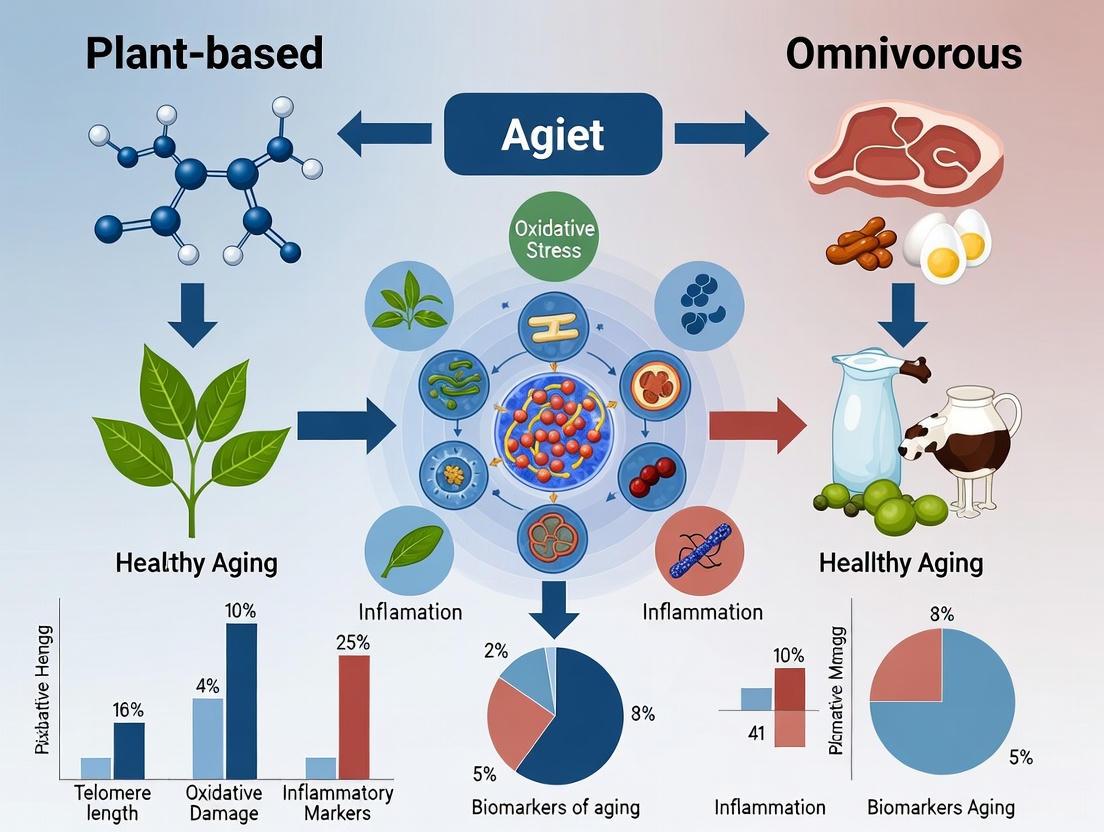
This article synthesizes current scientific evidence on the comparative effects of plant-based and omnivorous diets on healthy aging outcomes.
Plant-Based vs. Omnivorous Diets for Healthy Aging: A Scientific Review of Molecular Mechanisms, Clinical Outcomes, and Research Implications
Abstract
This article synthesizes current scientific evidence on the comparative effects of plant-based and omnivorous diets on healthy aging outcomes. It examines foundational biological mechanisms including epigenetic aging, gut microbiome modulation, and telomere dynamics. The review explores methodological approaches for diet quality assessment and dietary intervention design, addresses specific challenges in older adult populations including protein adequacy and nutrient bioavailability, and validates findings through comparative analyses of cardiometabolic, musculoskeletal, and cognitive outcomes. Targeted at researchers and clinical professionals, this comprehensive analysis identifies critical research gaps and implications for future biomedical investigation and therapeutic development.
Molecular Mechanisms: How Plant-Based and Omnivorous Diets Modulate Biological Aging
The quest to understand and modulate human aging has brought epigenetic clocks to the forefront of geroscience. These clocks, which measure biological age based on DNA methylation (DNAm) patterns, can diverge from chronological age and predict age-related health outcomes [1]. Diet is a potent, modifiable factor that can influence these epigenetic markers. This guide provides an objective comparison of plant-based and omnivorous diets, examining their effects on epigenetic aging through current experimental data, methodologies, and key research tools.
Core Concepts: Epigenetic Clocks and Diet
Epigenetic Clocks are statistical models that predict biological age using DNA methylation levels at specific CpG sites. They can be categorized by their primary function [1]:
- Chronological Clocks (e.g., Horvath): Estimate chronological age.
- Biological Risk Clocks (e.g., GrimAge, PhenoAge): Predict mortality risk and age-related disease susceptibility.
- Pace of Aging Clocks (e.g., DunedinPACE): Measure the rate of aging over time.
- Mitotic Clocks (e.g., epiTOC2): Track cellular replication history.
Dietary patterns influence these clocks by providing bioactive compounds that can alter DNA methylation, potentially slowing epigenetic age acceleration—a marker of faster biological aging linked to chronic disease and mortality [2] [1].
Diagram: Epigenetic Clock Mechanism and Dietary Influence
Comparative Analysis of Dietary Studies
Research reveals nuanced relationships between diet and aging, influenced by study duration, diet quality, and population.
Table 1: Key Studies on Diet and Healthy Aging
| Study (Population) | Design & Duration | Dietary Comparison | Primary Aging Outcome | Key Finding |
|---|---|---|---|---|
| Nurses' Health Study & Health Professionals Follow-Up Study [3] [4] (N=105,015; US) | Prospective Cohort (~30 years) | 8 dietary patterns (AHEI, aMED, DASH, MIND, hPDI, etc.) | Multidimensional Healthy Aging (free of chronic disease, intact cognitive/physical/mental health) | All healthy diets associated with greater odds of healthy aging. AHEI showed strongest association (OR 1.86, highest vs. lowest quintile). |
| Chinese Longitudinal Healthy Longevity Survey [5] [6] (N=2,888; China) | Prospective Cohort (Median 6 years) | Vegan/Ovo-vegetarian/Pesco-vegetarian vs. Omnivore | Healthy Aging (survival to ≥80 years without major chronic diseases or functional impairment) | Vegetarians (especially vegans, OR 0.43) had lower odds of healthy aging vs. omnivores. Effect mitigated by high diet quality. |
| Twins Nutrition Study (TwiNS) [2] [7] [8] (N=42; identical twins) | Randomized Controlled Trial (8 weeks) | Healthy Vegan vs. Healthy Omnivorous Diet | Epigenetic Age Acceleration (PC GrimAge, PC PhenoAge, DunedinPACE) | Vegan diet significantly reduced epigenetic age acceleration and improved system-specific epigenetic scores. |
Table 2: Diet-Specific Effects on Quantitative Epigenetic and Health Markers
| Outcome Measure | Vegan / Plant-Based Diet Effect | Omnivorous Diet Effect | Notes / Context |
|---|---|---|---|
| Overall Epigenetic Age Acceleration [2] [8] | Significant decrease | No significant change | Measured by PC GrimAge, PC PhenoAge. Effect observed in 8 weeks. |
| Pace of Aging (DunedinPACE) [2] | Significant slowing | Not reported | Suggests a slower rate of biological aging. |
| System-Specific Epigenetic Scores [2] [8] | Improvement in Heart, Hormone, Liver, Inflammatory, Metabolic systems | Not reported | Methylation surrogates for organ/system health. |
| Odds of Healthy Aging (Long-Term) [3] [5] | Mixed findings (see Table 1) | Mixed findings (see Table 1) | Highly dependent on diet quality, population, and aging definition. |
| C-Reactive Protein (Inflammation) [8] | Decrease | Not reported | Suggests reduction in systemic inflammation. |
| Tryptophan Levels [8] | Not reported | Increase | May influence mood regulation. |
| Average Weight Loss [8] | ~2 kg greater than omnivorous group | Less than vegan group | Caloric intake was lower in the vegan group. |
Detailed Experimental Protocols
The Twins Nutrition Study (TwiNS) Protocol
The TwiNS study utilized a robust twin-pair design to control for genetic, age, and sex differences [2] [8].
4.1.1 Participant Recruitment and Eligibility
- Source: Recruited 22 pairs of identical twins from the Stanford Twin Registry and other sources. One pair was removed for non-adherence, resulting in 21 pairs (N=42) for analysis [2].
- Profile: Participants were generally healthy adults (77% women, mean age 40, mean BMI 26) [2] [8].
- Criteria: Included adults ≥18 years with BMI <40 and LDL-C <190 mg/dL. Excluded individuals with uncontrolled metabolic disease, cancer, heart disease, or using medications affecting weight/energy [2].
4.1.2 Dietary Intervention
- Design: Single-site, parallel-group, 8-week randomized trial. One twin from each pair was assigned to a healthy vegan diet, the other to a healthy omnivorous diet [2].
- Phases: Two 4-week phases: 1) Meals provided by Trifecta Nutrition; 2) Self-provided meals with guidance from health educators [2] [8].
- Diet Specifications:
- Adherence Monitoring: Assessed via unannounced 24-hour dietary recalls and participant logs in the Cronometer app, with quality ensured by trained dietitian interviews [2].
4.1.3 Sample Collection and DNA Methylation Analysis
- Blood Collection: Whole blood collected at baseline and week 8. Majority of samples (N=40) were collected via Dried Blood Spot cards [2].
- Lab Processing: Samples were sent to TruDiagnostic for DNA extraction and methylation processing [2] [8].
- DNA Methylation Profiling:
- Bisulfite Conversion: 500 ng of DNA was bisulfite-converted using the EZ DNA Methylation kit (Zymo Research) [2].
- Microarray: Bisulfite-converted DNA was randomly assigned to wells on the Infinium HumanMethylationEPIC BeadChip and imaged with an Illumina iScan SQ instrument [2].
- Batch Control: Longitudinal samples from the same participant were run on the same array to minimize batch effects [2].
- Data Processing: Raw IDAT files were processed using the
minfipipeline in R, and low-quality samples were filtered out [2].
Diagram: TwiNS Experimental Workflow
Signaling Pathways in Diet and Epigenetic Aging
Dietary components influence epigenetic aging through several interconnected biological pathways.
Diagram: Key Signaling Pathways Linking Diet to Epigenetic Changes
The Scientist's Toolkit: Key Research Reagents & Materials
Table 3: Essential Reagents and Kits for DNA Methylation Analysis in Dietary Studies
| Item | Function/Application | Example Use in Context |
|---|---|---|
| Infinium HumanMethylationEPIC BeadChip (Illumina) | Genome-wide DNA methylation profiling of over 850,000 CpG sites. | Primary platform for methylation analysis in the TwiNS study [2]. |
| EZ DNA Methylation Kit (Zymo Research) | Bisulfite conversion of DNA for methylation analysis. | Used in TwiNS to prepare DNA for the EPIC array [2]. |
| QIAamp DNA Blood Mini Kit (QIAGEN) | Extraction of high-quality DNA from whole blood samples. | Used for DNA extraction from whole blood in the TwiNS study [2]. |
| Dried Blood Spot (DBS) Cards | Stable, room-temperature storage and transport of blood samples for DNA analysis. | Primary collection method for most participants in TwiNS [2]. |
| TruDiagnostic Laboratory Services | Provider of commercial epigenetic testing, clock analysis, and research services. | Performed DNA extraction, methylation processing, and analysis for TwiNS [2] [8]. |
minfi R/Bioconductor Package |
A comprehensive pipeline for preprocessing and analyzing DNA methylation data from Illumina arrays. | Used for processing raw IDAT files and quality control in TwiNS [2]. |
Current evidence demonstrates that diet significantly influences epigenetic aging, but the effects are complex. Short-term, high-quality vegan diets can rapidly reduce epigenetic age acceleration [2] [8], while long-term outcomes depend heavily on overall diet quality and nutrient adequacy [3] [5] [6]. The most robust dietary pattern for multidimensional healthy aging appears to be rich in plant-based foods (fruits, vegetables, whole grains, nuts, legumes) with moderate inclusion of healthy animal-based foods, such as fish and low-fat dairy [3] [4]. Future research should focus on long-term interventions, personalized nutrition approaches, and a deeper mechanistic understanding of how food-derived signals modulate the epigenome.
The human gut microbiome, a complex ecosystem of trillions of microorganisms, plays an integral role in host health by modulating immune function, producing bioactive metabolites, and maintaining gut barrier integrity [9] [10]. Gut microbiome signatures—characteristic patterns of microbial composition and function—are increasingly recognized as crucial indicators of physiological status and disease risk. These signatures are profoundly shaped by dietary patterns, creating a dynamic interface between nutrition, microbial ecology, and host physiology [9] [10] [11].
Within the context of healthy aging research, the divergence between plant-based and omnivorous diets presents a critical framework for investigating how diet-driven microbial patterns influence long-term health outcomes. Mounting evidence suggests that diet-induced alterations in gut microbial communities impact host health through modulation of metabolic outputs, including short-chain fatty acids (SCFAs), trimethylamine N-oxide (TMAO), and other immunomodulatory compounds [9] [10] [11]. This review systematically compares gut microbiome signatures associated with plant-based versus omnivorous dietary patterns, with particular emphasis on differential microbial abundance, functional metabolic output, and implications for healthy aging trajectories.
Comparative Analysis of Gut Microbiome Signatures Across Dietary Patterns
Taxonomic Shifts Between Plant-Based and Omnivorous Diets
Large-scale cross-sectional studies involving 21,561 individuals from multinational cohorts have demonstrated that gut microbial profiles effectively distinguish between different dietary patterns, with machine learning classifiers achieving a mean area under the curve (AUC) of 0.85 for diet pattern prediction [9]. The strongest separability was observed between vegan and omnivore microbiomes (mean AUC = 0.90), followed by vegetarian versus vegan (AUC = 0.84), and vegetarian versus omnivore (AUC = 0.82) [9].
Table 1: Key Microbial Taxa Differentially Abundant Across Dietary Patterns
| Taxon | Dietary Association | Functional Role | Health Implications |
|---|---|---|---|
| Ruminococcus torques | Omnivore-enriched [9] | Mucin degradation [9] | Associated with inflammatory bowel diseases [9] |
| Bilophila wadsworthia | Omnivore-enriched [9] | Bile acid metabolism [9] | Linked to inflammation and negative cardiometabolic health [9] |
| Alistipes putredinis | Omnivore-enriched [9] | Protein fermentation [9] | Negatively correlated with cardiometabolic health [9] |
| Lachnospiraceae | Vegan-enriched [9] | Fiber degradation, butyrate production [9] [11] | Favourable cardiometabolic markers [9] |
| Butyricicoccus sp. | Vegan-enriched [9] | Butyrate production [9] | Enhanced gut barrier function [9] |
| Roseburia hominis | Vegan-enriched [9] | Butyrate production, fiber degradation [9] | Anti-inflammatory effects [9] |
| Faecalibacterium prausnitzii | Healthful plant-based diet-enriched [11] | Butyrate production, anti-inflammatory compounds [11] | Positive health associations [11] |
| Bacteroides thetaiotaomicron | Healthful plant-based diet-enriched [11] | Polysaccharide degradation [11] | Enhanced nutrient extraction from plants [11] |
| Streptococcus thermophilus | Vegetarian/Omnivore-enriched [9] | Dairy fermentation [9] | Common dairy starter culture [9] |
Meta-analyses across five cohorts revealed significant differential abundance of specific microbial taxa between dietary patterns. In total, 626 species-level genome bins (SGBs) were differentially abundant in omnivores compared to 98 in vegans, while 488 SGBs were differentially abundant in omnivores compared to 112 in vegetarians [9]. The strongest differentiators included dairy-associated microbes such as Streptococcus thermophilus, which demonstrated the highest effect size in vegetarian versus vegan comparisons (standardized mean difference = -0.67) [9].
Functional Metabolic Outputs and Health Implications
The metabolic outputs of diet-shaped gut microbiomes have profound implications for host health, particularly in the context of aging. These outputs include beneficial metabolites like SCFAs from plant fiber fermentation, as well as potentially harmful compounds generated from animal protein and fat metabolism.
Table 2: Key Microbial Metabolites and Their Health Associations in Aging
| Metabolite | Dietary Precursors | Producing Microbes | Health Associations |
|---|---|---|---|
| Short-chain fatty acids (SCFAs) | Dietary fiber [9] [10] | Lachnospiraceae, Butyricicoccus sp., Roseburia hominis, Faecalibacterium prausnitzii [9] [11] | Maintain gut barrier, anti-inflammatory, energy metabolism [9] [10] |
| Trimethylamine N-oxide (TMAO) | Choline, L-carnitine (red meat) [9] | Microbes with trimethylamine (TMA) synthesis genes [9] | Associated with cardiovascular disease, colorectal cancer [9] |
| Secondary bile acids | Primary bile acids (animal fats) [12] | Various gut microbes [12] | Altered profiles in aging; some forms protective, others linked to Alzheimer's disease [12] |
| Hydrogen sulfide | Animal proteins [10] | Sulfate-reducing bacteria [10] | Potential gut toxicity at high concentrations [10] |
Healthful plant-based diets are inversely associated with TMAO levels [11], a microbial metabolite implicated in cardiovascular disease and other age-related conditions [9]. Conversely, the production of SCFAs by plant-based diet-enriched microbes contributes to gut barrier integrity, anti-inflammatory effects, and may help counteract age-related chronic inflammation known as "inflammaging" [12] [10].
Methodological Approaches for Gut Microbiome Signature Analysis
Experimental Workflows and Sequencing Technologies
The comprehensive analysis of gut microbiome signatures relies on sophisticated methodological approaches that have evolved significantly in recent years. The following diagram illustrates a typical workflow for gut microbiome signature analysis, from sample collection through data interpretation:
Current research employs two primary sequencing approaches: 16S rRNA gene sequencing and shotgun metagenomic sequencing. 16S sequencing targets hypervariable regions of the bacterial 16S rRNA gene (e.g., V3-V4) for taxonomic profiling [13], while shotgun metagenomics sequences all DNA in a sample, enabling superior taxonomic resolution at the species level and functional pathway analysis [9] [14]. Choice of methodology significantly impacts findings, as demonstrated by a reanalysis of an Alzheimer's disease microbiome dataset that initially used 16S sequencing but reached different conclusions when reanalyzed with updated bioinformatic tools [15].
Quality Control and Bioinformatics Processing
Robust bioinformatic processing is essential for reliable microbiome signature identification. For 16S rRNA data, this typically includes quality filtering (e.g., using fastp with minimum quality scores of 20), chimera removal (e.g., with VSEARCH), and taxonomic classification against reference databases (e.g., SILVA) [13]. Shotgun metagenomic data requires more complex processing including host DNA filtering, assembly, gene prediction, and functional annotation [9].
Statistical approaches for identifying differentially abundant microbes have evolved from basic univariate tests to sophisticated multivariate models that account for compositional nature of microbiome data, such as those implemented in ANCOM-BC or logistic compositional analysis (LOCOM) [11]. Machine learning algorithms, particularly gradient boosting machines, have demonstrated strong performance in classifying microbiome patterns associated with dietary patterns [9] and disease states [13] [14], with cross-validated AUC values frequently exceeding 0.80 [9] [13] [14].
Metabolic Pathways Linking Diet, Microbiome, and Healthy Aging
The mechanistic links between diet-shaped microbiome signatures and healthy aging outcomes are mediated through specific metabolic pathways that influence host physiology. The following diagram illustrates key pathways through which gut microbes process dietary components to produce metabolites with systemic health impacts:
Plant-based diets rich in diverse fibers promote microbial taxa capable of fermenting these substrates to produce SCFAs, including butyrate, acetate, and propionate [9] [11]. These metabolites enhance gut barrier function, regulate immune responses, and have systemic anti-inflammatory effects—particularly important for counteracting "inflammaging," the chronic low-grade inflammation characteristic of unhealthy aging [12] [10]. Butyrate specifically serves as the primary energy source for colonocytes and supports mucosal integrity [9] [10].
Conversely, omnivore diet-associated microbes process animal-derived components through alternative pathways. Protein fermentation generates compounds including hydrogen sulfide and ammonia, which may be toxic at high concentrations [10]. Metabolism of choline and L-carnitine from red meat produces trimethylamine (TMA), which is converted to TMAO in the liver—a metabolite strongly associated with cardiovascular disease risk [9]. Secondary bile acid metabolism is another pathway of concern, as certain microbially transformed bile acids have been linked to age-related conditions including Alzheimer's disease [12].
Research Reagents and Methodological Toolkit
Table 3: Essential Research Reagents and Computational Tools for Gut Microbiome Signature Analysis
| Category | Specific Tools/Reagents | Application | Considerations |
|---|---|---|---|
| DNA Extraction Kits | RIBO-prep DNA extraction kit [13] | Bacterial genomic DNA isolation from fecal samples | Standardized protocols essential for cross-study comparisons |
| Sequencing Technologies | Illumina MiSeq (16S rRNA) [13], Shotgun metagenomic platforms [9] | Microbiome profiling | Shotgun provides superior taxonomic and functional resolution [9] |
| Primer Sets | 16S V3-V4 primers: 341F/805R [13] | Amplification of target regions for 16S sequencing | Region selection affects taxonomic classification accuracy |
| Bioinformatic Tools | fastp [13], VSEARCH [13], DADA2 [15], Kraken2 [13] | Quality control, chimera removal, taxonomic assignment | Pipeline choice significantly impacts results [15] |
| Reference Databases | SILVA [13], GTDB, MetaCyc [14] | Taxonomic classification and functional annotation | Database version and curation critical for accuracy |
| Statistical Packages | phyloseq [13], vegan [13], ANCOM-BC [11], LOCOM [11] | Differential abundance testing, multivariate statistics | Compositional data methods preferred over standard tests |
| Machine Learning Frameworks | Light Gradient Boosting Machine [13], Gradient Boosting Linear Regression [14] | Predictive model development for diet or disease classification | Demonstrated high performance in microbiome classification [9] [14] |
The selection of appropriate reagents and methodologies is critical for generating comparable, reproducible gut microbiome data. Standardized protocols for sample collection, storage, DNA extraction, and sequencing are particularly important in multi-cohort studies [9] [13]. Computational methods continue to evolve, with recent advances emphasizing machine learning applications for predicting host phenotypes from microbiome data [9] [13] [14].
Gut microbiome signatures demonstrate consistent, reproducible differences between plant-based and omnivorous dietary patterns, with significant implications for healthy aging outcomes. Plant-based diets enriched in diverse fibers promote microbial taxa capable of generating beneficial metabolites like SCFAs, which support gut barrier integrity, immune regulation, and counteract inflammaging. Conversely, omnivore diets enriched in red meat and animal fats promote microbes associated with protein fermentation, TMAO production, and secondary bile acid metabolism—pathways linked to cardiometabolic and neurodegenerative diseases.
Methodological advances in shotgun metagenomics, bioinformatic processing, and machine learning have significantly enhanced our ability to identify and interpret these diet-microbiome-health relationships. Future research directions should include longitudinal intervention studies to establish causal relationships, investigation of microbiome-based personalized nutrition approaches for healthy aging, and exploration of targeted microbial interventions to optimize healthspan in aging populations.
Telomeres, the repetitive nucleotide sequences that cap chromosomal ends, are fundamental guardians of genomic stability, protecting against chromosomal degradation and fusion [16]. Telomere length (TL) progressively shortens with each cellular division, a process accelerated by oxidative stress and inflammation, ultimately leading to replicative senescence and the onset of age-related diseases [16] [17]. Consequently, TL serves as a robust biomarker of biological aging, with shorter telomeres strongly associated with increased risks of cardiovascular disease, neurodegeneration, cancer, and all-cause mortality [18].
Dietary patterns represent a potent, modifiable factor capable of influencing the rate of telomere attrition. Emerging evidence suggests that nutritional composition can directly impact telomere dynamics by modulating oxidative stress, chronic inflammation, and epigenetic regulation [16]. This review synthesizes current evidence from randomized controlled trials, observational studies, and Mendelian randomization analyses to objectively compare the effects of plant-based and omnivorous dietary patterns on telomere integrity, providing researchers and drug development professionals with a critical evaluation of experimental data and methodologies.
Direct Comparative Evidence: Plant-Based vs. Omnivorous Diets
Interventional Studies
Table 1: Key Interventional Studies on Diet and Telomere Dynamics
| Study (Year) | Design | Population | Intervention | Duration | Key Findings on Telomeres |
|---|---|---|---|---|---|
| Twins Nutrition Study (TwiNS) (2024) [2] | RCT (Identical Twins) | 42 healthy adults | Healthy Vegan vs. Healthy Omnivorous | 8 weeks | Vegan group showed significant decreases in overall epigenetic age acceleration (PC GrimAge, PC PhenoAge, DunedinPACE). |
| Ornish et al. (2013) [18] | Pilot Intervention | Men with low-risk prostate cancer | Comprehensive lifestyle (low-fat, plant-based diet, stress management, exercise) | 5 years | Significant increases in telomerase activity and longer telomeres compared to control. |
| Systematic Review (2025) [19] | Systematic Review of 21 RCTs | Healthy adults/elderly | Various (Mediterranean, nuts, vitamins, etc.) | Varies | Most consistent evidence for Selenium, CoQ10, and Vitamin D. Limited/uncertain benefit from Mediterranean Diet. No effect from almonds, pistachios, zinc, or caloric restriction. |
The most direct comparative evidence comes from the Twins Nutrition Study (TwiNS), a randomized controlled trial that leveraged an identical twin design to control for genetic, age, and sex confounding [2]. While this study primarily focused on DNA methylation-based epigenetic clocks, it found that participants assigned to a healthy vegan diet exhibited significant decreases in overall epigenetic age acceleration compared to those on a healthy omnivorous diet over eight weeks [2]. This suggests an anti-aging effect at the molecular level, aligning with the study's design of comparing two high-quality diets—both groups improved their Healthy Eating Index (HEI) scores, but the vegan diet led to distinct epigenetic benefits [2] [20].
A systematic review of 21 RCTs published in 2025 provides a broader landscape of nutritional interventions, though not exclusively comparing plant-based and omnivorous diets [19]. It concluded that the most consistent evidence for a positive effect on TL exists for specific micronutrients like Selenium, CoQ10, and Vitamin D, while evidence for broader dietary patterns like the Mediterranean diet was more limited and uncertain [19]. Notably, this review found no significant effect on TL from interventions with almonds or pistachios, highlighting that not all plant-based foods uniformly influence this biomarker [19] [21].
Observational and Genetic Evidence
Table 2: Observational and Mendelian Randomization Studies on Diet Quality and Telomere Length
| Study (Year) | Design | Population | Exposure/Intervention | Key Findings |
|---|---|---|---|---|
| Li et al. (2024) [17] | Cross-Sectional | US Adults (NHANES) | Plant-Based Diet Indices (hPDI, uPDI) | hPDI (healthy plant-based) associated with longer TL. uPDI (unhealthy plant-based) associated with shorter TL. |
| Hettiarachchi et al. (2025) [21] | Systematic Review | Observational & Interventional | Nut and Seed Intake | 3 of 9 observational studies showed a positive association with TL. None of the 4 interventional studies reported a significant positive effect. |
| Mendelian Randomization (2025) [22] | Genetic Causal Inference | European Ancestry (GWAS) | 20 Dietary Factors | Dried fruit intake showed a significant causal association with longer TL. No significant causal effects for other dietary factors, including fresh fruit. |
Observational studies underscore the critical importance of diet quality over simple binary classifications. A 2024 analysis of NHANES data demonstrated that a healthy plant-based diet index (hPDI), rich in whole grains, fruits, vegetables, and legumes, was significantly associated with longer telomeres [17]. Conversely, an unhealthy plant-based diet index (uPDI), high in refined grains, sugar-sweetened beverages, and processed plant foods, was associated with shorter telomeres [17]. This indicates that the healthfulness of the specific plant foods consumed is a greater determinant of telomere integrity than the mere absence of animal products.
The most robust evidence for causality comes from a 2025 Mendelian Randomization study, which minimizes confounding and reverse causation [22]. This analysis identified a potential causal relationship between dried fruit intake and longer telomere length, a association that remained stable after adjusting for confounders like smoking and alcohol [22]. This finding highlights the potential of specific, nutrient-dense plant foods. Interestingly, the study did not find significant causal effects for other dietary factors, including fresh fruit or vegetable intake, suggesting that the concentrated bioactives or unique composition of dried fruits may be particularly efficacious [22].
Molecular Pathways of Dietary Influence
Dietary components modulate telomere dynamics through several interconnected molecular pathways, primarily by countering the key drivers of telomere attrition: oxidative stress and inflammation.
Diagram 1: Molecular Pathways Linking Diet to Telomere Dynamics. Dietary patterns influence telomere length by modulating oxidative stress, inflammation, and epigenetic pathways. Pro-inflammatory diets accelerate telomere damage, while plant-rich diets rich in antioxidants and anti-inflammatory compounds promote telomere protection [16] [17].
Countering Oxidative Stress: Reactive oxygen species (ROS) induce DNA strand breaks and disproportionately damage telomeric DNA due to its high guanine content [16]. Diets abundant in antioxidants—such as vitamin C, vitamin E, and polyphenols found in fruits, vegetables, and nuts—scavenge ROS and upregulate endogenous antioxidant enzymes like superoxide dismutase (SOD) and glutathione peroxidase (GPx), thereby reducing the oxidative burden on telomeres [16].
Mitigating Inflammation: Chronic low-grade inflammation, or "inflammaging," accelerates cell turnover and telomere attrition [16]. Bioactive compounds with anti-inflammatory properties, including omega-3 fatty acids (EPA and DHA), curcumin, and flavonoids, suppress the NF-κB signaling pathway and inhibit pro-inflammatory cytokines like IL-6 and TNF-α [16]. By reducing systemic inflammation, these compounds indirectly preserve telomere length.
Epigenetic Regulation: The enzyme telomerase, which can restore telomeric sequences, is regulated by epigenetic modifications. Bioactive dietary components such as resveratrol and sulforaphane can modulate DNA methylation and histone acetylation patterns, potentially upregulating the expression of telomerase's catalytic subunit (hTERT) [16]. Furthermore, nutrients like folate and B vitamins serve as methyl donors in one-carbon metabolism, influencing global DNA methylation patterns, including at the telomerase locus [16].
The Scientist's Toolkit: Research Reagents and Methodologies
Table 3: Essential Research Reagents and Methods for Telomere Biology Studies
| Category / Item | Specific Example / Assay | Primary Function in Research |
|---|---|---|
| TL Measurement | Quantitative PCR (qPCR) [2] [17] | Measures relative TL via ratio of telomere repeat copy number to single-copy gene (T/S ratio). |
| Southern Blot (TRF) | Considered the gold standard; measures terminal restriction fragments. | |
| Epigenetic Clock | DNA Methylation Arrays (Infinium HumanMethylationEPIC BeadChip) [2] | Profiles genome-wide methylation patterns for estimating biological age acceleration. |
| PCR-based Telomere Estimation [2] | qPCR protocol for relative telomere length from extracted DNA. | |
| Diet Assessment | 24-Hour Dietary Recalls (NDS-R) [20] | Detailed, quantitative assessment of individual nutrient and food intake. |
| Food Frequency Questionnaires (FFQ) | Captures habitual long-term dietary patterns. | |
| Diet Quality Indices (HEI, hPDI, uPDI) [20] [17] | Scores overall diet quality and adherence to healthy/unhealthy patterns. | |
| Molecular Kits | DNA Extraction Kit (e.g., QIAamp DNA blood mini kit) [2] | Isolves high-quality genomic DNA from whole blood or tissue samples. |
| Bisulfite Conversion Kit (e.g., EZ DNA Methylation kit) [2] | Converts unmethylated cytosines to uracils for methylation analysis. |
Experimental Workflow in a Dietary Intervention Trial
A standardized experimental workflow is critical for generating comparable and reliable data in nutritional telomere research.
Diagram 2: Standard Workflow for a Dietary Intervention Trial. This flowchart outlines the key phases of a human clinical trial investigating diet and cellular aging, from recruitment and baseline assessment through intervention and final biomarker analysis [2] [20].
Detailed Methodology from Key Studies
The Twins Nutrition Study (TwiNS) Protocol:
- Participant Recruitment: 22 pairs of healthy, adult identical twins were recruited, primarily from the Stanford Twin Registry, controlling for genetic, age, and sex differences [2] [20].
- Intervention Design: An 8-week, parallel-group trial where each twin pair was randomized to either a healthy vegan diet (excluding all animal products) or a healthy omnivorous diet. The omnivorous diet comprised approximately 60% plant-based foods and 40% calories from optimal sources of animal protein (e.g., pasture-raised, wild-caught) [20]. For the first 4 weeks, participants received pre-prepared meals from a delivery service (Trifecta Nutrition), followed by a 4-week self-provided phase with guidance from health educators [2] [20].
- Dietary Adherence: Assessed via three unannounced 24-hour dietary recalls conducted by trained professionals at baseline, week 4, and week 8 using the Nutrition Data System for Research (NDS-R). Participants also maintained food logs using the Cronometer app [20].
- Biomarker Measurement: Blood samples were collected at baseline and week 8. DNA was extracted from whole blood, and methylation profiling was performed using the Infinium HumanMethylationEPIC BeadChip. Relative telomere length was measured by quantitative PCR (qPCR), expressed as the T/S ratio, with baseline and follow-up samples from the same participant processed in the same batch to minimize assay variability [2].
Mendelian Randomization Analysis Protocol:
- Data Sources: Exposure data for 20 dietary factors and outcome data for telomere length were sourced from the IEU Open GWAS project, comprising large-scale genome-wide association studies (GWAS) primarily from the UK Biobank [22].
- Instrumental Variable (IV) Selection: Single nucleotide polymorphisms (SNPs) strongly associated with each dietary exposure at the genome-wide significance level (P < 5 × 10⁻⁸) were selected as IVs. Linkage disequilibrium was controlled for (clumping r² < 0.001), and the strength of the IVs was confirmed using F-statistics (F > 10) [22].
- MR Analysis & Sensitivity: The primary analysis used the Inverse Variance Weighted (IVW) method. Sensitivity analyses included MR-Egger, weighted median, and MR-PRESSO to test for and correct for horizontal pleiotropy. Multivariable MR (MVMR) was used to adjust for potential confounders like smoking and alcohol [22].
The current evidence presents a nuanced picture of the relationship between diet and telomere dynamics. High-quality, plant-based diets rich in antioxidants and anti-inflammatory compounds demonstrate a clear potential to mitigate telomere attrition, primarily by countering oxidative stress and inflammation [16] [17]. Interventional studies like the TwiNS trial suggest that even short-term adoption of a healthy vegan diet can positively influence epigenetic markers of aging [2]. However, the binary classification of "plant-based" versus "omnivorous" is less critical than the overarching principle of diet quality. A healthy omnivorous pattern that emphasizes whole plant foods can also be beneficial, while an unhealthy plant-based diet high in processed foods is consistently linked to detrimental outcomes, including shorter telomeres [17].
For the research community, several challenges and future directions are apparent. The evidence from RCTs is often limited by small sample sizes, short durations, and heterogeneous methodologies [19]. Furthermore, the most compelling causal evidence from Mendelian randomization points to specific foods like dried fruit rather than broad dietary patterns, underscoring the need to identify the most bioactive components and their mechanisms [22]. Future research should prioritize large-scale, long-term RCTs that compare well-defined, high-quality versions of both plant-based and omnivorous diets, utilize standardized telomere and epigenetic assays, and integrate multi-omics approaches to unravel the precise molecular pathways through which diet influences cellular aging. This will be essential for developing targeted nutritional strategies and potential therapeutics to promote healthy aging.
The pursuit of healthy aging—defined not merely as longevity but as reaching older age free from chronic diseases while maintaining cognitive, physical, and mental health—has become a central focus of biomedical research. Non-communicable diseases (NCDs), which are closely linked to chronic low-grade inflammation, represent the primary health burden in aging populations [23]. Nutritional science has increasingly elucidated how dietary patterns modulate inflammatory pathways through three key mechanistic components: gerontotoxins (age-accelerating toxins), advanced glycation end products (AGEs), and antioxidants. Understanding these mechanisms is crucial for developing dietary strategies that promote healthspan.
Plant-based and omnivorous dietary patterns differentially influence these pathways. Research indicates that diets rich in plant-based foods are associated with reduced inflammation and improved aging outcomes. A 2025 study in Nature Medicine examining over 105,000 adults for up to 30 years found that greater adherence to healthy dietary patterns was associated with significantly higher odds of healthy aging, with the Alternative Healthy Eating Index showing the strongest association (odds ratio 1.86 for highest versus lowest quintile) [3]. This review systematically compares how plant-based and omnivorous diets influence inflammatory pathways through gerontotoxins, AGEs, and antioxidants, providing researchers with experimental data and methodological approaches for further investigation.
Comparative Analysis of Dietary Impacts on Inflammatory Biomarkers
Quantitative Comparison of Inflammatory and Cardiovascular Biomarkers
Table 1: Cross-sectional comparison of biomarkers across dietary patterns in healthy young adults (18-39 years) [23]
| Biomarker | Vegans | Vegetarians | Pescatarians | Omnivores | p-value |
|---|---|---|---|---|---|
| Body Fat (%) | 19.1 | 22.3 | 23.8 | 25.7 | <0.05 |
| Visceral Adipose Tissue (cm²) | 45.2 | 58.7 | 62.4 | 75.3 | <0.05 |
| Total Cholesterol (mg/dL) | 162.1 | 171.5 | 169.8 | 188.4 | 0.032 |
| LDL-C (mg/dL) | 88.5 | 95.2 | 92.7 | 112.6 | 0.028 |
| HDL-C (mg/dL) | 55.8 | 58.3 | 59.1 | 52.9 | 0.006 |
| Triacylglycerols (mg/dL) | 85.4 | 92.7 | 94.5 | 118.9 | 0.005 |
| IL-6 (pg/mL) | 1.42 | 1.58 | 1.61 | 1.89 | 0.041 |
| TNF-α (pg/mL) | 2.85 | 3.02 | 3.11 | 3.48 | 0.063 |
| hsCRP (mg/L) | 1.21 | 1.35 | 1.42 | 1.88 | 0.037 |
Healthy Aging Outcomes Across Dietary Patterns
Table 2: Association between dietary patterns and healthy aging after 30 years of follow-up [3]
| Dietary Pattern | Odds Ratio for Healthy Aging | 95% Confidence Interval | Strength of Association |
|---|---|---|---|
| Alternative Healthy Eating Index | 1.86 | 1.71-2.01 | Strongest |
| Reverse EDIH | 1.78 | 1.64-1.93 | High |
| DASH | 1.74 | 1.60-1.89 | High |
| aMED | 1.72 | 1.58-1.87 | High |
| PHDI | 1.69 | 1.56-1.84 | High |
| MIND | 1.63 | 1.50-1.77 | Moderate |
| Reverse EDIP | 1.58 | 1.45-1.72 | Moderate |
| Healthful Plant-Based Diet | 1.45 | 1.35-1.57 | Weakest |
Experimental Evidence on Dietary AGEs
Advanced glycation end products (AGEs) are compounds formed through non-enzymatic reactions between reducing sugars and proteins, lipids, or nucleic acids. These compounds contribute to cellular aging by promoting inflammation, cross-linking of collagen and elastin, and generating reactive oxygen species (ROS) [24]. Research has identified two primary sources of AGEs in the body: exogenous (from diet) and endogenous (formed internally).
Dietary AGEs form predominantly during high-temperature, dry-heat cooking methods such as grilling, roasting, and frying. Measurement of AGE units in over 500 food items revealed that meat and processed foods contain the highest levels, while whole plant foods contain the least [24]. For instance, grilled meats and French fries exhibit particularly high AGE content. When consumed, dietary AGEs can contribute to the body's total AGE burden, promoting pro-inflammatory pathways.
However, a significant paradox in AGE research has emerged. A 2017 perspective highlighted that despite the measured AGE content in foods, observational studies found that intake of fruits (mainly apples), fruit juices, vegetables, nuts, seeds, and nonfat milk was associated with elevated serum and urinary N-ε-carboxymethyl-lysine (CML), a common AGE marker [25]. This apparent contradiction led to the "fructositis" hypothesis, which proposes that foods and beverages with high fructose-to-glucose ratios promote intestinal formation of proinflammatory extracellular, newly identified fructose-associated AGEs (enFruAGEs) [25].
Experimental Protocol: Assessing Dietary and Endogenous AGE Contribution
Methodology for Investigating Dietary AGE Bioavailability and Metabolism:
- Study Design: Randomized controlled crossover trial with controlled feeding periods
- Participants: 40 healthy adults (20 men, 20 women) aged 30-50 years
- Intervention Diets:
- Low-AGE plant-based diet (<12,000 AGE kU/day)
- High-AGE animal-based diet (>20,000 AGE kU/day)
- High-fructose plant-based diet (25% calories from fructose-rich sources)
- Biomarker Assessment:
- Serum AGEs (CML, CEL, MG-H1) using UPLC-MS/MS
- Urinary AGE metabolites (24-hour collection)
- Inflammatory markers (IL-6, TNF-α, CRP)
- Intestinal permeability markers (LPS, LBP)
- Statistical Analysis: Mixed-effects models with adjustment for age, sex, and BMI
This protocol enables researchers to distinguish between dietary AGE absorption and endogenous AGE formation, particularly from fructose metabolism.
Antioxidant Defense Systems in Plant-Based versus Omnivorous Diets
Mechanisms of Antioxidant Protection
Plant-based diets provide substantially higher levels of dietary antioxidants compared to omnivorous patterns, with plant foods containing on average 64 times more antioxidants than animal products [24]. These phytochemicals mitigate oxidative stress through multiple mechanisms:
- Direct Free Radical Scavenging: Antioxidants like vitamins C and E, polyphenols, and carotenoids donate electrons to neutralize reactive oxygen species (ROS) [24]
- Enzyme Modulation: Inhibition of collagenase, elastase, and hyaluronidase enzymes that degrade skin structure [26]
- Inflammatory Pathway Regulation: Reduction of pro-inflammatory cytokines (IL-6, IL-8) and matrix metalloproteinases (MMP-1, MMP-2) [26]
- Cellular Regeneration Promotion: Activation of pathways like CISD2 that attenuate cellular senescence in human keratinocytes [26]
The antioxidant system operates through a cascade mechanism. Vitamin E serves as the primary antioxidant in skin and cell membranes, after which oxidized vitamin E is regenerated by vitamin C, which in turn is replenished by tertiary antioxidants like vitamin A or dietary intake [24].
Experimental Protocol: Assessing Antioxidant Capacity
Methodology for Comprehensive Antioxidant Status Evaluation:
Sample Collection:
- Plasma/serum samples (fasting)
- Skin biopsies (optional for dermatological studies)
- Adipose tissue samples (optional)
Antioxidant Biomarker Panel:
- Vitamin C, E, A levels (HPLC)
- Total antioxidant capacity (ORAC, FRAP assays)
- Carotenoid profile (lutein, zeaxanthin, β-carotene)
- Endogenous antioxidants (glutathione, superoxide dismutase)
Oxidative Damage Markers:
- Lipid peroxidation (MDA, 8-iso-PGF2α)
- Protein carbonylation
- DNA oxidation (8-OHdG)
Functional Assessments:
- Telomere length (qPCR)
- Telomerase activity (PCR-ELISA)
- Mitochondrial function (respiratory capacity)
This comprehensive assessment enables researchers to quantify the antioxidant differential between dietary patterns and correlate these measures with cellular aging biomarkers.
Gerontotoxins and Inflammatory Pathways
Gerontotoxin Mechanisms in Aging
Gerontotoxins represent a class of toxins that accelerate cellular aging, with AGEs being the most extensively studied. These compounds promote aging through several interconnected pathways:
- Receptor for AGE (RAGE) Activation: Binding to RAGE triggers NF-κB signaling, increasing pro-inflammatory cytokine production [24]
- Protein Cross-Linking: Collagen and elastin cross-linking reduces tissue elasticity and function [24]
- Nitric Oxide Reduction: Impaired NO generation from L-arginine compromises collagen cross-linking and vascular function [24]
- Cellular Stiffening: Accumulation in structural proteins like collagen, elastin, vitronectin, and laminin contributes to tissue stiffening [24]
Plant-based diets minimize gerontotoxin exposure through two primary mechanisms: reduced intake of pre-formed dietary AGEs and decreased endogenous formation due to lower pro-inflammatory burden.
Inflammatory Pathway Diagram
Diagram 1: Inflammatory pathways in aging: plant-based versus omnivorous diets. Plant-based diets (red inhibitory lines) reduce activation of pro-aging pathways, while omnivorous patterns (blue activating lines) promote inflammatory cascades leading to cellular and tissue aging.
Research Reagent Solutions for Aging Pathway Investigation
Table 3: Essential research tools for investigating dietary impacts on inflammatory aging pathways
| Research Tool | Specific Application | Function in Experimental Design |
|---|---|---|
| UPLC-MS/MS Systems | Quantification of specific AGE compounds (CML, CEL, MG-H1) | Gold standard for precise AGE measurement in serum, tissues, and foods |
| ELISA Kits (IL-6, TNF-α, hsCRP) | Inflammation biomarker assessment | High-throughput screening of inflammatory status in large cohort studies |
| ORAC/FRAP Assay Kits | Total antioxidant capacity measurement | Quantifies cumulative antioxidant capacity in biological samples |
| qPCR Telomere Length Assay | Cellular aging biomarker | Measures telomere length as indicator of biological aging |
| RAGE Antibodies | Receptor expression studies | Western blot, immunohistochemistry for RAGE pathway activation |
| NF-κB Pathway Reporter Assays | Inflammatory signaling monitoring | Luciferase-based systems to quantify NF-κB activation in cell models |
| Cell Senescence Assay Kits (β-galactosidase) | Cellular senescence detection | Identifies senescent cells in tissue samples following dietary interventions |
Key Experimental Studies and Methodologies
Twins Nutrition Study (TwiNS): Controlled Diet Intervention
The TwiNS study represents a methodologically rigorous approach for comparing dietary patterns while controlling for genetic factors [20] [27].
Experimental Protocol:
- Study Design: 8-week randomized controlled trial with 22 pairs of identical twins
- Intervention Arms:
- Healthy vegan diet (excluding all animal products)
- Healthy omnivorous diet (60% plant-based, 40% high-quality animal products)
- Dietary Control:
- Weeks 0-4: Provided prepared meals from delivery service
- Weeks 4-8: Self-prepared meals with educational support
- Outcome Measures:
- Healthy Eating Index-2015 (HEI) scores
- Cardiometabolic biomarkers (LDL-C, glucose, insulin)
- Aging biomarkers (telomere length, epigenetic clocks)
- Dietary Assessment: Three unannounced 24-hour dietary recalls using Nutrition Data System for Research (NDS-R)
Key Findings: Both groups significantly improved HEI scores, with vegans showing greater improvement (+14.2 points at 4 weeks) than omnivores (+9.0 points). The vegan group demonstrated higher intake of legumes and fiber, while omnivores had higher vitamin B-12 and cholesterol [20] [27].
Longitudinal Cohort Studies: Nurses' Health Study and Health Professionals Follow-Up Study
Methodological Approach for Observational Aging Research [3]:
- Cohort Characteristics: 105,015 participants (70,091 women from NHS, 34,924 men from HPFS)
- Duration: Up to 30 years of follow-up (1986-2016)
- Dietary Assessment: Validated food frequency questionnaires every 4 years
- Healthy Aging Definition: Reaching age 70 free of 11 chronic diseases with intact cognitive, physical, and mental health
- Dietary Patterns Examined: AHEI, aMED, DASH, MIND, hPDI, PHDI, EDIP, EDIH
- Statistical Analysis: Multivariable-adjusted odds ratios for healthy aging comparing highest to lowest quintiles of dietary pattern adherence
This methodology enabled identification of specific food components associated with healthy aging, with fruits, vegetables, whole grains, unsaturated fats, nuts, and legumes positively associated, while trans fats, sodium, sugary beverages, and red/processed meats were inversely associated [3].
The evidence from controlled interventions, cross-sectional biomarker studies, and longitudinal cohorts consistently demonstrates that plant-based dietary patterns favorably influence inflammatory pathways relevant to aging through multiple mechanisms: reducing gerontotoxin exposure, minimizing endogenous AGE formation, and enhancing antioxidant defenses. The TwiNS study confirms that both vegan and omnivorous diets can be optimized for health, but plant-based patterns provide superior anti-inflammatory and antioxidant properties when properly designed.
Future research should prioritize several areas: (1) delineating the relative contributions of dietary AGEs versus endogenously formed AGEs from fructose metabolism; (2) identifying specific phytochemicals with the most potent anti-aging properties; (3) exploring nutrigenomic interactions between dietary components and inflammatory pathway genes; and (4) developing translational interventions that incorporate anti-gerontotoxin dietary approaches into clinical practice for age-related disease prevention.
Nutrient-Gene Interactions in Age-Related Chronic Disease Prevention
The increasing global burden of age-related chronic diseases presents a critical challenge for healthcare systems and researchers worldwide. Within this context, dietary patterns—specifically plant-based and omnivorous diets—have emerged as significant modifiable factors that may influence aging trajectories and chronic disease risk through nutrient-gene interactions. Plant-based diets encompass a spectrum of dietary patterns characterized by varying degrees of animal product exclusion, ranging from vegan (complete exclusion) to lacto-ovo-vegetarian (includes dairy and eggs) and flexitarian (occasional meat consumption). Conversely, omnivorous diets include both plant and animal foods in varying proportions. Current research investigates how these dietary patterns interact with biological aging processes, epigenetic regulation, and chronic disease pathogenesis, with particular focus on cardiovascular disease, cancer, diabetes, and cognitive decline.
The molecular mechanisms underpinning these relationships involve complex nutrient-gene interactions, including epigenetic modifications such as DNA methylation, regulation of nutrient-sensing pathways, and inflammatory responses. This comparison guide synthesizes experimental data from recent clinical trials, cohort studies, and molecular investigations to objectively evaluate how plant-based and omnivorous diets influence aging biology and chronic disease risk through these mechanisms, providing researchers with methodological insights and comparative outcomes relevant to drug development and personalized nutrition strategies.
Experimental Approaches in Diet-Gene Interaction Research
Randomized Controlled Feeding Trials
PRODMED2 Trial Design and Protocol: The Protein-Distinct Macronutrient-Equivalent Diet 2 (PRODMED2) trial employed a randomized crossover feeding design to compare minimally processed omnivorous versus lacto-ovo-vegetarian diets in older adults [28]. This 18-week study included 36 community-dwelling older adults who consumed both diets in random order, each for 8 weeks, separated by a 2-week washout period. The experimental protocol featured:
- Dietary Interventions: Both diets were aligned with Dietary Guidelines for America (DGA) patterns and were designed to be low in ultra-processed foods (∼13% of energy intake) compared to participants' habitual baseline diet (∼50% ultra-processed foods) [28].
- Macronutrient Matching: The diets were protein-distinct but macronutrient-equivalent, with minimally processed pork (MPP) and lentils (MPL) serving as representative animal- and plant-based primary protein sources, respectively [28].
- Outcome Measurements: Researchers collected data on body composition (via DXA scans), cardiometabolic biomarkers (insulin sensitivity, lipid profile, inflammatory markers), and hormones linked to nutrient sensing (leptin, FGF21) at baseline, after each intervention phase, and at ∼1-year follow-up [28].
- Statistical Analysis: Primary analysis utilized robust linear mixed-effects models adjusted for covariates including age, sex, and physical activity level [28].
Twins Nutrition Study (TwiNS) Protocol: The TwiNS study implemented a parallel-group randomized design with 22 pairs of identical twins to control for genetic confounding [29] [20] [30]. Key methodological elements included:
- Intervention Arms: Twins were randomized to either a healthy vegan diet (excluding all animal products) or a healthy omnivorous diet (containing fish, poultry, eggs, dairy, and meat) for 8 weeks [30].
- Dietary Control: For the first 4 weeks, all meals were provided via a meal delivery service (Trifecta Nutrition), followed by a 4-week self-provided phase with educational support [20] [30].
- Molecular Assessments: Blood samples were collected at baseline and 8 weeks for DNA methylation analysis using the Infinium HumanMethylationEPIC BeadChip [29].
- Epigenetic Clock Calculations: Multiple epigenetic age estimators were computed, including PC GrimAge, PC PhenoAge, DunedinPACE, and system-specific epigenetic ages (inflammatory, cardiac, hepatic, metabolic) [29].
Prospective Cohort Studies
UK Biobank Cohort Methodology: This prospective cohort study analyzed data from 126,394 UK Biobank participants followed for 10.6-12.2 years [31]. The experimental approach included:
- Dietary Assessment: Plant-based diet indices (PDI, hPDI, uPDI) were derived from a minimum of two 24-hour dietary assessments using the Oxford WebQ tool [31].
- Endpoint Ascertainment: Outcomes included mortality, cardiovascular disease, cancer, and fractures, identified through record linkage to hospital admissions and death registries [31].
- Statistical Adjustment: Cox proportional hazards models adjusted for sociodemographic factors, lifestyle behaviors, and genetic predisposition using polygenic risk scores [31].
Chinese Longitudinal Healthy Longevity Survey (CLHLS): This prospective study examined 2,888 Chinese older adults with a median follow-up of 6 years [32]. Methodology featured:
- Healthy Aging Definition: A composite endpoint encompassing survival to age 80 without major chronic diseases, physical function impairment, cognitive impairment, or mental health issues [32].
- Dietary Pattern Assessment: Vegetarian status was determined through a simplified food frequency questionnaire, with categorization into vegan, ovo-vegetarian, pesco-vegetarian, and omnivorous patterns [32].
- Diet Quality Indices: Calculation of healthy and unhealthy plant-based diet indices (hPDI and uPDI) to assess diet quality within vegetarian patterns [32].
Comparative Outcomes: Plant-Based vs. Omnivorous Diets
Cardiometabolic Effects
Table 1: Cardiometabolic Outcomes from Randomized Trials
| Parameter | Vegan Diet | Omnivorous Diet | Study |
|---|---|---|---|
| LDL-C (change) | -13.9 mg/dL | -2.7 mg/dL | TwiNS [30] |
| Fasting Insulin | -2.9 μIU/mL | -0.6 μIU/mL | TwiNS [30] |
| Body Weight | -1.9 kg | -0.1 kg | TwiNS [30] |
| HOMA-IR | Significant improvement | Significant improvement | PRODMED2 [28] |
| Total Cholesterol | Significant improvement | Significant improvement | PRODMED2 [28] |
| CRP | Significant reduction | Significant reduction | PRODMED2 [28] |
The TwiNS trial demonstrated that a healthy vegan diet resulted in significantly greater improvements in LDL cholesterol, fasting insulin, and body weight compared to a healthy omnivorous diet over 8 weeks [30]. Both diets in the PRODMED2 trial showed significant improvements in insulin sensitivity (HOMA-IR), lipid profiles, and inflammatory markers (CRP) compared to baseline, with no significant differences between the omnivorous and lacto-ovo-vegetarian approaches [28]. These findings suggest that reduced ultra-processed food consumption may be a unifying factor in cardiometabolic improvement, though specific dietary pattern choices may yield additional benefits.
Epigenetic and Biological Aging Outcomes
Table 2: Epigenetic Aging Measures from the TwiNS Study
| Epigenetic Measure | Vegan Diet | Omnivorous Diet | Significance |
|---|---|---|---|
| PC GrimAge Acceleration | -0.30 years | No significant change | p=0.033 [29] |
| PC PhenoAge Acceleration | -0.78 years | No significant change | p=0.014 [29] |
| DunedinPACE | -0.03 | No significant change | p=0.00061 [29] |
| Inflammation Age | Significant decrease | No significant change | p<0.05 [29] |
| Heart Age | Significant decrease | No significant change | p<0.05 [29] |
| Liver Age | Significant decrease | No significant change | p<0.05 [29] |
The TwiNS study revealed that only the vegan group exhibited significant reductions in multiple measures of epigenetic age acceleration, including overall biological age estimates (PC GrimAge, PC PhenoAge) and the pace of aging (DunedinPACE) [29]. System-specific epigenetic ages (inflammatory, cardiac, hepatic, metabolic) also decreased significantly in the vegan group but not in the omnivorous group [29]. These findings suggest that a healthy vegan diet may directly influence nutrient-gene interactions through DNA methylation patterns, potentially slowing biological aging processes.
Chronic Disease Risk and Healthy Aging
Table 3: Chronic Disease Risk from Cohort Studies
| Outcome | Healthful Plant-Based Diet | Unhealthful Plant-Based Diet | Study |
|---|---|---|---|
| Total Mortality | HR: 0.84 (0.78-0.91) | HR: 1.16 (1.08-1.25) | UK Biobank [31] |
| Cardiovascular Disease | HR: 0.92 (0.86-0.99) | HR: 1.14 (1.06-1.22) | UK Biobank [31] |
| Cancer | HR: 0.93 (0.88-0.99) | HR: 1.11 (1.05-1.18) | UK Biobank [31] |
| Healthy Aging (OR) | 0.65 (0.47-0.89) for overall vegetarian | N/A | CLHLS [32] |
| Vegan Diet & Healthy Aging | OR: 0.43 (0.21-0.89) | N/A | CLHLS [32] |
Cohort studies reveal a crucial distinction between healthful and unhealthful plant-based diets. The UK Biobank study demonstrated that healthful plant-based diets (rich in whole grains, fruits, vegetables, nuts, legumes) were associated with significantly lower risks of mortality, cardiovascular disease, and cancer, while unhealthful plant-based diets (high in refined grains, fruit juices, sweets) showed opposing associations with higher risks [31]. Interestingly, the CLHLS study of Chinese older adults found that overall vegetarian diets were associated with 35% lower odds of healthy aging compared to omnivorous diets, with vegans showing 57% lower odds [32]. However, this relationship was modified by diet quality, as vegetarians with higher diet quality scores did not significantly differ from omnivores in healthy aging outcomes [32] [6].
Molecular Pathways and Nutrient-Gene Interactions
Nutrient-Sensing Pathways
The PRODMED2 trial identified significant changes in nutrient-sensing hormones, with both plant-based and omnivorous low-UPF diets increasing FGF21 (Δ+65 vs Δ+88 pg/mL MPP vs MPL) and decreasing leptin (Δ-1.9 vs Δ-2.5 ng/mL MPP vs MPL) compared to baseline [28]. FGF21 plays a crucial role in macronutrient sensing and metabolic regulation, while leptin regulates energy balance and inflammatory pathways. These findings suggest that reduced ultra-processed food consumption modulates key nutrient-sensing pathways regardless of protein source.
Epigenetic Regulation of Aging
The TwiNS study demonstrated that vegan diets specifically reduce epigenetic age acceleration across multiple clock systems [29]. DNA methylation patterns changed in response to the vegan diet, particularly in genes involved in metabolic regulation, inflammation, and cellular aging. These epigenetic modifications represent a primary mechanism through which dietary components influence gene expression and aging trajectories without altering DNA sequence.
Research Reagent Solutions Toolkit
Table 4: Essential Research Reagents and Platforms for Diet-Gene Interaction Studies
| Reagent/Platform | Application | Example Use |
|---|---|---|
| Infinium HumanMethylationEPIC BeadChip | Genome-wide DNA methylation analysis | Epigenetic age calculation in TwiNS study [29] |
| Nutrition Data System for Research (NDS-R) | Standardized 24-hour dietary recall | Dietary intake assessment in TwiNS and PRODMED2 [28] [20] |
| ELISA/Kits for FGF21, Leptin, Adiponectin | Nutrient-sensing hormone quantification | Metabolic pathway analysis in PRODMED2 [28] |
| DXA Scans | Body composition assessment | Fat mass and lean mass changes in PRODMED2 [28] |
| Oxford WebQ | Online dietary assessment | Plant-based diet indices in UK Biobank [31] |
| TruDiagnostic DNAm Analysis | Epigenetic clock calculations | PC GrimAge, PhenoAge, DunedinPACE estimation [29] |
| Cronometer Nutrition App | Real-time dietary tracking | Participant self-monitoring in TwiNS [20] |
This toolkit represents essential methodological resources for investigating nutrient-gene interactions in dietary intervention studies. The combination of robust dietary assessment tools with advanced molecular analytics enables comprehensive analysis of how dietary patterns influence gene expression and aging biology through epigenetic mechanisms.
The comparative evidence indicates that both plant-based and omnivorous dietary patterns can influence aging biology and chronic disease risk through nutrient-gene interactions, with several key considerations:
Diet Quality Superiority: The most consistent finding across studies is that diet quality fundamentally modifies the relationship between dietary pattern and health outcomes. Healthful versions of both plant-based and omnivorous diets, characterized by minimal processing, abundance of vegetables, fruits, whole grains, and legumes, and limited refined carbohydrates and added sugars, demonstrate superior outcomes for cardiometabolic health and epigenetic aging compared to their unhealthful counterparts [28] [31] [32].
Epigenetic Mechanisms: Vegan diets show particular promise for reducing epigenetic age acceleration, as evidenced by significant improvements in multiple epigenetic clocks and system-specific aging measures [29]. These effects appear mediated through DNA methylation changes in genes regulating metabolism, inflammation, and cellular aging.
Population-Specific Considerations: The relationship between dietary patterns and healthy aging may vary across demographic groups. Older adults may benefit from modest inclusion of high-quality animal products to mitigate risks of nutritional deficiencies that could accelerate age-related decline [32].
Future research should prioritize precision nutrition approaches that account for genetic background, microbiome composition, and metabolic phenotype when recommending dietary patterns for chronic disease prevention. The investigation of specific bioactive compounds and their effects on epigenetic regulation represents a promising avenue for drug development and targeted nutritional interventions aimed at promoting healthy aging.
Research Methodologies: Assessing Diet Quality and Implementing Nutritional Interventions
In the pursuit of identifying optimal nutritional strategies for healthy aging, researchers have moved beyond simple vegetarian versus omnivore classifications to develop more nuanced dietary assessment tools. Three plant-based diet indices—the overall Plant-Based Diet Index (PDI), healthful Plant-Based Diet Index (hPDI), and unhealthful Plant-Based Diet Index (uPDI)—have emerged as critical methodological frameworks for evaluating how different qualities of plant-based diets impact aging-related health outcomes. These indices address a crucial limitation in earlier nutritional epidemiology: the recognition that not all plant foods confer equal health benefits, and that dietary patterns must be evaluated based on food quality in addition to food group origin.
These indices enable researchers to systematically investigate the broader thesis that the health benefits of plant-based diets for aging populations are not inherent to simply avoiding animal foods, but are predominantly determined by the quality of plant foods consumed. This distinction is particularly relevant for aging research, where chronic disease risk, physical and cognitive function, and mortality are primary endpoints. The PDI, hPDI, and uPDI provide a standardized approach to examine how incremental dietary changes—rather than absolute exclusion of animal foods—relate to healthy aging trajectories across diverse populations.
Index Definitions and Methodological Framework
The three plant-based diet indices were developed to capture different dimensions of plant-food consumption while accounting for nutritional quality, using a graded scoring system rather than binary categorization.
Conceptual Definitions and Scoring Methodology
All three indices are constructed using the same fundamental methodology but differ in how they score healthy versus unhealthy plant foods. The standard approach involves categorizing foods into 16-18 food groups, which are then classified as healthy plant foods, less healthy plant foods, and animal foods. Participants' intake of each food group is typically divided into quintiles based on consumption levels, with each quintile receiving a score from 1 to 5 [33] [34].
Scoring Systems:
- Overall Plant-Based Diet Index (PDI): Assigns positive scores (1-5) to all plant food groups, with higher scores for higher consumption, and reverse scores to animal food groups (5-1), with higher scores for lower consumption [33] [35]. This index does not distinguish between healthy and unhealthy plant foods.
- Healthful Plant-Based Diet Index (hPDI): Assigns positive scores only to healthy plant foods (whole grains, fruits, vegetables, nuts, legumes, tea, coffee) and reverse scores to both less healthy plant foods (refined grains, fruit juices, sugary drinks, sweets) and animal foods [33] [35]. This emphasizes consumption of nutritionally dense plant foods.
- Unhealthful Plant-Based Diet Index (uPDI): Assigns positive scores to less healthy plant foods and reverse scores to both healthy plant foods and animal foods [33] [35]. This effectively captures dietary patterns high in refined carbohydrates, sugars, and processed plant foods.
Table 1: Food Group Classifications in Plant-Based Diet Indices
| Category | Specific Food Groups | PDI Scoring | hPDI Scoring | uPDI Scoring |
|---|---|---|---|---|
| Healthy Plant Foods | Whole grains, fruits, vegetables, nuts, legumes, vegetable oils, tea/coffee | Positive | Positive | Reverse |
| Unhealthy Plant Foods | Refined grains, fruit juices, potatoes/fries, sugar-sweetened beverages, sweets/desserts | Positive | Reverse | Positive |
| Animal Foods | Meat, fish/seafood, dairy, eggs, animal fats | Reverse | Reverse | Reverse |
The theoretical score range for each index is typically 16-80 points when using 16 food groups, or 18-90 points when using 18 groups, with higher scores indicating greater adherence to the respective dietary pattern [33] [36].
Data Collection and Index Construction Workflow
The construction of these indices follows a systematic process from dietary assessment to final score calculation, which can be visualized in the following experimental workflow:
Diagram 1: Diet Index Construction Workflow
The process begins with dietary assessment, typically using validated Food Frequency Questionnaires (FFQs) or 24-hour dietary recalls [33] [34]. The specific methodology for the TwiNS study, for example, utilized three unannounced 24-hour dietary recalls at baseline, 4 weeks, and 8 weeks, collected via the Nutrition Data System for Research (NDS-R) [20] [27]. Food intake data are then categorized into predetermined food groups, with consumption levels divided into quintiles based on sex-specific and cohort-specific distributions to account for population differences in eating patterns [33]. The scoring rules are then applied according to the specific index being calculated, and total scores are computed as the sum across all food groups. These continuous scores are typically analyzed in quartiles or quintiles in relation to health outcomes using statistical models adjusted for potential confounders.
Comparative Analysis in Aging Outcomes Research
The utility of distinguishing between different qualities of plant-based diets becomes evident when examining their associations with aging-related health outcomes across multiple studies and populations.
Aging-Specific Health Outcomes
Recent research has specifically investigated how these diet indices relate to composite healthy aging measures, mortality, and age-related chronic conditions.
Table 2: Plant-Based Diet Indices and Aging-Related Health Outcomes
| Health Outcome | Study Design | PDI Effect | hPDI Effect | uPDI Effect |
|---|---|---|---|---|
| Healthy Aging(absence of chronic diseases, functional impairments) | Prospective cohort(n=6,817, 16-year follow-up) [37] | No significant associationHR: 0.99 (0.91-1.08) | No significant associationHR: 0.97 (0.89-1.05) | Increased riskHR: 1.12 (1.02-1.24) |
| All-Cause Mortality(in adults with sarcopenia) | Population-based cohort(n=2,218) [34] | 47% risk reductionHR: 0.49 (0.33-0.75) | 73% risk reductionHR: 0.27 (0.19-0.39) | 85% increased riskHR: 1.85 (1.30-2.65) |
| CVD Mortality(in adults with sarcopenia) | Population-based cohort(n=2,218) [34] | 71% risk reductionHR: 0.29 (0.12-0.69) | 70% risk reductionHR: 0.30 (0.18-0.50) | 165% increased riskHR: 2.65 (1.21-5.77) |
| Dementia Prevalence(in older adults) | Cross-sectional(n=9,360) [38] | Reduced oddsOR: 0.964 (0.951-0.977) | Reduced oddsOR: 0.976 (0.963-0.990) | Increased oddsOR: 1.012 (1.001-1.024) |
| Cognitive Impairment(meta-analysis) | Systematic review(2 prospective studies) [39] | 39% lower oddsOR: 0.61 (0.55-0.68) | 32% lower oddsOR: 0.68 (0.62-0.75) | Not reported |
| Depression(in older adults with heart disease) | Cross-sectional(n=2,039) [36] | 44% lower oddsOR: 0.56 (0.36-0.88) | 61% lower oddsOR: 0.39 (0.24-0.62) | 76% higher oddsOR: 1.76 (1.07-2.92) |
The consistent pattern across these diverse aging outcomes demonstrates that the quality of plant foods significantly modifies the relationship between plant-based diets and health in older populations. Notably, the uPDI consistently shows detrimental associations across multiple aging-related endpoints, highlighting the importance of distinguishing between healthy and unhealthy plant foods in dietary recommendations for aging populations.
Domain-Specific Aging Outcomes
The Korean prospective cohort study examining healthy aging as a composite outcome further investigated specific domains of aging, revealing important nuances in how uPDI affects different aspects of health [37]. During 16 years of follow-up with 4,258 unhealthy aging cases, uPDI showed particularly strong associations with cognitive function (HR: 1.46, 95% CI: 1.19-1.79) and was also positively associated with chronic diseases (HR: 1.15, 95% CI: 1.01-1.31) and physical function impairment (HR: 1.13, 95% CI: 1.00-1.27), but not with mental health domains [37]. This domain-specific pattern suggests that unhealthy plant-based diets may disproportionately impact cognitive aging compared to other health domains.
Experimental Protocols and Key Studies
Twin Intervention Study Protocol
The Twins Nutrition Study (TwiNS) provides a robust experimental model for comparing healthy vegan and healthy omnivorous diets while controlling for genetic factors [20] [27] [40]. This 8-week randomized trial enrolled 22 pairs of identical twins (44 total participants), with one twin randomly assigned to a healthy vegan diet and the other to a healthy omnivorous diet.
Methodological Details:
- Dietary Intervention: Both diets were designed to be healthy, emphasizing vegetables, legumes, fruits, whole grains while minimizing sugars and refined starches [40]. The omnivore diet included chicken, fish, eggs, cheese, dairy, and other animal-sourced foods [40].
- Intervention Phases: The study consisted of two phases: during the first 4 weeks, a meal delivery service provided all meals; during the final 4 weeks, participants prepared their own meals following diet-specific guidelines [20].
- Dietary Assessment: Dietary intake was assessed using three unannounced 24-hour dietary recalls (two weekdays and one weekend day) at baseline, 4 weeks, and 8 weeks, using the Nutrition Data System for Research (NDS-R) [20] [27].
- Diet Quality Measurement: Diet quality was evaluated using the Healthy Eating Index-2015 (HEI), with both groups showing significant improvements—vegans increased by 14.2 points and omnivores by 9.0 points at 4 weeks, maintaining most gains at 8 weeks [20] [27].
This study design allowed researchers to contrast healthy versions of both dietary patterns while controlling for genetic and many environmental factors, demonstrating that both vegan and omnivorous diets can be optimized for health benefits.
Large Prospective Cohort Methodologies
Large observational studies have employed standardized methodologies to examine long-term associations between plant-based diet indices and aging outcomes:
Korean Genome and Epidemiology Study Methodology [37]:
- Population: 6,817 middle-aged and older adults (40-79 years) from the Ansan and Ansung communities in South Korea.
- Follow-up: Prospective design with 16 years of follow-up, documenting 4,258 cases of "unhealthy aging" (defined as developing major chronic diseases, cognitive or physical functional impairments, or mental illness).
- Diet Assessment: Validated food frequency questionnaire (FFQ) administered at baseline.
- Statistical Analysis: Multivariable Cox proportional hazards regression adjusted for demographics, lifestyle factors, and medical history.
Multiethnic Cohort Study Methodology [33]:
- Population: 79,952 men and 93,475 women from five racial/ethnic groups (African American, Japanese American, Native Hawaiian, Latino, and White).
- Follow-up: Mean follow-up of 19.2 years, identifying 4,976 incident colorectal cancer cases.
- Diet Assessment: Comprehensive quantitative FFQ with >180 food items, validated in all sex-ethnic groups.
- Food Group Classification: Used the MyPyramid Equivalence Database (MPED) to standardize food groups across diverse dietary patterns.
Biological Mechanisms and Pathways
The differential effects of healthy versus unhealthy plant-based diets on aging outcomes operate through multiple biological pathways that can be visualized as follows:
Diagram 2: Biological Pathways Linking Diet Quality to Aging Outcomes
hPDI Protective Mechanisms: Healthful plant-based diets rich in whole grains, fruits, vegetables, nuts, and legumes provide dietary fiber, antioxidants, polyunsaturated fats, and phytochemicals that collectively reduce oxidative stress and inflammation [37] [38]. These diets improve glycemic control and lipid profiles, directly impacting cardiovascular and metabolic health [40]. The neuroprotective effects may occur through reduced neuro-oxidative damage, enhanced cerebrovascular function, and potentially through gut-brain axis modulation [38] [39].
uPDI Detrimental Mechanisms: Conversely, unhealthful plant-based diets high in refined grains, sugary beverages, and processed plant foods promote inflammation, oxidative stress, and insulin resistance [37]. These processes accelerate cellular aging, contribute to endothelial dysfunction, and promote the development of age-related chronic conditions. The particularly strong association between uPDI and cognitive decline (46% increased risk in the Korean cohort) [37] suggests these diets may disproportionately impact brain aging, potentially through vascular pathways or direct neuroinflammatory effects.
The Scientist's Toolkit: Research Reagent Solutions
Implementing plant-based diet index research requires specific methodological tools and assessment platforms. The following table outlines essential research reagents and their applications in this field:
Table 3: Essential Research Reagents and Methodological Tools
| Tool/Resource | Function | Application Example |
|---|---|---|
| Nutrition Data System for Research (NDS-R) | Standardized 24-hour dietary recall analysis | Primary dietary assessment method in TwiNS study [20] [27] |
| Food Frequency Questionnaires (FFQs) | Capture usual dietary intake over extended periods | Korean Genome and Epidemiology Study baseline assessment [37] |
| MyPyramid Equivalence Database (MPED) | Standardized food grouping system | Food group classification in Multiethnic Cohort Study [33] |
| Healthy Eating Index-2015 (HEI) | Overall diet quality assessment benchmark | Diet quality comparison in TwiNS study [20] [27] |
| Cox Proportional Hazards Regression | Multivariable survival analysis | Risk estimation in prospective cohort studies [37] [33] |
| Satija et al. Scoring Algorithm | Standardized index calculation method | Basis for PDI, hPDI, and uPDI construction across studies [35] |
These methodological tools enable standardized assessment and comparison across studies, which is particularly important for reconciling disparate findings between different populations and study designs.
The evidence synthesized in this review demonstrates that plant-based diet indices—particularly the distinction between healthful (hPDI) and unhealthful (uPDI) patterns—provide valuable methodological frameworks for aging research. The consistent pattern across diverse populations and study designs indicates that plant food quality significantly modifies associations between diet and aging outcomes, with hPDI generally associated with healthier aging trajectories and uPDI with accelerated aging processes.
For researchers investigating nutrition and aging, these findings highlight the importance of moving beyond simple plant-versus-animal dichotomies to account for food quality within plant-based dietary patterns. The methodological approaches outlined here—from the twin intervention model controlling for genetic factors to the prospective cohort studies examining domain-specific aging outcomes—provide robust templates for future research.
From a clinical and public health perspective, these findings suggest that recommendations for aging populations should emphasize not merely adopting plant-based diets, but specifically increasing consumption of healthy plant foods (whole grains, fruits, vegetables, nuts, legumes) while limiting less healthy plant foods (refined grains, sugary beverages, processed plant foods). This nuanced approach to dietary guidance may optimize longevity and healthspan in aging populations.
The investigation into plant-based versus omnivorous diets for promoting healthy aging requires robust methodological approaches capable of disentangling complex relationships between nutrition, genetics, and long-term health outcomes. Controlled intervention studies and prospective cohort studies represent two powerful yet distinct methodologies in nutritional epidemiology. Twin studies, particularly those utilizing identical twins, provide a unique controlled intervention design that minimizes genetic and early environmental confounding, allowing for more precise estimation of dietary effects on aging-related biomarkers. Conversely, large-scale cohort methodologies offer invaluable long-term observational data on how sustained dietary patterns associate with multidimensional healthy aging outcomes over decades. This guide objectively compares the implementation, applications, and evidentiary contributions of these methodological approaches within the specific context of plant-based and omnivorous diet research for healthy aging outcomes.
Twin Study Methodology in Dietary Intervention
The Co-Twin Control Design Framework
The co-twin control design (CTCD) is a powerful methodological approach that leverages data from discordant monozygotic (MZ) twin pairs to investigate causal relationships while controlling for genetic and shared environmental confounding factors [41]. MZ twins are genetically identical or nearly identical and share many environmental influences including intrauterine exposures, providing perfect matching for age and sex [41]. This design is particularly valuable in nutrition research where genetic predisposition can significantly influence both dietary choices and health outcomes.
In the context of diet and aging research, the CTCD typically follows a three-step analytical approach [41]:
- Total Sample Analysis: Examination of exposure-outcome relationships in all participants without considering twin status
- Dizygotic Twin Analysis: Within-pair analysis in DZ exposure-discordant twins who share approximately 50% of segregating alleles
- Monozygotic Twin Analysis: Within-pair analysis in MZ exposure-discordant twins who share virtually 100% of their genetic material
This sequential approach allows researchers to distinguish between genetic and environmental contributions to diet-aging relationships, with the MZ twin analysis providing the strongest control for genetic confounding [41].
Implementation in Nutrition and Aging Research: The TwiNS Study
The Twins Nutrition Study (TwiNS) exemplifies the application of the CTCD to investigate plant-based versus omnivorous diets [20] [2] [40]. This 8-week randomized controlled trial utilized 22 pairs of identical twins to compare a healthy vegan diet with a healthy omnivorous diet, with the primary aim of controlling for genetic differences that often complicate nutrition research [20] [40].
Table 1: Key Design Elements of the TwiNS Randomized Trial
| Design Element | Implementation |
|---|---|
| Participants | 22 pairs of identical twins from the Stanford Twin Registry |
| Intervention Duration | 8 weeks (divided into two 4-week phases) |
| Dietary Assignments | Vegan (excluding all animal-sourced foods) vs. Omnivorous (including eggs, dairy, fish, meat) |
| Phase I (Weeks 0-4) | Meal delivery service providing all meals |
| Phase II (Weeks 4-8) | Self-prepared meals with educational support |
| Diet Quality Focus | Both diets emphasized vegetables, legumes, fruits, whole grains; minimized added sugars, refined grains |
| Outcome Assessments | Cardiometabolic biomarkers, epigenetic aging measures, dietary adherence |
The dietary intervention was designed to ensure both diets were healthy versions of their respective patterns, with the vegan diet excluding all animal-sourced foods and the omnivorous diet comprising approximately 60% plant-based foods and 40% calories from optimal sources of animal products (organic, pasture-raised, wild-caught when accessible) [20]. This design allowed for a meaningful comparison of healthy dietary patterns rather than contrasting typical Western diets with healthier alternatives.
Experimental Protocols and Data Collection
The TwiNS study implemented rigorous experimental protocols to ensure diet adherence and comprehensive data collection [20] [2]:
Dietary Intervention Protocol:
- Weeks 0-4: Participants received fully prepared, calorie-controlled meals low in salt, added sugars, and saturated fat from a meal delivery service (Trifecta)
- Weeks 4-8: Participants independently sourced and prepared all meals following guidelines from health educators
- Nutritional Support: Three virtual Zoom sessions with health educators at baseline, week 4, and week 6, with additional email support
Data Collection Methods:
- Dietary Intake: Three unannounced 24-hour dietary recalls (2 weekdays, 1 weekend) using Nutrition Data System for Research (NDS-R) at weeks 0, 4, and 8
- Food Logs: Participants maintained food logs using the Cronometer application
- Biomarker Assessments: Blood draws at baseline, 4 weeks, and 8 weeks for lipid panels, insulin, vitamin B12, and other biomarkers
- Epigenetic Analysis: Blood collection for DNA methylation assessment using the Infinium HumanMethylationEPIC BeadChip [2]
The study design incorporated specific dietary targets for each group. Vegan participants were asked to consume a daily average of ≥6 servings of vegetables, 3 servings of fruit, 5 servings of legumes/nuts/seeds/plant-based meat alternatives, and 6 servings of whole grains or starchy vegetables. Omnivorous participants targeted ≥6-8 ounces of meat/fish/poultry, ≤1 egg per day, 1.5 servings of dairy, 3 servings of vegetables, 2 fruits, 1 serving of legumes/nuts/seeds, and 6 servings of whole grains or starchy vegetables [20].
Table 2: Primary Findings from the TwiNS Twin Study (8-week intervention)
| Outcome Measure | Vegan Diet Group | Omnivore Diet Group | P-value |
|---|---|---|---|
| LDL Cholesterol | -13.9 mg/dL | -2.1 mg/dL | Significant |
| Fasting Insulin | ~20% reduction | Minimal change | Significant |
| Body Weight | -4.2 lbs more than omnivores | Reference | Significant |
| HEI-2015 Score Δ | +14.2 points (wk4), +12.0 (wk8) | +9.0 points (wk4), +7.9 (wk8) | Significant |
| Epigenetic Age Acceleration | Significant decrease | Less pronounced change | Significant [2] |
Cohort Methodologies in Aging and Diet Research
Prospective Cohort Design Framework
Prospective cohort studies represent a fundamentally different methodological approach for investigating the relationship between dietary patterns and healthy aging. These studies follow large groups of participants over extended periods, typically decades, to observe how baseline exposures or long-term patterns associate with subsequent health outcomes. This design is particularly valuable for studying aging outcomes that develop slowly over time.
The Nurses' Health Study (NHS) and Health Professionals Follow-Up Study (HPFS) exemplify this approach in nutritional epidemiology [3]. These studies have collected detailed lifestyle, dietary, and health information from over 100,000 participants since 1986, providing an unprecedented resource for examining long-term dietary patterns in relation to healthy aging outcomes. The extensive follow-up duration (up to 30 years in recent analyses) enables investigation of outcomes that shorter-term interventions cannot address.
Implementation in Diet and Aging Research
Recent analyses from these cohorts have examined associations between long-term adherence to various dietary patterns and a multidimensional definition of healthy aging [3]. The study defined healthy aging as surviving to at least 70 years free of 11 major chronic diseases, and maintaining intact cognitive function, physical function, and mental health.
Methodological Approach:
- Participant Population: 105,015 participants (70,091 women from NHS, 34,924 men from HPFS)
- Follow-up Duration: Up to 30 years (1986-2016)
- Dietary Assessment: Validated food frequency questionnaires administered every 2-4 years
- Dietary Patterns Examined: Eight dietary patterns including Alternative Healthy Eating Index (AHEI), Alternative Mediterranean Diet (aMED), DASH, MIND, healthful Plant-Based Diet Index (hPDI), Planetary Health Diet Index (PHDI), and empirically derived dietary indices for inflammation (EDIP) and hyperinsulinemia (EDIH)
- Healthy Aging Assessment: Comprehensive evaluation including chronic disease status, cognitive function, physical function, and mental health at age 70+ years
The statistical analysis employed multivariable-adjusted models to calculate odds ratios for healthy aging comparing the highest versus lowest quintiles of dietary pattern adherence, while controlling for potential confounders including age, BMI, physical activity, smoking status, and other lifestyle factors [3].
Key Findings from Cohort Studies
Table 3: Association Between Dietary Patterns and Healthy Aging from Cohort Studies (Highest vs. Lowest Quintile)
| Dietary Pattern | Odds Ratio (95% CI) for Healthy Aging | Strongest Associated Aging Domain |
|---|---|---|
| Alternative Healthy Eating Index | 1.86 (1.71-2.01) | Physical & Mental Health |
| Alternative Mediterranean Diet | 1.68 (1.55-1.82) | Physical Function |
| DASH Diet | 1.81 (1.67-1.96) | Chronic Disease Freedom |
| MIND Diet | 1.64 (1.51-1.78) | Cognitive Health |
| Healthful Plant-Based Index | 1.45 (1.35-1.57) | Survival to 70+ |
| Planetary Health Diet | 1.74 (1.61-1.88) | Cognitive Health & Survival |
The cohort analyses revealed several important patterns [3]:
- Higher adherence to all dietary patterns was associated with greater odds of healthy aging
- The AHEI showed the strongest association (OR 1.86, 95% CI 1.71-2.01)
- The healthful plant-based diet index showed the weakest association (OR 1.45, 95% CI 1.35-1.57)
- Higher intakes of fruits, vegetables, whole grains, nuts, legumes, and unsaturated fats were consistently associated with greater odds of healthy aging
- Higher intakes of trans fats, sodium, total meats, and red/processed meats were consistently associated with lower odds of healthy aging
When the healthy aging threshold was shifted to 75 years, the association with AHEI strengthened further (OR 2.24, 95% CI 2.01-2.50), suggesting potentially greater benefits for more advanced aging outcomes [3].
Comparative Analysis of Methodological Approaches
Methodological Strengths and Limitations
Table 4: Comparison of Twin Intervention vs. Prospective Cohort Methodologies
| Characteristic | Twin Intervention Studies | Prospective Cohort Studies |
|---|---|---|
| Control of Confounding | High control for genetic and early environmental factors | Control for measured confounders only |
| Temporal Sequence | Clear (intervention precedes outcome) | Established through prospective design |
| Dietary Assessment | High precision through controlled meals and recalls | Self-reported, potential measurement error |
| Duration | Short-term (weeks to months) | Long-term (decades) |
| Outcome Measures | Intermediate biomarkers, epigenetic changes | Clinical endpoints, functional aging |
| Generalizability | May be limited by selective participation | Broader generalizability from large samples |
| Causal Inference | Stronger for short-term biological effects | Suggestive for long-term health outcomes |
| Key Applications | Biological mechanisms, efficacy under ideal conditions | Effectiveness in real-world settings, long-term patterns |
Complementary Evidence for Plant-Based vs. Omnivorous Diets
The twin study and cohort methodologies provide complementary evidence regarding plant-based and omnivorous diets for healthy aging:
Twin Study Evidence (TwiNS):
- A healthy vegan diet rapidly improves cardiovascular risk factors (LDL cholesterol, insulin, body weight) compared to a healthy omnivorous diet [40]
- Vegan diet associated with significant decreases in epigenetic age acceleration [2]
- Both diet patterns can be implemented with high diet quality, but with differentiating nutrient profiles (more legumes/fiber in vegan; more vitamin B12/cholesterol in omnivorous) [20]
Cohort Study Evidence:
- Long-term adherence to various healthy dietary patterns (including both plant-based and omnivorous patterns) associates with greater likelihood of healthy aging [3]
- Diets rich in plant foods but with modest inclusion of healthy animal-based foods (as in AHEI) show strongest associations with healthy aging
- Diet quality within pattern appears critical, as evidenced by weaker associations with general plant-based diet indices compared to quality-focused indices [3]
Contrasting Findings from Asian Cohorts:
- Research in Chinese older adults found vegetarian diets associated with lower likelihood of healthy aging compared to omnivorous diets (adjusted OR=0.65, 95% CI: 0.47-0.89) [32]
- This relationship was modified by diet quality, with high-quality vegetarians not differing significantly from omnivores
- Suggests potential importance of cultural context, dietary implementation, and life-stage considerations
Research Reagent Solutions and Methodological Tools
Essential Research Materials and Platforms
Table 5: Key Research Reagents and Methodological Tools for Diet-Aging Studies
| Tool/Platform | Application | Specific Function |
|---|---|---|
| Stanford Twin Registry | Participant recruitment | Access to genetically characterized twin pairs |
| Nutrition Data System for Research | Dietary assessment | Standardized 24-hour dietary recall analysis |
| Infinium HumanMethylationEPIC BeadChip | Epigenetic analysis | Genome-wide DNA methylation profiling |
| Cronometer Application | Dietary tracking | Real-time food logging and nutrient analysis |
| Healthy Eating Index-2015 | Diet quality assessment | Quantifies adherence to Dietary Guidelines |
| Trifecta Meal Service | Dietary intervention | Standardized meal preparation and delivery |
| DNA Methylation Age Calculators | Epigenetic clock analysis | Estimation of biological age acceleration |
Visual Synthesis of Methodological Approaches
The following diagrams illustrate the key methodological workflows and conceptual relationships in twin and cohort studies of diet and aging.
Twin Study Intervention Workflow
Prospective Cohort Study Design
Complementary Evidence Synthesis
Twin intervention studies and prospective cohort methodologies offer complementary approaches to investigating plant-based versus omnivorous diets for healthy aging outcomes. The controlled twin design provides robust evidence for short-term biological efficacy and causal mechanisms, while cohort studies offer invaluable insights into long-term effectiveness and real-world aging outcomes. The converging evidence suggests that diet quality and implementation pattern may be more critical than simple plant-based versus omnivorous categorization, with both dietary approaches demonstrating potential benefits when emphasizing whole foods, vegetables, fruits, legumes, and whole grains while minimizing processed foods, added sugars, and refined grains. Researchers should consider the complementary strengths of these methodological approaches when designing studies and interpreting evidence in the field of nutrition and healthy aging.
The scientific pursuit of healthy aging has catalyzed the development of sophisticated biomarkers that quantify biological aging processes beyond chronological age. Within nutritional epidemiology and geroscience, epigenetic clocks and clinical parameters have emerged as complementary tools for evaluating how dietary patterns influence aging trajectories [1]. The comparison between plant-based and omnivorous diets provides a compelling framework for examining biomarker responsiveness, offering insights into how nutritional interventions modulate fundamental aging mechanisms.
Epigenetic clocks, derived from DNA methylation (DNAm) patterns, serve as molecular biomarkers that capture the pace of biological aging, while clinical parameters provide immediate assessment of physiological system functions [1] [42]. First-generation epigenetic clocks like HorvathAge and HannumAge accurately estimate chronological age but show limited prediction of health outcomes [42]. Second-generation clocks such as PhenoAge and GrimAge incorporate clinical parameters and mortality data, offering enhanced prediction of age-related disease risk and mortality [2] [42]. Third-generation measures including DunedinPACE (DunedinPoAm) track the rate of aging through longitudinal functional decline [2] [42].
This biomarker validation framework enables rigorous comparison of dietary impacts on aging processes, moving beyond association to establish causal relationships between nutrition and healthspan.
Epigenetic Clock Responsiveness to Dietary Patterns
Key Findings from Intervention Studies
Recent controlled trials demonstrate that epigenetic clocks are sensitive to short-term dietary interventions, with plant-based diets showing significant effects on age acceleration metrics.
Table 1: Epigenetic Age Acceleration Changes in Dietary Intervention Studies
| Study Design | Duration | Participants | Intervention | Epigenetic Measures | Key Findings | Reference |
|---|---|---|---|---|---|---|
| Twins Nutrition Study (TwiNS) | 8 weeks | 42 healthy identical twins (21 pairs) | Healthy vegan vs. healthy omnivorous | PC GrimAge, PC PhenoAge, DunedinPACE | Vegan group showed significant decreases in overall epigenetic age acceleration; 5 of 11 tested organ systems (inflammation, heart, hormone, liver, metabolic) showed biological age reductions | [2] [43] [44] |
| NHANES Analysis | Cross-sectional (1999-2002) | 2,532 adults ≥50 years | Lifestyle factors analysis | GrimAge2, PhenoAge, DunedinPoAm | Full adherence to healthy behaviors reduced GrimAge2AA by β = -5.55 years; healthy diet associated with EAA mitigation | [42] |
The TwiNS study utilized a unique twin design that controlled for genetic, age, and sex differences, providing robust evidence that a vegan diet can reduce epigenetic age acceleration across multiple biological systems within just 8 weeks [2]. The DunedinPACE clock, which measures the pace of biological aging, proved particularly responsive to dietary intervention [2] [42].
Potential Confounding Factors
While these findings suggest anti-aging benefits of plant-based diets, alternative explanations must be considered. The vegan participants consumed fewer calories and lost more weight (approximately 2kg) than the omnivorous group [44]. This weight loss alone could explain the observed epigenetic changes, as caloric restriction is a known modulator of aging pathways [44]. Additionally, the vegan group consumed more vegetables, fruits, legumes, nuts, and seeds, increasing their intake of fiber, vitamins, minerals, and phytonutrients that could independently influence DNA methylation patterns [45] [44].
Clinical Parameter Validation in Dietary Studies
Cardiometabolic Outcomes
Clinical parameters provide essential validation of epigenetic findings, offering immediate assessment of physiological system functions affected by dietary patterns.
Table 2: Cardiometabolic Parameter Changes in Dietary Intervention Studies
| Study | Duration | Participants | Intervention | Low-Density Lipoprotein Cholesterol (LDL-C) | Fasting Insulin | Body Weight | Other Parameters | |
|---|---|---|---|---|---|---|---|---|
| Twins Randomized Clinical Trial | 8 weeks | 44 healthy identical twins (22 pairs) | Healthy vegan vs. healthy omnivorous | -13.9 mg/dL (95% CI: -25.3 to -2.4) | -2.9 μIU/mL (95% CI: -5.3 to -0.4) | -1.9 kg (95% CI: -3.3 to -0.6) | Vitamin B12 levels maintained with supplementation | [30] |
| High-Protein Plant-Based vs. Omnivorous Diet During Resistance Training | 10 weeks | 22 healthy young adults | Hypercaloric high-protein plant-based vs. omnivorous during resistance training | No significant changes in lipid profile | HOMA-IR increased in omnivorous only (2.4 to 2.9) | No significant between-group differences | Serum vitamin B12, vitamin D, calcium unchanged in both groups | [46] |
| VEGPREV Study | 12 weeks | 90 overweight/obese adults | Four plant-based diets vs. control | No significant between-group differences | No significant between-group differences | VG: -6.7%; EAT: -5.6% (most pronounced reductions) | Significant decreases in fat mass across all plant-based diets | [47] |
The twin trial demonstrated that a healthy vegan diet significantly improved cardiometabolic risk factors including LDL-C, fasting insulin, and body weight compared to a healthy omnivorous diet, while maintaining vitamin B12 levels with supplementation [30]. Interestingly, the high-protein plant-based diet study during resistance training showed protective effects on insulin sensitivity despite hypercaloric intake, with HOMA-IR increasing only in the omnivorous group [46].
Lifecycle Considerations and Body Composition
The VEGPREV study highlighted that different plant-based diets vary in their effectiveness for weight management, with vegan and EAT-Lancet diets showing the most pronounced weight loss [47]. A prospective population-based study in children found that healthful plant-based diets (emphasizing whole grains, fruits, vegetables) were associated with higher fat-free mass index and lower body fat percentage, while unhealthful plant-based diets (high in refined carbohydrates, sugars) showed opposite associations [48]. This distinction underscores the importance of diet quality within plant-based frameworks.
Experimental Protocols and Methodologies
Twin Study Intervention Design
The TwiNS study employed a rigorous methodological approach to isolate dietary effects:
Participant Recruitment and Randomization: The study recruited 22 pairs of identical twins primarily from the Stanford Twin Registry, controlling for genetic, age, and sex differences [2] [30]. Twins were randomized to either a healthy vegan or healthy omnivorous diet for 8 weeks using computerized random-number generation by a statistician blinded to the intervention [30].
Dietary Intervention: The study consisted of two 4-week phases. For the first 4 weeks, all meals were provided via a meal delivery service (Trifecta Nutrition). The vegan group avoided all animal products, while the omnivorous group consumed targets of 6-8 ounces of meat, 1 egg, and 1.5 servings of dairy daily [2] [30]. From weeks 5-8, participants prepared their own diet-appropriate meals following the same principles. Both diets emphasized vegetable, fruit, and whole grain intake while limiting added sugars and refined grains [30].
Data Collection: Dietary intake was assessed through unannounced 24-hour dietary recalls administered by a registered dietitian at baseline, week 4, and week 8 [2] [30]. Participants also logged food intake using the Cronometer app. Blood samples were collected at all three timepoints for DNA methylation analysis and clinical parameter assessment [2].
DNA Methylation Analysis Workflow
The epigenetic analysis followed a standardized protocol:
Sample Collection and Processing: Whole blood was collected at baseline and week 8. For most participants (20 twin pairs, N=40), samples were collected as biological replicates using Dried Blood Spot cards [2]. Blood samples were sent to TruDiagnostic labs for DNA extraction and methylation processing.
DNA Methylation Assessment: Using the EZ DNA Methylation kit (Zymo Research), 500ng of DNA was bisulfite-converted following manufacturer's instructions [2]. Bisulfite-converted DNA samples were randomly assigned to wells on the Infinium HumanMethylationEPIC BeadChip. Subsequent steps included amplification, hybridization, staining, washing, and imaging with the Illumina iScan SQ instrument to acquire raw image intensities [2]. Longitudinal DNA samples for each participant were assessed on the same array to mitigate batch effects.
Data Processing and Epigenetic Clock Calculation: Raw IDAT files were processed using the minfi pipeline [2]. Low-quality samples were identified and excluded. Epigenetic age acceleration was calculated using three established measures: PC GrimAge (a mortality-risk predictor), PC PhenoAge (a phenotypic age measure), and DunedinPACE (a pace of aging measure) [2].
Cardiometabolic Assessment Protocol
Clinical parameters were assessed through standardized methods:
Anthropometric and Metabolic Data: Participants visited the clinical research unit after an overnight fast of 10-12 hours at baseline, 4 weeks, and 8 weeks [30]. Blood draws and clinical measures were assessed using standard methods for lipid profiles, glucose, insulin, and other biomarkers.
Statistical Analysis: For the primary analysis, investigators examined differences between groups in change from baseline to week 8 for LDL-C between vegan and omnivorous diets among identical twins [30]. Mixed models accounting for twin relatedness were used to test for significant differences in secondary outcomes including body weight, plasma lipids, glucose, insulin, and vitamin B12 levels.
Molecular Pathways and Mechanisms
Diet-Epigenome Interactions
Plant-based diets may influence epigenetic aging through multiple interconnected biological pathways:
Inflammation Modulation: Plant-based diets rich in polyphenols and antioxidants reduce systemic inflammation, a key driver of epigenetic aging [1] [45]. These compounds decrease pro-inflammatory cytokine production and modulate NF-κB signaling, potentially influencing DNA methylation patterns in inflammation-related genes [1].
Microbiome-Methylome Axis: The gut microbiome transforms dietary plant compounds into bioactive metabolites that serve as co-factors for epigenetic enzymes [1]. Short-chain fatty acids (SCFAs) produced by microbial fermentation of dietary fiber inhibit histone deacetylases (HDACs) and influence DNA methyltransferase activity [1] [45].
Nutrient Availability for Epigenetic Machinery: Plant-based diets provide abundant methyl donors (folate, choline, betaine) and co-factors (vitamin B6, B12) essential for one-carbon metabolism and DNA methylation reactions [2] [45]. However, restrictive vegan diets may lack sufficient vitamin B12, potentially impairing methylation capacity without supplementation [2] [45].
Oxidative Stress Reduction: Plant phytochemicals enhance endogenous antioxidant defenses through Nrf2 pathway activation, reducing oxidative damage to DNA and proteins involved in epigenetic regulation [1].
Research Reagent Solutions Toolkit
Table 3: Essential Research Materials for Diet-Epigenetic Studies
| Category | Specific Product/Kit | Application in Research | Key Features |
|---|---|---|---|
| DNA Methylation Analysis | Infinium HumanMethylationEPIC BeadChip (Illumina) | Genome-wide DNA methylation profiling | Covers >850,000 CpG sites; compatible with blood samples |
| EZ DNA Methylation Kit (Zymo Research) | Bisulfite conversion of DNA | Efficient conversion while minimizing DNA degradation | |
| minfi R/Bioconductor package | Processing of raw methylation data | Quality control, normalization, and analysis of array data | |
| Dietary Assessment | Nutrition Data System for Research (NDSR) | 24-hour dietary recall analysis | Standardized nutrient calculation from dietary interviews |
| Cronometer Pro | Real-time food logging and analysis | Nutrient tracking and dietary adherence monitoring | |
| Biological Sample Collection | Dried Blood Spot cards | Stable DNA source for methylation | Room temperature storage; simplified collection protocol |
| Tasso blood collection device | At-home blood sampling | Self-collection of blood for remote clinical trials | |
| Epigenetic Clock Algorithms | DunedinPACE | Pace of aging measurement | Based on longitudinal functional decline across multiple organ systems |
| GrimAge (and GrimAge2) | Mortality risk prediction | Trained on time-to-death data and smoking history | |
| PhenoAge | Phenotypic age estimation | Incorporates clinical chemistry markers |
Discussion and Future Directions
The convergence of evidence from epigenetic clocks and clinical parameters provides compelling support for plant-based diets as modulators of biological aging processes. However, several methodological considerations merit attention in future research.
The short-term nature of most interventions (8-12 weeks) limits understanding of long-term sustainability and effects. Studies spanning years rather than weeks are needed to establish lasting impacts on epigenetic aging. Additionally, the nutrient adequacy of plant-based diets requires careful consideration, particularly regarding vitamin B12, iron, calcium, and omega-3 fatty acids [2] [45]. Future trials should optimize supplementation strategies to address potential deficiencies while maximizing benefits.
The distinction between healthful and unhealthful plant-based diets is crucial [48]. Diets rich in refined carbohydrates, sugars, and processed plant foods may not confer the same benefits as those emphasizing whole grains, fruits, vegetables, nuts, and legumes. Future research should differentiate these patterns more systematically.
Emerging technologies including single-cell epigenomics and organ-specific aging clocks promise enhanced resolution for detecting dietary impacts on specific tissue types [1]. Integration of multi-omics approaches (epigenomics, metabolomics, microbiomics) will provide more comprehensive understanding of the mechanisms linking diet to healthy aging.
As precision nutrition advances, epigenetic clocks may eventually guide personalized dietary recommendations for healthy aging. However, current evidence supports the general recommendation of healthful plant-based dietary patterns as an effective strategy for modulating biological aging trajectories and extending healthspan.
Dietary Assessment Tools for Long-Term Nutritional Epidemiology
Accurate dietary assessment is a foundational pillar of nutritional epidemiology, particularly in long-term studies investigating how plant-based and omnivorous diets influence healthy aging. As global populations age, identifying dietary patterns that promote not just longevity but also the preservation of cognitive, physical, and mental health has become a research priority [3]. Longitudinal studies require tools that can precisely capture habitual food intake over extended periods while minimizing participant burden and recall bias. The emergence of artificial intelligence (AI)-driven technologies offers promising solutions to longstanding methodological challenges in dietary assessment, potentially enabling more scalable and objective data collection [49].
This guide provides a systematic comparison of contemporary dietary assessment methodologies, focusing on their application in studying plant-based versus omnivorous diets for healthy aging outcomes. We evaluate traditional approaches against innovative AI-powered tools, present quantitative performance data from validation studies, and detail experimental protocols to inform researchers' selection of appropriate methodologies for longitudinal nutritional studies.
Comparative Analysis of Dietary Assessment Methodologies
Traditional Dietary Assessment Tools
Traditional methods form the backbone of most long-term epidemiological studies, each with distinct strengths and limitations for capturing dietary patterns.
24-Hour Dietary Recalls involve structured interviews where participants recall all foods and beverages consumed in the previous 24 hours. This method was successfully employed in the Twins Nutrition Study (TwiNS), where researchers conducted three unannounced recalls (two weekdays and one weekend day) using the Nutrition Data System for Research (NDS-R) to assess adherence to vegan and omnivorous diets [20]. This approach provides detailed quantitative data while reducing the burden of prospective recording, though it relies on memory and may not capture day-to-day variation.
Food Frequency Questionnaires (FFQs) assess habitual intake over extended periods (typically months or years) by asking respondents to report their consumption frequency of predefined food items. The simplified FFQ used in the Chinese Longitudinal Healthy Longevity Survey enabled researchers to categorize participants into vegan, ovo-vegetarian, pesco-vegetarian, and omnivorous dietary patterns for studying healthy aging outcomes [32]. While efficient for large cohorts, FFQs are limited by their fixed food lists and dependence on memory for long-term recall.
Food Diaries or Records involve prospective recording of all foods and beverages as they are consumed, typically over 3-7 days. In the Czech family cohort study, researchers collected 3-day prospective diet records to compare nutrient intake and status across vegan, vegetarian, and omnivorous families [50]. This method provides more precise portion size estimation than recalls or FFQs but imposes significant participant burden, potentially affecting compliance and habitual intake.
Emerging AI-Powered Dietary Assessment Tools
Recent technological advances have introduced AI-driven approaches that automate various aspects of dietary assessment, potentially addressing limitations of traditional methods.
Image-Based Dietary Assessment utilizes computer vision algorithms to identify foods and estimate portion sizes from photographs. The goFOOD 2.0 system employs deep learning models for food recognition and volume estimation, providing immediate feedback on energy intake without manual logging [49]. These systems can reduce participant burden and improve compliance through automated tracking, though accuracy varies across different food types and meal complexities.
Multimodal Large Language Models (LLMs) represent the frontier of dietary assessment technology. A recent performance evaluation compared three leading LLMs—ChatGPT-4o, Claude 3.5 Sonnet, and Gemini 1.5 Pro—for estimating food weight, energy content, and macronutrient composition from standardized food photographs [51]. Researchers provided identical prompts asking models to identify food components and estimate nutritional content using visible cutlery and plates as size references, with results compared against directly weighed reference values.
Performance Comparison of Assessment Tools
Table 1: Quantitative Performance Metrics of Dietary Assessment Tools
| Assessment Method | Key Performance Metrics | Strengths | Limitations |
|---|---|---|---|
| 24-Hour Recalls (NDS-R) | Not quantified in studies; used as reference method in TwiNS study [20] | Detailed quantitative data; reduced memory bias vs FFQ | Requires trained interviewers; single day may not represent habits |
| Food Frequency Questionnaire (FFQ) | Not quantified; enabled diet pattern categorization in aging study [32] | Efficient for large cohorts; captures long-term patterns | Fixed food lists; memory dependent; less precise quantification |
| AI Image Analysis (goFOOD) | Moderate agreement with dietitians in validation [49] | Automated; real-time feedback; reduced user burden | Accuracy varies by food type; struggles with mixed dishes |
| ChatGPT-4o | MAPE: 36.3% (weight), 35.8% (energy); Correlation: 0.65-0.81 [51] | Accessible; reasonable accuracy for some nutrients | Systematic underestimation of large portions |
| Claude 3.5 Sonnet | MAPE: 37.3% (weight), similar energy error; Correlation: 0.65-0.81 [51] | Performance comparable to ChatGPT | Similar limitations to ChatGPT |
| Gemini 1.5 Pro | MAPE: 64.2%-109.9%; Correlation: 0.58-0.73 [51] | - | High error rates across all nutrients |
Table 2: Macronutrient Estimation Accuracy of AI Models (Mean Absolute Percentage Error)
| AI Model | Weight Estimation | Energy Content | Carbohydrates | Protein | Fat |
|---|---|---|---|---|---|
| ChatGPT-4o | 36.3% | 35.8% | 42.1% | 45.6% | 49.2% |
| Claude 3.5 | 37.3% | 35.8% | 41.8% | 46.9% | 51.7% |
| Gemini 1.5 Pro | 64.2% | 66.7% | 71.3% | 109.9% | 98.5% |
Experimental Protocols for Dietary Assessment Validation
Protocol 1: AI Model Performance Evaluation for Nutritional Estimation
A recent study established a rigorous protocol for evaluating LLM performance in dietary assessment [51]:
Experimental Design: Researchers analyzed 52 standardized food photographs, including individual food components (n=16) and complete meals (n=36) across three portion sizes (small, medium, large). This design enabled assessment of model performance for both simple and complex dietary assessments.
Reference Standard Establishment: All foods were directly weighed using precision scales, with nutritional content calculated using the Dietist NET nutritional database to establish ground truth values for comparison.
Model Testing Procedure: Identical prompts were provided to each model, requesting identification of food components and estimation of nutritional content using visible cutlery and plates as size references. This standardized approach ensured comparable outputs across models.
Performance Metrics: Researchers calculated Mean Absolute Percentage Error (MAPE) for weight and nutrient estimation, Pearson correlations between model estimates and reference values, and systematic bias using Bland-Altman plots with bias slopes.
Protocol 2: Traditional Dietary Assessment in Controlled Intervention Studies
The Twins Nutrition Study implemented a comprehensive dietary assessment protocol within a randomized controlled trial design [20]:
Study Design: Twenty-two pairs of identical twins were randomly assigned to either a healthy vegan or healthy omnivorous diet for 8 weeks, controlling for genetic confounding factors.
Dietary Assessment Methodology: Researchers conducted 24-hour dietary recalls at weeks 0, 4, and 8 using the Nutrition Data System for Research (NDS-R), with three unannounced recalls (two weekdays, one weekend day) within a one-week window at each time point.
Diet Quality Quantification: Dietary data were analyzed using the Healthy Eating Index-2015 (HEI) to quantify diet quality, with linear mixed modeling evaluating changes in HEI scores at weeks 4 and 8 compared to baseline.
Supplemental Tracking: Participants maintained food logs throughout the study using the Cronometer application to assist with recall accuracy and enable health educators to provide feedback.
Protocol 3: Data Quality Assessment Framework for Dietary Datasets
The FNS-Cloud project developed a systematic protocol for assessing the quality and reusability of dietary intake datasets [52]:
Quality Parameter Identification: Researchers conducted targeted literature searches to identify parameters affecting data quality across multiple domains: dietary intake, lifestyle, demographic, anthropometric, and consumer behavior data.
Decision Tree Development: Parameters were transformed into structured questions with categorical answer options (yes/no/do not know), forming branching decision trees to guide quality assessment at different levels of data generation.
Tool Implementation: The framework was transformed into an online quality assessment tool that generates comprehensive reports on dataset suitability for specific research questions.
Evaluation: The tool was evaluated through user testing where participants (N=13) were observed and interviewed while using the tool to assess datasets they were familiar with.
Visualizing Dietary Assessment Workflows
Dietary Assessment Research Workflow
Table 3: Essential Research Reagents and Tools for Dietary Assessment Studies
| Tool/Resource | Function/Application | Key Features |
|---|---|---|
| Nutrition Data System for Research (NDS-R) | Standardized 24-hour dietary recall analysis [20] | Automated nutrient calculation; standardized methodology |
| Healthy Eating Index-2015 | Diet quality quantification [20] | Aligns with Dietary Guidelines; enables pattern comparison |
| FNS-Cloud Quality Assessment Tool | Dataset reusability evaluation [52] | Decision-tree framework; multi-domain quality parameters |
| Dietist NET Database | Reference nutritional analysis [51] | Comprehensive food composition data |
| Cronometer Application | Real-time dietary tracking [20] | Mobile compliance; participant self-monitoring |
| goFOOD 2.0 | AI-powered image analysis [49] | Computer vision; automated portion estimation |
| Plant-Based Diet Indices (hPDI/uPDI) | Plant-based diet pattern quantification [53] | Differentiates healthy vs unhealthy plant foods |
Application in Plant-Based vs Omnivorous Diet Research
Dietary assessment tools have been critically important in advancing our understanding of how plant-based and omnivorous diets impact healthy aging outcomes. Large prospective cohort studies have utilized these methodologies to establish that higher adherence to healthy dietary patterns is associated with significantly greater odds of healthy aging, with odds ratios ranging from 1.45 to 1.86 when comparing highest to lowest quintiles of adherence [3].
The Twins Nutrition Study demonstrated that both well-planned vegan and omnivorous diets can significantly improve diet quality when emphasizing whole foods, with HEI scores increasing by 14.2 points for vegans and 9.0 points for omnivores after 4 weeks [20]. Importantly, dietary assessment tools enabled researchers to identify key differentiating factors between the patterns: vegans consumed more legumes and fiber, while omnivores had higher vitamin B-12 and cholesterol intake [20].
The Czech family cohort study employed comprehensive dietary assessment to evaluate nutritional status and health outcomes across different dietary patterns, finding that while vegan families showed favorable cardiometabolic profiles, they also had lower iodine status, highlighting the importance of assessing both benefits and potential risks of dietary patterns [50].
These findings underscore the critical importance of selecting appropriate dietary assessment methodologies that can capture both overall diet quality and specific nutrient patterns when studying plant-based and omnivorous diets in the context of healthy aging research.
The evolving landscape of dietary assessment methodologies offers nutritional epidemiologists an expanding toolkit for studying the relationships between diet patterns and healthy aging outcomes. Traditional methods like 24-hour recalls and FFQs provide well-established approaches with known limitations, while emerging AI-powered technologies offer potential solutions to longstanding challenges of scalability, objectivity, and participant burden.
Current evidence suggests that AI-driven tools like ChatGPT and Claude achieve accuracy levels comparable to traditional self-reported methods for weight and energy estimation, though systematic underestimation of larger portions remains a concern [51]. The integration of quality assessment frameworks, such as the FNS-Cloud tool, ensures that data quality and appropriateness for specific research questions are systematically evaluated [52].
For researchers investigating plant-based versus omnivorous diets for healthy aging, the selection of dietary assessment methodology should be guided by study objectives, population characteristics, resource constraints, and specific research questions. Hybrid approaches that combine the strengths of traditional methods with emerging technologies may offer the most comprehensive strategy for advancing our understanding of how dietary patterns influence aging trajectories across diverse populations.
Translating Dietary Patterns to Clinical and Public Health Practice
The global demographic shift toward an older population has intensified the focus on healthy aging, defined as reaching older age free of major chronic diseases while maintaining intact cognitive, physical, and mental health [3] [32]. Dietary patterns represent a powerful, modifiable risk factor for influencing the aging trajectory. Within this context, a central debate has emerged between plant-based diets and omnivorous diets as optimal strategies for promoting healthy aging. This review synthesizes current evidence from key experimental and observational studies to objectively compare these dietary patterns, providing a critical analysis of methodologies, biological mechanisms, and translational implications for clinical and public health practice.
Comparative Analysis of Key Studies on Diet and Aging
Table 1: Overview of Major Studies on Dietary Patterns and Aging Outcomes
| Study (Year) | Design & Population | Dietary Interventions/Patterns | Key Aging-Related Outcomes |
|---|---|---|---|
| Nurses' Health Study & Health Professionals Follow-Up Study (2025) [3] | Prospective Cohort (N=105,015; 30-year follow-up) | AHEI, aMED, DASH, MIND, hPDI, PHDI | Highest AHEI adherence → 86% greater odds of healthy aging at 70 (OR 1.86); Strongest association with intact physical function (OR 2.30) and mental health (OR 2.03) |
| Twins Nutrition Study (TwiNS) (2024-2025) [20] [2] | 8-week RCT in 22 identical twin pairs | Healthy Vegan vs. Healthy Omnivorous | Vegan diet → reduced epigenetic age acceleration (DunedinPACE); Both diets improved HEI-2015 scores (Vegan: +14.2, Omnivore: +9.0 at 4 weeks) |
| Czech Family Study (2025) [50] | Cross-sectional (95 families; 187 adults, 142 children) | Vegan, Vegetarian, Omnivorous | Vegan children & adults had best cardiometabolic indices (lower LDL/total cholesterol); Comparable growth & bone turnover; Lower iodine in vegans |
| CLHLS (2025) [32] | Prospective Cohort (N=2,888 Chinese older adults) | Vegan, Ovo-vegetarian, Pesco-vegetarian, Omnivorous | Vegetarians had lower odds of healthy aging vs. omnivores (adjusted OR=0.65); Vegans showed lowest odds (OR=0.43) |
Table 2: Quantitative Outcomes from Dietary Intervention Studies
| Outcome Measure | Healthy Vegan Diet | Healthy Omnivorous Diet | Notes |
|---|---|---|---|
| Diet Quality (Δ HEI-2015) [20] | +14.2 points (4 wk) +12.0 points (8 wk) | +9.0 points (4 wk) +7.9 points (8 wk) | Both significant improvements from baseline |
| Epigenetic Aging [2] | Significant decrease in age acceleration | Less pronounced effects | Measured via DunedinPACE, PC GrimAge, PC PhenoAge |
| Cardiometabolic Markers [50] | Superior LDL & total cholesterol | Less favorable lipid profile | Consistent across adults and children |
| Nutrient Intake Shifts [20] | Higher legumes, fiber | Higher vitamin B-12, cholesterol | Differentiating factors between diets |
Detailed Experimental Protocols and Methodologies
The Twins Nutrition Study (TwiNS) Protocol
The TwiNS study employed a novel identical twin design to control for genetic, age, and sex differences while examining the specific effects of vegan versus omnivorous diets [20] [2]. The 8-week intervention was divided into two distinct phases:
Phase I (Weeks 0-4): Participants received fully prepared, calorie-controlled meals delivered to their homes. The meal service provided 119 different vegan meals and 121 different omnivorous meals, all low in salt, added sugars, and saturated fat. Both groups received dairy-free meals during this phase [20].
Phase II (Weeks 4-8): Participants independently sourced and prepared all meals following guidelines from health educators. Virtual Zoom sessions and email support provided resources for cooking and meal planning to maximize adherence [20].
Dietary Composition: The healthy omnivorous diet comprised 60% healthy plant-based foods and 40% calories from optimal sources of eggs, dairy, fish, and meat (prioritizing organic, pasture-raised, wild-caught options). The healthy vegan diet excluded all animal-sourced foods while emphasizing minimally processed whole foods [20] [2].
Outcome Assessments: The study employed multiple assessment timepoints (baseline, 4 weeks, 8 weeks) including:
- Three unannounced 24-hour dietary recalls using Nutrition Data System for Research (NDS-R)
- DNA methylation analysis using Infinium HumanMethylationEPIC BeadChip
- Fasting blood samples for cardiometabolic markers
- Body composition measurements [20] [2]
Large-Scale Cohort Methodologies
The Nurses' Health Study and Health Professionals Follow-Up Study utilized longitudinal questionnaire data collected over 30 years (1986-2016) from 105,015 participants [3]. Dietary patterns were assessed using validated food frequency questionnaires (FFQs) to calculate scores for eight dietary indices:
- Alternative Healthy Eating Index (AHEI)
- Alternative Mediterranean Diet (aMED)
- Dietary Approaches to Stop Hypertension (DASH)
- Mediterranean-DASH Intervention for Neurodegenerative Delay (MIND)
- Healthful Plant-Based Diet Index (hPDI)
- Planetary Health Diet Index (PHDI)
- Empirical Dietary Inflammatory Pattern (EDIP)
- Empirical Dietary Index for Hyperinsulinemia (EDIH)
Healthy aging was defined as surviving to at least 70 years free of 11 major chronic diseases, while maintaining intact cognitive function, physical function, and mental health [3].
Biological Pathways and Mechanisms
Diagram 1: Biological Pathways Linking Dietary Patterns to Healthy Aging. SCFA = Short-Chain Fatty Acids.
The gut-muscle axis represents a particularly promising mechanism through which diet influences aging. Plant-based diets higher in fiber promote gut microbiota that produce short-chain fatty acids (SCFAs), which may reduce inflammation and oxidative stress—key drivers of sarcopenia [54]. Conversely, omnivorous diets provide more bioavailable protein and essential amino acids that directly support muscle protein synthesis, though this may come with pro-inflammatory effects depending on the sources and processing of animal foods [54].
The Scientist's Toolkit: Key Research Reagents and Methodologies
Table 3: Essential Research Tools for Dietary Aging Studies
| Tool/Assessment | Function & Application | Key Considerations |
|---|---|---|
| Infinium HumanMethylationEPIC BeadChip [2] | Genome-wide DNA methylation analysis for epigenetic clock calculations | Enables assessment of PC GrimAge, PC PhenoAge, DunedinPACE; requires 500ng DNA input |
| Nutrition Data System for Research (NDS-R) [20] | Standardized 24-hour dietary recall analysis | Gold standard for dietary assessment; requires trained nutrition professionals |
| Healthy Eating Index-2015 (HEI-2015) [20] | Validated diet quality scoring system | Assesses adherence to Dietary Guidelines for Americans; useful for comparing different dietary patterns |
| Dried Blood Spot Cards [2] | Simplified blood collection for DNA methylation studies | Enables stable transport/storage; suitable for field studies and remote populations |
| ELISA/RIA Kits [50] | Quantification of specific biomarkers (vitamin B12, lipids, hormones) | Essential for nutritional status assessment; requires careful quality control |
| Food Frequency Questionnaires (FFQs) [3] | Semi-quantitative assessment of habitual dietary intake | Enables large-scale epidemiological studies; less precise than 24-hour recalls |
Discussion and Translation to Practice
Reconciling Contradictory Findings
The apparent contradiction between studies showing benefits of plant-based diets [3] [55] and those indicating advantages of omnivorous patterns [32] largely resolves when diet quality is considered. The Czech family study found that vegan diets provided cardiometabolic benefits but carried risks for certain nutrient deficiencies [50], while the CLHLS study demonstrated that vegetarians with higher diet quality did not significantly differ from omnivores in healthy aging outcomes [32]. This suggests that the critical factor may not be the exclusion of animal foods per se, but the overall nutritional quality of the dietary pattern.
Clinical and Public Health Implications
For researchers and clinicians working toward healthy aging interventions, several key principles emerge:
Focus on Diet Quality Beyond Classification: Simply identifying as "vegetarian" or "omnivorous" is less meaningful than assessing the quality of foods within those patterns. The healthful plant-based diet index (hPDI), which emphasizes whole plant foods while allowing for moderate animal food consumption, shows particular promise [3] [56].
Personalization Based on Life Stage: Evidence suggests that nutritional needs may shift with aging, with older adults potentially benefiting from the higher-quality protein and more bioavailable nutrients found in carefully planned omnivorous diets [32].
Targeted Supplementation Strategies: For those following vegan diets, specific supplementation for vitamin B12, iodine, and omega-3 fatty acids may be necessary to achieve optimal aging outcomes [50].
The translation of dietary patterns to clinical practice requires a nuanced approach that moves beyond simplistic dichotomies and embraces the complexity of diet-aging interactions through continued research and personalized implementation.
Challenges and Refinements: Optimizing Plant-Based Nutrition for Aging Populations
Protein quality is a critical determinant of muscle metabolic responses, fundamentally influencing muscle protein synthesis (MPS) and long-term muscle health. The comparative assessment of plant-based versus animal-based proteins revolves around three core parameters: bioavailability (the proportion of ingested protein that is digested, absorbed, and utilized), amino acid profile (the composition and proportion of essential amino acids), and resulting anabolic capacity (the ability to stimulate MPS). Current evidence indicates that animal-derived proteins typically demonstrate superior anabolic properties in acute studies due to more favorable amino acid profiles and higher digestibility [57] [58] [59]. Plant-based proteins often exhibit lower digestibility, less optimal essential amino acid profiles, and deficiencies in specific amino acids like lysine and methionine [58] [60]. However, strategic dietary interventions can effectively mitigate these limitations, enabling plant-based diets to support muscle remodeling comparable to omnivorous patterns when properly implemented [61] [62].
This guide objectively compares the performance of plant-based and animal-based proteins, presenting experimental data on their bioavailability, amino acid composition, and impact on muscle protein synthesis across diverse populations.
Table 1: Amino Acid Profile and Protein Quality Indicators
| Parameter | Animal-Based Proteins | Plant-Based Proteins | Significance |
|---|---|---|---|
| Essential Amino Acid (EAA) Content | Generally high (complete profiles) [60] | Generally lower; variable by source [58] [60] | EAA are primary drivers of MPS [58] |
| Leucine Content (%) | High (e.g., Whey: ~11%, Casein: ~8%, Egg: ~7%) [60] | Variable (e.g., Soy: ~6.9%, Pea: ~7.2%, Hemp: ~5.1%) [60] | Leucine is a key trigger for MPS initiation [57] |
| Common Limiting Amino Acids | Typically none (complete proteins) | Often Lysine, Methionine, or both [58] [59] | Limits protein synthesis if deficient |
| Typical Digestibility | High (~85-95% for eggs, chicken) [58] | Lower in whole foods (~50-75% for legumes); improves with processing (isolates) [58] | Affects the availability of amino acids for MPS |
| DIAAS (Typical Values) | High (e.g., Whey > 100) | Variable, often lower (e.g., Pea ~ 0.89) | Modern measure of protein quality accounting for amino acid digestibility |
Table 2: Acute Metabolic and Long-Term Training Responses
| Outcome Measure | Animal-Based Protein Findings | Plant-Based Protein Findings | Research Context |
|---|---|---|---|
| Acute MPS Response | ↑↑ Robust increase post-ingestion [63] [60] | ↑ Lower increase in isolated proteins (e.g., soy, wheat) vs. animal counterparts [58] [60] | Measured over several hours after consuming isolated proteins |
| Postprandial MPS (Older Adults) | 0.052 ± 0.023 %/h (Whole-food beef meal) [63] | 0.035 ± 0.021 %/h (Isonitrogenous vegan meal) [63] | 47% greater response with meat meal in a whole-food design [63] |
| Daily MyoPS (With Exercise) | 2.46 ± 0.27 %/d (Exercised leg) [62] | 2.62 ± 0.56 %/d (Exercised leg) [62] | No difference with high-protein, mycoprotein-rich vegan diet [62] |
| Long-Term Hypertrophy | Supports significant gains in lean mass and CSA [61] [62] | Supports similar gains in lean mass and CSA when protein intake is matched and sufficient [61] [62] | Training interventions over 10-12 weeks with adequate protein |
| Strength Gains | Significant improvements in 1RM [61] [62] [64] | No significant difference vs. omnivorous diets in lower/upper body strength [64] | Meta-analysis of RCTs finds no detrimental effect [64] |
Experimental Data and Methodologies
Acute Whole-Food Meal Comparison in Older Adults
A critical 2025 study directly compared the anabolic response to whole-food meals, providing key methodological insights into protein quality assessment [63].
Objective: To compare postprandial muscle protein synthesis rates following ingestion of an omnivorous meal versus an isonitrogenous, isocaloric vegan meal in healthy older adults [63].
Participants: 16 older adults (65-85 y; 8 males, 8 females) [63].
Experimental Design: Randomized, counter-balanced, cross-over design with two test days [63].
- MEAL Treatment: Whole-food omnivorous meal containing 100g lean ground beef (0.45 g protein/kg body mass).
- PLANT Treatment: Isoenergetic, isonitrogenous whole-food vegan meal.
Methodological Protocol:
- Tracer Infusion: Primed continuous L-[ring-13C6]-phenylalanine infusions.
- Blood Sampling: Frequent blood collection over 6 hours to assess plasma amino acid profiles.
- Muscle Biopsy: Serial muscle biopsies to determine fractional synthetic rate (FSR) of muscle protein.
- Analysis: Plasma amino acid concentrations analyzed via incremental area under curve (iAUC); muscle protein synthesis rates calculated from incorporated tracer in muscle tissue [63].
Key Findings: The beef-based meal produced a significantly greater plasma EAA response (iAUC: 87 ± 37 vs. 38 ± 54 mmol·6 h/L) and resulted in ∼47% higher postprandial muscle protein synthesis rates (0.052 ± 0.023 vs. 0.035 ± 0.021 %/h) compared to the vegan meal [63].
Experimental workflow for whole-food meal comparison study [63].
Long-Term Training Adaptation Study
A 2023 investigation examined whether vegan diets could support resistance training-induced muscle remodeling similarly to omnivorous diets over an extended period [62].
Objective: To investigate whether a high-protein, mycoprotein-rich, non-animal-derived diet can support resistance training-induced skeletal muscle remodeling to the same extent as an isonitrogenous omnivorous diet [62].
Participants: 22 healthy young adults (m=11, f=11; age: 24±1 y) [62].
Experimental Design: 10-week, high-volume (5 d/wk) progressive resistance exercise program with parallel-group dietary intervention.
- OMNI Group (n=12): Consumed high-protein omnivorous diet (~2 g·kg BM⁻¹·d⁻¹).
- VEG Group (n=10): Consumed high-protein, non-animal-derived diet (~2 g·kg BM⁻¹·d⁻¹), rich in mycoprotein.
Methodological Protocol:
- Body Composition: Assessed via DXA (whole-body lean mass) at baseline, 2, 5, and 10 weeks.
- Muscle Volume: Thigh muscle volume determined via MRI at same intervals.
- Muscle Fiber CSA: Vastus lateralis biopsies for fiber cross-sectional area analysis.
- Strength Assessment: 1RM testing for multiple muscle groups pre- and post-intervention.
- Muscle Protein Synthesis: Deuterium oxide (D₂O) tracer methodology to assess free-living daily MyoPS rates [62].
Key Findings: Both groups showed comparable increases in lean mass (OMNI: 2.6±1.1 kg, VEG: 3.1±2.5 kg), thigh muscle volume (both +8.3%), muscle fiber CSA (OMNI: +33±24%, VEG: +32±48%), and strength measures. Daily MyoPS rates were not different between groups [62].
Mechanistic Pathways and Strategic Optimization
The anabolic disparity between protein sources originates from fundamental differences in their composition and digestion. Animal proteins typically exhibit more rapid digestion and absorption kinetics, leading to a pronounced postprandial rise in plasma EAA, particularly leucine [58] [60]. This leucine threshold is crucial for activating the molecular machinery regulating MPS through the mTORC1 signaling pathway [57]. Plant proteins often fall short due to lower EAA content, specific amino acid deficiencies, and the presence of anti-nutritional factors in whole foods that can impede digestibility [58] [59].
Mechanistic pathway of protein digestion and anabolic signaling with optimization strategies.
Strategic Optimization of Plant-Based Proteins
Research indicates several effective strategies to enhance the anabolic properties of plant-based proteins:
- Increased Protein Quantity: Consuming a larger bolus of plant protein (≥30 g per meal for young adults, ≥40 g for older adults) can compensate for lower quality and help overcome the leucine threshold [57].
- Protein Blending: Combining complementary plant proteins (e.g., grains with legumes) creates a more balanced amino acid profile. Studies using soy and pea protein blends show equivalent hypertrophy to whey protein with resistance training [61].
- Protein Processing: Using plant protein isolates or concentrates improves digestibility by removing anti-nutritional factors present in whole foods, resulting in absorption kinetics comparable to animal proteins [58] [60].
- Amino Acid Fortification: Supplementing plant proteins with limiting amino acids (e.g., lysine, methionine) or free leucine can enhance their anabolic potential [58] [59].
The Scientist's Toolkit: Research Reagent Solutions
Table 3: Essential Research Materials and Methodologies
| Reagent/Method | Application in Protein Research | Key Function |
|---|---|---|
| L-[ring-13C6]-phenylalanine | Stable isotope tracer for acute MPS measurement [63] | Provides precise quantification of fractional synthetic rate via muscle biopsy analysis |
| Deuterium Oxide (D₂O) | Tracer for longer-term (days/weeks) free-living MyoPS [62] | Enables assessment of integrated muscle protein synthesis rates over extended periods |
| Ultra-Performance Liquid Chromatography-Mass Spectrometry (UPLC-MS) | Analysis of amino acid concentrations and tracer enrichment [63] | High-sensitivity detection and quantification of plasma amino acids and isotopic labels |
| Dual-Energy X-ray Absorptiometry (DXA) | Body composition assessment (lean mass, fat mass) [61] [62] | Provides precise quantification of whole-body and regional lean tissue changes |
| Magnetic Resonance Imaging (MRI) | Muscle volume measurement [62] | Gold-standard for quantifying anatomical muscle volume changes without radiation |
| Ultrasonography | Muscle cross-sectional area (CSA) assessment [61] | Non-invasive method for tracking changes in muscle size and architecture |
| Western Blot/Immunoassay | mTOR pathway signaling analysis | Quantifies phosphorylation status of key proteins in the anabolic signaling cascade |
The evidence demonstrates that intrinsic differences in protein quality significantly impact acute metabolic responses, with animal proteins generally producing superior postprandial muscle protein synthesis rates [63] [60]. However, strategic dietary interventions that address protein quantity, quality, and distribution can effectively overcome these limitations [57] [58]. Long-term training studies consistently show that adequately planned plant-based diets support muscle hypertrophy and strength gains comparable to omnivorous diets when total protein intake is sufficient (~1.6 g·kg⁻¹·d⁻¹ or higher) [61] [62] [64].
For researchers investigating healthy aging and muscle preservation, these findings highlight the need to consider both acute protein characteristics and long-term dietary patterns. Future research should focus on optimizing protein blending strategies, identifying plant protein sources with superior anabolic properties, and examining population-specific requirements across the lifespan.
For researchers investigating the relationship between diet and healthy aging, understanding the nutrient adequacy of different dietary patterns is paramount. As global trends shift towards plant-based diets, driven by health, environmental, and ethical considerations [65] [66], a critical scientific question emerges: how do these diets comparably supply essential nutrients crucial for long-term health maintenance? This guide provides a systematic comparison of four key nutrients—vitamin B12, iron, calcium, and omega-3 fatty acids—in plant-based versus omnivorous diets, with a specific focus on experimental data and methodological approaches relevant to aging research. Longitudinal studies indicate that dietary patterns rich in plant-based foods are associated with greater odds of healthy aging, defined as maintaining intact cognitive, physical, and mental health beyond age 70 free of chronic diseases [3]. However, achieving this potential requires careful attention to nutrient adequacy. We examine the specific biochemical, absorption, and status challenges for each nutrient, providing researchers with evidence-based protocols and analytical frameworks for investigating these nutritional gaps in the context of gerontological research.
Comparative Nutrient Analysis: Plant-Based vs. Omnivorous Diets
Table 1: Vitamin B12 and Iron Status Across Dietary Patterns
| Nutrient | Dietary Pattern | Typical Intake | Biomarker Status | Key Research Findings |
|---|---|---|---|---|
| Vitamin B12 | Vegan | 0.24–0.49 μg/day [67] | Significantly lower plasma B12 [68] [66] | Deficiency risk is high without supplementation [66]; 90% supplement use in vegans vs. 51% in lacto-ovo-vegetarians [68]. |
| Lacto-ovo-vegetarian | 0.98 μg/day [68] | Poorer status vs. omnivores & supplemented vegans [68] | ||
| Omnivore | 2.14 μg/day [68] | Adequate status [68] | ||
| Iron | Vegan | 10.4-22 mg/day [69] | Ferritin often lower; hemoglobin typically normal [69] | Higher intake than omnivores, but non-heme iron has lower bioavailability [69]. No significant difference in anemia prevalence vs. omnivores [69]. |
| Lacto-ovo-vegetarian | 9.2 mg/day [69] | Similar hemoglobin to omnivores and vegans [69] | ||
| Omnivore | 7.8-14 mg/day [69] | Adequate hemoglobin; higher ferritin [69] |
Table 2: Calcium and Omega-3 Fatty Acid Status Across Dietary Patterns
| Nutrient | Dietary Pattern | Typical Intake | Biomarker Status | Key Research Findings |
|---|---|---|---|---|
| Calcium | Vegan | Below recommendations (e.g., <750 mg/d) [67] | Lower intake vs. other patterns [70] | Meta-analysis (74 studies): Vegans have substantially lower calcium intake than vegetarians and omnivores (SMD: -0.70) [70]. |
| Lacto-ovo-vegetarian | Comparable to omnivores [70] | No significant difference from omnivores [70] | ||
| Omnivore | Meets recommendations | Adequate status | ||
| Omega-3 (EPA/DHA) | Vegan | Negligible direct intake [71] [72] | Lower n-3 index (EPA+DHA) vs. omnivores [71] | Plasma & erythrocyte EPA/DHA levels trend with animal food restriction: omnivores/flexitarians > vegetarians > vegans [71]. |
| Lacto-ovo-vegetarian | Negligible direct intake [72] | Intermediate n-3 index [71] | ||
| Omnivore | Direct intake from fish | Higher n-3 index [71] |
Experimental Protocols for Nutrient Assessment
Protocol 1: Longitudinal Analysis of Dietary Patterns and Healthy Aging
Objective: To investigate the association between long-term adherence to dietary patterns and multidimensional healthy aging outcomes [3].
Methodology:
- Study Design: Prospective cohort analysis using data from the Nurses' Health Study (1986-2016) and the Health Professionals Follow-Up Study (1986-2016).
- Participants: 105,015 participants (66% women, mean age 53 years at baseline).
- Exposure Assessment: Validated food frequency questionnaires administered repeatedly to calculate scores for eight dietary patterns (AHEI, aMED, DASH, MIND, hPDI, PHDI, EDIP, EDIH).
- Outcome Assessment: Healthy aging defined at age 70+ as freedom from 11 major chronic diseases, intact cognitive function, intact mental health, and intact physical function.
- Statistical Analysis: Multivariable-adjusted logistic regression to compute odds ratios (ORs) for healthy aging across quintiles of dietary pattern adherence.
Key Findings: Higher adherence to all healthy dietary patterns was associated with significantly greater odds of healthy aging after 30 years of follow-up, with ORs for the highest versus lowest quintile ranging from 1.45 (95% CI: 1.35-1.57) for hPDI to 1.86 (95% CI: 1.71-2.01) for AHEI [3].
Protocol 2: Cross-Sectional Analysis of Nutrient Status
Objective: To compare nutrient intake, laboratory biomarkers, and supplementation behavior across omnivores, lacto-ovo-vegetarians, and vegans [68].
Methodology:
- Study Design: Cross-sectional study of healthy, physically active adults.
- Participants: 115 participants (40 omnivores, 37 lacto-ovo-vegetarians, 38 vegans) recruited in Freiburg, Germany.
- Dietary Assessment: Four-day weighed food diaries using calibrated precision scales.
- Laboratory Analysis: 36 blood biomarkers including vitamin B12 (B12, holoTC, Hcy), iron (iron, ferritin, transferrin), and lipid metabolism markers.
- Supplement Assessment: Documentation of all dietary supplements with exact daily doses.
- Statistical Analysis: Multivariate analysis to identify biomarker patterns differentiating dietary groups.
Key Findings: Despite comparable energy intake and macronutrient distribution, major differences emerged in B12 status, iron metabolism, and lipid profiles. Vegans exhibited the most favorable lipid metabolism patterns but the lowest food intake of B12. Notably, supplemented vegans (median 250 μg B12/day) achieved B12 status comparable to healthy omnivores [68].
Protocol 3: Randomized Controlled Trial of Healthy Vegan vs. Omnivorous Diets
Objective: To compare the effects of healthy vegan versus healthy omnivorous diets on diet quality and nutrient intake in identical twins [20].
Methodology:
- Study Design: 8-week randomized controlled trial with parallel arms.
- Participants: 22 pairs of identical twins (one twin randomly assigned to vegan diet, the other to omnivorous diet).
- Intervention: Both diets emphasized healthy patterns (increased vegetables, decreased added sugars and refined grains). Phase I (weeks 0-4): fully prepared, calorie-controlled meals delivered. Phase II (weeks 4-8): participants prepared their own diet-appropriate meals with guidance.
- Assessment: Three unannounced 24-hour dietary recalls (NDS-R software) at baseline, 4, and 8 weeks. Healthy Eating Index-2015 (HEI) scores calculated.
- Statistical Analysis: Linear mixed modeling to evaluate changes in HEI scores and nutrient intake.
Key Findings: Both groups significantly increased HEI scores during the study (vegans: +14.2 points; omnivores: +9.0 points at 4 weeks), demonstrating that both dietary patterns can be implemented in a healthy manner while maintaining key differences in nutrient profiles [20].
Metabolic Pathways and Biochemical Mechanisms
Iron Absorption and Homeostasis
The differential bioavailability of heme vs. non-heme iron represents a critical pathway in nutritional biochemistry. Heme iron from animal sources is absorbed intact via a specific pathway, while non-heme iron from plant sources must undergo reduction from Fe³⁺ to Fe²⁺ by duodenal cytochrome B reductase (DcytB) before transport via divalent metal transporter 1 (DMT1) into enterocytes [69]. The hormone hepcidin serves as the master regulator of systemic iron homeostasis, controlling ferroportin-mediated iron export from cells into circulation. This pathway is particularly relevant for understanding iron status in plant-based diets, as non-heme iron absorption is more susceptible to inhibition by dietary compounds like phytates and polyphenols, while being enhanced by vitamin C [69].
Omega-3 Fatty Acid Metabolism
The metabolic pathway for omega-3 fatty acids reveals significant challenges for vegetarians and vegans. While omnivores obtain preformed EPA and DHA directly from fish and seafood, those following plant-based diets rely on conversion from the plant-derived α-linolenic acid (ALA) found in flaxseeds, chia seeds, and walnuts [72]. This conversion occurs through a series of desaturation and elongation steps mediated by the enzymes Δ-6-desaturase and Δ-5-desaturase. However, this biochemical pathway is notoriously inefficient in humans, with conversion rates typically below 5-10% for EPA and 0.5-5% for DHA [72]. Furthermore, high intake of linoleic acid (n-6), abundant in many plant oils, competes for the same desaturase enzymes, further reducing EPA and DHA synthesis. This biochemical limitation explains why vegetarians and especially vegans typically exhibit lower n-3 index values (EPA+DHA in erythrocytes) compared to omnivores and flexitarians [71].
Research Reagent Solutions for Nutritional Status Assessment
Table 3: Essential Reagents and Methodologies for Nutrient Status Analysis
| Analyte | Key Assessment Methods | Common Research Reagents/Kits | Research Application |
|---|---|---|---|
| Vitamin B12 Status | Serum B12, HoloTC, MMA, Homocysteine, 4cB12 [68] | Immunoassays (e.g., ELISA, CMIA), LC-MS/MS | Comprehensive B12 status assessment beyond serum B12 alone; detects functional deficiency. |
| Iron Profile | Hemoglobin, ferritin, transferrin saturation, serum iron [69] | Colorimetric assays, immunoassays, hematology analyzers | Differentiates between iron deficiency and anemia of chronic disease; assesses iron stores. |
| Fatty Acid Profile | Plasma/erythrocyte fatty acid composition [71] | GC-FID, GC-MS, Folch/Bligh-Dyer extraction | Measures n-3 index (EPA+DHA) and n-6:n-3 ratio; reflects long-term dietary intake. |
| Inflammatory Markers | hsCRP, IL-6, TNF-α [71] | Multiplex immunoassays, ELISA | Assesses subclinical inflammation; correlates with fatty acid status and chronic disease risk. |
| Dietary Intake | Weighed food records, 24-hr recalls, FFQs [68] [20] | NDS-R, PRODI, NutriGuide software | Quantifies nutrient intake from food and supplements; calculates diet quality indices (HEI). |
The scientific evidence clearly demonstrates that well-planned plant-based diets, particularly those emphasizing healthy plant foods, are associated with beneficial aging outcomes [3]. However, significant nutritional challenges exist for vitamin B12, iron, calcium, and omega-3 fatty acids that require specific research and clinical attention. Vitamin B12 supplementation is non-negotiable for vegans and many vegetarians, with evidence showing that proper supplementation normalizes status [68] [66]. Iron status requires careful monitoring despite adequate intake, focusing on bioavailability rather than absolute intake [69]. Calcium intake in vegans remains concerningly low without careful dietary planning or supplementation [67] [70]. The omega-3 fatty acid status, particularly EPA and DHA, presents a complex metabolic challenge that may require specialized dietary strategies or algal supplementation [71] [72]. For researchers investigating healthy aging, these nutritional gaps represent both methodological considerations for study design and substantive areas for investigating how nutrient status influences aging trajectories. The experimental protocols and assessment methodologies outlined here provide a framework for rigorous investigation of these critical questions in nutritional gerontology.
The shift toward plant-based diets is often motivated by health and environmental concerns. However, the category of "plant-based" encompasses a remarkably diverse spectrum of dietary patterns, from those centered on whole, minimally processed foods to those reliant on modern, ultra-processed alternatives. This distinction is critical for understanding the relationship between diet and healthy aging outcomes. The NOVA food classification system provides a foundational framework for this discussion, categorizing foods based on the nature, extent, and purpose of industrial processing [73]. Within this system, ultra-processed foods (UPFs) are defined as industrial formulations typically containing multiple ingredients, including substances not commonly used in home cooking, and various additives designed to enhance palatability, appearance, and shelf-life [74].
It is crucial to recognize that the NOVA category of UPFs is highly heterogeneous, containing products with vastly different nutritional profiles and potential health impacts [73]. For researchers investigating dietary patterns for healthy aging, a nuanced understanding of this spectrum is essential. This guide objectively compares whole food and processed plant-based diets by synthesizing current scientific evidence, with a specific focus on experimental data, cardiometabolic risk factors, and multidimensional aging outcomes.
Comparative Health Outcomes: Whole Food vs. Processed Plant-Based Diets
The health impacts of plant-based diets are profoundly influenced by the quality of the foods consumed. Diets rich in whole plant foods are consistently associated with positive health outcomes, while those high in processed plant foods show a more mixed and often less favorable profile.
Healthy Aging and Longevity
Large-scale prospective cohort studies provide compelling evidence for the superiority of whole food plant-based patterns in promoting healthy aging.
Table 1: Association Between Dietary Patterns and Healthy Aging in Cohort Studies
| Dietary Pattern | Study Cohort | Follow-up Duration | Healthy Aging Metric | Key Finding (Highest vs. Lowest Quintile) | Citation |
|---|---|---|---|---|---|
| Healthful Plant-Based Diet (hPDI) | Nurses' Health Study & Health Professionals Follow-Up Study (N=105,015) | 30 years | Reaching age 70 free of chronic disease with intact cognitive, physical, and mental health | OR = 1.45 (95% CI: 1.35–1.57) | [3] |
| Alternative Healthy Eating Index (AHEI) | Nurses' Health Study & Health Professionals Follow-Up Study (N=105,015) | 30 years | Reaching age 70 free of chronic disease with intact cognitive, physical, and mental health | OR = 1.86 (95% CI: 1.71–2.01) | [3] [75] |
| Unhealthful Plant-Based Diet (uPDI) | Community-based cohort (N=6,817) | 16 years | Absence of major chronic diseases and cognitive/physical impairments | HR = 1.12 (95% CI: 1.02–1.24) for unhealthy aging | [56] |
The data indicate that not all plant-based diets are equal. The AHEI, which emphasizes fruits, vegetables, whole grains, nuts, legumes, and healthy fats while discouraging red and processed meats, sugary beverages, and sodium, demonstrated the strongest association with healthy aging [3] [75]. Conversely, an "unhealthful" plant-based diet (uPDI), high in refined grains, fruit juices, sweets, and sugary beverages, was associated with an increased risk of not aging healthily, particularly in the domains of cognitive function and chronic disease incidence [56].
Cardiometabolic Risk Factors
Randomized controlled trials (RCTs) and meta-analyses provide mechanistic insights into how different plant-based foods influence cardiometabolic health.
Table 2: Cardiometabolic Effects of Plant-Based Dietary Interventions
| Intervention | Comparator | Study Design | Key Outcomes | Citation |
|---|---|---|---|---|
| Pro-vegetarian Diet (70:30 plant:animal) | Omnivorous Diet (50:50 plant:animal) | 4-week RCT (N=113, aged 65-75) | Reduced diastolic BP, total cholesterol, and glucose levels. | [76] |
| Soymilk | Cow's Milk | Meta-analysis of 17 RCTs | Reduction in non-HDL-C, LDL-C, systolic and diastolic BP, and CRP. | [73] |
| Plant-Based Meat Analogs | Animal Meat | Various RCTs | Reductions in total cholesterol, LDL-C, body weight, plasma ammonia, and TMAO. | [73] |
| Soft Margarine | Butter | Various RCTs | Reduction in total cholesterol and LDL-C; lower risk of CVD events and mortality. | [73] |
The evidence suggests that even processed plant-based alternatives like soymilk, meat analogs, and margarine can offer improved cardiometabolic outcomes compared to their unprocessed animal-based counterparts, primarily due to the absence of cholesterol, lower saturated fat, and the presence of fiber [73]. However, this does not equate them to whole plant foods. A 2024 UK study highlighted that a 10% increase in caloric intake from plant-sourced UPFs was associated with a 5% higher risk of cardiovascular disease, whereas a similar increase in non-ultra-processed plant foods was linked to risk reduction [74]. This underscores the critical importance of the degree of processing.
Experimental Protocols and Methodologies
To critically appraise the evidence, it is essential to understand the methodologies underpinning key studies.
Protocol: Long-Term Cohort Study on Diet and Aging
Objective: To examine the association between long-term adherence to various dietary patterns and the probability of healthy aging.
- Study Population: 105,015 participants from the Nurses' Health Study (1986–2016) and the Health Professionals Follow-Up Study (1986–2016) [3].
- Exposure Assessment: Dietary intake was repeatedly assessed every 2-4 years using validated semi-quantitative food frequency questionnaires (FFQs). Adherence to eight predefined dietary patterns (e.g., AHEI, aMED, DASH, MIND, hPDI) was calculated based on these FFQs.
- Outcome Assessment: Healthy aging was defined at the end of follow-up as surviving to at least age 70, being free of 11 major chronic diseases, and having no substantial impairment in cognitive, physical, or mental health. Each domain was assessed via validated subjective and objective measures.
- Statistical Analysis: Multivariable-adjusted logistic regression models were used to calculate odds ratios (ORs) and 95% confidence intervals (CIs) for healthy aging, comparing the highest and lowest quintiles of dietary pattern adherence.
Protocol: Randomized Controlled Trial on Transition to Whole Food Diet
Objective: To assess the effects of a transition to a whole food diet, varying in protein source and fat-to-carbohydrate ratio, on health markers in older adults [76].
- Study Design: Single-blinded, parallel, randomized 2x2 factorial trial over 4 weeks.
- Participants: 113 individuals aged 65-75 years.
- Interventions: Participants were randomized to one of four diets:
- Pro-vegetarian (70:30 plant-to-animal protein) with high fat (~40%).
- Pro-vegetarian with low fat (~30%).
- Omnivorous (50:50 plant-to-animal protein) with high fat.
- Omnivorous with low fat.
- Data Collection: Study foods were provided. Researchers measured body composition, muscle strength, gut microbiome (via fecal samples), and cardiometabolic health parameters (blood pressure, lipid profile, glucose) at baseline and study end.
- Analysis: The main and interactive effects of protein source and fat-to-carbohydrate ratio were assessed using analysis of covariance.
The Researcher's Toolkit: Key Reagents and Methodologies
Table 3: Essential Reagents and Tools for Dietary Pattern Research
| Tool / Reagent | Function / Application | Example Use in Context |
|---|---|---|
| Validated Food Frequency Questionnaire (FFQ) | Assesses habitual dietary intake over a defined period (e.g., past year). Quantifies frequency and portion size of food items. | The NHS and HPFS studies used semi-quantitative FFQs to calculate adherence to dietary patterns like AHEI and hPDI over decades [3]. |
| NOVA Food Classification System | Categorizes foods into four groups based on the extent and purpose of industrial processing: 1) Unprocessed, 2) Culinary Ingredients, 3) Processed, 4) Ultra-Processed. | Used to classify plant-based milks and meat analogs for analysis. In one UK analysis, 84% of plant-based milks were classified as ultra-processed [73]. |
| Alternative Healthy Eating Index (AHEI) | A predefined dietary pattern score. Emphasizes foods and nutrients predictive of chronic disease risk. | In the NHS/HPFS, a higher AHEI score showed the strongest association with increased odds of healthy aging (OR: 1.86) [3] [75]. |
| Biomarker Assay Kits (e.g., LDL-C, CRP, TMAO) | Provides objective measures of cardiometabolic health and physiological response to dietary interventions. | RCTs comparing plant-based meat analogs to animal meat measured changes in LDL-C and TMAO levels as primary outcomes [73]. |
| 16S rRNA Sequencing | Profiling of gut microbiota composition to investigate diet-microbiome-health interactions. | The RCT by Ribeiro et al. measured changes in short-chain fatty acids and gut microbiome following a transition to whole food diets [76]. |
The evidence clearly demonstrates that the health value of a plant-based diet is intrinsically linked to its composition along the whole food to processed spectrum. For researchers and public health professionals focused on healthy aging, this distinction is paramount. While whole food, plant-based diets represent the gold standard for reducing chronic disease risk and promoting multidimensional health in older age, ultra-processed plant-based foods occupy a more complex position. They are generally not as beneficial as whole plant foods but, in many cases, may offer a superior cardiometabolic profile compared to unprocessed animal-based products [73] [74] [77].
This creates a pragmatic hierarchy for dietary guidance: Whole plant foods > minimally processed plant foods > ultra-processed plant-based alternatives > unprocessed animal products. Products like plant-based milks and meat analogs can serve as useful transitional tools for individuals reducing animal product consumption [73]. However, the optimal path for healthy aging is a dietary pattern rich in fruits, vegetables, whole grains, legumes, nuts, and seeds, with minimal refinement and processing. Future research should continue to elucidate the specific mechanisms—both nutritional and non-nutritional—by which food processing influences aging trajectories.
Sarcopenia, the age-related loss of skeletal muscle mass and function, represents a significant challenge in aging populations, with prevalence estimates ranging from 10% to 70% depending on population characteristics and diagnostic criteria [78]. This condition is strongly associated with adverse outcomes including falls, disability, institutionalization, and mortality [79]. The development of sarcopenia is multifactorial, with anabolic resistance representing a core physiological mechanism—a blunted response of muscle protein synthesis (MPS) to both protein intake and exercise stimuli in older adults [78] [80]. Compared to younger adults, older individuals require approximately twice the protein per meal (~0.40 g/kg vs. ~0.24 g/kg) to stimulate MPS maximally [78]. This comprehensive review examines the scientific evidence comparing plant-based and omnivorous dietary patterns for preventing and managing sarcopenia, with particular focus on their efficacy in overcoming anabolic resistance.
Quantitative Evidence: Plant-Based vs. Omnivorous Diets for Sarcopenia
Table 1: Clinical Studies on Dietary Patterns and Muscle Health Outcomes in Older Adults
| Study Design | Participant Characteristics | Intervention/Exposure | Key Findings on Muscle Health | Reference |
|---|---|---|---|---|
| Randomized Controlled Cross-Over Trial | 34 community-dwelling older adults (72±4 y) | 10-day isocaloric, isonitrogenous vegan vs. omnivorous diet | No significant difference in mixed muscle protein synthesis rates (Vegan: 1.23±0.04%/d vs. Omnivorous: 1.29±0.04%/d, P=0.2542) | [81] [82] |
| Case-Control Study | 160 older adults (>65 y) with and without sarcopenia | Plant-based Diet Index (PDI) scoring | Higher PDI associated with reduced odds of sarcopenia (OR=0.131, 95% CI: 0.024-0.718 for highest vs. lowest tertile) | [83] |
| Prospective Cohort | 2,771 Chinese older adults (≥65 y) | Plant-based vs. animal-based dietary patterns | Plant-based pattern reduced low muscle mass risk by 5% (HR: 0.95, 95% CI: 0.92-0.97) | [84] |
| Non-Randomized Controlled Trial | 70 adults following vegan or omnivorous diets | 16-week resistance training program | Both groups improved body composition; vegan RTP group showed significant fat mass reduction (1.20%, p=0.016) | [85] |
Table 2: Protein Considerations for Sarcopenia Prevention in Older Adults
| Parameter | Current Recommendations for Older Adults | Plant-Based Considerations | Omnivorous Considerations |
|---|---|---|---|
| Daily Protein Intake | 1.0-1.5 g/kg/day (up to 2.0 g/kg/day for malnourished or critically ill) [78] | Requires conscious combination of complementary protein sources | Higher biological value, complete amino acid profile |
| Protein per Meal | ~0.40 g/kg/meal to overcome anabolic resistance [78] | May need higher quantities due to reduced digestibility | Typically sufficient with standard servings |
| Protein Quality | Emphasis on leucine-rich sources | Lower leucine content in most plant proteins; soy, pulses, and nuts are preferred | Whey protein particularly rich in leucine |
| Special Considerations | Even distribution throughout day (3-4 hour intervals) [78] | Potential need for protein supplementation | Generally easier to meet targets through whole foods |
Experimental Protocols in Sarcopenia Research
Randomized Controlled Cross-Over Trial Protocol
The 2025 Domić et al. study employed a rigorous cross-over design to compare the anabolic potential of vegan versus omnivorous diets [81] [82]:
- Participants: 34 community-dwelling older adults (72±4 years, 18 males, 16 females)
- Design: Randomized cross-over with two 10-day dietary periods
- Diets: Isocaloric, isonitrogenous vegan diet versus omnivorous diet (60% animal protein)
- MPS Measurement: Participants consumed 400 mL deuterated water (D₂O) one day before study diets, followed by daily 50 mL doses. Plasma and muscle samples were collected throughout the intervention period.
- Physical Activity Monitoring: Accelerometry used to ensure consistent activity levels (average: 12,460±4512 steps/d)
- Secondary Outcomes: Cardiometabolic risk factors and appetite assessment
- Statistical Analysis: Linear mixed models with results presented as means ± standard errors
Plant-Based Diet Index Assessment Methodology
The case-control study by Asgari et al. (2025) utilized a comprehensive dietary assessment approach [83]:
- Food Frequency Questionnaire: 168-item semi-quantitative FFQ converted to grams
- Food Group Classification: 18 food groups categorized into healthy plant foods, less healthy plant foods, and animal foods
- Scoring System:
- PDI: Positive scores for all plant foods, reverse scores for animal foods
- hPDI: Positive scores for healthy plant foods, reverse scores for less healthy plant and animal foods
- uPDI: Positive scores for less healthy plant foods, reverse scores for healthy plant and animal foods
- Sarcopenia Diagnosis: Based on AWGS guidelines using bioelectrical impedance analysis, handgrip strength, and gait speed
- Statistical Adjustment: Multivariable logistic regression models adjusted for age, BMI, physical activity, energy intake, protein intake, education, and income
Molecular Mechanisms: Anabolic Signaling Pathways in Muscle Protein Synthesis
The following diagram illustrates the key molecular pathways regulating muscle protein synthesis and how dietary protein sources influence these pathways in the context of anabolic resistance:
Diagram 1: Molecular Pathways of Dietary Protein-Induced Muscle Protein Synthesis. This diagram illustrates how plant-based and animal-based proteins differentially activate the mTORC1 pathway through amino acid availability, particularly leucine, and how anabolic resistance in aging impairs this signaling cascade.
Research Reagent Solutions for Sarcopenia Studies
Table 3: Essential Research Tools for Investigating Anabolic Resistance and Dietary Interventions
| Research Tool | Application in Sarcopenia Research | Example Use in Cited Studies |
|---|---|---|
| Deuterated Water (D₂O) | Long-term measurement of integrated muscle protein synthesis rates | Domić et al. used D₂O dosing (400 mL initial + 50 mL daily) to measure daily mixed MPS rates over 10-day dietary interventions [81] [82] |
| Bioelectrical Impedance Analysis (BIA) | Assessment of skeletal muscle mass and body composition | Asgari et al. utilized InBody S10 analyzer to determine skeletal muscle mass index for sarcopenia diagnosis [83] |
| Hydraulic Hand Dynamometer | Measurement of handgrip strength as indicator of overall muscle strength | Asgari et al. employed MSD, Sihan, Korea model to assess muscle strength according to AWGS guidelines [83] |
| Semi-Quantitative Food Frequency Questionnaire (FFQ) | Comprehensive dietary pattern assessment | 168-item FFQ used to calculate Plant-based Diet Index scores with 18 food groups [83] |
| Accelerometry | Objective physical activity monitoring | Domić et al. used accelerometers to ensure consistent physical activity levels (≈12,460 steps/d) during dietary interventions [81] [82] |
| Linear Mixed Models | Statistical analysis of repeated measures and cross-over designs | Domić et al. employed this approach to account for within-subject variability in cross-over trial [81] [82] |
Discussion and Clinical Implications
The evidence presented demonstrates that well-planned plant-based diets can effectively support muscle health in older adults when designed to overcome the challenges of anabolic resistance. Key considerations for optimizing plant-based diets for sarcopenia prevention include:
- Protein Quantity and Quality: Consuming 1.2-1.5 g/kg/day of protein from diverse plant sources, with particular emphasis on leucine-rich foods such as soy, lentils, and nuts [78] [80].
- Meal Distribution: Evenly distributing protein intake across meals (approximately 0.40 g/kg/meal) to maximally stimulate MPS throughout the day [78].
- Resistance Training Combination: Implementing regular resistance exercise to enhance sensitivity to protein feeding and potentiate the MPS response [85].
The cardiovascular benefits of plant-based diets, as demonstrated by improved lipid profiles in the Domić et al. study, present an additional advantage for comprehensive healthy aging strategies [81] [82]. However, the reduced effectiveness of predominantly plant-based patterns in functionally impaired older adults highlighted in the Chinese cohort study suggests that individualized approaches considering functional status may be necessary [84].
Future research should focus on optimizing plant-based protein blends for maximal anabolic response, investigating the synergistic effects of specific phytonutrients on muscle health, and developing personalized nutrition strategies based on genetic, metabolic, and functional characteristics to effectively prevent and manage sarcopenia in aging populations.
Strategic Supplementation and Food Fortification Approaches
Within the broader investigation of plant-based versus omnivorous diets for promoting healthy aging, a critical and often underappreciated facet is the strategic role of supplementation and food fortification. As research increasingly illuminates the profound impact of nutrition on longevity and the compression of morbidity, the composition of dietary patterns demands meticulous scrutiny. While plant-based diets are associated with numerous health benefits, including improved cardiometabolic profiles and reduced risk of several chronic diseases, they also present distinct nutritional challenges that must be addressed to ensure optimal long-term health outcomes [86] [50]. This guide provides an objective comparison of the nutritional considerations inherent to well-planned plant-based and omnivorous dietary patterns, with a specific focus on the experimental data and methodologies required to assess their adequacy for healthy aging.
The necessity for strategic nutrient management is underscored by large-scale observational studies. Recent longitudinal data from the Nurses’ Health Study and the Health Professionals Follow-Up Study, which followed over 100,000 participants for up to 30 years, indicates that dietary patterns rich in healthful plant foods are strongly associated with "healthy aging"—defined as survival to 70 years with intact cognitive, physical, and mental health, and absence of major chronic diseases [3]. However, the study also emphasized that the quality of the plant-based diet is paramount; the healthful plant-based diet index (hPDI) showed a significant, though slightly weaker, association compared to other high-quality diets like the Alternative Healthy Eating Index (AHEI) [3]. This suggests that merely excluding animal products is insufficient; attention to nutrient density and potential shortfalls is essential for maximizing the aging trajectory.
Comparative Data on Nutritional Status and Health Outcomes
The following tables synthesize quantitative findings from recent studies comparing biomarkers, health outcomes, and nutrient intake between individuals adhering to different dietary patterns. This data is critical for identifying areas where supplementation and fortification may be most impactful.
Table 1: Biomarker and Health Outcome Comparison Across Dietary Patterns
| Parameter | Vegan Diet | Vegetarian Diet | Omnivorous Diet | Key Research Findings |
|---|---|---|---|---|
| Cardiometabolic Health | ||||
| LDL Cholesterol | Lowest [50] | Intermediate | Highest [50] | Czech family study: Vegan adults and children had the most favorable profiles [50]. |
| Total Cholesterol | Lowest [50] | Intermediate | Highest [50] | Consistent with improved cardiometabolic indices in vegans [50]. |
| Cardiovascular Disease Risk | Lower Risk [87] [88] | Lower Risk | Reference Group | UK Biobank: High-quality plant-based diet associated with reduced CVD incidence and mortality [87]. |
| Nutrient Status | ||||
| Vitamin B12 | Variable; risk of deficiency [86] | Variable; risk of deficiency | Generally adequate [20] [27] | TwiNS study: Omnivores had significantly higher Vitamin B-12 intake [20] [27]. |
| Iron & Zinc Status | Lower bioavailability [86] | Lower bioavailability | Generally adequate | Plant phytates and polyphenols inhibit mineral absorption [86]. |
| Iodine Status | Often low [50] | Variable | Generally adequate | Czech study: Vegan children had lower urinary iodine, though no difference in thyroid function [50]. |
| Omega-3 (DHA/EPA) | Low [86] | Low (unless pescatarian) | Adequate | Plant sources provide ALA, which has low conversion rates to DHA/EPA [86]. |
| Vitamin D | Variable (often similar to other groups) [50] | Variable | Variable | Czech study found Vitamin D levels were generally highest in vegan groups [50]. |
| Bone & Physical Health | ||||
| Bone Turnover Markers | Comparable [50] | Comparable | Comparable [50] | Czech family study found no significant differences in bone turnover indices [50]. |
| Physical Function (Aging) | Associated with intact function [3] | Associated with intact function [3] | Associated with intact function [3] | Longitudinal cohorts: All healthy dietary patterns associated with intact physical function in aging [3]. |
| Cognitive Health (Aging) | ||||
| Cognitive Impairment Risk | Lower risk with hPDI [39] | Lower risk with hPDI [39] | Reference Group | Meta-analysis: Highest hPDI adherence linked to 32% lower odds of cognitive impairment [39]. |
| Dementia Risk | Lower risk with hPDI [39] | Lower risk with hPDI [39] | Reference Group | Meta-analysis: hPDI associated with 15% reduced dementia risk; uPDI with 17% increased risk [39]. |
Table 2: Nutrient Intake and Diet Quality in Intervention Studies
| Metric | Vegan Diet Group | Omnivorous Diet Group | Notes & Context |
|---|---|---|---|
| Healthy Eating Index (HEI) Score | |||
| Baseline | Pre-intervention baseline | Pre-intervention baseline | TwiNS RCT (8 weeks), identical twins [20] [27]. |
| Change at 4 Weeks | +14.2 points | +9.0 points | Both groups improved on prepared diet [20] [27]. |
| Change at 8 Weeks | +12.0 points | +7.9 points | Improvements maintained in self-prepared phase [20] [27]. |
| Key Differentiating Nutrients/Foods | |||
| Legumes & Fiber | Higher intake [20] [27] | Lower intake | TwiNS study confirmed expected dietary differences [20] [27]. |
| Cholesterol & Vitamin B-12 | Lower intake [20] [27] | Higher intake | TwiNS study confirmed expected dietary differences [20] [27]. |
| Protein Source Ratio | |||
| Plant to Animal Protein Ratio | N/A (100% plant) | Varies | Observational study: Higher plant:animal protein ratio (closer to 1:1) linked to lower heart disease risk [88]. |
Detailed Experimental Protocols for Nutritional Research
To generate high-quality evidence on supplementation and fortification needs, rigorous experimental methodologies are required. The following protocols detail key approaches used in recent studies.
Protocol 1: The Twins Nutrition Study (TwiNS) Randomized Controlled Trial
Objective: To determine the differential effects of a healthy vegan diet versus a healthy omnivorous diet on cardiometabolic outcomes and nutrient status, while controlling for genetic background.
Methodology Overview: This was an 8-week randomized controlled trial utilizing 22 pairs of genetically identical twins, a design that effectively controls for genetic confounding [20] [27].
- Participant Recruitment: Identical twins were recruited from the Stanford Twin Registry. Key inclusion criteria were adults ≥18 years, generally healthy. Exclusion criteria included extreme BMI, very high LDL cholesterol, or uncontrolled hypertension [20].
- Randomization & Blinding: After baseline assessments, one twin was randomly assigned to a vegan diet, and the other to an omnivorous diet, using a computer-generated random number sequence [20].
- Dietary Intervention: The 8-week study was divided into two phases:
- Phase I (Weeks 0-4): Participants received all meals from a delivery service (Trifecta). Meals were calorie-controlled, low in salt, added sugars, and saturated fat. Both vegan and omnivorous meal plans were designed to be healthy [20].
- Phase II (Weeks 4-8): Participants independently sourced and prepared their own meals following diet-specific guidelines provided by health educators in virtual sessions. Vegans were instructed to consume daily: ≥6 servings of vegetables, 3 fruits, 5 servings of legumes/nuts/seeds, and 6 servings of whole grains. Omnivores were instructed to consume daily: ≥6-8 ounces of meat/fish/poultry, ≤1 egg, 1.5 dairy servings, 3 vegetables, 2 fruits, 1 serving of legumes/nuts/seeds, and 6 whole grains [20].
- Data Collection:
- Dietary Intake: Assessed via three unannounced 24-hour dietary recalls (two weekdays, one weekend day) at baseline, week 4, and week 8, using the Nutrition Data System for Research (NDS-R) [20].
- Biomarkers: Fasting blood draws were performed to measure LDL cholesterol (primary outcome), other plasma lipids, glucose, insulin, vitamin B-12, and other relevant nutrients [20].
The following workflow diagram illustrates the TwiNS RCT structure:
Protocol 2: Prospective Cohort Study on Diet and Healthy Aging
Objective: To examine the association between long-term adherence to various dietary patterns (including plant-based and omnivorous indices) and the multidimensional concept of healthy aging.
Methodology Overview: This analysis used pooled longitudinal data from two large, ongoing US cohorts: the Nurses’ Health Study (NHS) and the Health Professionals Follow-Up Study (HPFS), with follow-up from 1986 to 2016 [3].
- Study Population: 105,015 participants (70,091 women from NHS, 34,924 men from HPFS) who were free of major chronic diseases at baseline. The mean baseline age was 53 years [3].
- Exposure Assessment - Dietary Patterns:
- Dietary Data Collection: Validated semi-quantitative food frequency questionnaires (FFQs) were administered to participants every four years to assess habitual dietary intake [3].
- Dietary Index Calculation: Eight predefined dietary pattern scores were computed for each participant: Alternative Healthy Eating Index (AHEI), Alternative Mediterranean Diet (aMED), DASH, MIND, healthful Plant-Based Diet Index (hPDI), Planetary Health Diet Index (PHDI), and empirical dietary indices for hyperinsulinemia (EDIH) and inflammation (EDIP). These indices were energy-adjusted and updated every four years [3].
- Outcome Assessment - Healthy Aging: The primary outcome was "healthy aging," defined as survival to at least 70 years of age with intact cognitive function, intact physical function, intact mental health, and being free of 11 major chronic diseases (e.g., cancer, diabetes, myocardial infarction) [3].
- Outcome Ascertainment: Cognitive function was assessed with validated instruments, physical function via questionnaires, mental health based on physician-diagnosed depression or use of antidepressants, and chronic disease status was confirmed via medical records and national registries [3].
- Statistical Analysis: Multivariable-adjusted logistic regression models were used to calculate odds ratios (ORs) and 95% confidence intervals (CIs) for the association between dietary pattern quintiles and the odds of achieving healthy aging, adjusting for age, sex, energy intake, lifestyle, and clinical risk factors [3].
The Scientist's Toolkit: Key Research Reagent Solutions
This section details essential materials and methodologies used in nutritional cohort and intervention studies, providing a resource for researchers designing similar investigations.
Table 3: Essential Research Reagents and Methodologies for Nutritional Studies
| Reagent / Methodology | Function/Description | Example Use in Context |
|---|---|---|
| Food Frequency Questionnaire (FFQ) | A validated, semi-quantitative tool to assess habitual dietary intake over a long period (e.g., the past year). It lists commonly consumed foods with standard portion sizes. | The primary tool for assessing dietary exposure and calculating dietary pattern scores (AHEI, hPDI, etc.) in large prospective cohorts like the NHS and HPFS [3] [39]. |
| 24-Hour Dietary Recall | A structured interview to quantitatively detail all foods and beverages consumed by a participant in the preceding 24-hour period. Considered more precise than FFQ for short-term intake. | Used in the TwiNS RCT and the UK Biobank study (Oxford WebQ) to collect detailed, recent dietary data and calculate nutrient intake and diet quality scores like HEI [20] [87]. |
| Nutrition Data System for Research (NDS-R) | A specialized software system for the collection, coding, and nutrient analysis of 24-hour dietary recalls, using a comprehensive food and nutrient database. | Employed in the TwiNS study by trained nutrition professionals to conduct and analyze the 24-hour dietary recalls [20]. |
| Healthy Eating Index (HEI) | A measure of diet quality that assesses compliance to the Dietary Guidelines for Americans. Scores range from 0 to 100, with higher scores indicating better alignment. | Used in the TwiNS RCT to objectively quantify and compare the diet quality of the vegan and omnivorous intervention diets [20] [27]. |
| Plant-Based Diet Indices (PDI, hPDI, uPDI) | Graded scoring systems that classify plant and animal foods to create distinct dietary patterns. PDI favors all plant foods; hPDI favors healthy plant foods; uPDI favors unhealthy plant foods. | Used in meta-analyses and cohort studies to classify dietary patterns and link them to health outcomes like cognitive decline, dementia, and all-cause mortality [39] [89]. |
| Biomarker Assays (e.g., LC-MS, ELISA) | Analytical techniques to measure concentrations of specific nutrients and metabolic markers in biological samples (blood, urine). | Used to assess nutritional status (e.g., Vitamin B12, iron, 25(OH)D) and cardiometabolic risk factors (LDL-C, HbA1c) in intervention and observational studies like the Czech family study and TwiNS [20] [86] [50]. |
Mechanistic Pathways and Nutrient Interactions
The impact of dietary patterns on aging is mediated by complex biological pathways. The following diagram synthesizes the key mechanisms by which plant-based and omnivorous diets influence health, highlighting potential nutrient bottlenecks and the points where supplementation (indicated by dashed arrows) can intervene.
The evidence synthesized in this guide demonstrates that both well-planned plant-based and omnivorous dietary patterns can support healthy aging. The critical determinant of success is not merely the inclusion or exclusion of animal products, but the overall quality of the diet and the strategic management of nutrient intake. For plant-based diets, this necessitates a conscious effort to ensure adequate levels of Vitamin B12, iron, zinc, iodine, and long-chain omega-3 fatty acids through fortified foods or supplements. For omnivorous diets, the focus should be on emphasizing lean protein sources, fish, and low-fat dairy while minimizing processed and red meats to achieve a favorable plant-to-animal protein ratio.
Future research should prioritize long-term randomized controlled trials that compare isocaloric, nutrient-adequate versions of these dietary patterns, with particular attention to aging-specific endpoints like cognitive decline, physical frailty, and multimorbidity. Furthermore, personalized nutrition approaches that consider genetic polymorphisms affecting nutrient metabolism (e.g., vitamin D receptor, MTHFR) will be essential for refining supplementation strategies. Ultimately, the goal is to move beyond broad dietary labels and provide precise, evidence-based recommendations for food and supplement choices that optimize healthspan and longevity.
Comparative Outcomes: Validating Diet-Disease Relationships in Aging Populations
Cardiometabolic health, encompassing conditions like hypertension, dyslipidemia, and insulin resistance, is a critical determinant of overall longevity and quality of life. With the global rise in metabolic syndrome and cardiovascular diseases, identifying optimal dietary patterns for prevention and management has become a paramount research focus. Among the various dietary strategies investigated, plant-based and omnivorous diets represent two prominent approaches with distinct compositional characteristics and potential health impacts. This guide provides an objective comparison of these dietary patterns based on current interventional and observational research, focusing specifically on their effects on cardiometabolic parameters relevant to healthy aging.
Comparative Analysis of Dietary Impacts on Cardiometabolic Parameters
Quantitative Comparison of Diet Effects
Table 1: Effects of Plant-Based vs. Omnivorous Diets on Cardiometabolic Parameters in Interventional Studies
| Parameter | Plant-Based Diet Impact | Omnivorous Diet Impact | Study Duration | Population | Citation |
|---|---|---|---|---|---|
| Insulin Sensitivity | Fasting glucose; HOMA-IR | Fasting glucose; ↑ HOMA-IR (+20.8%) | 10 weeks | Healthy adults during resistance training | [46] |
| Lipid Profile | ↓ Total cholesterol; ↓ LDL-C; ↓ non-HDL-C | ↑ Total cholesterol; ↑ LDL-C; ↑ non-HDL-C | Cross-sectional | Adults (40-65 years) | [90] |
| Inflammatory Markers | ↓ hs-CRP; ↓ hs-IL-6; ↓ GlycA | Variable effects dependent on diet quality | 3 years | Older adults with overweight/obesity | [91] |
| Blood Pressure | ↓ SBP; ↓ DBP | SBP/DBP in healthy diets; ↑ with poor quality | Meta-analysis | Various populations | [92] [93] |
| Weight/Body Composition | ↓ BMI; ↓ Waist circumference; ↓ Fat mass | ALMI (better preservation); ↓ Fat mass in high-quality diets | 8 weeks-3 years | Various populations | [90] [94] |
Table 2: Long-Term Health Outcomes Associated with Dietary Patterns in Observational Studies
| Outcome Metric | Healthy Plant-Based Diet | Unhealthy Plant-Based Diet | High-Quality Omnivorous Diet | Citation |
|---|---|---|---|---|
| CVD Risk | ↓ 19% | ↑ 16% | (comparable to healthy plant-based) | [92] |
| CVD Mortality | ↓ 17% | ↑ 14% | (with Mediterranean adherence) | [92] [90] |
| Cognitive Dysfunction | ↓ 25% | ↑ 24% | (with MIND diet adherence) | [92] |
| Frailty Risk | ↓ 28% | ↑ 52% | (with high diet quality) | [92] |
| Healthy Aging OR | 1.45 | - | 1.86 (AHEI) | [3] |
Key Experimental Protocols
High-Protein Diet Study During Resistance Training
This randomized controlled trial employed a parallel-group design with 22 healthy young adults undergoing 10 weeks of high-volume resistance training (5 days/week). Participants were allocated to either a mycoprotein-rich plant-based diet (PB) or an isoenergetic, isonitrogenous omnivorous diet (OMNI), both providing ~2 g/kg/body mass/day of protein and hypercaloric intake. Fasting venous blood samples were collected pre- and post-intervention. Assessments included circulating glucose, insulin (with HOMA-IR calculation), lipid profiles via quantitative NMR-based metabonomics, and micronutrient status. The study documented significant increases in serum insulin and HOMA-IR in the OMNI group only, despite equivalent training stimulus [46].
Twins Nutrition Study (TwiNS)
This 8-week randomized controlled trial utilized 22 pairs of identical twins to control for genetic variability, with one twin randomly assigned to a healthy vegan diet and the other to a healthy omnivorous diet. The intervention occurred in two phases: weeks 0-4 with fully prepared meal delivery, and weeks 4-8 with self-prepared diet-appropriate meals. Dietary intake was assessed via three unannounced 24-hour dietary recalls at weeks 0, 4, and 8 using the Nutrition Data System for Research (NDS-R). Diet quality was evaluated using the Healthy Eating Index-2015 (HEI). Both diets emphasized vegetables, minimally processed foods, and limited added sugars and refined grains, allowing for meaningful comparison of healthful versions of both patterns [20].
MIND Trial Weight Loss Substudy
This analysis examined 518 overweight/obese older adults (65-84 years) from the MIND trial, which compared two dietary patterns with mild caloric restriction (250 kcal/day) over three years. Participants were categorized by percentage weight loss: no weight loss, <5%, 5-10%, and >10%. Cardiometabolic assessments included traditional lipid biomarkers (LDL, HDL, triglycerides, total cholesterol), inflammatory markers (hs-CRP, hs-IL-6, GlycA, adiponectin), and hemoglobin A1c. Linear mixed-effect models evaluated associations between weight loss categories and cardiometabolic health parameters, demonstrating significant improvements across multiple biomarkers with greater weight loss, regardless of specific dietary assignment [94] [91].
Biological Pathways and Mechanisms
Metabolic Pathways Influenced by Dietary Patterns
The following diagram illustrates key biological pathways through which plant-based and omnivorous diets influence cardiometabolic health:
Experimental Workflow for Dietary Intervention Studies
The following diagram outlines a standardized experimental workflow for comparing dietary patterns in clinical research:
The Scientist's Toolkit: Research Reagent Solutions
Table 3: Essential Research Reagents and Methodologies for Cardiometabolic Diet Studies
| Reagent/Instrument | Primary Function | Application Example | Considerations |
|---|---|---|---|
| Quantitative NMR Metabonomics | Comprehensive lipid particle analysis | Detailed lipoprotein subclass quantification (size, concentration) | Provides more granular data than conventional lipid panels [46] |
| Dual-Energy X-ray Absorptiometry (DXA) | Body composition assessment | Fat mass, lean mass, visceral adipose tissue quantification | Gold standard for body composition; provides regional fat distribution data [90] |
| Nutrition Data System for Research (NDS-R) | 24-hour dietary recall analysis | Standardized assessment of nutrient intake and diet quality | Validated system for comprehensive dietary assessment in research settings [20] |
| High-Sensitivity CRP (hs-CRP) | Inflammation biomarker quantification | Assessment of low-grade chronic inflammation | More sensitive than standard CRP assays for cardiometabolic risk assessment [91] |
| Enzyme-Linked Immunosorbent Assay (ELISA) | Specific biomarker quantification | Adiponectin, interleukin-6, insulin measurements | Enables precise quantification of low-concentration metabolic hormones [91] |
| Homeostatic Model Assessment (HOMA) | Insulin resistance calculation | Derived from fasting glucose and insulin concentrations | Simple, widely used research tool for estimating insulin resistance [46] |
| Healthy Eating Index (HEI) | Diet quality assessment | Quantifies adherence to dietary guidelines across patterns | Allows comparison of diet quality across different dietary frameworks [20] |
Discussion and Research Implications
The current evidence demonstrates that both plant-based and omnivorous dietary patterns can support cardiometabolic health when emphasizing whole, minimally processed foods. However, distinct differential effects emerge across specific health domains. Plant-based diets, particularly healthful versions rich in fruits, vegetables, legumes, and whole grains, consistently demonstrate advantages for improving lipid profiles, enhancing insulin sensitivity, and reducing inflammatory markers [46] [92] [93]. These benefits appear mediated through multiple biological pathways, including increased fiber and phytochemical intake, reduced saturated fat consumption, and impacts on the gut microbiome.
Conversely, high-quality omnivorous diets that incorporate lean animal proteins, fish, and low-fat dairy while maintaining substantial plant food consumption show particular benefits for preserving lean muscle mass and may offer advantages for physical function in aging populations [90]. The Appendicular Lean Mass Index (ALMI) findings suggest that omnivorous patterns, when properly structured, may better support musculoskeletal health during aging—a consideration particularly relevant for sarcopenia prevention.
Critical to interpreting these findings is the fundamental role of diet quality. Both dietary patterns demonstrate significant variability in health outcomes based on food choices within the pattern. Unhealthful plant-based diets high in refined carbohydrates, sugars, and processed foods are associated with increased cardiometabolic risk, sometimes exceeding that of poor-quality omnivorous diets [92] [93]. Similarly, omnivorous diets heavy in processed and red meats, saturated fats, and low in plant foods demonstrate substantially worse outcomes than those following Mediterranean or other healthful omnivorous patterns.
For researchers and drug development professionals, these findings highlight several important considerations. First, the substantial impact of dietary patterns on cardiometabolic parameters underscores the importance of controlling for diet in clinical trials for metabolic therapeutics. Second, the differential effects on various health domains suggest potential for targeted dietary interventions based on individual patient risk profiles—those with predominant dyslipidemia may benefit more from plant-based approaches, while those with sarcopenia risk might benefit from high-quality omnivorous patterns with adequate protein. Finally, the critical importance of diet quality within both patterns emphasizes the need for nuanced dietary recommendations that move beyond simple plant versus animal food dichotomies.
Future research should focus on personalized nutrition approaches that identify individual characteristics predicting optimal dietary pattern alignment, longer-term interventions assessing sustainability of effects, and mechanistic studies further elucidating the biological pathways through which these dietary patterns influence cardiometabolic health outcomes.
Within the context of global population aging, the pursuit of healthy aging has intensified research interest in dietary patterns as modifiable risk factors for age-related musculoskeletal decline. Sarcopenia (the age-related loss of muscle mass and function) and osteoporosis (reduced bone density leading to increased fracture risk) represent two major challenges to functional independence in older adults [95] [96] [97]. This review objectively compares the effects of plant-based versus omnivorous diets on musculoskeletal integrity, synthesizing current evidence from human studies for a scientific audience. We examine the impact of these dietary patterns on sarcopenia risk, fracture incidence, physical function, and underlying physiological mechanisms, with a specific focus on the quality of plant-based diets and their implementation.
Comparative Analysis of Dietary Patterns on Musculoskeletal Outcomes
Sarcopenia Risk and Muscle Mass Synthesis
Table 1: Plant-Based vs. Omnivorous Diets: Impact on Sarcopenia Risk and Muscle Protein Synthesis
| Outcome Measure | Study Design | Plant-Based Diet Findings | Omnivorous Diet Findings | Comparative Effect (P-value) | Citation |
|---|---|---|---|---|---|
| Sarcopenia Odds (PDI) | Case-Control (n=160) | Highest PDI tertile: OR = 0.131 (95% CI: 0.024–0.718) | Lowest PDI tertile as reference | Significant protective association (P=0.019) | [83] |
| Sarcopenia Odds (uPDI) | Case-Control (n=160) | Highest uPDI tertile: OR = 3.689 (95% CI: 1.284–10.593) | Lowest uPDI tertile as reference | Significant risk association (P=0.015) | [83] |
| Daily Mixed Muscle Protein Synthesis (%) | RCT Cross-Over (n=34) | 1.23 ± 0.04 %/d | 1.29 ± 0.04 %/d | No significant difference (P=0.2542) | [82] |
| Muscle Mass Preservation | Narrative Review | Potential loss without sufficient protein/activity | Typically higher absolute protein intake | Requires careful planning for vegans | [98] |
Key Insights:
- Diet Quality is Paramount: Adherence to a healthful plant-based diet index (PDI), rich in whole grains, fruits, vegetables, nuts, and legumes, is associated with significantly reduced odds of sarcopenia [83]. Conversely, an unhealthful plant-based diet index (uPDI), high in refined grains and sugary foods, is associated with markedly increased odds [83].
- Equivalent Anabolic Potential: A well-controlled, isocaloric, and isonitrogenous vegan diet does not compromise daily mixed muscle protein synthesis rates compared to an omnivorous diet containing 60% animal protein in active older adults [82].
- Risk of Unplanned Deficits: In real-world settings, ad-libitum vegan diets can sometimes lead to reduced energy and protein intake due to high fiber content, potentially leading to muscle mass loss during weight loss unless carefully planned to include adequate protein and paired with resistance training [98].
Fracture Risk and Bone Health
Table 2: Plant-Based vs. Omnivorous Diets: Impact on Fracture Risk and Bone Health
| Outcome Measure | Study Design | Plant-Based Diet Findings | Omnivorous Diet Findings | Comparative Effect (P-value) | Citation |
|---|---|---|---|---|---|
| Osteoporosis Risk (uPDI) | Meta-Analysis (20 studies) | Highest uPDI: OR = 1.37 (95% CI: 1.11–1.68) | Lowest uPDI as reference | Significant risk association (P=0.003) | [99] |
| Osteoporosis Risk (Prudent/Healthful Pattern) | Meta-Analysis (20 studies) | Highest adherence: OR = 0.66 (95% CI: 0.53–0.83) | Lowest adherence as reference | Significant protective association (P<0.001) | [99] |
| Fracture Risk in Vegans | Population Cohort & Review | General vegan diet: Higher fracture risk in some studies (e.g., EPIC-Oxford). Healthful, well-planned vegan diet: No increased risk vs. omnivores; 36% reduced osteoporosis risk. | Unspecified as reference | Risk dependent on diet quality | [100] |
| Cardiometabolic Markers | RCT Cross-Over (n=34) | Significantly lower LDL, total cholesterol, and HDL | Higher levels of LDL, total cholesterol, and HDL | P<0.0001 (LDL, total), P=0.0387 (HDL) | [82] |
Key Insights:
- Diet Pattern Over Diet Type: Similar to sarcopenia, the risk of osteoporosis is significantly influenced by the quality of the plant-based diet. An unhealthful plant-based pattern increases risk, while a prudent/healthful pattern is protective [99]. High dietary inflammatory index (DII) scores are also consistently linked to higher osteoporosis risk [99].
- Nutrient Adequacy is Critical: General vegan populations may have a higher risk of fractures, potentially linked to lower intakes of calcium, vitamin D, and protein [96] [100]. However, a "healthful, well-planned" vegan diet rich in whole grains, fruits, vegetables, nuts, and legumes is not associated with increased fracture risk or lower bone density and may even reduce osteoporosis risk by 36% [100].
- Consider Bioavailability: Plant foods like spinach and Swiss chard contain oxalates, and grains/legumes contain phytates, which can reduce calcium absorption. Soaking and boiling legumes can mitigate phytate content [100].
Detailed Experimental Protocols
To enable replication and critical appraisal, this section details the methodologies of key studies cited in the comparative analysis.
Protocol 1: Randomized Controlled Cross-Over Trial on Muscle Protein Synthesis
Objective: To investigate the effect of a 10-day vegan diet on daily mixed muscle protein synthesis (MPS) rates compared to an isocaloric, isonitrogenous omnivorous diet in community-dwelling older adults [82].
- Participants: 34 community-dwelling older adults (72 ± 4 years, 18 males, 16 females).
- Study Design: Randomized, controlled, cross-over trial.
- Interventions:
- Vegan Diet: Comprised a variety of plant-based protein sources.
- Omnivorous Diet: 60% of protein from animal sources.
- Both diets were isocaloric and isonitrogenous. Each diet period lasted 10 days, with a washout period.
- Methodology for Primary Outcome (MPS):
- Stable Isotope Tracer: Participants consumed 400 mL of deuterated water (D₂O) one day before the study diets, followed by a daily dose of 50 mL for the intervention period.
- Sample Collection: Plasma and muscle tissue samples were collected throughout the intervention.
- Mass Spectrometry Analysis: Incorporation of deuterium into muscle proteins was measured to calculate the fractional synthesis rate (FSR) of mixed muscle proteins, expressed as %/day.
- Secondary Outcomes: Cardiometabolic risk factors (lipids, glucose, insulin, blood pressure) and appetite were also assessed.
- Statistical Analysis: Linear mixed models were used, with results presented as means ± standard errors.
Protocol 2: Case-Control Study on Plant-Based Diet Indices and Sarcopenia
Objective: To evaluate the association between the Plant-Based Diet Index (PDI), healthy PDI (hPDI), and unhealthy PDI (uPDI) with the odds of sarcopenia in the elderly [83].
- Participants: 80 adults over 65 with sarcopenia and 80 non-sarcopenic controls, matched by sex.
- Study Design: Case-control study.
- Sarcopenia Diagnosis: Based on AWGS guidelines, using:
- Muscle Mass: Skeletal Muscle Index (SMI) via bioelectrical impedance analysis (BIA).
- Muscle Strength: Handgrip strength (HGS) using a hydraulic hand dynamometer.
- Physical Performance: Gait speed over 4 meters.
- Dietary Assessment:
- Tool: 168-item semi-quantitative food frequency questionnaire (FFQ).
- Food Grouping: Foods were classified into 18 groups and further into three categories: healthy plant foods, less healthy plant foods, and animal foods.
- Index Calculation: PDI, hPDI, and uPDI scores (range 18-180) were calculated by assigning positive or reverse scores to food group deciles based on the index.
- Statistical Analysis: Multivariable logistic regression models were used, adjusting for confounders including age, BMI, physical activity, energy intake, protein intake, education, and income. Odds ratios (OR) and 95% confidence intervals (CI) were calculated for tertiles of each diet index.
Signaling Pathways and Logical Workflows
The following diagram summarizes the mechanistic pathways and logical relationships through which different types of plant-based diets influence musculoskeletal health, as evidenced by the reviewed literature.
Diagram Title: Plant-Based Diet Pathways in Musculoskeletal Health
The Scientist's Toolkit: Research Reagent Solutions
Table 3: Essential Materials and Methods for Musculoskeletal Diet Research
| Item / Reagent | Function / Application in Research | Example Use Case | Citation |
|---|---|---|---|
| Deuterated Water (D₂O) | Stable isotope tracer for measuring in vivo protein synthesis rates (e.g., daily mixed muscle protein synthesis). | Administered orally to label body water pool, with incorporation into muscle protein measured via mass spectrometry. | [82] |
| Handheld Hydraulic Dynamometer | Objective measurement of handgrip strength, a key diagnostic criterion for sarcopenia and indicator of overall muscle strength. | Used according to standardized protocols (e.g., AWGS, EWGSOP2) to assess low muscle strength. | [83] [97] |
| Bioelectrical Impedance Analysis (BIA) | Field method for estimating body composition, including appendicular skeletal muscle mass, for sarcopenia diagnosis. | Used to calculate Skeletal Muscle Index (SMI) in large cohort studies and clinical settings. | [83] [97] |
| Dual-Energy X-ray Absorptiometry (DXA/DEXA) | Gold-standard method for precise assessment of bone mineral density (BMD) and body composition (lean and fat mass). | Used to diagnose osteoporosis and measure appendicular lean mass for sarcopenia assessment in research. | [97] |
| Semi-Quantitative Food Frequency Questionnaire (FFQ) | Validated tool for assessing long-term habitual dietary intake across multiple food groups and nutrients. | Used to calculate dietary pattern indices (e.g., PDI, hPDI, uPDI) and nutrient intake in epidemiological studies. | [83] |
| Computed Tomography (CT) / Magnetic Resonance Imaging (MRI) | Gold-standard imaging techniques for quantifying muscle cross-sectional area, quality, and intramuscular fat infiltration. | Used in detailed mechanistic studies to assess muscle quality and diagnose myosteatosis. | [97] |
The evidence demonstrates that the classification of a diet simply as "plant-based" is insufficient to predict its impact on musculoskeletal health. The critical differentiator is diet quality. A well-planned, healthful plant-based diet, characterized by abundant whole grains, fruits, vegetables, nuts, and legumes, and adequate attention to protein, calcium, and vitamin D intake, is not associated with detrimental effects on muscle mass synthesis, sarcopenia risk, or fracture risk. In fact, such a pattern can be protective compared to an unhealthful dietary pattern, whether plant-based or omnivorous. Conversely, an unhealthful plant-based diet high in refined grains and sugary foods is consistently associated with increased risks of both sarcopenia and osteoporosis. For researchers and clinicians, these findings underscore the importance of assessing overall dietary pattern quality rather than focusing solely on the presence or absence of animal products when evaluating nutritional strategies for promoting musculoskeletal integrity in aging populations. Future research should focus on longer-term interventions and further elucidate the molecular mechanisms linking specific food components within these dietary patterns to muscle and bone physiology.
Cognitive Performance and Neuroprotective Effects
The global shift toward plant-based diets, driven by ethical, environmental, and health considerations, has intensified scientific interest in their long-term impact on neurological health and cognitive aging. Within the broader thesis on plant-based versus omnivorous diets for healthy aging outcomes, cognitive performance and neuroprotection represent critical domains where dietary patterns may exert significant influence. Current research reveals a complex landscape where the quality of the plant-based diet, potential nutritional deficiencies, and underlying biological mechanisms interact to determine neurological outcomes. This review synthesizes empirical evidence from recent interventional trials, large-scale cohort studies, and mechanistic investigations to objectively compare how vegan, vegetarian, and omnivorous dietary patterns affect cognitive function and neuroprotective pathways, providing researchers and drug development professionals with a comprehensive analysis of this evolving field.
Methodological Approaches in Diet-Cognition Research
Investigations into the relationship between dietary patterns and cognitive performance employ diverse methodological approaches, each with distinct strengths and limitations for elucidating diet-cognition mechanisms.
Longitudinal Cohort Studies
Large-scale prospective cohorts provide the bulk of epidemiological evidence regarding long-term diet-cognition relationships. The Nurses' Health Study and Health Professionals Follow-Up Study (1986-2016) followed 105,015 participants for up to 30 years, assessing dietary patterns every four years using validated food frequency questionnaires (FFQs) and evaluating healthy aging outcomes at age 70+, defined as survival free of 11 major chronic diseases with intact cognitive, physical, and mental health [3]. Similarly, the Chinese Longitudinal Healthy Longevity Survey (CLHLS) tracked 2,888 older Chinese adults (median age 72.1 years) over six years, deriving dietary patterns from simplified FFQs and measuring cognitive function using the Mini-Mental State Examination (MMSE) [32]. These observational designs provide exceptional statistical power for detecting associations but remain susceptible to confounding factors and self-selection biases.
Randomized Controlled Feeding Trials
Gold-standard randomized controlled trials (RCTs) isolate causal effects of dietary interventions. The PRODMED2 trial employed a crossover design where 36 community-dwelling older adults consumed both minimally processed omnivorous and lacto-ovo-vegetarian diets for eight weeks each, separated by a two-week washout period [101]. This controlled feeding study provided all meals, eliminating self-reporting biases and ensuring dietary adherence. The Stanford Twin Study randomized 22 identical twin pairs to either healthy vegan or healthy omnivorous diets for eight weeks, controlling for genetic factors that might influence metabolic responses to diet [30]. These rigorous designs establish causality but typically have shorter durations that may not capture long-term cognitive effects.
Cross-Sectional and Cognitive Assessment Studies
Cross-sectional designs offer efficient snapshot comparisons of cognitive performance across existing dietary patterns. A study of 121 Indian adults (ages 16-49) categorized participants into five dietary groups and assessed cognitive performance using the Broadbent Cognitive Failures Questionnaire (CFQ), which measures frequency of everyday cognitive errors across memory, perception, and motor function domains [102]. While efficient for detecting associations, these designs cannot establish temporal sequence between diet adoption and cognitive outcomes.
Table 1: Key Methodological Approaches in Diet-Cognition Research
| Study Design | Key Features | Cognitive Measures | Strengths | Limitations |
|---|---|---|---|---|
| Longitudinal Cohort | Follows large populations over extended periods (up to 30 years) | MMSE, healthy aging criteria, disease-free status | Statistical power, long-term follow-up | Residual confounding, self-reported diets |
| Randomized Controlled Trial | Random assignment to dietary interventions with controlled meals | Biomarkers, metabolic parameters, adherence measures | Causal inference, high internal validity | Short duration, artificial conditions |
| Cross-Sectional | Single-time assessment of diet and cognition | CFQ, MMSE, specific cognitive domains | Efficient, diverse population sampling | Cannot establish temporality or causation |
Comparative Cognitive Outcomes Across Dietary Patterns
Evidence regarding cognitive performance across dietary patterns reveals nuanced relationships highly dependent on diet quality, age groups, and specific cognitive domains assessed.
Healthy Aging and Cognitive Maintenance
The comprehensive 30-year analysis of 105,015 participants from the Nurses' Health Study and Health Professionals Follow-Up Study revealed that greater adherence to healthy dietary patterns rich in plant-based foods was consistently associated with higher odds of healthy aging, including maintained cognitive function [3]. Participants in the highest quintile of the Alternative Healthy Eating Index (AHEI) had 1.86 times greater odds (95% CI: 1.71-2.01) of healthy aging compared to those in the lowest quintile. The healthful plant-based diet index (hPDI) showed a more modest but still significant association (OR: 1.45; 95% CI: 1.35-1.57) [3]. When examining cognitive health specifically, higher adherence to all dietary patterns was associated with intact cognitive function, with odds ratios ranging from 1.22 (95% CI: 1.15-1.28) for hPDI to 1.65 (95% CI: 1.57-1.74) for the Planetary Health Diet Index [3].
Plant-Based Diet Quality and Cognitive Impairment Risk
The critical importance of plant-based diet quality emerges from research specifically examining cognitive impairment risk. A study of 6,662 older Chinese adults followed for up to 10 years found that every 10-point increase in hPDI was associated with a 30% lower risk of cognitive impairment (HR: 0.70; 95% CI: 0.64-0.77), whereas every 10-point increase in uPDI (unhealthful plant-based diet index) was associated with a 36% higher risk (HR: 1.36; 95% CI: 1.24-1.49) [103]. Participants with a large increase in hPDI over three years had a 28% reduced risk of cognitive impairment (HR: 0.72; 95% CI: 0.60-0.86) compared to those with stable dietary patterns [103].
Vegetarian Diets in Older Adult Populations
Contrasting findings come from a prospective cohort study of 2,888 healthy older Chinese adults, which found that vegetarians had lower odds of achieving healthy aging compared to omnivores (adjusted OR: 0.65; 95% CI: 0.47-0.89), with vegans showing particularly low odds (OR: 0.43; 95% CI: 0.21-0.89) [32]. Vegetarians were more likely to have cognitive impairment (adjusted OR: 2.05; 95% CI: 1.26-3.33), physical function impairment (adjusted OR: 1.95; 95% CI: 1.25-3.04), and major chronic diseases (adjusted OR: 1.60; 95% CI: 1.17-2.18) at age 80 years [32]. However, these associations were modified by diet quality, with vegetarians consuming high-quality plant-based diets not significantly differing from omnivores in healthy aging outcomes.
Younger Adult Populations
A cross-sectional study of 121 Indian adults (ages 16-49) found no significant differences in cognitive performance as measured by the Cognitive Failures Questionnaire between those following plant-based diets (vegetarians, vegans) and those consuming animal-based diets (omnivores, non-vegetarians) [102]. This suggests that potential cognitive impacts of dietary patterns may manifest primarily in older populations or after longer exposure periods.
Table 2: Cognitive Outcomes Across Dietary Patterns
| Dietary Pattern | Population | Cognitive Outcomes | Key Findings |
|---|---|---|---|
| Healthful Plant-Based (hPDI) | 6,662 older Chinese adults | Cognitive impairment risk | 30% lower risk per 10-point hPDI increase [103] |
| Unhealthful Plant-Based (uPDI) | 6,662 older Chinese adults | Cognitive impairment risk | 36% higher risk per 10-point uPDI increase [103] |
| Vegetarian/Vegan | 2,888 older Chinese adults | Healthy aging, cognitive impairment | Lower odds of healthy aging (OR: 0.65); higher cognitive impairment (OR: 2.05) [32] |
| Various Healthy Patterns | 105,015 US health professionals | Healthy aging with intact cognition | 22-65% higher odds of intact cognitive health [3] |
| Plant-Based vs Animal-Based | 121 Indian young adults | Cognitive performance (CFQ) | No significant differences [102] |
Neuroprotective and Neurological Risk Pathways
Plant-based diets influence neurological health through multiple biological pathways, offering both protective benefits and potential risks that depend on nutrient adequacy and diet composition.
Anti-Inflammatory and Antioxidant Effects
Vegan and vegetarian diets are typically rich in phytonutrients and antioxidants, which have been associated with lower levels of inflammatory markers such as C-reactive protein (CRP) and interleukin-6 (IL-6) [86]. These diets provide substantial amounts of flavonoids, carotenoids, and polyphenols that scavenge free radicals, reduce oxidative stress to cellular structures, and modulate inflammatory pathways, potentially offering neuroprotective effects [86]. The high fiber content of plant-based diets also promotes gut microbial production of short-chain fatty acids (SCFAs) like butyrate, which maintain gut barrier integrity and reduce systemic inflammation [104].
Gut-Brain Axis Modulation
Diet-induced changes to the gut microbiome represent a crucial pathway through which dietary patterns influence neurological health. A multinational analysis of 21,561 individuals revealed distinct gut microbiome signatures across vegan, vegetarian, and omnivorous diets [104]. Vegan and vegetarian diets were associated with enrichment of butyrate-producing bacteria (Lachnospiraceae, Butyricicoccus sp., Roseburia hominis) that specialize in fiber degradation and support gut barrier function [104]. Conversely, omnivore diets showed higher abundance of species linked to meat digestion and inflammation (Ruminococcus torques, Bilophila wadsworthia, Alistipes putredinis), which were negatively correlated with cardiometabolic health [104]. These findings suggest plant-based diets may support brain health through favorable modulation of the gut-brain axis.
Nutrient Deficiency Risks
Despite potential anti-inflammatory benefits, vegan and vegetarian diets pose neurological risks through potential deficiencies in critical nutrients. Vitamin B12, found predominantly in animal products, plays crucial roles in myelin synthesis and neurotransmitter production, with deficiency linked to neurodegenerative diseases, cognitive decline, and neuropathy [86]. Similarly, omega-3 fatty acids (EPA and DHA), essential for neuronal membrane fluidity and synaptic plasticity, are scarce in vegan diets, with plant-based ALA having low conversion rates to these active forms [86]. Iron and zinc, less bioavailable in plant foods due to phytates, are essential for neurotransmitter function and immune responses [86]. These deficiencies may elevate neurological risks, particularly when diet planning is inadequate.
Diagram 1: Neuroprotective and Risk Pathways in Plant-Based vs Omnivorous Diets. Plant-based diets primarily influence brain health through anti-inflammatory and gut microbiome-mediated pathways, while omnivorous diets provide essential neurological nutrients. Both patterns carry distinct benefit-risk profiles for cognitive health.
Cardiometabolic Mediators of Brain Health
Dietary patterns significantly influence cardiometabolic health, which in turn affects cerebral perfusion and cognitive function through multiple mediating pathways.
Lipid Metabolism and Endothelial Function
Randomized controlled trials demonstrate that well-planned plant-based diets improve cardiometabolic parameters relevant to brain health. In the Stanford Twin Study, the healthy vegan group experienced significant reductions in LDL-cholesterol (−13.9 mg/dL; 95% CI: −25.3 to −2.4 mg/dL) compared to the omnivorous group [30]. Similarly, the PRODMED2 trial found that both minimally processed omnivorous and lacto-ovo-vegetarian diets improved lipid profiles, reducing total cholesterol, LDL, and apolipoprotein B when compared to baseline high-ultra-processed-food diets [101]. These improvements in lipid metabolism support vascular health and cerebral endothelial function, potentially enhancing cerebral blood flow and nutrient delivery to the brain.
Insulin Sensitivity and Inflammation
The Stanford Twin Study also found that the vegan diet significantly reduced fasting insulin levels (−2.9 μIU/mL; 95% CI: −5.3 to −0.4 μIU/mL) compared to the omnivorous diet [30]. Both dietary interventions in the PRODMED2 trial reduced inflammatory markers, including C-reactive protein (CRP), with simultaneous improvements in insulin sensitivity (HOMA-IR) [101]. These metabolic improvements are particularly relevant for brain health, as insulin resistance and chronic inflammation are established risk factors for neurodegenerative conditions and cognitive decline.
Table 3: Cardiometabolic Biomarkers Relevant to Brain Health
| Biomarker | Dietary Influence | Magnitude of Change | Neurological Relevance |
|---|---|---|---|
| LDL Cholesterol | Vegan diet reduction | −13.9 mg/dL [30] | Cerebral atherosclerosis, vascular cognitive impairment |
| Fasting Insulin | Vegan diet reduction | −2.9 μIU/mL [30] | Brain insulin resistance, neuronal metabolism |
| HOMA-IR | Both low-UPF diets improvement | Significant decrease [101] | Insulin signaling in hippocampus & cortex |
| C-Reactive Protein | Both low-UPF diets reduction | Significant decrease [101] | Neuroinflammation, microglial activation |
| Body Weight | Vegan diet reduction | −1.9 kg [30] | Obesity-related neuroinflammation |
The Scientist's Toolkit: Research Reagent Solutions
Investigations into diet-cognition relationships utilize specialized methodological tools and assessment platforms that enable precise measurement of relevant variables.
Cognitive Assessment Tools
Mini-Mental State Examination (MMSE): Standardized cognitive screening tool assessing orientation, memory, attention, language, and visual-spatial skills used in large cohort studies including the Chinese Longitudinal Healthy Longevity Survey to define cognitive impairment endpoints [32] [103].
Broadbent Cognitive Failures Questionnaire (CFQ): Self-report measure assessing frequency of everyday cognitive errors across memory, perception, and motor domains, suitable for detecting subtle cognitive differences in younger populations [102].
Healthy Aging Criteria: Multidimensional assessment encompassing survival free of 11 chronic diseases plus intact cognitive, physical, and mental health at age 70+ years, providing comprehensive outcome measures for longitudinal studies [3].
Dietary Assessment and Intervention Tools
Food Frequency Questionnaires (FFQs): Validated instruments assessing habitual consumption of 150+ food items, enabling computation of dietary pattern scores (AHEI, hPDI, uPDI) in large epidemiological cohorts [3] [104].
Controlled Meal Delivery Systems: Provision of all study meals through services like Trifecta Nutrition, ensuring dietary adherence during intervention phases of randomized controlled trials [30].
24-Hour Dietary Recalls: Structured interviews conducted by registered dietitians using Nutrition Data System for Research software, providing detailed dietary intake data for verification and compliance monitoring [30].
Biomarker and Microbiome Analysis
Shotgun Metagenomic Sequencing: Comprehensive profiling of gut microbiome composition and functional potential from stool samples, enabling identification of diet-associated microbial signatures across large cohorts [104].
Metabolic Panels: Standardized clinical measurements of lipids, glucose, insulin, inflammatory markers (CRP), and micronutrients (vitamin B12) to assess cardiometabolic health and nutritional status [101] [30].
Body Composition Analysis: Assessment of weight, fat mass, and visceral adiposity using validated methods to track changes in body composition relevant to metabolic and brain health [101].
The relationship between dietary patterns and cognitive performance reveals substantial complexity, with neither strictly plant-based nor omnivorous approaches demonstrating universal superiority for brain health. The evidence consistently indicates that diet quality rather than simple categorization determines neurological outcomes, with healthful plant-based diets rich in fruits, vegetables, whole grains, nuts, and legumes associated with reduced cognitive impairment risk, while unhealthful plant-based diets high in refined carbohydrates and processed foods may increase neurological risk [3] [103]. The potentially heightened risk of cognitive impairment among strict vegetarians and vegans, particularly observed in older adult populations [32], appears modifiable through careful dietary planning to ensure adequate intake of brain-critical nutrients. For researchers and drug development professionals, these findings highlight the importance of considering dietary patterns as modifiable risk factors for cognitive decline and potential adjuncts to pharmacological interventions for neurodegenerative conditions. Future research should prioritize long-term randomized trials with comprehensive cognitive testing, further elucidation of gut-brain axis mechanisms, and personalized nutrition approaches that account for genetic susceptibility to nutrient deficiencies.
All-Cause and Cause-Specific Mortality Outcomes
Within the broader investigation of plant-based versus omnivorous diets for healthy aging, the analysis of mortality outcomes provides the most definitive evidence for long-term health impacts. For researchers and drug development professionals, understanding the specific mortality risk profiles associated with different dietary patterns is crucial for developing targeted nutritional interventions and therapeutic strategies. This review synthesizes current evidence on all-cause and cause-specific mortality, focusing on the critical distinction between healthy and unhealthy versions of both plant-based and omnivorous diets, and provides detailed methodological frameworks for evaluating these relationships in clinical and population studies.
Quantitative Mortality Outcomes Across Dietary Patterns
All-Cause and Cause-Specific Mortality Risk Estimates
Table 1: All-cause and cause-specific mortality risk associated with dietary patterns
| Dietary Pattern | All-Cause Mortality RR (95% CI) | CVD Mortality RR (95% CI) | Cancer Mortality RR (95% CI) | Key Studies |
|---|---|---|---|---|
| Healthy Plant-Based (hPDI) | 0.85 (0.80–0.90) | 0.85 (0.77–0.94) | 0.91 (0.83–0.99) | [105] [106] |
| Overall Plant-Based (PDI) | 0.84 (0.79–0.89) | 0.81 (0.76–0.86) | 0.88 (0.79–0.98) | [105] [106] |
| Unhealthy Plant-Based (uPDI) | 1.18 (1.09–1.27) | 1.19 (1.07–1.32) | 1.10 (0.97–1.26) | [105] [106] |
| Vegan | 1.27 (0.99–1.63) | - | - | [107] [108] |
| Pesco-Vegetarian | 0.81 (0.64–1.03) | - | - | [107] [108] |
| Lacto-Ovo Vegetarian | 0.99 (0.80–1.22) | - | - | [107] [108] |
The pooled analysis of prospective studies indicates that adherence to healthy plant-based dietary patterns is associated with a significant 15-16% reduction in all-cause mortality risk, while unhealthy plant-based patterns are associated with an 18% increased risk [105]. This divergence highlights the critical importance of food quality within plant-based dietary patterns. The association was particularly strong for cardiovascular disease mortality, with a 19% risk reduction for those following healthy plant-based patterns [105].
Healthy Aging Outcomes Across Dietary Patterns
Table 2: Association between dietary patterns and healthy aging outcomes
| Dietary Pattern | Odds Ratio for Healthy Aging (Highest vs. Lowest Quintile) | Strongest Associated Domain | Key Contributing Foods |
|---|---|---|---|
| Alternative Healthy Eating Index (AHEI) | 1.86 (1.71–2.01) | Physical Function (OR: 2.30) | Fruits, vegetables, whole grains, unsaturated fats |
| Healthful Plant-Based Diet (hPDI) | 1.45 (1.35–1.57) | Survival to Age 70 (OR: 1.33) | Whole grains, fruits, vegetables, nuts, legumes |
| Planetary Health Diet (PHDI) | 1.67 (1.55–1.80) | Cognitive Health (OR: 1.65) | Plant-based foods with moderate animal foods |
| Mediterranean Diet (aMED) | 1.74 (1.61–1.88) | Mental Health (OR: 1.84) | Vegetables, fruits, fish, whole grains |
A comprehensive analysis of 105,015 participants from the Nurses' Health Study and Health Professionals Follow-Up Study with up to 30 years of follow-up demonstrated that higher adherence to healthy dietary patterns was consistently associated with greater odds of healthy aging, defined as survival to 70 years free of major chronic diseases and with intact cognitive, physical, and mental health [3]. The Alternative Healthy Eating Index showed the strongest association, nearly doubling the odds of healthy aging, while the healthful plant-based diet index remained significantly beneficial though moderately less potent [3].
Experimental Protocols for Dietary Mortality Research
Twin Study Design for Genetic Confounding Control
The Twins Nutrition Study (TwiNS) provides an innovative methodological framework for controlling genetic confounding in diet-mortality research. This 8-week randomized controlled trial utilized 22 pairs of identical twins, with one twin randomly assigned to a healthy vegan diet and the other to a healthy omnivorous diet [20] [27].
Key Protocol Specifications:
- Phase I (Weeks 0-4): Participants received fully prepared, calorie-controlled meals delivered to their homes, emphasizing increased vegetables and decreased added sugars and refined grains for both groups [20] [27].
- Phase II (Weeks 4-8): Participants independently sourced and prepared meals following guidelines from health educators, with virtual Zoom sessions at weeks 4 and 6 for support [20].
- Diet Quality Assessment: Healthy Eating Index-2015 (HEI) scores were calculated from 24-hour dietary recalls collected via three unannounced phone calls (2 weekdays, 1 weekend) using Nutrition Data System for Research (NDS-R) at weeks 0, 4, and 8 [20] [27].
- Biomarker Analysis: Primary outcomes included LDL cholesterol, plasma lipids, glucose, insulin, trimethylamine N-oxide, vitamin B-12, and body weight, with additional metrics on aging (telomeres, epigenetic clocks) and microbiome analysis [20].
Both groups significantly increased their HEI scores during the study (vegans: +14.2 points; omnivores: +9.0 points at 4 weeks), demonstrating that both dietary patterns can be implemented in healthy forms while maintaining substantive differences in key nutrients like legumes, fiber, cholesterol, and vitamin B-12 [20] [27].
Prospective Cohort Studies with Biological Aging Trajectories
Longitudinal studies incorporating biological aging metrics provide critical methodological approaches for understanding diet-mortality relationships.
Multi-dimensional Aging Assessment:
- MDAge Calculation: Based on a linear combination of chronological age and 13 clinical chemistry biomarkers (lactate dehydrogenase, alkaline phosphatase, platelet count, FEV1, creatinine, systolic blood pressure, fasting blood glucose, BMI, gamma-glutamyl transpeptidase, albumin, leukocyte count, glutamic oxaloacetic transaminase, and urea nitrogen) selected using random forest analysis [109].
- Trajectory Modeling: Group-based trajectory modeling (GBTM) approach identified three distinctive aging trajectories—slow aging, medium-degree, and high-degree accelerated aging—based on MDAge acceleration at four time points over 8 years [109].
- Dietary Pattern Assessment: Plant-based diet indices (PDI, hPDI, uPDI) were calculated using validated food frequency questionnaires, with higher scores indicating better alignment with healthy plant-based foods [109].
This approach revealed that participants with higher hPDI scores had significantly lower odds of being in medium-degree (OR=0.73) or high-degree (OR=0.62) accelerated aging trajectories, while those with higher uPDI scores had increased odds (OR=1.72 and 1.70, respectively) [109]. Those in accelerated aging trajectories had substantially higher mortality risk (HR=3.72 for high-degree trajectory) [109].
The Scientist's Toolkit: Essential Research Reagents and Methodologies
Table 3: Key methodological tools for dietary pattern and mortality research
| Tool/Reagent | Primary Function | Research Application | Key Features |
|---|---|---|---|
| 24-Hour Dietary Recall (NDS-R) | Dietary intake assessment | Captures detailed food and nutrient intake | Multiple passes, standardized probes, portion size estimation [20] |
| Healthy Eating Index-2015 (HEI) | Diet quality scoring | Evaluates adherence to Dietary Guidelines | 13 components, 0-100 scale, density-based scoring [20] [27] |
| Plant-Based Diet Indices (PDI/hPDI/uPDI) | Pattern classification | Quantifies plant-based diet quality and healthfulness | Positive/negative scoring for healthy/unhealthy foods [109] [105] |
| Multi-dimensional Aging Measure (MDAge) | Biological age estimation | Integrates multiple biomarkers for aging assessment | 13 clinical biomarkers, residual-based acceleration metric [109] |
| Group-Based Trajectory Modeling (GBTM) | Longitudinal pattern identification | Identifies distinct developmental trajectories | Maximum likelihood estimation, Bayesian criteria for model selection [109] |
Mechanistic Pathways Linking Diet Quality to Mortality Outcomes
The relationship between dietary patterns and mortality operates through multiple biological pathways that can be visualized through the following conceptual framework:
Figure 1: Mechanistic pathways linking diet quality to mortality outcomes through biological aging processes. This framework illustrates how different dietary patterns influence physiological processes that ultimately determine mortality risk.
The biological mechanisms underlying the diet-mortality relationship center on the modulation of aging processes. Diets rich in healthy plant-based foods (high hPDI) and healthy omnivorous patterns (high AHEI) promote beneficial nutrient profiles associated with reduced inflammation, improved metabolic regulation, enhanced microbiome diversity, and reduced oxidative stress [3] [109]. These factors collectively slow biological aging, as measured by tools like MDAge acceleration, ultimately reducing mortality risk [109]. Conversely, unhealthy plant-based diets (high uPDI) promote detrimental nutrient profiles that accelerate biological aging through increased inflammation, metabolic dysregulation, and oxidative stress [109] [105].
The evidence consistently demonstrates that diet quality, rather than simply the exclusion of animal products, is the primary determinant of mortality outcomes. Healthy versions of both plant-based and omnivorous diets are associated with significant reductions in all-cause and cause-specific mortality, with risk reductions ranging from 15-20% compared to unhealthy dietary patterns. The Twins Study methodology provides a robust template for controlling genetic confounding in future research, while biological aging trajectories offer a powerful intermediate endpoint for studying diet-mortality relationships. For researchers and drug development professionals, these findings highlight the importance of focusing on food quality and overall dietary patterns rather than simplistic plant-versus-animal dichotomies when developing nutritional interventions for healthy aging and mortality reduction.
Multimorbidity Prevention and Healthy Aging Phenotypes
Table 1: Summary of Key Diet Comparison Studies on Aging and Multimorbidity
| Study / Trial Name | Design & Population | Intervention / Exposure | Key Findings on Healthy Aging Phenotypes |
|---|---|---|---|
| Twins Nutrition Study (TwiNS) [2] [7] | 8-week RCT; 21 pairs of healthy adult identical twins | Vegan vs. healthy omnivorous diet | Vegan diet: Significant decreases in overall epigenetic age acceleration (PC GrimAge, PC PhenoAge, DunedinPACE); benefits for heart, hormonal, liver, inflammatory, and metabolic systems [2]. |
| PRODMED2 Trial [101] | 8-week randomized crossover feeding trial; 36 community-dwelling older adults | Minimally processed omnivorous (pork) vs. lacto-ovo-vegetarian (lentils) diet | Both low-UPF diets: Improved insulin sensitivity (HOMA-IR), lipid profile (LDL, ApoB), reduced CRP, and promoted weight and fat loss. No significant difference between diets [101]. |
| EPIC & UK Biobank Study [110] [111] | Prospective cohort; >400,000 adults aged 35-70 from six European countries | Adherence to a healthful plant-based diet index (hPDI) | Higher hPDI adherence: 32% lower risk of cancer-cardiometabolic multimorbidity in UK Biobank; association was stronger in adults under 60 [110] [111]. |
| Health and Retirement Study [112] | Prospective cohort; 4,262 U.S. adults aged >50 | Adherence to healthful (hPDI) vs. unhealthful (uPDI) plant-based diet indices | Higher hPDI adherence: 11% lower incidence of complex multimorbidity per 10-point score increment. uPDI: No significant association [112]. |
| Chinese Longitudinal Healthy Longevity Survey [6] [32] | Prospective cohort; 2,888 Chinese older adults (avg. age 72) | Long-term vegetarian/vegan vs. omnivorous diet | Vegetarians (low-quality diet): 35% lower odds of healthy aging; higher odds of chronic disease, physical impairment, and cognitive impairment vs. omnivores. High-quality vegetarians: No significant disadvantage [6] [32]. |
Abbreviations: RCT: Randomized Controlled Trial; UPF: Ultra-Processed Food; hPDI: healthful Plant-Based Diet Index; uPDI: unhealthful Plant-Based Diet Index.
The global demographic shift towards an older population underscores the critical need to extend healthspan—the period of life spent in good health. A central challenge in this endeavor is preventing multimorbidity, the co-occurrence of two or more chronic diseases, which imposes a significant burden on individuals and healthcare systems [110]. Research is increasingly focused on modifiable lifestyle factors, with diet being a principal candidate for intervention.
This guide objectively compares two predominant dietary patterns—plant-based and omnivorous—within the context of healthy aging outcomes. The thesis framing current research is that the quality and composition of the diet, rather than the simple absence or presence of animal products, is the critical determinant of its impact on multimorbidity prevention and aging phenotypes. Evidence ranges from short-term clinical trials measuring molecular markers of aging to long-term observational studies tracking disease incidence, revealing a complex interplay between diet, epigenetics, and metabolic health.
Detailed Experimental Data and Protocols
The TwiNS Randomized Controlled Trial: Epigenetic Impact
3.1.1 Experimental Protocol
- Objective: To examine the impact of a healthy vegan diet versus a healthy omnivorous diet over 8 weeks on blood DNA methylation (DNAm) and epigenetic aging [2] [7].
- Study Design: Single-site, parallel-group, 8-week dietary intervention trial [2].
- Participants: 21 pairs of genetically identical twins, controlling for age, sex, and genetic background. Participants were generally healthy adults [2].
- Intervention:
- Vegan Diet: Entirely plant-based, excluding all animal products [2].
- Omnivorous Diet: Included plant-based foods and animal products (e.g., 6–8 ounces of meat, 1 egg, and 1.5 servings of dairy daily) [2].
- The first 4 weeks consisted of delivered meals, and the second 4 weeks were self-provided with educational support [2].
- Data Collection: Blood samples were collected at baseline and week 8 for DNA methylation analysis [2].
- Laboratory Methods:
- DNA Methylation Assessment: DNA was extracted from whole blood, bisulfite-converted, and analyzed using the Infinium HumanMethylationEPIC BeadChip (Illumina). Raw data was processed using the
minfipipeline in R [2]. - Telomere Length Estimation: Relative telomere length was measured by quantitative PCR (qPCR), expressed as the T/S ratio (telomere to single-copy gene abundance) [2].
- DNA Methylation Assessment: DNA was extracted from whole blood, bisulfite-converted, and analyzed using the Infinium HumanMethylationEPIC BeadChip (Illumina). Raw data was processed using the
- Primary Outcomes: Changes in epigenetic age acceleration, measured by PC GrimAge, PC PhenoAge, and DunedinPACE algorithms [2] [7].
3.1.2 Key Findings and Data
The vegan group exhibited significant decreases in overall epigenetic age acceleration compared to the omnivorous group. The study also reported diet-specific shifts in methylation surrogates of clinical markers [2] [7]. An epigenome-wide association study (EWAS) identified specific loci differentially methylated in response to each diet [2].
PRODMED2 Feeding Trial: Cardiometabolic Health
3.2.1 Experimental Protocol
- Objective: To compare the impacts of two Dietary Guidelines for America (DGA)-aligned, low-UPF diets—one omnivorous and one lacto-ovo-vegetarian—on insulin sensitivity, lipid profile, and adiposity in older adults [101].
- Study Design: Randomized, controlled, crossover feeding trial with two 8-week diet phases separated by a 2-week washout [101].
- Participants: 36 community-dwelling older adults [101].
- Intervention:
- Minimally Processed Omnivorous (MPP): Featured pork as the primary animal protein.
- Minimally Processed Lacto-ovo-vegetarian (MPL): Featured lentils as the primary plant protein.
- Both diets were low in ultra-processed foods (~13% of energy) and were compared to participants' own high-UPF (~50% of energy) baseline diets. The study was not calorie-restricted [101].
- Data Collection: Body composition, cardiometabolic biomarkers, and hormones (e.g., leptin, FGF21) were measured before and after each intervention phase [101].
- Primary Outcomes: Changes in HOMA-IR, lipids, and adiposity [101].
3.2.2 Key Findings and Data
Table 2: Secondary Outcomes from the PRODMED2 Feeding Trial [101]
| Metric | Change from Baseline: Omnivorous (MPP) | Change from Baseline: Lacto-ovo-vegetarian (MPL) | Statistical Significance (Between Diets) |
|---|---|---|---|
| Energy Intake | Δ -333 kcal/day | Δ -437 kcal/day | Not Significant |
| Body Weight | Δ -3.8 kg | Δ -4.4 kg | Not Significant |
| Fat Mass | Δ -2.6 kg | Δ -2.9 kg | Not Significant |
| HOMA-IR | Decreased | Decreased | Not Significant |
| LDL Cholesterol | Decreased | Decreased | Not Significant |
| C-reactive Protein (CRP) | Decreased | Decreased | Not Significant |
| Leptin | Δ -1.9 ng/mL | Δ -2.5 ng/mL | Not Significant |
| FGF21 | Δ +65 pg/mL | Δ +88 pg/mL | Not Significant |
Large-Scale Cohort Studies: Multimorbidity Risk
3.3.1 EPIC and UK Biobank Study Protocol
- Objective: To investigate associations between plant-based diets and the risk of multimorbidity (cancer and cardiometabolic diseases) across different age groups [110] [111].
- Study Design: Prospective analysis of 407,618 participants from the EPIC and UK Biobank cohorts [111].
- Exposure Assessment: Dietary habits were assessed via validated questionnaires. Two indices were calculated: a healthful Plant-Based Diet Index (hPDI) and an unhealthful Plant-Based Diet Index (uPDI) [111].
- Outcome: Incidence of multimorbidity, defined as the co-occurrence of at least two chronic diseases (cancer, cardiovascular disease, or type 2 diabetes) [111].
- Statistical Analysis: Multistate modelling with Cox regression was used to estimate hazard ratios (HRs) [111].
3.3.2 Key Findings and Data
A 10-point increment in the hPDI score was associated with a significantly lower risk of multimorbidity in both EPIC (HR=0.89) and UK Biobank (HR=0.81). This protective association was marginally stronger in adults younger than 60 years. In UK Biobank, a higher uPDI was associated with a 22% increased risk per 10-point increment [111].
Signaling Pathways and Experimental Workflows
Proposed Pathway of Diet-Induced Epigenetic Modulation
The following diagram summarizes a proposed mechanism, based on the cited research, by which high-quality plant-based diets may exert beneficial effects on aging and multimorbidity risk, focusing on epigenetic and metabolic regulation.
Diagram 1: Diet Quality Impact on Aging Pathways. This diagram contrasts the proposed pathways through which high-quality and low-quality diets influence epigenetic aging and multimorbidity risk, synthesizing concepts from multiple studies [2] [101] [6].
TwiNS Trial DNA Methylation Analysis Workflow
The workflow below details the key laboratory and computational steps used in the TwiNS trial to assess the epigenetic impact of the dietary interventions.
Diagram 2: TwiNS Trial Methylation Workflow. This diagram outlines the experimental and computational workflow for DNA methylation analysis in the Twins Nutrition Study [2].
The Scientist's Toolkit: Key Research Reagents and Assays
Table 3: Essential Materials and Methods for Diet-Aging Research
| Item / Assay | Provider / Example | Function in Research Context |
|---|---|---|
| Infinium MethylationEPIC BeadChip | Illumina | Genome-wide DNA methylation profiling at over 850,000 CpG sites. The standard tool for epigenome-wide association studies (EWAS) in large cohorts [2]. |
| Epigenetic Clock Algorithms | - PC GrimAge- PC PhenoAge- DunedinPACE | Computational algorithms applied to DNAm data to estimate biological age and the pace of aging. Used as primary endpoints in intervention trials [2] [7]. |
| qPCR Telomere Length Assay | Telomere Research Network Protocol | Quantitative PCR-based method to measure relative telomere length (T/S ratio), a marker of cellular aging and replicative history [2]. |
| Plant-Based Diet Indices (PDIs) | - Healthful PDI (hPDI)- Unhealthful PDI (uPDI) | Validated scoring systems to quantify adherence to plant-based diets and differentiate based on the health quality of the plant foods consumed [111] [112]. |
| High-Performance Nutrient Biomarker Assays | - LC-MS for TMAO, Vitamins- Immunoassays for Hormones (Leptin, FGF21) | Gold-standard methods for precise quantification of key diet-related metabolites, nutrients, and metabolic hormones in blood/plasma [101]. |
Conclusion
Current evidence indicates that diet quality significantly influences aging trajectories, with healthful plant-based diets demonstrating benefits for cardiometabolic health, epigenetic aging, and mortality risk reduction. However, optimal dietary patterns for healthy aging must address age-specific nutritional challenges, particularly regarding protein quality and nutrient bioavailability. Future research should prioritize long-term controlled interventions, personalized nutrition approaches accounting for genetic and microbiomic individuality, and standardized methodologies for diet quality assessment. The integration of nutrigenomics, microbiomics, and epigenetics holds promise for developing targeted nutritional strategies that maximize healthspan and address the complex pathophysiology of aging.
References
- 1. Modulating biological aging with food-derived signals [https://www.nature.com/articles/s41514-025-00266-5]
- 2. Unveiling the epigenetic impact of vegan vs. omnivorous diets ... [https://bmcmedicine.biomedcentral.com/articles/10.1186/s12916-024-03513-w]
- 3. Optimal dietary patterns for healthy aging | Nature Medicine [https://www.nature.com/articles/s41591-025-03570-5]
- 4. Healthy eating in midlife linked to overall healthy aging [https://hsph.harvard.edu/news/healthy-eating-in-midlife-linked-to-overall-healthy-aging/]
- 5. Vegetarian diet and healthy aging among Chinese older ... [https://pmc.ncbi.nlm.nih.gov/articles/PMC11961757/]
- 6. Vegetarian diets may hinder healthy aging—unless ... [https://www.news-medical.net/news/20250402/Vegetarian-diets-may-hinder-healthy-aginge28094unless-diet-quality-is-high.aspx]
- 7. Unveiling the epigenetic impact of vegan vs. omnivorous diets ... [https://pubmed.ncbi.nlm.nih.gov/39069614/]
- 8. Aging: Could an 8-week vegan diet help turn back the clock? [https://www.medicalnewstoday.com/articles/8-week-short-term-vegan-diet-may-help-reduce-biological-age]
- 9. of vegan, vegetarian and Gut ... microbiome signatures omnivore diets [https://pmc.ncbi.nlm.nih.gov/articles/PMC11726441/]
- 10. The Impact of Diet and Lifestyle on Gut Microbiota and Human ... [https://pmc.ncbi.nlm.nih.gov/articles/PMC4303825/]
- 11. Plant-based diets and the gut microbiome [https://www.sciencedirect.com/science/article/pii/S0002916524000078]
- 12. Microbiome-based therapeutics towards healthier aging ... [https://pmc.ncbi.nlm.nih.gov/articles/PMC12220006/]
- 13. Gut Microbiome Signatures in Multiple Sclerosis: A Case- ... [https://www.mdpi.com/2227-9059/13/8/1806]
- 14. Gut Microbiome Signatures Forecast Clinical Response to ... [https://acrabstracts.org/abstract/gut-microbiome-signatures-forecast-clinical-response-to-methotrexate-in-treatment-naive-early-rheumatoid-arthritis/]
- 15. No Distinct Gut Microbiome Signature in Alzheimer's Disease [https://pmc.ncbi.nlm.nih.gov/articles/PMC12439993/]
- 16. A Plant-Based Telomere-Friendly Dietary Revolution - PMC [https://pmc.ncbi.nlm.nih.gov/articles/PMC12196515/]
- 17. Association of healthy and unhealthy plant-based diets ... [https://www.sciencedirect.com/science/article/abs/pii/S0261561424001961]
- 18. The Ultimate Wellness Hack: Slowing Aging [https://www.psychologytoday.com/us/blog/when-disaster-strikes-inside-disaster-psychology/202511/the-ultimate-wellness-hack-slowing]
- 19. Nutritional interventions and telomere length in humans [https://ejim.springeropen.com/articles/10.1186/s43162-025-00569-9]
- 20. Diet Quality and Comparison of Plant-Based Versus ... [https://pmc.ncbi.nlm.nih.gov/articles/PMC12513280/]
- 21. New research: June 2025 - [https://www.nutsforlife.com.au/new-research-june-2025/]
- 22. Causal association between dietary factors and telomere ... [https://www.nature.com/articles/s41598-025-87693-2]
- 23. Dietary and Lifestyle Patterns and Their Associations with ... [https://www.mdpi.com/2072-6643/17/23/3634]
- 24. The Role of a Whole-food, Plant-based Diet in Preventing ... [https://jcadonline.com/diet-and-dermatology-plant-based/]
- 25. The Paradox in Dietary Advanced Glycation End Products ... [https://www.sciencedirect.com/science/article/pii/S2161831322008006]
- 26. plant-based phytochemicals for skin care [https://pubmed.ncbi.nlm.nih.gov/39891253/]
- 27. Diet Quality and Comparison of Plant-Based Versus ... [https://www.sciencedirect.com/science/article/pii/S2475299125030112]
- 28. Impacts of minimally-processed omnivorous vs lacto-ovo ... [https://www.sciencedirect.com/science/article/pii/S0261561425002821]
- 29. Unveiling the epigenetic impact of vegan vs. omnivorous ... [https://pmc.ncbi.nlm.nih.gov/articles/PMC11285457/]
- 30. Cardiometabolic Effects of Omnivorous vs Vegan Diets in ... [https://pmc.ncbi.nlm.nih.gov/articles/PMC10690456/]
- 31. Association of Healthful Plant-based Diet Adherence With ... [https://pmc.ncbi.nlm.nih.gov/articles/PMC10051114/]
- 32. Vegetarian diet and healthy aging among Chinese older ... [https://www.nature.com/articles/s41514-025-00213-4]
- 33. Plant-based dietary patterns defined by a priori indices and ... [https://pmc.ncbi.nlm.nih.gov/articles/PMC9706862/]
- 34. Quality of plant-based diets in relation to all-cause and ... [https://link.springer.com/article/10.1007/s40520-025-03080-x]
- 35. Healthful and Unhealthful Plant-Based Diets and the Risk ... [https://www.natap.org/2017/HIV/072217_03.htm]
- 36. Association between plant-based diets and depression in ... [https://pmc.ncbi.nlm.nih.gov/articles/PMC12040692/]
- 37. Quality of Plant-Based Diets and Healthy Aging [https://www.sciencedirect.com/science/article/pii/S0261561425001967]
- 38. Association between plant-based dietary patterns and ... [https://www.frontiersin.org/journals/nutrition/articles/10.3389/fnut.2025.1669647/full]
- 39. Plant-Based Diets and Cognitive Outcomes: A Systematic ... [https://www.sciencedirect.com/science/article/pii/S2161831325001759]
- 40. Twin research indicates that a vegan diet improves ... [https://med.stanford.edu/news/all-news/2023/11/twin-diet-vegan-cardiovascular.html]
- 41. The Co-Twin Control Design: Implementation and ... [https://www.cambridge.org/core/journals/twin-research-and-human-genetics/article/cotwin-control-design-implementation-and-methodological-considerations/E76B9E3EA2CC5D7E5AC803169256EEEF]
- 42. Epigenetic clocks as mediators of health behaviors and ... [https://pmc.ncbi.nlm.nih.gov/articles/PMC12276600/]
- 43. A Vegan Diet May Have Genetic-Level Benefits for Aging [https://www.pcrm.org/news/health-nutrition/vegan-diet-may-have-genetic-level-benefits-aging]
- 44. Vegan Diet Appears to Slow Aging in 8-Week-Long Study [https://www.technologynetworks.com/applied-sciences/news/vegan-diet-appears-to-slow-aging-in-8-week-long-study-389196]
- 45. The Safe and Effective Use of Plant-Based Diets with ... [https://pmc.ncbi.nlm.nih.gov/articles/PMC8623061/]
- 46. A high-protein plant-based vs omnivorous diet modulates ... [https://www.sciencedirect.com/science/article/pii/S3050624725000129]
- 47. The VEGPREV study: effectiveness of four plant-based ... [https://www.frontiersin.org/journals/nutrition/articles/10.3389/fnut.2025.1677496/full]
- 48. Plant-based dietary patterns, nutrient intake, growth, and ... [https://www.sciencedirect.com/science/article/pii/S0261561425000111]
- 49. Artificial Intelligence in Nutrition and Dietetics - PubMed Central [https://pmc.ncbi.nlm.nih.gov/articles/PMC12563881/]
- 50. Dietary intake, nutritional status, and health outcomes ... [https://www.nature.com/articles/s43856-025-01257-z]
- 51. Performance Evaluation of 3 Large Language Models for ... [https://www.sciencedirect.com/science/article/pii/S2475299125030185]
- 52. The development and evaluation of a quality assessment ... [https://www.frontiersin.org/journals/nutrition/articles/10.3389/fnut.2025.1519401/full]
- 53. A plant-based diet index to study the relation between ... [https://www.sciencedirect.com/science/article/pii/S1279770724003592]
- 54. The Influence of Vegan, Vegetarian, and Omnivorous Diets ... [https://www.mdpi.com/2072-6643/17/7/1142]
- 55. The benefits of plant-based nutrition: Longevity and quality ... [https://lifestylemedicine.org/benefits-plant-based-nutrition-longevity/]
- 56. Quality of plant-based diets and healthy aging [https://pubmed.ncbi.nlm.nih.gov/40763647/]
- 57. Are plant-based and omnivorous diets the same for muscle ... [https://www.sciencedirect.com/science/article/abs/pii/S0899900725000607]
- 58. The Anabolic Response to Plant-Based Protein Ingestion [https://pmc.ncbi.nlm.nih.gov/articles/PMC8566416/]
- 59. The Skeletal Muscle Anabolic Response to Plant [https://www.sciencedirect.com/science/article/pii/S0022316622088496]
- 60. Plant versus animal-based proteins to support muscle ... [https://www.gssiweb.org/sports-science-exchange/article/plant-versus-animal-based-proteins-to-support-muscle-conditioning]
- 61. Similar effects between animal-based and plant ... [https://pmc.ncbi.nlm.nih.gov/articles/PMC12509290/]
- 62. Vegan and Omnivorous High Protein Diets Support ... [https://pmc.ncbi.nlm.nih.gov/articles/PMC10308267/]
- 63. Higher Muscle Protein Synthesis Rates Following Ingestion ... [https://www.sciencedirect.com/science/article/pii/S0022316623727235]
- 64. Are Plant-Based Diets Detrimental to Muscular Strength? A ... [https://sportsmedicine-open.springeropen.com/articles/10.1186/s40798-025-00852-7]
- 65. Risk of Osteoporosis and Anemia in Plant-Based Diets [https://pmc.ncbi.nlm.nih.gov/articles/PMC12367322/]
- 66. The importance of vitamin B12 for individuals choosing ... [https://pmc.ncbi.nlm.nih.gov/articles/PMC10030528/]
- 67. Intake and adequacy of the vegan diet. A systematic review ... [https://www.sciencedirect.com/science/article/pii/S0261561420306567]
- 68. A cross-sectional study of nutritional status in healthy, young ... [https://pmc.ncbi.nlm.nih.gov/articles/PMC10586079/]
- 69. Plant-Based Diet and Risk of Iron-deficiency Anemia. A ... [https://pmc.ncbi.nlm.nih.gov/articles/PMC12174276/]
- 70. Calcium intake in vegan and vegetarian diets: A systematic ... [https://pubmed.ncbi.nlm.nih.gov/38054787/]
- 71. Comparative analysis of fatty acid profiles across ... [https://pmc.ncbi.nlm.nih.gov/articles/PMC11983864/]
- 72. Achieving optimal n–3 fatty acid status: the vegetarian's ... [https://www.sciencedirect.com/science/article/pii/S0002916523048955]
- 73. Ultra-processed Plant Foods: Are They Worse than their ... [https://pmc.ncbi.nlm.nih.gov/articles/PMC12549432/]
- 74. Should we be worried about vegan ultra-processed foods? [https://www.bbc.com/future/article/20241011-what-explains-increasing-anxiety-about-ultra-processed-plant-based-foods]
- 75. Diets rich in plant-based foods linked to healthy aging [https://www.health.harvard.edu/nutrition/diets-rich-in-plant-based-foods-linked-to-healthy-aging]
- 76. Rapid benefits in older age from transition to whole food ... [https://pubmed.ncbi.nlm.nih.gov/39011855/]
- 77. Ultra-processed foods and veganism: what are the facts? [https://www.vegansociety.com/news/blog/ultra-processed-foods-and-veganism-what-are-facts-0]
- 78. Nutritional strategies for improving sarcopenia outcomes in ... [https://pmc.ncbi.nlm.nih.gov/articles/PMC11472304/]
- 79. Diet for the prevention and management of sarcopenia [https://www.sciencedirect.com/science/article/pii/S002604952300241X]
- 80. Strategies to Prevent Sarcopenia in the Aging Process [https://www.mdpi.com/2072-6643/14/1/52]
- 81. A Well-Balanced Vegan Diet Does not Compromise Daily ... [https://pubmed.ncbi.nlm.nih.gov/39732437/]
- 82. A Well-Balanced Vegan Diet Does not Compromise Daily ... [https://www.sciencedirect.com/science/article/pii/S002231662401246X]
- 83. Association between a plant-based diet and the risk of ... [https://pmc.ncbi.nlm.nih.gov/articles/PMC12577083/]
- 84. Plant-based dietary pattern and low muscle mass [https://bmcgeriatr.biomedcentral.com/articles/10.1186/s12877-023-04265-7]
- 85. Effectiveness of Resistance Training Program on Body ... [https://www.mdpi.com/2072-6643/16/15/2539]
- 86. Impact of Vegan and Vegetarian Diets on Neurological Health [https://pmc.ncbi.nlm.nih.gov/articles/PMC11901473/]
- 87. Association of Healthy Predominantly Plant-Based Diet ... [https://pubmed.ncbi.nlm.nih.gov/40871703/]
- 88. Boosting share of protein from plants in diet may lower ... [https://www.health.harvard.edu/heart-health/boosting-share-of-protein-from-plants-in-diet-may-lower-heart-disease-risk]
- 89. Plant-based diets and total and cause-specific mortality [https://www.frontiersin.org/journals/nutrition/articles/10.3389/fnut.2025.1518519/full]
- 90. The influence of vegetarian and omnivorous diet quality on ... [https://pmc.ncbi.nlm.nih.gov/articles/PMC12521468/]
- 91. Effect of weight loss through dietary interventions on ... [https://www.nature.com/articles/s41366-025-01902-6]
- 92. a systematic review and meta-analysis of cohort studies [https://pubmed.ncbi.nlm.nih.gov/40298944/]
- 93. Healthy plant-based diets improve dyslipidemias, insulin ... [https://pmc.ncbi.nlm.nih.gov/articles/PMC10103000/]
- 94. Effect of weight loss through dietary interventions on ... [https://pubmed.ncbi.nlm.nih.gov/41044190/]
- 95. Sarcopenia prevention in older adults: Effectiveness and ... [https://pmc.ncbi.nlm.nih.gov/articles/PMC12288930/]
- 96. Are Dietary Patterns Relevant for Reducing the Risk ... [https://pmc.ncbi.nlm.nih.gov/articles/PMC11759455/]
- 97. Research progress on sarcopenia in the musculoskeletal ... [https://www.nature.com/articles/s41413-025-00455-8]
- 98. Effects of vegan diets and lifestyle on adult body composition [https://pubs.rsc.org/en/content/articlehtml/2025/fo/d5fo01876e]
- 99. Association of dietary patterns with osteoporosis risk [https://pmc.ncbi.nlm.nih.gov/articles/PMC12123886/]
- 100. 6 real-life questions about vegan diets and bone health, ... [https://theros.org.uk/blog/6-real-life-questions-about-vegan-diets-and-bone-health-answered/]
- 101. Impacts of minimally-processed omnivorous vs lacto-ovo ... [https://pubmed.ncbi.nlm.nih.gov/41202666/]
- 102. Comparative Evaluation of Dietary Habits and Cognitive ... [https://healthcare-bulletin.co.uk/article/comparative-evaluation-of-dietary-habits-and-cognitive-performance-in-young-indian-adults-3300/]
- 103. Changes in Plant-Based Dietary Quality and Subsequent ... [https://www.sciencedirect.com/science/article/pii/S0002916523579119]
- 104. Gut microbiome signatures of vegan, vegetarian and ... [https://www.nature.com/articles/s41564-024-01870-z]
- 105. Plant-based diet and risk of all-cause mortality [https://www.frontiersin.org/journals/nutrition/articles/10.3389/fnut.2024.1481363/full]
- 106. Associations between plant-based dietary patterns and risks ... [https://nutritionj.biomedcentral.com/articles/10.1186/s12937-023-00877-2]
- 107. Vegetarian diets and risk of all-cause mortality in a ... [https://pmc.ncbi.nlm.nih.gov/articles/PMC10666432/]
- 108. Vegetarian diets and risk of all-cause mortality in a population ... [https://jhpn.biomedcentral.com/articles/10.1186/s41043-023-00460-9]
- 109. Association between plant-based dietary pattern and ... [https://pmc.ncbi.nlm.nih.gov/articles/PMC10433678/]
- 110. Plant-based dietary patterns and age-specific risk of ... [https://www.iarc.who.int/news-events/plant-based-dietary-patterns-and-age-specific-risk-of-multimorbidity-of-cancer-and-cardiometabolic-diseases-a-prospective-analysis/]
- 111. Plant-based dietary patterns and age-specific risk of ... [https://pubmed.ncbi.nlm.nih.gov/40845891/]
- 112. Plant-Based Diets and Risk of Multimorbidity: The Health ... [https://www.sciencedirect.com/science/article/pii/S0022316624002402]