Strategic Modulation of the Gut Microbiota with Prebiotics: From Foundational Mechanisms to Clinical Translation in Drug Development
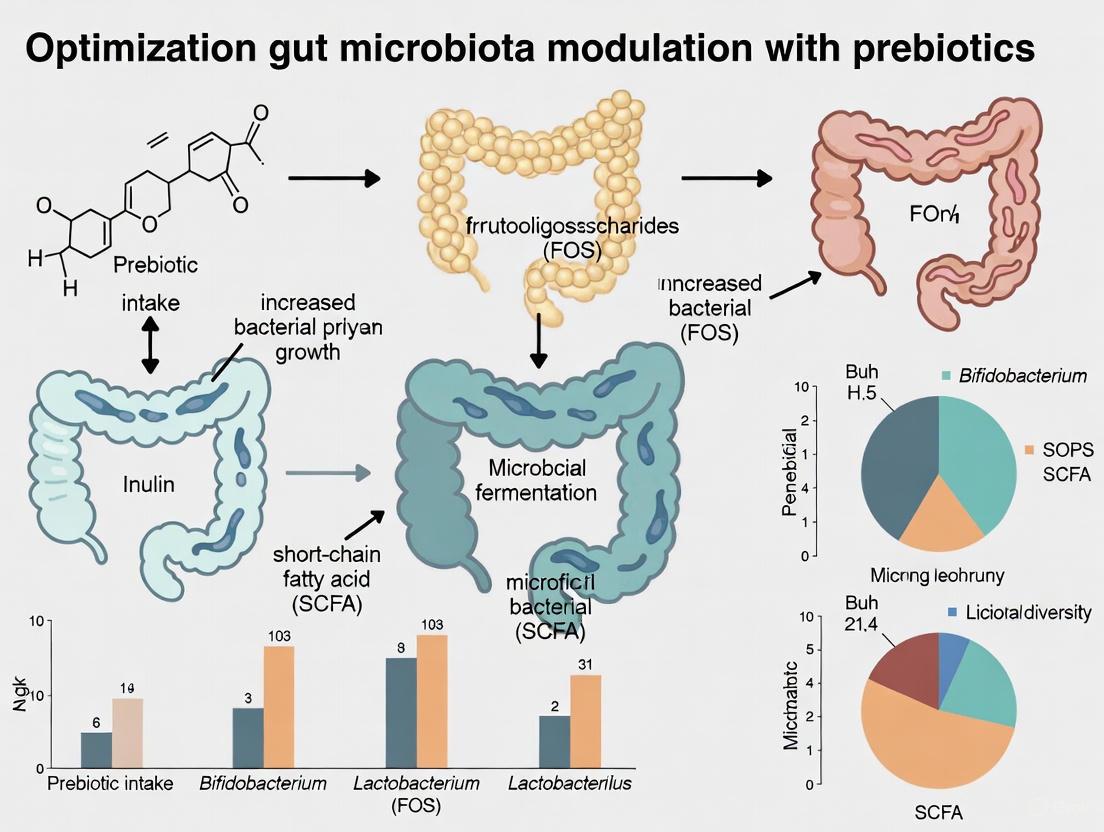
This article provides a comprehensive resource for researchers and drug development professionals on the strategic application of prebiotics for gut microbiota modulation.
Strategic Modulation of the Gut Microbiota with Prebiotics: From Foundational Mechanisms to Clinical Translation in Drug Development
Abstract
This article provides a comprehensive resource for researchers and drug development professionals on the strategic application of prebiotics for gut microbiota modulation. It synthesizes foundational science, including the evolving definition of prebiotics and their mechanisms of action via short-chain fatty acid production. The content explores advanced methodological applications, from established compounds like FOS and GOS to emerging, targeted prebiotics and synbiotics. It addresses critical challenges such as inter-individual variability and drug-microbiota interactions, underscoring the rise of pharmacomicrobiomics. Finally, it evaluates the evidence from human trials and meta-analyses, offering a framework for validating prebiotic efficacy in metabolic, gastrointestinal, and neurological health to inform future clinical research and therapeutic development.
Deconstructing the Prebiotic Concept: From Definitions to Core Mechanisms of Action
The term prebiotic is foundational to gut microbiota research, yet its definition has undergone significant evolution since its inception. For researchers and drug development professionals, understanding this evolution is critical for designing rigorous experiments and developing effective microbiome-targeted interventions. The concept has progressed from a narrow focus on a few carbohydrate substrates stimulating a limited number of bacteria to a broader conceptual framework that emphasizes selective microbial utilization and demonstrable health benefits. This journey reflects our growing understanding of host-microbe interactions and has been shaped by advances in microbiome science, particularly the shift from culture-based methods to high-throughput sequencing technologies [1]. This guide provides technical support for navigating the experimental implications of these definitional changes, ensuring your research meets contemporary scientific standards for prebiotic characterization.
Historical Timeline of the Prebiotic Definition
The definition of a prebiotic has been refined through key consensus meetings and publications. The following table summarizes this evolutionary trajectory.
Table 1: Historical Evolution of the Prebiotic Definition
| Year | Proposing Body/Authors | Core Definition | Key Criteria and Advancements |
|---|---|---|---|
| 1995 | Gibson & Roberfroid [1] | "A non-digestible food ingredient that beneficially affects the host by selectively stimulating the growth and/or activity of one or a limited number of bacteria in the colon." | • Resistance to host digestion• Selective stimulation of resident colonic bacteria (especially Bifidobacterium/Lactobacillus)• Improvement of host health |
| 2004 | -- | "Selectively fermented ingredients that allow specific changes, both in the composition and/or activity in the gastrointestinal microflora that confers benefits upon host well-being and health." [2] | • Refined the "selective fermentation" requirement• Emphasized changes in both composition and activity of the microbiota |
| 2008 | FAO/UN Technical Meeting [2] | "A non-viable food component that confers a health benefit on the host associated with modulation of the microbiota." | • Removed the specificity for "selective fermentation"• Broadened scope to any microbiota modulation associated with a health benefit |
| 2017 | ISAPP Consensus Panel [2] | "A substrate that is selectively utilized by host microorganisms conferring a health benefit." | • Introduced "substrate" (broadening beyond food/ingredients)• Re-introduced "selectively utilized" as a key criterion• Expanded scope to extra-gastrointestinal body sites |
| 2024 | ISAPP Update [3] | Reinforcement of the 2017 definition with elaborated scientific criteria. | • Provided detailed checklist for evidence [3]• Clarified "selective utilization" in the context of complex microbiomes• Emphasized need for a hypothesized mechanism linking microbiome modulation to health benefit |
Essential Toolkit for Modern Prebiotic Research
Modern prebiotic research requires a multifaceted approach to satisfy the current definitional criteria. The following experimental toolkit is essential for comprehensively characterizing a candidate prebiotic.
Table 2: Research Reagent Solutions and Methodologies for Prebiotic Studies
| Research Tool Category | Specific Examples & Reagents | Primary Function in Prebiotic Research |
|---|---|---|
| Microbiome Composition Analysis | 16S rRNA gene sequencing (V4 region primers), ITS sequencing, Shotgun metagenomics [4] | Identifies and quantifies taxonomic changes in microbial communities in response to the prebiotic substrate. |
| Bioinformatic Analysis Software | QIIME, Mothur, DADA2, MetaPhlAn2, Kraken [4] | Processes sequencing data, assigns taxonomy, performs diversity analyses (alpha/beta diversity), and identifies differentially abundant taxa. |
| Functional Metabolite Profiling | GC-/LC-MS for SCFAs (butyrate, propionate, acetate), Metabolomics via Mass Spectrometry [4] [5] | Measures the production of microbial-derived metabolites, providing a functional readout of prebiotic utilization and potential mechanisms. |
| In Vitro Fermentation Models | SHIME, TIM-2, batch culture fermentations with fecal inocula [5] | Provides a controlled system to study prebiotic fermentation, selectivity, and metabolite production before moving to complex in vivo studies. |
| Candidate Prebiotic Substrates | FOS, GOS, Inulin, Resistant Starch, Human Milk Oligosaccharides (HMOs), Pectic Oligosaccharides [5] | The test substances themselves, which must be highly characterized for identity, purity, and structure. |
Frequently Asked Questions (FAQs) & Troubleshooting
FAQ 1: How do I design a study to prove "selective utilization" as required by the modern ISAPP definition?
Answer: Demonstrating selective utilization requires a multi-faceted approach beyond simple 16S rRNA sequencing showing an increase in Bifidobacterium.
- Best Practice: Use a combination of omics technologies. Shotgun metagenomics can reveal taxonomic shifts with higher resolution, while metatranscriptomics can show which genes and pathways are actively being used to consume the prebiotic [4]. This directly links the substrate to microbial activity.
- Troubleshooting: If you see no change in overall community structure (beta diversity), analyze at finer taxonomic levels (species or strain) or look for changes in specific functional gene pathways associated with the prebiotic's degradation [4] [1].
- Experimental Control: Always include a proper control group (e.g., receiving a placebo like maltodextrin) in your in vivo studies. The selective changes must be statistically significant compared to the control.
FAQ 2: Our candidate prebiotic significantly modulates the gut microbiota, but we cannot link it to a consistent health benefit. Does it qualify as a prebiotic?
Answer: No. According to all major definitions, including the 2017 ISAPP consensus, a demonstrated health benefit in the target host is a non-negotiable requirement [2] [3]. Microbiome modulation alone is insufficient.
- Solution: You must conduct a well-controlled human trial (typically a Randomized Controlled Trial - RCT) in your target population. The health endpoint (e.g., improved markers of immune function, reduced pathogen load, improved transit time) must be predefined, rigorously measured, and statistically significant compared to a control group [3].
- Recommendation: It is crucial to have a sound hypothesis for the mechanism linking the observed microbiome changes to the health benefit. For example, if you see an increase in Faecalibacterium prausnitzii, you might hypothesize that the health benefit is mediated by increased production of the anti-inflammatory metabolite butyrate, which you should then measure [5] [2].
FAQ 3: How does a subject's background diet impact the outcome of a prebiotic clinical trial?
Answer: A participant's habitual diet is a major confounding variable and can significantly influence the gut microbiome's response to a prebiotic.
- Evidence: Studies have shown that prebiotics like inulin are more effective at increasing Bifidobacterium and butyrate in individuals with higher habitual fiber intake compared to those with lower fiber intake [6].
- Best Practice: The 2024 recommendations call for the inclusion of a research dietitian or nutritionist on the team. Dietary assessment (e.g., using food frequency questionnaires or 24-hour recalls) should be performed at baseline and the end of the intervention to account for this variability [6].
- Design Consideration: For highly controlled trials, consider providing a standardized diet or adjusting the statistical analysis to correct for background dietary intake as a covariate.
FAQ 4: What is the difference between a prebiotic and a dietary fiber?
Answer: This is a critical distinction. All prebiotics are, by definition, non-digestible and are therefore a type of dietary fiber. However, not all dietary fibers are prebiotics.
- Key Differentiator: The requirement for selective utilization and a resulting health benefit. Many dietary fibers (e.g., cellulose, wheat bran) are broadly fermented by a wide range of gut bacteria and may not confer a specific, documented health benefit via selective modulation [2] [1].
- Regulatory Note: While "dietary fiber" is a regulatory category in many countries with defined chemical and analytical criteria, "prebiotic" is not yet a legally defined term in most jurisdictions like the US (FDA) or EU (EFSA). This makes adherence to the scientific consensus definition even more important for product claims and research integrity [1].
Experimental Protocol: Core Workflow for Validating a Candidate Prebiotic
This protocol outlines the key stages for validating a compound against the modern ISAPP criteria.
Objective: To systematically evaluate a candidate prebiotic substance for its ability to be selectively utilized by host microorganisms and confer a health benefit.
Stage 1: Substance Characterization & In Vitro Screening
- Characterization: Fully define the chemical identity, structure, purity, and stability of the candidate prebiotic. This is essential for reproducibility [3].
- In Vitro Fermentation: Use batch culture fermentation systems inoculated with human fecal microbiota. Monitor:
- Gas Production: Indicator of general fermentability.
- pH Change: Indicator of SCFA production.
- SCFA Analysis: Quantify specific acids (acetate, propionate, butyrate) via GC-MS.
- Microbial Dynamics: Use 16S rRNA sequencing to assess preliminary shifts in microbial composition, identifying potential "responders" and "non-responders" [5].
Stage 2: In Vivo Validation in Target Host (The Critical Step)
- Study Design: A randomized, double-blind, placebo-controlled trial (RCT) is the gold standard.
- Dose Determination: Establish a dose-response relationship based on Stage 1. The final dose must be shown to be effective and safe [3].
- Key Measurements:
- Microbiome Analysis: Collect fecal samples at baseline, during, and post-intervention. Apply both 16S rRNA gene sequencing and shotgun metagenomics for comprehensive taxonomic and functional analysis [4].
- Health Benefit Endpoint: Measure predefined clinical outcomes relevant to the hypothesis (e.g., blood markers, immune parameters, symptoms). This must be done in the same study as the microbiome analysis [3].
- Dietary Control: Record and analyze participants' background diet as a covariate [6].
Stage 3: Data Integration & Causal Inference
- Correlation Analysis: Statistically link changes in specific microbial taxa or functions to improvements in the health endpoint.
- Mechanism Hypothesis: Develop a testable model for how selective utilization leads to the benefit (e.g., "Substrate X enriched Bacteroides Y, leading to increased propionate, which reduced serum triglycerides via pathway Z") [3].
- Advanced Causal Analysis: Employ statistical methods like causal mediation analysis to test if the health benefit is statistically mediated by the observed microbiome changes, strengthening the evidence for a causal chain [3].
Table 3: Key Considerations for Prebiotic Clinical Trial Design
| Design Element | Common Pitfall | Recommended Best Practice |
|---|---|---|
| Dietary Assessment | Ignoring background diet as a major confounding variable. | Include a validated dietary assessment tool (e.g., FFQ) at baseline and end. Involve a research dietitian [6]. |
| Microbiome Analysis | Relying solely on 16S rRNA data and coarse diversity metrics. | Use high-resolution metagenomics and focus on differential abundance testing of specific taxa/pathways. Report microbial load [4] [7]. |
| Dosage | Using an arbitrary or single dose. | Conduct a dose-ranging study to identify the minimal effective dose and establish a dose-response curve [3]. |
| Control Group | Using an inappropriate placebo that itself influences the microbiome. | Use a non-fermentable or minimally fermentable control (e.g., maltodextrin, microcrystalline cellulose) and ensure the study is double-blinded [6]. |
| Reporting | Insufficient detail on the prebiotic substrate itself. | Report the source, chemical characterization, manufacturer, and batch of the prebiotic to ensure reproducibility [6] [3]. |
The following table summarizes the core structural and source information for the three major prebiotic classes: Fructans, Galactooligosaccharides (GOS), and Xylooligosaccharides (XOS).
Table 1: Structural Characteristics and Natural Sources of Major Prebiotic Classes
| Prebiotic Class | Core Structure & Key Linkages | Primary Natural Sources | Degree of Polymerization (DP) |
|---|---|---|---|
| Fructans [8] [9] [10] | • Inulin: Linear β-(2→1) fructose chains, often with terminal glucose.• Levan: Linear β-(2→6) fructose chains.• Graminan: Mixed β-(2→1) and β-(2→6) linkages. | Chicory, Jerusalem artichoke, garlic (17.4%), onion, asparagus, wheat, barley, agave (7-25%) [8] [9]. | 3-60+ units (Inulin DP typically 2-60) [8] [10]. |
| Galactooligosaccharides (GOS) [11] [12] [10] | • Chains of galactose units with a terminal glucose.• Variety of linkages including β(1-2), β(1-3), β(1-4), β(1-6).• Includes both reducing and non-reducing isomers. | Human milk, cow's milk, legumes (lentils, chickpeas), dairy products [12]. | Typically 2 to 8 units [11]. |
| Xylooligosaccharides (XOS) [13] [14] [10] | • Linear chains of xylose units linked by β(1-4) bonds.• Mainly consist of xylobiose, xylotriose, and xylotetraose. | Bamboo shoots, fruits, vegetables, milk, honey, wheat bran, other lignocellulosic biomass [13] [14]. | 2-10 units, primarily xylobiose and xylotriose [14]. |
Key Experimental Protocols
Protocol: In Vitro Fermentation Using Fecal Inoculum
This protocol is used to assess the fermentability of prebiotics and their impact on gut microbiota composition and metabolic output [11].
Detailed Methodology:
- Inoculum Preparation: Collect fresh fecal samples from human donors (e.g., infants or adults). Pool samples if necessary to create a representative inoculum. Dilute the fecal material in an anaerobic, pre-reduced phosphate buffer or culture medium (e.g., YCFA) under a constant flow of CO₂ to maintain anaerobiosis [11].
- Substrate Addition: Weigh the prebiotic substrate (e.g., GOS, XOS, Fructans) into fermentation vessels (e.g., serum bottles or a bioreactor). A typical positive control is a well-known prebiotic like GOS, while a negative control would contain no added carbohydrate [11].
- Fermentation Process: Add the prepared fecal inoculum to the vessels. Incubate at 37°C with continuous agitation for a defined period (e.g., 24-48 hours). Sample the headspace and fermentation digesta at regular intervals (e.g., 0, 6, 12, 24 h) [11].
- Sample Analysis:
- Microbiota Composition: Analyze microbial population changes using 16S rRNA gene sequencing or quantitative PCR (qPCR) for specific bacterial groups like Bifidobacterium and Lactobacillus [11].
- Short-Chain Fatty Acid (SCFA) Production: Quantify the concentrations of acetate, propionate, and butyrate in the fermentation digesta using techniques like Gas Chromatography (GC) or High-Performance Liquid Chromatography (HPLC) [11].
- Substrate Utilization: Monitor the degradation of the prebiotic substrate over time using HPLC or Mass Spectrometry (MS) to track the consumption of specific oligosaccharide isomers [11].
Protocol: One-Step Fermentation for XOS Production
This integrated protocol combines the production of xylanases and the enzymatic hydrolysis of biomass into XOS in a single process, offering a cost-effective production method [14].
Detailed Methodology:
- Strain and Vector Preparation: Employ a recombinant microorganism, such as Escherichia coli BL21(DE3), transformed with a plasmid (e.g., pET22b+) containing a heterologous xylanase gene (e.g., GH11 xylanase from Bacillus agaradhaerens) [14].
- Fermentation Medium Setup: Use a fermentation medium containing the lignocellulosic biomass (e.g., de-starched wheat bran) as the primary carbon source. The concentration of the biomass (e.g., 10% loading) is a critical factor for yield [14].
- Induction and Hydrolysis: Induce the expression of the xylanase gene by adding Isopropyl β-d-1-thiogalactopyranoside (IPTG) to the culture. The extracellular xylanases secreted by the recombinant organism will simultaneously hydrolyze the wheat bran xylan into XOS directly in the fermentation medium [14].
- Optimization and Harvesting: Optimize critical parameters such as temperature (e.g., 44.3°C), pH (e.g., 7.98), and nitrogen source (e.g., glycine) using response surface methodology. Terminate the fermentation and separate the XOS-containing supernatant from the microbial cells and solid residue via centrifugation [14].
- Product Analysis: Analyze the XOS yield and profile (xylobiose, xylotriose, etc.) in the supernatant using HPLC [14].
Troubleshooting Guides and FAQs
FAQ 1: Our in vitro fermentation of a novel prebiotic candidate shows negligible production of short-chain fatty acids (SCFAs) and no significant shift in microbiota composition. What could be the cause?
- Potential Cause A: The prebiotic structure is not accessible to the gut microbiota used. The specific glycosidic linkages in your prebiotic may require specialized enzymes that the donor's microbiota lacks.
- Potential Cause B: The prebiotic is being degraded by host enzymes or is absorbed before reaching the colon.
- Solution: Confirm the prebiotic's resistance to mammalian digestive enzymes through in vitro simulations of gastric and pancreatic digestion prior to fermentation assays [15].
FAQ 2: We observe high inter-individual variability in the microbial response to a specific prebiotic (e.g., GOS) across our human cohort. How should we interpret this?
- Interpretation: This is a common and expected finding, primarily driven by the baseline composition of an individual's gut microbiota [6].
- Actionable Solution: Incorporate deep characterization of the baseline microbiome (e.g., metagenomic sequencing) and habitual dietary intake of participants at the start of the trial [6]. Stratify respondents vs. non-responders based on the presence of specific bacterial taxa (e.g., Bifidobacterium) or prebiotic-degrading genes in their baseline microbiome. This allows for a personalized analysis of efficacy.
FAQ 3: During the one-step fermentation for XOS production, our yield is lower than reported in the literature. What are the key parameters to optimize?
- Critical Parameter 1: Substrate Concentration and Pretreatment. The concentration of the lignocellulosic biomass (e.g., wheat bran) is the most crucial factor [14].
- Solution: Systematically test different loadings of your substrate (e.g., 5-15%). Ensure proper pretreatment (e.g., destarching) to make xylan more accessible to enzymatic attack [14].
- Critical Parameter 2: Nitrogen Source and Fermentation Conditions. The type of nitrogen source can significantly alter extracellular xylanase activity.
- Solution: Screen different nitrogen sources (e.g., glycine, yeast extract, peptone) for their impact on xylanase production and XOS yield. Use statistical design (e.g., Response Surface Methodology) to optimize temperature and pH, which are specific to the enzyme and host organism [14].
The Scientist's Toolkit: Research Reagent Solutions
Table 2: Essential Reagents and Materials for Prebiotic Research
| Reagent / Material | Function in Research | Example Application |
|---|---|---|
| Fecal Inoculum | Serves as a model of the human colonic microbiota for in vitro fermentation studies. | Evaluating the fermentability and SCFA production from a novel prebiotic candidate [11]. |
| Recombinant Xylanase (e.g., GH11) | Enzyme that hydrolyzes the backbone of xylan to produce Xylo-oligosaccharides (XOS). | Production of XOS from wheat bran in a one-step fermentation process [14]. |
| Anaerobic Chamber / Workstation | Creates and maintains an oxygen-free environment for handling fastidious gut microbes. | Preparation of pre-reduced media and cultivation of strict anaerobic bacteria from fecal samples [11]. |
| HPLC with Refractive Index (RI) or MS Detector | Separates and quantifies different sugars and oligosaccharides in a mixture. | Analyzing the degree of polymerization (DP) of prebiotics and monitoring their degradation during fermentation [11] [13]. |
| Gas Chromatography (GC) System | Separates and quantifies volatile and semi-volatile compounds, such as Short-Chain Fatty Acids (SCFAs). | Measuring the concentrations of acetate, propionate, and butyrate in fermentation digesta [11]. |
Metabolic Pathway Visualizations
Fructan Fermentation Pathway
One-Step XOS Production Workflow
Core Concepts: SCFAs and the Gut-Organ Axis
What are Short-Chain Fatty Acids (SCFAs) and where do they come from?
Short-chain fatty acids (SCFAs) are saturated fatty acids with one to six carbon atoms, primarily comprising acetate, propionate, and butyrate [16]. These crucial metabolites are produced when gut microbiota ferment dietary fibers, mainly in the cecum and proximal colon [17] [16]. In the human colon and feces, these three major SCFAs typically exist in a molar ratio of approximately 60:20:20 (acetate:propionate:butyrate) [16]. After production, SCFAs are absorbed by intestinal epithelial cells, with butyrate serving as a primary energy source for colonocytes, while acetate and propionate travel via the portal vein to the liver for metabolism [17].
How do SCFAs mediate systemic effects throughout the body?
SCFAs function as crucial signaling molecules that connect gut health to overall host physiology via multiple interconnected pathways. They exert their effects through two primary mechanisms: serving as histone deacetylase (HDAC) inhibitors and activating G protein-coupled receptors (GPCRs) such as GPR41, GPR43, and GPR109A [16]. These receptors are expressed on various cell types, enabling SCFAs to influence immune responses, metabolism, and inflammation both locally and systemically [17] [16]. Through these mechanisms and via circulation, SCFAs create a communication network along the "gut-organ axis," influencing distant organs including the brain, liver, cardiovascular system, and bones [18].
Table 1: Primary SCFA Receptors and Their Functions
| Receptor | Alternative Name | Primary SCFA Ligands | Key Functions |
|---|---|---|---|
| GPR41 | FFAR3 | Acetate, Propionate, Butyrate | Regulation of metabolism, inflammation; neuroprotective effects [16] |
| GPR43 | FFAR2 | Acetate, Propionate, Butyrate | Immunoregulation, inflammatory response modulation [16] |
| GPR109A | HCAR2 | Butyrate | Enhancement of intestinal barrier function, anti-inflammatory effects [16] |
Essential Methodologies & Experimental Protocols
What are the key considerations for designing robust SCFA experiments?
When designing SCFA research, controlling for confounding factors is paramount. Key considerations include:
- Host Factors: Age, diet, antibiotic use, medication history, and pet ownership significantly influence microbiome composition and SCFA production [19]. Implement careful matching or statistical adjustment for these variables.
- Sample Collection: For stool samples, immediate freezing at -80°C is ideal. When this isn't feasible, preservatives like 95% ethanol or specialized kits (OMNIgene Gut) can maintain sample integrity [19]. Consistent storage conditions across all samples is critical.
- Animal Studies: Account for "cage effects" where co-housed animals develop similar microbiomes through coprophagia. Design with multiple cages per experimental group and include cage as a variable in statistical models [19].
- Controls: Always include positive and negative controls, particularly for low-biomass samples where contamination can dominate results [19].
How can I accurately measure SCFA production and concentration?
Reliable SCFA quantification requires careful methodology from sample collection to analysis:
Table 2: SCFA Measurement Techniques and Considerations
| Methodological Stage | Key Protocols | Technical Notes |
|---|---|---|
| Sample Collection | Immediate freezing at -80°C; homogenization of stool samples | Homogenization ensures representative sampling; flash freezing prevents metabolite degradation [20] [19] |
| Sample Preservation | 95% ethanol, FTA cards, OMNIgene Gut kit | Essential for field studies or when immediate freezing isn't possible [19] |
| DNA Extraction | Consistent use of kit batches across study | Different batches can introduce variation; purchase all kits at study start [19] |
| Microbial Analysis | 16S rRNA sequencing, shotgun metagenomics | 16S for community structure; metagenomics for functional potential [20] |
What experimental models demonstrate SCFA bioactivity?
Various in vitro and in vivo approaches have elucidated SCFA mechanisms:
In Vitro Models:
- Immune Cell Cultures: Treatment of THP-1 cells with propionate and butyrate (10 µM) inhibits IL-4, IL-6, and ROS while enhancing IL-10 and IFN-γ expression [17].
- Intestinal Epithelial Models: Using YAMC cells with 5 mM propionate represses triglyceride accumulation via PPARα-responsive gene modulation [17].
- Synovial Fibroblasts: Application of SCFA mixtures (e.g., 300 µM acetate, 100 µM propionate, 100 µM butyrate) interferes with arthritogenic properties and induces cellular senescence [17].
In Vivo Models:
- Mouse Drinking Water Administration: 150 mM acetate in drinking water of C57BL/6 mice induces caspase-dependent neutrophil apoptosis and decreases NF-κB activity [17].
- Intraperitoneal Injection: 200 mg/kg butyrate in ICR mice upregulates IL-10 in septic shock models [17].
- Dietary Supplementation: 5% SCFA mixtures in diets protect C57BL/6J mice against high-fat diet-induced obesity and suppress hepatic lipid synthesis [17].
Troubleshooting Common Experimental Challenges
Why do I see inconsistent SCFA measurements in my longitudinal studies?
Longitudinal instability in SCFA profiles can stem from multiple sources:
- Dietary Fluctuations: Short-term dietary changes significantly alter microbial community structure and SCFA production [19]. Implement dietary controls or detailed tracking.
- Circadian Rhythms: Gut microbiome composition and function exhibit 24-hour cycling in both humans and mice [19]. Standardize sample collection times.
- Kit Variability: Different batches of DNA extraction kits can yield significantly different results [19]. Use a single batch for entire studies or include batch controls.
- Sample Handling: Inconsistent freezing times or homogenization procedures introduce variability [19]. Implement standardized protocols across all samples.
How can I enhance translational relevance in my SCFA research?
To bridge the gap between basic research and clinical applications:
- Human Trials: Follow protocols like the PROMOTe randomized controlled trial which administered prebiotics to older adults (≥60 years) for 12 weeks and measured both gut microbiome changes (e.g., increased Bifidobacterium) and functional outcomes including cognition and physical performance [21].
- Dose Translation: Calculate human equivalent doses from animal studies using established body surface area normalization methods.
- Multi-OMICs Approaches: Combine metagenomics (microbial composition) with metabolomics (SCFA measurement) and host response readouts for comprehensive mechanistic insights.
Technical Resource Toolkit
Research Reagent Solutions
Table 3: Essential Reagents for SCFA Research
| Reagent/Category | Specific Examples | Research Application |
|---|---|---|
| Prebiotic Substrates | Inulin, Fructooligosaccharides (FOS), Galactooligosaccharides (GOS) | Selective stimulation of SCFA-producing bacteria; used in clinical trials at 10-20g/day doses [22] [21] |
| SCFA Receptor Agonists/Antagonists | GPR43 (FFAR2) agonists, GPR41 (FFAR3) agonists, HDAC inhibitors | Mechanistic studies of SCFA signaling pathways [16] |
| SCFA Sodium Salts | Sodium acetate, Sodium propionate, Sodium butyrate | Direct administration in animal models (dietary: 5%; drinking water: 150mM) and cell culture (0.1-10mM) [17] |
| Sample Preservation | RNAlater, 95% ethanol, OMNIgene Gut kit, FTA cards | Maintain sample integrity during storage/transport [19] |
| DNA Extraction Kits | MoBio PowerSoil, QIAamp DNA Stool Mini Kit | Microbial community analysis; crucial for consistency [19] |
Visualization of SCFA Signaling Pathways
SCFA Signaling Mechanisms: This diagram illustrates the primary molecular pathways through which SCFAs exert their local and systemic effects, including histone deacetylase inhibition and G protein-coupled receptor activation.
Experimental Workflow for SCFA Research
SCFA Research Workflow: This diagram outlines a comprehensive experimental pipeline for conducting robust SCFA research, from study design through sample collection, analysis, and data interpretation.
Advanced Applications & Future Directions
How can SCFA research be translated into therapeutic applications?
Emerging clinical evidence supports targeting SCFA pathways for therapeutic benefit:
- Cognitive Health: The PROMOTe randomized controlled trial demonstrated that prebiotic supplementation significantly improved cognition in older adults (aged ≥60) compared to placebo, with particular benefits in memory tests associated with early Alzheimer's detection [21].
- Metabolic Disorders: Propionate administration stimulates glucagon-like peptide-1 (GLP-1) secretion from intestinal epithelial cells, inhibiting blood glucose elevation and showing promise for diabetes management [16].
- Inflammatory Conditions: Butyrate enhances intestinal barrier function and suppresses inflammatory responses through both GPCR activation and HDAC inhibition, suggesting therapeutic potential for inflammatory bowel disease [16].
What are the key knowledge gaps in current SCFA research?
Despite significant advances, several challenges remain:
- Individual Variability: Host genetics, baseline microbiome composition, and environmental factors create substantial inter-individual variation in SCFA response [20] [23].
- Dose-Response Relationships: Optimal dosing for different health outcomes and individuals remains poorly characterized [17] [21].
- Context-Dependent Effects: SCFAs can exhibit both beneficial and pathological effects depending on context, tissue type, and disease state [18].
- Technical Standardization: Lack of standardized protocols across laboratories complicates comparison between studies [19].
Future research should focus on personalized approaches that account for individual microbiome composition, develop targeted delivery systems for specific SCFAs to particular tissues, and establish standardized protocols for reproducible measurements across research laboratories.
Frequently Asked Questions (FAQs)
FAQ 1: What are the primary hallmarks of gut microbiota dysbiosis, and how can I quantify them in my experimental models?
Dysbiosis is characterized by a shift in the normal gut microbial community. The key hallmarks are:
- Reduced Microbial Diversity: A decrease in the variety of microbial species, often measured by alpha diversity indices (e.g., Shannon, Chao1) [24] [25].
- Loss of Beneficial Microbes: Depletion of commensals with key metabolic functions, such as Faecalibacterium prausnitzii and other short-chain fatty acid (SCFA) producers [25] [26].
- Expansion of Pathobionts: An overgrowth of potentially harmful microorganisms, often from the Proteobacteria phylum (e.g., Klebsiella pneumoniae) [24] [26].
- Functional Imbalance: A shift in the metabolic output of the community, such as reduced SCFA production or increased production of detrimental metabolites like trimethylamine (TMA) [5] [26].
To quantify these in your models, a combination of 16S rRNA gene sequencing (for diversity and taxonomy) and metagenomic sequencing (for functional potential) is standard. Metabolomic analysis of fecal or serum samples (e.g., for SCFAs, TMAO) is used to confirm functional changes [25].
FAQ 2: My prebiotic intervention yields highly variable results between subjects. How can I account for this inter-individual variability in my study design and analysis?
Variable responses to dietary, prebiotic, and probiotic interventions are common and are significantly influenced by the subject's baseline gut microbiota composition [27]. To address this:
- Stratify by Baseline Microbiota: Measure and stratify subjects based on baseline enterotypes (e.g., Bacteroides-dominant vs. Prevotella-dominant) or the abundance of specific bacterial taxa known to utilize the prebiotic [27].
- Implement Crossover Designs: Where possible, use a crossover study design where each subject serves as their own control, which increases statistical power [27] [21].
- Use Predictive Modeling: Employ machine learning models trained on baseline microbiome data, dietary intake, and clinical metadata to predict responder status [27]. Mechanistic models, like genome-scale metabolic modeling, can also predict individual-specific responses without requiring large training datasets [27].
- Control for Confounders: In your statistical analysis, adjust for key covariates such as age, BMI, sex, and dietary habits, which are known to influence the gut microbiome [25].
FAQ 3: What are the best practices for preserving and amplifying functional human gut microbiota for in vitro experiments?
Maintaining microbial viability and function from stool samples to in vitro models is critical.
- Amplification: Use gut-simulating in vitro systems, such as anaerobic bioreactors (e.g., the Environmental Control System for Intestinal Microbiota - ECSIM), to amplify the microbial repertoire from a fresh fecal sample while preserving its diversity and metabolic functions [28].
- Preservation: For long-term storage, cryopreservation with suitable cryoprotective agents (CPAs) is essential. Dimethylsulfoxide (DMSO), either alone or in combination with other CPAs, has been shown to provide the best efficiency for functional preservation of microbial communities over periods of at least 6 months [28]. Glycerol and polyethylene glycol are also used but may be less effective than DMSO [28].
FAQ 4: Which statistical models are most appropriate for analyzing overdispersed and zero-inflated microbiome count data?
Standard statistical tests (e.g., t-test, ANOVA) are often inadequate for microbiome data due to its unique characteristics [29]. The following models are more appropriate:
- Negative Binomial (NB) Models: A standard choice for modeling overdispersed count data, such as sequence reads for operational taxonomic units (OTUs) or amplicon sequence variants (ASVs) [29].
- Zero-Inflated Models: For data with an excess of zeros, use Zero-Inflated Negative Binomial (ZINB) or hurdle models to separately model the probability of a zero and the positive count values [29].
- Multivariate Methods: For community-level analysis, use PERMANOVA (adonis) to test for differences in overall microbial community structure (beta-diversity) between groups [25].
Troubleshooting Guides
Problem: Failure to Induce Dysbiosis in a Rodent Model Unexpected resistance to diet-induced dysbiosis can occur.
Table: Troubleshooting Diet-Induced Dysbiosis in Rodents
| Problem Cause | Symptoms | Solution |
|---|---|---|
| Insufficient Diet Duration | Minimal change in microbial diversity or composition. | Extend the intervention period; dysbiosis can take several weeks to establish. |
| Suboptimal Diet Formulation | Lack of expected bloom in Proteobacteria or reduction in Firmicutes. | Use a rigorously defined high-fat, high-sugar, and low-fiber diet. Avoid standard chow as a control if it is high in fiber [24]. |
| Baseline Microbiota Status | High variability in response between individual animals. | Source animals from the same vendor and litter where possible. Pre-screen animals using a baseline stool sample to ensure a uniform starting community [27]. |
| Antibiotic Inefficiency | Failure to reduce microbial diversity after antibiotic treatment. | Verify antibiotic activity and administration route. Use a established cocktail (e.g., ampicillin, vancomycin, neomycin, metronidazole) in drinking water [24]. |
Problem: Low Discriminatory Power in Case-Control Microbiome Study The model fails to distinguish effectively between healthy and diseased subjects based on microbiome data.
Table: Improving Classifier Performance in Microbiome Studies
| Step | Action | Rationale |
|---|---|---|
| 1. Feature Selection | Move beyond broad taxonomic levels. Focus on species-level signatures identified via metagenomics and include functional genes or pathways [25]. | Species and strains have more specific functional roles than higher taxonomic levels. |
| 2. Model Choice | Use machine learning classifiers like Random Forest, which handle high-dimensional data well. Train on identified microbial signatures [25]. | Random Forest can capture complex, non-linear interactions between multiple microbial features. |
| 3. Increase Sample Size | Re-assess statistical power. Collaborate to increase cohort size or utilize public data for validation. | Many early studies were underpowered. Large-scale meta-analyses have identified more robust, generalizable signatures [25]. |
| 4. Control Confounders | In analysis, adjust for medication use (especially antibiotics and PPIs), detailed dietary data, and host genetics [24] [25]. | These factors are major drivers of microbial variation and can confound disease-associated signals. |
Experimental Protocols & Workflows
Protocol 1: In Vitro Amplification and Preservation of Functional Gut Microbiota
This protocol allows for the faithful amplification and long-term storage of complex gut microbial communities for subsequent experiments [28].
Materials:
- Donor Sample: Fresh fecal sample (processed within 4 hours of collection).
- Culture System: Anaerobic chamber and a chemostat-based in vitro gut model (e.g., ECSIM).
- Media: Artificial gut medium, pre-reduced and anaerobic.
- Cryoprotective Agents (CPAs): DMSO, Glycerol, Polyethylene Glycol (PEG).
- Storage: Cryovials, -80°C freezer.
Method:
- Inoculum Generation: In an anaerobic chamber, homogenize 1g of fresh fecal sample in 5mL of artificial gut medium. Incubate at 37°C for 10 hours.
- Pre-culture Expansion: Transfer the entire preculture into 95mL of fresh medium and incubate for 15 hours at 37°C.
- Batch Fermentation: Transfer the 100mL culture into a fermenter containing 900mL of medium. Run in batch mode (pH 6.2, 37°C) for 8 hours.
- Preservation: Aliquot the amplified culture and add CPAs to a final concentration of 10% (v/v). Standard options include:
- 10% DMSO
- 10% Glycerol
- 10% DMSO + PEG
- Storage: Store aliquots at -20°C for 4 hours, then transfer to -80°C for long-term preservation.
- Resuscitation: Thaw a preserved aliquot anaerobically, inoculate into 5mL of medium, and follow steps 2 and 3 to regenerate the community. For chemostat cultures, stabilize over seven residence times before sampling for analysis.
Workflow for Gut Microbiota Amplification and Preservation
Protocol 2: Analyzing a Prebiotic Intervention in an Ageing Cohort (Remote Trial)
This protocol is based on the PROMOTe randomized controlled trial, which successfully demonstrated the cognitive benefits of a prebiotic in an older population using a remote design [21].
Materials:
- Participants: Older adults (e.g., ≥60 years), ideally using a twin-pair design to control for genetics and shared environment.
- Interventions: Prebiotic (e.g., 12g/day of inulin-type fructans) and an iso-caloric placebo (e.g., maltodextrin).
- Co-interventions: Standardized resistance exercise and branched-chain amino acid (BCAA) supplementation for all participants.
- Outcome Measures:
- Primary: Physical function (e.g., 5x chair rise time).
- Secondary: Cognition (CANTAB battery), grip strength, dietary records (myfood24), gut microbiome (16S rRNA or metagenomic sequencing).
- Platforms: Video conferencing for visits, online questionnaires and cognitive tests, postal services for equipment and sample collection.
Method:
- Recruitment & Randomization: Recruit twin pairs. Within each pair, randomly assign one twin to the prebiotic group and the other to the placebo group (block randomization).
- Remote Setup: Mail resistance bands, sample collection kits (stool, saliva), and study supplements to participants.
- Baseline Assessment: Conduct video visits to obtain informed consent. Guide participants through online baseline questionnaires and cognitive tests. Instruct them to collect and return baseline biological samples.
- Intervention: Participants take the assigned supplement daily for 12 weeks. All participants perform prescribed resistance exercises and take BCAA supplements.
- Monitoring: Use online surveys for adverse events and compliance. Track supplement intake and exercise logs.
- Endpoint Assessment: Repeat all baseline assessments (questionnaires, cognitive tests, sample collection) at the end of 12 weeks.
- Analysis:
- Microbiome: Analyze sequencing data for changes in diversity and specific taxa (e.g., Bifidobacterium).
- Statistics: Use linear mixed models to analyze primary and secondary outcomes, adjusting for covariates like appetite and baseline values. Perform both intention-to-treat and per-protocol analyses.
Signaling Pathways in Host-Microbiota Communication
The gut microbiota influences host physiology through several key signaling pathways mediated by microbial metabolites.
Key Microbial Metabolite Signaling Pathways
The Scientist's Toolkit: Essential Reagents & Materials
Table: Essential Reagents for Gut Microbiota and Prebiotic Research
| Item | Function/Application | Example Use Case |
|---|---|---|
| Prebiotics (e.g., FOS, GOS, Inulin) | Selectively fermented ingredients that confer a health benefit via gut microbiota [5]. | Dietary intervention to stimulate growth of beneficial bacteria like Bifidobacterium and Lactobacillus [5] [21]. |
| Cryoprotective Agents (DMSO, Glycerol) | Protect microbial cells from damage during freezing and thawing [28]. | Long-term preservation of complex gut microbiota samples or isolates while maintaining viability and function [28]. |
| Artificial Gut Media | Chemically defined culture medium simulating the intestinal environment. | Culturing and amplifying gut microbiota in anaerobic bioreactors for in vitro experiments [28]. |
| DNA/RNA Extraction Kits (for Stool) | Isolation of high-quality nucleic acids from complex fecal samples. | Preparing samples for 16S rRNA sequencing, metagenomics, or metatranscriptomics. |
| Short-Chain Fatty Acid (SCFA) Standards | Analytical standards for chromatography (GC/LC-MS). | Quantifying microbial fermentation products (butyrate, propionate, acetate) in fecal or serum samples [5] [26]. |
| Bile Acid Standards | Analytical standards for chromatography (GC/LC-MS). | Profiling primary and secondary bile acids, which are key host-microbiota co-metabolites [26]. |
Advanced Prebiotic Applications and Synbiotic Strategies for Targeted Health Outcomes
FAQs: Addressing Core Conceptual and Practical Challenges
FAQ 1: What defines a "next-generation" prebiotic target, and why is Faecalibacterium prausnitzii a prime candidate?
Next-generation prebiotic targets move beyond traditionally stimulated genera like Bifidobacterium and Lactobacillus to focus on keystone bacterial species that are critical for gut ecosystem stability and human health but are often low in abundance or deficient in disease states [30]. Faecalibacterium prausnitzii is a prime candidate because it is one of the most abundant and prevalent species in the healthy human colon and is a major producer of the short-chain fatty acid butyrate [30]. Butyrate is a primary energy source for colonocytes, has potent anti-inflammatory properties, and contributes to intestinal barrier integrity. A decline in F. prausnitzii abundance is a common feature in dysbiosis associated with conditions like inflammatory bowel disease (IBD) and obesity [30].
FAQ 2: My in vitro assays show prebiotic fermentation, but I see no significant compositional changes in my animal model's gut microbiota. What could explain this discrepancy?
This common issue can arise from several factors:
- Baseline Microbiota: The animal's native gut microbiota may lack the specific bacterial taxa (or the necessary strains) capable of utilizing the test prebiotic. The presence of key species like F. prausnitzii in your model should be confirmed at baseline via sequencing [30].
- Cross-Feeding: The primary metabolites (e.g., lactate, acetate) produced by initial fermenters (e.g., bifidobacteria) may be consumed by secondary utilizers (e.g., butyrate-producing bacteria) without a dramatic shift in the relative abundance of the primary fermenters. This "cross-feeding" can enhance butyrate production without major taxonomic shifts [30]. Your analytical methods should track both microbial composition and functional outputs like SCFAs.
- Prebiotic Specificity and Dose: The prebiotic may not be specific or potent enough to drive a detectable population shift against a complex background community. Dose-response studies are crucial [31].
FAQ 3: What are the critical steps for validating the selectivity of a novel prebiotic for a target like Faecalibacterium?
Validation requires a multi-method approach:
- In Vitro Culturing: Demonstrate selective growth promotion of pure cultures of Faecalibacterium or other target species (e.g., Roseburia, Eubacterium) compared to non-target organisms using the prebiotic as the sole carbon source [32].
- Omics Integration: In complex communities (e.g., batch cultures with fecal inocula), use shotgun metagenomics to track strain-level changes and metatranscriptomics to confirm active gene expression related to the prebiotic's degradation [31] [33].
- Metabolite Confirmation: Correlate the enrichment of the target organism with an increase in its characteristic metabolic output, such as a rise in butyrate concentration for F. prausnitzii [30]. This functional data is key to confirming a beneficial outcome.
FAQ 4: How do I overcome the challenge of working with strict anaerobic next-generation targets like Faecalibacterium for in vitro assays?
Strict anaerobes require specialized handling [30] [34]:
- Environment: Use an anaerobic chamber with an atmosphere of ~85% N₂, ~10% CO₂, and ~5% H₂, or alternatively, use pre-reduced anaerobically sterilized (PRAS) media and anaerobic jars.
- Media: Employ rich, pre-reduced media designed for fastidious gut anaerobes. The medium should contain necessary growth factors like vitamins and amino acids.
- Culture Confirmation: Always confirm culture purity and identity after experiments through Gram staining and 16S rRNA gene sequencing.
Troubleshooting Guides for Common Experimental Pitfalls
Guide 1: Low Butyrate Yield in Fermentation Models
| Symptom | Possible Cause | Solution |
|---|---|---|
| Low butyrate concentration despite prebiotic fermentation. | Lack of lactate-utilizing, butyrate-producing bacteria (e.g., Anaerobutyricum, Eubacterium hallii) in the consortium. | Design a defined synthetic microbial community that includes both primary degraders and lactate-utilizing, butyrate-producing species to create a cross-feeding pipeline [30]. |
| The prebiotic is degraded by a pathway that does not produce butyrate precursors. | Switch to a prebiotic known to favor butyrogenic pathways, such as resistant starch (for R. bromii) or specific arabino-xylo-oligosaccharides (for Lachnospiraceae) [5] [30]. | |
| The fermentation pH is too low, inhibiting the growth of butyrate producers. | Monitor and control the pH of the fermentation system to remain near neutral (pH 6-7), which is optimal for many butyrate-producing Firmicutes. |
Guide 2: Inconsistent Results Between In Vitro and In Vivo Studies
| Symptom | Possible Cause | Solution |
|---|---|---|
| Prebiotic effect observed in vitro but not in a rodent model. | Host-level factors (transit time, immune response, bile salts) are not present in vitro. | Use a more sophisticated in vitro model like a gut simulator (e.g., SHIME) that incorporates host factors before moving to in vivo studies [35]. |
| The animal's diet contains background fibers that interfere with the tested prebiotic. | Use a defined, low-fiber background diet for the study duration to reduce confounding dietary inputs. | |
| Insufficient prebiotic dose reached in the distal colon. | Consider using microencapsulation technologies to protect the prebiotic from early fermentation, ensuring delivery to the distal colon where targets like Faecalibacterium reside [36]. |
Experimental Protocols for Targeted Prebiotic Research
Protocol 1: Directed Enrichment ofFaecalibacterium prausnitziifrom Fecal Inocula
Objective: To assess the potential of a novel prebiotic to selectively enrich for F. prausnitzii in a mixed community.
Materials:
- Pre-reduced, Anaerobic Basal Medium: Prepared as per [30], supplemented with 0.5% w/v of the test prebiotic (e.g., specific seaweed polysaccharide, arabinoxylan-oligosaccharide) as the sole carbon source. Include a negative control (no carbon) and a positive control (e.g., fructooligosaccharides).
- Fecal Inoculum: Fresh fecal sample from a healthy donor, confirmed to contain F. prausnitzii via qPCR or sequencing. Diluted and homogenized in anaerobic PBS under a constant stream of CO₂.
- Equipment: Anaerobic chamber, 37°C incubator with shaking, sterile culture tubes.
Method:
- Inside the anaerobic chamber, dispense 9 mL of pre-reduced medium into each culture tube.
- Inoculate each tube with 1 mL of the prepared fecal slurry (final concentration ~1% w/v).
- Seal tubes and incubate anaerobically at 37°C with mild agitation (150 rpm) for 24-48 hours.
- Post-incubation, collect samples for:
- Microbial Analysis: 16S rRNA amplicon sequencing (e.g., V4 region) and/or qPCR with primers specific for F. prausnitzii.
- Metabolite Analysis: Centrifuge culture and analyze supernatant for SCFAs (acetate, propionate, butyrate) via GC-MS or HPLC.
Validation: A successful outcome is indicated by a statistically significant increase in the relative abundance of F. prausnitzii and a concomitant increase in butyrate concentration in the test prebiotic group compared to controls.
Protocol 2: Evaluating Strain-Level Specificity of a Prebiotic
Objective: To determine if a prebiotic selectively stimulates specific strains of a target species, such as Bifidobacterium adolescentis.
Materials:
- Bacterial Strains: A panel of at least 3-5 different documented strains of the target species (e.g., B. adolescentis).
- Pre-reduced Medium: As in Protocol 1, with the test prebiotic (e.g., GOS) as the sole carbon source.
- Microplate Reader capable of measuring optical density (OD) under anaerobic conditions.
Method:
- In an anaerobic chamber, prepare a 96-well microplate with 180 µL of pre-reduced medium per well.
- Inoculate each well with 20 µL of an overnight culture of a single bacterial strain. Each strain should be tested in multiple replicates against the prebiotic and control substrates.
- Seal the plate with a gas-impermeable membrane and place in the anaerobic microplate reader.
- Measure OD₆₀₀ every 30 minutes for 24-48 hours under constant anaerobic conditions at 37°C with continuous shaking.
- Analyze the growth curves to calculate maximum growth rate (µₘₐₓ) and maximum OD for each strain on each substrate.
Validation: Strain-level specificity is confirmed if one or more strains show a significantly higher µₘₐₓ and final biomass yield on the test prebiotic compared to other strains of the same species [32].
Signaling Pathways and Metabolic Logic
The therapeutic benefit of prebiotics is largely mediated by microbial metabolites, particularly SCFAs, which influence host signaling pathways.
Diagram Title: SCFA Signaling Pathways in Gut Health
The Scientist's Toolkit: Research Reagent Solutions
This table details key materials and their applications for advanced prebiotic research.
| Research Reagent | Function / Application in Prebiotic Studies |
|---|---|
| Arabino-Xylo-Oligosaccharides (AXOS) | Emerging prebiotic shown to enrich for fiber-degrading members of Lachnospiraceae and Oscillospiraceae, such as Roseburia and Ruminococcus species [30] [34]. |
| Pectic-Oligosaccharides (POS) | Complex prebiotics derived from pectin that can enrich for specific Bacteroides spp. and other bacteria with a broad arsenal of carbohydrate-active enzymes (CAZymes) [30]. |
| Resistant Starch (RS) | A well-studied prebiotic that is selectively degraded by key species like Ruminococcus bromii, leading to high butyrate production via cross-feeding [5]. |
| β-Glucan | A prebiotic fiber requiring sophisticated microbiome analysis (e.g., shotgun metagenomics) to understand its modulation of the gut microbiome in metabolic diseases [33]. |
| Defined Synthetic Microbial Community (SynCom) | A customized mixture of known bacterial strains (e.g., including F. prausnitzii, B. adolescentis, E. hallii) used to dissect specific prebiotic degradation pathways and cross-feeding interactions in a controlled system [30]. |
| Galactooligosaccharides (B-GOS) | A specific type of GOS synthesized using enzymes from Bifidobacterium bifidum. Clinical trials show efficacy in increasing bifidobacteria and improving metabolic markers [31]. |
| Shotgun Metagenomic Sequencing | Recommended over 16S rRNA sequencing for identifying microbial changes at the species or strain level and for profiling the genetic potential (CAZymes) of the community [31] [33]. |
| Anaerobic Chamber | Essential equipment for the cultivation and manipulation of strict anaerobic next-generation targets like Faecalibacterium prausnitzii and Roseburia species [30]. |
Frequently Asked Questions (FAQs)
Q1: What is the fundamental difference between complementary and synergistic synbiotics? A1: Complementary synbiotics combine a probiotic and a prebiotic where each component acts independently to provide a health benefit, with the combination clinically shown to be beneficial [37]. In contrast, synergistic synbiotics are specifically formulated so that the prebiotic substrate is selectively utilized by the co-administered probiotic microorganism, thereby directly enhancing its persistence, growth, or metabolic activity in the gut to provide a greater benefit than either component alone [37] [38].
Q2: Why is a clinical trial still necessary for complementary synbiotics if both components are already proven beneficial? A2: Even when individual components are proven, ecological interactions in the gut can alter the outcome. For example, the prebiotic might be consumed by a commensal gut microbe that out-competes or inhibits the administered probiotic, potentially resulting in a null or reduced effect. A well-designed randomized controlled trial (RCT) is required to confirm that the combined product provides a health benefit [37].
Q3: What are the key control groups required in a clinical trial for a synergistic synbiotic? A3: To robustly demonstrate synergism, a trial must include control groups for the probiotic alone, the prebiotic alone, and the synbiotic combination, in addition to a placebo. This design is necessary to prove that the effect of the combination is significantly greater than the effect of either component administered individually [37].
Q4: Our synbiotic formulation failed to show a benefit over placebo. What are the most common methodological pitfalls? A4: Common issues include:
- Insufficient Dosing: Many commercial and clinical synbiotics use prebiotic doses below the threshold required to confer a health benefit [37].
- Lack of Rationale: The pairing of a specific probiotic and prebiotic is often not based on a proven metabolic relationship, leading to a lack of cooperation in the gut [37].
- Personalized Constraints: The effectiveness can depend on an individual's baseline microbiota. If the necessary microbial pathways or niches are absent, the intervention may fail for that "non-responder" [37].
Troubleshooting Experimental Issues
Problem: Failure to Observe Synergism In Vivo Your synbiotic shows no added benefit compared to the probiotic or prebiotic alone in an animal model or clinical trial.
| Potential Cause | Diagnostic Approach | Solution |
|---|---|---|
| Non-selective substrate | Perform in vitro growth assays to confirm the prebiotic selectively promotes the growth of the specific probiotic strain over other gut microbes. | Re-formulate with a substrate demonstrated to be preferentially utilized by your probiotic. |
| Inadequate prebiotic dose | Review literature for effective doses of your prebiotic. Check if your dose reaches the colon in sufficient quantity. | Increase the prebiotic dose to a clinically relevant level (e.g., often 5g/day or more for many prebiotics) [37]. |
| Probiotic ecological failure | Use quantitative PCR or strain-specific sequencing to track probiotic colonization levels in the gut with and without the prebiotic. | Select a probiotic strain with better gut persistence traits or use a prebiotic that directly addresses its metabolic needs. |
Problem: Inconsistent Results Across Study Subjects (High Inter-individual Variability) The synbiotic effect is strong in some subjects but absent in others.
| Potential Cause | Diagnostic Approach | Solution |
|---|---|---|
| Baseline microbiota composition | Sequence baseline stool samples from responders vs. non-responders to identify key microbial taxa or genes that predict success. | Consider pre-screening subjects for baseline microbiota features or develop personalized synbiotic formulations. |
| Subject diet confounding results | Have subjects complete detailed dietary logs, focusing on fiber and prebiotic intake. | Standardize or control for dietary intake during the study period to reduce noise. |
Experimental Protocols for Synbiotic Validation
Protocol 1: In Vitro Synergism Screening
Objective: To rapidly identify probiotic-prebiotic pairs where the prebiotic selectively stimulates the growth of the probiotic strain.
Methodology:
- Culture Preparation: Grow the candidate probiotic strain overnight in a suitable base medium.
- Substrate Supplementation: Aliquot the base medium into several vials. Supplement these vials with different candidate prebiotics (e.g., inulin, FOS, GOS, XOS) as the sole or primary carbon source. Include a negative control (no carbon source) and a positive control (a universal carbon source like glucose).
- Inoculation and Incubation: Inoculate each vial with a standardized inoculum of the probiotic. Incubate under optimal conditions.
- Monitoring: Measure bacterial growth (e.g., via optical density at 600nm) at regular intervals over 24-48 hours.
- Analysis: Compare the growth curves. A synergistic candidate will show robust growth on the specific prebiotic, comparable to or exceeding growth on glucose.
Protocol 2: Validating Synergism in a Animal Model
Objective: To confirm that the synbiotic combination enhances probiotic colonization or function in vivo more than the probiotic alone.
Methodology (based on standard pre-clinical approaches):
- Group Design: Assign animals to one of four groups: (i) Synbiotic (Probiotic + Prebiotic), (ii) Probiotic alone, (iii) Prebiotic alone, (iv) Placebo control.
- Administration: Administer the respective treatments daily via oral gavage or in feed for a predetermined period (e.g., 2-4 weeks).
- Sample Collection: Collect fecal samples at baseline, during intervention, and after intervention.
- Outcome Measurement:
- Primary: Quantify the abundance of the administered probiotic in fecal samples using strain-specific quantitative PCR.
- Secondary: Measure microbial metabolites (e.g., SCFAs via GC-MS) and/or host response markers.
- Statistical Analysis: Use ANOVA to compare outcomes across groups. A successful synergistic synbiotic will result in a significantly higher probiotic abundance and/or metabolite production in the synbiotic group compared to all other groups.
Research Reagent Solutions
Key materials and their functions for synbiotic research are detailed in the table below.
| Item | Function/Application in Research |
|---|---|
| Prebiotics | |
| Inulin (from chicory root) | A fructan used to selectively stimulate growth of beneficial bacteria like bifidobacteria. Often used at 5-15g/day in human trials [22]. |
| Fructooligosaccharides (FOS) | Short-chain fructans with a lower degree of polymerization. Used to modulate microbiota, improve mineral absorption, and manage lipids [22]. |
| Galactooligosaccharides (GOS) | Non-digestible carbohydrates mimicking human milk oligosaccharides. Have strong bifidogenic activity and are used in infant formula and adult health products [22]. |
| Xylooligosaccharides (XOS) | Linear oligosaccharides produced from xylan. Known for bifidogenic activity, antioxidant properties, and ability to reduce blood cholesterol [22]. |
| Analytical Tools | |
| Shotgun Metagenomic Sequencing | Used to comprehensively profile all genes in the gut microbiome, allowing researchers to track specific probiotic strains and functional changes [22]. |
| 16S rRNA Sequencing | A targeted approach to characterize bacterial community composition and diversity, often used to assess the overall impact of a synbiotic on the microbiota [22]. |
| Gas Chromatography-Mass Spectrometry (GC-MS) | The gold standard for quantifying short-chain fatty acids (acetate, propionate, butyrate) produced by microbial fermentation of prebiotics [22] [39]. |
Signaling Pathways and Workflows
Synbiotic Development Workflow
Prebiotic Mechanism of Action
Frequently Asked Questions (FAQs) for Researchers
Q1: What is the clinical evidence for prebiotics improving glycemic control in Type 2 Diabetes (T2D)? A1: Clinical evidence indicates that prebiotic supplementation can significantly improve key markers of glycemic control. A 2024 systematic review and meta-analysis focusing on metabolic syndrome (MetS), a condition often preceding T2D, found that probiotic and synbiotic (which include prebiotics) supplementation effectively reduced fasting blood glucose levels (SMD: -0.20; p = 0.003) and insulin levels (SMD: -0.17; p = 0.03) [40]. Furthermore, a 2025 review highlighted that certain randomized controlled trials (RCTs) in patients with impaired glucose tolerance and T2D demonstrated improvements in HbA1c levels following probiotic administration, suggesting a role in long-term glucose management [41].
Q2: My experimental results on prebiotics and weight management are inconsistent with published literature. What could be a key factor? A2: Inconsistent results in weight management studies are a common challenge. A critical factor to consider is the population demographics and intervention duration. The 2024 meta-analysis by Zhu et al. conducted a subgroup analysis which revealed that prebiotic and synbiotic interventions had more pronounced effects on reducing body weight and waist circumference in individuals under 50 years of age and in Asian populations [40]. Furthermore, a shorter intervention duration (<12 weeks) showed better efficacy for certain parameters, suggesting that study design and population selection are crucial for observing significant outcomes [40].
Q3: What are the primary mechanisms by which prebiotics exert their metabolic benefits? A3: Prebiotics primarily mediate their effects through modulation of the gut microbiota and its metabolic outputs. The key mechanisms include:
- Production of Short-Chain Fatty Acids (SCFAs): Prebiotics are fermented by gut bacteria to produce SCFAs like acetate, propionate, and butyrate. These molecules play roles in improving insulin sensitivity, regulating appetite, and reducing systemic inflammation [22] [42].
- Reduction of Inflammation: Prebiotic supplementation has been shown to reduce pro-inflammatory cytokines such as IL-6 and C-reactive protein (CRP), while potentially increasing anti-inflammatory cytokines like IL-10. This suppression of chronic inflammation is pivotal in initiating insulin resistance [41].
- Improvement of Gut Barrier Function: Some studies suggest prebiotics can increase intestinal mucin production, which helps fortify the gut barrier, reduce endotoxin translocation, and subsequently lower systemic inflammation [41].
Q4: Are prebiotics safe for long-term use in clinical populations with metabolic diseases? A4: Current evidence from multiple meta-analyses suggests that prebiotic supplementation is well-tolerated and safe. The 2024 meta-analysis of 24 RCTs in MetS patients concluded that probiotic and synbiotic supplementation did not lead to a significant increase in adverse reactions compared to control groups [40]. Similarly, the PROMOTe RCT, which administered a prebiotic to older adults for 12 weeks, reported that the supplement was well-tolerated, with only an excess of mild adverse events (e.g., abdominal bloating) and no serious adverse events [21].
Troubleshooting Guide: Common Experimental Challenges
Problem: High inter-individual variability in microbiota response to prebiotic intervention.
- Potential Cause: Baseline gut microbiota composition significantly influences an individual's response to prebiotics.
- Solution:
- Stratify Participants: Use 16S rRNA or shotgun metagenomic sequencing to characterize baseline microbiota before intervention [22]. Consider stratifying recruitment based on enterotypes or specific bacterial abundances.
- Increase Sample Size: Power your study to account for expected variability.
- Measure SCFAs: Directly measure fecal or serum SCFA levels as a functional readout of prebiotic fermentation, which may correlate more consistently with clinical outcomes than taxonomic shifts alone [22] [42].
Problem: Failure to observe significant changes in primary metabolic endpoints (e.g., HOMA-IR, body weight).
- Potential Causes:
- Insufficient Prebiotic Dosage or Duration: The dose or length of the intervention may be inadequate to induce a robust and measurable metabolic shift.
- Uncontrolled Dietary Confounders: Participants' background diet, particularly fiber intake, can mask the effect of the intervention.
- Solutions:
- Optimize Protocol: Refer to successful clinical trials for dosage and duration guidance. The meta-analysis by Zhu et al. suggests significant effects can be seen in under 12 weeks [40].
- Control and Monitor Diet: Implement dietary assessments (e.g., 24-hour recalls, food frequency questionnaires) throughout the study and provide standardized meals when possible, as was done in the PROMOTe trial using tools like myfood24 [21].
- Focus on Responsive Subgroups: Design studies targeting populations most likely to respond, such as those with poorer baseline glycemic control or lower dietary fiber intake.
Problem: Participants report gastrointestinal discomfort, leading to poor compliance.
- Potential Cause: Rapid introduction of a high dose of fermentable prebiotics can cause bloating and flatulence.
- Solution:
- Use a Run-in Period: Start with a lower dose of the prebiotic and gradually increase to the full study dose over 1-2 weeks to allow the microbiota to adapt.
- Select Prebiotic Type: Consider using prebiotics like GOS or XOS, which may be better tolerated than some fructans in sensitive individuals [22].
- Maintain Blinding: Ensure the placebo is matched in taste and texture, as gastrointestinal effects can unblind participants.
Table 1: Effects of Prebiotic, Probiotic, and Synbiotic Supplementation on Metabolic Syndrome Parameters (Meta-Analysis of 24 RCTs) [40]
| Metabolic Parameter | Effect Size | P-value | Significance |
|---|---|---|---|
| Body Weight | WMD: -0.79 kg | p = 0.001 | |
| Waist Circumference | WMD: -1.04 cm | p = 0.0007 | |
| Fasting Blood Glucose | SMD: -0.20 | p = 0.003 | |
| Fasting Insulin | SMD: -0.17 | p = 0.03 | |
| Triglycerides | SMD: -0.25 | p = 0.0001 | |
| Total Cholesterol | SMD: -0.14 | p = 0.03 | |
| HDL-C | SMD: +0.15 | p = 0.02 |
WMD: Weighted Mean Difference; SMD: Standardized Mean Difference; statistically significant improvement.
Table 2: Common Prebiotic Types and Their Research Applications [22]
| Prebiotic Type | Description & Source | Research Function & Notes |
|---|---|---|
| Fructans (Inulin, FOS) | Polymers of fructose (e.g., from chicory root, Jerusalem artichoke). | Selectively stimulates Bifidobacterium growth. Well-studied for improving mineral absorption and lipid metabolism. Can cause GI distress at high doses. |
| Galactooligosaccharides (GOS) | Chains of galactose produced from lactose. | Mimics human milk oligosaccharides. Strong bifidogenic effect. Used in studies on immunity and obesity. Generally well-tolerated. |
| Xylooligosaccharides (XOS) | Chains of xylose from lignocellulosic materials. | Low dosage required for bifidogenic effect. Stable at low pH and high temperatures. Investigated for antioxidant and cholesterol-lowering properties. |
| Resistant Starch | Starch resistant to digestion in the small intestine. | Fermented in the colon to produce butyrate. Studied for its role in gut barrier function and insulin sensitivity. |
Detailed Experimental Protocol: Investigating Prebiotic Effects on Glycemic Control
Objective: To evaluate the efficacy of a 12-week prebiotic supplementation on glycemic control and inflammatory markers in adults with prediabetes or early-stage T2D.
Methodology:
- Study Design: Randomized, double-blind, placebo-controlled, parallel-group trial.
- Participants:
- Inclusion: Adults (40-65 years) with prediabetes (HbA1c 5.7%-6.4%) or newly diagnosed T2D (HbA1c 6.5%-7.5%), stable weight.
- Exclusion: Use of antibiotics or probiotics within 2 months, significant gastrointestinal disease, use of glucose-lowering medications.
- Intervention:
- Active Group: 10-16 g/day of a specific prebiotic (e.g., Inulin-type fructans or GOS).
- Control Group: An isocaloric, taste-matched placebo (e.g., maltodextrin).
- Outcome Measures (Assessed at baseline and 12 weeks):
- Primary: Change in HbA1c (%) and fasting plasma glucose (mg/dL).
- Secondary: Change in fasting insulin, HOMA-IR, plasma LPS (endotoxin), inflammatory markers (IL-6, TNF-α, CRP), and SCFAs (fecal).
- Microbiota Analysis:
- Collect fecal samples at baseline and endpoint.
- Perform DNA extraction and 16S rRNA gene sequencing (V4 region) to analyze changes in microbial diversity and composition (e.g., increase in Bifidobacterium, Faecalibacterium).
- Statistical Analysis:
- Use ANCOVA to compare changes between groups, adjusting for baseline values.
Mechanistic Pathways and Experimental Workflow
Mechanistic Pathways of Prebiotic Action
Prebiotic Clinical Trial Workflow
The Scientist's Toolkit: Essential Research Reagents & Materials
Table 3: Key Reagents and Materials for Prebiotic Research
| Item | Function/Application in Research |
|---|---|
| Prebiotic Substances | The active intervention. Use high-purity (>95%) compounds like Inulin (from chicory), GOS, XOS, or FOS. Critical for dose-response studies [22]. |
| Placebo (e.g., Maltodextrin) | An isocaloric, non-prebiotic carbohydrate matched for taste and appearance. Essential for blinding in controlled trials [21]. |
| DNA/RNA Extraction Kits | For microbial genomic DNA isolation from fecal samples. Must be optimized for Gram-positive bacteria. |
| 16S rRNA Gene Sequencing Primers & Reagents | For profiling the composition and diversity of the gut microbiota before and after intervention [22]. |
| SCFA Analysis Standards | Pure acetate, propionate, and butyrate standards for calibrating equipment (like GC-MS) to quantify SCFA concentrations in fecal or blood samples [22] [42]. |
| ELISA Kits | For quantifying biomarkers of inflammation (e.g., IL-6, TNF-α, CRP), metabolic hormones (e.g., Insulin, GLP-1), and endotoxins (e.g., LPS) in serum/plasma [41] [40]. |
| Glycated Hemoglobin (HbA1c) Analyzer | For accurate measurement of long-term glycemic control, a primary endpoint in T2D studies [41]. |
FAQs: Prebiotic Mechanisms and Experimental Design
Q1: What defines a substance as a prebiotic, and how does it differ from general dietary fiber? A prebiotic is a substrate that is selectively utilized by host microorganisms, conferring a health benefit. Key criteria include: resistance to digestive enzymes and gastric absorption, fermentation by intestinal microbiota, and selective stimulation of growth/activity of beneficial gut bacteria. While all prebiotics are fiber, not all dietary fibers are prebiotics, as prebiotics must demonstrate this selective utilization and confer a defined health benefit [22] [43].
Q2: Through what primary mechanisms do prebiotics influence the gut-brain axis? Prebiotics modulate the gut-brain axis through several interconnected mechanisms [44] [45] [46]:
- Microbial Metabolite Production: Fermentation of prebiotics by gut bacteria produces short-chain fatty acids (SCFAs) like acetate, propionate, and butyrate, which have systemic anti-inflammatory properties and can influence brain function.
- Endocrine and Neural Pathways: Prebiotic modulation can influence the production of gut hormones and stimulate vagus nerve signaling.
- Immune Modulation: Prebiotics can reduce systemic inflammation by promoting beneficial bacteria that regulate immune responses, thereby affecting neuroinflammation.
- Neurotransmitter Regulation: Gut microbiota influenced by prebiotics can produce or stimulate the production of neurotransmitters such as GABA, serotonin, and dopamine.
Q3: What are the most clinically relevant types of prebiotics for neurological research? The most studied prebiotics for gut-brain axis modulation are Fructooligosaccharides (FOS), Galactooligosaccharides (GOS), and inulin. Other promising candidates include Xylooligosaccharides (XOS) and trans-galactooligosaccharides (TOS) [22] [47] [46]. The table below summarizes their key characteristics.
Table 1: Key Prebiotic Types and Their Research Applications
| Prebiotic Type | Natural Sources | Key Research Findings & Applications |
|---|---|---|
| Fructooligosaccharides (FOS) | Onions, garlic, bananas, asparagus [22] [47] | Stimulates growth of Bifidobacterium; shown to improve gut barrier function and modulate immune responses in preclinical models [22] [47]. |
| Galactooligosaccharides (GOS) | Legumes, dairy products, human milk [22] [47] | Strong bifidogenic effect; used in infant formula to support microbial development; linked to improved stress resilience and cognitive function in some human trials [22] [46]. |
| Inulin | Chicory root, Jerusalem artichokes, artichokes [22] [47] | Selectively stimulates beneficial gut bacteria; research indicates potential for improving mineral absorption and modulating metabolic and inflammatory pathways [22] [43]. |
| Xylooligosaccharides (XOS) | Bamboo shoots, fruits, vegetables, honey [22] | Demonstrated bifidogenic activity and antioxidant properties in studies; emerging interest for its stability and low required dosage [22]. |
Q4: How can I select an appropriate control for prebiotic intervention studies? For animal or human intervention studies, a rigorously controlled design is essential. The control diet should be matched to the intervention diet in all aspects except for the presence of the specific prebiotic compound. This often requires the use of an iso-caloric diet with matched macronutrient and fiber content, using a non-prebiotic fiber (such as cellulose) in the control group to isolate the effects of the prebiotic's selective fermentation [48].
Troubleshooting Common Experimental Challenges
Problem: Inconsistent Microbiota Modulation Outcomes Potential Cause & Solution:
- Baseline Microbiota Variation: The baseline gut microbiota composition of subjects, influenced by genetics, diet, and environment, can significantly impact response to prebiotics. Solution: Characterize the baseline microbiome of all subjects using 16S rRNA sequencing prior to intervention and stratify experimental groups based on baseline microbial enterotypes or diversity [46] [48].
- Prebiotic Purity and Dosage: The chemical structure and purity of prebiotics can vary by supplier. Solution: Source high-purity, well-characterized prebiotics and perform dose-response studies to establish an effective and physiological relevant dosage for your model system [22] [49].
Problem: Difficulties in Measuring Cognitive and Behavioral Endpoints Potential Cause & Solution:
- Translational Gap: Behavioral outcomes in animal models may not directly translate to human cognitive domains. Solution: Employ a battery of validated tests targeting specific cognitive functions (e.g., Y-maze for spatial memory, forced swim test for depressive-like behavior) and combine them with molecular biomarkers to strengthen correlative findings [44] [45].
- High Variability in Behavioral Data: Solution: Ensure adequate sample size through power analysis and standardize testing conditions (time of day, handler, environment) to minimize non-biological variability.
Problem: Low SCFA Levels Detected Despite Prebiotic Intervention Potential Cause & Solution:
- Sampling and Measurement Issues: SCFAs are rapidly absorbed and metabolized. Solution: Optimize sampling procedures (e.g., immediate freezing of fecal or cecal samples). Use standardized protocols for SCFA extraction and analysis, such as gas chromatography-mass spectrometry (GC-MS), and include internal standards to ensure quantification accuracy [22] [48].
- Ineffective Fermentation: The subject's gut microbiota may lack the necessary taxa to ferment the specific prebiotic. Solution: Confirm the presence and abundance of key SCFA-producing bacteria (e.g., Faecalibacterium prausnitzii for butyrate) in post-intervention samples through targeted qPCR or metagenomic sequencing [22].
Standardized Experimental Protocols
Protocol 1: In Vivo Assessment of Prebiotics in a Mouse Model of Stress
Objective: To evaluate the efficacy of a prebiotic in modulating depressive-like behavior and associated neuroinflammation.
Materials:
- Animals: C57BL/6J male mice (8-10 weeks old).
- Prebiotic: GOS (≥85% purity).
- Control: Maltodextrin (iso-caloric control).
- Diets: Standard chow formulated with 5% (w/w) GOS or maltodextrin.
Methodology:
- Acclimatization & Randomization: House mice under standard conditions and randomly assign to GOS-fed (n=15) or control-diet (n=15) groups.
- Dietary Intervention: Administer the respective diets for 8 weeks. Monitor food intake and body weight weekly.
- Chronic Stress Paradigm: In the final 3 weeks of intervention, subject mice to chronic unpredictable mild stress (CUMS).
- Behavioral Testing: In the final week, perform a behavioral battery including the sucrose preference test (anhedonia), open field test (anxiety), and tail suspension test (behavioral despair).
- Sample Collection: Euthanize mice 24h after the last behavioral test. Collect fresh fecal samples for microbiota analysis (16S rRNA sequencing) and SCFA measurement (GC-MS). Perfuse animals and dissect brain regions (prefrontal cortex, hippocampus) for immunohistochemistry and qPCR analysis of inflammatory markers (e.g., IL-1β, TNF-α) and neurotrophic factors (e.g., BDNF).
Analysis: Compare behavioral scores, microbial diversity, SCFA concentrations, and molecular markers between groups using appropriate statistical tests (e.g., t-test, ANOVA).
Protocol 2: In Vitro Fermentation Model for Prebiotic Screening
Objective: To rapidly screen novel prebiotic candidates for their SCFA production potential and bifidogenic effect.
Materials:
- Fecal Inoculum: Fresh fecal sample from a healthy human donor, homogenized in anaerobic phosphate buffer.
- Prebiotic Substrates: Candidate prebiotics (e.g., XOS, COS) and established controls (FOS, Inulin).
- Media: Anaerobic basal nutrient medium.
- Equipment: Anaerobic chamber, fermenters (e.g., batch culture bioreactors), pH controller.
Methodology:
- Inoculum Preparation: Process fecal sample under anaerobic conditions within 15 minutes of collection.
- Fermentation Setup: Add prebiotic substrate (1% w/v final concentration) and inoculum (10% v/v) to the basal medium in fermenters. Include a no-substrate control.
- Incubation: Incubate at 37°C with continuous stirring for 24-48 hours under anaerobic conditions. Monitor pH and maintain at 6.8.
- Sampling: Collect samples at 0, 6, 12, 24, and 48 hours.
- Analysis:
- Microbiota: Analyze bacterial composition via 16S rRNA gene sequencing from sampled time points.
- SCFAs: Quantify acetate, propionate, and butyrate production using GC-MS.
- Prebiotic Utilization: Measure substrate disappearance using high-performance liquid chromatography (HPLC).
Analysis: Compare the rate and total production of SCFAs and the specific increase in Bifidobacterium and Lactobacillus abundances for each candidate prebiotic against controls.
Signaling Pathways and Experimental Workflows
Diagram: Prebiotic Modulation of the Gut-Brain Axis
Diagram: In-Vivo Prebiotic Study Workflow
The Scientist's Toolkit: Research Reagent Solutions
Table 2: Essential Reagents and Materials for Prebiotic-Gut-Brain Research
| Research Tool | Function/Application | Examples & Notes |
|---|---|---|
| Defined Prebiotics | High-purity substrates for dietary interventions. | FOS (Orafti P95), GOS (Vivinal GOS), Inulin (Orafti GR). Ensure >85% purity and document degree of polymerization [22] [49]. |
| DNA/RNA Extraction Kits | Isolation of high-quality nucleic acids from complex samples (feces, tissue). | Qiagen DNeasy PowerSoil Pro Kit. Effective for breaking down tough microbial cell walls and removing PCR inhibitors. |
| 16S rRNA Sequencing | Profiling microbial community composition and diversity. | Primers (e.g., 515F/806R), Services (Illumina MiSeq). Standardized pipeline (QIIME 2, MOTHUR) is critical for reproducibility [22] [48]. |
| GC-MS / LC-MS Systems | Quantification of microbial metabolites (SCFAs), neurotransmitters, and prebiotic compounds. | Gas Chromatography-Mass Spectrometry (GC-MS) is the gold standard for SCFA analysis. Use stable isotope-labeled internal standards [22] [46]. |
| ELISA/Kits | Measuring protein biomarkers (cytokines, hormones, BDNF) in plasma, serum, and tissue homogenates. | Multiplex Assays (e.g., Luminex). Allow simultaneous measurement of multiple analytes from a small sample volume. |
| Anaerobic Chamber | Maintaining an oxygen-free environment for culturing sensitive gut bacteria and in vitro fermentation. | Coy Laboratory Products. Essential for preparing fecal inoculum and conducting in vitro fermentation models. |
Addressing Inter-individual Variability and Drug-Microbiota Interactions for Optimized Outcomes
Scientific FAQ: Core Concepts for Researchers
FAQ 1: What is the primary scientific evidence that an individual's baseline microbiota predicts their response to a prebiotic intervention?
Strong evidence from human crossover studies demonstrates that an individual's gut microbiome is a major determinant of their metabolic response to prebiotics. A key study found that within individuals, metabolic responses (particularly short-chain fatty acid or SCFA production) were correlated across three different prebiotics (inulin, wheat dextrin, and galactooligosaccharides). The research concluded that individual identity, rather than the specific prebiotic choice, was the strongest determinant of SCFA response [50]. Furthermore, the response to prebiotic dosing, indicated by changes in microbial metabolites and bifidobacteria counts, significantly correlates with baseline levels of these same factors. This means that subjects with higher baseline colonic metabolite levels and bifidobacteria counts showed a more pronounced response to prebiotic intervention [51].
FAQ 2: Which specific baseline characteristics of a subject's microbiota are most predictive of their prebiotic response?
Research indicates that two primary baseline characteristics are highly predictive of prebiotic response, both of which are accessible through standard laboratory assessments.
- Basal Fecal SCFA Concentration: An inverse relationship exists between basal fecal SCFA concentration and the magnitude of response to a prebiotic. Individuals with lower baseline SCFA levels tend to show a greater increase in SCFA production upon prebiotic supplementation [50].
- Initial Bifidobacteria Counts: The baseline abundance of Bifidobacterium is a key predictor. A higher starting count of this prebiotic-responsive genus is correlated with a stronger bifidogenic effect and a more significant shift in colonic nitrogen metabolism after prebiotic intake [51].
These baseline characteristics are, in turn, strongly influenced by the subject's habitual fiber intake [50].
FAQ 3: How does a subject's habitual diet, specifically fiber intake, interact with their baseline microbiota to influence prebiotic efficacy?
Habitual diet, particularly long-term fiber consumption, is a powerful modulator of the gut ecosystem's responsiveness. Individuals with habitually high fiber intake maintain a gut microbiota that is primed for fermentation. This "trained" microbiota exhibits a higher baseline SCFA output and demonstrates a more robust response to novel prebiotic fibers [6] [50]. Consequently, the gut microbiota's capacity to produce SCFAs in response to a prebiotic supplement appears to be influenced by the individual's dietary history, supporting a model where the gut microbial community has a degree of plasticity determined by its regular substrate supply [50].
FAQ 4: From a mechanistic standpoint, how does the baseline microbiota composition lead to divergent clinical outcomes, such as immune function or cognition?
The baseline microbiota composition steers clinical outcomes by dictating the metabolic output from prebiotic fermentation. A microbiota rich in SCFA-producing bacteria (e.g., Bifidobacterium, Lactobacillus, Faecalibacterium) will generate more SCFAs like butyrate, propionate, and acetate upon prebiotic stimulation [22] [52]. These SCFAs are not merely metabolic byproducts; they are signaling molecules that:
- Modulate Immune Function: SCFAs promote regulatory T-cell function and reduce inflammation. This mechanism underpins findings that prebiotic supplements can enhance CD4+ T-cell recovery in immunocompromised individuals, such as those with HIV [53].
- Support Gut-Brain Axis: Butyrate and other SCFAs support gut barrier integrity, reduce systemic inflammation, and are implicated in neuroprotective effects. This is evidenced by a randomized controlled trial where a prebiotic intervention significantly improved cognition in older adults, likely via these pathways [21].
- Influence Metabolism: SCFAs activate receptors (GPR41, GPR43) that influence host energy homeostasis, satiety hormone release (GLP-1, PYY), and insulin sensitivity, which are critical in conditions like obesity [52].
FAQ 5: What are the best practices for designing clinical trials of prebiotics to account for the effect of baseline microbiota?
To ensure robust and interpretable results, trial design must proactively account for baseline microbiota variation. The International Scientific Association for Probiotics and Prebiotics (ISAPP) recommends several key practices [6]:
- Stratify Participants: Use baseline microbiota data (e.g., SCFA levels, bifidobacteria counts) or detailed dietary history as stratification factors during randomization.
- Harmonize and Record Diet: Consider dietary run-in periods or, at a minimum, perform detailed dietary assessment at baseline and the end of the intervention using tools like 24-hour recalls or food frequency questionnaires. Record microbiome-relevant exposures like fermented foods and polyphenols.
- Report Intervention Details: Fully describe the prebiotic (source, composition, dose), the delivery matrix, and participant adherence.
- Conduct Appropriate Microbiome Analysis: Use high-resolution methods (e.g., shotgun metagenomics) to accurately distinguish background variation from intervention-specific changes.
Table 1: Key Predictive Biomarkers for Prebiotic Response Identified in Clinical Studies
| Predictive Biomarker | Measurement Method | Association with Prebiotic Response | Supporting Study Details |
|---|---|---|---|
| Basal Fecal SCFA Concentration | GC-MS or LC-MS | Inverse correlation: Lower baseline levels predict a greater increase in SCFA production post-intervention [50]. | Three-way crossover study (n=28) with inulin (9g/d), wheat dextrin (9g/d), and GOS (3.6g/d) [50]. |
| Initial Bifidobacterium Counts | Real-time PCR (qPCR) | Positive correlation: Higher baseline counts correlate with a greater bifidogenic effect and metabolic shift [51]. | 4-week intervention with lactulose (10g bid; n=29) or OF-IN (10g bid; n=19) [51]. |
| Habitual Dietary Fiber Intake | Diet History Questionnaire (DHQ3), ASA24 | Positive correlation: Higher habitual intake is associated with a microbiota more responsive to prebiotic supplementation [6] [50]. | Associated with baseline SCFA levels and response magnitude in multiple cohorts [6] [50]. |
Table 2: Impact of Baseline Factors on Specific Clinical Outcomes in Prebiotic Trials
| Clinical Outcome | Relevant Baseline Factor | Observed Effect | Study Population & Design |
|---|---|---|---|
| Immune Recovery (CD4+ T-cells) | HAART-naïve status | Prebiotics showed the greatest improvement (MD = 52.15 cells/mm³) in HAART-naïve HIV+ individuals [53]. | Systematic review & meta-analysis of 21 studies on HIV [53]. |
| Cognitive Function | Older age (≥60) | Prebiotic supplementation significantly improved cognitive factor score (β = -0.482) and memory test performance versus placebo [21]. | RCT in 36 twin pairs (n=72) receiving prebiotic/placebo for 12 weeks [21]. |
| Satiety & Metabolism | High vs. Low Fiber Diet | Changes in satiety after inulin (16g/d) were observed only in volunteers with higher baseline fiber intake (~38.6g/d) [6]. | Randomized, double-blind, placebo-controlled crossover trial [6]. |
Experimental Protocols
Protocol: Crossover Study to Assess Personalization of Prebiotic Response
Objective: To determine the relative contributions of individual identity versus prebiotic type on SCFA production and microbiota composition in healthy adults [50].
Materials:
- Prebiotics: Inulin (9 g/day), Wheat Dextrin (9 g/day), Galactooligosaccharides (GOS; 3.6 g/day). Doses should be based on product recommendations.
- Participants: Healthy adults (n ≥ 28), excluding those with GI disorders, recent antibiotic use (<6 months), or food allergies.
- Primary Outcome Measures: Fecal SCFA concentration (via GC-MS), gut microbiota composition (16S rRNA gene sequencing or shotgun metagenomics).
Methodology:
- Study Design: A randomized, double-blind, three-period crossover study. The design should be fully balanced for carryover effects, with six arms to cover all possible orders of prebiotic consumption.
- Intervention Schedule:
- Week 1: Baseline (no prebiotic), stool collection.
- Week 2: Prebiotic Intervention 1 (Monday: half-dose, Tuesday-Friday: full dose).
- Week 3: Washout.
- Week 4: Prebiotic Intervention 2 (dosing as above).
- Week 5: Washout.
- Week 6: Prebiotic Intervention 3 (dosing as above).
- Sample Collection: Participants self-collect stool samples three times per week throughout the 6-week study.
- Dietary Assessment: Administer one Diet History Questionnaire (DHQ3) at baseline to assess habitual fiber intake and periodic 24-hour dietary recalls (e.g., ASA24) during the study to monitor diet consistency.
- Compliance & Side Effects: Use post-intervention surveys to record missed doses and gastrointestinal symptoms.
Statistical Analysis:
- Use linear mixed-effects models to partition variance in SCFA response, treating individual identity and prebiotic type as random and fixed effects, respectively.
- Perform correlation analyses between baseline SCFA, habitual fiber intake, and the magnitude of SCFA response to each prebiotic.
Protocol: Quantifying Baseline Bifidobacteria and Metabolic Activity
Objective: To investigate whether the response to prebiotic dosing is influenced by the baseline metabolic activity of the colonic flora and Bifidobacterium counts [51].
Materials:
- Prebiotics: Lactulose (10 g twice daily) or oligofructose-enriched inulin (10 g twice daily).
- Metabolic Tracer: Lactose-[15N,15N]-ureide.
- Participants: Healthy human volunteers (e.g., n=29 for lactulose, n=19 for OF-IN).
- Key Reagents: DNA extraction kit, primers for Bifidobacterium-specific real-time PCR, materials for GC-MS and isotope ratio mass spectrometry.
Methodology:
- Baseline Assessment:
- Administer lactose-[15N,15N]-ureide to study colonic nitrogen metabolism.
- Collect urine (over 48h) and feces (over 72h) at baseline.
- Analyze baseline samples for p-cresol (GC-MS) and 15N-content (isotope ratio MS) as markers of microbial metabolic activity.
- Quantify fecal Bifidobacterium via real-time PCR.
- Intervention: Conduct a 4-week prebiotic administration period.
- Post-Intervention Assessment: Repeat the urine and fecal collection and analysis as in the baseline phase.
- Data Analysis:
- Compare urinary and fecal excretion of 15N and p-cresol before and after intervention using paired statistical tests (e.g., Wilcoxon signed-rank test).
- Perform correlation analysis between the change in urinary 15N/p-cresol and their baseline levels, and between the change in Bifidobacterium and its baseline count.
Signaling Pathways and Workflows
Personalization Logic for Prebiotic Response
SCFA Signaling in Personalized Health Outcomes
Research Reagent Solutions
Table 3: Essential Reagents and Materials for Investigating Personalized Prebiotic Responses
| Item | Function/Application | Examples / Key Specifications |
|---|---|---|
| Prebiotic Compounds | Intervention substrate; selectively utilized by host microorganisms to confer a health benefit [22]. | Inulin (from chicory), Fructooligosaccharides (FOS), Galactooligosaccharides (GOS), Xylooligosaccharides (XOS), Lactulose [22]. |
| DNA Extraction Kits | Isolation of high-quality microbial DNA from fecal samples for downstream molecular analysis. | Kits optimized for Gram-positive bacteria (e.g., with bead-beating step). |
| qPCR Assays | Absolute quantification of key bacterial taxa (e.g., Bifidobacterium, Lactobacillus) and total bacterial load [51]. | Taxon-specific primers (e.g., 16S rRNA gene); requires standard curves from known bacterial concentrations. |
| 16S rRNA Gene Sequencing Reagents | Profiling microbial community composition and diversity to assess baseline and shifts post-intervention. | Primers for hypervariable regions (V3-V4), sequencing library prep kit, appropriate positive controls. |
| Shotgun Metagenomics Kits | Comprehensive analysis of the functional potential of the gut microbiome beyond 16S taxonomy. | Library preparation kits for whole-genome sequencing of complex microbial communities. |
| GC-MS / LC-MS Systems | Quantification of microbial metabolites, particularly Short-Chain Fatty Acids (SCFAs: acetate, propionate, butyrate) [50]. | System with appropriate columns and mass detectors; stable isotope-labeled internal standards for precision. |
| Stable Isotope Tracers | Tracing the metabolic fate of prebiotics and studying specific microbial pathways in vivo (e.g., nitrogen metabolism) [51]. | Lactose-[15N,15N]-ureide; requires coupling with IRMS (Isotope Ratio Mass Spectrometry). |
| Dietary Assessment Tools | Quantifying habitual fiber intake and monitoring diet during trials, a critical covariate [6] [50]. | Automated Self-Administered 24-hour Dietary Assessment Tool (ASA24), Diet History Questionnaire (DHQ3). |
Foundational FAQs: Core Concepts in Pharmacomicrobiomics
FAQ 1: What is pharmacomicrobiomics, and why is it critical for drug development? Pharmacomicrobiomics is an emerging field that studies how variations in the gut microbiome affect an individual's response to drugs, including their disposition, action, and toxicity [54] [55]. It is considered a natural extension of pharmacogenomics [56]. The gut microbiome encodes a vast repertoire of enzymes—its collective gene content is about 150 times larger than the human genome—which allows it to directly and indirectly modify drug pharmacokinetics and pharmacodynamics [57] [58]. This explains a significant portion of inter-individual variability in drug response (IVDR) that cannot be attributed to human genetics alone [55] [58]. For drug development, ignoring these interactions risks overlooking critical factors affecting drug efficacy and safety.
FAQ 2: What are the primary mechanisms by which the gut microbiota influences drug bioavailability? The gut microbiota influences drug bioavailability through two primary mechanisms: biotransformation and bioaccumulation [54].
- Biotransformation: Gut microbial enzymes directly modify the chemical structure of drugs. These reactions (e.g., hydrolysis, reduction, dealkylation) often differ from host metabolism, which is dominated by oxidation and conjugation in the liver [59] [58]. This can inactivate drugs, activate prodrugs, or convert drugs to toxic metabolites.
- Bioaccumulation: Bacteria can store drugs intracellularly without chemically modifying them. This reduces the drug's immediate availability in the gut lumen, potentially altering its pharmacokinetic profile and impacting the composition of the microbial community itself [54].
FAQ 3: How does the research context of "optimizing gut microbiota modulation with prebiotics" relate to pharmacomicrobiomics? Modulating the gut microbiota with prebiotics is a strategic approach to intentionally shape the microbial community towards a composition that favors positive drug outcomes [22]. Prebiotics are substrates selectively utilized by host microorganisms that confer a health benefit [22]. By promoting the growth of beneficial bacteria, prebiotics can:
- Enhance Drug Efficacy: Increase the abundance of microbes that activate prodrugs (e.g., sulfasalazine) or produce beneficial metabolites like short-chain fatty acids (SCFAs) that can improve drug response [57] [52].
- Reduce Drug Toxicity: Suppress bacteria that produce enzymes responsible for toxic metabolites (e.g., bacterial β-glucuronidases that reactivate the cytotoxic SN-38 from irinotecan) [57] [60]. This approach allows researchers to move from observing drug-microbiota interactions to actively managing them for therapeutic benefit.
Technical Troubleshooting Guide: Common Experimental Challenges
Problem 1: Inconsistent Drug Metabolism Outcomes in In Vitro Fecal Fermentation Models
| Potential Cause | Diagnostic Steps | Solution |
|---|---|---|
| High inter-individual variability in donor microbiota composition. | 1. Perform 16S rRNA sequencing on donor fecal samples. 2. Correlate metabolic outcomes with baseline microbial diversity and specific taxon abundances. | 1. Pool fecal samples from multiple donors to create a representative inoculum [57]. 2. Pre-screen donors and use those with consistent microbial profiles for specific experiments. |
| Inaccurate simulation of colonic conditions (pH, anaerobiosis, transit time). | 1. Monitor and log pH throughout the experiment. 2. Use anaerobic indicators to verify lack of oxygen. | 1. Use a validated, pH-controlled fermentation system. 2. Conduct all procedures in an anaerobic chamber or using pre-reduced media in sealed vessels. |
| Improper sample handling leading to shifts in microbial viability and function. | 1. Compare fresh vs. frozen-and-thawed inocula in a pilot assay. 2. Check ATP levels as a marker for metabolic activity. | 1. Process samples under strict anaerobic conditions and use within a short, predefined time frame. 2. Standardize a cryopreservation protocol with suitable cryoprotectants. |
Problem 2: Difficulty in Distinguishing Host vs. Microbial Metabolism in In Vivo Studies
| Potential Cause | Diagnostic Steps | Solution |
|---|---|---|
| Inability to separate the contributions of host enzymes and microbial enzymes to the overall drug metabolite profile. | 1. Compare metabolite profiles in conventional vs. germ-free (GF) mice. 2. Administer drugs both orally and intravenously to bypass vs. involve gut microbiota. | 1. Utilize germ-free animal models to establish a host metabolism baseline [58]. 2. Conduct in vitro incubations of the drug with cultured bacterial strains or fecal homogenates to identify microbial-specific metabolites. |
| Complex enterohepatic circulation where host and microbial metabolism are sequentially linked. | 1. Analyze bile and portal blood for metabolites. 2. Monitor temporal changes in plasma and fecal metabolite concentrations. | 1. Use surgical models like bile duct cannulation to interrupt enterohepatic recycling. 2. Apply stable isotope-labeled drugs to trace the metabolic pathway and identify reaction sequences. |
Problem 3: Low Abundance of Target Microbial Strains After Prebiotic Intervention
| Potential Cause | Diagnostic Steps | Solution |
|---|---|---|
| Prebiotic dose is insufficient or duration is too short. | 1. Perform a dose-response study. 2. Conduct time-series sampling (e.g., daily fecal sampling) to monitor microbial dynamics. | 1. Optimize prebiotic dose and administration frequency based on pilot data. 2. Extend the duration of the intervention to allow for ecological succession. |
| Prebiotic is non-selective or is also utilized by competing microbes. | 1. Use shotgun metagenomics to track functional genes (e.g., glycoside hydrolases) in the community. 2. Measure SCFA production as a functional output. | 1. Switch to a more specific prebiotic type (e.g., from inulin to XOS or GOS) known to selectively stimulate the target strain [22]. 2. Use a synbiotic approach (combination of prebiotic and a probiotic target strain) [22]. |
| Host factors (e.g., inflammation, medication use) are inhibiting microbial growth. | 1. Monitor host inflammatory markers (e.g., calprotectin, lipopolysaccharide (LPS)). 2. Record all concomitant medications. | 1. Control for host diet and health status in study inclusion criteria. 2. In animal models, use specific pathogen-free (SPF) hosts and control the housing environment. |
The Scientist's Toolkit: Essential Reagents and Methodologies
Key Research Reagent Solutions
| Item | Function/Application in Pharmacomicrobiomics | Key Considerations |
|---|---|---|
| Gnotobiotic Mice | Animals with a defined, and often human-transplanted, microbiota. Essential for establishing causal links between specific microbes and drug metabolism [58]. | High cost and specialized facilities required. The choice of donor microbiota is critical for experimental relevance. |
| Anaerobic Growth Media (e.g., M2GSC, BHI) | For cultivating and maintaining obligate anaerobic gut bacteria in vitro for mechanistic studies. | Must be pre-reduced and stored under anaerobic conditions to maintain bacterial viability and function. |
| Stable Isotope-Labeled Drugs (e.g., ¹³C, ²H) | To precisely track and quantify drug transformation pathways, distinguishing human and microbial metabolites via mass spectrometry. | Expensive to synthesize. Requires access to advanced analytical instrumentation like LC-MS/MS. |
| Prebiotic Standards (Inulin, FOS, GOS, XOS) | Defined substrates used to modulate the gut microbiota composition in intervention studies [22]. | Purity and structure (e.g., degree of polymerization) can significantly impact selectivity and effect. |
| Metabolomics Kits (for SCFA, Bile Acids) | To quantify key microbial metabolites that can indirectly influence drug response and host physiology [52] [61]. | Requires proper sample preparation (e.g., fecal supernatant, plasma) and appropriate internal standards for accurate quantification. |
Detailed Experimental Protocol: Assessing Microbial Drug Metabolism In Vitro
Protocol Title: In Vitro Incubation of Drugs with Fecal Microbiota to Identify Microbial Biotransformation.
1. Reagents and Materials:
- Fecal Samples: Collected fresh from human or animal donors, under anaerobic conditions if possible, and processed immediately or stored at -80°C in a cryoprotectant.
- Anaerobic Phosphate-Buffered Saline (PBS) or Reduced Brain Heart Infusion (BHI) Broth.
- Test Drug: Prepared as a stock solution in a suitable solvent (e.g., DMSO, water).
- Anaerobic Chamber or Anaerobic Jar System.
- Incubator set to 37°C.
- Centrifuge and Filtration units (0.22 µm).
- Analytical Instrumentation: LC-MS/MS or HPLC.
2. Step-by-Step Methodology: a. Inoculum Preparation: Homogenize fresh fecal sample in pre-reduced anaerobic PBS or BHI broth (e.g., 1:10 w/v). Filter the homogenate through a coarse filter (e.g., 100 µm) to remove large particulate matter. b. Reaction Setup: In an anaerobic chamber, mix the fecal inoculum with the test drug in a sealed vial. Include controls: i) drug without inoculum (sterile control), and ii) inoculum without drug (background control). c. Incubation: Incubate the reaction mixtures at 37°C under continuous agitation for a predetermined time (e.g., 0, 2, 6, 24 hours). d. Reaction Termination: At each time point, remove an aliquot and terminate the reaction by adding an equal volume of organic solvent (e.g., acetonitrile:methanol, 1:1) and/or by centrifugation and filtration. e. Sample Analysis: Analyze the supernatants using LC-MS/MS. Compare chromatograms from test samples with controls to identify drug depletion and the formation of unique microbial metabolites.
3. Data Interpretation:
- The disappearance of the parent drug in the test sample, but not in the sterile control, indicates microbial consumption (via bioaccumulation or metabolism).
- New chromatographic peaks in the test sample represent potential drug metabolites. Their structures can be proposed based on mass spectrometry fragmentation patterns.
Visualizing Pharmacomicrobiomics: Pathways and Workflows
Diagram: Drug-Microbiota Interaction Mechanisms
Diagram: Experimental Workflow for Prebiotic-Drug Interaction Study
Troubleshooting Guide: Managing GI Side Effects in Human Studies
This guide addresses common gastrointestinal (GI) adverse effects encountered during clinical research on prebiotics and proposes evidence-based mitigation strategies.
Table 1: Troubleshooting Common GI Adverse Effects in Prebiotic Studies
| Reported Adverse Effect | Underlying Mechanism | Proposed Mitigation Strategy | Supporting Evidence |
|---|---|---|---|
| Diarrhea or Loose Stools | Osmotic effect in the intestinal lumen; rapid fermentation disrupting gut fluid balance [62] [63]. | 1. Reduce daily dose [63].2. Implement gradual dose escalation to allow for microbial adaptation [63].3. Ensure adequate hydration to support digestion [63]. | A pilot RCT in youth with type 2 diabetes found a prebiotic supplement was well-tolerated alongside metformin, a drug known for GI side effects [64]. |
| Gas, Bloating, and Flatulence | Fermentation of prebiotics by gut bacteria, producing gas as a byproduct [63] [64]. | 1. Start with low doses and increase gradually [63].2. Consider prebiotic complexes with polyphenols to moderate gas-producing bacteria and promote acetogens [64]. | A study noted that prebiotics in isolation can increase flatulence, but combining them with polyphenols may decrease these effects [64]. |
| Abdominal Pain or Discomfort | Often associated with large daily doses and high fermentation load [62]. | 1. Dose reduction is the primary intervention [62].2. Screen participants for pre-existing conditions like Irritable Bowel Syndrome (IBS), which predisposes to discomfort [62] [63]. | Abdominal pain and diarrhea are noted to occur with large doses of prebiotics, with tolerance depending on dose and individual sensitivity [62]. |
| Exacerbation of Symptoms in Pre-existing GI Disorders | Individuals with conditions like IBS or Inflammatory Bowel Disease (IBD) may have heightened sensitivity [63]. | Careful patient selection and screening. Consult healthcare professionals for personalized advice before administering prebiotics to these populations [63]. | It is essential to approach prebiotic consumption cautiously in individuals with digestive disorders like IBS or IBD [63]. |
Frequently Asked Questions (FAQs) for Research Design
Q1: What are the primary safety concerns associated with administering live probiotics in clinical trials, especially in vulnerable populations?
The main theoretical risks, though rare, are: 1) Systemic infections due to probiotic translocation in immunocompromised individuals or those with damaged intestinal barriers (e.g., some cancer patients) [60]; and 2) Transfer of antibiotic resistance genes from probiotic strains to resident microbiota during long-term use [60]. For most healthy subjects, probiotics are considered safe and well-tolerated [60]. Risk-benefit analysis and careful patient selection are crucial [60].
Q2: How does the mechanism of prebiotic-induced diarrhea differ from infectious diarrhea?
Prebiotic-induced diarrhea is primarily osmotic and fermentation-driven [62] [63]. Prebiotics are non-digestible compounds that exert an osmotic effect in the intestinal lumen, drawing in water. Their rapid fermentation by gut bacteria can also disrupt the gut's fluid balance, leading to loose stools [63]. This is distinct from infectious diarrhea, which is typically caused by pathogenic toxins or mucosal invasion.
Q3: Are there any specific prebiotic fibers known to have a better gastrointestinal tolerance profile?
Tolerance is highly individualized and dependent on factors like baseline gut microbiota and dose [63]. However, research is exploring specific formulations to improve tolerability. For example, one clinical trial used a prebiotic agent comprising a complex of inulin, beta-glucan, and blueberry pomace polyphenols, which was well-tolerated in a youth population and was theorized to promote a favorable microbial balance that limits gas production [64].
Q4: What is the recommended approach for introducing prebiotics to minimize initial GI disturbances in study participants?
The consensus is a strategy of low and slow: start with a low dose and gradually increase the intake over time, allowing the gut microbiota to adapt [63]. This gradual introduction helps minimize the risk of gas, bloating, and diarrhea.
Experimental Protocol: Assessing GI Tolerance in a Clinical Setting
Title: Protocol for a Randomized, Double-Blind Crossover Trial to Evaluate the GI Tolerability of a Prebiotic Supplement.
Objective: To compare the GI symptom profile at initiation of daily metformin therapy when used with a daily prebiotic agent versus a placebo.
Methodology Summary (Adapted from Dixon et al., 2023) [64]:
- Study Design: Two-phase pilot clinical trial.
- Phase 1: A 1-week randomized, double-blind, crossover design comparing metformin + prebiotic vs. metformin + placebo.
- Phase 2: A 1-month open-label extension where all participants receive metformin + prebiotic.
- Participants: Youth with type 2 diabetes (aged 10-25), with specific exclusion criteria for confounding GI conditions and recent use of antibiotics/probiotics.
- Primary Outcomes: Stool frequency (every 1-2 days), stool form (Bristol Stool Chart), and composite lower GI symptoms (weekly questionnaire).
- Exploratory Outcomes: Changes in gut microbiota diversity (via stool sample analysis) and glycemic markers.
The workflow is as follows:
Diagram Title: Crossover Trial Workflow for GI Tolerance
The Scientist's Toolkit: Key Research Reagents & Materials
Table 2: Essential Reagents for Investigating Prebiotic Mechanisms and Tolerance
| Reagent / Material | Function / Rationale in Research |
|---|---|
| Specific Prebiotics (e.g., Inulin, FOS, GOS) | The active intervention being tested. Different types (fructans, galacto-oligosaccharides) have varying fermentation rates and may differ in tolerance [65]. |
| Placebo (e.g., Maltodextrin) | A matched control substance that is indistinguishable from the active prebiotic but lacks fermentable fiber, essential for blinding in clinical trials [64]. |
| Standardized GI Symptom Questionnaires | Validated tools to quantitatively assess subjective outcomes like bloating, pain, and overall distress, enabling statistical comparison between groups [64]. |
| Stool DNA Extraction Kits | For microbiome analysis. Essential for investigating shifts in microbial diversity (e.g., alpha/beta diversity) and specific taxonomic changes (e.g., rise in Bifidobacterium) in response to prebiotics [64]. |
| Gas Chromatography-Mass Spectrometry (GC-MS) | To quantify microbial metabolites, particularly Short-Chain Fatty Acids (SCFAs) like acetate, propionate, and butyrate, which are key mediators of prebiotic effects and gut health [65] [66]. |
| Cell Culture Models (e.g., Caco-2 cells) | In vitro models of the human intestinal epithelium used to study prebiotic and probiotic effects on gut barrier function, including transepithelial electrical resistance (TEER) and tight junction protein expression [60]. |
Core Concepts: Anabolic Resistance and the Gut-Muscle Axis
What is the primary mechanism behind age-related anabolic resistance?
Age-related anabolic resistance describes a diminished muscle protein synthesis (MPS) response in older adults to normal anabolic stimuli like dietary protein intake and exercise [67]. This blunted response is a key contributor to sarcopenia, the progressive age-related loss of muscle mass and function. While resting (postabsorptive) MPS rates are relatively well-maintained with aging, the crucial impairment lies in the muscle's reduced ability to mount a robust synthetic response after eating or physical activity [67].
How does the gut-muscle axis influence muscle metabolism?
The gut-muscle axis is a bidirectional signaling network between the gastrointestinal tract and skeletal muscle. The gut microbiota, functioning as a metabolic organ, influences muscle homeostasis through several key mechanisms [68]:
- Production of Microbial Metabolites: Gut bacteria ferment dietary fibers and produce short-chain fatty acids (SCFAs) like acetate, propionate, and butyrate. These SCFAs have systemic anti-inflammatory effects and may influence muscle metabolism [22] [68] [52].
- Modulation of Systemic Inflammation: Gut dysbiosis can compromise the intestinal barrier, allowing bacterial endotoxins (e.g., Lipopolysaccharides, LPS) to enter circulation. This can trigger a state of chronic low-grade inflammation, which is directly associated with insulin resistance and can promote muscle catabolism [68] [52].
- Interaction with Anabolic Pathways: While research is evolving, microbial metabolites may indirectly influence key anabolic signaling pathways, such as the mTORC1 pathway, which is central to stimulating MPS [67] [68].
What is the hypothesized link between prebiotics and anabolic resistance?
Prebiotics are substrates that are selectively utilized by host microorganisms, conferring a health benefit [22]. The central hypothesis is that by modulating the gut microbiota, prebiotics can improve anabolic resistance through:
- Reducing Inflammation: By promoting a healthier gut microbiome and enhancing barrier function, prebiotics may lower systemic inflammation, creating a more favorable environment for muscle protein synthesis [68] [52].
- Increasing SCFA Production: Prebiotic fermentation increases SCFA levels, which are associated with improved metabolic health and may have direct or indirect benefits for muscle tissue [22] [68].
Table 1: Key Gut-Derived Metabolites and Their Potential Impact on Muscle
| Metabolite | Source | Potential Role in Muscle Metabolism |
|---|---|---|
| Short-Chain Fatty Acids (SCFAs) | Microbial fermentation of dietary fiber/prebiotics [22] | Anti-inflammatory effects; may influence energy metabolism and insulin sensitivity [68] [52] |
| Trimethylamine N-Oxide (TMAO) | Microbial metabolism of choline/L-carnitine [69] | Elevated levels linked to negative health outcomes; prebiotics/phytochemicals can reduce TMAO [69] |
| Branched-Chain Amino Acids (BCAAs) | Dietary protein; gut microbiota can influence circulating levels [52] | Substrates and signals for MPS; leucine is a potent activator of mTORC1 [67] |
Mechanisms and Signaling Pathways
The following diagram illustrates the proposed signaling pathways through which prebiotics may modulate the gut-muscle axis to counteract anabolic resistance.
Experimental Protocols & Methodologies
Protocol 1: Assessing Muscle Protein Synthesis (MPS) Rates Using Stable Isotopes
This is the gold-standard method for directly measuring the fractional synthetic rate (FSR) of muscle proteins in human trials [67].
Key Methodology:
- Tracer Infusion: A primed, continuous intravenous infusion of a stable isotope-labeled amino acid (e.g., L-[ring-²H₅]phenylalanine) is administered to create a metabolic steady-state [67] [70].
- Muscle Biopsies: Sequential percutaneous muscle biopsies (e.g., from the vastus lateralis) are taken before and after an intervention (e.g., nutrient ingestion or exercise).
- FSR Calculation: The FSR is calculated by measuring the incorporation rate of the labeled amino acid into muscle proteins over time using mass spectrometry [67].
Troubleshooting Guide: Table 2: Common Issues in MPS Measurement and Solutions
| Problem | Potential Cause | Suggested Solution |
|---|---|---|
| High variability in FSR between participants | Inconsistent nutritional status before the trial. | Standardize participant diet and physical activity for 2-3 days prior. Conduct tests in the post-absorptive state after an overnight fast [70]. |
| Poor signal-to-noise ratio in mass spectrometry | Insufficient tracer enrichment or poor biopsy processing. | Optimize tracer infusion protocol. Flash-freeze biopsy samples immediately in liquid nitrogen and store at -80°C [67]. |
| Inability to detect postprandial MPS response | Sub-optimal protein dose or quality in the test beverage. | Use a sufficient dose of high-quality protein (e.g., ≥30g whey or 15g EAA) known to robustly stimulate MPS in the studied population [67]. |
Protocol 2: Evaluating the Impact of Prebiotic Intervention on Muscle and Microbiota
A comprehensive protocol to investigate the gut-muscle axis in an aging cohort.
Key Methodology:
- Study Design: A randomized, double-blind, placebo-controlled trial is essential. Participants (e.g., adults >60 years) are randomized to receive a prebiotic (e.g., 15g/d inulin or FOS) or an isocaloric placebo (e.g., maltodextrin) for 8-12 weeks [69].
- Outcome Measures:
- Muscle Function: Handgrip strength, chair rise test, gait speed [70].
- Body Composition: Dual-energy X-ray Absorptiometry (DXA) to measure lean body mass [70].
- Gut Microbiota: Fecal samples analyzed via 16S rRNA sequencing or shotgun metagenomics to assess composition and diversity [71] [69].
- SCFAs: Fecal or plasma SCFA levels measured via GC-MS [69].
- Blood Biomarkers: Inflammatory markers (e.g., CRP, IL-6), anabolic hormones (e.g., IGF-1), and TMAO [69] [68].
Troubleshooting Guide: Table 3: Common Issues in Prebiotic Intervention Studies and Solutions
| Problem | Potential Cause | Suggested Solution |
|---|---|---|
| Participant reports bloating and flatulence | Rapid introduction of a high prebiotic dose. | Initiate with a lower dose (e.g., 5g/day) and gradually ramp up over 1-2 weeks to the full intervention dose. |
| No significant change in microbiota composition | Inadequate prebiotic dose or duration; high background dietary fiber. | Conduct a dietary recall to control for background fiber intake. Ensure intervention duration is sufficient (≥8 weeks) [69]. |
| Changes in microbiota do not correlate with muscle outcomes | Small sample size; high inter-individual variability in response. | Increase sample size. Perform a pre-screening for "responders" vs. "non-responders" based on initial microbiota profiling for a stratified analysis. |
The Scientist's Toolkit: Research Reagent Solutions
Table 4: Essential Reagents and Materials for Gut-Muscle Axis Research
| Item | Function/Application | Example & Notes |
|---|---|---|
| Stable Isotope Tracer | Allows precise measurement of Muscle Protein Synthesis (FSR) in vivo. | L-[ring-²H₅]phenylalanine. Must be obtained from a certified supplier for pharmaceutical-grade purity and prepared under sterile conditions [67] [70]. |
| Prebiotic Substances | The intervention substrate to modulate the gut microbiota. | Inulin (from chicory), Fructooligosaccharides (FOS), Galactooligosaccharides (GOS). Use >98% purity. Match placebo (e.g., maltodextrin) for taste and appearance [69] [22]. |
| Bergman Biopsy Needle | For obtaining muscle tissue samples for MPS and molecular analysis. | 5-mm diameter needle. Requires local anesthetic and strict aseptic technique. Multiple biopsies can be taken from the same incision [70]. |
| DNA/RNA Shield Kit | To immediately stabilize nucleic acids from fecal or biopsy samples, preserving their integrity for later analysis. | Critical for preventing degradation of RNA and DNA post-collection, especially in field studies or during prolonged processing. |
| 16S rRNA Sequencing Kit | For profiling the composition and diversity of the gut microbiota. | Includes reagents for amplification of the 16S gene. Choose a kit that targets hypervariable regions V3-V4 for good taxonomic resolution [71]. |
| SCFA Standard Mix | For quantification of short-chain fatty acids (acetate, propionate, butyrate) via GC-MS. | Used to create a standard curve for absolute quantification in fecal or plasma samples [22]. |
| Phospho-Specific Antibodies | For Western Blot analysis of anabolic/catabolic signaling pathways in muscle tissue. | Examples: phospho-mTOR (Ser2448), phospho-S6K1 (Thr389), phospho-4E-BP1 (Thr37/46) [67]. |
FAQ: Addressing Specific Experimental Challenges
We see high inter-individual variability in muscle anabolic response to prebiotics. How can we design a study to account for this?
This is a common challenge in nutritional and microbiota research. Consider these strategies:
- Stratified Randomization: Pre-screen potential participants using a baseline marker, such as their baseline Firmicutes to Bacteroidetes (F/B) ratio or systemic inflammatory status (e.g., CRP levels), and randomize within these strata [52].
- 'Responder' Analysis: Plan to conduct a post-hoc analysis to compare 'responders' (e.g., those who show a >10% increase in lean mass or SCFA levels) versus 'non-responders'. Analyze their baseline microbiota to identify predictive features [69].
- Personalized Dosing: Emerging evidence suggests that prebiotic effects may be population-specific. For example, inulin significantly improved glycemic markers in overweight/obese individuals but not in healthy-weight participants in one study [69]. Tailor your inclusion criteria and hypothesis accordingly.
What is the most appropriate control for a prebiotic intervention study, and how do we ensure proper blinding?
The optimal control is an isonitrogenous, isocaloric placebo that is non-prebiotic. Maltodextrin is commonly used. To ensure effective blinding:
- Source the prebiotic and placebo from a supplier who can match their physical appearance (color, texture) perfectly.
- Conduct a pilot taste test with an independent panel to confirm the substances are indistinguishable when dissolved in a typical carrier (e.g., water, juice).
- Use third-party randomization where the person dispensing the supplements is not involved in outcome assessment [69] [70].
How can we differentiate between the effects of prebiotics and probiotics on muscle anabolism?
To dissect their individual contributions, consider a factorial study design with four arms:
- Prebiotic only
- Probiotic only
- Synbiotic (combination of prebiotic and probiotic)
- Placebo control This design allows you to determine if the effects are additive or synergistic. Probiotics directly introduce live beneficial bacteria (e.g., Lactobacillus, Bifidobacterium strains), while prebiotics selectively nourish the existing beneficial microbiota. Measuring changes in the specific supplemented probiotic strains alongside broader microbiota shifts can help elucidate the mechanism [69] [72]. A recent meta-analysis found that probiotic supplementation improved muscle strength and physical function in older adults, while evidence for prebiotics alone remains limited, highlighting the need for more direct comparisons [69].
Evaluating Clinical Evidence and Comparative Efficacy Across Interventions
Troubleshooting Guide: FAQs on Prebiotic Research in Older Adults
This section addresses common methodological challenges in clinical trials investigating prebiotics for gut microbiota modulation in older adults.
FAQ 1: Our prebiotic intervention in older adults did not significantly change microbial alpha-diversity. Is this a failed trial?
- Issue: Despite targeted prebiotic supplementation, expected increases in overall microbial diversity (e.g., Shannon index) are not observed.
- Explanation: This is a common finding and does not indicate trial failure. A 2025 meta-analysis of 29 RCTs found that while probiotics increased microbial diversity (Shannon index SMD = 0.76), prebiotics primarily exert their effect through selective enrichment of specific beneficial taxa rather than boosting global diversity metrics [73] [74]. The therapeutic success should be evaluated by changes in specific bacterial abundances and their functional outcomes.
- Solution:
- Focus on specific taxa: Analyze data for increases in target bacteria like Bifidobacterium, which prebiotics consistently and significantly increase (SMD = 1.09) [73] [74].
- Measure functional outcomes: Shift focus to downstream physiological effects. Assess short-chain fatty acid (SCFA) production (e.g., acetic acid, valeric acid) and inflammatory markers (e.g., IL-10, IL-1β), which are often significantly modulated by prebiotics even without major diversity shifts [73] [75].
FAQ 2: We are seeing high inter-individual variability in gut microbiota response to our prebiotic blend. How should we handle this in our analysis?
- Issue: Participant responses to an identical prebiotic regimen vary greatly, complicating statistical analysis and interpretation.
- Explanation: High variability is an inherent characteristic of the aging gut microbiome, which exhibits reduced resilience and increased individuality [76]. This was a key finding in the PROMOTe RCT, which used a twin study design to control for this very issue [21].
- Solution:
- Pre-stratify groups: During trial design, consider stratifying randomization based on baseline microbiota features (e.g., low vs. high Bifidobacterium).
- Control for covariates: Statistically control for known modifiers like dietary habits (use food diaries), medication use (especially antibiotics/proton pump inhibitors), and frailty status [75] [76].
- Perform responder analysis: Conduct a pre-planned sub-analysis comparing "responders" vs. "non-responders" to identify baseline clinical or microbial predictors of a successful outcome.
FAQ 3: What is the optimal intervention duration to observe significant changes in frailty status with prebiotics?
- Issue: Uncertainty in determining the trial length required to translate microbial changes into clinically meaningful improvements in physical function.
- Explanation: Improvements in frailty are secondary to microbial and metabolic changes. A prebiotic intervention requires sufficient time to reshape the gut ecosystem and for subsequent host physiology to respond.
- Solution: Evidence suggests a minimum of 12 weeks is effective. Key trials demonstrating frailty improvement, such as the one by Yang et al. (2024), used a 3-month (12-week) intervention period [75]. For specific parameters like muscle strength, a meta-analysis indicates that probiotic interventions lasting 4-6 months show significant efficacy [77].
FAQ 4: Our study participants report gastrointestinal discomfort from prebiotic supplementation. How can this be managed without compromising the trial?
- Issue: Prebiotics like inulin and FOS cause bloating, gas, or abdominal discomfort, potentially affecting compliance.
- Explanation: These symptoms are common when non-digestible fibers are fermented in the gut, especially at high initial doses. The PROMOTe RCT confirmed a higher rate of mild GI events (e.g., bloating) in the prebiotic arm, though it did not significantly impact overall adherence [21].
- Solution:
- Use a dose-ramping protocol: Start with a lower dose (e.g., 5g/day) and gradually increase to the full study dose over 1-2 weeks to allow for microbial adaptation.
- Ensure proper blinding: Use a placebo (e.g., maltodextrin) that is matched in taste, texture, and appearance. The PROMOTe RCT demonstrated high compliance and successful blinding despite more mild side effects in the treatment group [21].
- Monitor and record: Actively monitor adverse events and compliance, and provide participants with clear information on what to expect.
Efficacy Data from Recent Meta-Analyses
Table 1: Effects of Prebiotics, Probiotics, and Synbiotics on Gut Microbiota and Health Parameters in Older Adults
| Outcome Measure | Intervention | Effect Size (SMD or MD) & 95% CI | P-value | Notes & Context |
|---|---|---|---|---|
| Bifidobacterium Abundance | Prebiotics | SMD = 1.09 [0.31, 1.86] | < 0.001 | Consistent, strong effect [73] [74]. |
| Probiotics | SMD = 0.40 [0.06, 0.75] | < 0.05 | Moderate, significant effect [73] [74]. | |
| Microbial Diversity (Shannon Index) | Probiotics | SMD = 0.76 | Reported significant | Increases overall diversity [73]. |
| Inflammatory Marker: IL-10 | Prebiotics | SMD = 0.61 | Reported significant | Anti-inflammatory cytokine [73]. |
| Inflammatory Marker: TNF-α | Synbiotics | SMD = -0.36 | Reported significant | Reduces this pro-inflammatory cytokine [73]. |
| SCFA: Acetic Acid | Synbiotics | SMD = 0.62 | Reported significant | Key microbial metabolite [73]. |
| Muscle Strength | Probiotics | MD = 1.90 kg | Reported significant | Improvement in grip strength [77]. |
| Gait Speed | Probiotics | MD = 0.08 m/s | Reported significant* | Improvement in physical performance [77]. |
| Cognitive Factor Score | Prebiotics | β = -0.482 [-0.813, -0.141] | 0.014 | Remote delivery, twin study design [21]. |
Table 2: Key Research Reagent Solutions for Gut Microbiota Modulation Studies
| Reagent / Material | Function in Research | Specific Examples & Notes |
|---|---|---|
| Prebiotic Substrates | Selectively stimulate growth of beneficial native gut bacteria. | Inulin-type Fructans (ITF) & Fructooligosaccharides (FOS): Commonly used blend shown to improve frailty status and renal function in older adults [75]. Galactooligosaccharides (GOS): Also effective for increasing Bifidobacterium [78]. |
| Probiotic Strains | Introduce defined, live beneficial microbes directly into the gut. | Bifidobacterium animalis subsp. lactis BB-12: Well-documented strain. Lacticaseibacillus rhamnosus GG: Often used in synbiotic preparations [78]. |
| Synbiotic Formulations | Combine probiotic and prebiotic for a complementary effect. | Complementary Synbiotic: Proven probiotic (e.g., BB-12) + proven prebiotic (e.g., inulin) [78]. Effective for increasing SCFAs and reducing TNF-α [73]. |
| Placebo Controls | Essential for blinding in RCTs; should be matched for sensory properties. | Maltodextrin/Glucose: Often used as a caloric-matched placebo for prebiotic studies [21]. |
| DNA Extraction Kits | Standardized microbial DNA isolation from stool samples for sequencing. | Critical for 16S rRNA gene sequencing and metagenomic analysis to assess microbiota composition. |
| SCFA Analysis Kits | Quantify microbial metabolite production (e.g., Acetate, Propionate, Butyrate). | Used to measure functional outcomes of microbial fermentation. Valeric and acetic acid are key targets for synbiotic interventions [73]. |
Detailed Experimental Protocols
Protocol 1: Remote, Double-Blind RCT for Prebiotics and Physical/Cognitive Function
This protocol is adapted from the PROMOTe randomized controlled trial [21].
- 1. Study Design: A 12-week, double-blind, placebo-controlled, randomized trial. A block randomization within twin pairs is recommended to control for genetic and environmental factors.
- 2. Participant Recruitment:
- Population: Community-dwelling older adults (e.g., ≥60 years).
- Exclusion Criteria: Include pre-existing GI diseases (IBS, IBD), recent antibiotic/probiotic use, diabetes, and dementia.
- 3. Intervention & Control:
- Intervention Group: Daily dose of prebiotic (e.g., 12-16g of inulin-type fructans like Orafti Synergy1).
- Control Group: Isocaloric, taste-matched placebo (e.g., maltodextrin).
- Co-Intervention for All: All participants receive a standardized regimen of resistance exercise and branched-chain amino acid (BCAA) supplementation to isolate the additive effect of the prebiotic.
- 4. Outcome Measurements (Baseline and 12 weeks):
- Primary Outcome: Physical function, e.g., 5-times sit-to-stand (chair rise) time.
- Secondary Outcomes:
- Cognition: Computerized cognitive test battery (e.g., CANTAB), focusing on factors like memory (e.g., Paired Associates Learning).
- Physical Performance: Hand grip strength, Short Physical Performance Battery (SPPB).
- Microbiome: Stool samples for 16S rRNA sequencing to assess changes in relative abundance of taxa (e.g., Bifidobacterium).
- Compliance & Safety: Self-reported compliance diaries and adverse event logs.
- 5. Data Analysis:
- Use linear mixed models to analyze outcomes, adjusting for covariates like baseline appetite and twin relatedness.
- For microbiome data, analyze changes in relative abundance of target taxa and correlate with clinical outcomes.
Protocol 2: Laboratory Analysis of Gut Microbiota and SCFAs
This protocol supports the molecular analysis for clinical trials [73] [75].
- 1. Sample Collection and Storage:
- Provide participants with standardized stool collection kits containing DNA/RNA stabilizer solution (e.g., Zymo Research DNA/RNA Shield) or cryotubes for immediate freezing.
- Instruct participants to store samples in their home freezer before transport to the lab on ice packs. Upon arrival, store at -80°C until processing.
- 2. DNA Extraction and Microbiome Profiling:
- Extraction: Use a commercial kit designed for soil/stool (e.g., QIAamp PowerFecal Pro DNA Kit) to lyse robust bacterial cells.
- Sequencing: Amplify the V4 region of the 16S rRNA gene and sequence on an Illumina MiSeq platform to achieve sufficient depth (e.g., 50,000 reads/sample).
- Bioinformatics: Process sequences using QIIME2 or Mothur. Assign operational taxonomic units (OTUs) or amplicon sequence variants (ASVs) against a reference database (e.g., SILVA or Greengenes). Analyze alpha-diversity (Shannon index) and beta-diversity (PCoA based on UniFrac distance).
- 3. SCFA Analysis:
- Extraction: Weigh frozen stool and acidify with a solution of water and phosphoric acid. Add an internal standard (e.g., 2-ethylbutyric acid). Centrifuge and filter the supernatant.
- Quantification: Analyze extracts using Gas Chromatography-Mass Spectrometry (GC-MS) or Gas Chromatography-Flame Ionization Detection (GC-FID). Quantify concentrations of acetate, propionate, butyrate, valerate, etc., by comparing peak areas to a standard curve.
Experimental Workflow and Mechanism of Action
Diagram 1: Prebiotic Research Experimental Workflow
Diagram 2: Proposed Mechanism of Prebiotic Action in Older Adults
The evidence demonstrates that prebiotic interventions are a viable strategy for modulating the aged gut microbiome. Success depends on measuring the right outcomes—specific taxonomic shifts, SCFA production, and inflammatory markers—rather than just microbial diversity. Careful study design, including appropriate duration, blinding, and control for covariates, is critical for generating robust, clinically relevant data.
Frequently Asked Questions (FAQs)
Q1: What are the precise definitions of prebiotics, probiotics, and synbiotics as established by international scientific bodies?
A1: According to the International Scientific Association for Probiotics and Prebiotics (ISAPP):
- Probiotics are "live microorganisms which when administered in adequate amounts confer a health benefit on the host" [79].
- Prebiotics are "a substrate that is selectively utilized by host microorganisms conferring a health benefit" [22].
- Synbiotics are mixtures comprising both probiotics and prebiotics [80]. These can be complementary (each component chosen for a general health benefit) or synergistic (the prebiotic is specifically selected to support the co-administered probiotic strain) [80].
Q2: What is the primary mechanistic difference between how prebiotics and probiotics modulate the gut microbiota?
A2: Their mechanisms are fundamentally different yet complementary:
- Probiotics introduce live, beneficial microbes directly into the gut ecosystem. They exert benefits through competitive exclusion of pathogens, enhancement of intestinal barrier function, immunomodulation, and production of neurotransmitters [81].
- Prebiotics are non-digestible fibers that act as a selective fuel source for beneficial bacteria already resident in the gut, such as Bifidobacterium and Lactobacillus. Their fermentation produces health-promoting metabolites, most notably short-chain fatty acids (SCFAs) like butyrate, acetate, and propionate [22].
Q3: Based on recent meta-analyses, which intervention shows the most consistent results for reducing systemic inflammation?
A3: Recent meta-analyses indicate that the most consistent anti-inflammatory effects, measured by reductions in biomarkers like fecal calprotectin and pro-inflammatory interleukins (e.g., IL-6, IL-8), are often associated with synbiotic supplementation [82]. The synergistic combination ensures that the beneficial probiotic strains are supported by the prebiotic substrate, potentially enhancing their survival and activity [79] [81].
Q4: What are common pitfalls in the experimental design of clinical trials investigating these interventions, and how can they be avoided?
A4: Common pitfalls identified in meta-analyses include:
- Inconsistent Study Designs: Varied dosages, intervention durations, and patient populations lead to heterogeneity, making pooled analysis difficult. Solution: Standardize protocols where possible and conduct subgroup analyses.
- Small Sample Sizes: Many studies are underpowered to detect statistically significant clinical differences. Solution: Perform a priori power calculations and consider multi-center trials.
- Varying Patient Responses: Individual baseline microbiota composition significantly influences intervention outcomes. Solution: Incorporate microbiome baselining as a standard measure in trial design.
- Publication Bias: A tendency for studies with positive results to be published more often. Solution: Consult unpublished data repositories and clinical trial registries during systematic reviews [79] [82] [53].
Q5: How does the gut microbiome influence inflammation in conditions like Inflammatory Bowel Disease (IBD)?
A5: In IBD, a state of dysbiosis is characterized by a reduction in microbial diversity and beneficial bacteria (e.g., Faecalibacterium prausnitzii) and an increase in opportunistic pathogens (e.g., Escherichia coli). This imbalance can weaken the intestinal epithelial barrier, leading to increased translocation of luminal antigens and triggering a continuous, dysregulated immune response that drives chronic inflammation [79].
Troubleshooting Common Experimental Challenges
Challenge 1: Low Survival Rates of Probiotic Strains During In Vitro Assays
| Potential Cause | Solution |
|---|---|
| Harsh Gastric pH Simulation | Standardize the pH of simulated gastric juice (e.g., pH 2.0-3.0) and exposure time (e.g., 2 hours). Consider pre-adapting strains to sub-lethal acidic conditions to induce acid tolerance. |
| Bile Salt Toxicity | Use physiologically relevant concentrations of bile salts (e.g., 0.3-0.5% oxgall) in simulated intestinal fluid. The use of synbiotic formulations can improve bile acid tolerance by enhancing bacterial growth and vitality [81]. |
| Competition from Resident Microbiota | In complex co-culture systems, use prebiotics like FOS or GOS to give the probiotic a selective growth advantage over competing species [22]. |
Challenge 2: Inconsistent or Weak SCFA Production in Fermentation Models
| Potential Cause | Solution |
|---|---|
| Non-Selective Prebiotic | The prebiotic may not be specific enough for the target bacteria. Switch to or supplement with more selective prebiotics, such as GOS for Bifidobacterium or inulin for Faecalibacterium [22]. |
| Incorrect Inoculum Source | The fecal inoculum may lack the necessary bacterial taxa to ferment the test prebiotic. Screen donor microbiota for baseline levels of key SCFA-producing genera (e.g., Roseburia, Eubacterium) prior to experiment initiation. |
| Sub-optimal Fermentation Conditions | Ensure anaerobic conditions are strictly maintained (e.g., using an anaerobic chamber). Monitor and control pH, as a significant drop can inhibit microbial activity. |
Challenge 3: High Heterogeneity in Animal Model Responses to Intervention
| Potential Cause | Solution |
|---|---|
| Baseline Microbiota Variation | House animals under controlled conditions and use littermates to minimize variation. Measure baseline microbiota composition and stratify animals into intervention groups based on their microbiome profile to ensure even distribution. |
| Dietary Interference | Use a defined, low-fiber basal diet to prevent confounding effects from complex plant polysaccharides. The control and intervention diets should be isocaloric. |
| Genetic Background | Select animal models with genetic homogeneity (e.g., inbred strains). For translational studies, consider using humanized microbiota mice to create a more relevant and standardized model system. |
Quantitative Data Synthesis from Recent Meta-Analyses
The following tables summarize key quantitative findings from recent high-quality meta-analyses, providing a snapshot of the clinical effects of these interventions.
Table 1: Efficacy in Cystic Fibrosis (CF) Populations [82]
| Outcome Measure | Intervention Type | Result (Mean Difference or Risk Ratio) | 95% Confidence Interval | P-value |
|---|---|---|---|---|
| Exacerbation Frequency | Probiotics/Synbiotics | RR = 0.81 | 0.48 to 1.37 | 0.43 |
| Pulmonary Function (FEV1) | Probiotics/Synbiotics | MD = 4.7 | -5.4 to 14.8 | 0.37 |
| Inflammatory Markers | Probiotics/Synbiotics | Reduction in fecal calprotectin & IL-6/IL-8 | (Qualitative synthesis) | - |
Table 2: Efficacy in HIV-Positive Populations for Immune Recovery [53]
| Factor | Subgroup | Effect on CD4+ T-cell Count (Mean Difference, cells/mm³) | 95% Confidence Interval | P-value |
|---|---|---|---|---|
| Intervention Type | Prebiotics | MD = 52.15 | -5.64 to 109.93 | 0.08 |
| Synbiotics | MD = 39.48 | 34.39 to 44.58 | <0.00001 | |
| HAART Status | HAART-naive | Greatest benefit observed | (Qualitative synthesis) | - |
| Intervention Duration | 4-6 months | Greatest benefit observed | (Qualitative synthesis) | - |
Experimental Protocol: In Vitro Fermentation Model for Prebiotic Selectivity
This protocol outlines a standard method for evaluating the selective fermentability of prebiotic compounds.
Objective: To assess the ability of a test prebiotic compound to selectively stimulate the growth of beneficial bacteria and the production of SCFAs in a human fecal fermentation model.
Materials:
- Anaerobic Chamber: To maintain an oxygen-free environment (e.g., 85% N₂, 10% CO₂, 5% H₂).
- Prebiotic Substrate: Test compounds (e.g., Inulin, FOS, GOS, XOS) and a control (e.g., glucose).
- Basal Medium: A carbon-free, sterile culture medium suitable for gut bacteria.
- Fecal Inoculum: Fresh fecal sample from a healthy donor, homogenized in anaerobic phosphate-buffered saline (PBS).
- Gas Chromatography (GC) System: For quantification of SCFAs (Acetate, Propionate, Butyrate).
- DNA Extraction Kit and qPCR System: For quantitative analysis of bacterial taxa.
Methodology:
- Preparation: Weigh the prebiotic test compounds and control into sterile fermentation vessels inside the anaerobic chamber. Add the basal medium.
- Inoculation: Inoculate each vessel with a standardized volume of filtered fecal slurry. Include a negative control (media + inoculum, no carbohydrate).
- Fermentation: Seal the vessels and incubate at 37°C under constant agitation for 24-48 hours.
- Sampling: Aseptically remove samples at 0, 12, 24, and 48 hours for analysis.
- SCFA Analysis: Centrifuge samples and analyze the supernatant using GC to determine SCFA concentrations [22].
- Microbial Analysis: Extract genomic DNA from pellet. Perform 16S rRNA gene qPCR with group-specific primers (e.g., for Bifidobacterium spp., Lactobacillus spp., Clostridium cluster IV/XIVa) to quantify changes in target bacterial populations.
Signaling Pathways in Microbiota-Mediated Immunomodulation
The following diagram illustrates the core signaling pathways through which prebiotics, probiotics, and their metabolites, particularly SCFAs, modulate the host immune system to exert anti-inflammatory effects.
Research Reagent Solutions
Table 3: Essential Reagents for Gut Microbiota Modulation Research
| Reagent / Material | Primary Function in Research | Key Considerations for Selection |
|---|---|---|
| Prebiotic Standards (Inulin, FOS, GOS) | Serve as positive controls in fermentation models; used to test selectivity for beneficial bacteria. | Purity (≥90%), degree of polymerization (DP), and solubility can significantly impact fermentability and results [22]. |
| Probiotic Reference Strains (e.g., L. rhamnosus GG, B. longum) | Used as positive controls in vivo and in vitro to benchmark efficacy, survival, and immunomodulatory effects. | Verify strain identity via genotyping. Ensure viability and concentration (CFU count) is confirmed at experiment start and end [79] [82]. |
| SCFA Standards for GC Calibration | Essential for the accurate quantification of acetate, propionate, and butyrate in culture supernatants or fecal samples. | Use high-purity, certified reference materials. Establish a standard curve for each batch of analysis to ensure precision [22] [83]. |
| qPCR Assays for Bacterial Taxa | Enable absolute quantification of specific bacterial groups (e.g., Bifidobacterium, Faecalibacterium, Enterobacteriaceae). | Assay specificity and efficiency must be validated. Use standardized protocols like the MIQE guidelines to ensure reproducible results [79] [53]. |
| Simulated Gastrointestinal Fluids | Used in in vitro models to test probiotic strain resilience and prebiotic stability through the upper GI tract. | Formulations should mimic human gastric and intestinal juices, including enzymes (pepsin, pancreatin) and bile salts at physiological concentrations [81]. |
Frequently Asked Questions (FAQs) and Troubleshooting Guide
FAQ 1: What are the most relevant inflammatory biomarkers to measure when validating the efficacy of a prebiotic intervention in metabolic disease models?
The most relevant inflammatory biomarkers are those that are directly modulated by gut dysbiosis and are key players in the low-grade inflammation associated with metabolic disorders [84]. The following table summarizes the primary biomarkers, their mechanisms, and their relevance.
Table 1: Key Inflammatory Biomarkers in Prebiotic Research for Metabolic Health
| Biomarker | Full Name | Biological Role & Relevance | Association with Dysbiosis |
|---|---|---|---|
| IL-6 [84] | Interleukin-6 | A pleiotropic cytokine; chronic elevation disrupts adipose tissue function and induces insulin resistance [84]. | Elevated levels are correlated with dysbiosis and increased abundance of Proteobacteria [84]. |
| LPS [84] | Lipopolysaccharide | A component of Gram-negative bacterial membranes; elevated systemic levels (endotoxemia) indicate increased intestinal permeability [84]. | High-fat diets and dysbiosis increase circulating LPS, which activates the pro-inflammatory TLR4/NF-κB pathway [84]. |
| hs-CRP [84] | High-sensitivity C-Reactive Protein | A liver-derived acute-phase protein; a general marker of systemic, low-grade inflammation [84]. | Often elevated in metabolic syndrome and type 2 diabetes, conditions linked to gut dysbiosis [84]. |
| Zonulin (ZO-1) [84] | Zonula Occludens-1 | A protein regulating tight junctions; a marker for intestinal barrier integrity [84]. | Increased levels indicate impaired gut barrier function ("leaky gut"), allowing bacterial translocation [84]. |
Troubleshooting Tip: If you are not detecting significant changes in systemic inflammatory markers like IL-6 or hs-CRP, consider assessing intestinal permeability directly via biomarkers like Zonulin or performing in vivo barrier function tests. The systemic inflammatory response may be subtle in early intervention stages.
FAQ 2: How can I accurately measure SCFA production as a biomarker for prebiotic efficacy, and what are common pitfalls?
Short-chain fatty acids (SCFAs)—primarily acetate, propionate, and butyrate—are the main metabolites produced from microbial fermentation of prebiotics and are critical mediators of host health [85] [86].
Table 2: Primary Short-Chain Fatty Acids (SCFAs) and Their Functions
| SCFA | Approximate Molar Ratio | Primary Functions & Relevance |
|---|---|---|
| Acetate (C2) | 60% | Energy substrate, influences cholesterol and lipid metabolism, crosses blood-brain barrier [86]. |
| Propionate (C3) | 20% | Gluconeogenesis precursor in liver, regulates satiety, possesses anti-inflammatory properties [86]. |
| Butyrate (C4) | 20% | Primary energy source for colonocytes, crucial for gut barrier integrity, potent anti-inflammatory and epigenetic regulator [85] [86]. |
Troubleshooting Common Pitfalls:
- Sample Collection and Storage: SCFA concentrations can change rapidly. Fermentation continues ex vivo if samples are not properly handled. Immediately freeze fecal or luminal content samples at -80°C after collection. Consider using chemical stabilizers.
- Methodology: The gold standard for absolute quantification is Gas Chromatography-Mass Spectrometry (GC-MS). Ensure your standard curves are prepared for each SCFA and that you account for matrix effects in fecal samples.
- Biological Interpretation: Remember that SCFA production is highly dependent on the baseline microbiota composition and diet. A lack of change in total SCFA levels does not rule out a shift in the ratio of individual SCFAs (e.g., butyrate:acetate), which may be biologically significant.
FAQ 3: My microbiota sequencing data shows high variability between samples. How can I improve the statistical power of my study?
Intrinsic variability in gut microbiota composition is a major challenge. The composition differs between individuals and is highly sensitive to environmental changes [87].
Troubleshooting and Best Practices:
- Increase Sample Size: Due to high inter-individual variation, the number of animals or subjects required is higher than for purely immune-based analyses. Using fewer than 10-12 subjects per group often leads to underpowered studies and irreproducible results [87].
- Control Husbandry Rigorously: Standardize diet, water, bedding, and caging conditions across the entire experiment. Even small differences between animal rooms can significantly alter microbiota [87].
- Account for Litter and Cage Effects: House experimental groups together whenever possible, and use statistical methods like mixed models to account for cage effects. The microbiota of co-housed animals is more similar due to coprophagy [87].
- Standardize Sampling: Sample location matters. While feces are convenient, the mucosal microbiota may be more relevant for certain immune interactions. Be consistent in the sampling site and time of day across all subjects [87].
FAQ 4: What are the key mechanisms linking prebiotic-induced SCFA production to the reduction of inflammation?
Prebiotics are fermented by gut bacteria to produce SCFAs, which then exert anti-inflammatory effects through multiple interconnected mechanisms. The following diagram illustrates the primary signaling pathways involved.
SCFA Signaling Pathways in Inflammation
FAQ 5: Can you outline a standard workflow for a comprehensive validation of a prebiotic intervention?
A robust validation strategy involves an integrated, multi-omics inspired approach to correlate microbiota changes with functional host outcomes. The workflow below provides a logical sequence for experimentation.
Integrated Prebiotic Validation Workflow
The Scientist's Toolkit: Research Reagent Solutions
Table 3: Essential Reagents and Kits for Microbiota and Biomarker Research
| Item / Assay | Function / Application | Examples & Notes |
|---|---|---|
| DNA Extraction Kits | Isolation of high-quality microbial genomic DNA from fecal or luminal samples for sequencing. | Use kits with robust mechanical and/or chemical lysis steps to ensure representation of tough-to-lyse Gram-positive bacteria [87]. |
| 16S rRNA Sequencing | Profiling microbial community composition and diversity in a cost-effective manner. | Targets hypervariable regions (e.g., V4). Provides taxonomic information but limited functional data. |
| Shotgun Metagenomics | Comprehensive analysis of all genetic material, allowing for taxonomic profiling at the species level and functional potential inference. | More expensive than 16S but provides insight into the gut "resistome" and other functional genes [88]. |
| ELISA Kits | Quantification of specific protein biomarkers (e.g., cytokines like IL-6, IL-10) in serum, plasma, or tissue homogenates. | Ensure the kit's detection range is appropriate for the expected concentrations in your model system. |
| GC-MS / LC-MS Systems | Gold-standard methods for the absolute quantification and profiling of SCFAs and other metabolites. | GC-MS is most common for SCFAs. Requires derivatization for some analytes. |
| Intestinal Permeability Assays | Functional assessment of gut barrier integrity in vivo. | Measures the translocation of non-metabolizable sugar probes (e.g., Lactulose/Mannitol test) or FITC-dextran from gut into bloodstream. |
# FAQs: Troubleshooting Common Experimental Challenges
1. How can we effectively recruit and retain older adults, including those who are homebound or cognitively impaired, in our remote trial?
Recruiting a diverse and representative cohort of older adults is a common challenge. To address this, employ multi-faceted, community-engaged strategies [89].
- Strategy: Partner with trusted community resources such as local Alzheimer’s associations, senior centers, churches, and geriatricians. Utilize in-person, interactive recruitment opportunities to build trust, especially in minority communities [89].
- Troubleshooting: If enrollment is low, consider flexible appointment scheduling and home visits. To mitigate dropout, maintain regular communication through community health workers, provide incentives, and reduce participant burden with simple record-keeping tools [89].
2. Our participants are struggling with self-administered cognitive testing and biological sample collection remotely. What solutions are available?
The feasibility of remote data collection in older adults has been demonstrated in recent trials [90].
- For Cognitive Testing: Use validated, online cognitive testing platforms that are accessible from home. Support participants and their caregivers with detailed instructions and offer live technical support via video teleconferencing to guide them through the process [90].
- For Biological Samples: Provide clear, pictorial kits for stool sample self-collection. Utilize remote monitoring where possible and opt for stabilized collection kits that do not require immediate freezing to simplify the process for participants [90] [89].
3. We are observing high variability in gut microbiota data from our aging cohort. How can we control for key confounding factors?
Aging-related factors significantly impact microbiota composition. It is critical to establish strict exclusion criteria and document key variables [89].
- Key Confounders to Control For:
- Medications: Document the use of antibiotics (exclude if used within 6 weeks prior), proton pump inhibitors, and other drugs [89] [91].
- Diet: Collect detailed dietary records, as fiber intake directly influences microbial diversity and SCFA production [91] [92].
- Comorbidities: Exclude participants with conditions that severely alter GI function (e.g., inflammatory bowel disease, colectomy) [93] [89].
4. How do we define and measure a successful response to a prebiotic intervention in an older adult?
A response can be measured through a combination of microbial, metabolic, and functional endpoints.
- Primary Response: A successful intervention should induce a measurable change in the gut microbiome. Target outcomes include an increase in beneficial taxa like Bifidobacterium or Akkermansia and an increase in microbial diversity [94] [90] [91].
- Secondary/Clinical Response: Look for downstream effects, such as improvements in specific cognitive domains (e.g., visual memory), favorable changes in metabolic biomarkers (e.g., increased HDL cholesterol), or a reduction in inflammatory markers [94] [90]. Note that "responders" (e.g., those whose gut microbiota shows the desired shift) often show more pronounced clinical benefits [94].
5. Our trial's primary endpoint (e.g., a specific cytokine change) was not met, despite observing other positive microbiome and metabolic shifts. How should we interpret this?
This is a common scenario in complex microbiome interventions. A negative primary endpoint does not necessarily mean the intervention failed [94].
- Interpretation: Conduct a comprehensive, multi-omics analysis (metagenomics, metabolomics) on stored samples. The systemic response to a prebiotic may be detectable in blood and urine metabolomes even if a single, pre-specified inflammatory marker does not change significantly. Focus on identifying a signature of systemic change rather than a single metric [94].
# Experimental Protocols & Workflows
Protocol 1: Remote Feasibility and Tolerability Assessment
This protocol is critical for ensuring the intervention is practical for the target population.
Methodology:
- Participant Onboarding: Conduct informed consent and study orientation via video call. For participants with cognitive impairment, involve a legally authorized representative [89].
- Kit Distribution: Mail a study kit containing the prebiotic/placebo, pictorial instructions for sample collection, and a logbook for reporting adherence and adverse events (AEs).
- Remote Monitoring: Schedule weekly check-in calls or video conferences for the first month to assess tolerability, answer questions, and troubleshoot technical issues [90].
- Data Collection:
- Tolerability: Use a structured AE diary in the logbook or a simple electronic form.
- Adherence: Quantify through returned supplement sachet counts and participant self-reporting [93].
Protocol 2: Assessing Gut Microbiome Composition and Function
A core protocol for evaluating the direct impact of the prebiotic.
Methodology:
- Sample Collection: Provide participants with a stabilized stool collection kit (e.g., with DNA/RNA shield) that can be stored at room temperature for several weeks [89].
- Shipping: Include a pre-paid shipping label for participants to mail samples directly to the central lab.
- Laboratory Analysis:
- Sequencing: Perform 16S rRNA gene amplicon sequencing or shotgun metagenomics on baseline and post-intervention samples to assess taxonomic changes [94] [48].
- Functional Assays: Quantify key microbial metabolites like Short-Chain Fatty Acids (SCFAs: acetate, propionate, butyrate) in stool samples using Gas Chromatography-Mass Spectrometry (GC-MS) [48] [92].
- Data Analysis: Compare alpha- and beta-diversity between groups. Conduct differential abundance analysis to identify specific taxa that changed with the intervention [94].
Protocol 3: Remote Assessment of Cognitive and Physical Function
This protocol outlines how to capture key clinical endpoints relevant to healthy aging.
Methodology:
- Cognitive Testing: Utilize validated, online computerized cognitive batteries. Tests should be chosen to assess domains known to be sensitive to prebiotic interventions in aging, such as visual memory and executive function [94] [90].
- Physical Function:
- Self-Reported: Use standardized questionnaires on mobility and activities of daily living, administered via video call or online form.
- Objective Measures (if feasible): Guide participants through simple, safe physical tests via video conference (e.g., timed chair stands) while a family member supervises for safety [93].
- Sample Collection for Biomarkers: Guide participants through self-collection of capillary blood (dried blood spots) or provide saliva collection kits for analysis of metabolic biomarkers like insulin, FGF21, or inflammatory cytokines [94].
The diagram below illustrates the typical workflow for a remote prebiotic clinical trial.
Remote Prebiotic Trial Workflow
# Data Presentation: Quantitative Findings from Key Studies
The following tables summarize quantitative data from recent clinical trials to inform endpoint selection and power calculations.
Table 1: Key Outcomes from Prebiotic Intervention Trials in Aging Populations
| Prebiotic / Intervention | Study Population & Duration | Primary Microbiome Outcome | Key Metabolic/Cognitive Outcomes | Citation |
|---|---|---|---|---|
| 2'-Fucosyllactose (2'-FL) | 89 healthy older adults (mean age ~67.3); 6 weeks | ↑ Bifidobacterium | ↑ Serum insulin, ↑ HDL cholesterol, ↑ FGF21; Improved visual memory in Bifidobacterium responders | [94] |
| Prebiotic Supplement (unspecified) | 36 twin pairs (older adults); 12 weeks | Measurable changes in gut microbiome composition | Significant improvement in cognition; No significant difference in muscle strength | [90] |
| Multidomain (Inc. Med. Diet) | Elderly in LTCFs (age ≥70); 6-month intervention | Change in microbiota composition (3 months) | Evaluation of biomarkers, physical performance, psychological & cognitive health (6- & 9-month follow-up) | [93] |
Table 2: Essential Biomarkers for Assessing Prebiotic Efficacy in Aging Research
| Biomarker Category | Specific Biomarker | Significance in Aging & Prebiotic Research | Common Assay Methods |
|---|---|---|---|
| Microbial Metabolites | Short-Chain Fatty Acids (SCFAs: Butyrate, Acetate, Propionate) | Key energy sources; regulate inflammation, gut barrier function, and metabolism; often decline with age [91] [95] [92]. | GC-MS, LC-MS |
| Metabolic Hormones | FGF21, Insulin, GLP-1 | Regulate glucose and lipid metabolism; potential mediators of prebiotic effects on metabolic health [94]. | ELISA, Multiplex Immunoassays |
| Inflammatory Markers | IL-6, TNF-α, IL-1β | Indicators of "inflammaging"; reduction is a key target for healthy aging interventions [91]. | ELISA, Multiplex Immunoassays |
| Lipid Profile | HDL Cholesterol | Increased HDL was noted as a positive response to 2'-FL prebiotic in older adults [94]. | Standard Clinical Chemistry |
| Microbial Composition | Bifidobacterium, Akkermansia, F/B Ratio | Beneficial taxa often stimulated by prebiotics; F/B ratio historically linked to metabolic health [94] [48] [91]. | 16S rRNA Sequencing, qPCR |
# The Scientist's Toolkit: Research Reagent Solutions
Table 3: Essential Reagents and Kits for Remote Microbiome Trials
| Item | Function/Application | Examples / Notes |
|---|---|---|
| Stabilized Stool Collection Kits | Allows room-temperature storage and shipping of fecal samples for DNA analysis, crucial for remote trials. | OMNIgene•GUT, Zymo Research DNA/RNA Shield Fecal Collection Tubes |
| Dried Blood Spot (DBS) Cards | Enables remote self-collection of blood samples for biomarker analysis (e.g., hormones, cytokines). | Whatman 903 Protein Saver Cards |
| Prebiotic Compounds | The active intervention ingredient. Select based on target microbial groups (e.g., Bifidobacterium). | 2'-Fucosyllactose (2'-FL), Galacto-oligosaccharides (GOS), Fructo-oligosaccharides (FOS) |
| DNA Extraction Kits | Isolate high-quality microbial DNA from stool samples for subsequent sequencing. | QIAamp PowerFecal Pro DNA Kit, DNeasy PowerLyzer PowerSoil Kit |
| 16S rRNA Sequencing Service | For characterizing changes in gut microbiota composition and diversity. | Services from providers like Novogene, MR DNA, or in-house platforms (Illumina MiSeq) |
| SCFA Analysis Kits | Quantify concentrations of key gut microbial metabolites (acetate, propionate, butyrate) in stool. | GC-MS is the gold standard; commercial kits available from companies like Sigma-Aldrich. |
Conclusion
The strategic modulation of the gut microbiome with prebiotics presents a powerful, malleable tool for therapeutic intervention and health promotion. The field has matured from a focus on broad-spectrum fibers to the development of targeted prebiotics that leverage microbial cross-feeding networks for precise effects. The emerging discipline of pharmacomicrobiomics further underscores the necessity of integrating microbiota profiles into drug development and personalized treatment regimens to account for critical drug-microbiota interactions. Future research must prioritize large-scale, long-term human studies that utilize multi-omics technologies to unravel the precise mechanisms linking prebiotic intake to host physiology. For biomedical research, the challenge and opportunity lie in translating these insights into clinically validated, targeted nutritional strategies that can improve therapeutic outcomes across a spectrum of conditions, from metabolic and inflammatory diseases to cognitive decline, ultimately paving the way for a new class of microbiome-based therapeutics.
References
- 1. Prebiotics: why definitions matter [https://www.sciencedirect.com/science/article/abs/pii/S0958166915001238]
- 2. The International Scientific Association for Probiotics and ... [https://www.nature.com/articles/nrgastro.2017.75]
- 3. ISAPP elaborates criteria for prebiotics [https://isappscience.org/isapp-elaborates-criteria-for-prebiotics/]
- 4. Tools for Analysis of the Microbiome - PMC [https://pmc.ncbi.nlm.nih.gov/articles/PMC7598837/]
- 5. Prebiotics: Definition, Types, Sources, Mechanisms, and ... [https://pmc.ncbi.nlm.nih.gov/articles/PMC6463098/]
- 6. Best practices for designing better clinical trials of ... [https://www.gutmicrobiotaforhealth.com/best-practices-for-designing-better-clinical-trials-of-probiotics-and-prebiotics/]
- 7. 2024 in Review: Important Advances in Biotic and ... [https://isappscience.org/2024-in-review-important-advances-in-biotic-and-microbiome-science/]
- 8. Preparation, Structural Characterisation, and Bioactivities ... [https://pmc.ncbi.nlm.nih.gov/articles/PMC9967297/]
- 9. Fructan [https://en.wikipedia.org/wiki/Fructan]
- 10. Fructan - an overview | ScienceDirect Topics [https://www.sciencedirect.com/topics/medicine-and-dentistry/fructan]
- 11. Structure‐Specific Fermentation of Galacto ... [https://pmc.ncbi.nlm.nih.gov/articles/PMC8459273/]
- 12. Prebiotic Type Spotlight: Galactooligosaccharides (GOS) [https://prebioticassociation.org/prebiotic-type-spotlight-galactooligosaccharides-gos-2/]
- 13. Xylooligosaccharides: A comprehensive review of ... [https://www.sciencedirect.com/science/article/pii/S0963996924017022]
- 14. One-step fermentation for producing xylo-oligosaccharides ... [https://pmc.ncbi.nlm.nih.gov/articles/PMC8817556/]
- 15. Prebiotics and the Human Gut Microbiota: From Breakdown ... [https://pmc.ncbi.nlm.nih.gov/articles/PMC9147914/]
- 16. Short-chain fatty acids in diseases [https://biosignaling.biomedcentral.com/articles/10.1186/s12964-023-01219-9]
- 17. Health Benefits and Side Effects of Short-Chain Fatty Acids [https://pmc.ncbi.nlm.nih.gov/articles/PMC9498509/]
- 18. Double-side role of short chain fatty acids on host health ... [https://www.sciencedirect.com/science/article/pii/S2405654524000672]
- 19. Optimizing methods and dodging pitfalls in microbiome research [https://microbiomejournal.biomedcentral.com/articles/10.1186/s40168-017-0267-5]
- 20. Microbiome 101: Studying, Analyzing, and Interpreting Gut ... [https://pmc.ncbi.nlm.nih.gov/articles/PMC6391518/]
- 21. Effect of gut microbiome modulation on muscle function ... [https://www.nature.com/articles/s41467-024-46116-y]
- 22. The Role of Prebiotics in Modulating Gut Microbiota [https://pmc.ncbi.nlm.nih.gov/articles/PMC11084426/]
- 23. Frequently Asked Questions on the Gut Microbiome [https://cdhf.ca/en/frequently-asked-questions-on-the-microbiome/]
- 24. : Pathogenesis, Diseases, Prevention, and... Gut Microbiota Dysbiosis [https://pmc.ncbi.nlm.nih.gov/articles/PMC12006732/]
- 25. A population-scale analysis of 36 gut microbiome studies ... [https://www.nature.com/articles/s41522-024-00567-9]
- 26. Gut Microbiota Dysbiosis: Triggers, Consequences ... [https://pmc.ncbi.nlm.nih.gov/articles/PMC8954387/]
- 27. Perspective: Leveraging the Gut Microbiota to Predict ... [https://pmc.ncbi.nlm.nih.gov/articles/PMC9526856/]
- 28. Functional amplification and preservation of human gut ... [https://pmc.ncbi.nlm.nih.gov/articles/PMC5443092/]
- 29. Hypothesis testing and statistical analysis of microbiome [https://pmc.ncbi.nlm.nih.gov/articles/PMC6128532/]
- 30. Emerging probiotics: future therapeutics for human gut health [https://pmc.ncbi.nlm.nih.gov/articles/PMC12342623/]
- 31. Targeted Approaches for In Situ Gut Microbiome Manipulation [https://pmc.ncbi.nlm.nih.gov/articles/PMC9291485/]
- 32. Rational use of prebiotics for gut microbiota alterations [https://www.sciencedirect.com/science/article/pii/S1756464620300621]
- 33. Analytical strategies for gut microbiome studies of prebiotic ... [https://www.sciencedirect.com/science/article/pii/S2212429225013793]
- 34. Emerging probiotics: future therapeutics for human gut health [https://pubmed.ncbi.nlm.nih.gov/40711452/]
- 35. Faecal (or intestinal) microbiota transplant: a tool for ... [https://pmc.ncbi.nlm.nih.gov/articles/PMC11540080/]
- 36. Recent advances in prebiotics: Classification, mechanisms, ... [https://www.sciencedirect.com/science/article/pii/S266683352500142X]
- 37. The Future of Synbiotics: Rational Formulation and Design [https://pmc.ncbi.nlm.nih.gov/articles/PMC9354465/]
- 38. The Future of Synbiotics: Rational Formulation and Design [https://pubmed.ncbi.nlm.nih.gov/35935226/]
- 39. , Probiotics , and postbiotics in health and disease - PMC prebiotics [https://pmc.ncbi.nlm.nih.gov/articles/PMC10625129/]
- 40. Review Efficacy and safety of probiotic and synbiotic ... [https://www.sciencedirect.com/science/article/abs/pii/S0939475325002546]
- 41. A focus on clinical trials demonstrating efficacy, tolerability ... [https://pubmed.ncbi.nlm.nih.gov/39989436/]
- 42. Effects and Mechanisms of Probiotics, Prebiotics , Synbiotics, and... [https://pubmed.ncbi.nlm.nih.gov/34579087/]
- 43. Prebiotic diet - FAQs - Department of Gastroenterology [https://www.monash.edu/medicine/translational/gastroenterology/prebiotic/faq]
- 44. IUPHAR review: Microbiota-gut-brain axis and its role in ... [https://pubmed.ncbi.nlm.nih.gov/40306604/]
- 45. Microbiota–gut–brain axis and its therapeutic applications ... [https://www.nature.com/articles/s41392-024-01743-1]
- 46. A comprehensive overview of the effects of probiotics ... [https://www.frontiersin.org/journals/microbiology/articles/10.3389/fmicb.2025.1651965/full]
- 47. Unlocking Prebiotic Potential [https://www.numberanalytics.com/blog/ultimate-guide-prebiotics-experimental-foods]
- 48. Frontiers | Gut and Its Relationship with... Microbiota Modulation [https://www.frontiersin.org/journals/microbiology/articles/10.3389/fmicb.2017.00563/full]
- 49. Advances in Prebiotics , Gut , and... Microbiota Modulation [https://link.springer.com/article/10.1007/s40011-025-01682-z]
- 50. to different Microbiota are conserved within... responses prebiotics [https://microbiomejournal.biomedcentral.com/articles/10.1186/s40168-022-01307-x]
- 51. activity and initial bifidobacteria counts influence... Baseline microbiota [https://pubmed.ncbi.nlm.nih.gov/18081736/]
- 52. Using Gut Microbiota Modulation as a Precision Strategy ... [https://www.mdpi.com/1422-0067/26/13/6282]
- 53. Gut microbiota modulation using prebiotics, probiotics, and ... [https://www.sciencedirect.com/science/article/pii/S259009782500028X]
- 54. Pharmacomicrobiomics and Drug–Infection Interactions [https://www.mdpi.com/1422-0067/24/23/17100]
- 55. Drug-microbiota interactions: an emerging priority for ... [https://www.nature.com/articles/s41392-023-01619-w]
- 56. Pharmacomicrobiomics: The Role of the Gut Microbiome in ... [https://www.sciencedirect.com/science/article/pii/S0016508525007553]
- 57. Pharmacomicrobiomics - PMC - PubMed Central - NIH [https://pmc.ncbi.nlm.nih.gov/articles/PMC12641081/]
- 58. Pharmacomicrobiomics: a novel route towards personalized ... [https://pmc.ncbi.nlm.nih.gov/articles/PMC5960471/]
- 59. Pharmacomicrobiomics: Exploiting the Drug-Microbiota ... [https://www.frontiersin.org/journals/medicine/articles/10.3389/fmed.2021.742394/full]
- 60. Gut microbiota modulation: a novel strategy for prevention ... [https://www.nature.com/articles/s41388-020-1341-1]
- 61. Modulation of Gut Microbiota and Immune System by ... [https://www.frontiersin.org/journals/nutrition/articles/10.3389/fnut.2021.634897/full]
- 62. Tolerance of probiotics and prebiotics - PubMed [https://pubmed.ncbi.nlm.nih.gov/15220662/#%3A~%3Atext%3DPrebiotics%20exert%20an%20osmotic%20effect%2Cassociated%20with%20large%20daily%20doses.]
- 63. Can Prebiotics Cause Diarrhea? Understanding the Impact on Gut Health | Bala Health [https://bala.health/blogs/gut-health/can-prebiotics-cause-diarrhea-understanding-the-impact-on-gut-health]
- 64. Frontiers | The effects of prebiotics on gastrointestinal side effects of metformin in youth: A pilot randomized control trial in youth-onset type 2 diabetes [https://www.frontiersin.org/journals/endocrinology/articles/10.3389/fendo.2023.1125187/full]
- 65. Prebiotics and Probiotics for Gastrointestinal Disorders - PMC [https://pmc.ncbi.nlm.nih.gov/articles/PMC10975713/]
- 66. Gut microbiota manipulation to mitigate the toxicities of ... [https://www.sciencedirect.com/science/article/abs/pii/S0166445X25001900]
- 67. Age-Related Anabolic Resistance: Nutritional and Exercise ... [https://pmc.ncbi.nlm.nih.gov/articles/PMC12655298/]
- 68. The gut-muscle axis: a comprehensive review of ... [https://www.frontiersin.org/journals/microbiology/articles/10.3389/fmicb.2025.1695448/full]
- 69. What's the Latest in Prebiotic Research? – August 2025 ... [https://prebioticassociation.org/whats-the-latest-in-prebiotic-research-august-2025-edition/]
- 70. Resistance training, but not leucine, increased basal ... [https://link.springer.com/article/10.1007/s11357-025-01877-2]
- 71. What's the Latest in Prebiotic Research? – October 2025 ... [https://prebioticassociation.org/whats-the-latest-in-prebiotic-research-october-2025-edition/]
- 72. What's the Difference Between Prebiotics and Probiotics? [https://www.nutritioned.org/whats-the-difference-between-prebiotics-and-probiotics/]
- 73. Effects of probiotics, prebiotics, and synbiotics on gut ... [https://pmc.ncbi.nlm.nih.gov/articles/PMC12482033/]
- 74. Effects of probiotics, prebiotics, and synbiotics on gut ... [https://nutritionj.biomedcentral.com/articles/10.1186/s12937-025-01218-1]
- 75. Prebiotics improve frailty status in ... [https://www.jci.org/articles/view/176507]
- 76. The gut microbiota and aging: interactions, implications ... [https://www.frontiersin.org/journals/aging/articles/10.3389/fragi.2025.1452917/full]
- 77. Effect of host and gut microbiota-altering interventions on ... [https://link.springer.com/article/10.1007/s40520-025-03216-z]
- 78. A Review of the Influence of Prebiotics, Probiotics ... [https://www.mdpi.com/2077-0383/14/11/3673]
- 79. Frontiers | The role of probiotics, prebiotics, and synbiotics in the treatment of inflammatory bowel diseases: an overview of recent clinical trials [https://www.frontiersin.org/journals/systems-biology/articles/10.3389/fsysb.2025.1561047/full]
- 80. . Probiotics . vs . Prebiotics : Differences and Benefits vs Synbiotics [https://blog.davincilabs.com/blog/probiotics-vs.-prebiotics.-vs.-synbiotics-differences-and-benefits]
- 81. Probiotics and Synbiotics: Applications, Benefits, and ... [https://pmc.ncbi.nlm.nih.gov/articles/PMC11910042/]
- 82. Effectiveness of Probiotics, Prebiotics, and Symbiotic Supplementation in Cystic Fibrosis Patients: A Systematic Review and Meta-Analysis of Clinical Trials - PubMed [https://pubmed.ncbi.nlm.nih.gov/40142300/]
- 83. Effects of probiotics on gut microbiota - PubMed Central - NIH [https://pmc.ncbi.nlm.nih.gov/articles/PMC3539293/]
- 84. Microbiota and Inflammatory Markers: A Review of Their ... [https://pmc.ncbi.nlm.nih.gov/articles/PMC11854938/]
- 85. The role and mechanism of action of microbiota-derived ... [https://www.sciencedirect.com/science/article/pii/S0753332223016190]
- 86. The Role of Short-Chain Fatty Acids From Gut Microbiota in ... [https://www.frontiersin.org/journals/endocrinology/articles/10.3389/fendo.2020.00025/full]
- 87. Experimental design considerations in microbiota ... [https://pmc.ncbi.nlm.nih.gov/articles/PMC4973323/]
- 88. and Prevention of Dysbiosis as an... Gut Microbiota Modulation [https://pmc.ncbi.nlm.nih.gov/articles/PMC9765331/]
- 89. The selection of participants for interventional microbiota trials ... [https://pmc.ncbi.nlm.nih.gov/articles/PMC12181589/]
- 90. Can targeting gut bacteria help us stay cognitively switched on ... [https://communities.springernature.com/posts/can-targeting-bacteria-in-the-gut-help-us-stay-cognitively-switched-on-as-we-get-older]
- 91. Microbiome-based therapeutics towards healthier aging and ... [https://genomemedicine.biomedcentral.com/articles/10.1186/s13073-025-01493-x]
- 92. Effects of dietary fibers and prebiotics in adiposity regulation via... [https://applbiolchem.springeropen.com/articles/10.1186/s13765-019-0482-9]
- 93. Feasibility and Potential Effects of Multidomain Interventions to ... [https://pmc.ncbi.nlm.nih.gov/articles/PMC12385751/]
- 94. A human milk oligosaccharide alters the microbiome ... [https://www.sciencedirect.com/science/article/pii/S2666379125003295]
- 95. Gut Microbiota: An Ally in the Mechanisms and ... [https://www.mdpi.com/2624-5647/7/4/68]