The Dilution Effect: How Synthetic Fertilizers Impact Crop Micronutrients and Human Health
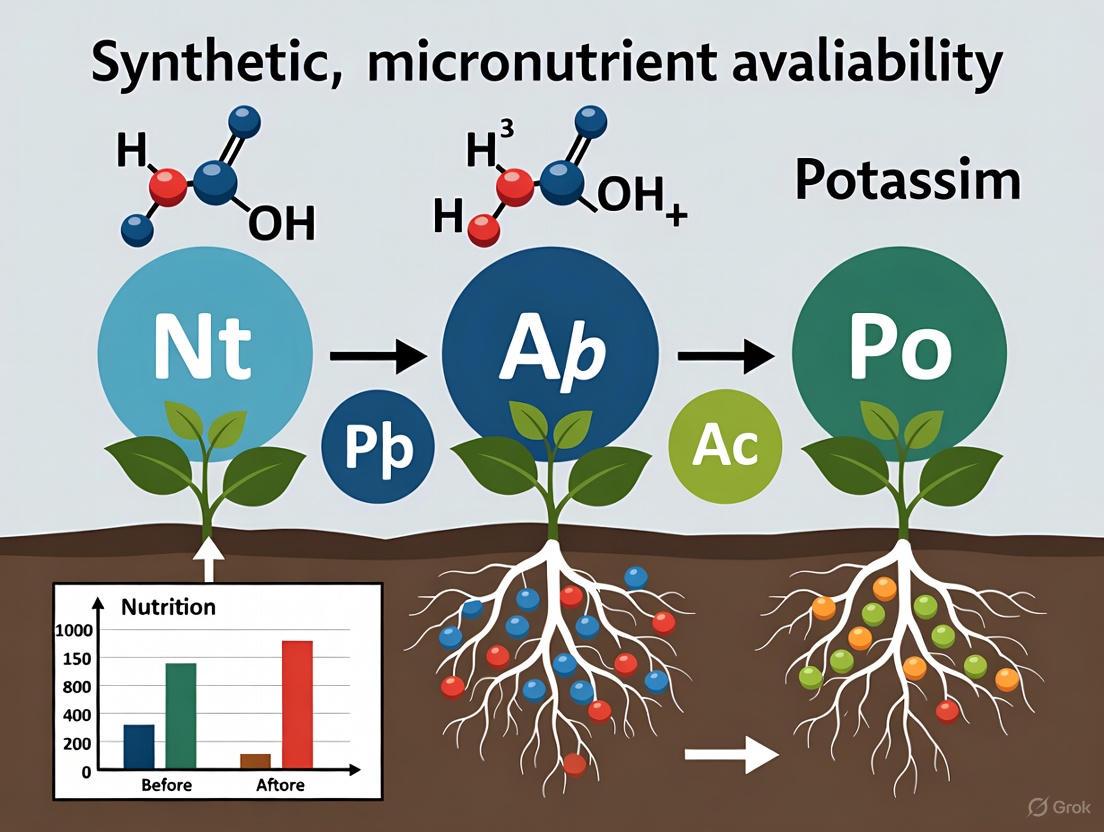
This article synthesizes current scientific evidence on the dilution effect, a phenomenon where the increased use of high-analysis synthetic fertilizers correlates with a decline in the micronutrient density of food...
The Dilution Effect: How Synthetic Fertilizers Impact Crop Micronutrients and Human Health
Abstract
This article synthesizes current scientific evidence on the dilution effect, a phenomenon where the increased use of high-analysis synthetic fertilizers correlates with a decline in the micronutrient density of food crops. We explore the foundational causes, from soil biodiversity loss to cultivar selection, and detail methodological approaches for diagnosing deficiencies. The content provides a critical analysis of troubleshooting strategies, including precision nutrient management and slow-release technologies, and offers a comparative validation of conventional versus sustainable fertilization practices. For researchers and scientists, this review highlights the direct implications for nutritional science, public health, and the development of functional foods and supplements aimed at combating micronutrient malnutrition.
The Silent Famine: Understanding the Dilution Effect and Its Root Causes
The dilution effect describes a well-documented phenomenon in agricultural science where the concentration of essential micronutrients in food crops decreases as overall yield increases, a unintended consequence often linked to modern agricultural practices centered on synthetic fertilizer use [1]. This framework is critical for understanding a pressing paradox: while global calorie production has reached sufficient levels to feed the world, micronutrient malnutrition, or "hidden hunger," affects over two billion people [1]. The underlying principle posits that high-yielding crop varieties (HYVs), developed during the Green Revolution and supported by synthetic fertilization, often allocate photosynthates towards rapid biomass accumulation and starch or carbohydrate production at the expense of mineral nutrient density [1] [2]. This review synthesizes quantitative evidence of this decline, explores the experimental protocols establishing dilution curves, and situates these findings within the broader thesis that synthetic fertilizer regimes have systematically contributed to the reduced nutritional value of staple foods, with significant implications for public health and sustainable agriculture.
Quantitative Evidence of Micronutrient Decline
Extensive research comparing traditional crop varieties with modern HYVs has revealed significant declines in the concentrations of essential vitamins and minerals. The following tables consolidate key quantitative findings from seminal studies and reviews.
Table 1: Documented Decline of Minerals in Modern Staple Crops
| Crop | Nutrient | Documented Decline | Comparative Context | Key References |
|---|---|---|---|---|
| Wheat | Zinc, Iron, Magnesium | 19%–28% lower | Modern High-Yielding Varieties (HYVs) vs. traditional varieties | Fanzo et al., 2018 [1] |
| Wheat | Iron | Significant decrease | Modern varieties vs. varieties grown over the last 160 years | Fan et al., 2008 [1] |
| Rice, Maize | Iron, Zinc, Protein | Reductions reported | HYVs vs. traditional varieties | Multiple Studies [1] |
Table 2: Critical Dilution Curves for Major Nutrients in Crops
| Nutrient | Crop(s) Studied | Status of Dilution Curves | Key Research Findings |
|---|---|---|---|
| Phosphorus (P) | Maize, Potatoes, Wheat | Several curves published | Curves show relative stability across environments for maize but high variability for potatoes and wheat [2]. |
| Potassium (K) | Multiple Field Crops | Fewer curves proposed | Dilution pattern confirmed; research and data are less extensive than for P [2]. |
| Sulfur (S) | Multiple Field Crops | Limited data available | Critical dilution curves have been established, but evidence is sparse [2]. |
The data in Table 1 underscores a widespread trend across major staples. The decline is not limited to minerals; similar dilution effects impact protein content and various vitamins [1]. Table 2 highlights that the dilution effect is a general principle applicable beyond micronutrients to major nutrients like phosphorus and potassium. The concentration of these nutrients in shoot biomass follows a predictable decline as the plant grows and biomass increases, which can be modeled by critical dilution curves [2]. The stability of these curves across different genotypes, environments, and management practices (G × E × M) is a key area of ongoing research, with findings suggesting crop-specific variability [2].
Experimental Protocols for Establishing Nutrient Dilution
The core methodology for quantifying the dilution effect and establishing critical nutrient curves involves rigorous field experiments and specific data analysis techniques.
Field Trial Design and Biomass Sampling
The foundational protocol requires establishing field trials with gradients of the nutrient under investigation (e.g., phosphorus fertilization levels) [2]. To capture the dynamic relationship between nutrient concentration and biomass accumulation, researchers must conduct repeated destructive sampling of above-ground shoot biomass during the vegetative growth stages of the crop [2]. At each sampling point, the fresh biomass is recorded, and sub-samples are oven-dried to determine dry matter weight. These dried samples are then subjected to laboratory chemical analysis to determine the concentration of the target nutrients [2].
Data Analysis and Curve Fitting
The processed data, comprising paired measurements of shoot biomass (kg/ha) and nutrient concentration (%), is used to fit a critical dilution curve. Historically, this is a two-step process:
- Identification of Non-Limiting Data: Data points from treatments where the nutrient was not limiting growth (i.e., where yield was maximized) are identified [2].
- Allometric Function Fitting: These non-limiting data points are fitted with a power function of the form:
Nutrient_c = a * (Biomass)^(-b)whereNutrient_cis the critical nutrient concentration for a given shoot biomass, andaandbare fitted parameters [2].
A modern statistical approach employs Bayesian methods to fit these curves. This advanced technique allows for a more robust quantification of the uncertainty associated with the critical curve, providing a probabilistic assessment of nutrient status [2]. To establish reliable and universally applicable curves, a substantial dataset is required. Recent analyses suggest a minimum of eight to ten site-years of data, combined with at least four fertilization levels, is necessary to reduce uncertainty and account for G × E × M interactions [2].
Calculation of Nutrition Indices
Once a critical dilution curve is established, it serves as a diagnostic tool. Researchers can calculate a Nutrition Index for a given crop in the field. For example, the Phosphorus Nutrition Index (PNI) is calculated as:
PNI = (Measured P concentration / Predicted critical P concentration) * 100
A PNI of 100 indicates sufficient nutrition, while values below 100 indicate deficiency. This index has been shown to have a positive relationship with relative crop yield [2].
The following diagram illustrates the integrated experimental workflow, from field trials to data application.
Diagram 1: Workflow for critical nutrient curve development and application.
The Scientist's Toolkit: Key Research Reagent Solutions
The following table details essential reagents, materials, and tools used in experimental research on nutrient dilution and crop quality.
Table 3: Essential Research Reagents and Materials for Nutrient Dilution Studies
| Item | Function/Application | Specific Examples / Notes |
|---|---|---|
| Synthetic Fertilizers | Creating nutrient gradients in field trials to establish growth response and critical concentration levels. | Nitrogen (N), Phosphorus (P), Potassium (K) fertilizers applied at varying rates [2] [3]. |
| Soil Amendments | Investigating the role of organic matter and soil health in nutrient density. | Farmyard Manure (FYM), biochar, composts used in Integrated Nutrient Management (INM) studies [3]. |
| Biofertilizers / Bioinoculants | Used as sustainable alternatives to enhance nutrient availability and uptake efficiency. | Microbial inoculants that fix atmospheric N or solubilize soil P [3]. |
| Laboratory Reagents for Tissue Analysis | Digesting and analyzing plant tissue samples for precise mineral and vitamin concentrations. | Reagents for ICP-MS (Inductively Coupled Plasma Mass Spectrometry) for minerals; HPLC for vitamins [2] [4]. |
| Slow-/Controlled-Release Fertilizers | Studying nutrient use efficiency (NUE) and reduction of environmental losses. | Polymer-coated fertilizers or chemical compounds that release nutrients gradually [3]. |
| Standard Reference Materials | Calibrating analytical instruments and ensuring accuracy in nutrient composition data. | Certified plant tissue samples with known nutrient concentrations [5]. |
| Hydroponic/Nutrient Solution Cultivation | Isolating specific nutrient effects under controlled conditions, free from soil variability. | Hoagland's solution, modified to induce specific deficiencies for physiological studies [4]. |
Signaling Pathways and Nutrient Interactions
The dilution effect is not merely a passive physical phenomenon but is governed by complex physiological processes and signaling pathways within the plant. A key conceptual framework for understanding this is the Nutrient Interaction Network.
Diagram 2: Conceptual network of nutrient interactions and dilution.
This conceptual network illustrates that nutrients do not act in isolation. The crop nitrogen status has been shown to significantly affect the critical dilution curves of phosphorus, potassium, and sulfur [2]. Conversely, the status of these other nutrients can influence nitrogen, with potassium status having a notable effect [2]. The drive for high yield, often fueled by nitrogen fertilization, leads to rapid biomass accumulation. This growth dilutes the concentration of other nutrients within the plant's tissues if their uptake does not keep pace with carbon fixation and dry matter accumulation [1] [2]. This imbalance is a core mechanism behind the dilution effect. Furthermore, micronutrients like iron and zinc are caught in this network; their pathways for uptake and translocation are affected by the plant's overall nutritional status and growth rate, leading to their documented decline in high-yielding systems [1] [4].
The quantitative evidence for the dilution of micronutrients and other essential elements in food crops is compelling and firmly links modern agricultural practices to the global challenge of hidden hunger. The frameworks of critical dilution curves and nutrient interaction networks provide researchers with powerful diagnostic and investigative tools. Moving forward, the field requires a concerted effort to:
- Expand Data Collection: Amass larger, multi-site-year datasets to refine the universality and domain of applicability for critical dilution curves, particularly for K, S, and micronutrients [2].
- Integrate Nutrient Management: Develop and promote Integrated Nutrient Management (INM) strategies that combine organic and inorganic sources to improve soil health and nutrient use efficiency, thereby mitigating the dilution effect [3].
- Leverage Technology: Employ precision agriculture technologies, such as site-specific nutrient management (SSNM) and advanced decision support systems, to optimize nutrient application in space and time, ensuring nutrients are available during critical growth stages to support both yield and quality [3].
- Explore Genetic Solutions: Invest in research on biofortification and the development of nutrient-efficient plant varieties that can maintain high mineral and vitamin concentrations even under high-yield conditions [1].
Addressing the dilution effect is not merely an agronomic challenge but a critical component of building resilient food systems that deliver both quantity and quality for long-term human and environmental health.
Contemporary agronomy faces a paradigm shift from yield-centric approaches to nutritional quality-focused strategies. This technical review examines the multifactorial phenomenon of nutrient dilution, wherein yield increases in modern crop varieties have coincided with reduced concentrations of essential minerals, vitamins, and phytochemicals. We synthesize evidence from 65 peer-reviewed studies (1998-2024) demonstrating declines of 20-80% in essential minerals across major food crops over the past half-century [3] [6]. The analysis delineates the physiological mechanisms underpinning dilution effects, including carbohydrate accumulation disproportionate to nutrient uptake and disruptions in soil-plant micronutrient pathways. We further evaluate emerging agronomic interventions—from nano-fertilizers to precision biofortification—that show potential to counteract these trends by enhancing nutrient use efficiency (NUE) by up to 80% while addressing the underlying soil health parameters [7] [8]. This whitepaper provides researchers with validated experimental protocols, analytical frameworks, and a specialized toolkit for designing studies that prioritize nutritional density alongside productivity in agricultural systems.
The "dilution effect" represents one of the most significant yet underappreciated challenges to global food security. While agricultural productivity has steadily increased since the Green Revolution, the nutritional quality of staple crops has substantially declined. This paradox of producing more food with less nutrition stems from complex interactions between genetic, environmental, and management factors [6].
Historical data reveal alarming declines in mineral concentrations across food systems. Between 1940-2019, studies document reductions of approximately 50% for iron and copper, 10% for magnesium, and 52% for sodium in vegetables [6]. Similar trends affect fruits, with calcium declining by 57-65% in citrus fruits between 1975-2001 [6]. This systematic nutritional erosion compounds the global burden of "hidden hunger," where individuals consume adequate calories but insufficient micronutrients, affecting over two billion people worldwide [6] [8].
The thesis of this review posits that conventional agricultural practices, particularly synthetic fertilization approaches prioritizing rapid growth and yield, have fundamentally altered nutrient acquisition and partitioning in plants. By examining the physiological mechanisms, quantifying dilution trends, and presenting evidence-based solutions, this work provides researchers with a comprehensive framework for investigating and addressing nutritional dilution in agricultural systems.
Quantifying the Decline: Historical Trends and Magnitude
Table 1: Documented Declines in Nutrient Content of Fruits and Vegetables (1940-2019)
| Time Period | Commodity Group | Calcium | Iron | Magnesium | Copper | Vitamin A | Vitamin C |
|---|---|---|---|---|---|---|---|
| 1936-1991 | 20 Vegetables | -19% | - | -35% | -81% | - | - |
| 1936-1987 | 20 Fruits | - | -32% | -11% | -36% | - | - |
| 1963-1992 | 13 Fruits & Vegetables (U.S.) | -29% | -32% | -21% | - | - | - |
| 1975-1997 | Multiple Fruits | -26.5% to -65% | -36.1% to -85% | -7% to -25% | -34% to -81% | -21.4% to -87.5% | -29.9% |
| 1975-1997 | Multiple Vegetables | -16% to -58.8% | -20% to -88.2% | -15% to -35% | - | -38.3% to -68.3% | - |
Data compiled from multiple historical comparison studies [6]
The dilution phenomenon extends beyond minerals to affect protein quality and protective phytochemicals. Research comparing conventional and regenerative agricultural practices demonstrates that soil-building approaches can increase phytochemical concentrations by 15-40% in crops like cabbage, peas, and sorghum [9]. This suggests management practices significantly influence nutritional quality independent of genetic potential.
The temporal patterns reveal an accelerating decline, with approximately 80% of the documented dilution occurring in the past 30-40 years, coinciding with the intensification of agricultural production systems [6]. This trend underscores the urgency of addressing nutritional dilution through targeted agronomic interventions.
Physiological Mechanisms: Unraveling the Dilution Effect
Biomass-Nutrient Dynamics
The fundamental mechanism driving nutritional dilution involves the differential allocation of photoassimilates versus mineral nutrients during plant growth. The critical dilution curve framework, initially developed for nitrogen, has been extended to phosphorus, potassium, and sulfur, demonstrating that as shoot biomass increases, nutrient concentrations follow predictable allometric relationships [2]. These relationships can be modeled using power functions:
Nc = a × W^b
Where Nc represents the critical nutrient concentration, W is shoot biomass, and a and b are crop-specific parameters [2]. Under conditions favoring rapid carbohydrate accumulation (high nitrogen availability, CO₂ enrichment, breeding for yield), biomass increases disproportionately to nutrient acquisition, resulting in diluted nutrient concentrations.
Table 2: Critical Dilution Curve Parameters for Major Nutrients in Staple Crops
| Crop | Nutrient | Parameter a | Parameter b | Uncertainty Across G×E×M |
|---|---|---|---|---|
| Maize | Phosphorus | 0.40-0.45 | -0.30 to -0.35 | Low variability observed |
| Potato | Phosphorus | 0.55-0.85 | -0.35 to -0.50 | High variability |
| Wheat | Phosphorus | 0.35-0.65 | -0.25 to -0.45 | Moderate to high variability |
| Maize | Potassium | 1.10-1.30 | -0.40 to -0.50 | Limited data |
| Wheat | Sulfur | 0.30-0.35 | -0.20 to -0.25 | Limited data |
Compiled from critical dilution curve studies [2]
Soil-Microbe-Plant Interactions
Conventional fertilization practices disrupt the rhizosphere ecology essential for micronutrient acquisition. Excessive synthetic nitrogen, phosphorus, and potassium application inhibits mycorrhizal associations and reduces production of phytosiderophores that facilitate iron and zinc uptake [9] [6]. This creates a functional disconnect between plant roots and the soil microbiome, compromising the plant's ability to access micronutrients from the soil matrix.
Comparative studies of regenerative versus conventional farms demonstrate that practices supporting soil health (no-till, cover cropping, diverse rotations) produce crops with significantly higher levels of soil organic matter (mean 6.3% vs. 3.5%) and enhanced mineral uptake [9]. This highlights the crucial role of soil microbial activity in mediating nutrient bioavailability, independent of total soil nutrient content.
Agronomic Interventions: Counteracting Dilution Through Precision Management
Precision Fertilization and the 4R Framework
Precision fertilization strategies implementing the 4R nutrient stewardship framework (Right Source, Right Rate, Right Time, Right Place) demonstrate significant potential to mitigate nutrient dilution by synchronizing fertilizer application with crop demand [3] [10]. This approach improves nutrient use efficiency (NUE) by 30-50% compared to conventional broadcast applications, reducing nutrient losses while maintaining yield quality [3].
Advanced decision support tools like the Fertilizer Recommendation Support Tool (FRST) provide science-based interpretations of soil test values, enabling customized phosphorus and potassium recommendations specific to local conditions [11]. Combined with site-specific nutrient management (SSNM), these approaches optimize nutrient availability during critical growth stages when dilution effects are most pronounced [3].
Nano-Enabled Delivery Systems
Nano-fertilizers represent a paradigm shift in nutrient delivery, engineered to enhance bioavailability through controlled release mechanisms and targeted delivery. These formulations demonstrate remarkable efficiency gains, with nano urea achieving 80% higher NUE while replacing 25 kg of conventional urea with just one liter of product [7].
The mechanisms underpinning nano-fertilizer efficacy include:
- Bio-encapsulation: Chitosan-based polymers protect nutrients from soil fixation and oxidation
- Size-enabled mobility: Nanoscale particles (1-100 nm) access cation exchange sites and root interfaces unavailable to conventional fertilizers
- Charged surface interactions: Enhanced compatibility with soil CEC dynamics prevents nutrient fixation [7]
Comparative studies show nano formulations increase micronutrient utilization by 40-60% while reducing environmental losses, directly addressing dilution through improved nutrient partitioning to edible portions [7] [8].
Agronomic Biofortification
Agronomic biofortification employs specialized fertilizer formulations to increase micronutrient densities in food crops. Research demonstrates that foliar applications of zinc, iron, and selenium can increase grain concentrations by 5-57% for iron and 10-95% for zinc, effectively countering historical dilution trends [8] [12].
The efficacy of biofortification varies by application method:
- Soil application benefits crops with extended nutrient uptake periods but risks nutrient immobilization
- Foliar application enables direct nutrient absorption during reproductive stages when seed nutrient loading occurs
- Seed priming enhances early establishment and micronutrient reserves [8]
Emerging research on lanthanide elements reveals novel mechanisms for enhancing nutrient density. These elements can incorporate into chlorophyll structures, replacing magnesium at the core and creating more stable pigments that enhance photosynthetic efficiency and plant resilience to UV stress [13].
Experimental Protocols for Nutritional Dilution Research
Field-Based Paired Farm Methodology
The paired farm approach controls for soil type and climate variables while comparing management systems. The protocol includes:
Site Selection Criteria:
- Identify regenerative and conventional farms within the same soil classification series
- Confirm consistent management history (5-10 years for regenerative practices)
- Match crop varieties and planting dates within growing season [9]
Soil Health Assessment:
- Collect composite soil samples (0-8 inch depth) from multiple field locations
- Analyze for soil organic matter (loss on ignition), water-extractable organic C and N (WEOC, WEON)
- Measure microbial respiration via 24-hour CO₂ release
- Calculate Haney Soil Health Score: SHS = (CO₂-C/10) × (WEOC/100) × (WEON/10) [9]
Plant Nutrient Analysis:
- Harvest crop samples at commercial maturity from paired fields
- Immediately freeze in liquid nitrogen and grind to fine powder
- Analyze for minerals (ICP-OES after microwave digestion), vitamins (HPLC with amperometric detection), and phytochemicals (UV-Vis spectrophotometry) [9]
Nutrient Dilution Curve Establishment
Critical dilution curves quantify the relationship between biomass accumulation and nutrient concentration:
Experimental Design:
- Establish fertilization gradients (4+ levels) across multiple environments (8+ site-years)
- Collect sequential biomass samples during vegetative developmental stages
- Determine shoot dry weight and nutrient concentration for each sampling [2]
Statistical Analysis:
- Identify non-limiting nutrient data points using Bayesian methods
- Fit critical dilution curves with power function: Nc = a × W^b
- Calculate nutrition indices: PNI = [Measured P] / [Critical P] [2]
The Scientist's Toolkit: Research Reagent Solutions
Table 3: Essential Research Materials for Nutritional Dilution Studies
| Category | Specific Reagents/Supplies | Research Application | Key Considerations |
|---|---|---|---|
| Soil Health Assessment | Haney Test Reagents (WEOC, WEON, CO₂-C analysis) | Quantifies microbial activity and nutrient availability | Ward Laboratories (Kearney, NE) offers commercial testing [9] |
| Plant Nutrient Analysis | Nitric acid (trace metal grade), HPLC solvents (amperometric detection) | Mineral and vitamin quantification | Liquid nitrogen essential for preserving labile nutrients during processing [9] |
| Nano-Fertilizers | Chitosan-based encapsulants, Nano-urea, Nano-phosphate | Enhanced nutrient delivery studies | Particle size (1-100 nm) and zeta potential critical characterization parameters [7] |
| Biofortification Agents | Chelated Zn/Fe (EDTA, EDDHA), Selenate solutions | Foliar and soil micronutrient enhancement | Chelation prevents oxidation and improves phloem mobility [8] [11] |
| Microbial Enhancers | Mycorrhizal inoculants, Plant growth-promoting rhizobacteria | Soil microbiome mediation studies | Viability testing essential for field applications [9] [6] |
The evidence synthesized in this review demonstrates that nutritional dilution represents a significant consequence of modern agricultural intensification, with documented declines of 20-80% in essential nutrients across major food crops [6]. However, emerging agronomic strategies show considerable promise for counteracting these trends through precision nutrient management, nano-enabled delivery systems, and targeted biofortification.
Critical research gaps remain in understanding the genetic × environment × management interactions governing nutrient partitioning in plants. Future investigations should prioritize:
- Establishing universal critical dilution curves for phosphorus, potassium, and sulfur across crop species and environments [2]
- Elucidating molecular mechanisms of lanthanide interactions with chlorophyll and other bioactive compounds [13]
- Validating soil health-nutrient density relationships across diverse production systems and scales [9]
- Optimizing nano-fertilizer formulations for specific soil-crop combinations to maximize nutrient use efficiency [7]
Addressing the nutritional dilution imperative requires transdisciplinary approaches that integrate soil science, plant physiology, and food systems analysis. By adopting the experimental frameworks and analytical tools presented herein, researchers can contribute to building agricultural systems that optimize both yield and nutritional quality, ultimately enhancing both human and environmental health.
The intensive use of synthetic fertilizers has precipitated a global soil health crisis characterized by the systematic disruption of microbial communities and nutrient cycling pathways. This whitepaper synthesizes current research demonstrating how chemical fertilizer application directly diminishes microbial diversity, reduces the abundance of plant growth-promoting rhizobacteria (PGPR), and creates micronutrient deficiencies in crops through a documented "dilution effect." Our analysis integrates metagenomic studies, functional gene analysis, and long-term field trials to reveal the mechanistic underpinnings of synthetic fertilizer-induced dysbiosis in agricultural soils. We further present evidence that balanced fertilization strategies integrating organic amendments can restore microbial functionality, enhance nutrient use efficiency, and counteract the dilution of essential micronutrients in food crops. This comprehensive assessment provides researchers and agricultural professionals with experimental frameworks and quantitative data to develop sustainable soil management protocols that preserve microbial integrity while maintaining crop productivity.
The 20th century witnessed an unprecedented transformation in agricultural practices with the widespread adoption of synthetic fertilizers driving substantial yield increases. However, this chemical-intensive approach has triggered unintended consequences for soil ecosystems, particularly concerning microbial community structure and function. Soil microorganisms, including bacteria, fungi, and archaea, constitute the biological engine that drives essential nutrient cycling processes including nitrogen fixation, phosphorus solubilization, and organic matter decomposition [14]. These processes are fundamentally compromised under continuous synthetic fertilizer application, leading to a cascade of ecological disruptions that ultimately impact crop nutritional quality and system sustainability.
The "dilution effect" of synthetic fertilizers on crop micronutrients represents a critical nexus in this crisis. While NPK fertilizers rapidly boost plant growth and carbohydrate accumulation, they often fail to supply adequate quantities of essential micronutrients such as zinc, iron, copper, and manganese [15]. This imbalance creates a biochemical dilution wherein accelerated biomass production outpaces micronutrient uptake, resulting in crops with diminished nutritional density despite satisfactory yields [15]. This phenomenon has profound implications for human health, as micronutrient deficiencies already affect approximately one-third of the global population, with significant prevalence even in developed nations [15].
This technical review examines the mechanistic pathways through which synthetic inputs disrupt soil microbial balance, presents quantitative data on resulting nutrient cycling impairments, and details methodological approaches for investigating these phenomena. By framing these issues within the context of micronutrient dilution, we aim to provide agricultural researchers and soil scientists with a comprehensive evidence base for developing sustainable alternatives to conventional fertilization practices.
Mechanisms of Microbial Disruption by Synthetic Fertilizers
Impact on Microbial Community Structure and Diversity
Synthetic fertilizers exert profound influences on soil microbial community architecture through multiple interconnected pathways. Long-term fertilization studies demonstrate that chemical NPK application significantly reduces microbial diversity and reshapes community composition toward less functional configurations [16]. Notably, organic-mineral fertilization combinations can enhance microbial diversity by 20-30% compared to chemical-only regimes, highlighting the detrimental effect of synthetic inputs alone [16]. This erosion of diversity impairs functional resilience, reducing the soil ecosystem's capacity to respond to environmental stressors.
The disruption extends to specific taxonomic groups with crucial nutrient cycling roles. Research indicates that arbuscular mycorrhizal fungi (AMF), which form symbiotic relationships with approximately 80% of terrestrial plants and dramatically expand root nutrient absorption capacity, are particularly vulnerable to synthetic fertilization [14]. Chronic nitrogen fertilization disrupts carbon-cycling enzyme dynamics and shifts microbial community composition, with fungal communities exhibiting heightened sensitivity to N deposition compared to bacteria [16]. A comparative analysis of microbial responses reveals stark contrasts between fertilization approaches:
Table 1: Microbial Community Responses to Different Fertilization Regimes
| Parameter | Synthetic Fertilizer Only | Combined Organic-Synthetic | Measurement Method |
|---|---|---|---|
| Microbial Diversity | Decreased by 2.9-3.5% | Increased by 20-30% | 16S/ITS sequencing [16] |
| AMF Biomass | Reference level | 2.8-fold increase | Lipid biomarkers [16] |
| PGPR Abundance | 19-21% of isolates | 49-91% of isolates | Culture-based assays [17] |
| N-fixing Bacteria | Decreased | 17.3% increase in Bradyrhizobium | Metagenomics [16] |
| P-solubilizing Bacteria | Decreased | 12.8% increase in Pseudomonas | Metagenomics [16] |
Functional Impairments in Nutrient Cycling
Beyond taxonomic shifts, synthetic fertilizers induce functional alterations in microbial metabolism that disrupt biogeochemical cycles. Metagenomic investigations have identified significant declines in the abundance of microbial functional genes responsible for nitrogen fixation (nifH), phosphorus solubilization (phoD, phoC), and organic matter decomposition (cbbL, GH31) under exclusive chemical fertilization [18]. These genetic reductions translate to impaired ecosystem functions, with studies showing that synthetic fertilizer addition decreases the proportion of nutrient-solubilizing bacteria (for phosphate, potassium, iron, and zinc) isolated from wheat rhizocompartments [17].
The carbon cycling disruption under synthetic fertilizer regimes presents another critical pathway. Organic amendments provide complex carbon compounds that sustain diverse heterotrophic microorganisms, whereas synthetic fertilizers lack these carbon sources, creating an energy crisis for soil microbiota [19]. This explains the observed 34% increase in substrate-induced respiration rates in integrated organic-inorganic systems compared to chemical-only approaches [16]. The relationship between fertilizer inputs and microbial functional outputs can be visualized through the following mechanistic pathway:
Figure 1: Mechanisms of Microbial Disruption vs. Enhancement by Fertilizer Types
The Dilution Effect: Linking Synthetic Fertilizers to Crop Micronutrient Deficiencies
Evidence for Micronutrient Dilution in Major Crops
The dilution effect describes the phenomenon whereby increased crop growth and yield driven by synthetic NPK fertilizers occurs without proportional uptake of essential micronutrients, resulting in decreased nutrient concentration in harvested tissues [15]. This problem is particularly acute for zinc, iron, copper, and manganese, which play critical roles in human nutrition but are frequently overlooked in conventional fertilization programs. Soil micronutrient deficiencies significantly affect crop yield and quality for human consumption in many agricultural regions, with sharp regional differences observed across Europe and North America [15] [20].
The geographical overlap between micronutrient deficiencies in cultivated soils and human populations indicates a direct connection between soil management practices and nutritional quality of the food supply [15]. Systematic reviews reveal that micronutrient deficiencies affect approximately one-third of the global population, with particular vulnerability among children and elderly populations even in developed regions [15]. For example, studies across 13 Western countries found that 31% of women and 49% of men consumed less than the recommended dietary zinc, directly reflecting the low zinc content in agricultural products [15].
Table 2: Documented Micronutrient Deficiencies in Crops and Human Populations
| Micronutrient | Crop Deficiency Prevalence | Human Health Impacts | Soil Amendment Solutions |
|---|---|---|---|
| Zinc (Zn) | Widespread in dryland regions of Europe; 28% of soils deficient [15] | Immune dysfunction, cognitive impairment; 31-49% of elderly deficient [15] | ZnSO₄ application, organic amendments, Zn-efficient cultivars [15] [20] |
| Iron (Fe) | 60% of soils in Mediterranean countries deficient [15] | Anemia, fatigue; prevalent in 12-36-month-old European children [15] | Fe-chelates, acidifying amendments, organic matter [15] |
| Manganese (Mn) | Common in UK and northern Europe [15] | Impaired bone health, metabolic functions | MnSO₄, pH management, organic sources [15] [20] |
| Boron (B) | Variable by region and soil type | Affects calcium metabolism, brain function | Borax, organic matter, balanced pH [20] |
Microbial Mechanisms Underlying Micronutrient Availability
The dilution effect is exacerbated by the negative impact of synthetic fertilizers on micronutrient-mobilizing microorganisms. Culture-dependent studies reveal that fertilizer addition decreases the proportion of nutrient-solubilizing bacteria capable of mobilizing insoluble iron, zinc, and phosphorus complexes in the rhizosphere [17]. Specifically, the abundance of putative PGPR isolates demonstrating zinc and iron solubilization capabilities was significantly higher in non-fertilized samples (49-91%) compared to fertilized samples (19-21%) [17].
This microbial dysfunction creates a vicious cycle: synthetic fertilizers provide readily available NPK, reducing plant investment in symbiotic relationships with micronutrient-mobilizing microbes, which in turn diminishes the microbial capacity to make soil micronutrients bioavailable [14] [17]. The resulting crop growth occurs without adequate micronutrient uptake, leading to diluted nutritional quality. This pathway is particularly problematic because soil microorganisms are fundamental to the transformation of micronutrients from insoluble mineral forms to plant-available states through acidification, chelation, and redox reactions [14].
Methodological Approaches for Investigating Fertilizer Impacts
Experimental Designs for Nutrient Deficiency Studies
Robust experimental frameworks are essential for elucidating the complex interactions between fertilizer regimes, microbial communities, and nutrient cycling. The nutrient omission trial design provides powerful insights into specific nutrient limitations and their microbial impacts. In a representative study conducted in China's North China Plain, researchers implemented a complete randomized block design with five distinct treatments in a wheat-maize double-cropping system [21]:
- CK - No fertilizer control
- NPK - Complete nitrogen, phosphorus, and potassium fertilization
- PK - Nitrogen deficiency treatment
- NK - Phosphorus deficiency treatment
- NP - Potassium deficiency treatment
Each treatment was replicated three times, yielding 15 experimental plots monitored across multiple growing seasons. This design allowed researchers to document how specific nutrient deficiencies altered soil microbial community structure, diversity, and function, with NPK treatment increasing microbial diversity and abundance while balancing nutritional support for crops [21]. The experimental workflow for such investigations follows a systematic process:
Figure 2: Experimental Workflow for Fertilizer-Microbe Interaction Studies
Molecular and Cultural Techniques for Microbial Assessment
Comprehensive assessment of fertilizer impacts on soil microbiota requires integrating culture-dependent and culture-independent approaches. Advanced metagenomic analyses using 16S rRNA/ITS markers (e.g., Illumina NovaSeq platform) can resolve >98% of uncultured microbial functions, providing unprecedented resolution of microbial community responses to management practices [16]. Simultaneously, culture-based methods enable functional characterization of isolated strains through specific bioassays for traits including:
- Nutrient solubilization - Growth on insoluble nutrient sources (e.g., tricalcium phosphate, zinc oxide)
- Phytohormone production - IAA synthesis capability
- Enzyme activities - Amylase, cellulase, chitinase production
- Salt tolerance - Growth under osmotic stress conditions [17]
The integration of these approaches was demonstrated in a wheat fertilization study where researchers created a "PGPR database" from isolate 16S rRNA gene sequences against which total amplified 16S rRNA soil DNA was searched, identifying 1.52% of total community ASVs as culturable PGPR isolates [17]. This methodology enabled quantitative comparison of PGPR abundance between fertilization treatments, revealing a significantly higher proportion of PGPR in non-fertilized samples compared to fertilized samples [17].
The Scientist's Toolkit: Essential Research Reagents and Materials
Table 3: Key Research Reagents for Investigating Soil Microbial Responses to Fertilizers
| Reagent/Material | Specification | Research Application | Functional Role |
|---|---|---|---|
| DNA Extraction Kits | MoBio PowerSoil Kit, DNeasy PowerLyzer | Metagenomic DNA extraction | High-quality DNA for sequencing [21] |
| Sequencing Primers | 515F/806R (16S V4), ITS1F/ITS2 (ITS) | Amplicon sequencing | Taxonomic classification [21] [17] |
| Culture Media | 10% TSA, NBRIP, AIS, CDM | Bacterial isolation | Selective cultivation [17] |
| Enzyme Substrates | MUB-labeled derivatives, L-DOPA | Enzyme activity assays | Functional potential measurement [18] |
| Organic Amendments | Sheep manure, vermicompost, insect frass | Organic fertilization treatments | Carbon and nutrient source [19] [16] |
| Molecular Probes | FISH probes, functional gene primers | Microbial detection | Abundance quantification [18] |
Sustainable Alternatives: Balancing Productivity and Soil Health
Integrated Organic-Mineral Fertilization Strategies
Research demonstrates that balanced fertilization combining organic amendments with reduced synthetic inputs can mitigate the detrimental effects of chemical fertilizers while maintaining productivity. Meta-analyses of 127 field trials across 23 countries reveal that substituting 20-40% of mineral fertilizers with organic alternatives mitigates environmental risks such as greenhouse gas emissions and nutrient leaching while sustaining crop yields [16]. Specifically, integrated approaches have been shown to increase soil organic carbon by 110.6% and total nitrogen by 59.2% while enhancing water and nutrient retention capacity [16].
The microbial benefits of these integrated approaches are particularly noteworthy. Combined organic-mineral fertilization elevates β-glucosidase and urease activities, accelerating organic matter decomposition and nutrient cycling while modulating microbial taxa critical for nutrient transformation and pathogen suppression [16]. Long-term studies of paddy soils show that organic substitution practices significantly reshape bacterial communities, enriching beneficial taxa such as nitrogen-fixing Bradyrhizobium and phosphate-solubilizing Burkholderia, with these shifts correlating with increased enzymatic activity and yield improvements of 15-20% in rice production [16].
Bio-based Amendments and Microbial Inoculants
Bio-based fertilizers and microbial inoculants offer promising pathways for restoring soil biological function while supplying essential plant nutrients. Biochar-based fertilizers (BCFs) demonstrate particular promise, with studies showing that application of enriched biochar is more effective in improving soil properties and crop yields than the exclusive application of pure biochar or other fertilizers [22]. The porous structure of biochar provides habitat for microbial colonization while its surface functionality enhances nutrient retention.
However, research indicates a trade-off between nutrient release and soil health parameters in many bio-based fertilizers. High nitrogen availability correlates negatively with soil health parameters, while most soil health parameters show positive relationships with added carbon [19]. This suggests that customized BBF blends with optimized nutrient and carbon profiles tailored to specific field conditions may offer the most practical solution for farmers seeking to balance immediate crop nutrient demands with long-term soil health [19].
The evidence synthesized in this review demonstrates that synthetic fertilizer disruption of soil microbial communities represents a critical challenge to agricultural sustainability and food nutritional quality. The documented decline in microbial diversity, functional gene abundance, and PGPR populations under chemical fertilization creates a biological vacuum that impairs nutrient cycling capacity and contributes to the dilution of essential micronutrients in food crops. These findings underscore the urgent need for agricultural management strategies that prioritize soil biological integrity alongside crop productivity.
Moving forward, research must focus on refining precision nutrient management frameworks that integrate organic and inorganic fertilizers in region-specific combinations. Particular attention should be given to understanding legacy effects of long-term fertilization on microbial network complexity and developing predictive models of crop-microbe feedback loops under climate change scenarios. By adopting soil health-centered approaches that work with, rather than against, soil biological communities, agricultural researchers and practitioners can develop resilient production systems that simultaneously address productivity, environmental, and nutritional challenges.
The pursuit of high-yielding crop varieties, a cornerstone of global food security initiatives, has inadvertently triggered a decline in nutritional density, a phenomenon termed genetic dilution. This technical review examines the physiological and genetic mechanisms underpinning the trade-offs between yield and nutrient concentration in modern cultivars, framed within the broader context of agricultural intensification. We synthesize evidence from genomic, agronomic, and nutritional studies to elucidate how breeder selection for increased carbohydrate deposition has often occurred without proportional accumulation of micronutrients and proteins. The analysis provides a framework for diagnosing nutrient dilution and outlines advanced breeding and management strategies to reconcile yield with nutritional security.
The genetic dilution effect describes a consequential trend in modern agriculture: as the yield potential of staple crops has increased through selective breeding, the concentration of essential vitamins and minerals in harvested grains has frequently decreased. This phenomenon is distinct from the environmental dilution effect, where optimal growing conditions (e.g., abundant water and fertilizer) produce larger but less nutrient-concentrated biomass [23]. Genetic dilution is driven by fundamental physiological constraints and pleiotropic genetic effects—where genes controlling yield-related traits simultaneously influence nutrient uptake and partitioning.
This trade-off presents a critical challenge. While crop yields have steadily risen to feed a growing population, the nutritional quality of the food supply has diminished in many contexts, contributing to "hidden hunger" or micronutrient deficiencies [8]. Understanding the genetic and physiological basis of this inverse relationship is paramount for developing next-generation cultivars that harmonize productivity with nutritional density, ensuring that food systems deliver both quantity and quality.
Quantitative Evidence of Nutrient Decline
Empirical data from historical comparisons and controlled trials consistently document the decline in nutrient density associated with modern high-yielding varieties.
Table 1: Documented Nutrient Declines in Modern Crop Varieties
| Crop/Context | Nutrient | Magnitude of Decline | Source of Evidence |
|---|---|---|---|
| 43 Garden Crops (USDA, 1950 vs. 1999) | Protein | 6% decrease | Historical median comparison [23] |
| Riboflavin | 38% decrease | Historical median comparison [23] | |
| Calcium | 16% decrease | Historical median comparison [23] | |
| Iron | 15% decrease | Historical median comparison [23] | |
| Ascorbic Acid | 15% decrease | Historical median comparison [23] | |
| Wheat (Modern High-Yield) | Grain Zinc | Low concentration | Associated with high biomass and spike number [24] |
| Nitrogen Efficiency | Low efficiency | Associated with high yield practices [24] | |
| Sorghum (African vs. Asian) | Micronutrients (Zn, Fe, etc.) | Higher in African landraces | Analysis of 163 accessions, linking diversity to nutrition [25] |
Analysis of USDA nutritional data from 1950 to 1999 for 43 garden crops revealed statistically reliable declines for six key nutrients: protein, calcium, phosphorus, iron, riboflavin, and ascorbic acid [23]. Contemporary studies in wheat confirm these trends, showing that high yields achieved through high biomass and spike number are often associated with low grain zinc concentration and reduced nitrogen use efficiency [24]. Conversely, genetic diversity screens in sorghum have identified landraces with significantly higher seed mineral content, underscoring the potential for genetic improvement [25].
Physiological and Genetic Mechanisms
The inverse relationship between yield and nutrient density is governed by several interconnected mechanisms.
Carbohydrate Prioritization and Biomass Dilution
A primary driver is the resource allocation paradigm in plants. A substantial portion of the dry weight yield in grains, fruits, and vegetables is carbohydrate. When plant breeders select for high yield, they are effectively selecting for high carbohydrate production. There is no inherent biological guarantee that dozens of other nutrients and thousands of phytochemicals will increase in direct proportion to this yield gain [23]. Consequently, nutrients become "diluted" within a larger volume of carbohydrate-rich biomass.
Diagram: The primary pathway through which selective breeding for yield leads to genetic dilution of nutrients.
Pleiotropic Genetic Control and Trade-Offs
Modern genetic analyses, particularly Quantitative Trait Locus (QTL) mapping, have begun to unravel the pleiotropic gene networks that create trade-offs between yield/quality and nutritional traits.
Table 2: Key Pleiotropic Genetic Loci with Trade-Offs in Wheat
| Gene / QTL | Positive Effects | Negative Effects (Nutritional) |
|---|---|---|
| Rht-D1b (Semi-dwarf) | Increased harvest index, Hagberg falling number | Reduced grain protein content; Lower concentration of many mineral elements in wholemeal and white flour [26] |
| TaGW2 | Controls grain size, increased flour extraction rate | Pleiotropic effects on nutrient composition require further investigation [26] |
| HMW Glutenin Loci | Major effect on dough rheology and baking quality | Potential linkage or pleiotropic effects on nutrient partitioning [26] |
Research on UK winter wheat has demonstrated that the semi-dwarfing allele Rht-D1b, which was instrumental in the Green Revolution for increasing yield, reduces grain protein content and the concentration of many mineral nutrients [26]. This illustrates a direct pleiotropic trade-off where genes conferring agronomic advantages also have detrimental effects on nutritional density. Furthermore, colocalization of QTLs for grain size, nutritional, and drought resistance traits in sorghum suggests potential for simultaneous improvement but also highlights the complex genetic interconnections breeders must navigate [25].
Experimental Protocols for Investigating Genetic Dilution
Researchers employ a suite of methodologies to identify and quantify the genetic dilution effect and its underlying mechanisms.
Genome-Wide Association Studies (GWAS) for Nutrient Traits
Objective: To identify genomic regions associated with variation in grain nutrient density and to test for correlations with yield-related traits.
Detailed Protocol (as applied in sorghum [25]):
- Germplasm Selection: Assemble a diverse panel of 163 or more accessions, including modern cultivars and traditional landraces from different geographic origins to maximize genetic diversity.
- Field Trial Design: Conduct field trials in a randomized complete block design with multiple replications (e.g., 2-3). Include both irrigated and post-flowering drought stress environments to study G×E interactions.
- Phenotyping:
- Yield Component: Measure plant height (PH) and thousand-kernel weight (TKW).
- Nutritional Quality: Analyze whole grain samples using Inductively Coupled Plasma (ICP) spectrometry to determine micronutrient (Zn, Fe, Mn, Ca, etc.) concentrations. Determine protein content using the Dumas method or Near-Infrared (NIR) spectroscopy.
- Drought Response: Score visual drought resistance (DR) and leaf withering (WI) at 4 and 6 days after drought induction.
- Genotyping and Population Structure: Genotype the entire panel using a high-density SNP array (e.g., Illumina 90K for wheat). Perform principal component analysis (PCA) and cluster analysis to quantify population structure and account for it in GWAS models.
- Statistical Analysis: Perform GWAS using a Mixed Linear Model (MLM) that incorporates a kinship matrix to control for population structure. Identify significant marker-trait associations and report colocalization of QTLs for yield, nutrition, and stress tolerance.
Multi-Parent Population QTL Mapping
Objective: To achieve high-resolution mapping of pleiotropic QTLs in elite genetic backgrounds, directly applicable to breeding.
Detailed Protocol (as applied in wheat MAGIC population [26]):
- Population Development: Create a Multi-Parent Advanced Generation Inter-Cross (MAGIC) population by inter-crossing eight elite founder lines. This design increases recombination and improves QTL resolution.
- Phenotyping for Trade-Offs: Conduct multi-location field trials. Perform extensive phenotyping for:
- Milling & Baking Quality: Flour extraction rate, protein content, Hagberg falling number, dough rheology.
- Nutritional Density: Mineral nutrient concentration (using ICP) in both wholemeal and refined white flour.
- Yield Components: Grain size, specific weight, plant height.
- Genotyping and Haplotype Inference: Use high-density SNP arrays. Reconstruct founder haplotypes and track identity-by-descent (IBD) segments in the progeny.
- Multi-Trait QTL Analysis:
- Perform single-trait QTL mapping with haplotype-based models to account for co-segregating haplotype blocks.
- Conduct principal component analysis (PCA) on correlated trait groups and map QTLs for the resulting principal components to detect pleiotropic effects.
- Fit multi-QTL models using forward/backward regression to establish independent genetic effects.
Diagram: Integrated experimental workflow for identifying genetic loci governing yield-nutrition trade-offs.
The Researcher's Toolkit: Essential Reagents and Solutions
Table 3: Key Research Reagent Solutions for Genetic Dilution Studies
| Reagent / Solution | Function / Application | Example Use Case |
|---|---|---|
| Illumina SNP Arrays | High-throughput genotyping for genome-wide marker discovery. | Wheat 90K SNP array for GWAS and haplotype inference in MAGIC populations [26]. |
| ICP Spectrometry | Precise quantification of multiple mineral elements in plant tissue. | Measuring Zn, Fe, Mn, Ca concentrations in sorghum and wheat grain [26] [25]. |
| R2A Agar / Sterile Sewage Medium | Culture media for assessing culturable microbial community structure. | Investigating dilution effects on soil microbial communities, relevant to nutrient cycling [27]. |
| Biolog GN Microplates | Community-level physiological profiling to assess functional metabolic diversity. | Evaluating carbon source utilization patterns in microbial communities from different dilution treatments [27]. |
| PicoGreen dsDNA Quantification Reagent | Fluorometric quantification of extracted DNA for molecular analysis. | Quantifying whole-community DNA prior to AFLP analysis [27]. |
| AFLP Kit (e.g., Perkin-Elmer) | Amplified Fragment Length Polymorphism analysis for genetic fingerprinting. | Fingerprinting microbial community structure in dilution-defined communities [27]. |
The evidence for genetic dilution is compelling, demonstrating that the single-minded pursuit of yield has often compromised the nutritional value of staple crops. This trade-off is not merely agronomic but is deeply embedded in the physiology and genetics of plants, manifesting through carbohydrate prioritization and pleiotropic gene effects. Overcoming this challenge requires a paradigm shift in breeding objectives.
Future strategies must leverage the tools detailed in this review. Genomic selection can be employed to pyramid alleles for both high yield and high nutrient density, breaking negative correlations. Biofortification programs, through both agronomic practices and genetic approaches, offer a direct path to enhancing nutrient levels [8]. Furthermore, adopting critical nutrient dilution curves for phosphorus, potassium, and sulfur, and understanding their interaction with nitrogen, provides a diagnostic framework for managing crop nutrition to optimize both yield and quality [2]. The integration of advanced genomics, precise phenotyping, and sustainable nutrient management is the key to developing the next generation of cultivars that ensure food security is synonymous with nutritional security.
The pervasive use of synthetic fertilizers is intricately linked to a decline in the micronutrient density of food crops, a phenomenon known as the "dilution effect." This reduction in essential vitamins and minerals within the global food supply contributes significantly to the burden of micronutrient deficiencies, often termed "hidden hunger," which now affects billions of people worldwide. This technical review examines the agronomic mechanisms driving nutrient dilution, presents global data on its human health impacts, and evaluates emerging strategies—including nano-fertilizers, agronomic biofortification, and balanced fertilization—designed to enhance the nutritional quality of crops and combat malnutrition at its source.
Modern agricultural systems are predominantly optimized for high yield, often at the expense of nutritional quality. The dilution effect describes the inverse relationship between crop yield and the concentration of essential micronutrients in harvested tissues. This phenomenon is driven by several factors, including the disproportionate application of primary macronutrients (Nitrogen, Phosphorus, Potassium) without concomitant supplementation of trace elements, which leads to nutrient imbalances in soil and plant systems. Consequently, even when caloric needs are met, populations may consume inadequate levels of critical micronutrients.
The global scale of micronutrient inadequacy is alarming: a recent study estimating that over half of the global population consumes insufficient levels of several essential micronutrients, with pronounced deficiencies in iodine (68%), vitamin E (67%), calcium (66%), and iron (65%) [28]. These deficiencies compromise immune function, cognitive development, and overall metabolic health, presenting a substantial public health challenge that intersects with agricultural practice and policy [29] [30].
Agronomic Mechanisms of Nutrient Dilution
Critical Nutrient Dilution Curves
The dilution of micronutrients as plant biomass increases is a well-documented physiological process. The concept of critical dilution curves, initially developed for nitrogen, has been extended to other nutrients, including phosphorus, potassium, and sulfur [2]. These curves model the decline in nutrient concentration as shoot biomass increases during vegetative growth stages, establishing the minimum nutrient concentration required for maximum growth.
Table 1: Documented Critical Dilution Curves for Major Crops
| Crop | Nutrient | Dilution Curve Stability | Key Research Findings |
|---|---|---|---|
| Maize | Phosphorus (P) | High stability across genotypes, environments, and management (G×E×M) | Three independent studies in Canada, France, and Switzerland showed remarkably similar P dilution curves [2]. |
| Potato | Phosphorus (P) | Low stability across G×E×M | Significant variation in P curves observed across studies in Argentina, Colombia, Canada, and China, linked to differences in tuber initiation timing and bulking rates [2]. |
| Wheat | Phosphorus (P) | Moderate to low stability | Greater variability observed compared to maize; differences between spring and wheat curves require further validation [2]. |
| Multiple | Potassium (K) & Sulfur (S) | Research ongoing | Fewer established curves; strong interactions with nitrogen status affect critical concentrations [2]. |
The stability of these dilution curves varies significantly by crop and nutrient. For maize, phosphorus dilution curves demonstrate remarkable consistency across diverse growing conditions, whereas for potatoes, considerable variation exists due to differences in tuber initiation timing and bulking rates [2]. This variability underscores the complex interactions between genotype, environment, and management practices that influence nutrient partitioning within plants.
Nutrient Interactions and Imbalances
The dilution effect is exacerbated by nutrient co-limitations and interactions. Research demonstrates that a plant's nitrogen status significantly influences the critical dilution curves for phosphorus, potassium, and sulfur [2]. Conversely, potassium status affects nitrogen nutrition, while phosphorus status has minimal impact, and sulfur status appears unrelated to nitrogen efficiency. These interactions create complex nutritional dynamics that are rarely accounted for in conventional fertilization regimes.
The following diagram illustrates the conceptual framework of nutrient dilution and its relationship to crop management and human health outcomes:
Global Burden of Micronutrient Deficiencies
Prevalence and Demographic Patterns
Micronutrient deficiencies represent a formidable global health challenge. Recent research provides comprehensive estimates of inadequate consumption across 185 countries, revealing that more than half the global population consumes insufficient levels of essential vitamins and minerals [28]. The scope of this inadequacy varies by nutrient, age, and gender, creating distinct public health priorities.
Table 2: Global Prevalence of Micronutrient Inadequacies Across Populations
| Micronutrient | Global Population with Inadequate Intake | Populations at Highest Risk | Primary Health Consequences |
|---|---|---|---|
| Iodine | 68% | Women (especially pregnant women) | Impaired cognitive development, goiter, pregnancy complications [29] [28] |
| Vitamin E | 67% | General population | Neurological problems, reduced immune function [28] |
| Calcium | 66% | Adolescents (ages 10-30) in South Asia, East Asia, sub-Saharan Africa | Weakened bones, osteoporosis, cardiovascular issues [28] |
| Iron | 65% | Women of reproductive age | Anemia, fatigue, adverse pregnancy outcomes [29] [28] |
| Zinc | 37% | Men | Impaired immune function, growth retardation [28] |
The study identified significant sex-based disparities in micronutrient inadequacy. Women experience higher rates of deficiency for iodine, vitamin B12, iron, and selenium, while men show greater inadequacy for calcium, niacin, thiamin, zinc, magnesium, and vitamins A, C, and B6 [28]. Adolescents and young adults (ages 10-30) emerge as particularly vulnerable to calcium deficiency, with pronounced inadequacy in South Asia, East Asia, and sub-Saharan Africa [28].
Health and Socioeconomic Impacts
The health consequences of micronutrient deficiencies are profound and far-reaching. Deficiencies in iron, folate, and vitamins B12 and A can lead to anaemia, which affects an estimated 42% of children under 5 years and 40% of pregnant women globally, causing fatigue, weakness, and reduced functional capacity [29]. Severe iodine deficiency can cause permanent brain damage and pregnancy complications, while vitamin A deficiency remains the leading cause of preventable childhood blindness and increases susceptibility to severe infections like diarrheal disease and measles [29].
Beyond clinical manifestations, micronutrient deficiencies impair cognitive function, reduce work productivity, and diminish educational outcomes, creating cycles of economic disadvantage [29]. The economic burden includes both direct healthcare costs and indirect costs from lost productivity, placing substantial constraints on national development, particularly in low- and middle-income countries where deficiency prevalence is highest.
Experimental Approaches and Research Methodologies
Nano-Fertilizer Synthesis and Application Protocols
Recent research demonstrates that nanotechnology offers promising approaches to counter nutrient dilution through the development of precision nutrient delivery systems. Experimental protocols for synthesizing and evaluating nano-micronutrient fertilizers have been standardized to enhance reproducibility across studies.
Synthesis of Zinc Oxide Nanoparticles (ZnO-NPs):
- Procedure: Reflux 3.942 g of zinc acetate in 1 L of ethanol containing 1.44 g of NaOH for two hours at 70°C. Purify the resulting ZnO-NPs using deionized water, followed by centrifugation at 5000 rpm for 10 minutes. Recover the fine white precipitate and dry at 60°C for 24 hours [31].
- Characterization: Analyze particle morphology and size distribution using Transmission Electron Microscopy (TEM) at 120 kV with 600×10³ magnification and 0.2 nm resolution. Confirm crystalline structure through X-ray diffraction (XRD) using a Philips X-ray diffractometer with CuK radiation source operating at 45 kV [31].
Synthesis of Manganese Dioxide Nanoparticles (MnO₂-NPs):
- Procedure: Dissolve 10 g of manganese nitrate (Mn(NO₃)₂•4H₂O) in 5 mL of water at 80°C with constant stirring for 10 minutes. Convert the concentrated solution to a black viscous liquid by baking at 100°C for 24 hours. Add deionized water to the viscous liquid and centrifuge three times for 15 minutes at 10,000 rpm. Recover black particles and dry at 100°C [31].
Field Application Protocol:
- Experimental Design: Implement randomized complete block designs (RCBD) with three replications and multiple treatment levels (e.g., 20 mg/L and 40 mg/L nano-fertilizer concentrations compared to conventional chelates).
- Application Method: Apply treatments as foliar sprays three times during the growing season, ensuring uniform coverage during vegetative growth stages [31].
- Data Collection: Measure yield components (grain weight, 100-grain weight), nutrient content in leaves (via tissue analysis), and soil nutrient availability post-harvest.
The Scientist's Toolkit: Essential Research Reagents and Equipment
Table 3: Essential Research Materials for Nutrient Dilution and Biofortification Studies
| Item/Category | Specific Examples | Research Function | Experimental Context |
|---|---|---|---|
| Nanoparticle Synthesis Reagents | Zinc acetate, Manganese nitrate, Ammonium molybdate, Citric acid | Precursor materials for nano-fertilizer production | Synthesis of ZnO-NPs, MnO₂-NPs, and MoO₃-NPs for precision nutrient delivery [31] |
| Characterization Equipment | Transmission Electron Microscope (TEM), X-ray Diffractometer (XRD) | Nanoparticle size, morphology, and crystalline structure analysis | Verification of nano-fertilizer properties (size 1-100 nm) and quality control [31] |
| Soil Nutrient Analysis | DTPA solution, NH₄OAc, NaHCO₃ | Extraction and quantification of available soil nutrients | Assessment of soil Fe, Mn, Zn, Mo availability and correlation with plant uptake [31] |
| Plant Tissue Analysis | Micro-Kjeldahl apparatus, Flame photometer, ICP-MS | Quantification of nutrient concentrations in plant tissues | Determination of nutrient dilution curves and biofortification efficacy [31] [2] |
| Organic Amendments | Vermicompost, Poultry manure, Insect frass | Soil health improvement and micronutrient supplementation | Evaluation of organic-inorganic fertilization synergies on nutrient density [32] |
Intervention Strategies: Countering the Dilution Effect
Nano-Fertilizers as Precision Delivery Systems
Nano-fertilizers represent a paradigm shift in nutrient management, offering solutions to the limitations of conventional fertilizers. These materials, typically ranging from 1-100 nm in size, function as "smart nutrient systems" that enhance nutrient use efficiency through controlled release mechanisms and targeted delivery [31]. Their small size, high surface area-to-volume ratio, and enhanced mobility facilitate easier penetration into plant tissues, improving nutrient absorption and availability [31].
Field experiments with maize demonstrate the efficacy of nano-micronutrient fertilizers. Applications of 40 mg/L of nano-Zn, nano-Mn, and nano-Mo significantly enhanced both yield and nutritional quality, with nano-Zn at 40 mg/L producing the highest leaf concentrations of phosphorus (0.98%), potassium (1.0%), iron (268 mg/kg), zinc (79 mg/kg), and copper (24.3 mg/kg) [31]. These treatments outperformed conventional chelates across multiple metrics, confirming their potential to counter nutrient dilution while maintaining yield.
The following diagram illustrates the multidisciplinary research approach required to connect agricultural practices with human nutritional outcomes:
Agronomic Biofortification and Balanced Fertilization
Agronomic biofortification encompasses targeted fertilization strategies designed to increase the density of essential micronutrients in edible crop parts through soil or foliar applications. Research confirms that techniques including soil application, foliar application, seed priming, and biofertilizers can increase iron content by 5-57% and zinc content by 10-95% in grains [8]. These approaches directly address nutrient dilution by enhancing the micronutrient flux into developing seeds, tubers, and fruits.
The integration of organic and mineral fertilizers creates synergistic effects that enhance both soil health and crop nutritional quality. Meta-analysis of 127 field trials demonstrates that replacing 20-40% of mineral fertilizers with organic alternatives significantly improves soil microbial diversity (by 20-30%), enhances enzymatic activities, and increases soil organic carbon (by 110.6%) and nitrogen content (by 59.2%) [32]. This balanced approach mitigates the environmental impacts of conventional fertilization while increasing yields of staple crops by 25-40% [32].
Specific field experiments in maize production systems demonstrate that a 20% organic substitution ratio optimizes photosynthetic characteristics, improves water-nitrogen use efficiency, and increases yield by 7.9% compared to synthetic fertilizer alone, while simultaneously reducing soil salinity and nitrate-N residues [33]. Multi-objective optimization identifies 21.3% as the optimal organic substitution ratio for saline-alkaline soils [33], highlighting the context-specific nature of ideal fertilization regimes.
The dilution of micronutrients in food crops resulting from conventional fertilization practices represents a significant, yet addressable, contributor to the global burden of micronutrient deficiencies. The evidence presented establishes that nutrient dilution is an inherent consequence of yield-focused agricultural systems, with measurable impacts on human health at the population level.
Future research should prioritize several critical areas:
- Refinement of critical dilution curves for a broader range of crops and micronutrients, with explicit consideration of genotype × environment × management interactions.
- Optimization of nano-fertilizer formulations for enhanced nutrient use efficiency and minimal environmental impact, with particular attention to bioavailability and potential ecotoxicological effects.
- Development of integrated nutrient management protocols that specify optimal organic-mineral combinations for diverse agroecological contexts.
- Long-term studies on the health impacts of consuming biofortified crops, moving beyond nutrient density metrics to actual health outcomes in human populations.
The convergence of nanotechnology, biofortification strategies, and balanced soil management offers a promising pathway to reconcile the dual objectives of agricultural productivity and nutritional quality. As the global community works toward the UN Sustainable Development Goals, addressing the dilution effect through evidence-based agricultural practices will be essential for building resilient, nutritious, and sustainable food systems.
From Soil to Lab: Advanced Techniques for Diagnosing Micronutrient Status
The phenomenon of micronutrient dilution, a direct consequence of intensive agricultural practices, represents a critical challenge to global food security and nutritional quality. This effect describes the decreased concentration of essential micronutrients in plant tissues despite adequate or even excessive application of synthetic macronutrient fertilizers [1]. The Green Revolution, while successfully boosting global caloric production through high-yielding varieties (HYVs) and synthetic fertilizers, has inadvertently contributed to this problem. Research indicates that modern varieties of staple crops often contain 19–28% lower concentrations of minerals like zinc, iron, and magnesium compared to traditional counterparts [1]. This decline in nutritional quality occurs because breeding programs and fertilization practices have primarily focused on maximizing yield and carbohydrate content, not micronutrient density. The result is hidden hunger—micronutrient deficiencies that affect over two billion people globally, despite sufficient caloric intake [1]. Precision soil testing emerges as an essential scientific tool to combat this dilemma by accurately diagnosing soil micronutrient status, establishing reliable baselines, and enabling targeted interventions that address both crop productivity and nutritional quality.
The Science of Micronutrient Dilution
Agrochemical Mechanisms and Plant Physiological Processes
The dilution effect operates through multiple interconnected mechanisms. Growth dilution occurs when synthetic nitrogen, phosphorus, and potassium fertilizers stimulate rapid biomass accumulation at a rate that exceeds the plant's capacity to take up and distribute micronutrients from the soil [34]. This is particularly pronounced in HYVs selected for fast growth and high yield potential. Simultaneously, soil chemical interactions exacerbate availability issues; for instance, high soil pH can immobilize zinc and iron, while excessive phosphorus application can form insoluble complexes with zinc, further reducing its phytoavailability [35].
The relationship between macronutrient fertilization and micronutrient availability is not merely dilution-based but involves complex nutrient interactions. The soil microbial community, including mycorrhizal fungi that facilitate micronutrient uptake, can be altered by synthetic fertilizer application, creating another pathway for reduced micronutrient acquisition [34]. Understanding these physiological and chemical mechanisms is fundamental to developing precision soil testing protocols that can accurately diagnose not just total micronutrient content, but plant-available fractions in the context of specific soil conditions and management histories.
Table 1: Key Micronutrients, Their Functions, and Dilution Risk Factors
| Micronutrient | Primary Plant Functions | Soil Factors Affecting Availability | Dilution Risk Level |
|---|---|---|---|
| Zinc (Zn) | Enzyme activation, protein synthesis, growth hormone metabolism | High pH, high phosphorus, low organic matter, cool wet soils | High |
| Iron (Fe) | Chlorophyll synthesis, electron transfer, respiration | High pH, calcareous soils, poor aeration, high manganese | High |
| Manganese (Mn) | Photosynthesis, nitrogen metabolism, disease resistance | High pH, well-aerated soils, low organic matter | Medium-High |
| Copper (Cu) | Photosynthesis, lignin formation, protein metabolism | Organic matter, high pH, excessive zinc | Medium |
| Boron (B) | Cell wall formation, sugar transport, nucleic acid synthesis | Low pH, sandy soils, low organic matter, drought | Medium |
| Molybdenum (Mo) | Nitrogen fixation, nitrate reduction | Acidic soils, high iron oxides | Low |
Establishing Baseline Micronutrient Levels Through Precision Soil Testing
Soil Sampling Methodologies for Accurate Baseline Establishment
Establishing reliable baseline micronutrient levels begins with statistically sound sampling protocols that account for spatial variability. Research demonstrates that soil nutrient variability is often field-specific, with patterns differing markedly among fields [36]. Traditional sampling by soil type may be sufficient in some cases, while intensive grid sampling (ranging from 1-4 acre resolution) provides better spatial resolution in heterogeneous fields. For baseline establishment, collecting 10-15 sub-samples per composite sample from a defined management zone creates a representative sample [37]. The sampling depth should be consistent with crop root exploration, typically 6-8 inches for agricultural soils [37].
Critical to baseline accuracy is temporal consistency. Sampling should occur during the same seasonal window (typically spring or fall) to minimize natural seasonal fluctuations, and should avoid recent fertilizer or amendment applications [37]. For perennial systems or long-term monitoring, geo-referenced sampling points enable precise tracking of micronutrient levels over time. This approach facilitates the creation of soil micronutrient maps that visually represent spatial distribution and identify potential deficiency zones requiring targeted management [36].
Laboratory Analysis Methods and Extractant Selection
Soil testing laboratories employ various chemical extractants to estimate plant-available micronutrient pools, with method selection significantly impacting results. The Mehlich-3 extractant has gained popularity as a "universal" extractant that can simultaneously measure phosphorus, potassium, and multiple micronutrients [35] [38]. However, its effectiveness for predicting micronutrient availability across different soil types is not equally established for all micronutrients [35]. Traditional extractants like DTPA for zinc and 0.1 N HCl for manganese and zinc remain widely used and calibrated in specific regions [35] [38].
A critical advancement in laboratory analysis is the shift from colorimetric detection to inductively coupled plasma (ICP) spectrometry. ICP measures total dissolved micronutrients in the extractant solution, typically returning higher values than colorimetric methods that target specific chemical forms [38]. For zinc, Mehlich-3-ICP extracts approximately 1.3-1.5 times more zinc than DTPA methods, requiring different interpretation criteria [38]. Laboratories must clearly state the extraction and analytical methods used, as results from different methodologies are not directly comparable without established conversion factors [38].
Table 2: Comparison of Primary Soil Micronutrient Testing Methods
| Extraction Method | Micronutrients Analyzed | Analytical Detection | Soil Types/Considerations | Interpretation Challenges |
|---|---|---|---|---|
| Mehlich-3 | Zn, Cu, Mn, Fe | Colorimetric or ICP | Wide range, but calibration varies by region | ICP measures more nutrient forms than colorimetric |
| DTPA | Zn, Cu, Fe, Mn | ICP | Calcareous soils, neutral to high pH | Well-calibrated for Zn in specific regions |
| 0.1 N HCl | Zn, Mn | ICP | Acidic to neutral soils | May overestimate availability in some soils |
| Water/Salt Extraction | B, Cl, Mo | ICP or colorimetric | Specific to each micronutrient | Limited correlation to plant uptake for some nutrients |
Advanced Predictive Approaches for Micronutrient Deficiencies
Machine Learning Applications in Micronutrient Prediction
Advanced computational methods are revolutionizing micronutrient deficiency prediction. Machine learning (ML) algorithms can identify complex, non-linear relationships between soil properties, environmental factors, and micronutrient availability that traditional statistical methods might miss. Research demonstrates that Random Forest (RF) algorithms have shown particular efficacy in predicting micronutrient status, achieving prediction accuracy of 72.41% with an Area Under the Receiver Operating Characteristic (AUROC) of 80.01% in agricultural applications [39].
These models prioritize key predictive variables from diverse datasets, including soil test results, topographic features, remote sensing data, management history, and environmental conditions [39] [40]. For human micronutrient deficiency prediction, studies have identified socioeconomic factors (wealth index, education), healthcare access (antenatal visits, facility delivery), and geographic region as top predictors [39] [40]. The adaptation of these models to crop micronutrient status prediction represents a promising frontier in precision agriculture.
Integrated Soil-Plant Monitoring Systems
Beyond standalone soil testing, integrated monitoring systems that combine soil analysis with plant tissue testing provide a more comprehensive assessment of micronutrient status. The dilution effect can be specifically diagnosed by tracking the relationship between yield and micronutrient concentration across different management intensities. When increasing yield is accompanied by disproportionate decreases in tissue micronutrient concentration, the dilution effect is confirmed [34].
Precision agriculture technologies including yield monitors, soil electrical conductivity sensors, and aerial imagery can be layered with soil test data to create predictive micronutrient deficiency risk models [36]. These systems allow for dynamic adjustment of micronutrient management recommendations based on real-time monitoring of crop performance and environmental conditions, moving beyond static soil test benchmarks to responsive, season-adjusted deficiency prediction.
Workflow for Precision Micronutrient Assessment and Deficiency Prediction
Experimental Protocols for Micronutrient Research
Protocol 1: Soil Micronutrient Extraction and Analysis
Objective: To quantitatively determine plant-available micronutrient concentrations in soil samples using standardized extraction procedures.
Materials:
- Soil Sampling Probe: Stainless steel probe for collecting consistent soil cores
- Soil Grinder: Mechanical grinder for processing soil samples to uniform particle size
- Analytical Balance: Precision balance (±0.0001 g) for accurate soil weighing
- Mehlich-3 Extraction Solution: 0.2 M CH₃COOH + 0.25 M NH₄NO₃ + 0.015 M NH₄F + 0.013 M HNO₃ + 0.001 M EDTA
- Orbital Shaker: For consistent soil-extractant mixing
- Filtration System: Vacuum filtration apparatus with 0.45 μm filter paper
- ICP Spectrometer: Inductively Coupled Plasma Optical Emission Spectrometry system
Procedure:
- Sample Preparation: Air-dry soil samples at 35°C, grind to pass through a 2-mm sieve, and mix thoroughly
- Weighing: Precisely weigh 2.5 g of prepared soil into 50-ml extraction bottles
- Extraction: Add 25 ml of Mehlich-3 extraction solution (1:10 soil:solution ratio)
- Shaking: Shake continuously for 5 minutes at 200 rpm on orbital shaker
- Filtration: Immediately filter suspension through Whatman No. 42 filter paper
- Analysis: Analyze filtrate using ICP-OES for Zn, Cu, Mn, Fe, and B concentrations
- Quality Control: Include certified reference materials and blank samples in each batch
Data Interpretation: Compare results to regionally calibrated critical levels (e.g., Zn deficiency threshold typically 0.8-1.0 mg/kg for DTPA extraction) [35] [38]
Protocol 2: Field-Scale Micronutrient Response Trial
Objective: To evaluate crop response to micronutrient fertilization and calibrate soil test recommendations.
Experimental Design:
- Layout: Randomized complete block design with 4 replications
- Treatments: Multiple rates of target micronutrient (e.g., 0, 2, 5, 10 kg Zn/ha as ZnSO₄) + baseline NPK
- Plot Size: Minimum 10 ft × 30 ft to accommodate yield monitoring equipment
- Soil Sampling: Pre-trial grid sampling (1 sample per acre) and composite sampling per plot
- Tissue Sampling: Collection of whole plant samples at critical growth stages (V4-V6 for corn)
- Yield Measurement: Combine yield monitor with weigh wagon validation for each plot
Data Collection:
- Soil Parameters: pH, organic matter, texture, CEC, baseline micronutrients
- Plant Parameters: Plant population, biomass, tissue micronutrient concentration, yield components
- Yield Mapping: Georeferenced yield data with quality parameters (protein/oil content when possible)
Statistical Analysis:
- Analysis of variance (ANOVA) for treatment effects
- Regression analysis of yield response versus soil test values
- Economic optimization of application rates
- Spatial analysis of response variability within fields [36]
The Scientist's Toolkit: Essential Research Reagents and Materials
Table 3: Essential Research Reagents and Equipment for Micronutrient Analysis
| Item | Specification/Function | Application Notes |
|---|---|---|
| DTPA Extractant | 0.005 M DTPA + 0.1 M TEA + 0.01 M CaCl₂, pH 7.3 | Standard extractant for Zn, Cu, Fe, Mn in calcareous soils |
| Mehlich-3 Extractant | 0.2 M CH₃COOH + 0.25 M NH₄NO₃ + 0.015 M NH₄F + 0.013 M HNO₃ + 0.001 M EDTA | Multi-element extraction for simultaneous nutrient analysis |
| ICP Calibration Standards | Certified multi-element standards for instrument calibration | Essential for quantitative accuracy across concentration ranges |
| Certified Reference Soils | Soils with certified micronutrient concentrations | Quality control and method validation |
| Soil pH Electrode | Combination electrode with temperature compensation | Critical for interpreting micronutrient availability |
| Portable XRF Analyzer | Field-based elemental analysis for rapid assessment | Limited to total element content, not plant-available |
| GNSS Receiver | Centimeter-to-submeter accuracy GPS for georeferencing | Precision mapping of soil variability |
| Yield Monitoring System | Harvester-mounted sensors with GPS | Spatial yield response measurement |
Precision soil testing for micronutrients represents a paradigm shift from generalized fertilization to knowledge-based micronutrient management. By establishing accurate baseline levels through proper sampling and laboratory methods, and employing advanced predictive approaches including machine learning, agricultural scientists can effectively address the dilution effect caused by synthetic fertilization. The experimental protocols and methodologies outlined provide researchers with standardized approaches to generate comparable, reliable data across different agricultural systems. As the scientific community continues to refine these techniques and develop more sophisticated predictive models, precision micronutrient management will play an increasingly vital role in achieving both productivity goals and nutritional security, ensuring that agricultural systems produce not just more food, but better food.
Plant tissue analysis serves as a crucial diagnostic tool for directly quantifying the nutritional status of crops, providing an integrated measure of nutrient availability influenced by soil, environment, and management practices. This technical guide examines the principles and methodologies of plant tissue analysis within the context of increasing concerns over the dilution effect, whereby the intensive use of synthetic fertilizers to boost yield has been linked to declining concentrations of essential micronutrients in food crops. We present standardized protocols for tissue sampling, analytical procedures, and data interpretation, supplemented by structured quantitative data and visual workflows to aid researchers in monitoring nutrient uptake and addressing the global challenge of hidden hunger. The synthesis of current research underscores the necessity of this tool for developing biofortification strategies and sustainable agricultural systems that prioritize nutritional quality alongside yield.
The dilution effect is a well-documented phenomenon in agricultural science, describing a decline in the concentration of essential minerals and vitamins in food crops that is often correlated with increased yield achieved through synthetic fertilization and high-yielding varieties [6]. Over the past half-century, this has contributed to an alarming decline in food quality; studies report reductions of 20-80% in key micronutrients like iron, zinc, and copper in numerous fruits and vegetables [6]. This decline is a primary contributor to hidden hunger—a form of malnutrition where individuals consume sufficient calories but lack essential micronutrients, affecting billions globally and impairing growth, immunity, and cognitive function [8].
While soil testing is a valuable agronomic practice, it measures nutrient potential in the soil, not actual nutrient uptake by the plant. Plant tissue analysis is a quantitative laboratory determination of the elemental concentration in plant tissue that provides a direct and integrated profile of the nutrient status within the growing plant, reflecting the net effect of all factors affecting nutrient availability and assimilation [41]. This makes it an indispensable tool for diagnosing nutrient deficiencies, toxicities, and imbalances directly within the crop, thereby offering a definitive measure for researching the dilution effect and formulating strategies such as agronomic biofortification to enhance nutritional quality [8].
This whitepaper provides an in-depth technical guide on plant tissue analysis, framing its utility as a direct metric for assessing nutrient uptake and availability within the critical context of micronutrient dilution in modern food systems.
Theoretical Foundations: The Dilution Effect and Nutrient Dynamics
The relationship between crop biomass and nutrient concentration is fundamental to understanding the dilution effect. The critical dilution curve model describes the natural decline in the concentration of a nutrient as the plant's shoot biomass increases during vegetative growth stages [2]. This relationship is modeled with a power function for nutrients like nitrogen (N), phosphorus (P), potassium (K), and sulfur (S).
- Nitrogen-Triggered Dilution: The dilution of other nutrients is frequently linked to nitrogen availability. The application of synthetic nitrogen fertilizers stimulates rapid growth and biomass accumulation, which can dilute the concentration of other essential nutrients unless their uptake keeps pace [2] [6]. Research indicates that the crop N status significantly affects the critical dilution curves for P, K, and S.
- Genetic and Agronomic Contributions: The shift toward high-yielding cultivars, selected primarily for yield and pest resistance, has often come at the cost of lower nutrient density [6]. These modern varieties, coupled with chaotic mineral nutrient application, disrupt soil biodiversity and the fine balance of soil life, further exacerbating the dilution of micronutrients in harvested goods [6].
The following diagram illustrates the conceptual relationship between nutrient supply, plant growth, and the resulting nutrient concentration in tissue, which is central to understanding dilution effects and diagnosing nutrient status.
Figure 1: Nutrient Dynamics and Tissue Analysis Interpretation. This diagram illustrates the non-linear relationship between nutrient supply, crop yield, and the corresponding nutrient concentration measured in plant tissue. The 'Hidden Hunger' zone is of particular concern, where yield is restricted despite the absence of visual deficiency symptoms [41].
Plant Tissue Analysis as a Diagnostic Tool
Principles and Definitions
Plant tissue analysis is distinguished from semi-quantitative field-based "tissue testing" by its rigorous, quantitative laboratory methodology [41]. Its diagnostic power is based on the principle that the nutrient concentration in a specific plant part at a given growth stage is an integrated result of all soil, environmental, and management factors affecting nutrient supply and plant growth [41].
- Core Principle: The concentration of an essential nutrient in plant tissue follows a predictable relationship with plant growth and yield, as shown in Figure 1. This relationship allows agronomists to establish critical nutrient levels or sufficiency ranges—the concentration range associated with maximum or near-maximum growth [41] [42].
- Complementing Soil Tests: Soil tests are proactive, predicting the soil's nutrient-supplying capacity, while plant tissue analysis is reactive, directly verifying what the plant has actually absorbed. It is particularly advantageous for diagnosing the availability of nutrients like sulfur and most micronutrients, for which reliable soil tests are less common [41].
Key Applications in Research and Agronomy
- Confirming Nutrient Deficiencies and Toxicities: Plant analysis defines nutrient problems more precisely than visual symptomology alone. It can identify "hidden hunger," a condition where yield is restricted by a nutrient deficiency without the manifestation of visible symptoms [41] [43].
- Evaluating Fertilizer Program Efficacy: Analysis verifies whether applied nutrients, including synthetics used in biofortification (e.g., foliar Zn/Fe sprays), are being effectively taken up by the crop [8] [41].
- Studying Nutrient Interactions: Tissue analysis can reveal critical interactions between nutrients, such as how nitrogen status influences the uptake and dilution of phosphorus, potassium, and other elements, which is central to dilution effect research [2].
- Monitoring Nutritional Changes Over Time: By building a historical database of tissue nutrient concentrations, researchers can track trends and detect the gradual decline in micronutrient density associated with long-term agricultural management practices [43] [6].
Methodological Protocols for Tissue Analysis
Experimental Workflow for Sampling and Analysis
A standardized protocol is critical for generating reliable, reproducible data. The following workflow outlines the key stages from experimental design to data interpretation.
Figure 2: Plant Tissue Analysis Experimental Workflow. Adherence to a strict protocol at each stage is essential for data quality and validity. PNI refers to the Phosphorus Nutrition Index, an example of a quantitative diagnostic metric [2] [42].
Detailed Sampling Procedures
The validity of any plant tissue analysis is entirely dependent on proper sampling.
- Selecting the Correct Plant Part and Stage: The specific tissue to sample is crop-dependent and must be collected at a defined growth stage to allow comparison with established standards. For example, the ear leaf at silking is standard for corn, while for tree fruits, recently mature leaves from non-bearing spurs collected mid-season (July-August) are recommended [41] [42].
- Sampling Technique:
- Composite Sampling: Collect a representative sample by combining tissue from multiple plants (e.g., 20-30 leaves or 50 leaves for tree fruit) across a defined homogeneous area [44] [42].
- Avoiding Contamination: Use clean tools and containers. Avoid sampling plants that are diseased, insect-damaged, or covered with soil or pesticide residues. Washing samples is generally not recommended as it can introduce contaminants or leach nutrients [41].
- Troubleshooting Comparison: When diagnosing a problem, always collect paired samples from both affected and healthy-appearing areas of the field, using identical plant parts and growth stages [43] [42].
- Sample Handling and Preparation:
- Preventing Deterioration: Samples must be dried or refrigerated immediately after collection to prevent microbial decomposition, which releases CO2 and artificially concentrates other elements, leading to erroneous results [41]. Solar drying to 15-20% moisture or brief microwave drying to halt enzymatic activity are effective methods.
- Shipment: Place samples in paper bags (to avoid condensation) and ship promptly to a certified laboratory participating in a proficiency testing program like the North American Proficiency Testing (NAPT) program [42].
Analytical Methods and Laboratory Standards
A complete plant tissue analysis typically quantifies macronutrients (N, P, K, Ca, Mg, S) and micronutrients (Fe, Mn, Zn, Cu, B, Mo). Reputable laboratories use standardized methods, such as:
- Total Nitrogen: Combustion analysis (Dumas method).
- Phosphorus, Potassium, and other minerals: Inductively Coupled Plasma-Optical Emission Spectrometry (ICP-OES) following acid digestion.
Researchers should request a "complete analysis" and may include additional elements like aluminum (Al) or sodium (Na) depending on soil conditions [42].
Data Interpretation and the Scientist's Toolkit
Critical Values and Sufficiency Ranges
Interpretation involves comparing laboratory results against validated critical values or sufficiency ranges specific to the crop, plant part, and growth stage.
Table 1: Example Sufficiency Ranges for Leaf Tissue Analysis in Selected Tree Fruits (July-August Sampling of Mature Leaves) [42]
| Nutrient | Unit | Apple | Pear | Cherry | Peach |
|---|---|---|---|---|---|
| Nitrogen (N) | % | 1.7 – 2.5 | 1.8 – 2.6 | 2.00 – 3.03 | 2.7 – 3.5 |
| Phosphorus (P) | % | 0.15 – 0.3 | 0.12 – 0.25 | 0.10 – 0.27 | 0.1 – 0.30 |
| Potassium (K) | % | 1.2 – 1.9 | 1.0 – 2.0 | 1.20 – 3.3 | 1.2 – 3.0 |
| Calcium (Ca) | % | 1.5 – 2.0 | 1.0 – 3.7 | 1.20 – 2.37 | 1.0 – 2.5 |
| Magnesium (Mg) | % | 0.25 – 0.35 | 0.25 – 0.90 | 0.30 – 0.77 | 0.25 – 0.50 |
| Zinc (Zn) | mg/Kg | 15 – 200 | 20 – 60 | 12 – 50 | 20 – 50 |
| Manganese (Mn) | mg/Kg | 25 – 150 | 20 – 170 | 17 – 160 | 20 – 200 |
| Iron (Fe) | mg/Kg | 60 – 120 | 100 – 800 | 57 – 250 | 120 – 200 |
| Boron (B) | mg/Kg | 20 – 60 | 20 – 60 | 17 – 60 | 20 – 80 |
Quantitative Indices for Nutrient Status
For nutrients with established critical dilution curves, researchers can calculate a Nutrition Index for a more precise, quantitative diagnosis.
- Calculation: For a given nutrient (e.g., P), the Nutrition Index (e.g., PNI) is calculated as:
PNI = (Measured P Concentration / Predicted Critical P Concentration) × 100[2]. - Interpretation: A PNI of 100 indicates the nutrient concentration is at the critical level for maximum growth. Values below 1.0 (or 100%) indicate deficiency, and values above indicate sufficiency or luxury consumption. This index has been shown to have a positive relationship with relative yield [2].
The Scientist's Toolkit: Essential Research Reagents and Materials
Table 2: Key Research Reagents and Materials for Plant Tissue Analysis
| Item | Function/Application in Research |
|---|---|
| Paper Sample Bags | Allows breathability during sample collection and temporary storage, preventing moisture buildup and microbial spoilage [42]. |
| Clean (Low-Nutrient) Gloves & Tools | Prevents contamination of plant samples with trace elements (e.g., Zn, Cu) from hands or cutting tools, which could skew analytical results [41] [44]. |
| Forced-Air Oven or Microwave | Used for rapid and uniform drying of plant samples to a constant weight to halt enzymatic and microbial activity, preserving the sample's chemical composition for accurate analysis [41]. |
| Laboratory Mill/Grinder | Homogenizes dried plant tissue into a fine, consistent powder, ensuring a representative sub-sample is taken for chemical analysis and improving digestion efficiency [42]. |
| Inductively Coupled Plasma - Optical Emission Spectrometry (ICP-OES) | A core analytical instrument for the simultaneous quantitative determination of a wide range of elements (P, K, Ca, Mg, S, Fe, Zn, Mn, Cu, B) in digested plant tissue samples [42]. |
| Elemental Analyzer (Combustion) | The standard method for the accurate and precise determination of total nitrogen content in plant tissue via high-temperature combustion [42]. |
| Certified Reference Materials (CRMs) | Plant-based materials with known, certified concentrations of elements. Essential for quality control, method validation, and ensuring analytical accuracy and precision in every batch of samples [42]. |
Research Context: Addressing the Dilution Effect and Hidden Hunger
Plant tissue analysis is the key metric for quantifying and combating the dilution effect. Its applications in this research domain are critical:
- Quantifying Historical Decline: The alarming data on nutrient depletion in food crops, such as a 50% reduction in iron and a 49% reduction in copper in vegetables over 80 years, are derived from the compilation and comparison of historical plant tissue analysis data [6].
- Evaluating Biofortification Strategies: Agronomic biofortification—the application of micronutrient fertilizers to crops—relies on plant tissue analysis to verify efficacy. Research shows foliar and soil applications can increase iron content by 5–57% and zinc content by 10–95% in grains, and tissue analysis is the direct method for measuring these gains [8].
- Refining Critical Dilution Curves: Ongoing research aims to establish stable, universal critical dilution curves for P, K, and S across different genotypes, environments, and management practices (G × E × M). This requires extensive tissue sampling and analysis across multiple site-years, a process fundamental to improving nutrient diagnostics and management [2].
Plant tissue analysis provides an unambiguous, direct measure of crop nutrient uptake and availability, making it an indispensable tool in modern agricultural research. Within the critical context of the dilution effect and global hidden hunger, its role transcends mere diagnostic troubleshooting. It is the primary methodology for tracking the decline of micronutrients in our food supply, validating the success of biofortification interventions, and developing the sophisticated nutritional models needed for the future. As the demand for nutritious food intensifies, integrating rigorous plant tissue analysis with soil management and genetic improvement will be paramount for building agricultural systems that are not only productive but also nourishing. Continued research into critical nutrient levels and their interactions, powered by robust tissue analysis, is crucial for guiding fertilization practices and policies aimed at eradicating micronutrient malnutrition worldwide.
The dilution effect is a well-documented phenomenon in agricultural sciences, where the intensive use of synthetic fertilizers designed to boost crop yield has inadvertently led to a decline in the nutritional density of food crops [6]. While yields have increased, the concentrations of essential micronutrients such as zinc (Zn), iron (Fe), copper (Cu), boron (B), and manganese (Mn) in harvested grains, fruits, and vegetables have experienced a significant decrease. Research indicates that over the past 50 to 70 years, the nutrient density of imperative food crops has fallen by up to 25-50% or more [6]. Specific studies have reported dramatic losses in key micronutrients, including copper reductions of up to 76% and zinc by 59% in various vegetables over a 50-year period [6]. This alarming trend has profound implications for both crop health and human nutrition, contributing to the global challenge of "hidden hunger" – micronutrient deficiencies that affect over two billion people worldwide [45] [46].
This technical guide provides researchers and agricultural scientists with advanced diagnostic protocols for identifying visual deficiency symptoms of five critical micronutrients (Zn, Fe, Cu, B, Mn) in crop plants. The ability to accurately diagnose these deficiencies is paramount for addressing the dilution effect and developing targeted strategies to enhance the nutritional quality of food crops through biofortification and precision agriculture practices.
Visual Symptomology of Key Micronutrient Deficiencies
The accurate diagnosis of micronutrient deficiencies requires a systematic approach based on two key principles: nutrient mobility within the plant and the specific visual characteristics of the symptoms [47]. Mobile nutrients (N, P, K, Mg) can be translocated from older to newer growth, meaning deficiency symptoms typically manifest first in older plant tissue. In contrast, the micronutrients covered in this guide (Zn, Fe, Cu, B, Mn) are largely immobile or have limited mobility, causing their deficiency symptoms to appear first in newer growth [47] [48].
Table 1: Comprehensive Visual Symptomology of Key Micronutrient Deficiencies
| Micronutrient | Primary Location | Characteristic Visual Symptoms | Crop-Specific Examples | Underlying Physiological Role |
|---|---|---|---|---|
| Zinc (Zn) | New growth [48] | Puckering, veinal chlorosis, necrosis, reduced shoot/root growth [48]; Broad white bands beside midrib [49] | Corn: Broad white/translucent bands on either side of midrib on younger leaves [49] | Component of over 80 zinc-containing proteins; critical for DNA transcription ("Zinc Fingers") [48] |
| Iron (Fe) | Young leaves and shoots [48] | Interveinal chlorosis starting from base or tip, intensifying to white coloration [48]; Severe interveinal chlorosis on youngest upper leaves [49] | Soybeans/Corn: Youngest upper leaves turn almost white [49] | Component of sulfur proteins; essential for chlorophyll formation and DNA/RNA synthesis [48] |
| Copper (Cu) | Young and maturing leaves [48] | Stunted growth, bluish-green tinge, impaired flower development, tissue death on mature leaves [48]; Yellow, stunted, twisting leaves [49] | Wheat: New leaves appear yellow and stunted, often twisting at tip [49] | Critical for radical quenching, ATP production, and lignification of xylem tissue [48] |
| Boron (B) | Shoot/root meristem and young leaves [48] | Loss of apical dominance, "witch's broom" roots, thicker/darker upper leaves, brittle/leathery young leaves [48]; Poor kernel/seed development [49] | Corn: Poor kernel development; Soybeans: Yellowing of young leaves [49] | Essential for cell division, cell wall formation, membrane integrity, and auxin activity [48] |
| Manganese (Mn) | Young and recently matured leaves [48] | Chlorosis followed by stippling necrosis on matured leaves, drastically reduced growth [48]; Interveinal yellowing on younger leaves [49] | Soybeans: Yellowing between veins on younger leaves; Corn: Olive-green stripes [49] | Central role in photosynthesis; enables electron donation during water-splitting in Photosystem II [48] |
Table 2: Advanced Differentiation of Similar Deficiency Symptoms
| Symptom Complex | Differentiating Features | Key Diagnostic Cues |
|---|---|---|
| Interveinal Chlorosis | Iron: Affects youngest leaves most severely, can turn nearly white [49] [48].Manganese: Affects young & recently matured leaves, develops stippling necrosis [48].Magnesium (Mobile): Affects older, lower leaves first [47] [48]. | Leaf age is the primary differentiator: Iron and Manganese in new growth, Magnesium in old growth. |
| Growth Abnormalities | Zinc: Puckering and veinal chlorosis on young leaves, general stunting [48].Copper: Stunted growth with bluish-green tinge, spiraling tips in wheat [49] [48].Boron: Dramatic loss of apical dominance, brittle and distorted young leaves [48]. | Boron deficiency causes the most severe and distinctive structural deformities. |
| Necrosis Patterns | Zinc: Necrosis follows puckering and veinal chlorosis [48].Copper: Sudden death on recently mature leaves from poor xylem development [48].Manganese: Stippling necrosis on recently matured leaves after chlorosis [48]. | Copper necrosis is linked to impaired lignification, while manganese appears as stippling. |
Advanced Diagnostic and Experimental Methodologies
Traditional Diagnostic Workflow
The standard approach for diagnosing nutrient deficiencies involves a hierarchical process that integrates field observation with laboratory confirmation. The workflow below outlines the critical steps from initial symptom observation to confirmed diagnosis and corrective action.
Emerging Technologies: Electrophysiological Signal Analysis
Recent advances in sensor technology have enabled the development of novel, early detection systems for nutrient deficiencies. The electrophysiological approach involves continuous monitoring of a plant's electrical potential (EP) to detect stress responses before visual symptoms appear [50].
Experimental Protocol for Electrophysiological Detection [50]:
- Electrode Implantation: Insert custom-made coaxial electrodes (silver-coated copper filament) into the main stem of the plant, ensuring placement in the conducting bundles for stable signal acquisition.
- Signal Acquisition: Continuously monitor the electrical potential difference between electrodes using a DC-coupled amplifier with appropriate filtering and noise cancellation (e.g., PhytlSigns device). Sample rate should be high (e.g., 500 Hz).
- Experimental Design: For deficiency trials, subject plants (e.g., tomato) to a control period with full nutrient solution, followed by a specific nutrient deprivation period (e.g., 2 weeks for N, 5 weeks for Mn).
- Data Processing: Extract local features from the raw electrical signal to characterize the plant's state.
- Machine Learning Classification: Apply Gradient Boosted Tree (GBT) algorithms on the signal features to classify the plant as "stressed" (deficient) or "normal." Reported accuracies for this method are 78.5% for Mn, 78.1% for Fe, 89.6% for N, and 78.1% for Ca deficiency [50].
The conceptual flow of this advanced detection method is summarized below.
The Scientist's Toolkit: Research Reagent Solutions
Table 3: Essential Reagents and Materials for Micronutrient Deficiency Research
| Research Tool | Primary Function | Application Context |
|---|---|---|
| Soil & Tissue Test Kits | Quantitative measurement of nutrient levels in growth medium and plant tissue [47] [49]. | Baseline assessment and confirmation of visual diagnoses. |
| WOLF TRAX DDP Micronutrients | Precision fertilizer with EvenCoat Technology for uniform coating on dry fertilizer granules [49]. | Corrective treatment in field studies; ensures consistent nutrient availability. |
| Custom Hydroponic Solutions | Precisely control nutrient availability in a laboratory setting by omitting specific elements [50]. | Inducing specific deficiencies for phenotyping or electrophysiology calibration. |
| PhytlSigns EP Recorder | Device for continuous, in-planta monitoring of electrical potential signals in greenhouse conditions [50]. | Early, non-visual detection of nutrient stress via electrophysiology. |
| Chroma Meter / Colorimeter | Objectively quantify grain color (e.g., yellowness) as a potential morphological marker for nutrient content [46]. | High-throughput screening of germplasm in biofortification breeding programs. |
Accurate identification of micronutrient deficiencies is the critical first step in countering the dilution effect and enhancing the nutritional quality of crops. While visual symptomology remains a foundational diagnostic tool, advanced methodologies like electrophysiological signal analysis represent the future of precision nutrition management, allowing for intervention before yield or quality are compromised.
The ultimate goal of this research is to inform and enable biofortification strategies—the process of increasing the density of vitamins and minerals in crops [45] [8]. This can be achieved through agronomic practices (e.g., precision fertilizer application [8]), conventional plant breeding, or transgenic approaches [45] [46]. By identifying genotypes with high nutrient efficiency and bioavailability, as seen in wheat with amber/yellow grain color linked to higher iron concentration [46], scientists can develop crop varieties that are not only high-yielding but also nutrient-dense. This integrated approach is essential for building a food system that addresses both calorie needs and nutritional security.
The escalating use of synthetic fertilizers to meet global food demand presents a paradoxical challenge: while aiming to boost yields, their imbalanced application can lead to a "dilution effect" of essential crop micronutrients, compromising both food quality and plant health. This phenomenon, where increased macronutrient availability reduces the relative concentration of micronutrients, necessitates precise diagnostic tools. This technical guide elucidates the integrative framework of paired soil and tissue sampling as a powerful diagnostic methodology for researchers confronting this issue. We detail standardized protocols for sample collection and processing, present a structured schema for data integration, and demonstrate how advanced analytical techniques, including machine learning, can decipher complex nutrient interactions. By providing a clear pathway from field sampling to data-driven decision-making, this whitepaper empowers scientists to accurately diagnose hidden deficiencies, optimize nutrient management, and counter the unintended consequences of contemporary fertilization practices on crop micronutrient profiles.
The pervasive application of synthetic fertilizers is a cornerstone of modern intensive agriculture, employed to close yield gaps and support a growing global population. However, emerging research underscores a critical secondary effect: the progressive dilution of bioavailable micronutrients in agricultural systems [51]. This dilution occurs through multiple pathways, including the displacement of micronutrients from soil colloids by excessive applications of major cations (e.g., K⁺, Ca²⁺) from fertilizers, and a simple mass-balance effect where rapid biomass accumulation fueled by macronutrients outpaces the plant's uptake of less abundant trace elements [52]. The result is a crop that may appear vigorous but possesses suboptimal levels of iron, zinc, boron, manganese, and other micronutrients essential for human nutrition and robust plant physiology.
Diagnosing this dilution effect is not straightforward. A soil test might indicate sufficient total micronutrient content, while plant tissue analysis reveals a deficiency, or vice versa. This diagnostic disconnect arises because soil tests measure nutrient availability in the soil matrix, whereas tissue tests measure the actual nutrient uptake and assimilation by the plant [53] [54]. Factors such as soil pH, organic matter, cation exchange capacity (CEC), and root health profoundly influence the bioavailability of soil nutrients, meaning the total soil content is often a poor predictor of plant nutritional status [55]. Consequently, relying on a single data source leads to inaccurate diagnoses and ineffective interventions. Paired soil and tissue sampling overcomes this limitation by providing a complementary dataset that captures the complete story of nutrient movement from soil to plant, enabling researchers to pinpoint the specific stage—whether in the soil or within the plant system—where micronutrient dilution is occurring.
Experimental Protocols for Paired Sampling
The integrity of any diagnostic system hinges on the quality of its initial data. For paired sampling to be effective, the soil and plant tissue samples must be collected in a way that they are spatially and temporally correlated, following rigorous, standardized protocols.
Soil Sampling Methodology
Soil sampling provides the baseline data on nutrient availability. The goal is to collect a representative sample that accurately reflects the field's heterogeneity.
Pre-Sampling Planning: Before collection, delineate the field into uniform Management Zones based on factors such as soil type, topography, drainage, and historical yield data [56]. This ensures that samples from heterogeneous areas are not mixed, which would obscure critical variations. Advanced strategies employ unsupervised machine learning (e.g., K-means, Hierarchical clustering) on data like soil electrical conductivity and NDVI to objectively define these zones [56].
Collection Procedure:
- Tools: Use clean, corrosion-resistant tools such as a stainless-steel soil probe, auger, or spade to prevent contamination [57].
- Sampling Pattern: Within each management zone, collect a minimum of 10-15 individual sub-samples in a random or systematic grid pattern [55] [57].
- Depth: Sample at a consistent depth relevant to the crop's root zone. For most field crops, a depth of 0-6 inches (0-15 cm) is standard, though some analyses may require deeper sampling [55] [57].
- Handling: Combine all sub-samples from a single zone in a clean plastic bucket and mix thoroughly. Remove stones, roots, and other debris. Submit a composite sample of 1-2 cups (approximately 500 grams) to a certified laboratory for analysis [55].
Timing and Frequency: Sample consistently, either in the spring before planting or in the fall after harvest. Avoid sampling immediately after fertilizer or amendment applications. Sandy soils should be tested every 2-3 years, while clay soils can be tested every 3-4 years [55].
Tissue Sampling Methodology
Tissue sampling provides a direct snapshot of the plant's nutritional status at a specific growth stage.
Critical Timing and Plant Part: The timing and specific plant part sampled are paramount for accurate interpretation. Sampling too early or too late in the growing season can yield misleading results, as nutrient concentrations change dynamically [53]. Always sample the plant part specified for the crop and growth stage (e.g., the most recently matured leaf for many crops).
Collection Procedure:
- Spatial Correlation: Tissue samples must be collected from the exsame management zones as the soil samples to ensure data pairing.
- Selection: Gather samples from multiple representative plants across the zone. Avoid plants that are diseased, insect-damaged, or otherwise stressed.
- Handling: Place samples in clean paper bags to avoid mold growth. Speed is critical; handle samples properly to preserve their integrity and prevent metabolic changes before analysis [53].
The following diagram illustrates the integrated workflow for paired sampling, from field collection to data synthesis.
Integrated Paired Sampling Workflow
Data Integration and Diagnostic Framework
The core power of paired sampling is realized when soil and tissue data are synthesized into a unified diagnostic framework. This integration allows researchers to move beyond simple sufficiency/deficiency ratings and understand the bioavailability of nutrients.
Key Analytical Parameters
A comprehensive analysis should include the following parameters to fully assess the soil-plant system:
Table 1: Key Analytical Parameters for Paired Soil and Tissue Diagnosis
| Analysis Type | Critical Parameters | Diagnostic Significance |
|---|---|---|
| Soil Analysis | pH, Organic Matter (OM), Cation Exchange Capacity (CEC) | Determines overall nutrient availability and soil buffering capacity. Low OM/CEC increases leaching risk. |
| Macronutrients (N, P, K) | Assesses baseline fertility and potential for nutrient imbalances inducing dilution. | |
| Micronutrients (Fe, Zn, Mn, Cu, B) | Quantifies available micronutrient pool in the soil. | |
| Tissue Analysis | Macronutrients (N, P, K) | Confirms actual nutrient uptake and identifies luxury consumption or deficiency. |
| Micronutrients (Fe, Zn, Mn, Cu, B) | Primary indicator of dilution effect; reveals if soil micronutrients are being successfully translocated. |
Interpreting Paired Results for Micronutrient Dilution
Interpreting the paired data involves looking for specific patterns that reveal the nature of a nutrient problem. The following table outlines common diagnostic scenarios, with a specific focus on identifying the micronutrient dilution effect.
Table 2: Diagnostic Scenarios from Paired Soil and Tissue Analysis
| Soil Test | Tissue Test | Interpretation | Recommended Research Focus |
|---|---|---|---|
| Sufficient | Deficient | Indicates a bioavailability problem. This is a classic sign of micronutrient dilution or "lock-up." Factors like high soil pH (for Fe, Zn), low OM, or antagonism from excess other nutrients (e.g., high P limiting Zn) are likely causes [54] [52]. | Investigate soil chemistry (pH), application of targeted chelates or foliar sprays, and use of acidifying amendments. |
| Deficient | Deficient | Confirms a true soil deficiency. The nutrient is simply not present in adequate amounts for plant uptake. | Focus on soil amendment strategies, including targeted fertilizer application and organic matter incorporation. |
| Sufficient / High | Sufficient / High | Indicates adequate nutrient status and availability. | Maintain current management practices; monitor for potential environmental losses. |
| Variable / High | Deficient / Toxic | Suggests a root-level uptake disorder or toxicity. May be due to soil compaction, disease, pesticide damage, or the presence of heavy metals. | Research should focus on soil physical properties, root health, and potential toxicities. |
The diagnostic logic for identifying the specific cause of a micronutrient deficiency, as informed by paired sampling, is mapped out below.
Diagnostic Logic for Micronutrient Deficiency
Advanced Applications and The Research Toolkit
The integration of paired sampling data with modern technology forms the foundation for precision agriculture and advanced research into nutrient dynamics.
The Scientist's Toolkit: Essential Research Reagents and Materials
Table 3: Essential Research Toolkit for Paired Sampling Studies
| Item / Reagent | Function | Technical Application |
|---|---|---|
| Soil Probe / Auger | Ensures consistent, cylindrical soil core extraction at precise depths. | Critical for obtaining representative sub-samples without contamination. |
| GPS Unit | Geotags each sample collection point. | Enables precise spatial mapping of nutrient variability and re-sampling. |
| DTPA / Mehlich-3 Extractants | Chemical solutions used in labs to simulate plant-available nutrient pools in soil. | Standardized methods for quantifying bioavailable micronutrients (DTPA) and macronutrients (Mehlich-3) [55]. |
| Inductively Coupled Plasma (ICP) Spectrometer | Analytical instrument for multi-elemental analysis. | Simultaneously measures the concentration of a wide range of macro and micronutrients in both soil extracts and digested plant tissue [55]. |
| Unsupervised ML Algorithms (K-means, DBSCAN) | Statistical software and algorithms for pattern recognition in complex datasets. | Used to delineate management zones by clustering fields based on soil properties (e.g., Sand, Clay, CEC, SOC) [56]. |
| Explainable AI (XAI) Models | Machine learning models (e.g., Gradient Boosting) with interpretation tools like LIME. | Provides highly accurate crop nutrient recommendations and reveals the contribution of each soil and tissue parameter to the prediction, ensuring transparency [58]. |
Integration with Precision Agriculture and Machine Learning
Paired sampling data is the ground-truthing engine that drives precision agriculture. The soil physicochemical properties analyzed (e.g., Sand, Clay, CEC, SOC, CaCO₃) are ideal inputs for unsupervised machine learning methods like K-means and DBSCAN to delineate scientifically robust Management Zones [56]. This allows for variable-rate applications of fertilizers and amendments, directly addressing in-field variability and mitigating the risk of over-applying macronutrients that cause micronutrient dilution in specific zones.
Furthermore, the aggregated historical data from paired sampling is used to train powerful Explainable Artificial Intelligence (XAI) models. For instance, Gradient Boosting models can achieve over 99% accuracy in recommending management actions by learning the complex relationships between soil test values, tissue concentrations, and ultimate crop performance [58]. The integration of XAI ensures these "black box" models are interpretable, providing researchers with clear explanations for each recommendation and thereby building trust and facilitating scientific discovery in nutrient management.
In the face of global challenges concerning soil health and the nutrient density of food, the diagnostic precision offered by paired soil and tissue sampling is not merely an advanced technique—it is a necessity. This integrated approach effectively cuts through the complexity of the dilution effect and other nutrient disorders by providing a complete picture of the soil-plant continuum. For the research community, adopting this methodology, enhanced by machine learning and precision tools, is paramount for advancing our understanding of nutrient interactions. It enables the transition from generalized fertilization to targeted nutrient management, ensuring that agricultural productivity can be sustained without compromising the nutritional quality of our crops or the long-term health of our soils.
Correcting the Imbalance: Strategies for Enhancing Crop Micronutrient Density
The escalating dilution of micronutrients in crops, a direct consequence of intensive agricultural practices reliant on high-analysis NPK fertilizers, presents a critical challenge to global nutritional security. This technical review examines the efficacy of banding and broadcasting as primary soil application methods in mitigating this dilution effect. We synthesize recent multi-location field trial data, demonstrating that strategic placement of micronutrient-enriched fertilizers significantly enhances nutrient use efficiency, improves grain nutrient density, and optimizes soil microbial health. The analysis positions banding, particularly of micronutrient-embedded formulations, as a superior alternative to conventional broadcasting for countering nutrient dilution and advancing sustainable crop production within the "One Health" framework.
The "dilution effect" in agronomy describes the phenomenon where increasing crop biomass, often driven by high-yield genotypes and ample NPK fertilization, leads to reduced concentrations of essential micronutrients in plant tissues and grains [2]. This dilution poses a direct threat to human health, contributing to "hidden hunger"—micronutrient deficiencies that affect billions worldwide [8]. While synthetic NPK fertilizers are crucial for achieving high yields, their conventional broadcast application often exacerbates micronutrient imbalances by promoting rapid growth without concomitant micronutrient uptake.
The mobility and availability of nutrients in the soil are paramount to understanding the dilution effect. Mobile nutrients like nitrogen (N) and sulfur (S) move readily with soil water, whereas immobile nutrients such as phosphorus (P), potassium (K), zinc (Zn), and iron (Fe) remain relatively fixed [59]. This fundamental difference dictates the efficiency of application methods. Broadcasting immobile nutrients spreads them thinly, increasing their contact with soil particles that can fix or tie them up in unavailable forms. In contrast, banding concentrates these nutrients, reducing soil-contact volume and enhancing their accessibility to plant roots [60]. This review evaluates banding and broadcasting not merely as placement options, but as strategic interventions to counteract micronutrient dilution and enhance the nutritional quality of staple crops.
Theoretical Foundations: Critical Nutrient Dilution Curves
The conceptual framework for understanding nutrient dilution is anchored in the critical dilution curve, an allometric model that describes the decline in nutrient concentration as shoot biomass increases during vegetative growth stages [2]. Initially established for nitrogen, this model has been extended to phosphorus (P), potassium (K), and sulfur (S).
Principles and Crop Specificity
The critical dilution curve is expressed as ( Nc = aW^{-b} ), where ( Nc ) is the critical nutrient concentration, ( W ) is the shoot biomass, and ( a ) and ( b ) are crop-specific parameters. This relationship indicates that even under optimal nutrition, nutrient concentration naturally declines as the plant grows and dilutes the nutrient within a larger biomass volume [2].
Research indicates varying stability of these curves across Genotype × Environment × Management (G × E × M) interactions:
- Maize: Published critical P dilution curves show relative stability across diverse growing conditions in Canada, France, and Switzerland [2].
- Wheat and Potatoes: Exhibit greater variability in their critical P curves, suggesting stronger G × E × M influences, potentially linked to differences in leaf-to-stem ratios or tuber initiation timing [2].
Nutrient Interactions and Diagnostic Utility
A pivotal insight is the strong interaction between nutrients. The nitrogen status of a crop significantly affects the critical dilution curves for P, K, and S. Conversely, potassium status influences N status, while phosphorus has a lesser effect, and sulfur appears to have no effect [2]. This interdependence underscores the limitation of single-nutrient management and supports the case for balanced, integrated fertilization strategies.
These curves enable the calculation of a Nutrition Index (e.g., PNI = Measured P / Critical P), which quantifies nutrient deficiency during the growing season and predicts relative yield. This diagnostic tool is vital for researchers assessing the impact of application methods on nutrient availability and for timing supplemental applications to circumvent dilution effects [2].
Comparative Analysis of Application Methods
Banding versus Broadcasting: Mechanisms and Efficacy
The core distinction between banding and broadcasting lies in the volume of soil with which the fertilizer interacts. Banding minimizes contact between soil and fertilizer, thereby reducing the fixation or tie-up of immobile nutrients like P, K, Zn, and Fe.
Mechanism of Reduced Fixation: Fixation dynamics vary by nutrient and soil property. Phosphorus fixation is highly pH-dependent, forming insoluble iron and aluminum phosphates in acidic soils (pH < 5.0) and calcium phosphates in alkaline soils (pH > 7.4). Potassium fixation is influenced by clay mineralogy [60]. Banding mitigates these reactions by creating a localized, high-concentration zone of nutrient availability.
Efficacy for Immobile Nutrients: University of Minnesota research demonstrates that banded application of P and K achieves yields equivalent to broadcast application with significantly lower fertilizer rates. On low-testing soil, 40 lbs of banded P₂O₅ per acre yielded 142 bu/acre, statistically matching the 146 bu/acre yield achieved with 200 lbs of broadcast P₂O₅ [60]. Similar efficiency gains were documented for potassium [60].
Table 1: Yield Comparison of Banded vs. Broadcast Phosphorus and Potassium for Corn
| Nutrient | Placement | Application Rate (lbs/ac) | Yield (bu/ac) | Soil Test Level |
|---|---|---|---|---|
| P₂O₅ | Broadcast | 200 | 146 b | Low |
| P₂O₅ | Starter Band | 40 | 142 b | Low |
| P₂O₅ | -- | 0 | 122 a | Low |
| K₂O | Broadcast | 200 | 134 b | Low |
| K₂O | Starter Band | 40 | 137 b | Low |
| K₂O | -- | 0 | 117 a | Low |
Treatment averages followed by the same letter are not significantly different (p=0.05). Source: [60]
Banding Configurations and Synergy with Micronutrients
Banding is not a single technique but a suite of placement options, each with distinct advantages:
- Starter Band: Placed near the seed at planting to enhance early growth.
- Deep Band: Typically 4-6 inches below the surface, beneficial in conservation tillage systems.
- Surface Band: Applied on the soil surface, often incorporated by tillage [60].
Modern research explores the synergy of banding NPK with micronutrients. A 2023-2024 multi-location study showed that co-applying 100% recommended fertilizer (RDF) with Zn-embedded sulphur (Zn-ES) and multi-micronutrient embedded sulphur (MM-ES) - treatment T6 - yielded the highest maize grain yield and stability across diverse ecologies. This treatment increased grain S and micronutrient (Fe, Mn, Zn, Cu) concentrations by 13–54.3% and improved remobilization efficiency, directly countering the dilution effect [61].
Long-term studies by Precision Planting (2020-2024) further substantiate the economic and agronomic advantage of deep banding. Banding 75% of the fertilizer rate consistently outperformed 100% broadcast application, yielding net revenue gains of up to +$50.93 per acre [62].
Table 2: Multi-Year Economic Analysis of Banded vs. Broadcast Dry Fertilizer for Corn
| Fertilizer Rate | Placement | Avg. Yield Increase (Bu/A) | Avg. Net Revenue Gain ($/A) |
|---|---|---|---|
| 100% | Broadcast | -- | -- |
| 100% | Deep Band | +6.5 | +$36.30 |
| 75% | Deep Band | +7.2 | +$50.93 |
| 50% | Deep Band | +6.7 | +$22.26 |
| 25% | Deep Band | +3.1 | -$0.04 |
Source: Adapted from [62]. Net revenue includes estimated strip-till operational cost of $9.60/A.
Advanced Formulations: NPK as Micronutrient Carriers
The integration of micronutrients into NPK fertilizers represents a paradigm shift from bulk nutrient supply to precision nutrition, directly addressing the dilution effect.
Efficacy of Enriched Formulations
Agronomic biofortification, the strategy of applying micronutrients to soil or foliage to increase their concentration in edible parts, is highly effective. Techniques like soil and foliar application, seed priming, and nano-fertilizers have been shown to increase iron content in grains by 5–57% and zinc content by 10–95% [8]. The embedded sulphur formulations (Zn-ES, MM-ES) exemplify this, where the sulphur acts as both a nutrient and a carrier for micronutrients, enhancing their uptake and remobilization within the plant [61].
Regional Implementation and Trends
The adoption of micronutrient-enriched NPK is driven by regional soil deficiencies and crop profiles, as illustrated in the table below.
Table 3: Regional Trends in Micronutrient-Enriched NPK Formulations (2025)
| Region | Primary Crops | Key Deficiencies | Trending Blends |
|---|---|---|---|
| India | Wheat, Rice, Sugarcane | Zinc, Sulfur | 12-32-16 + Zn, 20-10-10 + S |
| West Africa | Maize, Cocoa, Cassava | Boron, Sulfur | 15-15-15 + B + S |
| East Africa | Coffee, Tea, Vegetables | Zinc, Magnesium | 20-10-10 + Zn, Mg |
| Southeast Asia | Palm Oil, Fruits, Rice | Zinc, Manganese | 17-17-17 + Zn, Mn |
Source: Adapted from [63]
Methodological Guide for Field Research
Experimental Protocols for Application Methods
A. Protocol: Establishing Fertilizer Banding and Broadcasting Trials
- Objective: Compare the agronomic efficiency and impact on grain nutrient density of banding vs. broadcasting micronutrient-enriched NPK fertilizers.
- Design: Randomized Complete Block Design (RCBD) with at least 4 replications.
- Treatments: Include a control, 100% RDF broadcast, 100% RDF banded, and 75% RDF banded. A critical treatment is 100% RDF co-applied with micronutrient-embedded carriers (e.g., Zn-ES, MM-ES) via banding [61] [62].
- Application:
- Broadcast: Uniform surface application followed by light incorporation.
- Banding: Use a strip-till rig or similar equipment to place fertilizer in concentrated strips 4-8 inches deep, aligned with future seed rows [62].
- Data Collection:
- Biomass & Nutrient Dilution: Collect shoot samples at multiple vegetative stages (e.g., V6, VT for maize). Determine dry biomass and analyze for N, P, K, S, Zn, and Fe concentrations to model against critical dilution curves [2].
- Yield & Grain Quality: Record grain yield at physiological maturity. Analyze a subsample for micronutrient density (Fe, Zn) [61].
- Soil and Physiological Metrics: Assess soil microbial biomass (C), phosphatase, and dehydrogenase activity [61]. Measure Relative Water Content (RWC), SPAD, NDVI, and proline content as stress indicators [61].
B. Protocol: Soil Sampling in Fertilizer-Banded Fields Accurate soil testing in banded fields requires specific strategies to avoid misrepresenting nutrient availability [59].
- Systematic Sampling: Knowledge of band direction and spacing (e.g., 30-inch rows) is required. At 20+ field locations, collect a transect of 5-10 soil cores perpendicular to the bands, starting from one band center to the next. Composite and subsample for analysis [59].
- Random Sampling: If band location is unknown, collect 40-60 random cores per composite sample (versus the standard 20-30) to increase the probability of intersecting bands and achieve a representative average [59].
- Controlled Sampling: Knowing band location, take 20-30 cores from random sites while deliberately avoiding bands. This method typically underestimates plant-available P and K [59].
- Interpretation: Note that university fertilizer guides are often calibrated to broadcast systems. Research is ongoing to correlate banded-field soil tests with crop response [59].
The Researcher's Toolkit
Table 4: Essential Reagents and Materials for Fertilizer Placement Research
| Item | Function & Application in Research |
|---|---|
| Strip-Till Rig | For implementing deep banding treatments (e.g., 8" deep). A unit like a KUHN Krause Gladiator with a Montag fertilizer cart is used in advanced studies [62]. |
| Soil Probe | For collecting soil samples to a standard depth (e.g., 12 inches) for nutrient availability analysis post-treatment [59]. |
| Micronutrient-Embedded Carriers | Research-grade formulations such as Zn-Embedded Sulphur (Zn-ES) and Multi-Micronutrient Embedded Sulphur (MM-ES) to test as carriers [61]. |
| Plant & Grain Digestion Kit | For preparing plant tissue and grain samples for elemental analysis to determine nutrient concentration and assess biofortification efficacy [61] [8]. |
| Soil Microbial Assay Kits | Reagents and protocols for quantifying soil microbial biomass carbon, dehydrogenase, and phosphatase activity as indicators of soil health [61]. |
| Portable Spectrophotometer | For rapid, in-field assessment of crop nitrogen status (SPAD meter) and vegetation indices (NDVI) to monitor crop physiology and stress [61]. |
Conceptual Framework and Workflow
The following diagram synthesizes the theoretical and practical concepts discussed, illustrating the cause-effect relationship of fertilizer dilution, the strategic intervention of application methods, and the resultant outcomes on crop and soil health.
Diagram 1: Logic model of fertilizer application strategies to counter dilution.
The evidence confirms that the dilution of micronutrients in high-yield cropping systems is a tangible challenge, but one that can be effectively countered through strategic fertilizer application. Banding, particularly of advanced micronutrient-enriched NPK formulations, emerges as a superior practice over conventional broadcasting. It directly enhances the efficiency of immobile nutrient uptake, mitigates soil fixation, and facilitates agronomic biofortification, thereby increasing the nutrient density of grains.
Future research must focus on several critical areas to optimize these strategies further. There is a need to define the universality and domain of applicability of critical dilution curves for P, K, and S across a wider range of G × E × M scenarios [2]. Furthermore, the development of new soil test interpretation guidelines calibrated specifically for banded fertilizer systems is essential for accurate nutrient management recommendations [59]. Finally, pioneering research into transferring nitrogen-fixing symbiosis from legumes to cereal crops, as explored at Aarhus University, could fundamentally reshape future nutrient management, potentially reducing dependence on synthetic N fertilizers and their associated dilution effects [64]. Continued investment in these areas is crucial for building resilient, productive, and nutrient-sensitive agricultural systems.
The widespread application of synthetic fertilizers, while instrumental in achieving high crop yields, has inadvertently contributed to the "dilution effect," where increased carbohydrate content in harvested tissues dilutes the concentration of essential micronutrients and proteins [65]. This decline in the nutritional density of food crops poses a significant challenge to global food security and human health. Within this context, foliar nutrition emerges as a targeted strategy to rapidly correct nutrient deficiencies and enhance crop quality directly at the physiological level. Foliar spraying, the application of liquid fertilizers directly to plant leaves, offers a mechanism to bypass soil-related constraints and improve nutrient use efficiency [66]. This technical guide synthesizes current research to evaluate the efficacy, optimal application protocols, and inherent limitations of foliar sprays as a precision tool for mitigating the impacts of imbalanced soil fertility and enhancing the nutritional value of agricultural produce.
Efficacy and Mechanisms of Foliar Uptake
Pathways and Physiological Mechanisms
Foliar-applied nutrients are primarily absorbed through the leaf cuticle and stomata [65]. Unlike root uptake, which is influenced by soil chemistry and moisture, foliar absorption allows for direct nutrient assimilation into leaf cells. The process is influenced by the physicochemical properties of the spray solution, including surface tension, pH, and the use of surfactants or chelating agents that enhance penetration [65]. Once absorbed, nutrients enter the apoplastic and symplastic pathways and are translocated via the phloem to sink tissues, such as developing fruits and grains [65]. The efficacy of uptake varies significantly among nutrients; elements like nitrogen (as urea) and potassium are highly mobile, showing rapid distribution, while others like calcium and boron exhibit limited mobility in many plant species [65].
Quantitative Efficacy of Different Formulations
The effectiveness of foliar sprays is well-documented across various crop types, with biofertilizers and micronutrient formulations demonstrating significant impacts on yield and quality. The following table summarizes key experimental results from recent studies.
Table 1: Efficacy of Different Foliar Sprays on Crop Performance
| Crop | Foliar Treatment | Application Rate | Key Efficacy Results | Source |
|---|---|---|---|---|
| Maize | Methylobacterium symbioticum | Not Specified | • 5.3% increase in SPAD (chlorophyll)• 12% yield increase (1,364 g/m²)• Enhanced N accumulation | [67] |
| Apple ('Snick') | Mineral-source Potassium Fulvic Acid | Not Specified | • 16.7% increase in single fruit weight• 25.4% increase in soluble protein• 55.9% increase in glucose content | [68] |
| Flax | Algae Extract | 1.50 mL/L | • 26.7% increase in seed yield• 47.7% increase in oil yield• Enhanced oil & protein content | [69] |
| Coffee | N, Zn, B, Mn (Poma System) | 2 sprays pre-flowering | • 11% increase in fruit set ratio• 9% increase in yield per tree• Improved bean density & cupping score | [66] |
| Apple ('Snick') | Fluid Calcium | Not Specified | • 32.4% increase in Vitamin C• 19.7% increase in sucrose | [68] |
These findings consistently demonstrate that foliar application can effectively enhance photosynthetic efficiency, correct specific nutrient deficiencies, and improve both the quantity and quality of the harvest.
Foliar Uptake and Translocation Pathway
The diagram below illustrates the journey of a foliar-applied nutrient from deposition on the leaf surface to its assimilation and translocation within the plant.
Experimental Protocols and Methodologies
Detailed Methodologies from Cited Studies
To ensure the reliability and reproducibility of foliar spray research, rigorous experimental protocols are essential. The following section details the methodologies employed in key studies cited within this guide.
Table 2: Summary of Experimental Protocols from Key Studies
| Study Focus | Experimental Design | Treatment Details | Key Measurements & Data Collection | Source |
|---|---|---|---|---|
| Maize Biofertilizer | Open-field study; Randomized Complete Block Design (RCBD); NE Italy. | Treatments: N300 (control), N300 + MS, N350, N320 + MS. | Colonization: ESEM imaging.Physiology: SPAD, Root Electrical Capacitance.Yield: Grain yield, protein content, N accumulation. | [67] |
| Apple Quality | Field experiment; 6-year-old 'Snick' apple trees. | Treatments: T1 (Amino acids), T2 (Ca), T3 (B), T4 (K Fulvate). | Growth: Shoot length/diameter, leaf area.Photosynthesis: Pn, Gs, Ci, Tr.Quality: Fruit weight, hardness, SSC, sugars, Vc, aromas. | [68] |
| Flax Biofertilizers | Two-season field trial; RCBD; Sandy soil, Egypt. | Treatments: Algae extract, CMS, Amino acids vs. Control. | Yield: Seed yield, straw yield, oil yield.Quality: Oil content, protein content, fatty acids.Nutrition: N, P, K, Fe, Zn, Mn content. | [69] |
| Coffee Foliar System | Controlled greenhouse trial; 2 plots (Control vs. Treated). | Treated: 2 sprays pre-flower (N,Zn,B,Mn) + 2 sprays post-flower (N,Mn,Mg). | Agronomy: Fruit set ratio, leaf chlorophyll.Yield & Quality: Yield/tree, bean density, cupping score. | [66] |
Generalized Workflow for Foliar Spray Efficacy Trials
The following diagram outlines a generalized experimental workflow for conducting a robust foliar spray efficacy trial, synthesizing elements from the protocols above.
The Scientist's Toolkit: Key Research Reagents and Materials
The following table catalogues essential reagents, materials, and technologies used in advanced foliar spray research, as derived from the cited experimental protocols.
Table 3: Key Research Reagent Solutions and Essential Materials
| Item / Reagent | Function / Purpose | Specific Examples / Notes |
|---|---|---|
| Biofertilizers | Promote growth via N-fixation, P-solubilization, phytohormone production. | Methylobacterium symbioticum [67]; Algae extract, Amino acids (Metalosate), CMS (Yeast by-product) [69]. |
| Nutrient Formulations | Correct specific deficiencies; supplied in highly soluble forms. | Fluid Calcium, Sugar-alcohol Boron, Mineral-source Potassium Fulvic Acid, Amino Acid fertilizers [68] [66]. |
| Chelating Agents | Enhance nutrient stability, leaf penetration, and bioavailability. | Sorbitol-chelated Calcium (outperformed calcium nitrate) [65]. |
| Adjuvants & Surfactants | Improve droplet spread, reduce surface tension, and enhance retention/absorption. | Critical for overcoming leaf wax barriers; included in many commercial formulations. |
| Isotopic Tracers | Precisely track nutrient uptake, translocation, and utilization within the plant. | 15N-labelled urea used to study uptake kinetics and distribution [65]. |
| Imaging & Analysis | Confirm leaf colonization; analyze physiological and morphological traits. | ESEM for microbial colonization [67]; Portable gas exchange system for photosynthesis [68]. |
| Precision Application Tech | Ensure uniform, controlled, and replicable application of treatments. | Drone-based systems, calibrated backpack sprayers [70]. |
Timing and Application Strategies
The success of foliar nutrition is critically dependent on precise application timing, which must align with the critical growth stages of the crop and specific physiological processes [66].
Pre-Flowering and Flowering Stages: Application before flowering is crucial for supporting flower bud development, pollen viability, and fruit set. For instance, in coffee, applications of nitrogen, zinc, boron, and manganese before flowering increased fruit set by 11% [66]. Similarly, in Indian mustard, a foliar mixture of borax and urea applied at flowering optimized seed oil quality and yield [65].
Post-Flowering and Fruit Set: After fruit set, nutrients are prioritized for developing sinks. Applications during this phase enhance fruit filling, improve quality traits, and delay senescence. In apple trees, potassium fulvic acid spray significantly improved fruit weight and sugar content [68].
Addressing Nutrient Mobility: The mobility of a nutrient within the plant dictates application strategy. Mobile nutrients like nitrogen, potassium, and magnesium can be applied less frequently. In contrast, immobile nutrients like calcium, boron, and zinc must be applied directly to the tissues where they are needed, often requiring multiple applications [66].
Environmental conditions during application are equally crucial. To maximize efficacy, sprays should be applied during cooler parts of the day (early morning or late evening) to slow evaporation, and under low wind conditions to ensure good coverage. Rainfall within 24 hours can wash off up to 80% of applied nutrients, rendering the application ineffective [70].
Limitations and Challenges
Despite its advantages, foliar spray application faces several significant limitations that restrict its universal applicability and efficiency.
Environmental and Logistical Constraints: The practice is highly weather-dependent. Rainfall shortly after application can lead to wash-off, while high temperatures can cause rapid evaporation, increasing the risk of phytotoxicity (leaf burn) [66]. The logistical challenge of timing multiple applications correctly during narrow growth windows is a major barrier, especially for large-scale operations [70].
Nutrient Delivery and Phytotoxicity Limits: Foliar sprays are excellent for supplementing micronutrients but are generally incapable of meeting a crop's entire demand for macronutrients like nitrogen, phosphorus, and potassium [66]. There is a physical limit to the amount of nutrient a leaf can absorb at one time, and using excessively high concentrations to overcome this can severely damage leaf tissues [66].
Regulatory and Market Hurdles: Increasing regulatory scrutiny has extended the time required for new product registration, slowing innovation [70]. Furthermore, growing consumer concern over chemical residues on produce has led some retailers to adopt standards stricter than government regulations, which can discourage growers from using foliar sprays despite their agronomic benefits [70].
Foliar spray technology represents a powerful and precise tool for mitigating the dilution effect and enhancing the nutritional quality of crops by enabling targeted nutrient delivery directly at the physiological level. Its demonstrated efficacy in improving yield, quality, and nutrient use efficiency across diverse crops underscores its value in sustainable agriculture. However, its potential is bounded by inherent limitations, including its susceptibility to environmental conditions, the physical constraints of leaf absorption, and logistical complexities. Future advancements hinge on integrated research strategies that combine the development of innovative formulations—such as nano-chelates and bio-stimulant blends—with digital application technologies and a deeper understanding of plant-surface interactions. By adopting such a holistic approach, foliar nutrition can be optimized to play a pivotal role in addressing the interconnected challenges of soil fertility, crop productivity, and global nutritional security.
The increasing global reliance on synthetic macronutrient fertilizers has inadvertently given rise to a critical agricultural challenge: the micronutrient dilution effect. This phenomenon describes a decline in the concentration of essential micronutrients in plant tissues, even as crop yields increase, driven by an imbalance between rapid growth and the plant's ability to acquire non-mobile soil micronutrients [2]. This hidden hunger in crops not only limits the potential for further yield gains but also reduces the nutritional quality of food. In this context, innovative fertilizer formulations—specifically chelated micronutrients and slow-release fertilizers—emerge as promising technological solutions. These advanced formulations are engineered to enhance the bioavailability and uptake efficiency of vital nutrients such as zinc, iron, and manganese, thereby directly countering the dilution effect by ensuring a more synchronized supply of nutrients to high-yielding crops [71] [72] [73].
This technical guide examines the operation, efficacy, and application of these advanced fertilizer technologies. It is structured to provide researchers and agricultural scientists with a comprehensive evidence base, including quantitative market trajectories, detailed experimental protocols for evaluating performance, and a curated toolkit of research reagents.
Market and Technical Landscape of Advanced Micronutrient Fertilizers
The adoption of advanced micronutrient fertilizers is experiencing significant global growth, propelled by the need to correct soil deficiencies and improve nutrient use efficiency. The market data and technical characteristics of these formulations are summarized in the tables below.
Table 1: Global Market Overview for Advanced Micronutrient Fertilizers
| Market Segment | Market Size (Value) | Projected CAGR & Timeframe | Key Growth Drivers |
|---|---|---|---|
| Chelated Micronutrients | USD 5,500 million (2025) [71] | 8.5% (2025-2033) [71] | Superior bioavailability, precision agriculture adoption, soil deficiency correction [71] [74] |
| Agricultural Chelates (Global) | USD 1 billion (2025) [74] | 6.0% (2025-2032) [74] | Demand for high-quality crops, eco-friendly formulations [74] |
| Crop Micronutrients (Global) | USD 4.5 billion (2025) [72] | 7.3% (2025-2035) [72] | Widespread soil nutrient imbalances, food security pressures [75] [72] |
| North America Chelated Micronutrients | USD 3.2 billion (2024) [76] | 7.5% (2024-2033) [76] | High adoption of precision agriculture and automation technologies [76] |
Table 2: Technical Characteristics of Chelated and Slow-Release Micronutrient Formulations
| Characteristic | Chelated Micronutrients | Slow-Release Micronutrients |
|---|---|---|
| Primary Mechanism | Organic molecules (chelates) bind to nutrient ions, preventing precipitation and increasing solubility [71] [73] | Polymer coatings or other matrices control the rate of nutrient release into the soil [77] [72] |
| Key Formulations/Types | EDTA (versatile), EDDHA (effective in alkaline soils), DTPA, IDHA (biodegradable) [71] [74] | Polymer-coated granules, sulfur-coated products, nano-encapsulated formulations [72] [73] |
| Application Advantages | High stability in varying soil pH, superior plant uptake, rapid deficiency correction [71] [72] | Reduced leaching losses, sustained nutrient supply, decreased application frequency [77] [73] |
| Dominant Application Methods | Foliar spray, fertigation, soil treatment [74] [75] | Soil application, integrated into bulk blends for broad-acre crops [77] [72] |
The Science of Chelated and Slow-Release Micronutrients
Chemistry and Mechanisms of Chelated Micronutrients
Chelated micronutrients are complexed with organic ligands that form stable, soluble rings around the metal nutrient ion (e.g., Zn²⁺, Fe²⁺, Mn²⁺). This structure protects the nutrient from undesirable chemical reactions in the soil, particularly in adverse pH conditions, that would otherwise render it unavailable for plant uptake [71]. The stability of these chelates is quantified by stability constants, which determine their effectiveness in different environments.
- EDTA (Ethylenediaminetetraacetic acid): A versatile, widely used chelating agent. It is a cost-effective and efficient carrier for micronutrients like zinc and iron, though its stability decreases in acidic soils [74].
- EDDHA (Ethylenediamine-N,N'-bis(2-hydroxyphenylacetic acid)): This chelate is notably effective in alkaline and calcareous soils (pH > 7) due to its exceptionally high stability constant. It is the preferred choice for correcting iron chlorosis in high-value crops [74].
- IDHA (Iminodisuccinic acid): A key example of a readily biodegradable chelating agent that addresses environmental concerns associated with the persistence of older synthetic chelates like EDTA [71].
The following diagram illustrates the comparative effectiveness of different micronutrient forms, highlighting the advantage of chelates in preventing nutrient immobilization.
Diagram: Comparative Effectiveness of Micronutrient Formulations
Technology and Benefits of Slow-Release Formulations
Slow-release micronutrient fertilizers are designed to match nutrient release with crop demand, thereby improving nutrient use efficiency (NUE) and minimizing environmental losses. These technologies are particularly valuable in sandy soils or high-rainfall environments where leaching is a major concern.
- Coating Technologies: The primary method involves coating micronutrient granules with semi-permeable polymer membranes or sulfur. The release rate is controlled by the thickness and composition of the coating, as well as soil moisture and temperature, which dictate the diffusion of nutrients to the soil [72].
- Nano-Encapsulation: An emerging frontier in slow-release technology involves the encapsulation of micronutrients at the nanoscale. These formulations offer a dramatically increased surface area, potentially allowing for more precise release patterns and enhanced uptake efficiency through plant cell walls [72].
Experimental Protocols for Formulation Efficacy
Robust experimental protocols are essential for quantifying the efficacy of advanced micronutrient formulations in both controlled and field environments. The following workflow and associated methodologies provide a framework for rigorous evaluation.
Comprehensive Experimental Workflow
Diagram: Workflow for Micronutrient Formulation Efficacy Trials
Key Experimental Methodologies
Establishing Critical Dilution Curves
Objective: To model the relationship between shoot biomass and the critical concentration of a micronutrient required for maximum growth, providing a benchmark for assessing nutrient status [2].
Protocol:
- Field Trial Setup: Establish multiple field plots with a gradient of micronutrient fertilization (e.g., 0%, 50%, 100%, 150% of recommended rate). A minimum of four fertilization levels and 8-10 site-years is recommended for reliable curves [2].
- Sequential Biomass Sampling: Conduct destructive plant samplings at multiple key developmental stages (e.g., V6, VT, R3 for corn). At each sampling:
- Measure fresh shoot weight from a defined area.
- Oven-dry a sub-sample at 65°C to constant weight to determine dry shoot biomass.
- Mill the dried plant material to a fine powder for chemical analysis.
- Nutrient Concentration Analysis: Digest the plant tissue using a standardized method (e.g., nitric acid digestion) and analyze for the target micronutrient(s) using Inductively Coupled Plasma Mass Spectrometry (ICP-MS).
- Curve Fitting: For each sampling date, identify the data points representing non-limiting nutrient conditions. Fit these critical points with a power function (e.g.,
Critical Nutrient Concentration = a * (Shoot Biomass)^(-b)) to establish the dilution curve [2].
Determining the Nutrition Index
Objective: To quantitatively diagnose the micronutrient status of a crop during the growing season by comparing actual nutrient concentrations against the critical dilution curve [2].
Protocol:
- Collect Plant Samples: Follow the sampling and analysis procedures in steps 2 and 3 above for the test plots.
- Calculate Nutrition Index: For a given shoot biomass measurement, use the established critical dilution curve to determine the predicted critical nutrient concentration (Pc). The Nutrition Index (NI) is then calculated as:
NI = (Measured Nutrient Concentration / Pc) * 100 - Interpretation: An NI of 100% indicates sufficient nutrition. Values below 100% indicate deficiency, and values above 100% indicate luxury consumption [2].
The Scientist's Toolkit: Research Reagent Solutions
Table 3: Essential Reagents and Materials for Micronutrient Formulation Research
| Reagent/Material | Function & Application in Research | Technical Notes |
|---|---|---|
| Chelating Agents (EDTA, EDDHA, IDHA) | Synthesis of chelated micronutrient fertilizers; used in pot and field trials to compare bioavailability and stability [71] [74] | EDDHA is critical for alkaline soil studies. IDHA is preferred for environmental impact assessments [71]. |
| Polymer Coating Materials (e.g., Polyurethane, Epoxy) | Used in R&D to develop and test slow-release micronutrient granules; variation in coating thickness and composition controls release kinetics [72]. | Biodegradable polymer coatings are an emerging area of focus for sustainable product development. |
| DTPA Extraction Solution | Standard soil extraction method for estimating plant-available micronutrient fractions (Zn, Fe, Mn, Cu) prior to trial establishment [77]. | Critical for characterizing initial soil fertility and identifying deficiency thresholds. |
| ICP-MS Standard Solutions | Calibration and quantitative analysis of micronutrient concentrations in soil extracts, plant tissue digests, and fertilizer formulations. | Ensures analytical accuracy and precision for critical data in dilution curve and uptake studies. |
| Controlled-Release Testing Apparatus | Laboratory-scale systems that simulate soil conditions to measure nutrient release rates from slow-release formulations over time [72]. | Data is used to model and predict product performance in the field. |
The dilution effect of synthetic macronutrient fertilizers on crop micronutrient content represents a significant barrier to achieving both high yields and high nutritional quality. Chelated and slow-release micronutrient fertilizers are not merely incremental improvements but are foundational technologies for sustainable intensification of agriculture. Their ability to enhance nutrient bioavailability, improve use efficiency, and reduce environmental impact directly addresses the core challenges of the dilution effect.
Future progress hinges on interdisciplinary research that integrates advanced material science for novel formulations, digital agriculture for precise application, and plant physiology for a deeper understanding of nutrient uptake and translocation. The continued development and validation of diagnostic tools, such as critical dilution curves for a wider range of crops and nutrients, will be essential for guiding this innovation. By adopting these advanced formulations and the methodologies to evaluate them, the agricultural research community can effectively counteract micronutrient dilution and move towards a more productive and nutritious food system.
Contemporary agricultural systems face the dual challenge of ensuring global food security while mitigating their significant environmental footprint. A growing body of evidence identifies the intensive use of synthetic fertilizers as a primary contributor to ecosystem degradation, including soil organic matter depletion, reduced microbial diversity, and the dilution of essential micronutrients in crops [78]. Conventional fertilization practices often lead to nutrient imbalances, with studies indicating that plants typically absorb only 50% of applied nitrogenous fertilizers, while the remainder contributes to water pollution and soil acidification [78]. This inefficient nutrient cycling directly impacts crop nutritional quality, creating a pressing need for sustainable alternatives that enhance nutrient use efficiency and restore soil health.
Integrated sustainable practices centered on cover crops, crop rotation, and organic amendments represent a paradigm shift toward closed-loop nutrient cycling. These practices collectively rebuild soil organic matter, enhance microbial diversity, and improve plant nutrient acquisition, thereby countering the dilution effect of synthetic fertilizers on crop micronutrients [78] [79]. This technical guide synthesizes current research and methodologies to provide researchers and agricultural professionals with evidence-based protocols for implementing these sustainable system shifts, with particular emphasis on their synergistic effects on nutrient cycling and crop nutritional quality.
Core Components of Sustainable Agricultural Systems
Cover Crops: Biological Tools for Soil Enhancement
Cover crops are non-harvested plants cultivated specifically to improve soil quality and ecosystem functioning. They play multifaceted roles in sustainable systems through biomass contribution, nutrient cycling, and soil structure improvement [80]. Research demonstrates that cover crops significantly improve key soil health indicators, with a nine-year, 25-farm study in Iowa showing a 6% reduction in soil compaction and enhanced aggregate stability under cover-cropped acres [81].
Table 1: Functional Classification of Cover Crop Species
| Functional Type | Example Species | Primary Ecosystem Services | Biomass Performance |
|---|---|---|---|
| Legumes | Faba bean, Winter pea, Crimson clover | Biological N fixation, Protein enrichment | Highest N fixation: Faba bean monoculture [82] |
| Grasses | Oat, Annual ryegrass, Cereal rye | Soil structure improvement, Carbon sequestration | Top biomass: Oat monoculture [82] |
| Broadleaves | Buckwheat, Oilseed radish | Weed suppression, Phosphorus mobilization | Rapid growth, nutrient scavenging [80] |
| Mixed Species | Oat-faba bean-winter pea | Multifunctional benefits, Ecological redundancy | Balanced above/belowground biomass [82] |
The effectiveness of cover crop strategies depends critically on species selection and termination timing. Research from the University of Nevada, Reno, indicates that diverse multispecies mixes provide superior ecological benefits compared to monocultures, with specific combinations like oat-faba bean-winter pea and annual ryegrass-faba bean-yellow sweet clover demonstrating optimal aboveground and belowground biomass production, respectively [82]. Termination timing represents another crucial management consideration, as delayed clearing increases biomass but raises the carbon-to-nitrogen ratio, potentially slowing residue decomposition and nutrient availability for subsequent cash crops [82].
Crop Rotation: Temporal Diversification for System Resilience
Crop rotation involves the sequential cultivation of different plant species on the same land and constitutes a fundamental practice for sustainable agroecosystem management. A comprehensive meta-analysis encompassing 3,663 field observations from 738 experiments across six continents demonstrated that crop rotations increase total yields by 20% compared to continuous monoculture, with even greater gains observed when diversification includes legumes (+23% vs. +16% for non-legumes) [83].
The mechanisms underlying these benefits involve multiple ecological processes:
- Nutrient use efficiency: Leguminous crops fix atmospheric nitrogen, reducing synthetic fertilizer requirements for subsequent crops [84]
- Pest and disease disruption: Rotating crops from different families interrupts pathogen life cycles and host plant availability [84]
- Soil structure improvement: Varied root architectures create diverse pore networks that enhance water infiltration and root penetration [84]
Table 2: Global Impact of Crop Rotation on Agricultural Output (vs. Monoculture)
| Performance Metric | Average Improvement | Region-Specific Example | Magnitude of Benefit |
|---|---|---|---|
| Yield | +20% | Argentina/Brazil: Soybean-Maize | 118% calorie increase [83] |
| Yield Stability | Reduced variability | Western/Southern Africa: Sorghum-Maize | 94% calorie increase [83] |
| Nutritional Quality | +24% energy, +14% protein | Global meta-analysis | Enhanced food security [83] |
| Micronutrient Content | Fe (+27%), Mg (+17%), Zn (+17%) | Multi-continent analysis | Improved nutritional density [83] |
| Farm Revenue | +20% | Controlled experimental conditions | Economic resilience [83] |
Organic Amendments: Closing the Nutrient Loop
Organic amendments encompass various carbon-rich materials derived from plant, animal, or industrial wastes, including compost, manure, biochar, and mulches. These materials serve as substitutes or supplements to synthetic fertilizers by enhancing soil biological activity and nutrient retention capacity [78]. Research indicates that organic amendments significantly influence nitrogen cycling dynamics, with crop residue amendments increasing gross mineralization rates by 214% and immobilization rates sevenfold compared to unamended controls [85].
The carbon-to-nitrogen (C:N) ratio of organic amendments represents a critical factor determining their effects on soil nutrient cycling. Amendments with high C:N ratios (>25:1) typically promote nitrogen immobilization, temporarily reducing plant-available nitrogen but building long-term soil organic matter, while low C:N amendments (<20:1) enhance nitrogen mineralization and immediate nutrient availability [79] [85]. This stoichiometric control over nutrient release patterns enables precise management of nitrogen dynamics to synchronize with crop demand, thereby reducing environmental losses.
Quantitative Assessment of System Performance
Comparative Analysis of Management Systems
Table 3: Side-by-Side Comparison of Agricultural Management Systems
| Parameter | Conventional Monoculture | Integrated Sustainable System | Data Source |
|---|---|---|---|
| Soil Organic Matter | 2.1% (Declining) | 3.8% (+12% increase) | [84] |
| Pest Reduction | 0-5% | 29-32% | [84] |
| Biodiversity (Species) | ~45 | ~120 | [84] |
| Yield Stability | -12% (Unstable) | +14% (Stable) | [84] |
| Chemical Fertilizer Use | 180 kg/ha | 88 kg/ha | [84] |
| Carbon Sequestration | 0.45 tons/ha/year | 1.3 tons/ha/year | [84] |
| Nitrate Leaching | High | 44% reduction in soil nitrates | [81] |
Nitrogen Cycling Enhancements
Organic amendments fundamentally transform nitrogen dynamics in agricultural soils by accelerating microbial processing rates. A meta-analysis of gross nitrogen fluxes revealed that crop residue amendments increase mineralization rates by 214% and immobilization rates by sevenfold compared to unamended controls, creating tighter coupling between carbon and nitrogen cycles [85]. This enhanced cycling efficiency maintains nitrogen in organic forms that are less vulnerable to loss while providing continuous nutrient supply to crops through rapid mineralization-immobilization turnover.
The timing of nutrient availability represents another crucial distinction between synthetic and organic nutrient sources. While synthetic fertilizers provide immediate nutrient pulses that often exceed plant uptake capacity, organic amendments through cover crops and soil applications release nutrients more gradually, better synchronizing with crop demand patterns [85]. Research demonstrates that cover crops can reduce soil nitrates by 44% during early season periods when cash crops are not actively growing, thereby minimizing leaching losses [81].
Methodological Protocols for Research and Implementation
Experimental Design for Integrated System Assessment
Cover Crop Selection and Establishment Protocol
- Site characterization: Determine soil texture, pH, organic matter content, and hydrological function through standard soil analysis [86]
- Functional objective definition: Identify primary goals (N fixation, compaction reduction, weed suppression, erosion control) to guide species selection [82]
- Species selection: Choose appropriate cover crop mixtures based on functional traits and local adaptation:
- Planting protocol: Establish cover crops after cash crop harvest using drilling or broadcast methods with species-specific seeding rates
- Termination management: Terminate cover crops based on growth stage and carbon-to-nitrogen ratio considerations, with optimal timing typically at flowering for most species [82]
Crop Rotation Sequencing Methodology
- Historical analysis: Document previous crop sequence, pest pressure, and yield history for the target field
- Rotation planning: Design sequences that alternate between deep- and shallow-rooted crops, nitrogen-fixing and nitrogen-demanding species, and different plant families [84]
- Legume integration: Include leguminous crops (e.g., beans, peas, clover) in rotation sequences to enhance soil nitrogen reserves through biological fixation [83]
- Duration determination: Establish rotation cycles appropriate to local growing conditions, typically 3-5 year cycles for comprehensive pest and disease disruption
- Monitoring framework: Implement standardized data collection for yield, soil health parameters, and input requirements across rotation cycles [83]
Organic Amendment Application and Assessment
Amendment Characterization Protocol
- Material sourcing: Identify locally available organic amendments (animal manures, composted plant materials, biochar, industrial by-products)
- Chemical analysis: Determine critical quality parameters including C:N ratio, nutrient content, pH, and contaminant levels
- Application timing: Schedule amendments to coincide with periods of active crop nutrient demand or soil biological activity
- Placement method: Incorporate amendments into root zones through tillage or sub-surface application for optimal plant access
- Dosage calculation: Determine application rates based on nutrient composition, crop removal estimates, and soil test recommendations [86]
Soil Health Monitoring Framework
- Physical indicators: Assess aggregate stability, penetration resistance, water infiltration rates, and bulk density
- Chemical indicators: Monitor soil organic matter, pH, electrical conductivity, and plant-available nutrients
- Biological indicators: Quantify microbial biomass carbon, soil respiration, nematode community structure, and earthworm abundance [79] [82]
- Sampling protocol: Collect soil samples at consistent depths (0-15 cm, 15-30 cm) and seasons to enable temporal comparison
- Analysis frequency: Conduct comprehensive soil health assessments at minimum every 2-3 years to track management impacts
Visualization of System Components and Interactions
Integrated Sustainable Agriculture System
Organic Amendment Effects on Nitrogen Cycling
The Researcher's Toolkit: Essential Methods and Reagents
Table 4: Research Reagent Solutions for Sustainable Agriculture Studies
| Reagent Category | Specific Examples | Research Application | Functional Significance |
|---|---|---|---|
| Isotopic Tracers | 15N-labeled compounds | Nitrogen pool dilution studies | Quantifies gross N mineralization/immobilization rates [85] |
| Soil Enzyme Assays | β-glucosidase substrates | Microbial functional capacity | Indicator of C cycling potential [79] |
| Molecular Probes | 16S rRNA primers, ITS regions | Soil microbiome characterization | Assesses microbial diversity and community structure [78] |
| Cover Crop Seeds | Legumes (faba bean, clover), Grasses (rye, oats) | Field experimentation | Functional trait studies, mixture optimization [82] |
| Organic Amendments | Biochar, Compost, Animal manures | Soil amendment trials | C:N ratio effects on nutrient cycling [78] [79] |
| Nematode Extractants | Centrifugation systems, Baermann funnels | Soil food web analysis | Biological indicator of soil health [79] |
The integration of cover crops, crop rotations, and organic amendments represents a scientifically validated pathway toward agricultural systems that enhance both productivity and nutritional quality while mitigating environmental impacts. Evidence consistently demonstrates that these practices significantly improve soil health parameters, tighten nutrient cycles, and increase the density of essential micronutrients in food crops, thereby countering the dilution effects associated with synthetic fertilizer reliance [78] [83].
Critical research gaps remain in optimizing these practices for specific agroecological contexts, particularly in arid and semi-arid regions where water competition between cover crops and cash crops requires careful management [82]. Future research priorities should include:
- Long-term studies on the synergistic effects of combined practices rather than individual components
- Breeding programs for cover crop varieties adapted to specific ecosystem services
- Refinement of organic amendment formulations for targeted nutrient release patterns
- Economic analyses of transition pathways from conventional to integrated systems
- Development of precision application technologies for organic amendments
For research professionals and agricultural scientists, the implementation of these sustainable system shifts requires a multidisciplinary approach combining soil science, ecology, and precision agriculture technologies. By adopting the methodological frameworks and assessment protocols outlined in this guide, researchers can contribute to the continued refinement of agricultural systems that simultaneously address food security, environmental sustainability, and human nutritional needs.
The extensive use of synthetic fertilizers has been a major driver of global crop yield increases, with one meta-analysis reporting an average yield improvement of 30.9% [87]. However, this productivity gain has often come at a cost to nutritional quality, a phenomenon known as the "dilution effect" [87]. While fertilizers boost yield, they can simultaneously reduce the concentration of essential micronutrients and vitamins in edible parts of the crop, leading to a decrease in nutritional density per unit of yield [87]. This decline in the nutritional value of food crops, coupled with soil nutrient depletion, contributes to "hidden hunger" – micronutrient malnutrition affecting billions globally [87]. Variable Rate Technology (VRT) represents a paradigm shift in nutrient management, moving away from uniform application to site-specific strategies that can simultaneously optimize yield and mitigate the dilution effect by ensuring balanced and precise micronutrient delivery.
Variable Rate Technology (VRT) is a cornerstone of precision agriculture, enabling the controlled, site-specific application of agricultural inputs—such as fertilizers—at differing rates across a field [88]. This approach contrasts with traditional uniform application, where every field segment receives the same input amount regardless of variability in soil conditions, crop health, or nutrient requirements [88].
The foundational principle of VRT is the management of spatial and temporal variability. Its operation is a continuous cycle:
- Data Acquisition: High-resolution spatial data is gathered using GPS-guided machinery, advanced sensors, remote sensing (via satellites or drones), and yield mapping [88].
- Data Analysis & Prescription Map Generation: The collected data is processed using geographic information systems (GIS) and analytical platforms to create a "prescription map." This map geospatially defines the application rate for each zone within the field [88].
- Variable Rate Application: The prescription map is loaded into a Variable Rate Controller attached to the application equipment (e.g., fertilizer spreader, sprayer). As the machinery traverses the field, the controller automatically adjusts the application rate in real-time according to the map's instructions [88].
Table 1: Core Components of a VRT System for Micronutrient Management
| System Component | Description | Function in Micronutrient Management |
|---|---|---|
| Positioning System (GNSS/GPS) | Global Navigation Satellite System provides precise location data. | Georeferencing all data points and application actions. |
| Remote & Proximal Sensors | Satellite, drone (UAV), and on-the-go soil sensors. | Mapping crop health (e.g., via NDVI), soil moisture, and identifying nutrient stress zones. |
| Variable Rate Controller | An onboard computer mounted on application equipment. | Interprets the prescription map and adjusts the application rate on-the-fly. |
| Application Equipment | Hydraulic or pneumatic spreaders, sprayers with controllable drives. | Precisely delivers the specified amount of input as directed by the controller. |
VRT to Counteract the Dilution Effect: Mechanisms and Evidence
The dilution effect occurs when rapid biomass accumulation induced by high nitrogen (N) fertilization dilutes the concentration of other nutrients, particularly micronutrients, within the plant tissue [87]. A comprehensive global meta-analysis confirmed that fertilizer application improves yield by 30.9% but only increases overall nutritional quality by 11.9%, with the improvements being highly nutrient- and crop-species dependent [87]. This underscores the imbalance that conventional fertilization can create.
VRT counteracts this effect through several key mechanisms:
- Balanced Nutrition: VRT facilitates the concurrent and balanced application of macronutrients (N, P, K) and micronutrients (e.g., Zn, Fe) based on spatial need, preventing the relative deficiency of micronutrients that drives the dilution effect [87].
- Targeted Micronutrient Application: It allows for the precise application of often costly micronutrients only to areas where soil tests or plant tissue analyses indicate a deficiency, maximizing uptake and utilization efficiency [88].
- Optimized Macronutrient Rates: By reducing excessive nitrogen application in areas that do not require it, VRT mitigates the disproportionate growth that dilutes micronutrient concentrations.
Evidence from the meta-analysis indicates that fertilizers, when used precisely, can improve nutritional quality. Potassium, magnesium, and micronutrients were found to play particularly important roles in promoting crop nutritional quality [87]. Furthermore, the combined application of inorganic and organic sources had the greatest positive impact on quality, a practice that VRT can help manage with high precision [87].
Table 2: Impact of Fertilization on Crop Yield and Nutritional Quality: A Meta-Analysis Summary [87]
| Parameter | Average Change with Fertilization | Key Influencing Factors |
|---|---|---|
| Crop Yield | +30.9% (CI: 28.2–33.7%) | Nutrient type, crop species, soil properties. |
| Overall Nutritional Quality | +11.9% (CI: 10.7–12.1%) | Nutrient type, crop species, combination with organic sources. |
| Most Responsive Crop Type | Vegetables | -- |
| Key Quality-Enhancing Nutrients | Potassium, Magnesium, Micronutrients (e.g., Zn, Fe) | -- |
Experimental Protocols for VRT in Micronutrient Research
Protocol 1: Field-Scale Evaluation of VRT for Zinc Biofortification in Cereals
Objective: To determine the efficacy of VRT in increasing grain zinc concentration and yield in wheat (Triticum aestivum) compared to uniform application, thereby assessing its potential to counteract the dilution effect.
Materials:
- Experimental Field: A minimum of 2 hectares with known spatial variability in soil organic matter and zinc status.
- Equipment: Soil electrical conductivity (EC) sensor, GPS-enabled grid soil sampler, drone with multispectral sensor, VRT-enabled fertilizer spreader, yield monitor with GPS.
- Reagents: Zinc sulfate heptahydrate (ZnSO₄·7H₂O) or a certified zinc-chelate fertilizer.
Methodology:
- Baseline Soil Mapping: Divide the field into a 0.5-hectare grid. From each grid point, collect soil samples (0-30 cm depth). Analyze for soil pH, EC, organic matter, DTPA-extractable zinc, and other major nutrients.
- Prescription Map Development:
- Classify the field into management zones (e.g., Low, Medium, High) based on soil Zn status and yield potential maps from previous seasons.
- Develop a VRT prescription map where Zn application rates are inversely proportional to soil test Zn levels (e.g., High rate in "Low" zones, zero in "Sufficient" zones).
- A control strip receives a uniform application of Zn, based on the field's average requirement.
- Application & Crop Management: Apply Zn fertilizer using the VRT system according to the prescription map at the key growth stage (e.g., stem elongation). All other agronomic practices are kept uniform across the field.
- Data Collection and Analysis:
- Vegetative Stage: Use drone-based NDVI and other spectral indices (e.g., a normalized difference red-edge index for N) to monitor crop vigor and potential nutrient stress.
- Harvest: Use a combine harvester equipped with a calibrated yield monitor and GPS to create a high-resolution yield map.
- Grain Quality Sampling: Collect grain samples georeferenced from each management zone. Analyze for Zn concentration using ICP-MS (Inductively Coupled Plasma Mass Spectrometry).
- Statistical Analysis: Compare yield, grain Zn concentration, and Zn use efficiency (kg grain per kg Zn applied) between VRT and uniform application strips using spatial statistics and ANOVA.
Protocol 2: Integrating Nano-Fertilizers with VRT for Enhanced Micronutrient Use Efficiency
Objective: To evaluate the synergy between VRT and nano-fertilizers for maximizing iron (Fe) uptake in a legume crop (e.g., soybean).
Rationale: Nano-fertilizers, with their small size (1-100 nm) and high surface area, offer improved nutrient solubility, controlled release, and higher uptake efficiency, which can be further optimized by VRT's targeted delivery [89].
Materials:
- Nano-Fertilizer: Stabilized iron oxide nanoparticles (Fe₂O₃ NPs) or Fe-chelate encapsulated in a biodegradable polymer matrix.
- Equipment: VRT-compatible sprayer for foliar application, portable leaf chlorophyll meter, access to a Synchrotron-based micro-X-ray fluorescence (μ-XRF) for elemental mapping.
Methodology:
- Zone Identification: Follow a similar soil mapping protocol as in 4.1 to define zones of iron deficiency chlorosis (IDC).
- Treatment Design:
- T1: Uniform application of conventional Fe-EDTA.
- T2: VRT application of conventional Fe-EDTA (applied only to IDC zones).
- T3: VRT application of nano-Fertilizer (applied only to IDC zones).
- Application: Apply treatments at the R1 (beginning bloom) growth stage using a VRT sprayer.
- Measurement:
- Physiological: Track chlorophyll content (SPAD meter) in leaves over time.
- Biochemical: Analyze leaf tissue Fe concentration at R6 (full seed) stage.
- Synchrotron Analysis: Utilize μ-XRF on a subset of leaf and seed samples to visualize the spatial distribution and localization of Fe, providing mechanistic insight into uptake and translocation efficiency [89].
- Yield and Seed Iron: Measure yield and seed Fe concentration.
The Scientist's Toolkit: Key Research Reagents and Materials
Table 3: Essential Research Reagents and Materials for VRT Micronutrient Studies
| Item | Specification / Function | Application in Research |
|---|---|---|
| DTPA Extractant | (Diethylenetriaminepentaacetic acid). A chelating agent used to assess plant-available micronutrients (Zn, Fe, Cu, Mn) in neutral and calcareous soils. | Critical for establishing baseline spatial variability and creating accurate prescription maps. |
| Stable Isotopes | e.g., ⁶⁷Zn or ⁵⁷Fe. Isotopically enriched tracers with distinct nuclear signatures. | Used to trace the pathway, uptake efficiency, and translocation of applied micronutrients within the plant, differentiating them from native soil nutrients. |
| Certified Reference Materials | Plant and soil tissues with certified concentrations of elements (e.g., NIST SRM 1547 Peach Leaves). | Essential for quality assurance/quality control (QA/QC) to calibrate analytical instruments and validate the accuracy of nutrient concentration data. |
| Nano-Fertilizers | Nutrient elements engineered at the nanoscale (1-100 nm) for enhanced solubility and controlled release [89]. | Investigated for their potential to increase nutrient use efficiency and reduce the quantity of micronutrients required, mitigating environmental loss. |
| Polymer Coatings | Biodegradable polymers (e.g., chitosan, polylactic acid) used for coating fertilizers. | Enable the controlled/slow release of nutrients, synchronizing nutrient availability with crop demand, a key strategy to counter dilution. |
Data Presentation: Quantitative Projections and Efficacy of VRT
The quantitative benefits of VRT are projected to become more pronounced by 2025, driven by advances in sensing and data analytics. The following table summarizes the anticipated impact of key VRT trends.
Table 4: Projected Efficacy of Key VRT Trends in Precision Agriculture (2025 Outlook) [88]
| VRT Trend | Estimated Adoption by 2025 | Potential Yield Increase | Estimated Input Waste Reduction |
|---|---|---|---|
| Variable Rate Seeding | 62% | 8–12% | 8–10% |
| Advanced Sensor Integration | 58% | 7–10% | 10–15% |
| AI-Driven Prescription Maps | 55% | 10–15% | 12–18% |
| Real-Time Fertilizer Application | 60% | 9–13% | 20–25% |
| Zone-Specific Irrigation | 54% | 7–11% | 13–20% |
Visualization: The VRT-Micronutrient Management Pathway
The following diagram synthesizes the logical and biochemical relationships involved in using VRT to address micronutrient dilution, integrating pathways from soil application to human health outcomes.
Variable Rate Technology presents a sophisticated and data-driven solution to one of modern agriculture's most persistent challenges: the dilution of essential micronutrients in our food crops. By enabling the precise, site-specific application of both macro- and micronutrients, VRT moves beyond the one-size-fits-all approach of conventional fertilization. It allows for the strategic management of nutrient profiles within crops, directly targeting the yield-quality trade-off. The integration of VRT with emerging innovations like nano-fertilizers and advanced biomarkers for nutritional status holds the promise of creating a food system that is not only highly productive but also genuinely nourishing, thereby playing a critical role in addressing global food and nutritional security.
Weighing the Evidence: Efficacy and Impact of Different Fertilization Regimes
The escalating global demand for food has been largely met by intensive agricultural systems reliant on synthetic fertilizers. However, a growing body of evidence indicates that this reliance contributes to a paradoxical "dilution effect," where crop yields increase while their nutritional density, particularly for essential micronutrients, declines [6]. Concurrently, the environmental footprint of conventional fertilization—including greenhouse gas emissions, water pollution, and soil degradation—poses a significant threat to ecological and agricultural sustainability [3]. This whitepaper provides a comparative analysis of synthetic and organic fertilizers, framing the discussion within the context of nutrient use efficiency (NUE) and environmental impact. It concludes that a shift towards integrated nutrient management, which leverages the strengths of both synthetic and organic sources, alongside precision technologies, is critical for addressing the dilution effect and ensuring long-term food and nutritional security [3].
The Dilution Effect: A Consequence of Modern Agriculture
The dilution effect describes the well-documented decline in the concentration of vitamins and minerals in fruits, vegetables, and food crops over the past half-century, even as per-capita food availability has increased [6]. This phenomenon is a critical link between agricultural practices and human nutrition.
- Empirical Evidence: A comprehensive review of historical nutritional data reveals alarming depletion rates. For instance, between 1940 and 2019, the concentrations of key minerals in foods have declined substantially: iron by 50%, copper by 49%, and sodium by 52% [6]. Similar declines have been observed in calcium, magnesium, and vitamins A and C across a wide range of produce.
- Primary Causative Factors:
- Preference for High-Yielding Varieties: Modern crop cultivars are often selected for rapid growth and high yield, traits that may not be coupled with efficient nutrient assimilation, leading to a "dilution" of micronutrients in a larger biomass [6].
- Chaotic Mineral Nutrient Application: The imbalanced and excessive use of NPK fertilizers disrupts soil biodiversity and the fine balance of soil life. This can inhibit the availability and plant uptake of other essential trace elements, thereby reducing the nutritional quality of harvests [6].
- Soil Degradation: Chemical-intensive farming degrades soil organic matter and reduces microbial activity, which is essential for mobilizing nutrients like zinc and iron for plant use [6] [3].
Comparative Analysis: Synthetic vs. Organic Fertilizers
The following tables provide a structured comparison of synthetic and organic fertilizers based on key parameters of nutrient use efficiency and environmental impact.
Table 1: Nutrient Use Efficiency and Agronomic Profile
| Parameter | Synthetic Fertilizers | Organic Fertilizers |
|---|---|---|
| Nutrient Content | High, concentrated, and precise (e.g., NPK ratios) [90]. | Lower, variable, and dependent on source material [91] [90]. |
| Release Rate & Availability | Rapid release; immediate nutrient availability for quick plant response [90]. | Slow, gradual release dependent on microbial mineralization; slower response time [91] [90]. |
| Nutrient Use Efficiency (NUE) | Often low (e.g., only 30–40% of applied nitrogen is typically utilized); high potential for losses [3]. | Higher potential efficiency due to slower release and reduced losses; but dependent on soil health [90]. |
| Impact on Soil Health | Can lead to acidification, reduced organic matter, and suppression of beneficial microbial life over time [6] [3]. | Improves soil structure, increases water retention, and boosts microbial biomass and diversity [90] [92]. |
| Predictability & Consistency | Highly predictable and uniform in performance [91]. | Variable performance due to differences in raw material composition and environmental conditions [91] [90]. |
Table 2: Environmental Footprint and Sustainability
| Parameter | Synthetic Fertilizers | Organic Fertilizers |
|---|---|---|
| Greenhouse Gas Emissions | Significant contributor, particularly nitrous oxide (N₂O) from nitrogen fertilizers [3]. | Generally lower; can support carbon sequestration in soil organic matter [93] [3]. |
| Leaching & Runoff | High risk of nitrate and phosphate leaching, leading to eutrophication of water bodies [3]. | Lower risk due to slower nutrient release and improved soil structure that enhances water retention [92]. |
| Soil & Water Pollution | Contributes to soil degradation, water pollution, and ecological imbalances [3]. | Biodegradable; reduces the environmental footprint and promotes biodiversity [91]. |
| Energy Consumption | High energy input required for industrial production (Haber-Bosch process) [90]. | Lower embodied energy; often utilizes recycled organic waste streams [90]. |
| Cost & Economic Factors | Lower initial cost per unit of nutrient; but higher environmental externalities [93]. | Higher production costs and price per unit of nutrient; can lower long-term input costs by improving soil fertility [93]. |
Advanced Fertilizer Technologies and Innovations
To bridge the gap between synthetic and organic paradigms, several advanced technologies are emerging.
- Enhanced Efficiency Fertilizers (EEFs): This category includes slow- and controlled-release fertilizers (e.g., polymer-coated granules) and stabilized fertilizers with nitrification or urease inhibitors. A 14-14-14 slow-release fertilizer, for example, can deliver balanced nutrition for up to 90 days, reducing nutrient leaching and runoff by an estimated 30% [92]. These innovations synchronize nutrient release with plant uptake, significantly improving NUE [3].
- Biofertilizers and Biostimulants: These products consist of beneficial microorganisms (e.g., Rhizobium, mycorrhizal fungi) that fix atmospheric nitrogen, solubilize phosphorus, and stimulate plant growth. They can increase soil microbial activity by 24%, enhancing nutrient availability and plant resilience while reducing dependency on chemical inputs [94] [92]. By 2025, bio-inputs are projected to make up 30% of global agricultural inputs, up from 18% in 2020 [94].
- Integrated Nutrient Management (INM): INM is a holistic strategy that combines synthetic, organic, and bio-fertilizers. Studies show that INM can increase crop yields by 8–150% compared to conventional practices while reducing synthetic fertilizer reliance and improving soil health [3]. An example protocol is the combination of 75% NPK with 10 t ha⁻¹ of farmyard manure and bio-inoculants [3].
Experimental Methodologies for Assessing Nutrient Dynamics
Robust experimental protocols are essential for quantifying the impacts discussed in this paper. The following workflow outlines a comprehensive approach for investigating the dilution effect and fertilizer efficiency.
- Diagram 1: Research Workflow for Fertilizer Impact Studies
Detailed Field Experiment Protocol
- Objective: To compare the effects of synthetic, organic, and INM practices on crop yield, nutrient concentration, and soil health.
- Design: A Randomized Complete Block Design (RCBD) with a minimum of four replications to account for field variability.
- Treatments:
- Control: No fertilizer application.
- Synthetic: Application of 100% recommended NPK based on soil test results.
- Organic: Application of compost or manure to match the nitrogen content of treatment #2.
- INM: Combination of 50-75% recommended NPK + organic amendments (e.g., 10 t ha⁻¹ farmyard manure) + biofertilizer (e.g., Azotobacter or PSB) [3].
- Sampling:
- Soil: Collect pre-planting and post-harvest soil samples (0-15 cm depth) from each plot. Analyze for pH, organic matter, available NPK, micronutrients (Zn, Fe, Cu, Mn), and microbial biomass carbon.
- Plant: Collect plant tissue samples at critical growth stages (e.g., flowering) and the final harvest. Separate into grain/fruit and straw/biomass for analysis.
Laboratory Analysis Protocols
- Nutrient Concentration in Grain:
- Principle: Quantify the concentration of macro- and micronutrients to assess the dilution effect.
- Method: Inductively Coupled Plasma Optical Emission Spectrometry (ICP-OES). Oven-dried (70°C) grain samples are ground to a fine powder and digested with concentrated nitric acid and hydrogen peroxide in a microwave digester. The digestate is analyzed via ICP-OES for minerals like Zn, Fe, Cu, and Mn [6] [11].
- Data Use: Calculate nutrient harvest index and correlate yield with nutrient concentration to identify dilution.
- Nitrogen Use Efficiency (NUE) Calculation:
- Principle: Measure the efficiency with which a plant utilizes applied fertilizer nitrogen.
- Method: The Difference Method is commonly used.
NUE (%) = [(N_uptake(fert) - N_uptake(control)) / N_applied] × 100WhereN_uptakeis the total nitrogen content in the above-ground biomass (grain + straw) determined by the Kjeldahl method or Dumas combustion [3].
- Soil Microbial Biomass Carbon:
- Principle: Assess the impact of fertilizers on the soil's biological health.
- Method: Chloroform Fumigation-Extraction Method. Fresh soil samples are divided into fumigated and non-fumigated portions. The fumigated portion is exposed to chloroform vapor to lyse microbial cells. Organic carbon is extracted from both portions with potassium sulfate and quantified. Microbial biomass carbon is calculated from the difference in extractable carbon between fumigated and non-fumigated samples [3].
The Scientist's Toolkit: Key Research Reagents and Materials
Table 3: Essential Reagents for Fertilizer and Nutritional Quality Research
| Research Reagent / Material | Function and Application in Research |
|---|---|
| Chelating Agents (e.g., EDTA, EDDHA) | Used in chelated micronutrient fertilizers to prevent nutrient precipitation in soil, enhancing metal cation (Fe, Zn) stability and bioavailability for plant uptake studies [11] [95]. |
| Bioinoculants (e.g., Rhizobium, Azotobacter, PSB, Mycorrhiza) | Live microorganisms applied as biofertilizers in experiments to study biological nitrogen fixation, phosphate solubilization, and their synergistic effects with organic/chemical fertilizers [94] [90] [3]. |
| Enzymes (e.g., Phytase) | Used in in vitro bioavailability assays to break down phytic acid (a mineral antagonist), thereby simulating and improving the bioavailability of iron and zinc in plant-based foods [52]. |
| Inductively Coupled Plasma (ICP) Standards | Certified reference materials used for calibration and quality control in ICP-OES/MS analysis, ensuring accurate and precise quantification of elemental concentrations in soil and plant tissues [6] [11]. |
| Polymer Coatings (e.g., Sulfur, Polyurethane) | Key components in the fabrication of controlled-release fertilizer treatments for studying nutrient release kinetics and leaching losses under controlled or field conditions [92]. |
The comparative analysis unequivocally demonstrates that the conventional synthetic fertilizer model, while high-yielding, is a primary contributor to the nutrient dilution effect and a significant environmental burden. Organic and bio-fertilizers offer a path toward enhanced soil health and reduced pollution but face challenges in nutrient concentration and release speed. The path forward lies not in choosing one over the other, but in integrating them.
Integrated Nutrient Management (INM) emerges as the most viable strategy, effectively combining the rapid nutrient availability of synthetics with the long-term soil-building benefits of organic sources [3]. This approach is further amplified by precision agriculture technologies, such as site-specific nutrient management and AI-driven decision support tools, which optimize the 4Rs (Right Source, Rate, Time, and Place) [11] [3]. Future research must focus on developing next-generation bio-activated fertilizers, standardizing organic amendment quality, and refining public policies to support this essential transition. By adopting these strategies, the agricultural community can directly counteract the dilution effect, enhance global nutritional security, and minimize the environmental footprint of food production.
The pervasive use of synthetic fertilizers has dramatically increased global crop yields, yet this achievement has come at a significant nutritional cost. Historical data reveals an alarming decline in the micronutrient density of food crops over the past 60-80 years, with reductions of up to 50% for iron, 59% for zinc, and 35% for magnesium in various fruits and vegetables [6]. This phenomenon, termed the "dilution effect," occurs when high-yielding varieties stimulated by synthetic nutrient inputs produce biomass at a rate that exceeds their capacity to acquire and concentrate micronutrients from the soil. The consequences are profound: billions of people now suffer from hidden hunger—micronutrient deficiencies that impair growth, immunity, and cognitive function despite adequate caloric intake [8]. This technical guide examines validated management practices that can counter micronutrient dilution in berry, corn, and soybean production systems through case studies and experimental protocols.
Technical Analysis of Micronutrient Dilution
The dilution effect represents a complex interplay between agricultural intensification and plant physiology. Environmental and genetic factors collectively contribute to reduced nutritional quality, including chaotic mineral nutrient application, preference for less nutritious cultivars, and agronomic issues associated with the shift from natural farming to chemical farming [6]. Research indicates that the majority of nutrient dilution has occurred rapidly within the last 30-40 years, coinciding with the expanded use of high-analysis synthetic fertilizers that prioritize nitrogen, phosphorus, and potassium over trace elements [6].
From a physiological perspective, micronutrient dilution operates through multiple mechanisms. Accelerated growth rates driven by abundant synthetic nitrogen promote carbohydrate accumulation disproportionate to micronutrient uptake and translocation. Additionally, soil microbiome imbalances under continuous synthetic fertilization reduce the bioavailability of essential trace elements through alterations in pH, organic matter decomposition, and mycorrhizal associations. The resulting crops, while visually appealing and high-yielding, lack the nutritional density required for human health, creating a silent health crisis that persists even in food-secure populations.
Table 1: Historical Decline in Mineral Content of Selected Crops
| Time Period | Crop Type | Mineral Losses | Reference |
|---|---|---|---|
| 1936-1991 | 20 Vegetables | Calcium: -19%, Magnesium: -35%, Copper: -81% | [6] |
| 1963-1992 | 13 Fruits & Vegetables (U.S.) | Calcium: -29%, Iron: -32%, Magnesium: -21% | [6] |
| 1940-1991 | Various Vegetables | Copper: -76%, Zinc: -59% | [6] |
| 1975-1997 | Selected Fruits | Calcium: -26.5%, Iron: -36.1%, Vitamin A: -21.4% | [6] |
Validated Management Practices: Case Studies
Agronomic Biofortification in Cereal Systems
Agronomic biofortification represents a targeted approach to counter nutrient dilution by applying micronutrients directly to crops or soils. Research demonstrates significant improvements in nutrient concentrations through precise fertilizer management. A comprehensive review of biofortification techniques reported increases of 5-57% for iron and 10-95% for zinc in grain crops through methods including soil application, foliar application, seed priming, and the use of biofertilizers and nanofertilizers [8]. The effectiveness of each method varies by crop type, soil conditions, and timing of application.
A 2021-2022 multi-site study on wheat production in Shandong Province evaluated organic fertilizer substitution (OFS) as a biofortification strategy. The experimental design included five treatments: (1) no fertilization control (CK), (2) farmers' conventional practice (FP), (3) optimized practice (OPT), (4) 15% organic nitrogen substitution (15%OF), and (5) 30% organic nitrogen substitution (30%OF). Results demonstrated that the 15%OF treatment achieved optimal results, increasing grain iron by 24.69% and zinc by 19.19% while maintaining yield at 9.58 Mg ha⁻¹ [96]. Crucially, this treatment also improved bioavailability by reducing the phytic acid to micronutrient molar ratios, addressing both concentration and absorption barriers to human nutrition.
Landscape-Aware Micronutrient Management
The spatial heterogeneity of fields significantly influences micronutrient efficacy, necessitating landscape-position-specific management approaches. A 2018-2019 study in Ethiopia's western Amhara region investigated the interaction between topography and micronutrient application in wheat and teff systems [97]. Experiments were established across three landscape positions at three sites with varying treatments including nitrogen rates, micronutrient application methods (soil vs. foliar), and zinc-selenium co-application.
The findings revealed a moderate landscape effect on wheat grain zinc concentration and a strong landscape effect on selenium concentration in both wheat and teff [97]. Foliar application consistently yielded higher grain zinc and selenium concentrations compared to soil application, demonstrating the importance of application method. Notably, a reduced nitrogen rate (one-third of recommended) significantly increased selenium concentration in wheat, suggesting that nitrogen management directly influences micronutrient partitioning. These results underscore the necessity of precision approaches that account for field topography rather than uniform application across heterogeneous landscapes.
Enhanced Nutrient Stewardship in Row Crops
Corn and soybean systems have shown measurable improvements in nutrient management through the adoption of 4R Nutrient Stewardship principles (right source, right rate, right time, right place). USDA ERS data indicates that between 1996 and 2010, nitrogen recovery efficiency in corn increased from 73% to 81%, while the share of planted acres with excess nitrogen application declined from 59% to 47% [98]. These improvements resulted from integrated practices including expanded crop rotations, soil testing, genetically engineered seeds, and precision agriculture technologies.
For soybeans, phosphate recovery rates exceeding 100% indicate ongoing nutrient mining from soils, creating long-term sustainability concerns [98]. This highlights the critical need for balanced micronutrient management in legume systems, particularly as soybean cultivars continue toward higher yield potentials that may exacerbate dilution effects. Implementing comprehensive nutrient management plans that account for nutrient removal rates, residual contributions from previous applications, and environmental risk assessments represents a validated approach to maintaining productivity while addressing nutritional quality [99].
Table 2: Micronutrient Biofortification Efficacy Across Application Methods
| Application Method | Target Crops | Efficacy Range | Key Considerations |
|---|---|---|---|
| Foliar Application | Wheat, Teff, Vegetables | Zinc: 10-95% increase | Timing critical, landscape-dependent results [97] |
| Soil Application | Cereals, Pulses | Iron: 5-57% increase | Soil pH and organic matter affect availability [8] |
| Organic Fertilizer Substitution | Wheat, Corn | Iron: 24.7% increase, Zinc: 19.2% increase | 15% substitution optimal for wheat [96] |
| Seed Priming | Cereals, Oilseeds | Variable by crop and nutrient | Cost-effective for smallholders [8] |
Experimental Protocols for Validating Management Practices
Multi-Site Biofortification Trial Protocol
Objective: To evaluate the efficacy of organic fertilizer substitution on micronutrient concentration in berry, corn, and soybean production systems.
Site Selection: Identify a minimum of three representative sites per crop type with varying soil characteristics. For each site, document initial soil properties including pH, organic matter, texture, and baseline DTPA-extractable micronutrients [96].
Experimental Design: Implement a randomized complete block design with five treatments and three replications:
- Control (CK): No fertilizer application
- Farmer Practice (FP): Conventional synthetic fertilizer based on local practices
- Optimized Practice (OPT): Balanced NPK based on soil testing and yield goals
- 15% Organic Substitution (15%OF): 15% of nitrogen from organic sources
- 30% Organic Substitution (30%OF): 30% of nitrogen from organic sources
Application Protocol:
- For berry crops: Apply foliar zinc and iron at flowering and fruit set stages
- For corn and soybeans: Apply 50% of nitrogen (including organic sources) basally and 50% at key growth stages (V6 for corn, R3 for soybeans)
- Source organic nutrients from consistent, analyzed materials (compost, manure, etc.)
Data Collection:
- Soil sampling and analysis pre-plant and post-harvest
- Tissue sampling at critical growth stages
- Yield measurement at physiological maturity
- Grain/fruit micronutrient analysis via ICP-OES following microwave-assisted digestion [96]
- Phytic acid analysis to assess bioavailability
Statistical Analysis: Perform ANOVA with post-hoc tests to determine treatment effects, and correlation analysis to identify relationships between soil properties and grain micronutrient concentrations.
Landscape-Aware Micronutrient Management Protocol
Objective: To determine the interaction between landscape position and micronutrient application efficacy.
Site Characterization: Divide experimental fields into three landscape positions (summit, backslope, and footslope) using GPS and digital elevation models. Characterize soil properties at each position [97].
Experimental Treatments: Implement a factorial design combining:
- Landscape position (summit, backslope, footslope)
- Application method (soil vs. foliar)
- Nutrient combination (zinc alone, selenium alone, zinc + selenium)
Monitoring and Analysis:
- Measure soil moisture, temperature, and redox potential throughout growing season
- Analyze plant tissue samples at multiple growth stages
- Determine grain yield and micronutrient concentration at harvest
- Calculate nutritional yield (nutrient concentration × yield) and health impacts using DALY equations [96]
Visualization of Experimental Workflows
Biofortification Experimental Workflow
Nutrient Pathways and Dilution Mechanisms
The Scientist's Toolkit: Research Reagent Solutions
Table 3: Essential Research Reagents for Micronutrient Dilution Studies
| Reagent/Equipment | Technical Function | Application Context |
|---|---|---|
| DTPA-TEA Buffer (pH 7.3) | Chelating extraction of bioavailable micronutrients from soils | Soil fertility assessment for zinc, iron, copper, manganese [96] |
| ICP-OES (Inductively Coupled Plasma Optical Emission Spectrometry) | Multi-element analysis with detection limits of 0.001-0.003 mg/L | Quantification of micronutrients in soil, plant tissue, and grain samples [96] |
| HNO₃-H₂O₂ Digestion Mixture | Microwave-assisted sample digestion for elemental analysis | Preparation of plant tissue for micronutrient quantification [96] |
| Phytic Acid Assay Kit | Quantification of phytic acid (inositol hexakisphosphate) | Assessment of micronutrient bioavailability in grains [96] |
| Standard Reference Materials (ASA-15, IPE684) | Quality control and method validation | Ensuring analytical accuracy and inter-laboratory comparability [96] |
| DTPA-Zn Fertilizers | Zinc source for soil and foliar application | Agronomic biofortification trials [97] |
| Sodium Selenate | Selenium source for biofortification | Selenium enrichment studies in cereals [97] |
The validation of management practices to counter micronutrient dilution effects demonstrates that targeted interventions can significantly improve the nutritional quality of berry, corn, and soybean production systems. Agronomic biofortification through organic fertilizer substitution, foliar application, and landscape-aware management represents a promising approach to addressing hidden hunger while maintaining productivity. The experimental protocols and visualization tools presented provide researchers with standardized methodologies for validating these practices across diverse agricultural contexts.
Future research should prioritize long-term studies that examine the temporal stability of biofortification effects, the interaction between micronutrient management and crop genetics, and the development of precision application technologies that account for spatial and temporal variability in crop nutrient demands. As evidence mounts regarding the health and economic impacts of micronutrient dilution, integrating nutritional quality metrics into standard agricultural research and extension will be essential for building food systems that deliver both quantity and quality.
The efficiency of fertilizer application is a cornerstone of both agricultural productivity and environmental sustainability. A significant portion of applied nutrients, particularly nitrogen (N) and phosphorus (P), are lost from agricultural soils through leaching, a process where water moving through the soil profile dissolves and carries nutrients beyond the root zone [100] [101]. These losses represent a critical economic cost to farmers and a primary source of non-point pollution, leading to the eutrophication of freshwater bodies and contamination of groundwater resources [100] [102]. Concurrently, modern agricultural systems face the challenge of "hidden hunger," where crops suffer from micronutrient deficiencies not due to a lack of yield, but because of a dilution effect where high-yielding varieties under conventional fertilization regimes produce biomass with lower concentrations of essential micronutrients like iron (Fe) and zinc (Zn) [8].
This whitepaper examines the quantitative relationship between fertilizer form, application methodology, and nutrient leaching losses. It frames this discussion within the broader context of managing crop nutrition to simultaneously achieve water quality goals and enhance the nutritional quality of food through agronomic biofortification [8]. By integrating findings from recent field experiments, advanced modeling, and novel fertilizer technologies, this guide provides researchers and scientists with a comprehensive overview of the mechanisms, measurement protocols, and mitigation strategies for nutrient leaching.
Quantitative Data on Leaching Losses
The risk and volume of nutrient leaching are influenced by a complex interplay of factors, including the fertilizer formulation, application method, rate, timing, and environmental conditions. The following tables synthesize quantitative data from recent studies to illustrate the scale of leaching losses under different management practices.
Table 1: Nitrogen Leaching under Different Fertilizer Management Practices in Various Cropping Systems
| Crop System | Fertilizer Treatment | Leaching Loss (kg N ha⁻¹ yr⁻¹) | Key Leachate Form | Citation |
|---|---|---|---|---|
| Winter Wheat-Summer Maize Rotation | Zero N (Control) | Not Significant | Nitrate (NO₃⁻-N) | [101] |
| Low N (285 kg N ha⁻¹) | 12.6 - 30.5 | Nitrate (NO₃⁻-N) | [101] | |
| Medium N (465 kg N ha⁻¹) | 12.6 - 30.5 | Nitrate (NO₃⁻-N) | [101] | |
| High N (645 kg N ha⁻¹) | Exponentially Higher | Nitrate (NO₃⁻-N) | [101] | |
| Blueberry (Long-Term) | Unfertilized Control (CONT) | Low | NO₃⁻-N, NH₄⁺-N | [102] |
| Fertigation-100% (FERT-100) | >100 mg L⁻¹ concentration | NO₃⁻-N | [102] | |
| Fertigation-200% (FERT-200) | ~200 mg L⁻¹ concentration | NO₃⁻-N, NH₄⁺-N | [102] | |
| Broadcast-200% (BROAD-200) | ~35 mg L⁻¹ concentration | NO₃⁻-N | [102] | |
| Perennial Bioenergy Crops | No-till Corn (Heavily Fertilized) | 35.3 | Dissolved Organic N (DON), NO₃⁻-N | [103] |
| Switchgrass, Miscanthus, Native Grasses | 5.9 | Dissolved Organic N (DON), NO₃⁻-N | [103] | |
| Poplar | 7.2 | Dissolved Organic N (DON), NO₃⁻-N | [103] |
Table 2: Leaching Mitigation Efficacy of Advanced Fertilizer Formulations
| Fertilizer Technology | Experimental Setup | Nutrient Focus | Reduction in Leaching Loss | Citation |
|---|---|---|---|---|
| Biochar-Based Slow-Release Fertilizer (BSRF) | Soil Column Leaching | Nitrogen, Phosphorus | 75.53% of NH₄⁺-N released over 30 days (vs. near-total release from conventional) | [104] |
| Alginate-based BSRF | Soil Column Leaching | Multiple (PO₄³⁻, NH₄⁺, NO₃⁻, K⁺) | PO₄³⁻ (48.05%), NH₄⁺ (28.76%), NO₃⁻ (36.63%), K⁺ (9.08%) | [104] |
| Struvite-based BSRF | Soil Column Leaching | Nitrogen, Phosphorus | Cumulative release: 19.20% for NH₄⁺, 13.36% for PO₄³⁻ over 30 days | [104] |
| Biosorption-based Micronutrient Fertilizer | Germination & Growth Tests | Cu, Fe, Mn, Zn | 60-100% nutrient bioavailability, reduced environmental losses | [105] |
Experimental Protocols for Quantifying Leaching
Accurate quantification of leaching losses is fundamental for research and environmental monitoring. Below are detailed methodologies for two primary experimental approaches cited in the literature.
In Situ Leakage Pond Method
This field-based method provides a direct measurement of nutrient fluxes under realistic environmental conditions [101].
Key Steps:
- Installation: Construct and install in-situ leakage ponds or lysimeters within the field plot. These are typically containers open at the top to capture the soil profile and equipped at the bottom to collect percolating water.
- Treatment Application: Establish a randomized complete block design with multiple fertilizer treatments. For example, a study on a wheat-maize rotation used treatments including a zero-N control (CK), low N (LN), medium N (MN), a combination of chemical and organic fertilizer (MNO), and high N (HN) [101].
- Soil Water Sampling: Use ceramic cup lysimeters installed at various depths (e.g., below the root zone) to extract soil water samples periodically throughout the growing season.
- Leachate Collection and Analysis: Collect water that percolates through the soil profile in the leakage ponds. Measure the volume of leachate and analyze its chemical composition.
- NO₃⁻-N and NH₄⁺-N: Determine concentrations using standard colorimetric methods (e.g., flow injection analysis or spectrophotometry).
- Total N: Can be measured after persulfate digestion.
- Data Calculation: Calculate the nutrient leaching loss by multiplying the nutrient concentration by the volume of leachate, expressed over a specific area and time (e.g., kg N ha⁻¹ per rotation cycle) [101].
Soil Column Leaching Experiment
This controlled laboratory method is widely used to evaluate the slow-release performance of novel fertilizers like BSRFs [104].
Key Steps:
- Column Preparation: Pack soil columns uniformly with a defined soil type, often mixed with an inert material like quartz sand to standardize texture and hydraulic properties.
- Fertilizer Incorporation: The fertilizer to be tested is mixed into the top layer of the soil column or applied according to the experimental design.
- Leaching Simulation: The columns are brought to a specific moisture level and pre-incubated. Leaching events are then simulated by adding a defined volume of deionized water (e.g., equivalent to 20 mm rainfall) at regular intervals (e.g., every 6-10 days) over a set period (e.g., 30 days) [104].
- Leachate Collection and Analysis: All leachate from each watering event is collected at the bottom of the column.
- The volume of each leachate sample is recorded.
- The concentrations of target nutrients (NO₃⁻-N, NH₄⁺-N, PO₄³⁻-P, K⁺) in the leachate are analyzed.
- Performance Calculation: The cumulative leaching loss of each nutrient is calculated for each treatment. The slow-release performance is assessed by comparing the percentage of total nutrient released from the test fertilizer against a conventional, soluble fertilizer control [104].
Workflow for Leaching Risk Assessment
The following diagram illustrates a comprehensive workflow for assessing nutrient leaching risks, integrating both traditional and advanced data-driven methods.
Diagram 1: Workflow for leaching risk assessment, showing the integration of experimental data with machine learning modeling to inform mitigation strategies.
Advanced Research Tools: Machine Learning and Novel Formulations
Data-Driven Prediction of Leaching
Machine learning (ML) has emerged as a powerful tool to overcome the high resource consumption and poor comparability of traditional leaching experiments. Studies have successfully developed ML models to predict the nutrient leaching rates of Biochar-based Slow-Release Fertilizers (BSRFs) with high precision (R² = 0.9946) [104].
Methodology:
- Algorithm Selection: Tree-based models, including LightGBM, XGBoost, and Random Forest, are employed.
- Hyperparameter Optimization: The Tree-structured Parzen Estimator (TPE) algorithm is used to fine-tune model parameters, with learning rate and minchildsamples identified as crucial hyperparameters [104].
- Model Interpretation: SHAP (SHapley Additive exPlanations) and ICE (Individual Conditional Expectation) analyses are applied to interpret the model outputs and identify key driving factors. Research shows that leaching rate is primarily driven by the element content in the fertilizer (E-M) and the leaching volume (V) [104].
Biosorption-Based Micronutrient Fertilizers
Addressing the dilution effect and leaching simultaneously, novel fertilizers are being developed using biosorption to bind micronutrients to biomass. This approach valorizes waste streams and creates fertilizers with high nutrient bioavailability (60–100%) [105].
Synthesis Protocols:
- Biomass Selection: Raw materials like blackcurrant seeds, raspberry seeds, and oilcakes are selected based on high nitrogen (>3%) and organic carbon (>45%) content [105].
- Biosorption Process:
- Immersion Biosorption: Biomass is immersed in a solution containing target micronutrient ions (e.g., Cu²⁺, Fe²⁺, Zn²⁺). Binding occurs via electrostatic attraction, ligand exchange, and ion exchange [105].
- Spraying Biosorption: An innovative method where micronutrient solutions are sprayed onto the biomass, allowing for simultaneous delivery of multiple ions without competition for binding sites, resulting in more uniform nutrient distribution [105].
- Characterization: The final product is characterized for nutrient content, surface topography, and compliance with fertilizer regulations (e.g., EU Regulation 2019/1009) [105].
The Scientist's Toolkit: Essential Research Reagents and Materials
Table 3: Key Reagents and Materials for Leaching and Biofortification Research
| Item | Function/Application | Experimental Context |
|---|---|---|
| Ceramic Cup Lysimeters | In-situ extraction of soil water samples for nutrient concentration analysis. | Field monitoring of soil solution chemistry and nutrient movement [102]. |
| In Situ Leakage Ponds/Lysimeters | Field-based containers to capture and quantify the volume and composition of water percolating through the soil profile. | Direct measurement of nutrient leaching fluxes under field conditions [101]. |
| Ammonium Sulfate ((NH₄)₂SO₄) | A common nitrogen fertilizer used to study leaching dynamics, especially in systems preferring ammonium (e.g., blueberries) [102]. | Creating fertilization gradients to establish dose-response relationships for leaching. |
| Biochar | A porous carbon material used as a carrier for nutrients; core component of BSRFs to enhance nutrient retention and slow release. | Synthesis of slow-release fertilizers for leaching mitigation and soil amendment studies [104]. |
| Blackcurrant Seeds/Flaxseed Cake | Selected biomass waste streams with high carbon and nitrogen content, serving as a biosorption matrix for micronutrients. | Production of novel, high-bioavailability micronutrient fertilizers via biosorption techniques [105]. |
| Humic Acids / Biochar | Organic carbon compounds used in carbon-based fertilizers to improve soil structure, water retention, and nutrient holding capacity. | Synergistic formulations with water-soluble fertilizers to reduce leaching and build soil health [106]. |
| Neutral Ammonium Citrate | Chemical extractant used to evaluate the bioavailability of nutrients in novel fertilizer products. | Standardized testing of fertilizer efficiency and nutrient release profiles [105]. |
The quantification of leaching losses reveals a clear and pressing need to transition from conventional, high-input fertilization to precision nutrient management. The data demonstrates that optimized application rates and methods, such as shifting from broadcast to carefully managed fertigation or, more effectively, adopting conservation drainage and year-round ground cover, can significantly reduce environmental pollution [100]. Furthermore, the development of advanced fertilizer formulations, particularly biochar-based slow-release fertilizers and biosorption-based micronutrient fertilizers, offers a dual-purpose solution: dramatically curtailing nutrient losses to water bodies while simultaneously addressing the issue of micronutrient dilution in crops [104] [105].
This integrated approach aligns agricultural production with environmental stewardship. By leveraging sophisticated experimental protocols and data-driven modeling, researchers can continue to refine these technologies and strategies. The ultimate goal is to design holistic nutrient management systems that not only protect water quality but also contribute to agronomic biofortification, thereby enhancing the nutritional value of crops and combating hidden hunger on a global scale [8].
This whitepaper examines the critical economic and agronomic trade-offs inherent in modern cropping systems, with a specific focus on the dilution effect of synthetic fertilizers on crop micronutrients. While synthetic inputs have historically boosted yields, their long-term use can compromise nutritional quality and soil health, creating a complex interplay between productivity, profitability, and sustainability. We synthesize current research to provide a technical guide for researchers and scientists, detailing methodologies for assessing these trade-offs, presenting quantitative data on system performance, and outlining essential analytical tools. The findings underscore that sustainable intensification strategies, such as integrated organic and mineral fertilization, can mitigate these trade-offs by enhancing micronutrient bioavailability and soil microbial function, thereby aligning agricultural productivity with human nutritional security.
The provision of sustainable, sufficient, and nutritious food to the growing population is a paramount challenge for global agriculture [15]. Central to this challenge is the management of soil nutrients and the evaluation of cropping system performance based on a triad of parameters: yield, quality, and profitability. For decades, agricultural intensification has heavily relied on synthetic fertilizers to maximize yield. However, a growing body of evidence indicates that this practice may be associated with a "dilution effect," where the high yield gains come at the cost of reduced concentrations of essential micronutrients in harvested crops [15] [107]. This dilution poses a significant concern for human health, given the widespread prevalence of micronutrient deficiencies, also known as 'hidden hunger,' which affects about one-third of the global population [15].
Framed within a broader thesis on the dilution effect of synthetic fertilizers, this whitepaper explores the economic and agronomic trade-offs between conventional, organic, and integrated systems. The overuse of synthetic fertilizers is linked to soil acidification, a decline in soil organic matter, and an imbalance in the soil nutrient profile, which collectively disrupt the uptake of micronutrients such as zinc (Zn) and iron (Fe) by plants [108] [107]. Conversely, organic farming systems, which avoid synthetic inputs, often face trade-offs in terms of lower yields and higher labor requirements, though they can enhance soil quality and the nutritional density of crops [109] [110]. A holistic assessment is therefore necessary to navigate these trade-offs and advance agricultural strategies that are not only productive and profitable but also sustainable and nutritive [111]. This document provides an in-depth technical analysis of these systems, aiming to equip researchers with the protocols and analytical frameworks needed to critically evaluate and innovate within this field.
The Dilution Effect: Synthetics vs. Micronutrients
The dilution effect hypothesis posits that the rapid growth and high biomass accumulation promoted by synthetic nitrogen (N), phosphorus (P), and potassium (K) fertilizers are not matched by a proportional uptake of micronutrients from the soil. This results in a lower concentration of vital elements in harvested grains and edible parts, effectively "diluting" the nutritional value per unit of yield [15]. The primary mechanisms driving this phenomenon are multifaceted and involve direct and indirect pathways that degrade soil health and disrupt plant nutrient uptake.
Key Mechanisms
- Imbalance in Soil Nutrient Profile: The concentrated application of NPK fertilizers leads to an oversupply of these macronutrients and a relative deficiency of others. This dominance can cause antagonistic interactions during plant uptake; for instance, high levels of phosphorus can inhibit the plant's absorption of zinc and iron, while excess potassium can interfere with magnesium uptake [107].
- Alterations in Soil pH: Many synthetic fertilizers, particularly those based on ammonium, have an acidifying effect on soil. Soil acidification increases the solubility and leaching of certain micronutrients like molybdenum while reducing the availability of others, including zinc, iron, and copper, making them less accessible to plant roots [108] [107].
- Decline in Soil Organic Matter (SOM): Long-term reliance on soluble mineral fertilizers can suppress the activity of soil microbes responsible for decomposing organic matter and cycling nutrients. A decline in SOM is critical because organic matter is the primary reservoir of many micronutrients in the soil. It acts as a chelating agent, keeping micronutrients in a plant-available form. Soils treated solely with synthetics show a marked reduction in microbial biomass and diversity, which compromises this function [108] [32] [107].
- Impact on Human Nutrition: The culmination of these processes is a reduction in the micronutrient density of staple crops. For example, wheat grains from systems with imbalanced fertilization often have zinc and iron contents below the World Health Organization's fortification targets, contributing to dietary deficiencies in human populations that rely on these staples [15] [96]. This establishes a direct, albeit complex, linkage between agricultural management practices and public health outcomes.
Comparative Analysis of Cropping Systems
To quantitatively assess the trade-offs between different agricultural management strategies, we present data from various field studies and long-term trials. The following tables summarize the effects of conventional (synthetic-based), organic, and integrated systems on yield, nutritional quality, soil health, and economic returns.
Table 1: Impact of Fertilization Strategy on Crop Yield, Nutrition, and Soil Health
| System | Yield (Mg ha⁻¹) | Grain Zn (mg kg⁻¹) | Grain Fe (mg kg⁻¹) | Soil Organic Carbon | Microbial Biomass |
|---|---|---|---|---|---|
| Conventional (Synthetic) | 9.58 [96] | 23.7 [96] | 41.7 [96] | Low/Declining [32] | Low/Diverse [32] |
| Organic | Variable; often 10-40% lower initially [109] [110] | Higher than conventional [110] | Higher than conventional [110] | Increasing [110] | High/More Diverse [110] |
| Integrated (15% OFS*) | 9.58 (maintained) [96] | 19.19% increase [96] | 24.69% increase [96] | Significantly Increased [32] | 20-30% increase [32] |
*OFS: Organic Fertilizer Substitution
Table 2: Economic and Environmental Trade-offs of Different Systems
| System | Annual Net Income | Input Costs | Environmental Impact | Nitrogen Use Efficiency (NUE) |
|---|---|---|---|---|
| Conventional (Synthetic) | High (short-term) | High for fertilizers | High (leaching, GHG emissions) [32] | 30-50% [32] |
| Organic | Can be lower (yield-dependent) [110] | High for labor | Low (reduced nutrient leakage) [109] | High (slow release) [112] |
| Integrated (e.g., 15% OFS) | High (optimized inputs) [110] | Moderate | Mitigated (lower GHG, leaching) [32] | Improved [32] |
Analysis of System Performance
The data reveals clear trade-offs. Conventional systems currently maximize yield and short-term profitability but do so at a significant cost to nutritional quality and soil health, as evidenced by the lower micronutrient content in wheat and degraded soil biological properties [96] [32]. Organic systems reverse this trend, enhancing soil organic carbon, microbial biomass, and crop nutritional quality, but often struggle with yield penalties and economic viability during conversion periods [109] [110]. The integrated system, exemplified by a 15% substitution of synthetic nitrogen with organic fertilizers, emerges as a promising compromise. This approach maintains high yields while significantly boosting grain zinc and iron content, improving soil health, and enhancing nutrient use efficiency, thereby offering a more sustainable and nutrition-sensitive pathway [96] [32].
Experimental Protocols for Assessing Trade-offs
Robust experimental design is crucial for generating reliable data on system-level trade-offs. The following section details methodologies for field trials and laboratory analyses.
Field Trial Design and Management
- Site Selection and Characterization: Select multiple representative sites to account for soil and climatic variability. Key initial soil properties to characterize include pH, soil organic matter (SOM), total nitrogen (N), and available phosphorus (P), potassium (K), iron (Fe), zinc (Zn), manganese (Mn), and copper (Cu) using standard methods like DTPA extraction for micronutrients [96].
- Experimental Treatments and Design: A common approach involves a randomized complete block design (RCBD) with three or more replications. Core treatments should include:
- Control (CK): No fertilization.
- Conventional (FP): Farmers' practice using synthetic NPK fertilizers.
- Optimized Mineral (OPT): NPK rates optimized based on soil tests and crop requirements.
- Organic Fertilizer Substitution (OFS): Substitution of 15% and 30% of chemical N with organic fertilizers (e.g., cattle manure, compost, soybean meal) [96] [110].
- Agronomic Management: All other practices (variety, planting density, irrigation, pest control) should follow local high-yield cultivation techniques and be uniformly applied across all plots to isolate the effect of nutrient management [96].
Soil and Plant Sampling and Analysis
- Soil Sampling: Collect soil samples at harvest from the 0-20 cm depth using a stainless-steel auger. Composite samples from each plot are air-dried, ground, and sieved for analysis.
- Plant Sampling: At physiological maturity, harvest plants from a defined central area of each plot to determine grain and biomass yield. A sub-sample of grain should be cleaned, oven-dried, and ground to a fine powder for nutrient analysis.
- Laboratory Analysis:
- Soil Health: Analyze for pH, SOM, available P and K, and microbial biomass carbon and nitrogen (MBC, MBN). Phospholipid fatty acid (PLFA) analysis can provide detailed microbial community structure [110].
- Plant Micronutrients: Digest grain powder using a microwave-assisted digestion system with a HNO₃-H₂O₂ mixture. Determine the concentrations of Fe, Zn, Mn, and Cu in the digestate using Inductively Coupled Plasma Optical Emission Spectrometry (ICP-OES) [96].
- Bioavailability Assessment: Analyze grain phytic acid (PA) content, as it is a key antinutrient. Calculate the molar ratios of PA/Fe and PA/Zn as indicators of Fe and Zn bioavailability for humans [96].
Economic and Health Impact Assessment
- Economic Analysis: Calculate the annual net income for each treatment based on recorded yields, market prices for crops, and detailed input costs (fertilizers, labor, etc.) [110].
- Health Impact Modeling: Use the Disability-Adjusted Life Years (DALYs) metric to quantify the health burden of Fe and Zn deficiencies. Compare the DALYs saved through the consumption of biofortified grains from different treatments under pessimistic and optimistic scenarios regarding dietary changes [96].
The workflow for a comprehensive assessment of agronomic and economic trade-offs is summarized in the diagram below.
The Scientist's Toolkit: Key Research Reagents and Materials
This section details essential materials, reagents, and instruments required for conducting high-quality research on fertilization systems and their impacts.
Table 3: Essential Research Reagents and Equipment
| Item | Function/Application | Technical Notes |
|---|---|---|
| DTPA-TEA Buffer | Extraction of plant-available (chelate-soluble) Fe, Mn, Cu, and Zn from soil samples. | Follow standardized extraction protocols (e.g., Lindsay & Norvell) with shaking time and soil-solution ratio strictly controlled [96]. |
| HNO₃-H₂O₂ Mixture | Microwave-assisted digestion of plant tissue for total elemental analysis. | A high-purity, trace-metal grade is essential to prevent contamination. Digestion must be in closed Teflon vessels [96]. |
| ICP-OES / ICP-MS | Quantitative determination of multiple element concentrations in soil extracts and plant digests. | ICP-OES is standard; ICP-MS offers lower detection limits for trace elements. Use certified reference materials (e.g., IPE684) for quality control [96]. |
| PLFA Standards | For quantifying and characterizing soil microbial community structure via phospholipid fatty acid analysis. | Allows for the assessment of shifts in microbial biomass and broad community groups (e.g., bacteria, fungi) in response to treatments [110]. |
| Enzyme Assay Kits | Measurement of soil enzymatic activities (e.g., β-glucosidase, urease, phosphatase). | Key indicators of microbial functional activity in nutrient cycling (C, N, P) [32]. |
| Organic Fertilizers | Treatment materials for OFS studies (e.g., cattle manure, compost, soybean meal, rapeseed meal). | Characterize nutrient content (N, P, K, OM) before application. Apply on a nitrogen-equivalent basis for fair comparison with synthetic fertilizers [110]. |
Data Analysis and Visualization
Interpreting the complex datasets generated from these experiments requires a combination of statistical and modeling approaches.
Statistical and Biometric Evaluation
Employ statistical program systems like SPSS or R for data analysis. Key steps include:
- Descriptive Statistics: Calculate mean, weighted mean, and standard deviation for all measured parameters.
- Analysis of Variance (ANOVA): Use ANOVA to determine if differences between treatment means for yield, nutrient content, and soil properties are statistically significant, followed by post-hoc tests like Tukey's HSD for multiple comparisons.
- Regression Analysis: Perform simple and multiple linear regression to identify relationships between variables (e.g., soil available Zn vs. grain Zn content, or microbial biomass vs. yield). Report coefficients of determination (R²) and significance levels [109].
Soil Quality and Health Indexing
To holistically assess soil health, develop a Soil Quality Index (SQI).
- Select a Minimum Data Set (MDS) of sensitive indicators from physical, chemical, and biological measurements (e.g., SOM, available P, MBC, and enzyme activity).
- Score each indicator using non-linear scoring functions.
- Integrate the scores into a single SQI value using weighted additive or weighted multiplicative methods. This index allows for a direct comparison of the overall impact of each management system on soil fertility and resilience [110].
The interconnected factors influencing crop micronutrient content and the resulting human health outcomes are illustrated below, highlighting the role of agricultural management.
This whitepaper delineates the significant economic and agronomic trade-offs between conventional, organic, and integrated cropping systems, firmly establishing the existence of a dilution effect associated with the sole use of synthetic fertilizers. The evidence confirms that while synthetic fertilizers are powerful tools for achieving high yields, their uninterrupted use degrades soil health and reduces the micronutrient density of crops, with negative downstream consequences for human nutrition. The integrated approach, which synergistically combines mineral and organic fertilizers, presents a viable strategy to mitigate these trade-offs, maintaining productivity while enhancing nutritional quality, soil organic carbon, and microbial ecosystem services.
Future research must prioritize interdisciplinary efforts to close critical knowledge gaps. Key areas include:
- Refining Fertilization Frameworks: Developing and validating region-specific, precision nutrient management recommendations that optimize the organic-inorganic substitution ratio for different soil types, climates, and cropping systems [32] [111].
- Elucidating Molecular Mechanisms: Deepening the understanding of regulatory networks governing micronutrient homeostasis in plants to identify molecular switches that can be leveraged through breeding or biotechnology to enhance micronutrient accumulation under high-yield management [15].
- Long-Term System Monitoring: Expanding long-term (decadal) field experiments to assess the legacy effects of different management practices on soil microbial network complexity, carbon sequestration potential, and system resilience to climate stressors [32] [113].
- Policy-Oriented Research: Conducting holistic analyses that integrate productivity, economic, environmental, social, and human condition domains to provide robust evidence for policies that incentivize the adoption of sustainable and nutritive agricultural practices [111].
By aligning agricultural policies with these ecological principles, the global research community can guide a transformation of food systems that safeguards soil health and delivers nutritious food, thereby securing resilient and healthy futures for coming generations.
The dilution effect, a phenomenon where the application of synthetic fertilizers increases crop yield at the expense of nutritional density, represents a critical challenge to global food security and human health. Research indicates that over the past 60-80 years, there has been an alarming decline in food quality, with decreases of 25-50% or more in essential minerals and nutraceutical compounds in fruits, vegetables, and staple food crops [6]. This decline is multifactorial, resulting from chaotic mineral nutrient application, preferential cultivation of high-yielding but less nutritious cultivars, and fundamental agronomic shifts from natural to chemical-intensive farming systems [6]. The consequences are severe: more than two billion people worldwide suffer from micronutrient insufficiency, leading to compromised immunity, cognitive impairments, and premature mortality [8] [6]. This technical review synthesizes current research on the dilution effect and presents evidence-based protocols for achieving balanced nutrient management to produce nutritionally dense harvests.
Quantitative Evidence of Nutritional Decline
Systematic analyses of historical nutritional data reveal substantial declines in the mineral and vitamin content of food crops over recent decades. The following tables summarize key findings from multiple studies assessing nutritional changes across various crops and time periods.
Table 1: Percentage Decline in Mineral Content of Fruits and Vegetables (1930s-1990s)
| Mineral | Vegetables | Fruits | Time Period | Reference |
|---|---|---|---|---|
| Calcium | 16% - 46% | 19% | 1936-1991 | [6] |
| Magnesium | 16% - 24% | 11% - 35% | 1936-1991 | [6] |
| Iron | 22% - 27% | 32% | 1936-1991 | [6] |
| Copper | 20% - 81% | 36% - 76% | 1940-1991 | [6] |
| Potassium | 14% - 19% | 6% - 20% | 1963-1992 | [6] |
Table 2: Decline in Vitamin Content Across Various Crops (1975-1997)
| Crop | Nutrient | Percentage Decline | Crop | Nutrient | Percentage Decline |
|---|---|---|---|---|---|
| Broccoli | Vitamin A | 38.3% | Apples | Iron | 40.0% |
| Cauliflower | Vitamin A | 68.3% | Bananas | Iron | 55.7% |
| Collard Greens | Vitamin A | 41.2% | Oranges | Iron | 75.0% |
| Lemons | Calcium | 57.4% | Grapefruit | Vitamin A | 87.5% |
| Pineapples | Calcium | 58.8% | Tangerines | Vitamin A | 75.0% |
The data demonstrate particularly severe declines in essential micronutrients, with copper showing reductions of up to 81% in vegetables and iron decreasing by up to 75% in fruits [6]. These declines correlate with the intensified use of synthetic fertilizers following the Green Revolution, which prioritized yield over nutritional quality and disrupted natural soil nutrient cycles.
Theoretical Framework: Critical Nutrient Dilution Curves
The dilution effect can be quantitatively diagnosed using critical nutrient dilution curves, which model the relationship between shoot biomass and nutrient concentration during crop development.
The Dilution Curve Methodology
The fundamental principle underlying nutrient dilution curves is that as plants grow and accumulate biomass, nutrient concentrations naturally decrease even when nutrient uptake continues—a phenomenon described by an allometric function [2]. The critical concentration for a nutrient (Nc, Pc, Kc, Sc) is the minimum concentration required to achieve maximum shoot growth at a given biomass level. The general form of the critical dilution curve follows the power function:
Nutrientc = a × (Biomass)^-b
Where:
- Nutrientc = Critical nutrient concentration (% dry matter)
- Biomass = Shoot biomass (tons dry matter per hectare)
- a = Nutrient concentration when biomass is 1 ton/ha
- b = Dilution coefficient
Table 3: Published Critical Dilution Curve Parameters for Major Crops
| Crop | Nutrient | Parameter 'a' | Parameter 'b' | Stability across G×E×M | Reference |
|---|---|---|---|---|---|
| Maize | Phosphorus | 0.40 | 0.42 | High | [2] |
| Potato | Phosphorus | 0.55 | 0.41 | Low | [2] |
| Wheat | Phosphorus | 0.50 | 0.44 | Moderate | [2] |
| Maize | Nitrogen | 34.0 | 0.37 | High | [2] |
| Various | Potassium | Varies | Varies | Crop-dependent | [2] |
| Various | Sulfur | Varies | Varies | Data limited | [2] |
The stability of these curves across genotype × environment × management (G×E×M) interactions varies by crop and nutrient. For instance, the critical phosphorus (Pc) dilution curve for maize demonstrates relative stability across different growing conditions, while the Pc curve for potatoes shows significant variation [2].
Nutrient Interactions and Co-Limitations
A critical insight from dilution curve research is the strong interaction between nutrients. Nitrogen status significantly affects the critical curves of phosphorus, potassium, and sulfur [2]. Conversely, potassium status affects nitrogen status, while phosphorus has minimal effect and sulfur appears to have no effect on nitrogen status [2]. These interactions create complex nutrient co-limitations that must be addressed in balanced fertilization strategies.
Diagram 1: Nutrient Interaction Network. Arrows indicate direction and strength of influence on critical dilution curves.
Experimental Protocols for Diagnosing Nutrient Status
Establishing Critical Dilution Curves
Protocol Objective: To develop crop- and nutrient-specific critical dilution curves for diagnosing nutrient status during vegetative growth stages.
Materials and Equipment:
- Field plots with fertilization gradients (minimum 4 levels)
- Equipment for biomass sampling (coring devices, clipping shears)
- Drying oven (60-70°C)
- Scale with 0.01g precision
- Grinding mill
- Laboratory equipment for nutrient analysis (ICP-OES for minerals, Kjeldahl for N)
- Data analysis software (R with gosset, PlackettLuce packages) [114]
Methodology:
- Experimental Design: Establish field trials with at least 8 site-years and four fertilization levels to reduce uncertainty [2]. For phosphorus curves, include P fertilization gradients from deficient to supra-optimal levels.
- Sampling Protocol: Collect shoot biomass samples at regular intervals (e.g., weekly) during vegetative developmental stages until flowering. Sample a minimum of 1m² area per plot.
- Biomass Processing:
- Fresh biomass should be weighed immediately after collection
- Dry at 60°C to constant weight (typically 48-72 hours)
- Record dry weight and calculate biomass per hectare
- Grind samples to pass through a 1mm sieve for nutrient analysis
- Nutrient Analysis:
- For phosphorus: Use colorimetric method after acid digestion
- For nitrogen: Use Kjeldahl or Dumas combustion method
- For potassium: Use flame atomic emission spectroscopy
- For sulfur: Use turbidimetric or ICP-OES methods
- Data Analysis:
- Identify non-limiting nutrient data points using the Bayesian method [2]
- Fit critical dilution curve using the power function Nutrientc = a × (Biomass)^-b
- Calculate nutrient nutrition index (NNI) as NNI = Actual nutrient concentration / Critical nutrient concentration
Interpretation: NNI values <1 indicate nutrient deficiency, while values ≥1 indicate sufficient or luxury nutrient consumption.
Agronomic Biofortification Experiments
Protocol Objective: To evaluate the efficacy of different application methods for increasing micronutrient concentrations in edible crop portions.
Materials and Equipment:
- Micronutrient fertilizers (ZnSO₄, FeSO₄, etc.)
- Foliar application equipment (sprayers with fine nozzles)
- Soil application equipment
- Seed treatment materials
- Nano-fertilizer formulations (where applicable)
- Soil and plant tissue sampling kits
Methodology:
- Treatment Structure: Implement a randomized complete block design with the following treatments:
- Control (no micronutrient application)
- Soil application (e.g., 5-10 kg Zn/ha as ZnSO₄)
- Foliar application (e.g., 0.5-1.0% ZnSO₄ solution at critical growth stages)
- Seed priming (e.g., 0.05M ZnSO₄ for 12 hours)
- Combined soil + foliar application
- Nano-fertilizer treatments (e.g., Zn oxide nanoparticles)
- Application Timing:
- Soil application: Pre-planting or at sowing
- Foliar application: At maximum vegetative growth and/or reproductive stages
- Seed priming: 12-24 hours before sowing
- Data Collection:
- Grain/edible portion yield at physiological maturity
- Micronutrient concentration in edible portions (ICP-OES)
- Nutrient uptake calculations (concentration × yield)
- Bioavailability assessments (phytate:mineral ratios)
- Statistical Analysis:
- Analysis of variance (ANOVA) for treatment effects
- Tukey's HSD test for mean separation
- Correlation analysis between application methods and nutrient concentrations
Expected Outcomes: Research indicates that agronomic biofortification can increase iron content by 5-57% and zinc content by 10-95% in grains [8].
Integrated Workflow for Balanced Nutrient Management
The following diagram illustrates a comprehensive experimental workflow for developing and validating balanced nutrient management strategies to counter the dilution effect.
Diagram 2: Research Workflow for addressing nutrient dilution in cropping systems.
The Scientist's Toolkit: Essential Research Reagents and Solutions
Table 4: Essential Research Reagents for Nutrient Management Studies
| Reagent/Solution | Composition/Specifications | Primary Function | Application Notes |
|---|---|---|---|
| Zinc Sulfate Heptahydrate | ZnSO₄·7H₂O, Analytical Grade | Soil and foliar application for Zn biofortification | Foliar: 0.5-1.0% solution; Soil: 5-10 kg Zn/ha |
| Ferrous Sulfate | FeSO₄·7H₂O, >99% purity | Iron biofortification in crops | Foliar: 0.5-1.0% solution with surfactant; Chelated forms preferred in high-pH soils |
| Nitrogen Isotope Tracers | ¹⁵N-labeled urea or ammonium nitrate | Quantifying N uptake efficiency and fate in soil-plant systems | Apply at 5-10% atom excess; Requires mass spectrometry analysis |
| Multi-element ICP Standards | Certified reference materials for ICP-OES/MS | Calibration and quality control in nutrient analysis | Should include all target elements with NIST traceability |
| Phytase Enzymes | Commercial phytase preparations | Assessing phytate degradation and mineral bioavailability | Incubate with ground grain samples at optimal pH and temperature |
| Soil Test Extractants | Mehlich-3, DTPA, or Olsen's solution | Simultaneous extraction of multiple nutrients from soil samples | Choice depends on soil pH and target nutrients |
| Nanoparticle Suspensions | ZnO, Fe₂O₃ nanoparticles (20-100nm) | Nano-biofortification studies | Characterize size distribution and stability before application |
| Organic Amendments | Well-characterized compost/FYM | Integrated nutrient management studies | Analyze nutrient content before application; Typical rate: 5-10 t/ha |
Data Synthesis and Meta-Analysis Protocols
Quantitative evidence synthesis through meta-analysis provides powerful insights into the consistency and generalizability of research findings across diverse studies.
Meta-Analysis Implementation
Statistical Framework: Modern meta-analysis in environmental sciences should employ multilevel meta-analytic models that explicitly account for non-independence among effect sizes, rather than traditional random-effects models [115]. The recommended approach uses the following model structure:
zj = β0 + mj + uj + ej
Where:
- zj = Effect size estimate from study j
- β0 = Overall mean effect size
- mj = Between-study random effect
- uj = Within-study random effect (for multiple effects from same study)
- ej = Sampling error
Effect Size Measures: For nutrient management studies, the most appropriate effect size measures include:
- Log Response Ratio (lnRR): ln(Xtreatment/Xcontrol) for continuous outcomes
- Standardized Mean Difference (SMD): For studies with different measurement scales
- Proportions: For prevalence data
- Fisher's z-transformation: For correlation studies [115]
Implementation in R: The metafor package in R provides comprehensive functionality for multilevel meta-analysis [115]. Key steps include:
- Effect size calculation:
escalc(measure="ROM", ...)for log response ratio - Multilevel model fitting:
rma.mv(yi, vi, random = ~ 1 | Study/EffectSize, data=dataset) - Heterogeneity quantification: I² statistic for between-study variance
- Publication bias assessment: Funnel plots, Egger's test, trim-and-fill analysis
The path forward for balanced nutrient management requires a paradigm shift from yield-centric to nutrition-focused agriculture. The evidence clearly demonstrates that synthetic fertilizers, while boosting yields, have contributed to a significant dilution of essential micronutrients in food crops [6]. Critical dilution curves provide powerful diagnostic tools for quantifying nutrient status and identifying dilution effects [2]. Agronomic biofortification through strategic micronutrient application offers a immediately implementable solution, with demonstrated efficacy in increasing iron content by 5-57% and zinc content by 10-95% in grains [8]. Long-term sustainability requires integrated approaches that combine organic amendments, microbial inoculants, and precision nutrient management tailored to specific crop requirements and soil conditions [116]. Future research must prioritize the development of robust critical dilution curves for a wider range of crops and nutrients, standardization of biofortification protocols, and large-scale validation of integrated nutrient management systems that simultaneously optimize yield and nutritional quality.
Conclusion
The evidence conclusively demonstrates that the dilution effect is a significant, multi-faceted challenge driven by intensive agricultural practices. It is not merely a soil chemistry issue but a complex interplay of genetic, environmental, and management factors. Moving forward, a paradigm shift from a yield-maximization to a nutrient-density optimization model is critical. For biomedical and clinical research, this implies that the nutritional value of raw food materials cannot be assumed constant, impacting studies on diet-related diseases and the development of nutraceuticals. Future research must focus on developing integrated nutrient management protocols, breeding crops for nutrient efficiency, and establishing clear biomarkers to link agricultural practices with human nutritional status, thereby closing the loop between soil health and public health.
References
- 1. Hidden Hunger in the Age of Abundance: The Nutritional ... [https://pmc.ncbi.nlm.nih.gov/articles/PMC11788495/]
- 2. Critical dilution curves for phosphorus, potassium, and ... [https://link.springer.com/article/10.1007/s11104-025-07929-y]
- 3. Advancing Nutrient Management Strategies for Sustainable ... [https://pmc.ncbi.nlm.nih.gov/articles/PMC12638156/]
- 4. Micronutrients and their effects on Horticultural crop quality, ... [https://www.sciencedirect.com/science/article/pii/S0304423823006805]
- 5. Nutrient-Value-Based Food Grouping [https://pmc.ncbi.nlm.nih.gov/articles/PMC10707954/]
- 6. An Alarming Decline in the Nutritional Quality of Foods [https://pmc.ncbi.nlm.nih.gov/articles/PMC10969708/]
- 7. Nutrient availability in soil, issues with conventional ... [https://www.indogulfbioag.com/post/nano-fertilizer-nutrient-availability]
- 8. Agronomic biofortification with micronutrients: An efficient ... [https://www.sciencedirect.com/science/article/pii/S2666154325008361]
- 9. Soil health and nutrient density: preliminary comparison of ... [https://pmc.ncbi.nlm.nih.gov/articles/PMC8801175/]
- 10. Precision Fertilization: The 4Rs Smarter Nutrition Strategies [https://www.icl-group.com/blog/precision-fertilization-smarter-nutrition-strategies/]
- 11. Micronutrients Fertilizers Market Size 2025 to 2034 [https://www.precedenceresearch.com/micronutrients-fertilizers-market]
- 12. The impact of agricultural practices on food composition [https://www.sciencedirect.com/science/article/pii/S0889157525012049]
- 13. Study shows how a common fertilizer ingredient benefits ... [https://news.mit.edu/2025/study-shows-how-common-fertilizer-ingredient-benefits-plants-0707]
- 14. Potential Roles of Soil Microorganisms in Regulating the ... [https://pmc.ncbi.nlm.nih.gov/articles/PMC9786772/]
- 15. Micronutrient homeostasis in plants for more sustainable ... [https://pmc.ncbi.nlm.nih.gov/articles/PMC8921004/]
- 16. Enhancing soil health through balanced fertilization [https://www.frontiersin.org/journals/microbiology/articles/10.3389/fmicb.2025.1536524/full]
- 17. Inorganic Chemical Fertilizer Application to Wheat Reduces ... [https://pmc.ncbi.nlm.nih.gov/articles/PMC7991844/]
- 18. Unlocking soil health: Are microbial functional genes ... [https://www.sciencedirect.com/science/article/pii/S0038071725000616]
- 19. Bio-based fertilizers typically deliver on either high nutrient ... [https://www.sciencedirect.com/science/article/pii/S0016706125002629]
- 20. Micronutrients for Crop Production [https://www.pioneer.com/us/agronomy/micronutrients_crop_production.html]
- 21. The impact of nutrient deficiency on the structure of soil ... [https://www.frontiersin.org/journals/plant-science/articles/10.3389/fpls.2025.1487687/full]
- 22. A scoping review on biochar-based fertilizers: enrichment ... [https://www.sciencedirect.com/science/article/pii/S2405844021025767]
- 23. Nutrients are declining in modern varieties [https://agro.biodiver.se/2012/06/nutrients-are-declining-in-modern-varieties/]
- 24. Article High yield with efficient nutrient use [https://www.sciencedirect.com/science/article/pii/S2589004223002122]
- 25. Genetic variation for grain nutritional profile and yield potential ... [https://bmcgenomics.biomedcentral.com/articles/10.1186/s12864-023-09613-w]
- 26. Trade-offs in the genetic control of functional and nutritional ... [https://www.nature.com/articles/s41437-022-00503-7]
- 27. Impact of Dilution on Microbial Community Structure and ... [https://pmc.ncbi.nlm.nih.gov/articles/PMC92638/]
- 28. Billions worldwide consume inadequate levels ... [https://hsph.harvard.edu/news/billions-worldwide-consume-inadequate-levels-of-micronutrients-critical-to-human-health/]
- 29. Micronutrients [https://www.who.int/health-topics/micronutrients]
- 30. Global impact of micronutrients in modern human evolution [https://pubmed.ncbi.nlm.nih.gov/40934922/]
- 31. Synthesis and characterization of nano-micronutrient ... [https://www.nature.com/articles/s41598-025-11273-7]
- 32. Enhancing soil health through balanced fertilization [https://pmc.ncbi.nlm.nih.gov/articles/PMC12067421/]
- 33. Partial organic fertilizer replacing synthetic ... [https://www.sciencedirect.com/science/article/pii/S0378377425003877]
- 34. The Dilution Effect in Plant Nutrition Studies [https://www.sciencedirect.com/science/article/abs/pii/S0065211308608871]
- 35. Micronutrients - Agronomic Crops Network [https://agcrops.osu.edu/node/3476]
- 36. Using precision agriculture to improve soil fertility ... [https://crops.extension.iastate.edu/encyclopedia/using-precision-agriculture-improve-soil-fertility-management-and-farm-research]
- 37. Soil Testing Guide 2025 [https://alluvialsoillab.com/blogs/soil-analysis/soil-testing-guide-2025?srsltid=AfmBOoq6zLnPnIsBLY1imiDzBR-XmtSLlE9HS-lx1W1HwHJwPYd9AlFn]
- 38. Do You Know What Soil Test Method Your Laboratory Used? [https://crops.extension.iastate.edu/post/do-you-know-what-soil-test-method-your-laboratory-used-0]
- 39. Predictors of micronutrient deficiency among children aged 6 ... [https://pmc.ncbi.nlm.nih.gov/articles/PMC10796776/]
- 40. Employing machine learning techniques for prediction of ... [https://www.nature.com/articles/s41598-024-75455-5]
- 41. Plant Analysis: a Diagnostic Tool - Purdue Extension [https://www.extension.purdue.edu/extmedia/nch/nch-46.html]
- 42. Leaf Tissue Analysis | WSU Tree Fruit | Washington State ... [https://treefruit.wsu.edu/orchard-management/soils-nutrition/leaf-tissue-analysis/]
- 43. Tissue Testing Can Save Your Crop [https://www.cropnutrition.com/resource-library/tissue-testing-can-save-your-crop/]
- 44. How to Read a Plant Tissue Test [https://stbiologicals.com/how-to-read-a-plant-tissue-test/]
- 45. Improving nutrition through biofortification–A systematic review [https://pmc.ncbi.nlm.nih.gov/articles/PMC9784929/]
- 46. Harnessing genetic diversity in wheat to enhance grain ... [https://biolres.biomedcentral.com/articles/10.1186/s40659-025-00606-5]
- 47. Identifying Nutrient Deficiencies in Ornamental Plants [https://www.udel.edu/academics/colleges/canr/cooperative-extension/fact-sheets/identifying-nutrient-deficiencies-in-ornamental-plants/]
- 48. Nutrient Deficiency Guide For Crops [https://cropnuts.com/plant-nutrient-deficiency-symptom-guide-for-crops/]
- 49. How to Identify and Correct Micronutrient Deficiencies with ... [https://kochagronomicservices.com/knowledge-center/how-to-identify-and-correct-micronutrient-deficiencies-with-precision-fertilizer-solutions]
- 50. Advanced assessment of nutrient deficiencies in ... [https://link.springer.com/article/10.1007/s13580-023-00589-w]
- 51. Fertilizer, soil health, and economic shocks: A synthesis of ... [https://www.sciencedirect.com/science/article/pii/S0306919225000971]
- 52. Micronutrient bioavailability: concepts, influencing factors, ... [https://www.frontiersin.org/journals/nutrition/articles/10.3389/fnut.2025.1646750/full]
- 53. Tissue Sampling & Micronutrient Management Data [https://www.innovativeag.com/customer/ias-blog/july-2025/tissue-sampling]
- 54. The Importance Of Soil and Tissue Sampling For Crops [https://montysplantfood.com/the-importance-of-soil-and-tissue-sampling-for-crops/]
- 55. Soil Testing Guide 2025 [https://alluvialsoillab.com/blogs/soil-analysis/soil-testing-guide-2025?srsltid=AfmBOoohbl77vY8Eccz1LB0uwkp9S1i48FHLZUiHGJHZam3SuLP1kDpP]
- 56. Precision soil sampling strategy for the delineation of ... [https://www.nature.com/articles/s41598-025-89395-1]
- 57. Best Practices for Soil Sample Collection [https://homegarden.cahnr.uconn.edu/2025/08/16/soil-sample/]
- 58. Advancing crop recommendation system with supervised ... [https://www.nature.com/articles/s41598-025-07003-8]
- 59. Soil Sampling in Fertilizer-Banded Fields [https://pnwsteep.wsu.edu/pnw-conservation-tillage-handbook/soil-sampling-in-fertilizer-banded-fields/]
- 60. Using banded fertilizer for corn production [https://extension.umn.edu/crop-specific-needs/using-banded-fertilizer-corn-production]
- 61. Strategic sulphur-micronutrient application reduces plant ... [https://www.sciencedirect.com/science/article/pii/S2666154325006805]
- 62. Broadcast vs. Banding Dry Fertilizer Corn Study [https://www.precisionplanting.com/resources/research/broadcast-vs-banding-fertilizer-study]
- 63. Micronutrient-Enriched Fertilizers in 2025 [https://www.greengubregroup.com/blogs/the-rise-of-micronutrient-enriched-fertilizers-feeding-crops-beyond-npk]
- 64. Breakthrough Could Reduce Dependence on Synthetic ... [https://www.technologynetworks.com/applied-sciences/news/two-small-changes-may-reduce-agricultures-dependence-on-synthetic-fertilizers-406618]
- 65. Editorial: Factors affecting the efficacy of foliar fertilizers ... [https://www.frontiersin.org/journals/plant-science/articles/10.3389/fpls.2023.1146853/full]
- 66. Dissertation – Foliar Nutrition [https://www.pomacoffee.com/blogs/news/dissertation-foliar-nutrition]
- 67. Effects of foliar-sprayed bio-fertilizer with N-fixing ... [https://pmc.ncbi.nlm.nih.gov/articles/PMC12444665/]
- 68. Spraying Foliar Fertilizer Affect the Physiological Function ... [https://www.mdpi.com/2223-7747/14/18/2926]
- 69. Effectiveness of biofertilizers foliar application on yield and ... [https://www.sciencedirect.com/science/article/pii/S2096242824000216]
- 70. United States Foliar Sprays Market Research Report ... [https://sites.google.com/view/24chemicalresach/home/united-states-foliar-sprays-market-research-report-professional-survey-2025]
- 71. Chelated Micronutrient Fertilizers 2025-2033 Analysis [https://www.archivemarketresearch.com/reports/chelated-micronutrient-fertilizers-575986]
- 72. Crop Micronutrient Market Size, Growth & Trends 2025 ... [https://www.futuremarketinsights.com/reports/crop-micronutrients-market]
- 73. nutrients micronutrient fertilizers Unlocking Growth Potential [https://www.archivemarketresearch.com/reports/nutrients-micronutrient-fertilizers-580937]
- 74. Agricultural Chelates Global Overview 2025: Market to Grow [https://www.globenewswire.com/news-release/2025/11/21/3192573/0/en/Agricultural-Chelates-Global-Overview-2025-Market-to-Grow-by-500-Million-by-2032-Rising-Focus-on-Balanced-Plant-Nutrition-and-Precision-Agriculture-Drives-Demand.html]
- 75. Global Agricultural Micronutrients Market Trends & Summary ... [https://vocal.media/education/global-agricultural-micronutrients-market-trends-and-summary-2025-2033]
- 76. North America Chelated Micronutrients Fertilizers Market ... [https://www.linkedin.com/pulse/north-america-chelated-micronutrients-fertilizers-vqypc/]
- 77. United States Micronutrient Fertilizer Market Size and Share [https://www.mordorintelligence.com/industry-reports/united-states-micronutrient-fertilizer-market]
- 78. Innovative Organic Fertilizers and Cover Crops [https://www.mdpi.com/2073-4395/14/12/2871]
- 79. Organic amendments drive agroecosystem ... [https://www.sciencedirect.com/science/article/pii/S0167880925001896]
- 80. Using Cover Crops in the Home Garden - Purdue Extension [https://extension.purdue.edu/news/county/whitley/2025/07/using-cover-crops-in-the-home-garden.html]
- 81. How Do Long-Term Cover Crops Impact Yield and Soil ... [https://www.iasoybeans.com/newsroom/article/isr-august-2025-long-term-impacts-of-cover-crops]
- 82. University of Nevada, Reno studying cover crops to boost ... [https://www.unr.edu/nevada-today/news/2025/cover-crops]
- 83. Crop rotation: a global lever for yield, nutrition and revenue [https://www.inrae.fr/en/news/crop-rotation-global-lever-yield-nutrition-and-revenue]
- 84. Crop Rotation Sustainable Agriculture: 7 Key 2025 Benefits [https://farmonaut.com/blogs/crop-rotation-sustainable-agriculture-7-key-2025-benefits]
- 85. Organic amendments tighten nitrogen cycling in ... [https://www.frontiersin.org/journals/agronomy/articles/10.3389/fagro.2025.1472749/full]
- 86. Editorial: Optimizing the Use of Organic Amendments to ... [https://www.frontiersin.org/journals/agronomy/articles/10.3389/fagro.2025.1691907/abstract]
- 87. Improvement of nutritional quality of food crops with fertilizer: a global meta-analysis | Agronomy for Sustainable Development [https://link.springer.com/article/10.1007/s13593-023-00923-7]
- 88. Variable Rate Technology Agriculture: 2025 Top 5 Trends [https://farmonaut.com/precision-farming/variable-rate-technology-agriculture-2025-top-5-trends]
- 89. A review on the production of nanofertilizers and its application in agriculture - PMC [https://pmc.ncbi.nlm.nih.gov/articles/PMC11720942/]
- 90. Industry Fertilizers and Future Outlook Analysis –2033 2025 [https://www.linkedin.com/pulse/fertilizers-industry-analysis-future-outlook-20252033-otm6c]
- 91. Market Forecast Organic | Fertilizers -2030 Analysis 2025 [https://www.nextmsc.com/report/organic-fertilizers-market-ag3474]
- 92. Continuous Release 14-14-14, Bio & Organic Fertilizers [https://farmonaut.com/blogs/continuous-release-14-14-14-bio-organic-fertilizers]
- 93. USA Organic Outlook Report Fertilizer -2029: Innovations and... 2025 [https://finance.yahoo.com/news/usa-organic-fertilizer-outlook-report-111900048.html]
- 94. Agriculture Inputs & Bio Inputs: 2025 Planting Trends [https://farmonaut.com/blogs/agriculture-inputs-bio-inputs-2025-planting-trends]
- 95. Micronutrient Fertilizer Global Market Report 2025 [https://www.thebusinessresearchcompany.com/report/micronutrient-fertilizer-global-market-report]
- 96. Enhancing micronutrient bioavailability in wheat grain through ... [https://pmc.ncbi.nlm.nih.gov/articles/PMC12043458/]
- 97. Landscape and Micronutrient Fertilizer Effect on Agro- ... [https://www.mdpi.com/2073-4395/13/10/2598]
- 98. Crop & Livestock Practices - Nutrient Management [http://www.ers.usda.gov/topics/farm-practices-management/crop-livestock-practices/nutrient-management]
- 99. Nutrient Management Guidelines for Agronomic Crops ... [https://extension.msstate.edu/publications/nutrient-management-guidelines-for-agronomic-crops-grown-mississippi]
- 100. Sources and Solutions: Agriculture | US EPA [https://www.epa.gov/nutrientpollution/sources-and-solutions-agriculture]
- 101. Optimal Fertilizer Application Reduced Nitrogen Leaching ... [https://pmc.ncbi.nlm.nih.gov/articles/PMC9370566/]
- 102. Nutrients Leaching in Response to Long-Term Fertigation ... [https://pmc.ncbi.nlm.nih.gov/articles/PMC7696231/]
- 103. Leaching losses of dissolved organic carbon and nitrogen ... [https://www.sciencedirect.com/science/article/pii/S0048969720328965]
- 104. Shap-interpretable prediction of nutrient leaching risks in ... [https://www.sciencedirect.com/science/article/abs/pii/S0048969725022764]
- 105. Sustainable Development of Micronutrient Fertilizers for ... [https://link.springer.com/article/10.1007/s12649-025-03151-0]
- 106. Bulk Water Soluble, Carbon-Based Fertilizer for 2025 [https://farmonaut.com/blogs/bulk-water-soluble-carbon-based-fertilizer-for-2025]
- 107. The Impact of Synthetic on Fertilizers - Micro – Unimother Nutrients [https://unimother.de/blogs/poisoning-of-generations/the-impact-of-synthetic-fertilizers-on-micro-nutrients]
- 108. Harmful Impact of Synthetic on Growing Agriculture and... Fertilizers [https://juniperpublishers.com/gjpps/GJPPS.MS.ID.555804.php]
- 109. Comparative Analysis of Soil Fertility, Productivity and ... [https://www.mdpi.com/2073-4395/12/9/2001]
- 110. Using organic fertilizers to increase crop yield, economic ... [https://pmc.ncbi.nlm.nih.gov/articles/PMC7443080/]
- 111. Research agenda for holistically assessing agricultural ... [https://www.sciencedirect.com/science/article/pii/S0308521X24002440]
- 112. Types Of Fertilizers: Different Compositions, Origins, And ... [https://eos.com/blog/types-of-fertilizers/]
- 113. Influence of fertilizer and manure inputs on soil health [https://www.sciencedirect.com/science/article/pii/S2667006224000297]
- 114. gosset: An R package for analysis and synthesis of ranking ... [https://pmc.ncbi.nlm.nih.gov/articles/PMC10212778/]
- 115. Quantitative evidence synthesis: a practical guide on meta ... [https://environmentalevidencejournal.biomedcentral.com/articles/10.1186/s13750-023-00301-6]
- 116. Sustainable nutrient management balancing soil health ... [https://www.sciencedirect.com/science/article/pii/S2772502225003956]