Wearable Sensor Technology for Eating Microstructure Analysis: A New Frontier in Digital Biomarkers and Clinical Research
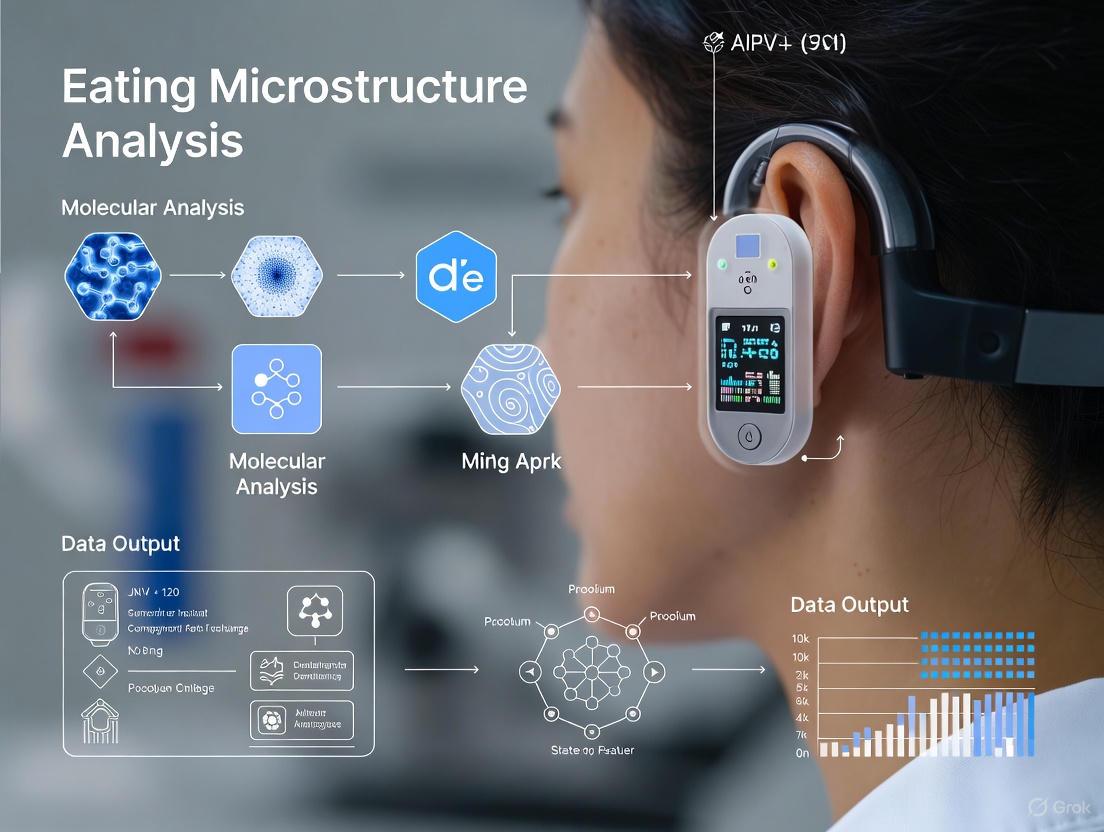
This article explores the transformative potential of wearable technology for the objective and continuous analysis of eating microstructure—the detailed characterization of ingestive behavior.
Wearable Sensor Technology for Eating Microstructure Analysis: A New Frontier in Digital Biomarkers and Clinical Research
Abstract
This article explores the transformative potential of wearable technology for the objective and continuous analysis of eating microstructure—the detailed characterization of ingestive behavior. Tailored for researchers, scientists, and drug development professionals, it provides a comprehensive examination of how flexible tactile sensors, advanced transduction mechanisms, and intelligent data analytics are revolutionizing the assessment of dietary intake, eating behaviors, and treatment efficacy. The scope spans from the foundational principles of sensor design and material science to methodological applications in clinical trials, addressing critical challenges in data validation, standardization, and integration into the regulatory framework for drug development. By synthesizing current research and future trends, this article serves as a strategic guide for leveraging these digital tools to develop robust, patient-centric endpoints for nutritional science, obesity management, and neurology.
The Science of Sensing: Fundamental Principles of Wearables for Ingestive Behavior Monitoring
Eating microstructure provides a micro-level, temporal analysis of the dynamic processes that constitute an eating episode. Moving beyond simple measures of what or how much is consumed, eating microstructure focuses on how food is ingested, characterizing the precise sequence of actions including bites, chews, and swallows [1]. This detailed behavioral fingerprint is crucial for understanding individual eating patterns, their variations across different food types, and their underlying mechanisms in disordered eating and obesity [2] [3]. The study of meal microstructure has revealed that behaviors such as faster eating rates and larger bite sizes are associated with greater food consumption and higher obesity risk, particularly in pediatric populations [2]. Rapid advancements in sensor technology and artificial intelligence are now enabling researchers to objectively and automatically measure these subtle behaviors outside restricted laboratory conditions, opening new frontiers in dietary monitoring and intervention [1] [4].
This technical guide examines the core components of eating microstructure, the sensor technologies and computational methods used for its measurement, and the experimental protocols enabling its analysis within wearable technology research.
Core Components of Eating Microstructure
Eating microstructure decomposes an eating episode into its fundamental behavioral elements. The primary, directly measurable metrics form the foundation for deriving more complex, secondary behavioral patterns.
Primary Behavioral Metrics
- Bites: A bite is defined as the action of taking food or drink into the mouth. In measurement, it is often operationalized as a distinct hand-to-mouth gesture when utensils or hands are used [2] [5].
- Chews (Masticatory Cycles): A chew represents one complete movement of opening and closing the jaw into occlusal contact, serving to comminute and soften food into a bolus [6] [7]. The total number of chews and chewing rate (chews per minute) are key metrics.
- Swallows (Deglutition): A swallow is the complex muscular action that transports the bolus from the mouth to the stomach. The timing of the first swallow (swallowing threshold) and the total number of swallows per eating episode are critical parameters [6].
Secondary and Derived Metrics
- Eating Rate: Typically calculated as the total number of bites or grams of food consumed per minute [2].
- Chewing Rate and Efficiency: Chewing rate is the number of chews per minute, while efficiency may relate chews to the amount of food processed [5].
- Meal Duration: The total time from the first bite to the last swallow, sometimes differentiated into total eating episode duration and true ingestion duration (time spent actively chewing) [5].
Quantitative Profiling of Oral Processing
The parameters of eating microstructure are highly sensitive to food texture and individual characteristics. The following table synthesizes quantitative data on chewing and swallowing patterns for different foods, illustrating this relationship.
Table 1: Chewing and Swallowing Parameters Across Food Textures (Adapted from [6])
| Food Type | Hardness (gForce) | Chewing Cycle until First Swallow (CS1) | Total Chewing Time until Last Swallow (STi) (seconds) | Swallowing Threshold (STh) (seconds) |
|---|---|---|---|---|
| Coco Jelly | Medium | 17.2 | 24.1 | 15.3 |
| Gummy Jelly | High | 24.5 | 31.7 | 19.8 |
| Biscuit | Medium-High | 19.8 | 27.4 | 16.5 |
| Potato Crisp | Low | 12.1 | 16.9 | 9.7 |
| Roasted Nuts | High | 26.3 | 34.6 | 22.1 |
Key findings from this data include a significant positive correlation between food hardness and the swallowing threshold (STh), meaning harder foods require longer chewing before the first swallow [6]. The study also found that females required a longer total chewing time for harder foods, demonstrating how microstructure captures demographic differences [6].
The performance of automated systems for detecting these metrics varies based on sensor modality and algorithm complexity.
Table 2: Performance of Automated Microstructure Measurement Systems
| System / Technology | Primary Metric | Reported Performance | Context / Limitations |
|---|---|---|---|
| ByteTrack (Video-based Deep Learning) [2] | Bite Count | Precision: 79.4%, Recall: 67.9%, F1: 70.6% | Pediatric meals, moderate occlusion/movement |
| Automatic Video Method [5] | Bite Count, Chew Count | Bite Accuracy: 85.4%, Chew Accuracy: 88.9% | Laboratory meals, profile view for jaw tracking |
| OCOsense Glasses [8] | Chew Count | Strong agreement with video (r=0.955) | Lab-based breakfast with bagel and apple |
| iEat (Wearable Bio-impedance) [9] | Food Intake Activity Recognition | Macro F1-score: 86.4% | Recognizes cutting, drinking, eating with utensils/hands |
Sensing Technologies and Data Modalities
A taxonomy of sensors has emerged to quantify the various aspects of eating microstructure, each with distinct advantages and limitations [1].
Wearable Sensor Approaches
Wearable sensors aim to monitor eating behavior passively and unobtrusively in free-living conditions [4].
- Acoustic Sensors: Neck-mounted microphones capture sounds of chewing and swallowing. While informative, they can be sensitive to ambient noise and raise privacy concerns [1] [9].
- Inertial Measurement Units (IMUs): Wrist-worn accelerometers detect the distinct motion patterns of hand-to-mouth gestures as a proxy for bites [1] [4]. They can struggle with differentiating bites from other gestures like drinking or face-touching [2].
- Bio-Impedance Sensors: Systems like iEat measure changes in electrical impedance between wrist-worn electrodes. Dynamic circuits are formed through the hands, mouth, utensils, and food during different dietary activities, providing a unique signature for activity recognition and food type classification [9].
- Strain Sensors and Electromyography (EMG): Sensors mounted on the head, neck, or eyeglasses (e.g., OCOsense) detect muscle activity and skin movement associated with chewing and swallowing [1] [8].
Vision-Based and Contactless Approaches
- Video Cameras: Both stationary lab cameras and smartphone cameras can be used to record eating episodes [5]. The subsequent analysis can be manual (the gold standard, but labor-intensive) or automated via computer vision [2] [3].
- Computer Vision and Deep Learning: Modern approaches use hybrid deep learning models. For example, ByteTrack employs a convolutional neural network (CNN) for spatial feature extraction from video frames combined with a Long Short-Term Memory (LSTM) network to model the temporal sequence of a bite action, improving robustness to occlusion and movement [2].
The diagram below illustrates the core components of eating microstructure and the sensing technologies used to measure them.
Experimental Protocols for Microstructure Analysis
Robust measurement of eating microstructure requires standardized experimental protocols for data collection, whether in the laboratory or the field.
Laboratory Meal Protocol (Video-Based Analysis)
The following workflow is adapted from studies like the Food and Brain study [2] and video analysis research [5].
- Participant Preparation: Recruit participants according to study criteria (e.g., age, BMI, health status). Obtain informed consent.
- Meal Service: Serve standardized meals ad libitum. Studies may use identical foods with varying portion sizes to understand microstructure's role in intake regulation [2].
- Video Recording Setup: Position cameras (e.g., Axis M3004 or SJCAM action cameras) approximately 3 feet from the participant. A profile view is often preferred to facilitate tracking of jaw movement. Record at a minimum of 30 frames per second [5].
- Ground Truth Annotation: Use custom software (e.g., a 3-button system in LabView) for manual annotation of bite and chew events by trained coders reviewing video footage at reduced speed. This serves as the gold standard for validating automated systems [5].
Wearable Sensor Protocol for Free-Living Validation
Validating wearables in naturalistic settings is crucial for establishing ecological validity [4].
- Sensor Deployment: Equip participants with one or more wearable devices (e.g., wrist-worn IMU or bio-impedance sensors, smart eyeglasses). Ensure proper placement and calibration.
- In-Field Ground Truth: Use objective ground-truth methods concurrently with sensor data collection. The most common method is Video Observation (using body-worn or stationary cameras) to later manually annotate eating events. Self-report (e.g., ecological momentary assessment) prompts participants to log the start and end of meals via a smartphone app [4].
- Data Synchronization: Synchronize sensor data streams with ground-truth timelines to enable precise performance evaluation of eating detection algorithms.
Protocol for Characterizing Oral Processing with Food Texture
This protocol focuses on how food properties influence chewing and swallowing dynamics [6] [7].
- Food Selection & Texture Profiling: Select food samples representing a range of textures (e.g., gummy jelly, biscuit, nuts). Quantify textural parameters like Hardness, Gumminess, and Chewiness using a Texture Profile Analyzer (TPA) [6].
- Participant Setup and Recording: Place reflective skin markers on specific facial points (e.g., temporomandibular joint, jaw angle, hyoid bone). Use a digital camera to record participants at 30 fps as they consume each pre-portioned food sample [7].
- Kinematic Data Extraction: Process video to track the 3D movement of facial markers. Extract direct descriptors such as Chewing Cycle prior to the first swallow (CS1), total chewing time until the last swallow (STi), and the Swallowing Threshold (STh) [6].
The workflow for developing an automated analysis system, integrating these protocols, is depicted below.
The Scientist's Toolkit: Essential Research Reagents and Materials
This section catalogs key hardware, software, and experimental materials used in eating microstructure research.
Table 3: Essential Research Toolkit for Eating Microstructure Analysis
| Category | Item | Primary Function / Application |
|---|---|---|
| Sensing Hardware | Axis M3004 / SJCAM SJ4000 Camera | High-quality video recording of eating episodes at 30 fps for manual coding or computer vision input [2] [5]. |
| Accelerometer/IMU (e.g., in smartwatches) | Captures wrist motion dynamics to detect hand-to-mouth gestures indicative of bites [4]. | |
| Bio-Impedance Sensor (e.g., iEat prototype) | Measures electrical impedance variations across the body to recognize food intake activities and types [9]. | |
| OCOsense Glasses | With integrated sensors to detect facial muscle movements associated with chewing without video-based privacy concerns [8]. | |
| Texture Profile Analyzer (TPA) | Quantifies objective food texture parameters (Hardness, Gumminess, Chewiness) to correlate with oral processing behavior [6]. | |
| Analysis Software | ELAN | Open-source video annotation software for detailed, manual behavioral coding of bites, chews, and swallows [8]. |
| Python (Libraries: TensorFlow, PyTorch, OpenCV) | Platform for developing and deploying deep learning models (CNNs, LSTMs) for automated bite/chew detection from video [2] [5]. | |
| MATLAB | Used for signal processing, optical flow calculation, and implementing traditional computer vision algorithms [5]. | |
| Experimental Materials | Reflective Skin Markers | Placed on facial landmarks to enable precise tracking of jaw and hyoid bone movement via camera systems [7]. |
The precise definition and measurement of eating microstructure—from discrete bite counts to complex chewing dynamics and swallowing patterns—provide an unparalleled window into individual eating behaviors. The field is rapidly evolving from reliance on labor-intensive manual annotation toward automated, objective, and scalable methods powered by wearable sensors and artificial intelligence. While challenges remain, particularly in ensuring robustness and privacy in free-living conditions, the continued refinement of these technologies promises to unlock novel insights into obesity, eating disorders, and the development of targeted behavioral interventions.
The advancement of wearable technology for eating microstructure analysis relies fundamentally on the precise and dynamic detection of physiological signals. This field requires sensors that can accurately monitor intricate jaw movements, swallowing patterns, and food consumption behaviors in real-time, without impeding natural activities. Piezoresistive, capacitive, piezoelectric, and triboelectric sensors have emerged as the four core transduction mechanisms enabling these sophisticated measurements [10]. Each mechanism offers distinct advantages in sensitivity, flexibility, power consumption, and responsiveness to different physical parameters, making them uniquely suited for integration into wearable devices that interface seamlessly with the human body.
The selection of an appropriate transduction mechanism is paramount for research in dietary monitoring, ingestible sensor design, and pharmaceutical development. This whitepaper provides an in-depth technical analysis of these four sensor types, comparing their working principles, performance characteristics, and methodological considerations specifically for applications in eating microstructure analysis. By synthesizing current research and quantitative performance data, this guide aims to equip researchers and drug development professionals with the knowledge to select and implement optimal sensing strategies for their specific investigative needs.
Core Transduction Mechanisms
Piezoresistive Sensors
Working Principle: Piezoresistive sensors operate based on the change in electrical resistance of a material when mechanical strain is applied. This piezoresistive effect stems from three concurrent phenomena: an increase in conductor length, a decrease in cross-sectional area, and a change in the inherent resistivity of certain materials when stretched [11] [12]. In practice, a conductive or semiconducting material is often attached to a flexible diaphragm or substrate. When pressure deforms this structure, the resulting strain alters the electrical resistance, which is typically measured using a Wheatstone bridge circuit that converts the minute resistance change into a measurable output voltage [12].
Key Materials and Configurations:
- Metal Strain Gauges: Use metals like platinum alloys; resistance change is primarily due to geometric factors [12].
- Semiconductor Strain Gauges: Use doped silicon; the piezoresistive effect dominates, offering significantly higher sensitivity (gauge factor of 100-200) compared to metal types (gauge factor of 2-4) [12].
- Micro-Electro-Mechanical Systems (MEMS): Enable miniaturized sensors fabricated directly on silicon with integrated signal conditioning electronics [12].
For wearable applications, piezoresistive composites using conductive fillers like reduced graphene oxide in flexible polymers such as polydimethylsiloxane are creating durable, highly sensitive sensing solutions [13].
Capacitive Sensors
Working Principle: Capacitive sensors function by detecting changes in capacitance, which depends on the overlap area of electrodes, the distance between them, and the dielectric constant of the intervening material, as defined by the formula: ( C = ε₀εᵣA/d ) [14]. In flexible pressure sensing, external pressure typically alters the distance (( d )) between conductive electrodes or changes the effective dielectric constant (( εᵣ )) of a compressible layer, thereby modulating the capacitance [10] [15].
Design Configurations:
- Parallel Plate Capacitors: The most common design, where pressure changes the separation between two parallel electrodes [14].
- Geometric Variations: Interdigitated electrodes or changes in overlapping area under deformation [10].
- Measurement Techniques: Common methods include step-response analysis, relaxation oscillators, and bridge configurations to precisely measure capacitance changes [15].
Capacitive sensors are noted for their high sensitivity to minimal pressures, low power consumption, and stability under static conditions, making them suitable for detecting subtle physiological signals in eating monitoring [10].
Piezoelectric Sensors
Working Principle: Piezoelectric sensors generate an electrical charge in response to applied mechanical stress, a phenomenon known as the direct piezoelectric effect [16]. This occurs due to the displacement of ions within crystalline materials like quartz, tourmaline, or engineered ceramics such as lead zirconate titanate, creating a measurable potential difference across the material [16] [17]. Importantly, these sensors are self-generating, requiring no external power supply, and are inherently AC-coupled, making them excellent for detecting dynamic, time-varying pressures but unsuitable for static pressure measurements [17].
Signal Conditioning Considerations:
- Charge Mode Sensors: Produce a high-impedance charge output requiring external charge amplifiers [17].
- Integrated Circuit Piezoelectric Sensors: Incorporate built-in microelectronics to convert the high-impedance signal to a low-impedance voltage output, simplifying interface with data acquisition systems [17].
Their fast response times and high-frequency capabilities make piezoelectric sensors ideal for capturing rapid events like jaw movements or swallowing initiation [16] [17].
Triboelectric Sensors
Working Principle: Triboelectric sensors operate based on contact electrification and electrostatic induction. When two dissimilar materials with differing electron affinities come into contact and separate, a charge transfer occurs, creating opposite static charges on their surfaces [18]. This relative motion generates a potential difference that drives electron flow between electrodes attached to the materials, producing measurable electrical signals [18].
Unique Characteristics for Wearables:
- Self-Powered Operation: Generate signal from mechanical action without external power [18].
- Material Flexibility: Can utilize various polymers, fabrics, and engineered materials selected for their triboelectric series positions [18].
- Recent Advances: Strategies like dynamic perception self-adjustment and collaborative stability enhance reliability against environmental factors like humidity and material wear [18].
Triboelectric nanogenerators are particularly promising for wearable applications where power efficiency and material flexibility are critical.
Performance Comparison and Quantitative Analysis
The table below summarizes the key performance characteristics of the four transduction mechanisms, highlighting their relative advantages and limitations for dynamic detection in eating microstructure research.
Table 1: Quantitative Performance Comparison of Core Transduction Mechanisms
| Parameter | Piezoresistive | Capacitive | Piezoelectric | Triboelectric |
|---|---|---|---|---|
| Sensitivity | Moderate to High (e.g., Si gauges: ~10 mV/V) [12] | Very High (can detect minimal pressure) [10] | High (varies with material) [16] | Very High (signal generated from motion) [18] |
| Response Time | Fast (microseconds to milliseconds) | Fast | Very Fast (microseconds) [17] | Fast (dependent on contact-separation speed) |
| Linearity | Moderate to Good (can be improved with microstructure design) [10] | Good | Good within ranges | Variable |
| Static Pressure Capability | Yes | Yes | No (inherently dynamic) [17] | No (requires motion) [18] |
| Power Consumption | Moderate to High (requires excitation voltage) [12] | Low | Very Low (self-generating) [16] | None (self-powered) [18] |
| Durability & Aging | Good, but can suffer from creep and hysteresis [10] | Excellent | High (robust crystals) [16] | Moderate (subject to material wear) [18] |
| Key Advantage | Simplicity, robustness, wide pressure range [11] [12] | High sensitivity, low power, stability [10] | Self-powering, high-frequency response [16] | Self-powering, high sensitivity, flexible materials [18] |
| Key Challenge | Temperature sensitivity, self-heating effects [12] | Susceptible to parasitic capacitance, environmental interference [10] [15] | Cannot measure static loads, thermal shock sensitivity [17] | Environmental influence (humidity), signal consistency [18] |
Methodologies and Experimental Protocols
Fabrication of Microstructured Sensing Elements
Advanced sensor performance increasingly relies on engineering microstructures within the active layer to enhance deformability, contact area, and conductive pathways [10].
Protocol: Creating Hierarchical Micropatterned Structures for Enhanced Sensitivity
- Master Template Preparation: Create a silicon master template with multilevel microstructures using photolithography and etching processes. Alternatively, use a 3D-printed mold for rapid prototyping.
- Polymer Mixture Preparation: Mix an elastomer base such as PDMS with its curing agent in a standard 10:1 ratio. For conductive composites, disperse conductive fillers (e.g., carbon black, graphene oxide) uniformly into the uncured polymer.
- Molding and Curing: Pour the mixture into the prepared master template. Degas in a vacuum desiccator to remove air bubbles. Cure at 65-75°C for 2-4 hours.
- Demolding: Carefully peel the cured polymer from the template to reveal the negative replica with hierarchical structures (e.g., micro-domes with nano-textures).
- Electrode Integration: Sputter or stamp conductive electrodes (e.g., gold, ITO) onto the structured surface, or assemble the structured active layer between two flexible electrode layers to form the complete sensor [10].
Signal Acquisition and Conditioning
For Piezoresistive Sensors:
- Implement a Wheatstone bridge circuit with one or more active strain gauge elements. Using two or four active elements in opposite arms of the bridge increases output and compensates for temperature effects [12].
- Apply a stable, low-noise excitation voltage. Monitor this voltage at the sensor for accurate ratiometric measurements to compensate for voltage drops in long wires [12].
- Use an instrumental amplifier with high input impedance and good common-mode rejection placed close to the sensor to amplify the small output voltage and improve signal-to-noise ratio [12].
For Capacitive Sensors:
- Utilize a step-response measurement technique. Apply a known step voltage to the sensor through a series resistor and measure the charging time required to reach a specific threshold voltage, which is proportional to capacitance [15].
- Alternatively, incorporate the sensor into a relaxation oscillator circuit where the capacitance value determines the oscillation frequency, which can be measured digitally [15].
- Implement guard ring electrodes to minimize the effects of stray capacitance and electromagnetic interference, which is crucial for stable measurements of small capacitance changes [14].
For Piezoelectric Sensors:
- For ICP type sensors, provide a constant current source (typically 2-20 mA) along with the excitation voltage via the signal cable for the built-in electronics [17].
- For charge mode sensors, use an external charge amplifier that converts the high-impedance charge signal to a low-impedance voltage and provides a controllable discharge time constant to set the low-frequency response [17].
- Ensure proper grounding and use low-noise, shielded cables to minimize interference, especially for high-impedance charge outputs [17].
Calibration and Performance Validation
Dynamic Pressure Calibration:
- Use a reference pistonphone or shaker system for generating known dynamic pressures.
- Mount the test sensor and a reference standard sensor (e.g., calibrated microphone or dynamic pressure sensor) in close proximity.
- Subject both sensors to a range of known dynamic pressures across the frequency spectrum of interest for eating monitoring (e.g., 1 Hz to 1 kHz).
- Record the output of the test sensor and plot against the reference values to establish sensitivity and frequency response [17].
Linearity and Hysteresis Testing:
- Use a motorized translation stage to apply precise, incremental displacements to the sensor.
- Record the sensor output at each pressure step during both loading and unloading cycles.
- Calculate linearity as the maximum deviation from the best-fit straight line as a percentage of full-scale output.
- Calculate hysteresis as the maximum difference in output between loading and unloading curves at the same pressure point, expressed as a percentage of full-scale output [10].
The Scientist's Toolkit: Essential Research Reagents and Materials
Table 2: Key Research Reagents and Materials for Sensor Fabrication and Testing
| Item | Function/Application | Examples & Specifications |
|---|---|---|
| PDMS | Flexible, biocompatible elastomer substrate for flexible sensors; allows for microstructure replication [13]. | Sylgard 184 Silicone Elastomer Kit |
| Conductive Fillers | Implements conductivity in piezoresistive composites or electrode layers. | Carbon black, Graphene Oxide (GO), Reduced Graphene Oxide (rGO) [13], Carbon nanotubes (CNTs) |
| ITO-coated PET | Creates transparent, flexible electrodes for capacitive sensors. | Sheet resistance: <100 Ω/sq, Transparency: >85% [15] |
| Piezoelectric Crystals | Active element in piezoelectric sensors; provides high stability and sensitivity. | Quartz, Tourmaline (for high-temperature applications), PZT (Lead Zirconate Titanate) ceramics [17] |
| Triboelectric Materials | Materials with contrasting electron affinities for generating contact electrification. | PTFE (Polytetrafluoroethylene), PDMS, Nylon, FEP (Fluorinated Ethylene Propylene) [18] |
| Photolithography Resists | Patterning microstructures on silicon wafers for master mold creation. | SU-8 series for high-aspect-ratio microstructures |
| Signal Conditioning ICs | Integrated circuits for amplifying, filtering, and processing sensor signals. | Instrumentation amplifiers (e.g., AD623), Capacitance-to-Digital Converters (e.g., FDC1004) [15], Charge amplifiers |
Sensor Integration and Workflow for Eating Microstructure Analysis
The following diagram illustrates the logical workflow and integration path for employing these sensor technologies in a wearable system for eating microstructure analysis.
The selection of an appropriate transduction mechanism is fundamental to the success of wearable technology for eating microstructure analysis. Each of the four core mechanisms—piezoresistive, capacitive, piezoelectric, and triboelectric—offers a distinct set of characteristics that can be matched to specific monitoring requirements. Piezoresistive sensors provide robustness and simplicity for measuring muscle strain and bite force; capacitive sensors offer high sensitivity for detecting subtle palatal pressure and swallowing initiation; piezoelectric sensors excel in capturing high-frequency vibrations from jaw movements; and triboelectric sensors enable self-powered motion detection for tracking eating gestures.
Future research directions will likely focus on the development of hybrid sensing systems that combine multiple mechanisms to overcome individual limitations, the implementation of advanced microstructure engineering to enhance sensitivity and linearity [10], and the creation of multi-functional sensor networks with sophisticated decoupling algorithms. Furthermore, strategies to improve environmental reliability against factors like humidity and temperature fluctuations [18], along with the pursuit of energy autonomy through self-powered designs, will be crucial for creating practical, long-term monitoring solutions. By leveraging the distinct advantages of each transduction mechanism and addressing their inherent challenges, researchers can develop increasingly sophisticated wearable systems that provide unprecedented insights into eating behaviors, with significant implications for nutritional science, clinical diagnostics, and pharmaceutical development.
The evolution of wearable technology is fundamentally intertwined with advances in microstructural design, which strategically engineers material architectures at the micro- and nano-scale to overcome critical performance trade-offs. Micro-patterned surfaces and porous networks serve as foundational elements for enhancing both the sensitivity and user comfort of next-generation wearable sensors. By mimicking biological structures—from human skin's Merkel cells to plant leaves—these designs enable devices that achieve unprecedented mechanical compliance and signal fidelity. This whitepaper details the core principles, quantitative performance benefits, and detailed fabrication methodologies underpinning these architectures, providing researchers and developers with a technical framework for advancing wearable physiological monitoring systems. The integration of such designs facilitates sensors with high sensitivity across broad pressure ranges, minimal detection limits, and the mechanical conformability necessary for long-term, unobtrusive health monitoring.
Wearable sensors have transitioned from rigid, obtrusive devices to soft, skin-interfaced systems capable of continuous, clinical-grade physiological monitoring. This paradigm shift is largely driven by the recognition that bulk material properties are insufficient to meet the dual demands of high electromechanical performance and skin-like comfort. The human skin itself is a microstructured organ, featuring a complex topography of ridges, grooves, and sweat pores that enable its exquisite sensing capabilities [19].
Microstructural design provides a powerful pathway to decouple traditionally competing sensor properties. For instance, a solid, planar elastomer dielectric in a capacitive pressure sensor must be soft to be sensitive, but this same softness limits its stability and dynamic range. Introducing a micro-patterned or porous architecture allows a stiffer base material to behave as a soft composite structure, concurrently enhancing sensitivity, extending the sensing range, and improving breathability [20] [21]. This synergistic optimization is essential for applications ranging from real-time cardiovascular monitoring to the analysis of sweat biomarkers, where consistent, artifact-free contact with the dynamic skin surface is paramount.
Quantitative Performance Enhancements from Microstructural Engineering
The performance gains from microstructural engineering are substantial and quantifiable. The following tables summarize key metrics reported for various microstructural designs, highlighting their impact on sensor characteristics.
Table 1: Performance Comparison of Microstructured Capacitive Pressure Sensors
| Microstructure Type | Sensitivity (kPa⁻¹) | Pressure Range | Detection Limit | Response Time | Stability (Cycles) |
|---|---|---|---|---|---|
| Triangular Microneedles (PVA/MXene) [22] | 1.03 (0–6 kPa) | Up to 74 kPa | 0.1715 Pa | 65 ms | >10,000 |
| Pyramidal Microstructures (PDMS) [21] | 0.55 (0–2 kPa) | 0–2 kPa | N/A | < 1 s | N/A |
| Hierarchical Pyramids [21] | 3.73 (Low Pressure) | Up to 100 kPa | 0.1 Pa | N/A | N/A |
| Hollow Wrinkle Structures [21] | 14.27 (0–5 kPa) | 0–5 kPa | N/A | N/A | N/A |
| Laser-Engraved Crack-Gradient [23] | 1.56 kPa⁻¹ | N/A | N/A | Rapid | Excellent |
Table 2: Impact of Microstructural Geometry on Sensor Performance
| Geometric Parameter | Performance Impact | Optimal Value / Finding | Reference |
|---|---|---|---|
| Aspect Ratio (H/D) | Governs stress concentration and electric field distribution. Non-monotonic relationship with sensitivity. | Optimal aspect ratio of 2.31 for capacitive mode. | [20] [22] |
| Cross-Sectional Shape | Dictates initial contact area and deformation mechanics under load. | Triangular cross-sections showed 400% higher sensitivity than elliptical or square structures. | [20] |
| Feature Spacing | Influences hysteresis and interfacial adhesion during compression. | Hierarchical pyramids with optimized spacing reduce hysteresis (~4.42%). | [21] |
Experimental Protocols for Fabricating and Evaluating Microstructures
Protocol 1: DLP Printing of Hydrogel Microneedle Arrays
This protocol details the creation of high-sensitivity, flexible capacitive sensors using Digital Light Processing (DLP) additive manufacturing [20].
- Primary Materials: Polyethylene glycol diacrylate (PEGDA) backbone, N-hydroxyethyl acrylamide (HEAA) co-monomer, Lithium chloride (LiCl) ionic conductor, Lithium phenyl (2,4,6-trimethylbenzoyl) phosphinate (LAP) photoinitiator, and tartrazine light absorber.
- Hydrogel Preparation: Dissolve 1.2 g PEGDA in 6.8 mL deionized water. Sequentially add 2 g LiCl and 4.28 mL HEAA with thorough mixing. Add 0.0714 g LAP, followed by 20 µL of tartrazine solution (10 mg/mL) to regulate curing depth.
- Digital Lithography Setup: Prepare a digital photomask with the desired microneedle array pattern (e.g., triangular cross-section, H/D = 2:1). The exposure energy must be carefully regulated between 100–200 mJ/cm². A strategy of reducing exposure time by 30–50% for every 5 mW/cm² increase in light intensity is employed to maintain optimal curing.
- Printing and Post-Processing: The hydrogel precursor is poured into the build vat and selectively cured layer-by-layer by the projected UV pattern. After printing, the structure is rinsed to remove uncured resin and fully hydrated in deionized water.
- Sensor Assembly & Testing: The microstructured hydrogel dielectric layer is sandwiched between two flexible electrodes. Performance is evaluated by measuring capacitance change under applied pressure using a standardized load cell/test system. Sensitivity (S) is calculated as S = (ΔC/C₀)/ΔP, where ΔC is capacitance change, C₀ is initial capacitance, and ΔP is pressure change.
Protocol 2: Laser Ablation of Gradient Crack Microstructures
This protocol creates a sensor with a tunable piezoresistive response via a laser-engraved crack-gradient design [23].
- Primary Materials: Polydimethylsiloxane (PDMS) substrate, Multi-walled carbon nanotubes (MWCNTs), Carbon Black (CB), Silver Nanoparticles (AgNPs) for electrodes.
- Mold Fabrication: Use a femtosecond laser (e.g., HR-Platform-0203) to ablate a pattern of crack-like channels with gradient widths (e.g., 800 µm down to 400 µm) into an acrylic substrate. Laser parameters: 1030 nm wavelength, 100 mm/s scan rate, 75% output power, 1000 Hz pulse frequency. Perform 20 repeated scans per region to achieve a uniform depth of ~350 µm.
- PDMS Replication: Clean the ablated acrylic mold ultrasonically. Pour a mixed, degassed PDMS precursor (base:curing agent = 10:1) into the mold and cure at 70°C for 1 hour. Demold the resulting PDMS film with the inverse gradient crack structure.
- Bilayer Electrode Construction: Prepare a conductive ink by mixing MWCNTs, CB, and PDMS prepolymer in a 1:5:30 weight ratio, dispersed in ethyl acetate. Spray-coat this ink onto the cracked PDMS surface. Subsequently, sputter a layer of AgNPs on top to form a robust, highly conductive bilayer electrode.
- Sensor Characterization: The sensor's response to strain and pressure is evaluated. The gradient crack design facilitates progressive crack propagation, leading to high sensitivity (1.56 kPa⁻¹) and a broad operational bandwidth (50–600 Hz). Frequency resolution and signal response time are also characterized.
Visualization of Design Principles and Workflows
Biomimetic Microstructure Design Workflow
Microstructure-Mediated Sensitivity Enhancement
The Scientist's Toolkit: Essential Research Reagents and Materials
Successful replication and advancement of microstructured wearable sensors require specific materials and reagents. The following table catalogues essential components as featured in the cited research.
Table 3: Key Research Reagent Solutions for Microstructured Sensors
| Material / Reagent | Function / Role | Example Use Case |
|---|---|---|
| PEGDA (Polyethylene glycol diacrylate) | Photocrosslinkable polymer backbone for hydrogel networks. | Forms the mechanical scaffold for DLP-printed microneedle arrays [20]. |
| LiCl (Lithium Chloride) | Source of mobile ions for ionic conductivity in hydrogels. | Imparts conductive properties to PEGDA-HEAA hydrogels [20]. |
| LAP Photoinitiator | Cleaves under UV light to initiate polymerization. | Enables high-resolution DLP printing of hydrogel structures [20]. |
| PDMS (Polydimethylsiloxane) | Soft, biocompatible elastomer; common dielectric/substrate. | Used for pyramidal microstructures and crack-gradient substrates [21] [23]. |
| MXene (Ti₃C₂Tₓ) | 2D conductive material with abundant surface groups. | Creates selective ion microchannels in PVA hydrogels for piezoionic sensors [22]. |
| MWCNTs & Carbon Black | Conductive nanofillers for composite electrodes. | Combined to form the conductive layer in laser-engraved crack sensors [23]. |
| AgNPs (Silver Nanoparticles) | Highly conductive material for flexible electrodes. | Sputtered as a top layer to form low-resistance, robust bilayer electrodes [23]. |
| Femtosecond Laser | High-precision tool for ablating micro-features. | Used to create gradient crack molds on acrylic substrates [23]. |
Microstructural design is not merely an incremental improvement but a foundational pillar for the next generation of wearable technology. The deliberate engineering of micro-patterned surfaces and porous networks directly addresses the core challenges of sensitivity-stability-comfort trade-offs. As evidenced by the quantitative data and methodologies presented, architectures such as triangular microneedles, hierarchical pyramids, and gradient cracks enable a synergistic optimization of performance that is unattainable with bulk materials alone. The future of this field lies in the continued convergence of biomimicry, advanced multi-material manufacturing, and system-level integration. By leveraging these principles and tools, researchers and drug development professionals can accelerate the creation of sophisticated, discreet, and highly reliable wearable systems for advanced physiological monitoring and analysis.
The emerging field of wearable technology for eating microstructure analysis demands a new class of electronic interfaces that can seamlessly integrate with the human body for continuous, long-term monitoring. Eating microstructure—encompassing precise metrics like chewing rate, bite count, swallowing frequency, and meal duration—provides critical insights into dietary patterns and their relation to health conditions such as obesity and eating disorders [1]. Traditional rigid sensors fundamentally lack the mechanical compatibility necessary for comfortable, unobtrusive monitoring of these subtle physiological and behavioral signals. Conductive hydrogels and advanced flexible substrates represent a transformative material solution to this challenge, offering tissue-like softness, inherent biocompatibility, and tunable electrical properties that enable high-fidelity signal acquisition at the body-sensor interface [24] [25]. This technical guide examines the fundamental properties, synthesis methodologies, and functional applications of these advanced materials, providing researchers and drug development professionals with the experimental protocols and material selection criteria needed to advance the field of wearable eating behavior analysis.
Fundamental Properties and Material Composition
Conductive hydrogels are three-dimensional (3D) networks of hydrophilic polymers that have been functionalized with conductive elements, creating a unique class of materials that combine the soft, hydrous environment of biological tissues with the electronic functionality of semiconductors [25]. Their key properties make them ideally suited for long-term wearable applications in eating microstructure research.
Essential Material Characteristics
Tissue-Matching Mechanical Compliance: Hydrogels exhibit Young's modulus values typically in the kPa to low MPa range, closely matching that of human skin and soft tissues (0.5-2 MPa) [25]. This mechanical compatibility reduces interfacial stress and strain by over 80% compared to conventional rigid electronics, minimizing discomfort and motion artifact during extended monitoring periods [25].
Intrinsic Biocompatibility: Natural polymer-based hydrogels, derived from proteins and polysaccharides, contain bioactive moieties and versatile functional groups that support cellular activities and reduce immune responses, which is crucial for preventing skin irritation during long-term wear [25].
Tunable Electrical Properties: Through the incorporation of conductive fillers or functional groups, hydrogels can achieve ionic and/or electronic conductivity, enabling efficient transduction of physiological signals. Ionic conductivity typically ranges from 10⁻³ to 10 S/m, depending on the composition and hydration state [24] [26].
Stretchability and Self-Healing: Many advanced hydrogel formulations can withstand strains exceeding 500% and autonomously repair mechanical damage, significantly enhancing device durability and operational lifetime under dynamic physiological conditions [27] [26].
Material Classification and Composition
Table 1: Classification of Hydrogel Base Materials for Wearable Sensors
| Material Category | Specific Examples | Key Properties | Limitations | Suitability for Eating Behavior Monitoring |
|---|---|---|---|---|
| Protein-Based | Gelatin, Collagen, Silk Fibroin | Excellent biocompatibility, biomimetic microstructure, enzymatic degradation | Mechanically weak without crosslinking, susceptible to rapid degradation | Excellent for epidermal interfaces and minimally invasive implants |
| Polysaccharide-Based | Chitosan, Cellulose, Alginate, Starch | Abundant source materials, tunable viscosity, antimicrobial properties (chitosan) | Batch-to-batch variability, limited electrical conductivity | Ideal for disposable patches and food-contact sensors |
| Synthetic Polymers | PVA, PAAm, PAA, PEG | Precise control over mechanical properties, high reproducibility, excellent stretchability | Limited inherent bioactivity, potential cytotoxicity from residues | Superior for durable wearables requiring mechanical robustness |
Conductive Filler Materials
The electrical functionality of hydrogels is achieved through the incorporation of conductive fillers that form percolation networks within the polymer matrix.
Table 2: Conductive Fillers for Composite Hydrogels
| Filler Category | Specific Materials | Conduction Mechanism | Typical Loading (%) | Key Advantages |
|---|---|---|---|---|
| Carbon-Based | Carbon nanotubes, Graphene, MXenes | Electronic | 0.5-3 | High conductivity, large surface area, mechanical reinforcement |
| Conducting Polymers | PEDOT:PSS, Polypyrrole, Polyaniline | Electronic/Ionic | 3-10 | Tunable redox activity, biocompatibility, mechanical flexibility |
| Metal-Based | Silver nanowires, Gold nanoparticles | Electronic | 1-5 | Highest conductivity, antimicrobial properties |
| Ionic Additives | LiCl, CaCl₂, Ionic liquids | Ionic | 5-20 | Transparency, high stretchability, low cost |
Experimental Protocols and Synthesis Methodologies
Synthesis of Poly(acrylamide)/Gelatin/Ammonium Sulfate Organohydrogel (PGAOH)
This one-step fabrication method produces a robust double-network hydrogel with excellent environmental stability suitable for monitoring eating behaviors in various conditions [25].
Materials Required:
- Acrylamide (AM) monomer
- Gelatin (Type A, from porcine skin)
- Ammonium sulfate ((NH₄)₂SO₄)
- N,N'-Methylenebis(acrylamide) (MBAA) as crosslinker
- Ammonium persulfate (APS) as thermal initiator
- N,N,N',N'-Tetramethylethylenediamine (TEMED) as accelerator
- Deionized water
Step-by-Step Protocol:
- Prepare Solution A: Dissolve gelatin (10% w/v) in deionized water at 40°C with continuous stirring until completely dissolved.
- Prepare Solution B: Dissolve acrylamide (15% w/v) and ammonium sulfate (20% w/v) in deionized water at room temperature.
- Combine Solutions A and B with a volume ratio of 1:2, and add MBAA (0.1 mol% relative to AM) under vigorous stirring.
- Degas the mixture under vacuum for 15 minutes to remove oxygen, which inhibits polymerization.
- Add APS (1 mol% relative to AM) and TEMED (0.5 mol% relative to AM) to initiate polymerization.
- Pour the solution into mold assemblies and maintain at 40°C for 4 hours to complete gelation.
- Characterize the resulting PGAOH for mechanical properties (tensile testing), electrical conductivity (impedance spectroscopy), and anti-freezing behavior (DSC).
Key Performance Metrics:
- Tensile strain: >500% elongation
- Ionic conductivity: ~1.2 S/m at 25°C
- Anti-freezing: Stable to -20°C
- Transparency: >85% in visible spectrum
Fabrication of Anisotropic PVA/Polyaniline Hydrogels (APPH) via Low-Temperature Polymerization
This protocol creates anisotropic hydrogels with a bicontinuous phase structure ideal for directional sensing applications, such as monitoring jaw movements during chewing [26].
Materials Required:
- Polyvinyl alcohol (PVA, Mw 89,000-98,000, >99% hydrolyzed)
- Aniline hydrochloride
- Hydrochloric acid (HCl)
- Ammonium persulfate (APS) as oxidant
Step-by-Step Protocol:
- Prepare a 10% w/v PVA solution in deionized water by heating at 90°C with stirring for 2 hours.
- Cool the PVA solution to 4°C and add aniline hydrochloride (0.5 M final concentration) and HCl (1 M final concentration).
- Transfer the mixture to a custom mold with a copper cold finger at the bottom to create a unidirectional temperature gradient.
- Slowly lower the mold temperature to -20°C at a controlled rate of 0.5°C/min to allow directional growth of ice crystals.
- Meanwhile, prepare an APS solution (0.25 M in deionized water) and precool to 4°C.
- Once the temperature reaches -20°C and maintains for 30 minutes, carefully inject the precooled APS solution onto the surface of the frozen mixture.
- Maintain the system at -20°C for 24 hours to allow restricted polymerization of aniline at the ice crystal/PVA interface.
- Gradually raise the temperature to 25°C over 6 hours to melt the ice crystals, leaving behind an anisotropic porous structure.
- Wash the resulting APPH repeatedly with deionized water to remove residual reactants.
Structural Characteristics:
- Honeycomb-like channel structure aligned along temperature gradient
- Continuous PVA phase with interpenetrating PANI nanofiber scaffold
- Electrical conductivity: 0.3-0.8 S/m (anisotropic ratio ~3:1)
- Compressive strength: >1.5 MPa at 50% strain
Diagram 1: Low-temperature polymerization workflow for anisotropic hydrogels.
Applications in Eating Microstructure Analysis
The unique properties of conductive hydrogels enable the development of specialized sensors for capturing precise eating behavior metrics that were previously challenging to monitor in free-living conditions.
Sensor Modalities for Eating Behavior Monitoring
Table 3: Hydrogel-Based Sensors for Eating Microstructure Analysis
| Eating Metric | Sensor Modality | Hydrogel Composition | Detection Mechanism | Accuracy/Performance |
|---|---|---|---|---|
| Chewing Count & Rate | Strain Sensors on Jawline | PAAm/gelatin/LiCl organohydrogel | Resistance change during jaw movement | >90% detection accuracy compared to video observation [1] |
| Swallowing Events | Acoustic Sensors on Neck | Collagen/PEDOT:PSS composite | Vibration sensing via piezoelectric effect | 85-92% recognition rate in controlled studies [1] |
| Hand-to-Mouth Gestures | Impedance Sensors on Wrist | PVA/phosphoric acid hydrogel | Skin-electrode impedance variation during movement | Correlates with bite count (r=0.79) in laboratory validation [1] [28] |
| Food Intake Context | Multimodal Sensor Arrays | Protein-polysaccharide hybrid hydrogels | Multi-parameter sensing (strain, temperature, bioimpedance) | Identifies eating patterns with 87% accuracy in free-living conditions [29] |
Integrated Sensing Systems for Real-World Monitoring
Advanced eating behavior monitoring systems leverage multiple hydrogel-based sensors to capture complementary aspects of eating microstructure:
Diagram 2: Multi-sensor integration for eating microstructure analysis.
The Northwestern University HabitSense system exemplifies this integrated approach, utilizing three wearable sensors—a necklace (NeckSense), a wristband, and a thermal body camera—to capture eating behavior in unprecedented detail while respecting privacy [29]. This system has identified five distinct overeating patterns in real-world settings:
- Take-out feasting: Characterized by rapid consumption of delivery foods with distinctive chewing signatures
- Evening restaurant reveling: Social dining with specific speech-eating patterns
- Evening craving: Late-night compulsive snacking with repetitive hand-to-mouth motions
- Uncontrolled pleasure eating: Spontaneous binges with irregular chewing rhythms
- Stress-driven evening nibbling: Anxiety-fueled grazing with distinctive physiological correlates
Hydrogel-based sensors are particularly valuable in this context due to their comfortable wearability, which promotes user compliance during extended monitoring periods essential for capturing these complex behavioral patterns [29].
The Scientist's Toolkit: Essential Research Reagents and Materials
Table 4: Essential Materials for Hydrogel-Based Eating Behavior Sensors
| Material/Reagent | Function | Recommended Specifications | Application Notes |
|---|---|---|---|
| Gelatin (Type A) | Protein base for biocompatible hydrogels | Bloom strength 250-300, pharmaceutical grade | Enhances cell adhesion and biodegradability; crosslink with genipin for improved stability |
| PVA (Fully Hydrolyzed) | Synthetic polymer base | Mw 85,000-124,000, >99% hydrolysis | Excellent film-forming properties; requires thermal cycling for crystallization |
| PEDOT:PSS | Conductive polymer filler | High conductivity grade (PH1000) | Add dimethyl sulfoxide (5% v/v) to enhance conductivity; sensitive to pH variations |
| Chitosan | Polysaccharide base for adhesive hydrogels | Medium molecular weight, >85% deacetylation | Natural antimicrobial properties; soluble in weak acid solutions |
| LiCl | Ionic conductivity enhancer | Anhydrous, >99.9% purity | Hygroscopic; effective anti-freezing agent at 15-20% concentration |
| MBAA Crosslinker | Covalent crosslinking agent | Electrophoresis grade, >99% purity | Typical concentration 0.1-1 mol% relative to monomers; affects mesh size |
| APS Initiator | Thermal polymerization initiator | Reagent grade, >98% purity | Decomposes at 60-80°C to generate free radicals; concentration affects polymerization rate |
| TEMED | Polymerization accelerator | Electrophoresis grade, >99% purity | Catalyzes APS decomposition; use in fume hood due to strong odor |
Performance Optimization and Characterization Methods
Electrical and Mechanical Characterization Protocols
Electrochemical Impedance Spectroscopy (EIS) for Hydrogel Electrodes:
- Equipment: Potentiostat with FRA module
- Parameters: Frequency range 0.1 Hz-100 kHz, amplitude 10 mV
- Analysis: Equivalent circuit modeling to extract interface capacitance and charge transfer resistance
- Target: Interface impedance <10 kΩ at 1 kHz for high-quality electrophysiological recording [26]
Tensile Testing for Mechanical Properties:
- Equipment: Universal testing machine with environmental chamber
- Parameters: Strain rate 10 mm/min, pre-load 0.01 N
- Measurements: Young's modulus (from initial linear region), fracture strain, toughness (area under curve)
- Target: Strain-at-break >300%, modulus matching skin (0.5-2 MPa) [25]
Cyclic Durability Testing:
- Protocol: 1000 stretch-release cycles to 50% strain
- Monitoring: Resistance variation throughout cycling
- Acceptance: Resistance change <15% after cycling, indicating stable conductive networks [26]
Environmental Stability Enhancement Strategies
Hydrogel performance degradation under extreme conditions remains a significant challenge. Advanced formulations address these limitations:
Anti-freezing Organohydrogels: Incorporating glycerol/ethylene glycol (15-25%) or high salt concentrations (e.g., 20% (NH₄)₂SO₄) depresses freezing points to -40°C while maintaining flexibility [27] [25].
Anti-drying Strategies: Double-network structures with hydrophobic segments or surface sealing with ultrathin polymer films (e.g., PDMS, parylene) reduce water evaporation to <5% weight loss after 7 days at 40% relative humidity [27].
Anti-swelling Approaches: Densely crosslinked networks or incorporation of non-swelling nanofillers (e.g., cellulose nanocrystals) limit volumetric expansion to <10% in physiological solutions [27].
Conductive hydrogels and flexible substrates represent a foundational material platform for the next generation of eating microstructure monitoring technologies. Their unique combination of tissue-like mechanical properties, customizable electrical characteristics, and inherent biocompatibility addresses critical challenges in wearable sensor design, particularly for long-term behavioral monitoring in real-world environments. As research advances, key future directions include the development of fully biodegradable systems to eliminate electronic waste, the integration of energy harvesting capabilities for self-powered operation, and the creation of "smart" hydrogels with drug-eluting functionality for combined monitoring and intervention. For researchers and drug development professionals, these material innovations offer unprecedented opportunities to obtain high-fidelity, continuous data on eating behaviors, ultimately enabling more personalized and effective interventions for obesity, eating disorders, and nutrition-related health conditions.
The precise quantification of eating microstructure—the detailed temporal pattern of bites, chews, and swallows within an eating episode—requires robust sensor technologies whose performance can be systematically evaluated. Wearable sensors have emerged as transformative tools for objective dietary monitoring, moving beyond traditional self-report methods that lack the granularity to capture subconscious eating actions [30]. Technologies including acoustic, motion, inertial, and strain sensors, often deployed in combinations around the head, neck, and wrist, can now detect and characterize these micro-level behaviors [30] [31]. The reliability of the data generated by these systems, however, is contingent on rigorous performance validation across key metrological parameters. This technical guide establishes a framework for evaluating the essential Key Performance Indicators (KPIs) of sensor systems—specifically sensitivity, linearity, detection range, and durability—within the context of eating microstructure research for scientific and drug development applications.
The development of effective wearable monitoring systems hinges on understanding the relationship between sensor capabilities and the physiological signals they are designed to capture. The diagram below illustrates this fundamental signaling pathway from biological activity to research data.
Core Sensor KPIs: Definitions and Methodologies for Eating Analysis
In the context of eating microstructure, standard sensor performance metrics take on specific meanings and require tailored experimental protocols for their quantification.
Sensitivity: For a chewing sensor, this refers to the minimum change in mandibular movement amplitude or muscle activation that produces a detectable change in the sensor's output signal. A highly sensitive sensor can distinguish between subtle variations in chewing intensity and different food textures [30].
Linearity: This indicates how consistently the sensor's output scales with the amplitude of the eating behavior. A linear response in a hand-to-mouth motion sensor ensures that the magnitude of the recorded signal is directly proportional to the actual movement range, allowing for accurate bite count estimation across varying gesture sizes [31].
Detection Range: This defines the span between the smallest and largest detectable eating behavior. The lower limit must capture the faintest swallow, while the upper limit must accommodate the most vigorous chewing without signal saturation, ensuring complete capture of an eating episode's dynamics [30].
Durability: This assesses the sensor's ability to maintain its performance specifications (sensitivity, linearity) over repeated use, exposure to environmental factors like humidity from the breath or food spills, and mechanical stress from jaw movement and talking [30].
Experimental Protocols for KPI Quantification
A standardized laboratory protocol is essential for generating comparable performance data across different sensor technologies.
Protocol for Sensitivity and Detection Range:
- Setup: Mount the sensor (e.g., a piezoelectric strain sensor on the mandible) in a controlled laboratory setting using a calibrated mounting apparatus.
- Calibration: Use a micromanipulator to apply known, quantifiable displacements or forces that mimic the range of jaw movements during eating.
- Data Collection: Record the sensor's output signal across the applied input range, from sub-millimeter movements (to determine the lower detection limit) up to movements exceeding typical chewing amplitude (to identify the upper saturation point).
- Analysis: Calculate the signal-to-noise ratio (SNR) at varying input levels. The lower detection limit is typically defined as the input level that yields an SNR of 3:1. The upper limit is identified as the point where the output signal deviates from linearity by more than 5%.
Protocol for Linearity:
- Stimulus Application: Apply a series of known, standardized inputs across the sensor's operational range. For a motion sensor detecting hand-to-mouth gestures, this could involve a robotic arm performing movements of defined lengths and speeds.
- Data Fitting: Plot the sensor's output (e.g., voltage, capacitance) against the known input values.
- Calculation: Perform linear regression analysis on the data. The coefficient of determination (R²) serves as the primary metric for linearity, with an R² value ≥ 0.95 typically indicating acceptable linear performance.
Protocol for Durability:
- Accelerated Aging: Subject the sensor to cyclic loading in an environmental chamber that simulates real-world conditions (e.g., temperature cycles, controlled humidity).
- Intermittent Testing: At fixed intervals (e.g., every 10,000 cycles), remove the sensor and repeat the sensitivity, range, and linearity protocols.
- Performance Tracking: Document the degradation of performance metrics (e.g., drift in baseline signal, loss of sensitivity) over the number of cycles. The endpoint is defined as the cycle count at which a key KPI degrades beyond a pre-set threshold (e.g., 15% loss of sensitivity).
KPI Performance of Prevalent Sensor Modalities in Eating Research
The following table synthesizes the expected KPI performance and key characteristics of sensor modalities commonly used in eating microstructure research, based on current literature. These values represent typical benchmarks against which new sensor technologies can be evaluated.
Table 1: KPI Benchmarks for Sensor Modalities in Eating Analysis
| Sensor Modality | Typical Measurand | Sensitivity & Detection Range | Linearity (Typical R²) | Key Durability Considerations |
|---|---|---|---|---|
| Acoustic [30] | Chewing and swallowing sounds | High sensitivity to sound pressure; range must cover quiet swallows to loud crunching. | Variable; highly dependent on sensor placement and individual anatomy. | Microphone protection from moisture (saliva, food); stability of adhesion to skin. |
| Inertial (IMU) [30] [31] | Hand-to-mouth movement, jaw motion | Detects specific acceleration and angular velocity profiles of bites. Lower limit for subtle gestures. | High (>0.98) for movement amplitude. | Robustness to daily mechanical shock; battery life for continuous monitoring. |
| Strain/Gauge [30] | Jaw movement (skin stretch) | High sensitivity to small skin deformations. Range for full jaw opening to closed. | High (>0.95) within defined strain range. | Resistance to fatigue from cyclic loading; adhesion reliability over long periods. |
| Electromyography (EMG) | Masseter muscle activity | High sensitivity to microvolt-level bio-potentials. | Good for muscle activation intensity. | Electrode-skin interface stability; signal degradation from sweat. |
The Scientist's Toolkit: Research Reagent Solutions for Sensor Validation
To execute the experimental protocols outlined in Section 2.1, researchers require access to specialized materials and systems. The following table details essential "research reagent solutions" for the development and validation of wearable eating sensors.
Table 2: Essential Research Reagents for Sensor Development and Validation
| Tool / Material | Function in R&D | Application Example |
|---|---|---|
| Programmable Micromanipulators | Apply precise, repeatable displacements/forces to sensors for calibration of sensitivity and linearity. | Calibrating a jaw-motion strain sensor by simulating known chewing movement amplitudes. |
| Anthropomorphic Robotic Arm | Simulates human arm and hand movements for consistent testing of gesture-detection sensors. | Validating the detection range and linearity of a wrist-worn IMU for bite intake gestures. |
| Environmental Test Chamber | Subjects sensors to controlled temperature, humidity, and mechanical cycling for accelerated durability testing. | Assessing performance degradation of an acoustic sensor under high-humidity conditions mimicking mealtime environments. |
| Reference Sensing Systems (e.g., AIM-2) [31] | Multi-sensor systems (camera, inertial, etc.) used as a high-quality ground truth for validating new, simpler sensors. | Comparing the bite count from a novel wrist sensor against the validated bite count from the AIM-2 system in a laboratory study. |
| Signal Generators & Simulators | Produce calibrated electrical or physical signals to test the front-end electronics of sensor systems. | Testing the input range and noise floor of the analog-to-digital converter in a wearable sensor node. |
Advanced Sensor Systems and Integrated Analysis Workflow
Cutting-edge research often employs multi-sensor systems to capture complementary data streams, thereby overcoming the limitations of any single modality. For instance, the NeckSense necklace is designed to passively record multiple eating behaviors simultaneously, including chewing speed, bite count, and hand-to-mouth movements [32]. Similarly, the AIM-2 (Automatic Ingestion Monitor) and eButton represent advanced, multi-modal platforms that fuse data from inertial sensors and cameras [31] [33]. The evaluation of KPIs for these integrated systems requires a holistic approach that assesses not only the individual sensors but also the performance of the data fusion algorithms in accurately detecting and characterizing eating events.
The workflow for evaluating a sensor system, from raw data acquisition to the final research insight, involves a multi-stage process of signal processing and pattern recognition, as shown below.
The rigorous evaluation of sensor KPIs—sensitivity, linearity, detection range, and durability—is not merely an engineering exercise but a foundational requirement for generating valid and reliable scientific data in eating microstructure research. As the field progresses, future work must focus on developing standardized testing protocols accepted by the research community to enable direct cross-study comparisons. Furthermore, the integration of artificial intelligence with multi-modal sensor data presents a promising path forward. AI-enabled systems, such as the EgoDiet pipeline which uses wearable cameras and computer vision for passive dietary assessment, demonstrate how machine learning can overcome challenges like estimating portion sizes in diverse real-world settings [33]. The continued refinement of sensor KPIs, coupled with advanced analytics, will be instrumental in developing the next generation of personalized, habit-based healthcare interventions for conditions related to dietary intake [32].
From Data to Biomarkers: Methodological Approaches and Clinical Applications
The detailed analysis of eating microstructure—the precise characterization of bites, chews, and swallows—is critical for advancing research in nutrition, obesity treatment, and drug development. Traditional methods, such as food diaries and manual weighing, are prone to inaccuracies and recall bias, failing to capture the fine-grained temporal dynamics of ingestive behavior [34] [35]. Wearable technology now offers a solution, with individual sensors providing partial insights: acoustic sensors capture biting and chewing sounds, strain gauges detect jaw movements, and electromyography (EMG) monitors muscle activation. However, the complexity of eating behavior necessitates a multi-modal approach. This whitepaper details how the strategic fusion of acoustic, strain, and EMG signals creates a comprehensive profiling system, enabling unprecedented resolution in the analysis of eating microstructure within naturalistic environments.
The Scientific Rationale for Multi-Modal Sensing
Eating is a complex sensorimotor activity involving coordinated actions of the jaw, facial muscles, and vocal organs. Single-sensor systems are limited; for instance, an acoustic sensor alone may struggle to distinguish a chew from ambient noise, while an EMG sensor might detect muscle activity that is not ingestion-related. By integrating complementary data streams, sensor fusion mitigates the limitations of any single modality and provides a more robust and detailed signature of eating events.
The integration of multiple physiological and behavioural parameters via wearable sensors represents a paradigm shift in objective dietary monitoring [36]. This approach moves beyond simple food intake detection to the characterization of feeding microstructure, including metrics such as bite size, chewing rate, and meal duration, which are crucial for understanding the neuronal circuits governing appetite [34] and evaluating the efficacy of therapeutic interventions [35].
Technical Deep Dive: Sensor Modalities and Fusion Methodologies
Acoustic Sensing
Acoustic sensors capture the rich auditory signatures of food fracture and mastication.
- Sensing Principle: Acoustic devices convert mechanical vibrations from sound into electrical signals. The primary mechanisms used in wearable applications include:
- Piezoelectric: These sensors generate an electric charge in response to mechanical stress. They are characterized by high mechanical-to-electrical energy conversion efficiency and fast response times. Materials like polyvinylidene fluoride (PVDF) are favored for their flexibility and biocompatibility [37]. The governing piezoelectric equation is:
D = ε^T * d * E^T[37] - Capacitive: These sensors detect changes in capacitance caused by the vibration of a diaphragm under acoustic pressure. MEMS-based capacitive microphones offer high sensitivity and a bandwidth that covers the full range of human vocalizations and eating sounds [37].
- Piezoelectric: These sensors generate an electric charge in response to mechanical stress. They are characterized by high mechanical-to-electrical energy conversion efficiency and fast response times. Materials like polyvinylidene fluoride (PVDF) are favored for their flexibility and biocompatibility [37]. The governing piezoelectric equation is:
- Key Metrics: Sensitivity (
-198 dBreferenced to1 V/µPa), bandwidth (10 Hz – 20 kHz), and flatness (±0.5 dB) are critical performance parameters for capturing the full spectrum of ingestive sounds [38]. - Application: Devices like the Crunchometer leverage low-cost condenser microphones and computational algorithms to identify bite and chew events in real-time, creating high-resolution feeding ethograms in both mice and humans [34]. Furthermore, Skin-Attached Acoustic Sensors (SAAS) placed on the throat can capture vibrations directly from the skin, effectively isolating them from background environmental noise [38].
Strain Sensing
Strain sensors measure the mechanical deformation associated with jaw movement during chewing.
- Sensing Principle: These sensors typically operate on a piezoresistive mechanism, where the electrical resistance of the sensing material changes with applied strain or pressure. The Gauge Factor (GF) quantifies this sensitivity [37]:
GF = (ΔR/R)/ε[37] whereRis resistance,ΔRis the change in resistance, andεis the strain. - Key Metrics: The Gauge Factor, stretchability, and cyclic stability are essential for reliably tracking repetitive jaw movements.
- Application: Integrated into wearable patches or necklaces (e.g., NeckSense), strain gauges can passively record eating behaviors, including the number of chews, chewing rate, and hand-to-mouth movements [32]. This provides direct kinematic data on the mastication cycle.
Electromyography (EMG)
EMG sensors detect the electrical activity generated by muscle fibers during contraction, which is useful for identifying chewing and swallowing.
- Sensing Principle: Surface EMG (sEMG) electrodes placed on the skin overlying masseter or temporalis muscles detect the summation of action potentials from muscle motor units.
- Key Metrics: Signal-to-noise ratio (SNR), input impedance, and common-mode rejection ratio (CMMR) are vital for obtaining clean myographic signals.
- Application: EMG provides a direct measure of muscle effort during mastication. Research has explored combining accelerometers and EMG sensors on the abdomen to distinguish fetal movements from maternal movements, demonstrating the power of EMG in a multi-sensor fusion context for classifying complex biological movements [39].
The Fusion Architecture and Data Processing
Fusing data from these disparate sensors requires a structured architecture to transform raw data into actionable insights.
Data Acquisition → Signal Preprocessing → Feature Extraction → Data Fusion & Classification.
Table 1: Core Technical Specifications of Sensor Modalities
| Sensor Modality | Sensing Principle | Key Measurands | Typical Performance Metrics |
|---|---|---|---|
| Acoustic | Piezoelectric/Capacitive | Sound waves, vibrations | Sensitivity: -198 dB; Bandwidth: 10Hz-20kHz; Flatness: ±0.5 dB [38] |
| Strain | Piezoresistive | Mechanical deformation | Gauge Factor (GF); High stretchability (>50%); Cyclic stability (>10,000 cycles) |
| EMG | Electrophysiological | Muscle bio-potentials | SNR: >80 dB; Input Impedance: >100 GΩ; CMMR: >100 dB |
The following diagram illustrates the workflow from multi-sensor data acquisition to the final classification of eating events:
Experimental Protocols for System Validation
To ensure the fused sensor system generates valid and reliable data, rigorous experimental protocols are essential. The following workflow outlines a standard validation procedure comparing the sensor system's output against gold-standard video coding:
Protocol Details
- Participant Setup: Recruit participants across a range of BMIs. Fit sensors as follows: an acoustic sensor (e.g., a SAAS) on the throat, a strain sensor on the jawline, and EMG electrodes on the masseter muscles. Synchronize all devices [38] [36].
- Data Collection: In a controlled lab setting, present participants with standardized meals of varying texture (e.g., apple, bread, potato chips) and energy density (high- vs. low-calorie) [35] [36]. Simultaneously record all sensor data and high-definition video of the eating session. The video serves as the ground truth.
- Data Analysis: Extract features from each sensor modality. For acoustic signals, analyze root mean square (RMS) energy and spectral features. For strain and EMG, extract amplitude and duration of events. Fuse these features and train a machine learning classifier (e.g., Random Forest, ResNet) to detect and classify eating events (bite, chew, swallow). Validate the algorithm's performance against the manually coded video, calculating standard metrics like sensitivity, precision, and F1-score. For example, a recent IoT-enabled wearable for fetal movement achieved a sensitivity of
90.00%and precision of87.46%using a similar validation framework with XGBoost [39].
The Scientist's Toolkit: Research Reagent Solutions
Table 2: Essential Materials for Sensor Fusion Research
| Item Name | Function/Application | Technical Notes |
|---|---|---|
| Piezoelectric MEMS (PMUT) | Core of acoustic sensing; converts throat vibrations to electrical signals. | Small footprint (3.5 x 3.5 mm²), wide bandwidth (10 Hz–20 kHz), high sensitivity (-198 dB) [38]. |
| Flexible Printed Circuit Board (FPCB) | Base substrate for wearable system; hosts sensors and electronics. | Polyimide substrate with serpentine copper interconnects for durability and skin conformity [38]. |
| Biocompatible Silicone Encapsulant | Encapsulates and protects the electronic assembly. | Ensures device is skin-safe, waterproof, and robust for daily use. |
| Bluetooth Low Energy (BLE) Module | Enables wireless data transmission from wearable to host PC. | Critical for free-living studies; e.g., ESP32 module [38]. |
| Machine Learning Models (e.g., ResNet, XGBoost) | Classifies fused sensor data into specific eating events. | ResNet achieved >96% accuracy for laryngeal speech features; XGBoost with PSO hyper-tuning used for movement classification [38] [39]. |
The fusion of acoustic, strain, and EMG signals within a wearable platform represents a significant leap forward for the objective, high-resolution analysis of eating microstructure. This multi-modal approach overcomes the inherent limitations of single-sensor systems, providing researchers and drug development professionals with a powerful tool to deconstruct the complex biomechanics of ingestion. The resulting comprehensive datasets are poised to accelerate discovery in appetite neuroscience, refine behavioral diagnostics for obesity, and create new, highly sensitive endpoints for evaluating the efficacy of next-generation therapeutic interventions.
The emergence of wearable technology has revolutionized eating microstructure analysis, providing unprecedented resolution for capturing granular behavioral metrics such as chewing rate and bite strength. This technical guide details the pipeline for transforming raw sensor data into these validated microstructural metrics. We explore the theoretical underpinnings of signal processing and feature extraction, present validated experimental protocols for in-lab and free-living data collection, and provide a comprehensive toolkit for researchers. Framed within the context of advanced eating behavior research, this whitepaper serves as a foundational resource for scientists and drug development professionals aiming to leverage wearable sensors for objective dietary monitoring and intervention assessment.
Eating microstructure—the fine-grained, within-meal pattern of eating behaviors—has emerged as a critical domain for understanding nutritional intake, energy consumption, and the efficacy of pharmacological interventions. Traditional methods for assessing eating behavior, such as self-report questionnaires and manual video annotation, are often limited by their subjectivity, high resource demand, and inability to capture real-world eating experiences [8] [40]. The integration of wearable sensor technology addresses these limitations by enabling continuous, objective, and high-resolution data collection in both controlled laboratory and free-living settings.
Research establishes that impaired masticatory function, which can be precisely measured via wearable technology, is linked to broader health outcomes, including malnutrition, frailty, and cognitive decline, particularly in aging populations [40]. For researchers in drug development, microstructural metrics offer sensitive, objective endpoints for evaluating how therapeutic interventions influence eating behavior and nutritional status. This guide details the technical processes required to derive such validated metrics from the raw data generated by wearable sensors, with a focus on chewing rate and bite strength.
Theoretical Foundations: From Raw Data to Informative Features
The journey from a raw sensor signal to a clinically meaningful metric involves a multi-stage pipeline of signal processing and feature extraction. The core challenge lies in isolating the low-variance, informative signatures of specific behaviors from noisy, high-dimensional data streams.
The Imperative of Feature Extraction
Feature extraction is the process of transforming raw data into a simplified set of numerical features that can be processed while preserving the information in the original dataset [41]. Applying machine learning directly to raw signals often yields poor results due to the high data rate and information redundancy [41]. Feature extraction mitigates this by:
- Reducing Computational Cost: Simplifying complex data, thereby reducing the computational resources needed for processing [42].
- Improving Model Performance: Allowing machine learning models to focus on the most relevant information, leading to better accuracy and more robust results [41] [42].
- Preventing Overfitting: Reducing the number of features helps prevent models from becoming too specific to the training data and performing poorly on new data [42].
Signal Processing and Feature Extraction Techniques
The choice of technique is dictated by the nature of the sensor data and the target metric. The following methods are particularly relevant for eating behavior analysis.
Table 1: Common Feature Extraction Techniques for Sensor Data
| Technique | Domain | Description | Application in Eating Behavior |
|---|---|---|---|
| Time-Frequency Transformations | Frequency/Time-Frequency | Transforms a signal to reveal its frequency components over time. | Ideal for non-stationary signals like chewing, which vary over time [41]. |
| Wavelet Transform | Time-Frequency | Provides multi-resolution analysis, effective at identifying short transients. | Identifying individual chews and swallows within a continuous data stream [41]. |
| Statistical Features | Time | Simple measures that summarize the data distribution in a time window. | Calculating mean, median, and standard deviation of signal amplitude per chewing bout [42]. |
| Mel-Frequency Cepstral Coefficients (MFCCs) | Frequency | Represents the short-term power spectrum of a sound, common in audio. | Useful for analyzing sounds associated with chewing or swallowing from a microphone [41]. |
For wearable sensors like the OCOsense glasses, which monitor facial muscle movements, the initial signal processing often involves filtering to remove noise (e.g., from head movements) before applying these feature extraction methods to identify distinctive patterns of mastication [8].
Experimental Protocols & Metric Validation
Robust validation is paramount to ensure that the metrics derived from wearables are accurate and clinically meaningful. The following protocols, drawn from recent research, provide a template for experimental validation.
Protocol 1: Validating Chewing Detection with Wearable Glasses
A 2025 study offers a prime example of validating a wearable device for chewing behavior analysis [8].
- Objective: To empirically validate the ability of OCOsense glasses to detect chewing behaviors against a manually coded video ground truth.
- Participants: 47 adults (31 females, 16 males) aged 18–33.
- Procedure:
- Participants took part in a 60-minute lab-based breakfast session.
- Their eating behavior was simultaneously recorded using OCOsense glasses and video cameras.
- Oral processing behaviors for two test foods (bagel and apple) were manually annotated from the video recordings using ELAN software (version 6.7).
- The sensor data from the glasses was processed by a proprietary algorithm to generate chewing counts and rates.
- Validation & Results: The algorithm's output was compared against manual video coding, which is considered the gold standard. The study found:
- Strong Agreement: A very strong correlation between the manual coding and the algorithm's chew count (r(550) = 0.955).
- No Significant Difference: The number of chews and mean chewing rates did not differ significantly between the two methods.
- High Accuracy: The glasses correctly detected 81% of eating periods and 84% of non-eating periods [8].
This protocol demonstrates that facial muscle movements detected by wearable sensors can validly detect chewing movements for specific foods.
Protocol 2: Measuring Maximum Bite Force (MBF) with a Dynamometer
While not a wearable, the protocol for measuring bite force establishes a methodology for a key microstructural metric.
- Objective: To analyze Maximum Bite Force (MBF) across different age groups and genders [43].
- Participants: 100 individuals equally divided by gender and age groups.
- Procedure:
- A digital dynamometer (model DDK/M) was used, which is designed to determine the force applied during a bite.
- The device was placed on the first molars on both sides of the dental arch.
- Participants were instructed to bite "as hard as they could."
- Three measurements were taken on each side with a 2-minute rest interval to prevent muscle fatigue.
- The arithmetic mean of all measurements was calculated for analysis.
- Key Findings: The study highlighted that MBF is a complex metric influenced by factors such as age, gender, dental condition, and facial morphology. It found a non-linear variation in MBF across human development stages [43].
This controlled protocol provides a benchmark against which indirect estimates of bite force from other wearable sensors (e.g., jaw strain sensors) could be validated.
The following workflow diagram illustrates the complete pathway from data acquisition to metric validation, as described in the experimental protocols.
Figure 1: Experimental Data Processing Workflow.
Implementation: A Workflow for Researchers
This section synthesizes the theoretical and experimental elements into a practical, step-by-step workflow for researchers.
The Feature Extraction and Modeling Pipeline
The process of transforming raw data into metrics can be broken down into distinct, sequential stages, as visualized below.
Figure 2: Feature Extraction and Modeling Pipeline.
The Scientist's Toolkit: Essential Research Reagents & Materials
Successful research in this field relies on a combination of hardware, software, and methodological tools.
Table 2: Essential Research Toolkit for Wearable Eating Analysis
| Tool / Material | Function & Application | Key Characteristics |
|---|---|---|
| OCOsense Glasses [8] | A wearable device that directly monitors facial muscle movements to detect chewing and eating behaviors. | Non-invasive; validated against video ground truth; capable of detecting individual differences in food type and eating rate. |
| Digital Dynamometer [43] | Measures maximum bite force (MBF) directly, providing a gold-standard benchmark for bite strength calibration. | Provides measurements in Newtons (N); used for controlled lab-based calibration of other indirect sensors. |
| Texture Analyser [44] | Simulates biting and chewing action on food samples to objectively quantify food texture properties like hardness and chewiness. | Equipped with various probes and blades (e.g., Kramer Shear Cell); measures force-distance-time profiles. |
| Bichromatic Gum [40] | A subjective/objective test food for assessing masticatory performance based on color mixing after chewing. | Standardized tool (e.g., Bubble Yum); evaluated visually or via digital image processing for mixing homogeneity. |
| ELAN Software [8] | Open-source tool for manual, frame-accurate behavioral coding of video data, creating the ground truth for validation. | Critical for creating accurate training and validation datasets for machine learning algorithms. |
The translation of raw sensor data into validated microstructural metrics like chewing rate and bite strength is a sophisticated but manageable process grounded in the principles of signal processing and machine learning. As demonstrated by validation studies, wearable technologies such as the OCOsense glasses have reached a maturity level that allows for accurate detection of eating behaviors in laboratory settings [8]. The ongoing challenge for the field lies in refining these algorithms for a wider variety of foods and extending their robustness for free-living conditions. For the research and drug development community, the adoption of these objective, data-driven metrics promises to enhance the sensitivity of clinical trials, enable personalized nutritional interventions, and deepen our understanding of the complex relationships between eating behavior, health, and disease. Future work will undoubtedly focus on the integration of multi-modal sensor data to provide a more holistic and automated analysis of eating microstructure.
Traditional endpoints in obesity clinical trials, such as body mass index (BMI) and self-reported dietary intake, fail to capture the nuanced behavioral and physiological mechanisms underlying interventions. The emerging field of eating microstructure analysis addresses this gap by quantifying the dynamic process of eating—including chewing, biting, swallowing, and eating speed—through sensor-based technologies [1]. This technical guide explores the integration of wearable technology for eating microstructure analysis within clinical trials for obesity and eating disorders, providing researchers with methodologies for objectively monitoring dietary interventions and pharmacotherapy effects. These approaches enable fine-grained measurement of behavioral outcomes that precede and predict weight change, offering enhanced sensitivity for detecting intervention effects and elucidating mechanistic pathways.
Wearable Sensor Technologies for Eating Microstructure Analysis
A Taxonomy of Sensors and Measurable Metrics
Wearable sensors provide objective, high-resolution data on eating behaviors that are difficult to accurately capture through self-report methods [1]. The selection of sensor modalities depends on the specific eating metrics relevant to the clinical trial's endpoints. The table below summarizes the primary sensor technologies and their applications.
Table 1: Sensor Technologies for Monitoring Eating Behavior in Clinical Trials
| Sensor Modality | Measurable Eating Metrics | Common Device Placement | Granularity |
|---|---|---|---|
| Acoustic | Chewing count, swallowing frequency, bite detection | Ear, neck, jaw | High (individual mastication events) |
| Motion/Inertial | Hand-to-mouth gestures, eating duration, bite rate | Wrist, head | Medium (meal-level patterns) |
| Strain | Jaw movement, chewing frequency | Neck | High (individual mastication events) |
| Distance/Proximity | Bite volume, eating speed, food proximity | Chest | Low to Medium |
| Physiological | Heart rate variability, glucose response | Wrist, chest | Low (correlative measures) |
| Camera-Based | Food type, portion size, eating environment | Eyeglass, clothing | Variable |
These sensor technologies enable quantification of previously difficult-to-capture eating behaviors, which can serve as sensitive endpoints for clinical trials [1]. For instance, acoustic sensors can detect subtle changes in chewing efficiency that may result from pharmacotherapy, while wrist-worn inertial sensors can objectively measure changes in eating pace—a key target of behavioral interventions for obesity.
Accuracy and Validation in Laboratory and Free-Living Conditions
The accuracy of eating behavior monitoring systems varies significantly based on sensor modality and environment. Laboratory-validated acoustic sensors achieve chewing detection accuracy exceeding 90% under controlled conditions [1]. However, performance typically degrades in free-living environments due to background noise and movement artifacts. Multi-sensor systems that combine acoustic and inertial measurement units (IMUs) demonstrate improved specificity for detecting eating episodes compared to single-modality approaches.
For bite count detection, wrist-worn devices using IMU data typically achieve accuracy rates between 80-90% in laboratory settings [1]. The key challenge in clinical trial applications is maintaining sufficient accuracy across diverse real-world eating environments while ensuring participant adherence to wearing protocols. Systems that incorporate machine learning algorithms, particularly those using temporal convolution networks or long short-term memory models, show promise for robust pattern recognition across variable conditions.
Integration with Dietary Intervention Monitoring
Digital Therapeutics and Behavioral Interventions
Digital therapeutics (DTx) represent an emerging category of evidence-based software interventions for disease management, including obesity [45]. These platforms typically combine dietary planning, physical activity tracking, and behavioral modification strategies delivered via smartphone applications. In the DEMETRA randomized controlled trial, a comprehensive DTx platform incorporating personalized diet plans, exercise routines, and mindfulness components demonstrated significantly greater weight loss (-7.02 kg vs. -3.50 kg) among adherent participants compared to a placebo app group [45].
The integration of wearable eating monitoring sensors with DTx platforms creates a closed-loop system for dietary intervention delivery and assessment. Sensor-derived eating metrics provide objective adherence data and enable just-in-time adaptive interventions (JITAIs) that respond to individual eating patterns in real-time. For example, a system might trigger a mindful eating prompt when detecting rapid eating behavior, creating an immediate behavioral intervention directly tied to microstructure measurements.
Methodological Protocol for Sensor-Enhanced Dietary Trials
Study Design: Randomized controlled trials with parallel groups, ideally double-blind with placebo control. Participants: Adults with obesity (BMI 30-45 kg/m²), excluding those with history of bariatric surgery or active eating disorders [45]. Intervention Arms:
- Experimental: Mediterranean-style low-calorie diet with 800 kcal/day deficit + DTx app with sensor integration
- Control: Identical diet + placebo app (basic logging without feedback) Wearable Sensor Protocol:
- Acoustic sensor worn during all eating episodes
- Wrist-worn IMU device worn continuously
- Continuous data collection for 6-month intervention period Primary Endpoints:
- Absolute weight change (kg)
- Sensor-derived eating pace (bites/minute)
- Chewing rate (chews/bite)
- Eating episode duration Statistical Analysis:
- Linear mixed models for repeated measures
- Correlation analysis between sensor metrics and weight loss
- Mediation analysis to test eating behavior as mechanism
Monitoring Pharmacotherapy Effects via Eating Microstructure
Neurohormonal Pathways Targeted by Pharmacotherapy
Anti-obesity medications primarily function through modulation of appetite-regulating pathways in the gut-brain axis [46]. Understanding these mechanisms is essential for selecting appropriate eating microstructure metrics as biomarkers of treatment response.
Table 2: Pharmacotherapy Mechanisms and Corresponding Eating Microstructure Endpoints
| Drug Class | Neurohormonal Target | Expected Microstructure Change | Relevant Sensors |
|---|---|---|---|
| GLP-1 Receptor Agonists (e.g., semaglutide) | Enhanced GLP-1 signaling → increased satiation | Reduced eating rate, smaller bite size, earlier meal termination | Acoustic, IMU, proximity |
| Phentermine-Topiramate | Norepinephrine/dopamine reuptake inhibition + GABA enhancement | Reduced hunger-driven initiation, longer inter-meal intervals | IMU, physiological |
| Naltrexone-Bupropion | Hypothalamic POMC activation + opioid receptor blockade | Reduced food reward response, altered eating rate | Acoustic, IMU |
| Setmelanotide | MC4 receptor agonist for specific genetic obesities | Dramatically reduced hunger, normalized eating pace | All modalities |
The appetite regulation network involves complex signaling between peripheral organs and the central nervous system [46]. The following diagram illustrates key pathways modified by pharmacotherapy:
Appetite Regulation Pathways
Experimental Protocol for Pharmacotherapy Microstructure Studies
Study Design: Randomized, placebo-controlled, double-blind trial with parallel groups. Participants: 100 adults with obesity (BMI 30-40 kg/m²), without diabetes. Intervention:
- Experimental: GLP-1 receptor agonist (e.g., semaglutide) titrated to maintenance dose
- Control: Matching placebo injection Monitoring Protocol:
- Multi-sensor wearable system (acoustic + IMU) worn 2 weeks pre-treatment as baseline
- Continuous monitoring during 12-week intervention
- Standardized meal test at weeks 0, 4, 8, 12 with simultaneous sensor data collection Primary Microstructure Endpoints:
- Eating rate (grams/minute) during standardized meal
- Bite size (grams/bite)
- Chewing rate (chews/gram)
- Meal duration (minutes)
- Satiety responsiveness (microstructure changes across meal progression) Secondary Endpoints:
- Traditional weight change (kg)
- Fasting appetite ratings on visual analog scales
- Fasting metabolic biomarkers (glucose, insulin, lipids) Analysis Plan:
- Linear mixed models with time × treatment interaction
- Correlation between early (week 4) microstructure changes and endpoint weight loss
- Receiver operating characteristic analysis for microstructure biomarkers predicting clinical response
Data Integration and Analytical Framework
Multi-Modal Data Synthesis Workflow
The integration of sensor-derived eating metrics with clinical outcomes requires a structured analytical pipeline. The following workflow outlines the process from raw data collection to clinical interpretation:
Sensor Data Analysis Workflow
The Researcher's Toolkit: Essential Technologies and Reagents
Table 3: Research Reagent Solutions for Eating Behavior Clinical Trials
| Tool Category | Specific Solution | Technical Function | Application in Trials |
|---|---|---|---|
| Wearable Sensors | Acoustic sensor system (e.g., hearing aid-based platform) | Captures chewing and swallowing sounds via in-ear microphone | Quantifying mastication efficiency and swallowing frequency |
| Motion Capture | Tri-axial inertial measurement unit (IMU) | Samples acceleration and angular velocity at 50-100Hz | Detecting hand-to-mouth gestures and eating episode timing |
| Algorithm Platforms | Temporal Convolutional Networks (TCNs) | Time-series pattern recognition for sensor data | Classifying eating activities from continuous sensor streams |
| Digital Therapeutics | Customizable DTx software platform | Delivers behavioral interventions and collects self-report data | Implementing just-in-time adaptive interventions based on sensor data |
| Data Integration | FHIR-based clinical data repository | Standardized storage and retrieval of multimodal data | Integrating sensor metrics with electronic health record data |
| Statistical Tools | Linear mixed effects modeling in R/Python | Handles repeated measures and missing data | Analyzing longitudinal microstructure data with appropriate covariance structures |
The integration of wearable sensor technology for eating microstructure analysis represents a paradigm shift in obesity clinical trials. By providing objective, high-resolution data on eating behaviors, these methodologies enable more sensitive detection of intervention effects and illuminate mechanistic pathways. The convergence of digital therapeutics, pharmacotherapy, and sensor-based monitoring creates unprecedented opportunities for personalized obesity treatment based on individual eating phenotypes. Future research directions should focus on standardization of metrics across studies, development of normative databases for eating microstructure, and refinement of machine learning approaches for behavioral classification. As these technologies mature, eating microstructure assessment is poised to become a standard component of obesity clinical trials, providing crucial insights into both behavioral and pharmacological intervention mechanisms.
The clinical research landscape is undergoing a profound transformation driven by technological innovation and a shift toward patient-centricity. Decentralized Clinical Trials (DCTs) are defined by the FDA and MHRA as studies that "through the use of telemedicine, digital health tools, and other information technology devices and tools, carry out some or all clinical procedures in areas distant from the practice location" [47]. This paradigm shift places participants at the center of the trial, facilitating participation while reducing associated burdens and costs [47]. Remote Patient Monitoring (RPM) serves as a critical technological foundation for DCTs, enabling the collection of real-world, high-frequency physiological and behavioral data from participants in their natural environments, thereby generating richer evidence about intervention effectiveness in real-world contexts.
The integration of RPM is particularly transformative for research domains requiring detailed behavioral characterization, such as eating microstructure analysis. Eating microstructure encompasses the detailed dynamic process of eating, including factors such as eating episode duration, duration of actual ingestion, number of eating events, rate of ingestion, chewing frequency, chewing efficiency, and bite size [48]. Research indicates that meal microstructure is directly related to ingestive behavior and may yield new insights into obesity treatment and comorbid conditions [48]. Wearable sensors developed for automatic eating detection provide the technological capability to capture these nuanced behavioral patterns objectively and continuously in free-living settings, moving beyond the limitations of traditional self-reported dietary assessments [49].
Technical Foundations of High-Frequency Data Collection
Wearable Sensor Technologies for Eating Behavior Analysis
Automated eating detection relies on wearable sensors that capture behavioral manifestations of eating. The table below summarizes the primary sensor modalities used for detecting eating-related activities and their technical characteristics.
Table 1: Wearable Sensor Technologies for Eating Detection
| Sensor Type | Measured Parameter | Body Placement | Detection Capability | Time Resolution Requirements |
|---|---|---|---|---|
| Accelerometer/Gyroscope [48] [49] | Jaw motion, wrist movement | Below ear, wrist | Chewing, hand-to-mouth gestures | ≤5 seconds for meal microstructure [48] |
| Acoustic Sensor [48] [49] | Chewing, swallowing sounds | Neck, ear | Swallowing sounds, chewing | 125ms - 1.5 seconds [48] |
| Piezoelectric Strain Gauge [48] | Jaw motion, muscle deformation | Temple, below ear | Chewing frequency, duration | 3-30 seconds [48] |
| Electroglottograph [48] | Laryngeal movement | Neck | Swallowing | 30 seconds [48] |
| Capacitive Sensor [48] | Neck movement, swallowing | Neck | Swallowing frequency | 1.5-8 minutes [48] |
Key Technical Parameters for Eating Microstructure Analysis
The accurate characterization of meal microstructure requires specific technical parameters, particularly regarding temporal resolution. Research indicates that the time resolution of food intake detection significantly impacts the ability to accurately represent meal microstructure. Studies comparing different time resolutions found no significant differences in the number of eating events for push button resolutions of 0.1, 1, and 5 seconds, but significant differences emerged at resolutions of 10-30 seconds [48]. This evidence suggests that the desired time resolution for sensor-based food intake detection should be ≤5 seconds to accurately detect meal microstructure components such as duration of eating episodes, duration of actual ingestion, and number of eating events [48].
The Automatic Ingestion Monitor (AIM) represents an integrated sensor system specifically designed for eating behavior monitoring. The AIM typically incorporates a jaw motion sensor attached below the ear to detect characteristic motion during chewing, a hand gesture sensor to detect hand-to-mouth gestures associated with bites, and a data collection module worn around the neck [48]. Validation studies demonstrate that such sensor systems provide more accurate measurement of eating episode duration compared to traditional diet diaries [48].
Experimental Protocols for Eating Microstructure Research
Protocol for Validating Wearable Eating Detection Systems
Objective: To validate the performance of wearable sensor systems for automatically detecting eating events and characterizing meal microstructure in free-living conditions.
Participants: Representative sample of the target population, with consideration for factors that may affect sensor performance (e.g., dental health, eating habits). Sample sizes typically range from 12-40 participants based on previous validation studies [48] [49].
Equipment Setup:
- Sensor System: Multi-sensor platform (e.g., AIM) incorporating:
- Jaw motion sensor (piezoelectric strain gauge or accelerometer)
- Hand gesture sensor (RF transmitter/receiver system)
- Data acquisition module with sufficient storage capacity for 24-hour monitoring [48]
- Reference Standard Devices:
- Software: Custom algorithms for signal processing, feature extraction, and classification of eating events.
Procedure:
- Sensor Calibration: Perform initial calibration in laboratory settings with standardized tasks.
- Free-Living Data Collection: Participants wear the sensor system for 24 hours in their natural environment while engaging in normal activities and eating ad libitum.
- Ground Truth Annotation: Participants mark the start and end of all eating episodes using the push button device. Simultaneously, they complete a standard diet diary documenting food type and quantity.
- Data Processing: Process sensor data using signal processing techniques (filtering, segmentation) and extract relevant features (time-domain, frequency-domain).
- Algorithm Validation: Apply machine learning classifiers (SVM, Random Forest, Neural Networks) to detect eating events and compute performance metrics against ground truth.
Validation Metrics [49]:
- Accuracy: (True Positives + True Negatives) / Total Events
- Precision: True Positives / (True Positives + False Positives)
- Recall/Sensitivity: True Positives / (True Positives + False Negatives)
- F1-Score: 2 × (Precision × Recall) / (Precision + Recall)
Table 2: Performance Metrics of Eating Detection Sensors from Literature
| Sensor Type | Reported Accuracy | Precision | Recall/Sensitivity | F1-Score |
|---|---|---|---|---|
| Multi-sensor Systems [49] | Varies by study | Varies by study | Varies by study | Varies by study |
| Accelerometer-Based [49] | Varies by study | Varies by study | Varies by study | Varies by study |
| Acoustic-Based [48] [49] | Varies by study | Varies by study | Varies by study | Varies by study |
| Piezoelectric-Based [48] | 99.85% (3s resolution) | Not specified | Not specified | Not specified |
Protocol for Eating Microstructure Analysis in Clinical Trials
Objective: To characterize meal microstructure patterns in response to interventions for obesity, eating disorders, or metabolic conditions.
Study Design: Randomized controlled trial incorporating decentralized elements with remote monitoring.
Participants: Target population appropriate for the intervention (e.g., individuals with obesity, binge eating disorder).
Intervention: Dependent on study objectives (e.g., pharmacological intervention, behavioral therapy, medical device).
Equipment: Validated wearable eating detection system meeting time resolution requirements (≤5 seconds).
Outcome Measures:
- Primary Microstructure Metrics:
- Eating episode duration (start to end of meal including pauses)
- Actual ingestion time (time spent eating within episode)
- Number of eating events (bites)
- Eating rate (bites per minute or grams per minute)
- Secondary Microstructure Metrics:
- Chewing frequency
- Pause patterns between bites
- Temporal distribution of eating events throughout day
- Traditional Outcomes:
- Energy intake (when combined with food logging)
- Weight change
- Psychological assessments
Data Collection Schedule:
- Baseline: 7-day continuous monitoring
- During Intervention: Continuous or periodic monitoring (e.g., 3 days per week)
- Follow-up: 7-day continuous monitoring at study endpoint
Figure 1: Experimental Protocol for DCT with Eating Microstructure Analysis
Data Management and Analytical Frameworks
Data Pipeline for High-Frequency Sensor Data
The collection of high-frequency eating behavior data generates substantial data management challenges. A typical data pipeline for eating microstructure research includes:
- Data Acquisition: Continuous collection from multiple sensors (30 Hz to 1000 Hz sampling rates)
- Preprocessing: Signal filtering, noise reduction, and synchronization across sensor modalities
- Event Detection: Segmentation of continuous signals into potential eating events using change point detection
- Feature Extraction: Calculation of relevant time-series features for classification
- Classification: Application of machine learning models to identify eating events
- Microstructure Analysis: Computation of meal microstructure parameters from detected events
- Data Integration: Combination with other clinical data (e.g., biomarkers, patient-reported outcomes)
Analytical Approaches for Eating Microstructure Data
Time-Series Analysis: Techniques for characterizing temporal patterns in eating behavior, including autocorrelation, spectral analysis, and motif discovery.
Pattern Recognition: Machine learning approaches (supervised and unsupervised) for identifying characteristic eating patterns across populations or in response to interventions.
Statistical Modeling: Mixed-effects models to account for within-subject and between-subject variability in eating microstructure parameters.
Data Visualization: Specialized visualizations for high-frequency behavioral data, including:
- Timeline plots of eating events across days
- Heatmaps of eating patterns by time of day
- Scatter plots of microstructure parameters versus clinical outcomes
Regulatory and Implementation Considerations
Regulatory Framework for DCTs and Wearable Technologies
The implementation of DCTs with RPM must adhere to evolving regulatory frameworks. Key considerations include:
- International Standards: Compliance with ICH E6 (R3) on Good Clinical Practice and ICH E8 General considerations for clinical studies [47]
- Data Privacy: Adherence to GDPR (EU), UK GDPR, and HIPAA (US) requirements for health data protection [47] [50]
- Device Regulation: Wearables used in clinical trials may qualify as medical devices under FDA (US) and MDR (EU) regulations [47] [50]
- Electronic Consent: Implementation of e-consent processes that meet regulatory standards for informed consent while ensuring participant comprehension [47]
Implementation Challenges and Mitigation Strategies
Table 3: Implementation Challenges in DCTs with RPM for Eating Behavior
| Challenge Category | Specific Challenges | Mitigation Strategies |
|---|---|---|
| Technical | Sensor accuracy and reliability [50] | Rigorous validation protocols, device calibration |
| Data integration across platforms [50] | Standardized data formats, API development | |
| Battery life and device usability [49] | User-centered design, battery optimization | |
| Participant Engagement | Participant burden and compliance [51] [50] | Patient-centric design, clear instructions, feedback |
| Digital literacy requirements [51] | Simplified interfaces, training materials, support | |
| Retention in long-term studies [51] | Regular engagement, minimal burden design | |
| Data Management | Data volume and complexity [50] | Automated processing pipelines, cloud infrastructure |
| Data quality assurance [50] | Automated quality checks, manual review protocols | |
| Privacy and security [47] [50] | Encryption, access controls, anonymization |
Figure 2: Data Analysis Workflow for Eating Microstructure
The Scientist's Toolkit: Research Reagent Solutions
Table 4: Essential Research Tools for Eating Microstructure Studies in DCTs
| Tool Category | Specific Tools/Technologies | Function in Research |
|---|---|---|
| Wearable Sensors | Jaw motion sensors [48] | Detect chewing through mandibular movement |
| Inertial measurement units (IMUs) [49] | Capture wrist movement for hand-to-mouth gestures | |
| Acoustic sensors [48] [49] | Record swallowing and chewing sounds | |
| Piezoelectric strain sensors [48] | Measure temporalis muscle deformation during chewing | |
| Software Platforms | Data collection apps [52] | Acquire and store sensor data on mobile devices |
| Electronic Clinical Outcome Assessment (eCOA) [47] | Capture patient-reported outcomes electronically | |
| Electronic Patient-Reported Outcome (ePRO) [47] | Collect self-reported data directly from participants | |
| Data visualization tools [53] | Create interactive visualizations of eating patterns | |
| Analytical Tools | Signal processing libraries (Python, MATLAB) [48] | Preprocess and filter raw sensor data |
| Machine learning frameworks (scikit-learn, TensorFlow) [49] | Develop classification models for eating detection | |
| Statistical analysis software (R, Python) | Perform hypothesis testing and modeling | |
| Reference Standards | Push button markers [48] | Provide self-annotation ground truth for eating events |
| Diet diaries (electronic) [48] [49] | Document food type and quantity for validation | |
| Wearable cameras (where approved) [49] | Capture visual context for eating events |
Remote Patient Monitoring in Decentralized Clinical Trials represents a paradigm shift in clinical research, enabling the collection of real-world, high-frequency data that captures nuanced behavioral patterns such as eating microstructure. The technical foundations for this approach are now established, with wearable sensors capable of automatically detecting eating events with high temporal resolution (≤5 seconds) sufficient for characterizing meal microstructure components. The integration of these technologies into robust experimental protocols, coupled with appropriate data management and analytical frameworks, creates unprecedented opportunities for understanding eating behavior in naturalistic environments. As regulatory frameworks evolve to accommodate these innovative approaches, and as technology continues to advance, RPM in DCTs is poised to transform research in nutrition, obesity, eating disorders, and beyond, ultimately leading to more personalized and effective interventions.
This case study explores the application of an advanced flexible sensor, featuring a bilayer electrode and a laser-engraved gradient crack microstructure, for monitoring mastication (chewing) behavior. The sensor's design focuses on overcoming historical challenges in wearable technology, such as the trade-off between sensitivity and detection range, and poor signal stability under cyclic deformation. Validated against manual video annotation, the sensor demonstrates strong agreement in chew count and rate detection, achieving 81% accuracy for eating and 84% accuracy for non-eating behavior classification [8]. Its high sensitivity (1.56 kPa⁻¹) and broad operational bandwidth (50–600 Hz) enable precise capture of chewing microstructure, including chew count, rate, and interval [54]. This technology provides a robust, objective method for quantifying eating behaviors, offering significant potential for clinical research, nutritional science, and chronic disease management linked to dietary patterns.
Eating behavior is a complex process influenced by physiological, emotional, and contextual factors. Beyond simple food intake, micro-level temporal patterns within an eating episode—such as biting, chewing, and swallowing—provide critical behavioral biomarkers [1]. Traditionally, assessing these behaviors relied on subjective self-report methods or resource-intensive manual video coding, which lack granularity and are prone to bias [8] [1].
Mastication, in particular, is a key metric. The number of chews, chewing rate, and chew-bite ratio have been identified as significant features for predicting overeating episodes [55]. The emergence of sensor-based wearable technology now enables objective, high-fidelity measurement of these mastication microstructures in free-living environments, moving beyond restricted laboratory conditions [1].
This case study examines the implementation of a novel flexible sensor engineered for this purpose. Its design integrates material and microstructural innovations to achieve the mechanical compliance and sensing performance necessary for reliable mastication monitoring.
Sensor Design and Operating Principles
Core Architecture and Synergistic Functionality
The sensor's high performance stems from the synergistic combination of a specialized bilayer electrode and a laser-engraved gradient crack microstructure on a flexible PDMS substrate [54].
- Bilayer Electrode: The electrode system consists of a bottom layer of a Multi-Walled Carbon Nanotube (MWCNT) and Carbon Black (CB) composite, topped with a sputtered silver nanoparticle (AgNP) layer [54]. This design ensures both mechanical robustness and excellent signal integrity. The MWCNT/CB composite provides a stable, conductive base, while the AgNP top layer enhances electrical conductivity for high-fidelity signal transmission.
- Gradient Crack Microstructure: The PDMS sensing layer is engineered with a crack-width gradient (from 800 μm to 400 μm) using a femtosecond laser ablation process. This gradient facilitates progressive, controllable crack propagation under applied strain, which is the key mechanism for enhancing sensitivity across a broad detection range [54].
Mechanotransduction Principle
The sensor operates on a piezoresistive model. Mechanical deformations—such as those from jaw movement during chewing—induce microstructural changes in the active layer.
- Strain Application: Jaw movement applies dynamic strain to the sensor.
- Crack Propagation: This strain causes the pre-defined gradient cracks in the PDMS to widen progressively. Narrower crack sections close to the strain source open first, with wider sections engaging as strain increases.
- Resistance Change: The widening of cracks alters the conduction pathways within the MWCNT/CB composite layer, resulting in a measurable change in electrical resistance.
- Signal Output: The bilayer electrode reliably transmits this resistance signal. The AgNP layer ensures low-impedance output, minimizing noise and preserving signal fidelity for subsequent analysis [54].
Experimental Fabrication Protocol
Fabrication of the Gradient Crack Microstructure
Objective: To create a polydimethylsiloxane (PDMS) film with a gradient crack microstructure that serves as the sensitive element.
Materials:
- Substrate: Acrylic sheet
- Laser System: Femtosecond laser (HR-Platform-0203, Huaray Precision Laser)
- Mold Material: Two-part epoxy adhesive (Ausbond Co., Ltd.)
- Sensing Layer: PDMS Sylgard 184 (Dow Corning)
Methodology:
- Laser Ablation: A femtosecond laser system (wavelength: 1030 nm, scan rate: 100 mm/s, 75% output power, pulse frequency: 1000 Hz) is used to ablate a pre-designed pattern onto an acrylic substrate. The pattern consists of crack-like channels with a constant length of 15 mm and spacing of 4 mm, but with widths gradually decreasing from 800 μm to 700 μm, 600 μm, 500 μm, and 400 μm.
- Mold Cleaning: The laser-ablated acrylic substrate is cleaned ultrasonically in deionized water to remove residual debris.
- Epoxy Negative Mold: A mixed two-part epoxy system (2:1 weight ratio) is poured into the laser-ablated mold and cured at room temperature for 1 hour to create a negative replica.
- PDMS Replication: Degassed PDMS prepolymer (base to curing agent, 10:1 weight ratio) is poured into the epoxy negative mold and thermally cured in an oven at 70°C for 1 hour.
- Final Film: The cured PDMS film is peeled away, resulting in a 450 μm thick sensing layer with the inverse (protruding) gradient microstructure [54].
Construction of the Bilayer Electrode
Objective: To fabricate a robust, highly conductive bilayer electrode on the microstructured PDMS surface.
Materials:
- Conductive Ink Components: MWCNTs (10–20 nm diameter, 10–30 μm length), Carbon Black (ECP-600JD), PDMS Sylgard 184, Ethyl Acetate solvent.
- Top Electrode Material: Silver sputtering target.
- Shadow Mask: For defining electrode geometry.
Methodology:
- Ink Preparation: A conductive ink is formulated by mixing MWCNTs, CB, PDMS prepolymer, and ethyl acetate in a 1:5:30:500 weight ratio. The solution is magnetically stirred at 500 rpm for 30 minutes, followed by 5 minutes of ultrasonication for homogeneous dispersion.
- Spray Coating: The MWCNT/CB composite ink is deposited onto the microstructured PDMS surface using air-assisted spray coating over predefined conductive regions.
- Intermediate Curing: The coated film is cured at 100°C for 1 hour to allow for solvent evaporation and PDMS cross-linking, forming the bottom electrode layer.
- Silver Sputtering: A shadow mask is aligned to the coated side, and a 300 nm thick silver layer is deposited via magnetron sputtering under a 30 mA current to form the top electrode, completing the bilayer architecture [54].
Final Sensor Integration
Objective: To form a functional sensor device with connection points for data acquisition.
Methodology: Copper foil strips are attached to each end of the electrode region using silver paste (JY12) to establish reliable electrical connections for external measurement circuitry [54].
Performance Metrics and Quantitative Validation
Sensor Performance Data
Rigorous experimental characterization confirms the sensor's suitability for capturing the dynamic and subtle signals of mastication.
Table 1: Key Quantitative Performance Metrics of the Bilayer Electrode Sensor
| Performance Parameter | Metric | Significance for Mastication Monitoring |
|---|---|---|
| Sensitivity | 1.56 kPa⁻¹ | High responsiveness to subtle pressure variations from jaw movements [54]. |
| Operational Bandwidth | 50–600 Hz | Broad frequency range covering the entire spectrum of chewing dynamics [54]. |
| Frequency Resolution | 0.5 Hz | Fine resolution to distinguish small differences in chewing rate between individuals or foods [54]. |
| Signal Response | Rapid | Capable of tracking individual chews and bites in real-time without signal lag [54]. |
| Chewing Detection Accuracy | 81% (Eating), 84% (Non-Eating) | High reliability in classifying eating episodes and differentiating them from other activities [8]. |
Validation in Eating Behavior Analysis
The sensor's output has been validated against established ground-truth methods. In a study with 47 adults, the sensor's algorithm showed no significant difference in chew count compared to manual video coding, with regression analysis revealing a strong correspondence between the two methods (r(550) = 0.955) [8].
Furthermore, sensor-derived metrics have proven to be top predictors for overeating. In a separate study, the number of chews and chew interval were among the top five features identified by a machine learning model (XGBoost) for detecting overeating episodes, achieving an AUROC of 0.69 using passive sensing data alone [55].
Table 2: Key Mastication Metrics Quantifiable with the Bilayer Sensor
| Mastication Metric | Description | Research/Clinical Relevance |
|---|---|---|
| Chew Count | Total number of chewing cycles per food bolus. | Correlates with energy intake and satiety; predictor for overeating [55]. |
| Chewing Rate/Frequency | Number of chews per unit of time (e.g., chews/minute). | Differentiates eating speeds; linked to obesity risk [1]. |
| Chew-Bite Ratio | Number of chews per bite. | Indicator of food texture perception and eating efficiency [55]. |
| Chew Interval | Temporal spacing between individual chews. | A key feature for identifying overeating patterns [55]. |
| Eating Duration | Total time of an eating episode. | Provides context for caloric consumption rate [1]. |
The Scientist's Toolkit: Essential Research Reagents and Materials
Table 3: Key Materials and Reagents for Sensor Fabrication and Application
| Item | Function/Application | Specification/Notes |
|---|---|---|
| PDMS Sylgard 184 | Flexible sensor substrate. | Base to curing agent ratio of 10:1 by weight. Provides mechanical compliance and biocompatibility [54]. |
| Multi-Walled Carbon Nanotubes (MWCNTs) | Conductive filler in the bottom electrode composite. | 10–20 nm diameter, 10–30 µm length. Forms the primary conductive network [54]. |
| Carbon Black (CB) | Conductive filler in the bottom electrode composite. | Model ECP-600JD. Enhances composite conductivity and stability [54]. |
| Silver Nanoparticles (AgNPs) | Top electrode layer material. | Deposited via magnetron sputtering (300 nm thick). Provides high conductivity and signal integrity [54]. |
| Femtosecond Laser System | Fabrication of the gradient crack microstructure mold. | Wavelength 1030 nm, used for high-precision ablation of acrylic substrates [54]. |
| Ethyl Acetate | Solvent for MWCNT/CB/PDMS conductive ink. | Ensures homogeneous dispersion of conductive elements prior to spray coating [54]. |
| Two-Part Epoxy | Material for creating the negative replication mold. | Mixed in a 2:1 weight ratio; cured at room temperature [54]. |
Application in Eating Microstructure Analysis
The high-fidelity data from this sensor enables deep analysis of eating microstructure. Research has leveraged such objective data to move beyond simple detection and identify distinct behavioral phenotypes.
Using semi-supervised learning on datasets incorporating sensor-derived features, researchers have identified five distinct overeating phenotypes [55]:
- Take-out Feasting: Social overeating with restaurant-sourced take-out meals.
- Evening Restaurant Reveling: Pleasure-driven indulgence in dine-in restaurant settings during the evening.
- Evening Craving: Evening eating characterized by hunger and self-prepared meals to unwind.
- Uncontrolled Pleasure Eating: Hedonic eating accompanied by a loss of control and distraction.
- Stress-driven Evening Nibbling: Evening eating in direct response to stress and loneliness.
The identification of such phenotypes underscores the sensor's value in moving toward personalized, adaptive interventions for obesity and eating disorders, based on objective behavioral patterns rather than generic advice.
This case study demonstrates that the bilayer electrode sensor with a gradient crack microstructure is a validated and powerful tool for high-fidelity mastication monitoring. Its synergistic design effectively balances high sensitivity with a broad dynamic range and cyclic stability, addressing critical limitations of previous flexible sensors.
The ability to objectively quantify key mastication metrics—such as chew count, rate, and interval—provides researchers and clinicians with unprecedented insight into eating microstructure. This technology paves the way for a deeper understanding of eating behaviors in real-world contexts, facilitating the development of data-driven, personalized health interventions for conditions related to dietary intake.
Overcoming Real-World Hurdles: Data Integrity, Usability, and Standardization
The accurate analysis of eating microstructure—the detailed characterization of meal parameters such as eating episode duration, chewing cycles, and swallowing events—is vital for understanding dietary behavior in nutritional science, obesity research, and clinical drug trials [48]. Wearable sensor technology has emerged as a crucial tool for objective monitoring of ingestive behavior in free-living conditions, overcoming the limitations and inaccuracies of self-reported dietary intake [48]. However, the reliable extraction of meaningful signals from these wearables is severely compromised by environmental interference and motion artifacts, which introduce noise that can obscure critical physiological data. This technical guide examines the primary sources of signal contamination in eating microstructure research and presents a systematic framework of advanced strategies to enhance signal fidelity, with a particular focus on applications within community-dwelling settings. By integrating insights from recent advancements in sensor technology, signal processing algorithms, and artificial intelligence, this review provides researchers with a comprehensive toolkit for improving the validity and reliability of wearable-based dietary monitoring systems.
The analysis of eating microstructure using wearable sensors is susceptible to multiple noise sources that can be broadly categorized into environmental interference and motion artifacts. Environmental interference includes external factors such as ambient acoustic noise that can contaminate audio-based monitoring sensors (e.g., microphones for detecting chewing sounds) and electromagnetic interference that can affect the electronic components of wearable sensor systems [48]. Motion artifacts present a more complex challenge as they introduce noise that often overlaps spectrally and temporally with the signals of interest, making separation particularly difficult [56]. In the specific context of eating monitoring, motion artifacts arise from three primary sources: gross body movements (walking, postural adjustments), locomotion-related impacts (gait cycles, head movements), and voluntary non-eating activities (talking, gesturing) [57]. These artifacts manifest as transient baseline wander, sharp amplitude spikes, and periodic oscillations in recorded signals, significantly degrading the signal-to-noise ratio (SNR) and potentially mimicking or obscuring genuine eating-related signals such as swallows or chews [57] [56].
The challenge is further compounded by the fact that eating microstructure parameters require high temporal resolution for accurate characterization. Research indicates that a sensor time resolution of ≤5 seconds is necessary to accurately detect meal microstructure elements such as eating episode duration, actual ingestion time, and number of eating events [48]. At this timescale, motion-induced noise becomes particularly problematic as it can directly interfere with the detection of brief but critical eating events such as individual swallows or bites. Furthermore, the ill-posed nature of many signal inversion problems in physiological monitoring, where the artifact-contaminated signal must be deconvolved to recover the underlying clean physiological data, presents additional mathematical challenges that conventional filtering approaches cannot adequately address [58].
Sensor-Level Strategies for Motion Resilience
Hardware Innovations and Sensor Fusion
At the hardware level, recent advancements in wearable electronics have yielded substantial improvements in motion resilience for eating monitoring systems. The development of multi-sensor arrays that capture complementary data streams enables more robust artifact identification and rejection through sensor fusion techniques. For instance, the integration of motion sensors (accelerometers, gyroscopes) with physiological sensors (EMG, mechano-acoustic sensors) allows for the simultaneous capture of both the artifact sources and the signals of interest [59] [60]. A notable implementation is the stretchable electronic patch developed by UCSD researchers, which integrates motion and muscle sensors into a compact, multilayered system specifically designed to maintain signal integrity during user movement [59] [60]. This system employs a soft electronic patch glued onto a cloth armband that incorporates a Bluetooth microcontroller and stretchable battery, enabling comfortable wear while capturing high-fidelity data even during physical activity [59].
Sensor placement also plays a critical role in motion resilience. Research in eating monitoring has identified optimal sensor locations that maximize signal quality while minimizing motion susceptibility. For example, the Automatic Ingestion Monitor (AIM) system incorporates a jaw motion sensor attached directly below the ear using medical adhesive to detect characteristic mandibular movement during chewing, coupled with a hand gesture sensor that detects hand-to-mouth gestures associated with bites [48]. This multi-modal approach, capturing data from both the jaw and arm, provides complementary channels that can be cross-referenced to distinguish eating events from motion artifacts with greater accuracy than single-sensor configurations.
Strategic Sensor Selection and Configuration
The selection of appropriate sensor types and their configuration parameters directly impacts motion robustness in eating microstructure research. Table 1 summarizes key sensor modalities used in eating monitoring and their specific susceptibility profiles to different motion artifact types.
Table 1: Sensor Modalities for Eating Monitoring and Motion Artifact Susceptibility
| Sensor Modality | Primary Measured Parameter | Common Artifact Sources | Typical Time Resolution |
|---|---|---|---|
| Jaw Motion Sensor [48] | Mandibular movement during chewing | Head movement, talking | 3-30 seconds |
| Acoustic Sensor [48] | Chewing and swallowing sounds | Ambient noise, speech, neck movement | 125 ms - 1.5 seconds |
| Inertial Sensor [48] | Hand-to-mouth gestures | Gross arm movements, gait | 1-6 seconds |
| Piezoelectric Strain Gauge [48] | Temporalis muscle deformation | Head movement, facial expressions | 3 seconds |
| Impedance Pneumography [56] | Respiratory patterns | Body movement, postural changes | Varies |
The time resolution of sensors requires particular attention, as it must be sufficiently high to capture eating microstructure elements without introducing unnecessary high-frequency noise. Studies specifically investigating meal microstructure characterization have determined that a time resolution of ≤5 seconds is necessary to accurately capture essential parameters such as the number of eating events and duration of actual ingestion [48]. This finding provides a critical benchmark for researchers selecting and configuring sensors for eating behavior studies, suggesting that window lengths for signal processing should be aligned with this temporal requirement to ensure accurate microstructure characterization while maintaining motion robustness.
Signal Processing Approaches for Artifact Reduction
Conventional Filtering and Decomposition Methods
Traditional signal processing techniques provide the foundation for motion artifact reduction in wearable sensor data, though each approach presents distinct advantages and limitations for eating monitoring applications. Finite Impulse Response (FIR) filters offer linear phase response and stability, making them suitable for preserving the morphological features of physiological signals, but they require high filter orders (e.g., 1188 taps at 360 Hz sampling rate) for low-frequency cutoffs (0.5 Hz), introducing significant processing delays [56]. Infinite Impulse Response (IIR) filters achieve similar attenuation with considerably lower orders but introduce non-linear phase distortion that can alter signal morphology—a critical concern when analyzing the precise timing of eating events [56]. The moving average and moving median filters provide simple implementations for baseline wander correction but are highly sensitive to window length selection and may oversmooth brief eating events [56].
Wavelet-based methods have demonstrated particular efficacy for processing non-stationary biological signals like those encountered in eating monitoring. These techniques decompose signals into time-frequency representations using mother wavelets, allowing for targeted thresholding of coefficients likely to represent artifacts [61] [57]. The discrete wavelet transform operates by breaking down signals into approximation and detail coefficients through scaling and wavelet functions, effectively isolating motion artifacts based on their probability distribution in the wavelet domain [61]. For fNIRS signals, wavelet filtering has been identified as one of the most effective methods for functional connectivity analysis after motion artifact correction, successfully preserving neural activity patterns relevant to eating behavior studies [61]. Similarly, Empirical Mode Decomposition (EMD) adaptively decomposes signals into intrinsic mode functions, facilitating the separation of motion artifacts from physiological signals without requiring pre-defined basis functions [56].
Adaptive and Hybrid Processing Techniques
Adaptive filtering represents a significant advancement over static filtering approaches by dynamically adjusting filter parameters based on incoming signal characteristics. This method employs a reference signal correlated with the noise source but uncorrelated with the signal of interest, enabling real-time artifact suppression without signal distortion [56]. In ECG monitoring, adaptive filtering using impedance pneumography as a reference has demonstrated superior motion artifact reduction compared to conventional filters, particularly preserving clinically important segments like the ST segment that are often distorted by high-pass filtering [56]. This approach shows considerable promise for eating monitoring applications where motion artifacts share spectral characteristics with eating signals.
Hybrid methods that sequentially combine multiple processing techniques have emerged as powerful solutions for addressing the complex artifact profiles encountered in ambulatory monitoring. The Hybrid Data fidelity term approach for QSM (HD-QSM) exemplifies this strategy by first employing an L1-norm functional to obtain an initial solution robust to streaking artifacts, followed by an L2-norm functional that uses this solution as initialization to improve denoising performance in high-SNR regions [58]. This sequential approach successfully combines the outlier resistance of L1-norm optimization with the superior denoising capability of L2-norm minimization, resulting in reconstructed susceptibility maps with reduced streaking artifacts and improved structural definition [58]. Similar principles can be applied to eating microstructure analysis, particularly for reconciling the conflicting requirements of preserving brief eating events while suppressing motion-induced transients.
Table 2: Performance Comparison of Motion Artifact Reduction Algorithms for Physiological Signals
| Algorithm | Principles | Advantages | Limitations | Validated Applications |
|---|---|---|---|---|
| Temporal Derivative Distribution Repair (TDDR) [61] | Robust estimation of signal derivatives based on normal distribution assumptions | Effective for real-time processing; superior FC pattern recovery | Assumes non-motion fluctuations are normally distributed | fNIRS brain connectivity analysis |
| Wavelet Filtering [61] | Multi-resolution analysis with thresholding of detail coefficients | Effective for non-stationary signals; preserves signal edges | Optimal threshold selection is data-dependent | fNIRS, EEG signal denoising |
| Adaptive Filtering [56] | Reference-based noise cancellation with dynamically updated coefficients | Preserves signal morphology; suitable for real-time implementation | Requires correlated reference signal | ECG with IP reference |
| Hybrid L1-L2 Method [58] | Sequential optimization with different norm constraints | Combines outlier resistance with denoising capability | Complex parameter tuning | QSM reconstruction |
| Recursive Filtering (Kalman) [61] | State-space modeling with autoregressive processes | Effective for predictive estimation | Requires accurate noise covariance estimates | fNIRS signal processing |
AI-Enhanced Noise Suppression Frameworks
Deep Learning Architectures for Artifact Removal
Artificial intelligence, particularly deep learning, has revolutionized motion artifact reduction in wearable sensors by enabling data-driven approaches that learn complex noise patterns directly from examples rather than relying on pre-defined signal models. Convolutional Neural Networks (CNNs) have demonstrated remarkable efficacy in separating artifacts from physiological signals by learning hierarchical feature representations that distinguish noise from signal based on training data. The Motion-Net architecture, a U-Net-based CNN specifically designed for EEG motion artifact removal, exemplifies this approach by employing an encoder-decoder structure with skip connections to preserve signal details while effectively suppressing artifacts [57]. This subject-specific framework achieved an impressive artifact reduction percentage of 86% ±4.13 and SNR improvement of 20 ±4.47 dB when tested on EEG recordings with real-world motion artifacts [57].
A particularly innovative aspect of Motion-Net is its incorporation of visibility graph (VG) features, which transform time-series signals into graph representations that capture structural information often overlooked by conventional processing [57]. This approach enhances model performance, particularly with smaller training datasets, by providing complementary representations of signal topology that improve the network's ability to discriminate between physiological signals and motion artifacts. For eating microstructure research, similar architectures could be trained on paired clean and artifact-contaminated signals from jaw motion sensors or accelerometers, potentially offering superior performance compared to conventional signal processing techniques, especially for complex real-world scenarios with overlapping artifact types.
End-to-End Learned Noise Suppression
Beyond hybrid approaches that combine conventional processing with AI, fully learned systems represent the cutting edge of artifact suppression in wearable technology. The UCSD team developed a next-generation human-machine interface that integrates stretchable electronics with a customized deep-learning framework to enable robust gesture recognition despite significant motion interference [59] [60]. This system employs a composite training strategy using datasets collected under various motion conditions (running, vibrations, ocean waves) to teach the network to implicitly separate motion artifacts from intentional gesture signals [59]. The resulting model effectively functions as an end-to-end noise-tolerant classifier, processing raw sensor data directly to output control commands for machines while disregarding motion-related interference [60].
The implementation details of this approach are particularly instructive for eating microstructure research. The system architecture combines both motion and muscle sensors in a single wearable package, providing complementary data streams that enable the deep learning model to learn correlations between muscle activation patterns and motion artifacts [59]. During training, the model learns to identify invariant features associated with specific gestures or physiological events while disregarding motion-induced variations, effectively building an internal representation that is robust to positional changes, acceleration forces, and other common artifact sources [60]. This approach demonstrates the potential for AI systems to learn complex, nonlinear relationships between artifacts and signals of interest that are difficult to model explicitly with conventional signal processing techniques.
Diagram 1: AI-enhanced noise suppression framework for eating microstructure analysis, integrating multi-modal sensor data with deep learning architectures for robust artifact removal and event detection.
Experimental Protocols for Method Validation
Systematic Performance Evaluation Framework
Validating motion artifact reduction methods requires carefully designed experimental protocols that simulate real-world conditions while maintaining ground truth measurements. A comprehensive evaluation framework should incorporate both simulated artifacts, which enable precise performance quantification through known ground truth, and real-world artifacts, which capture the full complexity of naturally occurring noise [61] [57]. For simulated artifact injection, researchers can introduce controlled motion signals (e.g., sinusoidal oscillations, impulse transients, or recorded motion templates) into clean baseline recordings, allowing precise calculation of performance metrics such as artifact reduction percentage (η), SNR improvement, and mean absolute error (MAE) between processed and ground truth signals [57].
For eating microstructure research specifically, validation protocols should include recordings during various motion scenarios that mimic typical eating environments: stationary sitting (minimal motion), walking at different paces (rhythmic motion), complex activities of daily living (non-rhythmic motion), and specialized conditions such as vehicle motion or turbulent environments [59] [60]. The UCSD team employed particularly rigorous validation by testing their wearable system in the Scripps Ocean-Atmosphere Research Simulator, which recreated both lab-generated and real sea motion, demonstrating robust performance under extreme motion conditions [59]. Similarly, studies evaluating meal microstructure detection should validate time resolution requirements by comparing sensor-derived eating events with synchronized video recordings or push-button markers providing ground truth at high temporal precision (e.g., 0.1s resolution) [48].
Standardized Metrics and Statistical Analysis
The performance of artifact reduction methods should be assessed using standardized metrics that capture both signal fidelity preservation and artifact suppression effectiveness. Key metrics include:
- Artifact Reduction Percentage (η): Measures the proportion of artifact power removed from the signal, with Motion-Net achieving 86% ±4.13 reduction for EEG signals [57].
- Signal-to-Noise Ratio Improvement: Quantifies the enhancement in signal quality, with reported values of 20 ±4.47 dB for deep learning approaches [57].
- Mean Absolute Error (MAE): Assesses preservation of signal morphology, with optimal methods achieving approximately 0.20 ±0.16 between cleaned and ground truth signals [57].
- Functional Connectivity (FC) Metrics: For brain signal analysis, evaluates how well neural connectivity patterns are preserved after artifact removal [61].
- Eating Event Detection Accuracy: For microstructure applications, measures precision and recall in identifying bites, chews, and swallows relative to ground truth [48].
Statistical analysis should employ appropriate multiple comparison procedures (e.g., ANOVA with post-hoc tests) to identify significant differences between methods, with particular attention to clinical or research requirements. For eating microstructure studies, statistical tests have revealed no significant differences in the number of eating events detected at time resolutions of 0.1, 1, and 5 seconds, but significant differences emerged at resolutions of 10-30 seconds, establishing the ≤5-second benchmark for accurate meal microstructure characterization [48].
Research Reagent Solutions: Essential Tools for Eating Microstructure Studies
Table 3: Essential Research Tools for Wearable-Based Eating Microstructure Analysis
| Tool/Category | Specific Examples | Function in Research | Key Considerations |
|---|---|---|---|
| Wearable Sensor Platforms | Automatic Ingestion Monitor (AIM) [48] | Integrated jaw motion and hand gesture sensing | Provides synchronized multi-modal data streams |
| Stretchable Electronics | UCSD multi-layered patch [59] | Motion-resilient signal acquisition in dynamic conditions | Maintains skin contact during movement |
| Reference Sensors | Impedance Pneumography [56] | Provides noise reference for adaptive filtering | Must be correlated with artifacts but not signals of interest |
| Deep Learning Frameworks | Motion-Net [57] | Subject-specific artifact removal | Requires ground truth for training |
| Signal Processing Toolboxes | Wavelet, EMD, TDDR algorithms [61] [56] | Implementation of conventional artifact reduction | Parameter optimization critical for performance |
| Validation Systems | Scripps Ocean-Atmosphere Research Simulator [59] | Controlled testing under extreme motion conditions | Enables rigorous performance evaluation |
| Time Resolution Standards | ≤5-second epoch length [48] | Ensures accurate meal microstructure characterization | Balanced with noise sensitivity tradeoffs |
Diagram 2: Experimental workflow for validating artifact reduction methods in eating microstructure research, incorporating both controlled laboratory testing and real-world validation pathways.
The accurate analysis of eating microstructure through wearable technology demands sophisticated approaches to address the pervasive challenge of environmental and motion artifacts. This review has outlined a comprehensive framework spanning sensor-level innovations, advanced signal processing techniques, and cutting-edge AI technologies to enhance signal fidelity in dynamic monitoring scenarios. The integration of these strategies enables researchers to overcome the fundamental limitation of motion artifacts that has long constrained the validity of free-living dietary assessment. As the field advances, the convergence of stretchable electronics, multi-modal sensor fusion, and adaptable deep learning systems promises to deliver increasingly robust monitoring platforms that capture the intricate details of eating behavior without constraining natural movement or daily activities. These developments will ultimately strengthen the scientific foundation of nutritional science, clinical dietetics, and pharmacotherapy research by providing more reliable tools for understanding the microstructure of eating behavior in real-world contexts.
The advancement of wearable technology for eating microstructure analysis hinges on the development of high-performance flexible sensors. These devices are crucial for objectively monitoring subtle feeding behaviors such as chewing, biting, and swallowing in real-world environments, providing invaluable data for nutritional science, obesity research, and drug efficacy studies [1] [55]. However, a fundamental challenge persists: the inherent trade-off between sensitivity and detection range [54]. Achieving high sensitivity often requires structures that easily deform under minimal pressure, yet these same structures may saturate or fail under higher pressure conditions, thereby limiting their effective detection range [21]. This technical whitepaper explores material innovations, structural designs, and integration strategies to optimize this critical balance, focusing specifically on applications in eating behavior monitoring.
Core Performance Trade-offs in Flexible Sensing
Flexible pressure sensors translate mechanical deformation into quantifiable electrical signals. Their performance is characterized by several key parameters, with sensitivity and detection range representing a primary design challenge.
- Sensitivity defines the minimum detectable signal change and is calculated as S = (ΔX/X₀)/ΔP, where ΔX is the change in the output signal (e.g., resistance, capacitance), X₀ is the original signal, and ΔP is the applied pressure change. For eating behavior monitoring, high sensitivity is required to detect subtle physiological signals like individual chews or the pulse waveform near the temporalis muscle [62].
- Detection Range refers to the spectrum of pressures over which the sensor maintains a predictable and functional response. This must encompass both the light touch of fabric during normal movement and the significant pressure exerted during jaw clenching or biting [63].
This trade-off arises because high-sensitivity designs often rely on microstructures that are highly compliant under low pressures but become mechanically saturated or damaged as pressure increases. Conversely, designs with a wide detection range often exhibit reduced sensitivity to small stimuli [54] [21]. Overcoming this dilemma is paramount for creating sensors that are both precise and robust enough for real-life eating behavior analysis.
Material and Structural Design Strategies
Innovations in materials science and microstructure engineering offer promising pathways to reconcile sensor sensitivity with a broad detection range.
Microstructured Dielectrics and Electrodes
Introducing controlled microstructures to the dielectric layer or electrodes is a established method for enhancing sensitivity. The core principle involves creating compressible air gaps that reduce the initial mechanical modulus, allowing for large deformation under minimal pressure.
- Pyramidal Microstructures: Early work demonstrated that a polydimethylsiloxane (PDMS) dielectric layer with a micropyramid structure could achieve a sensitivity of 0.55 kPa⁻¹ in the 0–2 kPa range, a more than 30-fold increase over unstructured films [21].
- Hierarchical Structures: To mitigate the issue of limited range, hierarchical microstructures incorporating features of different sizes (e.g., pyramids with varying dimensions) enable progressive contact activation. Under low pressure, only the sharpest micro-features contact, yielding high sensitivity. As pressure increases, broader structures engage, extending the linear sensing range. This approach has achieved sensitivities of 3.73 kPa⁻¹ up to 100 kPa [21].
- Gradient Crack Microstructures: A recent innovation employs a laser-engraved gradient crack microstructure in a PDMS film. This design facilitates progressive crack propagation under strain, enabling the sensor to achieve high sensitivity (1.56 kPa⁻¹) while maintaining a broad operational bandwidth (50–600 Hz) and fine frequency resolution, which is critical for distinguishing different chewing rates [54].
Nanomaterial Composites and Conductive Networks
The choice of conductive materials significantly influences sensor performance. Composites that form tunable percolation networks can enhance the sensing range.
- Bilayer Electrodes: A sensor featuring a bilayer electrode with a top layer of silver nanoparticles (AgNPs) and a bottom layer of multi-walled carbon nanotubes (MWCNTs) with carbon black (CB) demonstrated synergistic benefits. This configuration ensures both high conductivity and mechanical robustness, leading to enhanced signal repeatability and noise immunity [54].
- MXene-Based Textiles: Integrating MXene nanosheets (Ti₃C₂Tₓ) into a porous polyester textile has yielded sensors with exceptional performance, demonstrating a very high sensitivity of 652.1 kPa⁻¹ and a wide detection range of 0–60 kPa. The porous, compliant nature of the textile substrate allows for large deformations, contributing to the wide range, while the excellent conductivity of MXene enables high sensitivity [63].
- Liquid Metal and Ionic Systems: Sensors based on ionic liquids, gels, or metals often dominate in raw performance metrics, achieving extremely high sensitivities (up to 10,000 kPa⁻¹ reported) and broad pressure ranges. However, these systems frequently face challenges related to scalability, packaging, and long-term stability, making their integration into wearable textiles more difficult [21].
Quantitative Performance Comparison of Sensor Design Strategies
Table 1: Performance Metrics of Different Flexible Sensor Design Strategies
| Design Strategy | Reported Sensitivity | Reported Detection Range | Key Materials | Advantages | Limitations |
|---|---|---|---|---|---|
| Microstructuring [21] | 0.55 - 14.27 kPa⁻¹ | 0-2 kPa to 0-100 kPa | PDMS, Elastomers | High design flexibility, good sensitivity | Complex fabrication, hysteresis can be an issue |
| Hierarchical Structures [21] | Up to 3.73 kPa⁻¹ | Up to 100 kPa | PDMS, Graphene | Wider sensing range, progressive engagement | Fabrication complexity |
| Gradient Crack Microstructures [54] | 1.56 kPa⁻¹ | 50-600 Hz bandwidth | PDMS, AgNPs, MWCNTs/CB | Wide bandwidth, fine frequency resolution | Requires precise laser engraving |
| MXene/Textile Composite [63] | 652.1 kPa⁻¹ | 0-60 kPa | MXene, Polyester Textile, TPU | Very high sensitivity, inherent breathability | Sensitivity can be substrate-dependent |
| Ionic/Metal Systems [21] | Up to 10,000 kPa⁻¹ | Ultra-wide (to >1 MPa) | Ionic Liquids, Gels | Top-tier raw performance | Scalability and packaging challenges |
Application-Oriented Sensor Selection
Table 2: Sensor Strategy Suitability for Eating Microstructure Analysis
| Eating Behavior Metric | Required Sensor Attributes | Recommended Sensor Strategy | Rationale |
|---|---|---|---|
| Chewing Rate & Count [8] [62] | High temporal resolution, sensitivity to subtle jaw movements | Microstructured Dielectrics, Optical Tracking (OCOsense) | Balances sensitivity with sufficient dynamic range for jaw motion; optical methods are non-invasive. |
| Bite Detection | Detection of discrete, rapid events | Hierarchical Structures, MXene/Textile | Robustness to varying force of bites while remaining sensitive enough to detect initiation. |
| Swallowing | Sensitivity to laryngeal movement | Gradient Crack Microstructures, MXene/Textile | Fine frequency resolution and sensitivity to low-pressure, high-frequency vibrations. |
| Long-term Monitoring | Comfort, stability, breathability | MXene/Textile, Multisensing/Bonded Strategies [21] | Textile integration provides comfort; bonded strategies ensure signal stability over time. |
Experimental Protocols for Sensor Characterization
To ensure reliable data in eating behavior research, standardized experimental protocols for sensor validation are essential.
Fabrication of a Bilayer Electrode Sensor with Gradient Microstructure
This protocol is adapted from the methodology for creating a high-performance sensor with a synergistic material-microstructure design [54].
Fabrication of the Gradient Crack Microstructure Mold:
- Laser Ablation: Use a femtosecond laser (e.g., 1030 nm wavelength, 1000 Hz pulse frequency) to ablate a pattern of crack-like channels with gradient widths (e.g., 800 μm down to 400 μm) into an acrylic substrate.
- Mold Creation: Clean the ablated substrate ultrasonically. Pour a two-part epoxy mixture (2:1 weight ratio) into the mold and cure at room temperature for 1 hour to create a negative replica.
Replication of the Microstructure:
- PDMS Casting: Pour a degassed mixture of PDMS base and curing agent (10:1 weight ratio) onto the epoxy mold.
- Curing: Thermally cure the PDMS in an oven at 70°C for 1 hour. Peel off the resulting PDMS film, which now possesses the inverse gradient crack microstructure.
Construction of the Bilayer Electrode:
- Conductive Ink Preparation: Prepare a conductive ink by homogenously dispersing MWCNTs and Carbon Black (CB) in a PDMS/ethyl acetate solution (weight ratio MWCNTs:CB:PDMS:EtOAc = 1:5:30:500) using magnetic stirring and ultrasonication.
- Spray Coating: Deposit the conductive ink onto the microstructured PDMS surface using air-assisted spray coating.
- Thermal Curing: Cure the coated film at 100°C for 1 hour to evaporate the solvent and crosslink the PDMS.
- Silver Sputtering: Align a shadow mask to the coated side and deposit a 300 nm thick silver (Ag) layer via magnetron sputtering (e.g., at 30 mA current) to form the top layer of the bilayer electrode.
Sensor Integration:
- Attach copper foil strips with silver paste to both ends of the electrode region to establish stable electrical connections.
Validation Protocol for Eating Behavior Monitoring
This protocol outlines how to validate sensor performance against gold-standard measures, such as manual video annotation [8] [62].
Laboratory Setup:
- Recruit participants for a lab-based meal (e.g., 60-minute breakfast).
- Equip participants with the flexible sensor (e.g., integrated into a necklace or glasses frame) and simultaneously record their eating session with a high-definition video camera.
Data Collection:
- Sensor Data: Record the sensor's output (e.g., capacitance/resistance change) at a high sampling frequency (≥100 Hz).
- Video Annotation: Manually code the video footage using specialized software (e.g., ELAN). Annotate the timestamps for each chew, bite, and swallow with high inter-rater reliability.
Data Analysis & Performance Metrics:
- Temporal Alignment: Precisely align the sensor signal timeline with the video annotation timeline.
- Chew Count Accuracy: Compare the total number of chews identified by the sensor's algorithm with the manual count from video coding. Use statistical tests (e.g., paired t-test) to check for significant differences.
- Event Detection Accuracy: Calculate the precision, recall, and F1-score for eating segment detection. For example, OCOsense glasses demonstrated 81% accuracy for eating and 84% for non-eating behavior detection [8].
- Signal Correlation: Perform regression analysis between sensor-derived chewing rates and manually coded rates. A strong correlation (e.g., r=0.955 as reported) indicates high validity [8].
Diagram 1: Experimental validation workflow for sensor performance against video annotation.
The Scientist's Toolkit: Research Reagent Solutions
Table 3: Essential Materials and Reagents for Flexible Sensor Fabrication
| Item | Function/Application | Example Specifications | Key Considerations |
|---|---|---|---|
| PDMS (Sylgard 184) | Primary elastomer for flexible substrates and microstructured dielectrics. | Base & Curing Agent (10:1 ratio) [54] [21] | Biocompatibility, transparency, tunable modulus by mixing ratio. |
| Multi-walled Carbon Nanotubes (MWCNTs) | Conductive nanomaterial for composite electrodes. | Diameter: 10-20 nm, Length: 10-30 µm [54] | Dispersion quality is critical; use surfactants or solvent assistance. |
| MXene (Ti₃C₂Tₓ) Nanosheets | 2D conductive material for high-sensitivity sensing layers. | Synthesized by etching MAX phase (Ti₃AlC₂) [63] | Stability against oxidation; requires inert atmosphere storage. |
| Silver Nanoparticles (AgNPs) | High-conductivity material for electrodes and conductive traces. | Sputtering target or ink for deposition [54] | Cost; potential for electromigration under high humidity. |
| Polyester Textile / Dust-free Cloth | Flexible, breathable substrate for wearable integration. | Woven or non-woven fabric [63] | Surface roughness, porosity, and compatibility with coating processes. |
| Thermoplastic Polyurethane (TPU) | Polymer for electrospun nanofiber membranes, adding breathability. | For electrospinning [63] | Molecular weight and grade affect spinnability and mechanical properties. |
Integrated System Design and Workflow
Successfully deploying these sensors in eating microstructure research requires a holistic system approach. The process begins with selecting a design strategy that balances sensitivity and detection range for the specific behavioral target (e.g., chewing vs. swallowing). The sensor is then fabricated, integrating the chosen materials and microstructure. Following fabrication, the sensor must be characterized to establish its baseline performance metrics (sensitivity, range, stability). Finally, the sensor is integrated into a complete data acquisition and analysis platform, which often employs machine learning to translate raw sensor data into meaningful behavioral annotations, such as identifying overeating phenotypes [55] [29].
Diagram 2: Integrated workflow from sensor design to behavioral analysis.
Optimizing the sensitivity-detection range trade-off is no longer an insurmountable barrier but a design challenge that can be systematically addressed through synergistic material and structural engineering. Strategies such as hierarchical microstructures, gradient crack designs, and nanomaterial composites like MXene-textiles provide a versatile toolkit for researchers. The choice of strategy must be guided by the specific requirements of eating microstructure analysis, whether it demands the ultra-high sensitivity for detecting a single chew or the robust detection range to capture the full spectrum of feeding behaviors. As these sensor technologies mature and integrate with machine learning analytics, they pave the way for a new era of objective, granular, and real-world understanding of eating behavior, with profound implications for public health and clinical intervention.
In the burgeoning field of wearable technology for eating microstructure analysis, a significant paradox exists: the most technologically advanced sensor systems often fail due to poor user adherence rather than technical inadequacy. Research instruments capable of automatically detecting eating events through acoustic, motion, and physiological sensing are rapidly evolving [1] [31]. These systems can capture granular data on chewing, biting, swallowing, and food intake with increasing accuracy in laboratory settings [1]. However, their translational success in real-world research environments—particularly in long-term studies and clinical trials for drug development—depends critically on a factor beyond mere technical performance: sustained user compliance.
The transition from controlled laboratory conditions to free-living environments exposes a critical vulnerability in research methodologies. Wearable sensors for dietary monitoring, while promising for reducing recall bias and enabling real-time data collection, introduce new challenges related to form factor, comfort, and social acceptability [31]. This whitepaper establishes a foundational thesis: that ergonomics, comfort, and human-centered design are not secondary considerations but fundamental prerequisites for generating valid, reliable eating microstructure data in unstructured research environments. By examining current sensor technologies, material innovations, and assessment methodologies, we provide a framework for designing wearable systems that balance technical capability with human factors to optimize compliance across diverse participant populations.
Current Landscape of Wearable Sensors for Eating Microstructure Analysis
Wearable sensing technologies for eating behavior monitoring employ diverse modalities to capture the intricate components of eating microstructure. The table below summarizes the primary sensor types, their specific applications, and their relative implications for user comfort and compliance.
Table 1: Wearable Sensor Technologies for Eating Microstructure Analysis
| Sensor Type | Measured Metrics | Typical Placement | Compliance Considerations |
|---|---|---|---|
| Acoustic [1] | Chewing sounds, swallowing frequency | Head/neck (ear, throat) | High obtrusiveness; social discomfort; potential skin irritation |
| Motion/Inertial [1] [31] | Hand-to-mouth gestures, bite rate | Wrist, head | Generally comfortable; wrist-worn socially acceptable |
| Strain [1] | Jaw movement, chewing cycles | Neck (jaw angle) | Variable comfort; depends on material and fit |
| Distance [1] | Mouth opening, eating rate | Head/neck | Can be obtrusive; may limit natural movement |
| Physiological [1] | swallowing, digestive processes | Chest, throat | Varies by design; electrode contact can cause irritation |
| Camera-based [1] [31] | Food type, portion size, eating environment | Eyeglasses, chest | Significant privacy concerns; social discomfort |
The performance of these sensors in detecting eating microstructure components has been extensively documented. Acoustic sensors can capture chewing and swallowing sounds but may pick up ambient noises, while inertial sensors on the wrist track hand-to-mouth gestures as a proxy for bites [1]. Research indicates that multi-sensor systems combining complementary modalities often achieve higher accuracy but at the cost of increased complexity and wearability burden [31]. For instance, the Automatic Ingestion Monitor V.2 (AIM-2) integrates camera, resistance, and inertial sensors, demonstrating promising performance while reducing labor-intensive monitoring burdens [31].
The critical challenge lies in the translation of these technologies from laboratory validation to real-world application. A systematic review of sensor-based methods highlights the importance of testing methods outside restricted laboratory conditions and emphasizes the necessity for further research into privacy-preserving approaches to ensure user confidentiality and comfort [1]. This underscores the fundamental relationship between technical design decisions and their impact on participant willingness to wear devices consistently in free-living conditions.
Foundational Principles of Ergonomic Design for Wearables
Physical Ergonomics and Biomechanical Compatibility
Effective ergonomic design for wearable sensors addresses both physical and cognitive dimensions. Physical ergonomics requires tailoring products to minimize effort, movement, and cognitive loads for users, thereby reducing fatigue while improving productivity and desirability [64]. For eating microstructure sensors, this translates to several critical design considerations:
- Device Mass and Center of Gravity: Head-mounted devices must be lightweight with balanced weight distribution to prevent neck strain during prolonged wear.
- Contact Pressure and Force Distribution: Sensors requiring skin contact must distribute pressure evenly using soft, compliant materials to prevent points of excessive pressure, especially during jaw movement for chewing.
- Anatomical Conformity: Devices must accommodate the varied topography of target anatomical regions (jawline, wrist, throat) without impeding natural movement or creating discomfort during eating.
- Thermoregulation and Breathability: Materials in direct skin contact must permit adequate air and moisture vapor transmission to prevent heat buildup and sweat accumulation, particularly important for devices worn during meals.
The principle of Fitts' law, while typically applied to pointing devices, has relevance in wearable design: the time to interact with a device (e.g., for charging, adjustment) is a function of the distance and size of interface elements [64]. Minimizing necessary user interactions through autonomous operation significantly enhances compliance.
Cognitive Ergonomics and User Experience
Cognitive ergonomics addresses the mental processes involved in human-device interaction, with particular importance for wearables used by research participants with varying technical proficiency and cognitive abilities [64]. Key principles include:
- Minimizing Cognitive Load: Devices should operate with minimal required user input or configuration, especially during eating episodes when attention is divided.
- Clear Affordances and Signifiers: Physical controls should intuitively communicate their operation, and device status should be unambiguous through discrete visual, tactile, or auditory feedback [64].
- Hick's Law Application: This law states that increasing the number of choices increases decision time [64]. Interfaces for researcher configuration should streamline options to essential functions only for participants.
- Consistency and Predictability: Behavior patterns should remain consistent across usage contexts to establish reliable user expectations and reduce frustration [64].
For vulnerable populations, including those with cognitive impairments or age-related declines, these considerations become increasingly critical. Stressful scenarios, such as medical emergencies or environmental distractions, can further diminish cognitive capacity for device management, necessitating exceptionally intuitive designs.
Material Science and Advanced Substrates for Enhanced Comfort
Recent advancements in nanomaterial science have yielded substrate technologies that directly address key wearability challenges. These innovations focus on creating flexible, breathable, and biocompatible platforms for electronic components.
Table 2: Advanced Nanomaterial Substrates for Wearable Sensors
| Material Type | Key Properties | Ergonomic Benefits | Research Applications |
|---|---|---|---|
| Porous SEBS [65] | High stretchability, hierarchical pores (200-800nm), passive cooling | Reduces skin temperature by ~6°C, high breathability, minimal sweat accumulation | Flexible sensors for long-term epidermal monitoring |
| Nanoporous PE (nanoPE) [65] | Opaque to visible light, transparent to body radiation, graded pore structure | Cools skin by 2.7°C, garment-integratable, discrete appearance | Clothing-integrated sensors for eating behavior |
| Porous PDMS [65] | Superhydrophobic, high air permeability, ~500nm pores | Waterproof yet breathable, 2°C cooling effect, minimal irritation | Sensors in humid eating environments |
| Porous Polyurethane (PU) [65] | Graded pore distribution, high stretchability, 140° contact angle | Excellent skin conformity, waterproof, suitable for sensitive skin | Strain sensors for jaw movement detection |
These substrate technologies enable unprecedented compatibility between electronic systems and human skin. For example, porous styrene-ethylene-butylene-styrene (SEBS) substrates impregnated with multiscale nanopores provide not only flexibility but also high sunlight reflectance and low reflectance for body radiation, allowing passive cooling without energy consumption [65]. This is achieved through a phase-separation-based fabrication process that creates nano-/microscale droplets whose evaporation yields a hierarchically porous structure [65].
The thermal management properties of these materials are particularly relevant for eating microstructure research. Participants wearing sensors during meals often experience discomfort from heat buildup, especially with head- and neck-mounted devices. Materials like nanoporous polyethylene (nanoPE) textile demonstrate unique characteristics—opaque to visible light for discretion yet transparent to body radiation for heat dissipation—making them ideal for wearable systems requiring extended wear across varying environmental conditions [65].
Methodological Framework for Assessing Compliance and Comfort
Quantitative Metrics and Assessment Protocols
Evaluating wearable device success requires moving beyond technical accuracy to incorporate multidimensional compliance assessment. The following experimental protocol provides a standardized methodology for quantifying ergonomic performance:
Protocol 1: Laboratory-Based Wearability Assessment
- Participant Preparation: Recruit a representative sample (minimum N=20) covering anticipated age, gender, and BMI ranges of target population.
- Baseline Measures: Record baseline skin temperature, hydration, and erythema at device placement sites using standardized tools (thermal camera, corneometer, spectrophotometer).
- Controlled Wear Period: Participants wear device for 4-hour simulated laboratory session including eating episodes, conversation, and mild activity.
- Objective Measurements:
- Skin health parameters measured hourly at device-skin interface
- Movement restriction quantified through range-of-motion assessment
- Thermal images captured every 30 minutes to monitor heat buildup
- Subjective Measures: Administer standardized comfort questionnaires (e.g., Comfort Rating Scale) at 30-minute intervals focusing on pressure awareness, thermal sensation, and irritation.
Protocol 2: Free-Living Compliance Validation
- Device Preparation: Implement robust, privacy-preserving data collection with precise timestamping of device removal episodes.
- Study Design: 7-day field trial with researcher blinding where appropriate to reduce bias.
- Compliance Quantification:
- Calculate wearing adherence as (actual wearing time / prescribed wearing time) × 100%
- Document frequency and duration of voluntary removal episodes
- Contextual analysis of removal triggers through participant journals
- Correlative Analysis: Statistically relate adherence rates to device characteristics (weight, contact pressure, bulkiness) and participant demographics.
The Scientist's Toolkit: Essential Research Reagents and Materials
Table 3: Essential Materials for Ergonomic Wearable Research
| Material/Instrument | Function in Research | Application Notes |
|---|---|---|
| Porous SEBS Substrate [65] | Flexible platform for electronic components | Ideal for strain sensors; requires spray printing of conductive materials |
| Silver Nanowires (Ag NWs) [65] | Conductive element for flexible circuits | Maintains conductivity when stretched; compatible with porous substrates |
| Thermal Camera | Quantifies skin temperature changes | Critical for validating thermal comfort claims of materials |
| Corneometer | Measures skin hydration levels | Detects occlusive effects of wearable devices |
| Standardized Comfort Scales | Subjective comfort assessment | Enables cross-study comparison; should cover physical and psychological dimensions |
| Motion Capture System | Quantifies movement restriction | Assesses how wearables impact natural eating movements |
Implementation Framework and Design Guidelines
The integration of ergonomic principles throughout the wearable technology development lifecycle is essential for producing research-grade devices capable of generating valid eating microstructure data. The following diagram illustrates the critical decision pathway for optimizing user compliance through human-centered design:
This implementation framework emphasizes three critical success factors for wearable devices in eating microstructure research:
Context-Adapted Design Solutions: Research requirements should be matched to ergonomic solutions appropriate for specific use contexts. Laboratory-only devices may tolerate slightly higher obtrusiveness, while free-living studies must prioritize discretion and all-day comfort. Privacy-preserving approaches, such as filtering out non-food-related sounds or images, are particularly important for cameras and acoustic sensors in real-world settings [1].
Material-Led Innovation: The selection of advanced substrate materials should precede final mechanical design, allowing form factors to exploit material properties. Nano-porous polymers like SEBS and polyethylene enable previously impossible combinations of stretchability, breathability, and passive cooling [65]. Integration of soft conductors such as silver nanowires maintains electrical functionality while preserving mechanical compliance.
Iterative Validation: Ergonomics validation must occur in parallel with technical performance testing throughout development. Laboratory-based wearability assessment should quantify skin health parameters, movement restriction, and thermal profiles, while free-living compliance validation provides ecologically valid adherence data across diverse real-world contexts.
The scientific pursuit of precise eating microstructure data through wearable technology must acknowledge a fundamental truth: without user compliance, even the most sophisticated sensor systems generate no data at all. The research community stands at a pivotal moment where advances in material science, particularly nanoporous substrates and soft conductors, now enable unprecedented harmony between technical capability and human comfort [65]. By adopting the structured framework presented herein—integrating contextual analysis, material selection, and iterative validation—researchers can systematically address the compliance challenge that has long constrained ecological eating behavior research.
For drug development professionals and clinical researchers, this human-centered approach offers a pathway to more reliable, longer-duration monitoring that can capture the subtle treatment effects on eating behaviors that might otherwise be lost to device non-adherence. The future of eating microstructure research depends not only on what we can measure, but on designing systems that people will actually wear.
The integration of Digital Health Technologies (DHTs) into eating microstructure research represents a paradigm shift in how researchers quantify dietary intake, eating behaviors, and contextual factors in naturalistic settings. Wearable sensors offer the unprecedented capability to passively capture high-frequency, granular data on chewing, biting, swallowing, and other micro-level temporal patterns that were previously inaccessible through traditional self-report methods [4]. However, the rapid proliferation of sensing technologies has outpaced the development of consensus frameworks necessary for ensuring data interoperability, reproducibility, and regulatory acceptance. This disparity creates significant bottlenecks in the reliable utilization of DHT-generated endpoints, particularly in critical applications such as clinical trials and drug development [66].
The absence of standardized frameworks for DHT performance reporting, data collection, and processing algorithms leads to wide variation in eating outcome measures and evaluation metrics, complicating cross-study comparisons and meta-analyses [4]. This whitepaper examines the current landscape of standardization gaps, proposes methodological frameworks for establishing consensus, and provides technical protocols to advance the field of wearable-based eating microstructure research toward greater interoperability and scientific rigor.
Current Landscape: Critical Gaps in DHT Standardization
Heterogeneity in Sensor Systems and Outcome Measures
Research utilizing DHTs for eating behavior analysis employs a diverse array of sensor modalities and system architectures, creating fundamental challenges for data harmonization. As detailed in Table 1, this heterogeneity manifests across multiple dimensions of the research workflow.
Table 1: Heterogeneity in DHT-Based Eating Behavior Research
| Dimension of Variability | Representative Options | Impact on Interoperability |
|---|---|---|
| Sensor System Architecture | Single-sensor (e.g., accelerometer); Multi-sensor (e.g., accelerometer + acoustic) [4] | Different data structures and temporal resolutions |
| Sensor Modalities | Acoustic, motion, inertial, strain, distance, physiological, camera [1] | Incomparable raw data streams and signal characteristics |
| Primary Eating Metrics | Bite count, chew rate, swallowing frequency, meal duration, eating speed [1] | Divergent endpoints for similar behavioral phenomena |
| Validation Ground Truth | Self-report (24-h recall), objective observation, video recording [4] | Variable reference standards and accuracy expectations |
| Performance Metrics | Accuracy, F1-score, Sensitivity, Precision [4] | Inconsistent reporting of algorithmic performance |
Methodological and Environmental Validation Gaps
Beyond sensor hardware and metrics, significant gaps exist in standardized methodologies for evaluating DHT performance under real-world conditions. Performance characteristics established in controlled laboratory settings often degrade when deployed in free-living environments due to confounding activities (e.g., smoking, talking) and environmental factors [4]. There is currently no consensus on which environmental parameters (e.g., ambient noise levels, connectivity quality, living space characteristics) must be assessed and reported to ensure ecological validity [66]. Furthermore, validation approaches lack standardization in defining reference methods ("ground truth") for benchmarking DHT-derived endpoints, leading to challenges in establishing the credibility of digital biomarkers for regulatory decision-making [66].
Proposed Frameworks: Toward Standardized DHT Integration
Consensus Framework for DHT Performance Reporting
A standardized framework for reporting DHT performance metrics specific to Context of Use (COU) is fundamental to interoperability. This framework should encompass the following core components:
- Device-Agnostic Performance Specifications: Define minimum performance requirements for specific eating behavior measurements (e.g., chew detection, meal identification) that enable different DHT manufacturers to validate their technologies against common benchmarks [66].
- Context-of-Use Characterization: Mandate comprehensive reporting of study conditions (controlled, semi-controlled, free-living) and participant demographics to establish the boundaries of validated performance [4].
- Algorithm Transparency Documentation: Create standardized templates for reporting machine learning architecture, feature extraction methods, and validation approaches, even when core algorithms are proprietary [66].
The logical workflow for implementing this framework, from study design to regulatory submission, is outlined in Figure 1.
Standardized Environmental Factor Assessment
The immediate living environment significantly impacts DHT performance in eating behavior research. Table 2 outlines critical environmental factors requiring standardization in validation protocols.
Table 2: Environmental Factors for DHT Validation Protocols
| Factor Category | Specific Parameters | Standardization Need |
|---|---|---|
| Acoustic Environment | Ambient noise levels, frequency characteristics, signal-to-noise ratio [66] | Define acceptable ranges for acoustic-based intake detection |
| Connectivity & Power | Internet connectivity stability, power availability, storage capacity [66] | Establish minimum requirements for continuous monitoring |
| Physical Context | Living space size, ambient temperature, altitude [66] | Determine operational boundaries for sensor performance |
| Behavioral Context | Social setting, activity patterns, seasonal variations [66] | Categorize contexts for stratified performance reporting |
Data Collection and Quality Assurance Framework
Standardized data collection frameworks must address both technical and human factors to ensure high-quality, interoperable datasets:
- Pre-Collection Calibration: Implement device-specific calibration protocols under standardized conditions to establish performance baselines [4].
- Real-Time Quality Metrics: Develop standardized metrics for assessing data quality during collection, including compliance scores, signal integrity indices, and environmental suitability scores [66].
- BYOD (Bring Your Own Device) Standards: Create technical specifications for implementing eating behavior assessments on general-purpose computing platforms (e.g., smartphones, consumer wearables) to enable scalable deployment while maintaining data quality [66].
Experimental Protocols: Methodological Standardization
Cross-Device Validation Protocol
Objective: To evaluate and compare the performance of multiple DHTs in detecting standardized eating behavior metrics across controlled and free-living conditions.
Materials and Equipment:
- Inertial Measurement Units (IMUs): Wrist-worn accelerometers (≥100Hz sampling rate) for detecting hand-to-mouth gestures [1].
- Acoustic Sensors: Contact microphones or in-ear audio sensors (≥16kHz sampling rate) for capturing chewing and swallowing sounds [1].
- Reference Video Recording: Multi-angle video system with time synchronization for ground truth annotation [4].
- Standardized Food Items: Foods with varying textural properties (hard, soft, crunchy, chewy) for controlled test sessions [1].
Procedure:
- Laboratory Validation Phase: Conduct controlled eating sessions with participants consuming standardized food items while wearing all DHTs simultaneously. Sessions should include structured and ad-libitum eating conditions.
- Semi-Structured Field Validation: Participants wear DHTs in their natural environment but consume prescribed meals at designated times, enabling controlled comparison in real-world settings.
- Free-Living Validation: Participants wear DHTs continuously during waking hours for a minimum of 48 hours, documenting all eating episodes through an ecological momentary assessment (EMA) protocol.
- Data Annotation and Ground Truth Establishment: Trained annotators label all eating episodes and microstructure events (bites, chews, swallows) using synchronized video recordings, following standardized annotation guidelines.
- Performance Calculation: Compute standardized performance metrics (Accuracy, F1-score, Precision, Recall) for each DHT against the video-based ground truth, stratified by eating context and food type.
Reference Standards and Performance Benchmarking
Establishing consensus on reference standards for different eating behavior metrics is crucial for interoperability. The experimental workflow for benchmarking DHT performance against these standards is visualized in Figure 2.
The Scientist's Toolkit: Essential Research Reagents and Solutions
Table 3: Essential Research Materials for DHT-Based Eating Behavior Studies
| Tool Category | Specific Examples | Research Function |
|---|---|---|
| Multi-Sensor Platforms | Systems incorporating accelerometers, gyroscopes, acoustic sensors [4] [1] | Captures complementary movement and sound signatures of eating |
| Ground Truth Annotation Tools | Video recording systems, manual annotation software, time-synchronization protocols [4] | Establishes reference standard for algorithm validation |
| Signal Processing Libraries | Digital filter implementations, feature extraction algorithms, noise reduction techniques [1] | Preprocesses raw sensor data for analysis |
| Machine Learning Frameworks | Classification algorithms (SVM, Random Forest, CNN), temporal models (LSTM) [1] | Detects eating events from processed sensor data |
| Data Standards Compliance Tools | Quality check algorithms, metadata validators, format converters [66] | Ensures data interoperability across platforms |
Implementation Roadmap: Bridging Current State to Future Consensus
Achieving true interoperability requires a phased, collaborative approach across academia, industry, and regulatory bodies. The following roadmap outlines critical path activities:
- Near-Term (0-12 months): Establish consensus definitions for core eating behavior metrics and minimum performance reporting standards through working groups and systematic reviews of existing literature [1].
- Medium-Term (12-24 months): Develop and validate open-source reference algorithms for common eating behavior detection tasks (e.g., chew counting, meal detection) to serve as community benchmarks [66].
- Long-Term (24+ months): Implement standardized regulatory submission packages for DHT-based endpoints, including predefined performance thresholds for specific contexts of use in drug development [66].
The implementation of these standardized frameworks will ultimately enable researchers to generate robust, comparable evidence regarding the complex relationships between eating microstructure, dietary intake, and health outcomes, advancing both scientific understanding and clinical applications.
For researchers in wearable technology for eating microstructure analysis, achieving continuous, long-duration monitoring presents a fundamental engineering challenge: balancing the computational demands of sophisticated data analysis with the stringent power constraints of battery-operated devices. Traditional laboratory-based methods, often reliant on subjective self-reporting or resource-intensive manual video coding, fail to capture the real-world, fine-grained eating behaviors necessary for robust scientific inquiry and drug development research [8] [1]. The emergence of wearable sensors, such as those embedded in devices like the OCOsense glasses, offers a promising alternative by directly monitoring facial muscle movements and other micromovements like chewing and swallowing [8] [55].
However, deploying these technologies in free-living conditions for extended periods requires a meticulous approach to power management and computational efficiency. The core challenge lies in the fact that machine learning (ML) models, essential for analyzing complex sensor data, are computationally "hungry," while battery technology improvements progress at a much slower pace [67]. This guide details core strategies—from hardware-software co-design to ML model optimization—that are critical for building sustainable and effective wearable monitoring systems for eating behavior research.
Core Power Management Strategies for Wearable Sensors
Effective power management requires an integrated approach where hardware and software work in concert. The following strategies form the foundation for extending device runtime without compromising data integrity.
Hardware-Software Co-Design
The first layer of any power-management strategy involves a dynamic partnership between hardware and software. Modern System-on-Chips (SoCs) provide the physical levers for power saving, which software must intelligently orchestrate [67].
- Hardware Levers: Key features include Dynamic Voltage and Frequency Scaling (DVFS), which adjusts a processor's voltage and frequency in real-time based on computational demand; clock and power gating, which halts activity to idle modules or cuts power to them entirely to reduce leakage current; and specialized accelerators like Neural Processing Units (NPUs) that perform ML-specific computations far more efficiently than general-purpose CPUs [67].
- Software Orchestration: The operating system or firmware acts as the conductor, employing power-aware scheduling to assign tasks to the most efficient cores and adjusting DVFS levels to match workload demands. Runtime monitoring and adaptation create a feedback loop where software tracks system load, thermal conditions, and battery levels, then fine-tunes power settings accordingly [67].
Dynamic System and State Management
A well-optimized wearable device should spend the majority of its life in a low-power sleep state. Maximizing this time is achieved through an event-driven, sleep-centric architecture [67].
- Duty Cycling: The device operates on a simple rhythm: it remains in a deep sleep state for most of its life, waking only for short, scheduled tasks (e.g., taking a sensor reading, running an inference), before immediately returning to rest. This dramatically reduces average power consumption [67].
- Event-Driven Processing: Instead of the main processor constantly polling for new data—a power-intensive activity—the device waits for external triggers. For example, a low-power audio unit can listen for a specific sound (like a chew or swallow) or an accelerometer can detect specific motion, activating the main processor only when a relevant event occurs [67].
- State Machine Governance: A well-defined state machine ensures the system uses just enough energy for its current task. Typical states include Active/Run (for demanding ML inference), Idle (CPU halted for instant wake-up), and Standby/Sleep (most hardware shut down, with only minimal circuits active). Engineering teams must profile not only the power consumption of each state but also the energy cost of transitions between them, as frequent short wake-ups can be counterproductive [67].
Optimizing Machine Learning for the Edge
The ML model is often the largest power consumer in an intelligent wearable. Optimizing these models is not a luxury but a necessity for long-duration studies.
Model Compression Techniques
The goal is to reduce model size and complexity while preserving predictive accuracy, which directly translates to faster inference times and lower energy use [67].
- Pruning: This involves systematically removing parts of a neural network that contribute little to its output. Unstructured pruning deletes individual weights, while structured pruning removes entire neurons or channels, resulting in smaller, denser models that run efficiently on standard processors [67].
- Quantization: This technique reduces the numerical precision of the model's calculations. Converting from 32-bit floating-point to 8-bit integers can shrink the memory footprint by up to 75% and allows for more efficient integer arithmetic on embedded processors, leading to faster and cooler inference [67].
- Knowledge Distillation: A large, accurate "teacher" model is used to train a smaller, more efficient "student" model. The student learns to mimic the teacher's behavior, achieving comparable accuracy with a fraction of the computational resources [67].
Efficient Architectures and Frameworks
Starting with an ML architecture designed for efficiency is more effective than retrofitting a large, cloud-based model. Frameworks like MobileNets and EfficientNets are purpose-built for edge devices, capable of running complex inferences on microcontrollers [67]. Development is further supported by edge-optimized frameworks such as TensorFlow Lite and PyTorch Mobile, which are designed to leverage hardware acceleration while operating within tight compute and power budgets [67].
Experimental Validation and Performance Metrics
Validating both the power efficiency and the analytical performance of the monitoring system is crucial for research credibility. The following experimental data from recent studies provides a benchmark for expected outcomes.
Table 1: Performance Metrics of Sensor-Based Eating Behavior Monitoring
| Monitoring Device / Method | Primary Metric | Reported Performance | Research Context |
|---|---|---|---|
| OCOsense Glasses [8] | Chew count agreement with video | Strong correspondence (r=0.955); no significant difference in chew count/rate | Lab-based breakfast study (N=47) |
| OCOsense Glasses [8] | Eating/Non-eating detection | 81% eating detection, 84% non-eating detection | Lab-based breakfast study (N=47) |
| SenseWhy Study (Passive Sensing) [55] | Overeating detection (ML model) | AUROC: 0.69; AUPRC: 0.69 | Free-living, 48 participants, 2302 meals |
| SenseWhy Study (Combined Data) [55] | Overeating detection (ML model) | AUROC: 0.86; AUPRC: 0.84 | Free-living, combining sensing and EMA |
Table 2: Impact of Power Management Strategies on System Performance
| Strategy Category | Specific Technique | Key Outcome / Benefit | Source Context |
|---|---|---|---|
| ML Model Optimization | Quantization (32-bit to 8-bit) | Reduces model memory footprint by up to 75% | Edge AI devices [67] |
| Dynamic System Management | Event-Driven Processing | Main processor activated only by triggers (e.g., motion, sound), minimizing idle power drain | Edge AI devices [67] |
| Hardware-Software Co-Design | Use of NPU/TPU accelerators | Far more efficient execution of ML inferences (matrix multiplications) than general-purpose CPUs | Edge AI devices [67] |
Detailed Experimental Protocol for Validation
To ensure the reliability of data collected for eating microstructure analysis, researchers should adhere to a rigorous validation protocol. The following methodology, adapted from recent studies, provides a template for testing both the analytical and power performance of a wearable monitoring system.
Objective: To validate the accuracy of a wearable sensor (e.g., OCOsense glasses) in detecting and quantifying chewing behaviors against a manually coded video gold standard, while simultaneously monitoring the device's power consumption over a representative period [8].
Materials:
- Wearable monitoring device (e.g., sensor-embedded glasses).
- High-definition video recording system for ground truth annotation.
- Power monitoring equipment (e.g., precision multimeter or integrated current sensor).
- Data annotation software (e.g., ELAN).
Procedure:
- Participant Setup: Recruit a sufficient sample size (e.g., N=40+) of participants. Fit them with the wearable device and position the video camera to clearly capture oral movements [8].
- Data Collection: Conduct a monitored eating session (e.g., 60-minute lab-based breakfast) where participants consume foods with different textures (e.g., bagel, apple). Simultaneously record sensor data and synchronized video [8].
- Ground Truth Annotation: Manually annotate the video recordings using specialized software to label the timings of individual chews, bites, and swallows. This creates the ground truth dataset [8] [55].
- Algorithm & Power Analysis: Extract the chewing behavior metrics from the sensor data using the device's algorithm. In parallel, analyze the power consumption data logged during the session to calculate average current draw and total energy use.
- Statistical Comparison: Perform regression analysis and statistical tests (e.g., t-tests) to compare the number of chews and chewing rates derived from the sensor algorithm against the manual video coding. A strong agreement (e.g., r > 0.95) indicates high validity [8].
- Power Performance Profiling: Correlate power consumption with processing load, identifying which operations (e.g., continuous sensing, active inference, data transmission) are the most energy-intensive.
The Researcher's Toolkit for Efficient Monitoring
Implementing a successful long-duration study requires a suite of hardware, software, and methodological tools selected for performance and efficiency.
Table 3: Research Reagent Solutions for Wearable Monitoring Studies
| Item / Solution | Function / Role in Research | Example in Context |
|---|---|---|
| OCOsense Glasses | Wearable sensor that detects facial muscle movements to objectively quantify chewing and other oral processing behaviors. | Used to validate chewing count and rate against manual video coding in a lab setting [8]. |
| Activity-Oriented Wearable Camera | Passively captures visual context of eating episodes for manual or automated labeling of eating micromovements. | Used in the SenseWhy study to label bites and chews from thousands of hours of free-living footage [55]. |
| Ecological Momentary Assessment (EMA) | A research method that uses a mobile app to gather real-time self-reported data on psychological and contextual factors before/after meals. | Combined with passive sensing to identify overeating phenotypes like "Stress-driven Evening Nibbling" [55]. |
| TensorFlow Lite / PyTorch Mobile | Edge-optimized ML frameworks that enable the deployment and efficient execution of compressed models on resource-constrained devices. | Key for running real-time eating behavior inference (e.g., chew detection) directly on the wearable device [67]. |
| ARM-based Processors (e.g., with big.LITTLE) | Power-efficient processor architecture that combines high-performance and high-efficiency cores to optimize workload management and battery life. | Forms the computational backbone of many modern edge AI devices, allowing for power-aware task scheduling [67]. |
System Architecture and Workflow Visualization
A holistic understanding of how these components integrate is essential. The diagram below illustrates the information flow and power-managed states in a wearable eating monitor.
Diagram 1: Information and power state flow in a wearable eating monitor.
The workflow for analyzing collected data to generate research insights, especially concerning power-efficient analysis, is shown below.
Diagram 2: Data analysis workflow for eating behavior research.
Establishing Clinical Validity: Verification, Regulatory Pathways, and Comparative Analysis
In the rapidly advancing field of wearable technology for eating microstructure analysis, the validation of new sensing devices against established reference standards is a critical methodological step. Researchers and drug development professionals require robust statistical frameworks to determine whether novel measurement tools provide trustworthy data for scientific and clinical applications. While correlation analysis was historically used for such comparisons, it presents significant limitations for method agreement studies, as it assesses the strength of relationship between variables rather than their actual concordance [68].
The Bland-Altman analysis, first introduced in 1983 and later refined, has emerged as the preferred statistical approach for quantifying agreement between two quantitative measurement methods [68]. This methodology is particularly valuable in the context of wearable eating behavior research, where devices such as the OCOsense glasses claim to detect chewing motions and other eating microstructure components [8]. The core output of this analysis is the Limits of Agreement (LoA)—a range within which 95% of the differences between two measurement methods are expected to fall [68]. This technical guide provides an in-depth examination of Bland-Altman methodology, its application in wearable technology validation, and standardized reporting frameworks for research and regulatory applications.
Theoretical Foundations of Bland-Altman Analysis
Core Principles and Assumptions
The Bland-Altman method, also known as the difference plot, is a graphical and statistical approach that quantifies agreement between two measurement techniques designed to measure the same variable [69]. Unlike correlation coefficients, which can be high even when methods disagree systematically, Bland-Altman analysis focuses directly on the differences between paired measurements.
The methodology involves creating a scatter plot where the y-axis represents the difference between two measurements (A-B) and the x-axis displays the average of these two measurements ((A+B)/2) [68]. This visualization enables researchers to identify patterns that might indicate systematic bias or proportional error. The plot typically includes three horizontal lines: the mean difference (bias) and the upper and lower Limits of Agreement, calculated as the mean difference ± 1.96 times the standard deviation of the differences [68].
Key assumptions underlie the valid application of Bland-Altman analysis:
- Normality of differences: The differences between measurement methods should be approximately normally distributed
- Independence of observations: Each data point should represent an independent observation
- Homogeneity of variance: The variance of differences should be constant across the measurement range
Violations of these assumptions may require data transformation or the application of non-parametric alternatives [70].
Limitations of Correlation in Method Comparison
Correlation analysis remains commonly misapplied in method comparison studies despite its fundamental inadequacy for this purpose. The product-moment correlation coefficient (r) measures the strength of linear relationship between two variables, not their agreement [68]. Two methods can exhibit perfect correlation while consistently disagreeing by a fixed amount—a scenario that correlation would fail to detect as problematic [68].
Similarly, the coefficient of determination (r²) only indicates the proportion of variance shared by two methods, not their clinical interchangeability [68]. In eating behavior research, where detecting subtle changes in chewing rate or bite count is often crucial, these limitations of correlation analysis make it unsuitable as the primary measure of method agreement.
Implementing Bland-Altman Analysis in Wearable Technology Research
Data Collection and Preparation
Proper implementation of Bland-Altman analysis begins with careful experimental design. The comparison should include a sufficient number of observations covering the entire expected measurement range [70]. For wearable eating behavior research, this might involve testing across different food types, eating rates, and participant characteristics to ensure broad representativeness.
When comparing a novel wearable device to a gold standard, simultaneous measurements are ideal to minimize variability introduced by temporal factors. For example, in validating the OCOsense glasses for chewing detection, researchers simultaneously recorded manual video annotations (gold standard) and the sensor output from the glasses, enabling direct paired comparison [8].
Data should be screened for outliers and violations of methodological assumptions before proceeding with analysis. The sample size should be justified through power considerations or confidence interval precision, as small samples yield imprecise estimates of the Limits of Agreement [70].
Calculation and Visualization
The computational steps for Bland-Altman analysis are methodical:
- Calculate differences: For each paired measurement, compute the difference between the new method and reference standard (A-B)
- Calculate means: Compute the average of each pair of measurements ((A+B)/2)
- Determine mean difference: Calculate the average of all differences (this represents systematic bias)
- Compute standard deviation: Calculate the standard deviation of the differences
- Establish Limits of Agreement: Compute the upper and lower LoA as mean difference ± 1.96 × standard deviation of differences
The following Dot code represents the Bland-Altman analysis workflow:
Bland-Altman Analysis Workflow
The resulting Bland-Altman plot provides immediate visual assessment of the agreement between methods, showing the distribution of differences across the measurement range and highlighting any systematic patterns that might indicate proportional bias or heteroscedasticity.
Interpretation Guidelines
Interpreting Bland-Altman analysis requires both statistical and domain expertise. The key elements to assess include:
- Systematic bias: The mean difference indicates whether one method consistently yields higher or lower values than the other
- Limits of Agreement: The range (mean difference ± 1.96SD) shows the interval where most differences between methods are expected to fall
- Clinical acceptability: Researchers must determine whether the observed LoA are sufficiently narrow for the intended application, based on pre-defined clinical requirements [68]
Critically, the Bland-Altman method defines the intervals of agreement but does not determine whether these limits are clinically acceptable—this judgment must be made based on external criteria relevant to the specific research context [68]. In eating microstructure research, this might involve determining whether the measurement error is small enough to detect meaningful differences in chewing rate or bite count between experimental conditions or participant groups.
Bland-Altman Analysis in Eating Behavior Research
Application to Chewing Detection Validation
The OCOsense glasses study provides an exemplary application of Bland-Altman analysis in eating microstructure research. Researchers compared the automated chewing count from the glasses' algorithm against manual video annotations (gold standard) across two food types: bagel and apple [8]. The analysis demonstrated strong agreement between methods, with no significant differences in chew counts or chewing rates [8].
This validation approach is particularly valuable because it quantifies the measurement error expected when using the wearable device in real-world settings. The finding that the OCOsense glasses correctly detected 81% of eating behavior and 84% of non-eating behavior provides crucial information for interpreting subsequent research findings using this technology [8].
Comprehensive Eating Behavior Assessment
Beyond chewing detection, Bland-Altman methodology applies to multiple dimensions of eating microstructure. The SenseWhy study collected 6,343 hours of first-person footage spanning 657 days, manually labeling micromovements including bites and chews [55]. This rich dataset enabled comprehensive validation of automated eating behavior detection against rigorous manual coding.
In predicting overeating episodes, the number of chews and chew interval emerged as important predictors in passive sensing analysis [55], highlighting the importance of accurate measurement of these parameters. The feature-complete model (combining ecological momentary assessment with passive sensing) achieved an AUROC of 0.86, demonstrating the value of integrating multiple data sources [55].
Table 1: Performance Metrics from Wearable Eating Behavior Validation Studies
| Study/Device | Metric | Agreement Result | Clinical Application |
|---|---|---|---|
| OCOsense Glasses [8] | Chew Count | No significant difference from manual coding | Eating microstructure analysis |
| OCOsense Glasses [8] | Chewing Rate | No significant difference from manual coding | Eating pace assessment |
| SenseWhy Passive Sensing [55] | Overeating Detection (Passive) | AUROC = 0.69 | Identification of overeating patterns |
| SenseWhy Feature-Complete [55] | Overeating Detection (Combined) | AUROC = 0.86 | Personalized intervention targeting |
Standardized Reporting Frameworks
Essential Reporting Items
Comprehensive reporting of Bland-Altman analyses ensures transparency and enables proper interpretation of results. Based on methodological reviews, the following items should be included in any report of Bland-Altman agreement analysis [70]:
- A priori establishment of acceptable Limits of Agreement based on clinical or research requirements
- Description of data structure, including repeated measurements if applicable
- Estimation of measurement repeatability for both methods when replicate measurements are available
- Visual assessment of normality of differences and homogeneity of variance
- Numerical reporting of bias (mean difference) with 95% confidence interval
- Numerical reporting of Limits of Agreement with 95% confidence intervals
- Graphical presentation of the Bland-Altman plot
- Discussion of clinical implications of the observed agreement
Abu-Arafeh and colleagues identified 13 key reporting items through systematic assessment of methodological recommendations, providing the most comprehensive reporting framework currently available [70].
Confidence Intervals and Precision
Reporting confidence intervals for both the bias and Limits of Agreement is essential for proper interpretation, as these statistics are estimates with inherent sampling variability [70]. The precision of these estimates depends directly on sample size, with small samples yielding wide confidence intervals that reflect substantial uncertainty.
Carkeet proposed exact confidence intervals for Limits of Agreement using two-sided tolerance factors for a normal distribution [70], while Zou and Olofsen provided methods for calculating confidence intervals when multiple paired observations exist for each subject [70]. These advanced methods improve inference when data structures are complex.
Table 2: Essential Reporting Elements for Bland-Altman Analyses
| Reporting Category | Essential Elements | Purpose/Rationale |
|---|---|---|
| Experimental Design | A priori acceptability criteria, Measurement range, Sample size justification | Establish clinical relevance and statistical power |
| Data Characteristics | Description of data structure, Assessment of normality and variance homogeneity | Verify methodological assumptions |
| Statistical Results | Mean difference with CI, Limits of Agreement with CI, Graphical presentation | Communicate agreement estimates with precision |
| Interpretation | Clinical implications, Comparison to acceptability criteria, Limitations | Contextualize findings for application |
Advanced Methodological Considerations
Multiple Observations and Repeated Measures
When study designs include multiple observations per participant, standard Bland-Altman approaches requiring statistical independence may be violated. Advanced methods account for this clustered data structure to provide appropriate confidence intervals and avoid underestimating variability [70]. The approach proposed by Olofsen and colleagues offers a solution for these complex data structures while maintaining the interpretive framework of traditional Bland-Altman analysis.
Non-Normal Distributions and Heteroscedasticity
When differences follow non-normal distributions, data transformation or non-parametric approaches may be necessary. Logarithmic transformation often addresses both non-normality and proportional relationships between variability and measurement magnitude [68]. Alternatively, non-parametric Limits of Agreement can be calculated using quantile regression or percentile methods.
Heteroscedasticity—when the variance of differences changes across the measurement range—presents another common challenge. In such cases, researchers may report range-specific Limits of Agreement or model the relationship between the mean and standard deviation of differences [70].
Integration with Broader Validation Frameworks
Metrological Characterization of Wearable Devices
Bland-Altman analysis represents one component of comprehensive wearable device validation. Metrological characterization—the systematic evaluation of measurement accuracy and reliability—should follow standardized protocols covering multiple performance dimensions [71]. Current challenges include the lack of consensus on test parameters such as population size, testing protocols, and output parameters for validation procedures [71].
The Mobilise-D project provides an exemplary framework for standardization in wearable measurement, addressing file formats, sensor locations and orientations, measurement units, sampling frequencies, timing references, and gold standard integration [72]. This systematic approach enables meaningful comparison across devices and studies while facilitating data sharing and reproducibility.
The Researcher's Toolkit for Wearable Validation
Table 3: Essential Research Reagents and Tools for Wearable Eating Behavior Validation
| Tool/Category | Example Implementations | Function in Validation Pipeline |
|---|---|---|
| Gold Standard References | Manual video annotation [8], Dietitian-administered 24-hour recalls [55] | Provide criterion measures for comparison |
| Multimodal Sensing | OCOsense glasses (facial muscle movements) [8], Inertial sensors (hand-to-mouth gestures) [1] | Capture complementary aspects of eating behavior |
| Contextual Assessment | Ecological Momentary Assessment (EMA) [55], Wearable cameras [55] | Document psychological and environmental factors |
| Data Standardization | Mobilise-D procedures [72], OpenHar Matlab toolbox [72] | Enable data sharing and cross-study comparison |
| Statistical Analysis | Bland-Altman analysis [68], Machine learning classifiers [55] | Quantify agreement and predictive performance |
Bland-Altman analysis provides an essential methodological foundation for validating wearable technologies in eating microstructure research. Its focus on quantifying agreement through bias and Limits of Agreement offers distinct advantages over correlation-based approaches for determining whether new measurement methods can reliably replace or supplement established standards.
As wearable technologies continue to evolve, with an estimated 11% of commercially available devices validated for at least one biometric outcome [73], rigorous methodological standards become increasingly important. Proper implementation and reporting of Bland-Altman analyses, following established guidelines such as the 13-item checklist proposed by Abu-Arafeh and colleagues [70], will ensure that validation studies provide meaningful, interpretable results to guide both research and clinical application.
In the rapidly advancing field of eating behavior research, where sophisticated sensors now detect subtle micromovements like chewing and biting, robust validation frameworks allow researchers to confidently translate sensor outputs into meaningful behavioral constructs. This methodological rigor ultimately supports the development of more effective, personalized interventions for dietary management and obesity prevention.
The integration of wearable sensing technology represents a paradigm shift in dietary monitoring for eating microstructure analysis. This technical guide provides a comparative analysis of wearable-derived data against traditional methods like food diaries and laboratory studies. Wearable sensors—encompassing inertial measurement units, acoustic sensors, and video-based systems—offer a reduction in recall bias and enable the capture of rich, objective data on eating behaviors in free-living conditions. While traditional tools provide a foundation for dietary assessment, evidence indicates that wearable technologies can address significant limitations, such as the 10.1% to 17.7% underreporting common in self-reported food diaries [74]. This document outlines standardized protocols for the cross-validation of these methodologies, details the requisite research reagents, and discusses the integration of multi-modal data streams to advance research in nutritional science, clinical medicine, and drug development.
Quantitative Data Comparison: Wearables vs. Traditional Methods
The following tables synthesize empirical data on the performance and characteristics of wearable devices compared to established dietary assessment tools.
Table 1: Performance Metrics Across Dietary Monitoring Modalities
| Monitoring Modality | Key Measured Parameters | Reported Accuracy/Discrepancy | Context of Validation |
|---|---|---|---|
| Wearable Camera (SenseCam) | Total Energy Intake | 10.1%-17.7% higher intake vs. food diary [74] | Field study with athletes and students |
| Food Diary (Self-Report) | Total Energy Intake, Food Types | Under-reported by 10.1% to 17.7% [74] | Field study (same as above) |
| Wearable Activity Tracker | Metabolic Syndrome Risk Factors (e.g., BP, Glucose) | Significant improvement (OR 1.20 with built-in counters) [75] | Large-scale public health intervention |
| Consumer Wearable (Apple Watch) | Heart Rate | Mean Absolute Percent Error: ~4.43% [76] | Meta-analysis of 56 studies |
| Consumer Wearable (Apple Watch) | Step Count | Mean Absolute Percent Error: ~8.17% [76] | Meta-analysis of 56 studies |
| Consumer Wearable (Apple Watch) | Energy Expenditure | Mean Absolute Percent Error: ~27.96% [76] | Meta-analysis of 56 studies |
Table 2: Qualitative Strengths and Limitations for Research Application
| Tool Category | Key Strengths | Key Limitations |
|---|---|---|
| Wearable Sensors (AIM-2, etc.) | Objective data; Continuous monitoring in free-living settings; Captures eating microstructure (bites, chews) [31] | Can be intrusive; Potential data overload; Requires validation for each population [31] [77] |
| Food Diaries | Low direct cost; Captures user-perceived food type and context [74] | High participant burden; Prone to substantial under-reporting and recall bias [31] [74] |
| Laboratory Studies | High control; Can use gold-standard measures (e.g., doubly labeled water) | Low ecological validity; Hawthorn effect; Expensive and not scalable [31] |
Experimental Protocols for Benchmarking
To ensure rigorous comparison between wearable-derived data and traditional methods, researchers should adhere to the following detailed experimental protocols.
Protocol for Validating Intake Detection Against Food Diaries
This protocol is designed to quantify the discrepancy in energy intake reporting between objective wearable sensors and subjective food diaries.
- Primary Objective: To determine the degree of under-reporting in self-reported food diaries by using a wearable camera as an objective reference standard.
- Study Population: Human participants, which can include general populations, athletes, or specific patient groups requiring dietary monitoring [31] [74].
- Materials Required:
- Wearable camera (e.g., Microsoft SenseCam, or modern equivalent) [74].
- Standardized food diary template (digital or paper).
- Data processing software for image analysis and nutritional calculation.
- Procedure:
- Baseline Assessment: Record participant demographics, weight, height, and BMI.
- Device Familiarization: Train participants on the proper use of the wearable camera and food diary.
- Data Collection Period: Participants simultaneously wear the camera and maintain a food diary for a minimum of one full day, from waking until sleeping [74].
- Food Diary Analysis: Calculate total energy and nutrient intake based solely on the participant's diary entries.
- Image Analysis: Analyze the camera images to identify forgotten food items, correct portion sizes, and verify brand names of consumed items. Use this information to amend the food diary data [74].
- Data Comparison: Calculate total energy intake from the amended diary and compare it with the original diary using paired t-tests. The percentage difference is calculated as:
(Amended kcals - Original kcals) / Amended kcals * 100[74].
Protocol for Validating Sensor Performance in Lab vs. Free-Living Settings
This protocol assesses how the performance of wearable sensors for detecting eating events translates from controlled laboratory conditions to real-world environments.
- Primary Objective: To evaluate the change in performance metrics (accuracy, specificity) of a wearable eating detection sensor between laboratory and free-living settings.
- Study Population: Healthy adults or target patient population.
- Materials Required:
- Wearable sensor (e.g., inertial measurement unit on wrist, acoustic sensor on neck) [31].
- Ground truth tools for lab (e.g., direct observation, video recording).
- Ground truth tools for field (e.g., Ecological Momentary Assessment prompts, simplified food diary).
- Procedure:
- Laboratory Validation:
- Conduct controlled feeding sessions in a lab. Participants wear sensors while eating standardized meals.
- Use video recording as the ground truth to mark the precise start and end of eating episodes.
- Extract sensor data and train/evaluate an algorithm for eating event detection (e.g., bites, chews). Calculate accuracy, precision, recall, and F1-score [31].
- Free-Living Validation:
- Participants wear the sensor for a period (e.g., 24-48 hours) in their normal environment.
- Implement a ground truth method such as EMA, where participants self-report the start and end of all eating episodes via a smartphone app.
- Apply the lab-validated algorithm to the free-living sensor data.
- Compare the algorithm's detected eating events against the participant-reported events to calculate performance metrics in the real-world context [31].
- Comparative Analysis: Compare the performance metrics (e.g., F1-score) between the laboratory and free-living settings using statistical tests to quantify performance decay.
- Laboratory Validation:
Visualization of Research Workflows
The following diagrams, generated with Graphviz DOT language, illustrate the logical flow and key components of the experimental protocols described above.
Multi-Modal Dietary Data Validation Workflow
Signaling Pathway for Eating Microstructure Analysis
This diagram conceptualizes the "signaling pathway" of data flow from physical eating behaviors to derived research insights, highlighting the role of sensor fusion.
The Scientist's Toolkit: Key Research Reagent Solutions
For researchers designing studies in eating microstructure analysis, the following tools and materials are essential.
Table 3: Essential Research Reagents and Materials for Dietary Monitoring Studies
| Item Name | Function/Application in Research | Key Considerations |
|---|---|---|
| Automatic Ingestion Monitor (AIM-2) | A multi-sensor device (camera, inertial, etc.) for objective dietary data collection in lab and real-life settings [31]. | Reduces labor-intensive burden; Shows promising performance for detecting intake [31]. |
| Wearable Camera (e.g., SenseCam) | Provides first-person-view images to verify food diary entries, identify forgotten foods, and assess portion sizes [74]. | Proven to significantly increase estimated energy intake vs. diary alone; raises privacy considerations [74]. |
| Inertial Measurement Unit (IMU) | A wearable sensor (accelerometer, gyroscope) that detects motion patterns like hand-to-mouth gestures [31]. | Found in most wrist-worn devices; critical for detecting eating initiation [31] [78]. |
| Acoustic Sensor (Bone-Conduction Mic) | A wearable microphone that captures sounds of chewing and swallowing for detection and classification of eating events [31]. | Can be sensitive to ambient noise; requires careful signal processing. |
| Continuous Glucose Monitor (CGM) | A wearable chemical sensor that measures glucose levels in interstitial fluid, providing a physiological correlate of intake [78]. | Minimally invasive; widely used for diabetes; valuable for assessing metabolic response [79] [78]. |
| Ecological Momentary Assessment (EMA) App | A smartphone-based tool for real-time self-reporting of eating episodes, serving as a ground truth in free-living validation [75]. | Reduces recall bias compared to diaries; participant compliance is a key factor. |
The integration of Digital Health Technologies (DHTs) into clinical drug development represents a paradigm shift in how therapeutic efficacy is measured. For researchers focusing on wearable technology for eating microstructure analysis, this evolution is particularly significant. DHTs offer the potential to capture granular, objective data on eating behaviors—such as chewing, biting, and swallowing—directly from patients in their natural environments, moving beyond the limitations of traditional clinic-based assessments or subjective self-reports [80]. These digital endpoints can provide continuous, frequent measurements of clinical features that were previously difficult to quantify, enabling a more comprehensive understanding of a treatment's impact on conditions where eating behavior is a critical outcome measure [80] [1].
Regulatory agencies globally recognize this potential. The U.S. Food and Drug Administration (FDA) and European Medicines Agency (EMA) have established frameworks to guide the use of DHT-derived data in regulatory decision-making for drug development [80] [81]. The FDA's Prescription Drug User Fee Act (PDUFA VII) outlines specific commitments to advance the use of DHTs, including the publication of guidance documents, establishment of a DHT Steering Committee with senior staff from multiple centers, and public workshops to gather stakeholder input [80]. Similarly, the EMA has supported the qualification of novel digital endpoints and emphasizes validation and precision in their use [81]. For developers of eating microstructure technologies, navigating these pathways is essential for regulatory acceptance of digital endpoints based on chewing behavior, swallowing patterns, and other micro-level temporal eating metrics.
Regulatory Frameworks and Guidance
United States Food and Drug Administration (FDA) Framework
The FDA has developed a comprehensive program to support the use of DHTs in clinical drug development, with a focus on modernizing trials through decentralized approaches and digital tools [80]. Key elements of the FDA's framework include:
DHT Steering Committee: Established to oversee consistent approaches to reviewing drug submissions containing DHT-derived data, this committee includes senior staff from the Center for Drug Evaluation and Research (CDER), Center for Biologics Evaluation and Research (CBER), Center for Devices and Radiological Health (CDRH), the Digital Health Center of Excellence, the Oncology Center of Excellence, and the Office of Clinical Policy and Programs [80].
Regulatory Guidance: The FDA's December 2023 guidance, "Digital Health Technologies for Remote Data Acquisition in Clinical Investigations," provides recommendations on using DHTs to obtain data remotely from clinical trial participants [82]. This guidance emphasizes that DHTs may improve trial efficiency and increase participation convenience [82].
Fit-for-Purpose Validation: The FDA requires sponsors to demonstrate that DHTs are "fit-for-purpose," meaning the technology's use and interpretability in the clinical investigation has been validated, and the physical parameter of its measures is accurate and precise [83]. This involves both verification (confirming the technology accurately measures the parameter) and validation (confirming it appropriately assesses the clinical characteristic in the proposed population) [83].
Early Engagement: The FDA encourages sponsors considering DHT use in drug development to engage with the agency early in the process [80]. This is particularly important for novel endpoints derived from eating microstructure analysis, where regulatory precedents may be limited.
European Medicines Agency (EMA) Framework
The EMA's approach to DHTs and digital endpoints focuses on qualification opinions and scientific advice procedures:
Endpoint Qualification: Between 2013 and 2022, the EMA issued Qualification Opinions, Qualification Advice, and Scientific Advice on the use of DHTs for endpoint measurement in clinical trials [81]. Accelerometers were the most frequently proposed DHTs, followed by glucose monitors and smartphones, with nervous system diseases being the most common therapeutic area [81].
Context of Use Emphasis: The EMA emphasizes the importance of a clearly defined context of use for DHT-derived endpoints, along with demonstrated validation and precision [81]. This aligns with the FDA's fit-for-purpose approach but may have different evidence requirements.
Novel Methodologies Action Plan: The EMA's action plan includes training and updated guidance for novel methodologies, supporting the advancement of DHT approaches in clinical trials [81]. The agency has accepted digital endpoints for specific conditions, such as stride velocity 95th centile (SV95C) as a primary endpoint for ambulatory Duchenne muscular dystrophy studies [83].
Table 1: Comparison of FDA and EMA Regulatory Approaches to Digital Endpoints
| Aspect | FDA Approach | EMA Approach |
|---|---|---|
| Primary Guidance | Digital Health Technologies for Remote Data Acquisition in Clinical Investigations (2023) [82] | Qualification Opinions, Scientific Advice [81] |
| Key Regulatory Mechanism | Fit-for-purpose validation [83] | Context of use definition [81] |
| Technical Emphasis | Verification and validation of measurements [83] | Validation and precision of measurements [81] |
| Support Structures | DHT Steering Committee, Digital Health Center of Excellence [80] | Novel methodologies action plan, scientific advice procedures [81] |
| Therapeutic Areas with Most DHT Use | Endocrinology, neurology, cardiology [83] | Nervous system diseases [81] |
Technical Validation of Digital Endpoints for Eating Behavior
Foundational Validation Principles
For digital endpoints derived from eating microstructure analysis, robust technical validation is paramount for regulatory acceptance. The core principles include:
Verification: Confirmation through objective evidence that the DHT accurately and precisely measures the specific parameter it claims to measure (e.g., acceleration, temperature, pressure) [83]. For eating behavior sensors, this might involve demonstrating that a sensor accurately detects jaw movements or swallowing events in controlled settings.
Validation: Confirmation through objective evidence that the DHT appropriately assesses the clinical event or characteristic of interest in the proposed participant population [83]. For eating microstructure, this requires showing that sensor measurements correspond to meaningful clinical aspects of eating behavior in the target patient population.
Usability Evaluation: Assessment of potential use errors or difficulties that trial participants may experience when using the technology [83]. This is particularly important for wearable eating monitors that must be comfortable and intuitive for long-term use in free-living conditions.
Experimental Protocols for Eating Behavior Technology Validation
Regulatory acceptance of eating microstructure endpoints requires rigorous validation studies. The following protocols provide frameworks for establishing technical and clinical validity:
Protocol 1: Laboratory-Based Chewing Detection Validation
This protocol is based on validation methodologies for technologies like OCOsense glasses, which detect chewing through facial muscle movements [8]:
Participant Recruitment: Enroll a representative sample of participants (e.g., n=47 adults across sex and age ranges) matching the intended use population [8].
Experimental Setup: Conduct controlled feeding sessions with standardized foods (e.g., bagel and apple) in laboratory settings. Simultaneously record eating sessions with video recording for manual annotation and collect sensor data from the wearable technology [8].
Data Annotation: Manually code oral processing behaviors (chews, bites, swallows) from video recordings using established behavioral coding software (e.g., ELAN version 6.7) to create ground truth labels [8].
Algorithm Development: Process sensor data using machine learning and signal processing algorithms to detect chewing events. Compare algorithm output against manually coded ground truth [8].
Statistical Analysis: Assess agreement between manual coding and algorithm output using regression analysis and correlation coefficients. Evaluate differences in chew counts and chewing rates between methods using appropriate statistical tests [8].
Protocol 2: Free-Living Eating Behavior Monitoring
This protocol derives from the SenseWhy study, which monitored eating behavior in free-living conditions [55]:
Participant Monitoring: Recruit participants with the target condition (e.g., obesity, n=65) for longitudinal monitoring in free-living settings [55].
Multimodal Data Collection: Use activity-oriented wearable cameras, mobile apps for Ecological Momentary Assessment (EMA), and dietitian-administered 24-hour dietary recalls [55].
Data Labeling: Manually label micromovements (bites, chews) from video footage. Collect psychological and contextual information through EMAs before and after meals [55].
Model Development: Apply machine learning algorithms (e.g., XGBoost) to predict overeating episodes based on EMA-derived features and passive sensing data [55].
Phenotype Identification: Use semi-supervised learning to identify distinct overeating phenotypes based on behavioral, psychological, and contextual factors [55].
Table 2: Key Performance Metrics for Eating Behavior Digital Endpoints
| Metric Category | Specific Measures | Target Performance | Study Example |
|---|---|---|---|
| Chewing Detection | Agreement with manual coding (correlation) | r ≥ 0.95 [8] | OCOsense glasses: r(550) = 0.955 [8] |
| Chewing Detection | Chew count difference | No significant difference [8] | OCOsense: no significant difference for bagel or apple [8] |
| Eating/Non-Eating Detection | Classification accuracy | >80% correct detection [8] | OCOsense: 81% eating, 84% non-eating [8] |
| Overeating Prediction | Area Under ROC Curve (AUROC) | >0.80 [55] | SenseWhy: 0.86 (combined features) [55] |
| Overeating Prediction | Area Under Precision-Recall Curve (AUPRC) | >0.80 [55] | SenseWhy: 0.84 (combined features) [55] |
The Scientist's Toolkit: Essential Technologies for Eating Microstructure Research
Table 3: Research Reagent Solutions for Eating Microstructure Analysis
| Technology Category | Specific Examples | Function in Eating Behavior Research |
|---|---|---|
| Wearable Sensor Systems | OCOsense glasses [8] | Detects facial muscle movements during chewing; provides objective measures of chewing behavior |
| Acoustic Sensors | Microphones [1] | Captures swallowing and chewing sounds for detection and classification |
| Inertial Measurement Units | Accelerometers, gyroscopes [81] [1] | Tracks wrist movements for bite detection and hand-to-mouth gestures |
| Wearable Cameras | Activity-oriented cameras [55] | Captures visual context of eating episodes for manual annotation or computer vision analysis |
| Electromyography Sensors | Surface EMG [1] | Measures muscle activity during chewing and swallowing |
| Strain Sensors | Strain gauges [1] | Detects jaw movements and swallowing through skin deformation |
| Mobile Apps | Ecological Momentary Assessment (EMA) [55] | Collects self-reported psychological and contextual data in real-time |
| Signal Processing Algorithms | Machine learning classifiers [8] [1] | Processes sensor data to detect and quantify eating microbehaviors |
Implementation Roadmap for Digital Endpoints
Strategic Planning and Development Timeline
Integrating digital endpoints into drug development requires careful planning to accommodate the additional validation requirements. The following roadmap outlines key activities and their placement in the development timeline:
Pre-Clinical Phase (12-18 months before IND): Define the concept of interest and context of use for the digital endpoint. Conduct preliminary feasibility studies to assess the DHT's ability to capture the targeted eating microstructure parameters [83].
Early Clinical Phase (6-12 months before Phase 2): Engage with regulatory agencies through pre-submission meetings to gain agreement on the validation pathway [83]. Conduct technical validation studies to verify the DHT's measurement capabilities [83].
Phase 2 Trials: Implement the DHT in Phase 2 studies to collect preliminary data on the digital endpoint's performance and clinical relevance [83]. Refine algorithms and measurement approaches based on initial results.
Phase 3 Trials: Deploy the validated DHT in pivotal trials to collect definitive evidence of the digital endpoint's ability to detect treatment effects [83].
Submission Preparation: Compile comprehensive evidence including technical verification, analytical validation, and clinical validation data to support the use of the digital endpoint in regulatory decision-making [83].
Evidence Generation Framework
Regulatory acceptance of digital endpoints for eating microstructure requires generation of robust evidence across multiple domains:
Technical Performance: Demonstrate measurement accuracy, precision, reliability, and reproducibility across relevant conditions and populations [83].
Clinical Relevance: Establish that the digital endpoint measures a meaningful aspect of the patient's condition or function that aligns with the concept of interest [83].
Contextual Integrity: Validate that the endpoint performs consistently across the intended settings (clinic, home, community) and use conditions [83].
Algorithm Transparency: Provide comprehensive documentation of data processing algorithms, including machine learning approaches, feature engineering, and decision logic [84].
Specific Considerations for Eating Microstructure Endpoints
Technical and Analytical Considerations
Digital endpoints based on eating microstructure present unique technical challenges that must be addressed for regulatory acceptance:
Food-Type Variability: Chewing patterns, bite sizes, and swallowing dynamics vary significantly across different food types and textures [8]. Validation studies should include a range of foods representative of what the target population consumes.
Individual Differences: People exhibit substantial variability in eating microstructure based on factors such as age, dental health, cultural background, and personal habit [8]. Algorithms must be robust to this variability or account for it in their measurements.
Environmental Context: Eating behavior differs in laboratory versus free-living settings [55]. Technologies intended for real-world use must demonstrate validity in ecologically valid conditions, not just controlled laboratory environments.
Clinical and Regulatory Considerations
From a clinical and regulatory perspective, several factors are critical for eating microstructure endpoints:
Clinical Meaningfulness: The connection between micro-level eating behaviors (chewing rate, bite size, swallowing patterns) and clinically meaningful outcomes must be clearly established [1] [55]. For example, how does a change in chewing rate relate to patient functioning, nutritional status, or quality of life?
Context of Use Definition: Precisely define the context in which the endpoint will be used, including the specific patient population, clinical trial design, and decision-making role (primary, secondary, or exploratory endpoint) [81] [83].
Change Control Management: As DHTs and their algorithms evolve, implement predetermined change control plans to manage updates while maintaining validation status [84]. This is particularly important for machine learning-based approaches that may improve over time.
The regulatory pathways for digital endpoints derived from eating microstructure analysis are becoming increasingly well-defined, with both the FDA and EMA establishing frameworks to support their use in drug development. Success in this emerging field requires a systematic approach to technical validation, clinical evidence generation, and regulatory engagement. For researchers and drug developers focusing on wearable technology for eating behavior analysis, early and continuous collaboration with regulatory agencies, robust validation against appropriate standards, and clear demonstration of clinical relevance are essential components of a successful regulatory strategy. As the field evolves, ongoing dialogue between innovators and regulators will continue to shape the standards for digital endpoints, ultimately enabling more sensitive, objective, and ecologically valid assessment of treatment effects for conditions where eating behavior is a critical outcome.
The integration of wearable technology into clinical research necessitates a rigorous framework to ensure that the data generated is reliable and fit for its intended purpose. For researchers studying eating microstructure—the precise characterization of acts like chewing, biting, and swallowing—the Context-of-Use (COU) is a foundational concept. A COU provides a detailed specification of how a digital health technology or measurement tool will be employed within a specific clinical scenario, defining the precise role and scope of the tool for a given question of interest [85]. In the context of wearable technology for eating behavior analysis, establishing a COU is critical for aligning technical validation with regulatory expectations and scientific objectives. The recent FDA draft guidance on artificial intelligence emphasizes "Credibility"—defined as trust, established through the collection of evidence, in the performance of a model or tool for a particular COU [85]. This guide outlines the process of defining performance requirements for a COU, specifically focusing on wearable sensors for eating microstructure analysis in clinical research and drug development.
The Regulatory and Scientific Foundation of COU
The Regulatory Framework for COU
Global regulatory agencies are increasingly harmonizing their approaches to the evaluation of new technologies in clinical research. The International Council for Harmonisation (ICH) E6(R3) guideline, adopted in January 2025, reinforces principles that are directly applicable to COU validation. These include "Quality by Design," which involves building quality into trial design from the outset, and "Risk Proportionality," where oversight and resources are commensurate with the risks to participant safety and data integrity [85]. Furthermore, the FDA's 2025 draft guidance, "Considerations for the Use of Artificial Intelligence to Support Regulatory Decision-Making for Drug and Biological Products," provides a structured, risk-based framework to establish and evaluate the credibility of an AI model output for a specific COU [85]. This guidance introduces a seven-step framework that spans from defining the question of interest through to documenting results and determining model adequacy.
The Scientific Imperative in Eating Behavior Research
Eating behavior is a complex interplay of physiological, psychological, and contextual factors. Traditional self-report methods, such as food diaries and 24-hour recalls, lack the granularity to capture micro-level temporal patterns like chewing rate or bite count and are susceptible to recall bias [1] [55]. Wearable sensor technology offers a objective, passive, and continuous method for capturing these eating microstructure metrics. The ability to passively and continuously collect high-resolution data on chewing, biting, and swallowing enables researchers to obtain behavioral measurements that are both richer and more frequent than those obtained through self-reported measures [55]. This objective data is crucial for understanding behaviors linked to overeating and obesity, and for developing effective, personalized interventions [55].
Defining the COU for Wearable Eating Monitors
A precisely defined COU is the cornerstone of any validation plan. It moves beyond a generic statement of purpose to create a detailed specification against which performance can be measured.
Core Components of a COU Statement
For a wearable device measuring eating microstructure, a comprehensive COU statement should include the table below.
Table 1: Core Components of a Context-of-Use Statement
| Component | Description | Example for an Eating Microstructure Sensor |
|---|---|---|
| Intended Use | The primary objective of the tool. | To objectively detect and quantify the number of chews during an eating episode in adults with obesity. |
| Target Population | The specific patient or participant group. | Adults aged 21-66 with a BMI ≥30, in free-living or controlled lab settings. |
| Clinical Scenario | The environment and conditions of use. | Monitoring during main meals (breakfast, lunch, dinner) over a 48-hour period; used alongside EMA surveys. |
| Key Metrics | The specific parameters the tool measures. | Chew count, chewing rate (chews/minute), chew interval, chew-bite ratio. |
| Role in Research | How the data will support the study endpoint. | To provide a primary outcome measure for evaluating the effect of an investigational drug on eating rate. |
A Framework for Deriving Performance Requirements
Once the COU is defined, performance requirements must be established. These requirements form the basis of the validation experiments. The following workflow diagram outlines the logical process from a broad clinical need to specific, testable performance criteria.
Experimental Protocols for COU Validation
Validation requires robust experiments that test the device's performance against a reference standard in conditions that mirror the intended COU.
Laboratory-Based Validation Protocol
Lab studies provide controlled conditions for initial validation. A key protocol involves simultaneous data collection from the wearable sensor and a high-fidelity reference method, such as manual video annotation.
- Objective: To validate the accuracy of chew count detection against manual video coding [8].
- Participants: A cohort representative of the target population (e.g., n=47 adults) [8].
- Procedure:
- Participants wear the sensor (e.g., OCOsense glasses) during a lab-based meal.
- The meal session is recorded using high-definition video.
- Participants consume standardized foods with different textures (e.g., bagel, apple) to test generalizability.
- Oral processing behaviors are independently annotated by trained coders using specialized software like ELAN.
- Sensor data is processed by the device's algorithm to output chew counts and rates.
- Data Analysis: The number of chews and mean chewing rates from the sensor are compared to manual coding using regression analysis and tests for significant differences (e.g., paired t-tests) [8]. A strong correspondence (e.g., r=0.955) and no significant difference between methods indicate high accuracy.
Free-Living Validation Protocol
Validating the device in an unconstrained, real-world environment is critical for assessing its performance in the intended COU.
- Objective: To validate the device's ability to detect eating episodes and measure microstructure in free-living conditions [55].
- Participants: A target population monitored longitudinally (e.g., 65 individuals with obesity over several days) [55].
- Procedure:
- Participants are equipped with wearable sensors (e.g., an activity-oriented camera, inertial measurement units).
- Passive sensing data is collected continuously over the study period.
- Participants may also complete Ecological Momentary Assessments (EMAs) before and after meals to provide self-reported context.
- Dietitian-administered 24-hour dietary recalls serve as a partial reference for meal timing and content.
- Data Analysis: Micromovements (bites, chews) are manually labeled from a subset of video footage to create a "ground truth" dataset. Algorithm performance is evaluated by calculating metrics like sensitivity (correct detection of eating) and specificity (correct detection of non-eating) against this ground truth [8] [55].
Performance Metrics and Benchmarking
Translating the COU into a validation plan requires selecting appropriate metrics and establishing target values based on the state of the science. The table below summarizes key performance metrics and published benchmarks from recent literature.
Table 2: Key Performance Metrics and Benchmarks for Eating Microstructure Sensors
| Performance Metric | Definition | Relevance to COU | Reported Benchmark |
|---|---|---|---|
| Chew Count Accuracy | Agreement (e.g., correlation) between sensor-derived and manually coded chew counts [8]. | Fundamental for quantifying oral processing. | r = 0.955 against manual video coding [8]. |
| Chewing Rate Accuracy | Agreement in mean chews per minute between methods [8]. | Key metric for eating rate phenotyping. | No significant difference from manual coding [8]. |
| Eating Detection Sensitivity | Proportion of true eating episodes correctly identified [8]. | Critical for autonomous monitoring in free-living studies. | 81% of eating correctly detected [8]. |
| Specificity | Proportion of true non-eating behavior correctly identified [8]. | Reduces false alarms and participant burden. | 84% of non-eating correctly detected [8]. |
| Predictive Validity (e.g., AUROC) | Ability of sensor metrics to predict a clinically relevant outcome like overeating [55]. | Supports use of sensor data as a biomarker. | AUROC of 0.69 (sensing only) to 0.86 (with EMA) for predicting overeating [55]. |
The Researcher's Toolkit for COU Validation
A successful COU validation study relies on a suite of technologies and methodological tools. The following table details essential components.
Table 3: Research Reagent Solutions for COU Validation
| Tool Category | Specific Examples | Function in COU Validation |
|---|---|---|
| Wearable Sensors | OCOsense glasses (strain sensors) [8]; Acoustic sensors [1]; Inertial Measurement Units (IMUs) on wrist/head [1]. | The primary technology under validation; captures raw data on jaw movement, hand gestures, or swallowing sounds. |
| Reference Standard Systems | Manual video annotation software (e.g., ELAN) [8]; Dietitian-administered 24-hour dietary recall [55]. | Provides the "ground truth" against which the sensor's accuracy is benchmarked. |
| Contextual Data Capture | Ecological Momentary Assessment (EMA) via mobile app [55]; Wearable cameras for passive imaging [55]. | Captures psychological state (hunger, loss of control) and environmental context (location, social setting) to enrich the COU. |
| Data Analysis & Machine Learning | XGBoost, SVM algorithms [55]; SHAP analysis [55]; Statistical software (R, Python). | Used to develop detection algorithms, evaluate performance metrics, and interpret the importance of different sensor features. |
The relationship between these tools, the data they produce, and the final validation outcome is illustrated below.
Defining performance requirements through a rigorous Context-of-Use (COU) validation framework is not an optional step but a fundamental prerequisite for generating reliable and regulatory-grade data with wearable technology in eating microstructure research. This process forces a critical and precise definition of the tool's role, the population, and the clinical scenario. By adhering to emerging regulatory principles like "Quality by Design" and "Risk Proportionality," and by implementing robust experimental protocols that span controlled lab and free-living settings, researchers can build the necessary evidence of credibility for their specific COU. This structured approach ensures that the rich, objective data provided by wearable sensors on chewing, biting, and swallowing can be confidently used to advance the science of eating behavior and support the development of new therapeutic interventions.
The emergence of wearable sensor technology for eating microstructure analysis represents a paradigm shift in dietary monitoring, moving beyond traditional self-reporting methods to objective, data-driven insights. This transition necessitates a robust analytical validation framework to ensure that sensor-derived metrics are accurate, reliable, and clinically meaningful. Such validation is particularly critical for researchers and drug development professionals who require high-fidelity data on chewing, biting, and swallowing behaviors to understand their relationship with health outcomes and therapeutic efficacy. The limitations of established methods—including subjective bias, participant burden, and inaccurate portion size estimation—highlight the urgent need for validated objective tools [86]. This guide details the comprehensive analytical validation pathway for these technologies, from initial laboratory performance characterization to verification against clinical ground truth.
Analytical Validation Framework for Eating Behavior Sensors
Analytical validation ensures that a sensor system accurately and reliably measures the specific eating behavior metrics it is designed to capture. This process is foundational for establishing the system's technical credibility before progressing to clinical correlation studies.
A systematic review of sensor-based methods for eating behavior measurement establishes a useful taxonomy of quantifiable metrics and the corresponding sensor modalities used to capture them [1]. The core eating microstructure metrics amenable to sensor-based analysis include:
- Chewing: Measured as chew count, chewing rate (chews per minute), and chew interval.
- Biting: Measured as bite count and bite rate.
- Swallowing: Detected as individual events or swallowing rate.
- Eating Duration: The total time of an eating episode.
- Food Intake Mass: The weight or volume of consumed food.
The sensor modalities employed are diverse, each with distinct operating principles and validation considerations:
- Acoustic Sensors: Detect sounds associated with chewing and swallowing.
- Motion Sensors (Inertial Measurement Units - IMUs): Monitor jaw and head movements.
- Strain Sensors: Measure muscle activity around the temporomandibular joint.
- Distance Sensors: Track proximity of food to the mouth.
- Camera-Based Systems: Capture visual data for food identification and intake monitoring [1].
Performance Assessment Metrics and Benchmarks
Rigorous performance assessment against standardized metrics is essential for interpreting validation study results. The table below summarizes key quantitative benchmarks derived from recent validation studies of eating behavior monitoring technologies.
Table 1: Performance Benchmarks for Eating Behavior Sensors
| Technology | Validation Method | Key Performance Metrics | Reported Accuracy | Reference |
|---|---|---|---|---|
| OCOsense Glasses (Facial EMG) | Manual video annotation of 47 participants | Chew count correlation; Eating/Non-eating detection | r=0.955 vs. video; 81% eating, 84% non-eating detection | [8] |
| Remote Food Photography (RFPM) | Doubly Labeled Water (DLW) | Energy intake estimation | 3.7% underestimate vs. DLW | [86] |
| Wearable Camera (SenseCam) | Self-report methods | Identification of unreported food items | 41 unreported items identified | [86] |
| ML for Image-Based Food Identification | Manual expert coding | Classification into 16 food groups | Accuracy: 0.92-0.98; Recall: 0.86-0.93 | [86] |
| Sensor-Based Overeating Detection (XGBoost Model) | Dietitian-administered 24-hr recall | Detection of overeating episodes | AUROC: 0.86; AUPRC: 0.84 | [55] |
These benchmarks demonstrate the current state of the art, with several technologies showing strong agreement with reference methods. The high correlation (r=0.955) between OCOsense algorithm output and manual video coding for chew count provides key proof-of-principle for sensing facial muscle movements in eating [8]. Furthermore, the combination of passive sensing data with Ecological Momentary Assessment (EMA) features significantly improved the machine learning detection of overeating episodes compared to either data source alone, achieving an AUROC of 0.86 [55].
Experimental Protocols for Key Validation Experiments
Laboratory-Based Sensor Performance Validation
The validation of OCOsense glasses exemplifies a robust protocol for establishing basic sensor performance in a controlled environment [8].
Objective: To determine the agreement between sensor-derived chewing metrics and manual video annotation, considered the laboratory ground truth.
Participants: 47 adults (31 females, 16 males) aged 18-33.
Procedure:
- Participants wore OCOsense glasses during a 60-minute lab-based breakfast.
- The entire session was video-recorded for subsequent analysis.
- Participants consumed two test foods with different textural properties: a bagel and an apple.
- Oral processing behaviors were independently annotated by trained coders using ELAN software (version 6.7) and by the proprietary algorithm analyzing the sensor data from the glasses.
Primary Outcome Measures:
- Number of chews within each eating segment.
- Mean chewing rate (chews per minute).
- Agreement statistics (correlation coefficients) between manual coding and algorithm output.
This protocol successfully demonstrated no significant difference in chew counts between the two methods and a strong correlation (r=0.955), providing empirical validation of the sensor's core functionality [8].
Free-Living Clinical Ground-Truth Verification
The SenseWhy study provides a comprehensive framework for validating eating behavior sensors against clinical ground truth in free-living conditions [55].
Objective: To predict overeating episodes based on sensor-derived features and EMA inputs in real-world settings.
Participants: 65 individuals with obesity, providing 2302 meal-level observations.
Procedure:
- Participants were monitored in free-living settings using an activity-oriented wearable camera, a mobile app, and dietitian-administered 24-hour dietary recalls.
- Micromovements (bites, chews) were manually labeled from 6343 hours of footage spanning 657 days to establish ground truth.
- Psychological and contextual information was gathered before and after meals through EMAs.
- Machine learning models (XGBoost, SVM, Naïve Bayes) were trained to predict overeating using three feature sets: EMA-only, passive sensing-only, and a feature-complete combination.
Primary Outcome Measures:
- Area Under the Receiver Operating Characteristic Curve (AUROC).
- Area Under the Precision-Recall Curve (AUPRC).
- Brier score loss for model calibration.
- Feature importance analysis using SHAP (SHapley Additive exPlanations).
This sophisticated validation approach revealed that the number of chews and chew interval were among the top five predictive features for overeating, highlighting the clinical relevance of sensor-derived microstructure metrics [55].
Post-Implementation Performance Monitoring
A critical but often overlooked component of analytical validation is the establishment of ongoing performance monitoring systems post-deployment. A framework used for neural network-assisted detection of chronic lymphocytic leukemia provides a transferable model for eating behavior sensors [87].
Components of a Comprehensive Monitoring System:
- Daily Electronic Quality Control: Verify sensor and algorithm performance against standardized signals.
- Input Data Drift Detection: Monitor for changes in input data distribution that may affect model performance.
- Error Analysis: Systematically review false positives and negatives to identify failure modes.
- Attribute Acceptance Sampling: Statistically validate that reported negative cases are true negatives.
This continuous monitoring is essential for maintaining confidence in sensor systems as they transition from controlled validation studies to routine research and clinical application [87].
The Scientist's Toolkit: Essential Research Reagents and Materials
Successful implementation of eating behavior sensor validation requires specific materials and methodologies. The table below details key components of the research toolkit.
Table 2: Essential Research Toolkit for Eating Behavior Sensor Validation
| Tool Category | Specific Examples | Function in Validation | Key Considerations |
|---|---|---|---|
| Reference Standard Sensors | OCOsense glasses (facial EMG) [8]; In-ear acoustic sensors [1] | Provide objective measure of chewing muscle movements | Strong agreement with video annotation (r=0.955) [8] |
| Ground Truth Establishment Tools | Video recording systems with annotation software (ELAN) [8]; Dietitian-administered 24-hour recalls [55] | Create verified dataset for algorithm training and testing | Manual annotation is resource-intensive but necessary for validation |
| Data Processing & Analysis Platforms | Machine learning frameworks (XGBoost, SVM) [55]; Statistical software (R, Python) | Enable model development and performance calculation | XGBoost effectively captured complex patterns in eating data [55] |
| Free-Living Assessment Tools | Wearable cameras (e.g., SenseCam, e-Button) [86] [55]; Mobile apps for EMA | Capture real-world eating context and self-reported measures | Identify unreported food items; assess psychological context |
The analytical validation pathway for eating behavior sensors progresses systematically from controlled laboratory studies to verification against clinical ground truth in free-living environments. This multi-stage process, supported by rigorous performance benchmarks and standardized experimental protocols, transforms wearable sensors from mere data collection devices into validated tools for scientific discovery and clinical application. For researchers in the field of eating microstructure analysis, adhering to this comprehensive validation framework ensures that sensor-derived metrics meet the stringent requirements for academic research and drug development, ultimately enabling more personalized and effective nutritional interventions.
Conclusion
Wearable technology for eating microstructure analysis represents a paradigm shift from subjective, infrequent dietary recalls to objective, continuous, and high-frecision monitoring. The integration of advanced sensor technologies with sophisticated data analytics is creating a new class of digital biomarkers that are poised to transform clinical research in obesity, metabolic disorders, and neurology. Success hinges on overcoming key challenges in sensor durability, data standardization, and rigorous clinical validation to meet regulatory standards. Future progress will be driven by interdisciplinary collaboration among material scientists, clinical researchers, and regulatory experts to refine these tools, ensuring they are not only technologically advanced but also clinically meaningful, ethically deployed, and seamlessly integrated into the future of personalized medicine and decentralized clinical trials.
References
- 1. A Systematic Review of Sensor-Based Methods for ... [https://www.mdpi.com/1424-8220/25/10/2966]
- 2. ByteTrack: a deep learning approach for bite count and bite ... [https://pmc.ncbi.nlm.nih.gov/articles/PMC12532775/]
- 3. ByteTrack: AI insights into kids' eating and obesity risk [https://www.news-medical.net/news/20251021/AI-system-watches-kids-eat-to-reveal-how-bite-habits-predict-obesity-risk.aspx]
- 4. Automatic, wearable-based, in-field eating detection ... [https://pmc.ncbi.nlm.nih.gov/articles/PMC7069988/]
- 5. Automatic Count of Bites and Chews From Videos of Eating ... [https://pmc.ncbi.nlm.nih.gov/articles/PMC7977969/]
- 6. Chewing and Swallowing Patterns for Different Food ... [https://pmc.ncbi.nlm.nih.gov/articles/PMC10290560/]
- 7. Data from Chewing and Swallowing Processes as a ... [https://link.springer.com/article/10.1007/s11947-023-03123-z]
- 8. Validation of OCOsense glasses to detect chewing behaviour [https://www.sciencedirect.com/science/article/abs/pii/S0950329325003611]
- 9. iEat: automatic wearable dietary monitoring with bio- ... [https://www.nature.com/articles/s41598-024-67765-5]
- 10. Recent advances and new frontier of flexible pressure ... [https://www.sciencedirect.com/science/article/abs/pii/S2542529324002529]
- 11. The Working Principle Of Piezoresistive Sensors [https://www.ericcointernational.com/info/the-working-principle-of-piezoresistive-sensor-39883889.html]
- 12. Piezoresistive Pressure Sensors | The Design Engineer's ... [https://my.avnet.com/abacus/solutions/technologies/sensors/pressure-sensors/core-technologies/piezoresistive-strain-gauge/]
- 13. Volume 5, Issue 1 (2025) – 20 articles | Microstructures [https://www.oaepublish.com/volumes/microstructures.621]
- 14. Capacitive Displacement Sensors: Working Principle & ... [https://vitrek.com/mti-instruments/technology-principles/capacitance-based-measurement/?srsltid=AfmBOor3AsXlVcKRZlK6TmV623VTSwlkyNuTbPkcyeZDzFPdpeUzLv3s]
- 15. Capacitive sensing [https://en.wikipedia.org/wiki/Capacitive_sensing]
- 16. How Do Piezoelectric Sensors Work? [https://www.americanpiezo.com/blog/how-piezoelectric-sensors-work/]
- 17. Introduction to Dynamic Pressure Sensors [https://www.pcb.com/resources/technical-information/introduction-to-pressure-sensors]
- 18. Ultra-reliable triboelectric nanogenerator based on ... [https://www.sciencedirect.com/science/article/abs/pii/S221128552300736X]
- 19. Ultrathin Soft Wearable Sensor Materials and Structures [https://pmc.ncbi.nlm.nih.gov/articles/PMC12598712/]
- 20. DLP-Printed Microstructured Sensors with Enhanced ... [https://www.sciencedirect.com/science/article/pii/S1359836825010856]
- 21. Balancing sensitivity and integration in capacitive pressure ... [https://www.nature.com/articles/s44328-025-00059-6]
- 22. Biomimetic microstructure design for ultrasensitive ... [https://www.nature.com/articles/s41467-025-63115-9]
- 23. Flexible Sensor with Material–Microstructure Synergistic ... [https://www.mdpi.com/1996-1944/18/15/3707]
- 24. Recent advances in conductive hydrogels for soft ... [https://www.sciencedirect.com/science/article/pii/S2950235724000222]
- 25. Recent Progress of Biomaterial-Based Hydrogels for ... [https://pmc.ncbi.nlm.nih.gov/articles/PMC12192074/]
- 26. Recent Advances in Conductive Composite Hydrogels for ... [https://pmc.ncbi.nlm.nih.gov/articles/PMC12562860/]
- 27. Adaptable conductive hydrogel-enabled soft electronics [https://www.sciencedirect.com/science/article/pii/S0079642525001689]
- 28. Opportunities and Challenges of Technology Tools in Dietary ... [https://pmc.ncbi.nlm.nih.gov/articles/PMC8803491/]
- 29. Wearable Sensors Could Reshape Obesity Treatment | News [https://www.mccormick.northwestern.edu/news/articles/2025/09/wearable-sensors-could-reshape-obesity-treatment/]
- 30. A Systematic Review of Sensor-Based Methods for ... [https://pmc.ncbi.nlm.nih.gov/articles/PMC12114971/]
- 31. Wearable sensing in eating episode monitoring - PMC - NIH [https://pmc.ncbi.nlm.nih.gov/articles/PMC12207139/]
- 32. Wearable sensors could reshape obesity treatment [https://news.northwestern.edu/stories/2025/09/three-sensor-overeating-detection-could-reshape-obesity-treatment]
- 33. AI-enabled wearable cameras for assisting dietary ... [https://www.nature.com/articles/s41746-024-01346-8]
- 34. The Crunchometer: A Low-Cost, Open-Source Acoustic ... [https://elifesciences.org/reviewed-preprints/108663]
- 35. Food choices, microstructure of ingestive behavior and ... [https://www.sciencedirect.com/science/article/abs/pii/S0195666324006044]
- 36. Multiple physiological and behavioural parameters ... [https://bmcnutr.biomedcentral.com/articles/10.1186/s40795-025-01168-1]
- 37. Emerging Wearable Acoustic Sensing Technologies - PMC [https://pmc.ncbi.nlm.nih.gov/articles/PMC11809411/]
- 38. Machine learning-assisted wearable sensing systems for ... [https://www.nature.com/articles/s41467-025-57629-5]
- 39. An IoT-Enabled Wearable Device for Fetal Movement ... [https://www.mdpi.com/1424-8220/25/5/1552]
- 40. A survey of mastication evaluation: from traditional ... [https://link.springer.com/article/10.1007/s44403-025-00029-w]
- 41. Feature Extraction Explained - MATLAB & Simulink [https://www.mathworks.com/discovery/feature-extraction.html]
- 42. What is Feature Extraction? - Machine Learning [https://www.geeksforgeeks.org/machine-learning/what-is-feature-extraction/]
- 43. Maximum Bite Force Analysis in Different Age Groups - PMC [https://pmc.ncbi.nlm.nih.gov/articles/PMC4297017/]
- 44. Measure chewiness/bite force | Texture Analyser test [https://www.stablemicrosystems.com/properties/chewinessbite-force/]
- 45. Effectiveness of a Digital Therapy on 6-Month Weight Loss in ... [https://pmc.ncbi.nlm.nih.gov/articles/PMC12587017/]
- 46. Pharmacotherapy for Obesity: Recent Updates - PMC [https://pmc.ncbi.nlm.nih.gov/articles/PMC12456317/]
- 47. Decentralized Clinical Trials: Governance, Ethics and Medico ... [https://pmc.ncbi.nlm.nih.gov/articles/PMC12551035/]
- 48. Meal Microstructure Characterization from Sensor-Based ... [https://pmc.ncbi.nlm.nih.gov/articles/PMC5512009/]
- 49. Automatic, wearable-based, in-field eating detection ... [https://www.nature.com/articles/s41746-020-0246-2]
- 50. The Use of Wearables in Clinical Trials [https://www.quanticate.com/blog/wearables-in-clinical-trials]
- 51. Adaptation of Clinical Research Staff to Decentralized ... [https://www.jmir.org/2025/1/e62947]
- 52. Harnessing digital health technologies and real-world ... [https://pmc.ncbi.nlm.nih.gov/articles/PMC12290384/]
- 53. Data Visualizations for Machine Learning [https://cycle.io/learn/data-visualization-for-machine-learning]
- 54. Flexible Sensor with Material–Microstructure Synergistic ... [https://pmc.ncbi.nlm.nih.gov/articles/PMC12348704/]
- 55. Unveiling overeating patterns within digital longitudinal ... [https://www.nature.com/articles/s41746-025-01698-9]
- 56. Comparison of Motion Artefact Reduction Methods and the ... [https://www.mdpi.com/1424-8220/20/5/1468]
- 57. Motion Artifact Removal from EEG Signals Using the ... [https://www.sciencedirect.com/science/article/pii/S1746809425013886]
- 58. Hybrid data fidelity term approach for quantitative ... [https://pmc.ncbi.nlm.nih.gov/articles/PMC9324845/]
- 59. Wearable Lets Users Control Machines and Robots While on ... [https://today.ucsd.edu/story/wearable-lets-users-control-machines-and-robots-while-on-the-move]
- 60. AI-powered wearable turns everyday gestures into ... [https://interestingengineering.com/innovation/ai-wearable-gesture-control-noise-tolerant]
- 61. Disentangling the impact of motion artifact correction ... [https://pmc.ncbi.nlm.nih.gov/articles/PMC11498316/]
- 62. Controlled and Real-Life Investigation of Optical Tracking ... [https://mhealth.jmir.org/2024/1/e59469]
- 63. Flexible and sensitive pressure sensor with enhanced ... [https://www.nature.com/articles/s41528-025-00469-6]
- 64. What is Ergonomics? — updated 2025 | IxDF [https://www.interaction-design.org/literature/topics/ergonomics?srsltid=AfmBOooMCbtxHwIRXr_OEP2wYO_6Qs6HpGu3uvQ_zO8FssGwhlHUSJtL]
- 65. Recent Advances in Nanomaterials Used for Wearable Electronics - PMC [https://pmc.ncbi.nlm.nih.gov/articles/PMC10053072/]
- 66. Advancing the Integration of Digital Health Technologies in ... [https://www.jmir.org/2025/1/e67052]
- 67. 4 Power Management Strategies for Edge AI Devices [https://www.janeasystems.com/blog/power-management-strategies-for-edge-devices]
- 68. Understanding Bland Altman analysis - PMC [https://pmc.ncbi.nlm.nih.gov/articles/PMC4470095/]
- 69. Bland-Altman Plot: Assessing Agreement [https://numiqo.com/tutorial/bland-altman-plot]
- 70. Reporting Standards for a Bland–Altman Agreement Analysis [https://www.mdpi.com/2075-4418/10/5/334]
- 71. Methods for the metrological characterization of wearable ... [https://www.sciencedirect.com/science/article/pii/S2215016123000420]
- 72. Mobility recorded by wearable devices and gold standards [https://www.nature.com/articles/s41597-023-01930-9]
- 73. Keeping Pace with Wearables: A Living Umbrella Review ... [https://pmc.ncbi.nlm.nih.gov/articles/PMC11560992/]
- 74. Using a Wearable Camera to Increase the Accuracy of ... [https://www.sciencedirect.com/science/article/abs/pii/S074937971200863X]
- 75. Comparative Effectiveness of Wearable Devices and Built-In ... [https://mhealth.jmir.org/2025/1/e64527]
- 76. Study Examines How Well Wearable Tech Tracks Fitness ... [https://olemiss.edu/news/2025/06/apple-watch-accuracy-study/index.html]
- 77. Health Wearable Technology Trends in 2025 - MOKOSmart [https://www.mokosmart.com/health-wearable-technology-trends/]
- 78. Wearable Sensors Market 2025-2035: Technologies, ... [https://www.idtechex.com/en/research-report/wearable-sensors-market-2025/1051]
- 79. Wearable Technology in Healthcare: Are Smart Devices ... [https://vivatechnology.com/news/wearable-technology-in-healthcare-are-smart-devices-the-next-stethoscopes]
- 80. Digital Health Technologies (DHTs) for Drug Development [https://www.fda.gov/science-research/science-and-research-special-topics/digital-health-technologies-dhts-drug-development]
- 81. Insights from the European Medicines Agency on digital ... [https://www.sciencedirect.com/science/article/pii/S1359644625001011]
- 82. Digital Health Technologies for Remote Data Acquisition in ... [https://www.fda.gov/regulatory-information/search-fda-guidance-documents/digital-health-technologies-remote-data-acquisition-clinical-investigations]
- 83. Where The FDA And EMA Stand On Digital Endpoints [https://www.clinicalleader.com/doc/where-the-fda-and-ema-stand-on-digital-endpoints-0001]
- 84. Artificial Intelligence in Software as a Medical Device [https://www.fda.gov/medical-devices/software-medical-device-samd/artificial-intelligence-software-medical-device]
- 85. SCDM 2025 Regulatory Town Hall: Aligning Global ... [https://clinicalresearch.io/blog/scdm-2025-regulatory-town-hall-aligning-global-standards-for-ich-e6r3-and-artificial-intelligence/]
- 86. Future Directions for Integrative Objective Assessment of ... [https://pmc.ncbi.nlm.nih.gov/articles/PMC7343846/]
- 87. Clinical Validation and Post-Implementation Performance ... [https://www.mdpi.com/2072-6694/17/10/1688]