Wearable Sensors for Dietary Intake Monitoring: A Research and Clinical Applications Review
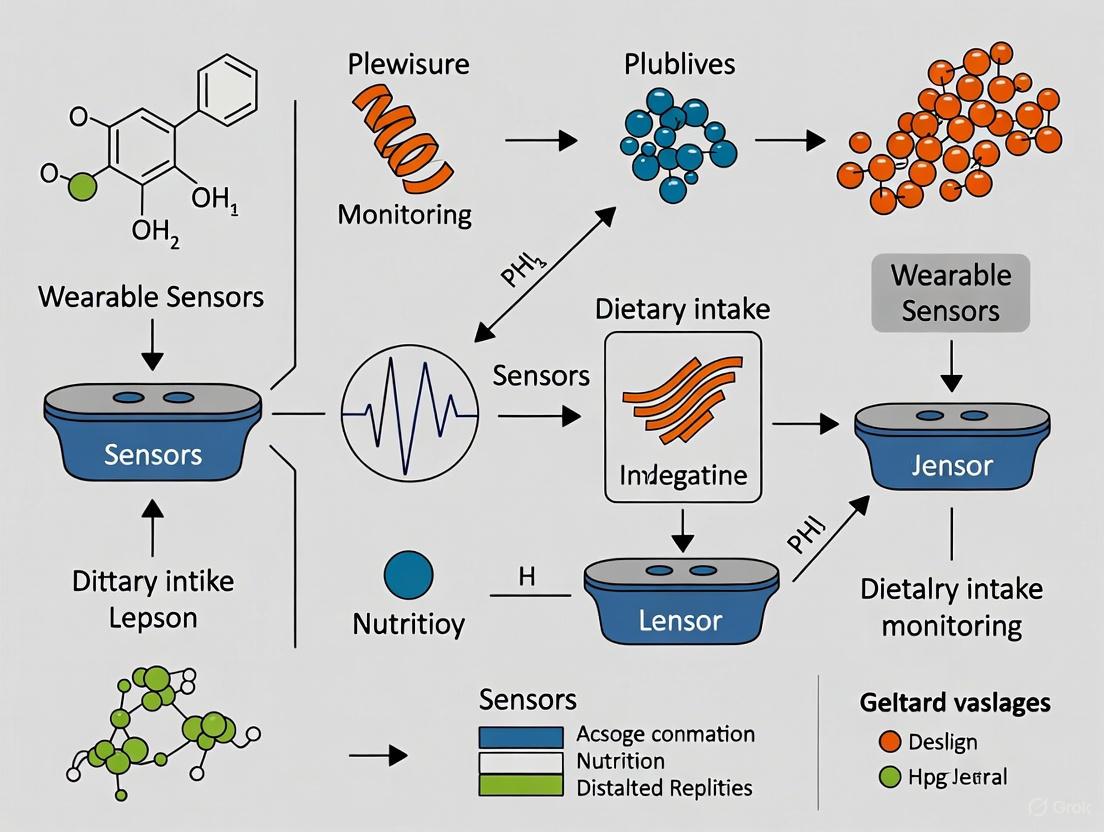
This article provides a comprehensive analysis of wearable sensor technology for objective dietary monitoring, addressing a critical need for researchers, scientists, and drug development professionals.
Wearable Sensors for Dietary Intake Monitoring: A Research and Clinical Applications Review
Abstract
This article provides a comprehensive analysis of wearable sensor technology for objective dietary monitoring, addressing a critical need for researchers, scientists, and drug development professionals. It explores the foundational principles of sensor modalities—including acoustic, inertial, optical, and physiological sensors—and their application in detecting eating episodes and behaviors. The content delves into methodological approaches for data acquisition and analysis, examines current challenges related to accuracy and privacy, and evaluates validation protocols and comparative performance against traditional dietary assessment methods. By synthesizing recent advancements and identifying future trajectories, this review serves as a strategic resource for integrating these technologies into clinical trials, nutritional epidemiology, and precision medicine initiatives.
The Science Behind Dietary Monitoring: Core Principles and Sensor Modalities
Accurate dietary intake measurement is fundamental for nutrition research, chronic disease management, and public health monitoring, yet it remains notoriously challenging due to the limitations of self-report methods [1]. Traditional approaches including food records, 24-hour recalls, and food frequency questionnaires (FFQs) are susceptible to significant random and systematic measurement errors that compromise data quality [1] [2]. These methods rely heavily on participant memory, literacy, and motivation, often resulting in underreporting or overreporting, particularly for foods perceived as socially desirable or undesirable [1]. The rapid advancement of wearable sensing technologies and objective measurement tools presents a paradigm shift, offering solutions to overcome these fundamental limitations and usher in a new era of precision nutrition research [3] [2].
Within research on wearable sensors for dietary intake monitoring, the move toward objective data collection is driven by the need to capture accurate, reliable, and unbiased dietary behaviors in free-living conditions. This technical guide examines the critical need for objective dietary data, surveys the current technological landscape with a focus on wearable sensors, and provides detailed methodological frameworks for implementing these approaches in research settings aimed at clinical and drug development applications.
A Critical Examination of Traditional Dietary Assessment Methods
Traditional dietary assessment methods each carry distinct strengths and weaknesses that make them suitable for specific research contexts but problematic for others [1]. The table below provides a systematic comparison of the primary self-report methods used in research settings.
Table 1: Comparative Analysis of Traditional Dietary Assessment Methods
| Characteristic | 24-Hour Recall | Food Record | Food Frequency Questionnaire (FFQ) | Screening Tools |
|---|---|---|---|---|
| Scope of interest | Total diet | Total diet | Total diet or specific components | One or a few components |
| Time frame | Short term | Short term | Long term | Varies (often prior month/year) |
| Measurement error | Random | Random | Systematic | Systematic |
| Potential for reactivity | Low | High | Low | Low |
| Time required to complete | >20 minutes | >20 minutes | >20 minutes | <15 minutes |
| Memory requirements | Specific | None | Generic | Generic |
| Cognitive difficulty | High | High | Low | Low |
| Suitable study designs | Cross-sectional, prospective, intervention | Prospective, intervention | Cross-sectional, retrospective, prospective | Cross-sectional, intervention |
Fundamental Limitations and Measurement Errors
The accuracy of self-reported dietary data is fundamentally constrained by several factors. Reactivity represents a significant concern, particularly with food records, where participants may alter their usual dietary patterns for ease of recording or to report foods perceived as "healthy" [1]. Memory dependence affects 24-hour recalls and FFQs, with the latter relying on generic memory rather than specific recall of recent intake [1].
The most substantial limitation concerns systematic measurement errors, particularly the pervasive issue of energy underreporting [1]. Recovery biomarkers, which exist only for energy, protein, sodium, and potassium, have revealed that all self-report methods contain systematic errors, with 24-hour recalls representing the least biased estimator among traditional methods [1]. Furthermore, participant burden often leads to declined quality of reporting over time, while literacy and physical ability requirements limit applicability across diverse populations [1].
The Emergence of Objective Measurement Technologies
The Paradigm Shift Toward Objective Data Collection
The rapid development of sensing technologies and artificial intelligence has inspired a fundamental shift toward objective data collection methods capable of overcoming the limitations of self-reports [2]. These technologies aim to capture dietary behaviors automatically, continuously, and unobtrusively in free-living environments, thereby reducing recall bias, social desirability bias, and participant burden [3] [2].
Objective measurement technologies span wearable and remote solutions that collect data directly from individuals or provide indirect information on food choices and intake [2]. These approaches cover the entire continuum from food-evoked emotions to food choice, eating action detection, food type identification, and quantification of consumed amounts [2]. For research on wearable sensors for dietary monitoring, this represents a critical advancement toward achieving comprehensive dietary assessment in real-world settings.
Categorization of Objective Measurement Approaches
Objective measurement technologies can be categorized into five primary domains based on their functionality and application in nutrition research:
- Detecting food-related emotions: Technologies capturing physiological responses correlated with emotional states during eating episodes
- Monitoring food choices: Systems tracking selection decisions before consumption
- Detecting eating actions: Sensors identifying the initiation, duration, and cessation of eating events
- Identifying type of food consumed: Platforms classifying specific foods and beverages ingested
- Estimating amount of food consumed: Tools quantifying volume or weight of intake [2]
These technologies encompass both wearable solutions (e.g., jaw-mounted sensors, smart glasses, wrist-worn devices) and remotely applied solutions (e.g., smartphone cameras, ambient sensors) that collect data directly from individuals or provide indirect information on consumers' food choices and dietary intake [2].
Wearable Sensing Technologies for Dietary Monitoring
Current State of Wearable Sensing Technology
Wearable sensors represent the cutting edge of objective dietary monitoring, offering the potential for continuous, unobtrusive measurement of eating behaviors in free-living conditions [3]. The systematic review protocol by Zhou et al. (2025) highlights the "rapid advancement of wearable sensing technology" that "presents a promising solution for effective dietary monitoring by reducing recall bias and enhancing user convenience" [3]. This technology shows particular promise for both clinical chronic disease management and nutritional research applications [3].
Recent research has demonstrated multiple technological approaches to wearable sensing for diet monitoring, including jawbone-mounted inertial sensing for eating episode detection [3], acoustic sensors for chewing sound analysis [3], and intelligent eyewear that can detect food consumption through physiological responses [2]. These approaches leverage various data modalities including motion, sound, and physiological signals to detect and characterize eating episodes without requiring active user input.
Methodological Framework for Wearable Sensor Implementation
Implementing wearable sensing technology in dietary monitoring research requires careful methodological planning across several dimensions:
Table 2: Key Methodological Considerations for Wearable Sensor Studies
| Dimension | Considerations | Technical Requirements |
|---|---|---|
| Sensor selection | Type of data (motion, acoustic, etc.), form factor, battery life | Sampling rate, memory storage, connectivity options |
| Study protocol | Duration, free-living vs. controlled, reference intake measures | Standardized procedures for sensor placement, calibration |
| Data processing | Signal preprocessing, feature extraction, event detection | Computational pipelines, artifact removal algorithms |
| Validation approach | Comparison with ground truth (weighed food, video), accuracy metrics | Standardized validation metrics (F1-score, precision, recall) |
The critical technical challenge lies in developing systems that balance accuracy with practical applicability in real-world settings while managing participant burden and privacy concerns [2]. Multi-sensor systems that combine complementary data modalities (e.g., inertial measurement units with acoustic sensors) often show improved performance but at the cost of increased complexity and participant burden [3].
Figure 1: Wearable Sensor Data Processing Workflow
Image-Based Dietary Assessment Methods
Technological Foundations of Image-Based Analysis
Image-based food monitoring represents another major approach to objective dietary assessment, leveraging advances in computer vision and deep learning to automatically estimate nutritional intake from food images [4]. These systems typically operate through a structured pipeline involving food image segmentation, food recognition, volume estimation, and calorie calculation [4].
The core stages of image-based dietary assessment include:
- Food Segmentation: Isolating food items from the background or other objects in the image using convolutional neural networks (CNNs) and instance segmentation algorithms
- Food Classification: Identifying specific food types through deep learning models trained on large-scale food image datasets
- Volume Estimation: Calculating portion sizes through geometric modeling or reference object comparison
- Calorie Calculation: Integrating classification and volume data with nutritional databases to determine caloric and nutrient content [4]
These methodologies have shown particular promise for diabetes management and other weight-related chronic diseases where precise caloric monitoring is essential [4].
Implementation Protocols for Image-Based Assessment
Implementing image-based dietary assessment requires careful protocol design across several dimensions:
Table 3: Image-Based Food Analysis Implementation Framework
| Component | Technical Requirements | Implementation Options |
|---|---|---|
| Image capture | Resolution, lighting, angle consistency | Smartphone cameras, specialized devices |
| Segmentation | Pixel-level accuracy, boundary detection | CNN architectures (U-Net, Mask R-CNN) |
| Classification | Multi-class accuracy, food taxonomy | Transfer learning, ensemble methods |
| Volume estimation | Depth perception, shape modeling | 3D reconstruction, reference objects |
| Calorie calculation | Nutrient database integration | USDA FoodData Central, custom databases |
Recent applications have demonstrated the feasibility of fully automated systems that operate entirely on smartphones without requiring data transmission to external servers, thereby addressing privacy concerns and improving accessibility [4]. However, challenges remain in achieving accurate volume estimation without user input or specialized devices, and in validating these systems across diverse food cultures and eating environments [4].
Experimental Protocols for Dietary Monitoring Research
Protocol Framework for Wearable Sensor Validation
Robust experimental protocols are essential for validating objective dietary monitoring technologies. The systematic review protocol by Zhou et al. offers a comprehensive framework for evaluating wearable sensing technologies, following Preferred Reporting Items for Systematic Reviews and Meta-Analysis Protocols (PRISMA-P) guidelines [3]. Key elements include:
- Comprehensive literature search across multiple databases (MEDLINE, EMBASE, PubMed, IEEE Xplore, Web of Science)
- Strict inclusion criteria focusing on studies involving human participants using wearable sensors for dietary intake monitoring
- Systematic evaluation of sensor design, performance metrics, and user experience
- Exclusion of studies focusing solely on algorithm or application development without human testing [3]
For primary research studies, protocol design should include controlled feeding sessions to establish ground truth, followed by free-living validation to assess real-world performance. Studies should specifically report on sensor performance metrics including eating episode detection accuracy, food classification precision and recall, and energy intake estimation error compared to reference methods like doubly labeled water [3] [2].
Statistical Analysis and Dietary Pattern Analysis
Beyond data collection, advanced statistical methods are required to derive meaningful dietary patterns from complex intake data. Emerging approaches include:
- Finite Mixture Models (FMM): Model-based clustering methods that identify subpopulations with distinct dietary patterns
- Treelet Transform (TT): Combines principal component analysis and clustering algorithms in a one-step process
- Data Mining (DM): Discovers patterns in large dietary datasets while considering health outcomes
- Least Absolute Shrinkage and Selection Operator (LASSO): Selects relevant food items predictive of health outcomes
- Compositional Data Analysis (CODA): Transforms dietary intake into log-ratios to account for the compositional nature of diet data [5]
These methods enable researchers to move beyond simple nutrient analysis to capture the complex, multidimensional nature of dietary intake and its relationship to health outcomes [5].
Figure 2: Experimental Validation Protocol Framework
The Scientist's Toolkit: Key Research Reagents and Technologies
Core Technologies for Objective Dietary Monitoring
Table 4: Essential Research Technologies for Objective Dietary Assessment
| Technology Category | Specific Examples | Research Application | Key Function |
|---|---|---|---|
| Wearable Inertial Sensors | Jawbone-mounted sensors, wrist-worn accelerometers | Eating episode detection, chew count quantification | Captures motion patterns associated with eating gestures and jaw movement |
| Acoustic Sensors | Contact microphones, in-ear audio recorders | Food texture characterization, swallowing detection | Analyzes chewing and swallowing sounds to identify food properties |
| Computer Vision Systems | Smartphone cameras, specialized imaging devices | Food identification, portion size estimation | Automates food recognition and volume estimation through image analysis |
| Physiological Sensors | Electromyography (EMG), glucose monitors, intelligent eyewear | Metabolic response tracking, eating event detection | Monitors physiological correlates of food intake and metabolic processing |
| Integrated Sensor Platforms | Multi-sensor systems combining complementary modalities | Comprehensive dietary behavior capture | Provides complementary data streams to improve accuracy through sensor fusion |
Successful implementation of objective dietary monitoring requires not only sensing technologies but also robust validation methodologies and analytical frameworks:
- Reference Databases: Standardized food image datasets (e.g., Food-101, UFC-Food100), nutrient databases (e.g., USDA FoodData Central)
- Validation Protocols: Doubly labeled water for energy expenditure, weighed food records for intake validation, controlled feeding studies
- Analytical Tools: Compositional data analysis packages, dietary pattern analysis software, machine learning frameworks for sensor data processing [5] [4]
Future Directions and Implementation Challenges
Key Challenges in Objective Dietary Monitoring
Despite significant advances, objective dietary monitoring technologies face several implementation challenges that must be addressed for widespread adoption:
- Real-World Applicability: Balancing technical performance with practical usability in free-living environments remains challenging [2]
- Validation Across Diverse Populations: Ensuring accuracy across different age groups, ethnicities, food cultures, and health conditions [4]
- Participant Burden and Compliance: Designing systems that minimize interference with normal eating behaviors while collecting high-quality data [3]
- Data Privacy and Security: Protecting sensitive health and dietary information collected through continuous monitoring [4]
- Standardization and Interoperability: Establishing common metrics, protocols, and data formats to enable comparison across studies [2]
Emerging Opportunities and Research Priorities
The field of objective dietary monitoring presents numerous opportunities for future research and technological development:
- Multi-Modal Sensor Fusion: Combining complementary data streams (inertial, acoustic, visual, physiological) to improve accuracy and robustness [3] [2]
- Artificial Intelligence Advancements: Leveraging deep learning and transfer learning to improve food recognition and portion estimation across diverse food types [4]
- Integration with Health Monitoring Platforms: Connecting dietary assessment with physiological monitoring for comprehensive health tracking [2]
- Personalized Nutrition Applications: Enabling real-time dietary feedback and personalized recommendations based on objective intake data [4]
- Large-Scale Epidemiological Research: Deploying objective monitoring technologies in cohort studies to establish more precise diet-disease relationships [3]
For researchers and drug development professionals, the critical need for objective dietary data is no longer a theoretical concern but an imperative driven by the limitations of traditional methods and the growing availability of sophisticated sensing technologies. By adopting and refining these approaches, the research community can overcome fundamental measurement challenges and advance our understanding of diet-health relationships with unprecedented precision and reliability.
The emergence of sophisticated wearable sensor technology is revolutionizing dietary intake monitoring, moving the field beyond traditional, subjective methods like food diaries and toward objective, data-driven research. Accurate dietary assessment is critical for understanding the onset and progression of chronic diseases such as type 2 diabetes, heart disease, and obesity [6]. Wearable sensors offer a solution to the limitations of self-reporting by enabling continuous, objective data collection in naturalistic settings, thereby minimizing recall bias and enhancing user convenience [6]. This technical guide provides a taxonomy of wearable sensors, framing their functionality and application within the specific context of dietary intake monitoring research for scientists and drug development professionals. It explores how these sensors operate individually and synergistically to capture the complex physiological and behavioral signals associated with eating.
A Multi-Dimensional Taxonomy of Wearable Sensors
Wearable sensors for monitoring human health and behavior can be categorized into four primary dimensions based on the type of data they capture. The following table summarizes these core dimensions and their relevance to dietary monitoring.
Table 1: Core Dimensions of Wearable Sensing for Dietary Monitoring
| Monitoring Dimension | Key Sensor Types | Measured Parameters | Application in Dietary Intake Research |
|---|---|---|---|
| Physiological | Photoplethysmography (PPG), Electrocardiogram (ECG), Temperature, Electrodermal Activity (EDA) | Heart Rate (HR), Heart Rate Variability (HRV), Core Temperature, Stress Arousal [7] [8] | Captures autonomic nervous system responses to food intake; monitors stress and energy expenditure [9]. |
| Kinematic | Inertial Measurement Units (IMUs), Accelerometers, Gyroscopes | Body Movement, Velocity, Acceleration, Joint Angles, Hand/Wrist Gestures [7] | Detects eating-related gestures (e.g., hand-to-mouth movements) and characterizes chewing cycles [6]. |
| Biochemical | Electrochemical Sensors, Continuous Glucose Monitors (CGM), Sweat Biosensors | Glucose, Lactate, Cortisol, Electrolytes (Na+, K+) [7] [10] | Provides direct readouts of metabolic response to food intake (e.g., postprandial glucose levels) [10]. |
| Acoustic | Microphones, Acoustic Sensors | Chewing Sounds, Swallowing Sounds [6] | Identifies and characterizes ingestion events based on audio signatures of mastication and deglutition. |
Kinematic and Acoustic Sensing: Detecting Eating Behaviors
Kinematic monitoring focuses on the temporal and spatial characteristics of human movement. Inertial Measurement Units (IMUs), which often combine accelerometers and gyroscopes, are the primary sensors in this category [7]. In dietary research, their key application is the detection of eating-related gestures, specifically hand-to-mouth movements, which serve as a behavioral proxy for bite intake [6]. Furthermore, high-fidelity kinematic sensors can capture the distinct patterns of jaw movement during chewing, allowing for the estimation of chewing count and rate.
Acoustic sensing, using miniature microphones, complements kinematic data by capturing the sounds produced during chewing and swallowing [6]. The fusion of kinematic and acoustic data significantly improves the accuracy of eating event detection compared to using either modality alone, helping to distinguish actual eating from similar motions like face-touching or talking.
Physiological Sensing: Measuring Metabolic and Autonomic Responses
Physiological sensors provide insights into the body's internal state. For dietary monitoring, several parameters are key:
- Continuous Glucose Monitoring (CGM): CGM sensors measure glucose levels in interstitial fluid, providing a direct and continuous view of the glycemic response to food intake [10]. This allows researchers to move beyond crude carbohydrate estimates to understanding individual glycemic variability.
- Photoplethysmography (PPG): Typically found in wrist-worn devices, PPG can be used to derive heart rate (HR) and heart rate variability (HRV) [7]. HRV, a marker of autonomic nervous system balance, can reflect metabolic load and postprandial physiological stress [7] [9].
- Electrodermal Activity (EDA): EDA measures changes in the skin's electrical conductivity due to sweating, which is linked to sympathetic nervous system arousal [8]. It can be used to investigate stress-related eating or physiological responses to different food types.
Biochemical Sensing: Expanding the Molecular Window
While CGM is the most established biochemical wearable, research is exploring other non-invasive biomarkers. Wearable sweat biosensors are being developed to measure analytes like lactate and cortisol, which could provide further insights into energy metabolism and stress responses during nutritional studies [7]. However, challenges remain in calibration stability and the precise mapping of sweat analyte concentrations to blood levels [7].
The diagram below illustrates how data from these diverse sensors is integrated to form a comprehensive picture of dietary behavior and its metabolic consequences.
Experimental Protocols for Dietary Monitoring Research
Implementing wearable sensors in dietary research requires rigorous protocols to ensure data quality and validity. The following section details methodologies for key experiment types.
Protocol for Multi-Sensor Eating Event Detection
Objective: To validate the accuracy of a kinematic-acoustic sensor system for automatically detecting and characterizing eating episodes in a free-living environment.
Materials:
- Inertial Measurement Unit (IMU) with accelerometer and gyroscope.
- Miniature body-worn microphone (acoustic sensor).
- eButton or similar chest-worn camera for ground truth image capture [10].
- Data logger or smartphone for data storage/synchronization.
Procedure:
- Sensor Deployment: Fit participants with the sensor suite. The IMU is typically placed on the wrist of the dominant hand. The acoustic sensor is attached to the neck or sternum region. The eButton is worn on the chest.
- Calibration: Perform a brief sensor calibration sequence (e.g., prescribed arm movements) at the start of each recording day.
- Data Collection: Participants go about their daily activities for a minimum of 8 hours, encompassing at least one main meal. They are instructed not to remove the devices.
- Ground Truth Logging: Participants use the eButton to capture images of all food and beverages before and after consumption [10]. They may also keep a brief paper diary to note meal start and end times.
- Data Processing:
- Kinematic Feature Extraction: From the IMU data, extract features such as rotational velocity of the wrist and repetitive motion patterns indicative of hand-to-mouth movement.
- Acoustic Feature Extraction: From the audio data, extract features related to the frequency and amplitude of chewing and swallowing sounds.
- Sensor Fusion: Use a machine learning classifier (e.g., a support vector machine or random forest) trained on the extracted features to detect eating episodes. The video or image data from the eButton provides the ground truth for training and validating the model [10].
Validation: Algorithm performance is reported using standard metrics: accuracy, precision, recall, and F1-score, calculated by comparing detected eating events against the ground truth [6].
Protocol for Investigating Glucose Response using CGM
Objective: To correlate continuous glucose measurements with food intake data to understand individual glycemic responses to different foods.
Materials:
- Continuous Glucose Monitor (e.g., Freestyle Libre Pro) [10].
- Wearable food imaging device (e.g., eButton) or detailed food diary application.
- Data analysis platform for CGM and dietary data integration.
Procedure:
- Sensor Deployment: A research professional applies the CGM sensor to the participant's upper arm according to the manufacturer's instructions [10]. Participants are trained on the use of the eButton.
- Study Duration: The monitoring period typically lasts 10-14 days to capture a variety of meals and foods [10].
- Dietary Recording: For each eating episode, participants use the eButton to capture images of their food, which are later analyzed to determine food type and portion size, and consequently, nutrient composition (e.g., carbohydrate grams) [10].
- Data Integration: Time-synchronized CGM data and food intake records are merged. The glucose trace is analyzed for measures such as:
- Postprandial Glucose Excursion: The peak increase in glucose levels following a meal.
- Time-in-Range: The percentage of time glucose remains within a target range.
- Glycemic Variability: The degree of fluctuation in glucose levels throughout the day.
- Analysis: Statistical models (e.g., linear mixed-effects models) are used to associate specific foods, meal compositions, or eating behaviors (like meal timing) with the glycemic response metrics.
The Researcher's Toolkit for Wearable Dietary Monitoring
Successfully deploying wearable sensors in dietary research requires a suite of tools and a critical awareness of data quality. The table below lists essential "research reagent solutions" for building a robust dietary monitoring study.
Table 2: Essential Toolkit for Wearable Dietary Monitoring Research
| Tool Category | Specific Examples | Function & Importance |
|---|---|---|
| Sensor Platforms | Empatica E4, Hexoskin, ActiGraph, Custom eButton [8] [10] | Research-grade devices that provide raw data from multiple biosignals (ACC, EDA, PPG, TEMP, ECG) essential for algorithm development and validation. |
| Data Quality Toolkit | Data Completeness Score, On-Body Score, Signal Quality Indices (SQI) [8] | Metrics to quantify data loss, wear time, and signal fidelity. Critical for ensuring data reliability and interpreting study results, as all modalities are affected by artifacts [8]. |
| Ground Truth Tools | Chest-worn Camera (eButton), 24-hour Dietary Recall, Food Diaries [10] | Provides the objective reference standard against which the performance of automated dietary intake detection algorithms is measured. |
| Analysis & Fusion Software | OpenSense, Signal Processing Toolboxes (Python, MATLAB), Machine Learning Libraries (scikit-learn, TensorFlow) [7] | Software for processing raw sensor data, extracting relevant features, and implementing sensor fusion and classification models to translate signals into dietary insights. |
A crucial, often overlooked component is the Data Quality Toolkit. In real-world deployments, data is invariably corrupted by artifacts. A systematic evaluation should include [8]:
- Data Completeness: The percentage of recorded versus expected data samples, identifying periods when the device was off or not recording.
- On-Body Score: An estimate of the percentage of time the device was actually worn on the body, as opposed to being placed on a table, which is vital for interpreting data gaps.
- Modality-Specific Signal Quality: Quantitative scores (e.g., for PPG or EDA) that reflect the signal-to-noise ratio and the presence of motion artifacts. These scores are often higher at night than during the day [8].
The following diagram outlines a standard workflow for ensuring data quality and processing data from collection to analysis.
The taxonomy presented here—spanning kinematic, acoustic, physiological, and biochemical sensors—provides a structured framework for selecting and deploying wearable technologies in dietary intake monitoring. The future of this field lies not merely in multidimensional measurement, but in the development of a verifiable, reusable, and deployable precision-monitoring ecosystem [7]. For researchers and drug development professionals, this means moving from a "signal-available" to a "decision-ready" paradigm, where fused sensor data delivers actionable metrics on dietary behavior and its metabolic consequences. Overcoming challenges related to usability, data quality, and model generalizability will be key to unlocking the full potential of wearables in generating robust, objective evidence for nutritional science and therapeutic development.
The accurate assessment of dietary intake and eating behaviors represents a fundamental challenge in nutritional science, epidemiology, and chronic disease research. Traditional methods such as 24-hour recalls, food diaries, and food frequency questionnaires rely on self-reporting and are susceptible to significant limitations including recall bias, social desirability bias, and substantial participant burden [11] [12] [13]. These limitations have constrained our understanding of the complex, dynamic processes that characterize human eating behavior. The emergence of wearable sensor technologies has created new paradigms for objective dietary monitoring, enabling researchers to capture rich, high-resolution data on eating behaviors in free-living settings with minimal user interaction [11] [14]. This whitepaper delineates the key metrics of eating behavior—from micro-level movements like chewing and biting to macro-level meal patterns—that can be quantified using wearable sensors, framing them within the context of advanced dietary monitoring research for scientific and drug development applications.
Micro-Behavioral Metrics: The Building Blocks of Eating
The microstructure of eating encompasses the detailed components of eating episodes, including chewing, biting, and swallowing. These metrics provide insights into eating mechanics that are difficult to capture through self-report but have significant implications for energy intake and satiety.
Chewing and Swallowing Metrics
Chewing parameters serve as proxies for food texture, eating rate, and potentially, energy intake. Wearable sensors can detect and quantify:
- Chew Count: The total number of chewing cycles during an eating episode. In controlled studies, the number of chews has been identified as a top predictive feature for detecting overeating episodes [15].
- Chew Rate/Frequency: The number of chews per unit time, which can indicate eating pace.
- Chew Interval: The time between consecutive chews, which may reflect food properties or eating style.
- Chew-Bite Ratio: The number of chews per bite, which can vary based on food type and individual habits [15].
Swallowing detection, often captured through acoustic sensors or neck-mounted accelerometers, provides complementary data on ingestion timing and frequency [14].
Biting and Hand-to-Mouth Gestures
Biting represents the initiation of food intake and can be monitored through several approaches:
- Bite Count: The total number of bites during an eating episode. Computer vision approaches like ByteTrack have achieved 79.4% average precision and 67.9% recall in automatically detecting bites from meal videos in pediatric populations [16].
- Bite Rate: The speed of biting, typically measured in bites per minute, which has been linked to overconsumption.
- Bite Detection Latency: The time between food presentation and first bite.
Hand-to-mouth movements, detected via wrist-worn inertial sensors (accelerometers and gyroscopes), serve as behavioral proxies for bites, particularly when direct visual monitoring isn't feasible [12] [17].
Table 1: Micro-Behavioral Eating Metrics and Monitoring Technologies
| Metric Category | Specific Metrics | Common Sensing Modalities | Research Applications |
|---|---|---|---|
| Chewing | Chew count, chew rate, chew interval, chew-bite ratio | Acoustic sensors, strain sensors, jaw motion sensors, piezoelectric sensors | Predicting overeating, characterizing food texture effects, eating pace interventions |
| Swallowing | Swallow count, swallow frequency, apnea detection | Acoustic sensors (microphones), neck-mounted accelerometers, piezoelectric sensors | Monitoring ingestion timing, detecting swallowing disorders, meal duration assessment |
| Biting | Bite count, bite rate, bite size estimation | Wrist-worn IMUs, computer vision, surface EMG | Eating speed interventions, portion size estimation, microstructure analysis |
| Hand Gestures | Hand-to-mouth movement frequency, duration, acceleration patterns | Wrist-worn accelerometers, gyroscopes, magnetometers | Free-living eating detection, distinguishing eating from other activities |
Meso-Scale Metrics: Integrating Micro-Behaviors into Eating Episodes
Meso-scale metrics describe the characteristics of complete eating episodes, synthesizing micro-behaviors into holistic patterns with clinical and research significance.
Temporal Patterns of Eating
The timing of eating episodes has emerged as a significant factor in metabolic health and energy regulation:
- Meal Duration: The total time from the first to the last bite of an eating episode. Longer meal durations have been associated with greater satiety and reduced total intake.
- Eating Rate: Overall speed of consumption, typically measured as grams or calories consumed per minute. This can be derived from bite rate and average bite size estimates.
- Meal Timing: The time of day when eating occurs, with evening and late-night eating being associated with distinct metabolic consequences [18] [15].
- Pause Patterns: The frequency and duration of pauses within meals, which may reflect satiety development.
Contextual and Behavioral Dimensions
The circumstances surrounding eating episodes significantly influence food choices and consumption amounts:
- Eating Location: Home, restaurant, workplace, etc., with restaurant eating being associated with different overeating patterns [18] [15].
- Social Context: Eating alone versus with others, which affects meal duration, food choices, and quantity consumed.
- Psychological State: Pre-meal emotional states including stress, happiness, or boredom that trigger eating.
- Cognitive Factors: Perceptions of control, distraction levels, and mindful eating practices during meals.
Macro-Scale Metrics: Patterns Across Eating Episodes
Macro-scale metrics encompass the broader patterns that emerge across multiple eating episodes, providing insights into habitual eating behaviors with long-term health implications.
Dietary Intake Patterns
Traditional nutritional epidemiology has focused on what and how much people consume:
- Energy Intake: Total caloric consumption, though accurate assessment remains challenging with wearable technologies alone [13].
- Macronutrient Distribution: Proportions of carbohydrates, fats, and proteins in the diet.
- Food Choice Patterns: Preferences for specific food categories or nutritional profiles.
- Meal Frequency: The number of discrete eating episodes per day.
Identified Overeating Phenotypes
Groundbreaking research using semi-supervised learning on longitudinal sensor data has identified five distinct overeating phenotypes that demonstrate the complex interplay between behavioral, psychological, and contextual factors [18] [15]:
- Take-out Feasting: Characterized by indulging in restaurant-sourced meals (take-out), often in social settings.
- Evening Restaurant Reveling: Pleasure-driven indulgence in food, with a preference for restaurant-sourced meals (dine-in), typically consumed in the evening as part of social dining experiences.
- Evening Craving: Eating in the evening, often involving self-prepared meals and characterized by hunger, serving as a way to unwind.
- Uncontrolled Pleasure Eating: Focused on the hedonic aspect of food, involving eating for pleasure, often perceived as overeating with loss of control, and accompanied by task-oriented distractions.
- Stress-driven Evening Nibbling: Evening eating in response to stress and feelings of loneliness.
These phenotypes demonstrate that overeating is not a unitary behavior but manifests through distinct patterns requiring personalized intervention approaches.
Experimental Protocols for Eating Behavior Research
Robust experimental methodologies are essential for advancing the field of sensor-based eating behavior monitoring.
Multi-Sensor Data Collection Protocol
The Northwestern University SenseWhy study established a comprehensive protocol for capturing free-living eating behaviors [18] [15]:
- Participant Profile: 48 adults with obesity (77.1% female, mean age 41 years) providing 2302 meal-level observations.
- Sensor Array:
- HabitSense Bodycam: An activity-oriented wearable camera using thermal sensing to trigger recording only when food enters the camera's field of view, addressing privacy concerns.
- NeckSense Necklace: A custom necklace detecting eating behaviors including chewing speed, bite count, and hand-to-mouth movements.
- Wrist-worn Activity Tracker: Similar to commercial FitBit or Apple Watch devices, capturing hand movements.
- Ecological Momentary Assessment (EMA): Smartphone-based surveys collecting pre- and post-meal psychological and contextual data, including mood, hunger, satiety, and social context.
- Dietitian-Administered 24-hour Recalls: Traditional dietary assessment for validation purposes.
- Data Annotation: Manual labeling of micromovements from 6343 hours of video footage spanning 657 days.
This multi-modal approach achieved high performance in predicting overeating episodes (mean AUROC = 0.86; mean AUPRC = 0.84) when combining EMA-derived features with passive sensing data [15].
Protocol for Physiological Response Monitoring
Emerging research explores physiological correlates of eating beyond behavioral metrics [17]:
- Study Design: Controlled feeding study with randomized high- and low-calorie meals.
- Sensor Platform: Customized multi-sensor wristband integrating:
- Pulse Oximeter: For heart rate (HR) and oxygen saturation (SpO2) tracking.
- Photoplethysmography (PPG) Sensor: For continuous cardiovascular monitoring.
- Skin Temperature Sensor: For monitoring peripheral temperature fluctuations.
- Inertial Measurement Unit (IMU): For capturing eating gestures and hand movements.
- Force Sensor: For ensuring proper wear fit and sensor-skin contact.
- Validation Measures:
- Bedside vital sign monitors for concurrent physiological measurement.
- Intravenous blood sampling for glucose, insulin, and appetite-related hormones.
- Direct observation of food intake.
This protocol aims to establish relationships between eating events, hand movement patterns, and physiological responses, potentially enabling new approaches to dietary monitoring that don't rely on food imaging.
Visualization of Research Workflows
The following diagrams illustrate key experimental workflows and technological approaches in eating behavior research.
The Scientist's Toolkit: Essential Research Reagents and Technologies
Table 2: Essential Research Technologies for Eating Behavior Monitoring
| Technology/Reagent | Function | Example Applications | Performance Metrics |
|---|---|---|---|
| HabitSense Bodycam | Activity-oriented camera recording only when food is present using thermal sensing | Capturing eating context while preserving privacy | Privacy-preserving food activity detection [18] |
| NeckSense Necklace | Detects chewing rate, bite count, hand-to-mouth movements | Detailed microstructure analysis in free-living conditions | Precise eating behavior recording in real-world settings [18] |
| Wrist-worn IMU | Accelerometer, gyroscope, magnetometer for detecting eating gestures | Free-living eating episode detection and bite counting | 76.5% true positive rate in field studies [12] |
| ByteTrack Algorithm | Deep learning system (CNN + LSTM) for automated bite detection from video | Objective bite counting in laboratory meals | 79.4% precision, 67.9% recall in pediatric populations [16] |
| Multi-sensor Wristband | Integrated PPG, temperature, SpO2, IMU for physiological monitoring | Correlating physiological responses with food intake | Measures HR, SpO2, temperature changes post-meal [17] |
| EMA Platforms | Smartphone-based ecological momentary assessment for contextual data | Collecting real-time self-report on context, mood, hunger | 89.26% compliance rate in family studies [12] |
| XGBoost Algorithm | Machine learning for classifying overeating episodes | Predicting overeating from sensor and EMA features | AUROC: 0.86, AUPRC: 0.84 for overeating detection [15] |
The quantitative decoding of eating behavior through wearable sensors represents a transformative advancement in nutritional science and chronic disease research. The comprehensive framework of metrics—spanning micro-behaviors (chewing, biting), meso-scale patterns (meal duration, context), and macro-scale phenotypes (overeating patterns)—provides researchers with unprecedented analytical resolution. The experimental protocols and technologies detailed in this whitepaper establish rigorous methodologies for field-based eating behavior research, enabling more valid and reliable assessment than traditional self-report methods. As these technologies continue to evolve, they offer powerful tools for developing targeted interventions, understanding diet-disease relationships, and creating novel endpoints for clinical trials in nutrition and pharmaceutical development. The integration of multi-modal sensor data with advanced machine learning approaches will further enhance our ability to decode the complex architecture of human eating behavior in free-living populations.
The field of dietary intake monitoring is undergoing a profound transformation, driven by the rapid convergence of advanced biometric technologies and wearable sensors. For researchers and drug development professionals, this evolution presents unprecedented opportunities to move beyond traditional, subjective dietary assessment methods—such as food frequency questionnaires and 24-hour recalls—toward objective, continuous, and physiologically-rich data collection [6] [1]. The global wearable sensors market, valued at USD 2.14 billion in 2024, is projected to exceed USD 13.81 billion by 2034, expanding at a compound annual growth rate (CAGR) of over 20.5% [19]. This growth is paralleled by the emerging biometric technologies market, which is expected to grow from USD 5.5 billion in 2024 to USD 18.5 billion by 2033 at a CAGR of 14.5% [20]. This dual expansion signifies a fundamental shift in how researchers can quantify the physiological and biochemical responses to nutritional intake, enabling more precise clinical trials, personalized nutrition interventions, and robust biomarker discovery for drug development.
Market Analysis: Quantitative Growth Projections
Global Wearable Sensors Market Outlook
The wearable sensors market demonstrates robust growth potential across multiple segments and geographic regions, fueled by technological advancements and increasing application in healthcare and research settings. The table below summarizes the key market projections and regional analysis:
Table 1: Wearable Sensors Market Size and Forecast (2024-2034)
| Parameter | 2024 Value | 2025 Value | 2034 Projection | CAGR |
|---|---|---|---|---|
| Global Market Size | USD 2.14 billion [19] | USD 2.51 billion [19] | USD 13.81 billion [19] | 20.5% [19] |
| Precision Nutrition Wearable Sensors | USD 2.8 billion [21] | USD 3.3 billion [21] | USD 9.4 billion [21] | 12.5% [21] |
| North America Share | - | - | 31% [19] | - |
| Asia-Pacific Growth | - | - | Strong growth with robust CAGR [19] | - |
Table 2: Regional Market Characteristics and Drivers
| Region | Market Characteristics | Key Growth Drivers |
|---|---|---|
| North America | Largest market share (31% by 2034) [19]; Precision nutrition segment: 42.2% share [21] | Advanced healthcare infrastructure, favorable regulatory environment, high consumer adoption, strong R&D investment [21] [19] |
| Europe | Second largest market; USD 777.6 million in 2024 for precision nutrition sensors [21] | Strong healthcare systems, comprehensive regulatory frameworks, focus on preventive medicine [21] |
| Asia Pacific | Fastest growing regional market [21] [19] | Expanding healthcare infrastructure, rising disposable incomes, increasing health awareness, government digital health initiatives [21] [19] |
Emerging Biometrics Technology Segmentation
The biometric technologies market is evolving beyond traditional fingerprint recognition toward multimodal systems capable of providing continuous physiological monitoring. The table below details the key technology segments and their applications relevant to nutritional research:
Table 3: Biometric Technology Segmentation and Applications
| Technology Type | Primary Applications | Relevance to Dietary Monitoring |
|---|---|---|
| AI-driven biometrics [22] [20] | Identity verification, real-time risk assessment [20] | Pattern recognition in eating behaviors, anomaly detection in metabolic responses |
| Behavioral biometrics | Gait analysis, movement patterns [20] | Detection of eating gestures (hand-to-mouth movements), physical activity correlation [6] |
| Physiological monitoring | Stress detection, vitality assessment [20] | Cortisol monitoring, metabolic stress response to nutritional interventions [23] |
| Contactless modalities | Facial recognition, vein pattern analysis [20] | Minimal intrusion monitoring in free-living conditions |
Technological Foundations: Sensor Types and Methodologies
Biochemical Sensing Modalities
Advanced wearable sensors for dietary monitoring employ multiple technological approaches to capture biochemical and physiological data non-invasively. The experimental protocols for these sensing modalities are detailed below:
Experimental Protocol 1: Sweat-Based Biomarker Analysis
- Objective: To continuously monitor biochemical markers in eccrine sweat for assessing metabolic response to nutritional interventions [23] [24].
- Sensor Platform: Flexible epidermal patches or temporary tattoos integrating electrochemical sensors [23].
- Methodology:
- Sensor Calibration: Pre-use calibration in artificial sweat solutions with known biomarker concentrations [23].
- Biomarker Detection: Electrochemical (amperometric or potentiometric) detection of specific biomarkers:
- Signal Processing: On-board or transmitted data processing with compensation for temperature, pH, and sweat rate variations [23].
- Data Validation: Correlation with blood samples or clinical analyzer measurements in controlled settings [23] [24].
- Applications in Nutrition Research: Real-time monitoring of metabolic stress, hydration status, and energy utilization during feeding studies or nutritional interventions [23] [24].
Experimental Protocol 2: Dietary Event Detection via Multi-Modal Sensing
- Objective: To automatically detect eating episodes and characterize feeding behavior in free-living conditions [6].
- Sensor Platform: Multi-sensor systems (e.g., Automatic Ingestion Monitor V.2) incorporating inertial measurement units, acoustic sensors, and electromyography [6].
- Methodology:
- Hand-to-Mouth Gesture Detection: Inertial sensors (accelerometers, gyroscopes) on wrist-worn devices to capture characteristic movements [6].
- Mastication Monitoring:
- Swallowing Detection: Hybrid sensing combining acoustic and mechanical modalities [6].
- Sensor Fusion: Integration of multiple sensor inputs via machine learning algorithms (e.g., convolutional neural networks, recurrent neural networks) to improve detection accuracy and reduce false positives [6].
- Contextual Information: Time-stamping of eating events, meal duration, and eating rate calculation [6].
- Validation: Comparison with video observation, self-reporting, or controlled feeding studies in laboratory settings [6].
The following diagram illustrates the integrated workflow for multi-modal dietary monitoring:
Multi-Modal Dietary Monitoring Workflow
Research Reagent Solutions and Materials
The development and deployment of advanced biometric sensors for dietary monitoring requires specialized research reagents and materials. The table below details essential components and their research applications:
Table 4: Research Reagent Solutions for Biometric Dietary Monitoring
| Reagent/Material | Function | Research Application |
|---|---|---|
| Lactate oxidase enzyme [24] | Biochemical recognition element for lactate sensing | Detection of lactate in sweat as indicator of metabolic stress and energy utilization [23] [24] |
| Glucose oxidase enzyme [24] | Biochemical recognition element for glucose sensing | Monitoring of glucose dynamics in response to carbohydrate intake [24] |
| Ion-selective membranes [23] | Selective detection of specific ions (Na+, K+, Cl-) | Assessment of electrolyte balance and hydration status during nutritional interventions [23] |
| Poly(o-phenylenediamine) film [24] | Electropolymeric entrapment matrix for enzymes | Stabilization of enzymatic biosensors on electrode surfaces [24] |
| Prussian blue-graphite ink [24] | Electrode material with electrocatalytic properties | Facilitation of electron transfer in electrochemical biosensors [24] |
| Antibiofouling membranes [24] | Prevention of nonspecific protein adsorption | Enhancement of sensor stability in biological fluids (saliva, sweat) [24] |
| Flexible polyethylene terephthalate (PET) substrates [24] | Conformable material for wearable sensors | Enable comfortable, continuous wear for real-time monitoring [24] |
Analytical Frameworks: From Data to Biomarkers
The integration of multiple data streams from wearable sensors requires sophisticated analytical frameworks to transform raw sensor data into meaningful nutritional and physiological insights. The following diagram illustrates the complete analytical pathway from data collection to biomarker interpretation:
From Sensor Data to Nutritional Biomarkers
Performance Metrics and Validation Protocols
For biometric dietary monitoring technologies to gain acceptance in research and clinical trials, rigorous validation against established reference methods is essential. Key performance metrics include:
- Eating Event Detection: Accuracy, precision, recall/sensitivity, and F1-score for identification of feeding episodes [6].
- Biomarker Sensing: Sensitivity, specificity, linearity, and stability for biochemical sensors; correlation with gold-standard laboratory measurements (e.g., blood assays) [23] [24].
- User Experience and Compliance: Device wear time, user comfort ratings, and qualitative feedback on usability in free-living settings [6].
Validation protocols should include both controlled laboratory studies with precise ground truth measurements (e.g., doubly labeled water for energy expenditure, weighed food records for intake) and free-living studies comparing sensor data with participant self-reports and other objective measures [6] [1].
Future Directions and Research Opportunities
The convergence of wearable sensors and biometric technologies presents several promising research directions for advancing dietary intake monitoring:
- Multi-omics Integration: Combining continuous sensor data with genomics, proteomics, and metabolomics to develop comprehensive nutritional status assessments [21].
- Closed-Loop Intervention Systems: Developing real-time feedback systems that use sensor data to automatically adjust nutritional interventions or provide personalized recommendations [21].
- Advanced Biomarker Discovery: Identifying and validating novel biomarkers in easily accessible biofluids (sweat, saliva) that correlate with specific nutrient intake or metabolic responses [23] [24].
- AI-Driven Predictive Models: Leveraging machine learning and artificial intelligence to predict individual responses to nutritional interventions based on continuous monitoring data [21] [20].
- Miniaturization and Power Management: Developing increasingly miniaturized, energy-efficient sensors capable of extended continuous monitoring without compromising data quality [25] [19].
As these technologies continue to evolve, they will enable researchers and drug development professionals to capture increasingly rich, objective data on dietary behaviors and their physiological consequences, ultimately advancing our understanding of nutrition's role in health and disease.
Advancements in wearable sensor technology and machine learning are revolutionizing the study of human nutrition, enabling the objective identification of distinct overeating phenotypes. This technical guide details how multimodal data—passive sensing, Ecological Momentary Assessment (EMA), and physiological monitoring—can delineate behavioral patterns such as "Evening Craving" and "Stress-driven Evening Nibbling." We summarize quantitative findings from key studies, provide detailed experimental protocols for replication, and contextualize these findings within a broader thesis on wearable sensors for dietary monitoring. The precision offered by this data-driven approach provides a foundation for highly personalized interventions and pharmaceutical development targeting specific overeating behaviors.
Obesity remains a significant global public health challenge, with traditional behavioral weight loss interventions often failing to provide long-term results [26]. Overeating is a common target of obesity interventions, yet these efforts have been largely unsuccessful, potentially because they fail to account for the heterogeneous nature of eating behaviors and the dynamic interplay of psychological, contextual, and physiological factors [26]. The limitations of self-reported data—including recall bias and imprecise meal timing—have further constrained our understanding [26] [27].
Wearable sensors present a paradigm shift, enabling the passive and continuous collection of rich, objective datasets on eating behaviors [26] [17]. When analyzed with sophisticated machine learning approaches, this data allows researchers to move beyond one-size-fits-all approaches and identify clinically relevant overeating phenotypes. This whitepaper focuses on two such phenotypes—late-night snacking and stress-driven eating—delineating their unique characteristics and the technological frameworks required for their identification.
Experimental Frameworks for Phenotype Identification
The SenseWhy Study: A Model for Behavioral Phenotyping
The SenseWhy study (2018–2022) established a comprehensive protocol for identifying overeating phenotypes using semi-supervised learning [26].
Study Population & Design:
- Participants: 65 individuals with obesity were initially recruited, with 48 providing sufficient data for analysis (77.1% female, mean age 41).
- Data Collection: 2,302 meal-level observations (average 48 per participant) were collected in free-living settings.
- Technology Stack:
- Wearable Camera: An activity-oriented wearable camera collected 6,343 hours of footage spanning 657 days for manual labeling of micromovements (bites, chews).
- Mobile App & 24-hour Recall: A mobile app and dietitian-administered 24-hour dietary recalls were used for dietary assessment.
- Ecological Momentary Assessment (EMA): Psychological and contextual data was gathered before and after meals.
Machine Learning & Clustering Methodology: The study employed a semi-supervised learning approach on EMA-derived features to identify distinct overeating clusters. XGBoost was selected as the best-performing model for supervised overeating detection, achieving a mean AUROC of 0.86 and AUPRC of 0.84 on the feature-complete dataset (combining EMA and passive sensing data) [26]. The top predictive features from the combined model were:
- Perceived overeating (positive association)
- Number of chews (positive association)
- Light refreshment (negative association)
- Loss of control (positive association)
- Chew interval (negative association)
This analysis revealed five distinct overeating phenotypes, including the "Evening Craving" and "Stress-driven Evening Nibbling" profiles that are the focus of this document [26].
A Protocol for Multimodal Physiological Monitoring
A 2025 study protocol outlines an alternative approach focusing on physiological and behavioral parameters using a customized wearable multi-sensor band [17]. This methodology is particularly relevant for objective detection without the privacy concerns of camera-based systems.
Study Design:
- Participants: 10 healthy volunteers (planned sample size).
- Intervention: Randomized consumption of high- (1052 kcal) and low-calorie (301 kcal) meals in a controlled clinical research facility.
- Monitoring: Sensors are worn from 5 minutes pre-meal to 1 hour post-prandial.
Sensor Suite and Measured Parameters:
Table: Wearable Sensor Specifications and Target Parameters [17]
| Sensor Type | Measurements | Relationship to Food Intake |
|---|---|---|
| Inertial Measurement Unit (IMU) | Accelerometer, Gyroscope, Magnetometer data | Captures eating gestures (hand-to-mouth movements), duration, and speed of eating. |
| Pulse Oximeter | Heart Rate (HR), Blood Oxygen Saturation (SpO₂) | Tracks metabolic increase post-meal; HR elevation correlates with meal size. |
| Photoplethysmography (PPG) | Continuous blood volume traces | Provides cardiorespiratory information linked to digestion. |
| Skin Temperature Sensor | Skin Temperature (Tsk) | Monitors post-prandial thermogenesis (increase in metabolic heat production). |
| Force Sensor | Band tightness variation | Ensures proper skin contact for consistent sensor readings. |
Validation Measures: The protocol includes intravenous blood sampling for glucose, insulin, and appetite hormones (e.g., ghrelin, PYY), and uses a traditional bedside monitor for validation of blood pressure, HR, and SpO₂ [17].
Quantitative Results and Phenotype Comparison
The following tables synthesize key quantitative findings from the SenseWhy study, providing a clear comparison of the detection methodologies and the identified phenotypes.
Table: Machine Learning Performance for Overeating Detection (SenseWhy Study) [26]
| Model Input Features | Algorithm | AUROC (Mean) | AUPRC (Mean) | Brier Score Loss |
|---|---|---|---|---|
| EMA-only | XGBoost | 0.83 (0.02) | 0.81 (0.02) | 0.13 (0.01) |
| Passive Sensing-only | XGBoost | 0.69 (0.04) | 0.69 (0.05) | 0.18 (0.02) |
| Feature-complete (Combined) | XGBoost | 0.86 (0.04) | 0.84 (0.04) | 0.11 (0.02) |
Table: Characteristics of Identified Evening Overeating Phenotypes [26]
| Phenotype | Key Defining Features | Contextual & Behavioral Cues | Psychological & Physiological Drivers |
|---|---|---|---|
| Evening Craving | - Evening eating (positive predictor)- High Pleasure-driven Desire for Food | - Location: Likely at home- Food Source: Snacks, ready-to-eat foods | - Hedonic eating motivations- Cravings not necessarily linked to stress |
| Stress-driven Evening Nibbling | - Evening eating (positive predictor)- High Pre-meal Stress | - Location: Likely at home- Activity: May co-occur with TV watching or solitary activities | - Negative affect as a primary trigger- Potential link to HPA-axis activation |
The Scientist's Toolkit: Research Reagent Solutions
Table: Essential Materials and Tools for Wearable Dietary Monitoring Research
| Item Category | Specific Examples | Function in Research |
|---|---|---|
| Wearable Sensor Platforms | Custom multi-sensor wristband [17], Commercial IMU sensors [3], Bio-impedance wearables [17] | Captures core behavioral (movement) and physiological (HR, Tsk) data in free-living or lab settings. |
| Data Annotation Software | Video annotation tools for manual bite/chew labeling [26] | Creates ground-truth datasets for training and validating machine learning models on eating micro-behaviors. |
| Ecological Momentary Assessment (EMA) Tools | Mobile app-based surveys, Pre- and post-meal questionnaires [26] | Collects real-time self-reported data on context, emotion, stress, and perceived eating traits. |
| Biochemical Assay Kits | ELISA kits for glucose, insulin, ghrelin, PYY, cortisol | Measures blood biomarkers related to glucose metabolism, appetite regulation, and stress response for validation [17]. |
| Machine Learning Frameworks | XGBoost, SVM, Naïve Bayes (e.g., via Python Scikit-learn) [26] | Classifies overeating episodes and clusters distinct behavioral phenotypes from multimodal data. |
Visualizing the Research Workflow and Phenotype Logic
The following diagram illustrates the integrated workflow for identifying overeating phenotypes, from data acquisition to clinical application.
Research Workflow for Phenotype Identification
The logical relationship between the key predictive features and the two target phenotypes is shown below.
Feature Mapping to Overeating Phenotypes
Discussion and Future Directions
The delineation of "Evening Craving" and "Stress-driven Evening Nibbling" underscores that overeating is not a unitary behavior. The former is driven primarily by hedonic factors, while the latter is triggered by negative affect [26]. This distinction is crucial for targeted interventions; a drug aimed at dampening the stress response may be highly effective for the "Stress-driven" phenotype but less so for the "Evening Craving" phenotype.
Future research must address several challenges, including the standardization of terminology and tools [27], the validation of these phenotypes in larger and more diverse populations, and the refinement of non-invasive wearable sensors to reliably capture physiological markers like heart rate and skin temperature in real-world settings [17]. The integration of these multimodal data streams through advanced machine learning presents the most promising path forward for transforming the precision of dietary monitoring and obesity treatment.
From Data to Insights: Methodological Approaches and Real-World Applications
The accurate monitoring of dietary intake is a fundamental challenge in nutrition research, chronic disease management, and pharmaceutical development. Traditional methods, such as food diaries and 24-hour recalls, are plagued by inaccuracies due to reliance on memory and subjective reporting [28]. Wearable sensors offer a promising solution for objective, continuous monitoring of intake gestures and related physiological responses [17]. No single sensor modality can fully capture the complex process of eating; inertial measurement units (IMUs) detect hand-to-mouth gestures, acoustic sensors identify chewing and swallowing sounds, and photoplethysmography (PPG) sensors track physiological changes like heart rate variations associated with food intake [17] [14]. Consequently, sensor fusion architectures that intelligently combine these complementary data streams are critical for developing robust and accurate dietary monitoring systems. This technical guide explores the core architectures, methodologies, and experimental protocols for fusing IMU, acoustic, and PPG data within the specific context of dietary intake research.
Core Sensor Fusion Architectures
Sensor fusion integrates data from multiple sources to produce more consistent, accurate, and useful information than can be obtained from a single source. In dietary monitoring, three primary fusion architectures are employed, each with distinct advantages and implementation challenges.
Data-Level Fusion
Data-level fusion, also known as early fusion, involves the direct combination of raw or pre-processed data from multiple sensors before feature extraction.
- Process: Raw signals from IMU (accelerometer, gyroscope), acoustic microphone, and PPG sensor are synchronized and concatenated to form a unified data vector [29].
- Advantages: Preserves all original information, potentially allowing the model to discover complex, cross-modal patterns that are not apparent in processed features.
- Challenges: Highly susceptible to sensor-specific noise, requires precise time synchronization, and results in high-dimensional data, which increases computational cost [29]. For example, the sampling rates of an acoustic sensor (often kHz) and a PPG sensor (often Hz) differ by orders of magnitude, making direct data-level fusion non-trivial.
Feature-Level Fusion
Feature-level fusion, or intermediate fusion, is the most common approach. It involves extracting discriminative features from each sensor modality independently and then combining them into a single feature vector for classification.
- Process:
- IMU: Features like signal magnitude area, zero-crossing rate, and frequency-domain entropy are extracted from accelerometer and gyroscope data to capture wrist movement patterns characteristic of eating gestures [30] [14].
- Acoustic: Features such as Mel-Frequency Cepstral Coefficients (MFCCs) or spectral roll-off point are extracted to characterize chewing and swallowing sounds [14].
- PPG: Heart rate variability (HRV) features and time-domain statistics are extracted from the pulse wave signal [17].
- The feature sets are concatenated and input into a machine learning classifier (e.g., Support Vector Machine, Random Forest) or a deep learning model.
- Advantages: Reduces data dimensionality compared to raw data fusion and allows for the selection of the most informative features from each modality.
- Implementation: This approach was effectively used in a robust multimodal temporal convolutional network with cross-modal attention (MM-TCN-CMA) for fusing IMU and radar data, demonstrating the framework's adaptability to other modalities like acoustic and PPG [30].
Decision-Level Fusion
Decision-level fusion, or late fusion, involves processing each sensor modality through separate models and then combining their individual predictions.
- Process: A dedicated classifier is trained for each sensor type (e.g., an IMU model for gesture detection, an acoustic model for chew detection, a PPG model for heart rate change classification). The final intake decision is made by combining the outputs of these classifiers, often through weighted averaging, majority voting, or a meta-classifier [29].
- Advantages: Highly modular and resilient to missing modalities. If one sensor fails, the system can still function with reduced performance using the remaining sensors [30].
- Challenges: Requires training multiple models and may fail to capture lower-level correlations between modalities.
Table 1: Comparison of Primary Sensor Fusion Architectures for Dietary Monitoring
| Fusion Architecture | Description | Advantages | Disadvantages |
|---|---|---|---|
| Data-Level Fusion | Raw data streams are concatenated and processed together. | Maximizes information preservation; can model complex cross-sensor interactions. | High computational load; requires precise time synchronization; sensitive to noise. |
| Feature-Level Fusion | Features are extracted from each modality and combined into a single vector for classification. | Balances information content and dimensionality; allows for feature selection. | Risk of information loss during feature extraction; feature scaling can be challenging. |
| Decision-Level Fusion | Each modality is classified independently, and predictions are fused. | Modular and robust to missing data/sensors; enables use of bespoke models per modality. | Cannot model low-level cross-modal interactions; requires multiple models. |
Advanced Fusion Frameworks and Handling Missing Data
A significant challenge in real-world multimodal systems is ensuring robustness when one or more sensor modalities are unavailable. The robust multimodal temporal convolutional network with cross-modal attention (MM-TCN-CMA) framework addresses this by integrating a missing modality handling mechanism [30]. This framework uses cross-modal attention to allow features from one modality (e.g., IMU) to inform and refine the features of another (e.g., PPG), creating a more cohesive representation. During training, the model can be exposed to modality-incomplete data, teaching it to maintain performance even when data is missing during inference. Experimental results showed that this framework maintained performance gains of 1.3% and 2.4% in missing-Radar and missing-IMU scenarios, respectively, proving its viability for handling missing acoustic or PPG data [30].
An alternative, computationally efficient method involves transforming multisensory data into a 2D covariance representation [29]. This technique is based on the hypothesis that data from various sensors are statistically correlated, and the covariance matrix of these signals has a unique distribution for each activity (e.g., eating vs. non-eating). This 2D representation, which can be visualized as a contour plot, embeds the joint variability of different modalities into a single image that is then classified using a convolutional neural network (CNN). This approach effectively reduces high-dimensional, multimodal time-series data into a compact, information-rich 2D format suitable for resource-constrained environments [29].
Experimental Protocols and Validation
Validating sensor fusion architectures requires rigorous experimental protocols conducted in both controlled laboratory and free-living settings.
Protocol for Multimodal Data Collection
A representative study protocol for investigating physiological and behavioural responses to food intake is described below [17]:
- Participants: Recruit healthy volunteers (e.g., n=10) meeting specific inclusion criteria (e.g., age 18-65, BMI 18-30 kg/m²). Sample size justification should be based on a power analysis of the primary outcome measure, such as heart rate change pre- and post-meal [17].
- Study Design: A randomized crossover design where participants attend two study visits, consuming a pre-defined high-calorie meal and a low-calorie meal in a randomized order.
- Sensor Configuration:
- IMU: A custom multi-sensor wristband equipped with an accelerometer, gyroscope, and magnetometer to track hand-to-mouth movements and eating gestures [17].
- PPG: An integrated pulse oximeter in the wristband to continuously monitor heart rate (HR) and blood oxygen saturation (SpO₂). A skin temperature sensor is also often included.
- Acoustic: A body-worn microphone (e.g., on the neck or chest) to capture chewing and swallowing sounds. The eButton, a wearable device that captures images, can also be repurposed or integrated for this function [10].
- Ground Truth Validation:
- Biochemical: Blood samples are collected via intravenous cannula to measure blood glucose, insulin, and hormone levels, providing an objective measure of metabolic response [17].
- Clinical: Bedside vital sign monitors can validate wearable HR, SpO₂, and blood pressure readings.
- Behavioral: Video recording or self-reported food diaries can serve as a reference for intake timing and food type.
Performance Metrics and Quantitative Outcomes
The performance of fusion models is typically evaluated using standard classification metrics. The following table summarizes example outcomes from relevant studies employing multimodal fusion.
Table 2: Quantitative Performance of Multimodal Approaches in Dietary and Health Monitoring
| Study / Model Description | Sensors Fused | Key Performance Metric | Reported Outcome |
|---|---|---|---|
| Robust MM-TCN-CMA [30] | IMU & Radar (as a proxy for Acoustic/PPG) | Segmental F1-Score | 4.3% and 5.2% improvement over unimodal baselines. |
| Covariance Fusion + CNN [29] | Accelerometer, PPG, EDA, Temperature | Precision (for activity recognition) | Achieved a precision of 0.803 in leave-one-subject-out cross-validation. |
| Allied Data Disparity Technique [31] | Multimodal Wearable Sensors | Precision for Health Monitoring | Reported high precision levels in diagnosis-focused analysis. |
The Scientist's Toolkit: Research Reagent Solutions
Implementing the described fusion architectures requires a suite of hardware and software components.
Table 3: Essential Research Materials and Tools for Sensor Fusion Development
| Item / Technique | Function in Dietary Monitoring Research |
|---|---|
| Multi-Sensor Wristband (Custom) [17] | A platform integrating IMU, PPG, and skin temperature sensors for synchronized data acquisition from the wrist. |
| Body-Worn Acoustic Sensor | A microphone placed on the neck or chest to capture chewing and swallowing sounds for acoustic analysis. |
| eButton [10] | A wearable, chest-mounted imaging device that automatically captures food images for ground truth validation of food type and volume. |
| Continuous Glucose Monitor (CGM) [10] | A subcutaneous sensor that provides interstitial glucose readings, used to validate the physiological response to food intake. |
| Temporal Convolutional Network (TCN) | A deep learning model architecture effective for modeling long-range dependencies in time-series sensor data [30]. |
| Cross-Modal Attention Mechanism | An algorithm that allows features from one sensor modality to interact with and refine features from another, improving fusion efficacy [30]. |
| Covariance Matrix Representation [29] | A technique to transform multi-sensor time-series data into a single 2D image that represents inter-sensor correlations, suitable for CNN-based classification. |
Visualizing a Generalized Sensor Fusion Workflow for Dietary Monitoring
The following diagram illustrates a logical workflow for a feature-level fusion architecture that incorporates robustness to missing data, as discussed in the previous sections.
The fusion of IMU, acoustic, and PPG data represents a frontier in the development of objective, reliable, and passive dietary intake monitoring systems. While feature-level fusion offers a practical and effective starting point, advanced architectures like MM-TCN-CMA with cross-modal attention and innovative data representations like 2D covariance plots provide pathways to greater robustness and computational efficiency. Successful implementation requires carefully designed experimental protocols that validate algorithmic performance against biochemical and behavioral ground truth. As these technologies mature, they hold immense promise for transforming nutritional science, personalized dietary interventions, and clinical drug trials by providing unprecedented, objective insights into eating behaviors and their physiological correlates. Future work must focus on the validation of these fusion architectures in large-scale, real-world studies and continue to address critical challenges such as user privacy, energy consumption, and generalizability across diverse populations.
AI and Machine Learning Pipelines for Automated Eating Episode Detection
Automated eating episode detection represents a critical frontier in dietary intake monitoring research. Traditional methods, such as 24-Hour Dietary Recall (24HR), are labor-intensive, prone to significant recall bias, and impractical for long-term studies [32]. The emergence of wearable sensing technology offers a promising alternative by enabling objective data collection and minimizing user burden [3]. This whitepaper examines the architecture, performance, and implementation of machine learning pipelines that leverage data from wearable cameras and multi-sensor systems to detect eating episodes. These automated systems are poised to enhance the accuracy of nutritional assessment for researchers and clinical professionals, providing a more reliable foundation for public health recommendations and drug development research related to diet and metabolism.
Core Architecture of an ML Pipeline for Eating Detection
A machine learning pipeline for automated eating detection is a systematic process that transforms raw sensor data into a validated detection model. This structure ensures consistency, reproducibility, and scalability in research applications [33].
The table below outlines the five fundamental components of a generalized ML pipeline as applied to the task of eating detection.
Table 1: Core Components of a Machine Learning Pipeline for Eating Detection
| Component | Description | Application in Eating Detection |
|---|---|---|
| 1. Data Collection & Ingestion | Gathering raw data from various sources. | Acquiring data streams from wearable cameras (RGB, IR), inertial measurement units (IMUs), audio sensors, or physiological monitors [34] [17]. |
| 2. Data Preprocessing & Transformation | Cleaning and organizing raw data for model training. | For video: frame extraction, face/blur obfuscation. For IMU: noise filtering, signal normalization. Handling missing data and data augmentation [32] [34]. |
| 3. Feature Engineering | Selecting, modifying, or creating features that enhance predictive performance. | Extracting portion-size features from images (e.g., Food Region Ratio), deriving hand-to-mouth gesture kinematics from IMU data, or calculating heart rate variability from PPG signals [32] [17]. |
| 4. Model Training | Creating a machine learning model by feeding it processed data. | Training deep learning models (e.g., CNNs, RNNs) on image data for food segmentation or on time-series sensor data for activity classification [32] [34]. |
| 5. Model Evaluation & Deployment | Assessing model performance and integrating it into a real-world environment. | Validating model performance (e.g., F1-score) against ground-truth annotations and deploying the model on an edge device or server for real-time inference [33] [34]. |
These components can be executed sequentially or in parallel. Sequential processing is intuitive and easier to debug, while parallel processing is essential for handling large-scale data from multiple sensors efficiently, reducing overall processing time [33].
Visualizing the Core Pipeline
The following diagram illustrates the logical flow and data transformation through the core ML pipeline.
Figure 1: Core ML Pipeline for Eating Detection. This sequential workflow transforms multi-modal sensor data into a deployable model.
Key Technical Approaches and Experimental Protocols
Research in automated eating detection has converged on two primary technical approaches: egocentric vision-based systems and multimodal wearable sensing. The following sections detail the methodologies and experimental protocols for these approaches, providing a blueprint for researchers to replicate and build upon.
Egocentric Vision-Based Pipelines
The EgoDiet pipeline is a prominent example of a vision-based method for dietary assessment. Its modular design addresses the unique challenges of passive food intake monitoring, such as variable camera angles and container scales [32].
Table 2: EgoDiet Pipeline Modules and Functions
| Module Name | Core Function | Technical Implementation |
|---|---|---|
| EgoDiet:SegNet | Segments food items and containers in images. | Uses a Mask R-CNN backbone optimized for African cuisine to enable recognition and tracking at multiple scales [32]. |
| EgoDiet:3DNet | Estimates camera-to-container distance and reconstructs 3D container models. | Employs a depth estimation network with an encoder-decoder architecture, eliminating the need for costly depth-sensing cameras [32]. |
| EgoDiet:Feature | Extracts portion size-related features from segmentation masks and 3D models. | Calculates metrics like the Food Region Ratio (FRR) and introduces the Plate Aspect Ratio (PAR) to estimate camera tilting angles [32]. |
| EgoDiet:PortionNet | Estimates the portion size (weight) of food consumed. | Utilizes features from EgoDiet:Feature in a few-shot regression model to overcome the challenge of limited annotated data [32]. |
Supporting Experimental Protocol (Study A & B [32]):
- Objective: To evaluate EgoDiet's performance on portion size estimation against dietitians' assessments and the 24HR method.
- Study Population: Recruited populations of Ghanaian and Kenyan origin in London (Study A, n=13) and Ghana (Study B).
- Data Collection: Participants wore low-cost wearable cameras (Automatic Ingestion Monitor (AIM) and eButton) to capture real-life eating episodes. A standardized weighing scale (Salter Brecknell) was used to measure the true weight of food items.
- Performance Metrics: Mean Absolute Percentage Error (MAPE) for portion size estimation.
Key Quantitative Results:
- In London (Study A), EgoDiet achieved a MAPE of 31.9%, outperforming dietitians' estimates, which had a MAPE of 40.1% [32].
- In Ghana (Study B), EgoDiet demonstrated a MAPE of 28.0%, showing a reduction in error compared to the traditional 24HR method (MAPE of 32.5%) [32].
Multimodal Sensing with Low-Power Cameras and IR Sensors
A multimodal approach fuses data from different sensors to improve detection accuracy and system robustness. One study combined a low-resolution RGB camera with a low-resolution infrared (IR) sensor array to detect both eating gestures and social presence, the latter being a known factor influencing eating behavior [34].
Supporting Experimental Protocol [34]:
- Objective: To test a learned model's ability to detect eating and social presence using a low-power, low-resolution RGB camera and an IR sensor.
- Study Population: 10 participants with obesity.
- Data Collection: Participants wore an activity-oriented device with a fish-eye lens pointed toward the mouth. The device collected 80 hours of video over 3 days.
- Model Performance: Evaluated using F1-scores for eating and social presence detection, comparing a video-only approach to a combined video-and-IR approach.
Key Quantitative Results:
- The model showed a 5% increase in F1-score for eating detection (reaching 70%) and a significant 44% increase for social presence detection (reaching 74%) when IR sensor data was combined with RGB video data [34].
Visualizing the Multimodal Sensor Setup
The diagram below maps the logical data flow in a multimodal sensing system that fuses camera and inertial sensor data.
Figure 2: Multimodal Sensing Pipeline for Context-Aware Detection. Data fusion from multiple sensors enhances the detection of eating episodes and related contextual factors like social presence.
The Scientist's Toolkit: Research Reagent Solutions
Implementing the experimental protocols for automated eating detection requires a specific set of hardware and software tools. The following table catalogs essential "research reagents" used in the featured studies.
Table 3: Essential Research Tools for Automated Eating Detection Studies
| Tool Category | Specific Example | Function in Research |
|---|---|---|
| Wearable Cameras | Automatic Ingestion Monitor (AIM), eButton [32] | Captures egocentric video of eating episodes. AIM is gaze-aligned (eye-level), while eButton is a chest-pin camera. |
| Low-Power Sensors | Low-Resolution RGB Camera, IR Sensor Array [34] | Enables continuous, all-day recording. The IR sensor improves detection of human silhouettes and social presence while conserving power. |
| Physiological Monitors | Custom Multi-Sensor Wristband [17] | Tracks physiological responses to food intake (e.g., heart rate, skin temperature, SpO2) and hand movements via an IMU. |
| Data Annotation Software | Custom Annotation Tools [34] | Provides ground-truth labels for model training by allowing researchers to manually identify and tag eating episodes and social presence in video data. |
| MLOps & Experiment Tracking | MLflow, Weights & Biases (W&B) [35] | Manages the machine learning lifecycle, tracking experiments, model versions, and performance metrics to ensure reproducibility and collaboration. |
Performance Metrics and Comparative Analysis
The ultimate test of any ML pipeline is its performance against established benchmarks. The quantitative results from recent studies provide critical insights for researchers selecting or developing a detection approach.
Table 4: Comparative Performance of Automated Eating Detection Approaches
| Methodology | Key Performance Metric | Reported Result | Comparative Baseline |
|---|---|---|---|
| EgoDiet (Vision-Based) | Mean Absolute Percentage Error (MAPE) | 28.0% - 31.9% [32] | 24HR Method (32.5% MAPE), Dietitian Estimates (40.1% MAPE) [32] |
| Multimodal (RGB + IR) | F1-Score for Eating Detection | 70% [34] | Video-Only Approach (65% F1-Score) [34] |
| Multimodal (RGB + IR) | F1-Score for Social Presence | 74% [34] | Video-Only Approach (30% F1-Score) [34] |
Machine learning pipelines for automated eating episode detection have evolved from simple activity recognizers to sophisticated systems capable of estimating portion size and inferring behavioral context. The integration of egocentric vision with multimodal sensor data presents a powerful path forward, offering improvements in accuracy, user privacy, and energy efficiency. For researchers and drug development professionals, these pipelines provide a robust, objective tool for dietary monitoring that can generate high-fidelity data for nutritional epidemiology, chronic disease management, and clinical trials. Future work must focus on improving generalizability across diverse populations, enhancing model explainability, and building secure frameworks to handle sensitive health data [36].
Accurate measurement of food intake is crucial for nutritional science, clinical studies, and public health monitoring. Traditional methods like 24-Hour Dietary Recalls (24HR) and food diaries are plagued by significant limitations, including misreporting, estimation biases, and high participant burden [37]. These self-reported tools can underestimate energy intake by up to 20% and fail to capture nuanced eating behaviors [37] [38]. The emergence of wearable egocentric cameras, combined with advanced computer vision, offers a transformative solution. These passive assessment methods automatically capture eating episodes, minimizing user intervention and providing an objective, granular record of dietary intake. This shift is particularly vital for understanding dietary patterns in low- and middle-income countries (LMICs) and for managing chronic diseases, moving the field closer to the ground truth of nutritional intake [32] [37] [39].
Core Technical Approaches in Egocentric Vision for Diet
Egocentric cameras, worn on the body, provide a first-person view of a user's activities. Computer vision pipelines for dietary assessment from this video data typically involve multiple stages, from food detection to portion estimation.
The EgoDiet Framework: A Multi-Module Pipeline
The EgoDiet framework exemplifies a comprehensive, vision-based pipeline for passive dietary assessment, specifically designed to address challenges in African populations [32]. Its modular architecture is outlined below.
Figure 1: The modular workflow of the EgoDiet pipeline for passive dietary assessment.
- EgoDiet:SegNet: This module handles the segmentation of food items and containers. It utilizes a Mask Region-based Convolutional Neural Network (Mask R-CNN) backbone, optimized for African cuisine, to recognize food items and detect containers at multiple scales [32].
- EgoDiet:3DNet: A depth estimation network with an encoder-decoder architecture that estimates the camera-to-container distance and reconstructs 3D models of containers. This allows for rough container scale determination without expensive depth-sensing cameras [32].
- EgoDiet:Feature: This feature extractor derives portion size-related features from the segmentation masks and 3D models. Key indicators include:
- Food Region Ratio (FRR): The proportion of the container region occupied by each food item.
- Plate Aspect Ratio (PAR): The height-width ratio of the container, which helps estimate the camera's tilting angle—a unique challenge in passive, unconstrained capture [32].
- EgoDiet:PortionNet: The final module estimates the portion size (weight) of food consumed. Instead of relying on immense labeled datasets, which are scarce for portion sizes, it uses task-relevant features extracted by the EgoDiet:Feature module, effectively addressing a few-shot regression problem [32].
Advancements in Handheld Food Volume Estimation
Beyond food on plates, estimating the intake of handheld items is crucial. The FoodTrack framework represents a recent advancement that tracks and measures the volume of hand-held food items directly from egocentric video [40]. It is designed to be robust to hand occlusions and flexible with varying camera and object poses. Instead of relying on gesture recognition or fixed assumptions about bite size, FoodTrack estimates food volume directly, achieving a markedly low absolute percentage loss of approximately 7.01% on a handheld food object [40].
Experimental Protocols and Validation
Validating these passive methods against established standards is critical for adoption in research and clinical practice. The following protocols detail how such validation studies are conducted.
Protocol for Household Dietary Assessment in LMICs
A study protocol for validating a passive dietary assessment method in Ghana and Uganda outlines a comprehensive approach [39]:
- Participant Recruitment: Household members, including under-5s and adolescents, are recruited.
- Device Deployment: Participants are assigned a wearable camera device (e.g., eButton, AIM) to capture images during waking hours.
- Data Collection: The cameras passively capture images at regular intervals (e.g., every few seconds) over the study period.
- Ground Truth Measurement: The protocol uses standardized weighing scales (e.g., Salter Brecknell) to pre-measure food items where possible, and data is compared against traditional methods like 24HR [32] [39].
- Data Processing and Analysis: Custom software and AI models (like the EgoDiet pipeline) are used to identify food, estimate portion sizes, and calculate nutrient intake from the captured images [39].
Validation Study Comparing Active and Passive Methods
A two-part feasibility study evaluated the EgoDiet framework [32]:
- Study A (London): EgoDiet's portion size estimations were contrasted with assessments by experienced dietitians. The method achieved a Mean Absolute Percentage Error (MAPE) of 31.9%, outperforming the dietitians' estimates, which had a MAPE of 40.1% [32].
- Study B (Ghana): EgoDiet's performance was compared to the traditional 24HR. The passive approach demonstrated a MAPE of 28.0%, a reduction in error compared to the 24HR's MAPE of 32.5% [32].
These studies demonstrate that passive, vision-based methods can not only match but also exceed the accuracy of some traditional expert-led methods.
Performance Data and Comparative Analysis
The table below summarizes key performance metrics from recent studies and benchmarks, providing a quantitative overview of the field's progress.
Table 1: Performance comparison of dietary assessment methods and components.
| Method / Component | Dataset / Context | Key Performance Metric | Result |
|---|---|---|---|
| EgoDiet (Portion Estimation) [32] | Study A (London) vs. Dietitians | Mean Absolute Percentage Error (MAPE) | 31.9% (EgoDiet) vs. 40.1% (Dietitians) |
| EgoDiet (Portion Estimation) [32] | Study B (Ghana) vs. 24HR | Mean Absolute Percentage Error (MAPE) | 28.0% (EgoDiet) vs. 32.5% (24HR) |
| FoodTrack (Volume Estimation) [40] | Handheld Food Objects | Absolute Percentage Loss | ~7.01% |
| January Food Benchmark (JFB) [41] | 1,000 real-world food images | Overall Score of january/food-vision-v1 | 86.2 (vs. 74.1 for GPT-4o) |
| Remote Food Photography (RFPM) [37] | Free-living adults (vs. Doubly Labeled Water) | Mean Underestimate of Energy Intake | ~3.7% (152 kcal/day) |
Table 2: A toolkit of essential reagents and resources for research in egocentric dietary assessment.
| Category | Item | Function / Description |
|---|---|---|
| Hardware | eButton [32] [10] | A chest-pinned wearable camera for passive image capture. |
| AIM (Automatic Ingestion Monitor) [32] | A gaze-aligned, eyeglass-mounted wearable camera. | |
| GoPro (Head-mounted) [42] | Consumer-grade camera used for collecting first-person video datasets. | |
| Software & Models | Mask R-CNN [32] | A convolutional neural network backbone for object instance segmentation. |
| EgoDiet Pipeline [32] | A comprehensive suite of models for segmentation, 3D reconstruction, and portion estimation. | |
| FoodTrack Framework [40] | A model for tracking and measuring volume of handheld food from video. | |
| Datasets & Benchmarks | EPIC-KITCHENS [42] | A large-scale egocentric video dataset of kitchen activities. |
| January Food Benchmark (JFB) [41] | A public benchmark of 1,000 food images with validated meal names, ingredients, and macronutrients. |
The experimental workflow for validating a passive dietary assessment method integrates these components into a structured process, as visualized below.
Figure 2: A generalized experimental workflow for validating passive dietary assessment methods.
Computer vision applied to egocentric cameras has firmly established the paradigm of passive food intake assessment as a viable and powerful alternative to traditional self-reported methods. By objectively capturing data on what, when, and how much people eat, these technologies address fundamental issues of misreporting and bias [37]. The development of integrated pipelines like EgoDiet and FoodTrack demonstrates continuous improvement in tackling the long-standing challenge of portion size estimation, even in complex, real-world environments [32] [40].
Future progress hinges on several key factors: the creation of larger, more diverse, and publicly available benchmark datasets like JFB and EPIC-KITCHENS [41] [42]; the refinement of models to improve accuracy and computational efficiency for use at scale; and a continued focus on user-centered design to address practical concerns around privacy and usability [10]. As these technical and methodological challenges are met, passive dietary assessment will become an indispensable tool for providing the high-fidelity data needed to advance public health nutrition, clinical management of chronic diseases, and scientific understanding of eating behaviors.
Wearable sensor technology is revolutionizing the approach to dietary monitoring and intervention in clinical populations. By providing objective, high-granularity data on eating behaviors and physiological responses, these tools are moving precision nutrition from a theoretical concept to a clinical reality. This whitepaper examines the application of wearable sensors across three critical domains: diabetes management, obesity treatment, and clinical trials, framing this discussion within the broader thesis that passive, sensor-based monitoring represents a paradigm shift in nutritional science and therapeutic development [6] [14]. For researchers and drug development professionals, understanding these technologies' capabilities, validation frameworks, and implementation challenges is essential for advancing personalized healthcare interventions.
Technical Foundation of Wearable Sensors for Dietary Monitoring
Wearable sensors for dietary monitoring leverage multiple sensing modalities to capture data across the spectrum of eating behavior. These systems move beyond traditional self-report methods by providing objective, continuous measurement in free-living conditions [14].
Table 1: Sensor Modalities and Their Applications in Dietary Monitoring
| Sensor Type | Measured Parameters | Clinical Applications | Typical Form Factors |
|---|---|---|---|
| Acoustic | Chewing sounds, swallowing frequency | Detection of eating episodes, monitoring of eating speed | Necklace, ear-worn device |
| Motion/Inertial | Hand-to-mouth gestures, wrist roll | Bite counting, meal timing, detection of eating gestures | Wristwatch, wristband |
| Image-Based | Food type, portion size, eating environment | Food identification, portion size estimation, contextual analysis | Body-worn camera (e.g., eButton) |
| Physiological | Glucose levels, heart rate, galvanic skin response | Glycemic response monitoring, stress-related eating | Continuous glucose monitor (CGM), smartwatch |
| Strain/Distance | Jaw movement, laryngeal motion | Chewing counting, swallowing detection | Necklace, throat patch |
The fusion of data from multiple sensors creates a comprehensive picture of eating behavior that encompasses both the mechanical act of eating and its physiological consequences [14]. For instance, combining inertial sensors for bite detection with acoustic sensors for chewing monitoring significantly improves the accuracy of eating episode detection compared to single-modality approaches [14]. Similarly, integrating CGM data with image-based food intake records enables researchers to model individual glycemic responses to specific foods and meals [10].
A critical advancement in this field is the development of specialized hardware platforms like the Automatic Ingestion Monitor (AIM-2), which combines camera, resistance, and inertial sensors in a single device for comprehensive dietary data collection [6]. These integrated systems demonstrate how multi-modal sensing can reduce the burden of dietary monitoring while improving data quality and clinical utility.
Application in Diabetes Management
Diabetes management represents one of the most clinically validated applications for wearable dietary monitoring technology. The integration of continuous glucose monitoring with eating behavior sensors provides unprecedented insights into the relationship between dietary patterns and glycemic control.
Technical Protocols and Implementation
A recent study investigating dietary management for Chinese Americans with type 2 diabetes (T2D) exemplifies a rigorous implementation protocol [10]. Participants (N=11) wore two sensor systems simultaneously:
- eButton: A wearable imaging device worn on the chest that automatically recorded food pictures every 3-6 seconds during meals over a 10-day period.
- Continuous Glucose Monitor (CGM): The Freestyle Libre Pro was worn for 14 days to capture interstitial glucose readings.
Participants maintained paper diaries to track food intake, medication, and physical activity, creating ground truth data for sensor validation [10]. Following the data collection period, research staff reviewed CGM results alongside food diaries and eButton pictures to identify factors influencing glucose levels, with this review informing subsequent qualitative interviews about user experience.
Efficacy and Clinical Relevance
The paired eButton-CGM approach demonstrated significant clinical utility by enabling patients and providers to visualize the direct relationship between food intake and glycemic response [10]. This visualization proved particularly valuable for Chinese American patients, whose cultural dietary patterns often include high-glycemic staple foods like rice and noodles. Participants reported that using the sensors increased mindfulness of meal choices and motivated behavioral changes, including reduced portion sizes [10].
The technical feasibility of this approach was confirmed, though implementation challenges included privacy concerns related to the camera, difficulty with camera positioning, and issues with sensor adhesion in the case of the CGM [10]. The study concluded that structured support from healthcare providers is essential for helping patients interpret sensor data meaningfully, highlighting that technology alone is insufficient without appropriate clinical integration.
Application in Obesity Treatment
Wearable sensors are reshaping obesity treatment by moving beyond simplistic calorie-counting approaches to address the complex behavioral patterns underlying overeating. Northwestern University researchers have pioneered a multi-sensor system that captures real-world eating behavior with unprecedented detail while respecting privacy concerns [18].
The HabitSense System and Overeating Pattern Classification
The Northwestern study deployed a sophisticated sensor array including:
- HabitSense: A bodycam using thermal sensing to trigger recording only when food enters the camera's field of view, designed to preserve bystander privacy.
- NeckSense: A necklace that precisely records multiple eating behaviors including chewing speed, bite count, and hand-to-mouth movements.
- Wrist-worn activity tracker: Similar to commercial FitBit or Apple Watch devices for contextual activity monitoring.
In a study of 60 adults with obesity, this sensor system revealed that overeating falls into five distinct behavioral patterns [18]:
Table 2: Classification of Overeating Patterns Identified via Wearable Sensors
| Pattern | Characteristics | Contextual Triggers | Intervention Implications |
|---|---|---|---|
| Take-out Feasting | Gorging on delivery and take-out meals | Convenience, modern food environment | Meal preparation support, environmental restructuring |
| Evening Restaurant Reveling | Social dinners leading to excess food intake | Social pressure, restaurant environment | Social skills, mindful ordering strategies |
| Evening Craving | Late-night snack compulsion | Circadian rhythms, boredom | Routine establishment, alternative activities |
| Uncontrolled Pleasure Eating | Spontaneous, joyful binges | Hedonic response, food reward | Emotion regulation, distraction techniques |
| Stress-Driven Evening Nibbling | Anxiety-fueled grazing | Stress response, negative affect | Stress management, alternative coping mechanisms |
This pattern-based classification enables a new diagnostic era in obesity treatment where individuals can be profiled into specific overeating categories and receive tailored interventions [18]. Rather than treating overeating as a monolithic behavior, this approach acknowledges the diverse environmental, emotional, and habitual factors that drive excess food intake.
Validation and Technical Considerations
The HabitSense system represents a significant technical advancement through its Activity-Oriented Camera (AOC) design, which records activity rather than entire scenes to reduce privacy concerns while capturing critical dietary data [18]. Unlike egocentric cameras that capture broad scenes from the wearer's perspective, AOCs use thermal sensing to trigger recording only when food is detected, balancing data collection with ethical considerations.
The accuracy of this multi-sensor approach has been validated through comparison with manually coded video records and participant self-reports, though specific performance metrics were not provided in the available literature [18]. Future validation studies should report standard performance metrics including accuracy, precision, specificity, and sensitivity for each measured eating behavior parameter.
Application in Clinical Trials
Wearable sensors are transforming nutritional clinical trials by enabling more precise, objective, and continuous measurement of intervention outcomes. The AI4Food trial exemplifies how these technologies can be implemented in controlled research settings to advance precision nutrition [43].
The AI4Feasibility Study Protocol
The AI4Food study employed a prospective, crossover controlled trial design for weight loss in overweight and obese participants (N=93) [43]. The methodology featured:
- Randomization: Participants were randomized into two groups with different sequences of data collection methods.
- Crossover Design: Group 1 began with manual data collection (validated questionnaires) while Group 2 started with automatic data collection (wearable sensors). After two weeks, groups switched methods.
- Multi-modal Assessment: The trial collected lifestyle data, anthropometric measurements, and biological samples from all participants.
- System Usability Scale (SUS): Participant satisfaction with electronic devices was quantified using standardized usability metrics.
Efficacy and Research Implications
The AI4Food trial demonstrated significant weight loss outcomes with a mean reduction of 2 kg (p < 0.001), alongside improvements in body mass index, visceral fat, waist circumference, total cholesterol, and HbA1c levels [43]. The wearable sensors achieved satisfactory usability scores (SUS: 78.27 ± 12.86), indicating good user acceptance in a research context.
Notably, the study identified distinct patient subgroups based on continuous glucose measurements, highlighting the potential for sensor-based phenotyping to enable more personalized nutrition interventions [43]. This finding aligns with the broader thesis that wearable sensors can uncover previously hidden consumption patterns in real-world behavior that are emotional, behavioral, and contextual in nature [18].
The AI4Food trial created what the authors termed "an essential asset for the implementation, validation, and benchmarking of AI-based tools in nutritional clinical practice" [43]. This dataset will facilitate the development of more sophisticated analytical approaches for interpreting wearable sensor data in clinical research contexts.
Performance Metrics and Validation Frameworks
Rigorous validation is essential for establishing wearable sensors as credible tools for clinical research and practice. The available literature reveals both promising performance characteristics and ongoing challenges in measurement accuracy.
Table 3: Performance Metrics of Wearable Dietary Monitoring Technologies
| Technology | Primary Metrics | Reported Performance | Validation Method |
|---|---|---|---|
| Multi-sensor System (HabitSense) | Pattern classification accuracy | Qualitative identification of 5 overeating patterns | Video recording, contextual analysis [18] |
| eButton + CGM | Food identification, glucose correlation | Clinical feasibility established | Participant interviews, dietitian review [10] |
| Wristband Nutrition Sensor | Energy intake (kcal/day) | Mean bias: -105 kcal/day (SD 660) | Bland-Altman vs. controlled meals [13] |
| Sensor Fusion Approaches | Eating episode detection | Superior to single-modality sensors | Laboratory and free-living studies [14] |
A validation study of a commercial wristband sensor (GoBe2) revealed significant variability in accuracy, with Bland-Altman analysis showing a mean bias of -105 kcal/day and 95% limits of agreement between -1400 and 1189 kcal/day [13]. The regression equation (Y=-0.3401X+1963, P<0.001) indicated a tendency for the device to overestimate at lower calorie intakes and underestimate at higher intakes [13]. Researchers identified transient signal loss as a major source of error, highlighting the technical challenges in achieving reliable dietary intake quantification.
These findings underscore the importance of transparent performance reporting and independent validation of wearable nutrition sensors, particularly as they move toward clinical application. Future validation studies should adhere to standardized reporting frameworks and include diverse populations and eating scenarios.
The Scientist's Toolkit: Research Reagent Solutions
Implementing wearable sensor research requires specific technical resources and methodological approaches. The following table details essential components of the research toolkit for investigators in this field.
Table 4: Essential Research Toolkit for Wearable Sensor Dietary Studies
| Tool/Resource | Function | Example Implementations | Research Applications |
|---|---|---|---|
| Multi-Sensor Platforms | Integrated data collection across modalities | AIM-2, HabitSense system (necklace, wristband, bodycam) [18] [6] | Comprehensive eating behavior assessment in free-living conditions |
| Activity-Oriented Cameras | Privacy-preserving image capture | HabitSense bodycam with thermal triggering [18] | Contextual food intake recording with reduced privacy concerns |
| Continuous Glucose Monitors | Real-time glycemic monitoring | Freestyle Libre Pro [10] | Correlation of food intake with physiological response |
| Data Fusion Algorithms | Integration of multi-modal sensor data | Machine learning classifiers for eating episode detection [14] | Improved accuracy of intake assessment |
| Validation Reference Methods | Ground truth establishment | Controlled meal protocols, doubly labeled water [13] | Device accuracy assessment and calibration |
| System Usability Scale | User experience quantification | Standardized SUS questionnaire [43] | Participant acceptance and feasibility measurement |
This toolkit enables researchers to implement comprehensive studies that address both technical validation and clinical utility. The selection of appropriate tools should be guided by research questions, target population characteristics, and the specific eating behaviors of interest.
Wearable sensors for dietary monitoring represent a transformative technology with significant implications for clinical research and practice in diabetes, obesity, and clinical trials. The research reviewed demonstrates that these technologies can provide valuable insights into eating patterns, enable personalized interventions, and generate objective endpoints for clinical trials. However, important challenges remain in validation, usability, and data interpretation.
Future research directions should focus on developing standardized validation protocols, improving algorithm performance across diverse populations and eating scenarios, and establishing clinical guidelines for interpreting sensor-derived metrics. As these technologies mature, they hold the potential to realize the promise of precision nutrition by providing continuous, objective monitoring of dietary behaviors in real-world settings.
For researchers and drug development professionals, wearable sensors offer new avenues for understanding diet-disease relationships and evaluating interventions. By embracing these technologies while maintaining rigorous scientific standards, the research community can advance toward more effective, personalized approaches to nutritional health.
Accurate dietary assessment is fundamental to understanding the complex relationships between diet, chronic diseases, and health outcomes. Traditional methods, which rely heavily on self-reporting through food diaries, 24-hour recalls, and food frequency questionnaires, are plagued by significant limitations including recall bias, social desirability bias, and substantial participant burden [44]. Research indicates that these conventional tools can cause underestimations of energy intake by 11-41% [17], fundamentally limiting the validity of nutritional research and the effectiveness of dietary interventions.
The emergence of wearable sensing technologies presents a paradigm shift in dietary monitoring, offering objective, passive, and continuous data collection in naturalistic settings [3] [6]. This case study explores the application of multimodal sensing—the integration of complementary data streams from multiple sensors—to move beyond simple food intake detection toward the identification of nuanced behavioral eating patterns. Framed within a broader thesis on wearable sensors for dietary intake monitoring, this analysis demonstrates how multimodal approaches can disentangle the complex interplay of physiological, behavioral, and contextual factors that underlie problematic eating behaviors, thereby opening new avenues for personalized nutritional interventions and public health research.
Technical Approaches to Multimodal Sensing
Multimodal sensing systems for dietary monitoring leverage the synergistic combination of heterogeneous sensors to capture complementary aspects of eating behavior. These systems typically integrate data from two primary categories: behavioral motion sensors and physiological sensors.
Behavioral and Motion Sensing
The most established approach involves using Inertial Measurement Units (IMUs), which combine accelerometers, gyroscopes, and magnetometers, typically worn on the wrist. These sensors detect characteristic hand-to-mouth gestures that serve as proxies for bites during eating episodes [17] [6]. Another behavioral approach utilizes wearable cameras (e.g., the eButton worn on the chest) to automatically capture images at regular intervals during meals. These images provide objective data on food type and, through advanced image processing, portion size estimation [10]. A significant challenge in this domain is segmenting food items with similar visual characteristics. Research indicates that fusing color (RGB) and thermal imaging data creates a four-dimensional (RGB-T) feature set that significantly improves segmentation performance for similar-looking foods, with the fused data achieving an F1 score of 0.87 ± 0.1 compared to 0.66 ± 0.13 for RGB data alone [45].
Physiological Sensing
Food consumption triggers a series of internal physiological responses. Multimodal systems capture these through various sensors:
- Cardiovascular Monitoring: Heart rate (HR) has been observed to increase following meal consumption, with studies suggesting a significant correlation (r = 0.990) with meal size [17]. Photoplethysmography (PPG) sensors are commonly used for this purpose.
- Metabolic and Other Monitoring: Other physiological parameters include changes in skin temperature (Tsk) due to increased metabolism and a potential decrease in blood oxygen saturation (SpO2) related to intestinal oxygen consumption during digestion [17].
- Continuous Glucose Monitoring (CGM): This provides direct insight into the glycemic response to food intake, which is critical for managing conditions like Type 2 Diabetes [10].
The core principle of a multimodal system is that a single physiological parameter, such as heart rate, can be influenced by many confounding factors (e.g., exercise). However, by integrating multiple physiological parameters with motion sensors—which are highly accurate at distinguishing eating events from other activities—the system can more objectively detect eating events and estimate consumption [17].
Table 1: Summary of Sensor Modalities for Dietary Monitoring
| Sensor Modality | Measured Parameter | Relationship to Eating | Key Strengths |
|---|---|---|---|
| IMU (Accelerometer/Gyroscope) | Hand-to-mouth gestures, wrist kinematics | Proxy for bites and eating gestures | High accuracy for eating event detection; well-established |
| Acoustic Sensor | Chewing and swallowing sounds | Direct detection of food consumption | High specificity for chewing sounds |
| PPG/Pulse Oximeter | Heart rate (HR), Blood Oxygen (SpO2) | Increases in HR post-meal; decreased SpO2 | Reveals metabolic response to intake |
| Thermal Sensor | Skin Temperature (Tsk) | Elevated Tsk due to increased metabolism | Provides physiological confirmation |
| Camera (eButton/RGB-T) | Food images, context | Food type recognition, portion size | Provides rich contextual and food data |
| Continuous Glucose Monitor (CGM) | Interstitial Glucose Levels | Glycemic response to food intake | Direct metabolic measurement; crucial for diabetes |
Experimental Protocols for Data Acquisition
Implementing a multimodal sensing study requires a carefully designed experimental protocol to ensure robust data collection, validation, and analysis. The following methodology, synthesizing best practices from recent studies, provides a framework for investigating behavioral eating patterns.
Study Population and Design
- Participants: Recruitment of a target sample (e.g., 10-65 participants) based on a power analysis. Studies often focus on specific populations, such as individuals with obesity or Type 2 Diabetes, to investigate clinically relevant eating patterns [17] [15].
- Study Setting: The protocol typically involves a combination of controlled laboratory visits and free-living data collection periods spanning several days to capture naturalistic behavior [17] [10].
- Dietary Intervention: In controlled settings, participants may consume standardized meals with varying energy loads (e.g., a high-calorie meal of 1052 kcal vs. a low-calorie meal of 301 kcal) to elicit measurable and differentiated physiological responses [17].
Sensor Configuration and Data Synchronization
Participants are equipped with a suite of wearable sensors, forming the core of the multimodal data acquisition system:
- Custom Multi-Sensor Wristband: A primary device often houses multiple sensors, including an IMU for hand movement tracking, a PPG sensor for continuous HR, a pulse oximeter for HR and SpO2, and a skin temperature sensor [17].
- Wearable Camera: Devices like the eButton are worn on the chest, automatically capturing images every 3-6 seconds during meal times to record food intake and context [10].
- Continuous Glucose Monitor (CGM): A sensor is placed on the arm or abdomen to measure interstitial glucose levels throughout the study period [10].
- Ground-Truth Validation: To validate the wearable sensor data, studies employ:
- Vital Sign Monitors: Bedside clinical-grade devices provide gold-standard measures of HR, SpO2, and blood pressure [17].
- Blood Sampling: Intravenous cannulation for frequent blood draws to measure glucose, insulin, and hormone levels (e.g., ghrelin, leptin) provides biochemical ground truth [17].
- Dietitian-Administered 24-hour Recalls: These traditional methods are used to cross-verify and supplement the sensor-derived data [15].
The following workflow diagram visualizes the sequence of a typical experimental protocol integrating these elements:
Data Analysis and Pattern Identification
The raw, multimodal data streams are processed and analyzed using a pipeline designed to detect eating episodes and, more importantly, identify distinct behavioral patterns.
Machine Learning for Overeating Detection
Supervised machine learning models are trained to classify eating episodes, particularly overeating. The SenseWhy study provides a robust example, utilizing the XGBoost algorithm on a dataset combining Ecological Momentary Assessment (EMA) and passive sensing features [15].
- Model Performance: The combined "feature-complete" dataset (EMA + passive sensing) achieved superior performance (AUROC = 0.86, AUPRC = 0.84) compared to models using only EMA (AUROC = 0.83) or only passive sensing data (AUROC = 0.69) [15].
- Key Predictive Features: The top features for predicting overeating included self-reported "perceived overeating," the number of chews (from acoustic sensing), "loss of control," and a shorter chew interval (from acoustic sensing) [15]. This highlights the value of fusing subjective experience with objective sensor metrics.
Unsupervised Learning for Phenotype Discovery
To move beyond pre-defined labels and discover novel patterns, semi-supervised and unsupervised learning methods like clustering are applied. Analyzing data from 2,246 meals, researchers identified five distinct overeating phenotypes based on contextual and behavioral features [15]:
- Take-out Feasting: Indulging in restaurant-sourced take-out meals, often in social settings.
- Evening Restaurant Reveling: Pleasure-driven indulgence from dine-in restaurant meals, typically in the evening with others.
- Evening Craving: Evening eating involving self-prepared meals, characterized by hunger and a need to unwind.
- Uncontrolled Pleasure Eating: Focus on hedonic pleasure, accompanied by a loss of control and task-oriented distractions.
- Stress-driven Evening Nibbling: Eating in the evening in response to stress and feelings of loneliness.
The analytical workflow from raw data to phenotype discovery is illustrated below:
Table 2: Quantitative Performance of Sensor Modalities in the SenseWhy Study
| Data Input for Model | AUROC (Mean) | AUPRC (Mean) | Key Predictive Features |
|---|---|---|---|
| EMA (Self-Report) Only | 0.83 | 0.81 | Pre-meal hunger, perceived overeating, evening eating |
| Passive Sensing Only | 0.69 | 0.69 | Number of chews & bites, chew interval, chew-bite ratio |
| Feature-Complete (Combined) | 0.86 | 0.84 | Perceived overeating, number of chews, loss of control, chew interval |
The Scientist's Toolkit: Research Reagent Solutions
For researchers aiming to replicate or build upon this work, the following table details essential "research reagents"—the core sensors and technologies used in multimodal dietary monitoring.
Table 3: Essential Research Reagents for Multimodal Dietary Sensing
| Research Reagent / Technology | Primary Function | Specific Example / Model |
|---|---|---|
| Multi-Sensor Wristband | Integrated platform for motion and physiological sensing. Often custom-built, combining IMU, PPG, temperature sensor, and pulse oximeter module [17]. | Custom research device (as in [17]) |
| Inertial Measurement Unit (IMU) | Tracks wrist kinematics and detects hand-to-mouth gestures characteristic of bites. | Typically embedded accelerometer, gyroscope, magnetometer [17] [46] |
| Acoustic Sensor | Captures chewing and swallowing sounds for detecting food intake and microstructure. | Microphone (often integrated into a neck-worn or eyeglass-based device) [6] |
| Wearable Camera | Automatically captures meal images for food identification, portion size estimation, and context. | eButton (chest-worn) [10] |
| Continuous Glucose Monitor (CGM) | Measures interstitial glucose levels to assess glycemic response to food intake. | Freestyle Libre Pro [10] |
| Thermal Imaging Sensor | Provides temperature data to fuse with RGB images, improving food segmentation. | FLIR Lepton 3 [45] |
| Clinical-Grade Vital Monitor | Serves as ground-truth validation for wearable-derived heart rate and oxygen saturation. | Bedside patient monitor [17] |
This case study demonstrates that multimodal sensing is a transformative approach for identifying behavioral eating patterns that are invisible to traditional dietary assessment methods. By integrating motion, physiological, and contextual sensors, researchers can move from simply asking "what and how much was eaten?" to understanding "how, when, and why eating behaviors occur." The ability to objectively identify distinct overeating phenotypes, such as "Stress-driven Evening Nibbling" and "Uncontrolled Pleasure Eating," provides a data-driven foundation for developing personalized, just-in-time interventions that target the specific mechanisms underlying an individual's eating behavior.
The future of this field lies in refining these technologies to be less obtrusive, improving battery life, and, most critically, developing robust algorithms that can seamlessly integrate the complex, multimodal data streams in real-time. As these challenges are addressed, multimodal wearable sensors will undoubtedly become an indispensable tool in public health research, clinical nutrition, and the pursuit of precision medicine.
Navigating Technical and Practical Challenges in Deployment
Accurate and objective dietary monitoring is a fundamental challenge in nutrition research, critical for understanding the relationship between diet and chronic diseases such as obesity, diabetes, and cardiovascular conditions [6] [14]. Traditional assessment methods like food diaries and 24-hour recalls are plagued by inaccuracies, significant recall bias, and high participant burden, leading to estimated under-reporting of energy intake by 11-41% [17] [13]. Wearable sensor technology presents a promising alternative by enabling continuous, objective data collection in naturalistic settings, thereby minimizing self-reporting inaccuracies [6] [47].
However, the transition from traditional methods to wearable monitoring has revealed a significant challenge: high variability in the accuracy of energy intake estimation. This accuracy gap poses a substantial barrier to the reliable application of wearable technology in both clinical nutrition research and precision health interventions. This technical review examines the sources of this variability, evaluates current technological solutions, and outlines methodological considerations for improving the precision of energy intake estimation in dietary monitoring research.
The Accuracy Challenge: Evidence of Variability
Quantitative evidence from validation studies demonstrates considerable variability in the performance of wearable sensors for energy intake estimation. A key validation study of a commercial wristband sensor (GoBe2) revealed a mean bias of -105 kcal/day against reference methods, with 95% limits of agreement spanning from -1400 to 1189 kcal/day [48] [13]. This significant variability was characterized by a systematic pattern of overestimation at lower calorie intakes and underestimation at higher intakes [13].
Research utilizing the Automatic Ingestion Monitor v2 (AIM-2), a multi-sensor system, has demonstrated alternative performance metrics. Integrated image and sensor-based detection achieved an F1-score of 80.77% for eating episode detection in free-living conditions, with 94.59% sensitivity and 70.47% precision [49]. While these values represent promising detection capability, the precision metric indicates substantial false positives, contributing to estimation errors.
Computer vision approaches show varying performance levels for portion size estimation. The EgoDiet pipeline achieved a Mean Absolute Percentage Error (MAPE) of 28.0-31.9% for portion size estimation in studies conducted in African populations, outperforming dietitian estimates (40.1% MAPE) and 24-hour recall methods (32.5% MAPE) [32]. Recent advances in AI-assisted systems like DietGlance, which leverages smart glasses and foundation models, show improved capability for food identification in uncontrolled environments but still face challenges in accurate quantity estimation [50].
Table 1: Performance Metrics of Selected Wearable Monitoring Systems
| System/Device | Sensor Type | Primary Metric | Performance Value | Limitations |
|---|---|---|---|---|
| GoBe2 Wristband [48] [13] | Bioimpedance | Mean Bias (kcal/day) | -105 kcal/day (SD 660) | High variability (± 1300 kcal), signal loss |
| AIM-2 [49] | Accelerometer + Camera | F1-Score (Eating Detection) | 80.77% | 70.47% precision indicates false positives |
| EgoDiet [32] | Wearable Camera | MAPE (Portion Size) | 28.0-31.9% | Requires complex image processing |
| DietGlance [50] | Smart Glasses (Multi-modal) | Food Identification | High accuracy in free-living | Limited evaluation of quantity estimation |
Sensor-Specific Limitations
The accuracy gap in energy intake estimation stems from multiple technical sources, beginning with fundamental sensor limitations. Motion sensors (accelerometers, gyroscopes) detect eating gestures through hand-to-mouth movements but suffer from false positives from non-eating activities like face-touching or talking with gestures [14] [17]. Acoustic sensors capture chewing and swallowing sounds but are susceptible to ambient noise interference [14] [49]. Camera-based systems provide visual confirmation of food type and volume but raise privacy concerns and struggle with food occlusion or low-light conditions [49] [32].
Bioimpedance sensors, used in some commercial devices, attempt to estimate nutrient intake through physiological responses but experience transient signal loss and individual variability in physiological responses to meals [13]. As noted in one validation study, "transient signal loss from the sensor technology of the wristband [was] a major source of error in computing dietary intake among participants" [13].
Algorithmic and Data Processing Challenges
The processing methodologies applied to sensor data introduce additional variability. Sensor fusion approaches that combine multiple data streams (e.g., inertial measurement units with cameras) show improved accuracy but require complex calibration and are computationally intensive [49] [50]. Machine learning models for food recognition and intake quantification often lack generalizability across diverse food types, eating environments, and population demographics [32] [50].
The transition from controlled laboratory settings to free-living conditions consistently results in performance degradation across all sensor types. A systematic review noted that "the inability to perform a meta-analysis will limit the quantitative synthesis of findings," highlighting the methodological challenges in comparing performance across heterogeneous studies [6].
Diagram 1: Technical Architecture of Variability Sources in Energy Intake Estimation
Methodological Approaches for Accuracy Improvement
Multi-Sensor Fusion and Integration
The integration of complementary sensing modalities has emerged as a promising strategy to address individual sensor limitations. Research demonstrates that combining inertial measurement units (IMUs) with physiological sensors (photoplethysmography, skin temperature) can distinguish eating events from confounding activities by correlating hand movements with physiological responses [17].
The hierarchical classification of data from multiple sensors significantly improves detection accuracy. One study reported that "the integration of image- and sensor-based methods achieved 94.59% sensitivity, 70.47% precision, and 80.77% F1-score in the free-living environment, which is significantly better than either of the original methods (8% higher sensitivity)" [49]. This approach reduces false positives by requiring concordance between independent detection methods.
Advanced AI and Computer Vision
Recent advances in computer vision and deep learning have improved food identification and portion size estimation. The EgoDiet pipeline employs specialized modules including SegNet for food segmentation, 3DNet for depth estimation, and PortionNet for portion size estimation, demonstrating that structured feature extraction outperforms direct estimation approaches [32].
Multi-modal AI frameworks that combine computer vision with large language models (LLMs) show promise for contextual understanding of dietary intake. The DietGlance system utilizes a Retrieval-Augmented Generation (RAG) module on a nutrition library to "empower LLM in providing nutrition analysis and personalized dietary suggestions with knowledge sources incorporating individual profiles and meal logs" [50]. This approach mitigates the hallucination problem of generic LLMs while providing personalized insights.
Physiological Signal Monitoring
Novel approaches monitor physiological responses to food intake as complementary signals for energy estimation. These include:
- Heart rate (HR) changes: Significant correlation with meal size (r = 0.990; P = 0.008) observed in controlled studies [17]
- Skin temperature (Tsk) variations: Postprandial metabolic increases
- Oxygen saturation (SpO2): Reductions following intestinal oxygen consumption during digestion [17]
These physiological parameters, when combined with motion detection, provide a multi-dimensional assessment of intake that is less susceptible to the limitations of single-modality approaches.
Table 2: Research Reagent Solutions for Dietary Monitoring Studies
| Reagent Category | Specific Examples | Primary Function | Technical Considerations |
|---|---|---|---|
| Multi-Sensor Platforms | AIM-2 [49], Custom wristbands [17] | Integrated data collection from multiple modalities (motion, images, physiology) | Requires synchronization and fusion algorithms |
| Validation Instruments | Foot pedals [49], Weighed food records [13], Double-labeled water [47] | Ground truth establishment for algorithm training and validation | Labor-intensive, may influence natural eating behavior |
| AI/ML Tools | Mask R-CNN [32], GPT-4V [50], Custom neural networks | Food recognition, portion estimation, and nutritional analysis | Training data diversity critically impacts generalizability |
| Physiological Monitors | Pulse oximeters, PPG sensors, Temperature sensors [17] | Capture cardiometabolic responses to food intake | Individual variability requires personalized baselines |
| Software Platforms | Covidence [6], Custom annotation tools [49] | Systematic data management, processing, and analysis | Essential for handling large multi-modal datasets |
Experimental Protocols for Validation
Controlled Study Design
Rigorous validation of energy intake estimation methods requires structured experimental protocols. Study designs should incorporate both controlled laboratory sessions and free-living conditions to assess performance across environments [49] [17]. The protocol should include:
- Pre-defined meals with precise nutrient composition and energy content
- Randomized meal presentation (high- vs. low-calorie) to assess response to energy load
- Standardized eating instructions regarding utensil use and eating pace
- Multiple sensor modalities worn simultaneously for comparative analysis
An exemplar protocol from recent research includes "two main study visits at a clinical research facility, consuming pre-defined high- and low-calorie meals in a randomised order" while wearing sensors to "track hand-to-mouth movements and physiological changes" [17].
Ground Truth Establishment
Accurate validation requires robust ground truth methods that avoid the limitations of self-report:
- Direct observation in laboratory settings with weighed food records [13]
- Foot pedal markers where "participants used a foot pedal connected to a USB data logger to record food ingestion" [49]
- Image annotation by trained nutritionists for wearable camera data [49] [32]
- Biomarker correlation including blood glucose, insulin, and hormone levels [17]
Diagram 2: Experimental Validation Workflow for Intake Estimation Algorithms
Performance Metrics and Statistical Analysis
Comprehensive validation requires multiple performance metrics to capture different aspects of estimation accuracy:
- Eating episode detection: Sensitivity, precision, F1-score [49]
- Energy intake estimation: Mean absolute error, mean bias, limits of agreement (Bland-Altman analysis) [13]
- Portion size estimation: Mean absolute percentage error (MAPE) [32]
- Statistical analysis: Correlation coefficients, regression analysis, appropriate accounting for repeated measures
The Bland-Altman analysis is particularly important as it "had a mean bias of -105 kcal/day (SD 660), with 95% limits of agreement between -1400 and 1189" in one validation study, providing a comprehensive picture of both systematic bias and random error [13].
Addressing the accuracy gap in energy intake estimation requires a multi-faceted approach that acknowledges the inherent limitations of individual sensing modalities. The integration of complementary technologies—combining motion sensing with physiological monitoring and computer vision—shows significant promise for improving estimation precision. Future research directions should prioritize the development of standardized validation protocols, diverse training datasets to enhance algorithmic generalizability, and personalized calibration approaches to account for individual variability in both eating behaviors and physiological responses.
The field is moving toward increasingly sophisticated multi-modal systems that leverage advances in artificial intelligence and sensor fusion. As these technologies mature, they have the potential to transform dietary assessment in both research and clinical practice, enabling precise monitoring of energy intake without the burdens and inaccuracies of self-report methods. However, realizing this potential will require continued focus on addressing the fundamental technical challenges that contribute to estimation variability.
The integration of wearable sensor technology into dietary intake monitoring research represents a paradigm shift from subjective self-reporting to objective, data-driven health assessment. These devices—utilizing acoustic, motion, inertial, and camera sensors—enable the fine-grained measurement of eating behavior metrics such as chewing, biting, swallowing, and food type identification [14]. However, the collection of continuous, personalized health data introduces significant privacy challenges. Much of the sensitive information generated by commercial wearable health monitoring devices (WHMDs) falls outside the protection of regulations like the Health Insurance Portability and Accountability Act (HIPAA), as they are not typically classified as medical devices and lack FDA oversight [51]. This regulatory gap leaves user data vulnerable to being sold to data brokers and potentially used by insurers, employers, or law enforcement [51]. Consequently, the development and implementation of robust privacy-preserving technologies (PPTs) are not merely supplementary but foundational to ethical and sustainable research in this field. This technical guide explores core PPTs that enable dietary monitoring research to advance without compromising participant confidentiality.
Core Privacy-Preserving Technologies for Dietary Data
Privacy-preserving technologies aim to transform raw, identifiable data into a usable but anonymized form. The core challenge lies in applying these transformations while retaining the statistical properties and fidelity of the data necessary for valid scientific inquiry. The following methods are particularly relevant to the multi-modal data generated by dietary wearables.
k-Anonymization
k-Anonymization is a data protection technique that processes a dataset such that the information for any individual cannot be distinguished from at least (k-1) other individuals in the same dataset [52]. This is achieved through suppression (removing high-risk, unique values) and generalization (replacing specific values with broader categories). For example, the exact age of a participant could be generalized to an age range (e.g., "20-30 years"), and a rare food item might be suppressed entirely.
- Methodology: The process begins with identifying all quasi-identifiers (QIs) in the dataset—attributes like age, zip code, or gender that could be linked to external data to re-identify an individual. These QIs are then generalized or suppressed until every combination of them appears for at least (k) records.
- Application in Dietary Monitoring: In a dataset containing participant eating speed, meal timing, and location, k-anonymization would ensure that any unique combination of these attributes is masked. For instance, a researcher identifying a participant who is the only one eating in a specific park at noon would be prevented.
Deterministic Anonymization via Centroid Replacement
This method replaces individual data points with a representative value from a small cluster of similar records, thereby disrupting the one-to-one link between data and individual.
- Methodology: For each individual data record, a cluster is formed containing its (k-1) nearest neighbors (based on a defined distance metric, such as Euclidean distance). The actual data values for that record are then replaced by the geocentroid (the average) of all attributes within the cluster [52]. This differs from micro-aggregation as a distinct cluster is formed for every single record.
- Application in Dietary Monitoring: This is highly suitable for continuous physiological data streams. A record of 95 chews per minute from a single participant could be replaced with the average value of 98 chews per minute, representing a cluster of five participants with similar chewing rates. This preserves the general distribution of chewing rates for analysis while obscuring the exact value from any one person.
Probabilistic Anonymization via Noise Perturbation
Probabilistic anonymization protects privacy by adding random, statistically controlled noise to individual data values.
- Methodology: Each individual value of a variable is perturbed with the addition of random stochastic noise. The variance of this noise is typically set to a specific proportion of the actual dispersion (e.g., variance or standard deviation) of the underlying variable [52]. This ensures the noise is meaningful enough to provide privacy but not so large as to completely destroy the data's statistical properties.
- Application in Dietary Monitoring: When measuring energy intake (EI) from images, the estimated calorie value for a specific participant's meal could be perturbed by a random noise factor. If the noise is calibrated to 10% of the dataset's EI variance, the researcher can still perform accurate aggregate analyses (e.g., mean EI across the cohort) without accessing the true EI of any individual.
Table 1: Comparison of Core Privacy-Preserving Techniques
| Technique | Core Principle | Best Suited Data Types | Primary Strength | Primary Weakness |
|---|---|---|---|---|
| k-Anonymization | Generalization & Suppression | Categorical data (e.g., food type, location) | Conceptually simple, protects against identity disclosure | Can lead to significant information loss if over-generalized |
| Deterministic Anonymization | Centroid Replacement | Continuous, numerical data (e.g., chewing rate, meal duration) | Preserves multivariate relationships within clusters | Computational cost of clustering for large datasets |
| Probabilistic Anonymization | Noise Perturbation | Continuous data streams (e.g., heart rate, motion) | Maintains global statistical properties (e.g., mean, variance) | Can obscure fine-grained patterns and outliers |
Experimental Protocol for Implementing PPTs
The following workflow provides a detailed, step-by-step methodology for applying the described PPTs to a dataset from a wearable dietary monitoring study.
1. Pre-Processing and Data Preparation:
- Data Collection: Gather raw data from wearable sensors (e.g., acoustic sensors for chewing, inertial sensors for hand-to-mouth gestures) and associated metadata [14].
- Data Cleaning and Integration: Clean the data to handle missing values and outliers. Fuse data from different sensor modalities into a unified dataset, ensuring timestamps are synchronized.
2. Risk Assessment and k-Selection:
- Identify Direct and Quasi-Identifiers: Flag direct identifiers (e.g., participant ID) for removal or separation. Identify QIs (e.g., age, gender, unique eating habits) through consultation with domain experts and analysis of data uniqueness.
- Determine k-value: Select an appropriate (k) value based on the desired privacy-utility balance. A higher (k) (e.g., 5 or 10) offers greater anonymity but may cause more data distortion.
3. Application of Privacy-Preserving Techniques:
- Apply k-Anonymization: Generalize QI fields until the (k)-anonymity condition is met for the entire dataset.
- Apply Deterministic Anonymization: For key continuous metrics (e.g., bites per minute), perform nearest-neighbor clustering and replace individual values with cluster centroids.
- Apply Probabilistic Anonymization: Calculate the variance of key continuous variables. For each data point in these variables, add random noise drawn from a distribution (e.g., Gaussian) with a mean of zero and a variance proportional to the original data's variance.
4. Validation and Analysis:
- Disclosure Risk Assessment: Check the processed dataset for potential re-identification risks using uniqueness metrics.
- Data Utility Validation: Compare summary statistics (mean, variance, correlation matrices) and distributions of the anonymized dataset with the original raw data to quantify information loss. Perform a sample analysis (e.g., a regression model) on both datasets to ensure conclusions remain consistent.
The Researcher's Toolkit
Table 2: Essential Research Reagents and Tools for Privacy-Preserving Dietary Monitoring
| Tool / Reagent | Function / Description | Application in Privacy-Preserving Research |
|---|---|---|
| ARX Data Anonymization Tool | An open-source software for anonymizing sensitive personal data. | Implements k-anonymity and its variants (l-diversity, t-closeness) to de-identify tabular research data containing participant demographics and eating behavior metrics. |
| Differential Privacy Libraries | Software libraries (e.g., Google's DP, OpenDP) that provide algorithms for adding calibrated noise to queries and datasets. | Enables the release of aggregate statistics about dietary patterns (e.g., average daily calorie intake) with mathematically provable privacy guarantees. |
| Trusted Research Environment (TRE) | A secure, controlled computing environment where sensitive data can be stored and analyzed. | Provides the physical and logical infrastructure for analyzing raw wearable sensor data without it ever leaving the secure environment, mitigating external breach risks [52]. |
| Python SciKit-Learn | A core machine learning library. | Used for performing the nearest-neighbor calculations required for deterministic centroid replacement anonymization. |
| Synthetic Data Generators | Algorithms that create artificial datasets which mirror the statistical properties of original data. | Allows for the creation and sharing of a fully synthetic dataset based on original sensor data, eliminating re-identification risk while permitting exploratory analysis and method development. |
The future of dietary intake monitoring research is inextricably linked to its ability to safeguard participant privacy. Technologies like k-anonymization, deterministic centroid replacement, and probabilistic noise perturbation provide a robust methodological toolkit for balancing the dual imperatives of data fidelity and user confidentiality. For researchers in this field, the integration of these PPTs is not a constraint but a critical enabler. It builds the participant trust necessary for long-term studies, ensures compliance with evolving data protection norms, and upholds the highest ethical standards of research. By embedding these privacy-preserving principles into the core of experimental design, the scientific community can fully harness the power of wearable sensors to unlock novel insights into human nutrition and health.
The accurate monitoring of dietary intake in free-living conditions represents a significant challenge in nutritional science and health intervention research. Wearable sensors, which detect eating behaviors through acoustic, motion, or other physiological signals, are particularly vulnerable to signal degradation and contamination from environmental noise in uncontrolled settings [14]. Unlike controlled laboratory environments, free-living scenarios introduce unpredictable variables—such as background conversations, street noise, physical activity, and varying ambient conditions—that can severely compromise data quality and system performance [53] [54]. This technical guide examines the principal sources of signal interference in free-living dietary monitoring and outlines sophisticated engineering strategies to enhance data integrity, ensuring that wearable sensors generate reliable, research-grade data outside clinical settings.
Table 1: Classification and Impact of Common Noise Sources in Dietary Monitoring
| Noise Category | Specific Sources | Primary Sensors Affected | Impact on Signal Integrity |
|---|---|---|---|
| Acoustic Interference | Background speech, television, traffic, cutlery clattering [54] [14] | Acoustic (microphones), Triboelectric Acoustic Sensors [54] | Obscures chewing/swallowing sounds; induces false positives/negatives for intake detection. |
| Motion Artifacts | Walking, gesturing, head turns, postural adjustments [55] [14] | Inertial Measurement Units (IMUs), Bio-impedance [53], Strain Gauges | Generates signals that mimic or mask chewing and hand-to-mouth gestures. |
| Sensor Instability | Poor skin contact, sensor shifting/slippage from sweat or movement [53] | Bio-impedance [53], Electromyography (EMG), Capacitive Sensors | Causes signal drift, transient artifacts, or complete signal loss. |
| Environmental Variability | Changes in lighting (for cameras), wind (for acoustics), temperature/humidity [56] [14] | Wearable Cameras, Acoustic Sensors, Optical Sensors | Reduces reliability of food recognition and activity classification. |
The effectiveness of any dietary monitoring system is contingent upon its resilience to these noise sources. For instance, a necklace-mounted piezoelectric sensor might perfectly capture swallowing events in a quiet lab but fail in a noisy cafeteria where acoustic interference is prevalent [14]. Similarly, a wrist-worn IMU designed to detect bites via arm movement must distinguish eating gestures from other activities like scratching one's head or answering a phone [55]. The bio-impedance sensing used in the iEat system must maintain stable electrode-skin contact despite user movement to avoid erroneous data points [53].
Technical Strategies for Noise Mitigation and Signal Integrity
Sensor Fusion and Multi-Modal Data Integration
Relying on a single sensing modality is often insufficient for free-living conditions. Fusing data from multiple, complementary sensors can dramatically improve specificity and robustness.
- Inertial-Acoustic Fusion: A system can combine data from a throat microphone (acoustic) and an accelerometer on the wrist (inertial). A detected chewing sound is only classified as a true eating event if it is temporally correlated with a specific hand-to-mouth gesture identified by the accelerometer. This fusion helps reject chewing sounds originating from another person nearby [14].
- Vision-Acoustic Fusion: A chest-mounted device using a Time-of-Flight (ToF) sensor can detect the eating gesture, while a contact microphone confirms the swallow. The ToF sensor, being less susceptible to ambient light and preserving privacy, provides a robust gesture confirmation that complements the acoustic data [56].
Advanced Signal Processing and Machine Learning
- Deep Learning for Noise Suppression: Advanced algorithms, particularly Convolutional Neural Networks (CNNs), can be trained to extract meaningful patterns from noisy data. The Anti-noise Triboelectric Acoustic Sensor (Anti-noise TEAS) system uses a CNN-based deep learning model to parse distorted laryngeal vibration signals, achieving over 99% recognition accuracy in high-noise environments by focusing on the fundamental frequency components that are less affected by environmental noise [54].
- Feature Engineering for Robust Classification: Instead of raw signals, machine learning models can be fed with engineered features that are inherently more noise-resistant. For bio-impedance systems like iEat, analyzing the unique temporal patterns of impedance variation caused by different food types and activities is more effective than relying on absolute impedance values, which are highly susceptible to motion artifacts and contact quality [53].
Hardware and System-Level Innovations
- Contact-Based Acoustic Sensing: Replacing conventional air-microphones with contact sensors that capture vibrations directly from the skin (e.g., on the throat or neck) inherently blocks most airborne environmental noise. The Anti-noise TEAS uses this principle, making its signal acquisition independent of ambient acoustic conditions [54].
- Privacy-Preserving and Noise-Resistant Imaging: Wearable cameras face privacy concerns and are vulnerable to lighting conditions and motion blur. Using a ToF sensor instead of, or in conjunction with, an RGB camera can provide depth data for reliable eating gesture recognition while preserving user privacy, as it does not capture detailed visual appearances [56].
- Robust Device Design: Ensuring secure and consistent sensor placement is critical. This involves ergonomic designs that minimize slippage (e.g., form-fitting neckbands or secure wrist straps) and the use of high-quality, skin-friendly conductive gels or textiles for physiological sensors like EMG and bio-impedance to maintain a stable electrical interface [53].
Experimental Protocols for Validating Free-Living Performance
To credibly claim efficacy in free-living conditions, research protocols must move beyond the lab. The following multi-stage validation framework is recommended.
Diagram: Experimental Workflow for Free-Living Validation
1. Controlled Laboratory Study: This initial phase establishes a performance baseline. * Objective: To validate the core functionality of the sensor system in an ideal setting. * Protocol: Participants consume standardized meals (e.g., apple, sandwich, chips) in a quiet, controlled environment. Ground truth is established through synchronized video and audio recording, with annotations made by trained researchers for every bite, chew, and swallow [14]. The iEat study, for example, used 40 meals by ten volunteers in an "everyday table-dining environment" to establish baseline activity recognition F1-scores [53]. * Metrics: Accuracy, precision, recall, and F1-score for detecting intake events, classifying food textures, and recognizing eating gestures.
2. Semi-Controlled (Scripted) Free-Living Study: This phase introduces real-world complexity in a manageable way. * Objective: To evaluate the system's ability to discriminate eating from other common daily activities. * Protocol: Participants wear the sensor system while performing a scripted set of activities that mix eating with common non-eating tasks. This might include walking down a hallway, having a conversation, reading, using a computer, and then eating a snack. The script includes "confounding" activities like drinking water, chewing gum, and talking while eating [55]. * Metrics: Specificity (ability to reject non-eating events), false positive rate, and the stability of performance metrics compared to the lab baseline.
3. Ambulatory Free-Living Trial: This is the ultimate test of the system's real-world applicability. * Objective: To assess long-term usability, user compliance, and performance in a completely uncontrolled setting. * Protocol: Participants are sent home with the device and instructed to wear it for a set period (e.g., one week) during all waking hours. They are typically asked to maintain a simple log of their meal times (e.g., via a smartphone app) to provide a rough ground truth for validation [6]. The BioClite project for Parkinson's disease monitoring, for instance, employs a one-week free-living data collection phase to capture data in naturalistic conditions [55]. * Metrics: Participant compliance (hours of wear per day), system reliability (number of failures or data dropouts), and correlation between sensor-derived metrics (e.g., number of eating events) and user-reported logs.
The Scientist's Toolkit: Research Reagent Solutions
Table 2: Essential Components for a Free-Living Dietary Monitoring Study
| Component | Function & Rationale | Exemplars & Notes |
|---|---|---|
| Multi-Sensor Platform | Provides raw, synchronized data streams (inertial, acoustic, etc.) for fusion and analysis. | Automatic Ingestion Monitor (AIM-2) [6], Custom platforms with IMU + microphone. |
| Bio-Impedance Sensor | Detects food intake activities and types via electrical property changes in a dynamic body-food circuit [53]. | iEat wrist-worn device; uses a two-electrode configuration to measure variation patterns. |
| Contact Acoustic Sensor | Captures swallowing and chewing vibrations directly from the throat, rejecting airborne noise [54] [14]. | Triboelectric Acoustic Sensor (TEAS) [54], piezoelectric film sensors. |
| Time-of-Flight (ToF) Sensor | Enables privacy-sensitive eating gesture recognition by capturing depth data instead of RGB video [56]. | Used in chest-worn wearables; masks RGB images to isolate food and gestures. |
| Data Annotation Software | Creates ground truth by allowing researchers to manually label sensor data from video/audio recordings. | ANVIL, ELAN, or custom software; critical for supervised machine learning. |
| Deep Learning Framework | Provides tools to build, train, and deploy models for noise suppression and pattern recognition. | TensorFlow, PyTorch; used for CNN models in acoustic analysis [54] and gesture recognition. |
Achieving robust dietary monitoring in free-living conditions demands a holistic strategy that addresses noise and signal loss at every level, from physical hardware to data analysis. The most promising path forward lies in the intelligent fusion of multiple, complementary sensors, coupled with advanced machine learning models trained not just on clean laboratory data but on the messy, complex datasets collected from real-world environments. By systematically employing noise-resistant sensing modalities like contact acoustics and ToF, and rigorously validating systems through phased experiments that culminate in extended free-living trials, researchers can develop wearable technologies that truly bridge the gap between laboratory promise and real-world clinical and research utility.
The accurate assessment of dietary intake is a fundamental challenge in nutritional science, epidemiology, and chronic disease management. Traditional methods, including food diaries and 24-hour dietary recalls, are plagued by inaccuracies due to substantial participant burden and significant recall bias, leading to underestimations of energy intake by 11-41% [17]. Wearable sensing technologies present a promising alternative by enabling objective, continuous dietary monitoring in free-living environments. However, the translational potential of these innovative solutions is often limited not by their technical capabilities but by profound usability barriers that hinder long-term adherence and real-world effectiveness [6] [17].
This technical guide examines the core principles of user-centric design for wearable dietary sensors, framing adherence and usability not as secondary concerns but as primary determinants of technological validity. By analyzing current research protocols, sensor configurations, and emerging evidence from studies specifically targeting these challenges, we provide a structured framework for developing wearable monitoring systems that balance scientific rigor with practical usability for diverse populations and settings.
Analytical Framework: Key Adherence Barriers in Dietary Monitoring
The development of effective wearable dietary monitors requires a systematic understanding of the specific usability barriers that compromise data quality and participant compliance. These challenges manifest across physical, psychological, and practical dimensions of device use.
Physical Intrusiveness and Comfort
Wearable sensors that are bulky, uncomfortable, or aesthetically unappealing create immediate barriers to adherence. Studies utilizing devices like the eButton and AIM-2 have demonstrated that form factor significantly influences wearing time, particularly during extended monitoring periods [32]. Discomfort leads to device removal during certain activities or premature study withdrawal, creating gaps in dietary data that mirror the missing data problems of self-report methods.
Privacy Concerns
Visual monitoring technologies, particularly camera-based systems that capture continuous images of personal environments, raise substantial privacy concerns that deter participation and consistent use [32] [17]. This barrier is especially pronounced in sensitive settings such as workplaces, social gatherings, and private homes, potentially skewing research participation toward populations with lower privacy concerns and limiting generalizability.
Technical Complexity and User Burden
Devices requiring frequent charging, complex calibration, or active user input create compliance challenges similar to the traditional methods they aim to replace [6]. Systems demanding manual synchronization, battery management, or regular data uploads place additional cognitive burden on users, particularly challenging for elderly populations or those with limited technical proficiency.
Contextual Limitations
Many sensing technologies demonstrate excellent performance in controlled laboratory environments but fail in real-world settings due to movement artifacts, environmental interference, or practical incompatibility with daily activities [17]. This laboratory-to-daily-life performance gap represents a critical translation challenge for dietary monitoring research.
Table 1: Primary Adherence Barriers and Their Impact on Dietary Monitoring
| Barrier Category | Specific Challenges | Impact on Data Quality |
|---|---|---|
| Physical Intrusiveness | Bulkiness, skin irritation, aesthetic concerns, weight | Reduced wearing time, device removal during activities |
| Privacy Concerns | Continuous visual recording, audio capture, data security | Recruitment bias, selective use in private settings |
| Technical Complexity | Frequent charging, complex setup, maintenance requirements | User errors, data loss, incomplete monitoring periods |
| Contextual Limitations | Sensitivity to movement, environmental interference | Reduced accuracy in free-living settings, limited validity |
User-Centric Design Principles for Dietary Sensors
Addressing the adherence barriers requires a deliberate design philosophy that prioritizes user experience throughout development. The following principles provide a framework for creating more adoptable monitoring systems.
Minimally Invasive Form Factors
The physical design of wearable sensors significantly influences adherence. Research indicates that discreet, lightweight form factors that integrate with everyday items—such as wristbands, clip-on devices, or eyewear-integrated systems—achieve higher compliance rates than specialized medical-looking devices [32] [17]. Contemporary studies increasingly favor wrist-worn sensors that leverage familiar form factors similar to commercial fitness trackers, reducing stigma and encouraging continuous use.
Privacy-Preserving Sensing Modalities
To address privacy concerns, research is shifting toward non-visual sensing modalities that extract relevant dietary parameters without capturing identifiable images. Multimodal sensors tracking physiological responses (heart rate, skin temperature, oxygen saturation) and behavioral patterns (wrist movements) can detect eating episodes and estimate energy intake while preserving visual privacy [17]. These approaches demonstrate particular promise for long-term monitoring in sensitive populations and settings.
Passive Data Collection and Automated Processing
Reducing user burden requires maximizing passivity in data collection and implementing robust automated processing. Systems that operate continuously without requiring user initiation (e.g., manual food logging or image capture) significantly improve compliance [32]. Furthermore, embedded algorithms for automatic eating detection and portion estimation minimize the need for manual annotation, creating a more seamless user experience.
Contextual Robustness and Adaptive Algorithms
Effective dietary monitors must maintain performance across diverse real-world conditions. This requires adaptive algorithms that account for variations in eating styles, food types, and environmental contexts [6] [32]. Systems that incorporate multi-sensor fusion approaches demonstrate improved robustness by leveraging complementary data streams to compensate for individual sensor limitations in challenging conditions.
Experimental Protocols for Evaluating Usability and Performance
Rigorous evaluation of wearable dietary monitors requires dual assessment of both technical performance and usability metrics. The following protocols provide methodologies for comprehensive device validation.
Controlled Laboratory Validation Protocol
Laboratory studies establish initial performance benchmarks under standardized conditions while allowing for detailed usability assessment.
Table 2: Laboratory Validation Protocol for Dietary Monitoring Systems
| Protocol Component | Implementation Methodology | Primary Outcome Measures |
|---|---|---|
| Participant Recruitment | 10-15 healthy volunteers, BMI 18-30 kg/m², mixed gender [17] | Demographic representation, recruitment rate |
| Test Meals | Standardized high-calorie (1052 kcal) and low-calorie (301 kcal) meals in randomized order [17] | Systematic energy estimation error, meal type detection accuracy |
| Sensor Configuration | Multi-sensor wristband (IMU, PPG, temperature, oximetry) + reference sensors [17] | Signal quality, synchronization accuracy, device comfort ratings |
| Usability Assessment | Structured questionnaires (comfort, perceived burden) and behavioral observation | Comfort scores, unobtrusiveness ratings, observed adjustments |
| Performance Validation | Comparison with weighed food records, video observation, and blood biomarkers [17] | Eating detection accuracy, portion estimation error, physiological correlation |
Free-Living Feasibility Study Protocol
Real-world evaluation is essential for assessing adherence and performance in naturalistic environments.
- Study Design: 7-14 day observational period with minimal intervention
- Participant Instructions: Wear during all waking hours except during water-based activities
- Data Collection: Continuous sensor data paired with brief electronic self-reports (meal markers)
- Adherence Metrics: Actual wearing time versus prescribed wearing time, participant retention rates
- Contextual Data: Activity logs, environmental notes, qualitative feedback on usability
Comparative Effectiveness Protocol
Direct comparison between novel wearable systems and traditional methods provides evidence for practical superiority.
- Design: Randomized crossover comparing wearable monitoring versus 24-hour dietary recall [32]
- Primary Outcome: Mean Absolute Percentage Error (MAPE) for portion size estimation
- Secondary Outcomes: Participant burden (time requirement), satisfaction ratings, data completeness
- Population: Target population of interest (e.g., diabetic patients, elderly at risk of malnutrition)
Diagram 1: Comprehensive Evaluation Framework for Wearable Dietary Monitors
Implementation Case Studies: Balancing Technical and Human Factors
EgoDiet: Passive Camera Technology with Privacy-Aware Design
The EgoDiet system utilizes low-cost wearable cameras to capture eating episodes continuously and automatically, addressing the underreporting limitations of traditional methods. In validation studies comparing the system with dietitian assessments and 24-hour dietary recalls, EgoDiet demonstrated 28.0-31.9% Mean Absolute Percentage Error (MAPE) for portion size estimation, outperforming both dietitian estimates (40.1% MAPE) and traditional 24HR (32.5% MAPE) [32].
Key user-centric design elements include:
- Egocentric vision pipeline that minimizes the need for user intervention
- Optimized segmentation networks for African cuisine, addressing population-specific needs
- Container recognition algorithms that enable portion size estimation without food-specific models
- Passive operation that eliminates the need for user-triggered image capture
Despite its technical performance, this approach faces ongoing privacy challenges, particularly in sensitive settings, highlighting the tradeoffs between data richness and user comfort.
Multimodal Wristband: Privacy-Preserving Physiological Monitoring
A recent protocol describes a customized multi-sensor wristband that integrates inertial measurement units (IMUs) with physiological sensors (PPG, temperature, oximetry) to detect eating episodes and estimate energy intake without visual monitoring [17]. This approach tracks hand-to-mouth movements via IMU sensors while simultaneously capturing physiological responses to food intake, including heart rate increases and skin temperature variations.
Key innovations addressing usability barriers:
- Familiar wrist-worn form factor similar to commercial wearables
- Privacy-preserving approach that eliminates visual data collection
- Multi-parameter detection that combines behavioral and physiological biomarkers
- Validation against gold standards including blood biomarkers and bedside monitors
This approach demonstrates how sensor fusion can overcome the limitations of individual sensing modalities while addressing critical privacy concerns that limit adherence.
The Scientist's Toolkit: Research Reagent Solutions
Table 3: Essential Research Components for Wearable Dietary Monitoring Studies
| Component Category | Specific Examples | Research Function | Implementation Considerations |
|---|---|---|---|
| Wearable Sensor Platforms | AIM-2, eButton, Custom multi-sensor wristbands [32] [17] | Continuous data capture in free-living environments | Battery life, data storage, sampling rate configurability |
| Reference Validation Systems | Weighed food records, Video observation, Blood glucose monitoring [17] | Ground truth establishment for algorithm training | Measurement burden, synchronization with sensor data |
| Algorithmic Frameworks | Mask R-CNN, Inertial signal processing, Multi-sensor fusion [32] | Automated detection and analysis of eating events | Computational requirements, generalizability across populations |
| Usability Assessment Tools | Structured questionnaires, Adherence metrics, Qualitative interviews [6] | Quantification of user burden and acceptance | Standardization across studies, cultural adaptation needs |
| Data Processing Pipelines | EgoDiet modules, Signal processing toolboxes, Time-series analysis [32] | Systematic feature extraction and pattern recognition | Processing efficiency, handling of missing data |
Diagram 2: Iterative Development Process for User-Centric Dietary Sensors
The development of effective wearable dietary monitoring systems requires equal attention to technical performance and human factors. Evidence from recent studies demonstrates that usability barriers—including physical comfort, privacy concerns, and operational complexity—represent the most significant obstacles to reliable dietary assessment in free-living environments. The promising validation metrics of systems like EgoDiet (28.0-31.9% MAPE) and multimodal wristbands highlight the technical feasibility of objective monitoring, while their design evolution illustrates the critical importance of addressing adherence challenges through deliberate user-centric strategies.
Future research directions should prioritize privacy-preserving sensing modalities, adaptive algorithms that maintain accuracy across diverse real-world conditions, and standardized usability assessment protocols integrated throughout development. Furthermore, population-specific design approaches are needed to address the unique requirements of different age groups, cultural contexts, and clinical populations. By framing usability not as a secondary consideration but as a fundamental validity requirement, researchers can accelerate the development of wearable dietary monitoring solutions that deliver on the promise of objective, accurate, and practical dietary assessment for both research and clinical applications.
The accurate detection of eating gestures is fundamental to advancing the field of wearable sensors for dietary intake monitoring. A primary challenge in moving from controlled laboratory settings to free-living environments is the propensity of automated systems to generate false positive errors, where common activities such as smoking, drinking, talking, or touching the face are incorrectly classified as eating [57] [58]. These errors stem from the kinematic similarity of hand-to-head motions, which can confound sensing systems that rely on motion data alone. Algorithmic robustness against these confounding gestures is therefore not merely an incremental improvement but a critical requirement for the reliability, user trust, and ultimate clinical utility of these technologies [14]. This guide examines the core algorithmic strategies and evaluation methodologies employed to distinguish true eating episodes from non-eating activities, thereby enhancing the validity of dietary monitoring research for scientists, researchers, and drug development professionals.
Core Challenges and Sensor Modalities
The problem of false positives arises because many activities of daily living involve repetitive hand-to-head movements. Inertial Measurement Unit (IMU) sensors in wrist-worn devices, while effective at capturing the motion trajectory of a feeding gesture, struggle to differentiate between bringing food to the mouth and bringing a cigarette or a phone to the face [57] [59]. The table below summarizes the primary sensor modalities used in dietary monitoring and their specific vulnerabilities to confounding activities.
Table 1: Sensor Modalities and Vulnerabilities in Eating Detection
| Sensor Modality | Primary Measured Signal | Common Confounding Activities | Key Limitations |
|---|---|---|---|
| Wrist-Worn IMU (Accelerometer/Gyroscope) [17] [59] | Hand motion kinematics and trajectory | Smoking, drinking, face-touching, yawning, applying chapstick [57] | Cannot visually confirm the object in hand; relies purely on motion patterns. |
| Wearable Camera (RGB) [60] [34] | Visual confirmation of food, utensils, and environment | Smoking, talking on the phone, other hand-to-mouth activities requiring visual disambiguation [58] | Raises privacy concerns; performance can be affected by lighting conditions. |
| Thermal Sensor / IR Array [34] [58] | Heat signatures from objects and skin | Fewer confounders, but can be triggered by hot beverages or objects. | Lower resolution; effective for detecting specific thermal patterns (e.g., cigarette tip). |
| Bio-Impedance Sensor [53] | Electrical conductivity changes in body-food circuits | Activities that create similar circuit paths (e.g., certain hand gestures). | A newer technology; its specificity against a wide range of confounders is still being explored. |
Algorithmic Strategies for Robust Detection
To overcome the limitations of individual sensors, researchers have developed sophisticated algorithms that leverage multi-sensor fusion and advanced machine learning techniques. The following diagram illustrates a generalized workflow for a robust, multi-modal eating detection system.
Diagram 1: Multi-Modal Eating Detection Workflow
Multi-Modal Sensor Fusion
Combining multiple sensors provides complementary data streams that can disambiguate activities. A prominent approach fuses a low-resolution RGB camera with a low-power thermal sensor [34] [58]. The RGB camera can identify the presence of a hand and an object-in-hand, while the thermal sensor provides a distinct signature for objects like a lit cigarette, whose tip has a high heat signature. One study found that adding a thermal sensor to an RGB-based system improved social presence detection F1-score by 44% and eating detection by 5%, by effectively filtering out smoking gestures [34]. This fusion allows the system to trigger notifications or confirm eating episodes with higher confidence.
Confounding-Resilient Model Training
A powerful method to improve algorithmic robustness is to explicitly train models on datasets that include common confounding activities. Rather than treating these as noise, they are incorporated as distinct classes during the model's training phase.
- The Confounding Resilient Smoking (CRS) Model: Developed for the Sense2Quit system, this model was specifically trained to distinguish smoking gestures from 15 other daily hand-to-mouth activities, including eating, drinking, and yawning [57]. This approach resulted in an impressive F1-score of 97.52% for smoking gesture detection, significantly reducing false positives that would have been triggered by these other activities [57].
- Gesture-Specific Feature Extraction: For systems relying on IMUs, personalized models can be highly effective. One study using a recurrent neural network (LSTM) on wrist-worn IMU data achieved a median F1-score of 0.99 for food intake detection by creating user-specific models, which learn an individual's unique eating gesture kinematics [59].
Temporal and Contextual Analysis
Eating is not a single, isolated gesture but a series of repetitive actions occurring over a sustained period. Algorithms can leverage this temporal pattern to filter out false positives.
- Gesture Clustering into Episodes: Single, sporadic hand-to-head movements are less likely to be true eating. Algorithms use clustering methods like DBSCAN to group sequential "hand-with-object" detections into potential eating episodes [58]. One evaluation found that using an average of 10 gestures to trigger an episode detection achieved an F1-score of 89.0% [58].
- Trading Off Delay for Accuracy: There is a direct trade-off between the speed of detection and its accuracy. Requiring more gestures or a longer observation window (e.g., 1.5 minutes) before confirming an episode reduces false positives but risks missing very short meals [58]. The optimal threshold is study-dependent, balancing the need for timely intervention against data fidelity.
Experimental Protocols and Validation
Robust validation is critical to demonstrate an algorithm's performance in both controlled and free-living settings. The following table quantifies the performance of various approaches as reported in the literature.
Table 2: Quantitative Performance of Robust Detection Algorithms
| Study & System | Sensor Modality | Algorithmic Approach | Key Performance Metric | Result |
|---|---|---|---|---|
| Sense2Quit [57] | Smartwatch IMU | Confounding-Resilient Smoking (CRS) Model | F1-Score for Smoking Detection | 97.52% |
| When2Trigger [58] | RGB Camera + Thermal Sensor | Hand & Object-in-Hand detection with DBSCAN clustering | F1-Score for Eating Episode | 89.0% (with ~10 gestures) |
| Personalized IMU Model [59] | Wrist-worn IMU (Accelerometer/Gyroscope) | Patient-specific LSTM Neural Network | Median F1-Score for Meal Detection | 0.99 |
| EgoDiet (Study A) [60] | Wearable Camera | Computer Vision (Mask R-CNN) for portion size | Mean Absolute Percentage Error (MAPE) | 31.9% (vs. 40.1% by dietitians) |
| iEat [53] | Wrist-worn Bio-impedance | Recognition of circuit variation patterns | Macro F1-Score for Activity Recognition | 86.4% |
Protocol for Evaluating Detection Delay
A key experiment involves characterizing the trade-off between detection delay and false positives [58].
- Data Collection: Participants wear a sensing device (e.g., a wearable camera with a thermal sensor) during all waking hours for several days in a free-living environment. Video data is manually annotated to mark the start and end of every true eating episode and confounding gesture.
- Gesture & Episode Detection: The algorithm processes the data to detect individual feeding gestures and clusters them into episodes using a method like DBSCAN.
- Varying the Trigger Threshold: Researchers calculate the number of detected gestures and the time elapsed from the start of a ground-truth meal until the algorithm triggers a detection.
- Performance Analysis: The F1-score (balancing precision and recall) is plotted against the number of gestures required for triggering or the detection delay. The "knee" in this curve indicates the optimal trade-off point for a given application.
Protocol for Laboratory Validation of Confounding Models
To train models like the CRS model, high-quality, annotated data is required [57].
- Participant Recruitment: Recruit a cohort that represents the target population (e.g., people with HIV who smoke for smoking cessation research).
- Structured Task Performance: Participants wear the sensor(s) and perform a scripted series of activities, including multiple eating gestures and a set of predefined confounding gestures (e.g., drinking, yawning, applying chapstick, smoking). Each activity is performed for a standard duration (e.g., 5 seconds).
- Ground Truth Annotation: The data from these sessions is meticulously labeled, providing a robust dataset for training the model to distinguish between these very similar gesture classes.
- Model Training and Validation: The model is trained and evaluated using techniques like leave-one-subject-out validation to ensure its generalizability to new individuals.
The Scientist's Toolkit
Implementing robust dietary monitoring requires a suite of hardware and software components. The table below details essential "research reagent solutions" for this field.
Table 3: Essential Research Materials and Tools
| Item | Function / Utility | Example in Research |
|---|---|---|
| Low-Power Wearable Camera (RGB) | Provides visual confirmation of eating and object-in-hand context. Critical for ground-truth validation. | OV2640 camera used in a system to detect hand and object-in-hand for gesture clustering [58]. |
| Thermal Sensor Array (IR) | Detects heat signatures to disambiguate thermally distinct confounders like cigarettes or hot drinks. | MLX90640 sensor used alongside an RGB camera to filter out smoking gestures, improving detection F1-score [58]. |
| Inertial Measurement Unit (IMU) | Tracks wrist kinematics (acceleration, rotation) to model the motion pattern of feeding gestures. | A standard sensor in consumer smartwatches; used to detect repetitive hand-to-mouth motions [17] [59]. |
| Bio-Impedance Sensor | Measures changes in the body's electrical conductivity, which form unique circuits during hand-mouth-food interactions. | The iEat system uses electrodes on both wrists to create a dynamic human-food interaction circuit model [53]. |
| Confounding Gesture Dataset | A labeled dataset of non-eating activities for training and validating robust machine learning models. | The Sense2Quit study incorporated 15 daily hand-to-mouth activities to train its confounding-resilient model [57]. |
| Clustering Algorithm (DBSCAN) | Groups discrete sensor events (e.g., gestures) into continuous episodes based on temporal density. | Used to cluster frames with "hand+object" detections into distinct eating episodes, filtering out sporadic false positives [58]. |
Mitigating false positives from non-eating activities is a complex but surmountable challenge at the heart of reliable dietary intake monitoring. As this guide illustrates, no single sensor provides a perfect solution. Instead, algorithmic robustness is achieved through a multi-faceted strategy: the fusion of complementary sensor modalities (e.g., RGB and thermal), the explicit training of models on confounding activities, and the temporal analysis of gesture sequences to distinguish sustained eating from sporadic motions. The continuing refinement of these algorithms, validated through rigorous experimental protocols in free-living environments, is paving the way for wearable systems that researchers and clinicians can trust for objective, granular, and meaningful dietary assessment.
Evaluating Performance: Validation Frameworks and Comparative Analysis
The accurate assessment of dietary intake represents a fundamental challenge in nutritional science, clinical research, and public health. For researchers developing wearable sensors for dietary monitoring, establishing method validity is paramount. The doubly labeled water (DLW) method has emerged as the uncontested gold standard for validating energy intake assessment in free-living individuals due to its objective nature and independence from self-reporting biases [61]. This technique provides a reference measure of total energy expenditure (TEE) against which other methods can be validated [62]. Similarly, controlled meal studies provide a critical framework for establishing accuracy in identifying eating events and quantifying intake under known conditions.
The emergence of wearable sensing technologies for dietary monitoring has created an urgent need for rigorous validation protocols. Traditional self-report methods, including food frequency questionnaires, 24-hour recalls, and food records, are notoriously prone to inaccuracies and systematic biases, particularly under-reporting of energy intake [62]. One systematic review of 59 studies found that the majority reported significant under-reporting when compared to DLW, with misreporting more frequent among females and highly variable within the same assessment method [62]. Wearable sensors offer the potential to overcome these limitations through objective data collection, but require robust validation against established standards to ensure their adoption in research and clinical practice.
This technical guide provides comprehensive methodologies for validating dietary assessment tools against two key reference standards: doubly labeled water for free-living energy expenditure and controlled meal studies for eating event detection and intake quantification. By establishing these validation frameworks, researchers can accelerate the development of reliable wearable technologies for dietary monitoring.
Doubly Labeled Water: The Gold Standard for Energy Expenditure
Fundamental Principles and Physiological Basis
The doubly labeled water method is grounded in the differential elimination kinetics of two stable isotopes—deuterium (²H) and oxygen-18 (¹⁸O)—from the body water pool. After ingestion, both isotopes equilibrate throughout the body's water spaces. Deuterium (²H) is eliminated from the body solely as water, primarily through urine, sweat, and respiration. In contrast, oxygen-18 (¹⁸O) is eliminated both as water and as carbon dioxide through respiration [61]. This fundamental difference provides the basis for calculating carbon dioxide production rates.
The mathematical foundation of the DLW method was established by Lifson and colleagues in the 1950s, but its widespread application in human studies only became feasible three decades later with advancements in analytical instrumentation [61]. The core calculation involves measuring the difference in elimination rates between the two isotopes, which reflects the rate of carbon dioxide production. After correction for isotopic fractionation, this CO₂ production rate can be converted to an estimate of total energy expenditure using established calorimetric equations and a known or estimated respiratory quotient [61].
The validity of the DLW method has been extensively demonstrated through multiple experimental approaches. Notably, a comprehensive study by Wong et al. established the long-term reproducibility of the method, showing that theoretical fractional turnover rates for ²H and ¹⁸O were reproducible to within 1% and 5%, respectively, over 4.4 years [61]. This longitudinal reliability makes DLW particularly valuable for studies monitoring changes in energy balance over extended periods.
Experimental Protocol for DLW Validation Studies
Implementing a proper DLW validation study requires meticulous attention to protocol details. The following methodology outlines the key steps for employing DLW as a validation standard for dietary assessment tools:
Participant Preparation and Baseline Sampling: Participants should be weight-stable and maintain their usual physical activity patterns throughout the measurement period. A baseline urine sample is collected prior to isotope administration to determine natural background enrichment of both isotopes [63]. For infant populations, this pre-dose sample can be collected using absorbent pads placed in diapers [63].
Isotope Dosing: The DLW dose is administered orally as a mixture of ²H₂O and H₂¹⁸O. Dosing follows standardized equations based on body weight, with typical desired enrichments of approximately 10% for ¹⁸O and 5% for ²H [64]. The exact dose is calculated as:
Dose (ml) = Body mass (in g) × desired excess enrichment / dose enrichment[64]. The dosing solution is weighed to high precision (3 decimal points) to ensure accurate administration.Post-Dose Sample Collection: The first post-dose urine sample is typically collected 3-6 hours after administration to allow for complete equilibration in the body water pool [64]. Subsequent samples are collected daily for the duration of the study period, which typically ranges from 7 to 14 days to account for short-term variation in physical activity [62]. For infant studies, parents collect urine samples once daily for 10 consecutive days using absorbent pads, omitting the first urine portion of each day [63].
Sample Analysis and Data Processing: Urine samples are analyzed using isotope ratio mass spectrometry (IRMS) to determine isotopic enrichment [63]. The rate of carbon dioxide production (RCO₂) is calculated from the differential elimination rates of the two isotopes, typically using the equation of Schoeller et al. [63]. RCO₂ is then converted to TEE using the equation of Elia and Livesey, with the food quotient calculated according to standard conversions [63].
Comparison with Test Method: Energy intake estimates from the wearable sensor or dietary assessment method are compared against TEE measured by DLW, assuming weight stability (i.e., energy intake = energy expenditure).
The following workflow diagram illustrates the key stages in a DLW validation study:
Figure 1: DLW Validation Study Workflow. This diagram illustrates the key stages in using doubly labeled water to validate wearable sensor energy intake estimates.
Applications in Validating Dietary Assessment Methods
The DLW method has been extensively employed to evaluate the validity of various dietary assessment approaches. Systematic reviews reveal consistent patterns of misreporting across different methodologies. A comprehensive review of 59 studies comparing self-reported energy intake to DLW-measured TEE found that the majority reported significant under-reporting, with few instances of over-reporting [62]. The degree of under-reporting was highly variable, even within studies using the same method.
Technology-assisted dietary assessment methods have shown promise in improving accuracy when validated against DLW. Image-assisted food records, for instance, have demonstrated improved assessment of leftovers and food identification. In a study of 12-month-old infants, active image-assisted food records showed a 10% overestimation of energy intake compared to TEE measured by DLW, representing a substantial improvement over conventional methods that often show greater discrepancies [63]. This suggests that visual documentation can enhance the accuracy of traditional food records.
The validation of wearable sensors against DLW is still emerging in the literature. A recent study protocol aims to address this gap by investigating physiological responses to energy intake using a customized wearable multi-sensor band, though DLW validation components are not explicitly mentioned [17]. This represents an important area for future research as wearable technologies continue to evolve.
Controlled Meal Studies: Standardized Validation of Eating Events
Methodological Framework for Controlled Meal Protocols
Controlled meal studies provide a complementary validation approach by enabling researchers to test the accuracy of wearable sensors under known conditions with precisely quantified intake. These studies typically involve presenting participants with standardized meals in laboratory settings where researchers have complete control over meal composition, timing, and environmental factors. The fundamental advantage of this approach is the establishment of ground truth for all eating events and exact nutrient consumption.
A well-designed controlled meal study should incorporate several key elements:
Standardized Meal Protocols: Meals should be carefully designed to represent a range of energy densities and food types relevant to the target population. For example, one recent protocol utilizes high-calorie (1052 kcal) and low-calorie (301 kcal) meals representing common Western diet choices to test the sensitivity of wearable sensors to different energy loads [17].
Randomized Meal Presentation: To control for order effects and temporal patterns, meal presentations should follow a randomized crossover design where participants consume different meal types in counterbalanced order across study visits [17].
Precise Quantification: All foods and beverages must be weighed and measured before and after consumption to determine exact intake amounts, with any leftovers accounted for in final calculations.
Environmental Control: Studies should be conducted in standardized environments to minimize external influences on eating behavior and sensor performance.
The following diagram illustrates a typical controlled meal study design for validating wearable sensors:
Figure 2: Controlled Meal Study Design. This workflow shows the key components of a controlled meal study for validating wearable dietary sensors.
Multi-Modal Sensor Data Collection in Controlled Settings
Controlled meal studies enable the simultaneous collection of multiple data streams that can be correlated with known intake measures. Modern approaches typically integrate several sensor modalities to capture complementary aspects of eating behavior:
Behavioral Monitoring: Inertial Measurement Units (IMUs) containing accelerometers, gyroscopes, and magnetometers are used to detect characteristic hand-to-mouth movements associated with eating [17] [14]. These sensors can identify eating episodes with high temporal resolution and provide data on eating speed, duration, and microstructure.
Physiological Parameters: Wearable sensors can track physiological responses to food intake, including heart rate, heart rate variability, skin temperature, and blood oxygen saturation (SpO₂) [17]. Research has shown that heart rate increases significantly following meal consumption, with the magnitude of increase correlated to meal size (r = 0.990; P = 0.008) in healthy volunteers [17].
Acoustic Sensors: Microphones and bone conduction sensors can detect chewing and swallowing sounds, providing detailed information on eating microstructure [14]. These sensors can distinguish different food textures and estimate bite count with reasonable accuracy.
Image-Based Capture: Cameras worn on the body (e.g., eButton) or positioned in the environment can provide visual documentation of food intake [10]. These systems can identify food types, estimate portion sizes, and detect leftovers, though they raise privacy concerns that may limit user acceptance [10].
The integration of these multi-modal data streams creates a comprehensive picture of eating behavior that can be rigorously validated against known intake measures in controlled settings before deployment in free-living environments.
Comparative Analysis of Validation Approaches
Each validation method offers distinct advantages and limitations for evaluating wearable dietary sensors. The table below provides a systematic comparison of the two primary validation approaches discussed in this guide:
Table 1: Comparison of Gold Standard Validation Methods for Dietary Monitoring
| Parameter | Doubly Labeled Water (DLW) | Controlled Meal Studies |
|---|---|---|
| What is Measured | Total Energy Expenditure (TEE) in free-living conditions [61] | Direct food consumption under controlled conditions [17] |
| Validation Scope | Energy intake at aggregate level (multiple days) [62] | Individual eating events, meal composition, timing [14] |
| Primary Advantage | Gold standard for free-living energy expenditure; unobtrusive after dose [61] | Establishes ground truth for specific eating events and food intake [17] |
| Key Limitations | High cost of isotopes and analysis; does not validate meal timing or composition [61] | Artificial setting may not reflect natural eating behaviors [17] |
| Time Frame | Typically 7-14 days of measurement [62] | Single or multiple discrete eating sessions [17] |
| Equipment Requirements | Isotope ratio mass spectrometer; stable isotopes [63] | Metabolic kitchen, controlled environment, multi-sensor systems [17] |
| Analytical Complexity | Complex calculations of isotope elimination kinetics [61] | Direct comparison of detected vs. actual intake [14] |
| Ideal Application | Validating total energy intake estimates over extended periods [62] | Validating eating event detection and meal size estimation [17] |
For comprehensive validation of wearable dietary sensors, a combined approach is recommended. DLW provides the gold standard for validating total energy intake estimates over extended free-living periods, while controlled meal studies enable precise validation of meal detection, timing, and composition analysis. This multi-faceted validation strategy addresses both the quantitative accuracy of energy intake estimates and the qualitative aspects of eating behavior characterization.
The Scientist's Toolkit: Essential Research Reagents and Materials
Implementing robust validation studies for wearable dietary sensors requires specialized equipment, reagents, and analytical capabilities. The following table details key research reagents and their applications in gold-standard validation protocols:
Table 2: Essential Research Reagents and Materials for Validation Studies
| Category | Specific Items | Application in Validation | Technical Notes |
|---|---|---|---|
| Stable Isotopes | Deuterium oxide (²H₂O); Oxygen-18 water (H₂¹⁸O) | DLW method for measuring total energy expenditure [61] | Requires precise dosing based on body weight; high purity standards [64] |
| Analytical Equipment | Isotope Ratio Mass Spectrometer (IRMS) | Analysis of isotopic enrichment in biological samples [63] | High precision required (±0.4 ppm for ¹⁸O; ±1.3 ppm for ²H) [63] |
| Wearable Sensors | Inertial Measurement Units (IMUs); PPG sensors; Temperature sensors | Tracking eating gestures and physiological responses [17] [14] | Should include accelerometer, gyroscope, magnetometer for motion tracking [17] |
| Reference Monitors | Clinical-grade vital sign monitors; Continuous glucose monitors (CGM) | Validation of wearable sensor physiological measurements [17] [10] | Provides gold-standard HR, SpO₂, blood pressure for comparison [17] |
| Laboratory Equipment | Metabolic carts for indirect calorimetry; DEXA scanners | Measurement of resting metabolic rate and body composition [64] | Critical for calculating physical activity level from TEE [64] |
| Dietary Assessment | Standardized food databases; Image analysis software | Nutrient calculation from food records and images [63] | Required for controlled meal studies and traditional dietary assessment [63] |
The establishment of rigorous validation standards is essential for advancing the field of wearable dietary monitoring. Doubly labeled water remains the gold standard for validating energy intake assessment in free-living conditions, providing an objective benchmark unaffected by the reporting biases that plague traditional dietary assessment methods. Controlled meal studies complement DLW validation by enabling precise testing of eating event detection and food intake quantification under known conditions.
As wearable sensor technologies continue to evolve, validation protocols must similarly advance to address new measurement capabilities. Multi-modal sensing approaches that integrate behavioral, physiological, and contextual data offer promising avenues for comprehensive dietary monitoring, but require equally sophisticated validation frameworks. Future research should focus on developing standardized validation protocols that can be consistently applied across different sensor platforms and populations.
For researchers developing wearable sensors for dietary intake monitoring, incorporation of these gold-standard validation methods is critical for establishing scientific credibility and clinical utility. By rigorously testing new technologies against established reference standards, the research community can accelerate the development of accurate, reliable, and clinically meaningful tools for dietary assessment.
Accurate dietary assessment is a cornerstone of nutritional science, epidemiology, and clinical care, yet traditional methods have long been hampered by significant limitations. This whitepaper provides a comparative analysis of emerging wearable sensor technologies against established dietary assessment methods—24-hour recall and food diaries—within the broader context of advancing dietary intake monitoring research. Traditional self-reported methods, including 24-hour dietary recalls (24HR) and food diaries, are prone to substantial errors and biases, including recall inaccuracies, misreporting, and participant reactivity [65]. For instance, food records are estimated to cause 11–41% underestimations for energy intake [17]. Wearable sensors represent a paradigm shift toward objective, passive data collection, potentially transforming dietary assessment in research and clinical applications by minimizing reliance on memory and subjective reporting [6] [65]. This analysis examines the technical capabilities, methodological frameworks, validity, and practical implementation of these contrasting approaches for research scientists and drug development professionals.
Methodological Foundations & Comparative Mechanisms
Traditional Dietary Assessment Methods
24-Hour Dietary Recall (24HR) involves a structured interview where participants recall and report all foods and beverages consumed in the preceding 24 hours. The multiple-pass recall (MPR) method enhances completeness through multiple review cycles [66]. A modified approach may incorporate visual aids like photographic atlases and standardized household measures to improve portion size estimation [66]. However, its accuracy depends heavily on participant memory, age, and cognitive ability [66].
Food Diaries/Records are prospective methods where participants manually record all consumed items in real-time, often with estimated or weighed portions. While reducing recall bias compared to 24HR, they impose high participant burden and often lead to reactivity, where participants alter their eating habits because they are being monitored [65].
Wearable Sensor Technologies
Wearable sensors automate dietary monitoring through continuous, passive data acquisition, broadly categorized into:
- Motion-Based Sensors: Inertial Measurement Units (IMUs) with accelerometers and gyroscopes detect characteristic hand-to-mouth movements during eating episodes [17] [14].
- Image-Based Sensors: Wearable cameras (e.g., eButton, AIM) capture first-person-view images automatically, enabling food identification and volume estimation through computer vision [60] [32].
- Acoustic Sensors: Microphones detect chewing and swallowing sounds from the neck or throat region [14].
- Physiological Sensors: Photoplethysmography (PPG), pulse oximeters, and skin temperature sensors track physiological responses to food intake like heart rate, blood oxygen saturation, and skin temperature changes [17].
The fundamental difference lies in data objectivity: sensors capture eating behaviors and physiological consequences directly, while traditional methods rely on user-generated self-reports [65].
Experimental Protocols & Validation Frameworks
Protocol for Validating Wearable Multi-Sensor Systems
A representative study protocol for validating a multimodal wearable sensor system involves controlled laboratory studies with cross-validation against biochemical markers [17].
- Participant Recruitment: Recruit healthy volunteers meeting specific inclusion criteria (e.g., BMI 18–30 kg/m², age 18–65). Sample size calculations are based on power analysis; a study with 10 participants achieved 90% power to detect significant heart rate differences post-meal [17].
- Study Design: Randomized controlled crossover where participants consume pre-defined high-calorie and low-calorie meals in randomized order at a clinical research facility [17].
- Sensor Deployment: Participants wear a customized multi-sensor wristband equipped with IMU, PPG, pulse oximeter, and skin temperature sensor. The device is worn from 5 minutes pre-meal until up to 1 hour post-prandial [17].
- Validation Measures:
- Biochemical: Blood samples collected via intravenous cannula to measure glucose, insulin, and hormone levels.
- Physiological: Bedside vital sign monitors track blood pressure, heart rate, and SpO₂ for sensor validation.
- Behavioral: Video recording or direct observation to validate detected eating gestures [17].
- Data Analysis: Correlate sensor-derived metrics (hand movement patterns, heart rate changes, temperature fluctuations) with energy intake levels and blood biomarker responses [17].
Protocol for Comparative Validation Studies
Studies comparing traditional methods against sensor technologies or objective biomarkers employ:
- Parallel Assessment: Participants complete both traditional dietary assessment and undergo sensor monitoring concurrently.
- Comparison Metrics: For image-based sensors, dietitians' assessments or weighed food records serve as the reference [60]. For biomarker validation, the Veggie Meter measures skin carotenoid scores as an objective biomarker of fruit and vegetable intake [66].
- Statistical Analysis: Calculate validity metrics like Mean Absolute Percentage Error (MAPE) and correlation coefficients between methods. For example, one study found the modified 24HR had poor reliability for carotenoid intake (Coefficient of Variation: 126%) compared to the highly reliable Veggie Meter (CV 4.0–5.2%) [66].
The diagram below illustrates the typical experimental workflow for validating wearable sensor systems against gold-standard measures in a controlled laboratory setting.
Performance Metrics & Comparative Analysis
Accuracy and Reliability Comparison
Quantitative comparisons reveal significant differences in measurement accuracy and reliability between methodological approaches.
Table 1: Comparative Accuracy of Dietary Assessment Methods
| Method Category | Specific Method | Accuracy Metric | Performance Value | Key Limitation |
|---|---|---|---|---|
| Traditional Self-Report | Modified 24HR (Child Reporting) | Coefficient of Variation (Carotenoid Intake) | 126% [66] | High within-person variability |
| Dietitian's Portion Estimation | Mean Absolute Percentage Error (MAPE) | 40.1% [60] | Subjective estimation error | |
| Wearable Sensor | EgoDiet (AI Camera System) | Mean Absolute Percentage Error (MAPE) | 28.0-31.9% [60] | Image processing complexity |
| Inertial Measurement Units (IMU) | Eating Activity Recognition Accuracy | 97.07% [17] | Cannot estimate energy intake | |
| Objective Biomarker | Veggie Meter (Skin Carotenoids) | Coefficient of Variation (CV) | 4.0-5.2% [66] | Proxy measure only |
Comprehensive Method Comparison
Different assessment methods vary across multiple dimensions critical for research applications.
Table 2: Comprehensive Method Comparison for Research Applications
| Characteristic | 24-Hour Recall | Food Diaries | Wearable Sensors |
|---|---|---|---|
| Primary Mechanism | Memory-dependent recall [65] | Prospective self-reporting [65] | Passive data capture [6] |
| Objectivity Level | Subjective | Subjective | Objective [6] |
| Participant Burden | Moderate | High [65] | Low [6] |
| Data Granularity | Meal-level | Meal-level | Bite-level, physiological response [17] [14] |
| Energy Intake Estimation | Underestimates 11-41% [17] | Underestimates 11-41% [17] | Emerging capability [17] |
| Eating Architecture Data | Limited | Limited | Comprehensive timing, frequency [65] |
| Real-Time Feedback | No | No | Yes [6] |
| Laboratory Required | No | No | For initial validation [17] |
| Privacy Concerns | Low | Low | Moderate-High (especially cameras) [10] [14] |
Research Reagent Solutions: Experimental Toolkit
Essential technologies and instruments for implementing sensor-based dietary monitoring in research settings include:
Table 3: Research Reagent Solutions for Dietary Monitoring
| Tool/Category | Specific Examples | Research Function |
|---|---|---|
| Multi-Sensor Wearable Platform | Customized multi-sensor wristband [17] | Integrates IMU, PPG, temperature, oximetry for comprehensive monitoring |
| Inertial Measurement Unit (IMU) | Accelerometer, Gyroscope, Magnetometer [17] | Detects hand-to-mouth gestures and eating-related movements |
| Physiological Sensors | PPG, Pulse Oximeter, Skin Temperature Sensor [17] | Tracks heart rate, SpO₂, and temperature responses to food intake |
| Wearable Cameras | eButton (chest-mounted), AIM (eyeglass-mounted) [60] [32] | Captures first-person-view images for food identification and volume estimation |
| Continuous Glucose Monitor (CGM) | Freestyle Libre Pro [10] | Provides real-time interstitial glucose measurements for glycemic response correlation |
| Validation Instrumentation | Bedside vital sign monitors, Standardized weighing scales [17] | Provides gold-standard reference for sensor validation |
| Biomarker Assessment | Veggie Meter (reflection spectroscopy) [66] | Measures skin carotenoids as objective biomarker of fruit/vegetable intake |
| AI/ML Processing Tools | EgoDiet pipeline, Mask R-CNN, Convolutional Neural Networks [60] [47] | Automates food identification, portion estimation, and eating behavior analysis |
Integration Pathways & Research Implications
The convergence of wearable sensors with traditional methods creates powerful hybrid approaches for dietary assessment research. Integrated systems can leverage the strengths of each method while mitigating their individual limitations [65].
The following diagram illustrates how multi-modal data streams can be integrated to create a comprehensive dietary assessment system, from raw sensor data to research insights.
For research applications, particularly in drug development and clinical trials, wearable sensors offer unprecedented insights into dietary behaviors and their physiological consequences. Key advantages include:
- Objective Biomarker Correlation: Continuous glucose monitoring paired with eating episode detection enables direct analysis of food-glycemic response relationships, crucial for metabolic disease trials [10].
- Medication Adherence Inference: Detection of meal timing and composition can help infer adherence to meal-contingent medications in clinical trials [10].
- Dietary Behavior Quantification: Sensors capture micro-level eating behaviors like eating rate, meal duration, and chewing patterns that may serve as intervention targets or outcome measures [14].
- Real-World Evidence Generation: Passive monitoring in free-living conditions provides ecologically valid data on habitual intake patterns beyond laboratory settings [6].
Wearable sensors represent a transformative approach to dietary assessment that addresses fundamental limitations of traditional 24-hour recall and food diary methodologies. While self-reported methods continue to provide valuable dietary context, sensor-based technologies offer superior objectivity, granular temporal resolution, and reduced participant burden through passive data capture. The integration of motion, physiological, and visual sensors enables comprehensive monitoring of eating episodes, from behavioral gestures to metabolic responses.
For researchers and drug development professionals, multimodal sensor systems provide unprecedented opportunities to capture detailed dietary behaviors in real-world settings and establish robust correlations with physiological biomarkers. Future advancements in artificial intelligence, sensor miniaturization, and data fusion algorithms will further enhance the accuracy and accessibility of these technologies, ultimately advancing nutritional science, chronic disease management, and clinical trial methodologies.
The adoption of wearable sensors for dietary intake monitoring represents a paradigm shift in nutritional science, moving beyond traditional, subjective assessment methods toward objective, data-driven approaches. For researchers and clinicians, the critical challenge lies not in data collection but in the rigorous evaluation of the data's quality and practical usefulness. This guide provides a comprehensive framework for assessing the key performance metrics—accuracy, precision, and practical utility—of wearable sensors within dietary monitoring research. Establishing standardized evaluation protocols is fundamental for validating emerging technologies, ensuring reliable data for scientific discovery, and ultimately translating these tools into effective clinical and public health applications.
Core Performance Metrics: Definitions and Calculations
The evaluation of wearable sensors hinges on a set of quantifiable metrics that describe the device's performance against a reference standard. A clear understanding of these metrics is a prerequisite for sound experimental design and data interpretation.
Accuracy and Agreement
Accuracy refers to the closeness of a sensor's measurements to the true value. In practice, the "true value" is often derived from a gold-standard reference method. Table 1 summarizes common metrics and analytical techniques used to assess accuracy and agreement.
Table 1: Metrics for Assessing Accuracy and Agreement
| Metric | Definition | Interpretation | Common Analysis Method |
|---|---|---|---|
| Mean Absolute Error | The average magnitude of errors between sensor and reference values, ignoring direction. | A lower value indicates higher accuracy. Provides a sense of the typical error size. | Descriptive statistics |
| Mean Bias | The average direction and magnitude of difference (sensor value minus reference value). | Indicates systematic overestimation (positive bias) or underestimation (negative bias). | Bland-Altman analysis [13] |
| Limits of Agreement (LoA) | The range (bias ± 1.96 SD) within which 95% of the differences between sensor and reference values fall. | Wider LoA indicate greater variability and poorer agreement. | Bland-Altman analysis [13] |
| Correlation Coefficient | A measure of the strength and direction of a linear relationship between sensor and reference values. | Does not measure agreement; a high correlation can exist even with poor accuracy. | Pearson's or Spearman's correlation |
The Bland-Altman analysis is particularly valuable, as it provides a comprehensive view of both bias and agreement. For example, a validation study of a wearable wristband for energy intake estimation found a mean bias of -105 kcal/day, with 95% limits of agreement spanning from -1400 to 1189 kcal/day, highlighting a significant level of individual variability despite a relatively low average bias [13].
Precision and Reliability
Precision describes the reproducibility and consistency of a sensor's measurements under unchanged conditions. It is distinct from accuracy, as a device can be precise (give repeatable results) without being accurate (close to the true value). Key aspects include:
- Test-Retest Reliability: The consistency of results when the same sensor is used on the same participant under identical conditions at different times. This is often assessed using the Intraclass Correlation Coefficient (ICC).
- Within-Device and Between-Device Variability: The consistency of measurements across multiple units of the same sensor model, a critical factor for multi-center studies.
Event Detection Performance
For sensors that detect discrete eating activities (e.g., bites, chews, swallowing), performance is typically evaluated using classification metrics derived from a confusion matrix. These metrics are crucial for algorithms that identify eating episodes from motion or acoustic data [6] [14].
Table 2: Metrics for Assessing Event Detection Performance
| Metric | Formula | Interpretation |
|---|---|---|
| Accuracy | (TP + TN) / (TP + TN + FP + FN) | Overall correctness of the detector. |
| Precision (Positive Predictive Value) | TP / (TP + FP) | The proportion of detected events that are correct. A low precision indicates many false alarms. |
| Recall (Sensitivity) | TP / (TP + FN) | The proportion of actual events that were correctly detected. A low recall indicates missed events. |
| F1-Score | 2 * (Precision * Recall) / (Precision + Recall) | The harmonic mean of precision and recall, providing a single balanced metric. |
| Specificity | TN / (TN + FP) | The proportion of non-events correctly identified. |
TP = True Positive, TN = True Negative, FP = False Positive, FN = False Negative
Experimental Design for Validation
A robust validation study must carefully define its population, intervention, comparator, and outcomes (PICO framework) to produce generalizable and reliable results [6].
Reference Methods and Ground Truth
The choice of an appropriate reference method is the cornerstone of any validation study. In dietary monitoring, this varies by the sensor's intended function:
- Energy and Nutrient Intake: The gold standard is the doubly labeled water method for energy expenditure and the 24-hour in-patient study with controlled food provision for direct intake measurement [13]. In free-living contexts, direct observation or meticulously weighed food records serve as a strong reference.
- Eating Behavior Events: For detecting bites, chews, and swallows, video recording with expert annotation is often used as the ground truth [14].
- Food Type and Volume: The remote food photography method, where images of food before and after consumption are analyzed by trained dietitians, provides a validated reference for these parameters.
Study Protocols and Environments
Validation should occur across a spectrum of controlled and free-living environments to fully characterize sensor performance.
- Laboratory-Controlled Studies: Conducted in a simulated environment (e.g., a lab dining setting), these studies allow for strict control over food type, portion size, and eating activities. This is ideal for initial validation and isolating a sensor's technical performance under optimal conditions [6].
- Free-Living Studies: Participants use the sensor in their daily lives. This is essential for evaluating practical utility, user compliance, and the sensor's resilience to real-world motion artifacts, varying lighting, and diverse food types [10]. Performance metrics often differ significantly between lab and free-living settings.
The following diagram illustrates a generalized workflow for validating a wearable dietary sensor, integrating both laboratory and free-living phases.
The Researcher's Toolkit: Key Technologies and Reagents
Selecting the appropriate tools is critical for conducting a rigorous validation study. This toolkit categorizes essential sensor types and reference methods used in the field of wearable dietary monitoring.
Table 3: Research Reagent Solutions for Dietary Monitoring Validation
| Category / Item | Specific Examples | Primary Function in Research |
|---|---|---|
| Wearable Sensor Types | ||
| Inertial Measurement Units (IMUs) | Wrist-worn accelerometers/gyroscopes | Detect hand-to-mouth gestures as a proxy for bites [14]. |
| Acoustic Sensors | Microphones on neck/ear | Capture chewing and swallowing sounds for detection and characterization [14]. |
| Image-based Sensors | eButton (chest-worn camera) [10] | Automatically capture food images for passive recording of food type, volume, and context. |
| Physiological Sensors | Continuous Glucose Monitors (CGM) [10] | Measure physiological response to food intake (glucose levels); used as a correlate of dietary intake. |
| Reference & Validation Tools | ||
| Ground Truth Annotation | Video recording systems | Provide frame-by-frame annotation of eating episodes (bites, chews) for algorithm training/validation [14]. |
| Nutrient Analysis | USDA Food Composition Database | Provides standardized nutrient information for estimating energy and macronutrient intake from identified foods [13]. |
| Data Processing & Analysis | Covidence, Python/R with scikit-learn | Manage systematic reviews [6] and compute performance metrics (e.g., F1-score, Bland-Altman analysis). |
Emerging Sensors and Advanced Metrics
The landscape of wearable sensors is rapidly evolving, with new technologies enabling the measurement of previously inaccessible physiological and biochemical markers.
Novel Sensing Modalities
Recent innovations showcased in 2025 include sensors that move beyond physical eating events to monitor internal metabolic states:
- Cortisol Monitoring: The CortiSense wearable measures cortisol levels in sweat non-invasively, providing objective data on stress, a known modulator of eating behavior [67].
- Advanced PPG and Ultrasound: Novosound's ultrasound-based wearable offers cuffless blood pressure monitoring with claimed cuff-level accuracy, allowing for continuous cardiovascular monitoring during eating episodes [67]. New organic photodetectors for PPG are achieving higher responsivity, improving signal quality for heart rate and heart rate variability monitoring [68].
- Multi-parameter Devices: The Aabo Ring and Withings Omnia Health Scanner represent a trend toward multi-sensor data fusion, tracking a wide array of parameters (e.g., heart rate, SpO2, activity) that can provide contextual information for dietary studies [67].
Data Fusion and Multi-Modal Analysis
The integration of data from multiple sensors is becoming a standard approach to improve overall system performance. For instance, fusing data from an IMU (for bite detection) with a CGM (for glycemic response) and an eButton (for food identification) can create a more robust and comprehensive picture of dietary intake and its physiological impact than any single modality alone [10]. This multi-modal approach requires advanced analytical techniques, including machine learning for sensor fusion and the development of new, composite performance metrics that reflect the performance of the integrated system.
The rigorous assessment of performance metrics is not a mere procedural step but the very foundation upon which credible research and effective clinical applications in wearable dietary monitoring are built. As the field progresses with innovations in sensor technology and analytical methods, the consistent application of standardized validation protocols—encompassing accuracy, precision, event detection, and practical utility—will be paramount. By adhering to this framework, researchers can critically evaluate new technologies, generate high-quality evidence, and confidently advance the field toward the ultimate goal of personalized, data-driven nutritional health.
The accurate assessment of dietary intake is a cornerstone of nutritional epidemiology, chronic disease management, and clinical drug trials. Traditional methods, such as food diaries and 24-hour recalls, are plagued by significant limitations, including recall bias, cognitive burden, and substantial underreporting of energy intake, estimated at 11–41% [17]. Wearable sensor technology presents a promising alternative by enabling objective, continuous monitoring of dietary behaviors. Within this technological paradigm, a critical distinction exists between unimodal and multimodal sensing systems. This analysis provides a comparative evaluation of these architectures within the specific context of dietary intake monitoring research, examining their methodological foundations, effectiveness, and implementation protocols to guide researchers and drug development professionals in selecting appropriate tools for robust nutritional assessment.
Core Conceptual Frameworks and Definitions
Unimodal Sensing Systems
Unimodal systems are designed to process and analyze a single type of data input, or modality [69]. In dietary monitoring, this typically involves using one category of sensor to capture a specific aspect of eating behavior or physiological response.
- Data Input: A single data type, such as motion, images, or sound.
- Feature Extraction: Techniques tailored to the specific modality (e.g., convolutional layers for images, word embeddings for text).
- Model Architecture: Structures like Convolutional Neural Networks (CNNs) for image data or Recurrent Neural Networks (RNNs) for sequential data [69].
Their primary advantage lies in their simplicity and computational efficiency, making them easier to design and implement with lower resource requirements [69].
Multimodal Sensing Systems
Multimodal systems integrate and synergistically analyze multiple, heterogeneous data streams simultaneously [70] [71]. They are characterized by a more complex architecture comprising three key components:
- Input Module: Multiple unimodal networks, each handling a different data type.
- Fusion Module: Integrates the information from the various unimodal streams.
- Output Module: Delivers a comprehensive result based on the fused data [70].
The fundamental strength of multimodal systems is their ability to provide a more comprehensive and contextually rich representation of dietary intake by combining complementary information sources [71] [69].
Table 1: Fundamental Characteristics of Unimodal and Multimodal Systems
| Feature | Unimodal Systems | Multimodal Systems |
|---|---|---|
| Data Scope | Single data type (e.g., only images or only motion) [69] | Multiple, heterogeneous data types (e.g., images, motion, and physiology) [70] [71] |
| Architectural Complexity | Lower; single processing pipeline [69] | Higher; requires fusion modules to integrate data [70] [69] |
| Context Understanding | Limited, prone to errors from incomplete data [69] | Enhanced, leverages cross-modal information for robust inference [71] [69] |
| Primary Advantage | Simplicity, computational efficiency, lower cost [69] | Improved accuracy, robustness, and comprehensive insight [72] [71] |
Comparative Effectiveness in Dietary Monitoring
The performance differential between unimodal and multimodal systems is evident across various dietary monitoring tasks, from basic food recognition to precise nutrient estimation.
Food Recognition and Nutrient Estimation
Unimodal systems, particularly those relying solely on computer vision, often struggle with real-world food images due to variations in presentation, lighting, and the inherent complexity of mixed dishes [72]. They typically analyze only basic macronutrients, limiting their utility for comprehensive nutritional research [72].
In contrast, advanced multimodal frameworks like DietAI24, which combine Multimodal Large Language Models (MLLMs) with Retrieval-Augmented Generation (RAG) technology, demonstrate a 63% reduction in Mean Absolute Error (MAE) for food weight estimation and four key nutrients compared to existing methods [72]. Furthermore, DietAI24 can estimate 65 distinct nutrients and food components, far exceeding the basic profiles of unimodal solutions and including vital micronutrients like vitamin D, iron, and folate [72].
Eating Episode Detection and Physiological Monitoring
Unimodal approaches using Inertial Measurement Units (IMUs) to capture wrist motion are reliable for detecting eating gestures and determining the timing and duration of meals [17]. However, a system relying solely on IMUs cannot provide information on energy intake [17].
Multimodal approaches that fuse physiological and behavioral data address this limitation. For instance, integrating data from pulse oximeters (for heart rate and SpO₂) and temperature sensors with IMUs allows for correlating eating episodes with physiological responses to food consumption, such as increased heart rate and skin temperature [17]. This fusion enables a more holistic assessment, linking dietary events to their metabolic consequences.
Table 2: Performance Comparison in Dietary Monitoring Tasks
| Monitoring Task | Unimodal System Performance | Multimodal System Performance |
|---|---|---|
| Food Recognition | Struggles with nuanced variations and real-world conditions [72] | High accuracy using MLLMs grounded in authoritative databases [72] |
| Nutrient Estimation | Limited to basic macronutrients; higher error [72] | Covers 65+ nutrients; 63% lower MAE for weight and key nutrients [72] |
| Eating Episode Detection | Accurate for timing/duration via IMUs, but no energy data [17] | Correlates eating events with physiological responses for richer context [17] |
| Portion Size Estimation | High error due to visual ambiguity [73] | Improved accuracy using contextual metadata (location, time) [73] |
Methodological Approaches and Experimental Protocols
Data Fusion Strategies in Multimodal Systems
The enhanced performance of multimodal systems hinges on the strategy used to integrate data, typically categorized by the stage at which fusion occurs [71].
The workflow above illustrates the three primary fusion strategies [71]:
- Low-Level Fusion: Also known as data-level fusion, this method involves the direct integration of raw data from multiple sources before feature extraction. It retains the most information but is computationally intensive and requires sophisticated handling of data synchronization and alignment.
- Mid-Level Fusion: This approach, also called feature-level fusion, involves extracting features from each modality independently and then combining these feature vectors into a unified representation for model training. It offers a balance between information retention and computational complexity.
- High-Level Fusion: In this decision-level fusion, each modality is processed by a separate model to produce independent decisions or predictions (e.g., class probabilities). These outputs are then combined by a meta-classifier or a rule-based system to produce a final decision.
Exemplar Experimental Protocol for Multimodal Wearable Validation
A detailed study protocol for validating a multimodal wearable system highlights the rigorous methodology required in this field [17]. The study employs a custom multi-sensor wristband to investigate physiological and behavioral responses to energy intake.
Research Objectives:
- Primary: Investigate heart rate changes relative to dietary events and energy loads.
- Secondary: Investigate changes in skin temperature, oxygen saturation, blood pressure, and eating behaviors.
- Exploratory: Explore relationships between physiological features and glycaemic biomarkers.
Participant Profile: The protocol recruits 10 healthy volunteers, with a sample size justified by a power analysis indicating that 9 participants are sufficient to detect significant heart rate differences based on prior research [17].
Experimental Design: A controlled, randomized crossover study where participants consume pre-defined high-calorie and low-calorie meals on separate visits.
Data Acquisition and Sensor Suite: The core of the protocol is the deployment of a customized wearable multi-sensor band that includes [17]:
- Inertial Measurement Unit: An accelerometer, gyroscope, and magnetometer to record and analyze eating behaviors and hand-to-mouth movements.
- Pulse Oximeter: For automatic tracking of heart rate and blood oxygen saturation.
- PPG Sensor: For continuous traces of blood volume changes.
- Skin Temperature Sensor: For monitoring Tsk variation.
- Force Sensor: For monitoring band tightness to ensure proper skin contact.
Validation Measures: Data from the wearable suite is validated against a traditional bedside monitor for blood pressure, SpO₂, and HR, and against frequent blood samples for glucose, insulin, and hormone levels [17].
Essential Research Reagents and Materials
The implementation of robust dietary monitoring systems requires a suite of specialized hardware and software components.
Table 3: Research Reagent Solutions for Dietary Monitoring
| Item Name | Type | Primary Function in Research |
|---|---|---|
| Inertial Measurement Unit | Hardware Sensor | Captures wrist kinematics and hand-to-mouth movements to identify eating gestures [17]. |
| Pulse Oximeter Module | Hardware Sensor | Tracks heart rate and blood oxygen saturation (SpO₂), which are physiological responses to food intake [17]. |
| Multimodal LLM (e.g., GPT-4o) | AI Model | Performs visual recognition of food items from images and reasons over multiple data types [72] [73]. |
| Retrieval-Augmented Generation | Software Framework | Grounds the MLLM's output in authoritative nutrition databases to prevent nutrient value hallucination [72]. |
| Authoritative Nutrition DB | Data | Provides standardized, verified nutrient values for accurate estimation (e.g., FNDDS) [72]. |
| Contextual Metadata | Data | Improves LMM accuracy by providing location and meal type context for food recognition [73]. |
Discussion and Future Directions
Multimodal fusion is rapidly establishing itself as a transformative paradigm in food detection, offering clear advantages in accuracy, stability, and generalization over traditional unimodal approaches [71]. However, several challenges remain for widespread adoption. These include managing structural differences across data types, handling unbalanced information from different sensors, and improving the interpretability of complex models [71]. Future research is likely to focus on the development of advanced fusion algorithms, the creation of large-scale, open benchmark datasets with rich contextual metadata, and the implementation of these systems in large-scale epidemiological studies and personalized dietary interventions [72] [71] [73].
For researchers and drug development professionals, the choice between unimodal and multimodal systems involves a trade-off between practicality and comprehensiveness. Unimodal systems may suffice for specific, well-defined tasks like eating episode detection. In contrast, multimodal systems are indispensable for obtaining a holistic, accurate, and clinically meaningful understanding of dietary intake and its physiological impacts.
The rapid advancement of wearable sensors for dietary intake monitoring presents unprecedented opportunities for revolutionizing nutritional epidemiology, chronic disease management, and public health surveillance [6]. However, the transformative potential of these technologies remains constrained by a critical challenge: the lack of comprehensive benchmarking across diverse populations. Without deliberate attention to equity in development and validation processes, wearable dietary sensors risk perpetuating health disparities by performing suboptimally in real-world populations that differ from the homogeneous groups typically used in initial validation studies [32]. The fundamental premise of this technical guide is that rigorous, equitable benchmarking is not merely an academic exercise but an essential prerequisite for generating valid, generalizable evidence from wearable dietary monitoring technologies.
Benchmarking in this context refers to the systematic process of evaluating sensor performance, usability, and clinical utility across the full spectrum of population characteristics that influence eating behaviors, including age, ethnicity, socioeconomic status, cultural background, health status, and geographical location [11]. The pressing need for such approaches is underscored by the growing recognition that many technological innovations in healthcare have historically benefited privileged populations first, potentially widening existing health disparities [32]. As wearable sensors transition from laboratory prototypes to tools for large-scale research and clinical application, establishing standardized benchmarking frameworks that explicitly address diversity and equity becomes paramount for ensuring that these technologies deliver on their promise to improve nutritional health for all populations, not just select demographic segments.
Foundational Principles for Equitable Benchmarking
Defining Evaluation Metrics for Diverse Populations
Effective benchmarking requires carefully selected metrics that capture both technical performance and practical utility across diverse groups. The standard metrics for eating detection algorithms—including accuracy, precision, recall (sensitivity), specificity, and F1-score—must be disaggregated and reported by relevant demographic and clinical subgroups [11]. For instance, a sensor might demonstrate excellent overall accuracy (e.g., 85%) but exhibit significantly reduced performance (e.g., 70%) in elderly populations or individuals with movement disorders, indicating limitations in generalizability [74]. Beyond these conventional metrics, equitable benchmarking should incorporate additional dimensions specifically relevant to diverse populations, including cultural acceptability, accessibility across literacy and technology proficiency levels, and performance stability across varying eating patterns and food types.
The selection of appropriate ground-truth references presents particular challenges in diverse populations. While traditional self-report methods (e.g., 24-hour dietary recalls, food diaries) are notoriously prone to systematic biases that vary by demographic factors [1], alternative approaches such as Ecological Momentary Assessment (EMA) have demonstrated promising compliance rates exceeding 85% across different age groups and family structures [74]. The M2FED study exemplifies this approach, utilizing EMA to capture ground-truth eating data in family-based research, achieving 89.26% overall compliance while identifying temporal patterns in participant responsiveness [74]. This highlights the importance of selecting contextually appropriate validation methods that minimize burden while maximizing accuracy across different population segments.
Methodological Considerations for Population-Inclusive Studies
Designing benchmarking studies that adequately capture population diversity requires intentional methodological planning across several dimensions. First, sampling strategies must move beyond convenience sampling to explicitly include underrepresented groups. This may involve stratified recruitment targets, community-engaged partnership approaches, and removal of unnecessary participation barriers [10]. Second, study protocols must accommodate varying cultural norms, physical abilities, and technological access levels without compromising data quality. Third, data collection instruments and interfaces should be available in multiple languages and designed for varying literacy levels [10].
The implementation of the Uni-Food tool across Australian universities illustrates a systematic approach to standardized assessment across diverse settings [75] [76]. This tool employs weighted scoring across three domains—university systems and governance, campus facilities and environment, and food retail outlets—to generate comparable metrics across different institutional contexts [75]. Similarly, the EgoDiet system developed for African populations addresses unique challenges related to varying lighting conditions, diverse food textures, and cultural eating practices that are often overlooked in systems developed for Western populations [32]. These examples demonstrate that methodological adaptations for diversity need not compromise standardization when carefully designed and implemented.
Table 1: Key Performance Metrics for Dietary Monitoring Technologies Across Diverse Populations
| Metric Category | Specific Metrics | Considerations for Diverse Populations | Optimal Targets |
|---|---|---|---|
| Technical Performance | Accuracy, Precision, Recall/Sensitivity, Specificity, F1-score [11] | Report stratified by age, ethnicity, BMI, health status | F1-score >0.8 across all subgroups [74] |
| Portion Estimation | Mean Absolute Percentage Error (MAPE) [32] | Validate with culturally diverse foods | MAPE <30% [32] |
| User Compliance | Wear time, Protocol adherence, Drop-out rates [74] | Assess barriers across education, age, tech literacy | >80% compliance [74] |
| Cultural Acceptability | Privacy concerns, Comfort, Integration with cultural practices [10] | Qualitative assessment of perceived intrusiveness | Context-dependent |
Wearable Sensor Technologies for Dietary Monitoring: Capabilities and Limitations
Technology Classification and Performance Characteristics
Wearable sensors for dietary monitoring employ diverse sensing modalities, each with distinct strengths, limitations, and implications for equitable application across populations. Inertial measurement units (accelerometers and gyroscopes) embedded in wrist-worn devices detect characteristic hand-to-mouth gestures during eating episodes [11]. These sensors have demonstrated reasonable accuracy in controlled studies but face challenges with confounding activities like smoking, tooth brushing, or gesturing during conversation [11]. Acoustic sensors capture chewing and swallowing sounds through microphones positioned near the throat or ears, providing complementary data about eating microstructure but raising privacy concerns in some cultural contexts [6]. Visual sensors, including wearable cameras like the eButton and AIM, capture rich contextual data about food type, portion size, and eating environment but present significant privacy challenges and varying acceptability across populations [32] [10].
Recent advances in multi-sensor systems that combine complementary modalities (e.g., inertial + acoustic) have demonstrated improved performance compared to single-sensor approaches, with one review noting that 65% of in-field eating detection systems now incorporate multiple sensor types [11]. However, these systems typically increase cost, complexity, and user burden, potentially creating accessibility barriers for lower-resource settings or less technologically experienced populations. The distribution of sensor placement options—including wrist-worn, neck-worn, eyeglass-mounted, and chest-worn configurations—further complicates generalizability, as form factor preferences and practical constraints vary substantially across age groups, cultural contexts, and occupational settings [6] [10].
Performance Variation Across Populations and Settings
A critical finding from the emerging literature on wearable dietary monitoring is the significant performance variation observed across different populations and real-world settings compared to controlled laboratory environments. A scoping review of wearable eating detection systems highlighted "wide variation in eating outcome measures and evaluation metrics" across studies, complicating cross-population comparisons [11]. This review further noted that performance metrics frequently degrade when systems transition from laboratory to free-living environments, where movements are less structured and eating patterns more varied [11].
Specific population factors that influence sensor performance include age-related changes in movement patterns, cultural variations in eating etiquette, and disease-related alterations in eating microstructure. For example, a study evaluating smartwatch-based eating detection in family groups found no significant differences in detection accuracy by age, gender, family role, or height [74], suggesting that some technologies may generalize well across certain demographic dimensions. In contrast, visual-based systems like EgoDiet must be specifically optimized for different cuisines and food types, with one study reporting the need for specialized networks for African cuisine segmentation [32]. These findings underscore the necessity of population-specific validation rather than assuming uniform performance across groups.
Table 2: Wearable Sensor Technologies for Dietary Monitoring: Comparative Analysis
| Sensor Type | Measured Parameters | Strengths | Limitations in Diverse Populations | Evidence of Population-Specific Performance |
|---|---|---|---|---|
| Inertial Sensors (Accelerometer/Gyroscope) | Hand-to-mouth gestures, wrist kinematics [11] | Continuous monitoring, good battery life | Confounding gestures vary culturally | No significant difference by age/gender in family study [74] |
| Acoustic Sensors | Chewing sounds, swallowing events [6] | Captures eating microstructure | Background noise sensitivity varies by environment | Limited evidence across populations |
| Wearable Cameras | Food type, portion size, eating context [32] | Rich contextual data | Privacy concerns vary culturally [10] | Specialized algorithms needed for African cuisine [32] |
| Multi-Sensor Systems | Combined parameters from multiple sensors [11] | Improved accuracy through sensor fusion | Increased cost may limit accessibility | 65% of in-field systems use multi-sensor approach [11] |
Methodological Framework for Equitable Benchmarking
Standardized Protocols for Cross-Population Validation
Implementing equitable benchmarking requires standardized yet flexible protocols that enable meaningful cross-population comparisons while accommodating necessary contextual adaptations. The PRISMA-P guidelines provide a structured framework for systematic review of wearable sensor technologies, incorporating PICOS (Population, Intervention, Comparison, Outcome, Study Design) criteria to ensure comprehensive assessment across diverse populations [6]. This approach facilitates identification of performance variations across demographic and clinical subgroups, highlighting potential equity gaps in technological performance.
For sensor validation studies, a tiered protocol incorporating both controlled laboratory assessments and free-living evaluations across multiple population segments provides the most robust evidence base. Laboratory protocols should include standardized eating tasks with representative foods from different cultural traditions, while free-living phases should capture naturalistic eating behaviors across varied real-world contexts [11]. Ground-truth methodology must be carefully selected to minimize cultural and educational biases, with options including researcher observation, EMA, and image-based documentation [74] [32]. The M2FED study exemplifies this approach with its combination of smartwatch-based eating detection and EMA-based ground-truth capture in family households, achieving high compliance rates while identifying temporal patterns in reporting accuracy [74].
Diagram 1: Equitable Benchmarking Workflow - This diagram illustrates a comprehensive framework for equitable benchmarking of dietary monitoring technologies, emphasizing population stratification and multi-context validation.
The Scientist's Toolkit: Essential Methodologies and Instruments
Implementation of equitable benchmarking requires specific methodological tools and approaches designed to capture performance variation across population segments:
Stratified Sampling Frameworks: Predefined recruitment targets ensuring representation of key demographic variables (age, gender, ethnicity, socioeconomic status, health status, cultural background) based on the intended use population [10].
Cultural Adaptation Protocols: Structured processes for modifying assessment protocols, instructions, and interfaces to accommodate cultural and linguistic diversity without compromising data comparability [32].
Multi-Modal Ground Truth Systems: Combined validation approaches such as EMA + wearable cameras (eButton) that provide complementary verification while allowing participants to select the least burdensome option [74] [10].
Context-Aware Performance Metrics: Evaluation frameworks that capture performance variation across different environmental contexts (home, workplace, social settings), temporal patterns (weekdays/weekends, seasonal variations), and behavioral states [11].
Equity-Focused Analytical Models: Statistical approaches that explicitly test for performance moderation by demographic and contextual factors, with appropriate power for subgroup analyses [6].
Case Studies in Equitable Implementation
Case Study 1: EgoDiet for African Populations
The EgoDiet project exemplifies culturally adapted technology development specifically designed to address unique challenges in dietary assessment in African populations [32]. This system utilizes low-cost wearable cameras and computer vision algorithms specifically optimized for African cuisines, household environments, and eating practices. Unlike systems developed for Western contexts, EgoDiet addresses specific technical challenges such as varying lighting conditions in LMIC households, distinctive food textures that complicate visual analysis, and diverse food container types [32].
The benchmarking approach for EgoDiet included comparative evaluation against both dietitian assessments and traditional 24-hour dietary recall in both London and Ghana [32]. Performance metrics demonstrated a Mean Absolute Percentage Error (MAPE) of 28.0% for portion size estimation in the Ghana study, outperforming traditional 24-hour recall (MAPE: 32.5%) [32]. This case study highlights the importance of population-specific optimization and the potential for technologically advanced solutions to outperform traditional methods even in resource-constrained settings when appropriately adapted to local contexts.
Case Study 2: Cultural Considerations in Chinese American Populations with T2D
Research examining wearable sensors for dietary management among Chinese Americans with Type 2 Diabetes provides important insights into cultural factors influencing technology acceptance and effectiveness [10]. This study combined the eButton wearable camera with continuous glucose monitoring (CGM) to visualize relationships between food intake and glycemic response in a population facing specific cultural dietary challenges, including high consumption of carbohydrate-rich traditional foods and collectivist eating practices [10].
The study identified both facilitators (increased mindfulness, portion control) and barriers (privacy concerns, difficulty with camera positioning) to technology adoption [10]. Importantly, it highlighted the necessity of structured support from healthcare providers to help patients interpret data meaningfully within their cultural context [10]. This case demonstrates that equitable implementation requires attention to both technical performance and culturally influenced behavioral factors that determine real-world utility.
Diagram 2: Culturally Informed Implementation Framework - This diagram illustrates the integration of cultural factors throughout the technology development and implementation lifecycle to ensure equitable outcomes.
Analytical Approaches for Equity-Informed Evidence Generation
Statistical Methods for Heterogeneity of Treatment Effects
Robust equity assessment requires analytical approaches specifically designed to detect and quantify performance variation across population subgroups. Mixed-effects models incorporating random slopes for demographic factors can quantify heterogeneity in sensor performance while accounting for correlated data structures common in wearable sensor research [74]. Moderator analyses explicitly test whether demographic (age, gender, ethnicity), clinical (BMI, health status), or contextual (socioeconomic status, education) variables significantly moderate the relationship between sensor outputs and ground-truth measures of dietary intake [6].
When planning benchmarking studies, statistical power calculations must account for subgroup analyses to ensure adequate precision for equity-relevant comparisons. Rather than aiming for uniform performance across all subgroups, which may be unrealistic, these analyses should establish acceptable performance bounds for each subgroup and identify specific populations requiring additional technology refinement or tailored implementation approaches [11]. The synthesis without meta-analysis (SWiM) guidelines provide structured approaches for narrative synthesis of performance variations when quantitative pooling is inappropriate due to methodological heterogeneity across studies [6].
Interpretation Frameworks for Equity Assessment
Moving beyond statistical significance, equity-informed interpretation requires frameworks that contextualize performance differences in terms of their potential impact on health disparities. Minimal clinically important difference (MCID) concepts should be adapted to define acceptable performance variation thresholds across subgroups, considering both absolute performance differences and the potential consequences of misclassification or measurement error in specific populations [11].
Performance equity matrices that visually map sensor performance across multiple demographic dimensions can help identify patterns of systematic advantage or disadvantage. These analytical approaches should be complemented by qualitative investigations of the acceptability, feasibility, and perceived value of monitoring technologies across diverse groups, as demonstrated in studies exploring user experiences with wearable cameras and glucose monitors in Chinese American populations [10].
The field of wearable sensors for dietary intake monitoring stands at a critical juncture, with the potential to either perpetuate or ameliorate health disparities depending on how benchmarking approaches evolve. As these technologies mature toward widespread research and clinical application, establishing comprehensive frameworks for evaluating generalizability and equity must become standard practice rather than an afterthought. This requires concerted effort across multiple domains: developing standardized yet flexible benchmarking protocols, implementing stratified validation studies with adequate representation of diverse populations, utilizing appropriate analytical methods to detect performance heterogeneity, and establishing transparency standards for reporting population-specific performance metrics.
The evidence base synthesized in this guide demonstrates that equitable benchmarking is both methodologically feasible and scientifically necessary. From the adaptation of computer vision algorithms for African cuisines [32] to the cultural tailoring of implementation protocols for Chinese Americans with diabetes [10], examples across the research landscape illustrate the principles of equity-driven development and validation. By embracing these approaches, the research community can ensure that the next generation of dietary monitoring technologies delivers on the promise of precision nutrition while simultaneously advancing health equity through deliberate attention to generalizability across human diversity.
Conclusion
Wearable sensors represent a paradigm shift in dietary intake monitoring, moving the field from subjective recall to objective, data-driven assessment. The integration of multimodal sensors with advanced AI analytics is unlocking unprecedented capabilities for detecting nuanced eating behaviors and quantifying nutritional intake in real-world settings. For biomedical research and clinical practice, these technologies promise to enhance the precision of nutritional interventions, improve patient stratification in clinical trials, and facilitate the development of personalized nutrition strategies. Future efforts must focus on standardizing validation protocols, enhancing algorithmic robustness across diverse populations, and addressing privacy concerns to fully realize the potential of wearable sensors in revolutionizing dietary assessment and chronic disease management.
References
- 1. Overview of Dietary Assessment Methods for Measuring ... [https://pmc.ncbi.nlm.nih.gov/articles/PMC8338737/]
- 2. Overview of objective measurement technologies for ... [https://www.sciencedirect.com/science/article/pii/S0924224422001741]
- 3. Wearable sensing in eating episode monitoring [https://pubmed.ncbi.nlm.nih.gov/40578860/]
- 4. Image-based food monitoring and dietary management for ... [https://pmc.ncbi.nlm.nih.gov/articles/PMC11983398/]
- 5. A review of statistical methods for dietary pattern analysis [https://nutritionj.biomedcentral.com/articles/10.1186/s12937-021-00692-7]
- 6. Wearable sensing in eating episode monitoring [https://pmc.ncbi.nlm.nih.gov/articles/PMC12207139/]
- 7. Wearable Sensors for Precise Exercise Monitoring and ... [https://pmc.ncbi.nlm.nih.gov/articles/PMC12650453/]
- 8. Data quality evaluation in wearable monitoring [https://www.nature.com/articles/s41598-022-25949-x]
- 9. Fatigue monitoring using wearables and AI [https://www.sciencedirect.com/science/article/pii/S0010482525008121]
- 10. Experience of Using Wearable Devices for Dietary ... [https://diabetes.jmir.org/2025/1/e73381]
- 11. Automatic, wearable-based, in-field eating detection ... [https://www.nature.com/articles/s41746-020-0246-2]
- 12. Validity and Feasibility of the Monitoring and Modeling Family ... [https://mhealth.jmir.org/2022/2/e30211]
- 13. Wearable Technology to Quantify the Nutritional Intake of Adults [https://mhealth.jmir.org/2020/7/e16405]
- 14. A Systematic Review of Sensor-Based Methods for ... [https://www.mdpi.com/1424-8220/25/10/2966]
- 15. Unveiling overeating patterns within digital longitudinal ... [https://www.nature.com/articles/s41746-025-01698-9]
- 16. ByteTrack: a deep learning approach for bite count and ... [https://www.frontiersin.org/journals/nutrition/articles/10.3389/fnut.2025.1610363/full]
- 17. Multiple physiological and behavioural parameters ... [https://bmcnutr.biomedcentral.com/articles/10.1186/s40795-025-01168-1]
- 18. Wearable Sensors Could Reshape Obesity Treatment [https://news.feinberg.northwestern.edu/2025/09/19/wearable-sensors-could-reshape-obesity-treatment/]
- 19. Wearable Sensors Market Forecast | $13.81 billion Size by ... [https://www.researchnester.com/reports/wearable-sensors-market/271]
- 20. Emerging Biometric Technologies Market Forward Outlook ... [https://www.linkedin.com/pulse/emerging-biometric-technologies-market-forward-uxkkc/]
- 21. Precision Nutrition Wearable Sensors Market Size [https://www.gminsights.com/industry-analysis/precision-nutrition-wearable-sensors-market]
- 22. State of Biometrics Report 2025 [https://www.biometricsinstitute.org/state-of-biometrics-report-2025/]
- 23. Advanced Wearable Devices for Monitoring Sweat ... [https://pubmed.ncbi.nlm.nih.gov/39727839/]
- 24. Wearable sensors for monitoring the physiological and ... [https://www.nature.com/articles/s41746-019-0150-9]
- 25. Wearable Technology Market Size, Growth & Forecast ... [https://finance.yahoo.com/news/wearable-technology-market-size-growth-115800466.html]
- 26. Unveiling overeating patterns within digital longitudinal data ... [https://pmc.ncbi.nlm.nih.gov/articles/PMC12443995/]
- 27. Identifying stress-related eating in behavioural research [https://www.sciencedirect.com/science/article/abs/pii/S0018506X20300787]
- 28. Technology to Automatically Record Eating Behavior in ... [https://www.mdpi.com/1424-8220/23/18/7757]
- 29. Deep Learning–Based Multimodal Data Fusion [https://pmc.ncbi.nlm.nih.gov/articles/PMC7878112/]
- 30. Robust Multimodal Learning Framework For Intake Gesture ... [https://arxiv.org/html/2507.07261v1]
- 31. Enhancing wearable sensor data analysis for patient ... [https://www.nature.com/articles/s41598-025-08051-w]
- 32. AI-enabled wearable cameras for assisting dietary ... [https://www.nature.com/articles/s41746-024-01346-8]
- 33. ML Pipelines: 5 Components and 5 Critical Best Practices [https://dagster.io/learn/ml]
- 34. Detecting Eating and Social Presence with All Day Wearable ... [https://pmc.ncbi.nlm.nih.gov/articles/PMC11864367/]
- 35. Top MLOps Tools You Need to Know in 2025 [https://medium.com/@agusabdulrahman/top-mlops-tools-you-need-to-know-in-2025-ebee40457f2b]
- 36. Review of machine learning solutions for eating disorders [https://www.sciencedirect.com/science/article/pii/S1386505624001898]
- 37. Future Directions for Integrative Objective Assessment of ... [https://pmc.ncbi.nlm.nih.gov/articles/PMC7343846/]
- 38. Using a Wearable Camera to Increase the Accuracy of ... [https://www.sciencedirect.com/science/article/abs/pii/S074937971200863X]
- 39. Development and Validation of an Objective, Passive ... [https://www.sciencedirect.com/science/article/pii/S2475299122119815]
- 40. Estimating Handheld Food Portions with Egocentric Video [https://arxiv.org/abs/2505.04055]
- 41. January Food Benchmark (JFB) [https://arxiv.org/html/2508.09966v1]
- 42. Largest Egocentric Video Dataset Gets New Baselines | Synced [https://syncedreview.com/2020/05/06/epic-kitchens-largest-egocentric-video-dataset-gets-new-baselines/]
- 43. AI4Food, a feasibility study for the implementation of ... [https://www.sciencedirect.com/science/article/pii/S0261561425000718]
- 44. Opportunities and Challenges of Technology Tools in Dietary ... [https://pmc.ncbi.nlm.nih.gov/articles/PMC8803491/]
- 45. Food Image Segmentation Using Multi-Modal ... [https://www.mdpi.com/1424-8220/23/2/560]
- 46. Automatic, wearable -based, in-field eating detection approaches for... [https://www.nature.com/articles/s41746-020-0246-2?error=cookies_not_supported]
- 47. Navigating next-gen nutrition care using artificial ... [https://www.frontiersin.org/journals/nutrition/articles/10.3389/fnut.2025.1518466/full]
- 48. Technology to Quantify the Nutritional Wearable of Adults... Intake [https://pubmed.ncbi.nlm.nih.gov/32706729/]
- 49. Integrated image and sensor-based food intake detection ... [https://www.nature.com/articles/s41598-024-51687-3]
- 50. DietGlance: Dietary Monitoring and Personalized Analysis ... [https://arxiv.org/html/2502.01317v2]
- 51. “Whispers from the Wrist”: Wearable Health Monitoring ... [https://www.mdpi.com/2410-387X/8/2/26]
- 52. Privacy preserving data visualizations - EPJ Data Science [https://epjdatascience.springeropen.com/articles/10.1140/epjds/s13688-020-00257-4]
- 53. iEat: automatic wearable dietary monitoring with bio-impedance sensing | Scientific Reports [https://www.nature.com/articles/s41598-024-67765-5]
- 54. Deep learning-enhanced anti-noise triboelectric acoustic ... [https://www.nature.com/articles/s41467-025-59523-6]
- 55. Evaluation of Free-Living Motor Symptoms in Patients With ... [https://pmc.ncbi.nlm.nih.gov/articles/PMC12340453/]
- 56. ToF Based Wearable Sensing for Passive Food Intake ... [https://openreview.net/forum?id=qxPZ6auXvu]
- 57. A Robust Cross-Platform Solution With the Sense2Quit ... [https://www.jmir.org/2025/1/e67186]
- 58. When2Trigger: Evaluation Trade-offs in Vision-based Real- ... [https://pmc.ncbi.nlm.nih.gov/articles/PMC11864366/]
- 59. Personalized food consumption detection with deep ... [https://www.sciencedirect.com/science/article/pii/S0010482524012526]
- 60. AI-enabled wearable cameras for assisting dietary ... [https://pmc.ncbi.nlm.nih.gov/articles/PMC11621677/]
- 61. Doubly Labeled Water Is a Validated and Verified ... [https://pmc.ncbi.nlm.nih.gov/articles/PMC3985818/]
- 62. Validity of Dietary Assessment Methods When Compared ... [https://www.frontiersin.org/journals/endocrinology/articles/10.3389/fendo.2019.00850/full]
- 63. A Validation Study against Doubly Labeled Water in 12- ... [https://www.mdpi.com/2072-6643/10/12/1904]
- 64. Validity of predictive equations for total energy expenditure ... [https://www.nature.com/articles/s41598-024-66767-7]
- 65. Future Directions for Integrative Objective Assessment of ... [https://www.frontiersin.org/journals/nutrition/articles/10.3389/fnut.2020.00080/full]
- 66. Reliability of a Modified 24 h Dietary Recall and Veggie ... [https://www.mdpi.com/2072-6643/17/20/3293]
- 67. New medtech wearable sensors in 2025 [https://thaumatec.com/knowledge/blog-posts/thaumatec-healthtech-industry-update-new-medtech-wearable-sensors-in-2025/]
- 68. State-of-the-art wearable sensors for cardiovascular health [https://www.nature.com/articles/s44325-025-00090-6]
- 69. Comparing Unimodal vs Multimodal Models in Generative AI [https://www.index.dev/blog/comparing-unimodal-vs-multimodal-models]
- 70. What is multimodal AI: Complete overview 2025 [https://www.superannotate.com/blog/multimodal-ai]
- 71. A systematic review of multimodal fusion technologies for ... [https://www.sciencedirect.com/science/article/abs/pii/S0924224425004133]
- 72. DietAI24 as a framework for comprehensive nutrition ... [https://pmc.ncbi.nlm.nih.gov/articles/PMC12589391/]
- 73. A New Benchmark Enriched with Contextual Metadata [https://arxiv.org/html/2507.07048v2]
- 74. Validity and Feasibility of the Monitoring and Modeling Family ... [https://pmc.ncbi.nlm.nih.gov/articles/PMC8900902/]
- 75. Benchmarking the healthiness, equity and environmental ... [https://bmcnutr.biomedcentral.com/articles/10.1186/s40795-025-01029-x]
- 76. Benchmarking the healthiness, equity and environmental ... [https://pubmed.ncbi.nlm.nih.gov/39934860/]